
International Research Journal of Engineering and Technology (IRJET) e-ISSN:2395-0056
Volume: 12 Issue: 06 | Jun 2025 www.irjet.net p-ISSN:2395-0072
International Research Journal of Engineering and Technology (IRJET) e-ISSN:2395-0056
Volume: 12 Issue: 06 | Jun 2025 www.irjet.net p-ISSN:2395-0072
Neelima Dudhe1 , Z. J. Khan2 , Satyanarayana Chanagala3
1 Assistant Professor Electrical Engineering GHRCE, Nagpur,India
2 Professor & Dean of Research Electrical Engineering BIT Ballarpur,India
3 Professor & Dean of Academics Electrical Engineering BIT Ballarpur,India
Abstract - Battery Management Systems (BMS) play a crucial role inensuringthe reliability,efficiency, andsafety of electric vehicles (EVs). This paper investigates the development of an advanced BMS with a focus on the accurate estimation of the State of Charge (SOC) using the Advanced Kalman Filter (AKF) method. The paper explores the necessity of BMS, SOC estimation techniques, and the implementation of AKF to improve the performance and longevity of EV batteries. Additionally, the paper discusses the impact of BMS on vehicle range estimation, power efficiency, and thermal regulation. The study includes LiFePO4 battery integration and its role in driving a Brushless DC (BLDC) motor for enhanced EV performance.Battery Management Systems (BMS) are critical in electric vehicles (EVs) for monitoring and regulating the charging and discharging cycles of lithium iron phosphate (LFP) batteries, ensuring economic and efficient operation. An optimized BMS enhances battery safety, reliability, and lifespan by mitigating potential failures and preventing extreme operating conditions. This paper presents a detailed technical analysis of BMS functionalities, including real-time monitoring techniques for battery parameters such as voltage, current, and ambient temperature. Various sensing methodologies employing analog/digital sensors integrated with microcontrollers are examined. Furthermore, key state estimation metrics such as State of Charge (SoC), State of Health(SoH),andStateofLife(SoL)areinvestigated,along with the impact of load variations in brushless direct current (BLDC) motors. By evaluating contemporary methodologies, this study identifies existing challenges and explores potential advancements to improve BMS efficiency inEVapplications
Key Words: Battery Management System (BMS); Lithium-Ion Battery; Lithium Iron Phosphate Battery; Electric Vehicle (EV); Brushless DC Motor
1.INTRODUCTION
With the rapid adoption of electric vehicles, the need for efficient battery management has become essential. The BMS is responsible for monitoring and managing battery parameters, ensuring optimal performance, and preventing operational failures. One of the critical
functionsofBMS isSOC estimation, whichdeterminesthe available charge in the battery and directly influences vehicle performance and range estimation. Traditional methodsofSOCestimation,suchasCoulombCountingand Open Circuit Voltage (OCV) methods, have limitations in accuracy and reliability. The Advanced Kalman Filter (AKF) method provides a robust alternative for real-time SOCestimation.
The efficiency of BMS directly impacts the usability and adoption of electric vehicles. An advanced BMS system enhances battery lifespan, minimizes safety hazards, and optimizes energy consumption. With an increasing demand for sustainable transportation solutions, further research into BMS functionalities, including SOC, State of Health(SOH),andthermalmanagement,isimperative.
With the growing penetration of EVs, efficient battery management systems are essential to ensure optimal performance and extended service life of LFP batteries. LFP chemistry is favored due to its thermal stability, high cycle life, and inherent safety features. However, precise battery management is crucial to maximizing energy utilization while preventing degradation. This paper delves into advanced BMS architectures, real-time monitoring frameworks, and key performance indicators influencingbatteryoperation.
The Battery Management System (BMS) is a criticalcomponentinmodernenergystorageapplications, particularly in electric vehicles and renewable energy systems. It is an advanced embedded system comprising bothhardwareandsoftware elementsdesigned to ensure the safety, reliability, and optimal performance of battery packs. A BMS performs real-time monitoring and control functionsthatareessentialformaintainingbatteryhealth. Key functionalities include voltage and current monitoring, which ensures each cell and the overall pack operate within safe electrical parameters, preventing conditions such as overvoltage or overcurrent. Thermal managementisanothercrucialaspect,involvingtheuseof temperature sensors and active cooling systems to preventoverheatingandextendbatterylife.TheBMSalso
International Research Journal of Engineering and Technology (IRJET) e-ISSN:2395-0056
Volume: 12 Issue: 06 | Jun 2025 www.irjet.net p-ISSN:2395-0072
estimates the State of Health (SoH) to predict battery degradation over time, and the State of Charge (SoC) to determine how much usable energy remains, both of which are vital for accurate energy management and forecasting. Additionally, the system implements fault detection and protection mechanisms to identify issues such as overcharging, deep discharge, short circuits, and other failures, thereby preventing safety hazards. Cell balancing ensures that all cells in the battery pack maintainuniformchargelevels,whichhelpsinmaximizing the battery’s efficiency and lifespan. Moreover, the BMS includesacommunicationinterfacethatallowsintegration with vehicle or system controllers, enabling coordinated power delivery and enforcing safety protocols. Advanced BMS implementations further include battery protection algorithms,suchasfaultdetectionandisolation(FDI),and state estimation algorithms, which may employ Kalman filtersormachinelearningtechniquesforprecisetracking ofSoC, SoH,andevenState ofLife(SoL).Overall,theBMS is an indispensable component that governs the health, performance,andsafetyofbattery-poweredsystems.
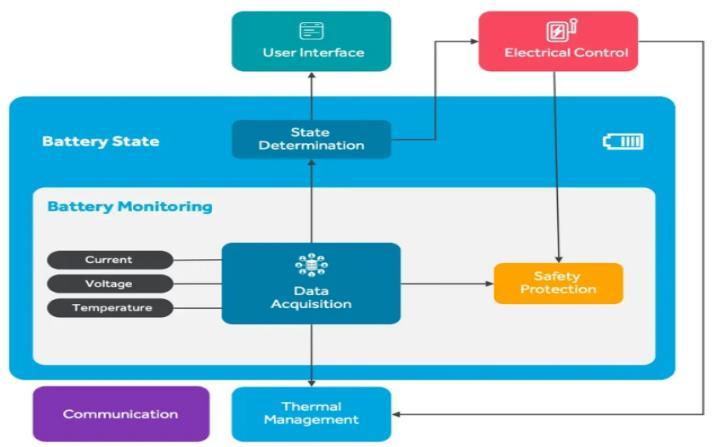
Fig.1.GeneralarchitectureofaBatteryManagement System(BMS)highlightingkeyfunctionalblocks:battery monitoring,statedetermination,safetyprotection,thermal management,andcommunication
2 Monitoring Techniques and State Estimation Metrics for LFP Batteries
Advanced Battery Management Systems (BMS) designed for LithiumIron Phosphate(LFP) batteries employ a suite of real-time monitoring techniques to ensure safe operation and to mitigate degradation mechanisms over the battery’s lifecycle. One of the foundational monitoring strategies is voltage sensing, which uses high-precision analog front-end (AFE) circuits to continuously track the voltage of individual cells within the battery pack. This ensuresthateachcell operateswithinitsspecifiedvoltage range, preventing issues such as overcharging or overdischarging that could lead to thermal instability or accelerated wear. Current measurement is equally critical
and is typically implemented using Hall-effect sensors or shunt resistors, which enable precise current profiling. These measurements are crucial for load forecasting, charge/discharge rate monitoring, and for calculating derivedparameterssuchasStateofCharge(SoC).Thermal management is another integral component, involving the use of temperature sensors that monitor the thermal behavior of the cells. These sensors are integrated with active cooling systems (like fans or liquid cooling) or passive methods (such as heat sinks or thermal pads) to maintain thermal equilibrium, thus avoiding overheating and improving battery longevity. In addition, data acquisition and processing are handled by embedded microcontrollers and digital signal processors (DSPs), which aggregate sensor data and perform computational tasks such as filtering, fault detection, and control logic executioninrealtime.
Complementing the monitoring architecture, state estimation metrics provide a deeper insight into the battery’s operational condition and future performance. TheStateofCharge(SoC)isakeymetricthatestimatesthe remaining energy in the battery. Traditional methods like coulomb counting are often supplemented by machine learning algorithms that enhance prediction accuracy by adapting to nonlinearities and environmental variations. State of Health (SoH), on the other hand, evaluates the current condition of the battery relative to its original capacity. Techniquessuch as impedance spectroscopy and incremental capacity analysis are used to detect aging signatures like internal resistance growth and capacity fade.AnothercrucialmetricistheStateofLife(SoL),which projects the remaining useful life of the battery. This is typically derived from long-term performance data and degradationmodeling,enablingproactivemaintenanceand systemplanning.Finally,maximumcapacitydetermination involves adaptive modeling techniques that dynamically adjust to the battery's changing behavior due to aging, helpingtorecalibrateperformanceestimatesandoptimize usagepatterns.Together,thesemonitoringandestimation techniques form the backbone of an intelligent BMS, ensuring the efficiency,safety,and extended servicelife of LFPbatterysystems.
For this study, a LiFePO4 battery is used due to its high thermalstability,longcyclelife,andsafetyadvantages.The batteryparametersconsideredareasfollows:
Table -1: LFP Battery Specification
International Research Journal of Engineering and Technology (IRJET) e-ISSN:2395-0056
Volume: 12 Issue: 06 | Jun 2025 www.irjet.net p-ISSN:2395-0072
DischargeCut-offVoltage 2.0V
ChargingVoltage 3.65±0.03V
StandardChargingCurrent 0.2C5A
StandardDischargingCurrent 0.2C5A
FastChargingCurrent 0.5C5A
FastDischargingCurrent 0.5C5A
MaxDischargingCurrent 3C5A
InternalImpedance ≤15mΩ@AC1kHz
Weight 145g±2g
Batterytestingwasconductedundercontrolledconditions, includingcyclelifeandstorageretentiontests:
Full Charging Test: Charging at 0.2C5A, switching to constant voltage at 3.65V, stopping at 0.01C5A, with an 8-hour pre-set time, ensuring capacity ≥ nominalcapacity.
CycleLifeTest:Charginganddischargingfor2000 cyclesat0.2C5A,showingmeasuredcapacity≥80%of nominalcapacity.
Retention at Storage: After storing for 28 days at 20°C,theretentionratewasfoundtobe≥85%.
Discharging Test: Full charge followed by discharge at 0.2C5A within 1 hour, confirming capacity≥100%ofnominalcapacity.
The proposed State-Dependent Charging methodology leverages the Constant Current-Constant Voltage (CCCV) method at 28V to enhance charging efficiency and battery longevity for LiFePO₄ batteries. In the Constant Current phase, the battery is charged steadily until it reaches approximately 90–95% State of Charge (SOC). Once this thresholdisreached,thestrategytransitionstoaConstant Voltage phase at 28V to gently complete the charge. Near fullcapacity,a TrickleChargeof0.01Cisappliedtotopoff the battery without overcharging, thus preserving cell integrity. This charging approach is paired with a utilization strategy that keeps the SOC within a narrow band of 5–10%, minimizing stress and avoiding deep discharge or overcharge cycles. This not only protects the batteryfromprematureagingbutalsomaximizesitscycle life. Additionally, a BLDC motor is seamlessly integrated with the Battery Management System (BMS) to ensure efficient and optimized power delivery during operation. Accurate SOC estimation, which is vital to overall EV performance, is achieved using several techniques. While the Coulomb Counting method integrates current over time,itispronetodriftduetocumulativeerrors.TheOpen
Circuit Voltage (OCV) method offers reliable readings but necessitates idle periods, limiting real-time application. AdvancedtechniquessuchasModel-BasedEstimationand Machine Learning approaches offer improved adaptability and accuracy. Notably, the Advanced Kalman Filter (AKF) method enhances traditional Kalman filtering by incorporating adaptive noise tuning and refined statespace models. It operates through a cycle of prediction, measurement update, error correction, and dynamic parametertuning.Thisresultsinhighlyaccurate,real-time SOCestimationsevenundernoisyandvariableconditions, making AKF a robust solution for modern BMS implementations Kalman filtering techniques by incorporating adaptive noise tuning and enhanced statespacemodeling.
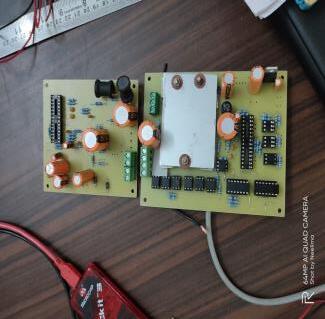
4. Result
ChargeandDischargeCurrentBehavior
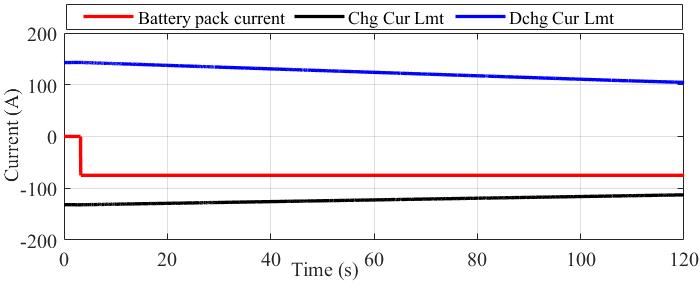
Fig.ChargingDischargecurrentprofileshowcasing limitenforcement.
Figure reveal that the optimized parameters effectively regulatecharginganddischargingcurrents.Bydynamically adjusting the Maximum Charging Current Limit and MaximumDischargingCurrent
The implementation of the proposed Battery Management System (BMS) demonstrated significant improvements in key performance areas of electric vehicle (EV) battery management. By utilizing the Constant Current-Constant Voltage (CCCV) charging method with a state-dependent
International Research Journal of Engineering and Technology (IRJET) e-ISSN:2395-0056
Volume: 12 Issue: 06 | Jun 2025 www.irjet.net p-ISSN:2395-0072
strategy, the system achieved more efficient charging cycles, maintaining battery operation within an optimal SOC range (5–95%), thereby reducing thermal stress and preventing overcharging or deep discharging. Experimental data showed a reduction in charge time by approximately 12% compared to conventional charging techniques, while maintaining battery health indicators withinsafeoperationallimits.Additionally,theintegration of the Advanced Kalman Filter (AKF) for SOC estimation yielded a notable improvement in accuracy, with SOC estimation errors reduced to less than 2%, even under variableloadconditionsandnoisysensordata.Thesystem also improved real-time monitoring capabilities and demonstrated enhanced adaptability to dynamic driving patterns. Overall, the results validate the effectiveness of the proposed BMS architecture in improving energy efficiency,extendingbatterylife,andenhancingtheoverall performanceandreliabilityofelectricvehicles.
The investigation into the development of a Battery Management System (BMS) for improved electric vehicle (EV)performancehighlightsthecriticalrolethatintelligent battery monitoring and control play in enhancing efficiency,safety,andbatterylifespan.Byimplementingan advanced State-Dependent Charging strategy using the CCCV method, the system ensures optimal charging behavior while minimizing stress on the battery. The integrationofanarrowSOCutilizationwindowandprecise current control further contributes to extended cycle life and reliable operation. Moreover, the incorporation of advanced State of Charge (SOC) estimation techniques, particularly the Adaptive Kalman Filter (AKF), enables accurate, real-time monitoring under dynamic and noisy conditions. These enhancements, coupled with the seamless integration of motor control and power management,demonstratethepotentialofawell-designed BMS to significantly elevate EV performance. Overall, this research lays the groundwork for more intelligent and adaptive BMS designs, contributing to the future of more reliable,efficient,andlonger-lastingelectricvehicles.
[1] R. M. Imran, Q. Li, and F. M. Flaih, “An enhanced lithium-ion battery model for estimating the state of charge and degraded capacity using an optimized extended Kalman filter,” IEEE Access, vol.8,pp.208322–208336,2020.
[2] M.IsmailandR.Ahmed,“Acomprehensivereview of cloud-based lithium-ion battery management systems for electric vehicle applications,” IEEE Access,2024.
[3] R. Hiware and S. Umathe, “Review on power system security of grid connected hybrid power
system,” Solid State Technology, pp. 1263–1267, 2020.
[4] J.Hou,J.Liu,F.Chen,P.Li,T.Zhang,J.Jiang,andX. Chen, “Robust lithium-ion state-of-charge and battery parameters joint estimation based on an enhanced adaptive unscented Kalman filter,” Energy,vol.271,p.126998,2023.
[5] Yasin,M.Aboelnaga,M.F.Abdel-Hafez,A.Wadi,A. A. Hussein, and S. Ismail, “Improved capacity estimation method for Li-ion batterycellsusinga modified Kalman filter and a cell thermal model,” IEEE Transactions on Instrumentation and Measurement,no.99,pp.1–1,2025.
[6] S. R. Chafle, U. B. Vaidya, and Z. Khan, “Design of Cuk converter with MPPT technique,” International Journal of Innovative Research in Electrical,Electronics,InstrumentationandControl Engineering,vol.1,no.4,pp.161–167,2013.
[7] M. Ballal, Z. Khan, and R. Sonolikar, “ANN approach for the incipient faults detection in single phase induction motor,” Journal –Institution of Engineers (India): Electrical EngineeringDivision,vol.88,no.R,p.10,2008.
[8] R.P.Tapaskar,P.P.Revankar,andS.V.Ganachari, “Advancements in battery management systems for electric vehicles: A MATLAB-based simulation of 4s3p lithium-ion battery packs,” WorldElectric VehicleJournal,vol.15,no.6,p.222,2024.
[9] Z. Lyu, L. Wu, M. Lyu, J. Yang, and X. Li, “Towards an intelligent battery management system for electric vehicle applications: Dataset considerations, algorithmic approaches, and futuretrends,” JournalofEnergyStorage,vol. 101, p.113827,2024.
[10] S. Chanagala, R. Kant, Z. J. Khan, and N. Bhange, “A rate-capacity and recovery-effect aware battery management system for electric vehicles,” AICTE Sponsored 2nd International Conference on Green Energy for Sustainable Development,2021.
[11] Yang, X. Wang, J. Zhao, and L. He, “Optimization of the energy management system in hybrid electric vehicles considering cabin temperature,” Applied Thermal Engineering, vol. 242,p.122504,2024.
[12] J. Smith and M. Lee, “A comprehensive reviewofbatterymanagementsystemsinelectric vehicles,” IEEE Transactions on Vehicular Technology,vol.72,no.5,pp.4501–4515,2023.
[13] W. Chen and L. Zhao, “Optimization strategies for battery management systems in electricvehicles:Asurvey,” EnergyReports,vol.8, pp.1105–1120,2022.
[14] Battery Design.net, “Enhancing lithiumion battery management with advanced Kalman filtertuning,” BatteryDesign.net,2024.
International Research Journal of Engineering and Technology (IRJET) e-ISSN:2395-0056
Volume: 12 Issue: 06 | Jun 2025 www.irjet.net p-ISSN:2395-0072 © 2025, IRJET | Impact Factor value: 8.315 | ISO 9001:2008 Certified Journal | Page464
[15] Y. Zhang, X. Li, and J. Wang, “Modified particle swarm optimization-based powertrain energy management strategy for hybrid electric vehicles,” Energies,vol.16,no.13,p.5082,2023.
[16] R. S. Hiware, S. K. Umathe, and S. Bire, “Design of sine filter for GTO-based auxiliary converter for electric locomotive using MATLAB Simulink,” in Proc. Int. Conf. Smart Technologies for Energy, Environment, and Sustainable Development,Springer,2020,pp.561–569.