
International Research Journal of Engineering and Technology (IRJET) e-ISSN: 2395-0056
Volume: 12 Issue: 06 | Jun 2025 www.irjet.net p-ISSN: 2395-0072
International Research Journal of Engineering and Technology (IRJET) e-ISSN: 2395-0056
Volume: 12 Issue: 06 | Jun 2025 www.irjet.net p-ISSN: 2395-0072
Patil1 , Wasim Patel2 , Amol Joshi3 ,Yogesh Vanjari4, Suvarna Saraf5 , Surekha Wani6
1Assistant Professor of Mechanical engineering GHRCEM Jalgaon (M.S.) India
2Assistant Professor of Mechanical engineering GHRCEM Jalgaon (M.S.) India
3Assistant Professor of Mechanical engineering GHRCEM Jalgaon (M.S.) India
4Assistant Professor of Mechanical engineering GHRCEM Jalgaon (M.S.) India
5Assistant Professor of First Year Engineering GHRCEM Jalgaon (M.S.) India
6Assistant Professor of First Year Engineering GHRCEM Jalgaon (M.S.) India
Abstract - The destructive power and quick spread of fires make them a major threat to people and their possessions. Identifying fires before they cause substantial damage or loss relies heavily on effective fire detection systems, particularly those that provide early alarms. A system that can quickly notify users or customers via an Android app and take action to reduce harm is the main emphasis of this project. This technology is ideal for use in outlying locations where fires are common. Notifying distant users in the case of a fire mishap is the main purpose of the suggested system. A fire sensor is used by the system to identify when there are flames. The module will sound an alarm to notify everyone around the moment it detects a fire. At the same time, actions are taken to put out the fire and lessen its damage. A water sprinkler system is activated to put out the fire, an air filter is used to remove toxic gasses produced by burning, and a DC fan works in tandem with the air filter to disperse smoke efficiently. An air filter to remove gasses from smoke and fire, a DC fan to disperse water, and an instantaneous motor pump to sprinkle water are all essential parts of the system. All of these parts work in tandem to provide a thorough reaction to fires, with the goal of protecting people and their possessions.
Key Words: Fire detection, early alarm, Remote notification,Fireprevention,Watersprinklersystem,Toxic gasremovaletc.
Theburningofmaterialsgeneratesintenseheatandlight, often leading to fires that pose significant risks to both humanlifeandpropertyworldwide.Duetoinadequatefire safety precautions and the lack of efficient fire alarm systems,firemishapshappenregularlyinhomes,industries, andmarketplaces.Thedevelopmentofanautomatedsystem for fire detection and suppression is of the utmost importanceinordertolessentheimpactofthesedangers andthedevastationthatflamesmaybring.Everywhereyou look, fire poses a significant risk to lives and possessions. Combustionofmaterialsisthemainculprit,sinceitreleases a tremendous amount of heat and light. Inadequate fire protection and the lack of a reliable fire alarm system
contribute to the high frequency of fire incidents in residential areas, businesses, and industries. Since this occurrence poses a significant threat to our lives, we are makingeffortstocreateanautomaticfiredetectionsystem thatincorporatesasprinklersystem.Minimizingfiredamage andfirefighterinjuryisthe goal ofanefficientfirefighting system.Fireshavegrowninfrequencyandseverityinrecent years,making promptandeffectiveresponse essential for minimizingcasualtiesanddamage.
Thepossibilityforextensivedamageandlossoflifehasmade fires a significant cause for concern in recent years. Preventingcasualtiesandpropertydamagerequiresprompt detection and intervention. When it comes to fire safety, automatedfiredetectionsystemsthatareconnectedtowater sprinklers are indispensable, especially onthepremisesofvitalinstitutionssuchasschools,hospitals, andbanks,whenpromptinterventionisimportant.
Avoidingfire-relatedlossesrequiresearlydetectionandthe useofsmokedetectors.Thereislesspropertydamageanda muchbetterprobabilityofsurvivalforbuildingoccupants and first responders when early warning systems are in place,accordingtoresearch.Installationandmaintenanceof firedetectionsystemsplayanactiveroleinimplementing solutionstoavoidfires.
Thefiredetectionsystem,equippedwithanIoT-integrated automatedwatersprinkler,offersanexceptionallyefficient and intelligent solution for fire safety. This system automaticallydetects,alerts,andrespondstofiresituations byutilizinga mix ofsensors,a connectedserver,and IoTenableddevices.
International Research Journal of Engineering and Technology (IRJET) e-ISSN: 2395-0056
Volume: 12 Issue: 06 | Jun 2025 www.irjet.net p-ISSN: 2395-0072
FireDetection:Thesystem'sfundamentalcapabilityisonits capacity to identify fire through the integration of three essentialsensors.
•FlameSensor:Thisdeviceidentifiestheexistenceofvisible flamesinthesurroundings.Itemploysinfraredorultraviolet radiation to identify the thermal fingerprints of a flame, facilitatingpromptdetectionupontheonsetofafire.
• Temperature Sensor: This device observes variations in temperature.Anabruptriseintemperatureaboveacertain threshold(e.g.,50°C)servesasasignificantsignalofafire. The temperature sensor corroborates fire circumstances when utilized alongside the flame and gas sensors. Collectively, these sensors offer thorough surveillance of ambientparametersthatsignifytheexistenceoffire.
Upondetectionofprobablefire-relatedincidents(including thepresenceofflames,smoke,oratemperatureincrease), thedataistransmittedtoanIoTserverforprocessing.The server acquires real-time data from the sensors using a wireless network, frequently employing Wi-Fi or other technologies.Protocols for communication. The server perpetuallyanalyzesthedatatoevaluatethedangerleveland verifytheoccurrenceofafire.Upontheserver'sconfirmation ofafire,thefurtheractionsintheemergencyprocedureare initiated.
OncetheIoTserveridentifiesthatafireispresent,itactivates thealarmsystem.Thealarmconsistsofabuzzerthatsounds analerttonotifyeveryoneinthevicinityaboutthefire.This alert is crucial for ensuring people’s safety by giving them enough time to evacuate the premises or take immediate action.Inadditiontothesoundalarm,thesystemcansend notificationstoremoteusers,notifyingthemaboutthefire incident.
Upon sensing the fire, the IoT server activates the water sprinklersystemtoautonomouslydischargewateroverthe impactedarea.Thesprinklersystememploysawaterpump to provide water to the sprinkler heads, which are strategically positioned around the structure. These sprinklersaredesignedtoextinguishflamesandmitigatefire spreaduntilassistancearrives.Thepumpoperatesefficiently todeliveradequatewaterpressure,providingeffectivefire suppression.
Alongside firefighting, smoke clearing is vital for guaranteeingsafety.Smokecanobstructvisionandhinder
safeevacuationforindividuals.Inresponse,thefiredetection systemmightinitiateafanorventilationmechanism.Thisfan assistsindissipatingsmoke.Enhancingevacuationpathways andamelioratingairqualityinthevicinity.Thefanmitigates thedangerofsmokeinhalation,asignificantcontributorto injuryandmortalityinfire-relatedevents.[2]
A prominent characteristic of this IoT-based system is its capacity for remote monitoring and control. The system connectstotheinternetusingaNodeMCUESP8266board, servingasaconduitbetweenthesensorsandthecloud.The NodeMCUESP8266isaCompact,economicalmicrocontroller withWi-Fifunctionalitythatenablesthesystemtotransmit andreceivedataviatheinternet.Usersmayremotelymanage and oversee the system with the Blynk application or alternative IoT platforms. The application allows users to remotelyactivateordeactivatethesystem.
•Continuously see sensor data including temperature, gas concentration,andflamedetectioninrealtime.
•Obtainalertsontheircellphoneswhenthesystemidentifies afire,deliveringimmediatenotificationsregardlessoftheir physicalpresenceatthesite.
•Remotelyactivatecontroloperations,suchasthesprinkler or fan, which may be crucial during circumstances necessitatingpromptintervention.[1]
International Research Journal of Engineering and Technology (IRJET) e-ISSN: 2395-0056
Volume: 12 Issue: 06 | Jun 2025 www.irjet.net p-ISSN: 2395-0072
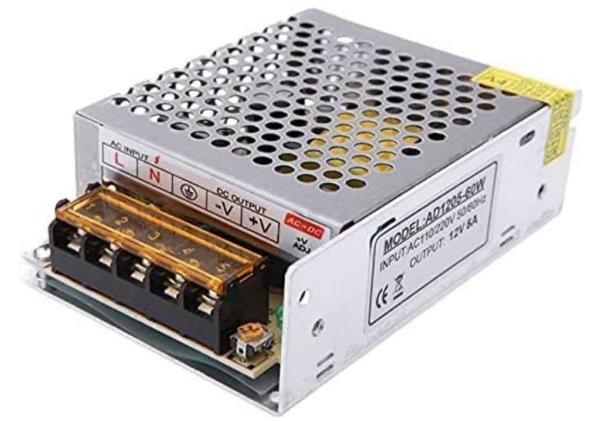
Apowersupplyisanelectronicdevicedesignedtoprovide electricalenergytoaconnectedload.Itsprimaryfunctionis to transform electrical input from a source into the appropriatevoltage,current,andfrequencyrequiredbythe load. For this reason, power supplies are also known as electricalpowerconverters somepowersourcesfunctionas units,whileothersareincorporatedwithinthegadgetsthey power. Examples of the latter include power supplies employed in desktop computers and consumer electronic devices.
Power supplies may include features such as current limitation to safe levels, automatic disconnection during electrical faults, power conditioning to reduce electronic noise or voltage surges impacting the load, power-factor correction,andenergystoragetomaintainpowertotheload duringbriefinterruptionsinthesourcepower.
Modernelectronicdevicesandsystemstypicallyoperateon stable DC voltage, while the electricity supplied from the mainsisintheformofalternatingcurrent(AC).Tobridge thisgap,apowersupplyconvertstheincomingACintothe required DC output. These power supplies are sometimes alsoreferredtoasconvertersortransformersRectification aloneisinadequateforadependableDCpowersupply.The pronouncedpeaksintheDCcurvenecessitateattenuation. The output capacitor in the power supply performs this function.Thecapacitorswiftlyaccumulatesenergy,whichit conveys between two maxima. This process calibrates the droplets to an exact volume and optimizes the curve. The result is a stable direct current voltage at the output, deliveredtotheload."Load"denotestheapparatus,system, ormachinerythatnecessitatesanenergysupply.[3]
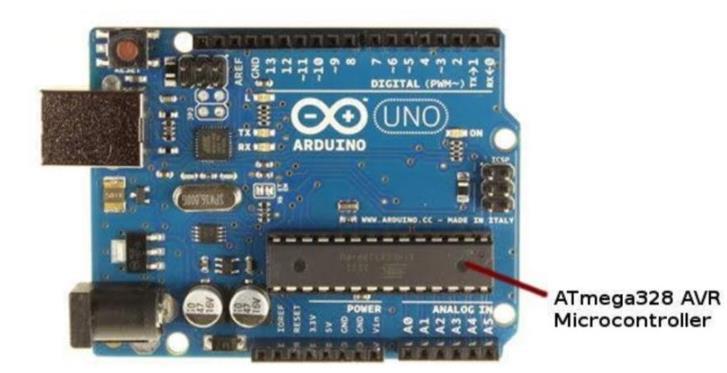
Arduinoisanopen-sourceelectronicsplatformdesignedto besimpleandaccessible,builtaroundeasy-to-usehardware and software components. Arduino boards can process variousinputs suchaslightdetectedbyasensor,abutton press, or even a message from Twitter and generate outputslikepoweringanLED,activatingamotor,orsharing dataonline.Programmingtheboardinvolvessendingaseries ofinstructionstoitsonboardmicrocontroller.Thisprocessis carriedoutusingtheArduinoprogramminglanguage,based onWiring,alongwiththeArduinoIntegratedDevelopment Environment(IDE),whichisdevelopedfromtheProcessing platform.Sinceitscreation,Arduinohasbeenatthecoreof countless innovations from everyday tools to advanced scientific equipment.A diverse global community of users, including students, hobbyists, engineers, artists, and developers, has contributed to its growth. Their shared knowledgehascreatedarichandeasilyaccessibleresource hub,makingArduinohighlyvaluableforlearnersandexperts alike. Arduino originated at the Ivrea Interaction Design Instituteasatoolforquickandeasyprototyping,specifically targetingstudentswithnobackgroundinprogrammingor electronics. As interest in the platform expanded, Arduino evolvedtosupportabroaderrangeofneeds.Itnowoffersa varietyofboardssuitedforInternetofThings(IoT)projects, wearable technology, 3D printing,and embedded systems. OneofthekeyreasonsforArduino’swidespreadadoption especiallyamong beginners is itssimplicity.Unlike older programmable boards that required separate hardwareto uploadcode,Arduinoallowsprogrammingdirectlythrougha USBcable.Moreover,theIDEusesasimplifiedversionofC++, whichlowersthebarriertoentryfornewcomerslearningto codeandbuildelectronics.
International Research Journal of Engineering and Technology (IRJET) e-ISSN: 2395-0056
Volume: 12 Issue: 06 | Jun 2025 www.irjet.net p-ISSN: 2395-0072
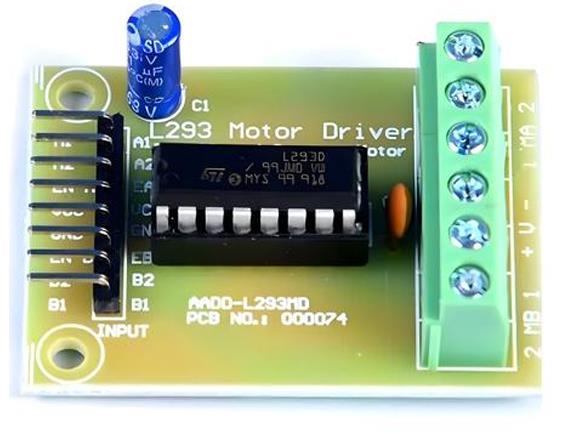
Motordriversarefundamentalcomponentsinroboticsand automation systems, as they provide the necessary power and control signals to operate electric motors and other actuateddevices.Thesedriversregulatekeyparameterssuch asvoltage,current,direction,andsafetyprotectionstoensure efficient and reliable motor performance. By interfacing directly with a microcontroller, motor drivers enable seamlesscommunicationbetweensoftwareandhardware. Thisinterfaceallowsforfine-tunedcontroloveroperational parameters such as acceleration and deceleration rates, encoderfeedback,andProportional-Integral-Derivative(PID) tuning. Such control is critical for enhancing system performance and minimizing the limitations imposed by hardware constraints. It also plays a crucial role during testing and deployment, particularly in diagnosing and resolvingissuesrelatedtomotioncontrol.Motordriversare indispensable in industrial environments where precise motioncontrolisrequired,andtheyareoftenusedalongside data acquisition systems for real-time performance monitoring. This ensures that motion systems operate consistentlyandaccuratelyoverextendedperiods.Electric motors, the devices driven by motor drivers, function by convertingelectricalenergyintomechanicalmotion.Amotor driverservesastheintermediarythatmakesthisconversion process manageable and programmable, thus enabling the automation of tasks through electrical input. There are severaltypesofelectricmotors,eachwithdistinctoperating principles and applications. Common categories include Direct Current (DC) motors, stepper motors, and servo motors.Selectingtheappropriatemotordriverisessential for ensuring compatibility with both the motor and the microcontrollerbeingused.Properdriverselectiondirectly affects system efficiency, control accuracy, and overall reliability. This article aims to provide a foundational understanding of how motor drivers operate and their importanceinmodernautomationandroboticsystems.[7]
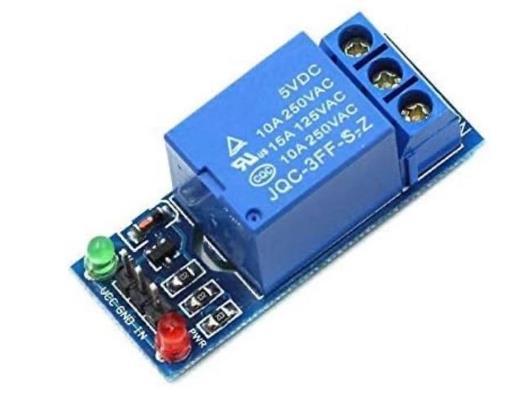
Relaymodules are electronic boardsdesigned withone or moreintegratedrelays.Theyareusuallyrectangularinshape andarecommonlyofferedinconfigurationsfeaturing2,4,8, orsometimeseven16relays.Inadditiontotherelays,these modules are equipped with supporting components like indicatorLEDs,protectiondiodes,transistors,andresistors, whichhelpensurereliableandsafefunctionality.Attheheart
ofthemoduleistherelay,anelectricallycontrolledswitch used to manage the operation of high-voltage circuits and devices.Mostrelaymodulesuseanelectromagnettoopenor close the switch. Relay modules generally operate on DC inputvoltage,whiletheloadtheycontrolcanbeeitherACor DC,aslongasitfallswithintheratedlimitsoftherelay.These modulesareavailableindifferentinputvoltageratings,such as 3.2V, 5V, 12V, or 24V, depending on the intended application rangingfromlow-powercontroltoheavy-duty switching.Specificationslikeinputvoltage,switchingvoltage, and current ratings are usually printed on the module for easy identification. The working principle is simple: the electromagnetinsidetherelayisenergizedtoopenorclose electricalcontacts,allowingcontrolofexternaldevices.
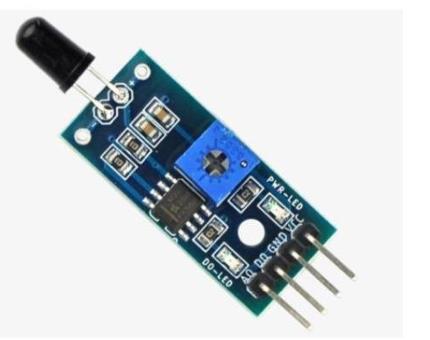
Aflamesensorisaspecializeddevicedesignedtodetectand respondtothepresenceoffireorflame.Itsresponsedepends on how and where it is installed. Typically, it is integrated intosystemslikefirealarms,gassupplylines(naturalgasor propane),andfiresuppressionmechanisms.Flamesensors are commonly used in industrial boilers to verify proper operation.Comparedtotraditionalsmokeorheatdetectors, flame sensors offer quicker and more precise detection, thankstotheirdetectionmechanism.Thesesensorsusually operateusinganelectroniccircuitequippedwithareceiver thatdetectselectromagneticradiationemittedbyflames.
One common detection method used is the infrared flame flickertechnique,whichallowsthesensortofunctionevenin challengingconditionslikethepresenceofdust,oil,moisture, or ice. A flame sensor is highly sensitive to visible and infrared light, making it suitable for flame detection applications.Thesesensorscanidentifylightwavelengthsin therangeof760nmto1100nm.Duetotheirsensitivityto heat,theymustbeinstalledatasafedistancefromtheflame source typically up to 100 cm, with a detection angle of around 60°. Flame sensors can produce either analog or digital signals as output. They are frequently used in firefightingrobotsandautomatedflamealarmsystemsfor earlyfiredetectionandresponse.[8]
International Research Journal of Engineering and Technology (IRJET) e-ISSN: 2395-0056
Volume: 12 Issue: 06 | Jun 2025 www.irjet.net p-ISSN: 2395-0072
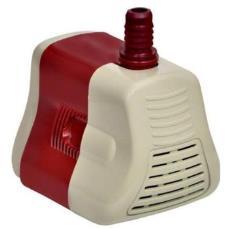
Awaterpumpisadeviceusedtomoveorliftwaterfromone pointtoanother,typicallyfromalowerleveltoahigherone. It's commonly found in construction sites, tunnels, homes, and other settings where water transfer is needed. Most pumps work using the positive displacement principle or kineticenergy,andarepoweredbyelectricmotors(AC/DC) orfuelengineslikegasolineordiesel.Thecorecomponent, the impeller, spins to drawwater in and force it outusing centrifugalforce,increasingbothpressureandflow.Though not flashy, water pumps are essential tools in many industries.Manual pumpsarealsoused,operatedbyhand throughrepeatedhandlemovement.
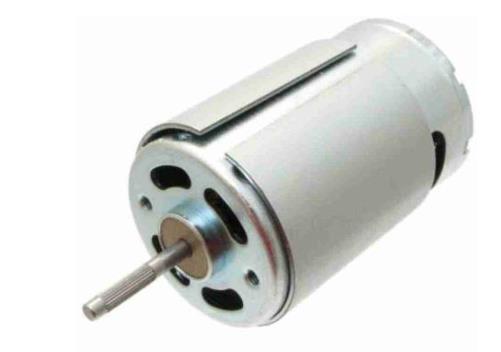
ADCmotorisanelectricmotorthatconvertsdirectcurrent (DC)intomechanicalenergy.Whenitsfieldcoilisenergized, itcreatesamagneticfieldthatinteractswiththearmature, producing opposing forces thatgeneratetorqueandcause rotation.Therearetwomaintypes:brushedandbrushless. Brushed motors use a commutator to reverse current and maintaintorque,whilebrushlessDCmotorsuseelectronic controllers for smoother and more efficient operation. Althoughbrushedmotorsarestillused,brushlessmotorsare increasingly preferred due to their higher efficiency and durability.
Existing fire detection systems discussed in the literature primarily aim to suppress fires once detected but often neglecttheimportanceofrapidsystemresponsiveness.Many traditional setups detect fire effectively but suffer from delayedresponsetimes,whichcanleadtoincreasedproperty damage and potential loss of life. To address this critical limitation,the presentstudyfocuses on designinga highly responsiveandefficientfiredetectionsystem.Theproposed system integrates gas sensors, temperature sensors, and
smoke detectors to identify fires in their earliest stages. These sensors continuously monitor environmental conditions, detecting key indicators such as harmful gases (e.g., carbon monoxide and carbon dioxide), sudden temperature rises, and smoke accumulation. By crossreferencingdatafrommultiplesources,thesystemenhances detection accuracy, speeds up response time, and significantly reduces the likelihood of false alarms ultimately improving overall fire safety and damage mitigation.Oncethesensorsdetectearlysignsofafire,data is immediately transmitted in real time to a central processing unit via Wi-Fi modules. This wireless communication enables faster data analysis and decisionmaking compared to traditional wired systems. Upon verifyingafirethreat,thecentralunitpromptlyactivatesthe sprinkler system, which is connected to a water pump designedtoreleasewaterefficientlyandsuppressthefireat an early stage. This rapid response helps contain the fire, safeguarding both property and lives until emergency servicesarrive.TheintegrationoftheBidetsplatformfurther enhances the system by enabling faster, more reliable communication between sensors, the central unit, and connecteddevices.Thisimprovementsignificantlyreduces the time between fire detection and sprinkler activation, resultinginanaverageresponsetimeofjust 5seconds a notable advancement over conventional fire detection systems.[9]
Inadditiontotriggeringthesprinklersystem,theproposed system also activates the water pump, which sucks water fromastoragetankanddirectsittothesprinklerheads.This rapid water deployment effectively suppresses the fire, preventingitfromspreadingfurtheruntilpropertyowners and emergency services can arrive on the scene. By addressingboththespeedandaccuracyoffiredetectionand suppression,thissystemsignificantlyenhancessafety.
Although the system performs well, it still encounters challengesintermsofcost,effectiveness,andresponsiveness in certain situations. To enhance its adaptability and resilience,furtherimprovementsareneeded.Onepromising directionistheintegrationofmachinelearning(ML)intothe firedetectionsystem.MLcansignificantlyelevatethesystem from basic detection and suppression to predictive fire prevention.Byanalyzinghistoricalandreal-timesensordata, ML algorithms can identify patterns and environmental factorsthatsignalanincreasedriskoffire oftenbeforeit ignites.Thispredictivecapabilityallowsthesystemtoassess vulnerabilitieswithinastructureandrecommendpreventive measures,shiftingtheapproachfromreactivetoproactive. As a result, operators can address risks early, potentially preventingfiresaltogetherandfurtherimprovingsafetyand systemreliability.[6]
Ultimately,bycombiningadvancedsensortechnologywith IoTcapabilitiesandmachinelearning,thisproposedsystem can revolutionize fire detection and prevention. The
International Research Journal of Engineering and Technology (IRJET) e-ISSN: 2395-0056
Volume: 12 Issue: 06 | Jun 2025 www.irjet.net p-ISSN: 2395-0072
integrationofthesetechnologiesleadstoamoreintelligent, responsive, and reliable system that provides better protectionagainstfirehazards.Asthesystemcontinuesto evolveandintegratemoreadvancedfeatures,itwillbecome an even more valuable asset for safeguarding lives and propertyinresidential,commercial,andindustrialsettings.
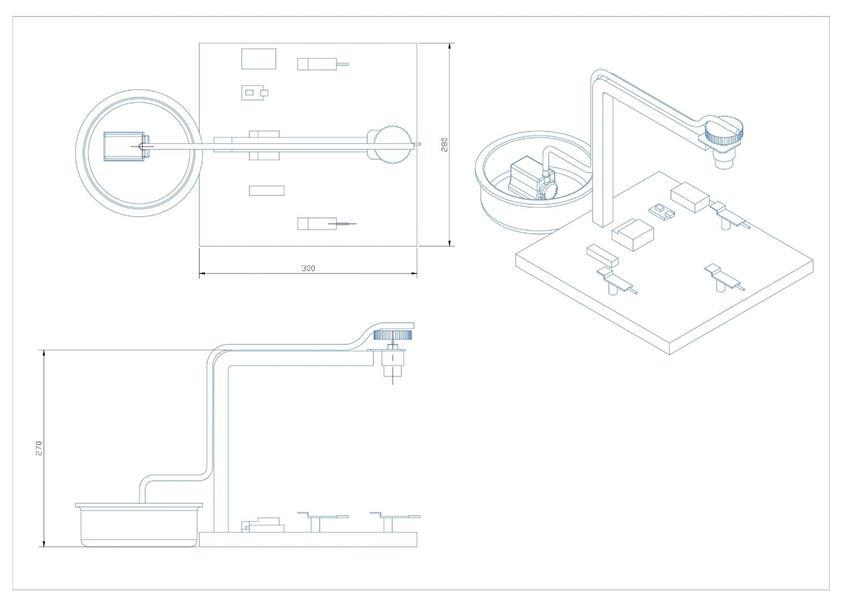
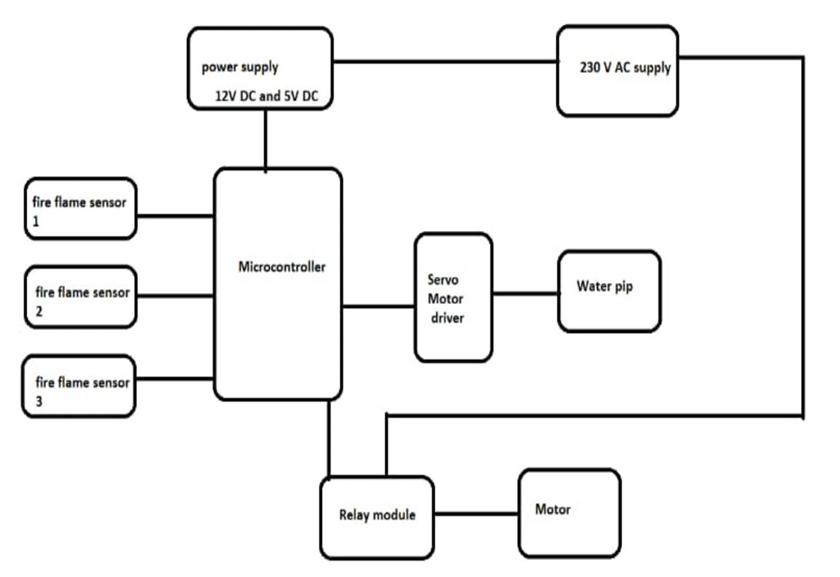
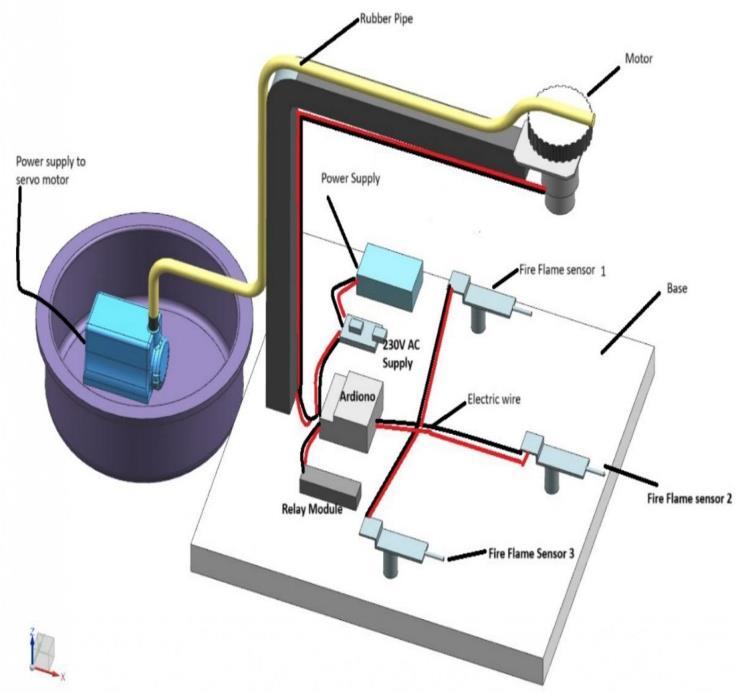
Theflowdiagramillustratesafiredetectionandsuppression system that combines sensors, a microcontroller, and supporting components. The system starts with a power supplythatconverts230VACto12Vand5VDCtooperateall components. Three flame sensors are placed in different zonestodetectfireorflamesandsendcorrespondingsignals to the microcontroller. Acting as the control unit, the microcontrollerprocessestheseinputsandcoordinatesthe system’sresponse Thefiredetectionandsuppressionsystem integrates sensors, a microcontroller, and various componentstoautomaticallyidentifyandextinguishfires.It beginswithapowersupplythatconverts230VACto12Vand 5V DC to operate the system. Three flame sensors are positionedindifferentzonestodetectfireandsendsignalsto
themicrocontroller,whichactsasthecontrolunit.Basedon sensor input, the microcontroller activates a relay module that controls the motor responsible for pumping water. Simultaneously,aservomotordriverdirectsaservomotor connectedtoawaterpipe,aimingitpreciselyatthefire.The water pipe then delivers water to extinguish the flame. Physically, the system is laid out over a rectangular area (such as a room or hall), with vertical lines representing sensorplacementsandthewaterpipeorsprinklersystem positionedabove.Thissetupensuresefficientfiredetection, targetedsuppression,andautomaticoperation.[4}
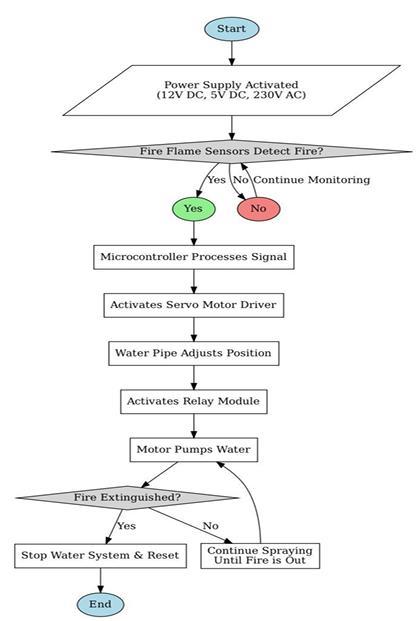
Althoughthesystemalreadyperformswell,itstillencounters challengesrelatedtocost,efficiency,andresponsivenessin certainsituations.Toenhanceitsrobustnessandadaptability across a range of scenarios, further improvements are needed.Onepromisingdirectionistheintegrationofmachine learning(ML)algorithmsintothefiredetectionsystem.ML cansignificantlyadvancethesystembeyondbasicdetection andsuppressionbyleveraginglargedatasetsgatheredfrom sensors over time. These algorithms can analyze both historicalandreal-timedatatopredictthelikelihoodofafire based on various environmental factors. For example, ML models can be trained to identify patterns that signal potential fire hazards before a fire actually ignites. This predictive capability enables operators to recognize vulnerabilities in a building or structure and take preventative steps. Rather than relying solely on reactive
International Research Journal of Engineering and Technology (IRJET) e-ISSN: 2395-0056
Volume: 12 Issue: 06 | Jun 2025 www.irjet.net p-ISSN: 2395-0072
detection,ML
Thisstudyhasaimedtodevelopanefficientandresponsive fire detection system that tackles the problem of delayed responsetimesandimprovestheoveralleffectivenessoffire safety measure. The proposed system combines gas, temperature,andsmokesensorstodetectfiresintheirearly stages.Bymonitoringkeyindicatorslikeharmfulgases,heat spikes, and smoke, the system cross-checks data for accurate,reliabledetectionwhileminimizingfalsealarms. Oncefireindicatorsaredetected,sensordataissentinreal timeviaWi-Fitoacentralunitforrapidanalysis.Ifafireis confirmed,theunitactivatesasprinklersystemconnectedto awaterpump,quicklysuppressingthefireinitsearlystages and helping to protect lives and property. The Bidets platform allows for faster, more reliable communication betweenthesensors,centralprocessingunit,andconnected devices.TheBidetsplatformenablesfasterandmorereliable communication between the sensors, central processing unit,andconnecteddevices.Asaresult,thesystemresponds injust 5seconds significantlyfasterthan traditional fire detectionsystems.
[1] M.Young,theTechnicalWriter’sHandbook.MillValley, CA:UniversityScience,1989.
[2] Muhammad Shazali Dauda, Usman Saleh Toro, “ARDUINO BASED FIRE DETECTION AND CONTROL SYSTEM,”InternationalJournalofEngineeringApplied SciencesandTechnology,2020 Vol.4,Issue11,ISSNNo. 2455-2143,Pages447-453
[3] Adak Sahil Santosh, Kudnar Rushikesh Bhausaheb , “FIREALARMSYSTEMUSINGARDUINO”International Journal of Novel Reaserch and Development (IJNRD) ISSN:2456-4184.
[4] [1] Ramkant B Patil, Pravin D Patil and Dr. D.S.Deshmukh, “ERGONOMIC DESIGN AND DEVELOPMENT OF FLYWHEEL IN EXERCISE EQUIPMENTFORENERGYGENERATION,”International ResearchJournalofEngineeringandTechnology(IRJET) Volume:05Issue:11|Nov2018 e-ISSN:2395-0056pISSN:2395-0072
[5] Suwarjono Suwarjono, Izak Habel Wayangkau, Teddy Istanto, “DesignofaHomeFireDetectionSystemUsing ArduinoandSMSGateway”MDPI,Basel,Switzerland.
[6] ShubhamShinde,NehaDubey,AryaMore,Prof.Manisha Hatkar, “ARDUINO BASED FIRE FIGHTING ROBOT” International Research Journal of Modernization in EngineeringTechnologyandSciencee-ISSN:2582-5208
[7] Dr.N. Saravanan, Mouli.M , Sivabalan.S,” ARDUINO BASED AUTONOMOUS FIRE FIGHTING ROBOT” International Journal For Research & Development In Technology
[8] Lexter J. Resullar, Angelou Joefred N. Congreso, FernandoComandante,“DesignandFabricationofFire Fighting Autonomous Robotic System Equipped with Sensitive Sensors for Fire Alarm and Detection, Avoidance Behaviour Mechanism and SMS Messaging Capability”AsianJournalofBasicScience&Research
[9] Volume 2, Issue 4, Pages 21-51, October-December 2020
[10] Amit Kumar Singh1 Pratyush Awasthi2 Rajat Gupta3 ShivamKumar,“DesignandFabricationofI.O.TBased Fire Fighting Robot” IJSRD - International Journal for Scientific Research & Development| Vol. 7, Issue 10, 2019|ISSN(online):2321-0613
[11] Krishanu Bhattacharjee1,Malabika Chatterjee, Rima Nayek3 , Debapriya Ghosh, “Fire Fighting Robotic Vehicle Using Arduino” International Journal of Advanced Research in Electrical, Electronics and InstrumentationEngineering(IJAREEIE)e-ISSN:2278–8875,p-ISSN:2320–3765




Mr. Ramkant B Patil Assistant Professor in Mechanical Engineering department at G H RaisoniCollegeofEngineeringand managementJalgaon
Mr Wasim B Patel Assistant Professor in Mechanical Engineering department at G H RaisoniCollegeofEngineeringand managementJalgaon
Mr Amol V Joshi Assistant Professor in Mechanical Engineering department at G H RaisoniCollegeofEngineeringand managementJalgaon
Mr.Yogesh P Vanjari Assistant Professor in Mechanical Engineering department at G H RaisoniCollegeofEngineeringand managementJalgaon
International Research Journal of Engineering and Technology (IRJET) e-ISSN: 2395-0056
Volume: 12 Issue: 06 | Jun 2025 www.irjet.net p-ISSN: 2395-0072 © 2025, IRJET | Impact Factor value: 8.315 | ISO 9001:2008


Mrs. Suvarna P Saraf Assistant ProfessorinFirstyearEngineering departmentatGHRaisoniCollege of Engineering and management Jalgaon.
Ms. Surekha Wani Assistant Professor in First year Engineering department at G H Raisoni College of Engineering andManagementJalgaon