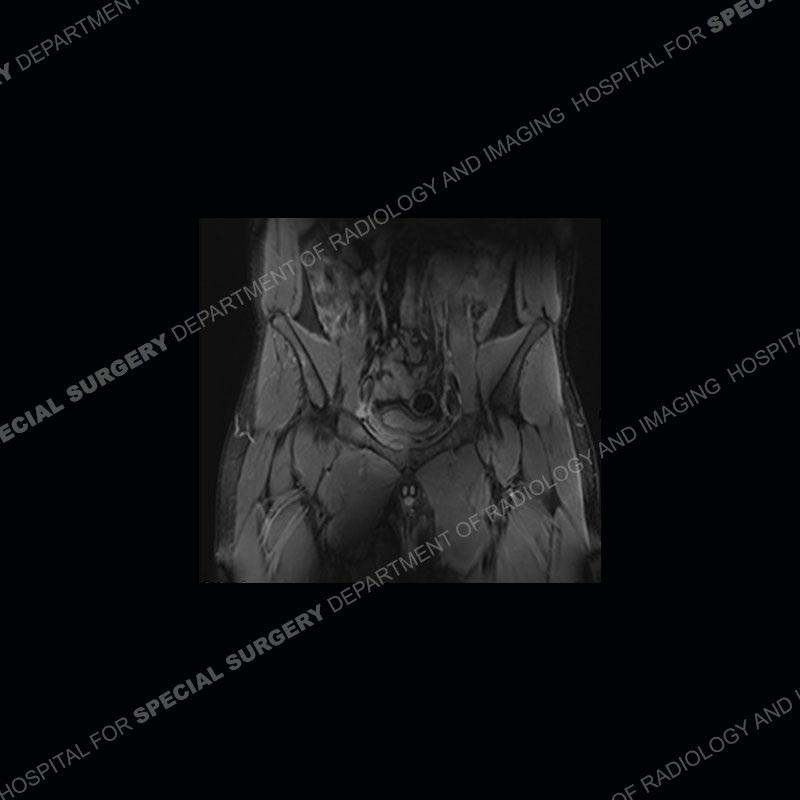
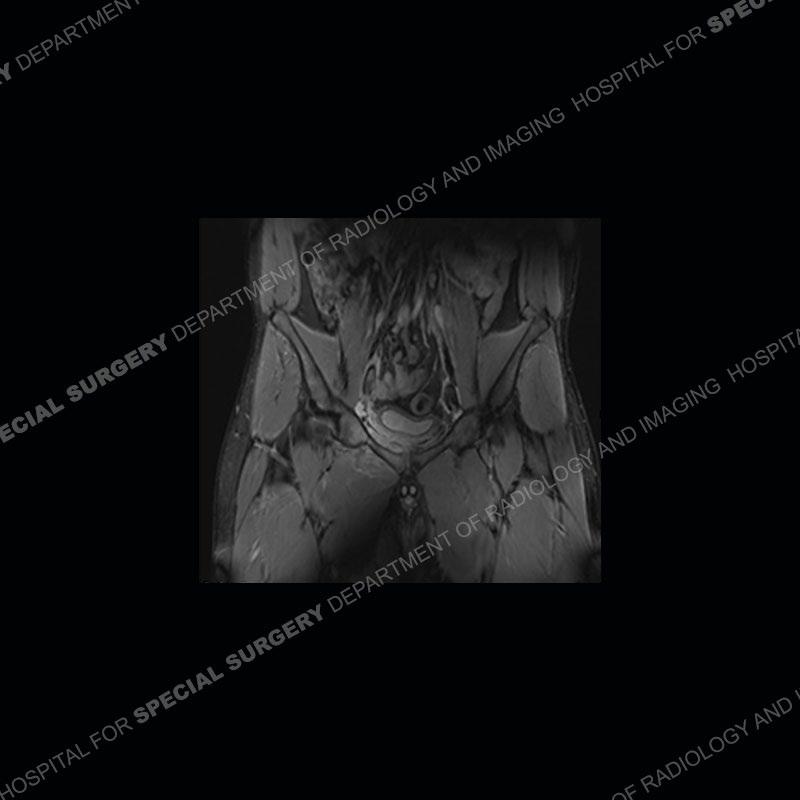
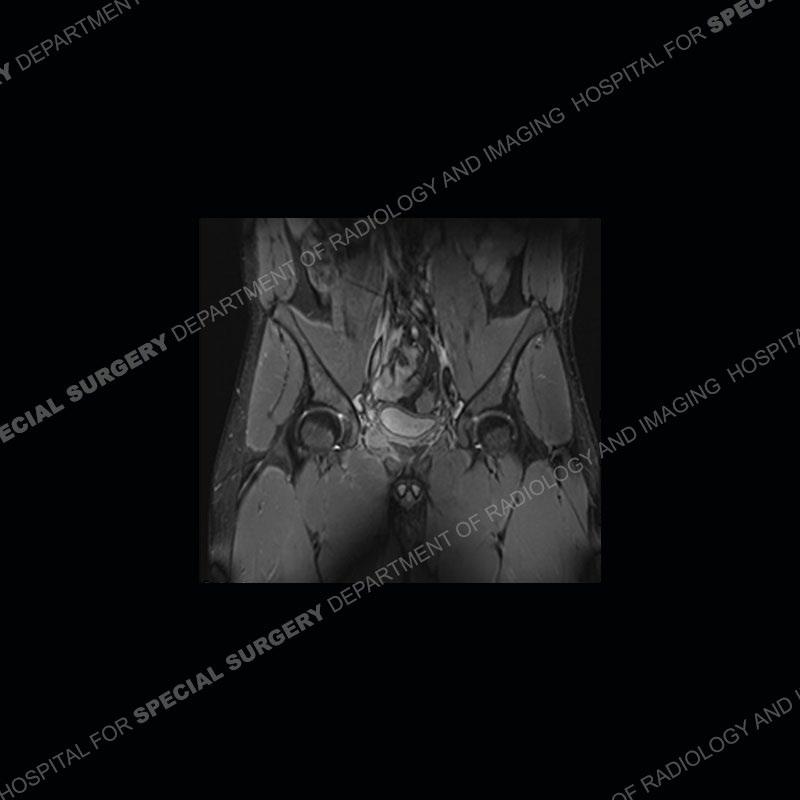
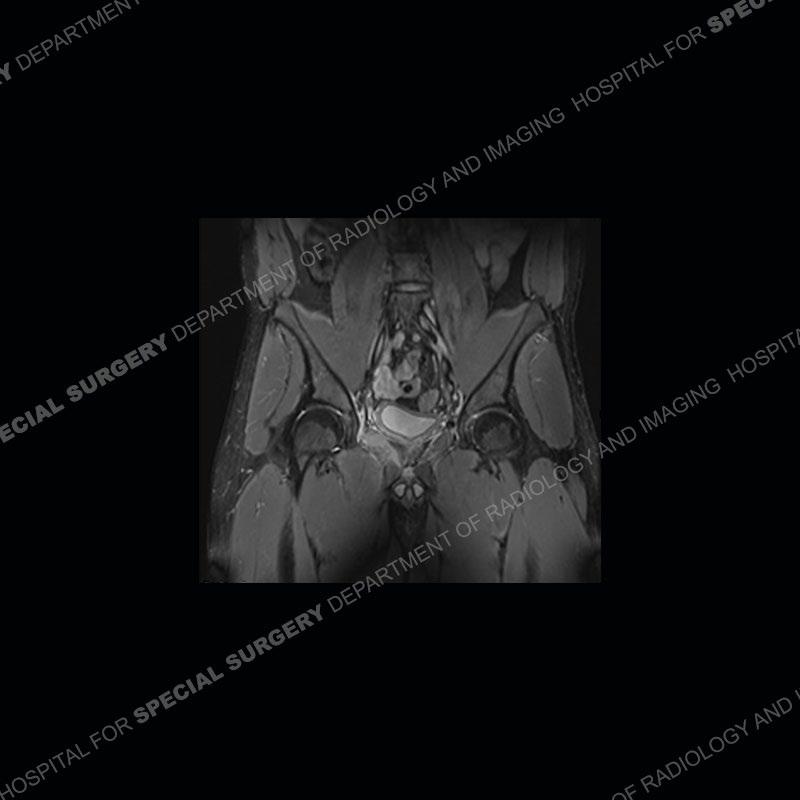
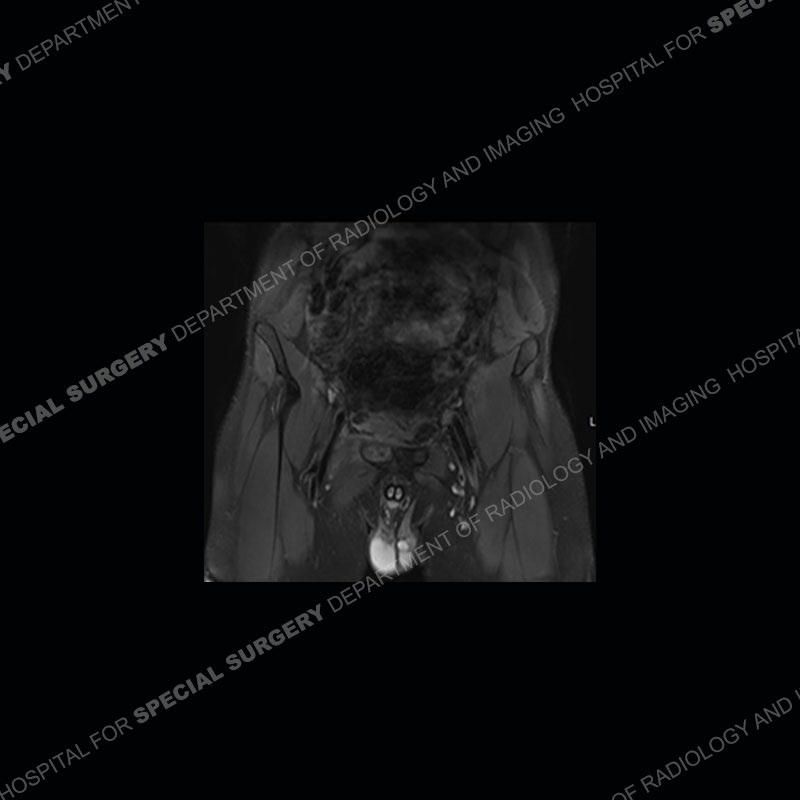
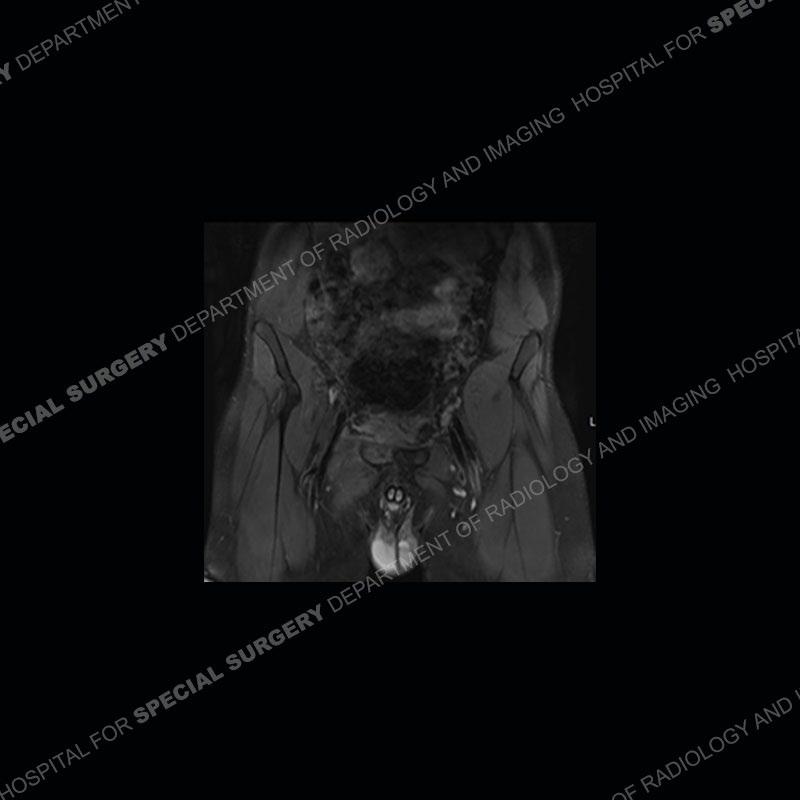
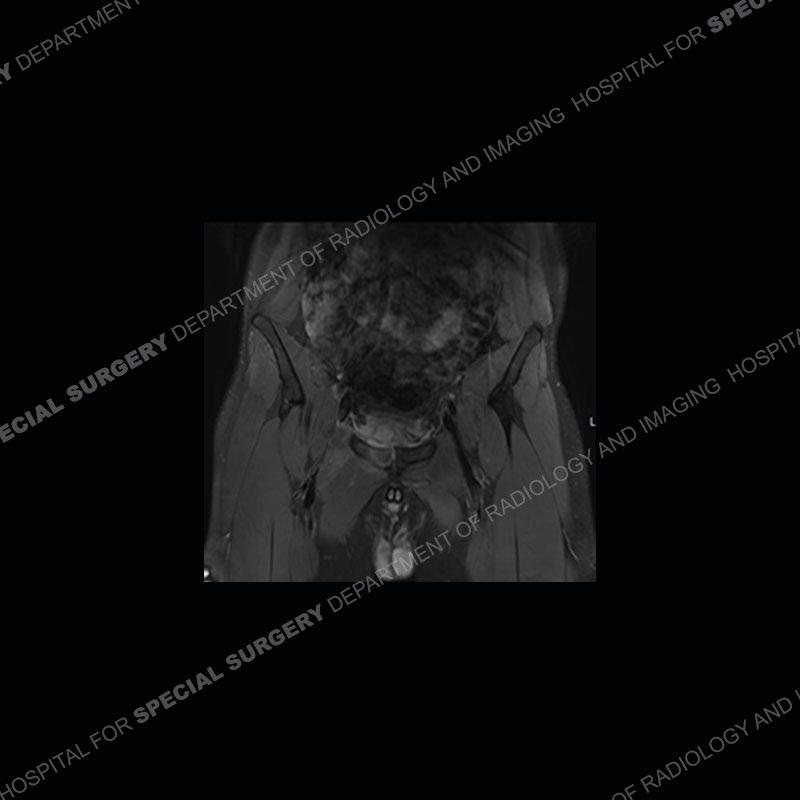
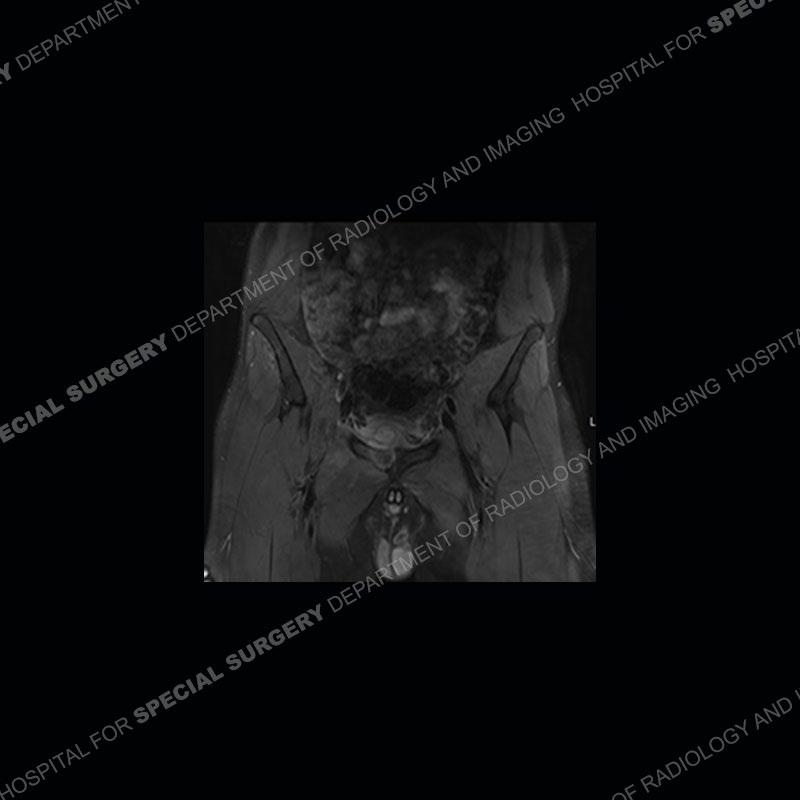
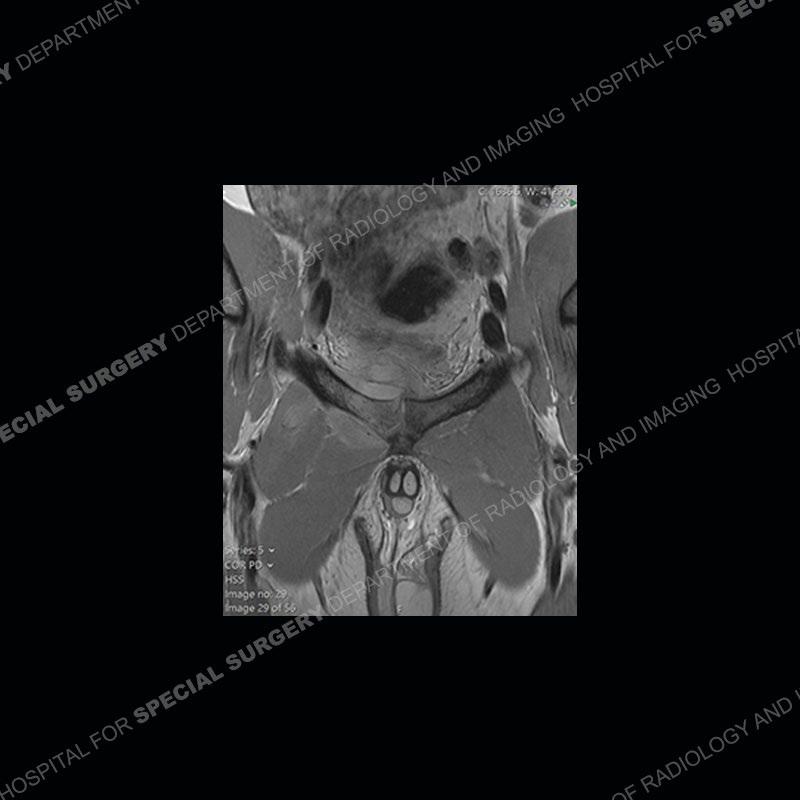
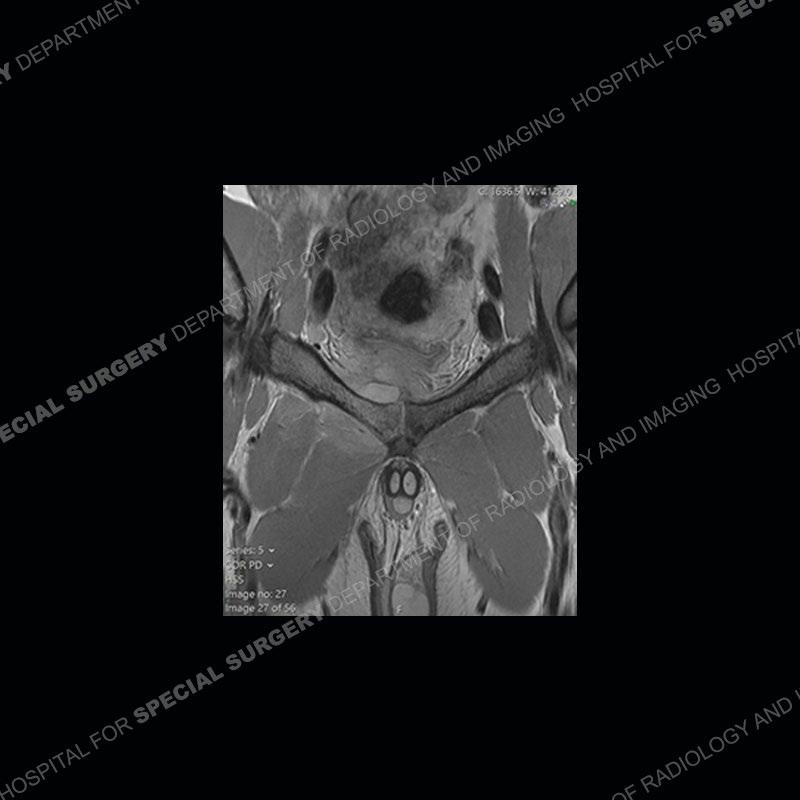
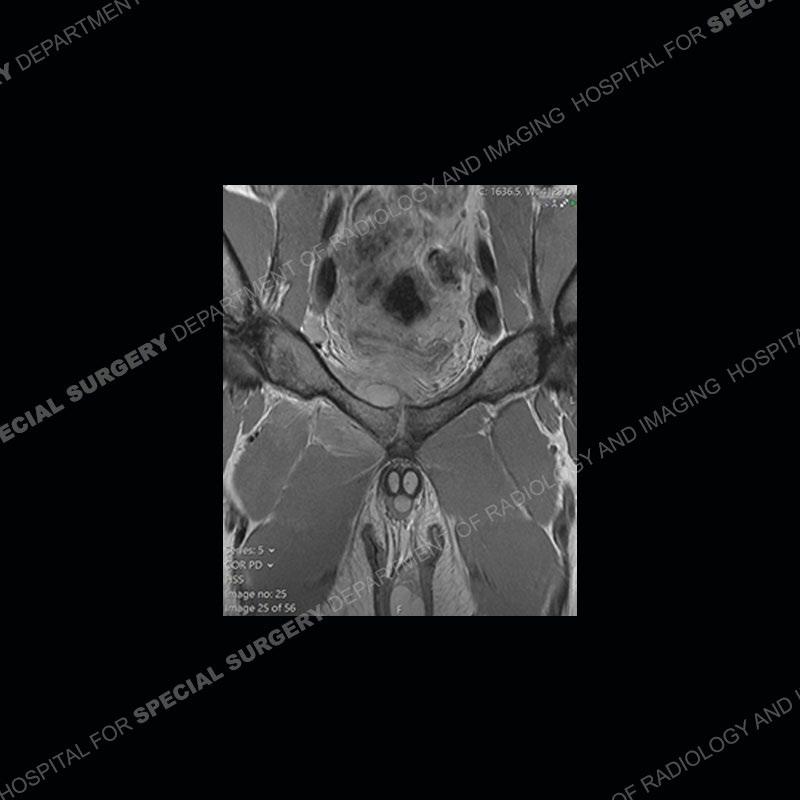
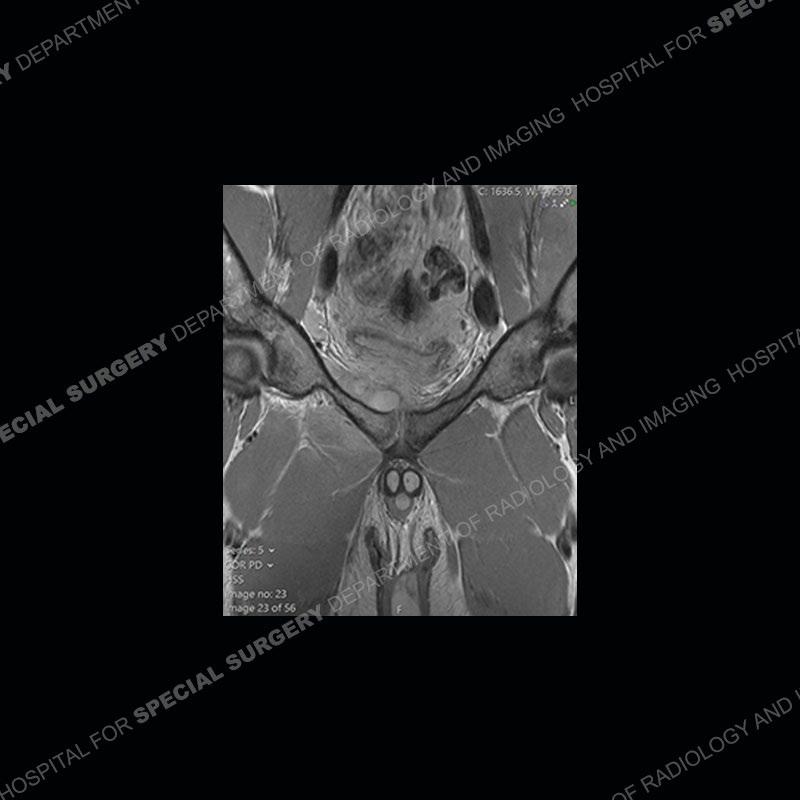
Findings
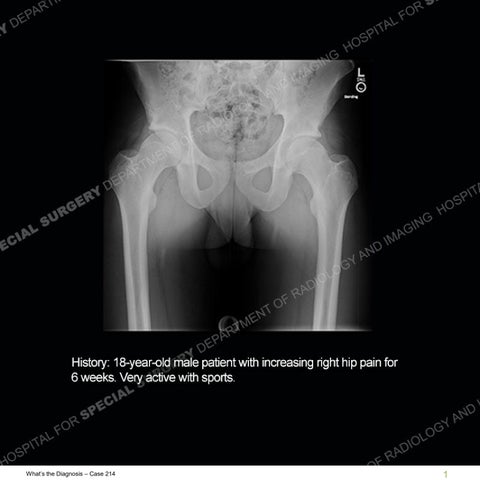
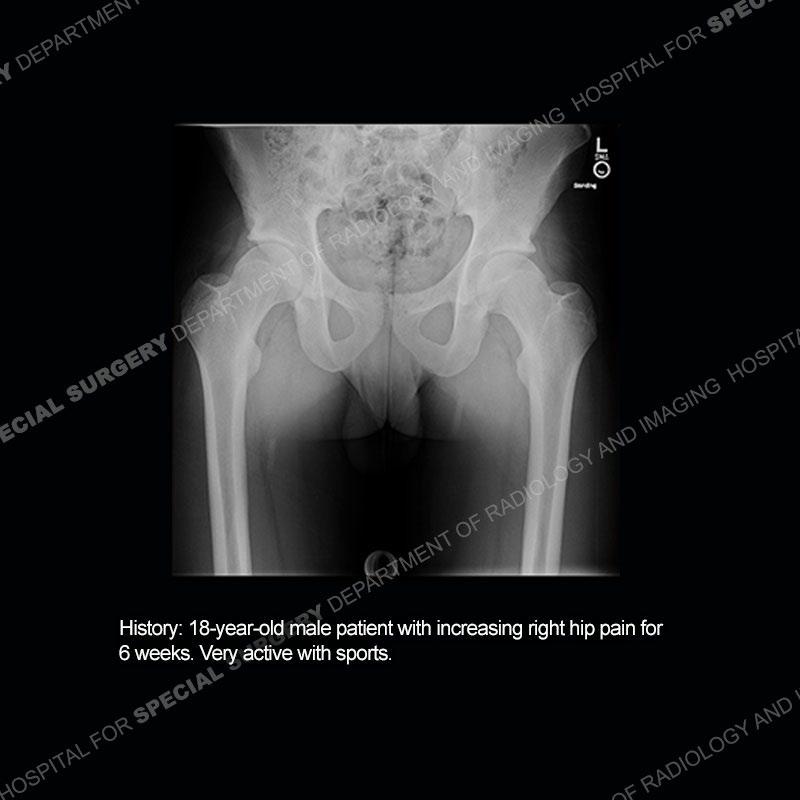
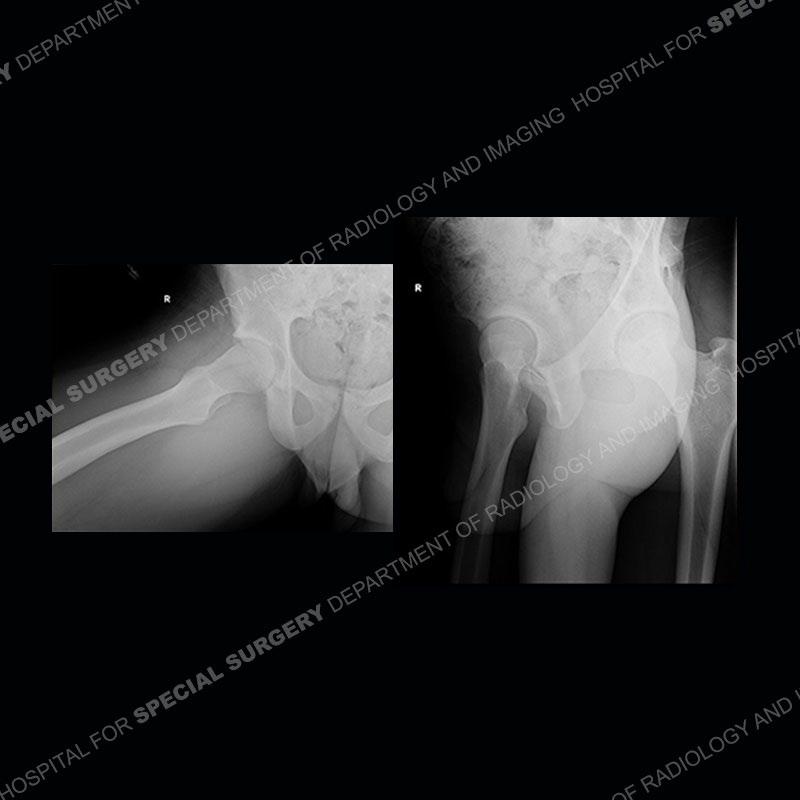
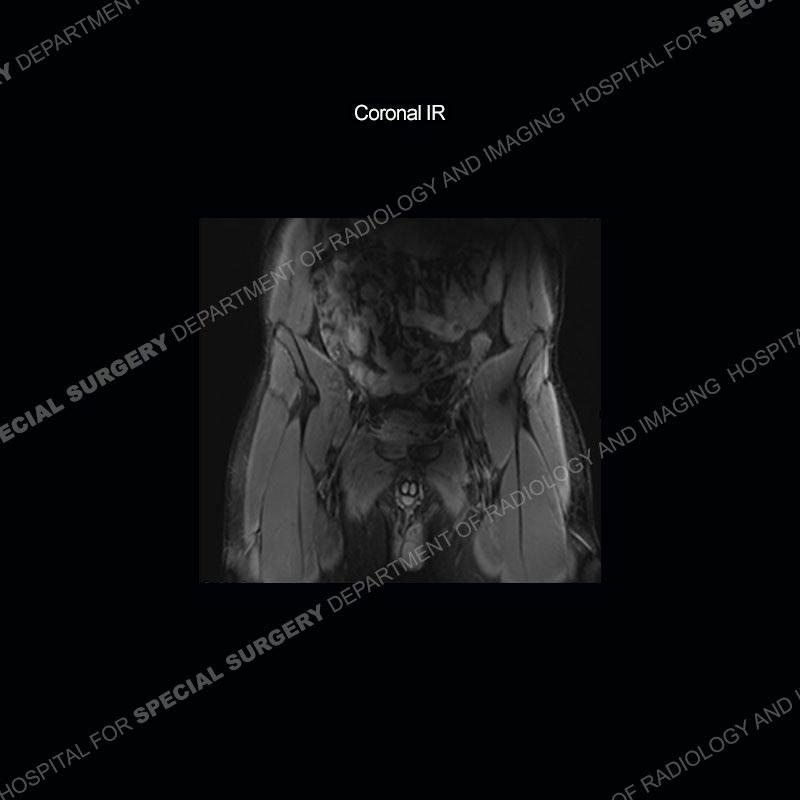
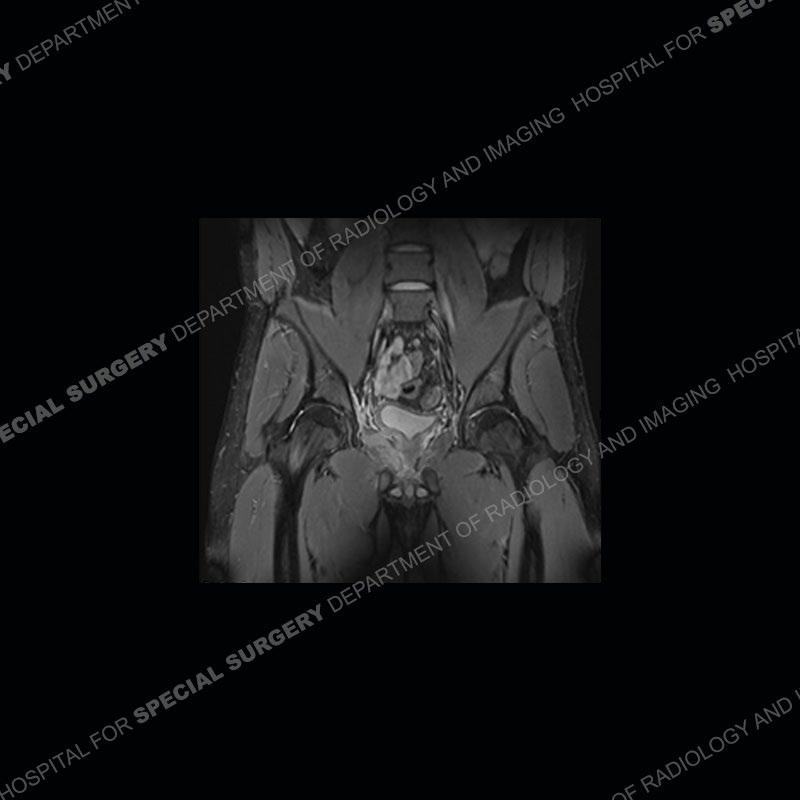
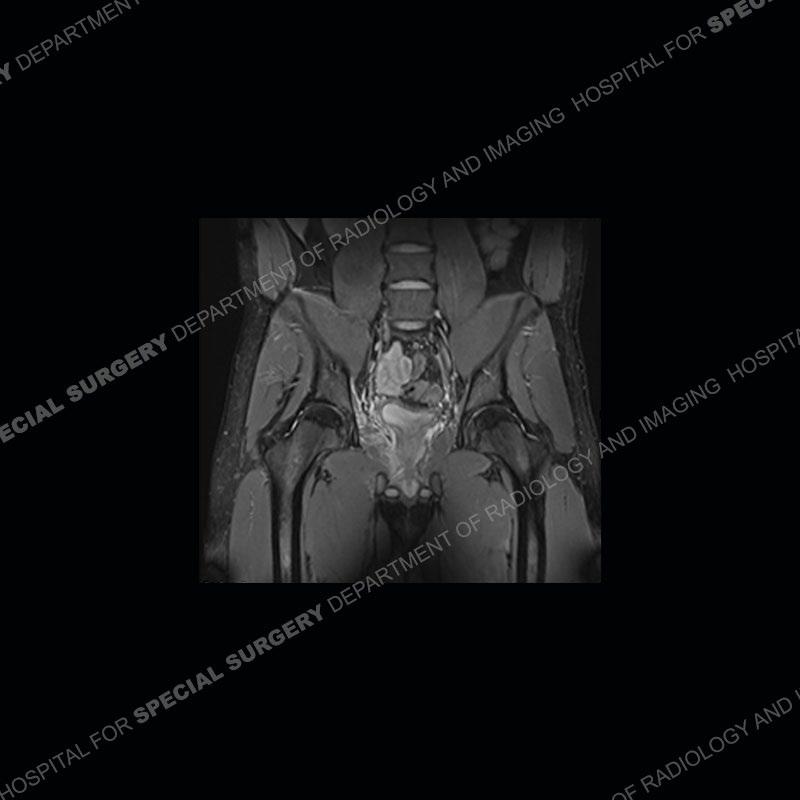
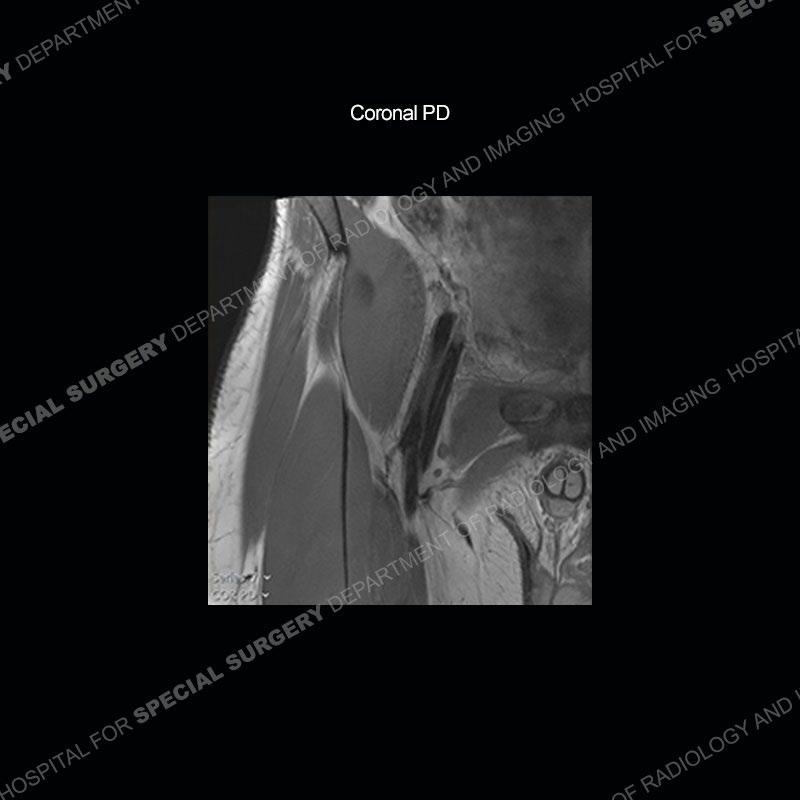
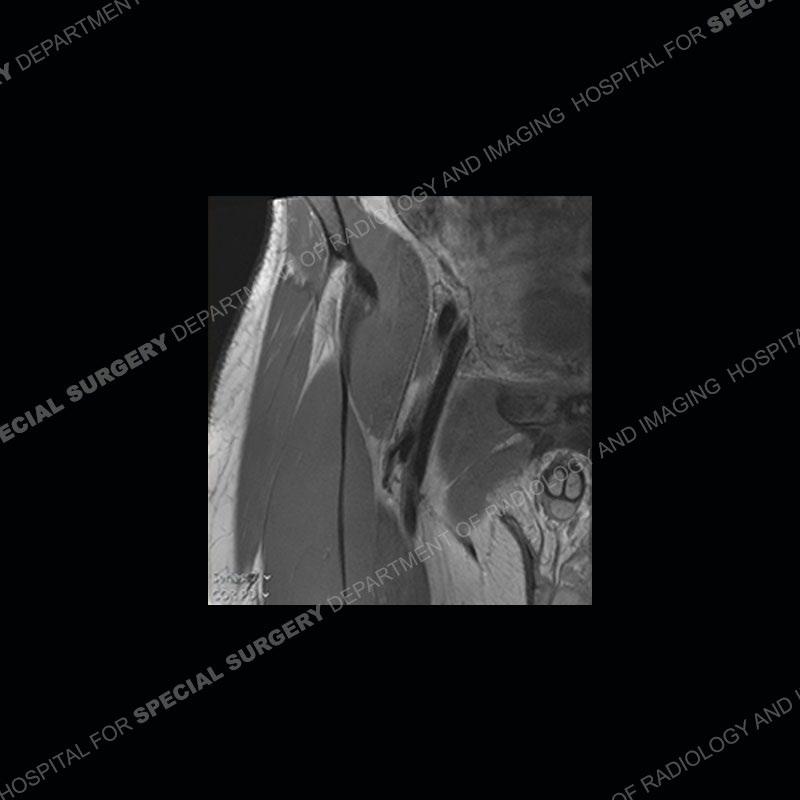
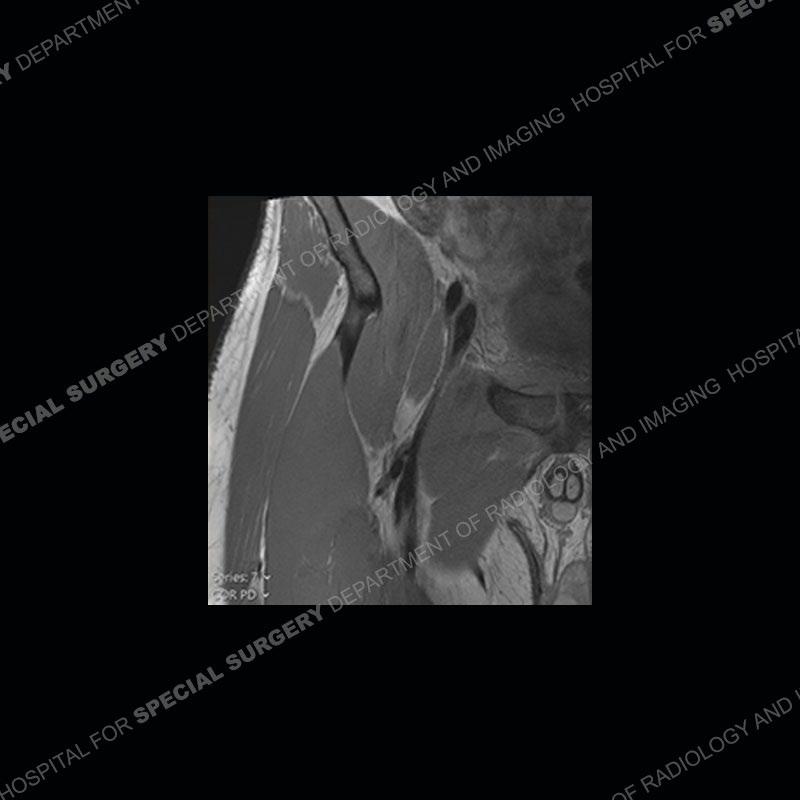
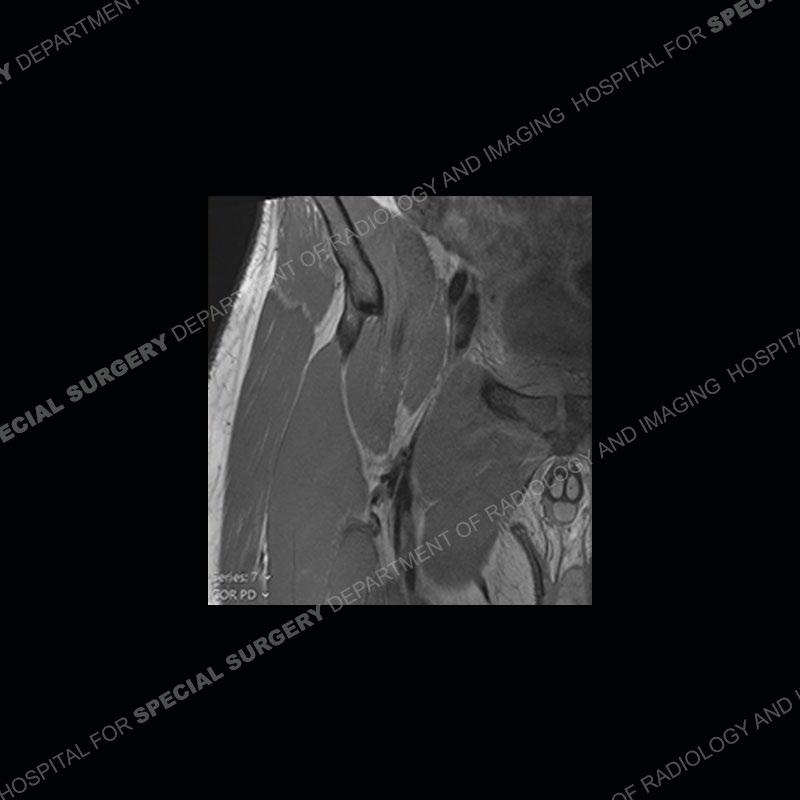
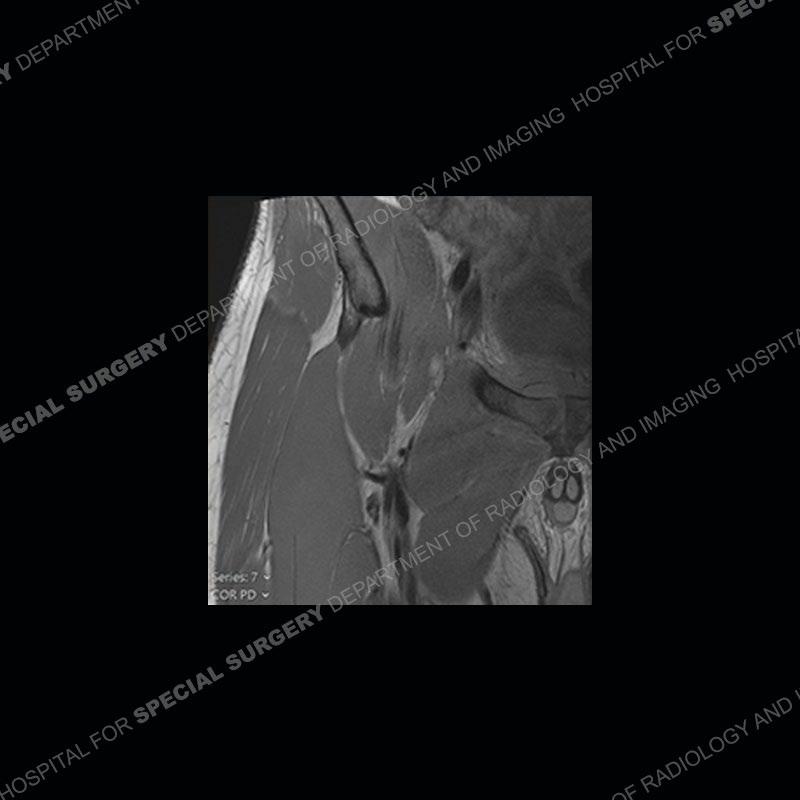
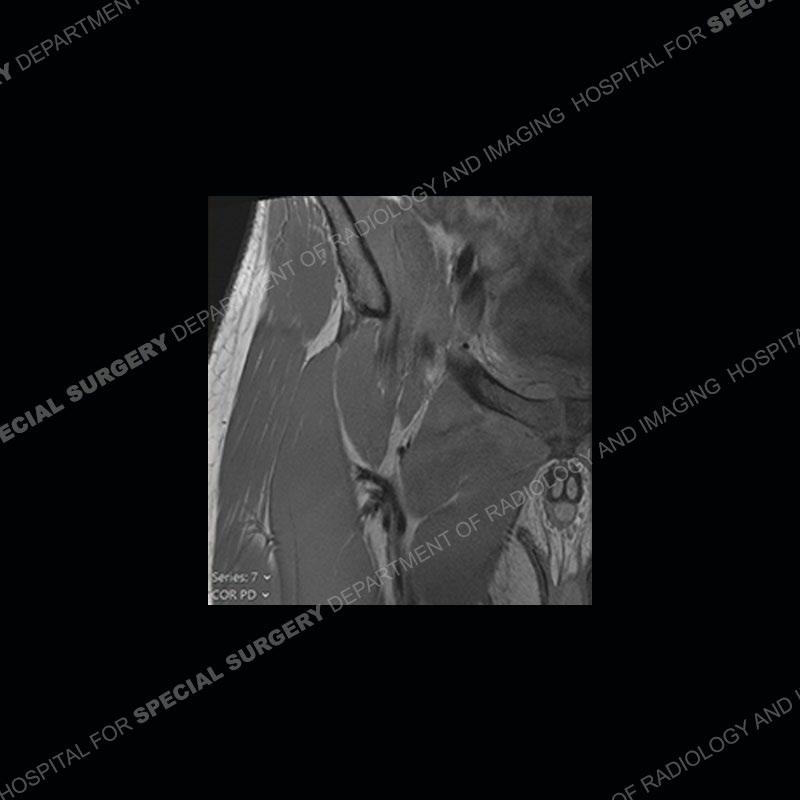
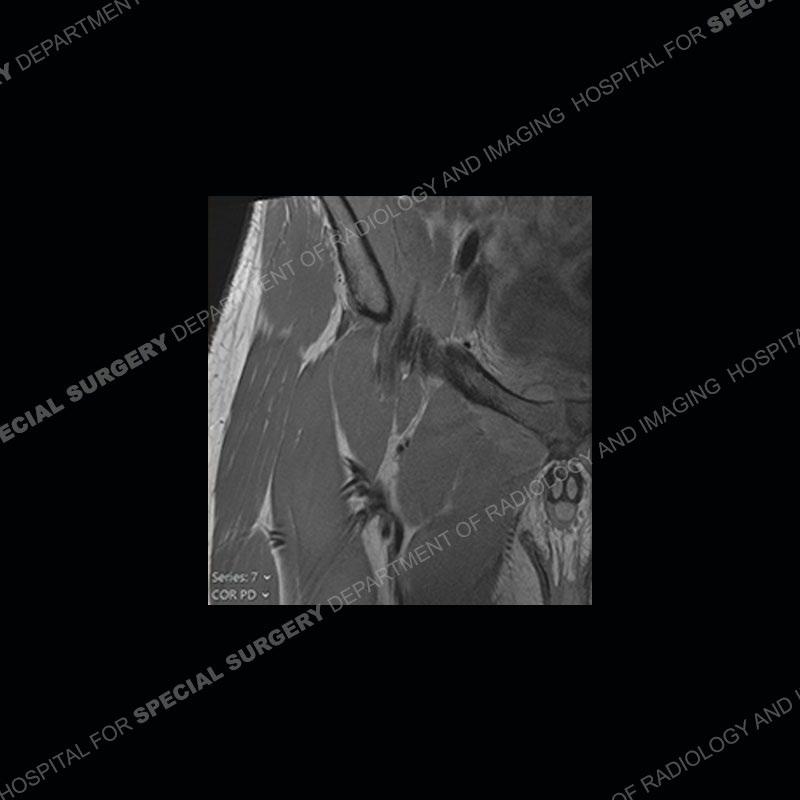
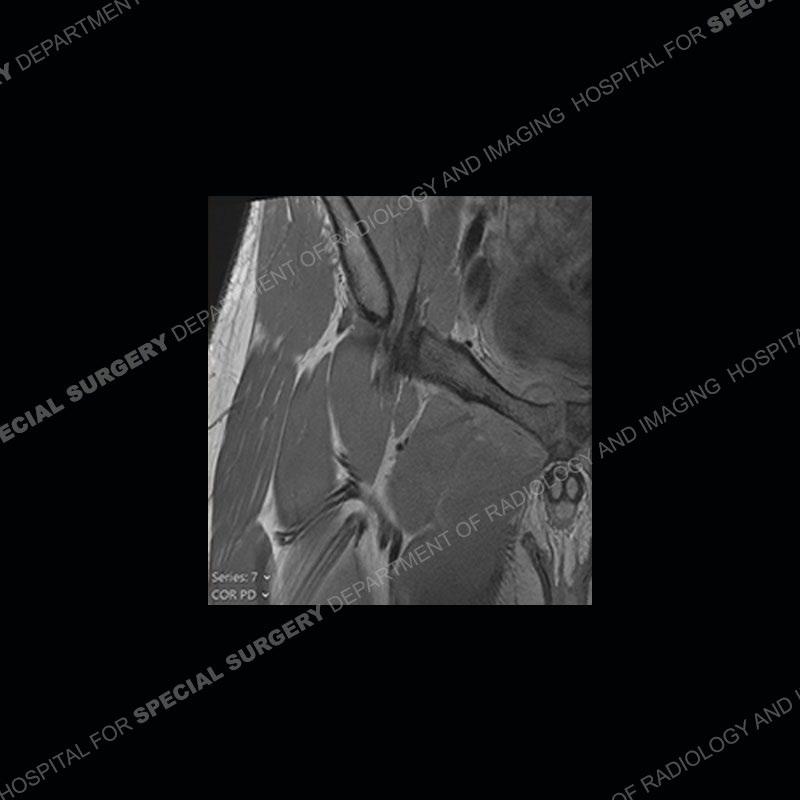
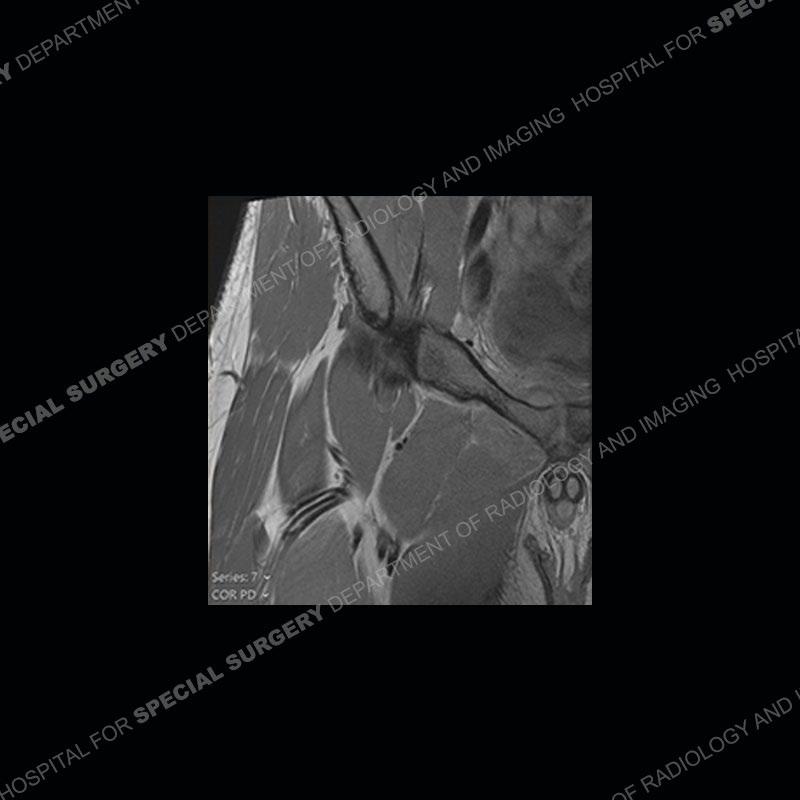
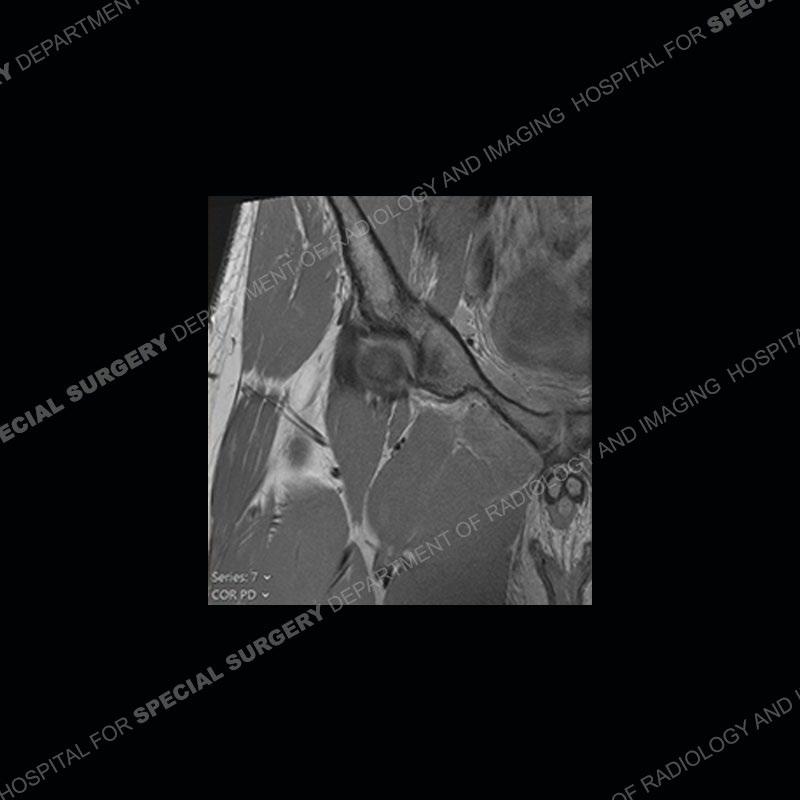
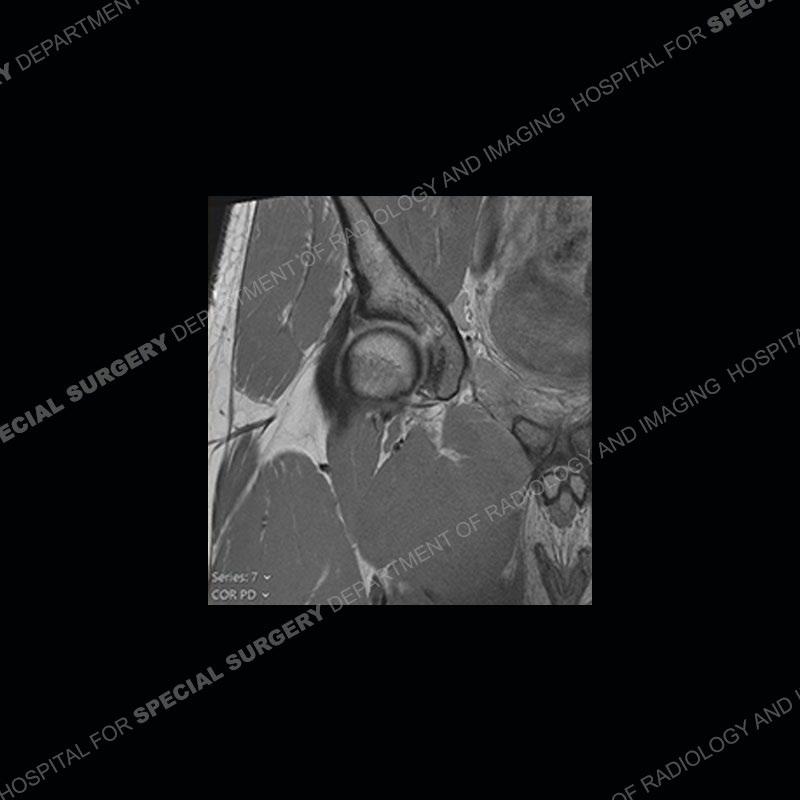
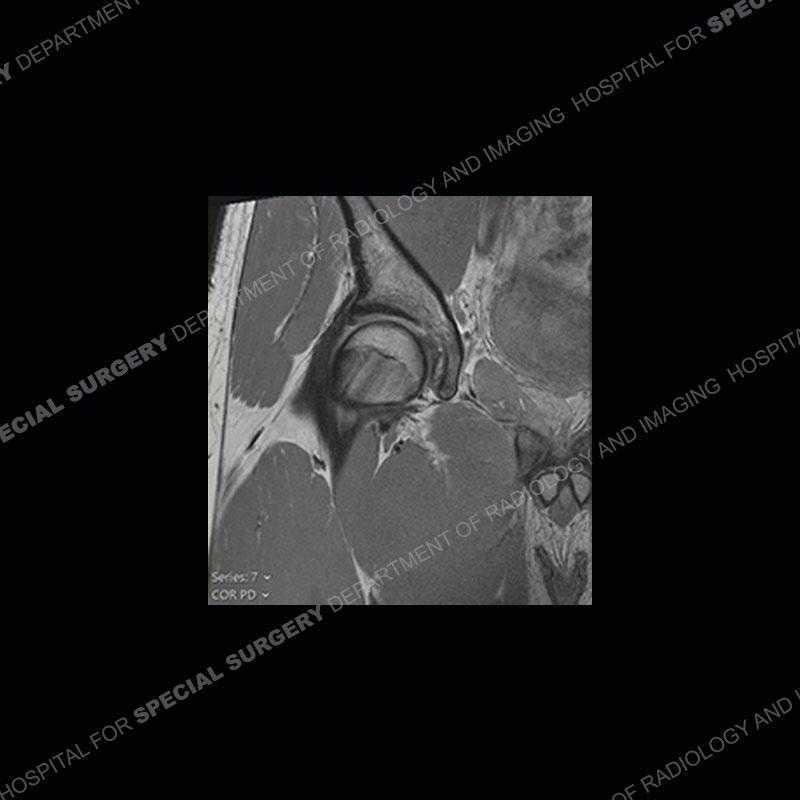
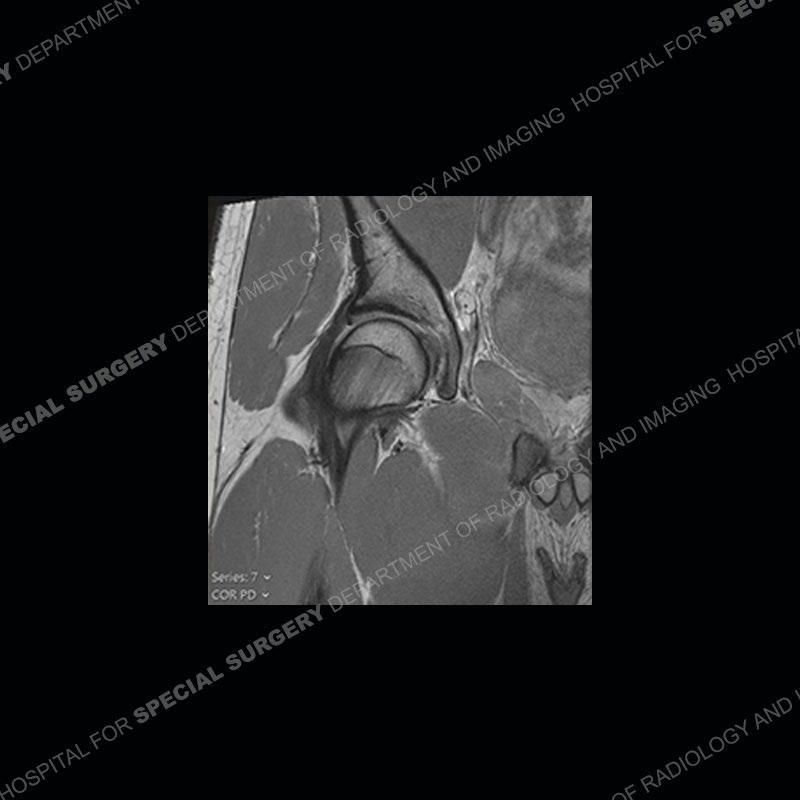
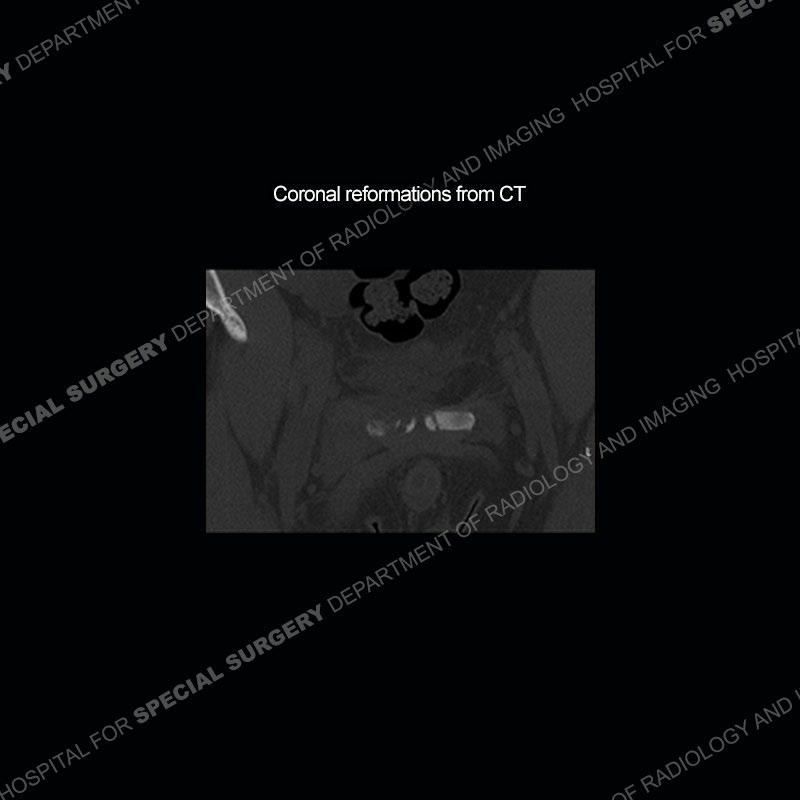
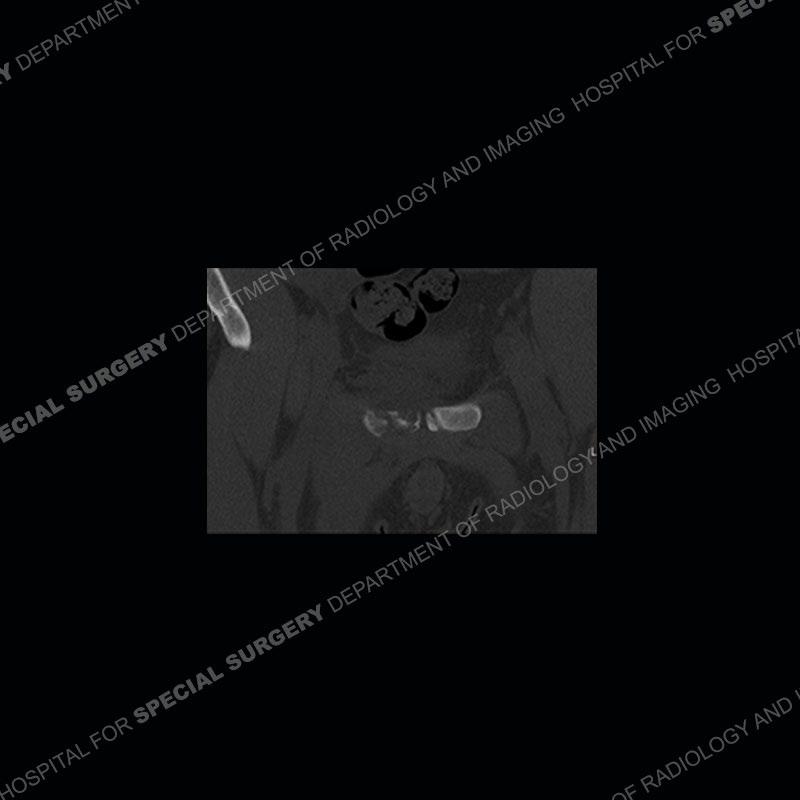
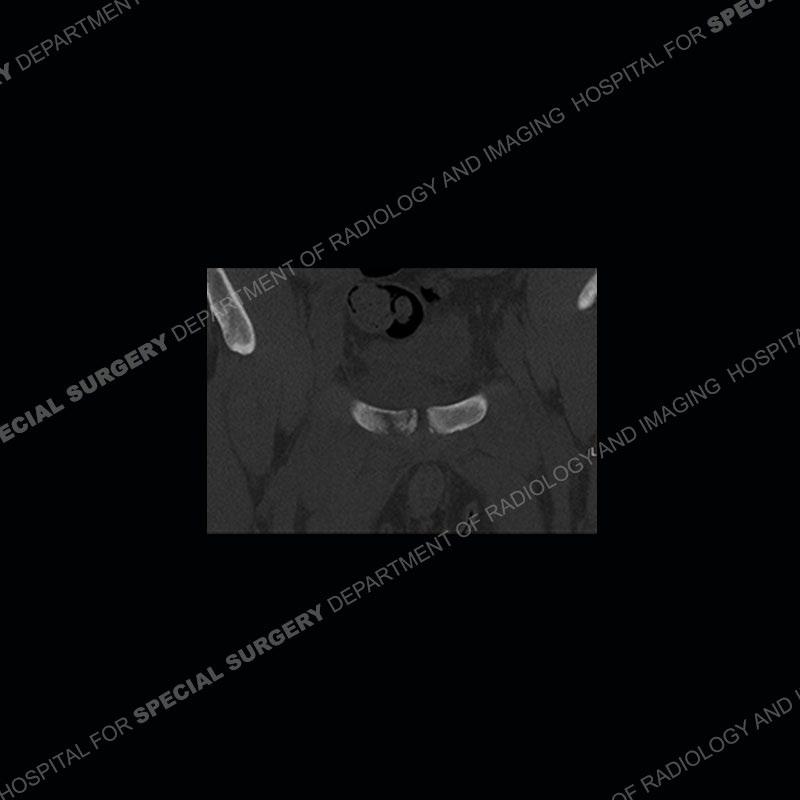
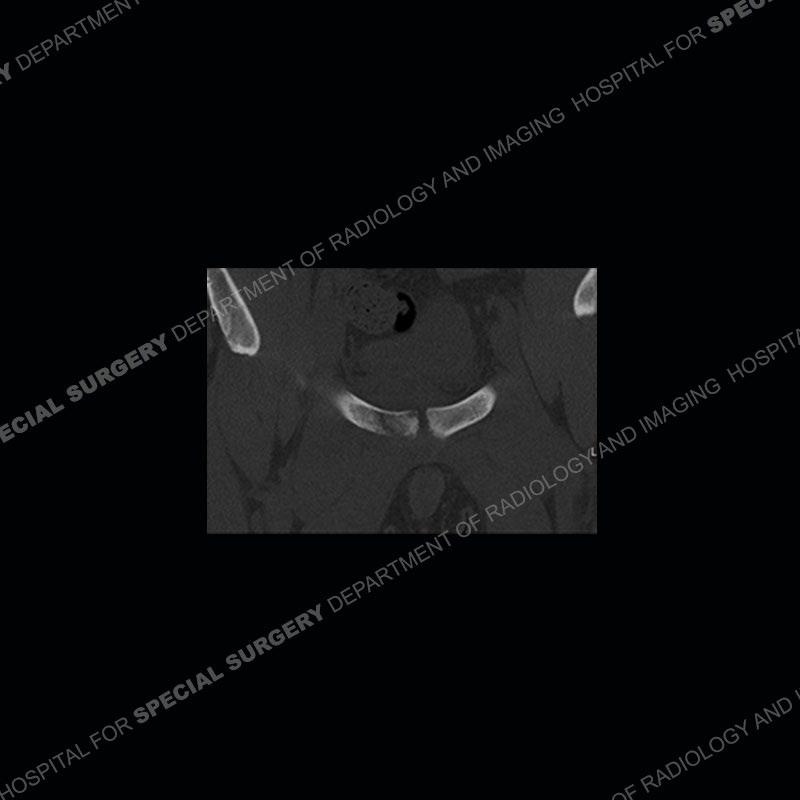
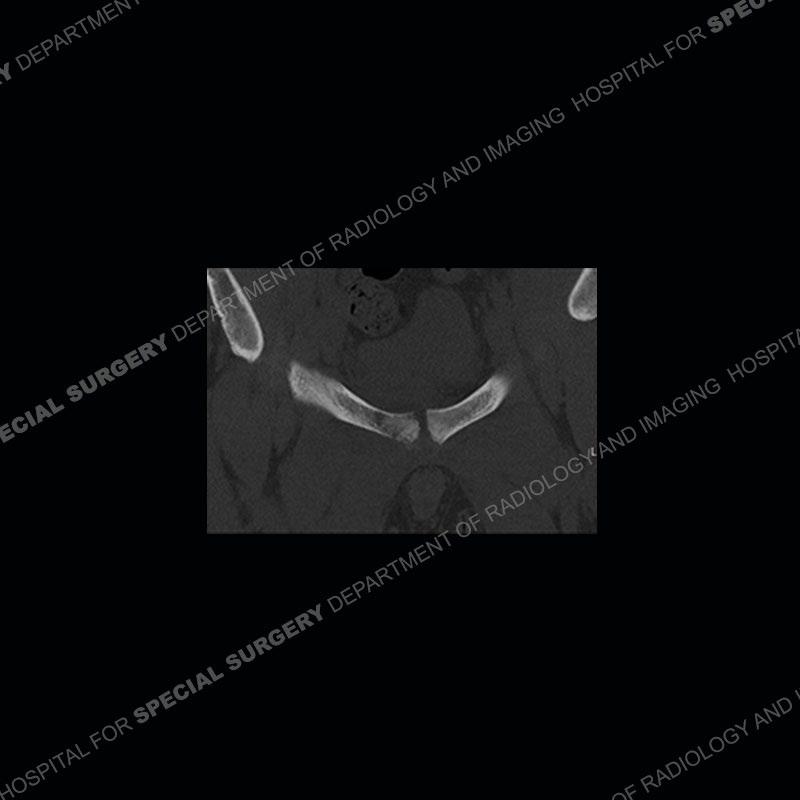
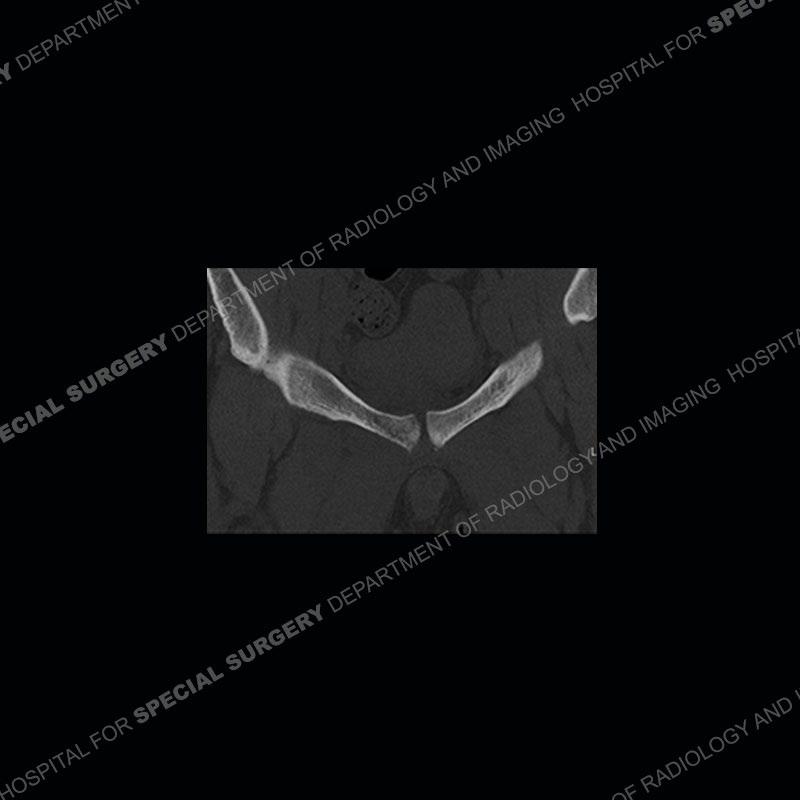
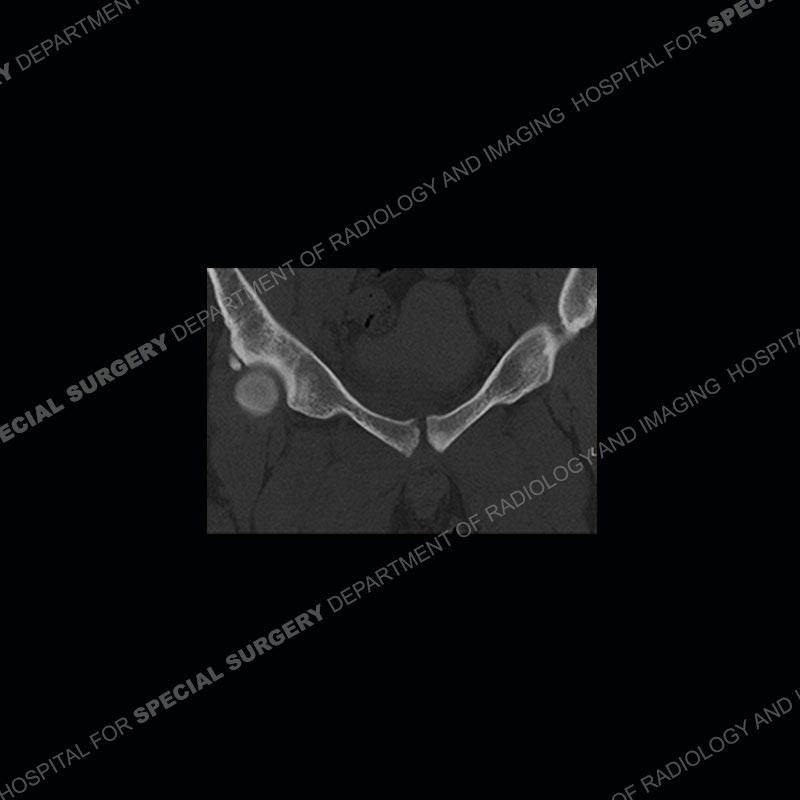
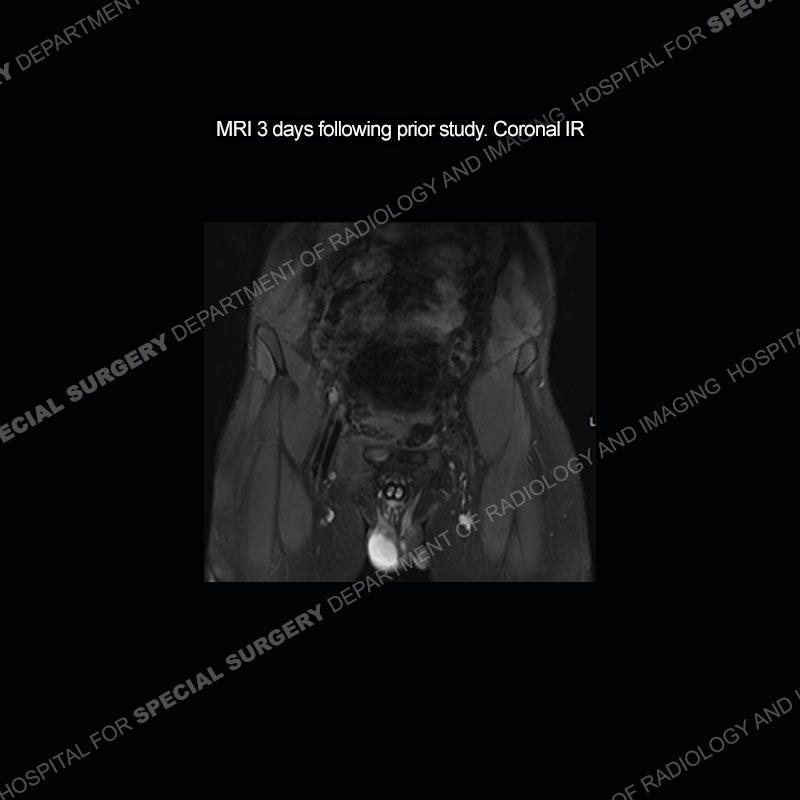
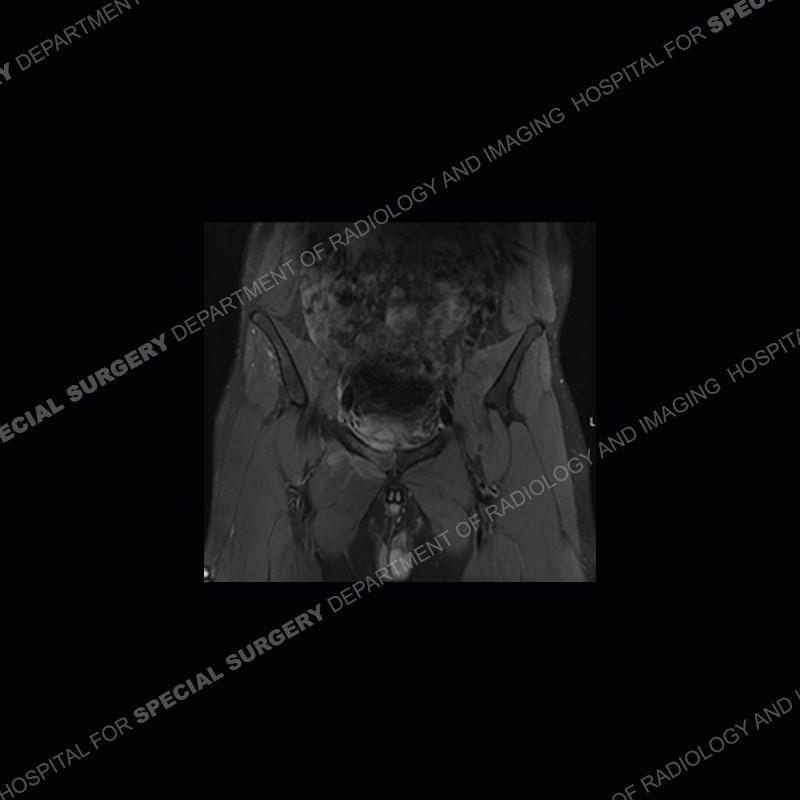
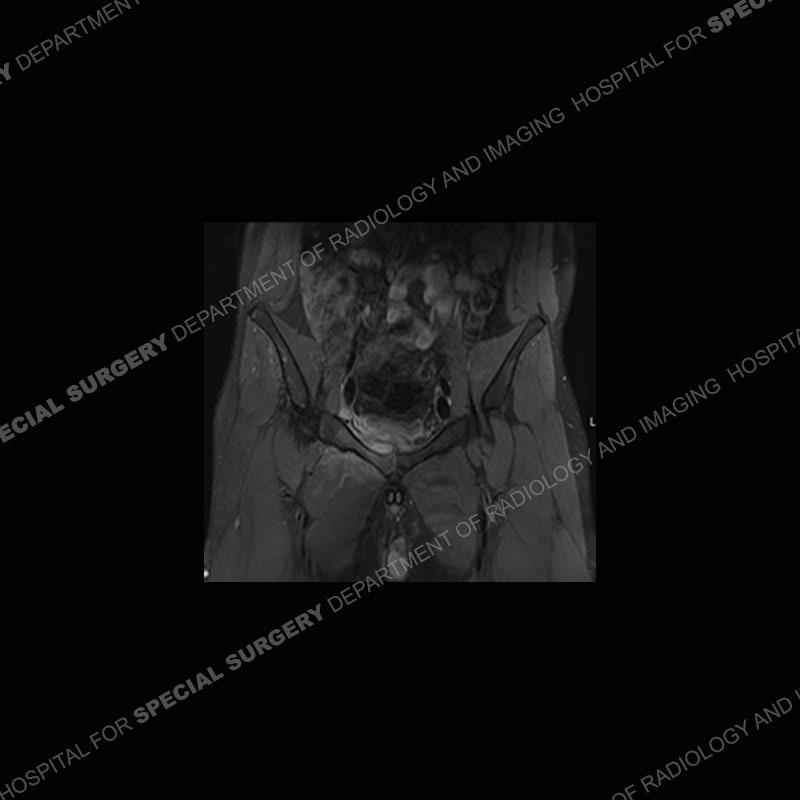
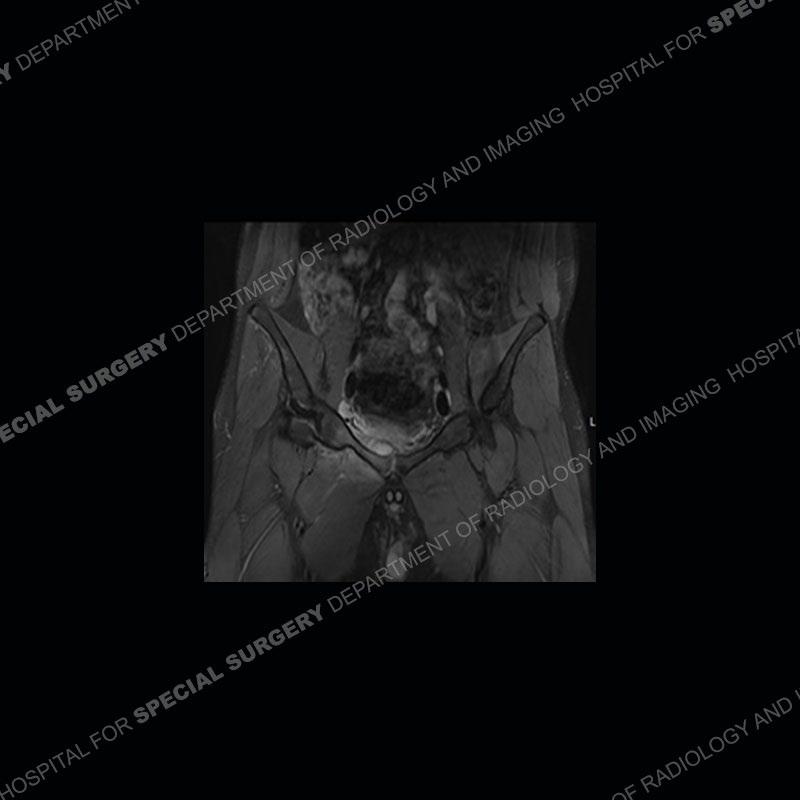
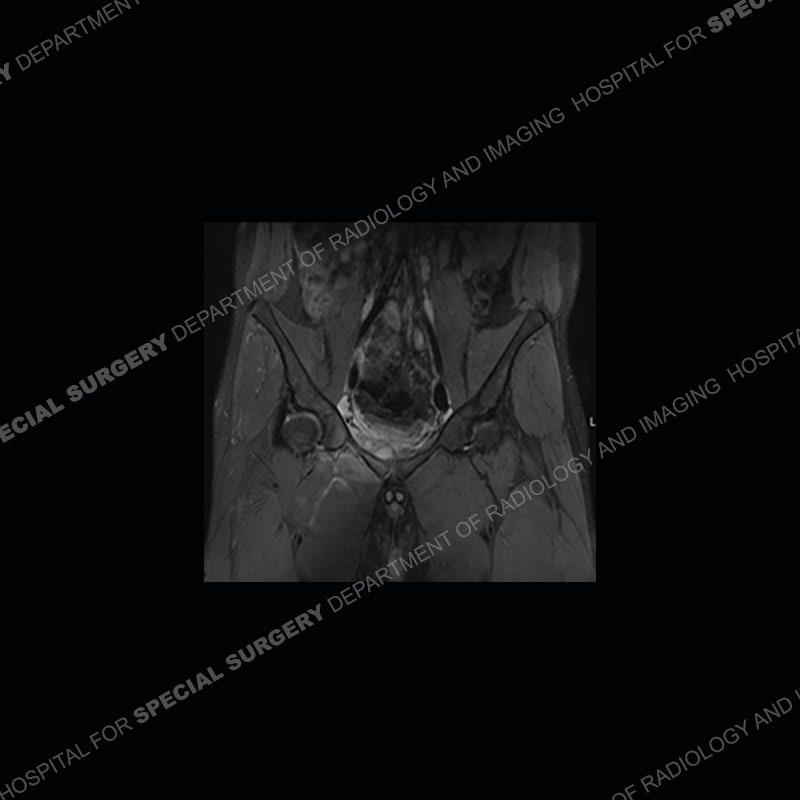
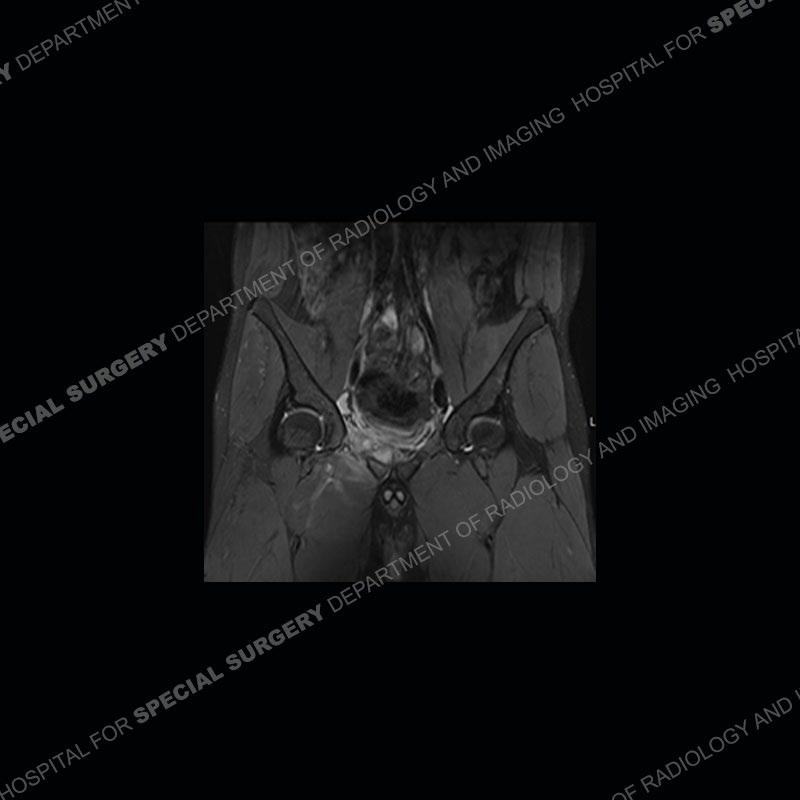
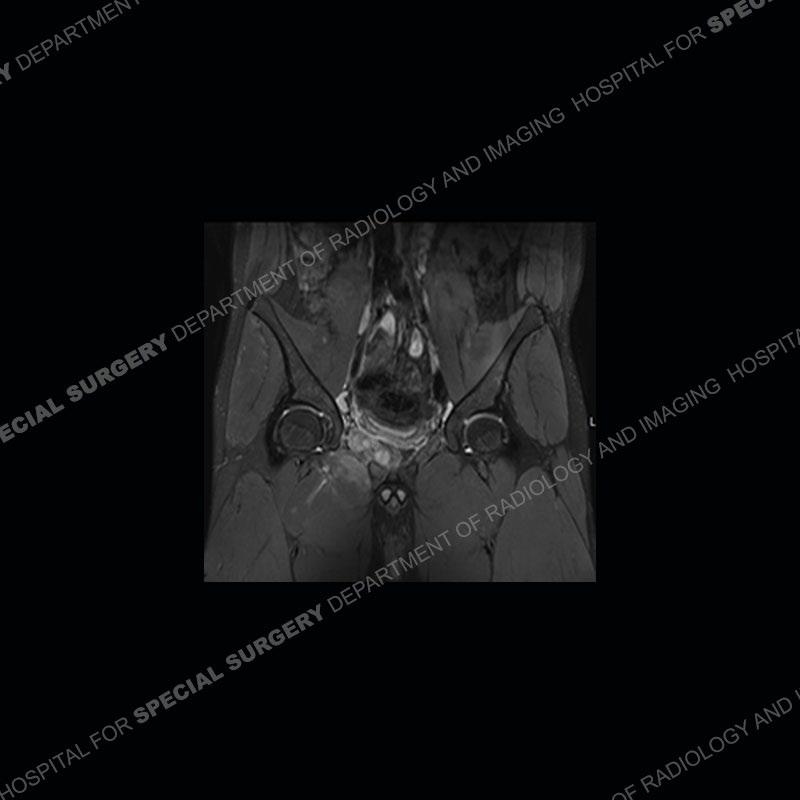
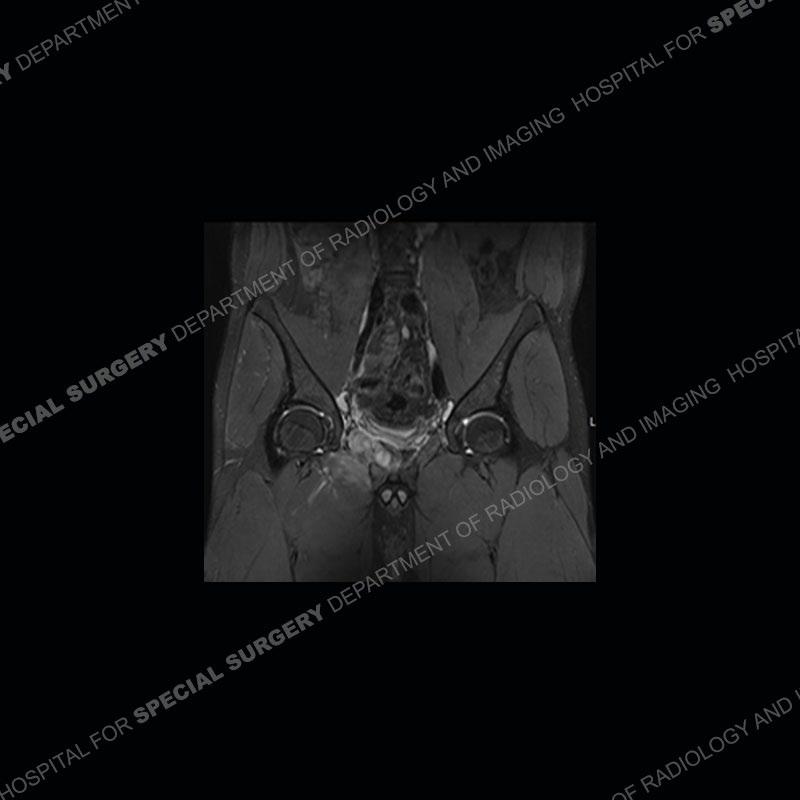
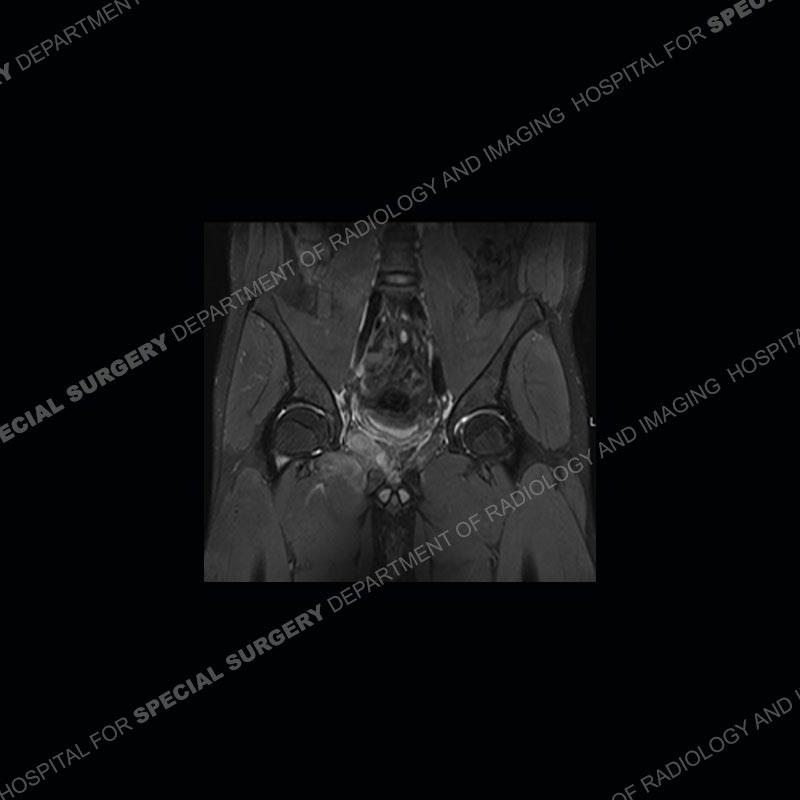
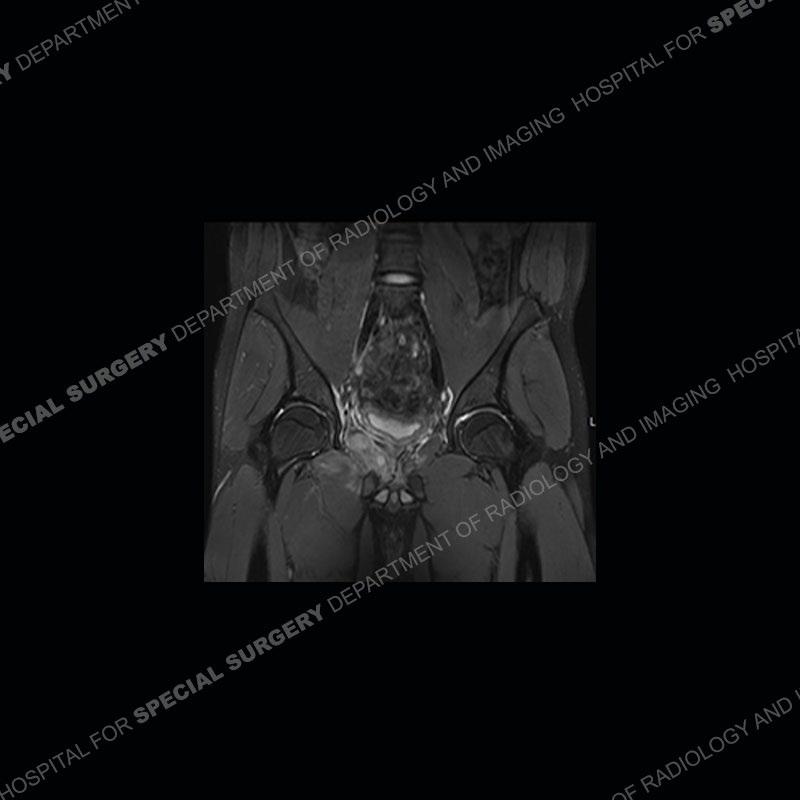
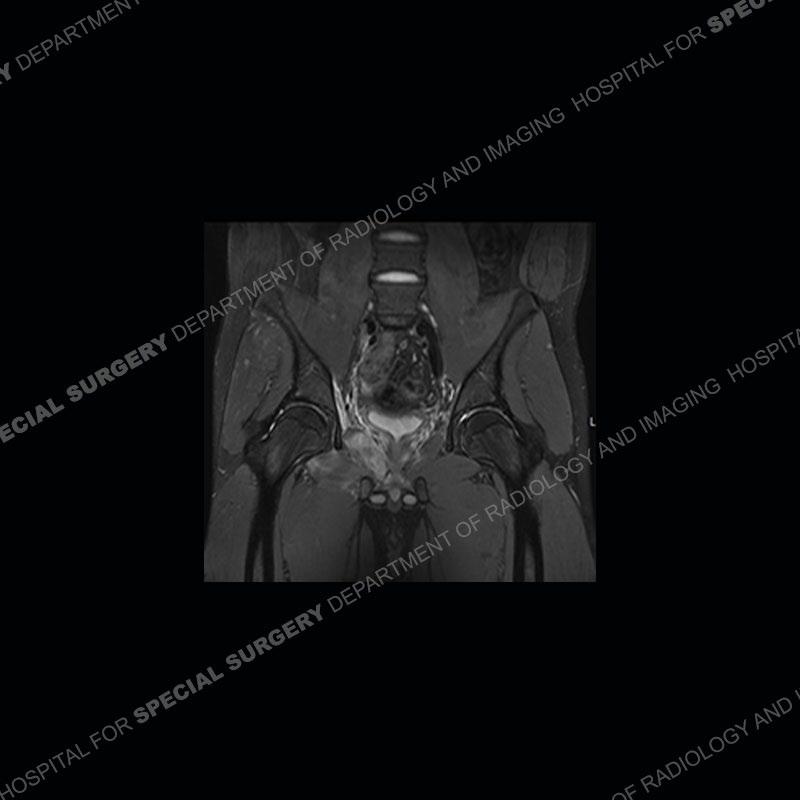
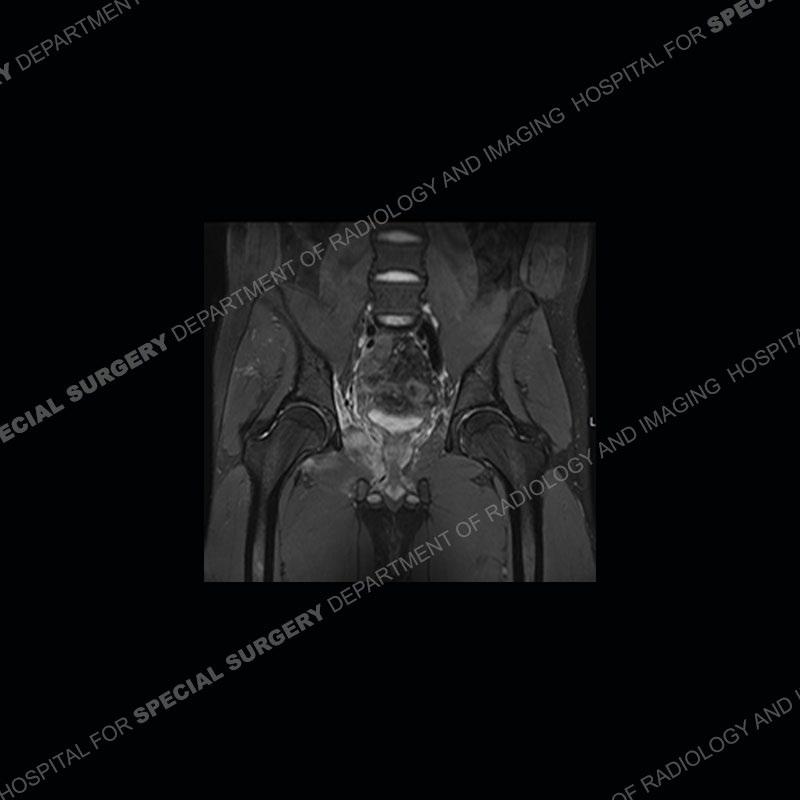
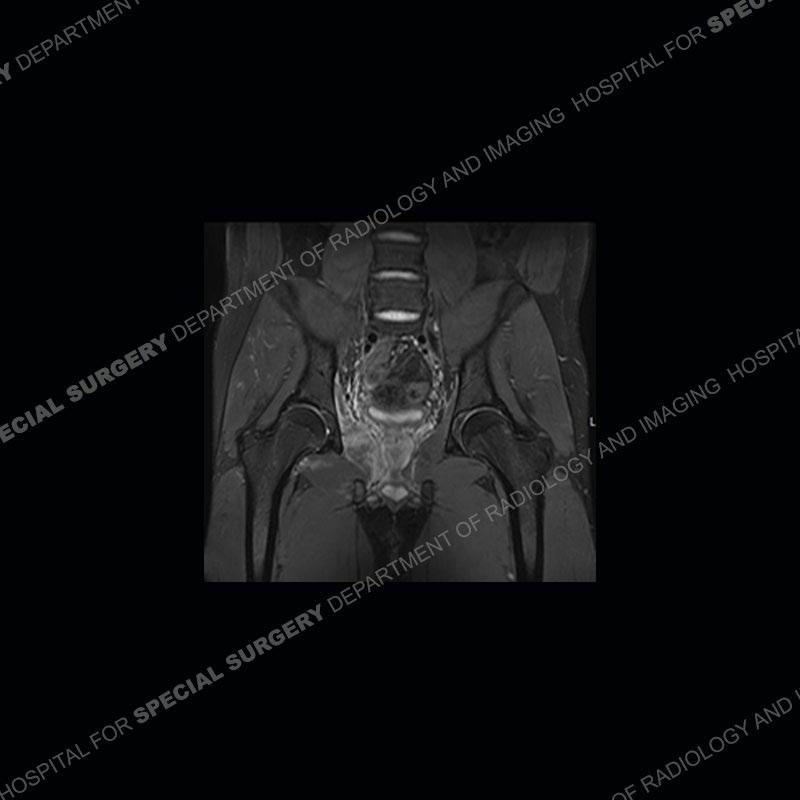
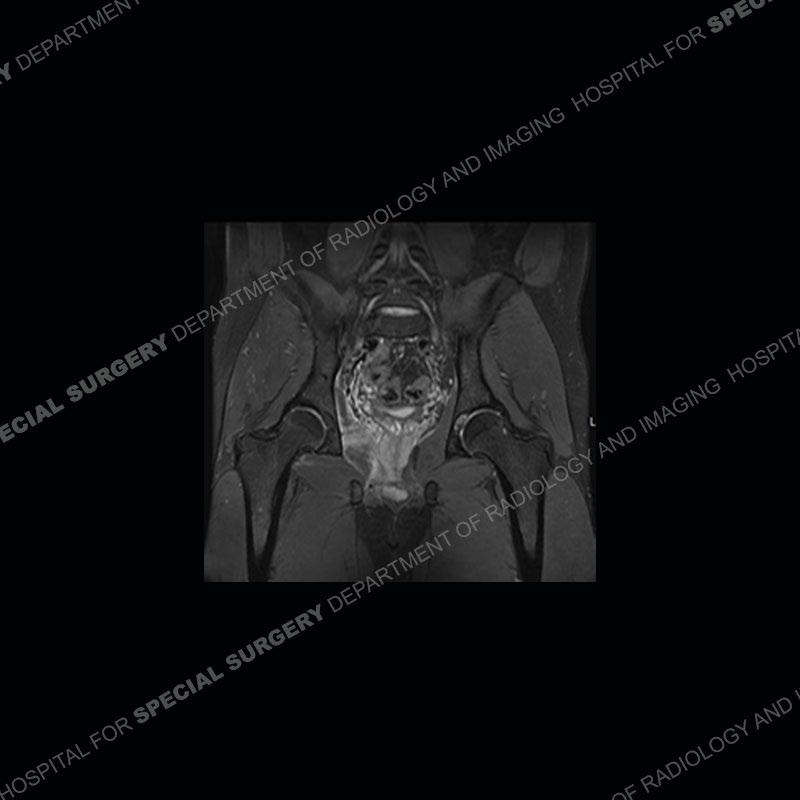
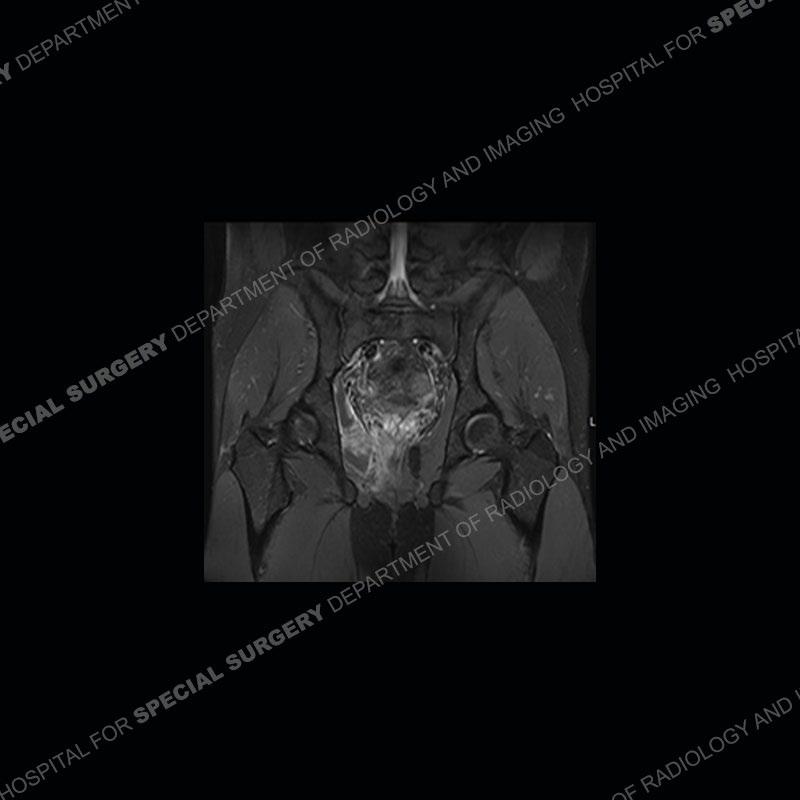
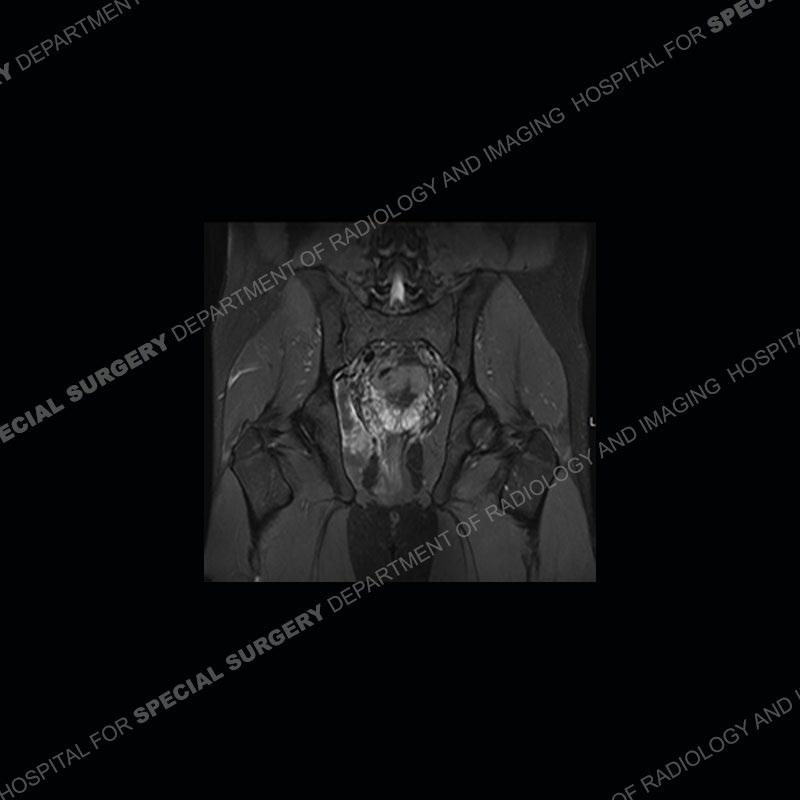
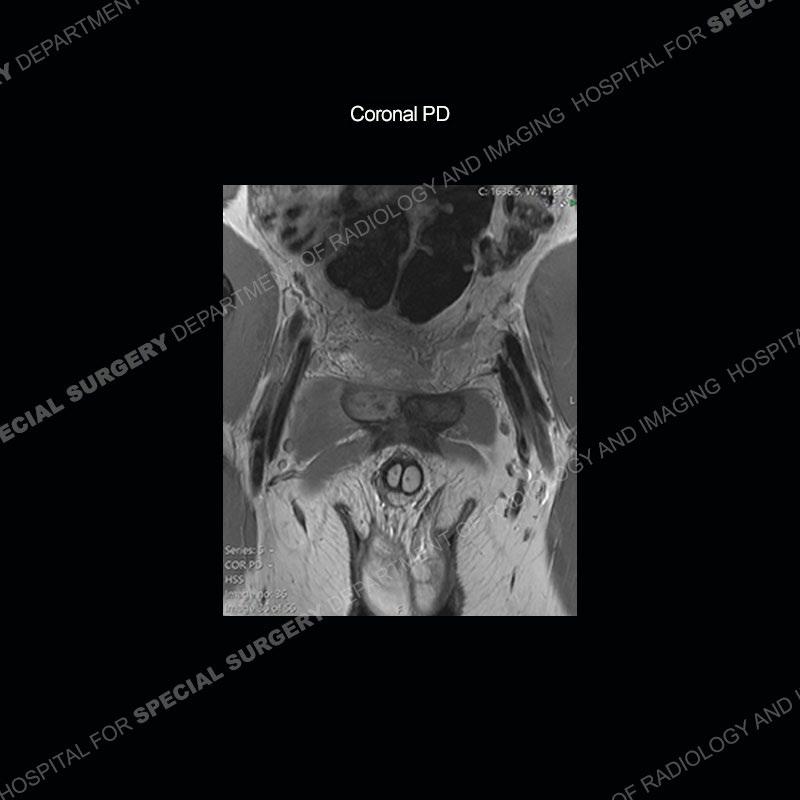
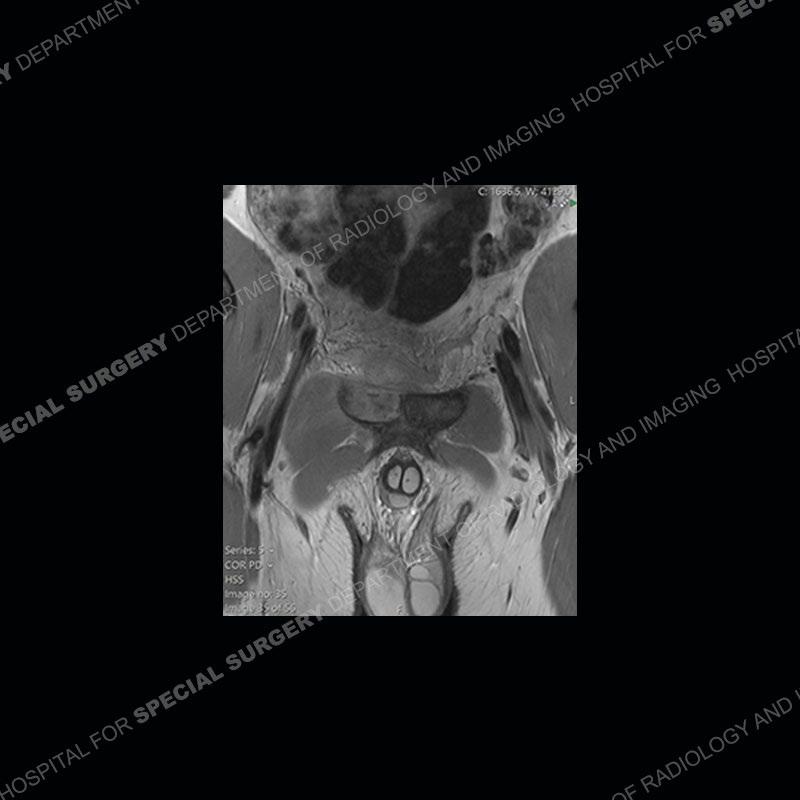
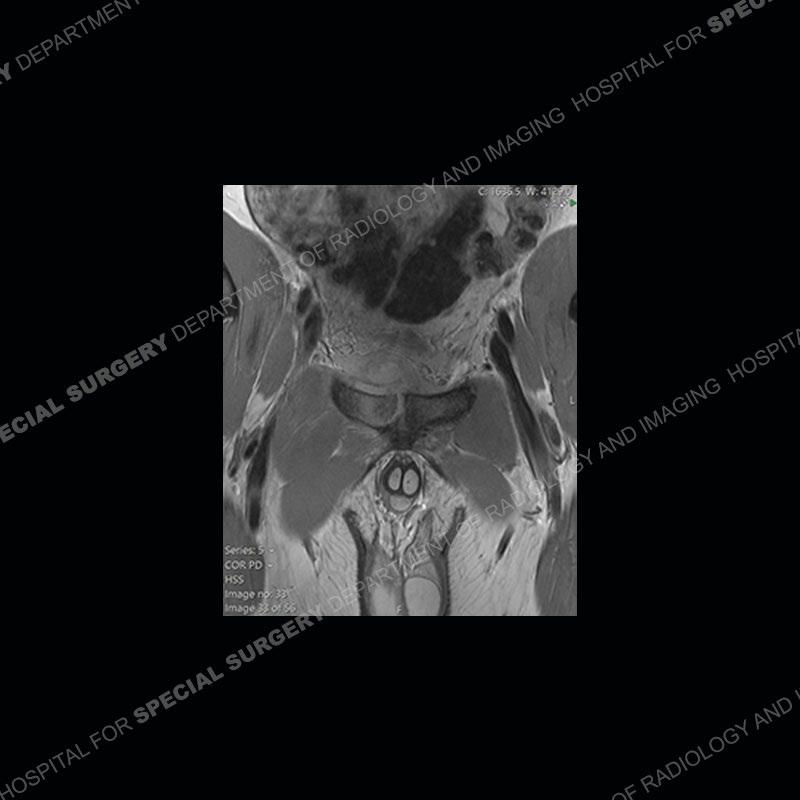
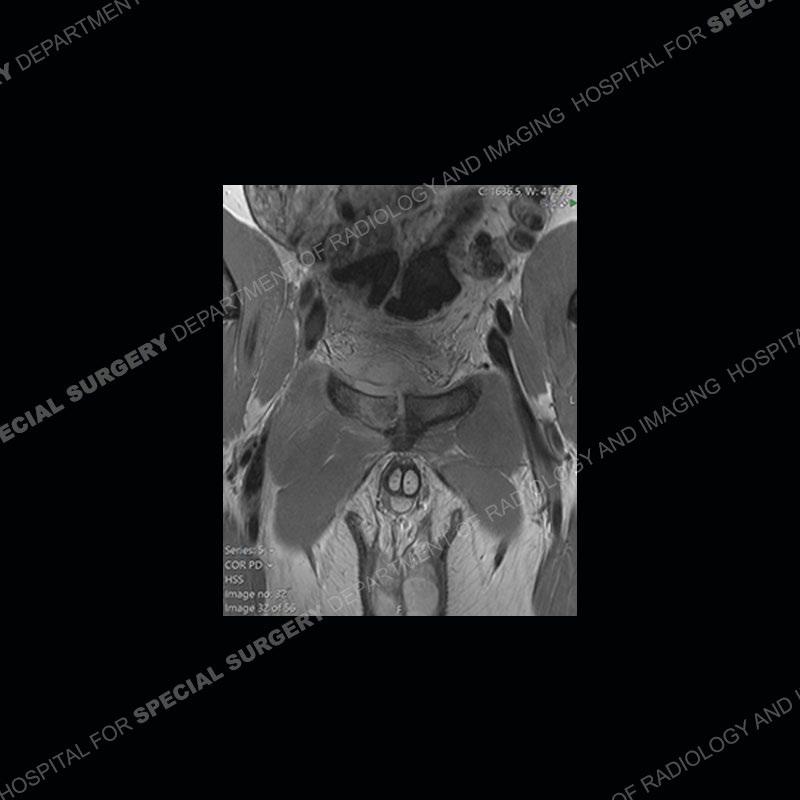
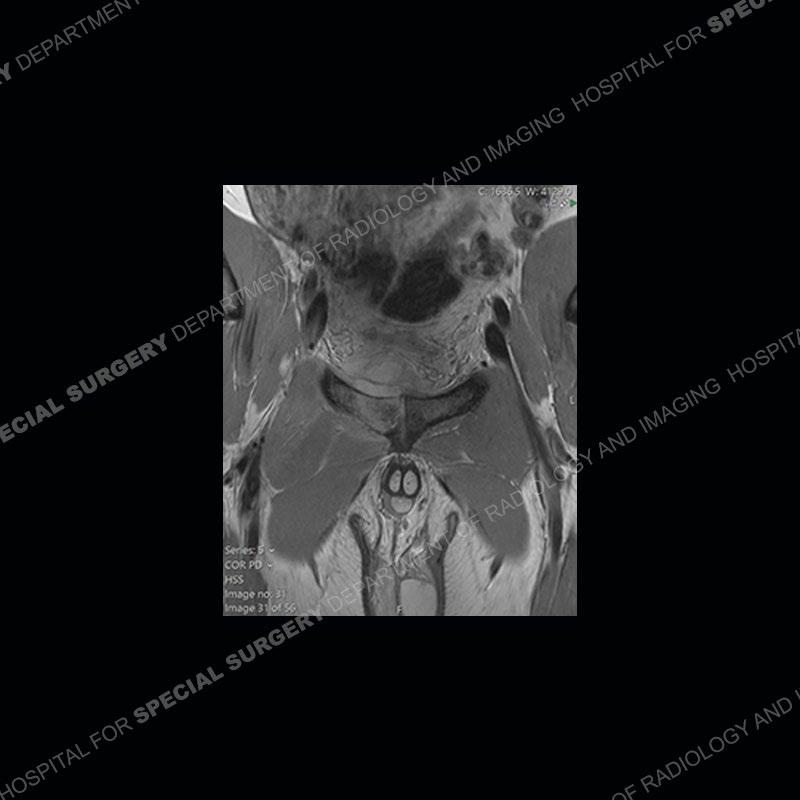
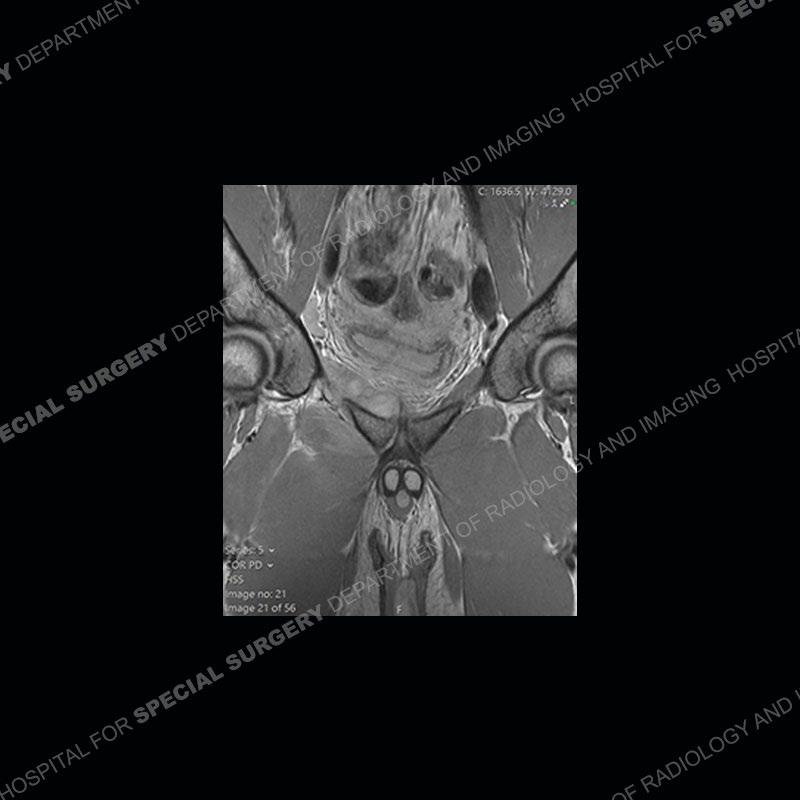
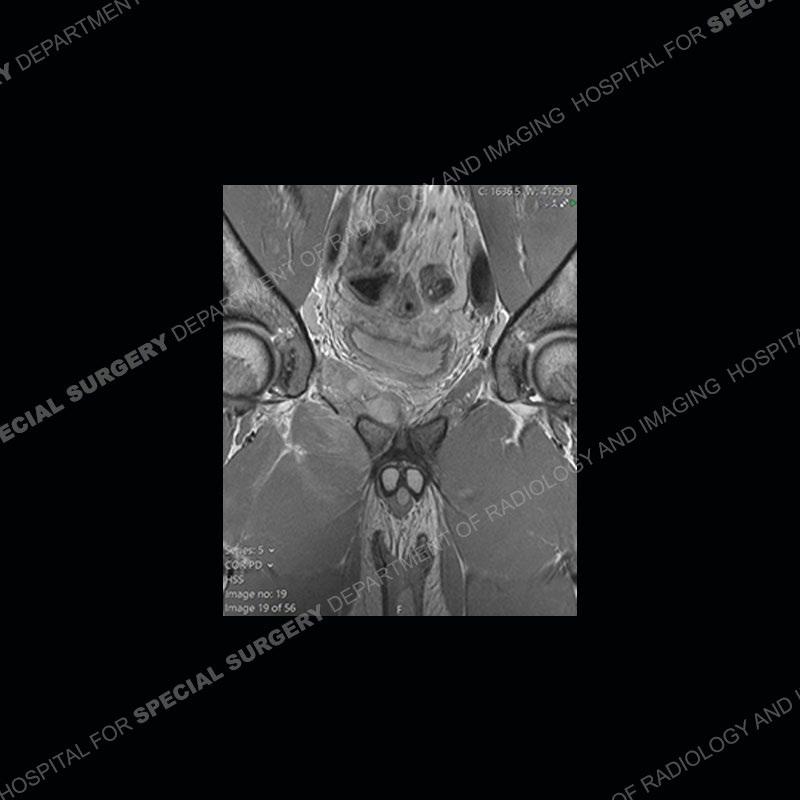
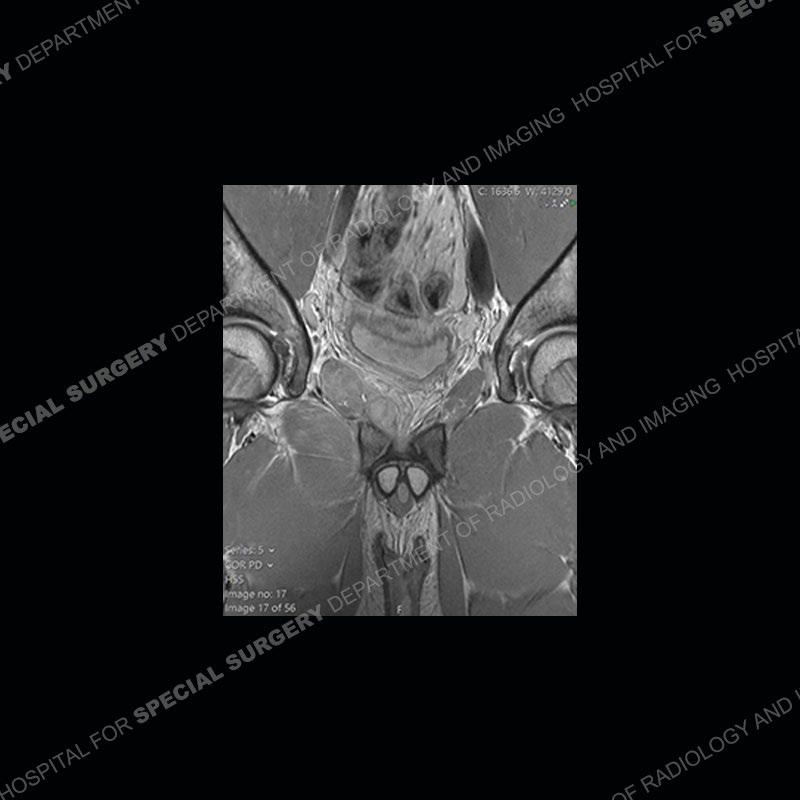
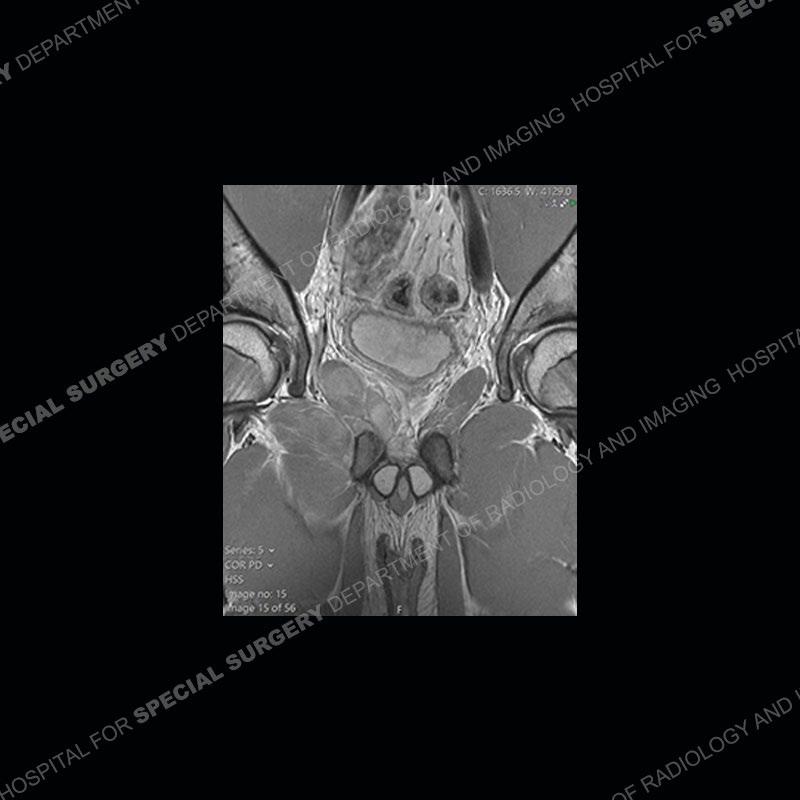
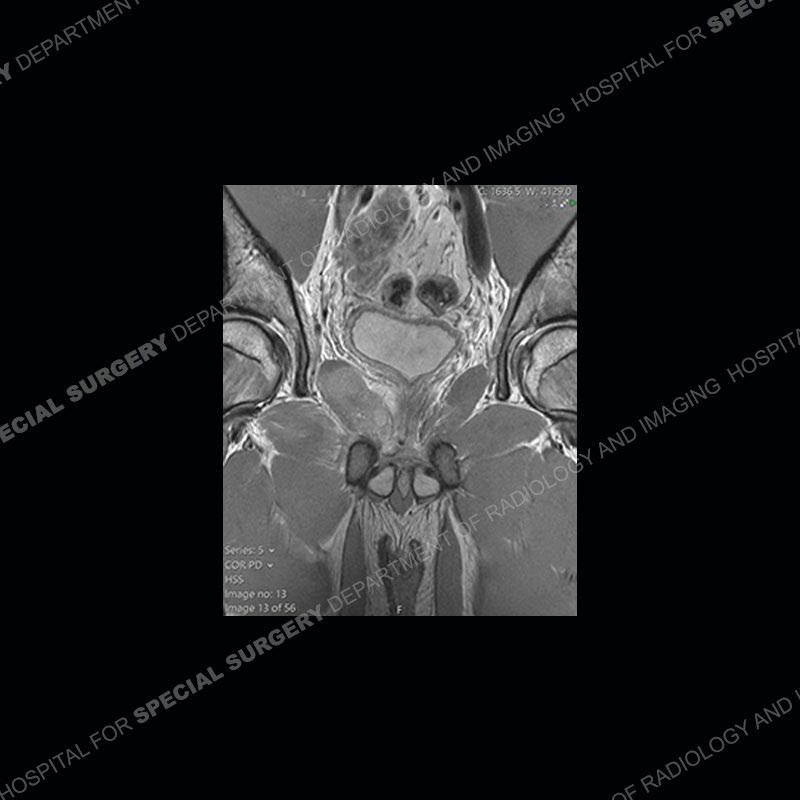
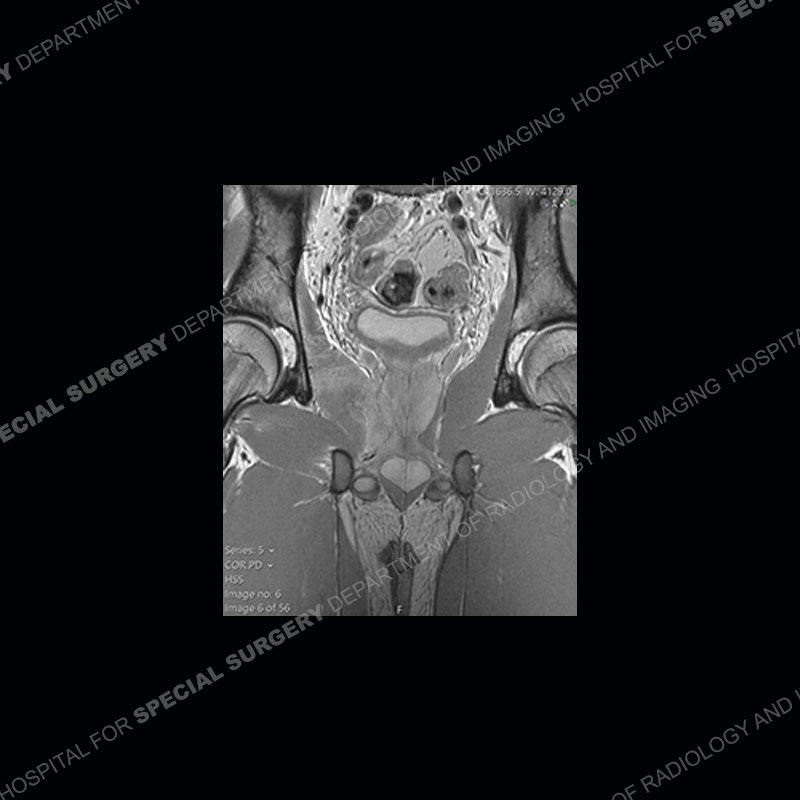
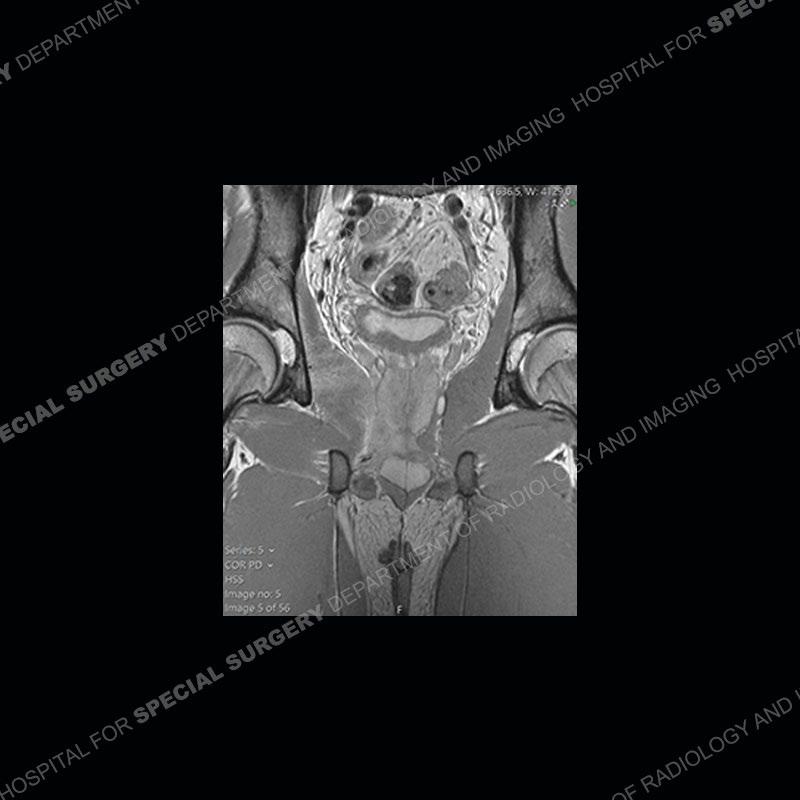
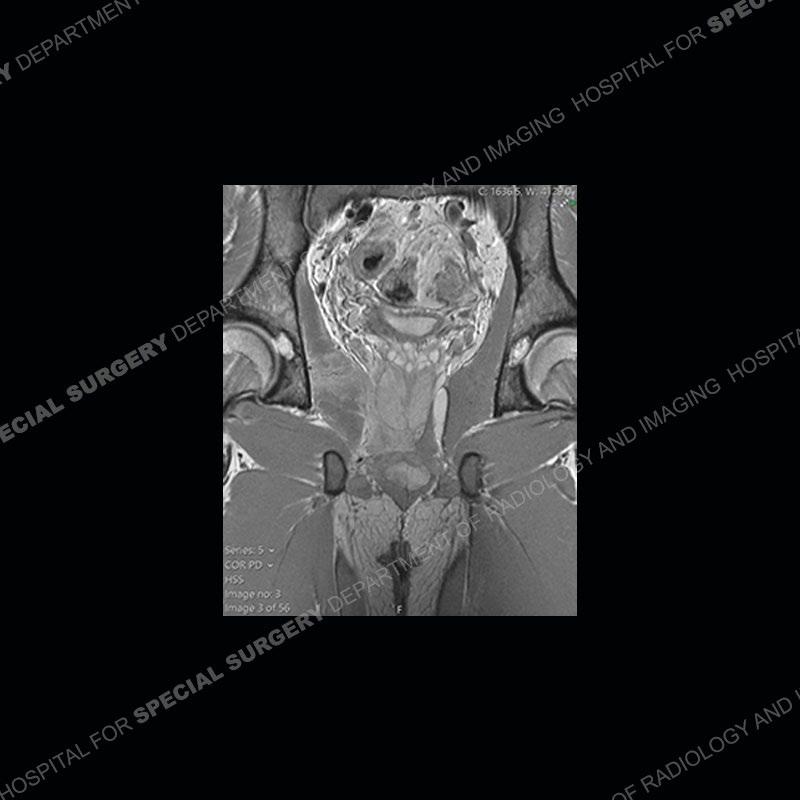
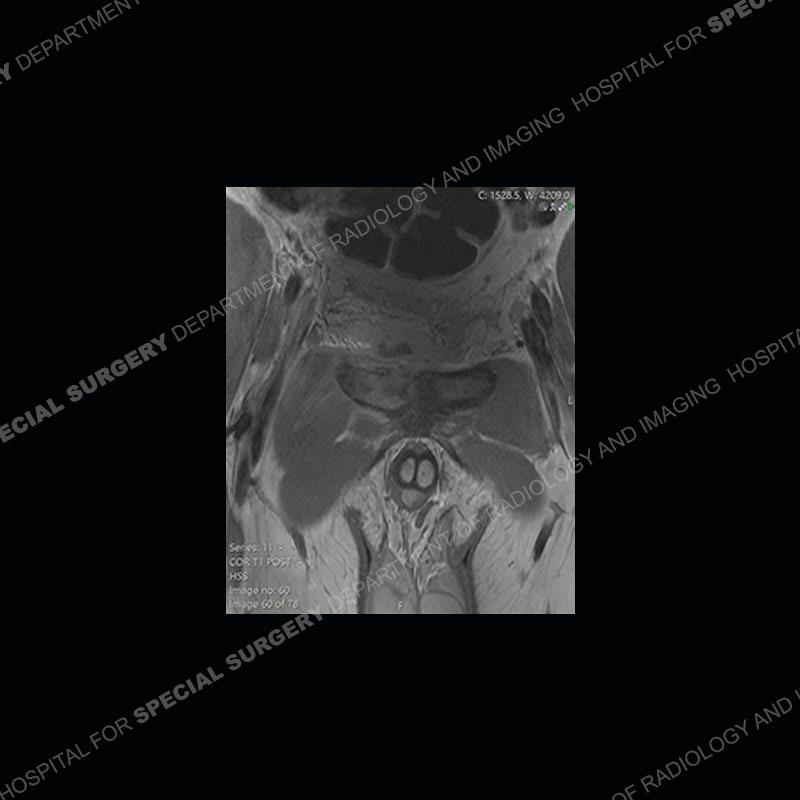
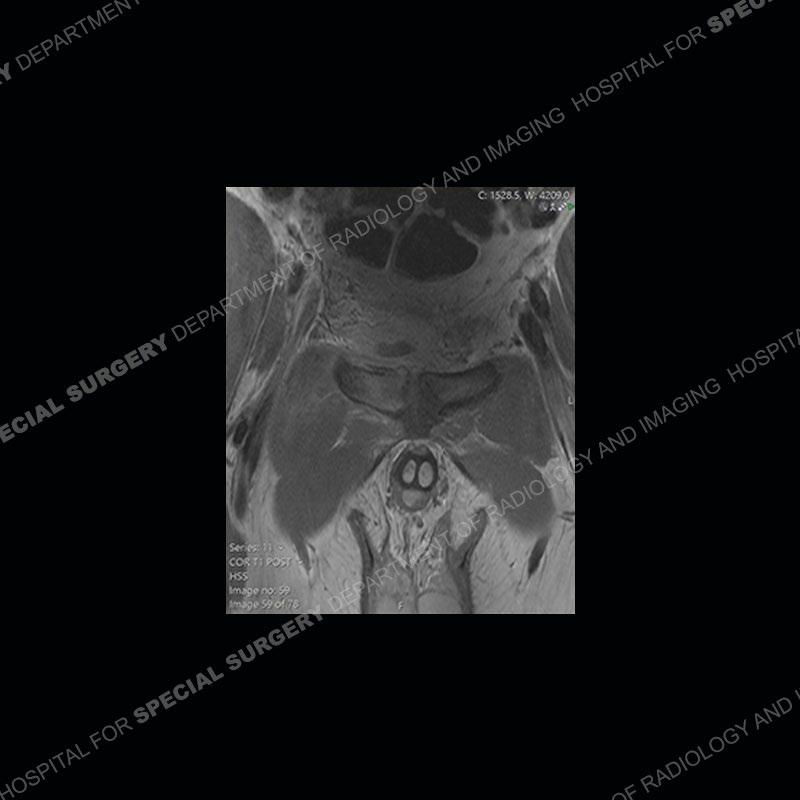
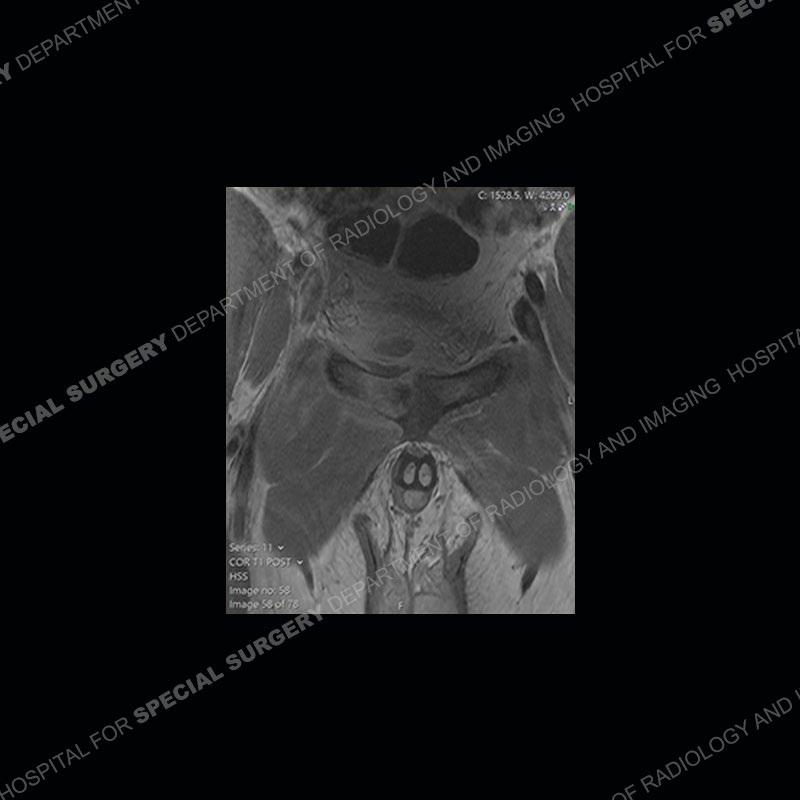
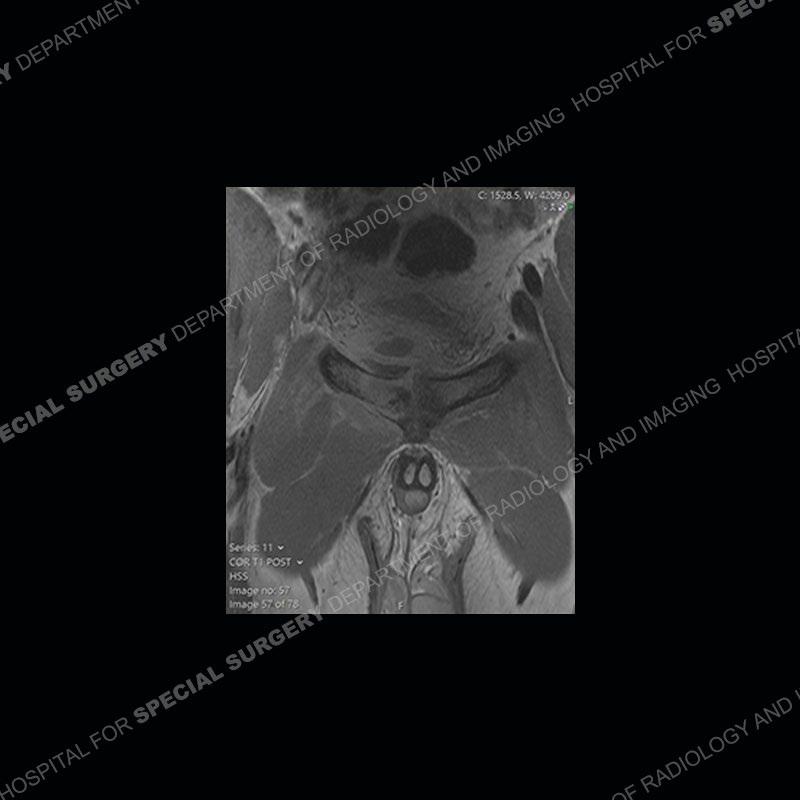
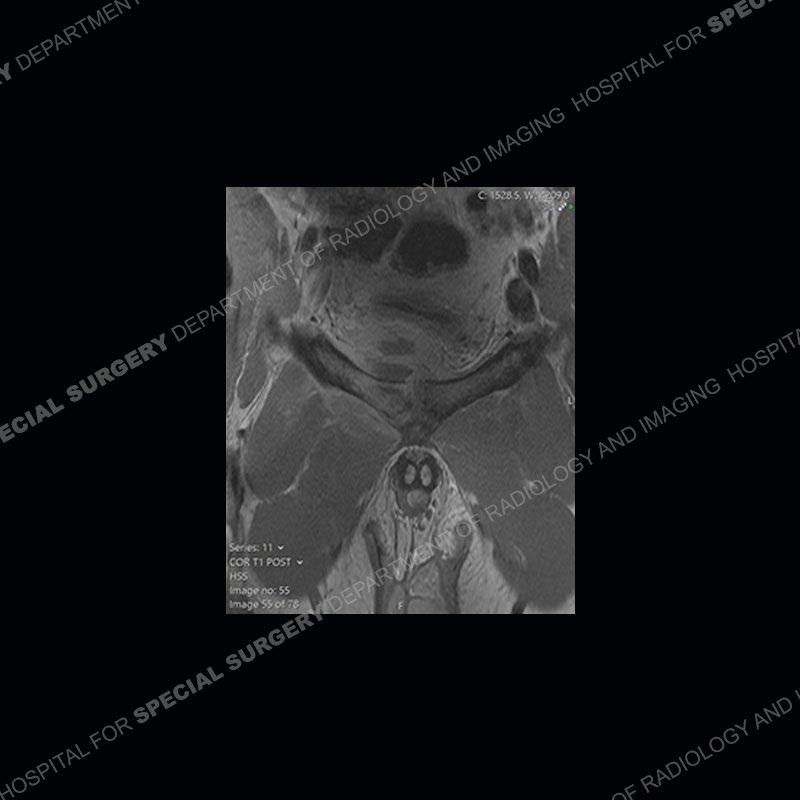
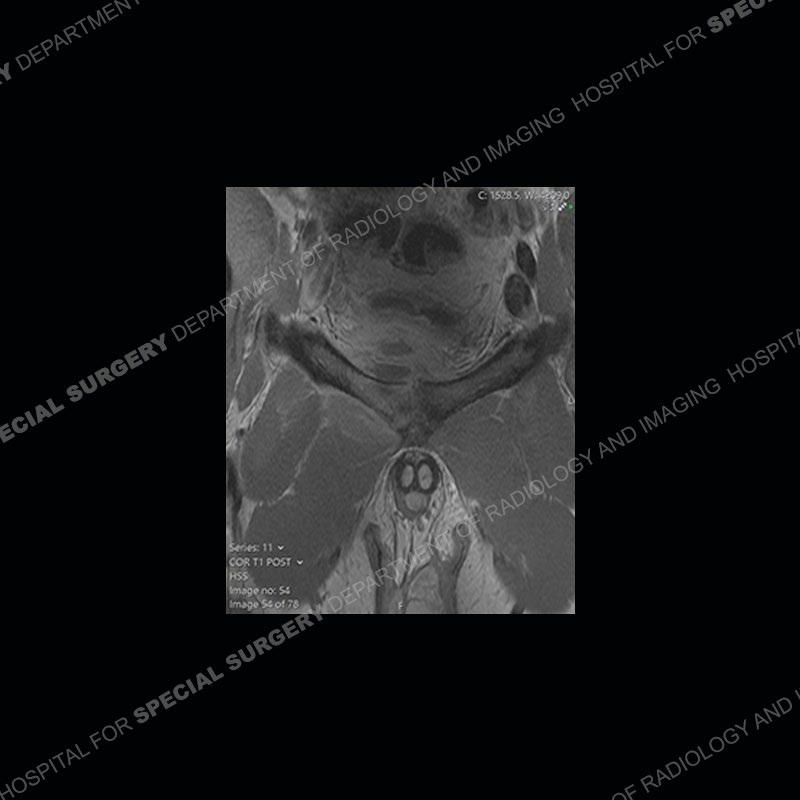
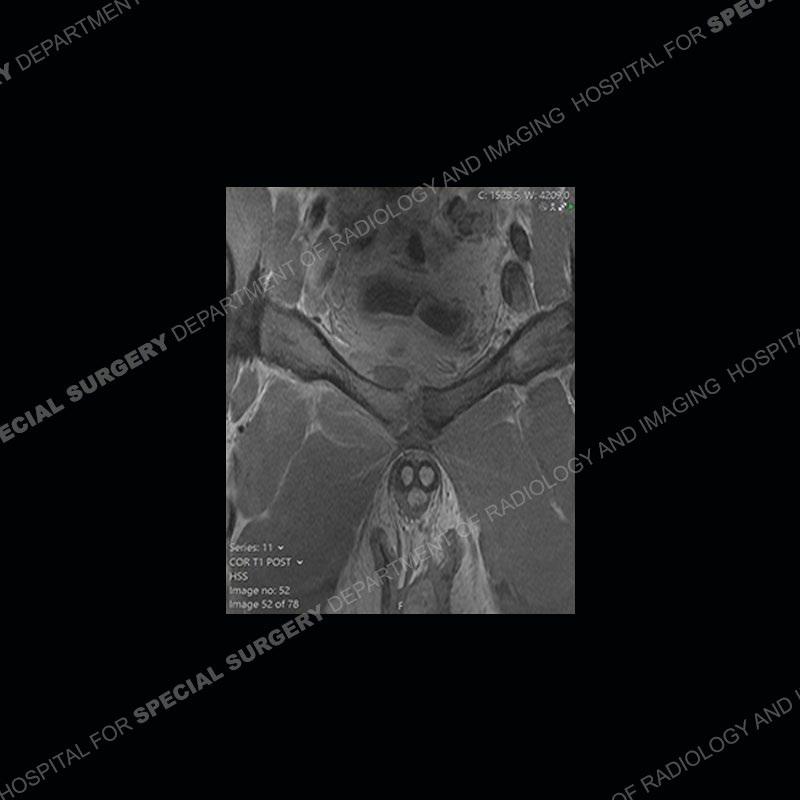
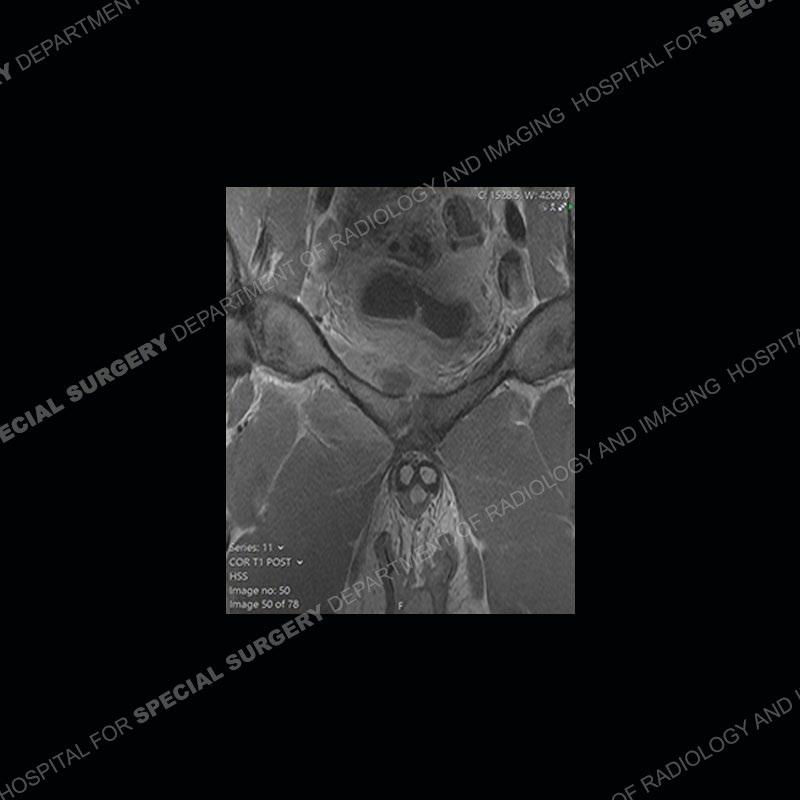
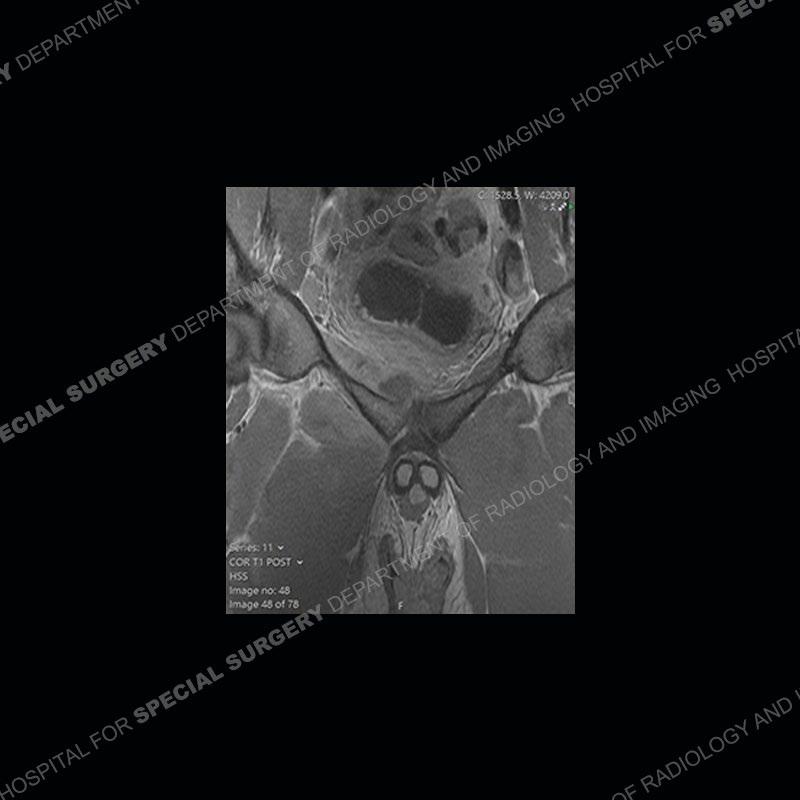
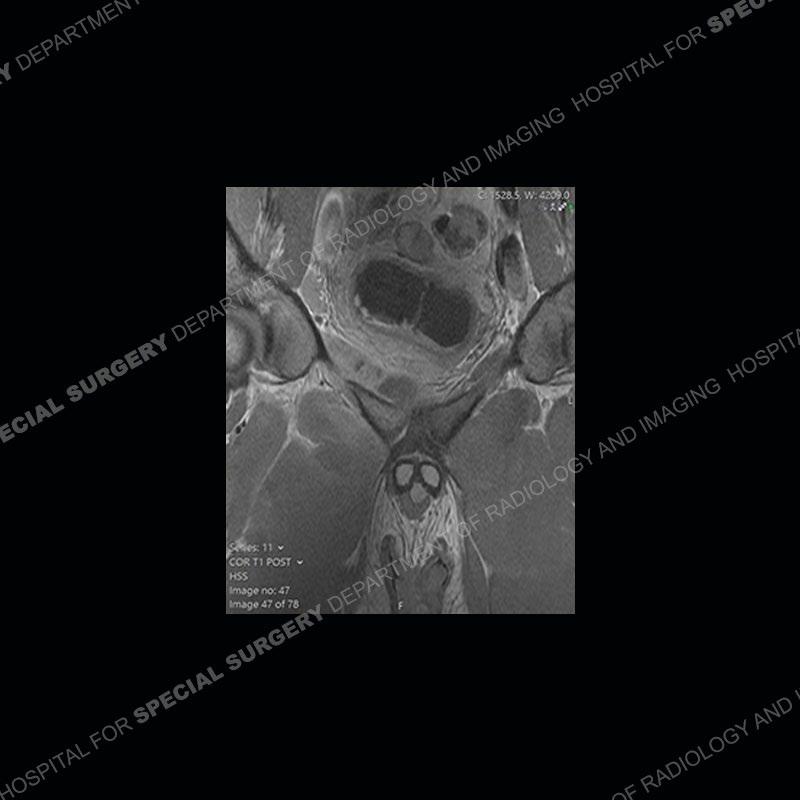
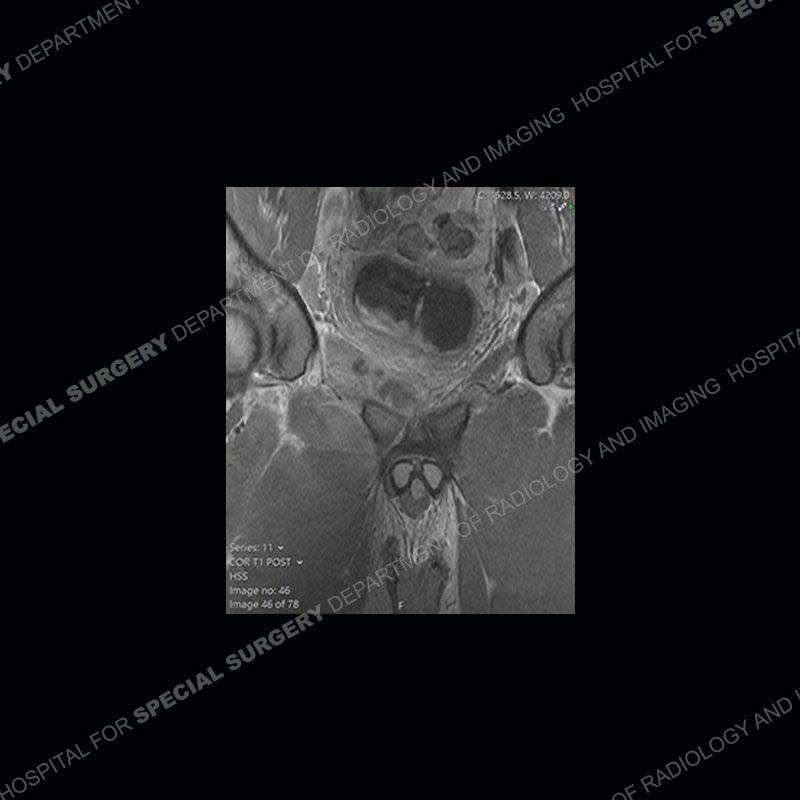
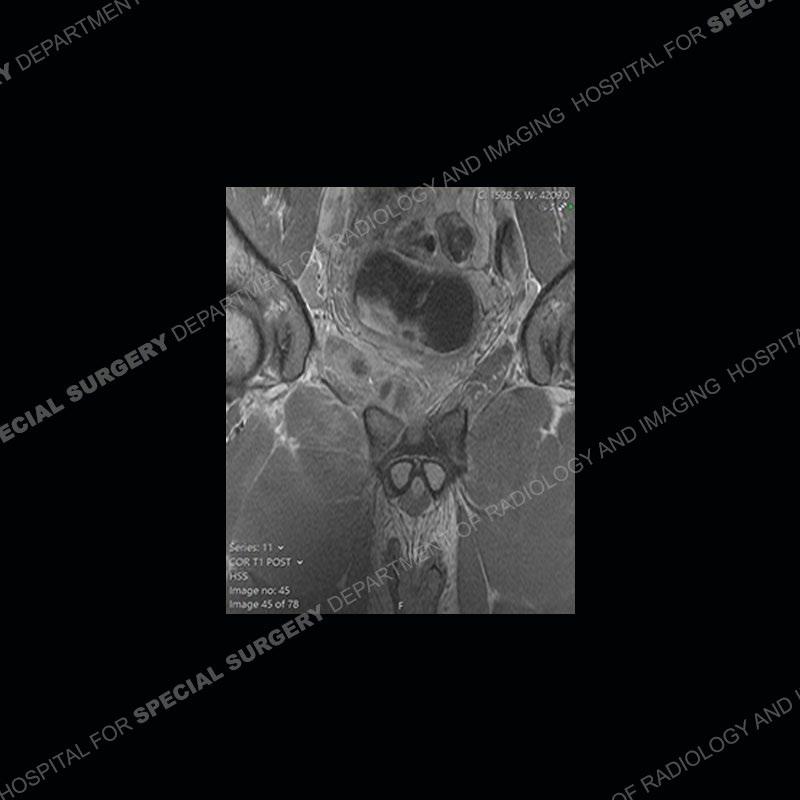
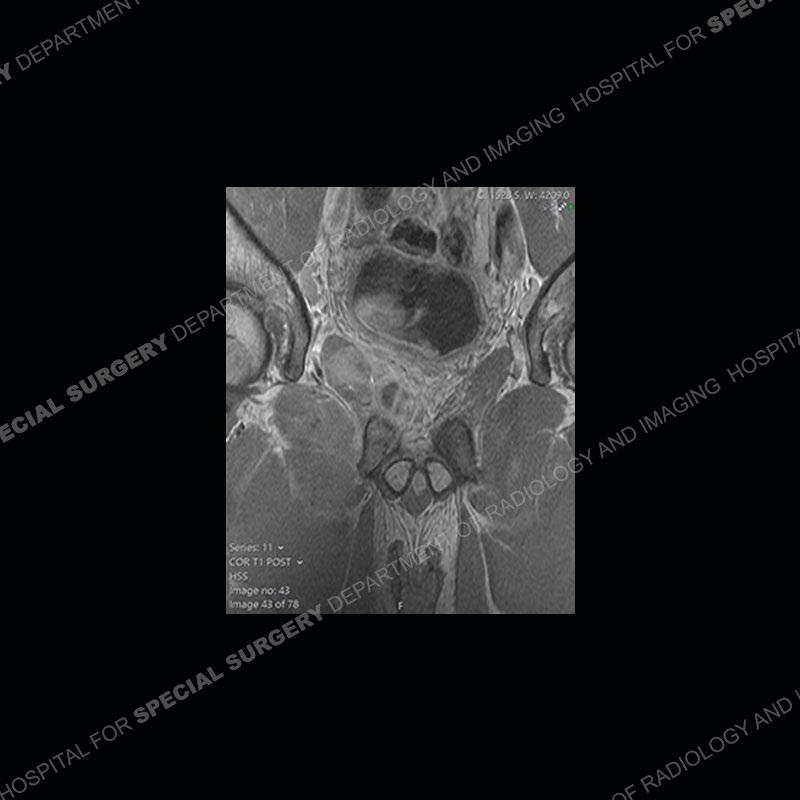
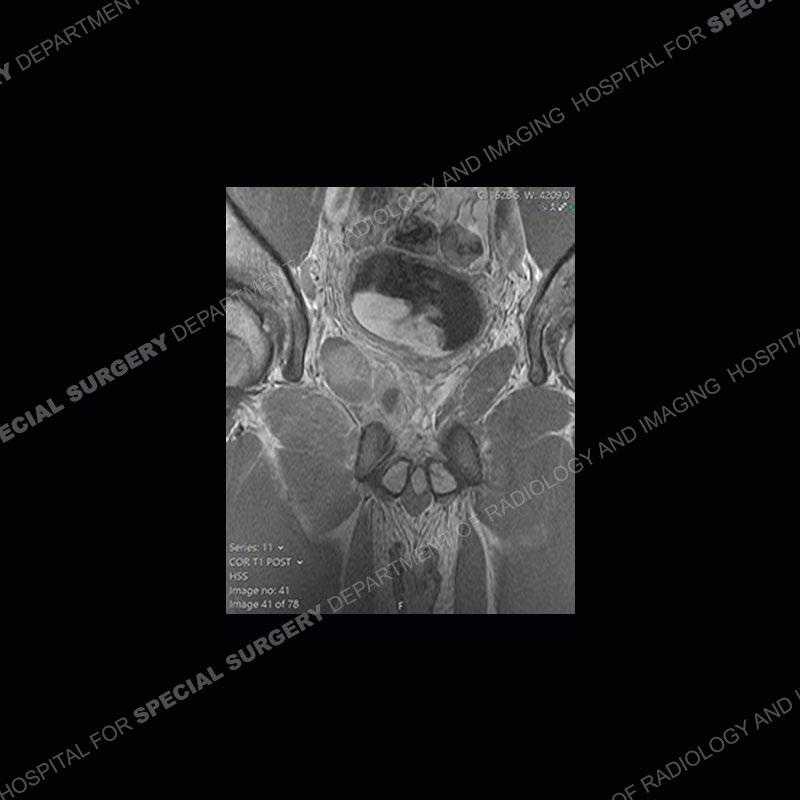
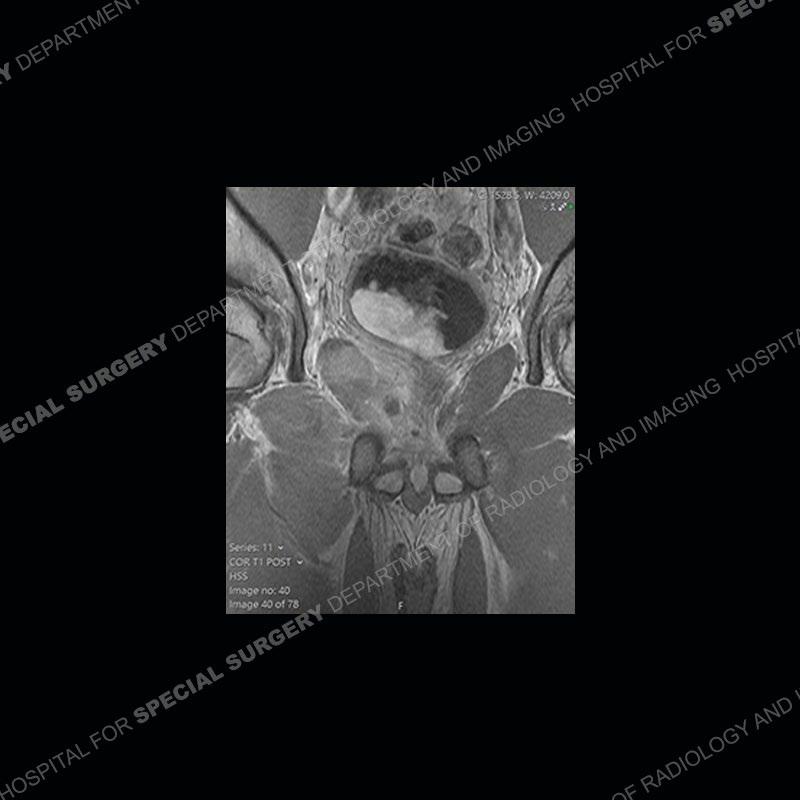
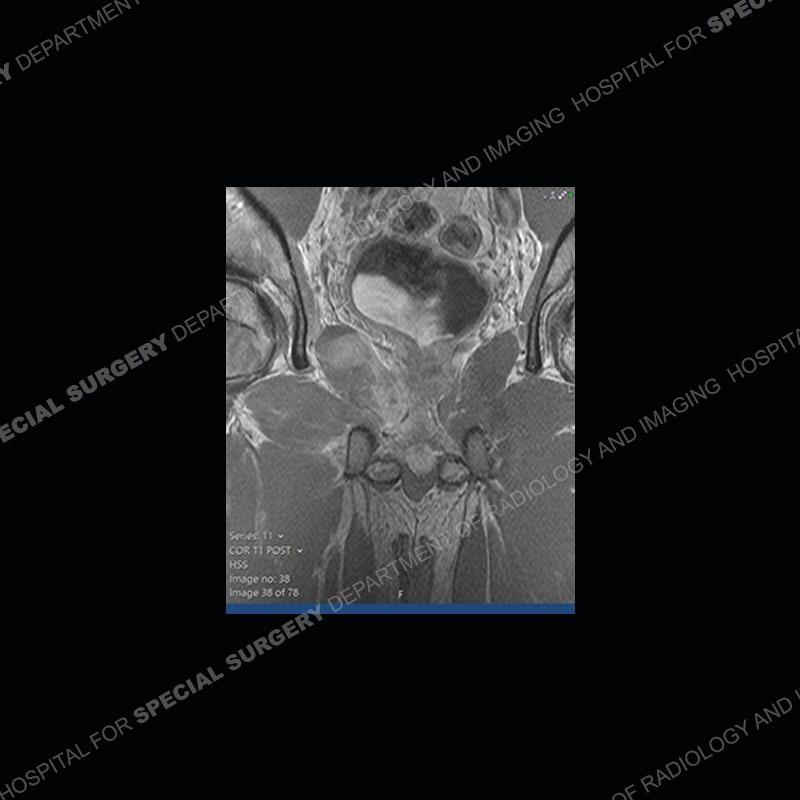
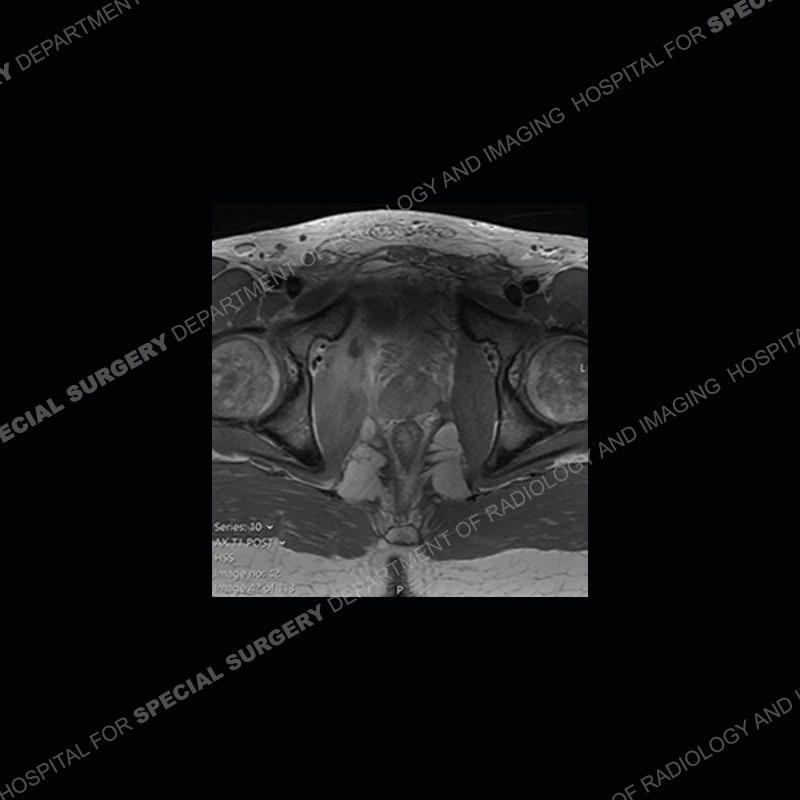
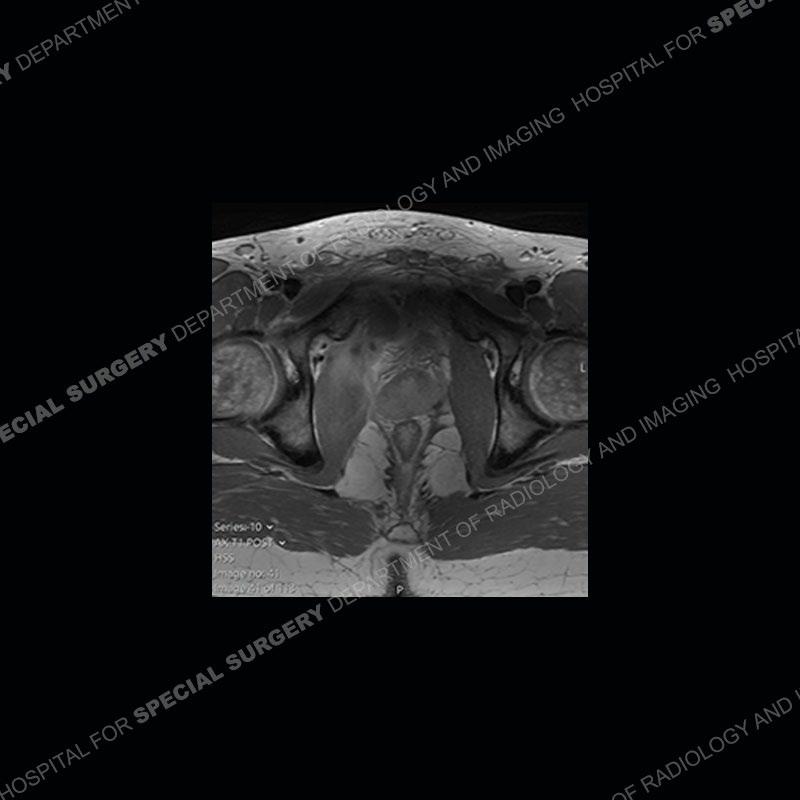
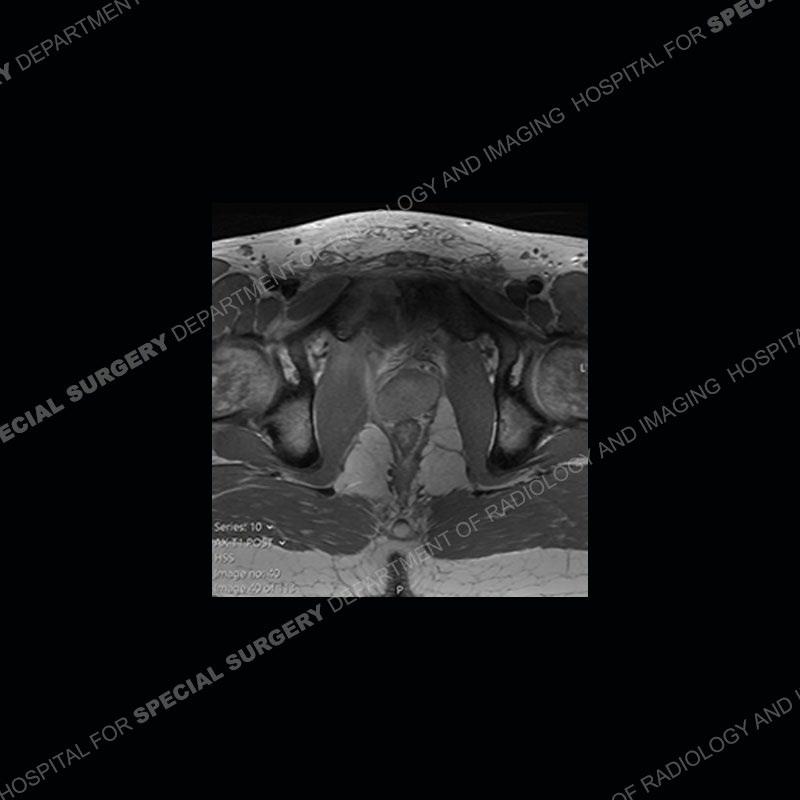
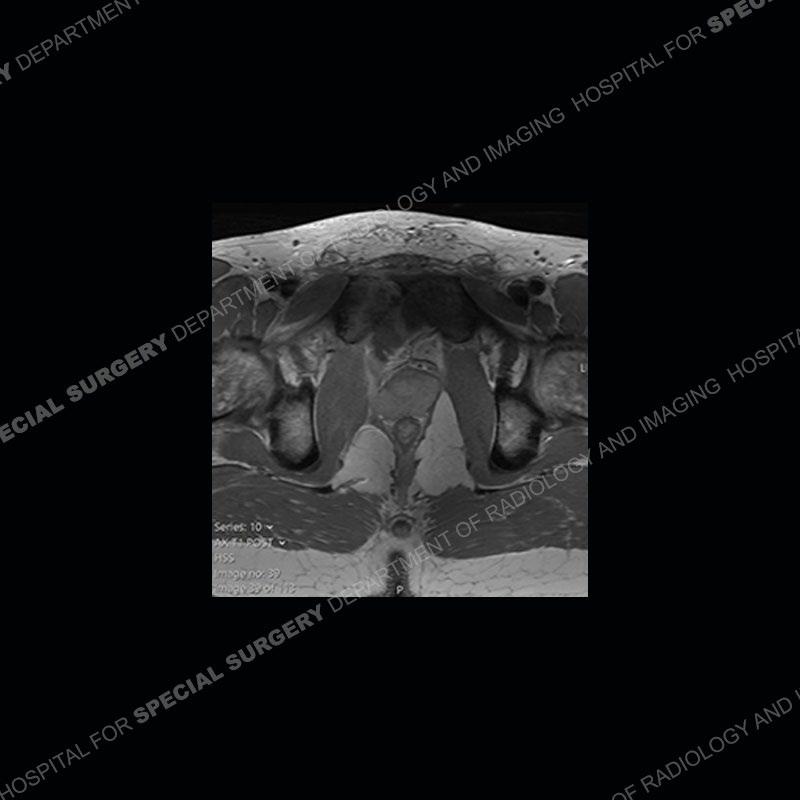
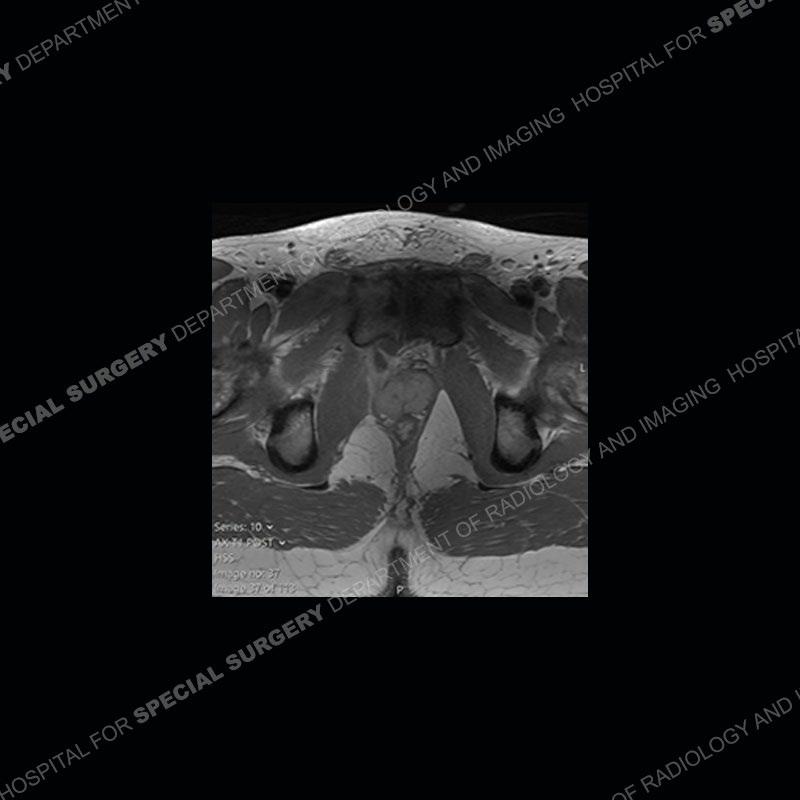
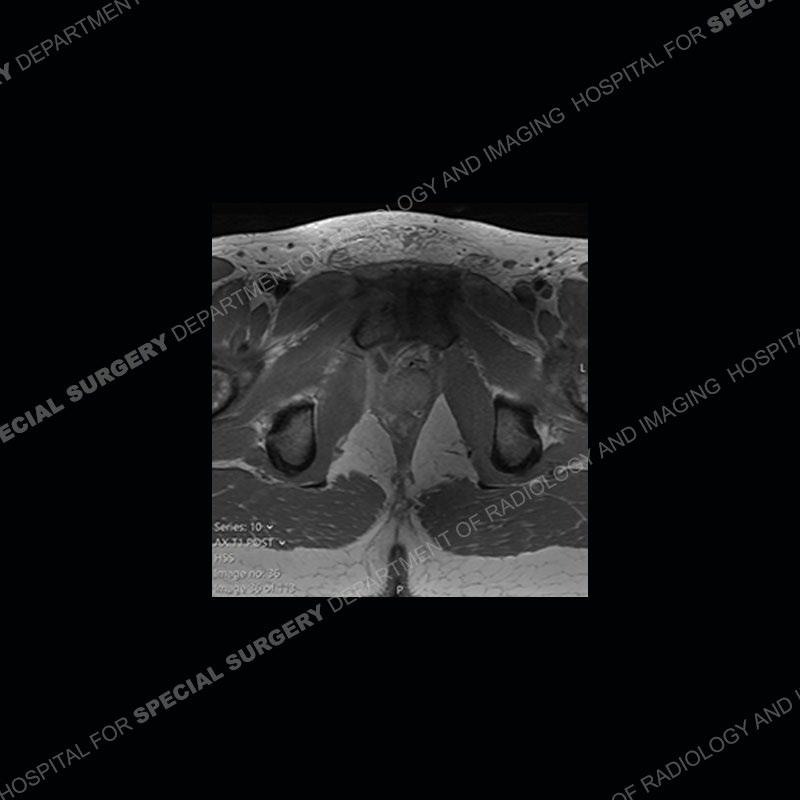
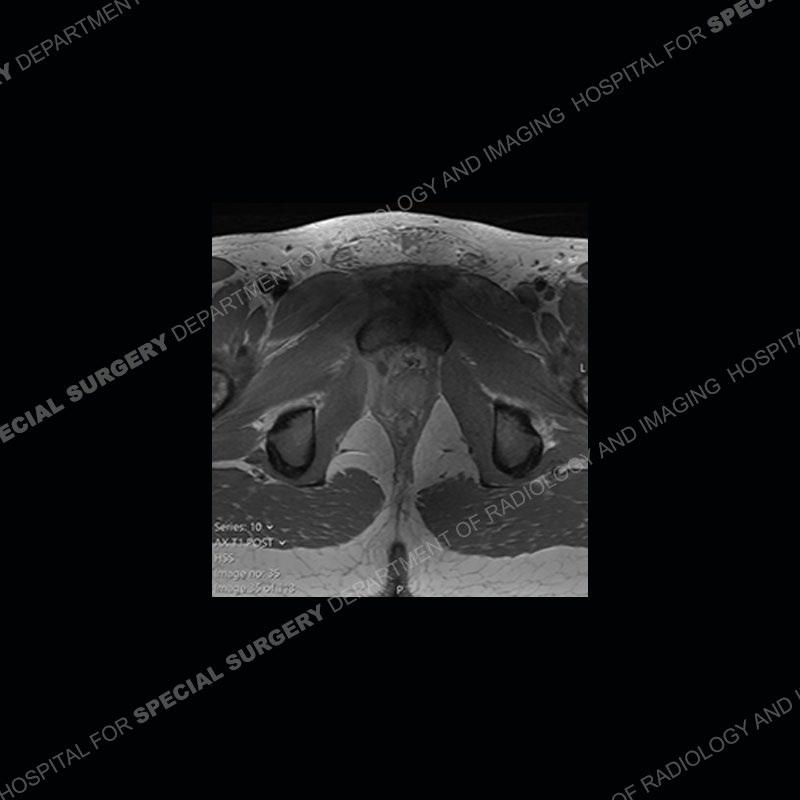
Radiographs did not demonstrate any clear abnormality. The MRI shows markedly abnormal signal of the right superior pubic ramus and abnormal signal/”mass” extending into the adjacent soft tissue. The inferior articular surface of the ramus showed what was thought to be bony destruction. CT examination shows a destructive process of the right superior pubic ramus.
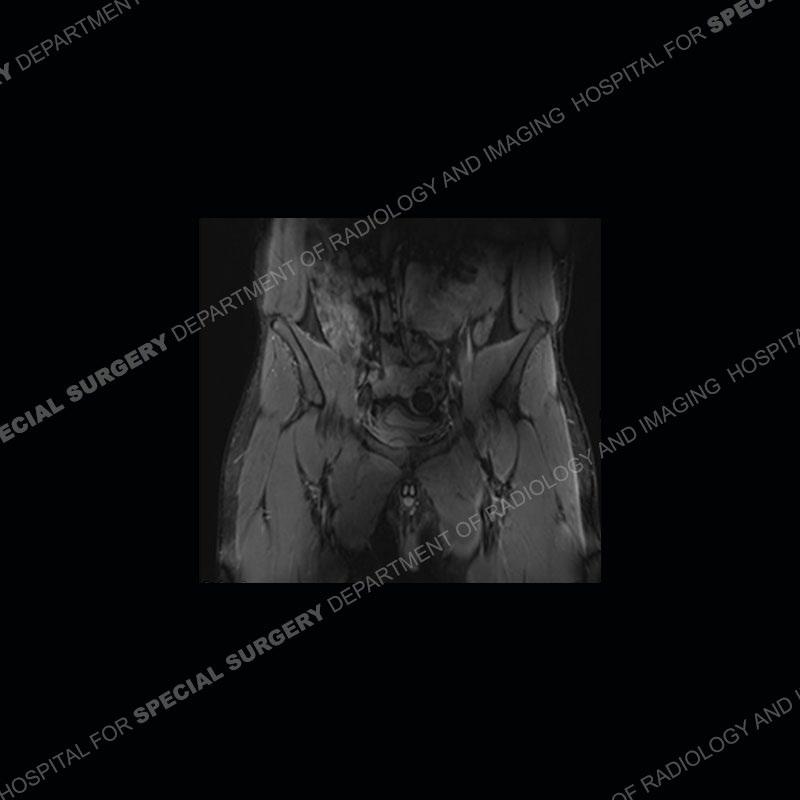
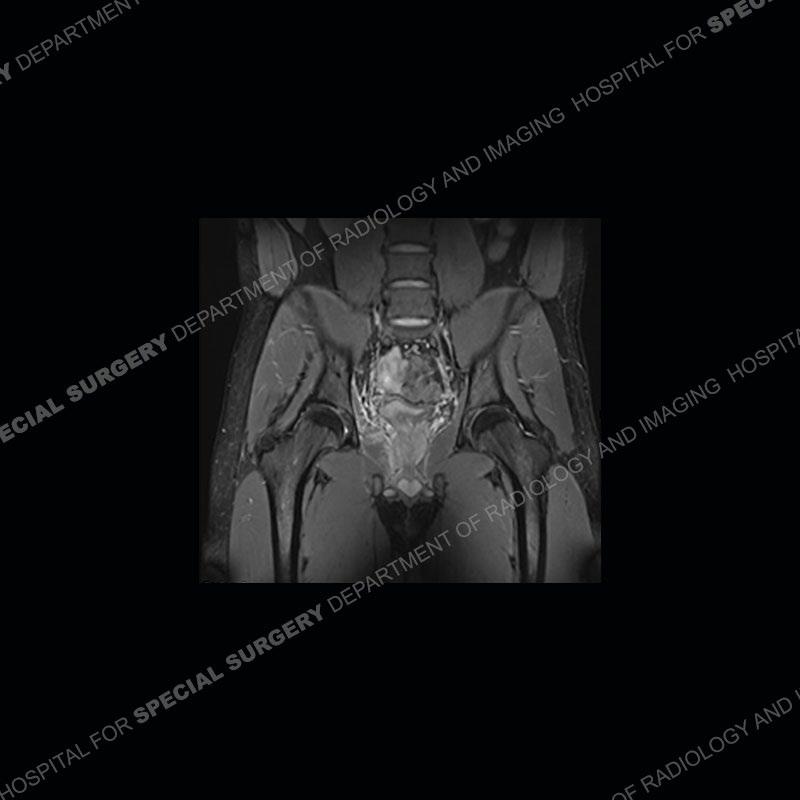
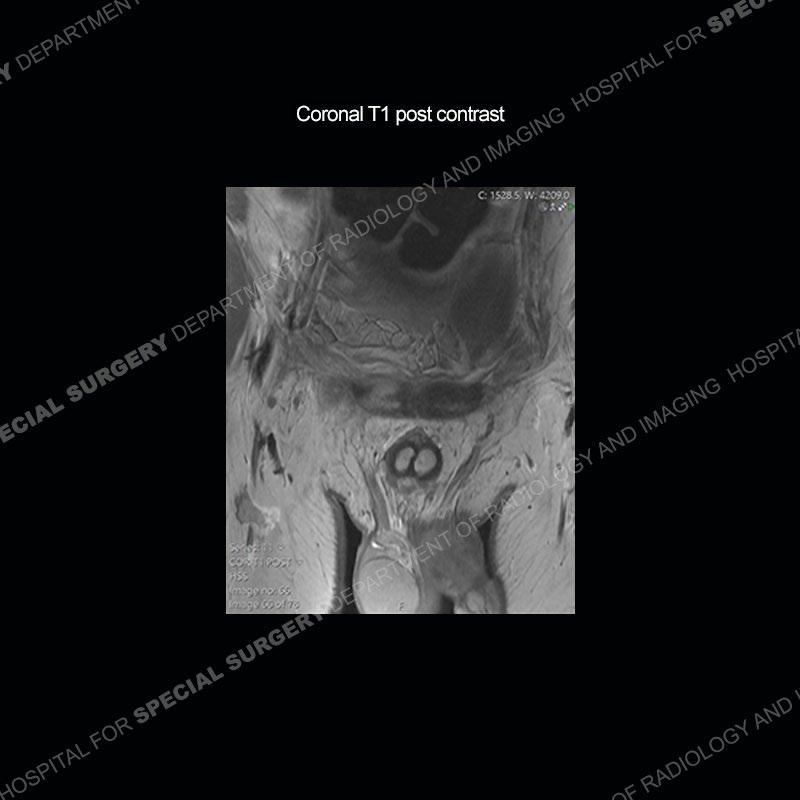
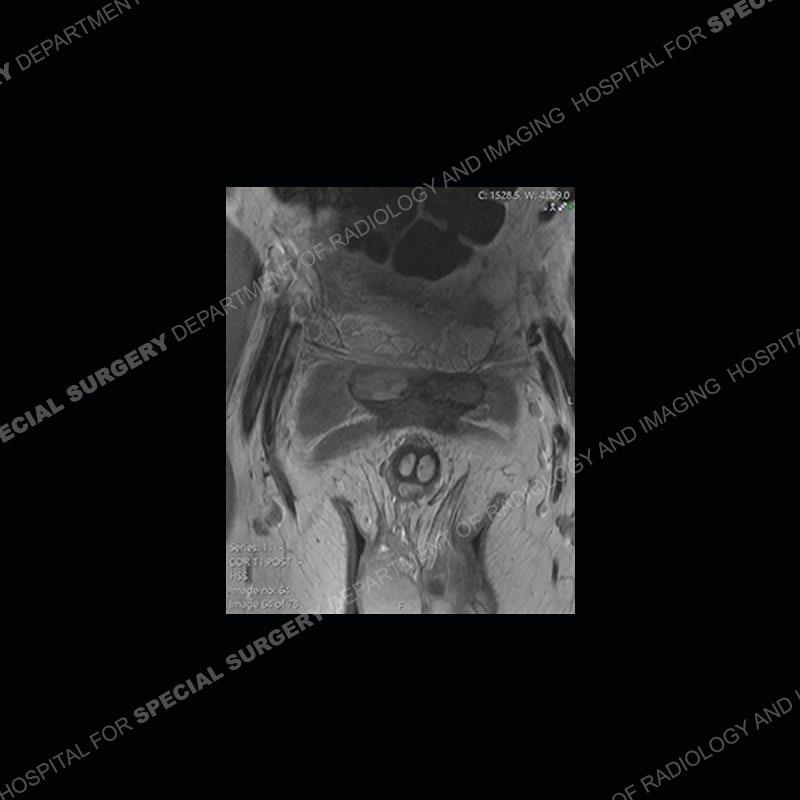
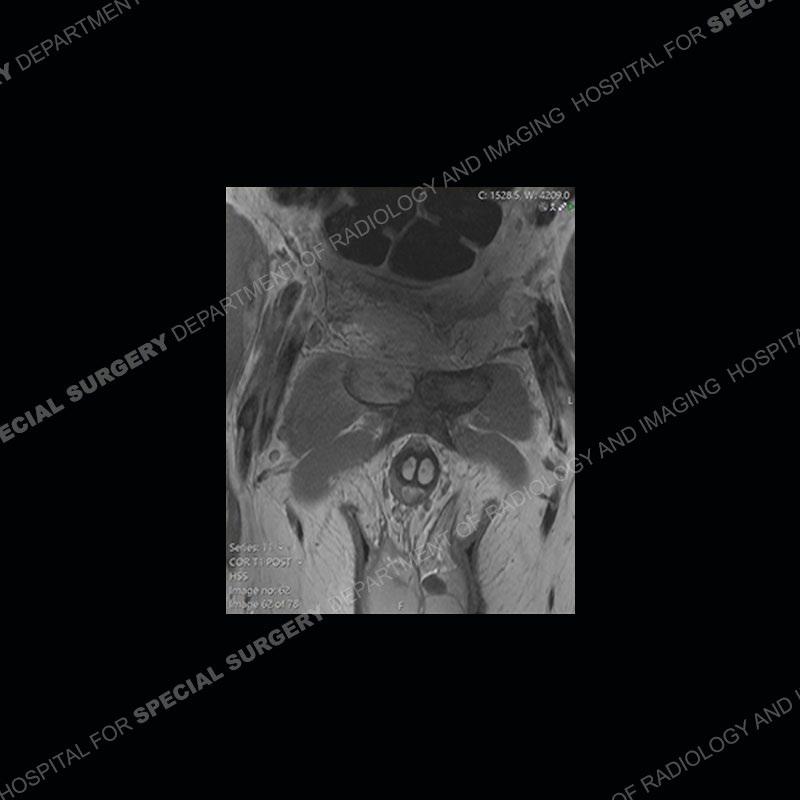
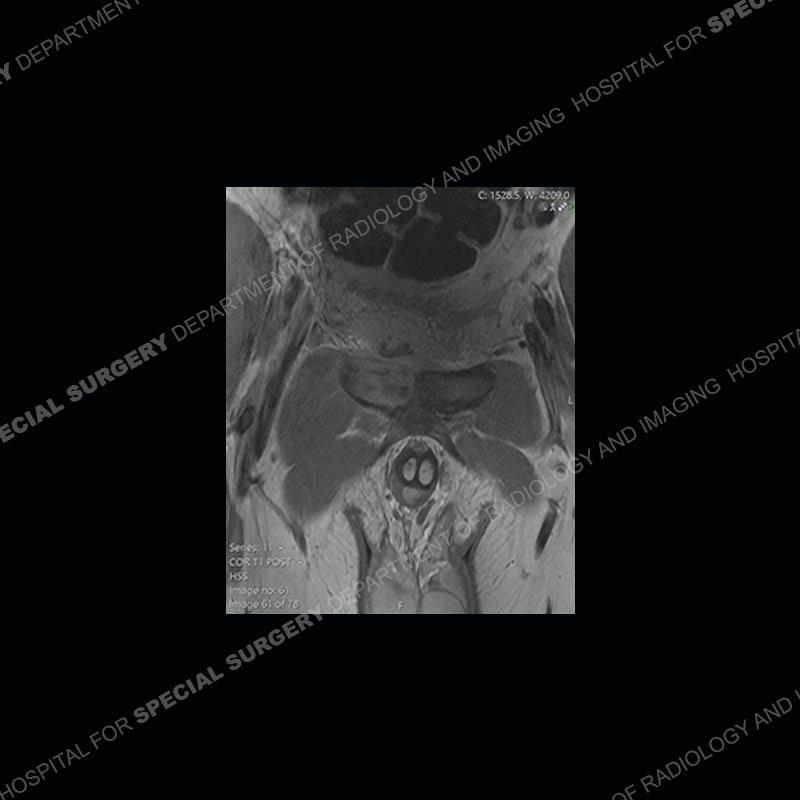
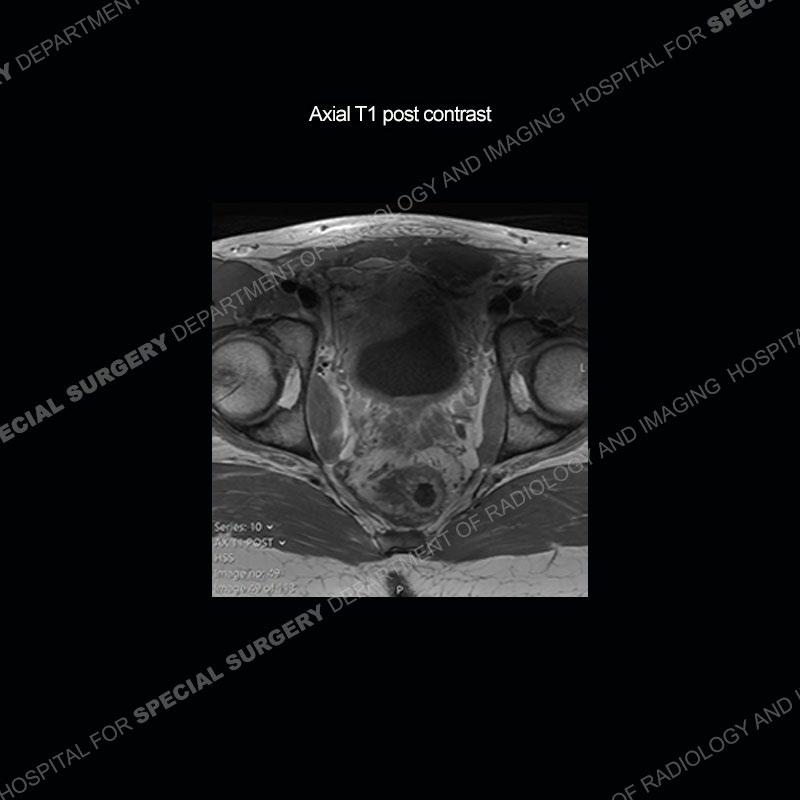
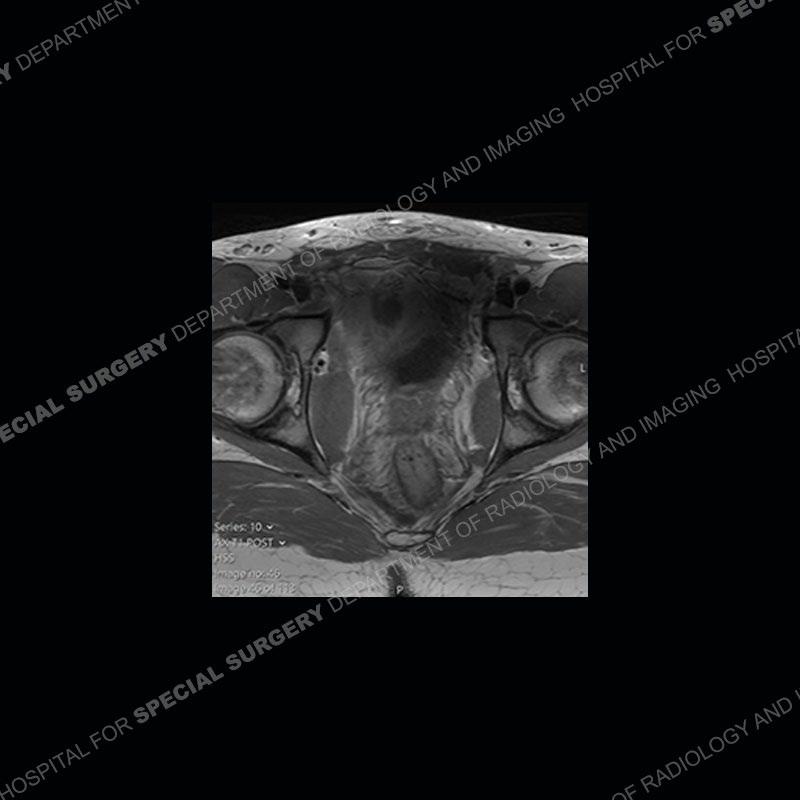
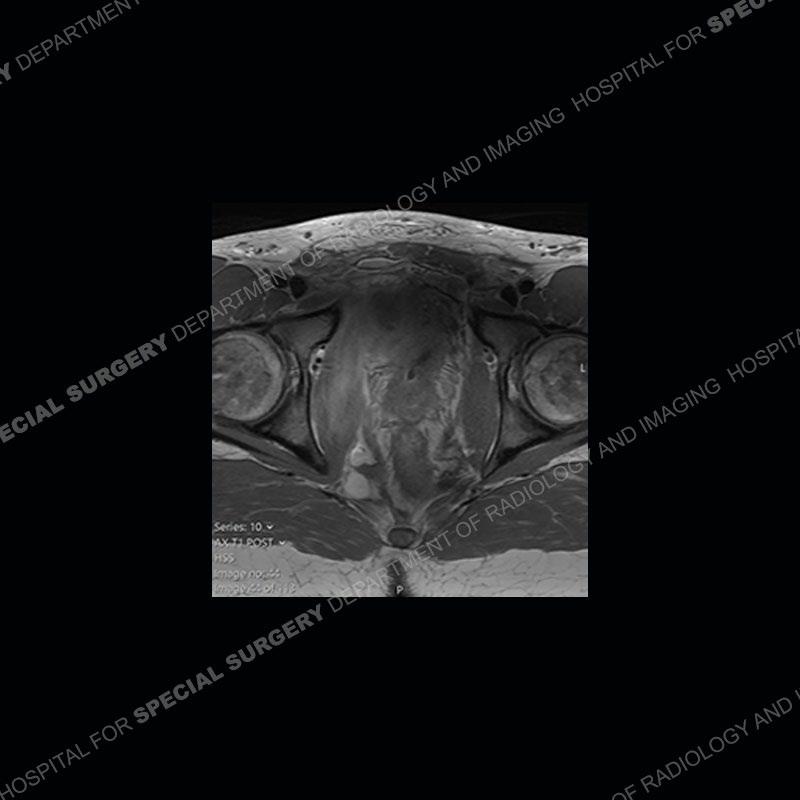
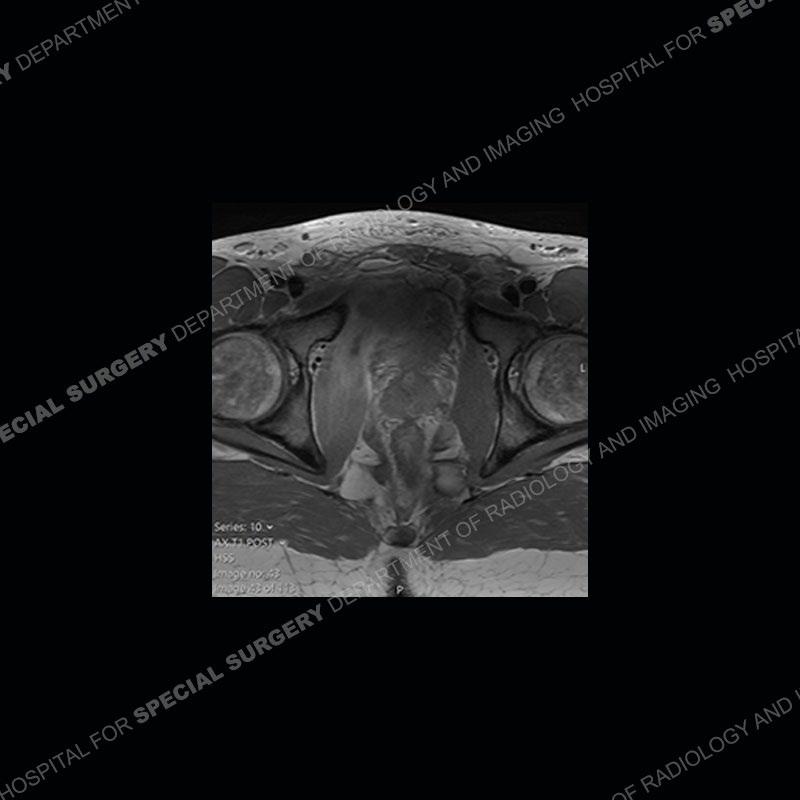
Subsequent MRI in a very short time interval shows markedly increased abnormality of the ramus and increased edema and “mass” of the soft tissue. Post contrast imaging shows multiple, rim enhancing collections of the soft tissue and similar albeit less conspicuous enhancing collection of the ramus.

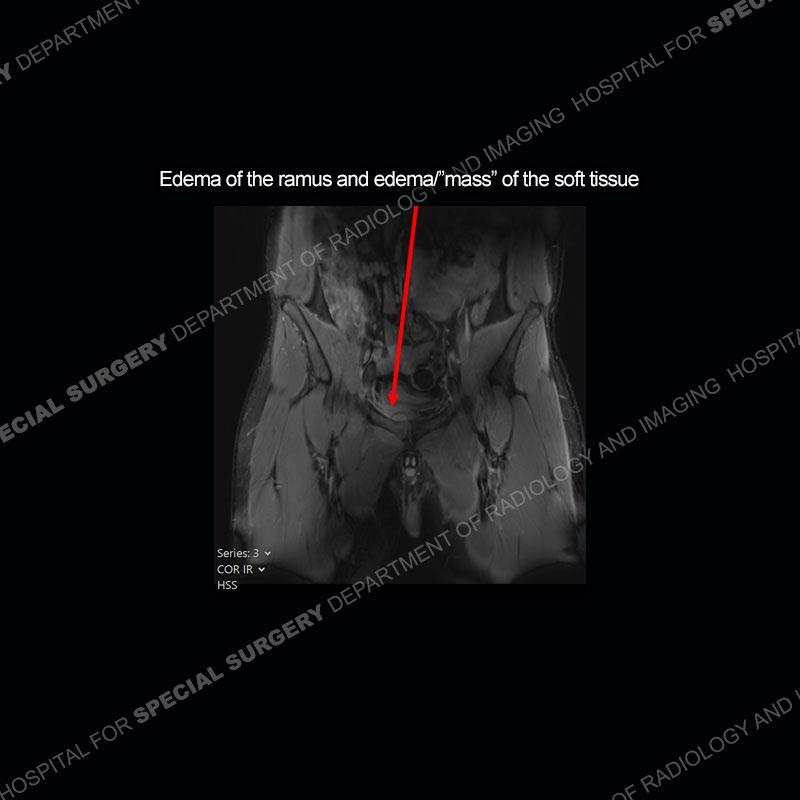
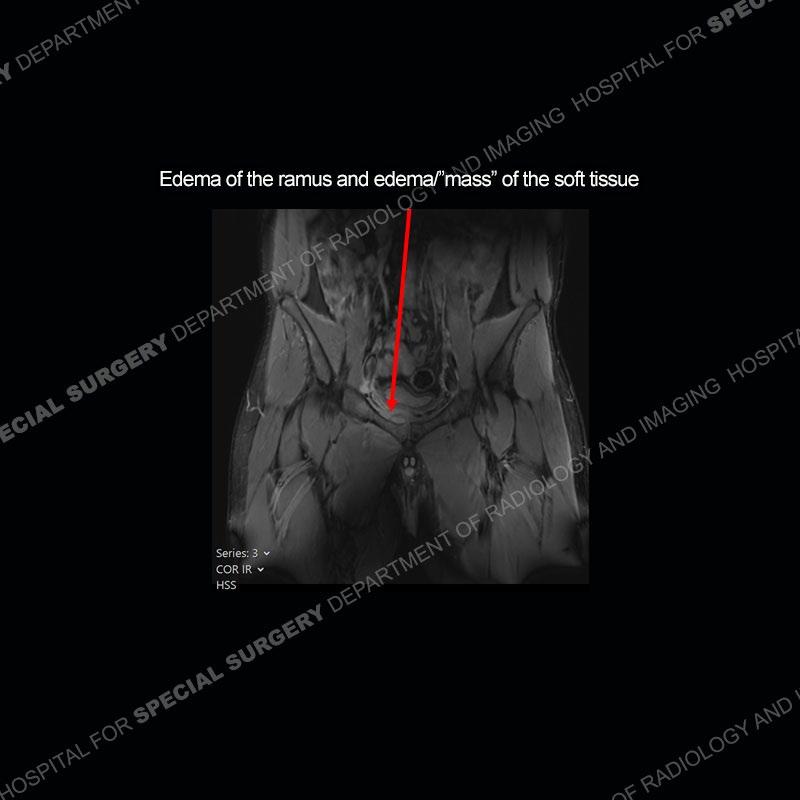
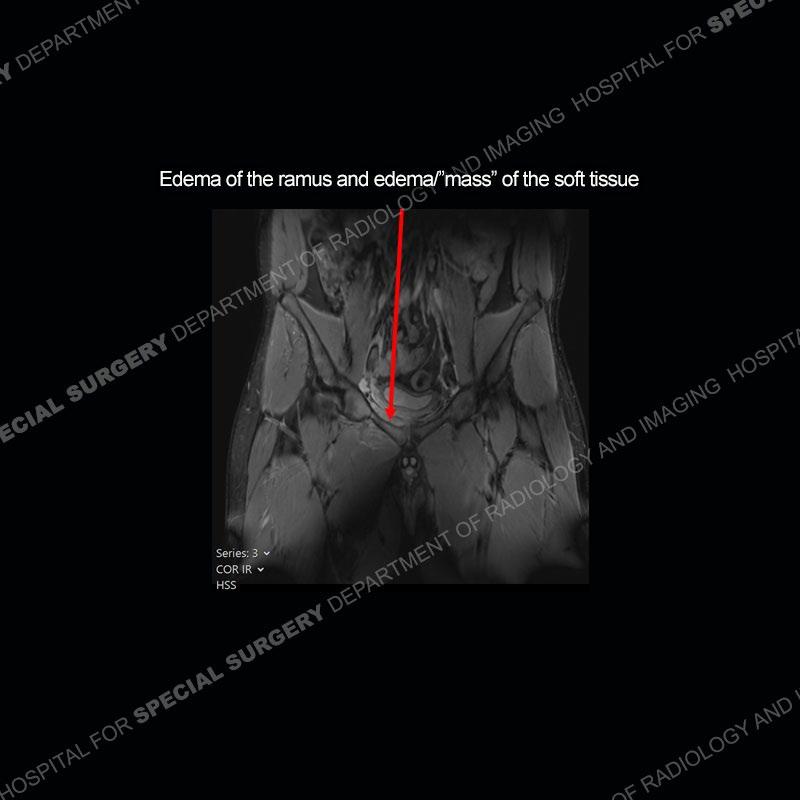
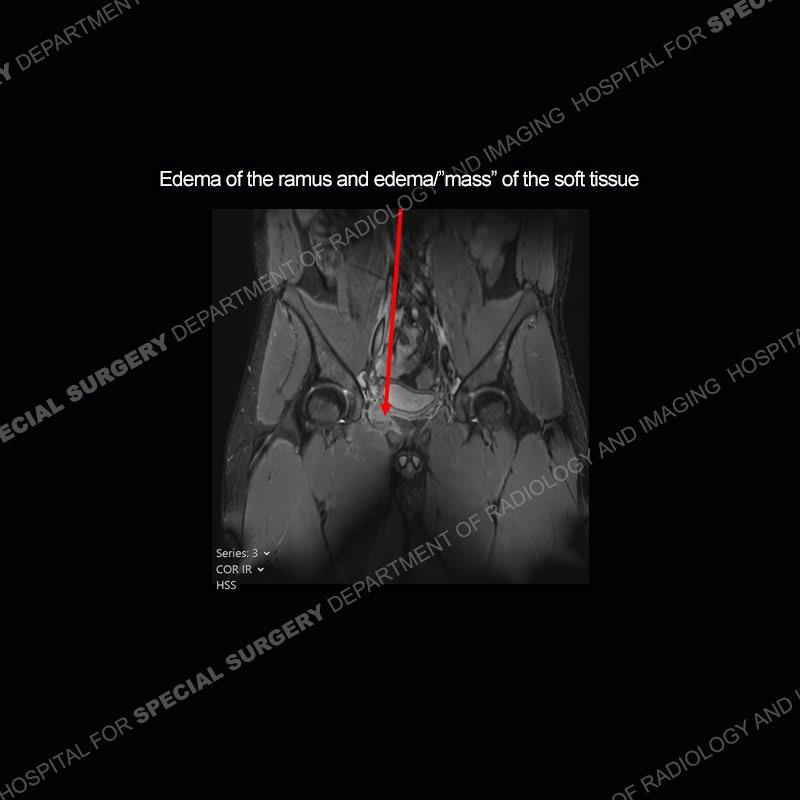
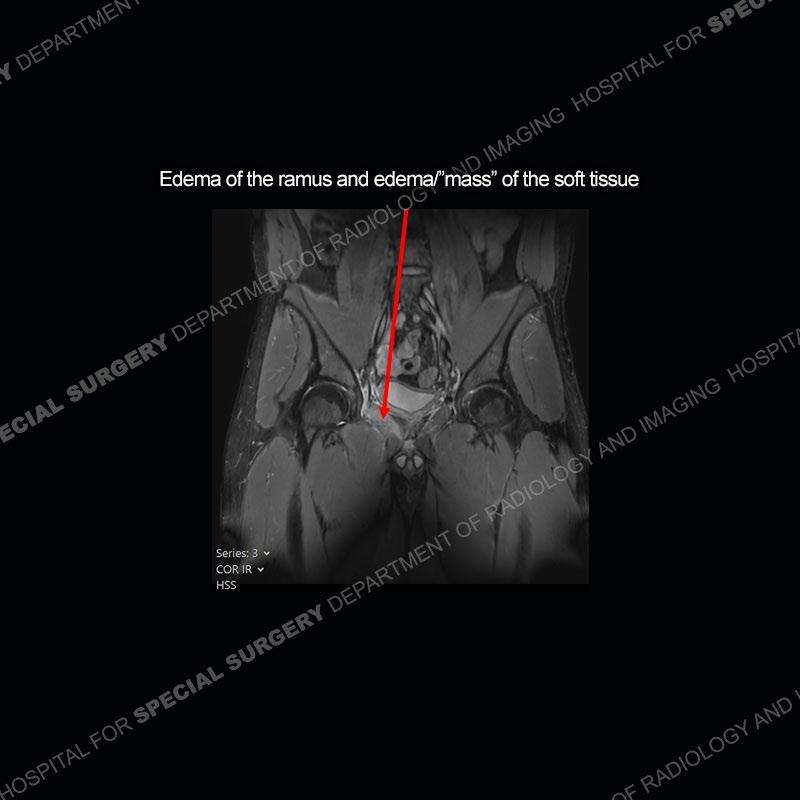
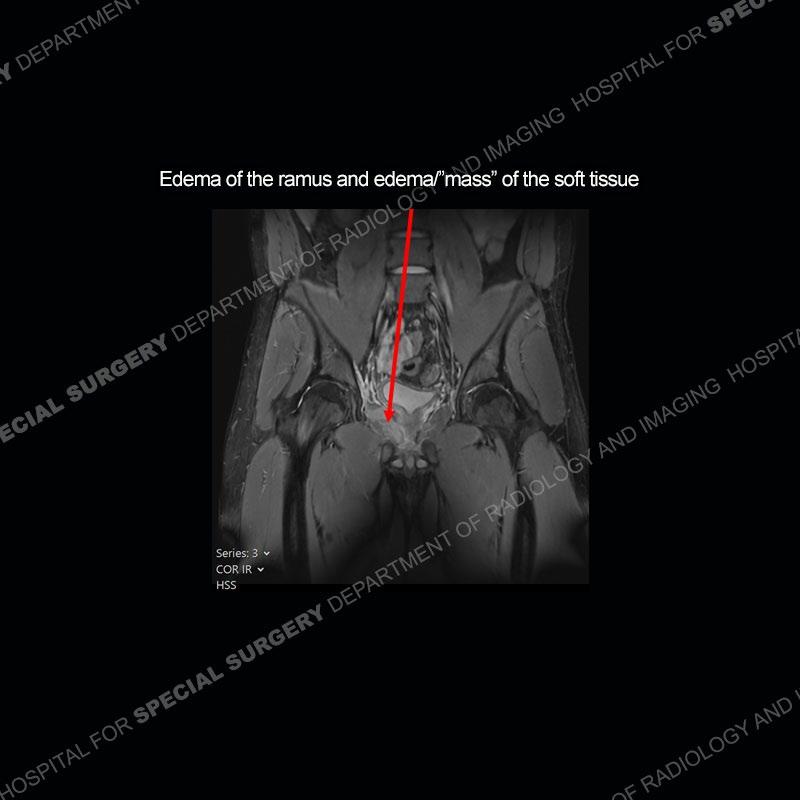
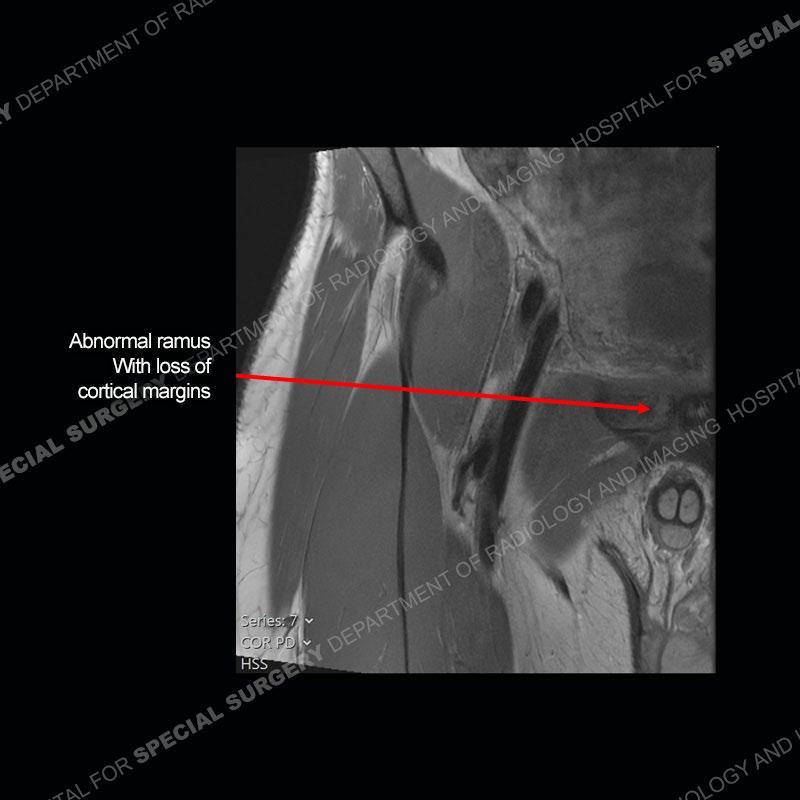
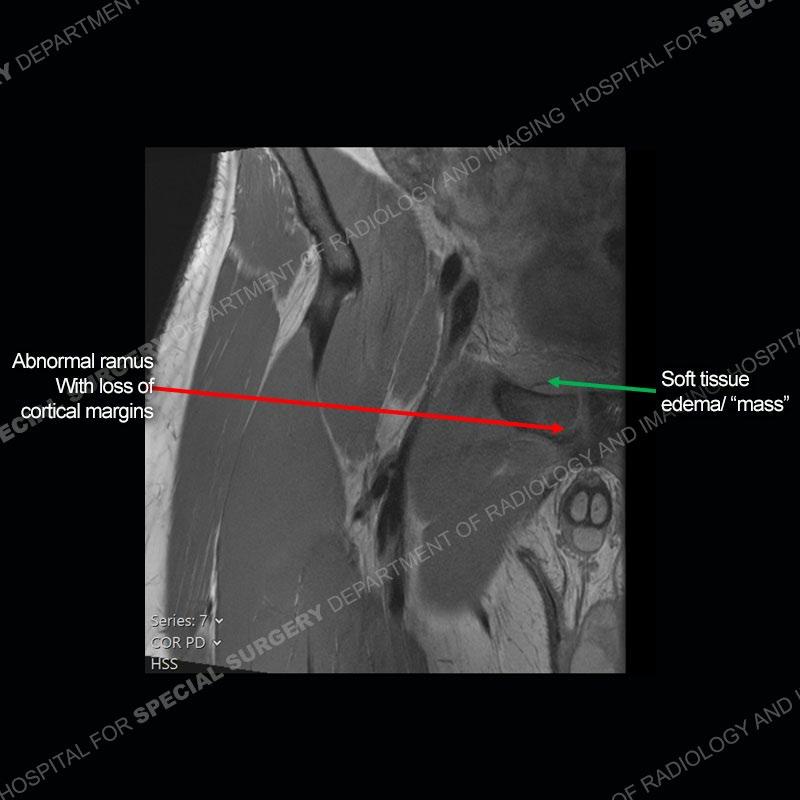
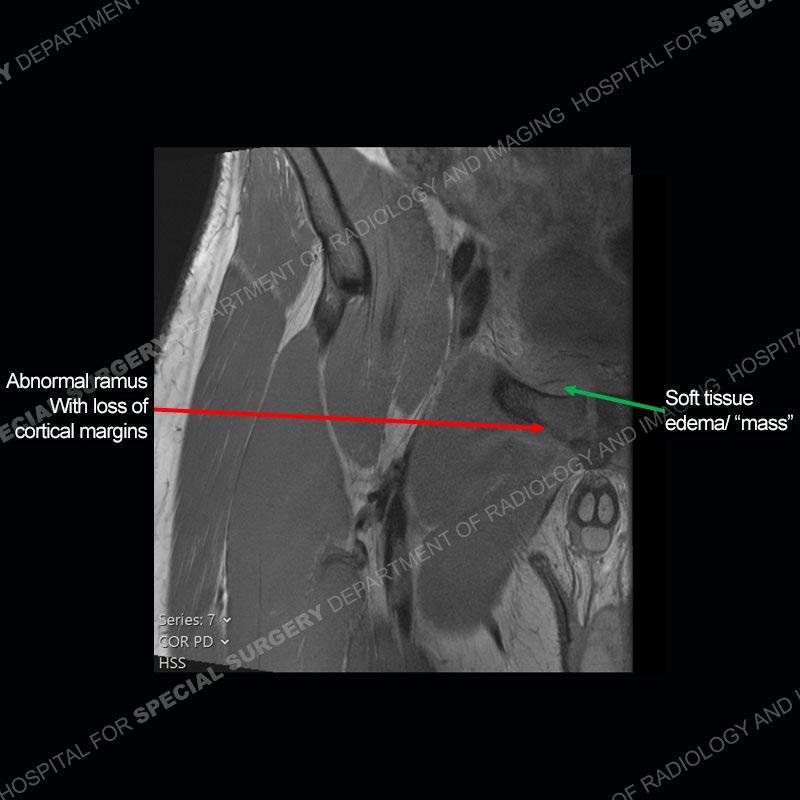
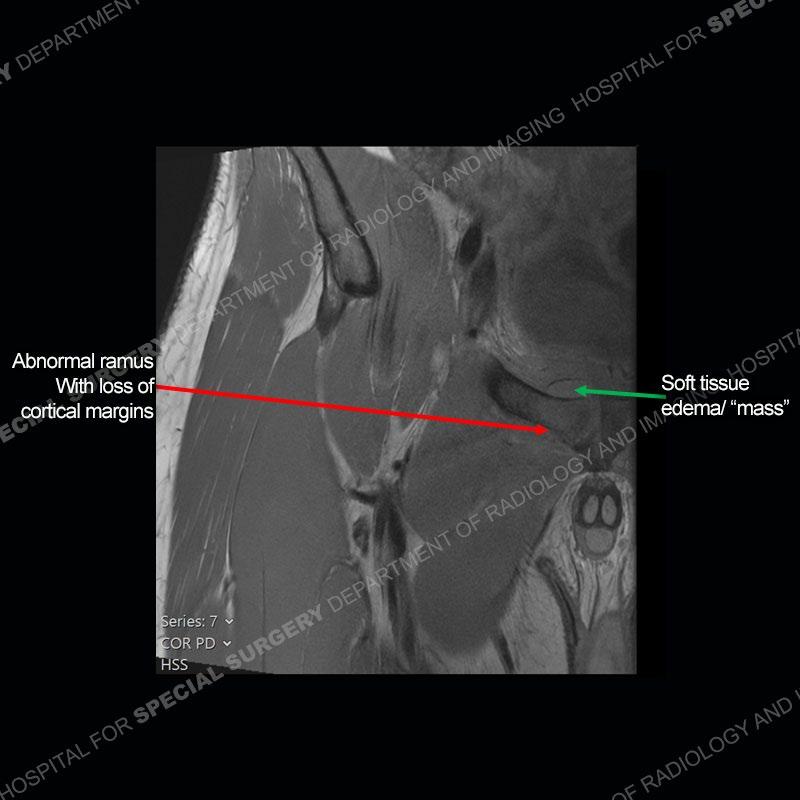
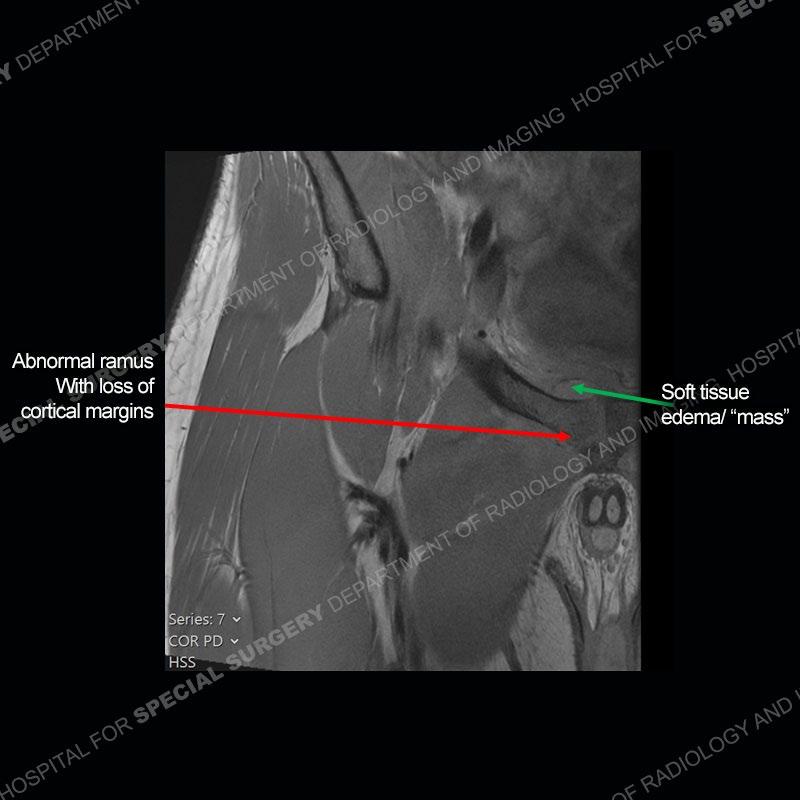
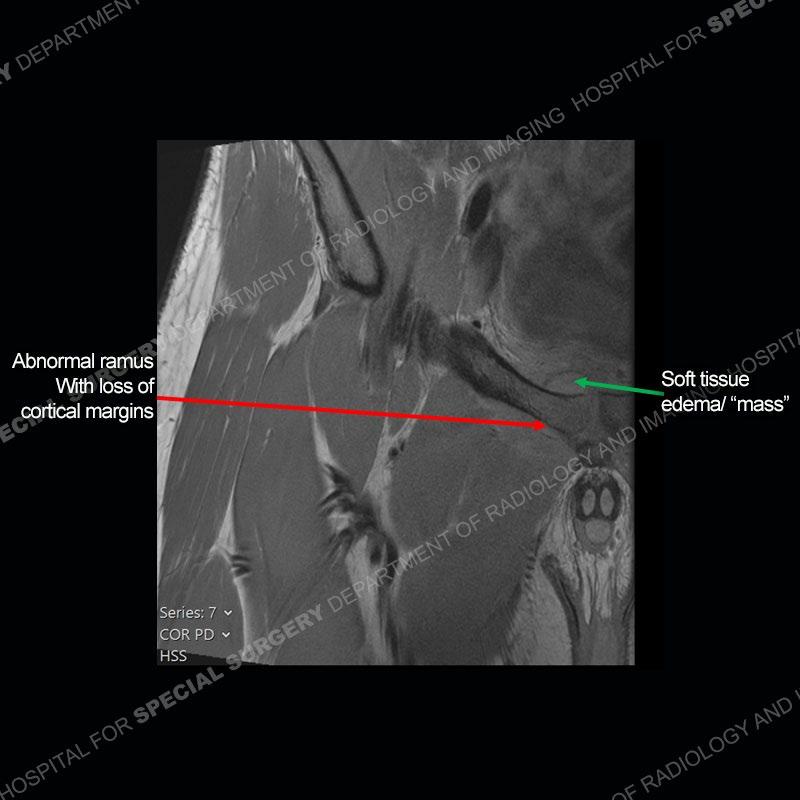
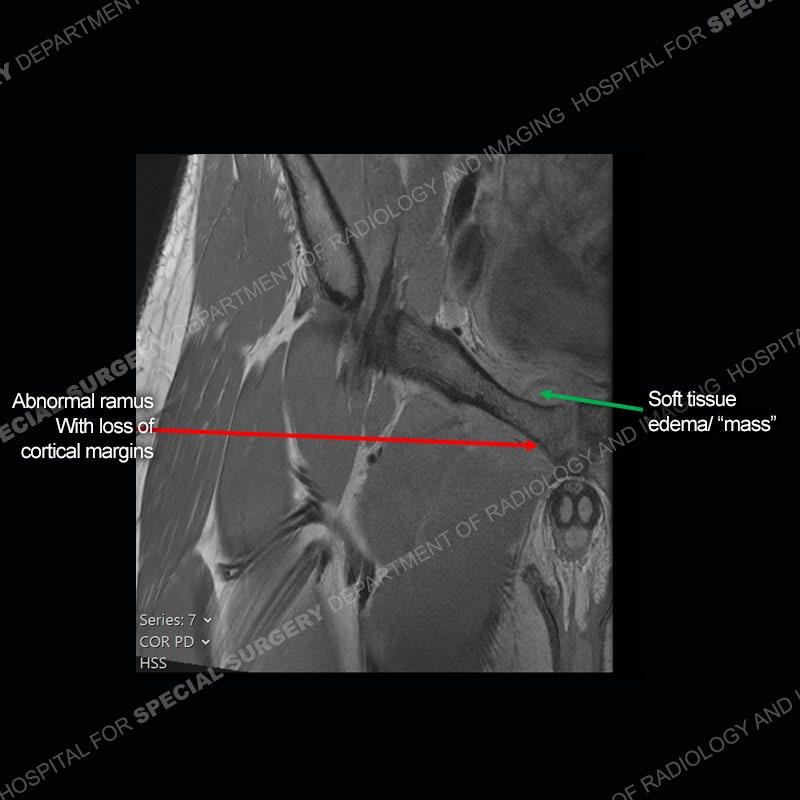
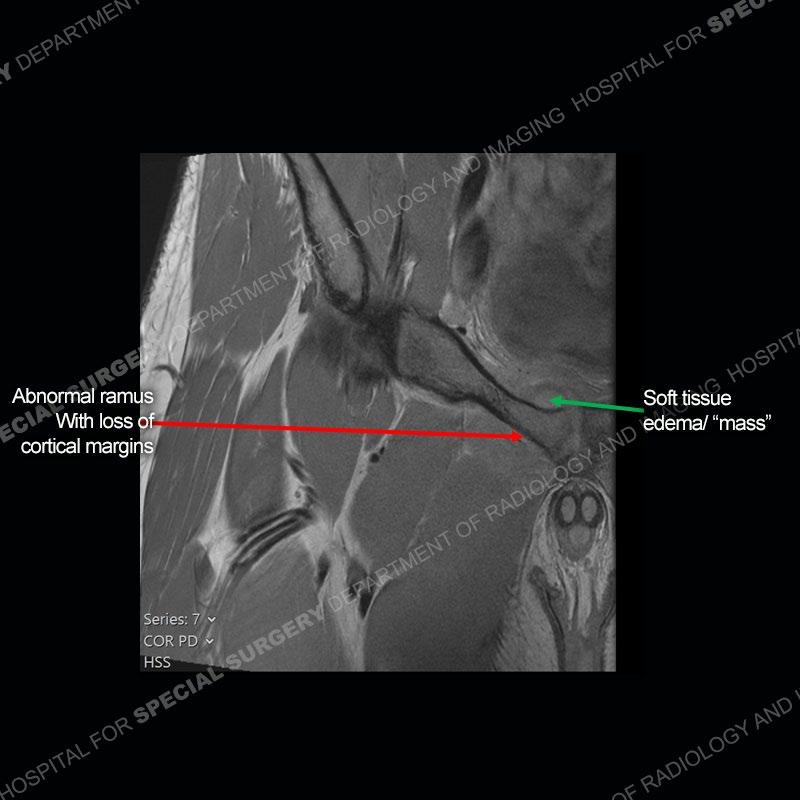
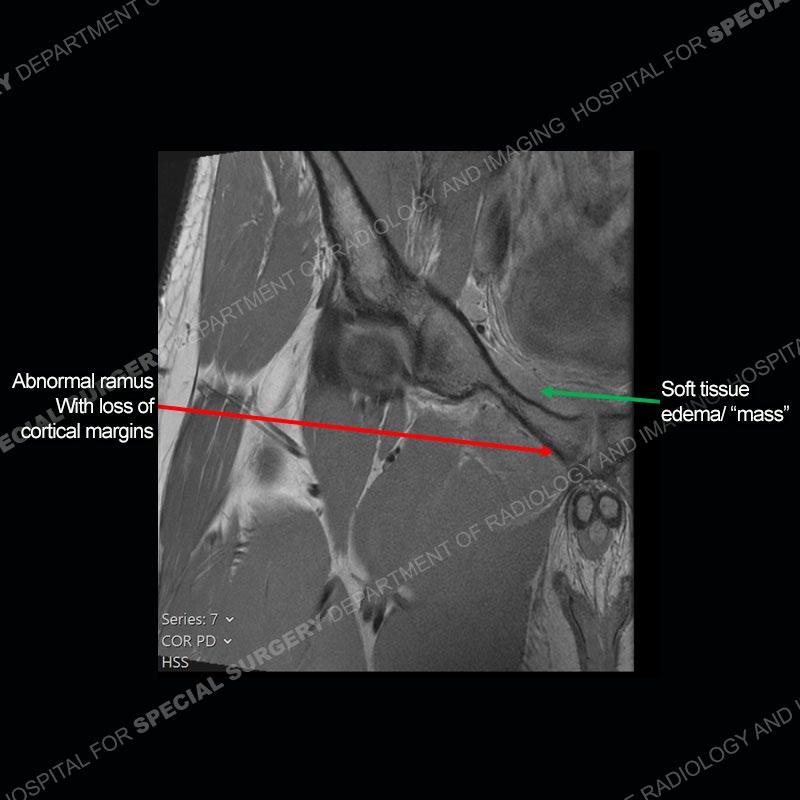
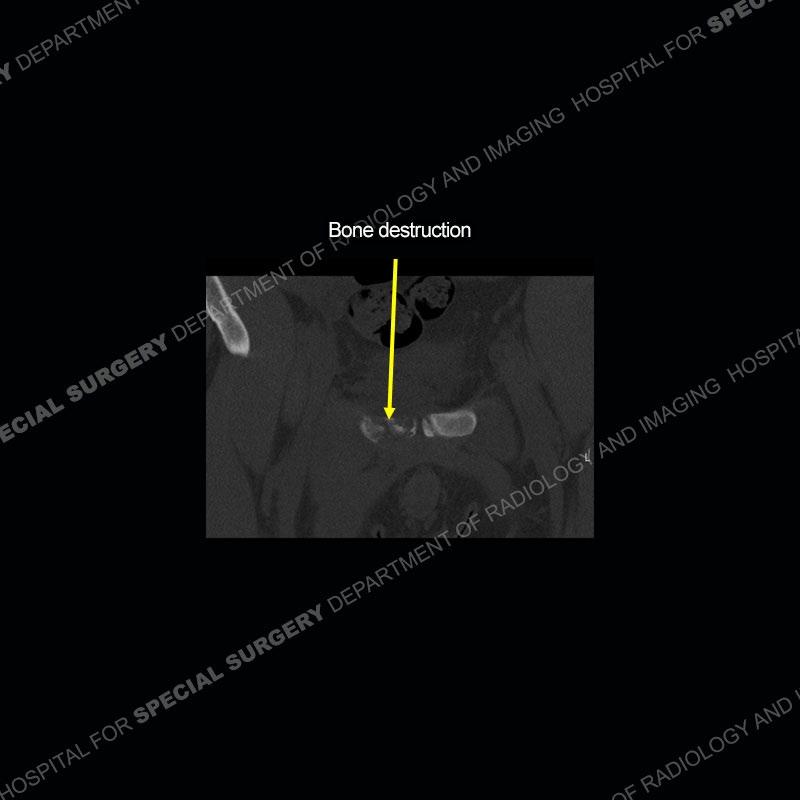
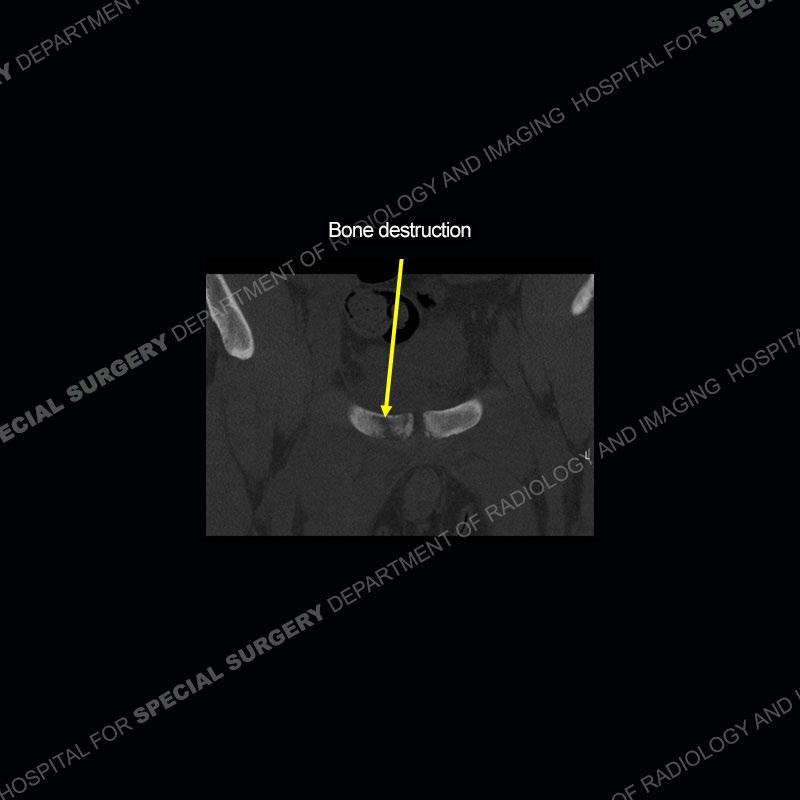
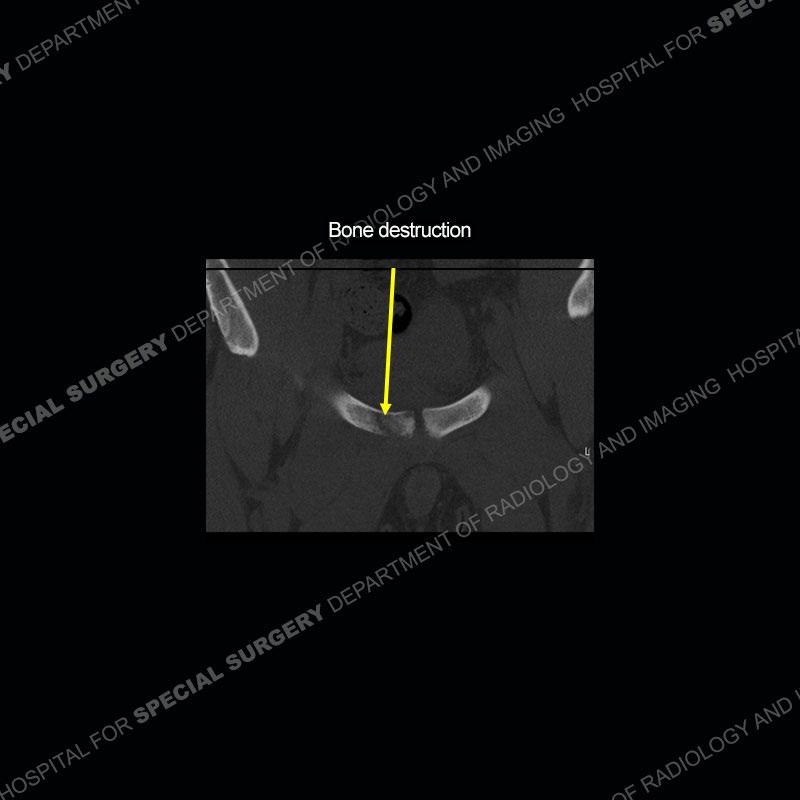
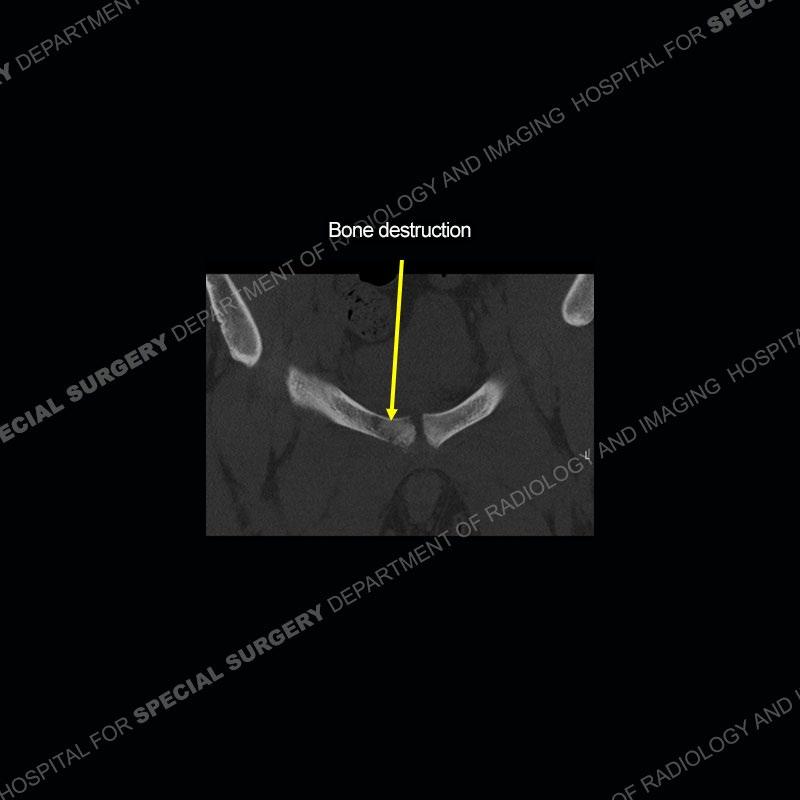
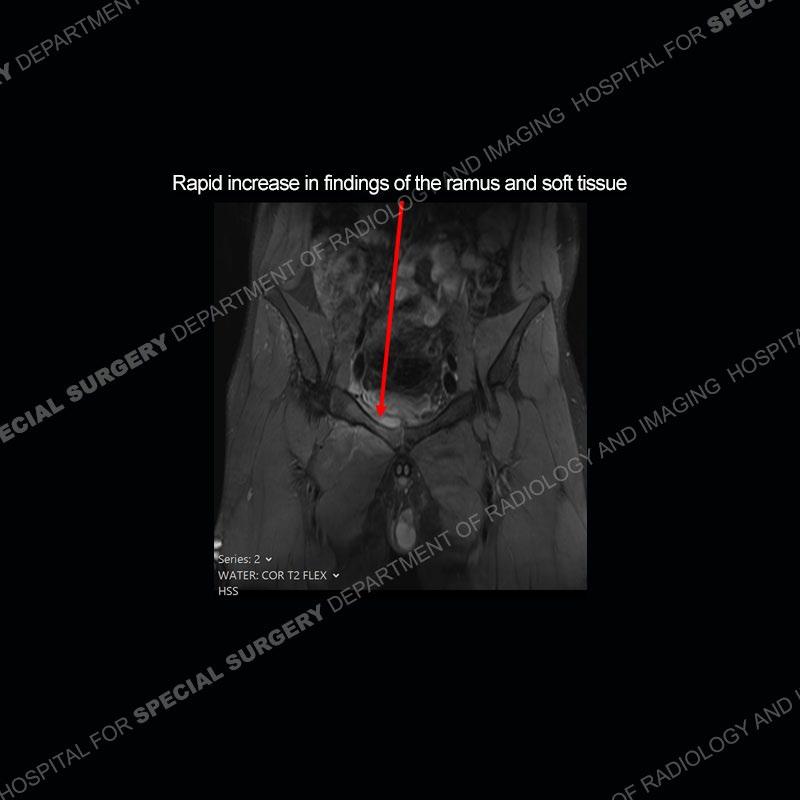
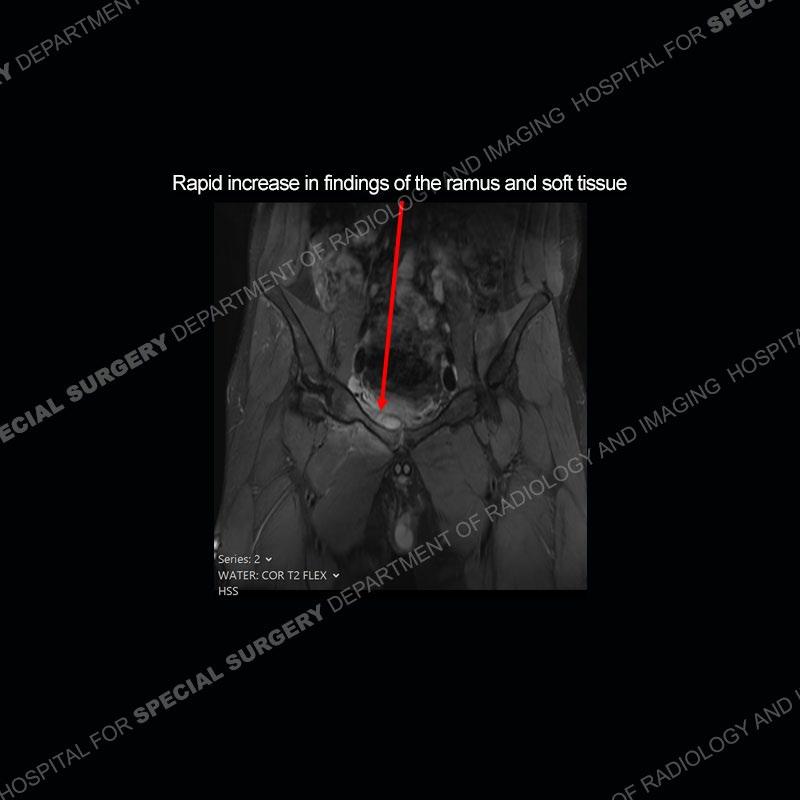
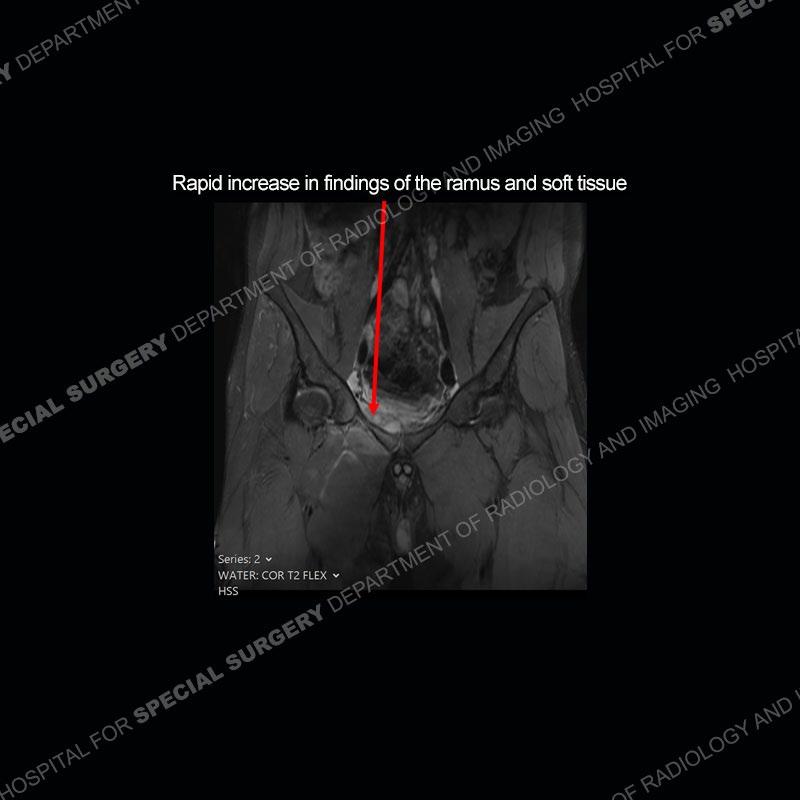
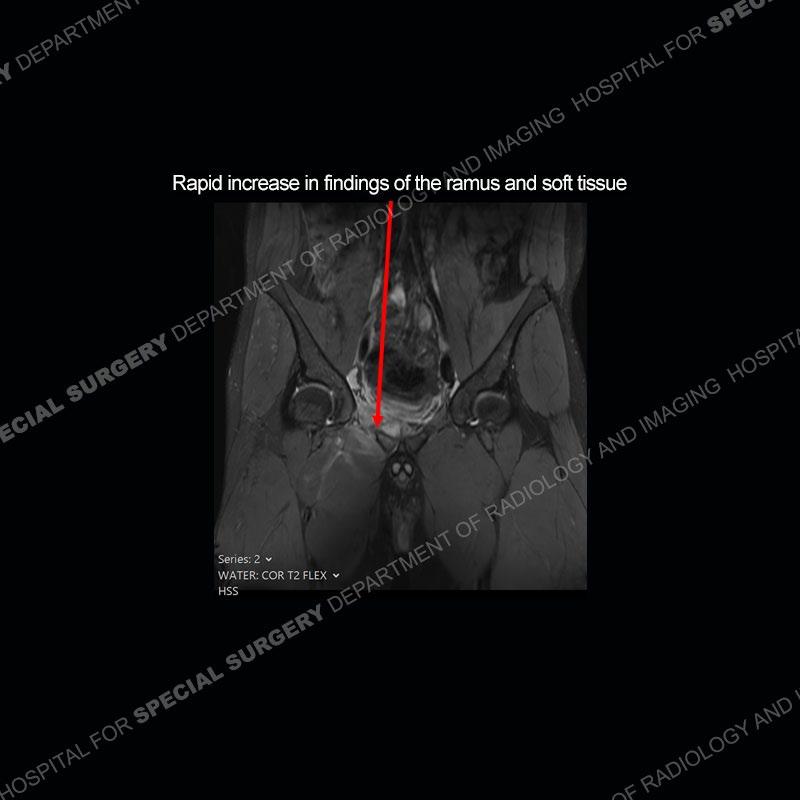
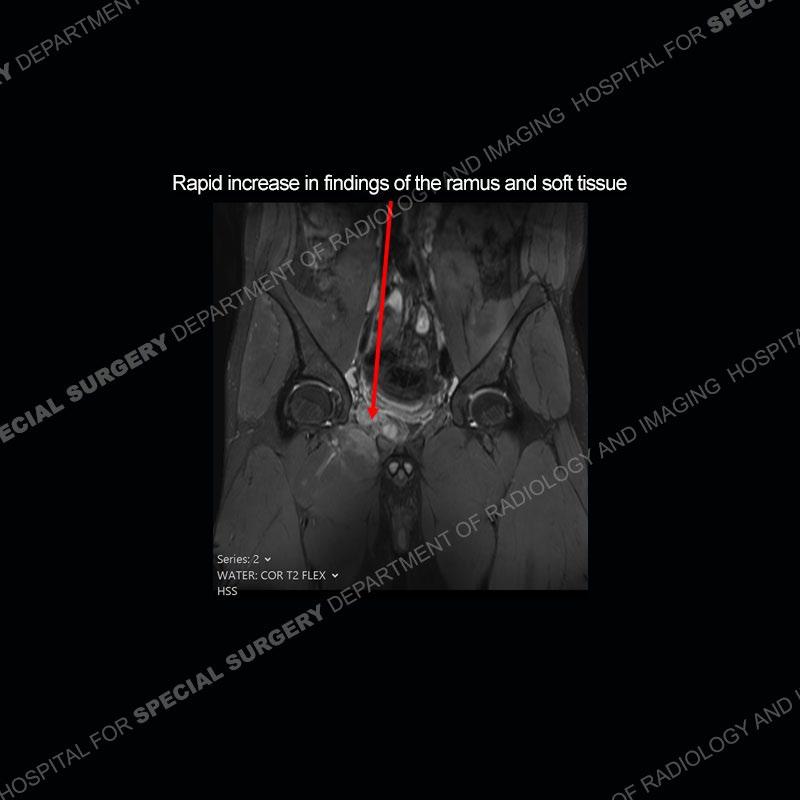
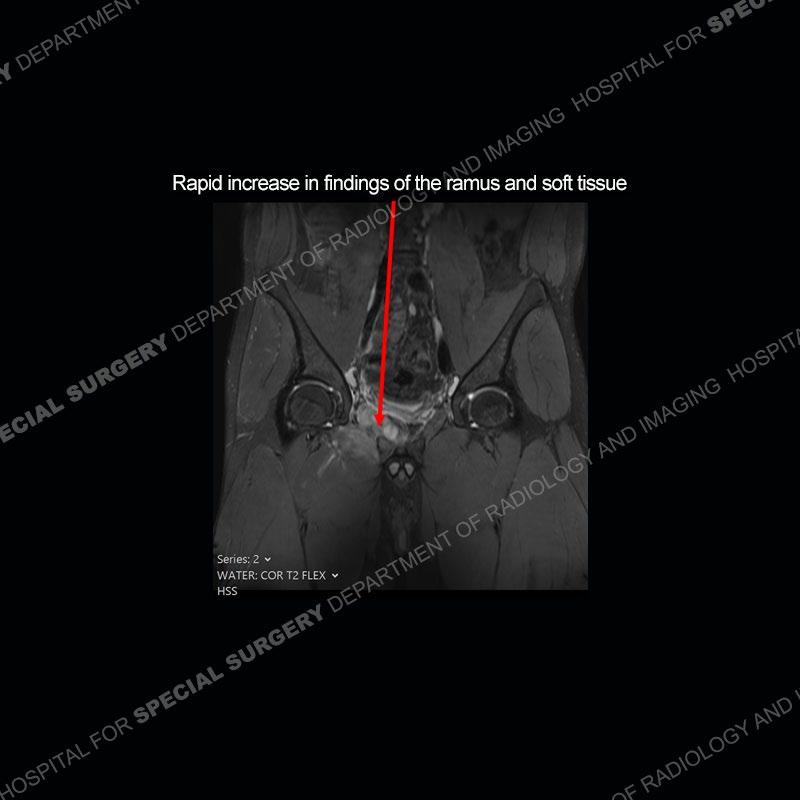
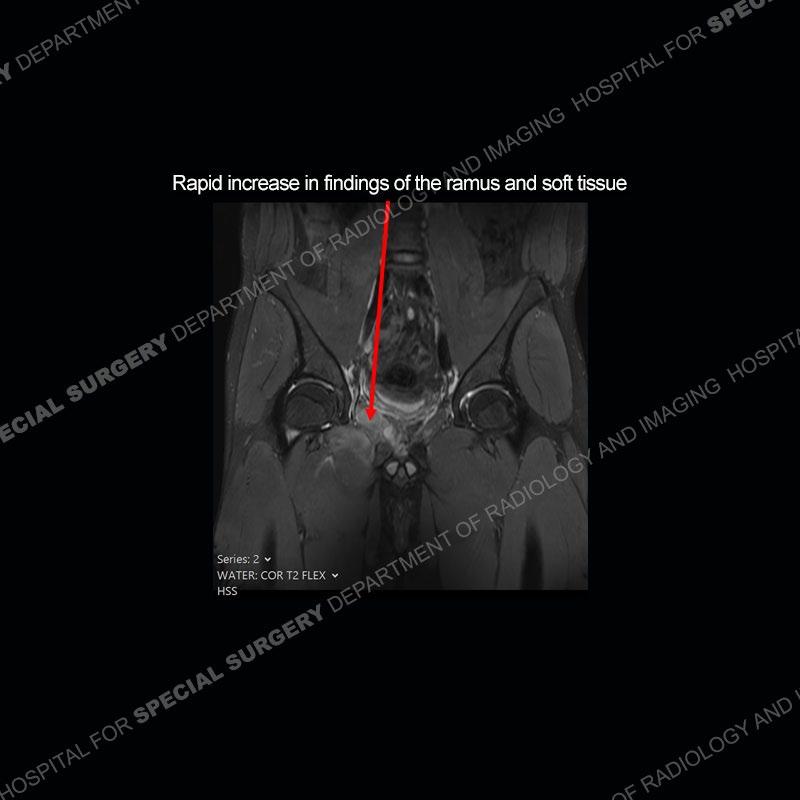
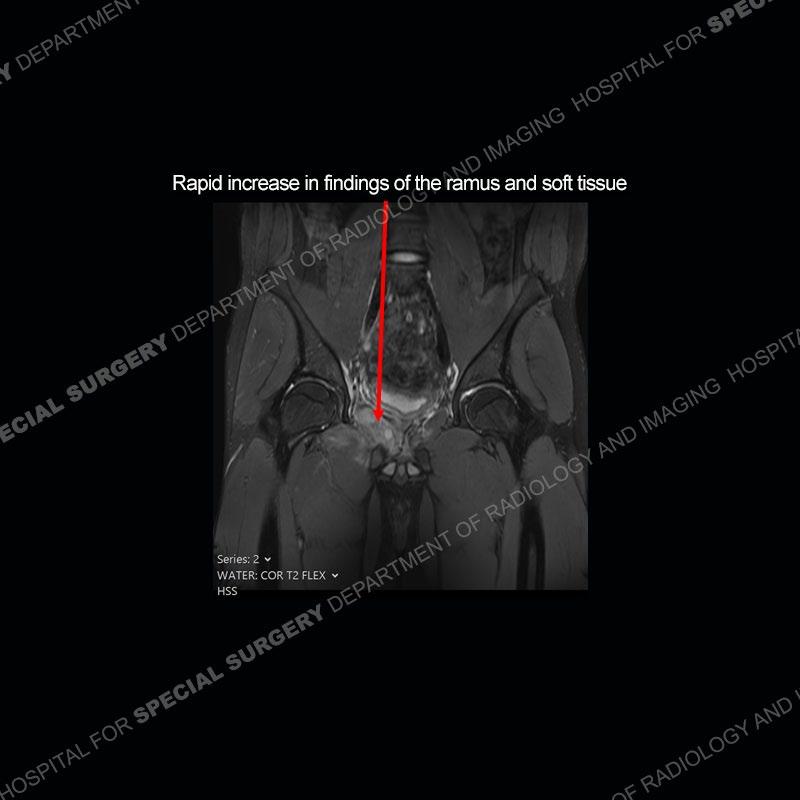
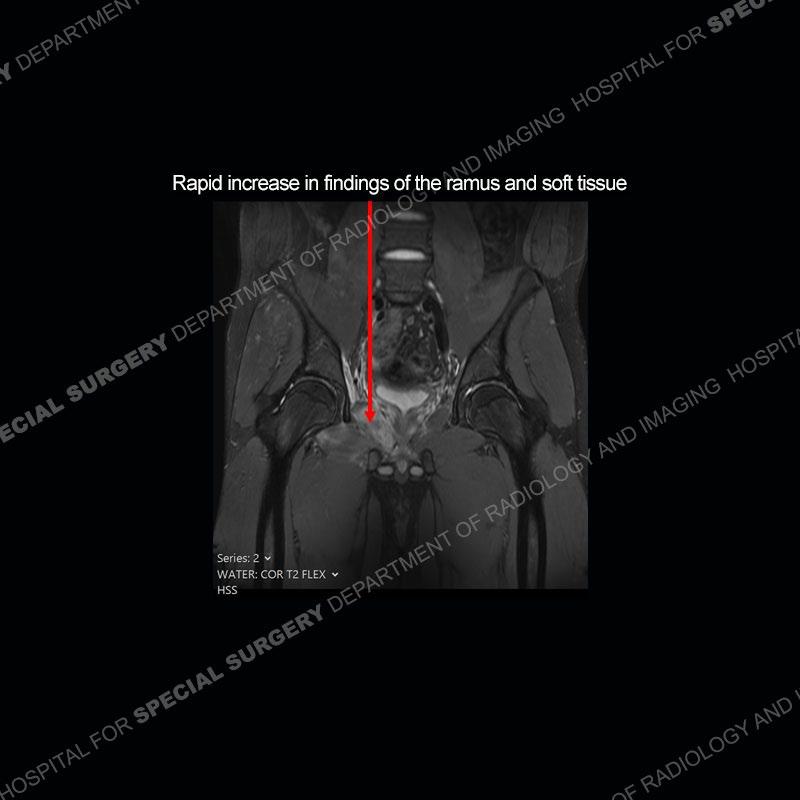
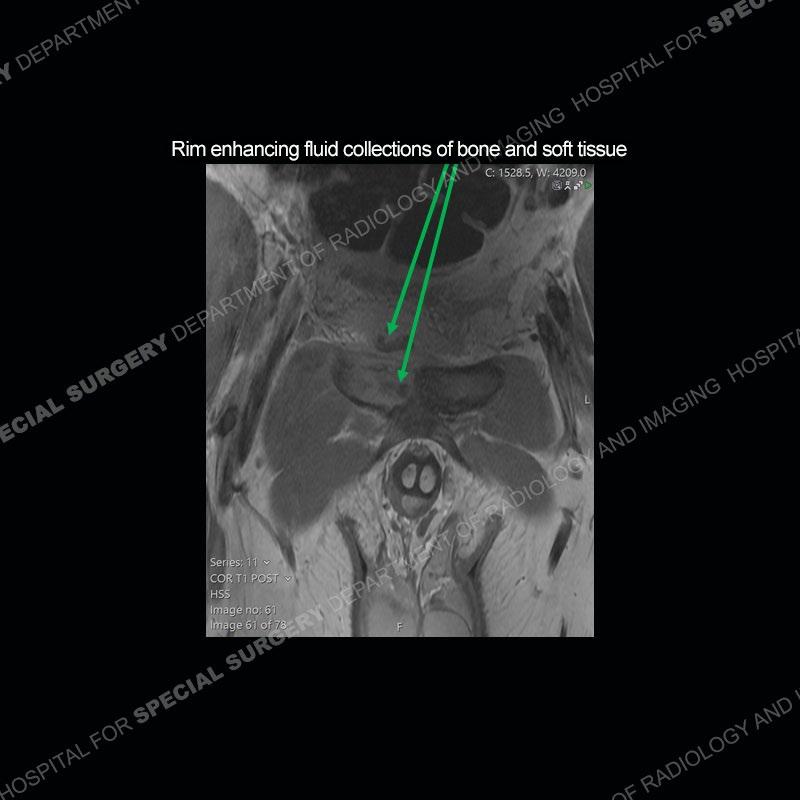
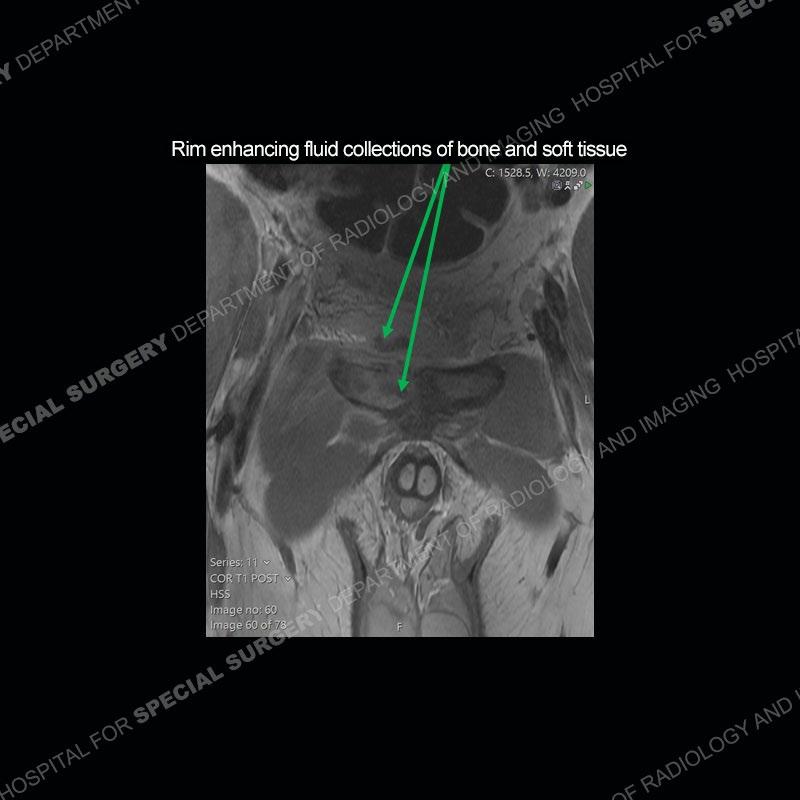
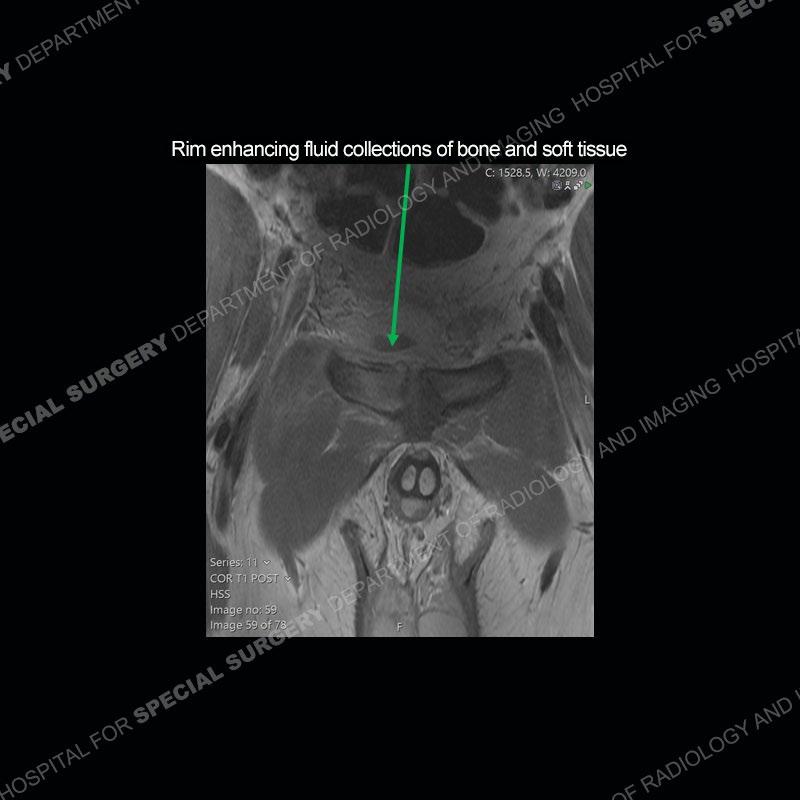
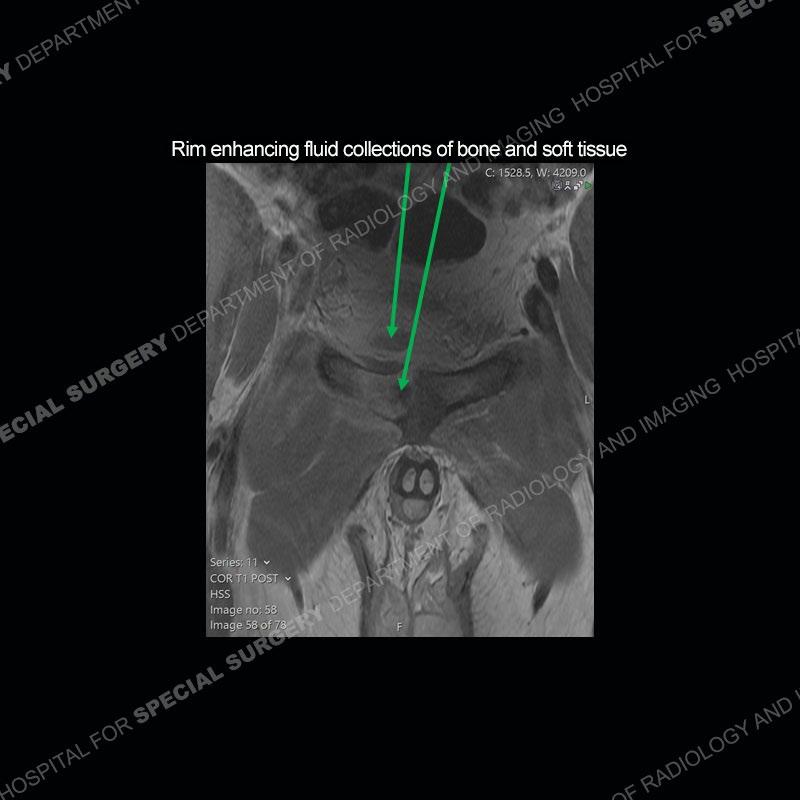
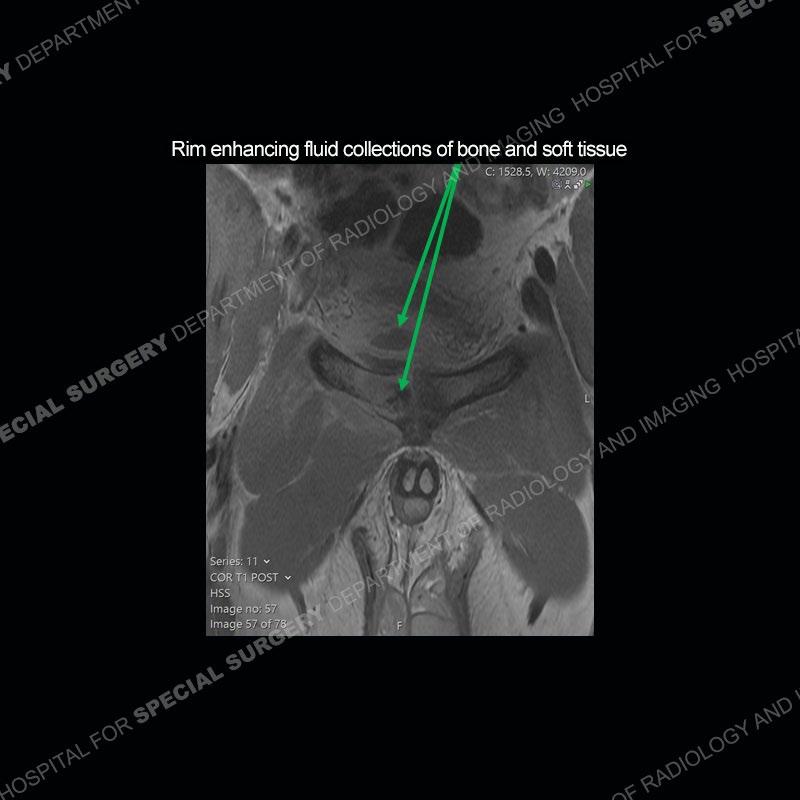
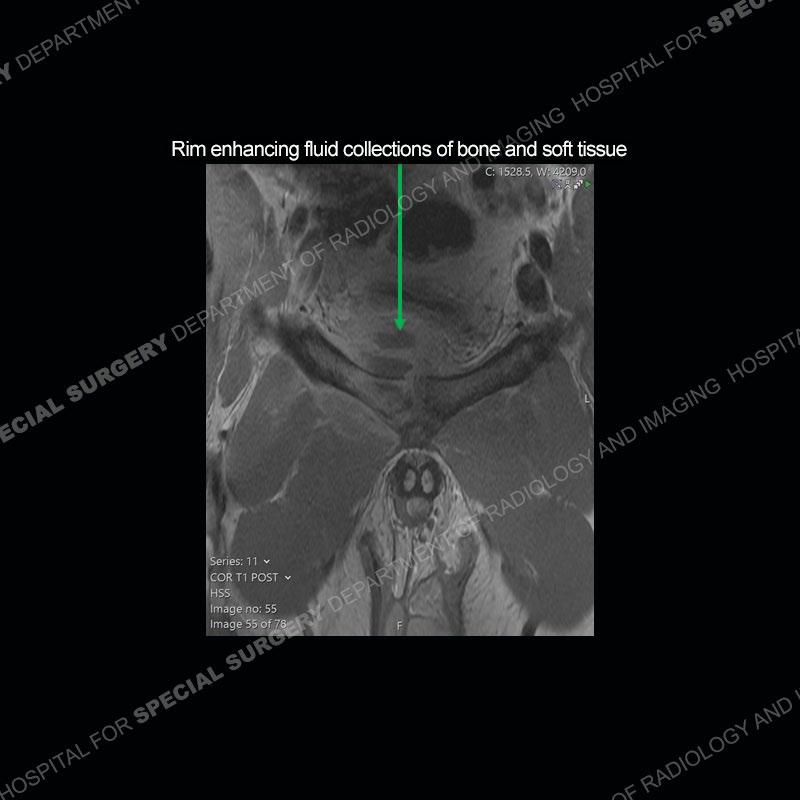
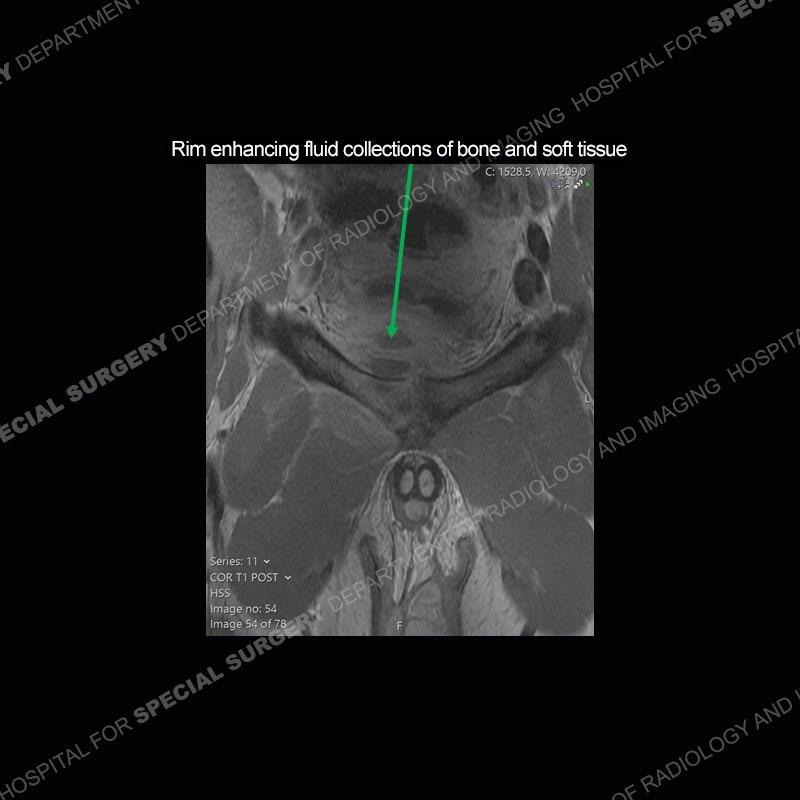
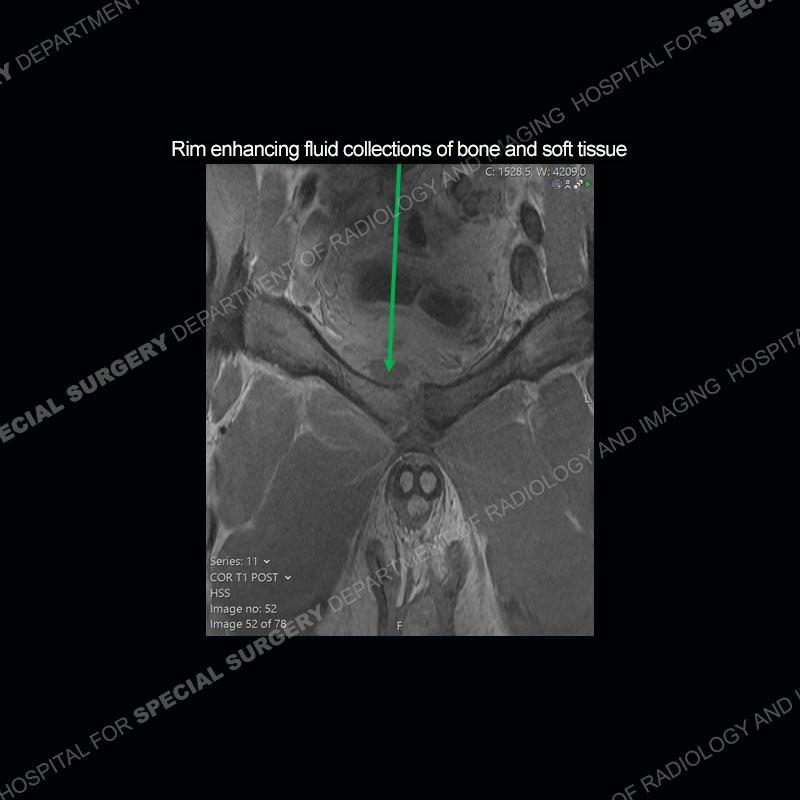
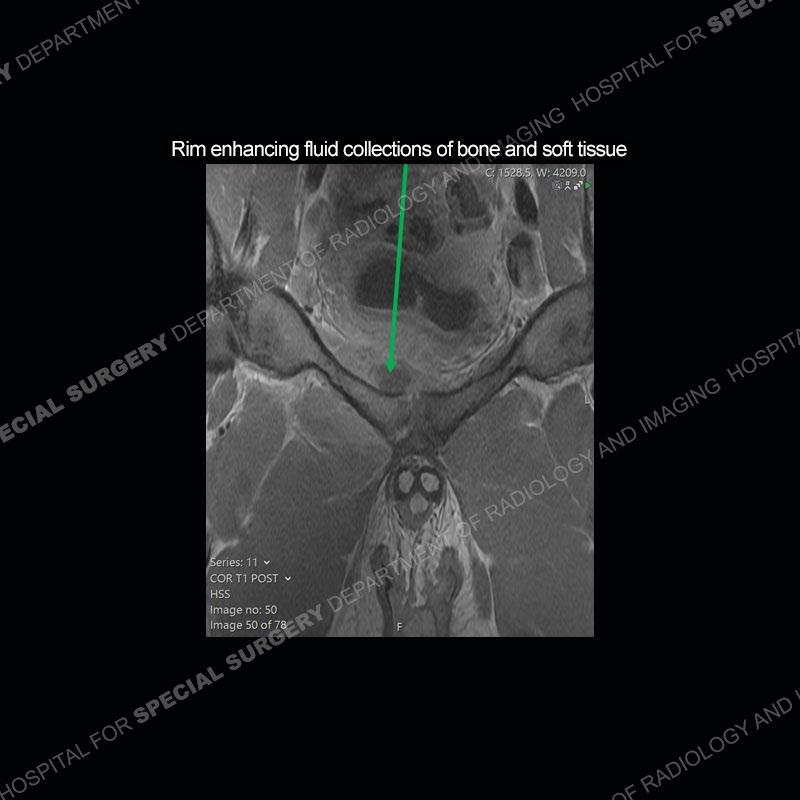
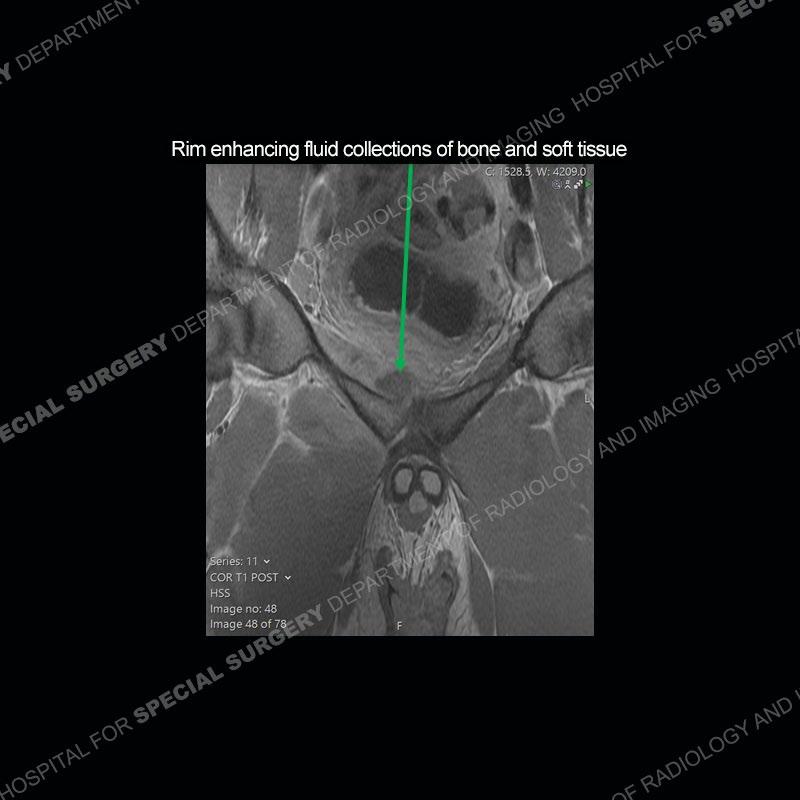
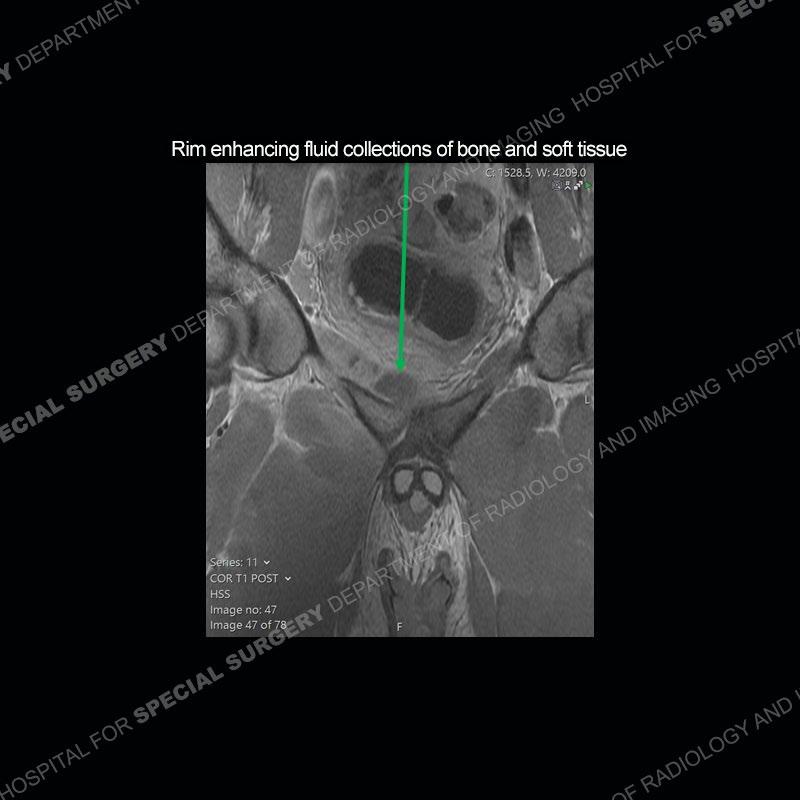
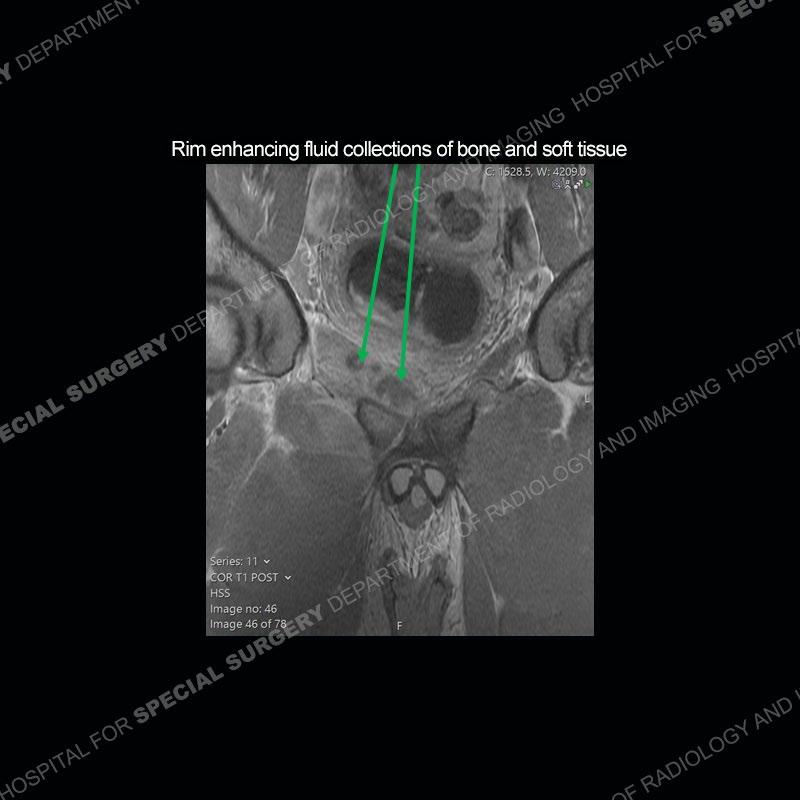
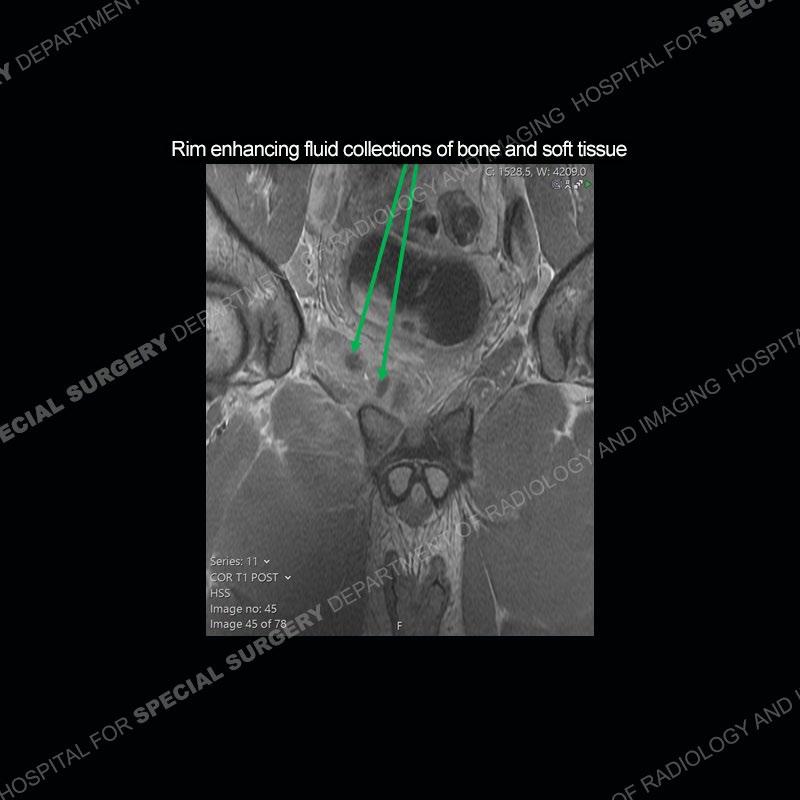
Diagnosis: Osteomyelitis and Soft Tissue Abscess
This case was a bit surprising to all involved given that the young man is otherwise in good health and extremely active in sports. The original thought was this case was going to be an overuse injury or stress fracture. The pubic ramus with the adjacent physis acts as a metaphyseal equivalent and although not frequently thought of would be a reasonable location for infection/osteomyelitis. The first MRI was somewhat confusing as the process did not have an appearance of a stress injury or rectus adductor aponeurosis injury. The degree of edema of the bone and soft tissue together would be odd especially for a sports hernia process. Initially, the thought was of an aggressive process which could be infection or neoplastic. Particularly, the abnormal architecture of the inferior surface of the ramus looked like a destructive process.
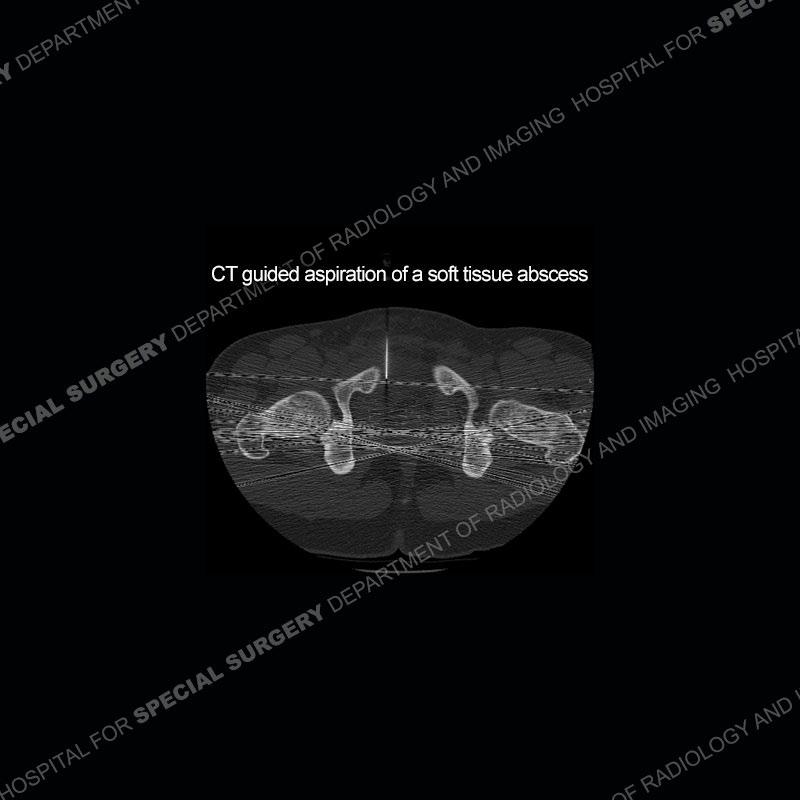
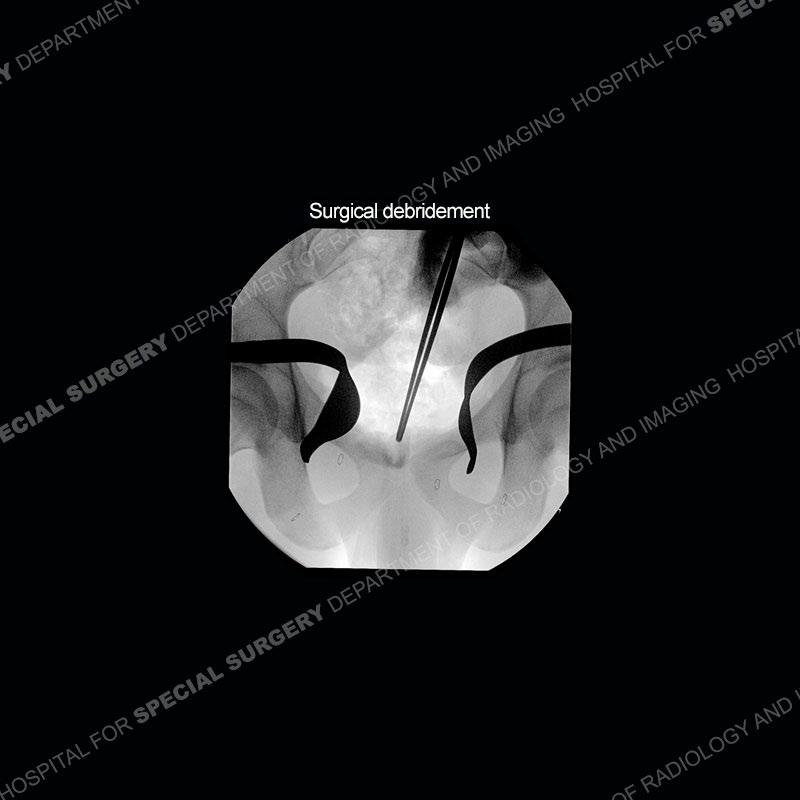
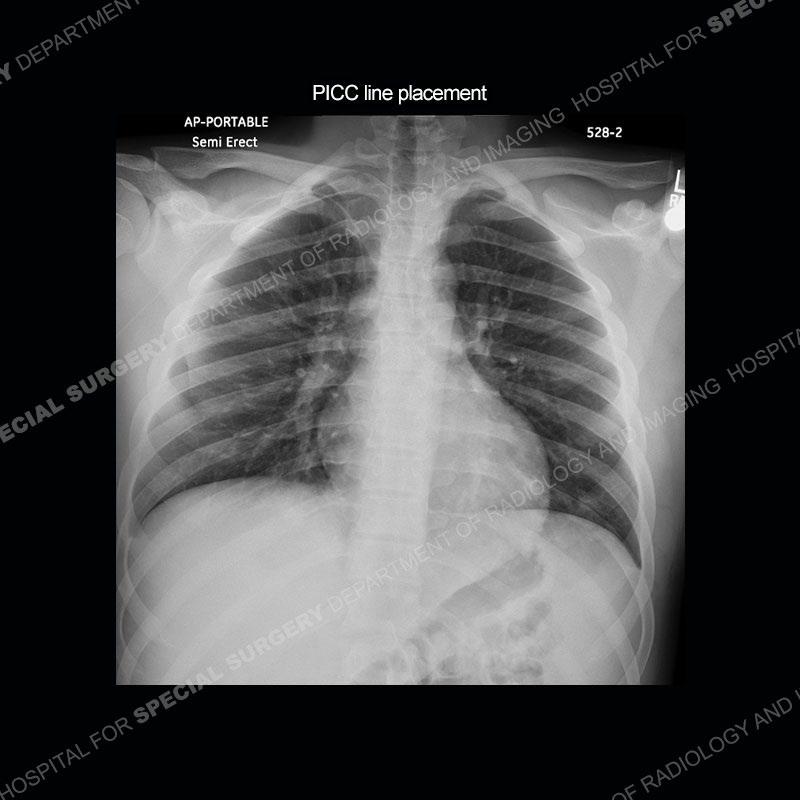
The repeat MRI, with the marked degree of increased abnormality of the bone and soft tissue shifted the diagnosis to a high degree towards infection. Even the most aggressive of neoplasms would not have that the degree of change in a 3-day time span. The CT study was shown before the repeat MRI but actually occurred just after the repeat MRI. It helped confirm the destructive process of the ramus and particularly the abnormal architecture along the inferior margin. The patient went on to have a CT guided aspiration of one of the soft tissue collections with 4cc of purulent fluid obtained. A surgical irrigation and debridement of the bone and soft tissue was performed. A PICC line was placed and the patient is currently undergoing IV antibiotic treatment with a possible repeat irrigation and debridement.