–– Budget 2026 puts people first through growth-focused fiscal measures, investments, President Ali
Commonwealth Secretariat embraces Global Biodiversity Alliance
President Dr Irfaan Ali, on Tuesday, met with the Commonwealth Secretary-General, Shirley Ayorkor Botchwey. A key outcome is an agreement to collaborate on strategic initiatives to support the Global Biodiversity Alliance. A Joint Working Team will advance efforts to establish an International Biodiversity Centre of Excellence based in Guyana (Office of the President)
Budget 2026 reflects a ‘human rights based’ approach to development –– Minister Teixeira says
engaged
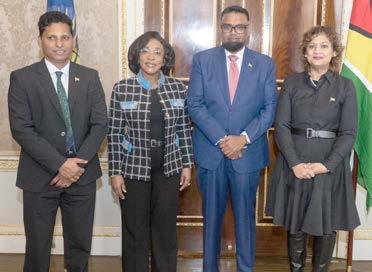
discussions on ongoing collaborations in the areas of environmental protection, biodiversity, and climate action (Office of the Prime Minister)
Outpouring of commendations from private sector, citizens for provisions in Budget 2026
A Closer Look at Budget 2026
Advancing home ownership:
* Continued zero-rated VAT on locally produced building materials
* Increase in low-income mortgage ceiling at commercial banks from 20 million to 30 million
* Continuation of Steel and Cement Subsidy programme
* Allocation of 15,000 house lots across all income categories
* Facilitation of construction of 8,000 additional homes in specified schemes
* Issuance of over 7,000 titles and transports to give security of tenure and collateral for mortgage borrowing
* Direct housing assistance and home improvement programme, including 7.5 billion to support households upgrading their homes
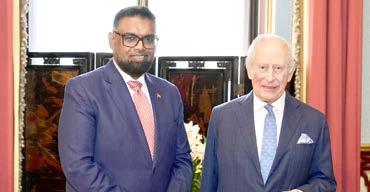
President Dr Irfaan Ali, on Tuesday, met with His Majesty King Charles III at Buckingham Palace, where they
in
Buxton farmers credit collaboration with the gov’t for advancing agriculture
–– calls on other farmers to be united, proactive
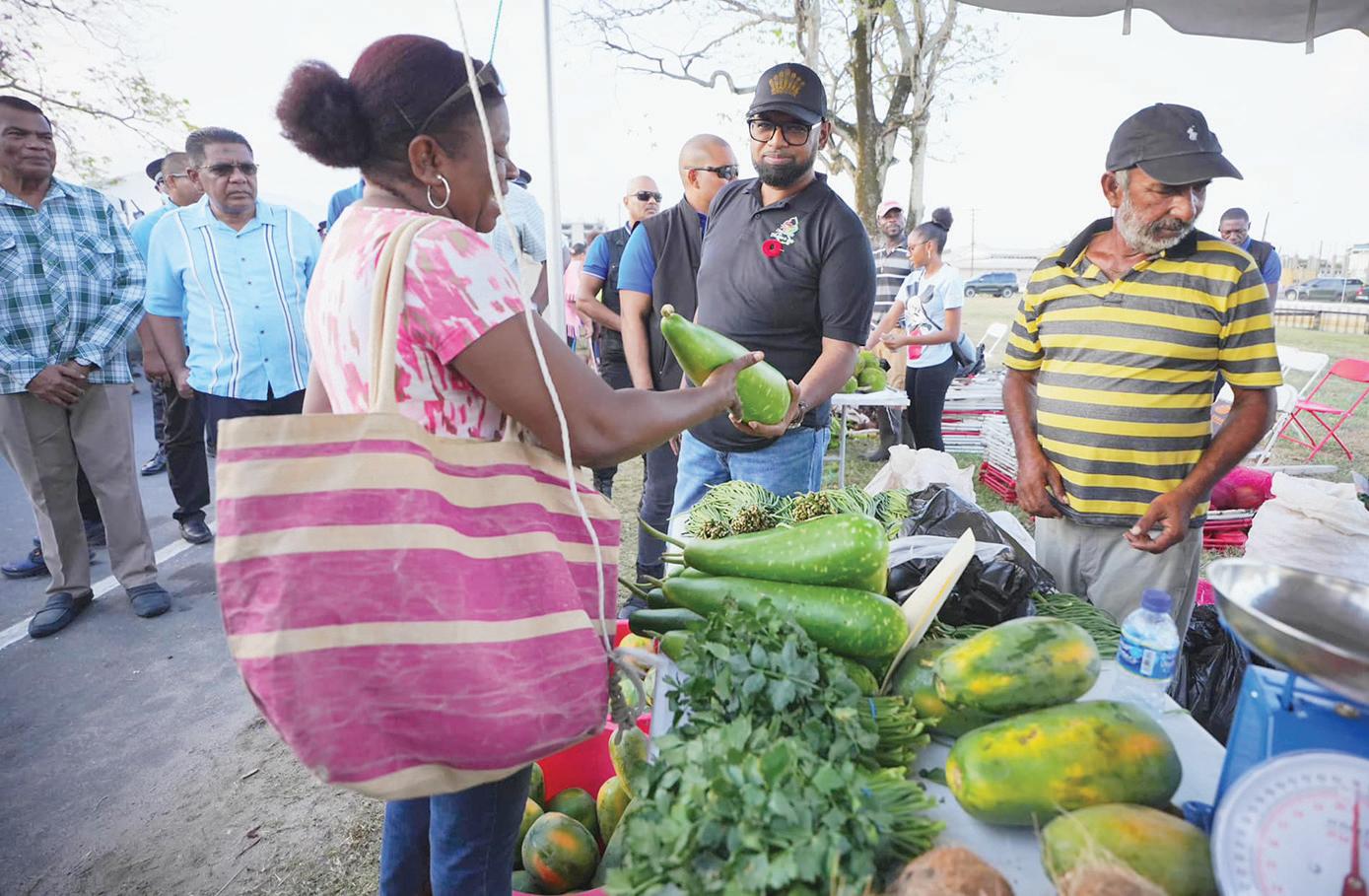
MEMBERS of the Buxton/Friendship Grantees Registered Proprietors Co-operative Society have maintained that many farmers in the area have benefitted from several government interventions that have allowed them to be productive.
Chairman of the society, Leroy Hamer, said that over the years, farmers in the area have benefitted from assistance from the government, resulting in easier access to farmlands and an increase in production.
Hamer also said that since members of his group approached the government for assistance, a lot has been done to
resuscitate and expand agriculture in the area.
He said that the ministry developed farm-to-market roads, which have allowed greater access to cultivation areas.
“There has been no discrimination here. Over the years, we faced challenges. When we got it (farm-to-market road), it encouraged a lot of people because it made things easier for a lot of farmers.
One of the things I have to give the minister credit for is the dam initiative.
We are now getting access to certain areas that we weren’t getting access to.
We asked for land clearing since in the previous administration, but we didn’t get any. Also, one
thing we must thank the Vice President for is the sucker dam. The lands in that area needed draining. For some time, that area was blocked up because no maintenance was done in that area. So, about a week after we raised it, the Vice President sent in a machine. The contractor came in and cleared off (the land) in about a week,” he said.
Hamer also said that, before the end of the year, additional farmers, especially young farmers, are expected to join the co-op.
Curt Adams, another farmer from Buxton, said that because of the infrastructural work
See page 4
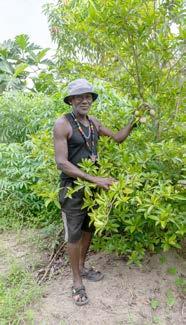
Hamer says improved drainage and closer collaboration with the Ministry of Agriculture have boosted production, and is calling for continued support to expand irrigation and farm development
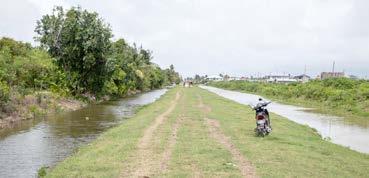
Leroy Hamer says drainage works and a recently constructed dam have improved farming conditions in Buxton, while farmers are now seeking support for land clearing and updated on-the-ground assistance (Delano Williams photos)
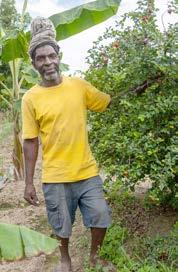
Vibert
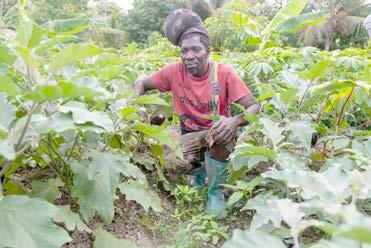
Farmer Ronald Roberts
A
‘This is just the first instalment of real benefits’
–– Budget 2026 puts people first through growth-focused fiscal measures, investments, President Ali
FROM direct cash transfers to investments in targeted fiscal measures, Budget 2026 themed ‘Putting People First’, charts the way forward in realising the People’s Progressive Party/Civic (PPP/C) administration’s vision for growth and development.
This was according to President Dr. Irfaan Ali, during a video posted on his official page, on Tuesday.
The President said this year’s fiscal package brings to life the government’s five-year development plan.
“What is interesting is if you look at Budget 2026, it is actually telling a story that we may very well surpass every single one of the commitments we made, because in this first instalment of real benefits, more benefits for the people, you will see a clear direction as to how the investments are being made to improve lives, expand income, create more disposable income, create jobs, give you safer community, better health care and education,” the President reasoned.
He said that the measures in this year’s fiscal package go just beyond cash transfers, with the government implementing policies and creating investment engines to support small businesses, co-investment opportunities and create better facilities for the delivery of enhanced health and education.
The Head of State said: “We have direct cash in people’s hand, and many times, people only look at this measure, direct cash transfer, which is only one of the methods through which we are transferring wealth, creating wealth and opening up opportunities.”
During his budget presentation on Monday, Minister within the Office of the President with responsibility for Finance, Dr. Ashni
Singh told the National Assembly that the government, in 2026, will introduce Special Development Zones with fiscal incentives intended to attract investment into strategically selected locations.
This will complement anticipated reductions in electricity costs that are expected to significantly improve the competitiveness of manufacturing operations when the flagship Gas to Energy (GtE) comes on stream.
In addition to this, the 2026 budget makes provisions for the removal of corporate taxes on agriculture and agro-processing which is expected to free up resources for reinvestment.
The fiscal package also creates space for the expansion of export allowances to include value-added forestry products and the removal of VAT on locally made furniture and jewellery.
This, the Finance Minister said, will lower production costs, incentivise downstream processing and strengthen the capacity of local industries to compete in regional and international markets.
COST OF LIVING AND MORE DISPOSABLE INCOME
To ease cost-of-living pressures, the minister said the government will maintain the zero percent excise tax on fuel, a measure in place since 2022 which has helped shield households from global trends. Budget 2026 will also extend relief on freight charges used to calculate import taxes. Meanwhile, an additional $9 billion has been set aside in 2026 for further cost-of-living support. Assistance for children and the elderly will also be expanded, with the Because We Care grant increasing
to $60,000 per child, the introduction of a $20,000 annual transportation grant for schoolchildren, this with the $5000 uniform voucher will see each child receiving $85,000.
This will reflect in an estimated $12.4 billion being transferred to parents under the Because We Care programme.
Support will also continue to cover examination fees for Caribbean Secondary Education Certificate (CSEC) and Caribbean Advanced Proficiency Examination (CAPE) benefitting some 14,000 students.
The elderly will see an increase in old age pension to $46,000 per month, and benefit from an annual transportation grant of $20,000, providing an additional injection of $1.9 billion in support.
Measures to raise disposable income include higher stipends for communitybased workers, the return of the $100,000 national cash grant for adults aged 18 and above, the removal of net property tax on individuals and an increase in the income tax threshold to $140,000 per month, with the minister estimating that these fiscal measures will place more than $100 billion into the hands of citizens.
The government announced, too, the continuation of the $100,000 grant for every newborn child.
These measures, President Ali had said are placing direct cash transfers into the hands of families.
“When you add those direct transfers, those direct cash transfers, we’re talking about hundreds of billions of dollars that has been pumped into the pockets, that is being pumped into the homes of the elderly, children, women, single mothers [and] newborn babies,” the Head of State said on Tuesday.
He noted too that a large component of the fiscal package pushes for savings through improved services, particularly reducing out of pocket health costs.
“Let’s look at the example of health care and access to health care, because if you have better health care, you have to spend less money on medication, less money on private doctors and private hospitals. That is a saving to you if you don’t have to buy the spectacles that you need, if you don’t have to pay for the dental service that you need. All of that is savings that come back directly to you,” he said.
Additional tens of billions of dollars will be pumped into providing improved access to services and care for the elderly, children living with disabilities and other vulnerable groups.
These fiscal measures will supplement the efforts that have already been made to enhance primary care, the President said, citing the government’s previous policies to address the cost of dialysis treatments for
diabetic patients across the country.
“Even though we’re giving the grant, we are also putting dialysis facilities and machine in every single one of the regional hospitals. So, we’re expanding Georgetown, and we’re putting in every single region, whilst at the same time, we are giving you this grant. We are expanding telemedicine, the mobile health units, the virtual health clinics for the elderly with primary health care,” Dr. Ali said.
In 2026, the government is also moving to further streamline the delivery of healthcare at the community level, improving access to medication, services and strengthening the country’s Emergency Medical System (EMS) with the establishment of a medical emergency authority.
“All of these things lead to savings in the healthcare system.
‘WE ARE NOT HOLDING BACK’
The President noted as well that the government’s people centred agenda is a clear rejection of critics, who seek to undermine the government development efforts, reminding that that the administration has a full five-year mandate to deliver and exceed its promises.
“We have five years. We have five years. The naysayers believe that we have six months or one year you elected us for five years to fulfil and surpass our commitment, and I assure you, we will do just that together. We’re going to do great things together,” he said.
President Ali maintained that Budget 2026 is just the beginning of a broader transformation programme, with the repeated philosophy that “putting people first” will remain at the heart of its policy agenda.
The building out of level five hospitals and level four hospitals in almost every single region. Already, the new hospitals, regional hospitals that we would have commissioned, would have provided service to tens of thousands of Guyanese, “he added.
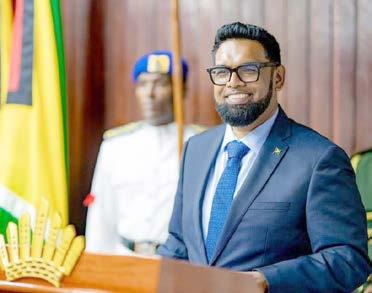
President Dr. Irfaan Ali
Buxton farmers credit collaboration ...
From page 2
done in the area, people now have access to come and purchase crops directly from his farm.
“When I came here to start farming, I had challenges. This area was all mud. When the rain fell, you couldn’t come through with your produce. When Minister Mustapha came into office, we went to him and told him we were having issues with the dam. He said we will try to assist you. After that, we saw people coming to measure the dam, and they started working. As a farmer, I am thankful for that because I know the kind of challenges we got coming into our farm. So, I am thankful to the government for coming in to help because this is farmto-market. If someone wants to come into the area to buy something, they can drive and come straight to the farm, whether it rains or not. I have more work to do, and I will work with the ministry. We need more food in the country, and we are prepared to plant a lot of food,” he said.
Another farmer said that while their group is engaging the government and benefitting from assistance to develop their farms, other farmers in the area are not organised and lack internal leadership and co-operation. He said that they were able to come together and, through the effective leadership of the coop’s chairman, a lot was accomplished. He said the other farmers should organise them-
selves and make their needs known to their appointed government officials, adding that their lack of co-operation and proactiveness continues to hamper their productivity.
“As a man, I can’t sit down and wait and cry for things. I have to go out and get it because I have a family to support. We worked together and went to the Minister, and we got help. Some other farmers don’t even want to help themselves. We used to clean these drains because it was the responsibility of the NDC, and nothing was being done. When we met with the minister, we told him that we want to get the contract, and he agreed.
Now look, these canals are maintained, and we are having drainage.
To be successful in farming, you need access, drainage, and irrigation. If you don’t have all three, you cannot be successful,” he said.
Farmer, Ronald Roberts said better access roads and improved communication with the ministry have helped expand his farming, but stressed the need for wells or irrigation systems to bring water directly to crops.
The farmers said over the years they benefitted from farming inputs such as seeds, seedlings, fertiliser, tools, land clearing, maintenance of drainage and irrigation structures, and tubes to develop internal drainage channels in their farms.
Aviation Operators Association welcomes provisions for industry’s enhancement
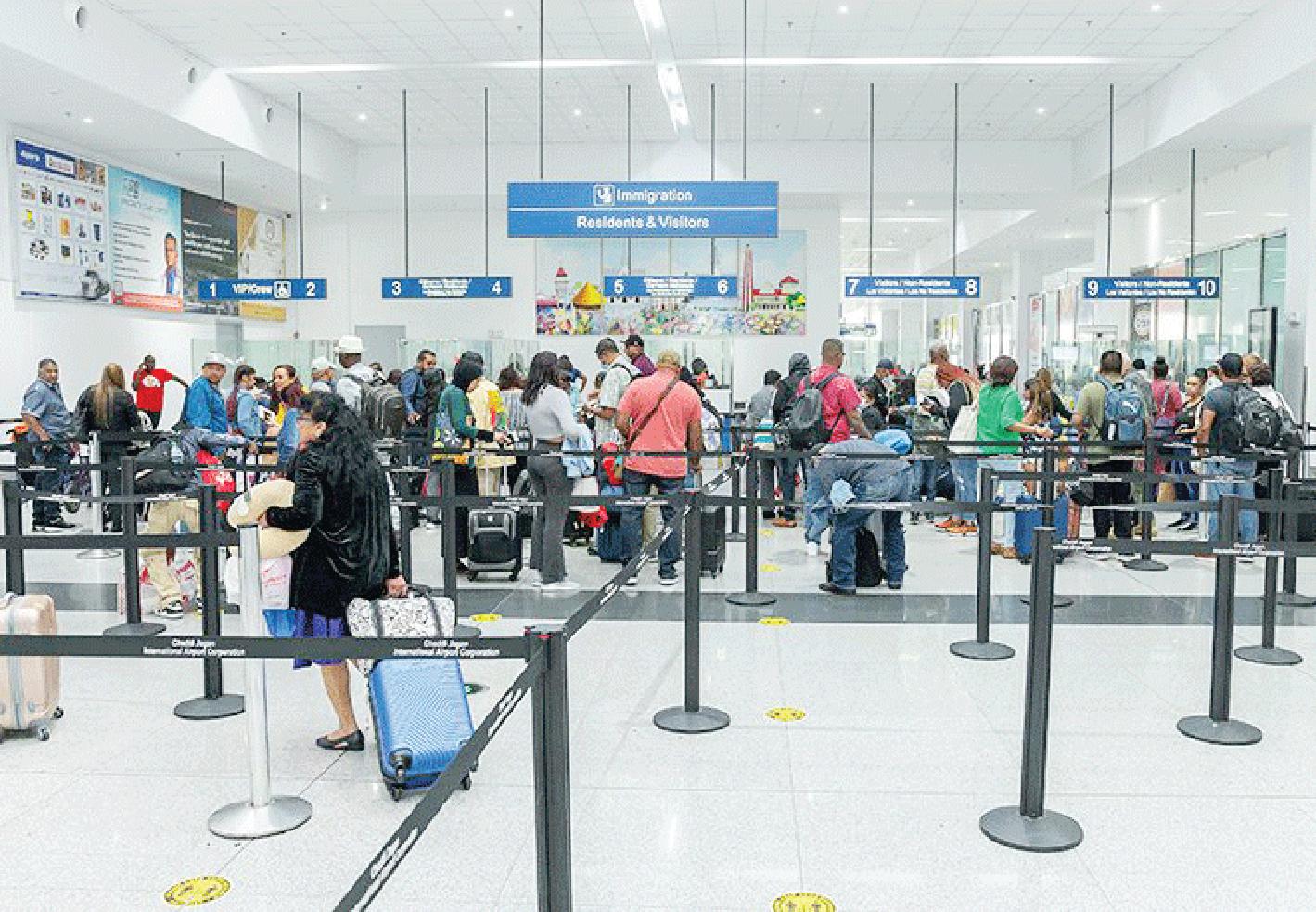
THE Aviation Operators Association of Guyana has said that it welcomes Budget 2026’s allocated combined direct investment of in excess of $7B into Guyana’s aviation industry, with $3.2B earmarked for advancing works on the new arrivals terminal at Cheddi Jagan International Airport and $4B for upgrading multiple airstrips in Guyana’s interior.
According to a press release from the association, Guyana’s aviation industry drives the crucial connectivity in a country of diverse geography, facilitating hinterland tourism, mining logistics, business travel, response to medical emergencies, disaster relief, national security, and countrywide delivery of critical cargo including food supplies and equipment.
“In 2025, our Industry made significant investments in the procurement of several new aircraft to elevate the standard of
our service and satisfy growing demand. These investments will continue in 2026 and beyond to remain in step with Guyana’s staggering economic growth.
“The refurbishment of approximately 30 interior airstrips and the impending establishment of municipal airports at Lethem and Rose Hall will significantly improve our safety
and operating conditions,” the association said.
These allocations and plans, combined with the allocations to tourism will provide opportunities for growth through increased guest numbers and are supported by long term human resource capacity initiatives such as the Hospitality Institute and Guyana’s Next Generation of Aviation Professionals Programme.
Above all, Budget 2026 frames tourism and aviation as important parts of economic diversification beyond oil and gas. The association welcomed the engagement it experienced prior to Budget 2026, and said it will continue its efforts to support Guyana’s national growth and development.
Budget 2026 reflects a ‘human rights based’ approach to development
–– Minister Teixeira says
THE Government of Guyana has unveiled the largest national budget in the country’s history, valued at $1.558 trillion, which Minister of Parliamentary Affairs and Governance, Gail Teixeira, described as a landmark investment in the nation’s social and economic transformation.
Minister Teixeira, in a press statement, said Budget 2026 embodies the People’s Progressive Party/Civic (PPP/C) administration’s commitment to building a modern, inclusive, and people-centred Guyana.
Fully financed and presented without the introduction of new taxes, the budget underscores the government’s intent to sustain high levels of growth while ensuring that prosperity reaches every Guyanese household.
“This budget places our citizens at the heart of national development,” Teixeira affirmed, noting that this year’s allocations expand direct support to families, strengthen social protection mechanisms, and invest heavily in infrastructure, energy, and human capital.
The measures, she said, are designed to translate economic growth into better livelihoods, broader access to essential services, and an improved quality of life across all ten administrative regions.
Among the most impactful provisions are increases in the income tax threshold, expansion of the “Because We Care” cash grant, and enhanced transportation support for pensioners and schoolchildren.
The introduction of a $100,000 allowance for every newborn, together with higher Public Assistance and non-contributory Old Age Pensions, will place billions of dollars of disposable income directly into the hands of citizens.
Minister Teixeira noted that while many developed nations are scaling back on welfare services, Guyana is expanding its safety nets to ensure that national prosperity remains shared and meaningful.
Education and health continue to anchor the PPP/C’s development strategy, with record allocations of $183.6 billion and $161.1 billion, respectively.
Teixeira emphasised
that these figures represent more than expenditure, they are investments in human capital, community resilience, and intergenerational progress.
Additional allocations to housing ($159.1 billion), roads and bridges ($196.1 billion), energy diversification ($119.4 billion), and drainage and irrigation ($81.9 billion) strengthen the foundation of a rapidly modernising nation.
Special attention is also given to vulnerable groups. In Budget 2026, $316.5 million is earmarked for persons with disabilities, $78.3 billion for children, women, and the elderly, and $7.5 billion for Amerindian and hinterland communities.
These allocations, Teixeira said, reflect the
tually reinforcing,” she stated, linking the budget to Guyana’s constitutional obligations and regional commitments.
Economic diversification and job creation also feature prominently in the 2026 plan. Significant investments will drive growth across agriculture, agro-processing, fisheries, manufacturing, mining, and energy, while maintaining a zero-percent excise tax on fuel.
government’s unwavering commitment to inclusion, equity, and human rights, ensuring that no community is left behind.
HUMAN RIGHTS PRINCIPLES
She further explained that the government’s development approach remains anchored in human rights principles, with investments supporting access to education, clean water, healthcare, housing, cultural participation, and non-discrimination.
“Development and human rights must be mu -
These measures, Minister Teixeira noted, aim to reduce costs for households and businesses alike and are aligned with Guyana’s Low Carbon Development Strategy 2030, which integrates economic progress with climate resilience.
At the governance level, Teixeira reaffirmed her ministry’s role in advancing transparency, institutional development, and public engagement, particularly through modernised national reporting systems and improved access to government services via technology.
The budget, she said, empowers state institutions to operate more effectively, strengthen public participation, and uphold Guyana’s reputation as a leader in rights-based and sustainable development.
Minister Teixeira described Budget 2026 as “more than the sum of its measures,” but a vision for Guyana where economic dynamism complements social progress, and where every bridge, classroom, hospital, and household initiative represents a tangible expression of human dignity and opportunity.
“This is Guyana’s golden era,” she said, adding: “It is time for all Guyanese to capitalise on the opportunities before us and experience how development can be personal, measurable, and centred on our shared dignity as human beings.
This government will continue to put people first, uplift our citizens, strengthen our institutions, and secure a brighter future for generations to come.”
Minister of Parliamentary Affairs and Governance, Gail Teixeira
Opposition’s Budget Charade
THE Opposition’s response to Budget 2026 has shown a lack of substance regarding policy.
Instead of serious economic understanding and governance, there is a troubling void.
Minister within the Office of the Prime Minister, Kwame McCoy’s comments are not just political talk; they highlight a reality.
Both APNU and the new We Invest in Nationhood party have not engaged with the details of the $1.558 trillion fiscal plan. This plan aims to boost growth, protect the vulnerable, and increase productive capacity in a rapidly growing economy.
What Guyana saw was not a thorough critique of the policy but a theatrical protest disguised as parliamentary discussion. Instead of examining macroeconomic stability, sectoral investment priorities, or longterm development plans, Opposition MPs resorted to slogans and catchy phrases.
This is particularly harmful because serious budget review requires technical skills. Understanding fiscal deficits, multiplier effects, debt sustainability, and capital formation is essential. A national
budget is a policy tool based on data and forecasts, not a campaign flyer meant for street corners.
The weakness of the Opposition’s stance becomes clear when we look at their manifesto promises. During the 2025 elections, both APNU and WIN promised much larger cash transfers, pension increases, and tax threshold changes.
All of these would need a significantly larger national budget, deeper borrowing, and higher fiscal deficits than what the government proposed. Yet, these parties provided no realistic costing or financing plans when asked to clarify their numbers.
APNU promised $400,000 monthly tax thresholds and a 35 per cent increase in public sector wages. WIN proposed 50 per cent salary increases and doubled pensions. Independent analysis indicated that these commitments could drain the Natural Resource Fund within a year and lead to unsustainable deficits.
The irony is striking. Parties that cannot calculate their own proposals now criticize a government budget that expects 16.2 per cent overall growth and 10.8 per cent growth in non-oil sectors. This budget
maintains macroeconomic stability with a projected inflation rate of 2.8 per cent.
It also directs oil revenues toward infrastructure, education, healthcare, and social support without increasing taxes. This isn’t an economic debate; it’s political noise from those who mistake performance for policymaking.
Minister of Parliamentary Affairs Gail Teixeira’s dismissal of WIN parliamentarian Gobin Harbajan’s claim about not having enough time to prepare brings the Opposition’s lack of readiness to light.
The argument that six days was too little ignores parliamentary traditions. Budget preparation in Guyana has been structured this way for many years across different sessions. Moreover, Opposition parties had months, since the manifesto period, to form policy positions on national development priorities.
The real issue is not the time frame but the capacity. Many Opposition MPs have limited legislative experience and weak institutional memory.
Guyana cannot afford leaders who confuse loud statements with thoughtful critique and ignorance with bravery. Bud-
get 2026 represents a 307 per cent increase since 2021, turning oil wealth into real investments.
This includes housing ($159 billion), education ($183.6 billion), healthcare ($161.1 billion), and infrastructure ($196 billion), while enhancing social support to $78.3 billion. This requires informed engagement, including analysing sector allocations, examining capital versus recurrent spending, scrutinising debt management strategies, and developing evidence-based alternatives.
Instead, the Opposition made vague accusations of “broken promises” and “kickbacks” without providing evidence or realistic alternatives.
This reflects not only inexperience but also a lack of seriousness about governance. Guyana’s economic growth needs mature political engagement based on data, fiscal responsibility, and depth in policy.
The Opposition’s actions indicate they are fundamentally unprepared to offer the thorough oversight that democracy deserves, preferring to retreat into the comfortable but unproductive realm of political theater.
Budget 2026 affirms gov’t is looking out for health, dignity, inclusion of all Guyanese
Dear Editor,
I WANT to thank the Minister of Finance Dr. Ashni Singh for presenting Budget 2026 to the National Assembly on Monday.
I also want to thank the Government of Guyana for a budget that meets the needs of our most vulnerable citizens, such as young children, people with disabilities, and the elderly.
What struck me most about this budget is that it’s not just about numbers and predictions; it’s also about people. As President Dr Mohamed Irfaan Ali rightly stated, “Budget 2026 is positioned with the people at the centre.”
The steps are meant to have the biggest effect on people and improve their
quality of life. Those words mean a lot to me because they show that development needs to be felt at the level of the home and the community.
I was especially happy to hear the President say that Budget 2026 really includes all parts of the Guyanese population, even the elderly. Older people often feel like they’ve been forgotten, but this budget shows that our health, dignity, and well-being are still important as the country moves forward.
The plans for people with disabilities and kids with special needs are also good. The President said that the main problem for these people is access, and he made it clear that the government is dealing with this directly, whether it’s getting to school, getting to buildings,
getting to medical care, or getting to social services.
As outlined by the minister, Budget 2026 delivers tangible support for vulnerable groups through a range of targeted measures, including an increase in the old-age pension to $46,000 per month, at an annual cost of $52 billion, providing pensioners with a steadier income to cope with rising living costs; the introduction of annual transportation grants for pensioners and schoolchildren, easing the burden of travel to essential services and schools; an increase in the Because We Care cash grant to $60,000 per child, benefitting more than 206,000 children nationwide and the expansion of public assistance to $25,000 per person, extending vital
support to the most financially vulnerable households.
I’m glad that this budget shows that a society that cares is one that looks out for its most vulnerable members. Budget 2026 makes us sure that the government is not only in charge of the economy, but also looking out for the health, dignity, and inclusion of all Guyanese.
This budget that puts people first is great.
Thank you to the government and the Minister of Finance.
I can’t wait to see these promises come true in communities all over our country.
Respectfully, Brian
Azore
Budget 2026: A plan that truly puts people first
Dear Editor,
BUDGET 2026, presented under the theme “Putting People First,” lived up fully to its title.
The document and the minister’s presentation make clear that the central objective of fiscal policy is not abstract growth alone, but the direct improvement of the daily lives of Guyanese citizens.
The budget is framed not as a ledger of macro targets, but as a blueprint for daily
lived experiences. Every pillar is tied to tangible outcomes: better health, better schooling, safer and more affordable housing, reliable water and power, and thriving communities.
The implicit contract is that national wealth should translate into household wellbeing, and policy choices should be judged by their impact on ordinary people’s lives.
Across its pillars, the budget places the human being at the centre of de -
velopment. Massive investments in health, education, housing, water, sanitation, and community infrastructure are not framed merely as capital projects, but as instruments to raise quality of life, expand opportunity, and reduce inequality.
The emphasis on worldclass hospitals, modern schools, expanded housing schemes, and reliable utilities reflects a deliberate strategy to convert national wealth into household wellbeing.
Twelve disciples humiliated
Dear Editor,
Equally important is the focus on incomes and costof-living relief. Continued tax reductions, public-sector wage growth, cash grants, pensions, and targeted social programmes demonstrate a commitment to protecting purchasing power and ensuring that growth is broadly shared.
These measures are complemented by job creation through infrastructure, energy expansion, agriculture, and services, ensuring that dignity through work re -
mains a core national value.
The budget also looks to the future by investing heavily in education, skills training, digitalisation, and youth development, preparing citizens to participate meaningfully in a modern, diversified economy.
At the same time, it strengthens resilience through climate adaptation, food security, and prudent management of oil revenues via the Natural Resource Fund, safeguarding today’s gains for tomorrow’s gen-
erations.
In substance and in spirit, Budget 2026 demonstrates that “Putting People First” is not a slogan, but a governing philosophy translated into policy, programmes, and priorities that place the welfare, dignity, and opportunity of every Guyanese at the heart of national development.
Burnham’s party on Monday
On Friday, Terrence Campbell and the PNC publicly stated that they were against abstaining from the Opposition Leader vote, ef-
THE PNC had two options on Monday: abstain, or vote for Azruddin Mohamed to become Opposition Leader. What happened instead was an eel-like attempt at the in-between.
fectively embracing Mohamed. Their justification? Collaboration.
Fast forward to Sunday night, when senior APNU MP Ganesh Mahipaul had to school the WIN Lead -
er on basic parliamentary procedure relating to Parliamentary committee makeup, prompting the indicted MP to accuse Ganesh of being in the PPP’s pocket.
Now to Monday itself.
The PNC’s 12 disciples, as they ironically call themselves, showed up to the House, walked out without nominating a single person
from their slate... and then walked right back in! Campbell now claims that literally refusing to vote for the man, leaving the chamber, and returning moments later was an act of extending an “olive branch.”
If anything, it was tekin shaft.
I said before that Azruddin’s election would have consequences for the PNC.
What unfolded on Monday was nothing short of a humiliation ritual for the party of Forbes Burnham. There is no room for meaningful collaboration here. If anything, this is political cuckoldry parading as strategy.
Yours faithfully, Nikhil Sankar.
Sincerely,
Tilokie Depoo, Ph.D. Economist
Amanza Walton-Desir just committed political suicide
THERE are persons who write in the newspapers that you need to read. Not that what they have to say is impressive, plausible or even understandable.
Why you have to read them is because what they write reveals the psychology of some people who target our minds.
They are frenetic critics of the leadership of the government and they posture as people who believe that the government does not adhere to constitutional requirements, legal rules and practise unacceptable governance. But these are the very people who have no respect for anything democratic.
So, in reading them you see how contorted the mentality of those who criticise the government is. Here is where reading them reveals the sordid side of Guyana and Guyanese see for themselves how unacceptable these people are. And your final decision is
to dismiss them because they make no sense.
Herein lies one of the reasons the PPP romp home in the 2025 general election and the definitive reason why WIN secured the votes of traditional PNC constituencies.
A majority of Guyanese believe that these frenetic anti-government demagogues are wild people that are barefacedly ignorant and hypocritical.
I will just name three of them before I move on to Amanza Walton Desir (AWD) to reinforce my point. Lincoln Lewis requested President Granger to cancel the 2020 election which Granger had no constitutional or legal power to do. The same Lewis said that the state should drop the 20 murder charges against the young lady in the Mahdia fire. This man has no right to even mention the word democracy
There is Henry Jeffrey. Mr. Jeffrey has an
ingrained habit which has taken over his personality - he quotes from every international body that makes a criticism of the Government of Guyana. Mr. Jeffrey openly writes that the PPP rigged the 2020 election, but Mr. Jeffrey comes across as foolish in the eyes of those who read him because all the important international organisations in the world described the results of the 2020 election as free and fair. Conveniently, Mr. Jeffrey does not know about these reports.
Thirdly, there is David Hinds who, last week, said that he knows that people want the Americans to snatch those in Guyana that are like Maduro. If there were governmental leaders in Guyana like Maduro, then there would have been no Lincoln Lewis, Henry Jeffrey, David Hinds, Christopher Ram, Kaieteur News, Stabroek News and a long list of their ilk.
Maduro jailed and murdered his opponents. People who listened to that utterance of Hinds knew that Hinds is ignorant. In Guyana, critics of President Ali get away each day with sociological, cultural and political murder.
We come to AWD. She voted for Azruddin Mohamed to be leader of the Opposition. Then she put on Facebook images of her greeting WIN supporters outside Parliament. Where were her supporters? But more importantly, how could she vote for Mohamed and in the same breath make accusations of corruption against the government?
Here is what AWD said on a recent programme. She intoned that Guyanese people cry about what is happening in Venezuela in relation to what happened to Maduro but the Guyanese people must understand the current action in Guyana could lead Guyana
down that road. She went on to lambast the government for all kinds of sins.
But this is coming from a woman who voted for Mohamed to be the Leader of the Opposition while the other major opposition party, APNU walked out. The question that AWD has to answer is why her former colleagues in the PNC walked out at voting time. In passing, it should be noted that APNU in Parliament only has one APNU parliamentarian, David Hinds. The PNC has the other 11 so it is not politically incorrect to say that AWD’s former PNC colleagues (not APNU) refused to vote for Mohamed.
So why did the PNC refuse to vote for Mohamed? “Refuse” is the correct word since the PNC chose not to stay and vote for him. Looked at from any grammatical angle, the PNC refused to vote for Mohamed. In doing so, the PNC parliamentarians showed more political skills than AWD.
The PNC was not stupid on this occasion. Given what Mohamed represents, how can the PNC vote for Mohamed to take up one of the most important constitutional offices in Guyana, then in the same breath accuse the government of corruption? This is the culde-sac that AWD has travelled into. She has lost credibility.
The gods will have to come from ancient Greece and attempt to save her when she opens her mouth in parliament.
So why did she vote for Mohamed? Remember Brutus. Ambition can drive you onto to the same saddle with Macbeth.
DISCLAIMER: The views and opinions expressed in this column are solely those of the author and do not necessarily reflect the official policy or position of the Guyana National Newspapers Limited.
Gov’t moves to clear encroachments for B Field Sophia Road upgrade – Edghill
CRITICAL preparatory works for the full upgrade of B Field Sophia have commenced with the removal of encroachments now underway to facilitate the movement of heavy equipment and construction materials.
Minister of Public Works, Bishop Juan Edghill, made the announcement on Tuesday during a site visit at the head of B Field Sophia and Dennis Street, where he outlined the scope of the project and appealed for co-operation from affected parties.
According to the Minister, the B Field works form part of a wider infrastructure drive that also includes the ongoing upgrade of E Field Sophia and major improvements along the Dennis Street corridor.
“The government has engaged a contractor for the full upgrade of B Field Sophia, similarly to what we are doing in E Field Sophia. The Dennis Street corridor has also been earmarked for upgrade, with two lanes on Dennis Street and two additional lanes on the other side of the trench,” Edghill said.
He explained that one of the immediate issues confronting the project is the need to remove two abandoned structures located on the roadway reserve, which are obstructing access for longhaul trailers transporting sheet piles needed for the works.
“We must have these encroachments removed so that we can get the piles in. We have a great need and this has to be addressed swiftly. The long-haul trailer must be able to turn in to bring the materials for the B Field project,” the Minister stated.
Edghill noted that while government has made every effort to avoid disrupting livelihoods in
Minister of Public Works, Bishop Juan Edghill during a site visit Tuesday
the area, abandoned and illegal structures cannot be allowed to stall public infrastructure.
“Where people were operating businesses, we built tarmacs so they could transition from the roadway and continue to apply their trade. Nobody is being put out of business. But these two stores have been unoccupied for a long period and we have been unable to make contact with the owners,” he said.
The Minister warned that if the owners fail to come forward, the structures will be dismantled and discarded to allow the project to proceed.
“This is the danger when people decide to put up structures on the shoulder of the road. If you put a structure there, it will be demolished. If you are the owner, come and collect your materials, because once we dismantle them, we cannot keep them,” Edghill cautioned.
Looking ahead, Edghill assured residents that Sophia remains a priority under the 2026 National Budget, with additional upgrades planned for the wider community.
“Good news to the residents of Sophia, you are not left behind in Budget 2026. B Field
and E Field are being upgraded, Dennis Street is being expanded, and we are also doing a new bridge at the head to deal with the traffic bottleneck in the mornings,” he said.
He stressed that co-op-
eration between residents and government is key to delivering lasting development.
“Once communities cooperate with government, transformation takes place. Budget 2026
is about ‘Putting People First,” Edghill added.
On Monday, Senior Minister in the Office of the President with responsibility for Finance, Dr Ashni Singh, presented the $1.558
trillion budget to the National Assembly with $196.1 billion set aside to expand and rehabilitate roads and bridges while also improving connectivity and supporting commerce.
‘Well thought out, carefully crafted’
–– New Amsterdam residents say, welcome ‘people-centred’ Budget 2026
RESIDENTS of Region Six (East Berbice-Corentyne)
have expressed strong support for the $1.558 trillion Budget 2026, which was presented to the National Assembly by Senior Minister in the Office of the President with Resposibility for Finance, Dr. Ashni Singh, under the theme, “Putting People First,” on Monday
Among those persons who welcomed the ini -
tiatives in the budget was Miranda Mahabir, a businesswoman from New Amsterdam, who described the proposals as a positive step forward for national development.
She said the budget signals the government’s intention to support long-term growth through improved infrastructure, development initiatives, and increased investment opportunities.
Mahabir noted that the
focus on creating a more enabling environment for small and medium-sized enterprises is especially encouraging.
“What matters most is the implementation,” she said, adding that easier access to financing, fairer taxation, and faster approval processes will significantly benefit local entrepreneurs.
The businesswoman emphasised that when small businesses are supported,
the wider economy stands to gain.
“When businesses grow, the economy grows as well,” Mahabir said.
While acknowledging that the budget outlines strong initiatives, she expressed confidence that the PPP/C administration has demonstrated the capacity to follow through on its commitments and deliver tangible benefits to the people.
Another New Amster-
damer, Kishan Maraj said the 2026 budget will continue to propel real investment and development.
He said: “Housing and entrepeneurship is critical… under the PPP/C we are ensured the support. When businesses grow, there are more jobs, families become more secured and communities become stronger and with this budget that will ensure this.”
Shawn Smith, Region Six RDC councillor for the PPP/C, came out in strong support of the budget.
He said: “The biggest budget ever and I think the allocations were well thought out, particularly for agriculture. Region Six is an agriculture-based region, and all of the policies that we see emanating out of the budget will see greater expansion in agriculture.”
Smith added, “There will be more ease for farmers and those already operating in the sector,” as he encouraged residents to make full use of the opportunities and
the relief government has brought and is continuing to bring.
“The other area other than agriculture that I’m impressed about is the continuation and fulfillment of the manifesto promises; we have seen another increase in the Because We Care cash grant, the uniform vouchers and the new transportation grant will now bring it up to $85,000 per child, I think that is very good for parents,” Smith said. He noted, “I think the budget was great, impactful, Guyana is growing.”
Faraad Khubir stressed that Budget 2026 will benefit “all Guyanese.”
He said: “We see from budget 2020- 2025, under the PPP/C, the benefit that all Guyanese gain from the budget, and 2026 we gaining more of the budget, so we look forward to everything that’s to come.”
Meanwhile, popular boxing coach Jeff Roberts also voiced his support for the budget, noting that all sectors were allocated the necessary funding to advance development.
He highlighted that key areas such as construction, health care, and agriculture received meaningful attention.
“From construction to health care to farming, everything, the measures ensure that everyone gets a part in the budget,” Roberts said, adding that he believes the budget was well thought out and carefully put together.
Kishan Maraj
Jeff Roberts
Faraad Khubir Miranda Mahabir
Shawn Smith
Local jewellers welcome VAT exemption
LOCAL jewellers have expressed satisfaction with the government’s choice to remove Value-Added Tax (VAT) on locally made jewellery, calling it a smart and helpful move for consumers and the industry.
During the 2026 National Budget presentation in the National Assembly on Monday, Minister within the Office of the President with Responsibility for Finance, Dr Ashni Singh, said the decision will significantly reduce costs for customers while improving the competitiveness of Guyana’s jewellery sector.
The proprietor of King’s Jewellery, Harrinand Persaud, explained that the removal of VAT would allow savings to be passed directly to consumers and help reposition Guyana on the global
jewellery market.
“The removal of this VAT… will make us more competitive. We are definitely going to be able to compete with any other country because now these savings will go directly to the customers,” Persaud said.
He mentioned that Guyana is known worldwide for its jewellery making and believes this measure will help local goldsmiths and craftsmen, especially as global gold prices continue to rise.
Vead Persaud, owner of LSM Jewellers, called the initiative a big help for the industry, stating that VAT has been a problem for locally made jewellery.
“One of the biggest issues that we had in this industry is the VAT addition to locally manufactured jewellery… the removal of VAT is help-
Over 6,500 illegal third lane violations recorded on SRIS cameras
–– 585 cases processed in court
MORE than 6,500 illegal third lane violations have been captured by the Guyana Police Force using the Safe Road Intelligent System (SRIS), authorities announced today, with 585 cases already processed in court.
An illegal third lane violation occurs when a driver unlawfully uses the roadway shoulder or outer lane as an additional traffic lane, posing significant safety risks and disrupting orderly traffic flow. Unlike minor traffic infractions, these offences must be adjudicated in court rather than being issued as simple tickets.
Each incident recorded by SRIS cameras is reviewed by trained police personnel, who carefully analyse and compile evidence for presentation before a magistrate. Of the 585 cases already heard, drivers have faced fines and, in some instances, suspension of their licences. The remaining violations are at various stages of review and prosecution.
To expedite enforcement, the Police Force is strengthening its prosecutorial capacity to ensure a faster turnaround for SRIS-related cases. Officers also use electronic tablets to show recorded footage to motorists, forming part of the verification and charge preparation process before court proceedings.
The Guyana Police Force urged all motorists to adhere to traffic laws and refrain from using shoulders or outer lanes illegally.
The SRIS, a cornerstone of national road safety efforts, continues to play a critical role in enhancing accountability and reducing traffic-related incidents across the country.
Proprietor of King’s Jewellery, Harrinand Persaud
ful not only from a business perspective but also from a consumer perspective,” Persaud said.
He explained that once implemented, consumers can expect an immediate 14 per cent reduction in prices, a significant saving given current record-high gold prices.
Both jewellers noted that gold remains a preferred form of investment for Guyanese, with jewellery offering both long-term value and
everyday enjoyment.
The VAT removal is expected to spur local purchases while also boosting sales among tourists seeking authentic Guyanese gold jewellery.
This measure forms part of the People’s Progressive Party Civic Government’s broader effort to support local manufacturing, reduce costs for consumers, and strengthen small and medium-sized enterprises. (DPI)
Owner of LSM Jewellers and Vice Chairman of the Guyana Gold Jewellers Association, Vead Persaud
Essequibo seniors welcome increase in pension, new transportation grant
By Indrawattie Natram
SENIORS across Region
Two (Pomeroon-Supenaam) have welcomed the announcement that their old age pension will increase from $41,000 to $46,000, describing the measure as timely, meaningful, and a clear demonstration of government’s continued care for senior citizens.
The announcement, made by Senior Minister in the Office of the President with Responsibility for Finance, Dr. Ashni Singh, during his presentation of Budget 2026 on Monday afternoon, was met with smiles, applause, and visible relief among elderly citizens who say the increase will help them better manage their daily expenses amid rising living costs.
In addition to the pension increase, pensioners
also expressed appreciation for the $20,000 transportation grant, which they said will significantly ease the burden of travelling to uplift their pensions, attend medical appointments, and conduct essential errands.
For many, transportation has long been a hidden struggle.
“Sometimes, I spend almost $5,000 just to come to Anna Regina and go back home,” one pensioner said, adding: “By the time I pay for car, buy medication, and a few groceries, the money done finish. This grant will really help people like me.”
Another pensioner, Dyal Jaglall, said “I feel remembered. I feel like the government thinking about we old people. This is not just money — this is care.”
Another pensioner noted that the increase will allow him to stretch his pension further.
“Every dollar counts
when you reach this age. Things expensive now. The extra might sound small to some people, but for me it means I could buy extra groceries or my tablets without worrying,” the pensioner said.
A grandmother from a Pomeroon community said the transportation grant is one of the most thoughtful measures announced.
“Is not easy for we who living far. Boat, car, then walking. Sometimes I used to dread pension day because of the travelling. Now I feel relieved knowing I will get help for that,” Pamo Narine from Pomeroon said.
Others described the measures as a sign of respect and recognition for the contributions they have made to building the country.
“We worked hard all our lives. To see this kind of support now, it makes
me feel valued,” another pensioner expressed with a smile.
Across villages and communities of Region Two, pensioners have been
speaking with one voice grateful, appreciative, and hopeful.
They said the combined support of the pension increase and trans -
portation grant will improve their quality of life, bring comfort in their golden years, and ease burdens they have quietly carried for a long time.
Minister McCoy dismantles Opposition's commentary about Budget 2026
–– exposes their weak grasp of fiscal policies, lack of seriousness about governance
MINISTER within the Office of the Prime Minister, Kwame McCoy, has said that the Opposition’s attacks and response to Budget 2026 continue to expose a troubling lack of seriousness, policy depth and economic literacy.
“The Opposition’s commentary makes it clear that they have not grasped what this budget is designed to do: consolidate growth, protect the vulnerable, expand productive capacity, and responsibly manage a fast-growing economy,” McCoy said in a post on his official Facebook page.
According to the minister, instead of engaging the substance of the fiscal framework – including macroeconomic stability, sectoral investments, social spending, and long-term development planning, Opposition MPs from APNU and the We Invest in Nationhood (WIN) party, which is less than a year old, have resorted to political noise and shallow sound bites.
“Instead of engaging the substance—macroeconomic stability, sectoral investments, social spending, and long-term development planning—they resort to
noise, slogans, and shallow sound bites,” McCoy said.
APNU and WIN have been publicly criticising the $1.558 trillion budget by comparing it to their own manifesto-style promises. However, these same parties were previously called out during the 2025 elections after failing to present any concrete, costed plans when challenged to explain how such commitments would be financed or sustained.
As such, many of the Opposition’s proposed measures would, in fact, require a significantly larger national budget, deeper borrowing and an even wider fiscal deficit, the very outcomes they now accuse the government of pursuing.
“A national budget is not a campaign flyer or a protest chant. It is a technical, policy-driven instrument grounded in data, projections and fiscal discipline. Their failure to understand this betrays not just inexperience, but an absence of seriousness about governance,” McCoy said.
Minister of Parliamentary Affairs and Governance, Gail Teixeira also had reason to respond to what critics described as frivolous
claims by new WIN parliamentarian, Gobin Harbajan, that Opposition MPs were given insufficient time to prepare for the debates.
“How can this be fair to all opposition MPs? We were only given six days to make preparations and debate for the largest budget ever in Guyana,” Harbajan said.
Teixeira dismissed the criticism during an interview with the Guyana Chronicle while indicating that “they have ample time to prepare.” She said that this has been the practice for many parliaments that have come before this thirteenth parliament.
Minister McCoy stressed that Guyana’s current economic trajectory demands informed critique and mature political engagement, not what he described as political theatrics.
“Guyana cannot afford leaders who confuse performance with theatrics.
The 2026 Budget demands informed critique and mature debate—not clueless posturing from a team still struggling to understand the basics of public finance,” McCoy said.
Minister of Human Services and Social Security, Dr Vindhya Persaud, engages pensioner
‘Blackouts are almost never because of generating capacity’
–– De Armas says, laments challenges related to transmission, distribution system;
MORE than half of the $119.4 billion allocation to the energy sector this year will be directed towards improving Guyana’s transmission and distribution network, as government continues its efforts to address longstanding vulnerabilities in the country’s electricity grid system.
This was according to Director General at the Ministry
of Public Utilities and Aviation, Alfonso De Armas who said: “Out of $119.4 billion budgeted for energy this year, $66.2 billion, that’s more than half, is going into transmission and distribution.”
This, he said, was a strategic decision aimed at ensuring electricity generated can reach consumers reliably.
De Armas related that Guyana’s challenges with
electricity supply are not rooted in a lack of generation.
“Right now, we have about 250 megawatts of reliable capacity on the grid,” he said, noting that over the last five years, over 186 megawatts of new generating capacity were added to the grid.
As a result, outages experienced by customers are “almost never because there’s
$2B to commence fixing ‘sad state’ Stabroek, Bourda markets
AFTER years of neglect and safety issues by the PNC/R/APNU-controlled Georgetown Mayor and City Council, the People’s Progressive Party/Civic (PPP/C) Government has made a clear decision to restore these landmark facilities with a significant initial allocation of $2 billion to kick off the rebuilding process in 2026.
This initiative is framed not just as an infrastructural project but also as part of a larger goal to protect historic landmarks, improve the city’s landscape, and restore Georgetown’s image as the “garden city.”
Stabroek and Bourda are integral to the city’s social
and commercial life, where generations of vendors and shoppers have met, traded, and socialised. However, their current condition, marked by structural decay and poor facilities, is undermining their heritage value and role as central commercial centres.
In announcing this measure, Senior Minister in the Office of the President with Responsibility for Finance, Dr Ashni Singh, recognised the “sad state of deterioration and neglect” affecting these key markets and connected their renewal to a broader effort for urban beautification and safety.
The intention to “examine options for rebuilding” indicates that authorities
are considering more than just temporary fixes.
A primary goal of the rebuilding effort is to ensure a safe and pleasant shopping experience for both residents and international visitors. This likely means rethinking how people move around, improving fire safety, lighting, waste management, parking, and traffic patterns, and enhancing facilities for small vendors.
For tourists as well, these markets are often their first direct contact with local life. Therefore, their condition directly impacts Georgetown’s appeal as a destination and the overall tourism story of the country.
not enough generation.”
Instead, he said, “it’s actually the transmission and distribution. It’s the infrastructure.”
He noted that this problem occurs especially in cases when everyday accidents cripple large sections of the grid.
“It’s one man in a canter taking out a pole and shutting down half of Georgetown... it’s one excavator operator having a bad day, and suddenly it’s blackout from the Sophia to Buxton,” DeArmas.
With the gas-to-energy
project expected to come on stream this year, adding some 300 megawatts to the grid, De Armas warned that failing to modernise the network would undermine the investment.
“If we don’t fix the grid, we’re just doubling power that can’t reach you reliably,” he said.
The heavy investment in transmission and distribution, he said, will introduce redundancy and multiple pathways, thus allowing the system to reroute power during faults so that power stays on.
Beyond reliability, De Armas said the upgrades
will have a direct impact on household and business finances.
“Your electricity costs are projected to drop by half once the GTE is operational,” he stated, adding: “That’s real money back in your pocket every single month.”
De Armas said that transformation would improve daily life and have broader economic benefits.
“This isn’t abstract policy. It’s not abstract numbers,” De Armas said, noting: “It’s your monthly bill, it’s your job prospects, it’s your quality of life.”
The People’s Progressive Party/Civic (PPP/C) Government has
Budget 2026 a ‘turning point’ for Region Three, private sector expansion
- says Region Three Private Sector
THE Head of the Region Three Private Sector Inc. (R3PSInc), Halim Khan, on Tuesday, welcomed the Government’s 2026 national budget as a decisive shift toward broad-based growth, saying the package of measures positions Region Three to become one of the country’s most dynamic investment and manufacturing corridors.
Speaking in the wake of Finance Minister Dr. Ashni Singh’s presentation to the National Assembly, Khan said the budget’s emphasis on small and medium-sized enterprises (SMEs), housing, infrastructure, and value-added production directly reflects years of advocacy by the private sector in Region Three.
“This budget sends a clear signal that national development is no longer confined to Georgetown or a few coastal pockets,” Khan said. “For Region Three, it opens real opportunities for manufacturing, agro-processing, logistics, and small business growth.”
PRIVATE SECTOR
PRIORITIES
Budget 2026 introduces a series of measures aimed at lowering business costs and widening access to financing, including the establishment of a capitalised Guyana Development Bank to provide zero-interest microcredit to small entrepreneurs, and the expansion of co-investment financing through commercial banks. It also removes VAT on locally made
furniture and jewellery and expands export incentives for value-added forestry products.
Khan said these initiatives directly benefit the clusters of small manufacturers, contractors and agro-processors operating in West Demerara and along the Essequibo coast.
“For years, businesses in this region have struggled with access to affordable capital and high input costs,” he noted. “What we are seeing now is a deliberate policy shift to empower local producers, not just importers.”
The budget also raises the low-income mortgage ceiling from $20 million to $30 million and extends the facility to insurance companies, a move Khan said will stimulate construction and
related industries in Region Three, where several new housing areas are being developed.
At the same time, government’s plans for expanded infrastructure, including roads, utilities and community services, are expected to further integrate Region Three into the national economic grid.
“Every new house built means work for carpenters, masons, electricians, hardware suppliers and transport operators,” Khan said. “This is how you create a local economic ecosystem.”
Budget 2026 is the first in the new term of the PPP/C administration and is being framed by the government as a transition budget, one that uses oil revenues to build a more diversified and resilient economy.
While the oil and gas sector continues to expand, significant emphasis is being placed on manufacturing, agriculture, services and small business development.
“Oil has given us the resources, but it cannot be the only engine of growth,” Khan said. “Region Three is strategically located between the capital and the Essequibo coast, and it can become a manufacturing and logistics hub if we get the policies and infrastructure right. This budget moves us in that direction.”
The Region Three Private Sector Inc., Khan explained has engaged both central government and local authorities on issues ranging from drainage and irrigation to port facilities and industrial zoning.
“This is not accidental,” he said “It shows that sustained, organised advocacy is starting to shape national policy.”
Khan cautioned that implementation will be key, but said the policy direction is now unmistakable.
“The private sector is ready to do its part,” he said. “If these measures are executed properly, Region Three will not just benefit from national growth, it will help drive it.”
As Guyana enters another year of rapid economic expansion, the response from Region Three’s business community suggests that the country’s development story is increasingly being written beyond the capital, with regional private sector groups like R3PSInc positioning themselves as central players in the next phase of growth.
Meanwhile, Khan added that no serious development agenda can succeed without modern aviation infrastructure and dependable utilities as such the Ministry of Public Utilities and Aviation has a major role in overall development.
“Aviation and utilities are two of the quiet pillars of national development. With-
out reliable air transport, you cannot fully integrate the hinterland, support tourism, or move goods and people efficiently. And without stable electricity and water, no economy, whether manufacturing, agriculture, or services, can truly function or grow. Investing in these sectors is not optional; it is foundational to sustainable development.”
With the expansion of regional hospitals, the rollout of electronic health records, and the training of over 5,400 nurses and allied health professionals, Khan highlighted that “access to quality healthcare is no longer limited to urban centres; residents in West Demerara and surrounding areas will now enjoy improved services, shorter wait times, and better preventative care.”
He stressed that these initiatives are crucial not only for individual well-being but also for sustaining a productive workforce capable of driving regional economic growth.
On education and national security, Khan emphasised that Budget 2026 reinforces long-term human development as the foundation for stability and prosperity.
Investments in scholarships, free university education, technical and vocational training, and digital schooling programmes ensure that young people in Region Three can acquire the skills necessary for high-demand sectors, including healthcare, engineering, and technology.
“Education is the ultimate security measure,” Khan noted. “A well-educated population strengthens our communities, reduces social vulnerabilities, and provides the human capital needed for sustainable economic and social development.” By prioritising both learning and safety, the budget aligns national growth with tangible improvements in the quality of life for every Guyanese.
PSC says Budget 2026 lays foundation for stronger private sector growth, shared prosperity
THE Private Sector Commission (PSC) has welcomed the $1.588 trillion Budget 2026, saying the package of measures sets the stage for stronger economic growth, improved business competitiveness and a better quality of life for Guyanese.
In a statement following the budget presentation, the PSC said the spending plan reflects a clear commitment by the government to create an enabling environment in which enterprises can expand, investment can grow and citizens can share more meaningfully in national development.
From a business and productive activity standpoint,
the commission said the measures announced will significantly improve the operating landscape for the private sector. It pointed to targeted incentives through Special Development Zones, the removal of corporate tax on agriculture and agro-processing, revisions to the export allowance framework, and the removal of VAT on locally manufactured furniture and jewellery as steps that will boost local production, encourage value-added activities and strengthen export competitiveness.
The PSC also welcomed the establishment of a dedicated Small and Medium-sized Enterprise (SME) Development Bank, sup -
ported by capital injections, micro-credit facilities and co-investment financing, describing the move as timely and critical to strengthening entrepreneurship, innovation and job creation across key sectors.
In addition, the commission said several measures will help to lower business and household costs. The removal of VAT and duties on security equipment, vehicles, hybrids, all-terrain vehicles and outboard engines, along with the continuation of zero excise tax on fuel and adjustments to import tax calculations, are expected to reduce operational expenses for businesses while easing the cost of living for consumers.
Tax relief, infrastructure spending to drive mining growth in 2026 – GGDMA
THE Guyana Gold and Diamond Miners Association (GGDMA) has welcomed the 2026 National Budget, saying the measures announced by Senior Minister in the Office of the President with Responsibility for Finance, Dr. Ashni Singh, demonstrate the government’s continued commitment to supporting the mining sector, particularly by lowering operating costs, encouraging production and advancing the modernisation of the industry.
In a statement issued on Tuesday, the association pointed to the strong performance of the sector in 2025, when gold production grew by an estimated 11.6 per cent, with total declarations reaching 484,321 ounces. It noted that while most of the increase came from a 15.5 per cent rise in declarations by large-scale operators, there was also a 45.6 per cent increase in declarations to the Guyana Gold Board, supported by stronger compliance and enforcement.
The GGDMA said several measures in Budget 2026 will bring direct relief to miners. Among them is the removal of all duties and taxes on all-terrain vehicles, which is expected to ease transportation challenges in difficult terrain, and the removal of taxes and duties on outboard engines up to 150 horsepower, reducing the cost of river transport.
The association also welcomed the introduction of a simplified flat tax regime for the importation of double-cab pickups. Under the
new system, pickups with engine capacity below 2,000 cc will attract a flat tax of $2 million, while those between 2,000 cc and 2,500 cc will be subject to a flat tax of $3 million, regardless of vehicle age. The GGDMA said the change brings clarity and predictability to vehicle importation costs for miners who rely on these vehicles to move personnel, tools and supplies in the hinterland.
In addition, the decision to maintain a zero per cent excise tax on petroleum products was described as critical, since fuel remains one of the largest operating expenses in the sector.
The association also welcomed increased investment in hinterland infrastructure, including the allocation of $10 billion to begin works on roads in areas such as Achiwib, Kaburi and Karisparu, which it said will improve the safe and efficient movement of equipment, supplies and personnel.
Further, the GGDMA praised the government’s continued investment in the maintenance and expansion of hinterland airstrips. It noted the development of airstrips at Aishalton, Kaieteur, Karisparu, Kwakwani and Paramakatoi, as well as ongoing works at Ekereku
The PSC also highlighted initiatives aimed at supporting families, workers and vulnerable groups. These include increased grants for children, transportation, uniforms, education, pensions and public assistance, as well as the removal of corporate tax on child-care and elderly-care facilities. It said these measures will contribute to a more stable and resilient workforce.
According to the commission, the increase in income tax thresholds, the removal of net property tax, the provision of cash grants and higher stipends are expected to inject about $100 bil -
lion into disposable income, boosting consumer demand and supporting business activity.
Overall, the PSC said Budget 2026 represents a balanced and forward-looking approach that aligns private sector development with social progress, and
expressed confidence that the measures will stimulate investment, expand opportunities for enterprises of all sizes and deliver tangible benefits to Guyanese as the country continues along its path of sustainable economic development.
Bottom, Jawalla, Kaikan and Matthew’s Ridge. The association also said that an additional $4 billion has been identified for 2026 to complete existing projects and begin upgrades at other locations, including Mahdia and Linden.
Beyond infrastructure and cost relief, the GGDMA reiterated its support for the government’s efforts to formalise the gold sector and improve traceability, including mandatory local bank accounts, updated personal records for miners and the recently launched high-tech mineral mapping initiative.
With gold declarations projected to reach 510,450 ounces in 2026 and the subsector expected to expand by 5.4 per cent, the association encouraged miners to take full advantage of the incentives in this year’s budget and to continue improving compliance and co-operation to reduce leakages.
The GGDMA said it remains committed to working closely with the Ministry of Natural Resources and the Guyana Geology and Mines Commission to ensure that the measures in Budget 2026 deliver lasting benefits for the mining sector and the country as a whole.
Guyana, India reaffirm partnership
- during celebration of India’s 77th Republic Anniversary
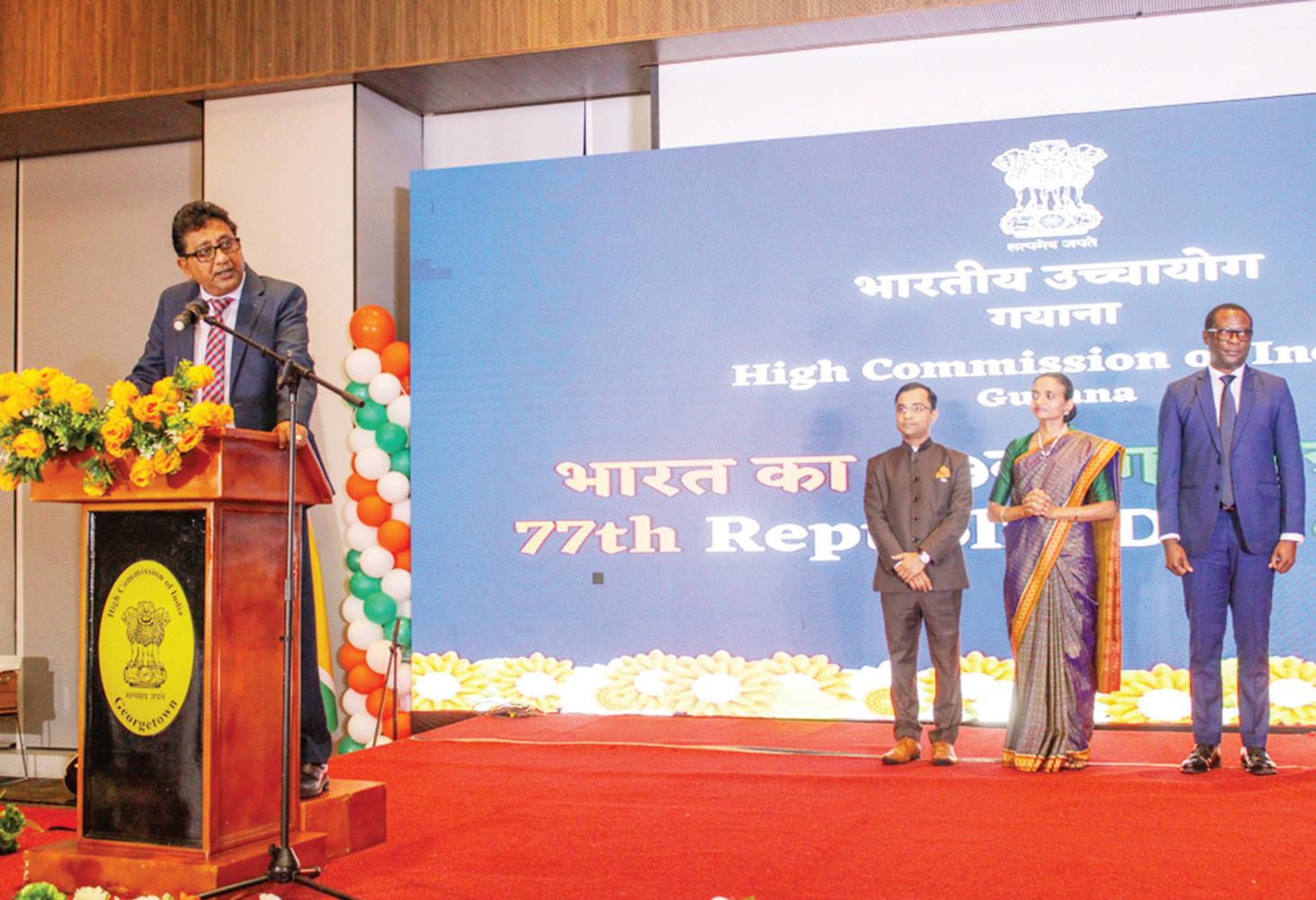
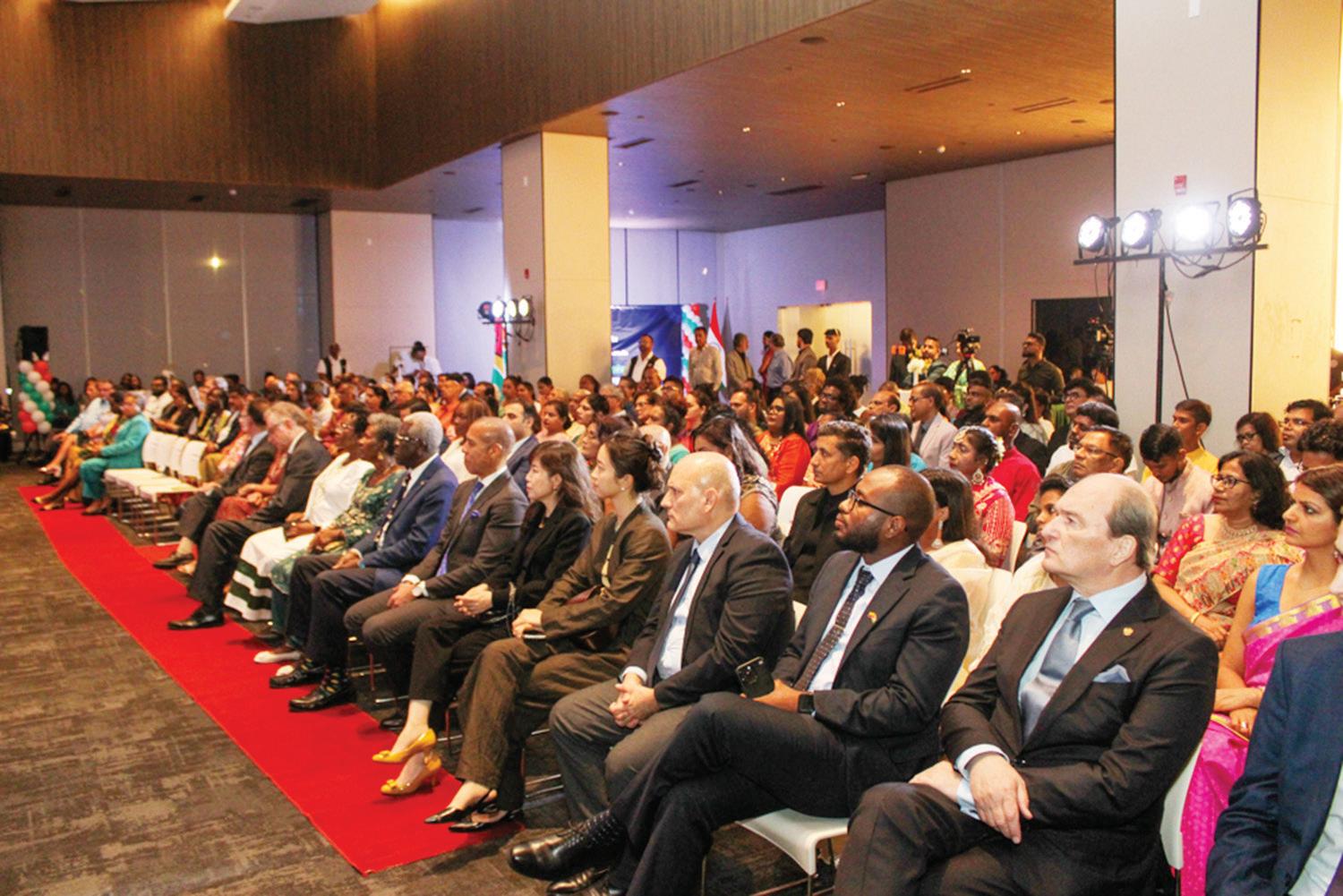
THE High Commission of India, Georgetown, hosted a reception to mark the 77th Republic Day of India on January 26, 2026, at Pegasus Corporate Suites, with great fervour.
According to a press release from the High Commission of India, Attorney General and
Minister of Legal Affairs, Mohabir Anil Nandlall, represented President Dr Irfaan Ali at the event.
Amongst other prominent dignitaries were Foreign Affairs Minister, Hugh Hilton Todd; CARICOM Secretary General, Dr. Carla Barnett; various representatives from
the Government of Guyana, members of the National Assembly of Guyana and the Diplomatic Corps.
Around 250 people attended the reception, including members of the Indian community and diaspora, members of the media, business community, and friends of India in
Guyana
The High Commissioner of India to Guyana, Dr. Amit Telang, in his address, highlighted the significance of Constitution of India and outlined the developmental journey over the last 77 years.
Attorney General Nandlall, in his remarks, commended the
THAG applauds reduction in marriage residency requirement - boosting
THE Tourism and Hospitality Association of Guyana (THAG) has welcomed the Government of Guyana’s decision to reduce the 14-day residency requirement for couples seeking to marry in the country, a move expected to bolster tourism and the creative industries.
The reform, which follows recommendations from THAG to the
tourism and orange economy
Ministry of Finance, positions Guyana to tap into the fast-growing global destination wedding market while strengthening the nation’s Orange Economy. Destination weddings are among the fastest-growing tourism segments worldwide, valued at over US$300 billion in 2023, according to Allied Market Research.
Previously, Guyana’s 14-day residency
requirement posed a significant barrier for international visitors, who typically stay for four to ten days. The new regulation aligns the country with regional best practices, where Caribbean destinations allow weddings within 24 to 72 hours of arrival, enhancing Guyana’s competitiveness in the sector.
THAG highlighted that the change will have a direct impact
on the Orange Economy, which thrives on creative and cultural services including fashion, photography, décor, music, beauty, entertainment, and event styling. Local artistes, designers, performers, and small creative businesses stand to benefit from the increased demand for their services.
“This reform not only opens Guyana to a lucrative tourism niche but also drives year-
longstanding partnership between India and Guyana.
The event included cultural performances by Meena Bisht (Yoga Teacher), Dr. Ashish Kumar Mishra (Hindustani Vocal Music Teacher) and Abhishek Khichi (Kathak Teacher) from Swami Vivekananda Cultural
Centre in Guyana. An exhibition on One District One Product (ODOP), showcasing Indian handicrafts from different states of India, along with displays on Yoga, AYUSH and Tourism were also appreciated by the audience.
round opportunities for our local suppliers and creative professionals,” THAG said. “It strengthens community livelihoods and showcases the country’s rich cultural and natural assets to the world.”
With the adjust -
ment, industry experts anticipate a rise in destination weddings, increased tourism revenue, and a significant boost to Guyana’s creative sectors, signalling a strategic step toward diversifying the national economy.
The High Commission of India, Georgetown, hosted a reception to mark the 77th Republic Day of India, on January 26, 2026, at Pegasus Corporate Suites, with great fervour
Budget 2026: GMSA hails measures to boost manufacturing, services and economic diversification
THE Guyana Manufacturing and Services Association (GMSA) has welcomed the presenta -
tion of the G$1.558 trillion Budget 2026, saying the spending plan signals the government’s con -
tinued commitment to strengthening economic resilience, promoting diversification and supporting inclu-
sive growth.
In a statement following the budget presentation under the theme “Budget 2026: Putting People First,” the association noted that Guyana’s economy expanded by 19.3 per cent in 2025, with the non-oil economy growing by 14.3 per cent. The GMSA highlighted the strong performance of the manufacturing sector, which grew by 20 per cent, and the services sector, which expanded by 8 per cent, both of which made significant contributions to the non-oil economy.
Against the backdrop of an uncertain global economic environment marked by geopolitical tensions and external market volatility, the association said the measures outlined in Budget 2026 are timely and geared toward strengthening Guyana’s economic resilience while supporting longer-term diversification.
The GMSA also welcomed the inclusion of several policy proposals it had previously submitted to the Ministry of Finance. These include the removal of VAT on locally manufactured furniture—such as doors, mouldings and beds—the revision of the export allowance to include value-added timber products, and the removal of VAT on locally manufactured jewellery. The association also expressed support for the planned establishment of Special Development and Economic Zones to
boost export-oriented manufacturing, as well as the proposed creation of a Junior Stock Exchange.
In addition, the association praised the government’s plan to establish a Development Bank capitalised at US$100 million, with provisions for collateral-free financing of up to G$3 million for small and medium-sized enterprises. It also welcomed the removal of corporate tax on agriculture and agro-processing, describing these measures as important steps toward easing access to finance and improving the competitiveness of local businesses.
The GMSA said the budget’s allocations, particularly in housing, agriculture, agro-processing and technology, are expected to have a direct and positive impact on the business community, giving companies greater confidence to proceed with expansion investments over the next five years and beyond.
R eaffirming its support for the government’s development agenda, the association said it looks forward to continued collaboration with policymakers to help build a stable, competitive and diversified economy and to advance sustainable growth across Guyana’s manufacturing and services sectors.
Gov’t pushes for completion of new CJIA arrivals terminal
- as tourism numbers soar
GUYANA’S aviation landscape is changing due to rapid economic growth, increased international attention, and efforts to promote the country as a top travel destination.
These elements have led to record numbers of visitors for business and leisure, prompting a re-evaluation of the country’s air connectivity management and expansion.
At the centre of this response is the Cheddi Jagan International Airport (CJIA), which has transformed over the years from a small international gateway into an important hub for investors, tourists, and the Guyanese diaspora.
The rise in visitor numbers has exposed the limitations of current infrastructure, such as congestion during peak hours and the need for better passenger processing and services. The government has stated that to continue attracting investment and eco-tourism, the airport must meet the demands of its ambitions.
In this light, plans to significantly expand and modernise CJIA are in progress. During the current term, the government, according to Senior Minister in the Office of the President with Responsibility for Finance, Dr Ashni Singh, will build the new arrivals terminal as part of a broader initiative to align the airport with international standards and to establish it as a fully functional regional transport hub with in-transit capabilities.
Preparatory work on this new facility, covering
150,000 square feet, started in 2025, showing that the project is moving from concept to execution. Budget 2026 underlines this commitment with a substantial allocation of $3.2 billion for the new arrivals terminal.
This investment aims to create a foundation for ongoing tourism growth, increased investor confidence, and stronger regional ties.
A larger, more efficient terminal will enhance the passenger experience from landing to exit, shorten waiting times, and allow CJIA to accommodate more flights and larger aircraft comfortably.
The expansion of CJIA will be supported by plans for new municipal airports and the upgrade of hinterland airstrips, all focused on building a smooth national and international air network. These initiatives recognise that Guyana’s tourism extends beyond the coast and capital. More visitors are drawn to the interior, its rivers, rainforests, waterfalls, and indigenous communities, necessitating safe and reliable access to remote areas.
Improved hinterland airstrips and new municipal facilities will facilitate this shift, ensuring tourism growth benefits communities beyond Georgetown.
Overall, the new arrivals terminal at CJIA, the establishment of additional municipal airports, and the ongoing upgrade of hinterland airstrips contribute to a well-rounded aviation strategy.
Network of permanent farmers’ markets, greater use of smart, appropriate technologies
- among initiatives geared at improving production, reducing food prices
THE Government of Guyana continues to direct attention towards enhancing farm incomes, lowering food prices for consumers, and further establishing the country as the Caribbean's leader in food security.
Crucial among these initiatives is the proposed permanent farmers' markets which signify a major change in how agricultural products reach both local and regional consumers.
This approach is expected to eliminate costly middlemen, reduces post-harvest losses, and helps stabilise prices for buyers and sellers.
Unlike the usual weekly markets that are only open periodically, the permanent arrangement will give farmers consistent access to consumer demand.
This reliability lets producers confidently plan their production volumes, invest in improvements, and negotiate better prices due to improved market stability.
For consumers, these markets ensure a steady supply of fresh, locally-produced food at lower prices than traditional retail channels, where multiple middlemen take a share.
This initiative is designed, according to analysts, to support three connected market areas - domestic food consumption, regional export opportunities, and value-added agricultural products.
This multi-channel strategy aims to maximise producer income while ensuring that price cuts help ordinary Guyanese households, who rely heavily on affordable local food
The permanent farmers' markets are part of a broader five-year agricultural modernisation plan, which was outlined by Senior Minister in the Office of the President with Responsibility for Finance, Dr Ashni Singh, during his presentation of Budget 2026 to the National Assembly, on Monday.
Dr Singh outlined a vision that includes regional food hubs, mega food parks, modernised port facilities with cold storage, and agri-
tech and agro-industrial complexes.
All these elements are meant to improve the competitiveness and efficiency of Guyana's agricultural sector. A regional food hub will act as a central processing and distribution centre, boosting supply chain efficiency across Caribbean markets and allowing Guyanese producers to reach larger consumer bases.
Mega food parks will attract agri-industrial businesses, helping convert raw agricultural products into processed foods, beverages, and specialty items that offer higher profits and export potential. Modern port facilities with cold storage will enable quick export of perishable goods, reduce waste and expand access to international markets. In addition to this infrastructure, the government will invest in agri-tech and agro-industrial complexes.
These innovation hubs will promote the use of smart technologies like precision agriculture, data analytics, water management systems, and renewable energy solutions. These tools help farmers enhance yields, cut costs, and reduce their environmental footprint while improving overall competitiveness.
To boost output and maintain the supply, the government, according to Dr Singh, plans to develop 100,000 acres of new arable land, tapping into significant productive capacity in underused areas.
This land expansion will be paired with targeted incentives aimed at supporting large, medium, and smallscale farming operations fairly. The Senior Minister highlighted that the transformation "will continue to work to improve production and productivity, enhance market access, and increase farm and household income" across all farming sizes.
Dr. Singh also emphasised that agriculture and food security are central to Guyana's economic strategy for resilience.
Over the next five years, the government aims to "reinforce agriculture as a major part of Guyana's diversification efforts" and strengthen its position as a leader in food security in the region.
Strategic gov’t policies shield local households from global price pressures
THE Government of Guyana successfully shielded local households from the full force of global price pressures through several proactive policy actions last year, according to Senior Minister in the Office of the President with Responsibility for Finance, Dr Ashni Singh, during his presentation of Budget 2026 to the National Assembly.
The government, Dr Singh said, maintained the 12-month inflation rate at an estimated 2.5 percent by the end of the year, despite ongoing global price pressures.
The Senior Minister pointed out that the government took multiple steps throughout 2025 to protect Guyanese households from rising imported inflation and increasing global commodity prices.
Key measures included keeping the zero percent excise tax on petroleum products and lowering the price of refined petroleum at the pump.
This provided direct relief to consumers and businesses that rely on fuel. In a significant
move, the government also removed bridge tolls on the Bharrat Jagdeo Demerara River Bridge, Berbice River Bridge, and Wismar Bridge.
This ended a regular expense for commuters and lowered transportation costs nationwide. Additionally, the government adjusted freight charges back to pre-pandemic levels when calculating import taxes, which helped lighten the cost of imported goods.
To support farmers and stabilise food prices, the government continued distributing fertiliser to ensure access to vital inputs and maintained production levels across key crop types. Despite these efforts, consumer prices rose slightly.
The 2.5 percent inflation rate was mainly driven by food prices, which went up by 4.4 percent, contributing 2.2 percentage points to the overall rate. Within the food category, price increases for meat, fish, and eggs added 0.6 percentage points, while vegetables and vegetable products added 0.5 percentage points to inflation.
Sustained income growth: How the PPP/C Gov’t has transformed worker, household earnings since 2020
SINCE 2020, the People’s Progressive Party/Civic (PPP/C) administrations have pursued a clear and ongoing strategy to increase incomes for all citizens.
This was according to Senior Minister in the Office of the President with Responsibility for Finance, Dr Ashni Singh, during his presentation of Budget 2026.
Over five years, public sector wages have risen significantly, tax thresholds have doubled, and direct cash transfers have been steadily increased, resulting in improved income for nearly every household in Guyana.
The most noticeable income growth has gone to public sector workers. In 2020, when the PPP/C administration began, the public sector wage bill was $127 billion. By the end of 2025, this figure had grown to $252 billion, reflecting ongoing wage increases agreed upon in multi-year contracts with the Guyana Public Service Union, the Guyana Teachers’ Union, and the Guyana Agricultural and General Workers’ Union.
This growth happened through negotiated agreements that ensured annual raises, with the year 2025 providing an eight percent increase as part of this process.
For public servants, this is not just a one-time raise but a steady rise in income over five years. Members
of the disciplined services have also seen even greater increases.
Since the re-introduction of the one-month bonus in 2020, they have received over $8 billion in extra disposable income, including $2 billion distributed in 2025 alone, according to Dr Singh. This bonus, which had been cut by the APNU+AFC Administration, was reinstated to improve conditions for uniformed personnel.
Additionally, doubling the income-tax threshold along with wage increases have significantly raised take-home pay for private sector and self-employed workers since 2020.
The monthly income tax threshold has been a key area of reform. In 2020, when the PPP/C took over, this threshold was set at $65,000. By 2025, it had risen to $130,000. That change removed 22,000 workers from the tax rolls and provided over $8.5 billion in extra dis-
posable income for taxpayers
The threshold is now set to be increased to $140,000. This rise in the threshold marks the end result of progressive tax changes made during the last five years. The trend shows a clear policy shift, which involves reducing the tax burden on lower and middle-income workers so they can keep more of their earnings.
In 2025, the government also added new allowances for overtime and second jobs. Earlier in this five-year period, from 2020 to 2025, the government also provided tax relief to workers with first-time mortgages and those paying life and medical insurance premiums, expanding the benefits of these tax policy changes.
Since 2020, the government has also increased direct cash transfer programmes, giving money directly to households.
In 2025, a new $100,000 grant for newborn babies was
introduced to help parents while the $100,000 was introduced for all persons aged 18 and above.
The Because We Care programme for school-aged children has seen dramatic growth during this period as well. Where it once offered $5,000 per child, by 2025 it had increased to $50,000 per child, a tenfold increase, along with $5,000 uniform vouchers for each child.
This, the government has maintained, reflects a strong commitment to lowering education costs and supporting families with dependent children.
For senior citizens, the old-age pension has steadily risen during these years, reaching $41,000 per month by 2025 and on course to reach $46,000 this year.
This ongoing increase addresses the living costs faced by retirees on fixed incomes.
The combination of these three strategies, increased wages, tax relief, and direct cash transfers, over the five years from 2020 to 2025 shows a significant growth in income.
Public sector workers have seen their total pay rise by 46 percent. Thousands of persons have benefitted from
a doubled tax threshold and lower tax rates. Families with children have received tenfold increases in educational support. Senior citizens have enjoyed continual improvements in their pensions.
This income growth, from a series of consistent adjustments made each year from 2020 to 2025, reflects a steady policy direction and growing fiscal strength.
The government has stated its intention to continue these policies over the next five years, reinforcing that income growth will remain a key focus through 2030.
Vintage Markram, clinical Linde headline South Africa’s comfortable win
(ESPNCRICINFO)
–
SOUTH Africa won their first T20I in eight attempts (outside of World Cups) against West Indies to take the lead in the three-match series. Crucially, their captain Aiden Markram fresh off a SA20 hundred, reached his highest T20I score of 86 not out and could not have chosen a better time to find form.
After struggling through most of the last 18 months in this format, Markram appeared in fine touch and hit nine fours and three sixes, and faced only eight dot balls in a dominant win.
Chasing a reasonably challenging total of 174, Markram combined with Lhuan-dre Pretorius and Ryan Rickelton for partnerships of 83 and 93 respectively, which meant South Africa’s powerful middle-order could take the night off. South Africa sealed the win with 13 balls to spare.
West Indies lacked any stands of similar significance. While Shimron Hetmyer and Rovman Powell shared a sixth-wicket stand of 74, there were no other partnerships that reached 40 as West Indies lost batters too often. Hetmyer top-scored with 48 while South Africa’s left-arm spin duo of George Linde and Keshav Maharaj took five wickets between them.
West Indies were off to a
flying start thanks to Brandon King’s 23 off 14 balls and an opening stand of 39 inside four overs but South Africa struck quickly to peg them back. Maharaj bowled Johnson Charles before King got down on one knee to sweep Corbin Bosch and played the ball onto his stumps to begin a trend.
Sherfane Rutherford was unable to build on his SA20 form and when Maharaj found turn and bounce, he fended and chopped on as West Indies closed out the powerplay on 57 for 3. Then, in the 12th over, stand-in captain Roston Chase, playing in his 50th T20I, tried to hit Linde over cover and played on. West Indies were 95 for 5.
Hetmyer takes on Ma -
haraj
Though Maharaj took two wickets early on, he was on the receiving end of some of West Indies’ biggest hits from Hetmyer. With West Indies’ 100 up in the 14th over, Hetmyer decided to up the ante, advanced on Maharaj and hit him 102 metres into the Paarl air for his first six.
Two balls later, Hetmyer came down the track again, and sent the ball into the wind and over deep mid-wicket for a second six. Maharaj’s final over cost 16 runs and he finished with figures of 2 for 44 in four overs: the most expensive of his T20I career. Hetmyer went on to top-score with 48 and was dismissed by a relay catch from Dewald Brevis off Linde.
CRICKET QUIZ CORNER
COMPANY
Garnett Street, Georgetown (Tel:225-6158) Answers to yesterday’s quiz: (1) Sameer Minhas-112 runs (3M) (2) Ali Raza-9 wickets (3M)
Today’s Quiz: (1) Which AFG batsman cracked most runs in the Group stage of the current Under-19 World Cup? (2) Which AFG bowler took most wickets in the Group stage?
GBA welcomes $6B sports budget boost, eyes new era for boxing
THE Guyana Boxing Association (GBA) has welcomed the Government’s proposed $6 billion allocation for sport in the 2026 National Budget, describing it as a significant step forward for the development of amateur boxing across the country.
The allocation forms part of the wider $1.558 trillion national budget and signals continued emphasis on sport as a vehicle for youth empowerment and national progress.
For the GBA, the investment carries special meaning, as provisions under the sports allocation include the completion of a new boxing gym at Angoy’s Avenue in New Amsterdam, Berbice.
GBA Secretary, Stacy Correia, said the funding represents a pivotal moment for the sport, particularly for athletes and coaches in Berbice who have long awaited improved facilities.
“This is a major boost for amateur boxing in Guyana,” Correia noted, while adding, “the completion of the gym in Angoy’s Avenue will provide a proper training environment for our boxers and create new opportunities for young people in Berbice to get involved in the sport in a more structured and
disciplined way.”
During his Budget presentation, Finance Minister Dr. Ashni Singh emphasised that the Government of Guyana will continue investing in world-class
facilities, professional coaching personnel, mentorship from national and international athletes, participation in major competitions, and the development of sports tourism.
He also underscored that sports is a major business sector and reaffirmed the Govern-
ment’s commitment to creating an enabling environment for young athletes to maximise opportunities in their respective disciplines.
Correia acknowledged that while the GBA has benefitted from tangible support through the Ministry of Culture, Youth and Sport, the association has faced several challenges during a demanding 2025 calendar.
“As an association, we battled with limited resources and ageing equipment at some gyms. This budget can help address some of those issues, particularly in upgrading facilities and acquiring more modern boxing equipment for our affiliated gyms,” Correia stated.
She added that improved infrastructure and equipment will play a crucial role in raising training standards and preparing local boxers to compete at higher levels.
“The GBA stands ready to support the Government and the Ministry of Sport in advancing boxing and sports development in Guyana,” Correia said. “We are committed to doing our part to help produce disciplined, competitive athletes who can represent Guyana with pride.”
Sport Ministry pivots sport spending to operations as stadium construction cycle peaks
THE Ministry of Culture, Youth and Sport is rebalancing the sport sector expenditure, shifting funds from heavy infrastructure construction to human capital and programming as several major stadium projects approach completion, government officials said on Monday.
The shift was detailed following the presentation of the South American nation’s largest-ever national budget, totalling $1.558 trillion.
While allocation for the sports sector fell to $6 billion in 2026 from nearly $8 billion the previous year, ministers clarified that the $2 billion variance reflects a planned reduction in capital outlays.
The reduction is driven by a drop in capital expenditure, which fell from $7 billion in 2025 to $4.7 billion for the current fiscal year.
Minister Charles Ramson Jr. was quoted in another section of the media that the “heavy lifting” phase of the country’s nationwide infrastructure blitz is nearing its conclusion.
“We are tapering off on the capital investment where those facilities have been identified and the projects have started, and we are now at 90% completion,” Ramson said.
He noted that, despite terminating several non-performing contractors, the government intends to commission five
new stadiums this year.
Conversely, “current expenditure”—funding earmarked for coaching, maintenance, and administrative operations—is set to rise to $1.3 billion, up from $1 billion in 2025.
The fiscal pivot aims to prevent new infrastructure from becoming “white elephants,” according to Minister within the Ministry of Culture, Youth and Sport, Steven Jacobs.
“It is a continuation and focus on coaches so that when we finish these facilities, we have the manpower to manage programmes,” Jacobs stated, adding that a new national sport policy is slated for release later this year.
Finance Minister, Dr Ashni Singh, addressing the National Assembly, characterised the investment as a play for “sports tourism” and regional competitiveness.
“Sports is big business and we are committed to providing the enabling environment for our young athletes,” Singh said.
The government confirmed it is moving toward the final stages of high-profile venues in - Palmyra, Anna Regina, MacKenzie, Bayroc and New Amsterdam
New initiatives for 2026 include the country’s first powerlifting and high-performance conditioning facility and a cricket academy at Albion.
‘In my lifetime, I never thought we would see this’
FOR decades, the county of Berbice has been the heartbeat of Guyanese cricket, a fertile breeding ground that has consistently funnelled elite talent into the West Indies setup.
Yet, for all its history, the region has lacked a modern stage. That is about to change.
Before the end of 2026, the 10,000-seat Palmyra Multipurpose Facility is expected to open its gates, a project that former West Indies leg-spinner Devendra Bishoo describes as a literal “game-changer” for a region obsessed with the willow and the red leather ball.
“In my lifetime, I never thought we would have this in Berbice,” Bishoo said during a recent site inspection. Joining him to assess the progress were fellow international stars Veerasammy Permaul and As-
sad Fudadin—men who grew up playing on local grounds and are now witnessing the birth of an ICC-standard arena in their own backyard.
The Palmyra stadium is the crown jewel of a multi-billion-dollar infrastructure blitz.
Minister Steven Jacobs, himself a former national cricketer, noted that the facility is just one piece of a broader “sporting ecosystem” intended to bridge the gap between grassroots potential and international performance.
“In my time, we didn’t have these facilities,” Jacobs remarked. “This will transform the community. Now is the best time to be an athlete because you are getting direct support from the government.” The strategy includes a new high-performance cricket academy at the historic Albion Sports Complex, ensuring
that the next generation of Berbician talent has a direct pathway to the 10,000-seat stadium just down the road.
— West Indian cricketers hail new Palmyra Stadium
Financed in part by a $3.7 billion (GYD) investment via ExxonMobil’s ‘Greater Guyana’ initiative, the stadium
is part of a wider economic pivot.
Government officials are linking the sports facility to a series of massive infrastructure projects, including a new deep-water port, a municipal airport, and a new bridge over the Berbice River—collectively dubbed the ‘Orange Economy.’
However, for local residents, economics takes a back seat to emotion. “No one would have imagined we would have had a stadium,” said Member of Parliament Zamal Hussain. “Now we see the reality.”
Similar world-class venues are currently under construction in Anna Regina, Bayroc, New Amsterdam, and Mackenzie, all slated for commissioning in 2026.
As Jacobs noted, the next hurdle is scaling up regional accommodation to support the influx of fans and international touring squads.
From left: Veerasammy Permaul, Assad Fudadin and Devendra Bishoo
GBA Secretary, Stacy Correia
Five book CARIFTA games spot as qualifying season opens
TRACK and field athletes Angel Jeffrey, Tesianna Harris, Onesi Dunn, Tishawn Easton and CARIFTA medallist Javon Roberts have all booked their place in the country’s CARIFTA games team after making the qualifying standard over the weekend.
They made the cut at the Athletics Association of Guyana’s developmental meet held at the National Track and Field Centre.
The CARIFTA games is
set for April 4-6 at the Kirani James Stadium in St George’s Grenada.
In the Boys’ U-20 800m race, Javon Roberts stopped the clock at 1 minute 54.07 seconds to win the race below the qualifying mark of 1 minute 55 seconds
The Guyana Defence Force athlete finished ahead of Joshua Lam and Odida Parkinson. Onesi Dunn powered to a win in the boys’ 100 meters dash finishing in a strong 10.34 under the 10.55
seconds qualifying mark.
In the Girls’ U-17 100m, it was a tight finish as Angel Jeffrey and Tesianna Harris battled to the line with the latter winning it in 11.89 seconds and Jeffrey second in 12.04 seconds.
Both of them dipped below the qualifying mark of 12.10 seconds for the games.
Tishawn Easton also showed his growing confidence in the senior ranks with a strong showing in the Boys’ U-20 200m Final
He eclipsed the qualifying mark of 21.50 seconds with a time of 21.43 seconds to secure the win and a place on the CARIFTA team
A host of other athletes will have the opportunity to qualify for the games as the
AAG intensifies its season with several planned meets in the coming weeks.
On February 1, the first official qualifying meet for junior athletes is set with February 21 and 28 also set to have CARIFTA meets hosted at the National Track and Field Centre at Leonora.
After the qualifying period is completed, there will be junior competitions from March 14-15 before and training camp ahead of the games from March 20-29.
J’s Racing Stables could feature seven horses at Banks Classic
A PROLIFIC field of seven horses from the Js Racing Stables could take centre stage at the Banks Classic at the Port Mourant Turf Club on Sunday, February 1.
According to seasoned Brazilian trainer attached to Js Racing stables, Cesar Gustavo Netto, he disclosed that the likes of Mapa Do Brasil, Royale Rocks, Milano Italy, Full Liberty, Mulan, and Regal Man, could all form a formidable line-up for Js Racing Stables.
The Banks Classic will be the first day for Guyana Cup nomination day, and Js Racing stables will
be keen on earning their spot for the Guyana Cup set for August 23.
“We are ready, we may have seven horses for the different races. The conditions are good and I am so happy for the work in Guyana and working good horses, the trainer said.
Gustavo said the level of races in terms of competition are similar but the surface has grass in Brasil, which differs Guyana’s turf tracks. He also highlighted that Guyana has four active race tracks while Brasil has one recognized track for racing.
Ten races are on the cards for
Schools Basketball League…
PRESIDENT’S College Schools
Basketball side defended home turf on Sunday when they hosted the Government Technical Institute (GTI) as the Schools Basketball League continued.
When action continued at the schools iconic location in Golden Grove, the hosts had a tough battle with the Government Technical Institute.
President’s College tipped the scales in their first half, outscoring GTI 12-10 and 14-9 to lead 26-19 heading into the break.
The visiting GTI would put in a more determined effort in the second half to make it a closer contest.
They led the third quarter 12-11 and the fourth 16-13 but the work done by PC in the first two quarters proved crucial as they held off the visitors to win 50-47 and keep their
unbeaten streak intact.
PC was led by Romarion Wolfe with 16 points; he had good support from Terron Mohabir with 11 and Mattaniah Fordyce with 9 points.
Kemp Moriah 16 and Sean Duncan 15 starred for GTI in a losing cause. PC won their first clash against St Roses earlier this month 47-41.
Queen College and PC currently lead the team standings with 2 wins in as many games. The other teams in the standings are Government Technical Institute, St Stanislaus, St Roses High and Marian Academy.
The action resumes on Friday with three matches.
At Burnham Hard court, GTI will play St Stanislaus College while QC will host St Roses at their school and President’s College will visit Marian Academy.
-
as Guyana Cup nomination looms
February 1, and approximately $15 million will be up for grabs. The top horse in the feature one-mile event will be rewarded $2 million, and Js Racing Stables will be aiming to repeat their winning form from Boxing Day meet.
Other races on the provisional card for the Banks Classic include the Sprint Classic Open, the F Class and Lower open to E Class non-winners in their last start, four-year-old imported maidens in Guyana, three-year-old Guyana-bred non-winners of two races, L Class maidens open to first-time
starters, G Class and Lower open to F Class non-winners in their last three starts, I Class and Lower open to West Indian-bred non-winners in their last two starts classified to H Class, J3 and Lower, L Class Open, and L Class non-earners for 2025 and 2026.
Horses will not be able to race without an entry form. Earlier this week, the Guyana Cup Committee officially released the 2026 Guyana Cup Nomination Series, covering the Guyana Cup (Mile), Guyana Cup Sprint, and Guyana-Bred Derby. Three races, four nomination
days for the Guyana Cup, and one championship season. The nomination days are February 1, 2026, at Port Mourant Turf Club; April 5, 2026, at Port Mourant Turf Club; May 3, 2026, at Bush Lot United Turf Club; and July 5, 2026, at Port Mourant Turf Club (final nomination day).
JS Racing Stable has surpassed the underdog expectations and has solidified itself as one of Guyana’s best stables and with nomination day at stakes, they will be aiming to showcase their best.
Javon Roberts who qualified for the U-20 800 meters