27th January, 2026

$1.558T

27th January, 2026
$1.558T


2026 ‘positioned with the people at the centre’ –– financed with no new taxes; outlines plans for widespread development for all, further digitalisation, advancement of local economy


Increase of income-tax threshold to $140,000 monthly
Removal of net property tax on individuals
$100,000 cash grant for every Guyanese citizen of age 18, older
Public assistance will be increased from $22,000 to $25,000 per month
$85,000 education grant per child
Increase in old-age pension from $41,000 to $46,000 per month
Annual transportation support grant of $20,000 to every old-age pensioner
Special Development Zones to be identified
Removal of corporate taxes on agricultural, agro-processing businesses
Removal of VAT on locally made furniture
Removal of VAT on locally manufactured jewellery
Removal of 14-day residency requirement for destination weddings
Removal of duty, VAT on security equipment
Removal of VAT on new vehicles (four years old or less) below 1500 cc
Removal of VAT on hybrid motor vehicles below 2000 cc
Removal of all import duties, taxes on all categories of ATVs New flat tax on double-cab pick-ups
US$100 million for Guyana Development Bank
Low-income mortgage ceiling increase from $20 million to $30 million
$7.5 billion to support households to upgrade their homes
$13.4B to advance mechanisation, modernisation at GuySuCo
$3.7B earmarked for Orange Economy in 2026
$100.3B for security initiatives in 2026
$183.6B for advancement in education
$159.1B to advance housing initiatives
$161.1 billion for further health sector modernisation
$7.5B to drive viable Amerindian economies
$78.3B to strengthen services to children, women, the elderly
$196.1B to expand transportation network, improve connectivity
$119.4 billion allocation for energy sector
By Naomi Parris
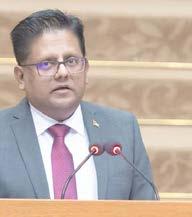
OUTLINING an expansive suite of measures under Budget 2026 aimed at accelerating economic diversification, reducing the cost of living and significantly increasing disposable income, Senior Minister in the Office of the President with responsibility for Finance, Dr. Ashni Singh has said that the People’s Progressive Party/Civic (PPP/C) government is moving into a new phase of development.
During his presentation of this year’s fiscal package
to the National Assembly on Monday, Dr. Singh noted that the measures reflect the recovery and stabilisation of the economy into a new phase of inclusive, diversified growth, with a strong emphasis on job creation, income generation and longterm economic resilience.
He pointed out that since returning to office in 2020, the government has pursued deliberate policies to diversify the economy, reduce the cost of living and expand opportunities for citizens, laying the foundation for the new incentives.
“Over the last five
years, government has made conscious investments to diversify the economy, reduce the cost of living, expand access to jobs and enhance the quality of life for all our citizens.
Budget 2026 builds on these five years of steady progress and ushers in a new phase of inclusive, diversified growth through creating more opportunities for accelerated job creation, income generation, and human capital development,” the Finance Minister said.

The government, in 2026, will introduce Special Development Zones with fiscal incentives intended to attract investment into strategically selected locations, while complementing anticipated reductions in electricity costs that are expected to significantly improve the competitiveness of manufacturing operations when the flagship gas to shore project comes on stream.
In addition to this, the 2026 budget makes provision for the removal of corporate taxes on agriculture and agro-processing which is expected to free up resources for reinvestment, supporting increased production.
The fiscal package also creates space for the expansion of export allowances to include value-added forestry products and the removal of VAT on locally made furniture and jewellery.
This, the Finance Minister said, will lower production costs, incentivise downstream processing and strengthen the capacity of local industries to compete in regional and international markets.
To ease cost-of-living pressures and increase disposable income, Dr. Singh said the government will maintain the zero percent excise tax on fuel, a measure in place since 2022

which has helped shield households from global trends.
Budget 2026 will extend relief too on freight charges used to calculate import taxes.
Meanwhile, an additional $9 billion has been set aside in 2026 for further cost-ofliving support.
Assistance for children and the elderly will also be expanded, with the Because We Care grant increasing to $60,000 per child, the introduction of a $20,000 annual transportation grant for school children, together with the $5000 uniform voucher will see each child receiving $85,000.
This will reflect in an estimated $12.4 billion being transferred to parents under the Because We Care programme.
Support will also continue to cover the examination
fees for Caribbean Secondary Education Certificate (CSEC) and Caribbean Advanced Proficiency Examination (CAPE) benefitting some 14,000 students.
The elderly will see an increase in old age pension to $46,000 from $41,000 per month, and benefit from an annual transportation grant of $20,000, providing an additional injection of $1.9 billion in support.
Measures to raise disposable income include higher stipends for community-based workers, the return of the $100,000 national cash grant for adults 18 and above, the removal of net property tax on individuals and an increase in the income tax threshold to $140,000 per month; Dr. Singh estimated that these measures will place more than $100 billion into the hands of citizens.
THOUSANDS of Guyanese small business owners will have access to zero-interest and collateral loans through the Guyana Development Bank, with the government set to inject US$100 million to launch the bank.
The development bank, a commitment made by the People’s Progressive Party/Civic (PPP/C) in
its 2025 manifesto, will provide young entrepreneurs, women, small and medium-sized enterprises (SMEs) and persons living with disabilities with access to $3 million in microcredit loans.
Senior Minister in the Office of the President with responsibility for Finance, Dr Ashni Singh, made this and other an -
nouncements as part of measures outlined in the $1.558 trillion 2026 National Budget.
In addition, to cushion the effects of the high cost of living, a staggering $9 billion has been set aside to implement targeted measures. Budget 2026 was tabled under the theme “Putting People First.”
By Trina Williams
BUDGET 2026, presenting under the theme: Putting People First, is designed to move beyond piecemeal assistance and instead targets a better quality of life for all, with targeted investments in special needs education, support for persons living with disabilities, the elderly, children and overall, distributing economic wealth to Guyanese households, President Dr. Irfaan Ali has said.
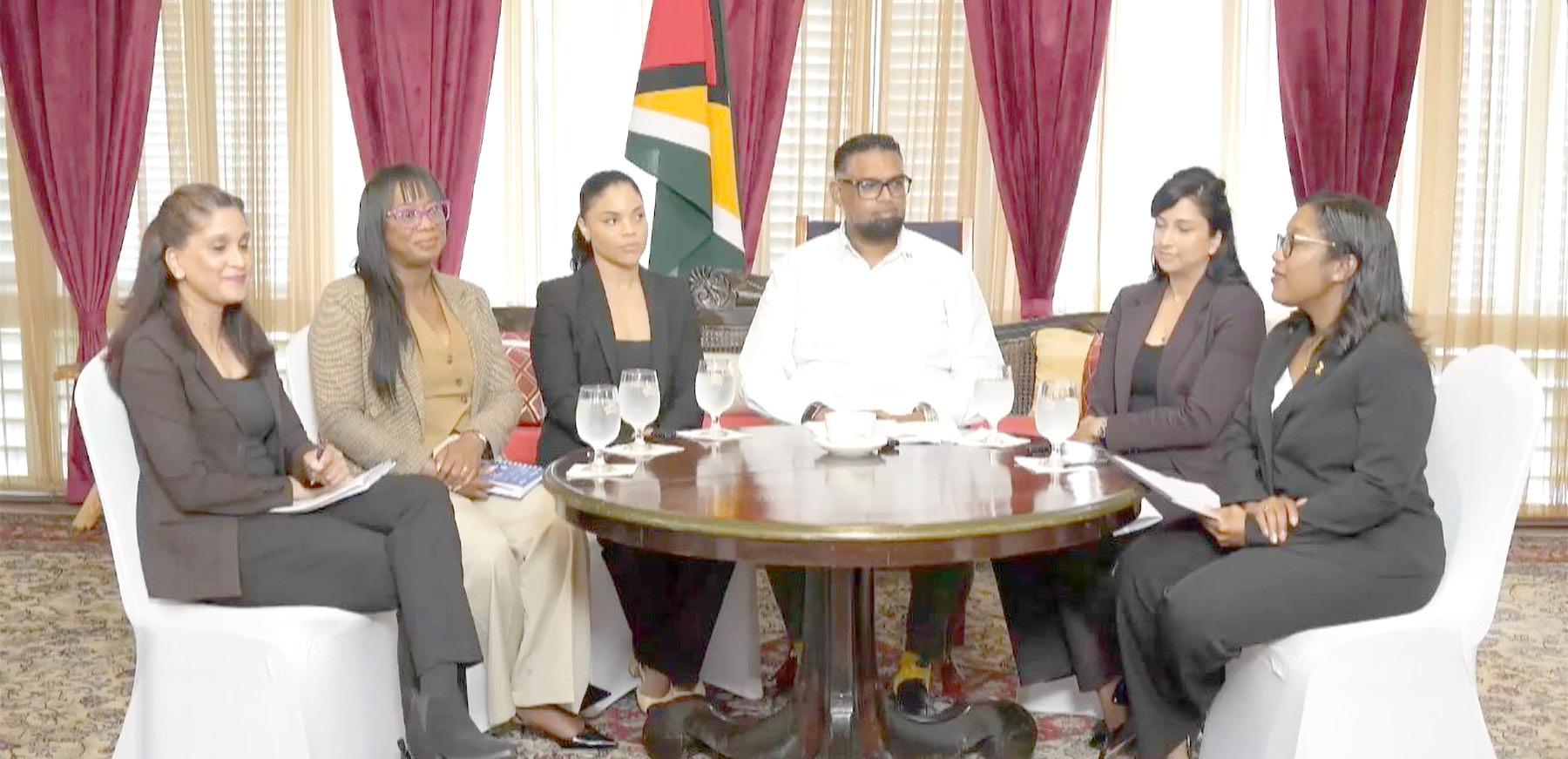
Speaking during a wide-ranging budget discussion with an all-women panel, the President said, on Monday, that this year’s national budget is jampacked with opportunities for all, enabling an environment for broad-based economic participation.
The President said: “The focus will be on people. Everything we do in government relate to people. However, policy formulation is at a macro-scale and sometimes is not understood at the level of the community, it is not understood at the level at different segments of the population.
“So, in the next five years you will see policies that are correlated directly to the changes in our economy, the changes in the lifestyle of our people, the changes in the community, in society and of course, the economy in general.
“Budget 2026 is positioned with the people at the centre. The measures are designed to ensure greatest impact on people, to ensure that the greatest level of economic wealth is directly attributed to the people’s lives, their living conditions, creating more
opportunities for disposable income and a higher quality of life.”
One highlight of this year’s national budget, as the President pointed out, is the expansion of special needs education and more services for persons with disabilities.
$316.5 million has been allocated in 2026 for several important projects and inclusive initiatives. One of the most significant projects is the construction of Guy-
the expenditure that a family would have to utilise to take care of these children.
Budget 2026 allocates resources not only for infrastructure but also for the training of educators to meet the requirements, Dr. Ali affirmed.
For 2026, the government has budgeted $300 million to advance several important projects, including the completion of a day and night care centre at Providence and
settings.
The initiative is intended to reduce the burden on parents, especially on working families, by creating safe and predictable care nationwide.
“That is what 2026 budget does for special needs children, persons living with disability, the elderly. It gives us that accelerated impetus now to build out at a national scale the support mechanism for these groups,” President Ali said.
according to the President, the cumulative effect of that is pumping $60 billion into the pockets of persons.
There is also the ‘Because We Care’ cash grant which has increased to $60,000 per child and introducing a new annual Transportation Support Grant of $20,000, and President Ali also pointed to the increase in old-age pension and the introduction of a transportation grant for the elderly; and the increase
ana’s first school for autistic students, which will be built at the Cyril Potter College of Education (CPCE).
The government will also establish Special Education Needs (SEN) centres in every region, and open a dedicated SEN Unit at Port Kaituma Primary School to provide focused support for students requiring specialised learning environments.
The government, the President said, is looking at a system that incentivises
the start of construction on four new centres across Regions Two, Five, Six, and 10.
To promote overall child and family development, the 2026 programme will introduce new safe, child-friendly spaces where families can access recreational and educational activities within their communities.
These hubs aim to encourage emotional growth, social interaction, and positive early learning experiences in safe, supervised
Although the pressures of cost of living have become a global phenomenon, President Ali said that the government has issued a wide-ranging package of not only income support measures but also direct cash transfers.
Some of these measures include the $100,000 national cash grant that will go to every citizen 18 and over, and
in public assistance and the continuance of the newborn grant, which is $100,000.
With the income-tax threshold set to be increased from $130,000 to $140,000 per month with effect from the 2026 year of income, President Ali said this is another measure that puts more money into the hands of workers.
“That is removing 5,000 persons from the tax register right away, and that is putting billions of dollars, additional
dollars into the economy, into people’s pocket directly. So, you’re going home with more money,” President Ali said. Other tax measures include the removal of net property tax for individuals, provisions for electric and hybrid vehicles, lower taxes on small-engine vehicles, and incentives on productivity vehicles such as pickup trucks.
Education reforms, including digital schools, and free university education, the President labelled as “game changers” as he noted that health, security, education and efficient public services will continue to be focused on heavily.
To this end, the President encouraged Guyanese abroad to return home as there will continue to be opportunities to deepen investments while also allowing them to benefit from the same benefits as those citizens at home.
Dr. Ali also pointed to the expansion of the local content framework and emphasised its importance. The Guyana Development Bank also stands as a major tool that will address long-standing barriers to entrepreneurship and in this year’s budget the initial US$100 million injection paves the way for the establishment of the financial institution.
Young entrepreneurs, women, and persons living with disabilities will be able to access up to $3 million in micro-credit loans at zero-interest with zero collateral requirement for targeted investments in specified sectors. The President further added that these loans will be accompanied by training.

THE Government of Guyana has set aside $161.1 billion in 2026 to further modernise the country’s healthcare system.
Senior Minister in the Office of the President with Responsibility for Finance, Dr. Ashni Singh, shared the plans for the health sector during his presentation of Budget 2026 to the National Assembly. He shared a plan to expand medical infrastructure, improve access to modern equipment and medications, strengthen the healthcare workforce, and provide patient-centered care across all regions.
Dr. Singh emphasised the goal of creating a modern, integrated, and science-driven healthcare system that guarantees every Guyanese access to quality medical care, no matter where they live. This year’s focus is on completing crucial hospital

projects, expanding digital health systems, enhancing drug distribution, and launching health and wellness programmes nationwide.
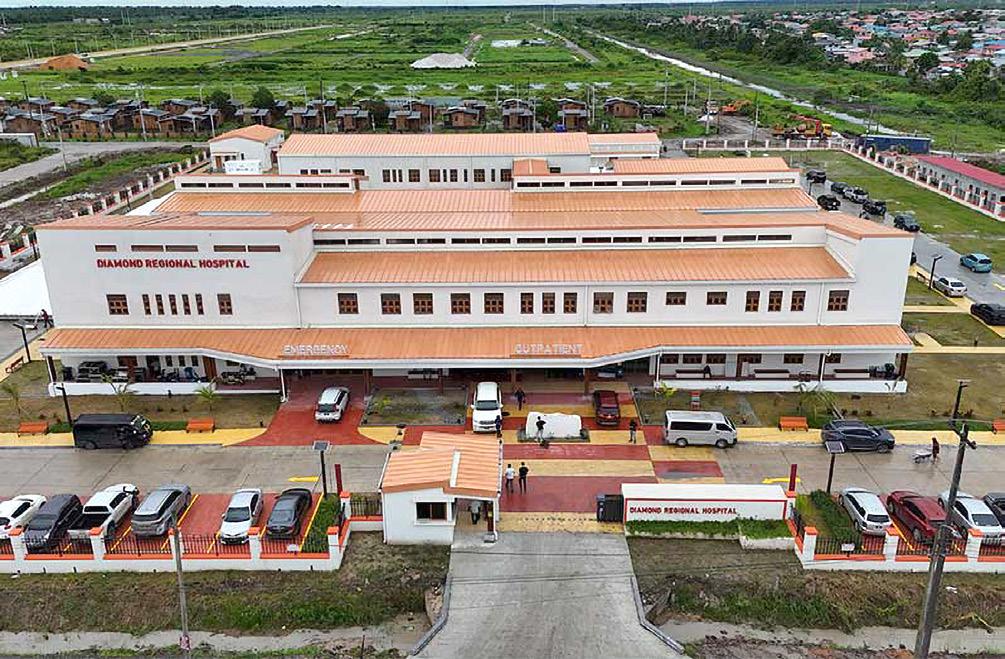
In 2026, $24 billion will be allocated for the Pediatric and Maternity Hospital construction, as well as six regional hospitals in Moruca, West Demerara, New Amsterdam, Bartica, Kato, and Lethem.
Additionally, $1.5 billion will improve the Georgetown Public Hospital Corporation (GPHC) and finish new polyclinics in Campbellville and Industry. Furthermore, $12.6 billion is set aside for building, renovating, and maintaining health facilities across the country.
The government also plans to create a National Neurological Rehabilitation Centre for patients with brain and spinal injuries, along with a modern oncology centrer for comprehensive cancer care, which is budgeted at $1.1 billion.
To boost diagnostic and treatment capabilities, $3.1 billion is designated for new medical equipment.
This includes installing an MRI scanner, CT scanner, and a Cardiac Catheterization Laboratory at GPHC, and expanding the telemedicine network to another 50 remote communities. Importantly,

the government will start incorporating AI-based diagnostic systems to enhance clinical decision-making and improve healthcare outcomes.
A significant part of the health budget, $34.9 billion, will finance the purchase and delivery of drugs and medical supplies while upgrading the national supply chain.
Five new regional drug distribution centres will open in Mabaruma, Onderneeming, Williamsburg, Lethem, and Bamia. These centres will benefit from a modern, technology-driven inventory management system to ensure accountability and reduce shortages.
A key project for 2026 is the continued rollout of the Electronic Health Records (EHR) System.
This system aims to fully digitise patient information and boost service efficiency. With $764 million allocated, this system, already launched at the Festival City Polyclinic, will enable online booking, digital medical histories, and data sharing across facilities.
Full implementation at GPHC is expected in the first half of the year, allowing for expansion to hospitals and clinics nationwide.
The government is making a substantial investment in training and growing the healthcare workforce. In 2026, $1 billion is budgeted
for building two Health Sciences Training Complexes with dormitories at Suddie and New Amsterdam.
Training goals target an additional 162 doctors specialising in neurosurgery, urology, anesthesiology, and intensive care; 5,440 nurses and allied professionals across the country; and launching a Pre-Med Programme in Regions Two, Three, Six, and Nine. These initiatives build on the 2,862 medical professionals trained in 2025.
The government will also continue to strengthen the University of Guyana’s College of Medical Sciences, which has expanded to accommodate 144 more students in Region Three. Additionally, a Digital Health Training Institute will be established to develop skills in medical informatics and data management.
Over the next five years, at least 6,000 nurses and numerous medical specialists will be recruited and trained in collaboration with the private sector and international partners.
PREVENTION AND PUBLIC HEALTH
In 2026, the Ministry of Health will ramp up efforts to lower the incidence of diabetes, hypertension, and cancer through preventive medicine programmes, expanded screenings, and digital monitoring systems.
Dialysis services will

continue to grow, with new units introduced at regional hospitals. Moreover, the HEARTS protocol for cardiovascular care will be expanded to more than 400 facilities by the end of 2026.
Mental health will remain a top priority. Following the launch of the suicide prevention hotline and the national suicide monitoring system in 2025, the government will incorporate mental health care into primary health services, broaden community programmes, and train more “gatekeepers” for suicide prevention and early intervention. The Ministry will keep working to reduce the burden of communicable diseases, stepping up fogging and larviciding efforts for malaria and dengue.
Door-to-door distribution of preventive medication for filaria will continue, along with increased HIV testing and Pre-Exposure Prophylaxis (PrEP). Testing and monitoring will also increase in 2026 to boost progress toward disease elimination goals.
In 2026, maternal and child health services will expand with the six new hospitals commissioned last year. Adding 74 new maternal beds has already increased national capacity.
This year, 98,500 students will receive health screenings, with a focus on preschool child health and early autism testing.
At the same time, a significant reform is in progress for emergency response. The government is setting up the Guyana Medical Emergency Authority (GEMA), an entity that will unify and enhance national emergency medical services. With a $3.7 billion allocation, GEMA will manage ambulance dispatch, telehealth support, and workforce training, creating a more responsive and coordinated emergency system nationwide.
Dr. Singh noted that the health programme is “a decisive step toward a modern, fair, and technology-driven medical system that prioritises both prevention and quality care.”

THE Government of Guyana is moving forward with plans to enhance governance and institutional capacity in the country’s growing oil and gas industry, according to Senior Minister in the Office of the President with Responsibility for Finance, Dr. Ashni Singh.
During the Budget 2026 presentation on Monday, Dr. Singh stated that the administration was working to create a modern and credible governance system for the oil and gas sector.
He said that the effort involved updating laws and regulations, strengthening key institutions, and continuously developing technical skills within the public sector.
In the past five years, the government has launched a wide-ranging legislative reform effort to align the petroleum sector with international standards.
This includes enacting the Natural Resource Fund (NRF) Act and the Local Content Act (LCA) in 2021, the Petroleum Activities Act (PAA) in 2023—which re-
placed the 1986 Petroleum Act—and the Oil Pollution Prevention, Preparedness, Response and Responsibility Act (OPPPRRA) in 2025 to address environmental risks and emergency protocols.
“These Acts lay the foundation for a modern legal framework to govern the sector,” Dr. Singh told the National Assembly.
He added that the government plans to update the First Schedule of the Local Content Act this year to expand the range of goods and services eligible under local content rules. Moreover, the review of regulations under the Petroleum Activities Act is progressing, incorporating lessons from the Hammerhead Petroleum Production Licensing process. The minister noted that the additional work being carried out should lead to finalising and implementing the regulations within 2026.
The commencement order for the OPPPRRA is also expected to be issued this year, allowing for full implementation and the rollout of coordinated compliance

and enforcement measures.
Dr. Singh emphasised the administration’s commitment to developing human capital within the petroleum gover-
nance framework.
In 2025, government agencies took part in targeted training sessions led by industry experts in areas like
market analytics, cost estimation, and scenario modelling.
“The government will keep providing these capacity-building opportuni-
ties,” he said, stressing that strengthening local skills is crucial for managing the petroleum economy effectively.
--registers 19.3% economic growth, with significant 14.3% growth in non-oil sector in 2025 --on course for double digit growth this year, Dr. Singh says
DESPITE a year of global economic uncertainty, Guyana showed impressive resilience in 2025. The country achieved an estimated 19.3 per cent growth in overall real Gross Domestic Product (GDP) and 14.3 per cent growth in non-oil GDP.
Senior Minister in the Office of the President with Responsibility for Finance, Dr. Ashni Singh, shared this information during his presentation of Budget 2026 to the National Assembly.
Dr. Singh pointed out that Guyana’s performance stood in stark contrast to the uneven growth and cautious outlook of the global economy. He praised the country’s strong policy framework under the PPP/C Government for enabling sustained growth even in challenging times.
Economic growth was fueled by strong results in both the oil and gas sector and a thriving non-oil economy.
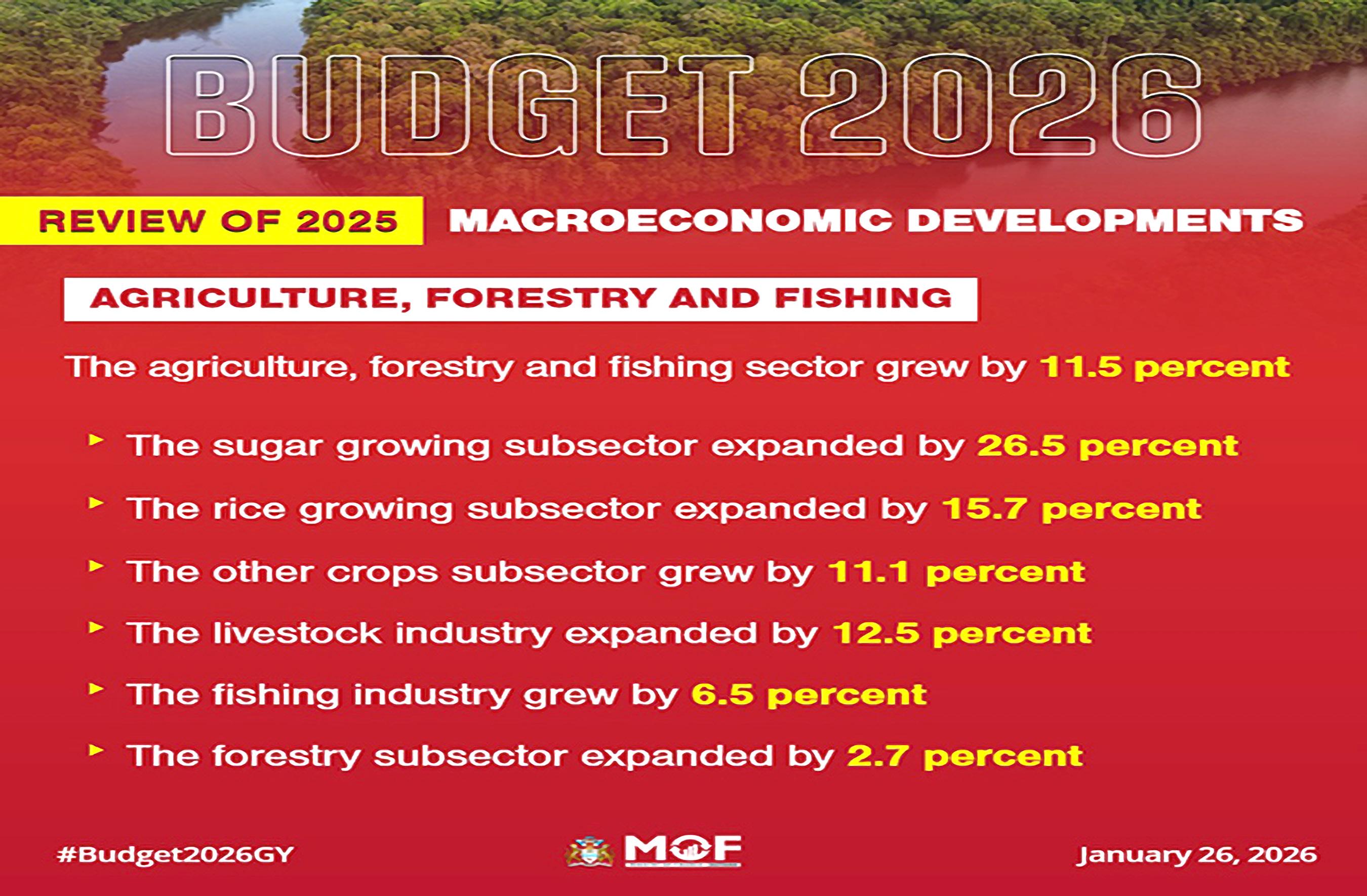
The latter benefitted from solid activity in agriculture, mining, construction, and services. The agriculture, forestry, and fishing sector grew by 11.5 per cent, with
all sub-sectors showing gains.
Notably, the sugar industry expanded by 26.5 per cent, while rice and livestock grew by 15.7 and 12.5 per cent, respectively. The fishing and forestry industries also posted growth of 6.5 and 2.7 per cent.
The extractive industries experienced some of the most significant gains, expanding by 21 per cent in 2025. Oil production reached 261.1 million barrels, thanks to the startup of the One Guyana Floating Production Storage and Offloading (FPSO) vessel.
The gold industry grew by 11.6 per cent, and bauxite output soared by 53.4 per cent. The manufacturing sector grew by 20 per cent, driven by increased output in sugar, rice, and non-metallic products. Construction surged by 31 per cent, supported by major public infrastructure projects and private investment.
Looking ahead, Dr. Singh expects continued strong growth for 2026. Overall GDP is projected to rise by 16.2 per cent, while nonoil GDP is expected to increase by 10.8 per cent. The oil and gas sector is forecasted to grow by 17.9
per cent, with production likely to reach nearly 307 million barrels.
The construction sector is expected to keep its upward trend, growing by 25.4 per cent, while agriculture
and manufacturing are predicted to expand by 7.6 and 12.9 per cent, respectively.
“Guyana’s economy remains one of the fastest-growing in the
world,” Dr. Singh stated, adding: “Our ongoing diversification and careful management will ensure that growth stays inclusive and sustainable.”

BUDGET 2026 is not just a record-breaking $1.558 trillion package; it aims to turn rapid growth into overall human development, guided by the theme of Putting People First. It shows continuity in the government’s economic strategy while also focusing more on sharing growth widely and sustainably.
The most striking aspect is the increase in direct transfers and targeted relief for households without introducing new taxes. The budget enhances cash grants, pensions, public assistance, and adjustments to tax thresholds.
Together, these measures significantly increase disposable incomes for low and middle-income families. They reinforce the idea that citizens should benefit from the oil economy in their
wallets, not just in broad economic figures.
Education and health are the key areas for long-term change. By expanding school construction, digital learning, and family support through the Because We Care and transport grants, the budget addresses both supply and demand issues in education.
The commitment to free university education and support for examination fees takes policy beyond mere access to true equality of opportunity. In health, the push for specialized care, modern hospitals, and digital records suggests that Guyana seeks more than small improvements; it is building a modern health system that can keep talent and handle complex conditions locally.
On the productive side, the housing initiative, major transport projects, and
the creation of the Guyana Development Bank work together. Affordable housing, new highways and bridges, along with concessional financing for small and medium enterprises create an environment where private business can thrive.
The zero-interest, zero-collateral lending model is particularly groundbreaking. It acknowledges that lack of collateral, not lack of ideas, has held back many ordinary Guyanese from fully engaging in the growth story.
Also encouraging is the focus on important but softer aspects of development: security sector modernization, community safety, and the Orange Economy. Improvements in surveillance, better conditions for law enforcement, and increased stipends for community workers go beyond just se-
curity measures; they support investor confidence and social stability.
Meanwhile, targeted support for culture and creative industries shows a more nuanced view of development— one that values identity, heritage, and innovation as economic assets rather than afterthoughts.
No budget is perfect, and successful execution will be key to realizing these goals. Public service capacity, timely project completion, and careful monitoring will all be crucial. However, Budget 2026 offers a clear, people-focused framework that balances growth with fairness.
It deserves recognition not just as the largest budget in Guyana’s history, but as one of the most thoughtfully designed to ensure that prosperity is both inclusive and lasting.
Dear Editor,
IT is budget time again, and I want to wish all the Members of Parliament great success in their 2026 budget debates especially Dr. Ashni Singh.
In my readings, there is a piece of analytics that jumped out at me that caused me to write this, my first letter for the year 2026. In this regard, it would be remiss of me not to seize the opportunity to wish you the Editors, Happy New Year’s and to your staff, and your readers.
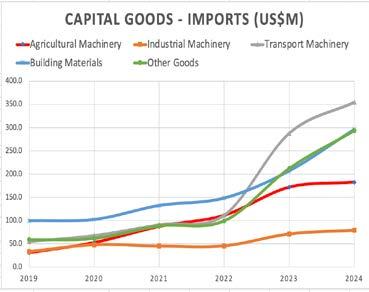
Recent data revealed a marked increase in capital goods imports for Guyana. This situation should be interpreted as a positive indicator of economic confidence in our economy, backed by a higher-than-normal level of productive investment, rather than a cause for concern (based on figures reported by the Bank of Guyana and national trade statistics).
Capital goods—such as agricultural and industrial machinery, transport and construction equipment are not bought to
be consumed immediately. They are used to increase productive capacity, improve efficiency, and support the expansion of future national output.
Economic research has shown that the importation of capital goods can contribute to long-term and sustained income growth by enabling access to advanced equipment and technology. In most countries around the world that are falling behind, it is mainly because of inadequate research, low investment in, and usage of advanced technologies.
The differentiator behind who will progress and who will fall behind during the next decade will be driven by which countries have the strategic plan and appetite to embrace advanced technology and train their nationals to use it effectively and efficiently.
The graph that accompanies this letter illustrates capital goods imports for Guyana from 2019 to 2024. The graph illuminates that all key categories have risen significantly, by more than 300 per cent in many cases, since 2020.
This quantum of capital goods imports reflects a trend that is directly associated with expanded business activity and greater public and private sector investment. This is a very positive sign.
This trend aligns with the numbers that outlines our broader economic performance.
Guyana’s non-oil economy has been expanding, with significant growth in sectors such as construction and services, supported by increased investment spending.
Importing capital goods enables businesses to improve productivity, produce more with existing resources, and reduce their cost of production over time. As equipment and technology are put to use, they help raise output levels, support export-oriented industries, and enhance our global competitiveness.
The only missing link now is the completion of the projects to supply lower-cost and more reliable electricity to the national grid and the massive industrialisation required to permanently transform Guyana. A major part of that challenge is expected to be overcome
later this year with the coming online of the Wales Gas-to-Shore Project.
Moreover, higher capital goods imports can signal higher business and investor confidence. Firms generally commit to importing machinery and equipment when they anticipate stable demand and a supportive policy environment.
Case in point, the CEO of ExxonMobil, Mr. Darren Woods made these comments on Venezuela on January 9, 2026 in the presence of President Donald Trump “If we look at the legal and commercial constructs—frameworks—in place today in Venezuela, today it’s uninvestable”.
Juxtapose that against his comments on May 2, 2024 with regards to Guyana when he said, “Guyana is heading to become the most successful deepwater development in history”.
Some have expressed concern that higher imports could widen trade deficits.
SENIOR Minister in the Office of the President with responsibility for Finance, Dr. Ashni Singh on Monday set out a wide-ranging vision to transform Guyana’s agriculture sector into a resilient, high-value engine of development and economic growth, unveiling a suite of investments and policy priorities that span across sugar, rice, livestock, coconut and other emerging value chains.
Speaking to the sector’s centrality to national resil ience, Dr. Singh during the presentation of the 2026 na tional budget announced a $113.2 billion allocation to support food security.
He said the government will continue to invest heav ily in storage and post‑har vest infrastructure, green technologies and expanding industrial complexes, with the aim of opening 100,000 acres of new arable land to boost capacity.
“Agriculture and food security sit at the centre of Guyana’s economic strategy
for resilience. Government has invested, and will con tinue to invest heavily in projects, initiatives and sys tems that keep the Guyanese people fed, that improve incomes for our farmers, and that reduce Guyana’s expo sure to external shocks,” the finance minister said.
The minister disclosed that farmers will benefit from improved extension services and the soon to be implemented Agriculture Information System (AIS) allowing them to receive timely delivery of information through digital platforms.
Rice remains a core focus as Dr. Singh detailed production-oriented interventions to expand acreage and yields, build drying floors, invest in seed processing facilities and rice milling, promote domestic fertiliser production, and increase climate-controlled silo storage.
The sum of $430 million
has been budgeted to support the continued development of the rice sector.
Recognising the importance of critical drainage and irrigation systems across the country, the sum of $81.9 billion has been allocated to continue improvement countrywide.
He outlined the govern ment’s strategic polices and plans to invest in agriculture expanding food security ef forts and economic growth.
“Over the next five years, government’s vision is to re inforce agriculture as a major pillar of Guyana’s diversifi cation efforts, and to buttress Guyana’s place in the region as the leader in food security.
We will continue to work to improve production and productivity, improve market access, and increase farm and household income,” the minister added.
The government, he said, will support mega farms developed with private - sector partners and the increased production of high-valued crops and vegetables through the construction of greenhouses, tunnel farming and hydroponics.
The coconut industry will to see expansion with an ad ditional 5,000 acres of pro duction and the construction of a state‑of‑the‑art process ing facility to boost product
development. Corn, soybean and poul try value‑chain investments will target thousands of acres and tens of thousands of tonnes of output to support feedstock needs.
To this end the sums of $3.3 billion has been allo cated for other crops, $1.9 billion for the livestock in dustry, $1.5 billion for the fisheries and aquaculture industry, $745 million for the agro processing sector and $195 million for the coconut industry.
Plant health will also see
priority investments with strengthened plant protection and quarantine services with improved surveillance and integrated pest management strategies, there will be ex panded extension outreach to ensure new technologies and planting materials are effec tively adopted at farm level.
Dr. Singh tied these massive investments to the governments expansive economic strategy highlighting benefits in job creation, rural revitalisation, increased farmer incomes and greater export competitiveness.
locally made furniture and jewellery, and importation of security equipment, and the attention being paid on the development of the tourism sector.
However, we must look “under the hood” of the economy to better understand what is happening.
Capital goods imports are part of the broader process of economic transformation and productive investment—and when these imports translate into increased production and exports, they strengthen the balance of payments in the longer run.
These investments often precede job creation in construction, manufacturing, logistics, and other sectors, as new projects ramp up and expand their requirements for more skilled labour. Thus, the policy of the
From page 6
Government of Guyana to accelerate skills training across all fronts must be celebrated.
In short, the expansion in capital goods imports reflects confidence, investment in productive capacity, and preparation for fu ture economic activities.
It is not merely increased spending on foreign goods but is a fundamental part of capital formation that is essential in the support of the sustainable growth path over the medium term.
Sincerely,
Sasenarine Singh, MSc - Finance.
THE Georgetown Chamber of Commerce and Industry (GCCI) has commended the Government of Guyana for its strategic focus on the development of its people and significant provisions to bolster the growth of the business community through targeted interventions in Budget 2026.
The Chamber, in a press statement, welcomed initia tives such as the removal of corporate tax on agricul ture and agro processing businesses; expansion of export allowance to include timber products; removal of Value Added Tax (VAT) on
Anticipated to have a transformational effect on the playing field for Micro, Small, and Medium-sized Enterprises in particular, the GCCI applauded the provision for US$100 mil lion into the development of the zero-interest devel opment bank.
“When viewed in con junction with measures such as the introduction of flat tax on double cab pick ups; the removal of
VAT on new vehicles below 1500CCs and all terrain vehicles, and the continua tion of freight charge relief, these interventions by the government reflect com mitment to the prosperity of the business sector and the people of Guyana,” GCCI said.
The GCCI congratulated the government on tabling the $1.558 trillion budget that is expected to improve the lives of all Guyanese, and remains committed to working with the government for the advancement of Guyana’s business sector and economy.

I FIRST entered politics as a polling agent for the PPP in the 1968 election, thus I have chalked up 57 years of political activism. What I saw yesterday (Monday) should cause me to go to the keyboard right away and write my memoir.
Yesterday for the first time in modern Guyanese history, the Leader of the Opposition did not rotate between the PPP and PNC. Even when there was a political entity named APNU that entered politics, it was the PNC that chose the Speaker, Raphael Trotman in 2011. The PNC was APNU and APNU was the PNC in 2011. The choice of Dr. Barton Scotland as Speaker in 2015 came from the PNC.
It was an uncomfortable moment for me yesterday because in those 57 years, I came to know most of the leaders in the PNC, some of whom took a liking to me and this went right up to the years between 2015 and 2020.
I went to PNC Minister of Communities, Ronald Bulkan in 2017 and asked if he could facilitate me with a house lot for someone very much in need of a roof over the family’s head.
I got it the next day. I went to PNC Minister of Education, Ms. Nicolette Henry and asked if a student that missed St. Joseph High School by two marks could be facilitated. She did it right away. I went to PNC Minister of Health, George Norton and explained how a returned medical doctor was not finding employment. The appointment was made the next day.
Let me say unapologetically, during the government of the APNU+AFC, I received a better reception from PNC power-holders than I did from those in the WPA and AFC. And this was at a time I was doing a daily chastisement of the APNU+AFC government in the Kaieteur News.
Clive Thomas of the WPA was insulting to me when I requested information from him. His words were: “For you to go and write about it.”
I couldn’t believe this was a man with whom I shared more that 40 years of comradely politics. You know what they say about karma? I wouldn’t go any further with this.
I remember in my presence, PNC Attorney-General, Basil Williams told WPA Minister of Education, Dr. Rupert Roopnaraine that now that APNU is in government, Freddie Kissoon must return to UG.
I looked at Roopnaraine’s visage. There was an intestinal smile but he said absolutely nothing. Roopnaraine didn’t even speak to me. You know what they say about karma? I won’t go any further with this
The AFC Ministers were brutal and bestial with me. None of them wanted to speak to me because of my daily criticism with harsh comments being made against me by people like Cathy Hughes, Dominic Gaskin, and Khemraj Ramjattan. They resented my criticism of the APNU+AFC government more than the PNC ministers and high state officials.
I ran into Aubrey Norton in 2016 on Middle Street where his Youth Empowerment


Office was. He asked me if I was offered a job and I said no. Then he said he would arrange something. I declined because the begging instinct never ran through the Kissoon family.
On Christmas Eve, 2015, a car drove up to my gate and the driver gave me a gift, compliments of PNC Minister Amna Ally. I wrote something about the mistreatment of a patient at the Georgetown Hospital, the then Minister of Health, Volda Lawrence called me at 6 AM the morning asking me for details.
In the 1970s, many of PNC Ministers that were students with me on the UG campus were friendly with me even though I was a frenetic anti-PNC activist on the campus. I was sad when I learnt that the PNC had lost the opposition majority at the 2025 national elections. I could not accept WIN as the major opposition party and Azruddin Mohamed as Opposition Leader.
Given his baggage, Mohamed should never have been in politics. l am not con-
vinced that his 16 seats came from political persuasion and political appeal. It came from a room filled with billions of dollars.
So yesterday, a big part of Guyana’s physiology suffered some defects. We are accustomed here in Guyana since 1957, that when PNC in power, PPP is the opposition, when PPP in power, PNC is the opposition. Yesterday, Monday, January 26 broke with that tradition.
I never gravitated to the PNC since I entered politics in 1968. I felt it never had the philosophical gravitas needed to liberate post-colonial Guyana and given the opportunity several times, it failed Guyana. But I don’t think it deserved to have lost to Azruddin Mohamed.
I hope the future corrects that tragedy.
DISCLAIMER: The views and opinions expressed in this column are solely those of the author and do not necessarily reflect the official policy or position of the Guyana National Newspapers Limited.
THE Ministry of Health has said it is aware of, and regrets, an unfortunate incident that occurred at the New Amsterdam Hospital involving a patient, 26-year-old Kelisha Pestano.
Pestano, who was approximately 24 weeks and five days pregnant, presented to the New Amsterdam Hospital on January 14, 2026 at 22:24 hrs with complaints of lower back pain and mild per vaginal bleeding, without uterine contractions.
According to information from the Ministry of Health, she was assessed and diagnosed as a case of threatened abortion with a previable fetus and was admitted to the ward for ongoing care and management.
Pestano was counselled regarding the prognosis and potential outcomes should her condition progress to a spontaneous miscarriage.
During the course of her admission, Pestano subsequently developed uterine contractions and progressed to a spontaneous miscarriage in the early hours of January 15, 2026, resulting in the delivery of a previable fetus.
“Based on an initial visual assessment, the fetus was presumed to be deceased. A previable fetus is defined as one that is not yet capable of surviving outside the uterus, even with medical support; therefore, fetal resuscitative efforts are not medically indicated.
“The fetus was subsequently handed over to relatives. It was later observed by the relatives that the fetus showed signs of life, following which the fetus was returned to the hospital. Supportive care was provided; however, despite these efforts, the fetus was eventually declared deceased,” the Health Ministry said.
The ministry acknowledged the distress caused by this incident and expressed its deep regret for the circumstances surrounding this outcome.
The Health Ministry extended its sincere condolences to Pestano and her family during this difficult time.
The ministry has initiated a review of the circumstances surrounding this incident to ensure that established clinical protocols were followed and to identify any areas for improvement in patient care and communication.
“Appropriate actions will be taken based on the findings of this review,” the ministry said.
The Ministry of Health said it remains committed to upholding the highest standards of care and to ensuring compassion, professionalism, and respect in the delivery of health services across Guyana.
--with more investments expected, Dr Singh; points to over 20,000 jobs provided by industry in 2025 compared to 13,681 in 2020
GUYANA’S gold mining industry is set for significant growth, with both large-scale mining projects and small to medium operations showing strong potential, according to Senior Minister in the Office of the President with Responsibility for Finance, Dr. Ashni Singh.
In the National Assembly, while presenting the 2026 National Budget, Dr. Singh highlighted that the gold sector continues to attract substantial foreign investment.
This investment brings modern technology, vital export earnings, and thousands of jobs for Guyanese workers.
He mentioned that the only large-scale operator at Aurora surpassed its 2025 production target and is expected to increase output this year as work on the mine’s underground development progresses.
Among notable projects, the Oko West Project achieved a key milestone
last December by receiving its mining licence, the last regulatory requirement for its development. The project, which re -
anticipated in 2027.
Meanwhile, the Oko Project, located north of Oko West, is also gaining traction. Its Preliminary Eco -
ounces.
Annual output is projected at 298,000 ounces, with operations expected to start in 2029. Another large-scale

ceived formal approval for construction in October 2025, is expected to produce a total of 4.3 million ounces of gold over 12.3 years, averaging 350,000 ounces each year, with first production
nomic Assessment (PEA), released in December 2025, detailed a combined openpit and underground operation with an estimated 14-year mine life and total production of 3.2 million
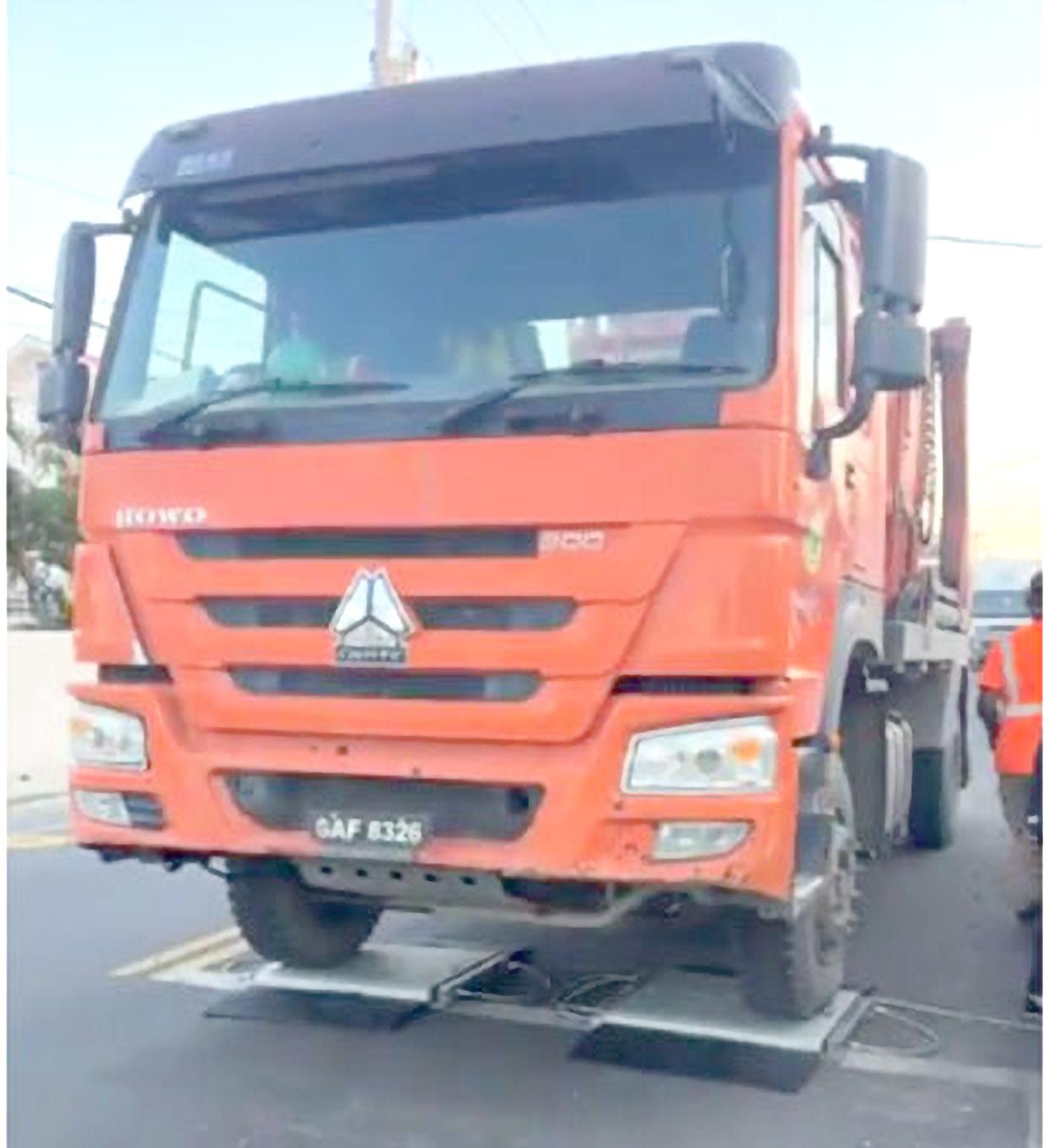
THE government will be installing 8,000 auto control speed regulators on trucks to limit the speed and thereby improving safety on the country’s roads, Senior Minister in the Office of the President with Responsibility for Finance, Dr. Ashni Singh has said.
In his presentation of Budget 2026, Dr. Singh further said that to address the long-standing issue of parking for heavy-duty trucks, new dedicated parking zones will be created, starting with a facility at Grove that can hold 390 trucks.
Further, to maintain road quality, the enforcement of vehicle weight limits is being strengthened.
Last year, 20 weigh-inmotion scales and 400 vehicle clamps were bought and distributed along major routes, including Buzz Bee Dam to Diamond, Linden to Mabura, and near the BJDRB.
This year, the government will set up more testing sites and revise regulations to ensure strict adherence to maximum weight limits. Additionally, the government will be rolling out a fully automated speed
ticketing system as part of a broader Safe Road Intelligent System (SRIS) that uses advanced cameras and radar speed signs to allow for real-time offence detection and automated issuance of penalties, thereby ensuring equitable, consistent, and timely enforcement of traffic laws. A sum of $382.9 million has been allocated for this initiative.
Dr. Singh stressed that the 2026 transport programme is more than just an infrastructural expansion. It represents a commitment to transforming the nation.
development, Toroparu, is moving forward steadily.
A PEA completed in October 2025 indicated a 21.3-year open-pit operation with anticipated annual production of 235,000 ounces.
Simultaneously, exploration and drilling continue at Omai, where an updated PEA is expected by the second quarter of this year.
Dr. Singh noted these combined developments as clear signs that the largescale sector is ready for significant growth in the medium term.
In addition to large-scale mining, the government is also increasing efforts to improve governance, transparency, and adherence among small and medium-scale miners.
New measures include mandatory local bank account requirements and compulsory updates of personal records for all miners and stakeholders.
Authorities are elevating audits and enforcement actions to combat illegal practices affecting gold declarations, along with implementing advanced systems, such as the high-tech mineral mapping project launched in late 2025 to enhance oversight and planning.
To further boost performance and ensure fair trade, the Guyana Gold Board (GGB) expanded its operations last year by setting up permanent purchasing facilities in Lethem, Marudi, and Mahdia.
Three new mobile purchasing sites are scheduled to start operating before mid-2026 in Puruni, Karuni, and Olive Creek. Improved monitoring systems are also being put in place to ensure traders comply with licensing and location-specific regulations.
Dr. Singh stressed that the gold sector continues to be a significant source of employment and national income. The industry provided over 20,000 direct jobs in 2025, up from 13,681 in 2020.
“Every new operation, every new licence, every new piece of equipment, every new prospect brought into operation translates into more Guyanese working and earning,” he stated.
--with plans for new Kurupukari Bridge, dismantling of old Demerara Harbour Bridge to support a new crossing from
THE Government of Guyana has announced an extensive plan for road and bridge development in 2026, with the allocation of $196.1 billion to expand the country’s transportation network and improve connectivity.
Senior Minister in the Office of the President with Responsibility for Finance, Dr. Ashni Singh, highlighted these ambitious plans during the Budget 2026 presentation.
He emphasised that investing in transport infrastructure is crucial for boosting trade, connecting communities, providing access to markets, and improving the quality of life for citizens.
Dr. Singh reviewed several key achievements from the past five years.
The construction of the Heroes Highway and the Ogle to Eccles Highway has significantly improved travel between the East Bank and East Coast of Demerara.
The completion of the Bharrat Jagdeo Demerara River Bridge and the Schoonord to Crane Highway has also enhanced access between regions. Additionally, the Linden to Lethem corridor has seen the construction of 85 kilometers of paved road and 45 concrete bridges.
Important hinterland roads, such as Kumaka to Kwebanna, Wauna to Settlement, and Karasabai to Paramakatoi, have been
upgraded, improving connectivity for mining, forestry, and hinterland communities.
Looking ahead, the government plans to fully complete the Linden to Lethem corridor, which will include a new Kurupukari Bridge.
This bridge will connect southern Guyana to a future deep-water port in Berbice via a modern fourlane structure across the Berbice River.
In addition, the old Demerara Harbour Bridge will be dismantled and rebuilt to support a new crossing from Timehri to Sand Hills. Future connections to Leguan and Wakenaam Islands are also part of the plan.
In 2026, work will accelerate on several major projects across the country. The Railway Embankment four-lane highway, running from Sheriff Street to the Mahaica River, has been allocated $6.1 billion.
The next phase, extending from Mahaica to D’Edward, is expected to begin later this year. The extension of the Ogle to Eccles Highway to Providence and Diamond has a budget of $13 billion.
This will improve access to the Bharrat Jagdeo Bridge and ease traffic flow on the East Bank. The Heroes Highway will be extended from Buzz Bee Dam to Land of Canaan with a budget of $28.6 billion. Additionally, $13.1 billion
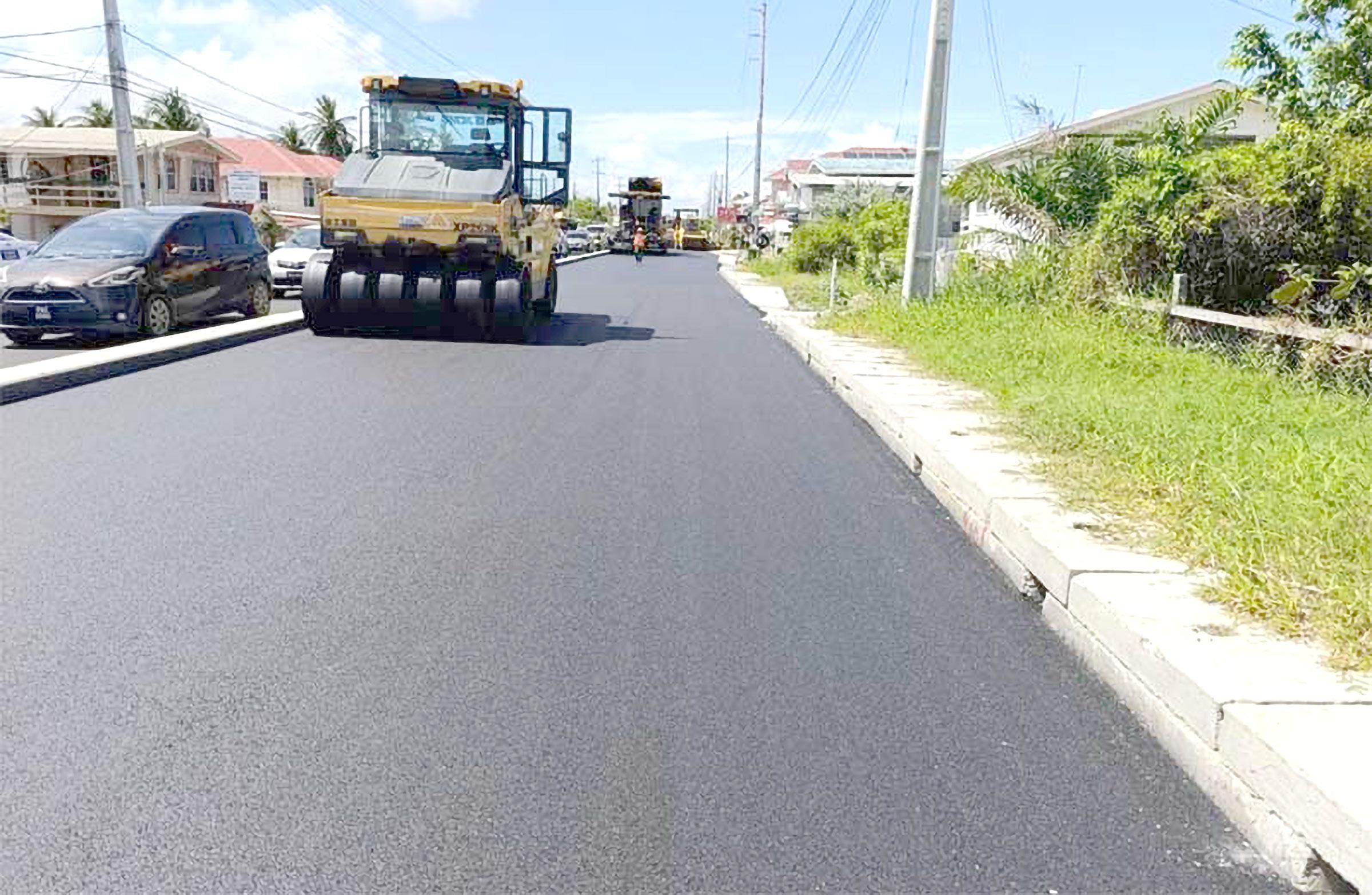
will be used to upgrade the Soesdyke-Linden Highway.
Other notable projects include completing the Linden to Mabura Hill Road with $10.4 billion, starting work on the Mabura Hill to Kurupukari section with $7.6 billion, and advancing the Palmyra to Moleson Creek four-lane highway, which will receive $15.1 billion.
The links from Parika to Goshen and Sand Hills to Makouria will progress with a combined budget of $6.5 billion.
Meanwhile, $12.2 billion has been set aside for building new bridges at Berbice and Kurupukari, finishing the Wismar Bridge, and ongoing collaboration with Suriname for the Corentyne River Bridge.
In addition to these major projects, $40.2 billion will go toward constructing and maintaining community roads and drains in 2026. This supports ongoing efforts to improve accessibility and living conditions in residential areas.
In the hinterland, $10 billion has been earmarked for road work in Achiwib, Central Rupununi, Kaburi, Karisparu, Rupertee, and Shea.
This builds on the $14.2 billion spent in 2025 for projects in Bamboo Creek, Hosororo, Kato, Monkey Mountain, and Murwa. With the rapid growth of the road network, the government is also focusing on road safety and the durability of infrastructure.
THE 2026 National Budget is one that is truly remarkable. Unveiled on Monday by Senior Minister in the Office of the President with Responsibility for Finance, Dr Ashni Singh, the $1.558 trillion budget is one that is expected to aid in the growth of the economy and the advancements of several initiatives.
Economist Richard Rambarran in a live broadcast provided the nation with a breakdown of the budget,
explaining how it translates to something tangible for Guyanese.
According to him, the budget in the first component outlines the performance of the economy during the preceding year, 2025. It then highlights what the government plans/ intends to do in 2026. “The third big component of the budget, which is really the part that a lot of people tune in for, because those are the key measures that really
impact on people’s lives. So, in this instance, we have perhaps about 31 measures that were presented in the National Assembly,” he explained. Highlighting the key aspects of the budget from key sectors such as social services, education, health, agriculture, among others, Rambarran noted the growth of Budget 2026 from $1.38 trillion last year to $1.588 trillion in 2026.
“Generally, economists tend to view anything around
four per cent growth as being something that is healthy. So, you can imagine an economy in which oil is such a readily talked-about commodity growing at 14.3 per cent in 2025. That is a number to certainly hold on to,” the economist said. Meanwhile, Private Sector Commission stakeholder, Dr. Komal Singh also commenting that as an investor and Chair of the Shipping Association, Budget 2026 is a “very unique” one.
“Having seen, Dr. Ashni, read through almost every single sector, you can actually align those measures with where we are as of today, and you can actually visualize where we will be in the next five years in this country. It was very also interesting to see that it was strategically aligned with the manifesto, but most importantly, it’s also people sensitive. It also focuses a lot of private sector development.
And most importantly, it creates an environment that we see continuing economic growth,” Singh said. He said we can see not only economic growth, but sustainability for Guyanese, and local businesses. Continuing, he said, “Overall, I think the budget is an excellent one. It will benefit the entire country, and you will see a lot of rippling effects going on to the ordinary people on the streets.”
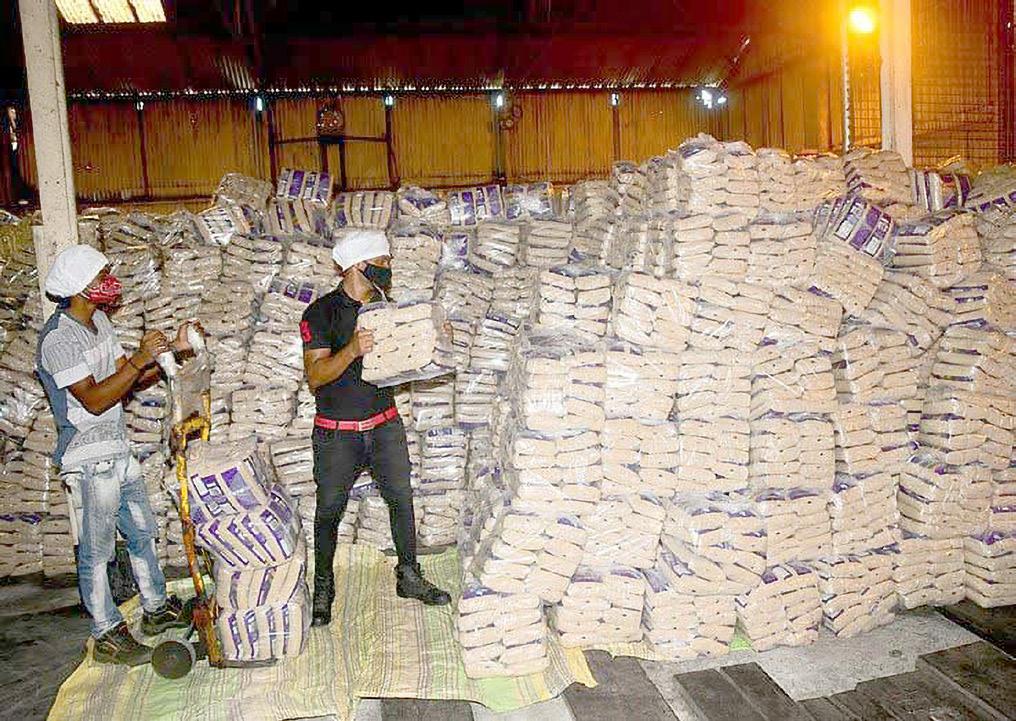
THE Government of Guyana is advancing its bold plan to modernise the sugar industry and set the Guyana Sugar Corporation (GuySuCo) up for longterm success and profitability.
They have budgeted $13.4 billion for 2026 to speed up mechanisation, efficiency, and value-added production.
Senior Minister in the Office of the President with Responsibility for Finance, Dr. Ashni Singh, made this announcement while presenting Budget 2026.
He mentioned that restoring GuySuCo’s financial health is a key priority for the government.
The ongoing rehabilitation and modernisation efforts aim to increase production and revitalise rural economies, securing livelihoods for thousands of Guyanese.
In the past five years, the administration has re -
opened the Rose Hall Estate and improved factory and field operations at Albion, Blairmont, Rose Hall, and Uitvlugt.
These actions have helped energise sugar-producing communities in Berbice and West Demerara.
The government also changed GuySuCo’s marketing approach from bulk sugar exports to higher-value products and provided economic support to more than
5,200 laid-off workers. Currently, employment in the sugar industry is over 8,300. Dr. Singh pointed out that in 2025, the Albion packaging plant began operations, and critical factory equipment and two mechanical harvesters were purchased to boost efficiency at the estates.
Key work completed last year included rehabilitating over 100 cane punts, restoring the Blairmont wharf,
GUYANA’S bauxite sector is poised for a significant revival, with the government announcing the restart of operations in the Berbice River area.
Senior Minister in the Office of the President with Responsibility for Finance, Dr. Ashni Singh, made the announcement during his Budget 2026 presentation in the National Assembly on Monday. He stated that the Cabinet recently approved the resumption of bauxite mining activities along the Berbice River. This marks a new phase of growth for the industry and the region.
Operations in this area had been inactive for nearly six years due to what the minister called “neglect and mismanagement” from the previous APNU+AFC administration.
Dr. Singh mentioned that the approved operator will begin preparation and restoration work this year. They
will focus on rebuilding essential infrastructure and operational systems to ensure that full production can safely restart by the end of 2027.
“Government is committed to making sure that continued investment in the industry leads to quality jobs for Guyanese. This will help families earn stable incomes, build opportunities, and share in a more prosperous future,” Dr. Singh told the Assembly. The revival of the Berbice operations is part of a larger trend of renewed confidence and investment in Guyana’s bauxite industry. Dr. Singh noted that the sector showed “extremely strong prospects” and continued growth throughout 2025, thanks to ongoing foreign investment and effective government policies. Both of the country’s current operators increased production levels last year, with notable progress reported at the Lin-
--essential
and upgrading rotary sugar dryers, billet cane yards, and more than five kilometres of access roads.
The sector also progressed land conversion projects at the main estates to support mechanical field operations. Looking forward, the 2026 programme will heavily emphasise mechanisation and infrastructural development.
The government aims to convert over 3,000 hectares of land to facilitate machine-based harvesting. They will replace three sugar boilers, buy five more cane
harvesters, and build a new conveyor system for billet canes at Albion.
Additionally, new sugar dryers will be installed at Rose Hall and Uitvlugt, along with billet cane feeder tables to enhance processing efficiency.
A significant portion of the investment will also go toward expanding value-added production and improving all-weather road access.
This will help with the transportation of billet canes and supplies between estates.
Dr. Singh noted that these projects are essential to Guy-
SuCo’s broader five-year plan, which aims to transform the corporation into a vibrant agro-industrial hub.
This plan includes ongoing land conversion and mechanisation, promoting high-yielding cane varieties, forming private sector partnerships in value-added production, and enhancing worker skills.
Dr. Singh stated, “The long-term strategy is to modernise GuySuCo, strengthen industrial relations, and create higher-skilled job opportunities.”
den-based MAZ project.
As a result, direct employment in the bauxite industry rose to over 1,000 jobs in 2025, up from 665 in 2020. This reflects the sector’s steady recovery and growing contribution to national development.
Industry analysts view the Berbice bauxite deposits as strategically important. They not only help diversify production beyond Linden but also support future industrial processing and export capacity in East Berbice-Corentyne. The planned restart is expected to boost business activity in Berbice communities, encourage infrastructure upgrades, and expand opportunities in logistics and materials services.
Dr. Singh reaffirmed the government’s stance that a modern, sustainable, and job-rich mining sector is essential for Guyana’s non-oil economy.
THE Government of Guyana will increase its investment in agro-processing and value-added agriculture this year.
Major infrastructure and training projects are planned across the country. These efforts aim to boost food production, cut post-harvest losses, and improve export competitiveness.
Senior Minister in the Office of the President with Responsibility for Finance, Dr. Ashni Singh, announced this plan during his Budget 2026 presentation.
He noted the government would allocate $745 million this year to continue expanding agro-processing facilities and support initiatives under the broader agri-business development programme.
While outlining the government’s achievements over the past five years, Dr. Singh reminded the National Assembly that 15 agro-processing and 10 cold storage facilities were established nationwide.
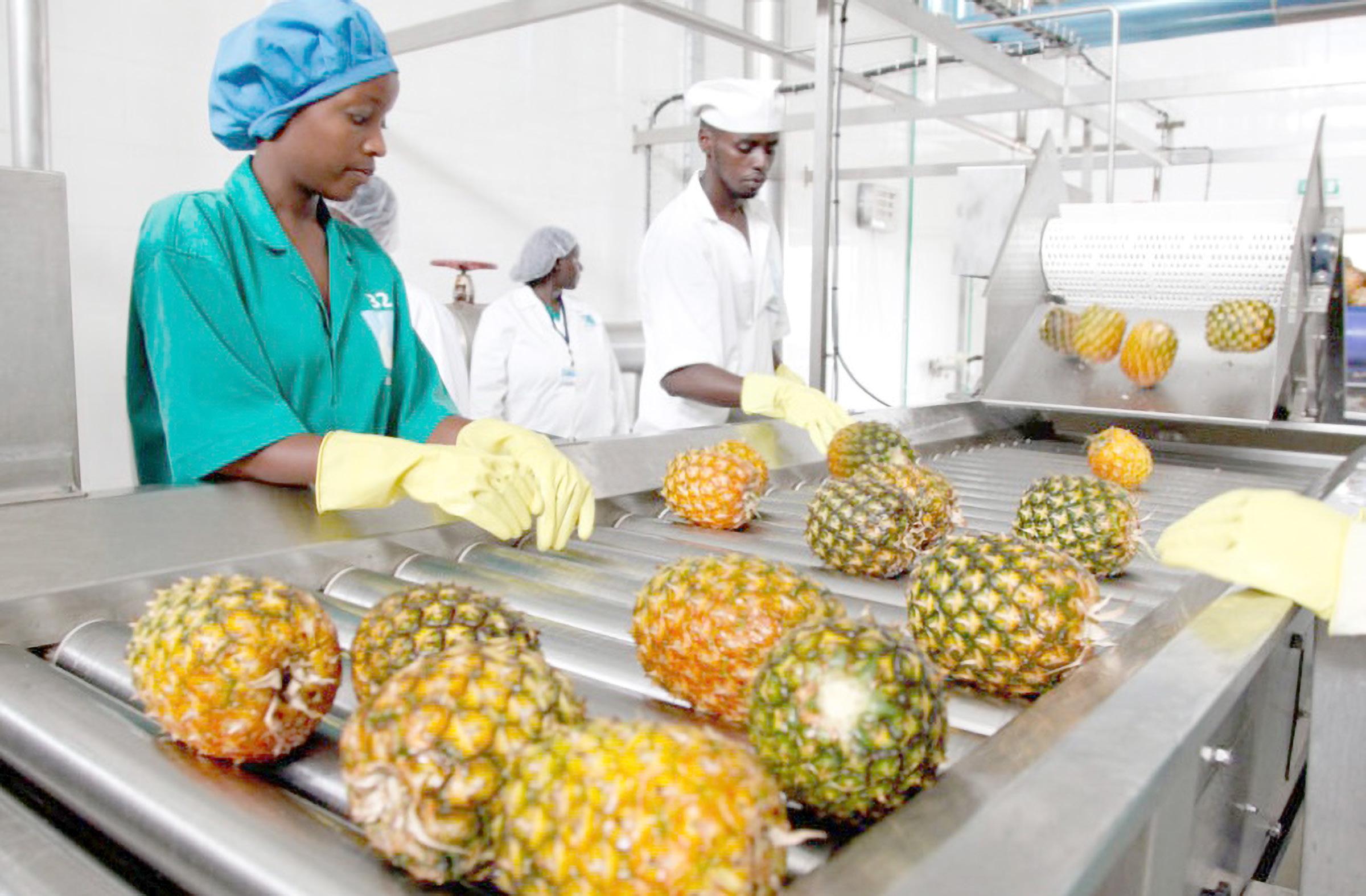
meet international market standards. Progress continued on the Regional Food Hub at Yarrowkabra, which is expected to be completed this year. It will serve as a central point for food storage, processing, and distribution.
For 2026, two major projects will drive the government’s agro-processing agenda.
One is the construction of an agro-processing port facility at Parika to improve logistics and export management for food products. The other is the establishment of a fruit pulping hub at Lethem, which will assist farmers in the Rupununi and interior regions by increasing processing capacity for fruits and perishables.
Additionally, the government will upgrade existing agro-processing facilities in all regions. It will continue training agro-processors and increase efforts to market and promote local products both regionally and internationally.
Those created a foundation for rural enterprise development and regional food security. According to him, these investments show the government’s commitment to supporting growth in agriculture and creating more opportunities for farmers, small businesses, and exporters.
enhance our export readiness,” Dr. Singh stated.
“In the medium term, we will continue to invest in agro-processing facilities such as fruit pulping hubs and modern cold storage and packaging facilities. These efforts will reduce post-harvest losses and
Highlighting last year’s work, the minister reported that an agri-business hub was set up in Bartica to support entrepreneurship and trade in Region Seven. The government also launched 25 Guy-
ana Shop corners across the country and one in Barbados to promote locally-produced goods. Furthermore, 373 agro-processors received training in packaging, labelling, and product presentation.
This training strengthens the capacity of small businesses to
These initiatives are crucial for advancing Guyana’s position as the food basket of the Caribbean while achieving long-term national food security. Dr. Singh noted that $800 million was invested in 2025 for agro-industry projects.
--$300M budgeted to complete Providence Day and Night Care Centre, construct four new centres across Regions 2, 5, 6 and 10
THE Government of Guyana will step up efforts in 2026 to improve childcare infrastructure and provide more support to families through new investments in early childhood and family development programmes.
According to Senior Minister in the Office of the President with Responsibility for Finance, Dr. Ashni Singh, these initiatives are part of a larger national strategy to create a safe, welcoming, and caring environment for the country’s youngest citizens.
For 2026, the government has budgeted $300 million to advance several important projects, including the completion of a day and night care centre at Providence and the start of construction on four new centres across Regions Two, Five, Six, and 10.
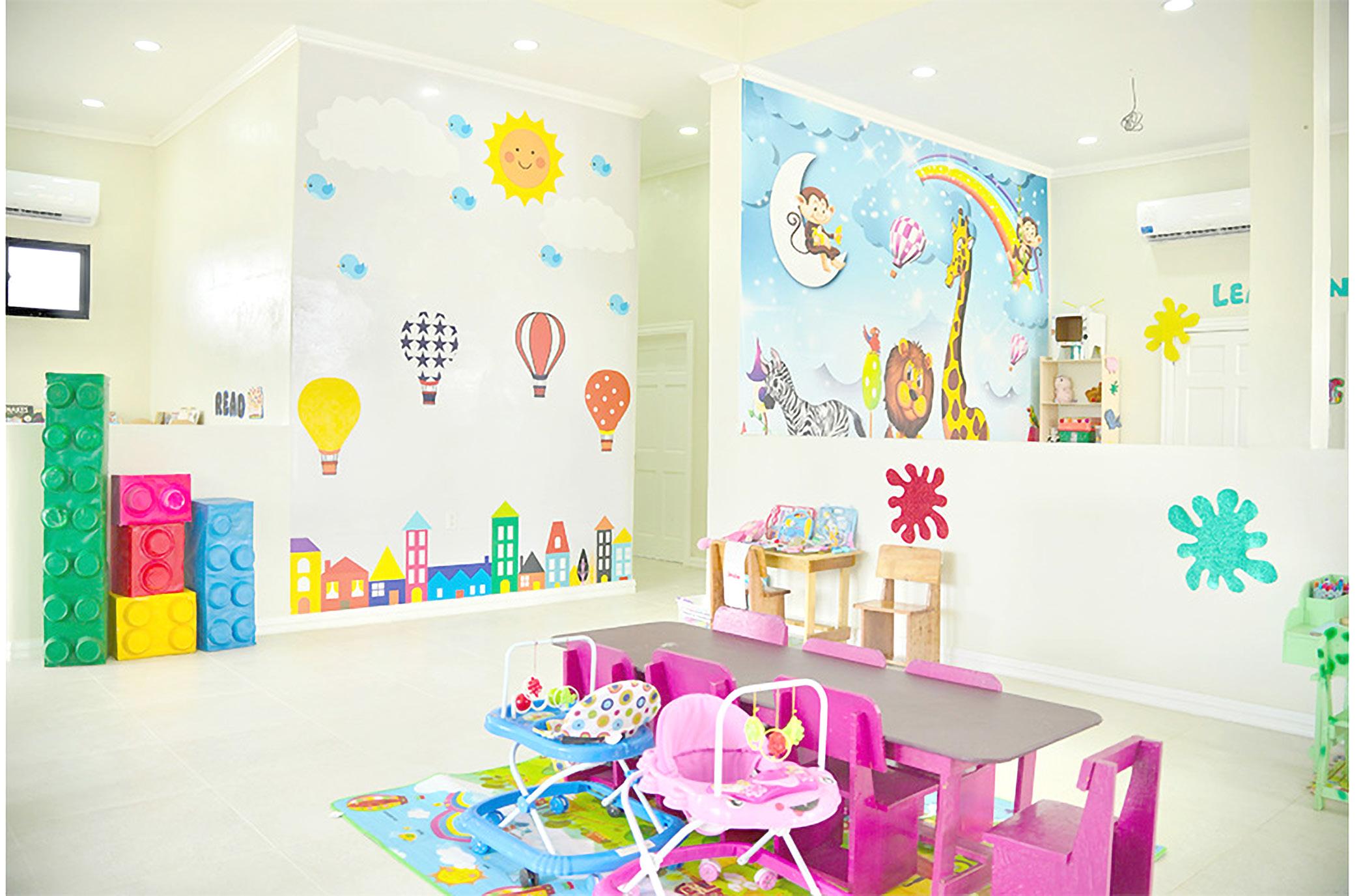
These facilities aim to offer dependable childcare services for working parents, with flexible hours to fit different schedules. Ad-
ditionally, the government will co-invest with qualified private partners to expand the availability and quality of childcare services across
the country.
Dr. Singh explained that these efforts will also include ongoing investment in training childcare providers.
This will include both basic and advanced programmes to help participants gain professional skills and establish their own home-based childcare facilities.
The government will continue the one-time cash grant for newborns, providing $100,000 to parents at the time of birth.
This initiative, launched in 2025, has already assisted over 13,000 newborns, giving immediate support to families and helping to reduce the early financial burdens of parenting.
To promote overall child and family development, the 2026 programme will introduce new safe, child-friendly spaces where families can access recreational and educational activities within their communities.
These hubs aim to encourage emotional growth, social interaction, and pos-
itive early learning experiences in safe, supervised settings.
Dr. Singh noted that these 2026 measures build on several achievements from the previous year, such as the opening of an Early Childhood Development Centre at Diamond and a day and night care centre at Anna Catherina. Hundreds of people were also trained in child development and care, with many of them starting their own registered childcare facilities.
“By continuing to invest in early childhood care and ensuring that parents—especially working mothers—have access to affordable, high-quality childcare, we are not only supporting families but also strengthening the foundation for national development,” Dr. Singh told the National Assembly.
--with more investments planned this year, completion of new Hospitality and Tourism Institute anticipated
GUYANA’S tourism industry has entered a remarkable phase of growth, marked by record-breaking visitor arrivals, expanded accommodation, and new international flight connections that show strong global confidence in the destination.
The government is deepening its investments in 2026 to create a more sustainable, diversified, and people-centered tourism economy.
While presenting Budget 2026 to the National Assembly, Senior Minister in the Office of the President with Responsibility for Finance Dr. Ashni Singh, said the administration’s main focus is to transform the sector.
This includes ensuring sustainable and world-class tourism experiences, expanding air and domestic connectivity, and empowering communities through job creation and economic opportunities.
The minister announced that Guyana welcomed a record 453,489 visitors in 2025, the highest number ever recorded. Building on this success, the government plans to review, update, and implement the National Strategic Tourism Action Plan.
This plan will guide development over the next five years, emphasising community-led tourism, product diversification, and affordability for both residents and visitors.
Since returning to office, the government has addressed two key challenges in the sector: accommodation and airlift.
Over the last five years, hotel room capacity has grown by 42 per cent, with 738 new rooms added in 2025 alone. By the end of 2026, over 1,000 addi-
tional rooms are expected, raising the country’s total room count to 5,600, an increase from just over 3,200 in 2020.
Interest in luxury and eco-tourism keeps growing, with 24 expressions of interest received from investors for high-value eco-lodges and resorts.
rooms to the sector in 2025, bringing the total to 115 establishments offering 544 rooms. On the connectivity side, KLM Royal Dutch Airlines started operations in June 2025, adding 1,650 seats weekly to Amsterdam.
Meanwhile, Air Transat
56 communities across the country were added to key tourism circuits.
This introduction brought more experiential and community-based products, along with niche markets in sports tourism, cultural festivals, and events
of the new Hospitality and Tourism Institute, which will train over 700 individuals in technical and service-related fields. With an allocation of $2.2 billion for its completion this year, the facility is expected to become the leading center
award for Destination of the Year – Natural Attractions, demonstrating its success in sustainable tourism development.
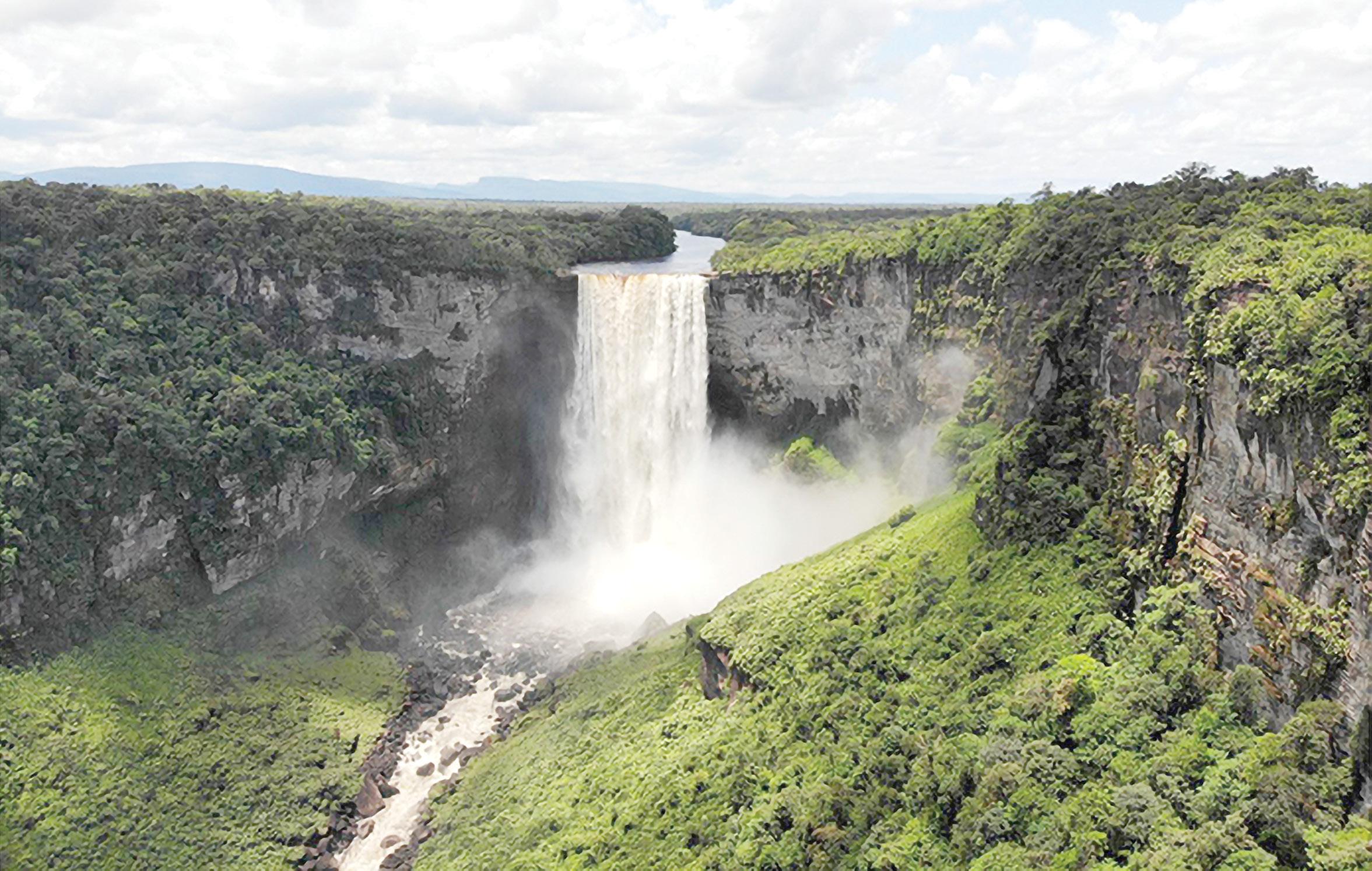
These projects will follow design and sustainability guidelines developed with international eco-architects last year.
The minister also highlighted rapid growth in short-term rental options, with new Airbnb-registered properties adding nearly 70
launched in December, providing twice-weekly flights to Toronto and adding another 796 seats weekly.
Dr. Singh confirmed that talks are ongoing with other major carriers to expand international airlift further.
Diversifying Guyana’s tourism offerings remains a key part of the government’s medium-term plan. In 2025,
aimed at the diaspora, like conferences, weddings, and reunions.
“These initiatives ensure that more of the tourism revenue stays within communities, creating sustainable livelihoods beyond traditional hotspots,” Dr. Singh emphasised.
A significant part of the 2026 plan is the completion
for tourism and hospitality training in the region.
It will equip Guyanese with the skills needed to compete in the modern global tourism market. Guyana’s growing reputation on the world stage continues to attract attention.
The country recently received the Pacific Area Travel Writers Association
To further establish its leadership role, Guyana will host the Caribbean Tourism Organisation’s State of the Industry Conference this year, a major regional event focused on innovation and sustainability in tourism.
Dr. Singh stated that the conference will provide a platform to showcase Guyana’s achievements and promote new partnerships to advance the future direction of the tourism sector.
–– $2 billion to advance works at various
THE government has earmarked $9.3 billion in the 2026 national budget to finance the expansion and operations of Guyana’s justice system, with a significant focus on court infrastructure and digital transformation, among other key things.
This was according to Senior Minister in the Office of the President with responsibility for Finance, Dr Ashni Singh, during his presentation of Budget 2026 to the National Budget.
Addressing the National
Assembly, Dr Singh underscored the importance of sustained investment in the sector, noting that “a strong justice system is the anchor of any democratic society”.
Against this backdrop, he said the government has been taking all necessary and appropriate steps to ensure the continuous strengthening of the justice sector through institutional reform, sustained investment, and digital transformation.
Delving into the allocations, a majority of the
overall allocation will go towards the expansion of court infrastructure across the country.
Dr Singh revealed that in 2025, $1.5 billion was expended to advance the expansion of court facilities, resulting in the establishment of new courts in Anna Regina, Charity, Friendship, Mabaruma and Mahdia, along with significant extensions and upgrades to several existing courts.
For 2026, an additional $2 billion has been budgeted to advance work at
various courts, including Timehri, La Parfaite Harmonie and Providence Magistrate’s Court, which he said will further widen access to justice countrywide.
The budget also supports continued digital transformation within the judiciary. Dr Singh reported that since the launch of the e-litigation platform in 2024 for the High Court, Court of Appeal and Full Court, the system has been steadily rolled out to automate court filings. To date, 9,962 cases have been filed electronically, with 7,946 of those filed in 2025.
He added that the case management system, first launched at the Diamond Magistrates’ Court in 2023, was expanded to the Friendship Magistrates’ Court in 2025, with further nationwide rollout planned.
Further to this, the investment in human resource capacity in the sector continues to be a priority. Dr Singh said that following the reconstitution of the Judicial Service Commission in 2023 and the enactment of the Court of Appeal (Amendment) Act 2025, six justices of appeal were appointed in 2025.
This, he said, increased the capacity of the system to discharge its important functions efficiently.
Funding has also supported the rollout of restorative justice initiatives, with nine Restorative Justice Centres commissioned nationwide to date and as such, he said that in 2025 alone, 42 cases were successfully resolved.
Dr Singh stated, “In 2025, we spent $7.3 billion to finance the expansion and operations of the justice system and, in 2026, an amount of $9.3 billion is budgeted.”
THE government has announced a major expansion of its affordable housing programme, with the low-income mortgage ceiling increased from $20 million to $30 million, as part of its commitment to ensure that every Guyanese family has access to affordable housing over the next five years.
Dr Singh said since returning to office in 2020, the government has made significant progress in improving access to housing and reducing the cost of home ownership, including increasing the low-income mortgage ceiling at commercial banks from $8 million to $20 million during the last term.
The new increase to
Senior Minister in the Office of the President with Responsibility for Finance, Dr Ashni Singh, made the announcement during the presentation of Budget 2026 to the National Assembly.

$30 million, he said, will further reduce borrowing constraints and make housing loans more accessible and affordable for low-income families.
In a further expansion of the policy, Dr Singh announced that the $30 million low-income mortgage ceiling will also be extended to approved insurance companies that offer housing loans under arrangements similar to those at commercial banks.
This move is expect -
ed to widen the pool of housing finance options available to citizens and deepen competition within the mortgage market.
Additionally, the Government will allocate $7.5 billion in Budget 2026 to support households in upgrading their homes, building on previous initiatives such as the steel and cement subsidy and the construction of more than 2,000 homes, which benefitted over 3,000 families.
THE government will remove Value Added Tax (VAT) on locally manufactured furniture and jewellery, as part of a targeted policy shift aimed at strengthening domestic production, lowering construction costs and supporting small and medium-sized enterprises.
Senior Minister in the Office of the President with Responsibility for Finance, Dr Ashni Singh, announced the measures during the presentation of
the 2026 National Budget to the National Assembly on Monday.
Dr Singh said VAT will be removed on locally made furniture, including doors, moulding and beds, to improve the competitiveness of the forestry and manufacturing sectors while reducing input costs for the construction industry.
He noted that the measure is expected to stimulate local production, support job creation and

position Guyanese manufacturers to compete more effectively within the regional market.
In addition, VAT will also be removed on locally produced jewellery, as part of efforts to encourage greater value-added activity and expand opportunities for small and medium enterprises operating in the jewellery-making sub-sector.
Dr Singh said the move will reduce production costs, improve market ac-
cess and strengthen the sustainability of local jewellery businesses, while promoting the development of downstream industries linked to Guyana’s mineral sector.
He said that both measures form part of the government’s broader strategy to drive local industrial growth, deepen value chains and ensure that economic expansion translates into tangible benefits for domestic producers.
FROM new E-ID cards, AI-powered virtual assistants to integrated service systems, the government is continuing its aggressive push for a “Digital Guyana” with Budget 2026.
During his Budget 2026 presentation, Senior Minister in the Office of the President with Responsibility for Finance, Dr. Ashni Singh said the government’s ambitious digitalisation agenda is aimed at modernising the way that public services are delivered, leveraging technology for improved efficiency and transparency.
The national Electronic Identification (e-ID) system will facilitate a more coordinated approach to public service delivery, and allow for biometric verification and validation of individuals through a single identifier that enables more efficient interactions with all agen-
cies across the government, Minister Singh said.
Registration commenced for the national e-ID cards enrolling over 4,700 persons in 2025, he disclosed, noting that two different types of e-ID cards exist for citizens and resident non-citizens. The resident non-citizen card will be issued to persons who have valid work permits.
Within the next five years, the government will develop a new Digital Guyana aligned with world class standards for more responsive public services.
In 2026, several initiatives will be advanced toward the realisation of Digital Guyana to ensure client and user experience with the government agencies is both timely and responsive.
GovConnect app will offer online scheduling of appointments and queue management to reduce waiting times, while the

Citizen Connect App will allow the public to submit complaints or concerns to the government while ensuring accountability in the resolution of issues.
The Citizen Connect App is on schedule to be launched later this month, he said.
Additionally, AskGov, another initiative on the cards, will be a 24/7 AI assistant that answers questions and guide users through government transactions.
Dr. Singh also stated that the government will develop a MyGuyana Citi-
zen Portal as a whole-ofgovernment single central gateway allowing every citizen to access government services. The portal in conjunction with the e-ID card system will enable an efficient citizen-centred interaction.
The minister was clear that the objective to improve delivery of public services to every citizen regardless of where they reside will be achieved through decentralisation of government services.
This has already resulted in operationalisation of Integrated Service Centres (ISCs)
MINISTER of Amerindian Affairs, Sarah Browne, on Monday expressed satisfaction with the 2026 National Budget, noting that it has “definitely lived up to expectations.”
“I’m really pleased with what’s in it for Amerindian people in particular, because not just with what’s in the ministry’s budget, but there’s overlapping. The sectors would overlap in terms of how we benefit as well. So, while the Ministry of Amerindian Affairs have direct intervention in terms of the Amerindian Development Fund being $5 billion to be used across villages, and while we have still resources
from carbon credit funds.
While we still have capital projects that are budgeted for, we will still benefit from all the measures that are set out in the national budget for the social sector as well as agriculture sector, especially too with the reduction of the removal of all taxes on ATVs, because ATVs are the main mode of transportation, particularly in the mountains,” she said.
In presenting the budget to the National Assembly, Senior Finance Minister Dr Ashni Singh disclosed that under the Amerindian Development Fund and Presidential Grants, a total of $5 billion was spent in 2025, to foster economic, eco-tour-

ism, agricultural and infrastructural growth. For 2026, $5 billion dollars is budgeted for 2026 to continue support to Amerindian communities.
being rolled out with the first location in Leonora and expansions to follow to other regions in 2026, he said.
The ISCs will offer e-ID, passport, tax administration and general registry services in a “one stop shop experience,” the minister said.
In addition, several government agencies have
already taken actions to digitalise citizen-facing services and decentralise the delivery of their services to previously underserved areas.
“The aim is simple and clear – our government will ensure that basic services are easily accessible to all Guyanese,” Dr Singh said.
(Reuters) GUYANA opposition lawmakers, on Monday, elected businessman and newly minted politician Azruddin Mohamed as their leader, even as he fights extradition to the U.S. on fraud and corruption charges.
U.S. prosecutors allege Mohamed and his father Nazar conspired to commit fraud and launder money through their gold exporting firm, Mohamed’s Enterprise, to enrich themselves and defraud the government of Guyana.
The men, who were indicted in Florida but deny wrongdoing, were briefly detained in October. They are contesting the extradition proceedings in court.
“The process was very smooth. No hiccups. No delay. In less than five minutes, I was elected leader of the opposition, ready to serve the people of this country,” Mohamed told journalists after the vote.
His political party, We Invest in Nationhood, is less than a year old but became the top opposition force in parliament in September’s election, winning 16 of 65 seats.
The Guyanese government has said making him Opposition Leader could taint the legislature.
Excluding carbon credit transfers, a total of $7.5 billion is earmarked in 2026 for the continuation of support to Amerindian Communities.

THE Government of Guyana will expand its programmes and investments in 2026 to promote inclusion and empowerment for persons with disabilities (PWDs), as part of a continued mission to build a more caring, fair, and opportunity-rich society.
During his presentation of Budget 2026, Senior Minister in the Office of the President with Responsibility for Finance, Dr. Ashni Singh, outlined several initiatives aimed at strengthening education, skills training, and economic participation for persons living with disabilities (PWDs).
Dr. Singh stated that the government recognises the valuable contributions that PWDs can make to national life. They remain committed to supporting their full participation in social, educational, and economic activities. To this end, $316.5 million has been allocated in 2026 for several important projects and inclusive initiatives. One of the most significant projects is the construction of Guyana’s first school for autistic stu-
dents, which will be built at the Cyril Potter College of Education (CPCE).
The government will also establish Special Education Needs (SEN) centres in every region and open a dedicated SEN Unit at Port Kaituma Primary School to provide focused support for students requiring specialised learning environments.
These developments will enhance ongoing efforts to promote inclusive education and teacher training in special needs teaching.
In 2026, over 1,200 PWDs across various regions will receive skills training to improve their job prospects. Additionally, at least 70 PWDs will receive entrepreneurial loans to start or grow their own small businesses.
The government is also working with the private sector and public agencies to create job and internship opportunities, encouraging organisations to include more persons with disabilities in the workforce.
Dr. Singh called this step essential for achieving full empowerment and equality.
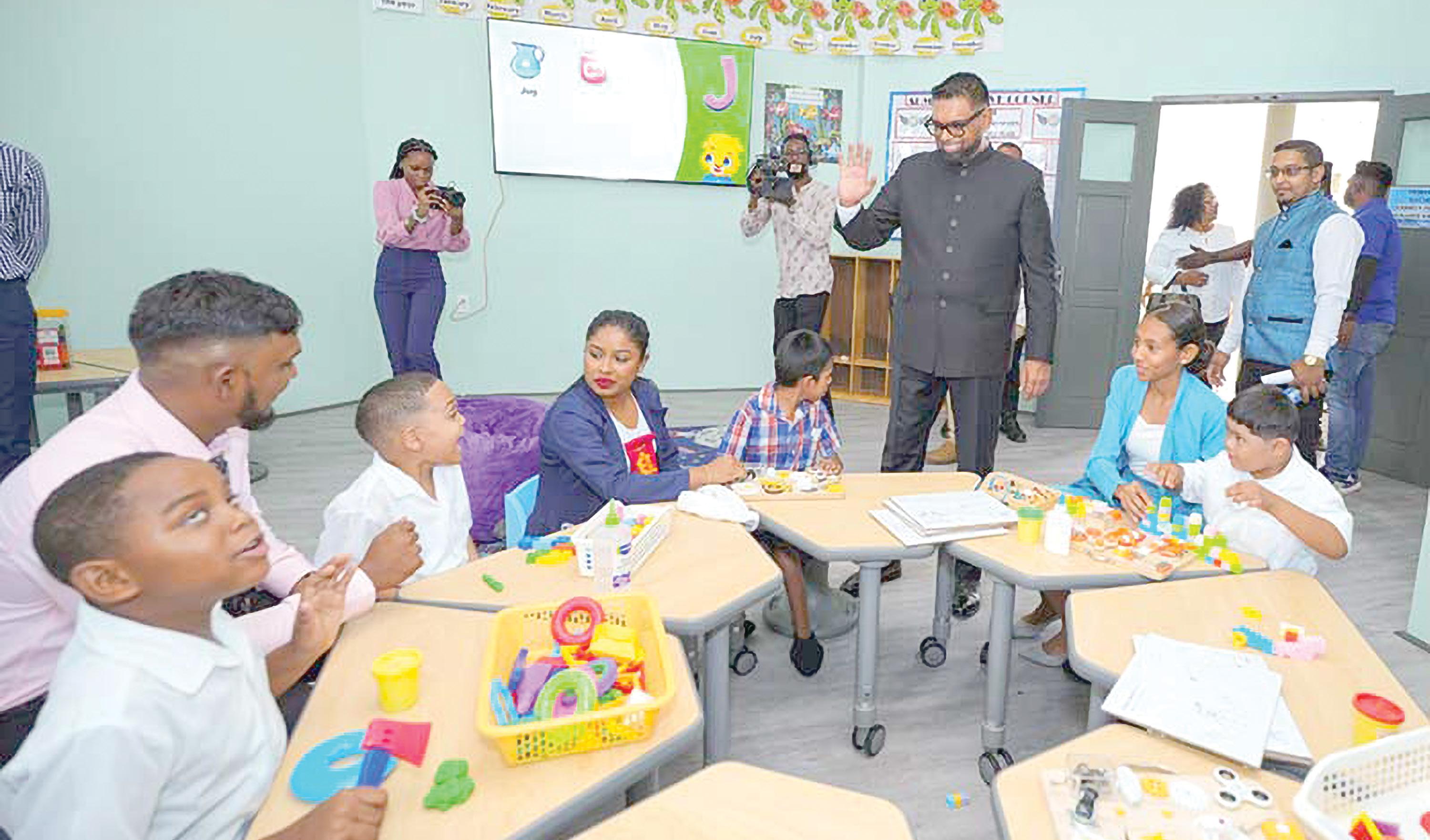
Flashback: President Dr. Irfaan Ali, interacting with leaners at the Exceptional Learners Centre, also known as the Special Education Needs (SEN) Unit, in Region Two
These 2026 initiatives build on the broad support provided in 2025, when the government issued permanent disability benefits to over 26,700 PWDs, raised monthly payments to $22,000, and offered a one-time cash grant
of $50,000 to all registered beneficiaries. Other achievements included the construction of Guyana’s first school for the hearing impaired at Cummings Lodge, the retrofitting of schools and public buildings for accessibility,
and literacy and skills training for 830 PWDs.
Dr. Singh emphasised that the government’s longterm vision is to create a society where disability does not limit opportunity.
He added that inclusion is not charity but empowerment. Investment in education, skills, and entrepreneurship will ensure that PWDs can support themselves, pursue their goals, and actively contribute to national development.

By Shaniya Harding
IN keeping with the 2026 budget theme of “Putting People First,” the government has proposed a $7.5 billion allocation to the Ministry of Amerindian Affairs.
The funding is intended to advance land titling, community development initiatives, low carbon development programmes and livelihood support across hinterland and Indigenous communities.
According to Minister within the Office of the President with Responsibility for Finance, Dr Ashni Singh, the proposed allocation is designed to strengthen village economies, enhance access to social services, expand employment opportunities for Amerindian youth, and support continued investment in education, health and infrastructure.
These priorities, he said, form part of the government’s broader approach to inclusive and sustainable development as outlined during the presentation of the 2026 budget.
Continuing a trend reflected across several government programmes, Minister Singh noted that the allocation s expected to create pathways for sustainable development, both for individuals and Amerindian communities.
Announcing the $7.5 billion provision, he explained that the government intends to focus on developing viable village economies, ensuring food security, building human capacity, and improving the overall quality of social services.
In this context, the minister referenced the reinstatement and expansion of the Amerindian Land Titling Initiative, highlighting its significance to Indigenous land rights and economic security.
He noted that certificates of title were issued to seven villages, benefitting more
than 5,500 individuals who now legally own over 350 square kilometres of village lands.
“We have reinvigorated the Amerindian Land Titling Initiative, which was callously abandoned during the 2015–2020 period when the APNU-AFC was in government. We came back into office, resus-
tration. “We revitalised the CSO Programme after the APNU-AFC terminated the employment of young Amerindian men and women.
We came back into government, resumed the programme, hired CSOs, grew the programme, and we will continue the programme. We have invested substantially in training, education,
programme, under which more than 500 students benefitted in 2025 from an allocation of $80.8 million. For 2026, he indicated that funding is expected to increase to $133.8 million.
Additionally, he referenced the Guyana Online Academy of Learning (GOAL) scholarship programme, noting that 880
Support for village-led economic initiatives is also expected to continue through the Amerindian Development Fund and Presidential Grants.
Minister Singh explained that these mechanisms are intended to as -
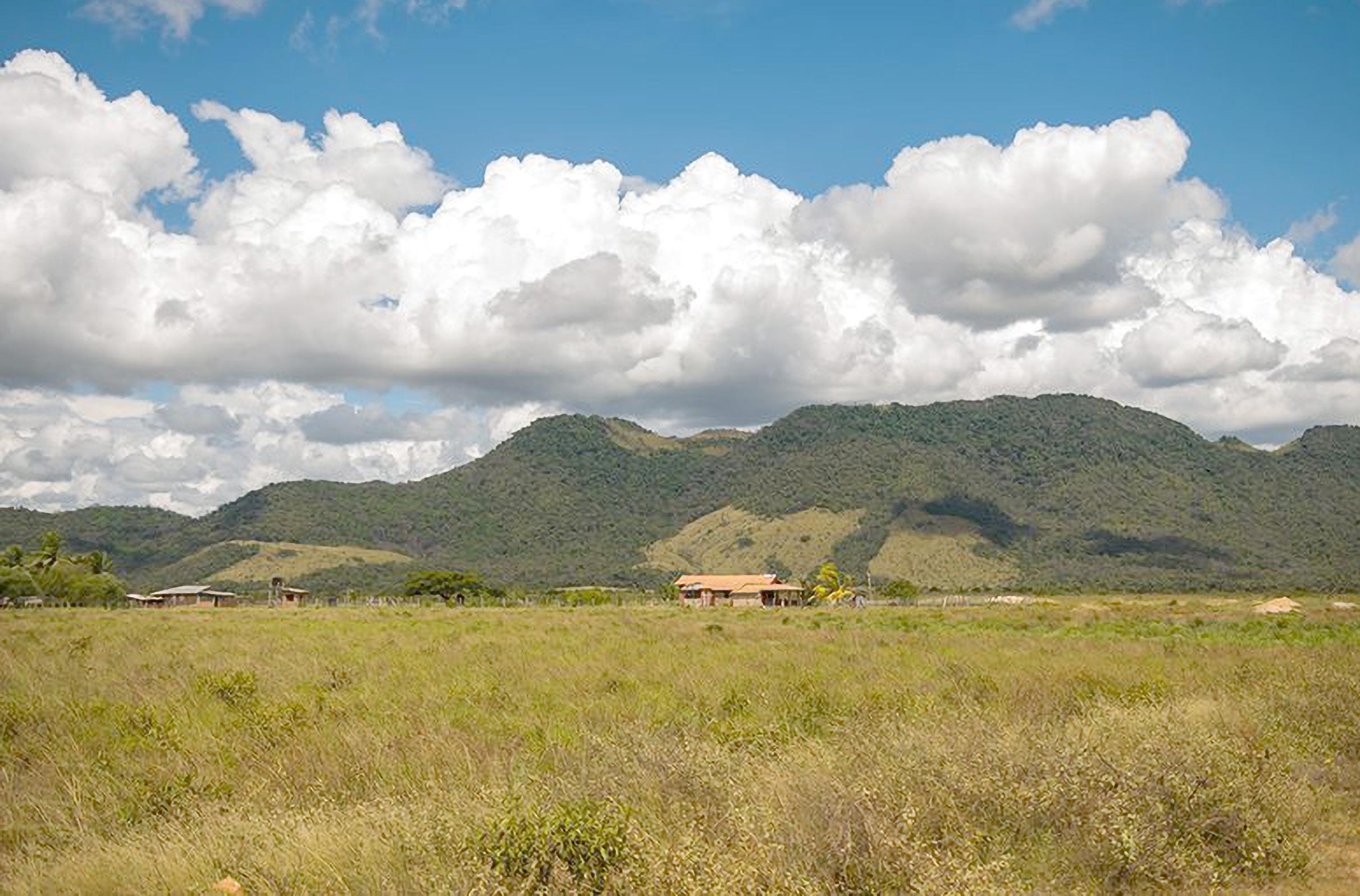
citated the Amerindian Land Titling Programme, and we will be continuing that programme,” Minister Singh said. Turning to the 2026 proposals, he added, “We have budgeted $400 million to continue the Amerindian Land Titling Program in 2026.”
Community Service Officers (CSOs) and youth employment also remain key focus areas under the proposed budget. Addressing this, Minister Singh highlighted the government’s restoration of the CSO programme, which had been discontinued under the previous adminis -
health, and infrastructure,” he said.
Looking ahead, the minister explained that under the CSO programme, direct employment and skills training were provided to approximately 2,700 young Amerindian men and women. While $1.5 billion was expended on the programme in 2025, he noted that the government has budgeted $1.9 billion for its continuation in 2026.
Human resource development through education is also featured in the proposed allocation.
Minister Singh pointed to the hinterland scholarship
students from Amerindian communities received scholarships in 2025. “In 2026, we will provide scholarships to everybody who applies and gets into the program,” he said.
The government, he added, also plans to continue expanding education and health infrastructure in Amerindian communities nationwide. “We are also ramping up the construction of schools, health centres, water distribution centres. We are also supporting the cultural heritage of our Amerindian brothers and sisters, looking forward to celebrating heritage,” he stated.
sist villages in financing projects aimed at building viable and sustainable local economies. “Under the Amerindian Development Fund and Presidential Grants, we provide grants to Amerindian villages to invest in projects aimed at achieving a viable village economy.
In 2025, we provided a total of $5 billion,” he said, adding, “In 2026, we have budgeted another $5 billion to continue that programme.”
He further noted that the government plans to maintain ongoing engagement with Amerindian leaders and communities, including
annual consultations with the National Toshaos Council. “We engage every year with the National Toshaos Council, the elected leaders of the villages, and we look forward to doing so again,” he said. The Low Carbon Development Strategy (LCDS) also remains a central pillar of the government’s approach to hinterland development.
During his presentation, Minister Singh emphasized that Indigenous communities are expected to continue accessing a minimum of 15 per cent of carbon credit revenues to support community-led initiatives outlined in village sustainability plans.
“Under our Low Carbon Development Strategy Programme, our Indigenous communities continue to access a minimum of 15 per cent of carbon credit sales, which they utilise to implement crucial community-led initiatives reflected in village sustainability plans that are developed by the villages themselves,” he said.
He noted that the initiative has made approximately $14.4 billion available to Amerindian communities to date, with $4.8 billion disbursed in 2025 alone. “In 2026, we will be continuing this programme and honouring our commitment of a minimum of 15 per cent of the proceeds.”
Excluding carbon credit transfers, he added that $7.2 billion was spent on Amerindian communities in 2025, while allocations for 2026 are projected at $7.5 billion.
Together, the proposed measures outlined in the 2026 budget signal the government’s intention to deepen investment in Amerindian communities, strengthen local governance and livelihoods, and ensure that hinterland development remains an integral part of Guyana’s broader national growth strategy.
THE Government of Guyana will push forward with its housing development agenda in 2026, budgeting $159.1 billion to increase access to affordable homes, build new communities, and upgrade infrastructure in existing areas.
Senior Minister in the Office of the President with Responsibility for Finance, Dr. Ashni Singh, described the programme as a continuation of the significant growth seen in the housing sector over the past five years. This effort aims to achieve the national goal of homeownership for every Guyanese family.
During his presentation of Budget 2026 to the National Assembly, Dr. Singh noted that the government’s housing initiatives have significantly transformed the Guyanese landscape, especially for low- and middle-income earners.
Over the last five years,
more than 100 new housing areas have been developed, 53,000 house lots allocated, and 2,600 homes built for various income levels.
The Government also introduced several support measures for homeownership. These include removing VAT on locally produced building materials, raising limits on low-income mortgages and housing loans, and the Steel and Cement Subsidy Programme.
In 2025 alone, infrastructure projects were completed in several key areas, such as Black Bush Polder, Success, Felicity, De Kinderen, Hauraruni, Linden, and Mahdia. That year also saw the allocation of 13,000 house lots, construction of over 570 housing units, and the issuance of 5,500 land titles and transfers.
Reflecting on these accomplishments, Dr. Singh stated that the government’s housing policy is shifting
from simply allocating house lots to building complete homes. This change is in response to evolving public needs and aims to speed up homeownership.
For 2026, the government plans to allocate 15,000 new house lots and build 8,000 homes across various regions.
Development will continue in Moleson Creek, Hogstye, Providence, Overwinning, Experiment, Le Ressouvenir, Chateau Margot, Wales, Hoff Van Aurich, Onderneeming, Bartica, Mabaruma, Wismar, Kwakwani, Lethem, and Silica City. More than 7,000 titles and transfers are expected to be issued this year. This will allow property owners to secure collateral for mortgages and obtain legal ownership.
The administration will keep its commitment to special programmes like the Lethem Housing Support Initiative, Laing Avenue
Housing Grant, and the Yarrowkabra Homestead Project.
It will also continue the Steel and Cement Subsidy Programme to assist Guyanese families in affording quality home construction. Building approvals will benefit from the Single-Window Permit System. This system has simplified and digitalised the process for both residential and commercial construction, reducing waiting times and increasing service transparency.
Dr. Singh highlighted that housing development goes hand in hand with improving communities. In 2026, the government will invest in better drainage, recreational facilities, street lighting, and green spaces in established neighborhoods.
Specifically, $8 billion is earmarked for building concrete interlock drains along village roads. New parks and playgrounds will be created
to foster safe, lively communities. Street lighting will be added at main access roads, junctions, and busy areas to enhance public safety and ease movement.
The government also plans to build mini-industrial zones within residential neighborhoods to support small businesses, which will help reduce dust and noise pollution in densely populated areas.
The flagship Silica City project continues to symbolise the future of sustainable, smart housing in Guyana. In 2025, over 200 new residential units were completed in the city’s first phase, including 100 homes for young professionals.
Work will continue in 2026 on infrastructure and other amenities that support the goal of a model urban development based on sustainability, modern planning, and a high quality of life.
Dr. Singh stated that the
development of Silica City represents a shift in the housing sector toward modern planning principles, environmental responsibility, and a focus on people.
He told the Assembly, “Our investments in housing are not just about providing shelter, but about creating safe, thriving communities where citizens can live with dignity, stability, and pride.”
As Guyana’s housing program expands, the 2026 initiatives will take another step toward reducing the backlog of applications outside Region Four, while also creating thousands of new housing opportunities nationwide.
Through ongoing public investment and partnerships with the private sector, the government is committed to achieving the goal of homeownership for all that emphasises inclusivity, affordability, and sustainability.
By Faith Greene
IN line with its commitment to citizen welfare and development, the Government of Guyana has allocated $78.3 billion to the Ministry of Human Services and Social Security to strengthen social services.
Senior Minister with Responsibility for Finance Dr Ashni Singh, in making this disclosure during his 2026 budget presentation on Monday, said protecting, empowering and securing the well-being and dignity of women, children and the elderly rank high on government’s list of priorities.
He stated that the government’s vision is anchored in ensuring that their needs are adequately met, and that their welfare is incorporated in our development processes.
Dr Singh emphasised
the commitment to provide a safe and inclusive space for our children to not only empower them to freely express themselves, but also to engage in meaningful contributions to nation building.
Reflecting on the achievements of 2025, the minister said that the government constructed an Early Childhood Development Centre at Diamond on the East Bank of Demerara, and a Day and Night Care Centre at Anna Catherina, launched a cash grant of $100,000 which will benefit over 13,000 newborns and trained hundreds of individuals in basic and advanced childcare, later assisting them to open their own home-based childcare facility.
“In 2026, the government will continue to provide childcare support and services as follows: We will
-women, children, elders among govt’s highest priorities, Finance
complete the construction of the day and night care facility at Providence. We will commence construction of four additional day and night care centres in regions Two, Five, Six and Ten, for which the sum of $300 million is budgeted. We will co-invest with qualified private individuals to provide childcare services, and of course, we will continue our one-off cash grant for newborns,” he said.
Additionally, the government will continue to train persons to provide basic as well as advanced childcare services, and invest in safe, child-friendly spaces to promote recreational activities for families and communities.
Notably, for this year, the government aims to provide $1.5 billion to support co-investment in child and elderly care facilities on the condition that companies
agree on a capped rate for these services.
Speaking on initiatives that empower women, the minister announced that these will continue.
Government aims to promote entrepreneurial opportunities and essential life skills among women. This includes the facilitation of hundreds of womenowned businesses at the We Lift Expo and the training of thousands of women through the Women’s Innovation and Investment Network (WIIN).
“Our government will continue to promote deliberate policies to improve the welfare of our senior citizens. To this end, in addition to the monthly old age pension, we provided electricity subsidies to more than 31,000 and water subsidies to over 35,000 persons,” he said adding, “More than 8,500 pensioners benefitted
from the National Eye Care Programme, 345 persons received assistive aids, and over 4,900 benefitted from home-based care.”
For this year, the government intends to expand home-based care, increase access to healthcare through telemedicine and mobile health units for rural and underserved areas, and virtual clinics for the elderly. Moreover, Dr. Singh said that the government will also co-invest in elderly care facilities, construct a new senior citizen home, and improve the quality of the care for the current residents of the Palms.
Additionally, government plans to increase old age pension from $41,000 to $46,000 per month. Approximately 95,000 pensioners are set to benefit from this, with an additional $5.7 billion of disposable income being made available to them.
Further, government will introduce an annual Transportation and Support Grant of $20,000 to every Old Age Pensioner, providing an additional injection of $1.9 billion in support.
For persons with disabilities (PWDs), the government will increase Public Assistance from $22,000 to $25,000 per month. This is set to benefit over 46,000 persons, placing an addition of $1.7 billion into the hands of PWDs.
Furthermore, $316.5 million is budgeted to begin the construction of Guyana’s first School for the Autistic at the Cyril Potter College of Education (CPCE). It also caters for the construction of Special Education Needs (SEN) Centres in every region, and a SEN Unit at the Port Kaituma Primary in Region One.
By Shaniya Harding
GUYANA is charting a new course to turn cultural creativity into economic opportunity, Senior Minister in the Office of the President with responsibility for Finance, Ashni Singh, announced on Monday during the presentation of Budget 2026.
While addressing the National Assembly at the Arthur Chung Conference Centre, he revealed that government has earmarked a historic $3.7 billion to strengthen the country’s orange economy.
The allocation will back initiatives ranging from an art gallery and orange economy task force to a state-of-the-art museum and policy engagement with creators. This year, the focus will be on expanding cultural tourism, supporting young artists, and cementing Guyana’s position as a regional leader in creative industries.
Delivering a passionate presentation on Monday afternoon, Minister Singh emphasised the economic potential of the orange economy.
He highlighted the sector not only as a reflection of Guyanese identity but also as a vibrant avenue for investment and growth.

“Guyana’s cultural heritage has defined our identity as a people, has shaped our beliefs, our values, and our emotional connections to this country, our home. But beyond these intangibles, those that derive from the emotional connection, is a vast array of tangible benefits that can be derived from our unique Guyanese heritage and cultural creativity,” he shared. Citing recent investments, Minister Singh noted that the government established a national multi-stakeholder orange economy task force last year. The task force will complete a medium-term strategic plan for the evolving sector, driven by national consultations planned throughout 2026. Highlighting key areas for development, Minister Singh said: “Already eight key areas have been identified as priorities for development - cultural heritage tourism, gastronomy, literary, visual, performing arts, film, fashion, and festivals,” he shared.
The government is also taking a collaborative approach in shaping policy for the orange economy.
“Our government has already, as a matter of policy, engaged hundreds of local artists in national events through the year in our commitment to place culture and the arts at the heart of national development,” Minister Singh said before highlighting the operationalisation of the Port Morant Recording Studio in 2025 and the ongoing construction of three studios in Bayroc, Reliance, and Uitvlugt, which are expected to be completed this year.
“These will provide
support to our incredibly talented young Guyanese to record their own music,” he stressed.
Plans are also in place to advance a state-ofthe-art museum and art gallery, as well as the Palmyra Cultural Market, for which $1.3 billion has been allocated.
Highlighting the impact of connectivity in developing the orange economy, Minister Singh shared that aspiring Guyanese influencers are using the internet connectivity provided by government to create and utilise digital marketplaces, monetising their creative talent.
Looking ahead, he added, “These and other
initiatives will serve to position Guyana as a leader in the Caribbean in the creative and cultural industries by leveraging our rich cultural heritage, our diverse artistic tradition, and our vast talent base to drive our own unique Guyanese orange economy.”
Further, he noted that $3.6 billion was invested in cultural initiatives in 2025. The $3.7 billion now budgeted for 2026 is crucial for the expansion of the sector.
The government’s commitment to the orange economy aligns closely with President Dr Irfaan Ali’s vision of a diversified and resilient national econ -
omy. Strides have already been made in the strengthening of the orange economy’s public presence and engagement. Among major milestones was the transformation of Georgetown’s historic Railway Courtyard into a family-oriented cultural and tourism space.
Across the country, cultural and heritage initiatives drew participation in more than 80 events involving over 500 artistes in 2025, illustrating real momentum in positioning Guyana’s creative industries as both economic drivers and expressions of national identity.
- 3,279 traffic cases recorded last week
THE Guyana Police Force (GPF) Traffic Department recorded more than 3,200 traffic offences in a single week as ranks intensified enforcement and public education efforts amid continued concerns over road safety and reckless driving.
According to official statistics released by the department, a total of 3,279 cases were made for the period January 18 to January 24, 2026, with speeding accounting for the overwhelming majority of offences.
violations (110).
The data show that 1,170 motorists were charged for speeding, underscoring what traffic officials have repeatedly described as one of the leading contributors to serious accidents and road fatalities in Guyana. Other major categories of offences included failure to wear safety helmets (176), leaving a motor vehicle in a dangerous position (120), and seatbelt
Police also recorded 80 cases of carrying a pillion rider without a safety helmet, 73 cases of unlighted motor vehicles at the rear, and 48 cases of unlighted motor vehicles at the front, reflecting ongoing concerns about visibility and motorcycle safety, particularly at nights and in poor weather conditions.
Additionally, 57 unlicensed drivers were charged, while 54 motorists were cited
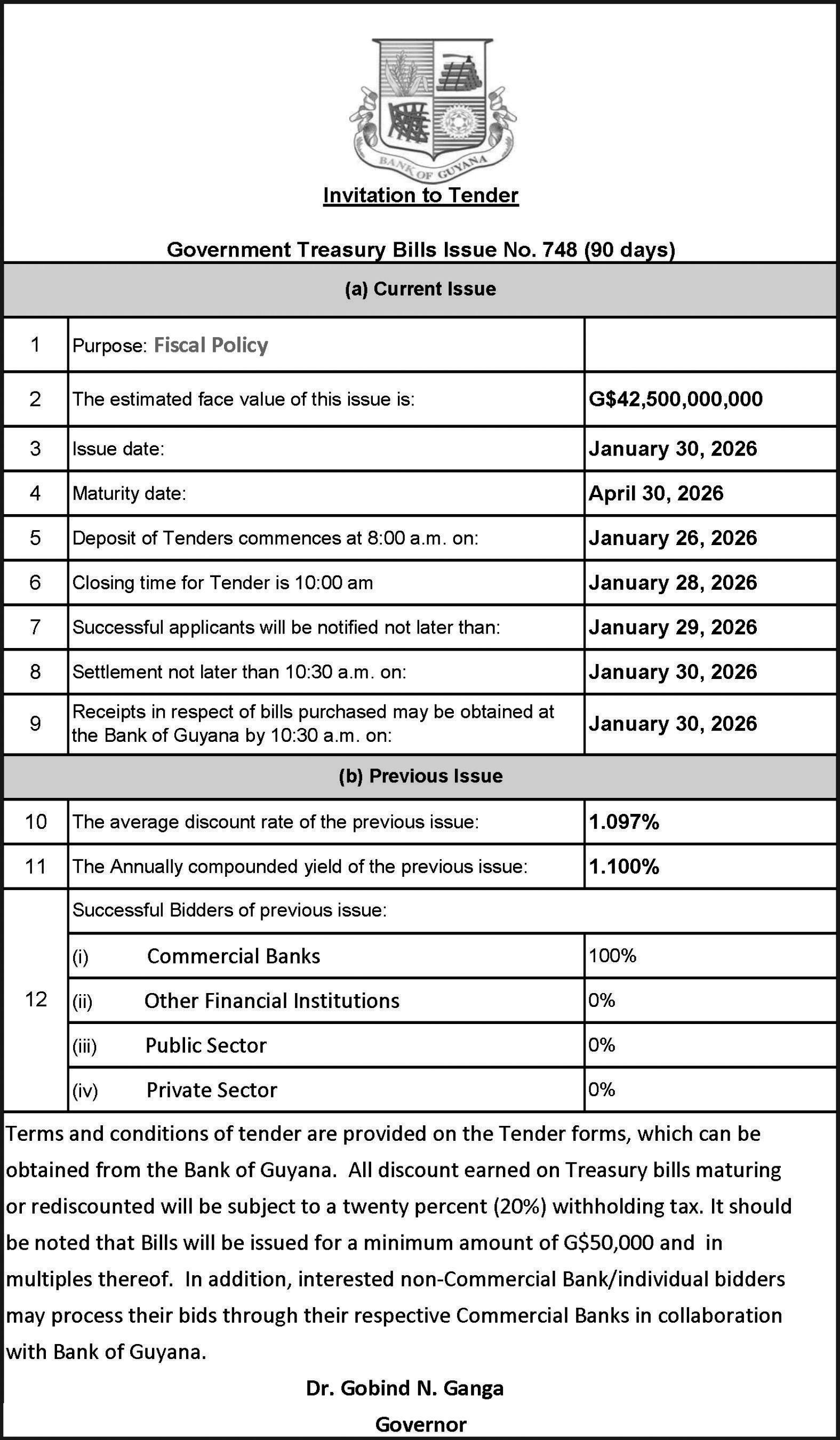
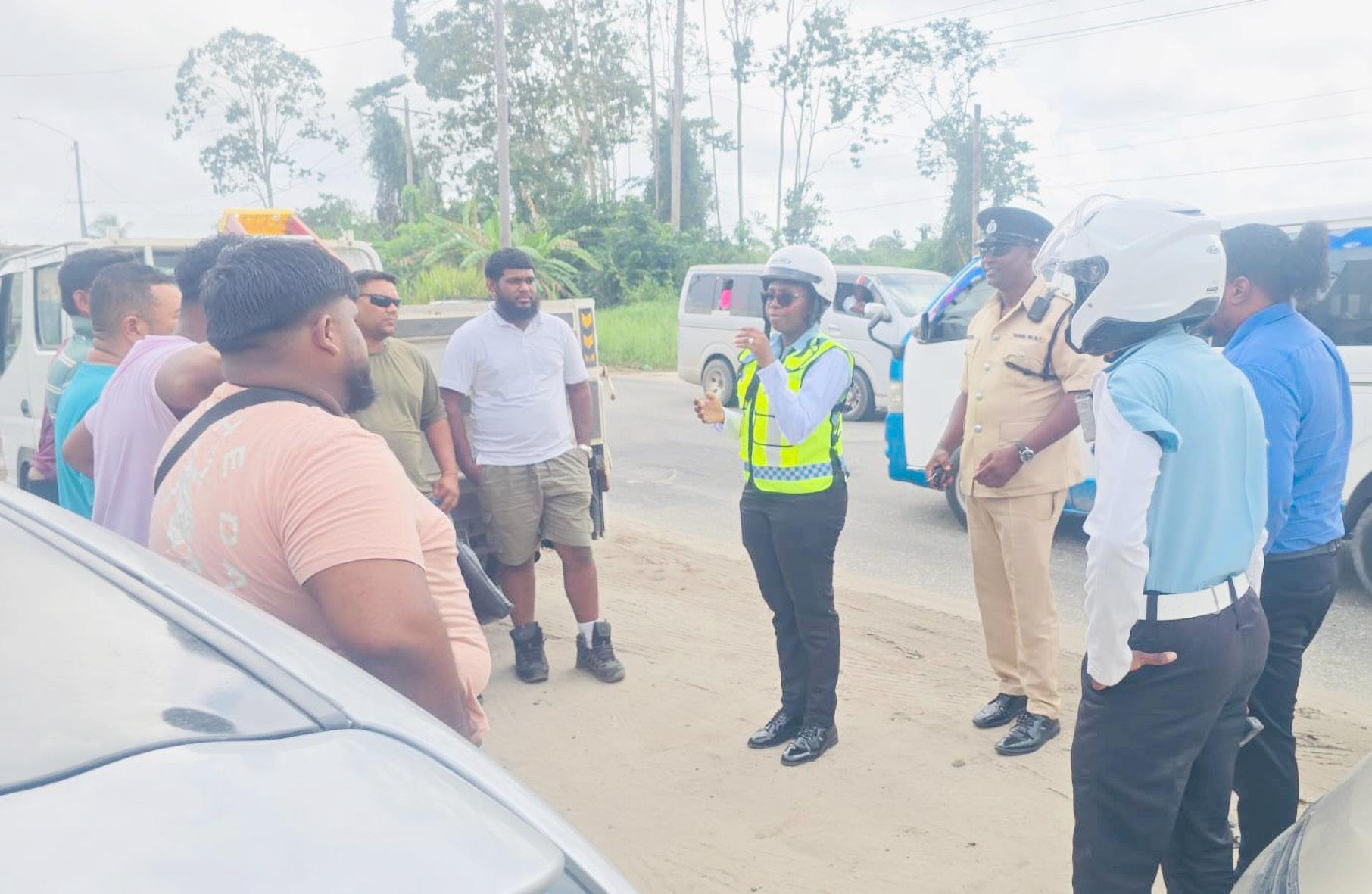
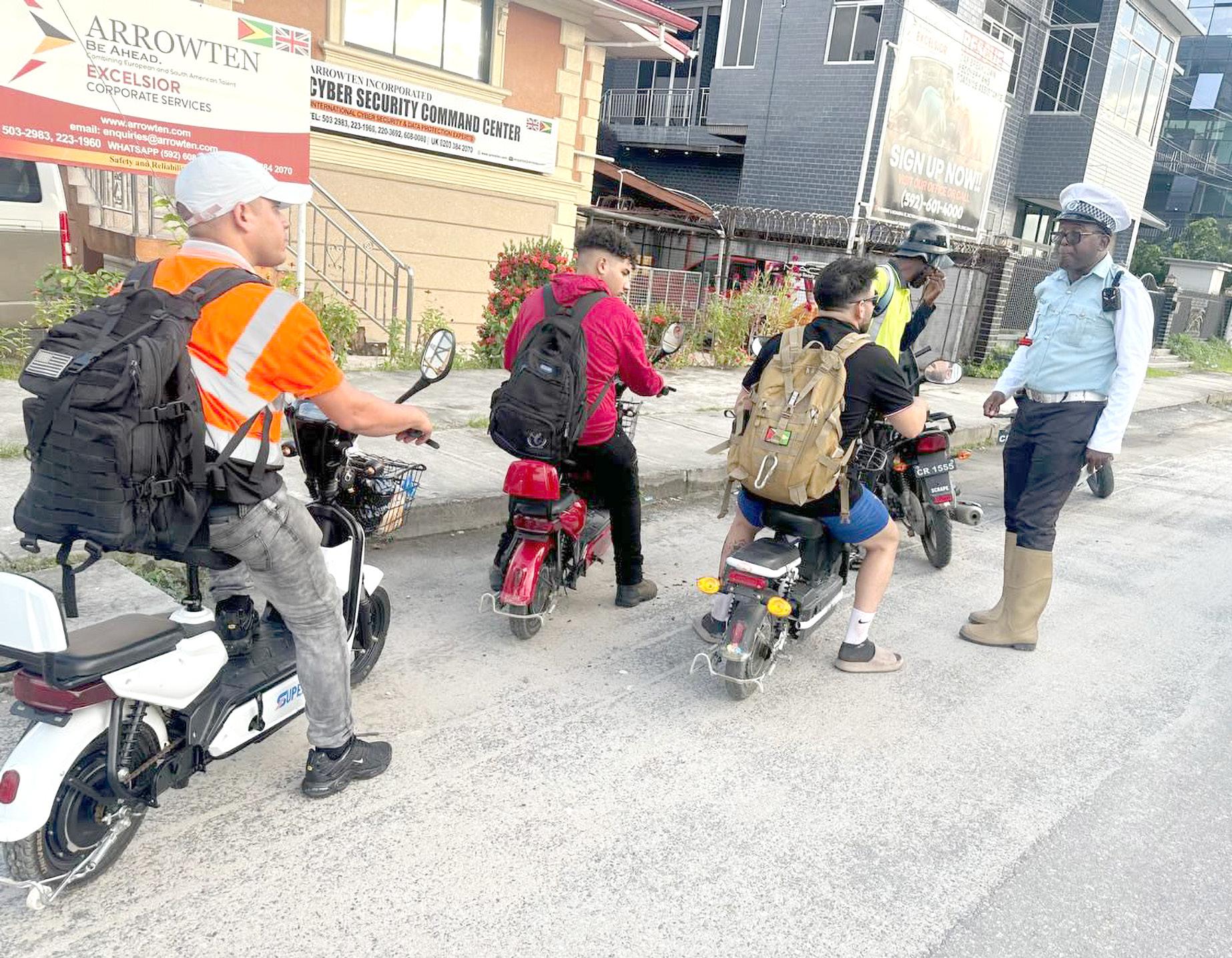
for breach of the conditions of prescribed fitness. There were 36 cases of driving under the influence (DUI), 18 cases of faulty packing, and 16 cases involving tinted motor vehicles. Only four cases were recorded for breach of traffic light signals during the period.
The latest figures come against the backdrop of persistent national concern over traffic accidents, many of which have been linked to speeding, alcohol use, and disregard for basic safety rules such as wearing helmets and seatbelts. Authorities have repeatedly warned that enforcement will remain robust as part of the government’s broader push to improve road safety and reduce fatalities.
In parallel with enforcement, the Traffic Department also ramped up its public education and outreach activities during the same period.
Between Monday, January 19 and Friday, January 23, traffic ranks conducted road safety lectures at 11 schools across several regions, including Yarakita, Waramurie, Koberimo, Matthews Ridge, Mocha Arcadia, Sheet Anchor, Tuschen, and the 8th of May Primary, among others. These sessions targeted nursery and primary school learners, focusing on basic road safety awareness and responsible behaviour as pedestrians and passengers.
For the wider public, the department carried out an extensive programme of community outreaches, en-

gagements with drivers, visits to bars, and media interventions from Sunday, January 18 to Saturday, January 24. These activities covered more than 40 locations nationwide, including communities such as Mabaruma, Matthew’s Ridge, Craig, Mocha, Eccles, Providence, Parika, Vreeden-Hoop, Tuschen, Leonora, Linden, New Amsterdam, and several areas in Georgetown and along the East Bank and East Coast corridors. The outreach also included a programme on Radio Essequibo 95.5 FM.
Senior police officials have said the dual approach of strict enforcement and sustained public education is critical to changing roaduser behaviour, particularly among motorcyclists and minibus operators, who continue to feature prominently in accident statistics.
The Traffic Department has urged motorists and other roadusers to obey the law, drive responsibly, and treat road safety as a shared national responsibility, warning that the current level of enforcement will be maintained in the coming weeks.
among education priorities for 2026 with planned injection of $183.6B
THE Government of Guyana has allocated $183.6 billion in Budget 2026 to continue modernising the education system, with a strong emphasis on expanding access, improving quality, and aligning learning to the demands of a rapidly changing economy.
Senior Minister in the Office of the President with Responsibility for Finance, Dr. Ashni Singh, made the announcement during his presentation of Budget 2026, noting that education remains a central pillar of Guyana’s national development strategy.
schools countrywide.
The government’s focus on teacher education continues, with the Cyril Potter College of Education (CPCE) having trained more than 5,000 teachers over the past five years, raising the percentage of trained teachers from 69 per cent in 2021 to 86 per cent in 2025.
In 2026, further emphasis will be placed on training teachers in mathematics, science, and music, areas critical to developing a well-rounded and competitive education system.
To enhance learning quality, $2.3 billion is budgeted
The government will also continue major welfare and equity programmes, with $7 billion dedicated to the National School Feeding Programme, providing nutritious meals to more than 110,000 nursery and primary school students, as well as 4,600 secondary students in hinterland and riverain areas.
The Because We Care cash grant and uniform assistance will also continue in 2026, providing $55,000 per child, at a total cost of
Dr. Singh said the government’s goal is to ensure that “every single Guyanese child has access to worldclass education to prepare them for adulthood, and every adult has the opportunity to upskill or reskill themselves”.
Over the next year, investments will target physical infrastructure, teacher education, digital access, and curriculum enrichment, all aimed at empowering citizens to take advantage of emerging economic opportunities.
A total of $24.3 billion is earmarked for the completion of over 40 new schools, including Falls Top and Kanapang nursery schools, Cracrana and Diamond No. 2 primary schools, and Karaudarnau and Kwebanna secondary schools.
Works will also advance on student dormitories at Jawalla, North West, Port Kaituma, Santa Rosa, and Waramadong, to improve educational access for hinterland students. The budget also includes funds for continuous rehabilitation and maintenance of existing
for the procurement of new textbooks and reading materials, ensuring that every student at the nursery, primary, and secondary levels has access to required texts. Additionally, $3.1 billion has been allocated for school grants so that teachers have resources to purchase classroom supplies directly.
Digital access and inclusion remain top priorities. Through the Guyana Learning Channel, more than 200 schools countrywide have received televisions, solar panels, and satellite equipment under the Hinterland and Riverain Television Project. Building on this success, the Guyana Digital School, launched in December 2025, is expanding rapidly—over 22,000 students have already registered, and by March 2026, all secondary grades will have access to the platform.
This initiative, with $176 million allocated for continued operations, is revolutionising free access to digital learning content across Guyana and the wider CARICOM Region.
billion for an unlimited number of scholarships, ensuring that all eligible Guyanese can pursue tertiary studies. In parallel, over 490 public servants have enrolled in professional upskilling courses through the Public Service Upskilling Platform launched in partnership with Coursera. In technical and vocational education, $2.5 billion is allocated to expand TVET programmes, while $723 million will support the Board of Industrial Training
(BIT) in training over 2,000 more people in trades such as welding, plumbing, and electrical installation.
Further, a new practical instructional centre will be built at Mahdia in 2026, complementing the recently completed Guyana Technical Training College at Port Mourant, which trains workers for the oil and gas sector.
Minister Singh said these investments reflect government’s unwavering commitment to building a modern,
inclusive, and technologically empowered education system.
With targeted spending across all levels— from nursery to tertiary, from traditional classrooms to digital learning—the 2026 education programme seeks to equip every Guyanese, regardless of geography or background, with the skills and knowledge to thrive in the country’s fast-growing economy.
approximately $11.7 billion. Additionally, the government will maintain full coverage for up to eight CSEC and CAPE subjects for all students, both public and private, building on last year’s $290.7 million in reimbursements.
At the tertiary level, the government will continue its UG loan write-off programme, having already relieved more than 4,000 borrowers of over $3 billion in debt. Enrolment at the University of Guyana has surged to 26,000 students, compared with 17,800 the previous year, driven in part by the removal of tuition fees.
To meet rising demand for skilled professionals, the government is expanding medicine and engineering programmes in Regions Two, Three, and Six, at a cost of $1 billion, while UG’s total 2026 allocation stands at $14.5 billion.
Access to higher learning continues to widen through the Guyana Online Academy of Learning (GOAL), which granted 10,805 scholarships in 2025. This year, the government has committed $5.8
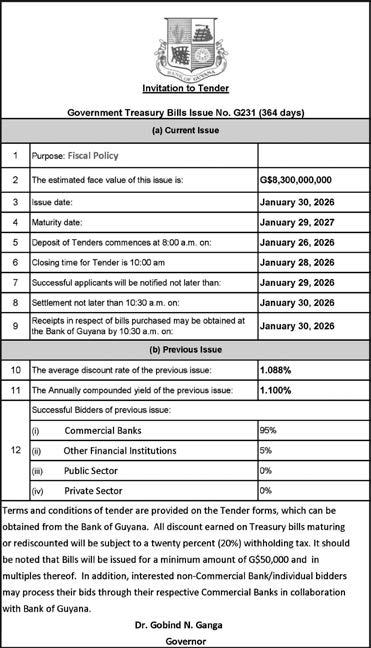


JANNIK Sinner looked rejuvenated as he sailed into the quarter-finals of the Australian Open with an assured victory over fellow Italian Luciano Darderi.
Defending champion Sinner said he was "lucky" to still be competing in Melbourne after he battled 40C heat and cramps in a testing third-round match.
Only coming off court and having the roof pulled over saved Sinner from a shock defeat by American world number 85, Eliot Spizzirri, on Saturday.
But the second seed looked fresher against an injury-hampered Darderi as he surged through the opening two sets, dropping just four games.
There were still some signs of fatigue, as Sinner appeared to fade late in the third set when Darderi put up more resistance to force a tie-break.
But the four-time major winner managed to up his level to secure a 6-1 6-3 7-6

(7-2) win - his 18th successive victory at Melbourne Park.
"It was very, very difficult. We are good friends off the court," Sinner said.
"In the third set I had couple of break chances; I couldn't use them and then I got very, very tight. So I'm happy that I closed it in three sets.”
Sinner, 24, will face American eighth seed, Ben Shelton, in the last eight.
The Italian is bidding
(From page 26)
ing, dejectedly departed for 24 when all-rounder Hardie reviewed for lbw.
Fortunate to survive three missed run outs in the space of five balls, skipper Moises Henriques was caught for 24 off the medium pace of manof-the-match Payne, who ended with 3-18.
Fast bowler Mahli Beardman, on the cusp of international selection, closed out the innings with two wickets and a run out in the final

to become just the second man after Novak Djokovic to win three successive Australian Open titles.
It took him just 27 minutes to wrap up the first set, having stormed ahead 5-0 before Darderi got on the board.
The 22nd seed, who seemed to struggle with a thigh injury, became increasingly frustrated in the second set and whacked a ball away as Sinner's mo -

ENGLISH RACING TIPS
CHEPSTOW
09:00 hrs Crossbeau 09:30 hrs Senator 10:02 hrs Grenadier 10:37 hrs Juby Ball
11:12 hrs Clondaw Park 11:47 hrs Fat Faced Colunbo
12:22 hrs Big John Ollie
NEWCASTLE
08:45 hrs I C U In My Dreams
09:20 hrs Le Beau Madrik
over.
"It hurts. We really wanted to come over here and keep this Perth crowd relatively quiet. Unfortunately we weren't good enough to do that tonight," Henriques said.
The Australia squad will fly to Pakistan for three 20-over matches in preparation for their first T20 World Cup fixture against Ireland in Colombo on February 11.

mentum continued to grow.
Having gone through the first and second set without a single break point, Darderi had four chances late in the third to strike a crucial blow to Sinner's hopes of an early finish.
But Sinner fended them off and it was plain sailing through the tiebreak for the defending champion, who finished with 19 aces and 46 winners. (BBC Sport)
16:00 hrs Son Of Astar 16:30 hrs Street Life
IRISH RACING TIPS LIMERICK 09:10 hrs Cafe Con Leche 09:40 hrs Without Exception 10:14 hrs Saveforarainyday 10:49 hrs Laurets D'estruval 11:24 hrs Big Dee 11:59 hrs Lenjoleur De Palma 12:33
09:50 hrs Spadestep 10:25 hrs Kalo Athena 11:00 hrs Pitwood Road 11:35 hrs If Not For Dylan 12:10 hrs Velvet Vulcan
WOLVERHAMPTON
12:28 hrs Homme De Fer
13:00 hrs Bandello 13:30 hrs Horwich 14:00 hrs Midnighh Call 14:30 hrs Himself 15:00 hrs Calabrian Soldato 15:30 hes Leeson Street
(Tuesday, January 27, 2026)
COMPLIMENTS OF CUMMINGS ELECTRICAL COMPANY LTD 83 Garnett Street, Campbellville, Georgetown (Tel: 225-6158)
Answers to yesterday’s quiz: (1) Ben Mayes-288 runs (3M)
(2) Manny Lumsden & Ralphie Albert-6 wickets
Today’s Quiz: (1) Which PAK batsman scored most runs in the preliminary stage of the current Under-19 World Cup? (2) Which PAK bowler claimed most wickets? Answers in tomorrow’s issue
Quickley scored 23 points, including a pair of critical 3-pointers in the final two minutes, to lift the Toronto Raptors to a 103-101 road win over the Oklahoma City Thunder on Sunday.
The game was nip-andtuck throughout, with no team leading by more than seven the entire way.
With just less than two minutes remaining and the Raptors trailing by two, Quickley hit 3-pointers on successive possessions to give Toronto a 101-97 lead with 1:16 remaining.
The Thunder cut into the lead with Chet Holmgren's putback of a Kenrich Williams missed 3-pointer with 57.2 seconds left and had a chance to tie or take the lead in the final minute af -
ter Luguentz Dort grabbed the rebound off Brandon Ingram's miss.
But coming out of a timeout, the Raptors' Scottie Barnes blocked Holmgren's 7-foot jumper and grabbed the rebound.
Quickley hit a pair of free throws to make it a two-possession game, and though Isaiah Joe drained a 23-footer just before the buzzer, it wasn't enough to keep Oklahoma City from its second consecutive loss.
Toronto has won four consecutive games.
RJ Barrett added 14 points and Ingram 13 for the Raptors. Barnes had 10 points, 11 rebounds, eight assists and three blocks.
Shai Gilgeous-Alexander led the Thunder with 24 points, though just three
came in the fourth quarter.
Gilgeous-Alexander, who came into the game second in NBA history with 116 consecutive games with 20 or more points, didn't cross into double digits in scoring until nearly midway through the third quarter.
But it didn't take long for Gilgeous-Alexander to extend his streak, scoring 12 in the final six-plus minutes of the quarter to move him within 10 games of breaking Wilt Chamberlain's NBA record for consecutive 20-point games.
The reigning NBA Most Valuable Player hit all five of his shots in the quarter to give the Thunder an 81-79 lead heading into the fourth.
After a 30-point first quarter, Oklahoma City found it much more difficult
A "Baggy Green" cap worn by Don Bradman during a series against India in 1947-48 was sold for $460,000 at a Gold Coast auction on Monday, fetching the highest price for a cap sported by the great Australian batsman.
Bradman had gifted it to Indian cricketer Sriranga Wasudev Sohoni, whose family preserved it for the last 75 years.
The Reuters Inside Track newsletter is your essential guide to the biggest events in global sport.
"That’s over three generations under lock and key. If you were a family member you were only al-
lowed to look at it when you were 16 years old for five minutes,” said Lee Hames, the chief operating officer of Lloyds Auctioneers and Valuers.
The cap was sold to an anonymous bidder and will be kept on display at an Australian museum, local media reported.
The cap, which has the names "D.G. Bradman" and "S.W. Sohoni" inscribed on the inside, is in good condition. Another cap worn by Bradman was sun-faded and insect-damaged when it fetched $311,000 at auction in 2024.
Widely regarded as the greatest batsman in

Don Bradman's Test average of 99.94 is more than 37 higher than the next best in the format
history, Bradman played 52 tests with a batting average of 99.94, nearly 40 runs higher than any other player. (Reuters)
From thereon, it was just a case of damage control. De Klerk and Ghosh arrested the slide for a while before Amelia Kerr broke the partnership. Ghosh curbed her natural instincts at the start of her innings and focused on spending more time out in the middle before launching herself right at the end. When RCB needed
an almost improbable 71 off 18 balls with just two wickets in hand, Ghosh hammered a six to bring up a fifty. But when the equation came down to 59 off 12, she suddenly gave the game a bit of a spark by clearing the ropes thrice in a row before Shreyanka closed out the over with two fours. Having knocked off 27 runs

to score in the second.
The Raptors closed the half on a 9-1 run as the Thunder didn't hit a field
(From page 26)
in the penultimate over off Amanjot Kaur, there was a slight flutter when Ghosh kickstarted the final over with another boundary. But with 28 needed off 5, Kerr bowled a dot to effectively seal the game. Ghosh went on to hit a couple of more sixes before getting dismissed off the last ball.
(Cricbuzz)
goal in the final 3:20 before the break.
Outside of Dort, who hit both of his shots in
the quarter, the Thunder were just 4 of 15 from the field in the second. (Reuters)
ENGLAND made a strong start to the Super six stage with a dominant bowling performance leading to a crushing win over Bangladesh at the Queens Sports Club.
Bangladesh, who opted to bat, was restricted to a meagre 136 with every English bowler ticking the wickets column. The target was then chased down inside 25 overs, courtesy of captain Thomas Rew's unbeaten half century.
Bangladesh's struggles began as early as the third ball when Sebastian Morgan dismissed Zawad Abrar after the latter had struck the opening ball of the game for a four. The pair of Rifat

Thomas Rew celebrates the player of the match award
Beg and Mohammad Azizul Hakim Tamim then stitched on a 46-run stand off 64 balls for the second wicket but once Beg fell for a 36-ball
31, Bangladesh slipped into a free fall. The next highest partnership was 18 and only one other batter - Mohammad Abdullah - even crossed 20. For England, Morgan finished with 3 for 28 while Ralphie Albert and Manny Lumsden claimed a brace. England too lost an opener - Joseph Moores - early but Ben Dawkins managed five boundaries in his knock of 26. Rew then joined Ben Mayes to put on 78 off just 68 for the third wicket, all but closing the game out. Mayes fell for 34 but the skipper held firm to finish unbeaten on 59 off 50 balls to take his team over the line. (Cricbuzz)
ghanistan series due to SA20 commitments.
Alzarri Joseph’s absence with a hamstring strain is a significant blow to the pace attack, with Shamar Joseph, Jayden Seales, and Romario Shepherd expected to share the fast-bowling duties.
The series against the Proteas offers a final chance to fine-tune combinations before the World Cup opener.
(From back page)
After Paarl, the teams meet in Centurion (January 29) and Johannesburg (January 31).
Seven days later, the West Indies begin their World Cup campaign in Kolkata against Scotland on February 8, followed by key clashes against England (February 11), Nepal (February 15), and Italy (February 19).
Roston
Matthew Forde, Shimron Hetmyer, Jason Holder, Akeal Hosein, Shamar Joseph, Brandon King, Gudakesh Motie, Rovman Powell, Sherfane Rutherford, Quentin Sampson, Jayden Seales, Romario Shepherd.
A DECISION on whether Pakistan will boycott next month's men's T20 World Cup is set to be made by early next week.
Pakistan Cricket Board (PCB) chair, Mohsin Naqvi, held talks with the country's prime minister, Shahbaz Sharif, on Monday, to discuss their participation in light of Bangladesh's withdrawal.
The International Cricket Council (ICC) replaced Bangladesh with Scotland on Saturday for the tournament, which is being co-hosted by India and Sri Lanka between February 7 and March 8.
Naqvi said in a post on X, external he had "a productive meeting" with Sharif where he "briefed him on the ICC matter".
"He [Sharif] directed that we resolve it while
keeping all options on the table," Naqvi said.
"It was agreed that the final decision will be taken either on Friday or next Monday."
BBC Sport understands that, in addition to a full boycott of the tournament, Pakistan officials are considering just boycotting their match against India.
Pakistan is due to play India at the T20 World Cup in Colombo, Sri Lanka, on February 15 in accordance with an agreement signed last year saying the two countries will play at neutral venues whenever one of them hosts an ICC event.
Political tensions mean the two countries have not faced each other outside men's major tournaments since 2013, while India has not played in Pakistan since 2008.
The ICC has been approached for comment.
Pakistan's response comes after the Bangladesh Cricket Board (BCB) had asked for their World Cup fixtures to be switched from India citing safety concerns.
There has been growing tensions between the countries and Bangladesh requested their games were played in Sri Lanka, which is co-hosting the tournament, instead.
The ICC rejected Bangladesh's request, saying there was an "absence of any credible security threat" before the BCB reaffirmed its position.
BBC Sport understands Pakistan supported Bangladesh's position in an emergency ICC board meeting held last Wednesday. In a statement released last Saturday, in which they

PERTH, (Reuters) -
PERTH Scorchers raced to their sixth Big Bash League title on Sunday with an emphatic six-wicket victory over Sydney Sixers in the final at Perth Stadium.
Earning hosting rights after crushing the Sixers in a qualifier last week, the Scorchers fielded first and bowled their six-time Grand Final rivals out for a paltry 132 in 20 overs as pacemen David Payne and Jhye Richardson combined for six wickets.
With 15 balls remaining in their reply, the hosts reached 133-4 anchored by a 43-ball 44 from Mitch Marsh.
"It feels like a weight has been lifted off our shoulders. We have high expectations, and to be able to deliver on those expectations is really satisfying," Scorchers captain Ashton Turner said.
The table-topping Scorchers started their chase in audacious fashion when Marsh, Australia's T20 captain, pulled the first ball for six.
His opening partner Finn Allen, the season's top run-scorer with 466, got the better of quick Mitchell Starc in a 19-run fourth over, bringing the crowd to their feet with a scooped six into

announced the decision to replace Bangladesh with Scotland, the ICC said it had "engaged with the BCB through multiple rounds of dialogue conducted in a transparent and constructive manner".
"In light of these findings, and after careful con-
sideration of the broader implications, the ICC determined that it was not appropriate to amend the published event schedule," the ICC statement added.
The ICC also said it was keen not to establish "precedents that could undermine the neutrality and fairness
of ICC events".
This month, the Board of Control for
in India told Indian
League (IPL) franchise Kolkata Knight Riders to drop Bangladesh cricketer Mustafizur Rahman because of political tensions.
(BBC Sport)
win ...Hayley Matthews stars with bat and ball
NAT Sciver Brunt (100* off 57) ended the WPL's long wait for a century with a blistering knock that helped Mumbai Indians beat Royal Challengers Bengaluru in Vadodara and move up to second spot in the table.
Sciver-Brunt's unbeaten 100 headlined MI's dominant performance with the bat as they made 199 for 4 - the highest total so far in the Vadodara leg of the tournament. She was well accompanied by Hayley Matthews (56 off 39 and 3 for 10 in two overs).

the second tier.
With rain threatening, the Scorchers powered ahead at nearly 10 an over until a spectacular one-handed catch by Jack Edwards off Starc dismissed Allen for 36.
Seamer Sean Abbott accounted for Aaron Hardie (five) and Marsh, but Josh Inglis (29 not out) saw the Scorchers over the line with a majestic six over long-off.
Earlier, the Perth crowd of 55,018 roared in delight when Sixers' drawcard Steve Smith, who averaged 60 in the tournament at a strike rate of 168 yet finds himself out of T20 World Cup reckon-
(Turn to page 24)
In reply, RCB suffered a collapse that saw them lose half their side inside the PowerPlay before eventually falling short only by 15 runs thanks to a stunning 90 from Richa Ghosh.
Lauren Bell gave RCB the ideal start with an early wicket yet again, with that of Sajeevan Sajana, and they did keep things tight by conceding just 38 runs in the PowerPlay. Sciver-Brunt and Hayley Matthews took time to get going but once they did, the boundaries started flowing. MI raced to 76 at the halfway mark despite the sedate powerplay but the real
Nat Sciver-Brunt celebrates her century
carnage was yet to begin.
Sciver-Brunt took on Nadine de Klerk for a six and a four before targeting Shreyanka Patil for a hat-trick of boundaries to bring up her fifty.
The English batter put on a show by adding three more fours in the very next over off Radha Yadav before Matthews joined the party by bringing up her own half-century. RCB needed Bell to come back and break the 131-run partnership in her final over but it hardly
made a difference as the flow of boundaries just didn't stop.
In the process, Sciver-Brunt also became the first batter to score over 300 runs in a WPL season on three different occasions (2023, 2025 and 2026). She closed out the penultimate over with another boundary to move to 99 before finally becoming the first player to register a century in the competition, ending the long drought.
In the chase, Sciver-Brunt conceded a hattrick of boundaries to Grace Harris to allow RCB knock off 20 runs in just the opening two overs. But any hopes of hunting down 200 went down real quick post that as the MI bowlers ripped through the RCB batting lineup. Shabnim Ismail kickstarted the slide with Harris' wicket before Matthews bagged the big wicket of Smriti Mandhana and Georgia Voll in the same over. More misery was in store when Ismail knocked over Gautami Naik's stumps which was immediately followed by Matthews striking for the third time to leave RCB reeling at 35 for 5.
(Turn to page 25)
JOCKEY Ronaldo Appadu is keen on making his international licence count on the big day of the racing, the Guyana Cup on August 23.
Before he captures that crown, Appadu is hoping to deliver the goods on Sunday February 1 at the Banks Classic at Port Mourant Turf Club.
For Appadu, it is a surreal feeling to be in the history books as the first batch to have an international jockey licence.
“It was nice going out there. It feels really good (to be part of history, first set of International-licensed jockeys). I want to thank Jumbo Jet Racing stables and Js Racing stables for the opportunity to get me out there,” Appadu said.
The next race day is under
one week, and Appadu is feeling upbeat about preparation.
“Preparation is going good so far. We are getting up early to work and, so far, it’s good. The track is in very good condition so no complaints,” he said. The February 1 race will be the second for the year, and Appadu is aiming for more success throughout this year.
“Last year was a good year. But I am working harder to be on top. If a trainer sees you ride they can send a letter and I am permitted to ride in any other country. So I will make full use of the licence,” the young Guyanese said.
Ten races are on the cards for February 1, and approximately $15 million will be up for grabs. The top horse in the feature one-mile event will be rewarded $2 million.
Other races on the provisional card include the Sprint Classic Open, the F Class and Lower open to E Class non-winners in their last start, four-year-old imported maidens in Guyana, three-year-old Guyana-bred non-winners of two races, L Class maidens open to first-time starters, G Class and Lower open to F Class non-winners in their last three starts, I Class and Lower open to West Indian-bred non-winners in their last two starts classified to H Class, J3 and Lower, L Class Open, and L Class non-earners for 2025 and 2026.
Horses will not be able to race without an entry form.
Earlier this week, the Guyana Cup Committee officially released the 2026 Guyana Cup Nomination Series, covering the Guyana Cup (Mile), Guyana Cup Sprint, and Guy-
CASTRIES, Saint Lucia, (CMC) – IN a glittering ceremony that celebrated past glory and future promise, the Saint Lucia Athletics Association (SLAA) once again bestowed its highest honour upon sprint sensation, Julien Alfred, naming her the Female Athlete of the Year for 2025. She shares the spotlight with quarter-miler Marvric Pamphile, who claimed the male title.
Held under the resonant theme, “A Legacy of Performance, A Future of Possibilities,” the association’s annual awards gala, on January 24 at the Daren Sammy Cricket Ground, honoured the pillars of the sport, from the athletes on the track to the coaches, administrators, and technical officials behind the scenes.
The evening’s top honours were never in doubt. Alfred, the 2024 Olympic 100 meter champion and World champion bronze medalist last year, reinforced her status as a national sporting icon.
Pamphile’s consistent

award.
Juvenile stars, Avery Maryat and Hadassah Jules, were also celebrated for their outstanding yearly performances.
Beyond the track, the SLAA recognised the architects of success. Denise Herman of Choiseul Athletics was hailed as Coach of the Year.
A special Coach Dedication Award was presented to Finley Louis of the Abilene Wildcats for two decades of unwavering service.
ana-Bred Derby.
Three races, four nomination days for the Guyana Cup, and one championship season.
The nomination days are February 1, 2026, at Port Mourant Turf Club; April 5, 2026, at Port Mourant Turf Club; May 3, 2026, at Bush Lot United Turf Club; and July 5, 2026, at Port Mourant Turf Club (final nomination day).
The most stable of late has been Jumbo Jet Racing Stables, which is also arguably Guyana’s most established stable. JS Racing Stable has surpassed the underdog expectations and has solidified itself as one of Guyana’s best stables, while Slingerz Racing Stables will be put to the test to regain their glory as champion stables.
dominance in the 400m earned him equal acclaim, marking a brilliant year for Saint Lucia’s elite athletes.
The future looks equally bright, as evidenced by the Junior Athletes of the Year.
Double CARIFTA sprint champion, Jady Emmanuel, sprinted to the female junior crown, while record-breaking thrower, Denzel Phillips, launched his way to the male
In a fitting transition from champion athlete to sporting steward, former Athlete and Sportswoman of the Year, Makeba Alcide, received the Administrator of the Year award.
The prestigious event was attended by Minister for Youth Development, Sports, and Digital Transformation, Kenson Casimir, alongside dignitaries from the Saint Lucia Olympic Committee, the National Lotteries Authority, and the athletic community’s devoted families.
A jubilant Courtney Walsh celebrates the narrowest of victories (Getty Images)
A SENSATIONAL finish in Adelaide, in which West Indies kept alive their 13year unbeaten run in Test series with a one-run victory over Australia - a margin that stood as the record for 30 years until New Zealand equalled it in their win over England in Wellington.
With the Aussies chasing 186, it looked all over at 74 for 7, and then - after a steadfast 54 from the debutant Justin Langer - at 144 for 9, but Tim May (42 not out) almost became a national hero in his first Test for four years.
As record numbers watched on TV and the
strains of "Waltzing Matilda" enveloped the ground, Craig McDermott was given out caught behind off Courtney Walsh by Darrell Hair, although to this day doubt remains as to whether McDermott actually gloved it. All this on Australia Day too. (ESPN Cricinfo)

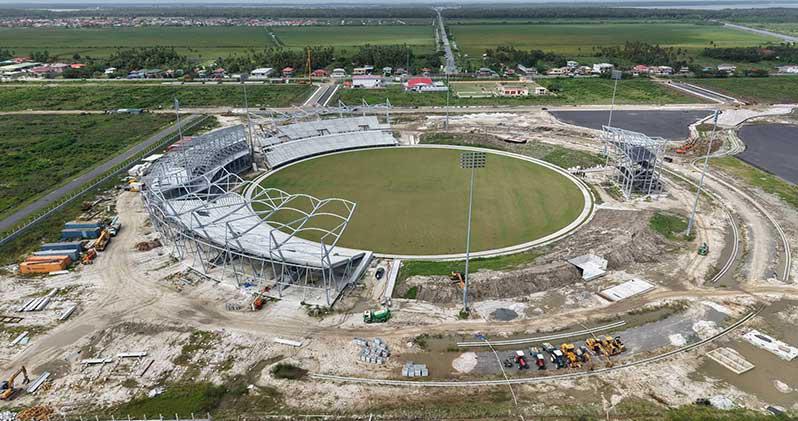
THE People’s Progressive Party/Civic government has pledged an additional $6 billion toward the nation’s sporting infrastructure in 2026, as the country continues its aggressive push to become a regional hub for elite competition.
Finance Minister, Dr Ashni Singh, unveiling the 2026 budget, confirmed that the government would prioritise
the completion of several major projects, including the high-profile Palmyra International Stadium.
The latest allocation follows a record-breaking 2025, during which $8B was spent on hosting global events such as the Caribbean Premier League (CPL) finals and the Global Super League.
A key pillar of the 2026 plan is the $1.3B earmarked
for the maintenance and upgrading of community grounds. This follows a year in which over 450 grounds were improved and 80 facilities were fitted with floodlights.
"Sport is big business," Dr Singh told the Assembly. "We are committed to providing the enabling environment for our young athletes to grab these opportunities with both
PAARL, South Africa, (CMC) – THE West Indies have unveiled their 15-man squad for the ICC Men’s T20 World Cup 2026, set to be played across India and Sri Lanka next month, with uncapped Guyanese batter, Quentin Sampson, earning a surprise call-up and speedster Alzarri Joseph ruled out due to injury.
The same squad will immediately test their mettle in a three-match T20I series against South Africa, beginning in Paarl today, as vital preparation for the global tournament.
The selection panel, led by coach Daren Sammy, has opted for a blend of seasoned campaigners and fresh talent, sticking largely to the group that co-hosted the 2024 edition.
However, the post-2024 retirements of T20 icons Nicholas Pooran and Andre Russell have left noticeable gaps in the middle order and finishing power.

hands."
The "big business" approach includes the initiation of Guyana’s first-ever dedicated powerlifting and high-performance conditioning facility, alongside a new cricket academy at Albion.
Major Projects for 2026 include the completion of Palmyra International Stadium; the new boxing facility at Angoy’s Avenue and a dedi-
cated chess facility at Providence; completion of the New Amsterdam Synthetic Track; multi-purpose halls in Anna Regina and MacKenzie to be finalised.
The government also confirmed that the National Sports Academy programme will expand, with a specific focus on the hinterland regions. Authorities plan to deploy professional coaching and mentorship to
ensure talent in remote areas is not overlooked.
Last year, the government distributed nearly $120M in grants to 40 sports associations and 90 individual athletes.
The 2026 budget aims to build on this by pairing world-class facilities with professional personnel to create a sustainable "sports tourism" market.
GUYANA opened the 2026 Concacaf Women’s U-17 Qualifier with a hardfought 1-1 draw against Jamaica at Stadion Guillermo Prospero Trinidad in Oranjestad, Aruba on Sunday.
After a scoreless affair for the majority of the match, Guayana broke through with the opening goal in the 74th minute when Alexaudria Chasles was in the perfect spot to tap in a bad clearance from close range.
Guyana was fighting to close it out, but in the 85th minute, Jamaica found an equaliser as Nicolette Predergas sent a towering shot from outside the box over the goalkeeper.
Guyana’s next game is against the home team, Aruba, on Thursday.
Honduras 3-1 Aruba
241 runs at a strike rate of 151.57.
Both were part of the triumphant 2016 campaign in India, a memory Sammy and the team will hope to channel.
“We know what it takes to win in those conditions,” Sammy said at the squad announcement on Monday.
“It’s about combining that experience with the energy of the new faces.”
The most notable new face is Sampson, whose inclusion comes on the back of a breakout 2025 Caribbean Premier League season with the Guyana Amazon Warriors, where he scored
To fill the void, the Windies will rely on the experience of all-rounder Jason Holder and hard-hitting opener Johnson Charles, who is set to feature in his fifth T20 World Cup.
Despite a modest return of 35 runs in three T20Is against Afghanistan last week, selectors have shown faith in his power-hitting potential.
“Quentin brings fearlessness and clean striking,” said captain Shai Hope at the press conference. “We saw in the CPL that he can change games.”
The squad welcomes back several first-choice players, including captain Hope, Roston Chase, Akeal Hosein, and Sherfane Rutherford, who missed the Af-
(Turn to page 25)
In the other Group D matchup, Honduras took control by defeating Aruba, 3-1, at the same venue in the day’s closing encounter.
Honduras got on the board in the 71st minute with a wonderful strike by Alexandra Merriam from outside the box.
Honduras doubled its lead in the 79th minute when Allisson Suazo used great footwork to get past a few defenders and finish off the play with a low shot to the back of the net.
In the 8th minute, Merriam recorded a brace as she snatched the ball right from the keeper’s feet on a bad clearance.
The home side avoided the shutout as Adannayah Breinburg smashed a great free kick from the edge of the box in the 90’+2’.
Round One of the 2026 Concacaf Women’s U-17 Qualifier will determine the eight nations that will move onto the Final Round and join the four top-ranked teams in the region, which received a bye: Canada, Mexico, Puerto Rico, and the United States.

Alexaudria Chasles scored the opening goal for Guyana in the 74th minute
The 2026 Concacaf U-17 Women’s Qualifiers will be the second edition of the event to be played under the current two-round format, following its introduction in 2025.
After the round-robin group stage play in Round One, the six group winners and the two best second-place finishers will advance to the Final Round.
The 12 participating teams in the Final Round will compete for four slots to represent Concacaf at the global competition, set to take place in Morocco between October and November of this year.