



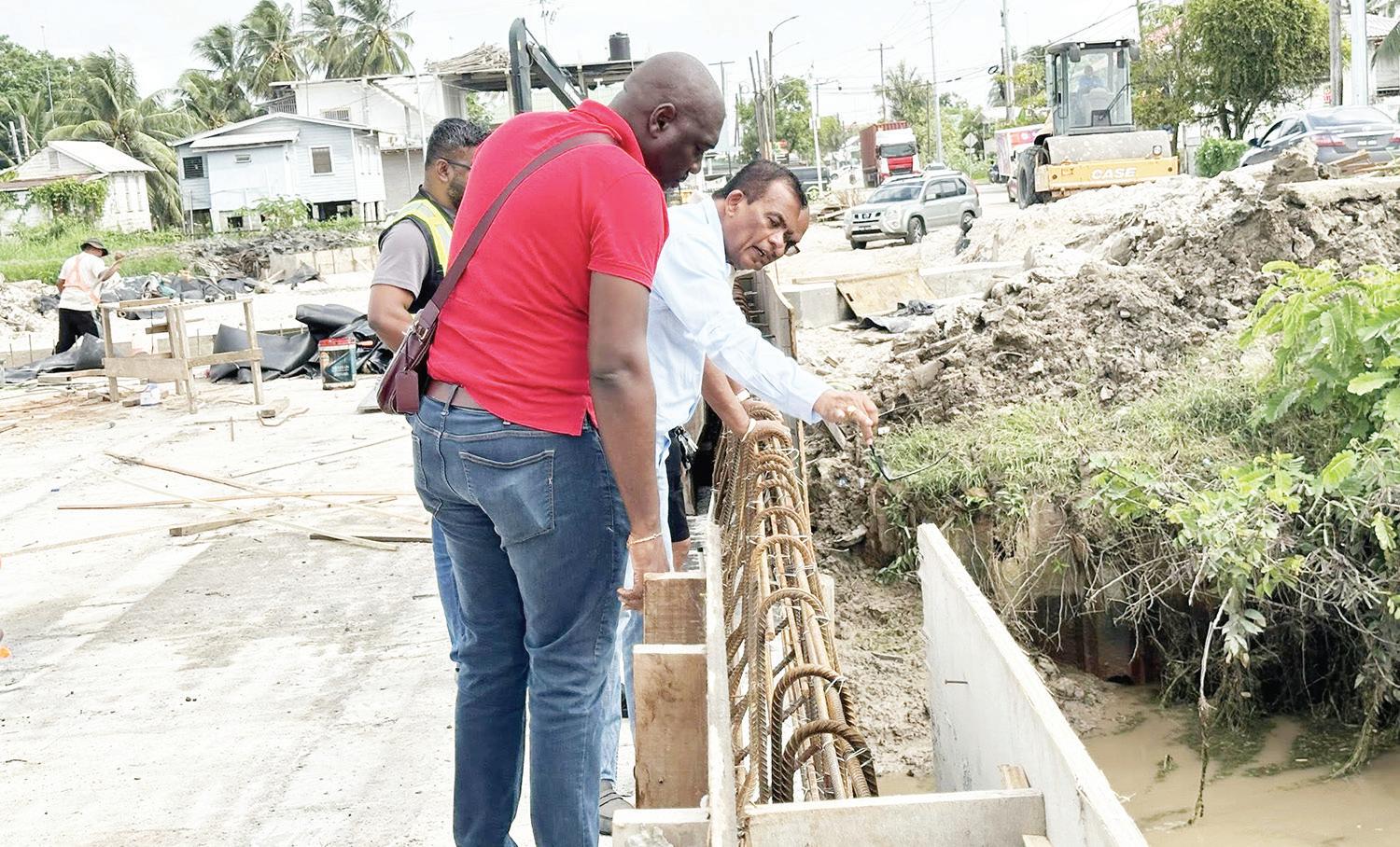
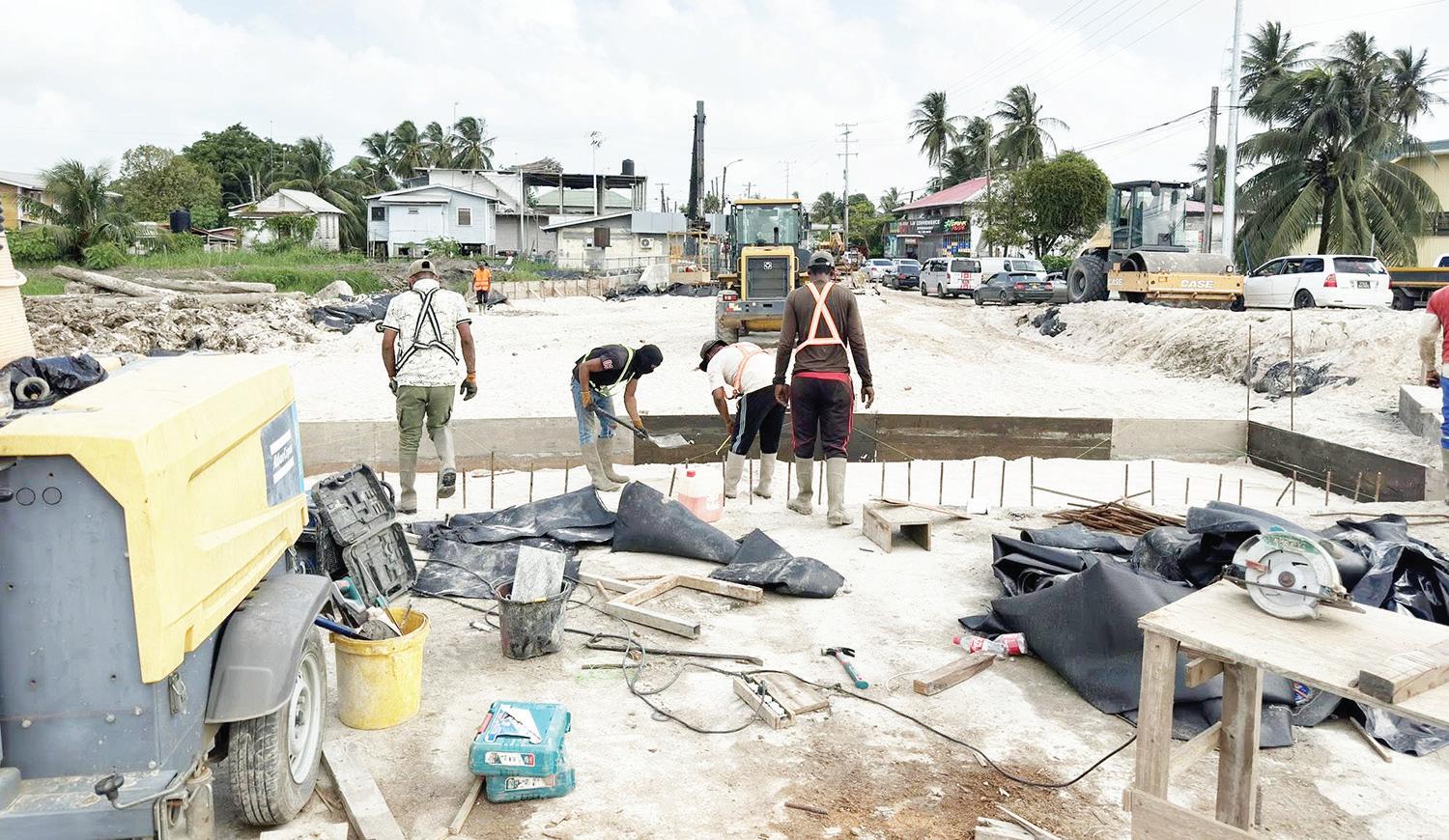
A wide view of the Stanleytown Bridge shows active construction and earthworks underway, with heavy-duty equipment on site as preparations continue for the temporary opening of the bridge to vehicular traffic ahead of its scheduled February completion

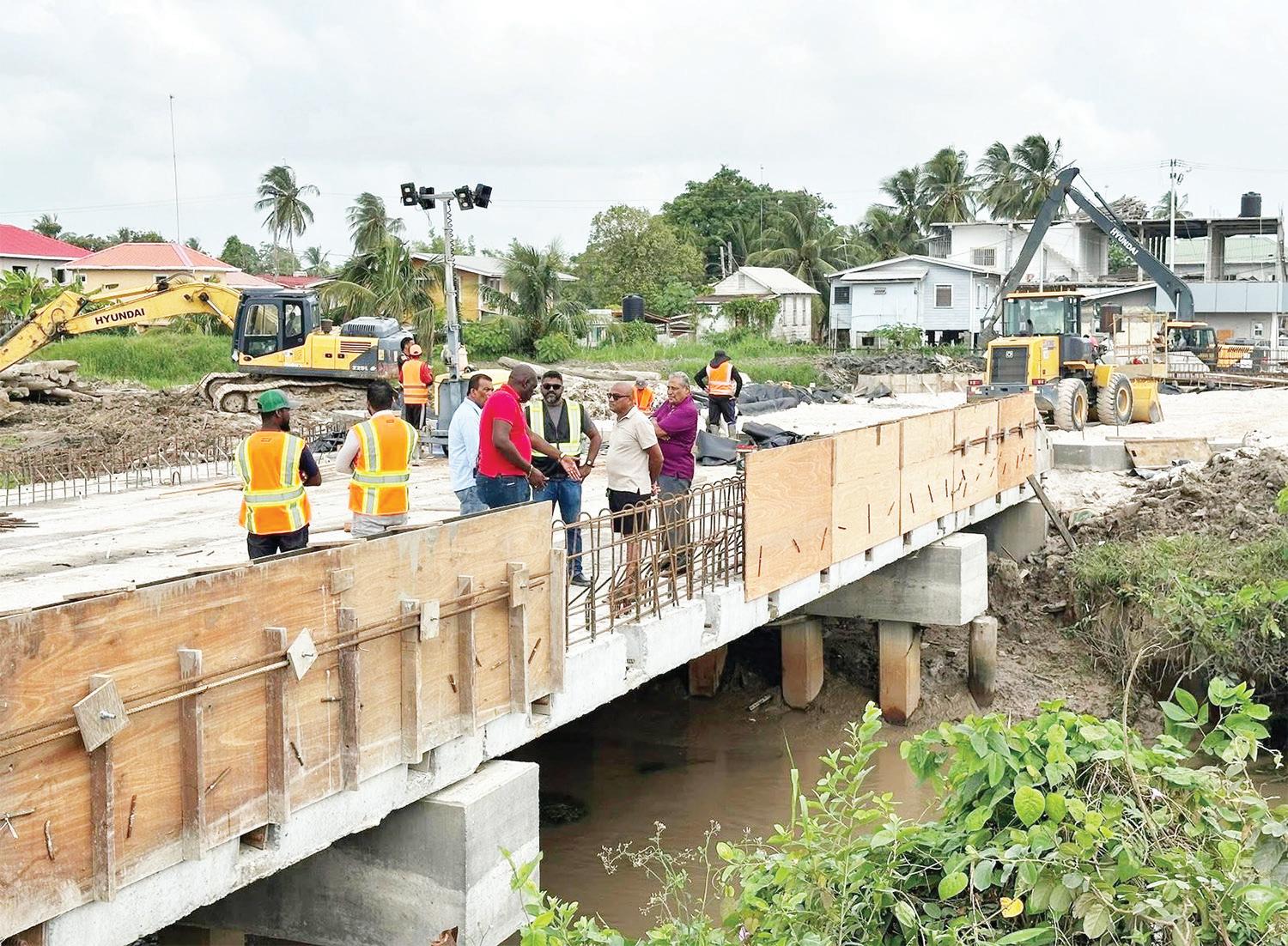
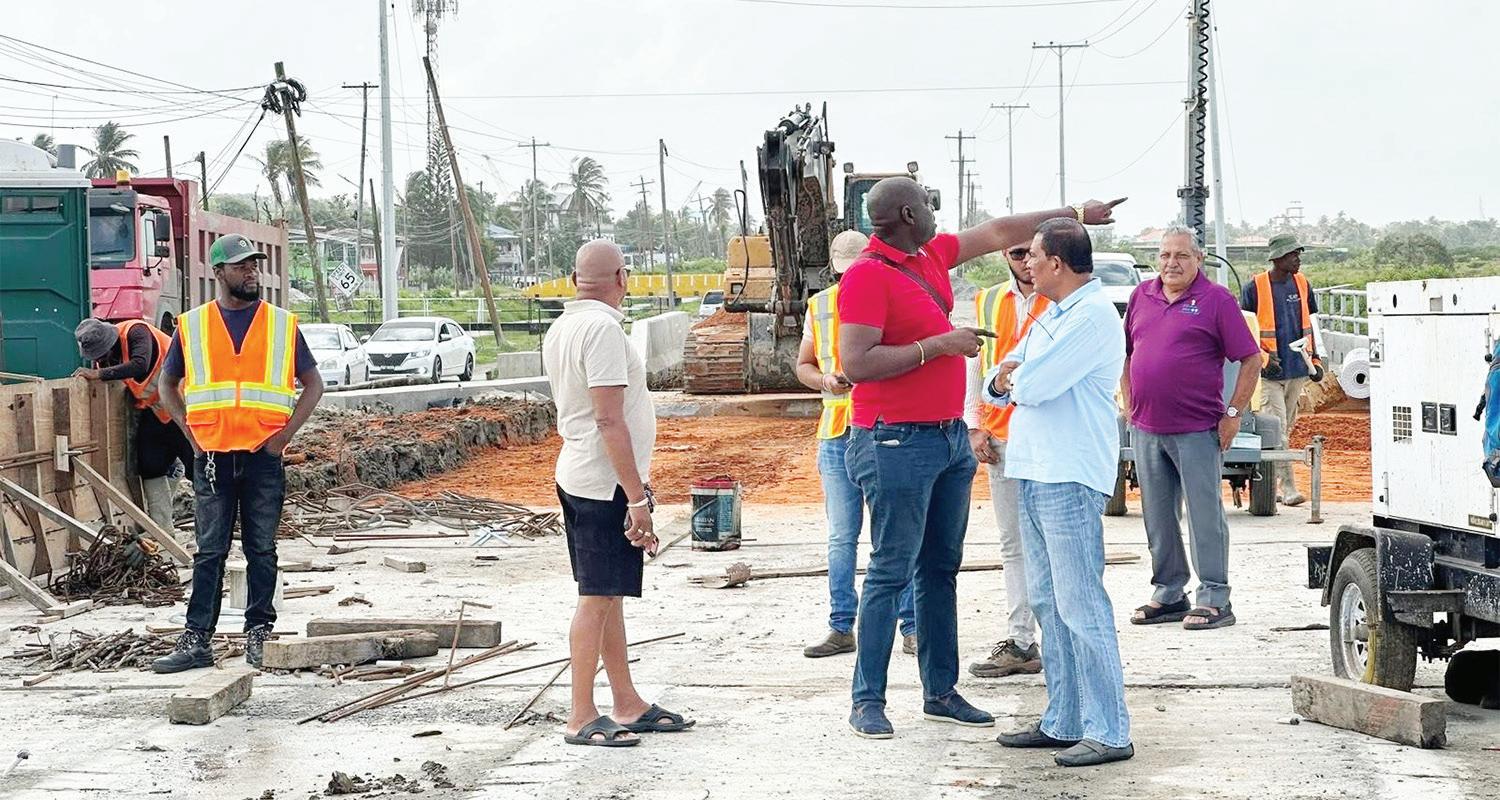
Minister within the Ministry of Public Works, Madanlall Ramraj, examines ongoing structural works alongside engineers and contractors during the inspection on Saturday
THE $588 million Stanleytown Bridge project is on track for completion by the end of February, with sections of the new structure expected to open to vehicular traffic within the next two weeks to ease congestion for residents and commuters.
Minister within the Ministry of Public Works, Madanlall Ramraj, provided the update on Saturday during an inspection tour of ongoing and recently completed infrastructural works in Region Three. According to the

minister, contractors reported that the bridge is in its final stages. While full completion is scheduled for late February, the new bridge will be temporarily opened using a crush-and-run surface to allow safer and improved access until final asphalting is completed.
“We intend to have the bridge completed by the end of February, but in the interim we will open the new bridge temporarily to vehicular traffic within the next two weeks to ease the current bottleneck,” Minister Ramraj said.
“The existing bridge is too narrow to adequately facilitate twoway traffic, particularly for larger vehicles, and this will help to reduce congestion until the new bridge is fully opened.”
The Stanleytown Bridge project comprises three bridge structures designed to improve connectivity and strengthen a critical transport corridor
within the community. The central pre-stressed concrete bridge spans 24.44 metres and was constructed at a cost of $309.9 million.
The southern prestressed bridge measures 12.19 metres and cost $151.2 million, while the northern composite concrete-andsteel skewed bridge was built for $127.7 million. The total investment stands at $588.8 million.
Minister Ramraj said the project underscores the government’s continued focus on upgrading transportation infrastructure in Region Three, with an emphasis on durability, quality workmanship, and safer, more reliable access for residents and businesses.
He added that the ministry will continue close oversight to ensure the remaining works are completed on schedule and to the required standards, as part of a broader push to modernise road and bridge infrastructure across the country.
By Trina Williams
DECLARING that Guyana is positioned as a safe, investable and opportunity-rich nation, President Irfaan Ali has urged Guyanese living abroad to return home, saying Budget 2026 removes long-standing barriers to ownership and offers equal access to investment, tax relief and government co-financing.
Speaking during a wide-ranging Budget 2026 discussion with an all-women panel, the Head of State said the People’s Progressive Party/Civic (PPP/C) administration’s inclusive development framework is deliberately structured to bring the diaspora into the centre of national economic growth.
“You have many Guyanese over there who have worked all their life, and they have the certification in elderly care. Here’s the opportunity to come here now, the government will even co-invest with you. You have the opportunity now to have taxfree earnings because we’re removing the corporate tax to build out those facilities, care for the elderly, children’s care facility, owning local hospitals, no corporate tax,” the President said.
The President said these incentives extend across priority sectors and form part of a broader strategy to expand local ownership and equity participation, including for Guyanese abroad.
He pointed to emerging investment opportunities in the fertiliser plant, gas-bottling facilities and consortium-based ventures linked to the expansion of local content.
The President went on to say: “And when we increase that list of opportunities that will be added to local content, that’s another opportunity that is ahead of us. So, Guyanese have equity. The diaspora, we’ve always made clear, has equal access and equal opportunity to everything that we’re building out
for the local economy; local Guyanese and also persons living in the diaspora,” he said.
Drawing on international examples, President Ali said countries with large diaspora populations have successfully mobilised overseas citizens to finance major national projects and encouraged Guyanese abroad to adopt a similar approach.
noted that the country is experiencing a historically low crime rate
“Today, the investment that we’re making in safety and security has really given us tremendous payback. You know, we have our lowest recorded crime. We want to keep it that way. We’re able to detect crime in a predictable way. We’re able to plan in a more strategic way,
training and digital-surveillance systems.
The 2026 allocation is aimed at building a modern, robust, well-equipped and technology-driven security sector, with major investments directed towards the Guyana Police Force (GPF), Guyana Prison Service (GPS) and Guyana Fire Service (GFS).
The modernisation of the
their current locations, this is not happening in Guyana.
He said: “So they’re coming into the healthcare system and they say this, that is far different from when they left it, and that is more aligning, in some cases, surpassing what they expect or what they’re getting now in their own communities, societies and countries.”
The Government of Guy-
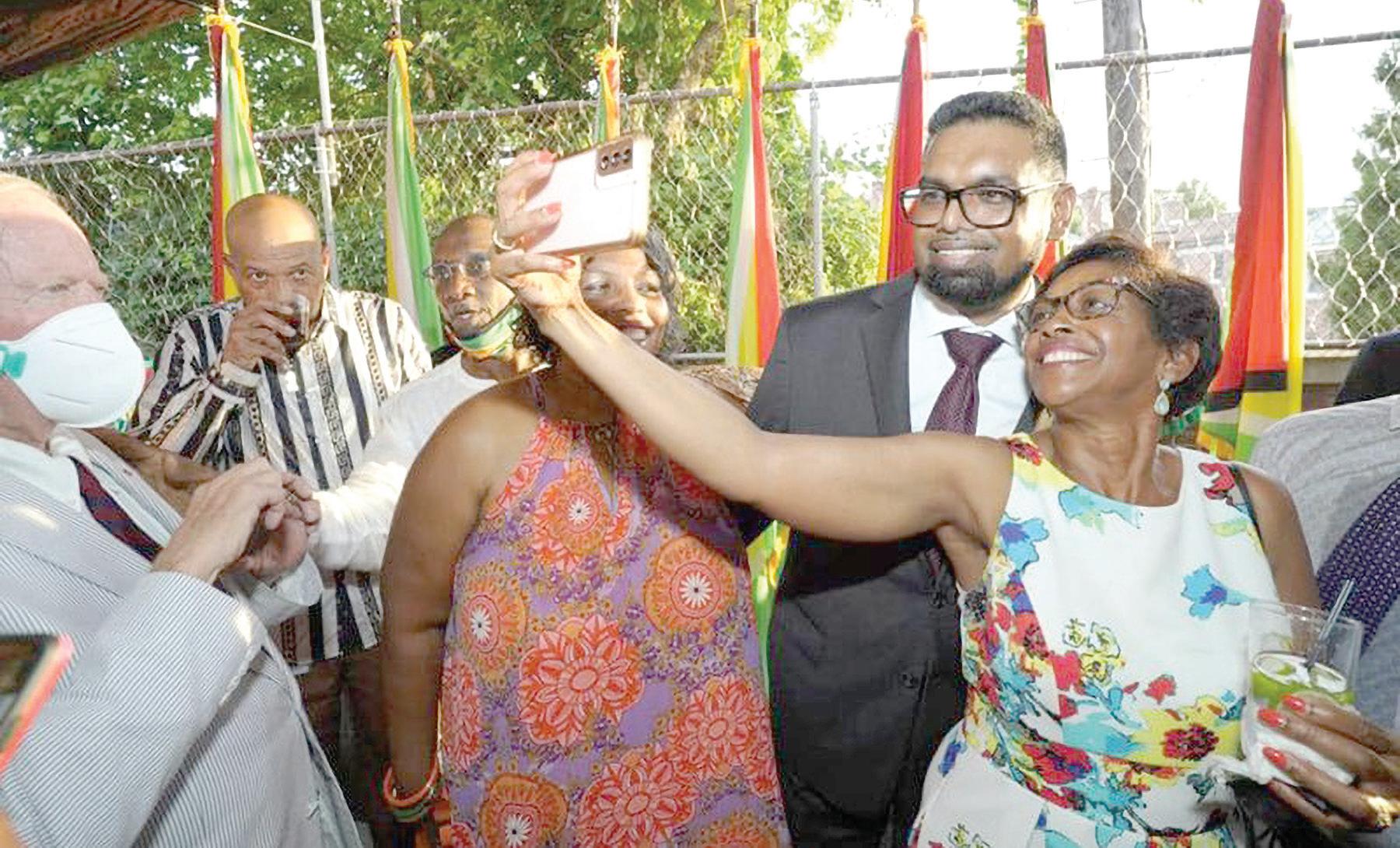
“It will have risk, but we have to invest in that risk, and that is where I think a lot of emphasis must be placed,” he said.
The President welcomed the diaspora home, pointing to the advancements being made to make Guyana safer and inviting.
Highlighting some of the foundation issues within the diaspora, such as healthcare, education and security, President Ali noted how Guyana has been on an upward trajectory in these areas.
For security, Dr Ali pointed to the major investments made in public security and
based on data, hot spots and we were able to apprehend people faster,” he said.
The President also pointed to the deployment of cameras on the roadways, which are already helping tremendously in road safety.
Budget 2026 has earmarked a record $100.3 billion in the security sector in 2026, as the government continues an aggressive, technology-driven push to modernise national-security institutions and strengthen public safety.
In 2025, a total of $94.6 billion was expended across the security sector, reflecting unprecedented investments in infrastructure, equipment,
security sector is critical not only for crime prevention and public safety, but also for safeguarding investments, strengthening social stability and supporting Guyana’s long-term national-development agenda.
Talking about healthcare, President Ali pointed to the building of the six regional hospitals and he further noted that the government is not only building out the infrastructure, but is also investing in healthcare workers.
Talking to the diaspora, he said, while healthcare systems are deteriorating in
ana has set aside $161.1 billion in 2026 to further modernise the country’s healthcare system.
The plan is to expand medical infrastructure, improve access to modern equipment and medications, strengthen the healthcare workforce, and provide patient-centred care across all regions.
This year’s focus is on completing crucial hospital projects, expanding digital health systems, enhancing drug distribution and launching health-and-wellness programmes nationwide.
In 2026, $24 billion will be allocated for the Paediatric and Maternity Hospital
construction, as well as six regional hospitals at Moruca, West Demerara, New Amsterdam, Bartica, Kato, and Lethem.
Additionally, $1.5 billion will improve the Georgetown Public Hospital Corporation (GPHC) and finish new polyclinics in Campbellville and Industry. Furthermore, $12.6 billion has been set aside for building, renovating, and maintaining health facilities across the country.
The government also plans to create a National Neurological Rehabilitation Centre for patients with brain and spinal injuries, along with a modern oncology centre for comprehensive cancer care, which is budgeted at $1.1 billion.
To boost diagnostic and treatment capabilities, $3.1 billion is designated for new medical equipment.
A significant part of the health budget, $34.9 billion, will finance the purchase and delivery of drugs and medical supplies while upgrading the national supply chain.
Five new regional drug-distribution centres will be opened at Mabaruma, Onderneeming, Williamsburg, Lethem, and Bamia. These centres will benefit from a modern, technology-driven inventory management system to ensure accountability and reduce shortages.
A key project for 2026 is the continued rollout of the Electronic Health Records (EHR) System. This system aims to fully digitise patient information and boost service efficiency. With $764 million allocated, this system, already launched at the Festival City Polyclinic, will enable online booking, digital medical histories and data sharing across facilities.
Full implementation at the GPHC is expected in the first half of the year, allowing for expansion to hospitals and clinics nationwide.
The government is making a substantial investment in training and growing the TURN TO PAGE 4
healthcare workforce. Training goals target an additional 162 doctors specialising in neurosurgery, urology, anaesthesiology, and intensive care; 5,440 nurses and allied professionals across the country; and launching a Pre-Med Programme in Regions Two, Three, Six, and Nine. These initiatives build on the 2,862 medical professionals trained in 2025. In 2026, maternal and child-health services will expand with the six new hospitals commissioned last year. Adding 74 new maternal beds has already increased national capacity. This year, 98,500 students will receive health screenings, with a focus on preschool child health and early autism testing.
significant reform is in progress for emergency response. The government is setting up the Guyana Medical Emergency Authority (GEMA), an entity that will unify and enhance national emergency medical services.
At the same time, a


Turning his attention to the education sector, the President said the system is being taken to “international benchmarks,” pointing to institutions such as the AI Digital School, nursing schools, the oil and gas institute and the technical and hospitality training institutes.
“So, education, they’re getting that opportunity, free GOAL [Guyana Online Academy of Learning] scholarship, free university education,” he said.
Finally, the President touched on economic opportunities, including the re-migrant benefits on the tax side and noted that the overall quality of life, savings potential, and long-term prospects make returning home an
attractive option.
The Government of Guyana has allocated $183.6 billion in Budget 2026 to continue modernising the education system, with a strong emphasis on expanding access, improving quality, and aligning learning to the demands of a rapidly changing economy.
Over the next year, investments will target physical infrastructure, teacher education, digital access, and curriculum enrichment, all aimed at empowering citizens to take advantage of emerging economic opportunities.
A total of $24.3 billion is earmarked for the completion of over 40 new schools and works will also advance on student dormitories in various locations, to improve educational access for hinterland students. The budget also includes funds for continuous rehabilitation and maintenance of existing schools countrywide.
The government’s focus on teacher education continues, with the Cyril Potter College of Ed -

ucation (CPCE) having trained more than 5,000 teachers over the past five years, raising the percentage of trained teachers from 69 per cent in 2021 to 86 per cent in 2025.
In 2026, further emphasis will be placed on training teachers in mathematics, science and music, areas critical to developing a well-rounded and competitive education system.
To enhance learning quality, $2.3 billion is budgeted for the procurement of new textbooks and reading materials, ensuring that every learner at the nursery, primary and secondary levels has access to required texts.
Additionally, $3.1 billion has been allocated for school grants so that teachers have resources to purchase classroom supplies directly.
Digital access and inclusion remain top priorities. Through the Guyana Learning Channel, more than 200 schools countrywide have received televisions, solar panels, and satellite equipment under
the Hinterland and Riverain Television Project.
Building on this success, the Guyana Digital School, launched in December 2025, is expanding rapidly—over 22,000 students have already registered, and by March 2026, all secondary grades will have access to the platform.
This initiative, with $176 million allocated for continued operations, is revolutionising free access to digital learning content across Guyana and the wider CARICOM Region.
The government will also continue major welfare and equity programmes.
With targeted spending across all levels—from nursery to tertiary, from traditional classrooms to digital learning—the 2026 education programme seeks to equip every Guyanese, regardless of geography or background, with the skills and knowledge to thrive in the country’s fast-growing economy.


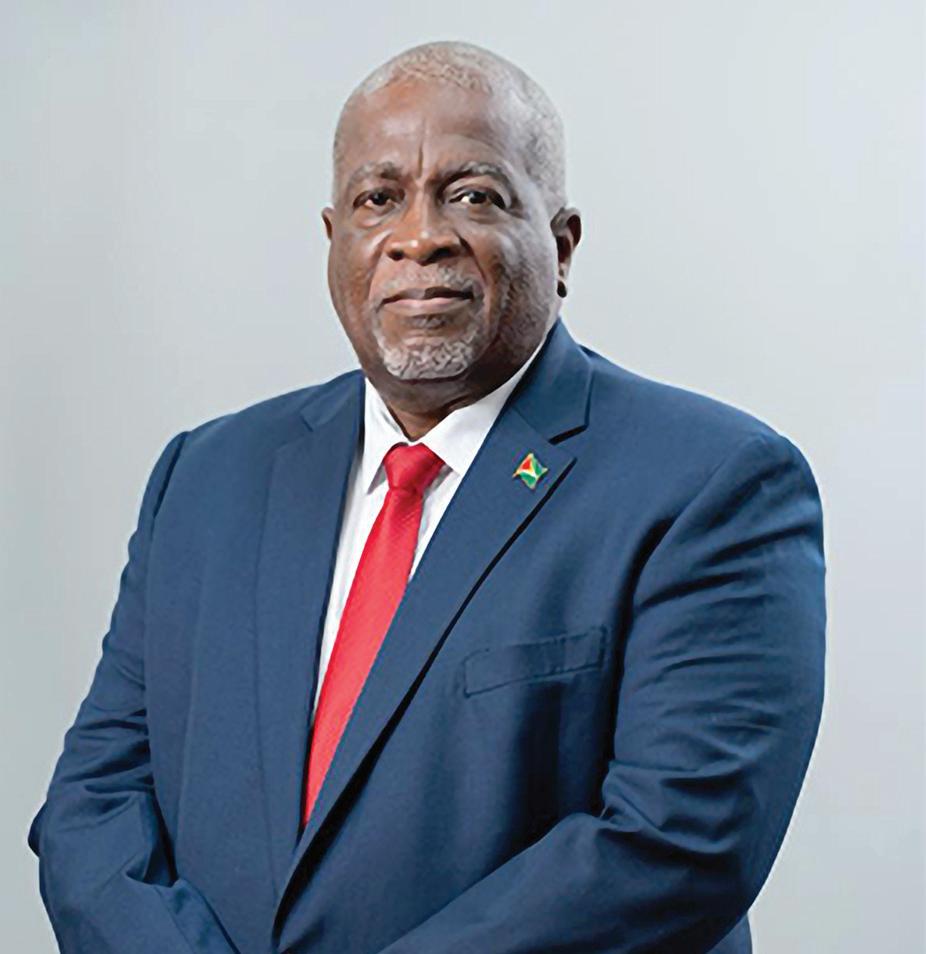
PRIME Minister Brigadier (Ret’d) Mark Phillips has said Budget 2026 confirms Guyana’s irreversible shift into a modern, high-performing economy, supported by disciplined fiscal management, expanding national infrastructure, and deliberate policies that ensure every region benefits from growth.
The Prime Minister described the $1.558 trillion Budget 2026 as a defining statement of national direction, noting that it is the largest budget in Guyana’s history, fully financed, and implemented without the introduction of new taxes.
“This is not an accidental outcome,” Prime Minister Phillips said, “It is the result of consistent policy choices, competent leadership, and an unwavering commitment to national development that reaches beyond Georgetown and into every community.”
He noted that Budget 2026 builds on sustained economic momentum, with overall GDP growth projected at 16.2 per cent in 2026 and non-oil growth projected at 10.8 per cent. Manufacturing is projected to grow by 12.9 per cent, construction by 25.4 per cent, and agriculture, forestry and fishing by 7.6 per cent.
According to the Prime Minister, these figures reflect an economy that is diversified, productive, and resilient. He noted that these
outcomes underscore the difference between an economy managed for national advancement and one managed for narrow political interests which occurred when the APNU and its predecessor, PNC was in government.
“There was a period in this country when economic opportunity was filtered through political favour, when scholarships and land were accumulated by Ministers and their families, and when taxation was the primary tool of governance. That era has been closed,” he said.
He emphasised that Budget 2026 consolidates investments that have expanded education access nationwide, with $183.6 billion allocated to the sector.
This includes more than 40 new schools, expanded dormitories in hinterland regions, $5.8 billion for scholarships through the Guyana Online Academy of Learning (GOAL), free tertiary education, subsidies for students writing CXC, and expanded TVET training to support workforce readiness.
The Prime Minister said access to quality healthcare is now being structured as a national standard rather than a geographic privilege.
Healthcare continues to see transformational investment, with $161.1 billion allocated in 2026 for regional hospitals in Moruca, Bartica, Kato, Lethem, New Amsterdam and West Demerara, advancement

of the Paediatric and Maternity Hospital, expansion of dialysis services, implementation of the national electronic health records system, and training of more than 5,600 health professionals.
Prime Minister Phillips placed particular emphasis on achievements in hinterland and remote community connectivity, describing them as structural shifts rather than pilot projects. He noted continued expansion of electricity supply through solar mini-grids, upgrades to distribution networks in Mabaruma, Matthews Ridge and Port Kaituma, and the installation of renewable energy systems benefiting
thousands of households.
Connectivity has also been strengthened through expanded internet access, digital government services, and Integrated Service Centres that allow citizens in remote regions to access eID, passport, tax and registry services without travelling to Georgetown. The Prime Minister said these investments have changed how hinterland communities interact with the state.
“When we speak about inclusion, it is not rhetorical,” he said. “It is electricity where there was none, internet where there was silence, and government services delivered where people live.”

Energy expansion continues to anchor the country’s long-term competitiveness, with $119.4 billion allocated in 2026. This includes continued advancement of the gas-to-energy project, expansion of transmission and distribution networks, installation of additional solar capacity, and renewed development of the Amaila Falls Hydropower Project.
The Prime Minister said these initiatives will reduce energy costs, stabilise supply, and drive manufacturing and investment.
“These projects are economic infrastructure,” he said. “They determine production costs, industrial growth, and national competitiveness.”
Prime Minister Phillips said secure tenure and planned housing are now fundamental components of social stability and economic participation. Housing and community development remain central to Budget 2026, with $159.1 billion allocation for 15,000 house lots, construction of 8,000 homes, issuance of more than 7,000 land titles, continued development of Silica City, and infrastructure upgrades in communities across all regions.
Prime Minister Phillips also highlighted direct income support measures, including the $100,000 national cash grant for adults, increased old age pensions to $46,000 per month, transportation grants for schoolchildren and pensioners, and tax measures that increase disposable income for workers and households.
He rejected opposition criticism of Budget 2026, stating that those who now question national priorities had the opportunity to govern and left behind higher taxes, restricted access, and stalled development.
“The facts are recorded,” he said. “The country has moved on.”
Prime Minister Phillips concluded by stating that Budget 2026 entrenches a development model that is national in scope and deliberate in execution.
“This budget secures progress, expands access, and strengthens the foundation for long-term growth,” he said. “Guyana is not retreating. Guyana is advancing, and the benefits are being felt across the entire country.” [Office of the Prime Minister release]


Guyana is at a significant point in its history. With oil revenues coming in and production nearing record levels, the country faces a key question that resource-rich nations have struggled with for years: how do we turn temporary gains into lasting wealth?
Senior Minister Dr. Ashni Singh's recent explanation of Guyana's petroleum management strategy shows that the government is taking a thoughtful approach to this challenge.
Dr. Singh's idea of a "late movers' advantage" is more than just clever language—it shows a government willing to learn from both the successes and failures of other oil-producing countries.
While some countries
wasted its oil wealth and dealt with corruption and economic issues, others created the world's largest sovereign wealth fund through careful management and long-term vision. Guyana’s strategy learns from these stories, setting up legal and institutional protections through the Natural Resource Fund Act 2021 that focus on transparency, accountability, and fairness for future generations.
The minister's focus on maintaining a strong non-oil economy shows important insight. As he pointed out, oil prices have ranged from $8 to $140 per barrel in recent memory.
Countries that relied solely on oil found out too late that unstable global markets
create weak foundations.
Guyana's $1.558 trillion Budget 2026 shows a more advanced understanding. It wisely directs oil revenues into areas that will support growth long after the offshore oil runs out.
The agriculture sector's $113.2 billion budget illustrates this forward-thinking mindset. Instead of letting oil wealth overshadow traditional industries, the government is investing in modernising sugar production, expanding rice farming, and diversifying into high-value crops like coconuts, corn, and soybeans.
These efforts improve food security while creating jobs beyond the oil sector. Likewise, the Gas-to-Energy project at Wales represents
smart resource use, turning natural gas into affordable electricity that will drive industrial growth and boost manufacturing competitiveness.
Investments of $196.1 billion in infrastructure for roads and bridges will lower transportation costs, open up productive lands, and connect communities to markets.
These are more than just construction projects; they are vital links that will spread opportunity throughout the nation for years to come. The government’s plan to cut electricity costs by 50 percent through the Wales power plant tackles one of Guyana's biggest barriers to industrial growth.
The rules around managing oil revenues are also cru-
cial. The Natural Resource Fund has built up over $3.6 billion, and the International Monetary Fund praised Guyana's careful management and clear reporting processes. Parliamentary oversight, regular notifications, and independent governance create several layers of protection against the mismanagement and corruption that have troubled other resource-rich countries. The IMF's prediction that NRF assets might reach 360 percent of non-oil GDP by 2042 shows that smart choices today can lead to significant wealth for future generations.
Dr. Singh's statement that "oil alone will not take us through the rest of the future of our country" should become a guiding principle.
This understanding that oil is a means to transform rather than a permanent solution sets wise management apart from careless use.
Guyana’s oil boom offers a rare chance to build modern infrastructure, develop skills, and diversify the economy. The evidence suggests this government recognises that responsibility and is putting a solid plan into action.
The real question now is whether the nation can keep this focus through political changes, economic challenges, and the inevitable temptations that come with sudden wealth. If it can, Guyana's later entry into oil production might become its greatest advantage.
Dear Editor,
THE Government has presented to the people of Guyana an exceptional Budget for 2026, one that functions not merely as a fiscal plan, but as a deliberate catalyst for continued and sustained national development and multi-sectoral transformation on a grandiose scale.
From the outset, it is important to acknowledge an obvious truth: no budget is ever perfect. I submit to you that every national budget, without exception, contains areas that invite criticism, critique and demand refinement. That reality is neither new, unusual, nor problematic; it is the essence of democratic governance and public accountability that our country's democracy enjoys. What matters, however, is not perfection, but direction, intent, and real tangible and intangible positive impact.
Budgets are not merely abstract financial instruments. They are, fundamentally, moral and political documents. They reveal a government’s priorities, its values, vision and its commitment and responsiveness to the lived conditions, experienc-
es and realities of its citizens. Judged by this standard, I put it to you that the government's 2026 Budget stands firmly as a people-first framework, one that carefully balances immediate social support with long-term economic transformation, and social protection with productive and pragmatic investment. It is entirely reasonable that citizens, including me, may wish to see even greater allocations for public assistance and our senior citizens. Such concerns are valid and legitimate and have been echoed by citizens across past administrations and generations. They are part of the ongoing national conversation about equity and care. However, it would be intellectually dishonest to dismiss the overall thrust and coherence of the Budget based on selective dissatisfaction, divorced from its broader developmental logic. While the Opposition has chosen to focus narrowly on the title or theme of the Budget or selected headline figures, and recycled proposals, the Government’s approach is anchored in outcomes, some immediate, others structural and long-term.
These outcomes include improved wages through respectful and practical collective bargaining processes with unions, enhanced working conditions, expanded employment opportunities, stronger household stability, increased home ownership, and safer, cleaner communities. Central to this framework is the deliberate empowerment of our country's young people through free access to education, skills training, entrepreneurship, and increased access to affordable financing. Investments in the creative or “orange” economy, alongside the building out of modern sporting and recording facilities, further signalling its strategic commitment to nurturing talent and diversifying the economy beyond the traditional sectors.
Equally significant is the treatment of senior citizens. Budget 2026 ensures that our ageing Guyanese can live with dignity through expanded healthcare access, free medicines, strengthened and enhanced community health centres, transportation grants, spectacle and denture assistance, and increased old age “assistance”. I deliberately
use the term assistance rather than “pension” for it connotes previous work, as this sustained provision is non-contributory and universal in nature, an entitlement to all Guyanese 65 years and over, grounded in citizenship and age alone, not prior income or location of employment. Whether one resided locally or spent most of their productive years abroad in the diaspora, this continuous support remains a birthright.
Importantly, when seniors are adequately supported, financial pressure on working families is reduced, enabling greater savings, investment, and intergenerational stability. Social protection, therefore, strengthens not only households but the wider economy.
Budget 2026 does not merely spend; it invests. It converts public resources into human capability, ensuring that national growth translates into tangible improvements in the daily lives of our people. At its core, a national budget serves two fundamental purposes: to improve living standards now and to prepare the country for the future. This Budget accomplishes both
by explicitly linking national investment to jobs, incomes, education, healthcare, agriculture, tourism, security, youth, etc., opportunities for ordinary Guyanese families.
Much has been said about the scale of investment in infrastructure, with critics attempting to reduce the investment to “concrete, stone, and cement.” Such characterisations ignore economic reality. Infrastructure investment delivers immediate and widespread benefits. It creates employment and economic empowerment, it lowers transportation and production costs, improves access to schools, hospitals, and markets, and enhances business efficiency. Improved roads reduce travel time and fuel consumption, help stabilise transportation fares, allow farmers quicker access to markets, and ultimately help contain food prices.
A bridge is not merely concrete; it is a child reaching school sooner, a patient accessing healthcare faster, and a small business expanding its reach more efficiently. No economy, in the developed or developing world, has achieved sustained
growth without first building the physical backbone that connects people to opportunity. Infrastructure is not detached from human welfare; it is the mechanism through which people access jobs, services, and income. For citizens who ask, “What is in it for me?”, Budget 2026 provides clear answers: free access to education and healthcare; direct cash grants to adults and school-aged children through the Because We Care initiative and for new born babies ; housing support through lower and interest free loans and building material assistance; interest-free financing for business start-ups and expansion; increase in the income tax threshold; no new taxes; and expanded opportunities for enterprise across all regions with specialized concessions for those in the tourism and agricultural sector, the creative sector and for value added in manufacturing and processing of local products and more too numerous to mention. There have also been claims that the Budget is overly dependent on oil revenues and that declining oil prices could expose
By Joel Bhagwandin
GUYANA’S household income structure has undergone a major structural transformation over the last 15 years. Yet, much of the public discourse remains trapped in superficial political commentary and “Facebook noise,” where opinion substitutes for evidence and macroeconomic shifts are treated as talking points rather than measurable realities.
The data tells a clear story. From 2010 to 2025, Guyana shifted from remittance dependence to a model increasingly anchored in domestic earnings and state-led social support. In 2010, remittances accounted for approximately 51% of household income. By 2025, remittances have declined to approximately 10%. In the same period, government social support—subsidies, grants and transfers—expanded from 1.6%
of household income (2010) to approximately 38.1% (2025). When remittances are excluded, the shift is even more pronounced: social security + social support combined rose from ~28% of household income (2010) / ~27% (2020) to approximately 51% by 2025. In plain terms, household welfare is now materially anchored to the state. But beyond the percentages, we must appreciate the scale.
In nominal terms, the implied household income structure being cushioned by state-led support is now approaching GYD $1 trillion annually (conservative estimate). This is no longer a marginal policy variable; it is a macro-fiscal exposure.
And when we express this in relation to non-oil GDP, it becomes even more important. It means that a growing share of household welfare is being sustained through a recurrent-expenditure model that must ultimately be financed—either through non-oil revenue, or through oil-revenue transfers.
This is where the risk begins.
The data points to an emerging vulnerability: recurrent expenditure has expanded at a rate that is outpacing the structural strength of non-oil revenue. In effect, the country is building a household-welfare architecture
that becomes politically difficult to contain, and fiscally difficult to reverse, once it reaches maturity.
If not managed with discipline, this trajectory can produce a familiar fiscal trap: rising transfers, rising entitlements, and a state increasingly forced to finance social stability through expenditure growth rather than productivity growth.
And it is critical to note that this analysis is conservative.
The calculations exclude certain categories that would otherwise increase the implied scale of state-led household support, meaning the figures are understated. In other words, the household fiscal exposure is likely larger than what is captured in this extract. This is why the discussion must be reframed.
Guyana’s household-welfare gains are real and meaningful. But household welfare is now increasingly fiscally dependent.
This raises the importance of three non-negotiables:
1. Fiscal-containment strategies to prevent recurrent expenditure from structurally overshooting;
2. Non-oil revenue strengthening to reduce overdependence on oil transfers;
3. Institutional credibility over the cycle, because credibility becomes the buffer when volatility arrives.
Guyana has built a fiscal resilience framework, and there are buffers. But buffers do not eliminate risk—they merely buy time. The real test is sustainability over the cycle.
Operators and investors entering Guyana’s market must understand this structural shift because it directly affects country risk. A state-led household-income model increases the political cost of fiscal adjustment. That political cost eventually translates into policy uncertainty,
populist pressure, and macro instability if discipline weakens. This is not alarmism. It is realism.
Guyana is not merely growing. Guyana is transforming. And this transformation is creating a new political economy baseline—one in which household welfare, fiscal stability, and investor confidence become tightly linked.
In short: the household-income transformation underway is real, measurable and politically consequential. The serious work now is ensuring that it remains sustainable.
Note: This article is extracted from a wider SphereX Macro & Policy Note (Budget 2026). The full note—with the underlying data sources, methodology, and detailed analysis—is available here: https:// spherexgy.com/insights/guyanese-household-income-transformation-2010-2025/.
Dear Editor, MUCH has already been said about Budget 2026. That should be expected in a country where democracy is alive and free exchange is at a premium. We are delighted to lend our voices to the debates.
In our view, Budget 2026 strikes the correct balance between the long-term objectives consistent with the National Development Strategy (NDS), and the more immediate needs of our rapidly expanding population. It should be clear that human security and human development are at the centre of the policies and measures delivered by the indefatigable Dr Ashni Singh on behalf of the PPP/C government led by President Mohamed Irfaan Ali.
The long-term objectives prioritise competitiveness in order to achieve increased pro-
ductivity and sustained levels of growth; macro-economic stability with emphasis on stable exchange rates and low inflation; a dynamic banking and financial system to facilitate investment-grade credit as well as consumer consumption; a foreign investment regime that addresses our capital requirements in the context of our national interests; modernisation of the national infrastructure, and inter alia, integration of our forest resources into the economic strategy in the ambit of climatechange considerations. Budget 2026 is not about quick fixes. Its real power lies in a careful set of policies aimed at national transformation. This isn’t a budget of piecemeal solutions, but one that allows Guyana to change its strategic direction in terms of how people
live, work, and succeed.
The strategy is focused on the basic foundations of a successful transformation: modernised infrastructure, more housing, improved healthcare, enhanced education, and a strong foundation for productive sectors and small businesses. These are not handouts. These are the foundations for increased earnings, expanded opportunities, and reduced dependency. With improved roads and ports, with energy-sector reforms that reduce the cost of production, and with education and training that match well-paying jobs, families can transition from precarious living to more stable grounds.
Transformation, however, also depends on the guaranteed universal access to basic services which Budget 2026 delivers in
FROM PAGE 6
Guyana to so-called “Dutch Disease.” Such assertions are misguided and certainly they misunderstand both fiscal architecture and economic theory. Oil revenues under this Budget are not being directed toward reckless consumption but toward investments that lower national production costs, expand human capital, and diversify the economic base, specifically in agriculture, tourism, mining, manufacturing, and education. It is important to note that Dutch Disease occurs when resource revenues crowd out the productive sectors. Budget 2026 does the opposite; it crowds them in. Our country's finite oil wealth is being deliberately
transformed into permanent national assets that enhance resilience long after petroleum revenues decline.
Responsible governance requires the prudent use of available resources while planning for volatility. Like gold, bauxite, timber, and other commodities, oil prices fluctuate. This Government has anticipated that reality and responded by investing in diversified sectors and human capital, which is precisely the safeguards required for longterm economic stability. In sum, the 2026 Budget reflects careful, prudent and responsible stewardship of our country's national resources. It prioritises long-term development over short-term con -
sumption, it protects the most vulnerable, it invests decisively and consciously in our country's greatest assets, our youth, and it strengthens the foundations of a diversified economy beyond oil. In doing so, it enables all Guyanese to live better today while building a stronger, more resilient nation for tomorrow.
clear and measurable terms. By expanding access to housing, water, healthcare, and education, this budget directly addresses the immediate needs of our people without compromising the drive to increased efficiency, productivity, inclusion, and resilience.

In every meaningful sense, Budget 2026 is a budget for the benefit of all the people of our country, whether at home or returning from "Africa, England, or the wider Caribbean", it caters for you.
Yours respectfully,
Jermaine Figueira Former Member of Parliament
In this regard, Budget 2026 marks a transition from a focus on consumption to capacity-building, and this, without abandoning the requirements to meet basic needs. Our PPP/C government commits to disciplined and timely im-
plementation, ensuring that Guyana’s national resources are transformed into lasting opportunities for every Guyanese.
Sincerely Dr Randy Persaud and Samuel Sandy

TOGETHER with former President David Granger, Vincent Alexander remains the most devoted admirer of Forbes Burnham. But while Granger over the past 30 years has not written even infrequently about Burnham, Alexander in those past 30 years continues to churn out misplaced, distasteful and propagandistic panegyrics of Burnham, the latest being Friday, January 30, 2026, in the Stabroek News.
Here is what Alexander wrote: “Reading that article took my memory back to the policies and lived experience of the Burnham regime, which were clearly aligned with what`s now being pronounced as Food Security, and indeed largely pursued, if not absolutely achieved, at that time. Guyana therefore owes a debt of gratitude to the Burnham regime for its foresight and leadership….”
The deliberate omission in that quote is what constitutes leadership. In political theory, there is the term benevolent dictator. The term appears as a contradiction. A ruler cannot be a dictator and be a warm-hearted giver. Likewise, a leader cannot be visionary yet be autocratic. The autocracy will kill off the vision sooner than later.
This is the story of Forbes Burnham which will be massively compressed to fit into a newspaper column of 800 words. When one talks of Burnham’s leadership, the assessment has to be a holistic one. Alexander the past 40 years has not learnt what the holistic perspective is. At 74 years of age, I doubt he ever will.
That Burnham attempted to have food security for Guyana is without doubt. Without doubt also is the possession of vision by Burnham in developmental planning
and foreign policy. Without doubt also was the failure of both, because autocracy cannot be the canopy for social transformation.
In Singapore, Malaysia, China to name a few, developmental goals were achieved and those countries became success stories in modernisation. Why it did not happen under Burnham was because in those three countries the opposition wasn’t as embedded, energetic, popular and charismatic as was the case in Guyana.
When a leader faces majority opposition in his/her country, a reset is required for survival. Burnham refused to reset and if he didn’t die would not have survived politically. A large sheet of development goals of Burnham rested on a visionary foundation both in Guyana’s economy and foreign policy. But in the sphere of politics in 1970 Guyana, Burnham


not only lacked transformational instincts, but his politics was a complete moral, philosophical and commonsensical failure. The food-security policy was good. The housing policy was good. Hydro-electric power was brilliant. The NIS was visionary. The harbour bridge was excellent. The MMA scheme was innovative. Vanceram production was fine.
The claybrick factory was superb. The glass factory was fine too. The Mortgage Finance Bank and the Coop Bank were relevant policies. The 1972 transfer of UG to Turkeyen was simply breathtaking. National Service was a post-colonial innovation.
Let’s look at a part of that quote from Alexander in which he wrote about his “lived experience of the Burnham regime.”
I lived under the 21-year rule of Burnham just as Alexander who is of my age and we were born a block away from each other in Wortmanville, South Georgetown.
Everything, except the harbour bridge, NIS and
UG were severely damaged around 1982. For plausible accounts of the collapsed inventions of Burnham see the book by Tyrone Ferguson, “To Survive Sensibly or Court Heroic Death: Management of Guyana’s Political Economy, 1965-1985.”
So, Burnham decided to transform Guyana using a unique post-colonial pathway. But he was not the most popular leader in Guyana at the time: Cheddi Jagan was, with over half the population deeply enthralled with Jagan and willingly swayed by him.
Burnham paid no attention to Jagan and his supporters. Burnham did whatever he felt without even a tinge of rational or even commonsensical thinking.
Because of space I will end with four examples. Burnham controlled the university. He personally intervened to stop one of the Global South’s erudite historians, Walter Rodney, from being employed there. I graduated from UG with the President’s Medals and four other awards. He instructed
the state sector that I was not to be employed. Burnham almost starved me. Thirdly, he made National Service compulsory. Fourthly, after calling a general meeting of the PNC and state officials to discuss the effect of the flour ban, he lost the vote to retain it. He then told his audience that he will keep the ban. This was Burnham who at the practical level lacked commonsense and at the psychological level was narcissistic. You lack support in your country. The opposition leader is a respected and regional global politician. Just go to the country’s main players and try to cajole them into accepting post-colonial transformation. Had Burnham done that he would have succeeded. He did not because he did not have leadership qualities.
DISCLAIMER: The views and opinions expressed in this column are solely those of the author and do not necessarily reflect the official policy or position of the Guyana National Newspapers Limited.
ON Monday, Guyanese will have the opportunity to hear from their elected parliamentarians and parliamentary secretaries in the National Assembly as they begin to scrutinise the 2026 National Budget as presented by the Senior Minister within the Office of the President with Responsibility for Finance, Dr Ashini Kumar Singh.
Already, Dr Singh has laid the foundation for discussion on the budget, which stands at a whopping $1.58 Trillion. He has pointed out that a major part of the budget’s focus will be on people and their social development, with continued emphasis on changing and modernising the country’s infrastructural landscape.
Dr Singh made it clear during his budget-presentation speech on Monday that people can expect to see budgetary allocations for health, education, local government, human services and security increase as the government rolls out aggressive campaigns in each of the sectors to improve service delivery and match it with technological advancements.
The senior minister, while noting that the economy grew by 19.3% last year and for this year, the government projects an overall GDP growth of 16.2%, with the non-oil economy expected to grow by 10.8%, said that this budget is about affordability
and making life easier for the Guyanese public through targeted cash grants; subventions; assistance for vulnerable groups; business-development loans; revision of mortgage ceilings; key policies and other interventions.
While he was making his budget presentation to the National Assembly, there were looks of bewilderment on the faces of the opposition as if they were lost at sea or in the land of Narina.
They eventually mustered up the courage to start their usual tirade of assaults on Dr Singh, because they said he was not honouring the promises made at the recently concluded general and regional elections. Another criticism coming directly from the main opposition party, We Invest in Nationhood (WIN), has been the tired and old argument that the budget, as read by Dr Singh, does not contain anything for the ordinary or common Guyanese. WIN stated that the budget will cater to the needs of friends, families and favourites as it does not adequately address poverty, corruption, and the cost of living, which it alleges is prevalent in society.
Firstly, this budget is not only larger in size, but also larger in its allotment of funds that caters to people and sectors of the economy. Budget 2026 meets the threshold of “putting the people first” because of some
of the measures it includes, which got the lion’s share of funds, such as the ‘Because We Care’ cash grant for children, which now will be a $60, 000 per child, along with the other allowances and the transportation grant. The budget does stop there. It prioritises the health and well-being of the students, making their growth and development the focus of funds allocated to School Feeding Breakfast and Lunch Initiatives.
The budget has made allowances for an increase in the personal income-tax threshold to $140,000, removing 5,000 people from the tax net and a $100,000 national cash grant for every adult Guyanese citizen, as was promised last year. The old-age pension increased from $41,000 to $46,000 monthly, plus a new $20,000 annual transportation grant.
Looking at Dr Singh’s $1.558 trillion fiscal plan, which includes significant spending increases for human development and physical infrastructure, funded partly by oil revenues projected to reach US2.4 billion in profit oil and US$375 million in royalties, that’s just one set of transformative measures which are people-centred and people-oriented.
Examine the other allocations for security, housing, tourism, public services, labour and energy sectors, to name a few, and the ordinary


Guyanese will find that this budget is also making continuous investments in jobs, training and entrepreneurial advancements even as it still focuses on technology.
Secondly, the WIN and the Partnership for National Unity (APNU)’s job is to scrutinise the budget.
Nothing else will be expected in the budget debate on Monday. But the APNU\ WIN opposition will only be pulling at straws if they do not bring their ‘A’ game, especially when they find fault with the minister’s allocations in every sector. If they will oppose, then they should propose. They should be left with the burden of identifying resources which the minister or the government could realign and redirect towards these areas.
APNU/WIN should not be given an easy time either. The PPP should sharpen their proverbial axes and knives and go to war with the sole aim of pointing out the duplicitous, misleading, wrong and sensational statements
that the opposition will make in parliament.
For instance, the opposition leader will talk about government corruption and poverty. Government parliamentarians should be prepared with all relevant documents and cases to depict the facts to combat this misinformation and the sordid lies that he will tell. Apart from the opposition leader, the public should brace themselves for presentations from Amanza Walton-Desir, Juretha Fernandes, Tabitha Sarabo-Halley, Natasha Singh-Lewis, and Vinceroy Jordan, which could be epic and drama-filled with the usual distortions and cunning lies.
Newcomers to watch are Sharma Solomon, Terrence Campbell, and Dexter Todd.
From the government benches, the politicians to pay close attention to are Anil Nandlall, Gail Teixeira, Priya Manikchand, Mark Phillips, Charles Ramson, Bishop Juan Edghill, Sonia Parag, Frank Anthony, Zulfikar Mu-
stapha, Susan Rodgriues, and Kwame McCoy. They could be sharp and very lethal with their arguments and presentations.
New faces to watch their presentations starting Monday will be Keoma Griffith, James Bond, Vanessa Benn, and Sarah Brown, since they are intelligent, witty and no strangers to the limelight.
So, the National Assembly will come alive with arguments, debates, props, and laughter.
Thirdly, the public expects all parliamentarians to have class and decorum. One would expect these parliamentarians to be politically crafty with how they plan to debate the budget. It is important to practise active listening, keep an open mind, and be respectful.
One would even expect the use of props and other forms of illustrations to be used in their presentations. In any event, Guyanese expect the use of skilful argumentation and persuasiveness, but TURN TO PAGE 10

BUDGETS are usually spoken of in millions, sometimes billions and, as in Guyana’s case in 2026, in well over a trillion dollars. The figures alone are enough to trigger a migraine. I don’t blame anyone who shrugs, mutters “I don’t understand” and turns the page; that’s a perfectly legitimate response.
But don’t let a political charlatan convince you that there is nothing in it for you; that’s a lie. And if you buy that lie, you’re not only short - changing yourself, you’re doing a disservice to your country. Argue and debate all you want, but for God’s sake, be civil about it.
A mother called me last week about a video message that her daughter, a thirdyear marketing student at the University of Guyana, did on Budget 2026.
The mother was in tears because her daughter had become depressed and with-
drawn after reading the comments on Facebook. I decided to check it for myself, and what I saw made me sick to my stomach. The comments were vulgar, misogynistic, and violent -- to say the least.
I recall the profound lessons I learned while auditing a University of Toronto course taught by Mark Kingwell, author of “A Civil Tongue: Justice, Dialogue and the Politics of Pluralism.”
Kingwell believed that justice emerges from actual conversations among citizens who disagree. Breaking with earlier philosophers, he posited a model of dialogue that he termed “justice as civility” - a concept that makes civility the first political virtue.
This type of civil tongue is not about being polite, but rather, it has to do with the willingness to engage respectfully in public discourse. How we speak, listen and respond makes a world
of difference among citizens who don’t share a deep moral or religious worldview.
In Western society, politeness is a virtue and works as a form of social lubricant. In politics, however, civility is “the political air we must all breathe to negotiate our differences,” Kingwell said, adding, “I hold to the idea that civility, understood as the willingness to engage in public discourse, is the first virtue of citizens.” When it collapses, we are left with abuse, manipulation and domination.
After sitting through six and a half hours of Dr Ashni Singh’s Budget 2026 presentation with enough goodies to make a kid giddy, Azruddin Mohamed emerged to answer the lamest questions imaginable that a journalist could ask of him.
Here is an Opposition Leader, a man who is a political novice, who has no known ideological predilections and is a blank slate.

And lest we forget, Azruddin is under OFAC sanctions, indicted by a US grand jury on a raft of fraud, conspiracy and money-laundering charges, and fighting for his political life as he tries to avoid extradition to the United States.
The journalist asked, uncritically, for his “opinion” on the budget, nothing more. The question had all the rigour of asking his view of the midday sun. Azruddin began by noting that he had sat through the entire presentation; I’ll give him this much: he managed to stay awake, unlike his WIN colleague, the ever-drowsy Odessa Primus.
Then, fumbling for words, he incredulously declared that the budget is “not for you.” Instead of pressing him to define who this mysterious “you” is, he was allowed to ramble on, claiming that the major infrastructural works tirelessly driven by the indefatigable Bishop
Juan Edghill for the past six years are doing nothing for WIN’s supporters.
And because the lame-questioning reporter never bothered to ask what Azruddin would do with more than a trillion dollars, the public is left to assume that his preference is simple: less nation - building, more handouts, starting, no doubt, with the lists supplied by Azruddin and Primus.
Azruddin isn’t just wrong on his understanding of the budget; he is wrong on the basic grammar of what this budget is trying to do. He heard cash grants, but it wasn’t enough, so he stopped listening, missing the obvious: Budget 2026 is a deliberate attempt to move Guyana from cash-in-hand politics to wealth - creation politics.
He missed that this budget will result in halving our electricity bills, opening new transport corridors, bankrolling free university and technical training and pouring money into security and health. What did he say: “Nothing for you?”
To call a plan that cuts structural costs for households, expands earning pow-
er, and reduces daily stress, a “budget of broken promises” is to confuse retail politics with public policy. It is easier, of course, to stand outside the hard work of design and execution and chant “not for you” than to explain how cheaper power, better roads, free PhDs, and safer communities translate into higher disposable incomes and intergenerational mobility.
A civil tongue does not forbid sharp criticism; it demands honest criticism.
And honest criticism would have to concede that this is one of the few budgets in our history that tries to rewire the economy so that opportunities come through lower fixed costs, better services and higher skills, not one-off handouts. To pretend otherwise is not opposition; it is misdirection and calculated mischief, something Azruddin knows a great deal about.
DISCLAIMER: The views and opinions expressed in this column are solely those of the author and do not necessarily reflect the official policy or position of the Guyana National Newspapers Limited.
above all, the truth would be present. As a matter of fact, the truth was essential and critical to this year’s budget debate, as it is to every other debate and public life.
Remember that effective debating centres on the exchange of knowledge, the promotion of progress, and the application of intellectual rigour, rather than simply seeking victory or engaging in conflict. Essential insights highlight that genuine debate necessitates active listening, logical reasoning, and mutual respect, often serving as the cornerstone for democratic and open-minded discussions.
Finally, next week, when the debate is over and the
arguments have been made, we still will move on with our lives. The whole country will know who has won and which party has the greatest debater…
The greatest debater will be the parliamentarian who can defend or poke holes in the premise of the national budget, while demonstrating class and dignity in his argumentations. Who will this be? The clock is ticking…. tik…tok!
DISCLAIMER: The views and opinions expressed in this column are solely those of the author and do not necessarily reflect the official policy or position of the Guyana National Newspapers Limited.

GUYANA’S 2026 Budget comes at a time of unprecedented economic growth. Supported by 32 per cent of revenues from oil production, this record budget reflects a country in transition, one with the resources to meet today’s needs while planning deliberately for tomorrow.
With billions of dollars flowing into the national treasury, one of the key questions before the country is clear: how do we turn today’s oil wealth into long-term benefits for everyday Guyanese? The answer lies not only in spending, but in smart investment, particularly in Science, Technology, Engineering and Mathematics (STEM).
Oil and gas remains an economic engine driving Guyana’s expansion. Offshore production continues to generate billions of dollars in revenue, providing key financial support for public investment. This, in turn, helps to fund major infrastructure, social services, and development programmes. Projects like the Gas-to-Energy ini-
tiative, allocated GY$10.7 billion in this year’s budget, show how oil revenues are being reinvested to reduce electricity costs, drive industrial growth, and enhance overall economic competitiveness. While oil revenues continue to grow, the broader goal is to ensure this wealth supports a future that is stable, diversified, and resilient. This is where STEM becomes essential. STEM is not limited to laboratories or offshore rigs; it is the driver of productivity and innovation across every sector. STEM skills help workers do more with less, improve efficiency and solve real-world problems. By embedding technology and technical knowledge throughout the economy, Guyana can move beyond dependence on natural resources towards sustainable growth.
The impact of STEM is already visible across key sectors in Guyana, shaping real outcomes beyond abstract plans. In infrastructure and energy, engineers and technicians are driving
major projects such as the Gas-to-Energy development at Wales, a central component of the country’s energy transition that is designed to convert natural gas into electricity and help lower generation costs for households and businesses.
This project sits alongside other large engineering works, including the Bharrat Jagdeo Demerara River Bridge and nationwide road upgrades, which depend on modern surveying and construction technologies to improve connectivity and economic resilience.
In healthcare, advancements in technology are expanding access and improving care outcomes. The government’s telemedicine network now includes over 50 sites across remote and hinterland communities, enabling real-time consultations and specialist support where previously only limited services were available. Meanwhile, the rollout of electronic health records and digital patient systems at facilities like the Georgetown
Public Hospital Corporation is beginning to streamline medical information sharing and support faster, more coordinated care delivery.
In agriculture, STEM underpins climate-smart farming practices through the adoption of modern irrigation and drainage systems, shade-house technology, and improved seed varieties that help farmers reduce losses, extend growing seasons, and strengthen food security. These approaches are complemented by digital tools that connect farmers with expertise and market data to improve productivity and sustainability.
Meanwhile, information and communication technology is driving a broader digital transformation across the economy. National strategies, such as the rollout of highspeed connectivity to all 253 Indigenous villages and the expansion of e-government platforms, are expanding access to services and economic opportunities. Initiatives like the One Guyana Digital Initiative, Guyana Digital
School, and integrated digital public services are creating new pathways for learning, entrepreneurship, and financial inclusion, while efforts to digitise government services and introduce national e-identification systems are modernising how citizens interact with the state.
Partnerships with the private sector also play a key role. For instance, ExxonMobil Guyana supports STEM clubs for children with disabilities in partnership with the Guyana Council of Organisations for Persons with Disabilities (GCOPD). Through firsthand activities in robotics, coding and basic technology, these programmes build practical skills while promoting inclusion and equal opportunity.
Another important contribution comes from SBM Offshore Guyana, which launched a STEM scholarship programme for women and girls. Originally focused on Indigenous women and now expanded more broadly, the programme supports students pursuing STEM de-
grees and certificates at institutions such as the University of Guyana, the Guyana Technical Training College (GTTCI), the Guyana Industrial Training Centre (GITC), and the Government Technical Institute (GTI). By covering tuition and related costs, the scholarship removes barriers and helps more young Guyanese access technical careers. Budget 2026 is about more than oil revenues; it is about steady transformation. By using petroleum income to strengthen STEM education, training and innovation, Guyana is investing in its most valuable resource, its people. The lasting success of this budget will be measured not just in growth figures, but in a workforce equipped to lead a modern, diversified economy long after the oil is gone.
DISCLAIMER: The views and opinions expressed in this column are solely those of the author and do not necessarily reflect the official policy or position of the Guyana National Newspapers Limited.
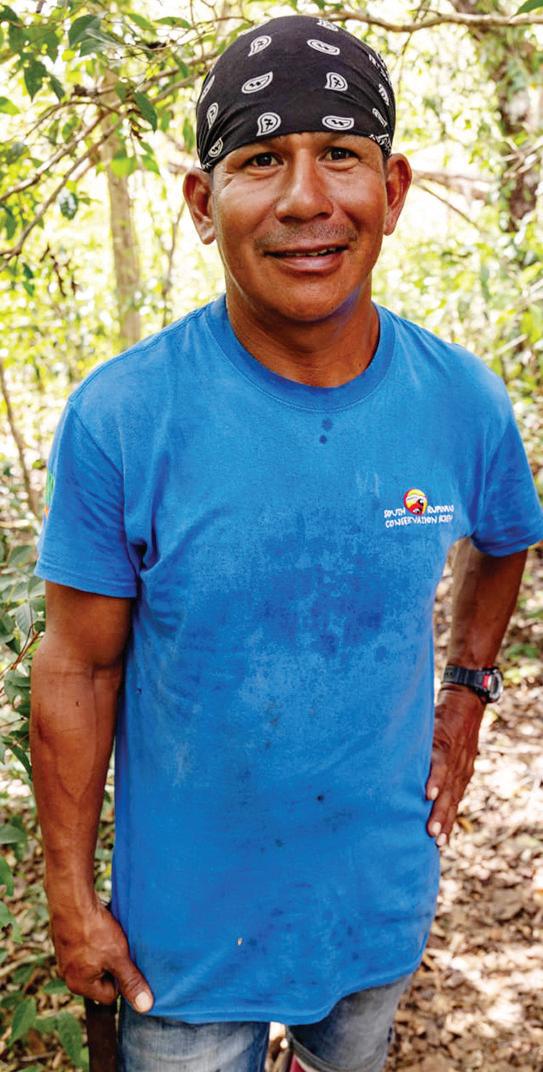
ORGANISED cattle-rustling gangs operating in the South Rupununi are being blamed for the brutal killing of well-known local guide and conservationist Leon Baird, called “Rasta,” as growing concern mounts over what residents describe as a troubling lack of progress in the investigation.
In a statement issued on Saturday, Visit Rupununi said the killing, which occurred in the South Rupununi savannah near Sand Creek, bears the hallmarks of criminal networks that have long plagued the region.
“We are deeply disturbed and outraged by the brutal killing of Leon Baird,” the organisation said, noting that based on reports from the area and evidence observed at the scene, the murder is widely believed to have been carried out by cattle rustlers active in the Sand Creek area.
Baird was described as a respected vaquero, local guide and conservationist who dedicated his life to
protecting the land, wildlife, and sustainable development of the Rupununi. His death has sent shockwaves across the region, where he was regarded as a trusted mentor and community figure.
According to the statement, cattle rustling in the South Rupununi has for years been carried out by organised groups well known within the district, with repeated reports made to the authorities.
These activities, Visit Rupununi said, have had serious and ongoing impacts on ranches, villages, and families.
“Despite formal reports made over a prolonged period, these crimes have continued, leaving many in the region feeling exposed and unprotected,” the organisation stated.
Concern has intensified which marked one week since Baird’s body was discovered, with little visible progress reported in the investigation. Several days had lapsed before the police issued an official statement
on the crime.
Visit Rupununi said there have been sightings of suspects, witnesses have come forward, and physical evidence remains at the crime scene that has not yet been collected.
The organisation further claimed that the lead investigator has not been seen in the district since last Sunday, and that no suspects are known to have been formally questioned.
“This lack of visible progress is deeply concerning,” the statement said, warning that delays risk undermining public confidence and emboldening criminal activities.
Calling for urgent intervention by national authorities, Visit Rupununi stressed that the case goes beyond the killing of one individual.
“This is not only about one man. It is about safety, accountability, and the rule of law,” the organisation said. “Justice delayed is justice denied—not only for Leon and his family, but for the entire region.”
The group cautioned that failure to decisively address the killing could contribute to further violence, arguing that long-standing gaps in responding to reported criminal activities may have cre-
ated conditions where such an atrocity could occur.
“The killing of Leon Baird was an atrocity. It demands a transparent, professional investigation and a clear commitment from law enforcement and national authorities to uphold justice,” the statement added.
Visit Rupununi said the people of the Rupununi deserve decisive action and accountability, as the region continues to mourn the loss of a man whose work and character helped shape a more hopeful future for the communities he served.
The 38-year-old tour guide’s partially charred remains were discovered along the eastern bank of the Rupununi River near Wichabai Ranch, South Rupununi.
His remains were found on Sunday, January 25, after police were alerted to a burnt vehicle in the area. Investigators said what appeared to be a partially burnt human body was found inside the vehicle.
The remains were removed from the scene and transported to the Lethem
Regional Hospital, where a doctor on duty pronounced the man dead.
A post-mortem examination conducted on Tuesday, January 27, by Government Pathologist, Dr Nehaul Singh, determined that Baird died from burns and indicated that he was alive at the time the fire occurred. Following the examination, the body was released to relatives for burial. DNA samples were also collected as part of the ongoing investigation.
The police said further enquiries in the surrounding area led to the discovery of the remains of two cattle nearby, which investigators suspect were shot. Several items of evidential value, including a knife and spent shotgun shells were recovered and lodged for examination.
No arrests have been made so far, and the police said investigations are continuing as efforts intensify to determine the circumstances surrounding the incident.
DESIGNATED truck parks will soon be established in every region as part of the Government’s push to ease traffic congestion, improve community safety and enhance the overall look and functionality of residential areas, Minister of Housing Collin Croal has said.
The Minister made the disclosure during a recent airing of Budget In Focus, where he outlined how the administration intends to build on what it has described as an unprecedented five years of delivery in housing and community development.
With the rapid increase in heavy-duty vehicles linked to economic expansion, Croal said the Government has moved decisively to develop truck parks across multiple regions. One such facility is already under construction at Grove, East Bank Demerara (EBD), while tendering has been completed for additional sites along the East Coast and in other regions.
The initiative, he noted, has become urgent as Guyana continues to record an average of approximately 10,000 new vehicles every three months.
“We’ll provide a facility for persons who have these trucks [so] that they can be able to park their trucks at a fee, or they can even service, repair, or whatever is required. It is not desirable either, because [of] the way the oil is disposed of is not correct,” the minister said.
Croal stressed that the development of truck parks forms part of a broader national effort to protect residential communities while
supporting economic activity.
In this regard, he pointed to the establishment of a national task force by President Irfaan Ali, which includes the Ministry of Housing and Water, and is mandated to address drainage, lighting, safety and overall community aesthetics.
The announcement comes as the ministry reflects on its 2020–2025 performance, during which more than 53,000 house lots were allocated, thousands of homes were constructed, and tens of thousands of land titles were processed.
According to Minister Croal, these outcomes were not coincidental but flowed directly from commitments outlined in the 2020 People’s Progressive Party/Civic’s (PPP/C’s) manifesto.
“So when commitments are made, or promises are made, then you know, it’s not idle,” he said.
As part of its $159.1 billion allocation for housing in 2026, the minister said there are plans for thousands of more Guyanese to benefit from home ownership, especially young professionals, vulnerable groups and firsttime homeowners.
As part of the plan, the Government will construct 40,000 homes nationwide. Once completed, the houses are expected to benefit 40,000 families across all income categories.
For 2026 alone, the government has allocated $159.1 billion for housing development. With these resources, the Central Housing and Planning Authority (CH&PA) will continue infrastructural

works in both new and existing housing areas and will allocate house lots to at least 15,000 households this year.
In addition, the government plans to distribute 8,000 house lots and issue at least 7,000 certificates of title, allowing thousands of families to receive legal ownership documents for their properties.
The housing push builds on sustained state investment in residential infrastructure, including roads, drainage, water supply and electricity, in expanding communities such as Cummings Lodge, Prospect, Felicity, Great Di-
amond, Amelia’s Ward and others.
To improve efficiency and reduce delays, the Government has introduced a single-window approval system for building applications and digitised several previously manual processes within the housing sector.
Beyond new construction, the 2026 housing programme places strong emphasis on improving quality of life in existing communities, with coordinated upgrades aimed at creating safer, more orderly and more liveable neighbourhoods nationwide.
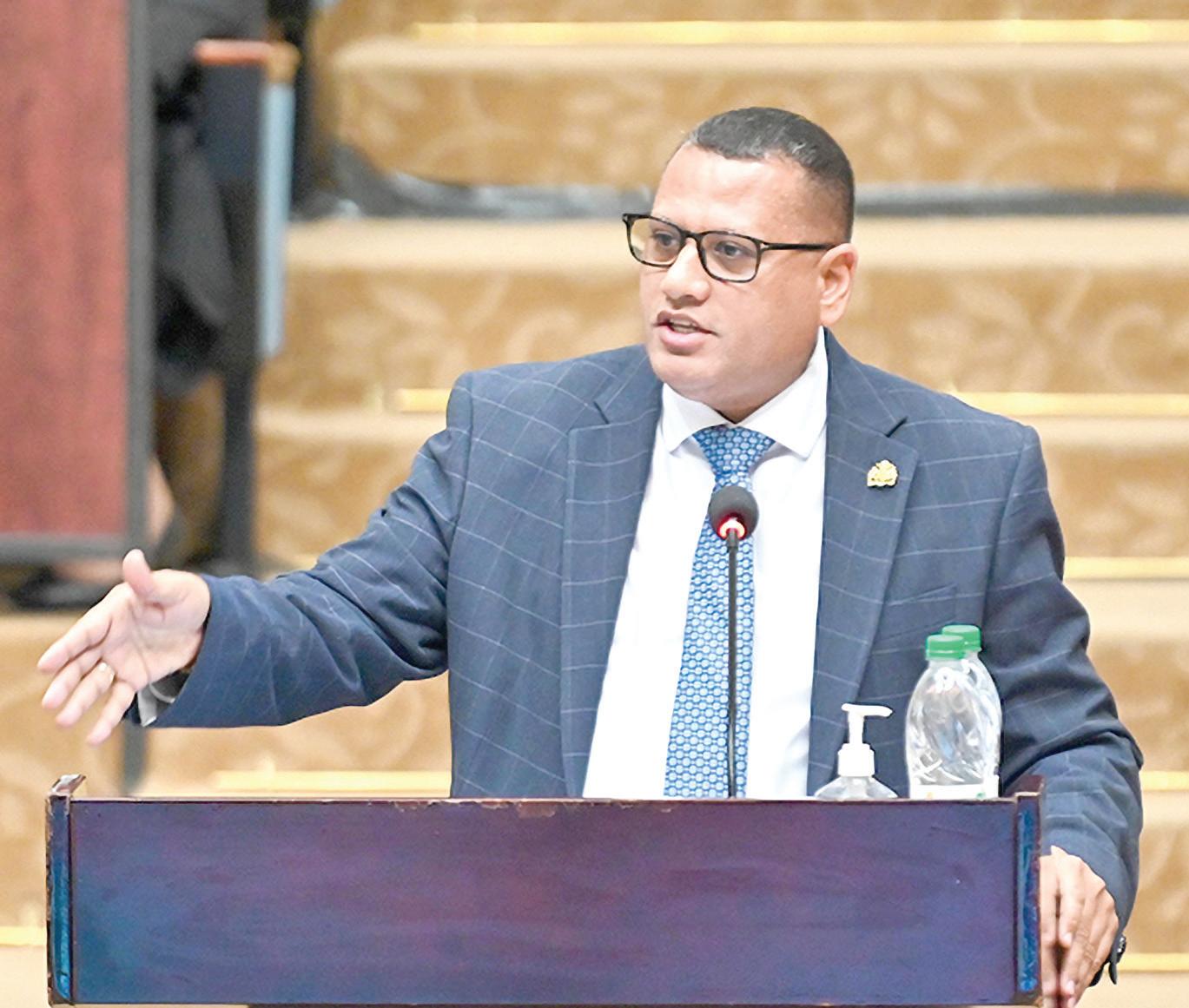

AS the National Assembly prepares to open debates on Budget 2026 on Monday, Minister within the Office of the Prime Minister Kwame McCoy has urged Guyanese to look beyond political distractions and misinformation and focus squarely on the substance of the policies before Parliament.
Speaking ahead of the debates during a preview of the Starting Point podcast, Minister McCoy said the budget discussions are intended to examine how the proposed allocations will tangibly impact the lives of citizens, rather than descend into partisan rhetoric. He cautioned that organ-
ised efforts are already underway to discredit government initiatives through misinformation, warning citizens to remain discerning as the debates unfold.
“We are in the midst of a situation where people are out with their machinery that provides rapid disinformation and misinformation to our people. You have to be able to decipher what is truth, what are facts, and what is intended to be mischief. There will be a lot of noise,” McCoy warned.
The minister said while criticism from the opposition is expected, the key question is whether meaningful, solutions-oriented arguments will be brought to the table.
“Perhaps people say that’s what opposition does,” he said. “But can they get down to real, nitty-gritty, sensible arguments that enhance what exists, rather than distract from what the government is trying to do for the people of this country?”
McCoy said the government is fully prepared to defend Budget 2026 and the programmes and initiatives contained within it, making clear how People’s Progressive Party/Civic (PPP/C) policies have already improved lives and will continue to do so.
“We have the job as a government to defend what we have put forward and to defend it in a way that peo-

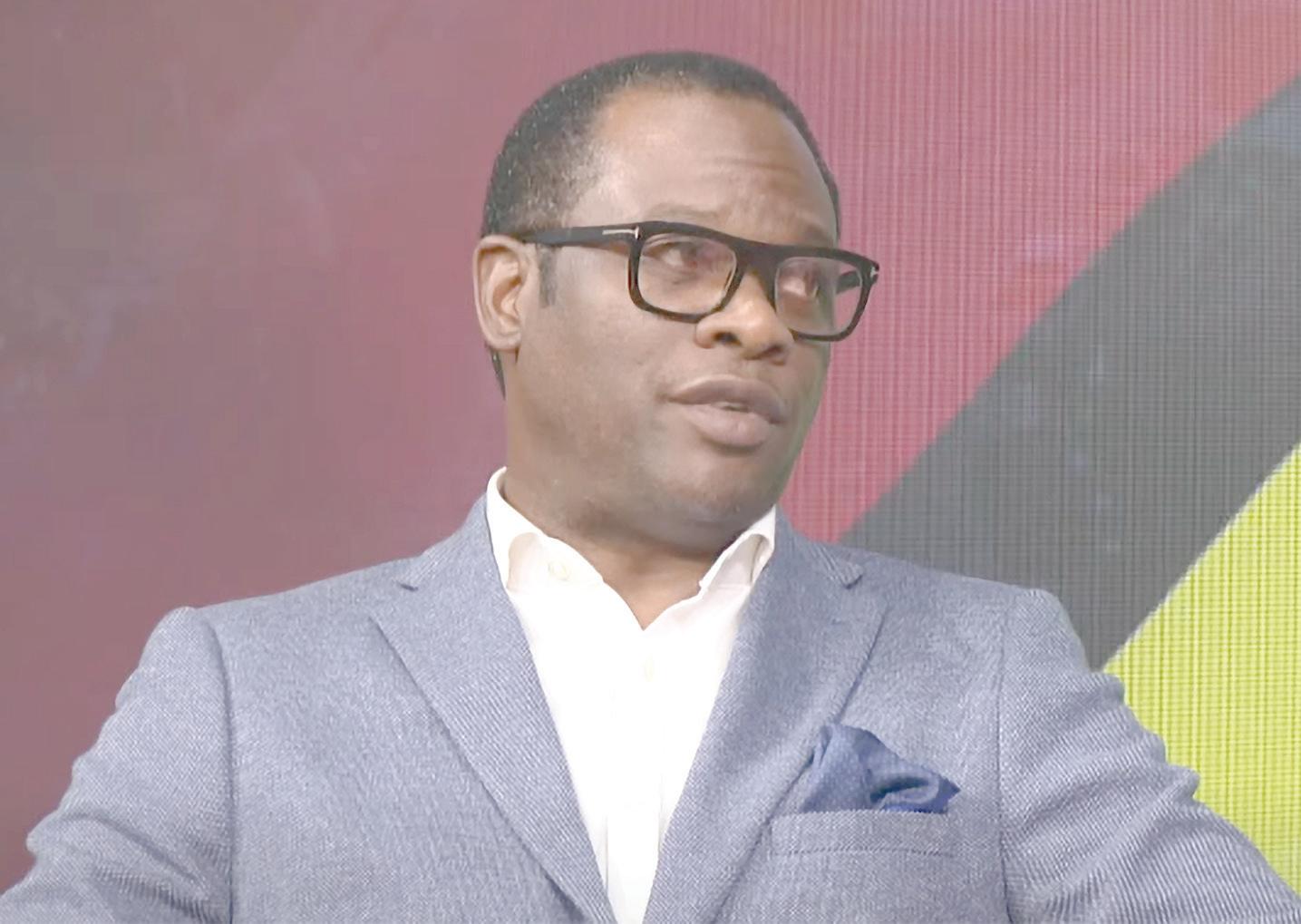
in 2025, while the non-oil economy expanded by 14.3 per cent, reflecting broadbased growth across multiple sectors. Earlier this week, Minister McCoy said that the Opposition’s attacks and response to Budget 2026 continue to expose a troubling lack of seriousness, policy depth and economic literacy.
“The Opposition’s commentary makes it clear that they have not grasped what this budget is designed to do: consolidate growth, protect the vulnerable, expand productive capacity, and responsibly manage a fast-growing economy,” McCoy said in a post on his official Facebook page.
ple understand that this is a job that we are all up to for your benefit, for your own development, for the enhancement of your lives, for ensuring that your children will continue to have not only an education, but free education, a good education, to ensure that you have the means, you and your family, have the means of accessing jobs and better paying jobs, to make sure that you have the opportunity to establish your small businesses, and that you have the support for that small business development, and to make sure that you are the end of the day can have more disposable income to spend on your family, and you’re able to generate wealth, as we want you to do; wealth creation for families, so that you can really be part of a society in which you are truly a beneficiary of all that it has to offer,” McCoy said.
Guyana’s $1.558 trillion Budget 2026 was presented in the National Assembly last Monday, marking a 307 per cent increase over the $383.1 billion budget in 2021, as the government advances its people-centred development agenda under the theme “Putting People First.”
The country’s largest budget comes amid strong economic performance, with overall economic growth recorded at 19.3 per cent
According to the minister, instead of engaging the substance of the fiscal framework – including macroeconomic stability, sectoral investments, social spending, and long-term development planning, Opposition MPs from APNU and the We Invest in Nationhood (WIN) party, which is less than a year old, have resorted to political noise and shallow sound bites.
“Instead of engaging the substance—macroeconomic stability, sectoral investments, social spending, and long-term development planning—they resort to noise, slogans, and shallow sound bites,” McCoy said.
APNU and WIN have been publicly criticising the $1.558 trillion budget by comparing it to their own manifesto-style promises. However, these same parties were previously called out during the 2025 elections after failing to present any concrete, costed plans when challenged to explain how such commitments would be financed or sustained.
As such, many of the Opposition’s proposed measures would, in fact, require a significantly larger national budget, deeper borrowing and an even wider fiscal deficit, the very outcomes they now accuse the government of pursuing.

MINISTER of Foreign Affairs and International Cooperation, Hugh Todd, has said that Budget 2026 makes clear provision to support Guyana’s legal and diplomatic efforts in the ongoing border controversy case before the International Court of Justice (ICJ).
The case before the ICJ concerns Venezuela’s contention that the 1899 Arbitral Award, which established the boundary between the two countries, is null and void.
Guyana has maintained that the award is a valid and binding legal instrument that settled the border over a century ago.
In accordance with the Geneva Agreement, Guyana and Venezuela engaged in over two decades of Good Offices efforts on the border controversy under the United Nations’ (UN) Secretary-General’s auspices, in an attempt to find a peaceful diplomatic resolution.
However, on January 30, 2018, after the process failed to produce meaningful progress, the UN Secretary-General concluded that the Good Offices initiative had run its course.
In accordance with Article IV (2) of the Geneva
Agreement, he exercised his authority and selected judicial settlement by the ICJ as the next method of resolution.
Guyana, in accordance with the Secretary-General’s decision, filed an application with the ICJ on March 29, 2018, seeking a ruling on the validity of the 1899 Arbitral Award and the boundary it established.
Minister Todd described the country’s legal team as “very capable” and expressed confidence that Guyana stands on firm ground under
international law.
During a Budget in Focus 2026 programme aired on the National Communications Network (NCN), Minister Todd explained that a portion of the $1.558 trillion national budget will be directed toward financing Guyana’s case at the ICJ, where hearings are scheduled to begin on May 4.
“So, we have an allocation to finance our efforts in terms of the legal case itself before the International Court of Justice,” Todd said. “We have a very well-capable
legal team. We have a very capable in-house team at the foreign ministry, as well as a committee, which includes all the senior… diplomats, some still serving, some who have retired and are back with us, and other senior retired officials who have had exposure to frontiers.”
He noted that Guyana’s preparations involve both local and international expertise, supported by resources from the Ministry of Foreign Affairs and International Co-operation.
“What we have today is a very, very capable team, locally and internationally,” the minister said. “We are going to be in the court from the 4th of May. The hearings begin. We are preparing for that now.”
Todd emphasised that Budget 2026 ensures sufficient resources are available not only for legal representation but also for the logistical and technical requirements associated with the case.
“And we have sufficient allocation to support the team here in Guyana, and to support our legal team, and to support all of the logistics
that will be required to give effect to an outcome that we believe will be in our favour,” he stated.
While expressing confidence in Guyana’s position, the minister acknowledged the complexity of the international environment in which the case is being heard.
“Of course, we are still cautious because we are dealing with an international system and international politics,” Todd said. “But on the legal side, we think that we are on the right side of international law.”
He added that Guyana continues to receive backing from a wide range of international partners.
“We have very good support on the side of international law from our traditional partners and from other friends and partners globally, including international and regional organisations,” he said.
The minister also linked the country’s ICJ efforts to Guyana’s broader foreign policy agenda, which he said is guided by President Dr Irfaan Ali and focused on energy security, food security and climate security.
“Our national policies, when we get them right,
we’re able to formulate a foreign policy agenda, which is led by His Excellency the President, that we can actually promote,” Todd explained.
“And that is why we’ve been so effective over the last five years.”
Todd concluded that Budget 2026 reflects the government’s commitment to ensuring that Guyana’s case before the ICJ is fully supported and professionally managed, while continuing to project the country as a responsible member of the international community.
“And to do that, you have to be prudent, you have to be serious about policymaking, you have to put people first, and you have to have a budget that aligns with the wishes of the people,” he said.
“And I think that is what we have been able to deliver once again for the people of Guyana.”
The ICJ, based in The Hague, Netherlands, is the principal judicial organ of the UN, established in 1945 to settle legal disputes between states and provide advisory opinions on international legal questions. Decisions of the court are final and binding on the parties.
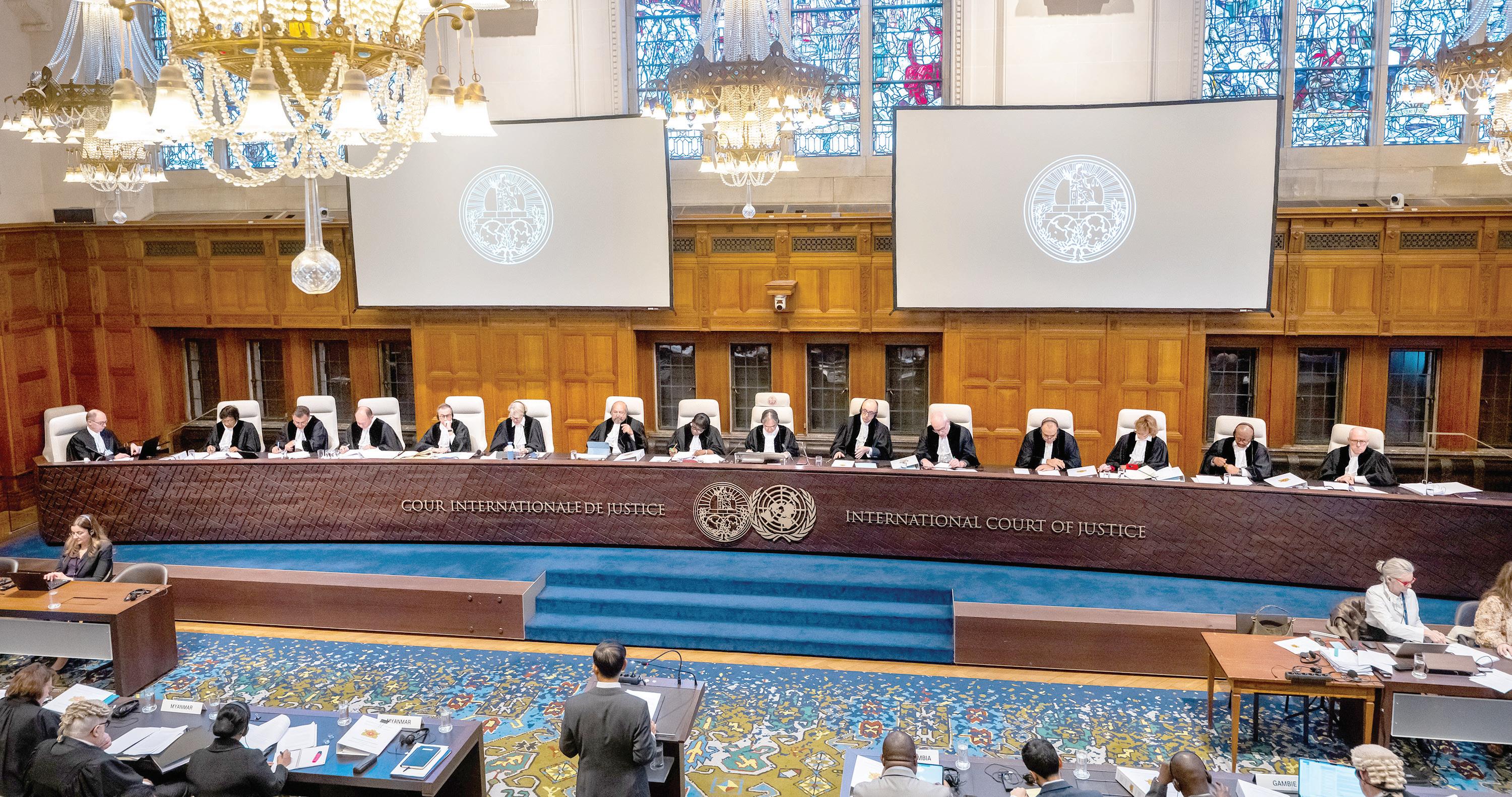
WOMEN and single mothers have welcomed what they described as a long-overdue opportunity for affordable homeownership, as the Government of Guyana officially launched the Hyde Park (Yarrowkabra) Homestead Project on Thursday, offering immediate access to completed homes and simplified financing arrangements.
At the launch, several women applicants were allocated homes on site, with a number securing on-thespot mortgage approvals from participating financial institutions. Others received pre-qualification letters, enabling them to continue the process with banks of their choice.
Housing allocations under the initiative will continue at the Ministry of Housing and Water’s Brickdam headquarters, as the government accelerates occupancy at the new development along the Soesdyke–Linden Highway.
The Hyde Park Homestead Project features 600 square-foot, turnkey homes constructed by DuraVilla Homes. Each unit comprises two bedrooms, one bathroom, an open-plan kitchen, dining and living area, and a veranda.
Built on reinforced concrete foundations, the homes include concrete-floor finishes, UPVC windows, wooden internal doors and steel external doors. Priced at $7 million, the units come with standard electrical and plumbing installations, pro-
visions for air-conditioning and hot water, a complete bathroom vanity with sink and faucet, a fibreglass shower tray, and kitchen cabinets fitted with quartz countertops.
Each home is also equipped with two 450-gallon water tanks and a 20 ft × 20 ft shade house, support-
ownership.
Mother of one, Latifa Robinson, described the process as seamless and transparent.
“The process was smooth. I already came as a pre-qualifier. When I came up to a representative from [the] Ministry of Housing, they wrote up the form. Then
as $21,000. It is a smooth and easy process,” Robinson said.
She also welcomed the design of the home, noting that it meets her family’s needs.
“This programme is a great programme. I have one son, and with him he is very active, so he has a
comes with home ownership.
“I think this initiative that the government put out is very good, I mean it is helpful towards me and the children.
Mother of five, Nobessa Hutson, described receiving her home as the culmination of years of waiting.
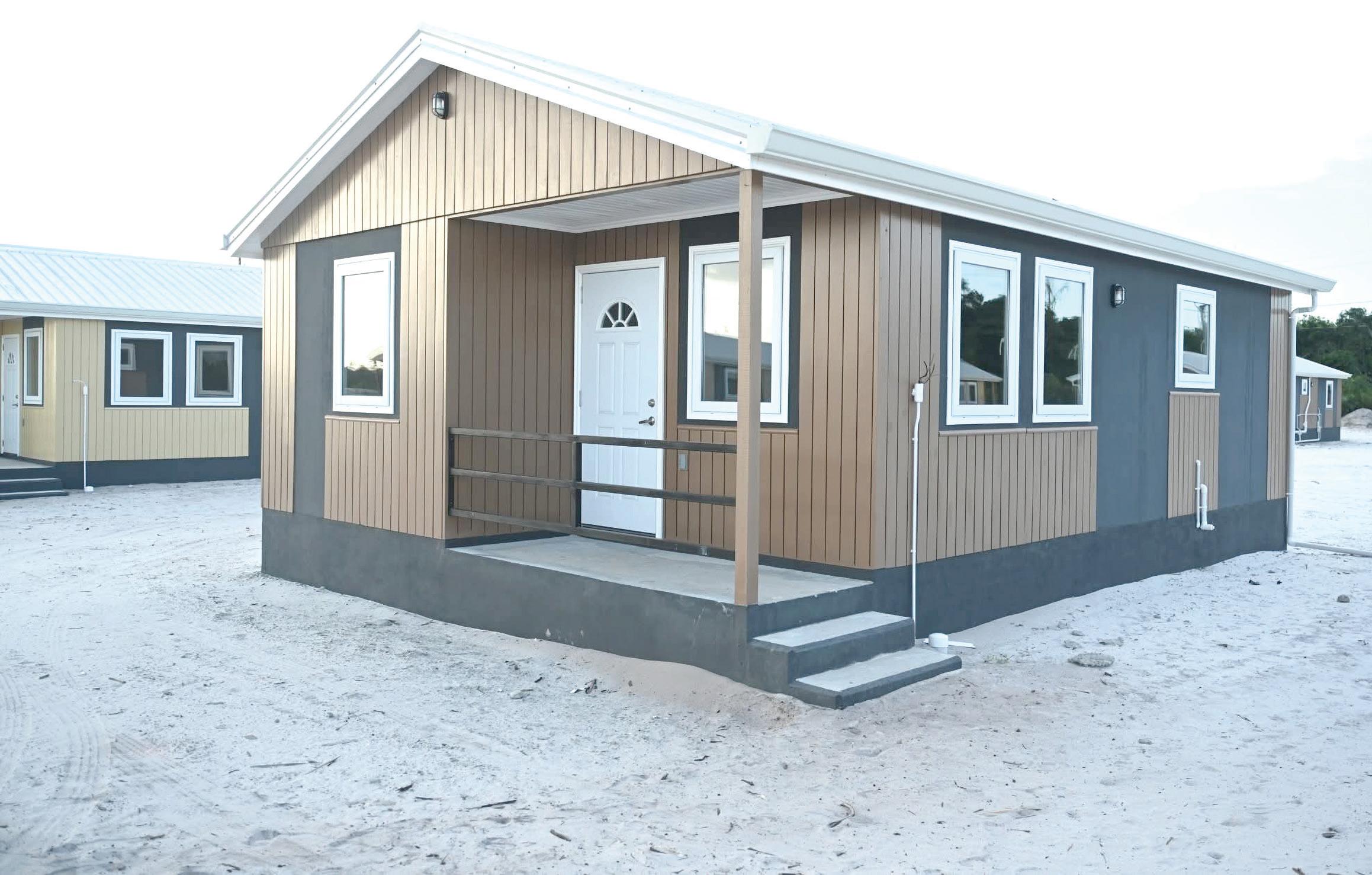
ing small-scale planting and household sustainability.
For beneficiaries, the project represents not only access to housing, but a simplified and realistic path to
the banks are already here, so they told us to go [to] whichever bank we prefer. And the bank said that you can pay a deposit of $400,000, and per month you can pay as low
lot of space to run around. I think the design is great,” she shared.
Natasha Jawaheer echoed those sentiments, highlighting the sense of security that
Security wise, knowing that I have ownership, home ownership, you feel much better. It is a nice, comfortable and cozy home,” she said.
Encouraging others to apply, Jawaheer added: “It is a good programme, I would encourage other people to apply because it is very good.”
“I am one of the moms that benefit from this beautiful house, our low-income home. I must say thanks to the Minister of Housing. I have waited patiently for several years and now I am here,” Hutson said.
“I am a mom of five and I am very grateful to have one of these houses today. And it will be a great benefit for me and my children. I can also do my little planting and we can live happily.”
The Hyde Park (Yarrowkabra) Homestead Project is a targeted housing initiative conceptualised under the direction of President Irfaan Ali, with a specific focus on women-led households and single parents.
The project adopts an integrated development model that links housing with forestry, agriculture and socio-economic empowerment, supporting long-term resilience and self-sufficiency. Construction is being executed by Duravilla Homes Guyana, utilising a range of locally available timber species.
As allocations continue, the initiative reflects the government’s broader strategy of pairing affordable, well-designed housing with accessible financing, aimed at strengthening family stability, expanding homeownership and improving quality of life across communities.

MINISTER of Public Works, Juan Edghill, on Saturday, moved to set the record straight on the capacity and completion status of the Kobreimo Bridge in Mabaruma, Region One, rejecting as false claims circulated by sections of the opposition on social media.
In a video statement issued following an on-site inspection, the minister dismissed assertions that the bridge is a one-lane structure and remains unfinished, describing both claims as inaccurate and misleading.
Standing on the bridge as vehicles passed in both directions, Minister Edghill said his inspection confirmed that the structure is fully constructed, accommodates two-way traffic, and is currently undergoing standard post-construction curing procedures.
Beyond addressing the physical condition of the bridge, the minister also issued a pointed warning on responsibility in public discourse, calling on legislators, elected officials and media practitioners to ensure claims placed in the public domain are properly verified.
Providing an update from the site, Minister Edghill reiterated that the recent criticisms were inconsistent with engineering reports and onthe-ground realities.
The $74,766,500 project, executed by Aruca Investment, commenced in June 2025 and involved the construction of a temporary bypass, demolition and reconstruction of the existing 40-foot bridge, extension of the structure, and the installation of additional deep foundation piles to strengthen the abutments.
These works facilitated the conversion of the former one-lane timber bridge into a reinforced two-lane structure capable of safely accommodating both light and heavy vehicular traffic.
“I am here myself as the Minister of Public Works to verify and to ensure that what my engineers told me was truthful and factual as compared to the videos that were circulating on social media. We were told that this bridge is a one-lane bridge. We know that number one, the report that came from sections of the opposition were not factual. It is a twolane bridge. Number two,
they said it was not completed; the bridge is completed,” the Minister said.
The Ministry of Public Works previously acknowledged that the project timeline experienced logistical extensions. However, it clarified that these periods did not represent inactivity, but were necessary to meet technical specifications and ensure
Minister of Public Works, Juan Edghill, conducted an on-site inspection of the Kobreimo Bridge in Mabaruma, Region One, rejecting claims that the bridge is incomplete and reaffirming that it is fully constructed and capable of accommodating two-way traffic
long-term durability.
Contrary to claims of stagnation, physical works continued steadily throughout 2025. The ministry confirmed that as of January 15, 2026, the Kobreimo Bridge has been fully operational for both light and heavy vehicular traffic, restoring unrestricted access along the Main Road.
Minister Edghill further explained that infrastructural projects of this nature require curing periods after concrete works are completed to ensure structural integrity.
“When concrete work is completed, you have to give it curing time before you have all the traffic on it. That is why oftentimes we cast in stages to allow for still access, and the area just needed cleaning up. And here we are in Region One, contrary to the misinformation spread, another vehicle is passing while we are here, another vehicle is parked on the bridge,” he said.
Using the incident to underscore a wider concern, the
minister said the spread of misinformation on infrastructural projects has become increasingly frequent and damaging.
“It is required of all of us as legislators and as elected officials that whenever
TURN TO PAGE 19
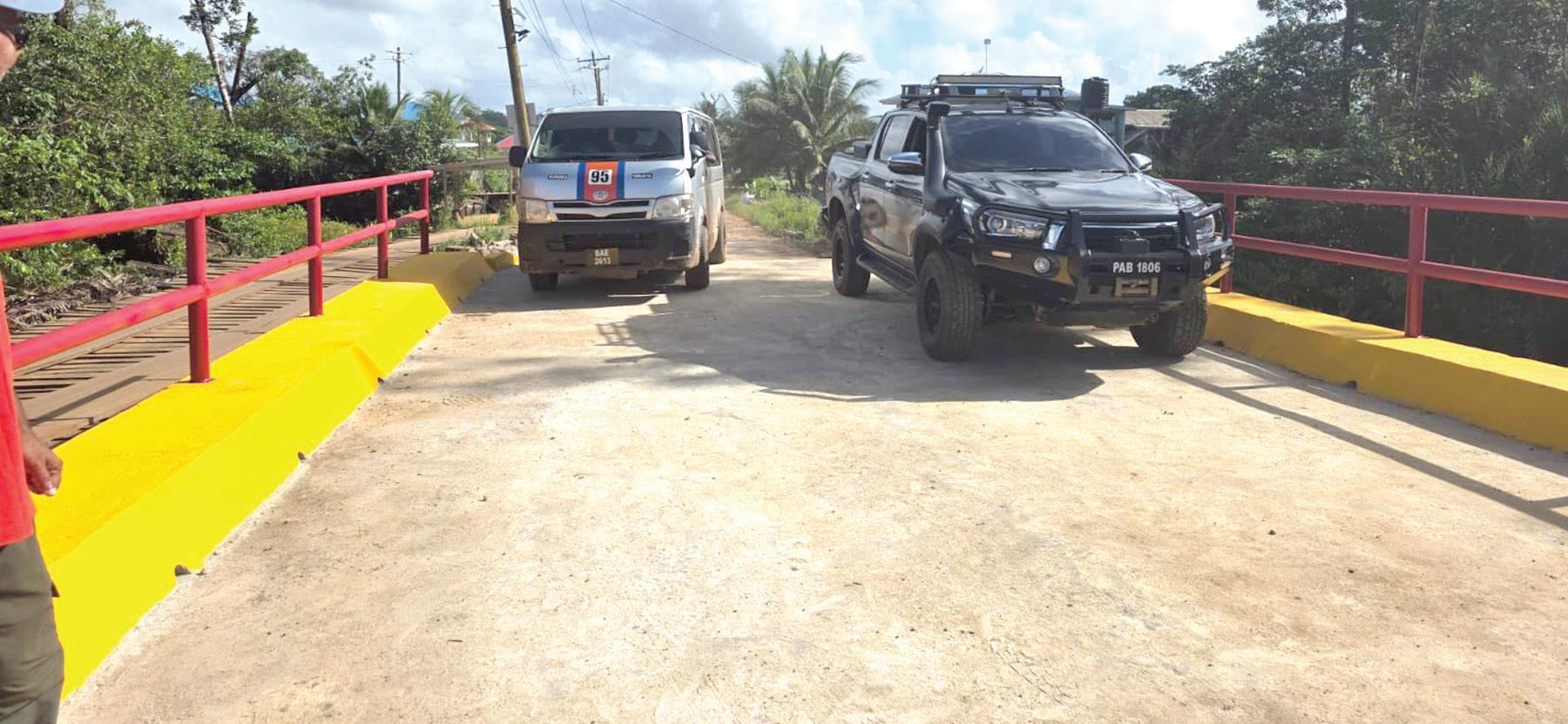

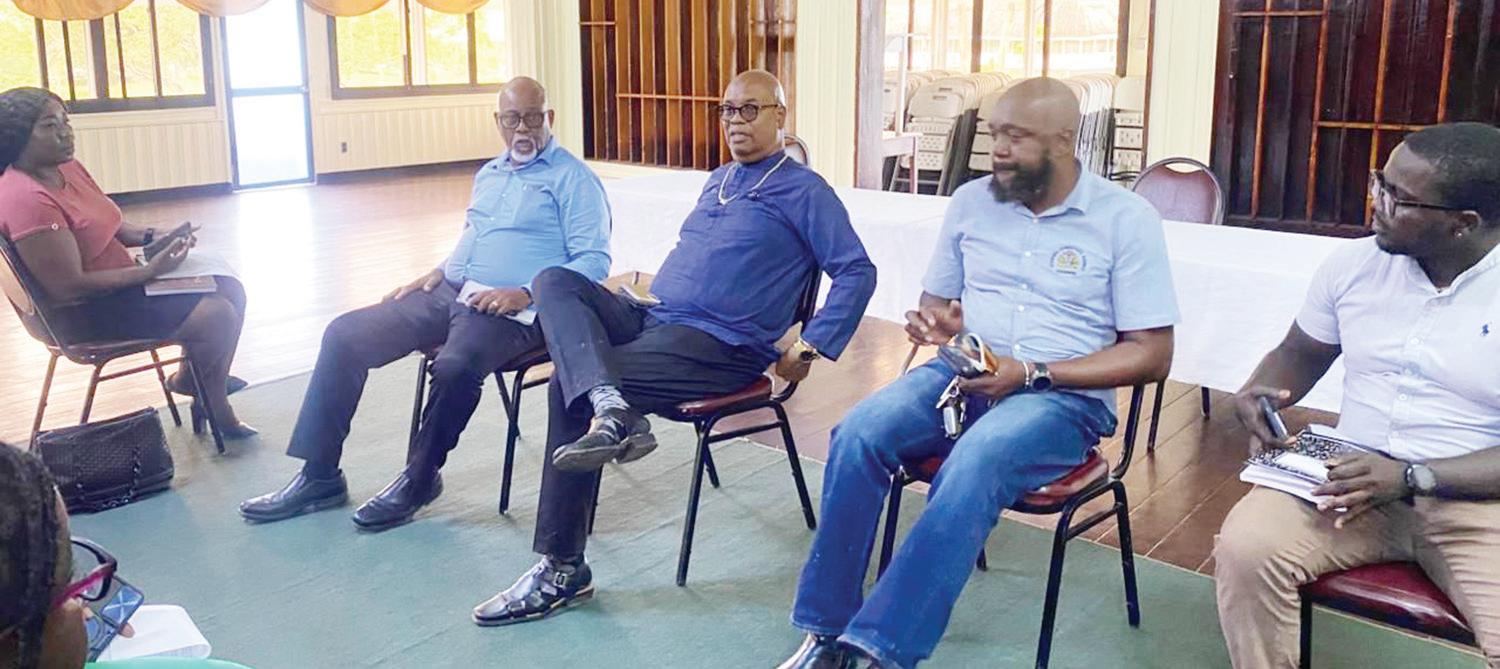
STAFF of the current Mackenzie-Wismar bridge in Region 10 will be employed by the Ministry of Public Works when the US$35 million Mackenzie-Wismar bridge is completed.
The toll-free bridge is expected to be fully operational by June 2026, once the roads leading to it are connected.
During a meeting with staff of the existing bridge on Thursday at Watooka Lodge, Minister of Public Works Bishop Juan Edghill noted that the ministry will align its current position with its new one.
Staff were advised not to panic, as the government is focused on hiring and retaining workers rather than
letting them go.
The public works minister also reassured the current bridge staff that they will suffer no loss of salary when they are transferred to the ministry.
“We’ve got to look at where you’re best suited so that you’ll be able to get service, no loss of salary or benefits,” Minister Edghill noted.
Meanwhile, a staff member of the bridge, Aalyiah, told the Department of Public Information (DPI) that she believes the transition will go smoothly, which will allow her to work more efficiently.
Another staff member, Abigail, stated that she was elated to be transferred after the new bridge is commis-

sioned.
Minister Edghill urged the staff to share information abo ut job openings that better match their qualifications. [DPI]
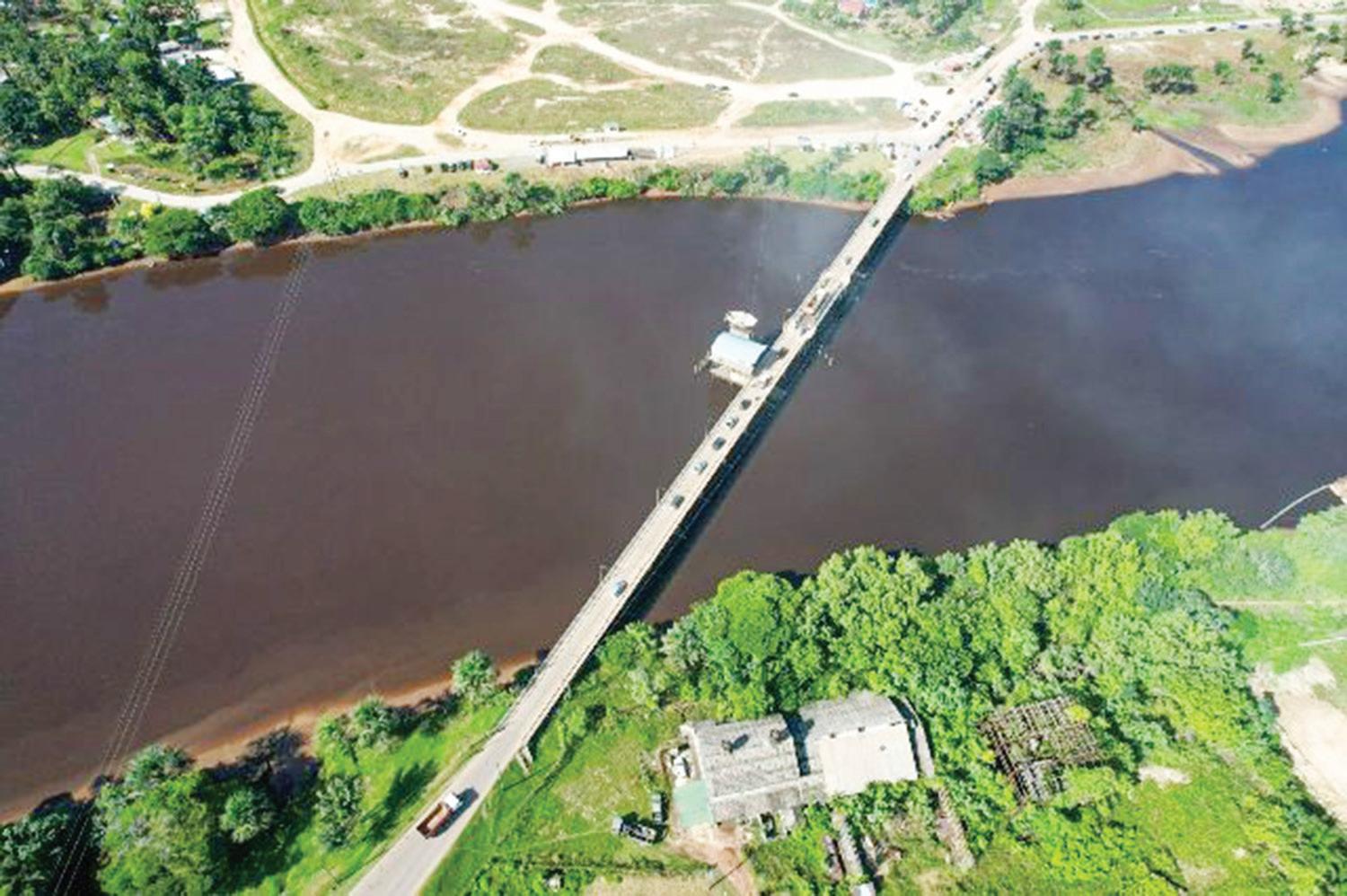
we say something and we are fact-checked and that is something we have to start doing in Guyana. When people go to social media and post misinformation, or journalists practise yellow journalism, it must be able to be fact-checked and the information made public. They made an issue where there was no issue,” he stat-
ed.
FROM PAGE 17
The Ministry of Public Works reaffirmed its commitment to delivering infrastructure that is durable, safe and fit for purpose, noting that projects such as the Kobreimo Bridge remain critical transportation and economic lifelines for communities across Region One.
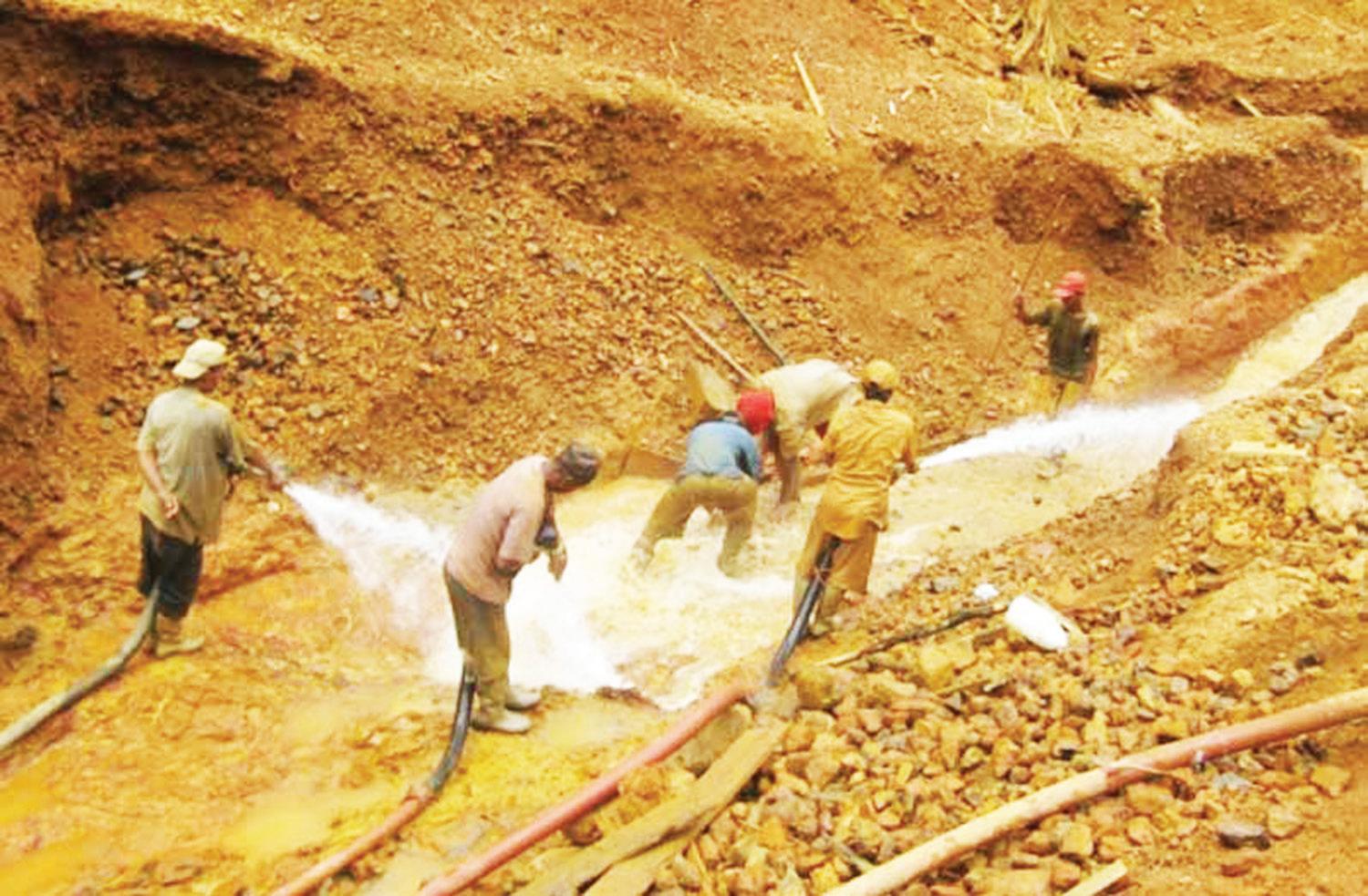

THE Ministry of Natural Resources has confirmed that a total of 53 individuals were arrested, charged and convicted during January 2026 as the government intensifies its nationwide crackdown on illegal mining operations.
In a statement issued on Saturday, the ministry said the matters were concluded before the Bartica, Mahdia and Linden Magistrates’ Courts, where the offenders pleaded guilty to breaches of Guyana’s Mining Laws and Regulations.
The convictions stemmed from a range of illegal activities, including mining without a licence or permit; operating licensed dredges on mining properties without the permission of the property holder and the use of unregistered or unlicensed dredges.
In accordance with the law, the courts imposed fines for the various offences committed.
“These nine convictions add to the 44 persons previously arrested, charged, and brought before the courts as part of the ministry’s intensified national crackdown on illegal mining operations, bringing the total number of persons prosecuted to 53,” the ministry said.
The Ministry of Natural Resources made it clear that enforcement action
against illegal mining will continue without interruption, as authorities move to strengthen regulatory compliance across the sector.
“The Ministry of Natural Resources reiterates that this course of action will continue unabated to ensure full compliance with the Mining Laws and Regulations, while ensuring environmental sustainability in harnessing Guyana’s natural resources for present and future generations,” the statement noted.
The government has in recent months stepped up monitoring, inspections, and enforcement efforts across mining districts, signalling a zero-tolerance approach to unlawful mining activities and environmental violations.
Earlier in January, the Guyana Geology and Mines Commission (GGMC) announced the suspension of all mining operations and related authorisations held by a number of named individuals, following their failure to comply with a public notice issued.
President, Dr Irfaan Ali had previously urged all gold miners to make the full declaration of gold produced in 2025, adding that registered dredges with no declarations will be deregistered, while ille-
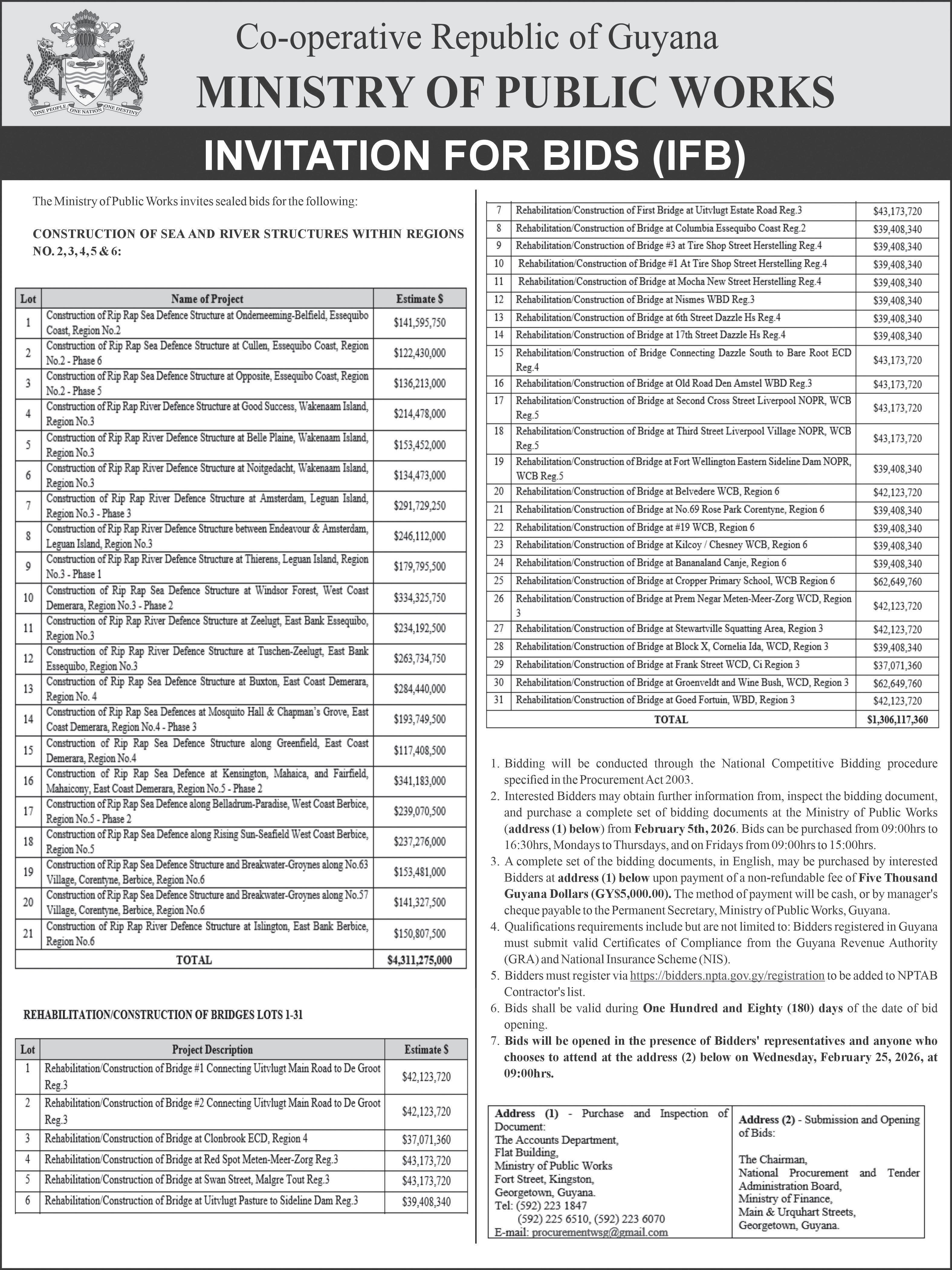
By Faith Greene
AT just 25 years old, Malik Williams is set to graduate in May from Indiana University , Bloomington, with
a Master’s degree in Data Science, applied to cybersecurity, earned through the prestigious Fulbright Foreign Student Programme. Williams, a 2024 Ful -
bright Scholar, is no stranger to Guyana’s technology and innovation space, with his name already attached to several impactful initiatives spanning education, cyber-
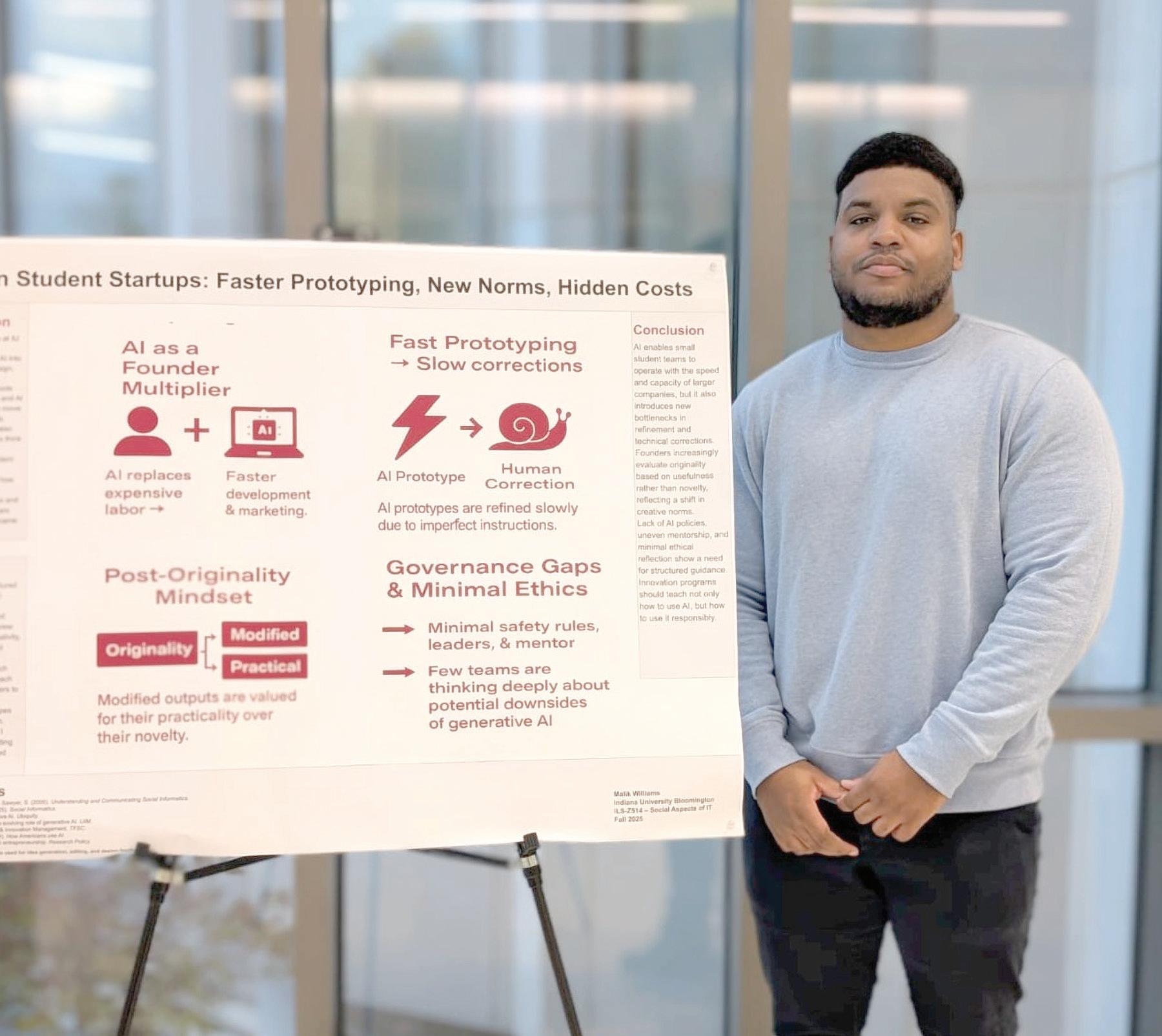
security and environmental protection.
In 2020, Williams, alongside four other young Guyanese, co-created Unity.GY, a donor-driven platform aimed at promoting youth development across Guyana.
Two years later, in 2022, he teamed up with his brother Shomari Williams, Andrew Garnett and Jung Leung to form a quartet known as FramePerfect. Their Webby-backed project, designed to combat illegal logging in Guyana’s forests, won the 2022 5G for Change Hackathon, earning the team a Webby Award.
Williams, Shomari Williams and Andrew Garnett would later go on to co-found FramePerfect as a growing Guyanese technology company.
Before embarking on the Fulbright journey, Williams’ professional path began in education. His first job was as a teacher, travelling to Linden, Essequibo and other communities to teach children how to code. He later served as an ICT Engineer at the University of Guyana, before moving into industry as an Industrial Control Systems Cybersecurity Engineer at ExxonMobil Guyana.
Explaining his choice of graduate programme, Williams said he deliberately selected a path that merged data science and cybersecurity.
“So, I figured that the best thing for me to do would be to put myself in a position where I’m doing both. So that when I come back home, I could decide if I want to continue in cybersecurity or if I want to, you know, continue the only part of teaching,” he said.
Teaching, he explained, has always been central to
his identity.
“I used to teach since I was way, way younger, because back in my old community, Agricola, my older sister used to teach children how to read and stuff like that. So, I started helping her out with that.
And I wanted to be a teacher since I was young,” Williams said.
He added that this passion continued throughout his academic life.
“Then I grew up, started computer science, mainly started teaching computer science. I taught in the university too, when I was there as a student and a little bit after I left, because it was always the plan to become a lecturer,” he said.
Williams said his decision to apply for the Fulbright Scholarship was driven by encouragement from a close friend, Norwell, who repeatedly urged him to submit an application.
While hopeful, he acknowledged the competitive nature of the programme.
His time at Indiana University proved highly productive. Williams was selected for the 2025 Summer Intern Cohort of IU Innovates, a sponsored 10-week programme that supports student-led innovation and entrepreneurship.
The programme allowed him to continue developing FramePerfect, while contributing to projects aimed at strengthening entrepreneurial ecosystems in the United States.
Williams said he helped design data-collection tools to track the growth of local entrepreneurs, ensuring targeted support where it was most needed.
“What they were trying to
do was for all of the different entrepreneurs that came in, they were trying to track their progress as closely as they could possibly track it so that they know where the bottlenecks, where are people getting stuck, where are the biggest issues that people are having,” he explained.
He noted that IU Innovates is heavily donor supported and focused on demonstrating measurable impact.
“What they really wanted to do was show how they’re actually creating an impact in terms of the student entrepreneurs that come through there,” Williams said.
The scholar stated that one of his biggest take-aways is the power of networking and socialising to achieve a goal. He referenced experiences that pushed him to break out of his shell and converse with a random person, and where it would take you.
While he didn’t give specifics, Williams said he does intend to continue teaching, whether it’s through FramePerfect, or taking a more hands-on approach at the tertiary level.
“I’m for sure going to continue working on more technology projects because I like doing those and maybe continue my career in cybersecurity,” he disclosed.
In Guyana, the Fulbright Foreign Student Program is administered by the US Embassy.
The embassy relaunched the Fulbright Foreign Student Program in 2019. The scholarship gives Guyanese citizens the opportunity to complete a Master’s or PhD. at a higher-education institution in the United States.
As the Government advances its expansive 2026 development agenda, Executive Director of the Guyana National Bureau of Standards (GNBS), Trevor Bassoo, has underscored the Bureau’s role in ensuring that economic growth is safe, fair, competitive and sustainable.
Bassoo said the 2026 Budget clearly demonstrates that the Government is continuing to build on solid foundations through major investments in housing, infrastructure, healthcare, education and private-sector development.
Within this framework, he noted, agencies such as the GNBS play a critical, though often understated, role in supporting national growth by setting and enforcing standards that protect consumers, improve quality and enhance competitiveness.
Looking specifically at how the GNBS will support sector and business development, Bassoo said the Gov-
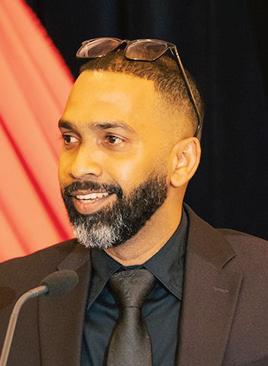
ernment continues to advance a pro-business agenda through tax incentives and targeted support measures. He pointed to the expansion of the Guyana Development Bank, which is expected to offer collateral-free and interest-free loans of up to $3 million, particularly benefiting small businesses, young entre-
preneurs and women.
“Small businesses, young entrepreneurs, and women will all benefit from this initiative. So, the question is, how can an agency such as the GNBS provide support? Within the business development framework, the GNBS helps micro, small, and medium-sized enterprises to become more competitive,” Bassoo said.
He explained that one of the Bureau’s primary areas of intervention is helping businesses adopt recognised standards within their operations.
“There’s a number of areas, but let’s begin with the adoption of standards in their operations, ensuring efficiency, quality, and consistency, which all translates to competitiveness,” he said. “The Bureau also provides training and technical assistance to individuals and to businesses who are seeking to improve the quality of products and services.”
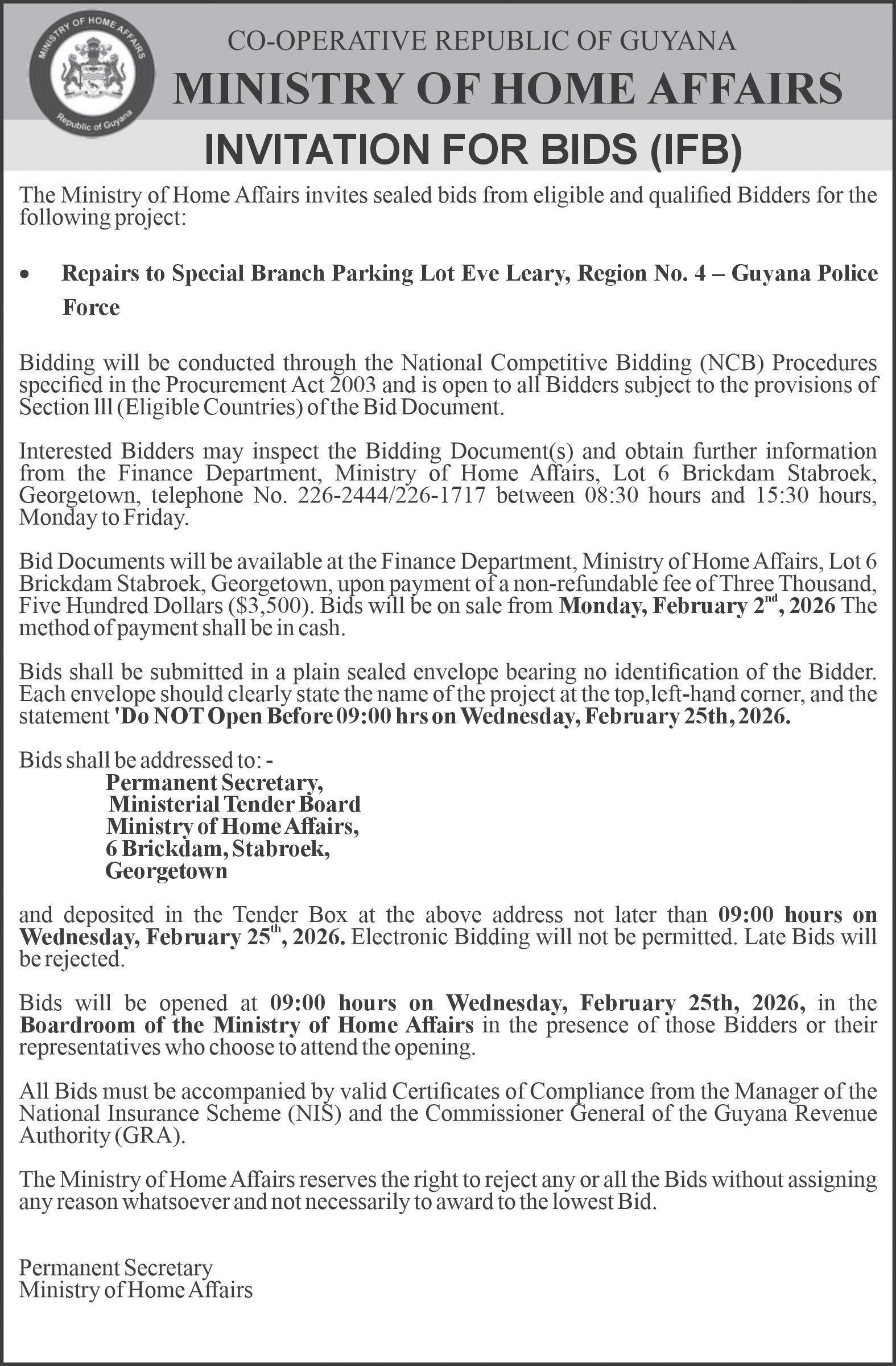
Bassoo revealed that in 2026, the GNBS will offer more than 50 training courses, with a strong focus on quality management systems. He said the Bureau’s certification programmes are designed to build customer confidence and expand market access, both locally and internationally.
“There are a number of
certification programmes offered by the GNBS, which include the popular Made in Guyana certification, used largely by agro-processors. There’s a GYS 901 certification just recently added—it’s a quality management system certification—and there’s the LAP certification, among a number of others,” he said.
Bassoo reaffirmed that the Government can rely on the GNBS to continue providing critical business support through standards implementation, training and certification, enabling Guyanese businesses to grow, compete and succeed in an increasingly dynamic economy.

gal foreign miners must be identified for prosecution and expulsion.
These issues were raised by the President during a meeting with the leadership of the Ministry of Natural Resources and the Guyana
Geology and Mines Commission (GGMC) at State House.
“During the meeting, the President directed that immediate action be taken to ensure that all gold miners fully comply with their obligations to declare all
gold produced in 2025.
“Further, all registered dredges with no declarations will be deregistered, and all foreign miners operating illegally in Guyana must be identified for prosecution and expulsion. It was also noted that some

Brazilian miners operating in Guyana have had very low or no declarations.
“These miners have 24 hours to comply fully with the laws of Guyana and the requirement to declare to the Guyana Gold Board,” a post on the President’s Facebook page said.
Additionally, it was stated that the Guyana Gold and Diamond Miners Association and the Ministry of Natural Resources are working together to ensure that all miners in every category operating in Guyana are registered with the ministry, and further, that they all have local bank accounts.
Meanwhile, GGDMA President Ronaldo Alphonso said he is urging the min-
ing public to be compliant, and to sell their gold to legitimate sources to sustain the mining sector for generations to come.
“It is our responsibility as miners to ensure the sustainability of the industry. We need to make it compliant, and we need to declare gold. Make 2026 the year of compliance and declaration,” Alphonso said, according to the post.
In December 2025, President Ali had said that his government would pursue and shut down delinquent operators who continue to exploit state incentives while failing to declare their gold.
According to the Ministry of Finance’s 2025 midyear report, gold declara -
tions are up by 10.9 per cent this year, but Dr Ali stressed that this remains below the government’s expectations. He had emphasised at the time that miners who profit from the sector have a legal responsibility to accurately declare their gold, reminding them that this duty is “not by choice, but by law.”
The President added that the government intends to overhaul systems that have enabled chronic under-declaration and illegal exports, stating that the state must stop facilitating “those kinds of people.”
One gold smuggler alone stole more than $190 billion from the Guyanese economy, he had disclosed.
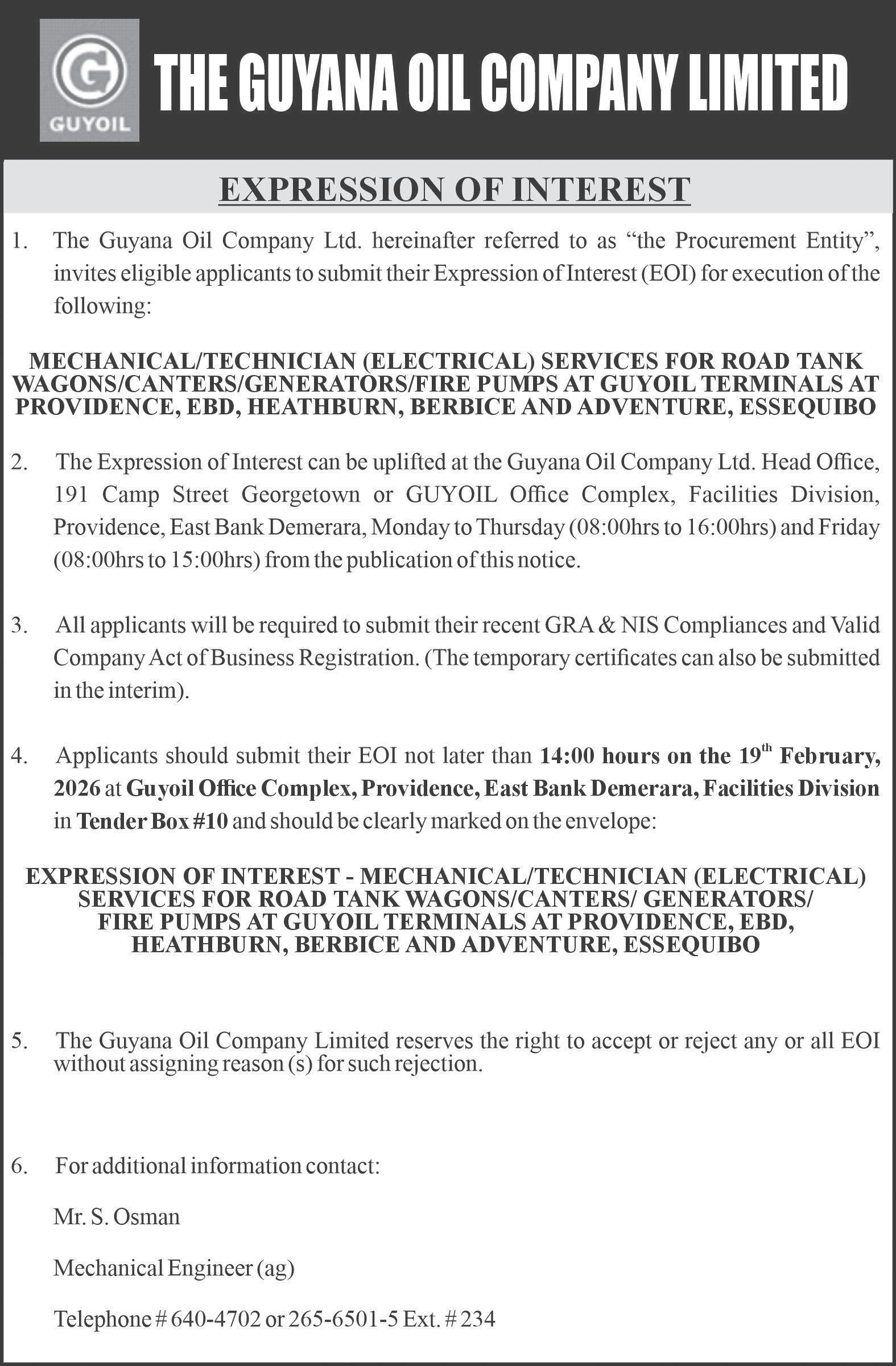
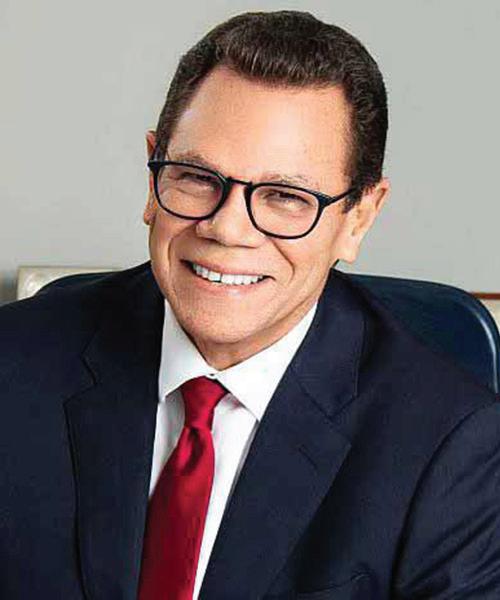
GUYANA has joined the wider Caribbean in mourning the passing of former President of the Caribbean Development Bank (CDB), Dr William Warren Smith, whom President Irfaan Ali has described as an exceptional regionalist and a true friend of the country.
In a Facebook post on Saturday, President Ali said the Caribbean is poorer for Dr Smith’s passing, as he extended condolences to the CDB, Dr Smith’s wife, Dr Anne-Marie Irvine, his family, relatives and loved ones.
The Head of State said Dr Smith served the Caribbean with rare distinction and played a pivotal role in strengthening Guyana’s partnership with the CDB during his tenure. According to President Ali, Dr Smith believed deeply in Guyana’s
potential long before it became widely recognised, standing firmly with the country as a trusted development partner.
“Dr William Warren Smith will long be remembered as a true friend of Guyana,” President Ali said, adding that he understood the country’s challenges, shared its aspirations and engaged with generosity of mind and heart.
As the Region mourns his death, President Ali said Guyana remains grateful for Dr Smith’s life of service, regional unity and commitment to uplifting Caribbean people, and stands in solidarity with the CDB and the wider Caribbean Community in mourning the loss of what he described as an exceptional regionalist.
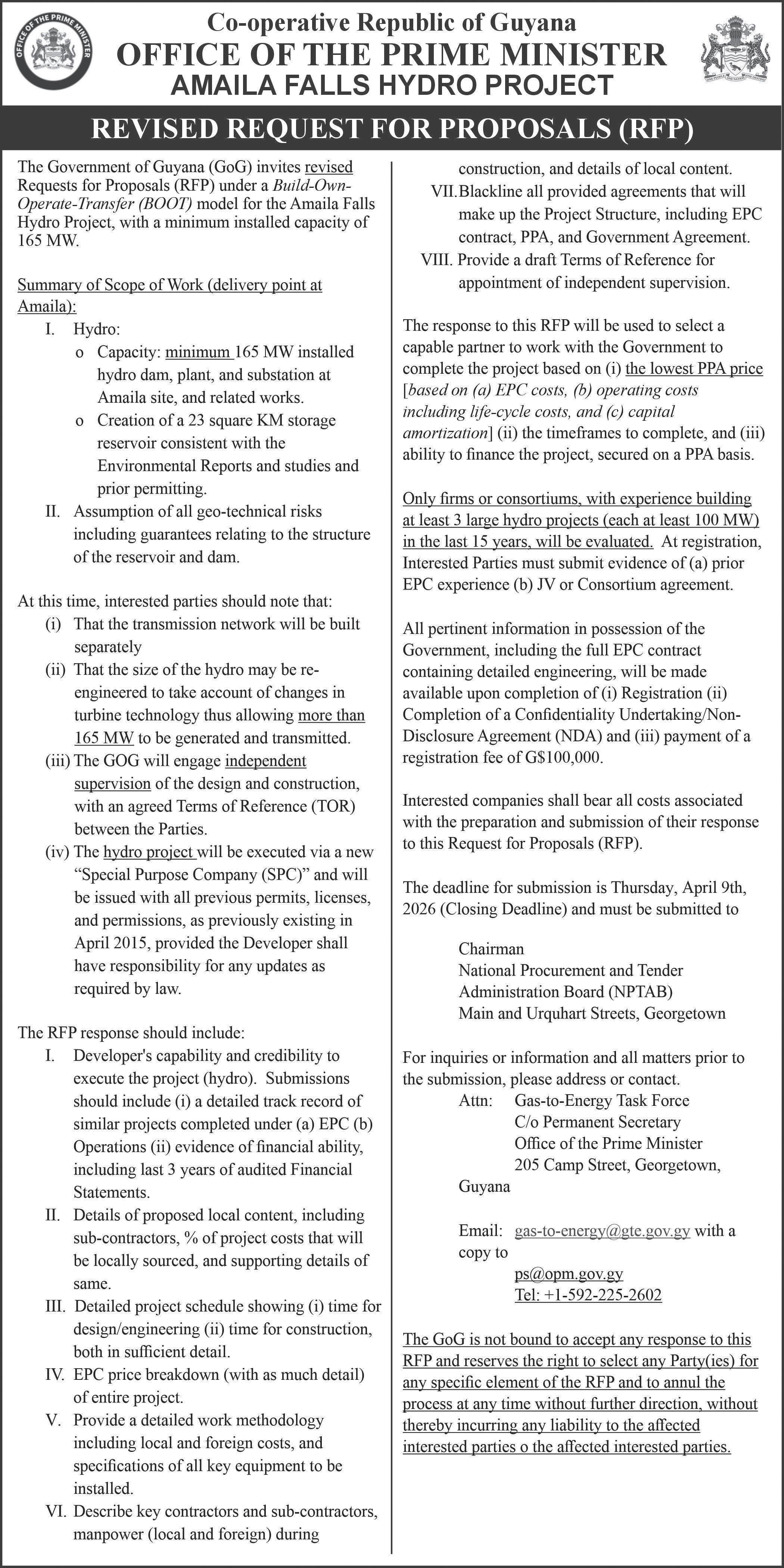



• From Page 32
“It’s an incredible achievement,” said the 26-year-old, who will rise to number three in the world rankings on Monday behind Sabalenka and Iga Swiatek.
“I’m super happy and proud. It was a really tough battle. I didn’t expect to turn it around. I got some opportunities.
“Aryna is a very tough opponent but I’m super happy that this time I’m holding the trophy.”
In the first Grand Slam final since 2008 featuring players yet to drop a set, it was top seed Sabalenka who blinked first under the Rod Laver Arena roof as Rybakina came out all guns blazing to break in the opening game and take control.
The fifth seed’s booming ball-striking caused all sorts of problems for twice

ENGLISH RACING TIPS
MARKET RASEN
08:47 hrs Wind Your Neck In
09:17 hrs Cinquenta
09:47 hrs Try The Money
10:20 hrs Sunshine Diamond
10:55 hrs Impatient
11:30 hrs Abbey Law
12:02 hrs Lone Soldier
MUSSELBURG
08:55 hrs Mossy Fen Road
09:25 hrs Dedicated Hero
09:55 hrs Koukeo
10:30 hrs Speiriuil
11:05 hrs Rock My Way 11:40 hrs Double Powerful
12:15 hrs
Dearkeithandkaty
SOUTH AFRICA RACING TIPS
champion Sabalenka, as Rybakina comfortably got to set point in the 10th game and finished it in style to send alarm bells ringing in her opponent’s dugout.
Arriving with 46 hardcourt Grand Slam match victories from the last 48, four-times major winner Sabalenka found her groove and began the second set more positively, but Rybakina saved three breakpoints to hold for 1-1. A wayward forehand from Rybakina handed Sabalenka the chance to level at one set apiece, and the Belarusian gleefully took it to turn the final set into a shootout destined to be decided by whichever player held their nerve.
Having beaten Rybakina from a similar situation in the 2023 title clash, Sabalenka unleashed a flurry of winners to go ahead 3-0,
TURFFONTEIN
08:25 hrs Crepuscolo
09:00 hrs Accept Cookies 09:35 hrs Scarlett Heart
10:15 hrs Golden Aspen 10:50 hrs Tintin
IRISH RACING TIPS
LEOPARDSTOWN
08:40 hrs Carried With
but the Kazakh erased the deficit and broke for 4-3 before securing victory to add to her All England club triumph.
The knockout blow was a thumping ace, following which the typically restrained Rybakina walked forward, smiled and pumped her fist before hugging her opponent and then celebrating with her team in the dugout.
Only a year ago at Melbourne Park, Rybakina was defending her coach Stefano Vukov, who had a provisional ban lifted by the WTA in August following an investigation into a potential breach of its code of conduct. The coach has denied any wrongdoing.
Rybakina’s latest triumph will further boost the profile of tennis in Kazakhstan, which she began representing in 2018 after being offered financial support.
Love
09:10 hrs Final Demand
09:40 hrs Talk The Talk 10:10 hrs Majborough
10:45 hrs Waterford Whispers
11:20 hrs El Fabiolo
11:52 hrs I Started A Joke
12:27 hrs Brosna Shine
Answers to yesterday’s quiz: (1) Zachary Carter-64 runs (2) Jakeem Pollard-2/37 (8)
Today’s Quiz: (1) Which is the first team to qualify for the semi-finals of the current Under 19 WC? (2) Who is the designated leader of the team?
Answers in tomorrow’s issue.
• From Page 30
“We have to be honest about it. This is not a World Cup cycle for the next two years and there are going to be some changes that may need to be made, but anyone who knows how football occurs at the elite level, at that FIFA level; if you want to stay in the top 100 or you want to be in the top 50, there has to be a level of some maintenance across the board,” Fuentes explained.
“Obviously Nations League will take place this year around September. We have the FIFA series and then we obviously we will try to hope to get a couple friendlies around the World Cup period because teams are always looking for opposition, but we need to start focusing from now if it is we really want to give ourselves a chance of
qualifying for another World Cup.”
Fuentes maintained that money would be a deciding factor on whether the 54-year-old Yorke stayed on. He said the TTFA needed to source additional sponsorship which would allow it to invest heavily in the team.
“It has to be one of the biggest concerns and not just for Dwight and his staff. We’re talking about having proper training camps, flying players in from different parts of the world, being able to pay players a decent match wage, being able to host them in proper hotels and of course run the other national teams, so it really is a bit of a strain on the TTFA now.
“The hope would have been that qualifying for the World Cup would have taken care of a lot of these bills and where we faltered there now, we have to revisit our discussions with corporate T&T,” Fuentes added. (TT Express)

CADE Cunningham scored 29 points and handed out 11 assists as the Detroit Pistons withstood a fourth-quarter rally to beat the Golden State Warriors 131-124 in San Francisco on Friday.
Jalen Duren added 21 points and 13 rebounds for the Eastern Conference-leading Pistons, who led by as many as 20 early in the third quarter. Duncan Robinson scored 15 points on five 3-pointers, Isaiah Stewart had 14 points, Tobias Harris put up 15 and Daniss Jenkins chipped in 12.
Golden State star Stephen Curry exited the game late in the third quarter due to right knee soreness and did not return. Pat Spencer started the fourth quarter in place of Curry with the Warriors trailing 108-95.
Buddy Hield and Gui Santos hit back-toback 3-pointers during a 13-2 run to cut the deficit to 117-114 with 6:19 left.
The Warriors pulled within 128-124 before Cunningham made 1 of 2 free throws with 1:02 remaining.
Golden State was held to one field goal in the final 3:24, and Harris hit two foul shots with 3.4 seconds left to secure the Pistons’ 10th win in the past 13 games.
Golden State had eight players score in double figures, including Curry (23), De’Anthony Melton (18), Santos (16), Draymond Green (15) and Al Horford (13). Moses Moody and Brandin Podziemski scored 11 apiece, and Hield added 10.
Robinson made four 3-pointers in the first
quarter to help give the Pistons a 45-37 lead. Detroit shot 76% from the field for the period.
The Warriors pulled within 61-56 on Santos’ layup with 5:11 left in the second quarter before the Pistons took a 77-64 lead into the half after closing on a 16-8 run.
The 77 points marked the most the Warriors have allowed in any half this season. Green made four 3-pointers and had 15 points in the first half for Golden State.
Cunningham had 13 first-half points for Detroit, which shot 62 per cent from the field before the break.
Golden State battled back and cut the deficit to 90-81 when Curry’s 3-pointer capped a 13-2 run with 6:02 left in the third quarter. (Reuters)

LAHORE, Pakistan, (Reuters) - Pakistan grabbed an unassailable 2-0 lead in the three-match Twenty20 series against Australia after skipper Salman Agha led by example to secure their comprehensive 90run victory in the second match in Lahore on Saturday.
Electing to bat, Pakistan amassed 198-5 after Salman (76) and Usman Khan (53) produced breezy half-centuries.
The hosts then unleashed five spinners, who strangled the Australian batters, eventually bowling them out for 108 inside 16 overs.
Australia arrived without several frontline players but losing all 10 wickets to the
KINGSTOWN, St Vincent (CMC) –Results from the third and final round of matches in the CG United Women’s Super50 Cup here on Saturday.
At Cumberland Playing Field: Trinidad and Tobago Women defeated Barbados Women by five wickets (DLS).
BARBADOS WOMEN 152-9 in 48 overs (Aaliyah Alleyne 43, Trishan Holder 32, Asabi Callender 22, Elecia Bowman 10 not out, Naijanni Cumberbatch 10; Anisa Mohammed 4-26, Nadia Mohammed 3-24).
T&T WOMEN 133-5 in 38.4 overs (Djenaba Joseph 35, Shunelle Sawh 34, Anisa Mohammed 14, Britney Cooper 12, Lee-Ann Kirby 11 not out; Shakera Selman 2-26).
At Park Hill Playing Field: Guyana Women defeated Windward Islands Women by six wickets.
WINDWARD ISLANDS WOMEN 97 in 35 overs (Earnisha Fontaine 32, Jannillea Glasgow 22, Afy Fletcher 21; Ashmini Munisar 4-21, Mandy Mangru 2-19, Kaysia Schultz 2-25).
GUYANA WOMEN 100-4 in 28 overs (Shemaine Campbelle 26 not out, Mandy Mangru 24, Laurene Williams 14, Shabika Gajnabi 14; Afy Fletcher 2-23).
At Sion Hill Playing Field: Jamaica Women defeated Leeward Islands Women by eight wickets.
LEEWARD ISLANDS WOMEN 146 in 37.4 overs (Reniece Boyce 37, Jahzara Claxton 29, Amanda Awards 27, Shawnisha Hector 17; Chedean Nation 4-23, Celina Whyte 2-19, Stafanie Taylor 2-34).
JAMAICA WOMEN 149-2 in 34.4 overs (Lena Scott 47, Chrishana McKenzie 39,Rashada Williams 26 not out, Stafanie Taylor 19 not out; Davnorique Maynard 2-27).
spinners will be a reality check for them ahead of the upcoming T20 World Cup to be played in similar conditions in India and Sri Lanka.
Earlier, Matthew Kuhnemann dismissed Pakistan opener Sahibzada Farhan in the second over but Salman and Saim Ayub (23) steadied the innings.
Babar Azam’s lean run continued when he fell to Adam Zampa for the second time in the series but Usman combined with Salman to prevent any batting collapse.
Shadab Khan contributed an unbeaten 28 down the order to take Pakistan close to the 200 mark.
AUSTRALIA fast bowler Pat Cummins was ruled out on Saturday for next month’s Twenty20 World Cup after failing to recover from a nagging back injury, and Ben Dwarshuis will replace him for the global showpiece. Cummins played just one of the five Ashes Tests against England, but Australia kept him in the provisional World Cup squad hoping for his availability in the Super Eight stage of the tournament to be played in India and Sri Lanka. The former champions begin their World Cup campaign against Ireland in a February 11 match in Colombo. (Reuters)
• Australia World Cup squad: Mitchell Marsh (captain), Travis Head, Xavier Bartlett, Josh Hazlewood, Cooper Connolly, Josh Inglis, Tim David, Matthew Kuhnemann, Ben Dwarshuis, Glenn Maxwell, Cameron Green, Matthew Renshaw, Nathan Ellis, Marcus Stoinis, Adam Zampa.
WE are now nearly two decades removed from the introduction of the ICC Men’s T20 World Cup, which ushered in a new era for the game when India emerged victorious from that thrilling 2007 tournament in South Africa.
There were 12 teams competing in that inaugural outing, while there will be 20 teams from all corners of the globe competing to win the tournament’s 10th edition in 2026. Six different teams have lifted the trophy over the years, with the West Indies, England and reigning champions India the only nations to have won it twice.
Ahead of the 2026 tournament in India and Sri Lanka, let’s take a little trip down memory lane.
A new form of cricket
The 21st century has stood witness to the emergence of T20 cricket as one of sport’s fastest growing formats, but there was major skepticism when it was first mooted around English county cricket circles.
Initially seen as a way to attract new people to the sport and simplify the game to wider audiences, T20 cricket has transformed the game’s landscape since first being

introduced at the professional level in 2003 and then quickly adopted around the world.
The birth of the ICC Men’s T20 World Cup in 2007 took it to another level and that tournament’s impact was immediate.
Legendary West Indian Chris Gayle was responsible for that, sending the very first ball of the tournament to the fence before smashing a remarkable 117 against the hosts – making the first ever T20I century in the process.
From bowl-outs to Yuvraj Singh taking six sixes off one Stuart Broad over and Misbah-ul-Haq’s infamous scoop in the final, that first tournament proved an historic first edition.
Culminating in India’s stunning
victory over Pakistan, it not only set a new course for the modern game but also the tone for the drama that would follow at ICC Men’s T20 World Cups in the decades to follow.
Iconic moments
Pakistan avenged their loss to India by claiming victory in 2009, as Shahid Afridi, a player born for the format, shone with both bat and ball in England. The tournament also saw the hosts stunned by the Netherlands in one of the all-time great upsets.
England responded a year later in the Caribbean by winning their first men’s white-ball trophy as Kevin Pietersen earned Player of the Tournament honours for his efforts with the bat. Then in 2012,
…Leslie Reifer lone regional umpire
KUMAR Dharmasena and Wayne Knights will be the onfield umpires for the opening match of the ICC Men’s T20 World Cup 2026 between Pakistan and the Netherlands to be played at the Sinhalese Sports Club ground on 7 February.
Dharmasena, an off-spinner who was a member of the Sri Lankan team that won the ICC Men’s Cricket World Cup in 1996, has overseen 37 matches at the ICC Men’s T20 World Cup including the finals of 2016 and 2022, putting him fourth on the all-time list.
New Zealander Knights, in contrast, is at his first ICC Men’s T20 World Cup and will reach the landmark of 50 T20Is as on-field umpire in the Group A match in Colombo.
The complete match-day appointments for the group stage of the 20-team tournament were announced today while the appointments for the Super Eight and knockout stages will be confirmed in due course.
Elsewhere on the opening day, Nitin Menon and Sam Nogajski will be in the middle for the Group C clash between Scotland and the West Indies. Menon was part of the on-field team for the first semi-final

at the 2024 World Cup, between Afghanistan and South Africa, while Nogajski’s four group matches last time out included India’s clash with the United States of America.
Those two teams meet again this year, rounding off a triple-header on 7 February, and this time Paul Reiffel and Rod Tucker will be the on-field duo.
Tucker leads the way for matches officiated in this competition, on 46, and will bring up his half-century during the tournament. The Australian will also be in charge of the England versus Nepal, India against Namibia and the South Africa against the United Arab Emirates fixtures.
Chris Gaffaney and Richard Illingworth stood alongside for the 2024 final and reunite for the Group
West Indies joined the party by triumphing in Sri Lanka, with Marlon Samuels (78) and Sunil Narine (3-9) the stars of the show in the final.
They beat the hosts to lift the trophy that year, but Sri Lanka bounced back by winning in 2014 to ensure Kumar Sangakkara and Mahela Jayawardene bowed out of the format in style.
The West Indies were back on top of the world two years later thanks to Carlos Brathwaite’s four consecutive sixes off Ben Stokes in the last over of the 2016 final in Kolkota, a moment etched in cricket’s collective memory thanks Ian Bishop’s immortal “remember the name” call on commentary.
After a five-year absence, the ICC Men’s T20 World Cup resumed in 2021 as Australia claimed their first title. David Warner and Mitchell Marsh were the heroes in the final against New Zealand.
A year later, it was England who triumphed for a second time, ensuring they held both the T20 and ODI world titles. Sam Curran stole the show that year and was both named Player of the Match in the final and Player of the Tournament for his all-round contributions.
Dwight Yorke’s future could be decided by March.
B clash between Australia and Ireland on 11 February.
Illingworth will also be in the middle, alongside Dharmasena, for the crunch clash between rivals India and Pakistan in Colombo on 15 February.
In all, 24 officials will be onfield umpires during the group stage, with Richard Kettleborough, Ahsan Raza, Langton Rusere and Adrian Holdstock among the other returnees.
Match Official s at the ICC Men’s T20 World Cup 2026
Match Referees: Dean Cosker, David Gilbert, Ranjan Madugalle, Andrew Pycroft, Richie Richardson and Javagal Srinath.
Umpires: Roland Black, Chris Brown, Kumar Dharmasena, Chris Gaffaney, Adrian Holdstock, Richard Illingworth, Richard Kettleborough, Wayne Knights, Donovan Koch, Jayaraman Madanagopal, Nitin Menon, Sam Nogajski, KNA Padmanabhan, Allahuddien Paleker, Ahsan Raza, Leslie Reifer, Paul Reiffel, Langton Rusere, Sharfuddoula Ibne Shahid, Gazi Sohel, Rodney Tucker, Alex Wharf, Raveendra Wimalasiri and Asif Yaqoob. (ICC Media)
Going global
In 2024, the tournament expanded from 16 teams to 20, with the USA, Canada and Uganda making their debuts.
The Americans, co-hosting alongside the West Indies, seized their opportunity with a stunning Super Over victory over Pakistan as they progressed to the Super 8 stage. Afghanistan also enjoyed a dream run, making it to the semi-finals of a major ICC tournament for the first time.
Virat Kohli saved his best for last in the final with 76, but that did not look like it would be enough until a magical spell from Jasprit Bumrah derailed South Africa’s chase and set up an seven-run victory for India.
As with Sangakkara and Jayawardene a decade earlier, this proved to be a final farewell for two modern greats as Kohli and Rohit Sharma both called time on their international T20 careers.
That means new faces in 2026, and another new team in Italy, who will look to hit the ground running when they make their World Cup debut in India and Sri Lanka.
(ICC Media)
WITHIN the next two months the Trinidad and Tobago Football Association (TTFA) will make a decision as to whether Dwight Yorke will stay on as head coach of the men’s senior team. This was revealed by Director of Media Communications at the TTFA, Shaun Fuentes, who said both parties had been in discussions on the way forward.
Yorke was hired in November 2024 and given the mandate to help T&T qualify for the 2026 World Cup. However, he failed to meet those lofty expectations with T&T crashing out in the CONCACAF World Cup Qualifiers. Speculation have been swirling since the end of the campaign, many suggesting that Yorke would be sacked.
However, in an interview on Isports on i95.5 FM on Thursday, Fuentes said a head coach would have to be in place in the next few months.
“Clearly it has to come before the window in March…I know there has been some level of dialogue between the TTFA and Dwight in terms of the next steps. The president did come out on Boxing Day and say that he had all intention of hopefully continuing this programme with Dwight’s involvement, but it is left to be seen what can be facilitated. • Continues on Page 28
LANCASHIRE Cricket is delighted to announce that Sir Clive Lloyd CBE has accepted a nomination by the Board to become the Club's next President.
Following former President Dame Sarah Storey taking on the role of Interim Chair, the Board has unanimously supported the nomination of one of Lancashire’s most decorated and celebrated former players.
Widely regarded as one of the most influential figures in the history of the game, Sir Clive brings an unparalleled cricketing pedigree and a deep connection to Lancashire Cricket. A two-time World Cup winning captain with West Indies, Sir Clive made 219 appearances in first-class cricket for Lancashire between 1968 and 1986, scoring over 12,000 runs for the Club.
Sir Clive is a current Vice President of Lancashire Cricket and also served on the
Club’s committee from 1993 to 2012. He made vital contributions to Lancashire’s oneday successes and went on to win two OneDay League titles in 1969 and 1970 and four Gillette Cups between 1970 and 1975, hitting a memorable 126 against Warwickshire in the 1972 final at Lord’s.
He was part of the inaugural class of players inducted into the Lancashire Cricket
DCB U-16 Inter-Association 50-overs Cricket
Hall of Fame in 2020, while last year he had a stand at Emirates Old Trafford named after him and fellow Club legend Farokh Engineer.
Sir Clive will be formally nominated at the Club’s Annual General Meeting, where the election for the post will go forward to Members for ratification. Commenting on the nomination, Interim Chair Dame Sarah Storey said: “I am pleased to confirm that Sir Clive Lloyd has accepted the Board’s nomination to become the Club’s next President.
“Sir Clive is a celebrated figure in the history of Lancashire Cricket and a hugely respected ambassador for the game across the world. His passion and deep connection to Lancashire Cricket makes him an outstanding candidate for the role of President and will strengthen the Board’s cricket pedigree.”
Sir Clive Lloyd added: “Lancashire Cricket has played a profoundly important role in
By Sean Devers
IT was carnage at the Lusignan Community Centre ground yesterday as pugnacious centuries from Captain Lomar Seecharran and Nathan Bishop, as defending U15 Champions and pre-tournament favourites Georgetown , defeated East Bank by 397 runs in an auspicious start to the first round of the Demerara Cricket Board’s (DCB) U-16 Inter- Association 50-overs tournament.
On a day blessed with glorious sunshine and watched by a good turnout, Georgetown amassed 431-4 in 50 overs on a lightning-fast outfield before dismissing East Bank for 34 in an emphatic win in a game played with Red balls and white clothes.
Seecharran made 130 from 116 balls with nine fours and five sixes. He added 198 for the second wicket with Bishop, who scored 152 from 102 balls with eight fours and seven sixes.
Makai Dowlin finished unbeaten on 53 from 30 balls with four boundaries, including a couple of sixes, as the City side posted the highest ever total in a DCB 50-over contest.
Jamal Samuels took 2-66 from eight overs for East Bank, who were dismantled in 18 overs with no batter reaching double figures.
Wasim Ali captured 4-3 while Jasane Craig, Afraz Khan and Prosper Jacobus had two wickets for GT.
Batting first in excellent batting conditions, the 14-year-old Seecharran and Neerav Persaud, who played the supporting role, featured in a 77-run part-
nership before Jamal Samuels removed Persaud, who hit three fours in 22.
Bishop joined the national U-17 lefthander Seecharran as they posted the 100 in the 17 overs. The 150 came up in 24.3 overs, with both batters executing several magnificent shots on both sides of the wickets.
Seecharran soon reached his 50 from 46 balls with seven fours and a six, while Bishop reached his 50 from 47 balls, decorated with five boundaries and celebrated the fifty with a six off Salim Ali.
The 150 was posted in the 25 th over.
Seecharran deposited Ali for his second six to move into his 70s as Bishop continue to play some scintillating shots.
Seecharran reached his ton first, from 100 balls with nine fours and two sixes.
Seecharran clobbered Jadesh Kaploo for a six before smashing Shane Dewa for consecutive sixes in the 34 th over to post the 250 as the partnership progressed at a rapid rate to the delight of the crowd, some of whom were enjoying the fundraising Bar-B-Q Chicken.
Dewa broke the stand when he got rid of Seecharran at 275-2 in the 37th over, and the small group of East

Bank supporters had finally found their voices.
The 300 came up in the next three overs as Bishop dumped Azariah Duncan for six to move in the 80s and soon reached his century from 77 balls with six fours and four sixes.
Dowlin hit Kalpoo for six before smashing a no-ball from Jamal Samuels for a boundary, before hammering the free- hit for another four.
Bishop hit a brutal six off Ali as the 100 stand between thepair was posted. His 150 came from 100 balls and was aided by eight fours and seven sixes before Samuels removed him at 396-3 to break the 121-run stand.
Dowlin soon reached his half-century from 28 balls with two fours and two sixes. Dowlin was joined by Mickel Johnson (14) who fell off the final ball of the innings as the last five overs produced 49 runs.
Meanwhile, West Demerara beat East Coast in the other game played yesterday at the LBI ground.
The tournament continues today with GT playing West Demerara at Lusignan and East Bank facing the DCB Select X1 at LBI.
my life and career, and the Club has always held a very special place in my heart. My time at Lancashire helped shape me not only as a cricketer, but as a person, and the warmth, support, and sense of belonging I experienced at the Club have stayed with me ever since.
“To be nominated as President of Lancashire Cricket is a tremendous honour, and one that I accept with great humility and pride. Lancashire is a Club with a rich heritage, strong values, and a deep connection to its members, supporters, and communities, and I have always admired the way it seeks to uphold the traditions of the game while also looking to the future.
“Subject to the Members’ vote at the upcoming AGM, I would be delighted to support the Club in any way I can. I am sincerely grateful for the goodwill shown to me, and I thank everyone at Lancashire Cricket for this very special recognition.” (Lancashire Cricket Club)
The Guyana Motor Racing and Sports Club (GMR&SC) will hold its long awaited Annual General Meeting and Elections of office Bearers on February 21, 2026. The event will take place at the club’s headquarters on Thomas Road and Albert Street, Georgetown. The audited financial reports for 2024, Treasurers report as well as election of office bears are expected as part of the meeting. Slates for prospective candidates close on February 13 2026.
Slingerz Racing Stables will have two horses in the feature race at Port Mourant today
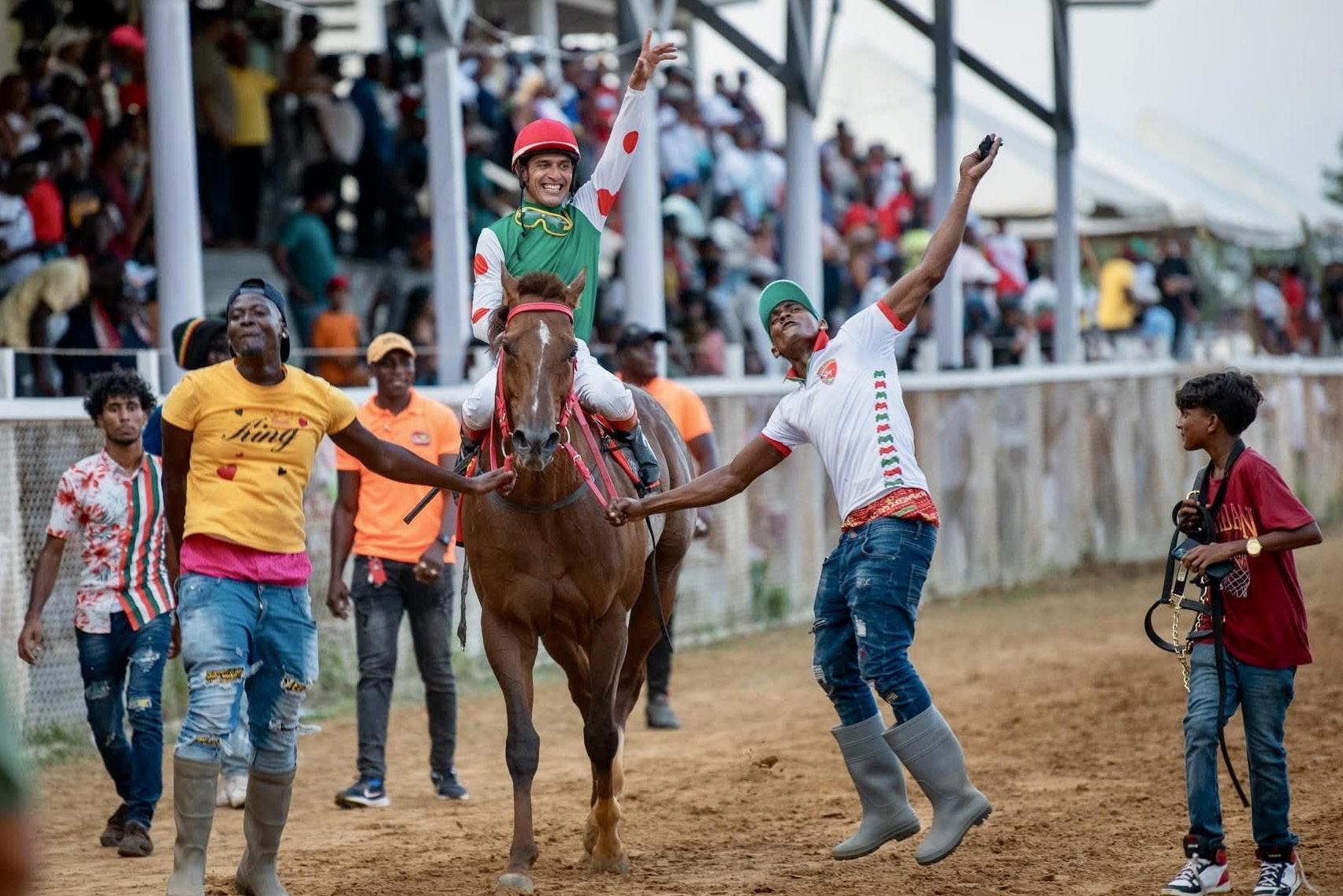
THE stage is set for a race of a lifetime at today’s Banks DIH Classic horse race meet at the Port Mourant Turf Club.
It will be the return of the champions, Olympic Kremlin and the reigning champion Dataman. According fans at the track, a fit Olympic Kremlin is unstoppable and even Dataman will find it difficult to conquer.
These two horses met once at the Guyana Cup last year, but Olympic Kremlin’s jockeys as unseated, giving Dataman a win. Since then, Dataman has never looked back, winning in the dark and winning in unfamiliar territory at Port Mourant.
While the attention is on Dataman and Olympic Kremlin, the other four horses for the feature race are impressive in their own rights.
Js Racing Stbales top horse, Mapa Do Brasil, will start in gate one, Jumbo Jet’s Anthem King, starting at gate three, Slingerz’ Ritorna Vincentori starting at gate five and Js Racing Stables Order and Progress will start at gate six.
The track is in solid condition with the weather being pleasant across the ancient county of Berbice. Horsemen training earlier this week expressed great satisfaction with the conditions.
Nine races will be on today’s card and it will be an all-important event
since it’s the first day of nomination for the Guyana Cup in August.
In the Sprint race which is one of the races for nomination to the Guyana Cup, the horses entered are One Sharp Cookie, Rei Da Brincadeira, Anthem King, Regal Man and John Bull.
The F Class & lower open To E Class non-winners in the Last Start & four-yearold imported maidens in Guyana have five entries. Order And Progress, Frontline Warrior, Barbara, Full Liberty and Nolo Contesto are the horses.
The three-year-old Guyana-bred Non-Winners of Two has some 12 entries. All The Time, Granite Storm, Miracle Boy, Pleasure Star, Glory Queen, Little Tic Toc, She’s A Dancer, Isabella, Baby Gold, Black Beauty, Monica Time, and Torpedo Jet are the entries.
In the L Class Maidens & Open To First Time Starters, the six horses entered are Perfect Trip, Doctor J, Citation, Fire Maker, Rude Boy II and Miss Simron.
The G Class & lower open To F Class non-winners Last 3 Starts is also open to F Class imported three-year-old maidens and is expected to see 11 horses battle. Pharaoh’s Empress, Milano Italy, Grande Rainha, Soca Harmony, Wild Texas Tom, Stormy Victory, Kanem, Mulan, Red Ruby, Theory Of Colours and Amicable Kate.

on her way to the Australian Open title.
By Shrivathsa Sridhar
MELBOURNE, (Reuters) - Elena Rybakina delivered a thunderous display to dismantle firm favourite Aryna Sabalenka and win a maiden Australian Open title on Saturday, turning the tables on the world number one in their Melbourne Park final rematch from three years ago.
Rybakina returned to the site of her 2023 defeat to complete an impressive 6-4 4-6 6-4 win and capture her second major trophy after Wimbledon 2022, underlining her credentials as the player best equipped to further puncture Sabalenka’s hardcourt aura.
The Moscow-born Kazakh capped a fortnight of relentless efficiency, largely flying under the radar and adding the Daphne Akhurst Memorial Cup to a sparkling resume which also includes the WTA Finals crown she won by stunning Sabalenka last year. • Continues on Page 28
The I class & lower to West Indian bred non-winners in the last two starts classified as H class has seven entries. Sydney, Just Exhale Number Five, Supreme Leader, Afridi, Angry Bird, Blinding Lights and Top Gun are the horses in the mix.
I Will Have Another, Sarkar, Election, Heartland and She’s A Monica are the horses in the J3 and lower.
The L Class Non-Earners for the last three starts will see some 13 starts. Golden Buck, Secret Traveller, Damage Control, King Kang, Enemy Maker, Coco, Patriotism, Pheru, Storm Again, Angel Storm Town Gate, Top Of The Cloud, Speedy Princess and Danstar are the horses entered in that race.
Earlier last month, the Guyana Cup Committee officially released the 2026 Guyana Cup Nomination Series, covering the Guyana Cup (Mile), Guyana Cup Sprint, and Guyana-Bred Derby.
In addition to today, at the Port Mourant Turf Club, the other nomination days and venues are; April 5, 2026, at Port Mourant Turf Club; May 3, 2026, at Bush Lot United Turf Club; and July 5, 2026, at Port Mourant Turf Club (final nomination day).
The Guyana Cup is set for August 23 at a venue to be announced.
Gates open today at 9:00h for the Banks Classic.
JOHANNESBURG — THE West Indies got a consolation win off South Africa after rain reduced their Twenty20 match to a shootout at the Wanderers on Saturday.

South Africa won the series 2-1 and the West Indies won the last match by six runs on the DLS method in a thrilling finish. Rain delayed the start of the match for nearly two hours and reduced it to 16 overs per side. The West Indies was 66-1 after six overs when an hour-long rain delay reduced the game to 10 overs per side. West Indies reached 114-3. Captain Shai Hope hit 48 runs off 25 balls and Shimron Hetmyer 48 not out off 22.
They hit 10 sixes between them. One by Hetmyer hit a spectator in the head while he was lying on his back. The man quickly stood up and clapped. South Africa's target was 125 and it fell short at 118-6.
Quinton de Kock took 18 off the first over but captain Aiden Markram was caught off a top-edged pull in the second. De Kock went for 28 off 14, Ryan Rickelton hit straight to long-on on 15 and Dewald Brevis went two balls later on 17 as spinner Gudakesh Motie took their wickets in eight balls.
Jason Smith hit 20 runs in the eighth over and South Africa arrived at the final over needing 16 runs to win. It was down to nine when Smith was bowled by a Shamar Joseph yorker with two balls left.
At the World Cup in India, the West Indies will open against Scotland next Saturday in Kolkata. South Africa starts two days later against Canada in Ahmedabad. (AP)