


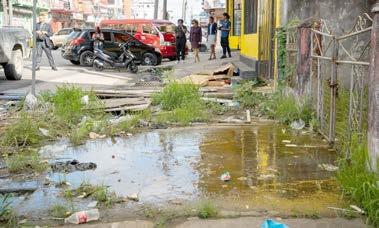
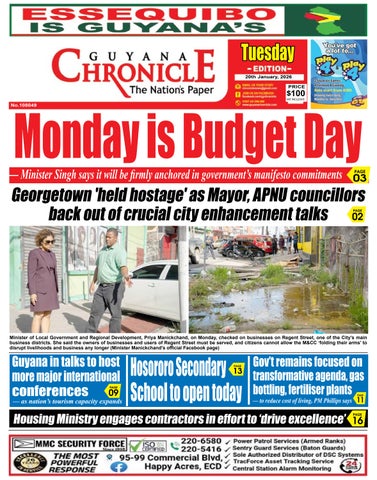
GEORGETOWN residents are being “held hostage to poor politics,” as the Mayor and councillors aligned to A Partnership for National Unity (APNU) backed out of a scheduled engagement aimed at charting a way forward on the city’s worsening solid-waste disposal challenges, according to Minister of Local Government and Regional Development Priya Manickchand.
In a statement posted to her official Facebook page on Monday, Minister Manickchand disclosed that the Mayor, Alfred Mentore, had initially accepted an invitation to attend a closed-door meeting at 11:00hrs to discuss a way forward for solid-waste management in the capital.
However, she said that after requesting that all councillors be invited to ensure broad representation from each constituency, the Mayor withdrew his participation at the last minute.
“No APNU councillor was present at the meeting,” the minister stated, adding that councillors who did arrive later received calls and “hurriedly left the compound.”
According to Manickchand, the decision to widen the invitation was intended to foster inclusive dialogue and benefit from the perspectives of councillors representing residents across the city.
The sudden withdrawals, she noted, undermined ongoing efforts
to build a collaborative working relationship between central government and the Mayor and City Council (M&CC).
In view of the developments, Minister Manickchand said she invited members of the media to be briefed on the extent of work already undertaken by her ministry to improve coordination with the M&CC, as well as on “various discussions that have been had where commitments were made by the M&CC but not kept.”
“It is clear the Mayor and APNU councillors benefit in some way from a city that is approaching being inhabitable,” Manickchand asserted, signalling mounting frustration with what she characterised as deliberate obstruction in addressing the capital’s sanitation crisis.
She pointed out that while she has worked tirelessly to strengthen collaboration between the central government and the municipal authority, service delivery to citizens must take precedence.
“This cannot continue,” the minister said, adding: “Service to citizens must trump my desire to work tirelessly for a more collaborative effort between central government and the M&CC.”
Manickchand stressed that residents, commuters and visitors to Georgetown should not suffer as a result of political manoeuvring, particularly as waste accumulation and sanitation challenges intensify.
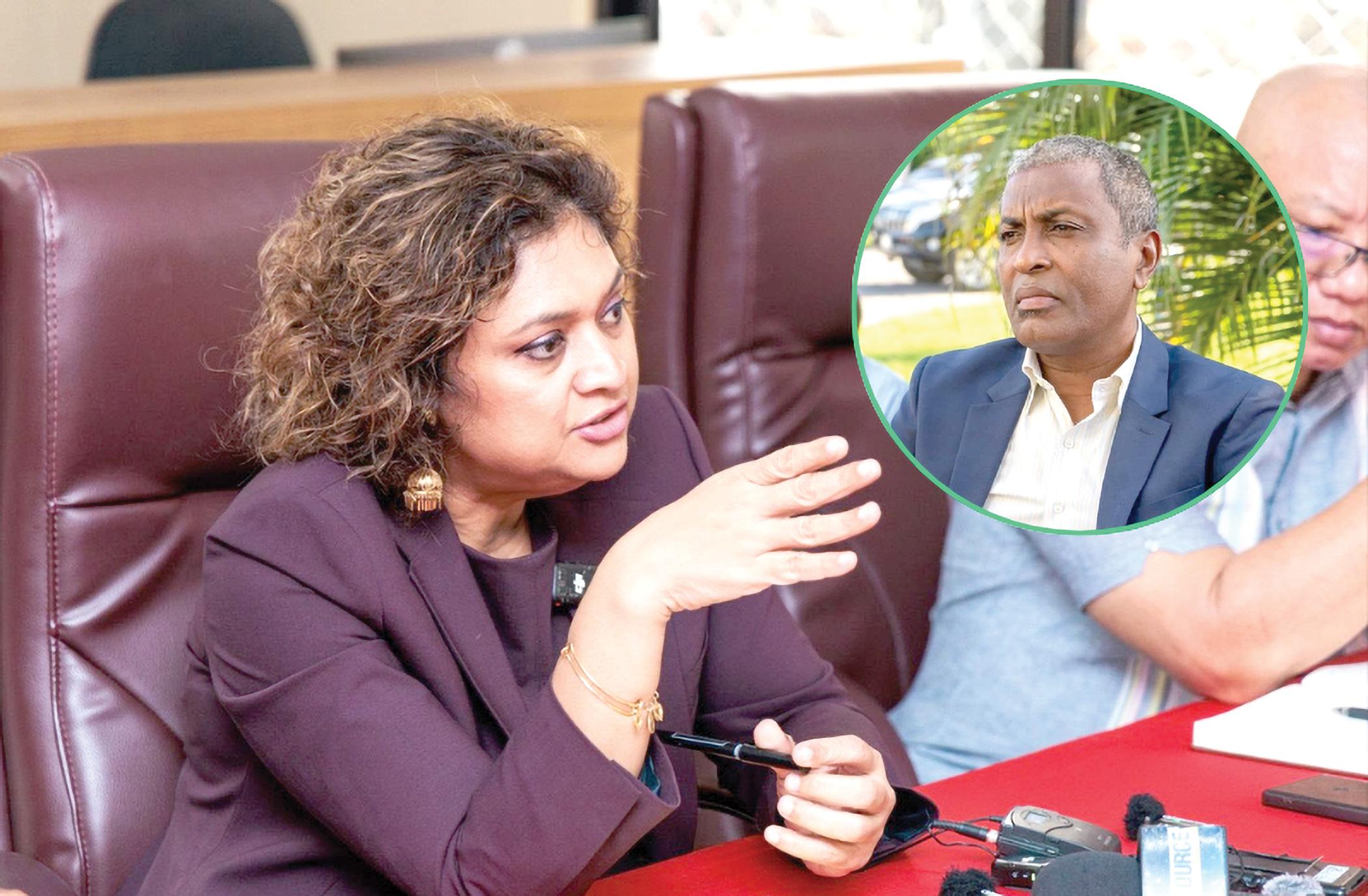
“The residents and users of the city must not be held hostage to poor politics,” she said, underscoring that public officials have a duty to be responsive to the needs of the population.
“That duty will be honoured,” the minister pledged.
On Sunday, Manickchand expressed her displeasure with the state of Georgetown, giving city officials up to 11:00 hrs Monday to submit a comprehensive plan that
will reverse the situation.
The ministry said during a meeting with the mayor, councillors, and the Chief Sanitation Officer of the City of Georgetown on Sunday afternoon, Minister Manickchand expressed deep concern, disappointment, and consternation over the current state of the city.
She emphasised that the present conditions are wholly unacceptable, stressing that sanitation services, solid-waste disposal, and garbage
collection must be reliable, predictable, and effective.
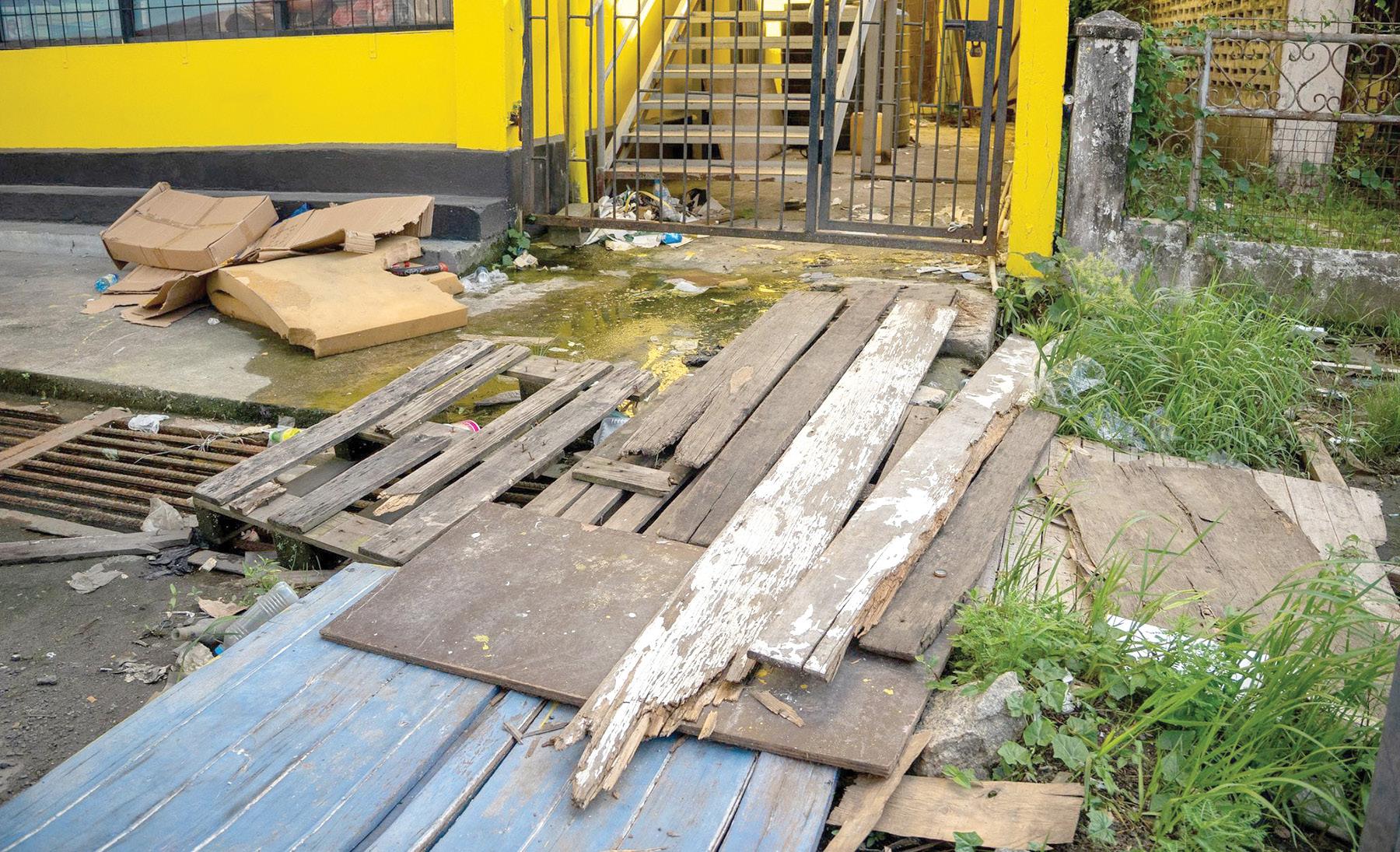
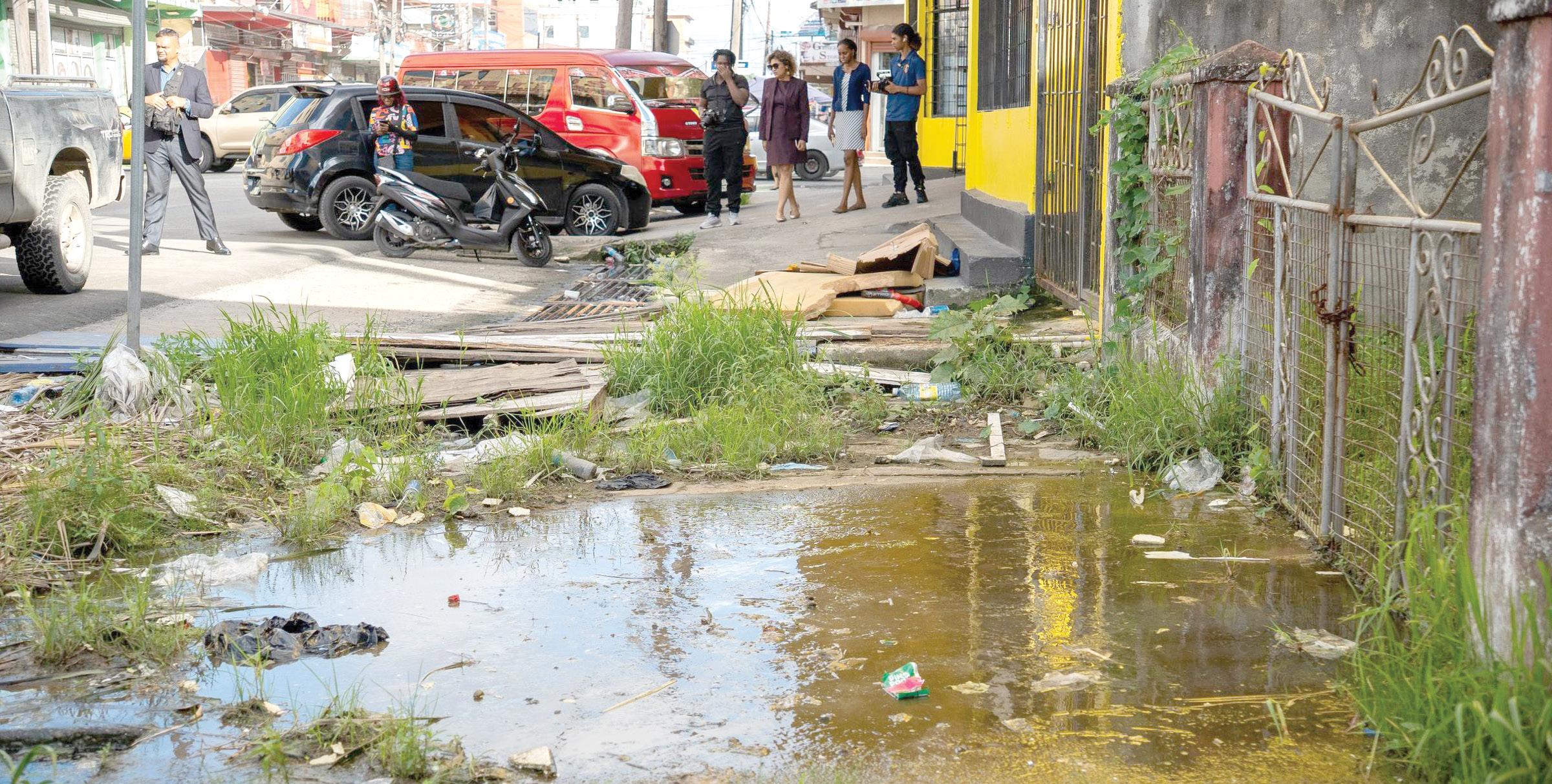
Within recent weeks, there have been complaints in numerous areas about a disruption in garbage-collection services.
Residents in areas such as Campbellville and Tucville reported that during the Christmas season they observed a delay in garbage collection. In downtown Georgetown, there are growing piles of garbage.

--Minister Singh says it will be firmly anchored in government’s manifesto commitments
SENIOR Minister in the Office of the President with Responsibility for Finance, The Honourable Dr. Ashni Singh, on Monday announced that Budget 2026 will be presented to the National Assembly on January 26, 2026.
Speaking on the upcoming presentation, the finance minister emphasised that Budget 2026, the first national budget since the People’s Progressive Party/Civic’s (PPP/C) re-election to office, will serve as the operational blueprint for the PPP/ C’s manifesto and is set to translate the comprehensive promises made during the 2025 election campaign into tangible benefits, a Ministry of Finance press release said.
It added that Minister Singh affirmed that the budget is “firmly grounded in the comprehensive and inspiring manifesto that we would have taken to the people of Guyana in the run-up to the 2025 elections.”
“As many would recall, the manifesto outlined a comprehensive agenda for advancing the transformation of our country, and very importantly, for creating a Guyana that is full of opportunities for all Guyanese people,” Minister Singh stated.
He further assured that at the core of Budget 2026 is a commitment to human development and noted that the fiscal plan will focus heavily on creating opportunities for citizens to improve their lives and livelihoods.
“The Guyana that we are building is a Guyana that is full of opportunities for every single Guyanese citizen to uplift themselves,” Dr. Singh stated according to the press release.
Budget 2026 promises to be a vital moment for Guyana and will ensure that the economic growth of the nation translates directly into individual growth and prosperity for every single Guyanese
family, it added. Further, the upcoming budget will also build on the expansive fiscal framework established in the 2025 budget, which totalled G$1.382 trillion and was anchored on the theme, “A Secure, Prosperous and Sustainable Guyana.”
The 2025 manifesto, developed after extensive consultations with private sector actors, religious or-
of the past five years, with a sharpened focus on ensuring that growth is widely shared.
At the centre of the plan is a major push to deepen financial inclusion and expand access to capital.
He revealed that the soonto-be-established Guyana Development Bank, capitalised with US$200 million, will provide zero interest, zero collateral, Micro, Small and Medium-sized Enterprises
without collateral at zero interest, with a further $7 million available through co financing with commercial banks at preferential rates. Agent-banking networks, digital banking, and mobile wallets will be rolled out to reach remote communities, supported by legal and regulatory reforms, and a modernised Bank of Guyana.
He announced, too, that Budget 2026 will make pro-

ganisations, youth and women’s groups, and the wider public, provides the policy framework for the upcoming budget.
Budget 2026 will reflect this vision for national transformation, continuing the government’s agenda for sustainable economic growth.
In December 2025, President Dr Irfaan Ali unveiled a sweeping five-year agenda for what he described as “the most ambitious phase” of Guyana’s economic and social transformation, anchored in diversification, digitisation, and broad-based prosperity.
President Ali said that the re-elected PPP/C administration would “build on the historic achievements”
(MSMEs), women-owned businesses, young entrepreneurs, and persons living with disabilities, alongside structured mentorship and training.
The President also announced the creation of a junior stock exchange, and new investment vehicles to allow ordinary Guyanese here at home and in the diaspora to participate directly in large industrial projects through equity promising guaranteed returns.
“We are building an ecosystem where financial knowledge, unprecedented access to capital and new avenues for investment converge,” he said.
MSMEs will be able to access up to $3 million
vision for a $100,000 cash grant to every Guyanese citizen aged 18 years and older.
He further disclosed that additional cash grants will be paid over the next five years, as the government continues to roll out measures aimed at improving household welfare, and strengthening disposable income.
Alongside new financing instruments, the President pledged additional tax incentives and targeted cash grants, building on more than G$70 billion already distributed in direct transfers in the government’s last term in office, and extensive tax reductions on income, fuel, and key household costs.
President Ali stressed that diversification would run
“both vertically and horizontally,” with value-added agriculture, manufacturing, tourism, and the creative industries all identified as pillars of a more resilient economy.
On the social side, the President vowed to sustain and expand jobs, and to continue “massive investments” in education and health.
Education will remain free at all levels, with the Guyana Online Academy of Learning (GOAL) and the new AI driven Digital School offering thousands more scholarships and personalised learning nationwide.
In health, government spending has almost quadrupled since 2019, with 12 new hospitals underway, telemedicine at over 80 sites, and plans for a modern oncology centre and a life-sciences park.
The Head of State also reiterated commitments to build 40,000 new homes over the next five years, improve water and sanitation systems, modernise transport and urban infrastructure, and advance a comprehensive digital government platform to make public services faster, more transparent, and accessible.
“For us, the people come first, always. It is a guiding principle, putting people at the centre of every decision that shapes the economic blueprint,” the President said.
Meanwhile, Dr Ali revealed a wide-ranging package of tax incentives aimed at deepening economic diversification, encouraging private investment, and easing the financial burden on households, small businesses, and vulnerable groups.
Central to this is the creation of special development zones which will be detailed
in the 2026 national budget. These zones will operate under a tax-free incentive regime, targeting sectors that generate export earnings, or replace imports, with a particular emphasis on agricultural technology, agro processing, and non-oil economic activity.
In a bid to support both businesses and families that rely on ‘pick up’ vehicles, the government, he said, will introduce a flat tax on double cab pick-ups, regardless of age.
Vehicles up to 2,000cc will attract a tax of $2 million, while those between 2,000cc and 2,500cc will face a $3 million tax.
Signalling an intent to reward work and encourage formal employment, the administration has pledged to continue raising the income tax threshold over the next five years, with the goal of approaching levels seen in more developed economies.
At the same time, it intends to abolish net property tax on individuals, a move framed as an incentive for citizens to build savings and assets.
“These plans represent a blueprint for transformation that can be tangible in your daily life, in the work you do, the wages to earn… with your trust and partnership will turn this moment into a movement, a momentum that carries growth in our homes,” the President said.
A series of targeted tax measures is expected to stimulate investment in care and social services. Companies engaged in childcare and elderly care will see corporation tax removed on income earned from these services.
The government is also expected to co-invest in childcare and elderly-care facilities from 2026, on the condition that providers benefitting from concessions agree to cap their fees at affordable rates.
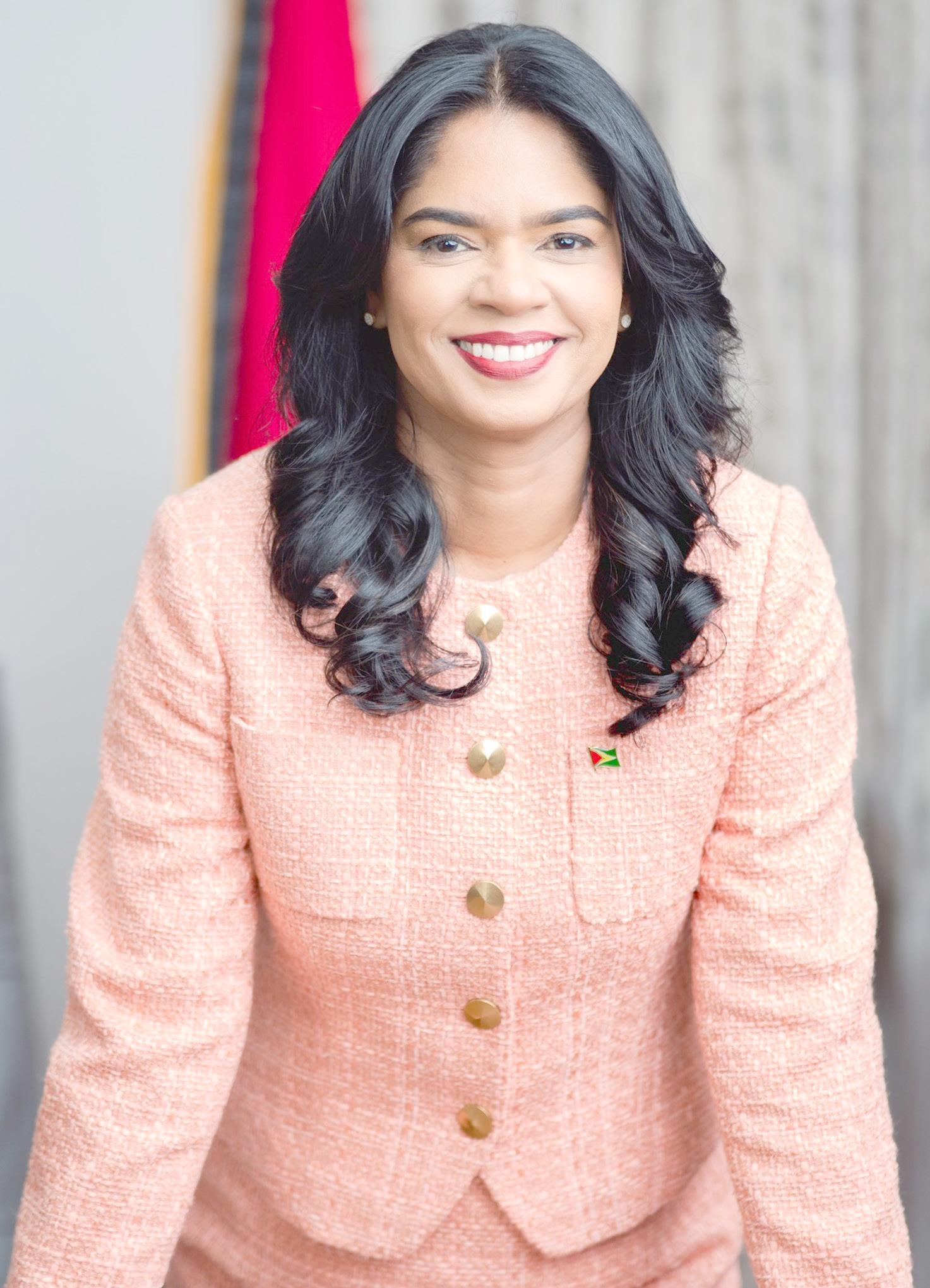
MINISTER of Education, Sonia Parag, has announced plans to begin direct engagements with Parent Teacher Associations (PTAs) at schools across Guyana.
This initiative, she said, is intended to strengthen partnerships within the education system and improve outcomes for students.
The minister made this known while speaking in a video posted on the Ministry of Education’s social media pages, during which she explained that while PTAs have long existed and have had several engagements over the years, much of that interaction has traditionally been with ministry offices rather than with the minister directly. She said the new initiative would change that approach.
“I wanted to start an initiative of engaging directly with the PTAs,” Parag said, noting that the move followed consultations with the government, including the Vice President and the President.
challenges and attempt to resolve problems affecting their schools.
“The PTAs… play an integral role whenever there are issues regarding school, the infrastructure itself, the school itself,” the minister said, adding that many associations still maintain that sense of community.
She said the ministry wants to build on this by engaging PTAs directly as a government and directly as a minister, allowing for more open and effective communication.
Parag announced that the engagements would begin in the short term, with a structured schedule to be rolled out soon.
“Commencing very soon, I’ll be starting a schedule, a scheduled engagement with various PTAs across the country,” she said.
According to the minister, closer collaboration among the ministry, parents, teachers and students is critical to ensuring that education policies are effectively implemented at the school level, and further added that direct engagement would help build a stronger partnership that benefits the entire school community.
“That engagement is going to assist us and assist parents, teachers, students, with having a better partnership,

that we can work together to ensure that schools, that the policies that we are establishing in the ministry… [are] being carried out in the schools,” she explained.
Against this backdrop, Parag also highlighted the important role PTAs play in addressing issues beyond academics to issues such as school infrastructure and community involvement.
She noted that in many communities, PTAs already come together to discuss
The discussions are expected to focus on a wide range of issues affecting the education sector, including student attendance, reducing dropout rates, identifying gaps in academic delivery, addressing infrastructure challenges and examining school management concerns.
This, she added, will allow for direct information sharing between the ministry and the PTAs to achieve the goals set out for the Education Ministry.
Parag further noted she looks forward to the direct engagements, which she thinks will be meaningful.

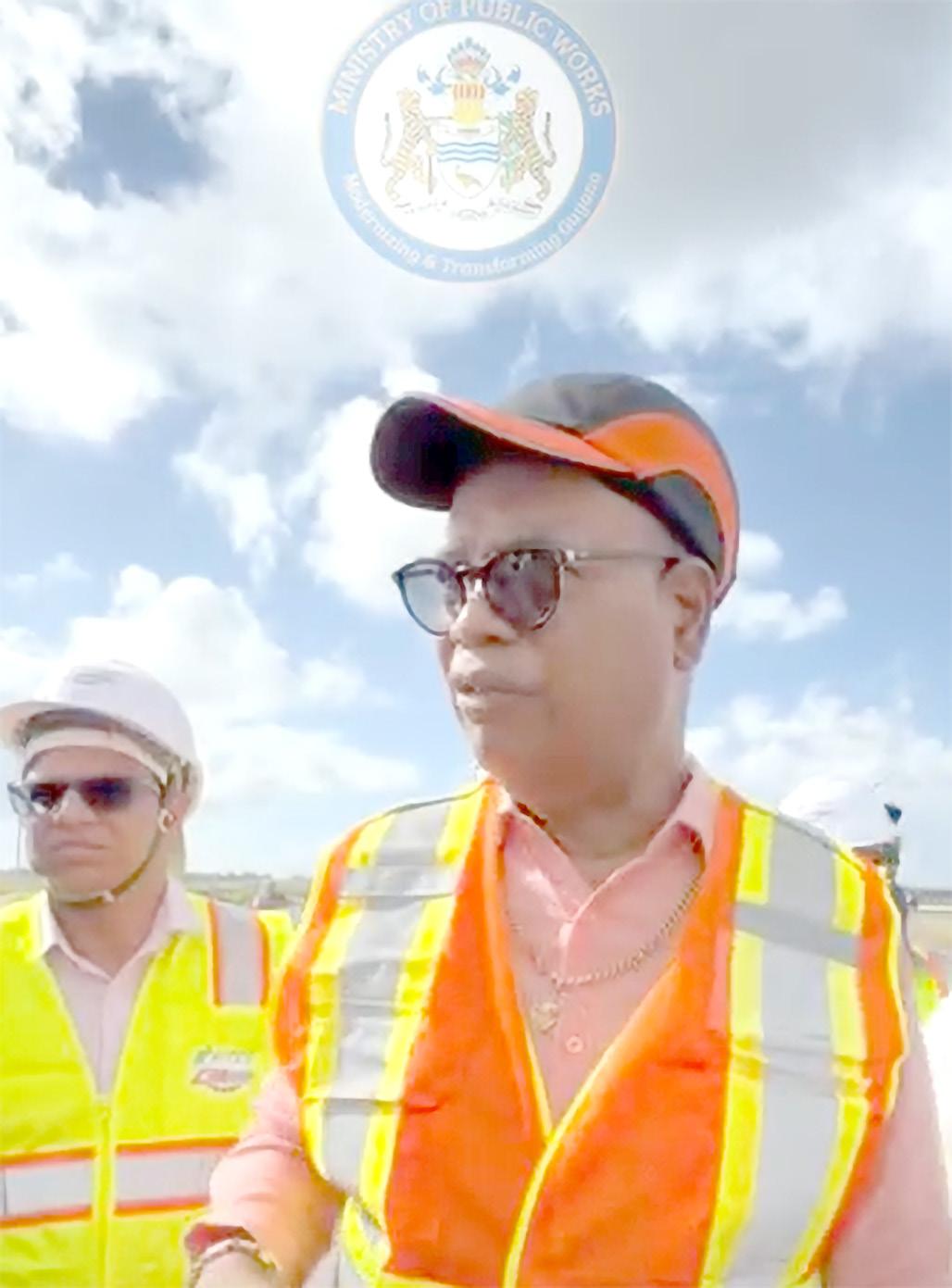
MINISTER of Public Works, Bishop Juan Edghill, has issued a stern warning to developers regarding the increased unsafe use of entry routes onto the Ogle to Eccles Interlink.
In a video posted on his Facebook page, the minister, while emphasising the priority of using roadways safely, said: “Everybody has to comply.”
With a designated speed limit of 80km/h, the ministry is strictly advising against 90-degree direct access roads.
“I know that people will say that government gave them permission to do the development but I’m certain as a representative of the cabinet, a permission to do a development does not mean recklessness in the use of the
roadway or a highway while the development is being done. The cabinet and the government don’t represent that,” the minister said.
Minister Edghill and senior technical teams of the ministry emphasised that improper entry points create significant hazards due to the speed differential between entering vehicles and through traffic.
He further stated that Traffic Chief Mahendra Singh has been engaged on this matter.
“So those who haven’t put up their drawing and get an approval on how they could safely access the highway; we have asked we have pleaded, we have gone through these discussions erect barriers preventing them from getting into the highway,” he firmly said.

CARIBBEAN states must pursue climate justice through practical, forward-looking strategies capable of withstanding major geopolitical shocks, the chair of the Caribbean Natural Resources Institute (CANARI), Cletus Springer, told regional and international delegates on Monday.
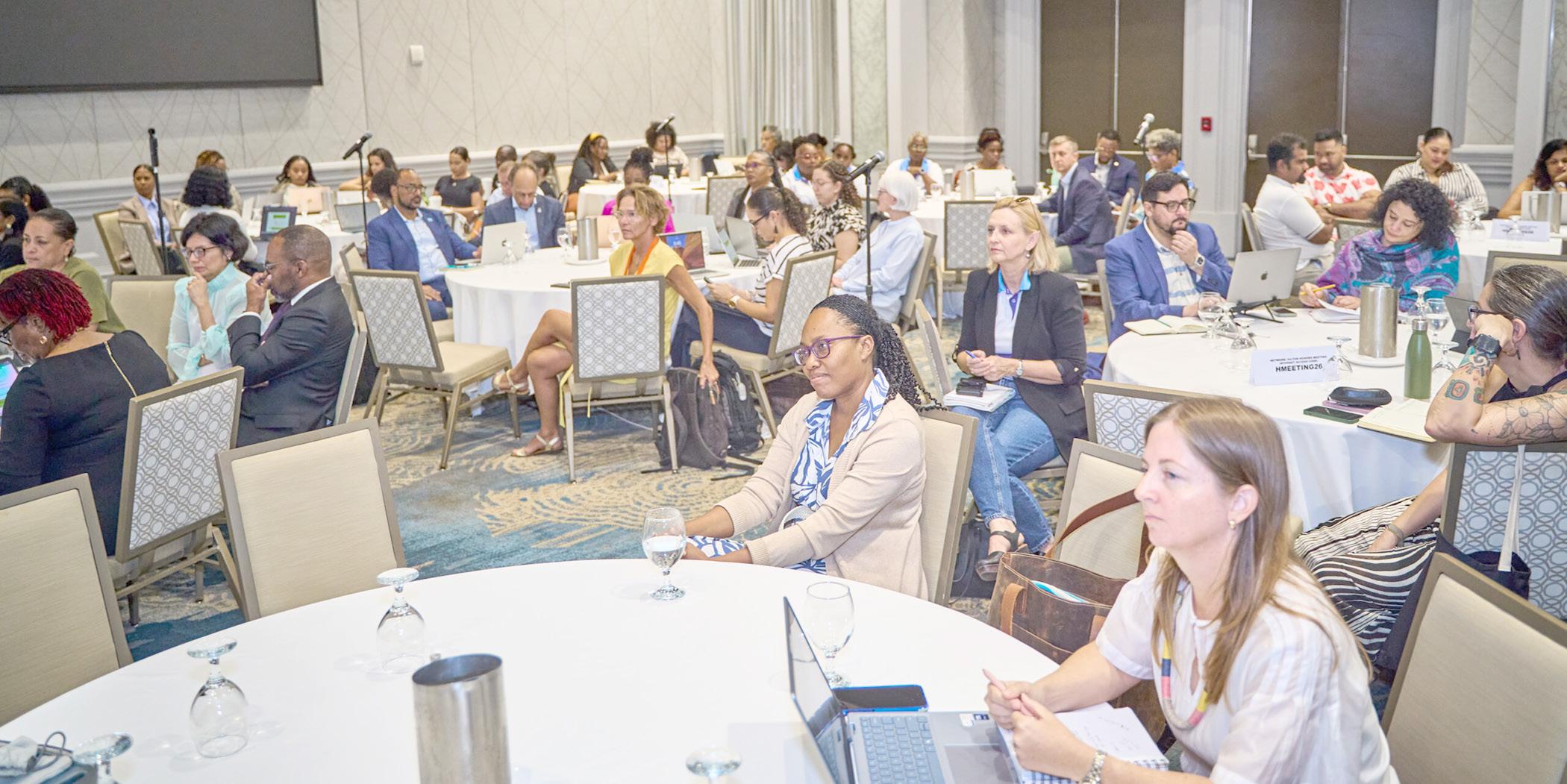
As he opened the twoday CANARI Partners Forum, themed Towards climate justice in the Caribbean: building understanding and catalysing partnerships and finance, Springer told delegates that the meeting was not intended to be merely theoretical.
“The operational tone here is strategic action … it is a roll-up-your-sleeves kind of activity,” he said, adding that participants had gathered to focus on “the shifts that are needed to address the inequities and injustices being experienced by our people in the Caribbean because of climate change”.
The forum is being held at the Hilton Barbados Resort, bringing together regional and international stakeholders to discuss climate justice as a development, human rights and resilience priority for the region.
Springer cautioned that the discussions were taking place against the backdrop of what he described as “truly seismic geopolitical upheaval”, which threatens to marginalise small states within the global multilateral system.
“That multilateral system is disappearing with amazing speed,” he said, noting that while imperfect, it has historically provided small island states with a platform to be heard. “This scenario deepens the importance of
our meeting here over the next two days.”
He argued that the changing global landscape required a broader analytical lens and posed a central challenge for Caribbean policymakers and advocates.
“How do we advance a climate justice agenda that is robust enough to survive current and future geopolitical shocks?” Springer asked.
He stressed that responding to climate change could not be limited to present-day activities alone. “We have to project forward and come up with a strategy that can survive these changes,” he said.
The CANARI chair noted the escalating impacts of climate change across the region, pointing to increasing extreme weather events and a developing drought in the Eastern Caribbean, which he said was projected to extend well into the traditional rainy
season.
“These varied impacts justify the description that our heads of government have placed on climate change as an existential threat to the sustainable development of the Caribbean,” he stated.
Springer underscored what he described as a “profound unfairness” in the global climate system, where those least responsible for greenhouse gas emissions bear the greatest burden.
“The wealthiest individuals and nations who contribute most … experience less impact and have greater capacity to adapt, while the poorest, less responsible communities suffer the worst effects and have the fewest resources to cope,” he said, warning that this imbalance fuels ongoing social and economic inequality.
He said efforts to achieve

climate justice must go hand in hand with protecting vulnerable livelihoods and prioritising those on the front lines of climate impacts.
“We must listen to the lived realities of those on the front line of climate impacts,” Springer said, emphasising the need to understand how climate change
affects human rights.
Calling for collective action grounded in care and solidarity, Springer said climate justice must confront structural power imbalances and move beyond purely technical solutions.
“Approaches to climate justice must move beyond techno-managerialist solu-
tions and use an intersectional lens to expose root causes,” he said, noting that gender, race, poverty and other identities often amplify vulnerability.
“Climate justice must challenge structural power disparities and aim to reduce marginalisation, exploitation and oppression.”


GEORGETOWN’S ongoing garbage problem has become a symbol of how political disagreements can immobilise a city.
Mayor Alfred Mentore and APNU-aligned councillors recently decided to skip a scheduled meeting with the Minister of Local Government and Regional Development, Priya Manickchand about solid waste management.
This decision highlights how the capital suffers from bad politics. Minister Manickchand’s account of the events is troubling. An invitation to the meeting was accepted and expanded to ensure that all constituencies were
represented, but it was suddenly abandoned.
Reports suggest that some APNU councillors who initially attended left quickly after receiving calls. This indicates not just a disagreement but a deliberate obstruction. The residents of Georgetown, who deal with overflowing bins, blocked drains, and a terrible smell every day deserve much better.
There have been many reports on the city’s growing sanitation problems over the years—huge piles of garbage, irregular collection schedules, and conflicts between the Mayor and City Council
(M&CC) and the Central Government over responsibilities and resources.
What remains constant is that when cooperation breaks down, the city suffers. This latest incident fits perfectly into that unfortunate trend. Local democracy doesn’t mean local defiance at any cost.
The M&CC has both a constitutional and a moral duty to engage with political opponents when the well-being of citizens is at stake. Choosing to avoid discussions about garbage disposal is not a stand against authority. It is neglecting their responsibility.
Minister Manickchand’s sug-
gestion that some may gain politically from a city becoming unlivable is severe, but it also reflects the frustration of residents who see a stalemate instead of solutions.
It’s also vital to note that the central government has, on many occasions, stepped in to help Georgetown—whether through extra funding, emergency cleanup efforts, or policy changes, often despite resistance from city officials. Attempts at collaboration have happened, sometimes multiple times.
When promises are made and then broken, trust is lost, and progress halts. Georgetown represents
Guyana. It is the city that visitors see first, and it is where citizens rely on daily.
Letting it be a pawn in partisan games is unacceptable. Political mandates may be temporary, but garbage, disease, and environmental damage have lasting effects.
The mayor and councillors need to remember that their primary allegiance is not to party lines but to the people who elected them. Dialogue is not giving up, and cooperation is not weak. If Georgetown is to overcome its sanitation crisis, politics must step aside, and service must come first.
Dear Editor,
HIS Excellency Dr Mohamed Irfaan Ali has rung in the new year with fulfilling and delivering on one of his major promises he made last year to the Toshaos to lower airfares to the Amerindian communities and modernise the more than 60 airstrips in the interior regions.
He has brought glad tidings to the Amerindian communities as several local aviation companies have responded to his request to lower airfares to the Amerindian communities and to the remote interior regions of the country in general.
Many, including Air Services Limited and Roraima Airways, have lowered their airfares by some seven percent, but Jags Aviation Inc, a leading and perhaps the
largest domestic aviation provider in Guyana and a member of the prominent and expanding BK Group of Companies, has not only heeded the President’s call to lower airfares, but went further than the other local carriers by significantly reducing its air farse by 10 percent.
Mr Brian Tiwarie, OMC, AA, the Executive Chairman of BK Group of Companies has always felt that airfares to the interior were too expensive and, as a result, he has decided to pass on the much-needed savings to the commuters.
He said that we have a duty to care, support and help our Amerindian brothers and sisters and this is part of President Ali’s “One Guyana” initiative to modernise the airstrips, provide

easier and cheaper access to the interior, and, most importantly, to make sure that they are treated fairly and equally, regardless of their economic status.
According to Mr Tiwarie, the reduction in airfares to the interior will increase traffic by individuals visiting, and will result in an upsurge in business to the interior regions.
The prominent businessman has asserted that few, if any, could cast doubt on His Excellency’s ability, adroitness and genuine leadership to develop Guyana, especially its interior regions, improve its infrastructure, expand agriculture, provide adequate and first-rate education and healthcare services and reduce poverty and crime, with the aim to improve the lives of the peo-
ple and make Guyana better. Borrowing from the famous phrase from the United States Declaration of Independence, “In pursuit of life, liberty, and happiness” penned by Thomas Jefferson, the third President of the United States, President, Dr Ali strongly believes that all Guyana’s citizens both at home and in the diaspora, should be treated fairly and equally, and that his government will do everything in its power to protect these inherent rights and their human rights.
In most of his speeches, he urged Guyanese to be positive, respect the rule of law and one another and help in the development of the country. In other words, be “thy brothers and sisters keepers” and this with his “One Guyana” have been
his mantra since he assumed the reins of power as Head of State more than five years ago.
President Ali is blessed with the ability to influence, guide, and motivate individuals or groups, both in the private and public sectors towards achieving a shared vision and a common goal for the prosperity of the country.
And he has done this both within and outside of his formal authority as President and as a true Guyanese patriot and a good, decent and honest human being to inspire action, foster collaboration, infuse confidence, make sound decisions, and to empower his fellow Guyanese to obtain results and achieve goals they could not attain alone. He has implored them not to accept medioc-
rity and ultimately the sky should be their limit.
It can be said that President, Dr Ali has distinguished himself as one of the most influential and respected leaders of his generation. Locally, his presidency has been defined by principled leadership, economic reform and massive infrastructural development, and internationally, his advocacy for climate justice and debt reform for developing nations, among others.
He has garnered international acclaim for his valiant, moral, intellectual and fearless leadership.
We are fortunate to have Dr Irfaan Ali as our President; we are proud of him.
Sincerely, Dr Asquith Rose
WHEN I read that Jamaica and The Bahamas were included in immigrant visa (green card) sanction by the US, as a devout, genetic Caribbean man, I betrayed myself and laughed. I should not.
I am a Caribbean man who believes the unique Caribbean culture makes Caribbean people one of the best minds you can find in the world. We are a good set of people. I could not live in any other region than the Caribbean.
But I had to laugh and I make no apologies for laughing when I read about the 11 countries in CARICOM that were sanctioned. Here is why the smile on my face was broader than the Taj Mahal.
The Bahamas thinks it is part of the US and refuses to join the CSME in CARICOM. Jamaica, because of its geographical location in the Caribbean Sea, thinks it is part of the US.
These two countries were populated by slaves in what remains as the single, most anti-human act in the history of civilisation. Almost 60 years after Independence, the ultimate source of power in Jamaica and Bahamas is the English throne. They have
a Governor-General. So are many in the other nine CARICOM countries sanctioned. It is interesting to note that after Hurricane Melissa devastated Jamaica, the UK aid donation was 2.5 million pounds. Any first-year uni-
the British Privy Council and accept the Caribbean Court of Justice as their final appellate court?
Here is a piece of information that has to sicken any Caribbean mind. The Privy Council said decades ago that
and learning. In fact, the judges in Western democracies are brazenly politicised in their judgements.
Name me one country where the school of judges is of superior quality to the CCJ. Each day, we see

versity student in international economics would know that was an insult. What substance could 2.5 million pounds bring to Jamaica given the incredible devastation? It doesn’t look like the King’s representative in Jamaica was able to persuade the British Government to give more.
If you think the retention of the British throne by these CARICOM states is shameful, what do you think about their refusal to leave
it would prefer that CARICOM countries have their own regional appellate court. In other words, the people do not want us but we “fasten up” under them. It is one of the worst examples in clinical psychology of self-hate. What can possibly be the reason for a majority of CARICOM nation’s enduring embrace of the Privy Council except self-hate? The judges in the Western judicial system are not superior to the CCJ judges both in integrity

how politicised judges are in countries that like to describe themselves as liberal democracy (whatever that is; I don’t see that concept in post-colonial political theory.) Four examples come to mind.
The first one is from the UK. Look what the judicial system did to Julian Assange. First, he was refused bail and spent five years in a maximum-security jail in the UK.
Secondly, he was charged for espionage by the Trump administration (in Trump’s first term). Mr. Assange never lived in the US and never spied against the US. There was no evidence under American law that Assange was a spy. Yet in the absence of evidence, the UK judicial system ruled in favour of extradition.
The second egregious example is from Canada. The first Trump Administration charged Meng Wanzhou, the daughter of the billionaire owner of Huawei for violating American sanctions on Iran in the US. Like in the Assange case, the evidence had more holes than a fisherman’s net. But Canadian judges saw the case in political terms.
The third example is from the UK again. Historian David Irving sued fellow historian Deborah Lipstadt and her publisher Penguin Book for Lipstadt referring to Irving as a Holocaust denier. That judge was patently biased because Irving had written books that did not demonise Hitler and the Nazi Government. Lipstadt never proved
that Irving was a Holocaust denier. What she did was to quote from Irving’s work in which she contended that he distorted facts about Nazi Germany.
But nowhere in his work did Irving ever say that the Holocaust did not exist. That judge was disgracefully biased and he ruled against Irving, assigning a gargantuan sum as cost which Irving could not pay and lost his home.
The fourth example is from the US. No lawyer, sitting judge or retired judge from any country around the world would give the Federal Supreme Court a passing grade. Perhaps some of the worst judges in the world could be found in the US. So why is a majority of CARICOM nations still clinging to the Privy Council? Because their leaders are self-haters.
DISCLAIMER: The views and opinions expressed in this column are solely those of the author and do not necessarily reflect the official policy or position of the Guyana National Newspapers Limited.
Dear Editor,
I WRITE in response to your article published on Sunday, January 18, 2025, on the rollout of the Electronic Health Records pilot at the Festival City Polyclinic.
The article places undue emphasis on a brief interruption during the presentation, portraying it as a system failure. This is misleading. The interruption was short, did not affect the Electronic Health Records system itself, and was caused by an issue with the HDMI cable connected to the television being used for the presen -
tation.
The EHR platform continued to function as intended.
It is, therefore, disappointing that the journalist involved did not take the time to seek clarification from any of the officials present, or from me, regarding the cause of the interruption before drawing conclusions. A simple question would have confirmed that the issue was audiovisual equipment-related, not a failure of the digital health system being demonstrated. Public trust in digital transformation initiatives
is important, particularly in healthcare.
Accurate and balanced reporting plays a critical role in building that trust. Exaggerating minor, unrelated technical issues risks undermining public confidence in a programme that represents a significant step forward for the healthcare system.
Constructive scrutiny is welcome, but it should be grounded in fact.
Yours sincerely, Hal Mohammed Regional Manager, Caribbean & Latin America RioMed Limited

BEFORE Trump, European Union and NATO allies had found a reliable trade and military partner in the American geopolitical comportment. Trump had pursued some steep foreign-relations stratagem, that in their unorthodoxies many world leaders and academics are puzzled to decipher -- method or madness.
His campaign slogan of Make America Great Again (MAGA), which became the cultic nomenclature around which a parallel stream of political adherents emerged to threaten the very foundation and support base of the traditional Republican Party.
This slogan assumes that both domestic and foreign policies will put “America first.” This posture casts Trump as a unique local and international personality. Many academics have defined him in populist terms; he is able to do and say things that would’ve otherwise instantly ended the career of any other political figure. Trump says what many may think, but dare not utter; what many may wish but dare not attempt.
There are things that Trump has done that will be irreversible in the practical application of local and geopolitical policies. I have three examples. Firstly, Trump has
effectively closed the porous US-Mexican border; any other president following Trump will court a short political career if the border is reverted to caravan-styled undocumented migration.
Next, Trump moved the US diplomatic Head of Mission in Israel from Tel Aviv to Jerusalem, a diplomatic abomination prior to Trump.
Any American politician uttering a single phrase against this move will be out of the political establishment of both parties within weeks.
Then, Trump demanded that NATO members increase their contributions to the military alliance and other international formations. It is unthinkable that under some future US president NATO members can renege on their payment commitments.
In practical terms, there are other policies that are reversable, but would’ve done so much to shift the shape of international trade and diplomatic relations, that walking them back will be a long road.
For example, the nature of tariffs the US has applied on Canada and the war of words which ensued has pushed Canada into the arms of China. Ottawa has carved out new trade deals with Beijing that positions China (now) at the Most Favoured
Nation level. Strong statements out of Ottawa has said that Canada intends to grow its non-US trade by 50% within a decade.
Once set in motion this cannot be easily walked back. Trump has asserted American dominance over the
redefinition of a more aggressive form of the Munroe Doctrine; now realigned as the Donroe Doctrine. The old adage, “when America Sneezes the world catches a cold” is now more real in the Americas than it has ever been at any time in recent
fit from the world’s vastest proven oil reserves, there is a contradiction happening right under his chin. Europe, which held its nose and did not retaliate against the slew of tariffs unleashed by Trump, is now exhaling.
The EU is fighting back.
Panama Canal which links trade routes between the Pacific and Atlantic oceans. China has since commenced advanced negotiations with Nicaragua to cut a new waterway to link the two oceans, employing terms that will give China almost perpetual dominance of a rival canalled trade route.
Trump’s arrest of Maduro and direct verbal threats to Cuba is a resurrection and
memory.
The invasion of Venezuela, along with other diplomatic manoeuvres and visa-processing adjustments, is shifting countries of the Americas to be more responsive and compliant with US security stimuli, much of which will not be easily reversible in the post-Trump era.
While Trump is in the midst of military meandering to extract economic bene -
It is pursuing trade deals with Brazil and the bigger Latin American economies which will effectively establish the largest free-trade area in the world, and one of the largest north-south trade agreements in recent memory.
The bizarre tensions with Greenland come over as though Trump is finding it difficult to separate US economic interests from its security alliances. This has forced
Europe into conversations that seeks to carve its own security arrangements despite the presence of NATO, thereby de-risking its dependency on US security commitments in the region. This cannot be wished away once set in motion. For nearly a century, the global order was built on an American foundation, fuelled by US-designed global institutions and monetary instruments, contoured by US-designated trade routes, fashioned by US-styled economic models and protected by US security hardware. There was no global agenda without direct input or engineering from Washington.
The global system still rests on a US-driven foundation but in the era of Trump, with influence from the rest of the global north, the world is no longer building on that foundation, they are breaking new grounds. At a recent Asian-Pacific business conference, former Singaporean Foreign Minister George Yeo said, “Trump is fast-forwarding the inevitable future of a multipolar world.”
DISCLAIMER: The views and opinions expressed in this column are solely those of the author and do not necessarily reflect the official policy or position of the Guyana National Newspapers Limited.

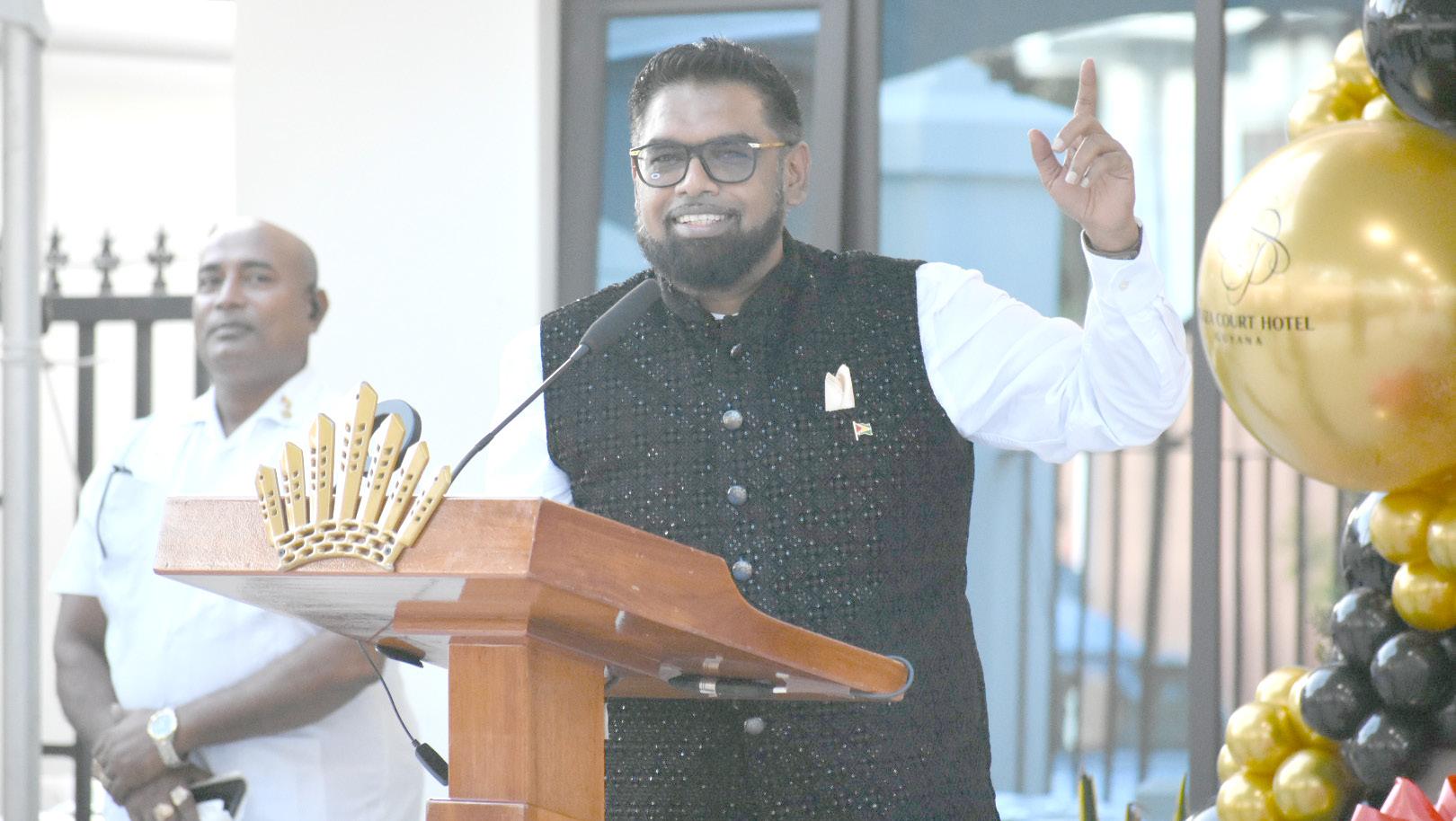
PRESIDENT, Dr Irfaan Ali has said that Guyana is actively engaging several international groups interested in hosting conferences in the country this year, signalling a new phase in the expansion of Guyana’s tourism and business-travel sector.
The Head of State made this disclosure while speaking at the recent opening of the Plaza Court Hotel, during which he said that the country’s improving infrastructure
positioning itself within the global business and conference market.
It was against this backdrop that President Ali noted that he spent time ensuring that they are supporting what’s being done. He went on to add that he did not wish to jump the gun, but disclosed that the government is pursuing something huge.
The Head of State indicated that securing major conferences could significantly accelerate national
“When you hear the hotel is 60 rooms, it tells you something: that there is a target market, there’s a target audience,” he said.
The President added that while individual hotels may maintain their own identity, they are collectively selling a single national product.
“All the hotels must understand that they’re selling one product, one brand, and that is Brand Guyana,” he said. “You cannot compete to sell that brand. You have
and growing accommodation capacity have made it an increasingly attractive destination for international meetings and events.
He said that he spent a lot of time speaking with groups that are interested in hosting their conferences in Guyana.
President Ali said, “I spent almost four hours this morning speaking to nine groups that are coming to Guyana to host their conferences this year… And a common theme in all of those groups was, “We are now looking at Guyana because you now have the infrastructure, you now have the rooms, you now have the capability.”
According to the President, the discussions reflect a broader shift in how Guyana is being viewed internationally, moving beyond its traditional tourism image and
development plans.
“If we get that, we have to accelerate 100 times faster in the next four years,” he said. Dr Ali said the growing interest from conference organisers is the result of deliberate investments in infrastructure over recent years, which have expanded Guyana’s capacity to host large groups and international events.
“These conferences are coming because we have now positioned ourselves in the market,” the President said, adding that they have created a space for Guyana in that market that it never had before.
He said that hotel expansion has been a critical part of that repositioning, noting that room capacity directly affects the types of delegations and events the country can accommodate.
to collaborate to sell that brand,” the President added.
President Ali further pointed to security improvements as a key factor in boosting confidence among visitors and event organisers.
He said strategic investments in technology and infrastructure have contributed to improved public safety in key areas of Georgetown.
The Head of State added: “The government is supporting the second leg of the three important components of a successful hotel and a successful tourism service sector, safety, experience, and service.”
Looking ahead, the President emphasised that the long-term goal is for Guyana to be established as a premier destination within the region as international interest continues to grow.

THE government has affirmed that it will not be distracted by political detractors while it pursues its development agenda, which includes advancing energy projects and implementing policies and measures aimed at lowering household costs.
Prime Minister, Brigadier (Ret’d) Mark Phillips, during Sunday’s airing of ‘Starting Point,’ stated that the government has an agenda that is “quite transformative.”
While cautioning citizens against the “political noise,” which does not portray the realistic image of Guyana, the Prime Minister said: “We’re not pursuing that agenda, those programmes and projects, without communicating to the people.”
He added: “Listen to government side, don’t listen just to the opposition side, and for every project, we have a communication strategy that we implement as we go along with the project to ensure that our population is well informed as to what is happening with regard to those projects and programmes.”
Turning his attention to the energy landscape, the Prime Minister noted that with the increase in demand, the government has implemented short, medium and long-term measures to satisfy the demand.
“Over the last five years, we’ve had tremendous growth. All of us agree there has been tremendous growth. New housing schemes, new hospitals, new hotels, new schools, road infrastructure, everything building out, and everything needs energy,” he said.
The landmark Gas-to-Energy (GTE) Project in Wales, which is steadily progressing and remains firmly on track for completion by the end of 2026, will aid in not only satisfying the energy demand but also reducing cost-ofliving.
The Gas-to-Energy Project falls under the purview of the Office of the Prime Minister and continues to benefit from sustained government oversight as it advances through critical implementation phases.
The Gas-to-Energy facility comprises two integrated components working

in tandem: a combined gas processing and Natural Gas Liquids (NGL) plant, and a power generation plant. The facility is designed to receive approximately 50 million cubic feet of gas per day from offshore production, which will be converted into electricity and marketable gas products, aimed at maximising the value of Guyana’s natural resources.
The power generation component will utilise four SGT-800 gas turbines operating in a combined-cycle configuration, which will deliver a total generation capacity of approximately 300 megawatts.
Just last Saturday, the control rooms for the transformative Gas-to-Energy Project were transported to the project site.
With the government inviting Requests for Propos-
als (RFPs) for the Guyana Gas Bottling and Logistics Company (GGBLC) and the Guyana Ammonia and Urea Plant (GAUP), which are still to open February 19 and March 5, respectively, the Prime Minister spoke on the advantages that these projects will have on the economy.
Phillips said: “We promise 50 per cent reduction in whatever you’re paying for electricity right now… now with the gas bottling plant that has been advertised, we have a request for proposals, when that comes on stream, it means that we’ll be producing and bottling gas and distributing to the people of Guyana at a far lower cost than they’re paying for right now.
It means that we could also market and export the gas to the wider Caribbean,

based on the production capacity that we envisage… Guyana will benefit.
The region will benefit from it too.”
Focusing on the fertiliser plant, the Prime Minister emphasised its importance, especially given the fact that agriculture remains a backbone of Guyana’s economy.
To ease the burden on local farmers, the government is subsidising the cost of fertiliser at some $2 billion, but as the Prime Minister pointed out, once Guyana starts producing its own fertiliser, this will have a positive impact on the local agriculture sector.
Although the impacts of cost-of-living are affecting households globally, the Prime Minister said his government has implemented measures to cushion these burdens.
Since assuming office in 2020, the People’s Progressive Party/Civic (PPP/C) government has aimed to deliver the mandate that was given to them by the people of Guyana and this includes, as the Prime Minister pointed out, being on the ground and continuously listening to the citizens, whether it is through ministerial outreaches or other engagements.
These continuous engagements with the people have enabled each budget crafted under the PPP/C to put the people in the centre.
The 2026 budget will be no different, Phillips said.
Senior Minister in the Office of the President with Responsibility for Finance, Dr Ashni Singh, is set to present the National Budget for 2026, on January 26.

‘Citizens cannot allow M&CC to disrupt livelihoods any longer’--Minister Manickchand says



MINISTER within the Office of the Prime Minister, Kwame McCoy has dimissed the deliberate falsehood being peddled that the government cannot lawfully present a Budget because there is "no Opposition."
This assertion, the minister said, is either mischievous by design or a clear demonstration of an inability to comprehend what transpired at the opening of the 13th Parliament on November 3, 2025.
"I am inclined toward both," he said in a statement on his Facebook page.
Opposition Members were sworn in when Parliament met—a matter of public record, televised and documented in the Hansard.
"Some of the very individuals now peddling this falsehood appeared visibly bewildered even as the oaths were administered. We now understand why. Unable to mount a credible parliamentary debate, devoid of policy alternatives, and unprepared to engage on substance, the Opposition has once again defaulted to deception. Instead of preparing to confront the Budget on its merits, they have chosen to undermine public understanding and delib -

erately sow confusion," Minister McCoy said.
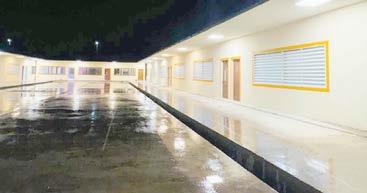
THE newly constructed Hosororo Secondary School is expected to open today to accommodate close to 500 students in Region One (Barima-Waini).
This was disclosed by Regional Chairman, Brentnol Ashley, during a livestream while conducting a site visit last evening.
Ashley said, “[We] are on a late-night site visit to the Hosororo Secondary School, which is ready tomorrow morning (today)...to open its doors to the many children who have been longing to start attending this new institution that is made pos-
sible by our government.”
The school, he said, will house children from several villages across Mabaruma in Region One, but will start with those attending the Hosororo Primary-Top and the Wauna Primary-Top.
While doing a walkabout, the Regional Chair stated that the school is outfitted with its own power generation system and will provide a spacious and comfortable learning environment for students.
Just a few weeks ago, the Ministry of Education, in a post to its social media, noted that the school will
be able to accommodate at least 475 students from the Hosororo Primary Top and some 53 from the Wauna Primary Top.
It was stated that this development was another step in fulfilling the Government of Guyana’s commitment to ensuring every child has access to quality education, regardless of location.
With continued investments in education infrastructure across hinterland and riverine communities, Universal Secondary Education is steadily being realised in Guyana.
He went on to lament that what makes this disinformation campaign particularly galling is that these same actors have repeatedly and publicly demanded the appointment of a Leader of the Opposition.
"One cannot, on the one hand, call for the selection of a Leader of the Opposition and, on the other, claim that no Opposition exists. That contradiction exposes the narrative for what it is: manufactured nonsense.
"More troubling still is the deliberate use of ordinary, unsuspecting Guyanese as conduits for these
lies, amplified through social media and financed by ill-gotten wealth," McCoy said.
This behaviour, he lamented, is irresponsible, dangerous, and a direct insult to the intelligence of the Guyanese people.
"Let me be clear: Parliament is lawfully constituted. Guyana has a Parliamentary Opposition, and the Government will present the 2026 Budget on Monday, January 26, 2026, outlining continued transformation, growth, and prosperity for all under the PPP/C," Minister McCoy said.

works are set to commence shortly as part of the long-anticipated upgrade of the Rosignol daily market in West Bank Berbice, with temporary arrangements already in place to accommodate affected vendors.
The disclosure was made by Chairman of the Regional Democratic Council (RDC) of Region Five (Mahaica-Berbice), Richardo Phillips, during a recent statutory meeting.
who utilise the facility on a daily basis.
According to the Chairman, the project is being undertaken by the Ministry of Local Government and Regional Development, and is intended to significantly improve conditions for both vendors and patrons
Phillips emphasised that the initiative aligns with the government’s broader commitment to enhancing the quality of life for citizens across the country.
“The government believes that every single citizen has to live a comfortable life, and in the
execution of their livelihoods, they should be comfortable as well,” the Chairman stated.
He further revealed that a contract has already been signed for the execution of the works, paving the way for construction to begin in the coming days.
To facilitate the project, vendors who previously operated at the Rosignol daily market were formally notified and
issued letters on January 7, requesting them to vacate the area.
As part of the temporary arrangements, the affected vendors have been relocated to the Rosignol market along Stelling Road. An agreement has been reached allowing them to conduct business at the alternative location from Monday to Friday while construction is ongoing.
The upgraded daily
market facility is expected to be completed within an estimated three-month period.
Once finished, the new market is anticipated to provide a safer, more organised, and more comfortable environment, ultimately boosting economic activity and improving the overall market experience for the Rosignol community and surrounding areas.

THE Environmental Protection Agency’s (EPA) Investigations and Enforcement Department has made significant achievements in 2025.
Head of the Department, Surajpaul Singh, said that these achievements were guided by the department’s strategic plan and alignment with national priorities.
Throughout 2025, Singh remarked that the department managed to
investigate more than 540 environmental complaints. These related mainly to nuisances such as noise, air, water and solid-waste management. Each complaint was assessed and investigated using a riskbased approach, following which the necessary enforcement actions were taken.
“As a direct result of these efforts, we managed to successfully close about 200 of those environmental complaints, mainly due
to implementation of recommended measures, relocation of activities and cessation of those operations,” he noted.
One of the most notable achievements for the department, however, was the successful soundproofing of more than 17 bars and entertainment establishments in Regions Two, Three and Four.
These interventions, he said, significantly reduced noise pollution in communities and improved

adherence to compliance with noise regulations.
“Strong and continued collaboration with the Guyana Police Force was also critical to the success of this activity. The department also enhanced compliance through stakeholder engagement, where Spray Painting Operators were engaged and guid -
ed on best environmental practices to improve their operations, particularly emissions control and operation management,” Singh reported.
To improve data-driven enforcement in areas with recurring non-compliances, the department was able to identify and analyse eight hotspot com-
munities in Regions Three and Four.
During the initial assessment of these communities, it was recognised that operators were slow in implementing recommended measures. Singh explained that through consistent and focused enforcement application, they managed to increase compliance levels in communities, reducing environmental and public health risks.
“The achievements of the Investigations and Enforcement Department has [sic] demonstrated that through strategic enforcement, strong partnerships, and proactive engagements, we are working to safeguard the environment and protect the well-being of communities,” he said.
‘drive excellence’
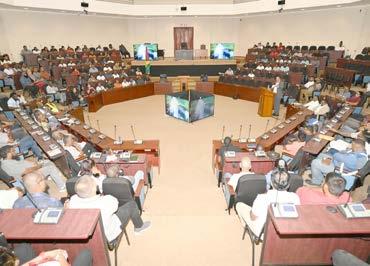
Minister Collin Croal, alongside Minister Vanessa Benn and senior CHPA officials, met with contractors last Thursday, January 15, 2026, who are involved in the construction of houses for the Ministry.
The interactive engagement, according to information from the ministry, was aimed at overcoming delays and other obstacles with emphasis on higher workmanship standards and stricter compliance.
Permanent Secretary of the ministry, Bishram Kuppen; Chief Executive Officer of the Central Housing and Planning Authority, Dr. Martin Pertab; Deputy Director of Projects, Intakab Indarjeet, and other technical staff also participated.
–– experience in governance of fisheries, genetic
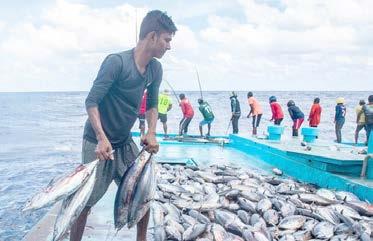
THE Food and Agriculture Organization of the United Nations (FAO) has welcomed the entry into force of the Agreement under the United Nations Convention on the Law of the Sea on the Conservation and Sustainable Use of Marine Biological Diversity of Areas beyond National Jurisdiction (BBNJ Agreement), and looks forward to contributing to its implementation.
Following two decades of negotiations, the BBNJ Agreement, which so far has 145 signatories and 81 Parties, came into force on January 17, 2026. It is a binding global treaty, aimed at ensuring the sustainable use and conservation of biodiversity in ocean areas beyond national jurisdiction. The Agreement covers four main issues: marine genetic resources; area-based management tools;
is an important next step in addressing critical gaps in the governance of areas beyond national jurisdiction.
FAO is equipped with the know-how to assist parties and institutions to implement the Agreement, and has expertise, data and systems that will be critical to achieve its goals,” said FAO Assistant Director-General and Director of Fisheries and Aquaculture, Manuel Barange.
The ABNJ cover roughly two-thirds of the world’s oceans and close to a majority of the total living space of the planet. Fishing in these waters is regulated through an existing network of rules and regional fisheries management organisations, with some geographical gaps. Around 11 million tonnes of aquatic animals are caught by fisheries per year in the ABNJ, mostly tunas, bonitos, billfishes and
collection, and monitoring, Barange noted.
“Just as healthy and biodiverse ecosystems are the foundations of sustainable fisheries, the institutions designed to govern the latter can contribute greatly to ensuring human use can coexist with and support biodiversity,” he said.
HOW FAO CAN HELP
Data will be critical to the BBNJ, making FAO’s fisheries data, including production, trade, employment, fleet capacity and consumption of aquatic resources, as well as FAO’s regular assessment on the state of marine fishery resources, and the Fisheries and Resources Monitoring System (FIRMS), particularly valuable.
Capacity building is essential for all international
environmental impact assessments; and capacity building and technology transfer.
The BBNJ Agreement requires a cross-sectoral approach that integrates and builds on existing arrangements to manage human activities in ocean areas beyond national jurisdiction (ABNJ), such as fishing, shipping, mining and research exploration. The BBNJ Agreement also stipulates that the benefits of marine genetic resources – often used in pharmaceuticals, food supplements and cosmetics – are fairly and equitably shared.
“The BBNJ Agreement
elasmobranchs taken from the epipelagic zone.
Regional fisheries management organisations put in place binding rules to manage fishing in many ABNJs, including setting observation and monitoring systems, science-based catch limits, allocation and bycatch rules, and when needed, closures to reduce pressures on marine resources, They have decades of experience managing and conserving marine biodiversity and will be critical to the success of the BBNJ Agreement, through capacity development, science-based management systems, data
treaties. In this area FAO has long supported countries, for example in building the capacity to implement and comply with the Agreement on Port State Measures to combat Illegal, Unreported and Unregulated fishing, and in using compliance-related tools like the Guidelines on Transshipment and the Global Record of Fishing Vessels, all of which are applicable and relevant in the ABNJ ocean areas. Through the Common Oceans Program, funded by the Global Environment Facility, FAO and its partners have proven with practical solutions on how global and
cross-sectoral collaboration can support the effective and sustainable management of the ABNJ areas, with demonstrable success for tuna stocks and the survival of vulnerable species such as the albatross and sharks.
FAO has worked for decades with the approximately 50 regional fisheries bodies, establishing a net -
working model that will be critical for the new treaty.
FAO is already supporting countries and regional fishery bodies in their preparations to implement the BBNJ Agreement. Although the details of how the BBNJ Agreement will operate are still being developed, FAO’s data and networking systems, technical expertise and
capacity-building activities will be essential for its implementation.
“Marine biodiversity underpins sustainable fisheries and global food security. The BBNJ Agreement presents a unique opportunity to enhance global oceans governance and improve outcomes for everyone,” Barange said. (FAO)



JOBURG Super Kings booked their place in the
SA20 play-offs with a convincing 44-run win over Paarl Royals.
Super Kings, who have qualified for the play-offs in all four editions, knew a win would see them progress, but they secured a bonus-point victory.
After winning the toss and opting to bat first, they lost James Vince to the third ball of the match but recovered to post 166-5.
Middlesex's Leus du Plooy top-scored with an
unbeaten 54, while Neil Timmers made 39 and Michael Pepper and Matthew de Villiers both added 27.
Royals, who had already secured their passage to the knockouts, were well positioned at 81-2, needing 86 off 52 balls, but suffered a middle-order collapse.
They lost Rubin Hermann and Delano Potgieter in a four-ball spell to slip to 82-4, and four overs later they were 113-7 when England's Dan Lawrence fell
for 45.
At that point the game was beyond them and they were 122 all out, with captain David Miller unable to bat.
Super Kings finished fourth and Royals third, meaning they will face each other in the Eliminator.
Sunrisers Eastern Cape and Pretoria Capitals occupy the top two and get two chances to reach Sunday's final.
SA20 play-off schedule
Wednesday, January 21: Qualifier 1 - Sunrisers Eastern Cape v Pretoria Capitals (15:30 GMT)
Thursday, January 22: Eliminator - Paarl Royals v Joburg Super Kings (15:30 GMT)
Friday, January 23: Qualifier 2 - loser of Qualifier 1 v Winner of Eliminator (15:30 GMT)
Sunday, January 25: Final - winner of Qualifier 1 v winner of Qualifier 2 (13:30 GMT)
SADIO Mane was praised for his role in avoiding further chaos at the Africa Cup of Nations final as the Senegal talisman convinced his team-mates to return to the pitch after Morocco were awarded a controversial penalty.
Senegal was angered when, deep into stoppage time, Morocco was awarded a penalty following a VAR review by Congolese referee JeanJacques Ndala after Brahim Diaz went down under the challenge of El Hadji Malick Diouf.
It was the second of two late decisions to go against Senegal, after Ismaila Sarr had

a goal ruled out for a soft foul on Morocco captain Achraf Hakimin moments before, and the Teranga Lions were led off the pitch by head coach Pape Thiaw.
Former Liverpool winger Mane, who is Senegal’s record scorer and had said before the final that it was going to be his final Africa Cup of Nations, notably remained on the pitch and, following a discussion with former Senegal player El Hadji Diouf, returned to the Senegal dressing room.
After appealing to his team-mates, Senegal remerged onto the pitch - where, following a delay of around 15 minutes, Brahim Diaz fluffed
hrs Dollar's Dream
15:30 hrs Forglen 16:00 hrs Dust Cover 16:30 hrs Shalaa Asker
IRISH RACING TIPS DOWN ROYAL
09:43 hrs Starryfield
10:13 hrs Aisling Oscar 10:43 hrs Silkie Wilkie
08:50 hrs Bud Fox 09:20 hrs Zuzukel 09:50 hrs Catchabird 10:20 hrs Might Be The One 10:50 hrs Sky Lord 11:20 hrs Shanroe Act 11:50 hrs Diamond Dollar
AMERICAN RACING TIPS
MAHONING VALLEY
Race 1 Lomachenko Race 2 Puff'smagicdragon
Race 3 A Little Canela Race 4 Princess Halime
the chance to win the final for Morocco with a dismal ‘Panenka’ penalty that was easily saved by goalkeeper Edouard Mendy.
Senegal won the match in extra time, as Mane won his second Africa Cup of Nations crown and cemented his legacy as one of Africa’s greatest ever players. Mane took the armband from Kalidou Koulibaly and Idrissa Geuye to lift the trophy in Rabat.
Afterwards, Mane said he had to act to prevent further damage to the “image” of football. Senegal is likely to face heavy sanctions for their protests and the former Morocco international Hassan Kachloul said “Africa football were losing” before Mane took action.
“Football is something special, the world was watching, the world loves football and I think football is a pleasure so we have to give a good image for football,” Mane said afterwards.
“I think it would be crazy
to not play this game because what, the referee gave a penalty and we go out of the game? I think that would be the worst thing especially in African football. I'd rather lose than this kind of thing happen to our football.
"I think it's really bad. Football should not stop for even ten minutes but what can we do? We have to accept that we did but the good thing is that we came back and we played the game and what happened happened.”
The Senegal head coach Thiaw later accepted that he was wrong to bring his players off the pitch and had acted in the “heat of the moment”. Kachloul told E4: "What I like more than anything, the only player from the Senegalese team was Sadio Mane. That shows the great man he is. He went back to the dressing room and brought those players back. Mane was the man to bring them back on. (Independent)
(Tuesday, January 20, 2026)
DENI Avdija returned from a three-game absence to score a gamehigh 30 points, Toumani Camara shoehorned nine of his 17 points into a key second-quarter run and the Portland Trail Blazers held the host Sacramento Kings at arm's length through the second half for a 117-110 victory Sunday night.
Shaedon Sharpe chipped in with 27 points and Donovan Clingan snatched a game-high 17 rebounds as part of a double-double with 21 points for the Trail Blazers, who used a third straight win to reach .500 for the first time since mid-November. Portland has won 10 of its last 13 games.
Reserve Malik Monk and Russell Westbrook had 23 points apiece and Zach LaVine added 18 for the Kings, who saw a fourgame winning streak come to an end with a third consecutive loss to the Trail Blazers this season.
Camara's flurry came after the Kings had taken a 45-44 lead on a Maxime Raynaud 10-footer with 5:24 remaining in the first half. The Trail Blazers then ended the second period on a 20-8 run to go up 64-53 at the break.
Camara contributed two dunks, a short bank shot and a 3-pointer to the run, and Clingan added a pair of dunks, one on an alley-oop.
Portland closed the half by making eight of its final 12 shots, while the Kings connected on just three of 11 and mixed in four turnovers.
Sacramento never led again, but did get as close as seven early in the fourth quarter, then again at 108101 with 3:16 to go. The Kings appeared to close the gap even farther when Clingan was called for goaltending on a LaVine interior attempt with 2:03 left, but the call was overturned on review, after which Sharpe and Avdija added hoops to ice the win.
Avdija, who had been sidelined by a sore back, made 10 of his 18 shots and mixed in a game-high eight assists in 32 minutes.
NOVAK Djokovic delivered a serving masterclass as he registered his 100th victory at the Australian Open with a straight-set win over Spain's Pedro Martinez.
The world number four, who is bidding for a standalone record 25th Grand Slam singles title, only dropped five points out of 57 on serve across a twohour exhibition of serving excellence.
The 38-year-old produced eight holds to love, only lost one point in each of the second and third sets and won 93% of points behind his first serve - all while maintaining a first-serve percentage of 77%.
The 10-time champion fittingly closed out the win with his 14th ace of the night, triumphing 6-3 6-2 6-2.
Mark Woodforde, a 17time Grand Slam doubles champion, hailed Djokovic's serving as "supreme" and "exceptional" on BBC Radio 5 Sports Extra but the Serb offered a more understated assessment of his performance.
"Tonight's performance was great, I can't complain about anything. I served very well," said Djokovic.


Monk drilled five 3-pointers, while Westbrook and LaVine hit three apiece for the Kings, who outshot the Trail Blazers 35.5% to 25.0% from beyond the arc and outscored the visitors 33-24 from deep. In his second game since a 27-game absence due to a knee injury, Domantas Sabonis had eight points and eight rebounds in 20 minutes off the bench for Sacramento. DeMar DeRozan (14 points), who tied Westbrook for team-high assist honours with seven, and Dylan Cardwell (12), who had a team-high 10 rebounds, joined Monk, Westbrook and LaVine in double figures. (Reuters)
THE International Cricket Council (ICC) has not held any talks with Scotland about replacing Bangladesh at next month's men's T20 World Cup - but Scottish players would be ready if the call came.
Bangladesh has told the ICC they will not travel to India for the T20 World Cup next month amid political tensions between the two countries, and has requested their matches be moved elsewhere.

Maestrelli in the second round, continued: "It's a nice feeling to be a centurion.
"I have a couple of days without a match to recover my body. I'm using every hour to get in shape for the next challenge."
After notching up a century of wins in Melbourne - a feat he has also achieved at Wimbledon (102) and Roland Garros (101) - Djokovic was treated to video highlights from his 2005 maindraw debut during his postmatch interview.
Djokovic, in understandably jovial spirits, played down this period of reflection, insisting he will not get caught up in his career achievements until he has "put the racquet aside [and is] sipping some nice cocktail on the beach".
Djokovic, who will face Italian qualifier Francesco
"It's always a challenge to kick-start the tournament on the right note and send the right signal not only to yourself but your opponents watching you play.
"History-making is great motivation. Particularly in the last five or 10 years of my career, once I got myself in a position where I could eventually create history, I was even more inspired to play the best tennis.
"I was fortunate early in my career to encounter people who guided me to play the long shot with my career, not to burn out too quickly, and take care of my body and my mind.
"I'm blessed to be playing at this level and another win is a dream come true."
"I was fortunate early in my career to encounter people who guided me to play the long shot with my career, not to burn out too quickly, and take care of my body and my mind.
(BBC Sport)
Scotland is the highest ranked team not taking part in the tournament, which would put them in the frame to take Bangladesh's spot should the ICC decide to replace them.
However, BBC Sport has been told the ICC has not contacted Cricket Scotland at this stage to discuss whether they would be willing to step in.
Equally, Scottish cricket officials are not planning to initiate talks with the global governing body out of respect to their counterparts at the Bangladesh Cricket Board (BCB).
A fourth-place finish at last summer's Europe Qualifier cost Scotland a place at the 2026 T20 World Cup as the Netherlands and Italy secured the two spots on offer for the region.
Scotland's players are currently back in training,
though, as they prepare for a one-day international tri-series with Namibia and Oman in Windhoek in March.
It has been reported that a final call on Bangladesh's participation in the T20 World Cup, and if they are willing to travel to India for the event, is set to be taken by Wednesday.
BBC Sport has approached the ICC for clarification of the criteria used to determine a replacement in the event of a team either pulling out or being expelled from the tournament.
Zimbabwe withdrew from the 2009 T20 World Cup in England for political reasons and were replaced by Scotland who were the 'next best' team in a pre-tournament global qualifying tournament.
But with qualifying for T20 World Cups, which were expanded to 20 teams
in 2024, now done on a regional basis it is not quite so straightforward and is likely to be a discretionary decision by the ICC.
Scotland is currently 14th in the ICC T20 rankings.
The ICC could move Bangladesh's matches to a less politically sensitive part of the country, or switch their games to co-host Sri Lanka.
It had been reported by ESPNCricinfo, external that the ICC had received a request from the BCB to swap groups with Ireland, who are due to play all their games in Sri Lanka.
A Cricket Ireland spokesperson told BBC Sport they "have been assured" that "no changes are being made" to their schedule but they are monitoring developments closely. (BBC Sport)
CITY side Beacon FC showed their worth on Sunday at the Plaisance Community Centre Ground with a much-needed victory in the Georgetown.
Football Association Senior Men’s League Beacon, playing their first contest, came up against Eastveldt FC in the feature clash on Sunday evening, winning 2-1. Beacon’s Damani Hardy scored the opener in the 36th minute before Eastveldt’s Akeem Farley scored the equaliser on the verge of the break.
Sunil Logan then got onto the scoresheet deep in the second half with a goal to give Beacon the edge which they held on for the victory.
The night’s opener saw North Star and Campton FC playing to a scoreless draw.

Wendell Joseph gave Riddim Squad the first half lead, before second half goals from Seon Grant and Jermaine Lewis in the 54th and 75th minutes completed the win.
The action continues tonight with another pair matches at the same venue.
On Saturday at the same ground Black Pearl took a needle victory over Order and Discipline FC with the lone goal coming off the boot of Sherwin Evans. In the other match, Mocha’s Riddim Squad comfortably dispatch Pele FC 3-nil.
Northern Rangers play Motherland FC and Vengy FC will meet Order and Discipline FC with matches scheduled for 19.00 hours and 21.00 hours.
The league which concludes on February 14 will see the winner collecting one million dollars with half a million for second place.
This competition is sponsored by the Ministry of Culture, Youth and Sports.
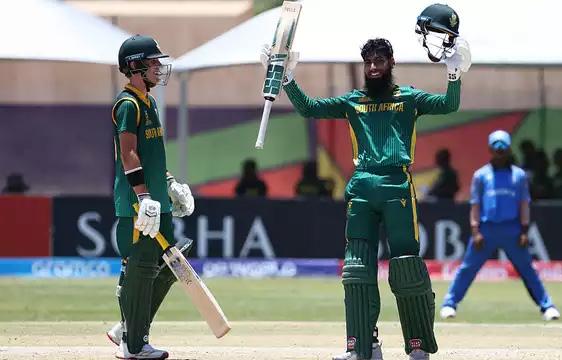
JASON Rowles scored a 101-ball 125 and captain Muhammed Bulbulia tonked a run-a-ball 108 to build South Africa's exceptional innings against Tanzania in Windhoek. They added 201 off 176 for the third wicket. Once Bulbulia was dismissed, Paul James arrived with big intentions, slamming 46 off just 18 balls with two fours and five sixes.
With contributions from the openers too, South Africa
finished with 397 for 5 - their highest ever total in U-19 World Cup history. They went on to cap a historic day with a gargantuan win - by 329 runs as Tanzania folded for 68 in chase. All five of South Africa's bowlers were among the wickets, with Rowles and Buyanda Majola bagging two each.
Another captain stood tall as Vimath
Dinsara led Sri Lanka's middle-order batting impetus with a 102-ball 95 against Ireland. Kavija Gamage (49 off 69) and Chamika Heenatigala (51 off 53) added crucial runs to take Sri Lanka to 267 for 5 in 50 overs. Medium-pacers Dulnith Sigera (4-19) and Rasith Nimsara (329) ran through Ireland, who folded for 161 in chase.
FIVE matches into their season and Royal Challengers Bengaluru has already secured what teams spend the entire league stage chasing, a place in the playoffs, and they've done so with a swagger that suggests this is only the beginning.
We are only at the start of the Vadodara leg of WPL 2026 and table-toppers RCB continued with the same ruthless authority that saw them sweep through Navi Mumbai, producing yet another all-round masterclass against the Gujarat Giants to go five from five this year, six factoring in their win to close the last - a run unprecedented in this league's short history.
Gujarat Giants had pushed RCB close, at least in one innings in the reverse fixture, and they will have had every reason to believe they could run them close again in a chase of 178 even on a ground whose characteristics
this season will only begin to be unravelled.
After all, the Giants came with a PowerPlay run-rate of 10.08 in WPL 2026, well clear of even the next best - RCB (9.04). As it turned out, they were up against a bowling attack that has been the league's gold standard in every conceivable PowerPlay metric - Wickets (11), Average (18.09), SR (16.3), ER (6.63), Dot% (53.8), Boundary% (17.22).
And so it proved to be once Sayali Satghare cleaned up Beth Mooney and had Sophie Devine hit straight to deep mid-wicket in her first over. The writing was very much on the wall. When Lauren Bell cleaned up Kanika Ahuja, the Giants were 5 for 3 and only managed to stutter to 29 for 3 after six overs. Ash Gardner fought a lone battle with a 43-ball 54 but the Giants had conceded so much

RCB becomes the first team to qualify for the playoffs in WPL 2026
ground in that PowerPlay that they fell well short by 61 runs, giving themselves an additional NRR blow in addition to the defeat.
This was still a victory in two parts for RCB on a black-soil wicket that offered much less bounce than the ones at the DY
Stadium. As in that reverse fixture, RCB had to recover from a wobbly start to post a competitive total thanks to an excellent
DUBAI, United Arab Emirates, (CMC) – Led by a superb, record-breaking performance by Ibrahim Zadran and Darwish Rasooli, Afghanistan romped to a comprehensive 38-run victory over an out-of-sorts West Indies in their opening T20I match here on Monday.
Zadran scored an unbeaten 87 off 56 balls, while Player-of-the-Match Rasooli struck slammed 84 from 59 balls, to lead Afghanistan to a competitive 181 for three in their 20 overs after they elected to bat first at the Dubai International Cricket Stadium.
They were ably assisted by the West Indies, who dropped them three times in the space of two overs in a forgettable fielding display.
The Windies then followed that up with an equally shoddy display with the bat, slumping to 50 for five before eventually ending their innings on 143 for nine.
It was a far cry from the manner in which they started the match, with the visitors producing two brilliant fielding efforts to put Afghanistan on the backfoot.
Jayden Seales’ first ball of the match brought immediate success for the Windies, with Gudakesh Motie’s sensational direct throw from mid-on finding Rahmanullah Gurbaz well short of his ground at the non-striker’s end as he attempted a quick single.
Captain Brandon King
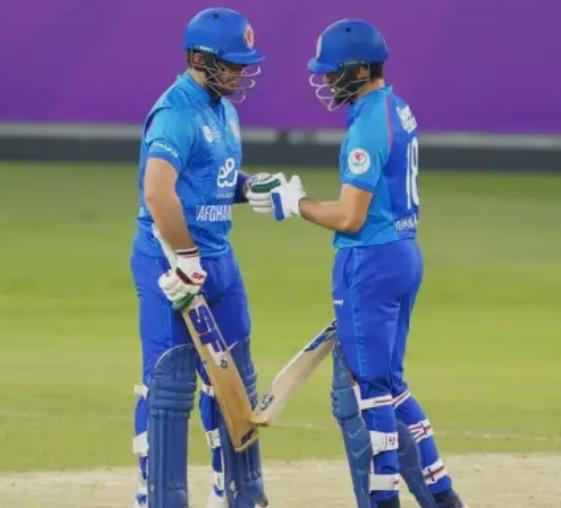
then leapt into the air to pull off a stunning one-handed catch at first slip to dismiss Sediqullah Atal for just two, to see Afghanistan slip to 19 for two in the third over.
His dismissal brought Rasooli to the crease and for the next 17 and a half overs, the pair tormented the West Indies’ bowlers during a partnership of 162 runs –Afghanistan’s second highest in T20Is and the fifth highest ever for the third wicket in all T20Is.
Shamar Joseph, making his return from injury, was hit by Rasooli for two fours in his first over that leaked 11 runs, while left-arm spinner Khary Pierre was given the
India win in Brisbane to beat Australia 2-1
One of the most thrilling Test series of the 21st century reached a fitting end when India won it 2-1 in the last few overs on the last day of the last Test, chasing 328 in Brisbane, where the home side hadn't lost in 32 years.
India's men of the moment were Rishabh Pant, who took them home with 89 runs made with trademark audacity; Cheteshwar Pujara, who resisted over five hours and took about a dozen body blows for his fifty; and Shubman Gill, whose 91 (and century partnership with Pujara) gave India cause to
believe. Earlier in the game, Mohammed Siraj, playing his third Test, took a five-for. It was a fairy-tale end to the series for India, who did not have the services of their best batter, Virat Kohli, after the first Test, and lost players to injury at a rate of knots through the tour, including all their front-line bowlers. They played a virtual B side in Brisbane and came up trumps against one of Australia's best bowling attacks of all time: Pat Cummins, Josh Hazlewood, Mitchell Starc and Nathan Lyon. (ESPN Cricinfo)
18th over, Gudakesh Motie dropped Rasooli at long on off the bowling of Seales, and two balls later Evin Lewis dropped Zadran at deep midwicket.
Shimron Hetmyer then spilled an easy catch at long off to get rid of Zadran off the bowling of Joseph in the next over.
Zadran’s unbeaten knock contained eight fours and three sixes, while Rasooli, who was dismissed off the last ball of the innings, struck eight fours and two sixes. Needing to score at just over nine runs an over, King
started well for the Windies by driving Mujeeb Ur Rahman’s first ball of the innings to extra cover for four.
But Ur Rahman got his revenge four balls later when he bowled the opener with an inswinger that cannoned into the middle stump.
Johnson Charles smashed Ur Rahman for a six in the third over and then hit him for a six and two fours off the first three balls of the fifth over, before the pacer made amends by having Evin Lewis caught at deep midwicket to leave the Windies 38 for two.
His dismissal sparked a collapse that saw the West Indies lose four wickets for 12 runs and effectively sealed the outcome.
Debutant Quentin Sampson hit two sixes and two fours in his top score of 30, while Gudakesh Motie (28) and Matthew Forde (25) starred in cameos.
Ziaur Rahman was Afghanistan’s best bowler with 3-36, while Rashid Khan (219), Ur Rahman (2-29) and Noor Ahmad (2-34) took two wickets apiece.
The second T20I is set to be played on Wednesday.
+Rahmanullah Gurbaz run out 0
same treatment, this time by Zadran in the ensuing over, as Afghanistan raced to 51 for two after six overs.
Zadran brought up his half century off 37 balls with a single off Gudakesh Motie, becoming the first player from Afghanistan to score four consecutive T20I half centuries in the process.
Rasooli joined him soon after, reaching his 50 off 36 balls by nudging Forde to midwicket for two runs.
After 14 overs Afghanistan were 111 for two, but the pair bludgeoned 70 runs off the last six overs in a spectacular finish.
With the score 147 for two at the start of the
Ibrahim Zadran not out 87
Sediqullah Atal c King b Seales 2
Darwish Rasooli c Hetmyer b Forde 84
Extras (w8) 8
TOTAL (two wickets; 20 overs) 181
Did not bat: Mohammad Nabi, Azmatullah Omarzai, Gulbadin Naib, *Rashid Khan, Noor Ahmad, Mujeeb Ur Rahman, Ziaur Rahman Sharifi. Fall of wickets: 1-0, 2-19, 3-181.
Bowling: Seales 4-0-30-1, Forde 4-0-51-1, Pierre 4-0-42-0, Joseph 4-0-40-0, Motie 4-0-18-0.
*Brandon King b Ur Rahman 4 Evin Lewis c Rasooli b Z Rahman 4
28
Khary Pierre lbw b Z Rahman 3
Shamar Joseph not out 4 Jayden Seales not out 3
Extras (lb2, w7) 9
TOTAL (nine wickets; 20 overs) 143 Fall of wickets: 1-5, 2-38, 3-42, 4-47, 5-50, 6-95, 7-132, 8-133, 9-140.
Bowling: Ur Rahman 4-0-29-2, Omarzai 3-0-12-0, Z Rahman 4-0-36-3, Khan 4-019-2, Nabi 1-0-2-0, Ahmad 3-0-34-2, Naib 1-0-9-0.
Toss: Afghanistan elected to bat first. Result: Afghanistan won by 38 runs to lead the three-match series 1-0. Player-of-the-Match: Darwish Rasooli.
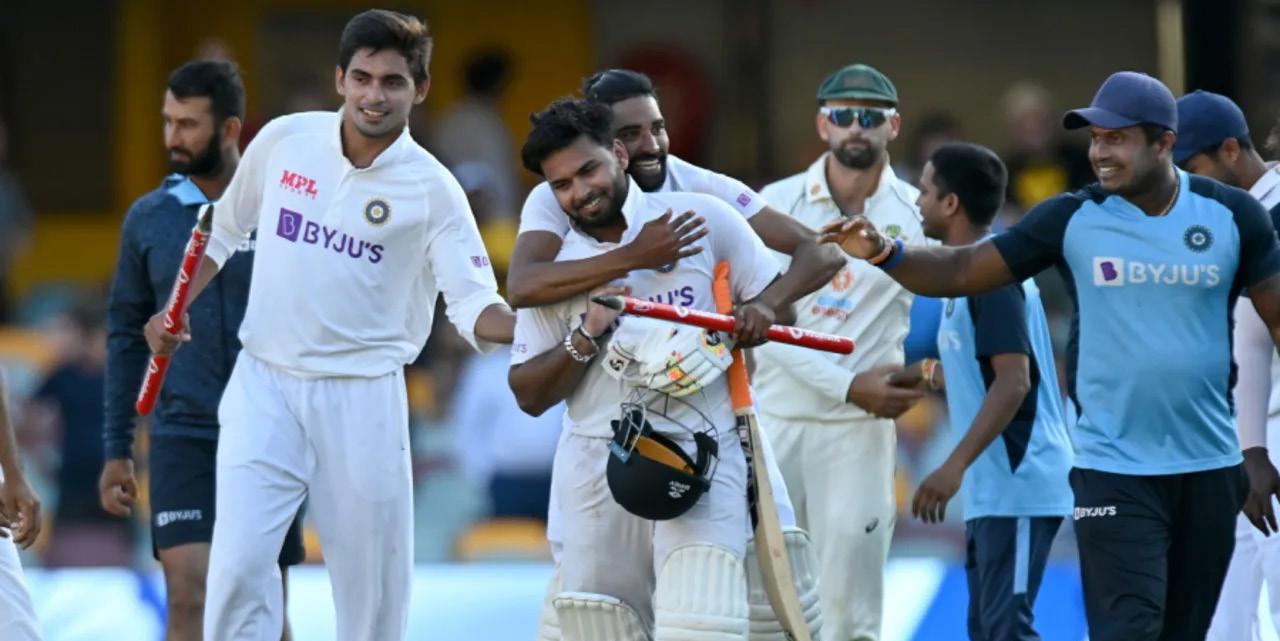
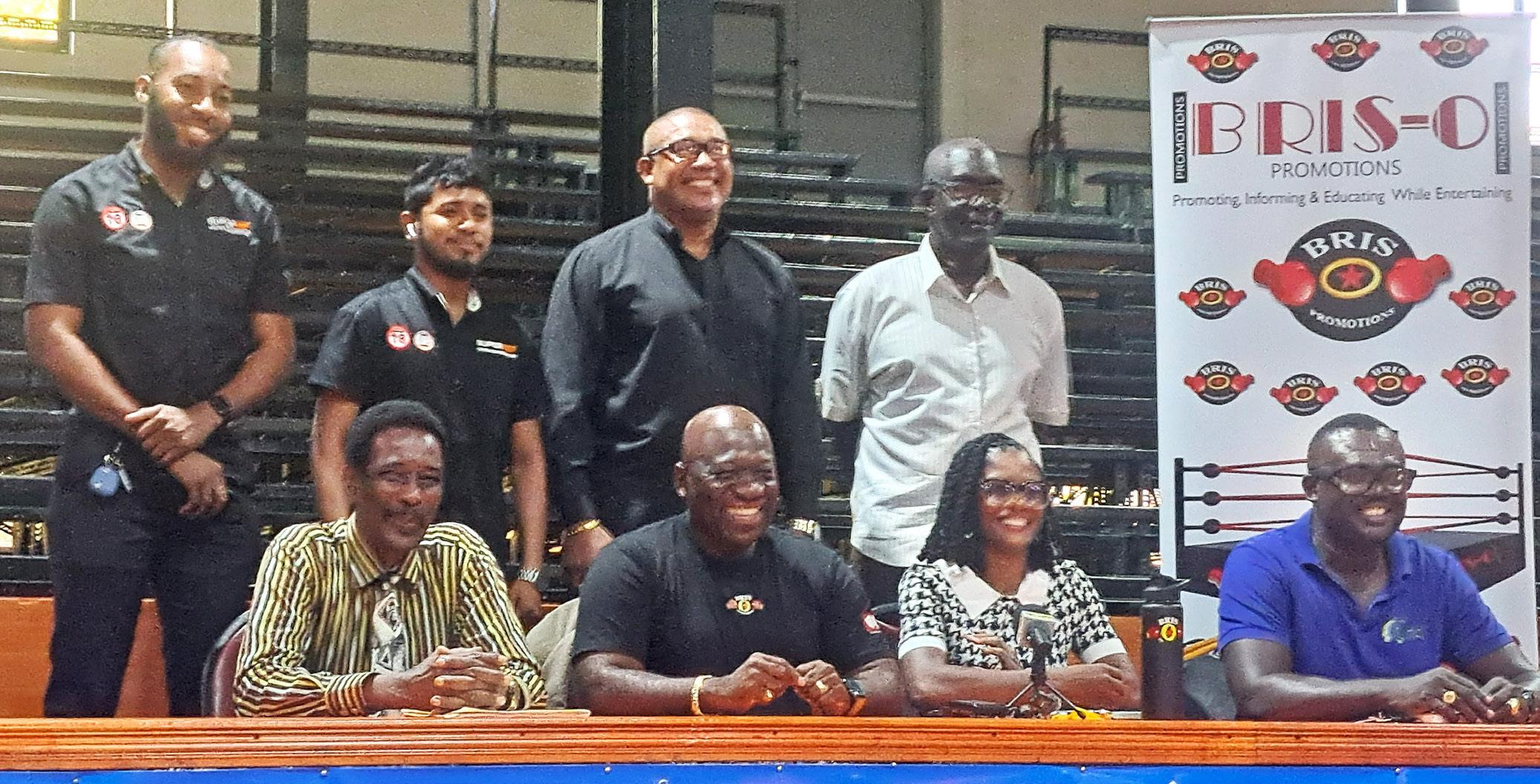
By Sean Devers
All roads lead to the refurbished Cliff Anderson Sports Hall (CASH) on Homestretch Avenue on Saturday, January 24 for what is anticipated to a pulsating Caribbean Pro-Am Boxing Showdown, presented by Caribbean Boxing Organisation (CBO) Bris ‘O’ Promotions.
The action-packed night of fistic fury includes seven Professional and Amateur Bouts, is scheduled to commence at 18:00hrs and is in collaboration between the Guyana Boxing Board of Control (GBBC) and Guyana Boxing Association (GBA).
Tickets cost $2,500 for Stands and $5,000 for Ringside and Chief Executive Officer (CEO) of Bris ‘O’
Promotions and Caribbean Boxing Organisation (CBO) President, Seon Bristol told the Media yesterday at a press conference at CASH that there will be live entertainment during 30-minute break between the Professional and Amateur segments.
Bristol along with Technical Director of the Guyana Boxing Association (GBA) Elton Chase, Executive member of Bris ‘O’ Promotions Kesha Sertima and Head of Security of the Event Niyen Sinclair yesterday provided information about the card.
Bristol disclosed that his good friend and Contractor Colin Benn of CB 1 Construction Company wanted to give back to sports and had come on board. Bristol added
that Superset was the other main sponsor of the Card which includes seven overseas pugilists.
Bristol stressed that the admission cost was geared to make it affordable for most boxing fans and anticipates a full house.
“Boxing is all about entertainment and outside the Ring we are trying to get some local entertainers and have confirmed the police band will also provide entertainment during the break,” Bristol explained.
“For live courage we have brought in some commentators to compliment those we have here and coverage could be around the Caribbean and would wide on social media and You Tube
and we expect a fantastic night of Boxing.” Said
KINGSTOWN, St Vincent, (CMC )– Leeward Islands Women booked their spot in the final of this year’s T20 Blaze after recording a comfortable 31-run victory over Barbados Women in their top of the table clash here on Monday. With both sides heading into the contest unbeaten after three matches with one round remaining, the winner was guaranteed a place in Friday’s final.
The Leewards did well to recover from 47 for six to get up to their eventual total of 118 for nine in their 20 overs at the Arnos Vale Playing Field. They then produced a spirited bowling effort to limit Barbados to 87 for nine to keep their unbeaten streak alive.
Barbados would have been disappointed to have allowed their opponents to score so many runs after Naijanni Cumberbatch’s five-wicket haul had put them in complete control of the match.
Cumberbatch bowled opener Shawnisha Hector for six and also dismissed Reniece Boyce, Amanda Edwards, Davronique Maynard and Kayzg Boyles, both for ducks, to reduce them to 47 for six after seven overs.
However, Jahzara Claxton made 22, Tonya
Martin scored 23, while Rozel Liburd finished unbeaten on 11, as the Leewards’ last four wickets added 71 runs.
Cumberbatch ended with the impressive figures of 5-15 and Shanika Bruce took 2-14.
Barbados Women got off to a disastrous start in their run chase when Trishan Holder was bowled by Hector without a run on the board.
Eboni Brathwaite and Cumberbatch added 23 runs for the second wicket, before both were dismissed in the space of three runs to see Barbados slip to 26 for three.
Captain Aaliyah Alleyne and Asabi Callender carried them to 51 for three before a middle order collapse derailed their efforts.
Alleyne was bowled by Qiana Joseph for 15, Amanda Edwards had Callender stumped for 17 and also accounted for the wicket of Shakera Selman, while Joseph returned to snare the wicket of Shamilia Connell to reduce Barbados to 63 for seven in the 14th over.
Barbados never seriously threatened thereafter and eventually fell well short of their target.
Joseph (2-10), Hector (2-13) and Amanda Edwards (2-17) were the Leeward Islands’ best bowlers.
Bristol who is no stranger to promotion of the fistic sport.
Chase, who replaced the late Terrence Poole as the GBA’s TD,said it was a great opportunity to have the GBA collaborate with (GBBC) to stage such big event.
“We (GBA) are also focused on developing females and we will have world rated Abiola Jackman matching gloves with a girl from Trinidad and Tobago.
The Amateur segment will also feature three boxers from Suriname,” said Chase.
Sertima reminded the media that the weigh-in is scheduled for from Friday with amateurs starting from 16.00hrs while the Professionals conduct their weigh in from 6pm. 18.00hrs .She invited the media to cover the weigh-in and get interviews.
She announced the full
list of fights and thanked everyone for attending.
Sinclair noted that cars could be parked at the resurfaced Tarmac while he said the entrance is from the Homestretch Avenue while no weapons will be allowed into the Sportshall.
Full card:
Professional:
Desmond Amsterdam (Guy) vs Edmond DeClue (Guy) 6 rds.
Quincy Gomes (Guy) vs Charles Cox (Bar) 6 rds.
Rasheed Williams (Bah) vs Nico Yeo (Jam) 8 rds.
Terrence Adams (Guy) vs Samuel Green (Sur) 4 rds.
Joel Williamson (Guy) vs Damar Haslam (Jam) 4 rds.
Delon Charles (Guy) vs Jamal Eastman (Guy) 4 rds.
Mitchell Wielson (Sur) vs Tyreece Taitt (Bar) 4 rds.
Amateur:
Abiola Jackman (Guy) VS Angel George (T & T) at 90 plus kgs
Shakquain James of (Guy)VS Ossis Prince (Guy) at 71 kg
Roopesh Balgobin (Guy) VS Junior Madray (Guy) at 40kg
Travis Iverary (Guy) VS Mordino Massie (Sur)at 72.5kg
Jofes Jackman (Guy) VS Chivoro Blackson (Sur) at 76kg
Ken Harvey (Guy) VS Zahir Timpico (Sur) at 56 kg Gates open at 17.00hrs and tickets can be bought at the Cliff Anderson Sports Hall, Transport Sports on Thomas Road and Windjammer Hotel in Kitty.