
Discovery
1.1 Surprising facts
1 Read the sentences. Are they true or false? Tick the correct boxes. Then discuss your answers in class.
INKIJKEXEMPLAARDIEKEURE
1 In Australia, Christmas is in summer.
2 In Canada, people only speak English.
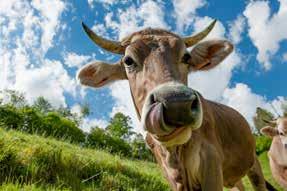
3 The USA has more cows than people.
4 New Zealand has more sheep than people.
5 In South Africa, people drive on the left side of the road.
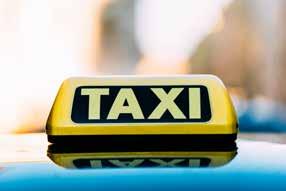
6 In New York, taxis are mostly (meestal) green.
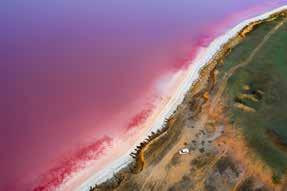
7 In Australia, you can find pink lakes.
8 In New Zealand, some traffic lights play music when you cross the street.
9 India has a floating (drijvend) post office.
10 In Australia, there’s a town called Banana, but there are no bananas there.
2 Which fact surprised you the most? Do you know any other facts about Englishspeaking countries?
2.1 Famous all around the world
1 Read the text below and answer the questions.
INKIJKEXEMPLAARDIEKEURE
Famous Stars from Around the English-Speaking World!
Did you know that many of the world’s most famous stars come from different countries and cultures? Let’s take a trip around the globe and meet them!


First stop: Elon Musk! He was born in South Africa, but he now lives in the United States of America. He is an American businessman and is known for rockets, electric cars and crazy ideas about space!
Some of the most famous people come from very small countries, like Rihanna. She is from the island of Barbados, but she now lives in the USA. She is one of the most popular singers in the world!
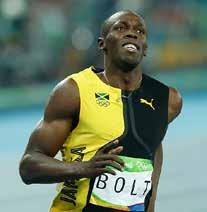
Usain Bolt, the fastest man in the world, comes from Jamaica, another sunny island. This Jamaican runner holds a world record
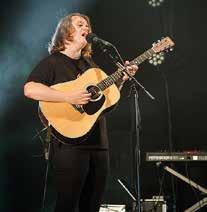
Over in Canada, we meet Justin Bieber. He is a Canadian singer who became famous when he was just a teenager. ‘Beliebers’ around the world love him! But he is not the only singer people love. Niall Horan, a singer from the band One Direction, also has fans all around the world. He was born in Ireland. Millions of people love him for his sweet songs and the warm sound of his guitar. Another famous singer comes from Scotland. Let’s talk about Lewis Capaldi. This Scottish singer is funny, a bit quirky and has a big, powerful voice.



© Debbie Rowe Elon Musk
© Agência Brasil Usain Bolt
© marcen27/ Flickr Niall Horan
© Rihannanow.com Rihanna
© Angela Weiss/AFP/Getty Images Justin Bieber
© Tuomas Vitikainen Lewis Capaldi


Margot Robbie and Lorde were born on the other side of the world, in Australia and New Zealand. Margot is one of the biggest Hollywood stars at the moment and played Barbie in the new Barbie film. Lorde is a very talented singer who became famous for her unique music style.
Finally, we go back to Canada for Maitreyi Ramakrishnan. She is a young Canadian actress who stars in the Netflix series Never Have I Ever. She was born in Canada and still lives there, but she has Indian

INKIJKEXEMPLAARDIEKEURE

‘Beliebers’ is een samenstelling van de woorden ‘believe’ en ‘Bieber’. Beliebers zijn dus mensen die in Bieber geloven. Het zijn dus fans van Bieber. the globe the world (de wereldbol) space the planets and stars (de ruimte) to hold a record to have the best results (record hebben) quirky unusual in a fun way (eigenaardig) roots where you are from (afkomst)
Flickr
Margot Robbie
© The CW Lorde
a Read the sentences. Are they true or false? Tick the correct boxes.
1 Elon Musk was born in the United States.
2 Rihanna was born in one of the biggest countries in the world.
3 Margot Robbie is from Australia.
4 Usain Bolt is a famous football player.
5 Lewis Capaldi is an Irish singer.
INKIJKEXEMPLAARDIEKEURE
b Match the people with their country and the correct flag.
Lorde Canada

Elon Musk Ireland
Niall Horan Scotland
Lewis Capaldi
Justin Bieber
New Zealand



South Africa

c Choose a star from the text and complete the sentences.
The star I choose is … .
He / she is from … .
He / she is a(n) … .
2 Complete the sentences with the correct form of the verb ‘to be’. Use the text to decide if the verb is affirmative or negative.
a Margot … from Australia.
b Lorde … an American singer.
c Lewis Capaldi … from the United Kingdom.
d Justin Bieber and Maitreyi Ramakrishnan … Canadian.
e Elon Musk … from the United States.
f These people … from an English-speaking country.
g Lorde … a famous actress, she … a famous singer.
h Usain Bolt … a world champion.
3 Who is your favourite artist or famous person? Where is he or she from?
4 Discuss your favourite artist or famous person with the class.
Who is your favourite artist / person? My favourite artist / person is …
Where is he / she from?
2.2 English all around the world
The United States of America – American Canada – Canadian
Australia – Australian
New Zealand – New Zealander
Jamaica – Jamaican India – Indian
The United Kingdom – British England – English Scotland – Scottish Wales – Welsh
Northern Ireland – Northern Irish
The Republic of Ireland – Irish Barbados – Barbadian
South Africa – South African
In de definitieve module worden deze woorden afgebeeld op een illustratie, verspreid over pagina 8 en 9.
INKIJKEXEMPLAARDIEKEURE
INKIJKEXEMPLAARDIEKEURE
1 Look at the identity cards of the countries below. Write as much missing information as you can.
Country:
• Capital city:
• Traditional dish: meat pie
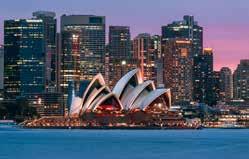
• Famous landmark: Sydney Opera House
• Traditional sport: Australian rules football (not football/soccer), cricket
Country:
• Capital city:
• Traditional dish:
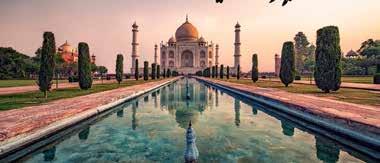
• Famous landmark:
• Traditional sport:
• Currency: Indian Rupee
INKIJKEXEMPLAARDIEKEURE
Country:
• Capital city:
• Currency: currency a country’s money (munteenheid) indigenous original to a place (inheems)
• Traditional dish: Haggis
• Famous landmark: Edinburgh Castle
• Traditional sport:
• Currency:
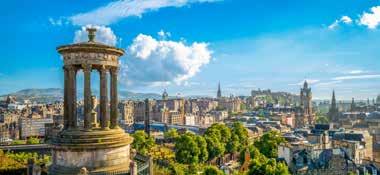
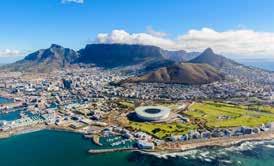
Country:
• Traditional dish: Bobotie
• Famous landmark:
• Traditional sport: many indigenous games
• Currency: South African Rand
2 Work in pairs. Share your answers and complete the missing information together. Use the internet for anything you couldn’t find.
3 Watch the video. What is the difference between Great Britain and the UK? Write the name of the correct country under each map.
INKIJKEXEMPLAARDIEKEURE
a Complete the sentences with the correct countries. Great Britain includes , and . Northern Ireland is not part of , but it is part of . As you see on the map, is not part of Great Britain or the UK.
4 Three people introduce themselves. Listen carefully. Are these sentences true or false? Tick the correct boxes. truefalse
1 John lives in Canada.
2 John’s father works in the USA.
3 Anna is English.
4 Anna’s parents live in South Africa.
5 Anna goes back to South Africa every holiday.
6 Jamie lives in Australia.
7 Jamie hates Australia. Weet je nog wat ‘siblings’ betekent? Dit is een algemeen woord voor ‘broers en zussen’ I live with my mum, dad and siblings.
5 Highlight all the verbs in the sentences from exercise 4 on p. 11.
Toolbox p. 32
6 Read the sentences. Highlight the correct form of the verbs.
a Thomas go – goes to the UK with his parents.
INKIJKEXEMPLAARDIEKEURE
b Every evening, Jacky ride – rides her horse at the stables.
c Chris and his parents live – lives in California.
d My grandparents stay – stays in Egypt for the summer. They sleep – sleeps in a hotel.
e At the weekend, I always watch – watches my favourite series on Netflix.
7 Complete the sentences with the correct form of the verb. Make affirmative sentences.
a (to think) My parents … I shouldn’t go on that school trip to Scotland.
b (to do) Jasper … his homework right after he gets home.
c (to move) Suzan and Mary … to another country at the end of the school year
d (to study) Lionel … hard every evening because he wants good grades.
e (to eat) My parents and I … at a restaurant once a month.
f (to explain) My English teacher … everything so well!
g (to call) I … my grandparents once a week. They are in a nursing home.
8 Describe a famous person in three or four sentences. Don’t say their name. Guess which person your classmate means. You can prepare this on another sheet. She is from the USA. She is not an actress. She has three cats. She sings ‘Shake it off’. = Taylor Swift
He / she is from … He / she lives in … He / she is a … He / she is not a … He / she has … He / she plays (in) … He / she sings … He / she is famous for …
2.3 They both speak English
1 Watch the video and answer the questions.
a Which accents does the stand-up comedian compare?
b Which statements are true about the video? Tick the correct boxes.
INKIJKEXEMPLAARDIEKEURE
The comedian is from the United Kingdom. The comedian is from the United States.
People from the United Kingdom sound very educated and smart.
People from the United States sound very educated and smart.
People from the UK and the USA speak a different language.
People from the UK and the USA sometimes use different words and pronunciation.
2 Watch the video. Write the British word and the American word for each item.
British

INKIJKEXEMPLAARDIEKEURE
3 Did you know more British words or more American words? Which accent do you prefer?
I prefer British English because … I know more American words because …
4 Complete the sentences with the correct British word from the list above.
a I forgot my …, so I couldn’t correct the mistakes in my exercise book.
b The children were excited to watch a … at the cinema.
c When we go on …, we always take lots of photos.
d Please throw that in the bin; it’s just … .
e We waited in a long … for the concert tickets.
5 Complete these sentences with the correct American word from the list above.
a My sister has too many clothes in her … .
b He works as a driver for a big … company.
c They eat a burger and some … at McDonald’s.
d At Halloween, after trick-or-treating, Jane eats one … at a time.
e It gets colder and the leaves turn orange in the … .
INKIJKEXEMPLAARDIEKEURE
6 Read the conversation. Find five British words. Highlight them and write the American word for each British word.
Ava Hi Max! Are you excited about our holiday next week?
Max Yes! I can’t wait to go. Are you packing (inpakken) already?
Ava A little bit. I have my clothes out of the wardrobe, and I still need to pack my trousers and shoes.
Max I need to pack too. I hope the hotel has a lift. I don’t want to carry my bags up the stairs!
Ava Same! And the airport will probably have a long queue, so we should go early.
Max Good idea. I’m really looking forward to it!
Brits-Engels en Amerikaans-Engels gebruiken soms een andere spelling voor bepaalde woorden:
-our (Br) / -or (Am): colour / color
-re (Br) / -er (Am): centre / center
-ce (Br) / -se (Am): licence / license
-ise (Br) / -ize (Am) : organise / organize
7 Listen to four people speaking. Are they British or American? Circle the correct word.
a This person is British – American
b This person is British – American
c This person is British – American
d This person is British – American

2.4 Travel in style
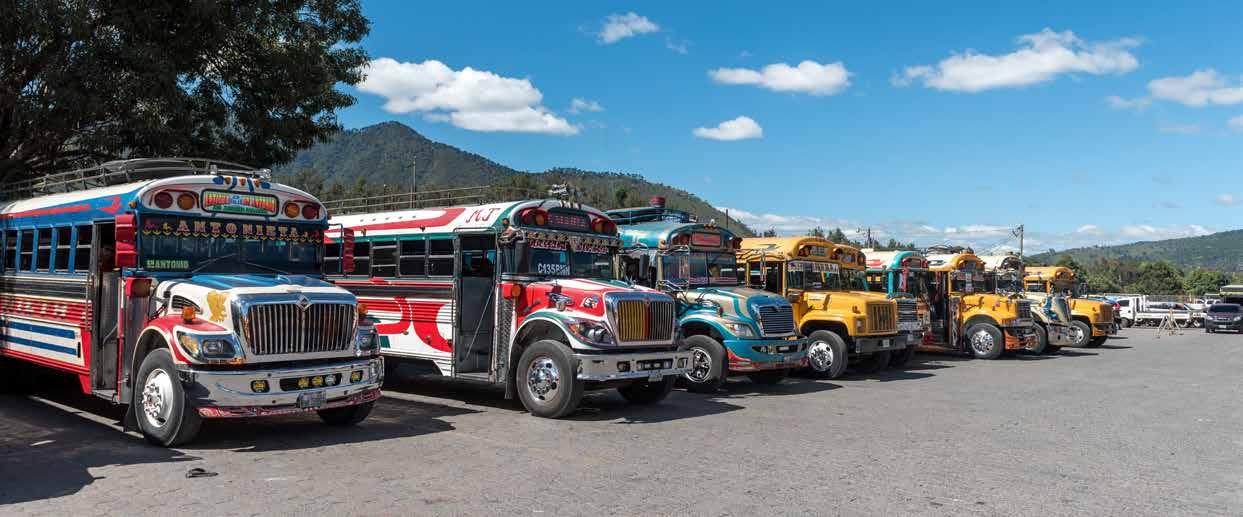
Most of us use the same means of transport again and again: we take the bus or the train to school, we go on holiday by car or by plane and we cycle in our own town. But how do people in other parts of the world travel?
1 Watch the video and answer the questions.
a What is this video about?
The history of American school buses
How old American school buses are refurbished (opgeknapt) and used in Guatemala
Tourist attractions in Guatemala
The challenges of driving old buses in rural areas (platteland)
b What happens when the buses get a makeover? Tick the correct boxes.
They are cleaned to remove rust (roest) and dust (stof).
They are painted in white or black.
They get a new colourful look.
They get a new engine (motor).
They restore the original yellow colour.
c What are these buses called?
INKIJKEXEMPLAARDIEKEURE
d Why are these buses special?
e What are these buses used for in Guatemala?
2 Would you like to go to school in these buses? Why or why not?
I would like to take this bus because …
I would not like to take this bus because …
3 Read about other unique places and ways to travel around the world.
Top 12 Unique Ways to Travel and Stay Around the World
Travelling around the world is a great way to discover new places, people and cultures. There are many unusual and exciting ways to move around — and lots of unique places to stay while you explore. Here are twelve amazing experiences to try!
2. Bamboo Train in Cambodia
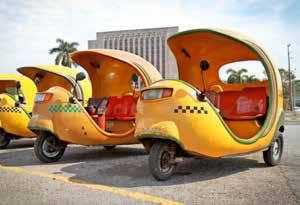
1. Coco Taxi in Cuba
In sunny Cuba, the streets are full of little yellow Coco Taxis. They look like giant coconuts and are perfect for short city rides. They are fun, fast and very colourful! After exploring Havana, you can rest in a hotel or stay in a small guesthouse to experience local Cuban life.
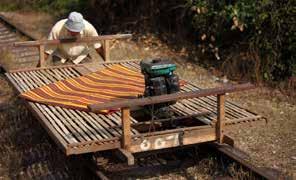
In Cambodia, you can ride the famous bamboo train, called a norry, made of wood and bamboo. It moves slowly through small villages and rice fields. It’s a great way to see the countryside up close. At night, you can sleep in a simple hostel or a friendly B&B.
3. Amphibious Boats in Singapore
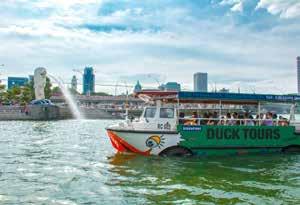
In Singapore, there are special amphibious boats that can travel on both land and water. The tour starts on the land and drives passengers past famous city landmarks before splashing into Marina Bay to continue in the water. Many travellers stay in a hotel near the bay or rent an flat for a few days.
4. Dog Sleds, Snowmobiles and Hovercraft in Alaska
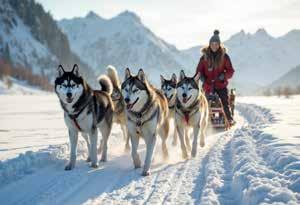
In icy Alaska, you can try real winter adventures! Ride a dog sled pulled by huskies, drive a snowmobile or glide over the ice with a hovercraft. It’s cold but very exciting! After a long day in the snow, you can stay in a warm guesthouse or enjoy glamping with a view of the Northern Lights.
5. Gondola in Italy
INKIJKEXEMPLAARDIEKEURE
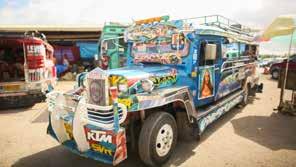
6. Jeepney in the Philippines
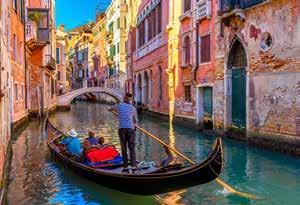
In beautiful Venice, Italy, you can float through narrow canals in a gondola. The gondolier often sings while rowing you under old bridges. It’s a romantic and peaceful way to see the city. You can stay in a small hotel near the water or in a stylish flat in the old town.
In the Philippines, colourful jeepneys fill the streets. They are old army jeeps turned into buses with bright designs and loud music. Riding one is a true Filipino experience!
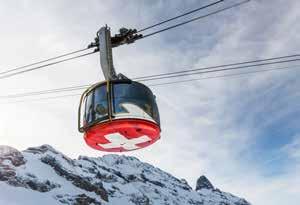
7. Cable Cars and Funiculars in Switzerland
In Switzerland, cable cars take you high above the ground and offer amazing views of the mountains and lakes. Funiculars climb steep hills and bring you to snowy peaks. Switzerland is perfect for mountain lovers who want to sleep in a cosy B&B or even at a campsite by a lake.
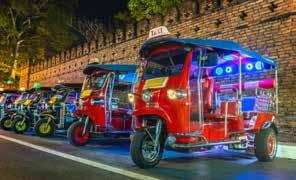
8. Tuk-tuk and Skytrain in Bangkok, Thailand
In busy Bangkok, you can ride a tuk-tuk, a small threewheeled taxi that zips through traffic. For a faster trip, try the skytrain high above the crowded streets. After shopping and sightseeing, you can stay in a hotel or a clean hostel and make new friends.
10. Rickshaw in India
INKIJKEXEMPLAARDIEKEURE
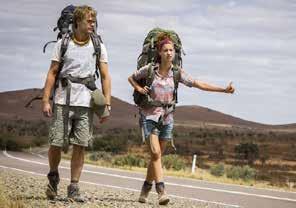
9. Hitchhiking in Australia
In Australia, some travellers like hitchhiking, which means waiting by the road and asking drivers for a free ride. It’s a great way to meet people and see the country, but always do it safely. Travellers often rest in motels or campsites, or travel across the outback in a motorhome
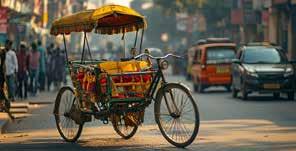
In lively India, you can ride through the busy streets in a rickshaw — sometimes pulled by a person or powered by a motor. It’s a classic way to see the colourful markets and temples.
11. Cruise on the Mediterranean Sea
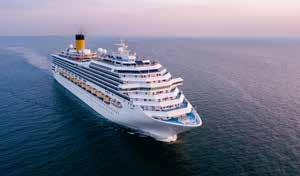
A cruise on the Mediterranean Sea lets you visit many countries — Italy, Greece and Spain — all in one trip. You can enjoy beautiful sunsets from your cruise cabin and eat delicious food every day. When your cruise ends, you might stay in a resort near the beach.
12. Hot Air Balloon Ride in Turkey
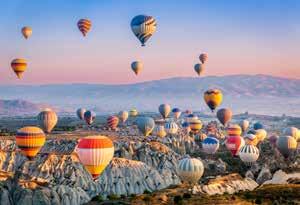
In Cappadocia, Turkey, the sky fills with hundreds of hot air balloons every morning. From high above, you can see valleys, rock formations and small villages. It’s one of the most magical views in the world. You can spend the night in a cave hotel or try glamping in the desert.
Travelling the world is full of surprises! Whether you move by taxi, boat, balloon or train, every journey gives you a story to remember and a new place to call home — even for one night.
STUDENT A: tourist relaxing holiday in Jamaica price snorkelling? pictures allowed? starting time?
STUDENT A: tourist relaxing holiday in Jamaica where to buy souvenirs? ATM nearby? Free Wi-Fi nearby?
STUDENT A: tourist relaxing holiday in Jamaica prices for holiday? children’s discount? best time to visit?
STUDENT A: tourist relaxing holiday in Jamaica recommended activity? guided kayak tours? starting time?
STUDENT A: tourist adventurous holiday in South Africa activity price? how to get to the national park? opening times of the park?
STUDENT A: tourist adventurous holiday in South Africa rent a kayak? snorkelling activity? starting time?
STUDENT A: tourist adventurous holiday in South Africa opening times of the park? prices? bus nearby?
STUDENT A: tourist adventurous holiday in South Africa guided tours? tour duration? prices?
STUDENT B: tourism officer adventurous holiday in South Africa prices: £15 / adult –£5 / child how to get there: bus route 7 8:00–18:00
STUDENT B: tourism officer adventurous holiday in South Africa kayak rental: near lake –£10 / hour snorkelling near beach starting times: 10:00, 13:00, 15:00
STUDENT B: tourism officer adventurous holiday in South Africa 8:00–18:00 £30 / adult –£20 / child (to 12) bus stop: 200 m from park
STUDENT B: tourism officer adventurous holiday in South Africa daily guided tours tour duration: 2 hours £35 / person
STUDENT B: tourism officer relaxing holiday in Jamaica £23 / person no pictures allowed starting times: 9:00, 11:00, 13:00, 15:00, 17:00
STUDENT B: tourism officer relaxing holiday in Jamaica souvenir shop in the city centre ATM at the market square Free Wi-Fi at the café
STUDENT B: tourism officer a relaxing holiday in Jamaica £2500 / person no children’s discount from April to June
STUDENT B: tourism officer relaxing holiday in Jamaica recommend: snorkelling or scuba diving daily kayak tours every day 9:00 or 13:00
STUDENT A: tourist information about Australia scuba diving price? pictures allowed? starting time?
STUDENT A: tourist information about Australia guided city tour? starting time? local food market?
STUDENT A: tourist information about Australia prices for holiday? children’s discount? best time to visit?
STUDENT A: tourist cultural holiday in India cost to visit the temple? opening times? pictures allowed?
INKIJKEXEMPLAARDIEKEURE
STUDENT A: tourist information about Australia recommended activity? guided tours? prices?
STUDENT A: tourist cultural holiday in India rent rickshaw? prices? recommend activity?
STUDENT A: tourist cultural holiday in India rent bicycle? prices? bus stop nearby?
STUDENT A: tourist cultural holiday in India local food market? opening times? how to get there?
STUDENT B: tourism officer cultural holiday in India £10 / adult –children free 08:00–18:00 pictures allowed, no flash
STUDENT B: tourism officer cultural holiday in India rickshaws in the city centre £10–£15 within the city recommend guided city tour
STUDENT B: tourism officer cultural holiday in India bicycle rental in city centre £25 / day bus stop: 200 m from the market square
STUDENT B: tourism officer cultural holiday in India food market on Saturday 10:00–16:00 city centre (bus, taxi, rickshaw)
STUDENT B: tourism officer information about Australia £55 / person no pictures allowed starting times: 09:00–15:00
STUDENT B: tourism officer information about Australia daily, start from city hall every hour from 10:00 to 19:00 no local market, lots of good restaurants
STUDENT B: tourism officer information about Australia £3500 / person discount children 10% from November to February
STUDENT B: tourism officer information about Australia recommend: snorkelling or scuba diving daily tours £23 / person for snorkelling –£45 / person for scuba diving
4 Read the sentences. Are they true or false? Tick the correct box. Correct the sentences that are false.
a The bamboo train is made of bamboo and metal.
b You have amazing views from a cable car in Switzerland.
INKIJKEXEMPLAARDIEKEURE
c Jeepneys were once old army vehicles.
d The Coco Taxi in Cuba looks like a banana.
e In Alaska, you use snowmobiles to travel on ice.
f Tourists hitchhike to get free rides from other people.
g The gondola in Italy is a kind of train.
5 Answer the questions using the text.
a Why would tourists take the bamboo train in Cambodia?
b What is so special about an amphibious boat?
c Why would people rather take the skytrain than a tuk-tuk?
2.5 Word box (1)
taxi
to explore the city centre hop-on hop-off bus to ride a dog sled to ride a snowmobile to take a hovercraft to take a cable car to take a funicular to take a tuk-tuk passenger driver to take a rickshaw to hitchhike hot air balloon to take a tourist boat to take a gondola
In de definitieve module worden deze woorden afgebeeld op een illustratie, verspreid over pagina 20 en 21.
INKIJKEXEMPLAARDIEKEURE
hostel
B&B
flat glamping, campsite, motorhome
motel resort a cabin
INKIJKEXEMPLAARDIEKEURE
Wist je dat woorden zoals ‘glamping’ en ‘motel’ voortkomen uit een combinatie van twee woorden? ‘Glamping’ is een samentrekkeing van ‘glamorous’ en ‘camping’, terwijl ‘motel’ komt van ‘motorway’ en ‘hotel’.
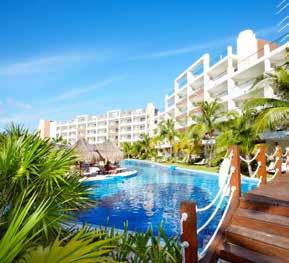
1 Where can you stay on holiday? Write the correct number next to each photo.
glamping (1) – hostel (2) – B&B (3) – flat (4) – resort (5) – campsite (6) – motel (7) –motorhome (8) – cabin (9)
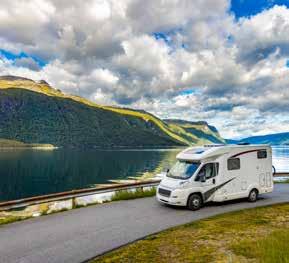
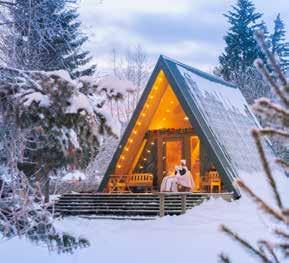
INKIJKEXEMPLAARDIEKEURE
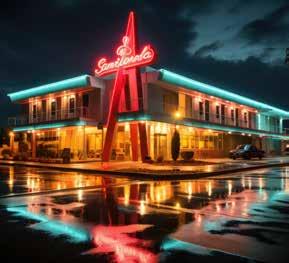
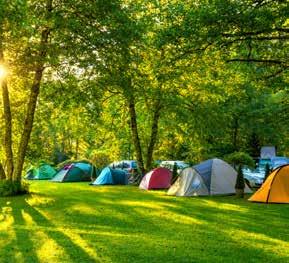
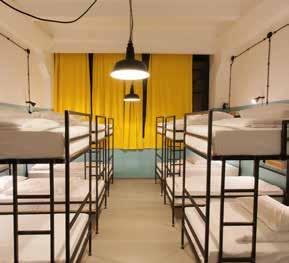
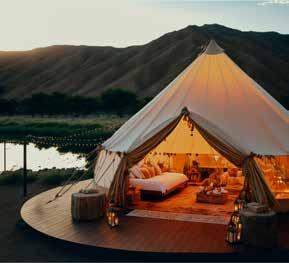
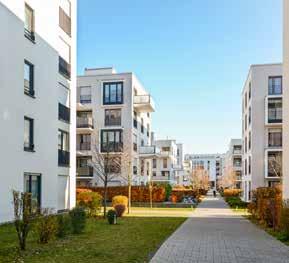
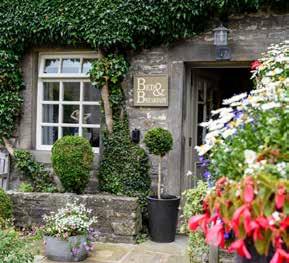
2 Where should these people stay? Write the correct type of accommodation.
a I love staying in nature, but I would like a good bed and a proper shower.
b We’re going on a city trip to Barcelona, but we don’t want to spend a lot of money on accommodation.
c We’re a family of four, so we would like separate rooms, a kitchen and a living space during our stay.
d On holiday, we love lying by the pool all day and eating as much as we want.
3 Write the correct means of transport under each picture and the correct word next to each arrow.
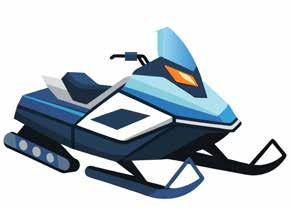
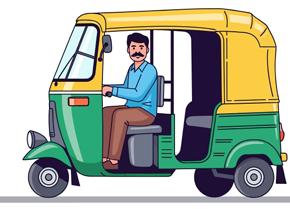
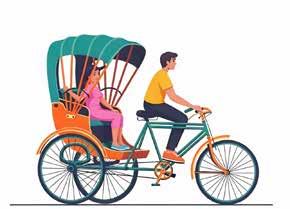
INKIJKEXEMPLAARDIEKEURE
4 Complete the sentences with the correct word. city centre – taxi – tuk-tuk – explore – ride – funicular
a We took a … to get quickly from the airport to the hotel.
b The … has many shops, restaurants and busy streets.
d I want to … the old parts of the town tomorrow.
e In winter, you can … a dog sled across the snow.
f You can take a … to go up the steep hill instead of climbing.
g A … is a small vehicle in Thailand used for short trips in the city.
5 Write your top 3 of accommodation and means of transport.

6 Compare your top 3 with your neighbour’s. Ask each other questions. Then tell the class your top 3.
Where would you like to stay? I would really like to stay in … because … I would like to take a … because …
Which means of transport would you like to try?
2.6 Let’s go on an adventure!
1 Max went to the travel agency to get some information about different holidays. Listen to the conversation.
2 The travel agent mentions 3 options. How does he describe these holidays? Complete with the correct adjective.
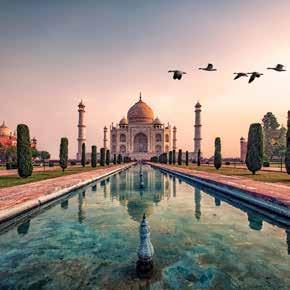
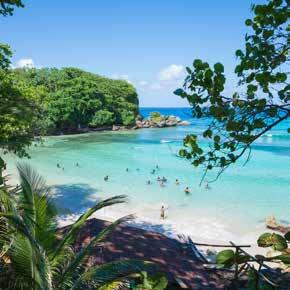
3 Listen to the conversation again. Where can you do the following activities? Tick the correct boxes.
go on a guided safari tour
relax on the beach
visit temples and palaces
visit a national park
go snorkelling or paragliding
go scuba diving and explore caves
try local food at markets
go sightseeing in a rickshaw
4 Which holiday would you choose? Why? I would choose … because … I like/prefer … because … My favourite holiday is … because …
South AfricaIndia
Jamaica
2.7 Word box (2)
go on a safari
visit a national park go hiking go to a panoramic view visit a waterfall go scuba diving explore caves
visit temples and palaces explore markets try local food go on a guided tour sightseeing
take a boat trip go snorkelling go cliff-jumping
go to the beach watch sunsets kayaking paragliding
In de definitieve module worden deze woorden afgebeeld op een illustratie.
INKIJKEXEMPLAARDIEKEURE
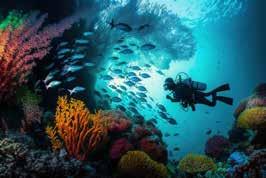
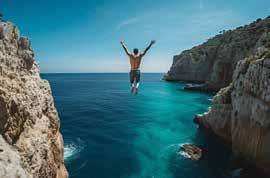
1 Match the activities with the correct picture.
paragliding
visit panoramic views
go cliff-jumping
watch sunsets
go snorkelling
INKIJKEXEMPLAARDIEKEURE
go scuba diving
visit temples and palaces
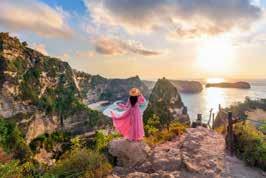
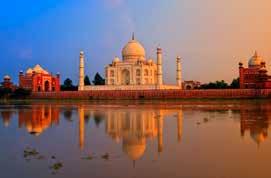
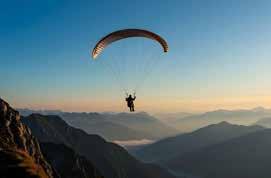
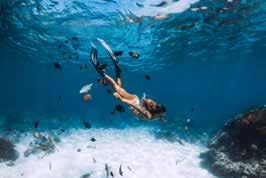
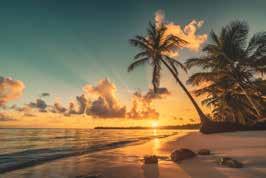
2 Read the stories. What activities do these people do? Write the correct activity.
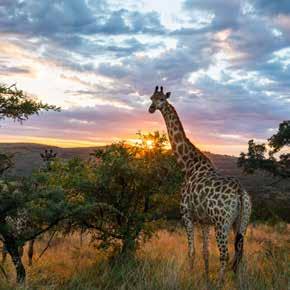
a We are having an amazing time. We see giraffes, elephants and even a lioness with her cubs (welpen)!
b The view from up high is breathtaking. We take a cable car to get there.
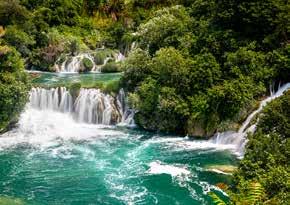
c We love walking through the green forest trails. We enjoy the views and spot some beautiful birds.
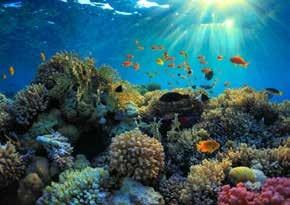
d The water is clear and warm. We see lots of colourful fish.
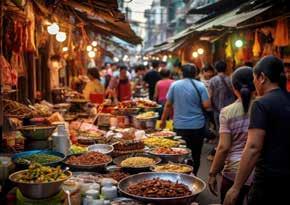
e We visit different stalls (kraampjes). One sells meat, another sells spices and another sells homemade scarves.
f At first I am afraid, but then I feel as free as a bird when I am soaring (zweven) through the air.
g We leave the harbour (haven) and go to a small island where we lie on the beach and relax the whole day.
3 Find and highlight the odd one out. Explain to the class why it doesn’t fit.
a go scuba diving – go snorkelling – exploring caves – go on a safari
b go on a safari – explore markets – visit a national park – visit a waterfall
c watch sunsets – go hiking – kayaking – go scuba diving
d sightseeing – try local food – visit temples – go cliff-jumping
4 Look at the pictures. Write two activities under each picture.
INKIJKEXEMPLAARDIEKEURE
I think the odd one out is … because …
2.8 Where do we stay?
1 Max wants more information about the holidays. He emails the travel agent. Read the email below.

hello@goexploretravel.com
information about holidays
Dear Sir,
Thank you very much for your help with holiday ideas. I am writing to you because I have some more questions about the holidays in South Africa and Jamaica. We would like to do a guided tour in a national park, but we have some concerns:
- How long do the guided tours last each day?
- Where exactly do we stay during the safari in South Africa? Is it near the national park? We don’t like being on the road for a long time.
Before we decide which holiday to choose, we would also like some extra information about the holiday to Jamaica.
- When do the boat trips for snorkelling usually start? We don’t like getting up too early.
- What do we need to bring to go snorkelling? Do we need to pack our own equipment, or can we rent it there?
Thank you for answering my questions. I look forward to your reply.
Yours sincerely, Max
Davies
INKIJKEXEMPLAARDIEKEURE
2 What is the main purpose (doel) of this email? Tick the correct box.
Max emails because he wants information about flights.
Max emails because he wants more details about certain activities. Max emails because he wants to thank the travel agent.
3 Look at the Speak Up table on the next page. How would you start or end an email in these situations?
How would you start an email to your English teacher?
How would you end an email to a good friend?
How would you end an email when you apply for a student job?
How would you start an email to a colleague?
Hoe begin en eindig je een email?
formal formeel
Dear Sir or Madam, Beste meneer of mevrouw
Dear Mr Jones, / Mrs Jackson, Beste meneer Jones / mevrouw Jackson
Yours sincerely, Met vriendelijke groeten
informal informeel
Dear John, / Hello John, / Hi John, Beste John / Hallo John / Hoi John
Kind regards, Groeten
Best wishes, Beste wensen
4 Go back to the email on p. 28. Highlight the question words in each question.
Toolbox p. 32
5 Complete the sentences with the correct question word.
a do you go on a holiday? – We go to Egypt next summer.
b are you going during the Christmas holidays? – We are going to Jamaica.
c do you go on holiday with? – I always go on holiday with my parents.
d will you do in Jamaica? – We will relax on the beach and go snorkelling.
6 Look at the underlined sentences in exercise 1 on p. 28. Write each one above the correct answer from the travel agent.
a - The boat trips usually start at 10 o’clock in the morning.
INKIJKEXEMPLAARDIEKEURE
b - You don’t need to bring any equipment.
c - You stay in a cosy lodge near the national park.
d - They start at 10 o’clock in the morning and finish around 5 o’clock in the afternoon.
7 Read the answers. Write a question for each answer. Use the correct question word.
- When does the national park open? - The national park opens at 10 o’clock.
a - You can book a guided tour at the Tourist Office.
b - The temple closes at six o’clock every evening.
c - A ticket costs 10 euros.
d - You need to visit a national park in South Africa because the wildlife is amazing.
e - It takes about twenty minutes to walk there.
f - In Jamaica, people usually relax at the beach or go snorkelling.
Speak up!
Hoe vraag je naar toeristische info?
Are there any guided tours?
Where can I book a tour?
How long does the guided tour take?
When does the park open?
When does the temple close?
Is there a Tourist Office nearby?
Where can I rent a kayak?
Where can I go snorkelling or scuba diving?
When does the activity start?
How much does the activity cost?
INKIJKEXEMPLAARDIEKEURE
Zijn er begeleide tours?
Waar kan ik een tour boeken?
Hoelang duurt de begeleide tour?
Wanneer opent het park?
Wanneer sluit de tempel?
Is er een toeristenbureau in de buurt?
Waar kan ik een kajak huren?
Waar kan ik snorkelen of duiken?
Wanneer start de activiteit?
Hoeveel kost de activiteit?
How do I get to the national park? Hoe geraak ik bij het nationale park?
What are the opening times?
What time does the bus / train leave?
Wat zijn de openingsuren?
Hoelaat vertrekt de bus / trein?
What activities do you recommend? Welke activiteiten raadt u aan?
Are we allowed to take pictures? Is het toegestaan om foto’s te nemen?
8 Work in pairs. Use the converstation cards from the middle of your book. The teacher will give you instructions.
9 Watch the music video of ‘Sapphire’ by Ed Sheeran and answer the questions.
a Which cultures are combined in this song?
INKIJKEXEMPLAARDIEKEURE
b How do you know these cultures are combined?
c What is this song about? Tick the correct box.
It’s a song about an expensive gemstone (edelsteen). It’s a song about a party with lots of fireworks and lights. It’s a song about celebrating life and the people in your life.
d How does the song make you feel? Circle two emojis.
e What do you think of the song? Share your answer with the class.
I (don’t) like the song because … I think the music is … I think the lyrics are …
2.9 Toolbox
Het werkwoord ‘to be’
Het werkwoord ‘to be’ is een onregelmatig werkwoord. Je leert de verschillende vormen dus best uit het hoofd.
to be (zijn)
INKIJKEXEMPLAARDIEKEURE
long form (+)short form (+)long form (-)short form (-)
I am I ’m I am not I ’m not you are you ’re you are not you aren’t he is he ’s he is not he isn’t she is she ’s she is not she isn’t it is it ’s it is not it isn’t we are we ’re we are not we aren’t you are you ’re you are not you aren’t they are they ’re they are not they aren’t
De present simple van regelmatige werkwoorden
Als je een werkwoord gebruikt in de tegenwoordige tijd, vervoeg je het volgens de present simple. Je voegt een -s toe in de derde persoon enkelvoud: na ‘he’, ‘she’ en ‘it’ of de naam van een persoon of ding. We gebruiken de affirmative case in een bevestigende zin. We gebruiken de interrogative case in een vraagzin.
I work. Do I work?
You work. Do you work?
He works. Does he work?
She works. Does she work?
It works. Does it work?
We work. Do we work?
You work. Do you work?
They work. Do they work?
Een vraagzin kan ook starten met een vraagwoord. Dit staat vooraan in de vraag.
(wie) Who do you go on a holiday with? (wat) What do you like to do on holiday? (wanneer) When does she go on holiday? (waar) Where does he travel to? (waarom) Why do they go to Thailand? (hoe) How do they travel to Spain?
3.1 Let’s plan a holiday
You’re going on holiday. Before you book, you would like some extra information. You write an email to a travel agency to get extra information about several activities.
Step 1 Decide where you’re going on holiday and which three activities you want to do. Choose from the activities on p. 25.
Step 2 Decide where you would book this holiday. Look up a Belgian travel agency nearby. Find their email address.
Step 3 Think of a fitting subject for your email.
Step 4 What would you like to know about the activities? Make a list below.
Activity 1:
Activity 2:
Activity 3:
Step 5 Use the digital template to write your email. Make sure to include these elements:
- Begin your email appropriately (formal or informal).
- Introduce yourself.
- Explain why you are emailing.
- Ask your questions about the activities.
- Thank the travel agent.
- End your email appropriately.
Step 6 Reread your email carefully. Use a spellchecker to check your email for possible mistakes.
INKIJKEXEMPLAARDIEKEURE
Vocabulary list
Means of transport and accomodation
taxi We took a taxi to the hotel. taxi
explore the city centre
We went to Bangkok and explored the city centre on our first day.
hop-on hop-off busThe hop-on hop-off bus stops at many places in the city.
stadscentrum verkennen
hop-on hop-off bus to ride
Tourists ride a rickshaw in India to travel around. rijden / besturen
INKIJKEXEMPLAARDIEKEURE
to take
You can take a boat to cross the river.nemen dog sled
They rode a dog sled in the snow. hondenslee
snowmobileIn Alaska, people ride snowmobiles to go to work. sneeuwmobiel
hovercraft
cable car
You can cross the frozen river by hovercraft.luchtkussenvoertuig
The cable car goes up the mountain.kabelbaan funicular
The funicular takes people up the steep hill.kabelspoorweg tuk-tuk
passenger
driver
We rode a tuk-tuk in Thailand. tuktuk
There are three passengers in the back of the taxi. passagier
The driver is very friendly and helpful.chauffeur rickshaw
Rickshaw are very common means of transport in India. riskja to hitchhikeSome backpackers hitchhike to travel around. liften
hot air balloonThey flew in a hot air balloon over the city.luchtballon tourist boatThe tourist boat leaves every hour. toeristenboot gondola
hostel
B&B
In Venice, you can take a gondola on the canals. gondel
We stayed in a hostel with other young travellers. herberg
The B&B gives us breakfast in the morning.bed en breakfast flat
My friend lives in a flat in the city. apartement glamping
campsite
Glamping is like camping, but much more comfortable. luxe kamperen
The campsite is next to the lake. camping
motorhomeThey travel in a motorhome around Europe.camper
motel
We stopped and stayed at a motel for one night. motel
resort
The resort has six swimming pools. vakantieoord cabin
We rented a small cabin in the woods.hut
Holiday activities
to go on a safariFor our next holiday, we want to go on a safari in Africa. op safari gaan to visit
Susan likes to visit museums. bezoeken national parkVisiting national parks in Africa is a popular touristic activity. nationaal park to hike
We are hiking in the mountains today.hiken / wandelen panoramic viewThere is a beautiful panoramic view from the top. uitzicht
waterfall
You can admire a big waterfall at the end of the hike. waterval scuba divingShe likes scuba diving in the sea. duiken to explore cavesThey want to explore caves during their trip.grotten verkennen temple
We went to see an old temple tempel palace
There are lots of temples and palaces to visit in Asia. paleis market
The local market is very busy in the morning. markt to try local foodI want to try local food at the different market stalls. lokaal eten proberen to go on a guided tour
sightseeing
INKIJKEXEMPLAARDIEKEURE
We will go on a guided tour through the city centre. een begeleide tour doen
We took the hop-on hop-off bus to go sightseeing bezienswaardigheden bekijken boat trip
We took a boat trip on the river. boottocht snorkelling He goes snorkelling to see colourful fish.snorkelen
cliff-jumpingMy friend goes cliff-jumping because he loves the thrill. klifduiken to go to the beach
We go to the beach every weekend. naar het strand gaan to watch sunsetsYou can watch sunsets at the beach.zonsondergang bekijken kayaking
We always go kayaking when we’re on holiday. kajakken
paragliding He tried paragliding for the first time.paragliden
Colofon
Ik kan
… het onderwerp, de hoofdgedachte en relevante informatie uit informatieve en narratieve teksten halen.
… de woordenschat rond landen, nationaliteiten, unieke transportmiddelen, bezienswaardigheden, verblijfsplaatsen en reisactiviteiten gebruiken.
… verschillende landen opsommen waar Engels gesproken wordt.
… het verschil herkennen tussen Brits en Amerikaans Engels aan de hand van woordenschat en spellingsregels.
… beschrijven hoe ik me voel bij een lied.
… regelmatige werkwoorden vervoegen in de tegenwoordige tijd in bevestigende zinnen en vraagzinnen.
… vragen naar toeristische informatie.
… een e-mail opstellen waarin ik informatie vraag.
kijken schrijven
luisteren handeling spreken tip gesprek word box lezen toolbox uitbreiding
INKIJKEXEMPLAARDIEKEURE
Auteur Julie Clarysse
Illustrator
Eerste editie
ISBN 978 90 4865 269 3 - KB D/2025/0147/008
Wil je meer weten over deze methode Engels? Surf naar max-engels.diekeure.be
Bestelnummer 96 401 0113 (module 1 van 6) - NUR 117 - Thema YPCK21
Verantwoordelijke uitgever die Keure, Kleine Pathoekeweg 3, 8000 Brugge
RPR 0405 108 325 - © Copyright by die Keure, Brugge
Heb je vragen of wens je een presentatie op school? Contacteer jouw educatief adviseur.
Niets uit deze uitgave mag verveelvoudigd en/of openbaar gemaakt worden door middel van druk, fotokopie, microfilm of op welke wijze ook zonder voorafgaande schriftelijke toestemming van de uitgever. No parts of this book may be reproduced in any form by print, photoprint, microfilm or any other means without written permission from the publisher. De uitgever heeft naar best vermogen getracht de publicatierechten volgens de wettelijke bepalingen te regelen. Zij die niettemin menen nog aanspraken te kunnen doen gelden, kunnen dat aan de uitgever kenbaar maken.

Die Keure wil het milieu beschermen. Daarom kiezen wij bewust voor papier dat het keurmerk van de Forest Stewardship Council (FSC ) draagt. Dit product is gemaakt van materiaal afkomstig uit goed beheerde, FSC®-gecertificeerde bossen en andere gecontroleerde bronnen.