NOVEMBER 2025

5 Cases in November 2025 3 Poaching Cases
November Report by Dr. Titus Kaitho
2 HWC Cases
During November the Unit attended to 5 cases, 3 involved snared animals, all of which were treated successfully. A giraffe was rescued from a deep pit within Naivasha the Wildlife Sanctuary. The Unit also translocated giraffes and zebras from Manera farm and various other wildlife species, including buffalo, zebra, gazelle, waterbuck and hartebeest from Kedong Ranch due to increased Human-wildlife conflict because of fragmentation of the habitat for human construction. There were also routine security patrols in Kedong ranch, Naivasha Wildlife Sanctuary-WRTI, Mundui Estates, Manera farm, Nightgale farm among other areas
Acknowledgement
We are grateful to Kenya Wildlife Service Director General Professor Erastus Kanga for approvals and leadership during the translocation exercise. We sincerely thank Safari Collection-Foot Print Foundation for supporting this translocation exercise. Mickey Carr – Hartley and team mates actively participated in the translocation work. Sheldrick Wildlife Trust (SWT) supported this important translocation work. We highly appreciate support and valuable partnership of SWT. Captain Tobby (helicopter pilot) worked very hard to drive wildlife into mass capture system. Veterinary officers led by Dr Dominic Mijele participated in this translocation work. Capture rangers worked tirelessly to achieve set targets. Last but not the least, KWS Naivasha Station staff supported the work. This was a very successful translocations exercise in particular to save wildlife in distress.
Case Details
4-Nov-25 Zebra Aquilla Farm, Naivasha Snared The zebra had been snared by a long wire which was strangulating the neck Successfully Treated
6-Nov-25 Buffalo Mundui Estates, Naivasha Snared
6-Nov-25 Buffalo Mundui Estates, Naivasha Snared
7-Nov-25 Giraffe WRTI Campus, Naivasha Human Wildlife Conflict
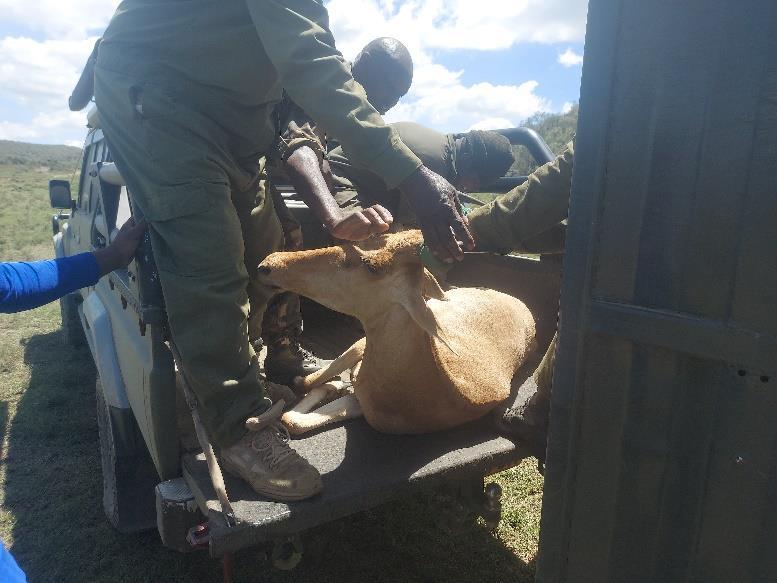
8-Nov-25 Antelope Manera Farm, Naivasha Human Wildlife Conflict
The buffalo had been snared and wounded by a wire on the right hind leg Successfully Treated
The buffalo had been snared and wounded a by wire snare on the left hind leg Successfully Treated
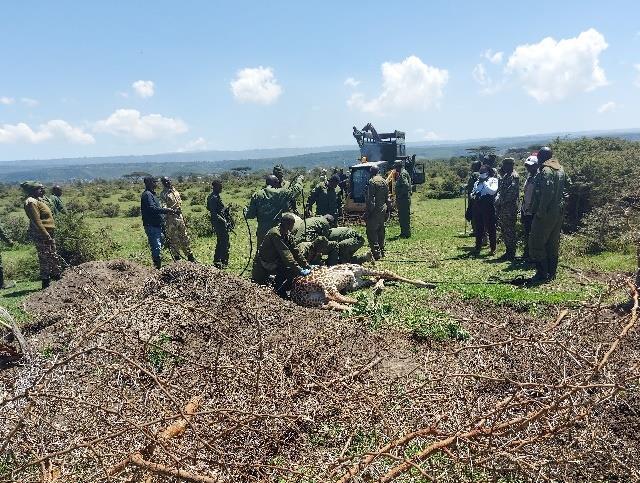
Unfortunately, she slipped and fell into a deep pit in Naivasha Wildlife Sanctury Successfully Treated
This wildlife translocation was a mop up of wildlife still stranded in heavily fragmented Kedong ranch ecosystem Task Successful
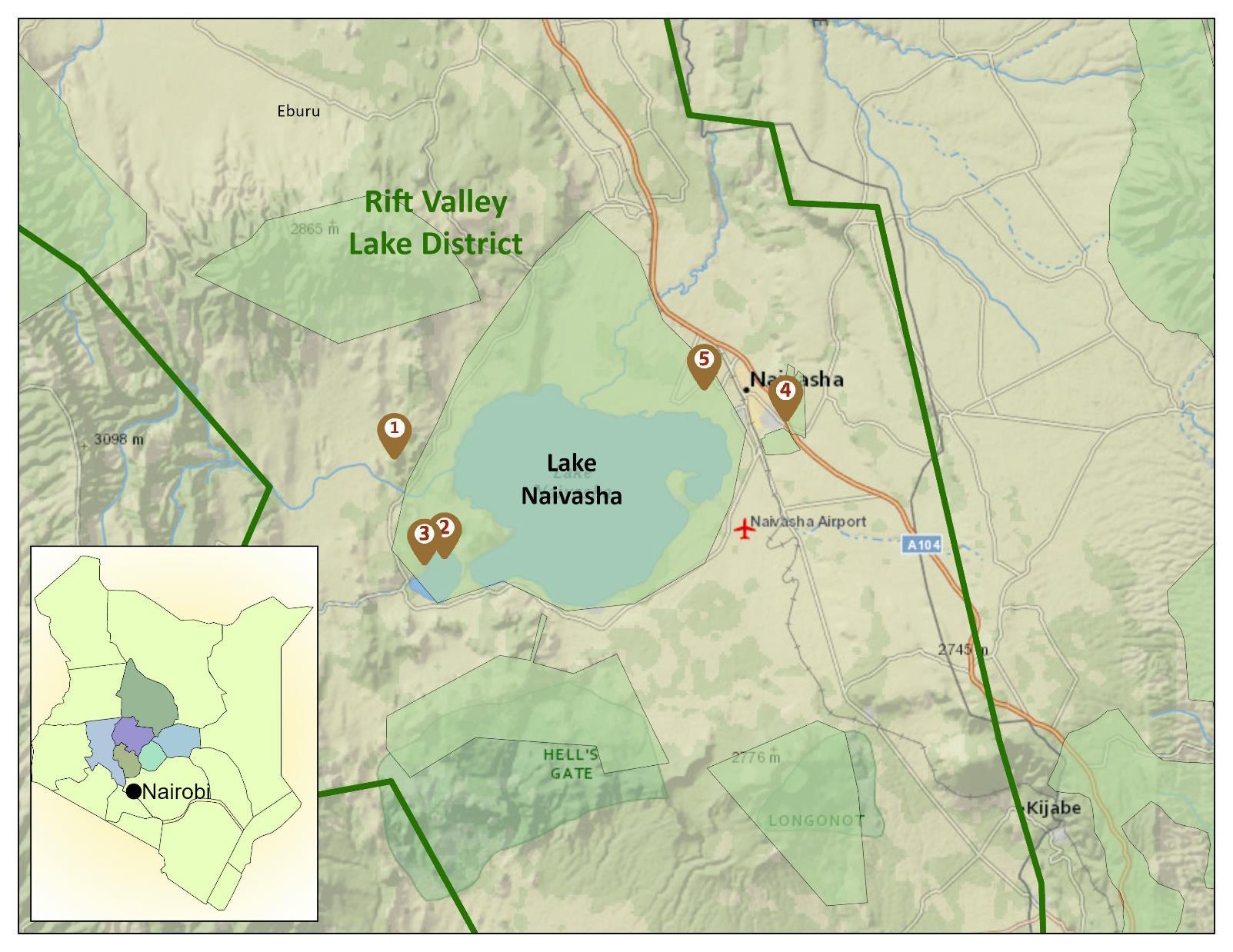
SWT/KWS Rift Valley Mobile Vet Unit Treatment Locations
November 2025
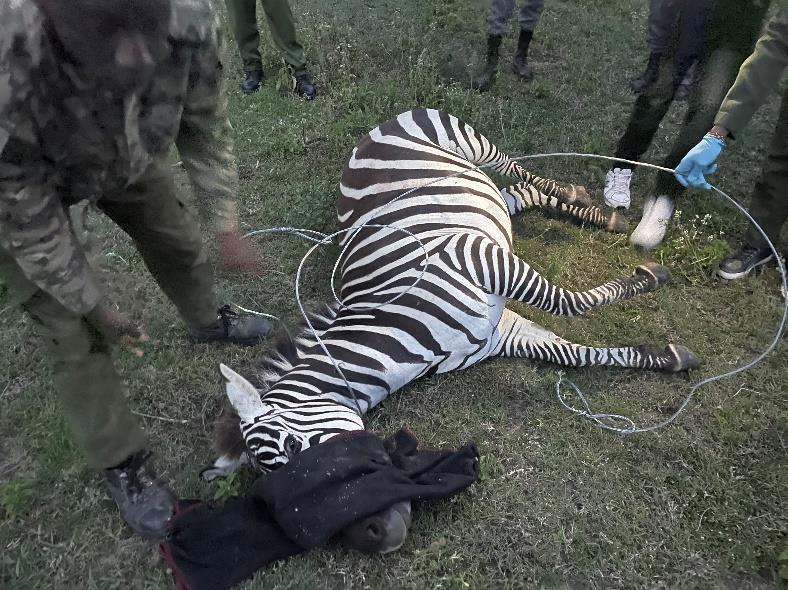
Case 1 – 4th November 2025
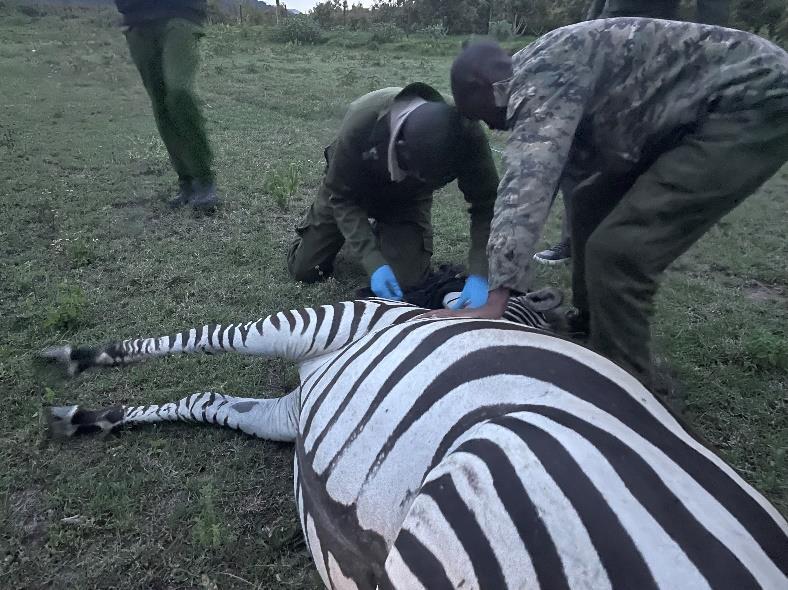
The zebra was darted using 5mg Etorphine plus 60mg Azaperone.
On examination the zebra had been snared by a long wire around the neck which was strangulating the zebra. Fortunately, the zebra had only suffered minor lacerations to the legs and neck, so the snare was removed and the anaesthesia reversed with a good prognosis.
Case 2 – 6th November 2025
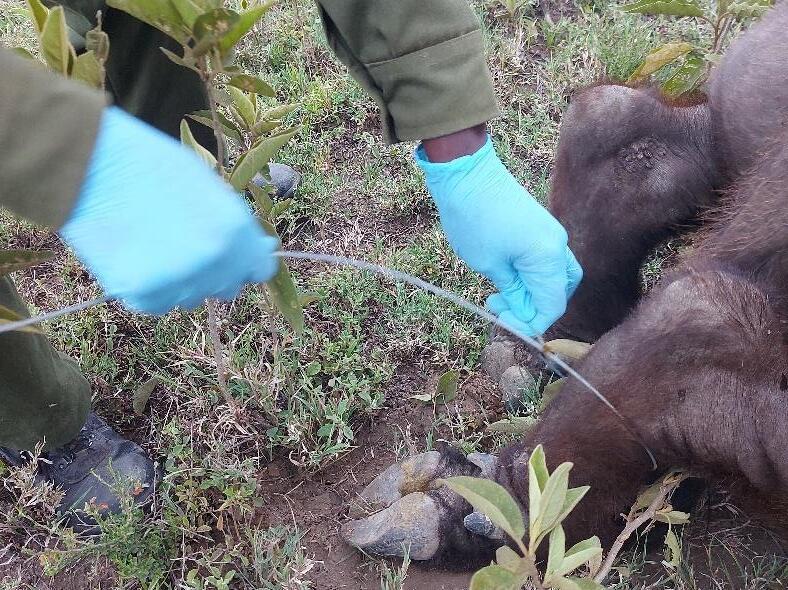
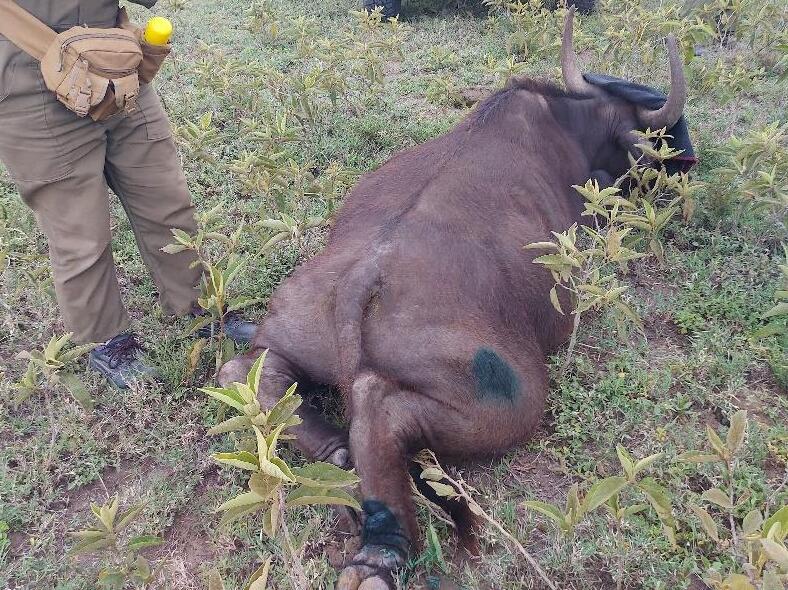
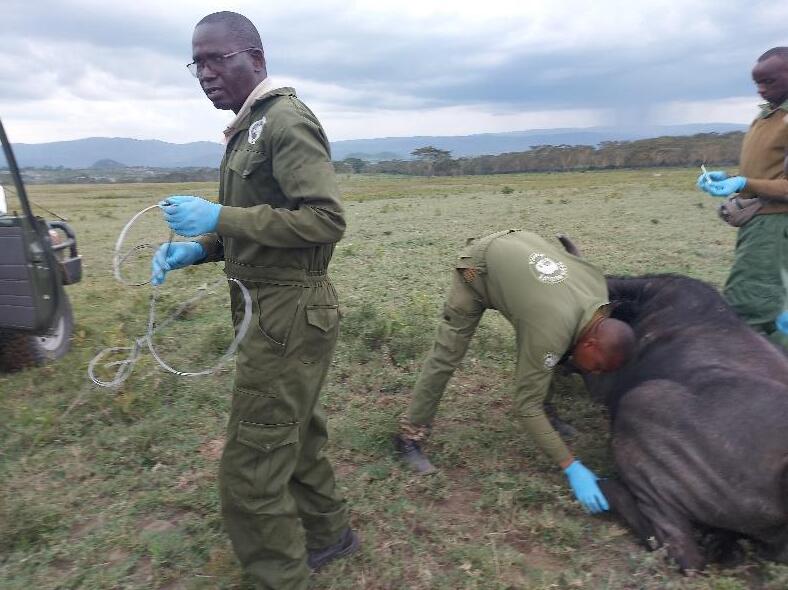
The male young buffalo was darted using 5mg Etorphine plus 60mg Azaperone.
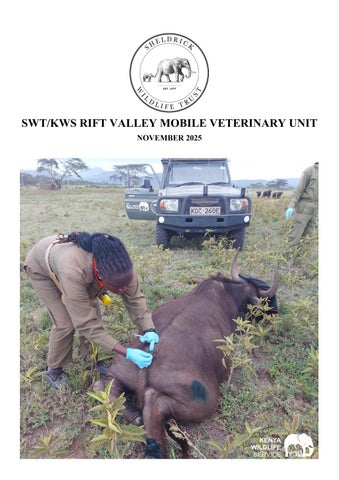
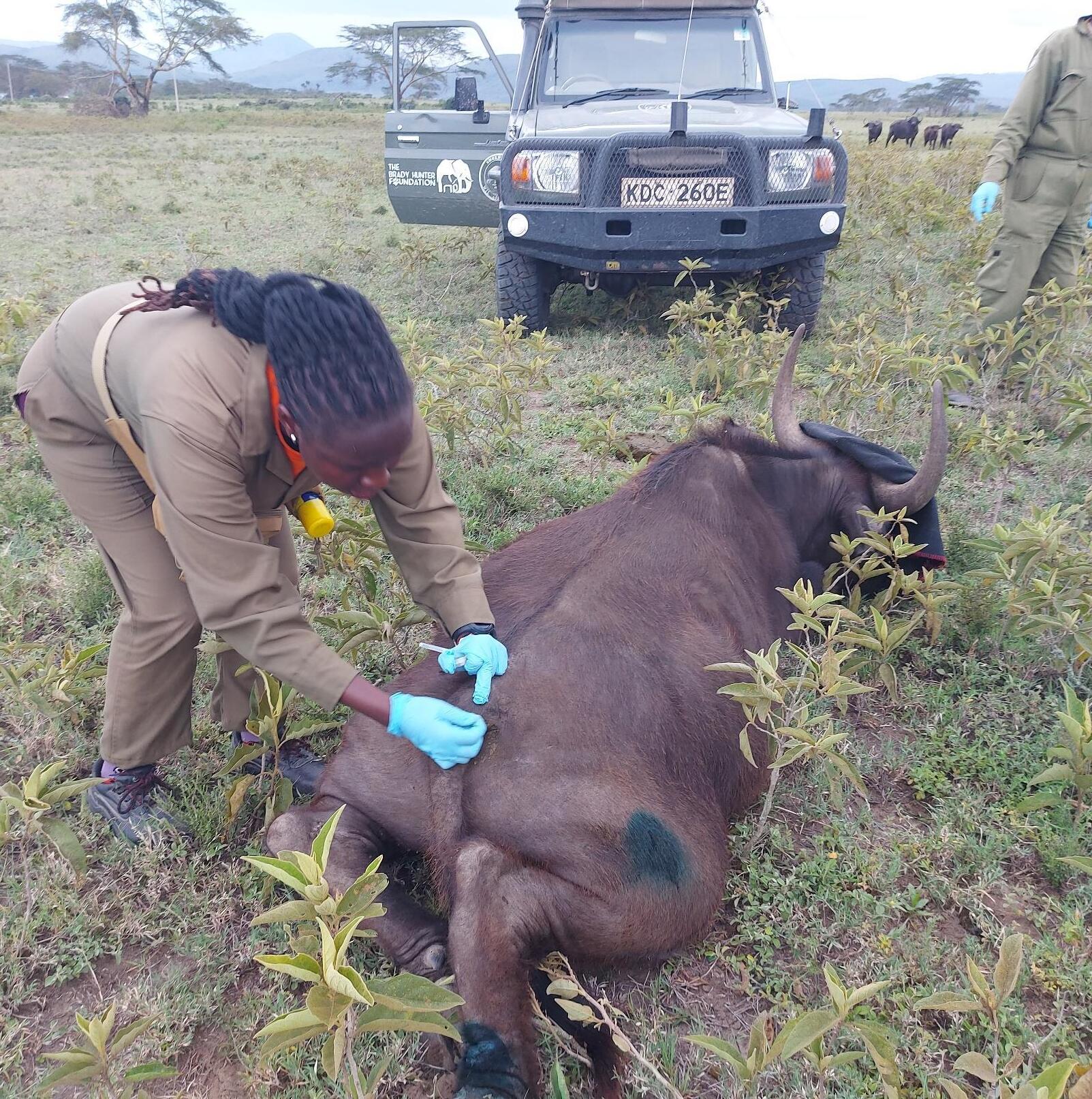
On examination the buffalo had been snared and wounded by a wire on the right hind leg. The wound was cleaned with water and rinsed with tincture of Iodine. A fly repellent (Alamycin® Aerosol) was applied. We also administered the following: 12,000mg Alamycin, 200mg Flumeg and 6ml Noromectin. The young buffalo was reversed from the anaesthesia with a good prognosis.
Case 3 – 6th November 2025
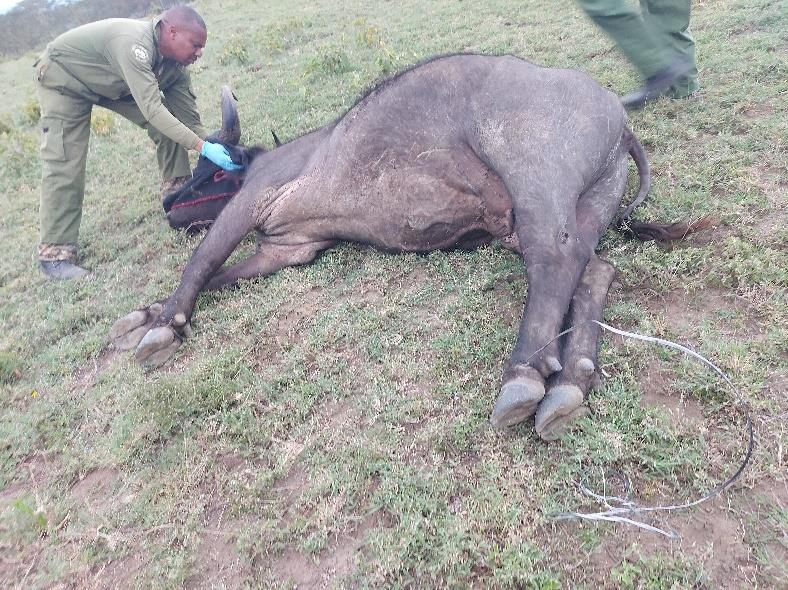
The adult female buffalo was darted using 8mg Etorphine plus 50mg Azaperone.
On examination the buffalo had been snared and wounded by wire snare on the left hind leg. The wound was cleaned with water and Iodine then sprayed with a fly repellent. We also administered the following: 18,000mg Alamycin, 300mg Flumeg and 6ml Noromectin.
Case 4 – 7th November 2025
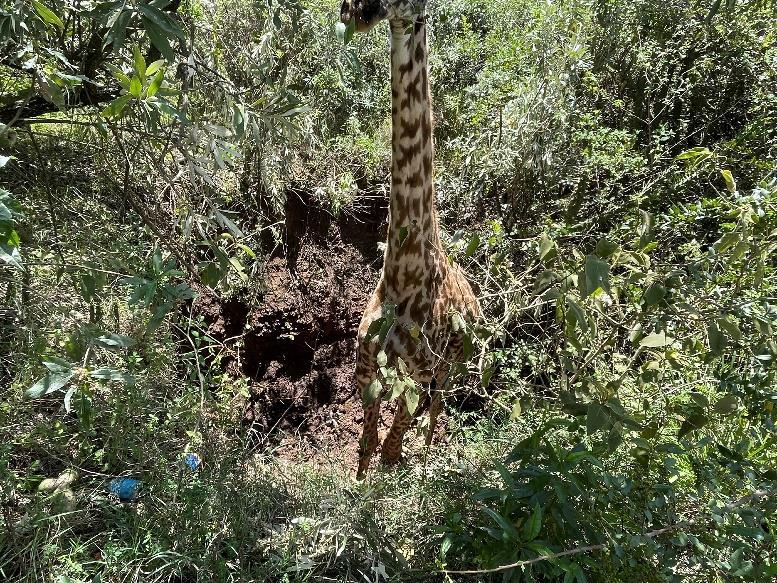
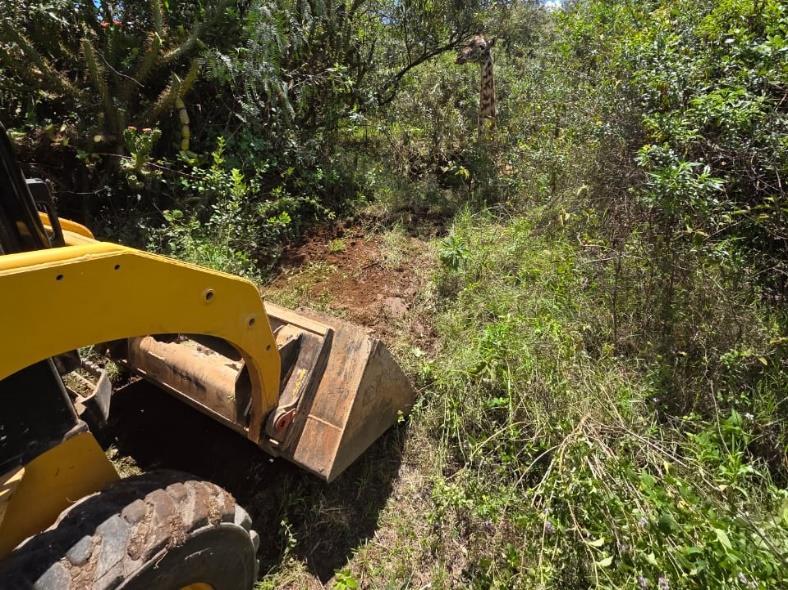
This is one of the giraffes, that had been stranded in Manera farm. After successful translocation the female giraffe was trying to discover new territory in Naivasha Wildlife Sanctuary – WRTI but unfortunately, she slipped and fell into a deep pit and could not walk out.
Working together with Safari Collection-Foot Print Foundation we rescued this female giraffe by digging a trench using a mini caterpillar digger to lower ground level and slightly back filling the pit to allow the giraffe to walk out safely.
Various Species Human-wildlife conflict Manera Farm, Naivasha
This translocation activity was conducted after the rapid assessment of Manera farm out on 22nd October 2025. In addition to this the Kedong wildlife translocation was a mop up of wildlife still stranded in the heavily fragmented Kedong ranch ecosystem.
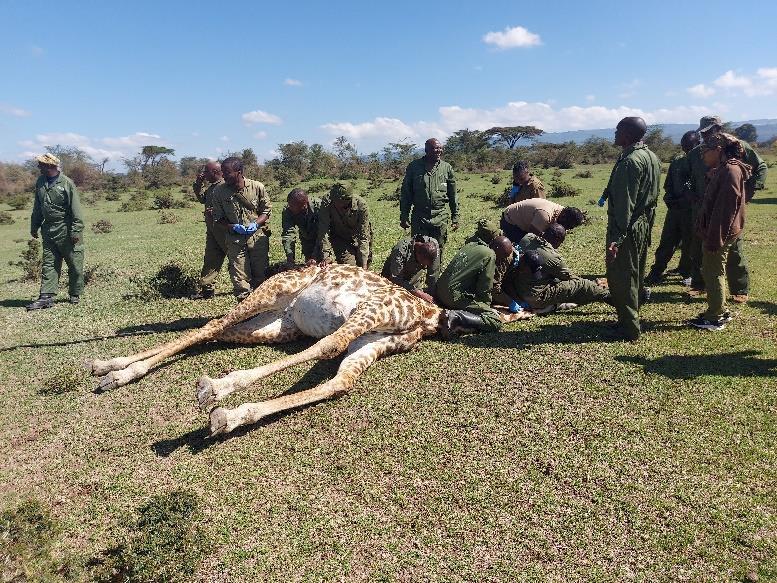
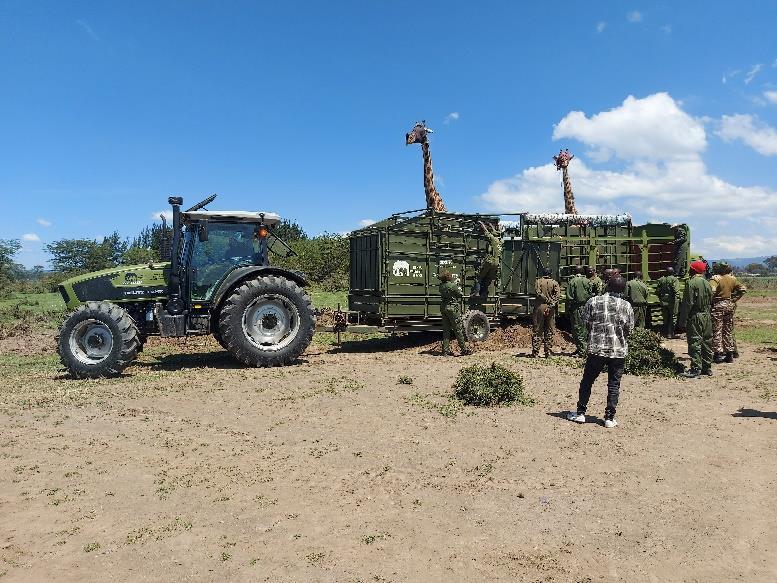
Relocation
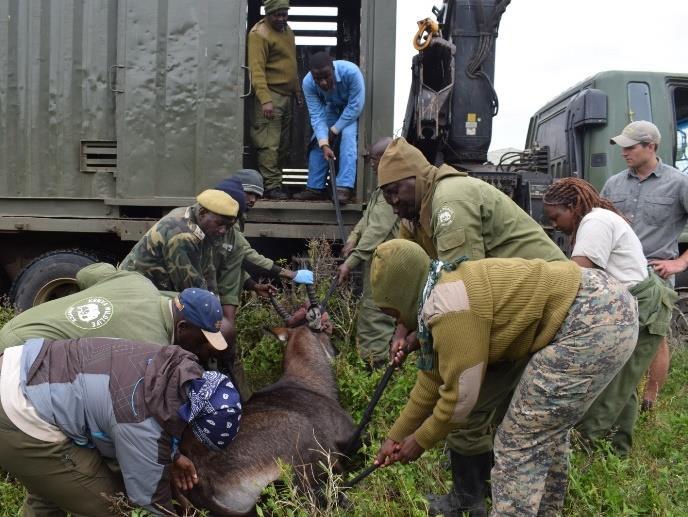
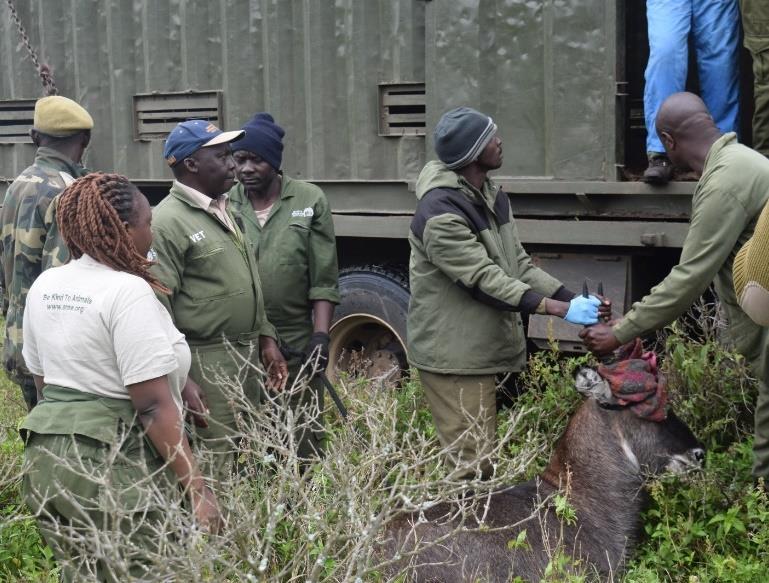
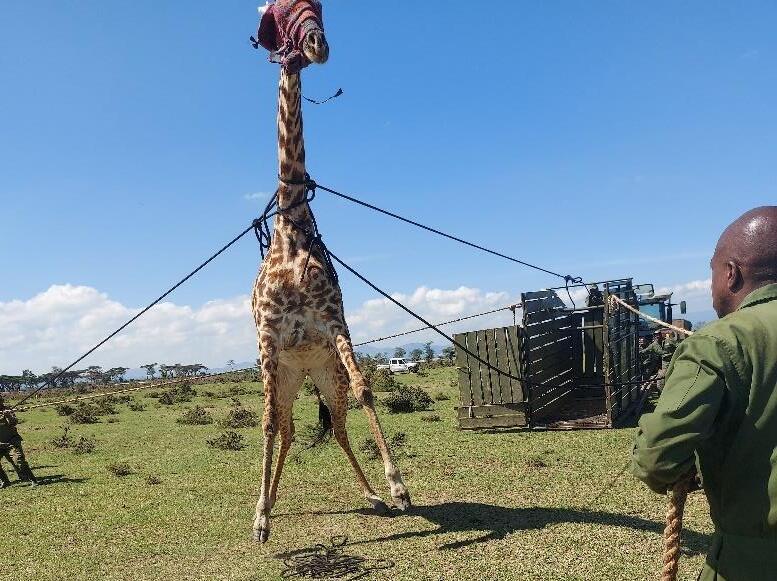
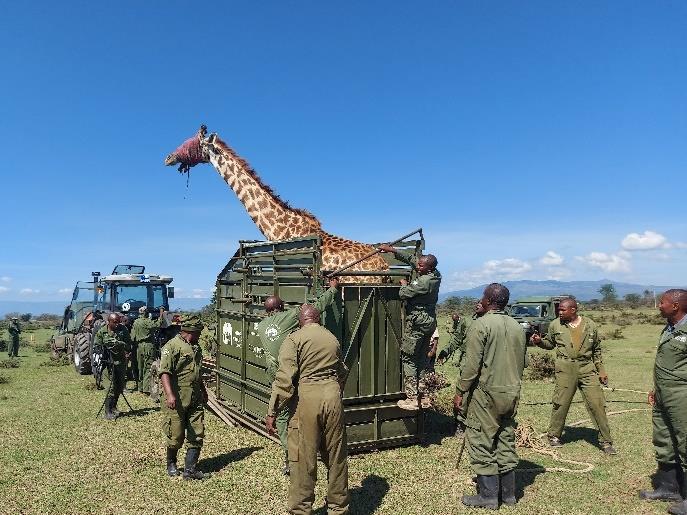
We used mass capture system to capture 140 zebras from Manera farm which were translocated to Nairobi NP. We immobilized 14 giraffes at Manera farm which were safely translocated to Nairobi NP and Naivasha Wildlife Sanctuary – WRTI. We immobilized 3 waterbucks (two males & one female) at Nightgale farm and translocated the animals to Naivasha Wildlife Sanctuary – WRTI. This was part of the Human Wildlife Conflict mitigation work.
Different species of wildlife were captured using nets and mass capture equipment and translocated from Kedong ranch including 111 hartebeests, 27 grant gazelles, 2 elands, 1 impala and 12 Masai giraffes.
Capture methods
Chemical immobilization (darting), nets and mass capture methods were used during this operation. The choice of capture method depended on species and terrain
For chemical immobilization candidates were darted from a vehicle or helicopter. A combination of Etorphine and Azaperone were used at various dose rates depending on species, age and sex. Darted animals were loaded manually into the transport crates where they were reversed from anesthesia.
For the mass capture method, a funnel shaped structure (boma) approximately 400 meters long and over 100m wide at the entry was constructed using customized heavy duty opaque plastic sheet erected on metallic poles. The mass capture boma was strategically constructed in an area and well camouflaged in green bushes. This mass capture system was erected along wildlife movement routes to enhance chances of animals getting in with minimum effort. Targeted herds of wildlife species were gently driven by helicopter into the boma. Plastic curtains were drawn at the entry and animals were guided into the loading ramp situated at the exit of the boma. Here a truck fitted with a custom-made animal transport crate was positioned for loading and transporting the animals.
Linear capture nets were set along wildlife trails concealed in thickets. Additional drop nets were provided to increase chances of capture. Target species were driven by helicopter into the nets. Captured animals were retrieved by experienced capture rangers and loaded manually into the trucks for transport.