SWT/KWS MARA MOBILE VETERINARY UNIT
NOVEMBER 2025

11 Cases in November 2025 3 Poaching Cases 4 Elephant Cases
November Report by Dr. Michael Njoroge
The Mara Vet Unit attended to 11 cases during November involving 4 elephants, 4 lions, 2 zebras and a cheetah. Three of the elephants from the same herd were treated in the Mara North Conservancy for humanwildlife conflict related arrow injuries. Another elephant and a zebra were treated for arrow wounds most likely related to poaching and another zebra was treated for a snare wound. Two lions and a cheetah were attended to for natural causes and a postmortem on another lion which was also concluded to be natural.
Acknowledgement
The Mara Mobile Veterinary Team greatly appreciates Elizabeth Scarlett for funding the Unit through the Sheldrick Wildlife Trust. The team also thanks Kenya Wildlife Service for providing technical support and all the conservation partners who contributed to the success of veterinary interventions through timely reporting of veterinary cases and monitoring of treated animals.
Case Details
8-Nov-25
November 2025
Case
Elephant
Human-Wildlife Conflict
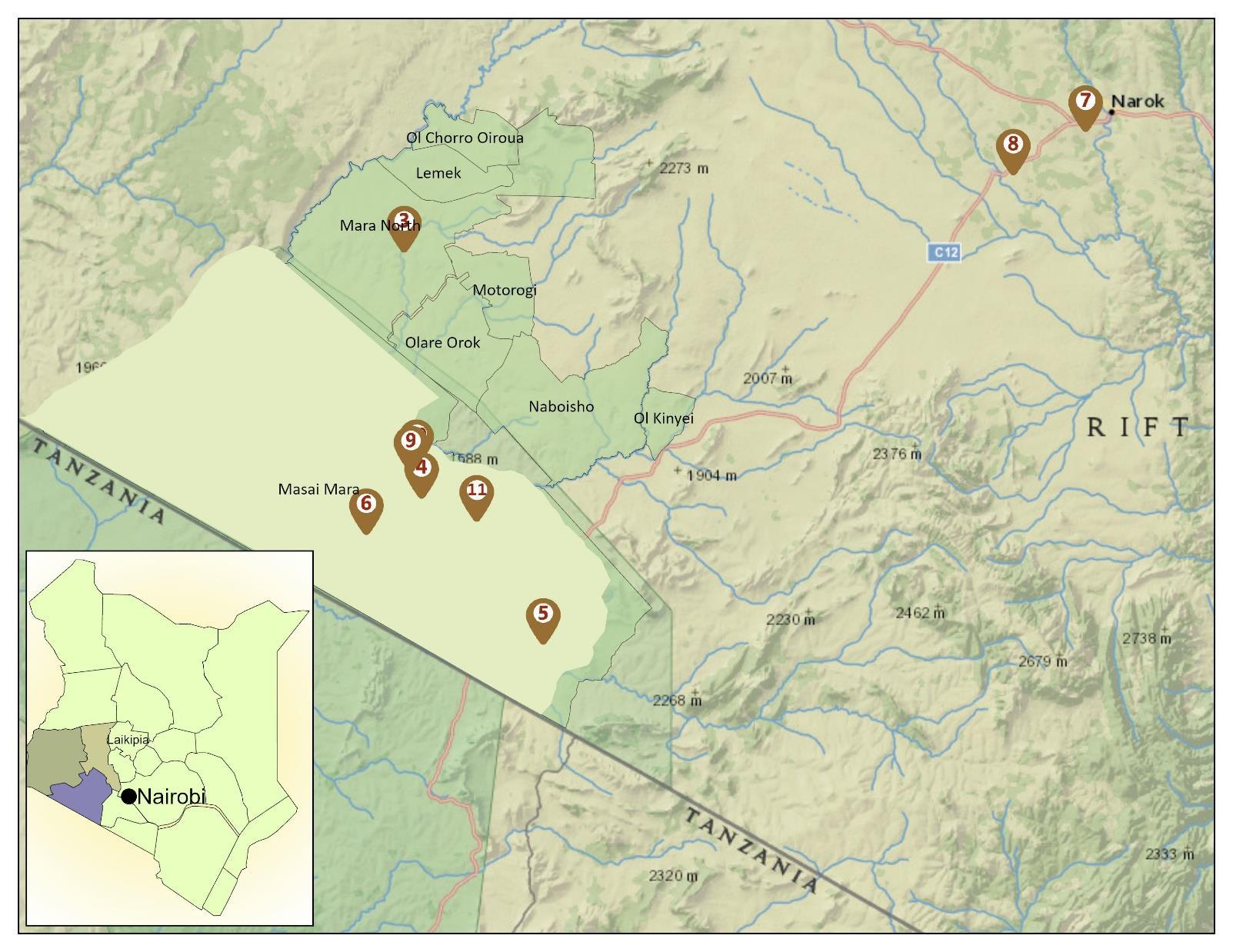
Mara North Conservancy
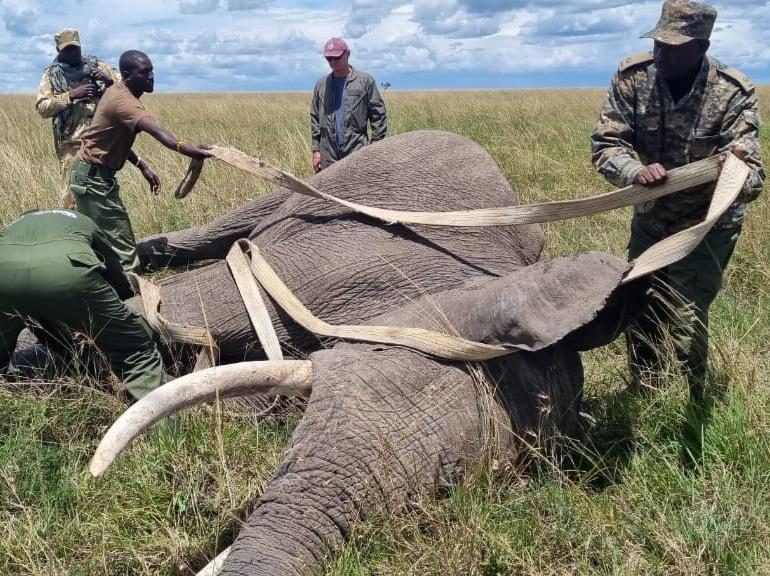
The rangers reported an adult elephant sighted within a herd of elephants, exhibiting signs of pain and restlessness. Upon close observation, a penetrating wound with purulent discharge was noted on the left flank region close to the thoracic area. The terrain and weather conditions were unfavourable for ground darting, hence necessitating aerial immobilization was conducted from a helicopter from MEP.
Immobilisation, examination and treatment
The elephant was immobilized with 18mg Etorphine intramuscularly from a helicopter. The elephant was safely immobilized within 8 minutes post-darting and positioned on the right side for treatment.
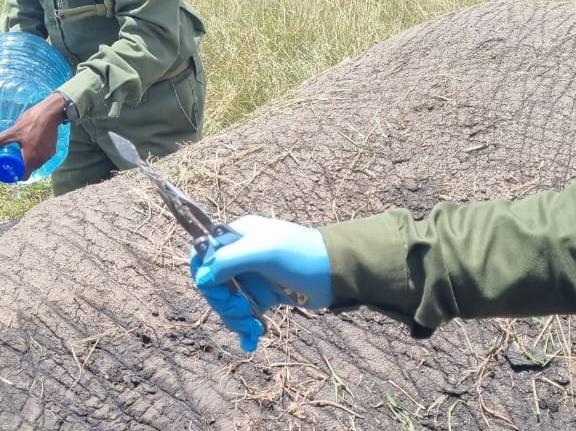
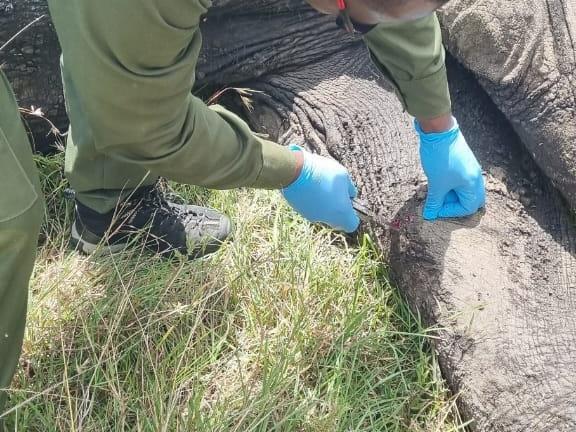
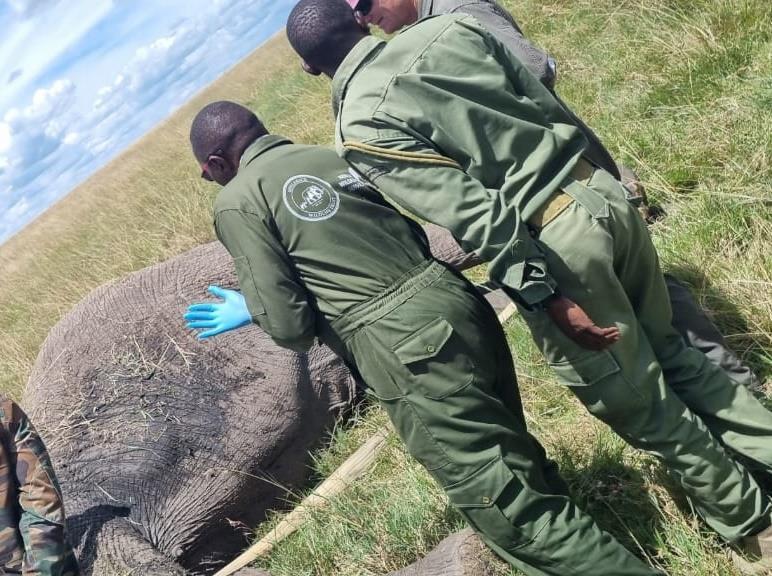
The elephant had a deep penetrating wound on the left thoracic flank region with an embedded poisoned arrowhead. The wound was purulent with necrotic tissue and swelling extending subcutaneously. The metallic arrowhead was carefully extracted then the necrotic tissues were debrided and the pus drained. The wounds were then thoroughly cleaned with water, Hydrogen peroxide and Iodine then sprayed with Oxytetracycline. Finally, 5,000mg Flunixin and 25,000mg Amoxicillin were administered.
Prognosis
Prognosis is fair/good due to absence of systemic infections and the elephant’s stable physical condition.
Elephant
Human-Wildlife Conflict
Mara North Conservancy
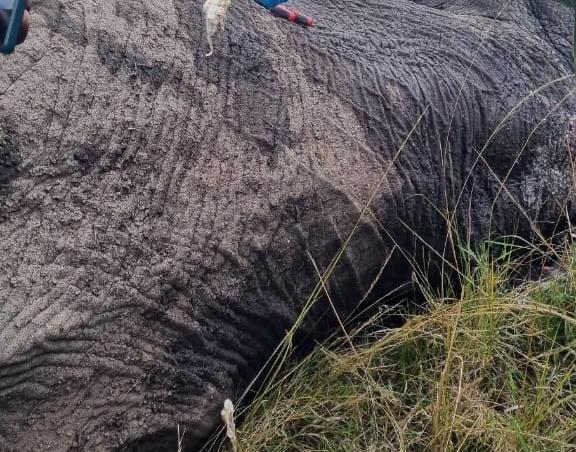
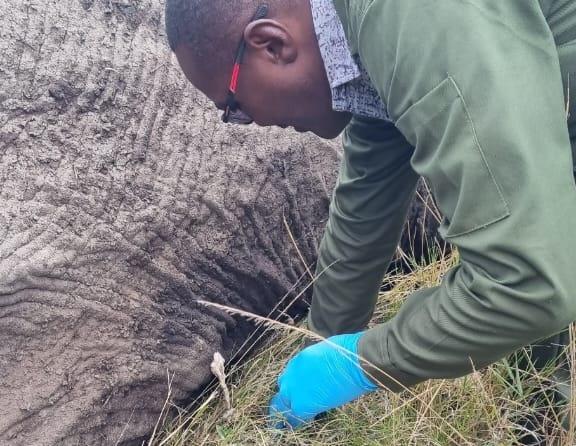
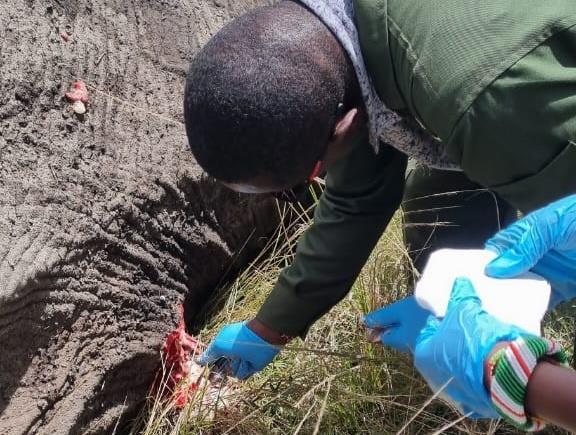
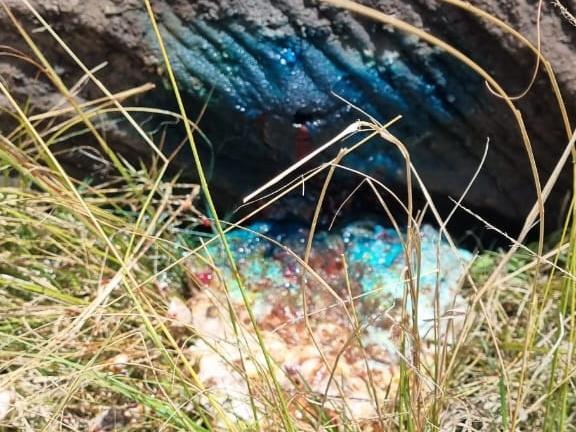
This adult bull elephant was sighted within the same herd as two other injured bulls, exhibiting stiffness of the back and reduced mobility. Two visible arrow wounds with pus discharge were observed on the dorsal spinal region. Due to the difficult terrain and prevailing weather conditions, immobilization was achieved aerially via aerial darting provided by the MEP.
Immobilisation, examination and treatment
The elephant was immobilized with 16mg Etorphine intramuscularly from a helicopter. The elephant was safely immobilized within 7 minutes post-darting and positioned on the right side for treatment.
There were two deep wounds located along the dorsal spinal region, both exuding purulent materials The wounds were approximately 8-10 cm deep with extensive tissue necrosis. No neurological deficits were noted. Arrowheads were located and extracted with long forceps. Necrotic tissues were debrided and pus drained. The wounds were then thoroughly cleaned with water, Hydrogen peroxide and Iodine then sprayed with Oxytetracycline. Finally, 5,000mg Flunixin and 30,000mg Amoxicillin were administered.
Prognosis
Prognosis is fair/good despite the spinal involvement as no neurological signs were observed
Elephant
Human-Wildlife Conflict
Mara North Conservancy
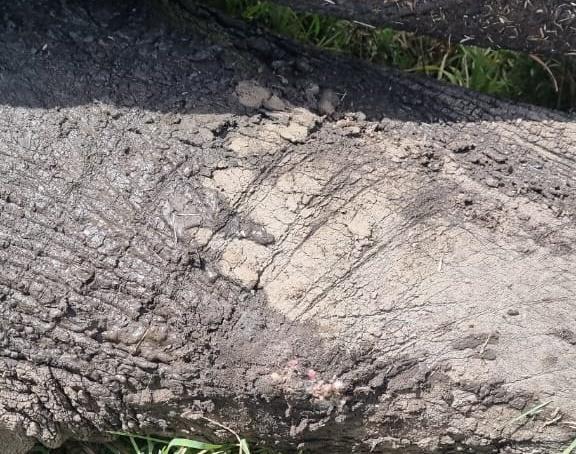
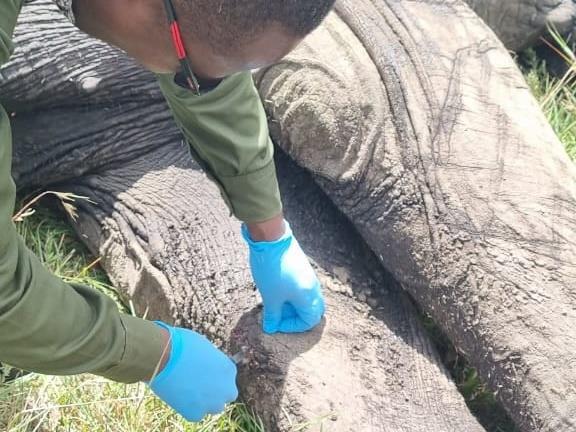
This adult bull elephant from the same herd as the previous cases was reported to have difficulty in walking, with a visible swelling on the left forelimb and a purulent wound consistent with a poisoned arrow injury. Due to the difficult terrain, immobilization was achieved via aerial darting provided by the MEP.
Immobilisation, examination and treatment
The elephant was immobilized with 18mg Etorphine intramuscularly from a helicopter. The elephant was safely immobilized within 6 minutes post-darting and positioned on the left side for treatment.
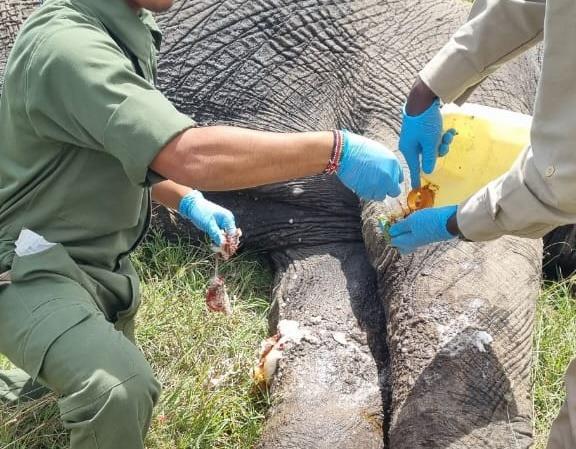
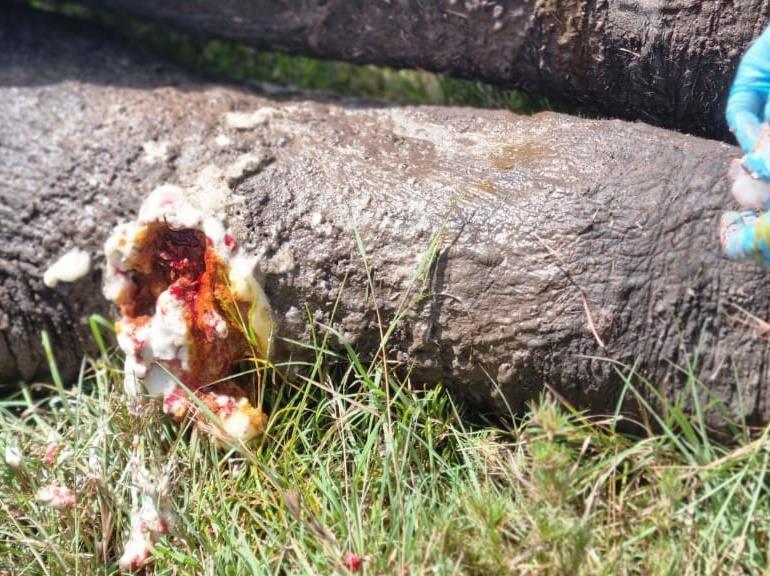
The elephants left forelimb had a single deep penetrating wound with profuse pus and necrotic tissue, indicating sepsis. Mild swelling extended proximally, but joint mobility remained normal. The wound was purulent with necrotic tissue and swelling extending subcutaneously. The arrowhead was carefully extracted with forceps then the necrotic tissues were debrided and the pus drained. The wounds were then thoroughly cleaned with water, Hydrogen peroxide and Iodine then sprayed with Oxytetracycline. Finally, 5,000mg Flunixin and 28,000mg Amoxicillin were administered.
Prognosis
Prognosis is fair/good but follow up monitoring was advised to ensure healing progression.
Lion
Natural Causes
Masai Mara National Reserve
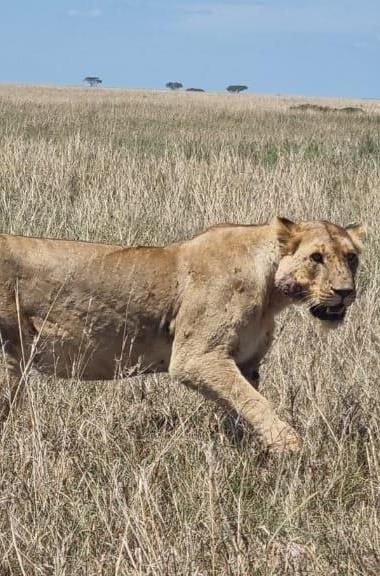
The Mara Unit attended to an injured young sub-adult female lion that had been observed for some weeks with a persistent mandibular swelling following a suspected kick during hunting. Initial monitoring was undertaken, but the lioness subsequently went into hiding and the swelling did not resolve on its own.
Immobilisation, examination and treatment
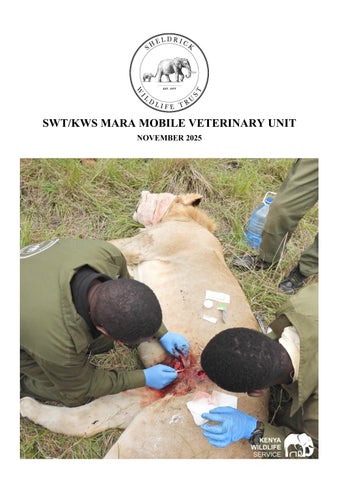
The lioness was immobilized with the chemical immobilization protocol involving the use of 300mg Ketamine mixed with 6mg Medetomidine administered via darting from a vehicle at a safe distance. The onset of sedation occurred within 5 minutes, with full sedation taking effect 15 minutes afterwards. The lion was immediately blindfolded and positioned on the left side for treatment. A thorough examination revealed a large fluctuant swelling at the right lateral extending to ventral mandible. Upon incision, serous-blood-tinged fluid drained from the lesion. Palpation identified firm fibrotic tissue, consistent with a chronic traumatic seroma or organized hematoma. No fractures or signs of suppurative infection were found. Treatment involved complete drainage of serosanguinous fluid then the wound was lavaged with Hydrogen peroxide, flushed with Iodine, packed with Cloxacillin ointment and sprayed with Oxytetracycline. The elephant was given 2,000mg Amoxicillin and 50mg Meloxicam.
Prognosis
Prognosis is fair/good given the nature of the lesion and effective evacuation of the accumulated fluid
Elephant Arrow Masai Mara National Reserve
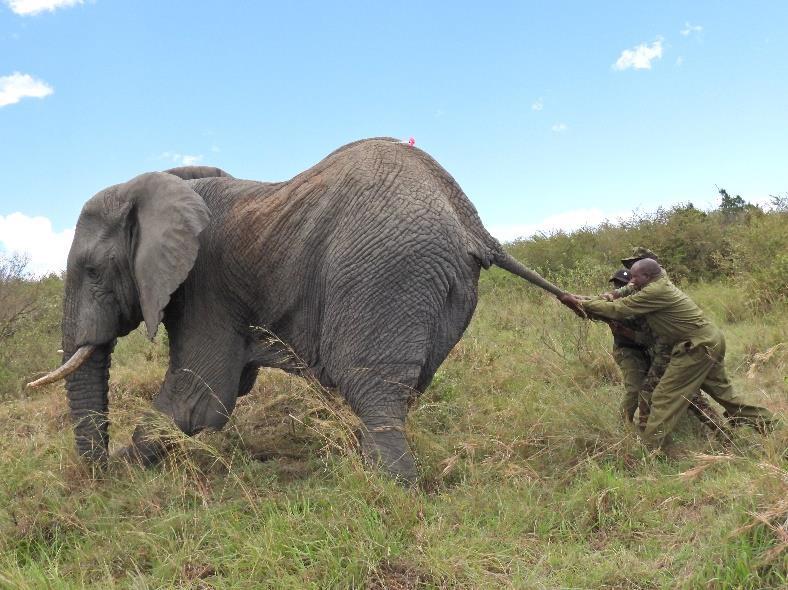
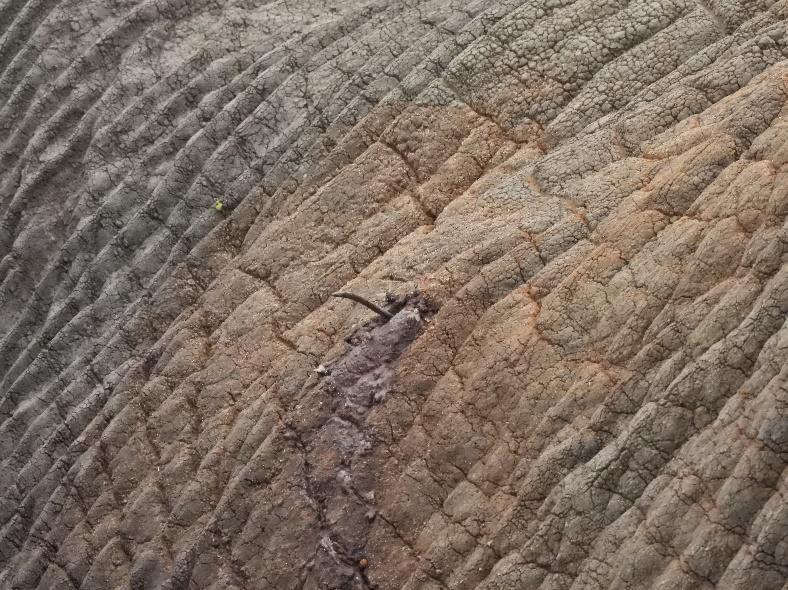
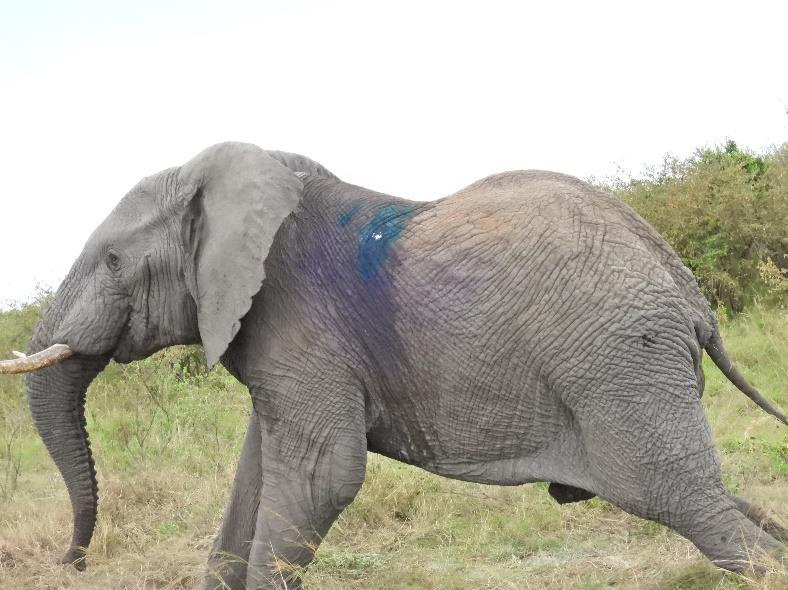
This Vet team attended to an injured adult male elephant that was isolated from the herd and exhibiting signs of discomfort. Closer examination revealed a penetrating arrow wound on the right dorsal flank.
Immobilisation, examination and treatment
The elephant was immobilized with 20mg Etorphine using the Dan-inject system from a helicopter. The elephant was safely immobilized within 8 minutes and positioned on the right side for treatment.
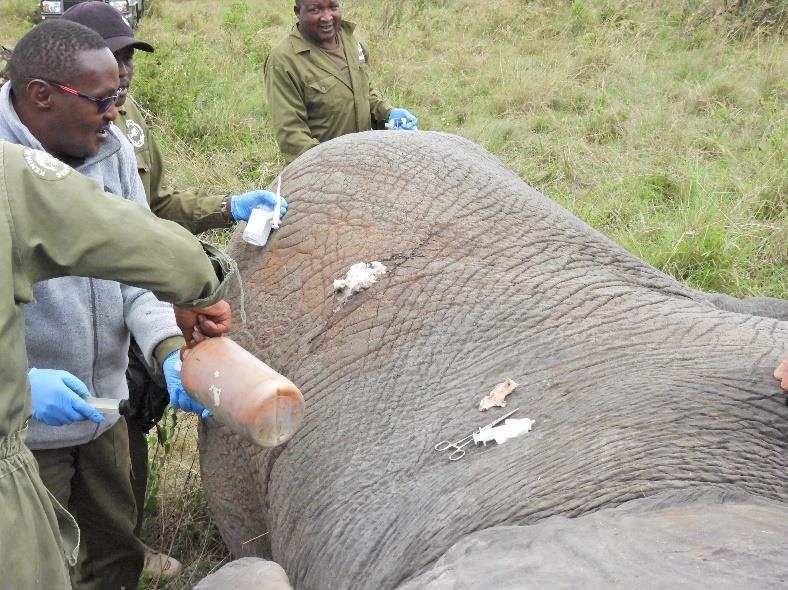
Clinical examination showed the presence of a lodged metallic arrowhead at the left dorsal flank, with swollen surrounding tissue oozing mild purulent discharge, indicating early infection. The arrowhead was extracted safely. Copious rinsing with clean water to remove debris from the wound tract was done then the wound was lavaged with Hydrogen peroxide and flushed with Iodine and sprayed with Oxytetracycline. The elephant was then administered with 2,000mg Flunixin and 25,000mg Amoxicillin.
Prognosis
After reversal the elephant stood up and walked away slowly to join his herd. The prognosis is fair to good. Given the successful retrieval of the arrowhead, thorough wound management, and timely administration of systemic and topical medication.
Lion
Natural Causes
Masai Mara National Reserve
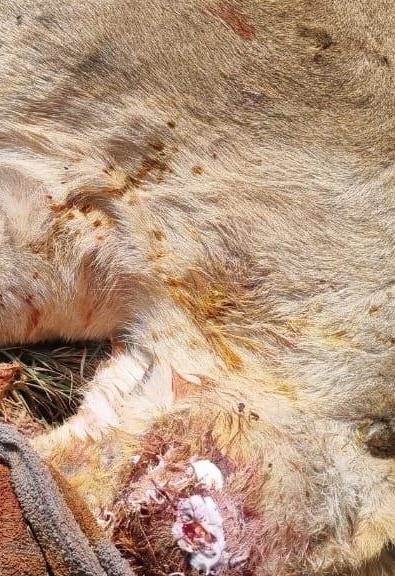
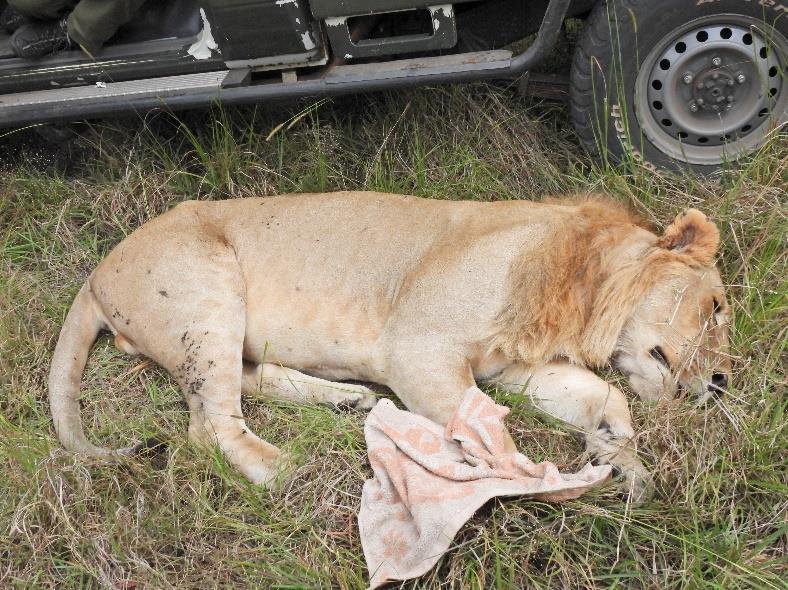
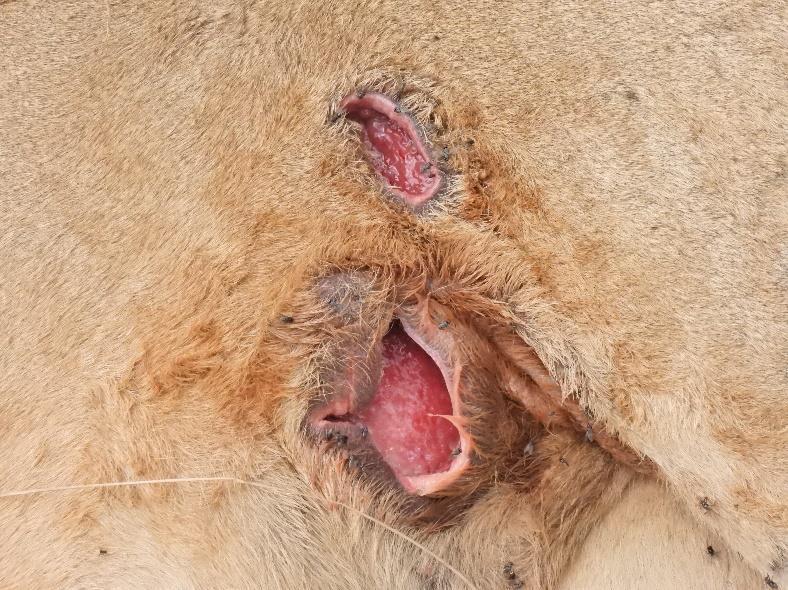
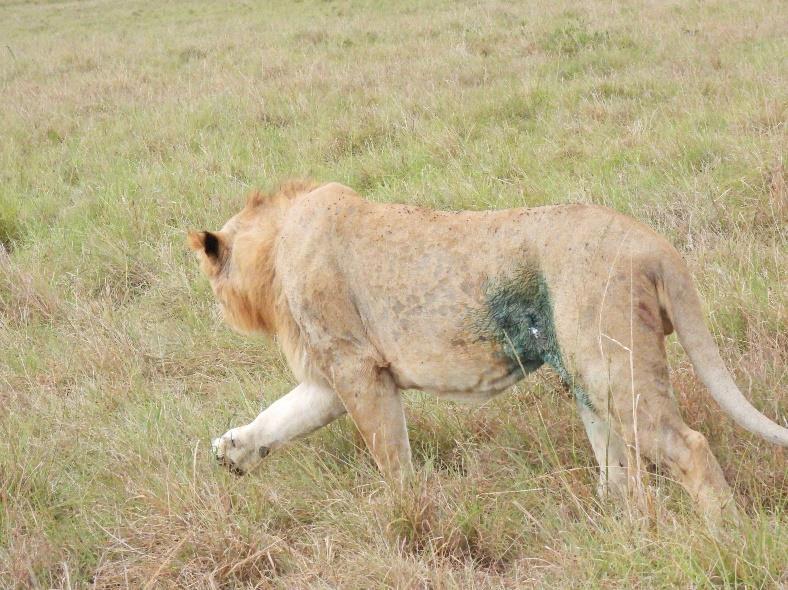
The Mara Vet Unit attended to an injured adult male lion that showed signs of abdominal discomfort and injury. Field assessment indicated two lacerative wounds on the left abdominal area, reportedly inflicted by a buffalo during a predation attempt.
Immobilisation, examination and treatment
The lion was immobilized with 400mg Ketamine mixed with 8mg Medetomidine administered via darting from a vehicle at a safe distance. The onset of sedation occurred within 8 minutes, with full sedation taking effect 15 minutes later. The lion was immediately blindfolded and placed on the right side for treatment.
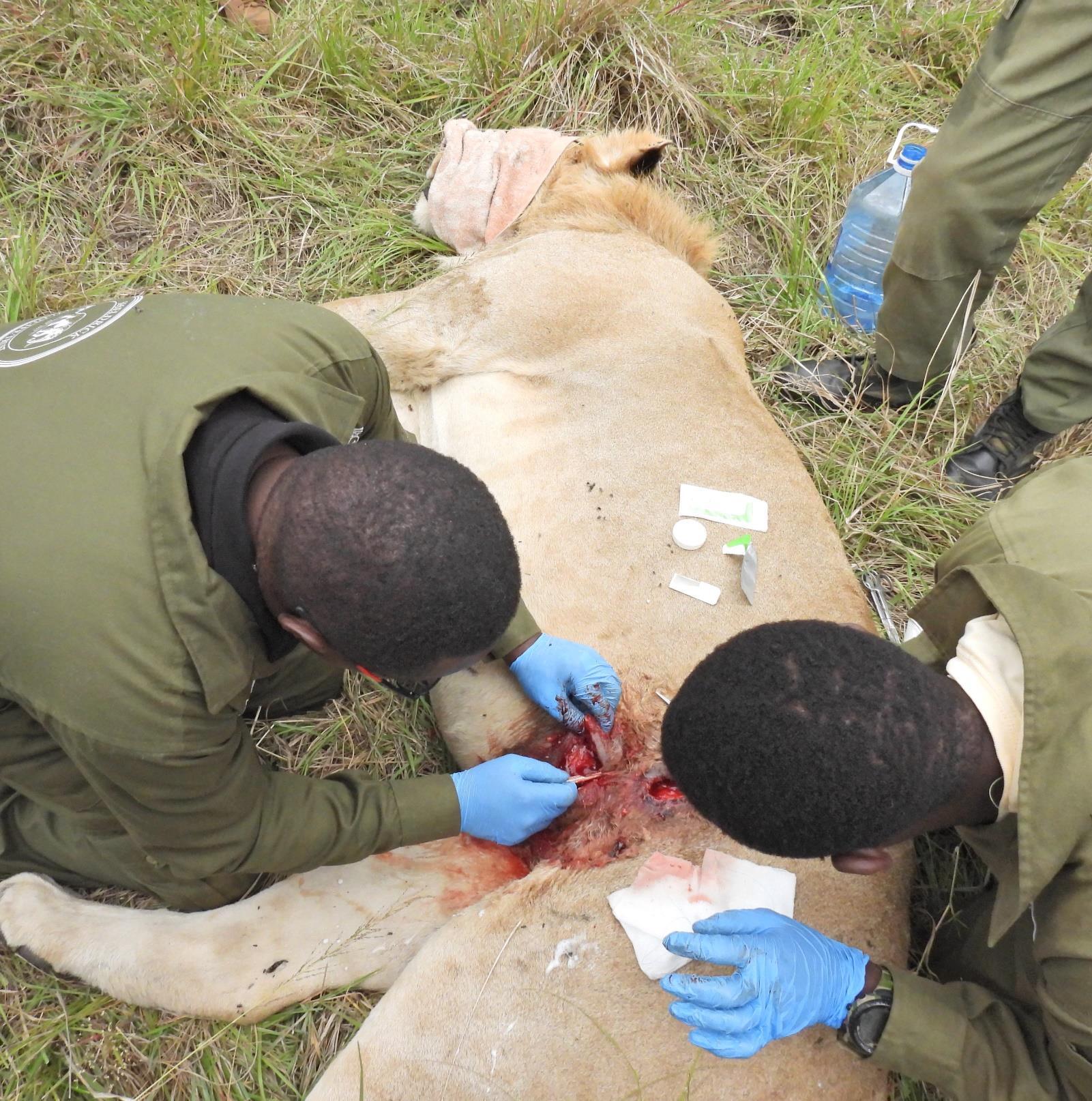
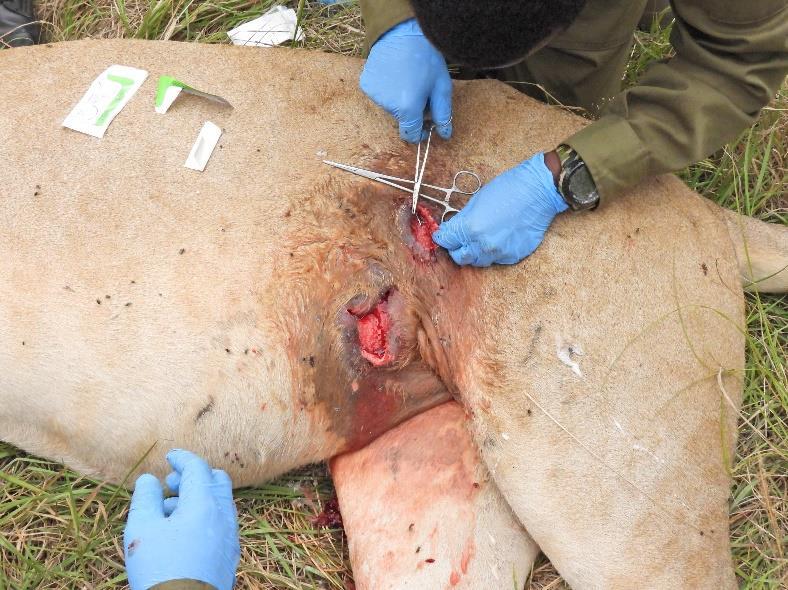
Examination revealed two lacerations on the left abdominis muscle, the lacerations penetrated through the skin and subcutaneous tissues into the abdominal musculature. The wounds were irrigated with saline to remove debris and contaminants. Minor devitalized tissue was trimmed to assist healing. The site around the wound was irrigated with lignocaine to reduce pain during suturing. The subcutaneous layer was stitched closed to join the subcutaneous tissues and eliminate dead space then the skin layer was closed to achieve proper wound edge alignment and promote faster healing then it was packed with Cloxacillin ointment and sprayed with Oxytetracycline The lion was also given 2,000mg Amoxicillin and 50mg Meloxicam.
Prognosis
Prognosis is good given proper wound closure, and the lions good body condition Full recovery is expected
Zebra Arrow
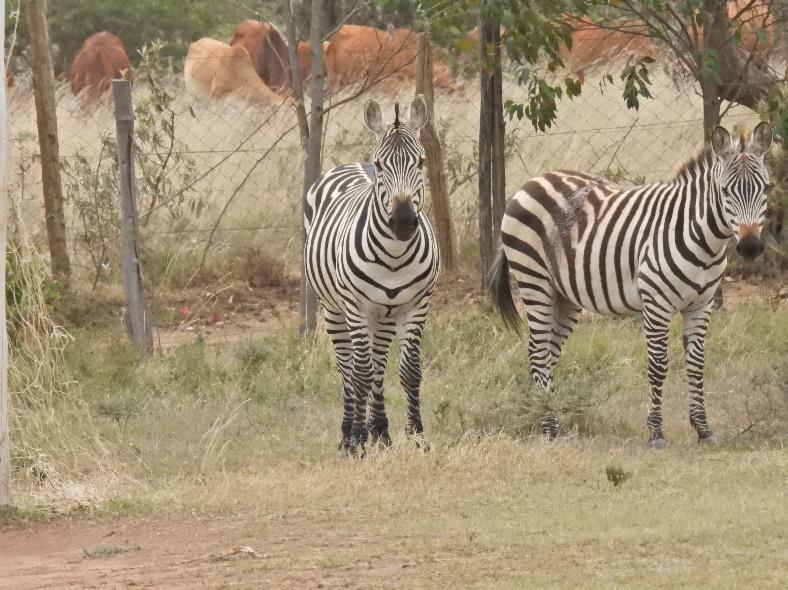
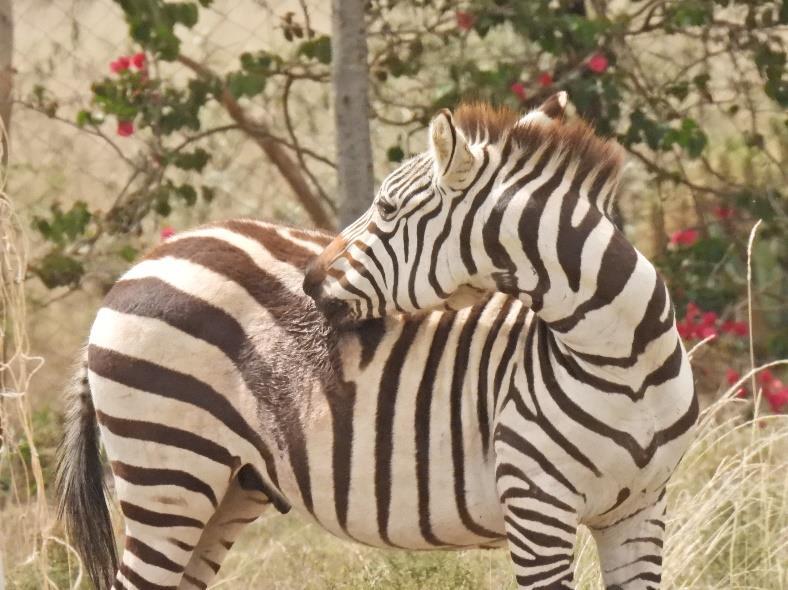
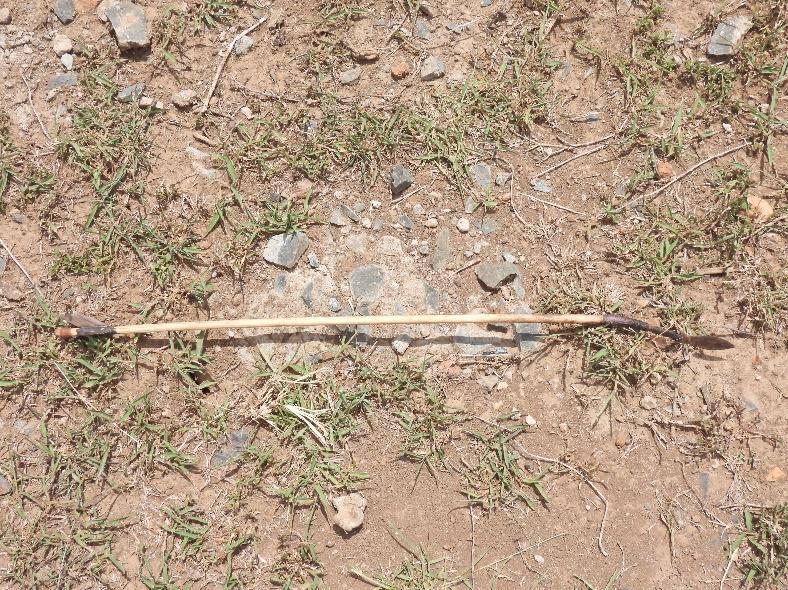
This Vet team responded to a report of an adult male zebra observed near Maasai Mara University with an arrow lodged in the spine. The zebra was mobile and alert, with no signs of systemic weakness.
Immobilisation, examination and treatment
During the immobilization process, the arrow dislodged; the arrow had already loosened due to attempted removal by the zebra. The defect in the skin was mild, shallow, and without significant haemorrhage. No evidence of deep muscular penetration or involvement of vital structures, hence the immobilization was deemed unnecessary after the arrow dislodged.
Prognosis
The prognosis is fair to good. The superficial nature of the wound, absence of deeper structural damage, and timely veterinary management significantly support full recovery. The zebra is expected to regain complete healing without long-term impairment. .
Masai Mara National Reserve
Case 8 – 19th November 2025
Zebra Snared
Narok County
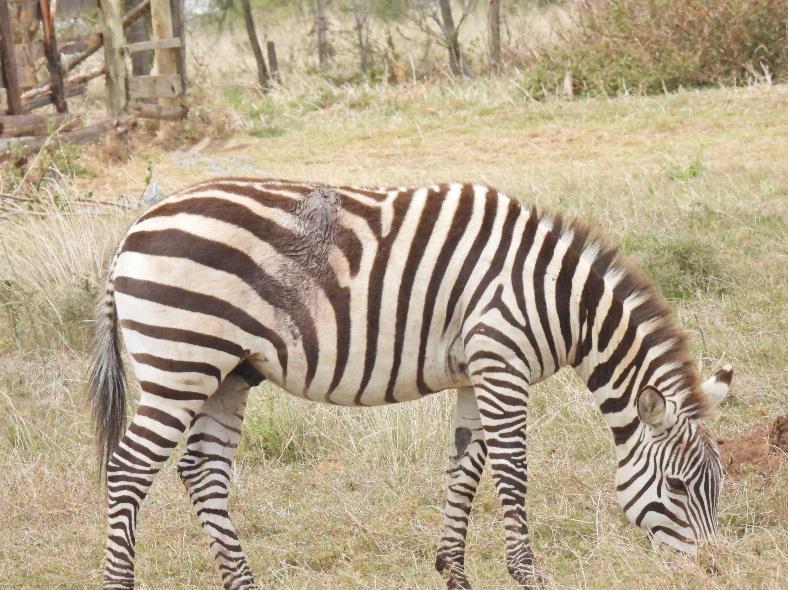
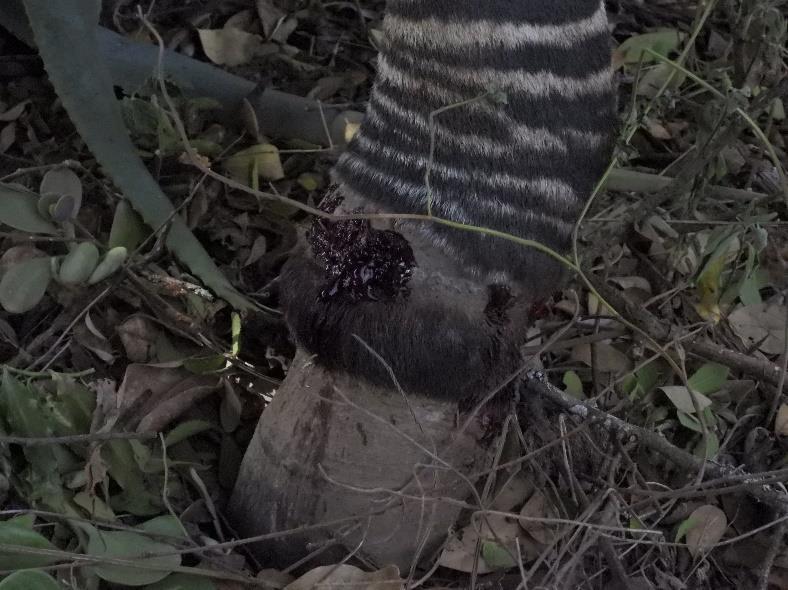
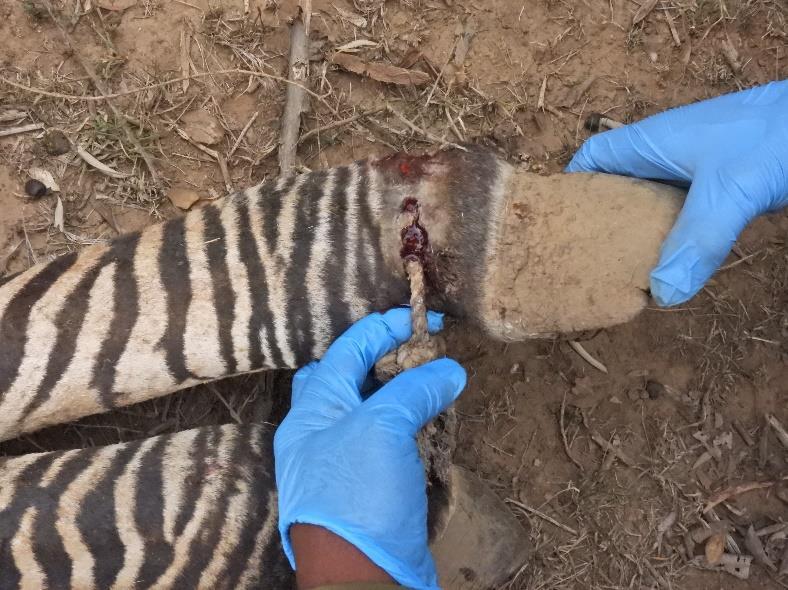
The Vet team responded to an emergency report regarding an adult male zebra observed near the Ewaso Ngiro Airstrip Area, Narok County. The zebra had been sighted dragging a rope snare around its left distal hindlimb region at the fetlock joint, causing lameness and intermittent restlessness. The rope snare appeared to have caused progressive constriction, resulting in tissue damage and impaired mobility.
Immobilisation, examination and treatment
The zebra was immobilized by darting from a vehicle with 7mg Etorphine and 60mg Azaperone. The induction time was 7 minutes, and the zebra was positioned on its side for safety and accessibility during treatment.
Examination revealed a rope tightly constricting soft tissues, marked swelling, and circumferential tissue constriction, laceration through the epidermis and dermis, with subcutaneous tissue growing over the snare as a result of tissue granulation on the distal fetlock of the left hindlimb. The rope snare was carefully removed then the wound was cleaned with water to remove the debris, Hydrogen peroxide was used for debridement, it was flushed with Iodine to disinfect the wound then finally, packed with Cloxacillin ointment and sprayed with an antibiotic spray. The zebra was administered 2,000mg Amoxicillin and 1,500mg Flunixin.
Prognosis
The prognosis is good due to good body condition, timely interventions and effective wound management. .
Case 9 – 23rd November 2025
Lion
Postmortem
Masai Mara Reserve
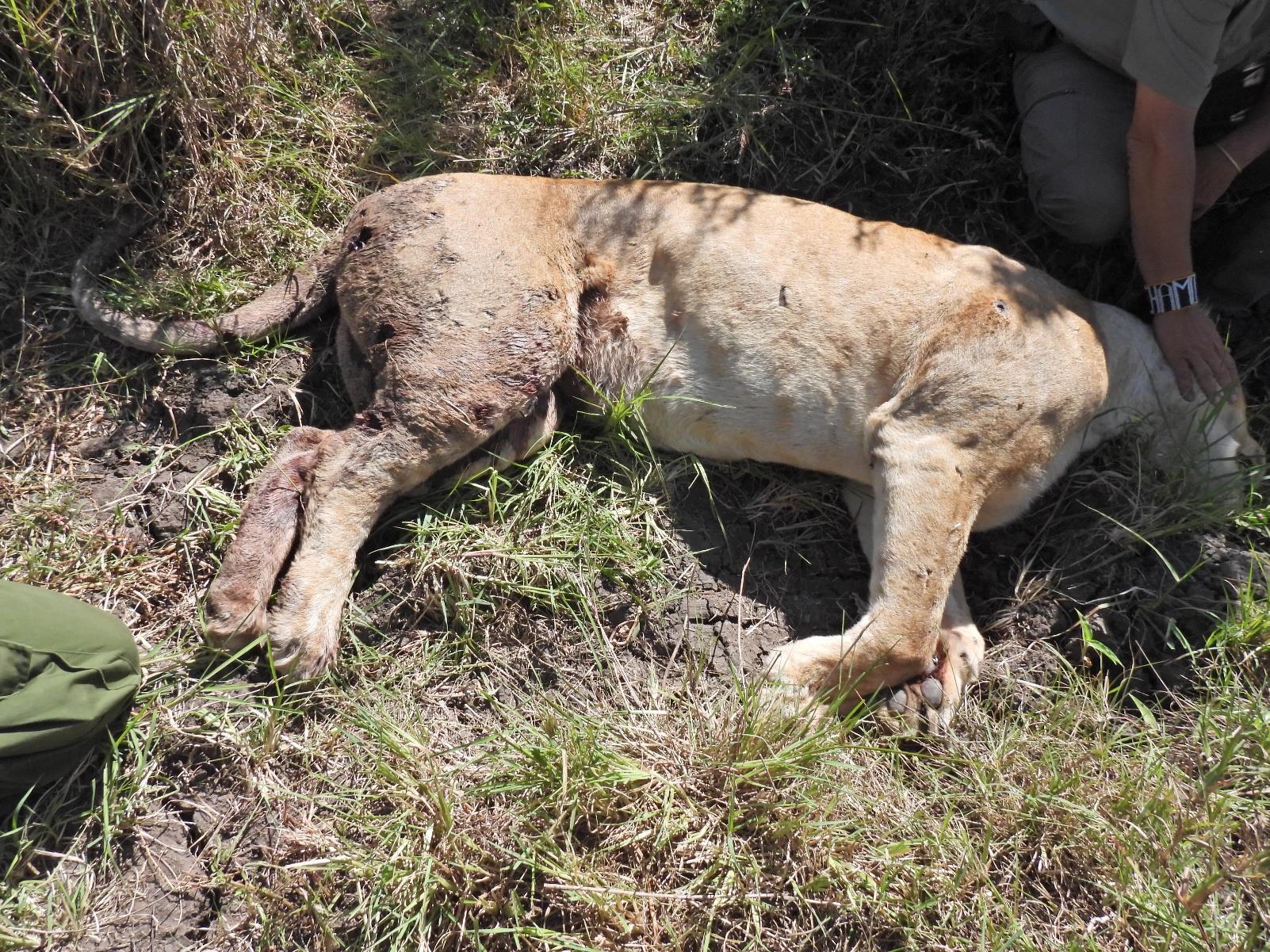
The Vet Unit attended to an adult female lioness found deceased at the Talek Area within the Fig Tree pride territory of the Maasai Mara National Reserve. The lioness was from Rongai Pride, famously known as Bearface. This follows a fatal traumatic injury sustained in a conspecific aggression fight with Fig Tree pride.
Postmortem examination
The carcass was on left lateral recumbency, and examination revealed multiple compound traumatic injuries consistent with intraspecific aggression fight. The lesions were located on the medial aspects of both the right and left femurs, lateral hips, the base of the tail, and the right forepaw.
A complete open fracture of the right femur was evident, with total transection of the femoral vein. Significant soft tissue laceration and extensive haemorrhage were noted, consistent with high force intraspecific attack injuries.
Cause of death
The cause of death was attributed to hypovolemic shock resulting from massive haemorrhage, due to the severe traumatic injuries sustained and the full transection of the femoral vein, which is a major blood vessel, sustained during an intraspecific aggression fight.
Case 10 – 24th November 2025
Lion
Natural Causes
Masai Mara National Reserve
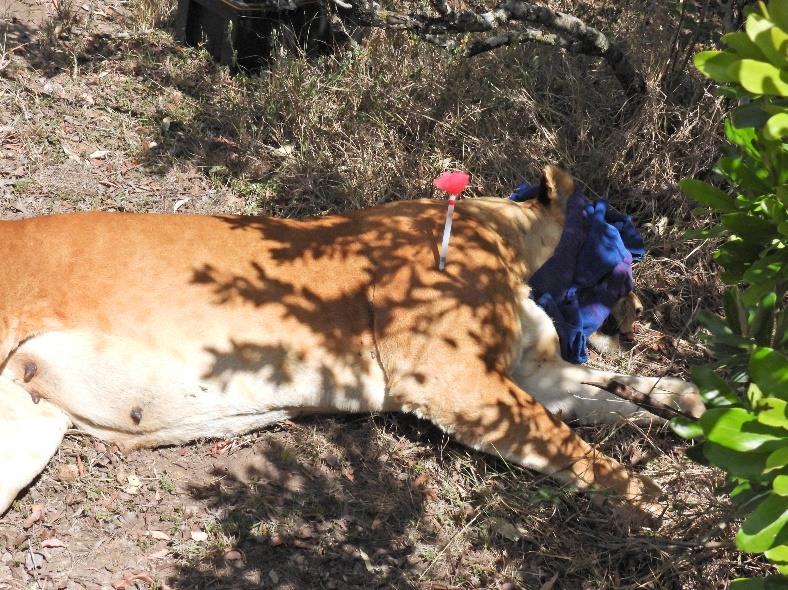
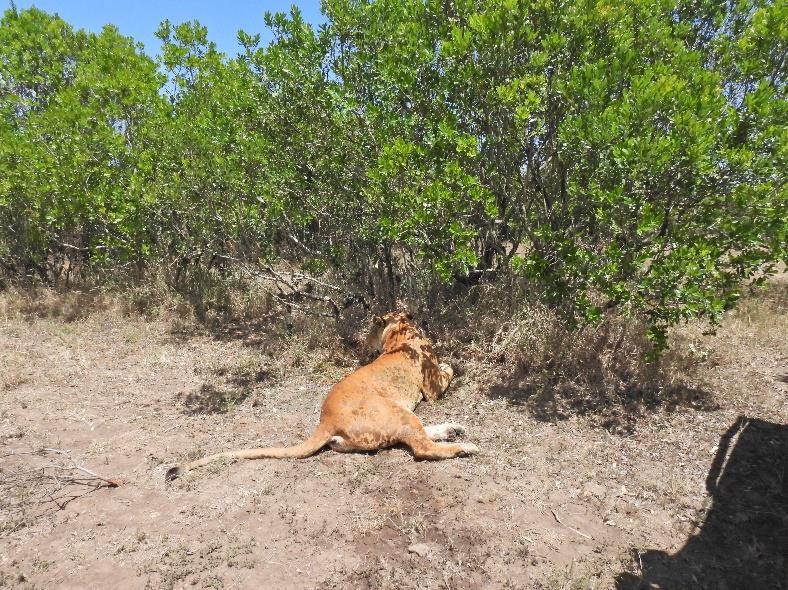
The Vet team attended to an injured adult lioness from the Fig Tree pride. The injuries were sustained during inter-pride conflict involving the late Bearface female from the Rongai Pride, who succumbed the previous day due to severe trauma. The Fig Tree Pride lioness was not located on the 23rd but was sighted on the 24th of November in the morning, prompting immediate veterinary intervention and treatment.
Immobilisation, examination and treatment
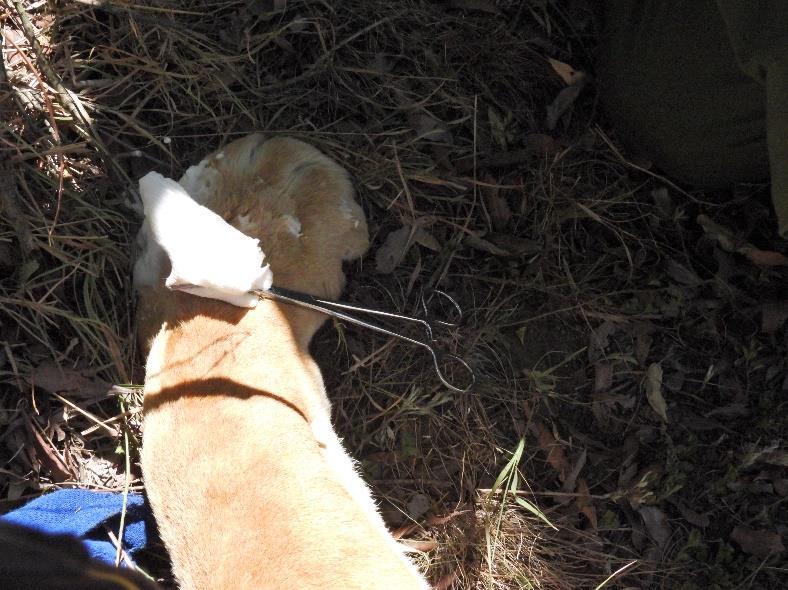
The lion was darted from a vehicle with 300mg Ketamine mixed with 8mg Medetomidine. The onset of sedation occurred within 6 minutes, with full sedation taking effect 15 minutes afterwards. The lion was immediately blindfolded and positioned on the left side for treatment in a well-ventilated, shaded area.
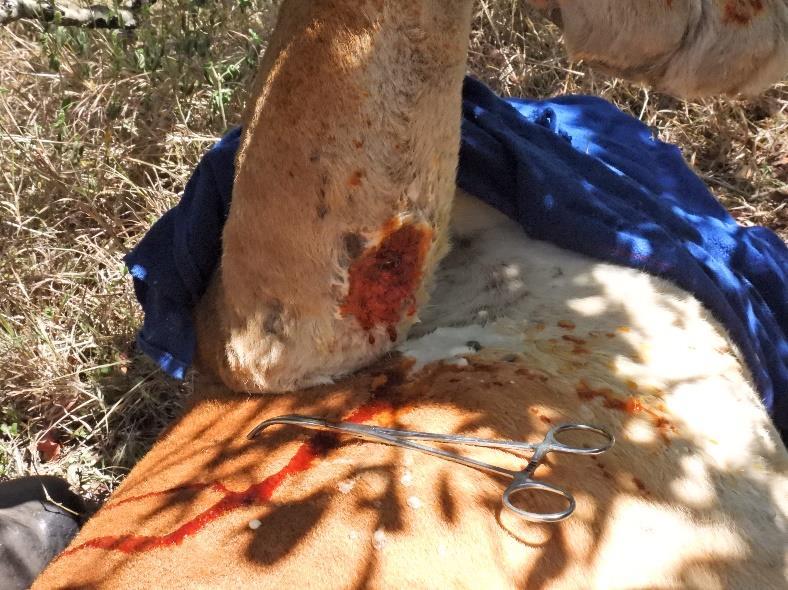
Examination revealed multiple injuries, a communicating soft tissue injury involving the temporalis muscle of the head, a wound penetrating the superficial extensor muscle of the forepaw and a penetrating wound at the armpit region, consistent with a bite and claw wounds from lion aggression. The wounds were cleaned with water, lavaged with Hydrogen peroxide, flushed with diluted Iodine packed with Cloxacillin ointment and sprayed with Oxytetracycline Amoxicillin, Dexamethasone and Ivermectin were then administered
Prognosis
The prognosis is good but monitoring of the Fig Pride lionesses will be maintained to ensure full recovery.
Case
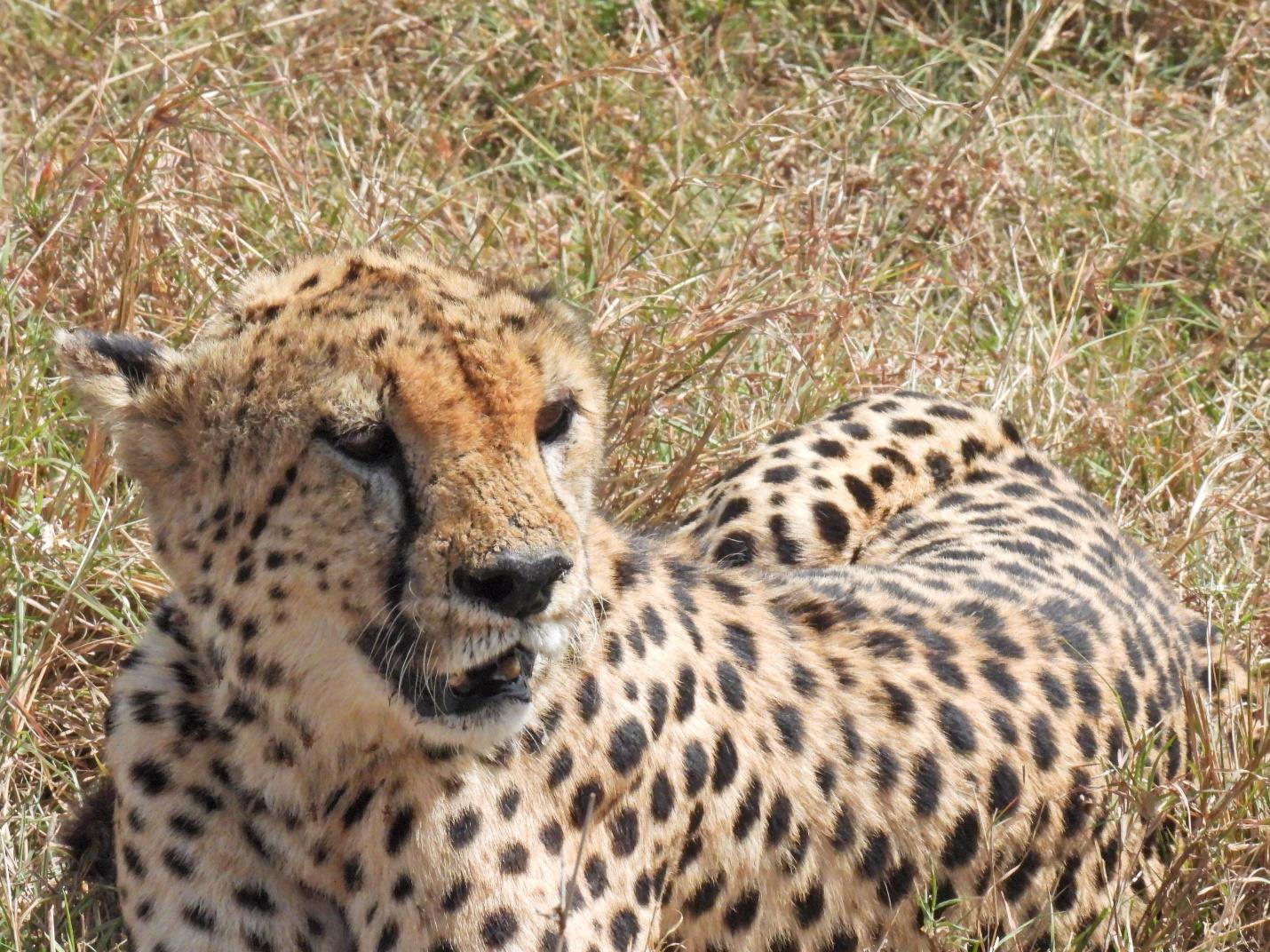
Cheetah
Natural Causes
The Mara Veterinary team responded to a report of an adult male cheetah, reported with an Ocular abnormality. The cheetah, famously known as Olonyok, one of the remaining members of the Tano Bora coalition. The adult male cheetah was sighted actively hunting in the Tipilikuan Area.
Immobilisation, examination and treatment
Clinical observation revealed mild photosensitization of the right eye, with slight periocular irritation without discharge or inflammation, and no signs of behavioural discomfort. No evidence of trauma, or systemic illness was observed. The cheetah had a good body condition score, good locomotion and normal behavioural signs.
Owing to the mild nature of the condition, no immobilization or medical treatment was given. The cheetah was left to continue with his predation without disturbance.
Prognosis
Prognosis is good. The adult male cheetah was recommended for close monitoring, with immediate veterinary intervention to be provided should the condition progress, impair the vision or develop secondary complications.
Masai Mara Reserve