






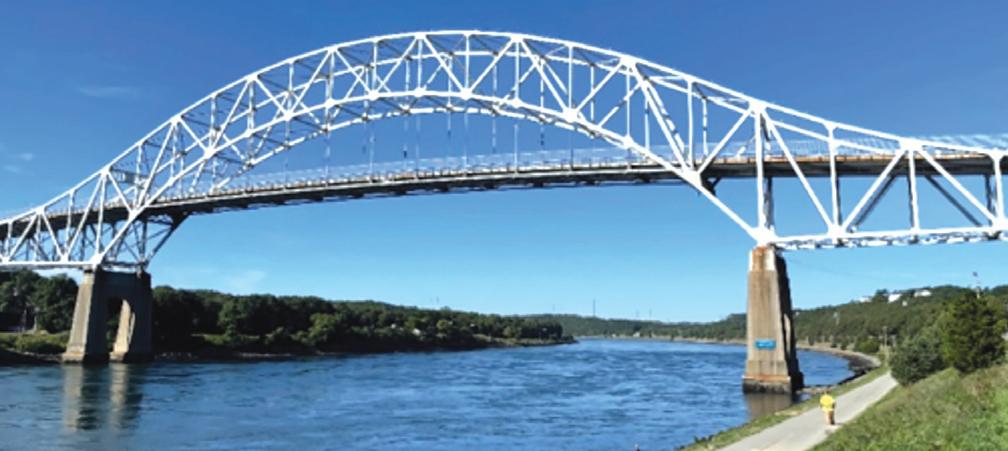

MassDOT announced on Jan. 14, 2026, that it will begin taking ownership of 13 homes as part of its project to replace the Sagamore Bridge.

According to MassDOT and the USACE, it has reached the end of its useful life.
The bridge carries 38 million vehicles per year and is vital to Cape Cod’s economy, according to the state. Luisa Paiewonsky, executive director of MassDOT's mega projects delivery office, told realtor.com that the agency is spacing out deed transfers to ensure that not all homeowners are looking for replacement properties at the





Massachusetts 5th district Whip Katherine Clark joined senators and representatives from across the state on Jan. 16, 2026, in announcing that the state will receive an estimated $92.8 million in community project funding (CPF) in the FY2026 spending bill for 3 important community projects throughout the Bay State. The projects focus on areas relating to critical infrastructure, energy and water development, justice, science and rural development.
“Families in Massachusetts deserve a cleaner, healthier
and safer future — this critical funding will help us meet that mark,” said Clark. “I’m grateful for the partnership of our state and local leaders who helped to identify opportunities to advance our Commonwealth’s climate readiness and construct new, welcoming community gathering spaces for our neighbors. Thanks to their collaboration, we are meeting needs here at home.”










SENNEBOGEN, in kee philosophy to maxim created UPTIME Kits
eping with their mize uptime, has Whether you are a service technician i road, these kits have need for every service and PM task in one p created to save you t Managing hundreds o parts, from belts and and special tools bec single part number to n-house or on the everything you e, maintenance place. They were ime and money. of related service d nuts to O-Rings omes easy with a o order and stock
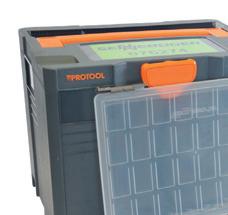
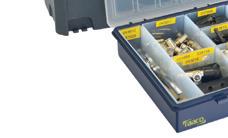
They are:
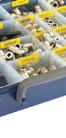














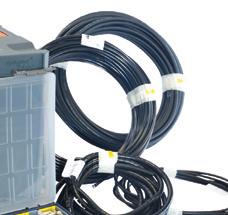



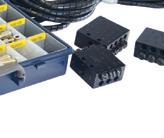
• Easy to order and ea t d t stock asy to s l
components and too
• Ideal for stocking se and trucks
Choose from the follo
• Central lubrication
• Preventive mainte
• O-Ring kits
• Electrical service k
• Hydraulic service k And the best thing is in stock and ready to built to match your m and series. Count on in-house. For more in UPTIME Kits, scan th s that these kits, go, are custommachine model SENNEBOGEN nformation on he QR code.
Hydraulic service k :kits shops ols ervice owing kits system kits nance service kits its kits






















NO North our in parts com with customers maxim commitment h about more Read ontract Demolition C st in parts repair the have virtu and I machine another in If back. to front every come t a have They echnician machine, wntim warehouse. American ready-to-ship of inventories plete for uptime izes aftersale Machine” he “Beyond our ow , Bloomfield Hills, MI or quickly. back unit the g I k they Since do no lose ally bring just [they] situation, a have I over go to month a once through wntime… ock. get theSENNEBOGEN






































The University of Rhode Island (URI) is taking a multi-pronged approach in its efforts to work toward net-zero carbon emissions — including looking to sources of renewable energy.
Among those energy sources is geothermal, which will be implemented in URI’s new Ocean Frontiers Building on the Narragansett Bay Campus
As part of the campus’ revitalization project, geothermal energy will be used to heat and cool the new building, which is designed to replace the 55-year-old Horn Laboratory with modern, environmentally controlled labs to support advanced scientific instruments.
“Geothermal systems reduce reliance on fossil fuels, lower greenhouse gas emissions, stimulate the green economy and provide long-term savings related to operating and lifecycle replacement costs,” said Seth Pilotte, the construction projects manager at the Narragansett Bay Campus.
Geothermal resources are reservoirs of hot water that exist at varying temperatures and depths below the earth’s surface. Wells can be drilled into underground reservoirs to tap steam and extremely hot water that can be brought to the surface for use in a variety of applications, including heating and cooling, or to generate electricity.
The geothermal system on the campus is expected to reduce energy use by 30 to 60 percent for heating and up to 50 percent for cooling. Once installed, these systems have minimal maintenance needs and significantly lower utility bills, often paying for themselves in five to 10 years.
Discussions about using geothermal energy began in March 2024 within the URI Facilities Group. The decision was made to drill an 850-ft.-deep test well to provide data that would inform the cost effectiveness and overall feasibility of using geothermal energy at the site, a task that was carried out in early March of 2025.
The planning and testing were funded by a $100,000 grant from PPL Corp., a Pennsylvania-based energy company comprised of Rhode Island Energy, LG&E, Kentucky Utilities and PPL Electric Utilities. The combined utility companies serve 3.5 million
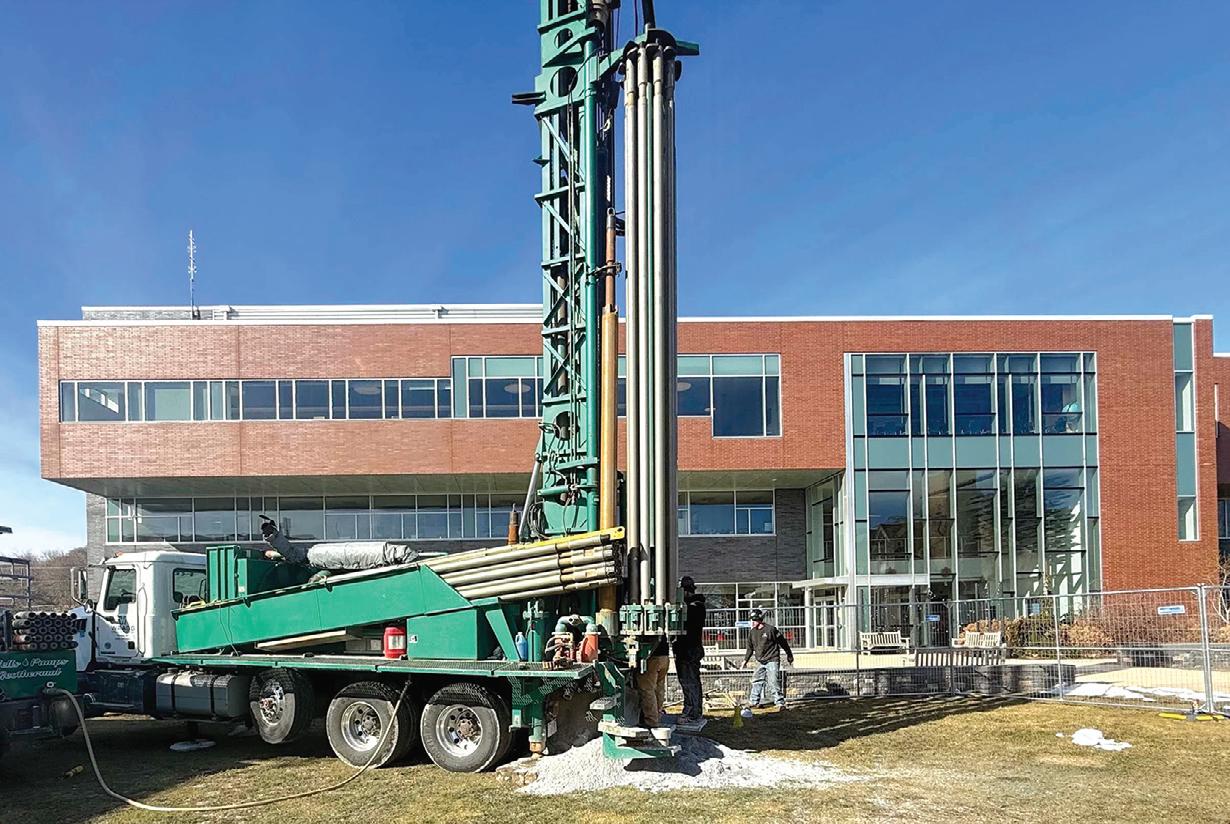
As part of the campus’ revitalization project, geothermal energy will be used to heat and cool
replace the 55-year-old Horn Laboratory with modern, environmentally controlled labs to support advanced
customers in four states.
The drilling and testing on URI’s Narragansett Campus, the school said Nov. 18, accounted for 90 percent of the cost due to the mobilization of the drill rig and testing equipment, as well as ensuring compliance with environmental and safety regulations. Engineering, calculations and reporting accounted for the remaining 10 percent of expenses.
Christopher Baxter, a professor of ocean engineering of URI and professor/chair of the university’s Department of Civil and Environmental Engineering, served as the principal investigator.
In June 2024, URI and PPL Corp. announced a strategic partnership to propel important research in renewable energy, energy alternatives and sustainability.
The PPL Foundation also launched the $100,000 Brighter Futures scholarship at URI that supports those students passionate about clean energy and sustainability.
In addition, Rhode Island Energy and PPL selected URI as a strategic partner to address research in offshore renewable energy, climate change, grid decarbonization, nuclear technology advancement and carbon capture.
“With support from URI leadership, we are now able to install an HVAC system that will provide an excellent return on investment and savings on operational costs, while also helping the university reduce its environmental impact,” said David Palazzetti, senior director of URI facilities operations.
A specialized drill rig was used to core the bore hole through 10 ft. of surface clay and approximately 800 ft. of bedrock using the mudto-air technique, a hybrid rotary method that transitions from mud rotary to air rotary drilling as subsurface conditions change. The technique is a tactical choice in
geotechnical, environmental and water well projects where formations vary in stability and hardness.
One of the challenges was reaching the location for the test, Pilotte said.
“Access to the site was difficult due to the small width of the roadways and steep elevation changes at the east side of [URI Narragansett’s] quad,” he said.
“Additionally, there is heavy pedestrian traffic in the vicinity, with people making their way across the campus. The only feasible access for the drill rig was through the Ocean Robotics Laboratory construction site, which required another level of coordination with the contractor and project manager.”
Extra care was taken to ensure the spoils — excavated slurry consisting of drilled rock and fluid from the test — were contained and removed to prevent any infiltration within the campus stormwater system and the nearby
Narragansett Bay.
When testing was completed, the site was fully restored, and the test was deemed a success.
“The results of the investigation were that the geology possesses excellent thermal conductivity characteristics and good drilling conditions, yielding a high rate of production, making it feasible to design and implement a geothermal system at this location,” Pilotte said.
When finished, the Ocean Frontiers Building will serve as a home for researchers in URI’s Graduate School of Oceanography, while housing dedicated office, laboratory and classroom space. The structure is projected to open in the fall of 2028.
The design of the geothermal system could also support URI’s Ocean Science and Exploration Center, the Watkins Laboratory and the Ocean Robotics Laboratory in the future, the university noted.



















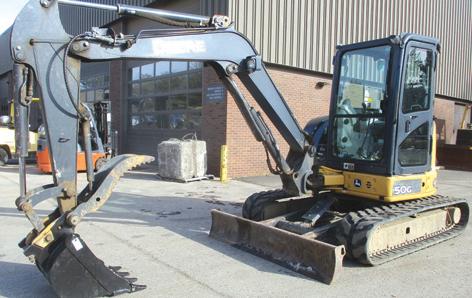
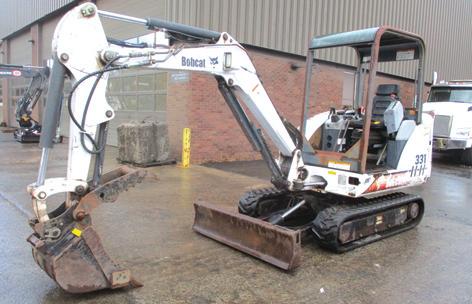
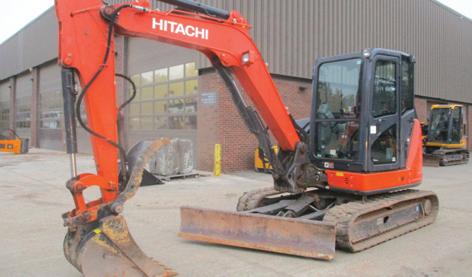
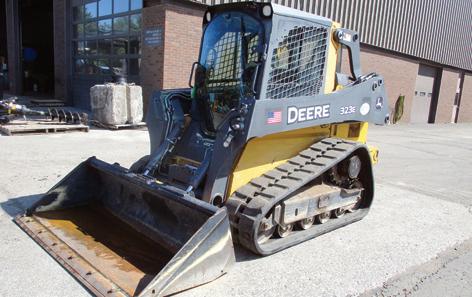
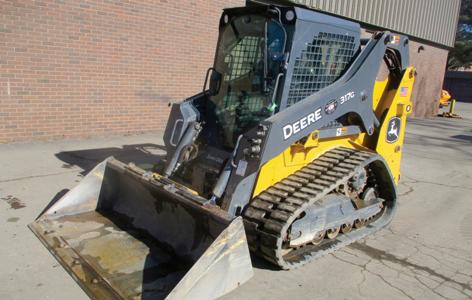
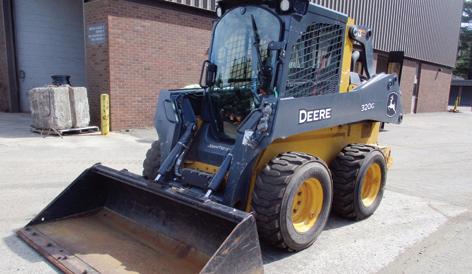
Equipment East has = job the compact machine to ell do w one.





ork modes pl and w us one of the highest




















































































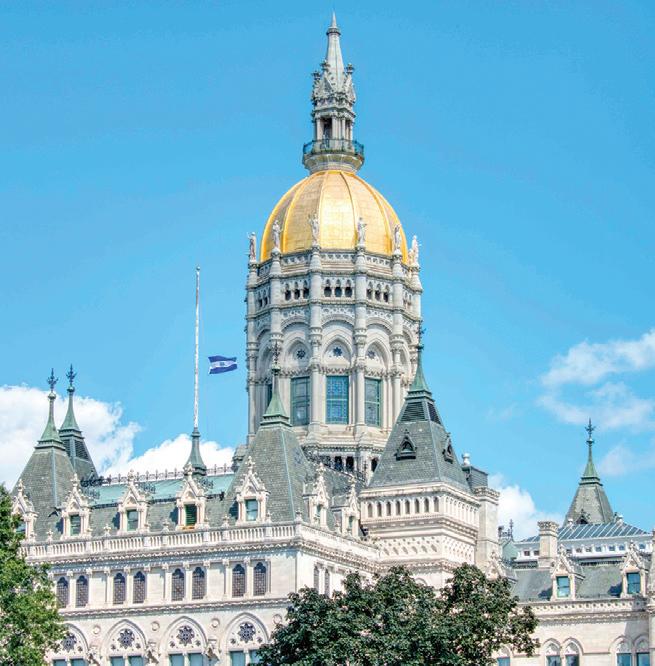
The two-year $50 million exterior cleaning and restoration of Connecticut’s historic state Capitol building in Hartford will take a back seat to next year’s 250th anniversary of the Declaration of Independence.
The advisory State Capitol Preservation and Restoration Commission voted to delay the project until Sept. 1, 2026. That means the historic 1878 Gothic structure in Hartford will not be sheathed in scaffolding at a time when it will be a major backdrop for a variety of commemorative activities, particularly on next year’s Fourth of July when the nation will celebrate its 250th birthday.
Denise Merrill, chair of the America 250 Connecticut Commission, said Dec. 11 that the 14-acre State Capitol campus and the adjacent Bushnell Park are scheduled to host groups from towns and cities throughout the state on July 4, 2026.
She praised state Sen. Cathy Osten, chair of the building’s restoration commission, for steering the group in support of delaying the work, which will include repointing granite and marble blocks and refurbishing 522 windows.
Merrill, a former majority leader of the Connecticut House of Representatives, said 145 municipalities in the state have established local efforts to mark the semiquincentennial despite major cuts in federal funding through the National Endowment for the Humanities.
“Our goal is to have local stories on things that went on in their towns and the people involved back 250 years ago,” Merrill said.
During the Capitol Preservation and Restoration Committee meeting on Dec. 9, Osten asked the 12-member group for a consensus to allow the Capitol project to start in September.
“The question is, should we start before the 250th celebration?” asked Osten, who also is co-chair of the state’s budget-setting Appropriations Committee. “Because once we put [the scaffolding] up, we can’t take it down for the celebration and put it back up again. We’re going to have large celebrations next year. We don’t want people coming up here with horse guards and people in uniforms and other things and say that we’re not respecting the 250th celebration.”
Brian Pencz, facilities administrator of the state’s Office of Legislative Management, said the cost of waiting two months should not be too different and delaying the construction until the fall is manageable. The building checklist includes approximately $1 million to brush on new gold leaf that is 3/1000th of an inch thick around the massive 250-ft.tall capitol dome, designed by architect Richard Mitchell Upjohn.
Pencz’s office is still studying whether it is structurally sound to remove an 18-ft.-tall bronze copy of the “Genius of
The Massachusetts Department of Transportation (MassDOT) announced the winners of the fourth annual “Name a Snowplow” contest for elementary and middle school students in Massachusetts on Dec. 19, 2025.
This contest received entries from public school classrooms across the commonwealth to name the 12 MassDOT snowplows that will be in service during the 2025/2026 winter season. The purpose of the contest is to celebrate the snow and ice season and to recognize the hard work and dedication shown by public works employees and contractors during winter operations.
“Thank you to all of the students who participated. Your creativity allows us to highlight to all, the importance of the work performed by our workforce,” said Phil Eng, interim MassDOT secretary and MBTA general manager and CEO. “Our workforce takes pride as they clear snow and ice, keeping our roads safe during adverse weather events for all that need to travel. To our contest winners and participants, know that you have added some fun to the serious take of operating plows. I’m proud of the skill and dedication from our crews and thank the public of the shared responsibility to slow down, give plows space and put safety first every time there is a winter weather event.”
until Sept. 1, 2026.
Connecticut” statue from the first floor rotunda to the top of the building, where the original stood for decades before its removal in the 1930s.
What will not be returning to the restored Capitol Building is the center flagpole overlooking the south entrance of the structure, which toppled in a high wind in late November. Pencz said the wooden pole was not part of the original building design and the staffs above the east and west entrances will become the chief ceremonial flagpoles.
“We knew it was in bad decay when the painter said he would no longer climb it to paint the flagpole,” Pencz told the restoration commission.
Initial work on the state Capitol Building in Hartford began in 1871 and was constructed with New England marble and granite and crowned by a gold leaf dome at a cost of $2.5 million. Today, it has an estimated replacement value of more than $200 million.
In addition to housing the Connecticut State Senate Chamber, hall of the State House of Representatives and offices of the governor, lieutenant governor and secretary of state, the structure and surrounding grounds abound with memories and mementos of Connecticut’s early years.
In 1972, the Connecticut State Capitol was declared a national historical landmark by the United States Department of Interior.
“MassDOT’s annual Name a Snowplow contest is a fun tradition that gets Massachusetts schools involved in winter safety.” said Jonathan Gulliver, undersecretary and State Highway administrator. “It gives students a chance to be creative while learning about the important work our crews do to keep our roads clear and safe. Thank you to everyone who took part in this contest, and congratulations to our winners.”
The 12 winning schools and snowplow names are listed below.
• District 1, Colrain Central School — Master Snowda
• District 2, Harris Brook Elementary School — Frost Responder
• District 3, Davis Hill Elementary — You’re Killing Me Squalls
• District 4, Tyngsborough Elementary School — Flake Maye
• District 5, George R. Austin Intermediate School — Darth Blader
• District 6, Saint Peter School — K Pop Snow Hunter
• District 1, Lanesborough Elementary School — The Blizzard Boss
• District 2, Gill Elementary School — Thaw Patrol
• District 3, Trotter Middle School — Clearopathra
• District 4, Beverly Middle School — Sleet Caroline
• District 5, Blessed Sacrament School — Scrape Codder
• District 6, F.A Day Middle School — Jon Bon Snowvi For more information, visit mass.gov/name-a-snowplowcontest-2025-26.










FUNDING from page 1
“I’m proud to have worked with the entire Massachusetts delegation to secure over $92 million in funding this year for projects that will make our water cleaner, our environment healthier, our workforce stronger and expand justice in our communities,” said Edward Markey, senator. “From Provincetown to Williamstown, from Chelsea to Chicopee, it’s critical that we bring federal resources to our communities to make life better for everyone who calls the Bay State home.”
“I fought hard to secure this $30 million in funding because Massachusetts families deserve safer roads and flood infrastructure, cleaner water, a strong fishing economy and programs that protect our youth,” said Elisabeth Warren, senator. “This funding will also preserve Massachusetts’ leadership in cutting edge research. I’m grateful for our Massachusetts leaders’ partnership in securing this funding,”
According to a release by Katherine Clark, the funding will be given to the following recipients:
• $550,000 for the city of Lynn for an urban forestry program;
• $250,000 for Gloucester Adventure for preservation work on the National Historic Landmark dory fishing Schooner Adventure;
• $461,000 for the house of the Seven Gables Settlement Association to preserve and protect the house of the Seven Gables and its campus;
• $1,092,000 for the city of Gloucester to make upgrades to the Riverdale Park pump station to address deteriorating equipment and vulnerability to moisture and corrosion;
• $807,000 for the town of Marblehead for the municipal wastewater treatment system, managing stormwater and improving surface water quality;
• $1,092,000 for the town of Nahant to construct a new force main, assess the Wharf Road pump station and improve stormwater drainage to reduce flooding and increase resilience;
• $1,092,000 for the city of Newburyport to design a new PFAS filtration system;
• $1,092,000 for the town of Essex to support the replacement of aging asbestos cement pipes;
• $1,092,000 for the town of Hamilton to extend new water piping and upgrade meters and infrastructure to improve water pressure,
increase supply reliability and prevent contamination from aging pipes;
• $1,092,000 for the town of Ipswich to replace two aging municipal groundwater wells;
• $1,092,000 for the town of Middleton to design and engineer a new water distribution system to address PFAS contamination; and
• $1,092,000 for the town of Topsfield to replace a water main, remove asbestos cement pipe and install new valves, hydrants and fittings to protect public health and ensure safe, reliable water distribution.
• $350,000 for the town of Dighton for improvements to the Power Plant Pump Station;
• $1,092,000 for the town of Swansea for Route 6 corridor sewer collection system;
• $1,092,000 for the city of Fall River to replace lead-contaminated service lines and pipes;
• $1,092,000 for the town of Foxborough for the Chestnut Street PFAS water treatment plant;
• $1,092,000 for the town of Plainville for a water treatment plant;
• $906,560 for the town of Sharon lead water service and cast iron and asbestos concrete water main project;
• $1,092,000 for the town of Rockland to fund the first phase of the town’s comprehensive upgrade to the wastewater treatment plant;
• $1,092,000 for the town of Wareham for improvements to the existing water pollution control facility;
• $1,092,000 for the town of Westport to construct trunk sewer phases to provide sewer service and clean water to adjacent residential neighborhoods; and
• $500,000 for the Charles River Watershed Association in Boston to identify effective flood reduction opportunities and work with communities to advance them;
• $286,000 for Revolutionary Spaces in Boston to stabilize Boston’s Old State House’s sub-basement to preserve this historic and irreplaceable building;
• $852,500 for the city of Melrose to manage flooding and improve water;
• $1,092,000 for the town of Arlington for small-scale, cost-effective installations that manage stormwater regionally along the Mystic River Watershed;
• $1,092,000 for the city of Woburn to
upgrade the water treatment plant;
• $1,036,000 to the town of Natick to support the construction of a water booster pump station at a Massachusetts Water Resource Authority (MWRA);
• $1,000,000 for the town of Lexington to improve tree cover in and around the Mystic River Watershed communities;; and
• $200,000 for the town of Wayland to replace an existing sewer system in Wayland that is aging and undersized, leading to potential failures.
• $3,000,000 for Barnstable County to address Massachusetts Contingency Plan (MCP) requirements and implement groundwater remediation measures to prevent further PFAS release into Cape Cod’s sole-source aquifer;
• $1,000,000 for the town of Yarmouth to replace a culvert that is currently restricting water flow in an important wetlands resource area;
• $1,000,000 for the Hyannis Public Library Association for construction, rehabilitation and improvements of public facilities to enhance the Library as a neighborhood center and hub for community activities;
• $1,015,000 for the town of Provincetown for the construction of resiliency measures for the central vacuum station that serves the downtown municipal wastewater system;
• $1,956,000 for the Tyngsborough Sewer Commission to upgrade the Phalanx Street pump station;
• $1,000,000 for the city of Haverhill to construct the state’s first municipal radial collector riverbank well system;
• $1,092,000 for the city of Lowell to support the completion of the first phases of the separation of the Humphrey’s Brook and Billings Street Wetlands combined sewer system in the Centralville neighborhood of Lowell;
• $1,092,000 for the city of Littleton to support the construction of a new sewer system to support economic development in the town of Littleton;
• $1,092,000 for the town of Westford for the construction of two new treatment facilities to remove PFAS contaminants from drinking water; and
• $1,092,000 for the town of Merrimac to support engineering for critical upgrades to the wastewater treatment plant.
Pioneer Valley, Western Mass.
• $1,971,000 for the town of Agawam to address portions of the downtown area that have inadequate and deteriorated stormwater infrastructure;
• $1,500,000 for the Williamstown Meetinghouse Preservation Fund to renovate, bring into ADA compliance and preserve the Williamstown Meetinghouse building;
• $1,000,000 for the town of Monson to renovate, add on to and repair the existing fire station
• $3,700,000 for the Westover Air Reserve Base in Chicopee to provide a new concrete taxiway surface;
• $800,000 for the city of Holyoke for the Combined Sewer Overflow system;
• $1,092,000 for the town of Blandford for upgrades to the water treatment facility and distribution system;
• $1,092,000 for the town of West Brookfield to construct a new water treatment facility;
• $1,450,000 for the U.S. Army Corps of Engineers for operation and maintenance of Knightville Dam.
Central Mass.
• $188,000 for the town of Ashby to purchase an essential piece of Highway equipment a loader with plow;
• $1,000,000 for the town of Princeton for the construction of a new public safety building;
• $1,000,000 for the town of Colrain to construct a shared disposal system for wastewater to service single and multifamily homes that may be condemned without a sustainable solution;
• $950,000 for the town of Leicester to build a water interconnection with the city of Worcester;
• $1,092,000 for the town of Holliston to build wastewater infrastructure in its growing downtown
• $960,000 for the town of Mendon for a water system expansion;
• $200,000 for the U.S. Army Corps of Engineers for operation and maintenance of Barre Falls Dam;
• $1,426,000 for the U.S. Army Corps of Engineers for operation and maintenance of Tully Lake; and
• $160,000 for the U.S. Army Corps of Engineers for operation and maintenance of West Hill Dam.


At Acadia National Park in Maine, the National Park Service (NPS) announced Dec. 18, 2025, that it had awarded major contracts to complete the construction of seasonal employee housing at Harden Farm.
A $3.4 million contract will connect the site to the town of Bar Harbor’s sewer system, and a $7.4 million contract will build an additional 28 bedrooms for park employee housing.
In September 2024, NPS contracted with King Construction of Machias, Maine, to construct the first 28 bedrooms of employee housing. The latest agreement for the second phase of housing also was awarded to King Construction to bring the remaining 28 bedrooms to life. The total of 56 bedrooms between the two phases is a significant addition to Acadia’s housing inventory.
Identified as a potential site for workforce housing in 1959, Harden Farm is currently home to only eight existing bedrooms constructed in 1960. Over the past several years, however, NPS began designing a plan to add the new employee bedrooms on the Harden Farm campus.
In addition, NPS contracted with
McKenzie Construction and Site Development in Washington, D.C., to connect the Harden Farm site to the nearby Bar Harbor sewer system.
The construction at Harden Farm is possible because of donations from the nonprofit Friends of Acadia, including funds from its Raise the Roof campaign, a $2 million grant from the National Park Foundation, money from the National Park Service’s Centennial Challenge and Housing Improvement Programs and Helium Act funds.
“Thanks to generous donations from Friends of Acadia and the National Park Foundation, along with significant federal funds, seasonal employees at Acadia will have a place to live,” said Acadia National Park Superintendent Kevin Schneider in a news release. “As we have seen this summer, [the park] needs employees to clean and stock restrooms, rescue injured adventurers, manage visitor centers and complete countless other tasks to keep Acadia open and accessible. The future housing at Harden Farm will make it possible for the best and brightest rangers to accept positions in Acadia.”
NPS admitted that a severe housing shortage exists in the communities surrounding Acadia National Park. If the park cannot provide a bedroom for prospective seasonal employees, most individuals could not find a place to live within commuting distance to the park. More regularly, this also is the case with prospective permanent staff.
“Friends of Acadia is proud to partner with Acadia National Park to help create attainable housing that supports the seasonal staff who make the park’s visitor experience possible,” said Eric Stiles, Friends of Acadia’s president and CEO. “These employees are essential to protecting Acadia’s resources and welcoming millions of visitors each year, and they deserve a safe, stable place to call home. By investing in housing, we’re investing in the future of the park and the people who care for it. We are incredibly grateful to our members and community who helped make this possible by contributing to our Raise the Roof campaign and to the National Park Foundation for their support.”
Lise Aangeenbrug, the chief program officer of the National Park Foundation, said,
“We’re proud to support Acadia National Park and the Friends of Acadia in their effort to address the need for employee housing. By working together, we can find creative, local solutions to take care of the dedicated professionals who care for our national parks and create unforgettable experiences for visitors.”
Known as the “Crown Jewel of the North Atlantic Coast,” Acadia National Park protects the natural beauty of the highest rocky headlands along the Atlantic coastline of the United States, an abundance of habitats and a rich cultural heritage.
The park encompasses nearly 50,000 acres along the Maine coast — including Mount Desert Island, Schoodic Peninsula, Isle au Haut and numerous other outer islands.
With 4 million visits a year, it is one of the top 10 most-visited national parks in the country. Visitors enjoy 27 mi. of historic roadways, 158 mi. of hiking trails and 45 mi. of carriage roads.

EMINENT from page 1
same time.
“We commit to treating them with utmost respect, acknowledgment of the disruption that this is causing and of full commitment for full compensation for their homes and for their relocation expenses,” she said when speaking with realtor.com.
“We would have been happy to have zero property takings, but the size of the bridge and the need for the bridge were so great that it was an unavoidable impact,” Paiewonsky added.
According to a report by NBC 10 Boston, the state has a triple appraisal process, which offers homeowners the highest reasonable price for their homes.
Even with fair market values being offered for their houses, many of the homeowners are upset.
In an interview with CBS Boston, Joyce Michaud, one of the homeowners who has already lost a home, said she has less than 120 days to move out and has not yet found a reasonable replacement home.
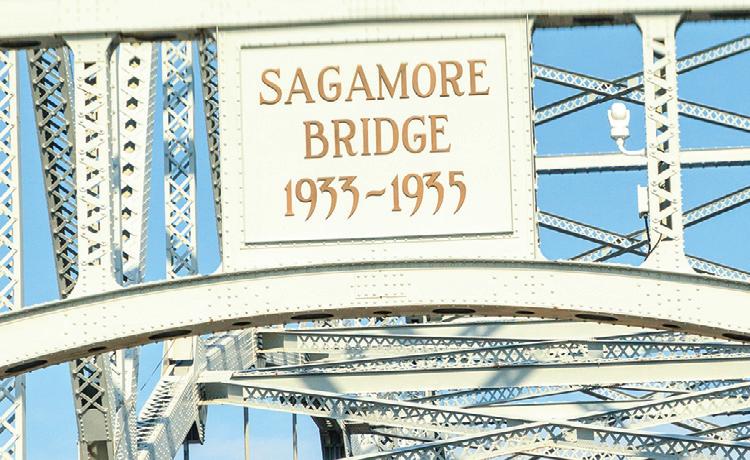
According to the state, the $2.2 billion Sagamore Bridge replacement project is fully funded through federal dollars, USACE and the state.
Regarding the fair market value given for the house, Michaud added, “I would rather not have the money. In fact, I would be willing to pay them if they let me stay here forever.”
“We don't want to cause disruption in people’s lives," Paiewonsky told NBC 10 Boston. “But we have to build this bridge. And what we do owe property owners, in addition to our respect and sensitivity, is full compensation.”

removed before the second span is erected. Each new bridge will have three lanes with one reserved for exiting and entering U.S. 6.
The state expects to complete permitting for Massachusetts Environmental Policy Act and National Environmental Policy Act requirements by the spring of 2026. After that, environmental permits and procurement documents will be finalized around that fall to give to designers and builders.
If all goes without a hitch, construction could begin on the Sagamore Bridge in late 2027 or early 2028 and likely take six years to complete.
When the Sagamore and Bourne bridges were constructed starting in 1933, they changed the relationship between Cape Cod and the rest of Massachusetts and improved the viability of the Cape Cod Canal.
On the Cape Cod side of the Bourne Bridge, a diamond-shaped interchange would eliminate the rotary, while flyover ramps on the north side would separate local traffic from regional traffic.
At the site of the current Sagamore Bridge to the north, MassDOT is recommending an extension of Cranberry Highway and a new Sandwich Road Connector to keep local traffic flowing. The proposed layout also offers a direct connection to State Road on the north side of the bridge, according to the state agency.
Both bridge projects are being advanced as one program because the federal government grades applications based on how project-ready the program is, Cordeiro explained.
The work will be broken into distinct phases, with the Sagamore Bridge replacement slated to be built first because the state has almost completed procuring the money to erect the structure, likely to cost approximately $2.13 billion via a mix of federal grants, budget funds and a state contribution.
The current 40-ft.-wide Sagamore Bridge carries four lanes of U.S. 6 traffic between Cape Cod and the mainland, with two eastbound lanes and two westbound lanes.
In contrast, each new bridge will be 54 ft. wide, one of which will have a path for pedestrians and cyclists using the 135-mi.long Claire Saltonstall Bikeway, linking Boston to Cape Cod.
The two new spans also will be built just west of the older structure, and their bridge piers will be on the edge of the canal rather than in the canal itself.
One span will be built first, then the old Sagamore Bridge will be dismantled and
After the opening of the Cape Cod Canal in 1914, with two original electrically operated, cantilever highway bridges and a single railroad bridge, it quickly became clear that these designs could not accommodate the significant volumes of vessel transits through the canal.
The solution was to reconstruct the bridges, at new elevated locations, with high 135-ft. vertical clearances, resulting in the current Sagamore and Bourne bridges being completed in 1935.
These structures have provided essential links between Cape Cod and the mainland, and immediately enhanced connectivity and accessibility to this important region. During the Great Depression, the construction of the bridges also provided an economic stimulus, with approximately 700 jobs at a critical time for local communities.
The bridge replacements will improve mobility and safety for everyone traveling over the canal as well as throughout the surrounding region, according to MassDOT.
The roadways of both bridges now consist of two lanes in each direction with a sidewalk on one side. Traffic delays are prevalent during the summer with frequent traffic backups. Higher than regional or state average crash rates and congestion can be attributed directly to the designs of the bridges.
The proposed twin bridge replacement will separate traffic in each direction to its own bridge, reducing the likelihood of numerous types of crashes, such as head-on collisions and sideswipe crashes in the opposite direction.
In addition, the bridges will have wider lanes, left and right shoulders, updated signs and pavement markings and an auxiliary lane to accommodate vehicles entering and exiting onto the local roadways to the north and south of the canal. These entrance/exit lanes will only extend for the length of the bridges and will allow for easier merging and more time for drivers to change lanes.


























Loved for the features. Trusted for the performance.
Hyundai wheel loaders have the power and performance, not to mention top-notch interiors, accurate onboard weighing system, industry proven drivetrain durability, clear sightlines, and handy tech that make life on the jobsite easier. So you can do more without feeling it. No wonder so many first-time Hyundai users become longtime fans.