

By Cindy Riley CEG CORRESPONDENT
With a focus on bringing more accessibility to rural healthcare, the Alabama School of Healthcare Sciences (ASHS) in Demopolis, Ala., will make history when it’s completed in 2027.
“This is a first-of-its-kind project that doesn’t exist in this country,” said Kirk Stephens, ASHS board of directors’ chairman. “With the national partnerships we’ve been able to capture, we believe we’re on the ground floor of something that could transform the future of rural healthcare workforce development.”
Designed to accommodate 400 students initially, the residential high school will feature an academic building, residential hall, dining hall, auditorium and administrative spaces.
“The ability for ASHS to bring students from across Alabama, put them in real-life healthcare environments and provide them credentials to work in healthcare settings immediately impacts health outcomes across the state,” said Stephens. “We are a direct solution to the healthcare workforce shortage.”
The project will give aspiring medical providers and researchers the opportunity to immerse themselves in the profession, unlike other high school health science programs.
“They’ll get real clinical hours and college credits, and there will be a strong emphasis on service, professionalism and ethics,” said Stephens. “We’re also giving the option to learn different disciplines in healthcare, not just a standard curriculum.
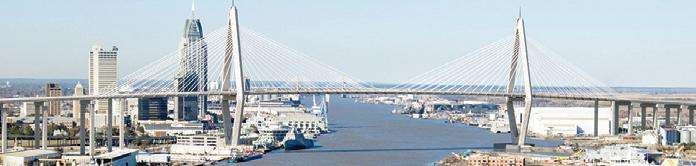
U.S. Senator Katie Britt sent a letter to U.S. Department of Transportation Secretary Sean Duffy underscoring the importance of the I 10 Mobile River Bridge and Bayway Project in Alabama and calling for the department’s continued partnership to advance it.
“As you know, this is a large and complex project, but importantly, it is the largest shovelready infrastructure project in the country,” said Britt in her letter. “Advancing it would be a significant milestone in President Trump’s com-
mitment to improving American infrastructure.”
She noted that, after years of engineering, design and financial planning, the project has reached a critical inflection point and needs federal assistance to overcome remaining obstacles before construction can begin.
“Accordingly, I respectfully request your and the department’s assistance in resolving the
“Our part of the state in West Alabama has been promised a lot over the years, and way too often we’ve seen announced projects never make it to the finish line. There’s always a hint of skepticism, but with dirt moving and construction under way, I think the reality has our community thrilled for the future.”
Groundbreaking for the nearly $70 million first phase of construction took place in October 2025, with work getting under way the following month. Future phases, which have not yet been designed, will allow for more residential space and an activity center. Stephens described the project as a catalyst for other opportunities.
“This school will bring people from all over the state to West Alabama. The highway project will make it easier to travel here, and when businesses look at expansion, we know four-lane highways matter. So does workforce development. Economic development is already happening, and it’s nice that our region of the state gets the chance to bring up the rest of Alabama, rather than pulling it down.”
Stephens believes the location for the 10-acre campus is ideal.
“Our proximity to Whitfield Regional Hospital, directly adjacent to our campus, will allow our students to work in a hospital that treats some of the sickest patients in our state. Whitfield is often the only option for hundreds of miles, and our students will learn to appreciate the life-saving impacts they can have on rural communities such as ours.”
Demopolis native Selwyn M. Vickers, president and CEO of Memorial Sloan Kettering Cancer Center, serves as a special advisor to ASHS.
“Dr. Vickers is the personification of this school’s potential,” said Stephens. “We want to reach young people from rural areas of Alabama, introduce them to healthcare fields and give them the foundation for career growth. Having Dr. Vickers as a partner gives ASHS obvious credibility. He also gives us inspiration and a network of potential partners who can make this school a national model.”
Stephens noted that elevating education to help meet the demand for medical professionals in Alabama is critical.
“The healthcare workforce shortage isn’t just a small problem. This word may get thrown around too loosely, but this is a crisis. Without trained healthcare professionals, very sick people don’t get treated. We’re part of a host of solutions, but we believe ASHS will set a nationwide standard for creating a pipeline of workers equipped to fill these jobs immediately.”
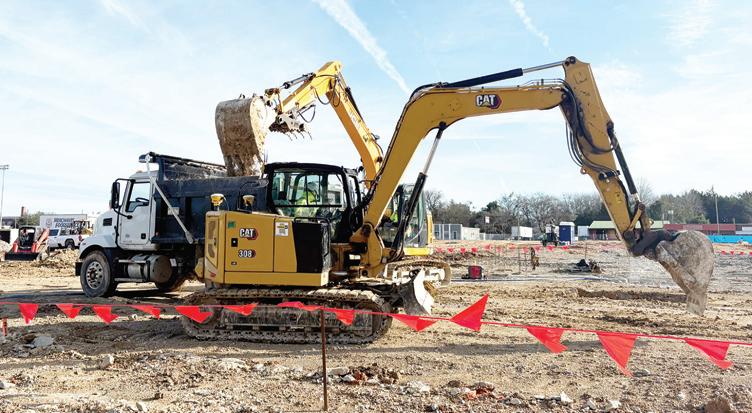
Birmingham-based Brasfield & Gorrie serves as general contractor and construction manager for the new high school. Tyler Heath, project manager, said workers are performing grading activities, making storm drainage improvements and carrying out concrete foundation construction.
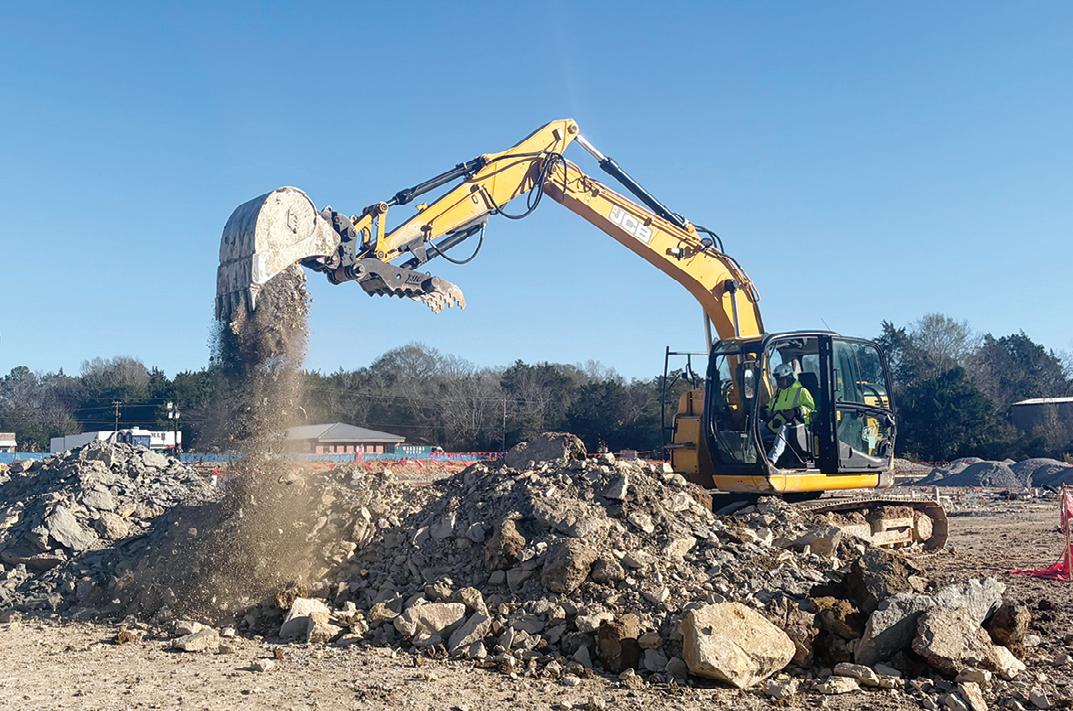
Early tasks consisted of temporary fencing installation, excavation and preparation of the building pad and placement of erosion control measures. Site preparation activities included demolition of two existing residential structures, removal of existing trees and shrubs, as well as rubble and debris associated with a former factory.
Other activities have included clearing and grubbing, grading and excavation for building pads and utilities. Soil was reworked and compacted in lifts to achieve specified densities, while maintaining positive drainage and erosion control measures throughout the process.
see SCHOOL page 6


























V This THO s a MPSON T alentine’ alentine , give sDay,give TRACTOR s Day a your e R: self agift... a gift...
y,g BU y LD I U g D



























Y H T OU M HE O L U C A V HIN VE NE










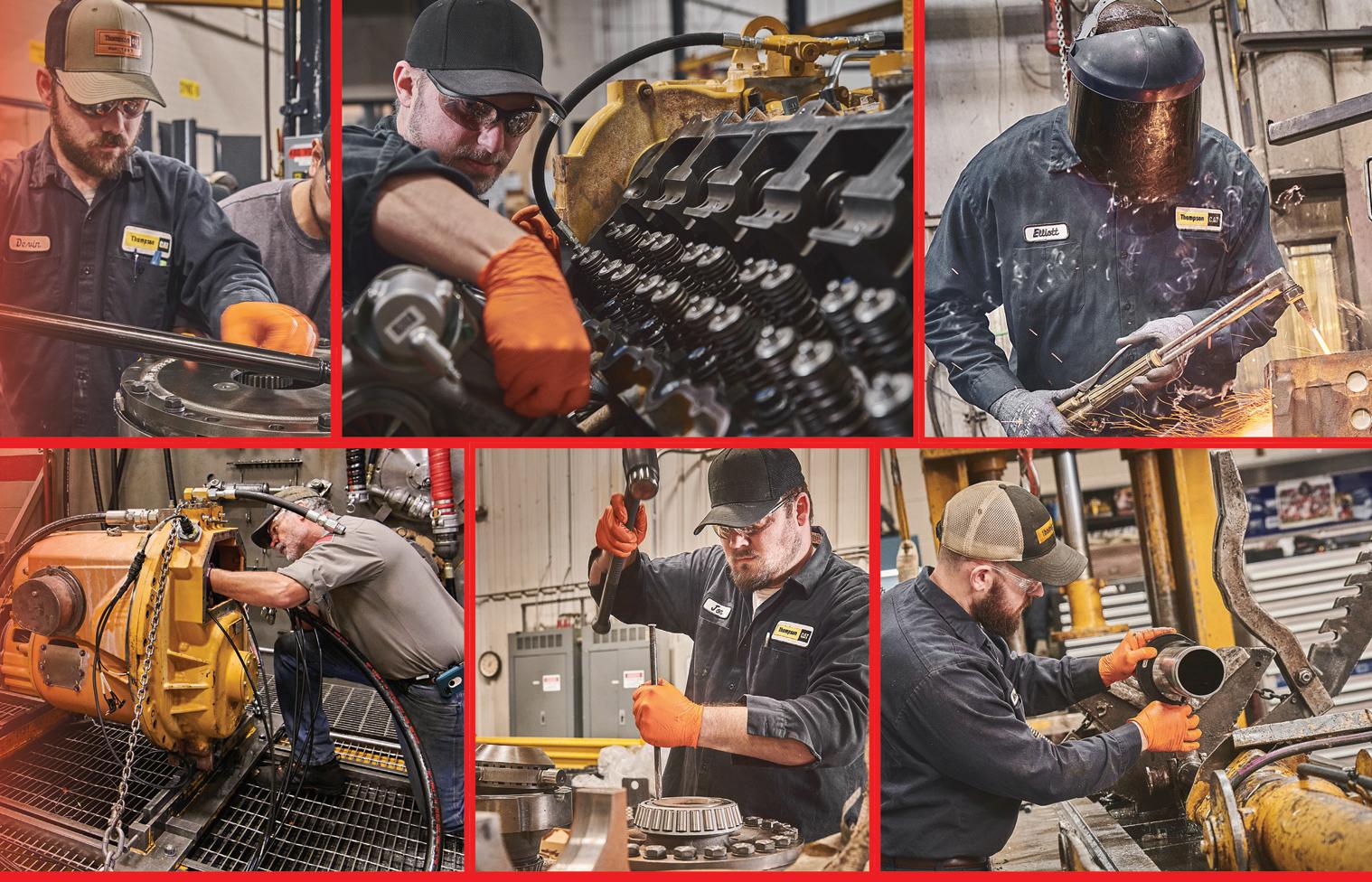
Thompson equipmen n Tractor rebuilds res nt you already trust. store performance, extend life, and help y you get more value froom the
TRUS WHER T THOMPSO RE YOUR SUC ON TRACTOR CCESS IS OUUR PRIORITY. .







&
Priorities include logistics, flexibility for future phases, roads and parking and underground utilities at a large scale.
SCHOOL from page 2
Building plans call for approximately 50 dorm rooms. These include sleeping areas for two to four students, with localized bathrooms within dorm suites and meeting/study lounges on each floor.
Heath noted the biggest challenge for crews will be constructing the residential building’s storm shelter.
“Storm shelters must meet extremely stringent design criteria, including high wind loads and impact resistance. This drives the use of heavily reinforced concrete, thick walls, specialized connections and strict tolerance require-
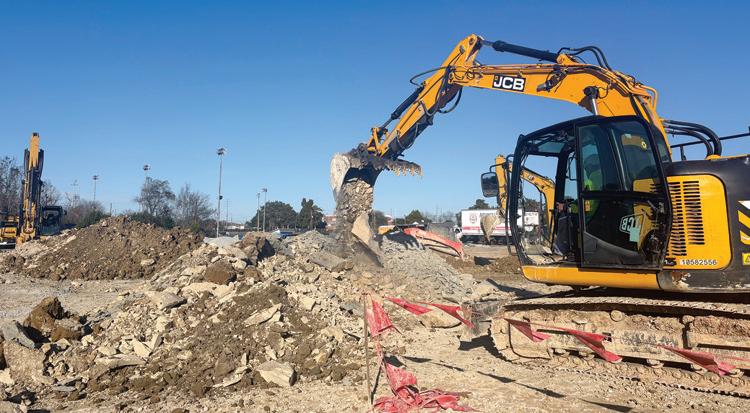
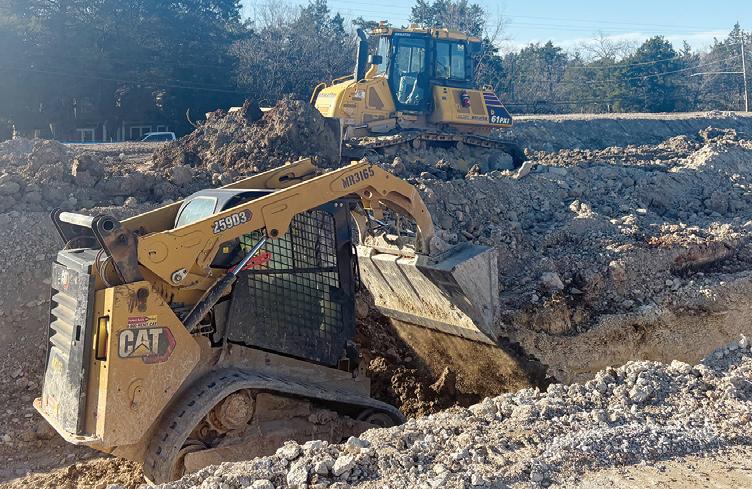
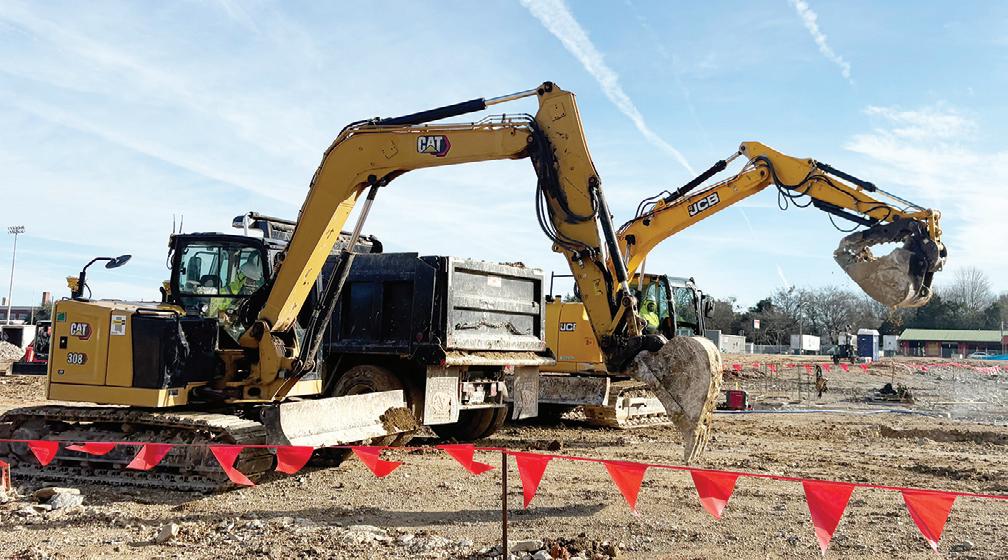
Earthwork equipment includes a dozer, sheepsfoot roller and excavators.
ments, all of which increase coordination and inspection demands. The required reinforcement congestion and precision leaves little room for error and slows placement, forming and concrete operations.”
Heath said the skills lab, simulation suite and lecture hall each require a higher level of coordination and precision than typical spaces.
“The skills lab and simulation suite demand exacting MEP coordination to support specialized equipment, medical gases, data and audiovisual systems, all while maintaining flexibility for evolving teaching methods. These
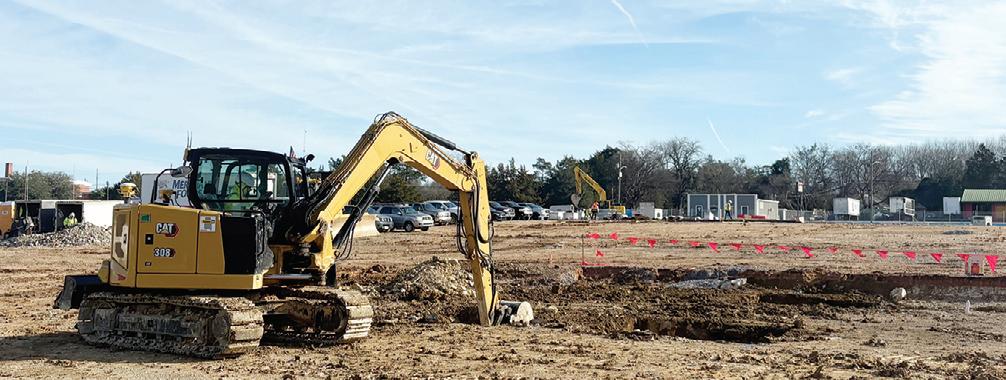
An estimated 15,000 cu. yds. of dirt will be moved during construction.
& Gorrie
areas also require enhanced finishes, acoustics and lighting to accurately replicate real-world clinical environments.
“The lecture hall stands out due to its structural and architectural complexity, including tiered seating, longspan elements, advanced acoustical treatment and integrated technology. Together, these spaces require close collaboration between trades, designers and end users to ensure functionality, realism and long-term adaptability.”
An estimated 15,000 cu. yds. of dirt will be moved during construction. According to Heath, priorities include logistics, flexibility for future phases, roads and parking and underground utilities at a large scale.
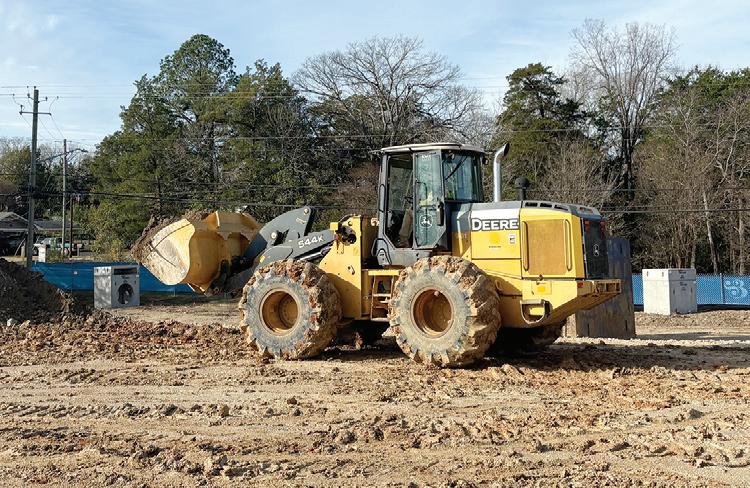
Crews are using a five-story buck hoist for access to the residential building; a 230-ton crawler crane; and earthwork equipment that includes a dozer, sheepsfoot roller and excavators. Brick veneer, EIFS and metal panels are among the chief materials required to complete the project.
Heath said no significant unexpected issues have been encountered to date.
“Minor day-to-day challenges typical of active construction have been managed without impact to safety or schedule. As with any construction project, rain is an ever-present condition that can impact site activities and productivity.”
Heath acknowledged it’s an honor to work on a project that will shape future healthcare providers and researchers.
“We’re building environments that enable learning, discovery and healing. One of the benefits of this type of project is knowing your work will help shape the professionals and breakthroughs of tomorrow.” CEG
BRIDGE from page 1
Britt also asked the department to bring together the appropriate personnel to work directly with state leaders.
“To that end, I request your help in convening the right senior leadership and technical staff from the department to meet with the relevant stakeholders from the state to assess feasibility, identify the best course of action and determine next steps.” The projects aim to increase the capacity of I-10 by constructing a new six-lane bridge across the Mobile River; replacing the existing I-10 bridges across Mobile Bay; and modifying seven interchanges.
The estimated cost of the I-10 Mobile River Bridge project is approximately $1.5 billion and the estimated cost of the I-10 Bayway project is approximately $1 billion.
Britt has twice led the Alabama congressional delegation in advocating for federal investment in the project and cele-
brated the $550 million in federal funding awarded in 2024. When Secretary Duffy finalized that funding last year, Britt applauded the announcement. She has consistently advocated for the project in the Senate and has previously received commitments from Secretary Duffy to prioritize its advancement.