


By Jay Nachman CEG CORRESPONDENT
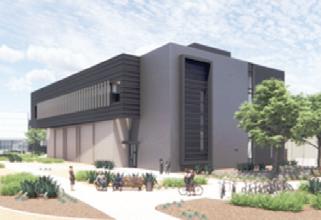
Skanska USA Building is demolishing an outdated 35,000-sq.-ft. structure at San Francisco International Airport, which is where a new 98,000-sq.-ft. cargo building will rise.
Though the construction is expected to be completed in December 2027, the airport is in the process of identifying potential tenants for the new cargo facility, according to Gordon Childress, executive vice president and general manager of Skanska in California.
The new cargo facility will be multi-tenanted, and spaces are being built out in sizes ranging from 1,500 to 50,000 sq. ft.
“What we do have specifics on are the requirements of separating what would be called the air side from the land side,” Childress said. “So, anything that is coming into the facility is separated and has to go through a review process before it can come to the land side. We do know that we have those requirements.”
The cargo building also will have 25,000 sq. ft. of mezzanine office space.
In addition to the cargo facility, Skanska is constructing a 23,000 sq. ft. ground service equipment, or GSE maintenance building, on the 10-acre site. The site is called the West Field Development because the construction of the new buildings is taking place on the west side of the airport. The GSE building will serve as what Johana Godoy, Skanska’s assistant superintendent on the project, called a "laydown” or maintenance shop for the airport.
“All the field service vehicles for the airline will have this ground service equipment facility support, baggage handling, fueling, things like that, which are outsourced. That’s what a lot of the ground service equipment building is for,” Childress said.
In addition to the cargo facility and the GSE building, the project includes an additional cargo facility, new parking structure and new underground utilities. The development also calls for an administration building in the future and pedestrian-friendly updates, Childress said.
The updating of the facilities is being undertaken as part of an airport modernization that will improve efficiency and security, Childress said.
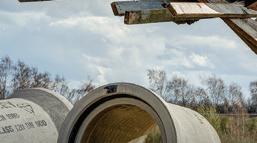
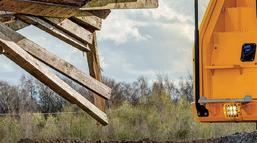
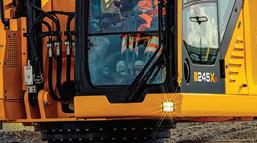
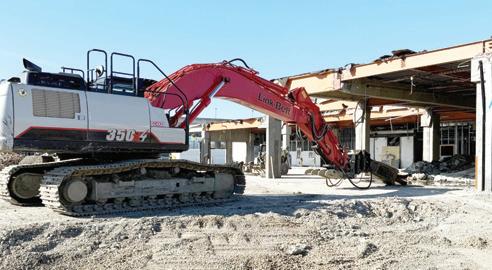
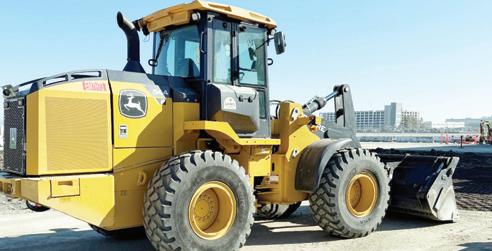
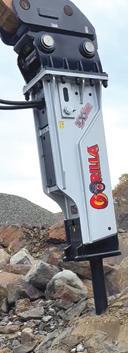
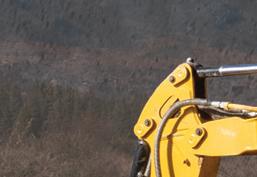
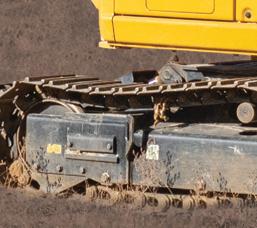
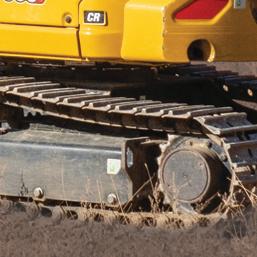
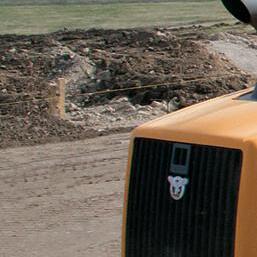
The outdated 35,000-sq.-ft. structure being demolished to make way for the cargo building was low, so a wrecking ball wasn’t needed. To bring the building down, Skanska used a Link-Belt 350 X4 crawler excavator with saw teeth.
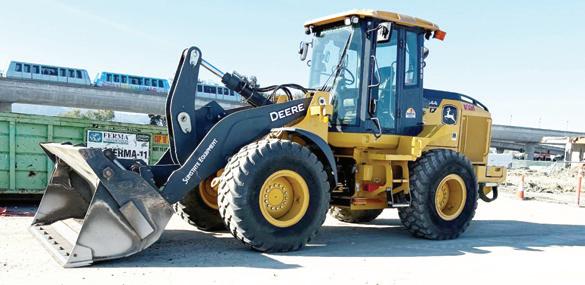
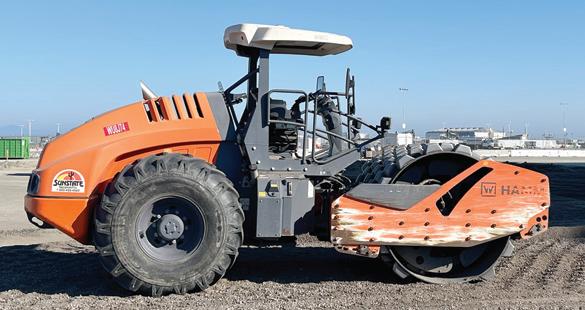
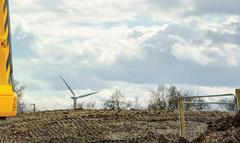
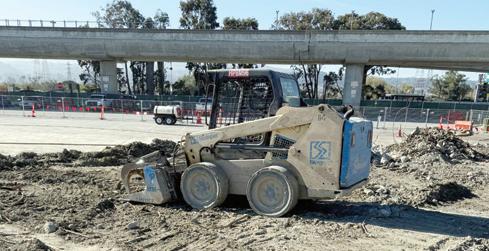
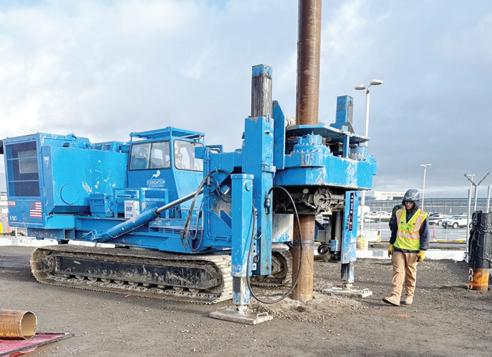
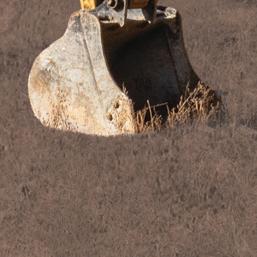
Concurrently, Skanska is laying the foundation for the GSE building. For the foundation work, the Skanska team performed excavations using a Hyundai 380 excavator, infilled the new pad using a Hamm H10i pad foot compactor and drilled piles with Fundex TBX45 torque-driven pile and Fundex TBX 35 torque-driven pile rigs.




























































Gov. Gavin Newsom announced on Oct. 20, 2025, the approval of $25 million in grants for 88 apprenticeship programs through the Employment Training Panel (ETP) that will train 22,208 California workers in the skilled trades.
Many of those who will join the apprenticeships funded are women, justice-involved individuals, veterans and people transitioning from unemployment or low-paying jobs. This announcement follows a $30 million investment announced in apprenticeship funding to fill high-demand jobs in health care, education and technology.
The ETP provides funding to California employers to upgrade worker skills for long-term jobs. The awards are funded by the Employment Training Tax on employers and do not come out of the state’s General Fund.
“The state is building opportunities from the ground up, helping Californians earn high-paying jobs and gain competitiveness through hands-on learning, without the need for a college degree,” Newsom said. “This pathway aligns with our goal of supporting 500,000 apprentices by 2029, creating a more equitable job pipeline for Californians across the state.’
“Apprenticeships aren’t just a pathway to a job: They’re the foundation for a lasting career,” said Stewart Knox, secretary of the Labor & Workforce Development Agency.
“These grants will provide thousands of Californians with the tools they need to build skills, gain stability, and step into careers that support their families and communities and bolster California’s economy.”
The construction industry, one of California’s economic anchors as outlined in the California Jobs First Economic Blueprint, generates more than $156 billion in annual economic activity and employs close to 1 million Californians.
In addition, Labor Market Information Division data shows that careers in construction account for 12 of the 15 top occupations accessible with a high school diploma or less, making apprenticeships and careers in construction a reliable and accessible on-ramp to a high-paying career.
Apprenticeships are integral to the health of the construction sector as they predictably supply employers with a skilled workforce built upon a highly structured training system that is typically jointly developed by labor unions and employers based on the future supply of jobs.
The Employment Training Panel (ETP) has established itself as one of the premier resources for funding training programs across priority industry sectors. In 2012, ETP added to its funding portfolio the Division of Apprenticeshipapproved apprenticeship programs as a pilot program with an initial amount of $6 million.
Since then, the program has grown annually and now allocates 25 percent — approximately $25 million — of ETP’s total annual core funds.
Apprenticeships serve an integral role in California’s Master Plan for Career Education by offering a pragmatic strategy for workers to become more competitive through hands-on learning that keeps pace with the dynamic shifts of the economy and industry demand.
Skanska announced that it was awarded the $59 million Mission Boulevard Bridge replacement project in Jurupa Valley, Calif.
Skanska was contracted by the County of Riverside Transportation Department to replace the aging Mission Boulevard Bridge and maintain traffic flow during construction.
The Mission Boulevard Bridge over the Santa Ana River supports regional mobility, safety and improved access for Riverside County residents and travelers.
Construction of the new bridge will include Mission-style architecture with a parabolic soffit and raising the bridge 46 ft. to maintain modern safety and flood standards. Utility relocations, seismic retrofitting, improved drainage systems and environmental mitigation will shrink the project footprint, reducing ecological disruption while improving resilience against flooding.
“Being awarded the Mission Boulevard Bridge Replacement project is another opportunity for Skanska to partner with the county of Riverside Transportation Department to deliver safe, resilient infrastructure that supports regional mobility and sustainability,” said James Bailey, executive vice president of Skanska USA Civil’s West Coast operations. “The completion of the bridge will deliver a structure that meets modern standards while minimizing environmental impact. We are also committed to maintaining traffic throughout construction.”
Once completed, the new six-span cast-in-place bridge

Skanska announced that it was awarded the $59 million Mission Boulevard Bridge replacement project in Jurupa Valley, Calif.
will be 88 ft. wide and accommodate two 12-ft. lanes, two 14-ft. lanes, two 8-ft. shoulders and a 4-ft. median, along with a 12-ft. multipurpose trail separated from traffic for pedestrians, cyclists and equestrians.
Environmental mitigation includes restoring more than 7.46 acres of streambed and habitat on site and 2.05 acres offsite to offset temporary impacts on fish and wildlife resources.
The project will begin in April 2026 and is expected to reach completion in September 2029.
For more information, visit skanska.com.
Tutor Perini Corp., a leading civil, building and specialty construction company, announced on Dec. 17, 2025, that its subsidiary, Rudolph and Sletten, was awarded a contract valued at approximately $155 million for the construction of the new Diego Rivera Performing Arts Center on the campus of City College of San Francisco.
The project scope includes the construction of an approximately 78,000sq.-ft. theatrical and music arts building. The facility will include a 631-seat main performing arts center with an 80-ft.-high concrete fly tower, a 90 fixed-seat recital hall, a scene shop, rehearsal spaces and various costume and music classrooms. The front entrance of the facility will double as an exhibit hall for the Diego Rivera Pan American Unity Mural.
Work is expected to commence immediately, with substantial completion anticipated in the fall of 2028.
The following day, Tutor Perini announced that Rudolph and Sletten was awarded a contract by UC Davis
Health for the Central Utility Plant (CUP) Expansion at its health care campus in Sacramento.
The project scope includes the construction of a new two-story, 32,000sq.-ft. CUP Annex Building, which will include plant operations and hospital operators support space and expansion of normal and emergency power services, including three 3MW generators
The project also will renovate the existing Campus Central Plant, including upgrades of existing chilled and hot

water systems, reconfiguration of electrical infrastructure, fuel oil system capacity expansion, upgrades of industrial controls and renovations to the existing control room and administrative spaces.
Work is already under way with substantial completion anticipated in the fall of 2027. The project’s contract value is approximately $253 million.
Headquartered in Menlo Park, Rudolph and Sletten has regional offices in Roseville, Irvine, Los Angeles and San Diego.













COLUSA
1960 Highway y 20 Colusa, CA 95932
Phone: (530) 458-216
DIXON
793 N First Street Dixon A95620
2535 Ellis Street
Redding, C 96001
Phone: (530) 245-9000 STOCKTON
827 Nort Teehama St Willows, CA 95988 Phone: (530) 934-3382
YUBA CITY
1340 W. Charter Way y Stockton,C 95206 ,C











HARRISBURG 230 Sommerville Avvenue Harrisburg, O 974446 Phone: (541) 995-2262
HILLSBORO
Rickreall Road reall, OR 97371 ne: (503) 363-2332
( , CA 9
Phone: (9916) 649-00
PALOS 2173 Blossom Street Dos Palos, CA 93620
Phone: (209) 392-216
S. State Highway
(209) 383-58
Stockton, C 9 Phone: (209) 944-5500 STRATTFORD
20280 Main St. Stratford, CA 93266
Phone: (559) 947-3301 TURLOCK
1215 West Glenwoo Avve Tuurlock, C 95380-5703
Phone: (209) 634-1777
3056 Colusa Highway y YubaCity CA95993
185 W Main St. Ext. Hillsboro,O 97123
36 NW A Street Madras, OR 977441 Phone: (541) 475-2253 Pho odburn, O one: (503) 981-0151
McCarthy Building Cos. Inc. announced on Jan. 7, 2026, that it has reached two major construction milestones in the city of Ontario with the completion of the City of Ontario Parking Structure, part of the city’s transformative Civic Center Campus Expansion, and the groundbreaking of the Vineyard Parking Structure, a key component of Ontario’s forthcoming Sports and Entertainment District.
The newly completed six-story $32.6 million City of Ontario Parking Structure delivers more than 300,000 sq. ft. and 821 parking stalls to support the Civic Center, City Hall, nearby residential areas and future community activity.
Designed to integrate seamlessly with the surrounding urban environment, the structure incorporates a series of features prioritized by the city, including a photovoltaic (PV) solar array, an advanced redlight/green-light parking guidance system, and infrastructure for 48 EV charging stations, with 21 installed at opening. Durable materials, including colored CMU block, decorative metal elements and pre-cast panels, were intentionally selected to ensure long-term resilience and aesthetic cohesion.
Following the completion of that parking garage, McCarthy also has broken ground
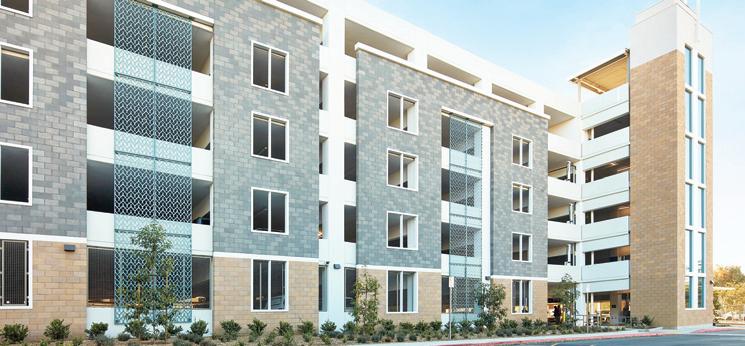
on the $53 million, six-level, 1,289-stall Vineyard Parking Structure, including 60 EV chargers with infrastructure for an additional 183, a photovoltaic (PV) solar array, an extensive parking guidance system with a sensor at every stall to supporting the city’s new 100-plus-acre Sports and Entertainment District, which will include new soccer and baseball fields, public amenities and a future Minor League Baseball stadium.
Developed under a design-build model, the structure will feature a prominent east eleva-
tor core to enhance pedestrian flow and safety, decorative glazing, fabric graphics and a planned 50-ft.-by-150-ft. video wall to support events and elevate the visitor experience.
McCarthy self-performed all concrete, earthwork, metal panels, plaster, fire extinguisher cabinets, doors/frames/hardware and civil utilities for both structures, allowing for tighter schedule management and greater control over quality and safety to maintain a seamless flow from project to project.
“Being able to support two major projects
for the city of Ontario back-to-back has been an incredibly meaningful experience for our team,” said Andrew Raufi, vice president project executive, McCarthy. “We’re proud of the trust Ontario has placed in McCarthy and honored to contribute to the city’s longterm vision.”
These two parking structures mark the latest chapter in McCarthy’s relationship with the city of Ontario, which, in recent years, has included the completion of the C-Block Parking Structure to support the city’s rapid growth and long-term community ambitions.
A defining element of both projects is the strength and continuity of McCarthy’s craft workforce and trade partners, many of whom come from communities across the Inland Empire.
Nearly all carpenters and laborers from the City of Ontario Parking Structure transitioned directly to the Vineyard project, and approximately 70 percent of trade partners remained consistent between the two builds.
McCarthy said the locally based continuity has enhanced collaboration, reduced onboarding time and allowed lessons learned to be applied immediately to the Vineyard Parking Structure, reinforcing both efficiency and McCarthy’s investment in the local Ontario workforce.
For the installation of driven H piles, Skanska will use two 80-ft. tall drill rigs and a crane for support, which are generally smaller than those typically used.
The Federal Aviation Administration has height restrictions for the equipment. Due to the proximity of the runaways to the GSE building, the equipment can’t penetrate the “air envelope” so it doesn’t impact the airplanes taking off and landing, and the loads they can carry, said Johana Godoy, Skanska’s superintendent on the project.
That means, she said, no equipment can exceed 45 ft. for work on the GSE building, while there is an 80-ft. height restriction for the cargo facility.
This led to Skanska using smaller drill rigs than typically deployed.
The height restrictions also are creating challenges for erecting the steel.
A standard pile drilling rig would extend well above this limit, Godoy said.
“We used a specialized Fundex drill rig to install the piles and ensure we remained within the restriction,” she said. “This required additional coordination as the minimum pile depth is 75 feet. Pile lengths were ordered to maximize installation speed and minimize welding while still adhering to the height limit.”
Skanska also must coordinate with the other general contractors working on the West Field Development Program.
“From a logistical and equipment standpoint, there are projects working side-by-side where we must coordinate closely with other general contractors in the program to ensure there are no conflicts with large equipment deliveries or high volumes of trucking at the same time to minimize traffic flow impacts in the area,” Godoy said. “So, it’s a day-today coordination that we have to work through, not only from a logistical point of view but from a design standpoint as well.”
During peak construction of the project, Godoy estimated there will
be approximately 110 workers on the site.
Skanska also is following the airport’s environmental guidelines. They have encountered minimal hazardous material, which is taken to a specialized facility for disposal.
In addition to the airport’s guidelines, the project must conform to the city and county of San Francisco’s sustainability goals. This means incorporating solar panels and including infrastructure for electric vehicles. The project prioritizes natural lighting wherever feasible and incorporates sustainable materials to reduce environmental impact.
Childress noted the diversity of the Skanska team on the project, with the staff split 50/50 between men and women.
“We are setting ourselves apart from what the typical construction industry looks like with this team of professionals,” he said. CEG (All photos courtesy of Skanska USA Building.)