

JANUARY 23, 2026
VOLUME 35 • NUMBER 8
1123 S. CHURCH ST. CHARLOTTE, N.C. 28203-4003 catholicnews@rcdoc.org
704-370-3333
PUBLISHER
The Most Reverend Michael T. Martin, OFM Conv., Bishop of Charlotte
INDEX
Contact us 2
Español 17-21
Our Diocese 4-14
Our Faith 3
Our Schools 15-16
Scripture 3
U.S. news 22-23
Viewpoints 26-27
World news 24-25
STAFF
EDITOR: Trish Stukbauer
704-370-3392, tmstukbauer@rcdoc.org
ADVERTISING MANAGER: Kevin Eagan 704-370-3332, keeagan@rcdoc.org
MULTIMEDIA DESIGNER: David Puckett 704-808-4521, dwpuckett@rcdoc.org
EDITORIAL TEAM: Kimberly Bender 704-370-3394, kdbender@rcdoc.org Lisa Geraci 704-370-3294, lmgeraci@rcdoc.org Troy C. Hull 704-370-3288, tchull@rcdoc.org Christina Lee Knauss 704-370-0783, clknauss@rcdoc.org Amelia Kudela 980-374-3411, arkudela@rcdoc.org Brian Segovia 704-370-3235, bmsegovia@rcdoc.org
COMMUNICATIONS ASSISTANT/CIRCULATION: Maria De Ugarte 704-370-3333, catholicnews@rcdoc.org COMMUNICATIONS DIRECTOR: Liz Chandler 704-370-3336, lchandler@rcdoc.org
ASSISTANT COMMUNICATIONS DIRECTOR: Patricia L. Guilfoyle 704-370-3334, plguilfoyle@rcdoc.org
THE CATHOLIC NEWS HERALD is published by the Roman Catholic Diocese of Charlotte 26 times a year.
NEWS: The Catholic News Herald welcomes your news and photos. Please e-mail information, attaching photos in JPG format with a recommended resolution of 150 dpi or higher, to catholicnews@rcdoc.org All submitted items become the property of the Catholic News Herald and are subject to reuse, in whole or in part, in print, electronic formats and archives.
ADVERTISING: Reach 165,000 Catholics across western North Carolina! For advertising rates and information, contact Advertising Manager Kevin Eagan at 704-370-3332 or keeagan@rcdoc.org. The Catholic News Herald reserves the right to reject or cancel advertising for any reason, and does not recommend or guarantee any product, service or benefit claimed by our advertisers.
SUBSCRIPTIONS: $17.25 per year for registered families of the Diocese of Charlotte and $25 per year for all others
POSTMASTER: Periodicals Class postage (USPC 007-393) paid at Charlotte, N.C. Send address corrections to the Catholic News Herald, 1123 S. Church St., Charlotte, N.C. 28203.
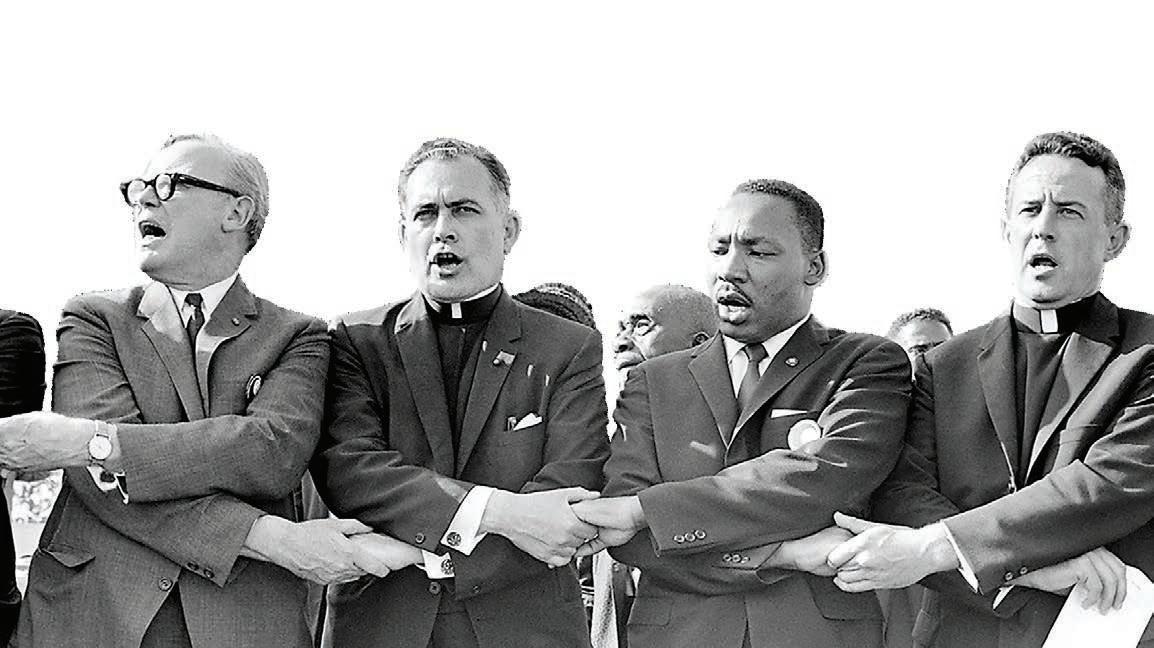
This week, churches and communities across the country gathered to commemorate the legacy of the Rev. Dr. Martin Luther King Jr. His message of justice, equality and love aligns with Catholic teaching on the inherent dignity of every person created in the image of God, and the civil rights leader’s commitment to nonviolence and social justice reflects the Church’s call to love one’s neighbors and work toward the common good. Here are a few ways you can help carry on that legacy:
Speaking in Phoenix, Knights of Peter Claver Supreme Knight Christopher Pichon described King’s vision of a beloved community as a way of life. He discussed the work of the Knights and Ladies of Peter Claver, noting the five pillars of social justice on which the organization focuses: eliminating racism, domestic violence and human trafficking, criminal justice reform and the dignity of Black lives. There are chapters of both organizations in the diocese as well as organizations devoted to these causes.
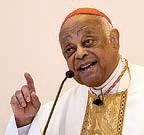
Cardinal Wilton D. Gregory, archbishop emeritus of Washington, D.C., the nation’s first Black cardinal and the Church’s first African American cardinal, recently served as the guest homilist at an annual Mass at Xavier College Preparatory Catholic High School. “The secret to human greatness and to spiritual excellence is not to be found in marketing of an individual but in having a person live up to the highest spiritual qualities within himself or herself, living proudly according to the ‘content of their character,’” he told attendees, referencing Rev. King’s 1963 “I Have a Dream” speech. Make time to reflect on spiritual values that matter to you and how you are living those out in daily life.
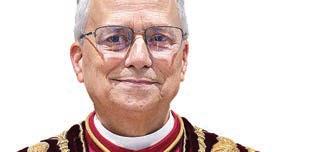
PRAY FOR CONVERSION OF HEART “(King) came to echo the message of Jesus Christ that we are all truly brothers and sisters,” Washington Cardinal Robert W. McElroy said during a Jan. 18 Mass remembering the late civil rights leader. Washington’s archbishop called on the faithful to “constantly be seeking the conversion of human hearts,” and to “see each other as brothers and sisters,” because “we all come here as the children of the same God – the Father of us all.” This month, take the time to pray for that vision of unity among all of God’s children.
— Catholic News Herald, Catholic News Agency, OSV News

ESPAÑOL
VIÑEDO DE RAQUEL : ¿Es usted o un ser querido que busca la curación de los efectos de un aborto anterior? Los retiros de fin de semana son ofrecidos por Caridades Católicas para hombres y mujeres en todas las regiones de la Diócesis de Charlotte. Para obtener información, comuníquese con Karina Hernández: 336-267-1937 o karinahernandez@live.com.
EVENTS
OPEN HOUSE Birthright of Charlotte will host an open house from 2 to 4 p.m. Feb. 15 at its facility at 4435 Monroe Road, Charlotte.
Community of the Diocese of Charlotte will celebrate its first Mass of the year at 11:30 a.m. Sunday, Jan. 25, at St. Mary’s Church, 812 Duke St., Greensboro. Call 336-707-3625.
ANOINTING OF THE SICK MASS : St. Luke Parish in Mint Hill will have a special Mass for those who wish to receive the sacrament of anointing of the sick at 10 a.m. Feb. 28. Anointing is for those who need healing from physical or mental illness, or someone having surgery. For information, call Mary Adams at 704-545-1224.
VIGIL OF THE TWO HEARTS : Vigil begins with 8 p.m. First Friday Mass on Friday, Feb. 6, followed by nocturnal Eucharistic Adoration and concludes with the 8 a.m. First Saturday Mass on Feb. 7. St. Patrick Cathedral, 1621 Dilworth Road East, Charlotte. Sign up for an hour of Adoration at www.defendthefamily.org/two-hearts.
Pope Leo XIV said that God is revealed through Jesus’ humanity, not solely through a “channel of transmission of intellectual truths.” It is through Jesus’ life, death and resurrection that one can come to know God.
Pope Leo continued his series of talks during his weekly general audience Jan. 21, revisiting Vatican Council II with a speech on “Dei Verbum,” the Church’s teaching on divine revelation.
By knowing Jesus, the pope said we can enter into a relationship with God as His adopted children, which was revealed through Jesus’ humanity.
“In order to know God in Christ, we must welcome His integral humanity: God’s truth is not fully revealed where it takes something away from the human, just as the integrity of Jesus’ humanity does not diminish the fullness of the divine gift,” he said. “It is the integral humanity of Jesus that tells us the truth of the Father.”
He went on further to say that in becoming man, Jesus “is born, heals, teaches, suffers, dies, rises again and remains among us. Therefore, to honor the greatness of the Incarnation, it is not enough to consider Jesus as the channel of transmission of intellectual truths.” God communicates with us, the pope said, and at the same time, Jesus is the Word of God incarnate. Through this corporal form, the truth of God is revealed.
“Jesus Christ is the place where we recognize the truth of God the Father, while we discover ourselves known by Him as sons in the Son, called to the same destiny of full life,” he said.
In closing, Pope Leo said, “Brothers and sisters, by following the path of Jesus to the very end, we reach the certainty that nothing can separate us from God’s love.”
“You are the light of the world. A city set on a mountain cannot be hidden. Nor do they light a lamp and then put it under a bushel basket; it is set on a lampstand, where it gives light to all in the house.”
— Matthew 5:14-15
KATIE YODER OSV News
David Henrie is crediting beauty for his return to the Catholic faith after creating a new docuseries with EWTN Studios called “Seeking Beauty.”
“Beauty was a part of it, because the place that I had my conversion was St. Michael’s Abbey in Orange County, which is probably one of the most beautiful monasteries in the United States,” the 36-year-old actor, who rose to fame starring in TV shows such as Disney’s “Wizards of Waverly Place” and the CBS sitcom
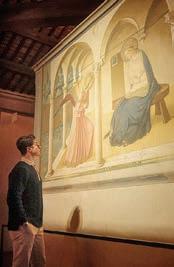
“How I Met Your Mother,” said of the community of Norbertine priests in Silverado, California. “That’s where I went and did my first general confession.”
Henrie spoke with OSV News ahead of the premiere of his adventure documentary series, “Seeking Beauty with David Henrie,” on Jan. 19.
their three children. In one episode, Henrie speaks about his faith journey.
“By the time I was a teenager and in my 20s, I had gained all this – all this success and money – and traveled the world,” he said. “But I was brought to a real low point.” At the time, he felt depressed and struggled with a lot in his life, he says.
“I felt I should be happy, I have all the things that I should have to be happy,” he adds. “But then once God reached out and gave me that clear sign that there is a path and that my life isn’t a big mistake.”
Henrie was 22 when he visited St. Michael’s Abbey for confession on Jan. 1, 2012.
“I didn’t just go anywhere for my conversion, and I wasn’t even directly seeking it,” Henrie said of the abbey. “It was at the most beautiful place, a place that you can really feel God … beauty was right there, knocking on my door.”
Henrie expressed excitement about exploring beauty with others in “Seeking Beauty,” which has already filmed a second season in Spain. “I’ve always struggled with just purely producing secular works and working in secular Hollywood and being vocal about my faith,” he said. “It’s been a joy to just be able to be myself and talk about something that I love and care about.”

The scripture above is part of the daily readings for Sunday, Feb. 8. Snap the QR code (left) to get the Mass readings for every day, in English or Spanish, online at the U.S. Conference of Catholic Bishops’ website.
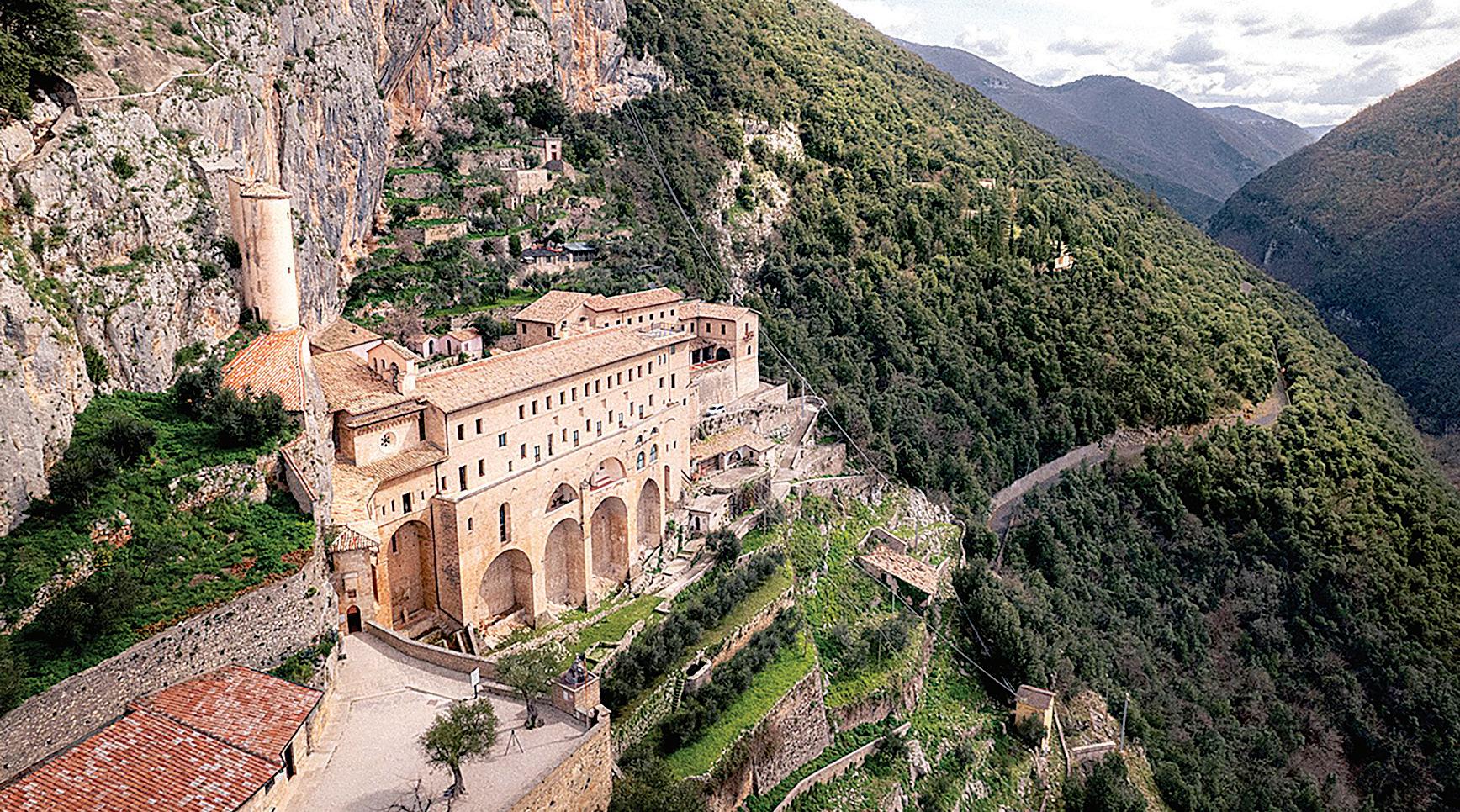
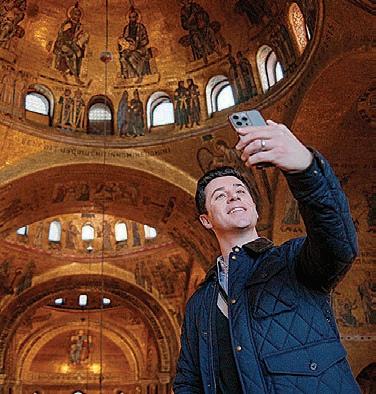
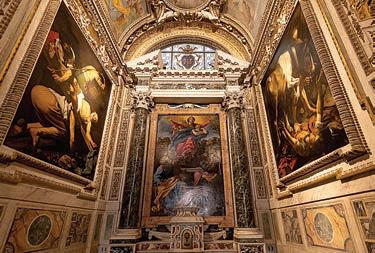
As the show’s host, he invites viewers to travel with him across Italy to Vatican City, Rome, Florence, Milan, Subiaco and Venice in a quest for beauty. In six 45-minute long episodes, he channels the viewer’s wonder and curiosity as he explores the art, music, food, history and culture of those regions.
The show will debut on EWTN’s streaming platform, EWTN+, which is available free on RokuTV and recently launched on EWTN.com, AppleTV, AmazonFireTV and GoogleTV.
“Beauty is a fingerprint of the divine,” Henrie told OSV News. “I have come to see
how, if you invite it into your life, it can help you know, see and love God.”
In his search for beauty, Henrie examines masterpieces and monasteries up close. Along the way, he invites viewers into his own life and introduces his wife Maria and
Beauty, Henrie said, is God’s language. He encouraged viewers to explore whether beauty is subjective or objective.
“If it’s something that’s outside of you that has a universal effect, where you have people from all different faiths, all different ages, standing there, looking at a thing, contemplating it, being brought to tears,” he said. “Maybe there’s an objective truth to it.”
“If that’s the case, who’s the author of that? That’s where you start the conversation about God and contemplation,” he said.
He hopes the show inspires viewers to embrace beauty.
For the latest news 24/7: catholicnewsherald.com
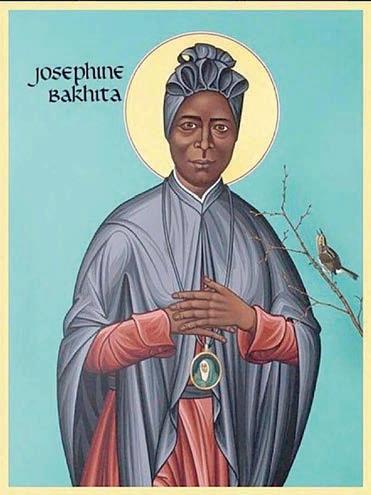
Concord event to spotlight human trafficking prevention
CONCORD — Learn more about the problem of human trafficking in our region at “Much Closer Than You Think – Human Trafficking in North Carolina,” to be held 2:30-4 p.m. Sunday, Feb. 8, at St. James the Greater Church.
The educational seminar, sponsored by Catholic Charities Diocese of Charlotte and the Sisters of Mercy, is being held on the feast day of St. Josephine Bakhita (pictured above), patron saint of human trafficking victims.
Doors open at 2 p.m. in Geiger Hall.
Parental discretion is advised, and the talk is not recommended for children under 16. RSVP by Wednesday, Feb. 4, to scaeducation@ccdoc.org. Visit www.ccdoc.org/ education for more details.
‘ChosenCon’ convention and stars are coming to Charlotte
CHARLOTTE — “ChosenCon 2026”, a three-day celebratory fan convention for “The Chosen,” featuring panel discussions, meet-andgreets, sneak previews and more, will be held Feb. 19-21 at the Charlotte Convention Center.
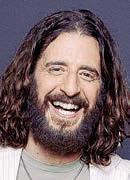
“The Chosen” is a historical drama based on the life of Jesus (starring Catholic actor Jonathan Roumie), seen through the eyes of those who knew Him.
Set against the backdrop of Roman oppression in first-century Israel, the seven-season series shares an authentic and intimate look at Jesus’ revolutionary life and teachings. With more than 300 million viewers, It is one of the most-watched shows in the world.
Cast members coming to Charlotte include Roumie, Paras Patel (Matthew) Noah James (Andrew) and George H. Xanthis (John). Visit www.thechosen.tv/ to learn more.
— Catholic News Herald
CHRISTINA LEE KNAUSS clknauss@rcdoc.org
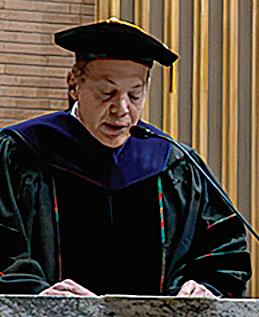
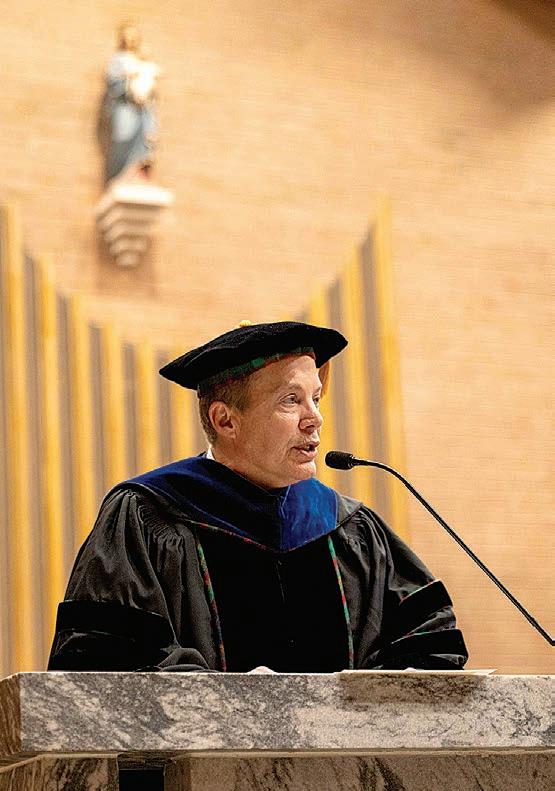
BELMONT — Members of the Belmont Abbey College community recently welcomed their new president, Dr. Jeffrey W. Talley – marking a new chapter in the college’s 150year history.
Talley, who promotes “a holistic education strong both in academics and in building faith and morals,” was formally inaugurated Jan. 14 during a Vespers of the Holy Spirit service at the Basilica of Mary, Help of Christians. The service was celebrated by Benedictine Abbot Placid Solari, chancellor of the college. Earlier in the day, Talley met with faculty and staff at a special luncheon.
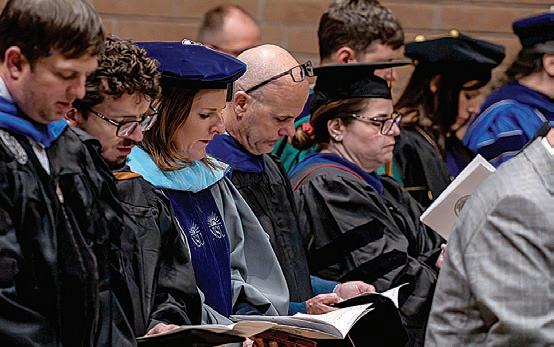
Many of the pews were filled with faculty dressed in academic robes. Some Diocese of Charlotte seminarians who are studying at the college also attended, along with other people from across the diocese.
During the service, Talley recited the Profession of Faith and took an Oath of Fidelity, marking his role as leader of a college that combines academics with a commitment to the Catholic faith.
“I’m just very grateful to be here, working with all of the people here, and so happy to be part of this wonderful community,” Talley said during a reception after the service.
“This is a great school with a great mission.”
‘THE RIGHT PERSON’
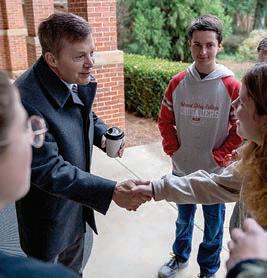
Earlier in the day, Talley met with students over coffee and donuts. Later, the Abbey community gathered for a Mass of the Holy Spirit at the basilica. Faculty and staff then joined him for lunch, where he was formally introduced by Charles Cornelio, chairman of the college’s Board of Trustees. Cornelio expressed confidence in his leadership.
“It became clear that Jeff Talley is the right person to lead Belmont Abbey at this time of growth, opportunity and challenge,” he said. “I firmly believe he can bring this remarkable institution to new levels of excellence.”
At the luncheon, Talley reflected on the college, established 150 years ago by a community of Benedictine monks in what was then a rural frontier with few Catholics, and their mission to form future generations of leaders.
“In a culture that often reduces education to transaction, we insist –sometimes at great cost – that education is formation,” he said. “The truth is not always
efficient. It is rarely applauded. But it is profoundly Catholic. We are small, and that is not a weakness. Our smallness allows us to know names. To notice when someone is missing. To teach not just minds, but persons. To integrate faith and reason as not abstract theories, but as a lived practice – imperfect, sometimes messy, always sincere.”
Talley was selected after a seven-month search that started
when Dr. Bill Thierfelder announced his retirement in early 2025 after 20 years as president. Under Thierfelder’s leadership, the college more than tripled undergraduate enrollment, expanded academic programs, opened five residence halls, carried out a $150 million capital campaign, and reinvigorated the college’s Catholic identity and community partnerships. Talley’s background combines experience in the academic and business worlds with a
decorated 34-year career in the military, culminating in his appointment as the 32nd Chief of Army Reserve and Commanding General of the U.S. Army Reserve Command. He has received three Bronze Stars, two Army Distinguished Service Medals and the Gold de Fleury Medal, which is the U.S. Army Corps of Engineers’ highest individual honor. Talley has also been a Benedictine oblate for nearly 40 years.
He has taught, conducted research and offered academic leadership at the University of Notre Dame, Southern Methodist University, Johns Hopkins University, Harvard University and the University of Southern California.
Abbot Placid said he looks forward to seeing how Talley guides the college.
“Dr. Talley brings to us the right combination of skills we need to build on the legacy left by Dr. Thierfelder,” he said. “He’s very solid in his faith, and as a retired general he’s well versed in leadership. He has the training to take on a mission and make it effective. As a Benedictine oblate, he also has a real love for the mission of the college.”
Talley stepped into his role Jan. 2 and immediately focused on one of his priorities – hearing from students. He’s been involved in more than 20 listening sessions.
“I’m very much in a listening mode,” Talley said. “I want to find out what we can do to help students continue to have a great experience here and also ways we can make the campus more fun. I want this to be a college where students receive a holistic education, strong both in academics and in building faith and morals, where we also teach students not what to think but how to think, so they will be prepared to become leaders.”
Talley is planning a statewide and national tour to connect with alumni, donors and community partners.
LISA M. GERACI lmgeraci@rcdoc.org
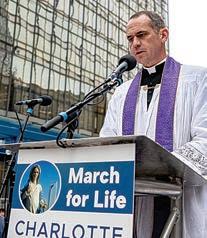
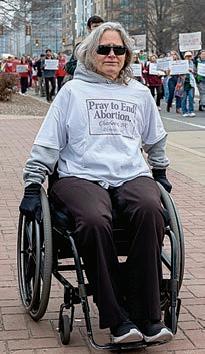
CHARLOTTE — Under mild temperatures and overcast skies, approximately 150 faithful attended the 20th Charlotte March for Life, parading down Tryon Street to advocate for the rights of those who couldn’t attend – the unborn.
The March for Life is an opportunity to publicly advocate for the dignity of life from conception to natural death.
The annual January event coincides with the anniversary of the 1973 Supreme Court decision in Roe v. Wade that legalized abortion nationwide. In 2022, the Supreme Court reversed that in the case of Dobbs v. Jackson and left abortion restrictions up to individual states. The Charlotte march is held ahead of the National March for Life in Washington, D.C. This year, the event is slated for Jan. 23 and is scheduled to feature Vice President J.D. Vance.
Despite North Carolina law limiting access to abortions to under 12 weeks, abortions have surged due to the state’s location as one of the few states in the Southeast where abortion remains legal through the first trimester, according to statistics from the Guttmacher Institute. This has inspired Catholics involved in the pro-life movement to increase efforts to protect the sanctity of the most vulnerable human lives.
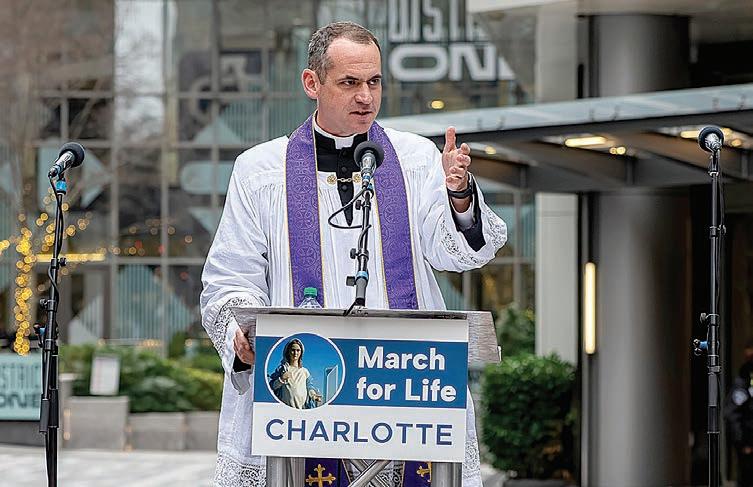
The morning started at St. Patrick Cathedral with Mass offered by Father Peter Ascik, pastor/rector and director of the Diocese of Charlotte Family Life Office.
He began with the classic Dickens sentence, “It was the best of times, it was the worst of times,” to sum up today’s prolife movement.
“It was the best of times,” Father Ascik said. “Roe v. Wade was overturned. Several states have effectively outlawed abortion.”
He said the long-time goal of defunding Planned Parenthood is in reach, young people are becoming passionate pro-life leaders, and the message of the dignity of life is spreading.
“On the other hand … it is the worst of times to be pro-life,” Father Ascik said. “Despite the overturning of Roe v. Wade, there are still more children dying by the hundreds of thousands a year in our country. Several states are responding to the overturning … by not only leaving abortion legal, but expanding it.”
Pro-abortion propaganda is ablaze, he explained, and mail-order abortion pills are available in many states.
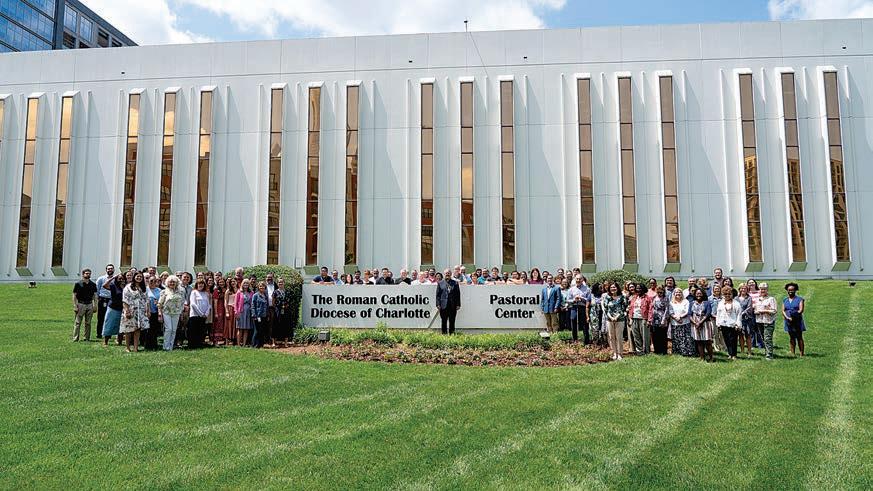
After Mass, attendees gathered at the Diocesan Pastoral Center, where they were greeted by Tina Witt, a St. Patrick parishioner who coordinates the march through the non-profit group March for Life Charlotte.
Witt explained why the March for Life is needed even more now.
North Carolina is now dubbed an abortion access hub, with 36% of women crossing state lines due to North Carolina’s looser restrictions.
N.C. Department of Health and Human Services statistics show that abortions were on the rise in 2023, up to 42,954 –and of those, 27,146 were North Carolina women. In 2021, before the Dobbs decision, there were 32,454 abortions in the state, according to NCDHHS.
At noon, marchers carried rosaries, signs, praying and singing as they made their way to the intersection of Trade and Tryon streets.
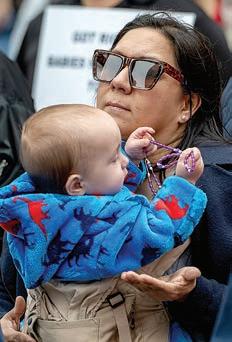
His mother Lenore explained, “I was always Catholic, but all my life was prochoice.”
She was surprised when her son came home overwhelmed with excitement about joining the school’s pro-life program, and even more so when he eventually became the vice president of the school’s Right to Life group.
“This was all led by Him. God put it in his heart,” she said. “I wanted to support my son, became more educated about the issue, and was moved to also become pro-life.”
Then, she found out she was pregnant in her early 40s, after her son prayed to have a sibling. “And, here he is, holy hope he appeared,” she laughed, showing off her toddler.
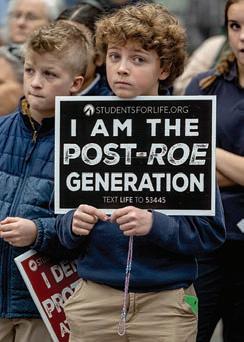
Some traveled long distances to experience the march.
Mercedes Tchang, a parishioner of St. Dorothy Parish in Lincolnton, traveled with her six boys to attend for the first time.
“This is our first year coming; we decided to come out just to support the babies,” she said. “By keeping babies safe, then the rest of humanity has a chance.”
Also present were students from the diocese’s Catholic schools. Lucas Kowalonek, a 13-year-old from Holy Trinity Middle School, marched alongside his classmates holding a banner, while his parents followed with his 1-year-old brother.
As Father Peter Ascik told the crowd during the Charlotte March for Life, “The last 50 years in the United States were defined by Roe v. Wade. Roe v. Wade is now gone. What the next 50 years will be like is being defined right now by the actions we take and the witness we give, and ultimately the love we show for mothers and for unborn children.”
Father Ascik applauded the efforts made but said there is more to be done. He encouraged people to reach out to representatives, peacefully pray on abortion clinic public sidewalks, and assist in pro-life ministries.
“Let’s work together to write a new chapter in the history of our country – a pro-life chapter,” he said. “So, in the next 50, 100 and 200 years, we’ll be a prolife nation that embraces and defends every human life from the moment of conception until natural death.”
Birthright of Charlotte – From the moment of conception, this is a resource for prayer, counsel and supplies. Birthright provides a listening ear, clothes, pregnancy care kits, gifts for newborns and more. Visit 4435 Monroe Road, Charlotte, 28205, call (704) 975-8572 or go to www. birthrightofcharlotte.org.
Walking With Moms in Need – Services vary per parish.
WWMIN St. Matthew Parish in Ballantyne and Christ the King Mission in Kings Mountain provide monthly giveaways for mothers in need – anything from new or gently used strollers, highchairs and cribs to toys, clothes, formula and diapers. The three requirements are to be a mother, have a need and show up.
The marchers gathered at Independence Square to hear guest homilist
Father Brian Becker.
Father Becker, the diocese’s vocations promoter and an alumnus of Holy Trinity Middle, recalled his days as a youth in Charlotte marching and praying, and he described what an honor it was to preach at Independence Square.
“The reason we have big microphones out here and the reason that we are doing this publicly,”
Father Becker said, is that “we want to bring the Gospel to our brothers and sisters here in our beloved city.”
Becker reminded the faithful that they were placed here by God in this moment.
“Our Lord is always writing something new every day of our lives,” he said.
He then reminded the crowd that everything done for God is a win.
Whether sidewalk counseling, fighting legislation, marching or praying, the victories have been felt not only nationally but within the diocese, he said.
As Father Becker noted, “We are not out here by ourselves. And we are not out here just leaning on each other, but rather, in this work, we trust in the action of God.”
St. Matthew WWMIN holds a “Hand Up Day” every first Sunday of each month, and Christ the King WWMIN opens a supply store from noon to 1 p.m. on the third Saturday of every month.
WWMIN St. Vincent De Paul Parish in Charlotte works with Birthright to ensure expecting or new moms’ needs are being met. A ride, a meal or even company at the hospital — whatever the unique need is, the group is ready to assist.
MiraVia in Belmont and Charlotte –MiraVia offers temporary housing on the Belmont Abbey campus for pregnant college students while assisting them academically and emotionally. MiraVia also has an outreach center on Tyvola Road where expecting moms can receive supplies and attend support groups. Visit www.miravia.org.
Room At The Inn in the Triad – Room at the Inn provides homeless pregnant mothers temporary housing, spiritual direction, education programs, aftercare support and more. Visit www.roominn.org.
Catholic Charities – Catholic Charities provides free counseling and refers expecting parents to places that can help. Contact 704370-3262 or email ccdoc@ccdoc.org
To keep up to date on pro-life legislation and contact elected representatives, go online to www.respectlife.org/prayer-andaction
Diocese-wide results of a 2025 survey of 24,332 Catholics from across western North Carolina about insights on faith and parish life.
INTRO: The Big Picture Nov. 7, 2025
PART 1: Core Catholic Teaching Nov. 7, 2025
PART 2: Spiritual Practices Nov. 21, 2025
PART 3: Sunday Experience Dec. 5, 2025
PART 4: Parish Effectiveness Dec. 19, 2025
PART 5: Parish Effectiveness (cont.) Jan. 9, 2026
PART 6: Missionary Impulse Jan. 23, 2026 Now Past Upcoming
Missionary discipleship is the call to evangelize, in words and in actions, responding to Jesus’ command to “go and make disciples of all nations” (Matthew 28:19-20).
Results of the Diocese of Charlotte’s Disciple Maker Index (DMI), conducted last spring by the non-profit Catholic Leadership Institute (CLI), showed that most respondents report having strong personal faith but little confidence in sharing that faith with others.
One-on-one conversations are the most effective way to draw others closer to Christ, CLI’s years of national research indicate, yet many respondents in the diocese’s DMI survey – most of whom said they are regular Mass-goers and longtime members of their parishes – acknowledged that they rarely engage in direct faith sharing.
Overall, 60% said they rarely or never shared their own faith story, and 49% said they rarely or never talked with others about Jesus. In addition, 27% of people said they have never invited someone to Mass, and 29% have never invited someone to a parish activity or event.
The DMI also identified a significant lack of promoting vocations. More than three-quarters of respondents (78%) said they have never encouraged someone to consider the priesthood, and 72% said they have never spoken with someone about discerning a vocation to consecrated religious life.
The DMI survey also found that 83% participated in three or fewer parish groups in the past year, pointing to limited involvement beyond Sunday Mass.
According to CLI’s research, a key factor in whether parishioners become missionary disciples is if their parish
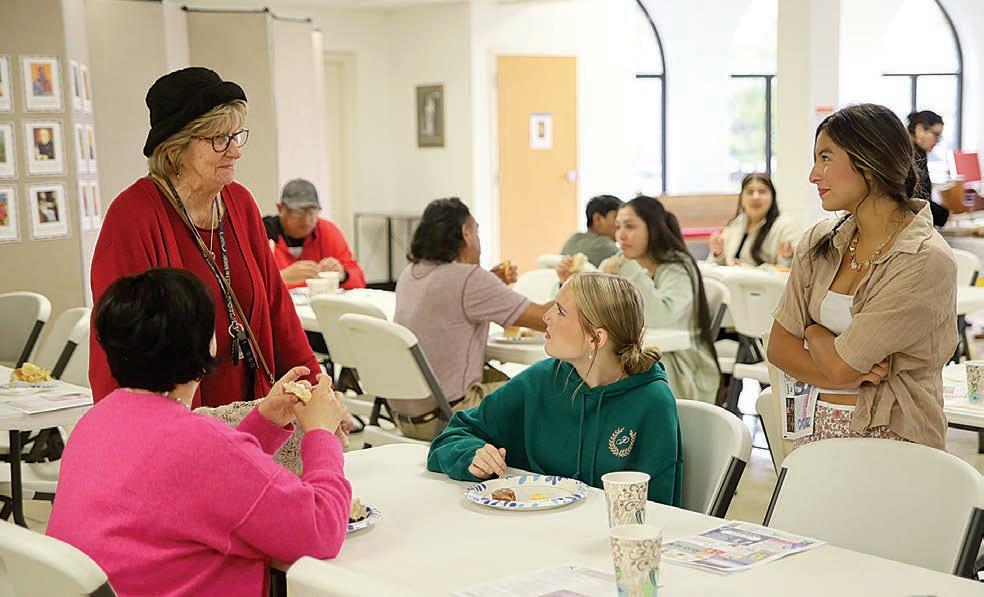
equips them to do so. A person who strongly agrees that their parish equips them to share their witness is twice as likely to have a high frequency of sharing that story. Furthermore, people who feel confident in their ability to answer questions about Church teaching are also more likely to share their personal story with others, CLI data show. Additionally, parishioners who feel comfortable inviting another person to attend Mass are 1.3 times more likely to indicate a higher frequency of talking about their faith with others.
These connections make sense to Father Alfonso Gamez Jr. at St. Francis of Assisi Parish in Lenoir. His parish ranked above the diocese-wide average for the
percentages of respondents who said they frequently share their personal witness and who said they talk about Jesus with others.
“The desire to evangelize is a fruit of one’s faith,” Father Gamez says. “If I give people intentional substance and feed them well, I expect and I have faith that that will instinctively give them the desire to want to evangelize. If you truly love something, you don’t want to keep it bottled up.”
Evangelization is a priority for the Lenoir parish. Father Gamez and his leadership team are developing a six-year pastoral plan that includes more ways to equip and inspire parishioners – especially through small faith-sharing groups and apostolates
St. Francis of Assisi parishioners love to gather most Sunday mornings after Mass for coffee and refreshments. The Lenoir parish’s hospitality ministry is a popular aspect of parish life to encourage people to form relationships outside of Mass and share their faith with others.
| CATHOLIC NEWS HERALD
that can create “pockets of fellowship.”
The idea, Father Gamez says, is to help parishioners form relationships outside of Mass, with “organic opportunities to grow in friendship and be able to support each other.”
“Because at the end of the day,” he says, “that is what a church is.”
“It should be the case that there’s always an opportunity for a parishioner to be able to find some sub-community within the community, to be able to feel connected to the whole and not fall through the cracks,” he says.
DISCIPLESHIP, SEE PAGE 7
FROM PAGE 6
“I think for me, you can’t give what you don’t have,” he explains. “So, our goal as a parish is to feed our parishioners, and then from that abundance they will then give of themselves and evangelize and become missionary disciples.”
LOOKING AHEAD
The diocese’s DMI results reveal a local Church with deep faith, yet clear opportunities for improvement – especially to help Catholics grow confident in sharing their faith and becoming missionary disciples of Jesus Christ.
EDITOR’S NOTE: The Disciple Maker Index survey, conducted in March-April 2025 at the Diocese of Charlotte’s 93 parishes and missions, drew responses from 24,332 people at 78 parishes and missions. While not a random or representative sample of all Catholics in the diocese, the results largely captured the views of active Catholics who regularly attend Mass and chose to participate in the 75-question survey. Data were tabulated by the Catholic Leadership Institute, which conducted the DMI for free as part of a future strategic plan for the diocese.
Bishop Michael Martin, OFM Conv., is reviewing the diocese-wide DMI findings alongside other research, feedback from clergy and diocesan leaders, and the listening sessions from the local Synod. The information will shape a strategic vision for the diocese’s future – one focused on forming and equipping disciples who will go out and share the Good News in our rapidly growing communities.
— Patricia L. Guilfoyle
Top churches that DMI respondents say provide them with opportunities to serve those in need
Highest % of respondents who ‘strongly agreed’
1 Our Lady of Guadalupe (Charlotte)
2 St. Peter
3 St. Ann
4 St. Francis of Assisi (Lenoir) St. Eugene Church of the Epiphany
5 St. Mark
St. Barnabas
6 St. Matthew Sacred Heart (Salisbury)
7 St. Thomas Aquinas
Holy Trinity
8 St. Charles Borromeo
St. William
9 Our Lady of the Highways
St. Francis of Assisi (Mocksville)
Immaculate Heart of Mary (High Point)
10 St. Andrew the Apostle
Our Lady of the Assumption
St. Pius X
St. John the Evangelist
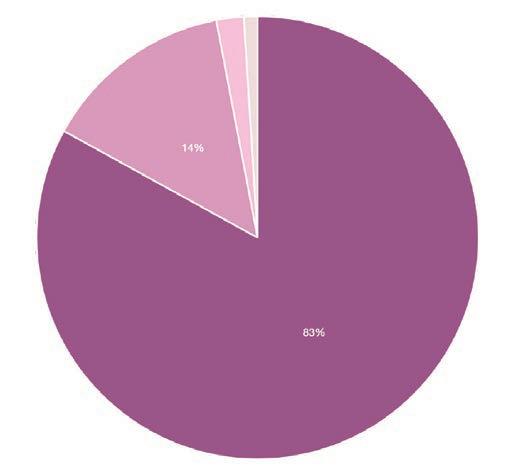
In the last year, how many different parish-based ministries or parish-based organizations have you participated in?
Parishes with the highest number of DMI respondents who said they shared the story of Jesus with others at least daily over the past year, exceeding the diocese-wide average of 10%:
Church of the Epiphany
Holy Angels
Holy Trinity
Our Lady of Consolation
Our Lady of Guadalupe (Charlotte)
Our Lady of Lourdes
Our Lady of the Americas
Our Lady of the Assumption
Our Lady of the Highways
St. Benedict the Moor
St. Dorothy
St. Francis of Assisi (Lenoir)
St. Joseph (Asheboro)
St. Mary Help of Christians
The DMI survey asked people how much they agreed with the statement: My parish equips me to have conversations about my faith with family and friends by teaching me how to share my personal witness story.” This is a key factor in someone’s ability to become a missionary disciple. The average in the diocese for those said they who “strongly agree” was 20%. Churches exceeding that average were:
Christ the King
Church of the Epiphany
Holy Angels
Holy Trinity
Our Lady of the Americas
Our Lady of Guadalupe (Charlotte)
Our Lady of Lourdes
Our Lady of the Assumption
Our Lady of the Highways
Our Lady of the Mountains
Sacred Heart (Salisbury)
St. Ann
St. Benedict the Moor
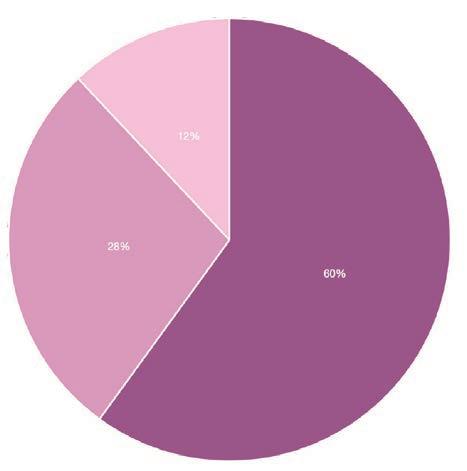
What is the most important reason to encourage community service in your parish?
Jesus calls us to serve the poor It builds community It creates an opportunity for encounter
www.charlottediocese.org
St. Dorothy
St. Francis of Assisi (Lenoir)
St. Francis of Assisi (Mocksville)
St. Gabriel
St. Helen
St. John Neumann
St. John the Baptist
St. Joseph (Asheboro)
St. Joseph (Bryson City)
St. Mark
St. Mary Mother of God
St. Thomas Aquinas
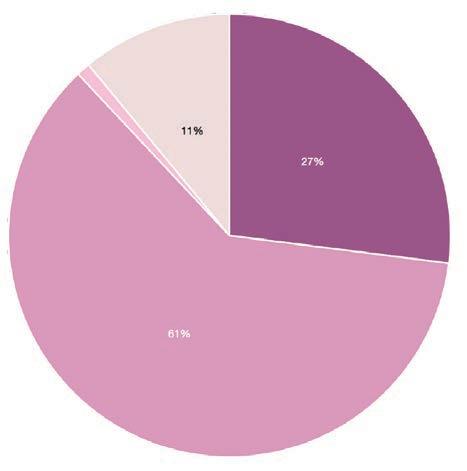
What is your most preferred method of bringing others closer to Christ?
conversation
LISA M. GERACI lmgeraci@rcdoc.org
MORGANTON — The pounding of the organ, the cries of babies and a multilingual cacophony –these are sounds of God according to Father Kenneth Whittington, and they are sounds he has learned to translate throughout his 84-year spiritual journey.
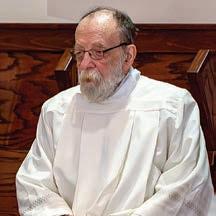
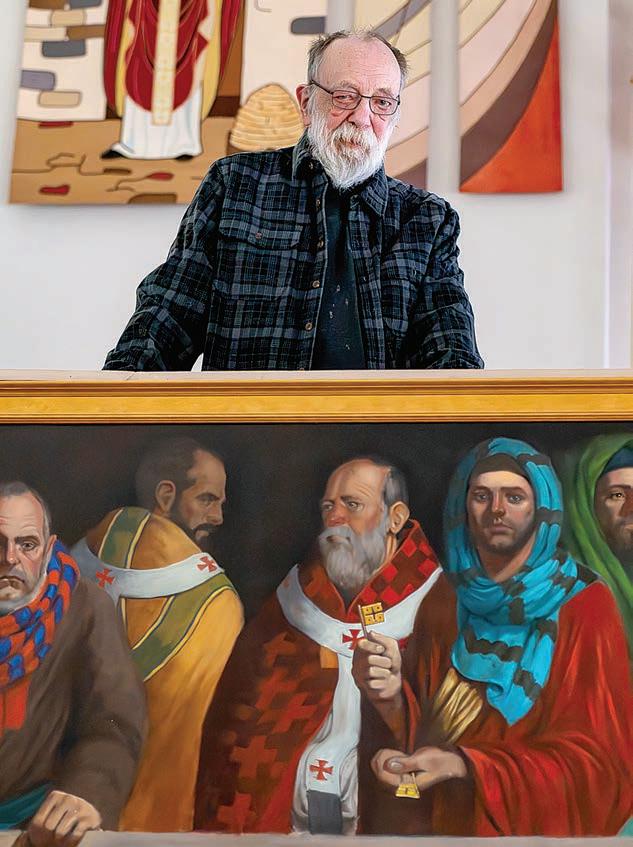
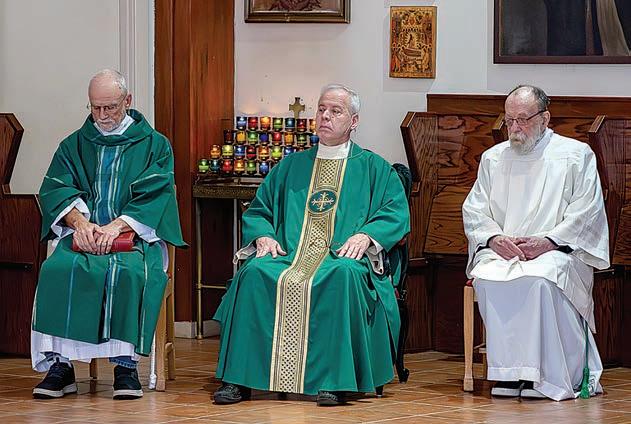
Father Whittington, lovingly referred to as “Father Ken” by his flock, retired Jan. 13 from St. Charles Borromeo Parish after 33 years as pastor and 38 years of priestly ministry.
“I was converted late in life, went to the seminary late in life, went on this journey, and I have loved every bit of it,” says Father Whittington, who was ordained at 46. “Never doubted my priesthood, or my pastoral work, but I am not sure if I could have done it any sooner.”
Well-known for his God-given gifts of music, art appreciation and linguistics, he traveled the world as a celebrated organist, only to find his home in the small mountain town of Morganton, serving a multicultural community he now calls family.
“It’s been quite a trip. Nobody told me what I would get into when I was sent here,” Father Whittington says with a smile and raised eyebrows.
Despite his retirement, his trek is far from over. With his new apartment just a few feet from the church, Father Whittington will stay close to his flock.
On his last day as pastor, he stood fully prepared to have Father Stephen Hoyt, who will serve as temporary administrator, take the reins of the diverse parish, but he intends to help his congregation as much as his body and mind will allow. “I really enjoy being near the people. I am retiring, but I’m not abandoning them,” he says. “I can still contribute.”
The parishioners are gleeful they can continue to share their life of art, culture and community with Father Ken by their side.
“We are tickled to death that he is staying close by,” says Gail Watson, the parish’s faith formation director who worked beside him for almost two decades. “We love him terribly.”
The priest’s long-standing traditions of larger-than-life Advent wreaths, Hmong New Year’s parties, parish potlucks, stunning religious artwork and an overflowing choir loft of musicians are sure to remain.
Father Whittington inherited the small but diverse community of Hmong, Hispanic – primarily Guatemalan – and Anglo parishioners in 1992. “Different languages, different people, different desires, different loves converge, and that’s good,” he says. “I love the sense of celebration and coming together in a united way.”
Some, like Deacon Ed Konarski, remember the long-haired, longbearded, wide-eyed version of Father Whittington who first barreled up the aisle, nonchalantly
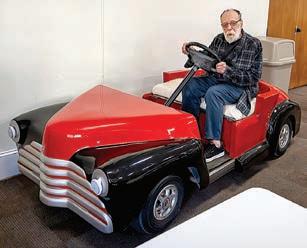
Father Whittington was given a golf cart, reminiscent of a classic 1940s car, from long-time parishioners. After retirement, he plans to stay
explains. “And, I’m proud of that.”
OPEN TO GROWTH
As Deacon Konarski recalls, “He really lit up the parish with his spirit, with his personality. His liturgy got us moving in the right direction.”
Father Whittington’s openness changed the community, not just the diverse congregation.
“He is willing to talk to anyone that would come in, whether they were parishioners or just people walking in off the street,” Deacon Konarski says. He credits that openness for the parish’s growth from 200 people to more than 1,000 today.
As Father Whittington explains, “I kept up relationships here. … A lot of people I baptized now, I also baptized their parents.”
Two of those were Watson’s husband and her son, who were both raised Methodist.
announcing he was the new pastor. He quickly settled in and got to know his parishioners.
Though Father Whittington was not familiar with the Hmong language, he was driven to study it to help communicate with his Hmong faithful, relying on one of the only parishioners who could read it.
“He would read, and I would read back,” Father Whittington says. “I didn’t learn Hmong just for the fun of it. I wanted to help the people and
understand them more.”
He celebrated the first Hmong Mass in the diocese in 1996. Just as languages come naturally to him, so does Christian love, which has more impact than words alone.
“One of the things that we have conquered here is even if you can’t speak the language, you can smile, you can speak your own language in a new way, and the next thing you know you are communicating with everybody,” Father Whittington
n 1960s: Master’s degree in performance from Peabody Conservatory of Music
n Late 1960s: Awarded a Fulbright Scholarship; studied at the Staatliche Hochschule für Musik in Frankfurt, Germany
n 1970s: Music Department head at Chatham Hall (Virginia) for 10 years.
n Late 1970s to early 1980s: Organist/ choirmaster at Episcopal churches in Connecticut and California
CONVERSION & PRIESTHOOD
n 1982: Music director at Our Lady of Grace Parish in Greensboro
n Mid-1980s: Converted to Catholicism
“He has a way of lifting you up and building your faith without you realizing that is what he is doing,” Watson says. “My husband, after speaking to Father Ken several times, decided to become Catholic. Our son also jumped on the train.”
Parishioner John Martino felt a bond with Father Whittington from the beginning, and that example of faith inspired him to become a deacon. Through a trifecta of art, music and liturgy, Father Whittington uplifted the parish, says Deacon Martino. “He is a brilliant liturgist who combines his appreciation for art and love for music.”
The once bare walls of the church are now filled with an eclectic array of religious art. The Litany of the Saints, a mural painted by local artist Matthew Good, covers the back wall, while about 40 icons and two sets of Stations of the Cross adorn the nave and sanctuary.
“We all learned to appreciate God through the beauty of the arts,” Deacon Konarski says.
Yet Father Whittington kept his musical talents low-key. The gifted musician did not want his passion to outweigh his priestly duties, he says, although when he became pastor, he realized his congregation needed musical inspiration.
“We probably had three people in
FATHER KEN, SEE PAGE 12
n 1984-1988: Attended Sacred Heart Seminary and School of Theology in Hales Corners, Wisconsin
n May 21, 1988: Ordained a priest at age 46
PASTORAL MINISTRY
n 1988-1992: Parochial vicar at St. Patrick Cathedral, Charlotte
n July 1992: Named pastor of St. Charles Borromeo Parish, Morganton
n Nov. 14, 1996: Celebrated first Hmong Mass in the diocese
n Late 1990s to early 2000s: Commissioned the Litany of the Saints mural by artist Matthew Good and installed nearly 40 icons
n 2013: Celebrated 70th birthday, 25th anniversary of ordination, and 21st year as pastor
n Jan. 13, 2026: Formally retired as pastor of St. Charles Borromeo Parish at 84
CHRISTINA LEE KNAUSS clknauss@rcdoc.org
BELMONT — Ground was broken earlier this month for a solar panel project that eventually will provide about a third of the power for the Sisters of Mercy campus off Mercy Drive.
The solar panels will generate an estimated 920 megawatt hours of electricity annually – approximately 30% of the total electricity usage on the campus. This project is the only groundmounted solar panel installation in Belmont.
Belmont Mayor Joe Jordan and City Council member Jim Hefferan were present for the groundbreaking ceremony, along with Mercy Sister Patricia Flynn and Mercy Sister Judith Frikker, members of the Institute Leadership Team for the Sisters of Mercy of the Americas.
espoused care for the Earth as one of their five “Critical Concerns,” topics of particular importance to their community.
The groundbreaking took place after more than four years of effort, according to Jason Giovannettone, the community’s director of climate and sustainability,
“Right after I started with the community in October 2021, the leaders said they wanted to build a big solar project somewhere on one of the properties in the United States,” Giovannettone said.
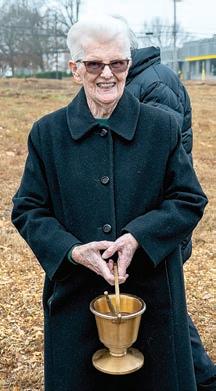
Other guests included representatives from Pisgah Energy, engineering firm McKim & Creed, several area ministries sponsored by the Sisters, and local Sisters of Mercy.
“The solar panel project in Belmont is a significant step in working toward the commitment of the Sisters of Mercy to achieve zero greenhouse gas emissions by 2045,” Mercy Sister Judith said. “We are excited to be taking this step on our campus.”
The Sisters of Mercy have long
“We looked at all of the properties, at how sunny those locations were, and California and North Carolina were at the top.”
On average, Belmont receives between 210 and 220 sunny days per year, according to statistics provided by the community. Belmont was selected because building in California proved to be more challenging due to multi-layered local and state ordinances, he said. He noted that the sisters’ neighbors were also supportive of the project.
The solar panel project was designed by McKim & Creed, headquartered in Raleigh. Asheville-based Pisgah Energy managed the permitting process and will oversee the installation. The solar panels are manufactured by Hanwha Q Cells USA Inc.
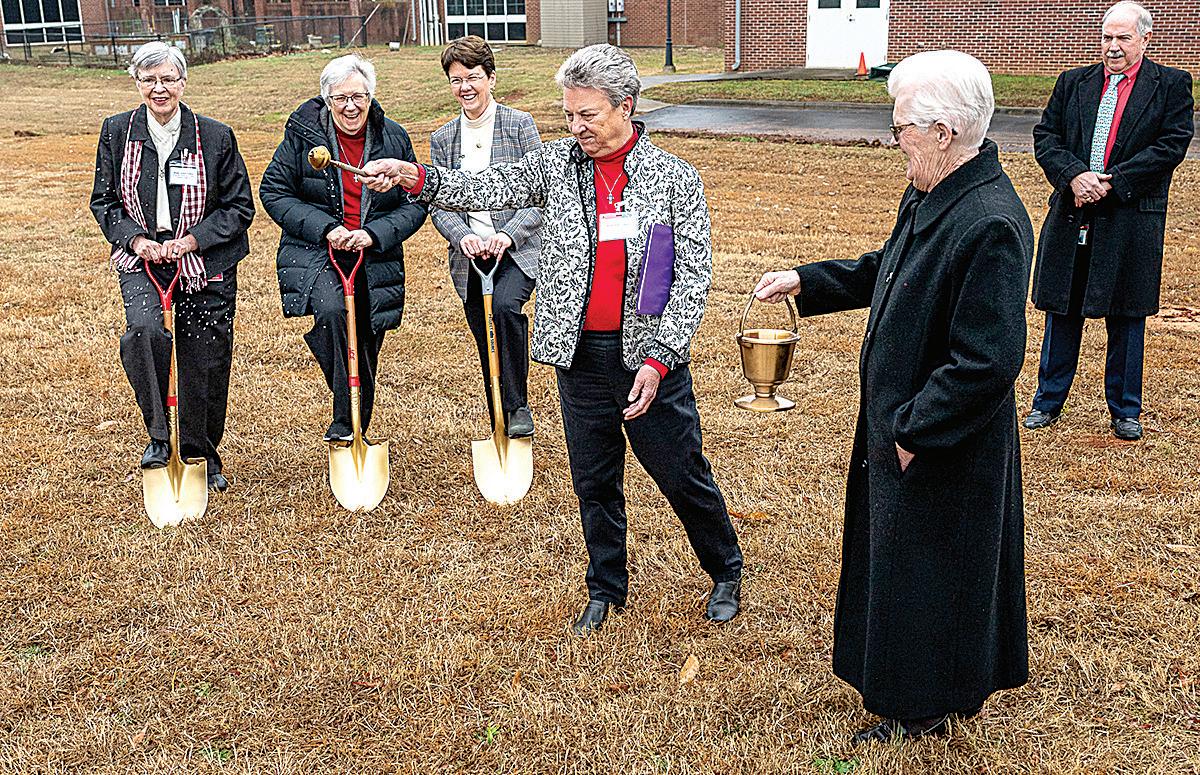
Construction was scheduled to begin in mid-January and is expected to take six months. The solar panels will be ground mounted due to the limited flat and unobstructed roof space. Approximately one acre of trees will be removed east of the solar array to prevent shading during morning hours. The Sisters of Mercy said they have committed to replanting trees in other locations and supporting reforestation efforts by other organizations to compensate. Electricity generated above
the daily amount needed by the campus, primarily during the summer months, may be sold back to Duke Energy. The solar project will be the latest effort by the Sisters to make their Belmont property more sustainable. A small solar array is located on the roof of the campus Heritage Center. To conserve water, low-flow showers and toilets have been installed, and the campus maintenance manager uses a system of sensors to let him know 24-7 if a water leak has occurred, because a
quick response can save massive amounts of water.
“That alone has saved the Sisters a lot of water, and we’re going to try to see if other properties can do that,” Giovannettone said. “Every property is completely unique.”
Other sustainability efforts by the Sisters of Mercy nationwide have included slowly converting their vehicle fleet over to hybrids, encouraging properties to subscribe to community solar plans where they are offered, and using LED light bulbs.
CHRISTINA LEE
KNAUSS
clknauss@rcdoc.org
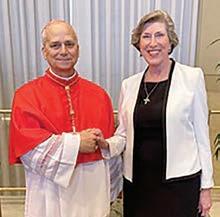
CHARLOTTE — Learn about the roles women played in the early history of the Church at the 26th annual Kennedy Lecture Jan. 31 at St. Peter Church in uptown Charlotte.
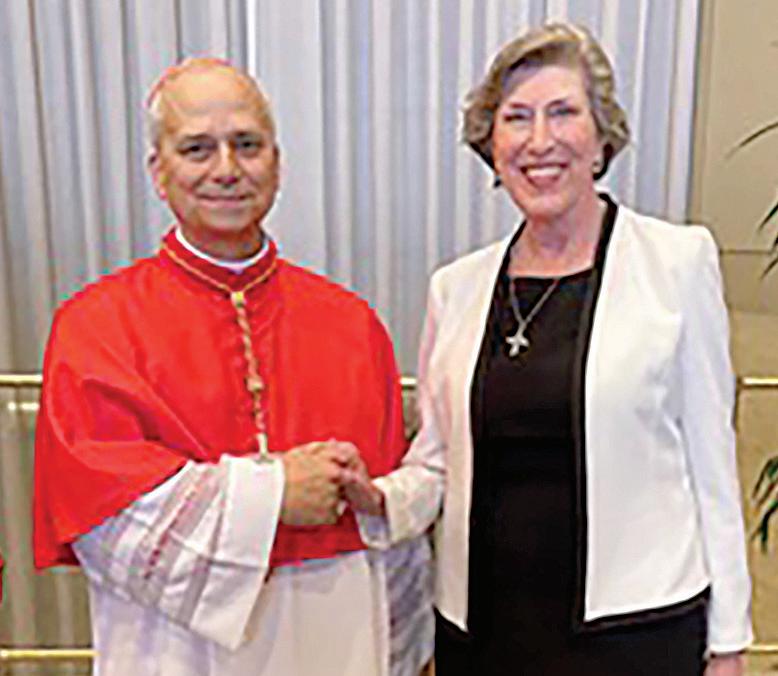
The 2026 Kennedy Lecturer is Dominican Sister Barbara Reid, one of the country’s leading feminist theologians. She will speak on the topic “Women Leaders in the Early Jesus Movement: Could the pivotal role women played in Jesus’ earthly ministry point the way to a greater role in the modern Church?”
After her remarks, Sister Reid will sit for an interview on a wide range of issues, including the roles of women in the Church, caring for creation, the new generation of seminarians, the recent worldwide Synod, divisions in the Church and the papacy of newly elected Leo XIV.
Conducting the interview will be two parishioners at St. Peter: Tim Funk, former religion reporter at The Charlotte Observer, and Joan Guthrie, a longtime television producer and the parish’s former communications director.
The lecture will be held from 9:30 to 11:30 a.m. in the church. Admission is free.
Sister Reid will also sign books starting at 8:30 a.m. in the parish’s Biss Hall. Her books include “Wisdom’s Feast: An Invitation to Feminist Interpretation of the Scriptures” and “At the Table of Holy Wisdom: Global Hungers and Feminist Biblical Interpretation.”
The Kennedy Lecture is funded through Thomas and Richard Kennedy in memory of their parents, Keith and Joan Kennedy.
Begun in 2000, the Kennedy Lecture series takes a deeper look at Catholic teachings and aims to stimulate thinking by engaging prominent people in the field of religion and ethics.
Past speakers in the Kennedy Lecture series have included Kate Hennessy, the granddaughter and biographer of Dorothy Day; Paul Elie, religion reporter for The New Yorker (he has a piece on the new American pope in the current issue) and author of a joint biography of Thomas Merton, Flannery O’Connor, Dorothy Day and Walker Percy; Father Agbonkhianmeghe Orobator, the Nigeria-born dean of the Jesuit School of Theology at Santa Clara University and one of Pope Francis’ appointees to the Vatican’s Synodality sessions; and Father Greg Boyle, the Jesuit founder of Homeboy Industries in Los Angeles, the largest gang-intervention and rehabilitation program, and author of the bestseller “Tattoos on the Heart: The Power of Boundless Compassion.”
More online

At www.stpeterscatholic.org : Get details and registration information.
LISA M. GERACI lmgeraci@rcdoc.prg
SALISBURY — Our Lady of Fatima devotees recently welcomed Aliança de Santa Maria (ASM) Sisters Angela de Fátima Coelho and Marta Serra to Sacred Heart Church in Salisbury, where they said Our Lady can heal our 21st-century wounds.
The sisters, who came from Portugal to speak at SEEK, a national youth conference, made a Jan. 6 detour to visit friends in the Diocese of Charlotte including Father John Eckert, pastor of Sacred Heart Parish.
The sisters evangelize worldwide, sharing the healing message of the Immaculate Heart of Mary and drawing inspiration from their devotion to Our Lady of Fatima.
The Blessed Virgin Mary made six appearances to three shepherd children –Jacinta and Francisco Marto, and Lucia dos Santos – from May to October 1917 in Fatima, Portugal. On Oct. 13, the “miracle of the sun,” during which the sun appeared to change colors and zigzag across the sky, was witnessed by more than 70,000 people. Jacinta and Francisco died from the Spanish flu a few years later, but Sister Lucia’s visions continued through 1929.
Father Eckert takes parishioners on yearly pilgrimages to Fatima, spending time with the sisters while visiting the apparition sites.
Sister Angela, who recently became mother superior of the order, was the lead investigator in the cause of sainthood for Sts. Jacinta and Francisco Marto and is vice postulator for Venerable Sister Lucia dos Santos, who is one miracle away from beatification.
As Father Eckert explained, “Not only does Sister Angela know so much about Fatima, but it is beautiful to see the way the sisters live it out.”
Sister Angela started her talk at Sacred Heart by sharing a phrase she overheard at the SEEK conference.
“There are some wounds in a human heart that only a mother can heal,” she said.
God gave Our Lady of Fatima the medicine to heal our modern wounds,
Sister Angela emphasized. But, as Our Lady of Fatima asked the shepherd children, she asked, “Are you willing to offer yourself to God?”
“Our Lady wants to be our refuge,” she said. “God wants the Immaculate Heart of Mary to be that to each one of His children. She said, ‘God wishes to establish a devotion to my heart.’”
In her Fatima appearances, Mary suggested a path to peace that includes spiritual practices such as saying a daily rosary and practicing the First Saturday Devotion, consecration to Jesus through Mary, and Eucharistic Adoration.
“By answering her requests, we open our hearts in such a way that the Holy Spirit can come and make our hearts like the heart of Christ,” Sister Angela said. “This is the triumph of the Immaculate Heart of Mary.”
Many people present were members of the Luminaries of Holy Mary, a nonprofit organization dedicated to spreading the message of Fatima. The organization blossomed from the friendship Mary Sample, a parishioner of St. Vincent de Paul Parish in Charlotte, established with the ASM sisters.
Sample introduced Father Eckert to the ASM sisters and has advocated for First Saturday Devotions and prayer groups across the diocese. The organization has seven national chapters, including those at Sacred Heart, St. Vincent de Paul and St. Michael the Archangel Parish in Gastonia. Father Eckert serves as the group’s
spiritual director.
Kelly Osborne, a Sacred Heart parishioner and member of the Luminaries of Mary, participated in the “knee walk” – a 182-meter crawl from the Basilica of the Most Holy Trinity to the Chapel of Apparitions on her knees.
“We offered it up for the sins against our Holy Mother and the healing of the fracture in our family,” Osborne said. “My knees were skinned and bleeding, but less than a week later the separation within my family was gone.”
Now, Osborne conducts Luminaries of the Holy Mary after First Saturday Devotions at Sacred Heart.
Sample believes that as people come to the monthly devotions or take Fatima pilgrimages like the ones she conducts twice a year, they will be more inclined to join the prayer group, and the message of Fatima will spread.
“Francisco, Jacinta and Lucia – I admire them, so I do my best every day to emulate them,” Sample said. “The message helps my spiritual path and makes me a better mother, a better wife and a better friend but, most importantly, gets me closer to Jesus through Mary.”
For more information
At www.asmaria.org/en : Learn about Aliança de Santa Maria. To learn more the Luminaries of Holy Mary, contact mary.sample3@gmail.com.
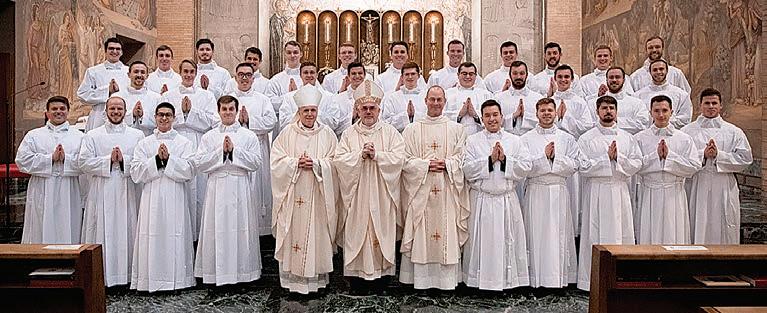
VATICAN CITY — Diocese of Charlotte
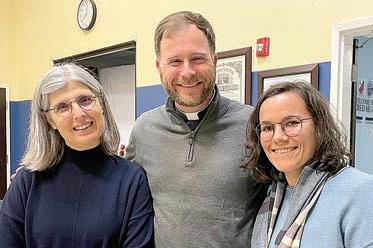
seminarian Elijah Buerkle has been instituted as a lector, part of his ongoing formation toward the priesthood.
Buerkle, a parishioner at St. Mark Parish in Huntersville, is studying at the Pontifical North American College in Rome. Founded in 1859 by Blessed Pius IX, the college serves as the American seminary in Rome and has formed more than 5,000 priests for service in the United States and Australia.
Buerkle was among 32 seminarians installed as lectors by Cardinal Fabio Baggio, C.S., undersecretary of the Vatican’s Dicastery for Promoting Integral Human Development, on Jan. 11 in the Chapel of the Immaculate Conception.
Addressing the new lectors in his homily, Cardinal Baggio encouraged the seminarians to proclaim the Word of God with faithfulness and joy.
“The bishop places the Book of the Gospels
in the hands of the newly ordained deacons by saying, ‘Receive the Gospel of Christ, whose herald you have become. Believe what you read, teach what you believe, and practice what you teach’.”
The ministry of lector is one of three steps toward the priesthood: candidacy, acolyte and lector. A lector may deliver the readings at Mass, with the exception of the Gospel. He may also announce the intentions during the Prayers of the Faithful and, in the absence of a cantor, recite the Responsorial Psalm. He may also recite the entrance and communion antiphons when they are not sung.
This installation typically occurs after a seminarian has completed his first year of Theology. Seminarians then have three additional years of theological, spiritual and pastoral formation before being considered for ordination to the priesthood.
CHARLOTTE — The Diocese of Charlotte Foundation is celebrating an important milestone – its 400th endowment. This endowment was established by a gift of $10,000 from a donor and will support Wake Forest University’s Catholic Campus Ministry, which serves as Christ’s presence on campus.
“We are there to serve all the Catholic students on campus,” said Father David McCanless, Catholic chaplain at the university. The campus ministry offers Mass, retreats, Bible study and other programs.
“It is a critical time in (students’) lives, and for a lot of them it is the first time they are away from home and the parish where they grew up. It is important that the Church has a presence on campus and reaches out to students,” Father McCanless said. Some of these students are discerning the priesthood and figuring out what role Christ and the Church will ultimately play in their lives, he adds.
The endowment will go toward the operating costs of the ministry, including events, retreats, programs and supplies.
Father McCanless is grateful for the gift, noting, “If there isn’t a priest on campus, there will be no visible sign of Christ and the Church.”
The diocese’s 400 endowments have assets of more than $112 million, thanks to generous donors contributing amounts large and small to the Diocese of Charlotte Foundation. The diocese reached 350 endowments just two years ago.
Established in 1994, the foundation offers a means for people and organizations to provide long-term financial stability for the diocese and its more than 150 organizations
and ministries.
An endowment is a permanent fund, the principal of which is invested – not spent – that generates income to help pay for projects and programs specified by the donor. Endowments help sustain the strength and viability of the diocese and its entities.
The foundation makes available annually 5% of an endowment’s market value (averaged over three years). It reports to endowment holders every quarter, outlining the latest value and how much is available for distribution for its prescribed purpose.
“The benefit of an endowment is that its principal continues to grow while at the same time generating an increasing amount of income for a school or ministry or parish,” said Jim Kelley, diocesan development director. “Now that Wake Forest has an endowment, they can encourage supporters to give to the endowment both during life and in their estate plans.”
Over the past 32 years, the foundation has distributed more than $20.5 million through its endowments to help support the diocese and its parishes, schools and ministries.
Interested in setting up – or adding to – an endowment to benefit your parish? Establish an endowment in the Diocese of Charlotte Foundation by leaving a bequest in a will, a beneficiary designation from a retirement plan, a trust or annuity, or a gift of real estate, life insurance, cash or securities.
Join more than 1,800 people who have informed the diocese they plan to remember the Church in their estate plans. For details, contact Gina Rhodes at 704-370-3364 or gmrhodes@rcdoc.org.
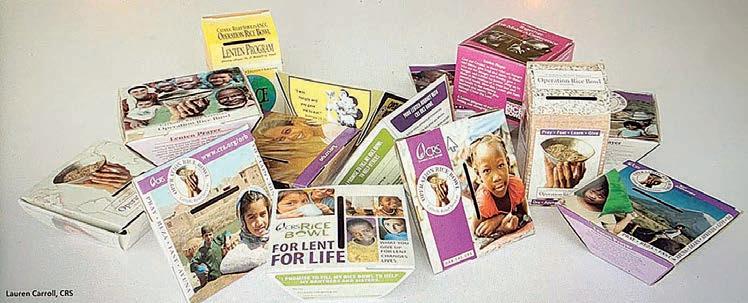
CHARLOTTE — The upcoming 2026 Catholic Relief Services Rice Bowl Program begins on Ash Wednesday, Feb. 18.
This year marks the 51st year of the CRS Rice Bowl program, which gives Catholics across the U.S. the opportunity to assist the global human family through daily prayer, weekly fasting and almsgiving.
Catholic Relief Services, founded in 1943, is the official overseas relief and development agency of the U.S. Conference of Catholic Bishops and a member of Caritas International. CRS alleviates suffering and provides assistance to people in need in more than 100 countries without regard to race, religion or nationality.
Parishes and schools already in the program should receive materials in late
January or early February. To confirm an upcoming shipment or request additional materials, call CRS at 1-800-222-0025. Those participating for the first time can call CRS or go to www.crsricebowl.org to order.
Materials ordered by Feb. 1 should arrive before the program starts on Ash Wednesday.
— Joe Purello

CHARLOTTE — The 2025 Diocesan Support Appeal campaign raised $7,411,089 from 11,377 donors across the Diocese of Charlotte – surpassing the campaign goal of $6.9 million by 6%.
The theme of the 2025 Diocesan Support Appeal, “Reflecting God’s Light,” drew upon a quote from St. Francis of Assisi: “All the darkness in the world cannot extinguish the light of a single candle.”
Bishop Michael Martin, OFM Conv., launched the campaign by recalling the sacrifices of the early Catholics in our diocese who stretched themselves to help
build up the Church in western North Carolina. “We are here today because of them,” Bishop Martin said. “What will future generations say of us? Will we have the courage and the audacity to form the world around us into the Body of Christ?
Overall, 16% of registered parishioners across the diocese gave an average donation of $651, up from an average gift of $595 in the 2024 campaign, and 75% percent of parishes and missions across the diocese reached or exceeded their campaign goal.
Parishioners in 92 parishes and missions in the Charlotte diocese support the DSA.
Parishes that exceed their goal keep the extra funds they collect, while parishes that fall short of their goal in donations from parishioners make up the shortfall
from their operating budgets.
“The DSA supports our efforts to help meet the material and spiritual needs of our local communities that are growing both in numbers and diversity,” said David Walsh, the diocese’s associate director of development.
“Through the combined support of our parishioners, we are truly ‘Reflecting God’s Light’ by giving generously, which allows more than 50 ministries and programs to make an impact far beyond what one parish could do alone,” he said.
The 2025 DSA campaign continues a trend, with each annual campaign surpassing the prior year’s fundraising total every year despite the pandemic.
— Trish Stukbauer
‘Through the combined support of our parishioners, we are truly ‘Reflecting God’s Light’.’
David
Diocesan Associate Director of Development
CHARLOTTE — What can Catholic Charities do for you? Catholic Charities is asking everyone in the diocese to answer that question by completing a short online survey that will help identify and prioritize community needs.
“Catholic Charities, under the direction of Bishop Michael Martin, is entering a time of visioning for the future,” explained Gerard Carter, executive director and CEO
of Catholic Charities Diocese of Charlotte.
“To guide this important work, Catholic Charities is inviting everyone to take part in a short survey.”
The survey, available in both English and Spanish, asks respondents to share their anticipated needs and experiences with the agency. It is designed to help Catholic Charities set priorities and strengthen its services to support the most
pressing concerns. Responses will be kept confidential and will be summarized to identify key themes.
“The survey will help identify the most pressing human needs in our communities and shape how Catholic Charities serves people in the years ahead,” Carter said.
“By listening carefully to the collective feedback provided, we hope to identify areas of need, opportunities for growth,
and ways to serve more effectively as a witness of the Gospel in action.”
— Trish Stukbauer

More online
Snap the QR code : The Catholic Charities survey is available in English and Spanish
the choir when I came here,” he recalls.
Now, the choir loft stays busy with a music director, organ, adult choir, Spanish choir, children’s choir and two trumpet players. Many members trained in Gregorian chant and classic hymns that the mountain parish would not have been exposed to before the world-renowned musician arrived.
Born a Lutheran, with an affinity for the pipe organ since he was 9, Father Whittington was no stranger to the Church. He traveled the world, playing the organ in churches of all faiths for audiences ranging from one to thousands. Yet he felt far from God, he says.
While his music career grew, his right hand failed to cooperate. After being diagnosed with focal dystonia, a neurological disorder triggered by repetitious movements, Father Whittington realized his career was flat-lining and begrudgingly accepted a position as music director at Our Lady of Grace Parish in Greensboro.
“Years later I can look back and see the physical problem as a gift,” he reflects. “It takes a while to see, like seeing plants grow. And we mature and grow at a certain rate when we talk about our joys and sorrows, our successes and our failures.”
Empty of faith, he nonetheless taught songs that raised hearts to the heavens. He slowly transformed the stone church into a musical haven while the Church slowly transformed him. He got close to the choir members, to then-pastor Father Bill Pharr, and eventually, to God.
When he converted to Catholicism, Father Whittington felt an even stronger pull.
“My opening conversion to Catholicism brought with it my priestly desire,” he says. He was ordained in 1988 at 46 and was assigned first to St. Patrick Cathedral in Charlotte and then to St. Charles Borromeo.
At one point he was up for reassignment, but parishioners started a letter-writing campaign in various languages begging for their art-loving, musical, linguistic genius pastor to remain – and the idea of reassignment was never mentioned again.
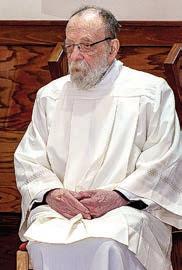
“We are fortunate in that we have a small church, and we don’t have room for everyone, so early on we learned how to work with each other quite well,” Father Whittington laughs. Now, in typical Father Whittington style, he can’t commit to a retirement itinerary. He is not a planner. He wants to be involved in something, perhaps the organ, he says.
Yet wherever his new path takes him, he wants to stay close to the people he’s served all these years.
“The people of our parish are on a journey they don’t really know about, either, so it is interesting to see how it will work out and keep witnessing people get over their difficulties,” Father Whittington says.
More online
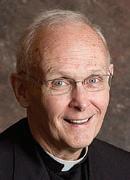
HIGH POINT — Oblates of St. Francis de Sales Father Thomas Patrick Norris passed away Jan. 9, 2026, after a brief illness.
Father Norris, 79, was a professed member of the Oblates for 60 years and a priest for 52 years. A teacher, superior, pastor and friend, Father Norris was a dedicated Oblate and priest.
Theology in Washington, D.C., and was ordained to the priesthood by Bishop Gerald McDevitt on June 16, 1973, at Our Lady of Ransom Parish in northeast Philadelphia.
WILMINGTON, Delaware — Capuchin Franciscan Father John Aurilia died peacefully Jan. 13, 2026, at St. Francis of Assisi Friary in Wilmington. He was 85.
The Mass of Christian Burial was celebrated Jan. 16, 2026, at Immaculate Heart of Mary Church in High Point. A Memorial Mass was also offered Jan. 21, 2026, at Our Lady of Light Chapel at the Oblate Retirement Center in Childs, Maryland. Burial was at the Oblate Cemetery at Childs.
Born in Harrisburg, Pennsylvania, on Feb. 28, 1946, he was the son of Richard Norris and Margaret (Huber) Norris. He attended St. Theresa of the Child Jesus grade school and Bishop McDevitt High School. Following graduation, he entered the Oblates of St. Francis de Sales and made his first profession of vows in 1965. He spent the next two years teaching at Father Judge High School in Philadelphia. He earned a Bachelor of Arts in English and philosophy from Allentown College of St. Francis de Sales (now DeSales University) in 1970. He continued his theological studies at De Sales School of
After ordination, Father Norris was assigned to Father Judge High School as a teacher and chairman of the theology department. Father Norris was well liked and respected among the school’s students, faculty and staff, and many graduates recall his kindness and dry sense of humor. During this time, he earned an M.A. in English from Villanova University. In 1980, he left Father Judge High School and was assigned to Holy Name High School in Reading, Pennsylvania, where he served as a teacher and religious superior.
In 1983, Father Norris went to Bishop Ireton High School in Alexandria, Virginia, as a teacher and religious superior of the Oblate community. In 1990, when his term as superior ended, Father Norris took a sabbatical and studied at the Catholic University of Louvain in Belgium.
When he returned to the United States, Father Norris began his long association with the Catholic community in North Carolina. He initially moved to the Tar Heel State to serve as campus minister at Greensboro College, Guilford College and University of North Carolina-Greensboro. After two years in college ministry, Father
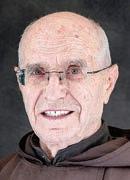
A Mass of Christian Burial was celebrated Jan. 20, 2026, at Sacred Heart Oratory in Wilmington. Burial followed Jan. 21, 2026, at St. Lawrence Friary in Beacon, New York. He was born on Dec. 8, 1940, in Montemarano, Italy, where he entered the Capuchin Franciscan order and was ordained a priest in 1966. He served as secretary to Pio of Pietrelcina – the future saint better known as Padre Pio – before coming to the United States (Editor’s note: Read more on page 22), where he was assigned to work with the Italianspeaking community in northern New Jersey.
He continued his studies of philosophy, earning a doctorate while at the same time serving in various parishes and ministries throughout the Capuchin order’s province in the eastern United States.
From 1995 to 2009, he served as pastor of Immaculate Conception Parish in

the Capuchin friars staffed the parish. Under his tenure, the parish successfully raised the funds necessary to build its present church, which was dedicated in 1998.
Other parishes and locations where Father Aurilia served included: Our Lady of Mt. Carmel Parish in Orange, New Jersey; St. Francis Seminary in Lafayette, New Jersey; St. Lawrence Friary in Beacon, New York; St. Francis DeSales Parish in Purcellville, Virginia; Most Holy Redeemer Parish in Tampa, Florida; Our Lady of Mt. Carmel Parish in Passaic, New Jersey; Immaculate Conception Parish in Bronx, New York; and his final assignment, St. Francis of Assisi Friary in Wilmington.
Father Aurilia was author of “Dearest Soul: A Spiritual Journey with Padre Pio” (Our Sunday Visitor, 2024).
Known for his love of life and all things Franciscan, he will be sorely missed by all.
He was preceded in death by his sister, Sophia Ricciadi, and his brother Orazio. He is survived by his sister Maria Riccio and brother Generoso; nephews Michael Riccio and Anthony Ricciadi; nieces Emanuela Harting and Nancy Rodriquez; and their spouses and children.
Mealey Funeral Home of Wilmington, Delaware, was in charge of the arrangements.

Turn your unused car, truck, boat, RV, or motorcycle into a force for good. Donate it to Catholic Charities and help fund programs for those in need.
And receive a tax benefit!
All vehicle makes and models are accepted.

BRIAN SEGOVIA bsegovia@rcdoc.org
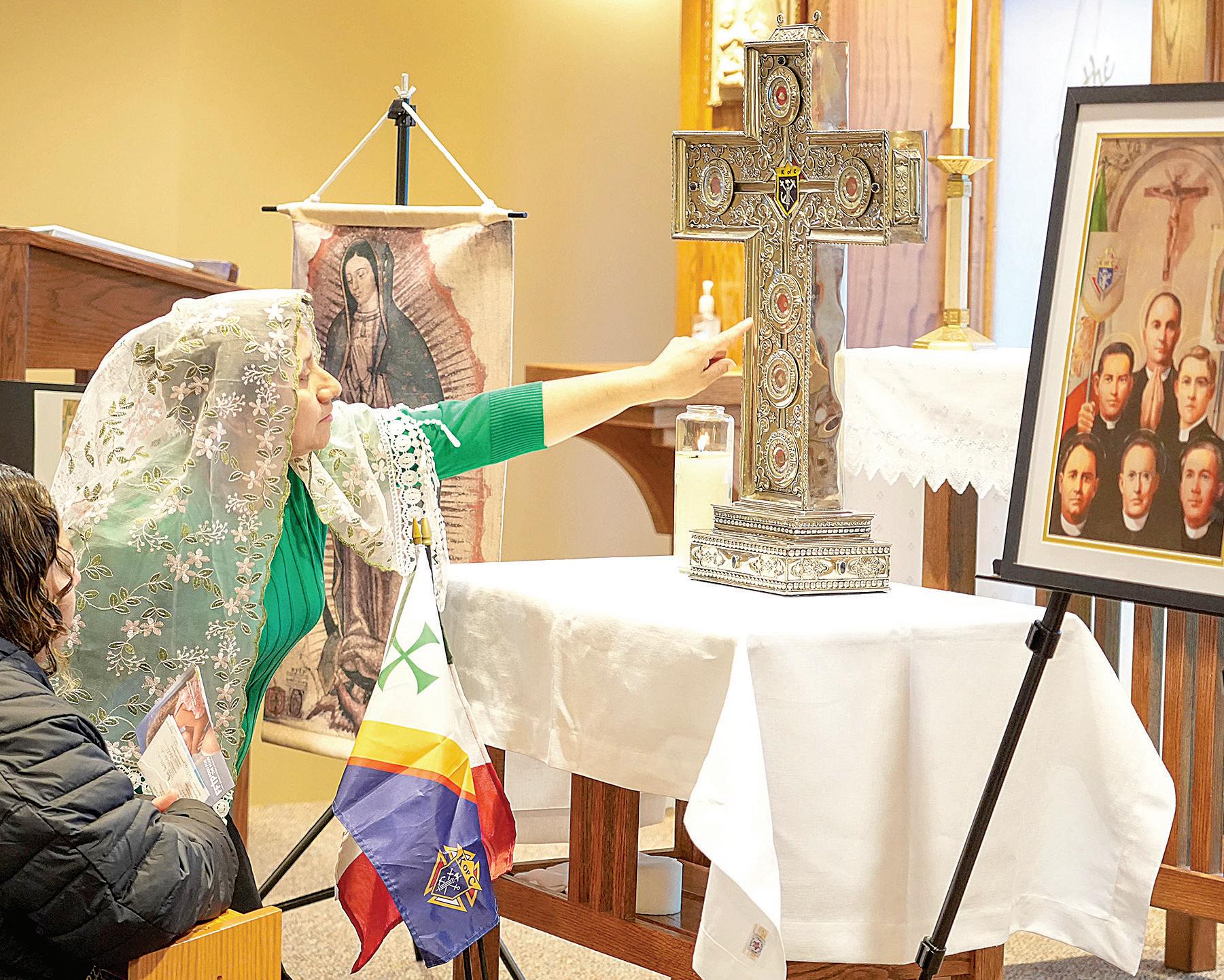
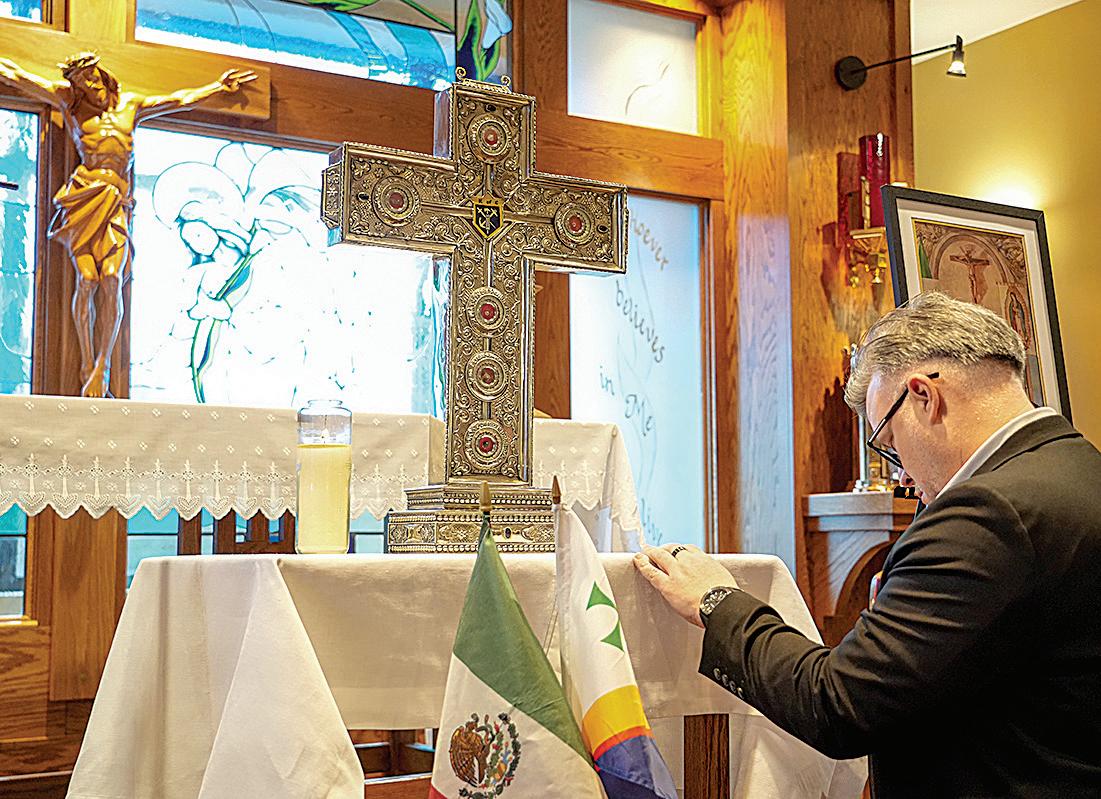
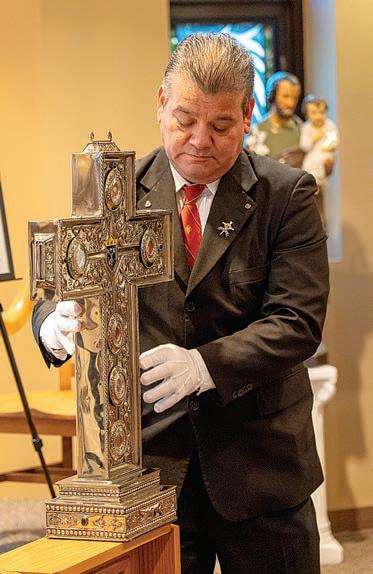
CHARLOTTE — Relics of six Mexican martyrs who were members of the Knights of Columbus were displayed in several parishes across the Diocese of Charlotte Jan. 10-20. The first-class bone relics of these Central American saints arrived in the diocese as a special recognition after the Knights of Columbus in North Carolina were honored by the Supreme Council for their efforts in increasing Hispanic membership.
“We received this as a token of appreciation because in the past three years we have had tremendous growth in Hispanic membership,” said Miguel Flores, field agent for the Knights of Columbus in Winston-Salem.
A cross containing a fragment of the DNA of each of the saints, brought from Guadalajara, Mexico, was first taken to the Diocese of Raleigh before arriving in the western part of the state.
These six Mexican martyrs were chaplains of their respective Knights of Columbus councils during the Cristero War, a violent anti-clerical repression carried out by the Mexican government in the 1920s against the Catholic Church. Through their ministry, these chaplains provided spiritual support to persecuted faithful, celebrated the sacraments in secret under the risk of arrest or violence, and became examples of courage and fidelity during intense repression.
Among them are figures such as St. Luis Bátiz Sáinz, who was executed for refusing
to renounce his faith and, according to witnesses, died proclaiming, “Long live Christ the King and the Virgin of Guadalupe!” José María Robles Hurtado, a parish priest in Tecolotlán, remained faithful to his community even when public
worship was banned and was executed after refusing to flee. Miguel de la Mora was killed as he prayed the rosary. Pedro de Jesús Maldonado Lucero and Mateo Correa Magallanes were executed for steadfastly carrying out their pastoral ministry, and Rodrigo Aguilar Alemán was captured and hanged in a public square for proclaiming his faith and defending his devotion to Christ.
These six were among 25 Mexican martyrs canonized by then-Pope John Paul II in 2000. Parishes with a significant Hispanic presence that are part of the Knights of Columbus received the relics. The relics were displayed at Holy Trinity Mission in Taylorsville, St. Leo the Great Church in Greensboro, Holy Infant Church in Reidsville, St. Benedict the Moor and Our Lady of Mercy churches in Winston-Salem, Holy Family Church in Clemmons, and lastly at Our Lady of Guadalupe Church in Charlotte.
“There has been a mix of spiritual emotions in the different places,” Flores said. “It’s amazing to have the relics here.”
In each parish, dozens of faithful had the
opportunity to approach the relics, where they could hear about the history of these martyrs from the Knights of Columbus. Some came to read the description in a brochure.
Others knelt in reverence for veneration, even touching the large reliquary with a rosary or a blessed cross.
At Our Lady of Mercy Parish, Guillermo Arellano, a member of the Knights of Columbus, said he was impressed by the martyrs’ story.
“I didn’t know they were Knights of Columbus; what they did to defend the Catholic Church is really an inspiration to me,” Arellano said.
According to Flores, who oversaw the rotation of the relics through the different parishes, both adults and children, when confronted with this reminder of faith and courage, have felt inspired to live by these values.
“Some people have broken down in tears, and some have been mesmerized by the story of these martyrs,” said Flores. “I’ve seen an increase in faith, inspiration and motivation in many of the faithful thanks to this.”
on the responsibility of acting pastor. Once more, he accepted the assignment with grace and goodwill.
Norris was assigned to parish ministry, serving as assistant pastor at Immaculate Heart of Mary Parish in High Point. In 1997, Father Norris was transferred to St. Mary Parish in Goldsboro, where he served as parochial vicar. Once more, “Father Tom” (as he became known in North Carolina) became an integral part of the local community and was noted for his dedication to the people of the parish. In 2004, he was named pastor there. When he left Goldsboro in 2012, Father Norris returned to Immaculate Heart of Mary Parish in High Point. He always loved the people of High Point, and they loved him. Amid staffing issues and other challenges in the parish, he remained a gentle and supportive presence.
In 2017, Father Norris was asked to take
Over the last few years, as aging and health issues slowed him down, Father Norris never wavered in his commitment to the Church or the people of IHM. He was always willing to help in any way he could, and he never stopped serving. The morning of his death, he had been preparing to celebrate a funeral Mass for a parishioner he had just visited and anointed earlier in the week.
Father Norris is preceded in death by his parents and his brother Dennis. He is survived by his parish family and his Oblate confreres.
Condolences may be sent to the Provincial Superior of the Oblates of St. Francis de Sales: Rev. Jack Kolodziej, OSFS, 2200 Kentmere Pkwy., Wilmington, DE 19806.
LISA M. GERACI lmgeraci@rcdoc.org
CHARLOTTE — New student enrollment applications for North Carolina Opportunity Scholarships for the 2026-2027 school year will open Monday, Feb. 2 – making a Catholic school education more accessible for thousands of children across the diocese.
Families with students enrolled or wanting to enroll in any of the Diocese of Charlotte’s 20 Catholic schools qualify regardless of income and are strongly encouraged to apply.
“It has definitely provided more opportunity across our diocese for a lot of our parents who have wanted to have the ability to come to our schools,” Superintendent Dr. Greg Monroe said. “It has also allowed a lot of our families to put money they used to have to go towards tuition to other essentials. So, it is improving the quality of life by freeing up $2,000, $3,000 or $6,000.”
The priority deadline for new applications is Monday, March 2. Renewal applications for students previously funded under the school voucher program are being updated in the North Carolina Education Assistance Authority’s (NCSEAA) “MyPortal” at the end of January. Parents have until Thursday, April 16, to renew their existing vouchers.
During the 2025-2026 year, Opportunity Scholarships provided a total of $14,896,201 in funding thus far for Diocese of Charlotte Schools, helping families at all income levels with significant financial assistance toward school tuition and fees for grades K-12. Statewide so far, 104,599 reported private school students throughout the state received a total of $291.8 million.
“Still, there are families out there that don’t know that this is an option,” Monroe said. “New families have probably heard about it, but there are some families already in the system who have yet to apply.”
New application awards are on a firstcome, first-served basis, with special priority for those on the lowest income bracket (Tier 1). Then they trickle down to Tier 2, Tier 3, and Tier 4 until all funds are eventually exhausted. Officials emphasize the earlier the application is received, the more likely it is to be funded.
Awards range from approximately $3,000 to $7,000, with income thresholds on each of the four tiers differing depending upon
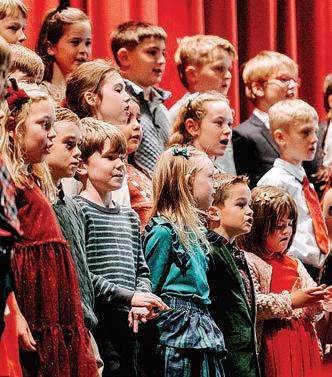
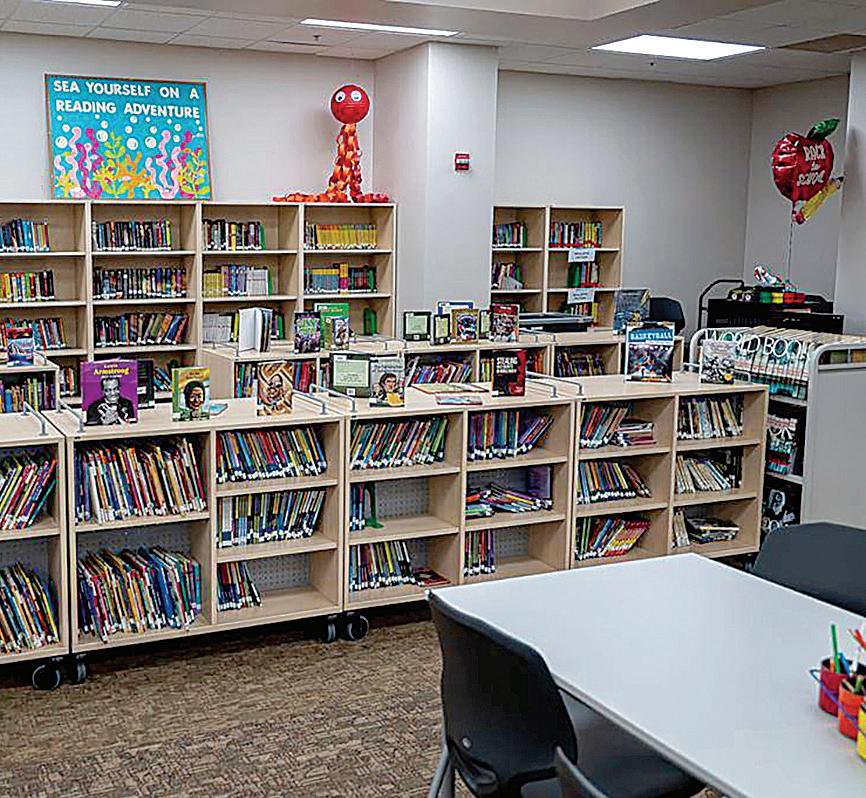
CHARLOTTE — With most of the Diocese of Charlotte’s 20 schools at or near capacity, now is the time to apply for the 2026-2027 school year.
The deadline for new families to apply for Mecklenburg Area Catholic Schools grades 1-12 is Feb. 28, but students should apply by Feb. 6 for ABC test scores to be returned by the deadline. Priority admission in prekindergarten, transitional kindergarten and kindergarten is set for Jan. 31.
Once the priority admission round
More online
ends, applications will be considered on a rolling, space-available basis – with priority given to siblings of current and former students, children of alumni and employees, and registered parishioners. Some classes fill up quickly, so new families are encouraged to register early and get on a waiting list if their preferred school’s classes are full. Deadlines for schools outside the Charlotte area vary but are also approaching; check your desired school’s website for specific deadlines.
At www.discovermacs.org/admissions/apply-now : Learn more about enrolling in MACS schools. At www.charlottediocese.org/schools : Learn more about the Diocese of Charlotte’s 20 Catholic schools, their mission and their leadership.
CHARLOTTE — St. Patrick School hit all the right notes as they wrapped up their 95th anniversary celebration with a new tradition – Christmas on Buchanan. The school, located on Buchanan Street, moved its annual Christmas performance from the MACS Fine Arts Center to its own gym for a special night of music and celebration. More than 100 battery-operated candles were placed in every window around the campus to set the scene for a magical holiday season, and Principal Nicholas Calametti even played the piano. “We were thrilled to host this annual event on campus this year and will continue to do so every Christmas moving forward,” he said, as the school looks ahead to a bright new year.
— Catholic News Herald
family size. They are expected to stay on par with the 2025-2026 amounts. Monroe noted the tiered system fosters diversity.
“The tiered system makes sure that that money goes to the people that need it the most,” Monroe said. “And the byproduct is, folks are coming in from a socioeconomic place where they have not been able to attend our schools in the past. It just further leads to the idea of Catholic schools being universally open to all kids.”
While enrollment numbers remained stable across the diocese, Monroe wants to make sure all families are able to benefit through the program.
Some obstacles, contributing to lack of funding are parents unaware they qualify for the program, difficulty with the NCSEAA portal, and missing the March deadline, Monroe said
Monroe attributes the decline to parents unaware they qualify for the program, difficulty with the NCSEAA portal, and missing the March deadline.
If parents need language assistance with the portal, the schools and Catholic Schools Office are committed to helping.
“For some of our non-English speaking families, we sit down with them and help them fill out the application on the portal because it is somewhat challenging,” Monroe said. “I suggest they work with us directly through the school, the billing office, or the Catholic Schools office. Monroe reported that all families needing further assistance were fully funded using Catholic Diocese aid.
“Before Opportunity Scholarship, we were not able to meet the full amount of aid that was required by our families that wanted to come to our schools,” Monroe said. “Now we are able to meet 100% of aid because of the Opportunity Scholarship.”
However, to receive further tuition assistance through the diocese, it is essential to apply for opportunity scholarships first.
More online
At www.k12.ncseaa.edu/opportunityscholarship/how-to-apply : Learn more and apply online. A companion program, the Education Student Account Scholarship (ESA+), has the same application window and provides financial assistance for private school and homeschool tuition for students with special needs.
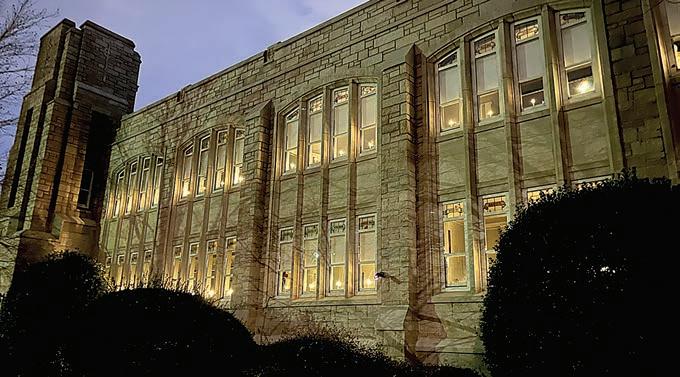
LISA M. GERACI lmgeraci@rcdoc.org
CHARLOTTE — Organizers for 2026 Catholic Schools Week are pulling out all the stops with wacky costumes, themed service days and faith-based fun for students, teachers and parents across the Diocese of Charlotte.
This year’s theme is “United in Faith and Community,” and it runs from Sunday, Jan. 25, to Saturday, Jan. 31. With 8,288 students enrolled in 20 schools spanning the diocese from the mountains to the Piedmont, there will be lots of cherished moments where faith, fun and education converge.
Catholic schools across the nation have participated in this week-long celebration since 1974, joining together as one united Catholic school community to spread a message of unity and hope.
“Catholic Schools Week celebrates the gift of a Catholic education and the people who make it possible. It gives us a chance to thank our students, families, faculty and clergy for the mission we share,” said Dr. Greg Monroe, the diocese’s superintendent of Catholic schools.
The 2024 Nation’s Report Card, released by the National Assessment of Educational Progress on Sept. 9, 2025, statistics showed that Catholic schools outperform public schools in many areas. National results report Catholic school students in grades 4 and 8 scored 247 and 293 in math, respectively, compared to 237 and 272 in public schools. Catholic school students in grades 4 and 8 scored 230 and 277, respectively, in reading, compared to 214 and 257 for students in public schools.
WHAT’S ON THE SCHEDULE
Catholic Schools Week celebrates the importance of
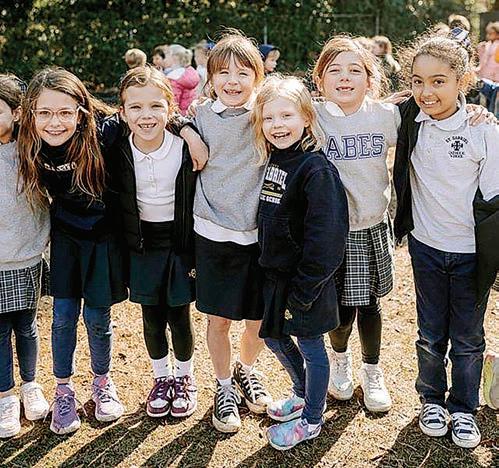
the nation, parish and communities. While every school has unique scheduled events, here is a sampling of activities: Many parishes will celebrate a special school Mass on Sunday to kick off the week. In some parishes, students will take on key roles during the Mass, children’s choirs will sing, and clothes showing school pride will be worn.
On Monday, students from Bishop McGuinness High School in Kernersville will venture off campus to serve the community, while St. Patrick and St. Matthew students in Charlotte will pack meals and blessing bags. Christ the King
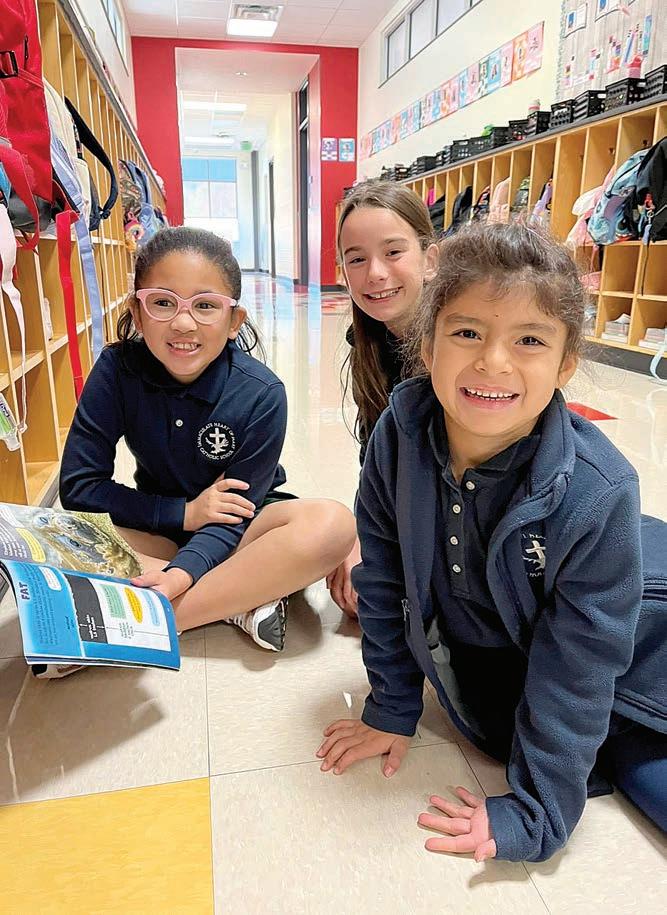
High School in Huntersville will host eighth-graders for a tour, pep rally and a sample class. Students at St. Pius X in Greensboro will perform a George Washington Carver play, while Charlotte Catholic High School students will have “Superhero Day.”
On Tuesday, Bishop Michael Martin will offer Mass at Bishop McGuinness High School. Students at Immaculate Heart of Mary in High Point will deliver community gift baskets, students at St. Ann in Charlotte will put on a talent show, while St. Gabriel in Charlotte and St. Leo the Great in Winston-Salem will host bingo and trivia.
On Wednesday, most schools will have a Mass. St. Ann will host military veterans for a Q&A session, and St. Leo the Great will host a family trivia night.
On Thursday, Immaculata Catholic School in Hendersonville will celebrate its centennial with a walk-through-time event. Immaculate Heart of Mary and St. Leo schools will welcome clergy and members of religious orders to talk about vocations.
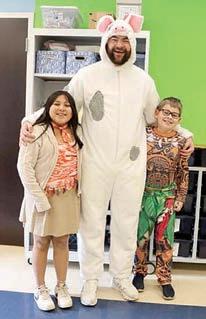
John Woods, speaker and author of the Seven Deadly Dragons series, will visit Sacred Heart in Salisbury and St. Ann. St. Patrick will visit Catholic Charities, and St. Pius X will have a saints-themed parade.
To end the week on Friday, Jan. 30, most schools will focus on friendly competitions. Students at the high schools and St. Patrick will be playing basketball. St. Leo the Great and St. Matthew will host volleyball games. Students at St. Michael in Gastonia will skate the day away at Kate’s Skate.
“Every day in our schools, students are formed in faith and virtue while being challenged to pursue academic excellence, so they are ready to love God, serve others, and lead with conviction and joy,” Monroe said.
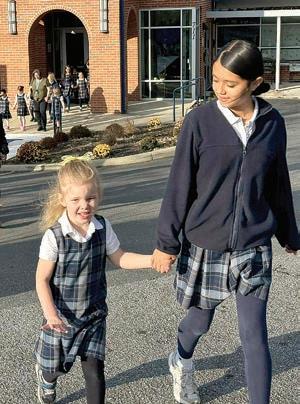
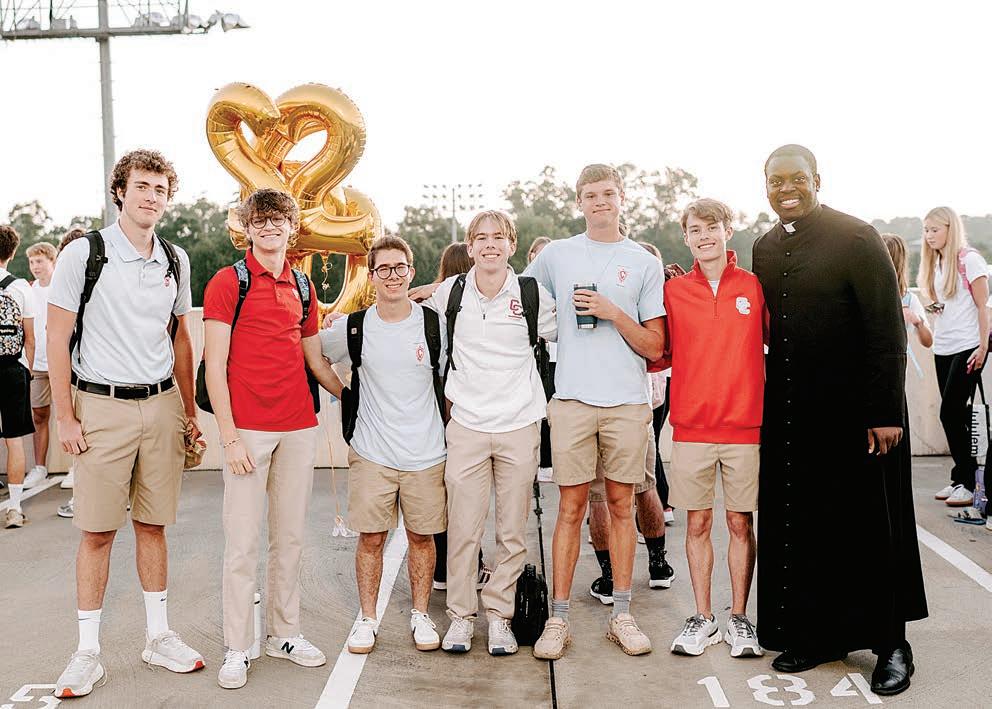


BRIAN SEGOVIA bsegovia@rcdoc.org
CHARLOTTE — Reliquias de seis mártires mexicanos que formaron parte de los Caballeros de Colón fueron expuestas al público en varias parroquias de la Diócesis de Charlotte desde el 10 hasta el 20 de enero. Las reliquias óseas de estos santos centroamericanos llegaron a la diócesis como un reconocimiento especial después de que los Caballeros de Colón en Carolina del Norte fueran distinguidos por el Consejo Supremo por sus esfuerzos en incrementar la membresía hispana.
“Recibimos esto como una muestra de agradecimiento porque en los últimos tres años hemos tenido un crecimiento tremendo en la membresía hispana”, dijo Miguel Flores, agente de campo de los Caballeros de Colón en Winston-Salem.
Una cruz que contiene un fragmento del ADN de cada uno de los santos, traída desde Guadalajara, México, fue trasladada primero a la Diócesis de Raleigh antes de llegar al oeste del estado.
Estos seis mártires mexicanos fueron capellanes de sus respectivos consejos de los Caballeros de Colón durante la Guerra Cristera, una violenta represión anticlerical ejercida por el gobierno mexicano en la década de 1920 contra la Iglesia Católica. A través de su ministerio, estos capellanes brindaron apoyo espiritual a los fieles perseguidos, celebraron los
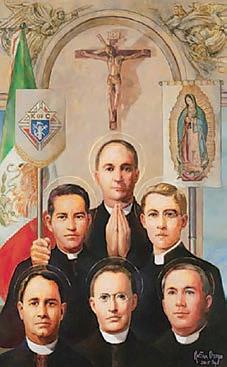
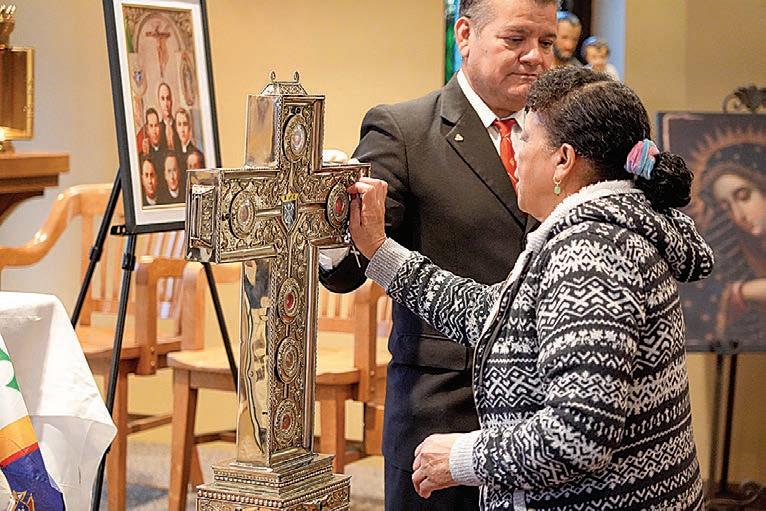
Varios fieles se acercaron a las reliquias y tocaron sus propios rosarios u otros objetos bendecidos contra ellas para que, por ese contacto, esos objetos pasen a considerarse reliquias de tercera clase dentro de la tradición católica.
sacramentos en secreto bajo riesgo de arresto o violencia, y se convirtieron en ejemplos de valentía y fidelidad durante la intensa represión. Entre ellos se encuentran figuras como San Luis Bátiz Sáinz, quien fue ejecutado por negarse a renunciar a su fe y, según testigos, murió proclamando: “¡Viva Cristo Rey y la Virgen de Guadalupe!”. José María Robles Hurtado, párroco en Tecolotlán, permaneció fiel a su comunidad aun cuando los cultos públicos fueron
prohibidos y fue ejecutado tras negarse a huir. Miguel de la Mora fue asesinado mientras rezaba el rosario. Pedro de Jesús Maldonado Lucero y Mateo Correa Magallanes fueron ejecutados por mantenerse firmes en el ejercicio de su ministerio pastoral, y Rodrigo Aguilar Alemán fue capturado y colgado en una plaza pública por proclamar su fe y defender su devoción a Cristo. Estos seis formaron parte del total de 25 mártires mexicanos que fueron canonizados por San Juan Pablo II en 2000.
Parroquias con gran presencia de
hispanos que forman parte de los Caballeros de Colón recibieron las reliquias. Las reliquias estuvieron en Holy Trinity en Taylorsville, St. Leo the Great en Greensboro, Holy Infant en Reidsville, St. Benedict the Moor y Our Lady of Mercy en Winston Salem, Holy Family en Clemmons y, finalmente, en la parroquia Nuestra Señora de Guadalupe en Charlotte el martes 20 de enero.
“Ha habido una mezcla de emociones espirituales en los diferentes lugares”, dijo Miguel Flores. “Es increíble tener las reliquias aquí.”
En cada una de las parroquias, docenas de fieles tuvieron la oportunidad de acercarse a las reliquias, donde pudieron escuchar a los Caballeros de Colón sobre la historia de estos mártires. Algunos se acercaron para leer la descripción en un tríptico. Otros se arrodillaron en reverencia para la veneración, e incluso hicieron contacto con la reliquia con un rosario o una cruz bendecida.
En la parroquia Our Lady of Mercy, Guillermo Arellano, miembro de los Caballeros de Colón, dijo que quedó impresionado por la historia de los mártires.
“No sabía que eran Caballeros de Colón; lo que hicieron para defender la Iglesia Católica realmente es una inspiración para mí”, dijo Arellano.
Según Miguel Flores, quien ha dirigido la rotación de las reliquias en las distintas parroquias, tanto adultos como niños, al tener este recordatorio de fe y coraje, se han sentido inspirados a vivir con esos valores.
“Ha habido personas que se han derrumbado en lágrimas y personas que han quedado hipnotizadas por la historia de estos mártires”, dijo Flores. “He visto un aumento de fe, inspiración y motivación en muchos de los fieles gracias a esto.”
se jubila tras 33 años de música, arte y comunidad
LISA M. GERACI lmgeraci@rcdoc.org
MORGANTON — El retumbar del órgano, el llanto de los bebés y una cacofonía multilingüe: estos son sonidos de Dios según el padre Kenneth Whittington, y son sonidos que ha aprendido a traducir a lo largo de sus 84 años de camino espiritual.
El padre Whittington, cariñosamente llamado “Padre Ken” por su comunidad, se jubiló el 13 de enero de la parroquia de San Carlos Borromeo tras 33 años como párroco y 38 años de sacerdocio. “Me convertí tarde en la vida, entré al
seminario tarde en la vida, emprendí este camino, y he amado cada momento”, dijo el padre Whittington, quien fue ordenado a los 46 años. “Nunca dudé de mi sacerdocio ni de mi trabajo pastoral, pero no estoy seguro de que hubiera podido hacerlo antes”.
Conocido por sus dones dados por Dios para la música, la apreciación del arte y la lingüística, recorrió el mundo como organista reconocido, solo para encontrar su hogar en el pequeño pueblo montañoso de Morganton, sirviendo a una comunidad multicultural que ahora llama familia. “Ha sido todo un viaje. Nadie me dijo en qué me estaba metiendo cuando me
enviaron aquí”, dijo el padre Whittington con una sonrisa y las cejas levantadas.
A pesar de su jubilación, su camino está lejos de terminar. Con su nuevo apartamento a solo unos pasos de la iglesia, el padre Whittington permanecerá cerca de su comunidad.
En su último día como párroco, se mostró plenamente preparado para que el padre Stephen Hoyt, quien servirá como administrador temporal, tome las riendas de su diversa parroquia, pero tiene la intención de ayudar a la congregación tanto como su cuerpo y su mente se lo permitan.
“Realmente disfruto estar cerca de la
gente. Me jubilo, pero no los abandono”, dijo el padre Whittington. “Todavía puedo contribuir”.
Los feligreses están encantados de poder seguir compartiendo su vida de arte, cultura y comunidad con el padre Whittington a su lado.
“Estamos encantadísimos de que se quede cerca”, dijo la directora de Formación en la Fe, Gail Watson, quien trabajó junto a él durante casi dos décadas. “Lo queremos muchísimo”.
Las tradiciones del sacerdote – coronas de Adviento más grandes que la vida, PADRE KEN, PASA A LA PÁGINA 20
Resultados diocesanos de una encuesta de 2025 realizada entre 24,332 católicos, con información sobre su fe y su vida parroquial.
INTRO: La Visión General Nov. 7, 2025
PARTE 1: Enseñanza central católica Nov. 7, 2025
PARTE 2: Prácticas espirituales Nov. 21, 2025
PARTE 3: Experiencia dominical Dec. 5, 2025
PARTE 4: Eficacia parroquial Dec. 19, 2025
PARTE 5: Eficacia parroquial (cont.) Jan. 9, 2026
PARTE 6: Impulso misionero Jan. 23, 2026
Ahora Pasado Próximo
discipulado misionero es el llamado a evangelizar, con palabras y con acciones, respondiendo al mandato de Jesús de “ir y hacer discípulos a todas las naciones” (Mateo 28, 19-20).
Los resultados del Índice de Formación de Discípulos (Disciple Maker Index, DMI) de la Diócesis de Charlotte, realizado la primavera pasada por la organización sin fines de lucro Catholic Leadership Institute (CLI), muestran que la mayoría de los encuestados afirma tener una fe personal sólida, pero poca confianza para compartir esa fe con los demás.
Años de investigación nacional de CLI indican que las conversaciones personales, de uno a uno, son la forma más eficaz de acercar a otros a Cristo. Sin embargo, muchos participantes en la encuesta DMI de la diócesis —la mayoría de los cuales dijo asistir regularmente a Misa y ser miembros de larga data de su parroquia— reconocieron que rara vez participan en el intercambio directo de la fe.
En general, el 60% dijo que rara vez o nunca ha compartido su propia historia de fe, y el 49% afirmó que rara vez o nunca ha hablado con otros sobre Jesús. Además, el 27% dijo que nunca ha invitado a alguien a Misa, y el 29% nunca ha invitado a alguien a una actividad o evento parroquial.
El DMI también identificó una falta significativa en la promoción de las vocaciones. Más de tres cuartas partes de los encuestados (78%) dijeron que nunca han animado a alguien a considerar el sacerdocio, y el 72% afirmó que nunca ha hablado con alguien sobre el discernimiento de una vocación a la vida religiosa consagrada.
La encuesta DMI también reveló que el 83% participó en tres o menos grupos
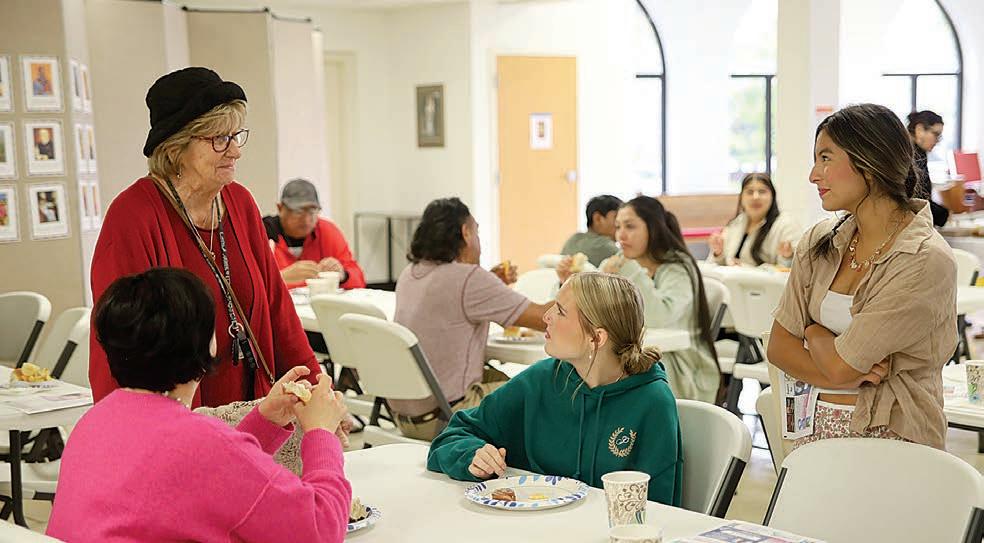
parroquiales durante el último año, lo que apunta a una participación limitada más allá de la Misa dominical.
Según la investigación de CLI, un factor clave para que los feligreses se conviertan en discípulos misioneros es que su parroquia los equipe para hacerlo. Una persona que está totalmente de acuerdo en que su parroquia la prepara para compartir su testimonio tiene el doble de probabilidades de hacerlo con mayor frecuencia. Además, los datos de CLI muestran que quienes se sienten seguros de su capacidad para responder preguntas sobre la enseñanza de la Iglesia también son más propensos a compartir su historia personal con otros. Asimismo, los feligreses que se sienten cómodos invitando a otra persona a asistir a Misa tienen 1.3
Invité a alguien a acompañarme a la Misa:
Oré con otra persona fuera de la Misa:
Nunca
Invité a un hombre a considerar una vocación al sacerdocio:
veces más probabilidades de indicar una mayor frecuencia al hablar de su fe con los demás.
Estas conexiones tienen sentido para el padre Alfonso Gamez Jr., de la parroquia San Francisco de Asís en Lenoir. Su parroquia se ubicó por encima del promedio diocesano en los porcentajes de encuestados que dijeron compartir con frecuencia su testimonio personal y hablar sobre Jesús con otras personas.
“El deseo de evangelizar es un fruto de la fe”, dice el padre Gamez. “Si doy a la gente una formación intencional y la alimento bien, espero – y tengo fe – que eso despierte de manera natural el deseo de evangelizar. Si realmente amas algo, no quieres guardarlo para ti”.
La evangelización es una prioridad para
Los feligreses de la parroquia de San Francisco de Asís disfrutan reunirse la mayoría de las mañanas de los domingos después de la Misa para compartir café y refrigerios. El ministerio de hospitalidad de la parroquia de Lenoir es un aspecto popular de la vida parroquial que busca fomentar la formación de relaciones fuera de la Misa y el compartir la fe con los demás.
PATRICIA L. GUILFOYLE | CATHOLIC NEWS HERALD
la parroquia de Lenoir. El padre Gamez y su equipo de liderazgo están desarrollando un plan pastoral a seis años que incluye más formas de capacitar e inspirar a los feligreses, especialmente a través de pequeños grupos de fe y apostolados que puedan crear “espacios de fraternidad”.
La idea, explica el padre Gamez, es ayudar a los feligreses a formar relaciones fuera de la Misa, con “oportunidades orgánicas para crecer en amistad y apoyarse mutuamente”.
“Porque, al final del día”, dice, “eso es lo que es una iglesia”.
“Siempre debería haber una oportunidad para que un feligrés pueda encontrar alguna subcomunidad dentro de la
Invité a alguien a considerar una vocación a la vida religiosa:
Compartí la historia de Jesús con otra persona:
Shared the story of Jesus with another person:
Shared my personal witness story with another person:
Compartí mi testimonio personal con otra persona:
comunidad, para sentirse conectado al conjunto y no quedar al margen”, añade.
“Creo que no se puede dar lo que no se tiene”, explica. “Así que nuestro objetivo como parroquia es alimentar a nuestros feligreses y, desde esa abundancia, ellos se entregarán, evangelizarán y se convertirán en discípulos misioneros”.
MIRANDO HACIA EL FUTURO
Los resultados del DMI de la diócesis revelan una Iglesia local con una fe profunda, pero también claras oportunidades de mejora, especialmente para ayudar a los católicos a crecer en confianza al compartir su fe y convertirse en discípulos misioneros de Jesucristo.
El obispo Michael Martin, OFM Conv., está revisando los resultados diocesanos
NOTA DEL EDITOR: La encuesta Disciple Maker Index, realizada entre marzo y abril de 2025 en las 93 parroquias y misiones de la Diócesis de Charlotte, recibió respuestas de 24,332 personas en 78 parroquias y misiones. Aunque no se trata de una muestra aleatoria ni representativa de todos los católicos de la diócesis, los resultados reflejan en gran medida las opiniones de los católicos activos que asisten regularmente a Misa y eligieron participar en las 75 preguntas de la encuesta. Los datos fueron tabulados por el Catholic Leadership Institute
del DMI junto con otras investigaciones, comentarios del clero y de líderes diocesanos, y las sesiones de escucha del Sínodo local. Esta información dará forma a una visión estratégica para el futuro de la diócesis, centrada en formar y capacitar discípulos que salgan a compartir la Buena Nueva en nuestras comunidades de rápido crecimiento.
— Patricia L. Guilfoyle
Parroquias destacadas que, según los encuestados del DMI, ofrecen formas de servir a personas necesitadas
Mayor porcentaje de encuestados que respondieron “totalmente de acuerdo”
1 Nuestra Señora de Guadalupe
2 San Pedro
3 Santa Ana
4 San Francisco de Asís (Lenoir)
San Eugenio Iglesia de la Epifanía
5 San Marcos
San Bernabé
6 San Mateo
Sagrado Corazón (Salisbury)
7 Santo Tomás de Aquino
Santísima Trinidad
8 San Carlos Borromeo
San Guillermo
9 Nuestra Señora de los Caminos
San Francisco de Asís (Mocksville)
Inmaculado Corazón de María (High Point)
10 San Andrés Apóstol
Nuestra Señora de la Asunción
San Pío X
San Juan Evangelista
1%
En el último año, ¿en cuántos ministerios u organizaciones parroquiales diferentes ha participado?
Discipulado misionero:
Compartir la historia de Jesús con los demás
Parroquias con el mayor número de encuestados del DMI que indicaron haber compartido la historia de Jesús con otros al menos a diario durante el último año, superando el promedio diocesano del 10%:
Iglesia de la Epifanía
Santos Ángeles
Santísima Trinidad
Nuestra Señora del Consuelo
Nuestra Señora de Guadalupe (Charlotte)
Nuestra Señora de Lourdes
Nuestra Señora de las Américas
Discipulado misionero:
Nuestra Señora de la Asunción
Nuestra Señora de los Caminos
San Benito el Moro
Santa Dorotea
San Francisco de Asís (Lenoir)
San José (Asheboro)
Santa María Auxiliadora de los Cristianos
Compartir mi testimonio personal con los demás
La encuesta del DMI preguntó a las personas en qué medida estaban de acuerdo con la afirmación: “Mi parroquia me prepara para tener conversaciones sobre mi fe con familiares y amigos, enseñándome cómo compartir mi testimonio personal.” Este es un factor clave en la capacidad de una persona para convertirse en discípulo misionero. El promedio diocesano de quienes respondieron “totalmente de acuerdo” fue del 20%.
Las parroquias que superaron ese promedio fueron:
Cristo Rey
Iglesia de la Epifanía
Santos Ángeles
Santísima Trinidad
Nuestra Señora de las Américas
Nuestra Señora de Guadalupe (Charlotte)
Nuestra Señora de Lourdes
Nuestra Señora de la Asunción
Nuestra Señora de los Caminos
Nuestra Señora de las Montañas
Sagrado Corazón (Salisbury)
Santa Ana
¿Cuál es la razón más importante para fomentar el servicio comunitario en su parroquia?
Jesús nos llama a servir a los pobres Fortalece la comunidad
Crea una oportunidad de encuentro
San Benito el Moro
Santa Dorotea
San Francisco de Asís (Lenoir)
San Francisco de Asís (Mocksville)
San Gabriel
Santa Elena
San Juan Neumann
San Juan Bautista
San José (Asheboro)
San José (Bryson City)
San Marcos
Santa María Madre de Dios
Santo Tomás de Aquino
¿Cuál es la manera que más prefiere para acercar a otras personas a Cristo?
Conversación personal (uno a uno) Dar ejemplo
Ir de puerta en puerta para invitar a otros Ser visible en la comunidad
LISA M. GERACI lmgeraci@rcdoc.org
CHARLOTTE — Las solicitudes de inscripción de nuevos estudiantes para las Becas de Oportunidad de Carolina del Norte para el año escolar 2026-27 abrirán el lunes 2 de febrero, lo que hará que una educación en escuelas católicas sea más accesible para miles de niños en toda la diócesis.
Las familias con estudiantes inscritos o que deseen inscribirse en cualquiera de las 20 escuelas católicas de la Diócesis de Charlotte califican independientemente de sus ingresos y se les anima encarecidamente a postularse. “Definitivamente ha brindado más oportunidades en toda nuestra diócesis para muchos de nuestros padres que han querido tener la posibilidad de asistir a nuestras escuelas”, dijo el superintendente Dr. Greg Monroe. “También ha permitido que muchas de nuestras familias destinen el dinero que antes usaban para la matrícula a otras necesidades esenciales. Así que está mejorando la calidad de vida al liberar $2,000, $3,000 o $6,000”.
La fecha límite prioritaria para nuevas solicitudes es el lunes 2 de marzo. Las solicitudes de renovación para estudiantes previamente financiados bajo el programa de vales escolares se están actualizando en el “MyPortal” de la Autoridad de Asistencia Educativa de Carolina del Norte (NCSEAA) a finales de enero. Los padres tienen hasta el jueves 16 de abril para renovar sus vales existentes.
Durante el año 2025-2026, las Becas de Oportunidad han proporcionado hasta ahora un total de $14,896,201 en financiamiento para las Escuelas de la Diócesis de Charlotte, ayudando a familias de todos los niveles de ingresos con una asistencia financiera significativa para la matrícula y las cuotas escolares desde kínder hasta grado 12. A nivel
VIENE DE LA PÁGINA 17
celebraciones del Año Nuevo hmong, comidas comunitarias, arte abundante y un coro siempre lleno – seguramente continuarán.
EL LENGUAJE DE LA COMUNIDAD
El padre Whittington heredó en 1992 una pequeña pero diversa comunidad de feligreses hmong, hispanos — principalmente guatemaltecos— y anglosajones.
“Diferentes idiomas, diferentes personas, diferentes deseos, diferentes amores convergen, y eso es bueno”, dijo el padre Whittington. “Me encanta el sentido de
CHARLOTTE — Con la mayoría de las 20 escuelas de la Diócesis de Charlotte ya al máximo o cerca de su capacidad, ahora es el momento de solicitar admisión para el año escolar 2026-2027. La fecha límite para que las nuevas familias soliciten ingreso a las Escuelas Católicas del Área de Mecklenburg (MACS) para los grados 1-12 es el 28 de febrero; sin embargo, los estudiantes deben presentar su solicitud antes del 6 de febrero para que los resultados del examen ABC se reciban antes de la fecha límite. La admisión prioritaria para prekindergarten, kindergarten transicional y kindergarten está programada para el 31 de enero.
Una vez finalizada la ronda de
Más online
admisión prioritaria, las solicitudes se considerarán de manera continua, según la disponibilidad de cupo, con prioridad para hermanos de estudiantes actuales y exalumnos, hijos de exalumnos y empleados, y feligreses registrados. Algunas clases se llenan rápidamente, por lo que se anima a las nuevas familias a registrarse con anticipación y a inscribirse en la lista de espera si las clases de la escuela de su preferencia ya están completas.
Las fechas límite para las escuelas fuera del área de Charlotte varían, pero también se están acercando; consulte el sitio web de la escuela de su interés para conocer las fechas específicas.
En www.discovermacs.org/admissions/apply-now : Obtenga más información sobre la inscripción en MACS.
En www.charlottediocese.org/schools : Conozca más sobre las 20 escuelas católicas de la Diócesis de Charlotte, su misión y su liderazgo.
estatal, hasta el momento, 104,599 estudiantes reportados de escuelas privadas en todo el estado recibieron un total de $291.8 millones.
“Aun así, hay familias que no saben que esta es una opción”, dijo Monroe. “Las familias nuevas probablemente han oído hablar del programa, pero hay algunas familias que ya están en el sistema y que aún no han solicitado”.
Las nuevas adjudicaciones de solicitudes se otorgan por orden de llegada, con prioridad especial para quienes se encuentran en el nivel de ingresos más bajo (Nivel 1). Luego
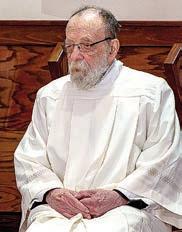
celebración y de reunirse de una manera unida”. Algunos, como el diácono Ed Konarski, recuerdan la versión del padre Whittington de cabello largo, barba larga y ojos muy abiertos que irrumpió por el pasillo central anunciando despreocupadamente que era el nuevo párroco.
Aunque el padre Whittington no había estado expuesto al idioma hmong, se sintió impulsado a estudiarlo, apoyándose en uno
Considere unirse a los más de 2 millones de miembros de la organización fraternal católica más grande del mundo y registrándose en línea hoy en: www.kofc.org/joinus/es Caballeros de Colón
Por tiempo limitado - Membresía en línea GRATISUse el código de promoción (BLESSEDMCGIVNEY)
se distribuyen a los Niveles 2, 3 y 4 hasta que finalmente se agoten todos los fondos. Los funcionarios enfatizan que cuanto antes se reciba la solicitud, mayor será la probabilidad de que sea financiada. Las adjudicaciones oscilan aproximadamente entre $3,000 y $7,000, con umbrales de ingresos en cada uno de los cuatro niveles que varían según el tamaño de la familia. Se espera que se mantengan a la par con los montos de 2025-2026. Monroe señaló que el sistema por niveles fomenta la diversidad.
de los pocos feligreses que sabía leerlo.
“Él leía y yo leía de vuelta”, dijo el padre Whittington. “No aprendí hmong solo por diversión. Quería ayudar a la gente y comprenderla mejor”.
Presidió la primera misa hmong en la diócesis en 1996. Así como los idiomas le resultan naturales, también lo es el amor, que puede ser aún más impactante.
“Una de las cosas que hemos logrado aquí es que, incluso si no puedes hablar el idioma, puedes sonreír, puedes hablar tu propio idioma de una manera nueva, y de pronto te estás comunicando con todos”, dijo el padre Whittington. “Y estoy orgulloso de eso”.
ENCONTRAR EL HOGAR
Nacido luterano y con afinidad por el órgano de tubos desde los 9 años, el padre Whittington no era ajeno a la Iglesia.
Recorrió el mundo tocando el órgano en iglesias de todas las confesiones para audiencias que iban de una persona a miles. Sin embargo, se sentía lejos de Dios, dijo.
Mientras su carrera musical crecía, su mano derecha dejó de responder. Tras ser diagnosticado con distonía focal, un trastorno neurológico desencadenado por movimientos repetitivos, el padre Whittington se dio cuenta de que su carrera se había detenido y aceptó a regañadientes un puesto como director musical en Nuestra Señora de la Gracia en
“El sistema por niveles asegura que ese dinero llegue a las personas que más lo necesitan”, dijo Monroe. Si bien las cifras de inscripción se mantuvieron estables en toda la diócesis, Monroe quiere asegurarse de que todas las familias puedan beneficiarse del programa. Algunos obstáculos que contribuyen a la falta de financiamiento son que los padres desconocen que califican para el programa, las dificultades con el portal de la NCSEAA y no cumplir con la fecha límite de marzo, dijo Monroe.
Monroe atribuye la disminución a que los padres no saben que califican para el programa, a las dificultades con el portal de la NCSEAA y a no cumplir con la fecha límite de marzo.
Si los padres necesitan asistencia lingüística con el portal, las escuelas y la Oficina de Escuelas Católicas se comprometen a ayudar. “Con algunas de nuestras familias que no hablan inglés, nos sentamos con ellas y las ayudamos a completar la solicitud en el portal porque es algo desafiante”, dijo Monroe. “Sugiero que trabajen directamente con nosotros a través de la escuela, la oficina de facturación o la Oficina de Escuelas Católicas”.
Monroe informó que todas las familias que necesitaron ayuda adicional fueron financiadas en su totalidad mediante la ayuda de la Diócesis Católica.
Más online
En www.k12.ncseaa.edu/opportunityscholarship/how-to-apply : Solicite online. Un programa complementario, la Beca de Cuenta Educativa para Estudiantes (ESA+), tiene el mismo período de solicitud y brinda asistencia financiera para la matrícula de escuelas privadas y educación en el hogar para estudiantes con necesidades especiales.
Greensboro.
Vacío de fe, aun así enseñaba cantos que elevaban los corazones al cielo. Poco a poco transformó los muros de piedra en un refugio musical mientras la Iglesia lo transformaba lentamente a él. Se acercó a los miembros del coro, al entonces párroco padre Bill Pharr y, finalmente, a Dios. Cuando se convirtió al catolicismo, el padre Whittington sintió una llamada aún más fuerte.
“Mi conversión inicial al catolicismo trajo consigo mi deseo sacerdotal”, recordó. Fue ordenado en 1988 a los 46 años y fue asignado primero a la Catedral de San Patricio en Charlotte y luego a San Carlos Borromeo.
Ahora, al más puro estilo del padre Whittington, no puede comprometerse con un itinerario específico de jubilación. No es planificador. Quiere involucrarse en algo, quizás el órgano, dijo. Pero adondequiera que lo lleve su nuevo camino, su parroquia lo seguirá.
“La gente de nuestra parroquia también está en un camino que realmente no conoce del todo, así que es interesante ver cómo se desarrollará y seguir siendo testigo de cómo las personas superan sus dificultades”, dijo el padre Whittington. Mas online
En www.catholicnewsherald.com Lea la historia completa y vea un video sobre el Padre Ken Whittington
Papa León XIV dijo que Dios se revela a través de la humanidad de Jesús, no solo a través de un “canal de transmisión de verdades intelectuales”. Es a través de la vida, muerte y resurrección de Jesús que uno puede llegar a conocer a Dios.
El Papa León continuó su serie de catequesis relacionadas con el Concilio Vaticano II durante su audiencia general del 21 de enero, revisitando la Constitución dogmática “Dei Verbum”, la enseñanza de la Iglesia sobre la revelación divina.
Al conocer a Jesús, dijo el Papa, podemos entrar en relación con Dios como sus hijos adoptivos, lo cual se reveló a través de la humanidad de Jesús. “Para conocer a Dios en Cristo debemos acoger su humanidad integral: la verdad de Dios no se revela plenamente cuando se le quita algo a lo humano, así como la integridad de la humanidad de Jesús no disminuye la plenitud del don divino”, dijo. “Es la humanidad integral de Jesús la que nos revela la verdad del Padre”.
Continuó diciendo que, al hacerse hombre, Jesús “nace, sana, enseña, sufre, muere, resucita y permanece entre nosotros. Por eso, para honrar la grandeza de la encarnación, no basta con considerar a Jesús como el canal de transmisión de verdades intelectuales”. Dios se comunica con nosotros, dijo el Papa, y al mismo tiempo, Jesús es la Palabra de Dios encarnada. A través de esta forma corporal, se revela la verdad de Dios.
“Jesucristo es el lugar en el cual reconocemos la verdad de Dios Padre, mientras nos descubrimos conocidos por él como hijos en el Hijo, llamados al mismo destino de la vida plena”, dijo. Para concluir, el Papa León dijo: “Hermanos y hermanas, siguiendo hasta el final el camino de Jesús llegamos a la certeza de que nada podrá separarnos del amor de Dios”.
El día anterior, el papa León dijo que amar al prójimo está al alcance de todos en su mensaje con motivo de la 34. Jornada Mundial del Enfermo.
“El dolor que nos mueve a la compasión no es el dolor de un extraño; es el dolor de un miembro de nuestro propio cuerpo, al que Cristo, nuestra cabeza, nos manda atender por el bien de todos”, escribió el papa. El mensaje se centra en la importancia de: “encontrarse y escuchar a los demás; dejarse conmover por la compasión; y amar a Dios mediante acciones concretas de solidaridad con los demás”.
Juan Bosco, el santo patrón de Brasil, nació en Piamonte, Italia, en 1815.A los dieciséis años, ingresó en el seminario de Chieri y era tan pobre, que debía mendigar para reunir el dinero y los vestidos indispensables. Después de haber recibido el diaconado, Juan Bosco pasó al seminario mayor de Turín y ahí empezó, con la aprobación de sus superiores, a reunir todos los domingos a un grupo de chiquillos abandonados de la ciudad en una especie de escuela y lugar de recreo al que llamó “Oratorio Festivo”. El primer puesto que ocupó Don Bosco fue el de capellán auxiliar en una casa de refugio para muchachas, que había fundado la marquesa di Barola. Tiempo después, acabó una escuela nocturna, y como el oratorio estaba lleno, abrió otros dos centros en otros tantos barrios de Turín. Por la misma época, empezó a dar alojamiento a los niños abandonados. Al poco tiempo, había ya cuarenta chicos, la mayoría aprendices, que vivían con Don Bosco y su madre en el barrio de Valdocco. Cayó pronto en la cuenta que todo el bien que hacía por sus chicos, se perdía con las malas influencias del exterior, y decidió construir sus propios talleres de aprendizaje. Los dos primeros fueron inaugurados en 1853. En 1856, había ya 150 internos, cuatro talleres, una imprenta, cuatro clases de latín y diez sacerdotes. Los externos eran 500. En diciembre de 1859, Don Bosco y sus 22 compañeros decidieron finalmente organizar la congregación, cuyas reglas habían sido aprobadas por Pío IX. Pero la aprobación definitiva no llegó sino hasta 15 años después. La orden creció rápidamente: en 1863 habían 39 salesianos, a la muerte del fundador eran ya 768. El siguiente paso de Don Bosco fue la fundación de una congregación femenina. La congregación quedó inaugurada en 1872, con la toma del hábito de 27 jóvenes a las que el santo llamó Hijas de Nuestra Señora, Auxilio de los Cristianos.
Don Bosco realizó uno de sus sueños al enviar sus primeros misioneros a la Patagonia. Poco a poco los salesianos se extendieron por toda América del Sur. Tenían 36 casas en el Nuevo Mundo y 38 en Europa. Las instituciones salesianas en la actualidad comprenden escuelas primaria y segunda enseñanza, seminarios, escuelas para adultos, escuelas técnicas y de agricultura, talleres de imprenta y librería, hospitales, etc. sin omitir las misiones y el trabajo pastoral.
UNA HISTORIA
San Juan Bosco necesitaba construir una Iglesia en honor a María Auxiliadora,
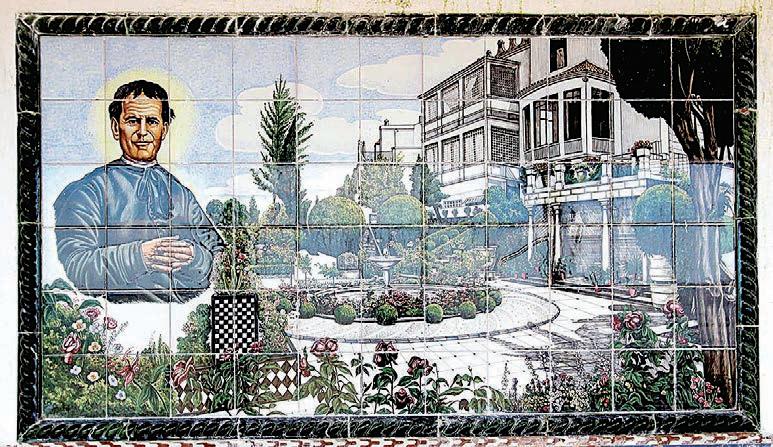
Oración a San Juan Bosco
Oh Don Bosco Santo, cuando estabais en esta tierra no había nadie que acudiendo a Vos, no fuera, por Vos mismo, benignamente recibido, consolado y ayudado. Ahora en el cielo, donde la caridad se perfecciona ¡cuánto debe arder vuestro gran corazón en amor hacia los necesitados! Ved, pues, mis presentes necesidades y ayudadme obteniéndome del Señor (pídase la gracia).
También Vos habéis experimentado durante la vida las privaciones, las enfermedades, las contradicciones,
pero no tenía nada de dinero. Se lanzó, pero las deudas también se lanzaron sobre él. Para conseguir dinero en un momento en que no podía retrasar más los pagos, un día le dijo a la Virgen: “¡Madre mía! Yo he hecho tantas veces lo que tú me has pedid...¿Consentirás en hacer hoy lo que yo te voy a pedir?”
Con la sensación de que la Virgen se ha puesto en sus manos, don Bosco penetra en el palacio de un enfermo que tenía bastante dinero pero que también era bastante tacaño. Este enfermo, que hace tres años vive crucificado por los dolores y no podía siquiera moverse de la cama, al ver a don Bosco le dijo: Si yo pudiera sentirme aliviado, haría algo por usted.
Muchas gracias; su deseo llega en el momento oportuno; necesito precisamente ahora tres mil liras.
Está bien; obténgame siquiera un alivio, y a fin de año se las daré.
Es que yo las necesito ahora mismo.
la incertidumbre del porvenir, las ingratitudes, las afrentas, las calumnias, las persecuciones y sabéis qué cosa es sufrir. Ea, pues, oh Don Bosco Santo, volved hacia mí vuestra bondadosa mirada y obtenedme del Señor cuánto pido, si es ventajoso para mí alma; o si no, obtenedme alguna otra gracia que me sea aún más útil, y una conformidad filial a la divina voluntad en todas las cosas, al mismo tiempo que una vida virtuosa y una santa muerte. Así sea.
El enfermo cambia con mucho dolor de postura, y mirando fijamente a don Bosco, le dice: “ ¿Ahora? Tendría que salir, ir yo mismo al Banco Nacional, negociar unas cédulas ¡ya ve!, es imposible.”
“No, señor, es muy posible replica don Bosco mirando su reloj. Son las dos de la tarde… Levántese, vístase y vamos allá dando gracias a María Auxiliadora.”
Al rumor de las voces han acudido varios parientes, la habitación está llena. Todos piensan de don Bosco lo mismo que el enfermo: que está chiflado.
Pero ya el enfermo no escuchaba más que a don Bosco; se arroja de la cama y empieza a vestirse solo, y solo, ante los ojos maravillados de sus parientes, sale de la habitación y baja las escaleras y sube al coche. Detrás de él, don Bosco.
“¡Cochero, al Banco Nacional!” Vende sus cédulas y entrega a don Bosco sus tres mil liras.
— ACI Prensa
CHARLOTTE — ¿Qué puede hacer Catholic Charities por ti? Catholic Charities está pidiendo a todas las personas de la diócesis que respondan a esa pregunta completando una breve encuesta en línea que ayudará a identificar y priorizar las necesidades de la comunidad.
“Catholic Charities, bajo la dirección del obispo Michael Martin, está entrando en un tiempo de reflexión y visión para el futuro”, explicó Gerard Carter, director ejecutivo y CEO de Catholic Charities de la Diócesis de Charlotte. “Para guiar este importante trabajo, Catholic Charities está invitando a todos a participar en una breve
encuesta”.
La encuesta, disponible tanto en inglés como en español, pide a los participantes que compartan sus necesidades previstas y sus experiencias con la agencia. Está diseñada para ayudar a Catholic Charities a establecer prioridades y fortalecer sus servicios para apoyar las preocupaciones más urgentes. Las respuestas se mantendrán confidenciales y se resumirán para identificar temas clave.
“La encuesta ayudará a identificar las necesidades humanas más apremiantes en nuestras comunidades y a dar forma a la manera en que Catholic Charities sirve
a las personas en los años venideros”, dijo Carter. “Al escuchar atentamente la retroalimentación colectiva proporcionada, esperamos identificar áreas de necesidad, oportunidades de crecimiento y formas de servir de manera más eficaz como testimonio del Evangelio en acción”.
— Trish Stukbauer

Más online
Escanea el código QR : La encuesta está disponible en inglés y en español
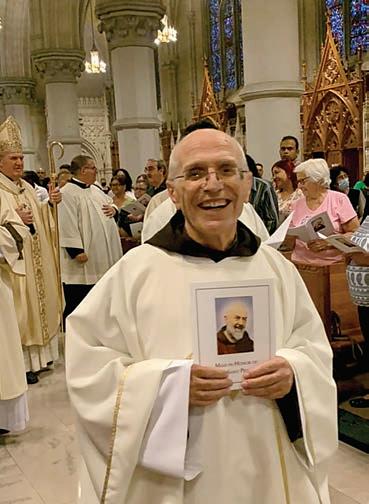
WILMINGTON, Delaware — Capuchin
Franciscan Father John Aurilia – the former assistant to St. Pio whose final interview last October on the Wilmington’s Diocese’s Catholic Forum broke records as it was viewed nearly 300,000 times – died Jan. 13 in Wilmington. He was 85.
Father Aurilia served as pastor of Immaculate Conception Parish in Hendersonville from 1995 to 2009, during the decades when the Capuchin friars staffed the parish. Before coming to the United States, Father Aurilia worked for then Padre Pio in 1967, when the Italian Capuchin friar, priest, stigmatist and mystic lived in San Giovanni Rotondo, Italy.
Father Aurilia was most recently living and writing at St. Francis of Assisi Friary in Wilmington and is the author of “Dearest Soul: A Spiritual Journey with Padre Pio,” published by OSV Books. He was featured Sept. 24 on the YouTube podcast produced by the Diocese of Wilmington Office of Communications.
The interview featured Father Aurilia’s recollections about working for the popular
saint, his humility and spirituality. The all-time, top-rated episode shattered the number for a typical podcast audience.
Father Aurilia was called to serve as Padre Pio’s personal secretary in August 1967, a year before Pio’s death.
In a story in “The Dialog,” Father Aurilia spoke of how Padre Pio’s devotion to the rosary and his ministry were legendary.
Father Aurilia was amazed at the grueling schedule he maintained, considering his health issues and how little he ate and slept.
“He would sometimes hear confessions for 12 hours straight,” he said. “People don’t realize how exhausting it is to hear confessions. If I hear confessions for an hour, I need a break.”
Father Aurilia witnessed a few instances of Padre Pio’s extraordinary powers. One was his ability to bilocate, one of his many gifts from God. One day, the seminary received word that Pio had been present in a courtroom in the northern Italian city of Bologna, acting in someone’s defense. When asked how that could have been when he was at Rotondo at the same time, Pio responded that it was a “secret.”
On another occasion, Father Aurilia
witnessed Padre Pio’s ability to read thoughts. Father Aurilia, whose job it was to answer the mail, received a letter from a woman in Australia who wanted to know if her son would become a doctor or a priest.
Father Aurilia took the letter to the future saint, and before he could enter his room, the priest said the boy would become a priest.
Father Aurilia, who kept relics from Padre Pio in his residence, also reported smelling the same flowery scents that others experienced emanating from Padre Pio, even though the priest never used perfume.
He also saw the stigmata on Padre Pio’s hands and feet. “They were ugly, bleeding,” he said. “And some days the stigmata were so visible that you could see through them. They were deep, round holes. They needed to be dressed three, four times a day.”
Father Aurilia noted that while Padre Pio did not offer him spiritual direction, he did learn a lot about obedience from him. When his monthlong service was over, he did not want to return to teaching, but rather wanted to work in ministry. Padre Pio reminded him of his vow of obedience, and that was the end of the conversation. “I returned to teaching,” he said.





WASHINGTON, D.C. — The Department of Homeland Security said Jan. 14 it issued an interim final rule reducing wait times for religious worker visas. Catholic advocates were among those who pushed the Trump administration to address the backlog in their visa category.
DHS said its regulation change would eliminate the one-year minimum wait time applicants are required to remain outside the U.S. before reapplying for the non-immigrant religious worker R-1 visa.
A spokesperson for DHS said in a statement the department “is committed to protecting and preserving freedom and expression of religion” and was taking the necessary steps to ensure religious organizations can continue their mission that is “essential to the social and moral fabric of this country.”
Archbishop Paul S. Coakley of Oklahoma City, president of the U.S. Conference of Catholic Bishops, and Bishop Brendan J. Cahill of Victoria, Texas, chairman of the USCCB’s migration committee, said they “are tremendously grateful for the Administration’s work to address certain challenges facing foreign-born religious workers, their employers, and the American communities they serve.” It’s a “significant step” that will “help facilitate essential religious services for Catholics and other people of faith” in the U.S., but they encouraged Congress to provide permanent relief by enacting the bipartisan Religious Workforce Protection Act.
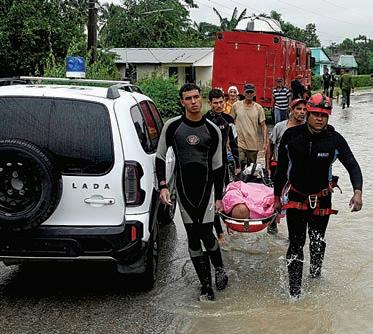
WASHINGTON, D.C. — U.S. Secretary of State Marco Rubio announced Jan. 14 that the first in a series of direct humanitarian shipments to Cuba “in close partnership with the Catholic Church” would take place the same day – as well as another Jan. 16 – as the island recovers from Hurricane Melissa.
In a statement, Rubio called the shipments “part of the $3 million of disaster assistance committed by the Trump Administration” in the wake of the storm, which left extensive damage in eastern Cuba, as well as Jamaica and Haiti.
“These shipments reflect our sustained commitment to the Cuban people as they continue to recover from the devastation,” Rubio said. “While the storm has passed, humanitarian needs remain acute, and recovery efforts are ongoing.”
The State Department said the food kits include supplies like rice, beans, oil and sugar. The assistance will also include water purification tablets and storage containers, as well as household essentials like pots and pans,
as well as sheets, blankets and solar lanterns.
Rubio said, “We are working in close partnership with the Catholic Church in Cuba to deliver aid transparently and effectively.”
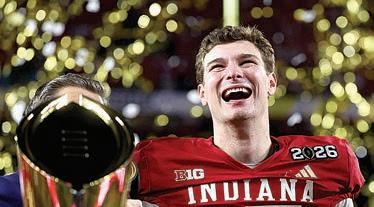
MIAMI — Indiana Hoosiers quarterback Fernando Mendoza, a Catholic and the 2025 Heisman Trophy winner, reacts after the College Football Playoff National Championship game against the Miami Hurricanes Jan. 19 at Hard Rock Stadium in Miami Gardens, Fla.
The Hoosiers defeated the Hurricanes 27-21 in the national title game. Mendoza has become well known for his outspoken Catholic faith and humble demeanor despite the national spotlight.
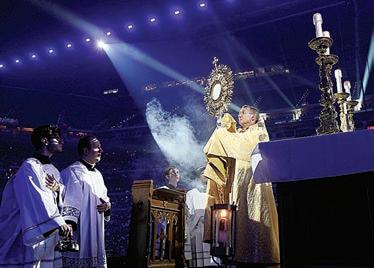
WASHINGTON, D.C. — The National Eucharistic Revival – a three-year initiative to renew belief in the real presence of Jesus Christ in the Eucharist following a marked decline in belief among U.S. Catholics – has rekindled both faith and outreach, although several challenges remain in extending those results to those not already in the pews.
The findings were released Jan. 15 in “Share Your Perspective” (“Comparte tu perspectiva”), a study of the impact of the National Eucharistic Revival conducted by the Catholic market research firm Vinea Research, which had been engaged by revival organizers and the U.S. Conference of Catholic Bishops.
“The bishops decided to take time to hear from Catholics in the United States about their experiences of the fruits of the Eucharistic Revival, to recognize ongoing needs within the Church, and to identify areas for potential growth in the future,” wrote Archbishop Charles C. Thompson of Indianapolis, chair of the USCCB’s Committee on Evangelization and Catechesis, in a Jan. 15 letter announcing the data’s release.
Eucharistic belief and adoration, along with volunteering and outreach, rose among national, local and even non-participating Catholics, said the report.
At the same time, challenges include reaching beyond engaged Catholics, lack of awareness and “apathy among some target audiences,” as well as the risk of leadership burnout without more organizational support, said the report.
Still, the report concluded, the revival fostered both personal and parish renewal – and “the evidence suggests that a future Revival could bear similar fruit and, with clear support and capacity, potentially expand its reach further.”
CHICAGO — The Augustinians, Pope Leo XIV’s religious order, have a newly elected prior provincial for their Midwest province, a position the pope held from 1999 to 2001.
Augustinian Father Tom McCarthy, vocations director, was elected prior provincial of the Chicago-based Province of Our Mother of Good Counsel Dec. 22, in a vote by 73 friars from the Midwest, Canada and the Chulacanas Vicariate of northern Peru.
“I’ve always looked to the provincial, but I never thought I’d be the provincial,” said Father McCarthy, 60. “I was very honored and humbled that my brothers entrusted me (with) this responsibility.”
His “main ministry,” he said, is “to the friars, the people and the institutions” that the Midwest Augustinians serve.
Father McCarthy, who will take his new post in June, grew up in the Marquette Park neighborhood of Chicago’s Southwest Side, where the Midwest Augustinians primarily serve. He has a bachelor’s degree in communication arts from Villanova University, a master’s degree in education from Lewis University and a Master of Divinity from Catholic Theological Union.
He professed solemn vows with the Order of St. Augustine in 1993 and was ordained a priest a year later.
Father McCarthy regularly gives parish missions and holds retreats in the Chicago area and around the country.
ST. PAUL, Minnesota — Archbishop Bernard A. Hebda of St. Paul and Minneapolis, whose
territory has become a flashpoint in the nation’s immigration policy debate, is calling for “comprehensive immigration reform now,” citing “human cost on all sides.”
The archbishop published a Jan. 20 opinion piece in The Wall Street Journal, reflecting on violent clashes in his state over immigration – and warning that what once was “a difficult policy discussion” has now “hardened into a cultural and political battleground” that is “playing out on the streets here.”
“If recent events in Minnesota have clarified anything, it’s that we can no longer put off the hard work of immigration reform,” he wrote.
Archbishop Hebda lamented failed bipartisan attempts in 2013 to rectify the nation’s immigration challenges, such as a bill set to allocate “billions for border security and a 12year path to citizenship for law-abiding immigrants.”
“Each year of inaction has made the debate louder, angrier and less humane,” he said, and he cited Catholic social teaching’s principles on immigration, which balance the rights of immigrants with the rights and responsibilities of nations.
Ultimately, he said, immigration reform is a question of “restoring moral order, strengthening families and promoting the common good,” with that work demanding “courage, humility and a willingness to compromise – virtues that define proper statesmanship.”
Archbishop Hebda underscored that his message was prompted by first-hand pastoral experience with all affected by immigration challenges, adding, “The Church can’t choose one flock over another. Neither should the nation.”
– OSV News
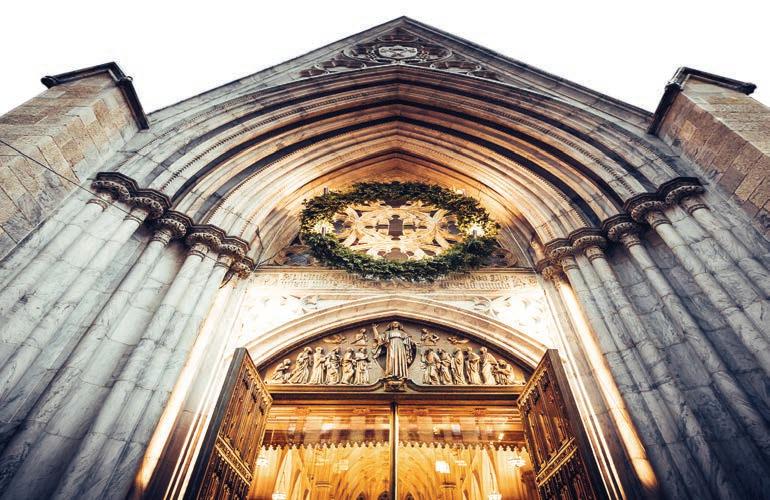
PAULINA GUZIK OSV News
VATICAN CITY — After an intense day of roundtable discussions, the “low-batteried” but “very pleased” cardinals wrapped the first historic extraordinary consistory convened by Pope Leo XIV in a spirit of fraternity, with a sense of knowing each other better and saying they “discovered” the pope, while he did “more listening than talking.” They left the consistory with a clear vision of the new pontiff for “a Church that cares.” Pope Leo intends to continue consistory discussions once a year, with the next consistory planned for the end of June and following ones scheduled once a year, lasting three to four days, Matteo Bruni, director of the Holy See Press Office, confirmed.
The pope, according to Bruni, told cardinals Jan. 8 that the consistory is designed as a “continuity with what was requested during the cardinals’ meetings before the conclave and also after the conclave,” and that the synodal methodology used “was chosen to help them meet and get to know each other better.”
Salesian Cardinal Cristóbal López Romero of Rabat, Morocco, told journalists that, with the level of fraternity reached during 15 hours of consistory discussions, “the College of Cardinals has been strengthened.”
He said he is “very pleased,” as the meeting “has allowed us to get to know each other a little better, to share, and because it will also continue.”
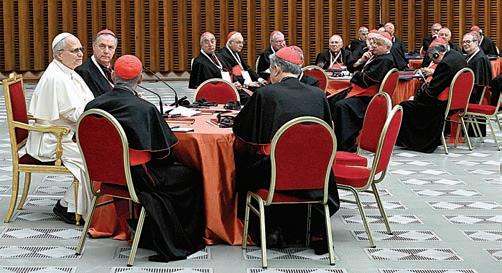
VATICAN
“I believe it has been a way of reaffirming that there is continuity – not so much with Pope Francis, but with the Gospel, with the Second Vatican Council, and with all the magisterium that has emerged as a consequence of this Second Vatican Council. So in that sense, I am very pleased with the results,” he said.
Cardinal Stephen Brislin of Johannesburg told journalists, “The importance of this consistory was not solely in the discussion that took place,” but in the
possibility “to listen to each other and to get to know each other” as the prelates “haven’t known each other very well.”
Asked whether there were any tensions – especially upon scrapping liturgy and Church governance from the list of issues to discuss, the South African Cardinal Brislin said it was a “pleasant experience, friendly experience,” and that “the pope wants to be collegial” and learn from “the richness that comes from the experiences of people” coming from different parts of the world.
Cardinal Luis José Rueda Aparicio of Bogotá, Colombia, added that “sometimes there is criticism or different positions – but we try to reach harmony, which does not mean uniformity, but going back to the roots,” which he referred to as the Second Vatican Council.
The themes of the June consistory are yet to be named. Cardinals confirmed to OSV News, however, that during the Jan. 7-8 consistory there was no time to discuss liturgy.
Cardinal Pablo David of Kalookan, Philippines, present at the press conference, said, “It was really refreshing to see the Holy Father was more listening than talking” during the consistory and added that while no concrete decisions have been made, “he was taking notes very, very seriously, so he must be up to something.”
Emphasizing the need for teamwork in the Church, the pope told the cardinals: “I experience the need to be able to count on you: you are the ones who called this servant to this mission!” adding in his introductory speech that the consistory will “point the way for our path ahead.”





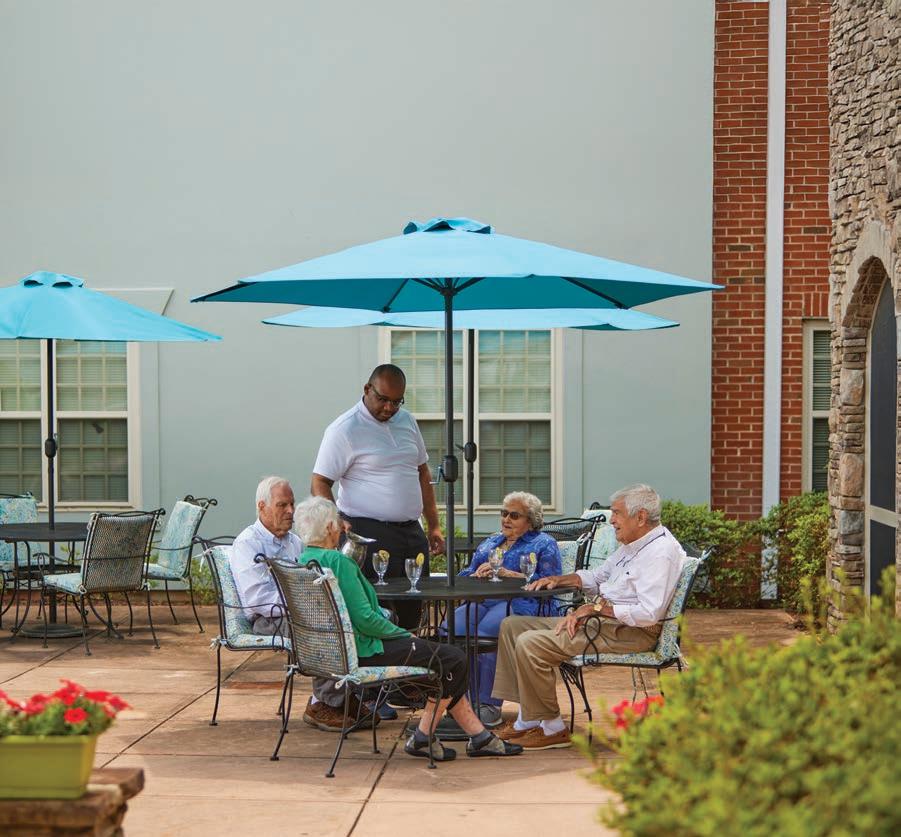
At Pennybyrn’s Melvin and Ruth Witcher Adult Day Center, every detail is designed to enrich the lives of older adults while o ering support and respite for their caregivers. Our safe, welcoming and vibrant environment o ers more than just care— it inspires joy, sparks learning and builds meaningful social connections. A thoughtfully planned variety of daily activities promotes better overall health, greater emotional well-being and a higher quality of life.

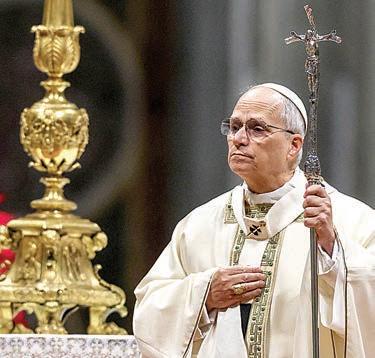
ROME — Pope Leo XIV has introduced a new papal staff that highlights the victory of the risen Christ, offering a fresh visual emphasis while remaining rooted in tradition.
The new crosier was first used at the Jan. 6 Mass for the feast of the Epiphany, which also marked the closing of the Jubilee Year of Hope. According to the Vatican’s Office for the Liturgical Celebrations of the Supreme Pontiff, the staff is “in continuity” with those of previous popes, uniting Christ’s sacrifice on the cross with the glory of the Resurrection.
Unlike the well-known silver crucifix designed by Lello Scorzelli and used since St. Paul VI –which depicted a suffering, crucified Christ – the new staff shows Christ risen, arms outstretched, bearing the wounds of his passion as signs of victory. The Vatican said the design presents Christ’s wounds as “luminous signs” that transform suffering into hope.
Used at the close of the jubilee year, the staff underscores the pope’s mission to proclaim faith in the crucified and risen Lord.
“The Paschal mystery, the gravitational center of the apostolic proclamation, thus becomes a source of hope for humanity. Death no longer holds power over man because Christ has redeemed what He assumed,” the office said in the Jan. 8 statement.
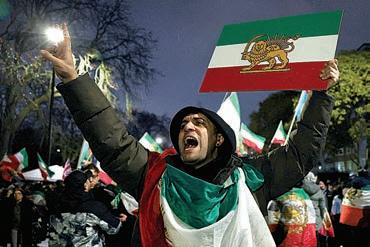
ROME — As anti-government protests in Iran continue despite an internet blackout and the use of lethal force against demonstrators, Pope Leo XIV expressed his concern over the escalating situation.
After praying the Angelus with pilgrims gathered in St. Peter’s Square Jan. 11, Pope Leo said his thoughts turned “to the situation currently unfolding in the Middle East, especially in Iran and Syria,” where government forces clashed with Kurdish fighters in Aleppo.
The pope lamented that “ongoing tensions continue to claim many lives.”
“I hope and pray that dialogue and peace may
be patiently nurtured in pursuit of the common good of the whole of society,” he said.
While it was not the first time protests have erupted against the theocratic government, led by Ayatollah Ali Khamenei, the current wave, which began in late December, was sparked by the country’s collapsing economy and record inflation.
However, the widespread nature of the protests, which is the most significant threat to Khamenei’s rule in recent history, prompted a brutal crackdown by government forces.
The Associated Press reported midday Jan. 15 that, according to activists, the government’s crackdown has resulted in the deaths of at least 2,637 people. The number is likely higher, given the lack of information due to the country’s internet shutdown. Some medical sources and international media outlets have put the death toll at over 12,000 to 20,000, CBS News reported.
Iran International, a U.K.-based news organization that covers news from Iran, said footage received from Iran shows dozens of dead bodies in body bags being held at various sites.
“The most conservative estimates indicate that at least 2,000 people have been killed across Iran over the past 48 hours,” Iran International reported.
VATICAN CITY — Pope Leo XIV, who plays the daily online puzzle Wordle, is not the only papal puzzle lover. His predecessor and namesake, Pope Leo XIII, was also passionate about wordplay, anonymously publishing riddles.
Going by the pseudonym “X,” the Italianborn Pope Leo used to craft poetic puzzles for a Roman periodical at the turn of the 19th century.
The modern-day Pope Leo from Chicago, however, is a fan of the New York Times’ popular online word game in which players get six chances to guess a five-letter word. His older brother, John Prevost, has said the two of them also play the multiplayer game, Words with Friends, online regularly and compare scores.
While Pope Leo XIV likes to play word games, his 19th-century predecessor liked to create them. Pope Leo XIII, who died in 1903, created lengthy riddles, known as “charades,” in Latin in which readers had to guess a rebus-like answer from two or more words that together formed the syllables of a new word.
Eight of his puzzles were published anonymously in “Vox Urbis,” a Rome newspaper that was printed entirely in Latin between 1898 and 1913. Any “Vox Urbis” reader who submitted the correct answer to the riddle received a book of Latin poetry written by either Pope Leo or another noted Catholic figure.
The identity of the mysterious riddle-maker, however, was eventually revealed by a French reporter covering the Vatican for the daily newspaper Le Figaro.
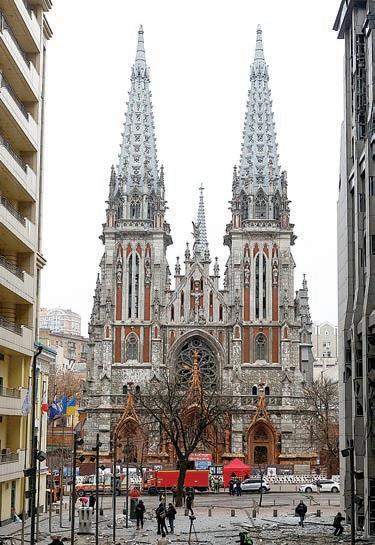
KYIV, Ukraine — After decades of legal limbo, Ukraine’s Roman Catholic community has secured a major breakthrough in Kyiv. Under a new agreement with the state, Catholics will have the right to use the historic St. Nicholas Church for the next 50 years.
The neo-Gothic landmark, confiscated by Soviet authorities in 1938 and later turned into a concert hall, remains state-owned but will now function primarily as a parish church. Church leaders said the deal brings long-awaited legal clarity, allowing the parish to register secure utilities and begin critical repairs.
The church has faced disrepair since 2009, and a fire in 2021 further damaged it, with the Dec. 20, 2024, Russian rocket attack on the Ukrainian capital only adding to a pile of repair needs for the historical church.
Speaking amid Russian attacks on Kyiv, parish pastor Father Pavlo Vyshkovsky said the agreement finally allows the community to take responsibility for a building long used without legal protection. Urgent needs include heating, roof and window repairs, and long-term restoration after years of neglect, a 2021 fire and recent missile strikes.
Bishop Vitalii Kryvytskyi called the agreement a legal breakthrough, but said it stops short of full restitution. He framed the struggle over St. Nicholas Church as part of Ukraine’s unfinished post-Soviet reckoning – and its broader resistance amid war.
ROME — The Vatican’s top diplomat is renewing calls for a global ban on surrogacy, warning that the practice violates human dignity by turning children and women into commodities.
Speaking Jan. 13 at an event hosted by the Italian Embassy to the Holy See, Archbishop Paul R. Gallagher said surrogacy “translates into the sale of a child” and exploits women by reducing pregnancy to a negotiable service.
Archbishop Gallagher said the Church’s opposition centers on what he called the commodification of the human person, noting that some surrogacy contracts even specify conditions if a child is not healthy.
He cited international law defining the sale of children, arguing surrogacy fits that description. The archbishop recalled recent condemnations by Pope Leo XIV and Pope Francis, stressing continuity in Church teaching.
In his speech, Archbishop Gallagher recalled Pope Leo’s Jan. 9 address to diplomats accredited to the Holy See, in which the pope said: “By transforming gestation into a negotiable service, this violates the dignity both of the child, who is reduced to a ‘product,’ and of the mother, exploiting her body and the generative process, and distorting the original relational calling of the family.”
— OSV News and Catholic News Agency
Deacon Clarke E. Cochran
How are Catholics in our time and place to understand the commandment “You shall not kill” (Ex 20:13; Dt 5:17)?
More than 30 years ago, the poet and songwriter Leonard Cohen penned “The Future,” which included the darkly prophetic line: “I have the seen the future, brother, it is murder.”
His prediction tragically describes our time and place. In addition to dozens of daily homicides, we witness particularly troubling trends:
n Abortion is now widely accepted, even celebrated.
n Euthanasia – sometimes termed “physician-assisted death” – is now legal in 12 states and the District of Columbia.
n “Selective reduction” of embryos is a regular part of in vitro fertilization (IVF) techniques.
n In “kinetic strikes,” people are killed without warning on suspected drug trafficking boats.
n Death penalty executions are increasing, including in states that until recently had paused these killings.
n “Collateral damage” includes thousands of innocent people who are killed in air and artillery strikes on suspected soldiers or terrorists, most recently in Gaza.
VIEWS BASED IN IDEOLOGY OR FAITH?
How are Catholics today to understand the Fifth Commandment?
We might begin by examining our initial reaction to the list above. If we find ourselves appalled by the first three items listed above, but not by the other three items (or vice versa), there is a good chance our opinions have been formed more by ideology or partisanship than by our Catholic faith. Some may resist that conclusion, but Catholic teaching is clear that all violate the principle of respect and protection for the life and dignity of every human person. Start by noticing how proponents surround them with euphemisms to avoid naming the murder involved.
There are complexities and legitimate differences of opinion around the edges of these topics, just as there are about the meaning of “you shall not kill” within the entirety of the Old and New Testaments. However, Catholic teaching sets a “baseline” under each, a foundation established by, for example, the Catechism of the Catholic Church in Section 2, Chapter 2, Article 5 entitled “The Fifth Commandment.”
n Abortion – “Direct abortion, that is to say, abortion willed either as an end or a means, is gravely contrary to the moral law …” (CCC 2271).
n Euthanasia – “Direct euthanasia … is morally unacceptable” (CCC 2277).
n “Selective reduction” – “… the embryo must be defended in its integrity, cared for, and healed, as far as possible, like any other human being” (CCC 2274).
n “Kinetic strikes” – “Non-combatants, wounded soldiers, and prisoners must be respected and treated humanely” (CCC 2313).
n Death penalty – “…the death penalty is inadmissible because it is an attack on the inviolability and dignity of the person, and (the Church) works with determination for its abolition worldwide” (CCC 2267).
n “Collateral damage” – “The mere fact that war has regrettably broken out does not mean that everything becomes licit between warring parties” (CCC 2312). Catholic teaching on “just war” calls for special protection of civilian lives.
WE CATHOLICS HAVE A BASELINE
For more about all these topics, see other official Church documents, such as the Compendium of the Social Doctrine of the Church, published by the Pontifical Council for Justice and Peace in 2004. On the topics above, particularly read sections 155, 233-236, 405 and 488-520.
“You shall not kill.” Full understanding of the commandment’s meaning for our time and place demands prayer, discernment and study of specific concerns. But we Catholics have a baseline. We must refuse ideology or partisanship when they distort it.
DEACON CLARKE E. COCHRAN serves at St. Peter Parish in Charlotte. Reach him at cecochran@rcdoc.org.
he new “Knives Out” movie is out on Netflix, and Catholic commentators are rightly fascinated by its winsome portrayal of a young Catholic priest, the protagonist accused of committing the film’s locked-room murder.
Most reviews have zeroed in on a scene that is arguably the moral heart of the film: Father Jud Duplenticy (Josh O’Connor), on the phone with a stranger, chooses to set aside his (extremely pressing) needs in order to be a pastor to someone who needs one. He does what every priest I know would do if, say, asked in an airport to hear an impromptu confession or while driving past a bad accident: He stops.
Indeed, time itself seems to stop. He diminishes, setting himself aside, yet at the same time fills the moment with a deeper presence.
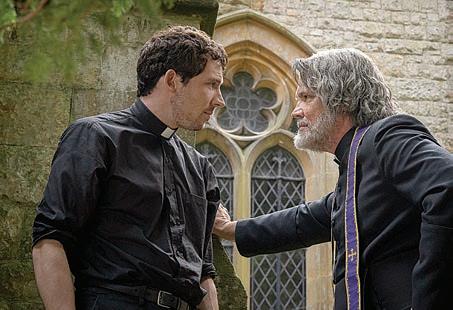
JOHN WILSON, COURTESY NETFLIX | OSV NEWS
Father Jud Duplenticy (Josh O’Connor) and Monsignor Jefferson Wicks (Josh Brolin) confront one another in a scene from the movie “Wake Up Dead Man: A Knives Out Mystery.”
This character trait is clearly meant to be a positive one by director Rian Johnson, a quiet heroism juxtaposed to the crude and brash culture warrior (an older priest) who is murdered in the middle of the Good Friday liturgy. And it also clearly flummoxes Benoit Blanc (Daniel Craig), our detective hero from the previous two “Knives Out” movies. This gets at the dynamic I found most compelling in “Knives Out: Wake Up Dead Man.” As much as Father Jud’s Pope Francis-esque, open arms of mercy are meant to contrast with the murder victim’s literal fist shaking and condemnations from the pulpit, Blanc’s rationalism serves a different type of foil to Father Jud’s deep, abiding faith in the midst of turmoil.
When Blanc and Father Jud first meet, their dialogue in the church draws out their differing visions.
“I feel the grandeur, the mystery, the intended emotional effect,” Blanc begins to soliloquize in his trademark over-the-top drawl and diction. Then, a moment of vulnerability: “It’s like someone has shone a story at me that I do not believe. ... So like an ornery mule kicking back, I want to pick it apart and pop its perfidious bubble of belief and get to a truth I can swallow without choking.”
Blanc’s bracing assessment of Christianity’s beauty, its stains and his own inability to accept it wins an unoffended nod from Father Jud. This is not new territory for the priest. He might be distraught over the murderous turn of events, but he can respond to Blanc with winsome sincerity, unshaken.
“You’re right. It’s storytelling,” he says. “The rites and rituals and costumes, all of it.” Voice cracking, he continues: “I guess the question is, do these stories convince us of a lie? Or do they resonate with something deep inside us that’s profoundly true? That we can’t express any other way except storytelling?”
It’s a response that wins Blanc’s respect, and their mystery-solving capers go from there. In terms of telling the story of Catholicism, “Wake Up Dead Man” does seem to stumble. Rian Johnson consulted with a Catholic priest prior to filming (and by all indications, approached those conversations in good faith), but as Leah Libresco Sargeant points out at Word on Fire, the film takes some liberties with its depiction of confession.
SATIRE, CARICATURE
At times, its depiction of the Church feels more like a tour of American evangelicalism (Johnson himself grew up immersed in evangelical culture). And like Blanc’s exaggerated speech, the Catholic characters are absurd: the wannabe GOP hotshot/ social media maven who livestreams every interaction, the conservative novelist whose descent into an embattled mentality includes digging a literal moat around his cabin.
Many Catholics who identify as conservative will likely find “Wake Up Dead Man” hard to swallow. Yet, I keep coming back to two things: First, in turning to satire and caricature Johnson is also using storytelling techniques to express something about reality. It is incredible to me that in “Wake Up Dead Man,” the truth that endures is Christianity. Which brings me back to Father Jud and Blanc’s exchange about storytelling. Johnson has described that scene as “nakedly the two things inside of me going at it” – Christianity’s scandals versus its compelling story. “Wake Up Dead Man” dismisses neither. As seriously as the film portrays a priest who embodies the Good News of grace and redemption, it does not shy away from depicting real tendencies to twist that Gospel into a grasp for power. It is clear what vision of Christianity attracts Johnson, just as it catches Benoit Blanc off guard.
I am reminded of a quote by one of the past century’s greatest storytellers, Madeline L’Engle: “We draw people to Christ not by loudly discrediting what they believe, by telling them how wrong they are and how right we are, but by showing them a light that is so lovely that they want with all their hearts to know the source of it.”
“Wake Up Dead Man” may not share your politics, but it offers a timeless reminder that transcends ideology: The Gospel’s saving message is attractive and compelling, even in a skeptical world. We need only step aside and let false fronts fall away.
LIZ HANSEN writes for OSV News from Michigan.
Leonard J. DeLorenzo
We live in an age that prizes efficiency above almost everything else. Tap your phone and a car arrives. Click a button and groceries appear. Swipe right and … well, that’s supposed to be connection, isn’t it? Except it’s not. What we’ve gained in convenience we’re losing in something harder to quantify: actual human closeness.
Josef Pieper saw this coming. Writing decades before smartphones existed, the German Catholic philosopher understood that love – real love – can’t be engineered for maximum efficiency.
“What is really sought, human closeness, overcoming of loneliness, union with another personal being,” he wrote, “all that can be had only in real love. But at this point we see a further segment of the vicious circle. For love – above all, eros – is by nature something that cannot be fitted smoothly and easily, without problems, into the functional context of utilitarian plans.”
In other words, love made to serve other ends ceases to be love at all. The moment we try to make relationships efficient, productive, useful – the moment we optimize them – we kill the very thing we’re after.
CONNECTION TAKES TIME
This is uncomfortable news in a modern culture that tends to treat everything as a problem to be solved. But love doesn’t work that way. Neither does friendship. Neither does the slow, messy work of actually knowing another person. Real connection requires what we’re increasingly unwilling to give: time. Embodied presence. Inefficiency. The awkwardness of sitting with someone who’s struggling instead of sending a text. The risk of being misunderstood or rejected.
It’s easier than ever to pull away from people with minimal consequence: ghost someone, block, unfollow. We’ve built technologies that make disconnection frictionless. Which means forgiveness and reconciliation have become more radical, more essential to our humanity than ever. When you can walk away from any relationship at the first sign of difficulty, choosing to stay and work through conflict becomes revolutionary.
This is where St. Claude La Colombière speaks to our moment with unexpected power. He wrote: “Really humble people are never scandalized: They know their own weakness too well; they know that they themselves are so close to the edge of the precipice and they are so afraid of falling over that they are not at all astonished to see others do so. ... We have no reason to despise anyone. A humble man sees his own faults. It is a sign of little virtue to notice the imperfections of others. A person may be imperfect today who in a little while, recognizing this, may rise to great sanctity.” This should perhaps be written across the top of every screen and scroll across every social media site. What have our digital platforms become if not engines of scandalization? We’ve created spaces where noticing and broadcasting the
imperfections of others has become not just entertainment but social currency. The algorithm rewards outrage. The architecture encourages judgment.
‘The moment we try to make relationships efficient, productive, useful ... we kill the very thing we’re after.’
Real humility – the kind St. Claude describes – makes that impossible. When you know your own fragility, when you’ve faced your own capacity for failure, you can’t maintain the posture of the perpetually scandalized. You remember that you, too, are close to the edge. You extend to others the grace you desperately need for yourself. And that creates the possibility for actual relationship.
PRAYER AMID THE WRECKAGE
There’s an image that captures this better than words can. Albrecht Dürer’s engraving
“The Prodigal Son Among the Swine” (c. 1496) shows the wayward son at his lowest point – kneeling in prayer amid the pigs, surrounded by ruins. But here’s what strikes me: The one who prays in the midst of his sin already sees beyond his sins. Dignity, which is reborn in the redeemed sinner, is here in its embryonic stage.
That’s the moment Dürer chose to depict. Not the celebration of the son’s return. Not the father’s embrace. But the instant when someone broken by his own choices turns toward home. Prayer amid the wreckage. The first stirring of hope in the heart of the lost. The prodigal hasn’t cleaned himself up yet. He’s still in the pigpen. But he’s already being transformed.
This is what human connection requires in our age: the willingness to kneel in the pigpen with each other. To stay present in the mess. To pray together when nothing is fixed. We can’t optimize our way to this. We can’t hack intimacy or engineer belonging. We can only do the slow work of showing up, choosing reconciliation over convenience, presence over productivity, the risk of real love over the safety of managed relationships.
The father was watching for his son. Watching requires time. Waiting requires patience. Welcome requires generosity. None of these fit into our utilitarian plans. But they’re the only way home.
LEONARD J. DELORENZO is a professor of the practice in the McGrath Institute for Church Life and concurrent professor in the department of theology at the University of Notre Dame. You can find his writing at www. leonardjdelorenzo.com.
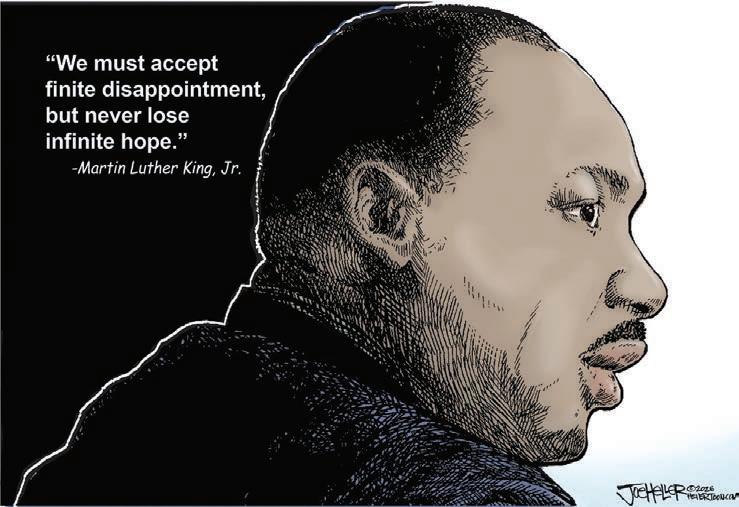
‘Our joy and greatness are not founded on passing illusions of success or fame, but on knowing ourselves to be loved and wanted by our heavenly Father.’
Pope Leo XIV
From online story: “Pope Leo warns against chasing approval, calls for deeper spiritual focus”

The Catholic News Herald reached the Facebook and Instagram feeds of more than 4.9 million people in English and Spanish last month. The most talked about post? Coverage of a Charlotte Catholic High School student who started a charity. Join the conversation: www.facebook.com/CatholicNewsHerald.
On YouTube in January so far, videos produced by the Catholic News Herald have been viewed more than 8,000 times. The most popular video? Highlights from the March for Life in Charlotte.
Over the last 30 days, ending Jan. 21, 38,000 visitors to www.catholicnewsherald.com have viewed a total of 65,000 pages. The top 10 trending headlines are:
n To turn away others is to turn away God, pope says on Christmas Eve 3,643
n Diocese introduces pastoral year, adds training for future priests ...................................... 1,992
n Amid North Carolina abortion surge, Pro-Life Catholics continue to march 1,823
n Bishop Martin issues pastoral letter on norms for Holy Communion 1,303
n Teen’s charity founded on idea: #prayerswork...............................................................................1,102
n Father Hoare returns to ministry to serve as chaplain at Pennybyrn 954
n Father Thomas P. Norris, OSFS passes away 827
n Father John Aurilia, OFM Cap., pastor of Hendersonville parish, passes away ..................... 796
n Diocese rolls out unified security approach to all 20 Catholic schools 671
n Bishop Martin urges people to say yes to God, like Mary did .......................................... 634

The Catholic News Herald welcomes letters from readers. We ask that letters be originals of 250 words or fewer, pertain to recent newspaper content or Catholic issues, and be written from a perspective of Christian charity.
To be considered for publication, each letter must include the name, address and daytime phone number of the writer for purpose of verification. Letters may be condensed due to space limitations and edited for clarity, style and factual accuracy.


Necesitamos oír su voz