The Transformation of Boundary Bay
CANADIAN FLIGHT SCHOOLS TAKE ON THE FUTURE
Suite Upgrades Knowing When It’s Time to Say Goodbye

The Transformation of Boundary Bay
CANADIAN FLIGHT SCHOOLS TAKE ON THE FUTURE
Suite Upgrades Knowing When It’s Time to Say Goodbye
With more than 80 customers and upwards of 200 aircraft in our portfolio, Capital Solutions takes pride in being Canada’s
international capabilities include the ability to fund in local currencies, complete cross-border transactions and work with our network of in-country representatives, our focus remains on building one-to-one, long term relationships
Capital Solutions has a AAA-debt rating, more than $24 billion
800 786 4942
www.gecapitalsolutions.ca
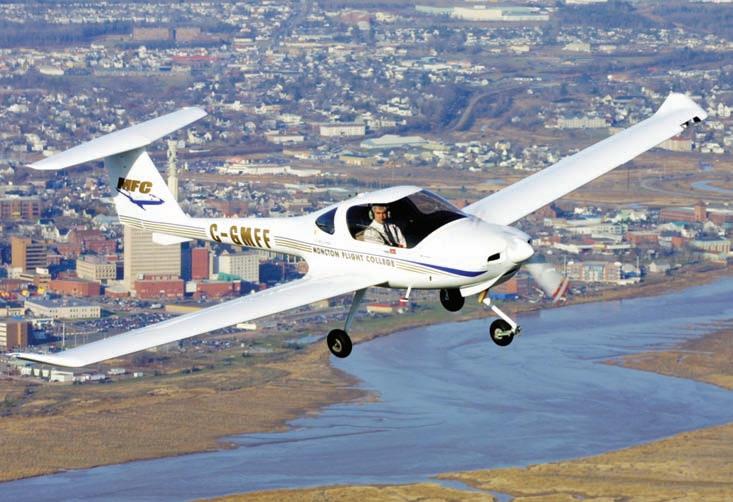
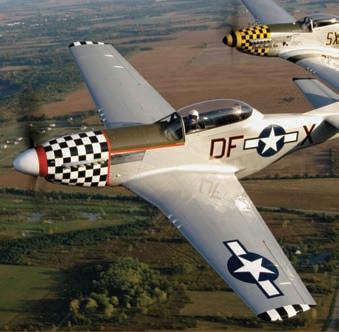
There were a million tales in aviation in 2007. Here are just two of them.
on One: Key Lessons
Darren Locke reflects on the key industry lessons learned from his interviews with industry executives over the years.
22 The David Charles Abramson
A strong economy and expanding opportunities in commercial aviation are fuelling vigorous activity at many Canadian flight schools. Mike Minnich reports.
28 A Look Back
Raymond Canon engages readers to hash out what are the “Six Best Fighters of the Past.”
30 The Transformation of Boundary Bay
Once forgotten, the future looks bright. By Matthew
Lang
VFR in IMC
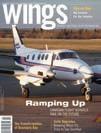
The five-year legacy of this prestigious national award. 24 Ramping Up
After a brush with fate several years ago, James Marasa lost his instructor rating, but gained something altogether more valuable – a new perspective on Pilot Decision-making.
40 Suite Upgrades
Knowing when it’s time to say goodbye or hang on for another day! By
Rob Seaman

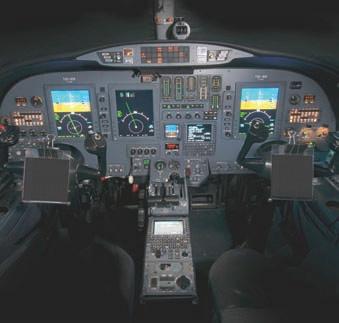

Nothing can make the air perfectly smooth, but nothing can touch the incredible Falcon 7X for smooth flying. Its Digital Flight Control System — the business-jet evolution of our fighter-jet technology — blends the reflexes of a fighter with the agility of a bird. And its all-muscle-no-fat design will whisk you over 5,950 miles with the efficiency of a smaller plane — in a cabin of a silken quiet — within a whisper of the speed of sound.

DREW MCCARTHY
is the editor of Wings.
In May 2007, the Department of National Defence (DND) concluded an arrangement with the U.S. State Department over access to ITAR (International Traffic in Arms Regulations) items by Canadian citizens who hold dual nationalities.
As a result of the arrangement, the DND agreed to restrict access to ITAR-controlled items to its employees who are issued a minimum SECRET-level security clearance by the Canadian government.
The DND must ensure that SECRET-level security clearances are not granted to personnel with ties to known terrorist groups or to those who maintain significant ties to foreign countries, including those countries to which exports and sales of ITARcontrolled defence articles and services are prohibited.
In exchange, the State Department promised to revise its export authorizations to permit Canadian citizen/dual-national DND employees access as needed to ITAR defence articles and services, if they possess this SECRET-level security clearance.
The agreement applies only to the DND and has not been extended to any other government agency or to private companies in Canada.
While the DND agreement can be seen as an important first step, the situation as it currently pertains to private companies continues to cause problems for Canadian manufacturers.
A year ago, in one of the more high profile cases, 24 Canadian workers at the Bell Helicopter plant in Mirabel were denied access to ITAR-controlled data because they were also nationals of countries under embargo by the U.S.
The workers were reassigned to other projects. One person, an intern who is no longer employed by the company, made a complaint to the Quebec Human Rights Commission (QHRC). Over the past year, four private-sector workers in Quebec have brought complaints to the QHRC on ITAR issues, arguing discrimination on the basis of nationality.
The issue threatens to create a critical confrontation. The rules violate the Canadian Charter of Rights and Freedoms and a number of provincial charters. The QHRC rulings will soon be released and the federal government will be placed in a difficult position if it is unable to convince the Americans to make amendments.
There are reports that Public Works Minister Michael Fortier has been asked to take a leading role in the negotiations and is currently planning trips to Washington, working with Canadian Ambassador Michael Wilson to apprise U.S. officials of the effects of ITAR in Canada.
Should a resolution not be forthcoming, Canadian companies will be forced to either avoid signing U.S. defence contracts or become parties to contracts that are in violation of Canadian law. At a time when there is growing pressure from international competition and a high Canadian dollar, Canada’s aerospace industry can little afford such a dilemma. The federal government needs to ensure that the industry is freed of ITAR impediments as quickly as possible.
WINGS MAGAZINE PO Box 530, 105 Donly Dr. S., Simcoe, ON N3Y 4N5 Tel.: 428-3471 Fax: 429-3094
Toll Free: 1-888-599-2228
PUBLISHER TIM MUISE tmuise@annexweb.com
EDITOR DREW MCCARTHY dmccarthy@annexweb.com
ASSOCIATE EDITOR ANDREA KWASNIK akwasnik@annexweb.com
SENIOR ASSOCIATE EDITOR RICHARD PURSER
PRODUCTION ARTIST GERRY WIEBE
OTTAWA CORRESPONDENT KEN POLE
AVIONICS EDITOR ROB SEAMAN FLIGHT DECK RAYCANON, JAMES CARELESS, DAVID CARR, BRIANDUNN, DARREN LOCKE, CARROLL McCORMICK, CHRIS ORESCAN, FRED PETRIE
ADVERTISING SALES JAYLYN CORPUS jcorpus@annexweb.com
SALES ASSISTANT MARY BURNIE mburnie@annexweb.com
VP/GROUP PUBLISHER DIANE KLEER dkleer@annexweb.com
PRESIDENT MIKE FREDERICKS mfredericks@annexweb.com
PUBLICATION MAIL AGREEMENT #40065710
RETURN UNDELIVERABLE CANADIAN ADDRESSES TO CIRCULATION DEPT., P.O. BOX 530, SIMCOE, ON N3Y 4N5 e-mail: alados@annexweb.com
Periodical postage paid at Buffalo, NY. USPS 021-029, ISSN 0701-1369. Published six times per year (Jan/Feb, Mar/Apr, May/Jun, Jul/Aug, Sep/Oct, Nov/Dec) by Annex Publishing & Printing Inc. US Office of publication c/of DDM Direct.com, 1223 William St., Buffalo, NY 14240. US postmasster send address change to P.O. Box 611, Niagara Falls, NY 14304.
Printed in Canada ISSN 0701-1369
CIRCULATION e-mail: alados@annexweb.com
Ph: 866-790-6070 ext. 208 Fax: 877-624-1940
Mail: P.O. Box 530, Simcoe, ON N3Y 4N5
SUBSCRIPTION RATES Canada – 1 Year $ 34.00 (includes GST - #867172652RT0001) USA – 1 Year $ 50.00 Foreign – 1 Year $ 65.00
From time to time, we at Wings Magazine make our subscription list available to reputable companies and organizations whose products and services we believe may be of interest to you. If you do not want your name to be made available, contact our circulation department in any of the four ways listed above.
No part of the editorial content of this publication may be reprinted without the publisher’s written permission. ©2008 Annex Publishing & Printing Inc. All rights reserved. opinions expressed in this magazine are not necessarily those of the editor or the publisher. No liability is assumed for errors or omissions. All advertising is subject to the publisher’s approval. Such approval does not imply any endorsement of the products or services advertised. Publisher reserves the right to refuse advertising that does not meet the standards of the publication.



Scheduled for completion in May 2008, Innotech Aviation has begun construction of its new 41,000-square-foot, twinbay aircraft paint facility at Montreal’s Pierre Trudeau International Airport. The facility is designed to accept aircraft as large as the Bombardier Global XRS business jet. It will be the most modern and technologically advanced hangar for high-quality paint applications in North America, and will complete the company’s full-service capability for in-service and new-completion aircraft.
Environmentally friendly, with an independent waste

water cleaning system, the facility will also feature variable speed airflow, eliminating the need to pressurize the paint bay and the capability to apply paint electrostatically. The paint bay is uniquely designed to ventilate and spray with a nose-to-tail crossdraft. These features provide
a cleaner application, better adhesion and subsantially less paint waste than with conventional spray methods.
Innotech Aviation has been a Bombardier Preferred Completion Center since 2005, and is also an authorized maintenance facility for Challenger and Global Express business jets.
Air Transat celebrated 20 years as a Canadian charter airline in November, a survivor in an industry that is littered with fallen rivals. The subsidiary of Transat A.T. has proven to be a rare Canadian aviation success story by sticking to what it knows best, said president and CEO Allen Graham.
Air Transat offers seasonal flights to sun destinations in the winter and Europe in the summer. Unlike Wardair, an early pioneer in the chartered airline business, Air Transat has never ventured into the challenging market of scheduled service.
Other failed charter airlines include Nationair,
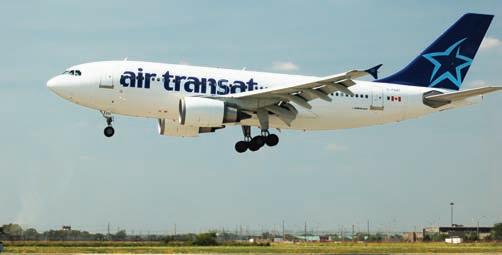
Canada 3000, Royal Aviation and Worldways Canada. Air Transat has thrived by controlling costs and offering new services for customers. Starting in June, it plans to give passengers more leg room by adding two inches
in seat pitch to match the industry standard.
It is also looking to upgrade its fleet of aircraft in 2011 or 2012 with more modern planes that will enable the addition of new destinations, possibly in Asia or South America.
Australia’s Qantas Airways has signed a firm order for 12 Bombardier Q400 turboprop airliners on behalf of its QantasLink regional airline. Qantas has also taken options and purchase rights on an additional 24 Q400 aircraft. Four of the 12 firmorder aircraft announced represent conversions of existing aircraft options.
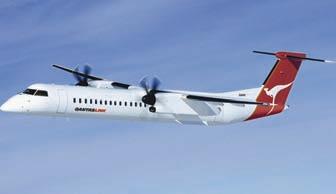
Based on the list price of the aircraft, the contract for the 12 firm Q400 airliners is valued at approximately US$339 million. QantasLink currently operates seven Q400 aircraft and another two ordered in January 2007 are to be delivered in January 2008.
Including this order, Bombardier has received firm orders for 276 Q400 airliners, with 164 having been delivered as of July 31, 2007.
Boeing has completed firm configuration of the 747-8 Intercontinental, a milestone that marks completion of the major trade studies needed to finalize the airplane’s performance and interior features. The 747-8 Intercontinental has been designed to serve the 400to 500-seat market between the 777 and the A380.
Many of the trade studies for the 747-8 Intercontinental focused on the airplane’s interior. The airplane will incorporate interior features from the 787 Dreamliner, including a new curved, upswept architecture that will give passengers a greater feeling of space and comfort, while adding more room for personal belongings.
As for the airplane’s performance, the 747-8 Intercontinental will be stretched 5.6m (18.3ft) from the 747-400 to provide 467 seats in a three-class configuration and
At a ceremony at Field Aviation’s Toronto airport facilities in November, the company delivered the 10th Bombardier Dash 8 Maritime Patrol Aircraft (MPA) to its long-standing customer, Surveillance Australia.
The first three Dash 8 MPAs were delivered by Field to Surveillance Australia in 1996, and two more followed in 2000. These five aircraft have over the last 12 years
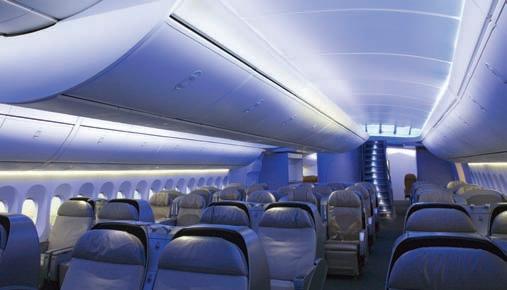
approximately 14,815-km (8,000-nm) in range. It will provide nearly equivalent trip costs to those on the 747-400 and 10% lower seat-mile costs, plus 28% greater cargo volume. The 747-8 Intercontinental also will be 16% more fuel efficient and 30% quieter than its predecessor.
With firm configuration complete, Boeing and its suppliers can begin detailed design of parts, assemblies and
other systems for the 747-8 Intercontinental. The detailed designs will then be released to Boeing suppliers and factories to begin production of the airplane. Airplane delivery is scheduled for late 2010.
The 747-8 program, which includes the 747-8 Intercontinental and the 747-8 Freighter, was launched in November 2005 by Cargolux Airlines and Nippon Cargo Airlines.
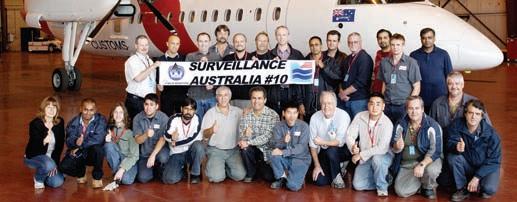
flown more than 75,000 hours and completed 12,000 surveillance missions, with each aircraft providing more than 2,000 surveillance hours per year.
The Dash 8 MPA capability has been constantly upgraded by Field Aviation since the first units were delivered 11 years ago, and new features, such as an airoperable rear door for paratroopers and rescue equip-
ment, have been added to the options list. Current Dash 8 MPAs are evenly divided between the Series 200 and the larger Series 300 aircraft, but Field is also adapting the MPA modifications to the newer and larger Dash 8 Q400 aircraft for those customers that require the higher payload and increased cruise speed.
Field Aviation celebrated 60 years in business in 2007.
FEBRUARY 2008
Asian Business Aviation Conference and Exhibition (ABACE 2008)
February 14
Hong Kong http://web.nbaa.org/public/ cs/amc/
MARCH 2008
Canadian Aviation Security Conference (CASC) March 5-6
Gatineau, QC http://www.cata.ca/Canadian AviationSecurityConference/ registration.html
APRIL 2008
20th Annual Canadian Aviation Safety Seminar (CASS)
April 28-29
Calgary, AB www.tc.gc.ca/civilaviation/ systemsafety/cass/menu.htm
Aircraft Interiors Expo 2008
April 1-3
Hamburg, Germany http://www.aircraftinteriors-expo.com
MAY 2008
EBACE 2008
May 20-22
Geneva, Switzerland
http://www.ebace.aero/ E-mail: info@ebace.aero
Regional Airline Association (RAA) 2008 Convention May 5-8
Indianapolis, IN http://www.raa.org
JUNE 2008
CBAA 47th Annual Convention, Trade Show and Static Display
June 16-19
Toronto, ON http://www.cbaa.ca/portal/ convention
178 seconds
Ifyou’reevertemptedtotakeoffinmarginalweatherandhave noinstrumenttraining,readthisarticlefirstbeforeyougo.Ifyou decidetogoanywayandlosevisualcontact,startcountingdown from178seconds.
Howlongcanapilotwhohasnoinstrumenttrainingexpect toliveafterhefliesintobadweatherandlosesvisualcontact? ResearchersattheUniversityofIllinoisfoundtheanswerto thisquestion.Twentystudent“guineapigs”flewintosimulated instrumentweather,andallwentintograveyardspiralsor rollercoasters.Theoutcomedifferedinonlyonerespect;the timerequireduntilcontrolwaslost.Theintervalrangedfrom480 secondsto20seconds.Theaveragetimewas178seconds, —twosecondsshortofthreeminutes.
Here’sthefatalscenario...
Theskyisovercastandthevisibilitypoor.Thatreportedfivemilevisibilitylooksmoreliketwo,andyoucan’tjudgetheheight oftheovercast.Youraltimetersaysyou’reat1500butyourmap tellsyouthere’slocalterrainashighas1200feet.Theremight evenbeatowernearbybecauseyou’renotsurejusthowfaroff courseyouare.Butyou’veflownintoworseweatherthanthis, soyoupresson.
Youfindyourselfunconsciouslyeasingbackjustabiton thecontrolstoclearthosenon-too-imaginarytowers.Withno warning,you’reinthesoup.Youpeersohardintothemilkywhite mistthatyoureyeshurt.Youfightthefeelinginyourstomach.You swallow, only to find your mouth dry. Now you realize you should havewaitedforbetterweather.Theappointmentwasimportant
—butnotthatimportant.Somewhere,avoiceissaying“You’ve hadit—it’sallover!”
Younowhave178secondstolive.
Youraircraftfeelsinanevenkeelbutyourcompassturnsslowly. Youpushalittlerudderandaddalittlepressureonthecontrolsto stoptheturnbutthisfeelsunnaturalandyoureturnthecontrols totheiroriginalposition.Thisfeelsbetterbutyourcompassis nowturningalittlefasterandyourairspeedisincreasingslightly. Youscanyourinstrumentpanelforhelpbutwhatyouseelooks somewhatunfamiliar.You’resurethisisjustabadspot.You’llbreak outinafewminutes.(Butyoudon’thaveseveralminutesleft...)
Younowhave100secondstolive.
Youglanceatyouraltimeterandareshockedtoseeitunwinding. You’realreadydownto1200feet.Instinctively,youpullbackon thecontrolsbutthealtimeterstillunwinds.Theengineisintothe red—andtheairspeed,nearlyso.
Youhave45secondstolive.
Nowyou’resweatingandshaking.Theremustbesomething wrongwiththecontrols;pullingbackonlymovesthatairspeed indicatorfurtherintothered.Youcanhearthewindtearingat theaircraft.
Youhave10secondstolive.
Suddenly,youseetheground.Thetreesrushupatyou.You canseethehorizonifyouturnyourheadfarenoughbutit’satan unusualangle—you’realmostinverted.Youopenyourmouthto screambut...
...youhavenosecondsleft.
Cessna Aircraft Company announced in November it was the successful bidder for select assets of Columbia Aircraft Manufacturing Company, a Bend, Oregon-based producer of high-performance, single-engine aircraft. Columbia has produced more than 600 aircraft in its 10-year history.
The bid of US$26.4 million was the high bid in US Bankruptcy Court for the District of Oregon.
Once the transaction is completed, the Bend operation will take on the Cessna name and be one of six Cessna manufacturing facilities. Cessna intends to rename the current Columbia product
line to become the Cessna 350 and the Cessna 400. Cessna and its network of authorized dealers and service centres plan to integrate sales and support of the former Columbia aircraft, and Cessna Parts Distribution is expected to become the source for parts. Cessna also intends to develop direct communications with current owners.
Cessna currently offers eight single-engine piston models, beginning with the recently launched Cessna 162 SkyCatcher light sport aircraft. The SkyCatcher joins seven other high-wing piston models – the 172R, the more powerful 172SP, the new diesel-powered 172TD, stan-
In November, Quest Aircraft announced the successful first flight of S/N002, the second production KODIAK aircraft to take to the skies. S/N002 joins S/N001 and the KODIAK prototype in the fleet, as work on the production line continues to accelerate. The aircraft will feature the 10-place Tundra interior.
The KODIAK received FAA Type Certification on May 30, 2007, and has been working with the FAA to achieve its production certificate. Quest has seen strong acceptance in key market segments, including personal use, Part 135 operations, government, and humanitarian organizations. Customer orders have exceeded expectations and the company has a three-year backlog, which it is working to bring down as production ramps up.
dard models 182 and 206, and turbocharged 182 and 206 models. The new Cessna 350 and Cessna 400 models add low-wing, high-performance and turbocharged piston aircraft options to raise the top end of the Cessna piston product line.
The Cessna 350 will feature an all-composite airframe, Garmin G1000 avionics and GFC700 flight control system, and Teledyne Continental TSIO-550-C engine, while the Cessna 400 will offer the same features with dual turbochargers for the engine. The 400 is one of the fastest piston aircraft in the world with a top speed of 270 mph.
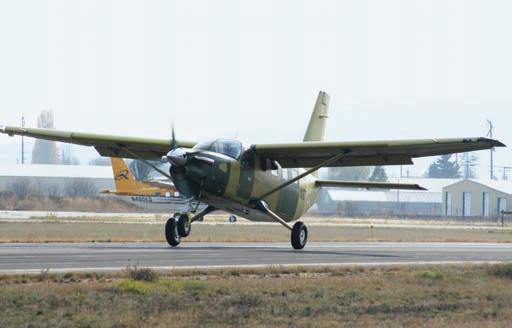
The KODIAK’s rugged aluminum construction combines superior STOL performance and high useful load. It offers proven turbine reliability with the Pratt & Whitney PT6turbine engine, is capable of working off floats without structural upgrades and has the ability to land on unimproved surfaces.
The KODIAK can take off in under 700 feet at full gross takeoff weight of 6,750 lbs with a useful load of 3,450 lbs and climb at over 1,700 feet per minute. The Garmin G1000 integrated avionics suite is standard equipment on the KODIAK. This is the first installation in a turboprop aircraft of the popular G1000.
Guardian Mobilityhas been granted STC installation approval of the Skytrax 3X GPS tracking system for Cessna208 and 208B aircraft, ensuring Transport Canada compliance under FAR 23. The addition of the Cessna Caravan adds type certification of Guardian’s new Skytrax 3X to a growing fleet of “workhorse” cargo and passenger aircraft, including the Fairchild Metroliner, that operate in more remote regions of the world.

The Skytrax 3X is a new design for aircraft flight following solutions that incorporates integrated radio and antenna components in a single compact unit designed for quick installation on the exterior surface of fixed and rotary wing aircraft. The units can be custom configured to operate under the specific requirements of any aircraft fleet with no expensive software purchase.The unit is easy to install and offers airtime packages including Maptracs webbased mapping. Guardian Skytrax and message processing service is AFF compatible and approved.
www.wingsmagazine.com
BOEING REAFFIRMS LATEST SCHEDULE FOR 787 FLIGHT TEST, DELIVERIES
DIAMOND APPOINTS DIRECTOR OF MARKETING AND SALES FOR D-JET
CAE WINS ORDERS VALUED AT OVER CDN$126 MILLION
SECOND CANADIAN AVIATION SECURITY CONFERENCE ANNOUNCED
HAWKER BEECHCRAFT CERTIFIES NEW KING AIR B200GT
BOMBARDIER LANDS ANOTHER CRJ700 ORDER
Read the Full Stories Online at www.wingsmagazine.com

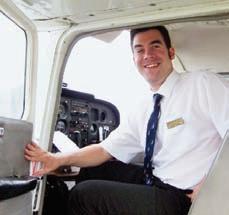
Amateur Pilots Are Invited to Enter the Prestigious 2008 Webster Memorial Trophy Competition: Sponsored by Air Canada, the Webster Memorial Trophy Competition is a national competition that takes place each year at different locations
across the country. Nine Regional winners will compete for the National Title in Moncton, NB on August 2023rd. Pictured here is the 2007 Webster Memorial Trophy Winner, Andrew Midcalf, 28, who learned to fly at the Brampton Flying Club.
For full details on how to enter and a background on the prestigious competition, go to www.wingsmagazine.com and click on web exclusives.
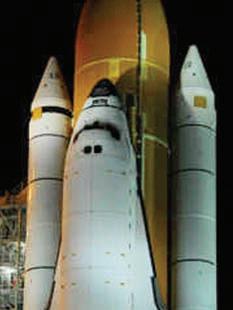
Seeking intelligent, capable engineers, scientists, educators and pilots willing to sleep in their office in exchange for a great view. NASA’s looking for candidates for its 20th astronaut class. In the past 48 years, NASA has hired 321 astronauts, but this group will have the distinction of being
the first class since 1978 to be selected for something other than shuttle flight. Because the selection period won’t end until 2009, and because it takes about two years to train to become an astronaut, this new class won’t be ready to fly until 2011 – a year after the space shuttle program is scheduled to be retired.
For full details, go to www.wingsmagazine.com and click on web exclusives.
Ever thought of flying? Or, already doing your flight training and wondering how to get your first job? Join James Ball, licensed commercial pilot, as he outlines essential information that you need to know to become a pilot in Canada.
Visit wingsmagazine.com and click on bookstore to learn more about the book and order a copy.
The Canadian Aviation Guide (A-List) is the only reference tool to bring the entire Canadian aviation industry together in one directory.
Visit
www.wingsmagazine.com to sign up for a free trial of Wings magazine - digital version.
Take part and view results of our weekly polls…
Scandinavian Airlines (SAS) made the right decision in permanently grounding its Q400 fleet.
Agree 25%
Disagree 75%
Undecided 0%
Have your say on a variety of industry topics…
•Making someone accountable
•No passing the buck – pilots are in charge and responsible
•Cockpit interference - a serious issue
•VLJs – the shine might be getting dull
•ITAR impediments



Frédéric Bérubé Manager, Materials Engineering





Operatingacorporatejetisgoodbusiness.Flyingoneequippedwithgreen-technologyenginesiseven better.AtPratt&WhitneyCanada,we’reworkinghardtomakeengineslikeournext-generation10,000-lb thrustpowerplantsthegreenestinthesky,byreducingfuelemissions,noiselevelsandtheuseofhazardous materialsinourmanufacturingprocesses.It’sjustgoodbusiness.Somethingyoucanalwayscounton,from Pratt&WhitneyCanada. TheEagleiseverywhere.

How naïve are they in Singapore? Airbus A380 customers are investing millions to redefine the inflight experience by stuffing the “super jumbo” with every amenity imaginable, especially for the premium passenger. Like upstairs lounges in early Boeing 747s, many of these cruise ship-style frills will be underutilized and eventually give way to more seats. For now, the sky is the limit.
There were a million tales in aviation in 2007. Here are just two of them.
Launch customer Singapore Airlines (SIA) includes luxury private cabins complete with double beds, flat screen TV and rivers of champagne. Having set the mood, it seems odd the airline would cry foul because couples have chosen to kill time by taking advantage of the privacy. Even more so given air transport’s fascination with the infamous “mile high club.”
But what criteria qualify for club membership? It should involve the pairing of a passenger and member of the crew – cabin or cockpit, it doesn’t matter. Others argue two passengers travelling together is sufficient. Really? A stranger perhaps, but passengers who know each other? That’s just too easy, and we could all become members. Ditto corporate jets. Where’s the challenge in that?
With the arrival of the A380, SIA has taken entry to new heights. You don’t have to be a contortionist, as is the case with lavatories in economy, but it helps to be wealthy. Now comes a splash of cold water. The airline has cautioned passengers that construction of its luxury cabins is not sufficient to buffer excessive noise, and acts of passion must be discouraged. Such warnings will not be needed on all routes. The A380 will soon be winging its way to London/Heathrow, where it’s unlikely to come up.
Watch the battle for Toronto Island to shift into high gear in 2008. Porter Airlines is expected to finally break free of its domestic pen this year when it begins service to New York. So far, Porter has had the Toronto City Centre Airport (TCCA) – a two-minute ferry and short taxi ride from Canada’s financial district – to itself. This is unlikely to continue.
Porter Airlines is one of the eat-at-the-margins airlines that larger carriers want to contain. But it is difficult to see how. Air Canada and Jazz don’t want to serve TCCA, but they don’t want
anybody else to either. Likewise, potential US competitors.
Porter has introduced a standard of service that Air Canada furloughed during bankruptcy protection, and US carriers left at the departure gate in the ’70s. Extra legroom, free booze, charming boxed meals and lounge luxuries for all passengers at Porter’s Toronto base is tough to beat.
Still, there is a soft underbelly. Porter is a limited point-to-point carrier without an interline agreement, although it is reported to be considering alliances with a handful of US airlines. It must also compete against reward programs such as Aeroplan. Even so, president/CEO Robert Deluce insists his airline is already operating in the black and will become more profitable as it takes delivery of six additional Q400s this year and revs up its expansion into the US.
The upstart’s biggest headache may be in its own backyard. Porter flies in the face of local residents whose waterfront condominiums have walled off Toronto’s access to its lake, but who want the airport shut down to make way for more parkland. The hypocrisy is breathtaking. Toronto’s mayor made closing the airport to commercial traffic the centrepiece of his first successful campaign, and every Q400 takeoff is a reminder of his failure.
That opposition took an absurd turn last October when Adam Vaughan, a rookie downtown city councillor, publicly questioned Porter’s safety after Scandinavian Airlines System had grounded its own fleet of Q400s following three non-fatal accidents linked to landing gear failure. Vaughan, a former local television reporter who should have known better, even hinted that Porter’s Q400s might not have enough fuel sloshing in the tanks to fly the few extra kilometres to Pearson in case of an emergency landing. So deep runs the passion against TCCA.
Danish investigators have traced the Copenhagen accident that triggered the grounding to maintenance error, although the SAS fleet remains permanently grounded. Deluce has threatened to sue Vaughan – but any settlement would come from the pockets of Toronto taxpayers. Deluce is a class act who operates a classy and innovative airline. Its future should be decided on merit, not scaremongering.
David Carr can be reached at davidjcarr@sympatico.ca.
If you travel the commercial airlines, you cannot help but notice the increased security features at air terminals around the world. Outwardly, this shows an improved solution to what was previously perceived as an ineffective method of passenger screening. It visually makes an impressive deterrent to those who would inflict their ideology and views on others through acts of violence.
Based upon recent personal commercial travel experiences, I have to question the effectiveness of the whole thing. Personally, the entire process is very much lacking. At best, it is hit-and-miss. While the outward appearance is that security is much better, the reality based upon reports from many within the aviation industry itself, is quite the opposite. Incompetence is one frequent observation. Lack of consistency in the application of regulations and protocols is another.
Case in point, I nearly caused a security scare recently on a trip. On the outbound leg, I arrived in time to undergo the security “process” – which included unloading each camera and lens from my kit, showing the inspector first how they worked, and then allowing them to ascertain they were in fact what I said they were. The “official” had no idea about my digital camera and was busily trying to open the back and see inside. Surely I was not the first person with a digital camera? It got the attention of not one or two, but three “professionals” before I was allowed to go on to my flight. As for the personal check – well, taking off all that allows retention of modesty (or scaring those around you) was not enough – I had to allow a waist check and full pat down. They were being thorough – or so it seemed.
On the return trip, the check-in seemed less intense. The scan of my person went fine – no strip down was required. However, once again the cameras came under scrutiny. I was getting prepared to unload everything and go through the show-and-tell when I was asked if I had a knife in the camera bag. “No” was my reply – “only camera equipment.” I was then shown an X-ray of the bag clearly revealing a knife in the side pouch. It turned out to be my Leatherman tool (I wondered where it had got to and had not seen it for a while). I must have looked sufficiently and genuinely surprised to see it there as the “professional” accepted my explanation and with removal
ROB SEAMANis a Wings writer and columnist.
of the “deadly” weapon, I was allowed to proceed. Here is the real kick: I had passed all the screening – which was much more intense and outwardly involved – earlier in the day. Yet, this was never caught. So had I really been out to do something on a flight, I would have been able to.
Lots of folks have a similar story. I have heard how metal plates and screws in limbs from a surgical repair do and do not become an issue. It all depends on where you go and who is checking. While carrying a doctor’s letter for such things may be the answer, there are many occasions where the “professionals” either will not accept it, or cannot be bothered to read the letter. Not to mention the whole issue of trying to explain it –some simply do not get it.
As for the gels and liquids issue from recent months, as one well-travelled colleague suggested, putting these things in a clear bag, and then back in your luggage is ridiculous – unless of course the clear bag is some form of explosive-proof device. If we had the same sort of scanning technology as many European airports, this sort of thing would not be necessary. They scan everything – carry-on or checked – with a much better system. On this side of the world, some places do, and others do not.
And to make matters worse, as one friend who used to work with the US Transportation Security Administration told me – most of their new employees were working as fast-food clerks until the TSA hired them. They did not get any smarter, just more pay and the authority to make life miserable with a continuation of their poor service tactics. In recent news from the US, the TSA workers want training – which makes you question: what were they getting before?
There is the potential of new and enhanced security systems for the FBO and corporate aviation world. In Canada, we are already looking to self-improvement. What is concerning is that those outside the bizav purview, who could be making the decisions that affect us, might be the same folks who brought us the spastic commercial airport applications we now enjoy so much. This could be a very bad thing.
The answer is to make sure our voice is heard. The users and members of the business aviation market must play an active role in the development, application and overall process for any such change. If we stay uninvolved, the decisions will be made for us – and we may not like them. So, have an opinion! And be heard!
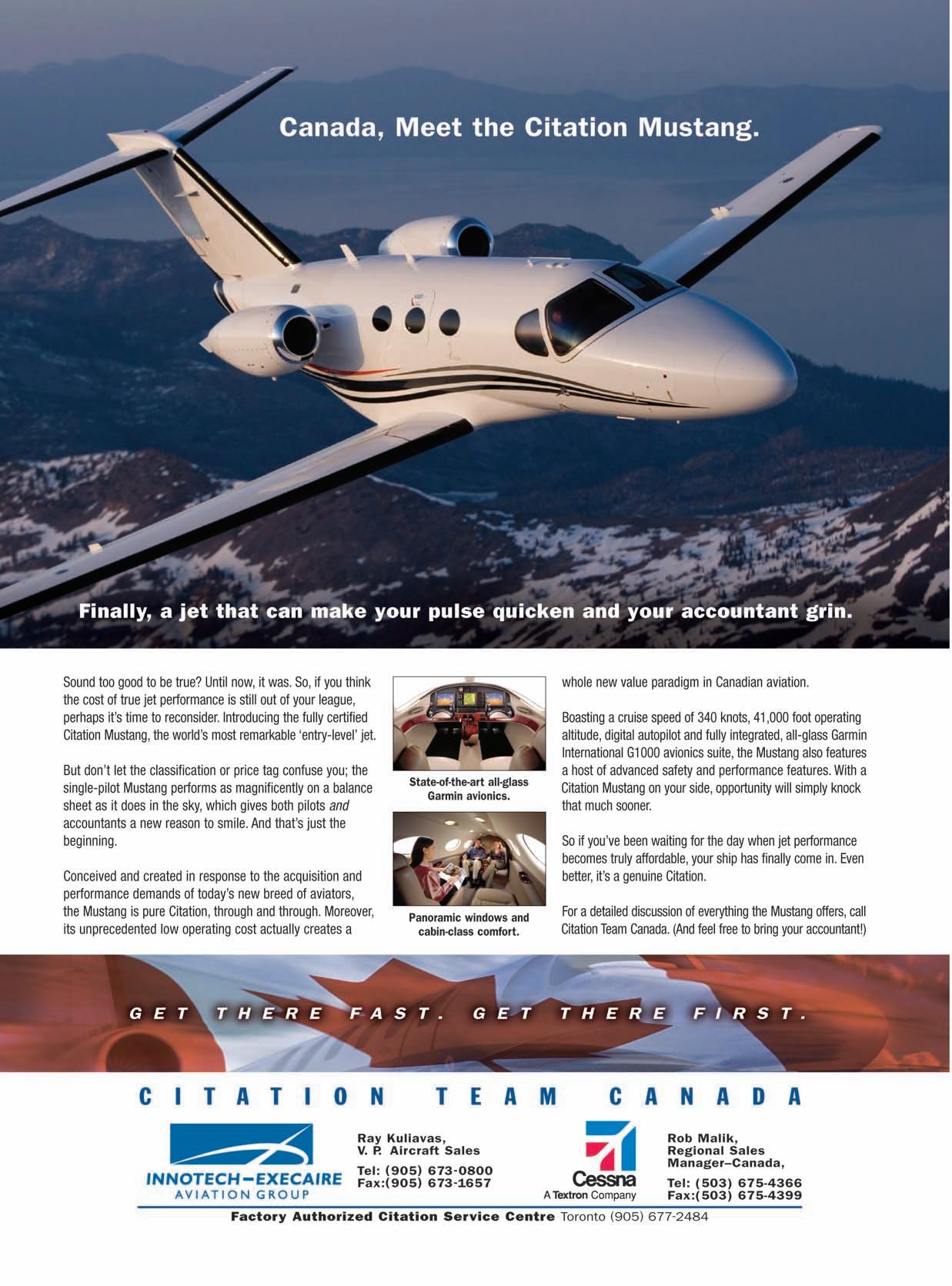
Air Transat celebrated its 20th anniversary on November 14 and plans to replace its fleet of four Airbus A330s and 12 A310s with the more fuelefficient A350 extra widebody or Boeing 787 Dreamliner as the leading candidates. Other aircraft in the running are the Boeing 767 and reconfigured A330. A choice is expected to be made in late 2008 or early 2009.
“We’re shopping around and considering all options,” said Transat spokesperson Jean-Michel Laberge, including whether to expand the airline’s existing fleet of 16 aircraft, he added. But no fleet replacement will take place before 2010 or 2011.
Laberge said winter bookings started off slowly, but began to pick up in midNovember and should equal or surpass last year’s totals. He said a difference this year from last is that more customers were booking their February and March holidays before Christmas.
Since its inception in 1987, Air Transat has carried over 35 million passengers to some 30 sun destinations and 30 European cities. Parent company Transat A.T. has 6,000 employees in eight countries and expects to generate revenue of more than $3 billion this year.
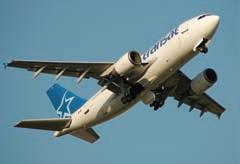
Looking to expand its opportunities beyond North America, WestJet is hoping to form an interlining agreement with Air France that would make it easier for WestJet passengers flying between Canada and Europe with seamless passenger and baggage check-in. It could also mark the beginning of similar agreements with other major airlines.
“It’s a good tactic for WestJet which has a strong presence in Canada, but given its Boeing 737 model, it limits its range,” said management professor Karl Moore of McGill University. “The pairing with Air France also negates some of the competitive advantage of Air Canada’s Star Alliance network. WestJet can now chip away at some of those advantages.”
Moore found it “interesting” that WestJet still hasn’t joined any airline alliance which gives it flexibility by straddling different camps.
As for Air France, it can now better compete with Air Canada in its own backyard, said Moore.
“Air France gets greater access to one of the G8 countries which is less competitive than the US.”
WestJet co-founder Tim
Morgan and other former WestJet executives are developing a new airline called NewAir & Tours that is said to be modelled after Las Vegas-based operator Allegiant Air which operates a fleet of 32 Boeing MD-80s. Joining Morgan in the start-up venture is former WestJet VP of marketing and sales William Lamberton, who now runs Classic Canadian Tours, a company that offers vacation experiences to remote regions, as well as two other former WestJet executives.
Calgary-based NewAir & Tours plans to initially focus on providing charters in Western Canada, and avoid direct competition with WestJet and Air Canada by targeting smaller underserved markets. Hotel rooms and tour packages would be part of the mix.
Morgan resigned as WestJet’s executive VP of operations in October 2005. A former pilot for Canadian Regional Airlines, Morgan was responsible for WestJet’s leadership among low-cost carriers in embracing new technology in a number of fields.
He developed and oversaw such key projects as the installation of new navigation systems, LiveTV in-flight entertainment and blended winglets on WestJet’s Boeing 737 New Generation fleet. He was also in charge of flight operations and maintenance.
“MONTREAL’S US AIRPORT” ATTRACTING QUEBEC TRAFFIC Billing itself as “Montreal’s US Airport,” complete with bilingual signs, Plattsburgh
By Brian Dunn
International Airport is hoping to attract Quebec traffic to its newly renovated facility converted from a former air force base.
Passenger service began last June 18 and local politicians are currently looking to add additional airlines to the airport. Las Vegas-based Allegiant Air has added Orlando to its destinations from Plattsburgh and has doubled the number of flights from Plattsburgh to Fort Lauderdale. The airline cited Plattsburgh as an ideal location due to its proximity to Montreal, about an hour’s drive away. Allegiant operates a similar service to Bellingham International Airport in Bellingham, Wash., which targets Vancouver travellers.
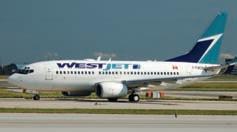
US low-cost carrier JetBlue Airways has applied to launch charter and scheduled service between Canada and the US using its Airbus A320 and Embraer 190 aircraft. The JFK-based carrier has been operating private charters for businesses and sports teams in the US for over a year and was approached by both groups about extending the service to Toronto and Vancouver. As a result, JetBlue decided to apply for both charter and
scheduled rights together to save time and bureaucratic red tape.
“We get a fair amount of requests to fly to Canada,” said airline spokesperson Sebastian White. “But as a low-cost carrier, scheduled service to Canada at this point is a long-term proposition due to the high airport and landing fees.”
However, some Canadians are already enjoying JetBlue’s service, accounting for about a third of bookings on new flights between Burlington, VT, and Orlando and between Buffalo, NY, and Orlando and Fort Lauderdale, said White.
Atlanta-based AirTran Airways also has its eyes on Canada, according to airline spokesperson David Hirschman.
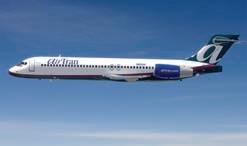
“We’re studying it, but we don’t have any immediate plans to enter the market. There are several Canadian cities that are well within the range of our 737 and 717 aircraft. And our market data suggests Canada is a very desirable market.”
AirTran operates 87 Boeing 717s and 50 B737s and serves 56 destinations all within the continental US and Puerto Rico. It has recently begun to expand service into the northeastern and midwestern parts of the US.
Air Canada will expand
service between Canada and Germany with Star Alliance partner Lufthansa starting next summer. New city pairs include Ottawa-Frankfurt, Toronto-Dusseldorf, as well as a second daily nonstop flight between Calgary and Frankfurt that will begin April 14. Lufthansa will operate 221-seat Airbus A330-300 aircraft on the route.
Lufthansa will begin seasonal, nonstop TorontoDusseldorf service on May 1 using A340-300 aircraft. Air Canada will offer the service on a codeshare basis.
The Canadian carrier will also link Toronto and Dusseldorf. Starting in March, it will use 349-seat Boeing 777-300ER, in addition to its second daily refurbished Boeing 767-300ER service. These flights will be offered on a codeshare basis with Lufthansa.
Air Canada will begin year-round Ottawa-Frankfurt service on June 1 using 211seat Boeing 767-300 aircraft. Lufthansa will offer the Ottawa and Frankfurt service on a codeshare basis.
Air Canada said it “plans to expand these codeshare services to include Belgrade, Zagreb, Amman and Kuwait” pending government approvals.
Starting in April, Air Canada will also expand service from Toronto to Venezuela and Trinidad and Tobago. The carrier currently offers one-stop service to Caracas via Port of Spain.
In April, Air Canada will designate separate, nonstop flights to each destination. Four weekly services to Caracas will begin April 6, while thrice-weekly service to Port of Spain will start two days later. The airline will
operate Airbus A319 aircraft on the two routes.
Pending government approval, Air Canada also plans to launch year-round service from Toronto to Madrid next summer.
Porter Airlines began offering seasonal service between Toronto City Centre Airport and Mont Tremblant International Airport on December 22 which will continue until March 31. During the peak Dec. 22 - Jan. 6 Christmas period, Porter offered Monday, Wednesday and weekend service which was reduced to weekend service on January 7, with return trips leaving Saturday mornings and returning Sunday evenings. Initial one-way fares start at $129 plus taxes and fees. The one-hour flight from Toronto allows skiers to be on the slopes of Tremblant by10 am Saturday and because the return flight is at 8 pm Sunday, they can get in two full days of skiing.
Porter is the second airline to offer seasonal scheduled service to the Laurentian resort. As reported earlier, Continental Airlines began offering daily service on December 14 from New York/Newark until April 5, using 50-seat Embraer 145 aircraft.
Porter has been profitable since last March, says president/CEO Robert Deluce, and is growing at the rate of 20% a month. His fleet of Bombardier Q400 aircraft will grow from four to 10 aircraft over the next 12 months as Porter looks to add US destinations beginning with service between Toronto City Centre airport and Newark, followed by Boston, Chicago, Washington and
Philadelphia. Quebec City is also on Porter’s radar screen.
After lying low for the past few years, veteran tour operator Steve Nasra has resurfaced with an ambitious plan to get back into business using 10 Airbus A380s to link Montreal and Toronto with major European cities.
If the name rings a bell, Nasra owned MultivoyagesHaiti Air Charter which used now defunct Nationair and Canada 3000 to transport passengers between Montreal and Port-au-Prince in Haiti before he closed his business suddenly in July, 2002. That decision left thousands of passengers stranded and Nasra was fined $111,000 by a Quebec court as a result. At about the same time, he announced plans for a new carrier called Canada Air Charter, but nothing came of it.
While no start-up date has been mentioned for his new Canada World Airlines venture, some ads have begun to appear in various Canadian dailies depicting an A380 in CWA livery and an Internet Web site. The Web site describes Nasra’s ambitious vision for his new airline which will feature, among other amenities, a doctor, a hairstylist and manicurist, smoking rooms, showers and bidets, onboard security guards and just to be safe, each aircraft will be equipped with an anti-missile system. Round-trip fares will range between $1,400 and $4,800.
No word as of yet on who is financing this bold dream or whether Nasra has received certification.
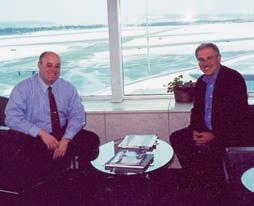

During the years that the One On One airline management and operations series has been a regular feature in WINGS, I’ve received many requests to outline some of the key lessons for our industry stemming from the series. For sure, there are a lot of lessons that have come out of the many discussions I’ve held with airline CEOs. Following are some of the key points from the series to date for all of us whose business is in the air.
Perhaps the one key lesson above all others is that when it comes to the airline industry here in Canada, and indeed as a general rule worldwide, only the strong survive. The airline industry is, contrary to what some believe on the outside looking in, an inherently competitive and cutthroat industry that takes no prisoners. The trend toward growth with airlines is driven as much by the simple need to compete and survive as it is by any profit motive, as larger airlines tend to be more robust and have a greater depth of resources to draw on, more varied sources of business that are
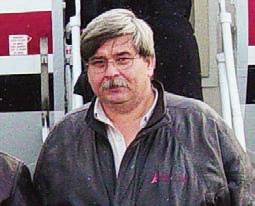
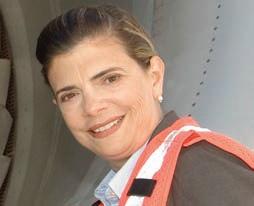

By DARREN LOCKE, MBA
better able to withstand economic downturns and industry upheaval, and a greater ability to compete against and force out weaker rivals. To be successful, strength must not be concentrated just in one or two areas, but instead there must be “strength in depth” – a strong, well-performing route structure, a modern and competitive fleet, a strong operations and maintenance team, sufficient liquidity and a robust balance sheet, and above all else, tough and determined leadership and teamwork at all levels. If there is a critical deficiency in any one area of your airline, and if you can’t identify that deficiency and address it, then your competitors certainly will. The overall trend in the industry is definitely toward survival of the fittest, with weaker players successively eliminated either by being forced out of business, or forced to accept buyouts, mergers or consolidations.
In the fishbowl world that is Canada’s airline industry, any major mistake in business strategy will almost certainly be obvious to your competitors, especially given
the deep strategic thinking and aggressive mind-set that predominates. Airlines study their competitors and their every move very intently in what is a thin-margin, hypercompetitive industry, looking for signs of weakness and strategic missteps that will create opportunities for them to expand and ultimately force the other guy out. It is therefore vitally important for managers and executives to plan carefully and execute with precision, ensuring that ongoing operations as well as new strategic initiatives are thoroughly planned and thought out and then executed in as error-free a manner as possible. Unfortunately, however, in a lessthen-perfect world and in an industry where the element of change is very much a daily if not an hourly factor, mistakes in different degrees of magnitudes are inevitable. True airline management excellence therefore resides in not just making the right call on a frequent and ongoing basis, but in also having the courage and integrity to accept what has occurred when the wrong call has been made, and to rapidly address it. Delayed action in this regard can be truly lethal, whether the mistake is overexpansion,
underperforming routes, or even something as fundamental as the wrong business plan. Quick action is therefore key to overcoming errors, and to recovering and learning from mistakes, instead of being overwhelmed by them.
3. PEOPLE ARE OUR GREATEST ASSET; TEAMWORK OUR GREATEST TOOL Canada’s airline industry is characterized, as is the global industry, by extreme career mobility, with individuals moving as a general tendency from smaller carriers to larger ones, from charter to scheduled, from military to civilian aviation. To some degree this kind of career movement, especially for pilots and aircrew, is very much necessary to the industry’s overall survival, health and prosperity. But what may be good for the industry in a holistic sense is not necessarily good for airlines, and from a management perspective it’s well worth keeping in mind that every time a member of your team walks out the door for the last time, also walking out the door is a wealth of human potential. The most successful airlines therefore are the ones that realize this


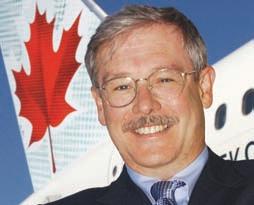

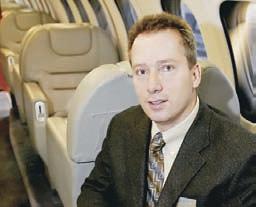
•Mark
•Alex
•Chantal Baril. ACGHS
•Carmen Loberg, NorTerra
•Robert (Bob) Davis, First Air
•Montie Brewer, Air Canada
•Robert Deluce, Porter Airlines
•Paul J. Phee, QuikAir
fact and that act accordingly. Valuing and rewarding people is a key element in building a strong airline, as is emphasizing personal growth, teamwork, and the free movement of ideas and innovation up and down the organization. Too many good ideas and too much innovation are lost, diluted, or misdirected at lower and intermediate levels in our industry before they ever reach senior executives. Without the energy and enthusiasm of talented people at all levels, and young people in particular, and without teamwork, the survival and future success of any airline is placed in jeopardy. From junior employees to the very top of our organizations, people are our most important competitive advantage and our primary asset, and we must actively seek to keep this asset engaged, rewarded, and committed.
Maintaining ample liquidity is a financial essential for any airline, and it becomes even
more important in tight competitive situations, especially where larger players are concerned. Having plenty of liquidity on-hand allows you to ride out situations such as new entrants or sudden deep discounting introduced by key competitors in an effort to build load factor, acquire more market share, and either knock weaker competitors off of lucrative routes and markets, or out of the industry altogether. Maintaining a strong liquidity position can also be of vital importance during off-peak quarters and general industry downturns, when weaker airlines will potentially be under threat. Having a strong liquidity position is also an enabler, in that it allows you to move quickly on opportunities that would otherwise be lost or capitalized on by competitors. It is therefore a key element in facilitating both offensive and defensive movement, as well as surviving situations in which cash-poor competitors will otherwise be forced into retreat and find themselves under threat.
While many low-cost carriers eschew airline alliances, interlining with other carriers, or various other cooperative and partnership arrangements, there are many advantages to be
gained, particularly as an airline grows and seeks additional passenger and cargo opportunities. Airline alliances are generally the most formalized co-operative or partnership arrangement in this regard, and offer all kinds of benefits including the ability to capitalize on delivering passengers and cargo to a much wider geographical area, greater financial resources via the collective, economies realized through group purchasing of aircraft, equipment, systems, training, etc. There can also be downsides to alliances and partnership arrangements, however, including a potential loss of corporate independence and decision-making authority. Smaller carriers considering entering into partnerships and alliances also must consider what the potential implications could be in an alliance or partnership arrangement dominated by larger carriers, especially those with extensive rewards program liabilities. Will these impose a sudden, unsupportable drain on revenues? Will entering into a partnership or alliance be detrimental to airline growth and revenue-generation opportunities, especially expansion into new markets and routes? Any such move must be considered very carefully and every pro and con weighed both shortterm and long-term.
Driving revenues through onboard sales allows airlines not only to provide passengers with a better range of amenities including food and beverages in a time of strict discipline on costs, but also to boost revenues by turning the cabin into a diversified revenue-generation environment. Traditionally, revenuegeneration in the cabin was limited primarily to dutyfree and alcohol sales in Economy, but now an increasing range of amenities is being offered, from food and beverages to headphones and comfort items. A further benefit of charging for food and beverages as well as additional passenger comfort and convenience items is that savings accrued in no longer offering complimentary catering to everybody onboard can be passed on to airline passengers via reduced ticket prices. But airlines are also using complimentary amenities to distinguish themselves from other carriers and gain competitive advantage.
Charter carriers have proven particularly adept at taking advantage of this opportunity.
Although this sounds like
CONTINUED ON PAGE 27
By Andrea Kwasnik
The David Charles Abramson Memorial (DCAM) Flight Instructor Safety Award is named in honour of Jane and Rikki Abramson’s son, a heroic individual whose life came to a tragic end in 1998. David Abramson’s professionalism as a flight instructor was the inspiration behind this annual recognition of excellence in Canadian flight training.

For Jane and Rikki Abramson, this was “the beginning of a journey to ensure a positive legacy would remain.”
David lost his life while on a routine training flight with a student on July 18, 1998. He was just 24. The Transportation Safety Board report
on the accident concluded that: “... improper maintenance procedures that released the aircraft for flight in an unsafe condition, a missing rudderbar return spring, and a design anomaly in the rudder stop mechanism contributed
to the accident.”
Through his heroic effort that day, his student survived. The Dean for Continuing Education at John Abbott College at that time, Mr. John Watson, reflecting on his experience in pursuit of his
private pilot’s licence, offered this endorsement of David’s teaching credentials: “Little did I know at the time that, during the next six months, I would learn more about the
CONTINUED ON PAGE 35
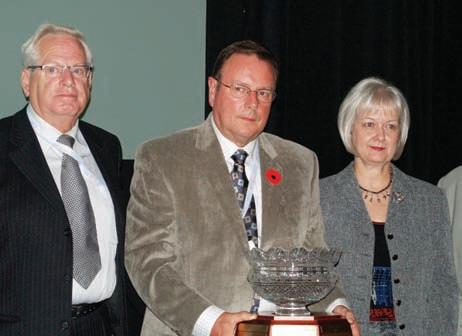
Marking its fifth year, the 2007 David Charles Abramson Memorial Flight Instructor Safety Award was presented to John Robertson, Chief Flight Instructor & Professor of Human Factors & Safety Systems at Seneca College’s School of Aviation & Flight Technology in Toronto.
Celebrating 20 years of instructing at Seneca College in August, 2008, John has instilled a safety culture in his students by incorporating safety goals into every aspect of his training. His passion for flight, vast amount of knowledge and enthusiasm for teaching have made him a role model.
Prior to Seneca College, Robertson had an extensive 22-year career in the Canadian Military where he received his flight training on the Chipmunk, Beech 18 and the Tutor jet. Operationally, he flew the Grumman Tracker, the T33 Silver Star, the Sea King helicopter and the Tutor, and he finished his military career as Chief Flying Instructor at CFB Moose Jaw on the Tutor.
Robertson acknowledged the award by saying: “The David Charles Abramson Memorial Flight Instructor Safety Award is significant, not only because it is in honour of a young man, son and dedicated instructor who gave his life doing something that he strongly believed in, it also recognizes the dedication and professionalism of others with similar qualities. To be recognized as such, especially by your peers, is truly an honour and a humbling experience. The benefit of winning this award is the validation that you are providing students with leadership and quality education in today’s ever changing environment, a validation quite different then from renewing or upgrading your instructor rating. It is in fact food for the soul.”
By Mike Minnich
It was an overcast and humid Saturday morning: August 30, 1975. As I landed the Cessna 150 on Runway 27 at Markham, ON, completing my tenth hour of dual flying instruction, Tom, my instructor said, “Let’s go inside and get the pre-solo written exam out of the way.”
Twenty minutes and 42 questions later, I was officially approved by Chief Flying Instructor Mike McMahon to solo. Tom and I did one more dual circuit, and then he wished me a good flight and got out of the aircraft.
Another ten minutes and a single circuit later – with an unfamiliar and kind of spooky empty space in the seat to my right – I’d joined the long list of student pilots who’d passed the milestone that they’ll never forget: first solo. As I taxied back in to the ramp, I remember letting out the first spontaneous yelp of pure joy that I’d likely produced since I was a lot younger than my then 28 years.
That fine and confidencebuilding experience – and all the subsequent ones that turn a neophyte aviator into a competent recreational or commercial pilot – is being experienced many times each week across Canada these days, as our flying schools train massive numbers of students.
Here’s a look at the wide –

and even exotic – range of current activities at three representative flight schools:
Down east at Moncton Flight College , CEO and principal Mike Doiron barely had time to do our interview.
“In the last month-and-ahalf, we’ve completed opening a second campus in Fredericton...signed off on two more contracts from China … are in the process of finishing a 120-room residence in Moncton … expanding our Fredericton campus to 80 rooms … and are opening a new 18,000-sq-ft hangar,” he reports. “It’s kind of like trying to drink from a fire hose!”
Moncton Flight College (MFC) offers integrated Airline Transport Pilot (ATP) courses; integrated Commercial Pilot Licence (CPL) courses; a two-year “Diploma in Aviation Technology (Pilot)” course in conjunction
with New Brunswick Community College; a cadet directentry training program for students from China who will return home ready to start transition training directly onto Boeing 737, 747, or Airbus A320 airliners; JAA (the European Union’s Joint Aviation Authority, equivalent to Transport Canada) Private Pilot Licence and Commercial Pilot Instrument Rating courses; type endorsements on Beech King Air twins; a Safety Management Systems certification course; and an airside vehicle operator’s course.
“We’re also currently developing a four-year aviationdegree course with Mount Allison University, and are hoping to roll that out in September 2008,” Doiron adds.
The MFC fleet (divided between the two locations) includes 17 Diamond DA20C1 aircraft (low-wing, twoseat fixed-gear trainers from Diamond Industries), with five more on order; seven Cessna 172s; one Cessna 182-RG; one Citabria for aerobatic training (scheduled to be replaced by its bigger-brother Decathlon by the end of 2007); three twin-engine Piper Seminoles (two more on order this year); and a Beech King Air C90 (with a second to be added to the fleet over the winter of 2007-08, and possibly a third one come spring 2008).
And that fleet is getting a lot of work.
“We’ve seen a 250% increase in business in the last year alone, and anticipate a similar increase across the next
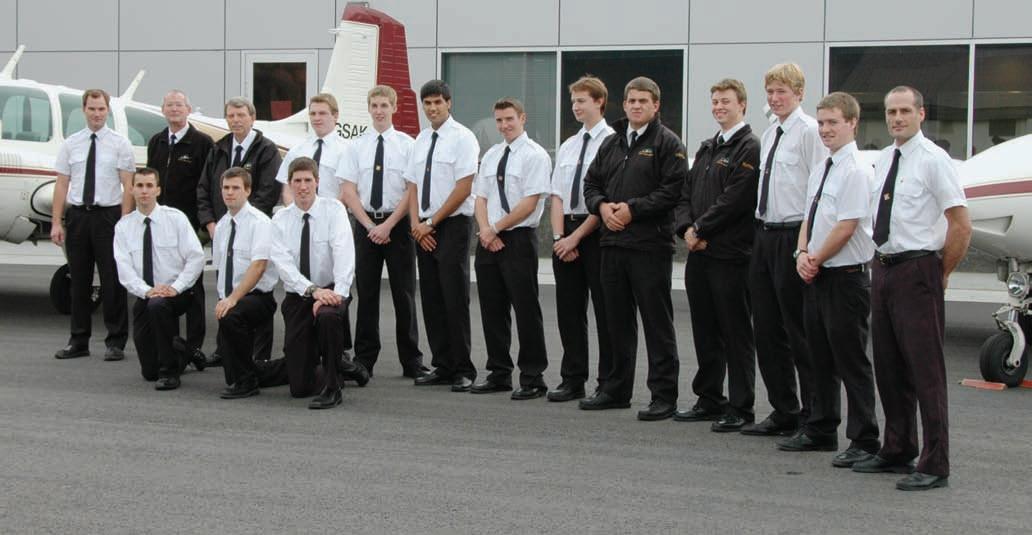
two years,” Doiron notes. “Generally, MFC would log 10,000 to 15,000 flighttraining hours per year, but last year we flew 27,500 hours. Looking at it another way: historically, we’d train about 120 to 140 students annually, and now we have 243 full-time students in Moncton and another 43 in Fredericton. And our instructing staff was 26 in 2006, and now is more than 60. I currently have 16 trainee flight instructors who will graduate in December and January … and they’ll be hired to instruct at MFC on the day they graduate!”
Out west, the aviation course at Selkirk College (Castlegar, BC) is busily improving its various curricula and equipment.
“Our flight and ground courses take the student from Private Pilot level through the commercial and multiengine/IFR levels and prepare them to write the ATPL exams by the time they graduate after two years,” senior instructor Mike Power
explains. “At the completion of training, the student will have had 816 hours of ground school, 250 hours of flight training, and 150 hours of simulator training.”
The instructors at Selkirk reflect a wide depth and breadth of experience, Power notes: one was recently a captain on a BE1900D for a busy regional airline; another holds a master of education degree and handles continuous reviews/updating of the aviation curriculum; one divides his time between instructing at the college and flying as first officer on Air Canada’s Caribbean runs; and the department’s safety officer is a graduate of the Canadian Forces Flight Safety course and an active Air Reserve officer.
But the future at Selkirk didn’t look so rosy a few years back, Power recalls.
“In 2002, the college undertook a review of all courses offered, and concluded that, due to a number of other instructional partnerships between colleges
and commercial flying schools in BC, the Aviation Program at Selkirk should be terminated. This caused a flurry of concern and involvement by local and provincial politicians, government officials and other concerned parties, and the result was that the program has been maintained, and with the full support of the college’s management,” he explains. “Our total aviation student capacity is 36 – 18 in each of the two years.”
Currently, there are 13 students enrolled in the Aviation Program (six in first year, seven in second year; all are from Canada), and they train on equipment that includes five Cessna 172P single-engine aircraft, two Beech BE-95 Travelair twins, two Frasca 142 simulators (more properly known as “flight training devices” these days) equipped with GPS and visuals, plus a Frasca 242T King Air unit. Also, late 2007 saw the delivery of the muchanticipated Alsim 200MCC multiengine simulator that
has a 180-degree visual display. It is expected to be up and running for the winter semester.
“When Transport Canada endorsed the Integrated Commercial Pilot Course and Integrated ATP Course philosophy, Selkirk was already well-equipped to adhere to those requirements in all areas but FTDs, so that’s why we’re significantly upgrading our simulator capabilities,” Power notes. “Equipment like the Alsim 200MCC will not only enhance training opportunities for turboprop multicrew line-oriented flight training (LOFT) requirements, but will also save students money by replacing some training hours that would previously have required actual in-theair flying.”
Over at Penticton, BC, Mark Holmes, director of operations for Southern Skies Aviation Ltd., provides similar insight into current activities at his busy flight school.
“With the placement into
regulation of the Integrated Commercial Course by Transport Canada – which brings civilian commercial pilot training in Canada more into line with ICAO and JAA standards – Southern Skies moved quickly to ensure that our courses were in full compliance, and currently I believe we are one of only eight flight schools in Canada that are licensed to conduct the ICC,” he notes.
“Incorporating digital fullvisual simulators and digital avionics are among the changes we made to develop our ICC course,” he adds.
Southern Skies offers the full range of Transport Canada-approved pilot training courses (professional, private and recreational) as well as instrument, multiengine, VFR-on-top, flight
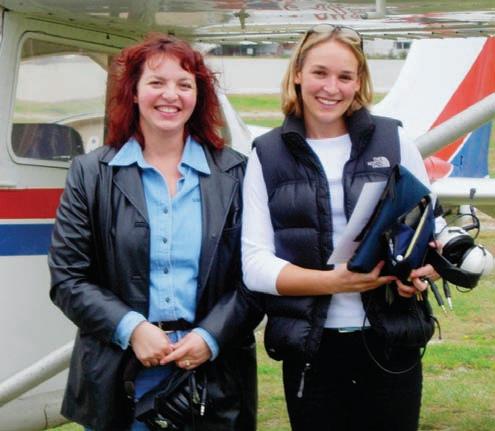
new Airline Transport Pilot Licence course, which is based on the same integratedcourse philosophy as the ICC. Flight schools must apply to Transport Canada for an “operations specification” to instruct the ATP course, and Holmes says Southern Skies is hoping to be the first school in Canada to achieve this authorization.
“Before we can be licensed for the ATP Course, we must complete its development,” Holmes reports. “We plan to have it ready for September 2008, and an integral component for approval will be our acquisition of a multicrew flight training device. We’re coordinating arrival of that FTD with the completion of our course training-plan

In December 2006 Transport Canada authorized the
instructor and float ratings/endorsements. (They also offer in-house-developed aerobatics and mountain-flying courses, and currently have eight students enrolled in the latter course.) Holmes takes pride in the fact that Southern Skies hasn’t had a student fail any TC flight test since 2002.
This ground school is intended to give students the tools to handle the practical world of IFR and prepare them for the INRAT exam.
This new expanded 40-hour, two-weekend, comprehensive ground school is designed to lead students in a logical progression through the steps and knowledge necessary to carry out an IFR flight.
CONTINUED ON PAGE 42

and 14-16





what you represent, they’ll becomfortable with you.
CONTINUED FROM PAGE 21
the most mundane and basic of tasks, airlines unable to decide their identity, market focus and direction right from the get-go very much suffer, especially when choosing the wrong corporate identity and focus leads to a loss of market position and visibility. The three of these elements tend to build on each other, and for a start-up carrier in particular, choosing the wrong identity invariably misleads you as to your market focus and future direction. My advice when asked about this is to simply think “Tim Hortons” and “Canadian Tire.” Think about how successful these companies have become in appealing to the Canadian mainstream, think about their market focus, and think about their emphasis on providing quality, service, convenience and value at a reasonable cost.These companies epitomize Canadian identity and values in all they are and all they do, to the point that they have become Canadian icons unto themselves. Shooting for the mainstream whether nationally, regionally, or locally is the safest and smartest course of action – if people see a reflection of themselves in
Choose an identity that’s too polarized, too far away from the mainstream, and you’ll be catering to the niches, which in mass transportation is where you don’t want to be.
Just as surely as staying small when your key competitors are growing will get you killed in the airline industry, so too will airline corporate overconfidence in it’s most visible manifestation, overexpansion. So, choose your routes and your opportunities carefully, and don’t move onto new routes and into new markets when you haven’t got either the aircraft, the service support, or the infrastructure to handle them, and your competitors there do. Due in large measure to the extraordinarily mobile nature of our industry’s highest-value physical assets, there’s a remarkable tendency among airlines to overextend themselves and enter into new markets where the basic elements don’t exist to support them. The key is to find balance – balance between equipment performance and reliability, balance in terms of the impact on the rest of your operation and fleet of operating aircraft on far-flung routes, and balance in terms of cost and revenue. What looks like an opportunity to break into a new market may
instead be just the opportunity your competitors have been waiting for, a market that will break you. So, choose wisely, watch closely, and if a mistake has been made, act quickly to remedy it.
As oil hovers close to US$100 a barrel, it’s worth noting the success that some airlines have had in running effective, well-managed fuel hedging programs. While nothing is a sure bet, fuel hedging based on informed, reasonable assumptions can truly give a leg up to any airline suffering from stratospheric fuel costs. A lot more can be done as well in terms of reducing onboard weight, and incentivizing passengers to forego the traditional allowance of checked baggage, but well-managed airline fuel hedging programs are definitely a key strategic survival tool if used properly. More airlines should put more effort into fuel hedging as part of their strategic tool kit, because the bet is safer then ever now that the one direction fuel prices won’t be going is down.
A last key point from the One On One series is that charter can be a beautiful thing, and offers all kinds of opportunities while limiting risk. The Canadian airline
landscape in particular is replete with carriers that did not understand this, and that abandoned their status as charter carriers for what were perceived as greener fields in scheduled service. The sked game is a much more challenging proposition, however, fraught with risk, and due to its nature mistakes made playing it compound quickly and become very, very costly. While everyone likes to grow, in markets already dominated by one or more major scheduled players, there may simply not be room for more. Low-cost carriers were thought to be an exception to this in some airline executive quarters, with their ability to out-cost their traditional legacy rivals, but I believe this now mainly holds true only where low-cost carriers are equipped with modern, highperformance aircraft using high-efficiency engines with vastly improved fuel-burn. It’s unlikely that we’ll again see the day where airline entrepreneurs could fit out a start-up with older, inefficient aircraft burning vast quantities of jet fuel and still come out ahead based on lower salaries and benefits. Instead, low-cost start-ups now generally feature the most advanced and fuel-efficient equipment possible, truly a recognition that the era of cheap fuel is over, and that Canada’s airline industry just got a whole lot tougher to survive in.
By Raymond Canon
To see us through the long Canadian winter, your humble scribe intends to start an argument. Not a physical one, of course, just a verbal one to help readers through to the more balmy days of spring. The question is what each reader thinks are the six best fighter aircraft of the past. To be sure, six is an arbitrary number but it is better than, say, just one or even 250. To help you along, here are the ones that I have chosen.
1. Hawker Hurricane. This was the plane that did everything asked of it in the Battle of Britain. It shot down more German aircraft than all other RAF fighters put together, it was more rugged than the Spitfire and could be put back into action more quickly. It later served as a fighter-bomber, a tank-buster, a Fleet Air Arm and Merchant Marine fighter. Part of its production was in Canada and it was the aircraft flown by No.1 RCAF Sqn during the above-mentioned battle.
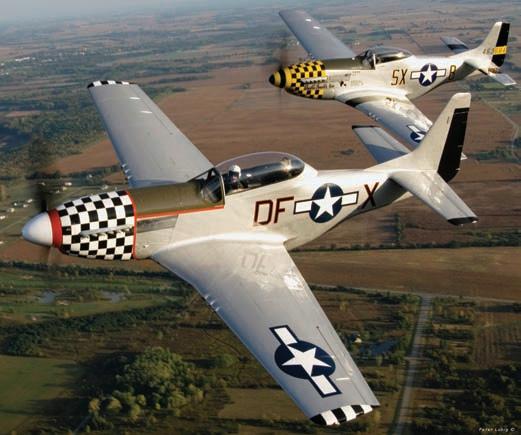
2. North American P-51 Mustang. This was an aircraft that was going nowhere until its Allison liquid-cooled engine was replaced by the Rolls-Royce Merlin. It then became an American aircraft with a British engine. It also blossomed as a highly effective fighter with a range long enough to escort bombers
over Germany. It was the last internal combustion engine fighter used by the RCAF; the Americans went so far as to mate two P-51s into a P-82 Twin Mustang.
3. Fock-Wulfe 190. This heavily armed German fighter frightened the RAF more than any other Luftwaffe aircraft during World War II with the possible exception of the jet fighters. It was better than anything the USAAF or RAF had at the time. Later versions of the fighter usually go under the appellation of Ta-152, in honour of Kurt Tank who was the company’s chief designer. Over 20,000 of the various marks of the 190 were produced during the war.
4. F-86 Sabre. Another first-class aircraft, like Nos. 1 and 2 that came along when it was needed – to combat the MiG-15 in Korea. Like 1 and 2 it was also flown by the RCAF and it went on to become NATO’s front-line fighter aircraft. The 86D was the first to be developed into an all-weather version while fighter-bomber versions also saw service. There are whispers that the Canadair version built with the Orenda engine was one of the best of the breed.
5. Hawker Hunter. Another plane that, like the F-104, was developed as a point-defence fighter but
went on to be just about everything else. Its initial Achilles heel was its range but, once that was solved, it went on, like the Hurricane, to do just about everything else (Sydney Camm’s magic touch). Everybody loved the Hunter, especially the Swiss who laid their hands on over 100 of the 1,900+ that were built. Its 30mm cannon armament was devastating and the plane served for 40 years. Two ex-Swiss Hunters have just been leased to fly for the Royal Navy while Lebanon wants to bring back five of them for ground attack duties.
6. English Electric Lightning. The only fighter with one engine on top of the other, it was also plagued initially by short range. It served as both a high- and low-level fighter and excelled at both of them. The Americans discovered how good it was when it outflew
both the F-15 and F-16 in dissimilar air combat. Its remarkable climb rate meant it could ascend to 50,000 feet and wait for the F-15s to catch up. The Brits should be ashamed of their efforts to market it. Only Saudi Arabia and Kuwait bought it but more effort could have seen it in the service of a number of other countries.
There you have it. For readers who might be reaching for their handbook on tarring and feathering, here are some honourable mentions: Spitfire, Me 109, Corsair, Hellcat, MiG-15, Me 110 night fighter and Yak-9.
En garde!
To voice your opinion on this topic, visit www.wingsmagazine.com and click on blog.
Raymond Canon is an aviation analyst at the University of Western Ontario.
By Matthew Lang
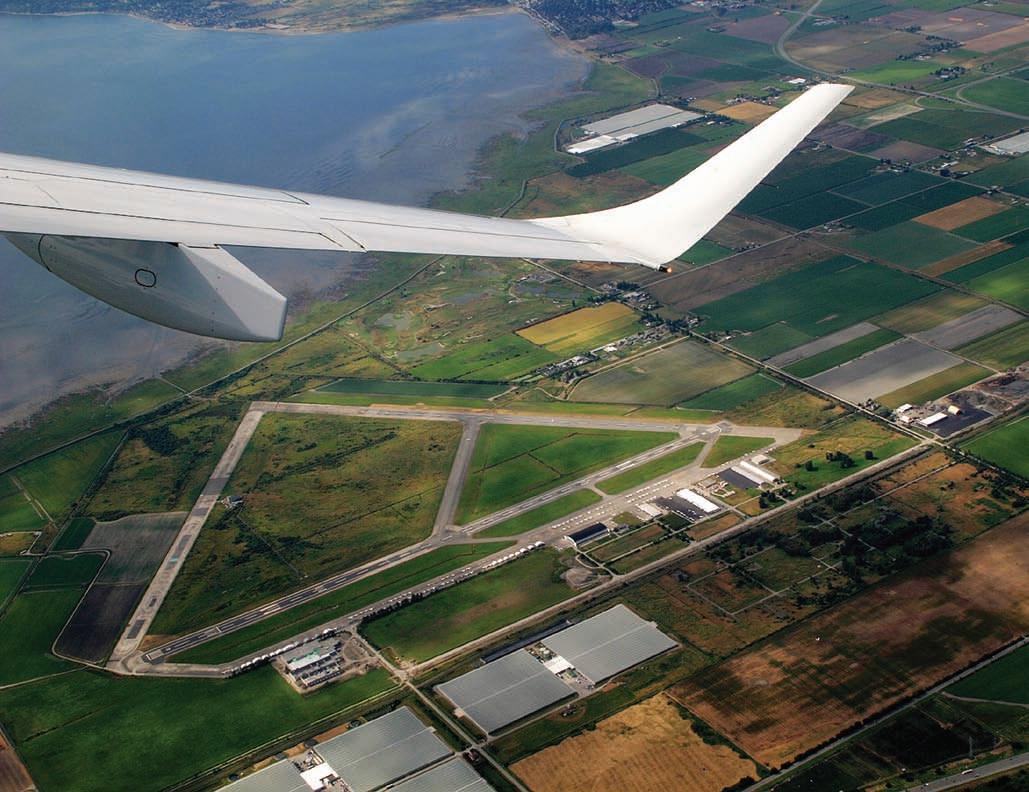
For too many years, Boundary Bay Airport was something of a forgotten asset. A former WWII-era training base, closed after the war, reopened years later, and then finally sold by Transport Canada to Delta Municipality for a single dollar. But what was, or should have been, a grand opportunity to create a business climate for general aviation and other so-called across-the-street industries was basically squandered by the company contracted to develop that asset. The airport suffered years of
neglect, the results of a sour relationship between the municipal government and the same management company contracted to operate the airport on the city’s behalf.
As the airport’s facilities degraded over time, the question of how to fix the problem was given up by those who needed it to be fixed, as well as those who were in a position to do the fixing. A general acceptance of the status quo slowly settled in and operators, primarily flight schools and
students, adjusted their activities to accommodate the defacto standard. And so things were, for several years until push-came-to-shove, and the municipal government took action to reclaim the airport and vacate its contract with the management company. In 2004, after the company refused to pay back property taxes, the municipality took the airport back from it and began looking at its own options.
During those years as the airport’s facilities were declining, that same question
of how to fix it was becoming of interest to Fred Kaiser, founder and owner of Alpha Technologies, a multinational multimillion-dollar company which, among other things, develops high technology electric back-up systems for the cable tv industry. Kaiser, himself a pilot and dedicated aviation enthusiast, spoke to many of the pilots and operators at Boundary Bay
Airport, and saw not only the potential opportunity that was present, but indeed, the underlying need to develop that asset in the first place.
Crucial to the long-term success of any airport are three things: Lots of money, a solid plan, and then lots more money. This, more than anything else, is where Fred Kaiser has separated himself from previous operators of the airport. Contracted to develop the Boundary Bay Airport by Delta Municipality in 2004, Kaiser has already put $10 million into
But Andrews says Delta’s municipal government was at first reluctant to get involved with the new operation. It had just come out of a lengthy and unhappy relationship, and the last thing it wanted was to start putting limited public money right back into the airport, especially since it wasn’t even developing its own tax base yet.
Delta Mayor Louis Jackson remembers the problems from the previous operation very well, and has nothing but praise for Alpha Aviation’s management of the
munity interests, and a multitude of special interest groups, each with their very own perspective on the airport’s future (or even its hoped-for demise), the complications of managing Boundary Bay Airport seem endless.
Andrews regularly finds himself caught between competing interests, but Alpha Aviation has stuck with the plan. “They did the right thing,” says Mayor Jackson, referring to the initial public meetings organized by Alpha specifically to involve those

rejuvenating the airport, he has a plan for current and future developments, and he is willing to invest more of his own money if he can get some help from the government.
Gordon Andrews, Alpha Aviation’s Manager of Airport Operations, calls Kaiser the saviour of Boundary Bay Airport, if for no other reason than he has finally been able to provide that confidence necessary for those in government to put public money into the airport as well.
airport. Jackson remembers the airport from the days before it was reopened by Transport Canada, and the only remaining hangar from the old training base was being used as an ice skating rink where her son played hockey. Today, that hangar is being renovated and will be a heritage building housing a museum which will pay honour to those who trained at the airport during the war.
Like most things involving government, various com-
directed by two federal ministries at the same time to devise a wildlife management plan: one to specifically prevent birds from becoming a safety problem to aircraft, and the other to protect birds from being disturbed by aircraft. Boundary Bay Airport sits on the shore of its namesake, a major stopover point for several migratory bird species, a few endangered species, and a multitude of predatory birds which are part of a government-sponsored breeding program and live just a few feet from the end of one of the busiest runways in Canada.
Among the first projects undertaken by Alpha were a new, large corporate-style six-bay maintenance and business hangar, and a major runway lengthening to better accommodate business jets. Add some additional aircraft parking spaces, a new taxiway here and there, and the $10 million committed by Alpha could run out in a hurry. In fact, Alpha has already spent more than that, and Andrews says it isn’t slowing down.
differing interests and look for solutions. “It’s an interesting process, and hopefully you only have to go through it once or twice,” said Andrews.
This most recent rebirth of Boundary Bay Airport has seen environmentalists, farmers, neighbouring residents and businesses, local government, and several federal government agencies all demanding one contradictory thing or another.
Andrews recalls being
Andrews stresses that this is not a philanthropic venture by Alpha’s owner. “We’ve done a lot of brainstorming –what is our market even without the Olympics (in 2010)” he said. Corporate aviation will play a significant role in that market. Andrews points to the recent trend of increases in fractional ownership, and development of Very Light Jets, adding that corporate jets are no longer a luxury but a necessary tool. It all points to a world where corporate aviation will find a comfortable home at Boundary Bay Airport.
Opened in February 2007,
the new hangar was filled by April and now has a waiting list. Heli-One, the maintenance arm of CHC Helicopter Corp., is building a new 235,000-square-foot test and repair facility. It is by far the largest development of any kind to be seen at the airport since it was built. “Soon this will be an industrial airport,” said Andrews.
Alpha is betting that its location, just south of Vancouver, will prove to be a key selling point to the corporate world – close enough to Vancouver, yet with significantly lower operating costs than YVR.
Mayor Jackson also sees a bright future at ZBB. “Alpha has been very good to our community. The transition is
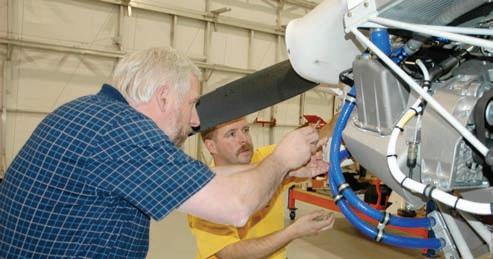
new and exciting, and it is going to generate a lot of good paying jobs and bring a lot of tax revenue to the community.” And the jobs and businesses are already coming to Boundary Bay. From fractional ownership, start-up airlines, and hightech maintenance companies to very small flight training
Katanas for flight training, and Sea Land Air has vowed not to bring in any 30-year-old airplanes to teach in. “It’s like a comparison between Avis and rent-a-wreck,” says Michael Peare, the CFI at Sea Land Air. “Avis won’t rent you a 30year-old car, and we won’t rent you a 30-year-old plane.”
schools to the multimilliondollar consolidation of HeliOne’s operation, Boundary Bay Airport is drawing many new companies for a couple of very simple reasons.
David Lai, general manager of Sea Land Air Management, a fractional ownership and time share company which does flight training, chose to open its new half-million dollar operation at Boundary Bay Airport because of the airport’s new facilities. Lai, a helicopter and fixed-wing pilot, looked at the other airports in the Greater Vancouver area before he selected Boundary Bay. His decision was based on what Andrews insists are the airport’s strongest assets. Lai says the airport’s proximity to Vancouver and the potential for growth in business aviation were both major factors in helping him decide to open at Boundary Bay. The longer runway was also a consideration as Sea Land Air hopes to move into the Very Light Jet (VLJ) market as well.
“The timing is right, now,” said Lai. He had wanted to start his company five years ago, but had difficulty finding good quality space. Today, he is also trying to follow the philosophy of the airport by keeping things new. He is bringing in new Diamond
In the space right next to Sea Land Air is Halcyon Aviation, owned by Ray Firkus and Peter Schlieck. Halcyon chose to open its third and newest repair and maintenance operation at Boundary Bay for the same reasons as their neighbour, namely the pro-growth opportunities that result from Alpha’s development plans.
And Halcyon is another example of a company interested in new technology. It recently completed Canada’s first jet fuel/diesel conversion on a Cessna 172. Using the Thielert Centurion engine, Halcyon has been fielding phone calls on a near-daily basis from pilots wanting to upgrade to the biggest innovation that GA has seen in light aircraft engines in many decades.
Schlieck sees the operation at the new facility as being a bit more expensive compared to other airports, but feels the potential for doing more turbine maintenance is a great opportunity. With only two turbine aircraft currently based at Boundary Bay Airport, Schlieck says there will be a dramatic change in three to four years. And with two new airlines now starting up scheduled and on-demand charter service at Boundary Bay, it is likely the changes will indeed be dramatic.
Schlieck is also aware of some operators at the airport
who have already made deposits on a VLJ, which only adds to the interest in being at the airport. Schlieck says it’s all good for business. “You can’t compete on everything. Different tenants bring different things to the table,” he says, adding that even other direct competitors to Halcyon would be good for business, bringing more customers and more business for everyone at the airport. Michael Coughlin calls this the “synergy of co-location.” Coughlin is vice-president of business units for Heli-One and is very familiar with this idea. It is one of the driving forces behind Heli-One’s move to Boundary Bay Airport. Coughlin explains that “Heli-One has built up
through (company) acquisitions, and its time to bring it all together.” Heli-One’s new test and repair facility will be capable of overhauling and testing four turbine engines at the same time, while its hangar can hold up to 20 helicopters. Coughlin says this will give Heli-One the ability to offer a level of tip-to-tail maintenance which is rare in the helicopter MRO industry.
And Heli-One is spending a sizable amount on its facility. Coughlin says the construction budget for the new hangar alone is $30 million, and that does not include the inside investment in tooling the facility with such things as a new paint booth, engine test beds,
avionics shops, CNC machines, etc.
The move by Heli-One will bring 300 people to the airport, “with plans to hire additional staff starting next year (2008) which could see double that without any problem,” says Coughlin.
Because of the new management of Boundary Bay Airport, opportunities are being created where there were only lost opportunities before. New technology is coming in to replace old, and it is only a matter of time for the driving force at the airport, which currently comes from Alpha Aviation, to be completely self-sustaining.
But right now, with over $10 million already spent, and
a seemingly endless need for more money, Gordon Andrews and the staff at Alpha Aviation have their hands full. Future projects like a new main terminal building set to begin construction soon, and a new apron to replace the badly cracked 1960s apron, GPS approaches, and ... well, a lot more things are still on the list and a lot more money is needed.The good news –the confidence needed to get the money and to get the job done are firmly in place, and it is only a matter of time for the rest to follow.
Matthew Lang is a freelance writer and photographer in BC, and his photos can be viewed at www.MatthewLangPhotography.com.

At Atlantic Turbines, we’ve built our reputation on listening to customers. We listen when they tell us they need engines overhauled quickly. When they say they want flexible pricing. When they ask us for more options. Maybe we’re good listeners because we’re from Prince Edward Island, Canada, population 140,000, where

the winters are never longer than the stories. Of course, we do more than listen. We respond with fast and reliable OEM-authorized services for both business and commercial aircraft engines. Simply ask the owners of the thousands of engines we’ve serviced. Atlantic Turbines. When it comes to your engine, we hear you.
CONTINUED FROM PAGE 22
personal qualities that make for an outstanding teacher and professional than the last thirty years in the education profession had provided.”
It is fitting that something positive resulted from the accident. As a result of the tragedy, the Cessna modification to the rudder stops on 150/152 aircraft was made mandatory in Canada. There are approximately 1,500 aircraft of this type in Canada, and between 25,000 and 30,000 worldwide.
For Jane and Rikki Abramson, this was “the beginningof a journey to ensure a positive legacy would
remain.” Since its inception in 2003, the DCAM Award has encompassed David’s passion for flight, safety consciousness and mentoring spirit by honouring five dedicated and distinguished instructors from various parts of Canada.
All of these individuals were selected because of their superior teaching skills and outstanding leadership qualities. Through their demonstrated distinguished performance, they have each shown a real devotion to the
advancement of Canadian aviation safety.
The DCAM Award is presented annually by Jane and Rikki Abramson at ATAC’s AGM & Convention, this year to be held in Calgary in November. The winning candidate receives a crystal sculpture of an eagle to take home from the award ceremony, and the recipient’s name is engraved on the prestigious trophy and entered in the associated logbook, both on display at the Canada Aviation Museum in Ottawa.
Sponsors of the award include: Air Canada, Flight Safety International, Essential Turbines Inc., Sennheiser Canada Inc., the Canadian Forces Snowbirds and Wings magazine.
As a National Award, the
DCAM continues to bring flight safety recognition and awareness to the forefront of our industry. In their continual effort to promote the advancement of professional standards, the Abramsons have provided this important forum for flight instructors to be recognized for their accomplishments in advancing aviation safety. It is Jane and Rikki’s goal that the award will continue to be an inspiration to those in the flight training industry so that similar tragedies will be prevented.
This year’s deadline for award submission is September 14, 2008. Please visit the bilingual Web site, www.dcamaward.com to learn more about this prestigious award.

By James Marasa
If experience is the best teacher, my most memorable lesson was in the right seat of a Cessna 172 over the Coast Mountains. The failed VFR descent between layers had put me in a tough spot –clouds were filling the windscreen, masking the 5,000foot peaks in their mist as I watched my shaky altimeter struggle upward past 2,500 feet. While making every attempt to come to terms with the greyed-out windows, my shattered ego and the crackling voice of the controller told me I was facing the very real possibility of becoming a statistic – one of those “foolish” pilots who pressed on into conditions he had no business being in, endangering those on the aircraft, persons and property on the ground and other aircraft in flight (at least that’s what the suspension letter from Transport Canada said).
As trees suddenly began to smash against the bottom of the plane, I resigned myself to having committed one of aviation’s deadly sins: controlled flight into terrain in IMC (Instrument Meteorological Conditions).
Although these accidents occur with striking regularity, no one really believes it will happen to himself. Having lived the nightmare, I am convinced this way of thinking is part of the problem. Five years ago, I was one of the universal breed of over-confident 300/500hour pilots who thought the white shirt, black tie and Instructor Rating meant I had arrived in the aviation world. However, as I touched down 30 minutes after brushing up against the side of a mountain in cloud, my confidence was as beat up as the bottom of the aircraft. I may have lost my Instructor Rating that
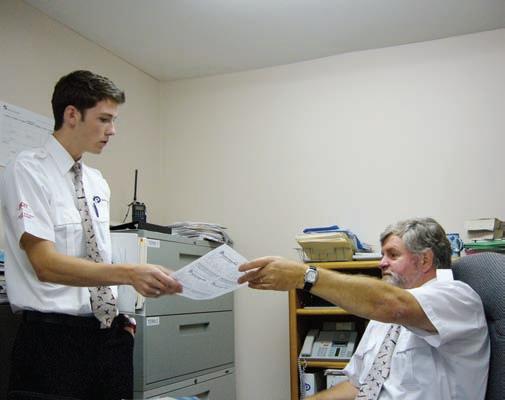
day, but I gained something altogether more valuable – a new perspective on Pilot Decision-Making.
In 1990, the Transportation Safety Board of Canada (TSB) conducted a safety study examining the occurrence of VFR in IMC incidents in Canadian-registered aircraft between 1976 and 1985. Out of 5,994 recorded accidents, VFR in adverse weather accounted for only 352, a mere 6% of the total, yet was responsible for an astonishing 26% of all reported fatalities. The statistics from 1996-2005 tell an even more tragic tale with more than 36% of all fatal airplane accidents deemed the result of controlled flight into terrain. Practically speaking, no other type of accident is
responsible for claiming more lives than pilots unintentionally flying a mechanically sound aircraft into the ground. We may not believe it’s going to happen to us, but it sure happens to a lot of other people. Visual flight into adverse weather is the precursor to the vast majority of these tales with “pilot error,” “lack of training,” or “utter foolishness” playing the usual suspects. Though such allegations provide convenient answers, they do little to solve the problem of why this type of accident

plagues the aviation community with such disturbing frequency.
Simply stated, if a pilot can avoid flying into unfavourable conditions, he or she will never face this problem. Then why, for that matter, should instrument training be required for a private licence? Can’t pilots just adhere to their personal limitations and avoid these disasters altogether? History suggests that as a whole, we can’t, and when we cross the line, there are often grave consequences. Imagine a pilot with no instrument training, entering cloud and trying to maintain control of the aircraft. Researchers at the University of Illinois tested this scenario, and according to their findings, that pilot would likely be dead in less time than it will take you to read this article.
So who are these “rogue aviators” who fly on until they can no longer see the ground, leaving only a trail of wreckage for investigators to piece together? They aren’t all flying out of Illinois – an honest pilot will admit it could happen to any one of us. In fact, the problem may lie in the very nature of who we are.
Paul Harris, manager of flight operations at Pacific Flying Club in Delta, BC, has observed thousands of decisions play out from the right seat. “Pilots are, by nature, optimistic risk-takers with a high commitment to task completion,” he says A Designated Flight Test Examiner and Class 1 Instructor, his experience has afforded him ample opportunity to peer into the pilot psyche. Harris considers aviation a “natural self-selecting process” that draws a certain type of candidate to the trade.
“Pessimists don’t get into airplanes,” he laughs.
Our rosy world view might be what gets us airborne, but it can also be detrimental to our safe return. The TSB report says nearly 80% of all VFR in IMC accidents studied occurred during the enroute phase of flight. Presumably the weather had deteriorated, yet the pilots decided to continue on with measurable consequences. Did they fail to recognize the changing weather ahead or were they just reckless? Neither. Harris believes it can be chalked up to the power of positive thinking. He suggests
that in such instances the pilot likely believed the weather would get better, so therefore chose to press on in hope of finding improving conditions. It would be tempting to dismiss such sanguinity as a by-product of inexperience, but this unwarranted optimism is not only restricted to low-time general aviation pilots. Experience can bring its own set of obstacles to clear thinking such as expectancy and complacency. Roughly 35% of the accidents in the report
occurred in commercial operations and nearly 1 in 5 involved pilots with over 3,000 hours.
While all are susceptible to poor judgment, the motivations affecting one’s resolutions can vary a great deal. In general aviation, the simple desire to get home afflicts even the most conscientious pilots. Then there is the baseball game we have tickets for in Seattle, or the passengers we don’t want to disappoint. Maybe they didn’t pay for the flight, but




· We want to acknowledge and thank you for taking care of everyone and everything with professional courtesy.
· We will always recognize the enormous responsibilities within your care.
· We commit to provide you with luxury amenities and personal service.
· We genuinely take interest in you and seek to always provide you with the most positive customer experience.
· We want to thank you for trusting us to care for you, our valued customer.
not getting the in-laws to the cabin for the weekend may have an effect on family relations. These things happen, but sometimes they can get in the way of our ability to make clear and concise decisions as pilot in command.
Wayne Nyman has played the game from all angles. A licensed AME, commercial pilot and air traffic controller, he has used his experience to talk many a VFR pilot down through some of the most dismal conditions in northern Alberta. He is now Nav Canada’s regional manager for training at the Edmonton Area Control Centre.
“If a pilot says no to a flight and it turns out he could have gone, then everyone’s a judge,” he says from his desk overlooking Edmonton International Airport. Nyman says a controller’s employment does not depend on whether an aircraft “goes” or makes it in, and that is important in a culture that prides itself on the safe, orderly and expeditious flow of air

traffic. The rules governing the ATC system are well defined – 5 miles lateral and 1,000 feet vertical separation is required in most cases between aircraft in an enroute radar environment. Though controllers will make numerous critical decisions during any given shift,
Nyman is frank in acknowledging that pilots face a more ambiguous set of circumstances and their choices can be tainted by outside or personal pressures. Nyman feels that controllers may find it easier to remain impartial when making decisions as they come from a position of third-person objectivity. “We can listen to that little voice inside our head,” he says. “We don’t have a personal interest in the flight.”
Though the public would not tolerate anyone taking risks with their lives onboard an aircraft, there is a belief within the aviation community that a pilot may jeopardize his employment if he is not willing to fly in marginal weather. In other words, if he won’t do it, then somebody else will gladly take his place. These pressures can put strain on the pilot’s mind as he loads the aircraft, with eager passengers waiting to board and the forecast indicating conditions may drop below VFR. Harris of Pacific Flying Club stresses that part of good decision-making is being able to remove one’s own emotions from the process and allow the circumstances to determine the outcome. He teaches that the pilot’s first loyalty needs to be to the airplane, not the company. It is part of what Harris calls “Dispassionate Decision-Making.”
“Captaincy is really about leadership,” he says, “and part of being a leader is being able to say no.”
Surprisingly, not all VFR in adverse weather accidents take place during instrument conditions. In some cases, TSB reports indicate the weather met or exceeded the required minima for visual flight rules. The legal VFR flight visibility can be as low as one mile in uncontrolled airspace, and some have suggested the standard needs to be raised as it encourages pilots to push beyond their abilities simply because the rules allow it. While concurring that one mile is hardly a safe flight visibility in most cases, Harris believes raising the legal minima would do little to solve the problem as the final responsibility for flight safety always rests with the pilot in command. “Pilots need to adopt an elastic view of the minimums,” he says, emphasizing that one should focus on the type of
terrain and type of weather forecast before ultimately coming to a firm decision about the weather conditions acceptable for that particular flight.
Both Harris and Nyman place special consideration on the importance of evaluating the weather’s “potential for change” and insist a contingency plan needs to be ready to implement if the weather deteriorates. “We don’t want to change our initial assessment,” says Nyman. “However, controllers always have a Plan B. Pilots need to ask themselves what is going to happen if their plan doesn’t work.”
Risk management comes down to having options and weighing probabilities. Enroute controllers rarely run aircraft at the bare minimum of five miles – extra spacing is usually applied so if the unexpected happens (and it does), alternative action can be taken to maintain separation. For pilots, Harris believes that by adopting comfortable in-flight safety margins, we give our
mind more time to work out potential solutions. Accordingly, if a pilot does not have a secondary course of action lined up and the weather suddenly drops below what he is comfortable with, stress can push him beyond his capacity to cope and degrade his decision-making capabilities.
I’ve felt those effects first-hand. Caught between overcast layers in the mountains, I was forced to make a decision – radio ATC for radar assistance, or attempt a steep descending turn through a narrow opening on my own. In the perceived chaos happening around me I chose the turn, effectively reducing my number of options to zero – and it didn’t work. As Harris says, “wrong decisions have to be passionate decisions.” Next time I won’t be so optimistic.
There is an old adage in aviation that suggests superior judgment prevents us from having to use superior skill. I think about that from time to time as I sit at
the sector, controlling airplanes over Alberta. Had I not seen how quickly a rash decision could put an airplane in danger, I don’t know how often it would cross my mind. For that matter, can anyone consistently abide by his own limitations unless he has tested them at some point? Pilots have a great deal of autonomy in the cockpit – yet as controllers, there is a well-defined system of checks and balances that keeps us from crossing the line. Nevertheless, both pilots and ATC make critical decisions regarding flight safety every day and both are corruptible by the same human tendencies. If pilots are trained not to cross certain boundaries, in the same way controllers are, the TSB statistics for the next decade might look much less sobering.
James Marasa is an air traffic controller with Nav Canada at the Edmonton Area Control Centre. He is also a commercial pilot and a former flight instructor in Vancouver.
when it’s time to say goodbye or hang on for another day!
By Rob Seaman
There is a familiarity and comfort that comes from older things. They have provenance, a proven track record, and make you feel comfortable.
Depending on your outlook, the same could be said for older business aircraft. Unfortunately, the truth is that nowhere else does the old saying “you can pay me now or pay me later” hold truer. Everything in aviation has a cost. When it comes to older airframes, while the initial acquisition price might seem like a bargain, the maintenance and upkeep, along with modernization can and will become an issue sooner or later. It all depends on your perspective.
So this raises the question –just when is the right time to say good-bye?
For some, this issue became a little more timely as the deadline loomed for the shutdown of Verizon’s (aka MagnaStar’s) ground-to-air flight phone system. Many will recognize this as the phone that sat in the seat headrest in front of you on North American airlines. There was a similar series of models designed for use with business aviation fleets. AirFone (as it was branded), competed openly with satellite-based alternatives. As recently as two years ago, new Magnastar AirFone units were still finding their way into the
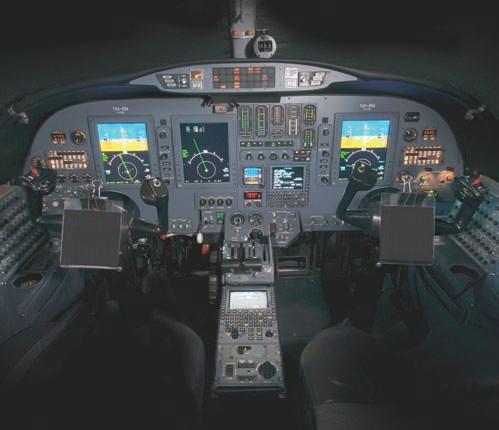
passenger area of corporate and commercial aircraft. Then Verizon announced that it would terminate the service by the end of 2007. Ever since, the units have been disappearing from the commercial fleets (in the case of Air Canada, being replaced with new headrest entertainment units).
On the corporate side, many of these now unsupported cabin phone systems can be converted to a full satcom – at a cost. Bill Arsenault, VP of Mid-Canada Mod Center (MC2), says performing this switch from ground-based to satellitebased technology ranges between $50,000 and $80,000. Some of the hardware remains the same while some requires changing. In the end, this is still less than getting a completely new system.
As for the money, it is really not much in the grand
scheme of aircraft operations – and probably a nobrainer if you have a newer, modern product in your fleet. However if your bizjet “ride” happens to be an older Lear, Westwind, Saberliner or other similar “experienced” aircraft, you just might find this latest bill to be the straw that breaks the camel’s back.
Mike Payne is Embraer’s Executive Jets representative in Canada. He is able to relate easily to what drives folks to come to him for a new aircraft, and says avionics is at the top of the list. As Payne points out, regulations have changed and new equipment has been mandated. In his experience, many customers don’t want to invest in expensive new avionics or equipment such as flight phones on an old airframe. In general,
aging aircraft require updating, and that is costly and time-consuming. In his recent experience, many customers want to get the benefits of lower operating costs that come with the newer, faster, more efficient airframes and engines. As others in the industry observe, and Payne agrees, an older aircraft can cost almost twice as much per flight hour as a newer one – especially when you start to factor in the upkeep, modernization and other general operational costs.
When it comes to money being spent on an older aircraft, one other consideration has to be the cost to finance the updating of the old, versus simply getting the
CONTINUED FROM PAGE 26
development. We currently have an Elite Cirrus-II FTD for our other training courses, and have short-listed three FTD manufacturers to supply our simulator requirement for the ATP Course.”
He notes that the current front-runner is the Alsim, which has the capability to model ten different aircraft types, but no final decision has been made yet.
Holmes is busy writing the Pilot Decision-Making module for the ATP Course which he describes as the “foundation” of that course. The course incorporates leadership, crew resource management, and decision-making logic into all three core components of the course: flying, FTD and
ground school.
“Student throughput for our recreational and privatepilot students has remained fairly consistent in recent years, but there has been a drop-off in our commercial students, which we attribute to individual financial concerns as well as the booming Western Canada economy and the many job opportunities out here,” Holmes says. “Demand internationally for pilots seems to be at record levels, but Canadian visa requirements as well as insufficiently clear information regarding the level of fluency in English necessary for flight training in Canada are ongoing obstacles regarding our foreign students.”
Currently, Southern Skies has seven commercial students
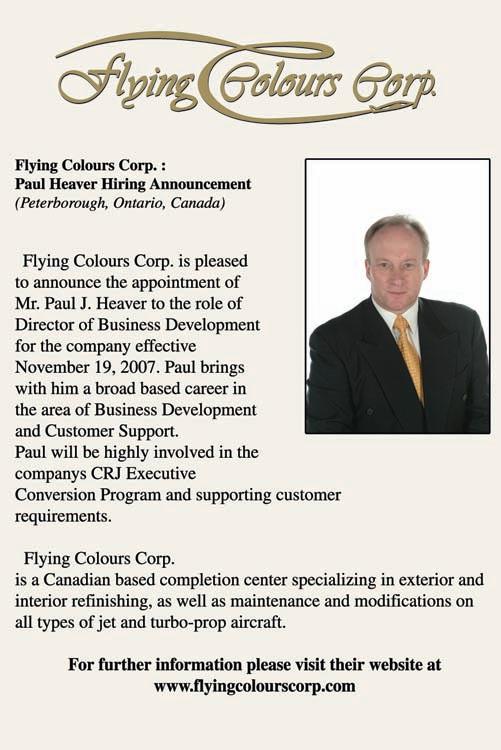
(graduating in May 2008) and 40-plus in the private-pilot courses. Three students are from overseas, representing Japan, India, and Europe.
Southern Skies operates two Cessna 172s, one Cessna 205, a Piper PA23-250 Aztec twin, plus a Citabria 7GCBC for the aerobatics work.
Learning to fly has never been inexpensive (even the 20 bucks an hour I paid for dual instruction on a Cessna-150 back in the mid-1970s seemed like plenty at the time!), and the rates quoted at these three schools ranged from $115$122/hour solo in a single to $255-$360/hour for solo on a light twin. Instructor fees were an additional $40-$45/hour.
However, the door that learning to fly opens for an individual – whether for

recreational purposes or a commercial career – typically leads to a significant return on that investment, be it financial or in sheer self-satisfaction and sense of freedom.
While I never flew for a living (although I did some aerial photography that supported various magazine-article writing assignments over the years), those 815 hours that ended up in my logbook were worth every penny.
Mike Minnich is a freelance writer based in Toronto. He held a Canadian multiengine commercial pilot’s licence for more than 20 years, and is also a veteran of non-aircrew service in both the US Air Force (1970-74) and the Canadian Forces Air Reserve (1981-2007).


Kelowna Flightcraft Group of Companies is an award winning AMO and operates two full service MRO facilities in Kelowna, BC and Hamilton, ON with 11 basesspread across Canada. Our facilitiesare powered by over 900 skilled and experienced staff that fly, maintain, modify, engineer and paint aircraft. It is a one stop-shop servicing the aviation industry worldwide.
Kelowna Flightcraft’s subsidiary, AlliedWings, provides full-service Pilot Training in fixed- and rotary-wing aircraft under a 20-year contract for the Canadian Forces near Winnipeg, MB. With brand new Grob 120A aircraft on site, the state of the art training facilities are home to computer based training, modernflight simulators and “smart board” technology.
We are currently hiring for the following positions:
Licensed Avionics & Structures Technicians
Primary Flight Training Instructors
For more information on these and other vacancies please visit our website at www.flightcraft.ca
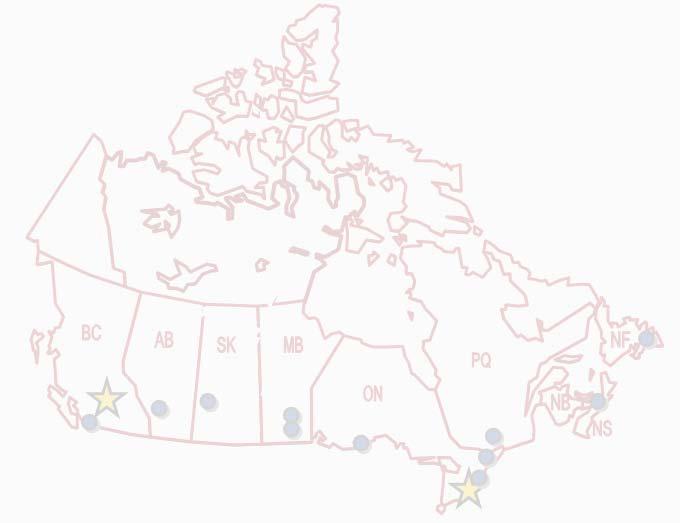



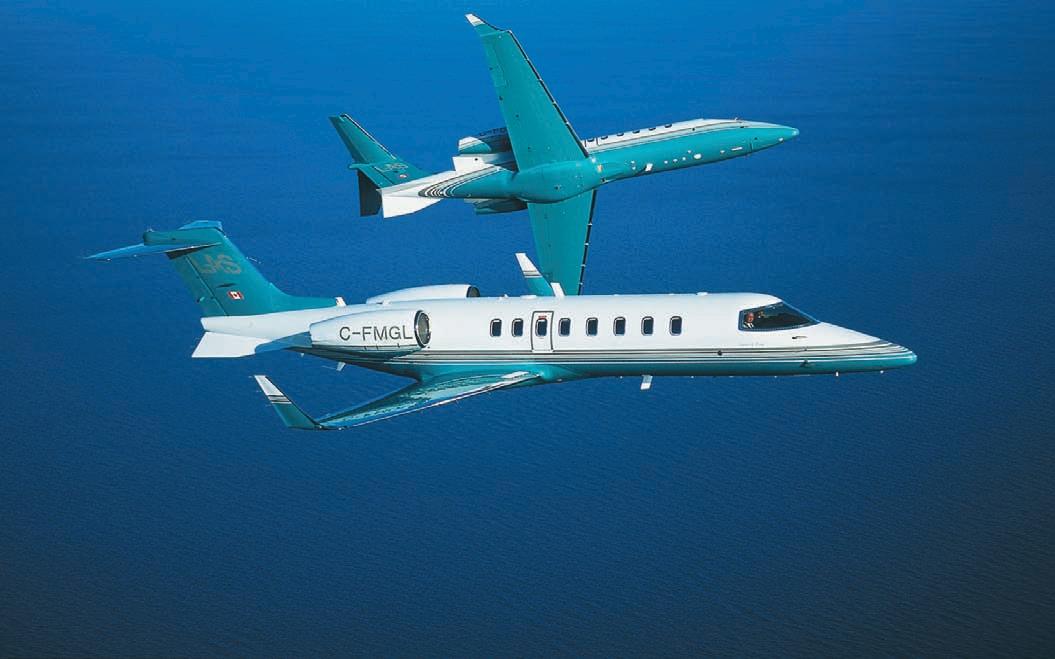
As part of a large family of privately Canadian owned companies doing business for the last 103 years, London Air Services offers private, customized business travel, and is dedicated to making the corporate charter air service the best customer service experience. We are seeking innovative, customer focused Pilots (Full Time) to join our team.
We offer a supportive fun working environment, coupled with an absolute commitment to the best safety standards, and superb maintenance. Join us and fly our expanding, progressive modern fleet including Lear 45XRs, Challenger 604s (soon to be 605s), an Augusta AW 139 helicopter, and coming soon, a Global Express XRS.
As a successful candidate, you will have your Air Transport Pilot License. In addition, you have at least 3000 hours total time, and previous turbine experience. You will be on-call, and available to work a flexible schedule, Monday through Sunday. If you have a positive, mature, leadership style, as well as excellent interpersonal and communication skills, with a commitment to excellence in customer service then we have the opportunity for you to excel!
We offer a stable work environment, salaries commensurate with experience, as well as a comprehensive benefits program including:
•Helping you plan for your future with company matched RRSPs
•Comprehensive life, medical, dental, prescription drug and vision coverage for you and your family
•Lifelong learning with ongoing training & education
• Employee Discounts from an affiliated company – London Drugs
• Free confidential counselling through our Employee & Family Assistance Program
•Postsecondary Entrance Scholarships for you or your children
•Health & Wellness (We repay up to 100% of your YM/YWCA gym membership)
If you possess the necessary skills and expertise and would like to join an exciting team of professionals, Apply Now:
info@londonair.ca Fax: (604) 233-0202
Vancouver International Airport South Terminal #105 - 5360 Airport Road South, Richmond, BC Canada V7B 1B4