ONTARIO
Algonquin College | Ottawa
Algonquin College’s Aviation Management is a two-year diploma program designed to provide students with the knowledge and skills required to become a commercial pilot. Through a series of classroom courses and practical labs, students have the opportunity to complete the Transport Canada Commercial Pilot Licence written examination (CPAER) and practical flight test. Flight Training is a non-funded activity, but students can expect to amass up to 200 hours of flight experience at an Algonquin College approved flying partner.
Canadore College | North Bay
The partnership between Canadore and Helicopters Canada offers a unique blend of academic, operational and hands-on rotary wing training. The college structured classes, combined with extensive practical training on the ground and in the air, provide students with the skills and knowledge to operate helicopters safely and efficiently under various flight conditions and remote geographical locations. Graduates will earn a Transport Canada Commercial Helicopter Pilot Licence, Canadore College Pilot Preparedness Certificate and numerous industry recognized courses.
Conestoga College | Kitchener
Conestoga College’s has replaced its twoyear Aviation, General Arts and Science, diploma program with a newly designed Commercial Flight Operations program, also running for two years. The program features modern flight simulators for practical training with advanced avionics and realistic emergency scenarios in a variety of weather conditions. Students have the option to concurrently complete flight training which qualifies them to apply for Canadian Commercial Pilot Licence endorsed with a Multi-Engine Instrument Rating. Students with a Private Pilot Licence can apply for credit transfers for the related ground school courses. Students need to complete their professional flight training at an accredited Flight Training Unit that will grant Transport Canada licences.
Confederation College | Thunder Bay
Confederation College’s Aviation Flight Management program has been a leader in aviation education for more than 50 years, preparing future pilots for success in the industry. Students begin flight training in their first semester, gaining hands-on experience early in their studies. Graduates earn a Commercial Pilot License (CPL) accompanied by an Ontario College Advanced Diploma (2 1/2 years), equipping them with
the skills needed to excel in their careers. Training takes place at the college’s Aviation Centre of Excellence (ACE), a stateof-the-art facility, at Thunder Bay International Airport. Flying in northern Ontario provides students with the opportunity to navigate the region’s diverse landscapes, offering unique experiences that further develop their flying skills and prepare them for a broad range of aviation careers. The college operates a fleet of 13 Cessna 172S aircraft and three type-rated Flight Training Devices (FTD). Recent updates include five new aircraft and two new FTDs, all equipped with Garmin G-1000NXi avionics suites.
Fanshawe College | London
Fanshawe College’s Norton Wolf School of Aviation and Aerospace Technology provides a range of aviation focused programs, including: Aircraft Structural Repair Technician (certificate); Flight Services (certificate); Aviation Technician – Aircraft Maintenance (diploma); Aviation Technician- Avionics Maintenance (diploma); Aviation Technology – Aircraft Maintenance and Avionics (advanced diploma); Commercial Flight and Aviation Leadership (advanced diploma); Applied Aerospace Manufacturing (graduate certificate); Composites and Advanced Materials Aerospace Manufacturing (graduate certificate); Remotely Piloted Aerial Systems Commercial Operations (graduate certificate); and Aerospace Operations Management (graduate certificate).
The Commercial Flight and Aviation Leadership advanced diploma program, provides students with the option to complete a Canadian Private and Commercial Pilot license including night, multi-engine and instrument ratings. The school has close partnerships with London International Airport, Diamond Aircraft and Diamond Flight Centre.
Georgian College | Barrie
Georgian College’s three-year Aviation Management advanced diploma program consists of 38 courses, and students graduate with both a management and aviation skill set. Management courses are designed to give students an understanding of marketing, human resource management, communications and project management. A variety of aviation courses provide a solid understanding of the aviation industry in Canada and around the world. Students will also complete the examination to receive their Restricted Aeronautical Radio Operation License. The program, which has a fall 2024 intake, includes three hands-on co-op opportunities within the aviation industry.
The program has an active advisory
committee that helps maintain program relevancy by keeping the course content current – reflecting industry trends – and ensuring graduates are job ready with the required skill set. There are several educational pathways for graduates. Georgian’s Aviation Management program is the only three-year program in Canada that allows students direct entry into Griffith University’s Master of Aviation Management, which can be completed with only an additional one-and-a half years of study.
Sault
College | Sault Ste. Marie Sault College`s Aviation Technology –Flight 3-year program is designed to prepare students for a career as a professional pilot. Graduates of the program who meet qualification criteria established by Transport Canada, will have successfully completed the requirements for the Integrated Commercial Pilot License Aeroplane, including the multi-engine instrument rating (CPL(A)IR). This licence meets all the requirements for a student to be a commercial pilot. Individuals with previous flight training start with a modified flight training program in the beginning; however, all students will be at the same level by second year. Students gain hands-on training with the college’s own fleet of aircraft, including 10 Zlin and two Seminole Piper planes. These aircraft are supported by advanced flight simulators.
Seneca
Polytechnic | Peterborough and Toronto
Seneca College, through its School of Aviation, is now educating students at the degree level with its 4-year Honours Bachelor of Aviation Technology program, which provides a technology-based curriculum and application of this theory to aviation. Flight training and classroom instruction for students in year’s two to four of the program takes place at Seneca’s Peterborough Campus. Seneca’s aviation school enjoys a close relationship with Jazz Aviation through a first-of-its-kind cadet program and the flight instructor pathway program. As a graduate, students may pursue future career options like professional pilot, flying instructor, air traffic controller, and civil aviation inspector.
Seneca also provides the Aviation Safety advanced diploma program, which covers a range of areas relevant to the aviation industry from regulations to business leadership. Seneca’s Aviation Operations program provides a diploma focusing on theoretical knowledge of aviation regulations in the Canadian aviation industry, as well as the technical and practical skills required to work in a variety of airside operations roles. | W
SCHOLARSHIPS AND AWARDS
AN ALPHABETICAL BREAKDOWN OF SOME OF THE LEADING SCHOLARSHIP AND AWARDS PROGRAMS FOR DEVELOPING CAREERS IN CANADIAN
AVIATION
Aerospace Industries Association of Canada | aiac.ca
AIAC presents the Dave Caddey Memorial Scholarship at the Canadian Aerospace Summit (CAS), with this year’s event taking place October 28-29 in Ottawa. This scholarship provides financial assistance for post-secondary education and offers a unique experience at CAS.
Air Canada Indigenous Students Award | aircanada.com
This award is distributed annually to Indigenous students with demonstrated financial
need, attending approved post-secondary institutions enrolled in aviation programs to become a commercial pilot, as well as those in other disciplines that pertain to Air Canada’s business operations. Air Canada works with a range of partners to support scholarships and awards, including The Captain Judy Cameron Scholarship, RCAF Foundation scholarships, and with the Urban Pilot Network, among others.
Atik Mason Indigenous Pilot Pathway | indigenouspilotpathway.ca
The Atik Mason Indigenous Pilot Pathway

program offers fully funded flight training for Indigenous community members to become pilots in northern Canada. Training occurs locally in Thompson, Man., and Rankin Inlet, Nunavut, with accommodations provided. Graduates earn employment with Exchange Income Corporation’s air operators, including Perimeter Aviation.
BC Aviation Council | bcaviationcouncil.org
BC Aviation Council (BCAC) members work with industry partners to provide over $150,000 worth of scholarships and other



CIA2025
support on an annual basis. BCAC notes, with its members support, it oversees Canada’s largest aviation and aerospace scholarship program. Students can apply for cash awards ranging from $1,500 to $20,000.
Captain Judy Cameron Scholarship | northernlightsaerofoundation.com
This will be the sixth year for the Captain Judy Cameron Scholarships, administered by the Northern Lights Aero Foundation, for Canadian women pursuing careers as pilots or aircraft maintenance engineers. The Captain Judy Cameron Scholarship
awarded by Air Canada supports women who are pursuing careers as commercial fixed-wing pilots or aircraft maintenance engineers. The Captain Judy Cameron scholarship awarded by CAE targets women who are pursuing careers as commercial fixed-wing pilots.
COPA | copanational.org
The Canadian Owners and Pilots Association offers a range of scholarships, which total approximately $30,000. The Neil J. Armstrong Ab-Initio Scholarship is for applicants aged 16 to 21 committed to earning

Careers in Aviation and Beyond

their Private Pilot’s Licence (PPL). The COPA Advanced Flight Training Scholarship supports COPA members interested in pursuing advanced flight training, with individual awards of approximately $2,500. COPA provides other scholarships, such as a drone pilot award for advanced licencing, based on donations primarily from its general aviation members.
Elevate Aviation | elevateaviation.ca
Elevate Aviation is a national organization committed to educating, inspiring, and supporting individuals as they explore the world of aviation with an emphasis on diversity and equality. The organization provides a range of bursaries for pursing pilot, AME or operational careers. Elevate also offers a range of free programs across Canada that provide industry-focused training and mentorship opportunities.
Jazz Aviation Pathway Program | flyjazz.ca
Jazz APP is a premiere education and training pathway for pilots in Canada, providing aviation students from numerous colleges and flight training units industry-leading access to airlines, as well as professionalism awards to help fund their education.
RCAF Foundation | rcaffoundation.ca
The RCAF Foundation Student Scholarship is offered to Canada’s next generation of aviation and aerospace leaders. These scholarships are designed to assist postsecondary students in STEM areas of study who are planning future careers in the fields of either aviation or aerospace. In 2024, the RCAF Foundation awarded a total of 70 scholarships, including 64 at $1,000 each.
The Ninety-Nines |
ninety-nines.org
Each year Amelia Earhart Memorial Scholarships are usually awarded to qualified members for five different scholarship types.
Urban Pilot Network | urbanpilots.net
The Urban Pilots Network offers two scholarships to its members aspiring to pursue a career in aviation: Aviation Excellence
Sponsorship in partnership with the Dream Never Dies Foundation and an Air Canada funded scholarship.
Waterloo Wellington Flight Centre | wwfc.ca
The LIFT Scholarship was created by Waterloo Wellington Flight Centre (WWFC) to assist student pilots. Four students this year will receive $4,000 each. Since the launch of the scholarship program, $92,000 has been presented to students in financial support of their aviation career aspirations. |

Growing with Perimeter Aviation
Career opportunities with an industry leader
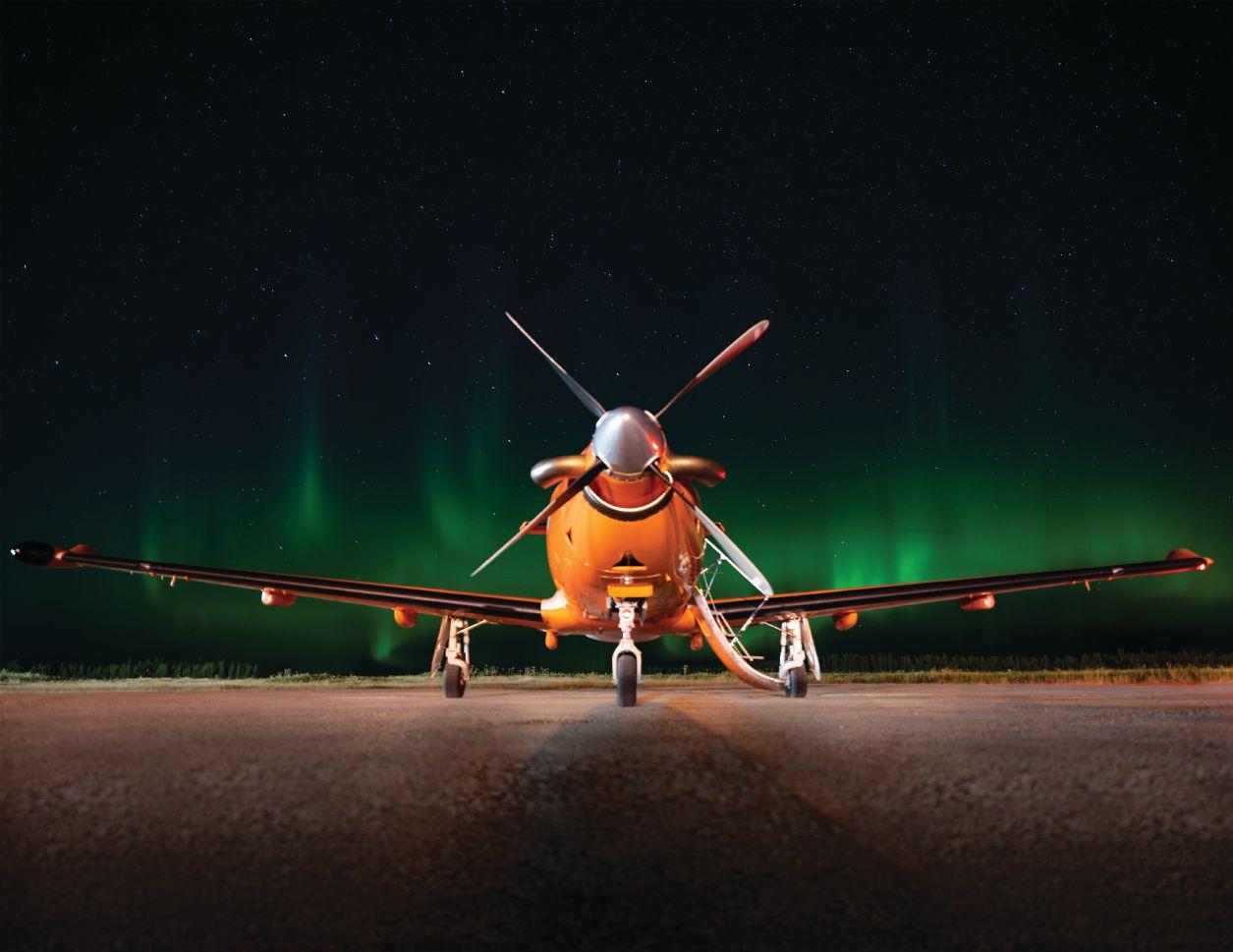
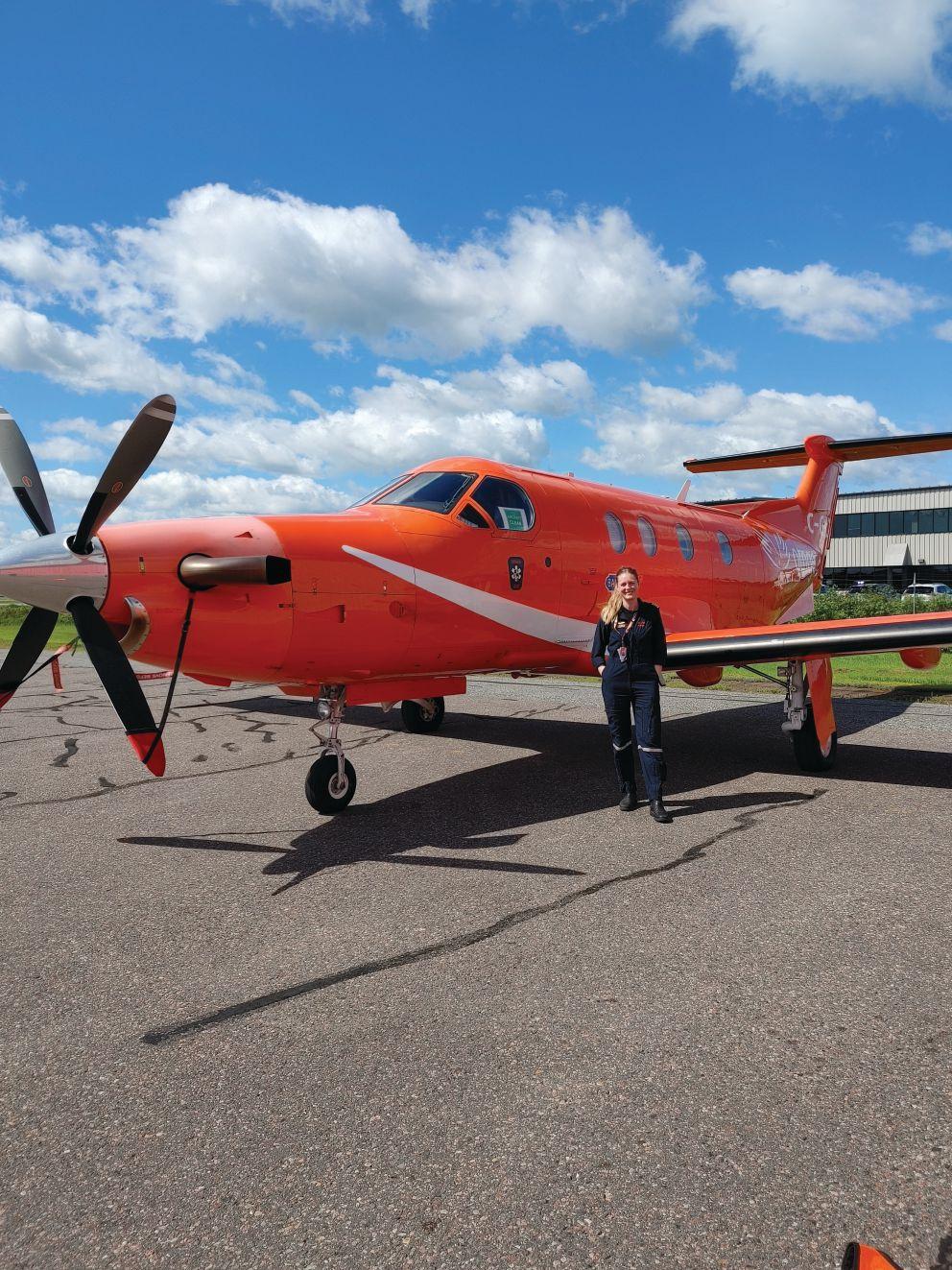
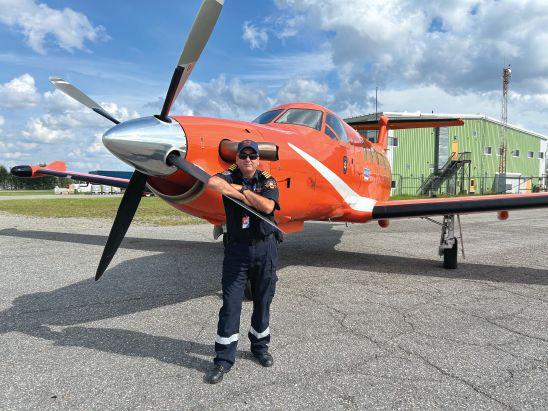
Perimeter Aviation and Bearskin Airlines have been connecting communities across northern Canada for over six decades. Acquired by Exchange Income Corporation in 2004 and 2011, respectively, the two airlines merged in 2018 to enhance service. Operating from six bases, they serve 30 destinations across Manitoba and Ontario with more than 40 aircraft. This includes scheduled passenger flights, air ambulance services, cargo operations, and charters, making them a vital link to communities across the North.
This is more than an airline. From pilots connecting people with medical care and essential goods to AMEs ensuring every aircraft operates safely, Perimeter Aviation’s operations are integral to Northern travel. Joining the team means becoming part of something bigger – work that truly makes a difference.
From take-off to landing
Flying for Perimeter is an experience unlike any other in aviation. Picture yourself navigating single-runway gravel strips, performing challenging approaches, and handling diverse weather conditions in some of the most remote and beautiful parts of Canada. Or flying through one of the busiest and most complex airspaces in Canada at Toronto Pearson International Airport. This is big airline flying, right in your backyard.
You’ll fly aircraft equipped with modern avionics, honing stick-and-rudder skills in ways urban routes cannot match. Operating under a combination of 703, 704, and 705 regulations means you are part of an organization that sets a higher standard across all levels. Add to this the distinction of BARS silver certification – a benchmark above Transport Canada regulations – and you will see why Perimeter sets the bar for operational excellence, safety, and growth.
As a Perimeter pilot, you are part of a team dedicated to cultivating a world-class group of aviators. Many of the leadership team started their careers in the same roles you will take on, giving them a deep understanding of what it takes to succeed. Their commitment to mentorship and professional growth ensures that every pilot has the tools, resources, and support needed to reach their full potential, from their first flight to their next career milestone. This is not just a job. It’s a purposeful adventure where every take-off and landing plays a vital role.
“Many pilots transitioning from larger airlines find flying for Perimeter to be far more rewarding, as it combines technical challenges with meaningful connections to passengers and communities. Janet Rogers, Assistant Chief Pilot, explains, “I left to explore opportunities with a larger airline but returned because I missed the people, routes, and rewarding lifestyle. Flying in the North is about more than just
getting from point A to B; it’s about building relationships and making an impact. You’re not just flying passengers; you’re delivering essential goods, connecting communities, and making a difference.”
At Perimeter, no two days are the same. One day, a pilot might be landing on a gravel strip in a northern community; the next, they will be flying into a major commercial centre. The variety and purpose of the work keep things both challenging and fulfilling. Best of all, with bases close to home, many pilots enjoy the rare luxury of a balanced lifestyle – being home for dinner after a day in the skies.
From the ground to in-the-sky
For those who keep aircraft running, Perimeter’s maintenance operations offer an unparalleled environment for career growth and development. With a team of more than 200 professionals – and a 1:1 ratio of licensed to apprentice AMEs – every day presents opportunities.
“For AMEs, Perimeter offers hands-on experience with a diverse fleet and complex operations that challenge and develop your learning every day,” Michael Koch, Director of Maintenance Operations, shares. “We’ve got a lot going on. From engine changes and landing gear replacements to resolving complex avionics snags or installing advanced systems, our team handles it all.
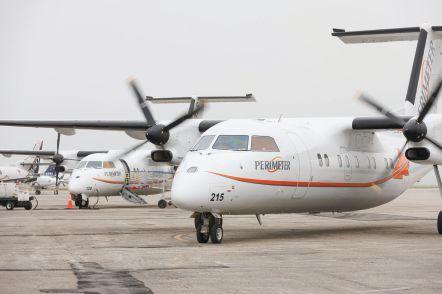
Perimeter Aviation and Bearskin Airlines provide a range of opportunities with one of Canada’s most diverse fleets.
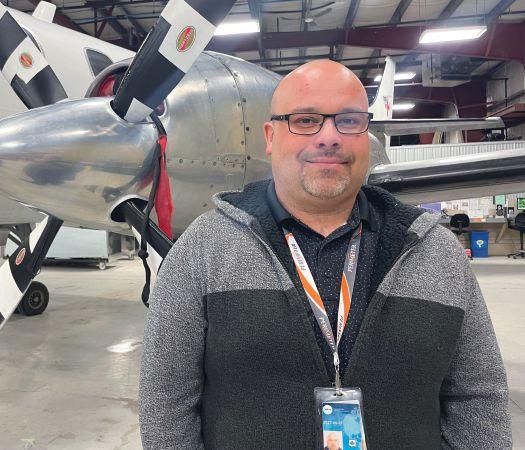
“We even manage extensive projects like six-week structural repairs,” continues Koch. “And with our Metro aircraft, we probably have some of the most experienced and knowledgeable people in the world.”
Perimeter’s facilities go beyond the typical maintenance shop, acting as a hub for specialized services. Non-destructive testing (NDT) technicians lead NDT services across Manitoba, supporting aviation and other major industries. The avionics shop complements both on-wing and off-wing work with bench testing, generator overhauls, and system installations. The turbine shop performs engine overhauls, hot section inspections on Garrett engines, and quick engine change work on Pratt & Whitney engines. Expertise also extends to landinggear overhauls, wheel and brake servicing, and even upholstery repairs, including seat covers and cargo nets.
A robust training program ensures AMEs remain at the forefront of industry standards. Regularly scheduled Metro and Dash type courses deliver technical expertise, while troubleshooting and engine courses sharpen problem-solving skills.
Leadership training empowers team members to step into supervisory roles, fostering career progression within the department. Avionics courses and ground run simulator (SIM) training in Toronto further prepare the team for Perimeter’s diverse and dynamic operations.
Perimeter’s blend of operations provides AMEs with a unique opportunity to grow their skills and credentials. Senior 703/704 AMEs can continue building hours while progressing towards a 705 license. Whether you hold M1, M2, S, or E licenses – or are starting as an apprentice – Perimeter offers a path for career development.
At Perimeter, mentorship is the foundation of success. Experienced engineers, many with 20 to 30 years of tenure, guide apprentices through complex tasks. This collaborative culture ensures that knowledge is passed down, fostering skill development and fast-tracking career growth.
Investing in people
Beyond technical expertise and operational excellence, Perimeter’s culture is what truly sets it apart. The company is deeply committed to investing in its people, offering competitive compensation, comprehensive health and dental benefits, RRSP matching, an Employee Share Purchase Program, and access to an Employee Family Assistance Program.
For pilots, compensation grows with career progression, and apprentices see significant pay increases as they gain experience. Senior AMEs enjoy industry-leading wages that reflect their skills and expertise. At Perimeter, its people are

their greatest asset, and the company backs this up with robust benefits and clear career pathways to support your growth – on and off the job.
Perimeter is proud to be SAFE Work Certified, a testament to its commitment to fostering a safe, healthy work environment for all employees. This certification underscores the company’s dedication to maintaining the highest safety standards across all operations.
At Perimeter, career paths are clear, attainable, and built for growth. Many employees have risen through the ranks to leadership roles, exemplifying the company’s dedication to internal promotion and development. For instance, both the Vice-President of Flight Operations and the Vice-President of Commercial Services started as ramp agents at Perimeter. These success stories demonstrate Perimeter’s commitment to fostering potential and creating opportunities for advancement.
For the aspiring aviators
Perimeter’s commitment to aviation extends beyond the workplace and into the communities it serves. Programs like the Atik Mason Indigenous Pilot Pathway create opportunities unlike any other for aspiring Indigenous pilots to achieve their dreams. Through fully funded flight training in Thompson, Man., and Rankin Inlet, Nunavut, participants gain the skills and certifications needed to succeed in the aviation industry.
Upon graduation, they secure employment with Exchange Income Corporation’s air operators, including Perimeter Aviation, allowing them to build fulfilling careers close to home and their communities. In 2024, Perimeter welcomed their first four Pathway pilots to their flight crew.
This dedication to fostering talent isn’t limited to pilots. Apprentice pathways in maintenance operations provide hands-on training and mentorship, ensuring the next generation of aviation professionals thrives. Perimeter also partners with leading institutions such as MFC Training, RRC Polytechnic, and Confederation College to provide students with access to specialized training and education.
In addition to the Pilot Pathway, programs like Life in Flight offer a comprehensive route to a secure pilot career. Participants begin with training at MFC Training, gain valuable experience as flight instructors, and transition into guaranteed fiveyear pilot positions. These initiatives exemplify Perimeter’s investment in nurturing aviation talent and creating pathways to rewarding careers.
Life in Manitoba and Ontario
Living and working in Manitoba and Ontario offers a lifestyle that blends convenience with natural beauty. From the quiet charm of smaller communities to outdoor activities like fishing, hiking, and skiing, there’s something for everyone. A rare blend of short commutes, easy access to nature and outdoor recreation, and proximity to vibrant urban centres provide a quality of life that’s both enriching and balanced.
Whether you’re starting your aviation career or ready to advance, Perimeter Aviation offers the opportunities, growth, and support to help you succeed. Take the first step toward a fulfilling and rewarding future.
careers.perimeter.ca | perimeter.ca
Michael Koch, Director of Maintenance Operations, Perimeter Aviation.
Janet Rogers, Assistant Chief Pilot, Perimeter Aviation.
CIA2025
UNIVERSITY PROGRAMS
AVIATION AND AEROSPACE DEGREE PROGRAMS BY PROVINCE
BRITISH COLUMBIA
University of British Columbia | Vancouver
University of British Columbia’s Mechanical Engineering degree program allows students who have completed Mech 2 to focus on an Aerospace Option with a modified curriculum of mechanical engineering courses that focus on fluid dynamics and aircraft design. The modified curriculum is designed to not only help develop the student’s specialization in aerospace, but also develop fundamental design and analytical skills required by a mechanical engineer. The school points to its robust faculty research in combustion, fluid dynamics, solid mechanics, fluid-structure interactions, sensors and controls – all areas central to aerospace design. Its facilities include two wind tunnels, and a machine shop. Students can participate in aircraft competitions and teams, including UBC Uncrewed Aircraft Systems and UBC AeroDesign.
ALBERTA
MacEwan University | Edmonton
MacEwan University describes as a unique partnership with Transport Canada-approved training centres to complete a Business Management diploma with a specialization in aviation management. Students in the Aviation major complete 15 of the 20 courses from the Business Management diploma, which provide core business skills in accounting, marketing and strategic management. The remaining five courses are replaced with aviation training. Students can block transfer credits to the third year of MacEwan’s Bachelor of Commerce degree program.
Mount Royal University | Calgary
Mount Royal University’s two-year Aviation Diploma program combines an academic diploma with the flight training needed to become a commercial pilot. The diploma is recognized as one of Canada’s elite Aviation Accreditation Board International (AABI) accredited programs, integrating academic preparation with flight simulator training for a Commercial Pilot Licence (CPL) with multi-engine and instrument ratings. The program allows students to learn aviation and business theory, while building connections with MRU’s airline partners, including Jazz, WestJet, Porter, AirSprint, and Sunwing.
ONTARIO
Carleton University | Ottawa
Carleton’s Aerospace Engineering program emphasizes the development of analytical, computational, and hands-on engineering and design skills related to the aerospace field. The broad range of topics and applications included in this discipline are covered in four streams: Aerodynamics (aerospace propulsion and
atmospheric flight); Aerospace Structures (lightweight vehicles for flight and space travel); Aerospace Electronics and Systems (aircraft control, communication and navigation systems); and Space Systems Design (astronautics and space/satellite technology).
Queen’s University | Kingston
The Mechanical and Materials Engineering degree program at Queen’s University provides opportunities geared at aviation and aerospace design. The program’s Airplane Aerodynamics is a course highlight. Students will combine the study of basic engineering with practical courses in machine design, robotics and manufacturing methods. Hands-on design is integral to this program, with specialization in aerospace, mechatronics, biomechanical, manufacturing, materials, and thermofluids.
Toronto Metropolitan University | Toronto
Toronto Metropolitan University’s Aerospace Engineering Bachelor’s program provides students with the opportunity to study aerodynamics, stress analysis and structural design, flight mechanics, stability and control, aircraft performance, propulsion, avionics and systems. Students also learn to design, test, manufacture and maintain aircraft or spacecraft, as well as vehicles for transport on land and water. The program provides knowledge to work in fields involving commercial and military aircraft or spacecraft engineering; space exploration, teaching, research, military service; air transportation and space-based telecommunications. The school also allows students to pursue a graduate degree (MEng, MASc, PhD) in aerospace engineering.
University of Toronto | Toronto
Students who wish to study Aerospace Science and Engineering at the University of Toronto enroll in the four-year undergraduate Engineering Science program. In the first two years, this program emphasizes mathematics, chemistry, physics and computing. Towards the end of the second year of Engineering Science, students must select a speciality option for their third and fourth years of study. This includes an Aerospace Engineering option, taught primarily by UTIAS professors. UTIAS is the university’s graduate program focused on scientific exploration and aerospace research.
University of Waterloo | Waterloo
Established in 2007, Waterloo’s Aviation program is described as the largest university-level aviation program in Canada. The Bachelor of Environmental Studies (BES) degree focuses on geography to interpret weather patterns, identify land formations, read multilayer maps, and use tools such as geographic information systems and remote sensing. Students can also add specializations in Climate Change, Earth Systems Science, Geomatics, and Economy and Society. The Science and Aviation program is supplemented with courses on cartography, climatology, geographic information
systems, aerodynamics and remote sensing. Both programs provide access to Preparatory Ground Instruction and professional pilot theory courses taught by a Waterloo Wellington Flight Centre (WWFC) instructor. Upon graduation, the student will possess a CPL as well as Multi-Engine and Instrument Ratings. The Waterloo Institute for Sustainable Aeronautics has also partnered with WWFC to operate an all-electric Pipistrel Velis Electro.
University of Windsor | Windsor
The Aeronautics Leadership Program at the University of Windsor offers a unique blend of a Liberal Arts and Leadership-focused education with practical flight training. Students pursue a Bachelor of Arts in Liberal Arts and Professional Studies, specializing in Aeronautics Leadership. This Bachelor of Arts degree is complemented by ground school and flight training, conducted with Journey Air Pilot Training, situated at Windsor International Airport (YQG).
Western University | London
Western’s Commercial Aviation Management program allows students to earn a Bachelor’s degree in Management and Organizational Studies, with specialized courses in aviation management. Within the program, students have the option to combine a degree with professional pilot flight training, ultimately receiving a Transport Canada approved Integrated Commercial Pilot License with Multi-Engine and Instrument Ratings.
York University | Toronto
The Space Engineering program (BEng) at York’s Lassonde School of Engineering focuses on areas of study from orbit control and space-based optics to ground station communications and robotics. Students learn about the management of complex
take your career to new heights
Join the Flair Cadet Program
multidisciplinary projects, including missions within the solar system.
QUEBEC
Concordia University | Montreal
Concordia’s Aerospace Engineering (BEng) program is offered by the Department of Mechanical, Industrial and Aerospace Engineering. The program allows students to specialize in Aerospace and Propulsion, Aerospace Structures and Materials, or Avionics and Aerospace Systems. It provides access to areas like mechanical, electrical, computer, and industrial engineering to the conception, design, implementation and operation of aerospace systems.
NEW BRUNSWICK
Mount Allison University | Dieppe, Sackville
Mount Allison’s Aviation degree program combines flight training with undergraduate studies in Arts, Commerce, or Science. The Bachelor of Arts – Aviation program is designed for students to combine aviation training with studies in arts and humanities and social sciences. As an Arts student you will complete a major in any discipline offered for a BA degree (no minor required). The Bachelor of Commerce – Aviation program is designed for students to study business areas such as accounting, finance, marketing, and management. The Bachelor of Science with a major in Aviation program is designed for students to combine flight training with studies in subjects related to the field of aviation in the Faculty of Science, such as geography, environmental science, mathematics, physics, and computer science. MFC Training provides the flight component of Mount Allison’s aviation programs. | W
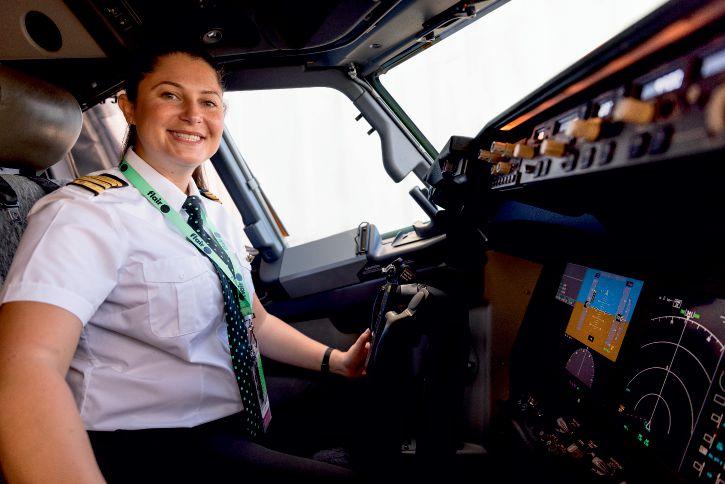
The Flair Cadet Program is an iATPL course designed for people with little or no flight experience. Flair Airlines offers accepted students a conditional offer of employment; pending graduation, you are eligible to fly B737s.


Cygnet Aviation
The future of iAPTL training
By Phil Lightstone
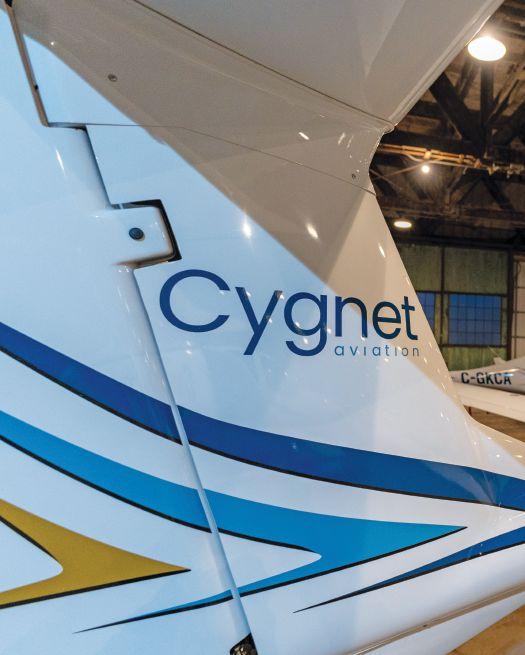
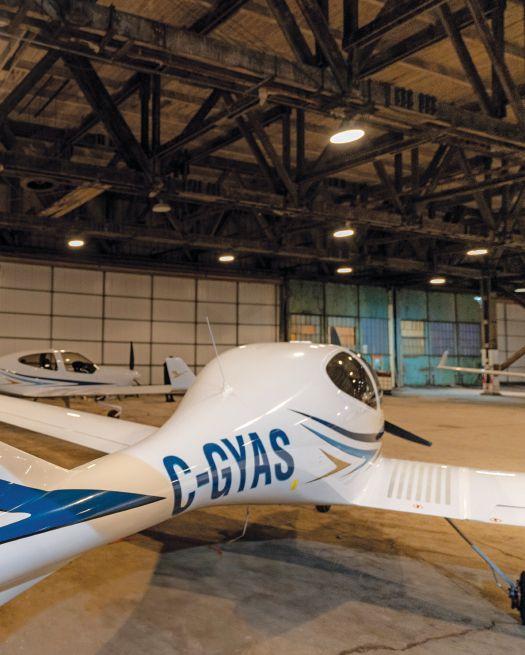
Cygnet Aviation Academy LP is a professional flight school based in Kingston, Ont. (CYGK), training First Officer candidates for Canadian airlines. Partnered with CAE, Cygnet delivers flight training utilizing a fleet of 12 high tech Diamond aircraft (built in London, Ont.) and two ALSIM flight simulation training devices.
Cygnet opened its doors in 2023 and is a subsidiary of Chorus Aviation Inc., a leading aviation solutions provider. Headquartered in Halifax, N.S., Chorus is focused on aviation services businesses with three operating subsidiaries including Cygnet, Jazz Aviation LP (Jazz), and Voyageur Aviation. Cygnet’s President, Lynne McMullen, brings a passion for pilot training and provides leadership skills gained from her vast real-world experience. A Class 1 Flight Instructor and Pilot Examiner with over three decades of experience in aviation leadership, McMullen has created direct entry training and academic programs for The Greater Toronto Airport Authority, the Royal Canadian Air Force (RCAF) and multiple Canadian airlines. McMullen participates with a range of industry organizations and serves as President of the Northern Lights Aero Foundation, an organization focused on supporting women in Canadian
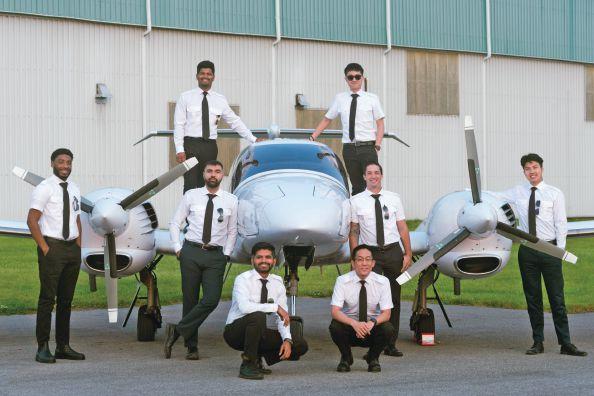
aviation. She also chairs the Strategic Planning Committee for the Air Transportation Association of Canada. Through McMullen’s leadership, Cygnet has seen substantial changes over the last two years, growing from a single plane and flight instructor to a full complement of specialized staff with 12 aircraft. The inaugural class of seven students has graduated the Integrated Airline Transport Pilot License (iATPL) program. All are employed as First Officers with Jazz after completing the Jazz Approach program, a first of its kind in Canada, providing conditional letters of employment from Jazz upon admission. In addition, Cygnet recently welcomed its first students into its Free Agent Program, providing students with their iATPL without being attached to a specific airline upon completion. Cygnet assists Free Agent graduates with employment through its airline referral program. Both programs deliver all-in-one, state-of-the-art pilot training in under two years.
As Cygnet’s name and impact grows in the flight training industry, so do its offerings. In addition to its two direct entry training streams, Cygnet is now providing Multi-engine, Group 1 and Multi Crew Coordination programs. In March 2025, the organization will be launching a Private Pilot License program for general aviation-focused students.
Cygnet’s vision is to have a maximum of 30 students per cohort, essentially taking a crawl, walk and run approach. With six active cohorts, Cygnet’s students come from varying backgrounds and industries. “Our students range from new graduates to accountants and entrepreneurs,” McMullen says. “One of our students has always wanted to become a pilot and recently left their career as an established lawyer to do just that.”
Harry Rankin, a student in Cygnet’s third cohort, was looking for something different after completing a four-year Bachelor of Commerce degree in British Columbia. “When I finished my bachelor’s degree, I wanted to do something
The DA40NG is one of Cygnet Aviation Academy’s 12 new state-of-the-art Diamond aircraft, featuring advanced avionics.
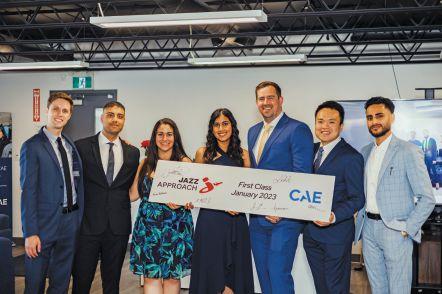
Pictured below is Cygnet Aviation Academy’s fifth cohort, AV8, who are on track to graduate at the end of this year.
that was exciting to me, and I realized that was really only flying”, Rankin says. “My next step was to figure out how to do that, and that’s how I landed at Cygnet. Cygnet sets itself apart from other flight training academies with new Diamond aircraft and great instructors who really want to be here. They’re not just here to get their hours and move on.”
The flight training industry is plagued with staffing shortages, but Cygnet has been able to recruit and retain a diverse team of flight instructors and administrative staff. Its 16 flight line instructors and subject matter experts come from diverse backgrounds with many joining Cygnet after illustrious careers with the RCAF, NAV Canada and Air Canada.
“The fact that we are so heavily supported by retirees from the Canadian industry, who really want to give back, brings integrity and incredible experience to the training that our students receive,” McMullen says. Recently, Nick Taylor joined Cygnet as its Chief Flight Instructor after a successful career at Transport Canada culminating as Technical Team Lead, Flight Operations.
Another draw for students attending Cygnet is the City of Kingston. At the junction of Lake Ontario, the St. Lawrence River and the Cataraqui River, Kingston provides the charm of a small town, but with the amenities of a much larger metropolis. While First Officer candidates will be immersed in their flight training, providing an enriching environment for staff and family is of equal importance. Marie Pinto, a Cygnet student who relocated to Kingston for her flight training program, enjoys what Kingston has to offer: “I love Kingston. It has great nightlife and downtown, but it also has everything you could really need. It’s just beautiful.”
Student camaraderie is alive and well throughout Cygnet. As new students begin their respective programs, they select a handle as a group. The inaugural cohort named themselves the Magnificent 7. To date, other names include: 6pack, Diamond 6, C9 (Cloud9), Av8 and HexDeck. Kaitlyn O’Gay, a Flight Instructor who joined Cygnet in 2024, discussed programs that have been implemented to support student success. “At Cygnet, we have a very intense ground school
schedule; 750 hours over 18 months, which makes for a full and busy calendar. We’re starting a program, kind of a study hall session, where instructors can sit in and help students once a week to answer any questions they have from any class that they're taking. We’re here 24/7, providing support for students.” Maintaining a positive, collaborative, and supportive student experience is a priority at Cygnet. With that in mind, student rep meetings have also been created wherein instructors and student representatives from each cohort meet regularly to provide feedback to management. Any questions, concerns, or issues are worked out in collaboration with students.
Louchlan Janes, Assistant Chief Flight Instructor, who has been with Cygnet since the beginning, finds a difference with the Cygnet students. “What sets Cygnet’s flight training apart is its atmosphere and students. They come here with this drive and passion for aviation,” Louchlan says. “The multifaceted nature of this program is one of its key attractions. You can accomplish so much in a short period of time when you push yourself to do it.”
With growing programs, fleet, staff, students and industry partners, Cygnet’s story is just beginning.
CygnetAviation.com.
Cygnet Aviation Academy’s recently appointed Chief Flight Instructor, Nick Taylor, brings more than 35 years of aviation experience to the team.
Cygnet Aviation Academy’s first cohort, The Magnificent Seven, graduated the program in the fall of 2024 and are all now completing line indoctrination with Jazz Aviation LP..
CIA2025
AVIATION TECHNICIAN TRAINING
MAINTENANCE, REPAIR AND OVERHAUL TRAINING AND PROGRAMS BY PROVINCE
BRITISH COLUMBIA
British Columbia Institute of Technology | Vancouver
British Columbia Institute of Technology (BCIT) School of Transportation prepares students for careers as Aircraft Maintenance Engineers, Aviation Maintenance Technicians (Avionics) and Gas Turbine/Jet Engine Technicians. Its Aerospace Technology Campus is located near Vancouver International Airport in Delta with a 40,000-square-foot hangar that holds a fleet of light piston, turboprop, corporate and jet transport aircraft, as well as light and medium helicopters. Completion of its Aircraft Maintenance Engineer
(AME) program will result in a work experience credit of 18 months of the 48 months required by Transport Canada toward obtaining an AME license.
Coulson Aviation | Port Alberni
Coulson Aviation a world leader in aerial firefighting, received Transport Canada Approved Training Organization (ATO) approval to train students toward a Aircraft Maintenance Engineer – Structures (AME-S) license at no cost to the student. Coulson hires team members who demonstrate a passion for the aviation industry and positive attitudes to join its workforce. Once students have demonstrated excellent potential in the industry, students are invited to join the ATO program. There is no required tuition to attend the course. The student remains on the Coulson payroll while attending school and can further supplement their income by working for the company outside of schooling hours. Coulson guarantees a full-time position to every student who completes the school portion, offering a path through apprenticeship to a full AME-S license.
IMP Academy | Abbotsford, Halifax
IMP Academy offers two programs: Introduction to Aerospace Skilled Trades Program and the Aircraft Maintenance Apprenticeship Program. Its introduction to Aerospace Skilled Trades Program offers the ability to earn a variety of transferable certificates while testing skills and learning about aviation. This program is four weeks, with the end goal of applying to be an apprentice at IMP Academy. This four-level earn/learn apprenticeship program for Aircraft Maintenance Technicians is offered with no tuition or textbook fees for those who successfully complete the program. Graduates from both campuses will be qualified Aircraft Maintenance Technicians. Additionally, the courseware used in this program is accepted by Transport Canada and applicable for those wishing to eventually pursue an AME-M license through Transport Canada.
ALBERTA
Southern Alberta Institute of Technology | Calgary
SAIT provides a range of aviation-focused programs at the Art Smith Aero Centre, occupying 17 acres of land at Calgary International Airport. The Aircraft Structures Technician program includes courses on traditional aluminum sheet metal structure and advanced composite material manufacturing and repair. The Aircraft Maintenance Engineers Technology program provides skills to begin a career as an aircraft maintenance technician. Graduates in compliance with the required attendance (95 per cent) and minimum marks of 70
per cent in each course will receive a Transport Canada credit of 18-months of work experience toward the “M” license. The Avionics Technology program at SAIT provides the skills required to earn an “E” license for servicing aircraft electrical and electronic systems.
MANITOBA
RRC Polytech | Winnipeg, Southport
RRC Polytech’s Aircraft Maintenance Engineer program is designed to develop skills to maintain large and small airplanes and helicopters. The program is run at RRC Polytech’s Stevenson Campus with locations in Winnipeg and Southport where students prepare for overhauling aircraft engines, maintaining aircraft, building components, and preparing to take on management positions.
ONTARIO
Algonquin College | Ottawa
Algonquin College’s School of Advanced Technology provides a twoyear Aircraft Maintenance Technician Ontario College Diploma program, which gives students hands-on experience. Students study at the Ottawa campus as well as at the Canadian Aviation and Space Museum. Through a series of classroom-based courses and extensive practical labs, students learn about the repair and maintenance of mechanical and electrical systems within an aircraft, including: hydraulics, fuel systems, environmental instrumentation, engine, control surfaces and undercarriage, and repair of the aircraft body.
Canadore College | North Bay Canadore College’s AME programs include: Aircraft Structural Repair Technician; Aviation Technician – Aircraft Maintenance;
Aviation Technician – Avionics Maintenance; Aviation Technology – Aircraft Maintenance and Avionics; and Aviation Technology – Aircraft Maintenance and Structures. The Aircraft Structural Repair Technician program allows students to specialize in repair, upgrading and the modification of an aircraft. The Aviation Technician – Aircraft Maintenance program trains students how to troubleshoot vital aircraft components and systems, including piston and turbine engines, electrical systems, hydraulics, and navigation and communication systems.
Centennial College | Toronto
Centennial College’s Aircraft Maintenance – Aviation Technician provides students access to modern labs and the school’s aircraft hangar with both fixed- and rotary-wing aircraft. Students work on components like airframes, engines, electrical and hydraulic systems, propellers, avionics equipment and aircraft instruments. The Avionics Maintenance - Aviation Technician program prepares students for work as a bench technician with a broad base of knowledge for complex electronics and electrical systems related to the navigation, guidance, communications, instrumentation and flight controls of an aircraft.
Confederation College | Thunder Bay
Confederation College’s Aviation Technician – Aircraft Maintenance co-op diploma program is a comprehensive two-year program with a legacy of more than 50 years in aviation education. Designed to prepare students for the Transport Canada Aircraft Maintenance Engineer (AME) license, eligible graduates receive up to 21 months of credit toward the 48-month AME certification requirement. Through a combination of rigorous classroom instruction and hands-on experience, including a co-op work term with industry
CIA2025
leaders, students become proficient in maintaining, repairing, and troubleshooting complex aircraft systems. The curriculum covers topics such as aircraft construction science, electrical systems and avionics, airframe systems, rotary-wing (helicopter) maintenance, structural repair, and piston and turbine engines. Training is conducted at the state-of-the-art Aviation Centre of Excellence (ACE), located at the Thunder Bay International Airport.
Fanshawe College | London
Fanshawe’s Norton Wolf School of Aviation and Aerospace Technology provides a range of aviation programs, including: Aircraft Structural Repair Technician (certificate), Flight Services (certificate), Aviation Technician – Aircraft Maintenance (diploma), Aviation Technician- Avionics Maintenance (diploma), Aviation Technology – Aircraft Maintenance and Avionics (advanced diploma), Commercial Flight and Aviation Leadership (advanced diploma), Applied Aerospace Manufacturing (graduate certificate), Composites and Advanced Materials Aerospace Manufacturing (graduate certificate), Remotely Piloted Aerial Systems Commercial Operations (graduate certificate) and Aerospace Operations Management (graduate certificate). Fanshawe partners with London International Airport, Diamond Aircraft and Diamond Flight Centre.
Flightline Training Services | Brampton
Flightline Training Services is a Transport Canada Approved Training Organization for commercial and business aviation aircraft. Flightline tailors courses and services to meet training needs, focusing on a range of aircraft. With its Transport Canada and EASA approvals, Flightline is worldwide training organization, providing approved type courses, familiarization courses and level 4 in-depth training, address all aspects of aircraft maintenance operations.
Mohawk College | Hamilton Mohawk College, established in 1966 specializes in engineering technology education and is the largest trainer of apprentices in Ontario. Mohawk College educates more than 32,500 full-time, part-time, apprenticeship and international students at four main campuses in Hamilton. The 80,000-square-foot Aviation Campus opened in 2021 airside at the Hamilton International Airport with three Aviation Maintenance Engineering diploma programs in Aircraft Maintenance, Structures and Avionics. Mohawk’s premium partner is KF Aerospace, which has operated in Hamilton for more than 25 years. KF Aerospace recently completed more than $40 million in investments at its Hamilton Airport location.
NOVA SCOTIA
Nova Scotia Community College | Dartmouth
Nova Scotia Community College’s Aviation Institute is located in a 43,000-square-foot training facility. It provides a two-year Aircraft Maintenance Engineer, Mechanical, diploma program. Courses focus on aircraft servicing and ground handling functions, and maintaining aircraft systems.
PRINCE EDWARD ISLAND
Holland College | Summerside
Holland College provides a one-year Aircraft Turbine Technician certificate program at its Summerside Campus. Aircraft turbine technicians inspect aircraft engines, troubleshoot issues with mechanical systems, and modify, repair, and test turbine engines. Students learn techniques, procedures, and documentation requirements with an emphasis on practical training. | W




As Canada's air navigation service provider,we work each and every dayto keep our skies safe and aircraft moving efficiently.



Explorethe linkto learn aboutthe excitingwork performed by NAV CANADA’s airtraffic controllers.
https://www.navcanada.ca/en/careers.aspx