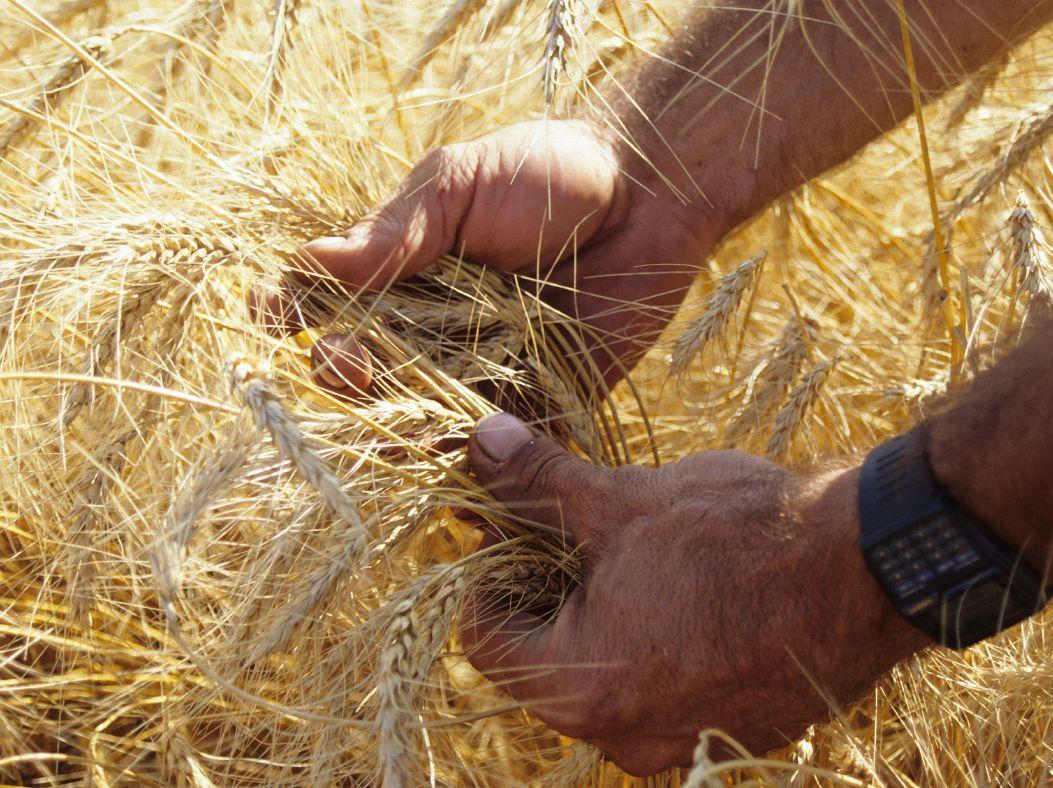
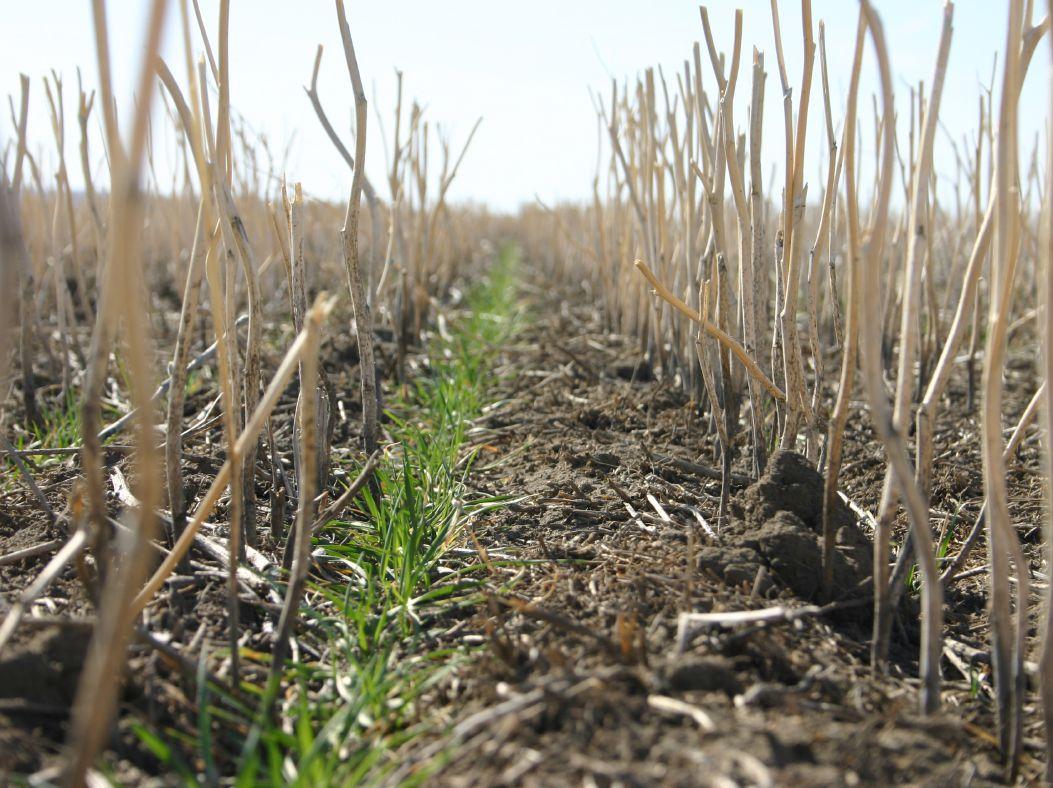
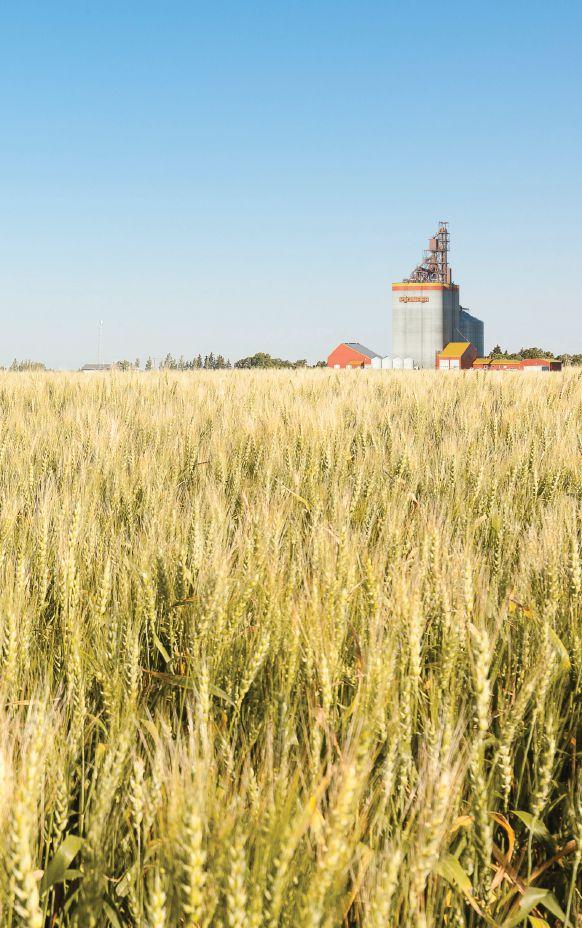
The crop offers good yields, quality and opportunities
PG. 10
STRONGER PLANT STANDS
A good agronomic package can help manage risk in winter wheat stands
PG. 8
PLANTING
WINTER WHEAT
Advice to maximize your yields and profits
PG. 18
LESS WAITING. MORE REAPING.
Think fast. Heat® LQ herbicide delivers quick, complete crop and weed dry down for a faster, easier harvest and cleaner fields next year. It can be applied on canola, dry beans, field peas, red lentils1, soybeans and sunflowers, and new for 2017, it’s supported for use on chickpeas.
Tank-mixed with glyphosate, Heat LQ also lets you straight cut canola for improved harvesting and storability. Visit agsolutions.ca/HeatLQ or contact AgSolutions® Customer Care at 1-877-371-BASF (2273) today.
Always
TOP CROP
MANAGER
8 | Strengthening winter wheat stand establishment
A strong agronomic package helps to manage risk.
By Bruce Barker
Brandi Cowen
10 | Hybrid rye gaining ground
Higher yields, better quality and good opportunities, but identity-preserved markets need time to develop.
By Carolyn King
Bruce Barker
Bruce Barker
Aphanomyces and Fusarium root rots of pulse crops
Presented by Dr. Syama Chatterton at Top Crop Manager’s 2017 Field Crop Disease Summit.
28 | Breeding and management of FHB
Presented by Dr. Anita Brûlé-Babel at Top Crop Manager’s 2017 Field Crop Disease Summit.
Bruce Barker
winter wheat this fall?
Ross McKenzie, PhD, P.Ag.
A look at later seeding for winter wheat
Carolyn King
BRANDI COWEN | EDITOR
WHAT’S AT THE ROOT OF YOUR DECISION-MAKING?
Like many of you, I spent the winter months attending as many conferences and trade shows as possible, soaking up all the new ideas and proven best practices offered up by industry leaders. I also had the privilege of speaking with many of you about the challenges your farms are facing and the tools and strategies you hope to apply to overcome those challenges in the years ahead. Many of the producers I spoke with indicated they were walking away from these events energized and eager to put their new knowledge to use in their operations. The question is, now that crops are in the ground and the to-do list that must be accomplished prior to harvest is seemingly growing longer everyday, how likely are you to follow through and make those changes to your operation?
The answer, according to researchers at the University of Illinois’ College of Agricultural, Consumer and Environmental Sciences, depends largely on what motivates you.
The researchers surveyed farmers in Illinois’ Upper Sangamon River Watershed to determine their attitudes about growing multifunctional perennial crops (MPCs) including trees, shrubs or grasses that deliver environmental benefits on marginal land and can also be harvested for profit. They then used each respondent’s answers to assign him or her to one of six categories, segmenting the respondents by what motivates them. The idea, according to University of Illinois agroecologist Sarah Taylor Lovell, was to enable the researchers to establish groups of like-minded farmers and provide them with tailored strategies touting the benefits of MPCs. This way, more time and resources could be allocated to promoting this cropping system to the groups most likely to adopt the practice.
Statistical analysis revealed those assigned to the “educated networker” and “young innovator” groups were most likely to adopt MPCs. According to the researchers, these high-likelihood adopters tend to be driven by environmental considerations and are interested in converting their marginal land to bio-energy crop, hay or nut production – provided an existing market is already in place for MPC products.
On the other hand, those in the “money motivated” and “hands-off” groups were least likely to give the MPC cropping system a try. Lovell reported those in the “money motivated” group were interested in using GPS in their yield monitoring, suggesting the researchers would do well to highlight unproductive areas in these farmers’ corn and soybean fields and highlight how a multifunctional perennial cropping system could bring in additional profits and help build an operation’s bottom line.
Graduate students working under Lovell in the university’s crop sciences department are now following up with several farmers who indicated an interest in MPCs. The students will develop custom designs to help these farmers establish the cropping system in their fields.
As we move through another growing season, I encourage you to consider which factors may be driving your decisions. Are you money-motivated to stick to tried and true methods that have worked well for you in the past? Or maybe a young innovator motivated to try a new practice that may mean a trade-off between short-term yield reductions for long-term agronomic or environmental benefits? Understanding what motivates you can help in selecting the best conferences and trade shows to attend during those busy winter months and identify which opportunities are most likely to keep you inspired and energized long after you return home.
Whatever your motivation, I wish you a safe and profitable season.
#40065710 CIRCULATION email: rthava@annexbizmedia.com Tel: 416.442.5600 ext 3555 Fax: 416.510.5170 Mail: 80 Valleybrook Drive, Toronto, ON M3B 2S9 SUBSCRIPTION RATES Top Crop Manager West – 9 issues Feb, Mar, Mid-Mar, Apr, June, Sept, Oct, Nov and Dec – 1 Year - $45.95 Cdn. plus tax
Top Crop Manager East – 7 issues Feb, Mar, Apr, Sept, Oct, Nov and Dec – 1 Year - $45.95 Cdn. plus tax Potatoes in Canada – 1 issue Spring – 1
$16.50 Cdn. plus
All of the above - $80.00 Cdn. plus
Occasionally, Top Crop Manager will mail information on behalf of industry related groups whose products and services we believe may be of interest to you. If you prefer not to receive this information, please contact our circulation department in any of the four ways listed above.
Annex Privacy Office privacy@annexbizmedia.com • Tel: 800 668 2374 No part of the editorial content of this publication may be reprinted
THE ECONOMICS OF GROWING WINTER CEREALS
Winter wheat and hybrid fall rye compete well with spring wheat.
by Bruce Barker
When it comes to the economics of growing winter cereals such as winter wheat and hybrid fall rye, the numbers don’t tell the full story. Looking at the three provincial government crop planning guides published for Prairie producers in 2017, winter wheat and hybrid fall rye land somewhere between the fifth and 16th most profitable crops to be grown in Manitoba, Saskatchewan and Alberta. But set aside the most profitable crops like pulses, canola, sunflower, corn and beans, and winter wheat profitability looks pretty good compared to spring wheat.
“I keep a running average of profit per acre from the crop planning guides and over the last five years, winter wheat has been significantly more profitable compared to spring wheat in most years and competitive in all years,” says Paul Thoroughgood, a farmer and Ducks Unlimited agronomist near Moose Jaw, Sask.
However, Thoroughgood advises farmers to view the cost of production and profitability of crops in the planning guides not as absolute profit numbers, but rather as references for comparative purposes.
He says farmers growing winter cereals will typically replace spring wheat in the rotation and the important comparative numbers are yield, price per bushel and return over variable costs, using a farmer’s own costs.
“We typically look at winter wheat yielding about 25 per cent more than spring milling wheat and for the most part, the yields in the guides reflect that,” Thoroughgood says.
One anomaly in the Saskatchewan guide is winter wheat priced at $3.96 per bushel compared to $5.00 to $5.25 in Manitoba and Alberta. Saskatchewan Agriculture used milling prices for the 2017 guide, but with the large amount of medium quality winter wheat and Canada Prairie Spring (CPS) wheat in the market, winter wheat milling prices were significantly discounted for 2017. However, Thoroughgood says most winter wheat growers were marketing their winter wheat to local feed mills and ethanol plants at $5.00 to $5.50 per bushel during the winter of 2016/17.
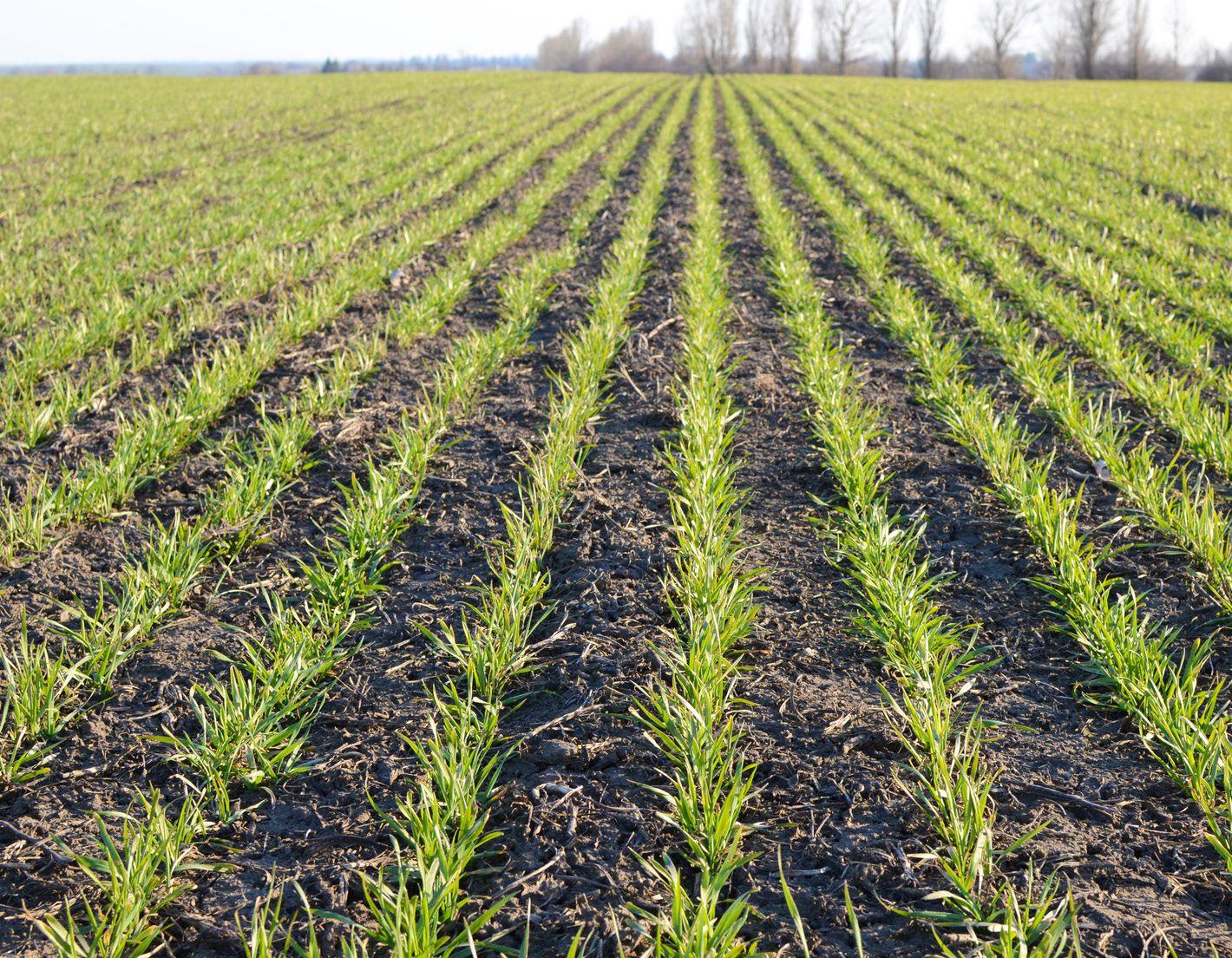
ABOVE: Winter wheat has been more profitable than spring wheat in most of the last five years.
Return
Sources: Guidelines for Estimating Crop Production Costs - 2017. Manitoba Agriculture, Crop Planning Guide 2017. Saskatchewan Agriculture. AgriProfit$. 2017 Cropping Alternatives. Alberta Agriculture.
“If you are going to grow winter wheat, you have to shop around and go past just getting quotes from the local elevator. Talk to local milling companies, hog barns, and ethanol plants and find out what kind of price you can get. It won’t always be the highest in the milling market,” Thoroughgood says.
By far, the most profitable winter wheat projections for 2017 are in Manitoba, where the provincial planning guide pegs winter wheat net returns over variable expenses at $203 per acre, compared to $163 for spring wheat and fall rye. Alberta pegs winter wheat ($113.73) competitively with spring wheat ($126.69) in the Dark Brown soil zone. In Saskatchewan, if a $5.00 price is used in the projections, winter wheat is competitive with spring wheat in the Brown and Dark Brown soil zones, but less competitive in the Black soil zone.
Only Saskatchewan provides projections for hybrid fall rye, and the crop comes out ahead of spring and winter wheat in all three soil zones.
Another consideration with the Saskatchewan planning guide is the high herbicide cost at $64.74 per acre for winter wheat, similar to spring wheat herbicide costs. In winter wheat, herbicide costs are budgeted to include a preharvest glyphosate application, preseed burndown, a soil active herbicide to manage herbicide-resistant wild oats, plus in-crop grassy and broadleaf herbicides that also target bromes and herbicideresistant broadleaf weeds. Whether a farmer chooses to use all these herbicide applications will depend on their individual weed problems.
Intangible benefits of winter cereals
Thoroughgood says beyond the economics of growing winter cereals,
there are other less tangible benefits of growing winter wheat. The harvest of 2016 certainly highlighted the difficulties in getting a late crop off in poor harvest weather. While growers struggled to get spring wheat off in October and November, winter wheat was safely in the bin in August with generally very good quality.
Additionally, Thoroughgood says at least in Saskatchewan and Alberta, winter wheat often matures early enough to avoid Fusarium head blight (FHB) damage. In Manitoba, most winter wheat growers spray a fungicide to help manage FHB.
“I sprayed my winter wheat with a fungicide in 2016 to target leaf spots. In my area, where Fusarium was endemic, especially in durum, my winter wheat crop came off with less than 0.5 per cent Fusarium,” Thoroughgood says.
Additionally, growers can choose an FHB-resistant winter wheat variety (Emerson), or one of several moderately resistant winter wheat varieties to help manage the disease, compared to only susceptible or moderately susceptible durum varieties and a few moderately resistant spring wheat varieties.
Another benefit Thoroughgood likes is that on his farm, where the only wheat he grows is winter wheat, he is one-third done seeding all his crops before spring thaw.
Whether the economic and other benefits add up enough to convince a grower to plant winter cereals this fall will depend on each farm’s circumstance, yield potential and ability to get winter cereals into the rotation.
STRENGTHENING WINTER WHEAT STAND ESTABLISHMENT
A strong agronomic package helps to manage risk.
by Bruce Barker
Imagine yourself as a winter wheat kernel. You’re planted in the fall, germinate and grow a bit, then hibernate until spring when you start growing again. Meanwhile, fungus and insects are attacking your roots and shoots throughout the fall and spring. No wonder poor stand establishment is a major constraint for high-yielding winter wheat crops.
Brian Beres, a research scientist with Agriculture and AgriFood Canada (AAFC) in Lethbridge, Alta., has been looking at how to improve stand establishment and winter survival over the past decade. Recent research found using a strong agronomic package improves stand establishment and helps mitigate risk.
“The interesting thing about the study was that as you move towards a stronger agronomic system, you can see that there is no dominating component or magic bullet. The impact of a single practice in a strong agronomic system is subtle; however, you will see incremental improvements to the system as a whole and that makes your crop more resilient when faced with a changing spectrum of disease, insect or abiotic pressures,” Beres says.
He conducted a research study totalling 26 site-years over three growing seasons to observe how a strong agronomic package would impact stand establishment and yield. A weak agronomic system included a low seeding rate of 200 seeds per square metre and light, untreated seed. The strong agronomic package targeted a seeding rate of 400 seeds per square metre, plump seed and a fungicide/insecticide (Raxil + Stress Shield) seed treatment. Crop establishment, yield and seed quality were measured at nine AAFC research sites across the Prairies. An economic analysis was also conducted.
Seeding rate had an obvious effect on fall and spring plant density, with better stand establishment linked to the higher seeding rates, but seed size also affected plant density. Fall and spring plant density was greater for heavy seeds compared to light seeds; moderate seeds had an intermediate response not different
ABOVE: A seeding rate of 400 plants per square metre combined with seed treatments can improve stands and increase yields.
from either extreme of seed size. The application of a dual fungicide/insecticidal seed treatment increased plant density by about 12 plants per square metre.
“From the responses across environments, we concluded that a dual fungicide/insecticidal seed treatment will improve winter wheat plant establishment and ultimately increase crop yield in a thinner winter wheat stand,” Beres says.
Strong agronomics provided a more stable system
Beres says the hypothesized weakest agronomic systems (low seeding rate and untreated, light seed) that often included the 200 seeds per square metre seeding rate were the poorest performing and most variable systems. Adding in a seed treatment partially compensated for the poor agronomic package, providing yield similar to systems with higher seeding rates.
Inclusion of a dual fungicide/insecticide seed treatment provided the highest gross returns for both levels of sowing density, but the added input cost of the seed treatment reduced overall net returns at the 400 seeds per square metre seeding rate by $11 per hectare.
But Beres cautions growers shouldn’t view these results as an opportunity to use seed treatments to cut seeding rates to 200 seeds per square metre. “You won’t always see a net economic return with a stronger agronomic package, but you have to look at other factors that can impact the weaker system. A stronger system may be better able to tolerate poor weather conditions, weed or insect pressure, or foliar leaf diseases,” he says. “A stronger system is insurance against stresses.”
“While there were never any benefits to increasing seeding rates beyond 300 seeds per square metre, emergence was always excellent and winterkill was minimal with the 400 seeds rate,” Holzapfel says. “I haven’t seen the same benefits that Brian did in his research, but agree that higher seeding rates can provide a buffer and improve winter wheat yield stability over the long term and across a wider range of conditions.”
“A stronger system may be better able to tolerate poor weather conditions, weed or insect pressure, or foliar leaf diseases.”
Demonstration project finds similar results
Chris Holzapfel, a researcher at the Indian Head Agricultural Research Foundation in Indian Head, Sask., found similar results with seed treatments in an Agricultural Demonstration of Practices and Technologies (ADOPT) program conducted over three consecutive growing seasons from 2014 through 2016. The study looked at seeding rates of 200, 300 and 400 seeds per square metre, with treated or untreated seed (Raxil Pro or Raxil Pro-Shield), and with a foliar fungicide compared to no foliar fungicide. Normalized difference vegetation index (NDVI) was measured using a handheld GreenSeeker during stem elongation (prior to flag-leaf emergence). NDVI can be utilized as an indirect measure of crop vigour, canopy density and overall aboveground biomass.
Holzapfel found increasing seeding rates was a reliable method of enhancing winter wheat stands. Higher seeding rates increased early-season NDVI in two of three years. Higher seeding rates also provided earlier canopy closure in the spring, which can be important for field uniformity and weed competition. In the demonstration, 200 seeds per square metre were not sufficient to optimize yield in two of three years.
The response to seed treatments in the Indian Head ADOPT study was small but relatively consistent. Early season NDVI was higher with seed treatments in both 2014 and 2016, which indicated improved establishment and/or more vigorous early season growth. Overall, seed treatments significantly increased yield by 2.2 per cent (1.5 bushels per acre, or bu/ac) when averaged over the three years.
In a similar demonstration at Indian Head in 2013, winter wheat was seeded into very dry soils and did not emerge until the following spring. Under these conditions, plant populations were essentially doubled with seed treatment (Raxil Pro), and yields were increased by 15 per cent. However, Holzapfel says such dramatic responses are certainly not typical.
Foliar fungicides also improved yield
As part of the ADOPT study, foliar fungicides were applied at both the flag-leaf and anthesis (flowering) stages of crop development to target leaf spots and Fusarium head blight. The dual foliar fungicide application provided the most consistent and greatest benefits with yield increases ranging from five per cent in 2015 to 20 per cent in 2016. Averaged over the three-year period, foliar fungicide applications increased winter wheat yields by 14 per cent or 8.9 bu/ac.
Using a strong agronomic package can help improve stand establishment and mitigate risk.
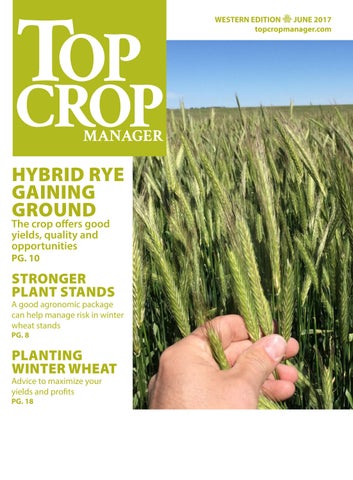
HYBRID RYE GAINING GROUND
This crop offers higher yields, better quality and good opportunities, but identity-preserved markets need time to develop.
by Carolyn King
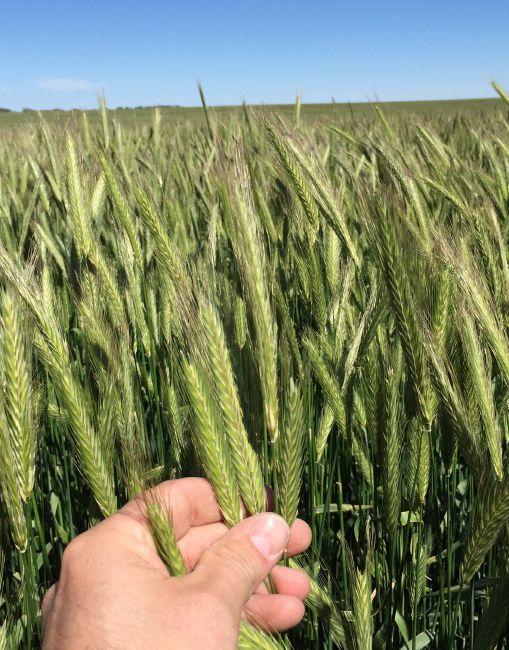
Hybrid rye varieties have been grown on the Prairies for a couple of years now. They continue to live up to their initial promise, outshining open-pollinated (OP) rye varieties in key traits, and work is underway to help the hybrids capture a greater share of rye’s small marketplace.
Three hybrid ryes are currently available for western Canadian growers: Brasetto and Bono from FP Genetics and Guttino from SeedNet. All three hybrids are fall-seeded varieties developed by the German crop breeding company KWS, a global leader in rye breeding, and all three have many characteristics attractive to both growers and end-users.
A growing advantage
For growers, yield is the biggest advantage of the hybrids over OP ryes. “Regardless of the conditions they are grown under, we are getting 25 to 30 per cent higher yields for the hybrids, which is huge. A really good crop of open-pollinated rye is 70 bushels; we had lots of producers last year who were getting over 100 bushels of hybrid fall rye. Of course, that means better returns for the grower,” says Rod Merryweather, chief executive officer of FP Genetics.
“Also, the hybrids are four to five inches shorter than the OPs, sometimes even more than that, and they have much better lodging resistance. And hybrids mature much more uniformly, so direct combining is possible, which can save time and cost compared to swathing.”
David Hamblin of Red River Seeds in Morris, Man., has grown both Brasetto and Bono. “We’ve had some pretty phenomenal yields. The first year [in 2015], our yield was about 95 bushels per acre, even though we had about 25 per cent hail damage. And last year, our yield was 116.”
Hamblin, a shareholder in FP Genetics, had grown winter wheat but not fall rye before trying the hybrids. “We have been really impressed with the winter hardiness of the hybrids, especially compared to our winter wheat. The biggest thing we’ve noticed compared to winter wheat is the more uniform stand. We’ve put hybrid rye in some pretty rough conditions in the fall, some late seeding, and it still seems to come through the winter really well. Last fall, we actually seeded ours in October on soybean ground, and it looks fantastic right now [in early April].”
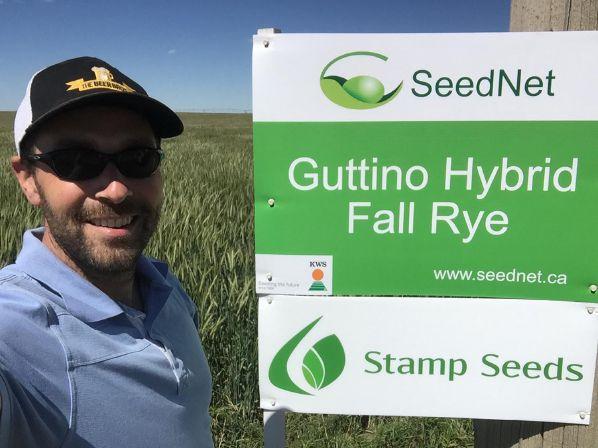
SeedNet member Greg Stamp of Stamp Seeds in Enchant, Alta., has been really struck by Guttino’s performance. “I don’t know if I
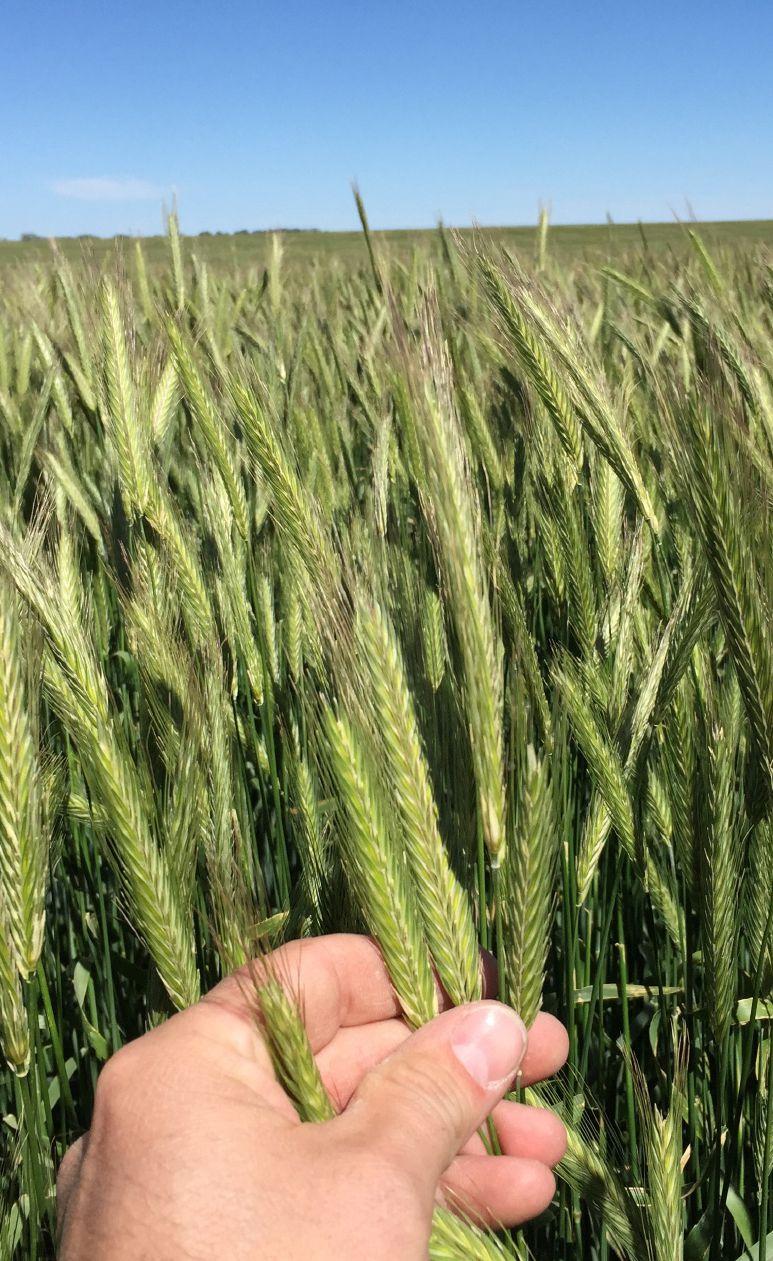
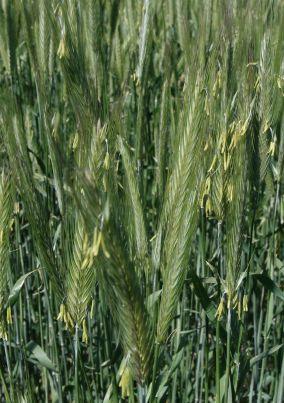
ABOVE: Hybrid rye varieties like Guttino (shown here) produce uniform stands with impressive yields.
fully realized the power of a hybrid crop until we started growing Guttino. We had some customers who did some demos and some trials comparing Guttino with some of the traditional rye varieties [in 2015]. In good conditions, Guttino yielded about 25 to 30 per cent better, but in dry conditions its yield advantage was even higher.
“The biggest difference was on dryland on light, sandy land where it was more drought-prone; they found about a 40 per cent yield difference between the traditional rye varieties and the hybrid. The stress hurt the traditional variety, but the hybrid seemed to power through.”
Like Hamblin, Stamp appreciates the great overwintering ability of the hybrids. “With Guttino being a nice, strong winter survivor
compared to winter wheat, potentially you could plant it later than your winter wheat and still have equal or better results.” He adds, “It is amazing how fast it grows in the spring and heads out. It jumps ahead of winter wheat in the spring and it is such a vigorous plant.”
One main difference for growers is that hybrid rye seed is sold per unit, where a unit is one million viable seeds. “So depending on what my seed size and germination are, I’m filling more or less pounds per unit. For the customer, it’s a lot easier because you know what your plant stand will be,” Stamp explains. “It’s like the corn and soybean way of selling on a unit basis.”
The recommended seeding rate for the hybrids is 0.8 of a unit per acre, which results in an optimal population of 18 to 18.5 plants per square foot. That is a little lower than the recommended population for OP rye. The lower seeding rate allows the hybrids to tiller more, so they will be well established to overwinter successfully.
Another difference from the OPs is that, as hybrids, new seed will have to be purchased each year, as growers do for canola hybrids. Stamp says, “All these hybrid ryes are one-time use products. You wouldn’t want to use it again anyways because then you would get outcrossing and unpredictability in the plant in year 2.”
In an exciting advance, FP Genetics and KWS are developing hybrids that are less susceptible to ergot. Many cereals and grasses are hosts to this disease, but rye is especially prone to infection. Ergot is a concern because its overwintering fungal bodies, which develop in infected florets, contain alkaloids that are toxic to humans, livestock and poultry.
“KWS has a trait they call Pollen Plus that reduces susceptibility to ergot compared to OPs and to other hybrids by up to 50 per cent in the trials so far,” Merryweather explains. “We have interim registration on the first variety. We will be testing it in a field situation this year, comparing it to the others, to prove what it will do.”
If the results from these side-by-side comparison trials with growers in 2017 are as good as the results from small-plot studies over the previous three years, then FP Genetics will add this Pollen Plus variety to its hybrid line-up in 2018. Merryweather says, “I think it will add tremendous value because it may reduce the amount of rye that has to be cleaned to enter the food market and the feed market. And that would save growers money.”
Increasing acres
According to Merryweather, hybrid rye acres have increased dramatically on the Prairies. “Seeded the fall of 2015 and harvested in 2016 was really our first year and that was about 20,000 acres. This year we’ve got about 40,000 acres in Western Canada, so it’s doubled from one year to the next and we expect it to be substantially higher [this fall] – maybe another 50 per cent higher. But that will depend on the market and other factors. Last year, bad weather at harvest meant that a lot of growers who had
QUALITY
TOP TO BOTTOM
REMOTE VENTED LID
INDUSTRIAL FOOD-GRADE EPOXY COATING (on Magnum-F™ )
INDUSTRIAL GRADE COATING FOR SUPERIOR FINISH PRESSED CONE SHEETS FOR OPTIMUM STRENGTH
INSPECTION HATCH
RACK & PINION SLIDE GATE (Stainless Steel Components on Magnum-F™)
planned to grow rye just couldn’t get it into the ground.”
Currently, prices for rye – like many other cereals – are relatively weak. Merryweather notes, “Last fall, rye was selling for $6 a bushel. This past fall it was $4. And now, even feed is selling for about $4.40 to $4.50 a bushel, so it is starting to come back. That is about the same as the price for wheat as feed.”
Also, Merryweather emphasizes that rye is a niche market crop. “Today there are about 300,000 to 350,000 acres of rye
HEAVY-DUTY CONSTRUCTED FOUNDATION (Varies Depending on Model)
CUSTOM OPTIONS AVAILABLE EARN CASH BACK agishare.com
grown in Canada in any given year, with about 250,000 in Western Canada. We don’t expect those acres to increase [in the short term]. Ultimately the acres might increase, but that takes time.”
FP Genetics expects an increasing portion of the total rye acres to switch from OPs to hybrids in the next few years. Merryweather notes hybrids were seeded on about 10 to 15 per cent of the total rye acres planted in Western Canada last year, “so we’ve still got a long way that we can go.”
Nevertheless, it may also make economic sense for a grower to switch from winter wheat to hybrid rye. Merryweather says, “The difference in price between winter wheat and fall rye is small, if any, and hybrid rye yields about 15 per cent higher than winter wheat.”
Stamp is seeing a different trend in terms of who is growing Guttino. “Most of my customers are in southern Alberta, although I do have customers up near Edmonton and people in Saskatchewan who are trying the Guttino as well. A few of those customers are traditional rye growers, but quite a few are new rye growers,” he says.
“I’ve got some customers who are growing irrigated crops like dry beans and potatoes, and those aren’t your traditional rye growers by any stretch. They were trying Guttino because the market was reasonably good at the time – the market is a little soft right now for commercial rye – but they were trying it because it looks attractive to them and the yield potential is very high.”
Stamp adds, “I would say 130 to 150 bushels per acre would be the typical range for my customers on irrigation, and my top yielder was a customer who averaged 180 bushels an acre. But even if you get 100 bushels on dryland, that still is pretty good; it’s all relative to what else you can grow on that field.”
Market opportunities
The hybrids offer various advantages for end-users, including the high-value food and beverage markets. “For milling, the hybrids have much higher falling numbers. In the last two or three years of testing, falling numbers for hybrid rye are always about 80 to 100 points higher than OPs grown in the same field. A higher falling number means a higher volume loaf, and the millers will probably be able to use more rye and less wheat to get that big loaf,” Merryweather says. “Another thing end-users like in the hybrids is that the grain
is much more uniform, which makes it easier and more efficient to mill, distil or [process in other ways].”
FP Genetics is targeting these high-value markets. “Our sales to date have been concentrated in the eastern half of the Prairies. That is because we are focusing on supplying the food and beverage market. The biggest market for that is in the United States, and most of that is supplied through grain companies centred in Minneapolis. So the closer you are to Minneapolis, the lower the freight costs to get the grain there and therefore the more competitive it is,” Merryweather explains.
He sees good potential to capture an increasing share of this market. “About 200,000 tonnes of rye is imported from Europe by the U.S. [for the distilling and milling markets]. If we can convert that back to Canadian rye – which it used to be – then that would grow our marketplace. They started importing from Europe because they couldn’t get a consistent supply of good quality rye from North America. If we can supply the quantity and quality, then we’ll ultimately get the business. We believe hybrid rye will enable us to do that.”
Merryweather also sees a big opportunity in the feed market. FP Genetics is working with KWS on feed studies, with KWS providing most of the funding. These studies include a major hog feeding study in Manitoba, which will be completed before planting next year.
He points out that rye is used extensively in Europe for livestock feed and many Prairie livestock producers already use rye in their feed. “However, we need to develop this market and doing these tests builds confidence because the local feed companies are controlling these studies and therefore they’ll make the recommendations. It all comes down to delivering the right nutrient package at the lowest price because that is how the cattle and hog guys make their money. So we expect that market to grow considerably.”
Like Merryweather, Stamp sees a lot of potential for hybrid rye in the feed market. “The economics would have to make sense, but I can see the feed market really being where, if the farmer isn’t going to get that milling price or that distillery price, they are going to be able to move volume and [it will] still make sense for them to grow a hybrid rye even at the feed market price. Right now the feed market price is kind of low, but it will not always be that way.”
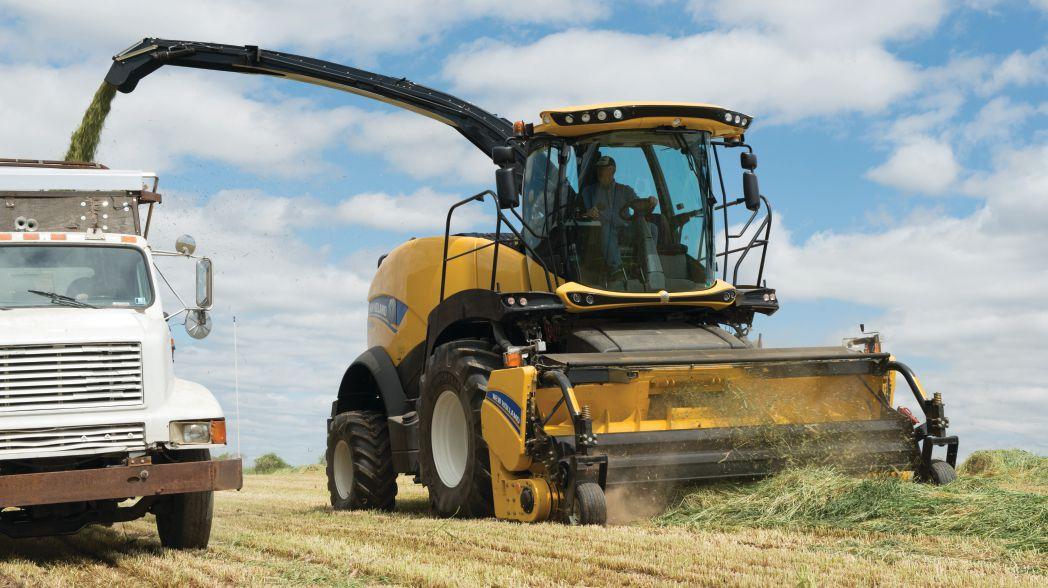
Silage is another option for some growers. Stamp says, “I have a lot of customers in the Picture Butte area [of Alberta] with feedlots, and some dairy as well, who are using the hybrid rye for silage and getting big tonnes. Some of the feedlot people are telling me the net returns are comparable to corn, because the costs to grow rye are lower. It can be grown on more marginal land than silage corn. So the tonnage and nutrient value per acre with hybrid rye is netting comparable to corn. [Because rye silage is cut earlier than corn silage], it spreads out the workload for their people and machines; silage choppers are not cheap, so the more acres they can put through one machine, the better, and rye diversifies their risk from just corn silage.”
For new rye growers who are looking into possible markets, Merryweather has some suggestions. “Our grain partners are a good place to start. Scoular and Providence Grain Solutions are contracting most of our production. Their objective is predominantly to supply food and beverage markets in North America, which is the highest price market.” As well, there may be local rye buyers like small millers or distillers, craft breweries, cattle and swine producers and ethanol plants. However, he doesn’t think these smaller markets
Many of Greg Stamp’s Guttino customers are new rye growers, including irrigated growers.
ORDER PROGRAM BEGINS THIS MAY SEE YOUR DEALER FOR DETAILS NO INTEREST, FOR UP TO 6 MONTHS NO PAYMENT FOR UP TO 1 YEAR*
VALMAR AIR BOOM APPLICATORS
DELIVER 430 LBS/AC AT 100 AC/HR - 9620 models apply 430 lbs/ac at 14
at 14 mph.
UP 20 TON CAPACITY & TWO PRODUCT BLENDS - 8600 models carry up to 11 ton (357 cu.ft.). The 9620 carries up to 660 cu.ft. total capacity. Each model is equipped with a micro hopper and optional secondary metering allows for custom blends.
ISOBUS COMPATIBLE SECTION CONTROL OPTION* - Follow prescription maps with left/right section control.
*Electronics required. Unit shown with optional equipment. BOOM WIDTHS UP TO 70 FEET - Pull the leader in air boom delivery for a fraction of floaters’ cost. 8600 models cover up to 66 ft. and the 9620 spans 70 ft.
CONTROL OPTIONS FOR JAPANESE AND DOWNY BROME
Serious competitors in winter cereals.
by Bruce Barker
Hard to identify and distinguish from one another, the annual grasses compete with winter wheat and fall rye because their growth habits are similar.
Downy brome ( Bromus tectorum ) densities of 50 to 100 plants per square metre that emerge within three weeks of the crop can reduce winter wheat yields by 30 to 40 per cent. Both downy brome and Japanese brome (B romus japonicas ) are classified as noxious weeds in Alberta.
“The weeds were quite common in the 1990s in southern Alberta and then they seemed to have disappeared as a concern. However, they seem to be having a bit of a resurgence and I’m not sure if that is because of the wetter weather we have been having over the last five years, or they are developing some herbicide resistance, or some other factor,” says Brian Beres, a research scientist with Agriculture and Agri-Food Canada (AAFC) in Lethbridge, Alta.
Beres says Japanese brome likes wetter environmental conditions and is more common in the southwest part of Alberta, while
downy brome is more widely detected in the southeastern parts of the province. Downy brome is also commonly called cheatgrass, drooping brome and downy chess.
Jeanette Gaultier, a weed specialist with Manitoba Agriculture in Carman, Man., says Japanese brome is less common than downy brome in that province, but even downy brome isn’t that prevalent. It was found in only one of 658 randomly surveyed fields in the 2016 AAFC-led general weed survey.
“That said, it tends to occur in small areas scattered across the province, but where it’s a problem, it’s tough to manage. We also have some bad patches along the rail lines and in some pastures where it has the potential to spread,” Gaultier says.
Control options
From 2011 through 2013, Eric Johnson collaborated with Beres
ABOVE: The registration of Focus herbicide for Japanese and downy brome control is good news for farmers.
Simplicity pyroxsulam
Table 1: Trial herbicides
Group 2
Varro thiencarbazone Group 2
Everest DC flucarbazone-sodium
Everest SC flucarbazone-sodium
Valtera flumioxazin
Focus* pyroxasulfone
Fierce pyroxasulfone + flumioxazin
Source: AAFC.
*Focus is a combination of pyroxasulfone and carfentrazone.
Group 2
Group 2
Group 14
Group 15
Group 15 + Group 14
on a nine site-year trial in Scott, Sask. Johnson, now a weed researcher at the University of Saskatchewan, was a scientist with AAFC based in Scott at the time. The project was conducted at three sites in Scott and Lethbridge and Coalhurst, Alta., with funding provided by AAFC’s Growing Forward program, Ducks Unlimited Canada, FMC and Bayer Crop Sciences Canada.
Johnson assessed a number of pre- and post-emergent herbicides – some registered and some not.
For Japanese brome control, all products tested except Valtera provided very good control – more than 90 per cent in most cases. Consistency of control was generally very high as well.
Downy brome control was less successful. However, Simplicity provided acceptable control while herbicides that contained pyroxasulfone provided a high degree of consistent control.
Since the research was conducted, one of the trial herbicides, pyroxasulfone, was registered in a combination with carfentrazone for Japanese and downy brome control in winter wheat. It is now available as Focus herbicide from FMC Corporation.
JRegistered for control of Japanese and downy brome
Registered for suppression of Japanese and downy brome
Not registered
Not registered
Not registered
Since registered for control of Japanese and downy brome in co-pack with carfentrazone
Not registered
“There are some good options for controlling Japanese brome, but the choices are much less with downy brome. Focus was better than the others on downy brome and is a good option now that it is registered on winter wheat,” Johnson said at the 2017 Alberta Agronomy Update in Lethbridge earlier in the year.
Focus is a co-pack of pyroxasulfone and carfentrazone and is applied pre-plant/pre-emergent prior to winter wheat. It has residual activity on downy and Japanese brome and can be applied in a tank-mix with glyphosate in a pre-seed burndown. It requires a minimum of one-half inch of rainfall to move into the soil solution and to be taken up by the roots and shoots of germinating weeds. In addition to downy and Japanese bromes, it controls barnyard grass and green and yellow foxtail, suppresses foxtail barley and wild oats and controls a few broadleaf weeds.
“The addition of Focus herbicide as a control option is good news for winter wheat growers. The addition of another herbicide Group to help manage herbicide resistance is a key benefit,” Beres says.
IDENTIFYING JAPANESE AND DOWNY BROME
apanese brome (Bromus japonicas) exists as a winter annual or summer annual grass weed in the Canadian Prairies. Plants typically reach a height of 80 to 100 centimetres (cm). Stems are bent at the base and nodes are swollen and brownish in colour. Leaf blades are flat, measuring 0.25 to 0.5 cm wide and 15 to 20 cm long, and covered in soft hairs. Seed heads have long branches and pedicels, usually droop to one side when mature, and each branch has one to five spikelets. Japanese brome seed has little dormancy and usually doesn’t persist in the soil beyond two to three years. Optimum germination occurs at soil temperatures of 5 C to 20 C, resulting in peak emergence in SeptemberOctober and April-May.
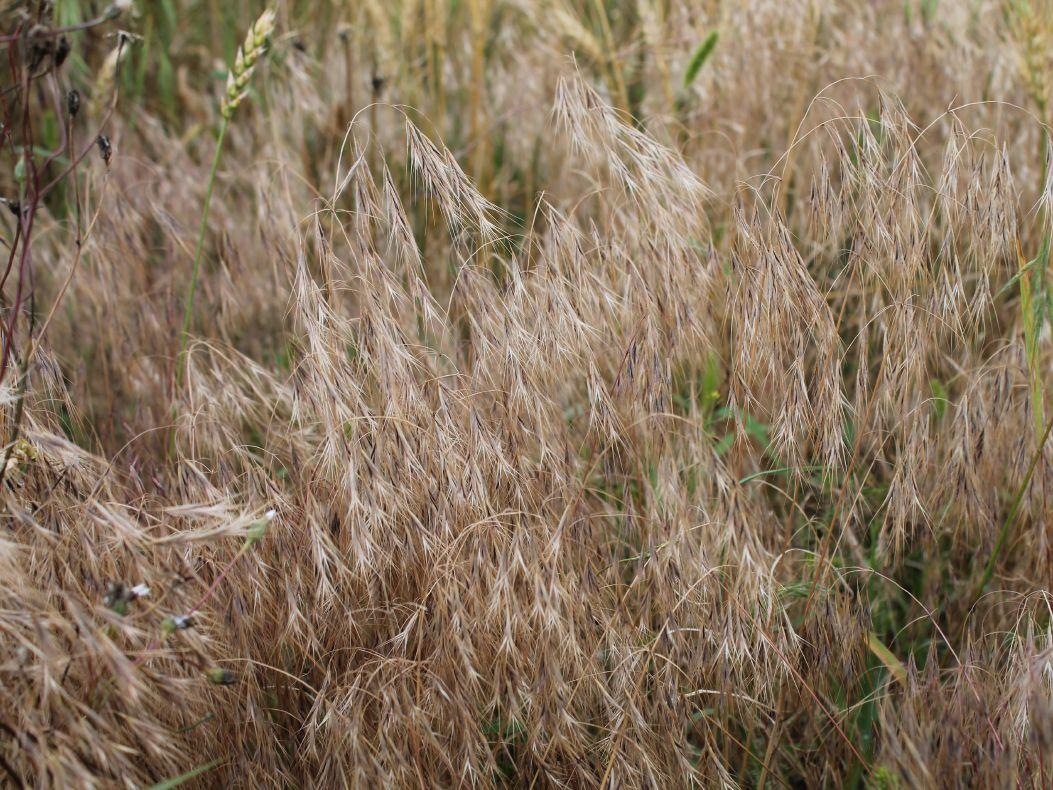
Japanese brome can easily be confused with downy brome (Bromus tectorum) but there are some distinguishing characteristics between the two. Downy brome has more open, drooping panicles with 20 to 30 millimetre (mm) long spikelets having 12 to 17 mm straight awns. Japanese brome spikelets are shorter (10 to 20 mm) and have shorter (8 to 10 mm) curved awns. Downy brome seed is a grey to reddish colour at maturity, while Japanese brome seed is tan coloured. Indeed, the entire downy brome plant is purplish-reddish at maturity, while Japanese brome is more of a pale tan colour. Japanese brome is less common in southern Alberta and tends to grow in wetter sites compared to downy brome.
- Reprinted with permission from Farming Smarter.
by Bob Blackshaw
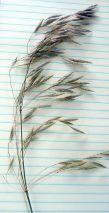
Downy brome (Bromus tectorum) has a dropping head and longer awns (right); Japanese brome (Bromus japonicas) has short awns and a more upright head (left).
VIABLE STUBBLE OPTIONS FOR WINTER WHEAT
An additional opportunity to get winter wheat into the rotation.
by Bruce Barker
Canola stubble has traditionally been the preferred stubble for winter wheat plantings because it can capture snow to insulate the overwintering wheat crop, improving winter survivability. However, some high-yielding canola hybrids have later maturities, presenting a challenge for seeding winter wheat at the optimum time.
“Canola is ideal, but issues are occurring because of latermaturing varieties. Some growers are looking at earlier-maturing crop phases like peas, but the snow trap index as a proxy for snow insulation for pulses is not great, so that prompted some additional research into pulse as well as barley silage stubble,” says Brian Beres, a research scientist at Agriculture and Agri-Food Canada (AAFC) in Lethbridge, Alta.
Winter wheat should be sown from the last week of August to mid- or late September (depending on the region) to allow sufficient growth to optimize winter survival and subsequent yield. As a result, the previous crop must be harvested prior to the end of August for an effective crop sequence and removal of any green bridge. This issue with canola maturity motivated a team of AAFC agronomists to look for alternative rotational crops for winter wheat.
A four-year trial was established at Lacombe in Alberta, at Melfort and Indian Head in Saskatchewan, and at Brandon in Manitoba. In the first year, six crops were grown, including barley for grain harvest, barley for silage, canola, pea, oat, red spring wheat, and canola.
After harvest, two winter wheat varieties, a hard red spring wheat, Canada Prairie Spring wheat, and barley were grown on the stubble. Winter wheat was planted by the optimal date immediately after harvest and the spring crops were planted by May 15 the following spring.
Overall, Beres says the winter wheat stands were adequate throughout the study period, although slightly lower than optimum. He says the yields of winter wheat grown on canola, barley for silage and pea stubble were often the highest, while yield on wheat, oat and barley for grain were often the lowest. With the exception of CDC Osprey winter wheat on oat stubble, winter wheat also always achieved a minimum grain protein content of 11 per cent –necessary to meet Canadian Western Red Winter wheat grades No. 1 and No. 2. Beres reports the results reinforce the notion that stubble types other than canola can be a good option for winter wheat producers to ensure optimal winter wheat yield and kernel quality.
“Winter wheat planted on barley silage stubble did really well but if you grow it on barley stubble harvested for grain, it didn’t do that well,” Beres says. “I think it’s likely because of competition from volunteer barley left after grain harvest. Volunteer barley is very competitive, even against winter wheat, and it is hard to clean up
TOP: Barley silage stubble and pea stubble can be good options for winter wheat planting.
Irvine et al. 2013. Stubble options for winter wheat in the Black soil zone of Western Canada. Can. J. Plant Sci. 93: 261-270.
with herbicides. There are some options, but if you don’t take out the volunteer barley soon enough, it seriously compromises yield.”
Beres says another issue with barley harvested for grain is that there may be a large amount of straw left at harvest, which may
result in nitrogen (N) immobilization tying up soil N.
The results also revealed the typical pulse rotational benefit that usually occurs with spring crops was not evident. Beres explains the N mineralization from pulse residues may not coincide with winter wheat N uptake patterns, but likely benefitted subsequent crop phases.
Leaf spot disease on the penultimate winter wheat leaves was measured at one location over the three years. The results found disease was higher on CDC Osprey when grown on wheat or barley silage stubble. Disease severity on barley silage stubble may have been greater because the winter wheat had a better plant stand more conducive to disease development than on barley for grain stubble.
Beres also cautions growers to ensure they do not provide a green bridge for wheat streak mosaic virus to move from spring-seeded cereal crop volunteers to winter wheat seedlings. Barley silage stubble may regrow in the fall to provide a green bridge and barley volunteers may also germinate and grow in the fall, even on silage stubble, which can also provide a green bridge.
“Be conscious of the green bridge. A pre-seed burndown that eliminates all green material before seeding the winter wheat crop is very important,” Beres says.
The results of this research show seeding winter wheat into barley silage and field pea stubble is a good alternative, although canola stubble may be ideal. In most cases, barley silage is harvested in mid-August, providing an ideal timing for winter wheat seeding. Beres says agronomic practices would be the same as when seeding winter wheat on canola or pea stubble.
“It’s all of our responsibility to speak
Control Pea Barley silage Oat Barley grain Wheat
CWRW McClintock
CWRW CDC Osprey
Previous stubble type
Source:
GROWING WINTER WHEAT THIS FALL?
Planting at the right time into the right conditions can help maximize yields and profitability.
by Ross H. McKenzie, PhD, P.Ag.
Winter wheat can be a great crop to include in your rotation. Winter wheat will typically out yield spring wheat by 20 per cent or more, depending on growing conditions, and is normally harvested several weeks before spring wheat. Winter wheat in your rotation can make more efficient use of seeding, spraying and harvest equipment and spread out the field workload on your farm. If you’re considering planting winter wheat this fall, you should start your planning now, as successful winter wheat production takes long-term planning.
Land must be available for timely winter wheat seeding this fall, so a shorter season crop that can be harvested by mid- to late August should be seeded in the spring. Depending on the area you farm, consider crops such as cereal silage, pea, Polish canola or mustard.
Variety selection
An important consideration when deciding to grow winter wheat
is how it will be marketed, as this will influence variety selection. Winter wheat can be used for milling for human consumption, livestock feed or ethanol production. A number of excellent new varieties have been released, but only some are suitable for milling.
You can review the ratings of each variety on the Western Winter Wheat Initiative website at growwinterwheat.ca. The website includes summary tables for Alberta, Saskatchewan and Manitoba; each province uses a different variety as the standard to which other varieties are compared.
When reviewing the tables, yield potential should not be your first consideration. Instead, decide which characteristics are most important for the area you farm. For example, if winter hardiness, lodging and Fusarium disease tolerance are
ABOVE: Winter wheat will typically out yield spring wheat by 20 per cent or more, depending on growing conditions, and is normally harvested several weeks before spring wheat.
PHOTO COURTESY OF FOTOLIA.
your greatest concerns, select the variety with the strongest attributes in those categories. The variety with the best attributes for your area will usually have the highest yield potential on your farm as well.
Establishing winter wheat
Ideally, winter wheat should be direct seeded into standing stubble. Canola, mustard or cereal silage stubble works well. Maintaining standing stubble after seeding is best in order to trap snow, which will provide insulation and help with winter survival. Seeding into pulse stubble, such as pea, can provide additional nitrogen release the following year, but the lack of standing stubble for snow trapping can be a limitation.
Southern Prairie farmers in the Black and Gray soil zones should seed winter wheat in the last week of August or the first week of September.
Farmers in the Brown and Dark Brown soil zones should seed winter wheat in the first two weeks of September.
These seeding times are recommended to ensure winter wheat will germinate, emerge, grow to at least the three-leaf stage and then develop a good crown root system before freeze up, all of which will help to ensure overwinter survival. When plants are only at the one- or two-leaf stage before freeze up, overwinter survival may be reduced, particularly during a harsh winter.
Research in southern Alberta has shown that when seeding is delayed from the second week of September to the first week of October, winter wheat yield will decline in the range of 15 to 25 per cent, depending on environmental conditions. Harvest the next year can also be delayed by two or more weeks. When this happens, the advantage of higher yield and earlier harvest of winter wheat versus spring wheat may be lost.
Seed winter wheat to achieve a plant stand of 25 plants per square foot in the Brown and Dark Brown soil zones. In the Black soil zone or on irrigated fields, seed to achieve 30 to 35 plants per square foot. Be sure to calculate your seeding rate in pounds per acre (lb/ac). Determine thousand kernel seed weight in grams (g) and estimate your seedling survival rate; I usually use about 75 per cent (0.75).
The formula to calculate the seeding rate in pound per acre is:
Winter wheat has considerable ability to tiller in spring, however, the best yields are obtained using higher seeding rates. A common mistake new growers make is seeding winter wheat a little too deep. Winter wheat should be seeded no more than one inch deep, as it has a shorter coleoptile than other cereals. This is the extension of the seed embryo that pushes its way through the soil to the surface, from which the first leaf develops. If you seed
at two inches, this can seriously reduce emergence. It will also delay emergence and cause weaker, spindly seedlings that are more susceptible to disease and winterkill.
Soil moisture is often low in stubble fields when the time is right to seed winter wheat. Farmers are then faced with the choice to either seed into dry soil or wait for rain. I usually suggest seeding winter wheat at the recommended time for your area rather than waiting for rain. If you do seed into dry soil, make sure the seeding operation leaves the seed firmly covered with no more than one inch of soil and that you have good seed-soil contact.
Source: Alberta Agriculture Agdex 112/542-1.
Table 2. Phosphate fertilizer recommendations based on Alberta research using the modified Kelowna P extraction method
Table 1. Nitrogen fertilizer recommendations for Alberta
NEW WINTER CEREAL VARIETIES
One new winter wheat and one new hybrid fall rye are now available.
by Bruce Barker
Growers contemplating winter cereals this fall should look to seed suppliers early to get their hands on these new, high-performing varieties.
Winter wheat
AAC Elevate is a Canada Western Red Winter variety with a yield potential of 109 per cent of CDC Buteo. It is rated I for Fusarium head blight. AAC Elevate has very good lodging resistance with short, strong straw measuring seven centimetres shorter than CDC Buteo. It will be available at SeCan members in 2017.
Hybrid fall rye
Bono hybrid fall rye delivers exceptionally high yields and has the potential to deliver very high net returns. It yields 120 to 131 per cent of the standard check variety, Hazlet. It has medium maturity, very good lodging resistance and uniform maturity that facilitates straight cutting. Contract production is available. For more information on purchasing Bono fall rye, contact your local FP Genetics territory manager.
If you do seed into dry soil, make sure the seeding operation leaves the seed firmly covered with no more than one inch of soil and that you have good seed-soil contact.
Always seed winter wheat into “clean fields” without any actively growing cereals. The wheat curl mite, an insect that can transmit wheat streak mosaic virus, can be harboured in actively growing green cereals, as well as volunteer grain or grass in roadside ditches. When winter wheat is seeded adjacent to green cereal fields, the mites can move from the host plants into the winter wheat after emergence and spread the virus. Cultural control is the only way to control the mites; they can wrap themselves within wheat leaves for protection, which makes chemical control completely ineffective.
Fertilizer management
Soil testing to determine nitrogen (N), phosphorus (P), potassium (K) and sulphur (S) is important to accurately determine fertilizer requirements.
Stubble fields are usually low in soil N, particularly after a high production crop year. Table 1 provides general nitrogen fertilizer recommendations for various soil zones in Alberta.
When soil moisture conditions are dry at planting, it may be best to apply a portion of estimated N requirements at the time of planting and then apply additional N in early spring, depending on soil moisture conditions.
Research has shown N fertilizer banded before seeding tends to dry out the seedbed. The result is often a rougher and lumpier seedbed. This can negatively affect uniform germination and emergence. Research also showed seed-placed N fertilizer applied at rates greater than 30 lb N/ac using urea (46-0-0) at a seedbed utilization of 10 per cent with only medium soil moisture can have a detrimental effect on winter wheat germination and emergence. When using N rates higher than 30 lb N/ac, it is best to side or mid-row band N at planting.
Another option to consider is controlled release ESN fertilizer. It can be safely seed-placed at rates of up to
80 lb N/ac with a 10 per cent seedbed utilization.
If you need to apply additional N in spring, broadcast urea or dribble-banded 28-0-0 liquid fertilizer can work reasonably well. When surface applying 46-0-0 and 28-0-0, volatilization – the conversion of urea to ammonia gas – is always a concern. Apply N fertilizer as early as possible in the spring, when soil and air temperatures are cool. A urease inhibitor such as Agrotain should be considered to reduce potential volatilization.
Research from Alberta has shown spring broadcast ESN release is too slow to be effective, and is not recommended for winter wheat.
Depending on the soil test P level and yield potential, seed placing approximately 20 to 40 lb/ac of phosphate is usually adequate. Table 2 provides general P fertilizer recommendations used for Alberta. When seeding winter wheat into canola stubble, increase the phosphate rate by 10 lb/ac, as winter wheat is more responsive to P fertilizer after a canola crop.
In the Black and Gray soil zones, deficiencies in K and S are more common. In Brown and Dark Brown soils, sulphur is occasionally low in the zero- to sixinch depth, but sub-soil has adequate sulphate-S. When soil test sulphate-S is less than 10 lb/ac in the zero- to six-inch depth, an additional 10 lb/ac of sulphate fertilizer should be added. Ten lb/ac can be safely seed-placed with winter wheat, as long as no more than 35 lb/ac of phosphate is seed-placed.
In summary, winter wheat can be a great crop to include in your crop rotation. When you follow straightforward management practices, it can be a very profitable crop to grow.
For more on crop management, visit topcropmanager.com.
Hybrid fall rye is changing the landscape for winter cereals.
FILE PHOTO.
A LOOK AT LATER SEEDING FOR WINTER WHEAT
A 13-site study offers up some surprising results.
by Carolyn King
Many winter wheat growers in Western Canada are wondering if the seeding window can be extended. A multi-year, multi-site Prairie study is working towards a tool that will help growers answer that question for their own conditions.
“Recently it has become increasingly challenging to seed winter wheat in the fall. Probably the biggest factor is crop rotations. In Manitoba and even Alberta and Saskatchewan, producers are growing longer-season crops, like corn and soybeans, or longer-season varieties of crops like canola, and so they are harvesting later. Also, with canola, with the shift towards direct harvest, the crops are staying longer in the field. So, farmers who are planting winter wheat are planting it later,” notes Yvonne Lawley, a professor of agronomy and cropping systems at the University of Manitoba who is leading the study.
“There is a lot of interest on the part of growers to know what is the impact of later planting and can they push the seeding window later than they think.”
She adds, “Farmers are also thinking about soil health and
wanting to increase the time where plants are covering the soil. Winter wheat is one of our best starting places for cover crops in Western Canada. If late planting allows growers to achieve goals related to yield and profits as well as soil management, then that is important to consider.”
The recommended seeding window for winter wheat is from about mid-August to mid-September across most of the Prairies. Seeding after that window may mean the young plants won’t have enough time to become properly established before winter sets in. For winter survival, the optimal growth stage is for the plants to have well-developed crowns going into the winter.
Lawley’s study involves 13 sites across the Prairies, encompassing a very wide region with diverse growing conditions. The Manitoba sites include Carman, Kelburn Farm (just south of Winnipeg), Arborg, Portage la Prairie, Brandon and Melita. In
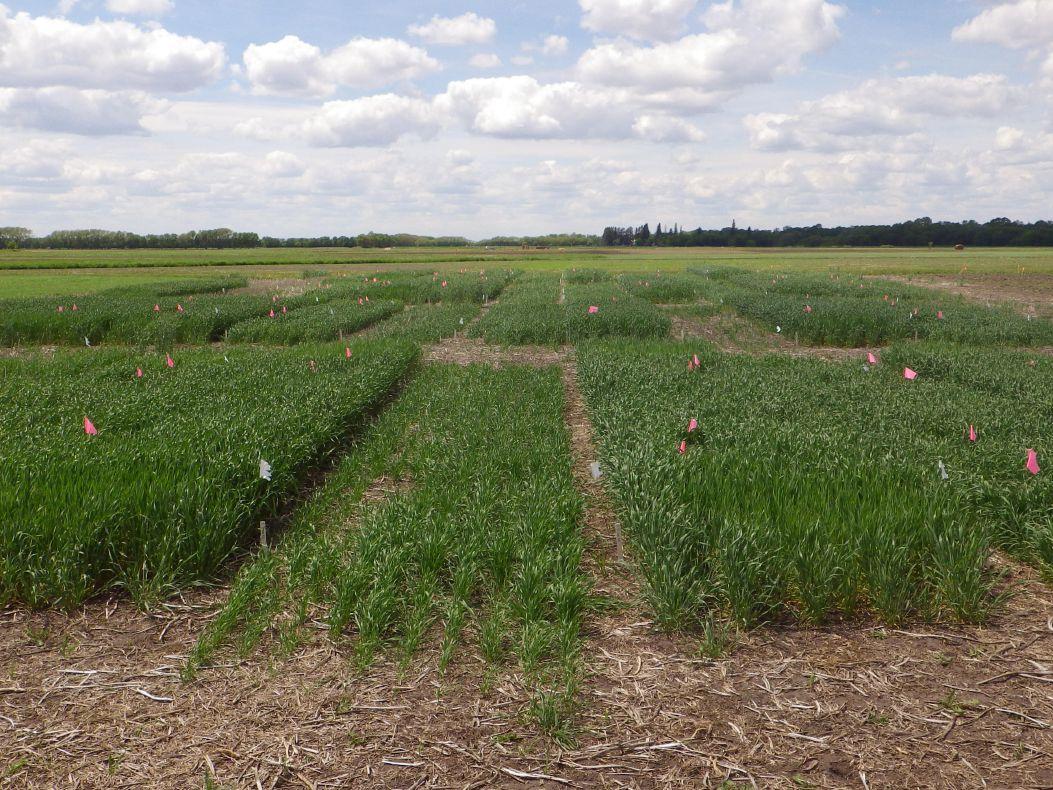
ABOVE: A study is comparing the effects of winter wheat planting dates ranging from August to November at multiple sites across the Prairies, including this site in Carman, Man.
Saskatchewan, the sites are at Melfort, Scott and Swift Current. The Alberta sites include Lethbridge-dryland, Lethbridge-irrigated, Medicine Hat and Falher. Most sites started the trials in the fall of 2013, though a few started in the fall of 2014.
The winter wheat variety grown at all the sites is Flourish, which has fair winter survival. At each site, the study compares six planting dates: Aug. 15, Sept. 1, Sept. 15, Oct. 1, Oct. 15 and Nov. 1. The study team had a four-day window on either side of those target planting dates to account for weather and other logistical concerns.
For each of the six seeding dates, a fungicidal seed treatment (tebuconazole and prothioconazole) is compared with an untreated check. Seed treatments can help young plants deal with stresses like seedling diseases and cool growing conditions.
The study is looking at the effects of seeding date and seed treatment on spring plant stand populations, timing of maturity and crop yield.
Some key trends
“One of the questions at the beginning of the study was just how many of these seeding dates could we actually plant in the experiment, across these wide areas?” Lawley says.
The biggest challenge turned out to be the Aug. 15 treatment. She says, “Much like farmers, researchers have a hard time having a piece of land open to plant in August.”
our highest yielding planting window is between Sept. 1 and 15. This finding agrees with the research conducted by Brian Fowler in the late 1970s that identified early September as the optimal highest-yielding planting window for winter wheat,” Lawley says.
Fowler’s study identified the optimum seeding window to be from mid-August to early September. Results from Lawley’s study across a wider growing region suggest the optimum window has shifted and now ranges from late August/early September to early/ mid-September.
The effect of planting date on yield differed by province. “In Manitoba, most sites tended to follow the pattern of decreasing yield with later planting. However, in years where most Manitoba sites were able to get their Aug. 15 treatments seeded, like 2015/16, the Aug. 15 planting had a lower yield than the Sept. 1 planting. So you can plant too early. That result is very consistent with research that Brian Fowler did many years ago,” Lawley notes.
“In 2016, yield trends were most consistent over the six Manitoba sites. On average in Manitoba in 2016, there was a 23 per cent yield reduction between the Sept. 1 and Oct. 1 planting dates and a 37 per cent reduction for the Sept. 1 versus Oct. 15 dates. At the three Saskatchewan sites, yield reductions between the Sept. 1 and Oct. 1 treatments ranged from zero to 35 per cent. In Alberta, yields in 2016 actually increased with later planting at two of three sites when comparing the Sept. 1 to the Oct. 1, 15, and Nov. 1 planting dates.”
“Planting date had a significant influence on maturity date at 10 out of 13 sites in 2016. At these sites, a later planting date resulted in later maturity –on average, by eight days between the Sept. 1 and Nov. 1 planting dates.”
Lawley notes, “We were quite surprised that each of the sites were able to seed most of the treatments in October. The lowest percentage of sites that we had seeding on Oct. 15 was 92 per cent, or 12 out of the 13 sites, in the fall of 2015. Even for our Nov. 1 date, we were able to seed at 80 per cent of sites in 2013, 90 per cent of sites in 2014, and 70 per cent of sites in 2015.”
The Nov. 1 date is a dormant-seeding timing, when the soil is cold enough that the seed won’t germinate immediately. She explains, “To be able to seed at this date, you just have to be able to get your drill through the ground – for instance, the soil could be frozen at night and trafficable during the day – and to have no snow cover.”
In general, and as expected, later seeding reduced spring plant stands. For example, Lawley says: “There were significant planting date treatment effects at 10 out of 13 site-years in 2016. The amount of stand reduction at these 10 sites ranged from six to 80 per cent when comparing the Sept. 1 and Oct. 15 planting date treatments. When averaged over all 13 sites, there was a stand reduction of 30 per cent between the Sept. 1 and Oct. 15 planting dates and a 60 per cent stand reduction between the Sept. 1 and Nov. 1 treatments,” Lawley says.
For most site-years, winter wheat yields declined with later planting, as expected. “In Manitoba and Saskatchewan, definitely
For the Manitoba sites, the growing conditions at the different sites are similar, which may be why the patterns in the relationships between planting date and yield were somewhat similar from site to site. The Saskatchewan and Alberta sites encompass more contrasting environments and the yield patterns were more complicated, so Lawley needs to do more analysis to draw further conclusions about the relationship between yield and planting date for those two provinces.
The seed treatment affected spring plant stands and yields, but not at every site in every year. “When we pooled the data over all of the sites years, we found significantly higher spring plant stands with a seed treatment in the 2013/14 year and in the 2014/15 year as well, but not in the 2015/16 year. Most of the seed treatment effects were at sites in Manitoba,” she explains.
“We didn’t always see a yield increase where we had a significant increase in plant stand. But again, averaging our yields over all sites and years, we saw a higher yield in 2013/14 and 2014/15 for the plots with the seed treatment compared to those without, but we didn’t see that effect in 2015/16. And most of the sites that had a yield response to the seed treatment were in Manitoba.”
Of course, winter and early spring weather conditions at each site are also a crucial factor in overwinter survival and yield. As well, Lawley thinks Fusarium head blight might be influencing the study’s yield results.
She explains that the study protocol didn’t include spraying for Fusarium: “When we were setting the protocol in the summer of 2013, we were less concerned about Fusarium in winter wheat. Both with having chosen Flourish, which has been more susceptible to Fusarium than expected, and with having more Fusarium in winter wheat in general during the time period of the study, it was definitely a limitation of this study.”
Lawley is currently having the grain samples from the study analyzed for Fusarium head blight. The disease favours warm, moist conditions before and during flowering, so she suspects the trends will be very site-specific, depending on which sites had conditions favouring the disease and when in the growing season those conditions occurred.
Regarding the effects of planting date on the days to maturity, she says, “Planting date had a significant influence on maturity date at 10 out of 13 sites in 2016. At these sites, a later planting date resulted in later maturity – on average, by eight days between the Sept. 1 and Nov. 1 planting dates.”
A tool for late planting decisions
“One of the interesting things about the study’s results is that the yields for the October and November seeding dates are not worse than they are. With planting in October, although we definitely have declining yields, the yields don’t drop to zero,” Lawley says.
She adds, “Winter wheat needs to vernalize to be able to go from vegetative growth into reproductive mode, but even in our dormantseeded winter wheat treatments, those plants that survived the winter were able to produce seed.
“So the answer to the question of ‘Can you plant into October?’ is more promising than we thought at the beginning of the study. But producers will be the ones to decide whether there is value to them in planting in those later windows. I think that will depend on their location and the weather, but they don’t know what the coming year will be like when they’re going out to plant.”
HYBRID RYE GAINING GROUND
CONTINUED FROM PAGE 12
have necessarily developed a preference for hybrids yet.
“We’re not saying the hybrids will change the price a farmer will get for rye, but he’s got a lot more to sell. Hybrid rye is just too small a part of the marketplace to have that influence, although it’s more likely that a hybrid will be selected for the highprice markets like milling because the hybrids are usually better quality with a high falling number,” Merryweather notes.
He adds, “I believe most of the grain bought by end-users last year wasn’t pure hybrids; it was blended with other rye. But that’s just until we build enough volume that the grain companies will keep it separate, which they are starting to do.”
“The market is still developing. A lot of the buyers want to see a little more of a track record as the years go by, to make sure the quality is there year-to-year. As we continue to prove that, I think the markets will come along,” Hamblin says.
“Rye is obviously a small market compared to a lot of our major crops. And we’re vastly increasing the yields over traditional rye yields, and it’s going on acres that never were traditionally growing rye. So I think we just have to be a little patient with allowing the market to come along with hybrid rye and make sure that a lot of the processors, especially in the States, are using Canadian rye instead of rye from other parts of the world and hopefully we don’t get the markets oversupplied.”
As the study finishes up in 2017, Lawley will be using the data sets from the sites to develop a decision-making tool for farmers. The tool will allow users to compare later winter wheat planting with their other cropping options, including the likely yields and profits for the various crop options. She notes, “In one growing environment, you might be happy with a given winter wheat yield, and in another growing environment where you have other crop options, you might not be happy with it.”
Down the road, the tool could include consideration of some of the risk factors in the late September to October seeding window, like the probability of getting precipitation within a certain period after seeding or the probability of having a certain number of days above 0 C after seeding. That would help users to better weigh the risks of later seeding.
Funding for the study is provided by Winter Cereals Manitoba, Saskatchewan Winter Cereals Development Commission, Alberta Wheat Commission, Ducks Unlimited Canada and Agriculture and Agri-Food Canada’s AgriInnovation Program.
The collaborating sites hosting the trials are also key to the study’s success. They include: Agriculture and Agri-Food Canada research locations at Brandon, Portage la Prairie and Lethbridge; Westman Agricultural Diversification Organization; Prairies East Sustainable Agriculture Initiative; Northeast Agriculture Research Foundation; Wheatland Conservation Area; Western Applied Research Corporation; Smoky Applied Research and Demonstration Association; Farming Smarter; and University of Manitoba.
APHANOMYCES AND FUSARIUM ROOT ROTS OF PULSE CROPS
Presented by Dr. Syama Chatterton, Agriculture and Agri-Food Canada, Lethbridge, Alta.,
at the Field Crop Disease Summit, Feb. 21-22, 2017.
In 2016, we conducted field surveys for root rot of pea and lentil in Alberta and Saskatchewan. In Alberta we surveyed 27 lentil and 89 pea fields during flowering, and 67 lentil and 68 pea fields in Saskatchewan.
In Alberta, we observed approximately 30 per cent incidence of moderate and severe root rot disease, but there was no obvious pattern to the geographic distribution. In Saskatchewan, we saw a higher incidence of moderate and severe root rot, with the same random distribution throughout the province. At moderate and severe root rot levels, we would expect to see a negative impact of root rot on shoot growth and yield.
The surveys found Aphanomyces is widely distributed across the Prairies. For a pathogen that is a fairly new player on the scene, only detected and confirmed in 2012/2013, this widespread distribution across pretty much everywhere peas and lentils are grown would indicate this pathogen has been present for a number of years.
More than just Aphanomyces
Root rots are caused by a complex of pathogens. In Alberta pea fields, Pythium species and Rhizoctonia solani were present in many fields. Fusarium was the largest group found on pea roots. In Alberta, F. avenaceum and F. solani are the two major players. These species are more virulent on peas than some of the other Fusarium species. Fusarium redolens and F. oxysporum also commonly occur, but greenhouse tests showed they are not very virulent to peas. F. graminearum and F. culmorum were identified in a small number of fields, but these tend to
cause more damage to wheat than to pulse crops.
In Saskatchewan pea fields, the percentage of fields with root rot was much higher. The same species were identified, but Rhizoctonia solani, F. avenaceum and F. solani were present in almost 80 to 90 per cent of the fields. F. graminearum and F. culmorum were also found at much higher levels than in Alberta.
Looking at all that survey data, we have identified the main pathogens we need to deal with. Aphanomyces is highly aggressive on pea and lentil with long-lived resting spores. Fusarium species are widely distributed but F. avenaceum and F. solani are the most virulent on pea and lentil.
Aphanomyces euteiches
Aphanomyces euteiches was first found in Saskatchewan in 2012 and in Alberta in 2013. This species is part of the oomycetes or water mould group, because a portion of its lifecycle (zoospores) is dependent upon free moisture. Zoospores have two flagella and if there’s free water available in the soil, they can swim very short distances to find a pea root. They will attach to the pea root, infect very quickly, and, after infection, can invade the whole root system. As nutrients in the roots are used up by the pathogen, it converts to structures called oospores, which have a very thick cell wall that allows them to survive in the soil for a number of years. The next time a susceptible host is planted into
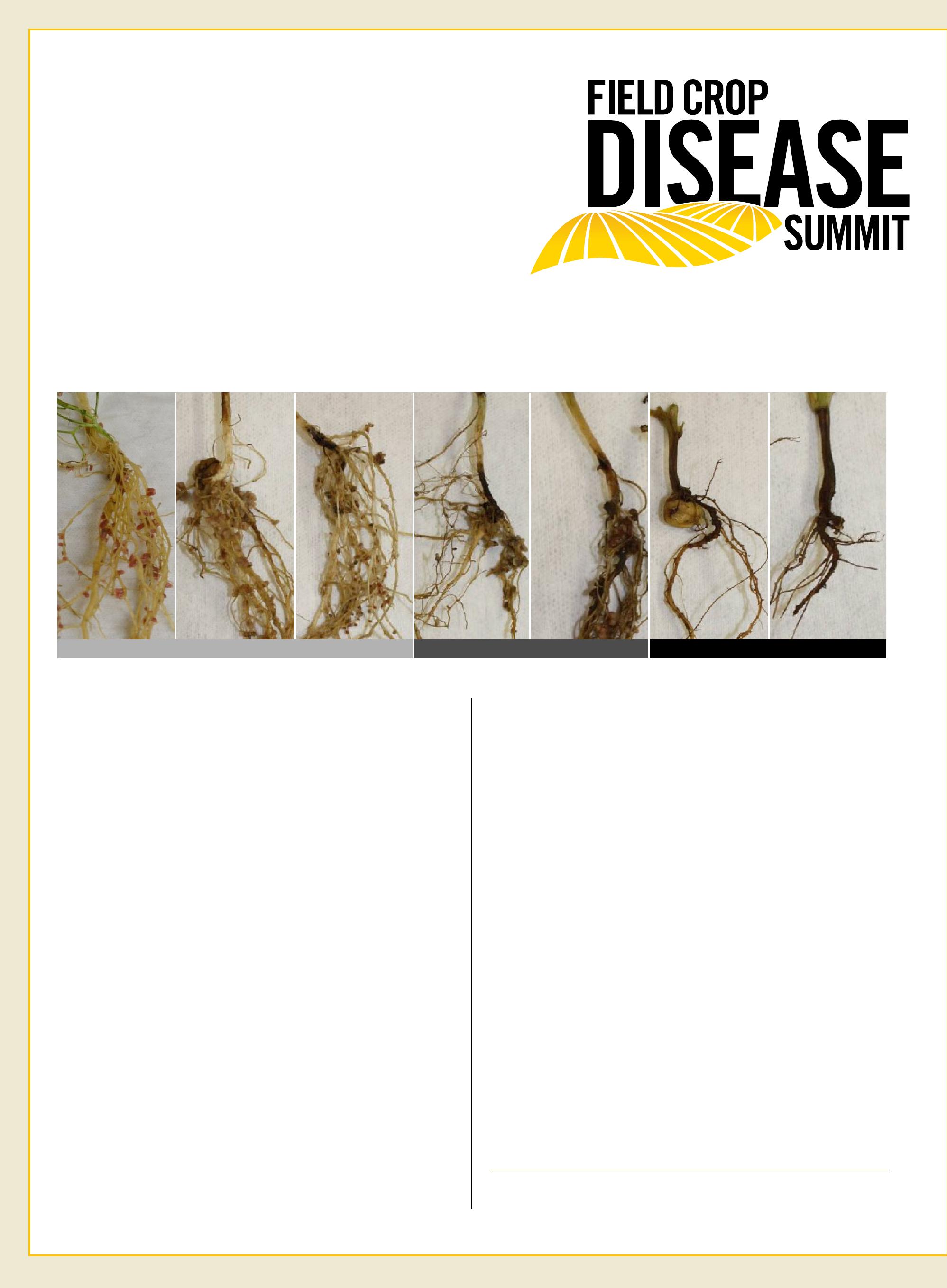
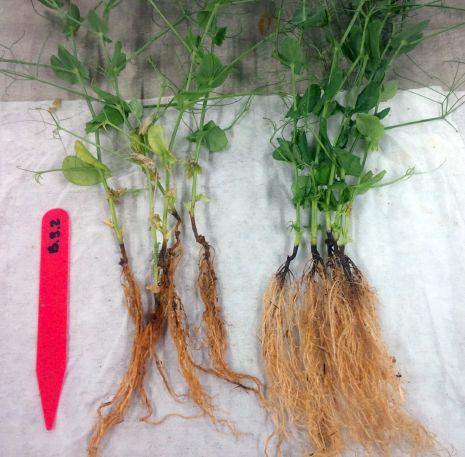
ABOVE: At moderate and severe root rot levels, we would expect to see a negative impact of root rot on shoot growth and yield.
PHOTOS COURTESY OF SYAMA CHATTERTON.
The
Leading
Delegates
Scale: Healthy = 1-3; Moderate = 4-5; Severe = 6-7.
Source: Chatterton, AAFC.
Lentil
in 2016
Scale: Healthy = 1-3; Moderate = 4-5; Severe = 6-7.
Source: Chatterton, AAFC.
that soil, it induces the oospores to germinate, once again producing zoospores that infect pea or lentil roots. The production of these longlived oospores makes it very challenging to deal with this pathogen.
Fusarium root rot
When we talk about Fusarium root rot, it’s important to first note that Fusarium is a very large genus with hundreds of different species, some of which may even be beneficial in the soil. A portion of Fusarium species are plant pathogens, and even then, not all plant pathogens are equal. Fusarium avenaceum is the primary cause of Fusarium root rot in Alberta and Saskatchewan. Researchers have found that F. avenaceum sometimes can be involved in the Fusarium head blight complex. However, from our tests with F. avenaceum isolated from peas, these isolates seem to be more virulent to peas than to wheat.
Fusarium avenaceum is more of a generalist pathogen and is considered to be weakly opportunistic. The species generally survives on stubble, and since F. avenaceum has a broad host range, it can bridge from crop to crop until lentils or peas are planted – the host crops that they seem to like the most. They are favoured by higher soil temperatures and moderate soil moisture.
In terms of infection stage, what we’ve seen in the lab is that Aphanomyces can infect the plant at any point as long as there’s moisture in the soil. When the soil was allowed to dry up, the infection didn’t progress.
In contrast, Fusarium seems to infect at the seedling stage. This early infection then compounds over the growing season until it becomes obvious with visible above ground symptoms in the flowering stage. What we’ve also seen from doing field trials is that peas seem to be able to sustain a fair amount of Fusarium root rot before yield is impacted.
In reality what we often see when we’re pulling plants out of the field is that you’re really getting a combination of all symptoms and it becomes very difficult to tell whether you’re dealing with Aphanomyces or Fusarium. Most of the time, it’s both.
Root rot risk factors
The number 1 factor is crop history. When we’re looking at crop history, the biggest question is “How many times have you had peas or lentils in that rotation?” The more times you’ve had these crops in a rotation, the higher your risk is going to be of having root rots.
Soil moisture is the critical factor for Aphanomyces. When the oospores can sense a susceptible host, they will germinate, but if the soil is dry, they’ll just sit there and not produce zoospores.
Soil compaction is a big issue because of its impact on root growth and root health. That’s why we often see that areas with heavy clay soils are where the root rots have been the worst.
Soil pH can have an impact but it’s not a huge factor.
The optimal soil temperature for infection is about 20 C to 24 C. That’s why we see these root rots really pop up in July when you’re starting to get those warm soil temperatures.
Aphanomyces control options
We’re in the early phases of understanding Aphanomyces. The best recommendation we have right now is that if you’ve had a history of root rots in your field, or the last time you grew peas or lentils you noticed some yellowing patches starting, get those plants or soils tested to confirm the presence of Aphanomyces.
If it’s confirmed that you have Aphanomyces present in your field, then rotations will have to be extended from four to five years up to six to eight years. Then consider planting other pulse crops that are more resistant to Aphanomyces.
Sabine Banniza at the University of Saskatchewan (U of S) and I tested a number of different legume crops to see which ones were hosts or non-hosts. Peas, lentils, and the vetches like cicer milkvetch are very susceptible to Aphanomyces. Dry bean and alfalfa show variable responses depending on the cultivar. Some of the more resistant pulse crop choices that show very little infection are chickpeas, fababeans, and soybeans. Chickpeas develop some infection, but it doesn’t spread enough to cause any damage to the plants. We see almost no infection at all in fababeans and soybeans. In terms of forage legume
Pea root rot by soil zones in 2016
root rot by soil zones
Yellowing and wilting of shoots
Pinching of epicotyl, stops abruptly at soil line
Lateral roots watery and honey-brown decay
Aphanomyces versus Fusarium
In many cases, plants coming out of the field are infected with both Aphanomyces and Fusarium.
crops, sainfoin and fenugreek are also really good options.
Consider using a seed treatment that targets the root rot complex. Two of the products that we’ve been evaluating are Intego Solo (ethaboxam) and Phostrol. Intego Solo is registered for early-season suppression of Aphanomyces root rot in peas and lentils. It has to be used in combination with other seed treatments that have a seed treatment colourant. And, because we’re targeting a root rot complex, it makes sense to have that whole seed treatment package that’s targeting Pythium, Fusarium and Aphanomyces.
The other product we’ve been evaluating is Phostrol. This is a mixture of different phosphite salts. It’s currently not registered on pulse crops, so we’re looking at whether there is any reason to expand that label to pulse crops. It is registered on potatoes against late blight.
However, these two products won’t provide full-season protection. If you get those wet conditions coming on later into June or July, these products really won’t be active anymore.
We did some trials in the greenhouse looking at different oospore doses from zero all the way up to 1,000 oospores per gram of soil and found that ethaboxam was very effective in the greenhouse at reducing early-season Aphanomyces root rot. In field trials, we found a mixture of ethaboxam and Apron gave us some suppression of disease severity four to five weeks after seeding. But when we start looking at that flowering or mid-pod fill timing, you’re not seeing that disease suppression anymore. This is what we would expect out of a seed treatment.
Some of the other things that we’re looking at in the field is the use of liming or calcium amendments. Calcium is one of the few products that has been tightly linked to preventing zoospore germination. The question is, can we get calcium levels up high enough in the field to get the same effect? And is it feasible to apply calcium levels at high enough levels in the field to get that effect?
Another control option that we are starting to research in 2017 is the effect of Brassica cover crops as a green manure to reduce oospore levels. As Brassica green manure products break down, they have shown a biofumigant effect in the soil and can disrupt oospores from surviving, so the research question is: Can a green manure product
Shoots remain healthy
Blackened tap root, starts at seed attachment
work in a no-till system?
The benefit of these options is that they can provide long-term solutions because they can potentially reduce oospore levels in the soil rather than just targeting the early-season infection stage.
Aphanomyces infection levels
In the greenhouse, we are also looking at what level of Aphanomyces infection is necessary to cause disease loss. We want to develop a soil test that will quantify the inoculum potential in a field. What we are seeing so far is almost an all-or-nothing response to different oospore levels. We also see differences in disease response according to soil zones. Dark Brown soils are more conducive, followed by Brown, and Black seems to be the least conducive to disease. It takes about 100 oospores per gram of soil in the Dark Brown soils to cause severe root rot, whereas in the Brown and the Black you need about 750 oospores per gram of soil to cause the same level of disease. But, if you add Fusarium back into that mix, then it only takes 100 oospores per gram of soil in all soils types to cause fairly severe disease.
In another project with Sabine Banniza at the U of S, we looked at Aphanomyces distribution in a number of fields, at different depths and in different soil zones. The highest pathogen levels were in the top zero to 20 centimetre soil profile, but in some fields, we were finding it all the way down to the 40 to 60 centimetre soil depth. This would indicate that, even though this is a new pathogen, it’s been present in the soil for a while and probably moved down to those lower zones with water movement.
In summary, we are finding that root rots are widespread across the Prairies. The impact in 2016 wasn’t as dramatic as 2014 because we had a mix of a wet and a dry growing season. Aphanomyces and Fusarium occur as a root rot complex. They’re difficult to distinguish, but we do find that they’re acting together synergistically, so we have to consider both pathogens as causal agents of these root rots. You need a longer rotation between susceptible pulse crops, which is currently the only management recommendation. Fababeans, soybeans and chickpeas are good options in infested fields.
Healthy lateral roots
BREEDING AND MANAGEMENT OF FHB
Presented by Dr. Anita Brûlé-Babel, Department of Plant Sciences, University of Manitoba, at the Field Crop Disease Summit, Feb. 21-22, 2017.
Iwork in Manitoba and we’ve been dealing with Fusarium head blight (FHB) for the last 25 years. In the 1990s, Manitoba started seeing severe infections. Those of you who are from Saskatchewan and Alberta, over the last two to three years, have definitely seen what it can be like when conditions are correct for Fusarium head blight infection.
Fusarium graminearum is the main pathogen that’s found in Eastern Canada, Manitoba, and southeastern Saskatchewan. In terms of the mycotoxins it produces, it is primarily deoxynivalenol or “DON.” Fusarium culmorum is another species that also produces DON. It is more adapted to the cooler regions, so if it’s going to show up, we tend to see this one showing up in the cooler regions of Saskatchewan and Alberta.
Another pathogen, Fusarium avenaceum, is quite commonly found in Saskatchewan. It is not a DON producer, but can produce Fusarium damaged kernels (FDK). It produces a different form of mycotoxin, moniliformin, which is not currently regulated under any food or feed safety system. Fusarium poae is a nivalenol producer, which is a different type of toxin that is considered to be more toxic than DON.
It’s been 25 years since breeders in Western Canada have really had FHB on their radar and there have been a lot of challenges. One of our challenges is that the resistance that we have is controlled by many genes with fairly small effects. There are over a hundred quantitative loci (QTL) that have been identified for FHB resistance, and they were located on 20 out of 21 in the chromosomes in wheat.
The other challenge is that the resistance is not complete. What I call “phenotyping” is difficult. You need adult plants and there’s variation from plant to plant, so measuring actual levels of resistance is quite complex.
Another challenge is that there are different types of resistance that breeders are dealing with. There is Type I resistance, which is resistance to initial infection. So, when we inoculate, we rate the number of spikes that are infected. Type II produces resistance to spreading within the spikes. We can have genotypes that do not have Type I resistance but do have Type II resistance, so you might have a lot of spikes that are infected, but the disease doesn’t spread well within the spike. Then there’s Type III, which is resistance to that kernel infection. Type IV has tolerance and the ability to produce a marketable product even under infection. Type V has resistance to mycotoxin accumulation in the grain. Basically, what breeders have
been primarily focusing on right now is Type I and Type II resistance.
The most commonly used sources of resistance are the Sumai 3 and its derivatives. These are Chinese cultivars. The major gene of interest with this is the 3B gene that primarily controls Type II resistance. It also has some effect on DON accumulation as well. Another form of resistance is Frontana or the Brazilian types that are related to it. That’s mainly Type I resistance. There are other consistent QTL that we are finding within Canadian germplasm.
The first 15 years of breeding was primarily moving those genes into something that was well adapted. Since then, breeders are starting to combine multiple sources of resistance.
We mapped the major gene (FHB1) in Suami 3. In our
ABOVE: Fusarium head blight symptoms on wheat.
greenhouse studies, we had less than 20 per cent spread of the disease within the spike, which is the strongest source of resistance that we have. Breeders are using this gene quite extensively. We know its location on the chromosome. We know markers around it that we can use to select for that particular resistance gene. Most breeding programs worldwide have some form of this resistance that they’re working with.
We also had mapped the Fusarium head blight 2 (FHB2) resistance gene. This source of resistance is not as strong as the FHB1 resistance gene and there’s still quite a large range of variability for disease severity and Fusarium damaged kernels.
Have we made progress? The answer is yes. In 2009, there were only 18 spring wheat varieties (excluding durum) that were at least intermediate or better. In 2017, we’re looking at 58 varieties. So things have improved. With winter wheats, we’ve made some progress and there are some choices with regard to more resistant materials. Emerson, a resistant line, was registered in 2011.
Now the challenge is for those of you who are in the amber durum area. We have made improvements in amber durum, but they’ve been very small. There are no really great sources of resistance for Fusarium in adapted germplasm. Breeders are working with related species to identify resistance genes and introgressing them into amber durums. They then have to do some additional breeding to remove deleterious effects that come with those genes. It doesn’t happen quickly and it’s a longer-term process.
Control strategies
First, choose the variety with the best resistance. Next, understand how the infection occurs so that you can monitor environmental conditions to help you decide if a fungicide is required.
The most susceptible stage for FHB infection for wheat is at the flowering stage. Certain environmental conditions are also favourable, including significant precipitation or humidity, and temperatures between 16 and 32 C with a nighttime temperature above 10 C.
It is possible to continue to get infections that occur even up to the soft dough stage. If you’re in a situation where there’s been some late-season infection, you might not have seen significant disease symptoms and yet the DON levels may be high.
Pay attention to the risk maps. Manitoba has had risk maps for a number of years and Saskatchewan has implemented them as well. In Manitoba, the forecasts are based on significant precipitation and higher temperatures for a period of seven days prior to anthesis. Farmers can look at these risk maps, know what stage their crop is at, and if they feel that they’re at a high risk for infection, the next step is to make some decisions in terms of fungicide or some other management activity.
It is also very important to realize that conditions can change quickly over even a fairly short period of time. These models are also regional in nature. If you’ve had heavy thunderstorms that might have not been over a larger area, you still need to do some assessment on your own farm to determine what your moisture conditions are.
With fungicides, one of the things that you need to consider is what that risk is going to be. If you have a crop that is moderately resistant and conditions are not good for Fusarium to develop, a fungicide application may not be necessary. If the conditions for Fusarium development are high, then you might want to consider applying fungicides.
Fungicides that are available are only suppressive and the timing of application is critical. The best results are going to be in combination with a more resistant variety.
Fusarium head blight on susceptible check varieties in breeder plots.
The window for application is quite small. You’re trying to target the application as the head has emerged and before flowering. That’s going to be when the most effective application timing is and it may only last a few days.
A study that was done by a graduate student at the University of Manitoba in 2011 compared fungicide efficacy with four different fungicides and two different types of varieties. In her study, Glenn spring wheat, rated moderately resistant to intermediate, was compared to the susceptible Roblin variety. The fungicides included in the study were Prosaro, Proline, Folicur and Caramba.
In the study, there weren’t any significant differences between the fungicides in terms of reduction of FHB, FDK or DON. With the moderately resistant variety, control was quite high with very high reductions in FHB, FDK and DON levels. But with the susceptible variety, the level of efficacy wasn’t nearly as high.
Other management strategies
There are other management strategies besides choosing the best resistance for the wheat class and applying a fungicide.
First is ensuring seed quality. Gilbert et al (2003) found there is a difference between seedling blight and head blight, and having high levels of Fusarium-infected seed does not necessarily directly relate to FHB. Fusarium-infected seed will affect your seedling vigour, plant stem counts and crop uniformity. You want good quality seed because you want to get your crop up as quickly as possible and be as uniform as possible, so fungicide application timing and disease control is better.
With regard to crop rotation, the pathogen can survive on crop residues of corn and small-grain cereals such as wheat and barley. Avoid corn-wheat, wheat-wheat or barley-wheat rotations and rotate to a non-susceptible crop.
Residue management is also a consideration. There are studies that suggest burying FHB-infested crop through tillage or burning can reduce residues and in theory reduce the inoculum, but from a crop management standpoint, I don’t want to recommend that. I think chopping crop residues into smaller pieces so they degrade faster is achievable without affecting your soil health. Removing crop residues can provide some benefits, especially using chaff collectors to remove chaff.
However, studies have shown that even with all the management that you can do at your local level, good local practices don’t necessarily help. The ascospores can travel a long distance and infections may come from outside your local management area.
With regard to harvest management, the grading system is based on Fusarium-damaged kernels. Tolerances can be anywhere from 0.25 per cent to four per cent by weight, depending on the class and the grade. There are strategies that you can use to try to clean up those samples. One of them is increasing fan speed or shutter openings to allow more of those Fusarium-damaged kernels to go out the back of the combine. Some organizations are providing grain sorting and cleaning services. Also, Fusarium doesn’t develop uniformly in the field. There may be areas that are heavily lodged with more Fusarium, which you could consider harvesting separately.
The other thing is to make sure the grain dries down fairly quickly. If the pathogen is there and moisture conditions are high enough to keep that pathogen active, it can continue to accumulate mycotoxins even when you’re not seeing changes in symptoms.
In summary, FHB management is complex. I think this is one of those situations where you really need to use all the tools in the toolbox. It really does involve having to manage a whole bunch of things together, and combined, they can make a difference. Individually, I don’t think there’s as much impact as what you would like.
Brûlé-Babel screens about 25,000 lines at her Fusarium head blight nursery.
SUSTAINABLE MANURE MANAGEMENT
Management of livestock manure is an increasing challenge facing the intensive livestock industry.
by Ross H. McKenzie, PhD, P.Ag.
There are both environmental and agronomic concerns surrounding the management of livestock manure. The major environmental concerns are: potential risk of nutrient accumulation in soil – particularly nitrogen (N) and phosphorus (P) – and risk of nutrient movement into surface or groundwater. Poor manure management can also cause accumulation of salts in soil, surface water or groundwater and pathogenic micro-organisms in surface water.
The major agronomic concerns include: over application of N in manure, which can increase crop disease pressure and cause crop lodging, yield loss and reduced crop quality. Excessive levels of one or more nutrients in soil may cause toxicity and nutrient imbalance issues with crops, which leads to a reduction in crop yield and affects soil fertility. Over time, excessive manure can increase potassium (K) levels in soil, which can negatively affect soil physical quality and increase soil salt levels. Accumulation of salts in soil may reduce crop yield potential.
Feedlot manure study
A study by Barry Olson with Alberta Agriculture and Forestry and other researchers examined manure application on irrigated medium- and coarse-textured soils in southern Alberta.
After eight years of manure application, there was a significant increase in soil nitrate-N, orthophosphate-P, total N, total P, K, sodium, magnesium, chloride, bicarbonate, sodium adsorption ratio and electrical conductivity. Extractable soil calcium, sulphate-S, and soil pH, for the most part, were not affected by manure application.
The researchers also found the added salts from the manure caused soil salinity to increase and the dominant extractable cation to shift from calcium to potassium. The application of
ABOVE: Poor manure management can cause accumulation of salts in soil, surface water or groundwater and pathogenic micro-organisms in surface water.
PHOTO BY MARGARET
manure increased soil sodicity, which may result in degradation of soil structure in the long term.
Repeated manure and fertilizer-N applications caused a build-up of nitrateN in the soil profile. Nitrate-N moved downward at about 0.3 to 0.35 metres per year (m/year) at the medium-textured site, whereas nitrate-N moved out of the soil profile of 1.5 m at the coarse-textured site within one year.
Net P accumulation from manure in the zero to 0.15-m soil layer increased by 64 kilograms per hectare (kg/ha) for the 20 tonne per hectare (t/ha) manure rate and 730 kg/ha for the 120 t/ha manure rate at the coarse-textured site after eight years of manure application. Corresponding net increases at the medium-textured site were 131 and 1,127 kg/ha respectively. The extractable orthophosphate-P status in the zero to 0.15 m soil layer at the end of the study was well above the agronomic requirements for crops, even for the 20 t/ha/year rate.
Repeated application of manure, particularly at high annual rates of 60 to 120 t/ha/yr significantly affected soil and groundwater quality, with a build-up of nutrients in soil and the movement of nitrate and chloride into groundwater. Soil texture affected the distribution and movement of excess nutrients derived from manure.
Soil phosphorus study
Given the concerns of P accumulation in soil and potential for surface water contamination, Alberta Agriculture conducted a soil P research project that drew a number of interesting conclusions. Surface waters in Alberta are extremely sensitive to further P enrichment and there is a direct, linear relationship between soil-test P levels and the P concentration in runoff water in the agricultural areas of Alberta. As the amount of P in the upper soil profile increases, so does the concentration of P in runoff water. This relationship holds true regardless of whether the soil P is from non-manured or manured soil.
Also, a direct relationship was found between soil test P levels and the P in simulated rainfall runoff from freshly applied manure and one year after manure application, although values of both variables decreased with time. Soil-test P limits were determined for all agricultural land
Farming method
Table 1: Soil test nitrate-N limits in soil for Alberta
Note: To convert kg/ha to lbs/ac, divide by 1.1 (e.g. 110 kg/ha ÷ 1.1 = 100 lbs/ac)
Table courtesy of Alberta Agriculture and Forestry.
Table 2: Residual and any other time of year soil nitrate-N limits (lb/ac in the zero- to 24-inch depth), as stated in the Livestock Manure and Mortalities Management Regulation for Manitoba.
application3
1. “Residual nitrate-nitrogen” means the amount of nitrate-N that remains in the soil after the production of a crop.
2. No person shall apply livestock manure to land in a manner or at a rate that results in the concentration of nitrate-N within the top 24 inches (0.6 m) of soil at any one time being more than twice the amount of residual nitrate-N allowed for that particular soil class.
3. This section does not apply to a livestock operation in existence on March 30, 2004, unless the agricultural operation is modified or expanded after that day or unless the operator is otherwise notified by a director of the Department of Manitoba Conservation.
Table courtesy of the province of Manitoba.
Table 3. Soil phosphorus regulatory thresholds (ppm in the zero- to six-inch depth) for livestock manure application on crop land in Manitoba, as stated in the Livestock Manure and Mortalities Management Regulation (2006).
Limits are based on the Olsen P soil test method.
No restriction of P
Table courtesy of the province of
Apply on the basis of crop nitrate nitrogen (N) requirements. Soil N concentrations are subject to section 12 of the Livestock Manure and Mortalities Management Regulation
in Alberta. Using a hypothetical total P runoff water quality limit of one part per million (ppm) resulted in soil-test P limits in the zero to 15 cm layer that were:
• Less than 60 ppm for about 43 per cent of the agricultural land base.
• 60 to 180 ppm for about 48 per cent of the land base.
• Greater than 180 ppm for about nine per cent of the land base.
If soil-test P limits are applied to confined feeding operations in Alberta, a substantial increase in the amount of land will be required for spreading manure. Transportation and spreading costs may increase by 24 to 128 per cent depending on the average increase in distance that the manure needs to be hauled.
Sustainable manure management in Alberta is essentially a transportation issue. There is more than enough cultivated land available to agronomically handle all the manure generated by the confined feeding industry and this land would benefit from the additional nutrients and organic matter contained in manure. However, there are often large distances between the receiving land and the confined feeding operations, which can pose a significant financial burden to livestock operators.
While soil-test P limits will increase manure-handling costs for all confined feeding operations, the most significant concerns will occur in geographic areas of the province with large livestock concentrations. Much of the existing land base in these areas already has high soil P levels and new land with no manure is not available within a reasonable distance. Long-distance manure transportation or development of alternative management (composting) or uses (bio-energy) will have to be considered.
It is virtually impossible to apply manure to meet the exact crop requirements for all nutrients. When manure is applied based on one nutrient, other nutrients are either over or under applied. Nutrients in manure such as N and P are contained in various available and unavailable forms. The unavailable organic forms break down and release at different rates over a period of months and years.
When manure is applied to meet the N requirements of a cereal crop, P will be applied at approximately three to six times the rate of crop removal, depending on the P manure source and content. Repeated manure applications over a period of years will result in a build-up of soil P levels that are not desirable from environmental or agronomic standpoints. Most livestock producers in Western Canada have applied manure based on N content, leading to
a build-up of soil P. From an environmental standpoint, as surface soil P levels increase, P in runoff water will increase surface water contamination. From an agronomic standpoint, very high soil P levels are often accompanied by high soil K and salt accumulation in soil. The cumulative effects of high soil P, K and salts will reduce soil quality and crop production.
For long-term sustainability of the soil and the environment, it is advisable to use P as the nutrient to match with crop removal rather than N. For existing operations, this approach will likely mean the need to expand land bases or work with adjacent farms to wisely utilize all the manure produced by the intensive livestock operation. In addition, commercial N fertilizer may have to be used to make up the difference between what the crops require and what is contained in the manure.
Legislation
To date, only the province of Manitoba has developed legislation to control maximum soil P levels in agricultural soils. The provinces of Alberta and Manitoba have legislated guidelines to restrict manure application based on soil test nitrate-N. In Alberta, the soil nitrate-N limits are set according to soil groups, soil textures, depth of the water table and whether land is in dryland or irrigated crop production (Table 1). Presently, Alberta does not have legislated guidelines for soil P level or on any other nutrients.
In Manitoba, legislated soil test nitrate-N restrictions are based on Agricultural Land Classification (Table 2). Only Manitoba has legislation guidelines to restrict manure application based on soil test P (Table 3). At this time, Saskatchewan does not have any legislation to control or restrict manure application based on soil N or P or any other nutrient levels.
In summary, livestock manure is receiving increasing public attention since the general public regards ground and surface water quality degradation from agricultural sources as an increasing environmental problem.
However, when proper manure management practices are followed, livestock waste can be utilized as a valuable nutrient resource rather than viewed as a waste product. Manure is an excellent fertilizer resource and can physically benefit the soil by adding organic matter, which improves soil tilth and structure.
For more on manure management, visit topcropmanager.com.
MANURE MANAGEMENT PLANNING
Alberta Agriculture has developed an excellent book called “Nutrient Management Planning Guide” to assist producers with manure management. This booklet is a solid example of extension information available for planning individual manure management and to optimize crop production. It is available online and can be downloaded at http://bit.ly/2obQejo.
Although the planning process seems like a daunting exercise, it goes through a detailed step by step investigation and planning process. This process is essential in planning individual manure management and to optimize crop production.
To make the planning and calculation process simple, computer programs have been modified and developed. Alberta Agriculture has developed Manure Management Planner (MMP), which is a modified program originally developed by Purdue University and available online at http://bit.ly/2otGNrx.
Manitoba Agriculture has developed Manure Application Rate Calculator (MARC), which is manure management planning software modified specifically for Manitoba available online at http://bit.ly/2oYPc7z.
Nurturing growth
Richardson Pioneer is committed to working with you at every stage of growth.
Your local agronomy experts
At Richardson Pioneer, our CropWatchTM agronomy team has professional agronomists in the field across the Prairies. Our local and regional agronomists work one-on-one with our farm customers to provide product knowledge, crop planning and recommendations tailor-made to each farm. We’re here to help you make the most of your crop throughout the growing season.
To learn more, visit your local Richardson Pioneer Ag Business Centre or richardson.ca/cropwatch.