

Gas lawn mowers
Tackle any lawn with STIHL's reliable and sturdy line of gas lawn mowers, designed for both homeowners and professionals.

Foldable yet sturdy with easy access to grass bag
Single Action Central Cutting Height Adjuster Seven cutting height options from 1"-3.35" Mono Comfort Handle
Hydrostatic Gearbox
Provides a wider range of ground speeds to reduce operator fatigue and increase productivity
Blade Brake Clutch
Allows engine to continue running during intermittent stops
70 L Polymer Grass Catcher Box
Designed to help minimize dust with directional air vents 21" Mowing Deck Wide and durable aluminum mowing deck

The RM 655 V self-propelled lawn mower gives homeowners the performance they expect from STIHL and the cut they desire with a 21" aluminum mowing deck, Vario drive, and a mono-comfort ergonomic handlebar.


With features like Vario drive and a blade brake clutch, the RM 655 VS self-propelled lawn mower allows professionals to mow lawns even more efficiently.
With hydrostatic drive and a blade brake clutch, the RM 655 YS self-propelled lawn mower allows for the flexibility to mow at varying speeds to achieve a manicured lawn.

COLUMNS
04
Gaining
JIGGENS
JIGGENS

By Mike Jiggens
Gaining an upper leg via website overhaul
How important is a landscape contractor’s website? How much is it promoting his business? Is it giving him a leg up on his competition?
According to a Florida-based firm that specializes in website construction for green industry businesses, a company’s online presence is vital to its success.
Officials from Lawnline Marketing shared their website strategies with those attending last year’s Lawn & Landscape technology conference in Las Vegas. A carefully designed website that promotes the attributes of a landscaping business and answers the questions prospective customers might have about the work they’d like done is one that will put that company on the public’s radar and quite possibly at the top of a Google search.
Gone are the days of the Yellow Pages when a would-be landscaping customer could simply look up “landscaping” or “lawn care” in the directory, read a brief outline of services offered in a small one-column by two-inch advertisement, and access a number to call.
Such promotion was limited in scope, and if more than one business was listed, the one with the most eye-catching artwork might have been the first one called. Times have changed, and electronic adver-
tising today has virtually no limits. A company can share its entire business history, can showcase several of its most prominent projects in photo galleries and video clips, can provide a description of the various services it offers, can present testimonials from satisfied customers, and include much more information.
Companies that go the extra mile to promote themselves
Companies that go the extra mile to promote themselves online will reap the rewards
online will reap the rewards. They’ll find their company is poised to come up first in Google searches. The prospective customer will click on that top link and, if he likes what he sees, including the all-important cost, he may not bother checking out the other links.
The goal, then, is to reach for the top. Companies seeking those handsome commercial contracts and those from the high-end residential sector would be wise to give their websites the overhaul needed so that customers looking to hire a contractor can check all the boxes.
Landscape contractors can tell their “story” on their website, allot a sufficient number of words dedicated to the services they provide, anticipate
frequently asked questions customers might have and provide easy-to-comprehend answers for them, showcase a series of before-and-after photographs of a yard’s transformation and include other content that not only serves as good self-promotion, but which fully engages the prospective customer.
Of course, there are other options a landscape contractor can utilize to promote his business. He can opt for newspaper, television or radio advertising, but there is an expense attached to each and he’s limited to the amount of content contained in his message.
Websites are virtually limitless as to what can be placed on them. A well-designed and constructed website will give contractors more bang for their buck (not that many bucks are needed in website maintenance). As long as the company’s website is clearly painted onto its fleet of vehicles, that will prompt prospective new customers to visit that company’s site, especially when they’ve seen the quality work done to a neighbour’s property.
It’s hard to imagine a landscape contractor in business today without a website, but there are surely scores of businesses whose websites leave much to be desired, and it’s these companies that will be left out in the cold.
www.turfandrec.com
Reader Service
Print and digital subscription inquiries or changes, please contact Angelita Potal, Customer Service Tel: 416-510-5113 apotal@annexbusinessmedia.com
Mail: 111 Gordon Baker Rd., Suite 400 Toronto, ON M2H 3R1
Editor Mike Jiggens mjiggens@annexbusinessmedia.com
Advertising Manager Rebecca Lewis 519-400-0322 rlewis@annexbusinessmedia.com
Account Coordinator Farwa Siddiqui 416-510-5118 fsiddiqui@annexbusinessmedia.com
Audience Development Manager Anita Madden 416-510-5183 amadden@annexbusinessmedia.com
Group Publisher Anne Beswick 416-410-5248 abeswick@annexbusinessmedia.com
CEO Scott Jamieson sjamieson@annexbusinessmedia.com
Printed in Canada ISSN 1186-0170
PUBLICATION MAIL AGREEMENT #40065710
SUBSCRIPTION RATES
Published 7 times a year – Jan/Feb, March, Apr/May, June/July, Aug/Sept, October, Nov/Dec
Canada – 1 year $35.70 CDN; 2 year $45.90 CDN; 3 years $56.61 CDN (plus applicable taxes; single-copy$7.00 CDN USA – 1 year $48.96 CDN HST 86717 2652 RT0001
Occasionally, Turf and Recreation will mail information on behalf of industry related groups whose products and services we believe may be of interest to you. If you prefer not to receive this information, please contact our circulation department in any of the four ways listed above.
Annex Privacy Office privacy@annexbusinessmedia.com Tel: 800.668.2374
No part of the editorial content of this publication may be reprinted without the publisher’s written permission © 2025 Annex Business Media. All rights reserved. Opinions expressed in this magazine are not necessarily those of the editor or the publisher. No liability is assumed for errors or omissions.
All advertising is subject to the publisher’s approval. Such approval does not imply any endorsement of the products or services advertised. Publisher reserves the right to refuse advertising that does not meet the standards of the publication.


P.E.I. to get its first artificial turf field designed for
baseball
A $2-million, state-of-the-art baseball field is coming to Woodstock, P.E.I.
The artificial turf field will be built at Mill River Resort with completion expected in five years. The field, to be named after Don McDougall – owner of the resort and former president of the Labatt Brewing Company during its time helping to establish the Toronto Blue Jays, is to be the first artificial turf baseball field in the province designed for baseball.
It will feature a fenced perimeter, dugouts, bullpens and a 600-metre walking track around the field.
Experienced mowers sought for upkeep of B.C.’s World Cup field
As Vancouver prepares for its hosting duties for a portion of next year’s FIFA World Cup games, the B.C. Pavilion Corporation (PavCo) is shopping for new mowers to maintain the natural turf set for installation.
The stadium’s artificial turf surface will give way to natural turf for the tournament. PavCo is searching for a contractor to deliver the right sod and another to provide the training necessary for its maintenance.
Big roll sod is to be delivered by May 2026 and installed by another party.
Landscape Congress surpasses 14,000 attendance numbers
More than 14,000 people attended January’s Landscape Congress event in Toronto, marking yet another successful presentation of the annual conference and trade show.
Hundreds of exhibitors and a long list of expert speakers helped to make Congress another success. The event included a series of live stage presentations and student garden displays.
$2M
cost of new baseball field

McGarvey named recipient of CGSA’s John B. Steel Award
Jim McGarvey, who retired in 2018 as superintendent at the Seymour Golf and Country Club in North Vancouver, is the 2024 recipient of the Canadian Golf Superintendents Association’s John B. Steel Distinguished Service Award.
The award commemorates the CGSA’s first president, who was also the first superintendent to be inducted into the Canadian Golf Hall of Fame. It is presented annually to an individual, chosen by the CGSA board of directors, who has made an outstanding contribution to the advancement of the profession of golf course superintendent. The recipient is presented with an original soap stone carving designed and carved by Bill Fach, retired master superintendent, and a past CGSA president.

14,000+
Attendance at 2025 Landscape Congress
“Jim McGarvey’s career has spanned 40 years in the golf profession, with 28 years devoted to Seymour Golf and Country Club,” CGSA president John McLinden said. “His commitment to always support and mentor his fellow peers in the most professional and approachable manner is still respected by countless individuals in the golf industry. Jim’s leadership of the CGSA, WCTA (Western Canada Turfgrass
Association), and involvement in the BCGSA (British Columbia Golf Superintendents Association) has been inspiring.”
McGarvey has been a CGSA member since 1990 and has held the association’s accredited golf superintendent (AGS) designation since 2002. He was superintendent at Seymour Golf and Country Club from 1990 to 2018 and served on several local, provincial, and national boards and committees across the industry. He was the CGSA president in 2003 and was the WCTA president in 2006. He was awarded as CGSA Superintendent of the Year in 2013 and received the same recognition from the BCGSA in 2006.
“I am truly overwhelmed by this incredible recognition,” McGarvey said. “Receiving this award is a complement to the amazing support system that I have had throughout my career. Thank you to everyone who has guided me and helped me along this journey.”
In addition to the award itself, McGarvey and his wife Kathryn will receive an “all-access” registration to the Canadian Golf Course Management Conference at The Fallsview Casino Resort in Niagara Falls.
London snow contractor prefers to shovel by hand
The owner of a London, Ont. landscaping and property maintenance business has 11 customers whose driveways he clears by hand during the winter season.
Jon Ooostrom, owner of Jagye’s Landscaping & Property Maintenance, says that he prefers to shovel snow by hand because he wants to avoid scratching customers’ concrete driveways and he wishes to avoid the high cost of insurance associated with snow removal by plow.
He also offered advice to others who would rather shovel snow by hand than opt for plows or blowers.
Lawn signs aim to end turf wars over what is deemed ‘naturalized’
New signs intended to educate London, Ont. residents about naturalized lawns are being offered to homeowners in hopes of ending “turf wars.”
A city hall advisory committee suggests the signs will help to better explain the reasoning behind naturalized lawns and how existing bylaws work. The signs include a QR code which leads to a full explanation of city yard bylaws as they pertain to naturalized lawns.
Lawns planted with native plants and grasses are permitted in the municipal bylaw.
Ross course to retain
heritage protection amid other plans
Windsor, Ont. is home to Canada’s only municipally-operated Donald Ross-designed golf course, and the city’s mayor insists it will retain its heritage protection even though efforts are being made to remove the designation for the clubhouse and parking lot.
Community support helps arborist to rebound after fire
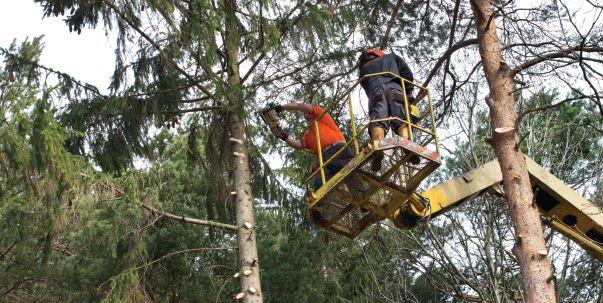
Toronto’s Vista Tree Management faced an extraordinary challenge three years ago when its service trucks were destroyed in an arson attack – an event which could have devastated the small, community-focused arboriculture company. But, it became a turning point, driving reflection, growth, and a recommitment to the company’s mission of ethical tree care and community leadership.
“In the aftermath, we were terrified,” co-owner Michael Kenins said. “We had bills to pay, a team to support, and no money coming in. But we decided one thing: We weren’t going to let this define us.”
Unavoidable insurance gaps left Vista facing significant financial strain, with the replacement of vehicles, equipment, and operational costs totalling $445,000 over six months. Initial police responses dismissed the incident as “no foul play,” prompting the company to take proactive steps to advocate for justice and raise awareness about the incident, highlighting the challenges faced by small businesses in similar situations.
Despite the challenges, Vista Tree Management’s recovery was fueled by support from clients and the local community. Offers of
equipment loans, temporary storage, and words of encouragement poured in.
“The compassion people showed us reminded us why we started this business in the first place,” co-owner James May said.
A company built to give back to the community now relied on that same community to survive. The team came together to continue operations, underscoring their values of resilience, transparency, and ethical responsibility.
Since the attack, Vista Tree has not only recovered but thrived. The company has tripled its revenue to just under $1 million annually, expanded its team, and recommitted to its founding principles. As Ontario’s first Living Wage Certified arborist company, it has set new benchmarks for ethical employment practices. Recognition, including Jobber’s “Career Builder Grant” for community impact, showcased its leadership in transforming arboriculture practices.
“This wasn’t just about two trucks,” Kenins said. “It was about what we owe each other – as neighbours, community members, and citizens. That’s what drives us every day.”
Number of customers whose driveways are cleared by hand
The only municipal Donald Rossdesigned course in Canada
Renowned turfgrass agronomist Teri Yamada passes away; served 18 years with Golf Canada as tourney agronomist
Teri Yamada, a well-respected figure in the Canadian golf industry, has passed away at the age of 66 following a battle with Creutzfeldt-Jakob Disease.
Yamada was a long-time leading voice in the fields of agronomy, turfgrass and environmental research in a career that spanned nearly 40 years. She spent the last 16 years as the owner of TY Environmental Strategic Ltd., a company that used science to minimize golf courses’ impact on the environment.

She served 18 years with Golf Canada (formerly the Royal Canadian Golf Association), working as a tournament agronomist for national open and amateur champion-
ships. She was national director of the association’s green section from 1990 to 1998. In 1993, she wrote the Environmental Guidelines for Canadian Golf Courses.
Yamada was later the association’s managing director for golf programs and services in support of Golf Canada member club
programs and services while continuing with turfgrass and environmental research. She returned to Golf Canada as a volunteer in 2021.
Her other industry involvements included 14 years as executive director of the IPM Council of Canada, president of the Audubon Cooperative Sanctuary System of Canada.
Find the latest turf-related news, stories, blogs and analysis from across Canada, and access our forum www.turfandrec.com




Teri Yamada.
How a good website can help business
A well-designed and informative website can put landscaping companies at the top of Google searches
By Mike Jiggens
Lawn care and landscaping companies without a web presence or those which have sites that are woefully inadequate are going to be left behind in the competition for customers. Attendees at last summer’s Lawn & Landscape technology conference in Las Vegas were provided with expert advice on the importance of a well-established website, complete
Before-and-after photos posted to a landscape contractor’s website give prospective customers a solid look at how their problem yards can be improved.
with solid content, by members of a Florida-based firm that specializes in website construction, search engine optimization and online advertising services for businesses operating in the green industry.
Tony Ricketts, founder and CEO of Lawnline Marketing, said there are two common problems green industry companies deal with in internet marketing – no leads and bad leads. Bad leads include would-


be customers that have unrealistic budgets, those seeking services not provided, or those requesting projects that are too small for what a company offers.
“We’re going to fix that with content,” he said.
Dominique Rocheford, Lawnline’s content and artificial intelligence strategist, said solid content is the driving force behind being discovered, adding it boosts a company’s visibility, helping it to qualify to potential clients. She said the right content allows a company to be naturally found on search engines and qualifies a brand and the type of customers it wants to represent. Content also helps to guide potential customers through their buying

journey and building their trust through educational ideas, pricing information and comparisons.
Jennifer Perez, DMA director for Lawnline Marketing, said content is marketed through storytelling, placing the customer as the “hero” through this journey.
“Your job is going to be to guide them, to support them and to push them and lead the way,” she said.
Perez said green industry professionals must identify external and internal problems and provide a map for the “hero” to act. Content should address such external problems as cost and materials needed. More importantly, she added, internal problems such as a customer’s want for a yard that is better-looking than
a neighbour’s or the desire for a functional patio must also be addressed.
“Through content, we’re going to create a map to guide the hero to complete their quest and resolve that internal problem,” Perez said.
Ricketts said Lawnlife’s strategy is to use “story” chapters to create content. Chapters include ideas, research, estimates and execution.
“These are story chapters that your typical buyer will go through,” he said. “You want to make sure you are focused on presenting content in a manner that will follow this process and move them through that buying journey.”
The chapter dedicated to research would outline the cost of a project, the materials needed and a look at
its timeline. Potential customers would have a better idea of the process behind a project and a more comfortable feel for a company’s professionalism. If a project is expected to cost $50,000, the customer will be more confident that it will be completed properly.
Impactful content
Rocheford said impactful content includes main website pages, project case studies, targeted blogs, press releases and cultural insights. Ricketts added the main website pages are where the “money” lies, or the critical part of a website providing plenty of value. Service pages are those dedicated to every individual page on a website. If a customer
Creating web content that is focused on specific searches will greatly improve online traffic.

Googles “lawn fertilization services,” he may find sites listing that among several other services offered on the same page. A competitor, however, may have a page dedicated to fertilization services. Google will find the competitor’s page as a more relevant option for obtaining those results. Consequently, the competitor with the dedicated service page will get more traffic and visibility than the company that merely lists that service as a single bullet point.
“Think about how people search, and create content that’s focused around that search,” Ricketts said.
Service pages are dedicated to a single service targeted toward top areas and are primary pages for initial discovery via search engines.
They should contain detailed content for ready-to-buy leads of approximately 600 or more words, he suggested. Videos, photo galleries and relevant blogs about a particular service are important components. Blogs help to introduce fresh new content into service pages and are educational in nature.
Ricketts said there are also pages which are the opposite of service pages and are dedicated to a single area targeted toward the top services offered in a particular area.
“You want to create a page dedicated to each individual service area you want to go after as well as focusing on the top services that are available in that individual area,” he said.
Landscape contractors who include a photo gallery of their work on their websites have a better chance of winning over customers without such online features.
Unique, non-repetitive content
Ricketts added such pages include unique location information such as detailing top services. The information should also be at least 600 words in length and include links. It should be unique and not be repetitive. Key components should include frequently asked questions, pricing and contact information.
Rocheford said the inclusion of project case studies on a website is valuable. Pages dedicated to a single project should include a video and photo gallery with before and after images.
“The more detail, the better,” she said, adding they tend to be the most visited internal pages on a website.
“It’s a great ongoing content tool that can be used in various marketing strategies.”
‘Think about how people search, and create content that’s focused around that search”
Ricketts said the first thing customers want to see on a landscaping company’s website is examples of the business’ work.
Perez added educational blogs that address trends and ideas with
cultural insights tend to rank a page higher.
The first part of building a content map is in the ideas chapter. Ricketts said when people are thinking about their outdoor spaces, their first thought is about something they particularly want.
“There are internal reasons why people are coming to you, and you want to understand what those reasons are,” he said,
The research phase of chapter building is next on the content map and provides people with more information about the type of service they want to buy. Estimates and execution provide the two remaining chapters.
Incorporating artificial intelligence (AI) can help to streamline the process of creating relevant website

When seeking out a reputable landscape contractor, homeowners wish to see as much information as possible at their fingertips when visiting company websites.
content, Ricketts said, adding it can help plan topics and outlines.
“Ask it to provide the most common questions around a topic,” he said, suggesting it outline key points to cover for each question.
AI can also effectively be used for publishing and promotion and util-
ized for search engine optimization as well as the generation of advertising copy.
“Advertising is about people knowing who you are,” Ricketts said, adding ChatGPT can generate ad copy based on content a business is promoting.




Managing thatch on golf course turf

Golf superintendents must be mindful of organic matter buildup when providing the finest playing conditions
By Mike Jiggens
The accumulation of organic matter in turfgrass stands is a given, and golf course superintendents must be mindful of maintaining control of thatch to produce the finest playing conditions possible. Superintendents attending December’s 34th annual Ontario Seed Company/Nutrite professional turfgrass seminar in Waterloo were provided with expert insight into thatch management by the program director for the Sustainable Intensification Innovation Lab at Kansas State University.
Dr. Elizabeth Guertal, a longtime soil fertility researcher at Auburn
University, said the growing nature of turf makes it unlike most other crops which ultimately leads to the accumulation of organic matter and thatch. Turf essentially doubles in size every other day, she said, with its growing point at ground level or just below.
“When you look at a grass plant – the part that grows and recovers – a lot of times would be from those underground stems of rhizomes or the above-ground stems of stolons or from the side shoots which are in tillers,” Guertal said, adding grasses tiller or fill in. “In the case of turfgrass, we kind of advocate for tillering. We want it to fill in and want it to produce side shoots.”
‘If you get a lot of thatch, you get scalping and you get a wonderful landscape for disease and insects’
Because vegetative growth is produced, organic matter including dead leaves and clippings leads to thatch buildup.
Guertal’s research involves mainly warm-season grasses. She noted cool-season grasses common to Canada are either those which spread laterally, such as creeping bentgrass, or which are “bunch” type grasses that spread out from above-ground stems, such as tall fescue and perennial ryegrass.
“The bunch grasses tend to be a little less aggressive. They aren’t as prone to producing excessive thatch, but over time will produce some organic matter.”
What is thatch?
Thatch is accumulated living and dead tissue which is above the soil yet below the turfgrass itself.
“If you get a lot of thatch, you get scalping and you get a wonderful landscape for disease and insects to hide out in. It can turn it hydrophobic which means it repels water and you don’t get good water entry, and it creates layered soils.”
Guertal said various factors lead

to the accumulation of thatch, including the growth of vigorous grass species, excessive nitrogen fertility, overwatering and mowing at incorrect heights and frequencies.
“Typically, you get thatch and organic matter because you are managing at the height of your profession and you’re using high performing varieties of grasses.”
Several bentgrasses are more aggressive with high shoot density, leading to increased organic matter, she said, adding shoot density has increased with the breeding of newer bentgrasses. Increased thatch is the result of greater shoot density, and increased organic matter adds to the amount of carbon in a turfgrass system.
“We are stewards of carbon. We sequester carbon in our landscapes which, as we talk about global warming, is a good thing. It shows that we’re helping to hold carbon in place.”
As turf systems age, however, carbon amounts accumulate, Guertal said, adding soil organic carbon significantly increases when going from a five-year-old putting green to one that is 40 years old. As greens and
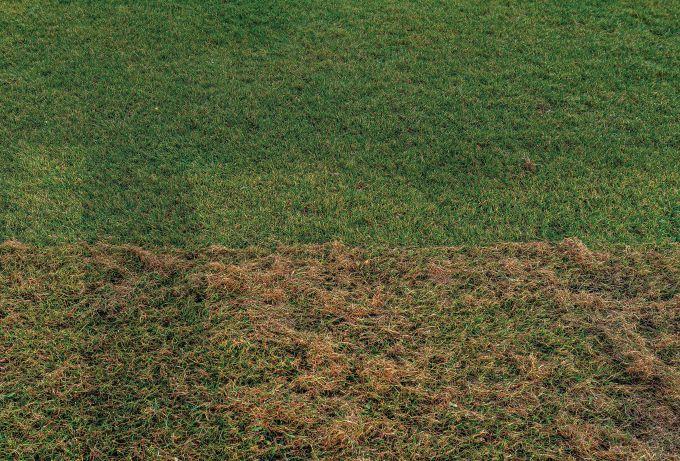
If thatch isn’t properly managed, scalping can occur which creates a landscape for disease and insects to move in. PHOTO CREDIT: MICHAL/ADOBE STOCK
fairways age toward 50 years old, they reach the point where they level out and accumulate a lot of carbon and begin storing plenty of nitrogen.
“There is evidence that grooming more frequently increases shoot density, but never decreased thatch depth.”
Golfers expect pristine conditions when they play, but thatch management, including vertical mowing and aeration, are necessary disruptors to ensure long-term playability.
Golf superintendents tend to manage such systems as a continuum with few inputs. Control of increased thatch levels brought on by high-density bentgrasses with high shoot density can be rendered through vertical mowing, topdressing, core aeration and the use of microbial thatch removers, she said.
Guertal said golf superintendents are in an industry where visibility is important, noting club members expect to always see pristine playing conditions. Vertical mowing, however, disrupts that appearance.
“We operate one of the only agricultural systems where appearance is incredibly important.”
Thatch depth can be a misleading number because sand is being added to it, artificially increasing the level, Guertal said. The amount of organic matter provides a more defining number.
Lack of grooming data
Groomers can help to make things stand up, to eliminate grain and to help achieve truer ball roll, but there is little data available to gauge how well they work. Guertal said available data indicates that slight grooming stimulates shoot growth and higher shoot density.
She cited one researcher’s work found grooming twice a week increased organic matter and thatch by stimulating shoot growth and higher shoot density.
“Think about grooming as a tool when you’re encouraging growth, not necessarily if you’ve inherited a situation with a whole lot of organic matter. Then you’ll want to get out your vertical mower and go to it.”
Guertal said that although grooming helps to firm up the putting surface, it also helps to create shoot growth which isn’t what is necessarily desired in organic matter removal. Heavy topdressing firms up the surface the most, she added.
Aerification is a mixed bag, Guertal said, noting that hollow tine aeration reduces organic matter, but it comes at the expense of root growth.
“When you pull hollow tines and you’re not replacing them with topdressing sand or the cores are ground up and reincorporated, you’re going to create a pore that will soften your surface.”
Guertal said she’s more of an advocate for vertical mowing and topdressing for thatch control, adding the latter is an underutilized tool which helps provide smoother surfaces and a truer ball roll.
The challenge of hiring, retention
The cost of hiring the wrong person can lead to higher turnover, increased training costs and project delays
By Turf & Rec staff
Hiring and retaining good landscape construction employees, and finding skilled, reliable workers is an important focus point, but also a real challenge for employers. Turnover rates remain high, job seekers have increased expectations, labour shortages persist, and the employers feel the pressure to meet project deadlines with a weakened workforce.
Organizational development veteran Dr. Larry Kokkelenberg has more than 40 years of experience co-ordinating workforce efforts with employers. He trained more than 200,000 leaders, authored two books, and has witnessed firsthand the costly consequences of hiring mistakes. He has shared insights and strategies to attract top talent and build a resilient workforce, having spoken at a recent CONEXPO-CON/AGG trade show.

The cost of the wrong hire
Recruiting the wrong person for a skilled construction role can bring long-term challenges, including high turnover, increased training costs, and project delays. According to Kokkelenberg, effective hiring starts with identifying the traits and habits of successful employees to create a framework for interviewing and selecting ideal candidates.
This backward approach to recruitment helps companies attract individuals with the right technical skills, safety competencies, and a mindset for teamwork. When companies hire the right people, they not only reduce turnover, but also foster programs where existing employees recommend candidates from their networks.
“When employees communicate to their friends and family about good pay, great management and growth opportunities, they help develop referral programs.” Kokkelenberg said. “This method of getting the word out to local candidates is particularly useful and fills open employment opportunities with quality candidates.”
Leveraging outreach and training
Kokkelenberg stressed the importance of proactive outreach to find qualified talent. Initiatives such as summer internships and partnerships with community colleges help employers build pipelines of skilled workers. Digital platforms, local job fairs and community partnerships also play a role.
Hiring the right people reduces turnover and keeps jobs on schedule.
However, the industry saw extraordinary labour shortages throughout 2024.
“It’s hard to get the exact experience you want today,” Kokkelenberg said. “More organizations will need to invest in training, once they hire the right person.”
Further, an AGC survey noted that 42 per cent of respondents increased spending on training and development while 61 per cent reported increased pay rates for hourly skilled labour, just within the last year. These workforce strategies developed while 62 per cent reported that available labour is simply not qualified to fill skilled roles in the competitive construction industry.
Employee retention starts with employer accountability
Once the right people are hired, retention becomes a shared responsibility. Kokkelenberg argued that salaries, work-life balance, job security and leadership opportunities are critical to keeping employees engaged.
“If employees see no growth opportunities or feel undervalued, they’ll look elsewhere,” he said.
Retention also requires investment in training that goes beyond basic requirements. Employees who feel valued and see that their employer is invested in their development are more likely to stay.
“Training should show employees they are part of the company’s future,” Kokkelenberg added. “It’s not just about compliance; it’s about demonstrating their worth.”

Proactive initiatives can help employers build pipelines of skilled workers.
Continuous recruitment: a strategy for stability
Even with positions filled, Kokkelenberg advised companies to maintain an ongoing recruitment strategy to prepare for unexpected turnover.
“You are hiring and looking for good people all year long,” he said. “Even when all your crews are together, you’re still looking for good people.”
Employers must also address internal factors, such as pay scales, work environments, and opportunities for advancement, to minimize turnover and build a stable workforce.
The construction industry’s labour shortages remain a pressing issue, but as outlined in 4 Steps To Hiring and Retaining Good Employees, the right strategies can make all the difference. From effective interviewing practices to strong onboarding programs, employers can create a workforce that not only meets today’s demands but drives long-term success.
The free downloadable e-book can be downloaded at https://www.conexpoconagg.com/recruit#sign-up
‘More organizations will need to invest in training, once they hire the right person’
Kokkelenberg holds a doctorate with dual specializations in clinical and industrial psychology. He brings a multifaceted background as a successful entrepreneur, having founded and led several companies, including an asphalt paving firm. In addition, he has extensive experience as an organizational consultant, working across both private and federal sectors, including serving on a White House council.
He is also a published author, contributing to the field of organizational development with two notable books. OD for the Accidental Practitioner, provides guidance for individuals who find themselves unexpectedly navigating the field, while its companion volume, OD for the Intentional Practitioner, offers a strategic approach for those pursuing organizational development as a deliberate career path.
Held every three years, CONEXPO-CON/AGG is a major event for construction industry professionals. The show features the latest equipment, products, services and technologies for the construction industry, as well as industry-leading education. The next CONEXPO-CON/AGG will be held March 3-7, 2026, in Las Vegas. For more information on CONEXPO-CON/AGG, visit https://www. conexpoconagg.com.
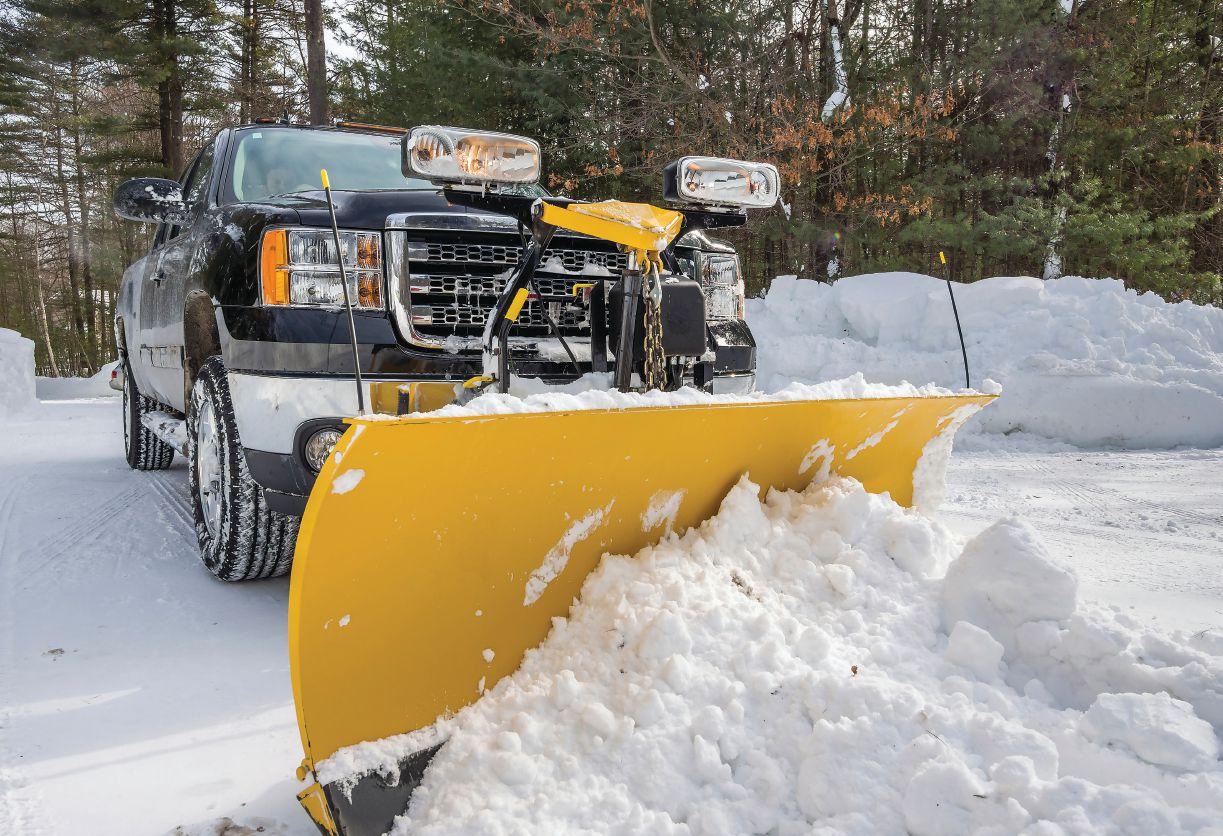
Separating the legit from the scammers
Fraudulent snow contractors put seniors at risk
By Lisa M. Ricci

With winter’s icy grip descending on Canada, snow removal becomes a necessity for many, especially for seniors who may struggle with mobility or health conditions that make shoveling impossible. Unfortunately, the season of snow also brings a rise in scams, particularly targeting older adults who are vulnerable to fraudulent snow removal contractors. These scams are not only financially damaging but can also compromise the safety of seniors, leaving them exposed to dangerous conditions in the colder months.
The growing problem: seniors at risk
Snow removal scams have become a major concern across Canada, particularly for seniors. According to the Canadian Anti-Fraud Centre (CAFC), older adults are more likely to be targeted by fraudsters, with snow removal being a common area of
exploitation. Though the exact number of snow removal scams is difficult to track, consumer protection agencies consistently report an uptick in complaints each winter.
In 2022, the Better Business Bureau (BBB) of Ontario received numerous complaints about snow removal contractors who either performed subpar work, disappeared after receiving upfront payments, or inflated their charges. These scams not only leave seniors financially strained but also put their physical safety at risk, especially if snow and ice aren’t properly cleared.
How the scams operate
Scammers use various tactics to exploit seniors during the winter months. Here are the most common types of snow removal fraud:
Upfront payment scams. One of the most prevalent snow removal scams involves contractors who demand full payment
Seniors are particularly vulnerable to scams perpetrated by fraudulent snow contractors.
The accompanying story, written by Lisa Ricci of the Markland Wood Group, a Toronto-area snow removal and landscaping company, may read to a large degree like it’s “preaching to the choir.” But it contains a strong message that start-up snow contractors might wish to consider if they want to avoid being flagged among the scammers. The story can also be shared with the elderly loved ones of our readership.
Ricci.
before performing any work. These scammers promise to clear the driveway or walkway but often fail to show up after receiving the money. In some cases, they perform minimal work – leaving behind dangerous patches of ice or snow – but still demand full payment, leaving seniors with nothing but frustration and financial loss.
Inflated fees and hidden charges. Some fraudulent contractors offer what seems like an affordable deal, only to hike up the prices later with “additional services” or hidden fees. These unexpected charges often catch seniors off guard, leaving them to pay much more than they originally agreed. These scams take advantage of seniors who may feel pressured to pay to avoid confrontation or because they fear they won’t be able to find another service on short notice.
Poor or incomplete work. Another common scam is when contractors perform shoddy or incomplete work. They might clear snow hastily, leaving patches of ice or failing to remove snow from critical areas like walkways and stairways. This negligence can result in dangerous slips and falls, and seniors may not realize the extent of the problem until it’s too late.
Fake business listings. Some scammers create fake business listings online, advertising snow removal services with fake customer reviews, high ratings, and an impressive online presence. Once the victim hires them, the fraudsters either fail to show up or provide subpar services. When victims try to contact them, their phone number may be disconnected, or their website taken down.
The consequences for seniors
The financial impact of snow removal scams on seniors can be severe, particularly for those living on fixed incomes or pensions. Many older adults rely on their savings for essentials, and being defrauded by a dishonest contractor can leave them with significant financial loss, often without any recourse for recovering the money.
Scammers use various tactics to exploit seniors during the winter months
Beyond the financial strain, there are physical consequences to these scams. Poorly cleared driveways and walkways can lead to falls, a major concern for seniors. In Canada, falls are a leading cause of injury among older adults, with approximately 20 per cent of seniors experiencing a fall each year, according to the Public Health Agency of Canada. Without proper snow removal, these statistics can worsen, leading to hospital visits or long-term recovery.
How to protect yourself from snow removal scams
The good news is that there are simple steps that seniors and their families can take to avoid falling victim to these winter scams:
Do your research. Always verify the credentials of snow removal contractors before hiring them. Look for businesses with a solid reputation and check their status with the Better Business Bureau or other local consumer protection organizations. Online reviews can also be helpful but beware of fake or overly positive reviews that may be fabricated.
Get multiple quotes. Don’t settle for the first offer. Getting at least two or three quotes can help ensure you’re getting a fair price. Be cautious of deals that seem too good to be true, as they often are. A legitimate contractor will offer transparent pricing without hidden fees or inflated charges.
Avoid paying upfront. Reputable contractors typically won’t ask for full payment upfront. Agree on a payment schedule that aligns with the completion of the work. Never hand over a large sum of money before the job is finished and be sure to get a written contract that outlines the services to be provided and the agreed-upon price.
Ask for references. Before hiring any snow removal service, ask for references from other clients, particularly those who are also seniors. A legitimate contractor should be happy to provide contact information from satisfied customers who can vouch for their reliability and quality of work.
Trust your instincts. If something feels off – whether it’s a high-pressure sales pitch, a lack of a written contract, or a contractor who seems evasive – don’t hesitate to walk away. Trust your instincts and take the time to find a reliable, trustworthy service provider.
Conclusion
While snow removal is a necessary service during Canada’s harsh winters, it’s important to remain vigilant to avoid falling victim to scams. Seniors must be proactive in safeguarding themselves from dishonest contractors. By doing research, requesting multiple quotes, avoiding upfront payments, and trusting their instincts, seniors can help ensure they receive fair, quality service throughout the winter months. Staying informed and aware is the best way to protect against the rising tide of snow removal fraud.
Lisa Ricci brings more than 15 years of experience in the snow removal and landscaping industry, during which she has developed a comprehensive understanding of the key factors that drive success within this field. Her career began with hands-on roles at various companies, ranging from small, one-person operations to large,established businesses. These experiences provided her with insights into both the strengths and challenges within the industry, shaping the foundation of her own entrepreneurial endeavors. In 2015, she co-founded Markland Wood Group, a family-owned and operated company, with the goal of delivering reliable, quality snow removal and landscaping services. What began with a focus on single-family residential properties has since expanded to serving more than 20 condominium corporations across the Greater Toronto Area.
Erin Gilchrist, vice-president of Fleet Evangelism at IntelliShift, brings 15 years of experience from Safelite AutoGlass, where she managed a fleet of more than 8,500 vehicles. A long-term member of the Automotive Fleet Leasing Association, she advocates for fleet leaders through her podcast, “Straight Talk on Fleet.” Passionate about fleet management, education, safety, innovation, and sustainability, she remains active in the industry, serving as a supplier and strategic partner.
Protecting against staged collisions
How dash cams in landscaping vehicles can protect companies from fraudulent claims
By Erin Gilchrist
Fraudulent insurance claims have been in overdrive lately and have become a growing challenge for Canadian businesses, including those in the turf industry. Whether staged collisions targeting commercial vehicles or exaggerated claims following minor accidents, fraudsters see fleet vehicles as an easy target. These scams pose significant financial, operational, and reputational risks for turf businesses relying on trucks and equipment to deliver services. Staged collisions often target commercial vehicles because they are seen as high-value insurance payouts. These fraudulent claims drive up costs through higher premiums, legal fees, and payouts. According to the Insurance Bureau of Canada (IBC), fraudulent claims cost Canadians an estimated $1.6 billion annually. For turf fleets already managing tight margins, this is an expense they can’t afford.
To protect business continuity, fleet managers are turning to dash cams as a critical tool to capture real-time video evidence, protect against fraud, and promote safer driving habits among operators. Dash cams provide irrefutable video evidence that can debunk staged accident claims.
Let’s say a fleet vehicle was involved in a staged “swoop and squat” accident – a com-

mon fraud tactic. Dash cam footage from the vehicle can help prove that the accident was intentionally orchestrated. The video would be key in having the claim dismissed, saving the business tens of thousands of dollars in potential payouts. Dash cam footage can quickly clarify what happened. This protects the company from false claims and guarantees fair outcomes in disputes.
Drive safe, arrive safe
Safety should always be a top concern for every company, but the need for safety is much higher with businesses that oversee hundreds of drivers and dozens of fleet vehicles. While the primary benefit of dash cams is fraud prevention, they also promote a culture of safety among fleet operators. As stated in “The Straight Talk on Fleet episode”, as a fleet manager, “If you build for safety, everything else sort of falls into place.”
Turf fleets often operate in high-traffic areas, with drivers navigating busy residential streets or highways while hauling equipment. Risky driving behaviors, such as speeding, abrupt stops, or distracted driving, can lead to accidents that dash cams help prevent. AI video dash cams can alert drivers to unsafe behaviors in real time. For example, if a driver tailgates or brakes harshly, the system issues a prompt, encouraging immediate adjustments. Over time, these features encourage better driving habits, reducing the likelihood of accidents and protecting the fleet and the public.
Mitigating risk, maximizing gain
The financial toll of fraudulent claims goes beyond settlements. Staged accidents often result in vehicle downtime, disrupting schedules and delaying projects. For turf businesses operating in peak seasons, this
A dash camera keeps a video record of road mishaps, including staged collisions which can cost landscaping companies thousands of dollars if they’re not protected.
can mean lost revenue and dissatisfied customers. Dash cams mitigate these risks by accelerating the claims process. Clear evidence reduces the need for lengthy investigations, enabling fleet managers to resolve disputes quickly and get vehicles back on the road. This minimizes downtime and ensures turf businesses maintain their schedules and client commitments.
Additionally, fleets equipped with dash cams often see lower insurance premiums. Many insurers recognize the value of having video evidence and offer discounts to fleets that install dash cams. For Canadian turf businesses managing fleets of trucks and trailers, these savings can add up significantly over time.
Commit to safety, every trip
Beyond fraud prevention and cost savings, dash cams are invaluable for driving ac-
Dash cam footage from the vehicle can help prove that the accident was intentionally orchestrated
countability. By reviewing footage, managers can identify areas where drivers excel and where they might need additional training. This creates a feedback loop that strengthens the relationship between management and drivers, enhancing overall performance.
Let’s consider a situation where a turf company used dash cam footage to identify a recurring issue with one driver’s cornering technique, leading to frequent landscaping material spills. After targeted training, the driver improved, reducing material waste and improving client satisfaction.
Future-proof your fleet
In the end, the decision to equip your fleet with dash cams is a strategic move. By investing in this technology, you’re not just protecting your business; you’re safeguarding your reputation, your employees, and your bottom line. Don’t let fraudulent claims and accidents derail your success.
As the ins and outs of insurance fraud become more complex, turf businesses must prioritize fleet safety and fraud prevention. Dash cams offer a solution to a pressing problem, helping turf companies maintain their focus on delivering service to clients.
24_014605_Turf_n_Rec_JAN_FEB_CN Mod: December 16, 2024 2:21 PM Print: 12/31/24 page 1 v2.5



The missing link to turfgrass health
5-Aminolevulinic acid also plays an important role in plant stress responses
By Jeff Haag
It has become commonplace for fertilizer manufacturers to incorporate amino acids into their various granular and foliar fertilizers for overall turf benefits.
What are Amino acids?
Amino acids are the molecular building blocks of proteins. Amino acids all share a structure, with a central carbon atom, an amino group, a carboxylic acid group, and a group designated as an R group, which varies in structure from amino acid to amino acid. It is the diverse nature of the R group that provides the protein with many of its structural and functional characteristics. Amino acids help to increase chlorophyll concentration in the turf, leading to a higher degree of photosynthesis.
Stomas are microscopic cellular structures on the leaf surface that help control moisture, nutrient (macro and micro), and the absorption of gases through the leaf surface. The opening of the stomas is controlled by both external factors (light, humidity, temperature) and internal influences (amino acids concentration, abscisic acid, etc.) The stomas are closed when light and humidity are low, or when temperature or salt

concentrations are high. When stomas are closed, photosynthesis and transpiration are reduced (low absorption of macro and micronutrients) and respiration is increased (carbohydrate destruction). Under these conditions, the balance of nutrient metabolism in the plant is negative, the result is retarded metabolism, meaning decreased plant growth. L-glutamic acid acts as a microscopic osmotic agent around the guard cells, which encourages the stoma to open, thereby facilitating better absorption of nutrients.
There are currently 20 known amino acids that are considered for essential and proper turfgrass development and function:
L-Tryptophan is a building block for auxin production in
the turf plant, allowing more effective production of this vital plant hormone. L-Arginine aids in salt stress tolerance and root development enhancement. L-Taurine aids in drought and saline stress tolerance. L-Glycine is a natural chelator of positively charged nutrients acting to increase plant uptake of many micronutrients. It is also a positive stimulator of photosynthesis. L-Proline, L-Leucine, L-Isoleucine, and L-Serine are osmotic protectants that execute operations within individual cells to maintain osmotic balance and proper cell functioning during stress. Important for increasing tolerance to drought, salt, and heat stress. L-Lysine, L-Glutamic Acid, L-Alanine, and L-Proline are involved in chlorophyll pro-
duction and increasing photosynthesis. L-Histidine, L-Alanine, L-Methionine, and L-Proline are important for proper stomatal functions. L-Aspartic Acid and L-Valine hasten seed germination. L-Valine, L-Tryosine, L-Threonine, L-Lysine, and L-Alanine increase turf plant tolerance to drought stress. L-Phenylalanine aids in lignin production for stronger cell walls. However, one amino acid that is not very well known, but has only recently gained some attention is 5-Aminolevulinic acid.
In turf and plants, 5-Aminolevulinic acid serves as a precursor to chlorophyll, the molecule responsible for photosynthesis. It is synthesized in the chloroplasts and leads to the production of both chloro-
Effects of 5-ALA on turf grown in shaded areas showed increase photosynthetic gas exchange and photochemical efficiency.
phyll and other essential molecules that regulate plant growth and development. 5-Aminolevulinic acid also plays an important role in plant stress responses, including tolerance to drought stress, salinity, shade, and heavy metals through the production of antioxidants.
Drought stress
With drought stress studies, it has been shown to improve overall turf quality and reduce reactive oxygen species productivity that often occurs during drought stress. Seaweed extracts, humic acid, melatonin, vitamin E, and salicylic acid have also been shown to combat reactive oxygen species. Reactive oxygen species that occur in turf are singlet, hydroxyl, superoxide, and hydrogen peroxide
Lipid peroxidation
Lipid peroxidation is a chain reaction that occurs when free radicals attack unsaturated fatty acids in a cell membrane, damaging the membrane and potentially killing cells. Recent studies have shown that 5-Aminolevulinic acid can decrease lipid peroxidation by 30.5 per cent.
Heat stress
Optimal temperature for cool season turfgrasses ranges from 59 to 75.2 degrees Fahrenheit for shoot growth, but temperatures often rise above optimal ranges during summer months in transitional and warm climatic regions, occasionally reaching over 104 degrees Fahrenheit. Heat stress often leads to the formation of reactive oxygen species, resulting in oxidative damages to membranes, proteins, pigments, and

cytoskeleton structures. As a result, heat induced damages in turf and plants ultimately led to growth inhibition, premature leaf senescence, and cell death. It has been demonstrated through various studies that 5-Aminolevulinic acid can help alleviate heat stress.
Salinity stress
Many perennial grasses commonly used as turfgrasses, are sensitive to salinity stress. Numerous studies have shown that the application of 5-Aminolevulinic acid can mitigate the damages from salinity stress by the suppression of sodium accumulation and enhanced physiological and metabolic activities related to photosynthesis, respiration, osmotic regulation and antioxidant defense.
Shade
Effects of 5-ALA on plants grown in shade/low light Exogenous treatments of 5-ALA to plants grown in low light and shade has been shown to increase photosynthetic gas exchange and photochemical efficiency, and also increase antioxidant enzyme activities of superoxide dismutase (SOD), catalase (CAT), peroxidase (POD) and ascorbate peroxidase (APX) particularly of those present near the reaction centres of photosystem 1. This leads to an increase in the electron transport rate and alleviates photosynthetic inhibition under low-light conditions.
Heavy metal stress
It has been well documented that presence of heavy metals (HMs) in soil, water or in growth medium significantly affects turf growth. The presence of HMs caused stunted plant growth, wilting of tops, degradation of chlorophyll contents which result in diminished photosynthetic rate and thereby finally result in plant death. Besides these, production of ROS, MDA, and electrolyte leakage also enhanced in presence of heavy metals.
Exogenous applications of ALA have been demonstrated to significantly mitigate heavy metal stress and improved stress tolerance as well as increased

stomatal conductance, transpiration rate, and internal CO2 concentration as observed turf.
Heightened photosynthesis
Photosynthesis can be disorganized by environmental stresses which can lead to degradation of photosynthetic pigments, retardation of chlorophyll biosynthesis, reduction of light, change of gas-exchange characteristics, or inactivation of photosynthetic enzymes. As a key precursor in the biosynthesis pathway of chlorophyll, ALA has been reported to have promotive role in photosynthesis under stresses.




Jeff Haag is a turf specialist at Xavier University in Cincinnati, Ohio.
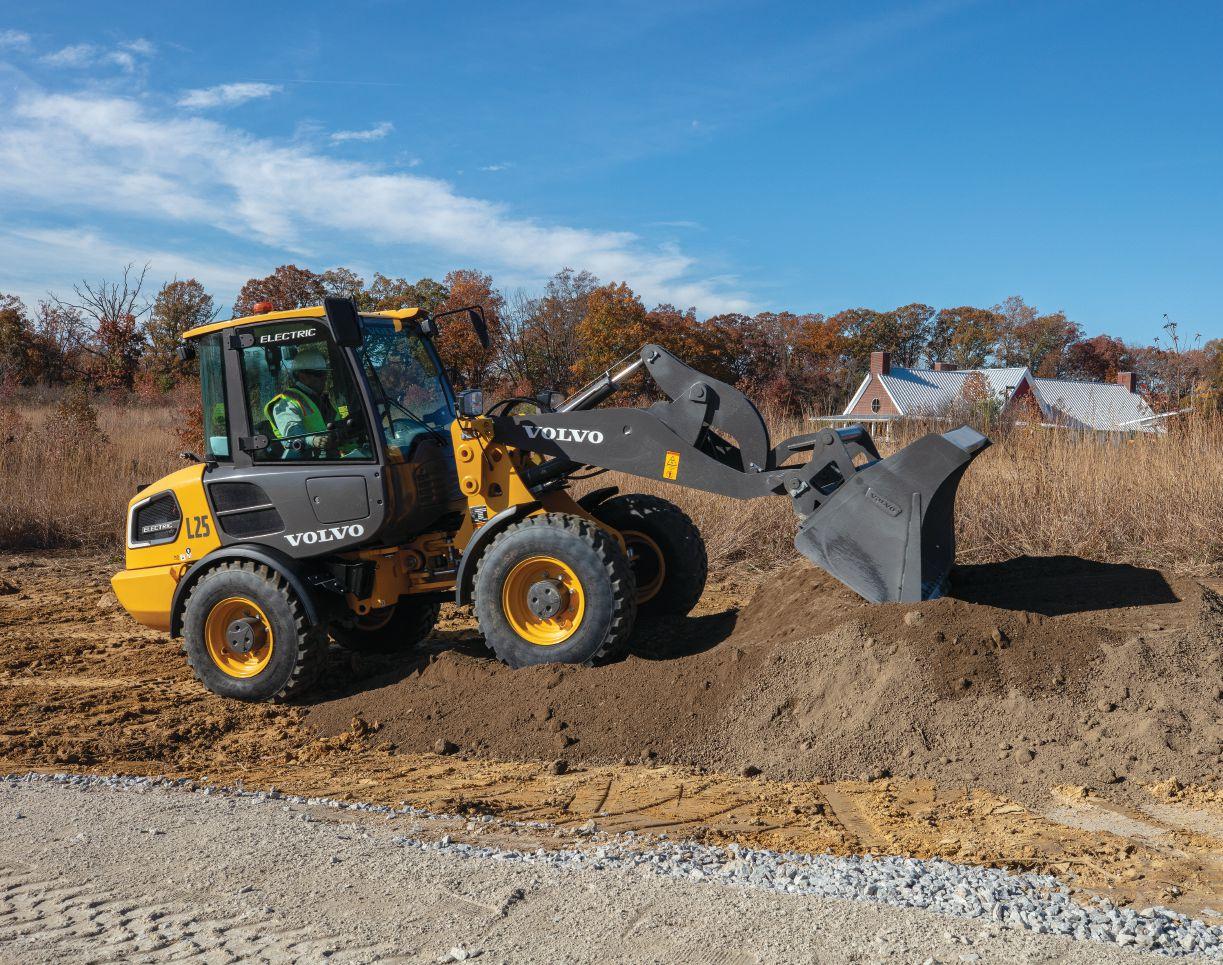
Electric simplifying fleet maintenance
Landscapers are gravitating toward electric from diesel-powered equipment
By Lars Arnold
As the turf and grounds maintenance industry continues to evolve, pros are increasingly turning to battery power as a viable alternative to diesel. Perhaps you’ve already embraced electric mowers, blowers, trimmers and other tools for day-today maintenance tasks, appreciating their lower emissions, reduced noise and lower operating costs.
Now, larger electric machines like compact excavators, wheel loaders and skid steers are making their way onto grounds projects, offering simi-
lar benefits for construction, landscaping and maintenance operations. While these options are still relatively new, their appeal is growing quickly, thanks in part to much simpler maintenance. Here’s a closer look at how electric equipment can help reduce downtime, cut operating costs and improve the overall reliability of your fleet.
Reduced maintenance time and costs
One of the most significant advantages of electric heavy equipment is the reduction in maintenance com-
plexity and associated costs. The absence of an internal combustion engine and many of the moving parts found in diesel machinery means that the only consumables required are grease and hydraulic oil. Volvo Construction Equipment estimates that users will save up to 35 per cent in maintenance costs and time over the lifespan of their electric machines compared to their diesel counterparts.
Another key benefit is the “shutdown” aspect of electric equipment. When not in use, these machines power down completely, preventing

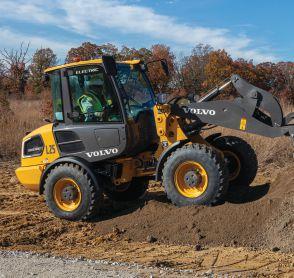
Electrically-powered heavy machinery can do the same job as their diesel-powered counterparts, but with reduced maintenance costs and time.

idle hours that contribute to unnecessary wear and tear (and fuel burn) on diesel engines. This leads to lower operating hours, which also boosts the resale value of electric equipment and extends its lifespan.
Longer component lifespans
Speaking of longevity, electric machines are built to last, and the batteries are no exception. The battery-electric components found in today’s machines tend to have lifespans comparable to traditional diesel engines, making them an attractive long-term investment. Lithium-ion batteries, in particular, are known for their reliability and longevity.
For turf professionals, this translates into a more dependable machine, fewer breakdowns and a more predictable maintenance schedule. Additionally, many manufacturers offer warranties on their electric components, providing extra peace of mind.
Safety and training considerations
While maintaining electric equipment is much simpler, safety remains a top priority. These machines involve high-voltage systems, so they come with sealed and guarded components to ensure safe operation. Technicians need specialized training to handle these components, in-
cluding education on basic electrical principles, AC three-phase motors, battery management systems and inverter functions. It’s worth noting that charging infrastructure may also require periodic maintenance, and that is typically dictated by the manufacturer of the charging equipment rather than the machine.
This might all sound like a major shift, but continued learning is key in this field. Technicians who adapt now will be prepared for the future as electrification continues to grow. It may also be smart to partner with a dealer trained in servicing electric equipment. They can perform risk assessments, disconnect high-voltage power when needed, and ensure that all components are handled correctly and safely.
Simplified operations at altitude and in cold weather
Turf and grounds professionals who work at elevation or in extremely cold climates will appreciate the added benefit of electric equipment’s more reliable performance. Diesel engines often struggle to start in low temperatures, and fluids can freeze, adding additional maintenance steps. But there’s no risk of freezing fluids with electric. For example, electric machines are rated to operate in temperatures ranging from minus 10 degrees to 40 degrees Celsius (14-104 degrees Fahrenheit).
Storing electric equipment indoors when not in use can help maintain battery efficiency and extend the overall lifespan of the machine. Electric machines also offer benefits if you work at altitude. A naturally aspirated internal combustion engine loses three per cent of power for every 1,000 feet of elevation gain over sea level. This is because air density decreases, resulting in reduced oxygen availability for combustion. Electric machines, however, don’t rely on oxygen – they use stored electricity to power their motors and are therefore less affected by the thinning air at high altitudes. This equates to less worry about service and maintenance, especially if you’re working in remote areas.
A future-ready investment
The turf industry is already seeing the benefits of shifting to more sustainably powered equipment, and the transition is about more than lowering emissions. It’s also about significantly reducing the time and money spent on maintenance. While there is an initial learning curve, the long-term benefits make it worthwhile. As electrification continues to grow in the heavy equipment sector, companies that invest in electric machines today will be well-positioned for the future.
Electric machines offer fewer breakdowns and a more predictable maintenance schedule.
Lars Arnold is product manager, sustainable power, for Volvo Construction Equipment.

Online resources provides turf info
Lawn.Science has research-based information for turf professionals and homeowners alike
By Dr. Sara Stricker
Dr. Sara Stricker is the communications and outreach co-ordinator at the Guelph Turfgrass Institute.
The Guelph Turfgrass Institute (GTI) and Landscape Ontario Turf Care Sector have collaborated to create Lawn.Science, an online resource designed to provide turfgrass professionals, landscapers, and homeowners with reliable, research-based information on lawn care. This website simplifies complex turfgrass science into accessible, actionable guidance for maintaining healthy, sustainable lawns. You can check out the website Lawn.Science (yes, that’s the URL!) or follow Lawn.Science on Instagram and Twitter/X to connect with this initiative. The goal is to address common challenges and debunking myths, by providing a trusted platform to help users make well-informed decisions tailored to their specific lawn care needs.
At the recent Landscape Ontario Congress, I presented on the live stage about improving communication strategies in the lawn care industry. My talk, “How to Use Lawn. Science to Make Informed Communications About Lawn Care,” emphasized the importance of using science-backed data to foster meaningful dialogues between lawn care professionals and their clients. The presentation also underscored the importance of enhancing public understanding and professional expertise, helping users balance aesthetics, functionality, and sustainability in lawn care.
A key part of my presentation focused on building actionable lawn care plans rooted in science, and I emphasized the importance of explaining the “when, how, and WHY” behind every recommendation, ensuring clients not only understand what we are doing but also the reasoning behind it. This approach

builds confidence and transparency, allowing users to see the long-term value of implementing best practices in lawn care.
Equally important is demonstrating the value of professional lawn care. Highlighting how expert treatments and maintenance schedules contribute to the long-term health and resilience of the lawn reassures clients of the benefits of investing in professional services. Using visual aids like photos, infographics, and reports is a powerful way to communicate progress and results. Before-and-after photos can clearly show improvements, while infographics and detailed reports can break down the science behind the treatments in a way that’s easy for clients to understand. These tools not only make the benefits of professional care tangible but also reinforce the transparency and professionalism of a lawn care plan.
Educating clients
Sharing research-backed articles and videos from trusted sources, such as universities and turfgrass organizations, is an excellent way to educate clients and enhance your credibility as a lawn care professional. These resources provide reliable, science-based information that can help customers understand best
practices and the rationale behind specific lawn care techniques. By aligning your messaging with trusted institutions, you reinforce your expertise and build client confidence in your services.
Lawn.Science is part of a broader Knowledge Translation and Transfer (KTT) initiative that aims to bridge the gap between scientific research and practical applications in lawn care. Effective communication is at the core of this effort, helping professionals share credible, science-backed information with their clients. By providing transparent, evidence-based insights, Lawn.Science fosters trust between lawn care providers and their customers, creating a foundation for informed decision-making and long-term relationships. Another critical goal of Lawn.Science is addressing common misconceptions about turfgrass and lawn care. Many homeowners and professionals encounter conflicting or outdated advice, leading to ineffective practices. By presenting clear and accurate information, the resource helps users debunk myths and adopt sustainable, research-driven methods for maintaining healthy lawns.
The Lawn.Science website features downloadable social media resources centered around three impactful initiatives designed to raise awareness about the value of turfgrass. The #GrassIsGreen campaign focuses on the environmental benefits of turf, such as its role in carbon capture, controlling erosion, and filtering groundwater. These posts highlight how turfgrass contributes to healthier ecosystems while supporting sustainability efforts. #GreenMeansGo emphasizes the social advantages of lawns and grassy areas, showcasing how they provide spaces for recreation, relaxation, and
community gatherings. By highlighting these benefits, the campaign fosters appreciation for turf as a vital component of social well-being. Lastly, #GreenFunctions sheds light on the practical roles of turfgrass in urban environments, such as its ability to prevent flooding, serve as snow pile storage in winter, and boost economic value through enhanced curb appeal. This initiative underscores the importance of maintaining grassy areas for their essential urban functions.
We encourage all lawn care professionals to get (and stay) active on social media. These platforms offer an effective way to engage with your audience through “quick tips” and “seasonal reminders.” These short, actionable pieces of advice can address common questions, such as watering schedules or pest management, while keeping clients informed about timely lawn care practices. Regular posts not only position you as a knowledgeable professional but also maintain consistent communication with your audience.
Reputable turfgrass resources
In addition to creating content, directing customers to reputable turfgrass resources and tools empowers them to make informed decisions about their lawn care. Websites like Lawn.Science or materials from industry associations can serve as valuable references for clients looking to deepen their understanding of turfgrass management. This collaborative approach fosters trust and positions your business as a partner in achieving their lawn care goals.

When sharing quick tips on social media, keeping posts short and engaging is key. Use concise, easy-todigest messages that provide actionable advice, such as “Watering deeply and infrequently will improve drought tolerance!” Clear and simple language ensures your audience can quickly absorb the information.
Enhance your posts with visuals like images or short videos to grab attention and illustrate your tips. A quick clip demonstrating proper mowing height or a before-and-after photo of a treated lawn can be far more impactful than text alone. Visuals make your content more shareable and memorable. Additionally, understand who and where your audience is – most homeowner-aged users are active on platforms like Facebook and Instagram. Tailor your content to suit these audiences, providing information that resonates with their needs and aligns with the social media platforms they are using.
Social media can also be a tool for
Lawn.Science addresses common misconceptions about turfgrass and lawn care
combating misinformation in the lawn care industry. When approached with an opposing opinion or view, aggressive tactics such as dismissing opposing views outright, can alienate clients or peers and erode trust. Instead, focus on fostering respectful conversations, presenting facts clearly, and encouraging curiosity about the science behind turfgrass management. Furthermore, relying on trusted sources is key to addressing misinformation. Referencing research from universities, government organizations, and industry leaders provides credibility and ensures your messaging is accurate and reliable. Engaging with experts in turfgrass science and lawn care can also strengthen your knowledge and provide additional perspectives to share with your audience.
The Lawn.Science website offers a wealth of resources to support both professionals and homeowners in making informed lawn care decisions. The website also includes an extensive Frequently Asked Questions (FAQ) section, which addresses common concerns and misconceptions about turfgrass and lawn care. For visual learners, outreach videos featuring staff and faculty from the Guelph Turfgrass Institute deliver practical advice and insights. Additionally, downloadable, printable posters provide seasonal maintenance tips for fall, winter, and spring, as well as easy-to-understand guides on identifying and managing common lawn weeds. These resources make Lawn.Science a great tool for fostering better lawn care practices. Get connected with the Guelph Turfgrass Institute by signing up to the newsletter at www.GuelphTurfgrass. ca or connecting on social media @ GuelphTurf. If you would like to suggest a topic for us to cover on the Lawn. Science website, please reach out to us via email at GTI@uoguelph.ca.
Dr. Sara Stricker says Lawn.Science helps turfgrass professionals and others make more informed decisions about lawn care.
Technology Spotlight

Advanced RTK GPS precision meets 24/7 performance. This autonomous mower delivers pattern mowing in straight lines with 2-3cm accuracy, covering up to 6 acres while reducing costs by 50% compared to traditional mowing. Features include floating heads with stainless steel blades for impeccable mulching, real-time anti-theft protection, and smartphone control. Silent operation and 90% less CO2 emissions make it ideal for sports fields and large commercial spaces. Learn more at echorobotics.com/en-us/
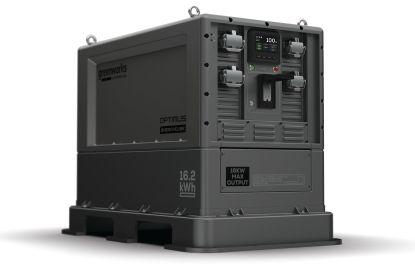
THE ULTIMATE Mobile Charging Solution for Professional Landscapers
With the OPTIMUS 16.2kWh EnergyCube™, you can charge OPTIMUS Zero Turn mowers alongside handheld batteries throughout the day, then recharge them overnight to hit the ground running in the morning. Each EnergyCube™ includes two caddies for handheld battery charging. No more trips to the gas station or time spent transferring batteries to a charger; simply leave your equipment connected to the EnergyCube™ overnight to ensure your entire fleet is fully charged and ready for action. Enhance your productivity and extend your operational time on the go IN AN ENCLOSED greenworkscommercial.ca
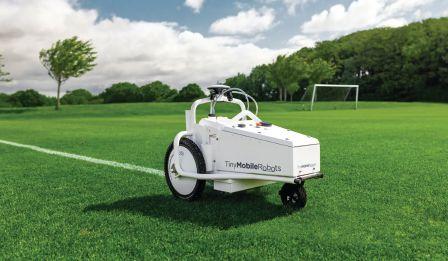
Achieve Professional Grade Fields with TinyMobileRobots Pro X
The Pro X by TinyMobileRobots is an autonomous, GPS-guided field marking robot designed to streamline complex field painting. Ideal for sports and event facilities, it turns a multi-field setup into a one-person job, with customizable templates and quick setup times. Built for accuracy and efficiency, the Pro X saves time and labor costs, ensuring perfectly marked fields with ease. tinymobilerobots.com/
CirrusPRO: The Ultimate Evolution in Irrigation Control

With CirrusPRO, access your full Central Control System on your phone or tablet, giving you control of your irrigation system anytime, anywhere, any place. Make any irrigation changes directly from the map and watch your updates happen in real-time.
Engineered to help you save time and money, CirrusPRO offers a state-of-the-art golf irrigation control system with an intuitive user interface (UI) and precise water management features.
Book a free demo with us today! https://vandenbussche.com/contact-us
By Turf & Rec staff
New plans afoot for Equip Expo ‘25
This October, Equip Exposition, the international landscape, outdoor living, and equipment exposition, will unveil several new features for the award-winning trade show, including new equipment categories, top-notch entertainment and more. From Oct. 21 to 24, 2025, thousands of landscapers, dealers, contractors, hardscape experts, and outdoor power equipment manufacturers will gather at the Kentucky Exposition Center (KEC) in Louisville for the largest event of their industry.
“We are always aiming to improve what we can offer attendees, and the excitement around the 2025 show is already high,” Kris Kiser, president and CEO of the Outdoor Power Equipment Institute (OPEI), said. “We’re well ahead in exhibitor space reservations this year over 2024.”

OPEI is an international trade association representing manufacturers and suppliers of power equipment, small engines, battery power systems, portable generators, utility and personal transport vehicles, and golf cars, and owns and manages the blockbuster show.
With more than 1.2 million square feet of indoor and outdoor exhibit space, Equip Exposition is a “must see” for dozens of reasons, including the 30-acre Outdoor Demo Yard, unique peer-to-peer networking events, education and technical training offerings both in English and Spanish, high-level speakers and world class entertainment.

But Kiser said landscapers, contractors, industry insiders, and power equipment dealers should put Equip Exposition on their calendars early this year because several must-see events and offerings will be on hand, including:
• A special keynote speaker, Jesse Cole, founder of the wildly-popular baseball team, the Savannah Bananas, who will inspire attendees to grow their own businesses to new heights. As one of America’s most famous entrepreneurs, Cole will share what it takes to develop a great idea into a brand that people embrace and love, and how to keep creativity flowing for the long haul.
• Created just for Equip Exposition, an exclusive small batch bourbon will be made by a Kentucky master distiller. For
help in naming the bourbon, Equip welcomes input from attendees and exhibitors though a special naming contest.
• Boom trucks, lifts, and other large vehicles will be available in an outdoor KEC parking lot as well as indoors on the KEC’s Freedom Hall floor.
• A newly-expanded and re-located UTV Test Track will move this year to a larger area. The relocation frees up additional space in the 30-acre Outdoor Demo Yard, where attendees will test equipment, drive, cut, chop, dig, trench and do more in the re-configured space.
• Top-notch entertainers Big & Rich and solo country artist Gretchen Wilson will perform an exclusive concert for show attendees at the Kentucky International Convention Center (KICC) in downtown Louisville on Thursday evening of the show. The concert, included with admission to Equip Exposition, is a great place to network and provides a load of fun.
Since assuming management of the business-to-business trade show in 2022, OPEI has worked to energize Equip Exposition’s offerings. The show broke attendance records in 2022 with 25,000 attendees, in 2023 with 27,000, and again in 2024 with 28,500.
Registration is $25 through May 31, 2025 at EquipExposition.com. The blockbuster trade show brings more than $25 million annually to Louisville.
New space is being freed up for the Outdoor Demo Yard this year.
By Turf & Rec staff
Cordova Bay Golf Course equipment technician wins top CGSA/Prairie Turf award

Bev Lichty, head equipment technician at the Cordova Bay Golf Course in Victoria, B.C. has been named the CGSA/Prairie Turf Equipment “equipment technicianof-the-year” award winner for 2024.
The award, co-sponsored by the Canadian Golf Superintendents Association and Prairie Turf Equipment, is presented annually to the technician whose nomination is judged to be the best example of an individual who exhibits professionalism, innovation, and a team approach to make a significant contribution to their golf facility and the golf community.
As the winner of this award, Lichty will receive an “all-access” registration to the Canadian 2025 Golf Course Management Conference (CGCMC) in Niagara Falls Feb. 25-27, 2025. He will also receive four nights’ accommodation at the Hilton Fallsview Hotel & Suites in Niagara Falls as well as transportation to the conference location.
Dean Piller, superintendent of the Cordova Bay Golf Course, who nominated Lichty, said, “Bev Lichty has all the qualities and skill sets that make him an outstanding equipment technician, and his value to our operation goes well beyond keeping the equipment in excellent condition. A unique skill that Bev possesses is his innovative intellect and his ability to take an idea and fabricate a variety of tools and equipment to help us with our daily maintenance tasks. If there is something that should be easier to do, Bev will come up with an idea and make it a reality.”
CGSA president John McLinden said Lichty “is known for being calm, hardworking and incredibly kind and helpful. His positive influence on the maintenance department has taken the facility to the next level.”
Cory Froehlich, managing partner at Prairie Turf Equipment, said every success golf course relies on the expertise of a skilled equipment technician.
“There is no doubt that Bev deserves this accolade, and we are immensely proud to support his accomplishments,” he said.
Prairie Turf Equipment is the exclusive sponsor of the award.


Golf Course Architecture, Second Edition is fully updated with more than fifty percent new material, including more than twenty-five recent innovations in the golf industry. Beautifully illustrated with hundreds of full-color photographs, course maps, and drawings, this book explains the roots of ugliness and sources of beauty in courses, how the landscape communicates, and the connection between golfers and golf courses.
$132.00 | Item #0471465317

Health & Safety
By CCOHS
The Canadian Centre for Occupational Health and Safety (CCOHS) promotes the total well being of workers in Canada by providing information, training, education, systems and solutions that support health and safety programs and injury and illness prevention. www.ccohs.ca
Tips to spark safety using electric tools
Using gas-powered equipment to groom your grounds and turf can be a noisy job. These gas mowers, blowers, and trimmers also emit fumes, which can be hazardous to your health. And while electrical equipment is notably quieter than gas-powered options, using it comes with its own set of health and safety concerns.
Electrical hazards can crop up when working with machinery, like electrical mowers, blowers, trimmers, and powered hand tools, causing electrical shock, burns, falls, and in extreme cases, fatalities. By identifying potential electrical hazards on your worksites and performing a thorough assessment to evaluate the risk to workers, you can take measures to protect your crews from harm.
Together with supervisors, workers, health and safety committee members and representatives, start by inspecting each jobsite for electrical hazards. Check the equipment, charging stations, extension cords, power bars, and electrical fittings. Make sure safe work procedures and manufacturer instructions are being followed, and that only electrical equipment that has been approved by organizations such as the Canadian Standards Association or Underwriters Laboratories, are used. It’s also a good idea to refer to your local authorities to ensure you’re following the electrical health and safety laws and guidelines applicable to your jurisdiction and industry.
Next, use the risk-reduction model known as the hierarchy of controls to introduce measures that will eliminate the hazards or manage the risks. For example, if there are damaged cords, exposed wires, or wear and tear on equipment, remove (and replace) them to eliminate these specific hazards. Did you find damaged equipment? Always ensure a qualified technician services any damaged equipment before reintroducing it to the site.
Substituting high-voltage tools with lower voltage options can also reduce risks.
Plus, introducing safety measures like circuit protection devices can help prevent electrical incidents including the overloading of a circuit caused by having too many devices plugged in, which could lead to machinery malfunction or even fires. It is also important to have ground fault circuit interrupters in areas where electrical devices can come into contact with water. Check extension cords and power bars and ensure they are not used as permanent wiring, as they are intended for temporary use only. Make sure not to overload them.
Once you’ve implemented your safety measures, monitor them for effectiveness. Comparing safety performance data can help to determine what’s working, and areas that may still need improvement. Remember to follow the same process when new equipment is introduced onto the worksite, so new hazards are not introduced.
Provide training
Training should include hazard recognition, how to work safely with the equipment they’re using, appropriate personal protective equipment, and emergency response procedures.
Include guidance on how to safely operate, transport, store, and charge electrical equipment in your new hire orientation, when you’re welcoming seasonal crew members back to work, in formal training sessions, and during crew talks before a shift. Instruct workers to do a basic equip -
ment check before using any piece of equipment, even if it’s something they use every day.
Training should also cover how to use safety gear, including insulated tools, electrical gloves, safety goggles, hard hats, and flame-resistant clothing when working with or near potential electrical hazards.
Health and safety are a shared responsibility. Encourage everyone to get involved in the development and implementation of your electrical safety program. Invite workers to share insights about how the work gets done, their experiences, and any safety concerns they have.
Be prepared in an emergency
In the event of an electrical incident, having an emergency response plan in place can help make sure prompt action is taken. This plan should be detailed but easy to understand and accessible to workers on the jobsite.
It should outline worker roles and responsibilities in an emergency, and who to contact, including onsite first aid personnel, emergency services, and management. It should also include the locations of defibrillators, fire extinguishers and other emergency equipment.
Your emergency response plan should highlight the basic steps everyone should take in the event of an electrical incident to minimize harm. Train workers on what to do in the event a person comes into contact with electricity, as well as first aid and using automated external defibrillators (AED).
First aid requirements
In Canada, all workplaces are required to provide a certain level of first aid. The specific first aid equipment and training needed depend on the following factors:
• The number of employees
• The types of hazards present in the workplace
• The distance to the nearest hospital and the availability of professional medical assistance
A faulty wire is carefully snipped at a backyard landscaping feature.
The world didn’t need a new mower. It needed a new Lazer Z.
The Lazer Z X-Series has arrived—built to deliver unmatched durability, legendary cut quality, and performance that exceeds expectations at every turn. The future of mowing has never looked so good. Visit your dealer to experience the Lazer Z.


Explore the legacy behind the legend.

With the new WiseNav update, say goodbye to boundary wire limitations. This update will take your robot's precision to the next level. Now, navigate without the need for a boundary wire, providing three times more mowing capacity and significantly reducing your workload. This update is also applicable to golf ball pickers.
Exclusively available for GPS-RTK robot models.

PATTERN MOWING & PICKING
With centimiter accuracy
FULLY AUTONOMOUS
Charges, Cuts & Dispenses golf balls on its own
COMBINES WITH TM-2050
MULTI-ZONE OPERATION
Use on sport fields, parks and golf courses
SUSTAINABILITY AND RELIABILITY
Zero emissions with zero noise pollution
For a complete autonomous solution for your driving range
SMARTER TECHNOLOGY. WITH TRUSTED OUTDOOR POWER.



The ECHO X Series is a collection of best-in-class tools, engineered for professionals to conquer the toughest jobs e ortlessly. This powerful lineup of battery-powered equipment maximizes productivity and e ciency, ensuring peak performance on every task. Backed by a two-year commercial warranty, you can trust in their superior quality and reliability.