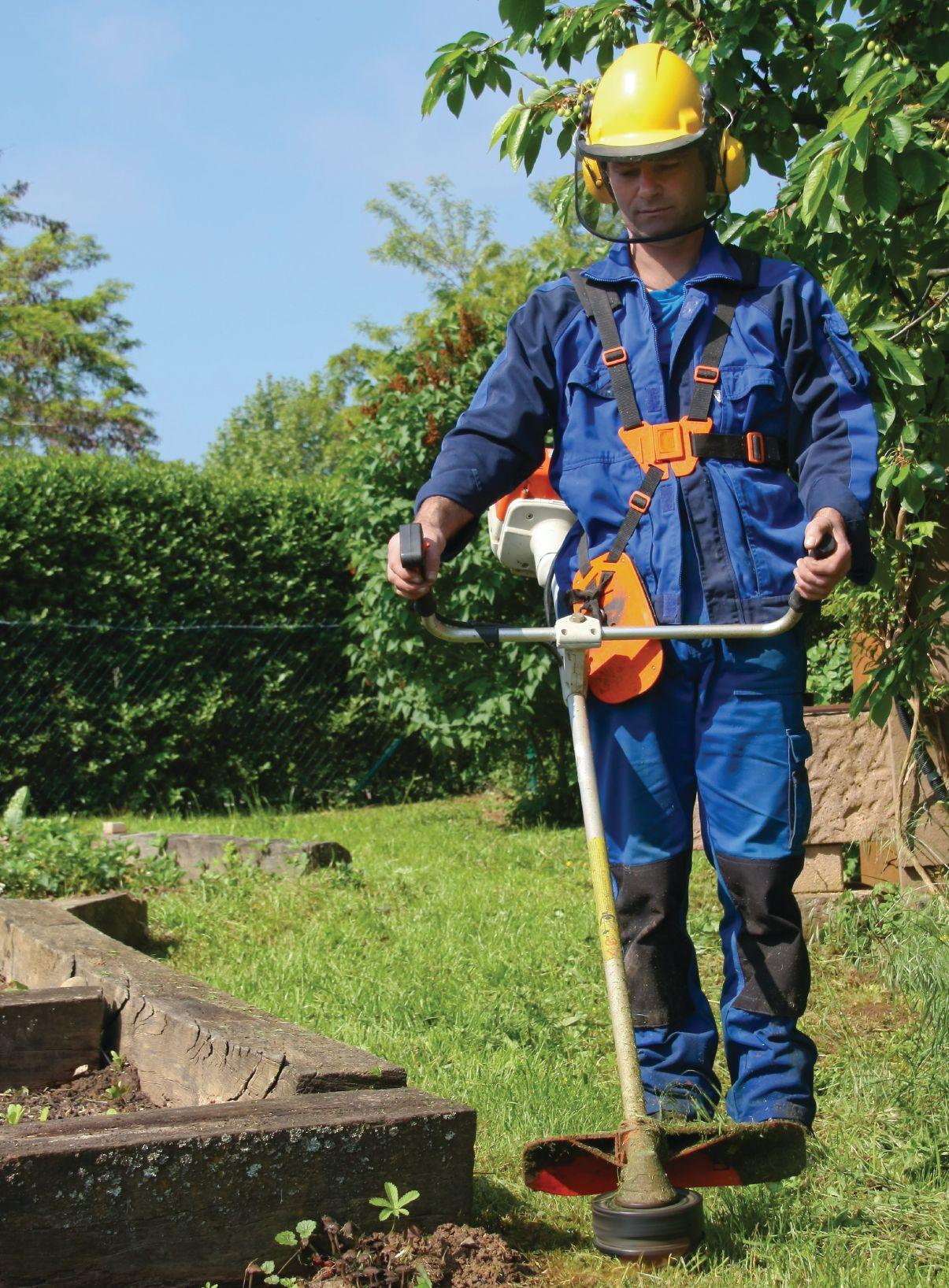

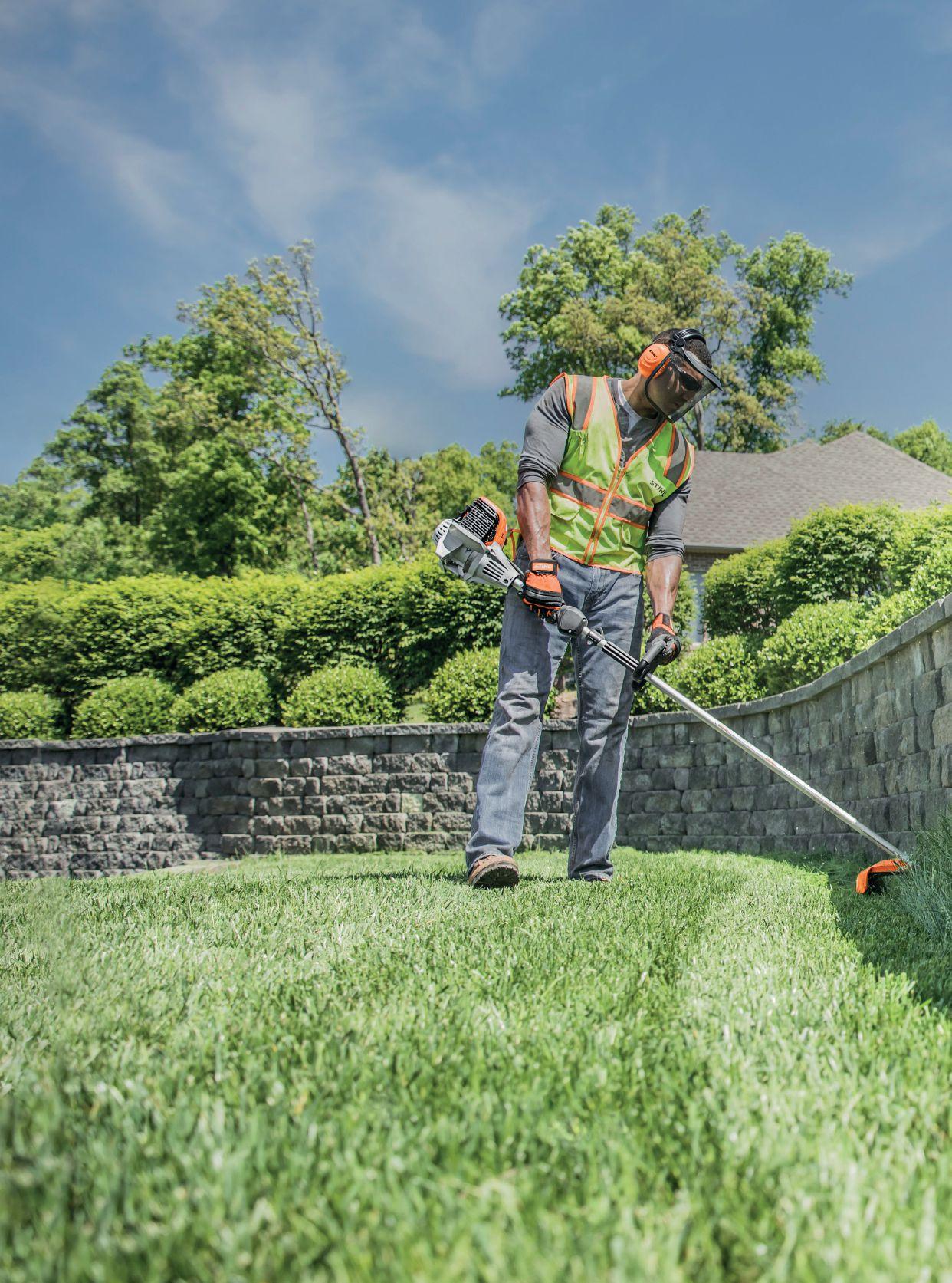
The consistent performance, dependability and effortless feel of the FS 91 R brushcutter makes this unit a must-have in a landscaper’s fleet. The FS 91 R is built with STIHL’s unbeatable quality and is extremely easy to maintain. With the low-emission engine and the large 710 mL fuel tank of the FS 91 R, you increase production with long runtimes. Built with a starting system that can be relied on is key for a landscaper who has a demanding day. The starting procedure on the FS 91 R is a simple process with an easy-to-operate stop switch with standby mode. It also features a redesigned guard to reduce weight, a superior air filtration system that allows an extended service life, as well as an improved rubberized loop handle design that offers extra comfort with fewer vibrations. It’s the ideal tool for working on large areas of tough grass.


STIHL’s Pro-Fleet Commercial Landscape Program is designed to provide commercial landscapers a volume discount on major purchases of five or more landscaping power tools. Visit your STIHL Dealer today to find out more and take advantage of the savings!

By Mike Jiggens
As we plod further along into the current COVID-19 pandemic, the opportunity for turfgrass professionals to up their levels of education is perhaps greater than it has ever been.
Associations that have been serving Canada’s golf course superintendents, landscaping and lawn care professionals, and sports turf managers have been forced to turn to virtual offerings as a substitute for the live conferences they would normally hold during the winter months.
It can be argued that virtual events are impersonal and leave little opportunity for effective networking. But on the plus side, they can potentially reach a larger audience and save attendees some significant cash on travel and lodging expenses.
The Ontario Turfgrass Symposium, for instance, has opened its doors this year to give turfgrass professionals from across Canada the opportunity to listen to its array of speakers and earn valuable continuing education credits – all this from the comfort of their homes and without the expense of travel.
Professionals from outside Ontario, who wouldn’t ordinarily attend the OTS, can listen to what some of North America’s top academics have to say about matters of industry interest that are perhaps applicable to their particular geographic regions.
These virtual offerings stand to be big draws. Attendees can listen to live presentations and have the convenience of tapping into several more on-demand sessions at a time of their choosing.
It becomes a win-win situation for the associations and attendees alike. And most importantly, virtual events guarantee 100 per cent safety. There are no airports to get around, no large groups of people gathered in confined spaces and no need to travel roads that can potentially be snow or ice-covered during the winter months.
Live event attendance could have its shortcomings, depending on the circumstances. In a year when the Canadian
Had this pandemic occurred 25 years ago, the opportunities to learn virtually wouldn’t exist.
Golf Course Management Conference was held in, say, Calgary, and the Golf Industry Show was held a couple weeks earlier in, say, Orlando, it usually resulted in many Canadian superintendents having to choose one or the other. Budget limitations wouldn’t allow both, leaving some superintendents to ponder: shall I go to warm and sunny Orlando or cold and snowy Calgary?
During this period when travel is frowned upon, the Canadian conferences are apt
to enjoy healthy attendance numbers through a virtually delivered format.
Had this pandemic occurred 25 years ago, the opportunities to learn virtually wouldn’t exist. The technology simply wasn’t there. The Internet was still in its relative infancy, the speed and capacity necessary to deliver such online learning wasn’t up to snuff, and a lot fewer people had access to computers.
In other words, all of these conferences would have been outright cancelled with no viable alternative in place.
We can be grateful that we’re well into the 21st century where the technology is available to provide us such options.
This is all fine and good as a means to keep business going and those in our industry educated. But the longer the pandemic continues, the greater the risk of online burnout becomes. The average person will be able to tolerate only so much time spent on his computer, whether it’s attending virtual events, sitting through Zoom meetings or communicating primarily by email.
This is the best we have at our disposal for the time being, but nothing beats what we had prior to COVID-19. Conferences that allow attendees to attend the education sessions of their choice, network in person with their peers and be able to physically touch the products showcased in the trade shows are more appealing than their online counterparts.
With luck, live and in-person events will return next year.
Until then, there is a lot of good content being offered virtually to get us through.
www.turfandrec.com
Reader Service
Print and digital subscription inquiries or changes, plesae contact
Anita Madden, Audience Development Manager
Tel: (416) 510-5183
Fax: (416) 510-6875 email: amadden@annexbusinessmedia.com
Mail: 111 Gordon Baker Rd., Suite 400 Toronto, ON M2H 3R1
Editor Mike Jiggens mjiggens@annexbusinessmedia.com
National Advertising Manager Rebecca Lewis 519-400-0322 rlewis@annexbusinessmedia.com
Nashelle Barsky 905-431-8892 nbarsky@annexbusinessmedia.com
Account Coordinator Mary Burnie 519-429-5175 mburnie@annexbusinessmedia.com
Group Publisher Todd Humber thumber@annexbusinessmedia.com
COO Scott Jamieson sjamieson@annexbusinessmedia.com
Printed in Canada ISSN 1186-0170
PUBLICATION MAIL AGREEMENT #40065710
SUBSCRIPTION RATES
Published 7 times a year – Jan/Feb, Mar, Apr/May, Jun, Aug/Sept, Oct, Nov/Dec Canada – 1 year $35.00; 2 year $45.00 3 years $55.50 (plus applicable taxes HST 86717 2652 RT0001
Occasionally, Turf and Recreation will mail information on behalf of industry related groups whose products and services we believe may be of interest to you. If you prefer not to receive this information, please contact our circulation department in any of the four ways listed above.
Annex Privacy Office privacy@annexbusinessmedia.com Tel: 800.668.2374
No part of the editorial content of this publication may be reprinted without the publisher’s written permission © 2021 Annex Publishing & Printing Inc. All rights reserved. Opinions expressed in this magazine are not necessarily those of the editor or the publisher. No liability is assumed for errors or omissions. All advertising is subject to the publisher’s approval. Such approval does not imply any endorsement of the products or services advertised. Publisher reserves the right to refuse advertising that does not meet the standards of the publication.




target-specialty.ca |
Mitch Davidson
Southern Alberta, Kootenays mitch.davidson@target-specialty.com 587.223.2083
Jason Hooper
Lower Mainland & Interior Bc jason.hooper@target-specialty.com
604.317.2476
Chris Paterson
Southern Alberta & Kootenays chris.paterson@target-specialty.com
403.540.0157
Eric Gratopp
Northern Alberta eric.gratopp@target-specialty.com 587.284.4744
Gregor Kowalski
Vancouver Island gregor.kowalski@target-specialty.com
250.686.3909
Josh Seibel
Saskatchewan & Manitoba josh.seibe@target-specialty.com
306.861.8296
Perry Brazeau Toronto / East perry.brazeau@target-specialty.com 416.705.8006
Joey Losito
Quebec South & East
joseph.losito@target-specialty.com
819.571.1677
Craig McCutcheon
Toronto West / Niagara craig.mccutcheon@target-specialty.com 905.351.6544
Colin Hindle
Ottawa & Eastern Ontario colin.hindle@target-specialty.com
613.314.9711
Jason MacRae
Quebec North & West jason. macrae@target-specialty.com
514.712.8006
Mark Scenna
Sales Manager, Canada
mark.scenna@target-specialty.com 416.458.2396
A frozen storm water pond at Ottawa-area Stonebridge Golf Club is now off limits for skating and pickup hockey games. Mattamy Homes, owner of the course, has erected no trespassing signs, citing moving water beneath the surface of the ice poses a significant risk to those who wish to skate. The news comes as a disappointment to many who say the chance to skate and play hockey is one of the few options they have for recreation amid the current COVID-19 lockdown.
A local municipal councillor said the ice atop the pond might be one thickness at one moment and then be something entirely different the next hour. Those who support the idea of skating on the pond argue the ice surface is large enough to ensure proper social distancing is followed.
A past president of the Ontario Trial Lawyers Association said the recent passing of Bill 118 will result in legitimately injured people being denied justice.
“I am going to have to tell them they have lost their right to sue because they waited more than 60 days before they sent a letter out,” Steve Rastin of Rastin Gluckstein said.
The bill was introduced in late 2020.
A self-employed Nanaimo landscaper, who is a single mother to a special needs child, had more than $2,000 in equipment stolen from her shed, leaving her “violated” and “devastated.” The incident occurred Jan. 1 or 2, and none of the equipment was insured.
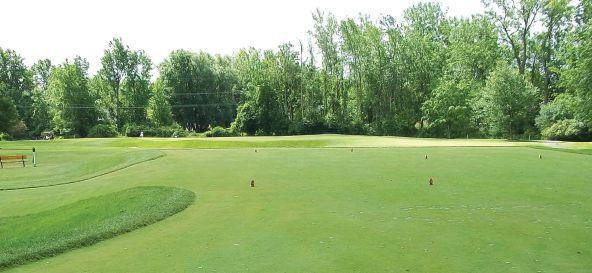
The fight to prevent the sale of Brantford, Ont.’s city-owned Arrowdale Golf Course may have reached the end of the line.
The Ontario Divisional Court dismissed a judicial review application in January from a group called Know Your City, that might have put up a roadblock in the city’s plans.
“Absent an appeal of the Divisional Court’s decision, the city will move forward with the sale of 31.97 acres of land to Elite M.D. and will continue to develop a community park, which will be available to all residents, not just golfers, year round,” a statement from the city read.
The court’s decision failed to overturn or invalidate city council’s decision to sell a portion of the nine-hole golf course property or develop a portion of it into a community park.
and council voted 8-3 a week later to ratify the recommendation. Revenue from the sale was intended for the construction of affordable housing in Brantford. Opposition to council’s decision prompted the formation of a group called Friends of Arrowdale. The Know Your City group became incorporated to stage a legal fight, and argued the sale of the property to Elite M.D. was rushed through with little input from the public.
Brantford’s $14-million deal with Elite is to see the development of 32 acres of the golf course property while the city retains 17 acres for transformation into a community park.
2,000
The fight to prevent the sale of the property and keep it open for public golf began late in 2019. Council’s committee of the whole recommended selling the Arrowdale property on Dec. 10 of 2019,
“Tax revenues generated from the redevelopment of the Arrowdale property will be transferred annually into a reserve fund dedicated to affordable housing initiatives to help support some of our community’s most vulnerable residents,” the city noted in a public statement.
The city is looking at three separate designs for the proposed park after soliciting public input.
Treating employees fairly has many benefits in the landscaping and lawn care profession
By Mike Jiggens
In the world of landscaping, employees need to come before customers. If employees are treated fairly by their employers, they are apt to become more engaged, become more productive, claim fewer sick days and will want to remain longer with their companies. In the end, it’s good business and companies will turn a higher profit.
So say a couple of veteran CEOs of well-established landscaping companies, who shared their business strategies during a presentation of last fall’s virtual delivery of the GIE+EXPO, normally held as a live event in Louisville, Ky.
The role of a company CEO is to grow and mentor others, Paul Fraynd, CEO of Nebraska-based Sun Valley Landscaping, said.
“It’s not about you. It’s about all these people you bring up.”
Fraynd, whose business employs 16 full-time and up to 35 seasonal workers, was joined in the virtual presentation by Seth Kehne, founder of Tennessee-based Lawn Butler, a company that employs about 85 people in landscape design/build and maintenance for both residential and commercial customers.
As leaders, “we’re impacting not only our team members’ lives, but their fam -

ilies, our vendors and our customers,” Kehne said.
Fraynd said building an employee-centric culture is imperative, noting people prefer to work for a business that values them as human beings and puts them ahead of shareholder values. According to research, he said, about 85 per cent of employees aren’t fully engaged in their
jobs, adding people will care more, will have more accountability and will be happier when engaged, resulting in better job performances.
He said he was shocked to learn another statistic from the same research that suggested 81 per cent of people working in the industry are looking for another job. Having an engaged workforce will
boost productivity by 21 per cent. Employees will have 41 per cent less absenteeism, resulting in their companies growing four times greater than those with non-engaged employees. Companies with largely engaged employees also find it easier to hire and retain staff.
“It’s proven that employee satisfaction leads to better outcomes for your clients and ultimately for your company,” Fraynd said.
Employee turnover is impacted by a company’s culture, Kehne said. If an employee feels he is respected for the work he does, that’s often a greater incentive to remain with that company than to go elsewhere for an additional dollar an hour or an extra week of vacation. If a business has a good company culture, employees won’t want to let others down, he said.
Kehne said he originally hired employees he knew were good people, but added it didn’t train him well into being a good boss.
“It took me a long time to be able to understand that I needed to lay out expectations – let them know quickly when they’re not hitting expectations and letting them know what a win was and what a loss was.”
Fraynd recalled a talented crew member who was having difficulties in his private life and needed awakening every morning and taken into work. He said he wondered how his other employees viewed the situation when they arrived to work on time, knowing also that their co-worker earned more money.
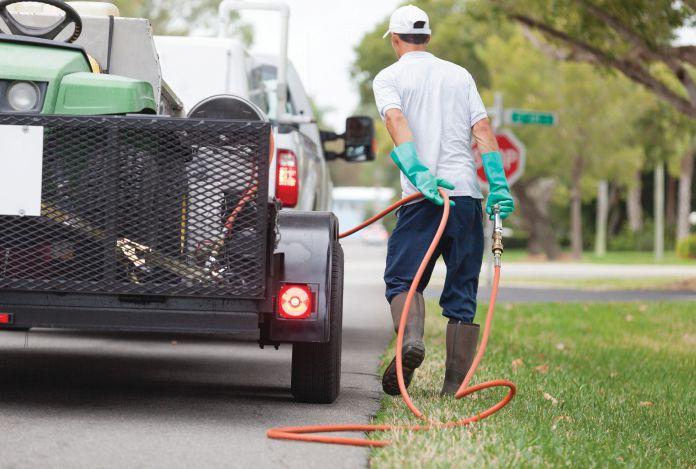
Landscaping and lawn care employees who are treated fairly by their employers are apt to become more engaged, leading to a more productive and profitable business.
“It sent a completely wrong signal,” he said.
Kehne said his business has experienced about 10 per cent growth annually over the past 10 years. One of the ways his company was allowed to grow came with the development of a group that gave team members a chance to present ideas of their own, leading to productive discussions.
Fraynd noted the landscaping industry is still people-heavy – in spite of such recent technological advances as robotic mowers

– adding every town has several landscaping companies that keeps business competitive with tight margins.
“You have to set yourself apart in the way you treat your people,” he said. “If you can get the people part right in this business, you’re going to be successful.”
Kehne said there are a series of strategies involved in building an employee-centric culture, starting with purpose, values and fun. Getting people to buy in and understand that their job matters is key because the industry tends to attract people who have previously been treated poorly and not respected, he added.
“We can make a difference in people’s lives by just caring for them.”
Fraynd said it’s important to make the job fun for employees, and leaders must use grace when dealing with staff – even when someone must be let go. Having too much grace can have consequences, however, Kehne added, suggesting it could even make matters worse.
“We try to have genuine care for our team,” Kehne said.
Lawn Butler has retained a corporate chaplain who visits once a week and says hello to the staff. He’s available for private
CONTINUED ON PAGE 29



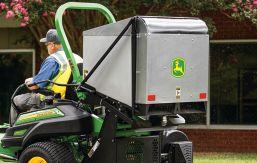
It’s Zevolution: the evolution of the ZTrak™ 900 Series. Our engineers never rest on their laurels. Whatever




Ever since the first Z900, we’ve always kept the pedal down in terms of product improvements. We don’t look back: we look forward. For us, there’s always a better Z900 around the corner.
We do this because we know you’ve got places to be, lawns to mow, jobs to finish. And John Deere is right there every step of the way, with not only great products, but also NEVERSTOP™ Services and Support –from financing to parts and service, even loaners.
We all have got a job to do. And ours is making sure you have exactly the tools you need to do your job right, the first time and every time.




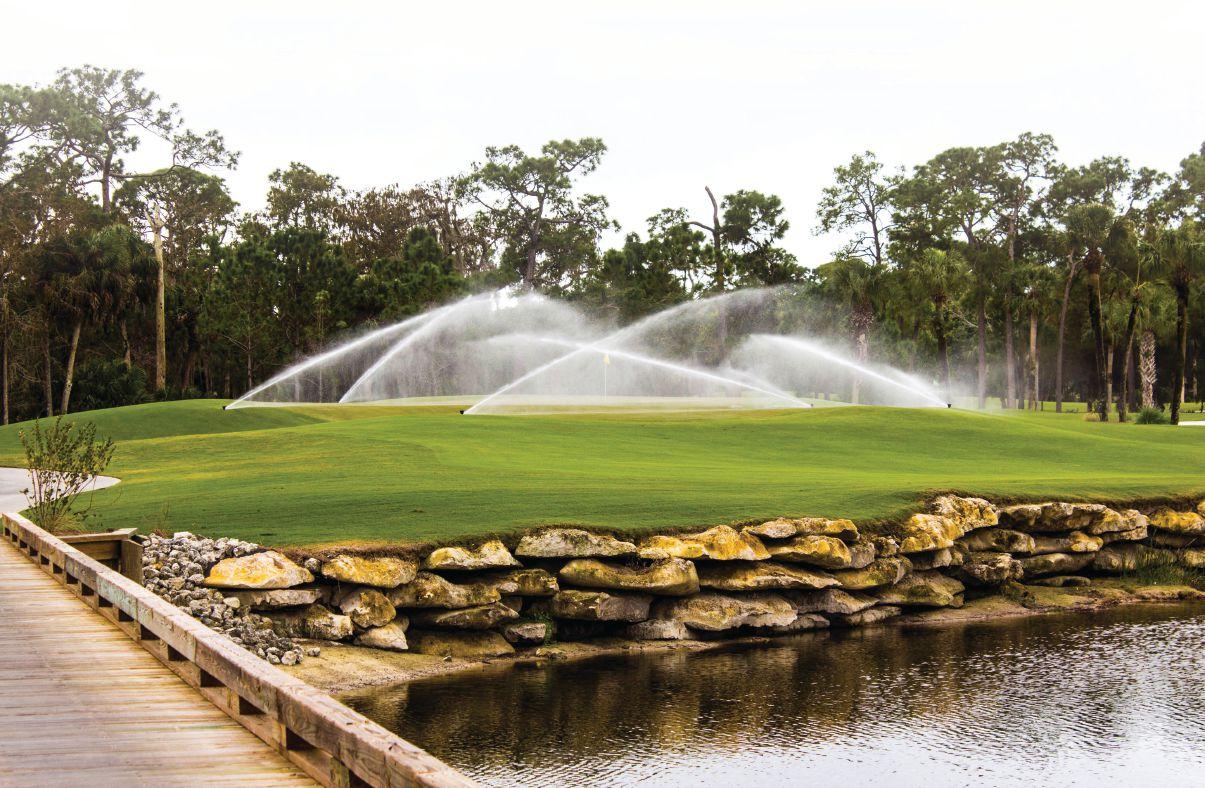
Global environmental concerns have taken centre stage, especially in the turf and landscaping industries, and rightfully so. The combined effects of landscape resource scarcity and climate change require landscapers and turf managers to consistently pay attention to their landscape design, vegetation selection, and most importantly, their irrigation systems.
Landscapers can ensure the turf is healthier and that they’re contributing to sustainable solutions by using a modern irrigation system that uses water more efficiently. Government regulations are increasing around the world, and the cost of water continues to rise in many areas as well.
It’s evident that the efficiency of irrigation systems has proven to be a growing concern, and mandates and system audits are necessary to be as efficient with water as possible and protect our natural resources.
With modern, sustainable irrigation
practices becoming more attractive and attainable, it’s essential to understand what makes an irrigation system sustainable and how a newer system will help conserve water, save money, and help the environment overall. There are several ways to ensure irrigation systems are meeting the standards of a sustainable irrigation practice.
Rick Olson, chairman and CEO at The Toro Company, and John McPhee, general manager for Toro’s irrigation and lighting businesses, were recently interviewed on “The Water Zone” radio show to talk about sustainable irrigation solutions, ways to conserve water, and what the company is doing to be stewards of the land and contribute to sustainable irrigation practices.
According to McPhee, adopting a sustainable irrigation system will result in landscapes requiring less maintenance, and the turf will last longer and be much healthier. Additionally, the landscape will require less water, and there will be reduced runoff and less puddling. A sustain-
Modern sustainable irrigation practices are becoming more attractive and attainable.
able landscape also requires minimal use of fertilizers and pesticides.
To ensure landscapers reap the benefits that result from a sustainable irrigation practice, there are several products available that are designed to conserve water, help the environment and save money for turf managers in the long run.
“Our goal is to create products that make our green spaces healthy by using water as efficiently as possible,” McPhee said. “We continuously strive to produce industry-leading irrigation solutions that apply water more efficiently to crops, turf and landscapes.”
Both Olson and McPhee recommend several types of products and equipment designed for efficient water conservation and meet the standards of a sustainable landscape.
• Smart controllers: Irrigation smart
‘The future of landscape architecture will demand that we use our knowledge of living systems’
controllers automatically tailor watering schedules and run times based on the weather to ensure that people are only using the water needed for the plant material on that specific day.
• Soil moisture sensors: Irrigation system sensors can detect how much moisture is in the soil. Then the sensor allows the smart controller to limit irrigation usage based on the moisture levels.
• Sprinkler spray bodies: These sprinkler spray bodies regulate the water pressure output to eliminate the fine water droplets or mist that evaporates or gets blown away in the wind and doesn’t reach the final destination.
• High-efficiency spray nozzles: Smart irrigation nozzles save up to 35 per cent of water versus regular spray nozzles, without compromising on performance or damaging the turf. The nozzles spray water at a rate of one inch per hour, allowing operators to more efficiently apply water, eliminate water runoff, reduce water waste, and ultimately save money in the long run.
The future is looking bright when it comes to sustainable landscaping and water conservation. Turf and grounds managers will continue to evolve to be more focused on data to determine their specific watering needs for the land and increase water efficiency accordingly.

“The future of landscape architecture will demand that we use our knowledge of living systems and nature-driven designs to reduce the use of natural resources while creating spaces of value and beauty for all of mankind,” McPhee said.
In order to create sustainable spaces of value and beauty, more stringent regulations of natural resources must continue to be at the forefront of government regulations. Additionally, landscapers and turf managers may see a need to utilize equipment and software that help meet their bottom lines and the standards of sustainability and water conservation.
The Toro Company is involved in several programs and initiatives that focus on sustainability and water conservation, including its work with the Irrigation Association, the Wyland Foundation and the EPA WaterSense program. The company has also led such initiatives as the Sustainability Endures platform and Land-Water-Thrive. The “Water Zone” is a Toro-sponsored radio program that educates the public on products and best practices for efficient outdoor water use. Podcast episodes can be heard at https://waterzone.podcast.toro.com/.

By Mike Jiggens
Are landscaping companies playing not to lose, or are they playing to win? By one consultant’s count, most tend to be playing not to lose by being conservative with their business strategies.
Judy Guido, founder of California-based Guido & Associates, a consulting company dedicated to helping green industry businesses grow both people and profits, suggests a number of landscaping companies prefer being in their comfort zones as a result of fear.
“The reason they’re staying in that comfort zone is because they’re afraid,” she said in the fall during a virtual presentation made as part of the annual GIE+EXPO conference, normally held as a live event in Louisville, Ky. “They don’t know how to change.”
By “peeling away the onion” and mitigating the fear, companies can begin to embrace opportunity and grow their businesses, she said, adding about 90 per cent of the companies with which she assists are doing just that. Growth is not about taking on more risk, she added, but being smarter and more strategic.
Growing a company is much the same as scaling a mountain, Guido said, noting no one ever starts at base camp and goes straight to the top. There are goals to be
achieved along the way, which are usually set quarter by quarter. Small and medium-sized companies usually take a three-year look ahead. With a shorter outlook than companies with five to 10year plans, businesses with three-year plans tend to be focused every day, every week and every month toward moving
step by step toward their goal.
Guido identified four foundations for growing and scaling a company: people, strategy, execution and cash.
People make the team, and companies want to focus on building an “A” team by attracting the right personnel, retaining the best people, training them properly
and rewarding them for good work.
Strategy is about pivoting and not staying in that comfort zone, she said. Citing COVID-19 as an example, companies have found ways to pivot around the pandemic and adapt to the necessitated changes.
Execution is about processes which companies have to help generate sales, create brand equity and achieve value for the business.
“It’s those processes that will help you grow.”
Cash is about price and is the “oxygen” that keeps a company going, Guido said.
“Without it, you’re dead.”
Companies need customers to fund the business and not the reverse. Landscaping is a price-sensitive industry, and companies that do it right are in a different space, she said.
Guido said it’s not about being the best company, but rather about being unique and different from the competition and having that space that belongs to no one else. When a company executes, it’s about focusing with everyone on the same page or plan that has

been created. Less than 10 per cent of companies, however, don’t have a formal plan and most have simply compiled “to-do lists.”
Companies must focus on creating a cash culture in which everyone understands that what they do has a positive, medial or negative effect on cash. Additionally, they should have a knowledge of the cash conversion cycle.
“You want the customer to fund your business. You don’t want to be the bank of landscape for your customer. When companies do this right, most leaders spend 100 or 120 per cent of their time putting out crazy fires every day when it’s the leaders of the more successful companies who scale.”
Landscaping industry’s bad rap
Guido said leaders need to focus on time spent building relationships with their employees, stakeholders, suppliers, associations, community and external customers. In spite of the multitude of smart and talented people working in the landscaping business,

Atlantic Provinces
Irri Plus Inc. (902) 405-4774
Quebec
Central Irrigation Supply
Ville St. Laurent, QC (514) 788-5884
Dubois Agrinovation
Saint-Remi, QC (800) 815-9929
Site One Landscape Supply
Ville St. Laurent, QC (514) 913-6719
Ontario
Central Irrigation Supply
Mississauga, ON (5 locations) (905) 795-8088
Site One Landscape Supply Concord, ON (5 locations) (800) 347-4272
Vanden Bussche Irrigation Delhi, ON (3 locations) (800) 263-4112
Manitoba
Consolidated Supply
Winnipeg, MB (204) 632-7643
Site One Landscape Supply
Winnipeg, MB (204) 694-9442
Saskatchewan
Saskatchewan Consolidated Supply
Saskatoon, SK (306) 653-5444
Site One Landscape Supply Saskatoon, SK (306) 931-2440
Alberta
Consolidated Supply Calgary, AB (403) 203-7550
Corix Water Products Calgary, AB (5 locations in AB) (800) 242-3176 Emco Calgary, AB (403) 278-1470
Site One Landscape Supply (2 locations in AB) (403) 236-0102
British Columbia
Andrew Sheret Ltd. (24 locations in BC) (250) 386-7744
Consolidated Supply Kelowna BC (250) 863-8291
Corix Water Products Langley, BC (11 locations in BC) (800) 667-2445
Site One Landscape Supply (4 locations in BC) (250) 544-0401
Van-Kel/EMCO Corporation (8 locations in BC) (800) 667-8825
Vancouver Irrigation Supply Vancouver, BC (604) 251-2258 (4 locations)
Wes-Tech Irrigation Systems Victoria, BC (250) 361-1573
Rain Bird International Inc. www.rainbird.com/ca
the industry is still given a bad rap, she said, because most companies look and sound alike and do the same things.
“We’re giving a perception to the marketplace that all the green industry does is cut grass. So we have a problem attracting some great customers. We have to do something about that mindset. We are so much more than dirty boots, dirty hands, shovels and being on mowers.”
Guido said it’s important to want to have people who wish to work for a company, and to train them and retain them. All team members, including human resources and marketing personnel, must work as one because landscaping is so multi-faceted. Agronomy, hydrology and arboriculture are among the science-based knowledge required. Technology, including artificial intelligence and software, is crucial to the industry as well as an artistic flair and engineering skills when incorporating the design/ build aspect of landscaping.
“Marketing and HR should be joined at the hand,” she said, adding employees and customers should be two of a company’s greatest recruiters with women serving as a key element in the equation. “We’re (women) smart, sophisticated people. Bring us in.”
Women currently account for less than 10 per cent of the landscaping workforce even though they make up half the human population. She suggested seniors can also add value to a landscaping team with their experience and special skill sets.
“It’s all about investing in people.”
Some of the most successful companies have achieved their higher standing because of their people who have been put in the right place to do the right things in the right way. Concentrating on the company functions that generate the most money is what will help a business go from the mountain base camp to the next level and onto the next toward scaling the company.
Guido said that by breaking up a company’s processes and teams into smaller groups with shorter activities allows
corrections to be made faster.
“You don’t have to get to the very end and learn that you could have done it this way. Now, almost daily or weekly, you and your team are taking a look at what is being done right and wrong or perhaps mediocre. Breaking things up into smaller bites, as opposed to a bigger chunk at the end, is what works best.”
The strategy is applicable to all aspects of the company, she said, including design/build, grounds maintenance and sales.
By strategizing to be unique, a company will solely occupy that space and will emerge as the best company among its competitors, Guido said. By contrast, when everyone competes to be best within the same space, companies play on one variable – price – and that shouldn’t be the objective. The best strategy, she said, is to avoid being in the same pond as everyone else and looking the same, doing the same things and pricing the same.
“You want to be in a sea of one.”
To achieve this, Guido suggested determining what customers want and need while learning more about the competition to see if there is any “white space” where the company can excel. Leaning on such partners as suppliers and associations can be helpful.
Although cash is the oxygen of a landscaping business, it’s not delegated solely to the company owner, chief financial officer, accountant or controller. It’s for everybody, she said.
“You want to have a culture where everybody knows how they affect the cash in a positive, negative or mediocre way.”
The cash conversion cycle – the period of time it takes for spending (payroll, product, technology, rent, etc.) to return to the company – should be shortened as much as possible, Guido said. There are four components to the cycle: sales, proposals prior to going to a site, delivery of the service and invoicing and receipt of payment.
“You should have a short period of time from when you spend that money to when it comes back.”

•
•








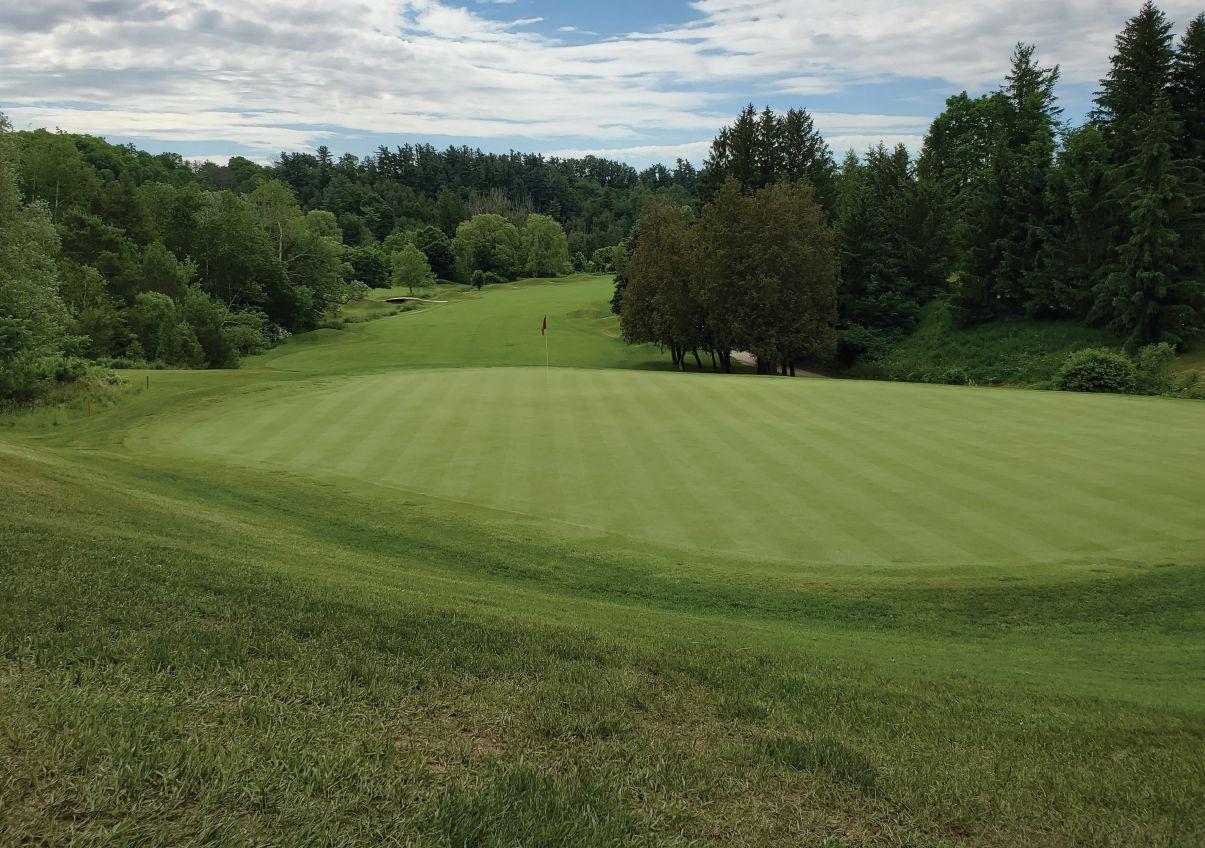
Cancelled work placement leads to positive experience. By Nicholas Jones
This past year was exceptionally tough for many people in the world as COVID-19 spread and rummaged how operations and personal lives were handled. Businesses had to pivot quickly and adapt to the challenges being thrown at them. Friends and family were isolated from each other and social groups were severed.
I want to share my story through this exceptionally tough time. My feeling is that there is a positive story to be told as it authenticates that when things get dark and gloomy, there is always a silver lining to be found. Finding a little optimism and change of perspective can push us in getting through the tough times.
At the time COVID-19 hit, I was a firstyear student in the Diploma in Turfgrass Management (DTM) program at the
University of Guelph. I had lined up an internship at Cabot Cliffs in Inverness, N.S. A marvelous course on the picturesque island of Cape Breton, I was very excited to spend the summer working on a stunning course while developing my skills and network in the turfgrass industry. Unbeknownst to me, a global pandemic would capsize these carefully thought-out and highly foreseen plans.
I remember watching the news and hearing universities and colleges were moving to an online format for the remaining weeks of the winter 2019 semester. I remember thinking “this pandemic may be around for a while.” I was almost certain that this was going to affect my internship. I kept communications open with Cabot Cliffs in hopes that things might still go my way and the internship would still be on. All the provincial bor-
ders I would have to cross to get to Nova Scotia were being closed or tightly monitored. While being optimistic, my start date was continuously getting delayed and my gut had a sinking feeling that I may need to start looking elsewhere.
Ultimately, the day came where I was in jeopardy of not working at all. I needed to start formalizing a Plan B and keep it local. The problem was that most opportunities had been revoked due to the pandemic. No one was openly hiring. Golf courses were running skeleton crews and had reduced themselves to only minimum maintenance practices. By May, I was getting a little tired of just sitting around the house and doing nothing. I was tired of feeling sorry for myself and knew that I needed to respond to

Spring is just around the corner, which means golf courses across the country are preparing for another season.
Join Turf & Rec for a special weeklong focus starting March 8 as we explore best practices from some of the leading professionals across Canada.
Visit turfandrec.com/golf-course-readiness for full details.
2021 SCHEDULE
Date Topics
MAR 8 Getting Equipment Ready
MAR 9 Dealing with post-winter issues
MAR 10 Dealing with post-winter issues round 2
MAR 11 Spring Irrigation start-up
MAR 12 Staff Hiring, Training and Dealing with COVID (Again)
Ensure you don’t miss any of the practical advice, tips and content. Sign up for your free subscription today at turfandrec.com.
For sponsorship information, contact Rebecca Lewis 519.400.0332 I rlewis@annexbusinessmedia.com

A major strength of the book is the wealth of information presented on management strategies, complete with do-it-yourself instructions for site selection, soil preparation, seed rates and planting, turf establishment, and renovation. Time and cost-saving techniques for effective mowing, thatch control, pest management, water conservation, water management, fertilizer use, stress management, and pest management are presented in a user-friendly manner—complete with helpful checklists, and step-by-step instructions. A vast amount of useful reference material will ensure the success of your maintenance program.
Item #1575041063
assure I made the best of this situation. I am an active person, and I was itching to get back to work wherever it be. In spite of the overwhelming disappointment associated with my internship at Cabot, I had to start focusing on my priority – to learn.
I remained in contact with a few other students who were all in the same boat. As luck would have it, one classmate had a connection at a private golf course, The Club at North Halton in Georgetown, Ont. – right near my hometown of Acton. I texted him inquiring if they had space for one more intern at the club. Thankfully, there was an open position and it took only a quick reference and a snappy interview with Colin Young and Ken Tilt, superintendent and assistant superintendent, respectively, to solidify the job. It seemed as though the sun was beginning to break apart those gloomy clouds.
Looking back, the summer of 2020 turned out better than I could ever have hoped for. The lessons I learned from Colin and Ken at The Club at North Halton were astonishing. Colin is a hands-on superintendent. If you don’t know him, he redefines the words “work ethic.” No one works harder than he does. He and Ken just seemed so full of knowledge, and they were always willing to share it.
But it was more than just a work relationship. Colin would share countless stories from his days coming up in the turf industry and playing competitive hockey. This personal touch to leadership from Colin and Ken always kept the mood light, even on the toughest days.
Beyond Colin and Ken was Jake Hiller, the second assistant. He is also a hard-working individual, and we had an instant connection since he is also a graduate of the DTM program at the University of Guelph.
Perhaps one of the best parts of the summer was

summer I was well informed of everything that was happening on the course. Colin and Ken always communicated and explained things in a way that helped me gain a deeper understanding (remember I had only one year in the turf program under my belt at this time) and take it to my next venture wherever that might be.
‘It was more than just a work relationship’
that I also got to work alongside my classmate, Brooks Primo. He also had his internship opportunity (at BMO Field) not pan out. Our relationship and bond grew as the summer went on – keeping each other on the level with jokes, stories, discussing turf and providing moral support to each other when needed.
These individuals I described made an unforgettable internship at The Club at North Halton. The internship was a prodigious experience. It always started with the meetings in the morning where we talked of the day’s tasks and what should be accomplished. They were always a good way to start the day. Throughout the whole
We worked very hard throughout the summer, but Colin also allowed us some free time to go out and play golf, too. These simple gestures of his showed us his appreciation of our hard work and helped motivate us to continue delivering for him on the job. I think Brooks and I both wanted to show him how grateful we were for the opportunity to learn under him and his leadership team at North Halton, but know that nothing will compare to the knowledge he has given us throughout the summer.
Months later, I can appreciate the obstacles that I was forced to overcome when searching for an internship during the pandemic. I have so much gratitude for everything I gained over the summer – the knowledge, the friendships, and the opportunity to better myself as someone entering the turf industry. Looking back, I wonder if I would be as appreciative of these experiences if the summer hadn’t started out with panic, stress and disappointment. I will be forever grateful for not only the knowledge and skills that I gained, but for the long-lasting connections.
I was able to find a silver lining and will now believe there is always one there.
Nicholas Jones is a student at the University of Guelph, enrolled in its turfgrass management program.


Soil is a living and breathing entity – one that should be appreciated and respected
By Alan Dolick
There are many indicators that suggest we have a mere 60 years of topsoil remaining on our planet – a very scary thought when you really stop and contemplate the consequences. Considering how important the soil is to our profession, we give it a relatively small amount of thought when creating a strategy to maintain healthy turf. Most view the soil as merely a substrate to hold plants upright and to deposit nutrients. The reality is that soil is a living and breathing entity – one that should be appreciated and respected.
Having a sense of the vast ocean of activity that is below our feet is the first step in understanding the importance of a healthy soil ecosystem. Packed with an enormous amount of life, ranging from microscopic single-celled organisms to large insects, and everything in between, soil is brimming with life and energy. All of these organisms function as one incredible ecosystem, ultimately regulated and influenced by the plants that sit atop this medium.
We all know that plants can make their own food by way of photosynthesis, but

many are not aware that they give away approximately 40 per cent of what they create. Plants are the catalyst for the life in the soil by way of food that they provide to the microorganisms. Plants produce exudates, which are sugar and amino acid-based compounds that are pumped out of their roots, stems and leaves.
In this case, root exudates provide nourishment to the bacteria and fungi living close to the root in a narrow band of area referred to as the rhizosphere. This area, usually only a millimetre or two around the root surface, is an absolute frenzy of microbial activity.
A single plant’s rhizosphere can contain more microbes than there are people
on the planet. In a healthy teaspoon of soil, there is up to 70,000 different species of bacteria and more than 500 types of fungi, with numbers totalling in the billions, if not trillions 1 . Considering their size, it’s remarkable to ponder the vital role these invisible organisms play in the health of plants, our food and ultimately all of us.
Another extraordinary aspect of these microbes is that they all have specific functions. Depending on the plant’s need at a particular moment, compounds within the exudates can be subtly altered to cause specific microbes to multiply, providing whatever necessary component the plant may need.
Microbial interactions can be broken

down into a hierarchy of predator-prey relationships, beginning with bacteria and fungi. They are the backbone of this network, constituting the largest percentage of biomass in both actual numbers and weight. Without robust communities of both families of organisms, the entire system falls apart.
When we think about nutrients from a plant’s perspective, we usually lean towards the minerals that are in the soil and the fertilizer that we apply. However, there is a considerable amount of nutrition that is unaccounted for inside the living organisms in our soils, and the more we increase the numbers within these microbial communities, the more nutrients we have available to our plants.
Bacteria, the smallest life form on our planet, are about 60 per cent protein and therefore a major source of nitrogen. In fact, they serve as nitrogen sinks, capturing it and internalizing what would otherwise leach out of the soil, volatize, or denitrify into the atmosphere.
These microscopic organisms should really be viewed as tiny bags of fertilizer2. Bacteria have the highest concentration of
21_0241_Turf_Rec_JAN_FEB_CN Mod: January 12, 2021 8:25 AM
Print: 01/19/21 9:35:39 AM page 1 v7



nitrogen of any living organism on the planet, with a carbon to nitrogen ratio of five to one. This ratio is a vital component to nutrient cycling and is the basis for understanding how this predator-prey relationship affects microbial balance and the health of plants living in that ecosystem.
Microscopic predators called protozoa will feed on upwards of 10,000 bacteria per day, releasing plant-available nutrition as they go. Protozoa have a carbon-to-nitrogen ratio of 30 to one and are largely interested in consuming the carbon component of the bacteria. Plants are the benefactors of this dynamic relationship because the protozoa now have an abundance of nitrogen in their system that they need to “give away” to maintain their internal carbon-to-nitrogen balance. The form of nitrogen that protozoa excrete out into the soil has been complexed into an organic form, meaning it is immediately plant-available and requires substantially less energy and water from the plant to convert it to proteins and enzymes. This increased efficiency creates a much more resilient plant, one that will be better able to manage the stress of a hot, dry summer.




Bacteria provide a host of other benefits beyond just an organic source of nitrogen to the plant. They also help mineralize and store all the other nutrients required, they provide the basis for soil aggregation, they decompose organic material, encapsulate toxins, and protect the plant from disease. For instance, when in high enough numbers, pseudomonas bacteria will actively police the soil, searching out and consuming pathogenic fungi3
While bacteria can be classified as primarily mineralizers, fungi provide a slightly different function by transporting carbon into the soil. Like bacteria, fungi have a bad reputation in the turf world as causing disease. While this is true for a select few species, the vast majority of fungi in the soil perform beneficial functions for the plant.
While fungi are excellent at transporting nutrients, water, carbon, and even bacteria with their hyphae (tube-like structures), they cannot produce their own food. For this, they are completely dependent on plants for nourishment. Everything in nature must be viewed as a supply and demand relationship; a plant is not going to provide food for another organism if it is not getting a return on its investment.
Let’s take arbuscular mycorrhizal fungi (AMF) for example. Perhaps the most well-known type of beneficial fungi, it creates a hard-wired connection to the plant by impregnating itself into the root. A healthy AMF network can have up to 10 miles of hyphae in a cubic foot of soil and can increase the surface area of the root system up to 100,000 times4. Not only will the increased surface area provide more absorption sites for water and nutrients, it also acts as a defence mechanism for the plant, excreting compounds that stifle development of diseases, attacking root-feeding nematodes and creating a physical barrier
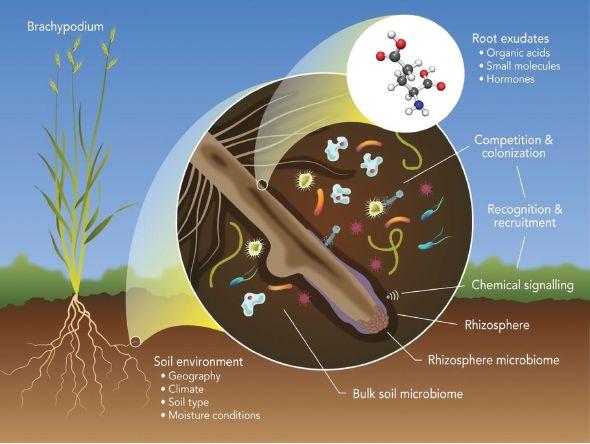
to infection sites.
AGMTurbine:Layout 1 5/25/16 11:31 AM Page 1
The AMF have also been shown to reduce weed populations. In a study conducted by Rinaudo et al, total weed biomass was on average 47 per cent lower in plots that were inoculated with AMF than those plots that had no association5. This is likely because many of the weeds we see in turf settings do not associate with AMF. The turf that has created this association with the AMF is now better equipped to extract nutrients and water from the soil, ultimately outcompeting the weeds for resources.
Soil fungi are also incredible decomposers of thatch and all other organic materials. Without their help, all plant material that has ever been produced on this
planet would still be here. Having a thriving community of fungi in the soils you maintain will help keep thatch to a minimum, along with all the associated problems that come with excessive buildup of organic material.
There is so much to this wonderful world below our feet and we are just scratching the surface of our understanding of nature’s capabilities. We must understand that nothing in nature is by accident or wasted energy. Everything is here for a reason and performs a specific function.
Let us begin to work together to provide a new way forward – one that reduces your costs, improves plant performance, minimizes personal anxiety, and, most importantly, reduces our impact on the environment so we can be proud of what we leave behind for future generations.
Alan Dolick is eastern Ontario sales representative for Evergreen Bio Innovations, formerly Lawn Life Natural Turf Products.
References
1. Ingham “Soil food web foundation course” 2019
2. Lowenfels “Teaming with Microbes” 2006
3. John Kempf “Quality Agriculture: Chapter 1 Michael McNeill, Developing disease resistant and regenerative soil health” 2020
4. Lowenfels “Teaming with Microbes” 2017
5. Riaudo et al. “Mycorrhizal Fungi Supress Aggressive Agricultural Weeds” Plant and Soil 333 nos. 1-2 August 2010

The most powerful turbines on the market.
By Adam Sedgwick
With the impacts of COVID-19 still being felt around the world, and revenues generated by the stands, shops, bars, and restaurants of the world’s sports grounds dropping considerably, athletic turf managers are facing difficult budgetary decisions on how to best optimize their fields, while also tackling adverse weather conditions such as extreme cold weather, drought, and increased rainfall.
Turf is not a commodity where cuts can be made if standards are to be maintained. Ensuring a safe, durable, and high-performing surface is critical. The turf in a stadium or sports ground probably endures more wear and tear than any other. On football and soccer pitches, for example, teams play long seasons, with certain areas on the pitch experiencing a lot of concentrated action. These demanding locations on the field rely on exceptional standards of maintenance – week in, week out.
Instead of going out to collect data with hand sampling devices, perma -
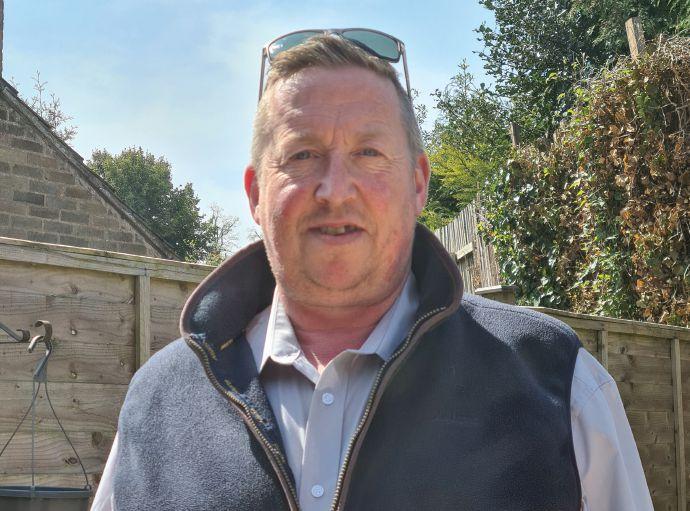
Adam Sedgwick.
nently positioned sub-soil monitoring systems can stream readings from multiple key locations across pitches in real-time, collecting all the information needed to make a real-time assessment on where to allocate time and resources.
Due to the way buildings shield or expose the field to different weather conditions, the pitch develops a variety of microclimates – each with its own challenges, pressures, and risks. Whether it’s how the pitch gets airflow, moisture retention in areas of shade, or areas contracting disease, sports turf managers are required to individually monitor and treat these zones to ensure
uniformity across the whole pitch.
An understaffed team will find it difficult to consistently take samples from the exact same measuring spots, reducing the consistency of manually-collected data. Additionally, tracking historical data to drive your future activities becomes nigh-on impossible. As a result, optimal turf conditions are difficult to achieve, water and expensive resources are wasted, and repetitive maintenance activities will increase costs. With real-time data coming from underground sensors, managers get a detailed view of the in-field variation of their pitch, and can accurately treat exactly where needed according to live current levels.
If heavy rain is forecasted, managers can program wetting agents in advance to ensure the moisture penetrates the soil and keeps it in good condition. If a period of drought is expected, moisture-retaining agents are deployed to keep the soil in good shape.
Ensuring a consistent playing surface is challenging when the soil’s growth potential and current conditions are unknown. When data is streamed from across a pitch in real-time, proactive agronomic turf improvement can be achieved as predictions can be made for plant nutrient and moisture requirements.
Aside from the physical health of the soil, athletic turf managers consider the home team’s tactics when it comes to the pitch’s condition. For example, in soccer, some teams prefer a shorter cut and a slightly wet surface to match their high intensity passing game. Others will want a dry, slower pitch with longer grass to suit their aerial superiority.
However, without some form of measurement system in place, there’s no way to effectively measure the outcomes of these practices, and finding the optimum levels is guesswork.
Applying fertilizer at the wrong temperatures and moisture levels can waste thousands of dollars per application. When you have only got the air temperature to guide you on when to apply fungicides to the field, you will inevitably waste expensive products and potentially harm the plant and soil beneath.
When critical plant health products are expensive, it’s important to get the application right, and this can only be done with a data-driven approach. This way, you guarantee that you apply the product at the most effective times, leading to a greatly improved effect from its use, yearly savings, and disease control can be simplified.
Turf in most cold countries sits dormant in the winter, and snow is an unavoidable enemy for turf managers. A healthy rug will be much more resilient during the winter months, so preparation is crucial. The grass plant can become extremely stressed due to the constant changes in temperature and moisture extremes. Additionally, the risk of snow mold is a big threat when the snow begins to thaw. Deeper below the surface, the increase in moisture from the thawing snow will also pump a lot of moisture in the soil, massively increasing the salinity levels.
Sub-soil heating can help to mitigate the effects of fungal disease from the insulation the snow generates on the top layer soil. Also, by tracking historical data from previous winters, wetting agents can be programmed with sub-soil heating to ensure optimum moisture drainage when the cold weather hits. Only with real-time alerts can you optimally ensure that you’re heating the pitch at the right times and before it reaches critical temperatures. This way, you’re able to increase the playable days of your surface.
Data-driven sports turf management is a real option for grounds teams looking for ways to adapt to today’s world. Tighter conditions tend to create efficiency improvements that can have long-lasting benefits. For instance, a stadium that has collected several years of historical data will have a clearer view of overall trends and the tendencies of each zone’s soils. Instead of reacting to changes, athletic turf managers will be able to proactively work towards even greater efficiencies and improvements that will compound with each new year.
Adam Sedgwick is Soil Scout vice-president of global sales and has accrued decades of experience working across several continents in a wide range of leadership roles. From turf and amenity to precision farming, machine control, machine automation and GPS, he has spent his career at the forefront of agricultural technology and processes. A Harper Adams graduate with masters’ degrees in agri-business and crop science, he believes in the potential to contribute to a new era of sustainable agriculture and professional turf management.






Lawn care professional says initiative will show just how active microorganisms are in the soil
By Mike Jiggens
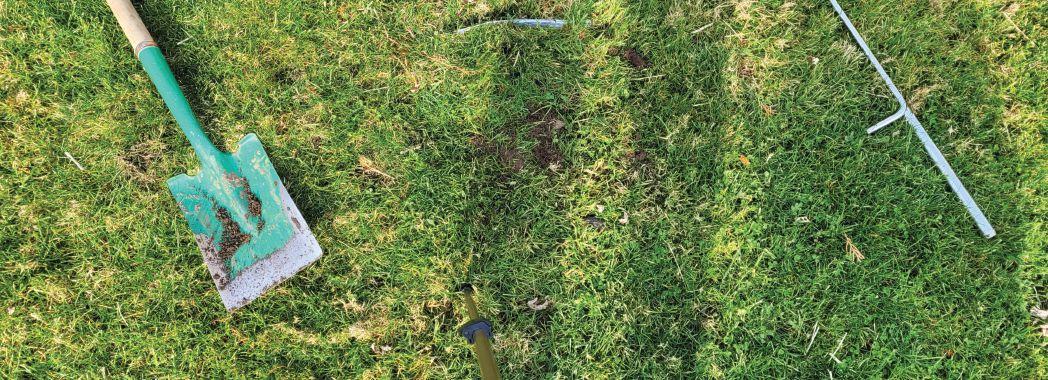
ASt. Catharines, Ont. lawn care professional is challenging other companies and consumers to “Soil Their Undies” this spring during National Soil Conservation Week, April 25 to May 2. The initiative of the Soil Conservation Council of Canada encourages participants to bury a pair of 100 per cent cotton briefs into the soil for two months and then examine the level of the underwear’s decomposition.
Michael Stangl, owner of Stangl’s Enviro Lawn Care, is encouraging others in the industry to bury two pairs of briefs in the same general area – one to be extracted after 30 days and the other to be recovered after 60 days.
The Soil Conservation Council of Canada suggests the underwear be buried within the top six inches of soil with the top part of the waistband still showing. At the end of the prescribed intervals, the underwear should be retrieved from the ground and placed in a bucket of water to remove any remaining soil. If nothing much of the underwear’s material is left, it will indicate a healthy soil with plenty of biological activity happening.
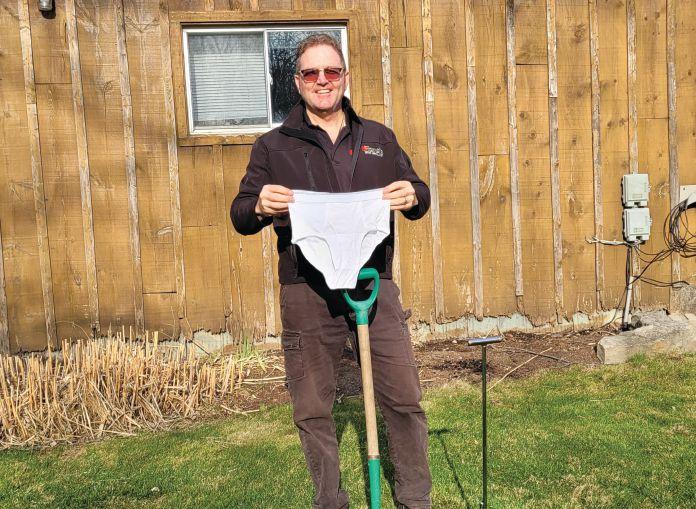
Stangl got a head start on his own involvement in the “Soil Your Undies” initiative by burying six pairs of underwear in December, not only on his own home lawn but in other areas including a regen market garden and orchard.
“We’re going to show how biology grows and works all winter long by the breakdown of the underwear,” he said.
The underwear he buried were to be retrieved about Feb. 10 so that the results could be shared at the Innovative Farmers’ Association of Ontario’s virtual conference, Digging Deeper, Feb. 16-19 at which he is speaking.
The proponent of regenerative lawn care previously took soil samples from
each underwear burial site to determine the populations of such organisms as protozoa, nematodes and microarthropods, and also determined the soil’s biomass ratio of fungus to bacteria.
He said turfgrass is more of a fungal plant with a one-to-one ratio with bacteria. If there is more weight among the bacteria, the soil will be a more anaerobic, higher nitrate system that flushes up more weeds.
“That’s what our lawns are. We have a bacterial-dominant compacted dirt that flushes up weeds because when spring comes along and the bacteria starts getting active, naturally you wouldn’t have as much nitrate available, but when we pump on fertilizer, we excite that bacteria and in
return get a breakdown in the carbon in the soil – the organic matter – and it comes up as carbon dioxide, but the plant is picking up all these minerals and nutrients because now the bacteria is eating, eating, eating. The plants are absorbing it.”
Stangl said no one needs to be a scientist to fully understand what is happening in the soil, but noted it’s important to realize that weeds grow due to an imbalance of life within the soil.
“It’s not growing to compete with the grass. It’s growing to get the biology and soil health father ahead so we don’t have to use chemicals. The plant diversity we call weeds is going to be part and parcel of landscapes. We keep spraying with products and still come up with the same problem.”
The science of the rhizosphere microbiome within the past 10 years has risen significantly, he said, and it’s harder to blame the weather anymore for turf problems.
“What happens with the weather is an issue or outcome from what we’re doing to the land. What’s happening with the weather is caused by what we’re doing on the lawn.”
When he began his career in lawn care in 1981, Stangl said he sprayed chemical products five days a week, covering 100,000 square feet daily, and returned home at the end of the day feeling woozy, even though he was otherwise healthy. That prompted him to further his education to see how he could still effectively maintain lawns without having to rely on so much product. As a result of his stepped-up education, he said he realized that what he was doing to the soil was the cause of weed growth, noting that the destruction of life in the soil was causing it to collapse to compaction. He said each microgram of nitrogen added to the bacteria eats five micrograms of organic matter, and that’s what causes grass to grow so quickly.
“It looks good, but it’s not a healthy plant at the end of the day.”
The turf is rendered more susceptible to drought, heat, disease and insects, he said.
Stangl said lawn care professionals are stewards of lawns and plants and should be producing a healthy soil and eco system for
all. The regenerative lawn care process allows the soil to improve over time, resulting in a self-perpetuating regenerative cycle where worm populations are at about 25 per cubic foot. He added the process allows for reduced inputs that lead to increased
profits. The process also allows carbon to build within the soil while conventional lawn care burns it off, he said.
His lawns and sports fields have sequestered more than 60 tons of carbon dioxide, reducing the effect of climate change.





Stangl said it’s been a challenge to sell the concept of regenerative lawn care to potential customers, but noted many lawn care companies end up returning to their customers’ properties to apply more product to keep them appeased. He has used educa-

tion to allow his customers to see the merits of his approach.
“I’m happy with all my customers. I’m doing more profit today with less work. Yes, there’s weeds on their lawn – just like a chemical lawn – but I’m not spraying chemicals every time I’m going out the door.”
Customer communications
Communicating with the customer is essential to making it work. If there are some weeds on their lawns yet they’re continually informed, they won’t mind so much, he said.
“We have a perception in our minds developed from marketing, and our outcome and expectations are two different things, and I’m trying to draw them together for the consumer to understand. An expectation is an unrealistic approach to the outcome because it all depends on too many things, especially within nature.”
The science behind the rhizophagy cycle – in which microbes alternate between an endophytic phase and a free-living soil phase – has been studied for more than 10 years and is considered leading edge. It builds upon regenerative processes that don’t require fertilizer and is something to which Stangl subscribes.
He said COVID-19 has increased awareness for regenerative land care, especially in the agricultural sector, noting that scientists are saying that soil biome is the same as a human being’s gut biome. To disrupt the soil biome is to disrupt our own, leaving us more vulnerable to a common virus or the flu bug. Food that comes natural and healthy from nature promotes more systemic health from inside out, and applying a product isn’t helping, he said, adding a regenerative approach will retain the nature and increase the biology.
“We are a biological community.”
Stangl is a scheduled speaker at the Feb. 16-19 Innovative Farmers’ Association of Ontario (www.ifao.com) virtual conference, called Digging Deeper. His presentation is titled, “Microscopic Demo of Soil Food Web Players” – a real time microscopic soil demonstration showing the trillions of characters that together form the soil food web and how they interact to play a key role in nutrient allocation and yield production.
CONTINUED FROM PAGE 8
Employees first: the path toward higher profitability
discussions with Kehne’s staff and keeps all conversations confidential. Kehne said he doesn’t have sufficient time to have frank discussions with all of his employees, but the chaplain is available 24 hours a day if a matter is particularly bothersome to the worker.
Fraynd said a worker can’t simply be judged off-handed as lazy if he fails to show for work or puts in a poor work performance, suggesting there may be a valid reason behind it. Rather than tell the employee that he’d “better get better at this or else,” he meets with the individual and asks what’s going on with his life, telling him he’s worried about him. He said it’s a more effective approach than saying to the employee that if he doesn’t smarten up, he won’t remain employed much longer. Adopting the gentler tact, the company gives the employee 90 days to show improvement with check-in periods scheduled every 30 days.
“Getting to know people on a personal level helps to know these things,” Fraynd said. “If you actually show people you care, the people who are still left see that respect

you gave to the person who’s leaving, and that shows your values in action all the time.”
Further illustrating his company’s mission to put employees first, Fraynd shared the story of a customer who wanted Sun Valley Landscaping to replace a couple of dying trees on his property. The customer had a reputation for being difficult and was not pleased that the crew maintaining his property – whose mother tongue was Spanish – spoke little English. He sent an email to the company to voice his displeasure, also wondering if the workers were being paid under the table and were perhaps involved in other improprieties. The company’s general manager told Fraynd he didn’t think the customer was respectful enough to the crew for the business to continue to maintain his property. The company mailed a letter and cheque to the customer, letting him know that Sun Valley Landscaping strives to treat their employees as valued human beings, adding, “We’re not coming back to your property.” The directive was applauded by the company’s employees.
Both Fraynd and Kehne practise what they call “open book management,” meaning strategies and financial information (except for salary disclosures) are shared

with team members. Fraynd said if such information isn’t sugar-coated and employees are provided with the truth, the company will have better workers.
He said his company experienced a lacklustre year in 2018, adding, “We were in a bad spot and low on cash.” Employees were told that if another bad year followed, the company might not make it, and he implored his staff to step up. The team responded by saying, “You’ve always had our back and now we have yours.”
Fraynd said he was personally motivated by the positive feedback received from his employees, and 2019 was a turnaround year. If a company can resist living in fear and not dwelling on the “what ifs,” hard work and good people will take the team in the right direction, Kehne said. Growth presents opportunities for the team, he added, saying if it’s not there, the only growth that will come will be via attrition.
Lawn Butler tries as much as possible to hire from within, and about 80 per cent of its senior positions have been filled in this manner. As another means of putting his employees first, Kehne said employees are periodically rewarded with gift cards when customers provide positive feedback following a service that has been provided.






By CCOHS
Whether you work in groundskeeping, landscaping, gardening or other outdoor work, your job likely involves performing some tasks over and over again. This could put you at risk of developing a repetitive strain injury (RSI).
RSI (also known as musculoskeletal disorders) is a general term used to describe a variety of painful injuries that affect tendons, tendon sheaths, muscles, nerves, joints, and other soft tissues. They cause persistent or recurring pain most commonly in the neck, shoulders, forearms, hands, wrists, elbows, and lower limbs.
Repetitive strain injuries are a serious workplace health concern, causing pain and suffering for many workers. These injuries place economic burdens on society in lost productivity, compensation costs and health care costs. Musculoskeletal disorders are the most frequent type of losttime injury and the single largest source of lost-time costs in Canada. According to the Association of Workers’ Compensation Boards of Canada (AWCBC), in 2018 more than 9,600 lost time claims were reported due to musculoskeletal diseases and disorders.
So how do these repetitive strain injuries happen? They are often caused by movements that we naturally make every day – movements such as gripping, holding, bending,

twisting, clenching and reaching. While not necessarily harmful on their own, the continual repetition of these movements over time can be harmful to workers. These movements can be particularly hazardous when they involve the same joints and muscle groups over and over, when performing the same motions too quickly, and for too long. As a result, groundskeepers and other outdoor workers may experience soreness and pain in their hands, wrists, shoulders or back.
There are other work factors that may contribute to injuries, such as working in an awkward posture, fixed body positions, and excessive force concentrated on small parts of the body such as the hand or wrist. Lifting heavy loads improperly, or a fast pace of work with insufficient breaks or recovery time can also be contributing factors.
Work involving movement repeated over and over can be very tiring because the worker doesn’t have time to fully recover in the short periods between movements. Work pace determines the amount of time available for rest and re -
covery of the body between cycles of a task. The faster the pace, the less time is available for rest and the higher the risk for developing an injury. Eventually, it takes more effort to perform the same repetitive movements. When the work activity continues despite pain or fatigue, injuries can occur.
Stress levels increase when workers have no control over the timing and pace of work. In turn, these higher stress levels can lead to muscle tension, causing fatigue and increased risk for repetitive strain injuries.
Movement repeated over and over can be very tiring.
Pain is the most common symptom associated with repetitive strain injuries. Symptoms may vary, but often include joint stiffness, muscle tightness, redness and swelling of the affected area. Some workers may also experience sensations of “pins and needles,” numbness, skin colour changes, and decreased sweating of the hands. Symptoms usually develop gradually, and
the injury may progress in stages, ranging from mild to severe, eventually causing longer periods of pain. Eventually, without treatment, the symptoms can become constant and affect workers’ ability to perform their job or even light duties. At this stage the condition may be irreversible.
Not everyone goes through these stages in the same way. However, the first feeling of pain is a signal that the muscles and tendons should rest and recover. Otherwise, an injury can become longstanding, and sometimes, irreversible.
Prevention measures can include providing adequate job design, including scheduled breaks, well-designed and comfortable equipment and tools, and training in awareness of how injuries occur and proper lifting procedures.
The most effective solutions are those that eliminate hazards at the source. Employers should focus on avoiding repetitive patterns of work through job design changes or by mechanizing tasks, where possible.
Because repetitive strain injuries develop slowly over time, workers should be trained to understand what causes these injuries, how best to prevent them, and how to recognize the early signs and symptoms.
The earlier workers recognize symptoms, the quicker they and the workplace can respond to them.
Otherwise, an injury can become chronic, and even irreversible.























NEW TIER 1 FLEET
FEATURING 10% DISCOUNT ON A ONE-TIME ONLY QUALIFYING PURCHASE
ADDITIONAL DEEPER DISCOUNTS OFFERED FOR $2,500 AND $5,000 INVESTMENTS
EXTENDED PROGRAM TERMS
TIERS 2 & 3 WITH DISCOUNTS UP TO 24 MONTHS
FOR







EXPANDED PRODUCT RANGE INCLUDES BOTH ECHO AND SHINDAIWA PRODUCTS
POWER & PERFORMANCE GUARANTEED COMMERCIAL GRADE PRODUCTS & INDUSTRY LEADING WARRANTIES
TRY BEFORE YOU BUY ECHO’S NO OBLIGATION DEMO PROGRAM