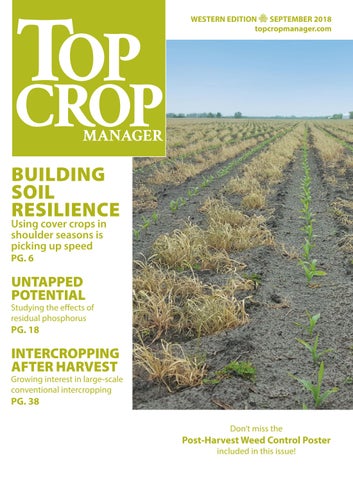
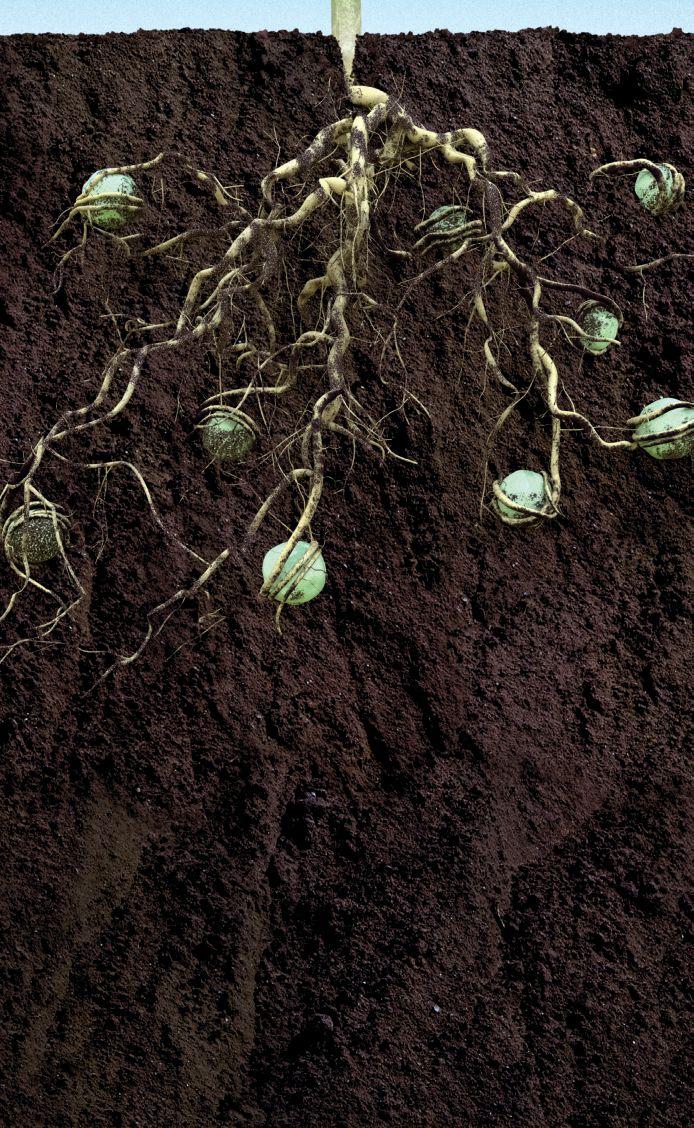
Using cover crops in shoulder seasons is picking up speed
PG. 6
UNTAPPED POTENTIAL
Studying the effects of residual phosphorus PG. 18
INTERCROPPING AFTER HARVEST
Growing interest in large-scale conventional intercropping PG. 38
Don’t miss the Post-Harvest Weed Control Poster included in this issue!
Get a head start on spring weed control.
Fall-applied, spring activated Valtera™ and Fierce® herbicides get a jump on weeds before they even have a chance to challenge your spring crop.
Ease of application
• Apply Valtera or Fierce in the fall with a simple field sprayer application.
• Eliminate the hassle of applying dry, broadcast products that require additional equipment and passes over the field.
• No bulky product to store and handle.
Fall
CROPS
Performance
• Valtera (Group 14) provides extended residual control of broadleaf weeds for chickpeas, field peas, lentils, soybeans and spring wheat.
• When applied before soybeans and spring wheat –Fierce (Group 14 & 15) provides powerful performance with the synergy of its two actives controlling broadleaf and grassy weeds.
Convenience
• When applied in fall, Valtera and Fierce create a protective layer of herbicide that activates with spring moisture.
• While you’re busy seeding, Valtera and Fierce can actively help control spring weeds as they emerge.
• In spring, residual activity of Valtera and Fierce take out multiple flushes of weeds for up to 8 weeks.
Helps control weeds up to 8 weeks after activation. Activates with spring moisture.
Extended early season control of kochia, chickweed, pigweed, lamb’s-quarters, seedling dandelions and suppression of volunteer canola.
Enhanced control of wild buckwheat, kochia, chickweed, pigweed, lamb’s-quarters and grassy weed species.
Purchase any amount of Valtera herbicide for the opportunity to earn a $2.00/ACRE REWARD
realfarmrewards.ca
Fall-applied, spring weed control.
Fall-apply Valtera™ or Fierce® and they’ll activate with spring moisture. Each product is effective up to eight weeks after activation, eliminating weeds before they ever have a chance to grow. Simple application through field sprayers removes the hassle of granular application saving time now and during seeding.
Valtera provides extended residual protection, safely eliminating the most troublesome broadleaf weeds in pulses, soybeans and spring wheat.
Fierce provides elevated performance when applied before soybeans and spring wheat. The synergistic activity of Group 14 and 15 provides uncompromising elimination of broadleaf and grassy weeds.
Fall-apply for a clean start next spring.
Always read and follow label directions.
Valtera™ is a trademark and Fierce® is a registered trademark of Valent U.S.A. Corporation. Real Farm Rewards is a trademark of Monsanto Technology LLC, Monsanto Canada, Inc. licensee. 61008-0718
TOP CROP
MANAGER
6 | Building soil resilience with cover crops
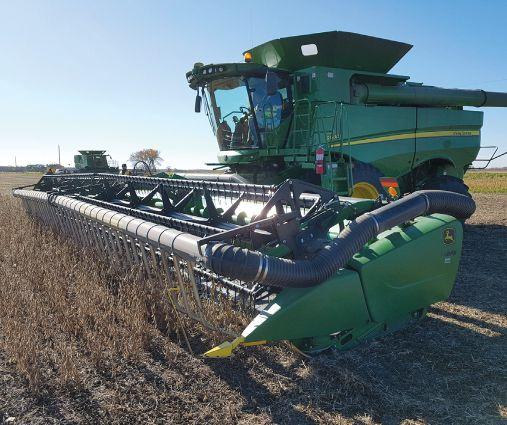
Using cover crops in shoulder seasons is picking up speed.
By Julienne Isaacs
HARVESTING
24 | Should you sell the swather? PAMI research investigates straight-cut canola.
By Bruce Barker
What’s up with boron? by Bruce Barker
Protecting topsoil to minimize P runoff by Julienne Isaacs
SOYBEANS
42 | Reduce soybean harvest losses by 50 per cent
Slow down or add an air reel.
By Bruce Barker
ON:
Maximizing value from Fusarium-affected grain by Carolyn King
Intercropping after harvest by Donna Fleury
ON THE WEB
You know what the words Top Crop Manager mean to us – now, we want to see what being a Top Crop Manager means to you. Enter our cover photo contest, sponsored by Meridian Manufacturing, for a chance to be featured on our December cover. For submission guidelines and full rules and regulations, visit www.topcropmanager.com/photo-contest.
Readers will find numerous references to pesticide and fertility applications, methods, timing and rates in the pages of Top Crop Manager. We encourage growers to check product registration status and consult with provincial recommendations and product labels for complete instructions.
PHOTO COURTESY
TOP CROP
STEFANIE CROLEY | EDITOR
TIME TO SPEAK UP
The discovery of (and subsequent announcement about) a few unregulated genetically modified (GM) wheat plants on an isolated access road in southern Alberta raised dozens of questions from the ag community and the general public – and the confusion still remains.
The plants were discovered in 2017 but not announced to the public until June 2018. This is the first time unregulated GM wheat has been found in Canada (although other cases have happened over the past decade in Washington, Oregon and Montana), and the discovery prompted South Korea and Japan to temporarily suspend shipments of Canadian wheat (the countries resumed Canadian wheat purchases on June 26 and July 20, respectively). The wheat – discovered in the summer in 2017 when it resisted herbicide spraying treatment – was determined to contain a genetically modified trait developed by Monsanto, but was not linked to company field trials conducted several years ago in a different part of Alberta.
Though the story is still newsworthy, the hype around it seems to have died down a bit among the mainstream media. But against my better judgment, I decided to read comments on a national newspaper’s online article about the discovery, and the amount of comments from people who still have misunderstandings about genetically modified organisms is staggering. Terminology is misused and people are quick to make assumptions and place blame. And it’s not just happening on the Internet. At my local grocery store, I recently overhead a shopper comment about how she likes to purchase a certain brand of artisanal bread because it’s clearly labelled to be free of GMOs. The package doesn’t lie, but the marketing is clever –and it clearly works.
It’s disheartening to read and hear comments like this, but what’s more disappointing is to see the lack of commentary from the other side. It proves the disconnect between producer and consumer still exists, and I fear it’s going to get worse. I didn’t see a single comment on that article that clarified any of the misconceptions about genetically modified crops grown in Canada, and without commentary from the experts (read: you), misinformation spreads like wildfire.
My eldest son is not quite four years old, and can identify the crops grown around our house. He’s quick to point out a sprayer in the neighbouring field and will just as hastily correct you if you mistakenly call it a tractor. He’ll also be a part of the generation that won’t grow up with a landline phone in the house, but likely with more than one computer and tablet instead. He will have access to more information at his fingertips than he will ever need. I know I’ll have the ongoing task of helping him (and my other children) learn the difference between the “good stuff” and the “bad stuff” he encounters every day, but I hope he uses these tools wisely and continues to identify when something is wrong, and speak up when he has questions.
At least once a year, something prompts me to step up on the soapbox and use this short column to preach about the importance of educating the public about what you do. Maybe it’s the conviction with which my son talks about the differences between a combine and a tractor, or maybe it was that grocery store conversation – but here’s my annual reminder to you. The agriculture industry needs to work harder than ever to bridge the gap between producer and consumer, and everyone has a role to play. Channel your inner preschooler and use your voice to defend what you’re passionate about.
Straight cutting the patented Pod Shatter Reduction (PSR) canola hybrids from InVigor® not only makes harvest a little easier, it also saves you time and money. Simply tweet a picture or video showing us why you love InVigor PSR hybrids or love straight cutting your canola using the hashtags #SellTheSwather and #sweeps, for a
BUILDING SOIL RESILIENCE WITH COVER CROPS
Using cover crops in shoulder seasons is picking up speed.
by Julienne Isaacs
Research is building on the many benefits of cover crops, from their ability to help boost yields in subsequent crops to improved soil structure and reduced erosion.
A new area of focus for researchers and producers alike is the use of cover crops in so-called “shoulder seasons” – fall after harvest, and spring before planting – in order to help build resilient, productive soils.
“Where we are with climate change, it’s about extremes,” says University of Manitoba cropping systems researcher Yvonne Lawley. “Sometimes both extremes – too wet or too dry – occur in the same growing season, like in Manitoba over the last couple of years where we’ve had both not enough moisture and too much in the same season.
“That’s where the theme of soil health comes in. We need soils that are resilient enough to handle both extremes,” she says.
The “new paradigm of cover crops,” according to Lawley, is to use cover crops in the shoulder seasons, not just by eliminating fallow but by using the entire growing season, before crops are planted in the spring and after they come off in the fall, to build biomass
and provide energy to soil microorganisms and root systems and improve infiltration and aeration in the soil.
In 2017, Lawley started a three-year project funded by Manitoba Pulse and Soybean Growers that will look at the use of cover crops following edible beans, which is a low-residue crop.
“We’re planting seven species and one mix at three timings –mid-August, September first and middle of September,” Lawley explains. “Edible beans are not harvested in mid-August, but we’ll look at the potential for interseeding or other early establishment strategies at that date.”
Lawley’s main research goals are to identify which cover crop species can produce the most biomass in late fall as well as optimal planting dates for cover crops following edible beans.
Management questions
According to Lawley, it’s important to take a “humble” approach to
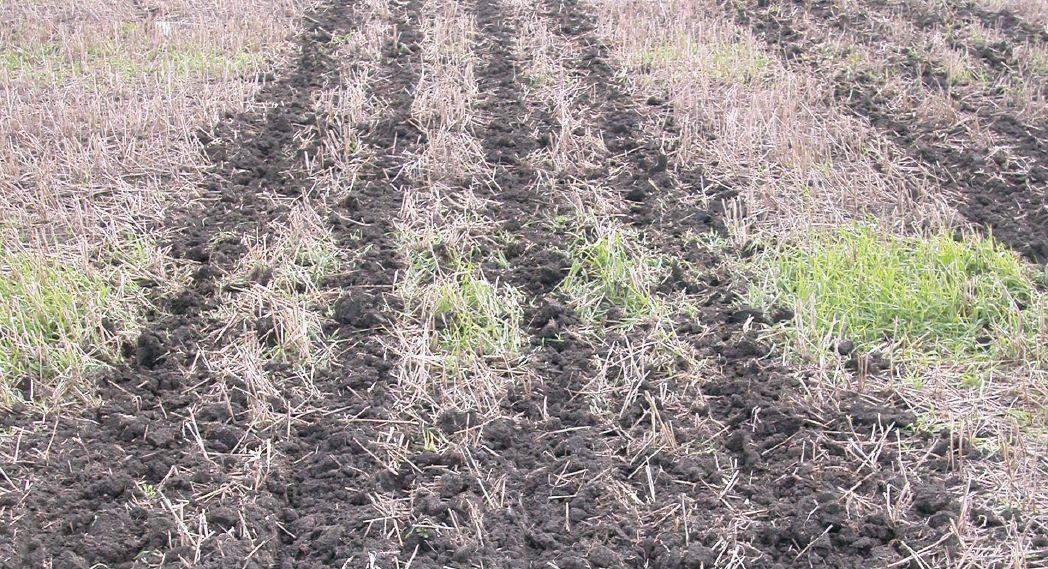
ABOVE: Dean Toews’ farm combats erosion by using residue to cover the soil surface in the shoulder seasons.
Richardson is committed to ensuring reliable and efficient services for our customers.
From increasing storage capacity to adding high-speed fertilizer blenders across our Richardson Pioneer network, we continue to invest in our facilities to enhance our operations and serve our customers. We are committed to operating the most efficient, fully integrated network of high throughput grain elevators and port terminals to move your grains and oilseeds from the Prairies to markets around the world.
Being truly invested is at the heart of everything we do. To learn more, visit richardson.ca
this type of research because of its real-world challenges and applications.
“It’s important for me to do experiments that compare replicated treatments side-by-side but the work I do is informing those people who are innovating on their farms,” she says. “For me as a researcher working with cover crops, it’s about demonstration of principles that can be adapted and applied to different situations. There is a diversity of needs and questions about how to use cover crops across Western Canada. Where do you start? It’s a conversation between farmers and researchers – that’s how our knowledge of how to use cover crops in Western Canada will move forward,” she says.
There are many variables when it comes to working with cover crops. Farmers have to juggle planting and termination dates, budget for extra seed (and sometimes extra equipment), and most importantly, choose the cover crop species that will work best on their operations.
Lawley says the latter choice is more difficult in Canada than the U.S., where help for producers to select cover crop species and source seed has become much easier.
But farmers’ questions about how best to use cover crops don’t stop there. There are others to consider, such as when and how to seed cover crops during the busy harvest season, how much moisture is needed for seeding cover crops and seed placement.
Lawley is collaborating on an experiment with Adam Gurr, a farmer in Brandon, Man., whose company Agritruth Research develops independent agronomic data on cropping systems.
Last fall, Gurr started a long-term cover cropping experiment within an annual cropping system to determine the value of including cover crops in the shoulder seasons.
“In order for us to adopt the system we need data, and I don’t know that there’s a lot of data yet,” says Gurr. “There’s a lot of anecdotal evidence out there, though, and that’s what prompted
us to do this study.”
In the Brandon area, Gurr says producers who use cover crops tend to have integrated crop-livestock operations and cover crops are useful for extending the grazing season, but cover crops are not widely used in annual cropping systems.
Lawley’s team has funding to do baseline sampling on Gurr’s project for five years, but Lawley plans to continue monitoring the experiment with Gurr over the long term.
“We’re going to compare any changes based on initial sampling we did. It comes down to economics, the cost of seeding, the cost of the seed, and crop yield and quality over time. We’ll keep a running tally on the differences we see,” he says. “If you’re able to establish that there’s an economic benefit to using cover crops, then you make it work. That’s what were trying to do here – determine what that benefit is.”
Real-world benefits
Dean Toews, who farms near MacGregor, Man. with his father and brothers, has been using a fall rye cover crop since 2005 in order to protect his soil from erosion.
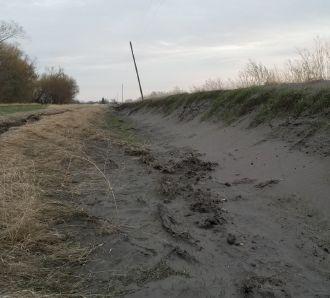
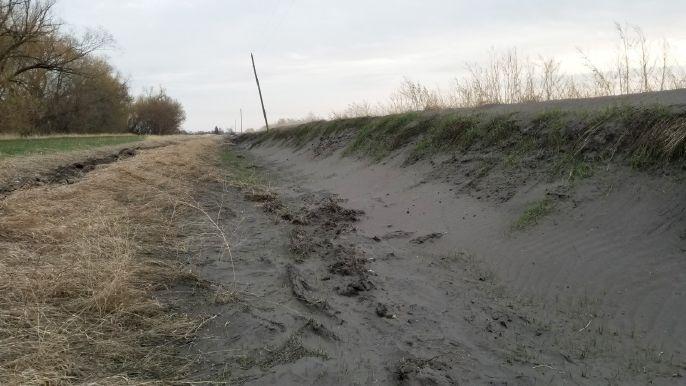
“We have sandy loam soil so the surface can blow for days,” he says, adding some farmers in his region who do not use cover crops end up with sand dunes in their ditches after windstorms.
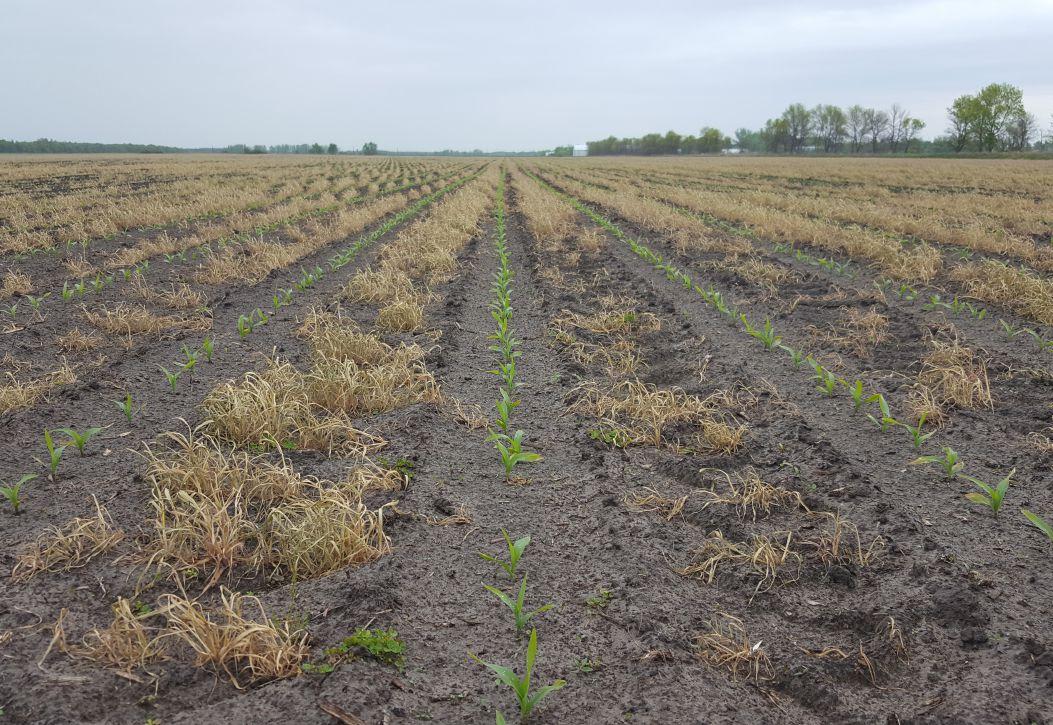
On the Toews’ operation, they grow fall rye following edible beans, and then plant corn in eight-inch strip-tillage strips, terminating the rye after the corn is out of the ground. They put fertilizer right where they will plant their corn in order to prevent the rye from robbing those nutrients from the corn.
Before they moved to a strip-tillage system, the Toews would broadcast nutrients and plant corn directly into the rye; the corn would have to compete with established rye and would struggle until the rye was sprayed out. If sprayed too early, the corn would struggle from exposure and wind erosion issues until it was
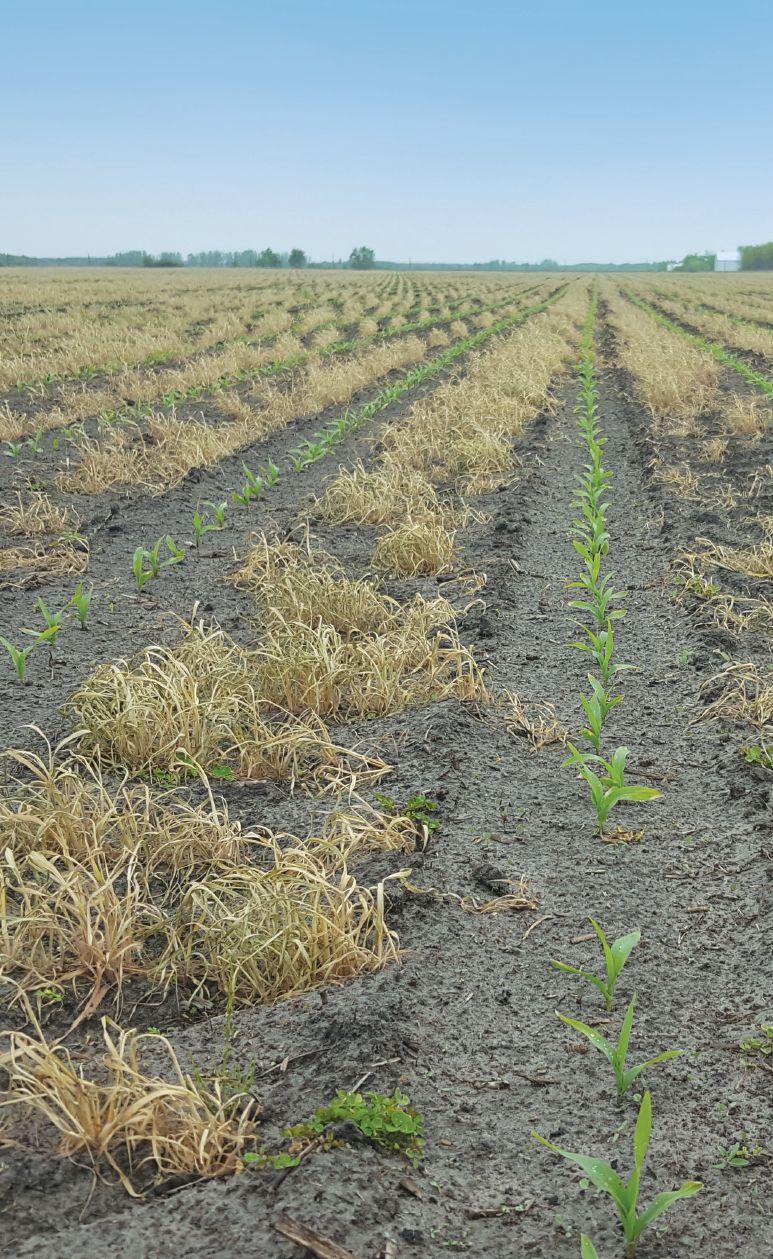
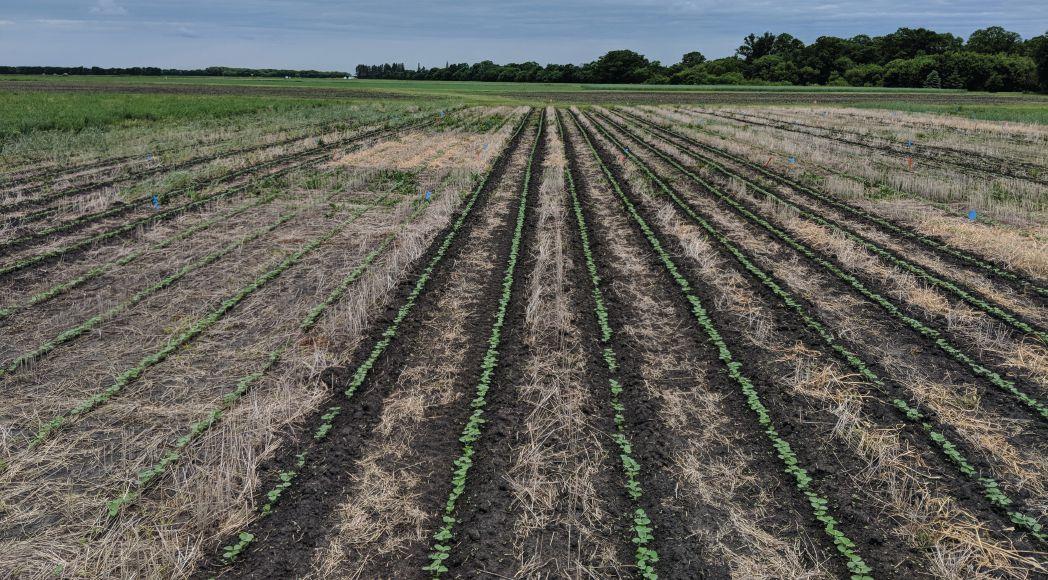
Yvonne Lawley’s 2018 green cover crop experiment showing a plot in the foreground with strip tillage and terminated rye next to one with terminated rye and direct seeding.
PHOTO COURTESY OF CODI HENNAN.
established enough.
“We’d see a 10 to 15 bushel yield drop when we left the rye too long,” Toews explains. “Now we have an eight-inch barrier, with no competition for the corn to start, with the rye growing beside the row. That buys us time before the rye can go after the nutrients, and then we spray it down and it leaves a brown mat on the ground.”
This means the Toews have erosion
protection in two ways: they leave the rye to grow longer, a living cover after the corn is seeded; and the rye biomass from the extra growth provides residue cover after termination, explains Lawley.
Toews’ advice to farmers considering using a cover crop is to get it in the ground as soon as possible in the fall. In the spring, he cautions farmers against leaving the cover crop growing too long, particularly if
they’re not using strip tillage.
On land that is subject to wind erosion, he says the use of cover crops is a good management tool.
As far as the value of cover crops is concerned, Toews says it’s hard to calculate, but on his operation shoulder season cover crops work almost like insurance against erosion. “What does it cost other farmers to have the soil blowing into the ditch? What if he starts corn the next year and the sand blows and cuts off the corn stalks or exposes the seed?” he asks.
“On October 19 last fall, there was this massive windstorm, and the wind broke a lot of corn stalks down. That day, a lot of dirt moved, and there were clouds two miles away from the fields. That all costs money – it plugs your ditch and wrecks your drainage. What does that cost to repair?”
The actual value of cover crops is a practical question that Lawley hopes to answer in another long-term experiment looking at cover crop intensive systems.
But for farmers like Toews, it’s already evident that cover crops are an investment in resilient soil.
COMMUNITY HEROES IN THE MAKING
Ditches near Dean Toews’ operation show the effects of wind erosion.
PHOTO COURTESY OF DEAN TOEWS.
LIFE UNDER THE SNOW
Agriculture and Agri-Food Canada research has found that biological activity in the soil continues over the winter, even at below-zero temperatures. What does this mean for fall fertilization practices?
by Mark Halsall
Fertilizers and manure are often applied in the fall to help crops get off to a good start the following spring. There’s some new research, however, that indicates the practice may not be as productive as farmers think.
Martin Chantigny, an Agriculture and Agri-Food Canada scientist in Quebec specializing in soil biochemistry and nutrient cycling, and Claudia Goyer, a molecular bacteriologist at the AAFC’s Fredericton Research and Development Centre in New Brunswick, recently co-led a national study on biological processes in the soil aimed at devising better ways to utilize essential nutrients required for plant growth.
Their research showed biological nutrient cycling continues at below zero temperatures throughout the winter, and that this soil activity can lead to nitrogen losses through nitrous oxide emissions or leaching. The studies also showed that soil activity over winter also affects phosphorus and carbon levels available for spring growth.
Goyer says while it’s commonly believed there’s not much going on in the soil in the winter months, up to 80 per cent of the nitrous oxide gases from the natural breakdown of plant
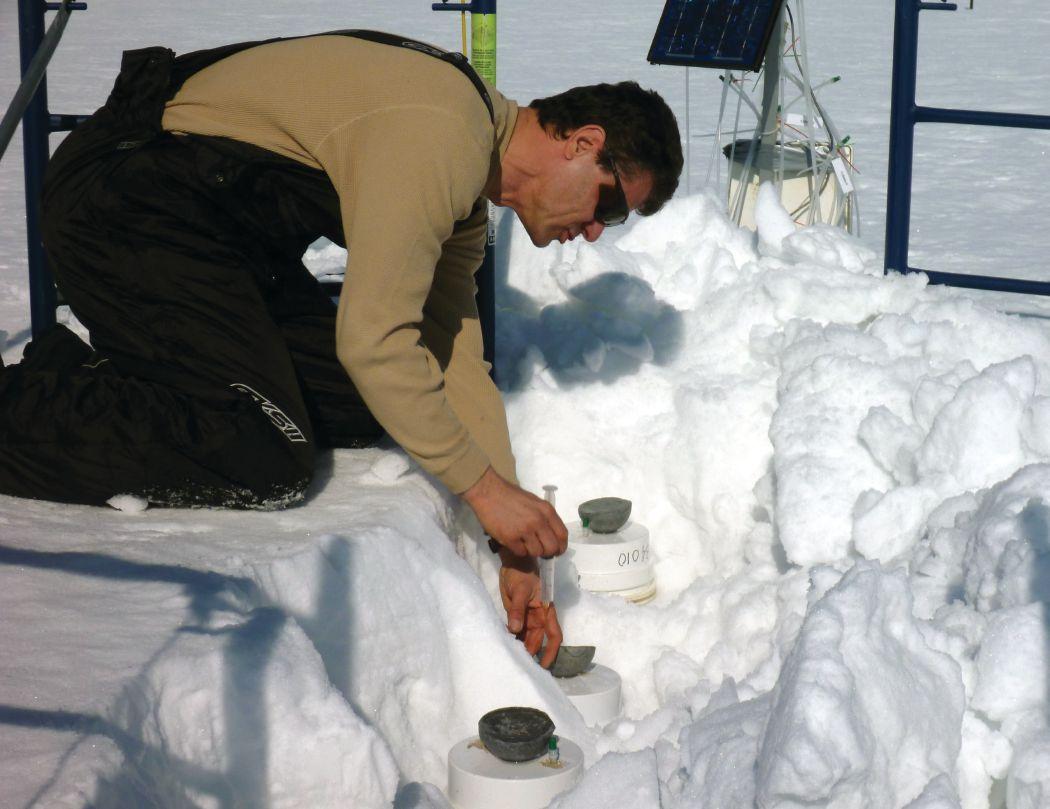
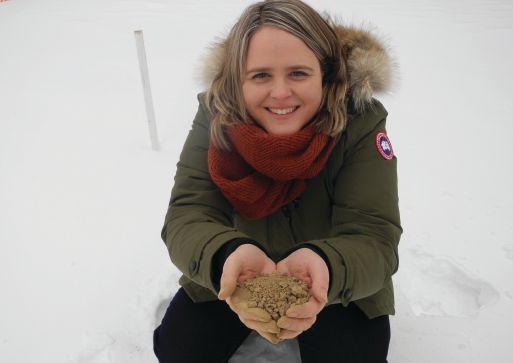
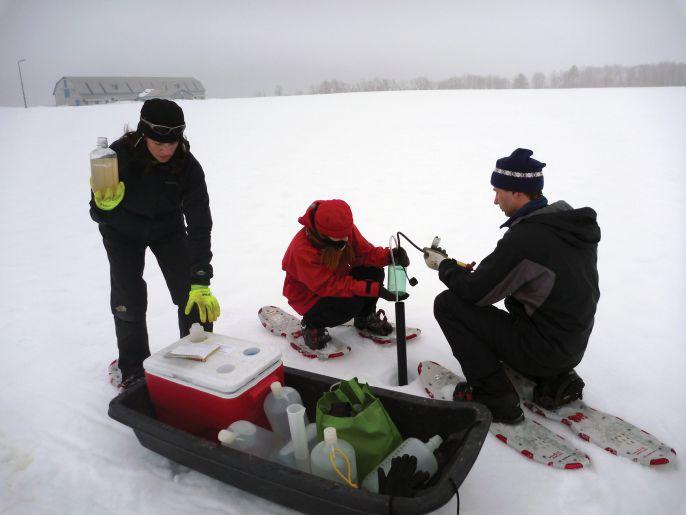
TOP: Normand Bertrand was among the members of Martin Chantigny’s team assessing soil nitrous oxide emissions during winter in Quebec in 2010.
BOTTOM: Claudia Goyer during her winter snow/soil testing in New Brunswick in 2014.
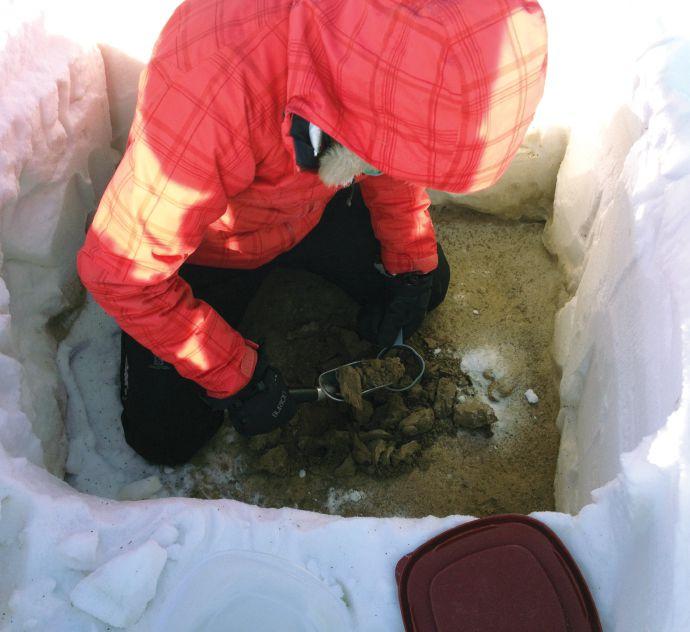
Lindsay Brin, a member of Claudia Goyer’s team, studying the impact of snow depth on nitrous oxide emissions, sampling frozen soil in New Brunswick in 2014.
material, fertilizers and manure by microorganisms in farmers’ fields are produced during this period, particularly during spring thaw.
Because of these emissions, the amount of fall-applied nitrogen left in the soil that’s actually available for spring growth could be as little as 10 or 15 per cent, according to Chantigny.
“Depending on the site, what we’ve seen is that at least half of the available nitrogen applied in the fall is generally lost, whatever kind of the nitrogen source it is,” Chantigny says.
“The conclusion is that fall really is a very complicated period to apply nitrogen. Of course, many farmers just can’t avoid it because they have other
Photo courtesy of Claudia Goyer.
conditions the losses are likely to be high over the winter.”
Chantigny suggests farmers who choose to apply fertilizers or manures after harvest may be better off delaying it for as long as they can in the fall.
“I would say the applying as late as possible in the fall just reduces the period of time where nitrogen will be left in the soil without any crop uptake. It probably increases the odds for a good nitrogen recovery in the spring,” Chantigny says.
“One of the effects of denitrification over winter is that you’re losing some of the nitrate that could be useful for your crop in the next spring.”
Chantigny and Goyer were among 17 soil scientists who participated in the research initiative funded by Growing Forward 2 which wrapped up this past spring. Research was coordinated across dozens of sites at AAFC research centres
in B.C., Alberta, Manitoba, Ontario, Quebec and New Brunswick, along with research partnerships with a number of Canadian universities.
New Brunswick study
Goyer’s study in New Brunswick involved potato and barley crops and focused on the impact of snow depth on nitrous oxide emissions. She says her research indicated that colder soils that have less snow cover over winter will have greater microbial activity and produce greater emissions as a result.
Goyer says the findings were the opposite of what one might expect, since snow can act as an insulating cover. She points out that while colder soils with less snow cover typically contain less oxygen and experience deeper frosts that can kill microorganisms releasing the soil organic carbon that favours denitrification, there is such a diversity and abundance of microorganisms in soil that the remaining microorganisms will be very actively releasing nitrous oxide.
Nitrous oxide is a greenhouse gas, and Goyer believes that by reducing nitrous oxide emissions this not only helps fight global warming but also results in reduced nitrogen losses that can benefit growers by keeping more nitrogen available in the soil for plant growth.
“One of the effects of denitrification over winter is that you’re losing some of the nitrate that could be useful for your crop in the next spring,” Goyer says.
Crops really grow for ESN® SMART NITROGEN®, and so does your bottom line. That’s because its unique technology responds to the same factors that spur plant growth. How does it do it? ESN is a urea granule encapsulated in a polymer coating that protects the nitrogen from loss through leaching, volatilization and denitrification. ESN technology controls its release to match plant demand based on soil temperature. Your crops get the nitrogen they need, when they need it. That’s what we mean by responsive.
Minimize N loss. Maximize Yield.
Origins of research
Chantigny first began his soil research in this area back in 2009 under a Growing Forward 1 initiative, and he continues to build on this work. Chantigny is still monitoring test plots with corn and cereal crop systems at the Normandin Research Farm that’s part of the AAFC’s Quebec Research and Development Centre in Quebec City, but he’s expanding his focus to include perennial crops as well.
“For my part I am continuing to see if the story is the same or if it is different
when you have a perennial crop on the soil, so at the moment we are also measuring greenhouse gas measurements and looking at microbiological communities in the presence of perennial grasses and legumes,” he says.
Chantigny maintains one of the main objectives of his soil fertility research is help growers come up with improved farm management practices that could help increase nutrient use efficiency and reduce nutrient losses.
Applying nitrogen fertilizer later in the fall could be one such practice, but Chantigny cautions that weather may render a fall nitrogen application relatively ineffective, regardless of the timing.
“If there’s much snow over winter or a lot of water entering the soil in the spring before seeding, you may lose nitrogen [through leaching] even though you have applied it in the very late fall. You still are taking a chance, I would say,” he says.
Chantigny is also looking into effective additives that could reduce nitrogen and phosphorus losses after manures and fertilizers are applied in the fall.
“We are testing some nitrification inhibitors that prevent all the nitrogen in the soil to be transformed to nitrate, says Chantigny, adding that the results so far have been quite variable. “We don’t have enough data yet to say, ‘yes that’s a good way to do things,’” he says.
Chantigny notes that nitrification
inhibitor products on the market are generally expensive. He says more work is necessary before researchers can weigh in on their cost-effectiveness.
In addition, Chantigny is investigating the question of how soil nitrogen reserves are mineralized and released in
Martin Chantigny’s research assistants collecting soil water during winter in Quebec in 2010. Pictured are (left to right): Johanne Tremblay, Nicole Bissonnette and Gabriel Lévesque.
the spring and their role in early season plant growth.
“That seems to be a very important mechanism that we really have a hard time predicting at the moment, and we really want to know more about how to predict it,” he says.
Next steps
Chantigny is co-leading the project with Xiying Hao, a soil scientist at the AAFC’s Lethbridge Research and Development Centre in Alberta. The research sites are located in Quebec, Alberta and B.C., and researchers from United States, Europe, China, Brazil and New Zealand are also providing soil samples for testing.
“We’ve been working on this for five or six years at the moment, but this is new multi-site project with different countries,” Chantigny says. “We expect we’ll probably have some answers of interest in two or three years from now.”
“ Sometimes we use two different tillage tools to work one field.”
“ We haven’t found a tillage tool that works in all types of residue.”
“ Our tillage tool doesn’t adjust easily enough for all of our operators to use.”
PHOTO COURTESY OF MARTIN CHANTIGNY.
SPECIAL CROPS
HYBRID BROWN MUSTARD BREAKING YIELD BARRIERS
Trials show a 24 per cent higher yield than check variety.
by Bruce Barker
Lacking an efficient hybrid production system in mustards, the advantages of increased hybrid vigour and yield have left Prairie mustard growers wanting more. However, a breakthrough by Bifang Cheng, Agriculture and Agri-Food Canada’s mustard breeder in Saskatoon, has made hybrid brown and oriental (Brassica juncea) hybrid development a reality. The first hybrid brown mustard, B3318, was supported for registration in 2018.
“I directed our breeding approach and efforts towards improving the Ogura CMS [cytoplasmic male sterility] hybrid system in brown and oriental mustard since April 2009,” says Cheng.
The challenge for Cheng and her colleagues was that the improved Ogura CMS hybrid system used in hybrid canola breeding was not available in mustard. The unimproved B. napus Ogura CMS hybrid system was originally transferred into B. juncea by researchers at the French National Institute for Agricultural Research (INRA).
Brassica juncea is self-pollinating with male (anther) and female (stigma) reproductive parts on the same plant. Pollen from the anther fertilizes the stigma. But in hybrid production, two different parent lines are crossed to produce an F1 hybrid. To achieve this, breeders make one of the parents male sterile so that the two parent lines crosspollinate.
In the Ogura CMS system, the cytoplasm surrounding the nucleus of a cell from a radish plant is used to turn off male pollen production (Line A). This parent line is crossed with a fertile Line B to produce an out-cross, which is still male sterile. A restorer line (R) is then crossed with line A to produce fertile F1 hybrid seed that farmers grow.
Agriculture and Agri-Food Canada’s Saskatoon Research and Development Centre obtained the B. juncea Ogura CMS male sterile (A) line VR01-7239 and restorer (R) line VR03-10612 (RfoRfo) from INRA in France. However the restorer line contained a large radish fragment and had reduced male and female fertility as well as poor vigour, low fertility and was black-seeded due to linkage drag. Cheng’s work focused on improving the restorer line so that the Ogura CMS hybrid system could be successfully used in B. juncea mustards.
“We designed a novel strategy to address this issue and successfully developed the improved Ogura CMS restorer line VR441 (RfoRfo) with drastically reduced linkage drag, good seed setting and strong growth vigour within one and half years,” Cheng says. Since the development of the improved Ogura CMS breeding system, Cheng has used it in her mustard and canola-quality B. juncea breeding program.
B3318 is a brown mustard condiment hybrid that yielded an average of 24 per cent higher than the check variety Centennial Brown in yield trials and Co-op Mustard Test in 2016 and 2017. It exhibits
resistance to white rust race 2a, but is not as good as the disease check variety Amigo. B3318 also has similar blackleg resistance as Amigo. It has two per cent higher oil content, 1.3 per cent lower protein content, lower allyl glucosinolate content and smaller seed size than Centennial Brown.
There will be limited seed of B3318 available for planting in 2019. Mustard 21 Canada Inc., a non-profit corporation initiated by the Saskatchewan Mustard Development Commission (SMDC) and the Canadian Mustard Association (CMA), is managing the production and launch of B3318. The plan is to gather on-farm experience across the Prairie mustard growing areas with 160 acres of B3318 per grower in 2019. In 2020 Mustard 21 hopes for a full launch with commercial
Continued on page 29
Bifeng Cheng, AAFC’s mustard breeder in Saskatoon, has made progress in developing hybrid mustard varieties.
Now
you have
more ways to grow with BASF
We’re growing to help you grow better
Our recent acquisition gives us a broader portfolio to help you increase your yields, crop quality and profitability. Now with seeds and traits, advanced chemical and biological crop protection products, soil and plant health offerings, more digital tools and an experienced and expanding team, BASF offers you a real choice in the face of a consolidating industry. In times of change, you need a reliable, long-term partner. We’re here to connect innovative thinking and practical action to help your farm thrive today and in the future.
Yield responses in canola are rare and unpredictable.
by Bruce Barker
Too hot. Too cold. Stressed. Hail damage. Often, these and other factors are cited when referring to a canola yield response to boron (B) application. Research over the years tends to indicate that a yield response to boron is unlikely under most circumstances. Still, around 20 per cent of canola growers include a boron treatment in their fertility program.
“Some growers apply input, whether it is a nutrient or crop protection product, sometimes without knowing with a high degree of certainty that there will be a response because they want to avoid any risk of yield loss. They may have a high target yield they desire to achieve and under these conditions, addressing any and all possible limitations they can control, is part of the path to getting there,” says Jeff Schoenau, professor of soil science at the University of Saskatchewan.
Boron research in Saskatchewan stretches back many years, often with no yield benefit to boron application. For example, Karamanos et al. (2002) and Malhi et al. (2003) found that even on soils with very low extractable B content, no significant yield response of canola to B was observed in the field. Further, research by Karamanos et al. in 2003 found a poor correlation between the commonly accepted hot water extractable boron tests and the critical soil test level of 0.35 ppm with canola yield response. (Karamanos et
al 2003. Canola response to boron in Canadian prairie soils. Can. J. Plant Sci. 83: 249–259).
The Canola Council of Canada investigated the boron fertility question further with their Ultimate Canola Challenge (UCC) in 2013 through 2015. In small plots and larger field strip trials, there was no statistical yield benefit to using B applied as a foliar at four to six leaf stage, five per cent flowering or 30 per cent flowering. Over three years, two questionable statistical yield increases were observed in small plots out of 20 and one statistical yield loss with boron. In large strip trials, one statistical yield response out of five was observed.
Murray Hartman, provincial oilseed specialist with Alberta Agriculture and Forestry (AAF) in Lacombe, went further and did a meta-analysis of other independent research conducted on the Prairies. Foliar and soil-applied treatments were compared to checks without boron. Out of almost 100 comparisons from more than 60 site years, about one-half gave an arithmetic yield increase, while the other one-half had a yield loss. This illustrates a normal distribution with no significant treatment effect. He also couldn’t find any correlation between heat or hail and a boron response.
ABOVE: Foliar boron rarely provides an economic yield benefit.
PHOTOS
Flies in the ointment
In 2016, Gary Kruger, irrigation agrologist with the Saskatchewan Ministry of Agriculture, conducted three irrigated boron fertility demonstrations, one at Grainland Irrigation District and two in Riverhurst, Sask. Yield response to boron fertilizer as a foliar spray with fungicide application at 20 per cent bloom was measured.
NDVI imagery was obtained for the Riverhurst sites. Two rates of foliar boron were applied at 1.43 pounds or 2.86 pounds B per acre (lb/ac). Plant tissue samples were taken prior to application and found to be just under 20 ppm B, below the suggested critical level for canola.
At the south Riverhurst site, the boron treatment showed up greener in the NDVI imagery. Kruger found a strong yield response to boron at the south Riverhurst and Grainland sites ranging from five to six bushels per acre increase over the control yield of 66 bushels per acre at the south Riverhurst site and 69 bushels at Grainland.
Kruger says a confounding factor that may explain why two of three sites provided a yield response was the wet weather in 2016. Typically, these irrigated sites would have received eight to 12 inches of irrigated water during the growing season. However, because natural rainfall was so high in 2016, the fields only received one to two inches of irrigation water.
Previous water analysis showed that each acre-inch of Lake Diefenbaker water contains 0.005 pounds of boron. Under typical irrigation, a field would be receiving about 0.06 pounds of boron per acre just from irrigation – perhaps enough to satisfy the boron needs of canola. He repeated the trial in 2017 at Grainland and south Riverhurst under typical irrigated conditions.
“There was still a yield increase in 2017, but they were smaller and likely not economic,” Kruger says.
Kruger had also hoped to be able to use tissue test sampling as a guide for when to apply foliar boron, but he wasn’t able to find a correlation between tissue readings and yield responses.
At the University of Saskatchewan, Ryan Hangs and Schoenau conducted research on 12 mineral and two organic soils from across the Prairies. Canola was grown to maturity in greenhouses with soil-banded 0.5 and 1.0 B per hectare and 0.25 kg B per hectare at flowering. Hangs says they didn’t see an effect of the foliar B on yield. “We did see a response to the banded B though, but it was limited (only two sandy soils that had poor extractable B levels and
were low in organic matter and pH), and they were relatively small yield gains compared to the unfertilized control,” he says.
In another study, Noabur Rahman and Schoenau looked at canola response to boron applied at a rate of one kilogram of boron per hectare (kg B/ha) soil applied, 0.25 kg B/ha foliar, and 0.25 kg B/ha foliar applied twice. Four different Saskatchewan soils and one Alberta soil were collected and canola grown in greenhouses. The only response was with one Saskatchewan soil from Whitefox, where the soil test measured below the critical limit – but only a significant yield response to the soil application was observed.
What to make of it?
Stepping back and looking at all the research reviews, historical and present, foliar boron response is still unpredictable. Boron deficiencies in Prairie soils are rare, but can occur on sandy soils where water-soluble boron is subject to leaching. On dryland, Hangs’ and Rahman’s recent research lends credibility to soil applied B for deficient soils if a grower suspects yield losses, but cautions that this work was done under greenhouse conditions.
Schoenau says that predicting a boron response is difficult because of the complex interaction of many environmental, soil and plant factors that have to come together to produce a deficiency. A change in one or more factors can result in that deficiency disappearing, sometimes unexpectedly, which contributes to variable responses and challenges in predicting likelihood of response to application.
“I believe you would need a rather complex simulation model with a lot of input factors to predict with a high degree of certainty whether you would see a response, and even then predicting the weather is an inexact science,” Schoenau says.
On irrigated soils, Kruger cautions growers against applying boron to every canola crop they grow because of the possibility of toxic accumulations of boron in the soil. If growers feel they are deficient in boron, he proposes that canola growers consider applying foliar boron to canola once every five to 10 years to avoid the risk of toxicity.
“I think there is something to a boron response under irrigation but I’m hesitant to push it very hard because there are so many unknowns and it is unpredictable,” Kruger says.
And as always recommended, leave a check strip to assess response.
Research shows the boron response in canola under irrigation is unpredictable.
LEAD THE FIELD.
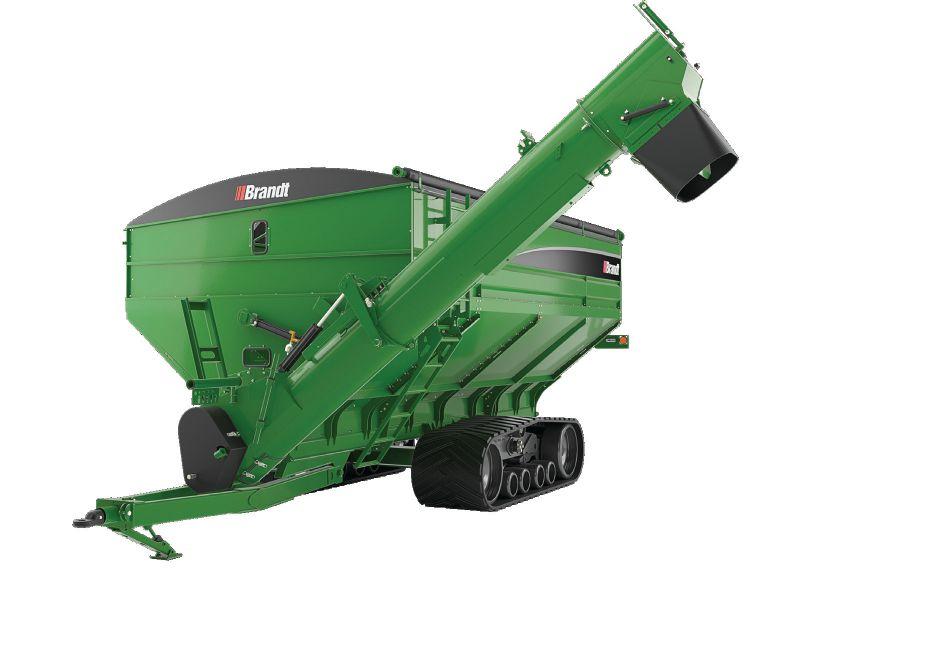
Farming is a competitive business. You’ve got to have tough, high-performance equipment like Brandt’s DXR GrainCarts if you want to run at the front of the pack. Built for the rigorous demands of a fast-paced harvest, these high-capacity units feature a 22" discharge auger that unloads at 800 bushels per minute – ensuring that your combines never sit idle again. And, with an Autolog2-equipped GT460 GrainCart Scale, our DXR models make capturing load data easier than ever.
The result? You get the highest quality cart in the industry and enjoy years of worry-free productivity from Brandt. That’s Powerful Value. Delivered.
When compared to Genuity® Roundup Ready® canola.
canola with Roundup Ready® Technology is not yet commercially available, but current plans are to commercialize for the 2019 growing season. The information presented herein shall not be construed as an offer to sell.
SHOULD YOU SELL THE SWATHER?
PAMI research investigates straight-cut canola.
by Bruce Barker
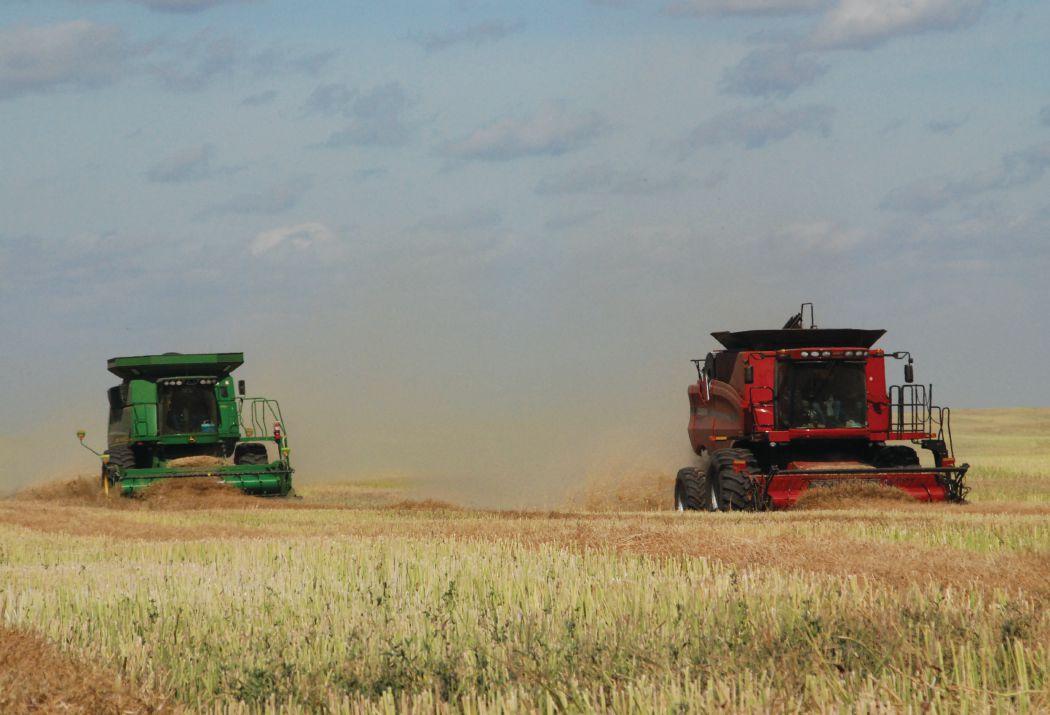
The thought of eliminating a pass over the field and more than $175,000 in capital equipment is tempting. Nathan Gregg, a researcher at the Prairie Agriculture Machinery Institute (PAMI) investigated whether straight-cutting canola was a viable option compared to swathing.
“There really isn’t that much to talk about regarding the comparisons between swathing and the direct cut headers that we tested. They all performed relatively well without much difference in loss,” Gregg said at Alberta Canola’s Science-O-Rama in Nisku, Alta., in March 2018.
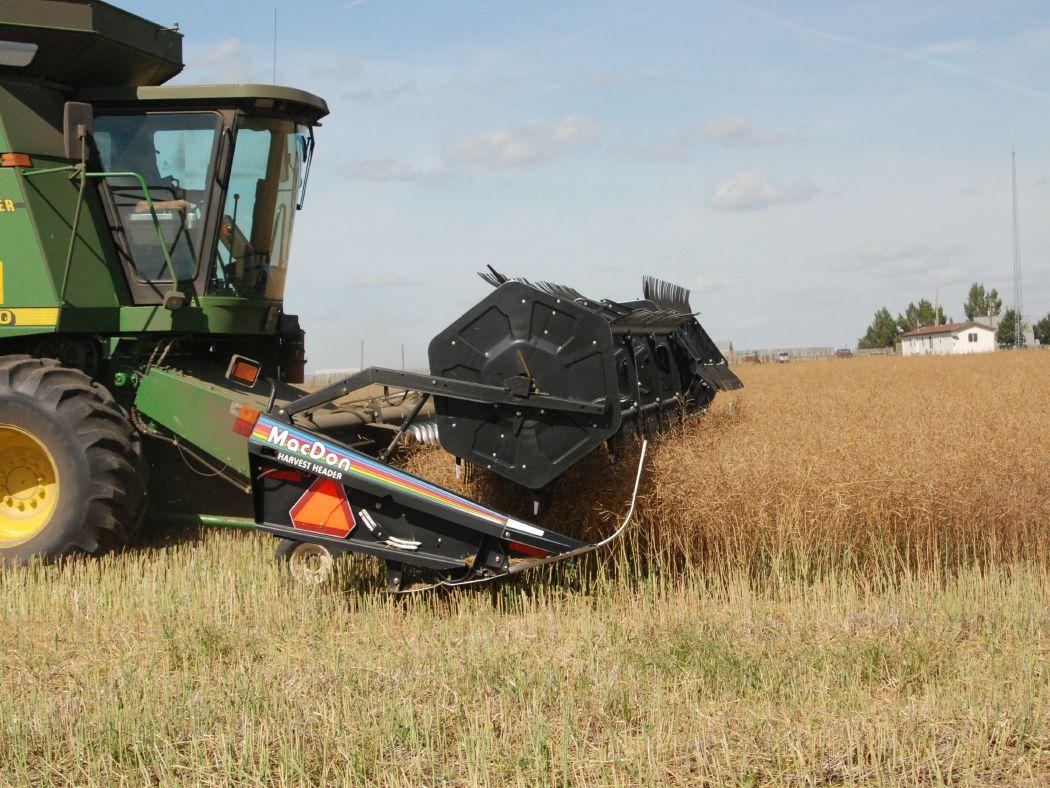
The research compared swathing canola and harvesting with a combine belt pick up to three headers: 36-foot draper header with rotary divider; 35-foot rigid header with vertical knife; and 35foot Varifeed with vertical knife and an extendable cutterbar out to 23 inches. The research wasn’t about comparing specific brands of equipment, but rather was meant to represent the categories of headers available and used in Western Canada. Ground speed and harvest loss out the back of the combine were fixed across all treatments.
PHOTOS BY BRUCE BARKER.
A recent PAMI study found little difference between swathed and straight cut canola.
— Pamela W.
Conventional and shatter-resistant Liberty Link hybrid canola were also compared. Replicated trials were conducted at Agriculture and Agri-Food Canada in Swift Current and at the Indian Head Agriculture Research Foundation during all three years. In Humboldt in 2015 and 2016, the equipment was also used to try out different harvest approaches, but was not replicated.
Lessons learned
Rather than focusing on specific data,
Gregg says the most important results coming out of his three-year study from 2014 through 2016 was their experiences from year-to-year and site-to-site.
The research found that all headers were viable options. Gregg says there were minor differences found in yield, header seed loss, feeding performance and ground following ability. Losses were highest at the header edges at the dividers and in the middle of the header.
Generally, the Varifeed header had the lowest harvest loss, attributed to
moving the knife forward. The extendable cutterbar allowed feeding optimization depending on crop density. The combine operators said it was the easiest to use and manage harvest loss. “They called it the ‘idiot-proof’ header. That’s got to count for something,” Gregg says.
The auger header was found to be more positive in moving the canola to the feeder than the draper header. The draper was more sensitive to reel position and required more adjustments.
In lodged canola, a rigid header was more difficult to use, and required an auto header-height control.
Looking across the header width, the highest loss was at the end dividers. The vertical knife and stationary dividers typically had lower losses than the rotary divider.
The first year of trials showed the risks and rewards of straight-cut canola. In Swift Current in 2014, the grain was dry but the undergrowth and straw was green in the straight cut area. Straight cutting had lots of plugging issues during harvesting and overall harvesting productivity was low compared to swathed canola.
“That loss of productivity was more important than the yield data. The expense of such a slow harvest would have been high,” Gregg says.
On the other hand, in Indian Head in 2014, the swathed canola suffered from a big wind event where the swaths were blown around the field. The standing canola didn’t suffer the same yield loss and with dry straw, harvest was efficient.
“Those two sites summed up the two ends of the spectrum of learning some of what you need to know about straight cutting canola,” he says.
Variety selection was important. Regardless of header type, the conventional variety had higher harvest loss during straight combining than the shatterresistant variety.
“If you are going to straight-cut canola, it is probably a good hedge to use a shatterresistant variety,” Gregg says.
Gregg says that most producers, using their existing equipment could have success with straight-cut canola. It comes down to what risk and harvest management strategy works best on each farm.
“I don’t have the answer on whether to sell the swather. It depends on your own circumstances,” Gregg says.
COMPARISON OF PRE-HARVEST AIDS IN STRAIGHT-CUT CANOLA
Research by PAMI at one site in Portage La Prairie, Man., in 2016 compared straight cut treatments of Reglone or Heat plus glyphosate, and natural ripening to swathing in 2016. Each treatment was harvested as maturity and weather conditions permitted.
There was no significant difference between treatments in yield, dockage, oil content, green seed, or seed weight. However, it did significantly affect harvest productivity (bu/hr), harvest efficiency (bu/L), fuel consumption, engine load, harvest speed, and threshing losses. These differences were calculated in harvest cost.
Harvest cost differences were calculated using only costs of machinery operation (custom rates, ground speed, fuel usage, etc.), and product cost and application. Cost differences compared to swath/combining was $17.17 more
for Reglone, $21.83 more for Heat plus glyphosate, while naturally ripened was $4.87 less than swathing.
The project leader, Avery Simundsson (formerly with PAMI) reported when using these numbers to perform an economic analysis, producers should include the effects associated with the ability to schedule and predict harvest timing, ease of harvest and operator experience, additional benefits outside of harvestability, or costs associated with risk.
“This study does not necessarily show one harvest method is better than another overall. Rather, this information should be used for producers to make the best harvest decisions for their particular operation and management style,” Simundsson says.
Success for you is facing your challenges head on and still getting the results you strive for. So why should your canola be any different? At the heart of every InVigor® hybrid canola is the innovative genetics and advanced trait technologies that enable you to set your goals and then crush them.
To learn more visit agsolutions.ca or call AgSolutions® Customer Care at 1-877-377-BASF (2273).
START WITH INVIGOR AND OUT FARM THE FIELD
HYBRID BROWN MUSTARD BREAKING YIELD BARRIERS
Continued from page 16
availability for 50,000 acres.
Cheng continues to work on additional hybrid brown mustard varieties. In 2017, she had 29 test varieties in AAFC yield trials. Additionally, she had 29 oriental mustard hybrids in AAFC replicated yield trials. The goal is to have an oriental mustard hybrid registered for 2021.
Developing a hybrid production system for yellow mustard (sinapis alba) is more challenging. Yellow mustard is self-incompatible, meaning the plants out-cross with other yellow mustard plants rather than self-pollinate. Currently, a synthetic yellow mustard variety is planned for release in 2020. Synthetic varieties are a blend of two or more parents in the same bag. These multiple parents out-cross in the field to produce a level of hybrid vigour, although not truly considered a hybrid.
Canada is the dominant exporter of all three mustard types. Brown mustard mainly goes to Europe where it is made into Dijon mustard. Oriental mustard goes to Asia where it is preferred for its hot flavor. Yellow mustard is the traditional hot dog mustard and much of it is exported to the United States. Yellow mustard acreage is dominant in Western Canada.
Kevin Hursh, executive director with the Saskatchewan Mustard Development Commission says that hybrid mustard production will help to keep Canada competitive in the export market. He says concerns that hybrid mustard will simply produce greater supply and result in lower prices to farmers are not valid.
“I disagree with that argument. No other crop has advanced by trying to keep production stagnant. If prices get too high, buyers will just switch to another crop,” Hursh says. “East European production is also starting to increase, and they are probably using our genetics to compete against us. With hybrids, we’ll have a competitive advantage and the genetics won’t be pirated.”
Hursh says that mustard demand is also slowly growing. With good prices, Canadian growers will benefit even more with hybrids. During periods of lower prices, the hybrid yield advantage will help maintain profitability.
“I think hybrids are a win-win situation for mustard growers,” Hursh says.
PROTECTING TOPSOIL TO MINIMIZE P RUNOFF
Soil management practices such as increasing residue have a complex relationship with protecting water quality.
by Julienne Isaacs
According to David Lobb, best management practices for soil health might actually have a negative impact on water quality, because any extra phosphorus stored in residue on the soil surface can potentially move into waterways in runoff events.
Lobb is a professor in landscape ecology and former research chair of the Watershed Systems research program in the University of Manitoba’s department of soil science.
He says farmers who make the decision to increase residue left on the soil’s surface are usually doing this to protect soil from erosion and build soil organic matter to improve its health over the long-term. But there may be tradeoffs for water quality if dissolved P moves out of soil residue in spring snowmelt, for example, and into waterways.
But this doesn’t mean soil management practices such as increasing residue are always bad for water quality – just that the relationship between soil quality and water quality is complicated.
Lobb has proposed a study to Environment and Climate Change Canada, intended to start this year, that will evaluate soil and crop management practices for their ability to reduce runoff at the plant scale, and analyze P concentrations in runoff water in five watersheds in the Lake Winnipeg Basin.
“If you have good soil, not only do you have good crop productivity, but you have more use of water by the crop and more interception and evaporation of the water by crop’s leaves. And you get better infiltration, so not as much runs off,” he says. “This is managing runoff at the plant scale, and it should result in a downstream benefit by reducing the volume of runoff.”
However, just by reducing runoff, producers might not reduce the total amount of P that ends up in water bodies if they have lots of surface residue, he says. “The phosphorus may still be high and become higher. When you reduce the volume of water you may still have the same amount of P. That’s what we propose to sort out. What are the tradeoffs? Are you reducing the volume of water but increasing concentration of phosphorus?”
An example is the use of perennial forage grasses. Most farmers can’t afford the land to plant forages, but for those who can, the benefits to soil health have been well described. However, Lobb says it’s also known that putting perennial grasses in the landscape creates a water quality problem in the spring.
“We just don’t know the net benefit of these practices,” he says.
But soils and crops can be better managed in order to reduce runoff in areas of severe soil loss.
Improving soil resilience
Lobb says it’s soil loss in the Prairie provinces that has caused variability in soils, and variability makes inputs both less efficient for cropping systems and risky for the environment.
“One of my great concerns is that in managing our soils and landscapes, we have degraded them historically to the point where there’s a lot of variability, which means less efficient
PHOTO BY TOP CROP MANAGER
Forage crops can benefit soil health, but perennial grasses can also create a water quality problem, according to David Lobb.
inputs and loss of potential profit,” he explains. “What I would like to see is for us to be able to better manage or correct the degradation to have higher yielding and productive systems, and fewer environmental problems. Efficiency in terms of inputs and environmental concerns go hand-in-hand.”
The biggest culprit responsible for soil loss is not water or wind erosion but tillage erosion, says Lobb. He has done studies using landscape analysis and modeling to find out why some areas are experiencing moderate to severe soil loss.
On much of the Prairie agricultural landscape, soil loss from hilltops (defined as any slight rise) has resulted in dramatic losses in yield – between 30 to 50 per cent, relative to the rest of the field – and thus profits for producers. These areas of lost profit comprise ten to 30 per cent of most fields, he says.
Farmers try to stop soil degradation by reverting to conservation tillage methods, but this just stops erosion, it doesn’t improve soil quality.
He says there’s a misconception in the farming community that by going to zero-till producers can “fix” fields in a handful of years. In reality, areas that are this badly depressed produce so little biomass that it takes a very long time to restore them to full productivity.
These issues will only become more acute with weather variability resulting from climate change, says Lobb, because overly dry conditions make productivity loss much more severe, and overly wet conditions results in crop losses in the bottom areas and water quality problems. What’s needed is to make soils uniformly resilient so they are better able to receive and use rainfall when it comes.
“That’s not well understood by farmers, the public and government, and it’s ignored by researchers,” Lobb says. “That is the biggest challenge for us and the biggest opportunity for farmers to increase efficiency.
“It is too short-sighted to think about climate changes as insignificant change over the next five years. We’re talking gradual changes over 30 years. That will affect the Prairies over the next generation. You need to take a longer view of it and ask whether
our soil conditions will become worse with our practices, and then make the water quality worse?”
Replacing lost topsoil
One practice Lobb recommends to producers experiencing lost productivity on hilltops is to manually move eroded topsoil back to those areas.
There isn’t much data yet showing the benefits of this practice, or the impacts of the practice on runoff, but some farmers in areas with erosion problems are eager to get on board.
One of these is Robert Stevenson, a Manitoba farmer who was an early adopter of zero-tillage. Whether or not Lobb gets program funding, Stevenson hopes to work with Lobb this summer and fall on restoring eroded hilltops on his operation. He says there’s a huge variability on his operation in terms of yield.
“We have moved soil back to the hilltops before. It’s been minimal, maybe five acres, but really we need some technical advice to do it properly,” he says, adding that there are very few resources for producers to draw on in order to assess losses from hilltops, or make improvements.
“But certainly something has to be done to protect the topsoil. This is another step, and what’s the best way to improve soil health? Is this the economical way to do it? Until someone does a study I guess we won’t know,” says Stevenson.
According to Lobb, whether or not his program gets federal funding, his research team plans to pursue these questions, because farmers cannot make systemic management changes without data to support it.
Work is being done in the Prairies to help educate farmers about soil management. For example, this summer, Manitoba Agriculture soil specialist Marla Riekman is running a topsoil management demonstration for the Crop Diagnostic School.
But more work is needed both on the research and the extension side of soil management, and Lobb says it’s imperative that government bodies pay attention to the impacts of soil management on soil resilience and the health of watersheds.
“I’m absolutely certain this is a requirement for agriculture,” says Lobb.
More research needs to be done on the impacts of soil management on soil resilience and the health of watersheds, according to Lobb.
MAXIMIZING VALUE FROM FUSARIUMAFFECTED GRAIN
“Fusarium has poked its nasty head up several times in the last few years, so there is lots of potential for more instances in the future,” notes Rex Newkirk, research chair in feed processing technology at the University of Saskatchewan (U of S). He is leading a new project to help the industry get ready for the next time that moist, warm conditions at flowering trigger a Fusarium head blight (FHB) epidemic in Prairie cereal crops.
BY Carolyn King
As growers know, FHB fungi can produce toxins that limit the grain’s use for food and feed. The grain’s concentration of deoxynivalenol (DON), the most common FHB toxin, is the critical limiting factor for most buyers.
The traditional way to deal with Fusariumaffected grain has been to blend it for animal feed, mixing it with good grain to the specifications for safe DON concentrations for the different livestock types. “However, there can be years when there is too much Fusarium-affected grain to blend safely,” says Newkirk. “So we need options to remove the most infected grains. This is the purpose of this research.”
In this project, Newkirk and two of his graduate students are developing, evaluating and optimizing several post-harvest methods to reduce DON in Fusarium-affected grain. Their aim is to develop improved systems that provide high returns for producers and the industry, while ensuring the grain is safe to use.
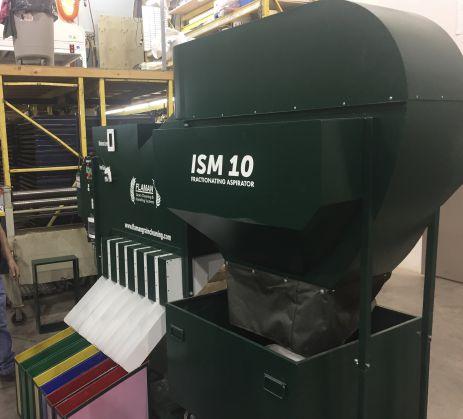
The air fractionator uses air aspiration to separate kernels based on their density; Fusarium-infected kernels are less dense.
In their experiments, the two students are measuring the actual concentrations of DON in the grain – they aren’t bothering to count Fusarium-damaged kernels. “Traditionally, the level of Fusarium damage, and therefore the potential for DON, was visually assessed using the Fusarium-damaged kernel count. Unfortunately, there are lots of kernels that do not have visible signs of the disease but contain the toxin. So it is really important that we in the industry measure the actual toxin,” explains Newkirk, who is an associate professor in the U of S department of animal and poultry science.
One of the students is working with barley, and the other is working with wheat and durum. Each of these crops has its own particular kernel characteristics, FHB resistance levels in its cultivars, and end uses. “For example, much of our barley is grown for malt. The malt industry has a very low tolerance for Fusarium. So we are trying to achieve much lower levels of DON in barley than in wheat that would be going to feed for poultry [which are relatively tolerant of DON],” Newkirk says.
The project’s goal is to get as much value out of Fusarium-affected grain as possible. Newkirk’s team is using two
Photos courtesy of Rex Newkirk.
FMIS Data Management
Yield Monitoring and Mapping
Grain Cart Weighing
RTK
Autosteering
Yield & Moisture Sensors
Technology that maximizes harvest efficiency
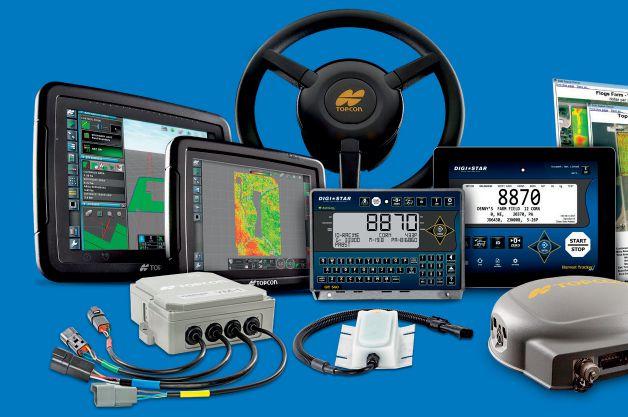
Topcon Agriculture solutions let you maximize harvest efficiency. Autosteering while collecting yield and moisture maps in addition to Digi-Star’s Harvest Tracker™ system grain cart weight tracking and dry bushel conversions with a simple App makes powerful use of your time. When harvest is done, use the collected data to plan a more profitable crop for next season. To learn more about our harvest solutions, visit us at topconpositioning.com/harvest
approaches to achieve that goal. One is to separate the high-DON kernels from the low-DON kernels. The other is to reduce the toxin levels in the high-DON kernels.
SEPARATING THE GOOD FROM THE BAD
Newkirk’s team is comparing three methods to separate the highDON kernels from the rest of the grain: an air fractionator, nearinfrared transmittance using a BoMill unit, and an optical sorter with near-infrared capacity.
An air fractionator is fairly simple grain cleaning technology that uses air aspiration to separate kernels based on their density. This technology can help in segregating kernels with DON because Fusarium-infected kernels are less dense. Newkirk says, “Extremely infected kernels – the tombstone kernels – are very, very light. But even kernels that are high quality can have DON and they have slightly less density.”
In optical sorters, the grain falls past multiple cameras that evaluate the external characteristics of the kernels. He notes, “Initially, the cameras on optical sorters were very simple, just black versus white. If all your grain is white, and the cameras see a black one, then the sorter activates an air nozzle that puts the black one in another channel. Over the years, the cameras have become much more sophisticated, detecting individual colours and gradients of colours, and then sizes and shapes. More recently these sorters have added infrared [detection], which is beyond the spectrum of visible light, the light that we can see. Infrared light gives you a whole different look at the seed.” Optical sorters can remove kernels with obvious Fusarium infection.
Trait Stewardship Responsibilities Notice to Farmers
Monsanto Company is a member of Excellence Through Stewardship® (ETS). Monsanto products are commercialized in accordance with ETS Product Launch Stewardship Guidance, and in compliance with Monsanto’s Policy for Commercialization of Biotechnology-Derived Plant Products in Commodity Crops. These products have been approved for import into key export markets with functioning regulatory systems. Any crop or material produced from these products can only be exported to, or used, processed or sold in countries where all necessary regulatory approvals have been granted. It is a violation of national and international law to move material containing biotech traits across boundaries into nations where import is not permitted. Growers should talk to their grain handler or product purchaser to confirm their buying position for these products. Excellence Through Stewardship® is a registered trademark of Excellence Through Stewardship.
ALWAYS READ AND FOLLOW PESTICIDE LABEL DIRECTIONS. Roundup Ready 2 Xtend® soybeans contain genes that confer tolerance to glyphosate and dicamba. Agricultural herbicides containing glyphosate will kill crops that are not tolerant to glyphosate, and those containing dicamba will kill crops that are not tolerant to dicamba. Contact your Monsanto dealer or call the Monsanto technical support line at 1-800-667-4944 for recommended Roundup Ready® Xtend Crop System weed control programs. Roundup Ready® technology contains genes that confer tolerance to glyphosate, an active ingredient in Roundup® brand agricultural herbicides. Agricultural herbicides containing glyphosate will kill crops that are not tolerant to glyphosate.
Acceleron® seed applied solutions for corn (fungicides only) is a combination of three separate individually-registered products, which together contain the active ingredients metalaxyl, prothioconazole and fluoxystrobin. Acceleron® seed applied solutions for corn (fungicides and insecticide) is a combination of four separate individually-registered products, which together contain the active ingredients metalaxyl, prothioconazole, fluoxystrobin, and clothianidin. Acceleron® seed applied solutions for corn plus Poncho®/VOTiVO™ (fungicides, insecticide and nematicide) is a combination of five separate individually-registered products, which together contain the active ingredients metalaxyl, prothioconazole, fluoxystrobin, clothianidin and Bacillus firmus strain I-1582. Acceleron® Seed Applied Solutions for corn plus DuPont™ Lumivia® Seed Treatment (fungicides plus an insecticide) is a combination of four separate individually-registered products, which together contain the active ingredients metalaxyl, prothioconazole, fluoxastrobin and chlorantraniliprole. Acceleron® seed applied solutions for soybeans (fungicides and insecticide) is a combination of four separate individually registered products, which together contain the active ingredients fluxapyroxad, pyraclostrobin, metalaxyl and imidacloprid. Acceleron® seed applied solutions for soybeans (fungicides only) is a combination of three separate individually registered products, which together contain the active ingredients fluxapyroxad, pyraclostrobin and metalaxyl. Fortenza® contains the active ingredient cyantraniliprole. Visivio™ contains the active ingredients difenoconazole, metalaxyl (M and S isomers), fludioxonil, thiamethoxam, sedaxane and sulfoxaflor. Acceleron®, Acceleron BioAg™, Acceleron BioAg and Design™, Cell-Tech®, DEKALB and Design®, DEKALB® Genuity®, JumpStart®, Optimize®, QuickRoots®, Real Farm Rewards™, RIB Complete®, Roundup Ready 2 Xtend®, Roundup Ready 2 Yield®, Roundup Ready®, Roundup Transorb®, Roundup WeatherMAX®, Roundup Xtend®, Roundup®, SmartStax®, TagTeam®, Transorb®, TruFlex™, VaporGrip®, VT Double PRO®, VT Triple PRO® and XtendiMax® are trademarks of Monsanto Technology LLC. Used under license. BlackHawk®, Conquer® and GoldWing® are registered trademarks of Nufarm Agriculture Inc. Valtera™ is a trademark of Valent U.S.A. Corporation. Fortenza®, Helix®, Vibrance® and Visivio™ are trademarks of a Syngenta group company. DuPont™ and Lumivia® are trademarks of E.I. du Pont de Nemours and Company. Used under license. LibertyLink® and the Water Droplet Design are trademarks of Bayer. Used under license. Herculex® is a registered trademark of Dow AgroSciences LLC. Used under license. Poncho® and VOTiVO™ are trademarks of Bayer. Used under license. All other trademarks are the property of their respective owners.
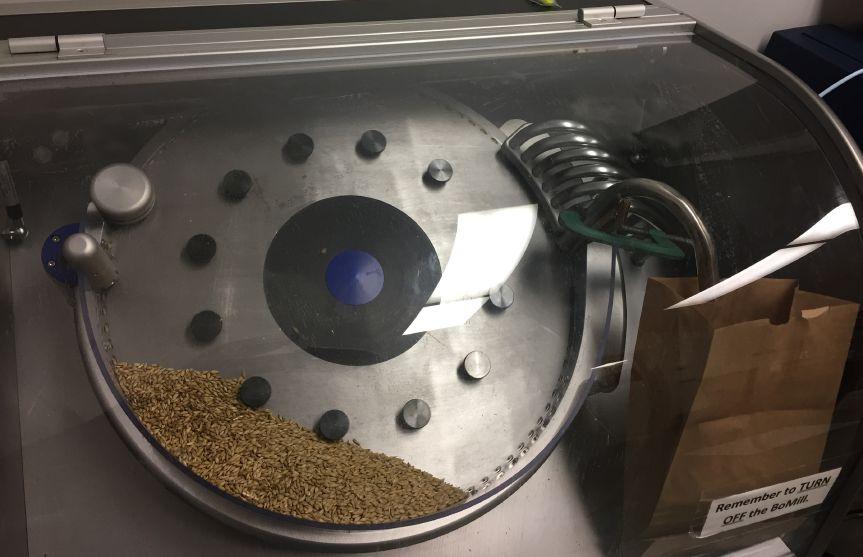
The BoMill near-infrared transmittance technology measures the wavelengths of light that pass through individual kernels. “It basically measures chemical changes in the seed [caused by Fusarium infection] to predict the amount of DON,” Newkirk explains.
The BoMill experiments in this project build on a previous U of S study with a BoMill unit that was calibrated to measure kernel protein content. That earlier study showed that segregating wheat kernels by protein content also helped segregate the kernels by their DON levels because Fusarium-affected kernels have less protein. “Since that time, we’ve worked with the company to help them develop a more robust calibration specifically for DON,” he says. “So we are now using a BoMill with this updated calibration and seeing if we can segregate the grain more effectively.”
For each sorting technology, Newkirk’s team will be experimenting with different equipment settings and other factors to find the most effective and efficient procedures.
Newkirk points out that each of the three technologies has its pros and cons. For instance, the BoMill is the most accurate but has the lowest throughput relative to the initial capital cost. So his team is also exploring ways to combine the different technologies to optimize the overall process from a user and a cost perspective. He says, “Would you use, for example, an optical sorter to take out the majority of kernels that are really visibly infected and only put a fraction through a BoMill? Or could you do it with just an optical sorter? Or could you get enough separation just by using an air fractionator or by combining the air fractionator with one of the other technologies?”
IMPROVING THE BAD
Once the good kernels are separated from the high-DON kernels, you still have to deal with the resulting pile of high-DON kernels. Newkirk and his team are experimenting with two ways to reduce DON levels in the high-DON kernels.
One method involves abrasion. They are putting high-DON grain in a cement mixer for a short time, so the kernels bump against each other and knock loose some of the hyphae (fungal filaments). They are testing various options such as adding different mediums with the grain in the mixer and trying different ways to remove the loosened hyphae from the sample.
The other method uses ozone to oxidize the DON, converting it into a non-toxic compound. Their plan is to introduce ozone gas into the grain while the grain is dried down for the winter with an aeration fan.
“There has been research on this oxidation technique, but it was done in a laboratory in small vessels at higher moisture and high temperature conditions,” Newkirk explains. “Those conditions don’t exist in our Prairie storage systems – in the middle of winter when the grain is -20 C or -40 C, DON is not going to oxidize. But could we achieve oxidation if we were to do it with grain coming right off the combine under the kind of conditions that would be found when you first put your grain in storage?”
They will be applying the ozone at different concentrations and timings, and storing the grain under moisture and temperature conditions that would occur post-harvest in Saskatchewan.
PROMISING INITIAL OBSERVATIONS
This project runs from December 2017 to December 2020, so it’s still very early in the research. However, Newkirk and his team are already seeing some promising effects from their initial experiments.
“We’ve done a fair bit of BoMill work, and we are really impressed with what we’re able to achieve with it. For example, we are able to recover about 80 per cent of the grain at a level below the target DON level; in the case of barley, that target is below one ppm [part per million],” he notes.
“The air fractionation is working better than I would have imagined. We’re getting over 50 per cent recovery of grain with low levels of DON from grains that have pretty high DON.
“We’re just starting the abrasion work. It seems like we are able to knock the DON loose, but these hyphae seem to be very sticky and able to reattach themselves. I was hoping we would be able to use air to blow off perhaps 90 per cent of the DON, but right now we’re only getting about a 10 or 15 per cent DON reduction. So we are thinking about trying a high-pressure, low-volume water wash to remove the DON after it is knocked loose.”
Once they have all the data from all the experiments, Newkirk’s team will use an optimization program to see which settings and combinations of methods would give the greatest returns.
TIPS FOR PRODUCERS
Newkirk offers two key tips for producers dealing with Fusariumaffected grain. First: “Know what you’ve got. I certainly suggest that you test the material for DON. [The testing kit] costs a little bit of money, but it is a relatively easy test and can be done on-farm,” he says.
“And be sure to use really good representative samples for testing. The DON concentration varies greatly even within a bin off in a single field or within a truckload. So, don’t just take a little scoop off the back of the truck as you’re unloading it. You need multiple scoops that are representative of different areas.”
His other tip: “Even rudimentary cleaning will reduce the DON concentration quite a bit because there are very high DON concentrations in the chaff.”
The sorting technologies used in the project are available on the Prairies to varying degrees. The project’s air fractionator is rented from Flaman Grain Cleaning and Handling. “Flaman’s is selling these units to farmers to clean up their grain before seeding, for example,” he says.
“In our project, we are taking this technology one step further and doing some optimization for wind speeds and other settings.”
According to Newkirk, optical sorters have become fairly common in Prairie seed cleaning plants, mainly because this technology is extremely efficient at removing ergot. Some plants are also using these sorters to remove kernels with obvious Fusarium infection.
He knows of only three seed cleaning plants in Western Canada that have a BoMill at present. “So they are not common at all, but depending on the application, we certainly see them coming into play.”
Newkirk also notes, “Many of our farms now are so large that, if a producer had the time and the inclination to do some of the cleaning themselves, [any of the technologies used in this project] could be introduced on-farm. A number of suppliers sell optical sorters, aspiration units, or BoMill. They will happily take your samples and sort them with you so you can see if one of those solutions might work for you. Of course, many people choose to specialize so they would have a seed cleaning plant clean their grain.”
Newkirk is optimistic that his project will result in strategies that will improve the net returns from Fusarium-affected grain. “From what I’m seeing so far, it looks like we’ve got some options that will help.”
The project is funded through Sask Barley, Sask Wheat and the Saskatchewan Ministry of Agriculture’s Agriculture Development Fund.
DEALING WITH FUSARIUMAFFECTED GRAIN?
REX NEWKIRK FROM THE UNIVERSITY OF SASKATCHEWAN HAS TIPS:
1
Know what you’re dealing with. Test the material for DON. There’s a cost attached, but the test is relatively easy and can be done on-farm.
2
Use good representative samples for the test. DON concentraction can vary greatly even within a bin or truckload. Take multiple samples from different areas. There can be high DON concentrations in the chaff. Rudimentary cleaning will reduce DON concentration.
3
U of S researchers are using this lab-scale version of the BoMill technology in their research on sorting technologies to separate high-DON kernels from low-DON kernels.
FOCUS ON: HARVEST
INTERCROPPING AFTER HARVEST
There’s a growing interest in larger-scale conventional intercropping in Western Canada: one researcher estimates 2017 intercropping acreage to be between 45,000 and 50,000 acres. But one of the biggest hurdles producers face is how to separate the two crops at or after harvest. Researchers in Saskatchewan are trying to develop strategies and suggestions for producers to consider when looking at delving into the world of intercrops.
BY Donna Fleury
Intercropping is gaining interest in Saskatchewan and other parts of the Prairies as producers look for strategies to reduce risks and input costs, strive to increase yields and over the long-term improve soil productivity and sustainability. Lana Shaw, research manager at the South East Research Farm (SERF) in Redvers, Sask., and colleagues at the Indian Head Research Farm, along with some successful early adopters, are leading the way for larger-scale conventional intercropping. Shaw estimates 2017 intercropping acreage to be between 45,000 and 50,000 acres (includes 34,000 acres of SCIC contracted acres) and is projecting upwards to 100,000 acres for 2018.
Based on the growing interest, two intercropping workshops were held in Saskatchewan last winter, attracting about 350 producers. Along with numerous presentations on agronomy, intercrop mixtures and other important considerations, Joy Agnew, project manager, agricultural research services with PAMI in Humboldt, Sask., was asked to address the important issue of separation and storage of intercrops after harvest, including existing separation technologies, potential storage issues and possible tools for storage management.
“Although we have not done any research specific to intercrops to date, nor do we have any hands on experience, we agreed to help growers and researchers find the best information we could,” Agnew explains. “To prepare for the presentations, we talked to some of the experienced intercrop growers and researchers in Saskatchewan and conducted online research. This research combined with our expertise and experience with crop handling, separation and storage of conventional monocrops, combined with some computer modelling and other tools, we have provided some suggestions to consider. However, there remains more questions than answers, and more research and experience is needed.”
One of the biggest hurdles for growers when they consider an intercrop is how to separate the two crops at or after harvest. Without the right equipment or other options for accessing equipment, growers may find intercropping an even bigger challenge. “In talking to some of the early adopters, one of the key strategies is to start small until you learn what works and what doesn’t work,” Agnew says. “Commercially available cleaning systems such as gravity tables, rotary or air separators or others work very well at a smaller scale with two crops with different seed sizes. However, its important to be reminded that existing equipment was designed for cleaning seed and removing dockage, not specifically for mixed crop separation.”
Agnew adds when considering equipment, recognize some equipment and technologies will work better than others, some will have more flexibility and a range of settings to accommodate different seed sizes and crop combinations, but others do not. “Experience is a tremendous asset and seed separation may be as much an art as a science.”
There are many factors at play for optimizing intercrop separation and storage, including the difference in seed size, shape and density. The ratio of seed sizes in the intercrop will also impact the settings for separation. For example, a higher ratio of large seed to small seed may be easier to separate. The level of dockage and material other than grain (MOG) will affect the efficiency of seed separation. The difference in seed maturity at harvest will also need to be considered, not only at harvest but also at the crop mixture selection and seeding stage.
“One outcome of discussions at the workshops is a smaller manufacturer of seed-cleaning technology has indicated they are planning to develop a seed separation technology specifically for intercrop separation,” notes Agnew. “The company is working on a prototype with early adopters to trial and pilot this new technology. However, until this new
This year, Lana Shaw has several intercrop trials in place at the South East Reseach Farm in Redvers, Sask.:
• chickpea-flax
• canola-pea
• triple crop (lentil, pea, mustard)
• maple pea-mustard
• dry bean-flax
• sunflower-vetch
Visit www.southeastresearchfarm.org for more updates on these and other trials.
technology or other options become available, growers will have to continue to modify and use existing equipment.”
Timing of crop separation and whether it should be done at harvest or after harvest is also a big question. Although separation at harvest is probably ideal, it is also a very busy time and not always practical. “We suspect that if intercrops are stored together for a short time, in most cases that will be fine,” Agnew says. “One of the key factors is to understand the drying conditions of each of the individual crops in the intercropping mix. We ran some equilibrium moisture content (EMC) computer scenarios for some of the crops, and unless there is a huge difference in the moisture content, shortterm storage should be okay. However, the larger the differences in moisture content the bigger the potential problem.” For example, the Canadian Grain Commission suggests the target moisture content of oilseeds like canola and flax is 10 per cent, while peas is 16 per cent and lentils is 13.5 per cent.
PAMI also looked at aeration and natural air drying considerations, which raised more questions about air flow rate, airflow resistance, uniformity of crop mixtures and other factors. Agnew says that they looked at various combinations of intercrops and with all of the comparisons the ideal harvest temperature should be between 15 and 20 C. “If the intercrops are coming off hotter than that, then they should be cooled just like other crops. We aren’t sure how long moisture migration or spoilage will take in storage with the mixtures. Based on EMC, a pea and canola mixture if both crops are dry should be okay. However, flax and lentil combinations have a big difference in EMC at constant temperature and humidity. A mixture of dry flax and tough lentils may minimize the potential for moisture migration, however the tough lentils are still at risk of spoilage. Regular monitoring and moisture management is important.”
Another consideration is particle size segregation in the bin. Depending on the differences in seed size and proportion of each crop in the mixture, layers and areas of concentration may result in poor uniformity of air flow. There may also be localized areas of increased resistance or pockets of one grain type with a considerably different relative humidity, which may cause issues. For producers who want to try and manage intercrops by blowing air using aeration or natural air drying, the target and achievable airflow rates remain unknown for mixed crops. Canola has a very high airflow resistance, while peas is really low, so the actual airflow rate for that mixture would likely be somewhere in the middle. Producers should
also be aware that most bin monitoring sensors that measure moisture content will not work with intercrops or mixed crops since they are calibrated for a single crop. The sensors calculate moisture content based on moisture and humidity for a single crop. Temperature on the other hand may be a good indicator of an issue and will work as designed in stored intercrops.
Until the number of acres and producers increases, funding remains difficult to access for key research problems. However, PAMI recently received funding from the Saskatchewan Pulse Growers to do a comprehensive literature review. “In this current study, a review of available information on intercropping for conventional agriculture with a focus on equipment settings and modifications needed for intercropping is underway,” Agnew explains. “The goal is to compile all available information from literature and early adopters in one place for other producers to access. We want to talk to the early adopters and anyone with experience with intercropping to gather as much information as possible, so please connect with us.” [Editor’s note: You can contact Joy Agnew at jagnew@pami.ca]. The project wraps up in April 2019 and the information will be available to producers in summer 2019.
Producers can also learn more about the projects and results to date of research led by Shaw and other researchers and early adopters. This year Shaw has several trials in place. Facing funding challenges, Shaw successfully funded a chickpea-flax trial (21 treatments and 84 plots) with crowd funding through Twitter and word of mouth. Visit www.southeastresearchfarm.org for more updates.
Model of potential particle size separation in-bin.
Photo courtesy of Hubert Landry, PAMI.
TOP CROP MANAGER
REDUCE SOYBEAN HARVEST LOSSES BY 50 PER CENT
Slow down or add an air reel.
by Bruce Barker
Put another $8.20 per acre in your pocket with a simple adjustment. Slow down. Add an air reel and save $12.50 per acre. Those are the finding of a recent Prairie Agricultural Machinery Institute (PAMI) research project that looked at soybean header losses.
“Under our conditions and the soybean variety that was harvested, we found that header losses could be reduced by almost one bushel per acre by slowing down,” says Lorne Greiger, project manager at PAMI Portage la Prairie, Man.
The researchers focused on header loss because research from Michigan State University Extension found that an estimated 80 per cent of harvest loss in soybean occurs at the header.
The PAMI trials took place near East Selkirk, Man. In 2016, two auger headers were used, with and without an air reel. In 2017, a draper header was also added to the trials. Greiger says the findings between 2016 and 2017 were similar, except speed wasn’t as great of a factor in 2017.
In 2016, ground speeds at harvest were two, three, four and five miles per hour. Header losses were measured with one square foot metal squares thrown randomly, with a minimum of forty loss samples per plot.
Slow down
The slowest speed of two miles per hour generally resulted in the lowest harvest losses, but was similar to the three- and four-milesper-hour harvest speeds. A big jump happened when moving to five miles per hour. At the lower speeds, header losses were calculated at 1.36 bushels per acre. At five miles per hour, the losses jump exponentially up to 2.18 bushels per acre. With soybeans valued at $10 per bushel, slowing down by one mile per hour saved $8.20 per acre.
“Speed was certainly a factor in harvest losses. At some point, the header just can’t keep up with cutting soybeans,” Greiger says.
The addition of an air wind reel also reduced harvest losses. An air reel uses high velocity air to keep the crop moving quickly into the header. In 2016, an auger header equipped with an air reel cut harvest losses by 1.25 bushels per acre (about one-half), compared to an auger header without air reel. At $10 per bushel, a savings of $12.50 per acre would be achieved.
The payback on investing in an air reel could happen relatively quickly. A 35-foot Crary Wind System, similar to the one used by PAMI, lists for US$12,260 (~$16,500). Saving $12.50 per acre would pay off the investment with 1,320 acres.
Measuring harvest losses
Greiger says the results of the research highlight the need for soybean growers to find their optimum speed for their own equipment and harvest conditions.
To estimate harvest losses at the header, use a one-square-foot metal square. A general rule of thumb is that four soybean seeds in the one-foot square equals one bushel per acre.
Estimate pre-harvest loss by randomly counting dropped pods and seeds prior to combining using the one-foot square. During harvest, randomly throw out the one-foot square after the header has passed over the ground and count the soybean seed in the squares. To avoid counting threshing losses, stop the combine and place the metal squares in the area between the header and the rear of the combine. Subtract the pre-harvest loss from the post-harvest loss to get the actual header loss. Experiment with different speeds to find the sweet spot for harvest speed and minimizing harvest losses.
Is taking the time and effort worth it? The PAMI study showed that slowing down or using an air reel gave potential savings of $8.20 to $12.50 per acre.
“Going too fast can result in higher header losses. It is worth the time to try to find the optimal speed to reduce header loss and still have reasonable harvesting speeds,” Greiger says. “In our study, it was four to 4.5 miles per hour, but that can vary depending on harvest conditions and equipment.”
PHOTO COURTESY LORNE GREIGER, PAMI.
ABOVE: Finding the correct ground speed reduced header loss by almost one bushel per acre.