Evaluating tillage options for managing corn residues PG. 16
DAWN, NOON OR MIDNIGHT?
When is the best time to spray herbicides? PG. 22
At CANTERRA SEEDS we’re passionate about seed. Really passionate. We spend our days growing the biggest and best seed portfolio in Western Canada. And, sometimes, it’s hard to let go.
TOP CROP
MANAGER
8 | Comparing canola harvesting systems
Preliminary results show similar trends in direct-cut header comparisons.
By Donna Fleury
12 | Going back to basics with IPM
Common-sense approaches to integrated pest management.
By Ross H. McKenzie, PhD, P.Ag.
30 | Plant growth regulators
Enhancing wheat yield and quality By Donna Fleury
Dawn, noon or midnight: when to spray herbicides?
ON THE WEB
NEW CROP YEAR REMINDERS FOR WESTERN PRODUCERS
The Canadian Grain Commission reminds the grain industry and producers about grain grading changes that came into effect on Aug. 1, 2016, in Western Canada. The Official Grain Grading Guide, which also came into effect on Aug. 1, is now available online.
STEFANIE CROLEY | EDITOR
BEST MANAGEMENT PRACTICES
In my daily search around the web for agriculture news, and every morning when I check my email, I come across multiple news releases about tools to help growers with crop management. From online forecasting tools to drought monitoring maps to cover crop recommendations, there is an abundance of information available – and so much of it can be found at a grower’s fingertips.
Crop management is truly an all-encompassing phrase used to describe the science of controlling or directing crop production, and its definition continues to expand with each growing season. The conditions Prairie producers faced this summer will drive management practices next year, and the domino effect will continue each year after that. Some situations, like disease or pest threats, can be anticipated and prepared for, while others cannot. But now more than ever, with thanks to the digital era that we live in, there’s no excuse for growers to become complacent.
At Top Crop Manager, as our name suggests, we aim to provide Canada’s top crop producers with the most up-to-date research and information about all aspects of field crop management. As this issue lands in your mailbox, harvest will be well underway, or possibly close to complete, depending on conditions and timing in your corner of the world. And as one growing season draws to a close, we hope you’ll find useful references within our pages to help you prepare for what’s to come.
On page 16, Yvonne Lawley of the University of Manitoba shares information about a vertical tillage project, which she designed to help producers decide which corn residue management practices are best for their farms. Vertical tillage is gaining ground in the Prairies, but little research is available at the moment. Lawley hopes to provide growers with a residue management option to cover more land quickly.
If winter wheat is on your mind at the moment, Kelly Turkington shares data from a study to determine, among other things, the effectiveness of seed treatment on winter wheat, and the effects of fall foliar fungicide on crop health. Turkington, a research scientist with Agriculture and Agri-Food Canada in Lacombe, Alta., details the goals of the project on page 5, and is continuing his research to help improve stand establishment, overwintering and yield for winter wheat production in Western Canada.
And when it comes to making weed control decisions after harvest is wrapped up, look no further than our post-harvest weed control poster. All of the most up-to-date data on herbicides registered for post-harvest weed control is organized into one convenient chart to use for your reference or share with your peers.
You may also notice one slight change in this issue, as we welcome Brandi Cowen to the Top Crop Manager team. Brandi, a seasoned editor, joins me as co-editor of both the Western and Eastern editions of the magazine, and we look forward to working together to continue providing you with quality content, both in print and online. Please contact us at any time to let us know what you think, or to share any interesting tidbits or ideas, and follow us on Twitter @TopCropMag.
Best wishes for a safe and productive harvest season.
M3B
April, September, October, November and December – 1 Year - $45.95 Cdn. plus tax Potatoes in Canada – 1 issue Spring – 1 Year $16.50 Cdn. plus tax All of the above - $80.00 Cdn. plus tax Occasionally, Top Crop Manager will mail information on behalf of industry related groups whose products and services we believe may be of interest to you. If you prefer not to receive this information, please contact our circulation department in any of the four ways listed above. Annex Privacy Office privacy@annexbizmedia.com • Tel: 800 668
IMPROVING WINTER WHEAT
Research shows seed treatments and timely fungicides improve winter wheat stand establishment and yields.
by Donna Fleury
Winter wheat is an important crop in many cropping systems, however poor stand establishment and winter survival continue to be challenges to crop expansion in Western Canada. Seed treatments and fall foliar fungicide applications in other growing areas show benefits of improved crop competitiveness and yield, however little research has been done in Western Canada.
Researchers from Agriculture and Agri-Food Canada (AAFC) conducted a three-year study across Western Canada from 2011 to 2013 to determine if seed treatments could improve crop competitiveness of winter wheat and whether or not there were differences in responses between active ingredients, which target a different spectrum of the pathogen/insect complex in the soil. They also wanted to assess if fall application of foliar fungicide improved crop health, vigour, and competitiveness, and yield alone or in combination with particular seed treatments.
“We set out to identify alternative strategies that would help ensure good stand establishment and overwintering success of winter wheat crops across the Prairies,” explains Kelly Turkington, research scientist with AAFC at Lacombe, Alta. “We also wanted to look at options that would help manage disease development the
following spring, such as stripe rust and leaf spot diseases like tan spot or septoria. Research from other areas, like Australia, shows that seed treatments with the right active ingredients can help slow down early rust development. We compared different seed treatments with different actives as a way to assess which factors were the most important. We also wanted to determine if a fall application of fungicide would provide any benefits for crop survival from one growing season to the next.”
This direct-seeded study was conducted at nine sites across Western Canada over three growing seasons. The trials assessed the response of the winter wheat cultivar CDC Buteo to seed treatments and fall-applied fungicides. Five levels of seed treatment were compared: check–no seed treatment, tebuconazole, metalaxyl, imidacloprid and a dual fungicide/insecticidal seed treatment of tebuconazole + metalaxyl + imidacloprid. Two levels of fall-applied fungicide were compared, a check–no application or a foliar-applied prothioconazole performed in mid-October.
Overall, the results showed a yield benefit by using seed treatments, with the dual fungicide/insecticide seed treatment
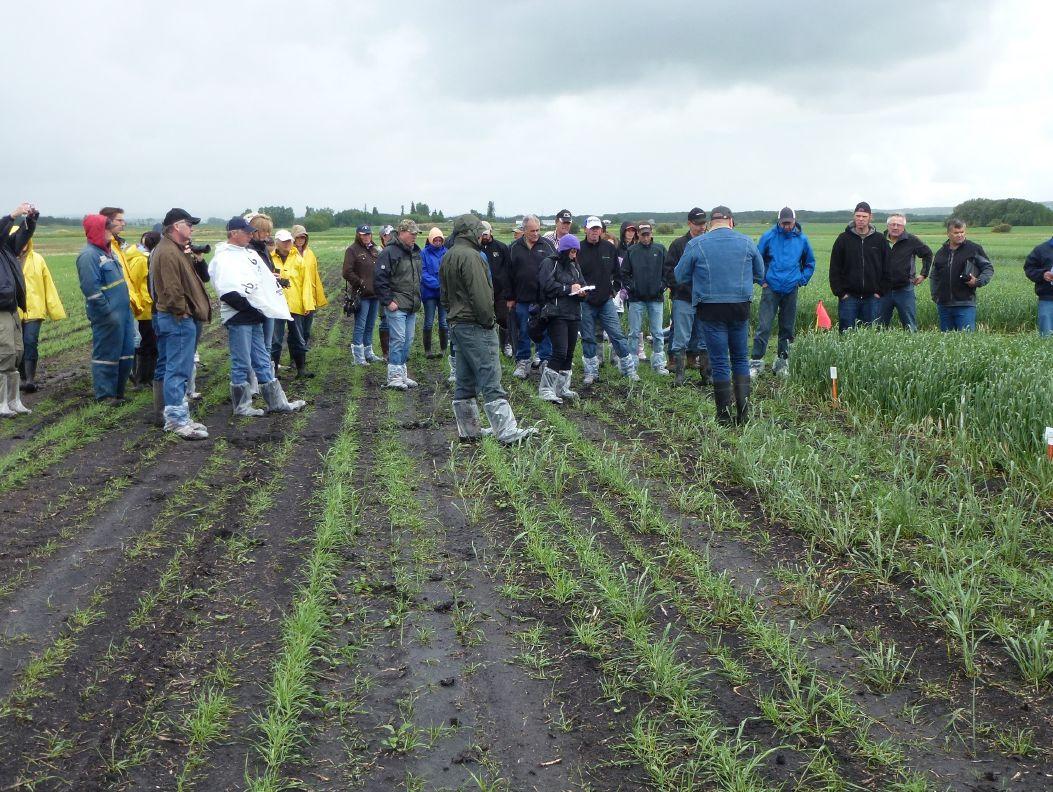
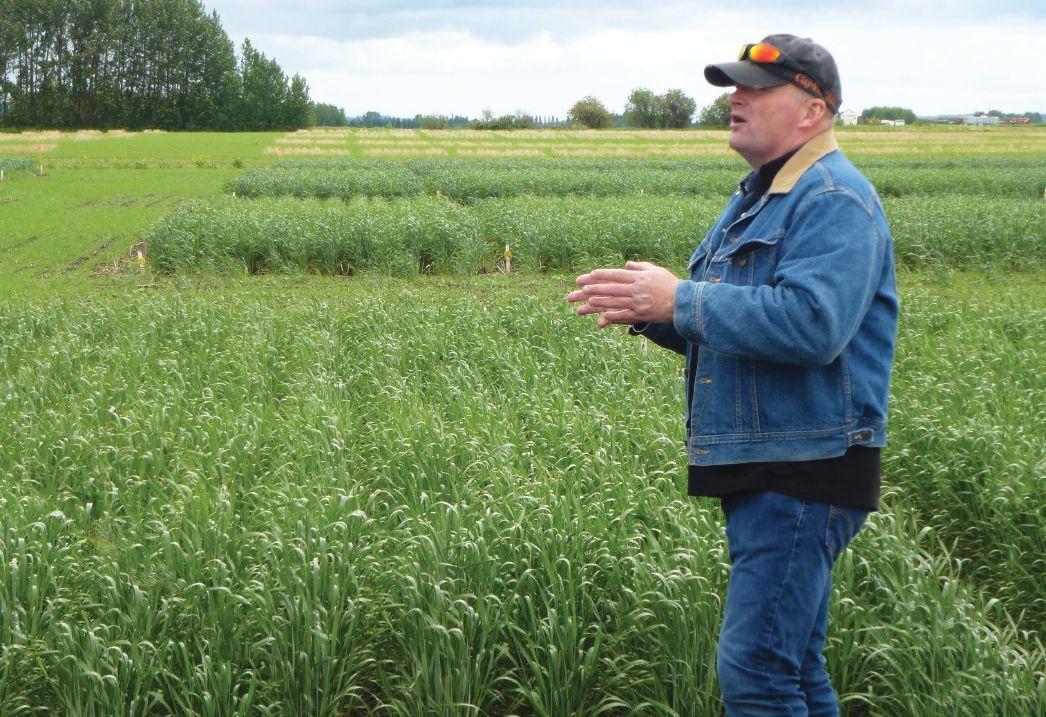
ABOVE: Winter wheat plot tour at AAFC Lacombe in 2012.
PHOTOS COURTESY OF KELLY TURKINGTON, AAFC LACOMBE.
providing the highest yield and net returns. The neonicotinoid seed treatment, imidicloprid, and the fungicide seed treatment, tebuconazole, generally provided intermediate grain yields and net returns, while the check and the fungicide seed treatment, metalaxyl, produced similar low grain yields and returns. Fungicide seed treatments have been effective in improving winter wheat stand establishment and yield when seed infection with Fusarium graminearum is a concern.
“The study showed some benefit from the fall foliar fungicide treatment, however the increase was small and resulted in decreased net returns,” says Turkington. “In areas with confirmed stripe rust in the fall, the yields gains were a bit better, however the cost of application is prohibitive at this point compared to no application. For now, a timely spring foliar fungicide application focusing at either the flag leaf emergence stage for leaf spot management or a bit later at anthesis timing for managing Fusarium head blight and leaf spot disease is still recommended when there is a risk of disease. We need to do more research on fall foliar fungicide application alone or in combination with a spring application to see if there are economical benefits. We also need to do additional work on seed treatments to determine if early season leaf disease management can be improved in both winter and spring cereals.”
Another four-year study is underway in Western Canada comparing four winter wheat varieties of various levels of resistance with the timing of four different foliar fungicide treatments: check–no application, fall application only, spring application at flag leaf, and a dual fall and spring application. “The preliminary results after the first two years aren’t showing much of a benefit from the fall foliar fungicide application, similar to our recent study,” Turkington says. “Some of the results suggest a dual fall and spring application does not provide any additional benefit over a spring application in Western Canada.”
Turkington adds that overall, when comparing the study data on stand establishment, overwintering and yields, one of the biggest factors was moisture at the various sites. If diseases are a concern, select a more resistant variety. Using higher seeding rates, good quality seed and seed treatments are recommended for good winter wheat stand establishment, overwintering and improved yields.
“One of the other important factors is field selection, in particular with cereal stubble and the potential risk of a green bridge and transmission of the wheat streak mosaic virus in some areas,” says Turkington. “We have been getting a number of calls over this spring and summer about potential issues with wheat streak mosaic, which is caused by the wheat curl mite and for which there are limited control options. If volunteer wheat or other cereals and grassy weeds are not controlled before seeding a winter wheat crop, then there can be a transmission or vectoring of the virus from the spring crop into the volunteers and then into the winter wheat crop. Selecting non-cereal stubble and controlling volunteer cereals and grassy weeds to remove the potential for a green bridge is generally the best strategy for managing wheat streak mosaic virus.”
Turkington and his colleagues are continuing their research into seed treatments, foliar fungicide applications and other alternative seeding and crop management practices to help improve stand establishment, overwintering and yield for winter wheat production in Western Canada. Researchers will continue to make their findings available through field days, extension events and publications.
For more on winter wheat, visit topcropmanager.com.
Kelly Turkington, research scientist, explaining winter wheat trial details at AAFC Lacombe plot tour 2012.
I will be a Smart Grower.
Growing up, I saw farming as a way of life. Now, as I work towards succeeding my father in running our farm, I realize it’s also a commercial enterprise. Every decision we make affects our bottom line.
When school is out and I return to the farm every summer, I realize how lucky I am to wake up every morning and have my future office just outside my door. My education is giving me a new outlook on how to manage the farm – from streamlining operations, to adopting new technologies and choosing crop inputs that maximize our return on investment.
That’s why I’m proud we fertilize in the fall using ESN® SMART NITROGEN®. Shifting the workload from the hectic spring and increasing our spring seeding efficiency is good for both the bottom line and our work-life balance – and we don’t have to worry about unpredictable spring nitrogen costs. The controlled-release technology of ESN adapts to our corns’ growing conditions, so the plants get the nutrients they need when they need it most. We can store our equipment for the winter, and I can return to college with confidence knowing ESN will be available to our emerging crops come spring.
I’m proud to continue the legacy of our farm by making smart growing decisions.
Farming is a way of life, and my future career.
Increase Net Return. Minimize Loss. Maximize Crop Yield.
To meet more smart growers visit ESNSmartGrower.com
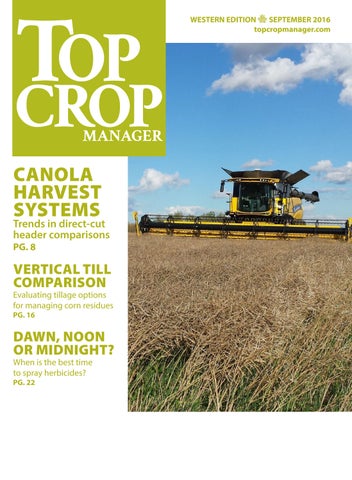
CANOLA HARVESTING SYSTEMS
Preliminary results show similar trends in direct-cut header comparisons.
by Donna Fleury
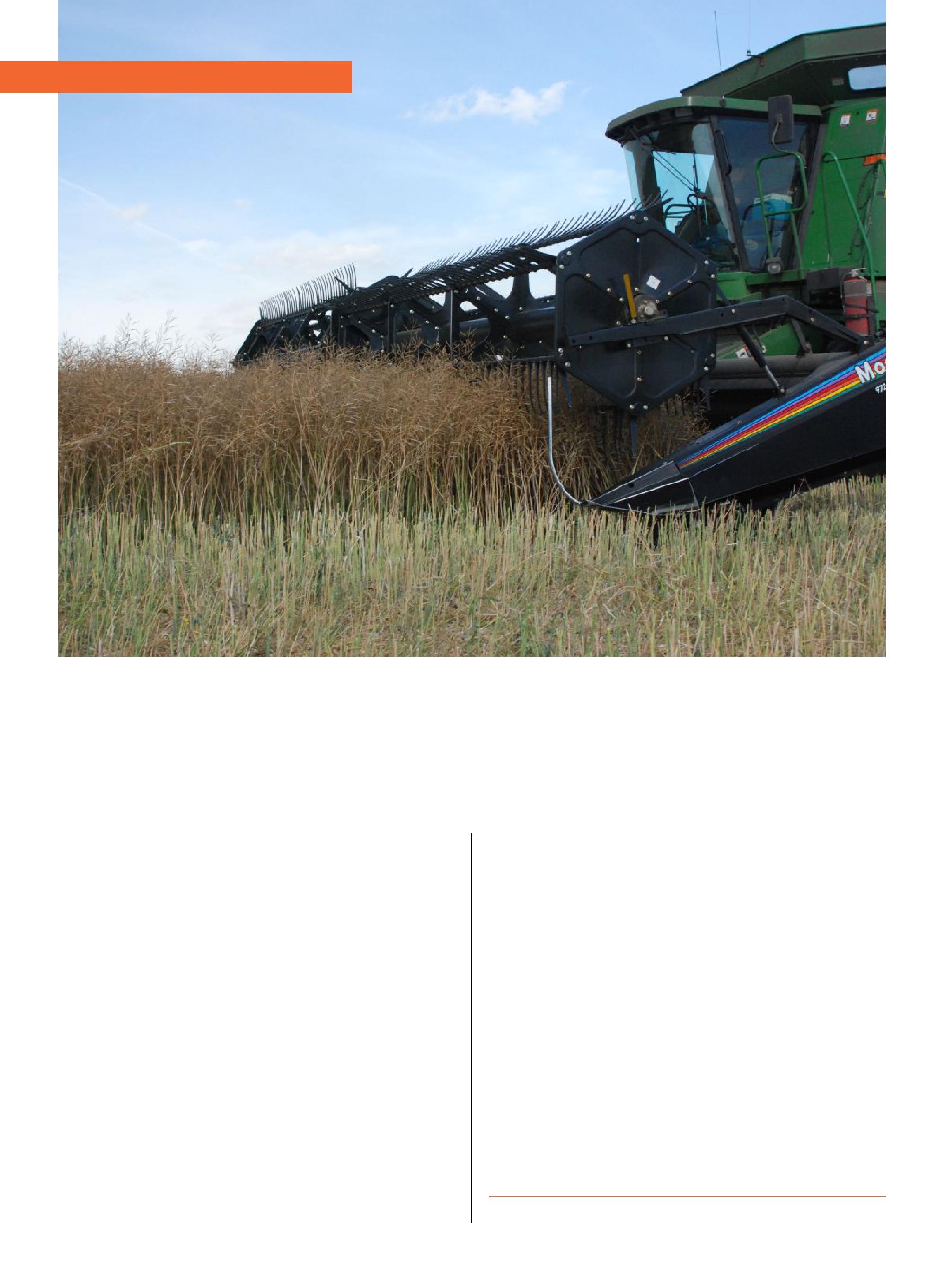
For growers considering direct-cut harvesting canola, there are many factors that play a role. Researchers in Saskatchewan are trying to provide growers with more information in a three-year project comparing the effectiveness of three different direct-cut header types (draper, rigid auger, and extended knife auger [Varifeed]) with windrowing treatments, focusing on header loss and performance.
Initiated in 2014, preliminary results from the first two years of the project are showing similar trends, which researchers expect to be able to confirm at the end of the 2016 crop season. An economic analysis of the three-year project will also provide additional information to support decision-making.
The project includes three study locations – Indian Head, Swift Current and Humboldt – and uses the same protocols and headers at each location. Researchers have been able to refine their testing methods in the first two years, which will strengthen the information collected at the end of the project. The project also compared two types of canola varieties, a standard hybrid variety (InVigor L130) and two shatter resistant varieties (InVigor L140P
and Dekalb 75-65 RR). Factors such as yield, header loss and loss location, environmental shatter loss and various quality components are measured.
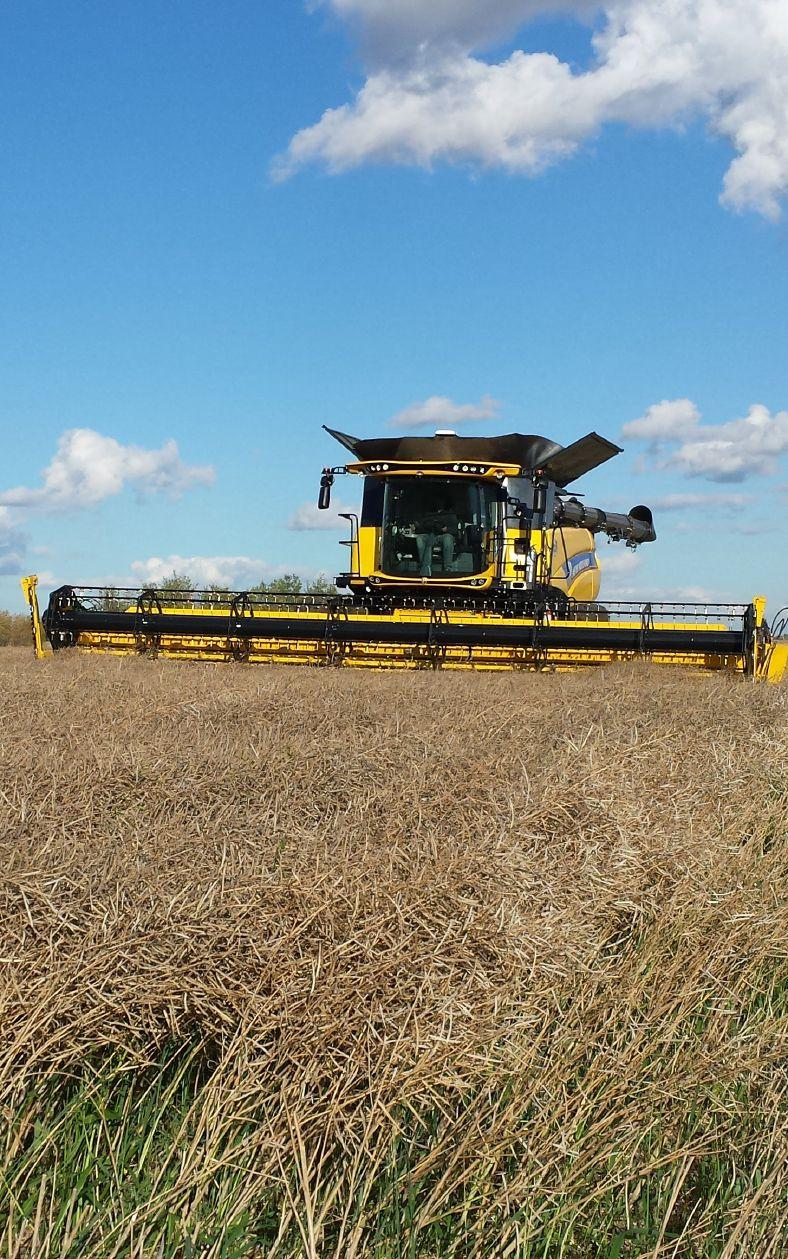
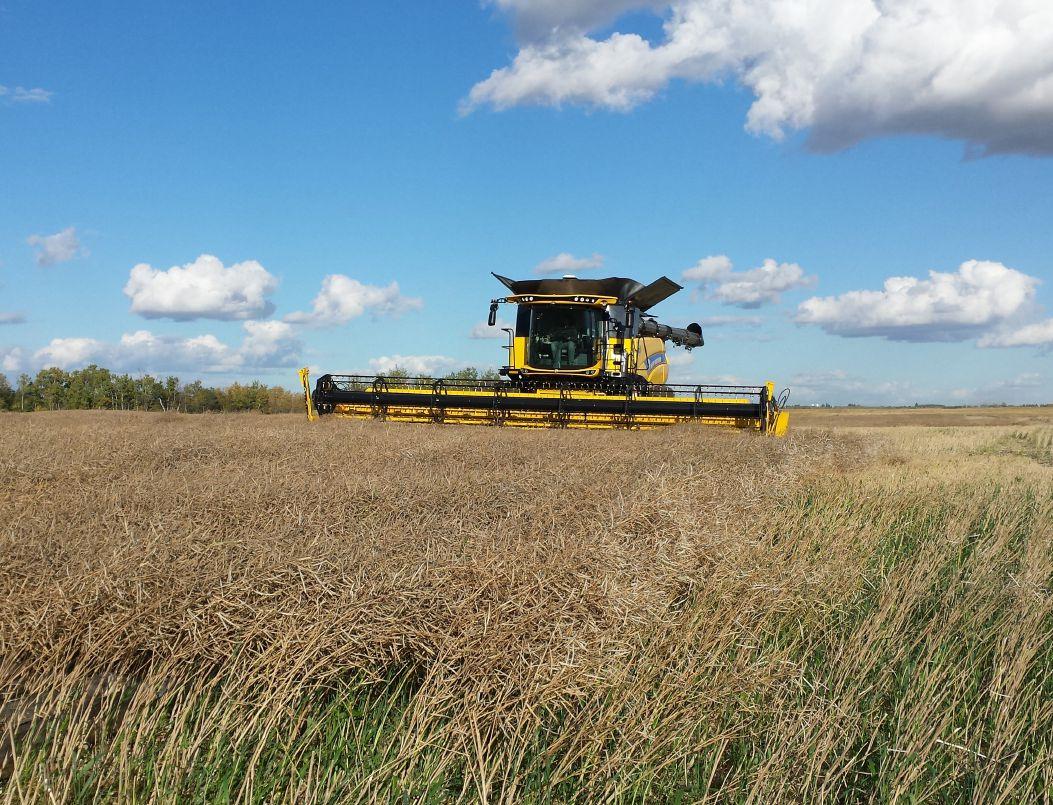
“The results from the first two years of the project are showing very similar trends,” explains Nathan Gregg, project manager with the Prairie Agricultural Machinery Institute (PAMI). “Although all of the headers performed well, the Varifeed with the extendable cutter bar does show some marginal gains in loss retention. It seems to be able to retain more of the shatter loss that occurs with all of the headers.” Gregg adds that from the observations so far the extendable cutter bar allows it to go further forward, which in theory helps to retain losses from the reel. It also provides for smoother crop flow sideways to the centre of the header and then into the feeder house. This smoother crop flow means less violence and less shattering occurring in the conveyance process.
“The Varifeed was also a bit more operator friendly and is a little
PHOTOS
TOP: The 35-foot New Holland Varifeed header.
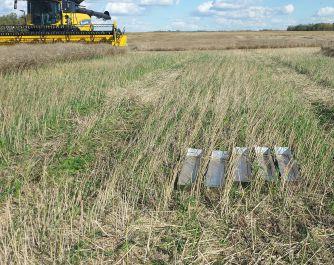
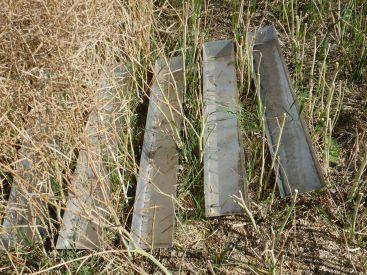
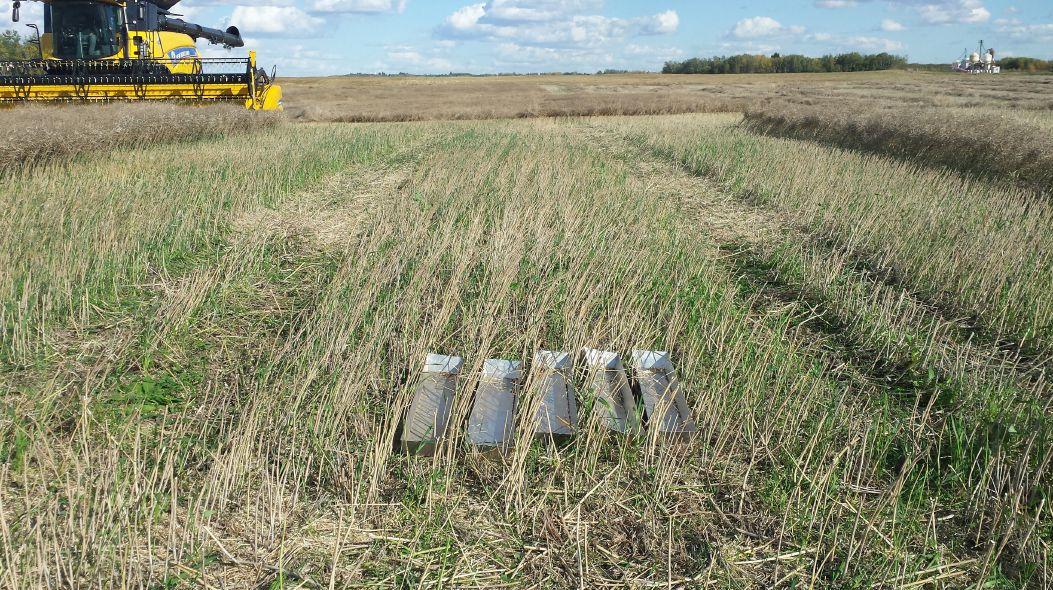
INSET: Tray layout for measuring header losses in the zone at the edge of the header into the adjacent crop.
easier to run. The extendable cutter bar is a bit more forgiving and can just go ahead/back to match the crop canopy conditions with the push of a button in the cab. Although the Varifeed provides some advantages, it doesn’t mean the other headers don’t work well. The draper does a good job, but it does take more attention to detail as far as reel position and reel speed to match to the crop canopy. However, the draper header with its ground-following floatation system performed a bit better under lodged crop conditions.”
A key objective of the project is to try and identify the source and location of the header losses. In 2016, researchers increased the number of sample pans, which are placed in the crop across the width of the header and into the zone just beyond the header into the adjacent crop. “So far, the preliminary results show the higher proportion of losses are at the perimeter of the header, with another spike of losses at the centre of the feeder house,” says Gregg. “The pattern of losses is similar for all of the headers compared, although there are some differences in the degree of loss. These results are not surprising and are similar to research conducted elsewhere in Sweden and in other regions.”
With the higher shatter losses concentrated at the perimeter of the header, researchers also wanted to compare losses of different dividers. Powered side cutters, including a vertical knife and a rotary knife were compared with regular passive end point dividers. Overall, the rotary knife had the highest losses of any configuration. The losses were not only higher but also higher for a wider zone (more than one foot at the point). The losses with the vertical knife were lower, with the regular passive divider showing some of the least loss. Researchers are not sure if the results are universal, but under the harvest conditions in the locations tested, the results from the divider losses were fairly consistent.
“One caveat to the findings is the question of why power dividers are being used in the first place,” explains Gregg. “Generally, power dividers are used on swathers for example to allow forward progress without the crop balling up and catching on the crop divider. However, in a straight cut situation, if conditions are right and crop material is drier, power dividers may not be necessary for forward movement. Overall, the passive divider provided a smooth
sleek transition and the potential for lower losses in the conditions we have seen so far. Therefore, a tip for growers who are straight cutting and trying to use the header they have, it may be worth some time investment to install cardboard and duct tape, or whatever, to help make the transition at the divider point and around the edge of the header smoother.”
The preliminary results of the variety trial comparisons were similar after the first two years of the project. Researchers will be able to provide better details after the 2016 growing season results are in and an economic analysis is completed. “In conventional hybrid canola, the standard control swath and combine treatment actually yielded the highest,” Gregg says. “The losses in the straight cut treatments were a bit higher and there were some additional losses to wind. However, the shatter resistant varieties performed well across all treatments, with the straight cut treatments yielding the highest. We need to complete the economics, however, the results so far indicate that investing in some sort of shatter resistant canola variety would be a very good consideration for growers who are planning to straight cut.”
“Although header choice plays a role in minimizing losses, other management decisions, choice of variety and harvest timing may hold more potential to impact yield than specific equipment,” adds Gregg. “As the practice of straight cutting canola gains traction, some growers will move to a specific header for the task, but in the meantime we are not seeing anything that suggests they need to rush out and do that immediately. There are several factors that come together at harvest and we are trying to look at some of those. We have another project underway looking at crop maturity and harvest timing and the potential of using desiccation for straight cutting, and the impact these may have on combine performance (settings, fuel use, productivity, etc). When straight cutting, growers need to be patient and wait for the crop to be ready. In the future desiccation may be one of the tools that becomes more important.”
The project is jointly funded by SaskCanola, Saskatchewan Ministry of Agriculture and the Canada-Saskatchewan Growing Forward II Bilateral Agreement and the Western Grains Research Foundation.
Tray layout for measuring header losses from shatter loss and throw over from the header.
I will wake the rooster and be the one who decides when it’s time to quit. I will succeed by working with whatever Mother Nature provides and place my respect where it is earned. I will actively pursue perfection. O-66-08/16-10590104-E
GOING BACK TO BASICS WITH IPM
Common-sense approaches to integrated pest management.
by Ross H. McKenzie, PhD, P.Ag.
Integrated pest management (IPM) is simply the process of integrating the use of pesticides with cultural, mechanical and biological controls in a planned and systematic approach to control weeds, insects and diseases.
Ideally, we don’t want to kill plants, animals, insects or other organisms unless they are causing or likely to cause crop damage or loss. But cropping practices such as soil tillage, use of certain crop rotations or use of pesticides can inadvertently affect non-target organisms.
Most pest control programs focus on the use of chemical pesticides. Typically, pests are identified in the field to estimate their potential population and damage potential, then a decision on type of pesticide, time of application and application rate is made. Unfortunately, this commonly used approach neglects to anticipate future effects due to use of the pesticide.
Pest control chemicals often kill non-target organisms. For example, an insecticide application will kill non-target insects, many of which are beneficial. Destroying the predators and parasites of crop pests can cause a rapid rebounding of the crop pest in numbers even greater than before application. Repeated use of an insecticide year after year can lead to development of insect tolerance or resistance to the insecticide.
Fungicide application can effectively aid in controlling fungal crop diseases. But, repeated use of a fungicide will lead to adaption and tolerance to the fungicide, causing it to become less effective. Repeated applications of fungicides and insecticides over years may adversely affect soil microbial populations. Promoters of pesticides rarely mention this, but in the long-term, repeated applications could have significant effects on native soil organisms, which are critically important for soil health.
Herbicides have become very important for weed control. Frequent and repeated use of the same herbicide groups, however, has gradually resulted in development of herbicide-resistant weeds – a very serious problem for many farmers across the Prairies.
We must be very mindful and carefully consider both the positive and negative impacts of every practice we use to achieve optimum crop yields. Farmers must constantly try to balance short-term benefits to increase crop yield with long-term impacts on future crop production. The goal of IPM is to try to combine chemical, cultural, mechanical and biological controls together in a pro-active crop production system to try to enhance longterm sustainable crop production.
IPM requires more careful pest monitoring, but it should enhance long-term sustainable crop production.
The first step in IPM is to only use preventive treatments when actually needed. Often, chemical treatments are used on a scheduled basis. For example, spraying canola for cabbage seed pod weevils is often done at a scheduled time, rather than scouting, sweeping and monitoring fields to decide if and when to spray. Scouting and monitoring is time consuming, but chemical treatments are only applied in response to identified need if the insect is at a critical threshold level and chemical application is carefully selected for least disruption of the natural environment. IPM does require more careful pest monitoring. A farmer must constantly monitor fields, develop action plans and analyze the results of treatments. Ideally, a farmer needs to understand
Autosteering
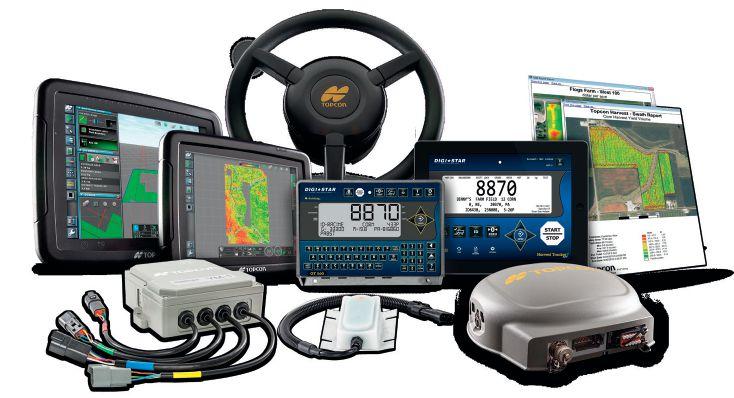
Topcon solutions let you maximize harvest efficiency. Autosteering while collecting yield and moisture maps, grain cart weight and moisture tracking as well as dry bushel conversions with a simple App. When harvest is done, use the collected data to plan a more profitable crop for next season. To learn more about our harvest solutions, visit us at topconpositioning.com/harvest
why various pests are present in fields. For example, how were new weed types introduced onto the farm? How could this be avoided in the future? How can new weeds be managed? For some diseases, could cultural controls such as using a more diverse crop rotation to break disease cycles reduce the presence of the problem?
For some diseases and insect pests, could the use of a tolerant or resistant crop variety be an option? To consider control options, farmers must develop a very good knowledge of the various pests in their region and understand the biology and life cycle of each pest. Awareness of changing pest trends is also important. To do this, careful recording of information for each field and crop is required every year on your farm.
Detailed field record keeping is time consuming, but over time this practice can provide valuable information on changing trends on your farm. Pest occurrences in a field or on the farm often occur due to events earlier in the season or the previous year. Most farms are large and the combination of numerous fields, crops, events and treatments are often complex and difficult to remember without the help of well-organized, detailed field records. Using an electronic record-keeping system can be important for analyzing your IPM program.
There are many IPM practices a farmer can consider. I have summarized some important factors.
Seed and seeding:
There is no substitute for excellent seed.
• Have you selected the best regionally adapted crop variety for your area? Disease resistance is constantly breaking down in older varieties, but breeding advances are constantly improving disease resistance and agronomic characteristics. Be sure to constantly review new varieties available that are well-suited for your region and suit your growing requirements.
• Is your seed source free of weed seeds? A number of plant diseases are present on seed (seed-borne diseases). Be sure to use seed that is disease free and weed free. Ensuring seed is cleaned and tested for disease is very important. Using certified seed is a very good practice to consider.
• Make sure to select the most disease-resistant varieties for the diseases present in your area. This will help to reduce the need for fungicides.
• Treat seed with the fungicide or fungicide/insecticide combinations for cost-effective control of pests present in your fields.
Crop rotations
Wisely rotating crops is extremely important for reducing pest problems.
IPM includes several important practices, such as excellent seed, wisely rotating crops, tillage practices and sanitation of equipment and vehicles.
• Rotating crops will help control less mobile insects.
• Rotating crops will reduce the presence of residue-borne fungal and bacterial diseases. Having a break of several years between crops susceptible to the same disease will reduce disease potential.
• Long-term crop rotations that include annual crops and perennial forage crops in the rotation are ideal. Forages are excellent for lowering disease risk of annual crops in a long-term rotation, and also reduce the presence of weeds. Forage crops are also very helpful to improve soil quality and build soil organic matter.
• Shorter term crop rotations using annual crops ideally should include at least two or three crop types, such as cereal, oilseed and pulse crops. Ideally, don’t grow the same crop more than once every four years.
• Don’t grow different crops susceptible to the same disease back to back. Sequence crops to your advantage. After growing a nitrogen-fixing crop such as pea, grow spring or durum wheat to take advantage of nitrogen release from pea residue to increase grain protein. A good diverse rotation can interrupt weed, disease and insect cycles. Rotating crops makes it easier for a farmer to rotate different herbicide groups to reduce the potential of developing herbicideresistant weeds.
• Alternating winter wheat and spring wheat, with different life cycles, in a diverse crop rotation helps to disrupt the life cycle of weeds to help control weed problems.
Conventional versus zero tillage
Reduced and zero tillage across Western Canada has contributed to soil moisture conservation, reduced fuel costs, reduced wind and water erosion, and greatly improved soil quality and soil health. Zero tillage also means weed seeds are not incorporated into soil, which is helpful in terms of cultural weed control. But in situations when considerable disease infected crop residue remains on the soil surface, the use of tillage to bury diseased residue will promote residue decay to prevent infecting growing plants. There are times when tillage may be appropriate to assist with disease control, but always
keep in mind the importance of soil conservation.
Sanitation
Sanitation is key for pest control. Practice excellent equipment sanitation by cleaning farm equipment to prevent spread of weed seeds and disease organisms from field to field. Insist custom application equipment, industrial equipment and vehicles or ATV’s of visitors that enter your farmland be thoroughly cleaned to prevent importing weed seeds or disease
organisms onto your land. This article just scratches the surface of the potential for IPM. Think of the many things you can do on your farm for good pest management. Do your own research to understand as much as possible about the pests on your farm and the various control options. Search for excellent sources of good information to help you understand the pests on your farm and understand all the things you can do to protect your crops and at the same time ensure the long-term sustainability of your farm.
VERTICAL TILL COMPARISON
Evaluating tillage options for managing corn residues.
by Carolyn King
Is vertical tillage a good choice for managing your corn residues?
A Manitoba project is generating new information that will help growers decide which corn residue management technologies and practices would be best for their own farm.
Yvonne Lawley, a professor of agronomy and cropping systems at the University of Manitoba, is leading the project. She initiated this research in part because many growers have been asking about vertical tillage but very little research information is available on the technology under Prairie conditions.
Another factor driving her interest in the project is the potential for expanding the corn acres in Manitoba. “A lot of the seed companies are actively working on early season corn,” she says. “I think residue management is one of the biggest challenges potentially hindering new adopters of corn. So it seemed very timely to have a project focused on the new tools available to manage corn residue in Manitoba.”
Lawley describes some of the difficulties that Prairie growers can face in managing corn residues. “In a short-season area, farmers are concerned about colder [spring] soil temperatures and wetter soils when they have lots of residue covering the soil surface. Those concerns may not be unique to corn residue, but may be aggravated by the amount of residue that you get from corn.
“Corn residue has a very high carbon to nitrogen ratio [so] it is very slow to decompose, and corn crops generate twice the amount of residue [compared to crops like soybean and wheat], especially with
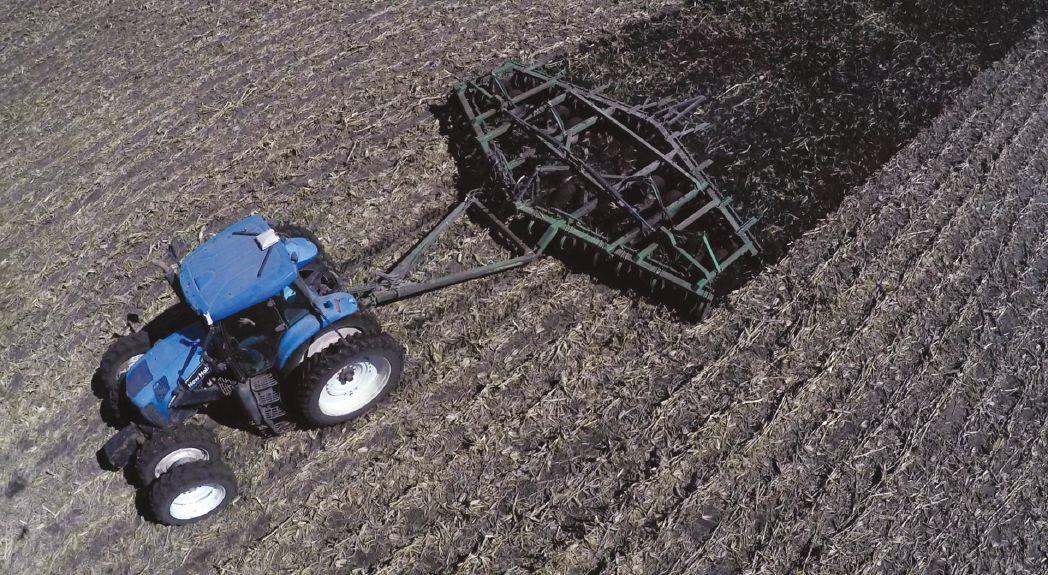
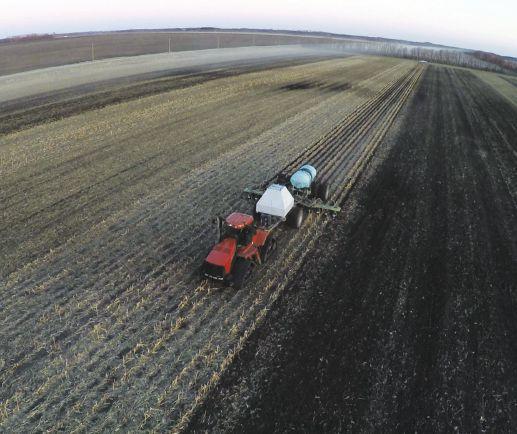
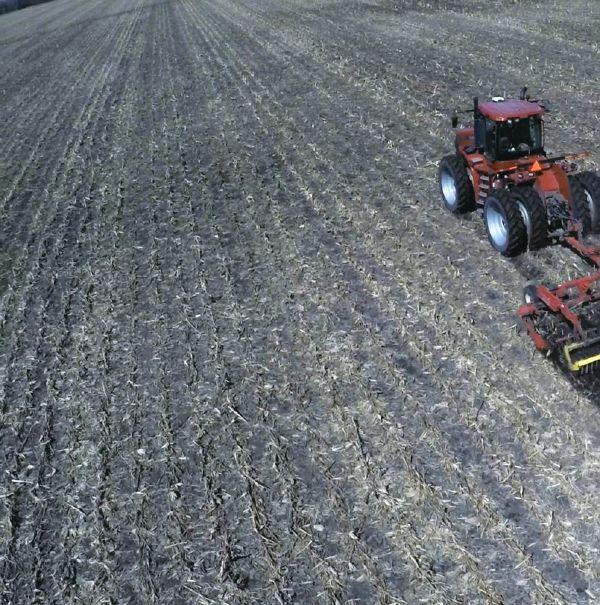
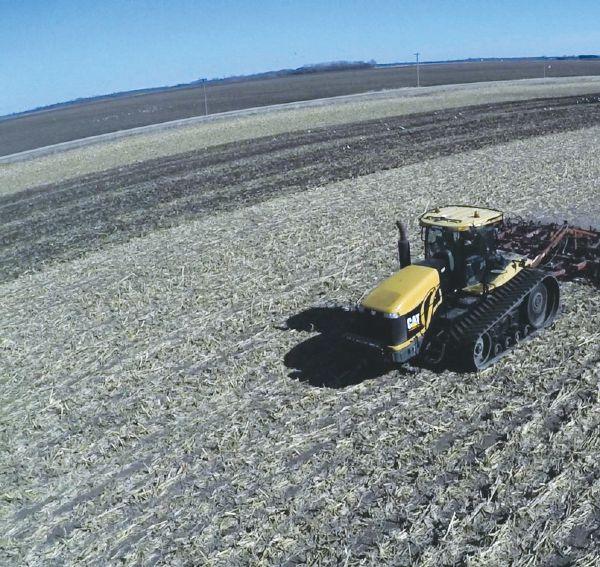
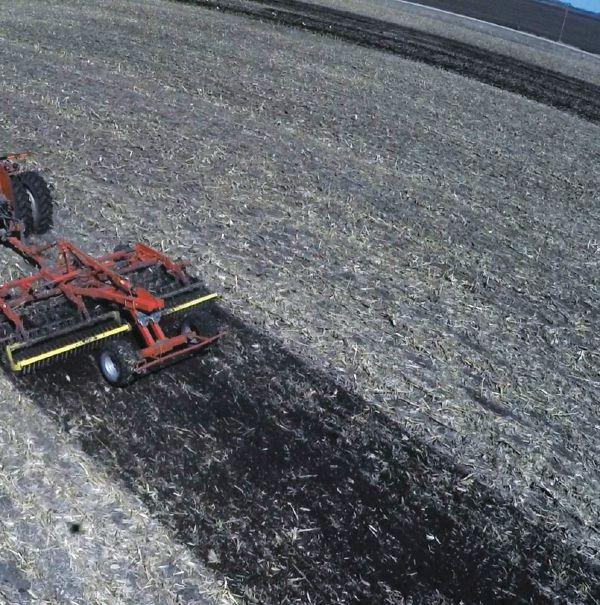
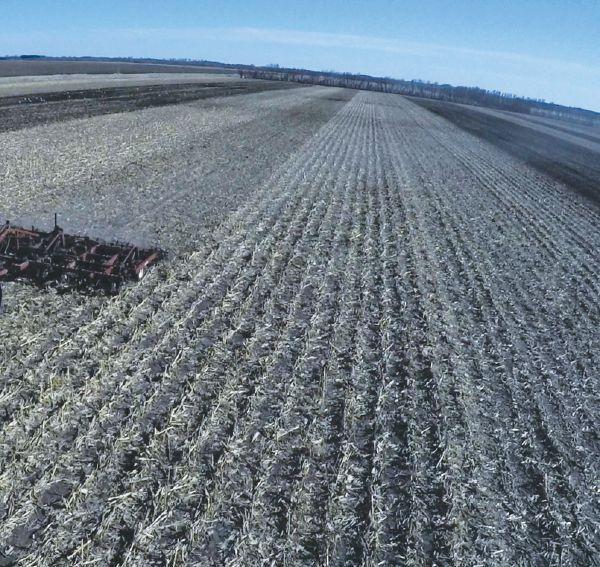
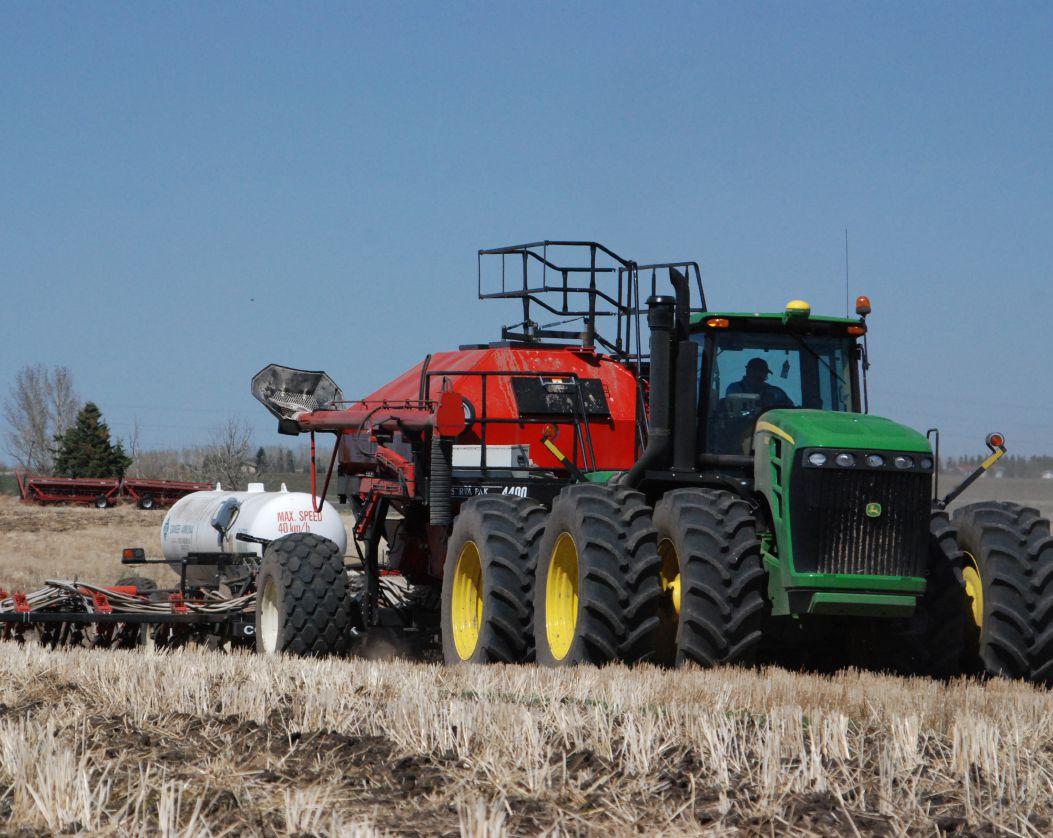
MIDDLE: Strip tillage usually involves only a single pass, so it takes the least amount of time and fuel compared to the study’s other tillage options, which all typically involve two or more passes.
PHOTOS
TOP Manitoba growers usually use a double disc to manage corn residues.
The word on Clearfield canola is spreading. And so are the acres.
As canola rotations continue to tighten, it’s no wonder more growers are using it. Because rotating to the Clearfield® Production System for canola gives you exceptional control of volunteers from other systems. It’s also the only system that delivers long-lasting control of flushing weeds. And with exclusive production contract premiums, Clearfield canola is the ideal way to maximize the potential of your crop. To learn more, visit agsolutions.ca/clearfieldcanola or call AgSolutions® Customer Care at 1-877-371-BASF (2273).
Always read and follow label directions.
higher yielding corn varieties. Growers also have to deal with the shape and nature of the root balls that come with corn stalks.”
She adds, “In Manitoba, corn is often harvested at a time of year when there could be snow in the fields. Then after harvest, there’s the work of incorporating that residue, when your field may be frozen and it will likely be wet. So there are all kinds of challenges to doing residue management at that time of the year.”
According to Lawley, Manitoba growers commonly manage their corn residues using a double disc in the fall, with two or three passes to chop up and incorporate the residues. “That is expensive in terms of time and fuel. Given the very late window for corn harvest in Manitoba, time is probably more limiting than the fuel,” she says.
“I think that everyone is looking for a residue management option where they can cover more land quickly, and that is the appeal of vertical tillage – you can drive the tillage equipment fast.”
Comparing tillage treatments
The project, which started in fall 2014, is comparing four tillage treatments for managing corn residues: vertical till-low disturbance, vertical till-high disturbance, strip till and double discing, the conventional treatment as a control.
The term vertical tillage can sometimes mean different things to different people. For the purposes of this project, Lawley defines a vertical tillage unit as: “tillage equipment that has cutting discs to create vertical cuts into the soil. Those discs can run perfectly vertical or they can be angled to create more disruptive tillage. Also, at the end of the unit, there’s a smoothing or finishing component, such as rolling baskets or heavier tines, that then smooths out the seedbed.”
“In the project, we distinguish between two vertical till treatments,” explains Patrick Walther, Lawley’s graduate student who is working on this project. “In the vertical till-low disturbance treatment, the discs are at a zero-degree angle. In the vertical till-high disturbance treatment, the discs are at a slight angle, around six degrees, or we have used a unit with a slightly concave shape to the disc.” The high-disturbance treatment may also be known as a high-speed disc.
The low-disturbance treatment leaves a lot of residue on the soil surface, so it offers soil conservation advantages. The highdisturbance treatment results in a black seedbed similar to that produced by a double disc. In Manitoba, high-disturbance vertical till is more common than low disturbance. Lawley says, “Very few Manitoba farmers are using vertical tillage in a soil conservation sense. Most people are using this equipment as a high-speed disc, as an alternative to a double disc, especially with corn residue.”
The strip tillage treatment involves tilling only the strips where the seed rows will be planted. Walther notes, “With strip tillage, usually less than 30 per cent of the field gets worked, so about two-thirds of the field is undisturbed like no-till.” Although strip till is not widely used in Manitoba, he says it is common just south of the border in Minnesota and North Dakota.
“The vertical tillage and double disc treatments are more similar to each other, while strip tillage is almost like an entirely different type of tillage system,” explains Lawley. “Many farmers think strip tillage is very slow. But I think strip tillage offers some interesting comparisons in terms of giving you the best of both worlds from a soil conservation standpoint. Much of the field is protected from erosion by the crop residue cover, but early in the
season, the worked strip where you’ll be planting the seed will be blacker, fluffier, drier and warmer, and all those things we’re trying to do by working the entire field.”
Equipment evaluation
One component of the project involves evaluating the performance of the tillage equipment used in the project. For this component, Lawley and Walther collaborated with the Prairie Agricultural Machinery Institute (PAMI) in Portage la Prairie. They measured fuel consumption, horsepower requirements, draft force (the force required to pull the implement through the soil) and the time it takes to complete the tillage.
A key factor in the comparison is the number of tillage passes that growers typically use. “For strip tillage, we’re assuming the strips
are created in one pass. For the vertical till, most farmers that we’ve talked to are using two or even three passes. With the double disc, they are usually using two passes,” Lawley notes.
For example, the tests showed that one pass with a vertical till unit takes much less time than one pass with a double disc or one pass with a strip tillage unit. However, when you consider a complete tillage operation, strip tillage takes the least amount of time because it involves only one pass. The next fastest is vertical tillage with two fast passes, and then the double disc with two slower passes. Similarly, strip tillage has the lowest fuel consumption. “If we look at a complete tillage system, then strip till uses about three times less fuel than a vertical till system, mainly because vertical till is a two-pass system and strip till is a one-pass system,” Walther says. Walther also took slow motion videos of the different pieces of
TOP LEFT: Growers use high-disturbance vertical till as a highspeed alternative to double discing.
MIDDLE LEFT: Low-disturbance vertical till leaves more crop residue on the soil surface compared to high-disturbance vertical till.
equipment moving through a field. He and Lawley examined the videos to get a better understanding of how each tillage tool works.
“In the vertical till-low disturbance, we don’t have a lot of incorporation of crop residue. It is mainly chopping up the residue into smaller pieces. In the vertical till-high disturbance, the soil gets thrown up and mixes with the residue. In the low disturbance, there’s limited horizontal soil movement,” explains Walther.
“The project’s strip till unit tends to push the residue away from the strip and then work the soil. So it doesn’t actually incorporate a whole lot of residue,” he notes. Lawley adds, “The strip tillage is really the most intensive tillage; it is just concentrated in a very small band.”
The different tillage implements run at different soil depths. “Usually, for the vertical till-low disturbance treatment, we set the equipment to about 2.75 inches, or seven centimetres, deep. The vertical till-high disturbance unit would be about the same or a little shallower, maybe two to 2.5 inches [five or six centimetres], depending a bit on the farmer’s preferences,” says Walther. “The disc treatment is about four inches (10 centimetres) deep. For the strip till, it’s just one shank that goes into the soil, and it goes about seven to eight inches (or 20 centimetres) deep.”
Field trials, results so far
The project’s other component involves on-farm field trials in Manitoba to assess how the tillage treatments affect the following soybean crop. In 2014-15, there were two sites, one at Winkler and the other at MacGregor. In 2015-16, one site is again at MacGregor, and one is at Haywood.
The plots are field-length strips. The tillage treatments are carried out in the fall, if possible, or in the spring. Depending on the farmer’s preferences, the soybean plots may be land rolled. “Farmers in Manitoba are doing land rolling when they plant soybeans, usually just after planting, to aid in harvesting where they might have uneven ground or stones that could get caught in the combine at harvest,” Lawley says.
Walther is collecting data on soybean emergence, timing of flowering, plant height, pod height and crop yield. He is also monitoring soil temperature and soil moisture at five and 30 centimetres deep in the soybean plots throughout the growing season. As well, he will be calculating the economic costs and benefits of the different treatments.
Walther has already analyzed much of the data collected in the soybean plots in 2015. The results showed that factors like crop yield and emergence varied little between the different tillage treatments.
The average soil temperatures were very similar for all the tillage treatments. However, the temperature range from day to night varied with the treatment; the strip till plots had the warmest daytime temperatures and the coldest night temperatures. But after the land rolling operation, that diurnal fluctuation was reduced.
“We think that one of the reasons why strip till is able to warm the soil faster is due to the shape of the soil surface. A berm is created in that strip, and we think the rapid warming is driven by the ability
From high-yielding hybrids to heart-healthy Omega-9 Oils to new, high-protein meal – only Nexera™ canola creates new markets that help produce the highest farmer returns per acre, year after year, across western Canada. SEED FOR YIELD, CONTRACT FOR PROFIT.™ See your contractor or retail.
DAWN, NOON OR MIDNIGHT: WHEN TO SPRAY HERBICIDES?
Research finds spray timing has significant effect on efficacy.
by Carolyn King
The time of day when you spray often makes a significant difference to herbicide efficacy. That’s one of the overall findings from a recent Alberta project. The sometimessurprising results are leading the project team to explore the reasons behind the data and to look at a possible tool to help producers make time-of-day spraying decisions.
The idea for this project was sparked by the growing use of night spraying. “GPS-guided autosteer has given farmers the ability to spray during the night. So we wondered, is night spraying as effective as daytime spraying?” says Ken Coles, the general manager of Lethbridge-based Farming Smarter.
Coles led the three-year project (2012 to 2014), which was funded by the Alberta Canola Producers Commission and Alberta Barley Commission. The project compared early morning (4 a.m. to 5 a.m.), midday (noon to 1 p.m.), and night (midnight to 1 a.m.) timings for herbicide applications. This small plot, replicated research project included a pre-seed burndown study and an in-crop study, and involved a range of herbicide groups.
The pre-seed burndown study, which took place at Lethbridge, evaluated herbicide efficacy for controlling natural weed infestations in the plots. The treatments involved glyphosate and several products that were becoming popular as tank mixes with glyphosate (see table).
The in-crop study was carried out at Lethbridge by Farming Smarter, at Bonnyville by the Lakeland Applied Research Association, and at Falher by the Smoky Applied Research and Demonstration Association. The crops included wheat, peas, Liberty Link (LL) canola, and Roundup Ready (RR) canola. They were seeded on two seeding dates each year to try to make sure the herbicide applications would occur in range of weather conditions. Simulated weeds were seeded in the plots: tame mustard for a broadleaf weed, and tame oats for a grassy weed. Herbicides from various groups were compared (see table).
Highlights of findings
“Herbicides are registered to work in a wide range of conditions so I didn’t really expect to see a tremendous difference in efficacy between the different timings. But what I started to see right away was often the early morning application was the least consistent of any timing,” Coles says.
“Having grown up in southern Alberta, I found that particularly interesting because it is almost inbred in our culture that we wake up really early to spray, to beat the wind. But the project’s results show the early morning timing is often coming at a cost
Table 1. Herbicides included in the pre-seed burndown timing study
* PrePass contains florasulam and glyphosate. The researchers kept the tank mixes separate so they could evaluate the different modes of action separately.
Courtesy of Farming Smarter.
Table 2. Crops and herbicides in the in-crop herbicide timing study
Select (clethodim, Group 1); Odyssey (imazamox and imazethapyr, Group 2)
Barricade (thifensulfuron and tribenuron, Group 2); Everest (flucarbazone-sodium, Group 2); OcTTain (fluroxypyr and 2,4-D, Group 4); Axial (pinoxaden, Group 1) + Infinity (pyrasulfotole and bromoxynil, Group 6/27)
Canola LL Liberty (glufosinate ammonium, Group 10); Muster (ethametsulfuron, Group 2) + Select (clethodim, Group 1)
Canola RR Vantage Plus Max II (glyphosate, Group 9)
Courtesy of Farming Smarter
for herbicide efficacy.”
In both the burndown and in-crop studies, the most effective timing was usually midday, followed by midnight. Coles says, “Since night spraying was usually more effective than dawn, night spraying could be a good option when daytime opportunities for spraying are limited.”
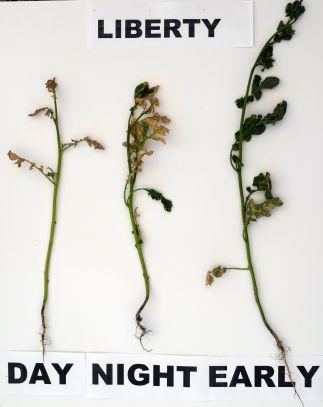
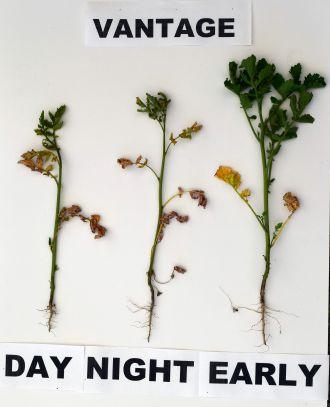
For canola, Liberty and Roundup (Vantage Plus Max II) usually performed best at midday and worst in the early morning. He notes, “I was surprised that Roundup had a strong time-of-day effect. We expected that for Liberty – it is well known that you should spray Liberty in the heat of the day because it needs the heat to activate it as a contact herbicide.”
The story was somewhat different for wheat and peas. “We didn’t see nearly as strong a correlation with time-of-day on the wheat herbicides; generally, they worked the best under most conditions. The
Peas
Wheat
Boost your bottom line with high-quality sulphur fertilizer, TIGER XPTM, applied this fall. Research has proven sulphur increases nitrogen and phosphorus uptake for higher yields and stronger returns on your soil fertility investment. Tiger XP combines sulphur bentonite with a proprietary activator, accelerating plant sulphate availability and offering higher sulphate levels throughout the entire growing season. Add the power of Tiger-Sul sulphur to your farming operation and receive greater returns on investment.
pea herbicides, Odyssey and Select, tended to work better when sprayed at night.”
So Coles suggests a general guideline would be to spray wheat in the early morning, canola in the middle of the day, and peas at night.
Generally, broadleaf weeds tended to be more sensitive to the time-of-day effect than grassy weeds.
On grass control, Coles points to another interesting finding: “Liberty is known for not having the greatest control of grassy weeds, but when we sprayed Liberty at night, its grass kill improved. This type of information could be helpful when dealing with herbicide-resistant weeds. Let’s say you’ve got Group 1 and 2-resistant wild oats and you don’t have a lot of options left to kill them. Spraying Liberty at night on Liberty canola might help keep those resistant
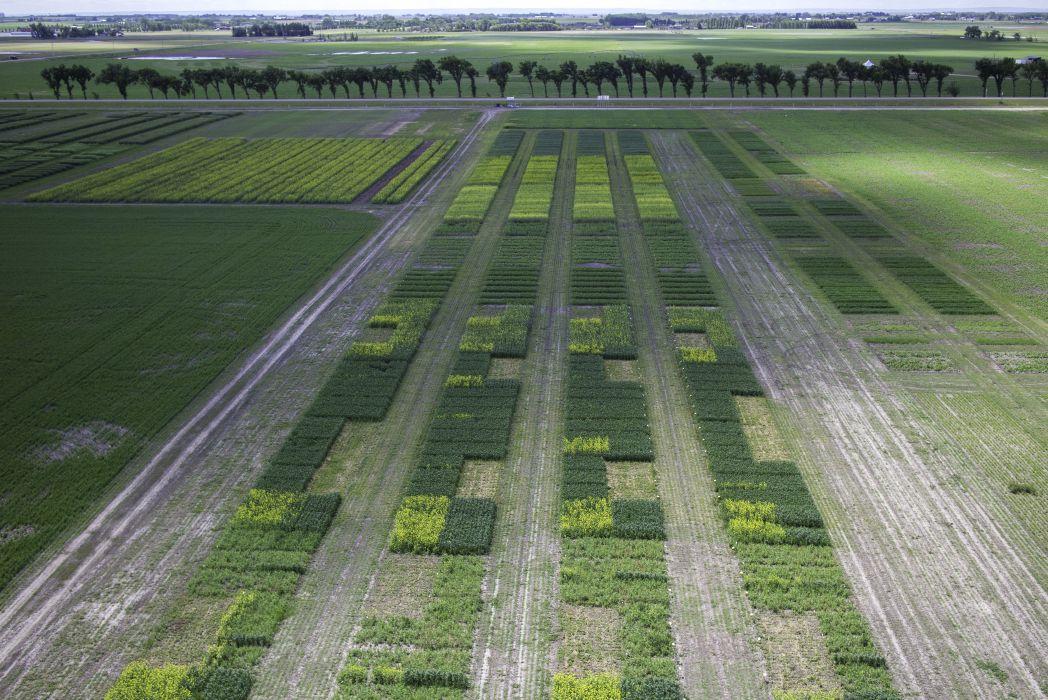
ABOVE: The project included a pre-seed burndown study and an in-crop study, and compared various herbicides applied at dawn, midday and midnight.
LEFT AND RIGHT: Usually the most effective timing for herbicide spraying was midday and the least effective was early morning.
Looking into results
The results showed some strong patterns overall, but not every site in every year followed the general trends. To better understand the reasons behind the results, Coles and his team looked closely at the weather data for the trials because of the profound effect weather can have on herbicide efficacy.
“Usually, our conditions were pretty dry, so during the day, the temperature rose and the humidity dropped. Then at night, the temperature dropped and the humidity rose. But, for instance, if we had a rain event with lots of moisture and maybe no wind, then that pattern really got jumbled up. It was harder to predict the [herbicide efficacy] results when more moisture was
present,” Coles says.
The project team was able to identify the likely causes for some of the plot results that bucked the general trends. For instance, the results suggest that plants stressed by very dry soil conditions might have reduced herbicide translocation, resulting in poorer herbicide efficacy. Moisture stress may also change a plant’s form and structure, causing such things as leaf rolling or thickening of the protective waxy covering on the leaf surface – changes that could reduce the amount of herbicide entering the plant. It’s also likely that a heavy rainfall event shortly after spraying in one of the experiments washed away the herbicides, so those applications were almost totally ineffective.
The link between time of day and changing temperature and humidity conditions
wild oats under control.”
got Coles interested in Delta T. “Delta T is the wet bulb temperature minus the dry bulb temperature. The dry bulb is just a regular thermometer, and the wet bulb is essentially a thermometer with a wet sock on it. It measures the evaporative cooling effect, which is the same effect as if you jump out of the shower and stand in front of a fan – you feel cold.”
Delta T can be used to determine if conditions are optimum for spraying. The general guideline is that Delta T should be between two and eight or 10 (the upper limit depends on whether the spray is fine or coarse).
“When I mapped all of the Delta T values for all of our data, the poorest herbicide performance was between zero and two,” Coles says. So he dug a little deeper into Delta T.
According to Coles, very little academic research has been done on Delta T for spraying decisions. And most of that research has been in Australia, where growers use Delta T mainly to determine if conditions are too hot and dry for spraying. As Delta T rises above 10, the air gets very hot and dry, causing spray droplets to evaporate faster and volatile pesticides to vaporize faster, so herbicide effectiveness tends to be reduced.
If Delta T is below two, then the air is very moist. In the Australian literature, the reason given for not spraying when Delta T is below two is that the high relative humidity causes the spray droplets to be very slow to evaporate. So fine droplets tend to last a long time, increasing the risk of spray drift if a temperature inversion occurs.
A temperature inversion is when the air near the ground is cooler than the air above it. To check for an inversion, compare the temperature at the top of the crop canopy with the temperature at about eight to 10 feet above the canopy. The air in an inversion is very stable because the lower, cooler air is denser than the warmer air above. So there’s no vertical movement of air parcels; the airflow is horizontal. Although coarse spray droplets will fall to the surface fairly quickly, fine droplets will take a long time to fall and may float for long distances.
Inversions tend to be strongest and deepest just before sunrise, so they may be a factor in the generally poorer performance of the early morning applications in the project. Coles explains, “We always talk about not spraying when there’s a temperature inversion because of the risk of spray drift. But it’s also possible that inversion
issues are resulting in poorer weed control on our own fields – basically not all of our fine droplets are hitting our targets. If that is the case, that might explain why we’re not getting as good control in the early morning: we have less spray coverage, especially with the finer droplets which are sometimes more easily absorbed in plants.”
However, Coles thinks the effects of early morning weather conditions on plant physiology might be even more important than the effects of early morning inversions on spray coverage.
One physiological factor could be that most metabolic process in plants increase with warming temperatures. So, as the day warms up from the relatively cool conditions at dawn, herbicides tend to become more biologically active. (However, if conditions get too hot, then plants will start to reduce their metabolic activity, slowing the rate of translocation and metabolism.)
Coles also suspects evaporative cooling could be important. “Early morning is when we have the highest humidity and the lowest temperatures. Then the wind comes in with really dry air and it dries off the plants really quickly. So my premise is that
the evaporative cooling effect is sucking a lot of heat energy out of the plant, which stresses the plant. And a stressed plant is not going to uptake herbicide.”
From his initial look at Delta T, Coles thinks it might be a useful tool to help farmers make time-of-day decisions on herbicide spraying. Small hand-held units are available for measuring Delta T, so it’s easy to do. “It looks like avoiding spraying if Delta T is between zero and two is more important [in Alberta],” Coles says. “I think I would go somewhat higher than 10 [for the upper end of the optimum spraying range] and be comfortable.” However, he’d like to see more research on Delta T, especially on why spraying is less effective when Delta T is below two.
“We don’t have it all figured out, but it has definitely taken us onto an interesting path trying to understand the why,” Coles says. “And the more we know about herbicide effectiveness, the better job we can do at managing herbicides to increase yields, decrease weed seeds in the seed bank, and deal with herbicide resistance before it becomes an even bigger issue.”
Fit For Any Field
When it comes to farm equipment, one size doesn’t fit all. That’s why we’ve developed such a full line of Field Tested Tough™ equipment and attachments. No matter where you farm, what type of operation you run, or what conditions you face, we’ll have the equipment to address your unique challenges, while standing up to the toughest conditions.
•Coulter blades size residue, provide natural soil fracturing, and promote deep root growth.
•Patented hydraulic hitch transfers weight between front and rear disk gangs.
•Super-Flex™ C-shank mounting minimizes rock damage.
VERTICAL TILL COMPARISON
CONTINUED FROM PAGE 19
of that berm to catch solar radiation. Then when we roll the strip, we flatten out that berm so less warming occurs,” Lawley says.
Lawley and Walther are hoping to further evaluate the effect of land rolling during the project, but that will depend on whether any of the co-operating farmers decide to do land rolling.
Walther is also collecting data for his
& PINION SLIDE GATE (Stainless Steel Components on Magnum-F™)
economic analysis. He explains that an overall economic analysis will likely be challenging because there is not a lot of western Canadian data for vertical till units and strip till units regarding purchase costs, maintenance costs, depreciation and so on. Lawley adds, “People tell us that vertical till units are more expensive to maintain; the units just have a lot more bearings and moving parts.”
Better information for growers
Rather than trying to come up with one perfect system for managing corn residue, the project aims to provide data about equipment performance, crop growth, yield, soil temperature and soil moisture that will help growers make their own decisions about which tillage tool would be best for their own situation.
“Tillage is very farm-specific; it comes down to things like how people want to spread their work loads, what kind of seedbed they want to create, what kind of planting equipment they have, and what crops are in their rotation. I think this project will help farmers in Manitoba because it will give them some data by which they can weigh their options,” explains Lawley.
“Certainly the work we did with PAMI will help growers. I don’t think that type of data really exists [anywhere else] in Western Canada right now. The information about fuel consumption and travel time could help growers evaluate their own operations and different investments that they are thinking about making.”
Given that the soybean yields in 2015 were about the same no matter which tillage treatment was applied, Walther speculates that the project might also generate information that would support reducing the number of tillage passes used to manage corn residues, as long as farmers have seeding equipment that can handle planting into residue. Fewer tillage passes would reduce the time and money spent on tillage, while improving soil conservation. He points out that Manitoba has had some serious incidents with blowing soil in recent years, especially in years with dry springs.
This project is being funded by the Manitoba Corn Growers Association, Western Grains Research Foundation, and under Growing Forward 2, through Manitoba’s Agri-Food Research and Development Initiative. Lawley and Walther also thank the collaborating farmers: the Toews family at MacGregor and Haywood, Randy Froese in Winkler, and Brent Wiebe in MacGregor.
Lawley and Walther are looking for more farmers to take part in the final year of the field trials, which starts in fall 2016. If you’re interested in participating, contact Walther (waltherp@myumanitoba.ca; 204-891-1649; or @Pat_Wath) for more information.
Meet the evolution of flea beetle control. Formulated with the right combination of active ingredients, Visivio™ seed treatment counteracts earlyseason canola threats from insects–including both striped and crucifer flea beetles–along with a broad-range of seed- and soil-borne diseases. Unleash the vigilant protection of Visivio. Your seed investment deserves nothing less. To neutralize the threat, visit Syngenta.ca/Visivio
REDESIGNING CROPPING SYSTEMS
New approaches to Canadian Prairie cropping systems to improve profitability, sustainability and resilience.
by Joanne Thiessen Martens, Martin Entz and Mark Wonneck
Editor’s note: This is an edited version of a Canadian Journal of Plant Sciences article. The full review can be found in the Canadian Journal of Plant Science as an Open Access article: Can. J. Plant Sci. (2015) 95: 1049-1072. www.nrcresearchpress.com/doi/abs/10.4141/cjps-2014-173
The long-term sustainability of the Canadian agriculture sector depends on its ability to thrive economically while protecting our natural resource base and building resilience to stresses and shocks. Modern agricultural systems prevalent on the Canadian Prairies, while often highly productive, are associated with a number of environmental and social issues that threaten the sustainability of the sector, including rising energy and input costs, greenhouse gas (GHG) emissions, loss of biodiversity, soil and water degradation, corporate concentration, global competition in production of bulk commodities, and a steady reduction in the number of farms.
Improvements in efficiency of input use and input substitution (e.g., herbicides instead of tillage) may not be enough to address the challenges facing modern agriculture. Instead, farming systems must be redesigned based on a new set of ecological relationships. In other words, agricultural systems require systemic change. We seek to highlight and evaluate the cropping practices and systems that might make up these redesigned Prairie farming systems. Key focus areas include diversified crop production systems (including crop rotation, intercropping, cover crops and agroforestry), reduced tillage, nutrient cycling through endogenous input systems (using manure and legumes), integration of crops and livestock, and the purposeful design of farm landscapes (farmscaping). We evalu-
ABOVE: No-till seeding has contributed to the sustainability of agriculture.
PHOTO BY BRUCE BARKER.
ated these systems in terms of their potential profitability, environmental sustainability, and resilience.
Assessment of farming practices for their role in the sustainable development of Canadian Prairie cropping systems
The farming practices we reviewed range from relatively simple modifications to systemic changes. Agricultural systems that most closely mimic natural systems appear to be the most resilient and environmentally sustainable due to their biological and enterprise diversity; integration, multifunctionality, and redundancy among components; effective nutrient cycling through promotion of soil biological activity and minimal use of external inputs; leveraging of natural ecosystem processes; and minimal soil disturbance.
The sustainability of no-till farming is limited by its reliance on herbicides. Finding a temporal niche for cover crops in the short growing season of the Prairies remains a challenge, but novel ways of including and using cover crops, perhaps in integrated crop-livestock systems, would increase the adoption potential and realized benefits. A shift to the use of manure, nitrogen-fixing legumes and soil biological fertility in cropping systems requires greater knowledge of how to manage these systems effectively.
Ecologically based whole-farm systems have not yet received much research attention and, therefore, have the most uncertainty associated with them.
Diversity lends stability (both ecological and economic) and effective integration of system components builds integrity and allows for realization of synergies among processes. Profitability of such systems will depend in part on the choice of agricultural species and optimization of synergies among components.
It is important to note that these ecologically based wholefarm systems have not yet received much research attention and, therefore, have the most uncertainty associated with them. Given their potential benefits, they deserve significantly more research and development attention.
Farmscaping, crop-livestock integration, agroforestry, perennial forages, and perennial grains, complemented with use of manure and legumes for soil fertility and minimal soil disturbance, have the potential to make large contributions to sustainability and resilience. When such systems are designed to comply with organic production standards, market premiums further enhance their profitability.
Perennial forages in particular have a large and well-documented positive impact on environmental sustainability and resilience and are also technically feasible. While perennial grain systems appear promising, implementation of such systems is impossible until varieties become commercially available. Applied research on integrated crop-livestock systems, alley cropping, and farmscaping (including multifunction shelterbelts or “ecobuffers”) is needed to optimize and support implementation of these practices in the Prairie region. Local farmer knowledge of crop-livestock systems and farmscaping practices may be more developed than local research in these areas, as ecologically minded farmers make observations and experiment with practices on their own farms.
Profitability, sustainability, and resilience can be enhanced to some degree by adding diversity to annual cropping systems without a major change in the system. Practices that can be implemented relatively easily within annual cropping systems include crop selection and rotation, cover crops, reducing tillage, animal and green manures, soil biological fertility, annual polyculture, and crop varieties and genetics.
However, even these relatively simple practices have challenges associated with their implementation. For instance, optimal use of crop rotation may be limited by poor markets for all but a few crops, which causes farmers to shorten their rotations.
While some of these practices individually may make relatively small contributions to sustainability, profitability, and resilience, they remain useful during both the transition to and as components of fully redesigned systems.
This review demonstrates that agricultural systems designed according to ecological principles and local ecologies contribute to better outcomes for agricultural systems on the Canadian Prairies. We have argued that these systems require systemic change if profitability, sustainability, and resilience are to be optimized. Just as the key ecological pillars of diversity and integration lend stability and integrity to ecosystems, integrating diverse components in ecologically compatible complementary relationships within supportive economic and social structures promotes the overall health of the system, including environmental sustainability, long-term profitability, and resilience to shocks and stresses. Thus, system change is best done with purposeful and proactive redesign of agricultural systems at all levels, from individual farms to regional and even global scales, with particular attention to functional integration of diverse components.
The challenge to align Canadian Prairie agricultural systems with ecological principles is immense, especially in the current context of agricultural development where short-term productivity and economic efficiency are emphasized. However, the more holistic goals encompassed in ecologically based systems are fundamental to the long-term success of any sector or society and are worthy of serious pursuit.
Past government and university scientists in the Prairies have also called for system redesign with a shift to permanent agriculture based on diversified crop rotations and effective crop-livestock integration. Had our agricultural policy makers, educational institutions, and businesses embraced this advice, we would be much further ahead than we are today.
We believe that locally adapted ecological Prairie farming systems are still achievable but will require a major shift in research, education, and policy. A proactive move in this direction would provide a solid foundation for the development of environmentally sustainable, profitable, and resilient agricultural systems in Prairie Canada.
Joanne Thiessen Martens and Martin Entz are from the University of Manitoba’s department of plant science. Mark Wonneck is from the science and technology branch of Agriculture and Agri-Food Canada in Calgary.
PLANT GROWTH REGULATORS TO ENHANCE WHEAT YIELD AND QUALITY
Research in northeast Saskatchewan shows good results.
by Donna Fleury
In northeast Saskatchewan, as spring wheat growers push for higher yields and better protein levels, lodging can often be a challenge. Researchers and growers were interested in the potential of plant growth regulators (PGR) as an option to help reduce lodging and increase yield and also protein.
PGRs are not new to agriculture and have been used extensively in other cereal growing regions. Some work was done with these products several years ago, but they have only recently been trialed again in Western Canada to see if there have been any improvements in products and how they may fit into production practices. A PGR application can cause various responses in wheat crops, including shorter plants (internodes), thicker stems, thicker stem cell walls, less lodging and potentially higher yields.
Researchers at the Northeast Agriculture Research Foundation (NARF) in Melfort, Sask., began a three-year project in 2013 to demonstrate the plant growth regulator Manipulator (chlormequat chloride) at various application timings and fertility levels in spring wheat.
“We initiated demonstration trials in collaboration with Engage Agro to determine the effects of Manipulator on yield, lodging and height in spring wheat,” explains Jessica Pratchler, field research agronomist with NARF. “The objective of applying the PGR was to help reduce lodging and increase yields. By reducing the height of the crop, more resources are available for seed filling instead of producing stem height. The crop should also be more uniform, improving application timing for inputs and harvest.”
The trials were conducted using the spring wheat variety Shaw VB seeded at 275 plants/m2. Manipulator was applied at the label rate (1.87 L/ha) at three different timings, Zadoks 21 (Z21) or first tiller, Z31 or first node, and Z39 or flag leaf. Based on a soil test rate of 110 kg/ha of N and 25 kg/ha of P2O5, three fertility rates were used at 100, 125, and 150 per cent of the recommendation. For each trial, plant height, lodging and maturity ratings, yield and quality were measured.
“Overall, the demonstration trials with Manipulator proved to be successful in northeast Saskatchewan over the last three years,” says Pratchler. “This product has shown to be highly useful in the northeast as it decreases height and lodging, as well as increases the yield in spring wheat. All three PGR application timings were able to reduce the severity or incidence of lodging, and resulted in shorter plants 94 per cent of the time. Application at Z31
in internode
to untreated (left). The treated stem area directly above and below the node tends to get thicker, which increases the ability to withstand lodging.
produced the best yields.”
The best results were produced when the product was applied at the Z21 and Z31 stages, however application at the Z31 stage produced the largest decrease in height. However, if growers also determine a fungicide application is warranted, they can plan to wait and apply the PGR then, which would reduce a field pass. At this stage, a reduction in height is not as significant, but still beneficial.
The trial showed Manipulator in conjunction with high fertility rates can produce a crop with less lodging. In the trials, the fertility
Spring wheat treated with PGR resulted
shortening (right) compared
Trait Stewardship Responsibilities Notice to Farmers
Monsanto Company is a member of Excellence Through Stewardship® (ETS). Monsanto products are commercialized in accordance with ETS Product Launch Stewardship Guidance, and in compliance with Monsanto’s Policy for Commercialization of Biotechnology-Derived Plant Products in Commodity Crops. These products have been approved for import into key export markets with functioning regulatory systems. Any crop or material produced from these products can only be exported to, or used, processed or sold in countries where all necessary regulatory approvals have been granted. It is a violation of national and international law to move material containing biotech traits across boundaries into nations where import is not permitted. Growers should talk to their grain handler or product purchaser to confirm their buying position for these products. Excellence Through Stewardship ® is a registered trademark of Excellence Through Stewardship.
rate did not play a large role in the amount of lodging except for the 150 per cent rate with no PGR application, which had the highest lodging rating. In addition, yield, protein, and other grain quality factors were not changed by either PGR application or fertility rate.
Overall, Manipulator application resulted in crop shortening and lodging reduction, regardless of fertility rate or PGR timing, while maintaining spring wheat yields.
In 2015, Manipulator was registered for use on spring, winter and durum wheat in Canada. However, Engage Agro is still waiting for maximum residue limit (MRL) limits to be set by the United States government, which will hopefully be in place by the 2017 growing season.
As with any new products, growers should talk to their grain buyer before applying the product to ensure there aren’t any market restrictions in place.
“Although we have had a lot of interest from growers at our field days, most growers are waiting until the MRLs are in place before trying Manipulator,” adds Pratchler. “Once the MRLs are approved and in place, then NARF has plans to continue with additional research on the use of PGRs in conjunction with different seeding rates, as well as nitrogen levels. We don’t completely understand how PGRs will interact with the whole agronomic package, and therefore more research is needed.”
NARF also has another project underway looking at two different PGRs and their effect on forage crops. They are also collaborating on another project led by Agriculture and Agri-Food Canada researchers in Lethbridge looking at PGR in winter wheat and fall rye.
Comparison of untreated spring wheat (left) and spring wheat treated with PGR at three different timings (right).
When combined with the Outback STX™, the eDriveXC autosteer system provides RTK accuracy and season-to-season repeatability at the industry’s best value point. Now, for much less than you thought, you can add centimeter-level performance to tackle demanding planting and nutrient placement applications. Contact your Outback Guidance representative today.
Take advantage of the Cutting-Edge Precision Giveaway
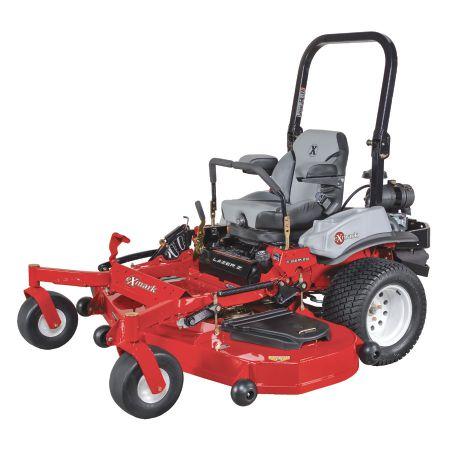
Quote or Purchase any Outback Guidance Terminal and Auto Steer System and be entered to win an Exmark Lazer Z X-Series with 60” Deck. Go to OutbackGuidance.com for complete details!
STRAIGHT CUTTING CANOLA
The practice brings risks and rewards, but is it for you?
by Bruce Barker
To swath or not to swath? That’s the question more and more farmers are asking every year as straight cut canola becomes more common across the Prairies. For Kevin Bender, who farms in the Sylvan Lake/Bentley area of central Alberta, the question was answered a long time ago. He started straight combining Polish canola back in the early 1990s but swathed his Argentine canola until 2003.
“In 2003 about one-half of our canola acres became too ripe. One of the fields was really ripe and we didn’t want to swath it, so we went ahead and straight cut it. We had no choice,” says Bender. “It worked so well that it was the last year we swathed canola on our farm.”
Over the years, Bender has seen several risks and rewards of straight cutting. On the benefits side, he believes he achieves slightly better yield with reduced harvest losses, bigger seed, one less piece of equipment and one less field pass. On the downside, he’s seen challenges with green material plugging combines, uneven uniformity causing timing problems, and green weeds and plant material in the sample causing heating concerns in storage.
Those risks and rewards are typical of straight cut canola, says
Angela Brackenreed, agronomy specialist with the Canola Council of Canada at Minnedosa, Man. However, she says that growers looking for higher yield and better quality should temper those expectations.
“I caution that yield and quality are not the main reasons to move to straight cutting. The biggest benefit is that it helps manage the narrow window that is present for swathing,” explains Brackenreed. “When canola is swathed at 60 to 70 per cent seed colour change, yield and quality is usually pretty similar to straight cut canola. The difficulty is that many producers have to start swathing earlier in order to get all their canola swathed before it gets too ripe, and that can reduce yield and quality.”
Chris Holzapfel, research manager at the Indian Head Agricultural Research Foundation, has conducted several research projects on straight cut canola over the past 10 years. He says in addition to time management issues, swathing also has other risks. Many farmers will remember the fall of 2012 when high winds devastated swathed canola with losses greater than 50 per cent in some cases.
ABOVE: Straight cut canola brings risks and rewards.
PHOTOS BY BRUCE BARKER.
The risks of environmental and header losses increase with the time the canola remains in the swath.
Yield and quality are similar
Holzapfel cites several research studies that show yield is similar. A University of Saskatchewan project on commercial farms found that total seed losses (environmental + header + threshing) for swathed and straight-combined canola were equal and approximately 10 per cent on average (Haile et al. 2014. Can. J. Plant Sci. 94:785-789).
An AgriARM project at Indian Head, Melfort and Swift Current, Sask., in 2009 and 2010, found no significant difference between swathing at 60 to 70 per cent seed colour change and straight combining. However, there were some year-to-year and site-to-site variations with swathing sometimes better and straight combining sometimes better.
Average seed size is frequently larger with straight cut canola. An Indian Head ADOPT canola harvest demonstration found that thousand kernel weight was significantly larger for straight cut canola compared to canola swathed at 15 to 20 per cent seed colour change or 40 to 50 per cent seed colour change. An eight site-year AgriARM project found similar increases in seed size with straight cut canola (approximately five per cent) when averaged across sites. When higher yields are observed with straight-combing relative to swathing, this is primarily a result of larger seeds but is also a function of the time of swathing.
“This is consistent with other research, and because many farmers have to start swathing before the recommended 60 to 70 per cent seed colour change, this can be a real benefit. It’s not hype,” says Brackenreed.
Lower green seed count has also been promoted as a benefit of straight cut canola. Brackenreed says the research has found that the relationship of green seed to harvest method is inconsistent and is most heavily influenced by relative timing of harvest, crop uniformity, weather leading up to harvest, and frost.
“You can’t count on straight cutting to lower green seed. It is mostly related to how long the seed is left to mature prior to harvest,” says Brackenreed.
Which fields are suitable?
Brackenreed’s experience of straight cut canola is that the decision to straight cut should be assessed just before swath timing. A field that is a good candidate for straight cutting would have a thick, heavy stand that is slightly lodged, uniformly mature, well knit together, and with little disease or insect damage to the pods. These conditions help the crop resist wind damage that could cause pod shatter or pod drop. Straight cut might also be the best option for short, severely lodged or excessively branched canola that would be hard to swath and have little stubble to anchor the swath.
“I used to say you couldn’t decide which field you would straight cut at seeding, but this may be changing with the new shatter resistant varieties,” Brackenreed says.
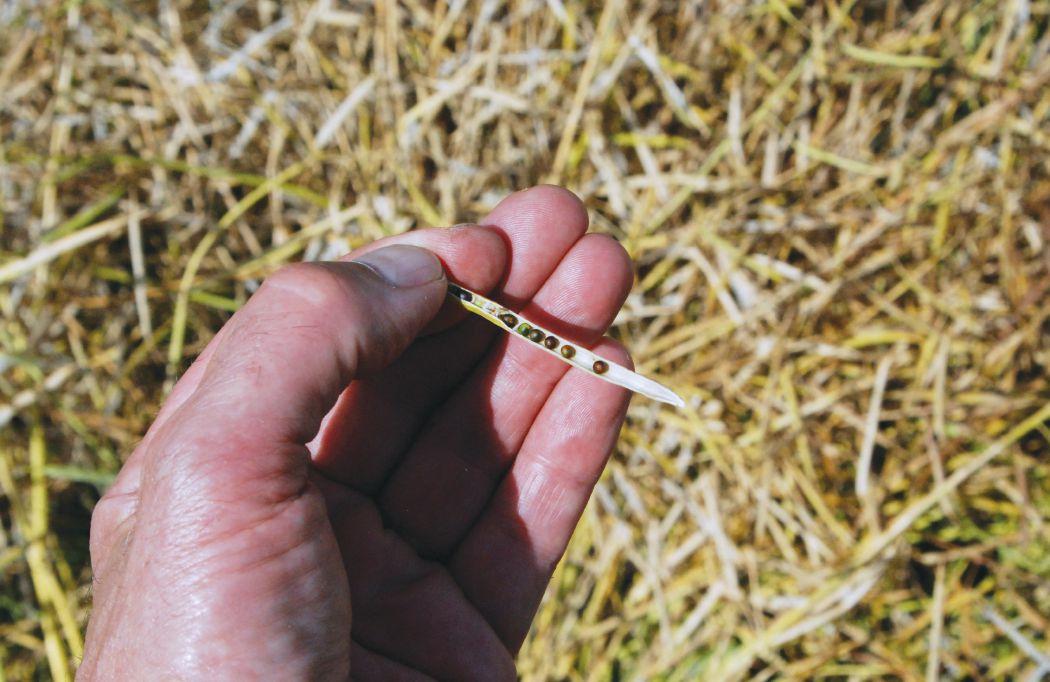
Potentially bad options are fields with really high plant counts with little branching to knit the crop together, highly variable maturity, and a late crop with a risk of frost.
Varieties, pod sealants and glyphosate
Holzapfel has looked at variety suitability for straight cutting, pod sealants and interactions with glyphosate. In 2011, researchers
When canola is swathed at 60 to 70 per cent seed colour change, yield and quality is usually pretty similar to straight cut canola.
RANCONA® PINNACLE FOR WINTER WHEAT TAKES SEED TREATMENT TECHNOLOGY TO NEW LEVELS.
RANCONA® PINNACLE for Winter Wheat combines two powerful fungicides that provide both contact and systemic activity, with RANCONA® microdispersion technology for superior adhesion and coverage. And when more active ingredient ends up on your seed and not your equipment, you’ll see improved seed emergence, healthier seedlings, and higher yields. To learn more, talk to your Arysta LifeScience representative or visit rancona.com.
initiated a four-year multiple location study at Indian Head, Scott, Swift Current and Melfort to provide a broader understanding of the frequency and magnitude of environmental seed losses that can occur under field conditions when B. napus hybrids are left to mature while standing. Over the four-year period, a total of 15 canola hybrids were evaluated, with updated canola hybrids added during the project.
Overall, the study showed that environmental conditions had a large effect on the magnitude of yield losses and were generally of greater importance than hybrid differences within any given site. When harvest was completed early, environmental yield losses were below five per cent at 93 per cent of the 13 sites. Losses generally increased when harvest was delayed by three to four weeks; however, total losses were still less than or equal to five per cent (averaged across hybrids) at 53 per cent of the sites and 10 per cent or lower at 77 per cent of the 13 site-years.
Holzapfel says the results suggest that environmental yield losses with straight-combined canola are unlikely to exceed 10 per cent, even with minor delays in harvest. Those losses are consistent with the University of Saskatchewan study cited earlier.
“Environment is important. The differences between varieties weren’t consistent,” Holzapfel says. He says newer shatter-tolerant hybrids such as L140P showed excellent potential for further reducing the risks of yield loss with straight combining. However, factors such as overall yield potential, maturity and herbicide system continue to be important when choosing a canola hybrid, regardless of harvest method.
Bender hasn’t tried pod sealants or shatter-resistant varieties. On one occasion, shatter losses were high in his standing canola. About 10 years ago he had one field that was dead ripe, standing straight up and more prone to shattering that other varieties. The field was hit with 100 kilometres-per-hour winds.
“We probably lost 20 to 30 per cent of the crop, but there was also a lot of damage to swathed canola, too,” Bender says.
Holzapfel looked at glyphosate and pod sealants to see if harvest losses could be reduced in a two-year study at Indian Head. Field trials were conducted in 2010 and 2011 near Indian Head on large field plots, each approximately two acres in size. Commercial equipment was used for all field operations. A canola cultivar that was relatively prone to shattering was purposely chosen for this study to assist researchers in detecting any potential benefits of the pod sealant or other foliar treatments. The treatments included two harvest methods (swathed or straight-combined) and four pre-harvest treatments (untreated, pod sealant, glyphosate or pod sealant plus glyphosate).
Consistent with the findings of the small plot studies, pod sealants did not provide a yield benefit over untreated canola regardless of harvest treatment, but a slight benefit was observed in the visual shattering ratings of the straight-combined canola.
The research also showed that the effect of glyphosate was not consistent from one year to the next, with lower yields observed in 2010 and a tendency for higher yields with glyphosate in 2011. These differences were most evident in the straight-combined treatments as all swathed treatments tended to have similar yields
regardless of the foliar treatment.
Holzapfel says even though he did not necessarily expect a yield benefit with pre-harvest glyphosate for straight-combined canola, glyphosate can accelerate and even out maturity while also providing weed control benefits for the following crop. This would only be the case in conventional and Liberty Link canola.
Brackenreed agrees that glyphosate can help manage harvest in non-Roundup Ready crops, but isn’t absolutely necessary. Timing would be at around 40 per cent or more seed colour change.
Desiccation with Reglone or Heat can also be used to help manage harvest by drying down green straw and weeds. Unlike glyphosate, which translocates and allows the crop to mature, a desiccant shuts the crop down and stops it from maturing. Brackenreed says Reglone timing is 80 to 90 per cent seed colour change, and Heat timing is 60 to 75 per cent seed colour change.
“Timing is critical with Reglone and Heat although Heat acts slightly differently. They are contact herbicides and quickly dry out the crop, so the seeds should be relatively mature,” Brackenreed says.
Header selection
Over the years, Bender has tried several styles of straight cut headers. He’s used 20- and 25-foot John Deere rigid draper headers, 25foot Honey Bee and John Deere draper headers, a 30-foot Mac Don draper header, and 35- and 40-foot flex draper headers.
“I would say they all worked reasonably well, some better under certain conditions,” says Bender.
Earlier research by the Wheatland Conservation Area AgriARM site found that the BISO header was superior to the rigid and draper headers in the evaluation. That research found that the BISO with an extended knife had 10 per cent higher yield.
More recently, a three-year research project was initiated by PAMI in 2014 at Swift Current, Indian Head and Humboldt. It includes L140 “shatter resistant” and L130 “standard” hybrids and added in 74-44 and 75-65 hybrids in 2015. A New Holland 35 foot Varifeed header with a knife that extends forward 23 inches, the 35-foot Varifeed with knife retracted, and a Honey Bee 35-foot draper header were compared to a swath and pickup header.
“Looking at the preliminary results, overall there were very small differences in losses with maybe a trend to slightly lower losses with the extended knife. However, the overall losses were low, in the 1.5- to 2.5-bushel-per-acre range,” says Brackenreed. “The combine operators felt in the first two years of the study that the Varifeed was the most comfortable and forgiving header to operate.”
Bender typically harvests wheat and barley first, and then moves into canola. He cautions that growers considering straight cut canola should be set up for aeration and be ready to monitor bins. Bender typically harvests a bit on the tough side, and green weed seed and green chaff can create hot spots.
His final advice is that you need to be flexible and prepare for the unexpected. “If you’re high stress and have low patience, then I don’t think straight cut canola is for you.”
The decision to straight cut canola should be assessed just before swath timing.
PHOTO BY BRUCE BARKER.
Somebody should speak up.
Somebody should set the record straight. Somebody should do something
Well I’m somebody. You’re somebody. Everyone in ag is somebody
So be somebody who does something.
Somebody who speaks from a place of experience, with passion and conviction.
Somebody who proudly takes part in food conversations big or small, so our voice is heard.
Somebody who tells our story, before someone else does.
Be somebody who does something. Be an agvocate.
AgMoreThanEver.ca
Somebody who builds consumer trust so our industry can meet the demands of a growing, and very hungry, world.
Somebody who shapes people’s relationship with agriculture.
It can be done
But it’s a big job that takes co-operation, patience and respect for every voice in the conversation We need to build lines of communication, not draw lines in the sand.
Be somebody who helps everybody see Canadian agriculture as the vital, modern industry it is. Somebody who helps everybody see people in ag for what they are – neighbours, friends, and family who share the same concern everyone does: providing safe, healthy food to the people we love
Our point of view is important Our story is important And people want to hear what we have to say So be somebody who takes, and makes, every opportunity to share it.