Nu-Trax™ P+ fertilizer puts you in charge of delivering the nutrition your crops need for a strong start. It features the right blend of phosphorus, zinc and other nutrients essential for early season growth. And because Nu-Trax P+ coats onto your dry fertilizer you are placing, these nutrients close to the rooting zone where young plants can easily access them, when they are needed most.
Take control of your crop’s early season nutrition with Nu-Trax P+ and visit .
Rethink your phos
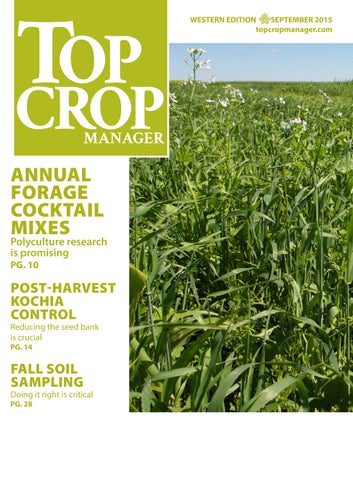
TOP CROP
MANAGER
6 | Natural air drying simpler, cheaper Running fans continuously may damage grain.
By John Dietz
MANAGEMENT 10 Adding diversity and productivity to forages By Donna Fleury
18 Spotting patterns By Carolyn King
28 Soil sampling and testing – doing it right
By Ross H. McKenzie PhD, P.Ag.
24 | Tracking insect movement a productive challenge
Researchers are looking for ways to track insect movement.
By Julienne Isaacs
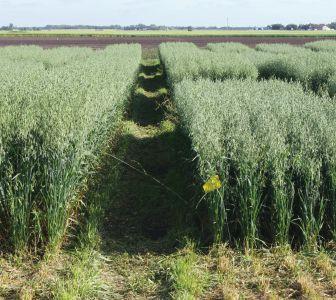
40 | Optimizing oat production Study assesses practices for high yields of high-value, food-grade oats.
By Carolyn King
36 Yield boosting By Carolyn King
MANAGEMENT 32 Volunteer canola in RR soybeans By Donna Fleury PESTS AND DISEASES 14 Post-harvest kochia weed control hit-and-miss By Bruce Barker
EDITOR 4 Weather or not By Janet Kanters
CORRECTION: In the June 2015 issue of Top Crop Manager, we mis-identified a weed on page 34. The weed in the photograph is foxtail barley, not green foxtail as noted. We apologize for any confusion.
Readers will find numerous references to pesticide and fertility applications, methods, timing and rates in the pages of Top Crop Manager. We encourage growers to check product registration status and consult with provincial recommendations and product labels for complete instructions.
JANET KANTERS | EDITOR
WEATHER OR NOT
Well, the Old Farmers’ Almanac got it mostly wrong this year when predicting the Canadian Prairies weather outlook. To whit: “April and May will be slightly cooler than normal, with near-normal precipitation. Summer will be hotter and slightly rainier than normal, with the hottest periods in early and late July and early August.”
I don’t know about where you live, but my area of the Prairies remained parched through to the end of July, as I write this. Interestingly enough, areas a mere 10 km north of my location received twice and three times the precipitation I experienced.
That’s what made this summer’s weather so odd – the sporadic nature of rainfall, and the severity of hailstorms and wind events. For instance, I viewed two fields on either side of a road wiped out by hail, while less than a mile north of them, the crop was fine. In other areas, I saw crops decimated by low or no rainfall, while only a few miles away, timely rains were in abundance and the crop appeared lush and healthy.
The severe weather was also hit-and-miss: various funnel clouds were spotted throughout all three Prairie provinces, and a massive tornado near Tilston in Manitoba stayed on the ground for close to three hours.
We all know we can’t change the weather. And that’s what’s amazing about farmers – every year they sow their seed, basically hoping for the best. Most years, things turn out fine. Even if a year starts out dry, rains at crucial times can “save” a crop. But just as quickly, the weather can be the enemy: a “bumper” crop early in the growing season can turn to cattle feed if hail or high winds/ tornado decimate it.
While we cannot control the weather, there is some tweaking we can do to it. One example is cloud seeding. In this process condensation nuclei are dropped into a cloud in order to initiate the precipitation process. Other examples include wind brakes and irrigation to increase moisture.
A less well-known way to change the weather is through your “manifesting power.” Yes, this apparently is a thing. An ancient Hawaiian belief is that it is possible for humans to change the weather with their manifesting abilities. That is, to manifest your thoughts into reality. In Tales from the Night Rainbow, a book written in 1990 by two Hawaiian elders, it suggests that “changing the weather with your manifesting power requires complete, unwavering acceptance that you are a creator being with limitless power available to you at all times; that you have strong mana (personal power), possibly developed over time by manifesting smaller things/experiences into reality and working your way up to manipulating weather conditions clouds, telekinesis and the like; that you have strong focus, most likely developed through meditation and present-moment awareness (zero mind chatter); and that you have zero limitations: you accept wholly that it is entirely possible for you to change the weather.”
Well, that sounds pretty “woowoo” to me. But if climate change proponents are right and we can continue to experience more drought and more “dramatic” weather events such as an increase in hail storms and tornadoes, well, who’s to say our minds cannot change matter? It doesn’t cost anything to sit and think. Hmmm, maybe I’ll try using my “manifesting power” to win the lottery.
In the meantime, however, I invite you to sit back and enjoy the stories we’ve included in this issue of Top Crop Manager, including a couple that make reference to the climate: In “Spotting patterns” on page 18, we present the results from a 12-year Saskatchewan wheat disease survey that shows weather trends were a key factor in increasing leaf spotting severity. In our cover story on forage diversity, we talk with researchers about their findings on low input solutions for weed control, nutrient and moisture management.
Top Crop Manager West - 9 issuesFebruary, March, Mid-March, April, June, September, October, November and December - 1 Year - $45.00 Cdn. plus tax
Top Crop Manager East - 7 issuesFebruary, March, April, September, October, November and December1 Year - $45.00 Cdn. plus tax Potatoes in Canada 2 issues Spring and Summer 1 Year $16.00 Cdn plus tax All of the above - $80.00 Cdn. plus tax Occasionally, Top Crop Manager will mail information on behalf of industry-
ESN® SMART NITROGEN® is always there for your crops. One application will typically give your crops the N they need throughout the growing season. The polymer coating reduces the risk of nitrogen loss to the environment, and you can apply ESN at up to three times the seed-safe rate of urea. It improves crop quality and yield. Get the facts from your retailer, or visit SmartNitrogen.com
NATURAL AIR DRYING SIMPLER, CHEAPER
Running fans continuously may damage grain.
by John Dietz
An option for natural air drying other than continuous fan operation is being put forward by Ron Palmer, an electrical systems engineer with the Indian Head Agricultural Research Foundation (IHARF), a 1200-acre, non-profit producer-directed applied research organization in Saskatchewan.
It isn’t fancy, but it is simple and cheap, as Palmer describes it. And if you’re skeptical, it won’t be difficult to test.
The IHARF study of natural air drying began in 2007, and is being funded through the 2017 growing season by the Western Grains Research Foundation. Other sponsors include Agriculture and Agri-Food Canada, Great West Controls, and Advancing Canada’s Agriculture and Agri-Food Saskatchewan.
According to Palmer, the purpose of the study is to develop a fan control strategy for natural, unheated air that results in safe storage of grain, requires less fan running time and dries grain quickly for early sales. “Safety” of the storage reflects the number of days grain can stay in storage before the germination rate (quality) falls to 95 per cent of whatever rate it had when it went into storage. The faster it reaches a stable cool and dry condition, the better the quality will be and the
longer it can be stored safely.
To the end of 2014, Palmer worked with spring wheat, barley and field peas in typical farm-size bins with 33 trial runs. Two 2250-bushel bins and four 3500-bushel bins were paired for the trials – each filled at the same time with the same lot of grain. The typical continuous operation strategy was compared to experimental options, with 3-hp and 5-hp fans.
All bin runs from 2007 to 2013 with continuous fan operation were examined to determine the average rate of drying on an hourly basis. It was observed that there was consistently a significant amount of drying occurring in the first 24 hours of all continuous runs. “Thus, we suggest that it is important to have the fan on immediately as the grain comes in from the field,” Palmer says.
After the first 24-hours, his analysis of the drying curves became very interesting. “There was a daily cycle of drying and wetting
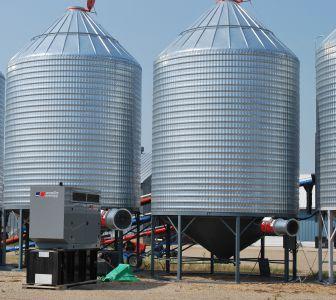
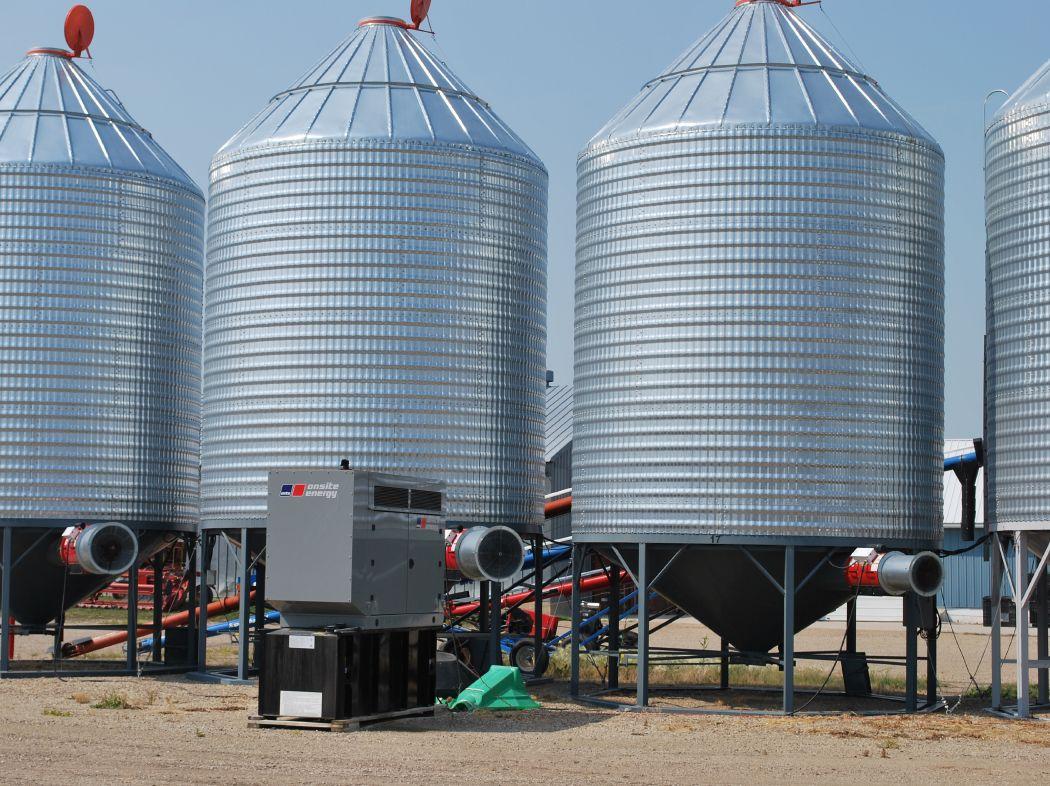
ABOVE: Three grain storage bins used for natural air drying study at the IHARF research farm at Indian Head, Sask. A diesel generator, used to power the fans, is in the foreground.
PHOTO COURTESY OF RON PALMER, IHARF.
Hit weeds where it hurts this season. Monsanto and BASF are once again partnering to promote the use of multiple modes of action and herbicide best practices with a great offer. Save $0.50 per acre on Roundup Transorb® HC when you buy matching acres of Heat® LQ or Distinct® herbicides.* For complete offer details, see your retailer or visit powerfulcombination.ca
A powerful combination. *Heat® WG is also an eligible product.
appearing to repeat every 24 hours… in general, drying occurred at night and occasionally during cool days,” he notes.
Palmer’s research showed a direct relationship between grain temperature and air temperature. Drying was occurring whenever the grain temperature was decreasing. Drying was not occurring when the grain temperature was rising. In fact, grain in storage was being re-wetted by warmer outside air – moisture from the warm air was condensing on the cooler grain, and was being gradually absorbed into the grain.
“There are some producers who are intuitively following a control practice of only running the fans on hot days,” Palmer notes. “This does result in drying the grain, but it also keeps the grain hot which in turn reduces the number of safe days of storage, which could lead to mould development and spoilage.
“The common practice of running the fans continuously ‘works,’ but it needlessly cycles the grain through hot wet conditions which increases grain moisture and encourages spoilage,” he adds. “There are many days that the fan is running and is actually damaging the grain, by warming it up and adding moisture to the grain.”
The better option, he continues, is “cool fan operation.” Ideally, operate fans only at night when the air is cooler than the grain – resulting in much less fan time and cooler, safer grain.
Palmer found out that the first day was extremely critical. After that, continuous fan operation was a waste of fan operation and energy, and a waste of money.
“We would remove one per cent of the grain moisture content within that first 24 hours. After that, we fell into the cycle of drying at night and wetting in daytime. Leaving the air on continuously took out more water than we put in, eventually, but we could run the thing for a whole week without getting anywhere. It was just cycling back and forth, water in, water out. We were spinning our wheels, doing nothing.”
Thus, continuous natural air drying (airflow 1-2 cfm/bu) of the grain resulted in bins of warmer grain with higher moisture.
On the basis of this new information, Palmer suggests, the better focus for grain in storage is to “drive the temperature down” as far as you can.
His two-stage advice for best control of natural air drying is: 1. Turn on the fan immediately when filling a bin with warm grain; and 2. Leave fan on until 9 a.m. next day.
After that, get the grain as cold as possible by leaving the fan on when the outside temperature is less than grain temperature.
Palmer notes that one can adjust the drying time and the fan time by including an offset of one or two degrees to alter the threshold temperature. An offset of only one degree may lower the duty cycle of the fan by about five per cent, he says. The grain will be cooler and safer, but the drying time will increase. Work is being done to determine how the offset affects this balance. A sophisticated controller could include this offset.
Safe days
As Palmer studied research data from instruments on the IHARF bins over several years, he realized that maintaining the grain quality was as important as getting it dry economically.
“Really, we want the grain safe. We don’t want any spoilage. Grain starts to spoil the minute it comes off your combine,” he says. “The question is, how can I store that grain with the least amount of spoilage to keep the quality as high as possible?”
That led him to studies from the 1980s that led to a spoilage formula. The Fraser and Muir formula determines the safe storage time for cereal grains based on grain moisture and storage temperature. Safe storage life is 38 days at 30 degrees and 14.5 per cent moisture; at the same moisture and 20 degrees, it has 128 safe days; at zero or colder, the safe days are almost unlimited.
“Two things go into secure, safe storage. We’ve been ignoring one of them. The one is dry. The other is cool or cold,” Palmer says. “How your grain is stored determines the number of safe days. If you want to keep your grain safe, keep it dry and cool.”
Going back to his data from hundreds of cycles as grain in storage warmed and cooled, Palmer saw that for every 10 to 15 degrees that the grain is cooled, about one per cent moisture was removed - simply because cold air holds less moisture than warm air.
“Cooling your grain is drying your grain. The two are one. You can actually build a controller now that would only be drying your grain if the outside temperature was less than your grain temperature. If it’s warmer outside, turn off the fan. If it’s less (than the grain temperature), turn on the fan. I’ve built the controllers and they work,” he says.
A company in Regina has started developing a controller for this purpose, to be controlled from a smartphone. It will monitor the Hour
Source: Ron Palmer, IHARF.
It’s always flattering when others try to imitate your success. But with nearly 20 years of track leadership under our belts, we’ve picked up a few things the copies missed. Like our exclusive five-axle design. It gives our Steiger ® Quadtrac,® Steiger Rowtrac™ and Magnum™ Rowtrac tractors a smoother ride and more power to the ground with less berming and compaction. Which is one of the advantages of paying your dues, instead of paying homage. Learn more at caseih.com/tracks.
BE READY.
ADDING DIVERSITY AND PRODUCTIVITY TO FORAGES
Early research with polycultures is promising.
by Donna Fleury
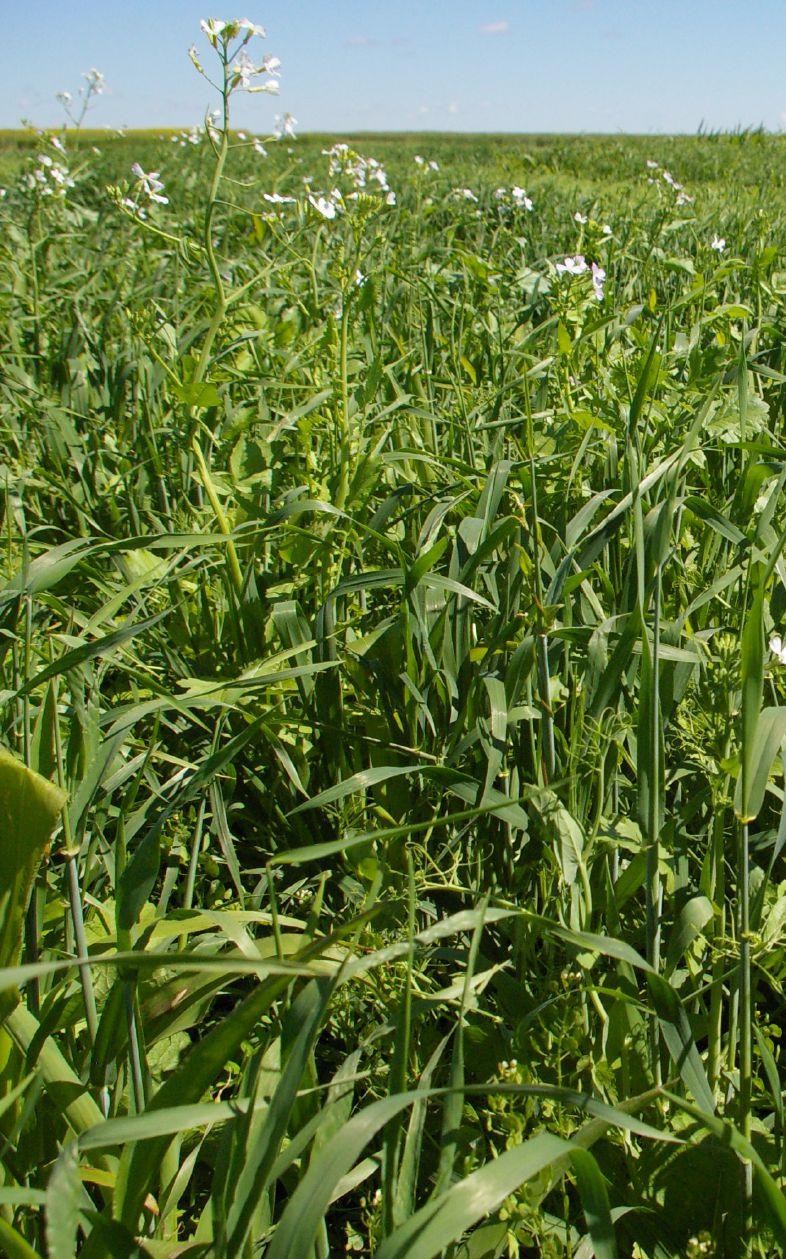
Researchers are testing polycultures as a strategy for improving forage biomass and quality, and finding lowinput solutions for weed control, nutrient and moisture management. After two field seasons of research to evaluate polycultures or cocktail mixes of annual forage plant species in semi-arid regions, early research results are promising.
Led by Mike Schellenberg, range and forage plant ecologist with Agriculture and Agri-Food Canada (AAFC) in Swift Current, Sask., researchers – including research associate Jilian Bainard, –are evaluating a range of annual forage polycultures.
“We have two years of field data collected and are in the third year of our polyculture research project,” Schellenberg explains. “The first two years were under much moister conditions than we have this year, with recent maps showing that the Swift Current area in early July 2015 has less than 40 per cent of moisture. For research purposes, having a range of moisture conditions during the research certainly helps our evaluation and provides a broader picture of what we might expect under the semi-arid conditions in our area.”
In the project, 12 annual forage species considered somewhat common to the area were selected for the trials. The crops are sorted into four groups: warm season grasses corn, millet, sorghum; cool season grasses barley, forage oats, triticale; nitrogen fixers field pea, forage pea and hairy vetch; and root crops kale, radish and turnip. All 12 species are being grown as monocultures and then mixtures of two, four, eight and 12 species to determine the optimal mix of crops. Control plots containing two perennial species mixture of meadow brome and alfalfa are included for comparison to the annual mixes. In 2016, barley will be seeded across all of the plots, and researchers will be evaluating soil improvements such as changes in organic matter, nutrient levels and other factors that are expected to be a result of polyculture production.
Results so far show that some species are outperforming others; but overall, polycultures are yielding higher quality biomass and increased productivity over monoculture plots. “In the spring, the forage quality among the mixtures seems to be similar. However, as the season progresses into August, we are seeing differences in the quality with some mixtures having better digestibility ratings and higher quality,” Schellenberg says. “We are also seeing a relationship between an increasing number of functional groups of species and an increase in biomass production. At the end of the 2015 field season, we should have a better idea of the species mixtures that
are providing the benefits we are looking for in terms of biomass and quality, weed control, nutrient and moisture management.”
Overall, early results are showing better weed suppression with more species in the mix, such as mixtures of eight or 10. Schellenberg believes this is likely due to increased competition between the crops and weeds for space and resources. “Species such as hairy vetch, which is growing more like an annual rather than a biennial in our system, seems to be forming a nice mat on the ground and is providing good weed control. We are also seeing some alleleopathic potential with triticale, radish and turnip.”
Root crops such as radish and turnip are also doing quite well
PHOTOS
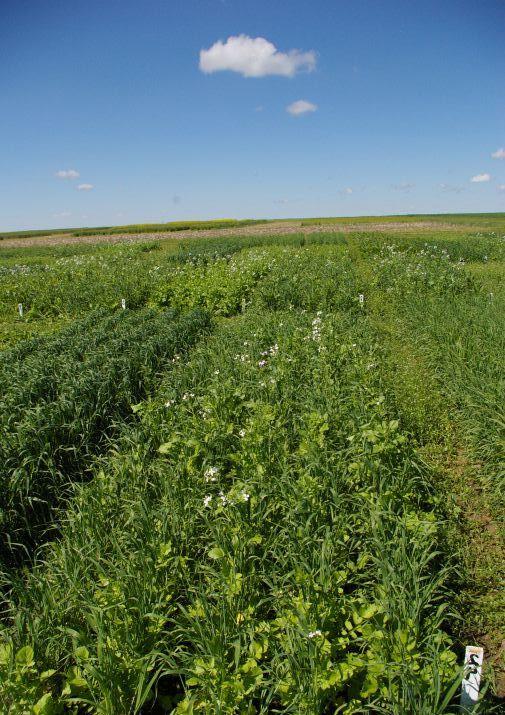
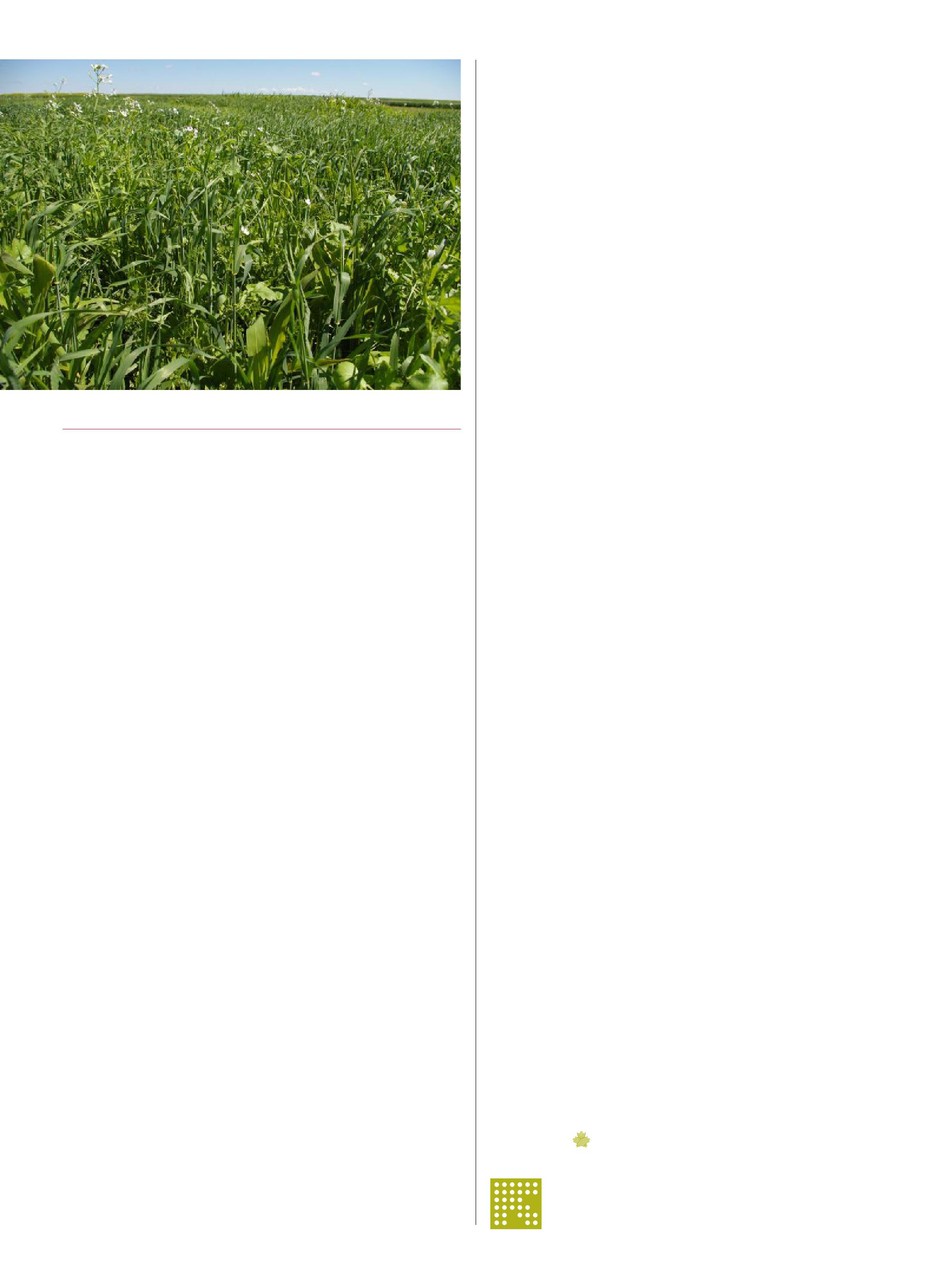
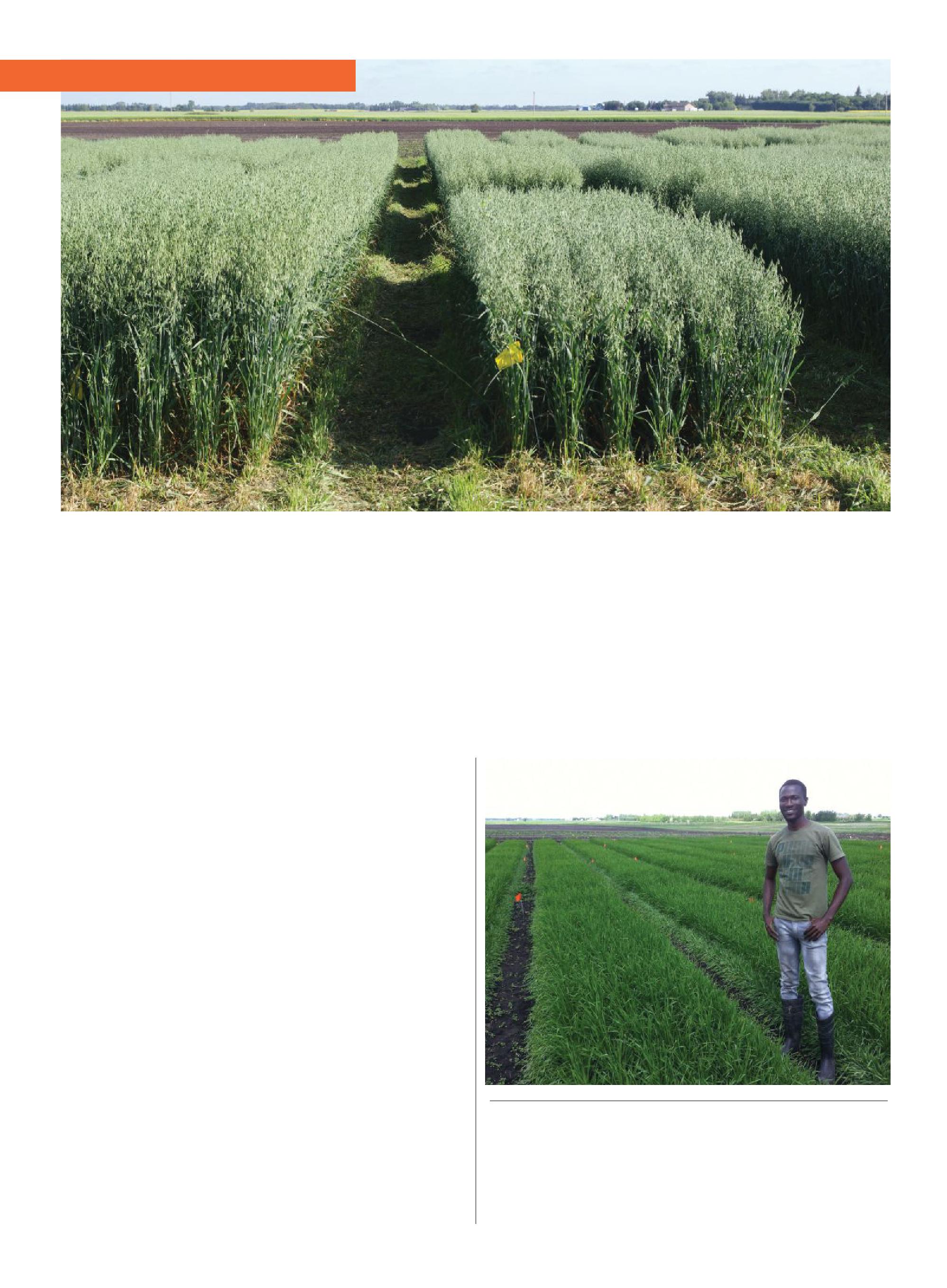
Polyculture plot with an eight species mixture.
at suppressing weeds, but are not performing as well as expected for nutrient management. Brassica root crops were included in the mixtures to be able to make other nutrients besides nitrogen (N), such as trace elements, more available to the system. The root crops were expected to pull in micronutrients during the growing season, left to die and decay over winter, releasing nutrients for use by other plants in the system the following spring. However, so far researchers have not noticed any benefits for micronutrients, although phosphorus levels have increased.
Researchers have also not seen the impact on N that was expected. Schellenberg suspects it may be that the ratio of species doesn’t include a large enough proportion of legumes to get the impact they were looking for. For this project, all species were included at a 1:1 ratio (at 100 live seeds per metre) to keep the comparisons more even. In the future, other proportions may be recommended to achieve the nutrient effects expected.
In terms of production performance, some species may be removed from the recommended list by the end of the trials. Researchers have seen very poor establishment with sorghum and kale in the research plots under local conditions, so they probably don’t have the best fit.
“Corn is another crop that is doing okay in our area, but we have not been able to achieve a full grown plant that some producers expected,” Schellenberg adds. “We are getting a reasonable two or three feet of growth before the plants dry out by the end of August. As a warm season crop, corn typically does a lot of its growth in August. However, in our area we don’t have sufficient moisture even in wet years to bring corn plants to full growth.”
In 2015, researchers added another component to the research by splitting the plots into two and comparing direct seeding to cultivation prior to seeding. In the first two years of the project, all plots were direct seeded; however researchers noticed that in adjacent cultivated plots productivity seemed to be better.
“So far, it appears that where we have done some cultivation, more seedlings have emerged as compared to the zero-till plots,” Schellenberg explains. “Although the soil moisture is similar in the plots, we suspect there may be a possible nutrient release from disturbing the soil that is making a difference. We will be comparing biomass and quality for all plots at the end of the season, and will have a better understanding of whether or not cultivation as
compared to no-till makes a difference.”
To measure forage quality and biomass production, the first forage samples are collected in mid-July and the final forage harvest is completed at the end of August. Samples are evaluated for nutritional and quality aspects. Schellenberg emphasizes the trials are designed for forage production, not grain production.
Although the overall performance of polyculture mixtures is usually much better than monoculture crops, triticale is one crop that is performing well as a monoculture. “In most of the trials, the mixtures with the greater number of species are providing the best quality,” Schellenberg explains. “With a monoculture crop, the growth and nutrient quality peaks at one time in the season and typically slumps in August, compared to a mixture where different crops grow at different rates and typically continue growing through August.”
Schellenberg is pleased with the results so far and is seeing similar benefits to polycultures of annual forages as with perennial polycultures. “We are trying to imitate Mother Nature using annual crops as opposed to native pasture in this study. The mixture of crops provides something different, with the roots growing at different depths and accessing more of the soil profile for both minerals and water. This opens opportunities to utilize the environment more fully, and provides a bit of an insurance policy particularly in drier years like 2015. Under drier conditions, the crops with deeper roots can access resources at a greater depth, and typically bring moisture to the surface and make it available for other more shallow rooted crops.”
To further explore the benefits of diverse cropping systems, Schellenberg has received funding for a new project that will begin in the fall of 2015. This project will focus on using winter annual crops, such as fall rye, winter wheat, winter rapeseed and winter pea. “The winter annuals will be seeded at the end of August into barley stubble after harvest,” Schellenberg says. “We will be comparing various mixtures of winter annuals to monoculture control plots to evaluate biomass production, quality and other benefits.”
At the end of 2015, Schellenberg will have three years of field data and expects to be able to make recommendations on the best polycultures and species mixtures from the trials. Early results have been shared with producers through various field tours over the past three growing seasons.
“We know from other research work on perennials that the right combination of species and a more diverse stand does show an increase in productivity over a monoculture perennial crop. We expect to find similar results with annual forages, and plan to provide information on reliable polycultures for semi-arid regions and the benefits for producers in 2016.”
Schellenberg adds they are also looking at utilizing these mixtures of plants as a way to improve grain yields by including an underseeding of a low growing legume perennial that will provide ongoing N benefits. “We are just starting to explore diversification in the field for both forage and grain production and, so far, there are benefits for producers. As an ecologist, I believe there are benefits to diversifying crop stands, and polycultures need to be explored more extensively than we are presently to understand all of the benefits.”
Polyculture plot with a 12 species mixture.
POST-HARVEST KOCHIA WEED CONTROL HIT-AND-MISS
Research produces variable results on post-harvest herbicide application.
by Bruce Barker
Post-harvest control of kochia offers an additional window to help reduce the seed bank. Kochia is the 10th most abundant weed in Western Canada, and because kochia flowering is photoperiod controlled and has indeterminate growth, flowering and seed set continues in the fall until the plant is killed by frost.
“If kochia is ‘decapitated’ during harvest, prior to the seeds becoming mature, seed production can be reduced as seeds on the harvested portion will not be viable. Any vegetative material not harvested, however, will continue to mature and will be able to produce viable seed,” says Ryan Low, a graduate student at the University of Alberta.
Low conducted research on prevention and control options for glyphosate-resistant kochia as part of his requirements for his master of science in plant science. Part of the research focused on post-harvest control options for kochia.
Post-harvest kochia regrowth and seed set is a real possibility. James Mickelson of the Southern Agricultural Research Centre at Huntley, Mont. reported in a Weed Science Society of America article that uncontrolled kochia plants that regrow after a small-grain harvest can
produce a substantial number of seeds. His research in the early 2000s found that an average of 4100 seeds per plant were produced between harvest (late July to mid-August) and the first killing frost (late September) at three locations in Montana.
Low says the good news is that since the plants are limited in height (usually 15 cm, the height of the combine header) and have reduced lateral branching, they are unlikely to become tumbleweeds, and the seed will remain near the parent plant. However, that doesn’t negate the fact that kochia has been shown to reproduce after harvest.
“If seed deposition could be prevented by reducing populations before they become mature and set seed, kochia populations in subsequent years are likely to diminish,” Low says.
Mickelson’s experiments were conducted to determine the optimal timing of post-harvest herbicide applications to prevent kochia from producing viable seeds. Herbicide treatments were applied at three timings from late August to mid-September. The most effective treatments were glyphosate, and paraquat (Gramoxone) applied at the
Kochia has been shown to reproduce after harvest.
PHOTO BY BRUCE BARKER.
REBORN AND RESETTING THE STANDARD INTRODUCING FLEXI-COIL® P SERIES AIR CARTS
New Flexi-Coil® P Series air carts from New Holland are “resetting the standard” for unprecedented accurate, reliable air delivery. Redesigned from the ground up, these new air carts are a fresh example of Flexi-Coil heritage and innovation. The proof? Over 50 new patents pending, the real advantages that increase your return on investment. Now with more acres per hour, you can make the most of your seeding window.
Choose from seven models with capacity up to 950 bushels. Choose from two, three or four-tank models and the option to select tow-between or tow-behind implement configurations. See our entire line of seeding solutions, visit your local New Holland dealer.
second application timing (late August to early September). These treatments reduced kochia seed production by 92 per cent or greater at each site. The kochia in this trial were susceptible to glyphosate. In Mickelson’s research, kochia regrowth had sufficient leaf area for herbicide absorption, but few viable seed had been produced. Herbicide treatments at the first and third application timings were generally less effective and more variable in reducing kochia seed production.
In southern and central Alberta, Low conducted research on postharvest kochia control on two wheat fields in 2011 at Hussar and Cluny, and two pea fields near Lethbridge and St. Albert in 2012.
Herbicides were applied immediately after harvest and three weeks after harvest at labeled rates. The herbicides included pyrasulfotole + bromoxynil (Infinity); dicamba, saflufenacil (Heat); carfentrazone-ethyl (Aim); fluroxypyr + MCPA (Trophy 600); glufosinate ammonium (Liberty); diquat; diflufenozopyr + dicamba (Distinct); and glyphosate, and were compared to an untreated control.
Low says that after cutting kochia to 15 cm height at harvest, kochia leaves remained green, and flowers and immature seeds were present in the stubble. He says treatments applied immediately after harvest “caused visual injury compared to untreated controls but control was difficult to separate from natural senescence of the plants.”
By the third week after harvest in mid-September, kochia plants were beginning to dry down and seed was maturing. When herbicides were applied three weeks after harvest, the kochia plants had begun to mature, lose leaves and start seed maturation.
“None of the herbicide treatments used in our study showed a significant difference in seed reduction compared to the untreated check, and it was our conclusion that herbicides applied post harvest are not an effective option for kochia population control in Western Canada,” Low says.
The difference between Low’s trials and Mickelson’s is likely due to the differences in kochia growth after harvest. Low observed that no re-growth of kochia plants occurred after harvest, and that seed set was from flowers left in the field at the time of harvest. Mickeleson’s trials found that kochia had plenty of time to regrow after harvest and set seed before a killing frost in September.
Another Montana State University study at the Southern
Agricultural Research Centre at Huntley in 2012 and 2013 produced similar results as Mickeleson’s earlier studies. Researcher Vipan Kumar and graduate student Prashant Jha applied post-harvest herbicides to kochia on spring wheat stubble. The wheat was seeded on April 10, 2012 and April 6, 2013, and harvested on Aug. 14 and Aug. 16 respectively.
Paraquat + atrazine, paraquat + linuron, and paraquat + metribuzin applied at the early bloom stage were the most effective postharvest treatments for late-season control (100 per cent) at 28 days after treatment, biomass reduction (70-73 per cent), and seed prevention of kochia, and did not differ from glyphosate, glufosinate, saflufenacil + 2, 4-D, saflufenacil + atrazine, tembotrione + atrazine, or topramezon + atrazine treatments.
Addition of atrazine to dicamba improved late-season control (80 per cent) and seed reduction (78 per cent) compared to dicamba alone, and reduced seed viability and 100-seedweight. Dicamba alone, dicamba + 2,4-D, or diflufenzopy + dicamba + 2, 4-D applied at the early bloom stage were ineffective, with less than 70 per cent late-season control, less than 45 per cent biomass reduction, and less than 55 per cent seed reduction of kochia.
In the absence of a post-harvest herbicide, Kumar found that uncontrolled kochia plants at a density of eight to10 plants per square metre contributed over 100,000 seeds per square meter back to the soil.
Kumar and Jha’s research was published in Crop Protection Journal (Crop Protection 71, 144-149) in February 2015, and the researchers concluded that: “The effective postharvest-applied herbicides investigated in this research should be utilized to prevent late-season kochia seed bank replenishment in wheat, and as a component of herbicide resistance management program for the containment of glyphosate- and/or acetolactate synthase (ALS)-inhibitor-resistant kochia in wheat-based crop rotations in the U.S. Great Plains.”
For Canadian farmers struggling with kochia control, given the conflicting research results, the best advice is likely to monitor kochia regrowth after harvest. If new growth is evident and the likelihood of the new growth developing seed before a killing frost occurs, a postharvest application might be warranted, based on the Montana experience. But if regrowth is limited, and harvest is late, post-harvest herbicide application likely wouldn’t be warranted. And always leave a check strip.
NATURAL AIR DRYING SIMPLER, CHEAPER
CONTINUED FROM PAGE 8
temperature of grain in storage and outside air. At a threshold the farmer can set, it will activate or turn off the fans.
“We’re going to try that product this fall,” Palmer says. “We’re going to play with that offset, to see how it influences the on/off time.”
More to do
There’s more to do, Palmer admits. For instance, there’s discussion about what happens inside the bulk of grain in a bin. To this point, he’s treated it as a “black box” where those dynamics are ignored. He’s been measuring amounts of moisture going into the bin and amounts coming out.
“We’re actually loading these bins this year with sensors for moisture and relative humidity to find out what is really going on, and how the drying is taking place, inside the bin. With the temperature and relative humidity I will be able to calculate the
moisture content of the grain, at points throughout the bin. That will be interesting to see with real data, not assumptions. Predictions and assumptions could be wrong if you miss something.”
There’s an “art” to drying grain, Palmer adds. “We’re looking at the possibility of using smaller fans, producing less than one cfm/bushel. They may take a longer time to dry but you’ll get more consistent, more uniform drying from top to bottom – maybe,” he says.
In the remaining project years, he also may try reversing fans, using bins larger than 10,000 bushels, results with natural air drying for oilseeds and tests to clarify the “drying front” concept as moisture changes while grain is in storage.
Finally, good science will produce consistent results. He’s hopeful that other work will confirm his findings or reveal issues that he has missed.
Three great new canola hybrids have cropped
Meet three new varieties from CANTERRA SEEDS, featuring trailblazing clubroot resistance, multigenic blackleg resistance and the Clearfield Production System for canola.
Get to know CS2100, CS2000 and CS2200 CL at CANTERRA.COM.
*Available only at select retailers.
SPOTTING PATTERNS
Leaf spot diseases in wheat and weather trends.
by Carolyn King
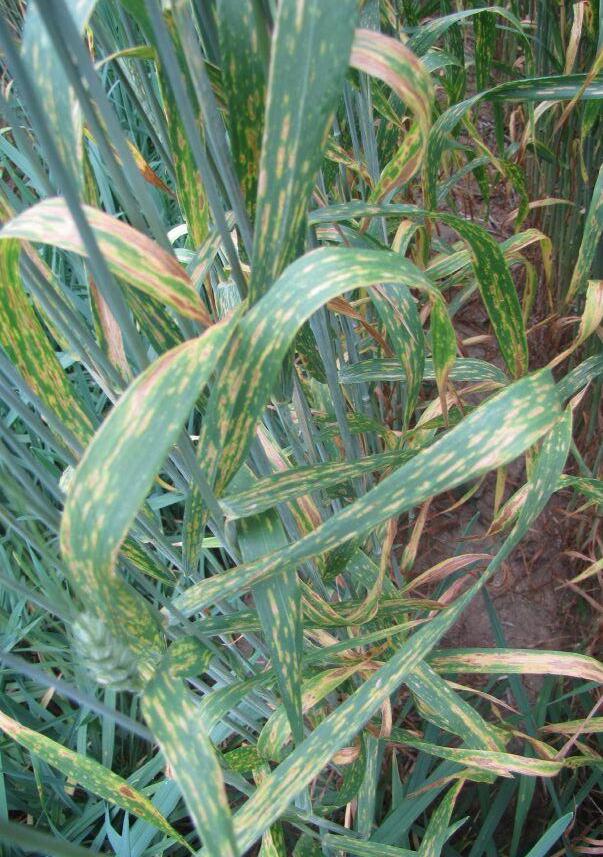
Results from a 12-year Saskatchewan wheat disease survey show weather trends were a key factor in increasing leaf spotting severity. The study’s findings can help wheat breeders and growers in dealing with this important disease complex.
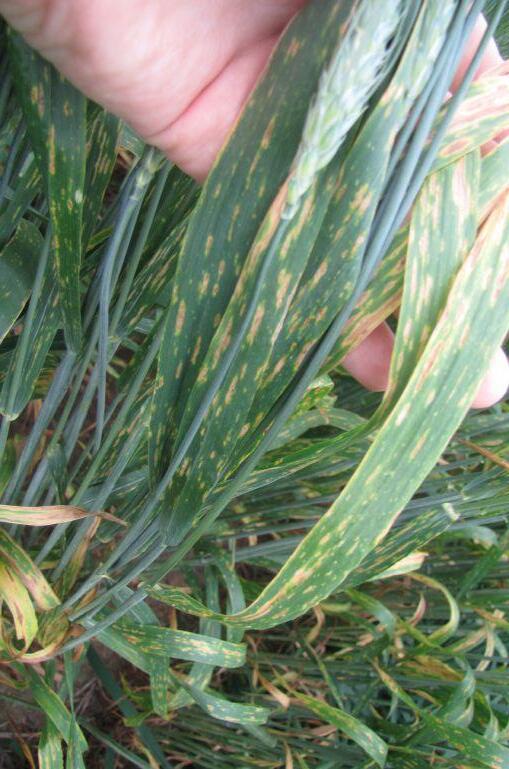
Leaf spotting is very common in Prairie wheat crops and can result in significant yield and quality losses when conditions favour disease development. It is caused by a group of pathogens that usually occur together, including: the tan spot pathogen, Pyrenophora tritici-repentis; the septoria leaf blotch complex pathogens, Phaeosphaeria nodorum, Mycosphaerella graminicola and Phaeosphaeria avenaria; and the spot blotch pathogen, Cochliobolus sativus
The study’s objective was to evaluate the leaf spotting complex in common and durum wheat fields across all 20 crop districts and all soil zones in Saskatchewan, from 2001 to 2012. The researchers wanted to see how the amount of leaf spotting and the prevalence of the different leaf spotting pathogens were related to the wheat species, field location, previous crop, tillage system and weather patterns, across the province and over time.
The study arose out of an innovative partnership between the Saskatchewan Crop Insurance Corporation (SCIC), Saskatchewan Ministry of Agriculture and agricultural researchers to learn more about Fusarium head blight and leaf spotting in Saskatchewan wheat crops. For the leaf spotting study, SCIC field staff and provincial agrologists collected samples of wheat flag leaves and information about the surveyed fields. Then a team of research assistants led by Myriam Fernandez, a research scientist with Agriculture and Agri-Food Canada (AAFC), determined the leaf spotting severity, isolated and identified the leaf spotting pathogens in the samples, analyzed the data and prepared the annual reports.
Bringing together and examining the 12 years of leaf spotting survey data for trends involved a joint effort by Fernandez, SCIC research analysts Fred Waelchli and Amy Brown, Saskatchewan Agriculture provincial plant disease specialist Faye Dokken-Bouchard (with Penny Pearse earlier on), AAFC research geographer Kim Hodge and AAFC statistician Craig Stevenson. (Saskatchewan Agriculture is leading the Fusarium head blight analysis.)
To collect the field data, randomly selected commercial fields were surveyed each year, for a total of 1657 fields after 12 years. Overall, 21 per cent of the fields were durum wheat and 79 per cent were common wheat.
For each field, the surveyors determined the previous crop in
the rotation based on the crop residue type, and they estimated the tillage intensity based on the residue amounts. Because of time constraints, it wasn’t possible for the surveyors to also contact the farmer to get information about such things as the crop cultivar, fertilizer practices and fungicide use in the wheat field.
Fernandez explains that surveys have advantages and disadvantages compared to plot research trials. “Surveys are great
PHOTOS COURTESY OF MYRIAM FERNANDEZ, AAFC.
A 12-year wheat disease survey showed an increase in leaf spotting severity in Saskatchewan.
Cochliobolus sativus was the leaf spotting pathogen most affected by the changing weather patterns during the survey. As well, it was the only pathogen that showed a marked increase over the 12 years. This increase coincided with the wetter, warmer conditions in 2010 to 2012 and peaked in 2012. In that year, C. sativus occurred in 97 per cent of common wheat fields and 94 per cent of durum fields where leaf spotting pathogens were found – so it was in almost as many fields as P. tritici-repentis
Based on these results, Fernandez concludes that if wet, warm conditions occur for a number of growing seasons in a row, then C. sativus could become an important leaf spotting pathogen in Saskatchewan, especially in durum wheat.
“I had seen reports that this pathogen was increasing in other areas of the world, such as South Asia, to the point that it is becoming a major problem. In that part of the world, it is associated with wet and warm conditions, which was exactly what was happening here,” she notes.
Fernandez emphasizes that C. sativus is not new to Western Canada. “It is the main root rot pathogen of wheat, infecting the roots and crowns. Root rot has been increasing in Saskatchewan for many years, especially in durum wheat. It is favoured by dry,
hot weather – the opposite of the moisture conditions that favour leaf infection by this pathogen.
“Cochliobolus sativus also infects wheat kernels, causing black point, which is a main downgrading factor. If we get wet weather during kernel development, then we could get a lot of black point because of increased availability of inoculum of that pathogen.
“So, the pathogen has always been here, but for the most part conditions were not conducive to the development of leaf spots caused by this pathogen.”
Fernandez also points out that, not only is C. sativus a common soil fungus, but its host plants include barley, other cereals, wheatgrass and other forage grasses, in addition to wheat. As well, the pathogen is able to survive in residues of non-grassy crop types such as pulses and oilseeds.
So, C. sativus is common and increasing in Saskatchewan, and it can attack different parts of the plant, depending on the weather.
Implications and next steps
What might the study’s findings mean for Saskatchewan wheat growers and breeders?
“Breeders need to be aware of which leaf spotting pathogens might be becoming more important and to introduce resistance to those pathogens,” Fernandez notes. Traditionally, C. sativus has been a minor leaf spotting pathogen in Saskatchewan, present only at low levels. If the weather patterns continue to trend toward wetter, warmer growing conditions, then developing wheat varieties with leaf spotting resistance that includes C. sativus resistance would be important, especially for durum.
“We would like producers to be aware of the conditions that favour leaf spots and the different leaf spotting pathogens,” she says. For example, wetter, warmer weather patterns would mean a greater risk of yield and quality losses from leaf spotting in wheat, particularly durum. Also, perhaps some wheat varieties that had been rated as having good leaf spotting resistance under a drier weather regime might not perform as well under wetter conditions if their leaf spotting resistance doesn’t include C. sativus.
Fernandez and her team are currently preparing to publish a scientific paper on this study. They are also continuing to work with SCIC. “It is wonderful to have this kind of interaction and co-operation between two completely different organizations with very different mandates. It also points to the efficiencies and economics of having this type of partnership,” Fernandez says.
Survey data collection on leaf spotting and Fusarium head blight is continuing. In fact, based on the findings from the 12-year study, SCIC has agreed to collect even more information about each surveyed field by contacting the farmer for details about the crop production practices used. SCIC has been conducting this expanded survey in 2014 and 2015. Although this is very time-consuming for SCIC staff, the extra information could help increase understanding about the diseases. Fernandez has published the 2014 leaf spotting results in the Canadian Plant Disease Survey.
She and her team are also partnering with SCIC to study Fusarium damaged kernels and ergot. SCIC has provided its grading data on these two diseases from 1998 to the present, and the researchers are analyzing the data for long-term trends.
Increased levels of leaf spotting were associated with wetter, warmer weather.
PROFIT FLOWS.
From high-yielding seed genetics to heart-healthy Omega-9 oil — only Nexera™ canola reflects a growing value chain that produces the highest returns per acre, year after year.
GROW WITH NEXERA. EXPERIENCE THE PROFIT.™ healthierprofits.ca
TRACKING INSECT MOVEMENT A PRODUCTIVE CHALLENGE
Researchers are looking for ways to track insect movement to build better controls and minimize harm to beneficial insects.
by Julienne Isaacs
For all that is known about agricultural pests and their behaviours, vast areas of research are just beginning to scratch the surface of their mysterious lives. But this research is essential for the long-term sustainability of agricultural systems. The motion of insect pests through field crops is a good example: researchers are working to create accurate methods of insect tracking so that the movement of pests can be understood, and beneficial insects can be allowed to cull pest populations in tandem with – or in lieu of –chemical controls.
“We know almost nothing about the distance, frequency, speed and cues that govern natural enemy movements in agroecosystems,” says Alejandro Costamagna, an assistant professor in the department of entomology at the University of Manitoba. “This knowledge is crucial to understand which, when, and how effective natural enemies can be used to control different insect pests.”
Several highly sophisticated insect tracking methods have emerged in recent years, including the use of harmonic radar, which detects specific targets using actual transmitters that are manually attached to larger insects and can be detected via radar receivers. But most of these trackers are still too large for smaller insect pests, like aphids, to carry. Necessarily, insect tracking still requires a lot of legwork.
Costamagna is working on a project tracking the movement of beneficial insects, such as beetles, that consume soybean aphids in soybean fields, as a way of understanding how better to control the aphids themselves.
“Aphids engage in long-range movement, taking advantage of wind currents and landing somehow haphazardly into crop fields, so it is very difficult to anticipate their movements for pest control,” Costamagna
explains. “By contrast, natural enemies that in many instances provide effective aphid control have typically directed, short-distance flights that are more likely to be predicted once studied.”
One of Costamagna’s graduate students, Ishan Samaranayake, is currently studying the movement of the seven-spotted ladybeetle, a common beetle in Manitoba fields, as a predator of soybean aphid. Samaranayake used paints to mark more than 1200 ladybeetles that he released in two separate tests in neighbouring soybean and alfalfa fields, to study movement between the two crops, Costamagna says.
“Although recapture rates were low at about five per cent, which is normal in this type of study, we found movement between both crops up to distances of nearly 40 meters and at average speeds of five meters per hour,” he explains. “These results indicate that ladybeetles can move across field boundaries and rapidly colonize infested fields from neighbouring fields.”
Costamagna’s team is also studying the distribution of different fields at large scales in agricultural landscape to begin to determine which crops and habitats act as sources of these beneficial insects in crops.
“Understanding the sources of predators and how predators move across agricultural fields in the landscape is crucial to improve aphid management,” he says.
The difficulties of insect tracking
Insects – especially those that trouble field crops such as soybeans, corn and wheat – tend to be small and very difficult to track.
Yellow paint is used to mark the seven-spotted ladybeetle. The paint dots are the code mark that indicates the release point of the ladybeetle.
TRACKING VS MONITORING
“Tracking” pest movement differs from “monitoring” pests, and many researchers are engaged in the latter with the goal of improving pest management strategies.
“Depending on how you monitor, monitoring often involves attracting insects to a location by providing them with a stimulus, and then depending on how well developed the monitoring systems is, you can make inferences about how many insects are in the area and how much damage they’ll cause,” says Maya Evenden, associate professor in the department of biological sciences at the University of Alberta. “Tracking involves following their movement naturally, not luring them anywhere.”
Evenden has just begun a projected three-year study (“Development of synthetic food bait traps to monitor multiple cutworm pests and minimize bee by-catch”) in partnership with the Western Grains Research Foundation, the Alberta Crop Industry Development Fund and the Alberta Wheat Commission. The project aims to develop a synthetic food-based monitoring tool for noctuid (cutworm and armyworm complex) pests in the Prairie provinces. Evenden and her team intend to develop a lure that is attractive to both sexes of several cutworm pest species but does not attract significant numbers of bee pollinators.
“Wheat is often damaged by pale western cutworm; canola is damaged by redbacked cutworm,” Evenden says. “They have troughs and valleys of population density, so what would be really useful is to understand when they’re on the upswing. All of a sudden a grower will be affected and they didn’t see it coming.”
Further down the road, Evenden’s project could lead to a monitoring tool that attracts several pest cutworm species so growers can get a handle on the problem before they see plants dying in the field.
Costamagna says this makes it tough to design tracking methods that can follow individual movements.
“Most systems are labour intensive and expensive, and applicable only to a few species,” he says. Most common are mark-recapture techniques, in which large numbers of insects are marked, released and then recaptured at various distances from the release point, to assess how far and fast they move. “Traditional marking methods include inks, paints and dyes applied individually or as dusts to group of insects,” Costamagna explains.
Indirect marking methods such as these are incredibly inefficient, requiring huge numbers of insects, with only a very small portion of each group recovered for analysis.
In Samaranayake’s study, for example, only five per cent of the ladybeetles marked were recovered after sampling during two consecutive days, for a total of 1918 samples, Costamagna says.
Tracking using harmonic radar is a promising alternative – to date, the technology has been used on both insect pests, such as Colorado potato beetle, and beneficial insects such as bumblebees. Researchers are not sure whether the use of transmitters changes the insects’ natural behaviours, but such technology still offers valuable data about the trajectories of individual insects. From this data, researchers can make inferences about the movements of larger populations.
The creation and maintenance of sustainable agro-ecological systems is contingent on research such as Costamagna’s. Understanding pest movement – and using the data to make accurate forecasts – is a crucial first step to establishing targeted, efficient management strategies.
SOIL SAMPLING AND TESTING – DOING IT RIGHT
Taking soil samples correctly and ensuring the lab is using the right analyses are critical steps to develop fertilizer plans.
by Ross H. McKenzie PhD, P. Ag.
Fertilizer is one of the most costly inputs on the farm. Yet fertilizer is essential to ensure optimum economic crop production to keep the farm sustainable. Farmers should utilize soil sampling and testing to determine plant available soil nutrient levels to optimize fertilizer inputs. Taking soil samples correctly and ensuring the lab is using the right analyses are critical steps to develop fertilizer plans.
When to take soil samples?
Ideally, annually cropped fields for spring seeding should be sampled in the spring just before seeding for most accurate results. But realistically, springtime is often too short to complete soil sampling, analysis and develop fertilizer plans. Therefore, sampling in late fall after soil temperature has dropped to 5 to 7 C is often the most practical time. But keep in mind, soil nutrient levels may fluctuate during late fall, winter and early spring, particularly if soils are moist with warmer than normal conditions.
Fields for fall-seeded crops should be sampled a few weeks before seeding. Forage fields for pasture or hay can usually be sampled after Oct. 1. Problem soil areas can be sampled anytime. I usually do not recommend sampling frozen soils because of the difficulty in obtaining representative depth samples.
How to sample fields correctly?
The first step is how and where to take samples in the field. Soil samples must be representative of the field or portion of a field. Soil variability is a major concern when deciding how to undertake representative soil sampling. Don’t necessarily depend on your fertilizer dealer or agronomist to do this.
I strongly recommend you spend time with the person taking soil samples on your farm to ensure sampling is done in appropriate areas in your fields and to make sure enough sampling sites are taken. Checking to make sure the sampling is done correctly can be time well spent. Then, you know where and how the samples were taken.
There are a number of ways field soil sampling can be done. Three more common sampling methods are:
1. Random sampling of a whole field: Take representative soil samples throughout the entire field, making sure to avoid unusual areas. This method works best in fields with
relatively uniform soil and topography.
2. Benchmark soil sampling: Select a representative area of a field. Soil sample the same location in each field, each year. The sampling area should be one to two acres and be representative of the majority of the field. If the field is variable in soil or topography, two or more benchmark locations may be
PHOTOS BY ROSS MCKENZIE
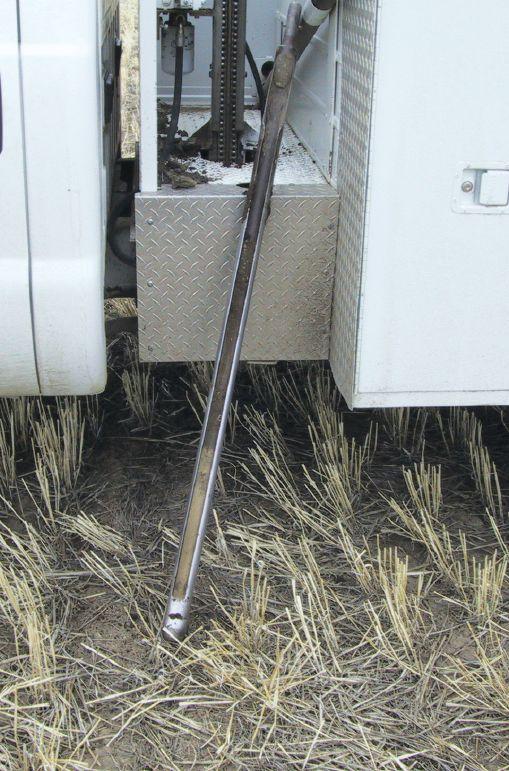
Soil sampling in late fall after soil temperature has dropped to 5 to 7 C is often the most practical time.
needed to represent different areas within the field.
3. Sampling soil/crop management zones: A field is mapped into uniquely different soil sampling zones based on soil characteristics, topography, management history and/or crop yield potential. Then representative soil samples are taken within each management zone. This method can work well in fields with variable soil or topography. Each management zone can be randomly sampled or benchmark sampled. You may have to work with a very knowledgeable agronomist to carefully prepare a soil/crop management zone map for each field with soil or topography variability. When selecting benchmark areas or soil/crop management zones, use observable features such as changes in soil colour, crop growth differences and landscape/topography to identify where different soil types occur. A good time to identify different soil areas is by observing crop development. Look for differences in crop establishment, vigour, colour and growth. Also, make use of crop yield maps, aerial photos, topographic maps, soil salinity
maps and/or satellite imagery information, if available, to assist with defining soil/crop management zones.
What number and depth increments to soil sample?
It is very important to take a minimum of 20 soil cores for each field, soil/crop management zone or benchmark area. This is critical to have a good representation. Typically, each soil sample sent to a soil testing lab weighs about 2 lbs. One acre of land, 6 inches deep, weighs about 2,000,000 lbs. If an 80 acre field is soil sampled to 6 inches, a 2 lb soil sample must be representative of 160,000,000 lb of soil. The soil sample would represent about 0.0000013 per cent of the field. This is an extremely small representation of the total field; therefore, it is very important that an adequate number of soil cores be taken. A common mistake is only taking four or five soil cores from a field or management zone, which is not enough and will often result in less reliable analytical results.
Ideally, separate each soil core into depth intervals of 0 to 6, 6
When you need equipment for your crop, livestock or dairy operation, time is always a factor. Now you can purchase on your terms, so you get what’s right for your operation right when you need it.
This soil sampling ruler is marked in 6 inch (15 cm) increments. Ideally, the 0 to 6, 6 to 12 and 12 to 24 inch depths should be separated and bagged separately.
to 12 and 12 to 24 inches (0 to15, 15 to 30 and 30 to 60 cm), and place the three sampling depths into three clean plastic pails. Do this at 20 representative coring sites in the field, benchmark location or soil/crop management zone. Sampling three depths will give a good picture of the amounts of each nutrient and where the
Trait Stewardship Responsibilities Notice to Farmers
Monsanto Company is a member of Excellence Through Stewardship® (ETS). Monsanto products are commercialized in accordance with ETS Product Launch Stewardship Guidance, and in compliance with Monsanto’s Policy for Commercialization of Biotechnology-Derived Plant Products in Commodity Crops. Commercialized products have been approved for import into key export markets with functioning regulatory systems. Any crop or material produced from this product can only be exported to, or used, processed or sold in countries where all necessary regulatory approvals have been granted. It is a violation of national and international law to move material containing biotech traits across boundaries into nations where import is not permitted. Growers should talk to their grain handler or product purchaser to confirm their buying position for this product. Excellence Through Stewardship® is a registered trademark of Excellence Through Stewardship.
ALWAYS READ AND FOLLOW PESTICIDE LABEL DIRECTIONS. Roundup Ready® crops contain genes that confer tolerance to glyphosate, the active ingredient in Roundup® brand agricultural herbicides. Roundup® brand agricultural herbicides will kill crops that are not tolerant to glyphosate. Acceleron® seed treatment technology for canola contains the active ingredients difenoconazole, metalaxyl (M and S isomers), fludioxonil and thiamethoxam. Acceleron® seed treatment technology for canola plus Vibrance® is a combination of two separate individually-registered products, which together contain the active ingredients difenoconazole, metalaxyl (M and S isomers), fludioxonil, thiamethoxam, and sedaxane. Acceleron® seed treatment technology for corn (fungicides and insecticide) is a combination of four separate individually-registered products, which together contain the active ingredients metalaxyl, trifloxystrobin, ipconazole, and clothianidin. Acceleron® seed treatment technology for corn (fungicides only) is a combination of three separate individually-registered products, which together contain the active ingredients metalaxyl, trifloxystrobin and ipconazole. Acceleron® seed treatment technology for corn with Poncho®/VoTivo™ (fungicides, insecticide and nematicide) is a combination of five separate individually-registered products, which together contain the active ingredients metalaxyl, trifloxystrobin, ipconazole, clothianidin and Bacillus firmus strain I-1582. Acceleron® seed treatment technology for soybeans (fungicides and insecticide) is a combination of four separate individually registered products, which together contain the active ingredients fluxapyroxad, pyraclostrobin, metalaxyl and imidacloprid. Acceleron® seed treatment technology for soybeans (fungicides only) is a combination of three separate individually registered products, which together contain the active ingredients fluxapyroxad, pyraclostrobin and metalaxyl. Acceleron and Design®, Acceleron®, DEKALB and Design®, DEKALB®, Genuity and Design®, Genuity®, JumpStart®, RIB Complete and Design®, RIB Complete® Roundup Ready 2 Technology and Design®, Roundup Ready 2 Yield®, Roundup Ready®, Roundup Transorb®, Roundup WeatherMAX®, Roundup®, SmartStax and Design®, SmartStax®, Transorb®, VT Double PRO®, and VT Triple PRO® are registered trademarks of Monsanto Technology LLC, Used under license. Vibrance® and Fortenza® are registered trademarks of a Syngenta group company. LibertyLink® and the Water Droplet Design are trademarks of Bayer. Used under license. Herculex® is a registered trademark of Dow AgroSciences LLC. Used under license. Poncho® and Votivo™ are trademarks of Bayer. Used under license. All other trademarks are the property of their respective owners.
HOW SOIL TEST LABS CONVERT PPM TO LBS/AC
Laboratories make the assumption that:
One acre of soil 6 inches deep weighs about 2,000,000 lb; therefore multiply ppm X 2 = lb/ac
One acre of soil 12 inches deep weighs about 4,000,000 lb; therefore multiply ppm X 4 = lb/ac
Once acre of soil 18 inches deep weighs about 6,000,000 lb; therefore multiply ppm X 6 = lb/ac
Examples:
If Nitrate-N is 10 ppm in a 0 to 6 inch depth sample then: 10 ppm X 2 = 20 lb/ac of N.
If Nitrate-N is 10 ppm in a 12 to 24 inch depth sample then: 10 ppm X 4 = 40 lb/ac of N.
If Nitrate-N is 10 ppm in a 6 to 24 inch depth sample then: 10 ppm X 6 = 60 lb/ac of N.
Remember – great care is needed to take samples at the correct depths to accurately estimate soil nutrient levels.
nutrients are located in the soil profile.
Some agronomists and dealers prefer to only sample one or two depths making the sampling process simple and faster. If only the 0 to 6 and 6 to12 inch depths are sampled, you have no idea of the amount of nitrogen (N) or sulphur (S) that may be present in the subsoil, and this information is important to develop accurate N and S fertilizer recommendations. If the 0 to 6 inch and 6 to 24 inch depths are sampled, the 6 to 24 inch depth is 18 inches of soil. This is a considerable amount of soil depth to sample. Nutrient levels are determined in parts per million which are multiplied by 6 to estimate lb/ac, which may over or under estimate soil nutrient levels. Eighteen inch depth samples can be difficult or misleading to interpret.
Thoroughly mix each composite sample and layout the soil samples to completely air dry to stop nitrate and sulphate changes. To air dry, spread a thin layer of soil onto clean paper, plastic sheets or place into clean, shallow plastic or aluminum trays. Dry the samples at room temperature in a clean room (no cats or other animals to prevent contamination). Do not use artificial heat to dry samples. If samples are sent directly to the lab in a moist condition, they must be shipped in coolers and kept below 5 C and arrive at the lab the next day for drying. If the samples take two or more days to arrive at the lab, nutrient levels may have changed. When moist soil samples are in sealed bags at room temperature, soil microbes can rapidly alter the levels of plant available N, phosphorus (P) and S, causing incorrect estimates of soil nutrient levels.
What analysis is required on each sample?
The important plant available macronutrients to test a soil sample for are nitrate-nitrogen (NO3--N), phosphate-phosphorus (PO4-P), potassium (K+), and sulphate-sulphur (SO4-2-S). Determine plant available N, P, K and S in the 0 to 6 and 6 to 12 inch depths and test for N and S in the 12 to 24 inch depth. Normally, there is no need to test for plant available calcium (Ca+2) or magnesium (Mg+2) as these nutrients are very rarely deficient in Western Canada.
It is a good idea to check the soil micronutrients copper (Cu), iron (Fe), manganese (Mn), zinc (Zn), boron (B) and chloride (Cl). Testing for micronutrients every year is only necessary if one or more micronutrients are in the marginal or low range; otherwise testing every three or four years is adequate. It is important to realize the tests for B and Cl are not that reliable. Often soil analysis levels may appear low in B or Cl, but crops will not respond to added fertilizer.
Determining soil organic matter, pH (a measure of soil acidity/alkalinity) and electrical conductivity (E.C. – a measure of salinity) are useful to monitor soil chemical properties of your fields. Some agronomists may recommend determining Cation Exchange Capacity (CEC) and determining base cation saturation ratios. Research has shown this is not a useful determination for making fertilizer recommendations for most soils or crops in Western Canada.
Finally, make sure the soil testing lab uses the correct soil test methods. For Alberta farmers, all soil test P calibration has been with the Modified Kelowna method, since 1990. For Saskatchewan and Manitoba farmers, all soil test P calibration has been with the Olsen method (also referred to as the Bicarb method). Most other soil test P methods, such as the Bray method, have never been calibrated to Western Canada soils. Therefore, it is my opinion that other methods that have not been calibrated for western Canadian soils should not be used.
Soil testing labs determine nutrient levels in parts per million (ppm). Most labs will convert the macronutrient ppm levels to pounds per acre (lb/ac), but not the micronutrient levels. See the summary box to learn how a lab converts ppm to lb/ac.
During the coming months, watch for Ross’s articles in Top Crop Manager that will touch on soil test interpretation of N, P, K, S and micronutrient soil levels, and how to develop fertilizer recommendations to assist with your fertilizer planning for next spring.
For more on soil testing, visit topcropmanager.com
THE MARATHON IS ON
AND SO ARE WE
From fuel to grain storage to seed bookings to fall fertilizer — we’re with you, right through harvest. So much riding on your farm, so many ways to profit from our experience. BRING IT ON cpsagu.ca
VOLUNTEER CANOLA IN RR SOYBEANS
Chemical and cultural management strategies are key.
by Donna Fleury
The introduction of earlier maturing soybean varieties has allowed growers outside of the more traditional soybean growing area in Manitoba to successfully grow soybeans. Growers in southwestern Manitoba, southeastern Saskatchewan and increasingly more northwest areas in Saskatchewan are trying soybeans in rotation.
And, a large portion of the expanding soybean acreage in Western Canada is expected to include Roundup Ready (RR) or glyphosateresistant (GR) soybean varieties.
According to Christian Willenborg, assistant professor in the department of plant sciences at the University of Saskatchewan, the most important requirement for growing soybeans is weed control. “Much like corn, soybeans do not tolerate the presence of weeds very well compared to crops like canola, wheat or oat. They respond very negatively to the presence of weeds, so very good weed control is required, which is why so many growers are interested in growing RR soybeans. However, many of these growers are also growing RR canola, which can volunteer and become a problem in RR soybean crops.”
In a three-year project initiated in 2014, Willenborg, graduate student Ally Mierau and colleagues are trying to determine how to manage RR canola volunteers in RR soybean crops, including chemical and cultural management options. “One of the major objectives is to determine what is the best chemistry to control volunteer RR canola in RR soybeans. The second objective is to determine whether other cultural controls could be used to help manage RR canola volunteers in RR soybeans, including soybean seeding rate and seeding date.”
Several chemical control trials under way are comparing preemergent treatments alone (Roundup WeatherMAX, Heat, Express SG, Focus, 2,4-D ester, Valtera), a combination of pre- and postemergent treatments, and post-emergent treatments (Roundup
WeatherMAX, Odyssey, Viper ADV, Basagran Forte, Cadet, Reflex, Solo, thifensulfuron) alone. The trials include chemistries currently used in Western Canada as well as some products that are so far only registered in Eastern Canada for soybeans, such as FirstRate (chloransulam-methyl) and FirstRate plus Express, as well as Reflex (registered in Manitoba).
The cultural control trials include three targeted seeding dates: early May, mid-May and early June. Seeding rates include 10, 20, 40, 80 and 160 plants/m2 (42,000, 83,000, 165,000, 330,000 and 660,000 seeds per acre). Where possible, soybeans were seeded in plots on land that had been planted to glyphosate-resistant canola in the past two years. Volunteer canola populations were supplemented to achieve a population of 40 plants/m2, though actual densities achieved approximated 20 plants m2 in 2014. In the trials, information including crop and weed counts, and biomass, thousand seed weight, yield and percentage of canola seed in harvested grain sample is being collected.
Preliminary results after only one year of the study are showing some promising options. “In the chemistry trial comparisons, we found some pre-emergent treatments alone did not always provide control long enough into the growing season to provide acceptable control because volunteer canola can flush at different times,” Willenborg explains. “Some post-emergent applications alone also did not provide enough control, as in some cases the growth stage of the volunteer canola was too advanced for acceptable control.
“The best strategy seems to be a pre-emergent application followed by a post-emergent application in-crop if needed. In most cases with volunteer canola, a post-emergent application will be
ABOVE: RR canola in RR soybean trials at the University of Saskatchewan in 2014.
required to control later-season flushes of volunteers.”
Although all the products provided good control, some of the trials showed a higher risk for crop damage due to the nature of some Saskatchewan soil conditions. “Some of the products, because of the soil texture, organic matter and in some cases excessively wet or dry conditions, may result in some products having too much of a residual or carryover effect,” Willenborg says.
Preliminary results showed pre-emergent applications of Heat and Express SC provided some residual control of RR canola. A post-emergent application of Odyssey and Viper ADV controlled over 97 per cent of RR canola, and Basagran Forte controlled 82 per cent.
The project continues for another two years, at which time more complete results and recommendations will be available.
Other management strategies
Growers should consider using chemistries with multiple modes of action when dealing with RR canola volunteers in RR soybeans. “This is not just about resistance management, it is also about emergence timing of volunteer canola and controlling multiple flushes of the volunteer population,” Willenborg says.
“It is also important to recognize volunteer canola control starts in the years prior to growing soybeans, or in the canola phase of the rotation. This starts with harvest management, including proper swath timing at 60 per cent colour change to minimize pod shatter and the spread of seeds. Make sure combine settings are set to minimize volunteer seed return or harvest losses to minimize additions of canola to the seedbank.”
At the University of Manitoba (U of M), graduate students are working with Rob Gulden, associate professor in the department of plant science, to study economic thresholds of volunteer canola in soybeans and seedbank management of volunteers.
“In the first study, soybeans seeded with wide rows (30 inch) and narrow rows (7.5 to 10 inch) are being compared in terms of densities of volunteer canola,” Gulden explains. “Volunteer canola can be quite competitive with soybean and it is not a surprise that it likes to grow fast in the spring and over-tower the soybean crop. The preliminary action thresholds developed from this study, which were measured at five per cent yield loss, are two to three volunteer canola plants/m2 in narrow row plantings and about the same in wide rows.”
In field surveys, densities of volunteer canola were often much below the threshold, although there were patches where densities were above. In many cases the visual assessment looked worse because flowering canola is taller than soybean, but the actual thresholds weren’t necessarily an economic concern. However, growers should still be controlling canola volunteers much earlier.
“At higher volunteer canola densities, narrow row spacing always had lower yield losses than wide row spacing at the same soybean densities,” Gulden says. “A couple of the wide row trial sites had some unexpected results, so we are planning to continue the study for another year to refine the thresholds for both wide and narrow row spacing.”
The second U of M project is looking at seedbank management of volunteer canola right after harvest to drive down the seedbank. “Our results so far are showing that relatively early soil disturbance to some degree after harvest may be a good strategy, which is different than from what is being reported in Europe,” Gulden notes. “The disturbance can be as little as a pass with a harrow shortly after harvest, or a shallow tillage operation to encourage volunteer
germination and emergence in the fall and decreased winter survival of the seedbank. Some of the treatments included planting a winter wheat crop into canola stubble, which had the same effect. Late tillage or disturbance did not work as well. We also have other projects looking at other alternatives underway.”
Willenborg adds while limiting tillage keeps volunteer canola near the surface, allowing it to be exposed to winter elements and seed predators such as birds, rodents and insects, tillage itself can induce dormancy and impede removal efforts, much like with cleavers. “Consider adding a cereal to the rotation, which allows for greater competition, and herbicides that provide good control of volunteer RR canola,” he says. “Soybeans don’t compete well, so enhancing row spacing and increasing seeding rates improves competition with volunteers. Managing fertility effectively and good integrated crop management practices including preseed and post-emergent herbicides that sets the soybean crop up to outcompete volunteers will be critical in the long-term management of growing RR soybeans and RR canola.”
Syngenta now offers canola seed hybrids. When you buy them, you know you’re getting quality seed that lives up to your high expectations. And, because they’re from Syngenta, you know you’re getting a whole lot more.
PROVEN BY EXPERTS
And by experts we mean farmers
Proven® Seed is the total, all-around package for canola growers. It’s new genetics — proven by 25 years of groundbreaking research and hybrids with superior agronomics. And with our Proven Performance Trials, growers have access to over 100 canola trials where it counts — on large-scale, producer-managed fields. Like yours.
Now that’s what we call proven.
Three years, five sites, many treatments
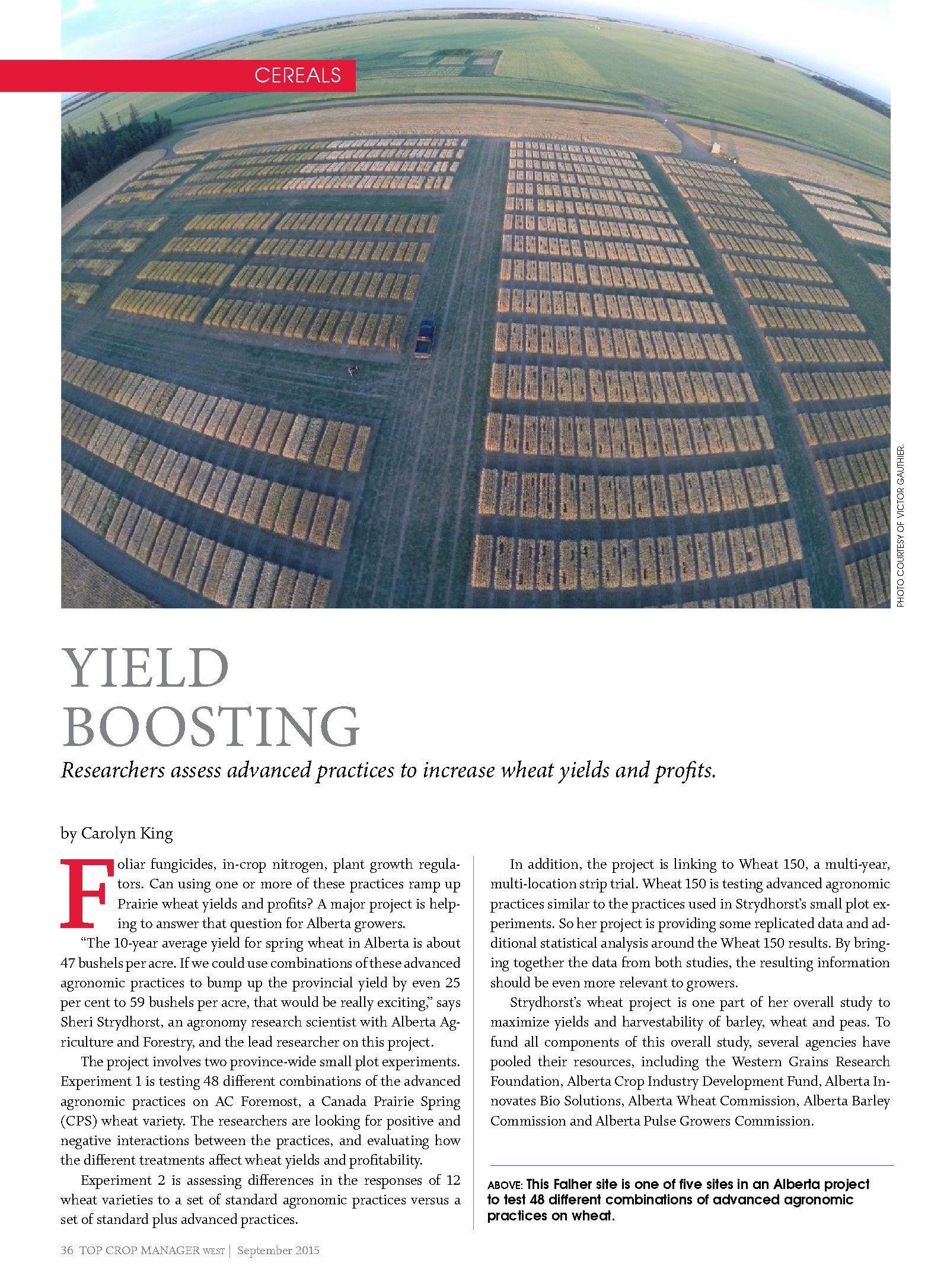
The wheat project runs from 2014 to 2016 at five locations: an irrigated site and a dryland site near Lethbridge; an east central Alberta site at Killam; an Edmonton area site at Bon Accord; and a Peace Region site at Falher. The other researchers in the project are Doon Pauly and Robyne Bowness, both with Alberta Agriculture and Forestry, and Kabal Gill with the Smoky Applied Research and Demonstration Association.
“It’s a big, ambitious project, but it is also very exciting,” Strydhorst says. “At the end of the project, we’ll have 15 site years of data, which will be a huge, robust dataset.” That dataset should enable the researchers to determine which practices consistently boost wheat yields.
In Experiment 1 for the advanced practices, the in-crop nitrogen treatment is urea ammonium nitrate (UAN) applied just prior to growth stage BBCH 30 (end of tillering, just before stem elongation). “We apply nitrogen fertilizer at seeding, as producers would, and then prior to growth stage 30, we apply either 34 kg N/ha, or 68 kg N/ha, or 34 kg N/ha plus Agrotain. Agrotain is a urease inhibitor, so it helps prevent nitrogen loss,” Strydhorst says.
“For the plant growth regulators, we are using Manipulator [chlormequat chloride], which is commercially available this year, and applying it at the label rate. We are also testing a second plant growth regulator, which is not commercially available.” The plant growth regulators (PGRs) are applied at BBCH stage 31, when the first node is at least one centimetre above the tillering node.
She adds, “To get the staging right, you need to pull out some plants, cut the stem [lengthwise], and look for the nodes and the heads moving up the base of the stem.”
The experiment’s three fungicide treatments are: an earlier application, using Twinline (metconazole and pyraclostrobin) at the label rate, applied at BBCH 39, when the flag leaf has unrolled and flipped over; a later application, using Prosaro (prothioconazole and tebuconazole) at the label rate, applied two weeks after BBCH 39; and a dual application, with both the earlier and later applications.
Strydhorst explains, “The earlier fungicide application provides two weeks of leaf protection from disease. The later application targets late-season leaf protection. That later timing tends to coincide with Fusarium head blight timing, but Fusarium is not a huge production constraint in all parts of Alberta, so we are targeting leaf protection. And our dual
application gives a month of leaf protection for the crop.”
Getting all the different products on at the right time can be difficult. She says, “You apply your herbicide, then two days later your UAN, and two days later your PGR, and maybe a week or so later your fungicide. So it’s just boom, boom, boom, boom to get all those applications on at the right growth stage. And if you don’t get them on at the right growth stage, then they don’t work as intended.”
In Experiment 2, the advanced treatment package is 34 kg N/ha plus Agrotain, the Manipulator application, and the dual fungicide application.
“For the 12 wheat varieties, we have different classes and different varieties within each class. Also, we’ve tried to capture some of the most popular varieties by acreage and some of the new genetics,” Strydhorst notes. The CPS varieties in the experiment are 5700PR, AC Foremost and AAC Penhold. The General Purpose wheats are KWS Sparrow and KWS Belvoir. The soft white is AC Andrew, and the hard reds are Harvest, CDC Go, Stettler, CDC Stanley, Thorsby and Coleman.
Fungicides show biggest benefit in 2014
For Experiment 1 in 2014, Strydhorst says, “The main finding was that the crop’s responses depend on moisture. Last year at our sites, we had growing season precipitation ranging from four inches at Falher to 16.8 inches at the irrigated site near Lethbridge. When we had good moisture, we tended to get better responses to the advanced practices.
“For example, with the in-crop applications of UAN, we saw up to 11 per cent yield increases when we had good moisture. When we had drought stress, we saw yield decreases because the nitrogen was burning the leaves.” Although applying extra nitrogen to a drought-stressed crop doesn’t make sense in a farming situation, Strydhorst explains that it does make sense for this research. “From a scientist’s perspective, we do that to understand where some of the cut-offs are, like how much drought stress can occur before you get serious impacts.”
The situation was similar with the PGR applications: in some cases a yield decrease occurred when a PGR was applied under drought conditions. Again, a grower would not apply a PGR in very dry conditions; PGRs are used to shorten and stiffen wheat stems to reduce the risk of lodging, and lodging would not be an issue in a drought-stressed crop. Strydhorst notes, “The label says do not use these products in drought conditions. The problem for growers is how to define drought stress. So in this study, we are measuring soil moisture before, during and after the plant growth regulator application. That way we know how dry the soil can be before you shouldn’t use a growth regulator.”
According to Strydhorst, the most exciting responses in 2014 were for the fungicide applications. “At our Lethbridge dryland site, we saw a 48 per cent yield increase with the dual fungicide applications. That site had excellent moisture and high disease pressure, [plus AC Foremost is a disease-susceptible cultivar]. And those are the conditions when you’ll see large responses to fungicides. We saw yield responses to the fungicides at four of the five sites; the exception was the drought-stressed site at Falher.”
The later fungicide timing resulted in the greatest yield benefits in 2014. “The later timing was never worse than the early timing. Sometimes the dual applications were better than the later timing, but not by a significant amount,” she says.
Strydhorst doesn’t think the difference in the yield response to the later versus the earlier fungicide is related to the different products. Although that aspect wasn’t part of the wheat project, the
researchers did include it in the barley project where they compared three different fungicides in early, late and dual applications. She notes, “It didn’t seem to matter which product we used as long as we used the late timing; that’s where we got the benefit.”
Strydhorst suspects the later timing resulted in a greater yield response because the disease pressure came later in the growing season. However, she still has to analyze the disease results from the leaf samples they collected in 2014 to confirm that possibility.
The 2014 results from Experiment 1 didn’t show any consistent synergies among the different practices. Data from 2015 and 2016 will enable the researchers to get a clearer picture of any positive or negative interactions from combining some or all of the practices.
Variations in varietal response
Strydhorst is fascinated by the 2014 results from Experiment 2. “I think one of the most interesting things coming out of this study is that some varieties respond to the advanced practices and some don’t. For example, 5700PR tended to have higher protein with the advanced management, but not all varieties did that. And CDC Go occasionally got taller with a plant growth regulator,” she says.
“Averaged over all the wheat varieties, we saw a 10 to 19 per cent yield increase in 2014 [with the advanced practices]. At our irrigated site – which is where you’ll see the best results from these agronomic inputs because moisture is not a limiting factor – AC Andrew, Stettler and Thorsby had no significant yield increase with the advanced practices.”
CEREALS
OPTIMIZING OAT PRODUCTION
Study assesses practices for high yields of high-value, food-grade oats.
by Carolyn King
Oat is a competitive crop that is suited to central and northern Alberta growing conditions, but oat agronomic research has been lacking in Alberta in recent years.
“When I found out about the high yield potential of oat, I was fascinated by its potential to be a high-value crop for growers,” says Linda Hall, a weed scientist and agronomist at the University of Alberta.
Her excitement about oat’s potential inspired Hall to initiate a three-year project on optimizing production of food-grade (milling) oats in Alberta. She is working with Sheri Strydhorst, an agronomy research scientist at Alberta Agriculture and Forestry; Bill May, a crop management agronomist with Agriculture in Agri-Food Canada in Indian Head, Sask.; and Joseph Aidoo, a graduate student at the University of Alberta.
Based on Statistics Canada data, the average oat yield for Alberta for the past five years was 82.7 bushels per acre (3120 kilograms per hectare). This low average yield may be due in part because oat is often grown for hay and forage, rather than for grain, but also because oat is sometimes planted as a default grain crop when it’s too late to seed crops like wheat or canola. Results from variety trials and other sources show oat grain yields on the Prairies can be around 120 to 155 bushels. According to Hall, oat’s yield potential could be over 200 bushels under the cool, moist growing conditions preferred by the crop and using agronomic practices aimed at high yields.
“Although oat can be high yielding, the common variety grown
TOP: Results from the project’s first year indicate use of a plant growth regulator on Stride tended to counteract the height increase from higher nitrogen levels.
ABOVE: Graduate student Aidoo is part of the research team carrying out a project to assess practices to optimize oat yield, quality and standability.
Photos courtesy of Linda Hall, University of Alberta.
in Alberta is not the best for high-value milling oats,” Hall notes. “So one objective of our project is to compare the yield of some newer high beta-glucan oat varieties. This may provide a new marketing opportunity for Alberta growers.” Food processors are interested in beta-glucan because this dietary fibre has important health benefits, such as lowering cholesterol.
“The most reasonable way to increase oat yield is to plant early and increase nitrogen fertilizer. Unfortunately, higher nitrogen tends to result in thinner seeds, which is not as good for the milling market, which prefers plump seeds with a high test weight,” she says. “So we need to find a balance – how do we maximize yield and yet still retain quality?”
Another effect of high nitrogen rates is a greater risk of lodging. Hall says, “Particularly in northern Alberta where moisture levels are usually good, when growers use higher rates of nitrogen, the crop tends to lodge, which causes harvesting problems and reduces yields. So our second objective is to determine if new plant growth regulators can improve the harvestability and standability of oat varieties.”
Plant growth regulators are synthetic compounds that modify plant growth; their effects on cereals may include shorter, stronger stems, reduced lodging and/or higher yields. Little research has been done on the use of growth regulators on oat in Canada, so Hall’s project could provide valuable insights.
The project, which started in 2014, involves two field experiments. Experiment 1 aims to evaluate the effects of nitrogen rate and oat variety on yield, lodging and beta-glucan content. In this experiment, nitrogen in the form of urea is banded at seeding. The treatments are 5, 50, 100 and 150 kg N/ha, with the amounts of the urea applications adjusted for the soil type and the amount of soil nitrogen. The experiment compares five oat varieties: AC Morgan (four to five per cent beta-glucan); OT3066 (four to five per cent beta-glucan); Stride (5.5 to six per cent beta-glucan); CDC Seabiscuit (5.5 to six per cent beta-glucan); and CDC Morrison (six to 6.5 per cent beta-glucan). In 2014, Experiment 1 was conducted at Edmonton and Barrhead, which are both in Alberta’s prime oat growing region.
Experiment 2’s objective is to assess the effects of four rates of a plant growth regulator on Stride, under the same four nitrogen treatments as in Experiment 1. The growth regulator is under
YIELD BOOSTING
CONTINUED FROM PAGE 39
She notes, “That whole package – the UAN, growth regulator and dual fungicide – costs about $93 per acre to apply. If you’re not getting a yield response, then you’re definitely better to put that money in your pocket.”
However, she cautions, “I don’t want to say that those three varieties will never respond, because we just saw that once. That’s why we need the 15 site years of data. If we see that a variety doesn’t respond to these advanced agronomic practices time after time, then growers should save their money and use the inputs on varieties that do respond.”
Strip trial links
Linking the small plot data to the Wheat 150 strip trial data is complicated, particularly due to some treatment differences. For example, Wheat 150 is using variable rate nitrogen applications,
development and not yet registered for use on oat in Western Canada. The researchers chose Stride for this experiment because it showed lodging tendencies at higher nitrogen rates. In 2014, this experiment was carried out at Edmonton, Indian Head and Barrhead.
First year results
In Experiment 1 in 2014, oat yield increased as the nitrogen level increased, as expected. Hall says, “Our best yielding variety was AC Morgan, the variety used by most Alberta growers. But unfortunately Morgan had the lowest beta-glucan content of the varieties in our trial. CDC Morrison, the highest beta-glucan variety, was the lowest yielding.”
The optimal nitrogen rate for maximum oat yields varied depending on the oat variety and the location. For example, CDC Morrison’s yields were highest at the 150-kilogram rate at both locations, while AC Morgan’s yields were greatest at 50 kilograms at Edmonton and 100 kilograms at Barrhead. Higher nitrogen levels tended to decrease 1000-kernel weights and increase the percentage of thins. Also, plant height and lodging tended to increase as nitrogen increased, although there was minimal lodging at the sites in 2014. Height and lodging were variety dependent, with Stride lodging more than the other varieties.
In Experiment 2, at two of the three sites, the plant growth regulator reduced plant height and lodging. “As we increased the nitrogen, the height of Stride increased, and as we applied more plant growth regulator, we saw a reduction in height. So, by using a plant growth regulator, we were successful in counteracting the increase in height from the nitrogen,” Hall explains.
In 2014, the plant growth regulator did not affect oat yield. Hall notes, “Accurate timing is very critical for a plant growth regulator to be effective. In auxiliary experiments, we found that the growth regulator had to be applied at early stem elongation, after the herbicide application window and before fungicides are applied. To be effective, the plant growth regulator would have to be applied as a separate treatment.”
Once the project is completed, the researchers will be able to share up-to-date information on food-grade oat production with central and northern Alberta growers.
not the set rates used in Strydhorst’s project. The project’s statistician is currently working on how to compare those two datasets. Another difference is that sometimes the fungicides were not applied in the Wheat 150 trials because of timing challenges.
Despite such analytical challenges, Strydhorst is very interested in going even further with linking the project’s small plot data to strip trial data.
In fact she’s hoping other Alberta wheat growers might be willing to share their strip trial data.
“We are looking for producers who have yield map data for their strip trials, even if they are not part of the Wheat 150 trial. So if you have done nitrogen or fungicides or PGRs in strip trials and you would be willing to share your data with me to link it with the small plot data, we would love to have that data.” For more information, contact Strydhorst at sheri.strydhorst@gov.ab.ca.
MORE POWER JUST WHEN YOU NEED IT.
Rocky Mountain Equipment carries the largest selection of CASE IH Axial-Flow combines. These industry-leaders are top in productivity, have the fewest drive components, and have the ability to adapt to over 134 grain types. Not to mention, their engines are built to provide responsive power and improved fuel economy.
Visit one of our 40 dealerships across Canada and see for yourself why CASE IH Axial-Flow combines are the dependable choice.
DEPENDABLE IS WHAT WE DO.
Starts Early, Works Late
Sulphur Bentonite
Mid Layer
Ammonium Sulphate
Inner Sphere
Outer Layer
Cutting Edge, Patented Technology Forged By TIGER-SUL
TIGER COMBO™ (12-0-0-50S), an innovative sulphate management technology, designed to efficiently meet your crops’ nutritional needs, offering dual advantage of immediately available plant sulphate and extending sulphate release throughout the growing season.
Fusion of ammonium sulphate and sulphur bentonite into one uniform size granule allows enhanced precision and improved spatial distribution, making more nutrients available per sq ft, compared to traditional AMS blends. TIGER COMBO’s special coating minimizes dust and maximizes product safety and handling.
TIGER COMBO is another leap forward in great crop performance.
SULPHUR/ TIGER-SUL ADVANTAGE
The combo of Sulphur/Sulphate provides optimum plant available sulphate during the growing season.
INCREASED PRECISION
Ideal size, density and uniformity allows easy, consistent calibration of application equipment, improving placement accuracy.
IMPROVED SPATIAL DISTRIBUTION
Uniform size and shape improves spatial distribution, making spread patterns consistent and improving nutrient availablity.
EASY & SAFER TO HANDLE
The special dust suppressant coating minimizes air borne dust. Lower dust level improves product safety and comfort in handling.