Seed treatments are designed to provide added protection for your crop when it is most vulnerable. But what sounds like a very simple function is actually a complex process with benefits that go well beyond the seedling stage. Not only do seed treatments take years of research and development, they require a collaborative team dedicated to providing innovative solutions to some of growers’ greatest challenges.
The Bayer SeedGrowth™ team is a fullyintegrated system designed to help growers achieve better crop establishment and healthier plants, with the ultimate goal of achieving higher yields. The program focuses on Bayer’s four pillars of expertise: products, equipment and modifications, coatings and services. The team works directly with all customers – commercial treaters, seed growers, retails and growers – to support and educate them on how choosing the right products and applying them correctly can impact their entire season.
Regardless of the crop or seed treatment product, your SeedGrowth representative can help you with everything you need to maximize seed performance. Our goal is to help your seed emerge healthy and strong enough to achieve its full yield potential at harvest, no matter what kind of seasonal stresses you encounter.
All the best for a successful 2020 season!
Matt Dertinger SeedGrowth Bayer
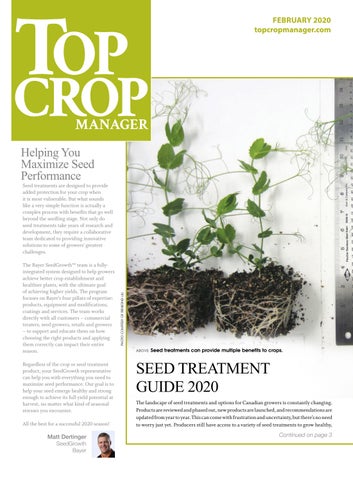
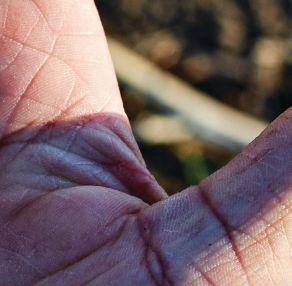
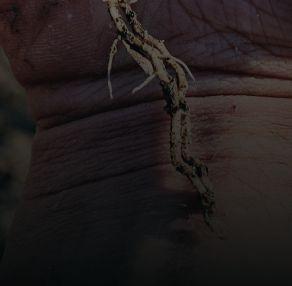
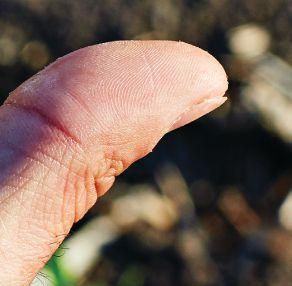
ABOVE: Seed treatments can provide multiple benefits to crops.
SEED TREATMENT
GUIDE 2020
The landscape of seed treatments and options for Canadian growers is constantly changing. Products are reviewed and phased out, new products are launched, and recommendations are updated from year to year. This can come with frustration and uncertainty, but there’s no need to worry just yet. Producers still have access to a variety of seed treatments to grow healthy,
Continued on page 3
HAVE A BREAK THROUGH SEASON
Seed Treatment Guide 2020
Top Crop Manager would like to thank Bayer for sponsoring this year’s Seed Treatment Guide. Through their support we are able to publish this information guide to assist our readers.
We are grateful to the numerous weed and pest management specialists for their assistance and helpful suggestions contained in Top Crop Manager’s Seed Treatment Guide.
Continued from page 1
strong and profitable crops – but the onus is on all stakeholders to make smart and mindful decisions when it comes to choosing tools to use each growing season.
Published as part of Top Crop Manager, February 2020, by: Annex Publishing & Printing Inc.
PO Box 530, 105 Donly Drive South, Simcoe, ON N3Y 4N5 Canada
Tel: (519) 429-3966 Fax: (519) 429-3094
EDITOR Stefanie Croley
ASSOCIATE EDITOR Alex Barnard
WESTERN
Bruce Barker
ASSOCIATE
Michelle Allison
VP
Diane Kleer
Charts compiled by Mike Strang and Jennifer Strang
That’s why Top Crop Manager is pleased to publish the 2020 Seed Treatment Guide, our annual reference tool listing products registered (at publication time) for cereal, corn, soybean, pulse and canola crops. We hope this guide assists you in choosing some of the right products for your upcoming growing season.
In this guide, you’ll also find an article about innovative research happening at the University of Saskatchewan, where researchers are working on a new seed treatment that will spark early germination and root growth in crops. And on page 6, you’ll read about a research trial in Indian Head, Sask., that looked at row spacing effects on fababeans, and the potential interaction between varying seeding rates.
As always, we strive to make the tables in this guide as accurate and user-friendly as possible. With that said, however, this guide is adapted and compiled from crop protection resources and companies, and is not a definitive text. Growers should always doublecheck provincial guides and product labels, and consult a professional, to avoid errors.
Growers have access to a variety of tools to grow healthy, strong and profitable crops.
PHOTO BY TOP CROP MANAGER
NEW SEED TREATMENT INDUCES EARLY GERMINATION AND ROOT GROWTH IN CROPS
Once optimized for the field, this cost-effective seed treatment is expected to increase the value of the seed package for growers.
by Donna Fleury
Researchers at the University of Saskatchewan have discovered and patented a novel seed treatment that induces early germination and root growth in crops, and shows significant commercial promise for growers. Improving early seed germination, seedling establishment and enhanced root development, particularly under low temperature stress, are all critical factors for increasing yield of field crops through advanced maturity and avoidance of heat and/or drought stress in mid-summer and fall frosts in Canada, and globally.
“This project evolved out of previous work led by Bernard Laarveld and Andrew Olkowski [from the department of animal and poultry science] who were investigating a plant biomass processing treatment to break down lignocellulose,” says Karen Tanino, professor and resarch scientist at the University of Saskatchewan’s Depart-
ment of Plant Sciences. “They were testing the treatment on malting barley seed to determine if their treatment was toxic to the seed. Instead of being toxic, the treatment enhanced germination. They asked me if this type of treatment might be of interest to the plant agriculture industry and I immediately answered yes!’
“One of the critical factors contributing to the quality of malt is uniformity of malting barley seed germination, which is still a challenge and a priority for malting companies. Their initial project results showed a significant increase in both synchronization of the malting barley germination process and germination rate. These somewhat
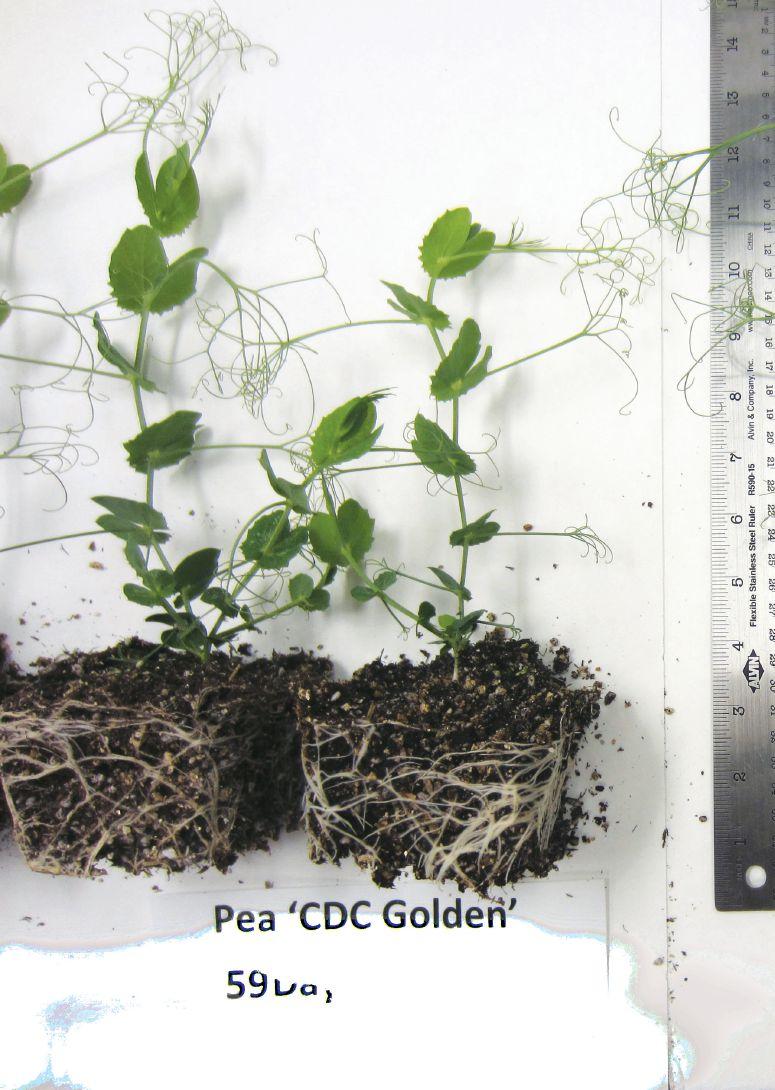
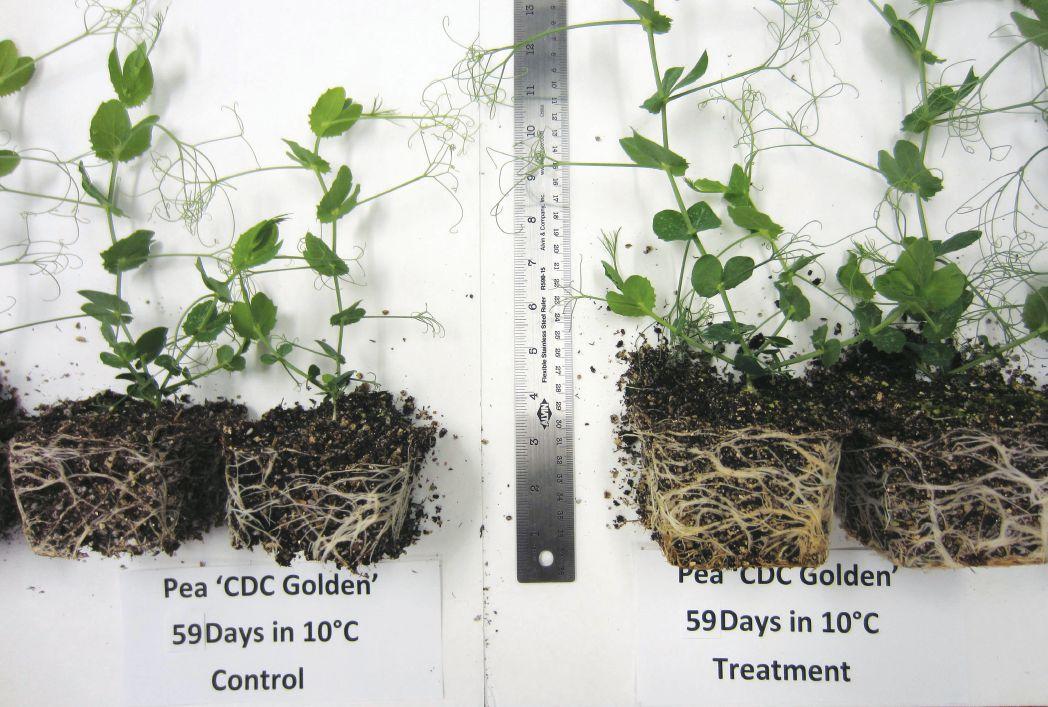
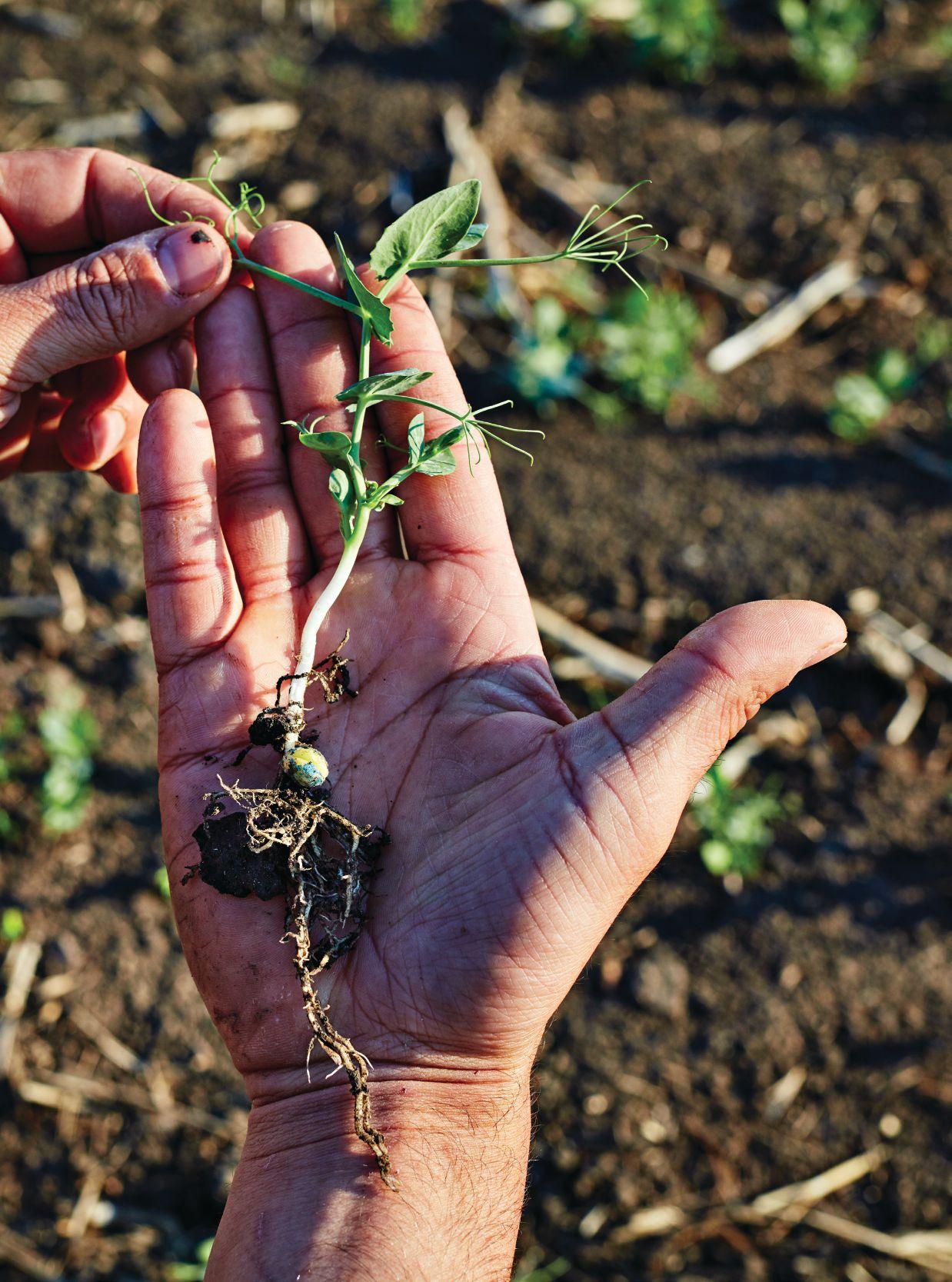
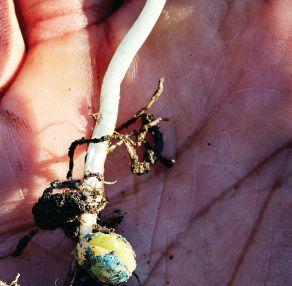
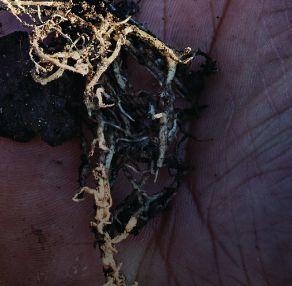
ABOVE: Under controlled conditions of 10 C, a single application of seed treatment to pea (right) enhanced germination and provided for better rooting and shoot development, as compared to the control.
PHOTO
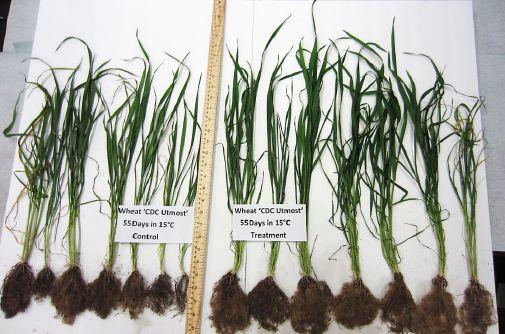
Under controlled conditions of 15 C, a single application of seed treatment to wheat (right) enhanced germination and provided for faster root establishment and more lateral root growth, as compared to the control.
surprising results convinced us to further investigate the potential to expand the application of this novel seed treatment to a range of crops in field production.”
Tanino’s broader research program is focused on abiotic stresses of plants and takes an approach of avoidance to stress rather than tolerance. Therefore, the driving interest and objectives behind this project were to determine if a single seed treatment could advance germination under the cool low temperature conditions of spring, and to evaluate the impact on subsequent plant growth and development across a range of crops. This novel seed treatment, which is based on a known catalytic reaction (CAT) using a transition metal catalyst combined with H2O2, has been patented. More than 30 crops/cultivars were tested from cereals, pulses, oilseeds, forages, to horticulture crops under controlled conditions and greenhouse conditions at both optimum and low temperature conditions. Additional trials were conducted in the university research plots and in a commercial farm field as well.
For the lab and greenhouse trials, the majority of the seed treatments were applied through soaking, but have more recently shifted to experiments with spray application and the concentrations are being optimized. For most crops, soaking for one hour was adequate, with others requiring up to four hours. The germination of each crop was measured, along with root and shoot growth at different temperatures of 5, 10, 15 and 20 C. Root nodulation and crop yields were assessed, as well as vegetative and mature growth parameters in specific crops. The novel seed treatment and compatibility with current fungicides were investigated. For the on-farm trials, researchers used a commercial Storm seed treater that applies the seed treatment as a spray followed by short term drying, which produced similar enhanced root growth responses as seed soaking and may be a practical solution for field scale application.
“The results of the trials showed that a single application of the seed treatment not only induced enhanced germination under both optimum and low temperature conditions, but also provided for faster root establishment and more lateral root growth,” Tanino explains. “The earlier establishment, improved plant density and greater root growth help the crops potentially avoid heat and drought stress during flowering, and avoid fall frosts through earlier maturity. Overall, the seed treatment had a positive effect on the majority of the broad range of crops tested, although we did see a few differences in culti-
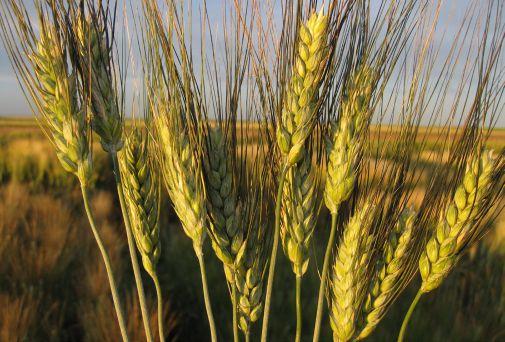
More than 30 crops and cultivars were tested, including cereals, pulses, oilseeds and forage crops. Overall, the seed treatment had a positive effect on the majority of the crops tested.
var response. In addition, the seed treatment proved to be effective over both the short and long term, including a long-term impact on increasing root and shoot growth and nodulation in certain legumes. Under controlled conditions, better rooting and shoot development were also achieved with the seed treatment combined with a fungicide, compared to a fungicide alone, and also helped overcome the negative effects of fungicide on seedling emergence.”
Researchers also conducted storage life experiments for both the catalytic solution and on-farm treated seeds. The results showed that the solution can be safely stored for at least one month, while the on-farm treated seeds can be stored for at least one week and remain effective. However, the results were crop-dependent and therefore the storage experiments are planned to be repeated with shorter time intervals. “In addition, we are puzzled by the results showing that although the catalytic treatment solution consistently induced greater lateral root growth under lab, research field and farm conditions, and increased tiller number in wheat under field conditions, no other significant agronomic or yield advantage were observed in field research plot conditions in either wheat or canola. There seem to be some cultivar and planting date variances, but we are not sure why. Therefore, we are conducting more detailed and greater sampling at various crop development stages, along with yield measurements in the field trials.”
In future, Tanino would like to optimize the spray treatment and look at different aspects of the seed treatment package, including evaluating responses under various abiotic stresses such salinity, drought and others. Another project is evaluating the potential for synchronizing malting barley germination and has just begun to investigate the seed treatment effect on Fusarium head blight and associated DON mycotoxins. This project is in the early stages, but so far looks promising. A project proposal under review is focused on the application for forage crops. Some early trials showed that along with enhanced germination and root growth, the seed treatment greatly improved the induction of nodulation on pulse and forage crops without any inoculation under controlled growth conditions. Therefore, this proposed project will hopefully examine the treatment effect under field conditions. Other projects are focused on application to increase germination of artificially aged seeds, applications for rice and other crops and cultivars.
Continued on page 8
PHOTO BY TOP CROP MANAGER
PHOTO BY RENSONG LIU.
FABABEAN RESPONSE TO SEEDING RATE AND ROW SPACING
Effects on establishment, competitiveness, maturity and yield in Saskatchewan.
by Donna Fleury
Fababeans can be a very good rotational crop option, particularly for growers in cooler, wetter regions in Saskatchewan and potentially other areas with adequate moisture availability. Researchers in Western Canada have several projects underway to build on the limited available agronomic knowledge and information for improving fababean production.
In 2018, researchers in Indian Head, Sask., established a field trial to assess fababean response, establishment and competitiveness in the thin-Black soil zone. “Our objective for this project was to evaluate row-spacing effects on fababeans and potential interactions with varying seeding rates,” says Chris Holzapfel, research manager with
the Indian Head Agricultural Research Foundation (IHARF). “Row spacing and seeding rates have the potential to impact the crop’s ability to compete with weeds and yield, as well as maturity. We also wanted to demonstrate optimal seeding rates and the effects on seedling establishment and competitiveness in an area outside what is considered the more traditional fababean growing areas.”
For the one-year field trial, the variety Snowbird, a widely grown low-tannin, medium seed-size fababean variety, was direct-seeded approximately 3.5 centimetres (1.3 inches) deep into canaryseed
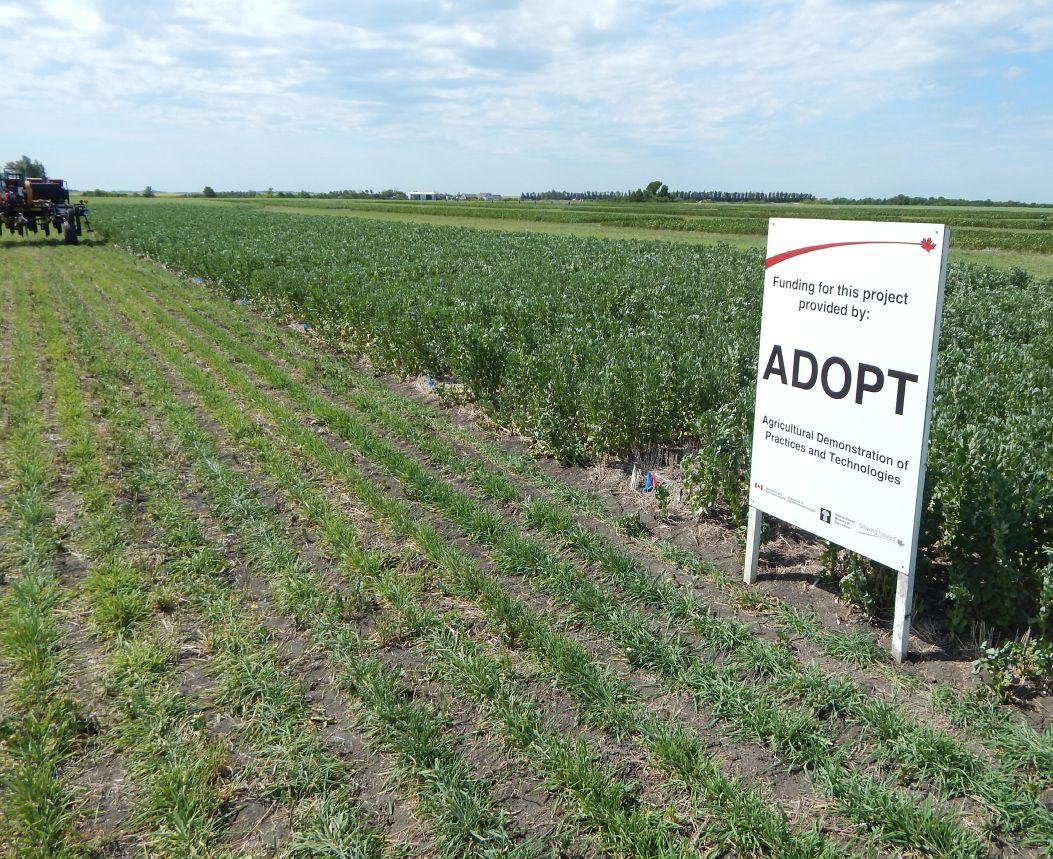
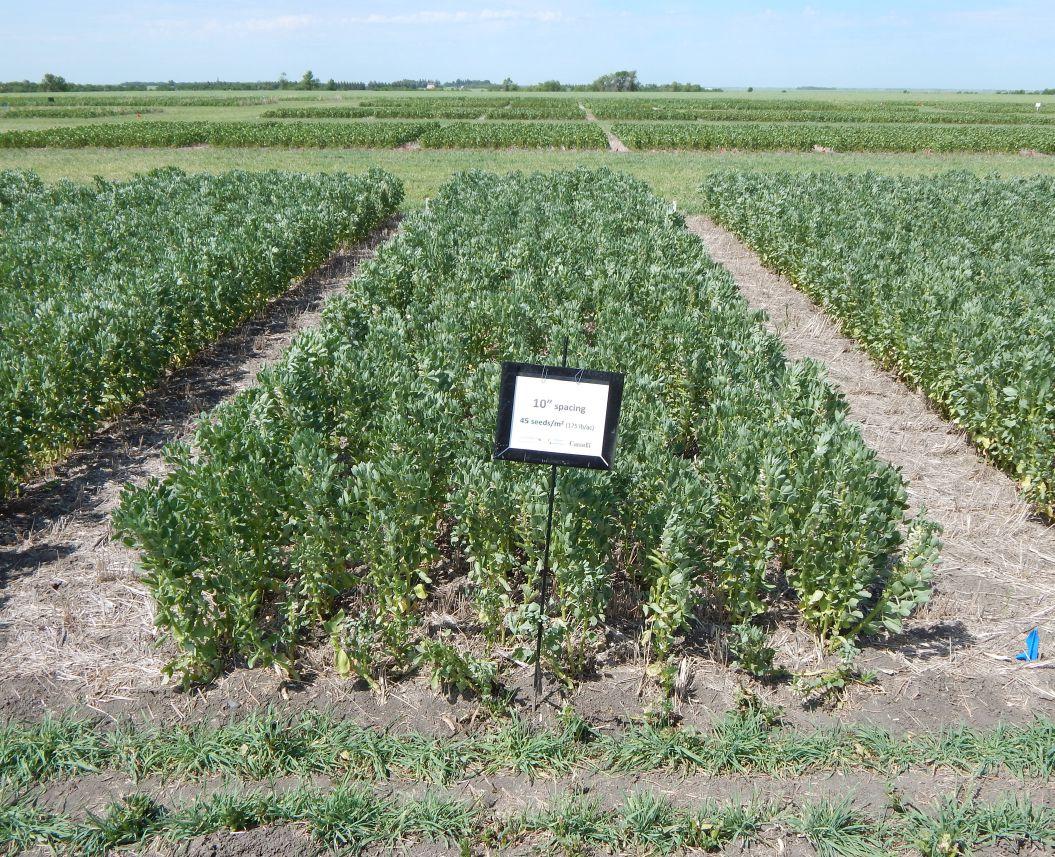
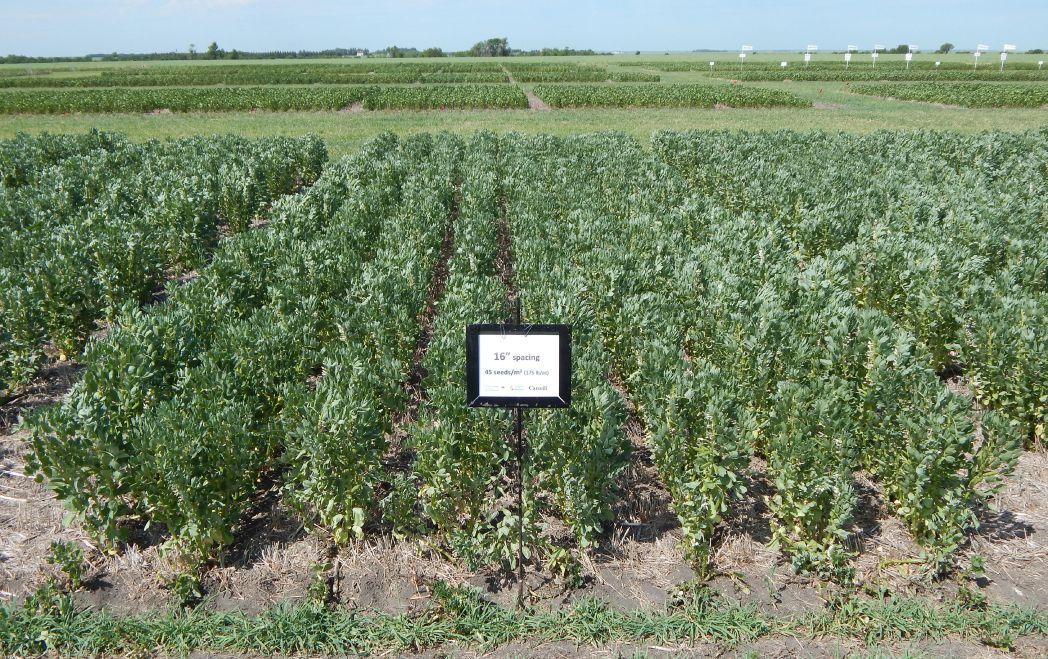
TOP: Fababean project comparing different row spacing and seeding rates at Indian Head Agricultural Research Foundation (IHARF), July 2019.
PHOTOS
stubble. The trial treatments compared a combination of four rowspacing levels of 25, 30, 36, 41 centimetres (cm) or 10, 12, 14 and 16 inches, and three seeding rates 25, 45, 65 seeds per square metre (/ m2). A specially designed SeedMaster plot drill that could be adjusted to several distinct row-spacing levels was used for the seeding rate and row-spacing treatments. Several variables were evaluated, including plant density, late-season weed pressure, maturity, yield and seed size.
“The 2018 growing season was a bit drier year, and yields overall were fairly low at around 40 bushels per acre [bu/ac],” Holzapfel notes. “Overall, we did not detect any significant interactions between row spacing and seeding rate. However, we did see an increase in plant density with seed rate, but the effect of row spacing was very subtle, with slightly higher plant populations measured at the narrowest row spacing. Although more research is required, it may be that narrower rows provide faster canopy closure, better weed competition and moisture conservation. We also saw a slight increase in late-season weed pressure at the lowest seeding rate, but no rowspacing effect. Across the treatments, weeds were well controlled with pre-emergent and in-crop herbicides.”
Although crop maturity was not significantly affected by row spacing, maturity did decrease linearly with increasing seed rate. The crop was straight cut, and Holzapfel notes that since the pods on fababeans tend to start higher up on the plant, he has not rolled the fields at seeding for several years, compared to other pulse crops such as lentils, peas and dry beans that are typically rolled every year after
seeding. Grain yields were below average overall but similar across row-spacing treatments. Numerically, the highest yields were measured at 41 cm, or 16 in, the highest row spacing.
With the seed-rate treatments, the results showed a very slight yield increase as seed rates increased, with a total of a two bu/ac difference between the lowest seeding rate of 25 seeds/m2 and the highest seeding rate of 65 seeds/m2. In another recent three-year project, which evaluated a wide range of seeding rates over three growing seasons (2015-17) at multiple Agri-ARM sites in Saskatchewan, results varied with environmental conditions and fababean types. The results over the three year-study showed that generally the most consistent yields were achieved at seeding rates of 44 to 55 seeds/m2.
“Our results also showed that seed size from the harvested grain samples was not affected by row spacing, but inversely related to seeding rate, with the largest seeds observed at 25 seeds/m2,” adds Holzapfel. “A recent PAMI survey report, along with Manitoba variety evaluation trials, showed that fababean seed weight can range from 335 to 789 grams per 1,000 seeds, which results in a wide seeding -rate range. Seeding smaller seed size varieties can reduce some of the potential challenges with seeding equipment, particularly the potential of plugging at various points in a seeder, including the metering system, distribution system, blockage sensors and soil openers. However, some of the more seasoned growers prefer to grow the higher value large-seeded types and have developed seeding strategies with a reasonable amount of success.”
Fababean trial with an intermediate seeding rate of 45 seeds per square metre and a 10-inch row spacing, July 2019 at IHARF.
“Overall, our field trial results were reasonably consistent with some of the past work that has been done,” Holzapfel explains. “Across all treatments, effects were fairly small, although lower seeding rates were more detrimental with respect to competition with weeds than wider row spacing. The field trial results demonstrated that fababeans performed similarly across the full range of row-
spacing treatments evaluated, but benefited from higher-thanexpected seed rates under drought conditions. Although we only had funding for one year, we believe it would be beneficial to repeat this work under more typical, higher moisture, yielding conditions that would help us develop and validate more robust fababean rowspacing recommendations.”
NEW SEED TREATMENT INDUCES EARLY GERMINATION AND ROOT GROWTH IN CROPS
Continued from page 5
“The next immediate steps are to work towards optimizing the seed treatment application for field scale application. This will include optimizing the liquid spray seed treatment process, evaluating application rates and other responses such as seedling emergence, plant growth and development, plus crop yield,” Tanino says. “Our initial treatment cost to crop return benefit ratio calculation indicates a crude estimate for the lowest gain of a return of at least 25:1 based on wheat. Therefore, once commercialized, this seed treatment will be inexpensive, simple to use, easy to apply and also suitable for organic production. We plan to continue field-scale trials in 2020, and hope to continue research field plot trials through our university and plant breeder relationships. Then we will be ready to work with interested industry partners to move forward on commercializing this patented technology for farmers.”
For Tanino, what makes this novel seed treatment tech -
nology so exciting is that a one-time application of the seed treatment results in consistent long-term effects and multiple agronomic responses for a wide range of crops. “With the benefits of enhanced germination and early spring establishment, along with faster root establishment and more lateral root growth, the crops tend to have better standability and crop vigor. These characteristics should mature the crop earlier and more consistently, and maximize yield potential. The enhanced early crop vigor also helps crops avoid various environmental stresses, including summer drought and heat impacts, early frosts and others. In the future, once commercialized, this seed treatment technology should be cost effective, easily achievable and enhance the value of the seed package in preparation for seeding for both conventional and organic growers.”
Fababean trial with an intermediate seeding rate of 45 seeds/m2 and a 16-inch row spacing July 2019 at IHARF.
your season
EverGol® Energy seed treatment fungicide provides soybeans with protection against the most important seed and soil-borne diseases. It provides quicker emergence, healthier plants and higher yields for your soybeans. Learn more at cropscience.bayer.ca/EverGolEnergy
SEED TREATMENT GUIDE 2020
CEREALS CROPS
Quattro
Syngenta
DISEASES
SEED TREATMENT GUIDE 2020
INSECTS
NOTES Seed and seedling rots/blights(1) Cochliobolus sativus
•
•
•
•
•
Suppresses crown and foot rot caused by Fusariumspp.in wheat, barley, oats and rye.
For control of wireworms, plus seed and soilborne diseases.
Supresses seedling blight and root rot caused by Cochliobolussativusand crown and foot rot caused by Fusariumspp.
For control of wireworms, cutworms and army worms.
Suppresses crown and foot rot caused by Fusariumspp.in wheat, barley, oats and rye.
Compatible with most fungicide seed treatment products.
SEED TREATMENT GUIDE 2020
CORN
SOYBEANS
DISEASES
SEED TREATMENT GUIDE 2020
INSECTS NOTES
SEED TREATMENT GUIDE 2020
PULSE CROPS
Products Manufacturers Active Ingredient (Fungicide & Insecticide)
Rancona V RS UPL Canada ipconazole, carbathiin 3, 7
Sombrero 600 FS t ADAMA Canada imidacloprid 4A
Visivio Syngenta sulfoxaflor, thiamethoxam, difenoconazole, metalaxyl, fludioxonil, sedaxane 3, 4, 7, 12 & 4A, 4C ** Early season protection only. | t Available to commercial seed treaters only
•
SEED TREATMENT GUIDE 2020
DISEASES NOTES
a broad spectrum of seed- and soilborne diseases as well as early-season control of flea beetles.
a broad spectrum of seed- and soilborne diseases as well as early-season control of flea beetles and cutworms. •
Provides enhanced protection from striped and crucifer flea beetles and early-season control of cutworm feeding damage.
enhanced protection from striped and crucifer flea beetles and early-season control of cutworm feeding damage.