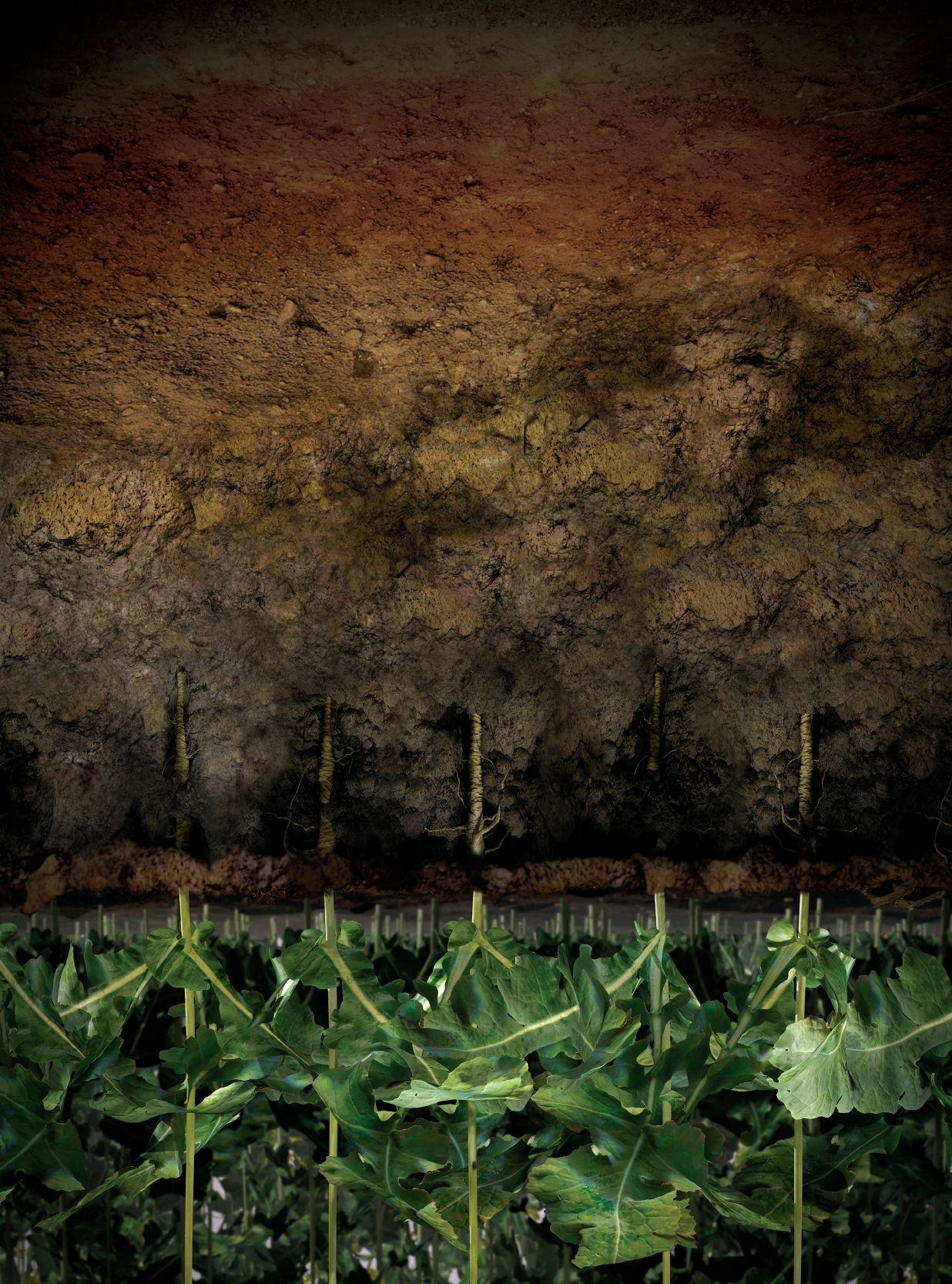
Uniform stand establishment sets up a solid foundation
PG. 16
CLUBROOT RESISTANCE
Multiple resistance genes provide greater protection
PG. 6
WHEAT GRAIN PROTEIN
Tips to fine-tune protein levels in wheat crops
PG. 30
THE BROADLEAF PREDATOR
It’s time to get territorial. Strike early, hard and fast against your toughest broadleaf weeds. Now you’re on the hunt, hot on the trail of your prey, the air thick with the smell of their fear. Lethal to cleavers and other broadleafs, In nity® FX is changing the landscape of
cereal weed control.
One thing’s invigorated in the neighbour’s field: the cleavers. You smoked yours weeks ago. Because when it’s time to harvest, YOU’RE not burning daylight on clean-up duty. You can wait to work, or you can get to work.
TOP CROP
MANAGER
6 | Clubroot-resistant genes
Multiple resistance provides a greater degree of resistance.
By Bruce Barker
4 Stewards of Canadian ag By Brandi Cowen
CRISPR-Cas9 for plant breeding By Julienne Isaacs 34 Breeding for resistance
30 | Optimizing wheat grain protein
Producers should review management practices every year to fine-tune protein levels in their crops.
By Ross H. McKenzie, PhD, P. Ag.
By Donna Fleury CROP MANAGEMENT
40 Closing the yield gap in Alberta
By Julienne Isaacs CEREALS
12 Developing ergot-resistant cereals
By Carolyn King
22 New cereal varieties update
By Bruce Barker
ON THE WEB
RESEARCH AIMS TO HELP
CANADIAN FLAX FARMERS
A University of British Columbia (UBC) professor’s flax research could one day help Canadian farmers grow a car fender. In a recent study, UBC researcher Michael Deyholos identified the genes responsible for the bane of many Canadian flax farmers’ existence: the fibres in the plant’s stem. AgAnnex.com
36 | Beneficial soil microbial diversity
Soil microbial diversity improves nutrient efficiency and crop productivity, and reduces disease incidence.
By Donna Fleury
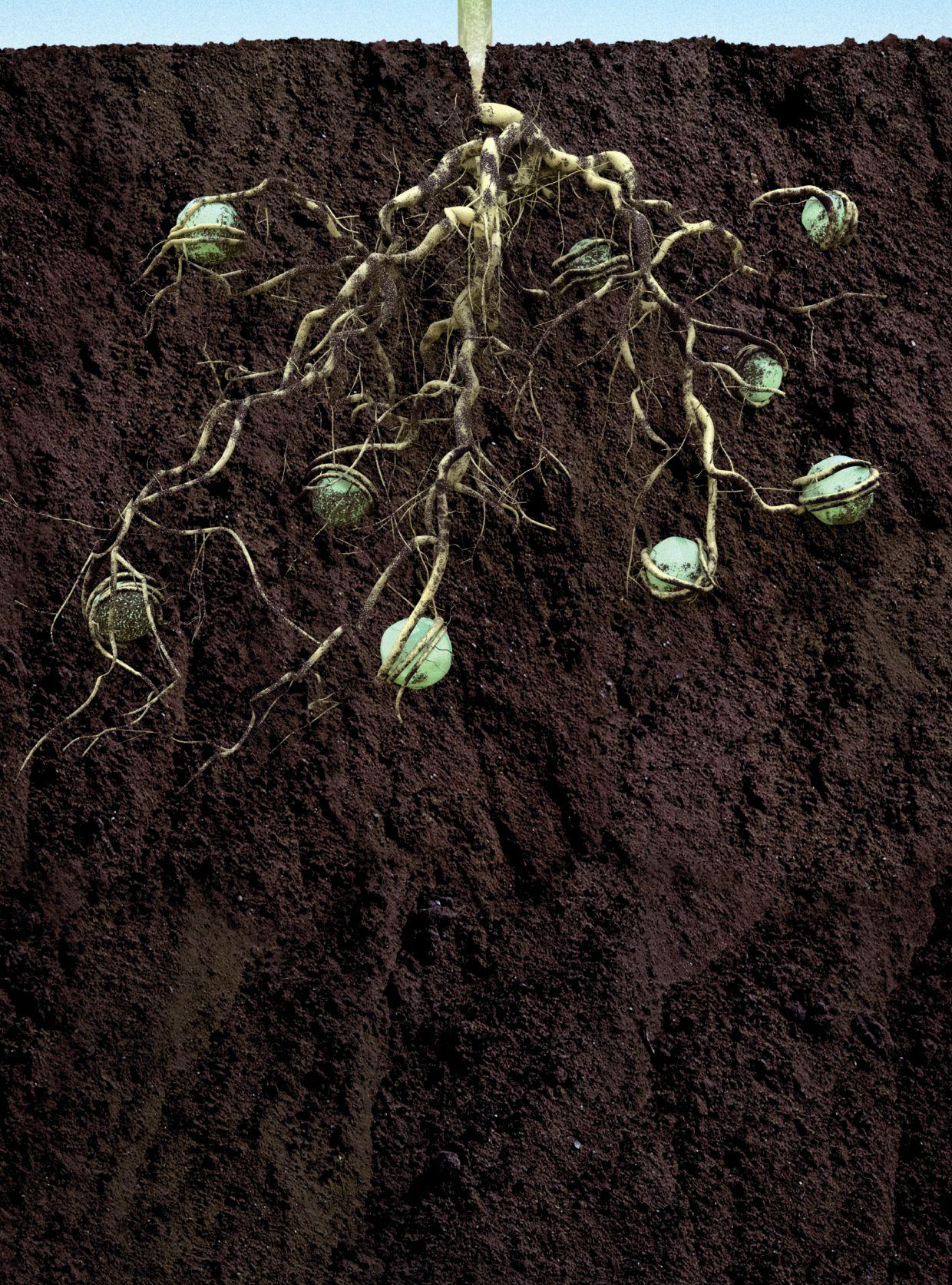
TILLAGE AND SEEDING 16 Variable rate seeding becomes a reality
By Bruce Barker
ISSUES AND ENVIRONMENT 26 Improving nitrogen credit and carbon footprint estimates
By Donna Fleury
BRANDI COWEN | EDITOR
STEWARDS OF CANADIAN AG
Within days of starting in my new role at Top Crop Manager, one thing became apparent: individuals in this industry are deeply committed to stewardship of the resources that contribute to Canada’s success in agriculture.
In the short time I’ve been with the Top Crop Manager team, my inbox has filled up with media releases, newsletters and event invitations highlighting the hard work poured into preserving and improving the country’s agricultural productivity – and with good reason. Agriculture is an important sector of the national economy. According to Agriculture and Agri-Food Canada (AAFC), in 2014 the industry employed more than 2.1 million Canadians and accounted for one in eight jobs. It’s little wonder growers, researchers, governments and companies of all sizes are exploring best practices that will allow producers to farm profitably while safeguarding precious natural resources, such as soil and water, for future generations.
For farming families, stewardship stretches beyond the more common parameters of environmental concerns to encompass family tradition as well. For these producers, agriculture is both a livelihood and a lifestyle – one that many hope to pass on to their children and grandchildren.
On Feb. 16, 2017, individuals, families, companies, academics and all levels of government will have a unique platform to share stories of their stewardship efforts with Canadians. The industry has declared this date “Canada’s Agriculture Day” and, according to a press release, it will be “a time to celebrate and draw a closer connection between Canadians, our food and the people who produce it.” What better time to boast about successful projects and innovative trials aimed at growing crops as efficiently, profitably and sustainably as possible?
This edition of Top Crop Manger does just that, rounding up some of the latest research on stewardship issues confronting Western Canadian producers.
On page 6, University of Alberta plant breeder Habibur Rahman and Crop Production Services Canada’s senior plant breeder, Andy Andrahennadi, explain how breeding multiple resistance genes into canola hybrids may help producers manage clubroot in their fields. The PV 580 GC multigenic clubroot-resistant variety was released on a limited basis this year, but, Andrahennadi warns, good stewardship of its traits is necessary to slow clubroot’s ability to evolve and overcome this resistance.
Also in this issue, AAFC research scientist Reynald Lemke shares preliminary results from a four-year project underway in Saskatchewan that’s trying to improve nitrogen and carbon estimates in cropping systems (see page 26). The project – being run in collaboration with researchers from the University of Saskatchewan – compares lentil, field pea, chickpea and fababean in rotation with wheat. Researchers hope the data will lead to better estimates of the nitrogen credits available to future crops and more accurate calculations of their carbon footprints. The end goal is to help farmers use fertilizer more efficiently, improve the economics of their cropping rotations, and sequence crops to reduce greenhouse gas emissions.
And on page 36, AAFC research scientist Chantal Hamel shares findings from several projects that are uncovering links between microbial diversity in soils, crop productivity, nutrient efficiency and disease. Ongoing research with wheat and canola crops is exploring microbial diversity, in the hopes of developing new practices that can increase beneficial interactions between soil and crops.
As you flip through this issue, take some time to reflect on stewardship in your own operations and new practices that may enable you to work more effectively, more efficiently, and more sustainably. I hope to meet many of you in the months ahead and I look forward to hearing your ideas.
Handles the toughest diseases. And climates.
We’d never say farming in this country is easy. That’s why we created Insure® Cereal. It’s an advanced fungicide seed treatment that provides the most complete control of seed- and soil-borne diseases caused by fusarium. Insure Cereal is also the only cereal seed treatment that delivers the benefits1 of AgCelence ® – more consistent and increased germination even in cold weather, increased seedling vigour both above and below ground and better ability to manage environmental stress. 2 To learn more visit agsolutions.ca/insurecereal or call AgSolutions® Customer Care at 1-877-371-BASF (2273).
1AgCelence benefits refer to products that contain the active ingredient pyraclostrobin. 2 All comparisons are to untreated, unless otherwise stated. Always read and follow label directions. AgSolutions is a registered trade-mark of BASF Corporation; AgCelence, and
NEW CLUBROOT-RESISTANT GENES MAY HELP MANAGE DISEASE
Multiple resistance provides a greater degree of protection.
by Bruce Barker
The warning bells rang loud and clear in 2013 when a shift in clubroot pathotypes overcame clubroot-resistant canola varieties on the market. Tests found the pathotypes present were capable of overcoming most of the clubroot-resistant canola hybrids. Because this breakdown in resistance wasn’t unexpected, plant breeders have continued to look for alternate sources of resistance that can be bred into new varieties to help manage the multiple pathotypes that have been identified in Alberta.
Habibur Rahman, a plant breeder at the University of Alberta, has been searching for new sources of resistance for several years. “We searched for resistance in six Brassica species and screened for resistance against the predominant pathotypes,” Rahman says.
Pathotypes 3 and 5 have been the most common clubroot types in Alberta, and previous clubroot-resistant canola varieties carried a gene resistant to these pathotypes. However, due to lack of adequate crop rotations and reliance on a single resistance gene, a shift in pathotypes occurred, and in 2013, the first case of resistance failure occurred.
Field surveys by Alberta Agriculture and Forestry in 2014 and 2015 found nine new pathotypes, including 5x, which was highly virulent on the existing clubroot-resistant varieties. These surveys indicated new sources of genetic material were urgently needed.
Rahman evaluated 275 accessions (lines) of six Brassica species: B. oleracea (cabbage, cauliflower, broccoli, kale, kohlrabi, Brussels sprouts), B. rapa (Chinese cabbage, turnip, turnip rape), B. nigra (black mustard), B. napus (rutabaga and oil rape), B. carinata (Abyssinian mustard) and B. juncea (leaf mustard).
Resistance was found more frequently in turnip (B. rapa var. rapifera) and black mustard (B. nigra). Limited resistance was found in B. napus (mainly in rutabaga types) and B. oleracea, and no resistance was detected in B. juncea and B. carinata
Developing multi-gene clubroot resistance
From the 275 accessions, Rahman identified two sources of clubroot resistance (CR), and named them CR gene 1 and CR gene 2. The CR gene 1 was bred with two different canola parent lines totaling a few hundred second-generation (F2) plants assessed and selected for clubroot resistance. A major dominant gene was
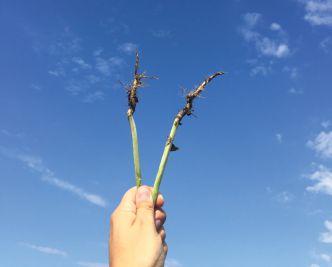
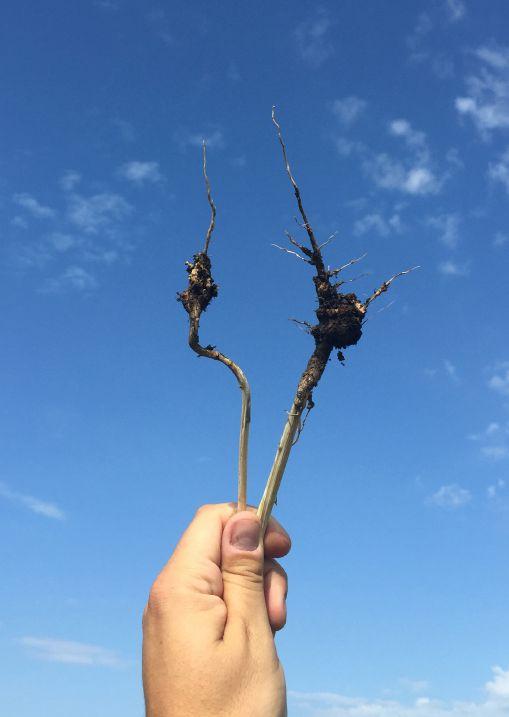
A single-gene clubroot-resistant canola hybrid with galls indicates a breakdown in resistance.
found to confer resistance to pathotype 3. Selection continued and focused on further improvement to agronomic and seed quality traits. Some of the selections were done in partnership with Crop Production Services (CPS) under a long-term agreement. Genetic markers were developed to speed line selection during plant breeding.
“Our programs are virtually integrated so that we have been working together almost since the inception of the search for
resistance,” says Andy Andrahennadi, senior plant breeder with CPS Canada at Saskatoon.
The breeding of the CR gene 2 into canola parent lines followed a similar process, but was more challenging since the genetic source had high erucic acid and glucosinolates content, according to Rahman.
Genetic markers were also developed for the CR gene 2, and further breeding resulted in clubroot-resistant lines with improved agronomic traits and canolaquality seed.
Crop Production Services introduced the two, novel genetic lines into their hybrid canola breeding program. During the breeding phase, CPS utilized both resistant lines to develop a new hybrid with stacked resistance that included both the CR gene 1 and CR gene 2.
Stacking the genes provides a greater degree of resistance to multiple pathotypes, and can also help delay the breakdown of resistance.
“If we look at the broad strategy for clubroot control, what we are seeking is diversity in genetic resistance. It is the same strategy as for blackleg. We need to develop multigenic sources and use them in combination to try to stay ahead of the pathogen,” says Bruce Harrison, director, research, development and innovation, with CPS.
The first CPS hybrid registered with the stacked clubroot resistance genes was PV 580 GC from Proven Seed, which was released to farmers on a limited basis for 2016. It is the first true multigenic clubroot-resistant canola variety. PV 580 GC is a mid-season Genuity Roundup Ready hybrid rated R for clubroot, blackleg and Fusarium wilt. Research has shown the multi-gene resistance in PV 580 GC is resistant to pathotypes 2, 3, 5, 5x, 6 and 8.
“In our field tests in Alberta, we have seen good resistance to all the pathotypes present but we know that the pathotypes continue to evolve. We’re in a race to develop new sources of resistance to the pathotypes,” Andrahennadi says. “Using multigenic stacked resistance is a prudent strategy to provide durable resistance. Good stewardship of the traits with longer crop rotations
Iis also very important in helping slow down the evolution of the pathogen.”
Crop Production Services continues plant breeding efforts with the multiple resistance genes and with genes from other sources, such as from Gary Peng’s program at Agriculture and Agri-Food Canada in Saskatoon. PS-ARK 14-3562 received interim recommendation from the Western Canada Canola/ Rapeseed Recommending Committee in February. This hybrid also has two clubroot resistance genes to further improve clubroot resistance and durability.
“To overcome resistance, there is a cost to the pathogen. Using strategies like multigenic resistance puts pressure on the pathogen and it is harder for it to overcome the resistance,” Andrahennadi says.
Additionally, Andrahennadi says CPS has 52 hybrids in field trials with two or three clubroot resistance genes. Depending on performance, more hybrids with two to three stacked clubroot genes could be submitted for registration in February 2017.
“PV 580 GC was a new hybrid that had pretty good agronomics, and was the first in the field with multigenic clubroot resistance. It was mission accomplished to prove we could get a good resistant hybrid into the marketplace. But we have many more in co-op testing with two to three genes and improved blackleg resistance with stacked resistance traits as well,” Harrison says.
“To some degree, we’ve soft pedaled in making claims on how good the clubroot resistance is, but our field trials are showing these new sources of resistance stacked into a hybrid are providing leading resistance against many clubroot pathotypes.”
Rahman also continues to search for additional sources of resistance at the University of Alberta.
For more on plant breeding, visit topcropmanager.com.
ALBERTA CANOLA FIELDS UNDER THREAT
n early September, the Canola Council of Canada reported in its Canola Watch newsletter more than 10 clubroot pathotypes had been identified in Alberta, including several strains against which clubroot-resistant canola varieties have no protection.
This news came at a time when many of the province’s clubroot-resistant canola fields were experiencing wet conditions and high levels of clubroot infection.
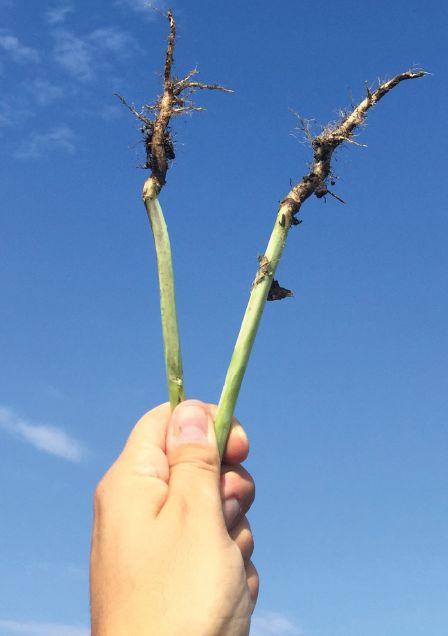
Multigenic clubroot resistance shows good tolerance to clubroot.
Resistance is Spreading.
Uncontrolled and unopposed, resistant weeds continue to spread across the Canadian Prairies.
Take charge of herbicide resistance with the exceptional weed control of Liberty®. As the only Group 10 in canola, powerful Liberty is one way to effectively manage glyphosate and other herbicide resistance issues for Canadian canola growers.
Liberty – Address the elephant in the field.
CRISPR-CAS9: A PROMISING TOOL FOR PLANT BREEDING
Regulatory requirements apply to new traits, not methods of development.
by Julienne Isaacs
Gene editing, a type of genetic engineering in which DNA is added, “deleted,” or replaced in a target genome, is revolutionizing plant breeding across the world. In 2015, the CRISPR-Cas9 gene editing system was called “breakthrough of the year” by Science magazine. This spring, all of Canada’s prestigious Gairdner International Awards went to five scientists involved in developing CRISPR-Cas9 as a genome editing system for eukaryotic cells.
The CRISPR-Cas9 system allows scientists to target and mutate very specific pieces of DNA in any target organism and mutate one or more genes of interest. In plant breeding, the system can be used to “edit” genes and influence key traits quickly and with amazing precision – and because once DNA edits are successful, the foreign genetic material introduced during CRISPRing can be removed, plants developed using the system are not considered transgenic.
In short, CRISPR-Cas9 is a big deal, and it will have real-time implications for Canadian farmers in the very near future, especially if it enables breeders to bypass regulatory requirements reserved for transgenic varieties.
Hopping regulatory hurdles?
Earlier this year, a non-browning CRISPR-edited mushroom was allowed to entirely bypass regulation in the United States, owing to the fact that the U.S. Department of Agriculture did not find the edited mushroom to contain any foreign genetic material nor constitute a plant pest or weed.
Here in Canada, new products are evaluated based on the safety of the new trait rather than the method of development. The Canadian Food Inspection Agency (CFIA) assesses the environmental safety of all plants with novel traits (PNTs) prior to product release.
According to Cindy Pearson, national manager at the CFIA’s Plant Biosafety Office, a pre-market safety assessment is necessary for every novel trait, regardless of how it was developed.
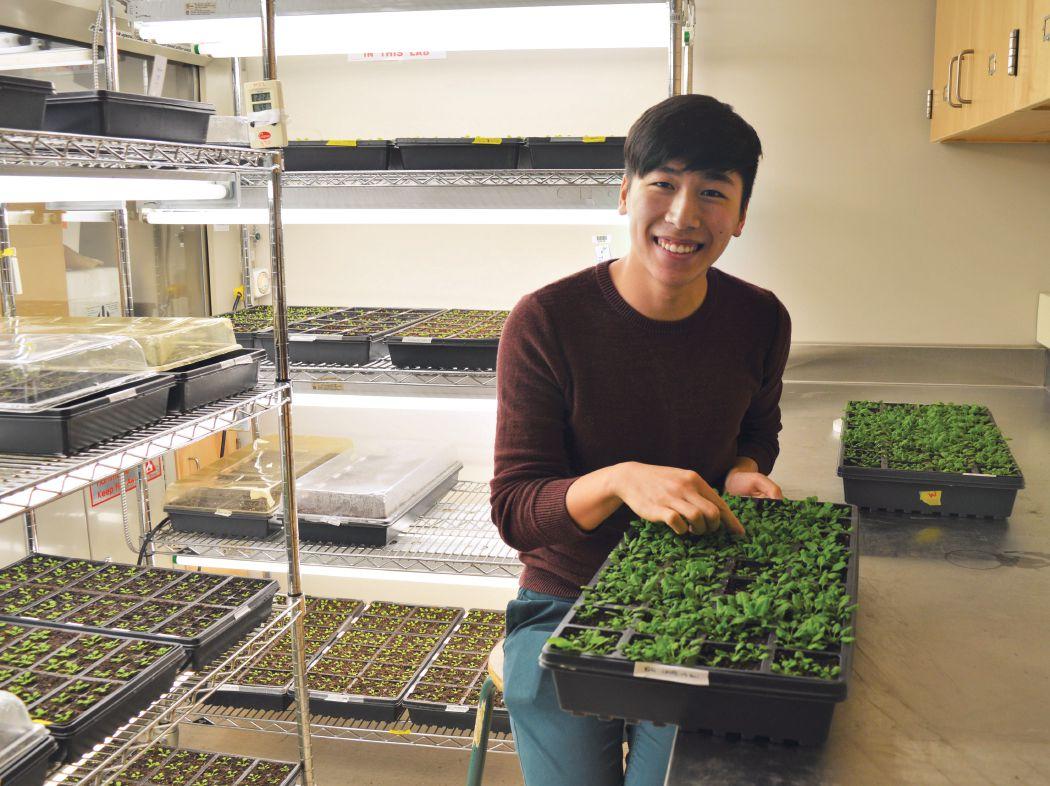
ABOVE: Kevin Ao, a graduate student at the University of British Columbia, studies plant immunity using CRISPR, a molecular tool that can be used to mutate specific genes. In the picture above, he points out a distinctly larger plant, which has mutations in two defense-related genes, amongst a population of CRISPRed plants.
PHOTO COURTESY OF KEVIN AO.
“We see new plant breeding techniques such as CRISPR-Cas9 as tools that complement the tools available to the plant breeding community, including transgenic and conventional plant breeding,” she says.
Not all plants developed using CRISPR will lead to PNTs, Pearson points out, and plants that aren’t considered PNTs would not require pre-market assessment. In addition, every PNT application is different; the onus is on the breeder to provide a data package and compelling “story” of the product and its development. So regulatory processes for CRISPR-edited products are not set in stone.
CRISPR at work
Xin Li, a plant genetics professor at the University of British Columbia, is enthusiastic about the possibilities of CRISPR-Cas9 for plant breeding. Her student, Kevin Ao, has developed an efficient protocol to CRISPR tandemly duplicated genes in the model plant Arabidopsis. They are currently engaged in a project intending to clone an Arabidopsis gene responsible for blackleg resistance, find the homologous gene in canola and edit that gene using CRISPRCas9 to express blackleg resistance.
The project, which began in 2015 and is funded by the Natural Sciences and Engineering Research Council of Canada (NSERC), is a collaborative effort with University of Manitoba scientists Mark Belmonte and Dilantha Fernando. Li expects industry interest will lead to fruitful partnerships down the road.
“I think CRISPR-Cas9 will speed up plant breeding and create new dimensions,” she says. “With CRISPR you can improve quantitative traits – sometimes many at the same time – whereas with traditional breeding you focus on one trait at a time. Because you can target multiple genes at once, you have more flexibility.”
Li says CRISPR-Cas9 makes breeding for certain traits easier and faster than conventional breeding methods, but the end result is similar. For example, she says, if you want to breed a tastier tomato using mutagenesis, you have to look for the gene that causes sweetness then backcross lines to breed the new tomato. “With CRISPRCas9, you can look for the gene that contributes to making tomatoes sweeter, and you can edit that gene very specifically in an elite cultivar,” Li says.
Plant breeding using CRISPR is still in the early stages in Canada, and every plant
requires a tailored protocol. But Li says breeders are very excited about its implications. “It’s a very useful technology that will soon revolutionize agriculture and medicine,” she says.
Proprietary gene editing
CRISPR-Cas9 isn’t the only new kid on the block in terms of gene editing. Cibus hopes to launch a new non-transgenic canola variety with tolerance to sulfonylurea herbicides, SU Canola, in Canada this year. The product has already received regulatory approval from
CFIA and has launched in the United States. SU Canola was developed using Cibus’ proprietary gene-editing technology, the Rapid Trait Development System (RTDS), which enables site-specific edits of native genes with no introduction of foreign DNA.
In Canada, Cibus is moving forward with RTDS-edited glyphosate-tolerant flax, and has its sights set on wheat and even pulses.
For more on plant breeding, visit topcropmanager.com.
NEXT GENERATION THE Rocket Aeration System
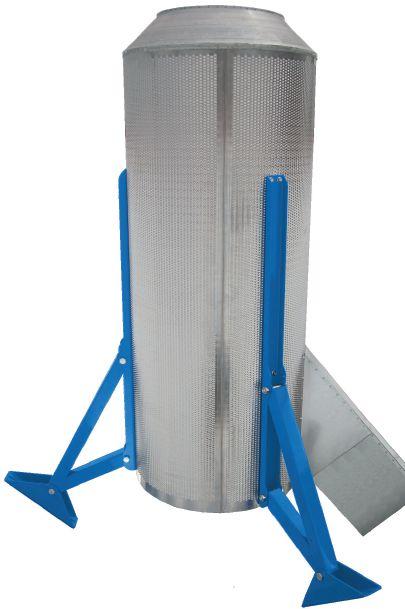
The Next Generation Rocket features a large smooth louvered surface that allows for cleaner unloading and increased airflow. The Next Generation Rocket Leg Design and Laser Cut Internal Ring provide a strong structure for stability during irregular grain flows.
BOTTOM BINS WITHOUT
The revolutionary Retro Rocket is the only do-it-yourself rocket system that allows you to retrofit existing hopper bottom and smoothwalled bins with farm proven Grain Guard aeration.
CEREALS
DEVELOPING ERGOTRESISTANT CEREALS
With ergot on the upswing, researchers are focusing on this key tool.
by Carolyn King
Over the past 15 years, ergot has shifted from being a sporadic, localized problem to a widespread disease issue for Prairie cereal growers. As a result, ergot research has become a rising priority for researchers and producer-driven research funding agencies. A key part of the current research focuses on developing crop varieties that are less susceptible to ergot.
Many cereal crops and grassy weed species are hosts to Claviceps purpurea, the fungus that causes ergot. The pathogen overwinters as sclerotia, hardened black or dark purple fungal bodies. In the spring under moist conditions, the sclerotia germinate, forming little mushroom-like bodies that release ascospores (sexual spores) into the air. The ascospores enter open florets of flowering host plants, land on the stigmas and infect the ovaries. There the pathogen produces sugary honeydew that contains asexual spores called conidia. Rain splash and insects attracted to the sticky honeydew spread the conidia to other florets. The sclerotia develop in the infected florets, and then fall to the ground or are harvested with the crop.
“The ergot sclerotia replace the kernel in the floret, which will result in yield loss. But that yield loss is usually very small, not something that the farmer would normally be worried about,” explains Jim Menzies, a plant pathologist with Agriculture and AgriFood Canada (AAFC) in Morden, Man.
The big concern with ergot is that the sclerotia contain various toxic alkaloids. He says, “The ergot sclerotia are often harvested with the grain. And because of those toxic alkaloids, if there is too much ergot in the grain, there will be a downgrading of the grain or in some cases a rejection of the grain for sale at the elevator.” Consumption of ergot-infested grain can cause very serious health problems in humans and other animals, including cattle.
A plant’s window for ergot infection depends on how long its florets remain open and unfertilized. Some crops, like rye, are open-flowering, cross-pollinated species, so their florets stay open
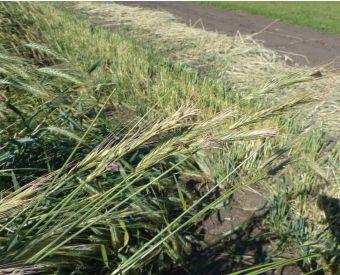
TOP: Larsen and Turkington have set up ergot nurseries at Lethbridge and Lacombe for screening of Larsen’s fall rye lines for ergot susceptibility.
INSET: The ergot sclerotia replace the kernels in the floret.
PHOTOS COURTESY OF JAMIE LARSEN.
THE ANATOMY OF THE NEWEST PULSE SEED TREATMENT.
{ And how its benefits go well beyond the seed. }
The first truly systemic pulse seed treatment with Xemium® , for broad-spectrum disease control
Increased seedling vigour both above and below ground
Enhanced ability to manage environmental stresses
More consistent and increased emergence, including under cold conditions
To find out what Insure® Pulse fungicide seed treatment and the benefits1 of AgCelence® can do for your lentils, field peas, chickpeas, dry beans, faba beans and flax, visit agsolutions.ca/insurepulse or contact AgSolutions® Customer Care at 1-877-371-BASF (2273).
1 AgCelence benefits refer to products that contain the active ingredient pyraclostrobin. Always read and follow label directions.
AgSolutions is
longer to allow their stigmas to catch wind-borne pollen. Therefore they have a longer window for ergot infection compared to self-pollinated crops like wheat. Menzies says, “Rye is the most susceptible crop, and generally triticale is considered to be next, followed by wheat, then barley, then oats.”
Another factor is how fast pollination occurs. “The literature has shown that once a pollen tube pollinates an embryo, within five to seven days that embryo is completely resistant to ergot infection,” Menzies notes. “So the more rapid pollination, the smaller the chance for the pathogen to infect.” Additional factors include cool, wet weather, which tends to lengthen the flowering period, and a copper deficiency in wheat or a boron deficiency in barley, which leads to pollen sterility and causes the flowers to open up.
No fungicides are registered for ergot control on the Prairies. Although some commercial cereal varieties have moderate ergot resistance, none are resistant. “Farmers need an integrated control package with things like using a proper crop rotation, mowing ditches and headlands to make sure the disease doesn’t spread from other grasses, making sure your fertilization regime is correct, and removing the ergot from infested grain [using colour sorters and/ or gravity tables],” Menzies stresses. Other tips include using clean seed, and seeding at a higher rate and a consistent depth for a more uniform crop stand.
Why the rise in ergot?
“In the last half of the 20 th century, ergot occurred probably every 10 to 15 years and only in small pockets of the Prairies. And it would be there for a year or two, and then it would be gone. So it was very hard to get a good grasp on what was happening,” Menzies says. “It’s only since about 2000 that ergot started to become much more general across the Prairies and much more common.”
“We’ve been looking at data produced by the Harvest Sample Program on samples downgraded due to ergot to obtain information on the incidence and intensity of ergot,” says Sheryl Tittlemier, a research scientist with the Canadian Grain Commission. Analysis of the data shows ergot levels vary from year to year, but overall ergot levels have increased. “From 2002 to 2013, the number of CWRS [Canada Western Red Spring] and CWAD [Canada Western Amber Durum] samples downgraded due to ergot and the per cent
ergot in the samples increased, suggesting the occurrence and severity of ergot have increased.”
Several factors may have contributed to ergot’s increase. “One reason could be farmers moving more toward zero till. When they used to plough after the crop, they would bury the sclerotia so the sclerotia would no longer be available to produce spores in the spring. But with zero till, the sclerotia sit on the soil surface, which is ideal for this pathogen,” Menzies says. Tittlemier notes, “From 2002 to 2008, the percentage of land under zero tillage in the Prairie provinces increased from about 35 to 55 per cent.”
According to Menzies, shortened crop rotations have probably also played a role. “For numerous diseases on numerous hosts, a crop rotation should be a minimum of three years, and probably four years is better, to help reduce the amount of inoculum.…The literature suggests ergot sclerotia survive for about one year. However, I think a certain percentage of them probably survive a little longer, perhaps two or three years.”
Tittlemier identifies other possible factors such as an increase in the use of grassy field margins, and changes in environmental conditions like weather patterns or soil conditions that favour the disease.
There’s no way to know if more virulent ergot strains might have contributed to the higher ergot levels. Menzies says, “We know there are different strains, but we can’t say if the strains are changing or if certain areas have more virulent strains than other areas, simply because there hasn’t been enough work done [on that aspect] to determine that.”
A priority for fall rye
High ergot levels prompted Jamie Larsen to include ergot resistance as a priority in his breeding program for open-pollinated fall rye. “We grow the fall rye co-operative registration trial across many sites in Western Canada. At some of the sites, the amount of ergot in the samples would be two, three, four, eight per cent for some of the lines in the trial,” Larsen, a cereal breeder with AAFC in Lethbridge, Alta., says. (For No. 1 grade rye, per cent ergot is 0.05 or less.)
Larsen set his fall rye breeding objectives in collaboration with the Saskatchewan Winter Cereals Development Commission, the
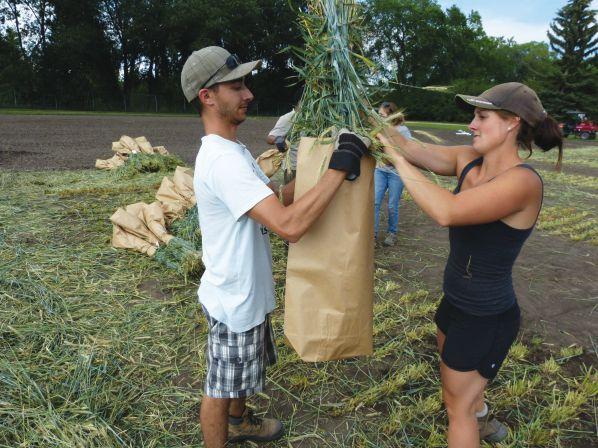
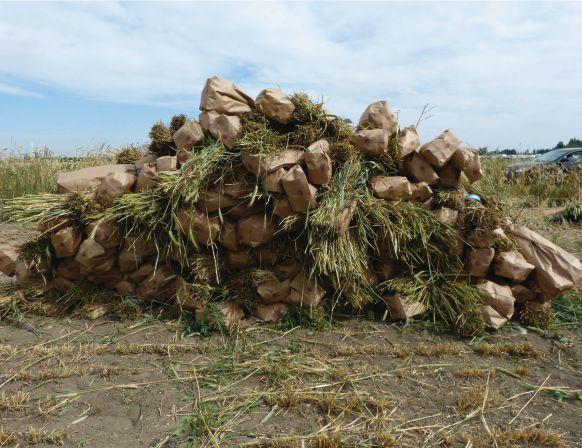
Bagging the heads to retain the seeds and sclerotia.
All the bagged samples.
producer group that funds his program. Along with lower ergot levels, his program’s objectives include higher falling numbers (a measure of bread-making quality), higher yields and shorter straw (for reduced lodging, easier harvesting and easier residue management).
Fall rye varieties with less ergot would reduce seed cleaning costs for producers who grow the crop for grain and would enhance the use of fall rye for grazing and silage.
Although genetic differences in resistance may be involved in the differing responses of fall rye lines to ergot, Larsen suspects a major factor is probably the timing and amount of pollen shed. “If there isn’t enough pollen around, then you won’t get fertilization of the florets, which leaves them open for ergot infection,” he notes. For example, if cool, wet weather extends the tillering or flowering period, then the crop may produce a large pulse of pollen followed by lower amounts of pollen, making it difficult to get complete fertilization of the later spikes.
Larsen and Kelly Turkington, a plant pathologist with AAFC in Lacombe, Alta., have set up ergot nurseries at Lethbridge and Lacombe to screen Larsen’s lines for susceptibility. In the two nurseries, they apply about 80 to 90 kilograms per hectare of ergot sclerotia to provide high levels of inoculum. In addition, at the Lethbridge nursery, they are using irrigation to try to create moist conditions that favour ergot –an uphill battle in the face of the region’s extremely dry weather in 2015 and 2016.
“The ergot nurseries are an incredible amount of work,” says Larsen. “We plant the lines and then take them off at the soft dough stage. We bag the heads, put them in a dryer for a couple of weeks, and then thresh each bundle individually. Then we put it through our colour sorter to remove the sclerotia. Then if there is still some sclerotia in the sample, my team has to use tweezers to pick them out.
“...Some of the material that we’re screening has quite large variations in heading and anthesis [flowering] dates. So we have a border around the outside [of the nursery] that releases pollen. Otherwise, there wouldn’t be much pollen available for the lines that are the first to flower and the lines that are the last to flower, so they wouldn’t get pollinated and would appear to be horribly susceptible to ergot, but in fact it’s just bias based on anthesis date.”
So far, Larsen has several generations of
crosses, and he is hopeful that he’ll be able to release varieties with lower ergot levels in the coming years. The next step in his fall rye breeding program is to add two more breeding objectives: Fusarium head blight (FHB) resistance and leaf rust resistance. Larsen’s next step in his ergot research in fall rye is to evaluate management options. He and Turkington are hoping to compare different seeding dates, seeding rates and nitrogen rates to assess the effects on the amount of tillering, the length of the flowering period and the levels of ergot.
As well, in Larsen’s triticale breeding program, he and Turkington are using the two ergot nurseries to screen triticale lines.
Barrier method for spring wheat
A three-year project, which started in 2015, could help reduce ergot in spring wheat varieties. The idea is to create “fully cleistogamous” wheat lines. “ ‘Cleistogamous’ means closed flowering, so the anthers don’t protrude from the floret at the flowering stage. So you don’t see the yellow anthers hanging from the spike that you normally see around flowering time.
‘Fully cleistogamous’ means the anthers always remain enclosed in the floret,” explains Patricia Vrinten, a researcher with the National Research Council of Canada who is leading the project.
Her project’s main goal is to develop fully cleistogamous wheat lines to improve resistance to FHB. In FHB, the anthers are thought to be an infection site for the pathogen, so genotypes where the anthers are always enclosed could reduce FHB levels. Since wheat florets usually open for a short time, wheat lines with permanently closed florets could have better ergot resistance because the spores can’t get into the florets to land on the stigma. She says, “Cleistogamy essentially acts as a barrier to the ascospores during the time that infection could occur.”
Because full cleistogamy is unusual in wheat, Vrinten is looking for the trait in germplasm that has a lot of genetic diversity. “I’m working with a collection of landraces from around the world. These are lines that were traditionally grown by farmers in various areas, as opposed to
CONTINUED ON PAGE 24
VARIABLE SEEDING RATES BECOME A REALITY
Uniform stand establishment sets up a solid foundation.
by Bruce Barker
Variable rate (VR) technology has been around long enough that VR fertilizer application is common. But what about VR seeding rates? Like VR fertilizer, VR seeding seeks to smooth out field variability so crop establishment is more uniform.
“Variable rate seeding uses the same concepts as variable rate fertilizer. Our land varies so we are trying to get a more even crop that produces more,” says Jeff Prosko of Rose Valley, Sask. “It’s just logical. We do it with fertilizer so why not with seeding rates?”
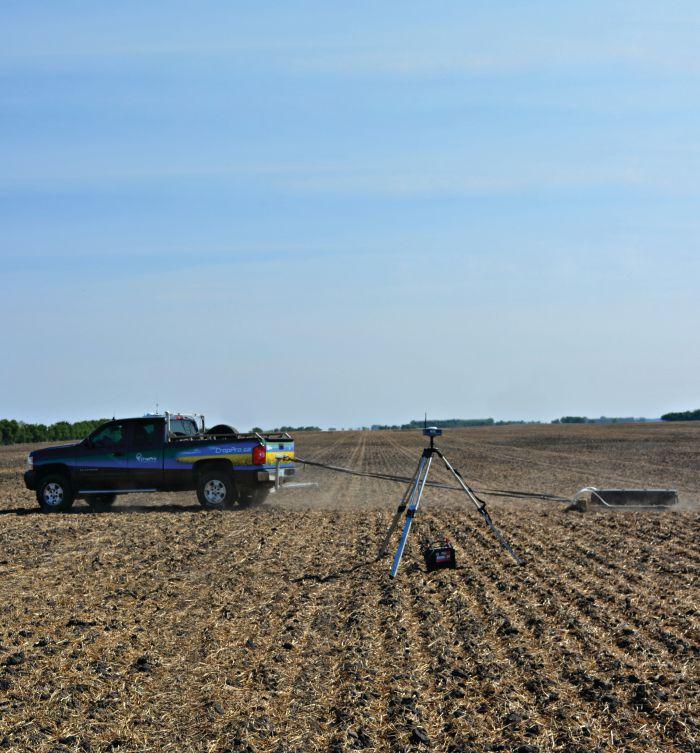
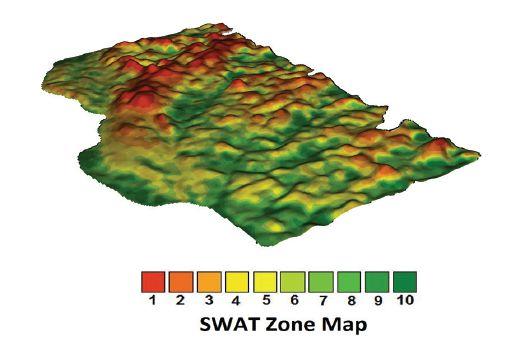
Prosko uses VR prescriptions developed by CropPro Consulting at Naicam, Sask. CropPro uses a recently patented mapping system to develop zone maps. These zone maps, called soil, water and topography – or SWAT - maps, are developed by layering in RTK elevation, topography features, soil organic carbon, water flow paths and electrical conductivity maps. Cory Willness, president of CropPro, says the SWAT maps utilize a much more layered approach than other precision farming maps that rely mostly on satellite imagery.
“To make variable rate work, you need to start with the right zones and understand how crops respond to inputs in each zone,” Willness says.
A SWAT map of a field in the Rose Valley area of Saskatchewan typically has 10 zones. Zones 1 and 2 are eroded knolls, hills, sands and low organic, dry areas of the field. Zones 3 and 4 are upper shoulder slopes where water runs off. Zones 5 and 6 are midslope, flatter areas. Zones 7 and 8 are at the bottom of the slopes, and Zones 9 and 10 are depressions that may include salinity, heavy clay, and high organic matter and may be wet.
In wet years, the green zones tend to flood and even in drier years, salinity will be an issue. The red zones are well drained, resulting in productive wet years, but poor productivity in dry years
as their water holding capacity is a limitation. Year in and year out, the yellow zones provide the best opportunity to grow big crops.
Making VR seeding rates work
The basic philosophy behind CropPro’s VR seeding prescriptions is to try to get uniform stand establishment across the entire field at a targeted plant population. The general approach is to seed higher in the depressions (Zones 7 to 10) because stand establishment is typically more difficult in these low areas due to cold, wet and sometimes saline soils. Higher seeding rates are also targeted on the knolls that can be drier at seeding.
“We thought this was the right approach but we wanted to
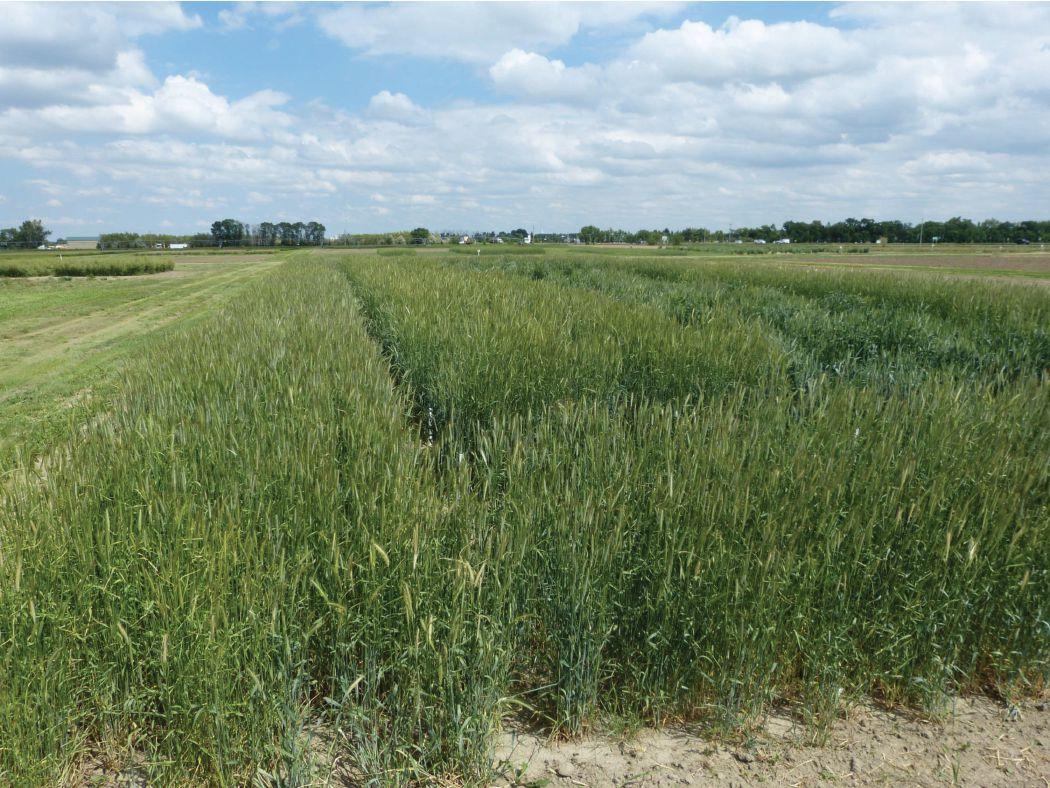
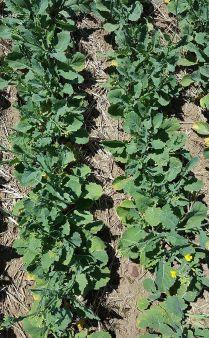
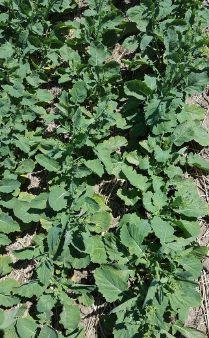
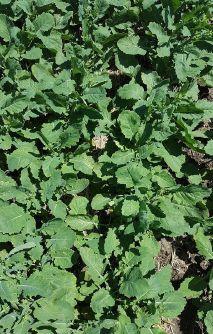
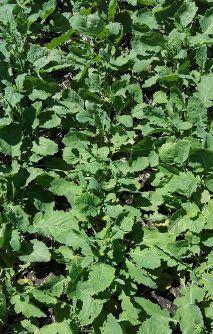
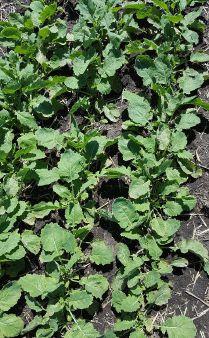
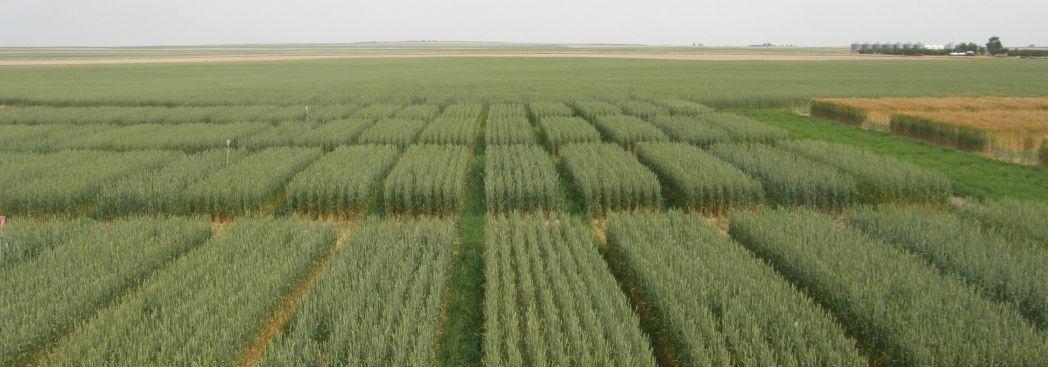
TOP LEFT TO RIGHT: Comparison photos of VR seeding rates on Jeff Prosko’s field, in Rose Valley, Sask. Liberty canola emergence 2016. Zone 1-2, 10 plants/ft2; Zone 3-4, 8.3 plants/ft2; Zone 5-6, 9 plants/ft2; Zone 7-8, 7.6 plants/ft2; Zone 9-10, 6 plants/ft2
verify it in the field, so we conducted plant stand studies in 2012 and 2013,” says Willness.
In 2012 CropPro looked at 159 fields to assess seeding rates and stand establishment. In 2013 they looked at 116 fields, which were mostly VR seeded. Over the last few years, they have continued to monitor stand establishment in VR seeding with hundreds of clients.
In canola, CropPro likes to target seven plants per square foot, and uses thousand kernel weight calculations to determine seeding rate. During 2012, the trend they saw in canola was an average seeding rate used by farmers of 4.4 pounds per acre and an average stand establishment of 5.4 plants per square foot. This was about 77 per cent of target stand establishment.
The trend in oats and barley was to target a plant stand of 25 plants per square foot, and in wheat it was 30. Average stand establishment in barley was 15 plants per square foot, compared to 18 plants in oats and 17 in wheat. By Zone, wheat establishment varied from 13.2 plants per square foot in Zones 9 and 10 to 20 plants per square foot in Zones 5 and 6.
Based on these findings, they developed a general VR seeding rate that aims to improve stand establishment. While prescription rates vary by field, the generalized plan in canola targets a 20 per cent higher seeding rate in Zone 1, 10 per cent more in Zone 2, an average rate for Zones 3 through 6, 10 per cent more in Zone 7 and ramping up to about 40 per cent more in Zone 10. On average, this approach increased seeding rate by seven per cent. The VR seeding improved the uniformity of stand establishment in 2013 with an average of 6.2 plants per square foot.
A uniform plant stand can also help with fungicide timing, especially targeted at Fusarium head blight in wheat.
“These are generalized numbers. A field at Naicam might be different than a field at Melfort or Regina,” Willness says.
In cereals, the VR seed strategy was 20 per cent more seed in Zone 1, 10 per cent more in Zone 2, average rate in Zones 3 through 6, 10 per cent more in Zone 7 and up to 50 per cent more in Zone 10. Again, about seven per cent more seed was used. Similar to canola, stand establishment in cereals was improved with better uniformity.
“Over the last few years, we’ve observed, as expected, that stand establishment is affected by spring weather and other factors. In 2015 we found seed mortality was down and plant stand counts exceeded targeted populations. This year, seed mortality was way higher than expected, for some reason, and stand establishment was lower,” Willness says.
Charting out the benefits
At Rose Valley, Prosko says his experience with VR seed has been positive. He has been pushing seed and fertilizer rates over the last 10 years, in the pursuit of higher yield.
“Last year we straight cut all of our canola. The crops are just more uniform so harvest timing is easier,” Prosko says.
Prosko also grows a significant acreage of oat, and a competitive and uniform crop is important to help compete with wild oats. The
helps reduce
improves harvest timing. He targets a minimum of 25 plants per square foot in oat.
“With oat we like to keep the plant populations as high as possible so it is competitive with wild oat,” says Prosko.
A uniform plant stand can also help with fungicide timing, especially targeted at Fusarium head blight in wheat. The window for application is narrow, around early flowering. If the crop does not come into early flowering uniformly, then the risk of Fusarium developing on part of the crop increases. Lower plant stands in wheat can also mean more tillering, which causes uneven crop development leading to difficult fungicide timing.
“Fusarium timing is so hard to get right. We’ve found variable rate seeding has helped with uniform plant stands and less tillering. It helps optimize control,” Prosko says.
Willness cautions that VR seed doesn’t always translate into the types of benefits that Prosko has seen, because so much is dependent on the weather after stand establishment. However, he says it does help produce a more uniform plant stand to help set up the foundation for a good crop. While Mother Nature ultimately has a large influence on stand establishment and the end benefits of a uniform plant stand, VR seed has the potential to improve crop returns.
“The important thing for farmers to consider is first, do you know what you have now for plant populations? What are your plant populations throughout the field? That’s the first place to start. Once you know what you have, then you can start thinking about variable rate seeding to help improve stand establishment and uniformity across the field,” Willness says.
For more on seeding, visit topcropmanager.com.
Meet Jen
With a lifetime of experience in ag, Jen helps Canadian producers build their dreams. Like everyone on your FCC team, Jen knows your industry and she’ll get to know you. 1-800-387-3232 fcc.ca
I will wake the rooster and be the one who decides when it’s time to quit. I will succeed by working with whatever Mother Nature provides and place my respect where it is earned. I will actively pursue perfection. O-66-08/16-10590104-E
CEREALS
NEW CEREAL VARIETIES UPDATE
More choices in cereal crop production.
by Bruce Barker
Public and private plant breeders continue to bring new cereal varieties to market, with improved yield, disease resistance, and agronomic performance. Available in commercial quantities for the 2017 planting season, these new varieties continue to push yield boundaries.
Canada Western Red Spring
AAC Cameron VB is a very high-yielding Canada Western Red Spring (CWRS) variety with resistance to wheat midge. It is significantly higher yielding than Unity VB with better lodging resistance. The variety is rated moderately resistant to leaf and stem rust and has an improved Fusarium head blight (FHB) rating. Available from Canterra Seeds retailers.
AAC Jatharia VB is a midge-tolerant CWRS wheat variety with grain yield potential of 113 per cent of AC Carberry. Maturity is two days earlier than AC Carberry. It is 16 centimetres taller than AC Carberry with an intermediate rating for FHB. AAC Jatharia is an excellent replacement for AC Unity VB. Available through SeCan members.
AAC Prevail VB is a hard red spring wheat variety with a yield potential of 101 per cent of Unity VB. AAC Prevail VB is the first midge-tolerant variety to come to market since AC Unity that offers producers top-end yield performance coupled with unsurpassed grade retention. With improvements to standability and disease resistance including Ug99 rust and FHB, producers can be confident they have their sights set on a premium product for premium markets. AAC Prevail VB is available through Parrish & Heimbecker, Paterson Grain, NorthWest Terminal, Alliance Seed Growers, and FCL.
CDC Bradwell is a CWRS wheat variety with grain yield potential of 101 per cent of AC Carberry. Maturity is two days earlier than AC Carberry. It grows seven cm taller than AC Carberry, and has very good lodging resistance and an intermediate rating for FHB. CDC Bradwell has an egg-laying deterrence against wheat midge. Available through SeCan members.
SY479 VB is a very high protein, wheat midge-tolerant CWRS variety with strong yield potential, yielding similar to AC Carberry, and has good standability. SY479 VB has a balanced disease resistance package with intermediate resistance to FHB, and resistance to leaf rust and bunt. Available through Parrish & Heimbecker, Paterson Grain, NorthWest Terminal, Alliance Seed Growers, and FCL. SY479 VB is a proprietary wheat variety developed by Syngenta and distributed by Alliance Seed under exclusive license.
Canada Northern Hard Red
AAC Concord is a solid stem milling wheat boasting significant yield and disease improvements over Lillian – 20 per cent higher yielding and with stronger FHB resistance. This Canada Northern Hard Red (CNHR) variety also has a high test and seed weight. Available from Canterra Seeds retailers.
AAC Tradition is a CNHR wheat variety with good yield potential. It has grain yield of 109 per cent of AC Carberry and maturity equal to AC Carberry. AAC Tradition was selected for improved yield under organic production systems. It is five cm
ABOVE: New cereal varieties will help farmers continue to push yield boundaries.
PHOTO BY BRUCE BARKER.
taller than AC Carberry, has good lodging resistance, and an intermediate rating for FHB. Available through SeCan members.
Canada Western Special Purpose
SY087 is a high-yielding, high protein, special purpose variety from Syngenta that is particularly well-suited to darker soils. SY087 is a medium maturity variety with an excellent disease package, including a moderately resistant (MR) rating for FHB, and MR ratings for stem, stripe and leaf rust, and bunt. SY087 is being distributed by United Suppliers Canada.
Canada Prairie Spring Red
SY Rowyn is a Canada Prairie Spring Red (CPSR) wheat variety with a yield potential of 115 per cent of 5700PR. It has an MR rating for FHB. SY Rowyn has significantly higher protein and a semi dwarf stature. It offers CPSR growers the characteristics they desire to produce a high quality crop for high quality markets. Available through Parrish & Heimbecker, Paterson Grain, NorthWest Terminal, Alliance Seed Growers, and FCL. SY Rowyn is a proprietary wheat variety developed by Syngenta and distributed by Alliance Seed under exclusive license.
Durum
AAC Spitfire is a Canada Western Amber Durum wheat variety with high grain yield potential of 112 per cent of AC Strongfield. Maturity is equal to AC Strongfield. It is two cm shorter than AC Strongfield with improved lodging resistance. AAC Spitfire has a susceptible rating for FHB. It is an excellent replacement for AC Strongfield. Available through SeCan members.
CDC Carbide is the first midge-tolerant durum wheat variety from Proven Seed. It is mid-maturity with improved yield and agronomics over the existing midge-tolerant durum, and is notable for holding its seed colour and quality. CDC Carbide has an excellent disease package, including resistance to stem, leaf and stripe rust. Available only at CPS retails.
Canada Western Hard Red Winter Wheat
AAC Elevate is a Canada Western Hard Red Winter Wheat variety with grain yield potential of 107 per cent of CDC Buteo. It grows eight cm shorter than CDC Buteo with very good lodging resistance. AAC
Elevate has good winter hardiness along with leaf and stem rust resistance. It is moderately susceptible to stripe rust. Available through SeCan members.
General purpose barley
Canmore is a new two-row general purpose barley with applications for the feed market, as well as the developing shochu market. It possesses very good yields and greatly improved lodging resistance over Xena. Canmore has a high per cent plump and test weight, and is rated MR to scald. Available from Canterra Seeds retailers.
Oat
CDC Ruffian is a white milling oat that exhibits superior yield potential (113 per cent of CDC Dancer) across the oat growing area of Western Canada. It has short straw and has good lodging resistance. CDC Ruffian has intermediate resistance to crown rust and resistance to smut. It has a high ratio of plump kernels. Available at select FP Genetics shareholders.
BETTER START. BETTER HARVEST.
Enjoy early season cutworm control and enhanced protection against crucifer and striped flea beetles when you plant canola treated with DuPont™ Lumiderm® insecticide seed treatment. Protection against both key pests in one convenient bag. Ask your seed provider to include Lumiderm® on your 2017 canola seed order. Visit lumiderm.dupont.ca.
DEVELOPING ERGOT-RESISTANT CEREALS
CONTINUED FROM PAGE 15
registered cultivars,” she says. “There is a great deal more variation in landraces than amongst the cultivated varieties for many traits, including cleistogamy.”
She notes, “Since we are working with landraces, we expect that some of the other characteristics of these lines, such as yield and quality, won’t be very good. So once we’ve identified the trait, we plan to develop [DNA] markers that will allow us to easily introduce the trait into adapted varieties so we can combine the cleistogamous trait with other beneficial and adapted traits.”
This project is funded by the Saskatchewan Wheat and Development Commission and Western Grains Research Foundation (WGRF), and by Saskatchewan’s Agriculture Development Fund.
Challenges in bread wheat
To improve any trait in any crop, there’s always the challenge of putting that one trait into a package with other important characteristics to create a top-notch commercial variety. Santosh Kumar, a wheat breeder at AAFC in Brandon, Man., explains meeting this challenge can be especially tough in bread wheat breeding because of the many traits that have to be pooled together in each variety, such as strong yields, good resistance to various diseases, and stringent quality specifications, including the recently tightened requirements for gluten strength in this wheat class.
“I breed Canada Western Hard Red Spring wheat for the east-
ern Prairies of Canada,” Kumar says. “My focus is to incorporate the semi-dwarf trait in our bread wheat germplasm suited to the eastern Prairies, and then improve the yield, protein, sprouting resistance, FHB resistance, bunt resistance and stripe rust resistance in the semi-dwarf type. We already have a good handle on leaf rust and stem rust resistance, but we are trying to get resistance to Ug99 stem rust [a virulent type of stem rust], which is currently not a problem in Canada but may be in the future.”
Kumar’s program is funded primarily by AAFC and WGRF, with additional funds from SeCan and provincial grower organizations like the Manitoba Wheat and Barley Growers Association.
Though ergot resistance is not a priority for the program, that doesn’t mean ergot is being ignored. Kumar’s predecessor, Stephen Fox, did some work with Menzies on ergot resistance. “Kenya Farmer, a source of resistance in bread wheat, was introduced into the breeding program and crosses were made,” says Kumar. “Some disease-resistant lines came out of that, but unfortunately due to the precedence of other traits over ergot resistance, the lines with ergot resistance could not move forward as a variety.”
The increased importance of ergot on the Prairies has sparked and intensified efforts to develop better tools to manage ergot, including resistant varieties. For now, Menzies says, “Producers have to keep this pathogen in mind, and they need to use an integrated approach to manage it.”
As disease threats continue to grow and change, it is imperative crop producers, agronomists, the scientific community and industry remain up to speed with the latest technologies and advances in disease research. The Field Crop Disease Summit is designed to do just that.
Presenters will address many of the key issues farmers and plant pathologists face when dealing with challenging and ever-changing field crop diseases and share research advancements made to help combat disease threats. Summit participants will walk away with a clear understanding of specific actions they can take to lessen the effects of various diseases and protect crops and crop yields.
LEARN ABOUT:
• Fusarium head blight in wheat
• Blackleg in canola
• Resistance breeding for clubroot
• Future outlook for disease and disease resistance
FEBRUARY 21 & 22, 2017
TCU Place, Saskatoon
IMPROVING NITROGEN CREDIT AND CARBON FOOTPRINT ESTIMATES
Preliminary research shows an improved footprint when pulses are included in rotation.
by Donna Fleury
Improving fertilizer use efficiency, reducing greenhouse gas (GHG) emissions and carbon footprints, thereby improving sustainability is becoming increasingly important to the agriculture industry and its markets. For agriculture, nitrous oxide (N2O) is a very powerful GHG, so reducing losses and intensity not only improves the GHG footprint of cropping systems, but also benefits growers directly by improving economics and efficiency.
Researchers in Saskatchewan are mid-way through a four-year project trying to better understand the overall nitrogen (N) balance in cropping systems comparing lentil, field pea, chickpea and fababean side-by-side in rotation with wheat at the University of Saskatchewan Goodale Research Farm near Saskatoon. “One of our objectives is to be able to provide a better estimate of the overall N balance in the cropping system, including above and below ground N, differences in emissions and the amount of N fixed by different crops,” explains Reynald Lemke, research scientist with Agriculture and Agri-Food Canada (AAFC). Lemke is collaborating on the project with Richard Farrell and Diane Knight at the University of Saskatchewan. “The replicated trials in this study include a two-year crop sequence – pulses and wheat in year one, followed by wheat on all plots in year two.”
In year one, researchers used a stable isotope labelling method, which involves the use of non-radioactive isotopes that act as tracers, to help track both above and below ground N, and to determine how much N is fixed by the various crops and available the following year for the wheat crop. “This will help answer the question of how much additional N the pulse crop contributed, how much ended up in the following wheat crop and helps improve the accuracy of estimating the N credit,” Lemke says. “This approach also helps determine how much of the [carbon] C that was contributed by the pulse crop persists in the soil after the subsequent wheat crop is harvested.”
In year two, estimates of N2O emissions from the different sources were calculated to try to determine if the N2O emissions were related to the N fertilizer applied or to the different crop residues or background mineralization from below ground N.
“We recently completed preliminary N balance and footprinting calculations based on the results from the first two years of the project,” Lemke explains. “The results from year one verified
Researchers hope the project will enable them to provide a better estimate of the overall N balance in the cropping system, including above and below ground N, differences in emissions and the amount of N fixed by different crops.
what we expected to see based on earlier research, which showed that the emissions from any of the pulse crops was low and comparable to emissions from the unfertilized wheat control plot. In addition, all four pulse crops showed the same results, which is good news in terms of greenhouse gas balance and [carbon dioxide] C02 footprinting.” Lemke emphasizes that these results should be considered preliminary and are based on the findings
PHOTO COURTESY OF FRANK KRIJNEN.
You don’t need a crystal ball to forecast your sclerotinia risk, but there is a simple trick to effectively control this costly canola disease. Proactively protect your profits with the powerful and proven protection of Proline® fungicide.
Make sure you plan on an application of Proline, the best-selling canola fungicide in Canada.
under the conditions at the specific location in one year.
In terms of N fixation, fababean fixed much higher amounts of N than any other crop, which previous studies had also shown. However, researchers were surprised to find that in terms of total N removed from the field at harvest in the crop seeds, fababean also removed the greatest amount of N, followed by pea, then lentil and chickpea. “The differences between the amount fixed and the amount removed at harvest should provide an indication of the net N credit or net value left for the next crop,” Lemke says. “The preliminary results show that for all four pulse crops the N credit ranged from 20 kilograms per hectare [kg/ha] to as high as 80 kg/ha of N. This shows there is definitely a clear benefit for all of the pulse crops, even at the lower end of 20 kg/ha that becomes available to the next and future crops.” Researchers are still analyzing additional data from year two to determine how much of that N credit was actually taken up and used by the subsequent wheat crop.
“Although we are still finalizing the early results on emissions for N2O and CO2, there are some interesting observations so far,” Lemke says. Emissions were regularly measured over the entire cropping season from immediately after snow melt in mid-April to freeze up at the beginning of November. “We expected that the amount of N2O lost from the system would mostly be related to fertilizer application, and to a lesser extent to the crop residues. We also wondered if there would be any difference in losses because of the interaction with fertilizer and each of the different pulse crop residues from the previous year.”
Results showed during the eight-week period immediately after fertilizer application, over 80 per cent of N2O emissions
Trait Stewardship Responsibilities Notice to Farmers
Monsanto Company is a member of Excellence Through Stewardship® (ETS). Monsanto products are commercialized in accordance with ETS Product Launch Stewardship Guidance, and in compliance with Monsanto’s Policy for Commercialization of Biotechnology-Derived Plant Products in Commodity Crops. These products have been approved for import into key export markets with functioning regulatory systems. Any crop or material produced from these products can only be exported to, or used, processed or sold in countries where all necessary regulatory approvals have been granted. It is a violation of national and international law to move material containing biotech traits across boundaries into nations where import is not permitted. Growers should talk to their grain handler or product purchaser to confirm their buying position for these products. Excellence Through Stewardship ® is a registered trademark of Excellence Through Stewardship.
were from the fertilizer application – the highest contribution. However, when considered over the entire season (thaw to freeze up) emissions from the various crop residues made a substantial contribution, somewhere around 20 or 30 per cent of the total emissions. Emissions from the fertilizer were very high but for a short period of time, while emissions from the crop residues were low but lasted for a longer period of time. There was also some variation between the different pulse residues, although overall the differences weren’t significant except with lentil, where emissions were a bit higher.
“We were also interested in finding out if there might be a trade-off with the benefit of the pulse in the first year and any crop residue interactions in the second year,” Lemke says. “The good news is the results showed a clear benefit, with no trade-off. Growing pulses followed by wheat under these conditions at this site showed there is a real benefit in terms of the contribution of pulses to reducing the CO2 footprint of the cropping system in the first year without paying any penalty in the second year. As well, growers can likely expect over time that the N credit benefit from growing pulses every second year in rotation will continue, and may provide the opportunity to reduce N inputs for the following crop as we have seen in previous studies.”
For example, the results of a long-term lentil-wheat rotation that has been in place since 1979 in Swift Current confirm these benefits. Over time, the N supplying power of the soil has increased, allowing fertilizer N application rates to be reduced without any penalty in terms of wheat yield. Comparing a wellfertilized continuous wheat rotation to a lentil-wheat rotation, the wheat yields were matched but with lower rates of fertilizer required over time. Other factors such as wheat protein levels also improved under the long-term lentil-wheat rotation.
“Overall, the pulse phase is where the real benefits were found both in terms of reduced greenhouse gas balance and the CO2 footprint,” Lemke says. “In the pulse rotation year, the total emissions were similar to the wheat control plot with no fertilizer, and lower than the following wheat crop. The main benefits are that in the pulse year, growers are avoiding the use of N fertilizer, so they get a real benefit both in terms of avoiding the energy input of producing that fertilizer as well as avoiding the direct N2O emissions from fertilizer in the pulse year. The results so far are pretty clear that CO2 intensity can be reduced from all aspects of the system by including pulses in rotation.”
The information gained through this project will contribute to providing better calculations and estimates for pulse and cereal cropping systems at the end of the four-year project in 2017, and ultimately for other rotational systems down the road. “We will be able to fine-tune estimates of the N credit available to subsequent crops, which will help growers improve fertilizer-use efficiency and cropping system economics across their rotations,” Lemke adds. “Improving our ability to more accurately calculate the CO2 footprint of crops grown in Western Canada and finding ways to optimize crop sequences to reduce GHG emissions and intensity will provide both an economic benefit to growers as well as address marketing and sustainability efforts.” Final project results will be available in early 2018.
For more on issues and environment, visit topcropmanager.com.
Meet the evolution of flea beetle control. Formulated with the right combination of active ingredients, Visivio™ seed treatment counteracts earlyseason canola threats from insects–including both striped and crucifer flea beetles–along with a broad-range of seed- and soil-borne diseases. Unleash the vigilant protection of Visivio. Your seed investment deserves nothing less. To neutralize the threat, visit Syngenta.ca/Visivio
OPTIMIZING WHEAT GRAIN PROTEIN
Producers should review management practices every year to fine-tune protein levels in their crops.
by Ross H. McKenzie, PhD, P. Ag.
Canada Western Red Spring (CWRS) and Canada Western Amber Durum (CWAD) wheats have long been recognized as premium quality grains by the milling and pasta industries. Their quality is due primarily to the protein component of the grain.
In the past, the Canadian Wheat Board was responsible for setting payment for wheat protein levels. Now, wheat protein premiums paid by grain buyers are in response to supply and demand. Many grain companies will pay premiums for wheat with protein levels greater than 14 per cent for CWRS and 13.5 per cent for CWAD. When there is a good supply of high protein wheat, the premiums paid decline. When there is an over abundant supply of high protein wheat, grain companies may not pay a premium. There are not that many grain buyers and the market for highprotein wheat is narrow.
Each year farmers should carefully review their plans as to what types of wheat they will grow for the various markets. Farmers planning to optimize wheat protein content should review their management each year to constantly fine-tune their practices. These include: selecting the best varieties for your region; crop rotation and agronomic practices; nitrogen (N) fertilizer management, and; management of other nutrients.
Environmental factors can play a significant role in influencing grain protein: timing and amount of growing season precipitation; temperature and heat (degree days) during the growing season, and; soil N reserve levels (mineralization of soil organic matter N throughout the growing season will add to available N).
Wheat protein
Nitrogen is a major component in wheat protein. When N supply
increases, both yield and protein will increase. N taken up before heading generally increases yield as long as water, phosphorus, potassium and sulphur are not limiting. When yield reaches its maximum, additional N will continue to increase protein to a maximum level. But, when N is very deficient, grain protein content decreases with increasing yield due to a dilution effect. Much of the N taken up by wheat before heading or flowering is moved to the kernel during grain fill to increase grain protein. Wheat can still take up N during and after heading; this N tends to increase protein, but does not contribute to increased yield potential.
As mentioned, weather can strongly affect wheat protein content. Warmer, drier conditions in July and August will reduce yield potential but increase grain protein. Cooler, wetter growing conditions will increase yield potential but reduce grain protein content.
Genetic potential of wheat varieties
Wheat varieties differ in their genetics. Higher protein varieties tend to be lower yielding, and higher yielding varieties tend to have lower protein. Care should be taken when selecting varieties to consider both yield and protein potential as well as overall agronomic characteristics for the region you farm. Be sure to select the best regionally adapted variety for your area. Disease resistance is constantly breaking down in older varieties, but breeding advances are constantly improving disease resistance and agronomic characteristics. Each year, review new varieties available that may be well- suited for your region and suit your growing requirements.
Farmers should be aware that effective Aug. 1, 2018, 25 wheat varieties will no longer meet the revised quality parameters of
PHOTO COURTESY OF ROSS H. MCKENZIE.
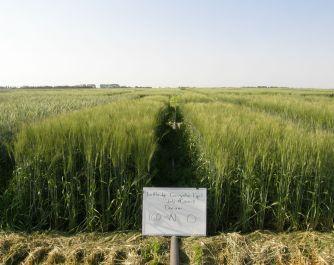
ABOVE: Dryland spring wheat N trials at Bow Island, Alta.
Boost your bottom line with high-quality sulphur fertilizer, TIGER XPTM, applied this fall. Research has proven sulphur increases nitrogen and phosphorus uptake for higher yields and stronger returns on your soil fertility investment. Tiger XP combines sulphur bentonite with a proprietary activator, accelerating plant sulphate availability and offering higher sulphate levels throughout the entire growing season. Add the power of Tiger-Sul sulphur to your farming operation and receive greater returns on investment.
CWRS, but will meet the quality parameters of the new Canada Northern Hard Red (CNHR) class. Make sure you understand the new wheat classes and how changes may affect you and the varieties you grow.
Crop rotation and seeding management
Wheat grown after a pulse crop (such as pea) will frequently have higher protein than wheat grown after another cereal crop. Ideally, wheat should not be grown on wheat stubble due to higher disease potential resulting in lower yield. Seed on the high end of the recommended range for your region. This will reduce the number of tillers, shorten time to maturity and produce more uniform crop quality. Higher seeding rates should also be used when seed size is larger, seeding is later or when soil moisture conditions are very good.
Most Prairie farmers grow wheat under reduced or no-till management rather than conventional tillage. This tends to increase available soil moisture and reduce the mineralization rate at which N becomes available. To compensate, an additional 20 to 30 pounds of N per acre (lb N/ac) is often required under no-till versus conventional till to achieve acceptable wheat yield and protein.
Nitrogen fertilizer management
The most important management factor to produce high wheat protein is providing adequate available N.
Each year, review your yield and protein results from previous years to evaluate the effectiveness of your N fertilization practices. Assess if your practices have been successful in achieving high protein. Remember: if spring wheat protein is under 13 per cent, yield and protein have likely been limited due to a lack of N fertilizer.
Soil testing to determine plant-available N is the starting point to decide on appropriate rates of N fertilizer application. Soil samples should be taken to 24 inches. Information provided by the soil analysis can be used in conjunction with N fertilizer cost, predicted grain yield and protein response to weigh the economic feasibility of N fertilizer application. Most labs provide a range of N fertilizer recommendations depending on your yield goal, but many won’t make N recommendations based on a protein goal.
Remember fertilizer management for high protein wheat is a huge challenge since it is not possible to predict growing season moisture and temperature. Higher rates of N applied at or before seeding to increase protein have a higher level of investment risk under dryland farming. If precipitation does not follow this optimistic management, investment in N fertilizer may not generate any additional income. But, if normal or higher than normal rainfall occurs and a crop is under fertilized, potential income is lost.
decision to apply further N can be based on established crop yield potential and mid-season growing conditions. Western Canadian research has shown in-crop granular and foliar nitrogen applications at tillering, boot and anthesis growth stages do not consistently increase grain protein. Therefore, in-crop applications are less reliable than applying additional N fertilizer at or before seeding.
There are also risks associated with top-dressing N. Broadcast granular urea (46-0-0) fertilizer or dribble-banded liquid N (28-0-0) must be followed by rain to move the N into the root zone. A midseason drought can strand the N at the soil surface until rain occurs. Another risk of this split application is the potential for N from urea (46-0-0) or liquid urea ammonium nitrate (UAN, 28-0-0) to volatilize and be lost to the atmosphere, especially under warm soil conditions common during this critical boot stage of the crop. An in-crop N application should be in the range of at least 30 to 40 lb N/ac to impact grain protein. Remember that in-crop N applications are often only about 40 per cent or less in efficiency of N uptake. Therefore, a 30 lb N/ac application taken up at 40 per cent efficiency means only 12 lb N/ac will be taken up by the plant.
Foliar application is recommended by some agronomists, but rates of more than 20 lb/ac of N as UAN can lead to leaf burn and crop injury, unless the liquid N is diluted with water. Research has shown less than five per cent of foliar-applied N actually enters the plant through leaf surfaces. To be effective, foliar N needs to be washed off leaves and moved into the soil with rainfall. Foliar fertilization to increase grain protein has limitations and risks.
Slow release N fertilizers such as ESN can provide a sustained supply of available N over about 60 days after application at seeding. Slow release N can be effective at providing N fertilizer to contribute to increased grain protein. This type of fertilizer can be applied in a blend with conventional fertilizers or on its own at seeding. The additional cost for these fertilizers must be considered relative to the potential benefits. In-crop broadcast application of ESN during the growing season is not recommended as the release rate is too slow to be effective to increase grain protein.
Each year, review your yield and protein results from previous years to evaluate the effectiveness of your N fertilization practices.
Grain protein content is affected by the timing of N fertilizer application. An adequate pre-plant application of N is essential to establish yield potential. However, N taken up by the plant after the boot stage (just before heading) will increase grain protein to a greater extent than it will increase yield. Therefore, the supply of N to the plant should be maintained through the boot stage to provide for optimum yield and protein potential.
Split-applying N, with significant N fertilization at seeding and additional mid-season application between tilling and the boot stage, is one strategy to manage protein. With this approach, the risk of applying a single, high rate of N early in the season is reduced. The
Past cropping practices and land management can affect N availability over the growing season. Livestock manure may release N for two or more years after application as the organic matter in the manure is released. Annual or perennial legume crop residues will also increase soil N supplies later in the growing season. N released from these practices can increase the protein content of wheat.
Other fertilizers
It is important that other nutrients are applied, as necessary, to ensure optimum wheat growth and yield. Soil testing is important to assist with this. Remember that about 80 per cent of Prairie soils are phosphorus (P) deficient and about 30 per cent are potassium (K) deficient. Deficiencies of sulphur (S) are increasingly common, particularly in the thin black, black, and gray soil zones. Sulphur fertilizer will increase protein content when soil S levels are low.
WE’RE
AS COMMITTED
TO THE FUTURE OF GROWING PULSES AS YOU ARE.
For over 30 years, we’ve prided ourselves in providing pulse growers with the most leading-edge products. In addition to our most recent innovations, the complete portfolio of pulse solutions has you covered from seed to harvest. To learn more about the entire BASF pulse lineup, visit agsolutions.ca/pulses or call AgSolutions® Customer Care at 1-877-371-BASF (2273).
Always read and follow label directions.
BREEDING FOR RESISTANCE
Research targets leaf blotch pathogens in Saskatchewan’s oat fields.
by Donna Fleury
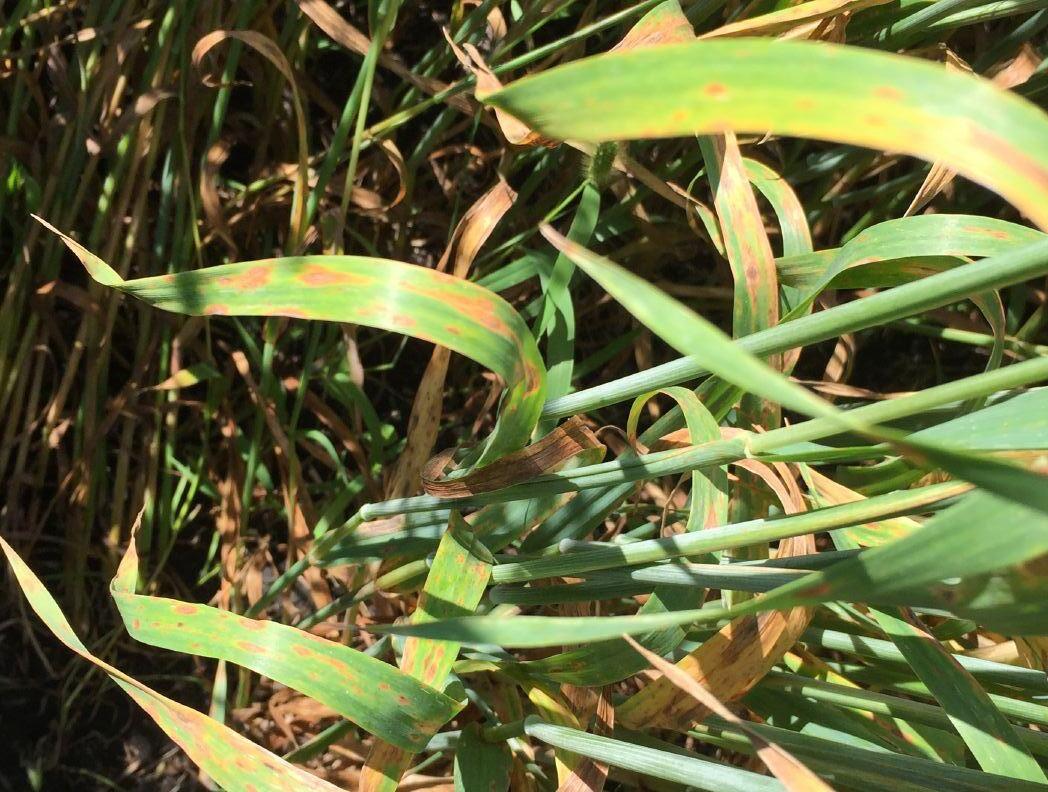
In Saskatchewan, leaf blotch disease complex has become more prevalent in oat fields in recent years, but very little is known about the impact of these diseases on oat production. In infected fields, oat yield and grain quality, including test weights, are often reduced, which can impact milling quality and reduce returns. Researchers at the University of Saskatchewan are developing screening techniques to evaluate and understand oat leaf blotch pathogens, and to try to identify leaf blotch resistance that can be added to the oat breeding program and improve varieties.
Over the past three years, field surveys have confirmed an increasing prevalence of leaf blotch disease in commercial fields in central and northeastern Saskatchewan. The levels in 2014 were much higher than in 2015 or 2016, but the disease was still present in all of the fields surveyed. In 2014, about half of the fields surveyed had a moderate disease severity of 15 to 40 per cent, but in both 2015 and 2016 only two of 25 fields surveyed showed moderate disease severity. In all three years, all other fields surveyed had slight to very slight disease levels in the upper canopy.
Researchers are now into the second year of a three-year project. To date they have addressed some of the initial questions and are now moving forward on screening oat germplasm to identify genetic resistance. “Based on the disease survey results from 2015, we have
confirmed that the two main pathogens causing the leaf blotch disease complex in oat are Pyrenophora avenae and Cochliobolus sativus,” explains Tajinder Grewal, research officer and project lead with the University of Saskatchewan. “Using a single spore isolation technique of 18 isolates of P. avenae and 17 isolates of C. sativus were cultured. We also successfully developed an indoor screening technique for identifying leaf blotch resistance in oat, studying the inheritance of resistance and developing molecular markers for oat breeding. We assessed several different parameters including temperature, humidity, plant growth stage, spore concentration and other factors in the development of this standardized technique.”
Grewal initially screened nine oat lines with all 18 isolates of P. avenae and 17 isolates of C. sativus to see if the infection response was similar and to understand disease symptoms, progression and spore production. “We then selected 32 oat lines and screened them with a smaller set of isolates,” Grewal says. “From the results, we identified some lines with resistance to these pathogens, some lines that were susceptible, with the majority of the lines showing intermediate reaction. The next step is to evaluate lines from our Western Canadian elite oat collection, which includes over 300 advanced oat lines and
ABOVE: Leaf blotch disease symptoms in oat.
PHOTO COURTESY OF TAJINDER GREWAL.
varieties from different oat breeding programs in Western Canada. We have selected 200 lines and will use our standardized technique to screen them with both P. avenae and C. sativus isolates to identify the lines with the most resistance to these pathogens.” Screening will be performed in the University of Saskatchewan Phytotron, a controlled-environment plant-growth facility.
Early results from the screening of several bi-parental populations indicate leaf blotch disease resistance in oat is controlled by a single gene. Grewal adds as they continue through the screening process, they will be able to confirm how many genes control the resistance to P. avenae and C. sativus in oat. “Once we know the number of genes, we can develop molecular markers that plant breeders can use to transfer the resistance into elite oat lines. Our ultimate goal is to incorporate resistance into oat cultivars to sustain oat yield and quality and improve returns for growers. We recognize that oat is already a low input crop, so if we can keep it that way by providing disease-resistant varieties, both growers and processors will benefit.”
Jeffrey Freedman, an oat grower in northeastern Saskatchewan near Ridgedale, has so far seen little leaf blotch disease in his fields,
but looks forward to new cultivars with improved resistance. He grows, on average, 4000 acres of oat every year, mostly the newer milling variety CS Camden, as well as some specialty contract acres in rotation with canola, wheat, barley and, more recently, fababean and hemp. “Although leaf blotch disease so far is quite low in our fields, crown rust is our biggest disease issue on oats, especially when we get a wetter spring like 2014,” Freedman says. “Our most important management strategy is to work on a balanced fertility package including potash (K) to try and establish as healthy plants as possible and get their natural defense mechanisms to kick in. Advancements in oat variety development with improved traits are important to the industry.”
So far, Grewal’s screening efforts show resistance to leaf blotch disease in current commercially available oat varieties is variable, ranging from susceptible to intermediate resistance at best.
The project will be completed at the end of 2017 with final results available in early 2018. The project is funded by the Saskatchewan Agriculture Development Fund, the Western Grains Research Foundation and the Prairie Oat Growers Association.
PROVEN LEADER, LIKE YOU
WELCOME TO THE EXCITING NEW WORLD OF PROVEN ® SEED
Our new seed lineup changes everything. Proven performance in canola, cereals and forages. And now Proven in corn and soybeans. Proven by CPS retailers and agronomists, dedicated to providing leadership in yield, disease management, trials and advice— plus an all-new performance package that’s Proven, like never before. Available only at your CPS retail. We’re with you.
PROMOTING BENEFICIAL SOIL MICROBIAL DIVERSITY
Soil microbial diversity improves nutrient efficiency and crop productivity, and reduces disease incidence.
by Donna Fleury
Healthy productive soils offer a range of benefits to growers from improving nutrient use efficiency and crop productivity to reducing greenhouse gas emissions and improving carbon sequestration. Diverse crop rotations and proper nutrient management promote large diverse populations of beneficial soil organisms, which break down and cycle nutrients more efficiently and limit disease-causing bacteria and fungi, ultimately improving yields and profitability.
In Western Canada, researchers with Agriculture and Agri-Food Canada have advanced the identity and understanding of the large diverse soil microbial communities in soils over the past few years. “When we first initiated a soil biology project in 2007 in Swift Current, [Saskatchewan], there were few methods or tools for easily identifying soil microorganisms and it was very time consuming and expensive,” explains Chantal Hamel, research scientist. “However, new genetic sequencing methods were developed, computer power has gone up and the price has reduced significantly, so we now have nice tools and a large collective databank to work with. This has been a collaborative effort across many disciplines and institutions, however the diversity in the soil system is high and it is still not an easy or fast process.”
This large diverse soil microbial community in Prairie soils includes arbuscular mycorrhizal (AM) fungi and non-AM fungi, bacteria and other tiny microbes such as archaea. AM fungi generally promote the growth of most plant species by mobilizing soil minerals, in particular soil phosphorus (P) and other nutrients like copper and zinc that are not very mobile in the soil. The AM fungi form a dense network connected inside and outside of plant roots that can rapidly transport soil nutrients into the plants. AM fungi also are known to protect plants against abiotic stress (heat, drought, cold, salinity) and soil-borne pathogens such as Fusarium and pythium species.
“We are continuing our research with wheat and more recently with canola to try to understand the microbial diversity and interactions, and develop strategies to manipulate the beneficial interactions with crops,” Hamel says. “Our various research projects have confirmed a strong association between wheat and mycorrhizal fungi, but the diversity is huge. We are trying to understand how to manage this diversity, which is very much affected by climate. We recently started a new wheat breeding project to see if the association with beneficial soil microbes can be increased. Diseases are also a priority, for example, Fusarium is one of the main organisms we find almost everywhere and in large amounts in roots, however plants
aren’t sick all of the time. We want to better understand why and how that might help reduce disease incidence.”
Canola is more challenging; researchers know canola doesn’t form mycorrhizal associations like wheat does. Hamel adds, “We are trying to determine what microorganisms are associated with canola roots in the soil, both beneficial and detrimental, in different areas and with different types of canola. We have three sites in Alberta and Saskatchewan with different soil types. The results so far show that bacteria are very much associated with canola and don’t vary much by location, fungi do vary by location and archaea are location dependent. We have also discovered that canola produces antimicrobial compounds in the roots and leaves and are trying to find associations that may help address root diseases in canola.” Researchers are also looking at the potential benefits of using AM
PHOTO COURTESY OF CHANTAL HAMEL.
The arbuscular mycorrhizal fungi strain, formulated in the commercial inoculant, growing in the soil around an alfalfa root.
inoculant products with pulses, both in conventional and organic cropping systems, in Swift Current and Beaverlodge, Alta. Effects of AM inoculation are sometimes reported, however there are only a few independent inoculation trials in Canada. Researchers are also trying to determine if inoculant products compete with resident AM fungi, and if fertilizer rates can potentially be reduced in inoculated crops. Unfortunately the growing conditions in 2015 were extremely dry in Swift Current and too wet in Beaverlodge. Hamel is hoping that the trials repeated in 2016 will provide better results. Preliminary results show AM inoculants can compete with resident AM fungi, but placement may be important. As well, prior occupation by an AM fungus limits further infection by other AM fungi and by pathogens, which may help reduce diseases.
“One of the most important management strategies for promoting and protecting beneficial fungal diversity is using diverse crop rotations,” Hamel explains. “As well, fertilization can sometimes have a negative impact on microorganisms. High N and P fertilization for several years causes loss of AM fungal diversity and selects for communities of lazy AM fungi.” A well-balanced fertilizer program based on soil tests is important; too much fertilizer is not economical and can reduce microbial quality of the soil, but under fertilizing can reduce yields. Good agronomics and well-planned use of crop rotations, fertilizers and pesticides can reduce the impact on beneficial native microbial communities.
“We are continuing to advance our understanding of the soil microbial diversity in the Prairies and with our new tools we can more quickly identify who is there and what the interaction is between good and bad microbes,” Hamel adds. “We can refer to the DNA and
RNA databanks without looking at the microbes themselves to identify organisms with similar DNA. That allows us to infer the genetic placement within the DNA sequence, providing insights into gene relatedness and function. In the future, we will be able to identify beneficial microbes and their relationship and function for different crops, diseases and crop performances.”
Diverse crop rotations that include pulses provide many benefits, including improved wheat performance and soil microbial diversity. The results of a recently completed four-year study at the AAFC Swift Current Research and Development Centre show crop selection and practices that promote beneficial microbial associations can improve wheat yields and reduce disease incidence.
The project, initiated in 2010, included two studies: a two-year crop rotation experiment comparing a pulse-wheat rotation with continuous wheat and a four-year rotation study comparing soil microbial diversity and previous crop impact on crop yields. “One of the objectives was to provide information on the effect of pulses on the biodiversity of soil fungi associated with the main pulses including field pea, lentil, and chickpea and their influence on wheat-based cropping systems in Western Canada,” explains Adriana Navarro Borrell, currently an instructor at Lethbridge College. “We also wanted to determine the optimum four-year rotation for wheat by comparing the impact of eight different crop rotations on root-associated microbial communities and on wheat productivity in the last year of the rotations.” Navarro Borrell completed the project and her PhD in 2015 with supervisor Hamel.
The results confirmed what researchers expected: growing a pulse crop before wheat improved wheat yield and productivity more than continuous wheat. “When comparing the different combinations of field pea, lentil and chickpea with wheat in rotation over four years, alternating pulses with wheat improved wheat performance, including higher plant density, more seed biomass and increased yield,” Navarro Borrell says. “However, there were some differences in the pulse rotations, with pea or lentil before wheat having the highest yields, while chickpea in rotation contributed little to wheat performance. Continuous wheat had the lowest yields of all rotations.”
Wheat performance also benefited from an abundant and diversified microbial community. Navarro Borrell found the community composition of AM and non-AM fungal communities in the roots of wheat were largely influenced by host plant identity and environmental conditions, but not affected by previous crops. “The results also suggested there is an interaction between the beneficial AM fungi and pathogenic fungi such as Fusarium, with less pathogens found in wheat roots when there were more beneficial AM fungi in the soil. Although not conclusive, it supports the scientific evidence of possible antagonistic interaction between AM fungi and other pathogenic species such as Fusarium and opens new questions such as what could be the mechanisms involved in such interaction.”
For growers, diverse crop rotations can improve crop productivity and yield stability, as well as promote beneficial microbial associations. “The frequency and sequence of crops in rotation strongly influences productivity, with alternating lentil or pea and wheat contributing to better wheat performance and higher yields, as well as increasing N and water availability in the soil,” Navarro Borrell says. “Ways to enhance diversity and improve beneficial microbial relationships with crops in the field include proper fertilization based on soil tests and well-managed pesticide applications.”
CLOSING THE YIELD GAP IN ALBERTA
Improved management practices and genetics could increase productivity.
by Julienne Isaacs
Allen Good believes there’s a difference between the “gold standard” of field trials and the ways some producers run their operations.
“The people who run field trials are meticulous –they run them in a standardized way, they maintain them well, use a good fertilizer treatment, use appropriate management strategies,” says Good, a professor in the department of biological sciences at the University of Alberta, whose research focuses on nutrient uptake efficiency in field crops.
“But they are the standard. Then you ask what real farmers get? The good farmers are managing things well, and if you were to come along with a good management team and fancy academic researchers, you still couldn’t improve what they do. But there are some producers who don’t get those yields.”
Good believes those gaps can be overcome with a combination of the right genetics and improved management practices.
Last year, Good and his University of Guelph colleague Tejendra Chapagain co-authored a report entitled “Yield and production gaps in rainfed wheat, barley, and canola in Alberta,” which argues that closing those gaps could result in potential yield gains of 3.42 million tons of wheat, 1.92 million tones of barley and 1.65 million tons of canola in Alberta each year worth $769 million, $297 million, and $564 million (USD) respectively.
2.06 tonnes per hectare, where attainable yields were 3.96 (wheat), 4.32 (barley) and 2.68 (canola) tonnes per hectare.
“The management practices of the actual farm yield in the Alberta Prairies mainly constitutes large-scale production of a few genotypes with effective chemical weed control, higher soil disturbance due to removal of crop biomass after harvest, and reliance on synthetic nutrient formulations which can result in nutrient deficiencies in cropping systems,” the study concludes.
Key areas of improvement include the use of soil tests (according to public data, only 20 per cent of Alberta’s fields have been sampled using soil tests, and some of those only every three years). The result: “growers apply fertilizer based on reasons other than available soil N” – such as past experience, or attempting to hit yield goals.
But this approach can be counterproductive, when targeted nutrient applications result in better productivity over time.
The authors conclude soil testing, nutrient management planning, and minimum tillage/zero-till are considered top-performing
Soil testing, nutrient management planning, and minimum tillage/zero-till are considered top-performing best management practices in Alberta.
The report lays out management gaps between attainable and actual yields of these three crops, and offers suggestions for improved efficiency in crop production.
Yield gaps
Good and Chapagain collected data from co-operative trials for variety registration run in Western Canada, comparing it to publicly available crop production data by region.
The study looked at 18 wheat genotypes, 20 barley genotypes and 22 canola genotypes tested at 21 locations across north, south, and central Alberta between 2005 and 2014.
The researchers considered “optimal” crop and nutrient management practices including soil testing and targeted application of nutrients, as well as ideal planting density and control of abiotic stresses.
What they found? The average actual yields for rainfed wheat, barley and canola over the 10-year period were 3.20, 3.46, and
best management practices in Alberta that could potentially increase expected net revenues by 19, 33, and 35 per cent, respectively.
Good says tools such as precision mapping can be helpful for increasing efficiency, but only if yield maps are consistent. Over the long-term, he says, producers should be able to discern whether, for example, low-lying areas are producing poorly due to lack of fertilizer or salinity.
Once producers have the data, they should go in search of its rationale.
“Agronomists say you have to go and walk the fields. That’s what precision management is about,” he says. “There’s no point having that much information unless it makes you a more costeffective producer.”
For more on crop management, visit
The future is here. InVigor® L140P and NEW InVigor L233P hybrids feature patented Pod Shatter Reduction technology, providing you with the ability to straight cut your canola.