Strip away the paint, ignore the logos and take a look inside any rotary combine. You’ll find the single rotor technology we introduced over 35 years ago. But unless it has more bells and whistles with fewer belts and chains, it’s not a Case IH Axial-Flow ® combine. You’ll get more quality grain in the tank while reducing your maintenance. And our SCR-only engine design provides more power while using less fuel. Which is why the Axial-Flow rotor is at the heart of our harvesting expertise. Learn more at caseih.com/heartbeat
TOP CROP
MANAGER
6 | RNAi: The future of pest control
RNA interference will soon be moving from the lab to a field near you, promising revolutionary “precision” pest control. By Julienne Isaacs
36 | Ensuring soil quality and health
Achieving optimum soil health takes careful planning. By Ross H. McKenzie PhD, P.Ag.
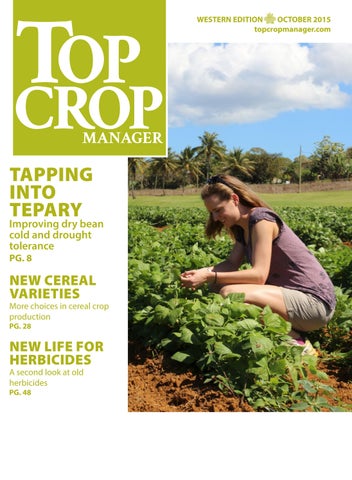
8 Tapping into tepary
Carolyn King
Woodland-based “crop” opportunities
John Dietz
Carolyn King
Reducing canola pod shatter, pod drop
Donna Fleury
Plant Breeders’ Rights: Changing the landscape
Julienne Isaacs
42 | New uses for old crops
Flax extracts are among the first commercial products targeted by Alberta Microwave Technology Developer. By Tony Kryzanowski
Measuring yield gains
Julian Thomas and Robert Graf
New life for old herbicides
Bruce Barker
Modernizing plant breeding
Janet Kanters
JANET KANTERS | EDITOR
MODERNIZING PLANT BREEDING
This past June, Canada formally ratified UPOV 91, following an amendment to its Plant Breeders’ Rights Act (PBRA) with Bill C-18 (the Agricultural Growth Act) in February. Bill C-18 was designed to reduce regulatory red tape and ease restrictions on private investors in the sector.
While Canada is now recognized internationally as having a UPOV 91 compliant PBRA, those who weren’t in favour of the change believe it will mean more money extracted from farmers, not only at point of sale of the seed but also at harvest and beyond. Those who were in favour of updating to UPOV 91 claim this will result in increased investment by seed breeders in Canada.
Speculation is always risky, but time will tell how the chips fall in this new age of plant breeders’ rights. But as was expected by the Canadian Seed Trade Association (CSTA), the changes to PBR legislation has already resulted in new crop varieties to Canadian farmers. The Plant Breeders’ Rights Office granted rights under the new legislation to 12 new agricultural crop varieties, developed in Canada and outside our borders by private and public sector plant breeders: the April 30, 2015 Plant Varieties Journal lists three new PBR 91 wheat varieties, two developed by public institutions in the U.S. and one a private sector-developed U.S. variety; two Canadian public sectordeveloped oats varieties; a Canadian private sector-developed flax variety; and six new internationally developed potato varieties.
In the meantime, a new database was launched in late August to assist seed sector stakeholders to easily identify PBR protection on crop varieties registered for sale in Canada. The Crop Varieties Registered in Canada and Plant Breeders’ Rights Status database was created by the CSTA with the assistance of the Canadian Food Inspection Agency’s Variety Registration Office and the Plant Breeders’ Rights Office. Using the database, seed sector members can search and identify PBR status of a crop kind, variety name, and by the type of PBR protection, or they can view the full database.
Plant breeding topics have always rated high on Top Crop Manager’s list of stories in the magazine, and this issue is no exception. On page 18, we present results from a study that was done to identify molecular markers for cold tolerance in canola. The study found promising results, and once the molecular markers associated with cold tolerance are finalized, researchers will work on transferring this cold hardiness into commercial lines.
A story on page 8 outlines how the University of Saskatchewan is working on a four-year project to transfer cold- and drought-tolerant genes from tepary bean into dry beans. According to head researcher Kirstin Bett, improved cold tolerance would lower the risk of crop loss from an early frost. It might also mean the crop could be planted earlier, allowing producers to grow longer maturity varieties, which generally have higher yields.
Finally, a story on page 46 introduces a new three-year project, initiated in 2015, to study the leaf blotch disease complex in oat. A series of objectives over the three-year study will help researchers identify the resistance genes; then, they will be able to map the genes and identify molecular markers that can be used for marker-assisted selection in the oat breeding program.
Plant breeding has been practised for thousands of years. Today, genetic diversity gives us the ability to develop new plant cultivars that can resist pests, diseases and environmental stresses.
One thing is certain: The updated PBR legislation ensures continued investment in new and improved seed varieties for Canadian farmers. It also puts Canada on equal footing with other countries, keeping Canadian farmers competitive in the global market. This is important as we continue to feed the world.
Top Crop Manager West - 9 issuesFebruary, March, Mid-March, April, June, September, October, November and December - 1 Year - $45.00 Cdn. plus tax
Top Crop Manager East - 7 issuesFebruary, March, April, September, October, November and December1 Year - $45.00 Cdn. plus tax
Potatoes in Canada 2 issues Spring and Summer 1 Year $16.00 Cdn plus tax All of the above - $80.00 Cdn. plus tax
Take charge of your resistance concerns by making Liberty® herbicide a regular part of your canola rotation. As the only Group 10 in canola, Liberty combines powerful weed control with effective resistance management to help protect the future of your farm.
RNAI: THE FUTURE OF PEST CONTROL
RNA interference will soon be moving from the lab to a field near you, promising revolutionary “precision” pest control.
by Julienne Isaacs
Aquiet revolution in pest control is underway in labs in Canada and around the world. RNA interference (RNAi) is a natural, biological process by which RNA molecules suppress or “silence” genes targeted as threats. Discovered in the 1990s, RNAi technology has since become a research and development priority across the life sciences, with promising applications in antiviral therapy, cancer treatments and biotechnology.
The range of potential applications of RNAi in agriculture is extraordinary – the technology can be used to increase yields and improve agronomic performance; metabolic changes have been achieved in crops ranging from coffee to peanut to petunia. And RNAi shows great promise for pest and pathogen control. Using RNAi, researchers have achieved increased resistance to virus diseases, nematodes, bollworm, powdery mildew and leaf rusts in a range of crops.
“RNAi is going to be an unprecedented game changer,” says Curtis Rempel, vice-president of crop production with the Canola Council of Canada (CCC). “From the canola industry’s perspective, it’s a big priority, for a whole host of reasons. We’re keen to find out what can be done to control different insect pest species.”
The CCC is currently in talks with the entire canola value chain –life science companies, producers, handlers and crushers – to create public/private partnerships to develop RNAi for the canola industry.
“We think there needs to be a consortium around this,” Rempel says. “How will farmers benefit from the technology? How can we implement RNAi so it doesn’t stay as a journal article?”
Thus far, RNAi for pest control in Canada has mainly focused on crops such as corn and soy, but Rempel believes it has enormous potential for the canola industry as well.
In Canada, public research agendas are focused on applications of RNAi in control of malaria vectors, with life science companies such as Monsanto and Syngenta leading the way in developing RNAi for application in agriculture.
RNAi two ways
Monsanto has made RNAi a research priority since the 1990s, and has
ABOVE: Plot treated with RNA-based biocontrol.
REBORN AND RESETTING THE STANDARD
New Flexi-Coil® P Series air carts from New Holland are “resetting the standard” for unprecedented accurate, reliable air delivery. Redesigned from the ground up, these new air carts are a fresh example of Flexi-Coil heritage and innovation. The proof? Over 50 new patents pending, the real advantages that increase your return on investment. Now with more acres per hour, you can make the most of your seeding window.
Choose from seven models with capacity up to 950 bushels. Choose from two, three or four-tank models and the option to select tow-between or tow-behind implement configurations. See our entire line of seeding solutions, visit your local New Holland dealer.
PULSES
TAPPING INTO TEPARY
Using tepary bean genetics to improve cold and drought tolerance in dry beans.
by Carolyn King
With all the climate vagaries we’re going through globally, people are very interested in tepary as a crop and as a source of genes for [crossing] into the more popular common bean crop. So says Kirstin Bett, a professor of plant breeding and genetics at the University of Saskatchewan’s (U of S) department of plant sciences. Bett leads the Crop Development Centre’s breeding program for dry beans, which are a type of common bean. The program’s current activities include work to transfer cold- and drought-tolerant genes from tepary bean into dry beans.
“Our goal in the bean breeding program is to try to increase the bean acres in Saskatchewan, and one of the big problems with growing beans here is that they’re a high-risk crop [because of their low tolerance to stresses like cold and drought]. Tepary bean is super stress tolerant,” Bett says. “So, even though they are a highreturn crop, a lot of producers don’t want to grow them. But if we can reduce the risk, we might be able to encourage more people to try this crop.”
For Saskatchewan bean production, drought stress can be a yield-limiting factor, but frost is an even greater issue. She explains, “Common bean hates cold temperatures. It won’t grow while the temperature is below about 10 C, and if the temperature hits -2 C, it’s dead.”
Improved cold tolerance would lower the risk of crop loss from an early frost. It might also mean the crop could be planted earlier, allowing Saskatchewan producers to grow longer maturity varieties, which generally have higher yields.
Tepary bean is well-known for its ability to tolerate drought and heat. “Tepary was a traditional crop in the Southwest U.S. and northern Mexico,” Bett notes. “They are trying to revive it as a crop in that region for the local indigenous tribes. Tepary bean has also been taken to Africa for regions that are too marginal for common bean production, as an alternate protein crop for local consumption.”
Tepary bean (Phaseolus acutifolius) is a cousin to common bean (Phaseolus vulgaris). Both species were domesticated in the Americas as food crops thousands of years ago. Along with the ability to tolerate weather stresses, tepary also has resistance to certain diseases and insect pests; for instance, it is a source of genes for tolerance to common bacterial blight for common bean breeders. Tepary seeds are small and vary in colour.
Before Bett arrived at the U of S over 10 years ago, breeders
there had been working with a different bean species to try to bring cold tolerance into common bean, but that species was extremely difficult to cross with common bean. So one of Bett’s post-doctoral students, Valarmathi Gurusamy, started exploring the possibility of getting cold tolerance through various crosses with other bean species. Then a graduate student checked tepary for its frost tolerance.
“Tepary bean turned out to be just as frost-tolerant as the other species, but you can actually cross [common bean] with tepary bean – it’s not easy but you can. So we switched to tepary beans, and we’ve been working with them ever since,” Bett explains.
“We’ve developed a population of common bean with some
PHOTOS COURTESY OF JODI SOUTER.
Under drought conditions, tepary beans (top) perform much better than common beans (bottom).
little bits of tepary bean genome, through traditional crossing; they are not transgenic. We have had those lines out in the field for a number of years now, evaluating them and culling out the terrible ones. For instance, one important problem is that the parent we used is daylength sensitive. Tepary comes from a region with short days, and if you grow it in a region with long summer days, then it won’t flower until the days are short, which of course coincides in Saskatchewan with frost in September. So we had to get rid of everything that didn’t flower early. Also, tepary beans tend to grow prostrate and we need upright plants, so we got rid of all the prostrate ones.”
Their work to select the most frost-tolerant lines has been harder than you might think. Earlier research by Bett’s research group had shown that screening for frost tolerance in the Phytotron, the University’s Controlled Environment Facility, was not very practical. She says, “The cold response interacts with the light quality. What we thought were cold-tolerant plants in the Phytotron were not always superior when we grew them outside. You can’t really mimic outdoor light indoors. And space is limited in the Phytotron.”
So, they have to do their frost-tolerance screening outside. To do that, they plant the different lines in August in Saskatchewan. That way, the weather is warm enough for the plants to germinate and grow, plus a frost is pretty much guaranteed to occur at some point in the fall.
“For cold tolerance, we’re talking about -3 to -4 C, so it’s not a huge advantage over common bean, but some days that is the difference between having a crop and not having a crop,” Bett explains. “Of course, trying to evaluate cold tolerance in the field is a nightmare. We keep our fingers crossed for a mild frost. But as you can imagine, when you want a -2 or -3 C frost, what you get is either no frost or -8 C, which kills all the plants.”
Consequently, one aspect of the breeding program’s current work with its common bean/tepary bean crosses involves looking for an alternative way to select for cold tolerance. The idea is to select for drought tolerance and then to see if those drought-tolerant lines also have some measure of cold tolerance.
In keeping with Murphy’s Law, the researchers were screening for drought tolerance just when Saskatchewan was having unusually wet weather. “So we teamed up with Tim Porch from the USDA-ARS [Agricultural Research Service] in Puerto Rico, where in theory you can do drought trials in the winter. Jodi Souter, the PhD student working on the project, spent time there over three winters. It rained but she did get enough drought data to show that the teparies are much more drought-tolerant; in fact they prefer drought to being well-watered. And some of our interspecies hybrids are performing more like tepary than common bean; they are not as drought-tolerant as tepary, but they are pretty good,” Bett says.
Souter is now analyzing the study data to determine if selecting for drought tolerance also selects for cold tolerance.
In another component of the tepary work, Gurusamy has returned as a research associate in Bett’s group, and is integrating stress-tolerant common/tepary lines into the dry bean breeding program. “We’ve made selections and decided which ones are probably promising lines, but they are not going to turn into varieties because the seed is the wrong colour or the wrong size or the wrong shape. So we need to cross them with elite dry bean material from here,” Bett explains.
As a side project, Bett’s group is also dabbling in breeding tepary beans as a crop. “They are more stress tolerant, so one could ask why aren’t you just growing teparies instead? The argument is that there is not a huge market for teparies yet, and one of the problems with them is the seed is small, slightly smaller than a black bean,” Bett says.
“However, stress tolerance is a very complicated trait, whereas traits like seed size and colour are much less complicated genetically. So we wondered if we could improve tepary bean instead of improving common bean – maybe we could cross common bean into tepary bean and try to increase the size of tepary beans and then grow them as a crop. Tepary bean would never rival common bean, but it could be a small niche market bean that could cater to farmers’ markets or the restaurant trade.”
The bean breeding program’s current work to transfer cold and drought tolerance from tepary to common bean is funded by the Saskatchewan Pulse Growers, the Alberta Pulse Growers, Saskatchewan’s Agriculture Development Fund and the Western Grains Research Foundation.
U of S researchers are assessing frost tolerance in their tepary/ common bean research, like this example of a frost-tolerant line (top) and frost-sensitive line (bottom).
PhD student Souter conducted trials in Puerto Rico to assess the drought tolerance of tepary beans, common beans and tepary/common bean crosses.
Syngenta offers canola seed hybrids to fit your farm. Today is about planting tomorrow’s potential. At Syngenta, we’re dedicated to bringing you top performing canola hybrids. You can trust them to deliver strong yield potential, address disease issues and provide the high return on investment you’re looking for. C is for canola and so much more.
successfully applied RNAi technology for virus resistance in papaya and squash. Currently, Monsanto’s next generation corn rootworm product that will ultimately become part of the Smart Stax Pro product is under regulatory evaluation in the U.S. In Canada, a single event using RNAi that will become part of Smart Stax Pro – MON 87411 – is under review with the Canadian Food Inspection Agency (CFIA). Following approval of MON 98411, expected in December 2015, Monsanto will submit the Smart Stax Pro “stack notification” to CFIA.
RNAi can work in two ways for pest control in crops: plants can be genetically modified to “knock down” the expression of a target gene in an insect pest using RNAi, or topical applications of doublestranded RNA (dsRNA) can be administered to the plant exogenously – through a spray, for example.
In Monsanto’s corn rootworm product, a transgene has been introduced that results in the production of dsRNA molecules with a segment of the corn rootworm DvSnf7 gene sequence – genetic material that is present throughout the corn plant’s root tissue, where the rootworm feeds. “The level of dsRNA produced is not high – approximately one microgram DvSn7 dsRNA per kilogram of root tissue, or roughly a billionth of the mass of root tissue,” explains Greg Heck, weed control team lead for Monsanto’s chemistry technology area.
When rootworm larvae consume the plant tissue, the dsRNA is taken up by the larvae’s gut proteins. “Once in cells the long dsRNA is processed to shorter pieces that are used by proteins to scan other RNAs for matches to the short RNA,” Heck explains. “If an exact match occurs, then the protein machinery cuts the target RNA in two and renders it non-functional.” When all 21 base pairs of the introduced RNA find a match, the worm’s cells begin to treat its own RNA like a virus, cutting it in pieces using a protein called Argonaute. The introduction of dsRNA results in destruction of specific RNA strands needed for normal growth, effectively killing the rootworm within a few days.
“The RNAi function is naturally present in the rootworm cells,” Heck says. “There, it is used to destroy viruses as well as remove the rootworm’s own RNAs that are no longer needed. If specificity were not part of the system, then the cell would mistakenly destroy needed RNAs. By providing the triggering RNAs via a transgene, we can program the cellular RNAi to go after an RNA of our choosing.”
When dsRNA is applied exogenously to a plant through a spray, it works in essentially the same way – target pests take up dsRNA when they feed on plant tissues. Monsanto is currently in the early stages of research and development of topical applications of dsRNA for potatoes, targeting Colorado potato beetle (CPB). “Earlier this year the CPB project advanced to phase 2 of product development,” Heck says.
Topical dsRNA sprays are years away from commercialization, but this approach offers a viable non-GE alternative that may see greater initial consumer acceptance.
Syngenta is also invested in RNAi as part of its portfolio of biocontrols. In 2013, for a price tag of $522 million, Syngenta acquired Devgen, a Belgium-based multinational biotechnology company that pioneered and licensed RNAi in nematodes in the late 1990s.
According to Luc Maertens, Syngenta’s RNAi platform lead based in Belgium, the company’s most advanced RNA-based biocontrol targets CPB in potato. Syngenta is also working on RNAi for soil pests in other crops. “Based on the successes on above ground soil pests, Syngenta has broadened its technology-focus to include soil pests, and finding solutions for scientific hurdles specific for the soil environment,” Maertens says. “That work is currently in an exploratory stage,
and our research and development platform makes us uniquely placed to develop it.”
Stewardship is key
Like any pest control method, RNAi needs to be stewarded to ward off the development of resistance in target pest species. “Resistance has developed to major classes of pesticides, and we should not assume that RNAi will be an exception,” Maertens warns. “It is imperative to gain insights into probable resistance mechanisms to RNAi triggers in insects, to monitor possible resistance in the field, and to support the use of the technology with appropriate stewardship requirements.”
RNAi is not designed as a replacement for chemical controls, but rather as a unique mode of action that can help reduce chemical inputs in an integrated pest management system. And like any pest control option, its safety and utility in the long-term depends on careful stewardship.
Monsanto’s Smart Stax Pro product will express Bacillus thuringiensis (Bt) proteins as well as dsRNA designed to silence DvSnv7, and Heck says the combination of traits will mean greater control over the long-term. “Because multiple mechanisms of control are present, this will help to forestall the development of resistance in the corn rootworm population,” he says.
Safety and consumer acceptance
Maertens says one of the benefits of RNA-based biocontrol is that it employs new modes of action, providing a high degree of precision in pest control. It is highly selective for target pests, even between closely related species. “So far, our data has reinforced that it is safe for people, animals, non-targeted insects and the environment, making it a safe biocontrol option,” he says.
“When an insect consumes plant tissue, the dsRNA, applied as a biocontrol, or expressed by the plant, is taken up into the pest’s cells and triggers the RNAi process which stops the synthesis of the one, targeted essential protein in the target pest,” Maertens explains. “The biocontrol does not change, or have any effect on, the DNA of the pest. The process is highly selective for the target protein and pest because it is based on the RNA sequence which is unique for each protein. The pest’s cells start to die before the pest can cause too much damage to the crop.”
“The specificity of RNAi is a benefit,” Heck agrees. “This is considered when choosing a gene sequence for targeting the pest that is not found in non-target species. For example, the rootworm DvSnf7
Untreated plot.
sequence is not found in humans. Many natural barriers also exist in non-target organisms like fish, birds and mammals that prevent significant uptake from the environment.”
Heck says the specific sequence used in the corn rootworm product has been tested against more than 15 representative species that might encounter the dsRNA in the field, with no impact observed in the tests.
In a talk delivered to the Lower Mainland Horticultural Improvement Association in 2014, Agriculture and Agri-Food Canada (AAFC) researcher Guus Bakkeren outlined some of the potential applications of RNAi technology in agriculture. “An advantage of the RNA silencing technology is that it does not rely on the production of proteins to have an effect, thereby eliminating the chance of possible allergic reactions (in animals or humans),” Bakkeren said.
Bakkeren noted in his presentation there might be some fears that RNA silencing molecules linger in plants intended for consumption. “The human (mammal) gut is a very hostile place for small RNA molecules so these are not likely to survive there to
cause unintended (adverse) effects,” he said. “However, more research needs to be done to study such possible effects.”
According to Rempel, early consumer acceptance of the technology will be key in Canada. “Having worked at Monsanto through the release of GMOs, I believe that more than ever there’s a consumer outreach piece,” he says. “Consumers have to feel safe and confident. Some of that is asking, ‘What are the real risks?’ and then understanding that we can’t turn our back on this technology for the wrong reasons.”
Rempel says public dollars should also be invested early on to drive innovation and allow Canada to keep up with its competitors.
“Public scientists working together with private companies can counteract that narrative that farmers are just being led to the trough. It’s a partnership,” he says.
For more on plant breeding, visit topcropmanager.com.
Growing today means carefully considering every input — including advice. Our agriculture banking specialists know the challenges and rewards of working the land.
LOW TEMPERATURE TOLERANCE IN CANOLA
Researchers assess seed germination and seedling performance of spring canola at low temperatures.
by Donna Fleury
Seeding canola early in the spring can help growers increase the potential for higher yields and better quality, which is important as industry looks to increase production. However, low soil temperatures can delay seedling emergence and uniform crop establishment, and significant yield losses can result from the need to reseed or delay seeding to avoid frost or cool soils.
Researchers are turning to molecular tools to help screen and select canola varieties that would perform better under low soil temperature and spring frost conditions.
In a three-year project (2011-2014) led by Ludovic Capo-chichi, researcher with Alberta Innovates – Technology Futures (AITF) in Vegreville, Alta., researchers wanted to determine the effect of low temperature on seed germination and seedling performance of a diverse set of Brassica napus and B. rapa lines. They also wanted to identify molecular markers for improved cold tolerance and to evaluate the effects of seed size on emergence.
“ We investigated over 600 lines from a worldwide collection of canola, including Brassica rapa , B. napus , B. juncea and B. oleracea, which allowed us to take advantage of the whole diversity of Brassica species in our search for the markers linked to cold tolerance,” Capo-chichi explains. “We tested germination and emergence at low temperatures to determine if there was any genetic variation between lines. Through the screening process, we selected 169 lines with the highest, middle and lowest tolerance
to low temperatures, and then screened those lines for associated molecular markers. As a result, we have identified the markers for low temperature tolerance and are now going through the validation process.” Collaborator Isobel Parkin with Agriculture and Agri-Food Canada in Saskatoon, Sask. provided the molecular screening and genetic analysis of the lines for the project.
Screening this large number of lines provided researchers with an overview of the wide range of genetic variability of Brassica species, including variations in seed size. Although generally it is expected that a larger seed size results in faster emergence, this study could not confirm that. “We found that some of the smaller-seeded genotypes emerged much faster than larger-seeded genotypes under lower temperatures,” Capo-chichi says. “However, a few larger-seeded genotypes emerged slightly faster than smallerseeded genotypes. Therefore, varietal selection based on seed size for faster germination in cold spring soil isn’t a good indicator or method of selection. We suspect there are other compounds in the seed that enhance the speed of emergence and the next step is to try and identify those compounds that contribute to the faster emergence.”
ABOVE: Researchers are turning to molecular tools to help screen and select canola varieties that would perform better under low soil temperature and spring frost conditions.
PHOTO BY JANET KANTERS.
A s part o f the project, researchers assessed canola seedling emergence at the two-leaf or cotyledon stage to measure their response to low soil temperatures, comparing emergence at 5 C, 10 C and 15 C. They also assessed seedling response to freezing-shock at -5 C for various periods of time, which is the stage at which B. napus in particular is most sensitive to frost. The combination of freezing temperatures and varying exposure time enabled researchers to identify important differences between line responses to applied cold stress and to estimate the freezing tolerance of the various lines in the seeding stage. Frost injury was visually assessed as well as being inferred from the measurement of chlorophyll fluorescence.
All genotypes began to emerge within two to four days of seeding at 15 C. However, at 5 C, there was significant variability in seedling emergence among genotypes. Under low temperature stresses, the time to first seedling emerged, and 50 per cent emergence index was much longer in B. napus and B. rapa than in B. juncea. Overall, B. juncea appeared to be more tolerant to low temperatures than B. napus and B. rapa, although several B. napus genotypes were as hardy as B. juncea.
“As a result we have been able to find a link to several low temperature markers that helps give the line an adaptation to a variation in temperature,” Capo-chichi explains. “We have successfully ranked all lines for seed germination and seedling performance at low temperatures using seed produced under greenhouse and field conditions. In the spring of 2016 we will validate the marker under field conditions, either lines tolerant to low temperatures or
lines that are very susceptible.”
Now that the low temperature marker has been identified, researchers want to see if this same marker can also be used to study high temperature conditions. “We have demonstrated that there are differences in the germination and seedling emergence in response to low temperatures, and [we] are now looking at responses to higher temperatures,” he adds. “We want to look at what will happen if we raise the temperature to very high levels in the various lines, such as at the flowering stage where the plant is susceptible to heat, which can destroy flowers and consequently affect yields.”
Once the molecular markers associated with low temperatures and cold tolerance have been validated, researchers will make the technology available to plant breeders. “They will be able to use marker assisted selection and screening to confirm whether or not a line is tolerant or sensitive to low temperatures and frost depending on the presence or absence of the marker. This will assist with transferring cold hardiness into commercial canola lines. Breeding for improved vigorous emergence at low temperatures and frost tolerance will help with early seedling establishment and improved productivity for growers. We hope to be able to add markers for tolerance to higher temperatures down the road, which will also help breeding for improved yields and quality.”
For more on canola plant breeding, visit topcropmanager.com.
DNA DIAGNOSTICS IN THE BACK OF A TRUCK
Developing fast, accurate on-site methods to identify crop diseases.
by Carolyn King
Let’s say there’s an unusual symptom on some plants in your crop. The symptom looks like an early stage of a devastating fungal disease that needs an immediate fungicide application to stop its spread. But the symptom also looks like a very different problem, perhaps a nutrient deficiency or a herbicide injury, where a fungicide application would be a waste of money. If you could determine right then and there whether those plants actually have that disease, then you could make a timely, effective management decision.
That type of accurate, immediate, on-site diagnosis is the goal of a project that’s developing in-field DNA diagnostics.
“Before I came to Agriculture and Agri-Food Canada, I was at the National Microbiology Lab [of the Public Health Agency of Canada], and I knew about their mobile diagnostics laboratory. They have deployed it in several places, including the recent Ebola outbreak,” says Tim Dumonceaux, an expert in microbial communities and molecular methods at the Saskatoon Research Centre of Agriculture and AgriFood Canada (AAFC). “When I came here, I thought the advantages of a mobile lab could be brought to agriculture.”
Dumonceaux explains that laboratory DNA testing for crop diseases
usually involves going out to the field, collecting samples, putting them on ice, driving them back to the lab, extracting the DNA and then doing the diagnostics. “It might take days or weeks before you get the results and find out what was in the field days or weeks ago,” he says.
“[In contrast] mobile DNA diagnostics have the advantage of speed both for containment of a disease outbreak and for surveillance, so we know when and where diseases might be cropping up in agricultural fields.”
Dumonceaux is leading the two-year project, which started in 2014. The objectives are to develop practical field methods for extracting DNA from samples and for analyzing the extracted DNA for pathogens, and to test these methods in the field at AAFC research farms.
The project is funded by Saskatchewan’s Agriculture Development Fund and the Saskatchewan Canola Development Commission. In addition, AAFC has provided funds to purchase two Genie instru-
ABOVE: Sandeep Hunjan, a co-op student from the University of Waterloo, uses the mobile setup being developed by AAFC researchers for in-field DNA diagnostics of crop pathogens.
PHOTOS
Smart. It’s right there in the name: ESN ® SMART NITROGEN ®. And ESN delivers benefits that really matter to farmers – like less time spent in the field and better ROI –because it’s all kinds of smart. Here’s what we mean:
Science smart.
Apply ESN in the fall and its unique polymer coating safeguards nitrogen from loss mechanisms by releasing it at a timely rate controlled by soil moisture and temperature – perfect for winter wheat. And ESN is the only controlled–release N source available in broad acre agriculture, which makes it uniquely smart.
Storage smart.
Get ESN now and it goes in the ground not in your bin. And even if you do store it, ESN won’t set up in storage so it has a long shelf life.
Money smart.
Buy and apply ESN in the fall and forget about potentially volatile spring N pricing. That’s a load off your mind.
Time smart.
When you apply ESN before freeze up you’ll have one less big chore come spring. ESN is also convenient to apply. It’s compatible with no–till operations and it’s easy to blend. It even has a wider application window in both the spring and the fall. You decide when you want to apply it.
Environmentally smart.
By greatly reducing leaching, volatilization and denitrification, ESN protects the surrounding environment.
ROI smart.
ESN’s controlled–release matches crop demand, which can boost yields by an average of 5-10% – and even as much as 30%. That’s more dollars in your pocket. And that’s the best kind of smart there is!
Ask your retailer about ESN Smart Nitrogen. It’s the smart thing to do.
SmartNitrogen.com
ments
Disease diagnostics
For this project, Dumonceaux’s research team is working on diagnostics for three diseases: blackleg (Leptosphaeria maculans), clubroot (Plasmodiophora brassicae) and aster yellows (Phytoplasma species).
“One reason we chose those three is that they are all agriculturally important pathogens,” Dumonceaux says.
“The second reason is that there is a significant amount of expertise in these three diseases right here at the Saskatoon Research Centre.” The other researchers in the project are all at AAFC-Saskatoon. They include: Matthew Links, who has expertise in genomics, including the genomes of blackleg and clubroot; Hossein Borhan, an expert in molecular plant pathology whose lab generated genome sequences for the blackleg and clubroot pathogens; and Chrystel Olivier, an entomologist specializing in aster yellows diseases.
Another reason for choosing those three diseases is they allow the research team to work with various sample types. For blackleg, stem tissue is sampled. For clubroot, a soil-borne pathogen, the soil is usually sampled. And for aster yellows, leaf and insect tissues are sampled because infected insects spread this disease by feeding on leaf tissue.
Developing in-field DNA diagnostic methods has its challenges. “Getting the DNA out [of a sample] into a form that will be usable in a molecular diagnostic assay in a mobile environment is one of the most important challenges. In the lab, we might use phenol and chloroform and centrifugation steps and so on, but those are not feasible in the back of a truck. So we are investigating ways around that,” Dumonceaux notes.
“A second challenge is associated with the limit of detection of an assay. You don’t want an assay that is so sensitive that it picks up a few molecules of DNA of the target organism because that can lead to what is effectively a false positive – it makes you think you’ve got a problem, when really it is at such low levels that it is not a problem. On the other hand, if your detection limit is too high, then that might lead to a false negative, where you should have detected a pathogen but your test was not sufficiently sensitive. That can be a problem especially for a disease like clubroot where you are worried about spreading contaminated soils. So we want to get what you’d call in the human health world a ‘clinically relevant’ level of detection.”
A further hurdle is to relate the detection of a pathogen’s DNA to the pathogen’s ability to cause disease. Dumonceaux explains, “Just because you detect DNA doesn’t necessarily mean it comes from a viable or infectious organism. DNA is a reasonably stable molecule, so you sometimes can find DNA that is not necessarily reflective of infectivity.”
To carry out the in-field assays, the research team is using LAMP, which stands for loop-mediated isothermal DNA amplification. Amplification is the process of making many copies of a selected portion of an organism’s DNA. “In a sample, you might have only a few molecules of the organism’s DNA within a matrix of millions of copies of things that you are not interested in. So the idea is to very specifically amplify a target DNA sequence of the organism, and you can detect that amplification,” Dumonceaux says.
The researchers call this assay procedure “lighting the LAMP” because the samples have a fluorescent glow when a positive detection of a pathogen’s DNA occurs.
To use LAMP, the researchers first have to design what are called “primers” that detect the target DNA sequence for the pathogen.
“The choice of which particular DNA sequence to target is really important,” Dumonceaux explains. “We’ve done lots of work in the past with a taxonomic marker called chaperonin 60. Chaperonin 60 is present in bacteria and fungi [as well as in other organisms such as plants and animals including humans]. For the most part, the sequence of that particular target gene is diagnostic for the particular organism, so we call it a ‘DNA barcode.’”
So, when developing such primers, they usually start by trying chaperonin 60; however, there are other types of taxonomic markers, and some work better than others for certain organisms. “In the case of the three pathogens that we have chosen, we also have the entire genome sequence for each of them. So, if for whatever reason chaperonin 60 isn’t ideal, then we have a raft of other potential target DNA sequences that we could choose that are highly specific to that organism.”
Once the procedures are developed, the research team tests the process to make sure it gives valid results – that it is able to detect the target pathogen species, that it provides a relevant level of detection, that it doesn’t detect other similar species, and so on.
Progress and next steps
The researchers’ main focus in 2014 was to develop the diagnostics for the three pathogens, and they also did some initial field testing of the methods.
“[As of July 2015] we’ve already sewn up the development of the assays, and much of the validation is nearly complete. The key work for 2015 is to get the assays working in the field,” Dumonceaux says.
Once this project is complete, the next step would be to scale up the work by developing in-field assays for other crop pathogens and by bringing the diagnostics to commercial agricultural fields.
Dumonceaux thinks the initial users of these in-field diagnostics would likely be crop technicians, crop advisors and so on, but he would really like to make the methods sufficiently streamlined so they would be practical for crop growers to use.
“One of the things we’re working on is providing all the reagents required for the detection assay in a dried format so you just add water,” he notes.
They also hope to speed up the diagnostic process. “The way we had it set up last year, DNA extraction took about 15 minutes to half an hour for a sample, although you can do multiple samples at once. Then for the actual assay, the speed depends on the amount of target DNA in the sample. If there are large amounts of the target DNA, the assay takes as little as about 20 minutes to get a positive detection; if there are very low amounts, then it could take up to about 90 minutes,” he says.
“But we think we can streamline the DNA extraction method by using commercially available Plant Saver Cards. You press the material to be tested into the card and that helps you do the DNA extraction very quickly. We’re going to assess that this year.”
Dumonceaux emphasizes, “It’s important that we bring to agricultural diseases the same sort of standards and abilities that we bring to human diseases because agricultural diseases are just as important to human society. We all need to eat, and it is important to keep on top of diseases that are affecting our food sources.”
For more on plant diseases, visit topcropmanager.com.
SPECIAL CROPS
WOODLAND-BASED “CROP” OPPORTUNITIES
Entrepreneurs are finding gourmet foods and nutraceuticals in woodlands.
by John Dietz
Avirtual cornucopia of wild edibles and non-timber products is ready to be harvested in the woodlands and boreal forests of Western Canada. While native bush may be something you want to protect forever as a heritage site, or clear off entirely for pasture or grain production, it also may be a source of commercial opportunities.
If you have 160 acres of bush, think about it, says Mike James, past president of the Woodlot Association of Manitoba (WAM), and educator and owner of the Boreal Woods Nature Centre near the southeast shore of Lake Winnipeg. WAM, founded in 1991, promotes rural woodlots, shelterbelts, treed lots and river bottom forest adjacent to agricultural lands.
James says the opportunities for new foodstuffs to be found within woodlands is endless: haskap (honeysuckle), sour cherry, sea buckthorn, buffaloberry, chokecherry, wild blueberries, fiddleheads and fireweed. Manitoba Agriculture, Food and Rural Development (MAFRD) also identifies these plants and berries as providing possible commercial opportunities: anise hyssop,
A joint investigation into the potential for gathering or harvesting wild foods and woodland products was launched in 2014 by James and a retired colleague, Ken Fosty, former forestry technician with the Manitoba Forestry Association (MFA). Funding came from MAFRD.
At consultation meetings in early 2015, the two hoped to identify ideas for creating a sustainable woodland food industry. A report on that survey is currently being prepared. “Ken and I held six consultation meetings to see if people might be interested in growing or gathering wild foods, as an industry. We had meetings
TOP: Dark, Amber and Amber Gold Canadian birch syrups.
PHOTO COURTESY OF RORY HART.
at The Pas, Dauphin, Brandon, Portage la Prairie, Selkirk and Lac du Bonnet,” James says.
A winter storm reduced attendance at two meetings, but not enthusiasm. “There were only 56 people who came, but everybody was very supportive and most were enthusiastic,” he adds. “Up north, I think a lot of people are interested in supplementing their income with a cottage industry. In the south, I think interest is on the increase, especially among Hutterite colonies.
“The interest is there, it just needs somebody to organize and kick start it. It’s got to be done in an orderly way.”
Studies underway
James says support is available from institutions for people who want to explore commercial options for non-timber products from Prairie woodlands. For instance, in addition to WAM and the MFA, the Manitoba Food Development Centre at Portage la Prairie is equipped to work with products at all stages, from good ideas to recipes, nutrition labels and early market development.
“The Food Development Centre has taken a number of these people to help them with their products, to a point where they can be sold with proper labels. They’re very supportive of this,” James says.
Several woodland-related programs are underway in Saskatoon, at the University of Saskatchewan’s (U of S) horticulture department and at the POS Bio-Sciences research facility.
“The main forest products we work with right now are haskap, sour cherry and apples,” says Ellen Sawchuk, horticulture research lab technician. “For haskap, we do the breeding work and release varieties. We’ve released six varieties to date and have another two coming in 2016 and 2017. The goal is to get haskap to become a commercially viable crop through Canada and the United States.”
The U of S has taken the haskap from obscurity in the bush as wild honeysuckle with small, blue, so-so berries to a gourmet’s delight, an early-bearing, dependable, high-producing sweet shrub. Haskap berries are the first fruit to ripen, in late June.
Western Canada now has more than 25 growers ranging between five and 60 acres of haskap. Most still process the berries at their own farms, into jams or syrups. They
PROVEN BY EXPERTS
And by experts we mean farmers
Proven® Seed is the total, all-around package for canola growers. It’s new genetics — proven by 25 years of groundbreaking research and hybrids with superior agronomics. And with our Proven Performance Trials, growers have access to over 100 canola trials where it counts — on large-scale, producer-managed fields. Like yours.
Now that’s what we call proven.
can also be eaten fresh off the bush. Larger growers will hit the market with commercial-grade products in 2016.
For large-scale haskap harvest, the U of S has imported a black currant harvester from Poland. “We use the same machine to harvest our saskatoons and our sour cherries, and our currants,” Sawchuk says. “It works quite well. We can harvest two to three acres of haskap in a half-day. We need three people, and it goes faster if we have one or two more to run the fruit into the cooler.”
POS Bio-Sciences
Natural products from woodlands (and Prairies) are a major interest at POS Bio-Sciences, says Rick Green, vice-president of technology. POS has expertise in extraction, fractionation, modification and purification of “bio-based” materials.
Chokecherry, buffaloberry and sea buckthorn chemistry was the subject of a joint study between POS and Nicholas Low at the U of S. Previous work has investigated commercial potential for saskatoon and other woodland products. “Since the study was released, we’ve had some calls. There is interest in starting a breeding program for buffaloberry, and I can tell you some sea buckthorn is being grown in orchards here,” Green says.
Nutritionally, though mostly unknown or obscure to the public, all three berries have good potential for nutraceuticals or functional foods. Buffaloberry has about four times the level of vitamin C found in orange juice, and a good antioxidant profile. Chokecherry has a high level of antioxidant and polyphenol compounds. “All of these fruits have been used to some extent in your fruit commodities like jams and jellies and sauce recipes. But there’s increasing interest in extracting the value-added components. The next stage might be some clinical trials to show what the benefits are,” Green says.
The Birch Sap Opportunity
Tapping white birch for sap and syrup is a newly proven opportunity. Glenda and Rory Hart bought two pieces of land, about 240 acres, as a future retirement site near Grand Beach at the southeast end of Lake Winnipeg, moving there in 2001. They loved the native birch forest. Today, they’re tapping it.
For 2016, they anticipate tapping about 2000 birch. Using tubing and vacuum assist technology, they suck the sap into vats where it is eventually reduced to about one per cent of the original volume. If the season is very good, they may get 300 gallons of refined birch syrup after a three-week harvest. Then the work begins.
“Processing happens right away, on-site. After we finish making the syrup, we have to filter it and bottle it. We also market our own syrup. We bottle, we label, we do promotion, we drum up business in stores, we do farmers markets and shows,” Glenda says.
“From the forest all the way to selling it to the person for the table, we do it all. We have not been to Europe to promote it yet, but we have been to the U.S. We are hoping to build on a toehold there, in cities like Chicago and Denver,” she adds.
The couple launched Canadian Birch Company in 2012. They estimate Canada has up to 10 birch syrup producers, with most tapping fewer than 500 trees. They have created a unique version or niche product with the rare Amber Gold by making critical changes to the production process. They also have begun marketing a birch sauce.
Haskap (also known as honeyberry or honeysuckle) flowering in June at the University of Saskatchewan horticulture research site, Saskatoon.
PHOTO COURTESY OF ELLEN SAWCHUK.
PHOTO COURTESY OF RORY HART.
Haskap berries, freshly picked in July, being washed in a tray prior to freezing.
Sap gathered by tubing makes its way toward mainlines by vacuum assist.
Sea buckthorn is just one of many potential new crop opportunities for western Canadian farmers.
Building public awareness takes big investment in time and money. “Promotion is tough,” Glenda says. “Rory searched out the right bottle for our product. We had a wonderful graphic artist come up with designs for the bottles and labels. We invested in excellent photography and excellent graphics for our website. They all work together.”
From an online survey of 10,000 consumers, evaluating innovative products in 33 categories, Canadian Birch Company Amber Birch Syrup won Product of the Year 2015 for innovative packaging in March 2015. “It means people would buy our product on the virtue of being attracted by the packaging,” Glenda says.
For more information on special crops, visit topcropmanager.com
FACT #1: Proven® Seed is the total, allaround package for success in canola and cereal crops. It’s NEW genetics and seed varieties. It’s also 25 years of groundbreaking research — plus leading agronomics, field trials and distribution networks.
FACT #45: Proven Seed is integrated all the way from R&D to the farm — through breeding, production, seed treating, distribution and retail. Which means quality seed you can count on.
FACT #88: Clubroot is a potentially devastating soil-borne diseasethat causes swelling or galls to form on roots incanola, ultimately killing the plant. The next generation of advanced CPS-bred Brassica napus canola hybrids demonstrate high levels of resistance to clubroot pathotype 5X, and will mark a first in the fight against the growing threat of this disease.
quality control. Through an accredited seed laboratory, we screen every seed lot extensively for disease, purity and germination — to give you confidence in your seed investment.
FACT #46: Proven Seed PV 533 G is a new Genuity® Roundup Ready® hybrid allowing you to push your yield potential, while getting excellent standability and blackleg resistance. PV 533 G is a great choice for your best performing fields. See for yourself at provenseed. ca/canola.
IT’S A PROVEN FACT
( that 25 years adds up to a lot of facts )
FACT #110: Proven Seed set the bar in standability. New hybrids, like PV 200 CL, build on this world class standard while offering high yield potential and a non-GMO premium contract option with the Clearfield® system.
FACT #133: The Proven Performance Trials program is the largest retail comparison program in Western Canada. With over 200 trials in 2015, the Proven Seed portfolio is put to the test by farmers to ensure it performs best where it counts — on large-scale, producermanaged fields. See for yourself at provenseed.ca/performance-trials.
FACT #74: Proven Seed has over 25 years of continuous research in Western Canada. The CPS R&D team includes more than 50 dedicated staff in Canada and Australia with three research farms and 35 research sites across the Prairies.
FACT #29: Seed production is a priority for Proven Seed. We work with CSGA growers to produce, clean and test our seed to ensure the highest level of
and
FACT #51: Manage your acres and harvest timing. PV 531 G brings strong yields, excellent standability and early maturity so growers can manage harvest windows without sacrifice. Suitable for the short growing zones of the Prairies, this Genuity® Roundup Ready® hybrid lives up to the name Proven Seed.
FACT #47: Proven Seed products are only available at CPS retail locations across Western Canada. Your CPS advisor will guide you through seed, fertility and crop protection requirements to find a solution tailored for your farm. Find a retailer near you at provenseed.ca/find-a-retailer.
PROVEN WHERE IT COUNTS — ON A FARM NEAR YOU.
REDUCING CANOLA POD SHATTER, POD DROP
Research shows environment and crop conditions are major factors in yield losses.
by Donna Fleury
Reducing potential yield losses at harvest, particularly from pre-harvest shattering and pod drop losses, is a priority when harvesting canola. Whether straight combining or swathing, timing of harvest is proving to be one of the most important factors in reducing the risk and magnitude of yield losses.
Researchers at the Indian Head Agricultural Research Foundation (IHARF) in Saskatchewan have wrapped up a four-year study initiated in 2011 to evaluate the relative resistance to pod shatter and pod drop of high-yielding Brassica napus hybrids. The project was conducted at four sites including Indian Head, Melfort, Scott and Swift Current. Researchers evaluated the potential for pod shattering and pod drop of several modern B. napus hybrids across all herbicide systems, including some of the new shatter tolerant varieties.
“With the increasing interest in straight combining, we wanted to evaluate a range of cultivars, including some of the newer shatter tolerant varieties, and identify some that may be particularly well suited for straight-combining,” explains Chris Holzapfel, IHARF
research manager. “We compared two harvest dates – one at optimal harvest timing and the final harvest completed three to four weeks later – to see what would happen when harvest was delayed due to weather or other factors. We also wanted to quantify the environmental seed loss contributions from pod drop versus pod shattering under a wide range of environmental conditions.” All canola in the study was straight-combined; however catch trays were used to measure and account for any seed losses that occurred prior to the first harvest date.
“The major finding was that overall timing of harvest was more important than variety,” says Holzapfel. “Regardless of the variety, environmental and crop conditions was the major determinant of yield losses. As well, pod drop versus pod shatter was an important contributor to yield loss.”
The biggest losses on average were from the later harvest date, with pod drop responsible for 43 per cent of the total environmental
ABOVE: Project results showed that for straight-cutting, harvest timing is usually more critical than with swathing.
PHOTO
seed losses with delayed harvest across all hybrids and sites. Losses at delayed harvest ranged from less than five per cent at some sites to more than 50 per cent in one extreme case. At early harvest timing, yield losses from pod drop were typically negligible, averaging 2.5 per cent across all hybrids and sites.
Although the evaluation of various cultivars did show some differences, they were not always consistent from site to site. In an effort to summarize the large data set, all of the hybrids evaluated at any given site were ranked for significant differences compared to the top ranking hybrids for each site (i.e. those with the lowest losses). “The best varieties were ranked a 1, with those showing significantly higher losses ranked a 2 and those with the highest losses receiving a ranking of 3,” Holzapfel explains. “Generally the performance of most of the hybrids was similar under favourable conditions; however substantial losses in all cultivars occurred when severe conditions were encountered. For example, in years where conditions were challenging, such as the severe wind events in 2012 and higher than usual sclerotinia incidence, all of the cultivars were impacted and there were severe losses in all treatments, in some cases more than 50 per cent losses. Hybrids specifically bred for improved shatter tolerance (i.e. L140P and 45H32) were introduced to the study in 2013 and, while overall losses were lower in the latter two years of the study, these hybrids did perform consistently well and can be expected to reduce the risk of yield loss with delayed harvest or severe weather.”
Timing of harvest is important to minimize losses, so in situations where there is quite a bit of variability in the field, growers may want to consider a pre-harvest treatment, although it’s not always necessary. “One of the lessons learned over the years is to be patient, don’t go in too early,” Holzapfel says. “That said, once the canola is ready, harvesting it as soon as possible needs to be a priority to prevent losses. And there is no way around getting into the field and assessing the colour change throughout, not just from the edge of the field. There can also be differences in colour change and varieties from year to year – sometimes the pods will turn but the seeds can still be green; in others there will be seed colour change, but relatively green pods.”
The timing for glyphosate application in Liberty Link canola for straight cutting or swathing is at 50 to 60 per cent colour change. In all systems, the timing of application for desiccant products is at 80 to 90 per cent colour change. Holzapfel adds when there is quite a variation in canola staging, like we are seeing in 2015, assessing harvest timing gets more difficult and can be tricky. “Thin stands may be well suited to straight cutting, and although there may be some losses, there will also be losses from swathing, so there is no easy solution.”
Both systems, whether swathing or straight-combining, have risks, with timing of harvest the most important management factor. Recent research at the University of Saskatchewan on commercial farms showed that total seed losses (environmental + header + threshing) for swathed and straight-combined canola were equal and ~10 per cent on average. “Swathing too early results in significant yield loss due to smaller seeds and can lead to higher green seed counts,” Holzapfel explains. “Swathing too late results in yield loss due to pod shatter. Similar to straight-combining, the risk of environmental and header losses increase over time as canola swaths remain in the field, but for straight-cutting, harvest timing is usually more critical than with swathing. Therefore, growers should limit straight-cut acres to what is easily manageable to gain
experience and confidence in the practice.”
Overall, the project results indicate all hybrids evaluated could be straight-combined successfully provided that harvest was completed in a reasonably timely manner. Other factors such as overall yield potential, days to maturity, standability and herbicide system are still the most important factors to consider when choosing a canola hybrid with the intention of straight-combining. Hybrids with improved pod shatter tolerance lengthen the window for straight-combining and reduce the overall risk of yield loss.
There are new shatter tolerant varieties coming on the market for 2016, and Holzapfel expects that more varieties will continue to be released in the future.
“We know that most existing equipment will work adequately, including draper, rigid and flex headers,” Holzapfel says. “Header extensions significantly reduce header losses and are a good option for straight-combining large acres of canola, and headers with variable knife position should provide similar benefits. We are collaborating on another three-year project led by Nathan Gregg of PAMI that started in 2014 to evaluate the performance of commercial straight-cut headers for canola using full-scale machinery and large plots at Swift Current, Indian Head and Watrous. Harvest treatments will be evaluated on two varieties, a standard canola variety InVigor L130 and a shatter resistant variety InVigor L140P.” The final report and results will be available in 2016.
There’s no way to know what Mother Nature is going to throw at you, but there is a way to be ready for it.
With built-in technology that helps you tackle tough weeds in tough conditions, Genuity® Roundup Ready® canola can be the most valuable tool in your field. It’s the foundation for a family of high-yielding canola hybrids that offer diverse disease resistance and enable progressive farming practices such as straight cutting. You can’t anticipate everything, but you can prepare for anything.
Get ready for next season; talk to your retailer about booking Genuity Roundup Ready canola for 2016.
NEW CEREAL VARIETIES UPDATE
More choices in cereal crop production.
by Bruce Barker
Public and private plant breeders continue to bring new cereal varieties to market, with improved yield, disease resistance, and agronomic performance. Available in commercial quantities for the 2016 planting season, these new varieties are available throughout the different cereal classes.
Canadian Western Red Spring
AAC Connery is a new awnless, semi-dwarf CWRS wheat from Agriculture and Agri-Food Canada (AAFC) Swift Current that combines short stature, early maturity and high yield. It yielded 107 per cent of check varieties in co-op registration trials, and has very large seed with heavier thousand kernel weight. AAC Connery has a moderately-resistant (MR) rating to Fusarium head blight (FHB) and leaf rust. It also has a resistant (R) rating to stem rust and stripe rust. Available from Canterra Seeds.
AAC W1876 has similar yield to the CWRS check varieties but shows higher protein and improved gluten functionality, making this variety very desirable for production of high-quality baked
goods. AAC W1876 has an intermediate (I) rating to FHB and stripe rust, an MR rating to stem rust and an R rating to leaf rust. AAC W1876 will only be available through Warburton contracting program.
CDC Titanium is the first midge tolerant CWRS from Proven Seed and has the highest Fusarium resistance rating of all available midge tolerant varieties. Yield is rated at 103 per cent of AC Barrier, with similar maturity. CDC Titanium has excellent resistance to stripe rust, and is MR to FHB. Exclusively available at Crop Production Services.
Go Early is a hard red spring wheat initially introduced as PT769 and has since been named Go Early. Go Early is bred from CDC Go and has similar large kernel size, but has five per cent higher yield, better disease resistance and matures two days earlier. This earliness, along with the other similar traits of CDC Go, lead to its naming as Go Early. Available from Mastin Seeds.
ABOVE: New cereal varieties will help farmers continue to push yield boundaries.
PHOTO
CGC VARIETY DESIGNATION CHANGES
Effective Aug. 1, 2017, the Canadian Grain Commission (CGC) is changing wheat class designations for some varieties. As a result of consulting with value chain stakeholders and conducting a thorough evaluation, it was determined the following varieties do not meet revised quality parameters for the Canada Western Red Spring (CWRS) and Canada Prairie Spring Red (CPSR) wheat classes. The CGC will designate these varieties to another class as of Aug. 1, 2017.
CWRS: AC Abbey, AC Cora, AC Eatonia, AC Majestic, AC Michael, AC Minto, Alvena, Alikat, CDC Makwa, CDC Osler, Columbus, Conway, Harvest, Kane, Katepwa, Leader, Lillian, McKenzie, Neepawa, Park, Pasqua, Pembina, Thatcher, Unity, 5603HR.
CPSR: AC Formost, AC Taber, Conquer, Oslo. Varieties of CWRS and CPSR under review
In addition to the designation changes as of Aug. 1, 2017, the CGC will initiate a review in 2016, for a period of up to two years, of CWRS and CPSR varieties for which more quality data is needed before a decision is made about their class designation. These varieties will remain in their designated classes unless an evaluation shows they do not meet the revised quality parameters for the CWRS and CPSR wheat classes. At least two years’ notice will be given before any of these varieties are designated to another class.
Interim wheat class as of Aug. 1, 2015
As of Aug. 1, 2015, an interim wheat class, Canada Western Interim Wheat, is in effect for Faller, Prosper and Elgin ND wheat varieties. This allows the CGC, in consultation with value chain stakeholders, to gather further information before making a decision on the permanence of the class.
Thorsby is a new CWRS wheat developed by the University of Alberta, and yields 106 per cent of Carberry or Harvest with slightly higher protein. The breeder has introduced genes from an international germplasm collection to provide improved resistance to stripe rust and leaf rust. Thorsby has an I rating to FHB. Available from Canterra Seeds.
5605HR CL is the next step in Clearfield wheat with high yields, heavy bushel weights and weed resistance management. An ideal variety where complex field conditions and crop rotation challenges exist. 5605HR CL is resistant to leaf rusts and has an I/MR rating to FHB. Yield is 106 per cent of AC Barrier with similar maturity, lodging resistance and test weight. Exclusively available at Crop Production Services.
Canadian Western Interim Wheat
Elgin ND is an awned wheat variety developed by North Dakota State University. It is a high yielding (12 per cent higher yielding than Glenn), high protein (one per cent higher than Faller) milling wheat with an excellent disease package and lodging resistance. Available for the 2016 season, Elgin ND will be in the new milling wheat class CWIW. From FP Genetics.
Canadian Prairie Spring Red
AAC Foray VB is a midge tolerant CPS red
wheat variety. AAC Foray VB has top yield potential with grain yield of 118 per cent of AC Carberry. Maturity is one day earlier than AC Carberry. AAC Foray VB is five centimetres taller than AC Carberry and has very good lodging resistance. It has an I rating for FHB. Available through SeCan members.
AAC Penhold is a CPS red wheat variety with grain yield potential of 110 per cent of AC Carberry and high grain protein potential. Maturity is two days earlier than AC Carberry. It has an MR rating for FHB. AAC Penhold is nine centimetres shorter than AC Carberry and has the best lodging resistance available in a CPS variety. Available through SeCan members.
Durum
CDC Fortitude is the first solid-stem durum variety that provides sawfly resistance for successful harvest results. It is an excellent option for high fertility and irrigation acres. CDC Fortitude has similar yield potential, protein content, test weight and maturity as AC Strongfield but with shorter straw and better standability. CDC Fortitude is resistant to stem and leaf rust, and rated I/MR for FHB. Exclusively available at Crop Production Services.
AAC Marchwell VB is the first midge tolerant durum wheat variety for protection of grade and yield. AAC Marchwell VB has grain yield potential of 106 per cent of AC
Strongfield. Maturity, height and lodging resistance are similar to AC Strongfield. It is resistant to stripe rust, leaf rust and stem rust. Available through SeCan members.
CDC Vivid is an early maturity durum variety with strong rust resistance, short straw and improved standability. It has similar yield and maturity as AC Strongfield and slightly higher protein content. CDC Vivid is resistant to stem and leaf rust and is moderately susceptible to FHB. Exclusively available at Crop Production Services.
General purpose spring wheat
WFT603 is a general purpose spring wheat variety with improved yield and FHB resistance. WFT603 has a yield potential of 101 per cent of AC Andrew. It has an I rating for stem and leaf rust, smut, bunt and leaf spot, and an MR rating for stripe rust and FHB. WFT603 is available by contacting the Western Feed Grain Development Co-op Ltd. At 1-877-250-1552 or info@wfgd.ca.
General purpose barley
Canmore is a new two-row general purpose barley developed by Alberta Agriculture and Forestry. Canmore yields 117 per cent of AC Metcalfe and 102 per cent of Xena. It has improved lodging scores, heavier test weight and higher per cent plump seeds than the check varieties. Canmore has an I rating to FHB. Canmore will be useful in the feed market, as well as the developing shochu (distilled beverage) market in Asia. Available from Canterra Seeds.
Oat
CS Camden is a new milling oat from Lantmannen SW Seed. This variety is very high yielding (five per cent higher than Summit), with shorter height and earlier maturity than most other varieties. It has higher per cent plump seed and higher levels of betaglucan soluble fibre. CS Camden has a moderately susceptible (MS) rating to crown rust. Available from Canterra Seeds.
Canaryseed
CDC Calvi is a new canaryseed variety from the University of Saskatchewan’s Crop Development Centre. It is a glabrous (itchless) variety that has significant yield improvement over previous varieties. Yield in registration trials was 127 per cent of CDC Maria. Available from Canterra Seeds.
For more on cereals, visit topcropmanager.com.
PLANT BREEDERS’ RIGHTS: CHANGING THE LANDSCAPE
Recent changes to Canada’s Plant Breeders’ Rights Act may signal new opportunities for public-private partnerships.
by Julienne Isaacs
On June 19, 2015, Canada formally ratified the 1991 Act of the International Convention for the Protection of New Varieties of Plants (UPOV 91), following an amendment to its Plant Breeders’ Rights Act (PBRA) with Bill C-18 (the Agricultural Growth Act) in February.
Bill C-18 was designed to reduce regulatory red tape and ease restrictions on private investors in the sector.
“Canada is now recognized internationally as having a UPOV 91 compliant PBRA,” says Denis Schryburt, acting manager of the media relations office at the Canadian Food Inspection Agency (CFIA). “Most UPOV members are already meeting UPOV 91 requirements, including many of our key trading partners, such as Australia, the European Union, Japan, South Korea and the United States.”
Canada has been a member of UPOV, or the International Union for the Protection of New Varieties of Plants, since 1991. UPOV’s stated mission is to “provide and promote an effective system of plant variety protection, with the aim of encouraging the development of new varieties of plants, for the benefit of society.” Since its formation in 1961, UPOV’s system of plant variety protection has undergone three revisions – in 1972, 1978 and 1991.
As Canada’s first Plant Breeders’ Rights Act was established in 1990, it was based upon the 1978 UPOV Convention.
According to Schryburt, the revised PBRA extends greater protection to plant breeders and encourages innovations in variety development. Specific changes to the Act include an extension of the duration of protection of new varieties from 18 to 20 years, an allowance for breeders to sell a variety in Canada for a year before applying for PBR protection in order to “test the market, advertise, or increase stock.”
Another change provides automatic provisional protection for a new variety from the date of filing, which allows applicants to claim rights to the variety while applications’ “grant of rights” are pending. The existing system allows for the propagation of material intended for sale, and for the sale of that material, but in the new PBRA, plant breeders may also reproduce, import, export, condition and stock for the purposes of propagating seed intended for sale.
Some media buzz has lingered on another element of the revised PBRA relating to the “Farmers’ Privilege,” an exemption to the breeder’s right that allows farmers to save, store, condition and reuse seed of a PBR-protected variety. However, a provision in the
The revised PBRA extends greater protection to plant breeders and encourages innovations in variety development. And updates to Canada’s system have laid the groundwork for discussions about the producers’ role in the future of cereals breeding in Canada.
PBRA prohibits “brown bag seed” – or the illegal sale or purchase of protected varieties without permission from rights holders. “Selling brown bag seed was an infringement under the old PBRA, and it will continue to be so under the revised PBRA,” Schryburt explains. “Revisions to the Act also may allow breeders to exercise rights on harvested material such as grain, resulting from brown bag seed.”
PHOTO BY JANET KANTERS.
Growing the cereal industry
UPOV 91 has opened new avenues for growth in the Canadian seed industry. This July, Canada’s Canterra Seeds and international agricultural cooperative Limagrain announced a new cereal breeding partnership in Canada, an arrangement made possible by the passing of Bill C-18.
The new partnership, Limagrain Cereals Research Canada, will develop new cereals varieties, with a focus on wheat, from its Saskatoon, Sask. base.
But other changes are happening at the grassroots level. According to Brent VanKoughnet, executive director of the Manitoba Wheat and Barley Growers’ Association (MWBGA), the updates to Canada’s system have laid the groundwork for discussions about the producers’ role in the future of cereals breeding in Canada – a conversation cereal producer organizations have begun.
In December of 2014, all eight Western Canada wheat and barley check-off based producer organizations gathered to begin to explore options for producer involvement in wheat and barley innovation. With financial and facilitation assistance from Western Grains Research Foundation (WGRF), a working group was formed.
This February, the Working Group issued a Request for Proposals, with the goal of studying options for a new or revised Canadian wheat and barley breeding approach that offers producers a distinct role and protects and preserves producers’ interests.
VanKoughnet says producers likely have a range of choices – from propping up the existing public cereals research system, to taking a much greater leadership role in developing and/or
participating in public/private partnership models. Currently, revenues from selling Certified seed do not adequately provide a return for any outside investors, leaving the cereals industry vulnerable to taxpayer funding and the federal government of the day. “No private investor can currently find a way to justify a significant investment in wheat breeding in Canada, because there isn’t an adequate value capture mechanism,” he says.
“Producers can benefit from many motivated players in the game, competing with the best innovation. How do we keep as many of the bright minds as possible, public and private, interested and engaged to fight like heck to put the best varieties in front of producers?”
At this early stage, VanKoughnet says there is no obligation that all the participants come to an agreement about what the ideal model looks like.
One thing is clear, however – VanKoughnet says every producer group he’s talked to has expressed the need to sustain and strengthen public research. “Nobody sees a logical and long-term sustainable way to stay competitive in cereals without a strong public research capacity,” he says. “Everyone sees the benefit of a strong public system and varying degrees of private-producer and public partnerships.”
It’s no wonder the talk is heating up over the Clearfield® Production System for canola. Not only is it the only canola system that delivers control of flushing weeds for fewer in-crop applications, it also lets you benefit from specialty contract premiums. And they’re exclusively for Clearfield canola growers. So get in on the conversation. Not to mention the opportunities. To find out more visit agsolutions.ca/clearfieldcanola or contact AgSolutions® Customer Care at 1-877-371-BASF (2273).
ENSURING SOIL QUALITY AND HEALTH
Achieving optimum soil health takes careful planning.
by Ross H. McKenzie PhD, P. Ag.
Farmers and soil scientists in Western Canada have long been concerned about soil quality and conserving soil for crop production. In recent years we often hear the term “soil health.” What is meant by soil quality and soil health? And how can we achieve optimum soil health?
Historical concerns
Dr. A. E. Palmer was a soil scientist at the Dominion Experimental Farm at Lethbridge, Alta. from 1921 to 1953. In the Dirty ‘30’s, he was very concerned with wind erosion, the loss of topsoil and decline of soil quality. In 1936 he stated “…. plowless fallow is necessary, trash must be conserved and strip cropping is recommended. Some areas should be removed from cultivation.” Palmer worked with Charles Noble, a farmer and developer of the Noble blade, to promote strip farming and leaving crop residue on the soil surface to protect and conserve soil. Palmer’s nickname was Trash Cover Palmer. Even in the 1930s, Palmer recognized the importance of eliminating soil cultivation from cropping systems on the Prairies and maintaining protective residue on the soil surface.
The crop/fallow rotation system was widely used across the Prairies until the 1960s. Indeed, summerfallow in a crop rotation had very negative effects that caused soil quality and organic matter to slowly decline (see Fig. 1). Using a crop/fallow rotation resulted in the decline of soil carbon by up to 50 per cent in Prairie soils over 80 to 100 years of using the crop/fallow rotation. The plant residue, active and slow carbon fractions were most affected but the passive fraction (very stable organic matter) was relatively unaffected. Soil organic nitrogen level declined by up to 60 per cent.
In the 1970s and 1980s, Wayne Lindwall at the Agriculture and Agri-Food Canada Lethbridge Research Centre together with fellow researchers actively researched and promoted continuous cropping, conservation tillage and no-till direct seeding. Leading-edge farmers like Ike Lanier at Coaldale, Alta. and Gordon Hilton at Strathmore,
CONTINUED ON PAGE 40
ABOVE: A typical profile of a black soil with 12 to 14 inches of healthy black A horizon topsoil, underlain by a B horizon, which is a zone of mineral enrichment, and C horizon, which is subsoil on which the soil is formed.
PHOTOS
Believe it or not, there’s a simple trick to protecting your canola yield before sclerotinia even becomes a problem – and you don’t have to be a magician.
Based 100% in science, easy-to-use Proline® fungicide proactively protects your pro ts and continues to be the number one choice for canola growers looking for effective sclerotinia protection.
Order your supply of Proline with your InVigor® and other canola hybrid purchases today.
MEASURING YIELD GAINS
New genetics increasing yields by an average of 0.7 per cent per year.
by Julian Thomas and Robert Graf*
Over the years, studies have been published to measure rates of yield gain both in Canada and elsewhere. Klein et al. (1996) combined rates of yield gain published by McCaig and DePauw (1995) with reported research budgets to study the economic returns on plant breeding. They concluded: “In all cases, benefits from yield-increasing research greatly exceeded costs. Even in the most pessimistic case (0.23 per cent increase in yield, 1991 prices and 10 per cent discount rate), net benefits were more than 10 times net costs.” Also: “The benefits of yield-increasing research accrue mainly to producers.” And: “The results of this study are consistent with estimated economic benefits reported in previous studies and suggest an underinvestment in wheat research.”
In 1992, an increase in the rate of investment in yield-based breeding occurred through the inception of the Wheat Research Checkoff, which was instigated by the Canadian Wheat Board and administered by the Western Grains Research Foundation. If this spending did affect the rate of yield gain, this impact should be detectable in cultivar performance data collected over time.
The Manitoba and Saskatchewan Seed Guides dating back to 1972 represent an unused source of yield comparisons to re-examine current progress in western Canadian spring wheat cultivar yields. Adjusting for the shift in check cultivars over time showed that the yield rise due to new cultivars could be divided into two periods.
Prior to the early 1990s, yields rose at a rate of about 0.33 per cent per year; these low early rates agree with other published estimates from this period and were possibly influenced by a strong emphasis on replicating the quality of previous cultivars. From the early 1990s to 2013, yields rose by about 0.7 per cent per year; this doubling of the earlier rate was significant, based on the non-overlap of confidence intervals of comparable slopes (see Fig. 1).
To compare rates published in the literature with these new
1952-1990 b=0.34±0.07 1991-2012 b=0.67±0.07 p(b=0) < 0.0001 both slopes
Fig. 1. CWRS cultivar least squares means calculated from data from the Manitoba and Saskatchewan Seed Guides and plotted against year of cultivar registration.
SOURCE: THOMAS AND GRAF, 2014.
rates, all slopes were adjusted to a common benchmark where mean yield=100 per cent. Following these adjustments, current rates in Western Canada (about 0.67 per cent per year) were comparable with a world average estimated to be about 0.62 per cent per year.
All conclusions about the rates of yield gain among wheat cultivars are robust since similar rates were obtained from the analysis of two independent and geographically distinct data sets (Manitoba Seed Guide and Saskatchewan Seed Guide) (see Fig. 2). Likewise rates of gain in on-farm yields based on Manitoba Crop Insurance records and those based on Statistics Canada surveys were also identical.
ABOVE: Wheat breeders have increased wheat yields by an average 0.7 per cent per year since the early 1990s.
Z
Y VALUES ADJUSTED SO THAT MEAN YIELD=100%.
X NO PUBLISHED DESCRIPTION AVAILABLE
SOURCE: THOMAS AND GRAF, 2014.
Variation in performance among Canada Western Red Spring cultivars based on the seed guides was significantly correlated with their on-farm yields based on Manitoba Management Plus Program (MMPP) crop insurance data (r=0.81, n=42). Beginning in 1991, onfarm yields rose by an average of about 1.4 per cent per year both in Manitoba (Manitoba Management Plus Program data) and across the entire western wheat area (Statistics Canada data). This compares favourably with a worldwide rate of yield increase for wheat since 1991 of 1.16 per cent per year.
Although western Canadian on-farm yield gains were attributed to a combination of new cultivars and upgraded agronomy, the two influences were not separable in the Manitoba crop insurance data set.
References: Thomas, J. B. and Graf, R. J. 2014. Rates of yield gain of hard red spring wheat in Western Canada. Can. J. Plant Sci. 94:1-13.
*Editor’s note: This article is based on the -Canadian Journal of Plant Sciences Best Agronomy Article for 2015. The journal articles are open source to the public and the complete articles can be downloaded at pubs.aic.ca/journal/cjps.
For more on crop management, visit topcropmanager.com.
large handful of healthy, fertile soil (Fig. 2) can contain up
Alta. were very early adopters of no-till farming by 1980. These and other early adopters of no-till quickly recognized the benefits of reducing soil tillage to improve soil quality.
Over the past 35 years, depending on the soil zone, 60 to 78 per cent of Prairie farmers have shifted from conventional tillage to no-till cropping and, according to Statistics Canada, most Prairie farmers now practice reduced tillage. The benefits of no-till cropping include:
• Increased soil carbon and organic matter content resulting in improved soil tilth, soil aggregate stability and soil nutrient levels stored in organic form.
• Increased soil biological activity which improves soil health and increases soil nutrient cycling.
• Elimination of wind erosion and reduced water erosion.
• Increased soil water infiltration that reduces water runoff and evaporation resulting in increased stored soil water available for plant growth.
• Reduced soil salinity problems in some regions by eliminating the practice of summerfallow.
• Reduced potential of soil compaction from tillage equipment and wheel compaction.
Soil is the largest carbon pool on the Earth’s surface, containing twice as much carbon as the atmosphere. It is estimated there is three times as much carbon in soil versus all above-ground living matter. Soils contain carbon in plant roots, plant residue, humus and various types of soil organisms. A large, diverse soil microbial population is the engine that drives soil biological processes and influences soil chemical and physical properties. Soil organisms are key to the cycling of organic matter, converting soil organic residues into carbon dioxide and mineralizing nitrogen, phosphorus, sulphur and other nutrients for healthy plant growth.
Assessing soil quality and soil health
A high yielding crop does not necessarily mean your soil is healthy. Assessing soil health is really an evaluation process of how well soil performs its functions and how those soil functions are being preserved for the future.
Various organizations have developed guides for assessing soil quality and health. Some soil testing labs offer packages to check soil health. A good starting point to examine soil quality on your farm is to simply conduct an assessment of some of your fields. Alberta
ORGANIC MATTER
SOIL
TOTAL SLOW FRACTION
PASSIVE FRACTION
PLANT RESIDUE ACTIVE FRACTION
(yrs)
Figure 1. Effect of using a crop/fallow rotation on soil organic matter fractions over 100 years in a Prairie soil. The four organic matter fraction levels are shown including: plant residue (1 to 5 years to break down), active fraction (5 to 20 years to break down), slow fraction (20 to 100 years to break down) and passive fraction (100 to over 1000 years to break down).
SOURCE: PARTON ET AL 1983.
Agriculture has developed a Soil Quality Card and a Soil Quality Worksheet, both available online. The USDA also has an excellent series of worksheets on their website to assess soil health.
Some soil testing labs offer soil health assessment packages that may include things such as soil microbial activity, carbon dioxide respiration, soil organic matter level and soil nitrogen mineralization. These tests are done along with routine soil nutrient and chemical testing.
Practices to improve soil health
Direct seeding and eliminating or reducing soil tillage is an excellent start to rebuilding soil quality. Tillage reduces the protective residue cover on soil, greatly disturbs soil macro and micro pores, stimulates excessive soil organic matter breakdown, reduces chemical stability of soil aggregates and physically damages soil aggregates. For root and tuber crops, cultivation is necessary; but in years before and after root crops, minimum or no-till cropping should be practiced as often as possible.
Research across Western Canada has clearly shown that more diverse crop rotations are best. Rotations should not include summerfallow. Having at least three or four different crop types in the rotation is important. A rotation that includes a cereal, oilseed and pulse crop in the rotation is an excellent start. Including a forage crop in the rotation such as alfalfa or alfalfa-grass mixture is very beneficial for increasing soil organic matter and improving soil aggregate structure.
Replacing soil nutrients that are removed at harvest is important for soils that have low or marginal nutrient levels. Great care is needed to avoid over-application of nutrients or application of unnecessary fertilizers. Regular soil testing and monitoring are helpful to ensure only essential fertilizers are applied at sustainable rates.
Be cautious about overuse of crop protection products. Products such as insecticides and fungicides are beneficial for control of problem insects or crop diseases; but the long-term effects of these products on soil organisms and soil heath are not well-documented or researched. Therefore, use crop protection products only after careful crop scouting and evaluation; then if required, apply protection chemicals according to label recommendations.
A
to seven billion microorganisms.
NEW USES FOR CROPS
Flax extracts are among the first commercial products targeted.
by Tony Kryzanowski
Everyone has heard of vanilla, but few know that the source of vanilla extract is the orchid plant. Those are the types of lucrative extract doors that a new Alberta company is hoping to open to the province’s growers.
Radient Technologies says its “transformative technology” involves novel uses of microwaves to extract valuable ingredients from such natural materials as crops, fungi, microalgae, bark and leaves.
In addition to spurring interest among Alberta farmers to grow new commercial cash crops for their extract value, there is the opportunity to extract ingredients from existing crops. A good example of extracts derived from a well-known existing crop are antioxidants from flax, which is one product line that Radient Technologies is aggressively pursuing.
“When we first began approaching potential customers, they said, ‘This is great, but we need to see this work at a commercial
scale,’” says Denis Taschuk, Radient Technologies president and chief executive officer (CEO).
That dream has now been fulfilled with a $23 million investment into the company and an operating commercial production plant in Edmonton. Alberta Innovates Bio Solutions (AI Bio) contributed $1.2 million through its Advanced Materials and Chemicals Program to help make commercial scale up of this groundbreaking, one-of-a-kind process technology a reality.
ABOVE: Radient Technologies CEO, Dennis Taschuk (left), and chief technology officer, Steven Splinter have worked hard to establish a $23 million demonstration plant for their cutting edge, microwave-based, extract production technology in Edmonton.
INSET: Valuable extracts like antioxidants can be acquired from flax using Radient Technologies’ unique microwave technology, opening a potential new market for Western Canada’s growers.
“One of the important criteria to qualify for the program was the potential to use Alberta-based biomass materials, whether from agriculture or forestry,” says Steve Price, AI Bio CEO and executive director, Bioindustrial Innovation. “Radient Technologies scored high during our review process.”
Extracts are used in a wide variety of products including foods, beverages, cosmetics, pharmaceuticals and health supplements.
Extracts are used in a wide variety of products including foods, beverages, cosmetics, pharmaceuticals and health supplements. Initially, Radient Technologies will focus its marketing efforts in those areas. Some extracts are sold for as much as $10,000 per kilogram. The company’s production facility and industrial scale extractor can continuously extract valuable commodities from up to 200 kilograms of biomass per hour and is the only one of its kind in the world.
The science of extracting ingredients from plant materials is well-established. Radient’s technology is much faster and more economical than traditional extraction methods using solvents, it’s more environmentally friendly and it’s much more versatile. Steven Splinter, Radient Technologies founder and chief technology officer, says the microwave extraction method being used by the company is the biggest change in extraction process technology for the industry in many years.
Other advantages of Radient Technologies’ method is that it reduces the number of extraction steps from three to two, improves extract yield and significantly reduces the solvent requirement.
The company is developing and marketing its own commercial extracts focusing on higher value products and plans to license its technology for use elsewhere.
Taschuk says that Radient’s presence in the province is extremely important particularly for the agricultural community and for helping to grow the provincial economy because it provides a commercial-scale, world class infrastructure to capture extra value from cash crops.
“One of the economic spinoffs could be collaboration with the Alberta government on specialty biomasses,” he says. “So Alberta growers who want higher value crops now have a way to take the ingredients derived from these crops to market.”
The company is working actively with Alberta Agriculture and Forestry to determine what other high value crops besides traditional varieties can be grown here as they settle on what
extracts they will market. “Speaking with Alberta Agriculture, we’re actually quite surprised by what can be grown here,” Taschuk says. Radient Technologies is providing 27 jobs to Alberta scientists, engineers and technicians. That number could jump to as many as 50 within a year. Another economic opportunity for Radient is to license its technology to researchers and other companies for their own ingredient extraction plans.
The microwave extraction technology used by Radient Technologies was invented by Environment Canada scientist, Dr. Jocelyn Paréé. The company purchased the patents and has been working toward ramping up production to a commercial scale. That goal has now been achieved.
Trait Stewardship Responsibilities Notice to Farmers
Monsanto Company is a member of Excellence Through Stewardship® (ETS). Monsanto products are commercialized in accordance with ETS Product Launch Stewardship Guidance, and in compliance with Monsanto’s Policy for Commercialization of Biotechnology-Derived Plant Products in Commodity Crops. Commercialized products have been approved for import into key export markets with functioning regulatory systems. Any crop or material produced from this product can only be exported to, or used, processed or sold in countries where all necessary regulatory approvals have been granted. It is a violation of national and international law to move material containing biotech traits across boundaries into nations where import is not permitted. Growers should talk to their grain handler or product purchaser to confirm their buying position for this product. Excellence Through Stewardship® is a registered trademark of Excellence Through Stewardship.
ALWAYS READ AND FOLLOW PESTICIDE LABEL DIRECTIONS. Roundup Ready® crops contain genes that confer tolerance to glyphosate, the active ingredient in Roundup® brand agricultural herbicides. Roundup® brand agricultural herbicides will kill crops that are not tolerant to glyphosate. Acceleron® seed treatment technology for canola contains the active ingredients difenoconazole, metalaxyl (M and S isomers), fludioxonil and thiamethoxam. Acceleron® seed treatment technology for canola plus Vibrance® is a combination of two separate individually-registered products, which together contain the active ingredients difenoconazole, metalaxyl (M and S isomers), fludioxonil, thiamethoxam, and sedaxane. Acceleron® seed treatment technology for corn (fungicides and insecticide) is a combination of four separate individually-registered products, which together contain the active ingredients metalaxyl, trifloxystrobin, ipconazole, and clothianidin. Acceleron® seed treatment technology for corn (fungicides only) is a combination of three separate individually-registered products, which together contain the active ingredients metalaxyl, trifloxystrobin and ipconazole. Acceleron® seed treatment technology for corn with Poncho®/VoTivo™ (fungicides, insecticide and nematicide) is a combination of five separate individually-registered products, which together contain the active ingredients metalaxyl, trifloxystrobin, ipconazole, clothianidin and Bacillus firmus strain I-1582. Acceleron® seed treatment technology for soybeans (fungicides and insecticide) is a combination of four separate individually registered products, which together contain the active ingredients fluxapyroxad, pyraclostrobin, metalaxyl and imidacloprid. Acceleron® seed treatment technology for soybeans (fungicides only) is a combination of three separate individually registered products, which together contain the active ingredients fluxapyroxad, pyraclostrobin and metalaxyl. Acceleron and Design®, Acceleron®, DEKALB and Design®, DEKALB®, Genuity and Design®, Genuity®, JumpStart®, RIB Complete and Design®, RIB Complete® Roundup Ready 2 Technology and Design®, Roundup Ready 2 Yield®, Roundup Ready®, Roundup Transorb® Roundup WeatherMAX®, Roundup®, SmartStax and Design®, SmartStax®, Transorb®, VT Double PRO®, and VT Triple PRO® are registered trademarks of Monsanto Technology LLC, Used under license. Vibrance® and Fortenza® are registered trademarks of a Syngenta group company. LibertyLink® and the Water Droplet Design are trademarks of Bayer. Used under license. Herculex® is a registered trademark of Dow AgroSciences LLC. Used under license. Poncho® and Votivo™ are trademarks of Bayer. Used under license. All other trademarks are the property of their respective owners.
Some extracts derived from plant materials can be worth as much as $10,000 per kilogram. PHOTO
LEAF BLOTCH DISEASE LOSSES
New research underway to study leaf blotch disease in oat.
by Donna Fleury
Recently, researchers have noted the increasing prevalence of leaf blotch disease in field surveys of commercial oat fields in central and northeastern Saskatchewan, as well as in oat breeding plots. Although crown rust disease is typically associated with oat in Western Canada, leaf blotch disease, which is a complex of different pathogens, has always been present at lower incidences.
“We started to see leaf blotch disease showing up in our breeding germplasm, with some lines more severely impacted by the disease than others,” says Aaron Beattie, assistant professor, barley and oat breeding program at the University of Saskatchewan. “In reviewing the results of recent oat field disease surveys with cereal pathologist Randy Kutcher here at the university, he estimated that in most years yield losses due to leaf blotch disease are typically five per cent or less, but in some years can be in excess of 10 per cent. After doing some research, we realized that no one was studying this disease in Canada, so we decided to initiate a project to determine whether or not we might be able to identify resistance and in the future add that into our oat breeding program.”
A three-year project was initiated in 2015 to study the leaf blotch disease complex in oat. “We started by doing some preliminary field disease surveys in 2014 and again this summer to try to identify the pathogens that make up this complex leaf spot disease,” explains Tajinder Grewal, research officer and project lead. “We surveyed about 30 fields each year in the Saskatoon, Melfort and Yorkton areas, and combined our results with those from Kutcher’s field surveys, which included a wider area across Saskatchewan.”
In 2014, about half the fields surveyed had a disease severity of 15 to 40 per cent, but with the dry conditions in 2015 only two of the fields surveyed had disease severity at that level. In both years, all fields had a trace or slight infection, except for those with higher disease severity levels.
From the disease surveys, researchers have determined that leaf blotch disease of oat is caused by a complex of three main pathogens: Pyrenophora avenae, Stagonospora (Septoria) avenae, and Cochliobolus sativus. In the three-year project, the first two objectives are to develop artificial inoculation techniques for the pathogen isolates and to study the virulence variability of the pathogens in growth chamber studies. Once those steps have been completed, researchers can move to the next two objectives, which are to identify resistance in oat germplasm and to identify molecular markers linked to potential resistance genes.
“In the field surveys from the last few years, Pyrenophora avenae
was the most prevalent pathogen of the three pathogens in the leaf blotch disease complex,” Grewal says. “Therefore, we will be focusing on P. avenae for screening oat germplasm, studying genetic resistance and marker selection work in this current project, and perhaps in the future will look at the others. We will be screening 32 oat germplasm breeding lines with the isolates to find the lines with the most resistance, as well as the most susceptible lines. Then we will be able to screen the populations to identify how many genes are involved in disease resistance.”
Once researchers identify the resistance genes, they will be able
Leaf blotch symptoms on oat in growth chamber studies.
WHY ATTEND THE 2016 weed summit?
To gain a better understanding of herbicide resistance issues across Canada and around the world.
Our goal is to ensure participants walk away with a clear understanding on specific actions they can take to help minimize the devastating impact of herbicide resistance on agricultural productivity in Canada.
Some topics that will be discusSed are:
• A global overview of herbicide resistance
• State of weed resistance in Western Canada and future outlook
• Managing herbicide resistant wild oat on the Prairies
• Distribution and control of glyphosate-resistant weeds in Ontario
• The role of pre-emergent herbicides, and tank-mixes and integrated weed management
• Implementing harvest weed seed control (HWSC) methods in Canada
TOP
NEW LIFE FOR OLD HERBICIDES
Products such as Avadex and Edge find new life.
by Bruce Barker
If you’re old enough to remember TCA (registered 1947), Dalapon (1955), Carbyne (1960), Endaven (1972), Treflan (1965), Hoe-Grass (1976), and Mataven (1977), you’ll remember those barn-storming days of Elanco Plant Sciences promoting a new era of weed control with a new herbicide called Treflan in a new crop called rapeseed. You may also remember the marketing battle between Monsanto’s Avadex BW pre-emergent weed control benefits vs. Hoechst Canada’s post-emergent HoeGrass saving the soil for future generations.
While these products and companies ushered in the era of selective weed control, many are now historical footnotes. But driven by the rise of herbicide resistant weeds, some products are having a renaissance of sorts. In particular, Avadex BW (1962), and Edge (1987) are receiving renewed interest.
“Growers are looking for creative ways to get different herbicide groups into their herbicide rotations,” says Brian Wintonyk, agronomy leader with Dow AgroSciences in Calgary, Alta. Dow AgroSciences was originally known as DowElanco and began in 1989 as a joint venture between the agricultural products business of the
Dow Chemical Company and the Elanco Plant Sciences business of Eli Lilly and Company. The company was renamed in 1997 when Dow acquired 100 per cent ownership of the business.
Wintonyk, who has been around long enough to see the rise, fall and resurrection of Edge (ethalfluralin, Group 3), says the herbicide recently completed a re-evaluation by the Pesticide Management Regulatory Agency (PMRA) at Health Canada and maintains registration status. Edge provides a good alternate mode-of-action to Group 2 resistant biotypes of cleavers, chickweed, cow cockle, kochia, lamb’s quarters, redroot pigweed and smartweed.
The original market for Edge was as a replacement for Treflan in canola, providing improved weed control in a granular formulation that was more fitting with the move to reduced tillage. The era of herbicide tolerant canola displaced Edge, but it hung around for use in conventional canola production, and other pulse and oilseed crops. Now with Group 2 resistance weeds common on the
ABOVE: Edge, Avadex and Fortress have a good fit in no-till systems.
PHOTO BY BRUCE BARKER.
Prairies, Edge is making a comeback in pulses such as lentil, chickpea and field pea, as well as a base application in herbicide-tolerant canola to simplify spray timing, reduce or eliminate early season weed competition, and to provide season-long control of flushing weeds.
“The original use pattern for Edge was as a soil-incorporated herbicide in conventional tillage systems that required two fall or spring incorporations to a depth of three to four inches,” Wintonyk says. “Edge has a good fit in no-till seeding, and we’ve been working to provide sound recommendations for its use in no-till.”
Wintonyk says getting good performance from Edge in no-till relies on an understanding of how the active ingredient works. Edge controls weeds as they germinate – the weeds must germinate in the Edge-incorporated layer. If they germinate below the layer, they will not be controlled. However, he explains that in no-till fields, the weed seeds become concentrated in the shallow surface layer and only a shallow incorporation of Edge is required.
“A light harrow operation in the top layer provides enough incorporation to have Edge in the same soil layer as the weeds. If you do more tillage, there will be weeds below one-quarter inch deep, and they won’t be controlled,” Wintonyk explains. “Edge can be effective if you have been direct seeding the last two years with less than 30 per cent soil disturbance during seeding.”
In the spring, Edge is activated by warming soil temperatures. Wintonyk says it doesn’t activate early enough to control early germinating weeds before seeding, and that a pre-seed burndown should be conducted. He also cautions growers should be aware there are different rates for fall and spring application.
While the weed spectrum is wide, covering both grasses and annual weeds, Wintonyk cautions Edge provides suppression of wild oats. In cleavers, it provides control in no-till, but suppression in conventional tillage.
Avadex makes a comeback
Back in the 1960s and early 1970s, Avadex (triallate, Group 8) was one of the go-to products for wild oat control in wheat and barley. Avadex is incorporated into a shallow surface layer and wild oats are controlled as the growing point of the weed grows into the treated layer. Avadex is registered in two formulations: a liquid emulsifiable concentrate as Avadex BW, and Avadex MinTill, a 10 per cent MicroActiv granular formulation.
“With surface application of Avadex MicroActiv on the label, farmers are getting it back into the herbicide rotations for wild oat control,” says Mike Grenier, research and development man-
ager with Gowan Canada in Winnipeg, Man. Gowan now has the marketing rights to Avadex in Canada.
Grenier says zero-till stubble is the perfect target for Avadex MicroActiv granules because weed seeds are near the soil surface. The granules provide 50 per cent better coverage than the old 10G original granules, and help to provide good granule-to-soil contact. He says if stubble is matted, it should be harrowed prior to application to spread out the straw.
A fall application of Avadex MicroActiv should be made to standing stubble or chem-fallow fields. The field can be harrowed in the fall, or incorporation can be left until spring if the soil is cool (less than 4 C) and within three weeks of freeze-up. Spring harrow incorporation is recommended prior to seeding, and if weeds are emerged, then a pre-seed glyphosate burndown is also recommended.
For liquid application of Avadex BW, the soil must have less than 30 per cent trash on the soil surface with incorporation no deeper than five centimetres and completed within 24 hours.
Grenier says Avadex fits with an integrated approach to herbicide resistance management that uses multiple modes of action. He says a pre-emergent herbicide followed up with a post-emergent application of a different Group can help delay herbicide resistance. While Group 8 resistant wild oats have been confirmed in Western Canada, the distribution and frequency is nowhere near the occurrence of Group 1 and 2 resistance.
Gowan is looking at research trials to better understand how Avadex and Fortress might fit into weed control strategies. Grenier says research at North Dakota State University in 2006 found that Avadex followed by a post-emergent herbicide provided the best wild oat control and improved yield as compared to post emergent program alone. Gowan is looking at Canadian trials to better understand this strategy.
Another trial is looking at a MicroActiv formulation for Fortress that would allow easier use in min-till situations. Research in Manitoba in 2014 found that Fortress in front of Liberty Link canola provided better wild oat control. Fortress was also providing suppression of kochia, holding back the weed until a post-emergent herbicide could provide control.
“Herbicide resistance is driving the use of older products because Group 1 resistance is common and Group 2 resistance is ramping up quickly,” Grenier says. “We need to continue to research to improve weed management practices to deal with herbicide resistance.”
For more on weed management, visit topcropmanager.com.
LEAF BLOTCH DISEASE LOSSES
CONTINUED FROM PAGE 46
to map the genes and identify molecular markers that can be used for marker-assisted selection in the oat breeding program. “At the end of the project, we will know which genes are involved with disease resistance,” Grewal says.
“After we identify resistance in our germplasm, we will be able to include this as a regular part of our breeding program and down the road transfer the resistance into commercial cultivars,” Beattie adds. “Leaf blotch disease can cause yield losses in oat
crops, as well as potentially lower test weights, which in turn impacts the milling quality. We recognize that oat is already a low input crop, so if we can keep it that way by providing disease resistant varieties, both growers and processors will benefit.”
Final project results will be available in 2017. The project is funded by Saskatchewan Agriculture Development Fund, Western Grains Research Foundation and the Prairie Oat Growers Association.
Nu-Trax™ P+ fertilizer puts you in charge of delivering the nutrition your crops need for a strong start. It features the right blend of phosphorus, zinc and other nutrients essential for early season growth. And because Nu-Trax P+ coats onto your dry fertilizer you are placing, these nutrients close to the rooting zone where young plants can easily access them, when they are needed most.
Take control of your crop’s early season nutrition with Nu-Trax P+ and visit
Rethink your phos
Lead Seed with
Between September 1, 2015 and January 31, 2016, use your AgriCard at any Co-op Agro Centre to purchase your seed and reap the benefits of no payments and no interest until November 2016!
Offer applies to BrettYoung, DEKALB, DuPont D-Series, Nexera and Syngenta. At participating Co-op Agro Centres while supplies last. Offer ends January 31, 2016.