Thanks to your input, Case IH Axial-Flow® 30 series combines are better than ever. Now the AFS Pro 700 control center has an adjustable slide rail that puts it right where you need it. The slim MultiFunction Propulsion Handle has all your controls in one convenient location. An industry-exclusive pivoting spout provides increased control during unloading. There’s even a portable cooler for your lunch. The combine that defined the industry has redefined operator comfort, convenience, and productivity. To learn more, see your Case IH dealer or visit us at www.caseih.com/combinetcmw1013
TOP CROP
6 | Advancing wheat breeding through genomics Prairie researchers are part of a leading edge international initiative. By Carolyn King 26 | New method to harvest wood fibre A new harvesting system is similar to that used to harvest silage.
Tony Kryzanowski
32 | Potential of hemp in Alberta grows Cautious optimism still warranted.
Shari Narine
Oat advocates look to increase
Loss of agricultural land on the
Janet Kanters | eDItOr
Pla NT BREE di Ng
a N d g ENET
iCS
Plant breeding has been practised for thousands of years, since near the beginning of human civilization. But it wasn’t until the work by Gregor Mendel, long recognized as the founder of the science of genetics, that plant breeding began in earnest. Plant breeding has come a long way since Mendel’s initial work on pea plant hybridization. Today, genetic diversity gives us the ability to develop new plant cultivars than can resist pests, diseases and environmental stresses.
In Canada, plant genetic resources have been used for more than a century, and all Canadians have benefited from their use – just look at the quantity and quality of food produced and consumed in this country. From the producer’s point of view, benefits include major increases in yields, and resistance to pests, diseases and adverse growing conditions. The result is, Canadian crop yields have steadily increased over the past decades, and the improved quality of our products has contributed to their prestige on world markets.
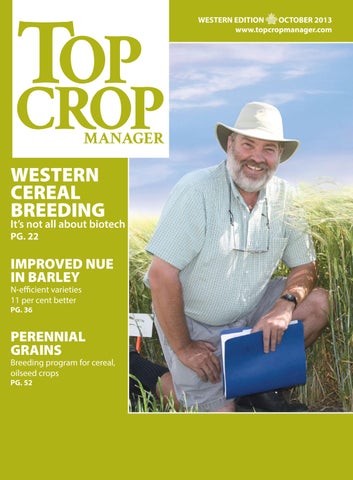
Although plant breeding tools, techniques and technologies have changed over time, the real advancement in plant breeding has been in efficiencies, according to Dr. Brian rossnagel, who is featured on our cover. rossnagel is professor emeritus at the University of Saskatchewan’s Crop Development Centre, which is recognized nationally and internationally for basic and applied crop research and development, and for successful field crop breeding. In a story on page 22, rossnagel says plant breeders – and farmers – on the Canadian Prairies face some of the toughest growing conditions, but work continues to ensure the best possible genetics is available for producers.
One plant breeding project of interest is a major international effort, the International Wheat Genome Sequencing Consortium, a project undertaken to sequence wheat’s DNA. As part of this effort, Canadian researchers are working on the Canadian Triticum Advancement Through Genomics project. Knowledge derived from this project will provide Canadian breeders with the tools to more precisely target key traits and create even better wheat varieties for western Canadian farmers. read more about the initiative on page 6.
Our plant breeding and genetics stories in this issue don’t stop at wheat – we looked at a new breeding project that is taking on the challenge of moving flax production onto the northern Prairies. Most producers in this area tend to grow canola, barley and sometimes wheat. Unfortunately, increasingly short canola rotations lead to problems like blackleg, so diversifying by adding flax may help reduce such problems. The higher moisture conditions in the northern Prairies, too, could help flax yields, compared to those in the south where drought can be a problem.
Another intriguing idea presented in this issue of Top Crop Manager is the development of perennial crops that, once established, offer several benefits to Prairie growers. A handful of crop breeders around the world are working on breeding programs focused on perennial grain and oilseed crops, including Canada’s Dr. Douglas Cattani who heads the perennial grain breeding program at the University of Manitoba. The development of perennial crops is an interesting concept, and Cattani knows producers will naturally be skeptical. He thinks, however, there is enough potential in them for some growers, especially those in areas with issues like organic matter loss and excessive soil erosion. read more about this fascinating topic on page 52.
Speaking of soil, in this issue we introduce a new column by Dr. ross McKenzie, a well-known agronomy research scientist, now retired from Alberta Agriculture and rural Development. read what Dr. McKenzie has to say about the loss of agricultural land on the Prairies, and what we need to do to reverse that trend.
At the end of the day, research into plant breeding and genetics continues to drive crops forward into higher-yielding, more nutritious food for humankind. It’s crucial this type of research continues in Canada.
SAlES ASSISTAnT Alice Chen • 905.713.4369 achen@annexweb.com
MEDIA DESIGnER Brooke Shaw
PRESIDEnT Michael Fredericks mfredericks@annexweb.com
PUBLICATION MAIL AGREEMENT #40065710 RETuRn unDElIvERABlE CAnADIAn ADDRESSES TO CIRCulATIOn DEPT. P.O. Box 530, Simcoe, ON N3Y 4N5 subscribe@topcropmanager.com
Crop Manager West - 8 issuesFebruary, March, Mid-March, April, June, October, November and December1 Year - $45.00 Cdn. plus tax
Top Crop Manager East - 7 issuesFebruary, March, April, August, October, november and December - 1 Year - $45.00 Cdn. plus tax
Specialty Edition - Potatoes in Canada - February1 Year - $16.00 Cdn.
Mentor, trusted advisor, and the mainstay of the operation, he is also their forefather, uncle and friend. Within the next generation of the family, he has instilled a strong work ethic and taught them the rewards of perseverance.
InVigor® needs Liberty® the same way. Because powerful Liberty herbicide is the backbone of the LibertyLink® system and together, they’re partners.
Pat Goodman, Swan RiveR, MB
Unsung hero.
advaNCiNg WhEaT BREEdiNg
T h ROugh g ENOmiCS
Prairie researchers are part of a leading edge international initiative.
by Carolyn King
Canadian researchers are part of a major international effort to sequence wheat’s DNA. The knowledge gained through their leading edge project will provide Canadian breeders with the tools to more precisely target key traits and create even better wheat varieties for western Canadian farmers.
The project is called Canadian Triticum Advancement Through Genomics (CTAG). Triticum is the genus that wheat belongs to. For instance, bread wheat’s species is Triticum aestivum, and durum wheat’s species is Triticum turgidum. Genomics is the study of an organism’s entire DNA – its genome.
CTAG is Canada’s contribution to the International Wheat Genome Sequencing Consortium (IWGSC), an international group working collectively to sequence the wheat genome. The basic knowledge generated from a wheat genome sequence will increase our understanding of the structure and function of wheat’s genetic code.
This basic knowledge has valuable practical applications. According to the Consortium’s website, “By gaining increased understanding of the biology of agronomically important traits and deploying stateof-the-art molecular tools, plant scientists and breeders will be able to accelerate wheat improvement to meet the challenges of the 21st century.”
CTAG’s purpose is to develop genomic tools and increase genomics capacity in Canadian wheat breeding programs. The $8.5-million project is led by Dr. Curtis Pozniak, durum and CPS wheat breeder at the University of Saskatchewan’s Crop Development Centre (CDC), and Dr. Pierre Hucl, a spring wheat breeder at CDC.
The project brings together more than 20 researchers from the
University of Saskatchewan, the National research Council Canada, Agriculture and Agri-Food Canada, University of Alberta and the University of regina. International collaborations with scientists from France, Australia, Germany, India and the United States are contributing to CTAG’s success. The project is receiving funding support from Genome Canada, Genome Prairie, the Saskatchewan Ministry of Agriculture, the Western Grains research Foundation, the Alberta Crop Industry Development Fund, Alberta Innovates and Viterra.
CTAG, which started in 2011, has three scientific components: generating the first high quality sequence of one of wheat’s chromosomes; carrying out targeted sequencing of Canada’s most important wheat varieties; and developing DNA markers for traits relevant to Canadian wheat breeding programs. CTAG also has a socioeconomic component, which is examining the role of public-private partnerships in wheat genomics and breeding research. This component is led by Dr. Viktoriya Galushko at the University of regina and Dr. richard Gray at the University of Saskatchewan.
A big, complicated genome
The IWGSC includes researchers from more than 20 countries. Sequencing the wheat genome requires a large international group for several reasons.
“One reason is that the wheat genome is big. It’s five times the size of the human genome. One of the wheat chromosomes, chromosome
ABOVE: Curtis Pozniak is co-leading a major project that’s part of an international effort to sequence wheat’s genome.
3B, is bigger than the whole rice genome. The sheer size alone has meant that an international effort is required,” says Pozniak.
“A second reason is that the wheat genome is duplicated. It has three ancestral progenitor species that have come together to make bread wheat.”
So the bread wheat genome is actually made up of three complete genomes, which are referred to as the A, B and D genomes. each of those genomes has seven chromosomes, making a total of 21 chromosomes in bread wheat.
Pozniak explains how that triple genome adds to the overall complexity: “In many cases when a gene is present on the A genome, there is most likely a corresponding gene on the B genome and a corresponding gene on the D genome. But that doesn’t mean all of them work to generate a phenotype. For example, if you have an effective leaf rust gene on chromosome 1A, the corresponding gene on chromosome 1B may not contribute resistance. In some cases, all three genes might work together to generate a phenotype.” (A phenotype is an individual organism’s observable characteristics, for example, a plant’s height, its resistance to a disease, and so on. The characteristics expressed in the phenotype are influenced by its genetics and by the environment it’s living in.)
The Consortium’s approach to dealing with wheat’s complexity is to sequence individual chromosomes one at a time. The CTAG researchers are working on sequencing of chromosome 1A, in collaboration with researchers from Switzerland and Turkey.
Pozniak notes, “All of the wheat chromosomes contain valuable genes to wheat breeding, but we chose a chromosome that would offer some immediate value to Canadian wheat breeders. Chromosome 1A has several genes of interest. For example, many of the genes that influence dough strength are on 1A. As well, 1A has a number of disease resistance genes that are important to Canadian breeders.”
As well, CTAG is benefiting from the work by other Consortium members. “For example, we have gained access to parts of the sequence from chromosome 3B. That chromosome contains genes that result in expression of solid stems, which in turn provide resistance to the wheat stem sawfly, an important insect pest in parts of Western Canada. We have used the sequence from chromosome 3B to develop DNA markers for that important trait for use in our breeding programs,” notes Pozniak.
A DNA marker is a sequence of DNA associated with a particular trait. Breeders use these markers to quickly screen breeding material in the lab for the desired traits, rather than having to take weeks or months to grow seeds into plants and test them for those traits.
Targeted sequencing
For CTAG’s targeting sequencing component, Pozniak and his colleagues began by working with international researchers to develop a strategy to sequence only the genes in the wheat genome.
“Only 20 per cent of the wheat genome contains genes,” explains Pozniak. The other 80 per cent of the genome is composed of long stretches of repetitive DNA, but researchers don’t yet know what this huge portion of wheat’s DNA does.
Along with honing in on the gene portion of wheat, the CTAG researchers are further targeting this component by focusing on important Canadian wheat varieties. Through this approach, they aim to identify the genes that affect desirable traits in wheat so they can develop DNA markers for those traits.
So far they have sequenced well over 50 wheat varieties. Twenty of those were sequenced as part of CTAG, and the others have been
sequenced through related projects that Pozniak is involved in. Another 50 varieties are in the pipeline to be sequenced in the next few months.
However, access to the sequences alone has little practical value to wheat breeding. The next step – and it’s a challenging one – is to figure out where the genes are located and what traits they are associated with.
The CTAG researchers have started the laborious process to determine that. These studies are helping them make progress on several traits. Pozniak says, “For example, scientists at Agriculture and AgriFood Canada are working on the CTAG project to identify a resistance gene for Ug99, a virulent stem rust race. The same group is also working to understand Lr16, a rust resistance gene on chromosome 2B. Sprouting tolerance is being worked on by at least two groups in the CTAG project. Our group is working on cadmium accumulation in durum wheat and resistance to the wheat stem sawfly. As well, in collaboration with Dr. Curt McCartney at Agriculture and Agri-Food Canada, we are trying to understand and identify DNA markers for resistance to the orange wheat blossom midge.”
Greater genetic gains
Along with continuing its existing activities in the coming year, CTAG will also be working on some of the newer technologies that have come on-stream since the project started – such as genomic selection.
“One newer technology is the utilization of genome sequencing combined with plant breeding. This is referred to as genomic selection, where thousands of DNA markers are assessed simultaneously to select several sections of the genome together. Genomic selection is an emerging breeding methodology that is gaining momentum in several important crops like corn, rice and soybean. However, application of genomic selection in practical breeding programs still requires considerable work and validation,” explains Pozniak.
“Our group is evaluating this genome-wide approach to see how it will work in practical breeding programs. To do that, we first have to develop the technique, the statistics, and validate the mathematical prediction models that we would use as plant breeders to make it all work.” Teketel Haile, a PhD student in Pozniak’s program, is already working to assess the potential of the technology to improve grain yield.
According to Pozniak, genomic technologies are about improving the efficiency of breeding programs, rather than speeding up the breeding process.
“These technologies can help us improve efficiency so the material that we are testing in the field has a better probability of becoming a variety. But we still need to make crosses. We still need to increase the seed. We still need to test it in the field in environments that mimic producers’ fields to ensure that the varieties have the performance expected under field conditions,” explains Pozniak.
“I’m a wheat breeder first and foremost,” he adds. “My number 1 goal is to develop high yielding durum and CPS varieties adapted to Western Canada that mature on time, are resistant to insect and disease pests, and have end-use functionality that is in demand. But I am a proponent of using all available tools at my disposal to achieve this goal. That’s what I really find exciting about genomic technology. It’s about: how do I integrate genomic technology with what I do in the field, with what I do in our quality testing lab, with what we do in our disease nurseries? How do I integrate all of that together in such a way as to develop the best varieties possible for western Canadian farmers? To me that’s what is exciting.”
n ew cereal va R i ET i ES u PdaTE
More choices in cereal crop production.
by Bruce Barker
Public and private plant breeders continue to bring new cereal varieties to market, with improved yield, disease resistance, new marketing opportunities and better agronomic performance. The 2014 crop year will see 14 new varieties with a scattering through the different cereal classes.
Canadian Western Red Spring
AAC Bailey is a hard red spring wheat suited for all wheat growing areas of the western Canadian Prairies, especially short season zones, due to it maturing four days earlier than Carberry. It yields two per cent higher than Lillian with higher flour yield and stronger gluten. AAC Bailey is rated r (resistant) to leaf and stem rust. Available from Canterra Seeds. SY433 is a hollow-stemmed, awned CWrS wheat, producing a consistent, high-quality grain with excellent absorption, stability and mixing tolerance for baking. Yield is 101 per cent of AC Barrie (check). SY433 offers very good resistance to leaf, stem and stripe rust, loose smut and bunt, and moderate resistance (Mr) to Fusarium head blight (FHB). Distributed through Cargill.
CDC VR Morris is a hard red spring wheat with a very high yield
potential averaging 117 per cent of AC Barrie. It has a very strong disease package, including Mr for rusts, general leaf spotting and fusarium head blight. Available at Viterra Ag retails.
CDC Thrive is a hard red spring wheat with a yield potential of 112 per cent of AC Barrie. It has Clearfield tolerance and offers growers cleaner fields, higher protein content and earlier harvest. Available at Viterra Ag retails.
Canadian Western Hard White Spring
AAC Iceberg represents a new generation of hard white wheat with improvements in yield and disease resistance over other white wheat varieties available in the market. AAC Iceberg is an awned, semi-dwarf wheat with good standability and large kernel size. AAC Iceberg is the highest yielding hard white wheat, with yields comparable to hard red spring wheats such as Carberry. In three years of hard white wheat Cooperative tests across Western Canada in 2008, 2009 and 2011,
ABOVE: Fourteen new cereal varieties are available in Western Canada for 2014.
The Leader in Overlap Control
Auto Zone Command prevents costly input overlap by instantly stopping product flow in up to 10 metering zones. The more zones you control, the more money you will save.
FLIP is SeedMaster’s patented mapping software that activates Auto Zone Command and halts product flow the first time openers pass through an overlap area. Product is then applied on the last pass, preventing double seed and fertilizer from being applied, and avoiding any seedbed disturbance. The Big Payback – Savings using a 10 zone, 80 ft. drill
1
4
AAC Iceberg yielded an average of 70 bushels/acre and had an average grain protein of 13.9 per cent. It will be available on a limited market development program through Alliance Seed Corporation.
Durum
CDC Desire is a new CWAD wheat that offers excellent protein and colour characteristics. This durum variety has similar height characteristics to AC Strongfield, but with an earlier maturity and enhanced standability. CDC Desire has resistance to leaf rust, stem rust and stripe rust, and offers a similar Fusarium head blight (FHB) rating to AC Strongfield. Developed by Syngenta Canada.
Winter wheat
AC Emerson, a Hard red Winter Wheat is the first wheat in Western Canada with an r rating to FHB. It is suited for the winter wheat growing region of the Canadian Prairies. It yields 100 per cent of CDC Falcon, has excellent lodging resistance, a high test weight and improved protein content, and will be included in the milling class. AC emerson is rated r
to stem and stripe rust. Available from Canterra Seeds.
Pintail is an awnless, high yielding feed quality winter wheat. It has a high yield rated at four per cent more than the general purpose checks, and is particularly well adapted to the Parkland area with very good winter hardiness. It is resistant to stripe rust and rated Mr to leaf spots and powdery mildew. Pintail has moderate height and good lodging resistance. It will be available in the fall of 2014 through Mastin Seeds.
Two-row malt barley
CDC Kindersley two-row malting barley yields 106 per cent of AC Metcalfe, matures one day earlier, and has shorter, stronger straw compared to AC Metcalfe. CDC Kindersley also offers improved test weight, kernel weight and per cent plump compared to AC Metcalfe, with an excellent malt quality profile. Available through SeCan Association and under market development by Canadian Maltsters.
Six-row malt barley
CDC Anderson is a six-row malting barley with yield potential
103 per cent of Legacy, shorter stronger straw and earlier maturity. CDC Anderson was recommended as a malt with a malting profile similar to the checks but with lower malt beta-glucan. With strong straw and high grain quality it makes an excellent feed variety with upside potential for malt should the demand arise. Available through SeCan Association.
Oat
CDC Big Brown is a high yielding brown hulled oat with excellent milling quality, good smut and crown rust resistance. Yield potential is 104 per cent of CDC Dancer and 105 per cent of AC Leggett. It has higher per cent plump, lower per cent thins and higher kernel weight than CDC Dancer. Maturity is three days later than CDC Dancer. CDC Big Brown is currently on the list of approved milling varieties for richardson Milling in Portage la Prairie. Available through SeCan Association. AC Stride is a high yielding white hulled oat with good smut and crown rust resistance. Yield potential 101 per cent of CDC Dancer, and 104 per cent of AC Leggett in Western Canada in the Coops. AC Stride has medium height, but excellent lodging resistance and is well adapted
across the Prairies. Available through SeCan Association and currently under milling evaluation.
Triticale
Brevis has a yield advantage of approximately 10 per cent over check varieties. It has very good test weight that is close to the average weight of wheat. Brevis has a shorter straw with good lodging tolerance. It is resistant to prevalent rust races including Ug99. It is also moderately resistant to fusarium. Seed is very limited in 2013, and should be more widely available in 2014 from Wagon Wheel Seed Corp at Churchbridge, Sask.
Taza is an awnletted (reduced awn expression) standard height triticale line intended for use as a feed grain conserved forage, swath grazing crop and potentially for industrial use. Taza is adapted to the Prairie provinces. Taza yields similar to Pronghorn but is equal to or higher than AC Ultima and AC Certa. This line has good lodging resistance, good test weight and high kernel weight. Taza is MS to Mr for FHB resistance; it is resistant to leaf rust and stem rust. Available from Len Solick, Halkirk, Alta. Winkler Family, LANGDON, AB
There’s no stronger tie than the family who works together on the same land. For them, farming’s a tradition.
InVigor® – proud to be part of your family farm for over 17 years. Runs in
And although each new generation has their own ideas, there are some things they will be reluctant to change, the things that have consistently performed for them, the things that aren’t broken.
Flax FOR ThE NORThERN PRaiRiES
Combining breeding and agronomics so northern flax can get growing.
by Carolyn King
Flax is grown mainly on Canada’s southern Prairies, so flax varieties and production practices have been developed with that region in mind. Now the Northern Adapted Flax Variety Development Project (NAFVDP) is taking on the challenge of moving flax production onto the northern Prairies.
“The project has two components, a breeding program to develop new cultivars adapted to the northern Prairies, and an agronomy program to optimize agronomic practices for flax grown in the north. Without proper agronomy, the new cultivars cannot perform to their potential. Including both components from the beginning has made this project very potent,” says Dr. Jan Slaski, an agronomist and crop physiologist with Alberta Innovates – Technology Futures (AITF) in Vegreville.
Slaski leads the NAFVDP’s agronomy program, and Michelle Beaith, a flax breeder with Viterra in Saskatoon, leads the breeding program. The NAFVDP officially started in 2010, although Viterra did some initial crosses starting in about 2007.
The Saskatchewan Flax Development Commission (SaskFlax) is co-ordinating the NAFVDP. Along with support from Viterra, AITF and SaskFlax, the project has received funding and/or in-kind contributions from Saskatchewan’s Agriculture Development Fund, Western Grains research Foundation, Manitoba’s Agri-Food research and Development Initiative, Flax Council of Canada, Canadian Agricultural Adaptation Program, Agriculture and Agri-Food Canada (AAFC), Manitoba Agriculture, Food and rural Initiatives (MAFrI) and BC Grain Producers Association (BCGPA).
Slaski sees several benefits for northern farmers from producing flax. He notes that oilseed flax is one of the more profitable crops on the Prairies, and he says the number of flax fibre opportunities, at least in Alberta, is increasing. “Also, we have very limited rotation options in the northern Prairies. Most farmers here grow canola, barley and sometimes wheat. really short canola rotations lead to problems like blackleg
TOP AND ABOVE: Improved early season vigour of a northern pre-coop line (left) compared to a check (Flanders)(top). A flax line with northern adapted characteristics (both bolls and stems are ripe, determinant) versus a line with traditional characteristics (right).
in canola. Diversifying their rotations by adding flax would help reduce such problems and benefit farmers.”
According to Slaski, there are other potential advantages too. The higher moisture conditions typical of the northern Prairies could help flax yields, compared to the south where drought can be a problem. “Also it has been proven experimentally that when flax is grown where temperatures at night are lower, the seeds contain oil of better quality, particularly higher levels of omega 3 [fatty acids] and other characteristics that are important for the flax oil industry,” he notes.
Breeding northern flax
“We want to breed varieties for the northern Prairies, but we’re also hoping these varieties will perform well in the traditional flax growing areas as well,” says Beaith. “essentially we’re trying to develop varieties with a broader adaptability.”
Her breeding program is focusing on several traits that are especially valuable in northern growing conditions. “We are looking at early season vigour, so the flax plant is able to germinate quickly and get a good start on growth early in the growing season. We’re also working on improving its ability to germinate in cooler soils, and on reducing the days to maturity,” she says.
As well, the program aims to improve two traits that would make flax harvesting easier, which is very important for northern production but would also be an advantage in the south.
“One of the major issues with flax is that some varieties tend to still have green stems when the bolls are ready to harvest, making swathing and combining really difficult. We would like to develop varieties that dry their stems right down so they are brown, not green, at harvest,” explains Beaith.
“Another common characteristic of flax is that towards the end of the growing season, when the bolls dry down, the plants often start to produce new flowers and then green bolls. So you can end up harvesting a lot of green matter. We’re trying to develop lines with a more determinant habit, so they flower for a more definite period of time and don’t re-flower before harvest.”
The breeding program is drawing from a wide range of flax germplasm, including lines from other parts of the world. As in any breeding program, the most promising lines are selected from each generation. Beaith says, “We start with tens of thousands of lines, and by the time we enter material into the Northern Co-op trial, we’re down to perhaps
10 lines.”
For the first few generations, the plants are grown at two Viterra sites just north of Saskatoon. NAFVDP materials are also grown at Viterra’s winter nursery in Brawley, Calif., to gain a second growing season each year. By about the fifth generation, the most promising lines are tested in larger plots so yield data can be collected. The yield trials are conducted by Viterra and other organizations, such as BCGPA, AAFC and MAFrI, at northerly locations across Western Canada. After about two more years, the best lines enter the two-year co-operative testing system established by the Prairie recommending Committee for Oilseeds. Co-op testing for northern flax cultivars is done at nine locations.
Last year was the first year that NAFVDP lines reached the co-op testing stage. In 2013, Beaith has three northern lines in second-year co-op tests. She says, “If these lines perform as well as they did last year, they could be registered in 2014. Of the three lines, probably the best one is two days earlier maturing than CDC Bethune, and the yield is equivalent to CDC Bethune.”
As well, other lines with greater improvements are coming down the pipe. “From the results of our 2012 field trials, at the pre-co-op stage we had material that was three days earlier maturing than CDC Bethune and up to 13 per cent higher yielding. And at two years prior to co-op, we had material that was four days earlier maturing and up to 45 per cent higher yielding,” she says.
“While that sounds good, often a lot of those lines get dropped as we move them through the breeding process. [For example], we don’t usually do our disease screening until one year before co-op. So some of those lines that look extremely promising two years prior to co-op might be dropped because they don’t meet disease tolerance requirements.”
Beaith emphasizes that the major challenge with this project is to develop lines that are high yielding and early maturing. “Ninety-nine per cent of the time the highest yielding lines are the latest maturing. We have developed lines that are 10 days earlier than CDC Bethune, but their yield may only be 75 to 85 per cent of CDC Bethune, so we still have quite a bit of work to do to develop high performing, significantly earlier maturing lines,” she notes.
The breeding program will continue for 2014. Then Beaith and the various agencies involved in the program will assess the results and determine what the next steps should be.
“I’m pleased with the progress we’ve made to date, and am excited to see so many commercial flax fields this year,” she says. “It’s a really good
Yield trials, such as this one at Duck Lake, Sask., identified earlier maturing, higher yielding flax lines suited to northern conditions.
Dr. Jan. Slaski tested a range of options in seven trials to optimize agronomic practices for flax grown in the northern Prairies.
Photo cou R tesy of Vite RR a R& d
Photo cou R tesy of
The agronomic trials showed the benefits of seeding flax in mid-May, applying a fungicide, and conducting other practices.
time to be involved in flax research, and I look forward to registering a couple of northern flax varieties in 2014.”
Optimizing agronomics
The NAFVDP’s agronomy program has two phases. Phase 1 was a three-year study, which was completed in 2012. Its purpose was to identify agronomic practices for growing southern flax cultivars in the north. “We tested three cultivars developed for the south because in 2010 the industry didn’t have any northern adapted cultivars. The cultivars were CDC Bethune, AC Prairie Grande and Viterra’s NuLin 50,” explains Slaski.
The Phase 1 trials took place at Vegreville and at Melfort, Saskatchewan, in co-operation with AAFC. “At both locations, we ran seven trials addressing pretty much all agronomic factors that typically affect crop performance, including seeding rate, date and depth, tillage, nitrogen fertility, seed treatments, herbicide tolerance, and a fungicide,” he says.
The results from Phase 1 showed major benefits from two key practices: seeding date and fungicide application.
Seeding date strongly affected seedling establishment and seed yield of all three cultivars. “At both locations, we found that the highest yield and the most reliable yield was obtained when flax was planted between May 17 and 19,” notes Slaski.
Seeding either earlier or later than mid-May resulted in poorer yields. “With seeding in early May, plant germination was slowed down and compromised, and the crop was subject to spring frosts, resulting in lower stand density and lower yields. Seeding in late May or early June, which is quite typical here, resulted in significantly reduced yields. Lateseeded plants are taller, so they use more photosynthetic resources to generate taller stems and less resources go to the seeds.”
The results of the fungicide trial were a surprise to Slaski. “Headline eC is typically used in flax to control pasmo, a fungal disease that can have drastic yield impacts. The fungicide is typically applied when you see a disease problem. However, some farmers have observed a yield increase from applying this fungicide even without seeing pasmo symptoms. I was very skeptical, but I decided to run a small trial,” explains Slaski.
“The farmers were absolutely right: application of Headline eC to flax without visual symptoms of pasmo led to significant yield increases, in some instances up to 30 per cent increases.”
Several other agronomic practices also helped improve yields. For instance, direct seeded flax did better than flax seeded into minimum tillage plots. Slaski explains, “Direct seeding reduces weed pressure, which is very important for flax because it is a poor competitor.”
Seeding depth made a difference too. “Shallow seeding [0.5 to 1 inch deep] was the worst option. It significantly reduced seed yield. However, there was no yield penalty for seeding deeper, even two inches deep, providing you are seeding into moisture,” notes Slaski.
Moderate seeding rates were better than high rates. “High seeding rates are not recommended for flax because higher stand density makes the stand more prone to disease, such as pasmo, which leads to lower yields. Also, if flax is seeded at a lower rate, about 30 kg/ha, the plants can compensate by developing secondary branches. So a lower seeding rate will produce good yields and the farmers will spend less on certified seed.”
In the fertility trials, flax responded well to higher nitrogen rates. However, there was not a significant yield difference between the urea and the slow-release nitrogen fertilizer plots.
Phase 2 of the agronomy program will start in 2014, when sufficient seed will be available from the breeding program so that Slaski and his research team can run agronomic trials with the NAFVDP’s advanced lines and cultivars. The Phase 2 trials will be based on the key agronomic factors identified in Phase 1.
“Phase 2 will be critical because we’ll be providing flax growers in the northern Prairies with some crucial information to optimize production of the new cultivars. Also, the results from the Headline eC trials will be applicable not only to northern flax but also to flax grown in the southern Prairies. So we are looking forward to making a difference,” notes Slaski.
He adds, “We are really proud to have this team effort of breeding and agronomics. I see great potential for our efforts to contribute to farmers’ well-being and their bottom line in both the northern and southern Prairies.”
Photo
Experience the complete picture with WR859 CL
You won’t miss a single detail when you choose WR859 CL. You’ll get excellent yield and protein potential with a strong disease resistance package including the best rating for Fusarium head blight resistance available in a CWRS wheat variety. WR859 CL is only available at your Richardson Pioneer Ag Business Centre.
PIONEER® FOR THE SALE AND DISTRIBUTION OF SEED IS A REGISTERED TRADE-MARK OF PIONEER HI-BRED INTERNATIONAL, INC. AND IS USED UNDER LICENSE BY THE UNAFFILIATED COMPANY RICHARDSON PIONEER LIMITED.
Simply take the prices your suppliers and buyers offer, or do you make a strategy to maximize your own profit?
Watch your suppliers enter into business alliances with each other while you continue to face the markets alone?
A
farm business alliance to maximize your profitability. It just makes sense.
It’s true that no one farmer even the largest among us can significantly affect the supply chain behind him or the value stream beyond the farm gate. It’s also true that most businesses face similar challenges and have developed strategies to improve their market position and expand their market power.
Farmers of North America is the farm business alliance that is your strategic answer to these challenges. FNA is your supply chain strategy, developing methods, options and entire new businesses to drive competition for your input cost dollar, reducing your expenses and maximizing your profits. FNA is your value stream partner, exploring markets and building opportunities to improve farm revenues and even own a stake in the stream itself.
FNA changes the whole farming system, with a tested team and proven performance. What one farmer cannot do alone, together we can achieve in the FNA farm business alliance.
Together we lowered glyphosate prices from $12 and $16 per litre to under $4 today. We saved growers $60 million in 30 days by driving competition for grassy weed control products. We forced the price of ivermectin from as high as $650 for a 5 litre jug in some areas to under $90 for that same jug today. These are only three examples of achievements that have brought farmers hundreds of millions of dollars in additional profit they would not otherwise have realized. All because they made the strategic decision to join the FNA farm business alliance.
And right now, FNA Members are investing in one of the world’s most advanced fertilizer projects, becoming partners in the FNA Fertilizer Limited Partnership. These farmer-partners are executing a strategy to enter the supply chain rather than merely pay for it. You too can move some of your fertilizer costs from the expense column to the revenue column, and secure your own fertilizer supply by actually owning a part of the new plant.
Check out how much has already been achieved in ProjectN, and follow its progress online at www.projectn.ca. Even better, when you join FNA you can also buy your own Seed Capital Unit and be part of building this impressive initiative.
Together we can move big things in big ways. Join 10,000 other producers in the only farm business alliance dedicated to maximizing farm profitability. For about a toonie per day, we guarantee it will be one of the best investments you ever make in your operation.
Cereal seed from Syngenta helps you harvest opportunities wherever they are. We’ve been breeding wheat in Canada for four decades, setting unprecedented standards for yield, quality and sustainability. The world depends on Canadian grain, and Canadian growers count on Syngenta.
gROWERS u Rg E d TO u SE
RE - CONST i T u TE d C ERT i F i E d
F
lax SEE d i N 2014
Crop Development Centre rebooted flax varieties to get rid of the Triffid gene.
by Bruce Barker
For Prairie flax growers, the summer of 2009 is etched in time. european officials had tested two loads of Canadian flax and found genetically modified material. The GMO flax contained a low level presence of CDC Triffid, a variety developed in the 1980s and 1990s but never sold for commercial production. Somehow, the gene had got out of the bottle and was present in low levels in commercial seed produced from the University of Saskatchewan’s Crop Development Centre varieties. That slammed the door on export to europe, where there is a zero tolerance policy to GMO flax.
“The eU market is very important. eU is the largest importer of flax in the world. In the past it accounted for in excess of 65 per cent of Canadian flax exports,” says William Hill, president of the Flax Council of Canada at Winnipeg, Man.
Flax trade has resumed with the eU based on a protocol of testing flax at varying stages of shipment to ensure that no GM content is present at a level greater than 0.01 per cent. That’s one seed in 10,000. While the level of Triffid contamination in commercial flax seed has fallen over the last three years, the flax industry, including breeders, seed growers, exporters, and commercial farmers, wanted to ensure that the existence of Triffid could be eliminated from the system. Their aim was to reboot the CDC varieties by reconstituting those varieties most commonly grown on the Prairies including CDC Bethune and CDC Sorrel, and two new varieties, CDC Sanctuary and CDC Glas. CDC varieties historically account for about 80 per cent of flax grown on the Prairies.
In essence, plant breeders at the CDC had to go back to their archival samples, test them for Triffid to ensure the lines were clean, and start the entire seed multiplication process over. A research team led by flax breeder Helen Booker analyzed the CDC lines for purity, and sowed them in growth chambers in 2010. From there, Booker aimed at multiplying the pure lines up to enough seed to sow the typical Prairie flax acreage.
“One million acres is the goal for 2014. The 2013 Pedigreed seed harvest is the key but we have had very good uptake of the reconstituted seed by our seed growers. We have way more Pedigreed seed in the ground coming off this fall than usual, so depending on the harvest, hopefully we’re close to the million acres of Certified seed supplies,” says Todd Hyra, SeCan Association’s business manager for Western Canada at Winnipeg.
Plant breeders have made a herculean effort to re-constitute CDC flax seed to eliminate Triffid from Pedigreed seed.
From Booker’s growth chamber lines, only seed from pure lines were harvested, and then shipped to a winter nursery in New Zealand for production in short rows over the winter. In 2011, prebreeder seed was produced in Saskatchewan on a Century Farm that had never grown flax before. The harvested seed was again sent to New Zealand for production of pre-breeder seed during the winter of 2011. The seed was harvested and these breeder seed lots were supplied to SeCan for product of Select or Foundation seed. It was a huge task that started with 150 plants and resulted in the
Run in Comfort
The New CommandView™ III Cab
When you put in a 40-hour week by Wednesday, you are logging some serious time in the seat. Make that time as comfortable and productive as possible with the New CommandView™ III cab available on the new 7R and 8R/8RT Series Tractors. Never one to sacriƟce comfort for functionality, the new cab is quieter than its predecessor and features a seat with a 40-degree, right-hand swivel to give you an unrestricted view of your implement. Better still, the newly designed CommandARM ™ puts machine controls and functions within a comfortable reach; and the 10-inch highresolution display offering comes loaded with performance-boosting GreenStar™ software like AutoTrac™*, which can be easily activated with a subscription. There’s even an integrated refrigerator option. Visit your John Deere dealer today and take the new 7R and 8R/8RT Series Tractors for a test run. Nothing Runs Like
40º seat swivel
production of 40,000 kilograms of Triffid-free breeder seed.
The SeCan members are multiplying the Pedigreed seed under a supplementary agreement in 2012 and 2013 that will help to ensure that the re-constituted flax seed remains Triffid-free. In 2012, the growers were required to plant the re-constituted flax only on land that had been free of flax for five years. In addition, they could not have any commercial flax production on the farm, and must process the new seed in a facility that cleans pedigreed seed under a strict cleaning protocol. The growers also agreed to dispose of the old stocks of CDC Bethune and CDC Sorrel as a grain commodity instead of as Certified seed, and with no Certified sales of re-constituted seed until Sept 1, 2013. In 2013, the same protocols were used except the new seed could be grown on land free of flax of any kind for three years instead of five years.
“I’m extremely proud of how our SeCan pedigreed seed growers rose to the challenge. We have over 100 members who produce Pedigreed flax seed and every one of them signed on to supplementary agreement or agreed to dispose of their old seed stocks,” says Hyra. “That is a powerful message that they are sending to the industry that they are serious about helping the flax industry clean up the seed supplies.”
Originally, the re-constituted seed was to carry a “-14” notation on the name to indicated the seed was re-constituted. However, Plant Breeders’ Rights policies prevent the name change, so instead the re-constituted varieties will come with a certificate from SeCan.
Commercial flax growers can do their part
While the flax industry has made a herculean effort to clean Triffid
out of the Pedigreed seed system, commercial flax growers can also help ensure that the GMO variety isn’t lurking on their own farm to contaminate future production. While the seed growers’ protocol wasn’t extended to farmers, Hyra says that farmers could follow a similar protocol on their farm to clean up any lingering contamination, whether it is in the field or in a bin.
Hyra explains that the whole process relies on a dilution effect with the frequency of Triffid declining each year. The launch of the re-constituted seed is a final push to cleanse the system.
“My fear of recontamination is not from the growers that have been growing and testing their flax. They are already at an extremely low level, and with a switch to the re-constituted seed, the chances of a volunteer with Triffid are minute. Flax acres are low and the risk of back-to-back flax or a tight flax rotation would be rare,” says Hyra. “My fear is that someone may still have a bin from an older supply that has not been tested and that may re-enter the market. This needs to be delivered as grain now so that it is gone from the system.”
Hyra urges all commercial growers to market any old flax seed this fall, and to purchase re-constituted flax seed for 2014. If they do want to use their own farm-saved seed in 2014, it must be tested negative for Triffid. “This is a key part of the message. The infrequent flax grower is the one we need to reach now as they would have the greatest possibility of having something in a bin that has not been tested,” emphasizes Hyra.
Hill agrees and says, “This is our best chance to eliminate Triffid from the system. Commercial stocks are very low, prices are strong and we have a clean planting seed supply to revitalize farm seed stocks.”
TIGER ®
SULPHUR
Nutrient
– MORE than the 4th Major Nutrient h an the 4th Ma j or
Every year more businesses realize the value of TIGER® Sulphur as a crop nutrient.
“The 4th Major Nutrient!” But did you know TIGER® Sulphur is much more?
TIGER® increases N which reduces leaching in the soil. It increases P and uptake by the plant. And combined with K, it increases zinc uptake to help maximize yield. TIGER® Sulphur has the highest nutrient value per uniform size and shape of TIGER® Micronutrient Enhanced is more feeding zones to more plants with improved nitrogen
Our goal is to help you understand and leverage all ® Sulphur. That’s why we have created an extensive body of R&D dedicated to bringing you product delivery. And TIGER® University to help you make the right decisions for your business. Get MORE from the 4th Major Nutrient – get TIGER® Sulphur. Talk with your TIGER®
W ESTERN Ca Nadia N CERE al BREE di Ng CONT i N u ES
Looking back – and ahead: it’s not all about biotech.
by Donna Fleury
Plant breeding tools, techniques and technologies have changed over time, but the real advancement in plant breeding has been in efficiencies.
According to Dr. Brian rossnagel, professor emeritus, and barley and oat breeder, Crop Development Centre (CDC) at the University of Saskatchewan, we’ve had major changes in several technologies that affected plant-breeding efficiency in Western Canada and around the world over the past 30 years.
“Although GMOs have received a lot of attention during the past 15 years, they are just one of the tools in the plant breeding toolbox,” says rossnagel.
Looking back, one of the simple but very important changes was the development of and improvements in small plot equipment. “When I first started at the University, we did almost everything by hand,” says rossnagel. “We and others developed and shared a lot of small plot equipment, in particular seeders and combines, that changed the size and scope of programs, and the volumes of materials that could be produced and evaluated compared to our predecessors.”
Quality screening tools, chemical screening kits, Near Infrared Technology (NIr) and other tools has helped improve screening capabilities. For example, testing for diseases such as fusarium is very costly, and NIr screening can reduce the number of samples requiring the more expensive chemical testing component.
“The development of micro-malting equipment by Australian scientists really helped us move forward with screening malting barley for quality,” explains rossnagel. “Micro-malters allow us to produce actual malt samples from a huge number of barley breeding lines to better screen for enzyme activity and other malting quality parameters.”
Computers, which have changed the way everything is done, have had a big impact on what plant breeders can do. “Before computers, it was difficult to effectively handle all the data in a timely manner
ABOVE: The Crop Development Centre at the University of Saskatchewan is recognized nationally and internationally for basic and applied crop research and development and successful field crop breeding.
to be able to put materials back in the field,” says rossnagel. “Computer data analysis has allowed us to implement better statistical evaluation of the data so we reduce errors and increase efficiency.”
rossnagel adds that plant breeding is biology, not physics or chemistry, and there is variance in everything. To make research results meaningful requires many trials across several locations and over a number of years, greatly increasing the amount of data that needs to be analyzed.
Computers have also changed communication and the ability to expand networks and collaborate with other plant breeders around the world. rossnagel notes that he has worked closely with scientists in Australia and other countries for the last 25 years, and with computers and e-mail he can now be in touch more quickly and conveniently than ever before.
Molecular biology, which includes genetic modification, marker-assisted selection, genomics and other related techniques, has made a difference in terms of improving efficiency. “We can handle more numbers and have another tool to allow us to screen more efficiently without even having to plant the material in the field in some cases,” explains rossnagel. “As an example, the CDC oat breeding program uses genetic markers to screen for certain crown rust resistance genes in the lab and then sends only the most promising ones to our collaborator rust nursery in Ontario to confirm resistance.”
rossnagel adds that it is important to keep these tools in perspective. GMOs have made significant contributions, but they are just another tool that is very expensive and not always the answer to everything. Some advancements, like corn yields, were primarily due to plant genetics and changes to plant architecture to increase plant populations and yield, not biotech. However, biotech and herbicide tolerance has improved the ability to expand corn acres further north by allowing early planting with better early-season weed control.
Improved infrastructure and funding have also helped move plant breeding efforts forward. At the University of Saskatchewan, the Phytotron, a controlled environment plant growth facility, enables three full cycles of crop production in one year. Off-site winter nurseries have also helped increase efficiencies, allowing plant breeders to grow two generations in one year, one in Canada and a second in New Zealand,
Arizona, Chile or wherever the most efficient location is.
“We sometimes get asked the question of why it takes so long to develop a new variety in Canada,” says rossnagel. “The more important question is how long does it take elsewhere, what is the baseline? People need to remember that plants can only grow so much in a certain length of time. There is the impression that molecular technologies could speed things up even more, but that isn’t completely true.
rossnagel adds that an ongoing breed-
ing program is like a factory with crosses going in at the front and varieties coming out the back, and when you make a change and speed it up that “speeding up” only happens once. “Plant breeders and farmers are still faced with the growing conditions on the Prairies, which globally are some of the toughest for crop production. The growing season is short and growers still have to fit their crop production into that window, often with limited moisture, that genetics alone cannot change.”
Over the years, funding from various
sources for plant breeding has improved via farmer investment from commodity organizations, the Western Grains research Foundation and private industry investments. Although public funding has not improved overall, rossnagel notes that through his career the core funding for the CDC from the Saskatchewan Ministry of Agriculture has been critical and continues to be available.
“The funding model we have has worked well and we have had lots of productivity coming out of it,” explains rossnagel. “Investment by private industry, especially from end-user partners such as Quaker Oats or Sapporo Breweries and Prairie Malt Ltd. and others has been invaluable.”
The investments have increased because of the value the industry gets and the collaboration it creates between government, industry, growers, end users and, in rossnagel’s case, the University in the middle. “Working with everyone across the supply chain, including end users, means we are developing varieties that farmers have a ready market for rather than just high-yielding varieties that may not be suited for end markets.”
Future opportunities and challenges
Although communications have improved over the years, looking forward rossnagel also sees a challenge in how communications are managed. “There are examples from private and public programs around the world where information and media about the benefits of new varieties have had a ‘spin’ put on results,” says rossnagel. “It is important to look at how research results are spun, and farmers should make sure to have clear glasses on when they receive information.”
Ask questions about the metrics used, what are the results compared to (i.e., what’s the baseline) and ask to see the empirical data backing up the claims. Contact third parties who don’t have a competitive interest in that new variety, and talk with others who have proper expertise such as those at universities or provincial agriculture departments.
“The current hype around cereal hybrids is an example where there is no significant advantage to growers in Western Canada, but is being talked about again,” says rossnagel. “People worked with hybrid cereals in the ’60s, but the technology
was discarded by the public and private system because there wasn’t enough advantage as heterosis or hybrid vigour is too low in cereals compared to corn or canola to justify the development and seed production costs. There is nothing wrong with hybrids, however for cereals current drivers are about the return for seed developers – not the farmer – and I don’t think it is a good way to make future improvements to cereals.”
Seed production for hybrids is very expensive. For a crop such as canola it is much more effective because of the small seed size. For a larger seeded crop such as wheat or barley it is tricky as you would need upwards of one million acres of seed production alone to turn all the commercial wheat into hybrids, not to mention seed transport logistics and other considerations.
rossnagel is proud of the past and current cereal plant breeding efforts in Western Canada from both public and private breeding groups. Despite the spin that some would like to use, the production gains in cereals have been much the same as for canola over the past 20 years.
“We know there needs to be more investment in plant breeding, but what is the best strategy moving forward? I believe farmers need to really look at trying to put their fair share of investment into this activity and have a fair share of control; if they don’t they won’t have any,” he says. “For crops like canola, farmers are paying a significant portion to technology developers every year in upfront royalties. Although this model may work for canola, I don’t think it’s the best answer for cereals.”
rossnagel believes that some of the biggest challenges facing farmers and industry looking forward are determining who pays, who is in control, who is working for whom, and who benefits from plant breeding.
“One option may be the end Point royalty system the Australians have in place, which is worth looking at and needs to be seriously considered,” he says. “It is very fair, everybody who benefits pays, and fortunately because of that everyone will pay less. The breeder gets rewarded when the variety produced gets sold as commercial product, so if a farmer has a bad year and doesn’t have a crop to sell, there are no fees. The end Point royalty system is the fairest and allows for on-farm seed use and farm-to-farm trade. This may be one of the options going forward that will be a good strategy for cereal plant breeding in the future.”
Plant breeder Brian Rossnagel says that although plant breeding tools, techniques and technologies have changed over time, the real advancement in plant breeding has been in efficiencies.
Photo cou R tesy of B R enda tR ask, s e c an.
N EW m ET hOd TO ha Rv EST WOOd F i BRE
A new harvesting system is similar to that used to harvest silage.
by Tony Kryzanowski
What’s becoming more and more evident is that many of the best ideas for harvesting short-rotation wood fibre crops (SrWC) like willow or hybrid poplar in a plantation setting feature technology familiar to farmers.
These crops can provide an income to farmers as a raw material to produce bioenergy and forest products as well as for their carbon credit potential. One of the latest harvesting systems being tested looks a lot like the system used to harvest silage. The prime mover, which can be a mulcher or a tractor with a minimum 300- to 350-horsepower output is equipped with a specially designed harvesting head called a Bio-Harvester. It chips the wood instead of mulching it and then blows the chips into a trailer, which is pulled by the prime mover. Trailers commonly used to collect and dump silage have been tested and shown to be quite effective in this application.
What’s really different about harvesting wood fibre crops in this way is how well it complements the planting and harvesting cycle in Canadian agriculture, since the best time to harvest the crop is in late fall or winter when other crops have been harvested and the leaves have fallen off the trees. So farmers can harvest another potential cash crop at a time of year when the equipment is usually sitting idle. Another bonus is that the equipment is travelling on the cropland when that land is usually frozen.
Staff at the Canadian Wood Fibre Centre’s (CWFC) edmonton office recently demonstrated the use of the Bio-Harvester for the first
TOP AND ABOVE: Harvesting wood fibre from short-rotation wood fibre plantations is developing into the full package of harvesting and collection in one pass (top). A silage trailer makes an excellent collection vehicle for harvesting wood fibre on plantations when used in tandem with the European-built BioHarvester (above).
time in Canada. The european, purpose-built, front-mounted chipper was mounted on a 400-horsepower, rT400 Fecon tracked mulcher. CWFC’s interest in demonstrating the technology was to provide landowners with options to harvest and capture biomass on SrWC plantations and natural stands.
optimum harvesting is in late fall and early winter after leaves have fallen.
“When using a mulching head, you are smashing and pulverizing the wood and leaving it on the ground,” says Tim Keddy, CWFC wood fibre development specialist. “At present, there is no way to collect it. With this head, it grinds it up into chips and blows it like a snow blower into a hopper that trails in behind.”
The Bio-Harvester can be used to create biomass from both hardwood and softwood fibre, and costs about $125,000.
As part of the demonstration, Keddy rented a high dump trailer commonly used in the agriculture industry, which was towed behind
Trait Stewardship Responsibilities Notice to Farmers
Monsanto Company is a member of Excellence Through Stewardship® (ETS). Monsanto products are commercialized in accordance with ETS Product Launch Stewardship Guidance, and in compliance with Monsanto’s Policy for Commercialization of Biotechnology-Derived Plant Products in Commodity Crops. This product has been approved for import into key export markets with functioning regulatory systems. Any crop or material produced from this product can only be exported to, or used, processed or sold in countries where all necessary regulatory approvals have been granted. It is a violation of national and international law to move material containing biotech traits across boundaries into nations where import is not permitted. Growers should talk to their grain handler or product purchaser to confirm their buying position for this product. Excellence Through Stewardship® is a registered trademark of Excellence Through Stewardship.
ALWAYS READ AND FOLLOW PESTICIDE LABEL DIRECTIONS.
the mulcher, and used it to collect the biomass as it was being chipped. It is capable of lifting and dumping its load into a truck for transport.
The front-mounted chipper was designed specifically for biomass recovery and is manufactured by a German company called AWrI and brought to North America by Fecon Inc. for demonstration. It is able to harvest trees up to 13 centimetres in diameter. During the demonstration, the system harvested 0.6 hectares per hour. The head is adjustable so that stumps can be cut very close to the ground.
Given the capital outlay required for the Bio-Harvester, it makes sense for owners to investigate a variety of applications for the implement to more quickly pay for its purchase. Keddy says there are a number of potential uses for this technology. The first potential use is for harvesting SrWC plantations of densely planted willow and hybrid poplar. The SrWC can be harvested every three years, with up to seven coppice cycles per root system.
In addition to using this technology on their own SrWC plantations, another potential use of this technology by farm owners is contracting it out to other industries, such as oil and gas and power companies – essentially any environment where trees up to 13 centimetres in diameter are being removed. rather than the woody fibre being mulched and left on site, this technology allows for collection of the biomass and removal from the site.
“In the past, mulching and the harvesting have occurred but there were very few ways of collecting the biomass that was being harvested,” says Keddy. “Usually it was just left on site; now this is a way of collecting it and using it for other purposes.”
A third potential use is contracting the equipment out for the Fire Smart program to remove fuel sources particularly around communities to protect them from forest fire hazards. An advantage of using this technology is that the biomass is removed from the site and not left on the ground as potential fuel.
Keddy adds that by combining the Bio-Harvester with a soil stabilizing head that can actually dig 12-18 inches into the ground, stumps and roots can be removed, allowing for the site to be disced and seeded the following spring. CWFC also is investigating its performance.
So far, CWFC has demonstrated this front-mounted chipping and biomass recovery technology on a plantation. Now, it will demonstrate and investigate its use harvesting small-diameter natural stands of willow, black spruce and tamarack, and a mature forest featuring aspen with a variety of understory vegetation for the Fire Smart program.
While the Canadian Wood Fibre Centre conducted trials of this wood fibre harvesting and collection method in summer,
It’s all tied up.
When it comes to yield supremacy, it’s six of one, half dozen of the other.
It’s been talked about, debated, and argued amongst growers across the prairies. When it’s all said and done, according to yield trials, Genuity® Roundup Ready® hybrids yield on par with the competition. * Like all contests this close, the debate rages on... for now.
POTENT ial OF h E m P i N al BERTa g ROWS
Cautious optimism still warranted.
by Shari Narine
There is nothing that gets Jan Slaski gushing more than the potential of hemp as a viable alternative crop for Alberta producers.
“Hemp is a multi-purpose crop, so if you grow it for grain you are still getting fibre,” says Slaski, senior researcher with Bioresource Technologies, Alberta Innovates-Technology Futures (AITF) at Vegreville.
While hemp grain has the market pull, there are more possibilities opening up for hemp fibres. Hemp has the potential to be a dual crop (grain and fibre), but that is a decision producers need to make prior to seeding. Hemp grown for textiles needs to have long, slender stems so seeds must be sown thick and dense, and the crop harvested before the seed reaches physical maturity. However, growing hemp for biocomposites or auto parts requires shorter fibre, which needs to be harvested when the seed is physiologically matured because the fibre is coarser.
The majority of hemp currently grown in the province is in the south and predominantly for grain as that is what, at this point, brings higher market value. But there are advantages to growing hemp in the north because of the longer summer days, which allow hemp to elongate quicker,
and, in turn, mature faster as the days shorten. Slaski says he is working with the Peace Country to set up demonstration plots next season as the interest in crop diversification, particularly for the biomass aspect, is high. Also of interest is whether better soil composition in the north will create higher omega-3 percentage in hemp than it does for flax.
Overall, hemp acreages are increasing in Canada primarily because producers are seeing financial return. In 2012, Alberta was second in hemp production with 5,500 hectares to Saskatchewan’s 8,800 hectares. In 2011, Alberta had the highest production at 6,500 hectares. Despite those figures, Slaski says, “Some of my colleagues say that statistically hemp does not exist in the province yet.”
Grain production
The grain market drives the production of hemp today and is pulling the number of hemp acreages up, says Lori-Jo Graham, development officer, Biomaterials, Bio-Industrial Opportunities Branch, with
ABOVE: Jan Slaski, senior researcher with Bioresource Technologies, Alberta Innovates-Technology Futures, with the fibre-type cultivar Silesia, to which AITF owns the rights.
Photo
Alberta Agriculture and rural Development (ArD), in Olds.
Hemp’s popularity in the food and nutraceuticals markets is due to its desirable omega-3 and -6 essential fatty acid ratio, in conjunction with containing a complete protein in functional quantities that the human body can easily use.
With the three Prairie provinces accounting for over 90 per cent of hemp grown in the country, Manitoba is the current centre for processing hemp grain. Most Alberta-grown hemp is sent to Manitoba for processing and then returned to Alberta for various uses. And while Manitoba’s processing capacity has been meeting market demand, that may change, according to Kellie Jackson with ArD’s Crop Business Development Branch in Airdrie.
“Some of the larger producers are starting to look at ways to get more value. So I think the signals are coming that we may see grain processing come on line in the next year or two in Alberta,” she says. “But like anything else, it has to be a good business decision to fit into that equation before it would tip the balance to Alberta having that kind of capacity.”
Short- and long-fibre production
Hemp can grow very quickly and requires only a short growing season. “During this time hemp is capable of producing huge amounts of biomass, which yields a very usable and desirable fibre,” says Slaski. Hemp produces two types of fibre, each with a different industrial application.
The inner core fibre, also known as hurd or shiv, accounts for 70 to 75 per cent of the stalk, and Alberta’s production is being used primarily as bio building materials, poured like concrete into frames for walls. The bast fibre (long, outer fibre) accounts for the remaining 30 per cent of the hemp stalk. The longer fibres are used for biocomposites, nonwoven mats, fibreglass replacement for car parts, and plastic replacement. Through a process called scutching, hemp is made ready for the high-value textile market.
In 2009, the Alberta Biomaterial Development Centre (ABDC) commissioned several systems, including a decortication facility in Vegreville. The facility is a research and pilot plant offering a one-ton-per-hour non-continuous bast fibre (including hemp and flax) processing capacity available for industry use through fee-for-service contracts. Manitoba has a bast fibre processing plant, which mainly processes flax, and another facility in that province, near Gilbert Plains, is expected to open this year.
Hemp research in Alberta AITF’s Vegreville research farm is one of 11 sites across Canada participating in the National Hemp Variety Trials co-ordinated by the Canadian Hemp Trade Alliance. Seven cultivars (X59, CFX-2, CrS-1, Silesia, Canada, Finola and Delores) are being tested. This is the second year of a five-year trial of a new suite of cultivars that have been bred primarily for the Prairies. While it is too soon to extrapolate any data, Slaski says last year’s results “do look promising.” He notes that the tallest plant in his breeding nursery hit 4.2 metres in height and
produced a “huge volume in biomass.”
The research farm is undertaking two other trials. One is a 14-acre fibre production and testing field, to test harvest options, postharvest retting regimes and to produce hemp stalks for testing decortication parameters. The other is the maintenance breeding nursery of the fibre-type cultivar Silesia, to which AITF owns the rights. The breeding objectives are to increase fibre yield in general and the content of bast fibre in particular, to preserve the monoecious status of the cultivar and to maintain THC below the acceptable limit of 0.3 per cent.
AITF is in the process of securing funding to set up demonstration plots in northern and southern Alberta. Slaski is excited about the possibilities of a cultivar bred for the Prairies. “Sooner than later these newly developed cultivars for Canada will take off.”
Presently the majority of hemp producers in Alberta use cultivars brought in from Finland, Poland, and Ukraine. Because they were bred for other soil and climactic conditions, these cultivars have proven to be a challenge. Cultivars produced in southern Ontario have proved even less beneficial when tested at the AITF’s Vegreville site, by not flowering or maturing, and dying in mid-September frosts. A small number of Alberta producers are using cultivars bred in Saskatchewan. While the Saskatchewan-bred cultivars would be the optimal choice of Prairie producers, not enough cultivars have been bred for all producers to use.
“To introduce a new cultivar and to generate Certified seed material for large acreages takes time,” notes Slaski. “You start from a small volume. Hemp cultivation is limited to a certain extent to the availability of Certified seed.”
One of the more challenging aspects of growing hemp is harvesting the crop. regular combines work for harvesting seed, but problems arise when harvesting the fibre. The stalks, which are strong and can stand three metres high, can wrap around the moving parts of the combine and start fires.
To circumvent the issue, farmers typically grow short stalk cultivars to reduce the volume of biomass passing through the combine. “This is not a practical solution, as the farmer and industry would be forgoing the potential dual income value of being able to market both the grain and straw at top value,” notes Slaski.
Lori-Jo Graham says staff at ABDC and ArD’s AgTech Centre in
Lethbridge are examining different harvesting techniques. ABDC is also investigating harvesting systems from Australia and europe. “Our goal is to adapt machinery that is already available, not to have the farmer buy a whole suite of other equipment implements,” she says.
Future market growth
Hemp can be grown organically because the crop currently has few pathogens. Including hemp in a crop rotation can help control nematodes and improve soil texture because it has large root biomass. The crop is pest resistant and grows quickly. As well, at this point, organically grown hemp brings higher value in the food and nutraceuticals markets.
But, notes Slaski, “If producers interested in targeting the hemp fibre markets want to compete on a wider scale and produce the acreages that fibre processing plants are going to require, they’ll have to consider the use of herbicides. Work to develop minor herbicides is being undertaken in collaboration with colleagues in other provinces.”
Fulton Smyl, program manager at ABDC, believes there is the need for more widespread knowledge transfer and research on industrial hemp. This would provide industry with better agronomic and market information that could position hemp as a viable option for producers.
“I just want to temper some of the things people have been saying,” he says. “Private industry has indicated there is a potential business case for creating processing capacity in Alberta, but I don’t think it’s a foregone conclusion construction will be this year or next year.”
In response to the hemp industry potential, the ABDC is reviewing the opportunities and gaps for the hemp industry in Alberta. The findings will inform recommendations for best practices and options in supporting the growth of the industry in Alberta.
Developments in the U.s. benefit the prairies
Jan Slaski, senior researcher with Bioresource Technologies, Alberta Innovates-Technology Futures, sees the return of the hemp industry in some parts of the United States as another opportunity for market growth for Prairie hemp producers.
According to the report “Hemp as an Agricultural Commodity,” which was produced by the U.S. Congressional Research Service this past July, Canada and China are major suppliers of hemprelated products to the U.S. Whereas Canada is a major supplier particularly of hemp-based foods, China has the market on hemp textiles in the U.S.
But Slaski says Canadian hemp producers have more to offer than product.
“We know how to do it. We have suitable acres. We have a 15-year advantage over our southern counterparts in production and have been an important supplier of hemp grain and fibre to the U.S. With enhanced processing capabilities it could open even more markets to Canadian hemp down south,” he says.
Production of hemp was banned on the North American continent in 1938. Canada lifted that ban in 1998. Some U.S. states have in place, or are working toward passing, legislation permitting production of hemp, although a nationwide ban remains in place. In November 2012, Colorado allowed the cultivation of small test plots; today industrial hemp is being grown in that state. Kentucky is also on its way to growing industrial hemp.
The challenges of growing and harvesting hemp and the knowledge Alberta producers have gained will prove a clear advantage over our neighbours to the south – and a clear marketing tool.
Lori-Jo Graham, development officer, Biomaterials, Bio-Industrial Opportunities Branch, with Alberta Agriculture and Rural Development, is in agreement with Slaski. “We like to say we have this window of opportunity to get commercialization happening in Alberta and then Alberta will be looked toward as a centre of excellence.”
She holds that research facilities, such as the one AITF operates in Vegreville, will be attractive to U.S. state research programs. A number of states that are presently anticipating the jump into industrial hemp production, such as Kentucky and Maryland, are undertaking pilot projects.
“I think our research facility will bring a lot of the American interest into research and development and into using Alberta skills and expertise and work that has already happened here,” says Graham. She also anticipates benefiting in collaboration with the U.S., with both Canadian and American producers growing large enough quantities of hemp to compete with the fibreglass market.
Slaski adds, “This is a time of opportunity for Alberta to secure a stronger position in the U.S. markets before the regulatory framework changes in the U.S.”
The SALFORD 70 ft. 525 disc drill can cover 55 acres/hr. SALFORD equipment combines efficient operating speeds,multiple applications in one pass and durability to maximize your time in the field and help you cover more acres, fast. Disc drills require 1/3 less fuel per acre vs. Hoe Drills. Cover more acres per hour with less horse power required. Salford meters accurately sow canola as low as 3lbs/ac. Precision double disc openers promote uniform emergence and high germination rates through precise depth control and exceptional closing,making them the opener of choice for seeding high value crops.
im PROv E d N i TRO g EN u SE EFF iC i ENCY i N Ba R l EY
N-efficient varieties showing 11 per cent better NUE.
by Bruce Barker
Researchers are well on their way to developing new cultivars that have the genetics to utilize nitrogen (N) more efficiently. For farmers, that means lower input costs, and for the environment, it could lower N loss through leaching or nitrous oxide gaseous emissions.
“We are trying to push these materials through the breeding process as fast as possible, and I hope that one or more of these lines may be released for commercial cultivation in 2018,” says Yadeta Kabeta, a research scientist with Alberta Agriculture and rural Development (ArD) at the Field Crop Development Centre (FCDC) at Lacombe, Alta. “In 2012, these materials showed up to 11 per cent superiority in nitrogen use efficiency (NUe) over our standard check cultivar Vivar.”
Kabeta’s long road to developing a better barley with improved nitrogen use efficiency (NUe) started with looking at 10 years of yield trial data from central Alberta. Additionally in 2007, 25 genotypes were grown at six environments for analysis of the pattern of genotypic variation for NUe.
“When we started the NUe work, we were lacking baseline information needed for breeding. Therefore, our initial focus was to try to establish that baseline to understand the genetics of NUe and genetic variability for this trait,” explains Kabeta, who has been working with ArD barley breeder Pat Juskiw.
Based on the analysis, the researchers found there was significant genetic variability among barley germplasm for NUe, and that traditional breeding methods were effective for improving barley yield in low N environments. In the trials, Vivar and Xena were superior in NUe. Vivar is a six-row, rough-awned, high-yielding semi-dwarf feed barley developed at the FCDC at Lacombe. Xena is a two-row feed barley that is the standard in high-yielding feed barley for Western Canada.
Breeding an improved NUE barley
With proof that NUe in barley had genetic variability, Kabeta set
ABOVE: The 2009 germplasm evaluation plots.
out to find better germplasm than Vivar and Xena. During 2009, the researchers screened over 700 germplasm lines assembled from the FCDC breeding program at Lacombe, and additional lines from the University of Minnesota, the University of Adelaide, Australia, and international research centres ICArDA and CIMMYT. Out of these and subsequent evaluations, three additional lines were identified as highly N efficient. While the germplasm were only as good as Vivar for NUe, they had complementary N efficiency attributes and could be selected for within the breeding program.
Using these three lines, six crosses were made and advanced to a stage where lines from the crosses could be evaluated for yield and NUe. The preliminary results in 2012 showed that the best lines had up to nine per cent higher grain yield than the best check cultivar Vivar. These lines are in their second year of field-testing at four sites in Alberta in 2013, and are the ones that Kabeta hopes to have registered within five years.
Not satisfied with the scope of the germplasm screening, Kabeta reached further afield to semi-arid areas of the world. In 2011, 84 elite germplasm lines from across Asia, Africa and South America were evaluated under field conditions. From these, the best line was selected and tested under field conditions in 2012. One selected line had a 10 per cent higher mean grain yield and recovered 22 per cent more N in the grain than the best check cultivar Vivar.
“Our hypothesis was that these germplasm may have developed different forms of adaptation to low N growing conditions in their native environment,” explains Kabeta.
New research is going to use a complex crossing scheme to combine the best line from the first round, the best line from the second round, Vivar and Breton, a recently released cultivar from
the FCDC. “The goal is to pyramid the different NUe genes and develop a cultivar that is superior in N efficiency and also meets other requirements of feed quality, resistance to diseases and, of course, grain yield,” explains Kabeta.
Kabeta’s research group is also working to develop molecular markers for NUe. The researchers plan on tagging the NUe genes so they can implement marker-assisted selection for NUe in their breeding program. In past years, the Alberta Crop Industry Development Fund (ACIDF) funded the program. For this next round of funding running from 2013 to 2016, ACIDF, Alberta InnovatesBio Solutions and Alberta Barley Commission are co-funders. This funding will cover the marker development work, develop lines from the second round of crossing, as well as carry out genetic and physiological characterization of the efficient lines.
research on genetics of NUe isn’t new. In 1995 at the University of Alberta, Allen Good discovered a NUe gene. He is working to genetically engineer barley that overexpresses an enzyme alanine aminotransferase (AlaAT). This enzyme is important in N metabolism and an overexpression of AlaAT has been shown to improved biomass and other NUe attributes in canola and rice.
“Looking at the pedigree and performance of Vivar, it seems that Vivar has inherited this gene. Our molecular group is going to confirm this hypothesis as part of our new funding,” says Kabeta.
While new NUe barley lines may still be five years out, when they do become commercially available, that will be good news for farmers and the environment. In Canada, fertilizer use has risen from 200,000 tonnes in 1960 to 1.8 million tonnes today. Farmers will welcome anything that can be done to cut those input costs.
Advanced testing of selected germplasm lines and checks in 2010.
Advanced NUE barley breeding lines in 2013, which may hit the market in five years.
OaT advOC aTES lOOK TO i NCRE a SE ma RKETS
Oat growers aim for gains in the horse feed market.
by Carolyn King
For decades, oat production in Western Canada has been declining. A big part of that decline has been due to a decreasing market for oats in horse feed. But Prairie oat growers believe they have a horse-healthy product. So, using a combination of nutritional research and outreach to horse owners, they hope to recapture some of the U.S. horse feed market.
According to Statistics Canada data, Prairie oat production reached a peak of 7.6 million tonnes in 1942. Since then, the overall trend has been downward, with production at 2.3 million tonnes in 2012.
“We’ve seen a steady decline in oat production starting in about the 1950s. That’s when there was significant shift from horse power to mechanized power; we saw less and less oat production for animal feed, particularly for horses, on the Prairies,” explains randy Strychar, president of Ag Commodity research, a company specializing in providing oat market information and analysis.
“In the last 15 to 20 years, the decline accelerated due to the loss of the equine market (the horse market) in the United States. They shifted from feeding horses with oats or oats and a sweet feed [feed mixtures with molasses] to a pelletized, more complex feed. Pelletized feed is based on a least-cost formulation; ingredients can range from corn to barley to oats to wheat midds [a byproduct of wheat milling], plus supplements and other feed ingredients,” notes Strychar, who adds that since the early 1990s, oats consumed in the U.S. horse market has dropped from about 1.1 million tonnes to around 300,000 tonnes.
“In addition, we’ve seen about a 10 per cent decline in cattle numbers in Western Canada over the last 10 years, which has reduced the on-farm feeding of oats. So essentially, the only demand for Prairie oats is from the milling sector, but that sector only has about a one to two per cent annual growth rate.”
To reverse oats’ downward slide towards becoming a minor crop, the Prairie Oat Growers Association (POGA) is working on a three-year initiative to increase oat exports, with the help of $195,000 in funding from Western economic Diversification Canada. The initiative’s major focus is the U.S. equine market.
Big potential in horse rations
“Oats have been a good crop for Canadian farmers,” says Strychar. “They are easy to grow. They are low input, low cost. They can
take drought conditions and excessive moisture, they’re good in a rotation, and they’re easy to market. When we had a fairly robust demand in the equine sector, we had an outlet for almost every quality of oats the farmer grew, from 1 CW [Canada Western] all the way down to 4 CW. Getting that sector back for the farmers is extremely important.”
Prairie oat growers hope to recapture some of the U.S. horse feed market.
According to Strychar, even a small increase in the amount of oats in U.S. equine rations would make a big difference to Prairie oat exports. “A horse consumes about five pounds of concentrated feed per day. [Given the number of horses in the U.S.], if the amount of oats in that feed could be increased by just a quarter of a pound, we could be looking at an increase of about 150,000 to 160,000 tonnes.”
To work towards regaining the U.S. equine market, POGA created its equine Feed Oat Project in 2009. The project’s purpose is ‘to research, educate and communicate information about oats to the equine industry.’ So the project offers a researchbased approach to advocating for oats in horse diets.
“The thrust of our approach is that we have discovered oats haven’t really had an advocate in the equine sector,” says POGA president Bill Wilton.
Strychar agrees: “Oats got lost in the shuffle when the equine industry went to a least-cost formulation pelletized feed because there was nobody to stand up and say that oats are still a good feed for horses.”
The equine Feed Oat Project’s primary goal is to increase oat consumption in the U.S. equine market, says Strychar, who is the project’s co-ordinator. “The secondary goal is to push the price envelope. In other words, we don’t want to just sell more oats cheaply; we want to sell oats at a higher price [based on] quality, reliability and sustainability.”
One of the project’s first activities was to meet with people involved in the equine industry to get a better understanding of the issues in the equine feed market.
“We determined that oats have been replaced in manufactured feed rations to a large extent by other products,” notes Wilton. “We initially thought the cost of oats was the issue, but as we looked more deeply into it, we think it actually has to do with convenience – to issues like not having the availability of storage, not having timely delivery and so on. Other products closer to the feed manufacturers are getting precedence over oats.”
The project also conducted focus group sessions to gather the views of U.S. horse owners. “We found that horse owners really thought they were getting more oats in their pre-mixed feeds,” says Wilton. “We also discovered they perceive oats as a safe, natural and healthy feed for horses. So we think we have a ready market for our oats.”
For now, the equine Feed Oat Project’s education and marketing efforts are aimed at reacquainting horse owners with the known benefits of oats in horse diets. In the longer term, POGA hopes to have further research information to support the link between oats and horse health.
Science-based information
“From the beginning of the equine Feed Oat Project, we wanted to have science-based information. We don’t want to be selling smoke and mirrors. We want to be able to
say, ‘We think this is a better feed for your horse, and here are the reasons why’,” says Wilton.
As a first step, the project commissioned Dr. Laurie Lawrence, an equine nutritionist at the University of Kentucky, to conduct a comprehensive review of the published research on oat nutrition for horses. From the review, she concluded oats are a horsehealthy grain.
Armed with that information, the equine Feed Oat Project has now started funding research studies to answer some
LIGHT YEARS AHEAD PROTINUS® seed-applied fertilizer delivers a nutrient boost that gives you faster emergence, larger seedlings and bigger roots. And a stronger start means you can look forward to stronger results at harvest. Use the technology that’s light years ahead. Ask your retailer for PROTINUS or visit PROTINUS.org.
key questions about exactly how oat consumption affects horse health and performance.
To guide this research program, POGA established the equine Oat research Advisory Board in 2012. The board members include a wide range of experts from the U.S. and Canada, including equine nutritionists, oat millers, horse feed manufacturers, equine veterinarians, oat growers, oat breeders and people who communicate with horse owners through magazines and television.
The board has already recommended several research proposals to POGA for funding. For example, POGA and Saskatchewan’s Agriculture Development Fund have provided a research grant for a two-year study by Lawrence to compare the effects of oats, wheat midds and corn on gastrointestinal issues in horses.
“There is some really preliminary evidence that eating oats might lead to a reduction in gastrointestinal issues in horses, which could potentially prevent the onset of colic [abdominal pain, a serious health problem in horses],” says Strychar. “So we want to investigate that further.”
In another study, equine nutritionist Dr. Lori Warren from the University of Florida aims to determine whether oats with higher beta glucan levels would benefit horses. Wilton says, “We know beta glucan has health benefits for people; we want to know if those benefits would translate to horses.”
POGA hopes such studies will provide scientific information that could be used in extension and marketing efforts to encourage horse owners to buy rations with a higher proportion of oats. With that increased demand, oat production on the Prairies could increase, benefiting oat growers and others in the oat value chain.
“For instance, if the research proves that a higher beta glucan content benefits horses, then we would encourage Prairie growers to grow oat varieties with higher beta glucan. Whether producers will get more money for those, I don’t know. But if we can increase the market for our oats, then we should be able to maintain a more consistent supply and get a premium price,” says Wilton.
If the equine Feed Oat Project’s efforts are successful, Strychar believes Canadian oat exports to the U.S. horse market could again
reach at least 1.1 million tonnes. “Our target is about 1.6 million tonnes, which would make oats close to the third largest export of an agricultural product in Canada.”
Other strategies
In addition to its equine market efforts, POGA is working on some other strategies to help increase Prairie oat exports to food and feed markets.
For example, the association is hoping to find ways to address some challenges in the transportation system for oats. “We want to see if we can bring together oat shippers and buyers to talk about what each can do to make the system more efficient. Maybe that will encourage greater use of oats,” says Wilton.
“We also want to make sure we’re shipping the right way to places like Mexico. We’re told we can’t be competitive in some cases shipping to Mexico. But Australian oats come to Mexico. It’s been a long time since I was in school, but I know it’s a long way from Australia to Mexico.”
POGA is also working with a consultant to expand Prairie oat exports into the food and feed markets in Mexico. “We think the Mexican market and the Mexican experience could be a way to open up our opportunities into Central America as well,” says Wilton.
One of POGA’s key strategies is involvement in the Prairie Oat Breeding Consortium, which received funding under Growing Forward 1. The consortium is a joint program between Agriculture and Agri-Food Canada (AAFC) and the private sector. “The members include all of the major North American oat millers, POGA, SeCan, FP Genetics and a seed distributor from Australia, who put up the industry portion of the money,” explains Wilton. This industrydriven breeding program aims to develop disease-resistant oat varieties for the Prairies with the processing and nutritional qualities desired by processors and consumers.
With POGA’s combination of strategies to increase equine and food markets for Prairie oats, the trend line for western Canadian oat production could finally be on its way back up.
Photo cou R tesy of P o G a
Although oats have many positive qualities, production on the Prairies has been trending downward for decades.
Bill Wilton, Prairie Oat Growers Association, says the association is funding research on the value of oats in horse diets.
Photo
l i ST OF midg E TOl ER a NT
W h E aT
va R i ET i ES g ROWS
Huge strides in development of new varieties.
by Andrea Hilderman
Infestations of orange wheat blossom midge are a fact of farming life in Western Canada, where populations can quickly reach epidemic proportions if conditions are favourable.
In 2006, it was estimated Prairie growers lost about $40 million due to midge damage through both yield losses and downgrading. For an individual grower, this could amount to $20 to $75 per acre.
Midge tolerant wheat launched commercially with a bang in 2010 although it had been in the works for many years, even decades prior to that. AC Goodeve VB, distributed by Alliance Seed Corporation, and AC Unity VB, distributed by SeCan, were the first two varieties growers had access to that brought the Sm1 gene for midge tolerance to bear in the ongoing battle against pests in wheat. Now, heading into the 2014 growing season, there are nine varieties for growers to choose from, and more are in the multiplication stages with seed growers.
So how have growers adopted midge tolerant technology? According to Todd Hyra, western Canadian business manager with SeCan, the uptake of these varieties by growers “has been excellent right from the get-go. In Saskatchewan, it’s actually been overwhelming, reflecting the importance of midge there as a pest. In Alberta and Manitoba, it’s somewhat more hit-and-miss; though there is more midge than many recognize, it’s just not as obvious as in Saskatchewan where growers have suffered devastating losses over the last 20 years.”
Growers are not only choosing this technology for their farms to combat orange blossom wheat midge, they are seeing some great performance on yield as well. “If you look at the top yielding wheat
ABOVE: Dr. Pierre Hucl, wheat breeder at the Crop Development Centre, University of Saskatchewan, stands in midge tolerant wheat plots. Dr. Hucl released midge tolerant wheat CDC Utmost VB.
If you’re looking for your local Pioneer Hi-Bred sales representative, try the nearest farm. You see, we’re always out walking the fields, talking to our neighbours and checking the crops. In fact, we make it our mission to know everything there is to know about our local growing conditions. That way,
we can help our partners get the best yield possible. It’s this kind of passion that’s helped Pioneer Hi-Bred sales representatives become leaders in the seed business and in their communities. Talk to your local Pioneer Hi-Bred sales representative or visit pioneer.com for more information.
AC Unity VB
AC Goodeve VB
AC Glencross VB
AC Fieldstar VB
AC Shaw VB
AC Waskada CWRS SeCan Spring 2010
AC Intrepid CWRS Alliance Seed Corporation Spring 2010
AC Burnside CWES Faurschou Farms Spring 2010
AC Waskada CWRS SeCan Spring 2011
CWRS
AC Domain
CDC Utmost VB Harvest
AC Conquer VB
AC Vesper VB
AC Enchant VB
AC Waskada CWRS
AC Crystal
Source: www.midgetolerantwheat.ca
varieties in the Saskatchewan Seed Guide, they are all midge tolerant types,” says Hyra. “The on-board protection the Sm1 gene offers results in extra yield on a consistent basis.”
Asked if every grower should be considering midge tolerant wheat on their farm, Hyra advises that growers need to determine their biggest challenges. “Is it lodging or speed of harvest, disease package or midge? In Saskatchewan, midge rises to the top as the biggest challenge very quickly. As you move east, a short, strong straw becomes more important,” he notes. “every grower has to work through what is his biggest obstacle to consistent high yields, and choose a variety that best works to neutralize it.”
Growing midge tolerant wheat requires growers to sign a stewardship agreement. “This is really necessary to preserve this midge tolerant technology,” explains Hyra. “The easiest solution would have been to require growers to purchase certified seed every year, but that would have restricted uptake of the technology. The compromise solution was the stewardship agreement.” The agreement gives growers access to the technology and in return they are required to limit their use of farm-saved seed to only one generation past Certified seed.
“In all the years I have been involved with this technology, long before commercialization, my experience with growers has been overwhelmingly supportive of the stewardship agreement,” says Hyra. results from surveys conducted by the Midge Tolerant Wheat Stewardship Team show that 92.8 per cent of midge tolerant wheat (MTW) growers in 2012 agree it is critical to have a stewardship program in place to ensure the effective life of the midge tolerant gene is protected. That is up slightly from 91.5 per cent in 2011 and 90.3 per cent in 2010 (the first year of commer-
FLAX GROWERS
Spring 2012
Spring 2012
Spring 2012
Spring 2013
Genetics Spring 2014
cial production). The survey also found that 88.3 per cent of MTW growers agreed an interspersed refuge system prevents a buildup of virulent or resistant midge population, and 86.5 per cent of MTW growers agree that to keep the refuge at the desired level of 10 per cent of the plant population, it is necessary to limit the use of farmsaved seed to one generation past Certified seed. Both of the last two survey questions are showing increasing agreement since 2010 as well.
C.K. Acres Ltd. is owned by Clinton Kirilenko at Landis, Sask., and he farms in an area plagued by midge. “Midge tolerant wheat is a beautiful tool to have on the farm,” says Kirilenko. “Knowing you don’t have to waste time scouting those fields and hauling out the sprayer is huge.”
Kirilenko was an early adopter of this technology in 2010 when AC Unity VB was one of the first two midge tolerant wheat varieties released. He grew AC Unity VB again in 2011 from saved seed and in 2012 he switched to CDC Utmost VB, which was two to three inches shorter and had a stronger straw. Asked about the stewardship agreement he had to sign on to, he says, “You have to respect the technology. The cost is reasonable but not wasting time scouting for an insect that has a very small window when you can spray, and not having to spray at all is huge.”
Kirilenko has not had a bad midge year yet since he started growing midge tolerant varieties on his farm, although in 2010 there was midge in the area. “We noticed less shrivelled-up kernels in the Unity when we were combining that year,” he says. “But if you are seeing damaged kernels then you know you are losing yield out the back of the combine, and that year we had good yields and good quality.”
It’s time to reboot Canada’s flax industry.
We need to remove Triffid from Canada’s flax supply. Please deliver existing flax into the commercial system before 2014.
With your help, we can start fresh.
Invest in re-constituted or certified flax seed for next spring. Contact your preferred seed supplier to book your 2014 flax planting seed. Let’s move our industry forward.
For more information, see www.saskflax.com
Funding for this program was provided by Agriculture and Agri-Food Canada through the Canadian Agricultural Adaptation Program. In Saskatchewan, this program is delivered by the Agriculture Council of Saskatchewan.
Pencil out a NexeraTM canola contract for at least 500 acres before November 29th – and get a $1000 Signing Bonus. Pencil it out anyway you want. nexera canola makes you more, thanks to healthier premiums, performance and demand for heart-healthy omega-9 oils. See your nexera crusher or retailer. or visit healthierprofits.ca.
Nexera RR Hybrids rank HigHest in grower satisfaction†
Make it NexeratM
And m A ke more.
WHEN IT COMES TO CANOLA , YOU HAVE A LOT OF CHOICES. UFA SHOULD BE THE FIRST.
The top Canola varieties are now available at your local UFA Farm & Ranch Supply store. Talk to us today and we’ll help you make the best selections for your operation so you can grow with confidence all season long. Because a whole lot can grow from one good decision.
Maximizing canola production
Every skilled and successful farmer is a master at weighing options. From seed selection through harvest, countless key decisions are necessary to optimize resources and maximize crop yield and quality. One of those key decisions is selecting the canola varieties best suited to your unique farming operation. Given how quickly crop science and canola variety options are changing, it pays to stay informed on how well the top canola varieties are performing in your area.
One way to stay apprised of canola yield performance is to review results gathered under actual growing conditions. For the past four years, Alberta Financial Services Corporation (AFSC) has published an annual report of crop yields broken down by variety and geography. Called Yield Alberta, this listing is a summary of data collected from every insured acre across Alberta.
“Our priority is to offer relevant, variety specific, field-level yield data in an unbiased format,” says Dean Dyck, a program development analyst with AFSC and co-writer of Yield Alberta. “It’s probably the best source of information available for specific varieties and specific locations.”
Historical yield performance data is based on AFSC’s 22 Risk Areas, making it relatively simple for growers to compare yield performance of the top canola varieties grown in their area. You can visit the AFSC website at www.afsc.ca for more information on aggregated insured acres data.
In addition to yield, consider other agronomic traits when selecting varieties. For example, farmers who operate large farms may prioritize days to maturity.
“By putting a shorter days to maturity variety in a couple days before you plant the late maturing variety, you can get upwards of a week between them at harvest,” thereby spreading the swathing time workload says Shawn Senko, an agronomy specialist with the Canola Council of Canada (CCC).
Likewise, growing varieties with differing days to harvest will reduce your vulnerability to a heat wave at full flower, or an early season frost. A report on the CCC’s variety performance trials can be found at www.canolaperformancetrials.ca which includes both yield and other agronomic characteristics.
Local canola field trial data can also be found by visiting www.ufaconnect.com and then clicking on Crop Demos 2013. UFA has partnered with selected farmers to create crop demonstration sites across
Alberta. Each site is a grower managed field-scale comparison trial using the grower’s equipment and crop inputs. Check out the results on UFA Connect to see which varieties performed best in your area.
Once varieties are selected and growing, maximizing productivity comes from knowing when to swath. Until recently, producers were advised to swath at 10 to 30 per cent seed colour change. However, within the last ten years, research has shown later swathing – once 50 to 60 per cent of seed-coats change colour – results in optimized yield and quality.
Remember too that today’s canola tends to be a much bushier plant with significant yield potential on side-branches.
Finally, remember to cross your fingers. Farming is art, science, and a hefty dose of Mother Nature’s whims.
Fu Ngu S - POWERE d PERFOR ma NCE
Aiming for durum wheats that excel in partnering with beneficial fungi.
by Carolyn King
When arbuscular mycorrhizal (AM) fungi snuggle up to a crop plant’s roots, the fungi, the plant and the farmer all benefit. For the farmer, this partnership brings such advantages as more efficient nutrient use and lower fertilizer inputs. Prairie researchers would like to further enhance that partnership. So they’re working towards durum wheat cultivars that are especially compatible with the fungi.
“Mycorrhizal fungi live in the soil; they are in practically all soils all the time. However, they are not very good at using the carbon in the soil like fungi usually do by decomposing dead organic matter,” explains Dr. Chantal Hamel with Agriculture and AgriFood Canada (AAFC) at Swift Current, who is leading the project. “Instead, mycorrhizal fungi are specialized at living in symbiosis – in
partnership – with plants.”
AM fungi are able to form a symbiotic relationship with most plant species. The fungus enters into the plant’s root, where the plant supplies the fungus with carbon and energy in the form of sugar.
In return, the fungus helps the plant in several ways. “The fungus is very efficient at absorbing nutrients from the soil, especially phosphorus, which is difficult for plants to take up,” says Hamel.
“The fungus also reduces soil-borne diseases because it is able to outcompete other organisms in the soil for root occupation and because it triggers the plant’s defense mechanism against pathogens.
As well, the fungi help in maintaining soil structure.”
However, the level of benefits to crop production will vary depending on both the specific AM species and the specific crop
Growing together for generations.
For 100 years, generations of farm families have contributed to the success of Richardson Pioneer. Five generations of the Mass family have delivered to their local Richardson Pioneer elevator in Weyburn, Saskatchewan.
“We have always delivered to Richardson Pioneer,” says Chris Mass, who has taken over the family farm from his father Don and now works alongside his 21-year-old son, Evan. Younger son Nicholas is eager to follow in his footsteps. “It’s all because of the people - the personal service and the relationships that we have developed over the years.”
plant. “So there’s an opportunity to improve crop production by managing this symbiosis,” notes Hamel. “One option is to apply the fungus as an inoculant on the seed or in the soil. The other option is to improve the plant.”
Hamel’s project is working towards improving the plant. Her research team for this three-year project includes Dr. Walid ellouze, Dr. ron DePauw, Dr. ron Knox and Dr. Arti Singh. Dr. Danny Singh, who was a durum wheat breeder with AAFC, was leading the project until he joined Iowa State University in the spring of 2013. The Western Grains research Foundation is providing funding for the project.
Hamel and her colleagues already knew from the results of their previous research that modern durum wheat genotypes vary in their symbiosis capacity. (A “genotype” is the genetic information of an individual organism; for example, if one durum plant has differences in its DNA as compared to another durum plant, then they are different genotypes.)
“That result was very interesting because some people have said that selection of plants in breeding programs leads to losing [nonselected] traits,” says Hamel. “For example, the argument that people often bring up with mycorrhizal symbiosis is that if you select for plants that are resistant to disease then maybe you’ll end up with plants that are also resistant to the symbiotic AM fungi. And some scientific papers have been published showing that some of the symbiosis capacity is lost in modern varieties. However, by looking at more varieties, you find that, although some seem to have lost symbiosis capacity, others still have it.”
“This finding is very important because it means that our modern
breeding materials can be used to develop cultivars with improved mycorrhizal symbiosis. If the breeders had to go to ancient wheats for the trait, that would have been a much more difficult task [because there are many genetic differences between ancient and modern wheats].”
Markers for symbiosis
The current project’s objective is to develop genetic markers to allow
Researchers are testing durum wheat lines for their response to a beneficial fungus.
breeders to more efficiently select durum genotypes with greater symbiosis capacity. A genetic marker is a specific portion of an organism’s DNA that is associated with a particular trait. researchers use markers to quickly screen breeding material in the lab for the desired traits, rather than having to take weeks or months to grow seeds into plants and test the plants for those traits.
More specifically, Hamel’s research team would like to develop genetic markers to select durum genotypes that have early colonization of their roots by a common, efficient and effective AM fungal species. early colonization would maximize the fungus’s benefits to the plant over the growing season.
The researchers have chosen Glomus intraradices as the AM fungal species for this project. Their choice was based on the results from an earlier study of AM fungal species in Prairie wheat fields conducted by Hamel and her colleagues. They found a diversity of AM fungal species. Some species were quite common, and others were very rare. And some were found everywhere, while others were restricted to certain soil zones.
Glomus intraradices is very common in the Brown soil zone, where durum wheat is mainly grown. And it tends to give good growth promotion to wheat as well as other field crops. “We hope that if we can increase the mycorrhizal fungi in the soil, then it will be good for the whole cropping system,” says Hamel.
The researchers are using two approaches
to try to figure out where along the plant’s DNA the genes affecting AM symbiosis are located.
Their main approach involves using expression of the trait in the plant to try to find the genes. They are now testing about 150 durum genotypes from Canada and other countries to determine the response of each to Glomus intraradices. This timeconsuming task requires growing the plants, then digging up the roots, washing them, staining them and examining them under a microscope.
Once the researchers have identified which genotypes have early AM colonization and which ones don’t, then they will use statistical analysis of the gene maps of the plants to identify the likely location of the genes affecting durum wheat’s response to the fungus.
The researchers’ other approach involves looking for particular genes and then trying to determine if those genes control the AM symbiosis trait in durum. Hamel explains, “Other researchers have found some genes that control the symbiosis in rice. rice is a grass so it has many similarities with wheat, and it may be that the mechanism of AM symbiosis control is similar. So we’re looking to see if the genes found in rice are also found in wheat.”
So far they have found three durum genes that are similar to the rice symbiosis genes. Whether any or all of these genes control the AM symbiosis in durum
is still to be determined. “It’s possible this approach may be faster, but it’s also possible that it won’t work because rice is not wheat,” says Hamel.
Big benefits for crop growers
Wheat varieties with improved AM symbiosis could offer important economic advantages to growers.
One key benefit is more efficient nitrogen use by the crop, so farmers could apply less nitrogen fertilizer, reduce their input costs and reduce losses of nitrogen to the environment. Hamel says, “Nitrogen fertilizer is already expensive. We know the price of energy is going up, and nitrogen fertilizer is produced with lots of fossil fuel so its price will increase too. We also know nitrogen is easily lost. If it rains, nitrogen can be washed out of the soil. It can also be lost in gas form, such as nitrous oxide (N2O), which is a very potent greenhouse gas. So we’re losing nitrogen from our fields, with impacts on air quality and water quality, and farmers are paying for nitrogen, so it’s an economic loss for them.”
Improved symbiosis also would allow farmers to decrease phosphorus fertilizer inputs. “Phosphorus mines are getting depleted now, so more expensive sources of phosphorus will have to be developed. This concern is so important and so urgent that the International Plant Nutrition Institute (IPNI), which is a consortium of fertilizer producers, has provided funding for our work on mycorrhizal symbiosis,” notes Hamel.
Better AM symbiosis also can reduce cadmium uptake by durum wheat. Durum wheat tends to accumulate cadmium from the soil. Fortunately, Canadian breeders have developed low-cadmium-uptake durum varieties. With improved AM symbiosis, cadmium uptake could be even lower. “Mycorrhizal fungi seem to reduce the uptake of metals and we’ve found that the fungi can significantly reduce cadmium uptake. That’s a good thing for international sales of Canadian wheat because some countries have set limits on cadmium levels,” says Hamel.
Another important symbiosis benefit is the reduction of root rot, a serious disease of wheat and other crops.
And with better growth during the durum wheat crop, the fungus will be in great shape to help the next crop in the rotation.
A wheat root colonized by arbuscular mycorrhizal fungi with hyphae (fungal filaments) that radiate into the soil.
of
Stay AFLOAT.
Float above the competition with the all-new Hi-Flotation option exclusive from Bourgault.
Large, 800/65R32 main frame front tires and 540/65R24 (singles) on the inner and outer wing caster wheels provide exceptional flotation through wet spots. Hi-Flotation is available as an option on 2014 3320-60, 3320-66 and 3320-76 and standard on 3320-86.
Hi-Flotation WORKS for
KRIS MAYERLE TISDALE, SK
The Producers: Kris & Rhonda Mayerle
Farm Location: Tisdale, Saskatchewan
Farm Size: 20,000 acres
(land spotted with waterholes)
Bourgault Seeding System: 3320-86 QDA HF with MRBs paired with a 7950 air seeder
LARGE DIAMETER WHEELS PREVENT THE DRILL FROM “DIVING” INTO SOFT SOILS
WIDE FRONT TIRES FLOAT YOU THROUGH WET SPOTS
EFFECTIVELY MANAGE TURNS WITH HF’s WAGON-STYLE STEERING
“The HF tire system [on our 3320-86] floats the drill above the mud, keeping the front end from dropping down; this allows us to go through alot more spots than we were able to in the past.”
PERENN ial g R ai NS i N T h E WORKS
Breeding program aims to develop perennial cereal and oilseed crops.
by Carolyn King
Perennial grain crops offer some intriguing benefits for Prairie growers. For instance, once established, perennials tend to require fewer inputs than annuals. They are better able to make use of moisture and fertility resources during the entire growing season, including early spring and fall. They provide good protection for the soil throughout the year. And perennial grains offer a way to produce food crops on fields that are marginal for annual crop production.
But first breeders have to develop commercially viable perennial grains.
That’s a significant challenge. Some of our annual grain crops have gone through thousands of years of selection by farmers and breeders to transform wild plants into the elite varieties grown on the Prairies these days. even with today’s breeding techniques, this transformation still requires decades.
A handful of crop breeders around the world are taking on this challenge. One of those is Dr. Douglas Cattani, who heads the perennial grain breeding program at the University of Manitoba. This program has received funding from Growing Forward 1, Manitoba’s Agri-Food research and Development Initiative, the University of Manitoba and the Western Grains research Foundation.
Cattani’s program is not yet three years old. So far, its main focus is on intermediate wheatgrass, as a cereal crop, and perennial sunflower, as an oilseed crop.
Wheatgrass for grain
Some Prairie farmers are already familiar with intermediate wheatgrass (Thinopyrum intermedium) as a forage crop. “Intermediate wheatgrass has been grown in North America and around the world as a forage grass for years,” says Cattani. It is a winter-hardy, drought-tolerant grass that lasts about six years under Manitoba conditions. The species was originally introduced to North America from russia.
He notes, “There have been programs to improve intermediate wheatgrass [as a forage species] especially over the last 50 years, and some ongoing work to convert it to a grain-producing plant since the mid-1980s.” For instance, The Land Institute, a Kansas-based, non-profit research and education organization, has an intermediate wheatgrass breeding program. It is currently developing lines suited to central Kansas and refers to the crop as Kernza.
The first stage in Cattani’s intermediate wheatgrass program is to
The quality of intermediate wheatgrass materials involves a lot of variability.
evaluate a wide range of germplasm. “Our biggest concern has been adaptation for Manitoba conditions. We need something that will survive and produce relatively uniformly year after year. So we’re looking at initially survival, and secondly – and as importantly – yield.”
Cattani has obtained intermediate wheatgrass germplasm from The Land Institute and from around the world through the USDA’s Germplasm resources Information Network. The materials have been through two Manitoba winters so far. He says, “We have been trying all of those materials. Some of them are really bad and some are decent.”
Photo cou R tesy of d ou G c attani.
You’ve got so much riding on your canola crop. Why not ensure it gets the ultimate protection from ea beetles and cutworms? Introducing new DuPont™ Lumiderm™ insecticide seed treatment. With new Lumiderm™ in the bag, you can take the next big leap in the science of early season crop protection. Get your crop o to a great start and set yourself up for a successful harvest. Ask your seed retailer or local representative to include new Lumiderm™ insecticide seed treatment to your 2014 canola seed order. Now exclusively available on select Pioneer® brand canola hybrids and Bayer CropScience InVigor® canola hybrids. Visit lumiderm.dupont.ca DuPont™ Lumiderm™ is a DuPont™ Lumigen™ seed sense product.
Just because an intermediate wheatgrass line performs one way in another region does not guarantee it will perform the same way in Manitoba. Cattani gives an example: “We’ve tested materials selected in Kansas for dwarf characteristics because shorter plants have an increased harvest index [ratio of grain yield to above-ground biomass at maturity], which is very important for improving yield. When we grow the Kansas dwarf lines here, we find differences in plant height of up to 90 centimetres. Part of the reason for that may be the difference in hours of sunlight. The maximum day length in Kansas is about 14.5 hours of light, whereas in Manitoba our longest day is about 16 hours 20 minutes. So we may be seeing the effects of the interaction of the environment with the genetics.”
In addition, the Manitoba researchers are selecting intermediate wheatgrass materials for several other traits. For instance, they are looking for non-shattering seed heads, so the seeds don’t end up on the ground, and for threshability, so the hulls come off the grain easily. They’ll be looking at grain quality once they make some initial selections.
As well, the researchers are starting to work on selecting lines that emerge quickly and vigorously. Surprisingly, early emergence seems to be connected to smaller seed size. “We’re looking at some materials that have a big range in seed size – some of the seeds are about 50 per cent larger than others. Our first tests in both the lab and the field found that the smallest seeds emerge faster or as fast as anything else,” notes Cattani. “Those results are based on a uniform depth of planting, so it’s not that the smaller seeds were seeded shallower.”
Cattani’s researchers also are keeping an eye out for disease and insect issues in their intermediate wheatgrass materials. At present, if they see any diseased plants, they immediately remove those materials from the breeding program. Once the researchers have developed some good lines, they’ll evaluate disease resistance in those lines in a more formal way. They haven’t had any insect problems in their plots so far, although Cattani expects they might encounter pests such as cutworms that occasionally affect perennial grass seed crops in Manitoba.
Perennial sunflower
“Manitoba has several native perennial sunflower species, and the one we are most interested in is the Maximilian sunflower (Helianthus
maximiliani). In Western Canada, we have a lot of this perennial sunflower growing along roads and ditches,” says Cattani.
The Manitoba researchers are currently evaluating wild perennial sunflower material from Manitoba and material from other perennial sunflower breeders. They are also crossing wild Manitoba materials with lines developed by the Land Institute. The researchers hope to eventually develop lines suited to Manitoba that have such traits as higher yield potential and plants with a single large flower.
Having one big flower is a key characteristic for commercial production. “In nature most sunflowers have multiple heads on the plant,” explains Cattani. “However, if you have a sequence of flowers blooming over a month and a half period, by the time the last ones have flowered and set seed, the first ones have long since dropped their seed. With a single head, you have uniformity in harvest time.”
Some U.S. breeders have developed uniflower Maximilian lines, but those lines aren’t suited to Manitoba. “Some of the materials we have collected in Manitoba flower in the first couple of weeks of July. In contrast, native sunflowers that other breeders have worked with, especially in the southern U.S., are short-day plants, flowering in September through October, for harvesting around Nov. 1,” says Cattani. “If we planted those materials here, they would probably either flower very late or not at all. So one of my students is making crosses and looking at what is controlling the flowering mechanism to try to get the uniflower trait into our early season germplasm.”
Cattani and his research group are also doing some initial work on other perennial grain species, such as perennial flax. “There are two native perennial flaxes in Manitoba: Linum lewisii, a blue-flowered flax; and Linum rigidum, a yellow-flowered flax,” he says. “We have collected materials and put them out in the field for the first time this year. They will flower and set seed next year. Then we can start looking at the quality of the oils, whether they could be used for human consumption or are more of an industrial type of oil, or whether they are even stable at all. We don’t know yet.”
Some breeders are developing perennial wheats by crossing intermediate wheatgrass with wheat, usually using winter wheat. However, Cattani notes, “We have tested some perennial wheats here, and none have survived after the first year of production.”
He thinks part of the problem may be the type of winter wheat used in the crosses. “Intermediate wheatgrass has 28 chromosomes, so breeders have been using tetraploid winter wheats, which have 28 chromosomes. From talking to our winter wheat breeders, the winter wheats that survive best in Manitoba have 42 chromosomes. However, crossing intermediate wheatgrass with those wheats would be more difficult.”
Commercial potential
Of the grains in his program, Cattani thinks intermediate wheatgrass will likely be commercialized first. “In Manitoba we have a large forage seed production industry, and a number of seed growers have grown intermediate wheatgrass as a certified seed crop. So we know it grows here as a seed crop.”
However, he cautions, “I think we’re probably still 15 to 20 years away from providing producers with an intermediate wheatgrass that has good grain yields consistently over about a five-year period, as opposed to one year of seed yield and four years of hay.
“Often new crops and new concepts are introduced without being properly vetted,” he adds. “Producers might grow it once, but if it’s
The breeders are aiming to develop perennial sunflower lines that are adapted to Manitoba conditions and have commercially important traits.
Photo cou R tesy of d ou G c attani.
Vibrant roots fuel better performance.
Crops thrive with Cruiser Maxx® Vibrance®. When the Vigor Trigger ® effect meets Rooting Power ™, you get enhanced crop establishment from stronger, faster-growing plants, above and below the ground. It also protects your wheat and barley crops against a broad range of insects and diseases and delivers best-in-class Rhizoctonia control.
agronomy Research scientist (retired)
| ROSS H. MCKENzIE, Phd, P.ag
lOSS OF ag R iC ulT u R al la N d
ON T h E PR ai R i ES
Our most important sustainable natural resources on the Canadian Prairies are soil and water. Both are essential to produce food to sustain human life. The dwindling quality and availability of freshwater supplies have received increased attention in recent years, but the importance of soil is not recognized by society. The land and our soil resources are critical to maintaining a viable society.
Alberta has a land area of almost 159 million acres but only 51 million acres are used for agriculture, 26 million acres are in native rangeland or tame pasture used for livestock production and about 25 million acres are used for annual crop production.
Saskatchewan has a land area of 146 million acres with 31 million acres used for annual crop production.
Manitoba has a land area of 135.5 million acres with 10.4 million acres used for annual crop production.
Only 15.7 per cent of Alberta land, 21.2 per cent of Saskatchewan land and 7.6 per cent of Manitoba land is used for annual crop production. Of the 441 million acres of land in the three Prairie provinces, only 15 per cent is used for annual crop production. Most people are under the perception that vast areas of the Prairies are used for crop production. In fact, the land available and suitable for annual crop production is very small.
Sprawling city developments, rural residential developments, expanding rural industrial developments and the energy sector are all constantly taking agricultural land out of production. Most cities across the Prairies are rapidly expanding, permanently removing land from agricultural production. As an example, the city of Calgary presently occupies an area of almost 600 square kilometres with a population of 1.1 million people. In 2012, Calgary grew by 35,000 people, or 3.2 per cent. At a continued population growth rate of three per cent annually, in 37 years Calgary could have a population of 3.6 million people in 2050 and occupy a land area of 1,800 square kilometres. Almost all the best agricultural land in southern Alberta, which is Class 2 land, is adjacent to Calgary Much of this land could be lost from production in the next 40 years if present growth trends continue. Most other cities across the Prairies are also located on productive agricultural land and are also growing rapidly, consuming significant tracks of prime agricultural land.
Alberta and Saskatchewan’s best agricultural land is Class 2,
with the majority located in the Black soil zone. Alberta and Saskatchewan have no Class 1 land as defined by Agriculture Canada’s Land Suitability rating System, which is based on soil type, climate and location. A sizable portion of Class 2 land is under threat from urban expansion, country residential development and industrial developments. For example, Fig. 1 shows the concentration of rural residences in southern Alberta in the Calgary, Lethbridge, Medicine Hat and Brooks areas, which contribute significantly to land fragmentation and removal of land from agricultural production. The oil and gas sector also pose threats to agricultural land.
Photo cou R tesy of Ross m c
A half-section of prime agricultural land south of Edmonton stripped for development.
There are about 120,000 abandoned well sites on agricultural land in Alberta that need to be reclaimed. reclamation procedures can greatly improve crop production potential; however, the soil cannot be returned to its original state. There is an estimated 110,000 kilometres of pipeline crossing farmland in Alberta. In many cases, crop production on the disturbed pipeline right of way areas is only 60 to 80 per cent of pre-pipeline production. The land is still available for cropping after pipeline installation but crop production is reduced as a result of the significant soil disturbance, which affects soil physical, chemical and biological properties.
As best, agricultural lands are removed from production, there are opportunities to develop new lands for production. Unfortunately, lands lost from production are often Class 2 and 3 lands, and new land that could potentially be developed for production are often in the northern agricultural fringe areas. These lands are mostly Class 4 or lower and have moderate to severe crop production limitations. These lands require a higher level of management, often have higher input costs and have lower crop production potential due to soil and climate limitations.
Preserving agricultural land for crop and livestock production is paramount for food production. As non-renewable energy resources are depleted, future generations will likely need to grow crops not only for food and fibre but also for bio-energy sources.
Most people do not recognize or appreciate the critical role soil plays in food and fibre production, and therefore do not consider preserving soil a serious matter. The loss of our soil resource through urban expansion, rural developments and the
energy sector somehow needs to be kept in check to protect land for future generations. Society is starting to recognize the importance of water as a scarce resource but also must recognize the importance of our soil resource. Maintaining healthy, productive soils is essential for future human well-being. The bottom line is soil is essential for sustaining life. Society must recognize the importance of conserving and protecting this very important natural Prairie resource.
TIMING
Fig. 1: Location of rural residents in southern Alberta (indicated by black dots). Note the high concentration of rural residents, which fragments agricultural land, in the Calgary region.
PERENNial gRaiNS iN ThE WORKS
CONTINUED FROM PAGE 54
the crop’s weaknesses that cause it to fail, they will not grow it again. So we want to make sure that when it is released, our intermediate wheatgrass will perform the way we say it does and meets producers’ expectations.”
Successful commercialization also requires a market demand for the product. Food scientists at the University of Minnesota are exploring possible uses of Kernza. “Our current materials have very low gluten. So the flour could be used in things like flatbreads – it makes great pancakes – but to make rising bread products, you’d have to blend it with wheat,” says Cattani. “The food scientists are also looking at how much of the flour you can add without altering the flavour of what is already known to the consumer. I like the flavour of intermediate wheatgrass, but it has a different taste than wheat.”
Perennial potential
Cattani sees a wide range of possible benefits from perennial grain production for agriculture on the Prairies.
“You would save time and energy with perennials by not having to prepare the soil and seed annually. And usually, once a perennial crop has established, it is relatively competitive with weeds, unless there is some sort of disturbance,” he says. “With perennials like intermediate wheatgrass, you can use mowing to control weeds rather than applying herbicides.” As well, diversifying a crop rotation by adding a perennial would help reduce weed, insect and disease pressures in the rotation.
Perennial crops are also good at maintaining and improving soil quality. “They tend to return more organic matter to the soil. And they have roots and rhizomes holding the soil together so there is less potential for soil erosion. Plus having the plant material on the soil surface tends to slow down the movement of water across the surface, which reduces the erosion risk.”
Perennials have a longer growing season and they tend to have larger root systems than annuals. So they can usually make use of water and fertility resources over a longer period and a larger area, and may not need as many applied nutrients. “If they are growing in the fall, then their roots are exploring the soil and taking up the nutrients, and the plants will store those nutrients,” says Cattani. “Or if their roots die in the fall, then some of the nutrients are readily available back to the plant in the next spring.
“Another potential benefit of some of these perennial grains is that you could establish them on perhaps Class 3 lands – lands where there are some negatives to annual cropping,” he adds. “So you could produce a perennial food crop on those areas as opposed to only producing a forage crop.”
From an annual yield perspective, perennial grains are at a disadvantage compared to their annual counterparts, because annuals can put a lot more of their resources into seed production. However, this disadvantage can be turned into a positive in a mixed farming production system.
“In the intermediate wheatgrass materials, the best harvest index we have seen so far is in the low 20s. So basically 20 per cent of the plant’s above-ground biomass, or its energy, ends up in the seed,” notes Cattani. “In comparison, crops like wheat have a harvest index up around 40 or 50 per cent. But that also means there is a lot more nutrition left in the aftermath of intermediate wheatgrass. So you
could harvest the intermediate wheatgrass’s grain and use it for food or feed it to animals. Then you could graze the aftermath on the field or bale it for use as a supplemental feed. It’s not quality hay, but it has adequate nutrition for a beef animal at certain times of year.”
Cattani doesn’t foresee getting to the point where intermediate wheatgrass would have a similar harvest index to an annual wheat. A perennial plant needs to allocate some of its reserves to structures that allow it to be perennial.
He does think perennial grain crops could eventually be part of perennial polycultures, where two or more crops are grown together in a field. For instance, a polyculture might allow a grower to make good use of different niches within a field or of differing growing conditions from year to year. Another option might be to add a crop that can outcompete troublesome weeds.
Or a grower might add a second perennial food crop, such as Indian breadroot or prairie turnip, which is a nitrogen-fixing legume native to the Prairies. “Indian breadroot has an edible root, which can be dried for storage, used as a vegetable in stew, and so on. Its root thickens over a number of years, and at a certain stage you could harvest it,” explains Cattani. “For instance, if you planted it with a perennial grain, then at the end of six or seven years, you could go into the field and selectively harvest these legume roots as a perennial vegetable. We also have wild perennial onions on the Prairies, which are related to domestic onions. They don’t grow as big, but potentially they could have herb uses.
“Of course, we have to develop the perennial crops first. But we need to start thinking about polyculture and looking into it.”
Broader issues
Various groups around the world are interested in growing perennial food crops as a way to reduce environmental impacts while sustainably feeding the world’s growing population.
For example, some researchers have been examining the ecosystem benefits of these perennials, such as reducing greenhouse gas emissions. Others have been assessing how perennial grains might help in adapting to changing climates and in improving food security. In August 2013, the Food and Agriculture Organization (FAO) of the United Nations held an international meeting called Perennial Crops for Food Security. Participants from around the world examined the best available information on perennial food crops and cropping systems, and discussed their potential for food security, climate change resiliency, ecosystem management and economic opportunities.
“There are researchers looking at perennial wheats, rice, oilseeds, corn and other crops in a number of initiatives, all in their infancy,” says Cattani. “But hopefully we can get more buzz around these concepts to put resources towards at least a good exploration of perennial food crops.” He notes that funding for perennial grain breeding worldwide is only a very small fraction of funding for annual crop breeding.
How does he see the future of perennial grains on the Prairies? “Do I think every farmer will adopt them? No. But I think there is a large enough potential that some growers will, especially in areas with issues like organic matter loss and excessive soil erosion. By including a perennial grain, perennial oilseed or perennial polyculture in their rotation, they will help maintain and possibly improve the health of their soil.”