FLEX YOUR HARVEST MUSCLE








OVERCOMING BLACKLEG DISEASE
Canola growers rely on cultivars with genetic resistance as the best practice for managing blackleg disease, as fungicides have little effect in controlling blackleg. However, recently, the risk of blackleg incidence and severity is increasing, with the breakdown of the current resistance observed in some cultivars caused by the emergence of new virulent isolates. That’s why it’s a priority to design canola cultivars with multigenic durable resistance to blackleg disease.
It doesn’t typically impact yield.
Greenhouse trials moved to the field.
Is Olpidium brassicae friend, foe or neutral? 20 New varieties in 2025
Canola growers can choose the best option. RESEARCH
Barley researchers utilize biotech advancements.
Improving stability and drought resiliency in crops.
Demonstrating effects on crop yield and quality.


by Kaitlin Berger
A Change Of Scenery
It was in Iceland that I found myself walking across the crunchy, black surface of hardened lava, avoiding the steaming hot spots and squinting through strong winds at the volcano towering ahead of me. It was in England that I, quite accidentally, joined the masses to catch a glimpse of the king on the way to his coronation and drank tea paired with scones and clotted cream in celebration.
When in Iceland, see the volcanoes. When in England, sip afternoon tea. And when it’s nearing the end of the 2024 growing season, it’s time to start thinking about how you’ll spend the winter. Maybe some projects in the shop have taken a backburner throughout the harvest season. Maybe there’s some bookwork that needs to be completed. Or maybe there’s finally a spare minute to plan a trip south and trade work boots for flip flops and frozen fields for hot, sandy beaches.
Whatever’s in your plans, I’d like to invite you to add another exciting event to your calendar. The 2025 Top Crop Summit is taking place February 25-26 in Saskatoon – and you won’t want to miss it. As the tenth annual summit, this year will be another chance to hear from researchers and industry experts about the latest happenings in agriculture across Western Canada.
The 2025 Top Crop Summit is taking place February 25-26 in Saskatoon - and you won’t want to miss it.
Whether you’re battling a specific pest on your farm or concerned about a disease or wondering how to manage a resistant weed, we have a variety of speakers lined up to fill you in on what you need to know. We’re also including specific sessions on the second day of the conference that dive deeper into better management of soil and water. And there will be some relevant topics for those of you who are curious about the latest innovations in agriculture – gene editing and AI – and how they could impact your business.
One thing I’ve discovered throughout my career is that it’s not just the learning sessions at conferences that provide value. It’s the conversations you get to have with people sitting across from you at lunch or in the lineup for another coffee refill. Taking a break from the keyboard or the workbench for a day is the perfect opportunity for a change of scenery – and renewed perspective.
While Saskatoon in mid-winter isn’t the place you go for volcano exploration or a suntan, it’s the perfect destination to meet other farmers, chat with agronomists and hear researchers provide insight for real-life application on your farm.
You know what they say. When in Saskatoon, attend the 2025 Top Crop Summit. Find more information at topcropsummit.com.
and
subscription inquiries or changes, please contact Angelita Potal, Customer Service Administrator Tel: (416) 510-5113 | Fax: (416) 510-6875 Email: apotal@annexbusinessmedia.com Mail: 111 Gordon Baker Rd., Suite 400, Toronto, ON M2H 3R1
Western Field Editor BRUCE BARKER (403) 949-0070 bruce@haywirecreative.ca
National Account Manager QUINTON MOOREHEAD (204) 720-1639 qmoorehead@annexbusinessmedia.com
National Account Manager REENA UPPAL (437) 922-7359 ruppal@annexbusinessmedia.com
Account Coordinator JULIE MONTGOMERY (416) 510-5163 jmontgomery@annexbusinessmedia.com
Group Publisher MICHELLE BERTHOLET (204) 596-8710 mbertholet@annexbusinessmedia.com
Audience Development Manager SERINA DINGELDEIN (416) 510-5124 sdingeldein@annexbusinessmedia.com
Team Lead/Media Designer BROOKE SHAW CEO SCOTT JAMIESON sjamieson@annexbusinessmedia.com Printed in Canada ISSN 1717-452X
MARTIN TREPANIER
Scientific Expert Director - Active Ingredients Premier Tech Growers and Consumers

SERENDIPITA INDICA: A BIOLOGICAL BOOST FOR CANOLA YIELDS
In recent years, advancements in agricultural biotechnology have introduced innovative ways to improve crop productivity and resilience. One such breakthrough is using Serendipita indica, a beneficial endophytic fungus now available for commercial use in canola production, which has demonstrated its ability to enhance nutrient uptake, improve drought tolerance, and optimize photosynthesis, ultimately contributing to better crop yields. Serendipita indica (formerly Piriformospora indica) can colonize the roots of various plants, including canola. Once applied to seeds or soil, the fungus rapidly colonizes plant’s root surface and epidermis. This process initiates a series of beneficial changes in the plant, particularly in nutrient absorption and stress management.
How Serendipita Enhances
Nutrient Uptake
1. Sulfur Absorption: Sulfur is crucial for protein synthesis, yet deficiencies can limit nitrogen efficiency. Serendipita assists the plant by enhancing sulfur uptake from the soil, improving overall nutrient balance.
2. Phosphorus Uptake: Phosphorus is essential for energy transfer within the plant. When Serendipita colonizes the roots, it stimulates the production of phosphate transporter proteins, which increases the plant’s ability to absorb phosphorus.
3. Nitrogen Utilization: Nitrogen is a fundamental element for plant growth, involved in synthesizing proteins and chlorophyll. Serendipita enhances the activity of nitrate reductase, an enzyme that helps convert nitrate into ammonia, the form of nitrogen the plant can readily use.
4. Iron Acquisition: Iron plays a role in many biological processes, including photosynthesis and respiration. Under conditions of iron deficiency, Serendipita stimulates iron transporter proteins, improving the plant’s iron uptake.
Improved Water Management and Stress Tolerance
Water availability is a critical factor for plant health, especially in dry or saline conditions. Serendipita aids the plant in managing water more effectively by increasing the production of proline, a compound that helps maintain water flow in drought conditions. In saline soils, the fungus also stimulates the production of aquaporins (proteins that help transport water) and sodium channels (which expel excess salt), enabling the plant to tolerate harsher environmental conditions.
Enhancing Photosynthesis and Plant Health
In addition to improving nutrient and water uptake, Serendipita enhances the plant’s photosynthetic process. The fungus stimulates the production of chlorophyll, the pigment responsible for capturing light energy in photosynthesis. By increasing chlorophyll content, the plant becomes more efficient in converting sunlight into energy, leading to better growth and productivity. Moreover, Serendipita helps protect the plant from oxidative stress, which can damage cells under drought or salt stress. The fungus stimulates the production of superoxide dismutase, an enzyme that neutralizes reactive oxygen species, protecting cell membranes and chloroplasts from damage.


Proven benefits
Since 2018, Premier Tech Growers and Consumers have conducted over 30 trials with third party research partners to confirm the benefits of treating canola seeds with Serendipita. In multiple studies, plants treated with the fungus showed improved growth, higher yields, and better oil quality. For example, canola yields increased by an average of 6.5% in trials, with a significant improvement in oil content as well.
Research has since expanded to other crops such as wheat and barley and are showing yield increases from 8.8% to 12.7%.
Conclusion
Understanding and using biological inoculants like Serendipita leads to healthier, more productive canola crops, supporting more efficient farming practices.
The use of Serendipita indica offers a proven approach to improving canola production. By enhancing nutrient absorption, water management, and photosynthesis, this fungus helps plants better cope with environmental stresses and boost their growth potential. For farmers looking to optimize yields and improve crop resilience, Serendipita provides a valuable tool to help mitigate challenges in agriculture production.

Illustration of Serendipita indica colonizing a root. Source: Premier Tech.
Sooty mould blackens canola
While it can look menacing, it doesn’t typically impact yield.
BY BRUCE BARKER
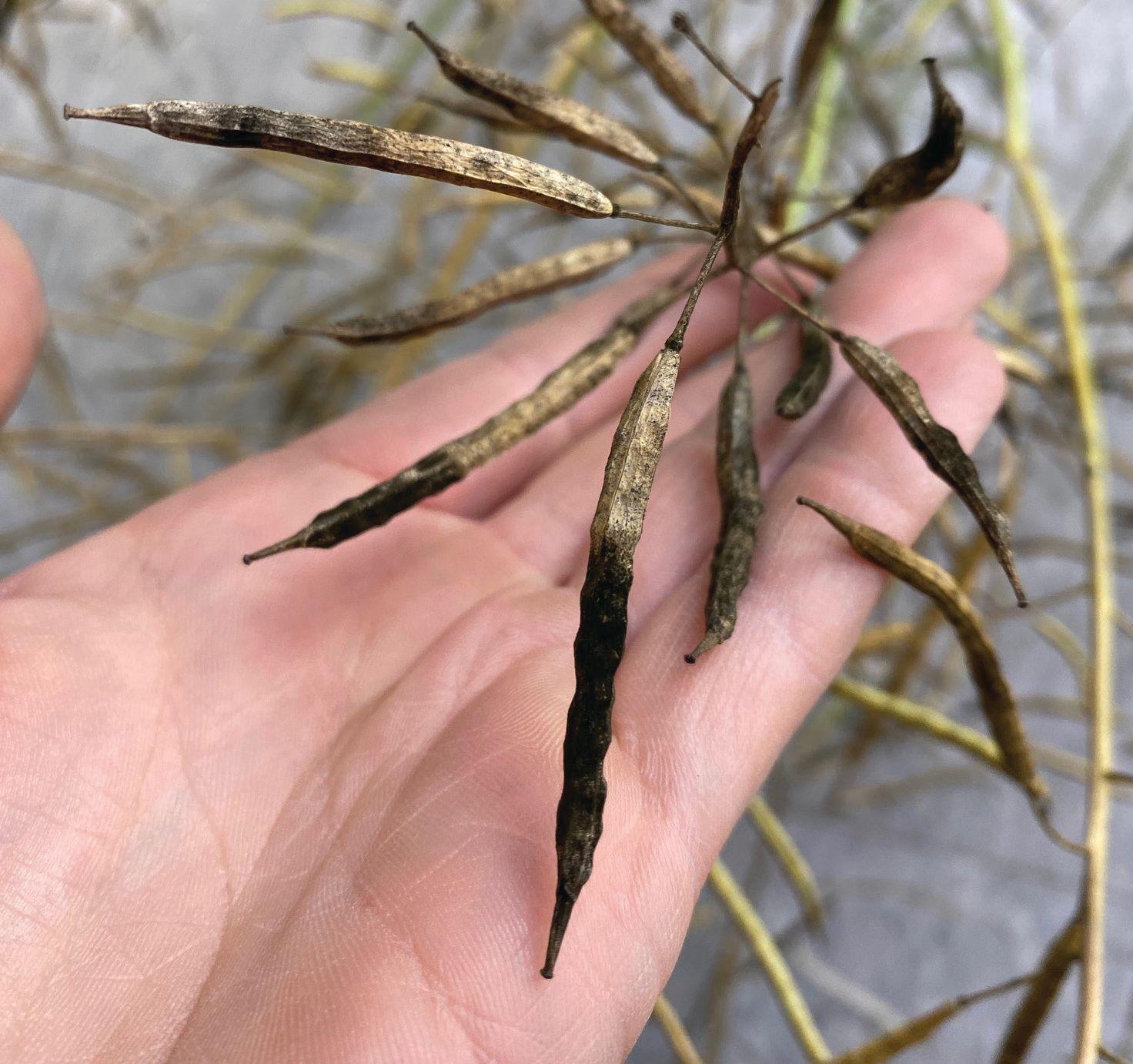
Sooty mould can look bad in canola, turning a normal-looking, tan-brown mature crop into a black menacing picture. But even when a canola crop looks bad, it usually isn’t a cause for concern.
“Given that sooty moulds are saprophytic in nature and only affect the crop after senescence, they typically do not cause much, if any, yield loss,” says Kelly Turkington, a plant pathologist with Agriculture and Agri-Food Canada at Lacombe, Alta. “Sooty moulds would largely remain superficial, primarily affecting pod tissues. However, with extensive sooty mould development resulting from prolonged exposure to wet conditions, grain may appear to be weathered and may have a musty odour potentially resulting in downgrading.”
Sooty moulds are typically caused by non-pathogenic Alternaria species that are saprophytes such as Alternaria alternata. The other fungal species involved in sooty moulds are Cladosporium species and perhaps Sporobolomyces species.
Sooty mould development is favoured by wet conditions and moderate temperatures after the crop ripens, as happened in 2016, 2019 and 2023. Under these conditions, saprophytic fungi start to grow on this dead plant material. At temperatures below 10 C, sooty mould development slows.
“Given the nature of sooty moulds affecting ripened crops, it can be an indicator of other more significant underlying problems. This is primarily the case if the crop is prematurely ripened due to abiotic or biotic stresses,” says Turkington. “So, if you notice sooty moulds in prematurely ripened crops, make sure to also look at what factors maybe have caused the crop or portions of the crop to ripen earlier than normal.”
Abiotic issues include drought, waterlogging and frost. Biotic issues are related to diseases that cause death of a portion or all of the plant, such as clubroot or blackleg, or insect pests like diamondback moth.
The main symptoms of sooty mould are blackish, dark grey or dark olive green fuzzy fungal growth on dead ripened plant tissues. “The affected crop will change from a normal golden brown colouration to a dusty blackish-dark olive green colouration. This can
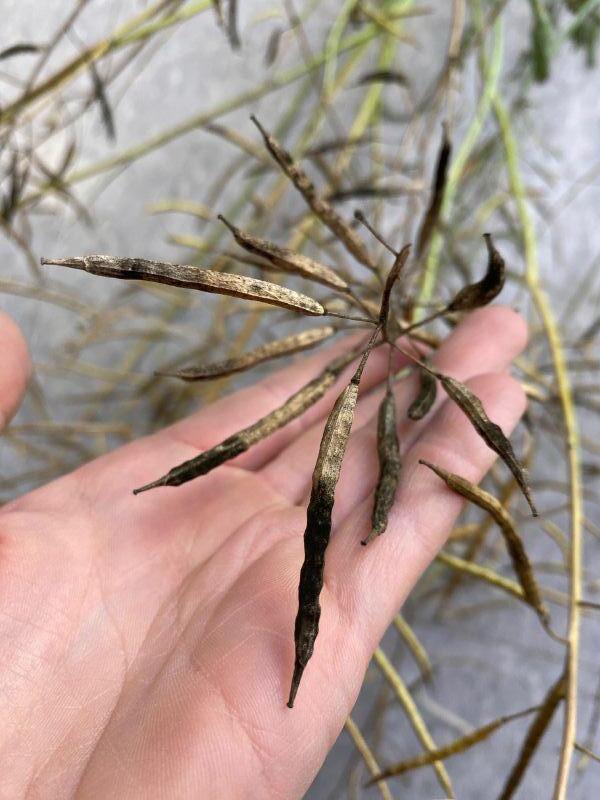
ABOVE Sooty mould remains largely superficial, primarily affecting pod tissues.
occur while the plants are still standing or where the crop has been swathed. Patches of prematurely ripened plants due to waterlogging or root diseases may also go from a light straw colour to the dusty blackish-dark olive green colouration.”
NOT TO BE CONFUSED WITH ALTERNARIA BLACKSPOT
Typically, sooty mould is caused by Alternaria alternata and only grows on dead plant tissues. This means it doesn’t cause issues related to flower abortion, green seed counts, seed shriveling or yield loss.
Photo courtesy of Amanda Smith.
The typical Alternaria species associated with Alternaria blackspot in canola are Alternaria brassicae and Alternaria raphani, although A. brassicicola is also mentioned. Alternaria blackspot affects the growing canola crop while plant tissues are still green.
Alternaria blackspot symptoms will first develop on green canola leaves, before progressing to the flowers and pods resulting in the typical blackspot pod symptoms, says Turkington. Leaf symptoms are often circular and grey and may eventually develop black to purply-black margins. Leaf lesions may also show a concentric ring pattern. However, these symptoms occur on the plant leaves while they are still alive and green. Symptoms on green pods or stems start out as small black to dark brown spots, but can become quite dark in colour, although some lesions develop a greyish centre with a darker black border.
In years past when Polish canola (B. campestris/B. rapa) was grown, blackspot epidemics impacted flower abortion, green seed counts, seed shriveling and yield losses. Fungicides were used to help limit the impact of Alternaria blackspot on pods and seed. Crop rotation and volunteer management of canola plants can help to reduce blackspot inoculum levels.
Finally, sulphur deficiency in canola can result in increased issues with Alternaria blackspot. “The Argentine canola types (B. napus) are less susceptible and this
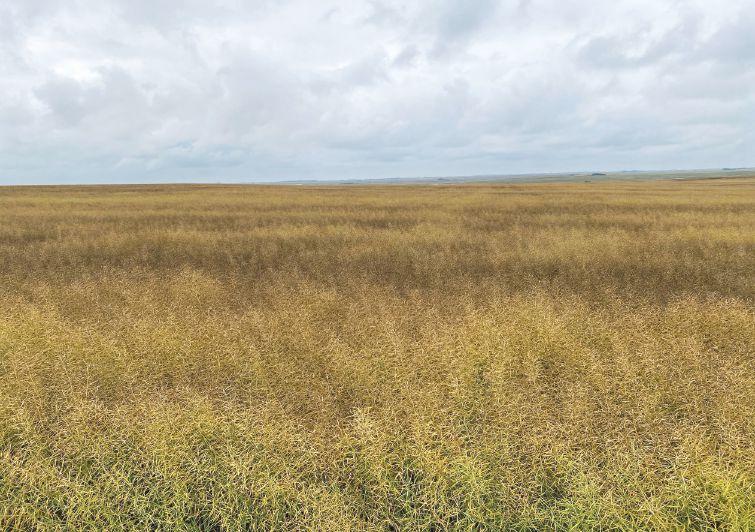
ABOVE Sooty mould develops under wet, warm conditions. RIGHT Alternaria black spot shouldn’t be confused with sooty mould.
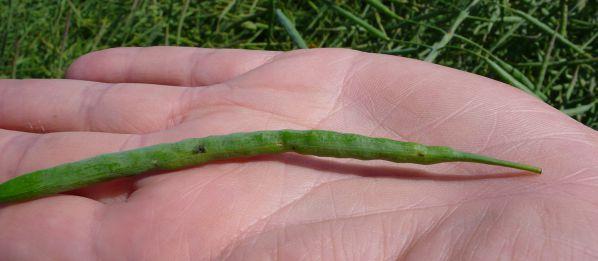
likely has to do with wax content on plant tissues, and my understanding is that Argentine types have more wax versus the Polish types of canola.”
SOOTY MOULD CAN IMPACT FEED QUALITY
Excessive sooty mould growth on cereal crops affects the palatability for livestock, while the heavy spore load may cause respiratory or allergenic issues in livestock. However, palatability and allergenic issues would normally not be a concern in canola unless the affected crop was being baled for feed or bedding. A greater concern is other more
“Given the nature of sooty moulds affecting ripened crops, it can be an indicator of other more significant underlying problems.”
toxigenic fungal species such as Penicillium and Aspergillus that may occur if the mature crop is exposed to prolonged wet conditions prior to harvest. These latter two fungal species can produce ochratoxin and aflatoxin, which are toxic to a range of livestock species including cattle. Both Penicillium and Aspergillus are more typically associated with storage moulds. Grain is at increased risk from these storage moulds when harvested and stored damp or tough without proper storage management such as grain drying and aeration.
“Unfortunately, management options for sooty moulds are limited as they affect the crop after maturity. There are no in-season fungicide options,” says Turkington. “Timely harvest will help to limit sooty mould development, but conditions that favour sooty mould such as wet conditions after maturity may impact a farmer’s ability to access fields and harvest their crops in a timely fashion.”
Canola research finds 50 per cent higher yield
Greenhouse trials moved to the field in 2024.
BY BRUCE BARKER
Believe it or not, the greenhouse yield from new transgenic canola lines is 50 per cent higher. The University of Guelph (U of G) research originally was looking at corn starch, but the researchers quickly pivoted to canola when they saw the potential benefit for the crop.
“The experiment was initially designed to test our hypotheses about starch production. We introduced two maize (Zea mays) endosperm-specific genes into a mutant of the model plant Arabidopsis, where the corresponding gene isoforms are absent. We were surprised to observe that the plants doubled in size compared to the wild type, and produced four times as many siliques, leading to a remarkable 250 per cent yield increase without affecting oil quality,” says Michael Emes, a biochemist and professor of molecular and cellular biology at the U of G. “Given canola’s importance as a major crop in Canada, and its high degree of DNA sequence similarity with Arabidopsis, we began transferring this technology from Arabidopsis to canola.”
Arabidopsis is a model plant that researchers use for genetic research. It is a genus in the Brassicaceae family, the same family as canola. Arabidopsis is used by researchers because it has a fast life cycle, is a prolific seed producer, and takes up limited space in greenhouses.
PIVOTING TO CANOLA
As Emes and fellow researcher Ian Tetlow changed their focus to canola, they needed to remove specific genes from the canola line and replace them with the maize genes. They turned to Liping Wang, a research associate at the U of G, to conduct the high-level molecular genetics in the project.
In canola, six starch-branching enzymes (SBEs) were identified. Using CRISPR-Cas9, a gene-editing tool, Wang was able to delete those six genes. She then inserted two maize endosperm-specific SBEI and SBEIIb genes into canola using GM technology.
“We have been working to transfer this technology from Arabidopsis to canola given the highly conserved gene functions between these two species. This work
has successfully generated a range of SBE canola mutants through CRISPR-Cas9-mediated, gene-editing technology,” says Wang.
FAVOURABLE RESULTS
In early greenhouse trials, the researchers found that the sextuple SBE canola mutant, which expressed the maize SBEI protein, outperformed control lines similar to the maize/Arabidopsis research. The transgenic canola line had silique (seedpod) numbers rise to 300 compared to 200 in the control line, the number of
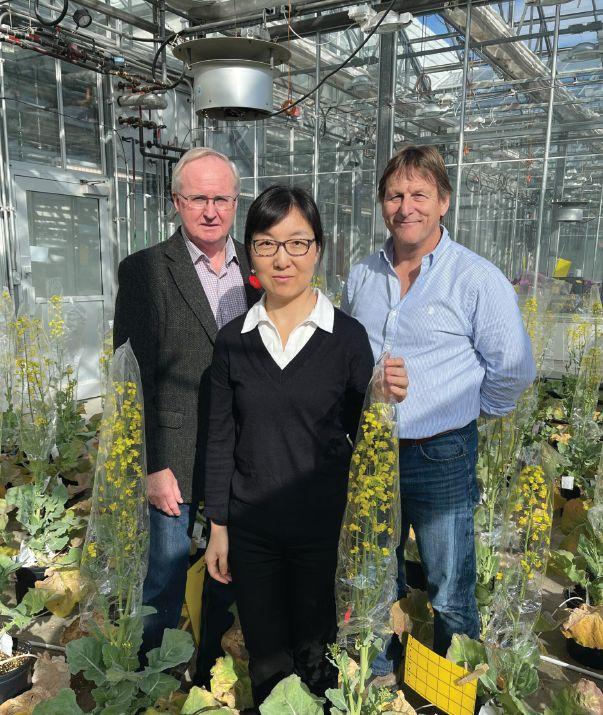
ABOVE (Left to right) Michael Emes, Liping Wang and Ian Tetlow are working to break yield barriers in canola.
Photo
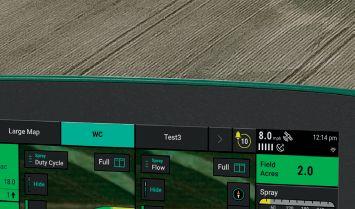
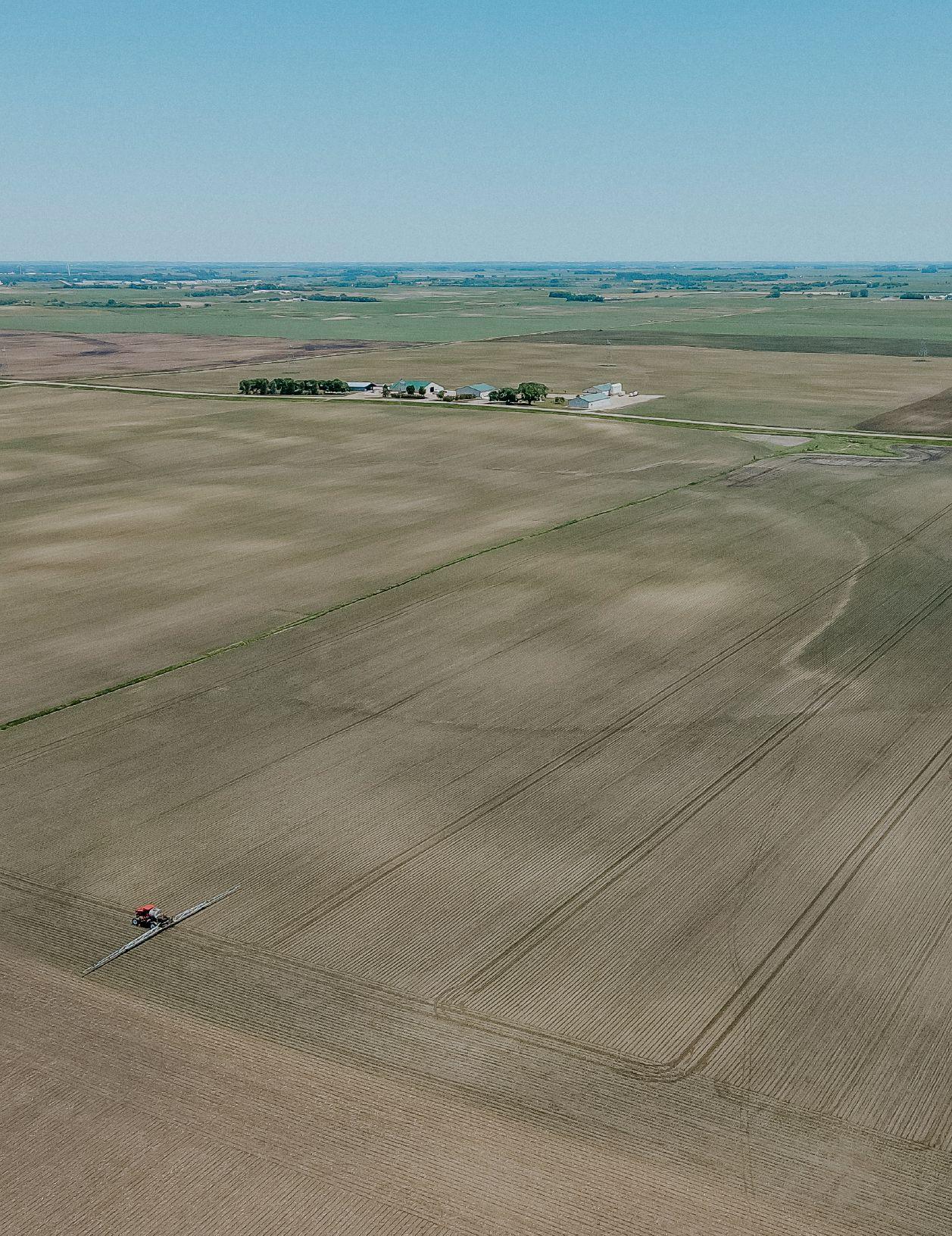
THE LEVEL OF PRECISION YOU’VE COME TO EXPECT FROM US IS NOW AVAILABLE ON YOUR SPRAYER.
Take charge of your spraying accuracy through independent control of rate and pressure with SymphonyNozzle™ and a Gen 3 20|20® monitor. Together they reduce over-application with swath control and level out inconsistent application on turns. Take your sprayer a step further and add ReClaim™, our recirculation system.
WE BELIEVE IN BETTER SPRAYERS WITH BETTER CONTROL.















Shedding light on a microbial mystery
Olpidiumbrassicae is common in canola, but is it friend, foe or neutral?
BY CAROLYN KING
The composition of the microbial community in and around a plant’s roots is vitally important to its health and productivity. Some of the microbial species can be beneficial, helping the plant with things like nutrient uptake or disease control, while others can be harmful and cause disease. Researchers have found that a fungus called Olpidium brassicae is really widespread and really abundant in canola’s microbiome.
Now a project is tackling the question of what this fungus’s role is in Prairie canola’s health and yield.
“We’ve done a lot of work looking at canola’s microbiome over the years, and we know Olpidium brassicae is very good at colonizing canola roots. We see this fungus in canola in very high abundance on every sample that we’ve looked at [in our research in Saskatchewan and Alberta]. And that seems to be true in [studies in other regions by other researchers] as well,” explains Jennifer Town, a research scientist with Agriculture and Agri-Food Canada (AAFC) who is leading this project.
“However, for a fungus that is so abundant on canola, we don’t really know a lot about it. Other Olpidium species that infect lettuce and cucumber are not pathogens themselves but are vectors for viruses that will cause disease in their host. We haven’t seen that in canola. But Olpidium brassicae’s relationship with the canola plant – whether it is beneficial, detrimental or neutral – is not really well known right now.”
Town’s project is aiming to increase understanding of Olpidium brassicae’s interactions with canola plants as well as with the rest of the soil microbiome, especially the clubroot pathogen. The findings could provide new information and fresh perspectives on
possible strategies to improve canola’s health and its ability to fight disease.
INTRIGUING EARLIER FINDINGS
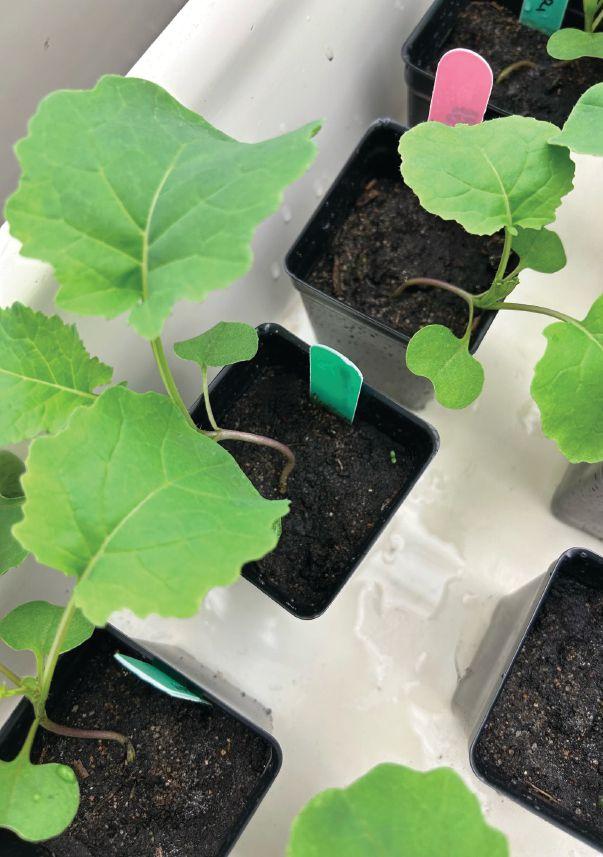
ABOVE The project’s greenhouse experiments involve inoculating soils with Olpidium brassicae, the clubroot pathogen, or both microbes, to look at the changes in canola’s root-associated microbiome.
The current project is an extension of a previous project by Town and her colleagues to examine the effects of canola rotation intensity on the microbiome of canola’s roots and rhizosphere (the soil immediately surrounding the roots). Funded by the Canola Agronomic Research Program (CARP), that project compared three long-term rotations – continuous canola, canola-wheat and canola-pea-barley – at Scott and Swift Current, Sask., as well as Lacombe, Alta.
The project’s Olpidium brassicae-related results were intriguing. “We found that if you were growing canola either every year or every other year, the amount of Olpidium brassicae was very, very high. It was excluding almost all other fungi on the roots in those plants,” she says.
“We also found a little bit of site-specific genetic diversity in terms of which subpopulations of Olpidium
ALL photos are courtesy of Jennifer Town, AAFC.

DEKALB® Straight Cut Plus hybrids deliver improved pod shatter genetics for outstanding pod integrity. Plus, DEKALB canola features early maturation and quick natural plant drydown, so you can harvest sooner, smoother, without sacrificing that all important yield.
DEKALB. CHALLENGE THE STATUS QUO.
brassicae were found at different locations.” One particular strain was abundant everywhere – in every sample of canola root, rhizosphere and soil observed. Another strain seemed to be specific to Lacombe.
Those findings prompted the researchers to take a much closer look at Olpidium brassicae.
A DEEPER DIVE INTO OLPIDIUM BRASSICAE
Town’s current three-year project, which started in 2023, is delving into the mystery of Olpidium brassicae’s effect on canola health from several angles. These include: characterizing changes in canola’s microbiome during clubroot infection; examining the relationship between Olpidium brassicae’s root colonization and clubroot infection and severity; sequencing Olpidium brassicae’s genome; and analyzing data from previous canola microbiome studies from an Olpidium brassicae perspective.
Researchers collaborating with Town on this project include Bobbi Helgason from the University of Saskatchewan, Tim Dumonceaux from AAFC and Edel Pérez-López from Université Laval. Jacqueline Gonzalez, a University of Saskatchewan master’s student, is conducting the clubroot-related trials.
A CLOSER LOOK AT CLUBROOT INTERACTIONS
Although the root microbiome is key to a plant’s defence against soil-borne pathogens, Town and her team have found surprisingly little information in the scientific literature about how canola’s root-associated microbiome responds to clubroot infection. And they have found no such studies in Canadian soils. “We’re hoping that we can provide some new knowledge there,” she says.
The researchers wanted to particularly look at interactions between Olpidium brassicae and the clubroot
pathogen (Plasmodiophora brassicae) because the two microbes share certain similarities in their life cycle.
“They are both obligate biotrophs of canola, [meaning that they must have a living host in order to grow and reproduce]. They also both have a really high affinity for colonizing canola roots. And yet clubroot is a devastating disease while Olpidium brassicae doesn’t seem to be, at least that we know of right now,” explains Town.
“So, would a high level of Olpidium brassicae potentially be able to exclude clubroot from the plant because Olpidium brassicae is occupying that niche in the root and maybe not allowing clubroot to infect? Or is Olpidium brassicae weakening the plant slightly and potentially making something like clubroot infection worse?”
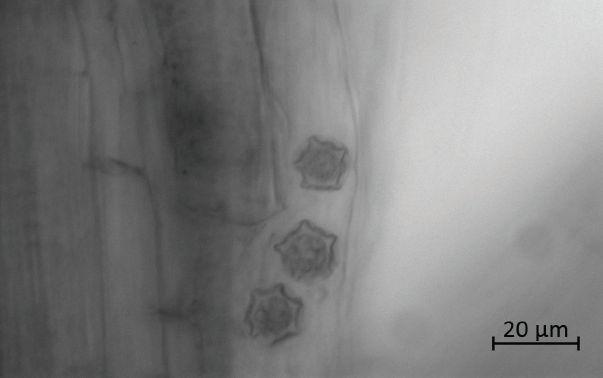
ABOVE The three hexagonal shapes in this microscope image are Olpidium brassicaeresting spores visible in a canola root.
The project is taking two approaches to investigating these clubroot interactions.
One approach involves a series of greenhouse experiments to see what changes occur in canola’s root-associated microbiome during clubroot infection and whether high levels of Olpidium brassicae have any effect on those dynamics.
In these experiments, canola seedlings are grown in field soils as a way to replicate the soil microbiome under more natural conditions. The soils were collected from two locations, Saskatoon and Lacombe, which represent different soil zones and different soil types. For each soil, they are comparing several treatments: soil inoculated with the clubroot pathogen; soil inoculated with high levels of Olpidium brassicae; soil inoculated with both microbes; and soil with no inoculations.

To determine which microbes are present over the course of the different treatments, the team is using DNA sequencing. DNA sequencing is an especially good option for identifying obligate biotroph species like Plasmodiophora brassicae and Olpidium brassicae, which cannot be cultured on their own in a petri dish to identify them; they can only be propagated in canola seedlings.
The project’s other approach focuses more specifically on Olpidium brassicae-clubroot interactions. The researchers are using Pérez-López’s hydroponics system at Université Laval to study one-to-one inoculations of the two microbes. They want to see if there is some direct antagonism between the two and whether Olpidium brassicae helps to increase or decrease the severity of clubroot infection in canola.
The researchers are making good progress on these clubroot-related trials. They are just wrapping up the greenhouse experiments and will soon be analyzing the collected data, and they will be starting the hydro-
Soil microbiologist, Jennifer Town.
ponic trials later this year.
SEQUENCING OLPIDIUM BRASSICAE’S GENOME
The project’s work to create a high-quality genome sequence of Olpidium brassicae will provide the first publicly available genome sequence for this species.
Having a fully sequenced genome could help increase understanding of things like the fungus’s metabolism, its mechanisms of infection such as how it is able to colonize canola roots so effectively, and whether it might be able to cause disease in its host. Those findings could provide insights into Olpidium brassicae’s role in canola’s health and yield.
The researchers are sequencing the most common Olpidium brassicae strain they have found. “It is ubiquitous in that we have found it at every site we have looked at in Saskatchewan and Alberta, and it is the most abundant strain at every site we’ve looked at,” says Town.
The researchers already have some preliminary sequence data for the genome, although sequencing Olpidium brassicae’s genome presents some special challenges. “It’s a lot easier to do genome sequencing if you can culture the organism on its own on a plate, and get DNA from that. Because Olpidium brassicae cannot be cultured on its own, genome sequencing is a little trickier, but we’re working on it,” she notes.
“We were actually able to get zoospores [one stage of Olpidium brassicae’s complex life cycle] to release from the plant and to collect those to use for genome sequencing. That has really upped the percentage of Olpidium brassicae DNA in the mix that we are using for sequencing. We’re hopeful that our final genome assembly will be improved because of that.”
GLEANING DATA FROM PREVIOUS STUDIES
Using a method called meta-analysis, the researchers are evaluating Olpidium brassicae-related microbiome and agronomic data from their earlier canola microbiome research. “We’ve done a lot of different projects on canola’s microbiome under
different fertilization schemes and different rotation schemes, at multiple sites in both Saskatchewan and Alberta. Being able to go back and look at that data through an Olpidium brassicae -focused lens is allowing us to get a broader understanding of how Olpidium brassicae is fluctuating under different management conditions,” says Town.
“Also, because we saw a little bit of site-specific genetic diversity in Olpidium brassicae in our CARP study, we want to look at those studies to see if there might be even more genetic diversity out there and what that looks like,” she adds.
The meta-analysis might also give a clearer picture of Olpidium brassicae’s effects on Prairie canola yields. She notes
From field to finance and everything in between, AgExpert is the link between your data and decisions. If it’s there, you’ll find it—the right decisions, backed by the right data.
that in studies by other researchers, Olpidium brassicae has had either no yield effect or a slightly negative effect, depending on the cultivar, management and site.
“At one of the sites in our CARP study, Olpidium brassicae was negatively associated with yield. However, in a situation where you are growing canola very frequently and the Olpidium brassicae is high, other disease pressures are high as well. So, Olpidium brassicae was a lot higher in the continuous canola but so were Alternaria and blackleg pressures. That makes it tricky to determine if those yield effects were solely related to Olpidium brassicae.”
The researchers have already completed a significant amount of this meta-analysis and have some initial findings. For instance, Town says, “We have found a little site-specific genetic diversity but not as much as I thought we would. The strain that we are sequencing is definitely the most abundant at all sites.”
In terms of management factors, the researchers have found that cultivar selection in particular, as well as nitrogen and phosphorus levels, influence the relative abundance of Olpidium brassicae.
INFORMING BEST MANAGEMENT PRACTICES
The project’s results could help inform best management practices for canola production, such as crop rotation choices.
“ Olpidium brassicae is ubiquitous and abundant on canola. I think
having a clear idea of its role in canola health will provide a benefit to growers,” says Town. “We’re not thinking that it is a pathogen that we would necessarily want to treat or prevent. But if we find, for instance, that a canola plant with high levels of Olpidium brassicae is less resistant to infection by clubroot or other diseases, then that plays into the overall rotation management to be able to keep Olpidium brassicae at a manageable level and to keep the soil microbiome in its healthiest state.”
New knowledge that is generated by this project could also help scientists in making other advances that could improve canola health and yield. For instance, understanding how the fungus effectively colonizes canola roots or how it interacts with the clubroot pathogen might provide new insights into mechanisms of root infection in canola. These insights might contribute to advances such as finding new ways to help canola resist soil-borne diseases.
This project is funded by the Saskatchewan Agriculture Development Fund, the Western Grains Research Foundation and the Saskatchewan Canola Development Commission (now SaskOilseeds).

...when you combine Pioneer performance with Lumiscend protection.
With Pioneer® brand canola seed, diseases like blackleg don’t stand a chance. That’s because every bag comes treated with Lumiscend™ fungicide seed treatment, part of Corteva Agriscience’s exclusive LumiGEN® seed treatment offering, providing unmatched protection against yield-robbing seed and airborne diseases.
Visit Lumiscend.Corteva.ca to Win the Start today.
TCW_CortevaLumiscend_Nov24.indd 1
plant stems doubled from five to 10, and seed weight increased by 50 per cent. Yield increases ranged from 30 to 50 per cent.
“We observed varying levels of yield increases at different stages of the project. The best results we’ve achieved in the greenhouse so far show an increase of up to 50 per cent,” says Tetlow.
The experimental canola also had plant stems 50 per cent thicker than the parent plants. Thicker stems can help maintain water in the plant to make it more resistant to abiotic stresses like drought. And it can also help reduce the risk of lodging and associated yield loss.
By March 31, 2024, the researchers had generated 30 independent lines. Sixteen homozygous lines carrying ZmSBEI were grown in the greenhouse. Approximately half of them displayed increased numbers of stems, flowers and siliques to varying degrees of 10 to 40 per cent. Consistently, the thick stem trait was maintained in these lines.
Two lines, LW22S-47 and LW22S-49, were representative of the greenhouse trials both growing more vigorously than the control lines, and having increased numbers of stems and flowers. For example, LW22S-47
“We observed varying levels of yield increases at different stages of the project. The best results we’ve achieved in the greenhouse so far show an increase of up to 50 per cent.”
2024-09-16 10:25 AM
had a 60 per cent increase in the number of stems, a 40 per cent increase in the number of siliques, and 35 per cent higher seed yield compared to the control line.
BRINGING THEM TO THE FIELD
In 2024, the researchers took eight novel lines to test in field trials at Saskatoon, Sask. and New Liskeard, Ont. under confined field trial permits for the Canadian Food Inspection Agency. They hope to expand the number of field trials and run them for a period of three years.
If the greenhouse results translate into field performance, the ZmSBEI genes would be placed into elite canola lines for further field testing. The lines that the researchers are working with don’t have herbicide-tolerant traits, and those would need to be incorporated into new elite canola lines as well. Since the lines are transgenic, regulatory approval will also take some time. If all goes smoothly, commercialization could be in 10 to 12 years.
“We aim to achieve a dual benefit of increased yield and enhanced abiotic stress tolerance through the thickened stems,” says Wang. The research is being funded by the Canola AgriScience Research Cluster.
™ ® Trademarks of Corteva Agriscience and its affiliated companies. © 2024 Corteva.
The source of spot blotch resistance
Barley researchers use biotech advancements to find source of disease resistance.
BY LEEANN MINOGUE
Most six-row barley varieties grown in Western Canada are largely resistant to spot blotch, but many two-row varieties, which are commonly grown for malt production, are still susceptible. There are some tworow varieties, such as Cerveza, AAC Synergy and CDC Fraser, that are resistant. The problem is, until now, barley breeders didn’t know exactly which part of their genome was providing this resistance.
This is exactly what James Tucker, a research scientist in barley genomics at Agriculture and Agri-Food Canada, proposed to study. While Tucker was already working on spot blotch at the disease nursery in Brandon, Man., some flexibility within his research funding allocation pushed him to see an opportunity to use new technology to find those parts of the barley genome causing resistance to spot blotch.
Aaron Beattie, professor and barley and oat breeder at the Crop Development Centre at the University of Saskatchewan, agreed to collaborate. “We thought it would be useful to look at a lot of the breeding material and varieties that we’ve developed over the past 10 to 15 years and try to assess what spot blotch resistant genes they may have in them,” Beattie says.
Tucker, Beattie and others gathered 200 barley genotypes that could be grown in Western Canada. These
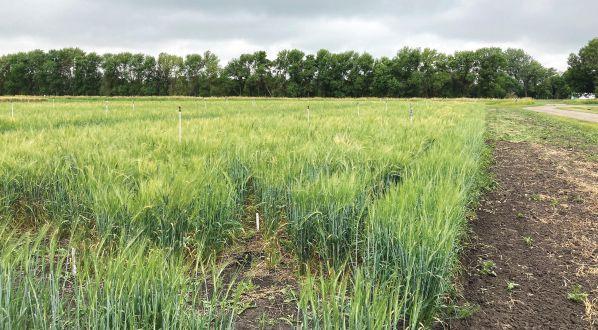
ABOVE There are 12,000 lines of plants growing at the disease nursery at the AAFC Brandon Research and Development Centre.
genotypes were all two-rowed, hulled, spring barley. Roughly one-third were feed varieties and two-thirds malting varieties. Tucker and Beattie grew each of the 200 genotypes at nurseries in Brandon and Melfort, Sask., for a total of eight site-years.
They surrounded the growing plants with infected barley straw. When the plants reached the soft dough stage, each plant was examined for spot blotch. “We rated them for their level of resistance,” Tucker says. They used the standard spot blotch rating scale of zero to nine. “About 10 per cent of that population were what we would call highly resistant.”
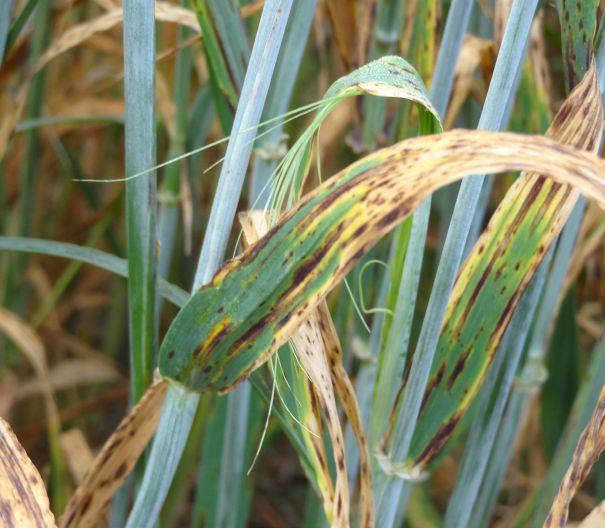
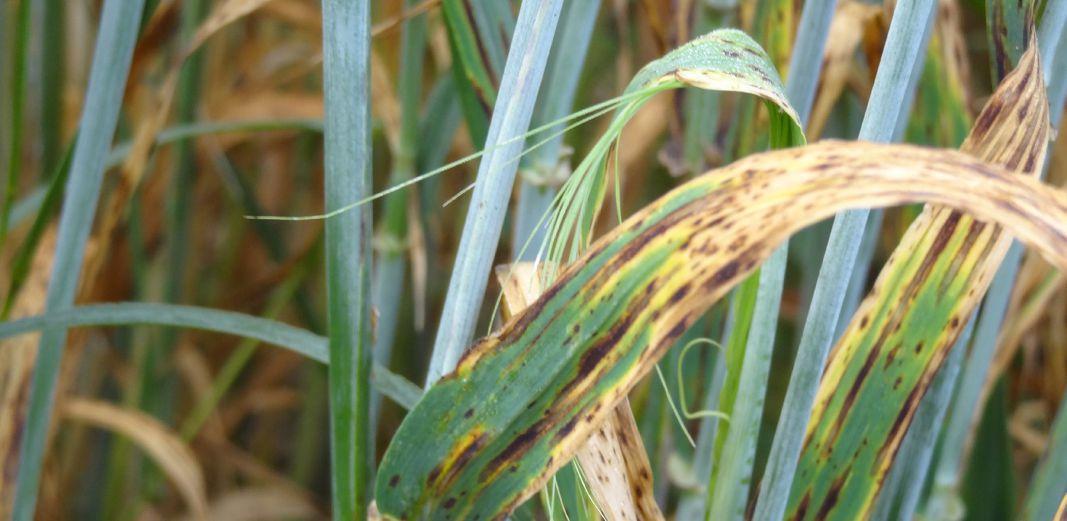
TOP Spot blotch appears as brown blotches on barley leaves.
ALL photos are courtesy of James Tucker.
The next step was to figure out what these 20 genotypes had in common that made them different from the other 180 genotypes.
IDENTIFYING THE LINK
Genomic DNA was extracted from the leaf of each of the 200 genotypes, and DNA chips were prepared and sent to Colin Hiebert’s lab at AAFC, Morden Research and Development Centre. “It takes them a week or so to prepare the chips,” Tucker says.
The AAFC lab reports provided data for 25,068 SNP markers. An SNP (single nucleotide polymorphism), pronounced “snip”, is a variation at a position in the DNA sequence. SNP markers show breeders which section of a plant’s DNA is causing a change. Lab reports labeled each of the 25,068 markers as either red or green for each plant, depending on the version of nucleotide variant it carries.
Picture an Excel spreadsheet with 200 rows and 25,068 columns, with each cell marked as red or green. Now find the connections. Overwhelming? Not if you have the latest software and know how to use it. “Once results are available, they can be quantified in less than an hour,” Tucker says.
The statistics pointed not to one specific gene, but to a group of genes working together to provide resistance to spot blotch. “There’s a cluster of three different locations within the barley genome,” Tucker says. While it’s relatively easy for a pathogen to overcome one resistant gene, it’s more difficult for pathogens to evolve to overcome multiple sources of resistance. “That’s part of the reason that resistance has lasted as long as it has,” Tucker says.
Tucker and Beattie were pleased to see that two of the varieties that included this cluster were AAC Synergy and CDC Fraser. “Those two varieties have been used a lot as parents to produce future varieties,” Beattie says. “Hopefully that resistance is being passed along.”
Beattie will add these clusters to future varieties for long-term resistance to spot blotch. “It makes my job a little bit more efficient,” he says.
WHY SPOT BLOTCH?
Spot blotch isn’t at the top of a list of critical barley diseases on the Prairies – that would be Fusarium. But when it comes to leaf disease, “spot blotch is right up there,” says Beattie. Spot blotch (Bipolaris sorokiniana) is one of three major barley leaf diseases in Western Canada (along with scald and net blotch). If not treated with a fungicide, spot blotch can cause yield loss of up to 30 per cent in susceptible barley varieties.
Spot blotch shows itself as small brown blotches on leaves. These blotches can cause leaf tissue death. As
“That’s part of the reason that resistance has lasted...”
they grow, they can merge and interfere with photosynthesis. In advanced stages, the disease stops kernels from filling and can infect kernels. Malt barley infected with spot blotch can be downgraded to feed, as infected kernels can show lower malt extraction levels, alter protein content and make off-flavoured malt.
Spot blotch is more likely to develop in warmer weather. “As the climate’s changing, there’s potential for warmer growing conditions,” says Tucker. With the pathogen established in our soil, he adds that “you end up with an epidemic” when weather conditions are right. In recent years, spot blotch pathogens have been more virulent than in the past.
HIGH-TECH, GROUNDED RESULTS
At this stage in crop research, Beattie and Tucker are standing on the shoulders of several layers of giants. “We’re using advanced biotechnology to answer practical questions,” Tucker says. New reference genomes for barley combined with new lab technology and software made this study relatively easy and cheap, for the world of research.
“We can pinpoint the marker on the genome, and then we can dive into the information because we have access to 36,000 gene annotations that somebody has carefully associated,” Tucker says. “Things have really come of age for the barley community.”
Beattie is clearly exaggerating when he says this: “It’s to the point where you can run these things without really having much of a statistics background.” That seems unlikely, but new developments have made it much easier for researchers to get useful results.
“We could’ve done this work 10 years ago, but it would’ve cost a lot more money,” Tucker says.
THE BARLEY RESEARCH COMMUNITY
With fewer acres seeded to barley than crops like wheat or canola, there aren’t as many researchers working on barley development. As a result, Tucker says, “We’re all jacks-of-all-trades. I work in genomics in plant pathology and have to do several things.”
This collaborative project is an example of the working relationships that exist in the barley research community. “This is a good project to show the cooperation that exists between Ag Canada and the University of Saskatchewan,” Tucker says. “We’re competitive in a healthy way, so that we’re all winning. Sometimes he [Beattie, at the University of Saskatchewan’s Crop Development Centre] takes the win, sometimes Ag Canada takes the win.”
This type of cooperation doesn’t always happen in the competitive world of research. “That’s pretty unique and special to the barley research world,” Tucker says.
The paper outlining this study was published in the April 2024 issue of the Journal of Plant Pathology. Funding was provided through the previous iteration of the National Barley Cluster (2018 to 2023), from the federal government’s Sustainable Canadian Agricultural Partnership (Sustainable CAP) AgriScience Program.
BY 7204LL

• Pod DefendR shatter tolerance technology
• DefendR-rated clubroot protection
• Strong early season vigour and excellent standability
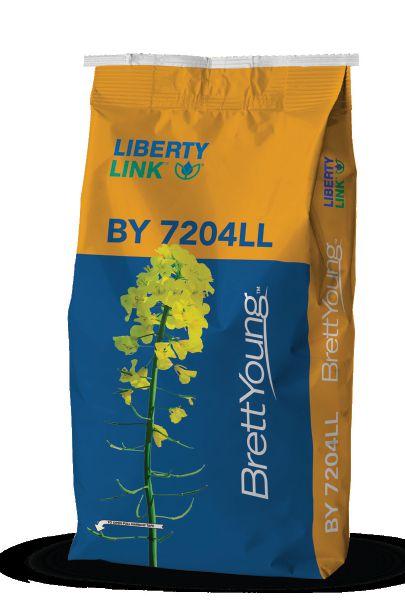



A New Generation of LibertyLink® Hybrids
Change the game with BY 7204LL
Introducing BY 7204LL: BrettYoung’s newest canola hybrid with LibertyLink technology. BrettYoung is Canada’s Largest Independent Seed Company with headquarters in Winnipeg, Manitoba and BY 7204LL is the first in their new lineup of LibertyLink® canola hybrids.
With high yield potential and mid-maturity, BY 7204LL shows strong early season vigour and excellent standability — it’s the perfect combination of traits you may be looking for in a canola hybrid. In co-op registration trials, BY 7204LL achieved a 105 per cent yield rating. The hybrid also comes equipped with two of BrettYoung’s proprietary DefendR® traits: Pod
DefendR, BrettYoung’s dependable shatter tolerance technology, and Clubroot DefendR, which provides next-generation clubroot protection.
“Our DefendR traits add that extra layer of reassurance and really sets your crops up for success,”
said Justine Cornelson, BrettYoung’s Manager of Agronomic and Regulatory Services.
“Its highly competitive yield performance combined with mid-maturity makes it a perfect solution for growers who are looking for the newest hybrids to switch part of their canola acres to next season.”
BY 7204LL is widely available for the 2025 growing season and to celebrate the launch, growers can take advantage of two limited time promotions:
• From now until Oct. 15, 2024, you will earn a $50 rebate per bag when you book 16 or more bags of any BrettYoung canola.
• From Oct. 15 until Jan. 31, 2025, you will earn a $20 rebate per bag when you book 16 or more bags of any BrettYoung canola.
• Additionally, with a minimum purchase of any 16 bags of BrettYoung canola, you’ll be entered for a chance to win a Can-Am Defender.
If you’re interested in purchasing BY 7204LL or learning more about it, contact your retailer or your local BrettYoung Regional Account Manager.


New canola varieties coming in 2025
Canola growers can choose the best option for their farm.
BY KAITLIN BERGER
FBASF
or growers considering canola varieties for 2025, Top Crop Manager has compiled a list of options. All information comes from the respective seed companies.
InVigor L330PC is an early-maturing 300 series InVigor hybrid. With strong yield potential, this hybrid is for farmers looking for an earlier-maturing hybrid or for those in short and mid growing zones or looking to beat the heat and get the combines rolling early. It is coupled with patented Pod Shatter Reduction technology, first-generation clubroot resistance, strong standability and the yield potential to exceed InVigor L233P. InVigor L330PC is a strong performer across all growing zones.
InVigor L333PC is the earliest maturing 300 series hybrid from BASF. This hybrid is for those looking for an earlier-maturing hybrid. With high yield potential, good standability, patented Pod Shatter Reduction technology and first-generation clubroot resistance, InVigor L333PC is for farmers in short and mid growing zones or looking to beat the heat and get the combines rolling early.
InVigor L341PC is a new early-maturing, second-generation clubroot-resistant hybrid that brings high yield potential suitable for all growing zones. It’s for Alberta growers and for farmers in pockets in Western Canada that require a second-generation clubroot-resistant hybrid. InVigor L341PC contains enhanced blackleg protection and standability compared to InVigor L343PC plus patented Pod Shatter Reduction technology. BASF recommends growing InVigor L341PC with second-generation clubroot resistance in clubroot-affected areas after two cycles of growing first-generation clubroot-resistant hybrids or when clubroot symptoms are noticed in first-generation clubroot-resistant hybrids.
WINFIELD UNITED CANADA
CP24L3C is a LibertyLink-tolerant hybrid with an
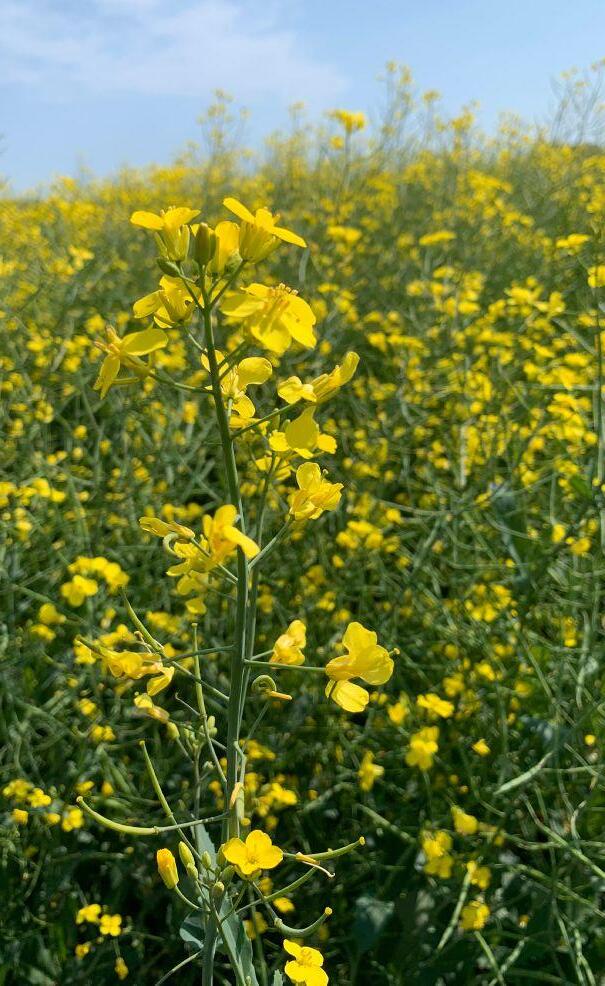
ABOVE Canola at flower.
Photo courtesy of Kaitlin Berger.
Stay tuned for early bird registration!
Prairieland Park Trade and Convention Centre, Saskatoon, SK February 25-26, 2025
The Top Crop Summit is the chance for farmers and agronomists to hear practical applications from the latest research in agriculture. The 2025 event will provide helpful insight on weeds, pests, soil and water, and more – a variety of topics to provide a strong foundation for making the growing season a success. Both days will provide exclusive access to firsthand knowledge from experts in the field, as well as valuable information to improve decisions affecting crop production. The second day’s theme gives attendees the chance to dive deeper into factors that promote better management of soil and water.




improved pod integrity rating and new clubroot resistance package. It scores a 7 on the Canola Council of Canada pod shatter scale and is a mid-maturity hybrid with strong yield potential on any acre. It also covers the following clubroot pathotypes: 2F, 3H, 5I, 6M, 8N, 3A, 3D, 5X, 2B, 8E, 11A and 9E.
BRETTYOUNG
BY 7204LL is the first in BrettYoung’s new generation of LibertyLink canola hybrids. BY 7204LL comes equipped with DefendR-rated shatter resistance and next-generation clubroot resistance, while offering you good standability and a yield potential of 105 per cent. BY 6219TF is BrettYoung’s premier TruFlex canola hybrid. With DefendR-rated shatter resistance, next-generation clubroot resistance, and a yield potential of 100 per cent, BY 6219TF is sure to be a fit on your farm.
BAYER
DEKALB DK401TL is the highest-yield potential DEKALB canola hybrid in the lineup. This mid-maturing hybrid comes complete with the Straight Cut Plus trait for enhanced pod shatter protection, as well as a complete disease package, with clubroot resistance to currently predominant pathotypes, and blackleg resistance. This is a TruFlex LibertyLink canola, which delivers farmers maximum flexibility to control hard-tomanage weeds, including exceptional control of kochia, wild oats, cleavers and waterhemp.
DEKALB DK800LL is among the first in the new high yield potential 800 series DEKALB LibertyLink hybrid canola lineup. It includes the Straight Cut Plus trait for enhanced pod shatter protection and is resistant to both clubroot and blackleg. It’s a mid-maturing hybrid that includes the LibertyLink trait, providing tolerance to Liberty herbicide (not glyphosate tolerant).
DEKALB DK801LL joins the new high yield potential 800 series DEKALB LibertyLink hybrid canola lineup. It includes the Straight Cut Plus trait for enhanced pod shatter protection and is resistant to both clubroot and blackleg. It’s a mid-maturing hybrid that includes the LibertyLink trait, providing tolerance to Liberty herbicide (not glyphosate tolerant).
Growing a combination of both DK800LL and DK801LL will allow growers the ability to capitalize on the improved performance of DK800LL under ideal conditions, while hedging the improved performance of DK801LL under higher stress situations (as seen in Bayer trial results).
PROVEN SEED | NUTRIEN AG SOLUTIONS
PV 782 TCN is a high-yielding TruFlex hybrid with increased pod shatter protection through Proven Seed’s
new NTACT Technology. This clubroot-resistant hybrid gives growers longer pod fill to maximize yield and the flexibility to delay swath or straight cut.
PV 783 TCN brings the power of Proven Seed’s NTACT technology that increases pod shatter protection, coupled with the strength of TruFlex. NTACT hybrids have been bred and tested in Western Canadian conditions to achieve high pod integrity. This hybrid has clubroot resistance and top-rated pod integrity score from the NTACT trait that will allow growers to protect their yield, reduce losses and have the flexibility to straight cut.
PIONEER BRAND SEEDS
Pioneer brand P520L is the first hybrid with improved pod shatter reduction in the Pioneer brand lineup. Other features include a new source of clubroot (CR9) resistance and adult plant blackleg resistance.
Canola is used for cooking oil and premium protein for animal feed. It provides income for approximately 40,000 Canadian farmers with 207,000 Canadian jobs linked to canola.
Source: Canola Council of Canada
Pioneer brand P617SL is the first and only hybrid in Western Canada with sclerotinia fungicide equivalent protection (>80 per cent sclerotinia protection in the bag). Other features include strong verticillium stripe resistance, a new source of clubroot (CR9) resistance and strong adult blackleg resistance – the best four-way disease protection in the market.
Pioneer brand P519L is the highest yielding, early-maturity canola in Pioneer brand lineup. Other features include a new source of clubroot (CR10) resistance, as well as verticillium stripe resistance.
BREVANT SEEDS
Brevant seeds B3901N is a new, high-yielding, mid-maturity Brevant seeds Nexera canola hybrid with the LibertyLink trait. It has excellent early growth along with clubroot (CR7) and blackleg resistance.
Brevant seeds B3020 is a new, mid-maturity hybrid with the best pod shatter reduction score in Brevant seeds lineup. It also comes with clubroot (CR6), blackleg and verticillium stripe resistance.
Brevant seeds B3019 is the highest-yielding hybrid in the Brevant seeds lineup with a superior clubroot (CR6+) and blackleg resistance package.
Brevant seeds B3018N is a new Brevant seeds Nexera canola hybrid with the LibertyLink trait and with a new source of clubroot (CR8) protection.
CANTERRA SEEDS
CS3300 TF is CANTERRA SEEDS’ newest TruFlex canola hybrid. It is an early maturing hybrid with high yield potential and features our PodProtect trait for excellent pod shatter protection. CS3300 TF includes first generation clubroot resistance and R-AE2 multigenic blackleg resistance.
Meet the next generation of Canadian agri-food leaders
These exceptional students are the winners of the 2024 CABEF Scholarships. We are proud to support each of them with $2,500 for their ag-related post-secondary education. Help us empower more students to pursue diverse careers in agri-food. Strengthen the future of Canadian agriculture and food by investing in the cream of the crop.
Become a Champion of CABEF and directly support a scholarship for a Canadian student.

Emma Pflanz
Vancouver, BC

Brooke-Lynn Finnerty Sturgeon County, AB

Mary Lee McNeil
Alameda, SK

Faryal Yousaf
Brandon, MB

Allison Goodyear
Ottawa, ON

Round Hill, NS
Congratulations to this year’s CABEF scholarship recipients.
Contact CABEF today to learn how you can become a “Champion of CABEF” at info@cabef.org
Emma Bishop
Deep banding phosphorous in no-till cropping systems
Addressing phosphorous deficiencies to improve stability and drought resiliency in crops.
BY DONNA FLEURY
Across the Prairies, no-till has been successfully implemented in many farming operations over the last 20 to 30 years. There are several long-term benefits to no-till farming systems, but there’s also one potential challenge being observed – the stratification of nutrients such as phosphorus (P) in the shallow surface band. Recently, researchers and industry have been assessing the possibility of deep banding P to address later season deficiencies and improve yields and drought resiliency of crops.
“Generally, no-till operations will side-band P fertilizer at shallow depths at seeding, which stays in the zero- to three-inch surface layer,” explains Maryse Bourgault. “Unlike nitrogen, which is soluble and moves through the soil profile, P is not as soluble and tends to bind to soil particles. In drier, semi-arid environments such as those across the Prairies, when that topsoil layer dries out, the crop roots don’t have access to the surface layer of P nutrients, depending on moisture and nutrients lower in the soil profile. This can result in P deficiency later in the season, which
can often be confused with symptoms of drought or other issues,” says Bourgault. These symptoms at the vegetative stage in wheat include stunted growth and leaves that appear slightly wilted – symptoms easily confused with water stress.
“Deep banding of P fertilizer could help alleviate this stress when deeper layers have moisture that is no longer present in the topsoil,” says Bourgault. “It might also encourage root growth deeper in the soil profile and help drought-proof the crop. Therefore, we were interested in studying whether periodic deep banding applications of P may be one option to address this later season deficiency, giving crops access to nutrients below that surface concentration of P.”
In Australia, deep banding P is considered as a method to drought-proof crops, as it encourages root growth deeper in the soil. Bourgault notes that some of their early modelling suggests that about 40 per cent of P taken up by the crop is accessed below four inches. That
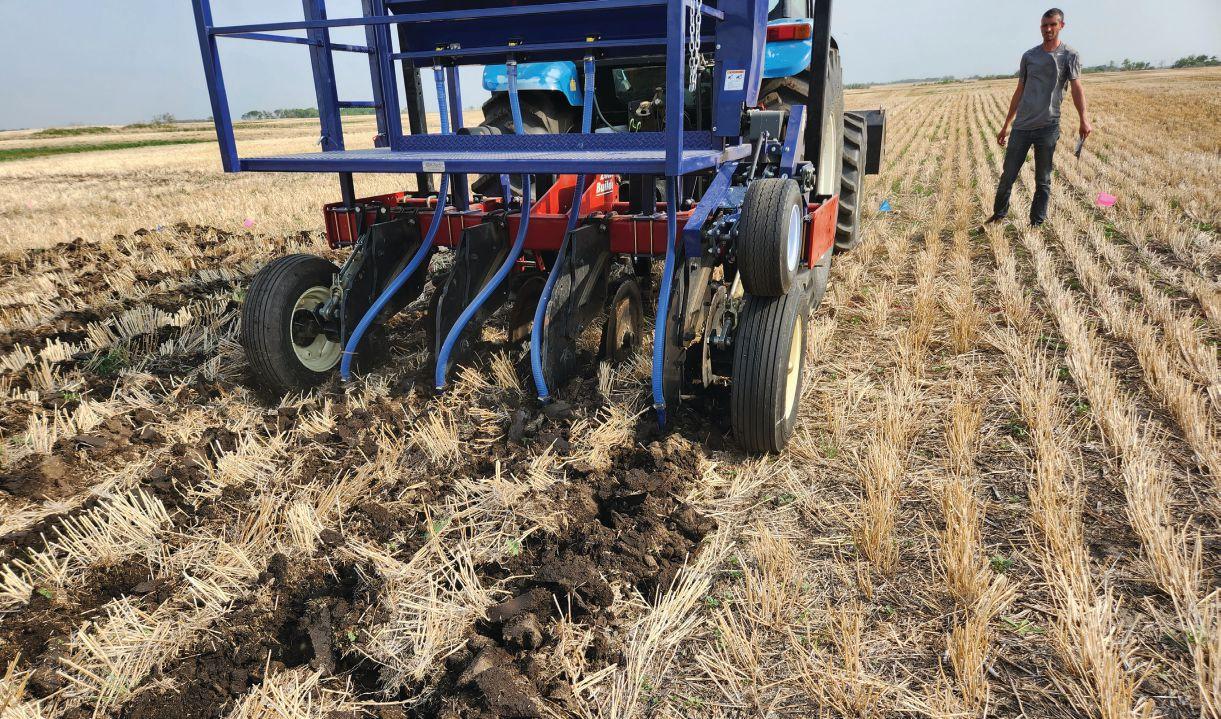
ABOVE Experiments showing typical disturbance associated with the deep bander placing fertilizer at 30 cm depth at the Redvers SERF site in May 2023.
ALL photos courtesy of Maryse Bourgault, University of Saskatchewan.
Win the Start

With early season insect control from Lumivia™ CPL
Lumivia™ CPL insecticide seed treatment controls more insects than any other cereal seed treatment, so your crop can win by starting stronger, and staying stronger.
Exceptional control of wireworms, cutworms, armyworms, and pea leaf weevils
Increased plant vigour and biomass
The only cereal seed treatment that provides grasshopper protection Book today and Win the Start with Lumivia CPL.
is a significant portion and shows that long-term, notill fields can be quite P deficient at those depths. This practice may provide more stable yields, which would help with reducing risks from year to year. In addition, more efficient fertilizer use has obvious benefits for economic and environmental sustainability.
Bourgault initiated a study in Saskatchewan in 2021 to determine if deep banding of P fertilizer is necessary in no-till cropping systems in Saskatchewan. This practice may reduce P loss by distributing the P within the soil profile rather than be concentrated in the top 5 cm. The project initially included two sites, the University of Saskatchewan Kernen Research Farm, near Saskatoon, and Jeff Schoenau’s farm near Central Butte, but was expanded to two additional sites in 2023 including the Northeast Agricultural Research Foundation (NARF) near Melfort and the South-East Research Farm (SERF) near Redvers.
Each field experiment will last four years, with the initial deep banding of P fertilizer applied before planting the first year only. The aim of the experiments is to evaluate the effects of deep banding over the four subsequent seasons following one P application at 20 to 30 cm in a canola-wheat rotation. There are nine treatments of P 2 O 5 (MAP) being compared with or without fertilizer at a rate of 40 kg/ha and at different depths, either side banded at 5 cm, deep banded at 20 to 30 cm depths or split between 5 cm and a deep band of up to 60 kg/ha for a multi-year supply of P2O5. The study also includes a control treatment that received
the deep-banding operation but no fertilizer to determine the impacts of the operation itself.
“In this project, we are testing deep banding P with some treatments as deep as possible,” says Bourgault. “We modified a deep ripper and had a deep bander custom made that allows us to drop fertilizer into those deeper soil layers. It does take quite a bit of horsepower and can be a bit destructive to the field. Some of our collaborators are addressing that by either harrowing or rolling the field after the application.”
They made the deep band application in the spring prior to seeding in the first year. However, Bourgault says they’re now considering that applying in the fall may be a good option and allow time for the P to weather in the deeper soil layer and for the soil surface to settle over the winter. “It also looks like it seems to take two years before the P weathers enough to become available at depth.”
The preliminary results are promising. The best treatments tend to be with the deeper application of P and the split application tends to be pretty good too. Because they haven’t been able to fully measure statistically significant grain yield responses, it’s challenging to interpret the data and determine the benefits. “The positive results are occurring often enough with the deep banded P operation that makes us believe there is something there,” says Bourgault.
“We also have collaborations with Montana State University and have two winter wheat trials there that will be contributing data and results. In their preliminary results, there was a response to P when applied deeper in the profile, but the results were only observed after the second year,” says Bourgault. “We are also collaborating with Farming Smarter at Lethbridge who have research data from trials completed six years ago at three sites. The goal will be to combine all of this data to see what kind of benefits are being observed across all of the sites and to be able to draw stronger conclusions about the possible benefits of this practice.”
Bourgault expects that a deep banding P practice would be really helpful in years where there is a bit of drought. There is a strong environmental factor on how available P is to the plants and the benefit of having access to the deeper band of P, particularly to address later season deficiencies. “We are also thinking that a fall application would be best, and that one deep band application every five to six years would be the most beneficial. As well, fields where herbicide-resistant weeds are a concern might also benefit from a bit of tillage periodically.” Preliminary results are expected soon for the first three years at two sites. In the future, there will be a combined report of results from the various projects.
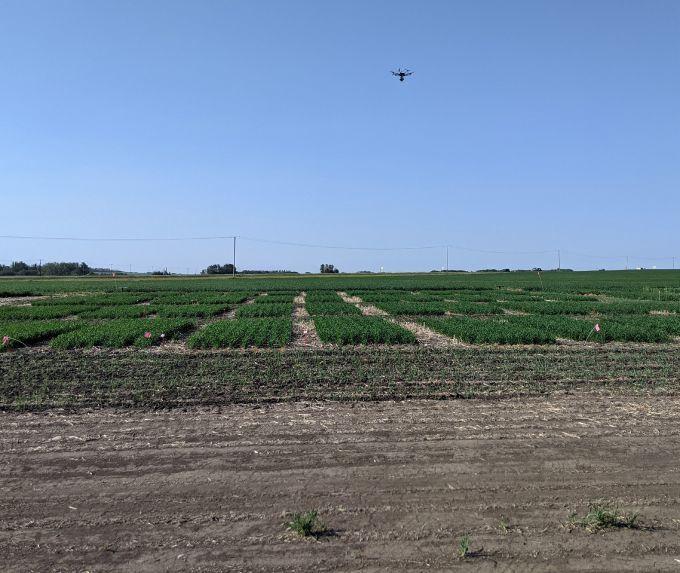
ABOVE Wheat field experiments at the Kernen Research farm near Saskatoon with drone collecting NDVI data.
HARVEST MORE KNOWLEDGE
Evaluating foliar-applied biological nitrogen products in canola and wheat
Demonstrating effects on crop yield and quality in field trials.
BY DONNA FLEURY
Products and technologies with the potential to improve nitrogen (N) fertilizer efficiency, optimize crop productivity and net returns, and reduce environmental impacts, continue to advance. The introduction to the market of foliar-applied biological N products that potentially reduce overall N inputs are gaining interest from crop growers. Researchers and industry are evaluating these new products in applied research demonstration and field trials.
In 2023, field trials were set up to evaluate the potential ability of two commercially available foliar-applied biological products to support N nutrition and improve yield in canola and wheat crops. The trials were conducted at eight Saskatchewan sites across a range of soil and climatic conditions, including Indian Head, Melfort, Outlook (irrigated), Prince Albert, Redvers, Scott, Swift Current and Yorkton.
At each demonstration site, the treatments included three N fertility rates of 60, 110 or 160 kg N/ha in canola and 50, 100 or 150 kg N/ha in spring wheat, applied as side-banded urea. All other nutrients were intended to be non-limiting. The foliar-applied biological treatments were either an untreated control, Envita (95 ml/ ac plus 0.1 per cent Agrol 90), or Utrisha-N (135 g/ac). The biological treatments were applied at the four- to
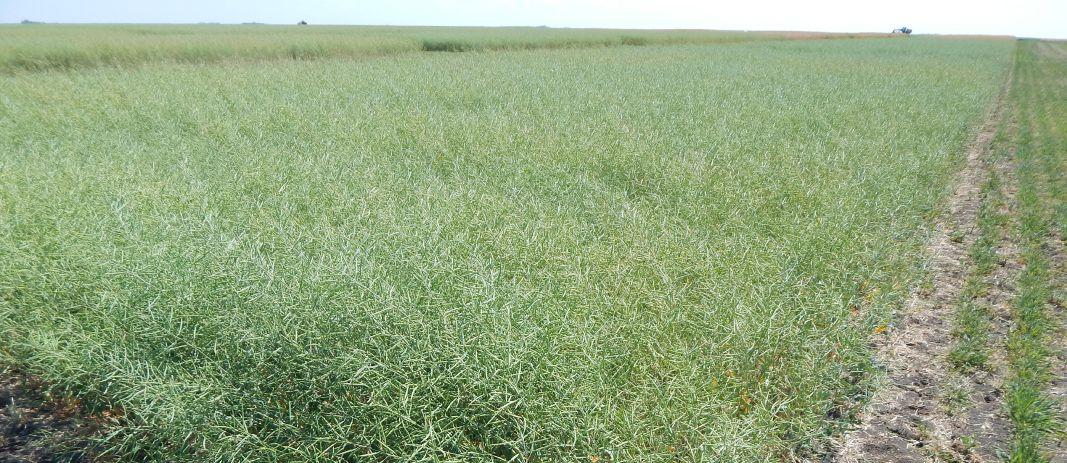
TOP Evaluation of foliar-applied biological products in canola trials in 2023 at Indian Head, Sask.
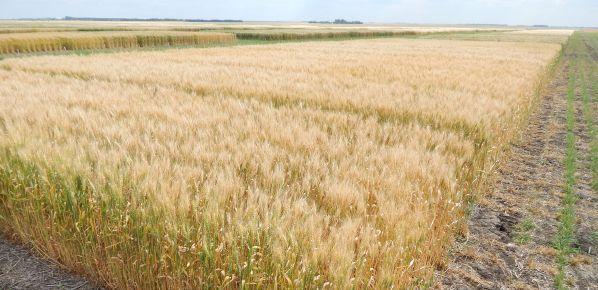
ABOVE Wheat trials evaluating foliar-applied biological products in 2024 at Indian Head, Sask.
six-leaf stage and at label recommended rates, in a minimum water volume of 93 l/ha (10 US gal/ac).
“We selected the fertility rates for each crop to be able to test the foliar products under both N limiting conditions and typical fertilizer N rates in order to provide the best comparison possible,” explains Chris Holzapfel, research manager with the Indian Head Agricultural Research Foundation (IHARF) at Indian Head, Sask.
“The three target fertilizer N rates selected for canola and wheat were adjusted for residual soil nitrate and represented low, medium and high rates. The lower rates were typically lower than what growers would usually apply, but were included to help evaluate whether or not the foliar products could be used to replace a portion of
ALL photos courtesy of Chris Holzapfel, IHARF.
N fertilizer requirements. The high rates were intended to be more typical of commercial farms.”
Holzapfel notes that they also tried to provide the best conditions possible for applying the foliar biological products and to minimize any application impacts. Distilled water was used to minimize any potential impacts of chlorine or other additives on the biological products. Where possible, the treatments were applied either early in the morning or on relatively cool days when the temperatures were lower and humidity was high. The growing conditions in 2023 were drier and hotter, making it more challenging to always have ideal conditions at the target crop stages and limited windows suitable for treatment applications. It may not always be possible for growers to be able to wait for ideal conditions to apply crop protection products including biologicals.
“The results across the canola and wheat trials showed increases in seed yield and protein concentrations with the addition of the side-banded N fertilizer. And as expected, reduced canola seed oil concentrations were observed with the higher N rates,” says Holzapfel. “However, the biological products demonstrated in this project did not show any effects on yield, protein or seed oil concentrations, regardless of environmental conditions or overall N fertility level. The results observed were consistent in both crops regardless of N fertilizer level or location. The results were also generally consistent with similar wheat and canola field-scale trials conducted in the 2023 Sask Wheat and SaskCanola on-farm research projects. Therefore, based on these results, we would not recommend farmers change their
existing fertilizer program even if they are considering applying N fixing biological products.”
Holzapfel adds that, although the results from the 2023 demonstrations did not show any response to the biological products included in the trials, it may be possible to see positive responses under different crop types or environmental conditions that were not met in this project. “Based on our results and the similar results from the on-farm field trials, we recommend that farmers avoid reducing their N fertilizer rates when using biological products intended to improve N nutrition in crop production,” says Holzapfel. “Farmers are encouraged to utilize untreated check strips, preferably replicated, to confirm whether or not they are realizing any benefits on their own farm. Using check strips and monitoring the results is a good way to bring new technology into your operation to get some confidence that the new products or technology will work in your situation or increase profits in future years.”
In 2024, the research group repeated the trials in wheat and their plan is to make the combined results from 2023 and 2024 available in one larger report next year. The results are expected to be presented during winter extension meetings.


by Bruce Barker, P.Ag
Canola dormancy investigated
Canola dormancy resembles the case of Dr. Jekyll and Mr. Hyde. On the one hand, primary dormancy is good because it keeps canola seed from sprouting in the seed pod prior to harvest. Primary dormancy is the result of high levels of a hormone called abscisic acid (ABA), which prevents seed germination in the pod known as precocious germination or vivipary.
On the other hand, canola lost during harvest contributes to the weed seedbank and secondary dormancy can mean it persists for up to seven years. Secondary dormancy is induced when environmental conditions are not favourable for germination.
Secondary dormancy and the persistence of volunteer canola in the soil seedbank bring these concerns: Glyphosate-tolerant volunteer canola can be difficult to control in glyphosate-tolerant soybean or corn crops; volunteer canola can be a host for clubroot disease, and there are issues with oil profile contamination from outcrossing of volunteers.
A literature review was conducted by researchers at the University of Saskatchewan and Agriculture and Agri-Food Canada (AAFC) in Saskatoon, Sask. to look at the interaction of genetic, physiological, environmental and agronomic factors on secondary dormancy in Brassica napus, the predominant species of canola grown in Canada. The interaction of dormancy with seed germination and vigour were also investigated. Highly dormant genotypes were found to have increased ABA concentration in the seed, while another hormone, gibberellic acid, and its interaction with ABA was also found to be important. Additional factors affecting absolute dormancy include seed sugars, seed storage proteins and glucosinolate content.
Secondary dormancy in B. napus is highly heritable and a quantitative trait controlled by multiple genes. Secondary dormancy ranges from zero to 90 per cent, but is typically about 50 per cent. Because secondary dormancy is highly heritable, reducing secondary dormancy could be a breeding objective for plant breeders, although primary dormancy, current seed vigour and germination standards must also be retained.
Soil and environmental conditions affect dormancy. Greenhouse studies found that seed produced on high nitrogen soils were weakly correlated to having lower secondary dormancy, although this did not occur in

field studies. Cooler seed maturation conditions contribute to greater secondary seed dormancy, and contribute to dormancy more than soil nitrate. There were very few studies on nitrate and dormancy.
Abiotic stresses such as light, temperature, oxygen levels and osmotic stress can affect secondary induction. Osmotic stress impacts canola seed when soil conditions are dry and moisture does not move into the canola seed to encourage germination.
Flooding did not induce dormancy and the seed either rotted or germinated immediately after flooding conditions were removed.
These abiotic stresses are major contributors in Western Canada because soil conditions in the fall can be dry and warm, creating ideal conditions for secondary dormancy in harvest seed losses.
Reducing harvest losses is the biggest factor in reducing canola seed adding to the soil seedbank. Harvest seed losses can reach up to 300 seeds per square foot (3,000 viable seeds/m2) or 5.8 per cent of total yield. Not all of these will survive, but this research highlights the need to minimize harvest losses, whether swathing or direct combining.
Other research found that agronomic practices that increased yield, such as timely fungicide application and proper harvest management including optimum swath timing and lower combine harvesting speed, reduced harvest losses.
The recent introduction of pod shatter resistant varieties helps to reduce harvest seed losses and make direct combining more viable. While eliminating harvest losses is not practical, the goal should be to reduce harvest losses as much as is practical.
Research in Western Canada on B. napus found that tillage with either a tine harrow or tandem disc immediately following harvest reduced volunteer canola. This post-harvest tillage signals volunteers to germinate, which are subsequently winterkilled. Post-harvest tillage reduced seed persistence by one-half compared to zero-till or spring tillage. Fall harrowing or discing were similar in their effect on volunteer germination.
One research project found no relationship between seed germination and vigour with secondary seed dormancy levels. There were weak relationships with seed quality parameters like protein and fibre that are currently being investigated. The relationship between secondary dormancy and seed germination, vigour and quality traits need to be further evaluated to ensure that reducing secondary dormancy does not impact these important traits.
The development of low secondary dormancy genotypes combined with agronomic management could help decrease volunteer canola populations in the soil seedbank. Research is now aiming to reduce secondary seed dormancy by identifying genetic markers associated with the trait, and eventually developing markers to quickly screen germplasm to select against higher secondary seed dormancy.
Bruce Barker divides his time between CanadianAgronomist.ca and as Western Field Editor for Top Crop Manager. CanadianAgronomist.ca translates research into agronomic knowledge that agronomists and farmers can use to grow better crops. Read the full research insight at CanadianAgronomist.ca.
We’ve developed the high yielding, straight cut hybrids you demand. Our 2025 canola seed lineup is our best performing ever. We’re not holding back. We’re ready to be your #1 canola seed.