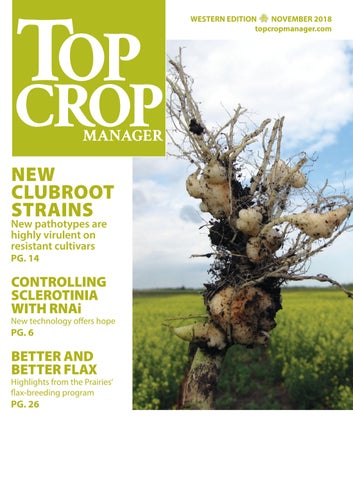
New pathotypes are highly virulent on resistant cultivars
PG. 14
CONTROLLING SCLEROTINIA
WITH RNAi
New technology offers hope PG. 6
BETTER AND BETTER FLAX
Highlights from the Prairies’ flax-breeding program
PG. 26
IT’S PAYBACK TIME.
TOP CROP
MANAGER
PESTS AND DISEASES
6 | Controlling sclerotinia with RNAi New technology offers hope for sclerotinia control.
By Julienne Isaacs
Enhancing the beneficial root microbiome in canola by Donna Fleury
New frontiers for canola meal by Julienne Isaacs
Use bin-run soybeans at your own risk by Bruce Barker
PESTS AND DISEASES
14 | New strains of clubroot identified New pathotypes are highly virulent on clubroot-resistant canola cultivars.
Donna Fleury
PLANT BREEDING 26 | Better and better flax Highlights from the Prairies’ only flaxbreeding program. by Carolyn
King
Innovative flea beetle control By Julienne Isaacs
Solonetzic soils: more compact, more complex by Ross H. McKenzie
Developing diversified clubroot resistance in canola by Donna Fleury FOCUS ON:
MANAGEMENT
Focusing on finance, not just the farm by Stephanie Gordon 44 No successor? No problem. by Stephanie Gordon
PESTS AND DISEASES
50 Refining cabbage seedpod weevil thresholds by Bruce Barker CANOLA
52 Another dimension of canola-pulse rotational combos by Carolyn King
Readers will find numerous references to
STEFANIE CROLEY | EDITOR
TRADE WINS AND WOES
When the news broke that the United States and Canada came to a last-minute agreement on a trade deal to replace NAFTA, a collective sigh of relief could be heard from coast to coast to coast.
At first glance, the United States-Mexico-Canada Agreement, or USMCA, seems like an overall win for Canada. The new agreement preserves the trade dispute settlement mechanism and safeguards Canadian auto plants.
Despite mixed reactions from Canada’s agriculture industry, USMCA seems to benefit a large majority of the group. Most significantly for export-oriented producers, the new deal will secure continued access for Canadian wheat and barley to the U.S. market – the largest export market for Canadian wheat and the second largest market for Canadian barley. Canada’s canola producers will also benefit, as open trade for canola will continue and margarine has been added to the list of canola processed products (which currently includes canola seed, oil and meal) that will remain tariff-free. And more modernizations are expected to be announced, including chapters on biotechnology, plant breeding techniques and adjustments to the wheat grading system.
But when American President Donald Trump began threatening the disbanding of NAFTA a year ago, he made it clear that concessions would have to be made, and other sectors of Canadian agriculture are less than thrilled with the negotiations. If the deal is approved, farmers in the United States will have greater access to Canada’s dairy industry, worth about 3.6 per cent of Canada’s current dairy market, according to the Dairy Farmers of Canada. The new agreement would also mean additional access to the Canadian chicken, turkey and egg farming sectors.
Allowing world leaders (who possess more power than they know what to do with) to wait until the eleventh hour to make a decision that will impact the economies and livelihoods of three countries seems like a recipe for disaster. Regardless, it’s impossible to please everyone – especially when negotiating a deal that will collectively affect 579 million North Americans in some way. But while USMCA overall appears to be a beneficial agreement for Canada and specifically Canadian grain producers, our close ties to the dairy, poultry and egg industries mean the win is bittersweet.
This isn’t the end, though. Although the negotiations are complete, all three countries must now vet and approve the agreement. Trump, Prime Minister Justin Trudeau and outgoing Mexican President Enrique Peña Nieto could technically sign the deal by the end of November (before Mexico’s new president takes office on Dec. 1). But legislatures of each member country must introduce legislation to ratify and implement the deal, pushing the timeline to the second half of 2019 thanks to elections in Canada and the United States. Only time will tell how this plays out.
CONTROLLING SCLEROTINIA WITH RNAi
New technologies offer hope for sclerotinia control.
by Julienne Isaacs
The fungus Sclerotinia sclerotiorum, which causes stem rot, is a major economic disease in canola that impacts the crop across all of Canada’s growing regions.
According to Mark Belmonte, associate head and associate professor in the department of biological sciences at the University of Manitoba, sclerotinia is a challenging disease for canola researchers and breeders because no true genetic resistance has yet been found in the brassica germplasm. In addition, the disease can be difficult to control using traditional fungicides.
But there are new controls on the horizon.
Belmonte’s lab, in collaboration with Steve Whyard, associate professor in the department of biological sciences, is working on the development of a foliar fungicide that will use a natural biological mechanism to fight sclerotinia.
That mechanism is called RNA interference, or RNAi, and if most Canadian producers don’t yet know the term, they will very soon. RNAi-based pest control technologies are currently in the pipeline for a wide range of economic pests and diseases impacting a range of crops, including Colorado potato beetle, flea beetle and bollworm, as
well as nematodes, viral diseases, mildews and rusts.
RNAi works by exploiting the natural ability of the fungus to destroy viral RNA. Researchers can match the RNA sequence of an RNAi trigger to essential genes in the fungus itself, “silencing” those genes. RNAi triggers are composed of double-stranded RNA (dsRNA), which can either be expressed by the plant itself, if it is genetically modified to do so, or applied topically to a plant’s leaves, via a spray for example.
Belmonte and his lab, together with Whyard, and including MSc student Phil Walker and PhD student Nick Wytinck, are working on both approaches in order to attract the technology to different markets. North American and Australian markets are relatively open to genetic modification technologies, but many more markets – in Europe and Asia, for example – are still closed to GM technologies. For this reason, the foliar fungicide approach, in general terms, has more currency.
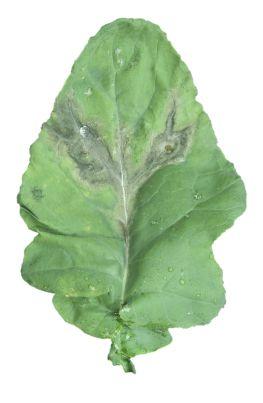
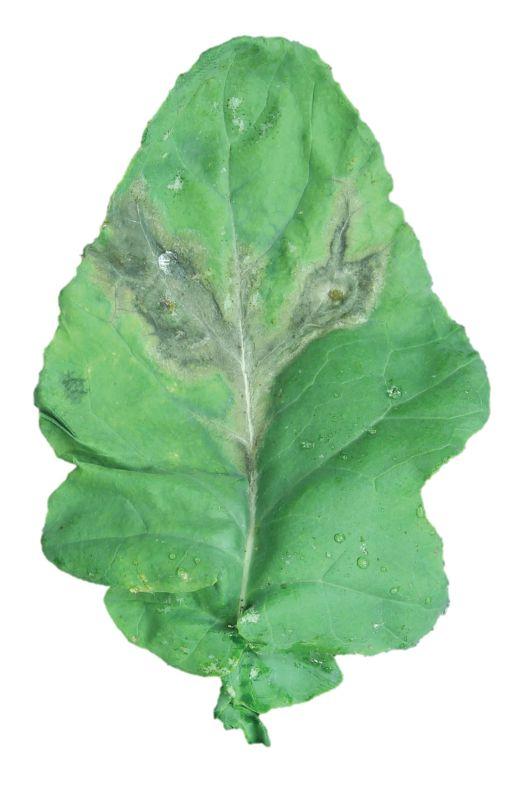
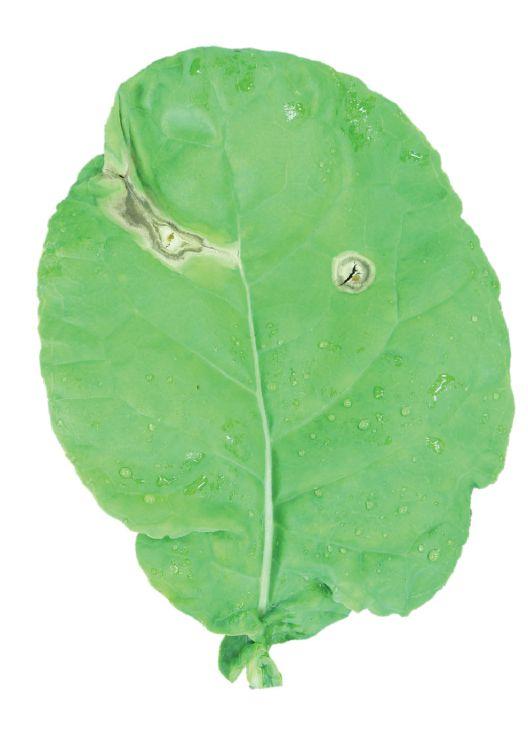
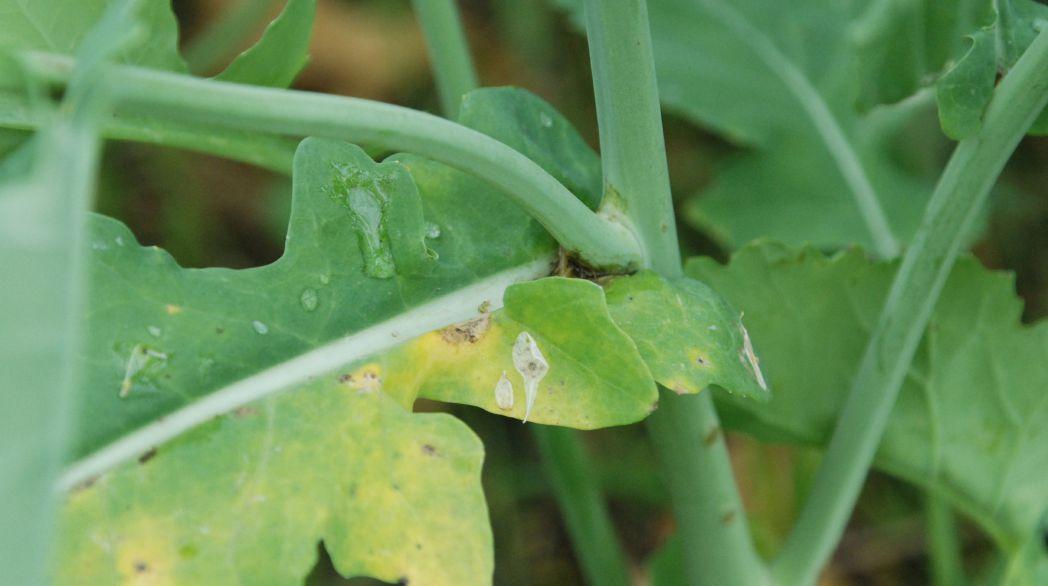
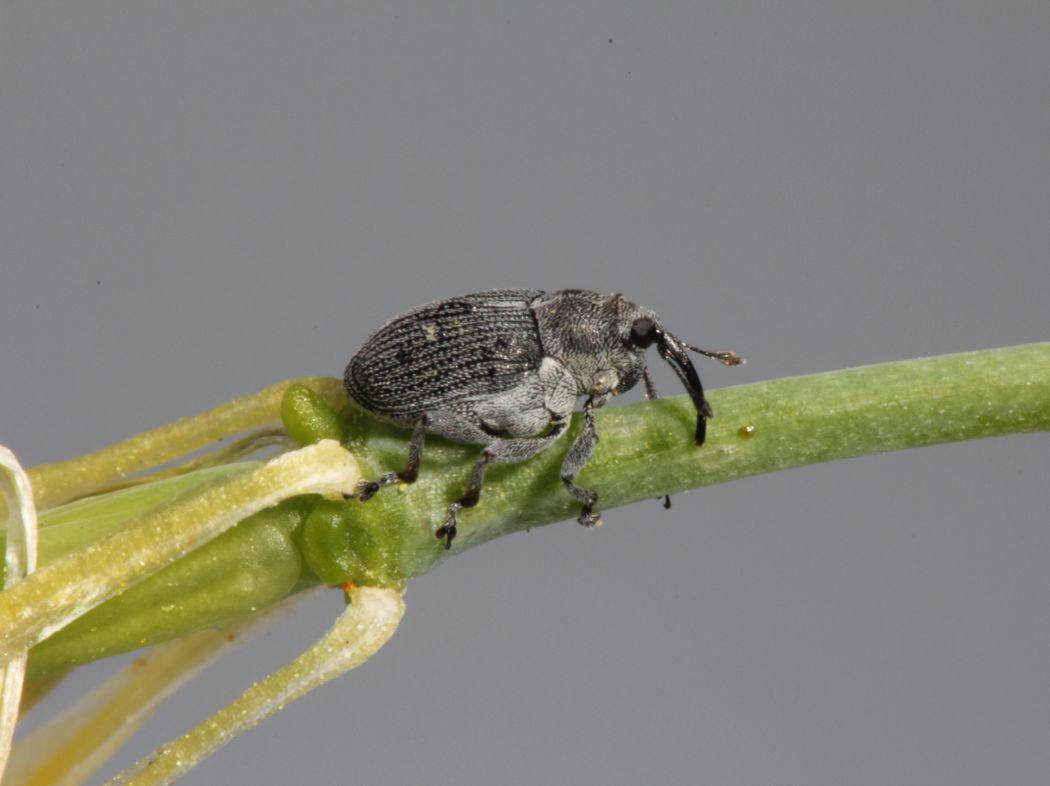
ABOVE: An untreated leaf from a canola plant infected with sclerotinia (left), next to a leaf from a canola plant treated with an RNAi-based foliar insecticide.
CLAAS.
(It rhymes with “Boss”)
There’s a reason you’re your own boss. You’re independent, informed and never apologize for making the decisions that are right for you.
Make CLAAS one of those decisions. Our long-line of technologically advanced equipment puts you in charge, harnessing the power of the harvest with greater efficiency, reduced fuel costs and greater time savings. It’s something we call the CLAAS Value Factor. And when value is on your side, decisions become easier.
Manage your farm like the boss you are and take your harvest to a higher level with CLAAS.
See your CLAAS dealer today for special year-end financing. Ensuring a better harvest. claas.com
This September, the Belmonte-Whyard RNAi research group received $442,714 in cluster funding through the Canola Council of Canada for a three-year grant investigating the protection of canola from pathogenic fungi using RNAi technologies. Their work on the grant will focus on the development of a foliar fungicide.
Testing in the lab and the field
One of the acknowledged benefits of RNAi is its specificity: because RNAi is built on genetic sequences unique to targeted organisms, there is theoretically very little chance of off-target impacts.
But a great deal of effort must go into ensuring this, Belmonte says.
The lab’s first step will be to take a bioinformatics or computational approach to making sure that the sequences they are targeting are in fact unique to sclerotinia fungi, he says, by checking them against all publically available sequences in the public database.
Not all potentially targeted organisms are sequenced, however, so a large part of the work will involve sequencing other likely fungi found in Western Canada, in order to make sure that these fungi – many of which are potentially beneficial –are not caught in the crossfire.
Belmonte’s team will follow this with lab work testing RNAi molecules for off-target impacts on insects and other fungi. So far, preliminary modeling has shown no off-target impacts.
“That’s really important to us – to make sure the molecules are doing what they’re supposed to be doing,” he says.
In past years, a key difficulty impeding the potential success of RNAi-based technologies has been the problem of mass-producing these molecules at scale.
But Belmonte says his lab is engaging with industry partners who have the capability to mass-produce RNAi molecules at a low cost using “cell-free” methods. These companies are going beyond the discovery phase with their work and can produce RNAi ma-
terial at a scale “that would be economically advantageous to the grower,” he says.
It’s also a priority to introduce RNAi controls that are compatible with existing spray equipment and other products producers rely on. In greenhouse trials, Belmonte’s lab is testing RNAi-based sprays at average spray timing – the 30 per cent bloom stage, when sclerotinia typically starts to show up in the field.
“We’re working really hard and companies are investing heavily in this type of technology because they see that there’s so much benefit to the grower, to put another tool in their toolbox,” he says.
Curtis Rempel, vice-president of crop production and innovation for the Canola Council of Canada, says RNAi technologies would be really welcome additions to the management toolkit.
“They have enormous promise to be very targeted interventions with no off-target effects and provide management options that have potential to be environmentally friendly,” he says.
Rempel cautions that the regulatory landscape is still an unknown, as no RNAi-based products have yet been registered by Health Canada’s Pest Management Regulatory Agency. But the Canola Council urges the scientific community and federal regulators to do their due diligence in evaluating the benefits versus risks of new RNAi products. “We need to do our due diligence as a regulatory community and as consumers but we shouldn’t throw something out that has promise to better our society,” Rempel says.
Belmonte says the RNAi team is working with regulatory agencies at every step to ascertain what kind of experiments and field tests are needed in order to bring the technology to market.
“My hope is that we’d be able to get this type of technology to growers within the next five years,” Belmonte says.
“The goal is to protect crops in a way that’s going to sustain the environment, to protect the ecology of the land while improving yield and the grower’s bottom line.”
ENHANCING THE BENEFICIAL ROOT MICROBIOME IN CANOLA
Improving crop performance of canola in the Canadian Prairies.
by Donna Fleury
Increasingly, research is showing that canola root-associated microbiomes can impact crop growth and nutrient uptake. Some of the soil micro-organisms are beneficial to plants that protect them against pathogens, mitigate the impact of abiotic stress, improve plant nutrition or stimulate plant growth by phytohormones. Gaining a better understanding of the influence these organisms have on each other and the complex webs of interactions that can be enhanced to optimize crop production is important for canola and other crops in Western Canada.
Researchers Marc St-Arnaud and Mohamed Hijri at the University of Montreal, and collaborators with Agriculture and Agri-Food Canada in Western Canada and Quebec are studying the root and rhizosphere microbiomes of canola. Through various projects, researchers are trying to better understand the core root microbiome of canola, and whether or not it is distinct from other crops such
as wheat and pea. They are also trying to determine agronomic practices and crop rotations that favour the establishment of a beneficial root microbiome in canola-based rotations to optimize the efficiency of plant production. Field experiments have been conducted at several locations in Western Canada, while most of the DNA, molecular genetics and other lab analysis are conducted at the University of Montreal.
“Results from recent projects have shown that the microbiome associated with crops is very different between key species,” St-Arnaud explains. “Crop diversification also has a significant impact on the microbiome.” In one recently completed project, graduate student Jean-Baptiste Floc’h, compared the results of field
ABOVE: Andrew Blakney, PhD student, and post-doc Jacynthe Masse preparing DNA for sequencing the canola microbiome to identify the beneficial microbes.
Through our patented Fusion® technology, MicroEssentials® is the only fertilizer to combine all three dimensions of smarter crop nutrition: uniform nutrient distribution, increased nutrient uptake and season-long sulphur availability. Using anything else is a short-sighted approach. Ask for MicroEssentials by name, and trust the only one with over 12 years of proven results.
experiments conducted in 2013 and 2016 at three locations in Western Canada: Lacombe, Alta., Lethbridge, Alta., and Scott, Sask. The study was based on the canola phase of an existing long-term five cropping system field experiment, including one of two types of canola (Roundup Ready and Liberty Link), and compared continuous canola to very diversified rotations. The results showed that crop diversification has significant impact on the structure of rhizosphere fungal communities. “We also discovered and described a canola core microbiome, which included a very diverse number of microbes that have a positive correlation to canola yield.” Floc’h will be continuing research into the canola microbiome through a PhD program started in the fall of 2018.
“One of our priorities is to find a way to increase the proportion of beneficial organisms, through agronomic practices such as seeding density, fertilizer rates or other treatments, and their effect on the microbiome population. “We are also studying the effect of crop rotation and intensity on the beneficial or detrimental organisms in the microbiome,” says St-Arnaud. “As part of this study, we are also trying to look at all of the microbes associated with the canola rhizosphere, not only to identify which organisms are there but also which ones are the most active and what they are doing in the soil. The beneficial nature of the microorganisms is being determined based on identity and abundance of important functional genes, as well as on crop performance. One other factor that has shown to have a significant influence on the combination of micro-organisms in the soil is the effect of rainfall and temperature. We have found big differences between a rainy year and a dry year, particularly in areas like Swift Current where rainfall can be variable. Therefore, understanding the
microbiome population and proportion of beneficial organisms under variable field conditions is also a priority.”
In another project conducted in 2014 using a similar long-term cropping system at three locations in Western Canada (Lacombe and Beaverlodge, Alta., and Brandon, Man.), researchers compared the canola root-associated microbiome with those of wheat and pea grown alongside canola in the same fields. They also compared the effect of selected agronomic treatments, including two canola seeding rates (recommended rate and 150 per cent of the recommended rate) and two fertilizer rates (recommended rate and 150 per cent of the recommended rate) on the canola microbiome. The effect of crop and treatment on the diversity of bacterial, fungal, and archaeal assemblages associated with the roots and rhizosphere soil was assessed. The results showed that canola has a core microbiome distinct from those of wheat and pea and that the root and rhizosphere microbiomes significantly responded to the agronomic treatments. Researchers also found treatment-specific changes in the relationship between bacterial and fungal microbiome members.
“Along with crop rotation, we also found that different crop cultivars can be an important factor influencing the microbiome,” Hijri adds. “Farmers should be aware that some cultivars respond better than others in terms of biodiversity of the microbiome, and will want to consider that in cultivar selection. As well, unlike most other crops, canola is one of the rare plants that cannot form mycorrhiza and the symbiotic association between the plant roots and soil fungi. Therefore, the impact of more intensive canola rotations may also reduce the proportion of other important beneficial fungi more than first considered.”
Other research underway is a focus on studying the microbial
Post-doctoral researcher Wang Li extracting RNA from canola roots to analyze the microbial genes involved in canola growth.
genes involved in nitrogen (N) dynamics in canola production. Hijri explains, “nitrogen can be a very costly input for growers, and the N cycle is a very dynamic and complex cycle in soils. We are trying to develop a better understanding of the microbes involved in the N cycle, and how that knowledge can be used to improve N use in canola production. The project is in the early stages, but the results so far are promising and we anticipate results should be available in the coming year.”
Although many of the microbes are beneficial, there are also some detrimental ones in the soil. For example, the Olpidium brassicae group, which was identified in early studies in the canola microbiome in Western Canada, contains serious pathogens to canola and their rotation crops that are still not well understood. “We are trying to better understand the taxonomy, the host range and the potential role of O. brassicae-related species in plant health, and the interaction of O. brassicae and allied species with other bacteria and fungi in canola. In an earlier study, we did find that O. brassicae was significantly reduced in the roots of canola planted at higher seed-
ing density. Ultimately we hope to find a way to encourage the good microbes in the microbiome to limit the impact of detrimental ones such as Olpidium species in canola production systems.”
Other efforts are underway to evaluate strategies that can be used to improve crop production, such as interventions with beneficial microbes, for example using inoculants at seeding, or other strategies such as developing soil amendments with commercial microbes that can boost or stimulate indigenous microbial communities to help increase the diversity of microbes. “Our research so far has confirmed that the more diversified the crop rotation system, the more diversified the microbiome, which helps make canola more resistant to new organisms or increase beneficial organisms,” St-Arnaud says. “Along with crop diversity, we expect that some agronomic practices will help improve crop performance. Combined with potential soil amendments and commercial microbes currently being explored, we will continue to study strategies that growers will be able to use to enhance the canola microbiome to help improve crop performance and health and optimize crop production.”
STAND YOUR GROUND
Lower the boom on your most serious weeds and safeguard the yield potential of your InVigor® hybrid canola with the powerful protection of Liberty® herbicide.
The Group-10 chemistry behind Liberty gives you a unique and highly-effective mode of action that tackles weeds, even if they’re resistant to glyphosate or other herbicide groups.
To learn more visit agsolutions.ca or call AgSolutions® Customer Care at 1-877-377-BASF (2273).
NEW STRAINS OF CLUBROOT IDENTIFIED
New clubroot pathotypes are highly virulent on clubroot-resistant canola cultivars.
by Donna Fleury
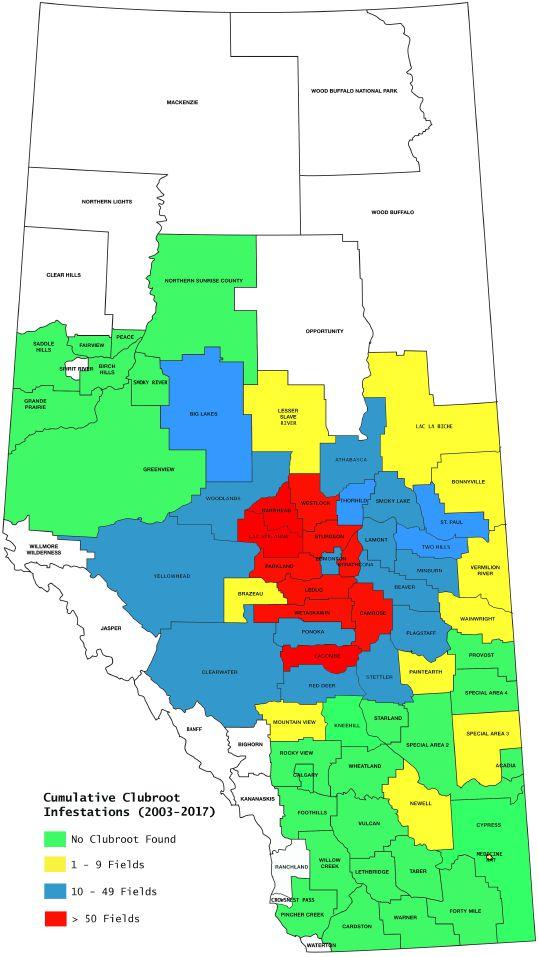
Clubroot continues to be a disease risk to canola crops across Alberta, with more than 2,700 clubroot-infested fields now confirmed, along with a few isolated cases in Saskatchewan and Manitoba. Although good clubroot resistant (CR) varieties have been available for about 10 years, there are an increasing number of fields in Alberta where new strains of the pathogen Plasmodiophora brassicae have overcome the resistance. Particularly in fields under short or intensive canola rotations, inoculum levels have been building up. Increasing inoculum levels allow the pathogen to evolve and select for new pathotypes or strains that appear to be highly virulent on all canola cultivars currently on the market.
Over the past few years, researchers in Alberta have been trying to better understand the strains of the clubroot pathogen that are able to overcome clubroot resistance. “One of our research efforts is focused on monitoring canola fields across Alberta to understand where resistance is holding up and where it seems to be breaking down, and to characterize the different pathotypes,” explains Stephen Strelkov, professor of plant pathology at the University of Alberta. “We quickly realized that we needed to develop a new classification system for these new pathotypes, as the commonly used pathotype classification systems were unable to identify or distinguish ‘new’ P. brassicae strains that overcome resistance from ‘old’ strains.”
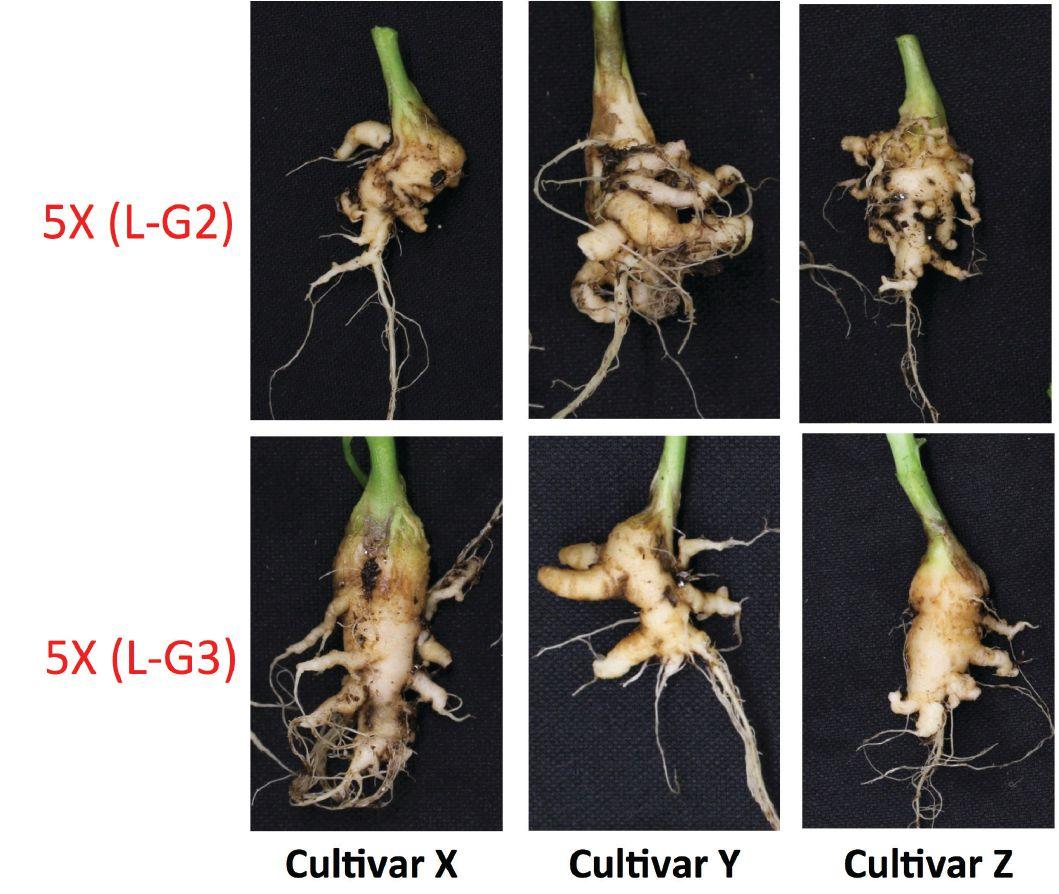
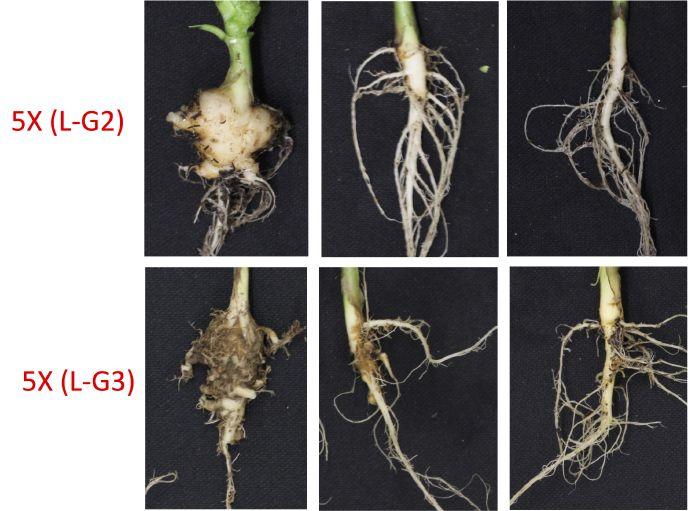
For example, the first of the new resistance-breaking strains of P. brassicae to be identified in Canada was initially classified as pathotype 5 on the existing Williams’ differential set, however this classification did not reflect their virulence on CR canola. Therefore, this new virulent pathotype was called “5X” to distinguish it from the old pathotype 5. However, the term “5X” was soon applied to all strains able to overcome resistance, even after it became clear that not all new strains were alike and some had distinct virulence patterns. This created an urgent need for a new system to identify and distinguish P. brassicae strains and keep up with the emerging new virulence phenotypes that were being identified.
Strelkov and research scientist Sheau-Fang Hwang of Alberta Agriculture and Forestry, developed a new system
Alberta Clubroot Distribution Map
to distinguish pathotypes using hosts that were more relevant to canola in Western Canada. This new model, called the Canadian Clubroot Differential (CCD) Set consisted of 13 more relevant differential hosts and several canola genotypes, which have proven to be able to differentiate among multiple distinct virulence phenotypes among pathogen populations able to overcome resistance. To make it easier to recognize and distinguish between pathotype strains and virulence patterns, the old number system is combined with a new lettering system. For example, old pathotype 3 is now 3H. The most common of the new pathotypes is 3A, while the name 5X was kept for the first of the virulent pathotypes. “After three years of hard work we now have a Western Canadian foundational model to work from,” Hwang says. “We have been able to divide pathotypes into several groups, which helps breeders better select for resistance. With the foundation in place, we recognize that the CCD model needs refining, but at least now there is a base to move forward from.”
Researchers are also trying to understand how much diversity is in the population, and to determine the relationship and genetic similarities or distinct differences of the pathogen strains.
“We are using molecular analysis or genotyping to determine the differences, with pathotype 5X, for example, proving to be genetically very distinctly different from the old pathotype 5,” Strelkov says. “This genetic information is useful, providing us with a bit of a family tree that can help us understand which pathotypes are more closely related or not. This allows us to group the pathotypes and then develop molecular markers than can speed up screening to distinguish between different pathotypes and how they are behaving on resistance. Molecular markers allow us to screen many more samples very quickly, reducing the need for further testing to a subset of plants that are producing strange reactions or to verify our results. Eventually some of this material may be used by diagnostic labs in their testing protocols.”
Another question is whether pathotypes such as 5X or 3A are really “new” pathotypes or not. “We wanted to know if these pathotypes were here from the beginning and went unnoticed, or did they arise through other mechanisms such as mutation or sexual recombination,” Strelkov explains. “We went back to historical clubroot gall collections of eight Alberta counties from 2005 to 2016 to see if these new pathotypes were present, using
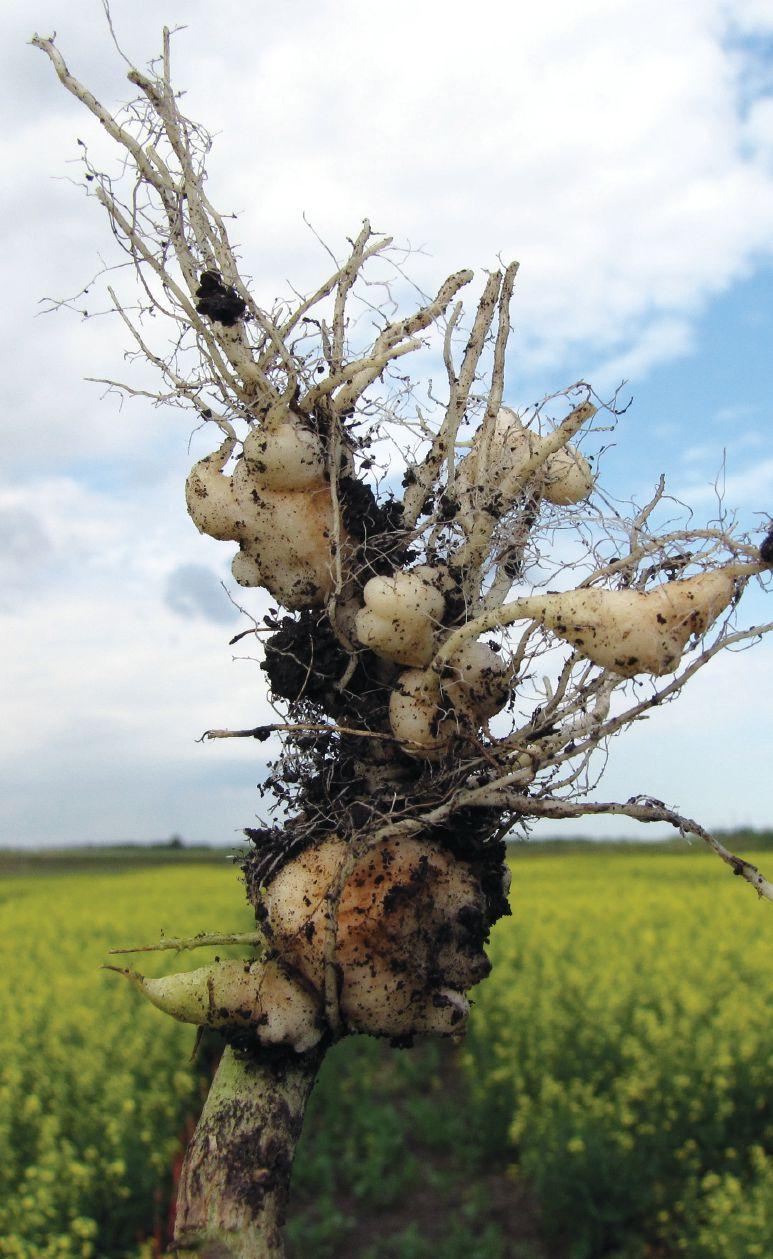
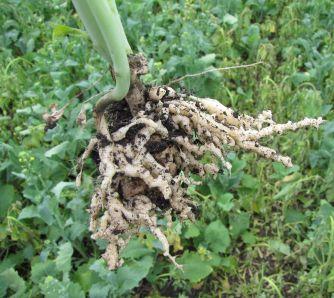
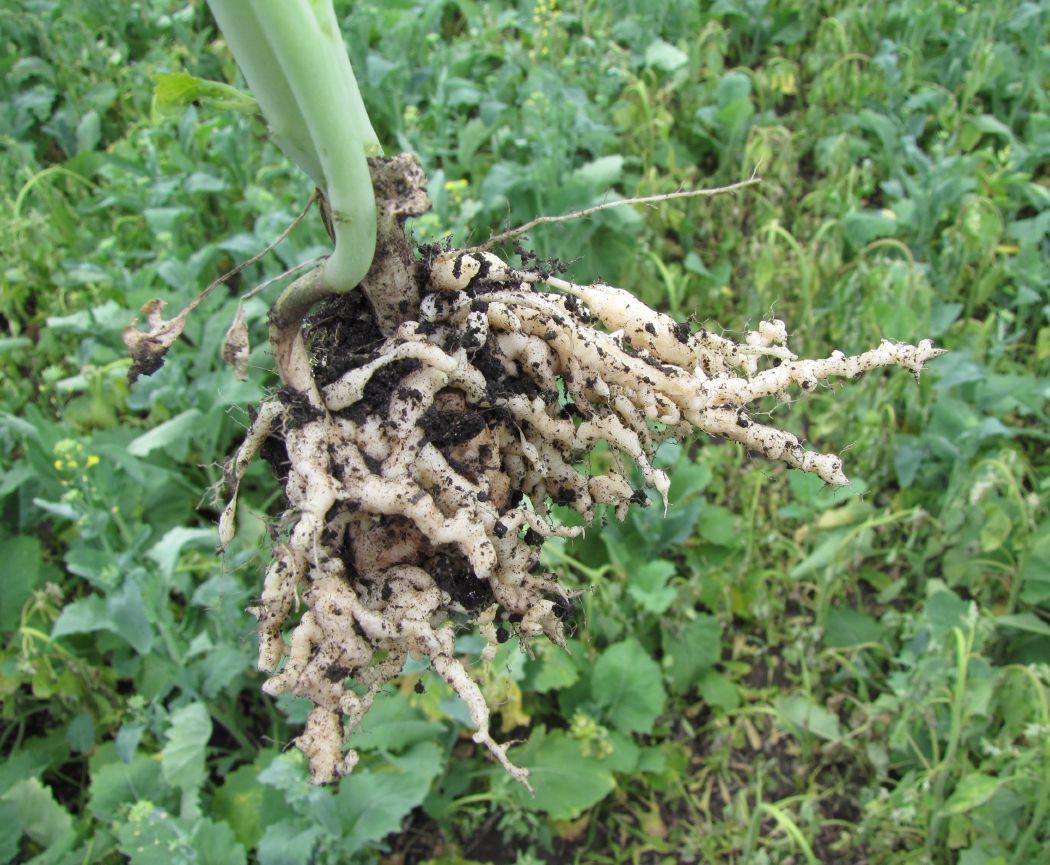
Canola root infected with clubroot.
It’s bigger with .InVigor.
Now featuring InVigor® hybrid canola and Liberty® herbicide, the new BASF Ag Rewards is bigger and better than any program we’ve ever offered.
To learn more, contact your BASF Sales Representative, or call BASF Ag Solutions Customer Care at 1-877-371-BASF (2273). You can also visit agsolutions.ca/rewards.
In 2017, 20 of 113 fields surveyed in the Peace Region tested positive for clubroot.
recently developed molecular markers. In fact, we found that in quite a few of the galls, these new pathotypes were present at very low levels, lurking in the background and favored by planting susceptible varieties to this new pathotype. The results showed that these pathotypes were usually found at very low levels in galls from non-CR canola. They also confirm that the proliferation of virulent strains resulted from selection pressure imposed by planting CR canola, eventually resulting in pathotype shifts.” In 2017 the analysis was expanded to include a limited number of samples from other regions in Saskatchewan and Manitoba. So far the good news is resistance is holding up in those provinces. Additional samples are being collected in 2018 and will be tested again.
Resisting
clubroot resistance
Also of note is for the first time in 2017, 20 of 113 fields surveyed in the Peace Region tested positive for clubroot. “We tested samples from those 20 fields using PCR and DNA testing and found that in 15 of 20 fields, the new pathotype 5X was identified,” Hwang explains. “According to the DNA, about 0.005 per cent of pathotype 5X spores were buried in the samples, suggested it is lurking in the soil at low levels, but more intensive rotations increase the selection pressure for these novel pathotypes that can overcome resistance. Applying a new calculation that I just developed for the first time on the number of spores released by a clubroot gall, that translates to over 800,000 pathotype 5X spores from each infected canola plant. We know that each canola plant can have
PHOTO COURTESY OF STEPHEN STRELKOV.
20 grams of gall tissue, and each gram of gall can contain 800 million spores. This means one mature canola plant could release 16 billion spores.”
Hwang emphasizes that rotations of two or three years between canola are required to help reduce the levels of infections from those 16 billion spores per mature canola plant gall. “Three-year intervals between canola rotations actually result in significantly higher canola yields than a two-year rotation, however, pathogen levels are reduced with both rotations. It’s not just about reducing novel pathogens, it is important to reduce the whole pathogen population in the field because as long as population levels are kept low, then the disease can be delayed and yield losses kept lower. According to a survey we completed in 2015 in four counties in central Alberta on 5,598 fields, most growers are using good practices and rotations, with only about 10 or 15 per cent using very tight rotations of no break or one year in between canola. The results from the 2017 Peace Region survey were similar.”
“Three-year intervals between canola rotations actually result in significantly higher canola yields than a two-year rotation, however, pathogen levels are reduced with both rotations.
trances,” Hwang adds. “We need to take a holistic view and determine how other factors such as weeds impact clubroot pathogen development. We also know that the pathogen prefers acidic conditions and is less favored in higher pH soils. A graduate student project is underway to trial the potential use of lime amendments and different formulations, with early results very promising. The next major project is to find a way to measure specific density of spores in the field.”
For growers, there is no single magic bullet, but genetic resistance remains the easiest and most effective clubroot management strategy. However, to maintain the effectiveness of these resources, other good management strategies such as extended rotations of at least two to three years is recommended. “We are researching other strategies such as fumigation to try to reduce population densities, particularly in field hot spots or field en-
Strelkov and Hwang will continue to screen for new pathotypes and refine the CCD model. A better understanding of the pathotypes helps inform plant breeding and the focus of resistance strategies. “It is important to be breeding for prevalent pathotypes, so the right resistance is there when new canola varieties are released,” Strelkov says. “We continue to do this pathology work so breeders know how to target their efforts and also to have materials with which to screen against. Resistance stewardship and a more integrated approach will be needed for sustainable clubroot management as we try to balance clubroot resistance with evolving pathogen strains and virulence.”
NEW FRONTIERS FOR CANOLA MEAL
Research seeks to turn canola meal into a high-value “co-product” with applications in human food and feed.
by Julienne Isaacs
Canola contributes around $26.7 billion annually to the Canadian economy, according to figures from the Canola Council of Canada. However, most of its value lies in the oil, while canola meal has traditionally been considered a byproduct suitable only for animal feed.
This might change with the start of a new research project, which just received $876,000 in Agriculture and Agri-Food Canada, Canola Council and grower association cluster funding. The project aims to boost the protein content and quality of canola meal, turning this byproduct into a high value co-product of canola oil.
Researchers on the grant include Rob Duncan, associate professor and breeder in the University of Manitoba’s department of plant sciences, James House and Rotimi Aluko in the university’s department of food and human nutritional sciences, Agriculture and Agri-Food Canada collaborators in Saskatoon including Isobel Parkin, Janitha Wanasundara and Sally Vail and Lee Anne Murphy with Murphy et al Inc.
“We’ve gotten some smaller funding but this is our biggest funding source to date going into protein related traits and development,” Duncan says. “This is a big step for the entire industry to add value to the crop.”
Duncan says the team’s research will be geared toward increasing the functional and nutritional value of canola meal as a feed source, and perhaps also a food product for human consumption.
Over the grant’s five-year term, Duncan’s team will focus on three objectives. They’ll start by looking for diversity within the brassica family to find sources of improved protein quality, digestibility, cruciferin and napin in the natural germplasm of canola and its Brassicaceae relatives, as well as oil content, fatty acid content and fibre, among other qualities. Once they have gained this information, the team will look at the genotypic information of this germplasm to discover what factors control the protein quality and digestibility.
The team’s third goal is to analyze how these sources of genetic diversity interact with canola processing methods, and how that interaction impacts protein quality and digestibility.
This focus on individual cultivars is important, Duncan says, because in the past research on canola meal has always been performed on composite samples, never individual cultivars.
“Is this cultivar better for digestibility? Does this cultivar have different cruciferin or napin levels? Does one cultivar handle processing better than others?” Duncan asks. “As a breeder, what I’m
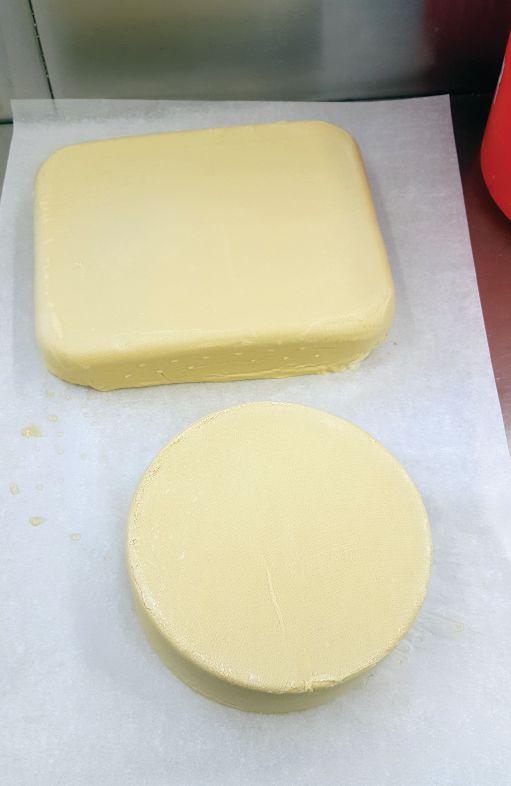
ABOVE: A “canola tofu” round with characteristics similar to a silken soy-based tofu.
interested in is understanding whether cultivar A or cultivar B has better protein qualities.”
Adding value to the industry
Duncan’s priority as a researcher has always been finding ways to extract value from the whole canola plant.
“From an economic and an environmental standpoint, the more value we can extract from the plant, the more benefit to
We’d like to introduce you to our new lineup of premium canola hybrids. Offering leading genetics tailored to your growing conditions, plus the assurance of local testing – Brevant™ seeds for Nexera™ contracts are ready to deliver results on your farm.
Try our new hybrid selector tool Find the right hybrid for your farm at Brevant.ca/canola-hybrids.
the country, the industry and to the farmers growing that plant,” he says.
Duncan says it’s possible to couple high-value quality traits in one canola cultivar, and in fact this has already been done. For example, DowDuPont’s ProPound canola, which is set to launch next year, contains a high-value meal trait that is combined with their specialty oil trait.
But Duncan’s research looks at another kind of efficiency. His research program has been focused on canola’s two main seed storage protein types – cruciferin and napin. Both types have good applications in food industries, but because testing has been done on the composite level, drawing from a mixture of genotypes, no
one genotype has been bred for high cruciferin and napin.
“The efficiencies are poor,” Duncan explains. “If we could offer a genotype that will constantly contain high cruciferin or napin, the protein isolates could be used in protein bars and beverages.”
There is, however, only so much room in a canola seed. If oil content is increased, protein content decreases, says Duncan.
“But we’re not just emphasizing content in this research, rather the quality. If you have really high oil content that’s not to say that you couldn’t have high cruciferin in the resulting meal.”
Because this team is just starting on this protein research, Duncan says it could take more than ten years to bring a new cultivar to market.
Manual grinding of canola seed into meal to determine protein characteristics.
Seed and meal samples of Brassica napus for determining protein quality.
PHOTOS COURTESY OF ROB DUNCAN.
Food applications
The third focus of Duncan’s team’s project – understanding how processing methods affect quality – is just as important as the initial trait discovery process, he says. If a variety has improved protein quality traits, but those traits break down during heating in processing, you’ve gained little.
According to Lee Anne Murphy, vicepresident of agricultural research firm Murphy et al Inc., who is part of the same cluster project, this exact problem is a key obstacle facing stakeholders interested in upping protein content in canola meal.
“High heat damages the ability of the protein to be used in food formats. That is why the cluster project’s focus on understanding the impact of processing on protein quality is so important,” she says.
Murphy’s company has a partnership with the Manitoba Canola Growers Association that has worked on characterizing oil, press cake (meal) and co-stream products from cold pressed canola.
“One of our discoveries was that the protein from canola meal can be used in food formats including a ‘canola tofu,’” she says. “We’ve also developed prototypes that mimic the hardness and elasticity of silken soybean tofu, as well as a shelf stable powder version and a meat mimic –think deep fried nugget.”
Murphy says all these applications can be made using equipment that the soy industry has used for decades, which means existing plant-based food manufacturers can expand product offerings while minimizing capital investment.
Canola meal has a largely untapped potential for use in food ingredients and food products, Murphy claims, and unlike many other novel plant proteins it’s readily available in large volumes.
“We hope the feedback on end uses will help focus and direct the research and discovery efforts to shorten the time to commercial adoption,” Murphy says.
Involving growers in this work from the beginning is key to the project’s success, she adds. “We hear over and over that the major obstacle to adding value is a reliable, consistent supply of high-quality raw material.
“With canola, we have that as the starting point.”
For more canola research updates, please visit us online at www.topcropmanager.com.
PROVEN BY DESIGN
The way we see it, the Proven® Seed lineup is state of the art. Proven Seed offers leading edge technology you can count on in canola, cereals, corn, soybeans and forages. You get disease management, high yields and performance from every seed, across all your acres.
No matter how you look at it, there’s a Proven Seed that fits your farm.
USE BIN-RUN SOYBEANS AT YOUR OWN RISK
Old bin-run soybeans seed yielded about five bushels per acre less than the new, most popular varieties.
by Bruce Barker
The patent on the first-generation Roundup Ready soybean trait expired in 2011, leaving the temptation for growers to save their own seed or purchase bin-run seed from others. However, using bin-run Roundup Ready soybean seed comes with agronomic and legal implications.
“Whether it is off-patent Roundup Ready soybeans or bin-run conventional soybean seed, I tend to lump them into the same category from an agronomic perspective,” says Dennis Lange, pulse specialist with Manitoba Agriculture. “With bin-run seed, there’s no guarantee of what’s in the bag, no germination guarantee, no way to ensure purity of the seed or even know what variety is in the bag. It is just the word of the salesman you’re buying the seed from.”
Several years ago, Lange analyzed Manitoba crop insurance yield data comparing Roundup Ready varieties that would be obviously off-patent to a few of the most popular Genuity Roundup Ready 2 Yield trait technology soybeans currently grown and available only as Certified Seed. He found that the old bin-run seed yielded about five bushels per acre less than the new, most popular varieties.
Possible reasons for the yield drag of older bin-run seed is the improvement of many important genetic traits over the past 10 to 12 years. These include earlier maturity, higher yield potential, Iron Deficiency Chlorosis tolerance, and Soybean Cyst Nematode resistance.
“In addition to the improved genetics of today’s soybeans, I always recommend Certified Seed from the agronomic side. You have guaranteed germination and know that you are getting the variety you are buying. It’s free from impurities and off-types,” Lange says. “It’s up to the individual to decide, but certainly from an agronomic perspective, going with Certified soybean seed has advantages.”
Legal implications
Lorne Hadley, executive director of the Canadian Plant Technology Agency, notes that just because a variety goes off patent, other contracts and agreements may prevent a soybean grower from using off-patent Roundup Ready seed. The CPTA is a member-driven not-for-profit organization that supports intellectual property within the Canadian Seed industry.
“There are several issues with the Roundup Ready 1 trait. There are still some varieties being sold as Certified seed that carries that trait, and it may also be stacked with other traits. These varieties may still be protected by some sort of grower agreement,” Hadley says.
To avoid legal ramifications of using bin-run seed, growers should check to see if the variety can be legally saved and replanted. This may be the case for some very old varieties or some conventional varieties. However, while the patent on the trait may have expired, other forms of intellectual property protection, such as varietal patents, continue to be valid. Soybean growers may also have signed other contracts with seed companies where they are not allowed to save or trade seed between farmers.
“There’s not a lot of upside to bin-run seed. The biggest risk is not knowing what is in the bag if you are purchasing it from someone else. For example, maturity is a big challenge for growers and you might be getting a variety that requires high heat units to mature that isn’t adapted to the area you farm,” Hadley says.
It’s up for growers to decide whether they want to take that risk with bin-run seed or place a safe bet on Certified seed.
ABOVE: Bin-run soybean seed had a five bushel-per-acre yield drag.
PHOTO BY BRUCE
TAKING THE RISK OUT OF STRAIGHT CUTTING
How one producer pulled the trigger
Straight cutting canola continues to expand in Canada, this year more producers left the crops standing and accepted the risk in exchange for larger seed sizes and more flexibility at harvest.
How do they manage the risk?
In Kirriemuir, Alberta Dallas Vert found the solution for his operation was Production Cost Insurance. “The risk is always there on canola and I always wanted to straight cut it. I never ever had the opportunity to be covered to do it.”
A couple years ago Dallas heard talk of a new insurance product that was completely different from traditional insurance. It sounded so good, that at first Dallas didn’t believe it could be true.
“I went online and looked it up. And then I talked to Grant at one of the farm forums and I thought it was too good to be true. I didn’t believe what he was trying to tell me. I thought there was a loophole somewhere that the guy can get out of, because insurance doesn’t usually work that way.”
There was no loophole. The insurance was revenue insurance—also called Production Cost Insurance. A product that’s rapidly taken hold in Canada and the United States. The private insurance from Global Ag Risk Solutions, based in Moose Jaw, Saskatchewan is helping farmers be a little more aggressive. It’s not a single incident insurance, it insures them through the whole growing season and through multiple forms of risk. Not just weather.
In short, you insure that you will earn a certain income. Then you have the freedom to do whatever you need to do to hit or get past your target. This protects you from unexpected expenses like added inputs and unpredictable market
“ The canola variety that came out that year was quite expensive, but it was a good variety match for our area. So, I pulled the trigger and I did it—and it was awesome!”
Dallas Vert, owner of Kirriemuir Ag and Oil in southeast Alberta.
fluctuations. As Global Ag Risk client Blake Brownridge from Arcola, Saskatchewan says, “I’m rewarded for what I do on my farm. If I try to do different things, then I know that I’m covered.”
That freedom is what gave Dallas the confidence to start straight cutting his canola.
“The canola variety that came out that year was quite expensive, but it was a good variety match for our area. So, I pulled the trigger and I did it—and it was awesome! I’m going to continue doing it. All I needed was the risk coverage to do it and trying to cover the expensive seed. And it’s there now.”
With Global Ag Risk Solutions, producers have the peace of mind to farm how they want to farm, something that’s helped Dallas and his family sleep a lot better at night.
“I’m pretty sure those two swathers are going to go down the road and it’s going to put more money in my pocket.”
BETTER AND BETTER FLAX
Some highlights from the Prairies’ only flax breeding program.
by Carolyn King
Being the only flax breeder in Western Canada puts the onus on Helen Booker to target traits that are of keen interest to flax growers, processors and users. Her program is working on a wide range of advances – from stronger disease resistance, greater adaptation to northern conditions, and increased yields, to larger seeds, yellow seed coats and higher alpha-linolenic acid (ALA) levels in the oil.
“Western Canada has gone from three flax breeding programs to one in the last couple of years,” says Booker, who has been the flax breeder at the University of Saskatchewan’s Crop Development Centre (CDC) since 2009. She notes that the Agriculture and Agri-Food Canada (AAFC) flax program in Morden, Man., has shifted from breeding to agronomy research, and a private flax breeding program run by various companies over the years has closed up shop.
Fortunately, Booker’s program is able to piggyback on the resources and infrastructure in place for the CDC’s other breeding programs. Also, Booker and her predecessor, Gordon Rowland, have developed some great flax cultivars that provide royalties to the breeding program from seed sales. Plus, collaborations with other researchers are feeding valuable data and tools into her breeding activities. And Booker and her collaborators have been able to access research funding from federal, provincial and grower sources to continue the program’s advances.
Breeding goals
“One of the major goals of my program is to increase the area of adaptation where flax can be grown successfully,” Booker says. “Primarily, flax is still a crop of the southern Prairie provinces, mainly because it requires a relatively long growing season. However, if we can [decrease the days to maturity] and move flax production farther north, so it’s not competing head-to-head with soybean, then we could potentially increase the production area.”
She explains that flax production in the Prairies’ northern growing areas offers several advantages. “In the north, there is less drought and lower evapotranspiration, so yield potential is higher. Also, ALA levels are higher when the crop is grown under cooler night temperatures, so seed quality tends to be good in northern areas. ALA is the major fatty acid in flax associated with its industrial uses [such as varnishes and paints] and with the healthy omega-3 fatty acid.”
Of course, Booker also wants to improve outcomes in the areas where flax is currently grown. So, she is aiming to increase yields in all production areas by improving such things as resistance to major diseases like pasmo, powdery mildew and Fusarium wilt, and resistance to drought.
Another goal is to improve harvestability. She notes, “Sometimes the flax seed capsules, the bolls, have matured but the stem remains green, and the stem is a very strong because it’s a bast fibre crop. So, if we can get the stems and the bolls to mature
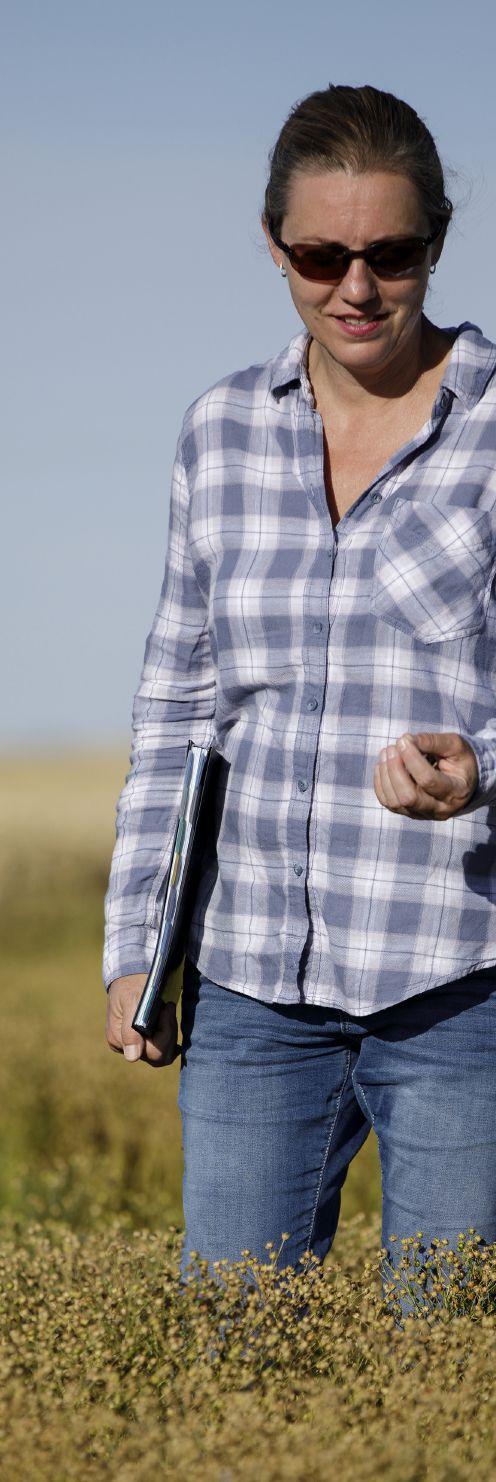
<LEFT: Helen Booker is working to improve a wide range of traits in her flax breeding program at the University of Saskatchewan.
at the same time, then harvesting will be a lot easier.”
As well, she is working to improve seed quality traits that are important to the industrial, human health, and animal nutrition markets, such as increasing the ALA content.
Latest varieties
<LEFT: Booker’s newest yellow flax variety, CDC Dorado (foreground), flowers and matures earlier than reference cultivars CDC Bethune and Omega, and has a high ALA content.
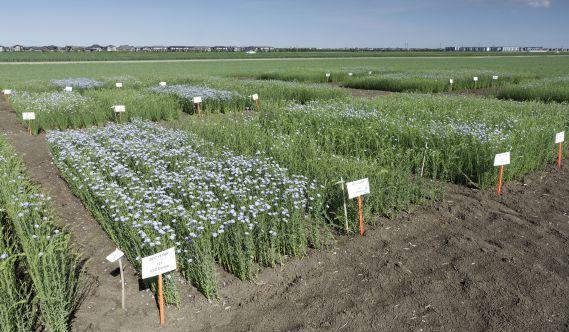
BOTTOM: An example of parent plants (crosses indicated by the tags) in Booker’s flax breeding program.
Some of Booker’s latest varieties have a yellow seed coat. “Flax cultivars in Canada can now have either a brown or a yellow seed coat. In the past, yellow seed coat cultivars were Solin varieties; breeders used the yellow seed coat to identify cultivars with a low ALA content so those cultivars wouldn’t get confused with commodity flax, which has a high ALA content,” she explains. “However, the market for low ALA flax oil never developed significantly. So, we asked the Canadian Food Inspection Agency to decouple that yellow seed coat trait from the low ALA trait. They agreed, and we deregistered the Solin varieties. So, we’re now able to release yellow seed coat lines with the high ALA trait.”
According to Booker, the yellow seed coat is an advantage for some uses because the seed coat doesn’t contain tannins. For example, if you mix ground yellow flaxseed into food products like pastas or bakery products, it won’t cause discolouration.
“In 2017, I released a yellow seed variety called CDC Dorado. A seed grower group in southern Alberta called SeedNet is distributing it. CDC Dorado is the highest ALA line released by the CDC. It’s at 64 per cent ALA; most of the cultivars have around 55 per cent,” Booker says.
“In the longer growing season zone of the Prairies, CDC Dorado has a seven per cent yield advantage over AC Nugget, the yield standard for the yellow linseed cultivars. It has a medium seed size. It’s immune to flax rust and moderately resistant to Fusarium wilt. And it has a high meal protein content of 44 per cent, so the meal is a good protein source for animals.”
In 2016, she registered a yellow cultivar called CDC Melyn, which is being distributed by Wayfinder Farms in Saskatchewan. Its yield is equal to AC Nugget’s, it is immune to flax rust and moderately resistant to Fusarium wilt and has an ALA content of 61 per cent.
This year, Booker registered a brown linseed variety called CDC Rowland. “The breeder seed was grown this year. SeCan will distribute it, and they’ll have it ready for farmers in a couple of years,” she says.
“CDC Rowland is named after my predecessor, Gordon Rowland, who started the flax breeding program at the CDC. It has a really high yield potential. Across Western Canada, its yield is 112 per cent of CDC Bethune, which is the yield standard. It has a late maturity rating equal to Flanders, and the yield potential actually is higher in the south. So in the longer growing season portion of the Black and Gray soil zones, it’s 117 per cent of Bethune. In the Brown soil zone, it’s about 116 per cent of Bethune.
“It has a large seed size, at 6.8 grams of 1,000-seed weight, which is significantly larger than the other CDC cultivars. It is immune to flax rust, and moderately resistant to flax wilt and powdery mildew. It has a medium oil content of 45 per cent and an ALA content of 59 per cent.”
Phenotypes, genotypes, genomics, genes
Over the past decade, a lot of work has been done in Canada to evaluate and characterize existing flax germplasm sources. For instance, Rowland and AAFC’s Sylvie Cloutier led a major Genome Canada project (2009 to 2014) that sequenced the flax genome and developed numerous genomics tools such as genetic maps and molecular markers. This work has continued, and they recently released an improved version of the flax genome sequence that rivals in quality the best crop reference sequences currently available.
To help in the use of those tools, Axel Diederichsen with Plant Gene Resources of Canada (PGRC) created a set of about 400 accessions, called the flax core collection. This core collection is drawn from the PGRC’s flax world collection, which contains about 3,400 accessions of flax germplasm collected from all over the world. The core collection preserves the range of diversity present in the world collection.
Booker, along with AAFC researchers including Scott Duguid, Sylvie Cloutier, Khalid Rashid and Frank You and others, worked together to evaluate the core collection for many agronomic, seed quality, fibre and disease resistance traits, at Morden and Saskatoon. The resulting dataset is a great resource for flax breeding. This research was funded by Genome Canada, AAFC, Western Grains Research Foundation, Saskatchewan Flax Development Commission, Flax Council of Canada and others.
The AAFC researchers have genotyped the core collection and they are working on studies to identify the locations in the flax genome that affect various key traits. Booker and her AAFC colleagues will be submitting a proposal for a large-scale research project that would include a continuation of that work towards pinpointing the specific genes involved in important traits.
In a Growing Forward 2 project, Rashid and CDC plant pathologist Randy Kutcher screened the PGRC’s entire flax world collection at the pasmo nurseries at Morden and Saskatoon, respectively. “They were able to identify some accessions that are moderately resistant or resistant to pasmo,” Booker says. She adds, “The flax lines in the world collection are not necessarily improved germplasm; they don’t have the agronomic, disease resistance, and quality traits that are required for a cultivar to be grown in Canada. So we’ll be using those resistant and moderately resistant lines as a germplasm resource to breed into,
or introgress, pasmo resistance into our improved material.”
Last year, Booker led a short project under Growing Forward 2 that involved QTL-seq. QTL-seq is a bioinformatics “pipeline” (a series of steps to analyze data) to rapidly analyze millions of DNA sequences to figure out how they relate to specific traits. “We obtained a flax population that was segregating for either resistance to powdery mildew or resistance to Fusarium wilt or both. We sequenced all the individuals in that population. Then we selected the extremes from the population, so the resistant or susceptible phenotypes,” she explains.
By analyzing the sequence information for those resistant and susceptible groups, the researchers identified locations on the genome associated with resistance. “We identified a single location for powdery mildew resistance. Fusarium wilt involved a lot of smalleffect locations, so we weren’t able to identify a single location that conditioned resistance to that disease,” she says.
Booker’s group is now doing further work with this flax population, trying to zoom down to find actual candidate genes that may be contributing to powdery mildew resistance. If they can identify the resistance genes, they will then develop molecular markers for those genes and use those markers in her breeding program. She notes, “In Saskatoon, we can’t reliably screen for resistance to powdery mildew because we only get a powdery mildew epidemic about once in a decade. However, if we have a genetic marker, then we can screen for resistance in that way.”
Going wild
Another area of her program involves transferring useful traits from the wild relatives of flax into cultivated flax lines. “The wild progenitor of flax is Linum bienne, or pale flax. It is easily crossable with cultivated flax, Linum usitatissimum,” explains Booker.
As part this research, she’s working on a step-wise approach to introgress pasmo resistance into an adapted background. First, she crossed Linum bienne with a CDC flax cultivar. Then she inbred those bienne-usitatissimum hybrids in the nursery until they became stable at the F6 (sixth generation) stage. The F6 hybrid lines didn’t perform very well agronomically because of the wild germplasm in their background, but Booker selected individual plants that showed resistance or moderate resistance to pasmo when tested in the pasmo nursery at Saskatoon by Kutcher’s group. Then she crossed those individuals back into CDC cultivars to try to improve some of the other traits in this material, while retaining pasmo resistance.
She says, “We’ll test offspring of these crosses in the pasmo nursery at Saskatoon next year. We’ll make single-plant selections of the most
resistant plants, and they will be retested again the following year in the pasmo nursery. We can keep this process going until the lines and the resistance are stable and then, they’ll go into performance testing.”
Her research group has also started making “wide crosses” – crosses with more distantly related wild relatives of flax, which can be quite challenging.
Better analysis of variety trial data
Booker and her CDC colleague Gaofeng Jia recently published their work to develop a more up-to-date statistical pipeline for estimating agronomic traits using data from multi-environment field tests, such as variety trials.
“Most agronomic traits, for example yield, are impacted by not only the genotype but also the environment. So it’s hard to pin down yield in multi-environment tests,” she explains. “The pipeline that we developed was best able to predict yield potential in flax when looking at multiple environments.”
She will be using this analysis pipeline to calculate more accurate yield potential estimates for new flax cultivars in the Prairiewide regional tests of registered cultivars, and she will provide those estimates in the Seed Guide flax tables. To better reflect shared environmental conditions, the flax yield data will be grouped into three regions: the Brown soil zone; the longer-season region of the Black and Gray soil zones; and
the shorter-season region of the Black and Gray soil zones.
Booker says this new approach will be more helpful for growers when choosing varieties suited to the conditions on their farm. And it will allow breeders to better pinpoint the best performing and most stable genotypes as their lines go through multiple field trials.
Overall, Booker and her collaborators have lots of studies underway that will contribute to the development of even better flax varieties. And she says many new projects will be coming along soon as the Canadian Agricultural Partners research funding program is rolled out. The future looks bright for continued improvement of flax varieties for Western Canada.
INNOVATIVE FLEA BEETLE CONTROL
Researchers look into a foliar spray, a more versatile and targeted treatment, to control flea beetles.
by Julienne Isaacs
018 was a bad year for flea beetles in Manitoba canola, according to John Gavloski, extension entomologist for Manitoba Agriculture.
“There was a fair amount of foliar spraying and some re-seeding,” Gavloski says. “Flea beetles seem to have overwintered quite well and were out in high numbers, plus the canola was stressed due to dry conditions, so it wasn’t growing quickly.”
There’s no year in which flea beetles aren’t a problem for canola producers; the damage simply varies in degree. The Canola Council of Canada estimates that annual crop losses due to flea beetle in North America likely exceed $300 million.
And controls are limited: while producers currently rely almost exclusively on neonicotinoid seed treatments (thiamethoxam, imidacloprid and clothianidin) for flea beetle control, Health Canada’s Pest Management Regulatory Authority is proposing to phase out outdoor uses of these chemistries over the next three to five years due to their impact on aquatic organisms.
Should this phase-out occur, producers are likely to shift from neonicotinoids to the diamide group (Lumiderm, Fortenza) as the insecticide component of their seed treatments. These insecticides also offer control of cutworm, says Gavloski. But producers clearly need more options for control.
Foliar RNAi
Enter RNA interference, or RNAi, a biological method that uses RNA molecules to inhibit or “silence” gene expression in targeted organisms.
There are two ways RNAi can be harnessed for crop protection: by transgenically modifying a plant to express the RNAi molecule in its leaves, or by applying this molecule topically to the plant using a foliar insecticide.
Bayer Crop Science’s Ag Biologicals and Syngenta have both been working on RNAi-based foliar insecticide technologies for several years.
Bayer’s product, according to Kristin Huizinga, regulatory affairs manager for RNAi, is still in its early stages, but field trials are promising. She says next steps include additional field trials as the company works to refine testing design to match on-farm conditions.
“The first step in the regulatory submission process may occur in the early 2020s, at which point we likely plan to submit
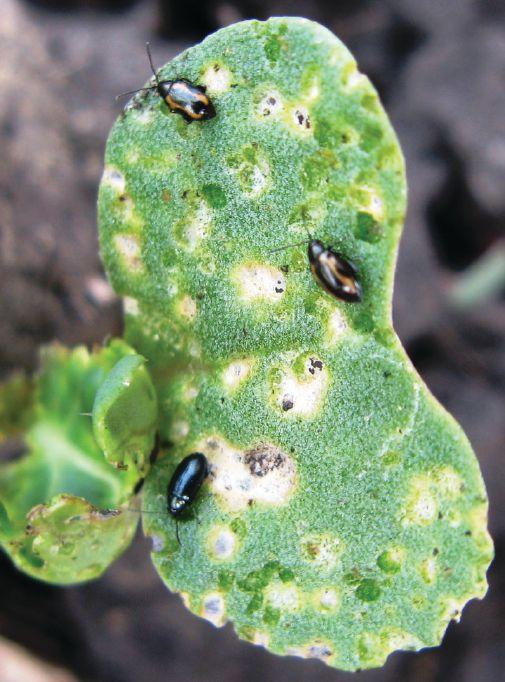
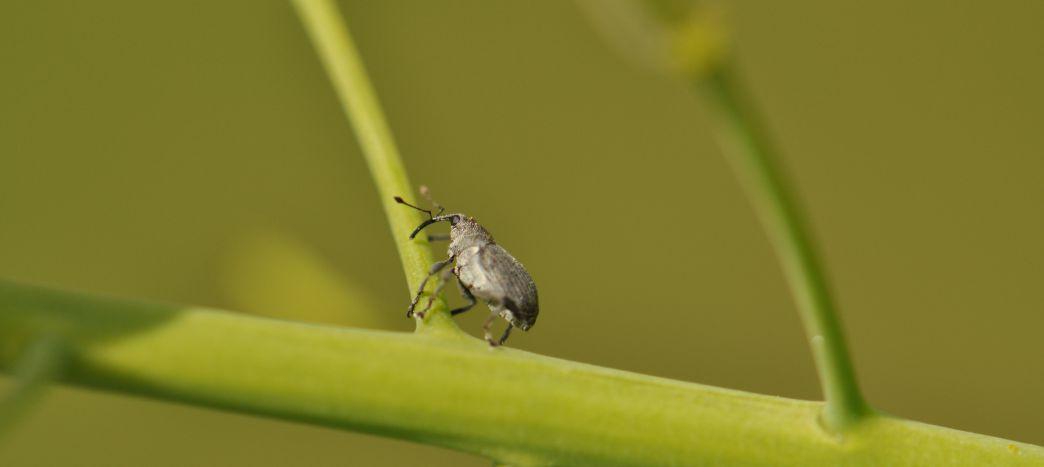
ABOVE: Adult flea beetles on a canola plant at Carman, Man.
a dossier to the United States Environmental Protection Agency to support a product launch in the middle of the next decade,” Huizinga says.
According to Chris Davison, head of corporate affairs for Syngenta Canada, Syngenta is also in its early research stages with a foliar spray for the control of flea beetles. “We expect it will be several years yet,” he says.
Davison says there are many challenges that need to be met as Syngenta develops any novel method of pest control. “In particular, it is important to understand the performance of products under a range of different conditions as well as be able to produce the material at the right quality and cost effectively, to highlight just a few considerations,” he says.
PHOTO COURTESY OF JOHN GAVLOSKI.
Both companies are working with regulatory bodies and other stakeholders as they develop their products.
Because RNAi is so new, the regulatory process represents untested waters in Canada, but any new pest control products must pass the PMRA’s rigorous health and safety risk assessments.
Benefits and drawbacks
Because the RNAi process is based on RNA sequences specific to proteins in a target pest, there theoretically should be no effect on other organisms, although researchers must do their due diligence in testing for off-target impacts.
Jodi Beattie, project lead for Bayer’s flea beetle research, says the advantage of a foliar spray is that producers can target their use of the product to those times when pests reach economic threshold levels.
“A foliar application of any kind gives a farmer added versatility and timeliness of when to treat the crop,” she says.
Producers are used to using foliar insecticides, adds Davison.
Regardless of the method of application, the clear benefit of RNAi is its specificity. Because the process is based on RNA sequences specific to proteins in a target pest, there theoretically should be no effect on other organisms, although researchers must do their due diligence in testing for off-target impacts.
This means RNAi-based controls shouldn’t impact beneficial insects in the field, says Gavloski.
But there is one potential downside: after consuming dsRNA on a canola plant’s leaves, flea beetles don’t die instantaneously.
“They may feed for a day or two and then die. For some in -
sects, it wouldn’t be a big deal. But for flea beetles, it depends,” Gavloski says. “If populations are extremely high, how much damage will occur after application before they die?”
Gavloski says producers’ alternatives for control are extremely limited. Few cultural controls for flea beetle exist in canola, and while crop rotation is recommended for many other reasons, it doesn’t have much of an impact on flea beetles, which can fly in to the crop from neighbouring fields.
RNAi-based controls might not be a silver bullet, but there’s no such thing, anyway, in a business as complicated as agriculture. From the producer’s perspective, innovation in the pest control pipeline is absolutely necessary.
“It’s good to have multiple tools in the toolbox,” Gavloski says.
For more detailed information on this topic or others, please visit us online at www.topcropmanager.com
SOLONETZIC SOILS: MORE COMPACT, MORE COMPLEX
The hardpan layer of Solonetzic soil makes soil management and crop production a challenge, but deep ripping or plowing can help reclaim the soil.
by Ross H. McKenzie
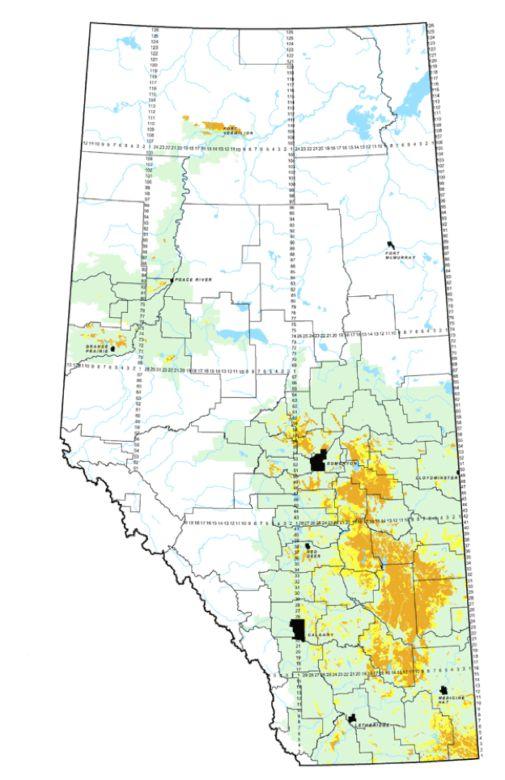
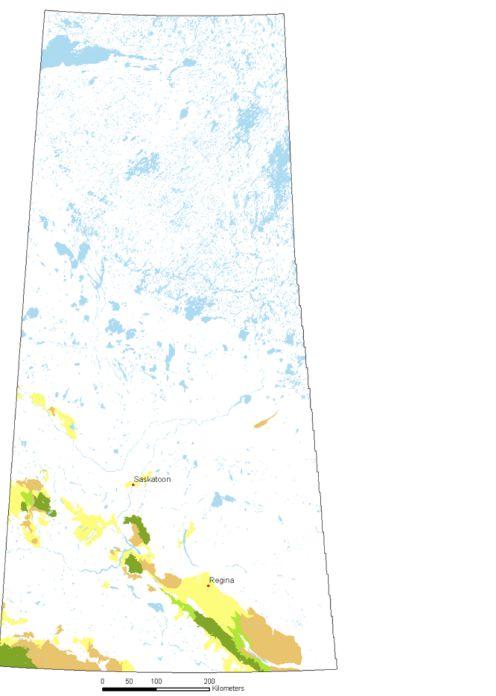
Solonetzic soils have a subsurface soil horizon layer characterized by a higher level of sodium (Na) and often an accumulation of clay. This hardpan layer makes soil management and crop production a challenge. These soils occur most commonly in Alberta and Saskatchewan (Figures 1 and 2), and less commonly in Manitoba.
Solonetzic soils have developed on parent material containing sodium salts that originated from marine shales or have developed on lower relief landscapes that are affected by ground water discharge that is higher in sodium. Typically, the hardpan “B” soil horizon, or subsoil, varies from five to 30 centimetres (two to 12 inches) below the surface soil.
The combination of high sodium and clay cause the subsoil, where most roots live, to be extremely hard when dry. When wet, the subsoil swells to a very sticky mass with very low water permeability. Years of swelling and shrinking of clay, coupled with the high sodium, causes the subsoil to develop into a hard columnar structure. These physical characteristics restrict root and water penetration into the subsoil. This limits the rooting ability of crops into the subsoil and restricts the plants’ ability to take up water and nutrients, affecting crop yields. Solonetzic soils are often intermixed with normally developed soils, resulting in a wavy crop growth pattern.
A soil is considered Solonetzic when it has a Bn soil horizon, with the “n” indicating a high sodium content. When Solonetzic soils form, there tends to be downward movement of clay from the surface soil (A horizon) into the B horizon, forming a Bnt horizon. The “n” indicates an accumulation of sodium and “t” indicates an accumulation of clay. The B soil horizon commonly overlies a C subsoil horizon with sodium salts, gypsum (calcium sulphate) and/or lime (calcium carbonates). A leached Ae horizon occurs within the surface soil when clay has moved downward from the A horizon and the “e” indicates an eluviated layer.
Reclamation management of Solonetzic soils
Since the 1950s, a range of physical and chemical practices have been tried with varying degrees of success. Deep plowing and deep ripping have been tried alone and in conjunction with amendments such as lime or gypsum.
ABOVE: Figure 1: Solonetzic soils in Alberta.
Limited water percolation into subsoil of Solonetzic soils is a major concern. Deep tillage to break up the hard B horizon has been used to increase water penetration and improve moisture storage. However, the success is short term as the sodium and clay enriched hardpan often reforms. Generally, success has been better in higher precipitation areas. When Solonetzic soils
are also saline (high in soluble salts), deep tillage is not recommended and may even encourage further soil salinization.
Reclamation and improvement of Solonetzic soils can be expensive. The Solonetz soil group is the most challenging to reclaim and manage. Solonetz soils in native grass, particularly in the drier regions of the prairies, are often best left in their natural condition and used for carefully managed livestock grazing.
Reclamation of Solodized Solonetz and Solod soil Great Groups have better potential for successful reclamation.
Deep plowing
Deep plowing has been used with reasonable success on suitable Solonetzic soils. Deep plowing is used to bring up C
SOLONETZIC GREAT GROUPS
The Canadian System of Soil Classification has divided the Solonetzic soil order into four Great Groups: Solonetz, Solodized Solonetz, Solod and Vertic Solonetz.
Solonetz soil is less common on the Prairies and has formed on soils with high levels of sodium. The change between the topsoil and subsoil is more abrupt.
Solodized Solonetz soil is more common on the Prairies. This soil has
horizon soil that is rich in calcium in the forms of lime and gypsum, to intermix with the Bnt hardpan. When this is done successfully, it allows calcium to replace sodium on exchange sites on the clay particles to improve the soil structure and prevent reformation of the hardpan. Over time the displaced sodium will leach out of the B horizon. To be successful, the lime/gypsum layer must be within plowing depth, and the soil must be dry to ensure good soil shattering and intermixing of the B and C horizons.
Often the A horizon of Solonetzic soil is acidic and when lime from the C horizon is mixed with the top soil, this can neutralize the soil pH to also provide soil improvement. However, the quality of the top soil is degraded in the mixing process and the soil organic matter content is greatly diluted. This can leave the surface soil rough, lumpy and will greatly reduce seedbed quality. The year after deep plowing, putting a field into forage for three to five years will allow time for the calcium and sodium exchange process to take place to improve B horizon quality and will help to improve surface soil quality.
Deep ripping
Deep ripping, also referred to as subsoiling, has been used as an alternative to deep plowing. To be effective, the soil will have a Bnt hardpan but with lower to moderate levels of sodium. The soil must be dry to ensure good fracturing of the hardpan. Unfortunately, ripping does not accomplish intermixing of the B and C soil horizons. Soil improvement and increased crop yields are mostly due to the physical shattering of the B horizon to improve water percolation and plant root penetration through the B horizon. When soil sodium levels are lower, the hardpan may not reform. When soil sodium levels are moderate, redevelopment of the hardpan may occur over time. Ripping is less successful when the B horizon is moist or wet at the time of ripping, or if soil sodium levels are moderate or high. Before undertaking deep plowing or deep ripping of Solonetzic soils, farmers should consult with a well-qualified and experienced soil specialist to determine if their soils have suitable characteristics for successful reclamation. Utility companies should be contacted to locate buried lines prior to tilling deeper than 30 centimetres (12 inches).
For more detailed information on this topic or others, please visit us online at www.topcropmanager.com
an Ae horizon, or surface soil, greater than two centimetres thick. Leaching has developed an acidic ashy-white Ae soil horizon above the hardpan from which clay and organic matter have been leached.
Solod soil develops with continued leaching of sodium and degradation of columnar tops. These soils often have an acidic topsoil and a subsoil that breaks apart more readily. Of all the Solonetzic
soil types, Solod soils have the best potential for improvement and annual crop production. With continued breakdown of the Bnt horizon and leaching of sodium from the B horizon, the soil degrades to become a Solodic Chernozem soil, with some of the physical features of a Solonetzic soil but without the high level of sodium.
Vertic Solonetz soil occurs on heavy clay soils and has a Bn or Bnt horizon.
Figure 2: Solonetzic soils in Saskatchewan.
FINISHING STRONG
75-65 RR
75-42 CR
75-45 RR
74-44 BL
75-65 RR - was built to straight cut; farmers tell us it runs through their combine like a dream.
75-42 CR - has clubroot resistance to pathotypes 3, 2, 5, 6, & 8, outstanding yield potential, plus early maturity - this hybrid has it all!
75-45 RR - this broad acre hybrid has been a top yielding hybrid across 3 years of DEKALB® MD trials* - seed it first and you can be first in your field at harvest.
74-44 BL - a consistent performer with enhanced multi-genic blackleg resistance. Big on Blackleg, Big Performance. CHOOSE FROM OUR CANOLA LINEUP THAT IS MADE FOR PRAIRIE FARMERS!
FINISHING STRONG
The TruFlex™ canola system will offer farmers flexibility in spray rates and timing to help control tough weeds.
Ask your DEKALB® brand seed retailer about our new straight cut hybrid, DKTF 92 SC. It will offer excellent yield potential and a best-in-class, multi-genic blackleg package.
And, find out more about DKTF 94 CR, the NEW clubroot resistant* hybrid equipped with early maturity and outstanding yield potential.
Supply will be limited on these two NEW DEKALB® TruFlex™ canola hybrids: DKTF 92 SC and DKTF 94 CR. Place your pre-orders with your DEKALB seed retailer.
Pre-orders will be fulfilled after TruFlex canola becomes available for commercial sale or seeding. Current plans are to launch in time for the 2019 growing season.
For more information about these exciting new canola hybrids, visit DEKALB.ca
DEVELOPING DIVERSIFIED CLUBROOT RESISTANCE IN CANOLA
Advancements
by Donna Fleury
Cand new tools for broad spectrum and more durable clubroot resistance.
ultivar resistance is considered the most effective and practical approach for clubroot management on canola. However, almost all of the current cultivars were based on a single clubroot resistance (CR) gene, which can be eroded when the pathogen Plasmodiophora brassicae changes in virulence. A new pathogen strain pathotype 5X, which began to appear in 2013 in some Alberta fields, was discovered to be virulent to each of the clubroot resistant cultivars in the marketplace. Researchers continue to work towards developing diversified clubroot resistance in canola.
“We are constantly looking for a new type of clubroot resistance that would be more broad spectrum and efficacious,” says Gary Peng, research scientist with Agriculture and Agri-Food
Canada in Saskatoon. “Over the past few years several researchers have been searching for new resistance genes for clubroot, but have realized that many of the genes being mapped or characterized are fairly similar. Even though we find more genes on different chromosomes, when we look at their function against various pathotypes, there is no single gene that is really resistant to all of the pathotypes identified in Canada, particularly the new ones identified at the University of Alberta. The challenge remains, how are we going to proceed from here in terms of cul-
ABOVE: New pathotypes of Plasmodiophora brassicae (clubroot) cause resistance breakdown of canola varieties, which were resistant to pathotype 3.
tivar resistance?”
It
In a recent project, Peng and his team set out to assess if any of the CR genes previously identified would be efficacious against pathotype 5X of P. brassicae, and to explore various molecular and biochemical tools and advanced technologies, including transcriptome, proteome, metabolome and synchrotron-based FTIR spectroscopy that can be used for studying CR mechanisms. These technologies can be used to identify metabolic or signaling pathways relating to clubroot resistance, potentially differentiating the modes of action among different CR genes. The ultimate goal is to develop canola germplasm carrying more diverse CR genes for sustainable and durable clubroot resistance that could be incorporated into elite canola breeding lines singly or by stacking.
takes time and a process to get these new resistance products out to the market . . . but new resistant hybrids won’t replace the good practices growers use, such as extending crop rotations, even by one year.
“We started this process looking at tools that we could use to assess the performance of different resistant genes, initially us-
ing transcriptome analysis (RNA sequencing) to compare overall differential gene expression between resistant and susceptible lines,” Peng explains. “Our initial assessment of CR candidates against pathotype 5X of P. brassicae began with screening of 24 resistant candidates (to pathotype 3) against mixed and single populations of pathotype 5X from Alberta fields where resistant cultivars failed in 2013. We identified several candidates resistant to mixed 5X populations, and the CR genes also showed resis-
QUALITY TOP TO BOTTOM
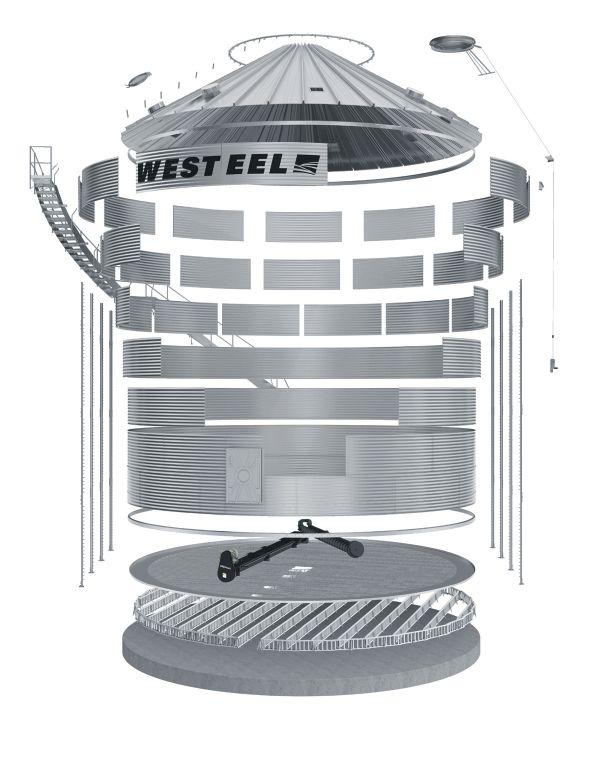
ADVANCED CONTINUOUS ROOF ANGLE
15" ROUND GALVANIZED ROOF VENTS
SPIRAL STAIRCASE
WALK-IN-DOOR
EASYFLOW2 U-TROUGH UNLOAD SYSTEM
24" - 36" WIDE FILL CAP WITH REMOTE OPENER
4" WIDE CORRUGATION WITH G115 GALVANIZED STEEL
VARIABLE SECTION STIFFENERS (VSS)
CONTINUOUS BOTTOM RING ANGLE
LOCK-N-LOAD FLOOR SYSTEM
tance to all other P. brassicae pathotypes found earlier in Canada (pathotype 2, 3, 5, 6, 8). Through RNA sequencing, specific functional resistance genes involved with the clubroot resistance have been identified.”
Researchers explored various advanced technologies to better understand the resistance mechanisms associated with these newly identified genes. One of the key discoveries was that cell wall modification was strongly indicated, especially callose polysaccharides associated with cell infection by the pathogen. The callose deposit increases the strength of the cell wall against infection. To better understand the pathways associated with the callose deposition or production, Peng turned to synchrotron-based Fourier transform mid-infrared (FTIR) spectroscopy tools at the Canadian Light Source (CLS). A synchrotron is a source of brilliant light that scientists can use to gather information about the structural and chemical properties of materials at the whole tissue, cellular and molecular level.
“Through this FTIR technology, we were able to closely examine and analyze the various root cell wall components, even at the micro and nano scale,” Peng explains. “We were able to identify clear changes in the cell-wall composition of roots associated with the recently discovered CR gene Rcr1 as compared to susceptible roots, especially the increase in lignin composition. The gene BrPAL1 was confirmed to be responsible for the upregulation of cell-wall components, including lignin and phenolics, which may play a role in defense responses against clubroot, such as strengthening the cell wall itself and providing antimicrobial properties.”
This study has provided researchers with a new direction for looking at the deployment of CR genes. Combining traditional tools such as microscopy and other biochemical analysis with FTIR as a potential new rapid and precise screening tool can help speed up the process. “For example, we may be able to use specific regions, such as the cell wall modification we just identified, as a fingerprint for screening for resistance,” Peng says. “We can look at various mechanisms of resistance against different pathotypes
and determine whether more modes of action can be involved. We can also assess how that will affect the longevity of resistance if we expose a stack of multiple genes to the same population of the pathogen.”
Researchers have also successfully developed a range of new and improved canola germplasms carrying single/multi CR genes against the new strain of P. brassicae pathotype 5X, as well as the common pathotypes found in Canada. The new CR gene Rcr6 appears promising against all pathotypes or variants recently found in Canada, but it will be more challenging to incorporate it into B. napus without sacrificing the yield or quality of canola varieties. However, it can be incorporated readily into B. carinata. CR genes on the A3 chromosome appeared less effective against pathotype 5X when used alone, but reduced clubroot development by approximately 80 per cent when combined with a CR gene on A8. To support the fight against clubroot in canola, several stable populations of CR B. napus germplasm carrying a single CR gene have been transferred to many breeding companies for the production of new resistant canola hybrids.
“We are discovering that the clubroot
pathogen population is more diverse than what we knew before, and there will likely be further variants to be identified,” Peng adds. “Therefore, it will be important to better understand the resistance mechanisms with the CR germplasms developed for effective deployment. Resistance remains one of the most important components of our clubroot management package, and is most practical and easy to use. Research and breeding efforts will continue to develop new resistance materials, recognizing there is a limitation of resistance sources at the gene level. It takes time and a process to get these new resistance products out to the market. However, at the same time, new resistant hybrids won’t replace the good practices growers use, such as extending crop rotations, even by one year such as from a two-year rotation to a three-year rotation. Extending rotations brings down the inoculum levels quite significantly, which will help the performance of some varieties and help extend the durability of new resistant varieties as they are developed and commercialized.”
For more detailed information on this topic or others, please visit us online at www.topcropmanager.com
Reaction of canola hybrids with stacked clubroot resistance (CR) genes to the pathotype 5X populations L-G2 and L-G3 5 weeks after inoculation (middle and right). Without proper stacking, these CR genes are ineffective against the 5X (left).
FOCUSING ON FINANCE – NOT JUST THE FARM
The farming operations of today demand a different skillset from the farms of yesterday. Management and finance skills are becoming a must-have and the lack of interest in the finance side can make or break a successor’s future achievements.
BY Stephanie Gordon
The plan was all set – the 7,000-acre grain farm would transition from father to son, as would two other enterprises, each earning about one million dollars in revenue annually. Out of everyone in the family, only one son was interested in farming.
During a meeting with their financial advisor, his interest in farming was apparent: “I don’t want my butt glued to that chair.” But for that size of farming operation, that’s exactly where he needed to be. He wanted to farm – but he didn’t want to manage a business.
Terry Betker, president of Backswath Management, shares this story to highlight the concern that for some farms, the attention isn’t where it needs to be. Backswath Management provides consulting to farms about business management and succession planning. Failed successions are usually the result of a lack of management training.
“That whole part of the business often gets less attention than looking after the agronomy or the production side of the business,” Betker says.
The lack of interest in the finance side of farming remains a hurdle during succession planning. A majority of farms are reluctant to mentor on the financial side of the business because they’re not interested in it either and it’s easy to set aside. “Other stuff is pretty important, and it’s what their passion is, so it’s easier to speak to the next generation about the agronomy, or the livestock, than it is the finance,” Betker explains. Some farmers may not understand the details themselves so they delay teaching it to their successors. “If their children ask them questions, or maybe the balance sheet doesn’t look that strong . . . it’s easier to push it off.”
Passing along the financial side of the business is usually the final step in a succession. For owners, once the financial side of the business has transitioned, it becomes real that they’re passing along the farm. This element adds to the reluctance to mentor on the financial side of the business.
HOW IMPORTANT ARE FINANCE SKILLS FOR TODAY’S FARM?
Without crops, there isn’t cash, but finance and management skills are increasingly important for today’s farming operations. Weather fluctuations, trade uncertainties, higher capital investments, debt financing, narrowing margins and higher risk – to name a few – make management acumen a must-have skill for any successor.
In his role as a consultant, Betker talks quite a bit with lenders. “I’ve listened to lenders speak often about wishing that farmers would come to them with a better understanding of their financial position,” he says. The lenders want to invest in farmers who are confident about understanding their financial situation and can discuss it. “Then [the lenders] are going to use that more purposefully in deciding whether or not to lend the money and at what cost.”
As investments increase, debt financing becomes a necessary option. Future successors will benefit from having a basic level of financial acumen because it’s tied to whether or not they will be able to finance future investments.
In addition to higher risk and narrowing margins, “I can’t think of very many farms that are going to transition from mom and dad to the next generation, where those farms look like where their parents started,” Betker says. As operations grow, so does the demand for skills off the field. The family in the opening example did not start with a 7,000-acre grain farm, so current successors are jumping into management roles within large operations without the gradual learning opportunity their parents had. Successors need to pair a passion
SHATTER YIELD RECORDS. NOT PODS.
The perfect blend of strength and durability. The patented Pod Shatter Reduction technology canola hybrids from InVigor® help protect your yield potential and give you added flexibility at harvest, even when dealing with adverse weather conditions.
Stronger pod seams and stems protect you from potential yield loss –until you’re ready to harvest.
To learn more visit agsolutions.ca or call AgSolutions® Customer Care at 1-877-377-BASF (2273).
FAILED SUCCESSIONS ARE USUALLY THE RESULT OF A LACK OF MANAGEMENT TRAINING, BUT WHY?
1. Passing along the financial side of the business is one of the final steps in a succession – this emotional aspect adds to the owner’s reluctance to mentor on the finances and finalize the transition.
2. Operations are growing, and so is the demand for skills off the field. Incoming successors are inheriting large operations without the same gradual learning opportunity their parents had.
3. Lenders want to work with farmers who know their operation’s finances. Future successors will benefit from having a basic level of financial acumen because it’s tied to whether they can finance future investments.
“It all comes back to financials and if it’s economical,” says Garrett Sawatzky, who teaches agricultural finance.
for farming with proper preparation and mentorship on the management side.
Barry McBlain took over his family’s cash crop farm in Brant, Ont., and his son is taking over for him. They farm about 3,000 acres of soybeans, wheat and corn. For an operation of that size, McBlain says having management skills are hugely important. “And it’s probably the harder part because it can be pretty dry sometimes. Everybody wants to go plant . . . or dig up plants and look at the roots, but when the sun is shining not many people want to sit in the office and go over numbers with the banker.”
Both McBlain and his son completed diplomas in agriculture at the University of Guelph and continue to learn more about the finance and succession side of the business through ongoing events and courses.
“You don’t go from playing peewee hockey to the NHL, and same for business, you can’t go from grade eight to running a farm like the farms are set up today. You have to pay your dues whether that means going to school [or] going out working somewhere else,” McBlain says.
WHAT DO YOU GET OUT OF FORMAL EDUCATION?
Garrett Sawatzky is entering into his fifth year teaching at the University of Manitoba School of Agriculture’s diploma program. The agricultural finance diploma spans two years and
covers topics like financial management, marketing, economics, tax, succession planning and human resource management, among others. Sawatzky teaches financial management and is involved with the management planning project, a two-year project where students develop a business plan for their own farm or a case study farm.
The project culminates with a presentation in front of a panel of professors, agronomists, bankers, and farm leaders where the student explains and defends their projected plan. “For most of them, it’s literally the most applicable thing they can ever do if they want to return to the farm,” Sawatzky says. Past students look back on the project as a rewarding experience and feedback has always been very positive.
As to whether or not a formal education is necessary, it is recommended. “The way I see it, it really ramps up what you’ll know at an earlier age, and I’m not saying
you won’t learn this stuff eventually as you farm…[but] the earlier the better,” Sawatzky says. He also adds in the benefit of being able to network with your classmates also in the agriculture industry.
Betker also teaches within the diploma program, and while he still recommends formal education, he acknowledges its shortcomings. “[It’s] challenging for someone coming right out of high school to go into a diploma program and learn about farm management when they haven’t practically done much farm management, and really have an appreciation for the importance of what it is they’re learning,” Betker says. As a professor, he sees the difference among students fresh out of high school and those who have worked on a farm for a couple of years and then decide to take the diploma program.
Even though the skills might not be put to use right away, an education lays a solid foundation, and exposure through programs like 4-H (a non-profit youth development organization that, depend-
ing on the area, runs monthly classes to learn and develop new skills such as farm safety) can help. McBlain takes it back to his 4-H days and the crops club. “You didn’t realize at the time what that was ingraining in you . . . the importance of keeping track of your cost of production and financials.”
“You get an education so when you’re sitting in a meeting, you’re not wasting anybody’s time and you can accomplish something,” McBlain says.
WHAT CAN A SUCCESSOR DO?
Like succession planning, comfort with every financial aspect of the business is not going to happen overnight. Sawatzky encourages successors to keep on learning and talk to people who know more than them. There are resources and seminars available through Farm Credit Canada, Farm Management Canada, banks and other institutions. The most important thing for Sawatzky is “just know where you are financially at any given time.”
Accounting, management and human resources can be outsourced, but it’s important to know where you stand and understand the recommendations given and implications of each decision.
For successors looking to go beyond just maintaining an existing operation, “try and anticipate what [your] future skills are going to be. Not just finance, agronomy, marketing, but things like leadership, negotiations, governance and [conflict] resolution,” Betker adds.
Every year Betker asks his class a question – how many of you are from a farm? This past year, in a classroom of about 80 students, Betker saw the largest number of hands go up that said they weren’t from a farm. These students didn’t come from a farming background but wanted to manage a farm. The farms of today are different from the farms of yesterday, and now, a viable career option for those who didn’t grow up on a farm. For some successors, or outside parties, ensuring success means focusing on finance and not just the farm.
NO SUCCESSOR? NO PROBLEM
For farm owners without an obvious successor, selling your farm is not the only option. There are several ways to navigate through this issue, including negotiating with potential buyers and using recruiting firms to find a suitable successor.
BY Stephanie Gordon
Succession planning can be a daunting task for farm owners, especially for those who don’t have any qualified successors to take over over the operation – an increasingly occuring problem.
Lori Culler is the founder and owner of AgHires, a job board and recruiting firm for farms and agribusinesses across Canada and the United States. She receives one to two requests to help find a successor per year, and she’s noticed the question about finding a successor come up more during the past three or four years than in her entire recruiting career. “That’s what we’re seeing, where the next generation maybe isn’t interested in that farming operation, but that farmer or business wants to see it continue on. They don’t want to just sell it off, they have a passion to see it continue,” Culler says. On the other side of the equation, she hears about candidates looking for these opportunities but aren’t sure where to look because opportunities for ownership don’t become available often.
DELAYING THE PROCESS
Jeff Noble, director of business and wealth transition at BDO Canada, works closely with agriculture clients in Ontario on succession planning. Even when there are qualified successors, multi-generational concerns and strong attachments to the land delay the succession planning process for farmers. When there isn’t an obvious successor, it’s even easier to delay the process because there’s more confusion surrounding next steps. But putting succession planning off isn’t doing a farmer any favours, Noble says. His first step when working with farmers is to help them understand one day they’re going to leave the farm.
“It’s as certain as death and taxes. You’re going to leave your farm on your own terms, whether that’s handoff to the kids or [through a] sale to the kids or sale to your neighbour, or sale to a land developer, . . . one way or another, you’re going to leave the farm,” Noble says, acknowledging it’s a hard concept to come to terms with.
Starting early allows for one to explore more options. “The longer they wait the fewer options they have, and secondly the longer they wait, they may find themselves at a point when someone else is making decisions for them,” says Noble.
FIND AN OUTSIDE SUCCESSOR – HIRE YOUR BUYER
There are recruiting services for the agriculture industry, such as AgHires, Agristaffing.com, AgStep, as well as local recruiters, depending on the area. While AgStep focuses on recruiting for agribusinesses, both AgHires and Agristaffing.com advertise on-farm jobs and agribusiness roles and have helped farms find a successor in the past. Finding a successor is not any easy task and both firms take the time to vet candidates and their long-term goals. For Culler at AgHires, cultural fit is key. “You can have someone with a great looking resume but if they don’t match on leadership style, or how to manage employees, their take on customers and their customer interaction, if that’s not in alignment and a fit, the successorship won’t work for either side,” Culler says. “We’re very selective with our submissions, and with a successor you really just can’t get it wrong.”
However, it’s the owner’s responsibility to come to terms with what they are looking for in the handoff of the farm. What role do they want to play after it happens? Culler has seen some farmers continue to stay active within their operation, while others have a firm deadline of when they want to complete the transition. It’s important that farm owners come prepared with a wish list so there’s less confusion for the candidate about what to expect.
Culler has noticed that some of the best fits usually bring something extra to the table. Clients are looking for
NO ONE CARES MORE ABOUT PRESERVING THE LAND THAN THE PEOPLE WHOSE LIVELIHOODS DEPEND UPON IT. As the world’s population continues to grow, so does the demand for more efcient and effective farming practices. At Koch Agronomic Services, we’re focused on providing real solutions that maximize plant performance and minimize environmental impact. Like AGROTAIN® nitrogen stabilizer. It protects your nitrogen and your yield potential. A smart solution for today — and tomorrow. Consult with your retailer or visit AGROTAIN.com for additional information.
someone to take what they’ve built and grow it, instead of just maintain their operation. Candidates who stand out have experience in other areas or partnerships in other industries so there’s potential to diversify the existing operation, but the proper fit is also important.
“We’re not forcing a fit . . . That’s the worst thing you can do; ignore the signs or what the candidate is saying or what the client is saying. Those small details matter,” Culler says.
Keith Stoltz, owner of Agristaffing. com, has recently connected a 700-acre cash crop farm in Ontario with a potential successor. In this particular case, they advertised for a general operations manager with the opportunity for ownership after five years. Stoltz acknowledges it’s a difficult process: “Everyone is afraid that there won’t be a great fit.” It’s important for all involved to understand ownership isn’t going to happen overnight and finding out the long-term goals is crucial to ensuring benefit among both parties.
SELL THE LAND
In another of Noble’s cases, the farm’s owners are parents in their early eighties with three adult children who haven’t farmed since high school. The farm has been in the family for five generations and the decision to sell the farm is wrapped up in emotion. However, Dad is starting to have some health issues and the family is feeling forced into making a decision, receiving half a dozen offers from other farmers and real estate developers to buy the farm. “Nobody likes that, because when you’re feeling under duress or being forced to do something, you typically feel like you’re not going to make the best decision possible.”
Noble says they have more options than they think. There are many different kinds of sales and there’s always an opportunity to negotiate with your buyer so the deal aligns with your own goals.
There are two ways to sell the land: An inside sale involves selling to one or more family members, employee(s), or a combination, and an outside sale means selling to another farmer, real estate developer or land bankers.For this particular family, Noble is working on an outside sale and arrangement with the purchaser to let the parents stay in the farmhouse for as long as they’re able to
stay. For any transaction, there’s flexibility to negotiate to stay on the land.
In this case, the family wants to see the farm remain a farm, instead of selling to a real estate developer. This solves a big part of the puzzle. When it comes to succession planning, it’s about planning with the end in mind.
“Without having those conversations, you probably think you have two choices: either you’ll drop dead one day on your farm, which leaves a mess for everybody, or you’ll sell the
farm and have to leave,” Noble says. “There’s probably any number of things in between those two extreme options that might work out better.”
Noble advocates for strong, early and frequent communication among families in order to determine the best outcome for all involved and ensure a smooth transition. Even without a successor, there are plenty of options available that will see the farming operation continue, but it’s important to start exploring them sooner rather than later.
The easy way to manage your farm.
Analyze your data. Plan your strategy. Then track your performance. AgExpert Field gives you the details you need to know to make the best business decisions.
It’s all new. And seriously easy to use. Get it now and see.
fcc.ca/AgExpertField
REFINING CABBAGE SEEDPOD WEEVIL THRESHOLDS
Wider range provides flexibility in risk management.
by Bruce Barker
Cabbage seedpod weevil was first found in canola crops in southern Alberta in 1995, and has since spread to central Alberta, much of Saskatchewan and recently reached Manitoba. Originally, a nominal threshold level canola growers were advised to spray was three to six weevils per one 180-degree sweep at the early flower stage based on experience from Washington State. This was later revised to three to four per sweep, and then modified again to 20 weevils per 10 sweeps (two per sweep). Now, new research and a change in philosophy on economic thresholds have the nominal economic threshold set at 25 to 40 weevils per 10 sweeps.
“We did a farm study on 70 fields in southern Alberta over four years to establish the economic injury level for cabbage seedpod weevil. It was established at 20 weevils per 10 sweeps,” says Héctor Cárcamo, research scientist at Agriculture and Agri-Food Canada in Lethbridge, Alta. “However the nominal economic threshold level was set higher to accommodate additional factors.”
The economic injury level is the break-even point where the
economic yield loss equals the cost of insecticide application. The nominal economic threshold can be different based on a number of factors such as changing canola prices, crop staging, how quickly an insect can cause damage to the crop and the impact of beneficial predators on the insect.
Keith Gabert, Canola Council of Canada agronomy specialist for south-central Alberta, says the new threshold provides greater flexibility for canola growers when making a spray decision.
“Previously, when there was just one number, growers would get concerned if they reached the threshold level. With a range, they realize there’s no need to panic if you hit the 25 weevils threshold. Growers can continue scouting and wait to see if the numbers increase enough to justify spraying,” Gabert says. “We think using a range is better than a single number because it gives growers a bit more guidance to make decisions.”
The range also better accommodates different crop stages based on seeding date. Cárcamo’s research found that early-
ABOVE: A revised threshold of 25 to 40 weevils per 10 sweeps has been established.
PHOTO BY MICHAEL DOLINSKI.
A good assessment of weevil numbers can be obtained with four samples per field, according to new scouting recommendations.
seeded April canola fields were most at risk from weevil damage and benefited from insecticide control but only when the nominal economic threshold level was reached.
Fields seeded later into early-to-mid May were less susceptible to weevil infestation. These fields were found to reach economic thresholds when cool spring conditions delayed weevil spring activity or if seeding was generally delayed in the area. Late seeded fields after mid-May seldom required weevil management.
The range also better accommodates a grower’s tolerance to insect damage, as well as their preference to encourage beneficial predators and protect pollinators. Cárcamo says he knows some growers like to encourage beneficials and hold off spraying until three or four times the threshold.
“In most fields by mid-July this summer we were finding fairly high numbers of a parasitic black wasp. That’s another reason not to spray or to use the higher range of the threshold,” Cárcamo says.
Another aspect of Cárcamo’s research was to look at how spraying for cabbage seedpod weevil impacted later season Lygus bug infestations. He found that lygus bugs were generally not a problem on early seeded canola fields, usually only posing a risk on canola fields planted in May. As a result, he did not see a benefit in lygus bug control at early flower when spraying early seeded canola fields when weevils were below threshold.
Revised scouting procedures
Based on Cárcamo’s research, scouting recommendations have been refined as well. The previous recommendation was to sample 10 locations within a field, but was found to be too onerous. Often, this resulted in fewer sweeps being conducted, usually along the field edges were weevils could be more abundant, resulting in higher counts and unnecessary spraying.
Cárcamo found that a good assessment of weevil numbers could be obtained with four samples per field. Scout at 10 to 20 per cent flower. Do one set of 10 walking sweeps (180 degrees) at the field edge and another set 50 metres into the field. Repeat the two sets at the opposite end of the field.
Gabert says the revised sweep net protocol makes it easier for farmers and agronomists to sample properly.
“The new sampling protocol is a fairly reasonable request for crop scouts and growers, and should mean better spray decisions,” Gabert says. “I would also caution that if the canola field is uniform and your numbers are wildly different between locations,
consider scouting in additional locations within the field to get an accurate average.”
If a grower decides to spray, insecticide application should target the adults at the 10 to 20 per cent flower stage to prevent the adults from laying eggs in the developing pods. This is the stage when 70 per cent of the plants have at least three to 10 open flowers and the first pods are large enough to accommodate egg laying at about an inch in length. This is usually about one week after the first flower is seen in the field. Additionally, if there is no pod development, hold off on spraying because there aren’t any pods for the weevil to lay eggs.
Trait Stewardship Responsibilities Notice to Farmers
Monsanto Company is a member of Excellence Through Stewardship® (ETS). Monsanto products are commercialized in accordance with ETS Product Launch Stewardship Guidance, and in compliance with Monsanto’s Policy for Commercialization of Biotechnology-Derived Plant Products in Commodity Crops. These products have been approved for import into key export markets with functioning regulatory systems. Any crop or material produced from these products can only be exported to, or used, processed or sold in countries where all necessary regulatory approvals have been granted. It is a violation of national and international law to move material containing biotech traits across boundaries into nations where import is not permitted. Growers should talk to their grain handler or product purchaser to confirm their buying position for these products. Excellence Through Stewardship® is a registered trademark of Excellence Through Stewardship.
ALWAYS READ AND FOLLOW PESTICIDE LABEL DIRECTIONS. Roundup Ready 2 Xtend® soybeans contain genes that confer tolerance to glyphosate and dicamba. Agricultural herbicides containing glyphosate will kill crops that are not tolerant to glyphosate, and those containing dicamba will kill crops that are not tolerant to dicamba. Contact your Monsanto dealer or call the Monsanto technical support line at 1-800-667-4944 for recommended Roundup Ready® Xtend Crop System weed control programs. Roundup Ready® technology contains genes that confer tolerance to glyphosate, an active ingredient in Roundup® brand agricultural herbicides. Agricultural herbicides containing glyphosate will kill crops that are not tolerant to glyphosate.
Acceleron® seed applied solutions for corn (fungicides only) is a combination of three separate individually-registered products, which together contain the active ingredients metalaxyl, prothioconazole and fluoxystrobin. Acceleron® seed applied solutions for corn (fungicides and insecticide) is a combination of four separate individually-registered products, which together contain the active ingredients metalaxyl, prothioconazole, fluoxystrobin, and clothianidin. Acceleron® seed applied solutions for corn plus Poncho®/VOTiVO™ (fungicides, insecticide and nematicide) is a combination of five separate individually-registered products, which together contain the active ingredients metalaxyl, prothioconazole, fluoxystrobin, clothianidin and Bacillus firmus strain I-1582. Acceleron® Seed Applied Solutions for corn plus DuPont™ Lumivia® Seed Treatment (fungicides plus an insecticide) is a combination of four separate individually-registered products, which together contain the active ingredients metalaxyl, prothioconazole, fluoxastrobin and chlorantraniliprole. Acceleron® seed applied solutions for soybeans (fungicides and insecticide) is a combination of four separate individually registered products, which together contain the active ingredients fluxapyroxad, pyraclostrobin, metalaxyl and imidacloprid. Acceleron® seed applied solutions for soybeans (fungicides only) is a combination of three separate individually registered products, which together contain the active ingredients fluxapyroxad, pyraclostrobin and metalaxyl. Fortenza® contains the active ingredient cyantraniliprole. Visivio™ contains the active ingredients difenoconazole, metalaxyl (M and S isomers), fludioxonil, thiamethoxam, sedaxane and sulfoxaflor. Acceleron®, Acceleron BioAg™, Acceleron BioAg and Design™, Cell-Tech®, DEKALB and Design®, DEKALB®, Genuity® JumpStart®, Optimize®, QuickRoots®, Real Farm Rewards™, RIB Complete®, Roundup Ready 2 Xtend®, Roundup Ready 2 Yield®, Roundup Ready®, Roundup Transorb®, Roundup WeatherMAX®, Roundup Xtend®, Roundup®, SmartStax®, TagTeam®, Transorb® TruFlex™, VaporGrip®, VT Double PRO®, VT Triple PRO® and XtendiMax® are trademarks of Monsanto Technology LLC. Used under license. BlackHawk®, Conquer® and GoldWing® are registered trademarks of Nufarm Agriculture Inc. Valtera™ is a trademark of Valent U.S.A. Corporation. Fortenza®, Helix®, Vibrance® and Visivio™ are trademarks of a Syngenta group company. DuPont™ and Lumivia® are trademarks of E.I. du Pont de Nemours and Company. Used under license. LibertyLink® and the Water Droplet Design are trademarks of Bayer. Used under license. Herculex® is a registered trademark of Dow AgroSciences LLC. Used under license. Poncho® and VOTiVO™ are trademarks of Bayer. Used under license. All other trademarks are the property of their respective owners.
ANOTHER DIMENSION OF CANOLA-PULSE ROTATIONAL COMBOS
Does growing canola before a pulse crop affect nitrogen fixation?
by Carolyn King
Growers who want to include more pulse crops in their rotations need information on where in the rotation to add the pulses for the most benefits. So, a Saskatchewan project is underway to look more closely at one possible rotational effect: whether growing canola right before a pulse crop affects the amount of nitrogen fixation in the pulse.
Diane Knight, a professor in the department of soil science at the University of Saskatchewan, is leading the project. She explains that this current project grew out of conflicting findings from two previous studies that she led.
The first study made use of an existing, long-term crop rotation experiment at Scott, Sask. That long-term experiment started in 1998, so the rotations’ effects on the soil environment were well established by the time Knight conducted her study from 2008 to 2010. She examined the effects on nitrogen fixation in pea of several crop sequences: continuous pea, pea-wheat, pea-canola-wheat, and pea-wheat-canola-wheat.
“At the Scott site, we found that, when canola was in the rotation, there was actually more fixation in the pea year,” Knight says. “We weren’t sure if the increased fixation was due to the canola itself or to the fact that the rotations with canola had a broader mix of crops. So, it was interesting just to see that the rotation influenced the amount of nitrogen fixation.”
The second study, which took place from 2011 to 2014, evaluated rotational effects on nitrogen fixation in the context of an existing rotation experiment at Swift Current. The rotations included pea, lentil and chickpea in various sequences with wheat and mustard, which is a Brassica crop like canola. Knight and her research team compared the effect on nitrogen fixation depending on whether wheat or mustard was grown right before the pulse crop.
“At the Swift Current site, we saw quite a drastic reduction in nitrogen fixation after a mustard crop, particularly in the lentil and the pea and a little bit less so in the chickpea,” she notes.
“So, we started to wonder what is it about these Brassica crops that was affecting nitrogen fixation quite differently it seemed, depending on where you were in the province?”
To follow up on these differing results, Knight and her research group developed the current project. It is assessing the effects of canola versus wheat grown right before field pea or lentil at multiple Saskatchewan sites. The researchers want to determine how wide-
spread is the problem of canola’s inhibition of nitrogen fixation and to identify soil characteristics that might be influencing whether or not this problem occurs.
The project runs from 2017 to 2020 and is funded by the Saskatchewan Pulse Growers. One of Knight’s Masters students is working on the project. The fieldwork is taking place in farmers’ fields in the context of the existing rotations in the fields.
“When looking at rotational effects, we need to have fields with ongoing rotations that have been repeated over and over again in
ABOVE: A Saskatchewan project aims to see if growing canola before a pulse crop inhibits nitrogen fixation in some situations.
order to see impacts that are really affecting farmers’ crops,” Knight explains.
The project is comparing pairs of nearby fields, where one field has a pulse on wheat stubble and the other has the same pulse on canola stubble. Each pair is within about a mile of each other so the soil and weather conditions will be similar. The project team is aiming to collect data from at least six pairs of fields per year over the project’s three field seasons, and to include sites in each of the Brown, Dark Brown and Black soil zones every year.
The researchers are measuring things like the amount of nitrogen fixation and yields of the pulse crops. They are also collecting and analyzing soil samples to see if an inhibition of nitrogen fixation might be associated with particular soil zones and/or particular soil properties. And they are monitoring the incidence of diseases common to both canola and pulse crops to see if that might play a role in inhibiting nitrogen fixation.
substances from moving around and impacting things,” she says.
“It may be that in low organic matter soils, some specific compounds in canola might be inhibiting the rhizobia bacteria for nitrogen fixation. But higher organic matter soils – and higher clay soils [because clay particles are also negatively charged] – may prevent these inhibitory compounds from negatively affecting the rhizobia.”
Although crop disease was not an issue in the Scott and Swift Current studies, it could potentially play a part in inhibiting nitrogen fixation. As growers know, Brassicas and pulses are susceptible to some of the same diseases, so growing a pulse right after a Brassica could increase the amount of these shared diseases in the pulse crop, compared to growing the pulse right after wheat.
An increase in such shared diseases might influence nitrogen fixation in a couple of ways. One factor is that anything that inhibits either the rhizobia or the plant will affect the symbiotic relationship between them. “So, you have to have vigorous, healthy pulse plants to get good nitrogen fixation,” Knight explains.
“We started to wonder what is it about these Brassica crops that was affecting nitrogen fixation quite differently it seemed, depending on where you were in the province?”
Knight explains that one possible reason for the conflicting results from Scott and Swift Current might be the difference in the amount of soil organic matter at the two sites. The Swift Current site has a sandy Brown soil with quite low organic matter, while the Scott site has a Dark Brown loam.
“One of the things that organic matter can do is to hold onto compounds. Organic matter particles have negatively charged surfaces so they grab onto substances with positive charges and keep those
Another factor is that increased levels of shared soil-borne disease organisms, such as root rot pathogens, could mean that these pathogens outcompete the rhizobia for places to enter the pulse’s roots. She notes, “Rhizobia always enter into the roots from root hairs. With a lot of the root rots, those root hairs are the first to go [as the pathogen begins attacking the roots]. So, there may not even be entry points for the rhizobia to attach to and start to get into the root.”
Although it’s too early in the project to discuss the results, Knight says the work is going well so far. “We hope to have really strong recommendations for growers so that we can say either yes, growing canola before a pulse is a good idea, or no, it is not a good idea, and hopefully develop specific recommendations for soil zones or possibly soil textures.”
Researchers are monitoring the frequency of diseases common to both canola and pulse crops to see if that could play a role in inhibiting nitrogen fixation.
• Enhanced protection against striped and crucifer flea beetles
• Early season cutworm control
• Excellent early season seedling stand establishment, vigour and biomass
Ask your seed provider to include Lumiderm™ on your 2019 canola seed order. For more information, call the Solutions Center at 1-800-667-3852 or visit lumiderm.dupont.ca.