I will not limit my potential, cut corners or compromise on quality. I will do things right the first time. I will work tirelessly to achieve my goals. I will make my farm a true reflection of me.
The latest 2017 trial results are now
To
your
FINISHING STRONG
STRAIGHT CUT DEKALB® 75-65 RR
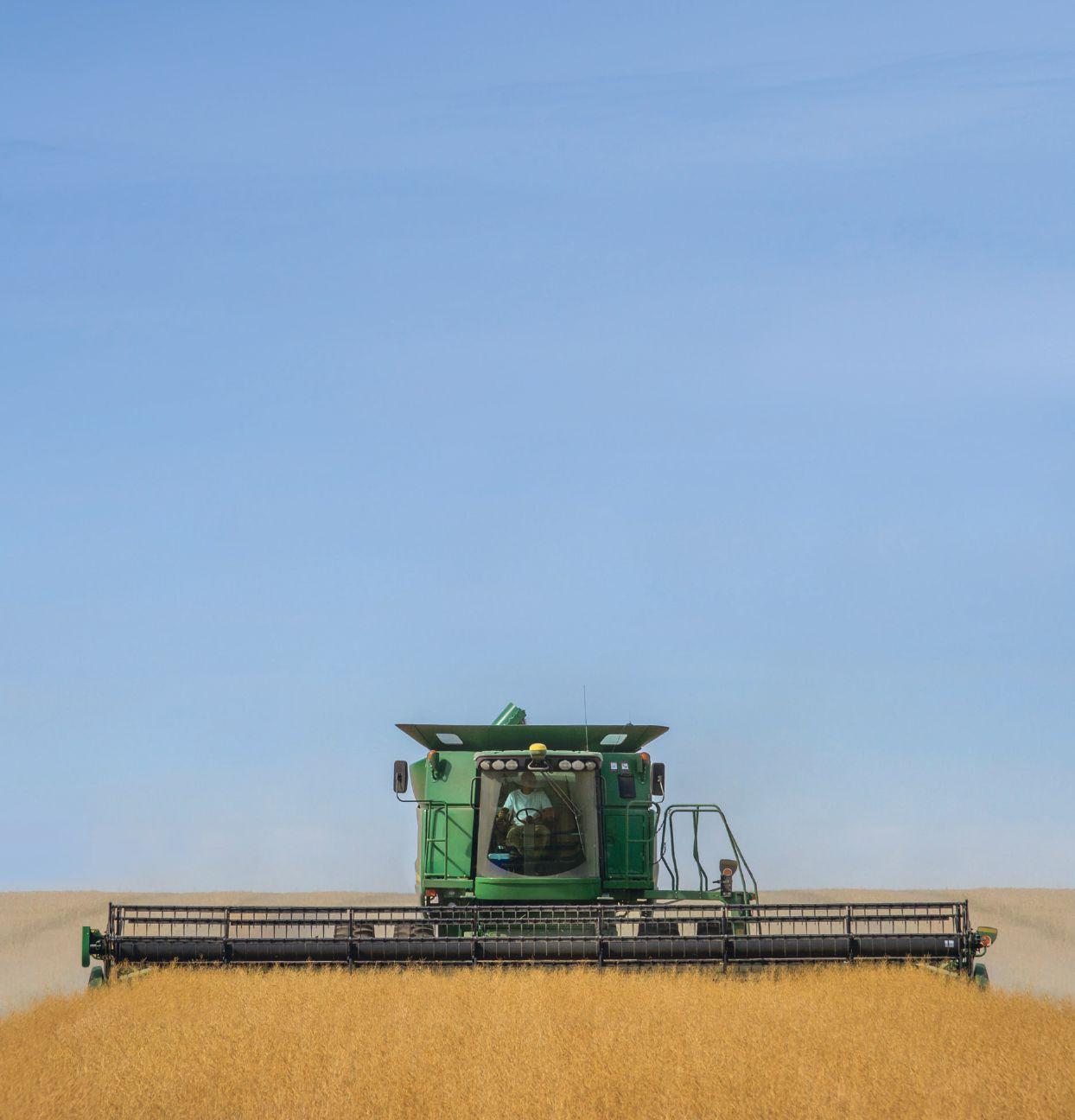
75-65 RR is built to straight cut. The first product of our focused breeding effort on shatter resistance; 75-65 RR was bred for straight cutting. It will run through your combine like a dream.
TOP CROP
MANAGER
6 | Heading towards straight-cut Exploring straight cutting technology. By
Trudy Kelly Forsythe
4 Taking high-tech tools out of the
Blackleg yield loss model By Donna Fleury
13 No-till canola row spacing By Donna Fleury
ON THE WEB
SPECIAL CROPS
23 | Canadian-made quinoa
Niche crop growing interest from farmers. By Mark
Halsall
15 Drought-tolerant canola By Carolyn King
MANAGEMENT
Managing volunteer canola in soybeans By Donna Fleury
MANAGEMENT 40 Back to basics By Ross McKenzie, PhD, P. Ag.
THE STATE OF CANADA’S AGRICULTURAL INDUSTRY
To celebrate Canada’s 150th birthday, 11 of Canada’s largest national agricultural organizations have provided commentary on the current state of their sector. As you will see, Canada’s agriculture industry is strong and growing, and although challenges exist, so does the confidence to meet those challenges. ag150.ca
CROP MANAGEMENT
29 | Profit from forage crops
Biennial and perennial rotations have comparable profitability to annual crop-based rotations. By
Bruce Barker
Winning in contract crop battles By John Dietz 34 Calculator reveals crop potential By John Dietz
Readers will find numerous references to pesticide and fertility applications, methods, timing and rates in the pages of Top Crop Manager. We encourage growers to check product registration status and consult with provincial recommendations and product labels for complete instructions.
JANNEN BELBECK | ASSOCIATE EDITOR
TAKING HIGH-TECH TOOLS OUT OF THE LAB
Real-time DNA sequencing, anywhere, anytime, is one step closer to making the jump from science fiction to science fact, according to researchers at the Royal Botanic Gardens, Kew. A recent paper published in Scientific Reports outlined how the team used a MinION portable DNA sequencer to analyze plant species in the field.
The researchers travelled to Snowdonia National Park in Wales, to sequence the DNA of Arabidopsis thaliana and Arabidopsis lyrata ssp. Petraea – two plants that produce white flowers with similar appearances – in the wild. Rather than targeting specific pieces of DNA to make the identifications, as traditional DNA sequencing requires, the researchers sequenced random parts of the plants’ genomes. The team then compared their results to a free database of reference genome sequences to identify the two varieties of Arabidopsis.
This wasn’t the first real-world test of the MinION technology. Since Oxford Nanopore Technologies launched the sequencer commercially in 2015, it has been used in far-flung locales like Antarctica and the International Space Station, as well as remote areas affected by disease. However, the successful identifications in Wales represent the first time a plant genome has been sequenced in the field. The successful trial could open the door to new methods of conducting plant research. As Alexander Papadopulos, a scientist with Kew and co-author on the paper, noted in a press release, traditional sequencing methods require a lot of lab equipment and typically only provide the information needed to identify a sample to the genus level.
“Identifying species correctly based on what they look like can be really tricky and needs expertise to be done well. This is especially true for plants when they aren’t in flower or when they have been processed into a product,” Papadopulos said. “Our experiments show that by sequencing random pieces of the genome in the field it’s possible to get very accurate species identification within a few hours of collecting a specimen.”
In agriculture especially, the ability to generate a DNA sequence from anywhere in the world within hours, versus the months of lab work typically required to yield results using traditional sequencing technology, could make a major impact. Think: an accelerated pace of discovery and shorter timelines from discovery to commercialization.
The time when every farmer is equipped with a handheld scanner that can quickly and accurately identify any plant, pest or pathogen in a field remains, for now, relegated to the realm of science fiction. However, the technology that may one day be viewed as an early ancestor to such a miraculous device already exists, at least to some degree. What we, as an industry, will do with it remains to be seen.
However the future unfolds, you can be sure Top Crop Manager will be a part of it, helping you stay on top of the tools you need to make your operation more productive and profitable as they migrate out of the lab and into the real world.
Top Crop Manager West – 9 issues Feb, Mar, Mid-Mar, Apr, June, Sept, Oct, Nov and Dec – 1 Year - $45.95 Cdn. plus tax
Top Crop Manager East – 7 issues Feb, Mar, Apr, Sept, Oct, Nov and Dec – 1 Year - $45.95 Cdn. plus tax
Potatoes in Canada – 1 issue Spring – 1 Year $16.50 Cdn. plus tax All of the above - $80.00 Cdn. plus tax
Occasionally, Top Crop Manager will mail information on behalf of industry related groups whose products and services we believe may be of interest to you. If you prefer not to receive this information, please contact our circulation department in any of the four ways listed above.
Take advantage of InVigor® patented Pod Shatter Reduction hybrids. InVigor L140P, early maturing InVigor L233P and NEW InVigor L255PC with the added benefit of clubroot resistance.*
HEADING TOWARDS STRAIGHT CUT CANOLA
Researchers explore straight cutting technology with four harvest treatments.
by Trudy Kelly Forsythe
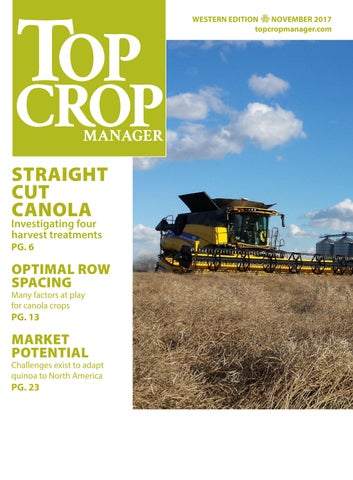
When researchers at the Prairie Agricultural Machinery Institute (PAMI) heard that some producers were looking toward the practice of straight cutting shatter-resistant canola varieties, they set out to find the true post-harvest comparison of straight cut or swath.
“With straight cutting, the main risk is shattering in the field from rain, wind and the environment,” says Nathan Gregg, program manager with PAMI Applied Agricultural Services.
The shatter-resistant variety is bred to resist this so the canola can stand in the field longer, and since straight cutting is the norm for rapeseed in other parts of the world, Gregg says the team asked themselves, “If this is the case, what are the equipment implications? Can producers make do with the equipment they have with some modifications or will they need new equipment?”
In 2014, with funding from the Saskatchewan Ministry of Agriculture, Saskatchewan Canola Development Commission and the Western Grains Research Foundation, PAMI began a
three-year straight-cut canola research trial. Bayer Crop Science and DeKalb provided seed and herbicide, while New Holland Agriculture and Honey Bee Manufacturing provided equipment.
The Agri-ARM sites at Indian Head and Swift Current, Sask., established and maintained the canola crops. Additional research contractors and support from Agriculture and Agri Food Canada (AAFC) employees were also involved.
The trial
With the intention of evaluating different header types for straight cutting canola to see if current technology would meet the needs of producers, the team planted both a standard hybrid canola and a pod shatter-resistant variety.
“Most producers are still using standard hybrid varieties, but we knew the newer genetics were coming on the market so it was important to use both,” Gregg says.
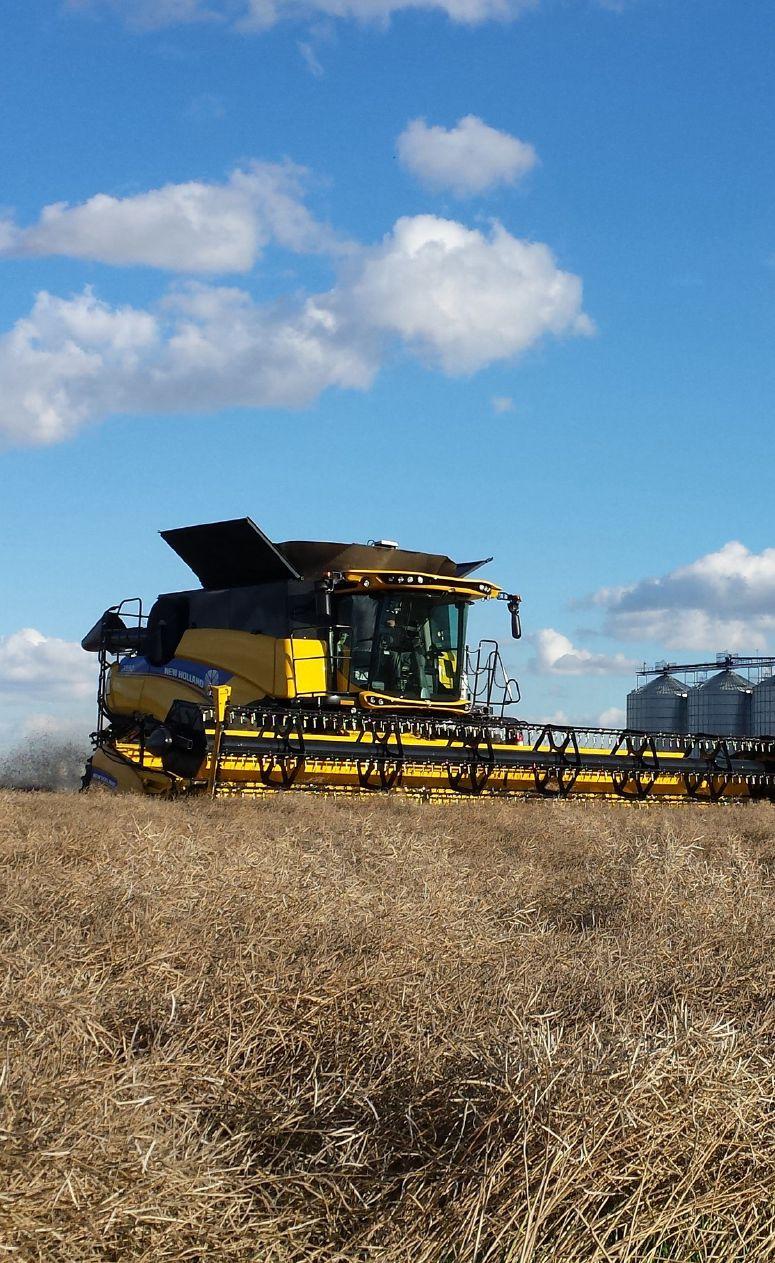
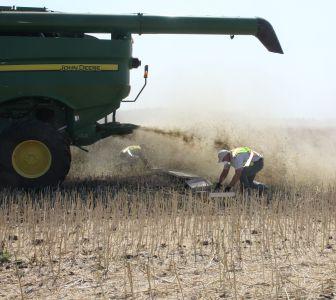
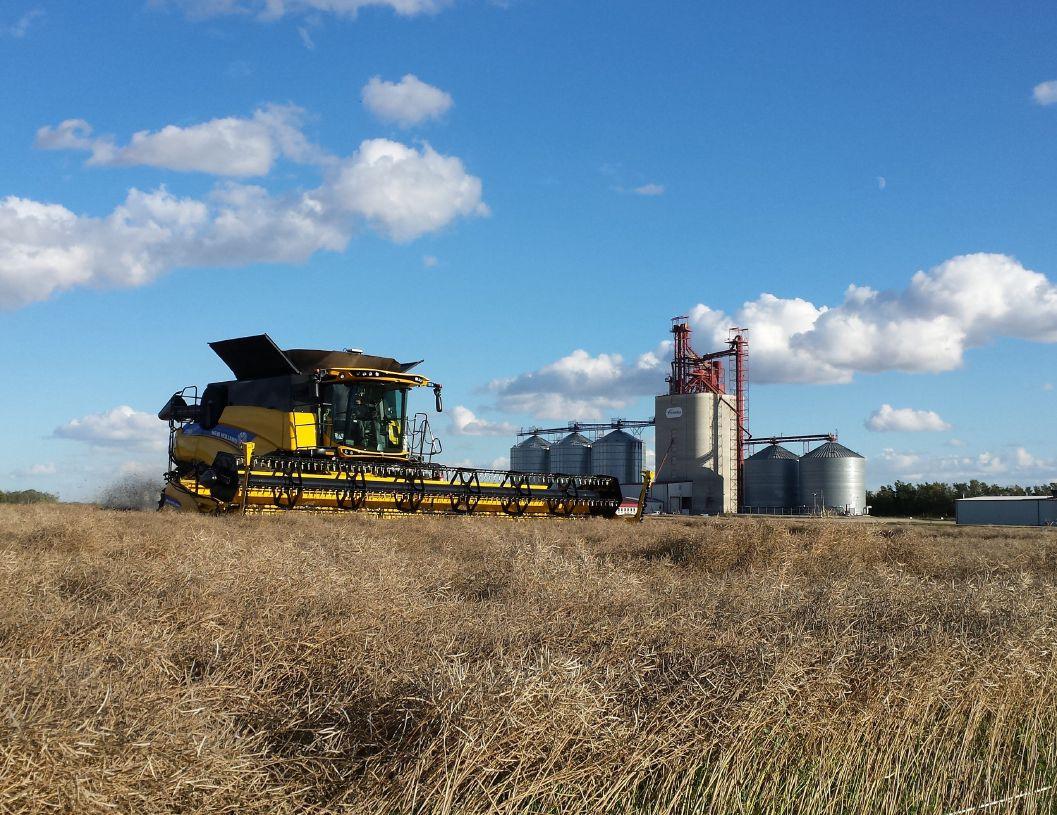
ABOVE: Straight cutting canola near Humboldt, Sask.
PHOTOS
During harvest, the researchers looked at four harvest treatments: 1) the traditional swathing method, which served as the control treatment; 2) a 36-foot draper header with a rotary divider; 3) a 35-foot rigid auger header with a vertical knife; 4) a 35-foot Varifeed header with a cutterbar, which extends forward up to 23 inches, and a vertical knife.
Gregg explains that the draper (2) has a moving canvas type of deck to convey material to the feeder house of the combine. “This represents the primary style of header in use and is universal for different kinds of crops,” he says.
The third treatment has a rigid auger header within the header platform that moves the material to the combine, while the fourth uses the same auger principle, but has an extendable cutterbar, which allows the floor of the header to extend forward up to 23 inches. The rigid header has limited space in front of the auger while the hydraulic-controlled extendable cutterbar allows more space in front to accommodate the bulky material.
“The other advantage [with the 35-foot Varifeed header with cutterbar] is the ability to move the knife forward and beneath the reel,” Gregg says. “This means the relative position of the knife is more forward, which places it directly beneath the reel with the intention of retaining any pods that are shattered beneath the reel. This style of header is popular in Europe where they do more straight cutting of rapeseed.”
Results
Looking at around 2,000 samples a year, the researchers measured harvested yield, header loss, environmental shatter loss, seed size and seed quality characteristics like moisture, green count, oil content and dockage. They did see some advantages to the shatter-resistant canola variety.
“Typically, we saw higher environmental losses and higher header shatter in the standard variety, as expected, relative to the newer shatter-resistant variety,” Gregg says.
They also discovered that machinery wasn’t the only factor to impact the results. Outside factors, like field selection, growing conditions and initial condition of the crop, also had an impact.
“Some of our treatment differences appear negligible relative to outside influences like weather and crop conditions,” Gregg says. “We had variable weather throughout the three years, so we were able to determine that all factors into how well straight cutting will perform.”
All of the headers performed reasonably with marginal differences in factors like yield, loss, feeding performance and ground following. With all, the losses were greatest at the ends and the middle of the headers.
“What we found was that the extendable cutterbar tended to have somewhat lower shatter losses,” Gregg says. “The draper and auger performed the job but had more shatter, which will ultimately affect yield in the bin.”
The extendable cutterbar header was the most forgiving and adaptable to operate in straight cut canola, while the rigid auger was not as smooth to operate. The draper was good, but less intuitive, requiring more attention to reel position and speed while operating.
With that being said, the swath technology often came out on top with the standard hybrid variety.
“With the shatter-resistant varieties is where straight cutting treatments have a more positive impact, so it becomes a question
of variety and header type, not just one or the other,” Gregg says. “You need the right machinery to do the job.”
He adds that since all performed relatively similar, if a producer wants to try straight cutting over swathing, they don’t have to go out and buy new equipment immediately. “They can try it with what they have; if they like it, they can decide if it’s economical for them then go out and invest in new equipment.”
The theory is with a straight cut operation, producers can eliminate a swathing operation, which eliminates machine and labour costs, and allows the crop to stand and mature in the field so they will get a yield increase.
“That’s the theory and one of the reasons people look at straight cutting, but the answer is convoluted,” Gregg says. “Yes, if they avoid swathing and can harvest at the optimal time. The limitation is you don’t always get the conditions at the time you need them, or maturity can be delayed. Then you may need to add in a desiccation spraying operation, which also has a cost.
“It may be an acceptable trade off,” he continues. “There can be an economic advantage to straight cutting but it’s not an absolute. It comes down to the harvest management strategy and the risk tolerance to leaving the crop out there to see if they can get a bigger yield.”
What’s next?
The findings have been recorded in a straight cut harvest guidebook that will be available on the PAMI and funder websites.
While this project focused on header equipment, it was discovered that other management considerations had an impact and raised additional questions about combine productivity and efficiency with straight cutting. As a result, further research is underway to look at combine efficiency and productivity as well as the impact of desiccation.
The researchers have collected one year of data and are going into the second year examining the impact pre-harvest treatments have on factors like overall yield, fuel usage and productivity in bushels harvested per hour.
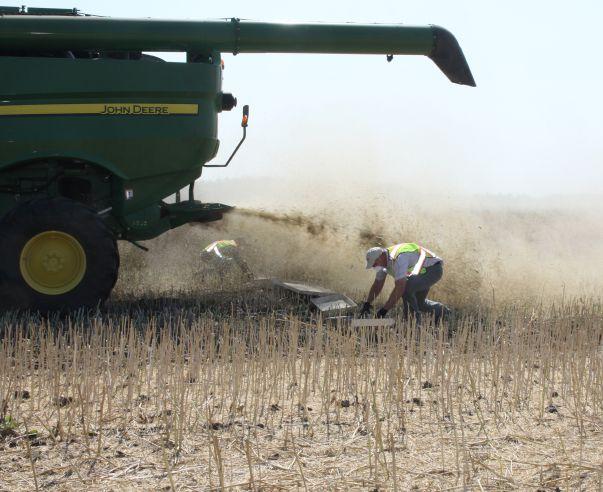
PAMI researchers place pans behind the combine to collect seed loss samples.
BLACKLEG YIELD LOSS MODEL FOR CANOLA
Researchers develop yield loss model to estimate economic losses and impacts of blackleg disease in canola.
by Donna Fleury
Several efforts are underway to develop new tools and management strategies for blackleg disease in canola. Severe epidemics of blackleg can result in significant yield losses.
Researchers have developed a new blackleg yield loss model for canola and an associated set of guidelines and recommendations for farmers and industry to help understand the economic impacts of this significant disease. A baseline assessment of potential fungicide sensitivity and resistance has also been established to ensure the sustainability of fungicide approaches to blackleg management.
“In our study we conducted field experiments over three years (from 2013 to 2015) to try and determine the relationship between blackleg severity and how that translates into actual yield losses,” says Stephen Strelkov, professor in the department of agricultural, food and nutritional science at the University of Alberta. “In the field experiments, we grew several canola cultivars to determine the relationship between blackleg disease severity and yield in a susceptible cultivar and in moderately resistant to resistant canola hybrids.”
The canola varieties were seeded into infested stubble that had been inoculated with the blackleg pathogen Leptosphaeria maculans and then compared the differences in disease severity. Plants were rated for disease severity using the blackleg disease rating scale of 0 to 5. Seed yield, pod number and other related factors were measured and analyzed. From the results, researchers were able to explore the relationship between blackleg disease severity and the
impact on yield.
“Across all canola varieties, regression analysis showed a straightforward linear relationship between disease severity and pod number and seed yield loss,” Strelkov explains. “As blackleg severity increased, the pod number and seed yield decreased linearly. We found that for each unit increase in disease severity from 0 to 5, the seed yield declined by about 17 per cent. We also found that blackleg severity was lower, and seed yield was 120 to 128 per cent greater, in the moderately resistant to resistant hybrids compared with the susceptible cultivar.”
The study results formed the basis for the development of the blackleg yield loss model, that, together with the annual canola disease incidence and severity survey data, can help inform growers, agronomists and industry on realistic losses to blackleg in a given area or across industry in a particular year. This project is consistent with results reported from previous work conducted in the U.K. and also in Eastern Canada, but under western Canadian conditions. The research project wrapped up in 2017, and the yield loss model and recommendations have been provided to the Canola Council of Canada and industry.
“Although the research trials were completed in Alberta, the model is applicable across Western Canada,” Strelkov says. “The model can now be used to provide an indication of yield losses
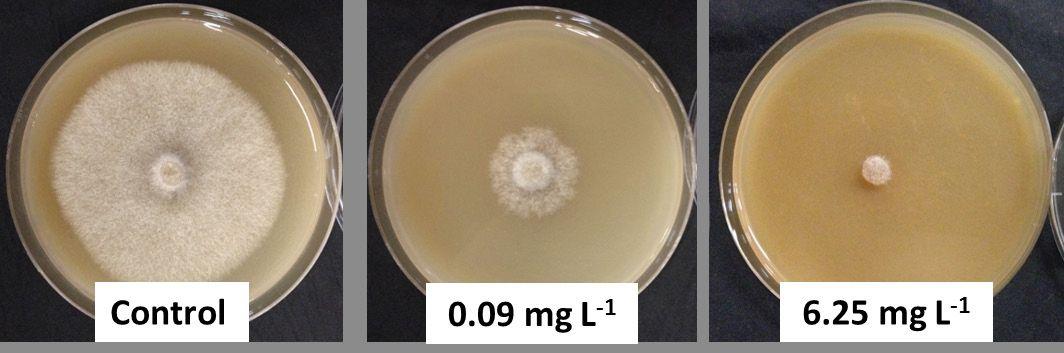
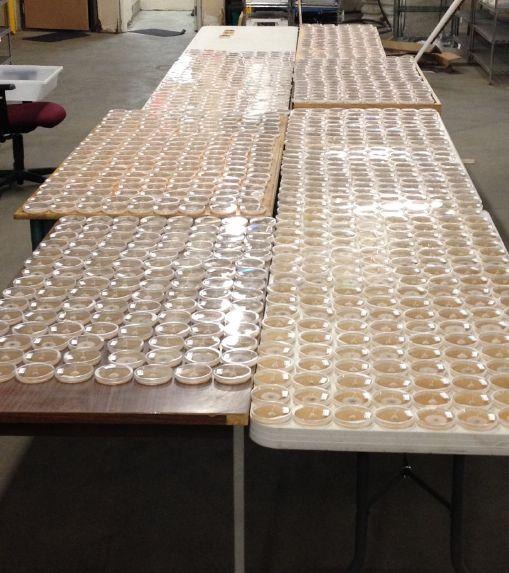
ABOVE: Examples of cultures of the L. maculans fungus grown on medium amended with different rates of pyraclostrobin.
Richardson Pioneer is committed to working with you at every stage of
At Richardson Pioneer, we know choosing the right product is only part of your success. We’re here to help you increase your yields profitably with expert agronomic advice and fully integrated service. From crop planning to grain marketing, we’re truly invested in helping you grow your business.
in canola that can be attributed to blackleg in individual fields or on a local or even regional scale. This blackleg yield loss model and associated recommendations will also help producers make informed crop management decisions and estimate economic disease impacts.”
Clint Jurke, agronomy director with the Canola Council of Canada has used the new yield loss model. “The information has been very useful to help industry understand how economically important blackleg is. Although blackleg wasn’t a real concern 10 or 15 years ago, today has become a more serious disease for canola growers.” Jurke emphasizes that growers need to be thinking about how the disease levels and yield loss numbers are increasing, and shouldn’t assume they are not losing yield to blackleg infection – the surveys and yield loss model are indicating otherwise.
“We have been using this yield loss model to estimate the amount of loss across the entire canola growing belt and to quantify how economically important blackleg is,” Jurke adds. “We use the annual canola disease numbers to estimate the amount of blackleg infection there is across the canola growing area, then apply the model to estimate how many tonnes of canola we lose each year for blackleg. It is actually a pretty good tool to have for us to be able to understand the importance of blackleg on canola production for farmers and the canola industry. It also supports the need to continue investment into the development of new solutions for dealing with this disease.”
Evaluating potential fungicide sensitivity
Researchers included a second component in the project that set out to evaluate the sensitivity of a representative collection of L. maculans isolates from Western Canada to the fungicide pyraclostrobin. “Some fungicides are considered to be more at risk for the development of fungicide insensitivity, and the fungicide pyraclostrobin is one of those,” Strelkov explains. “Similar to herbicide resistance, some fungi can become less sensitive after
repeated exposure to a fungicide.”
Researchers conducted a baseline assessment of pyraclostrobin insensitivity using two different testing methods – agar plate and microtiter plate assays – on a collection of 117 isolates obtained in 2011 from fields across Alberta. The tests provided an assessment of the impact on isolate growth at different levels of pyraclostrobin. The Headline fungicide, which was registered in Canada in 2010, was applied at different frequencies and at different growth stages to create a gradient of disease levels to measure the impact of blackleg on canola and seed yield.
“The good news is we did not detect any pyraclostrobin insensitivity in the baseline tests or in field experiments so far,” Strelkov says. “In field experiments, results show pyraclostrobin fungicide reduced disease severity in all site years, and increased yield. These results also show that the reduction of blackleg in canola crops substantially improves yields. Gaining knowledge of the occurrence of potential fungicide resistance in L. maculans populations on the prairies will help determine the risk of a control failure in the future.”
Researchers now have a foundation for understanding the impact and risk for fungicide insensitivity, however Strelkov cautions that baseline results were from isolates collected in 2011. Therefore, it may be worthwhile to monitor again in the future to see if there have been any shifts in isolates or population insensitivity since that time.
The study showed that this fungicide could be an effective and sustainable blackleg management tool for canola growers, as long as fungicide stewardship is practiced and included as a component of an integrated pest management plan. Farmers are reminded to be cautious in terms of applying fungicides, and to use them along with other best practices including resistant cultivars, and other disease management strategies such as crop rotation, residue management, and the application of seed and foliar fungicides to mitigate yield losses caused by blackleg.
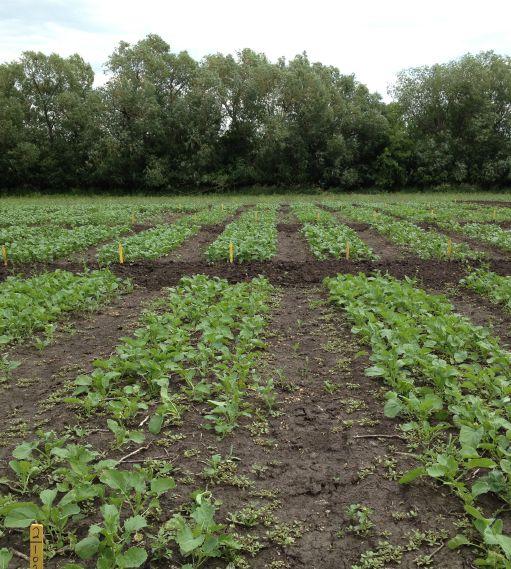
Experimental field plots.
Testing various fungal cultures in Petri dishes for the fungicide sensitivity assays.
You might think that when nitrogen fertilizer is in the ground, it’s safe. Research suggests you need to think again. When shallow banding unprotected urea less than two inches deep, researchers found that nitrogen loss due to ammonia volatilization can be even greater than unprotected broadcast urea. Protect your nitrogen while maintaining the operational efficiencies of side banding or mid-row banding at seeding by using AGROTAIN® DRI-MAXX nitrogen stabilizer. Whether you choose to band or broadcast, you’ll be confident that you’re protecting your nitrogen investment, your yield potential and your return on investment.
Ask your retailer to protect your urea today with AGROTAIN® DRI-MAXX nitrogen stabilizer.
agrotain.com/getthedirt
INVESTIGATING WIDER ROW SPACING IN NO-TILL CANOLA
Many factors determine optimal row spacing for individual farms.
by Donna Fleury
Narrow row spacing is considered the accepted practice for maximizing grain yields for the majority of crops under most circumstances. However, wider row spacing offers advantages for dealing with heavier and taller crop residues, and reducing equipment costs and maintenance. But how wide is too wide before yield is compromised?
“In trying to answer the row spacing question, we initiated a multi-year project in 2013 to evaluate the feasibility of growing canola at row spacing exceeding 25 centimetres (cm) or ten inches,” explains Chris Holzapfel, research manager at the Indian Head Agricultural Research Foundation, located near Indian Head, Sask. “We also wanted to explore potential implications for side-banded N [nitrogen], varying seeding rates and competitiveness with weeds.”
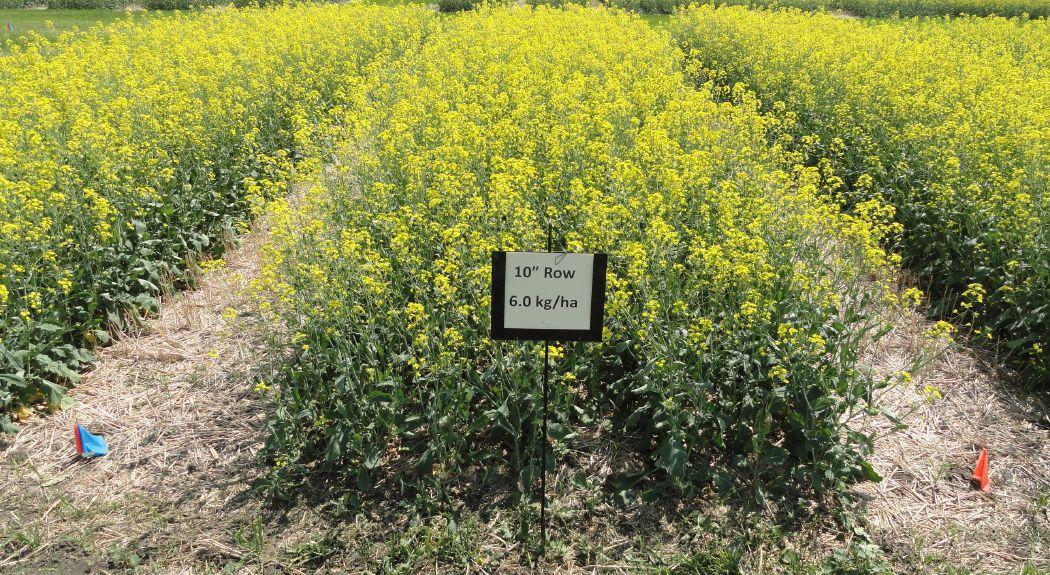
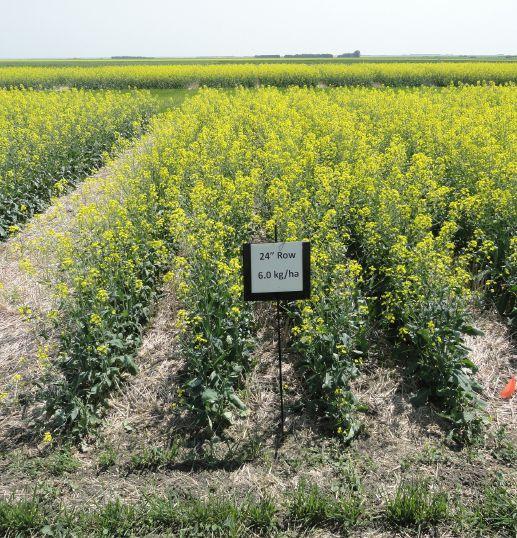
The project included three separate field trials where row spacing levels of 25, 30, 36, 41 and 61 cm (10”, 12”, 14”, 16” and 24”) were combined with varying side-banded urea rates, seeding rates and incrop herbicide treatments. For all trials, a glufosinate ammonium tolerant (Liberty Link) canola hybrid was seeded using a SeedMaster plot drill at a target rate of 115 to 120 seeds per square metre (/m2 ) where seeding rate was not dictated by protocol. Various factors were monitored and measured, including: plant density, flowering dates, crop and weed biomass, maturity, seed yield, 1,000 seed weight and per cent green seed.
“Generally, the study results showed that canola is relatively insensitive to increasing row spacing,” Holzapfel says. “Although
TOP: Canola trials using 10-inch row spacing.
MIDDLE: Canola trials using 24-inch row spacing.
PHOTOS
there were some differences in the various factors as row spacing increased, generally row spacing effects on seed yield were small and in some cases insignificant. Seed yields ranged from approximately 2,800-3,000 kilograms per hectare (kg/ha), with the highest yields at 61 cm (24”) in two of three years, followed by 25 cm (10”). Row spacing effects on yield were always considerably less than environment or other management effects. Row spacing effects on seed size were small and somewhat inconsistent but there was an overall increase in per cent
green seed with increasing row spacing in one in four years.”
Seedling mortality increased with increasing row spacing, but adequate plant populations could still be achieved and no detrimental effects on grain quality were observed. When averaged across all years and treatments, plant populations declined by 28 per cent, decreasing from 85 to 62 plants/m2 when row spacing was increased from 25 cm (10”) to 61 cm (24”). The study confirms that seeding rates should not be reduced below typically recommended
rates as row spacing is increased. However, at the same time, there was no benefit to using more aggressive seeding rates (i.e. greater than 90 seeds/m2) combined with very wide row spacing (i.e. 24”). Increasing row spacing also resulted in slight but significant delays in flowering and maturity. However, the effects were generally much smaller than those caused by either N fertilizer or seeding rate.
“The results of the side-banded N treatments showed a significant reduction in plant densities with increasing rates of side-banded N at all row spacing levels in all three years,” Holzapfel says. “However, there was evidence of plant populations declining at lower N rates at the widest row spacing compared to the more narrowly spaced rows.
Despite the effects on emergence, canola responded well to side-banded N with sequentially increasing yields right up to 150 kg/ha N in all three years. So although the results suggest that N requirements of canola are likely similar regardless of row spacing, high rates of side-banded N combined with wide row spacing can potentially increase risk of seedling injury.”
The results of the trials comparing canola grown at different row spacing with and without herbicides showed that weed biomass only ever increased with row spacing in the absence of in-crop herbicide and this did not occur in all years.
IS YOUR FARM WORKING AS HARD AS YOU DO?
Failure to control weeds resulted in overall average yield losses of 21 per cent on average with similar yield loss observed regardless of row spacing. A well-timed single in-crop application of glufosinate ammonium kept weed competition acceptably low at all row spacing levels, with reductions of weed biomass ranging from 98 to 99.5 per cent. However, it is important to keep in mind that row spacing effects on weed control put more pressure on herbicides and may be of much greater importance if dealing with hard-to-kill or herbicide-resistant weeds.
“Overall, the results show that canola is relatively insensitive to increasing row spacing and there are many factors to consider in determining the optimal row spacing for individual farms,” Holzapfel says. “This is a complex issue that can affect entire production systems and, therefore, there is no likely single optimal row spacing for all farm operations. Pros and cons exist for both narrow and wide row spacing and results can vary depending on crop management and environmental conditions.”
TOWARDS DROUGHTTOLERANT CANOLA
Aiming for elite varieties that perform well in normal or dry conditions.
by Carolyn King
If a drought occurs, you’re looking at more than 20 to 30 per cent losses in any crop. A drought-tolerant crop variety is almost like crop insurance. If you’re hit with a major drought every one out of three years, and you have drought tolerance as an added trait – along with the multiple traits in your elite canola variety – then that’s like insurance that will help protect you,” says Marcus Samuel, an associate professor at the University of Calgary.
Samuel is leading a project to develop drought-tolerant canola. His research group works in plant molecular biology, focusing on plant hormones and how those hormones interact to enable a plant to survive difficult conditions, such as drought. His group is also making progress in developing other important traits in canola, such as green seed tolerance and shatter tolerance. He notes, “I have this passion for moving novel technologies from plant biology into applicable platforms in crops.”
For the drought tolerance research, Samuel and his collaborators at the University of Toronto and the University of Tasmania conducted the first stage of their work with a plant in the
Brassicaceae family (the same family as canola) called Arabidopsis.
“Because they are closely related at the gene sequence level, we can apply our findings from Arabidopsis onto a crop plant like canola,” he notes. “Also, it has a small genome that is well studied because it was the first plant genome ever sequenced, so it’s a great starting place for plant research at the molecular level.”
ABA and brassinosteroids
The researchers’ drought tolerance work with Arabidopsis delved into the interaction between a major plant hormone called abscisic acid, or ABA, and a group of steroid plant hormones called brassinosteroids.
Abscisic acid is important in a diverse range of plant processes, including responses to environmental stresses. Samuel explains, “ABA plays a role in many physiological responses that affect drought tolerance. [For example,] ABA is important for closing
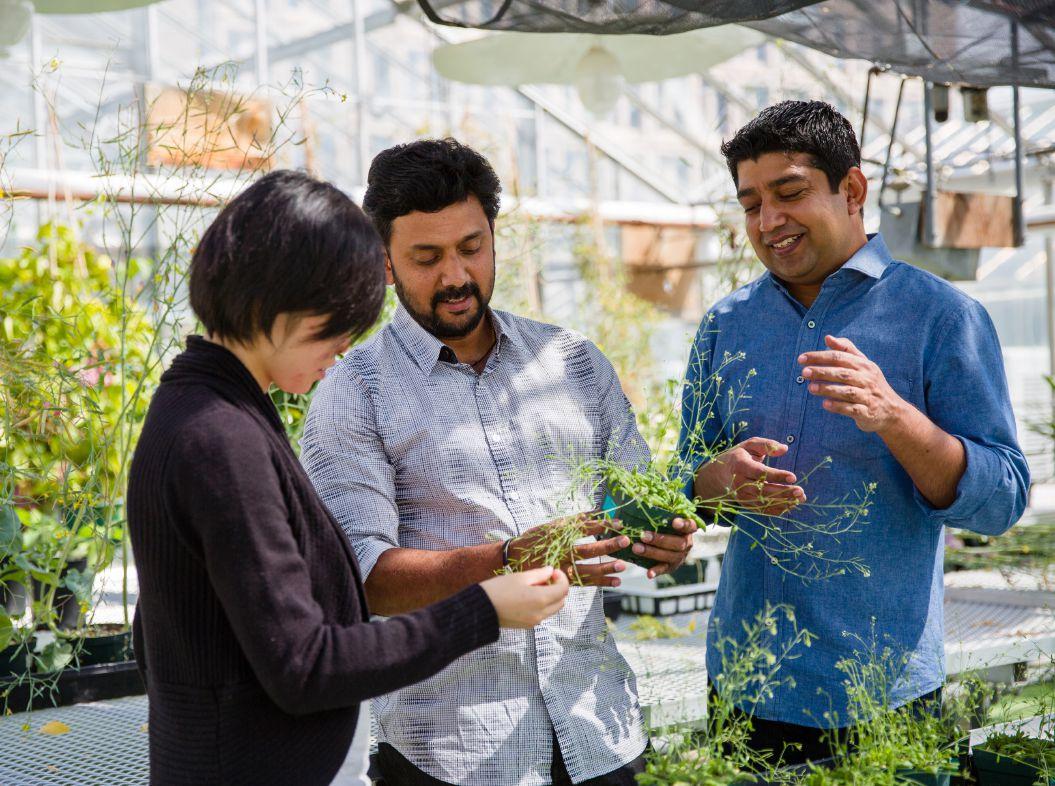
ABOVE: Marcus Samuel (centre) and his research group, which includes Siyu Liang (left) and Muhammad Jamshed (right), are working towards drought-tolerant canola.
“Essentially, we found that if you can reduce the levels of brassinosteroid, then you can improve drought tolerance…”
stomatal pores. [These pores are found mainly on plant leaves and are used for the exchange of gases, including water vapour, into and out of a plant.] If the stomata are open, the plant loses water. If the ABA response is highly upregulated, then the stomatal pores are more closed and the plant doesn’t lose water as quickly. So, under drought conditions the plant can sustain itself longer.”
Brassinosteroids are involved in the regulation of many different physiological processes, including responses to drought stress. He says, “The plant needs brassinosteroids for normal plant development. Really low concentrations of brassinosteroids are sufficient for plant development.”
Through genetic and molecular approaches, and testing of the resulting transgenic plants in growth chambers in the lab, the researchers have shed new light on the interplay between ABA and brassinosteroids. “We figured out that every time brassinosteroid was present with abscisic acid, it would shut down the abscisic acid responses. So, these two hormones were talking to each other and playing an antagonistic role in controlling each other’s responses,” Samuel explains.
“Essentially, we found that if you can reduce the levels of brassinosteroid, then you can improve drought tolerance in the plant because now you are upregulating the ABA responses in the plant. And we found the players that are important in this response.”
After about 10 years of work, the researchers have nailed down all the details of the molecular pathway involved in producing brassinosteroids in the plant and their interplay with ABA. They have also determined which particular components of that pathway to target and how to modify them to produce an Arabidopsis plant with just the right balance between brassinosteroids and ABA so the plant’s normal growth and functioning remain unimpaired but it has improved drought tolerance.
From Arabidopsis to canola
Now Samuel and his group have begun the next stage of their research – moving their novel technology from Arabidopsis to canola – with the help of a Strategic Project grant from the Natural Sciences and Engineering Research Council of Canada.
“The technology won’t be a silver bullet for drought, allowing the plant to survive even if you have no water for three weeks,” he notes. “But if a normal plant would sustain a drought for seven days, you could push that limit to about 14 days with the new technology. So, the plant would survive with less water.”
The team’s first step will be to see if the technology developed in Arabidopsis will work in canola. “We have to be very careful when we tweak the brassinosteroid response,” Samuel explains. “There are multiple enzymes in the pathway, so we
CONTINUED ON PAGE 28
DESIGN
THE POWER OF THREE NATURE’S
BUILT FOR SOIL PRODUCTIVITY BUILT FOR SOIL PRODUCTIVITY
EARLY ORDER PROGRAM IS ON NOW. PLACE YOUR ORDER TODAY FOR THE BEST PRICING. NO INTEREST, FOR UP TO 6 MONTHS NO PAYMENT FOR UP TO 1 YEAR* *Terms and
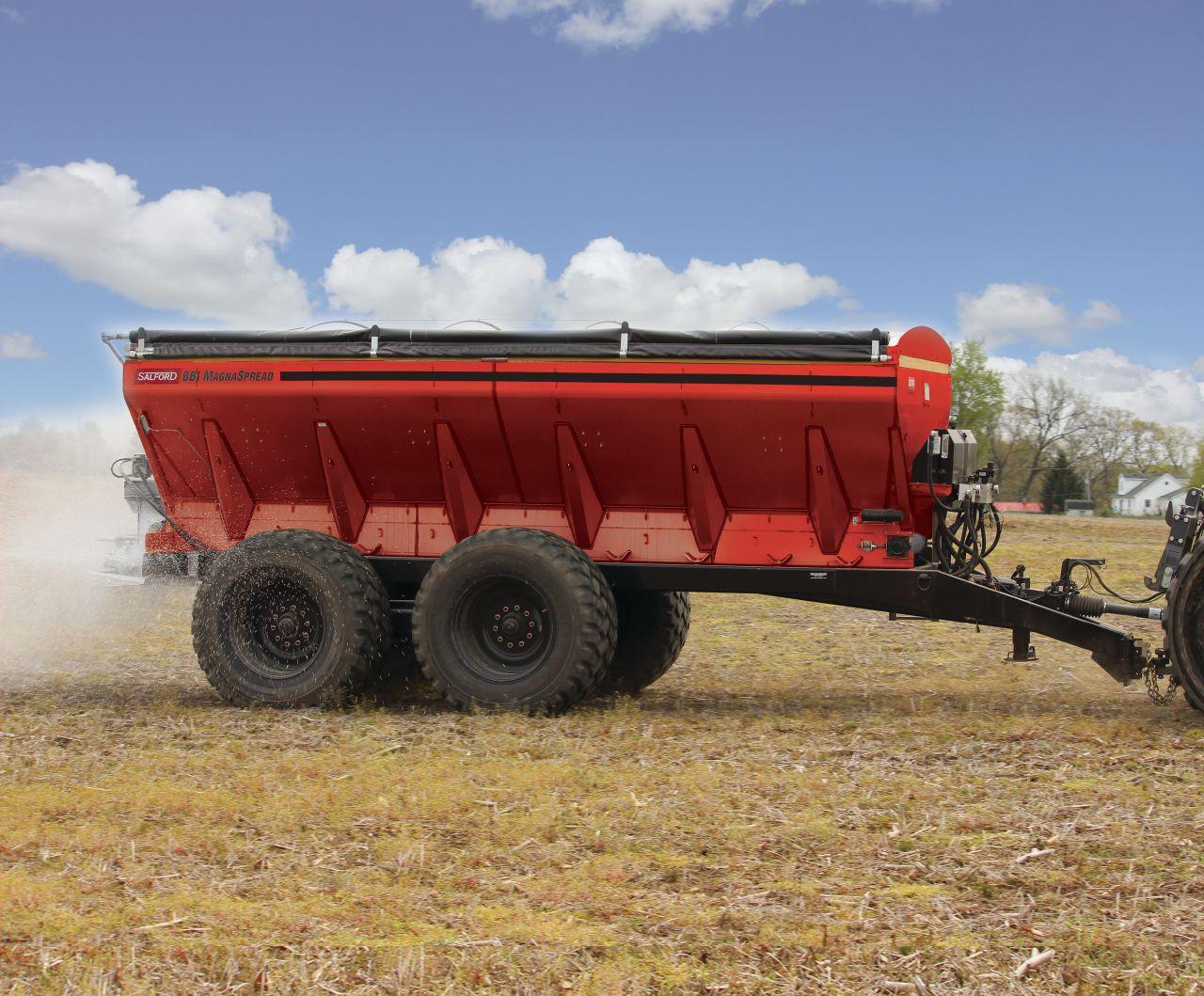
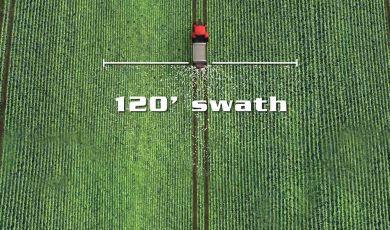
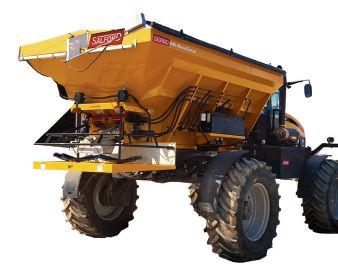
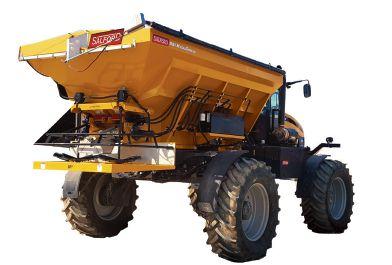
SALFORD’S BBI MAGNASPREAD - Chassis and truck mount models start at 200 cu ft struck capacity. MagnaSpread pull-type models range from 64 cu ft to a massive 480 cu ft struck capacity.
APPLY UREA UP TO 40 YARDS - Spread urea 120 ft in one pass with optional Javelin Spinners.
MULTI-HOPPER CONVENIENCE - MagnaSpread 2 & 3 models apply multiple products in one pass.
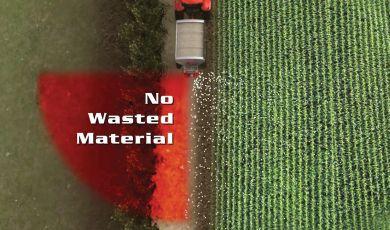
VARIABLE RATE & SECTION CONTROL TECHNOLOGY - ISOBUS compatible equipment follows prescription maps and can be equipped with left/right section control to reduce overlap and protect environmentally sensitive areas.*
From high-yielding hybrids to heart-healthy Omega-9 Oils to new, high-protein meal – only Nexera™ canola creates new markets that help produce the highest farmer returns per acre, year after year, across western Canada.
See your retail or contractor. NexeraCanola.ca
MANAGING VOLUNTEER CANOLA IN SOYBEANS
Herbicide and cultural control strategies to manage volunteer glyphosate-resistant canola in glyphosate-resistant soybeans.
by Donna Fleury
Soybean acreage is continuing to expand west into Saskatchewan and Alberta. Many growers already grow glyphosate-resistant canola in rotation and are adding glyphosate-resistant soybeans as another crop in their system. However, managing glyphosate-resistant canola volunteers in glyphosate-resistant soybeans is a challenge.
“We initiated the first research in 2014 when soybeans were first beginning to move westward to look at herbicide options that could help growers better manage those volunteers,” explains Christian Willenborg, associate professor in the College of Agriculture and Bioresources at the University of Saskatchewan. “Working in collaboration with Rob Gulden at the University of Manitoba, our research focused more on herbicide options, while his research focused on cultural control strategies and yield loss estimates.”
In the first research studies, Willenborg looked at using preemergent herbicide treatments alone and post-emergent herbicide treatments alone for control of volunteer canola. Building on those results, the most recent study focused on combined pre- and postemergent treatment strategies.
“The study results confirmed what we suspected, which was that the combination of pre- and post-emergent treatments provided the best results,” Willenborg says. “If only a pre-emergent treatment is used, in many cases the volunteer canola control is good early on, but because canola tends to emerge throughout the growing season, later
emerging weeds are missed. In trials with post-emergent treatments only, very often depending on the product, there wasn’t good enough control of volunteers that emerged early in the growing season. Therefore, it became clear that a two-pass approach was going to be the best to manage glyphosate-resistant canola volunteers in glyphosate-resistant soybeans.”
The combination study compared three pre-emergent product treatments: 2,4-D Ester, tribenuron (Express SG) and saflufenacil (Heat). Five post-emergent products were also compared: bentazon (Basagran Forte), bentazon plus imazamox (Viper ADV), chloransulam-methyl (FirstRate, FirstRate plus Express SG), thifensulfuran (Refine Extra) and fomesafen (Reflex). Willenborg emphasizes that the trials included chemistries currently registered for use in Western Canada as well as some products that are so far only registered in Eastern Canada for soybeans, such as FirstRate. Reflex is only registered for use in Manitoba’s Red River Valley. Chloransulam-methyl (FirstRate) is not registered in Western Canada.
“Generally, the control across all of the treatments was fairly effective, with volunteer canola control generally ranging from suppression to control,” Willenborg says. “Most of the volunteer canola control from these products was in excess of 90 per cent. From
ABOVE: RR canola in RR soybean trials at the University of Saskatchewan in 2014.
CUT CANOLA SEEDING RATES BY 50% WITHOUT SACRIFICING YIELD?
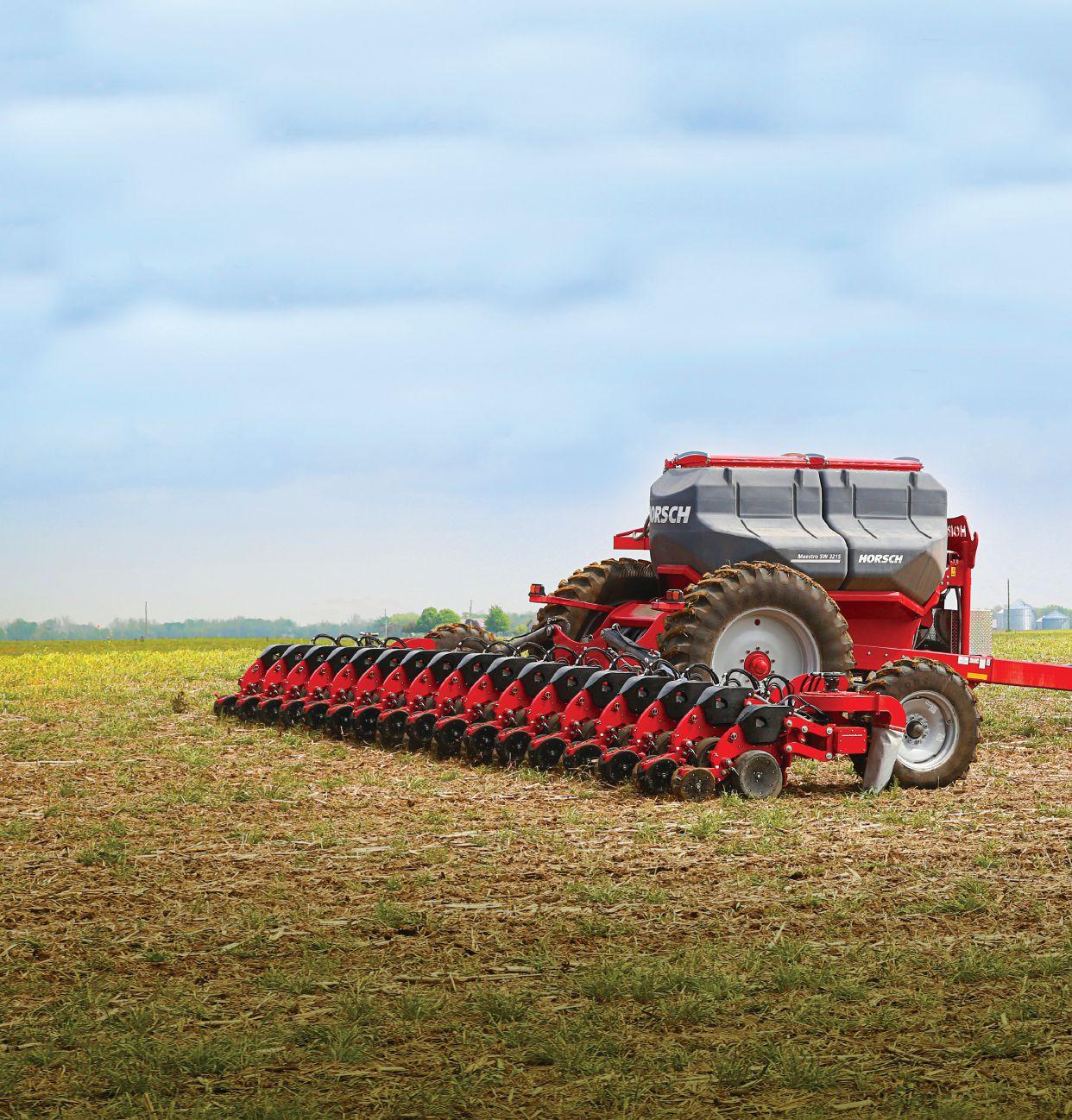
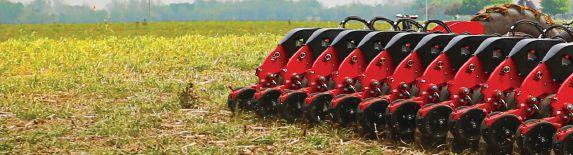
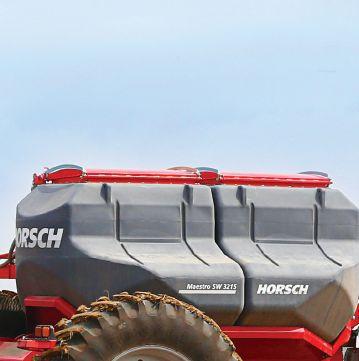
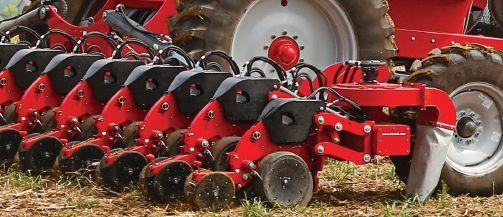
The answer to the question…yes. How? By taking a different, more precise approach to canola seed placement and management. Canola seed placement with a row crop planter is proving itself in more and more areas as a means to reduce seed cost yet maintain or exceed the yields of traditional air seeders. The HORSCH Maestro SW planter can be equipped with proven Canola Ready Technology forachievingthesebenefits.CanolaReadyTechnologyconsistsof for achieving these benefits. Canola Ready Technology consists of a small seeds kit, including a set of stainless steel seed discs and quick-change meter components for simple conversion from row crops to canola. The kit allows producers unmatched precision seed pl p acement and significant input savings when seeding canola
So h how d does s the Ma M estrro SW planter have e the ability to plant canola at a lower seed r rate per acre, without sacrificing yield l ? Thhe answer i is s simple b …by y dr d amatically improving seed mortality W ith traditional air seeders, the canola seed c can g go through a harsh metering process, then travel through primary and secondary towers res e ulting in abrupt stops and directional changes The turbulent path h canola ta t kees from the a air s seeeder meteer to t t the e openner c can r resullt t in 2 20-30%+ seed damage Once the h seed is s da d maged, it will not t germi m nate
Ca C nola m mor o taality i is s also a affected by see e d depth pl p acem e ent and fuurr r ow i integegriity De D pt p h co conttrol on t the h M Maestrro S SW W pr p ovides supe p rior o c cannol o a seeed e p plaacemement a at t shhalallow w deepths ( (3/4" 1 -1") When e pllaciinng g seed at t a desired depth, t the relationship from the cennte t r liine of the gauge wheeel to t the h point of seed d drop must b be as a c close as posssibl b e. W ith h the Maesstro SWW, , thhis s reela l ti t onship p i is s in l linne, e p plaaci c ng s seeed at a an n exxact t depth h no m matter r th t e terrain n the row w unit has to o folllow w Wh W en e loooki k ng at o other seeding technologies suuch a as inndependent t ho h e dr d ills, , the e rela l t tion o sh ship p fr f om o the h c center r line e of thhe e ga g ugge e whheeel l to t the h p poi o nt o of f seed e d drop p caan n be 1 12" 224". " T Thi h s di d sttan a ce c creat a es e i irrregegularrities s in i seeed d deptth h placacemennt. A Alsso, t the gaug u e wheeel l on s succh h d drills ls a act c s as a t the pa p ck ckeer r Ac Acti t ng g a as s both p paccke k r an and d gaaugge e
wheel creates more irregularities as depth is controlled by the flow of soil. With the Maestro SW row unit furrow packing and gauging depth are two independent functions.
Obtaining crop uniformity and consistency provides numerous advantages in canola management when using a Maestro SW. Consistent, precise and gentle seed placement ensures a uniform emergence of the crop. Uniform growth gives you the ability to better manage the health and fertility of the crop Many fungicides need to be applied at specific stages of maturity If the crop is growing uneven and at different stages, the effectiveness of the fungicide is commpromised Indivi v du d al row shutt off f el e iminates ov o erlaps, which causse lo l dg d in i g and vaariations in n matuurity Uniform m maturity a also helps mainta t in c consistent moisture levels and d lo l wer r green count levels, whhich h eqqual bi b g discounts to the value per cwt if not managed
With the M Maestro S SW not t only do you get precise planting r rate per r acre, but also y you maaint n aiin n a 0% c coe o fficiient of v variation o from row t to row, compared to o air seeders, wh w ich can have v 15% or m mor o e row-to-row w product volumme irreegu g larities Plus, Maestro SW has s the h ability to maintain consistennt t popu p lation going around fi field d ob o stacles with curve compenssatio i n. Overlap a c control is a achieved d on n e each individual row, the ul u timmate e man a agemen e t tool to o redduc u e over e seeeding n
Fo F r more e informati t on on hoow Ma M estro SW S w will l taakke c can a olla seeed d manaage g ment n t to th the e neext l level o on your farm, m p please e coontact yo y ur looca c l HORSCH d dealer r or e email u us s at i info. o us@horsch.com. m T The HO H RSCH Maestro o S SW W coomes s in n 15", , 20", , 22", , and 30" " row w sp s accing pending tool o ba bar size z
the study, the three most efficacious and economical combination treatments included: Express and Basagran Forte, Express and Viper ADV, or Heat and Basagran Forte. These three chemistries in combination performed the best in Saskatchewan conditions, providing really good control of volunteer canola and low crop injury with very similar yields. As well, these chemistries are from several different herbicide groups, including Group 2, Group 6 and Group 14, which also helps with delaying the potential evolution of herbicide resistance.”
Willenborg notes that overall, the highest net return was typically observed in the Express SG plus FirstRate treatment, however this combination is only registered in Eastern Canada. Although the Reflex treatment was effective, the phytotoxicity ratings were above acceptable thresholds seven to 10 days after herbicide application, leading to potential injury to soybean seedlings. “We also did not see the results we were looking for with 2,4-D pre-emergent treatments,” he adds. “We observed some injury with 2,4-D treatments using the seven day interval between application and planting, which indicates a longer interval will be required in Western Canada, or this treatment will not work well in our conditions.” Overall, the Refine Extra treatment had the greatest amount of volunteer canola shoot biomass present following application.
In conjunction with these herbicide options for controlling glyphosate-resistant canola volunteers, Willenborg also conducted a cultural control study comparing different seeding dates and seeding rates. “We were interested in determining the impact of seeding rate and seeding date of soybean on volunteer canola. Both of these are factors that growers have quite a bit of control over and that can
have an impact on volunteer canola management. The results of the seeding date study across seven site years were very inconsistent, showing that effects were highly dependent on the specific environmental conditions, soil temperature and precipitation at each local location. We did however develop recommendations from the study that indicated the optimal planting date range for soybean in Western Canada is May 22 to June 1 to optimize yields.”
The results of the seeding rate component of the study, which included a small economic analysis, showed that higher seeding rates resulted in higher soybean biomass and yield and lower volunteer canola biomass and seed contamination. The optimal seeding rate was 40 plants per square metre (/m2) in years with lower than average market prices, but in years with higher market prices increasing seeding rates to about 50 to 60 plants/m2 was recommended.
Willenborg emphasizes that higher seeding rates increase crop competition and decrease the contribution of volunteer canola seed to the seedbank, which pays future dividends down the road. However, if the market price isn’t high enough, then it doesn’t pay to use higher seeding rates.
“From our research, we have been able to provide some good options to growers for managing glyphosate-resistant volunteer canola in their glyphosate-resistant soybean crops,” Willenborg says. “Between the two studies, we have identified two or three optimal herbicide combinations and optimal seeding dates and rates. Using the combination of recommended herbicide treatments with the optimal seeding date and seeding rates, growers will have better options for managing volunteer canola in their soybean crops.”
For 35 Years Actagro has been the industry leader in Soil and Plant Health Technology Solutions.
QUINTA QUINOA
Six years of dedication and hard work have paid off for Jamie Draves, the Ontario entrepeneur who’s now producing what he calls the most nutritious quinoa on the market.
by Mark Halsall
Quinoa, the ancient South American grain that’s been touted as a gluten-free superfood, is gaining popularity with Canadian farmers, but in commercial terms, it remains a small niche crop in this country.
Jamie Draves is among those who believe made-in-Canada quinoa has great potential for expansion, especially if varieties can be produced here that are better than the competition from South America.
In 2011, the Ontario health food entrepreneur, dissatisfied with what he considered the highly variable quality of imported quinoa, decided to try to make a go of producing quinoa commercially.
“My vision from the start has been the belief that with our soil conditions, our ag best practices, and by putting in a lot of research and development into finding the right varieties, we can provide the world’s leading quinoa with regard to nutrition,” Draves says.
There have been numerous challenges to overcome, but thanks to hard work and resolve – as well as a successful pitch on the CBC television show Dragons’ Den – the efforts of Draves and his team
are paying off.
Draves started his quinoa campaign by spearheading a government-funded project to investigate whether quinoa could be grown and processed on a commercial scale in Ontario.
Test crops were encouraging, and in 2015 Draves walked away from Dragons’ Den with a $200,000 investment from West Coast restaurant magnate Vikram Vij to boost his brand of Canadian grown Quinta Quinoa.
“Vikram has been fantastic to work with,” says Draves, who is president and CEO of Katan Kitchens, the company that produces Quinta Quinoa. “He has incredible energy and positivity towards what we’re trying to do.”
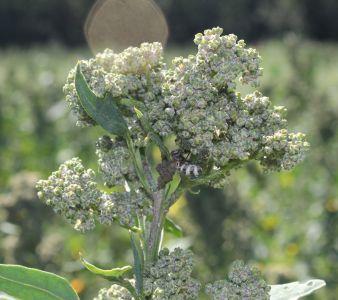
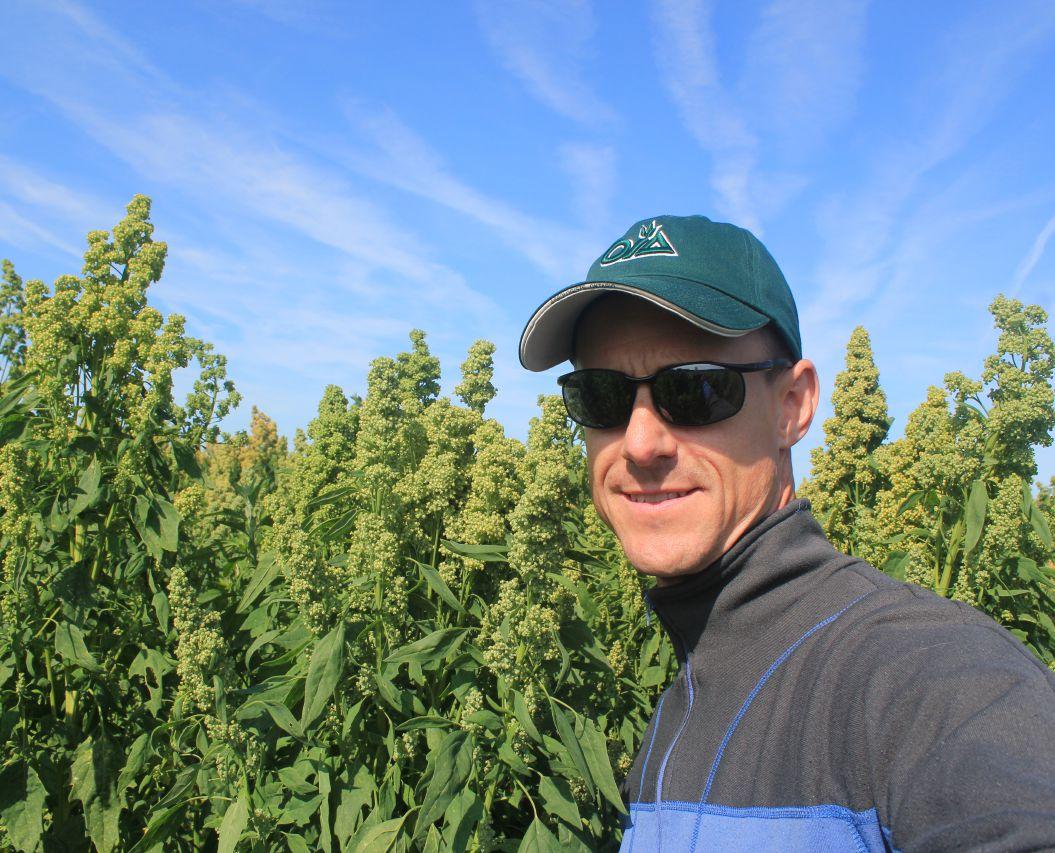
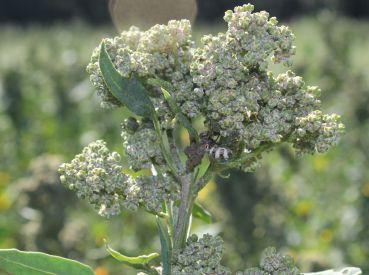
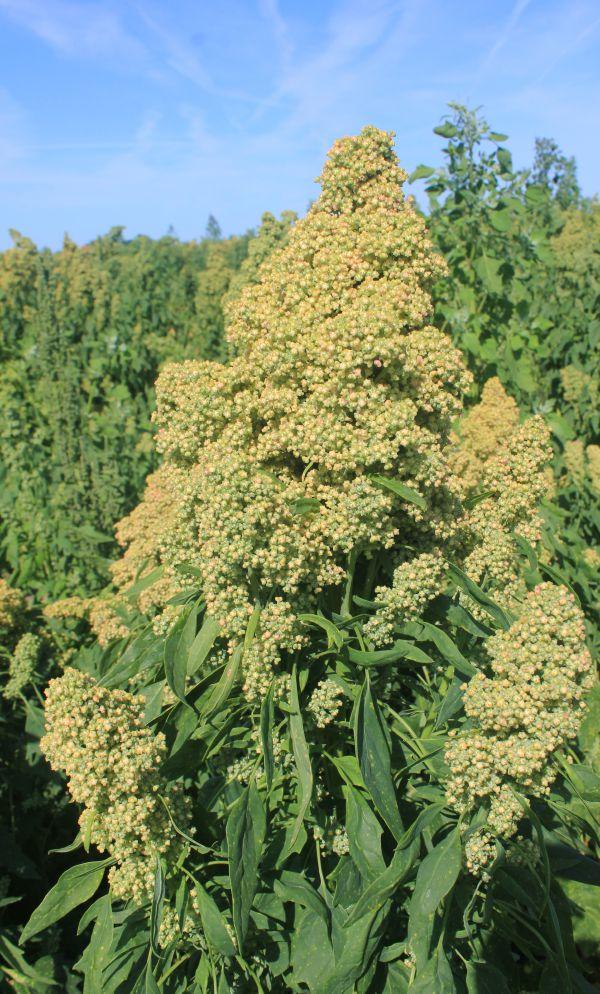
TOP: Draves started his quinoa campaign by spearheading a government-funded project to investigate whether quinoa could be grown and processed on a commercial scale in Ontario.
INSET: Hot conditions during the flowering period can cause plant dormancy or pollen sterility, which will result in limited or no seed production.
Quinoa requires good soil moisture to germinate but once this crop is established, it prefers drier soils.
MANITOBA TRIALS
Since 2014, the Manitoba government has been conducting ongoing quinoa variety evaluation trials in different areas of the province, including at the CanadaManitoba Crop Diversification Centre (CMCDC) in Carberry, Man.
The CMCDC’s 2014 Annual Report contains some key agronomic information about quinoa production, including the following findings:
• Quinoa is a cool season crop so it prefers short day length and cool temperatures for good growth.
• Fertility, seedbed preparation, seeding and harvesting parameters for
In the years since, Draves has landed multiple retail deals and now has a production facility in place in Rockwood, Ont. He’s also been working on expanding quinoa acreage in Ontario and Western Canada in order to keep up with demand.
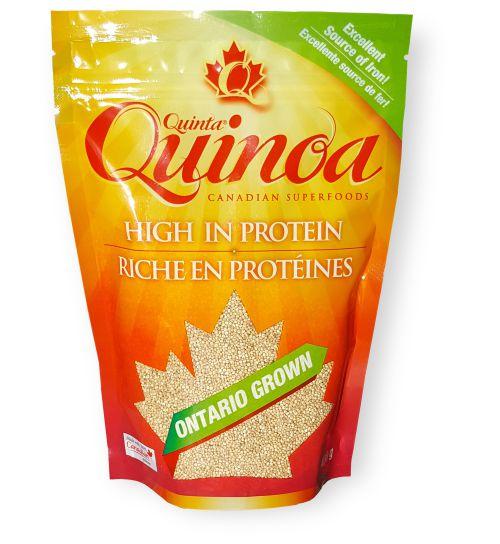
Quinta Quinoa first appeared on grocery store shelves in 2016 and the company continues to grow, with plans to eventually expand into export markets and through other sales channels.
Jump in quinoa consumption
Draves notes this decade has seen a big jump in interest in quinoa among Canadian consumers due to the gluten-free movement. Somewhere in the range of eight million kilograms of quinoa are imported into Canada each year, he says, adding that domestic production of the crop is tiny by comparison. “We’re nowhere near satisfying that market demand in Canada yet.”
According to Draves, quinoa is also being used more and more as an ingredient in health food products, such as granola bars and protein powders, due to its excellent nutritional qualities.
Draves believes that with Quinta Quinoa, he has achieved his goal of producing some of the highest quality quinoa in the world, with one of the highest nutritional values. “We are two to four times the nutrient and mineral value of any other quinoa on the market,” he says.
Quinta Quinoa varieties were developed over six years with the help of research partners from the University of Guelph and Trent University. Draves says third-party testing through A&L Canada Labs and inspection and certification from NSF International has shown the varieties to be high in protein, fibre and zinc, an excellent source of iron and magnesium and a source of calcium.
Because quinoa can be a tricky crop (it likes warm days and cool nights and doesn’t do well when it’s too hot, wet or windy), there have been considerable challenges adapting the South American crop to North America.
One of these challenges is weed management. There are no approved weed control products for quinoa in Canada yet, so nonchemical methods typically have to be used.
“Weed pressure will really have an impact,” Draves says. “It’s something you need to monitor, just to make sure the crop is not getting overcome by weeds.” To prevent heavy weed competition, he adds, quinoa producers will sometimes need to implement weed control measures like in-row cultivation and hand weeding.
quinoa are similar to canola.
• Quinoa requires good soil moisture to germinate but once it is established, quinoa prefers drier soils.
• Germination occurs best in soils that are cool (7 to 10 C) and have adequate moisture. Under these ideal conditions, quinoa will germinate in 24 hours and seedlings will emerge in three to five days.
• The impact of weeds on quinoa production is at its highest during emergence and seedling establishment.
• Hot conditions (more than 35 C)
during the flowering period can cause plant dormancy or pollen sterility, which will result in limited or no seed production.
• Quinoa has some resistance to light frosts in the later stages of development; the tolerance begins when the crop has finished flowering.
• Winds can cause shattering and stalk breakage if the standing crop over-ripens.
For more information, visit gov.mb.ca/ agriculture/innovation-and-research/diversification-centres/pubs/mhpec-annualreport.pdf
Draves maintains growers who can establish their quinoa early in a well-prepared field will find weeds less of an issue. Mechanical cultivation of weeds at the start of the season, as well as starting off with good, clean fields that have low weed pressure from previous years, are keys to preparation.
“You need to work your field early, make sure any weeds that are there don’t go to seed,” Draves says. “Quinoa is not a crop that you just plant and leave alone until harvest. We’ve had success with individuals who have managed their fields well, resulting in high yielding fields with minimal weed impact.”
Exploring parameters
In 2012, Draves teamed up with Value Chain Management International on a two-and-a-half year project to investigate quinoa production parameters, such as preferred soil types, precipitation requirements, seeding methods, crop management practices and harvesting techniques.
Draves describes the project as “an early, prospective study” designed to help direct future research, rather than produce clearly
defined parameters for quinoa production.
This initial study did find quinoa capable of growing successfully in sandy loam or clay soils. It also indicated a high amount of organic matter was important, as well as a minimum of 250 millimetres of precipitation and average to good soil drainage.
Draves says research continues in this area. For example, Quinta Quinoa is currently conducting a three-year study into identifying agronomic parameters and suitable varieties for quinoa production in Western Canada. The project started last year and is being funded by the Saskatchewan government.
“There’s a lot of room to improve on this crop and we will continue to be committed to optimization and the best quinoa commercially available,” Draves says.
Breeding for Canadian conditions
An example of this commitment is Draves’ partnership with university researchers in Guelph to produce quinoa varieties specifically bred for Canadian conditions.
“We continue to push the envelope with all of our varieties,”
he explains. “We have strong research partnerships with the University of Guelph, one of which is looking at non-GMO DNA information that will help us to continue to naturally breed our quinoa to make it more beneficial from a yield perspective for the growers, but then also have higher nutritional content for our consumers.”
Draves’ company has enlisted farmers in Ontario and the Prairie provinces to try their hand at growing Quinta Quinoa seed. Some are doing it because they’re interested in newer crops, while others are looking for more options to add to their rotations. As Draves puts it, to be a successful quinoa grower, “You have to be motivated to want to do something that’s a little bit different.”
Eric Leffers is among those willing to take a chance on quinoa. The Lethbridge, Alta., farmer became interested in the crop after watching Draves’ pitch on Dragons’ Den
After contacting Draves, Leffers initially grew 10 acres of quinoa for Katan Kitchens in 2016. The yield was so good (a little over 900 kilograms per acre) that he decided to boost production to 80 acres this year.
“It did really well last year,” Leffers says. His farm, like others in the Lethbridge area, is irrigated and he thinks that’s had a lot to with his success so far with quinoa. He found good soil moisture is required after seeding quinoa, but then it’s important not to overwater. “It doesn’t like saturated soil,” he explains.
Additionally, Leffers, who also grows canola, wheat, flax and alfalfa, learned that quinoa is much like canola in terms of both its water and fertility requirements.
Trait Stewardship Responsibilities Notice to Farmers
Monsanto Company is a member of Excellence Through Stewardship® (ETS). Monsanto products are commercialized in accordance with ETS Product Launch Stewardship Guidance, and in compliance with Monsanto’s Policy for Commercialization of Biotechnology-Derived Plant Products in Commodity Crops. These products have been approved for import into key export markets with functioning regulatory systems. Any crop or material produced from these products can only be exported to, or used, processed or sold in countries where all necessary regulatory approvals have been granted. It is a violation of national and international law to move material containing biotech traits across boundaries into nations where import is not permitted. Growers should talk to their grain handler or product purchaser to confirm their buying position for these products. Excellence Through Stewardship® is a registered trademark of Excellence Through Stewardship.
ALWAYS READ AND FOLLOW PESTICIDE LABEL DIRECTIONS. Roundup Ready 2 Xtend® soybeans contain genes that confer tolerance to glyphosate and dicamba. Agricultural herbicides containing glyphosate will kill crops that are not tolerant to glyphosate, and those containing dicamba will kill crops that are not tolerant to dicamba. Contact your Monsanto dealer or call the Monsanto technical support line at 1-800-667-4944 for recommended Roundup Ready® Xtend Crop System weed control programs. Roundup Ready® technology contains genes that confer tolerance to glyphosate, an active ingredient in Roundup® brand agricultural herbicides. Agricultural herbicides containing glyphosate will kill crops that are not tolerant to glyphosate.
Acceleron® seed applied solutions for corn (fungicides only) is a combination of three separate individuallyregistered products, which together contain the active ingredients metalaxyl, prothioconazole and fluoxystrobin. Acceleron® seed applied solutions for corn (fungicides and insecticide) is a combination of four separate individually-registered products, which together contain the active ingredients metalaxyl, prothioconazole, fluoxystrobin, and clothianidin. Acceleron® seed applied solutions for corn plus Poncho®/VOTiVO™ (fungicides, insecticide and nematicide) is a combination of five separate individually-registered products, which together contain the active ingredients metalaxyl, prothioconazole, fluoxystrobin, clothianidin and Bacillus firmus strain I-1582. Acceleron® Seed Applied Solutions for corn plus DuPont™ Lumivia® Seed Treatment (fungicides plus an insecticide) is a combination of four separate individually-registered products, which together contain the active ingredients metalaxyl, prothioconazole, fluoxastrobin and chlorantraniliprole. Acceleron® seed applied solutions for soybeans (fungicides and insecticide) is a combination of four separate individually registered products, which together contain the active ingredients fluxapyroxad, pyraclostrobin, metalaxyl and imidacloprid. Acceleron® seed applied solutions for soybeans (fungicides only) is a combination of three separate individually registered products, which together contain the active ingredients fluxapyroxad, pyraclostrobin and metalaxyl. Visivio™ contains the active ingredients difenoconazole, metalaxyl (M and S isomers), fludioxonil, thiamethoxam, sedaxane and sulfoxaflor. Acceleron®, CellTech®, DEKALB and Design®, DEKALB®, Genuity®, JumpStart®, Monsanto BioAg and Design®, Optimize®, QuickRoots® Real Farm Rewards™, RIB Complete®, Roundup Ready 2 Xtend®, Roundup Ready 2 Yield®, Roundup Ready®, Roundup Transorb®, Roundup WeatherMAX®, Roundup Xtend®, Roundup®, SmartStax®, TagTeam®, Transorb®, VaporGrip® VT Double PRO®, VT Triple PRO® and XtendiMax® are trademarks of Monsanto Technology LLC. Used under license. BlackHawk®, Conquer® and GoldWing® are registered trademarks of Nufarm Agriculture Inc. Valtera™ is a trademark of Valent U.S.A. Corporation. Fortenza® and Visivio™ are trademarks of a Syngenta group company. DuPont™ and Lumivia® are trademarks of E.I. du Pont de Nemours and Company. Used under license. LibertyLink® and the Water Droplet Design are trademarks of Bayer. Used under license. Herculex® is a registered trademark of Dow AgroSciences LLC. Used under license. Poncho® and VOTiVO™ are trademarks of Bayer. Used under license.
“You can fertilize it a lot, like canola,” he says. “It’s a high nitrogen user and we’re also finding that it likes phosphorus.”
This year, Draves says his company is concentrating a little more on upping its acreage “and focusing on a smaller number of producers than we have in the past, and that’s shaping up really well.”
As Draves points out, there is quite a bit of variability in terms of where quinoa can be grown successfully in Canada due to climatic restraints and other factors. He says Quinta Quinoa growers have generally fared well with yield and quality in southwestern and northeastern Ontario, while production efforts in southern Alberta have produced record yields.
Draves and his research partners are working on developing a better understanding of both the development stages and the phenological elements of quinoa production in order to hasten the process of breeding varieties tailored to different geographical areas.
This includes work soon to get underway that will utilize clustered regularly interspaced short palindromic repeats (CRISPR) technology to look at markers within the quinoa gene code that can inhibit the crop.
“This will allow us, from a non-GMO perspective, to better understand how we can naturally select these plants to then encourage some of these more favourable traits in the different areas,” Draves says. “Understanding the genome allows us to pick that best ‘one’ very quickly and early. That saves a lot of time in the process and produces a superior end result.”
Draves says his company plans to continue pushing the envelope with other crops for the health or functional food market.
“We’re not going to stop with quinoa,” he says. “Our whole objective is to produce … premium commodity crops so that we can pass that premium down to the growers. Ultimately, we aim to continue to grow these markets and have a lot more producers involved in growing incredibly high nutrient superfood and functional foods in Canada.”
Quinta Quinoa varieties were developed over six years with the help of research partners from the University of Guelph and Trent University.
Richardson is committed to building lasting relationships
For 160 years, Richardson has built trusted relationships with Canadian farmers to help feed the world. Our commitment to our industry and the people within it is how we set ourselves apart. It is why we are always working to enhance our services, strengthen our relationships with our valued customers and invest in our communities.
At Richardson, being truly invested in at the heart of everything we do. To learn more, visit Richardson.ca
STAND YOUR GROUND
It’s time to lower the boom on your most serious weeds and combat resistance at the same time. As the only Group 10, Liberty® herbicide provides growers with a powerful tool to address the weed concerns of today and tomorrow.
TOWARDS DROUGHTTOLERANT CANOLA
CONTINUED FROM PAGE 16
have to test out a few different targets.” “[We also need to] make sure the plant looks the same, yields the same, all the traits are the same, but in addition to that, it is also drought tolerant.”
Similar to the research with Arabidopsis, Samuel’s group is doing tissue culture work to make genetically modified (GM) canola plants. Then they will grow these plants in growth chambers to see which ones grow and function normally. From there they will select the ones that perform well and see how they respond to drought conditions in the growth chambers.
Findings from Arabidopsis are enabling the canola research to progress more quickly. “The genes are about 85 per cent similar between Arabidopsis and canola,” he says. “We just started this work in canola last year, and we already have new transgenic canola plants coming through our pipeline right now. Once we confirm they are good positives, we will be testing them in the next few months.”
After the researchers confirm that their drought tolerance technology works very similarly in canola, their next step will be to see if they can use a nonGM approach to make the same genetic changes in the plant. A non-GM version of the trait would be more readily accepted on the international marketplace. Samuel explains, “There are the strict regulations on the GM traits that go into canola seeds. The regulatory bodies won’t immediately accept this new trait if it is a GM technology.”
He is considering various non-GM methods to bring about the required changes in the canola genome.
Once the researchers have a developed a non-GM version of the trait, they hope to partner with a canola seed company and incorporate the added bonus of drought tolerance into the company’s canola varieties. Samuel emphasizes, “I don’t want this novel finding to just stay in Arabidopsis. I want this to be translated into canola and applied so canola growers will benefit.”
FORAGE SEED ROTATIONS CAN BE MORE PROFITABLE
Additional factors to consider for successful production.
by Bruce Barker
In the Peace River region where production of creeping red fescue, alsike clover and red clover has been a mainstay for many farmers, tighter canola rotations have gradually displaced forage seed production. While this threatens the sustainability of the seed industry, more intense canola rotations may be costing farmers profit as well. That is the finding of a crop rotation study conducted by Agriculture and Agri-Food Canada (AAFC) at Beaverlodge, Alta.
There are a lack of studies that evaluated comparative economic and ecological advantage of annual and perennial crops in crop rotations,” says AAFC research scientist Nityananda Khanal. “In order to bridge this gap with a special reference to Peace Region of Western Canada, a crop rotation study involving various forages and annual crops was initiated in 2013. My colleagues and collaborators started this study before I joined the Forage Research Program at Beaverlodge in 2016.”
In 2013, a four year crop rotation study was set up to assess biennial and perennial forage crops grown for seed, and their
impact on profitability. Six different crop rotations were established in 2013:
• Canola (C) -Canola-Canola-Canola
• Creeping red fescue (CF)-CF-CF-C
• Red clover (RC)-RC-Wheat-Canola
• Alsike clover (AC)-AC-Wheat-Canola
• Pea (P)-Barley-Wheat-Canola
• Wheat (W)-Canola-Wheat-Canola
For the non-legume crops of creeping red fescue, wheat, canola and barley, additional nitrogen treatments of 0, 45 and 90 kg of nitrogen (N) per ha (0, 40 and 80 lbs./ac.) were applied in the seed row for annual crops and as a fall broadcast treatment for creeping red fescue. A CrossSlot drill that separates seed and fertilizer was used to seed the plots and minimize the risk
ABOVE: Research by Nityananda Khanal and colleagues found that biennial and perennial forage-based rotations can be more profitable than short term canola rotations.
of germination damage with higher rates of N. Gross margins (commodity sale values minus variable costs) were calculated for each year, and cumulatively over the four years of the study.
Creeping red fescue provided highest four-year return
Combining the gross margin over the four years of the study (2013 to 2016), the rotation of three years of creeping red fescue followed by canola provided the highest returns. The creeping
red fescue was harvested for seed, but the straw residue was not considered in the gross margin calculations. Gross margin for the creeping red fescue rotation was $1,799 per acre with 80 lb N (90 kg N per hectare) applied annually. Compared to a wheat-canola or canola-canola rotation, the creeping red fescue rotation far exceeded returns from those annual crops over the four cumulative years. Comparatively, the continuous canola rotation at the 90 kg N rate provided a cumulative gross return of approximately
$1,092 per acre and a wheat-canola rotation provided about $1,171 per acre.
Certainly the price of commodities had a large influence on gross returns. Two years of red clover followed by wheat and canola had the lowest gross returns over the four years, reflective of the low commodity price for red clover seed. Alternatively, the other forage legume in rotation, alsike clover for two years followed by wheat and canola, had a cumulative gross margin statistically similar to continuous canola and wheatcanola rotations.
The pea-barley-wheat-canola rotation had the second lowest gross returns.
Nitrogen benefits of legumes
Khanal says the agronomic benefits of rotations integrating biennial forage legumes for seed production were evident in the succeeding plots of wheat and canola. Wheat and canola gross margins tended to be higher in alsike and red clover rotations than in annual rotations, specifically where zero or 45 kg of nitrogen (N) per hectare (N/ha) was applied.
“Wheat and canola receiving no fertilizer following a biennial stand of either red or alsike clover grown for seed produced significantly higher grain yields compared to rotations where those crops were preceded by annual crops such as peas, wheat, barley or canola,” Khanal says.
Similarly, without nitrogen fertilizer application, canola yield from forage legumes-based rotations were 40 to 70 per cent higher than those from annual crop sequences.
Looking at legume contribution to N requirements for the following canola or wheat crop, two years of alsike clover or red clover yielded the equivalent of applying 45 kg N to canola or 90 kg N to wheat.
Khanal plans on analyzing the results in further detail to include soil quality indicators. The study is also continuing from 2017 through 2021, and will look at profitability and whether the agroecological benefits of biennial and perennial forage crops to soil physical and chemical properties are better seen over a longer time period of time, particularly when compared to annual cropping system.
THIS CHANGES EVERY THING AND IT’S PROVEN
Introducing the revolutionary Genuity ® Roundup Ready ® canola hybrid from Proven® Seed. It’s an exciting new way to meet your high yield and profit demands — while getting world-class blackleg protection and incredible ease of harvest. New PV 540 G Proven performance, and more, on farms across Western Canada. Time for a change, available only at your CPS retail.
WELCOME TO THE EXCITING NEW WORLD OF PROVEN SEED
WINNING IN CONTRACT CROP BATTLES
In the eastern Prairies, the acre is worth more, the inputs cost more, the value is going up and the competition for the crop is increasing. But can your farm books benefit by leveraging that competition? We asked an industry veteran and a “Generation X” farm business instructor.
BY John Dietz
Colin Penner teaches farm business management at the University of Manitoba. Earlier this fall, while his family was taking off another crop of wheat, oats, canola and soybeans near Elm Creek, Man., he was beginning his fourth year of instruction.
Lawrence Klusa worked in the grain industry in Winnipeg for 18 years, including 10 years as a trader in commodities and futures contracts and six years as a quality control manager. These days, he is the senior coach in Agri-Trend grain marketing, training other coaches to help clients.
Not everyone takes contracts, both men note, but for those who do, the choices are probably better than ever – from a big picture perspective, anyway.
“There seems to be more competition, especially on the pulse side,” Klusa says. “World demand for pulses has been pretty good for a few years and there’s always interest [in finding contract buyers] when there’s good demand for a product.”
When we spoke with Klusa in mid-July, pulses were in good supply on world markets. At that point, he noted the market was “a little off” from the late 2016 peak.
“Previous to that, though, lots of guys were clamoring for product,” he says.
At their place near Elm Creek, the Penner family hasn’t seen much for change in competition in the past eight years – in wheat, oats or canola. But there’s no shortage of demand. He says companies “always” want to buy the Penners’ grain.
“I’ve got four elevators within 15 miles of the farm, and three are big players,” he says. “They are phoning or texting regularly, saying, ‘This is our price. Are you going to sell today?’ We’re back and forth often.”
Soybeans are the crop where Penner has seen significant new opportunities to sell.
“Soybeans have been an interesting crop. We’ve grown soybeans for 20 years or more now. Until five or six years ago, all of the beans went out west; only one or two places were really taking them and they always had the prices pretty close, so it made sense to go there. Now we are seeing bids at different elevators and a lot tighter bidding. So there’s more competition now and more incentive,” Penner says.
That’s the kind of situation where professional advice can be valuable, according to the senior marketing coach.
“At Agri-Trend Marketing, we help producers find contracts and price their grain,” Klusa says. “Often, the prices offered are similar. The producer will look at two bids and identify some reason to work with one rather than the other. Maybe one company is closer so they don’t have to haul so far, or maybe one is bigger and may appear more secure. Lots of factors go into bid decisions. Bids are never exactly the same. The price may be the
THE ANATOMY OF A SUPERIOR PULSE SEED TREATMENT.
{ And how its benefits go well beyond the seed. }
The first truly systemic pulse seed treatment with Xemium® , for broad-spectrum disease control
Increased seedling vigour both above and below ground
Enhanced ability to manage environmental stresses
More consistent and increased emergence, including under cold conditions
To find out how Insure® Pulse fungicide seed treatment and the benefits1 of AgCelence® can improve your lentils, field peas, chickpeas, dry beans, faba beans and flax – as well as soybeans and mustard – visit agsolutions.ca/insurepulse or contact AgSolutions® Customer Care at 1-877-371-BASF (2273).
1 AgCelence benefits refer to products that contain the active ingredient pyraclostrobin. Always read and follow label directions.
AgSolutions
CALCULATOR REVEALS CROP POTENTIAL FOR PRODUCERS
Manitoba Agriculture’s latest production cost calculator offers producers a new aid in calculating risk factors, planning next season, making input choices and marketing decisions. The latest calculator was released in January and is an update on a tool called CROPPLAN Financial Analysis. It was designed by two farm management specialists from Manitoba, Roy Arnott of Killarney and Darren Bond of Teulon.
BY John Dietz
With our tools, we’re trying to provide aids for farmers to improve their decision-making ability. We try to provide some different perspectives, to get people to look at things in different ways,” Arnott says.
The newest is a break-even yield risk ratio (BEYRR) calculator in CROPPLAN. The concept, break even, means zero profit. It can be applied to a field, to a crop, to all the crops on a farm or even the farm itself.
Formulas in the software generate the BEYRR. Results are as good as the numbers inserted by the grower. The tool was created with the intent to be comprehensive for a specific list of field crops in Manitoba, so it doesn’t have formulas for every crop, piece of machinery, insurance variable or nutrient on the market.
“Break-even may not be good enough, but if you know your costs and your break-even yield, then at least you know the point where you can start to put profit in the bank,” Arnott says. “We came up with the BEYRR concept as a way to understand risk. How close to the wall are you with a price or a production problem? Are you achieving break even, or are you going to hit the wall with a loss?”
Traditional cost-of-production (COP) spreadsheets and calculators for farming produce raw numbers, with a pencil and spreadsheet or with a keyboard and software. This new calculator provides a way to assess the risk in a decision to invest in inputs or to sell crop. It’s a way for growers to balance agronomics and economics.
With use of the calculator, real potential for profit and real potential for loss can emerge before seed hits the ground. And, if the crop is standing, choices can be guided on whether or not it’s worth investing more before harvest.
Arnott says the BEYRR reveals how much investment it takes to achieve break even in each crop and projects the likelihood of doing better, or worse, than break even. At that point, the farmer can evaluate his comfort level with risk.
Traditional COP planners go to great lengths to calculate operating and estimate fixed costs. “What was missing was a decision making piece,” Arnott says. “We needed to have a margin, like the operating expense ratio. Still, we felt there was something lacking on the break-even side for yields and prices because we were trying to portray how close the plan would bring us to a true break-even position.”
ON-FARM APPLICATION
On his own 1,000 acres in Manitoba’s Interlake region, near Teulon, Bond was test driving the new BEYYR formulas for a couple years. He grows three of the crops in the calculator – wheat, canola and soybeans.
Building up the information for his farm in the calculator took time and attention to detail. However, now that
CANOLA
InVigor L255PC is a LibertyLink hybrid featuring both a patented pod shatter reduction technology and clubroot resistance*. InVigor L255PC yields at 109 per cent of the checks (InVigor 5440 and Pioneer 45H29 in the 2016 Western Canada Canola/Rapeseed Recommending Committee trails), and offers outstanding yield protection and
mid- to long growing zones. This mid-height hybrid also has excellent standability and an R rating for blackleg. Available at your local Bayer retailer.
6090 RR is a new DefendR blackleg rated canola hybrid with industryleading blackleg performance in a variety with exceptional standability and yield. 6090 RR has
the data is in the system, it is easy to modify when a cost or price changes. He updates it, if needed, once or twice a month.
Bond applied it to decisions in 2016 and 2017 with how much to invest in his canola.
“Canola is a very input-intensive crop. Seed for the high genetic package can be $75 an acre,” Bond says. “You can start thinking, that high genetic package is costing me an extra $20 or $25 an acre, so now I should maximize my fertilizer. Then I need to make sure I keep that crop clean, so I might go in with a split application of herbicide. A bit
a yield index of 104 per cent relative to 45H29/5440 standards and is well adapted to the mid- and longgrowing canola zones. Available from your local BrettYoung retailer. CS2300 is a full season Genuity hybrid that delivers next generation yield with excellent standability. Yield is 105 per cent of 74-44 across 23 sites of 2016 Internal Breeder Trials, and has an R(C) rating for
blackleg. Suited for the mid to long growing zones. Available from CANTERRA SEEDS.
CS2400 is a new early season Genuity hybrid with multigenic blackleg resistance. Maturity is three to four days earlier than CS2000 and R (CX) to blackleg. Best suited for the short season growing zone. Available from CANTERRA SEEDS.
later, the crop looks really good so we do a split application of fungicide.”
“You can find yourself on a treadmill where you up the ante with every single choice. When you’re doing that, you need to be aware of the potential returns for each choice. We tried to identify a way to easily figure when the return is there or not.”
Bond had different results in 2016 and 2017 from applying the BEYYR to his own canola input decisions.
“Our canola last year (2016) was average or maybe slightly above average. We felt, for
FLAX
CDC Plava offers a unique combination of high yield and earlier maturity. Until now, any earlier maturing varieties were lower yielding than CDC Bethune. CDC Plava yields 106 per cent of CDC Bethune (in 2012 to 2013 registration trials), with straw that’s three centimetres shorter, and similar in terms of straw strength. Available from SeCan.
what we needed to invest for extra inputs, that we just couldn’t get the returns out of it. Knowing the crop’s capacity on our own farm, we felt that incurring extra costs was too much risk.”
But, the 2017 season was different. Bond says, “Our crops looked very good. The returns probably were a little better. The crop potential looked a lot greater, so we decided to use extra inputs. This year, we pushed a little harder and drove a little closer to the wall to wring a little more out of the canola.”
Like most growers, Bond is honing his skills on the new soybean crop in Manitoba. He’s found a BEYYR application there, too.
“I’m a soybean fan. I think it has a great fit on the farm, but, wringing out extra dollars for that crop is hard. You can put in extra inputs and without getting very much back. The probability of getting much back, for the extra risk, may be slim,” he says.
Risk analysis has a big application in comparing the profit potential for his three crops, Bond says. Short-term profit isn’t the only issue.
“It’s on those swing acres where I’d be really looking hard at the risk and return,” Bond says. “Many farmers are tied to their rotations. They grow a certain amount of the staples, like wheat and soybeans, but canola has become a bit of a variable in our area. Some lower their risk by growing soybeans instead of canola. Maybe they don’t have as high a potential in revenue, but the risk is less, too. In the Interlake, excess moisture is an issue, so they’ve moved to the soybeans because they’re more predictable (than canola).”
“I am able to see what I can generate for net profit potential between different crops. I can start to see what crops carry a better risk and reward package than others”
For the 2018 crop year, Bond will start putting fresh numbers into his CROPPLAN calculator in November. He’s determining his crop rotation, what he can reasonably expect for a price based on new crop futures, then he adds in the COP numbers he can anticipate.
“I am able to see what I can generate for net profit potential between different crops. I can start to see what crops carry a better risk and reward package than others. It comes down to those swing acres, before I ever put the seed in the ground, determining what I’m
going to grow,” he says. “A lot of components go into this, so I monitor changes in inputs and expected returns and look at my plan once a month, sometimes more often. Once you build it, it’s very easy to maintain. Then it’s just a matter of changing a variable in yield, prices or input costs.”
Bond watches input costs and may swing acres from one crop to another to avoid prolonged input expenses.
“After the crop is seeded, I start looking at it on a commodity-specific basis. If we can get more return by pushing it harder,
and we’re happy with that risk analysis, then we’ll do it. If we feel there’s no return from pushing harder, then we’ll back off,” he says. “Early in the season, I have projected numbers. Once the seed is in the ground, I know some actual numbers. After we spray herbicides, we update those numbers. We do it again with fungicides, and we do it after harvest. You know where you are and where you can push it when you have accurate numbers for that risk assessment. That’s why it’s important for every farm to know its own numbers.”
TRUSTED THEN,TRUSTED NOW
In the 1920s, farmers trusted Westeel to protect their grain. We’ve built our legacy on careful planning and wise innovation, and we share these same values with our customers. Start building your legacy by choosing a storage system you can depend on for years to come.
SPEAKERS INCLUDE:
STATE OF HERBICIDE RESISTANCE IN CANADA
Hugh Beckie • Agriculture and Agri-Food Canada/University of Alberta
Sponsored by
HERBICIDE USE IN CANADA: RESULTS FROM TOP CROP MANAGER’S INAUGURAL SURVEY
Gerald Bramm • Bramm Research
Sponsored by
EVOLUTION OF RESISTANCE: AMARANTH SPECIES AND GROUP 14 HERBICIDES
Franck Dayan • Colorado State University
GLOBAL EFFORTS TO PREVENT HERBICIDE RESISTANCE
Mark Peterson • Herbicide Resistance Action Committee
SPONSORS
Founding Member
Steve Shirtliffe • University of Saskatchewan
CONTROLLING
GLYPHOSATE-RESISTANT WEEDS: AN ONTARIO PERSPECTIVE
Peter Sikkema • University of Guelph - Ridgetown
HARVEST WEED SEED CONTROL IN THE CANADIAN CONTEXT
Breanne Tidemann • Agriculture and Agri-Food Canada
MANAGING RESISTANCE WITH SPRAYER APPLICATION TECHNOLOGY
Tom Wolf • Agrimetrix Research & Training
Sponsored by NON-CHEMICAL WEED CONTROL METHODS
BACK TO BASICS
Understanding the effects of sunlight, temperature and available water on crop production.
by Ross H. McKenzie PhD, P. Ag.
Crop growth and yield are strongly affected by sunlight, temperature and growing season precipitation. From a farmer’s perspective, temperature and water availability are the two most important environmental factors that affect crop production. The availability of water is often a limitation to crop production on the southern Prairies. In other regions, excess moisture limits successful production. Other environmental factors, such as cool spring soil temperatures, slow down seed germination and emergence.
In some years, late spring frost affects seedling growth or early fall frost affects crop yield and grain quality. But solar radiation is also a key factor in crop production. The more we understand the relationships between our crops and our climate, the better we can plan and design stronger cropping practices.
Solar radiation
Solar radiation is essential for plant growth. Plant leaves absorb sunlight and use it as the energy source for photosynthesis. The
ability of a crop to collect sunlight is a function of leaf surface area or leaf area index. When a crop is at full canopy, its ability to collect sunlight is maximized.
Agronomic factors such as weed competition, insect feeding or leaf diseases can reduce leaf surface area and interfere with sunlight capture by crops. In theory, as the amount of captured radiation energy increases, crop production will also increase. When plant leaves absorb the energy of the sun for photosynthesis, the temperature of the leaf surface increases. Plants respond by releasing water through the stomata to cool the leaf surface.
Plant leaves take up carbon dioxide from the atmosphere and water is taken up by plant roots. Sunlight provides the energy plants need to convert carbon dioxide and water into carbohydrates and oxygen. The carbohydrates produced by photosynthesis are used for vegetative and reproductive growth and to increase crop biomass. Because solar energy is needed for photosynthesis, it only
ABOVE: Sunlight, temperature and precipitation all affect crops in different ways.
occurs during daylight.
The amount of solar radiation reaching a crop is affected by the amount of water vapour in the atmosphere. Clouds reduce solar radiation by reflecting it back into outer space, preventing it from reaching crops. In the future, as the concentration of greenhouse gases increase in the atmosphere, there will be a gradual reduction in cloudiness, which will promote further global warming.
Farmers can increase the potential of their crops to capture solar radiation by seeding as early as is reasonable each spring. For example, wheat seeded on May 3 will have seven weeks where the days are getting longer, versus wheat seeded on May 30, when the days get longer for only three weeks before growing shorter again. Generally, seeding earlier can give crops a yield advantage.
Soil moisture and crop water use
The amount of water taken up and used by a crop is affected by a number of factors, including crop growth stages, crop rooting depths, availability of soil water, precipitation amounts during the growing season and environmental factors including the amount of solar radiation, humidity, temperature and wind.
Crop water use is the amount of water used by a crop for growth and cooling. Crop water use can be determined on a daily, weekly or growing season basis. Crop water use is referred to as evapotranspiration (ET).
ET is the combination of water evaporation from soil and plant surfaces and water used by plants for growth and transpiration. Transpiration refers to the water lost to the atmosphere through a plant’s stomata – pores located mostly on the undersides of plant leaves. Plants release water vapour through the stomata, cooling the leaf surface to minimize heat stress.
Evaporation is usually only significant when the soil surface is moist or when the crop canopy is wet, after precipitation. After the top two to six centimetres (cm) of surface soil have dried, evaporation of water from soil is usually minimal. Evaporation from the soil surface is also reduced as the crop canopy closes to completely shade the soil surface. At full crop canopy, almost all the ET is from transpiration by the crop. The maximum
ET rate occurs when soil water is not a limiting factor.
Transpiration of water from the stomata, followed by evaporation from the leaf surface, maintains a cooler leaf temperature than the surrounding air temperature. Stomata have guard cells that regulate transpiration water loss by opening or closing the stomata entrance. When the stomata are fully open, transpiration is at its maximum to keep leaf surfaces cool. When plants are under water stress, the stomata partially close to reduce transpiration. Humidity, which is a measure of how much water vapour is in the air, also plays a role in transpiration. The transpiration rate of a crop is higher when air humidity is low.
Often there is a still air layer adjacent to the leaf surface in a crop canopy. This still air layer affects cooling from the leaf to the atmosphere. The thicker the still air layer, the lower the transpiration water loss from plants. Wind will disturb the thickness of the layer; as wind speed increases, the still air layer decreases, which in turn increases the transpiration rate from leaves to the moving air.
Crops use their root systems to extract water from the soil. The rate and amount
of water taken up by a crop is affected by the soil water content, stage of plant growth and effective rooting depth. Figures 1 to 4 show examples of crop water use for wheat, barley, canola and pea, when soil moisture is not limiting.
For annual crops, a certain amount of moisture is needed to initiate germination and take the crop through the vegetative and reproductive growth stages to a point where seed can be produced. For wheat, barley and canola, at least 100 millimetres (mm) or four inches and often closer to 125 mm or five inches of water is needed to get a crop from germination to the reproductive growth stage. The amount of moisture needed varies, as crops do not need as much moisture for transpiration on a cool day as they do on a warm day.
Cereal crops at the tillering stage use approximately two to three mm of water per day; at the stem elongation stage, they need about three to five mm of water per day. When temperatures are above 25 C, the moisture needed is about five mm per day. On warm days at the stem elongation growth stage, a cereal crop will use about 20 to 35 mm of water in one week, depending on environmental conditions. When cereal crops are at the heading
stage, water use is seven to eight mm per day under ideal conditions. This means peak water use is substantial from midJune to late July or early August. If moisture is lacking, crops cannot keep up with water use and significant yield reduction can occur.
Once a crop shifts from vegetative to reproductive growth, water use remains high. Under optimum growth conditions, cereal crops after heading and canola at the flowering growth stage will continue to use seven to eight mm of water per day until seed filling. As grain filling nears completion, crop water use declines, dropping off rapidly as plants approach maturity.
Research in Alberta has shown that under good environmental conditions, wheat can produce five to eight bushels per acre (bu/ac) for every 25 mm (one inch) of water used after the vegetative growth stage. Meanwhile, barley can produce seven to 10 bu/ac and canola can produce 3.5 to five bu/ac for every 25 mm of water used after the vegetative growth stage. When crops cannot take up sufficient water from soil to meet crop water use, a deficit occurs. To avoid dehydration, C3 crops close their stomata, leading to a
decrease in photosynthetic activity. As the water deficit increases and photosynthesis decreases, crop yield potential also decreases. C3 plants are the most efficient at photosynthesis and are the most common, consisting of most temperate crops, wheat, beans, potatoes and trees.
Drought occurs when a severe lack of soil water and precipitation occurs, resulting in a drastic reduction in crop yield. Droughts are usually considered severe when crop yields are reduced by at least 50 per cent below long-term average yield. Severe drought usually occurs as a result of both higher than normal temperature and lower than normal precipitation.
Temperature
All crops have minimum, optimum and maximum temperatures at which growth processes are affected, called cardinal temperatures. For example, minimum temperatures are needed for plant processes such as germination, vegetative growth, root growth, water uptake, photosynthesis, respiration, flowering and for seed development to take place. Temperatures below the minimum will stop plant processes. At optimum temperature, plant processes proceed at
an optimum rate and above a maximum temperature, plant processes stop.
Heat stress and water stress commonly occur in the southern Prairies, however they also occur periodically across all agricultural regions. They can occur separately or simultaneously. Water stressed plants do not have adequate soil moisture to meet transpiration needs, causing stomata to close, which, in turn, results in an increase in plant temperature.
The upper temperature for heat stress varies with crop type and growth stage development. For wheat, the typical optimum temperature range for photosynthesis is between 15 and 30 C. Heat stress increases when temperatures are between 30 and 40 C; above 40 C, the photosynthetic processes can permanently break down. High temperature can affect various growth stages. For example, yield of wheat is impacted when high temperatures occur five to 10 days before anthesis, when pollen is formed and viability can be seriously affected.
Low temperature or chilling stress can occur when plants are exposed to a low temperature above 0 C. Freezing stress occurs when plants are exposed to a low temperature below 0 C and can seriously affect crop growth and yield. Plants that have experienced periods of low temperatures before a frost are able to tolerate lower temperatures than those without a hardening off period. For example, wheat and canola at the seedling stage that have been hardened to low temperatures can often survive temperatures down to - 6 C.
The more we understand about the relationships between our crops and our variable weather and climate, the better we can plan and design more sustainable cropping practices. We need to consider all agronomy disciplines, such as crop types that can be grown, and management of fertilizers, weeds, insects and diseases, which are also affected by variable weather factors. Then crop production practices can be gradually adapted to minimize the negative effects of weather extremes. In the future, with advances in crop breeding, improved agronomic practices and better long-term weather forecasts, crop production can be successful over a wider range of variable temperatures and water availabilities.
COLIN
PENNER, A TEACHER OF FARM BUSINESS MANAGEMENT AT THE UNIVERSITY OF MANITOBA, HAS SEEN SIGNIFICANT NEW OPPORTUNITIES TO SELL FOR SOYBEAN CROPS.
“Soybeans have been an interesting crop. We’ve grown soybeans for 20 years or more now. Until five or six years ago, all of the beans went out west; only one or two places were really taking them and they always had the prices pretty close, so it made sense to go there. Now we are seeing bids at different elevators and a lot tighter bidding. So there’s more competition now and more incentive.”
SPECIAL SECTION: BUSINESS MANAGEMENT
CONTINUED FROM PAGE 32
same, but other factors are involved.”
That’s a much different, modern, approach than reliance on loyalty to a buyer who has become a business friend. There can be benefits in having long relationships with one or two buyers, and some guys will stick with one company for contracts, but that’s the exception.
“Most farmers don’t look that far ahead,” Klusa says. “Instead, they will take a contract opportunity when it suits their situation. They tend to move around more than stick with one company.”
Penner agrees. “Historically, you had a friend or two for contracts or a grain company where you were comfortable dealing. These days, there’s not that much loyalty. If you can get 25-cents more for a bushel, that’s about $250 a load. While I like my friends, if I can haul five or 10 loads with that difference, it adds up pretty quick.”
MANAGING CHOICES
There are two ways to manage that process of finding a better contract: Do it yourself or hire a consultant.
Penner doesn’t have the time to navigate or barter about contracts, so he brings in electronic assistance to speed up the process. Primarily, that’s an app on his smartphone.
“I’ve got a good app on my phone,” he says. “I can go online to see the price right now at any of the big elevators that are open. In the Red River Valley, we’ve got lots of elevators and I may want to look at more than the closest. When they want to buy grain, I go online to see what the futures are doing, including down in the States. Then the basis tells me which grain company really wants the grain. Now, with my phone, in five minutes I can see the prices and I can do that every half hour if I want to. Or, if the trading price isn’t quite what I want, I can set a target price saying, when it hits this price, I will sell this much this many times. When it hits the price, I have the contract confirmed.”
The alternative to do-it-yourself, Klusa says, is a marketing consultant or coach. There’s a cost for the service, but it saves time and provides some assurance. And, he points out, a good crop manager isn’t necessarily a good sales manager.
The typical Agri-Trend Marketing coach has a depth of knowledge and market insight that attracts growers for many reasons.
“Guys with Agri-Trend Marketing often have 25 to 35 years in the grain industry. They understand how contracts work and what to look for in setting up contracts. As a group, we talk twice a week about market directions and different situations,” Klusa explains.
The coaches also work as a group to produce a weekly general marketing recommendation to all their clients, but they also work with individuals. The onus is on the coach to adjust general information and recommendations to a specific client.
Finding the best trade-off on contract prices and producer requirements isn’t simple. Coaches must work through multiple factors – both obvious and not so obvious – with each client, Klusa says. The not so obvious include things like crop rotations, bin space, grain condition, trucking, and winter vacations.
“Obviously we’re always looking at forward prices and pricing opportunities. We look at the individual financial situation in terms of payments coming forward, look at the crops he’s growing, identify which crops may be best to sell at this time of year and
identify the amount he needs to sell to meet his cash flow needs,” Klusa says.
MORE COMPETITION
Generally, Klusa and Penner agree more competition for limited acres is a good thing for growers. For example, at press time, a large pea processing plant is being planned for southern Manitoba.
“It’s always a good thing when we have another buyer for a commodity in Western Canada,” Klusa notes. “It provides additional competition and that’s great for farmers. We’ve seen that on the canola side. You have the export market and the domestic market bidding for their canola. If we can get that situation in pulses as well, that’s great.”
Penner adds, “At Elm Creek, we can grow a pretty good soybean crop on our farm and there are definitely opportunities to use competition among elevators and grain buyers for our good. Sometimes when you have one price, the next guy may come up with a better price or better offer. They may re-think the number and pay a little more if they have competition.”
As for contracting for peas, Penner might be interested if the processor offers an “act of God” clause. That is, if the grower isn’t able to deliver the promised amount, he can escape without penalty.
“An act of God clause isn’t common for major commodities, but if you’re looking at a new crop or a niche crop – and if it’s something the contracting company really wants – then they may need to offer this escape clause before we agree to sign,” he says.
If you want more competition than the local market provides, Penner points to the online option FarmLead for growers who don’t have much local competition. It’s the farm equivalent to eBay, Kijiji and Craigslist. The service has been operating in both Canada and the United States since 2014. Two other online farm commodities sellers are Johnston’s Grain, with offices in Saskatchewan and Alberta, and Rayglen Commodities Inc., in Saskatoon.
“Electronic trading is good for farmers, giving them more pricing options and the potential ability to reduce transaction time,” Klusa says.
Take Your Harvest to a Higher Level…
Increase your harvesting ROI with precision equipment from the harvesting experts! For more than a century, CLAAS has continuously innovated farming technologies to take your harvest to new heights. Whether it’s the advancements made by CEMOS AUTOMATIC on our LEXION combines, the industry’s first CVT transmission in tractors with more than 500 hp, or exclusive SHREDLAGE® technology on our JAGUAR forage harvesters, our long line of harvesting equipment helps you make the most of your hard-earned crops.
…With the Lowest Rates of the Season* and Special Lease Programs.
LEXION Combines
$15,000 payment credit
JAGUAR Forage Harvesters
$20,000 payment credit
XERION Tractors
4.15% financing for 60 months
CLAAS Balers & Hay Tools
0% financing for 60 months
It’s hard to imagine that one small seed could hold so much promise, but it does. And when you consider the importance of having a successful season, a cereal seed treatment you can rely on makes a huge difference.
Raxil® seed treatments provide first-class disease control and a faster, stronger emergence that helps you realize the full potential of your crop.