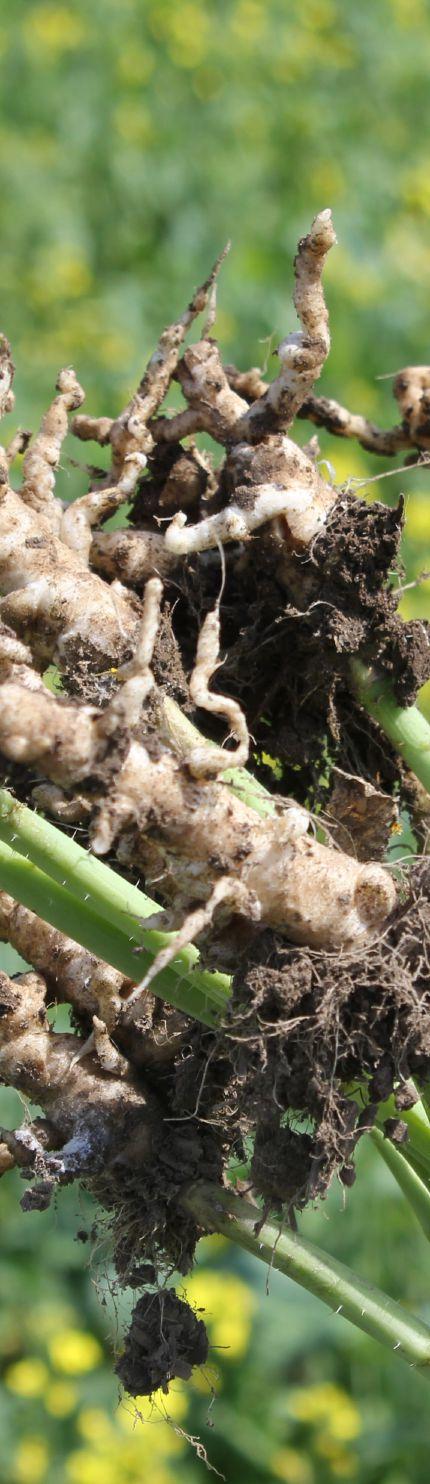
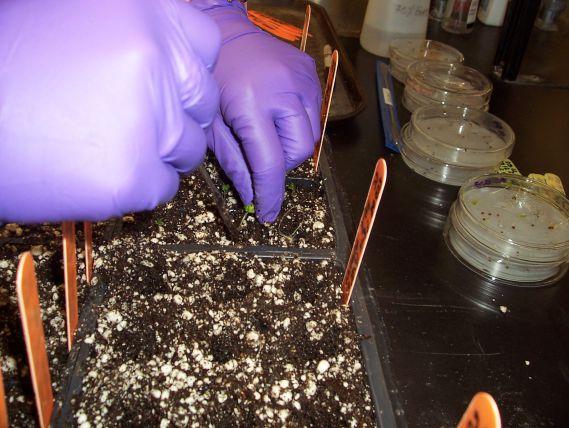
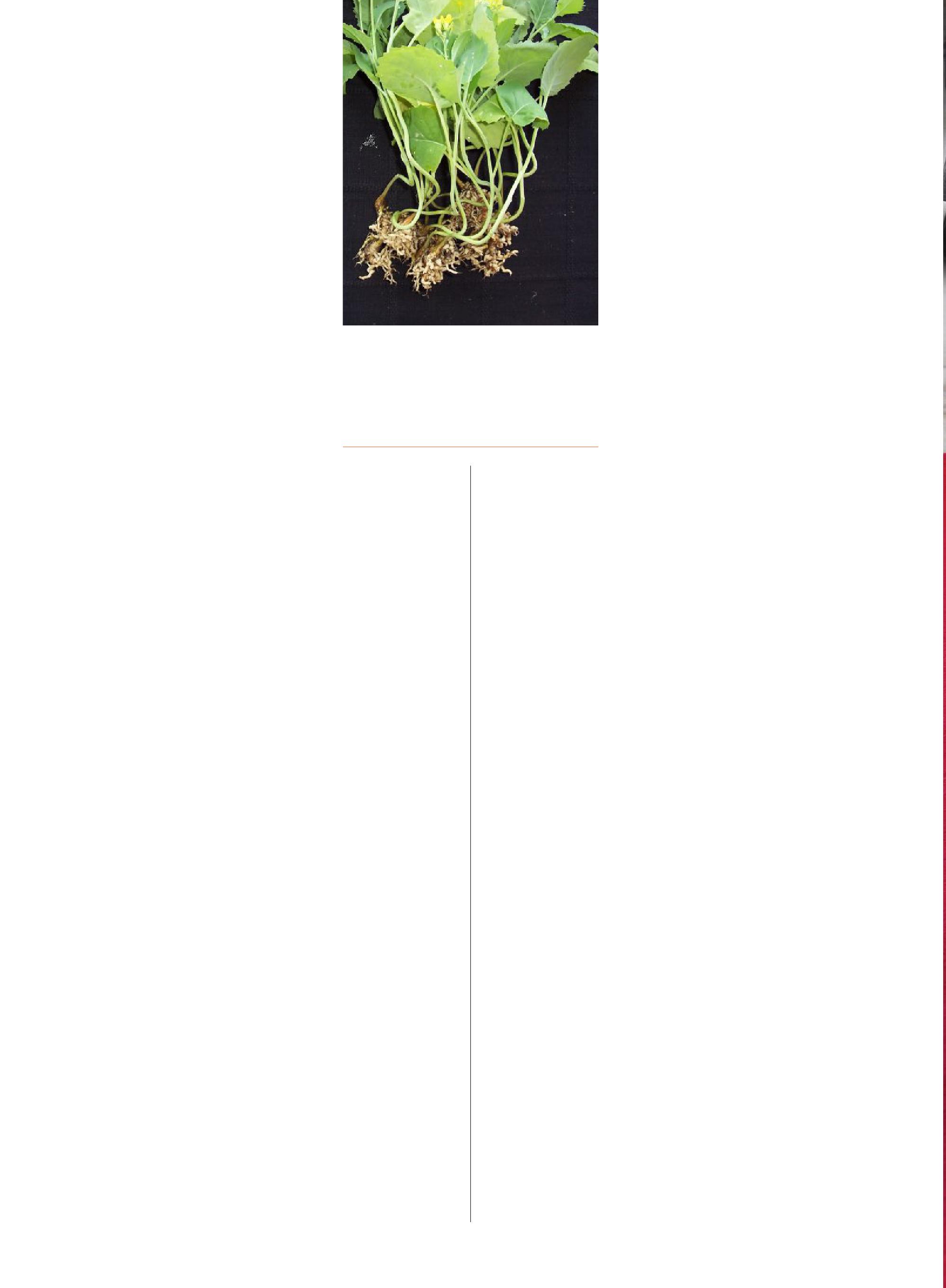
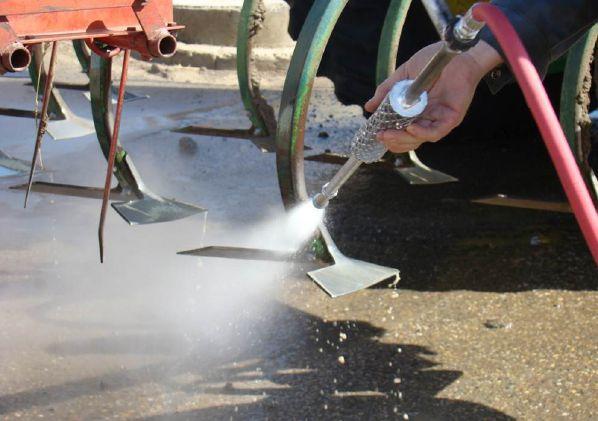
The pathogen is spawning multiple virulent variants
PG. 48
What we do, is in our name.
Trust Pioneer ® brand canola hybrids with Pioneer Protector ® traits to give you the peace of mind you need when growing canola. There are two new hybrids this year:
Pioneer Protector ® Plus – the first and only canola seed with built-in resistance to both sclerotinia and clubroot. Pioneer Protector ® HarvestMax – reduces the risk of harvest losses in canola.
To find out more, talk to your local Pioneer Hi-Bred sales representative or visit pioneer.com.
Find out which variety fits your field best at CANTERRA.COM. With three new varieties, CANTERRA SEEDS’ canola family is bigger than ever. Presenting CANTERRA 1918, CANTERRA 1970, CS2100, CS2000, CANTERRA 1990 and CS2200 CL
TOP CROP
16 | A honey of a partnership
Looking to further improve the great relationship between canola and bees. By Carolyn King
32 | What’s new in canola for 2016?
Top Crop Manager’s annual review of new canola hybrids. By Ken Sapsford
40 | Key factors in soybean production
Weed frequency in canola rotations
Getting the drop on pod
Breeding a stronger canola
Julienne Isaacs
Higher yield with uniform plant stands
Bruce Barker
Safe canola storage
Bruce
Countering the claims
Pros and cons of using chem fertilizers
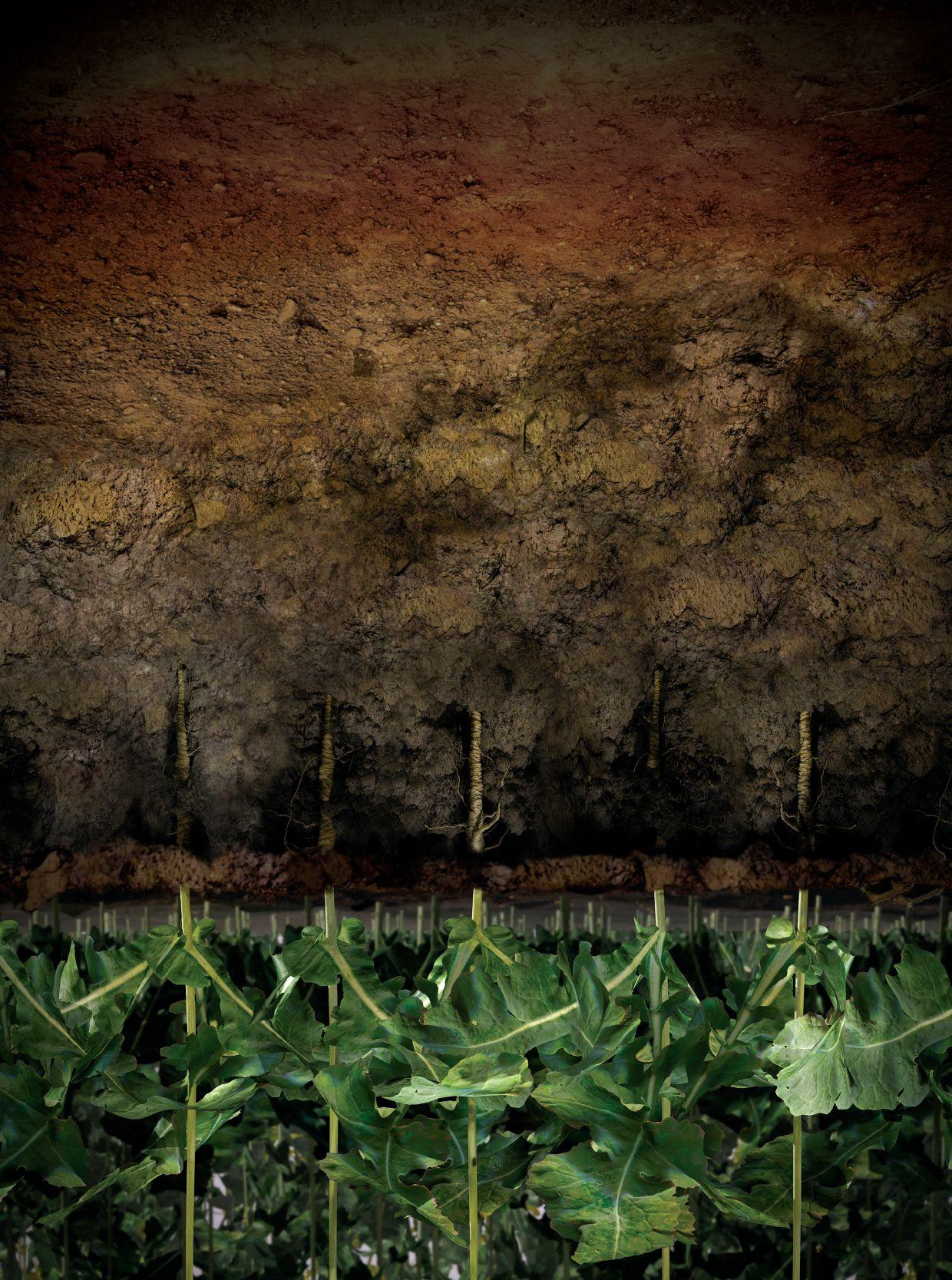
Clubroot strikes back
Carolyn King
New opportunities abound for canola
Janet Kanters
Field-scale evaluation shows soybean plants are resilient to variability. By Donna Fleury Readers will find numerous references to
JANET KANTERS | EDITOR
NEW OPPORTUNITIES ABOUND FOR CANOLA
It’s too early to know what the impact will eventually be, but elimination of import tariffs on canola in Japan is expected to create significant new opportunities for Canadian canola producers.
Japan is a long-standing and consistent market for canola seed, but tariffs of approximately 15 per cent have prevented canola oil exports. Through the Trans-Pacific Partnership (TPP), the canola industry estimates that when tariffs are fully eliminated in Japan and Vietnam over five years, exports of canola oil and meal could increase by up to $780 million per year.
According to the Canadian Canola Growers Association (CCGA), Canadian canola farmers rely on the region for over 60 per cent of their export sales, valued at $5.7 billion in 2014. Indeed, 90 per cent of canola grown in Canada is exported as seed, oil or meal, and the TPP region is a critical market for these sales, says the CCGA.
In addition to eliminating tariffs, the agreement is especially unique, since it addresses non-tariff barriers associated with the trade of genetically modified crops, they add.
According to Rick White, CEO of CCGA, ratifying TPP has valuable benefits, both for agriculture and for the Canadian economy. “Along with growth in exports, improved market access for oil and meal will support expansion in domestic crushing, creating more processing jobs and more domestic delivery options for canola farmers,” he said in a news release last month.
With 12 countries participating in the TPP, and several more expressing interest in joining, setting a new standard of rules will help the Canadian canola industry continue innovating. Patti Miller, president of the Canola Council of Canada, said that once the agreement is fully implemented, “the TPP will put us on a level playing field in one of our most valuable export markets.”
In 2014, more than $1.2 billion in canola seed was exported to Japan. As tariffs are eliminated, the canola industry estimates that exports will shift increasingly to value added oil and meal, while maintaining the overall volume of canola that is exported.
TPP will also provide significant benefits for other export-oriented agriculture sectors including wheat, barley, beef and pork, and give Canadian producers an advantage over competitors outside of the agreement.
In this issue, we focus on stories about canola – agronomics, plant breeding, crop management and many others. For example, seed shatter and pod drop are often lumped together. But a study has found that these processes should be treated separately – although a variety may have higher seed shatter, that doesn’t mean it also has high pod drop, and vice versa. Read more on page 46.
With increases in canola production demands and the needs of emerging markets, we can probably expect canola acres in Canada to expand. But how can we safely store canola? Researchers at the University of Manitoba looked at the safety of storing canola at different moisture levels, and determining how long canola can be stored in the bags without losing grade. See that story on page 36.
Alberta researchers are exploring ways to further advance the bee-canola partnership, but growers can take steps right now to help bees that are helping their canola crops. See that story on page 16.
Plus, we present our annual list of new canola hybrids for the 2016 planting year. See that list on page 32.
PUBLICATION MAIL AGREEMENT #40065710 RETURN UNDELIVERABLE CANADIAN ADDRESS TO CIRCULATION DEPT., 80 Valleybrook Drive, Toronto, ON M3B 2S9 blao@annexbixmedia.com Printed in Canada ISSN 1717-452X
Top Crop Manager West - 9 issuesFebruary, March, Mid-March, April, June, September, October, November and December - 1 Year - $45.00 Cdn. plus tax
Top Crop Manager East - 7 issuesFebruary, March, April, September, October, November and December1 Year - $45.00 Cdn. plus tax Potatoes in Canada 2 issues Spring and Summer 1 Year $16.00 Cdn plus tax
seed only)*
JumpStart ® delivers enhanced phosphate availability for increased root growth and a larger leaf area.
For a canola crop you can be proud of, order your seed pre-treated with JumpStart inoculant. In 163 farmer-conducted trials, canola treated with JumpStart showed an average 6% increased yield over untreated canola**.
Quicker start, stronger finish. Don’t wait, order your seed pre-treated with JumpStart today. Nature. It’s powerful technology.
JumpStar t
®
DEVELOPING STRAIGHT CUTTING HARVEST SYSTEMS
Evaluating different header types.
by Donna Fleury
Combine header selection is just one of many factors growers have to evaluate when considering straight cutting canola. In a three-year project launched in 2014, researchers in Saskatchewan are evaluating different header types to find out whether or not there are differences in headers and what factors make a difference.
The project started in 2014 at two locations in Saskatchewan: Agriculture and Agri-Food Canada’s (AAFC) Indian Head Research Farm/Indian Head Agricultural Research Foundation (IHARF); and Swift Current, at the Wheatland Conservation Area’s (WCA) southwest Agricultural Applied Research Management (AgriARM) site. A third site was added in 2015 at the Prairie Agricultural Machinery Institute (PAMI) site in Humboldt.
“We are using full-scale machinery and very large replicated plots for the trials,” explains Nathan Gregg, project manager with PAMI. “The combine is a CR 9080 and header widths are 35 or 36 feet, depending on the treatment, with individual treatments about 80 feet wide and 400 to 1000 feet long. The project is focused on combine header performance, not optimal combine performance,
so we are using a fixed ground speed and other settings for better comparison between headers.”
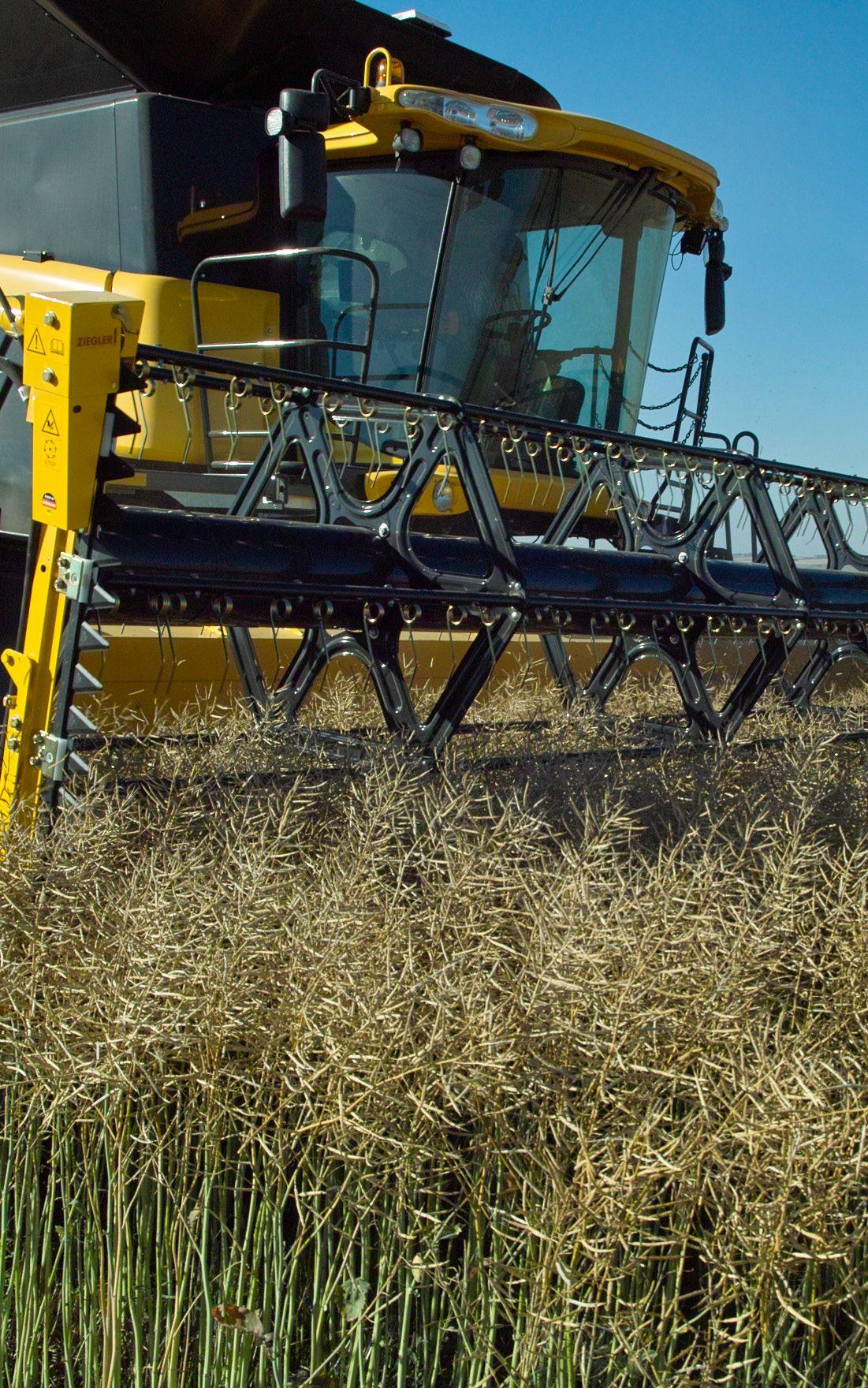
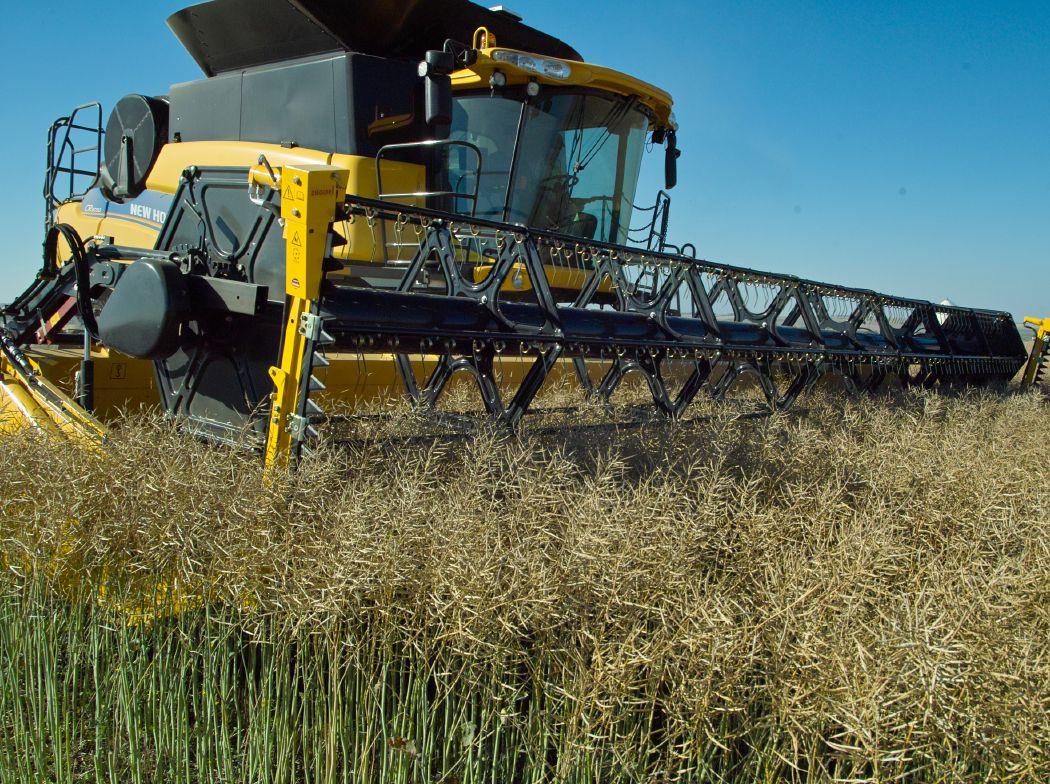
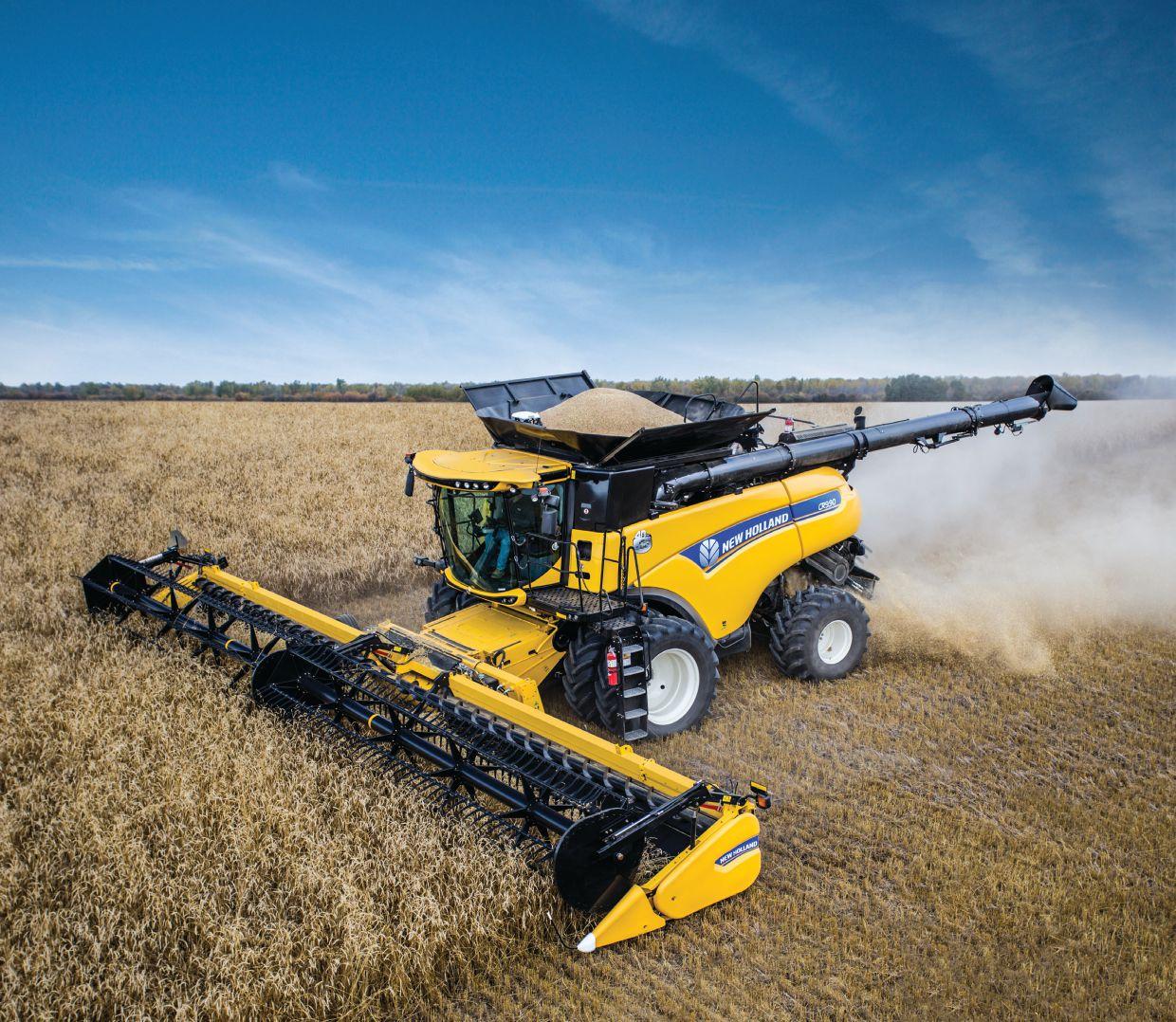
The four harvest treatments include swathing and belt pick-up as a control compared to a draper header, which is fairly common throughout the Prairies, a rigid auger header and a new style header (Varifeed) with an extendable knife. “The Varifeed header style has been used in Europe for a few years and is starting to be used in Western Canada,” Gregg says. “This header has an extendable cutter bar that can be moved forward about 23 inches. The one we are using in the project is hydraulically activated and can be moved from the cab, while there are other fixed attachment options that have fixed extensions.”
Two canola varieties are being compared, standard hybrid variety InVigor L130, and shatter resistant variety InVigor L140P. In 2015, Dekalb 75-65 RR was added to the treatments. Factors such as yield, header loss and loss location, environmental shatter loss and various quality components will be measured.
ABOVE: The 35 foot New Holland Varifeed header.
PHOTOS COURTESY OF PAMI.
Although there are still two more years of data collection for the project, preliminary observations from the 2014 harvest so far aren’t showing any clear differences between the headers. “We are trying to evaluate specific treatments to determine if one header performs better than the others,” Gregg says. “However, in terms of yield in year one, we didn’t see any significant differences between harvest treatments. We measured header losses through the use of pans for shatter loss and throw-over from the header, and again the performance was very similar with relatively low losses. The Varifeed appears to show some advantage, although we need more data. It appears that the extended knife may be able to collect shatter losses induced by the reel a little better and may provide for smoother crop flow.”
Researchers also tried to identify the location of the header losses by putting pans across the width of the header and into the zone just beyond the header into the adjacent crop. As expected, most of the shatter losses were concentrated at the perimeter of the header around divider points.
Gregg says preliminary findings validate the assumption that the divider point contributes a good portion of shatter losses, while the reel isn’t contributing as much loss as initially anticipated. “We need to investigate further why we are tending to see a higher proportion of the losses at the divider and perimeter, and again near the centre of the header as the material moves into the feeder house.”
Header dividers are of interest so the project researchers compared powered side cutters including a vertical knife on some configurations and a rotary knife on others. In 2015, passive end point dividers have been added to the treatments. “In 2014, we did see losses increase at the edges of the header,” Gregg explains. “The powered knife may be causing higher losses because sometimes whole pods and branches are lost compared to a passive divider that may shake the plants and cause a few pods to open. Although this is fairly common in swathers, the powered knives may be causing some additional losses, particularly in drier conditions.”
Environmental shatter losses were also measured by putting out pans in adjacent crop at the same timing as the swathing treatment. The pans were collected just prior to straight cutting harvest treatments.
The varieties performed fairly similar across all treatments, except at Indian Head in 2014 where a significant wind event caused
substantial losses in the standard hybrid as compared to the shatter resistant variety. In those trials, the control swathed and combined standard hybrid plots out-yielded the other standard plots by about four bushels per acre. The shatter resistant variety performed well in all harvest treatments, with no significant difference in yield.
“We expect to be able to provide more details at the end of the three-year project and provide some recommendations to growers,” Gregg says. “At this point, although we may find some differences in headers, any slight advantages may be marginalized relative to all of the other decisions and management practices that growers use. One header might reduce losses by a couple of bushels. However, losses overall may be reduced by properly timing harvest activities, making sure plant densities are optimized and other good agronomic practices that produce a good even high yielding stand.”
Gregg notes there are generally intrinsic risks and losses with both systems and it comes down to which ones you want to manage and which ones fit your farm. “Straight cutting is just another tool in the toolbox, and works for some people on some farms in some years,” Gregg adds. “There is a whole management aspect of straight cutting that needs to be considered along with all of the other factors in a compressed harvest window.”
A farm with a lot of combine power and labour availability might find straight cutting a good option because crops can be combined the day they are ready. However, growers have to be patient and may have to wait a bit later in the season. On the other hand, a smaller operator with limited combine capacity and limited labour may want to include swathing to spread out the already compressed harvest window.
Preliminary project results will be presented over the winter at various extension events, and the straight cutting research will be included in upcoming 2016 field days. Once the project is complete, an economic analysis will be completed with final project results available in early 2017.
The project is jointly funded by SaskCanola, Saskatchewan Ministry of Agriculture and the Canada-Saskatchewan Growing Forward II Bilateral Agreement, and the Western Grains Research Foundation.
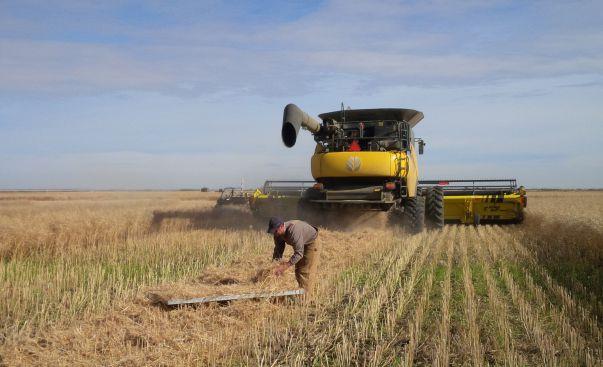
Checking header losses behind the combine.
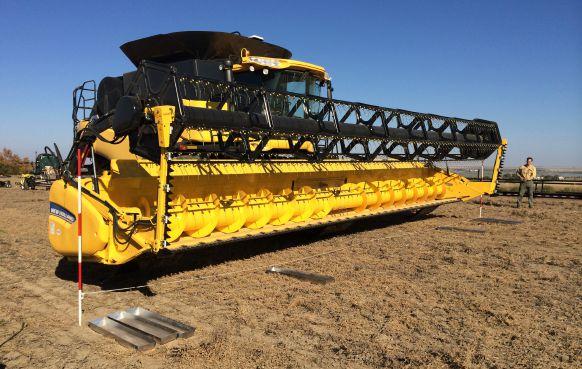
Tray layout for measuring header losses from shatter loss and throw-over from the header.
DALE KITCHENS HAS CALLUSES ON HIS HANDS AND DELO
While most people are sleeping, Dale is plowing in some of the harshest possible conditions known to farming. And he uses one brand for his engines, gears, transmission and joints: Delo® with ISOSYN® Technology. “Nothing is more brutal on equipment than West Texas sand and heat.” To learn more about how Delo protects equipment for your tough jobs, visit ChevronDelo.com
Delo user since 1978
Dale Kitchens from The Edge of Farming
Over 35 years ago, BASF introduced its first brand to the pulse market. Since then, we’ve invested countless hours in research and development and provided unrivalled support at field level. Together, we’ve helped Canada become one of the largest exporters of peas and lentils in the world. And we’re just getting started. To learn more about our commitment to the pulse market and exciting upcoming innovations, visit agsolutions.ca/pulses or call AgSolutions® Customer Care at 1-877-371-BASF (2273).
COUNTERING THE CLAIMS
Researchers show wheat’s protein content has changed very little in 150 years.
by Carolyn King
In recent years, wheat and its proteins have come under attack in some popular diet books, with claims that breeders have made “drastic” and “bad” changes to wheat varieties over the last 50 years. Now, a study comparing Prairie wheat varieties spanning the past 150 years is puncturing some of those claims.
“Some people are claiming that wheat protein concentration has greatly increased or that wheat protein quality has changed in recent decades, and that those changes are the main villain responsible for several chronic diseases in humans,” says Ravindra Chibbar, professor and Canada Research Chair in Crop Quality (Molecular Biology and Genetics) at the University of Saskatchewan.
“But our results indicate that the total protein concentration hasn’t changed very much, just a one per cent increase over a century.” On top of that, wheat yields and other important traits have improved over that time.
Chibbar became interested in comparing the nutritional composition of heritage versus modern Canadian wheat varieties when the negative claims about wheat started to appear in the popular media. So he approached his colleague Pierre Hucl, a professor at the University’s Crop Development Centre, about this idea. Hucl explained that he already had an ongoing field experiment to measure the rate of improvement in Prairie wheat varieties over time, and he offered grain samples from this study to Chibbar for nutritional analysis.
In his study, Hucl is comparing Canada Western Red Spring (CWRS) wheat varieties ranging from the 1860s to today, in replicated trials in central Saskatchewan.
“In Western Canada, CWRS is the main class of wheat, which is of the highest quality,” Chibbar notes. CWRS wheats are highprotein, hard wheats with superior milling and baking qualities, and are often used for yeast breads. Developing new varieties for this class can be challenging for breeders because they must meet stringent requirements for milling and baking quality, while they work to improve other traits like yield, days to maturity, and resistance to diseases and insect pests.
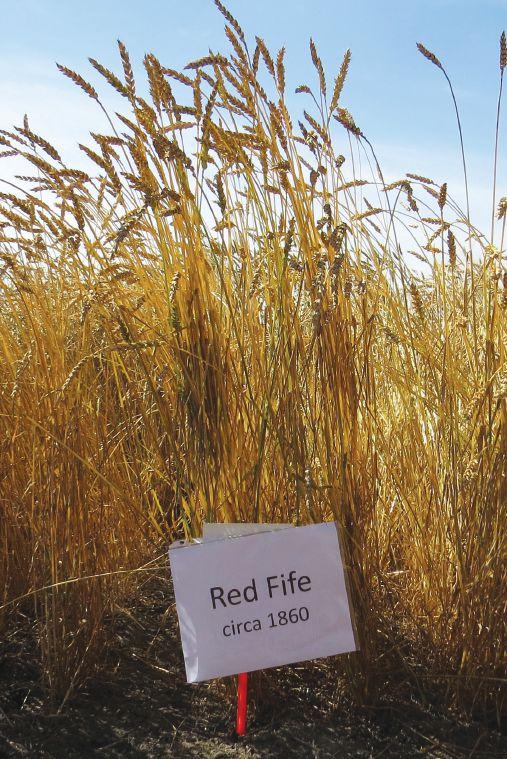
For the study, Hucl has selected varieties to represent each decade since 1860, choosing ones that were grown on a large area or that made a significant contribution to advances in wheat traits. The oldest variety in the study is Red Fife, a well-known Canadian heritage wheat. The study began in 1989 with 28 varieties, and
Hucl has added more varieties with each passing decade since then, for a total of 37 varieties at present.
The researchers recently published a scientific paper in the journal Cereal Chemistry on the changes from the 1860s to today in agronomic and end-use quality characteristics. They found that grain yield and kernel weight have increased, while days to maturity and plant height have decreased. For example, AC
Red Fife, the oldest variety in the study, has good yields but is later maturing and more prone to lodging than modern varieties.
SUPERSEED. GUARANTEED.
Earn more money with SeedMaster—guaranteed*. SeedMaster’s UltraProTM seeding system provides near singulated canola seed delivered directly to our innovative active-hydraulic, ground-following, individual row opener for precise seed and fertilizer placement. Cut seeding rates without sacrificing yield. Save on inputs with Overlap Control. And with the biggest toolbar in North America, you’ll seed more crop in the critical 10 – 15 day seeding window. Higher yields and greater profits. That’s SuperSeed. Guaranteed.
seedmaster.ca We’re farmers, too.
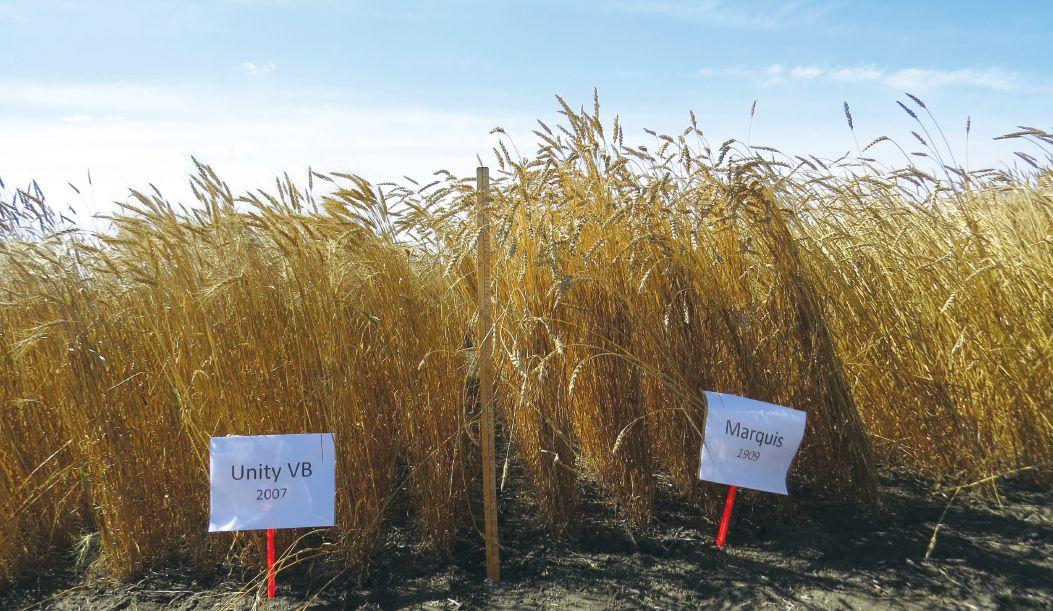
Barrie (registered 1994) yielded 25 per cent higher than Marquis (1909), 17 per cent higher than Thatcher (1935) and 11 per cent higher Neepawa (1969). Red Fife’s yield, at 3273 kg/ha, was close to yields of modern varieties such as AC Barrie (3439 kg/ha). However, Red Fife was six days later, 16 centimetres taller and more prone to lodging than AC Barrie.
The researchers also found that several traits important for milling and baking improved from the heritage to the modern varieties.
So, even with the challenge of meeting the strict quality requirements, Canadian breeders have made significant improvements in CWRS wheat.
Nutritional analysis
Chibbar and his lab are currently analyzing the nutritional composition of the grain from Hucl’s experiments in 2013 and 2014.
Chibbar presented some of the initial results in a poster at the Canadian Nutrition Society meeting in May 2015.
“We have analyzed the grains of the 37 varieties for total starch, total protein and polymeric proteins,” he says. “Polymeric proteins are the ones that form the gluten complex.”
The gluten protein complex is formed when water is added to wheat flour to make dough; certain proteins – mainly gliadins and glutenins – interact with each other to form gluten. Gluten gives wheat dough characteristics like elasticity, so gluten is very important for uses like making bread.
Chibbar is particularly interested in wheat proteins because of claims in the popular media that gluten proteins have changed in recent decades and that those changes are causing increasing health problems.
His nutritional analysis showed that total protein and total starch concentrations have changed very little since the 1860s.
Average rates of change in selected traits of wheat varieties, from 1860s to present
Trait Average rate of change per year
Source: Ravi Chibbar, University of Saskatchewan.
A comparison of Prairie wheat varieties spanning the past 150 years counters claims that wheat’s protein concentration has greatly increased.
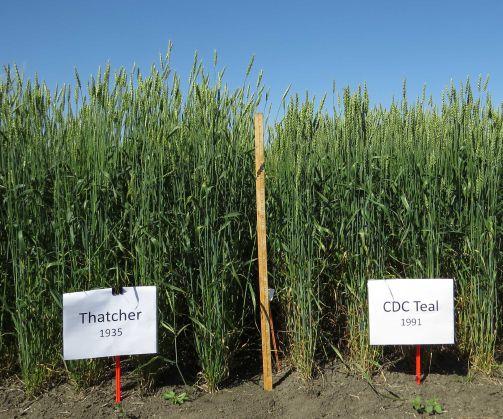
CDC Teal is higher yielding and shorter than Thatcher.
The total starch concentration varied from 56 per cent (for Apex, registered in 1937) to 69 per cent (Superb, 2001). The total protein concentration was lowest in Red Fife (1860) and Saunders (1947), and highest in Katepwa (1981).
“Overall, total protein concentration increased at a rate of 0.01 per cent per year,” Chibbar says. He adds, “The results of the grain protein analysis by the Canadian Grain Commission lab are very similar to what we are finding, and those results are based on a large number of commercial samples.”
The polymeric protein concentration, expressed as a per cent of total grain protein, ranged from 57 per cent in Lillian (2005) to 65 per cent in Pembina (1959). There was no definite trend of increase in polymeric proteins with time.
Chibbar will be continuing the nutritional analysis, including a more detailed look at the protein characteristics. He will be presenting the results at a scientific meeting in October, and he expects to publish a paper on the work in 2016.
“The take-home message for producers from our research is that investments in wheat improvement over the years have increased yields and improved other traits, like reduction in days to maturity,” Chibbar says.
“I’ve been working with wheat for the last 30 years, and I firmly believe that wheat is still a nutritious grain. The very small population who are gluten-sensitive or who have celiac disease have to be very careful, but for the majority of people, wheat is a nutritious grain. With my studies in the future, we will determine if there have been any nutritional changes and, if so, what those changes are,” he adds.
“As scientists, we want to do scientifically sound experiments with required controls and use scientifically approved techniques to characterize grain constituents. Finally the results and conclusions have to go through a rigorous peer review before being acceptable for publication in a scientific journal.”
The University of Saskatchewan, Saskatchewan Ministry of Agriculture, Saskatchewan Wheat Pool (in the earlier years of the study) and Canada Research Chairs program funded this research.
For more on cereals research, visit topcropmanager.com.
FACT #1: Proven® Seed is the total, allaround package for success in canola and cereal crops. It’s NEW genetics and seed varieties. It’s also 25 years of groundbreaking research — plus leading agronomics, field trials and distribution networks.
FACT #45: Proven Seed is integrated all the way from R&D to the farm — through breeding, production, seed treating, distribution and retail. Which means quality seed you can count on.
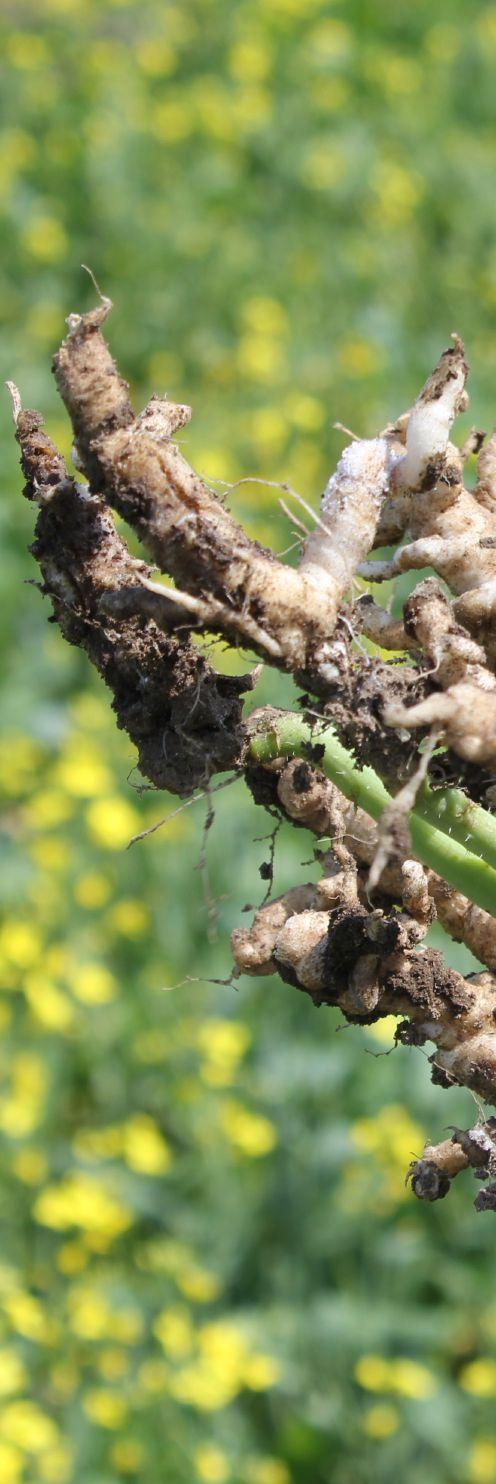
FACT #88: Clubroot is a potentially devastating soil-borne diseasethat causes swelling or galls to form on roots incanola, ultimately killing the plant. The next generation of advanced CPS-bred Brassica napus canola hybrids demonstrate high levels of resistance to clubroot pathotype 5X, and will mark a first in the fight against the growing threat of this disease.
quality control. Through an accredited seed laboratory, we screen every seed lot extensively for disease, purity and germination — to give you confidence in your seed investment.
FACT #46: Proven Seed PV 533 G is a new Genuity® Roundup Ready® hybrid allowing you to push your yield potential, while getting excellent standability and blackleg resistance. PV 533 G is a great choice for your best performing fields. See for yourself at provenseed. ca/canola.
IT’S A PROVEN FACT
( that 25 years adds up to a lot of facts )
FACT #110: Proven Seed set the bar in standability. New hybrids, like PV 200 CL, build on this world class standard while offering high yield potential and a non-GMO premium contract option with the Clearfield® system.
FACT #133: The Proven Performance Trials program is the largest retail comparison program in Western Canada. With over 200 trials in 2015, the Proven Seed portfolio is put to the test by farmers to ensure it performs best where it counts — on large-scale, producermanaged fields. See for yourself at provenseed.ca/performance-trials.
FACT #74: Proven Seed has over 25 years of continuous research in Western Canada. The CPS R&D team includes more than 50 dedicated staff in Canada and Australia with three research farms and 35 research sites across the Prairies.
FACT #29: Seed production is a priority for Proven Seed. We work with CSGA growers to produce, clean and test our seed to ensure the highest level of
FACT #51: Manage your acres and harvest timing. PV 531 G brings strong yields, excellent standability and early maturity so growers can manage harvest windows without sacrifice. Suitable for the short growing zones of the Prairies, this Genuity® Roundup Ready® hybrid lives up to the name Proven Seed.
FACT #47: Proven Seed products are only available at CPS retail locations across Western Canada. Your CPS advisor will guide you through seed, fertility and crop protection requirements to find a solution tailored for your farm. Find a retailer near you at provenseed.ca/find-a-retailer.
CANOLA
A HONEY OF A PARTNERSHIP
Looking to further improve the great relationship between canola and bees.
by Carolyn King
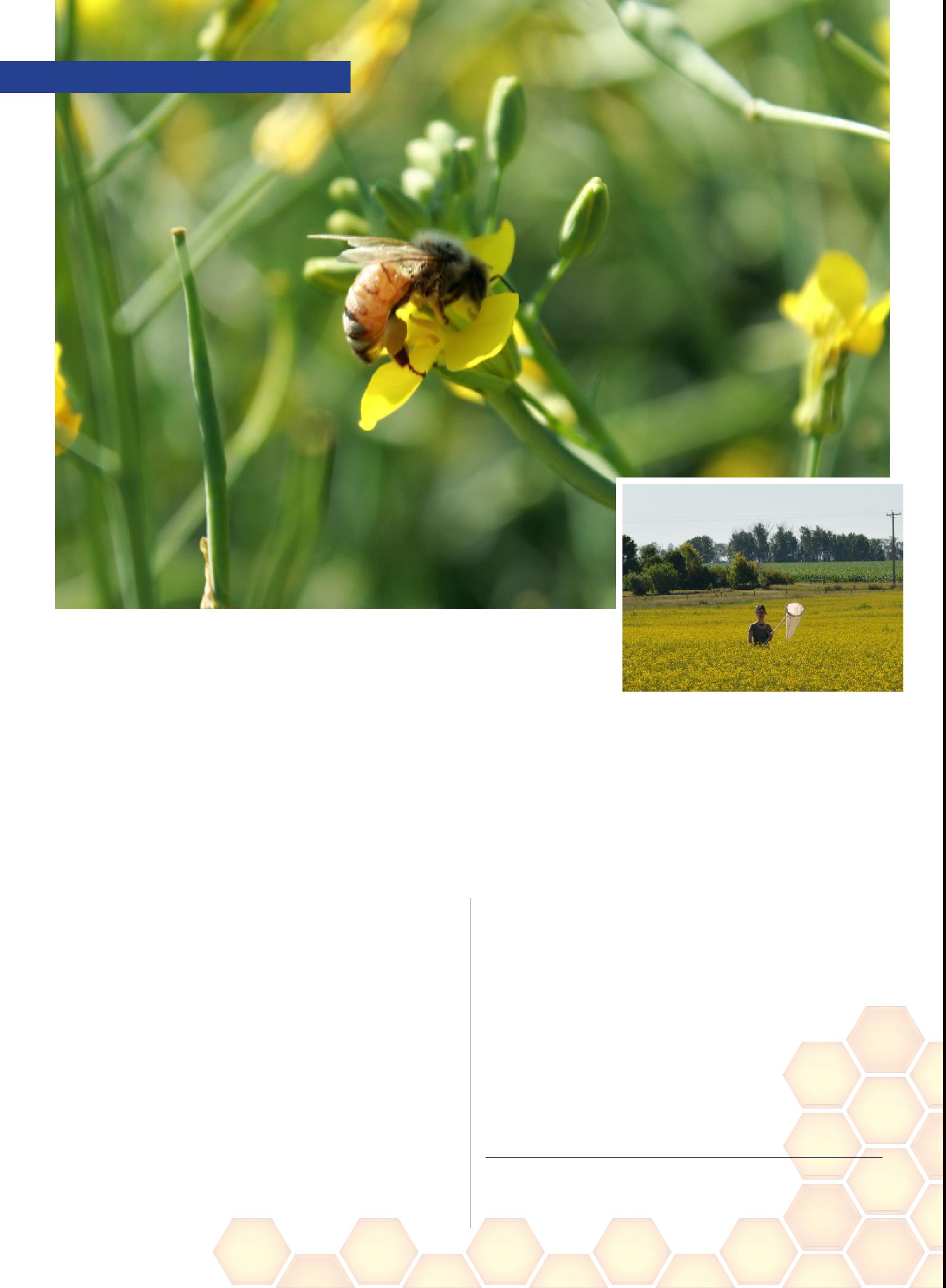
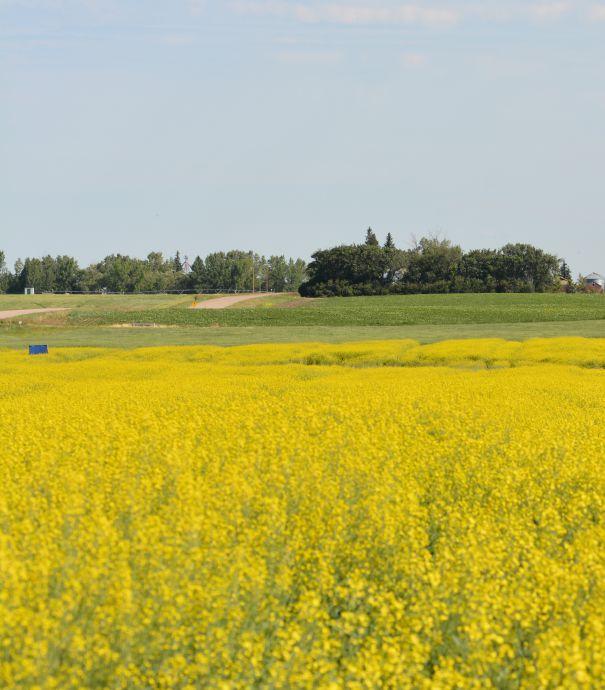
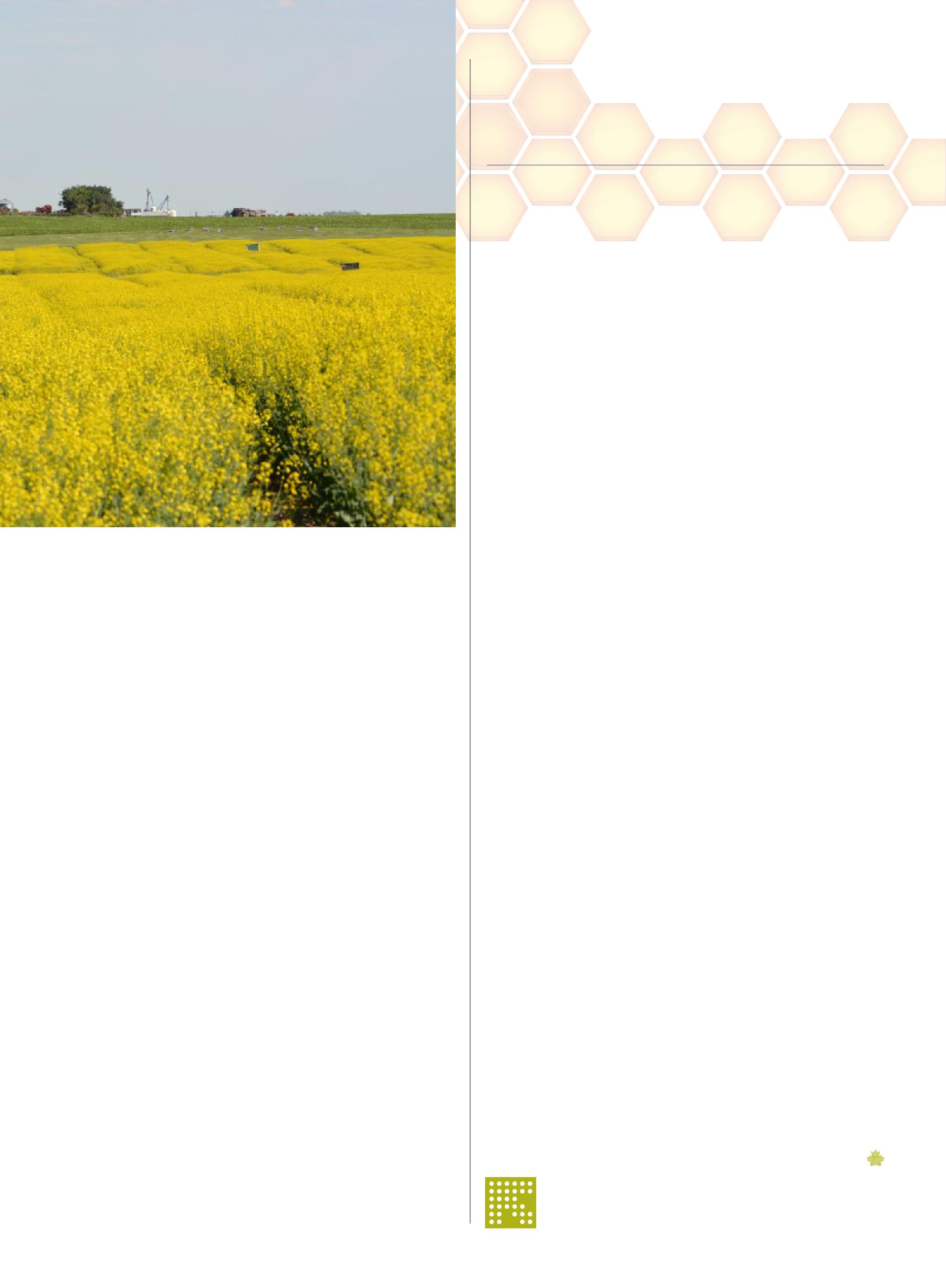
While bees are busily feeding on the pollen and nectar in canola fields and producing honey, they are also playing a vital part in canola production. Alberta researchers are exploring ways to further advance the bee-canola partnership, but growers can take steps right now to help bees that are helping their canola crops.
Insect pollinators are essential for hybrid seed canola production so managed bees are used to pollinate these crops. “Our entire seed stock depends on honey bees and leafcutter bees,” says Gregory Sekulic, agronomy specialist with the Canola Council of Canada (CCC) in Alberta’s Peace Region. “About 80,000 colonies of honey bees pollinate seed crops in southern Alberta – that’s one in every eight hives in Canada. Canola seed production is the largest contract user of bees for pollination services in Canada.”
Bees also help bump up commodity canola yields. Shelley Hoover, apiculture researcher with Alberta Agriculture and Forestry, says, “Honey bees, other bees and other pollinators can contribute to the
yield of commodity canola through increased pollination. The extent to which they benefit yield seems to depend on their abundance, the variety of canola, and other environmental factors including farm management practices such as fertilizer, weather and so on.”
Some good quality research suggests fairly substantial increases in canola yields from using managed bees. According to Sekulic, some of the highest documented increases are up around the 45 per cent range, but those trials tend to be cage trials – a caged canola plant with bees compared to a caged plant without pollinating insects. “However, we don’t see such high yield increases out in the general landscape, so a lot of the yield gap must be made up for by wind pollination and by the vast suite of native pollinators,” he notes. “We expect somewhere between almost no yield increase and probably a 10 to 12 per cent
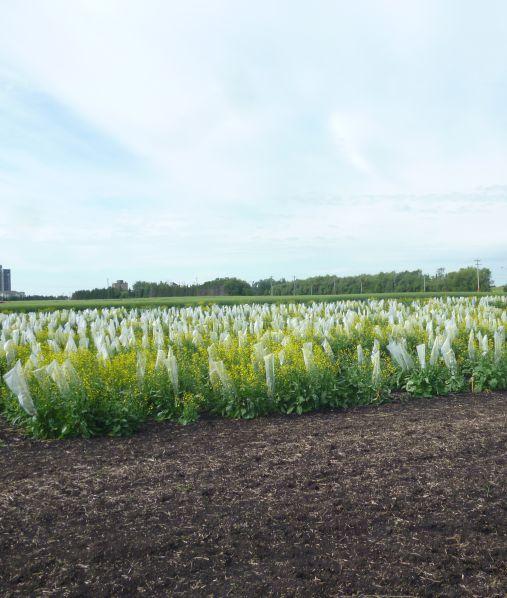
TOP: Bees are key to hybrid seed canola production, and they can also help bump up commodity canola yields.
INSET: Hoover uses a sweep net to evaluate the abundance of insect pollinators.
Supporting your success in every seed
increase at higher stocking rates of bees.”
Along with increasing yields, bees may shorten the crop’s blooming period and reduce green seed counts because of their efficient pollination of the crop. “Some really interesting work out of Quebec with very high stocking rates found that bees shortened canola’s flowering window by 3.8 days over the course of their trial,” Sekulic says. “Since canola flowers for 20 to 25 days or so, taking four days out of that window is pretty big in terms of maturity. But that trial had three hives per hectare. [To have such a high bee stocking rate for Canada’s commodity canola crops] would require about 100 times more bees than we have in Canada right now, so it is not feasible; that high amount of bees would only be required for the 21-day flowering period and then the beekeepers would have the cost of feeding them for the rest of the year.”
Canola crops are also very good for beekeepers and their bees. “Canola is a nutritious crop for bees both from a protein perspective in the pollen and the amount of nectar that canola creates for honey. About 70 per cent of Canada’s honey comes from canola feedstock. Canola yields a lot of honey and that honey is good quality,” Sekulic says.
He adds, “I think the thriving states of both the canola and the beekeeping industries really show that we are working and growing together.”
Helping bees to help your crop
“Most canola growers have a fantastic relationship with their beekeeper – they get a few pounds of honey every year and their crop benefits,” Sekulic says. But agricultural operations can have negative effects on bees, so the CCC has important advice for growers on how to minimize impacts on bees and other insect pollinators.
If possible, avoid spraying an insecticide on canola fields during flowering. Sekulic emphasizes, “We really encourage growers to use economic thresholds – to spray an insecticide only if the amount of pest insects present will do damage that is in excess of the cost of control. We really discourage prophylactic applications of a foliar insecticide
because of the damage it can do to bees and other pollinators. There are about 970 species of identified solitary bees and bumble bees in Canada, the majority of which can be found pollinating in canola.”
Hoover adds, “We also commonly find flies in canola fields, and they can be important pollinators.”
If the pest insect is beyond the economic threshold and you decide to spray, then try to find a product with low toxicity to bees. “The insecticides available now are a lot more bee-friendly than the products used 20 or 30 years ago, but we still advise using the safest product available. Unfortunately, for most of our pest insects, there are really only one or two products registered for their control [so there may not be a good bee-friendly option],” Sekulic says.
“We also advise spraying in the evening after about 9 p.m., when bees aren’t foraging anymore, and then stopping spraying before temperatures reach about 15 C in the morning.”
As well, be sure to inform beekeepers with hives in your area before you spray. Sekulic explains, “Telling the beekeeper when a spray operation will happen allows the beekeeper to move the hives or cover them, or perhaps suggest an alternative product that is safer for bees. There is so much to gain by working together and so much to be lost by antagonism.”
He notes research on neonicotinoid seed treatments of canola indicates these treatments are not causing problems for bees. “The data really supports the fact that we are using the products quite responsibly and really limiting exposure of bees to the products,” he says. “The seed treatments are systemic so they will disperse through the plant, but the product dissipates readily to the point that we don’t find any neonicotinoid residues at all in the pollen or honey in about two-thirds of the samples collected in Alberta. And in the remaining one-third, the concentrations are well below even the most conservative estimates for behavioural effects in bees.”
To learn more about pesticide impacts on bees, Hoover is working with Stephen Pernal and Marta Guarna of Agriculture and AgriFood Canada (AAFC) on a bee health study that includes testing for pesticide residues in pollen collected by bees in the Lethbridge and
PHOTOS COURTESY OF AAF.
Beaverlodge areas of Alberta, and in Prince Edward Island. “We have pollen collections from canola and corn specifically, as well as collections from hundreds of colonies across these three sites throughout the flowering season. These samples will be analyzed for residues (including neonics). We also have parasite and pathogen data from these colonies, as well as colony size and survival.”
For growers who also want to help native pollinators, Sekulic says the key is to give them a place to live. “Fence rows, tree bluffs, low spots, wetlands, and other non-cultivated areas are places where solitary and bumble bees complete their life cycle, so they’ll have their nests there. These uncultivated areas are fantastic reservoirs for native flowering plants that provide pollen and nectar after canola has stopped flowering.” He adds, “Maintaining these areas in proximity to croplands can also reap huge rewards in terms of predation on crop pests by the good bugs such as parasitic wasps, carabid and rove beetles, and spiders.”
Bee-canola study
Hoover explains there is still a lot we need to learn about the beecanola relationship. “We do not yet have a broad understanding of all the variables that interact to affect levels of pollination and yield, and how bees are affected by farm management practices such as pesticides, irrigation, crop variety, etc. We do not yet fully understand how to manage bees most effectively as pollinators of canola, or how the dependence of yield on pollination varies. I am interested in these types of questions because of the broad importance of bees and canola across not only Canada, but the world. These are important global questions.”
Another one of Hoover’s current projects is a three-year study on bees in canola. “The goals of this project are to understand how managed and wild bees are distributed in the canola fields (seed and commodity), their interactions with one another, and how these affect yield. We are also studying the effects of different ways to manage honey bees used in canola pollination (seed) and how use in pollination affects bee health.”
The project, which started in 2014, is funded by the Alberta Crop
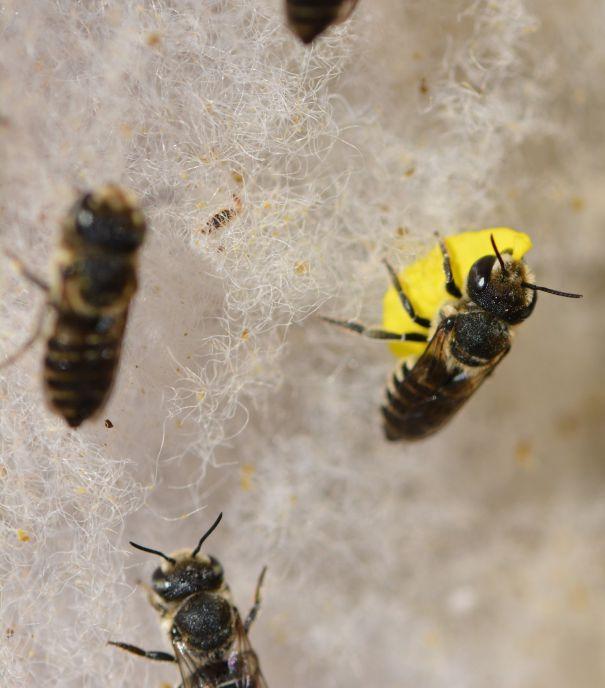
FAR LEFT: A leafcutter bee carries a canola petal back to her nest hole in the leafcutter bee shelter; she’ll use that petal to build a little cocoon around a pollen ball and her egg.
LEFT: This 2014 field site is one of many locations in an Alberta study to delve deeper into ways to manage bees that are good for the bees and for canola pollination.
Industry Development Fund, Canadian Bee Research Fund, Alberta Beekeepers Commission, University of Calgary, AAFC, Alfalfa Seed Commission of Alberta, CCC, and Alberta Agriculture and Forestry.
“This study involves myself, my technician, two graduate students, a post-doctoral fellow, undergraduate students, as well as colleagues at the University of Calgary (Ralph Cartar) and AAFC (Stephen Pernal),” Hoover notes. The other key players in the project are numerous canola growers and beekeepers. “Without the cooperation and understanding of the growers and beekeepers, none of this would be possible.”
The project is taking place in the Lethbridge region, as far as Granum, Enchant and Scandia, and in the Peace Country centred around AAFC’s Beaverlodge Research Farm.
It involves a variety of experiments. Hoover explains, “Depending on the experiment, we are measuring bee abundance in the field, the behaviours of the bees, crop yield parameters, bee health and honey yield, pollen collection and rates of foraging.” Regarding crop yield, the research team is measuring factors like seed number and weight per square metre, seed number and weight per plant, average seed weight, and green count; each of these is being measured at several distances into each field. The researchers are also measuring plant traits like number of pods, number of seeds per pod, and so on.
Theyare still collecting data, so most of the results are not ready yet. “I can say that there is a large amount of variation in bee abundance within and among fields, and even within the same field on different days. How this is related to yield we are still working out, but bee abundance is correlated negatively with nectar availability – likely because the more bees you have, the more nectar they remove from the flowers. We see a lot of interactions among the bees in the field, both within a species and among the different species,” she says.
“For seed crop pollination, early indications are that there are more management options for beekeepers than what is currently common in the fields, and that these different options can be as effective as the status quo.”
The project results could have practical benefits for beekeepers and canola growers. “It is our hope that these results will provide beekeepers with information on how to manage bees in ways that are good for the bees, but also provide an effective pollination force for growers,” she says.
“We can also provide beekeepers with information on how bees act in canola fields, and what they are foraging on. For example, we are finding that in late-blooming seed fields, the bees tend to gather more corn pollen than in fields that are done bloom before the corn pollen is available. We are also finding out that there are usually a number of types of pollen coming into each colony, even when they are placed near multiple canola fields. Bees are very good at finding sources of diverse forage.
“For the growers, we hope to provide them with information as to what context adding managed bees to their field would benefit yield, and an easy method by which they can evaluate their pollinator abundance, similar to sweep netting to determine the threshold of a pest.”
For more on canola, visit topcropmanager.com.
PHOTO COURTESY OF AAF.
HIGHER YIELD WITH UNIFORM PLANT STANDS
Up to 32 per cent higher yield.
by Bruce Barker
What’s the cost of an uneven, thin canola plant stand? Western Canadian researchers have put a number to it. Spatially uniform plant stands increased canola yield by up to 32 per cent at low-yielding sites and by up to 20 per cent at high yielding sites compared to non-uniform plant stands.
“For the first time, this comprehensive field experiment, conducted at the multiple sites and years across various climate-soil zones of the Canadian prairies, shows the importance of plant stand uniformity for efficient utilization of environmental resources to enhance pod formation and seed set and increase seed yield,” says Yantai Gan in an Agronomy for Sustainable Development article published in October 2014.
Gan is a research scientist at Agriculture and Agri-Food Canada (AAFC) at Swift Current, Sask. He conducted the research along with AAFC colleagues Chao Yang, Neil Harker, Byron Irvine and Bill May, University of Saskatchewan researcher Randy Kutcher, and University of Manitoba researcher Rob Gulden.
Field experiments were conducted at 16 site-years across the
Prairies from 2010 to 2012. The Liberty Link variety InVigor 5440 was seeded at Carman, Lacombe, Melfort and Swift Current in each of the three years, at Brandon in 2010, Indian Head in 2011, and Morden in 2011 and 2012. Herbicides, fungicides and insecticides were applied as needed.
Plant stand densities were targeted at 20, 40, 60, 80 and 100 plants per square metre with uniform and non-uniform stands.
(The Canola Council of Canada recommends a plant stand of 70 plants per square metre for optimum yields.) Uniform stands were established by seeding with a plot drill in the first to second week of May. Non-uniform plant stands were established by first seeding at the 100 plants per square metre target rate, and hand thinning at the three-leaf stage to achieve the targeted non-uniform plant stands.
Three weeks after emergence, the researchers measured plant density and calculated emergence rate. At maturity, plant survival
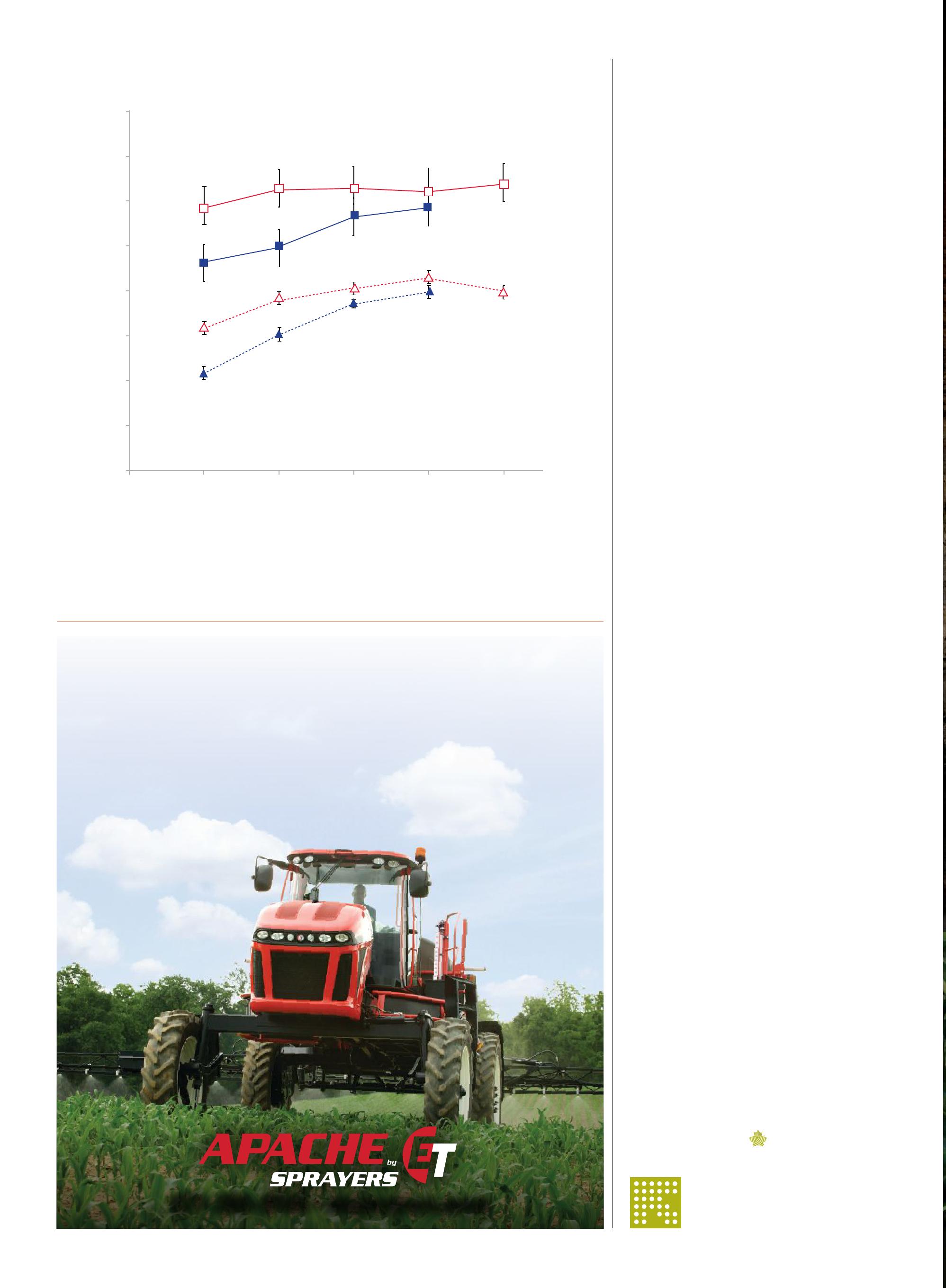
ABOVE: A uniform plant stand yielded up to 32 per cent higher than a non-uniform plant stand.
Bars are standard error (n=9) of the mean. Significant differences were detected between uniform and nonuniform stands at both high yielding (P=0.0128) and low yielding (P<0.0001) sites when plant density is lower than 60 plants/square metre.
Source: Yang, C. et al: Up to 32% yield increase with optimized spatial patterns of canola plant establishment in Western Canada. Agron. Sustain. Dev. (2014) 34:793–801.
rate was calculated along with a measurement of number of fertile pods per square metre and seed yield.
Yield impacted by seeding rate, uniformity
Data analysis grouped the research sites as high yielding at Lacombe 2010, Lacombe 2011, Lacombe 2012, Melfort 2010 and Melfort 2011 with an average yield of about 65 bushels per acre (3690 kg/ha). The other 11 sites were grouped as low yielding with an average yield of about 31 bushels per acre (1780 kg/ha).
“At both high yielding and low yielding sites, uniform plant establishment had higher seed yields compared with non-uniform plant establishment under the same plant density,” Gan reports. (See Fig. 1.)
The effect was most pronounced at the low yielding sites where uniform stands increased seed yield from seven to 32 per cent, depending on targeted plant population; 32, 21, eight and seven per cent at the plant densities of 20, 40, 60 and 80 plants per square metre.
At high yielding sites, uniform stands increased seed yields by 21 per cent for plant densities lower than 60 plants per square metre. However, there was no difference in canola yield between a uniform and nonuniform plant stand when plant density was higher than 60 plants per square metre.
“Seed yield differences between uniform and non-uniform plant stands at low plant densities was much greater than at high plant densities at both high yielding and low yielding sites,” Gan says.
The cost of thin, non-uniform stands is shockingly high. If your average yield is in the 30 bushel per acre range, a 32 per cent loss is 9.6 bushels per acre or about $96 per acre. At an average yield of 65 bushels per acre, the 21 per cent loss is 13.7 bushels per acre at about $137 per acre.
The research highlights the importance of two factors in optimum canola yield. First, target a stand establishment of 70 plants per square metre. Second, ensure stand establishment is uniform, which can be achieved through using treated seed, seeding shallow into a firm, moist seedbed and seeding at a speed that ensures accurate seed placement. Uniformity of stand can help overcome poor stand establishment.
For more on canola crop management,
BREEDING A STRONGER CANOLA
A public-private partnership aims to broaden the genetic diversity of canola.
by Julienne Isaacs
According to the Canola Council of Canada, canola contributes $19.3 billion dollars per year to the Canadian economy. In his lab at the University of Alberta, Habibur Rahman is working to ensure that figure only increases in the coming years.
Rahman is spearheading a long-term breeding project that aims to broaden the genetic diversity of Brassica napus, with the goal of developing strong canola lines to use in Canadian breeding programs.
Rahman’s project is funded by a Natural Sciences and Engineering Research Council of Canada (NSERC) Collaborative Research and Development Grant as well as industry collaboration with Crop Production Services (CPS), a Western Canada-based subsidiary of the agri-retail giant Agrium.
According to Rahman, the narrow genetic base in B. napus canola limits continued improvement of the crop. But the progenitor species of B. napus, Brassica rapa and Brassica oleracea, contain a vast amount of genetic diversity that can be tapped to develop new hybrid parents for B. napus
The introgression of genetic diversity from allied species is no easy task. For example, the use of B. oleracea, an allied, diploid species that includes common vegetables such as cabbage, kale and cauliflower, creates a challenge for canola breeding programs. It is very difficult to obtain a hybrid plant from crossing this species with B. napus and develop a B. napus canola plant from the progeny of this interspecific hybrid. Furthermore, B. oleracea species contain many undesirable traits for canola, such as high levels of erucic acid and glucosinolates in seeds.
To shed undesirable traits while bringing in necessary genetic diversity, Rahman and his team must run multiple breeding cycles, each cycle running for at least five years, before achieving good hybrid parents.
Ultimately, hybrid parents developed in the program will exhibit good agronomic qualities, including yield, as well as resistance to clubroot and blackleg. “We’re maintaining the agronomic standards and increasing the yield,” Rahman says.
“We are integrating genetic diversity from allied species to make parents for good hybrids – in other words, trying to develop better parents for better hybrids,” he says. “It’s a long-term project, because we improve it step by step.”
The next step for Rahman’s program will be entry into the second cycle of breeding, in which the genes from B. oleracea will
be retained. “Then we’ll test the parents to make better hybrids,” Rahman says. “We’re generating thousands of lines and we have to identify which one gives the high yield advantage. We also have to identify which regions of the chromosomes carries the genes to give high yield in hybrids.”
It may be eight to 10 years before the long-term project is concluded, but in the meantime, Rahman’s program is already bearing fruit.
Industry collaboration
CPS’ partnership with the University of Alberta’s canola breeding programs goes back at least 20 years, but in 2010 a joint breeding program was established. Through the program, Rahman delivers strong inbreds to CPS, which develops hybrids using the new genetic material.
The University of Alberta’s Habibur Rahman’s canola breeding program involves identifying which new lines will give the high yield advantage.
As a direct result of this collaboration, CPS has already created products designed to meet immediate needs in the industry, such as clubroot resistance. The company has submitted a registration application for a new clubroot-resistant variety that will become available in introduction quantities for the 2016 planting season under the Proven Seed brand.
CPS is Canada’s largest canola seed retailer, and it also maintains its own in-house breeding institution located in Saskatoon, Sask.
“Overall our program has all of the essential elements of canola breeding to produce hybrids for the western Canadian market,” says Andy Andrahennadi, senior hybrid breeder with CPS Canada.
“We have a program in Australia as well, and through that we’ve been able to access valuable germplasm specifically with regard to blackleg. With regard to canola breeding in Canada, we strongly focus on yield, yield stability and disease resistance.
“Dr. Rahman’s program helps us in exploring the right genetics and other traits that we cannot spend the time to focus on, so it’s really complementary to our program,” Andrahennadi adds.
Alan Grombacher, senior inbred development breeder with
CPS Canada, says the two programs have complementary “synergies,” with Rahman’s focus on development of germplasm and inbred work meshing well with CPS’ work in hybrid development.
“It gives us a really wide range of genetic material that allows us to create strong hybrids, as well as the ability to be timely and address disease situations like clubroot,” he says.
The company’s strategy for developing varieties resistant to clubroot involves a multi-gene approach. With the help of Rahman’s raw materials, CPS has developed hybrids with resistance to clubroot pathotype 5x, as well as pathotypes 2, 3, 5, 6 and 8.
“The relationship with the University of Alberta is at a stage where there is lots of material coming through the system,” Grombacher says. “In the early years we were building the program and getting it rolling. But once you get to a certain point, your pipeline is full and you start producing lots of material.”
For more on canola breeding, visit topcropmanager.com.
WEED FREQUENCY IN CANOLA ROTATIONS
Research results show some weed species are associated with shortened canola rotations.
by Donna Fleury
With increases in canola production demands and the needs of emerging markets, canola crops are often included more frequently in rotation. However, as producers shorten rotations and reduce cropping system diversity to grow canola more often, the sustainability of the cropping system is likely to be reduced and pest management impacts are expected to amplify.
Researchers at the University of Saskatchewan (U of S) in collaboration with Agriculture and Agri-Food Canada (AAFC) in Saskatoon led a three-year project to assess the potential effects of increasing the frequency of canola in the rotation, and to explore the ecological impact of canola-inclusive cropping systems in Western Canada. The main objective of the research was to study weed abundance, species distribution, community diversity and function in canola-inclusive rotations across Western Canada and their relationships with management practices.
“Our research included a combination of existing weed survey data, crop management practices and weed species abundance from across Western Canada, as far back as the mid 1970s,” Chris-
tian Willenborg, assistant professor in the department of plant sciences at the (U of S), says. “In 2012, we also conducted a field survey in Saskatchewan to assess weed species diversity and composition. In another part of the project, we collaborated with Dr. Neil Harker at AAFC Lacombe on his long-term canola rotation field studies comparing continuous canola, and canola every two, three or four years, and assessed weed abundance and species distribution.”
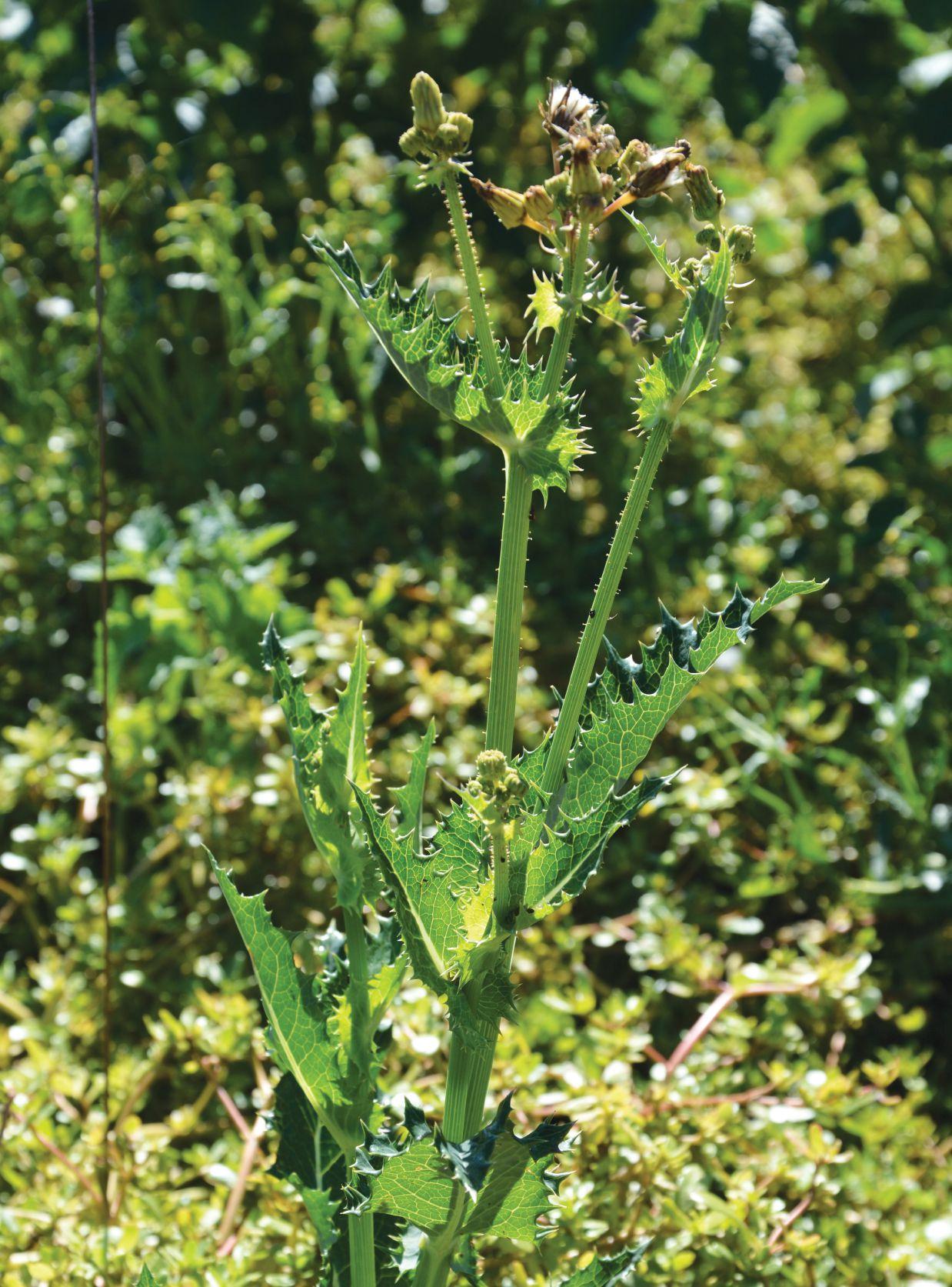
The results showed specific weed species are associated with increased frequency of canola in the crop rotation. “More specifically, species such as wild buckwheat, annual sow thistle, cleavers and foxtail barley were associated with canola production,” Willenborg explains. “Some of this is due to the frequency of canola in rotation and the herbicide tolerant systems used, but most of the variation was due to environment. Cleavers probably changed the most, moving up from number 31 in the 1970s on the list of most
ABOVE: The risk of developing herbicide resistant weeds under continuous canola productiwon is high.
PHOTO BY JANET KANTERS.
WHY ATTEND THE 2016 weed summit?
To gain a better understanding of herbicide resistance issues across Canada and around the world.
Our goal is to ensure participants walk away with a clear understanding on specific actions they can take to help minimize the devastating impact of herbicide resistance on agricultural productivity in Canada.
Some topics that will be discusSed are:
• A global overview of herbicide resistance
• State of weed resistance in Western Canada and future outlook
• Managing herbicide resistant wild oat on the Prairies
• Distribution and control of glyphosate-resistant weeds in Ontario
• The role of pre-emergent herbicides, and tank-mixes and integrated weed management
• Implementing harvest weed seed control (HWSC) methods in Canada
TOP
Source: University of Saskatchewan 2013.
common species to number six or higher now. Volunteer canola also moved up from a low 30s ranking to the number 14 most common weed or higher in canola today.”
From the field survey conducted in 2012, results showed wild buckwheat (75 per cent of fields) was the most frequently observed species, followed by green foxtail and wild oat (almost 50 per cent of fields). Dandelion, shepherd’s-purse, Canada thistle, lamb’s quarters, spiny annual sow thistle and volunteer wheat were found in 40 to 45 per cent of fields. (See Table 1.)
“Along with the direct changes of weed species in the position on the list, we also assessed whether there were specific weeds associated with continuous canola or canola grown every second year in rotation,” Willenborg notes. “The results showed back-to-back canola rotations were characterized by low densities of volunteer wheat and wild oat, but with very high densities of chickweed. This is not surprising as wheat is not present in a continuous canola rotation. Low densities of wild oat reflect the fact wild oat is controlled well in canola crops and so densities are low, whereas densities would be expected to be higher where other crops are included in rotation. However, chickweed is well adapted to canola because it is a low growing, shade tolerant species and tends to do well under a canopy. There are also increases in Group 2 resistant chickweed, which is probably picked up in the higher numbers in the weed surveys.”
Willenborg adds another weed strongly associated with Roundup Ready canola systems, which may come as a surprise, was green foxtail. Researchers expect because green foxtail is a late emerging C4 species and growers typically apply glyphosate early at the cotyledon or first-leaf stage, green foxtail likely hasn’t emerged at the time of application and is being missed. In longer one-in-three or onein-four year rotations, wild oat tended to be the top most frequent
weed, typically associated with the glufosinate- and imidazolinoneresistant systems. Growers often tank-mix a Group 1 herbicide with glufosinate to get increased control of wild oat in canola.
“Overall, growers are achieving very good weed control in canola because the herbicides designed for use in herbicide-resistant canola systems are very efficacious and, in most cases, provide greater than 95 per cent control, and in some cases upwards to 99 per cent control of major weed species,” Willenborg says. “However, the major weed issue associated with continuous canola cultivation is volunteer canola. The results, which included post-herbicide weed counts, show that sufficient control of volunteer canola is not being achieved in continuous and short canola rotations. Volunteer canola creates various production risks for growers such as crop competition, pest and disease issues, and potential harvest quality losses.”
Overall, the results showed that other than volunteer canola, relatively few weed species were associated with continuous canola cultivation. The results clearly demonstrate herbicides play a major role in shaping the weed community. Taken together, the results indicate although the majority of weed species community composition can be explained by site and environment, the effects of herbicide application and rotational diversity were significant nonetheless.
“Although few weeds are desirable from a crop production standpoint, the risk of developing herbicide resistant weeds under continuous canola production is high and extreme caution must be used when incorporating a risky practice such as continuous canola into a cropping system,” Willenborg emphasizes. “Growers should use good rotations of both crops and herbicides not just for weed management overall, but also for control of volunteer canola and disease concerns.”
Table 1. Top 20 abundant species in 2012 Saskatchewan canola (464 fields).
DISCOVER COMFORT, PRODUCTIVITY AND QUALITY FROM THE WORLD’S MOST POWERFUL COMBINE.
COMFORT. All-new Harvest Suite™ Ultra cab with 68 ft2 glass and acres of space for unsurpassed visibility and operating ergonomy.
PRODUCTIVITY Largest ever 410 bu. grain tank, 4 bu./sec unloading speed and a 34 ft. folding auger with pivoting spout for greater unloading flexibility.
QUALITY. Unique Twin Rotor™ threshing system delivers unmatched grain quality,10% higher capacity with Twin Pitch technology and crop-accelerating Dynamic Feed Roll™ for even higher throughput.
POWER. Mighty Cursor ECOBlue™ HI-eSCR engines for Tier 4B compliance and 10% fuel savings. Up to 653 hp on the new CR10.90 Elevation, the world’s most powerful combine.
WHAT’S NEW IN CANOLA FOR 2016?
Top Crop Manager’s annual review of new canola hybrids.
by Ken Sapsford
Top Crop Manager has assembled a list of new canola hybrids that are being introduced in commercial quantities for the 2016 growing season. The respective seed companies provide the information, and growers are encouraged to look at third party trials, such as the Canola Council of Canada’s Canola Performance Trials, for further performance and agronomic information. Talk to local seed suppliers to see how new varieties also performed in local trials.
Bayer CropScience
InVigor L241C is the newest LibertyLink, clubroot-resistant hybrid with outstanding yield potential, strong standability and a mid maturity suited for all clubroot affected regions of Western Canada. InVigor L241C yielded two per cent higher than InVigor L135C and 102 per cent of the checks (InVigor 5440 and Pioneer 45H29) in 2012-2013 Western Canadian Canola/Rapeseed Recommending Committee (WCC/RRC) co-op trials.
InVigor L157H is the newest LibertyLink, specialty oil hybrid in the InVigor Health hybrid offering. It matures a day earlier than InVigor L156H and offers growers higher yield potential plus the security of a contract premium. InVigor L157H yielded 97 per cent of the checks (InVigor 5440 and Pioneer 45H29) in 2013-2014 WCC/RRC co-op trials.
BrettYoung
6074 RR is the first of the next wave of high-yielding canola hybrids from BrettYoung. 6074RR was the highest yielding Genuity Roundup Ready hybrid in the 2014 Canola Performance trials (109 per cent of check overall). 6074 RR performed well in all zones but is best suited to the mid- and long-season canola
zones. It matures 1.4 days later than the checks, is resistant to blackleg and has an excellent rating for harvestability.
6080 RR is BrettYoung’s newest Genuity Round Ready hybrid. In 2014 trials it was very similar to 6074 RR in yield (108 per cent of checks in co-op trials), harvestability and about one day earlier in maturity. 6080 RR is resistant to blackleg, matures 0.86 days later than the checks and is adapted to all canola production zones.
6076 CR is a new high yielding hybrid, resistant to clubroot (pathotypes 2, 3, 5, 6, 8) and has intermediate resistance to the 5X pathotype. Yields in 2014 were equal to the checks. It is a large plant with excellent harvestability. It is also resistant to blackleg, and matures 2.4 days later than the checks.
Canterra Seeds
CS2100 is a high yielding GENRR hybrid with multigenic blackleg resistance for the long season zone. CS2100 is off to a strong start, yielding 115.5 per cent of 74-44 BL at Etzikom, Alta. in its first trial in 2015. This full-season hybrid possesses multigenic resistance to blackleg that provides more durable defense making it less prone to breakdown by new races of the disease. CS2100 has also been observed to have a higher degree of pod shatter tolerance compared to checks, potentially making it a good straight cut option. CS2100 is available at Canterra Seeds shareholders businesses, independent crop input dealers and through UFA.
CS2200 CL is a new high-yielding Clearfield hybrid with full season maturity, great standability and a solid resistant rating to blackleg. As a Clearfield, it could qualify for non-GMO crush
ABOVE: New canola hybrids are being introduced in commercial quantities for the 2016 growing season.
PHOTO BY JANET KANTERS.
programs. CS2200 CL is available at Canterra Seeds shareholders businesses, independent crop input dealers and through UFA.
Cargill
Victory V12-3 Hybrid: High yields with clubroot resistance, Victory V12-3 is a Roundup Ready hybrid with a yield potential of 103 per cent of 45H29. Along with clubroot resistance, it has an industryleading, multigenic blackleg resistance package delivering a resistant rating for blackleg and is also resistant for Fusarium wilt. V12-3 has very good early season vigour and great yield potential with excellent standability. V12-3 is part of the Cargill Specialty Canola Program delivering higher returns for growers.
Dow AgroSciences
Nexera 1020 RR: New generation of Nexera canola Roundup Ready hybrid offering improved disease resistance. 1020 RR is the first Nexera hybrid to offer clubroot resistance with a very strong resistant rating in recent public co-op trials. Maturity is one day earlier than 1012 RR and the hybrid has demonstrated strong yield in performance trials. This hybrid is suitable to the mid- and long-season growing zones in Western Canada.
Nexera 1022 RR: New generation of Nexera canola Roundup Ready hybrid offering improved disease resistance. 1022 RR offers improved, multigene blackleg resistance with a very strong resistant rating in recent public co-op trials. 1022 RR matures one day earlier than 1012 RR and has demonstrated strong yield performance in trials. This hybrid fits well in the mid- and long-season growing zones
in Western Canada.
Nexera 2022 CL: New generation of Nexera canola CL hybrid offering improved disease resistance. 2022 CL offers improved, multigene blackleg resistance with a very strong resistant rating in recent public co-op trials. 2022 CL has similar maturity to 2012 CL and has demonstrated very strong yield in performance trials. This hybrid fits well in the mid- and long-season growing zones in Western Canada.
DuPont Pioneer
46M34 is the first Genuity Roundup Ready canola hybrid that contains the built-in Pioneer Protector HarvestMax trait with a yield potential of 103 per cent of Pioneer hybrid 45H29 in largescale straight cutting trials across Western Canada in 2014. It has moderately resistant rating for Blackleg and a resistant rating for Fusarium wilt. Pioneer Protector HarvestMax 46M34 reduces the risk of harvest losses from pod shatter and pod drop. Available at all local Pioneer Hi-bred sales representatives across Western Canada. DuPont Pioneer is also launching the first Genuity Roundup Ready hybrid that contains both built-in Pioneer Protector clubroot resistance and sclerotinia resistance traits. The name has not yet been determined. It has a yield potential of 100 per cent of Pioneer hybrid 45H29 in DuPont Pioneer research trials across Western Canada in 2014 along with a resistant rating for blackleg and Fusarium wilt. This new canola hybrid with the Pioneer Protector Plus traits has excellent early growth, improved standability and high yield potential. Available at all local Pioneer Hi-bred sales representatives across Western Canada.
Cash Flow Solutions For Your Farm
DEKALB
75-65 RR is a Genuity Roundup Ready hybrid that has a strong agronomic foundation and improved pod integrity that offers the option for straight cutting. It has a dark seed coat and is taller and slightly later maturing than 74-44 BL. Standability is comparable to 74-44 BL and it is rated resistant to both blackleg and Fusarium wilt. Yield potential is strong at 99 per cent of L252 and 103 per cent of 45S54 in Monsanto’s 2014 field scale trials (does not include straight cut trials). 75-65 RR fits broadly across Western Canada and should be a consideration for anyone interested in straight cutting.
75-45 RR is a Genuity Roundup Ready hybrid that offers a unique combination of early maturity and high yield potential. It is earlier than 74-44 BL with similar height and standability, and has a resistant rating to both blackleg and Fusarium wilt. Yield potential is very good at 100 per cent of L130 and 107 per cent of 45S54 in Monsanto’s 2014 breeding trials. 75-45 RR fits particularly well in the short season zones of Alberta and Saskatchewan, and more broadly as an early maturing complement to other products such as 75-65 RR and 74-44 BL to help spread out swathing and harvest operations.
75-57 CR is a Genuity Roundup Ready hybrid that offers clubroot protection as part of a well-rounded agronomic package. It is resistant to a broad range of clubroot pathotypes and has a resistant rating to both blackleg and Fusarium wilt. It is later maturing than 74-44 BL with similar height, good standability, and strong yield potential at 102 per cent of 74-54 RR in Monsanto’s 2014 breeding trials. 75-57 CR provides an excellent solution for growers concerned about clubroot, particularly in central Alberta.
Proven Seeds
PV 200 CL is the newest high-yielding Clearfield hybrid from Proven Seed and has the added benefit of a world-class standability rating. PV 200 CL offers strong resistance to blackleg and Fusarium wilt while bringing in high yields and profits for canola growers. Available exclusively at Crop Production Services.
PV 533 G is a new, high-yielding mid-season Genuity Roundup Ready canola hybrid from the Proven Seed signature lineup, with a yield potential of 104 per cent of DEKALB 74-44 BL. PV 533 G provides growers excellent standability plus a blackleg resistance package that is exhibiting high resistance, even by resistant rating standards. Available exclusively at Crop Production Services.
Syngenta
SY4105 is the first Genuity, Roundup Ready canola hybrid from Syngenta to incorporate clubroot resistance, making it an exceptional seed choice in areas where clubroot is a major concern. SY4105 fits well across mid-season growing zones in Western Canada, and delivers excellent early-season vigour with strong yield performance. SY4105 is currently available for 2016 seeding and can be purchased through a Syngenta seed dealer.
SY4166 is the latest Genuity Roundup Ready canola hybrid from Syngenta. This hybrid is best suited for the mid-to-long season growing zones in Western Canada and includes an excellent agronomic package with multigenic blackleg resistance, good early season vigour and high-end yield potential. SY4166 also boasts excellent standability, which will deliver time savings at swathing
Setting New Standards
6074 RR & 6080 RR
Industry-leading yield and harvestability
Introducing 6074 RR and 6080 RR - the NEW standards in Genuity® Roundup Ready® Canola performance. 6074 RR was the highest yielding GENRR in the 2014 Canola Performance Trials1. 6080 RR has all the yield potential of 6074 RR and earlier maturity. Look for trial results this fall for both of these varieties. Be sure to get your orders in for these two exceptional varieties. Just another example of world-class products, provided to you from your local seed company.
TELL US ABOUT YOUR EXPERIENCE WITH BrettYoung CANOLA: @BY_Seeds | #BYCanola15
Heavily podded Great yield Strong stalk Excellent harvestability Branch support Keeps the plant upright under a high yield load high
SAFE CANOLA STORAGE
Short term grain bag storage is safest with dry canola.
by Bruce Barker
Long, sausage-like rows of white grain bags have become common across the Prairies as not only a way to deal with bumper crops, but as a way to conveniently store grain in the field. However, little Canadian research has been done to look at the safety of storing canola at different moisture levels, and determining how long canola can be stored in the bags without losing grade.
“Silo bag storage is probably a cost-effective method compared to other temporary storage systems, but there are some concerns over seed spoilage, insect and mould damage, moisture migration and quality losses,” says Digvir Jayas, project leader and grain storage expert in Biosystems Engineering at the University of Manitoba.
In addition to Jayas, the team included Chelladurai Vellaichamy, a graduate student, and Fuji Jian, a research engineer, both in biosystems engineering at the University of Manitoba; and Noel White and Paul Fields of Agriculture and Agri-Food Canada at Winnipeg. They conducted two studies looking at grain bag storage in canola. The results of these studies have been submitted as two papers (full versions are available from Jayas) to the Journal of Stored Products Research for publication.
Canola best stored if dry
The research covered two periods. The first project looked at canola at three different moisture contents 8.9, 10.5 and 14.4 per cent (wet basis), representing dry, straight and damp grades, stored in silo bags for 40 weeks (from autumn 2010 to summer 2011) at Winnipeg, Man. For each moisture content, each bag was loaded with approximately 20 tonne canola seeds with greater than 90 per cent initial germination. Germination, free fatty acid value (FAV), and moisture content of canola seeds at seven locations of each silo bag were analyzed every two weeks along with carbon dioxide concentration of air and temperature between canola seeds.
For dry grade canola, the germination was maintained above 90 per cent, and FAV also stayed at safe storage level during the 40-week storage. The germination of straight grade canola maintained its initial value in most parts of the silo bags except at top layer.
Damp grade canola lost germination, dropping below 80 per cent, and FAV doubled within eight weeks of storage.
Moisture migration was evident with the top layer showing significantly higher moisture content than the middle and bottom layers over the first 28 weeks of storage of dry canola. By the end of the storage period, the middle and bottom layers had higher moisture content than the top layer for dry and straight moisture bags. Damp moisture
bags experienced larger moisture gradients, especially after 28 weeks of storage.
“This trend shows the accumulation of moisture due to condensation at the periphery of bags caused by temperature and moisture gradients during autumn and winter seasons, and in the summer the top layer grain was dried due to the hot ambient temperature,” Jayas reports.
Temperature and CO2 concentrations were also measured. Temperatures fluctuated depending on season, and sampling location. In dry and straight grade canola bags, the bottom layers had higher temperatures during autumn and winter. In the spring and summer, temperature was hotter near the top. Jayas says the temperature of the top layer of the seeds followed the ambient temperature changes. For damp canola, temperature gradients were completely different.
“Hot spots developing inside the damp grade canola bags could be
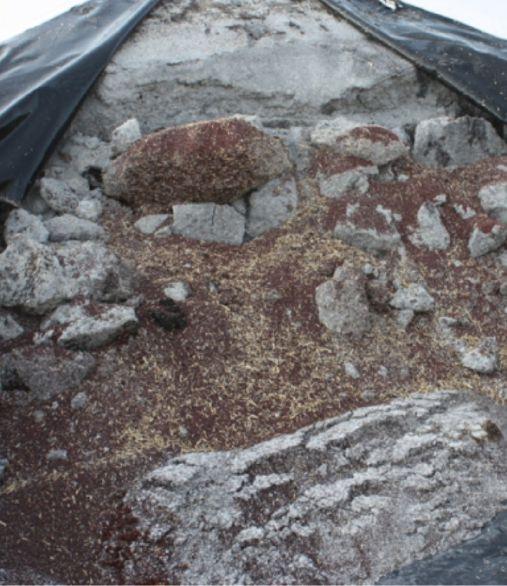
Spoiled canola seed with 14.4±0.1 per cent initial moisture content after 40 weeks of storage.
Pulse Raising.
Raise your Pulse with N and P.
With improved phosphate availability and increased nitrogen fixation, TagTeam® inoculant improves yield potential.* Give your pulse crops the boost they need. TagTeam® dual action performance –it’s pulse raising. See your local retailer today, or visit useTagTeam.ca. Nature. It’s powerful technology.
TagTeam
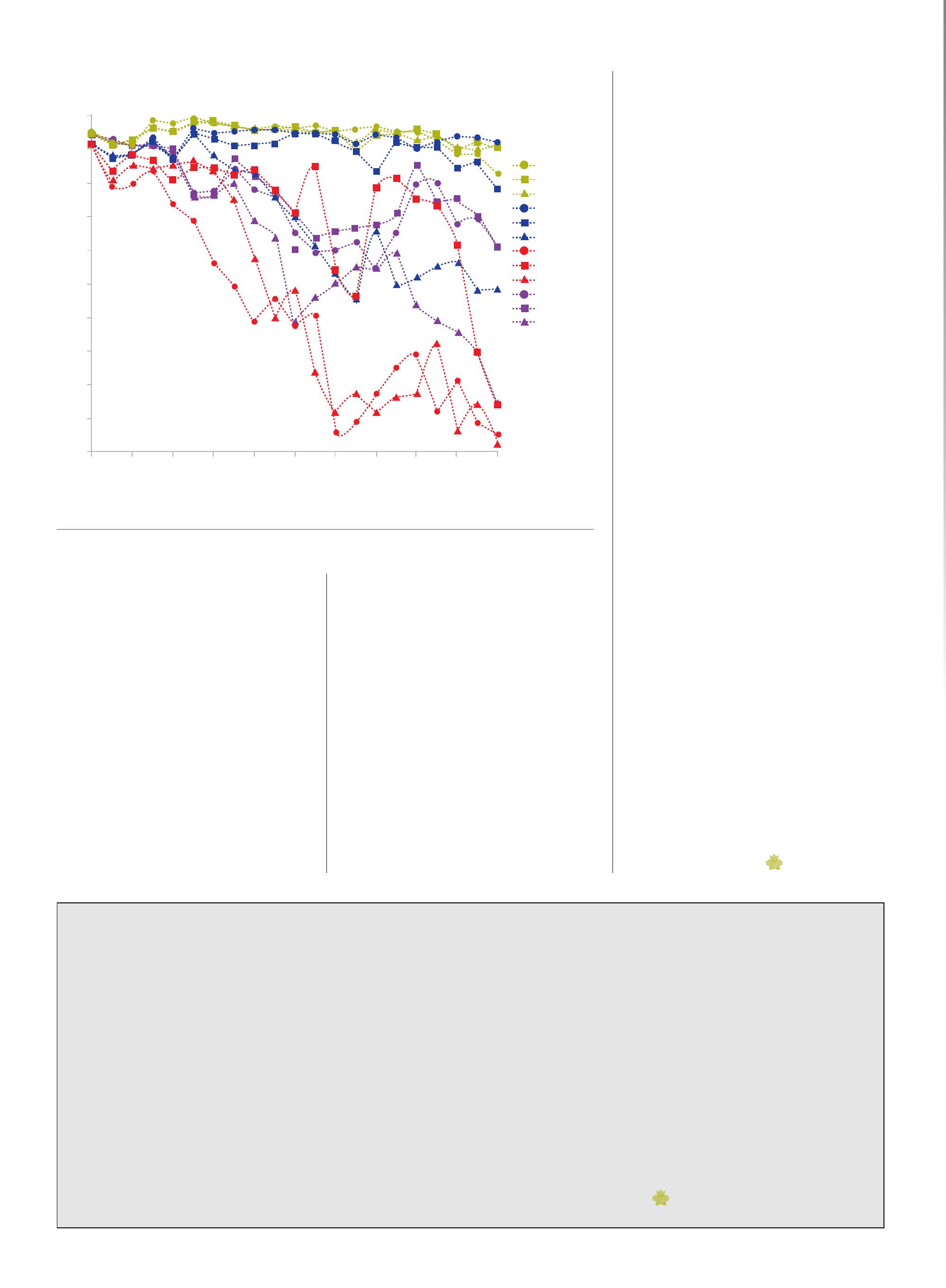
Storage Period (wk)
the reason for this change in temperature pattern. Even in mid-winter, the temperature of top layer of the damp grade canola bags stayed above freezing, and the middle layer of the canola seeds followed the ambient temperature during winter time,” Jayas says.
High levels of CO2 concentration in damp grade canola seeds indicated higher amounts of biological activity in high moisture seeds. Localized hot spots were also observed in the high moisture bags.
While the dry, straight and damp canola all graded Canada No. 1 when loading the bags at the start of the trial, there was degradation for the straight and damp canola after 40 weeks. The dry canola still graded No. 1, but small amounts of heated seeds in
the top layer of straight canola bags reduced the grade to No. 2. After 40 weeks, the damp grade canola was caked and, because of the high moisture, the grain bag extractor could not unload the canola seeds from the bag. The damp canola graded Feed.
Refining storage time for damp canola
While the first project found that dry canola could be safely stored up to 40 weeks without loss of grade, the researchers wanted to find out if damp canola could be stored for shorter periods of time without losing grade. They conducted additional research for two storage years (2011-2012 and 20132014) to determine the changes in grain
quality while storing 12.1 and 12.4 per cent moisture content canola in grain bags. The temperature during loading was 15.5 C and 16.2 C, respectively.
Once again, canola was stored in grain bags in the fall, but in these years, the bags were unloaded at three different times at 20 weeks (middle of winter), 28 weeks, (end of winter) and 40 weeks (summer). Again, germination, FAV, moisture content, temperature and CO2 levels were monitored.
The results of both storage years showed that there were significant changes in moisture content with an accumulation of moisture in the top layer of grain. In both the years the FAV values remained at safe levels until 20 weeks of storage, but increased at 28 weeks and was more than double at 40 weeks. This was an indication of quality loss. (See Fig. 1.)
In 2011-2012, after 20 weeks of storage, the canola still graded No. 1. At 28 weeks, it had dropped to No. 2, and by 40 weeks was downgraded to Feed. In the second year, grade remained at No. 1 in the first two unloading periods, and dropped to No. 2 at 40 weeks.
“Canola seeds with 12 per cent moisture content could be stored up to five months, into the late winter, without any quality deterioration under the western Canadian conditions,” Jayas says.
The results of the two projects indicated that dry canola loaded into grain bags at ambient temperatures of around 15 C could be stored up to 40 weeks without loss of grade. Canola at 12 per cent might be safely stored up to 20 weeks. If canola is above 12 per cent moisture, growers should consider drying the grain first before storing in grain bags, or only use grain bags for temporary storage of a few weeks.
WHAT’S NEW IN CANOLA FOR 2016?
CONTINUED FROM PAGE 35
and harvest. In a series of 2014 small plot trials, SY4166 reached full maturity, on average, 1.5 days later than SY4135, and 1 to 1.5 days earlier than SY4157. SY4166 will be available for sale starting in fall 2015 for 2016 seeding, and can be purchased through a Syngenta seed dealer.
Company News
In summer 2015, Cargill opened its new state-of-the-art canola processing facility in Camrose, Alta., which has the capacity to process over one million metric tonnes of canola per year, bringing the company’s total crush capacity to 2.5 million metric
tonnes. Cargill said 100 jobs were created during the construction phase of the refinery, and 30 new permanent positions were created to operate the plant.
Shortly after, Cargill opened its first canola refinery in Clavet, Sask. The new facility has the capacity to refine one billion pounds of canola oil annually, making it the largest Cargill refinery in North America.
On Aug. 6, 2015, Cargill Specialty Seeds and Oils in Fort Collins, Colo. held a ribbon cutting ceremony showcasing their newly completed seed innovation facility while celebrating the 150th anniversary of Cargill.
Fig. 1: Germination of canola seeds at different layers of silo bags (2010-2011 and
Power up your canola.
Save money and unleash yield potential.
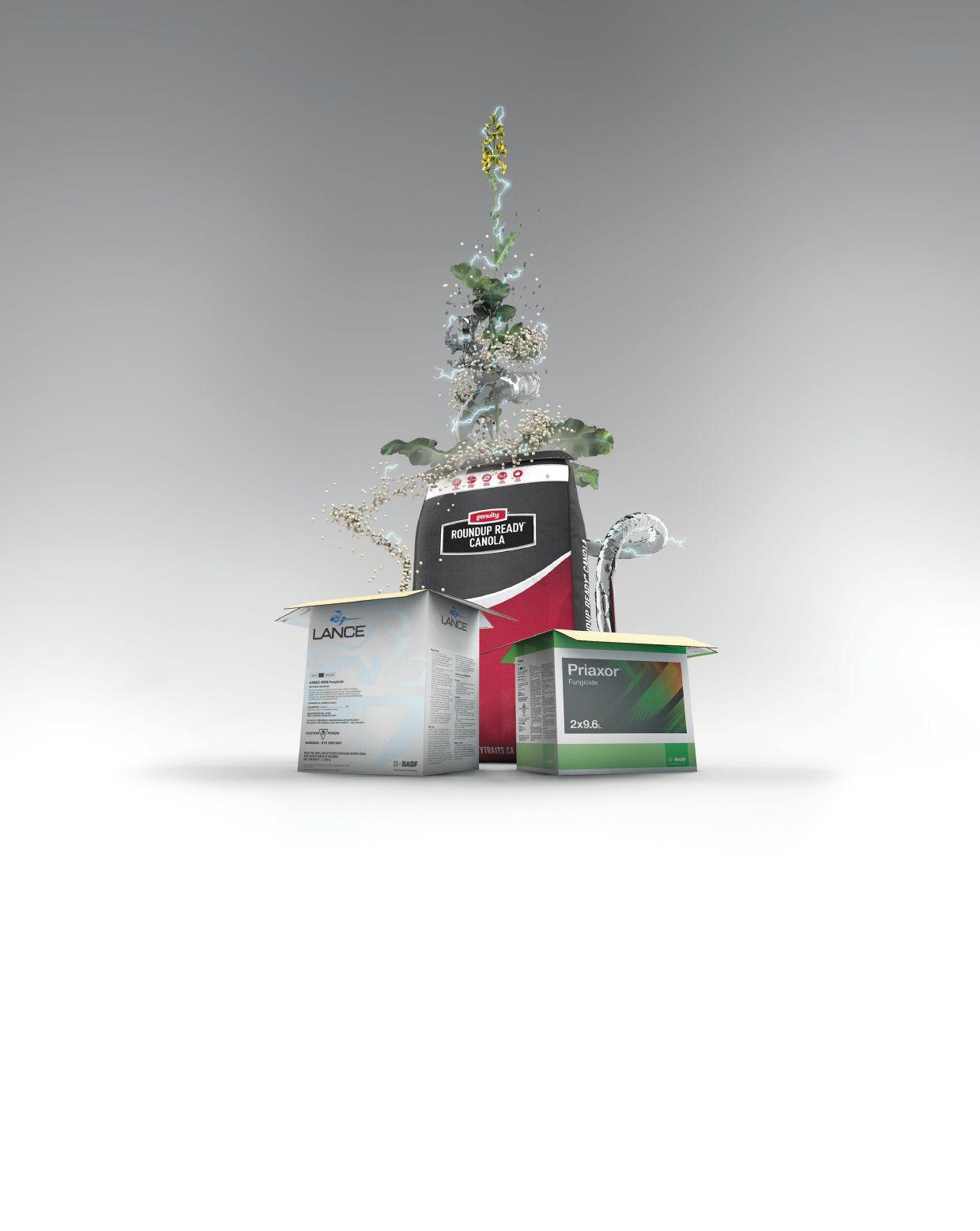
Monsanto and BASF have joined forces to offer a powerful combination of products. When you purchase Genuity® Roundup Ready® canola for the 2016 growing season, add PRIAXOR®, LANCE® and/or LANCE® AG fungicides and you could earn up to $4.00/acre in rebates. With PRIAXOR’s continuous blackleg control and the sclerotinia protection of LANCE and LANCE AG, you can increase the yield potential and quality of your canola by keeping disease pressures at bay. For complete details on this offer, see your retailer or visit powerfulcombination.ca
Monsanto Company is a member of Excellence Through Stewardship® (ETS). Monsanto products are commercialized in accordance with ETS Product Launch Stewardship Guidance, and in compliance with Monsanto’s Policy for Commercialization of Biotechnology-Derived Plant Products in Commodity Crops. Commercialized products have been approved for import into key export markets with functioning regulatory systems. Any crop or material produced from this product can only be exported to, or used, processed or sold in countries where all necessary regulatory approvals have been granted. It is a violation of national and international law to move material containing biotech traits across boundaries into nations where import is not permitted. Growers should talk to their grain handler or product purchaser to confirm their buying position for this product. Excellence Through Stewardship® is a registered trademark of Excellence Through Stewardship.
Field-scale evaluation shows soybean plants are resilient to variability.
by Donna Fleury
Soybean growers often look to seeding rates, row spacing and equipment selection as having the biggest impact on yield. However, other key factors can have an effect on yield as well.
From 2010 to 2013, Brent VanKoughnet, with Agri Skills Inc. of Carman, Man., conducted a field scale soybean study for the Manitoba Pulse Growers Association (MPGA). The four-year field evaluation of multiple seeding rates, seeding dates and row spacing comparing planters and air drills in Manitoba came to some interesting conclusions.
The objectives of the study were to compare the effect of multiple seeding rates of soybeans with two different seeding implements and four different row spacings in a full field scale environment. The project also compared the impact of plant architecture of upright versus bushy varieties. Replicated treatments were compared for each variety at a field scale, with treatment strips approximately 1200 to 1500 ft long, or about one to 1.5 acres.
In the 2013 trial specifically, two varieties (bushy and upright) were seeded comparing a vacuum planter on 15- or 30-inch spacings,
and an offset disc air drill on 10- or 20-inch spacings. The planter sowed 30 32-ft strips and the air drill sowed 44 ft strips at low (123,000 seeds/acre), medium (150,000 seeds/acre) and high (176,000/acre) seeding rates, with an extra 15,000 seeds/acre for each of the air drill treatments.
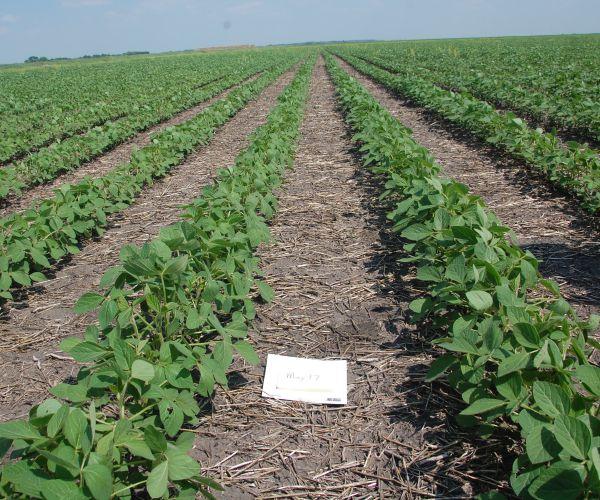
“The results from 2013 and previous years of the trial really proved soybeans are very resilient and [they] adjusted to the variables much better than we expected,” VanKoughnet says. “The yields for plant populations even below 100,000 plants were surprisingly good, with not nearly as significant an increase for higher or more normal seeding rates as might be expected. Even in years where plant populations were much thinner than targeted, the yield penalty was closer to one or two bushels per acre instead of the 10 bushels per acre we would have estimated in the spring.”
The results also proved using recommended seeding rates is
ABOVE: Brent VanKoughnet says study results prove using recommended soybean seeding rates is still the best strategy and is good insurance against other factors that can impact yield.
still the best strategy and is good insurance against other factors that can impact yield. VanKoughnet points to the last year of the trial when, for reasons they aren’t sure about, plant emergence dropped to 65 per cent compared to the 85 per cent target that was achieved in the first three years of the trial. “In most years, we typically see 85 per cent of the plants surviving. However, whether it was seed quality, seeding depth or something else, it dropped to 65 per cent in year four,” he notes. “What it does show is you can’t bank on getting an 85 per cent plant stand every year, and if you cut your seeding rates too low, you may end up at risk with lower plant stands and lower yields. Using recommended seeding rates is still the best insurance to buffer against various risks.”
In the first three of the four years of trials, survival percentages for the planter were better than for the air drill. In year four the air drill stand percentages were slightly higher than for the planter; however, the plants were not as evenly placed and they emerged less uniformly. Even in that last year with the higher seeding rates (15,000 more seeds per acre) and the higher survival, the air drill still did not translate into higher yields than the planter.
“Although there has been some concern that 30-inch spacings are too far apart for soybeans, with both varieties, the 30-inch rows met or exceeded the yields of other spacing,” VanKoughnet says. “In only one year of the study, there was a slight negative response to 30-inch rows with the more upright variety under dry conditions. For insurance, growers using 30-inch rows may want to consider growing a more bushy variety.”
One additional consideration is frost protection, and seeding into black ground with as little trash as possible. Although this is somewhat counter to direct seeding, VanKoughnet’s experience in the trials and on his farm showed seedlings in black soil tolerated a light frost, while seedlings with straw cover died. The bit of heat in the black soil seems to make a substantial difference in tolerating spring frost.
In a different multi-year trial, it was discovered seeding date had little to no effect on plant height or pod height. However, minor plant height and pod height differences were observed between different row spacings and even between different seeding rates. Height differences at harvest seemed to be most influenced by how thin the plant stand was. Areas with thicker stands and more competition produced taller plants. Thirty-inch rows effectively produce more in-row competition.
“In the first three years, pods were typically three inches off the ground in all treatments. However, in the last year of the study, all of the pods were closer to two inches off the ground, with about 20 per cent of the pods near the knife point,” Van Koughnet notes. “This change in pod height can easily affect what the flex header was able to reach and consequently translate into yield losses. The high seeding rates on 30- or 20-inch row spacings appear to have increased pod height marginally.”
Overall, equipment is not the most important factor: a wellplaced seed with any machine gives good yield potential. “If you are new to growing soybeans, use whatever equipment you have for two or three years and once you have some experience, then you will know how you want to grow them in your operation,” VanKoughnet says. “Under good conditions, an air drill can do a good job, and adding an extra 10,000 to 15,000 seeds per acre is a good idea. If conditions are variable, a planter provides more forgiveness and a better seedbed over a range of drier and wetter conditions, but you can still get a good crop with an airseeder. If you are looking to buy a planter,
consider looking at used planters from the U.S. where there are more available and at a reasonable price.” In many cases, the first piece of equipment to consider may be a used flex header for harvesting rather than a new piece of seeding equipment.
VanKoughnet says from his own research and from what he’s heard from Ontario, the greatest impact on yield potential is more likely to be a rainfall at the end of July or early August at the time of pod set.
“Whether the plant stand was tall and substantial or short and sparse didn’t really matter so much. If there was adequate rainfall at the time of podding, you had a good crop,” he notes. “I’ve been monitoring this at our plots on my farm, and a rainfall at the end of July or early August when the crop is filling out pods creates the most consistently significant impact on yield. In the dry years, without a timely rainfall we can still get 35 bushels per acre, a yield that is often competitive with canola and can still make us money. In good years, with a timely rainfall, we can get 55 or 60 bushels per acre, even if the plant stand looks a little thin. In areas where rainfall is less likely at the time of podding, yield potential may not be as high.”
Based on this four-year field study, the yield difference between high and low seeding rates and row spacing were either negligible or smaller than expected every year, even with much lower than planned plant populations. Yields were also very similar across the earlier seeding dates, with a distinct yield drop for the latest date in a couple of those years.
“Under the conditions observed so far, the soybean plant has compensated remarkably well,” VanKoughnet adds. “Using recommended seeding rates, timely seeding and good agronomics will get the crop started. And with the timely rains at podding, yield potential can be optimized.”
For more on soybeans, visit topcropmanager.com.
Soybeans seeded with a vacuum planter at 30-inch row spacing.
PROS AND CONS OF USING CHEM FERTILIZERS
Careful planning when considering use of fertilizers is crucial.
by Ross H. McKenzie PhD, P. Ag.
One of the greatest challenges in farming is trying to figure out what information is accurate and appropriate, and who to believe. Making fertilizer decisions is just one example. Some agronomists encourage farmers to target crop yields of 100 bu/ac of canola, 150 bu/ac of wheat and 200 bu/ac of barley. These yields are achievable with the optimum moisture, inputs and perfect environmental conditions. But, recommendations often include high rates of fertilizers, and fertilizing for maximum yield results in lower fertilizer use efficiency vs. fertilizing for optimum yield. Sometimes recommendations include fertilizers that are normally not required. Conversely, some scientists that promote soil health claim synthetic fertilizers are “poisoning our soils” and “ruining our land” and, thus, in order to prevent soil degradation they recommend not using synthetic. What and who should you believe?
The
positives and negatives
Chemical fertilizers have become critically important to replace soil nutrients that are marginal or deficient in farm fields. The direct benefit is increased crop production, which had made Prairie farms profitable. It
is estimated fertilizer use contributes to increased crop production in Western Canada by at least 50 to 60 per cent annually.
Increased crop production has resulted in increased crop residue and root biomass return to soil. Research in Western Canada has clearly shown a direct benefit of increased soil organic matter resulting from increased crop production and wise fertilizer use. This means an increase in levels of soil organic carbon (C), nitrogen (N), phosphorus (P) and sulphur (S). This improves the long-term fertility of soil and improves nutrient cycling in soil. Fertilizer use has the benefit of improving various aspects of soil organic matter, soil quality and soil health.
We also must recognize there are downsides to using commercial fertilizers. “Salt effect” occurs when fertilizer is located with or near a germinating seed resulting in injury or death of the seedling. Injury is caused when the concentration of salts in the fertilizer is greater than the concentration of salts within the plant cells, resulting in higher
ABOVE: Hard Red Spring Wheat near Lethbridge, Alta. with urea side-banded at 90 kg N/ha and P2O5 seed placed 25 kg/ha vs. urea side-banded at 90 kg N/ha, P2O5 seed placed 25 kg/ha and K2O side banded at 50 kg/ha. Neither treatment received S.
PHOTOS BY ROSS
H. MCKENZIE.
I ’m a hybrid sworn to my duty, claiming bountiful harvests, year after year. I was bestowed the title CANTERRA 1990, but I am known throughout the land as...
Sir Yields-a-lot
Very
READY FOR ANYTHING.
There’s no way to know what Mother Nature is going to throw at you, but there is a way to be ready for it.
With built-in technology that helps you tackle tough weeds in tough conditions, Genuity® Roundup Ready® canola can be the most valuable tool in your field. It’s the foundation for a family of high-yielding canola hybrids that offer diverse disease resistance and enable progressive farming practices such as straight cutting. You can’t anticipate everything, but you can prepare for anything.
Get ready for next season; talk to your retailer about booking Genuity Roundup Ready canola for 2016.
osmotic pressure in the soil versus the seedling. This causes water to move out of the seedling cells and into the soil. When water moves out of plant cells, the tissue desiccates, the seedling dies and becomes blackened. The term “fertilizer burn” comes from the visual appearance of blackened seed and roots. Often the result is the eventual death of the plant tissue and seedling. Fertilizer types vary in their salt level or salt index (SI). Products such as ammonium sulphate (21-0-0-24) or potassium chloride (0-0-60) have higher SI levels (20.9 and 11.5, respectively), vs. ammonium phosphate (11-52-0) of 5.95. Products with a lower SI value are less likely to cause salt injury.
“Toxicity effect” occurs when urea [(NH2)2CO] granules are near a germinating seed and convert to ammonia (NH3). When soil moisture conditions are good, hydrogen (H+) ions from water will attach to ammonia to convert to ammonium (NH4+) to eliminate the toxicity effect. But when soil moisture conditions are not good, ammonia persists in the soil causing ammonia toxicity to germinating seedlings. Placing urea fertilizer with or near a seed can cause seedling injury depending on the rate of fertilizer used, sensitivity of the crop and soil moisture/temperature conditions.
Heed recommended rates
Over application of fertilizer can result in reduced crop yields or quality. For instance, over application of N can result in crop lodging, which can lower yield. Over application of N can also result in various quality issues such as unacceptably high protein in malt barley or soft wheat, reduced oil content in canola and reduced sugar content in sugar beets. Higher rates of fertilizer can lengthen the time for a crop to mature, increasing the chances of frost injury before maturity. Over application of boron (B) or other micronutrients can be toxic to crops and substantially reduce crop yield.
Anhydrous ammonia is called a “soil killer” by some. Immediately after application, higher concentrations of ammonia inhibit or kill soil microbes within the fertilizer band. Typically, within several days, ammonia concentration in the fertilizer band rapidly declines, converting to ammonium, and soil microbes rapidly re-populate the affected area. A 10-year anhydrous ammonia and urea study by Agriculture and AgriFood Canada at Scott, Sask., found that anhydrous ammonia applied according to soil test recommendations had minimal long-term detrimental consequences for soil microbes, soil biochemical properties or soil structure. They did note that high rates of anhydrous ammonia or urea had long-term effects on soil pH.
Soil acidification, which is the lowering of soil pH, gradually occurs
over many years of fertilizer use. In the long term, this may become a very serious concern for many Prairie farmers. N and S fertilizers are the most acidifying. N fertilizer in ammonium form is converted by soil bacteria to nitrate-N for plant uptake, and acidifying hydrogen (H+) ions are released in the process. Soil pH is a measure of H+ ion concentration and is a measurement of the acidity or alkalinity of a soil. A soil pH range of 6.5 to 7.5 is near neutral. Below 6.5 is acidic, and above 7.5 is basic or alkaline. Soil pH is on a logarithmic scale. Therefore, a soil pH of 6 has 10 times the H+ ion concentration versus a pH of 7. A soil pH of 5 has 100 times the H+ ion concentration versus a pH of 7. The optimum range for most crops is between a pH 5.5 and 8.0.
As soils gradually become more acidic, plants can have symptoms of aluminum (Al), hydrogen (H), and/or manganese (Mn) toxicity. Deficiency of P is increased and potential deficiencies of calcium (Ca) and magnesium (Mg) may occur, particularly in sandy soils. When soil pH is less than 5.5, P forms very insoluble compounds with Al and iron (Fe); and greatly reduces P availability to crops.
Soil pH less than 5.5 will inhibit survival and function of N fixing rhizobium bacteria that live in association with legume crop roots. Soil pH less than 5.5 can result in significant reduction in yield of pulse and forage legume crops.
Over the next 20 years, with continued fertilizer use, soil acidification may become a major soil degradation concern for Prairie farmers and research scientists.
Protecting the environment
Environmental concerns concerning water and air pollution from commercial fertilizer use has received a lot of media coverage in recent years. While N and P typically have the greatest impact on increased crop production, these two fertilizers have been linked to negative environmental impacts.
Nitrate nitrogen (NO3-N), the form of N most plants take up, is very mobile in soil and can leach under excess moisture conditions into groundwater, causing contamination. Leaching is a greater concern in sandy soils vs. medium to fine textured soils. A concentration level of 10 ppm of nitrate is considered toxic to humans and livestock.
Nutrients can be transported in runoff water into surface water bodies causing water pollution. Nutrients added to surface water will change the nutrient ratio and imbalances can have serious negative effects. P in water causes cyanobacteria bloom (incorrectly referred to as blue green algae), producing a range of toxins. Ideally, total
Hard Red Spring Wheat near Magrath, Alta., with urea sidebanded at 60 kg N/ha versus ESN side-banded at 60 kg N/ha.
Hard Red Spring Wheat at High River, Alta., with ESN spring sidebanded at 60 kg N/ha versus ESN fall banded at 90 kg N/ha.
Bright golden yellow as far as the eye can see. Now that’s the mark of a truly successful canola crop. But when you plant with seeds treated with Lumiderm,TM you’ll see the benefits of flea beetle and cutworm protection long before the first hints of yellow begin to grace your fields. That’s because LumidermTM helps get your crop off to a better start. And a better start means a better harvest.
Ask your seed supplier to include LumidermTM on your 2016 canola seed order. Visit lumiderm.dupont.ca.
GETTING THE DROP ON POD DROP
Measurement of preharvest seed loss to help canola breeders.
by Carolyn King
As growers know, canola seed losses before and during harvest mean a double whammy of lower revenues from the crop plus volunteer canola in the following crops. One way to reduce preharvest losses is to develop varieties that are less susceptible to these losses. To help with that, canola breeders need fast, accurate, consistent methods to measure these losses when screening breeding lines. So Prairie researchers recently evaluated different measurement methods, and they are now working on a promising new method.
“Canola seed loss has been an interest of mine since I did my PhD. In that study, we determined that on-farm harvest losses of canola averaged six per cent of yield. Although people had always known or suspected that the losses were high, I’m not sure we realized how high,” says Rob Gulden, a weed scientist at the University of Manitoba who is leading the research on measurement methods.
In 2010, about 10 years after his PhD research, Gulden led a set of studies that examined various aspects of canola seed loss. The studies were funded under the Canola/Flax Agri-Science Cluster, a partnership between the Canola Council of Canada and Agriculture and Agri-Food Canada.
Highlights of harvest loss findings
One of these studies was a survey, from 2010 to 2012, of 310 canola fields in the three Prairie provinces. The results showed seed losses were still about six per cent of total yield. However, canola yields had increased since Gulden’s PhD study because of advances like high-performing hybrids. So the total amount of seed left on canola fields was higher, averaging about 2.5 bushels per acre. That works out to be about 25 times the normal seeding rate, which makes for a huge number of volunteers.
In another of these studies, Gulden’s research group examined preharvest seed losses in detail. These losses can be classified into two processes: pod drop, where the whole pod falls to the ground; and seed shatter, where the pod remains attached to the plant, but it splits open and the seeds fall to the ground.
These two processes are often lumped together, but this study found they should be treated separately by breeders and others. First of all, the results showed that two processes were not genetically related to each other. “For instance, if a variety had higher seed shatter, that didn’t necessarily mean it also had higher pod drop, and vice versa.” In addition, although both processes were affected by genetic and environmental factors, seed shatter was influenced more by genetics, and pod drop was affected more by environmental conditions.
Gulden’s group also evaluated various ways to measure preharvest
losses, including three methods already in use by researchers and industry, and two new ideas. They wanted to see which methods give the most accurate, consistent results with the least effort, and how well each method works for measuring pod drop and seed shatter. They tested the methods in greenhouse experiments and in field trials on eight canola varieties at two different seeding densities.
The three existing methods included visual ratings, catch trays and the vacuum method. Visual ratings involve looking at the plant and at the ground to determine the amount of loss. “We found that visual ratings are pretty effective for seed shatter [because you can easily see the opened pods on the plant]. But for pod drop, there is really no obvious sign on the plant, and finding pods on the ground, amongst all the leaf residue and so on, is very difficult,” Gulden says.
Catch trays are often used in research studies. Trays are placed
PHOTO BY JANET
Researchers are measuring pod retention resistance to estimate pod drop, as a tool to help in breeding canola varieties that are less prone to preharvest seed loss.
between the rows before the canola plants mature. The trays are usually removed right before harvest for analysis; it’s straightforward to separate the losses into pod drop and seed shatter. He notes, “It’s a pretty good method but relatively time consuming.”
Gulden has used the vacuum method in much of his canola seed loss research. It involves vacuuming up all the seeds, pods and other crop residues – along with a fair bit of the soil – on the surface, after the combine has gone through the field. “It is incredibly labour intensive to get the seeds out of all that,” Gulden says. He adds, “It’s a great method for getting total harvest losses (i.e. the losses before and during harvest). However, you can’t distinguish between pod drop and seed shatter, or between what fell before and what fell during harvesting.”
One of the new measurement ideas the researchers tried was the use of digital imagery analysis software to analyze images of the ground surface. They found that currently available software wasn’t able to rapidly and accurately distinguish fallen pods and seeds from all the other crop debris and the soil.
The other new possibility is called pod retention resistance measurement. It estimates pod drop by using a force gauge to measure the force required to break a pod off a plant. The results from the researchers’ preliminary tests looked promising, so Gulden’s group is now working to refine and validate this method.
Gauging pod drop
Canola breeders have been working to reduce seed shatter, and several shatter-tolerant varieties have been released recently. But pod drop is also an important contributor to preharvest losses, so pod drop-tolerance would be a valuable trait. And a fast, reliable way to measure pod drop could help breeding programs to move forward on this trait.
Gulden’s research group is carrying out a three-year project (2013 to 2015) on the pod retention resistance method. Andrea Cavalieri, a post-doctoral researcher in Gulden’s lab, is leading this project, and Steve Shirtliffe at the University of Saskatchewan is collaborating on the study. The project’s funding is from the Canola Agronomic Research Program, which is funded by the Alberta, Saskatchewan and Manitoba canola grower organizations, in partnership with the Alberta Crop Industry Development Fund.
One of the project’s objectives is to fine-tune the method so users can get useful data with a minimum amount of time and effort. The researchers are looking at things like: where on the plant to take the measurements, how many measurements are needed, when to take the measurements, whether the plant’s branching density makes a difference, and so on. The other objective is to correlate the pod retention resistance measurements with actual pod drop, as measured by catch trays.
In the first two years of the project, the researchers focused on refining the method. For that, they worked with a handful of canola varieties and conducted trials at the University of Manitoba’s research farm at Carman and the University of Saskatchewan’s research farm near Saskatoon. Now, in the project’s third year, they are testing the method with a broader range of canola genotypes at a couple of locations in each of the two provinces. They will be analyzing the data over the winter.
“I think we’ve got a very good handle on the factors that affect the pod retention resistance measurement and how to minimize the time and effort, how many samples we need and from where on the plant. But we really need the 2015 data to confirm that,” Gulden says. “Relating pod retention resistance to pod drop is turning out to be a bit of a challenge; it looks promising but it’s not ultra-simple…. So the method looks promising, but it’s going to take a little time and a lot of sorting through data this winter to see where we’re at.”
PROS AND CONS OF USING CHEM FERTILIZERS
CONTINUED FROM PAGE 44
P and total N concentration in surface water should be less than 0.01 and 0.1 ppm, respectively. Even very low P or N amounts in surface water can cause serious environmental concerns.
Wet soil conditions lead to denitrification – the process where microbes convert soil nitrate-N to nitrous oxide (N2O) – a very detrimental greenhouse gas that contributes to climate change. One molecule of nitrous oxide has the same negative effect as about 300 molecules of carbon dioxide.
To minimize environment concerns in the future, society may require farmers to very carefully match fertilizer application to crop uptake. Placing fertilizer with the seed, side- or mid-row band, or band before seeding, will be important. Use of slow release fertilizers such as ESN will help to reduce nitrous oxide release from soil. Minimizing water runoff from cultivated fields into surface water will be important. The bottom line is that in the future, society will insist that farmers be very environmentally responsible with fertilizer use to ensure environmental impacts are kept to a minimum.
Trait Stewardship Responsibilities Notice to Farmers
Monsanto Company is a member of Excellence Through Stewardship® (ETS). Monsanto products are commercialized in accordance with ETS Product Launch Stewardship Guidance, and in compliance with Monsanto’s Policy for Commercialization of Biotechnology-Derived Plant Products in Commodity Crops. Commercialized products have been approved for import into key export markets with functioning regulatory systems. Any crop or material produced from this product can only be exported to, or used, processed or sold in countries where all necessary regulatory approvals have been granted. It is a violation of national and international law to move material containing biotech traits across boundaries into nations where import is not permitted. Growers should talk to their grain handler or product purchaser to confirm their buying position for this product. Excellence Through Stewardship® is a registered trademark of Excellence Through Stewardship.
ALWAYS READ AND FOLLOW PESTICIDE LABEL DIRECTIONS. Roundup Ready® crops contain genes that confer tolerance to glyphosate, the active ingredient in Roundup® brand agricultural herbicides. Roundup® brand agricultural herbicides will kill crops that are not tolerant to glyphosate. Acceleron® seed treatment technology for canola contains the active ingredients difenoconazole, metalaxyl (M and S isomers), fludioxonil and thiamethoxam. Acceleron® seed treatment technology for canola plus Vibrance® is a combination of two separate individually-registered products, which together contain the active ingredients difenoconazole, metalaxyl (M and S isomers), fludioxonil, thiamethoxam, and sedaxane. Acceleron® seed treatment technology for corn (fungicides and insecticide) is a combination of four separate individually-registered products, which together contain the active ingredients metalaxyl, trifloxystrobin, ipconazole, and clothianidin. Acceleron® seed treatment technology for corn (fungicides only) is a combination of three separate individually-registered products, which together contain the active ingredients metalaxyl, trifloxystrobin and ipconazole. Acceleron® seed treatment technology for corn with Poncho®/VoTivo™ (fungicides, insecticide and nematicide) is a combination of five separate individually-registered products, which together contain the active ingredients metalaxyl, trifloxystrobin, ipconazole, clothianidin and Bacillus firmus strain I-1582. Acceleron® seed treatment technology for soybeans (fungicides and insecticide) is a combination of four separate individually registered products, which together contain the active ingredients fluxapyroxad, pyraclostrobin, metalaxyl and imidacloprid. Acceleron® seed treatment technology for soybeans (fungicides only) is a combination of three separate individually registered products, which together contain the active ingredients fluxapyroxad, pyraclostrobin and metalaxyl. Acceleron and Design®, Acceleron®, DEKALB and Design®, DEKALB®, Genuity and Design®, Genuity®, JumpStart®, RIB Complete and Design®, RIB Complete® Roundup Ready 2 Technology and Design®, Roundup Ready 2 Yield®, Roundup Ready®, Roundup Transorb®, Roundup WeatherMAX®, Roundup®, SmartStax and Design®, SmartStax®, Transorb®, VT Double PRO®, and VT Triple PRO® are registered trademarks of Monsanto Technology LLC, Used under license. Vibrance® and Fortenza® are registered trademarks of a Syngenta group company. LibertyLink® and the Water Droplet Design are trademarks of Bayer. Used under license. Herculex® is a registered trademark of Dow AgroSciences LLC. Used under license. Poncho® and Votivo™ are trademarks of Bayer. Used under license. All other trademarks are the property of their respective owners.
PESTS AND DISEASES
CLUBROOT STRIKES BACK
This devastating pathogen is overcoming resistant canola varieties by spawning multiple virulent variants.
by Carolyn King
Clubroot-resistant varieties are the cornerstone of clubroot management in Alberta canola. But the pathogen is actively chipping away at that cornerstone. In the past two years, 10 new variants of the pathogen have been found that are each able to defeat the resistance genetics in currently available canola varieties.
This is a warning bell signalling growers to do as much as possible to prevent and control clubroot, including stewardship of clubroot resistance. Otherwise, their most effective tool for clubroot management could be at risk.
Clubroot is a devastating disease caused by Plasmodiophora brassicae. This soilborne pathogen produces irregular swellings (galls) on the roots of canola and other cruciferous plants such as mustard, cabbage and stinkweed. The galls hinder the movement of water and nutrients into the top parts of the plant, resulting in severe yield losses in susceptible cultivars. The galls on a single infected root can produce billions of resting spores. And those billions of tiny spores can survive in the soil for many years, poised to attack when the next host crop comes along.
Back in 2003, clubroot was discovered in a canola field near Edmonton. Annual surveys since then show this disease has continually spread to new fields. As of the 2014 survey, a total of 1,868 clubroot-infested fields had been confirmed in the province, mostly in central Alberta.
Clubroot pathotypes, or strains, are identified based on whether or not they cause disease in a standardized set of host plants, referred to as “differential hosts.” Pathotype 3, a very virulent type, is the most common one in Alberta canola. Other pathotypes found in the province include pathotypes 2, 5, 6 and 8. Breeders have developed canola varieties with excellent resistance to all of these pathotypes.
In 2013, a new pathotype was found that behaved like pathotype 5 on the differential hosts, but was different in a very important way – it could cause disease on clubroot-resistant canola. “A field in central Alberta was found to have a strain of the pathogen that was capable of overcoming the resistance in nearly all of the clubrootresistant canola cultivars that we have on the market,” says clubroot-expert Stephen Strelkov, a professor of plant pathology at the University of Alberta. As a temporary measure, he named this new variant “pathotype 5x.”
Much more than one isolated case
“We wanted to find out whether this problem was localized to one field or whether there was a wider issue, and whether there was just a single new strain or multiple ones. So in August and September 2014, we conducted our regular clubroot survey, but we also worked with Alberta Agriculture and Forestry, some of the agricultural
<LEFT: A clubroot-infected canola root can produce billions of resting spores, and those spores are genetically diverse.
<LEFT: Clubroot pathotype testing is a laborious process. In this step, the inoculated seedlings are planted after their tiny roots have been dipped in a solution of purified clubroot resting spores of known concentration.
fieldmen and Canola Council agronomists to conduct a targeted survey to look at the performance of clubroot-resistant canola cultivars,” Strelkov says.
They identified a number of fields with clubroot-resistant canola and scouted them for possible clubroot symptoms. If they suspected clubroot, then they sampled the affected area of the field. “Most of the surveyed fields were in the Edmonton region because that is the part of Alberta with the longest history of clubroot in commercial fields and where the new pathotype was identified. There was a lot of surveillance around that first case to see if the variant had spread locally. As well, there were fields scouted across the province,” explains Michael Harding, a research scientist in plant pathology at Alberta Agriculture and Forestry (AAF).
They collected samples from 27 fields that had been planted to resistant varieties, but showed higher than expected levels of clubroot. Then they tested each pathogen sample in a three-step process, requiring months of work in the greenhouse.
“First, we re-inoculated the strain onto the same resistant variety that was in the field where the sample was found. That was to make sure the strain definitely was able to overcome that variety’s resistance and that the problem wasn’t due to some other factor, such as volunteer susceptible plants,” Strelkov explains. “Then if the strain was confirmed to really be causing increased virulence, we tested it on a whole set of clubroot-resistant canola varieties. And finally, we also obtained the pathotype identification by testing it on the differential hosts. The differential hosts included not just the ones that have historically been used, but also additional hosts that we are evaluating for a Canadian clubroot differential system.”
The survey’s findings were serious – multiple fields were affected, not just one. “Of the 27 fields, 16 were confirmed to have a clubroot strain that was able to overcome the resistance,” Strelkov says.
The affected fields were found in multiple counties, not just one area. “In 2013, we thought possibly just a single field was affected, and if we found new strains they might have come from that one specific field. In that case, the fields with new strains would have been clustered tightly together. Most of these new fields were in central Alberta, but some were quite geographically separated; there was up to about 600 km between some of the fields,” Strelkov explains.
There were nine new variants, in addition to 5x. And multiple varieties of clubroot-resistant canola were involved. Most of the new clubroot variants were highly virulent in all the clubroot-resistant varieties.
Strelkov notes, “The characteristic that most of the 16 fields had in common was they had seen a number of crops of clubroot-resistant canola planted over the last four or five years. So, probably one of the major factors was that these new strains had been selected for [by growing] resistant varieties. [The distance between the fields and the multiple strains indicate that]
PHOTO COURTESY OF MICHAEL HARDING, AAF.
PHOTO
COURTESY OF PLANT PATHOLOGY LAB, U OF A.
independent selection events were responsible for development of the new strains. In different fields, the selection pressure selected for different rare pathotypes.”
Proliferation of pathotypes
The first canola varieties with excellent clubroot resistance to Alberta’s pathotypes became available in 2009 and 2010. Although resistance breakdown within four or five years seems fast, it wasn’t unexpected by clubroot scientists and specialists.
“The organism that causes clubroot can be quite diverse, so in a population of resting spores, these variants can already exist. If we put a lot of selection pressure on them by growing a resistant cultivar, then only a small fraction of the population can cause disease. So we essentially select for those variants to become common in the population because they are the only ones that can survive,” Harding explains.
As part of the pathotype testing, the roots of the “differential host” plants are washed so clubroot severity can be rated. This particular host variety was completely susceptible to the pathotype being tested.
“Let’s say we have a population that is predominantly pathotype 3. Then we introduce clubroot-resistant varieties that are resistant to, for instance, pathotypes 3, 5, 6 and 8. Any of the spores in the soil that are of those pathotypes are no longer able to cause the disease at any significant level. But there are other variants at very, very low frequencies that maybe can cause the disease. So over time, by growing the resistant varieties, we select for those variants, until they start showing up as dead patches in what was a resistant canola variety.”
Harding adds, “In other parts of the world that have had clubroot longer than we have, this is not uncommon. Because clubroot produces so many spores and is so genetically diverse, experiencing the resistance two or three times is enough to allow variants that can overcome the resistance to start showing up.”
Strelkov has found the same type of result in greenhouse experiments. The experiments showed that, for some resistant cultivars, growing the cultivar just twice in a row under high disease pressure produced pathogen strains that caused high disease levels on the cultivar.
“We weren’t surprised that the survey found a shift in pathotype. Results from other countries and other crops, such as cabbage, suggest a shift in pathotype after two to three exposures [to a resistant cultivar],” says Dan Orchard, agronomy specialist with the Canola Council of Canada (CCC).
“But one surprise was finding nine new ones all at once. And the second surprise was the geographic distribution of the new pathotypes. I think we anticipated seeing the pathotype shift occur in the heavily infested areas around Edmonton. Although fields in that area were identified, other fields were scattered from north to south across Alberta’s clubroot-affected region.”
Implications for monitoring, research and breeding
To monitor for clubroot pathotype shifts, AAF is again collaborating with Strelkov, the CCC and others to conduct a targeted pathotype survey in 2015, with the results expected in early 2016.
For researchers, one of the immediate hurdles is to develop a better way to differentiate and name pathotypes for the Canadian situation, since the current set of differential hosts doesn’t cover the
new Alberta pathotypes. Strelkov is leading this work.
Strelkov and his collaborators have also started to work on developing DNA markers for distinguishing between the various strains of the pathogen. If they can develop such markers, strain identification would be much quicker and easier than the current method of having to isolate the pathogen from the sample, then grow it in the greenhouse, then inoculate all the differential hosts, and then evaluate each of the hosts for the presence of the disease.
Breeders have already been working on adding resistance to pathotype 5x into their resistant varieties. “A lot of work has been done in the past couple of years in breeding resistance against pathotype 5x. There is some talk in the industry already of varieties that will be tested in 2016 that appear to have resistance to this new strain,” Orchard says. (Canterra’s clubrootresistant canola CS2000 has an intermediate level of resistance to 5x, partway between a resistant and a susceptible response.)
Adding resistance to the other nine pathotypes could be challenging. “With these nine additional pathotypes, the questions for breeders will be: Do their varieties need to have resistance to all nine of these new strains? If they don’t have resistance to all of them, would the varieties need to be regionally deployed? For that, we’ll have to get a better understanding of what strains are most prevalent in what areas,” Orchard says.
“In the vast majority of Alberta canola fields, the resistance in our current varieties seems to be holding up well,” Strelkov notes. “But if the resistance starts to be defeated in a more widespread area, then it becomes more and more of a challenge for breeders to find effective sources of resistance, bring those resistance sources into our canola varieties, and have a registered product. It really highlights the need for resistance stewardship. The genetics is the most important tool we have to manage clubroot. If we’re not careful, we could end up jeopardizing that.”
Strelkov and his colleagues are conducting research to answer a number of questions about the new pathotypes, such as which ones are the most virulent and which ones should be a focus for breeding efforts in terms of resistance screening. For instance, it may be that if a breeding line’s resistance holds up against a particular variant, then there’s no need to test it against certain other variants.
The researchers also want to delve into the evolutionary relationships of the new variants, for instance, to figure out how the variants relate to the pre-existing strains. Strelkov explains, “That can help us understand what characteristics are allowing some variants to emerge more quickly than others.”
Implications for growers
“This is a really serious issue. We shouldn’t underestimate the clubroot pathogen. This is a real threat to canola production. We don’t really know how soon we’re going to be able to have resistance to these new variants because most of the new variants haven’t even been tested against any germplasm,” Harding explains.
“Having said that, I don’t want to give the impression that this is the apocalypse. The resistant varieties we have right now are still
COURTESY OF PLANT PATHOLOGY LAB, U OF A.
resistant to pathotypes 3, 5 and 6, and in most of the fields in Alberta those are the most common ones. The second thing is we are hopeful that canola companies will be able to come up with varieties that can help manage these new pathotypes. So we think that the clubroot management practices that we have in place are still the growers’ best chance to be successful.”
Orchard recommends a multi-stage management strategy for clubroot, rather than relying exclusively on resistant varieties. “Growing a resistant variety is sort of a Band Aid. Although it won’t propagate the disease as much as a susceptible variety would and it allows you to successfully grow canola on an infested soil, it doesn’t cure the infestation.”
The first stage of the strategy is to prevent the pathogen from coming into your fields for as long as possible. Orchard explains, “Although you may eventually have uncontrolled exposure because clubroot goes anywhere that soil goes – on equipment, animals, seed, in the wind – a clubroot-free field is worth its weight in gold in the meantime. So do your best to stop dirty equipment from coming onto your farm, and keep traffic out as much as you can.”
Also, growers should continually scout their canola fields to identify any clubroot infestations as early as possible. Orchard says, “Typically the field’s entrance is the first spot you’ll find the disease because it tends to come in on equipment. But also look at areas where water will run across the field and where wind-blown soil gathers.”
The second stage is when you find some small clubroot-infested patches. Orchard recommends micromanaging those patches to try to slow down the disease. “In other countries, they lime those areas to raise the pH, doing a thorough job of incorporating the calcium properly at the right rate and the right depth. Liming doesn’t eliminate clubroot, but it can decrease clubroot’s impact on the crop.” However, he adds that liming may not have much impact on the pathogen if the conditions are really wet and warm.
Harding advises limiting traffic and soil movement in the infested patch and using equipment sanitation practices to slow the spread of clubroot within the field and between fields. He notes, “If the infested area is small, some growers have been seeding that patch to alfalfa or grass for an extended period of time. There has also been some work with soil fumigants to see if they can bring the number of resting spores per gram of soil down significantly.”
The next stage is when the disease has spread beyond a few
small patches. “Once you have clubroot in your field, one of the key management practices is to not provide it with any host where it can complete its life cycle. When it completes its life cycle, it produces so many resting spores in a season that it can become a real problem in a hurry. So plant a non-host crop and control any weeds that could be hosts,” Harding says. “If you grow a canola crop, make sure it’s resistant, and be sure to use resistance stewardship, mainly a rotational break between canola crops of at least three years.”
Overcoming resistance is a numbers game, so a heavily infested field is at greater risk of resistance breakdown than a lightly infested field. Orchard explains that a four-year rotation won’t prevent the pathogen population from shifting to new virulent variants after two or three times of deploying a resistant cultivar in a moderately to heavily infested field. However, a four-year rotation does space out the selection pressure events and also prevents spore levels in the soil from increasing as quickly, allowing breeding programs a little more time to try to keep up with pathotype shifts.
According to Orchard, all the clubroot-resistant canola varieties currently available on the Prairies likely have the same major resistance mechanism, so rotating between the current resistant varieties will probably not stop the pathogen from overcoming the resistance.
Another key practice is to remain vigilant. “Don’t stop scouting for clubroot once you grow resistant varieties. In fact, you have to really be on the lookout for patches where the pathogen is evading the resistance,” Orchard emphasizes.
If you suspect a breakdown in clubroot resistance in your fields and would like a diagnosis, you could contact Orchard, or you could call AAF’s pest surveillance hot line at 310-PEST. ”If a grower chooses to report, that’s very helpful because it gives an idea of how common this problem is and how fast it is spreading,” Harding explains.
Using some additional practices, along with resistant varieties and longer rotations, could bolster your efforts to manage clubroot. “Things like liming and fumigation are very expensive, but canola is worth a lot of money, and this disease has major impacts,” Orchard says.
“Some countries are using bait crops, and I think this option should be explored, perhaps in combination with liming and possibly fumigation, for fields where the spore loads aren’t that high.” A bait crop involves planting a cruciferous crop to stimulate the resting spores to germinate, and then spraying out the bait crop before the pathogen completes its life cycle.
“Another factor that we’ve maybe overlooked is that clubroot is really affected by soil temperature. Canadian researchers found that clubroot doesn’t seem to be active at all until the soil temperature is about 15 to 17 C, and its peak growth occurs at 20 C and above,” Orchard notes. “So you may be better off seeding a heavily infested field as early as you can get on the land, and maybe seeding it a little heavy in case of frost and emergence issues. The idea is to get the crop established early in those fields, so the plants will have big, healthy roots by the time the soil warms up to 17 to 20 C. That will help reduce clubroot’s impact on the crop because bigger, healthier roots may withstand infection better, and because the infection comes at a later crop growth stage; an early infection really robs the yield and can kill the plant. Once you’ve seeded your heavily infested fields, you can wash your equipment, and then seed your less infested land when conditions are a little warmer.”
As more clubroot pathotype monitoring, research and testing are conducted, a clearer picture should emerge of the severity of the challenge facing canola growers in clubroot-affected areas.
Equipment sanitation helps slow the spread of clubroot.
PHOTO COURTESY OF MICHAEL HARDING, AAF.
Nu-Trax™ P+ fertilizer puts you in charge of delivering the nutrition your crops need for a strong start. It features the right blend of phosphorus, zinc and other nutrients essential for early season growth. And because Nu-Trax P+ coats onto your dry fertilizer you are placing, these nutrients close to the rooting zone where young plants can easily access them, when they are needed most.
Take control of your crop’s early season nutrition with Nu-Trax P+ and visit