Head timing application is optimal to get the highest return on your investment, however Folicur® EW fungicide provides you with the exibility to spray any time from ag leaf through to head timing. This offers exceptional value for cereal growers who want long-lasting protection from a broad spectrum of diseases, including fusarium head blight and the most dangerous leaf diseases.
TOP CROP
MANAGER
5 | Déjà vu, all over again?
Moderate to low risk of herbicide carryover in 2016.
By Bruce Barker
Drought past, present,
Carolyn King
Developing micronutrient recommendations
Ross H. McKenzie PhD,
P.Ag.
ON THE WEB
22 | Eyes in the sky
Remote sensing and imagery guide to satellites and UAVs/drones.
By Dale Steele, P.Ag., Precision Agronomist
28 | Insect update, forecast for 2016 A mixed bag of problems in 2015. What’s in store for 2016?
By Bruce Barker
2016 CANADIAN TRUCK KING CHALLENGE
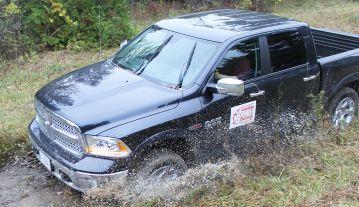
Since 2006, veteran automotive journalists have judged this annual North American truck competition that tests pickup and van models head to head. And for the second year in a row, the Ram 1500 EcoDiesel has taken the top spot. AgAnnex.com
JANET KANTERS | EDITOR
INSECT DIVERSITY
Insects are astonishingly diverse, accounting for nearly three-quarters of all named animal species living today, and their diversity is widely thought to have increased steadily over evolutionary time. A new study, however, finds that insect diversity actually has not changed much over the past 125 million years.
It’s not that no new insects have evolved. Rather, as new insects have evolved, others have gone extinct, leaving the overall diversity relatively unchanged.
According to University of California Santa Cruz paleontologist Matthew Clapham, previous studies of how insect diversity has changed over time used methods that artificially inflate the relative richness of younger (more recent) time intervals. These studies, as well as Clapham’s, looked at the richness of the fossil record with respect to insect families, a broader taxonomic category than species and genus. The earlier studies were based on the first and last appearances of each family in the fossil record, and if there were still insects in that family living today its range was extended to the present.
“The problem is that the range we see in the fossil record is always smaller than the real range, because insects don’t fossilize very well – they don’t have bones or shells,” Clapham explains. “By extending the range of extant families to the present, you increase diversity toward the present day. It’s a known bias called ‘the pull of the recent.’”
To avoid that bias, the researchers compiled a database with not only the first and last occurrences of each family, but essentially all available data on fossil insects. It took about three years and yielded a database of more than 39,000 insect fossil records representing about 25,000 species. Then they were able to use modern statistical methods to assess insect diversity over the past 325 million years.
According to Clapham, what they found when they used less biased statistical methods is that the incredible diversity of insects is not just a recent phenomenon. Insects were extremely diverse in the past as well.
Insects first appear in the fossil record in the Devonian Period, about 400 million years ago, but they don’t become abundant until the Carboniferous about 325 million years ago. Insect diversity peaked about 125 million years ago during the Cretaceous Period, and changes since then have been negligible, Clapham said. The early Cretaceous may be a period when older groups that have since declined overlapped with the diversification of newer groups.
Clapham says a lot of modern insect groups have close ecological and evolutionary relationships with flowering plants, and the evolution of flowering plants is thought to have spurred rapid diversification of insects. But the new analysis found the evolution of flowering plants did not make a big difference in insect diversity overall. Presumably, there were many insects that had coevolved with the plants that were dominant before flowering plants came on the scene, and those insect groups would have declined along with the plants they depended on.
The study also looked at diversity at the species level and found similar trends, although the analysis is not as robust, he notes. Factors that complicate species-level analysis include the spottiness of the fossil record and the fact that researchers are unlikely to publish the discovery of a fossil insect species that has already been described, even if it keeps showing up in different time periods.
Food for thought. Meanwhile, another cropping year is on the horizon, which means another guess as to what insect pests will be most prevalent across the Prairies in 2016. In this issue of Top Crop Manager, we present the opinions of three eminent western Canadian entomologists. Read their predictions beginning on page 28.
Diane Kleer • 519-403-8816 dkleer@annexweb.com
DIRECTOR OF SOUL/COO Sue Fredericks PUBLICATION MAIL AGREEMENT #40065710 Printed in Canada ISSN 1717-452X CIRCULATION email: rhtava@annexbizmedia.com Tel: 416-442-5600 ext 3555 Fax: 416-510-5170
Mail: 80 Valleybrook Drive, Toronto, ON M3B 2S9 SUBSCRIPTION RATES
Crop Manager West – 9 issues February, March, Mid-March, April, June, September, October, November and December – 1 Year - $45.95 Cdn. plus tax
of Saskatchewan.
“Based on what we know of herbicide carryover and the rainfall that we received in the summer of 2015, I would say the risk is moderate to low,” Johnson says. “The herbicide labels are reasonably good for recropping. Just follow them and you should keep the risk to a minimum.”
Johnson was around in the early 2000s, when dry weather in 2000, 2001 and 2002 meant herbicide carryover caused widespread crop damage to sensitive crops like pea and lentil. At that time, he was with Agriculture and Agri-Food Canada as a research scientist at Scott, Sask., where he conducted many
on soil temperature and water,” Johnson explains.
He says soil temperature was fairly normal throughout the summer of 2015 with microbial activity likely close to what would be expected. Looking at precipitation in 2015, rainfall was much below normal up to June 1 across many parts of the Prairies. But the tap turned on in early July, and many areas of the Prairies
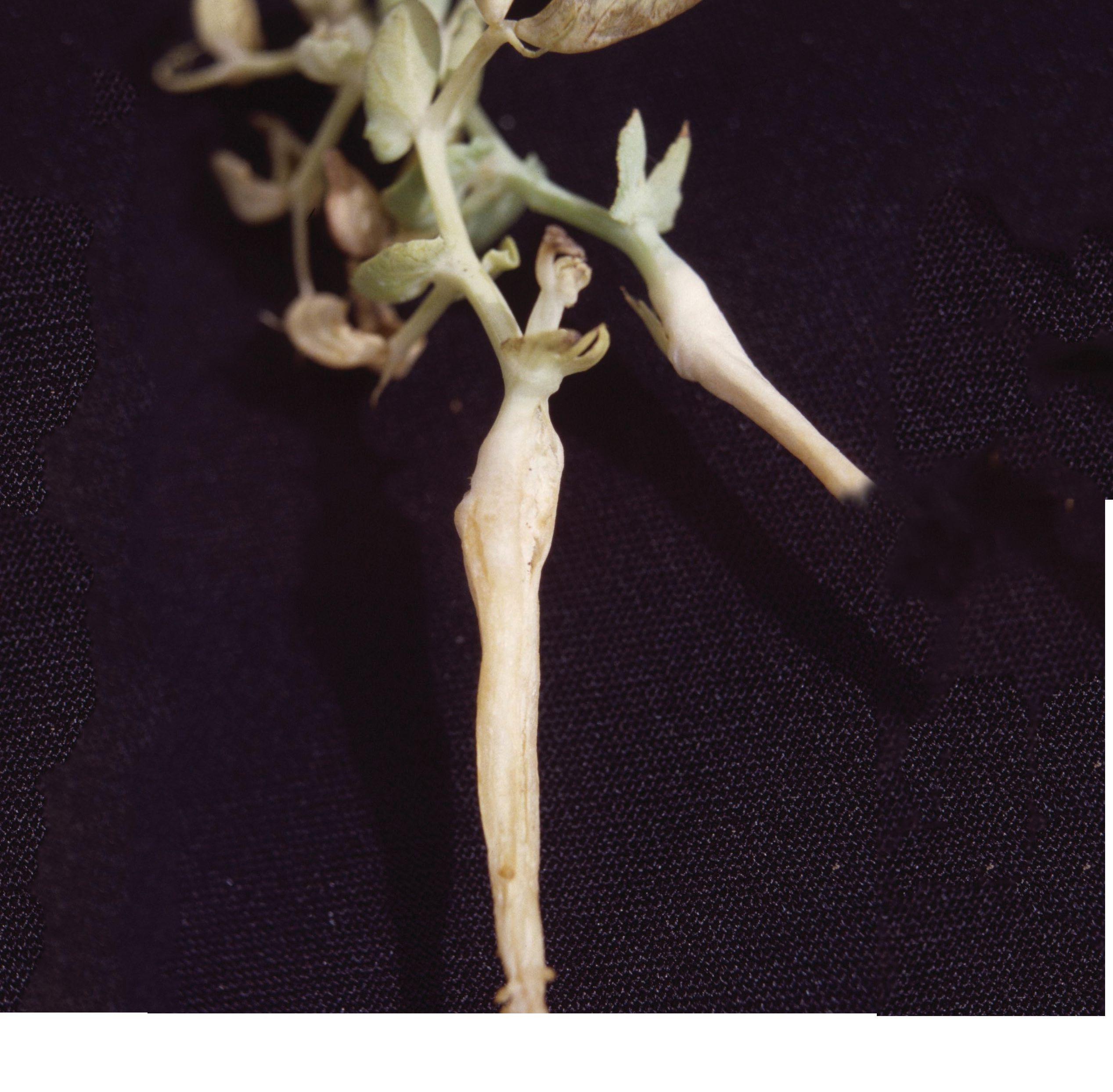
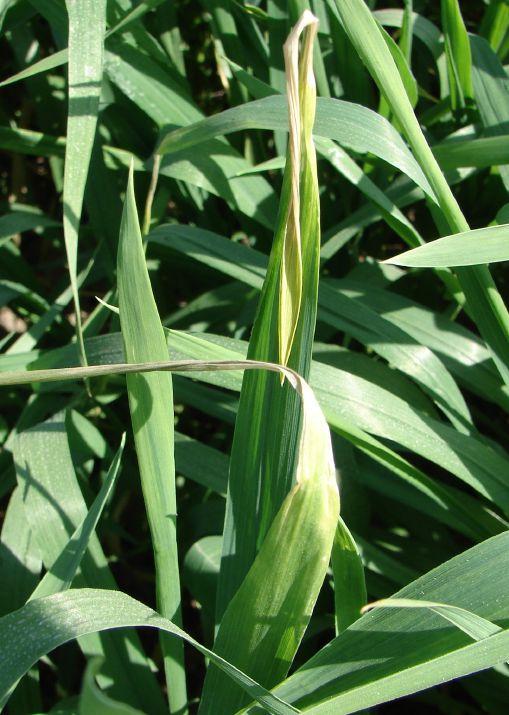
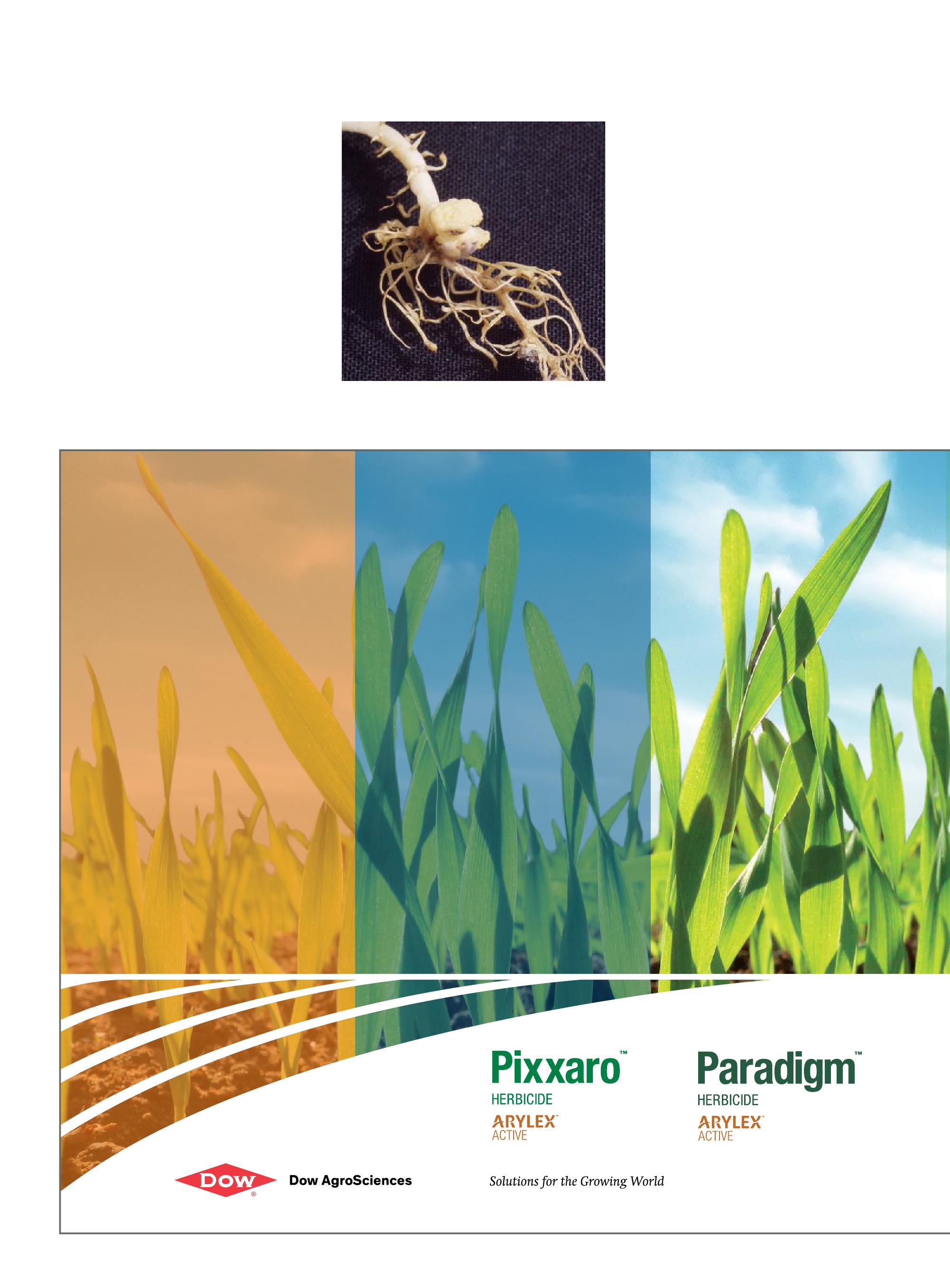
TOP: Clopyralid carryover suspected in the overproduction of undifferentiated (callus) tissues in the lower stem/upper root to the point where the stem splits.
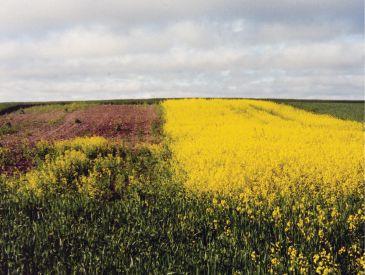
INSET: Eroded knolls often have greater phytotoxicity and persistence of residues.
PHOTO
ROOT BIOASSAYS FOR PREDICTING CROP INJURY
In the days of herbicide carryover during the dry 2000s, researchers and chemical companies investigated the use of root length soil bioassays to help predict the potential for crop damage from herbicide carryover. Anna Szmigielski and Jeff Schoenau with the University of Saskatchewan soil science department, and Eric Johnson, then with Agriculture and Agri-Food Canada, led many of the studies, which also investigated soil properties’ impacts on carryover. Paul Watson with the Alberta Research Council at Vegreville, Alta. also conducted soil bioassay research.
A soil bioassay is useful for both predicting herbicide carryover and as a diagnostic tool if herbicide carryover is suspected in a damaged crop.
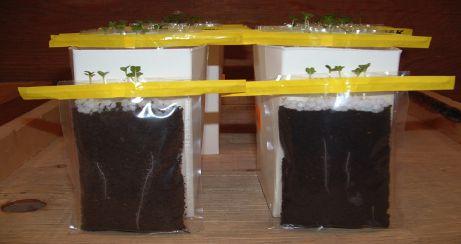
Two bioassays were developed and verified for use on Prairie soils. A mustard root-length soil bioassay was proven to be effective on Group 2 ALS-inhibitors. The test involved collecting 200 grams of soil and splitting the sample into four replicates. Soil was wetted to 100 per cent field-capacity water content, hand mixed, and gently packed into a two ounce Whirl-Pak bag that was approximately eight centimetres (cm) deep and one cm thick. Six oriental mustard seeds were planted approximately two millimetres (mm) deep in each bag. The soil surface was covered with a 0.5-cm layer of plastic beads to prevent soil drying. Plants were grown for three days at room temperature, and after two days, plants were watered to 100 per cent field capacity. At the end of three days, the bag was opened, soil washed away from the roots and the length of root was measured.
In soils free of ALS-inhibitor herbicides, root length was in the range of seven cm plus/minus one cm. A root length of six cm or less in the ALS-inhibitor soils was considered to be indicative of herbicide residue.
Another soil bioassay uses sugar beet as an indicator plant for sulfentrazone and pyroxasulfone. Soil is gently packed into a two ounce Whirl-Pak bag to form a layer approximately eight cm high, six cm long and one cm wide. Six sugar beet seeds are planted at a two mm depth and grown for six days. In this case, sugar beet shoot length was used as an indicator of herbicide presence compared to a similar soil free of herbicide residue.
Unfortunately, neither of these bioassays is commercially available to farmers. Alberta Research Council used to do bioassays, but the service has been discontinued. An invaluable resource for farmers and agrologists is a publication from Alberta Agriculture and Forestry (AAF), entitled How Herbicides Work. It includes descriptions of herbicide modes of action and photos of herbicide activity. The book is available through AAF on its website: AgDex 606-2, at a cost of $35.00.
And it bears repeating: always read and follow label directions.
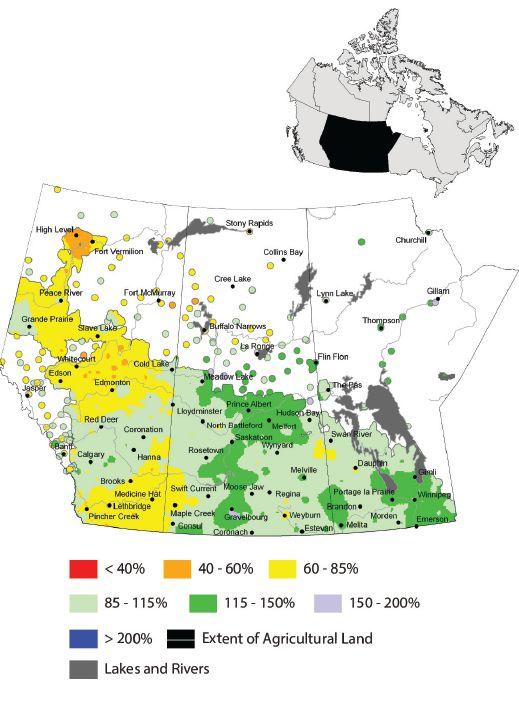
Percent of Average Precipitation (Prairie Region). April 1, 2015 to October 31, 2015
ended up with normal to above normal precipitation by Oct. 5.
“By comparison, when we look at the worst years for carryover in 2000, 2001 and 2002, it was dry all summer and herbicide degradation was low,” Johnson notes. (See precipitation map.)
Crash course in herbicide degradation
Herbicide characteristics partially explain the potential risk of herbicide carryover. The half-life of a herbicide is an important factor. The longer the half-life, the greater potential risk. While half-life is important, another key characteristic is whether the herbicide is bioavailable. Bioavailability is a measure of how available the active ingredient is for root uptake. For example, Reglone (diquat) has a long half-life of 1000 days in the soil, but has a very high sorption coefficient, meaning it is tightly bound to soil particles and not very bioactive. These characteristics provide clues to herbicide carryover, but other factors like soil texture, clay content, organic matter and pH are critical factors.
Soils high in clay content or organic matter bind herbicides more tightly, while coarse soils with low water holding capacity increase the bioavailability of the herbicide and increase the probability of carryover injury.
Johnson says a good example comes from 2003 when he observed clopyralid (Lontrel) damage on pea. The previous summer was hot and dry, but a spring rain moved the herbicide into the soil solution, where it was bioactively available to growing plants
CONTINUED ON PAGE 16
SUPERSEED. GUARANTEED.
Earn more money with SeedMaster—guaranteed*. SeedMaster’s UltraProTM seeding system provides near singulated canola seed delivered directly to our innovative active-hydraulic, ground-following, individual row opener for precise seed and fertilizer placement. Cut seeding rates without sacrificing yield. Save on inputs with Overlap Control. That’s SuperSeed. Guaranteed.
too.
DROUGHT PAST, PRESENT, FUTURE
Trends and predictions for Prairie droughts.
by Carolyn King
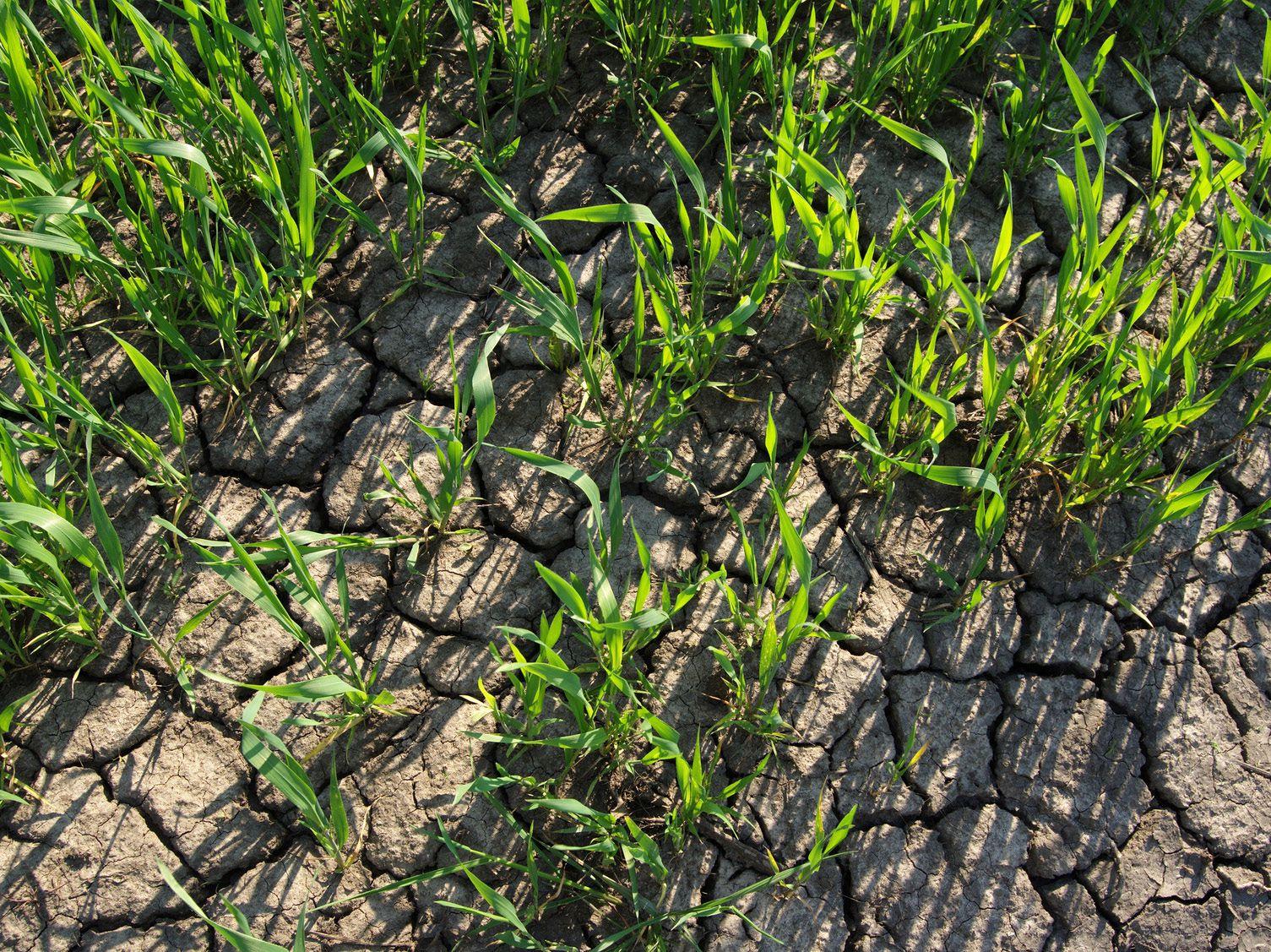
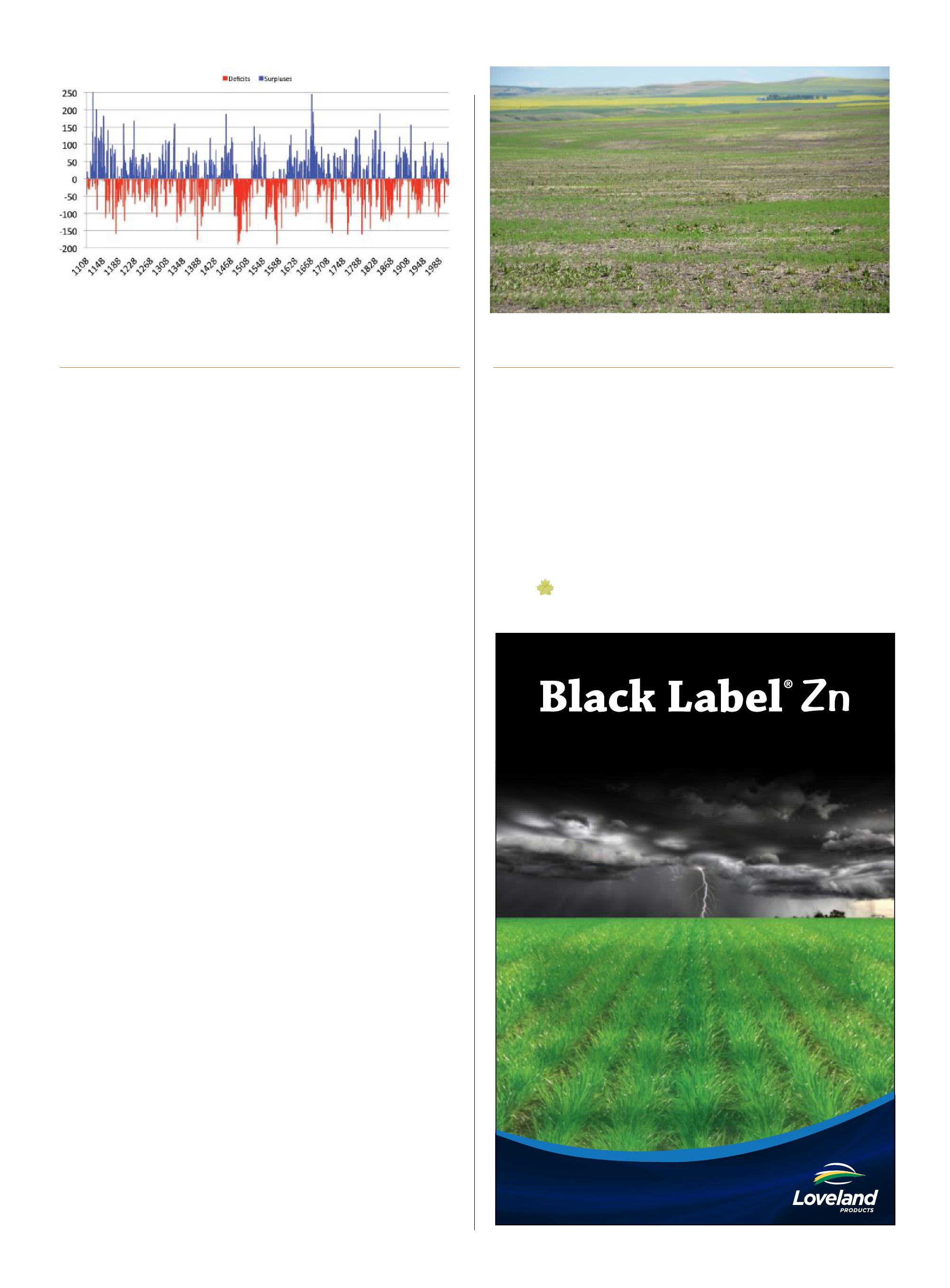
The 2015 drought in Alberta and Saskatchewan is part of a thousand-year history of recurring Prairie droughts. That history includes multi-year and even multi-decade droughts. If you overlay that difficult past with a warmer and possibly drier future, what might that mean for Prairie agriculture?
“Looking at the zone on the Prairies where most of the field crops are grown, the 2015 winter-spring is by far the driest in the past 68 years,” David Phillips, senior climatologist with Environment Canada, says. For the Prairie region, good quality weather records only go back 68 years, although records for the major Prairie cities start in the late 1800s. “Although parts of Manitoba had more precipitation than normal in 2015, parts of western Saskatchewan and Alberta were exceedingly bone dry.”
The severe drought conditions persisted in much of Alberta and Saskatchewan until late July, when rains came to parts of the drought-affected region, especially in Saskatchewan. Phillips gives an example: “In Saskatoon, from Jan. 1 to July 30 in 2015, the total precipitation, snow and rain, was 147 millimetres (mm). Looking
at records that go back to the 1880s, the driest weather for January to July was in 2001, with 124.6 mm. But in 2015, during the first 26 days of July, there was only 18 mm of rain in Saskatoon, and then from July 27 to 31, there was 67 mm. So, from Jan. 1 to July 26, Saskatoon had a grand total of only 80 mm. Even in 2001, for that same period from Jan. 1 to July 26, the total was 112 mm, so it wasn’t even close to as dry as it was in 2015.”
Trevor Hadwen, agroclimate specialist with Agriculture and Agri-Food Canada, highlights some of the agricultural impacts of the 2015 drought in Alberta and Saskatchewan. “Early on, people were having to reseed crops because of poor emergence. Then it was just too dry for crops to emerge from the soil. So a lot of crops were later seeded, and by the time they got moisture, they were very late into the season and people were concerned that frost would be an issue in the fall.
“Another impact starting very early in the spring was that pasture and forage production was very poor. Very dry and delayed
ABOVE: Prairie droughts are definitely not a new phenomenon.
FOTOLIA
More power to you.
Wind speed, pressure gauge, optimal nozzle settings, check. All systems are go and it’s time to take down the toughest weeds in your wheat eld, whether they’re resistant or not.
With three different modes of action in a single solution, Velocity m3 herbicide provides you with exceptional activity on over 29 different tough-to-control grassy and broadleaf weeds.
productivity of grasslands developed throughout Saskatchewan and Alberta, and there was a lot of concern for feed availability.”
Hadwen says the late July rains saved the crops in Saskatchewan and parts of Alberta, but other areas in Alberta continued to suffer drought conditions. “By the end of the summer, Saskatchewan was above average for rainfall despite the extremely dry spring. In Alberta, the drought areas really started to concentrate around the Edmonton region, and in some portions of the south. In southern Alberta, rainfall shortages were made up by some irrigation in the spring, helping those areas very significantly. So the main areas of impact for drought overall this summer ended up being in the Edmonton and northern Alberta regions.” By the end of October, significant drought conditions still persisted in central and northern Alberta.
Phillips notes the 2015 growing conditions could have been even worse. “The summer of 2015 was about the tenth warmest, but thank goodness it wasn’t any warmer than that because there would clearly have been more drought issues. The other thing that saved some growers, particularly in Saskatchewan, was that 2014 had been very wet, so the crops [in the spring of 2015] were
probably sucking off that moisture from 2014.”
Past trends, future possibilities
Prairie droughts are definitely not a new phenomenon – just ask Dave Sauchyn from the University of Regina. He has been studying past climate trends on the Prairies by measuring the widths of annual growth rings in trees.
“We’ve been collecting dead wood for 25 years now; we have more than 8000 pieces. In order to grow, trees need light, heat, soil and water, and they have plenty of all of those in summertime except water. So, the pattern of tree growth tells us very much about the amount of water available every year for the last thousand years,” Sauchyn explains.
“We’ve found droughts that were much more severe and much more prolonged than anything we’ve seen on the Prairies in the last 120 years, including the 1930s. For example, just before Europeans came to the Canadian Prairies, there were droughts of 10 or 20 years in duration.”
Sauchyn’s research shows that, over the past 1000 years, the Prairie climate has included many droughts that have lasted a
ARE THE PRAIRIES GETTING STORMIER?
Although news and social media stories may give the impression that Prairie weather is getting stormier, the jury is still out on the actual trends. That’s mainly because Prairie records aren’t long enough to establish firm trends.
John Hanesiak, a University of Manitoba scientist who studies storms and atmospheric processes, explains that at least 30 years of good records are needed to start examining weather trends and the records for Prairie storms are just getting to that length.
“For tornadoes, our record is really good from about 1985 onwards. For heavy rains, hail, damaging windstorms and things like that, our record is not quite as good because people generally don’t report those events as well. A storm event could be quite local and Environment Canada may not necessarily know how bad it was. Also, sometimes there isn’t the ability for someone to go and verify that the storm event was severe.”
Another complication is that reporting biases can muddy the trends. “There is ‘population bias’: you get better reporting from areas with a lot of people than from places where there aren’t many people. [So as the population grows in a region, you get more reports.] And people are more prone to report these events nowadays than they used to be – people have cameras all the time, whereas even 10 years ago that wasn’t the case,” Hanesiak notes. He adds there are statistical methods to try to account for those biases, “but we don’t really know how good they are.”
Hanesiak summarizes the current situation for Prairie storm events: “For tornadoes, usually we see between 40 and 45 per year on the Prairies, based on a 30-year average; Manitoba gets about 10, and Alberta and Saskatchewan get about 15 or 20 each per year. There are usually about 30 strong wind events and about 15 heavy rain events per year. And there are about 60 hail events per year; most of those are in Alberta because of the proximity to the mountains.”
Some of Hanesiak’s research involves figuring out future trends in severe storm events. “One of the problems that has been plaguing us for the last while is that climate models are usually needed to do long-range projections and the climate models have spatial scales in the order of 120 to 200 kilometres. But we need to get
down to 10 kilometres or less to resolve the detail that is needed for convective summer storms.”
Fortunately, regional climate models have recently been developed that have scales down to about 30 or 40 kilometres. So they can capture more details of the jet stream patterns and moisture patterns in the atmosphere than the climate models can. Hanesiak says, “We know that more moisture and stronger winds in the upper parts of the atmosphere are important for producing severe weather. So we can look at those kinds of things and see how they have changed, and try to tease out what we might expect in the future.”
Hanesiak’s research group is currently using this approach to run a hail model. The researchers are just starting to analyze the data from this work, but their initial findings are intriguing. “It looks like we might expect to see fewer hail days in the future on the Prairies, but when they do happen they will tend to have more larger hail, so they’ll have more damage potential,” Hanesiak says.
“Also, there seems to be a seasonal shift. At present, [in the southern Prairies] we tend to see most of our hail and severe weather around the June-July time period. But that seems to be potentially shifting by mid-century toward the April-May time period, with less hail in July-August. The northern Prairies and the Northwest Territories don’t see that many hail events now, but in the future it looks like their June-July-August period will be quite changed, with more frequent and more severe hail events.”
Hanesiak’s research group is planning to do more of this type of research. For instance, next year, one of Hanesiak’s graduate students will be using the same approach to look into future trends in Prairie tornado events.
decade or longer.
He adds, “Based on the science, it is entirely possible that we could see prolonged drought some time in this century.”
In the coming decades, the Prairies are likely to continue getting warmer. “The most consistent scenarios show increasing temperatures, so a continuation of the trend observed over the last half century. And much of the warming is occurring in the winter, so the Prairies and most of Canada are getting less cold. Minimum temperatures – the temperatures at night and in winter – are rising,” Sauchyn explains.
Predictions relating to Prairie moisture conditions are more complex. “One trend is more precipitation, especially in winter, because as the temperature of the air increases, it can hold more moisture. Also, the source of our moisture is the oceans, and the oceans are getting warmer, so they are producing more water vapour,” Sauchyn says. Warmer, wetter weather sounds promising for Prairie crop production. However, the models also indicate the extra water may not necessarily arrive in ways that are best for crop production. Some of the extra water may arrive as winter rains, when crops aren’t growing, and the range of moisture conditions will likely be much larger, swinging between extremely wet and extremely dry conditions.
So the predictions present a mix of advantages and disadvantages for Prairie crop production, including opportunities to grow higher value crops that require a longer growing season, increased risks of drought stress, heat stress and waterlogging, and changes in disease, insect and weed issues as these organisms adapt to their changing environment.
“I think it is a matter of adapting, doing things differently, storing precipitation, using creative ways to do more with the precipitation you get, and trying to adapt your planting decisions to cushion the blow,” Phillips says. “By preparing for the changing weather and responding to it, we can mitigate the effects of it or capitalize on it. I think we have to be climate smart, weather smart, in what we do – try new things and be resilient enough to change according to how things are going.”
Overall, Phillips is optimistic about the future for Canadian crop production in the face of climate change. “There are many challenges today for growers, but incredible advances have been made. And I think better science will help deal with some of the challenges ahead. Also, I think we’re in better shape in Canada than in many other countries to be able to weather the storm, so to speak, of a warming climate. I think growers are willing to try
new things, and with a changing climate, that will be one of our strengths. The inventiveness, adaptability and resiliency of growers make me think the future is bright.”
Sauchyn has been studying adaptation and vulnerability to drought on the Prairies in recent years. He says, “Adaptation is nothing new to Prairie farmers. The Prairies have one of the more inhospitable climates in the world – throughout the history of Prairie agriculture, farmers have had to adapt to a climate that is colder and drier and has a much shorter growing season. They just have to keep adapting because the climate keeps changing like a moving target.”
Sauchyn’s research shows a pattern of water surpluses (blue) and deficits (red) in the South Saskatchewan River basin over the past 900 years, including some long, intense droughts. Courtesy of Dave Sauchyn.
The 2015 drought in Alberta and Saskatchewan is part of a thousand-year history of recurring Prairie droughts.
PHOTO BY JANET KANTERS.
DEVELOPING MICRONUTRIENT RECOMMENDATIONS
Most Prairie soils are currently well supplied with micronutrients.
by Ross H. McKenzie PhD, P.Ag.
Crops require a number of nutrients in very small amounts called micronutrients. The most common micronutrients include boron (B), chlorine (Cl), copper (Cu), iron (Fe), manganese (Mn), molybdenum (Mo) and zinc (Zn). There are at least five other elements that are needed by specific crops (that we won’t discuss in this article).
The term micronutrient refers to the relatively small quantity of a nutrient that is required for plant growth. It does not mean that these nutrients are less important to plants than other nutrients. Table 1 shows the total amounts of micronutrients taken up from the soil by high yielding wheat, barley and canola. Plant growth and development may be retarded if any one of these elements is lacking in the soil. Fortunately, we do not have widespread micronutrient deficiencies in Western Canada.
Sources of micronutrients in soils
Inorganic forms of micronutrients occur naturally in soil minerals. As minerals break down over time, micronutrients are gradually released in forms available to plants. Two sources of readily available micronutrients are nutrients that are adsorbed onto soil colloids (very small soil particles) and nutrients that are in the form of salts dissolved in the soil solution.
Organic matter is often an important source of most of the micronutrients. As soil organic matter decomposes, plant available micronutrients are slowly released into soil.
Soil sampling and testing
Soil testing can be helpful as an initial screening to determine if any of your fields are potentially low or marginal in a micronutrient. Have representative 0 to 6 and 6 to 12 inch depth soil samples analyzed for micronutrients. Most soil testing labs in Western Canada determine metal micronutrients Cu, Fe, Mn and Zn, using the diethylene triamine pentaacetic acid (DTPA) method. Boron is extracted using hot water and chloride is determined using water.
The general range levels used for determining when to add micronutrients to improve crop production are shown in Table 2. When a soil sample tests low in a micronutrient, a potential micronutrient deficiency may occur. A crop grown in field with a low micronutrient level in the 0 to 6 inch depth may not respond to a micronutrient fertilizer if adequate levels of the micronutrient
With copper deficiency in wheat, young leaves become pale green to yellow, shriveled and broken, and appear limp or wilted.
occur in the 6 to 12 inch depth.
It is important for farmers and agronomists to recognize soil testing for micronutrients is not an exact science. The DTPA method for determining metal micronutrients works reasonably well for copper and zinc. The challenge is having reliable field research to determine the critical levels at which crops will economically respond to micronutrient fertilizers in the various soil and agroecological regions of Western Canada. Good research information
PHOTO COURTESY OF M.K. SHARMA AND P. KUMAR, IPNI.
SEND WEEDS TO THE PLACE OF NO RETURN.
Go ahead and turn the tables on broadleaf weeds with the reliable, effective power of DuPontTM Barricade® II herbicide – without compromising your crop health. Three active ingredients from two groups (Group 2 and Group 4) strike down a broad range of weeds like narrow-leaved hawk’s-beard, cleavers and kochia in your cereals. Plus a wide window of application, and outstanding re-cropping flexibility make Barricade® II a sound choice for growers.
Barricade® II: The strength to overcome tough weeds while being gentle on your cereal crops. Speak to your DuPont rep or retailer, call the DuPont™ FarmCare® Support Centre at 1-800- 667-3925 or visit barricade.dupont.ca.
Table 1. Micronutrient uptake
Micronutrient
Note: Micronutrient uptake by high yields of wheat, barley and canola, in the whole aboveground plant. Amounts listed are approximate and will vary by up to 25 per cent.
Source: Alberta Agriculture publications.
is available for copper, limited information for zinc and very limited information is available for iron and manganese. Up to now, crop response to micronutrients across the Prairies has been minimal, making it difficult to accurately determine the critical soil test levels at which micronutrient responses may occur.
There isn’t a suitable soil test for molybdenum. The present soil tests used for boron and chloride are not very effective to predict crop response to these nutrients. For example, in a study in southern Alberta, about one-third of soils tested < 0.5 ppm for boron, which is often considered deficient. However, research trials conducted with winter wheat, spring wheat, barley, canola, pea, bean and corn at a number of sites over four years showed no positive responses to boron. From this and other work it is very clear the boron test and the critical levels used to recommend boron are not very reliable.
Soil factors affect micronutrient availability
Physical and chemical characteristics of soil can influence the availability and uptake of micronutrients:
• Soils with < 2 per cent organic matter may have lower micronutrient availability; for example Gray soils.
• Medium and fine textured loam, clay loam and clay soils are less likely to be low in plant available micronutrients.
• Coarse textured sandy soils are more likely to be low in micronutrients.
• Soils that have very high levels of organic matter > 30 per cent to a depth of 30 cm often have low micronutrient availability, particularly copper.
• Soil temperature and moisture affect micronutrient availability. Cool, wet soils reduce the availability, rate and amount of micronutrients that may be taken up by crops. Cool soil temperatures can induce micronutrient deficiencies.
• As soil pH increases up to 8.0 or higher, the availability of metal micronutrients may decrease.
Boron
Boron deficiencies have been suspected in canola and alfalfa grown on sandy-textured Gray soils. Research to specifically document crop response to added boron is limited. Normally, I would not recommend boron on an entire field based only on a low B soil test, due to the limitations of the test. If soil test B is < 0.5 ppm, I would suggest trying carefully laid out field scale test strips with sensitive crops like canola or alfalfa to determine if a soil B deficiency actually exists.
Table 2. Soil micronutrient rating levels
Micronutrient Level (ppm) Soil rating General
Boron (hot water)
Copper (DTPA) in mineral soil
Copper (DTPA) in organic soil
<0.2 Very low 2 to 8; broadcast incorporated 0.2 to 0.4 Low 2 to 4; broadcast incorporated 0.5 to 1.0 Medium 0 > 1.0 Adequate 0
<2.5 Low 10 to 15; broadcast incorporated 2.5 to 5.0 Medium 5 to 10; broadcast incorporated >5.0 Adequate 0
Iron (DTPA)
Manganese (DTPA)
<2.0 Low 4 lb/ac broadcast incorporated or 0.15 lb/ac foliar applied 2.0 to 5.0 Medium 2 lb/ac broadcast incorporated or 0.15 lb/ac foliar applied > 5.0 Adequate 0
<0.5 Low 20; broadcast incorporated 0.5 to 1.0 Medium 10; broadcast incorporated > 1.0 Adequate 0
Zinc (DTPA)
Chloride (water)*
<0.2 Very low 5 to 10 banded 0.2 to 0.4 Low 2 to 4 banded 0.5 to 1.0 Medium 0 > 1.0 Adequate 0
<10 Very low 20 to 25; broadcast incorporated 10 to 20 Low 10 to 15; broadcast incorporated 20 to 30 Medium 0
>30 Adequate 0
Note: The information in the table was compiled from various sources and is general information. For specific micronutrient recommendations, consult with your provincial soil specialist.
Application of borate or borax fertilizers can be broadcast for alfalfa, and either broadcast and incorporated or banded for canola. Boron containing fertilizers should not come into contact with the seed at planting. Soil application rates should not exceed 1.5 lb/ac on soils with a pH less than 6.5 to avoid boron toxicity problems. Foliar applications should not exceed 0.3 lb/ac to avoid toxicity problems. For all types of applications, extreme care must be taken to avoid toxicity problems.
Chlorine
The soil test for chlorine is very unreliable. Therefore, I normally would not recommend chloride on an entire field based only on a low Cl soil test.
Generally, crop requirements for chlorine are satisfied by the chlorine in the soil and received in rainfall. Rainwater on the Prairies typically contains 0.5 to 1 mg/l of Cl, which is more than sufficient to meet crop requirements. Chloride is also added to soil in potash fertilizer (KCl).
North Dakota research has shown that chloride added at rates higher than required to meet nutritional needs is associated with suppression of root and leaf diseases in some cereal crops. However, western Canadian research is very limited to demonstrate this benefit in Western Canada.
Copper
Research has clearly shown cereal crops will respond to added copper when soils tests are low. Wheat and barley grown on Black or Gray soils may benefit with copper application when the soil
test for Cu is < 0.5 ppm. Wheat and barley response to copper on Brown and Dark Brown soils is uncommon and copper should only be applied to these soils when soil test Cu is < 0.3 ppm.
Cereal crops grown on soils with greater than 30 per cent organic matter to a depth of 30 cm often respond to copper fertilization, when soil test levels are < 2.5 ppm.
Generally, copper deficient mineral soils tend to be either sandy or light loam soils with levels of organic matter in the range of six to 10 per cent. Copper deficient soils are sometimes associated with soils with high levels of soil phosphorus or which have received heavy applications of manure.
Broadcast and incorporated rates of 3 to 8 lb/ac of copper in the form of copper sulphate or copper oxide are recommended for deficient mineral soils. On organic soils, broadcast and incorporated rates of 10 to 15 lb/ac are necessary. Soil application rates should be effective for five to 10 years. Chelated forms of copper are also effective in the year of application but the residual effects in Prairie soils is not well known.
The benefit of copper foliar application to cereal crops grown on mineral or organic soils is not as consistent but can be used when deficiency symptoms appear. Foliar applications are required annually and are most effective at the late tillering stage. If the deficiency is severe, two applications at mid-tillering and boot stage may be necessary. Foliar application rates of between 0.2 to 0.3 lb/ac are recommended.
CONTINUED ON PAGE 34
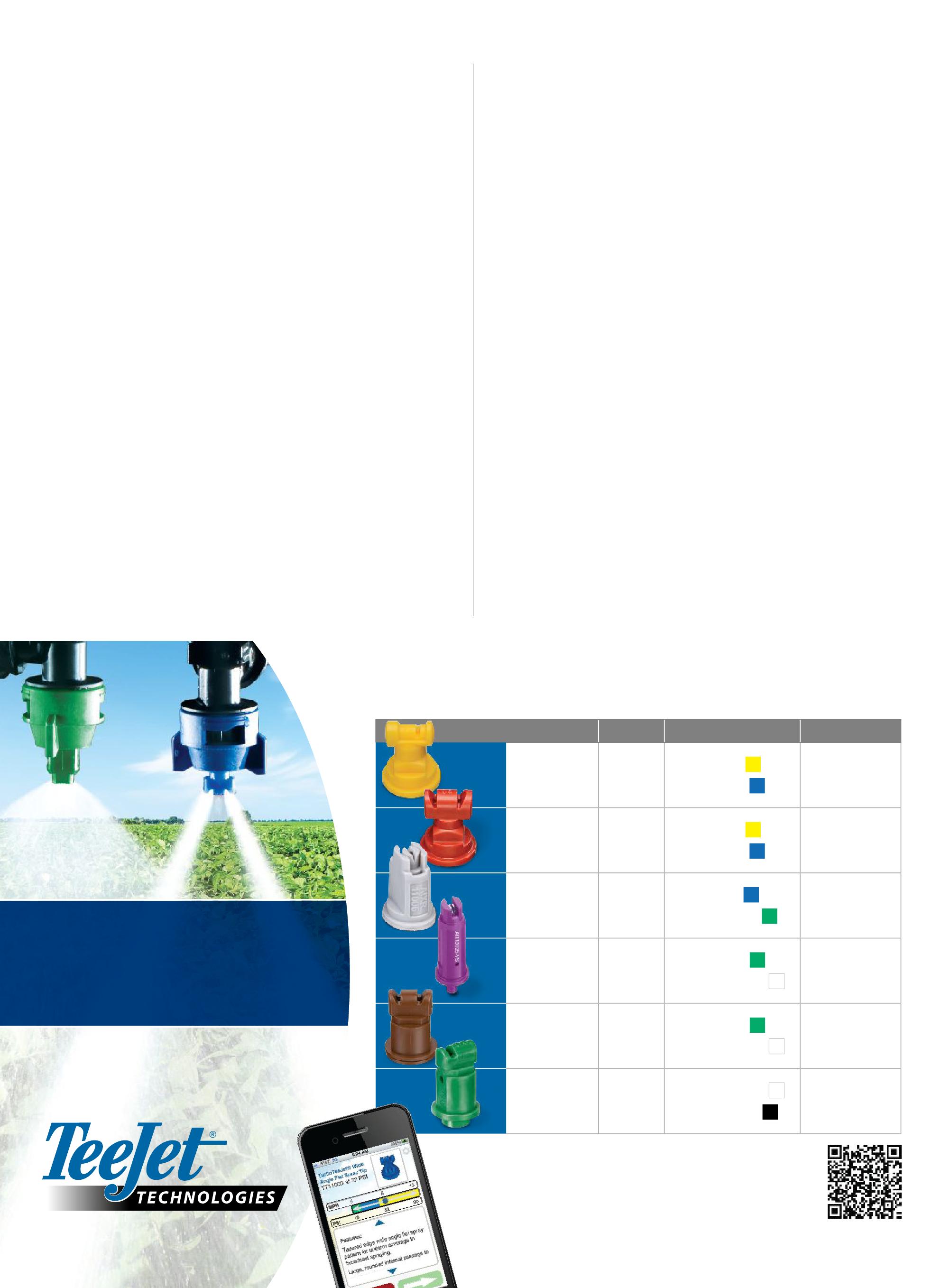
TeeJet tips: precise herbicide application to wipe out weeds & boost yields.
CONTINUED FROM PAGE 6
and damaged the pea seedlings.
“The worst conditions you can have is a dry summer and fall, and then a wet spring. The peas were doing fine until a one inch rainfall came along in the spring,” Johnson says.
Soil pH is also a very important factor in herbicide carryover. Sulfonylurea herbicides such as Ally generally dissipate faster in low pH soils. Sulfonylaminocarbonyltriazolionones like Everest and Varro are also affected by pH. Everest has less carryover in low pH soils, while Varro is more persistent in low pH soils, although Johnson has not observed
carryover problems with Varro.
Simplicity herbicide, a trizolpyrimidine sulfonamide herbicide, has shown carryover issues in low pH soils in the Pacific Northwest.
Sulfentrazone (an active in Authority herbicide) and pyroxasulfone (an active in Focus herbicide) have faster dissipation in high pH soils.
Imidazolinone herbicides like Pursuit, Odyssey and Solo have seemingly contradictory characteristics when it comes to pH. Adsorption increases with pH below 6.5, making them less available for microbial degradation and supposedly less
Clubbing of root tips caused by clopyralid carryover.
bioavailable. However, at low pH, they also desorb more readily in soil solution increasing the risk of carryover damage. Conversely, on high pH soils, they are adsorbed more slowly, but held more tightly to soil particles.
Carryover diagnostics
For agronomists and farmers concerned about carryover in 2016, Johnson says a soil bioassay can be helpful to predict potential for carryover; however, it is difficult to account for soil variability throughout a field. A bioassay indicating crop injury indicates the crop shouldn’t
be planted, but a bioassay showing no injury does not mean you won’t see injury in non-sampled areas. Chemical analysis can provide an indication of herbicide presence in parts per million, but is not a reliable way to predict if carryover damage could occur.
When doing crop diagnostics to determine if a field has carryover damage, Johnson says the problems won’t be uniform over the entire field. Rather, areas with low clay content and low organic matter – such as hilltops – will be the first areas to show problems.
“Soil herbicide interactions are
• Spray when you want with new PixxaroTM or ParadigmTM
• Two revolutionary Group 4 herbicides with Arylex Active
• Ultimate broadleaf weed control performance in wheat and barley
• Extreme productivity and convenience in the conditions you’ve got Go to the new dowagro.ca or call 1-800-667-3852.
complex,” Johnson notes. “Organic matter is your friend. For 2016, follow recropping labels and the risk should be low.”
The Saskatchewan and Manitoba crop protection guides include charts crossreferencing re-cropping restrictions for residual herbicides between herbicide and crop to help make crop rotation choices easier. And in this case, you really should follow label directions.
For more on herbicide management, visit topcropmanager.com.
$3 SAVE UP TO with Diamond RewardsTM
THE RECIPE FOR RED LENTIL PRODUCTION
Agronomic research update from Alberta.
by Bruce Barker
Adash of starter nitrogen (N), inoculation, high seeding rates, and herbicides and fungicides when warranted are the key ingredients to produce a high-yielding red lentil crop in Alberta. Those are the results of an Alberta-based research project at five locations with 20 site-years of data.
“The acreage increased from 45,000 acres in 2009 to 140,000 in 2010, and this left Alberta pulse producers with a lot of questions. Little agronomic research had been done in Alberta, and we realized that we had to close the gaps in research on Clearfield red lentil,” Robyne Bowness, pulse research scientist with Alberta Agriculture and Forestry (AAF), at Lacombe, says. “We have similar growing conditions compared to Saskatchewan, we have a freight advantage to Europe, and the demand is strong for red lentils so producer interest is high.”
Lentil production in Alberta has lagged far behind Saskatchewan production, where 90 per cent of the red lentil crop is grown in Canada. In 2015, Alberta produced approximately 220,000 acres, still far behind Saskatchewan production.
The research covered five Alberta soil zones at Falher, St. Albert, Killam, Brooks and Lethbridge. The three Clearfield lentils compared were CDC Dazil and CDC Maxim, both small red lentils, and CDC Impower, a large green lentil at Brooks. The three trials investigated the effect of N rate, optimal seeding rate and herbicide application on a wide range of growth, maturity, yield and quality traits. Bowness presented the results at the Alberta Agronomy Update in Red Deer in January.
Starter N can be beneficial, and always inoculate
The N rate trial looked at five nitrogen rates ranging through 0, 15, 30, 45 and 60 kg/ha. A granular Rhizobia inoculant was compared to a non-inoculated treatment as well.
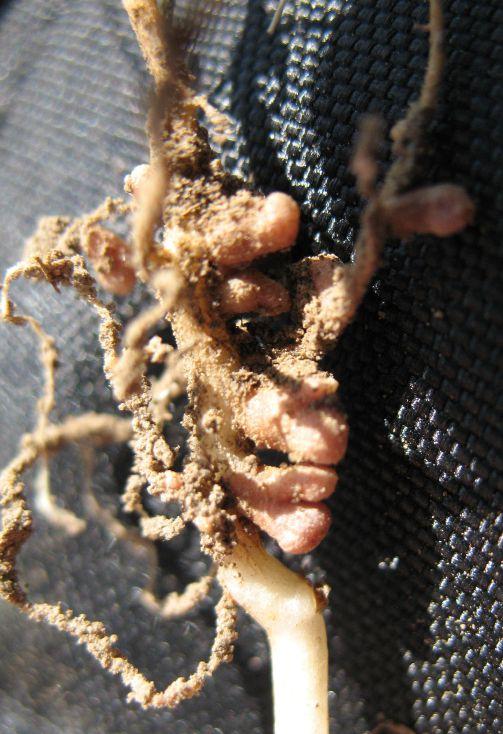
Comparing inoculated to non-inoculated lentil, Bowness found that without inoculants, the lentils did not nodulate at all,
or as well as the inoculated lentil. She says the native Rhizobium in the soils was not adequate and did not establish a good symbiotic relationship with lentil. The native Rhizobium developed fewer nodules that were smaller and not fixing N very well.
“Overall, inoculated treatments had higher yield than noninoculated treatments, although not always, and not always statistically significant,” Bowness explains. “Still, I would say inoculation is a good recommendation.”
In Saskatchewan, N fertilizer is generally not recommended if nitrogen fixation is optimized on lentil, with 50 to 80 per cent of their N coming from N fixation and the remainder from soil N. Low levels of available N have little impact on nodulation and N fixation. However, Bowness says she heard anecdotal information from some Alberta producers that they were applying 15 kg/ha of N and having good results, so the N fertilizer trial was included in the research.
Starter N did impact nodulation, with increasing rates decreasing nodulation in the Alberta trials. This is consistent with experience in Saskatchewan where additional fertilizer N above combined soil and fertilizer N levels of 28 to 40 kg/ha will reduce nodulation and N fixation. However, Bowness says a small amount of N, the 15 kg/ha rate, did provide a yield benefit overall.
“We didn’t see positive effects every time, but the highest yields were seen in plots where a small amount of starter N was added,” Bowness says. She also cautions that going above 30 kg/ha negatively affected nodulation and decreased yields.
“Are lentil plants lazy? Yes they are. Without inoculants they won’t nodulate as well, and you’ll have lower yields, and adding high levels of N does not compensate for not inoculating,” she says. (See Fig. 1.)
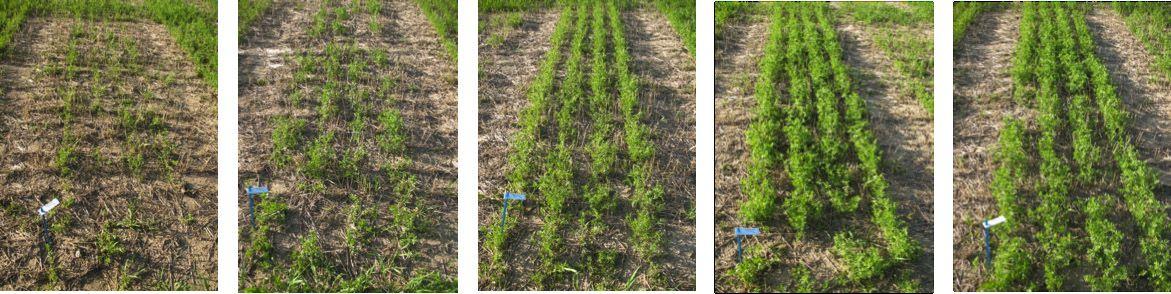
ABOVE: From left to right, 40, 80, 120, 160 and 200 plants per square metre.
PHOTOS
Target 120-160 plants per square metre
The seeding rate trial compared five seeding rates of 40, 80, 120, 160, and 200 plants per square metre. Bowness says higher seeding rates up to 160 plants per square metre resulted in significantly higher yield. Above 160 plants per square metre, the increase in yield was not significant.
“In high yielding years, the maximum yield was reached at 175 plants per square metre, but overall, there wasn’t a benefit to going higher than 160 plants,” Bowness notes.
Higher seeding rates also produced taller plants. At 40 plants per square metre, the plants were thick and bushy, with a lot of tillers and thick stems. At 200 plants per square metre, the plants were thin, tall and spindly with very few lower leaves. In the high plant stands, the lentils were competing with each other in the seedrow, decreasing availability of nutrients and water, and were stretching to reach available sunlight.
Higher seeding rate resulted in earlier flowering, but only by two days. Overall, maturity was about three days earlier with the higher seeding rates, but differences ranged from one to seven days.
Seeding rate did not impact disease development. Overall, the disease development varied between site and year, and was weather dependent, except at the St. Albert site in the Black soil zone, where disease occurred every year and fungicide application was recommended.
At present, Bowness says the recommended seeding rate targets 120 plants per square metre, but based on this research, producers could go as high as 160 plants per square metre.
A well-nodulated lentil plant.
Clearfield herbicides as effective as hand weeding
The trials looked at five weed control applications, including Odyssey (imazamox), Odyssey DLX (imazamox + imazethapyr), Solo (imazamox + imazethapyr + tepraloxydim), Ares (imazamox + imazapyr) and a hand-weeded control. All herbicides were applied according to labelled rates and recommended application timing.
Bowness reports that all herbicides worked and were as effective as hand weeding. No consistent differences were seen on plant height, days to flower or maturity, nodulation or yield.
Can Clearfield red lentils do well in Alberta?
Bowness answers the question with a resounding “yes.” But one of the results that surprised her was how well red lentils did in some of the non-traditional areas outside of the Brown and Dark Brown soil zones. Over the 20 site-years, Killam (Thin Black soil) had the highest yields, with the Falher (Grey soil) location producing good yields in some years and St. Albert (Black soil) having good yields as well.
“I thought it was neat that Killam had the highest yields. That wasn’t something I would have expected, or that we would have such good success at St. Albert.”
1. Impact of N rate on lentil nodulation
Fig. 2. Lentil yield response to seeding rate
Source: Bowness, AAF.
Source: Bowness, AAF.
Believe it or not, there’s a simple trick to protecting your canola yield before sclerotinia even becomes a problem – and you don’t have to be a magician.
Based 100% in science, easy-to-use Proline® fungicide proactively protects your pro ts and continues to be the number one choice for canola growers looking for effective sclerotinia protection.
For more information, visit cropscience.bayer.ca/Proline
EYES IN THE SKY
Remote sensing and imagery guide to satellites and UAVs/drones.
by Dale Steele, P.Ag., Precision Agronomist
As farm acreage grows, it is virtually impossible to know every part of the field and to scout every acre. Remote sensing is simply defined as collecting field information remotely from a remote platform. Satellites, planes, UAVs/drones or equipment mounted platforms can provide a bird’s-eye view of the field to collect information and see field variability and patterns that you can’t readily detect as you walk across a field.
Pictures
Watching kids grow up, you don’t notice the subtle changes each week, but looking back over a few years of family pictures enables you to see dramatic changes. Pictures are also useful in agriculture to capture the moment and review the history.
Your farm actually has a tremendous imagery archive, although you probably have never seen it. Airplanes and satellites have been collecting imagery of your fields for years. In Alberta, air photos are available back to 1949 for most farmland. Landsat satellites started collecting multi-spectral imagery in 1972 and Landsat 8 continues building that 44-year archive. Google Earth was available in 2005 with a collection of true colour images of the Earth. The RapidEye satellite network was launched in 2009 with field detail and re-visit dates more suited to agriculture. Lethbridge based Ventus Geospatial was established as one of the first UAV/drone service providers in 2012, well ahead of the emerging U.S. market.
Technology advances have improved the camera and sensors to deliver amazing field detail every week of the growing season. Satellites and UAV/drone images can show excellent field detail. Figure 1, on page 27 compares RapidEye satellite detail to a Landsat satellite image. As a chemical rep, I took a lot of field pictures before the new smartphone apps could locate, store and share those important areas of interest. Now you can see layers of
information on your tablet as you walk across the field to assess field areas with GPS precision.
Remote sensing is a broad discipline and I encourage you to build your background knowledge using Internet searches. For agriculture, you want to know some basic information when viewing imagery of your fields. Vegetation can be measured with different wavelengths of the electromagnetic spectrum that our eyes can’t see. Near-infrared (NIR) and normalized difference vegetation index (NDVI) values are accepted measurements of vegetation that contain much more information than true colour pictures. Ask: What is the resolution or pixel size? What platform collected the image using what sensors? What is the image date and relative crop stage? What type of image processing was used?
Orthorectification ensures the image scale is correct for the field, just as most fishermen know that the tilt and background references can make their fish look much larger in pictures.
I find most farmers are skeptical about remote sensing, field variability and vegetation differences until they see their own fields with NIR vegetation detail from the RapidEye satellites or UAV/drones. Each image platform has pros and cons pertaining to the resolution and cost of collecting this field information. High resolution UAV/drone imagery can become terabytes of data that require good software to stitch together multiple images and GPS coordinates to quantify the data and the clouds that limit satellite image capture. Even now, lack of farmer access to multi-spectral crop imagery remains a barrier, but as precision agriculture acres have grown, imagery costs have been reduced dramatically. RapidEye satellite imagery access can start at
CONTINUED ON PAGE 27
ABOVE: Drones can provide a bird’s-eye view of a field to collect information and see field variability and patterns that you can’t readily detect from ground level.
FOTOLIA
CANARYSEED WEED CONTROL
Research verifies good options, but they’re shrinking.
by Bruce Barker
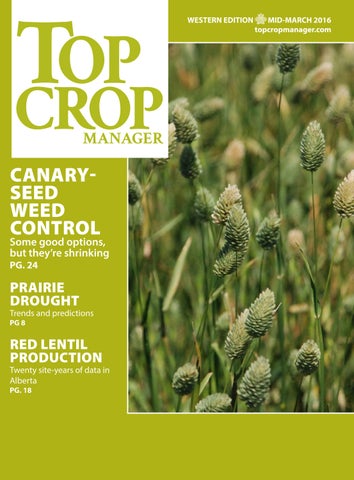
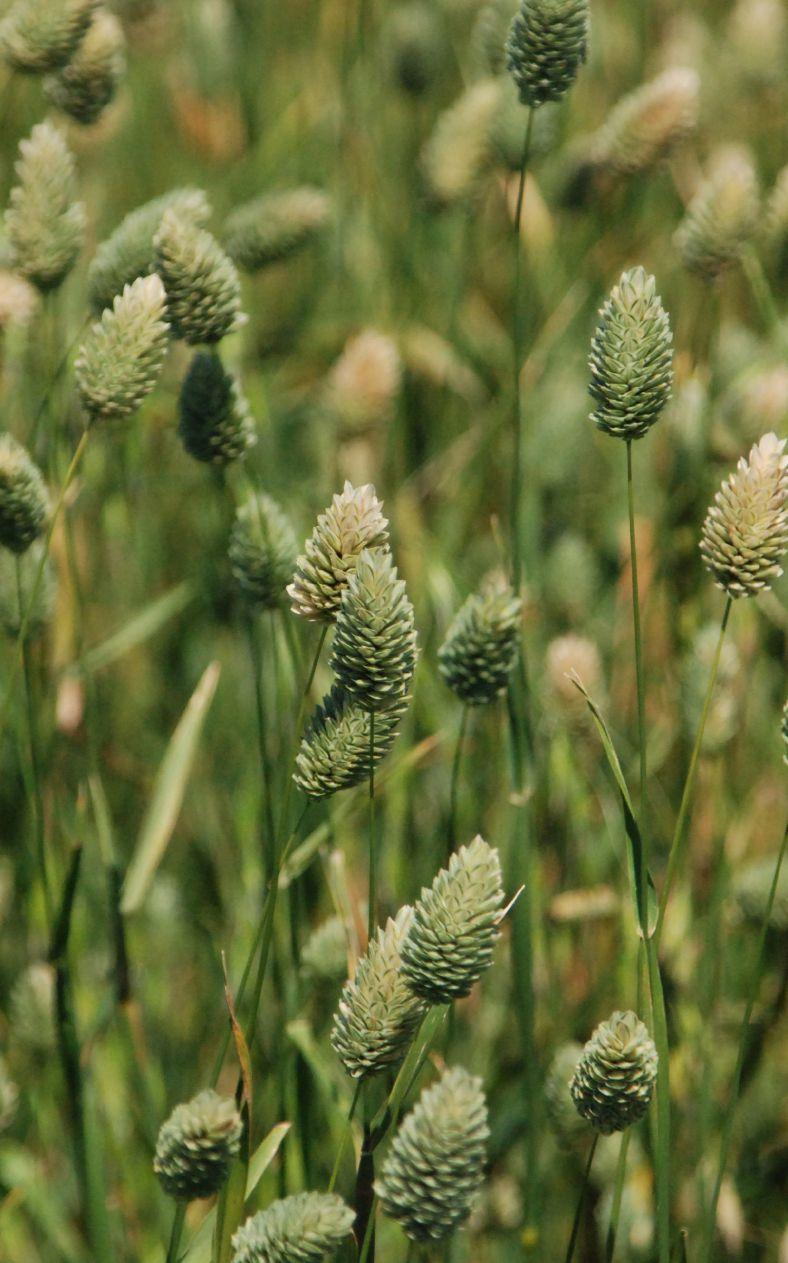
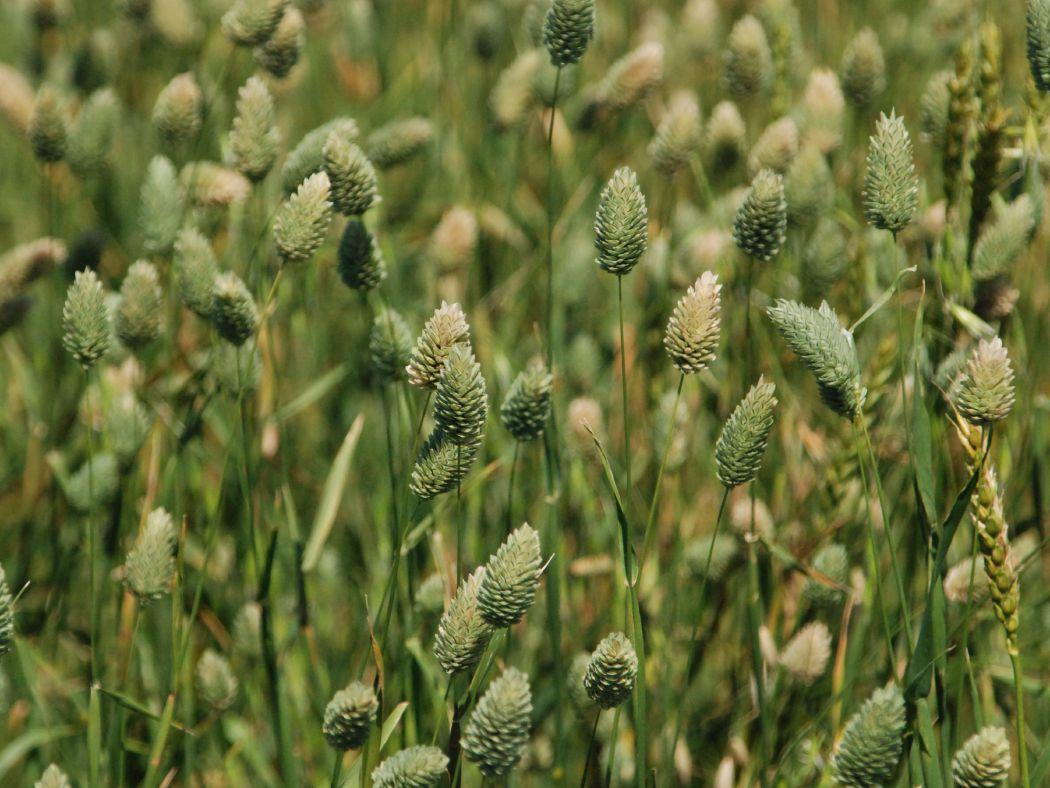
As the world’s largest producer and exporter of canaryseed in the world, much of it in Saskatchewan, this market is definitely for the birds. Used primarily in commercial bird feed – think budgies and canaries –for growers, one of the production priorities is weed control.
“Early in the growing season, canaryseed is not very competitive. Once it gets to the five- to six-leaf stage, it starts to become more competitive,” Bill May, research scientist with Agriculture and Agri-Food Canada (AAFC) at Indian Head, Sask., says. “Early weed control is important.”
Back in the early days of canaryseed production, researchers recognized weed control was a priority. As early as the late 1980s, research identified that canaryseed yield was reduced by competition from wild mustard, cow cockle and wild oats. However, AAFC researchers Neal Holt and Jim Hunter reported excellent crop tolerance to Pardner (bromoxynil), Buctril M (bromoxynil + MCPA), Lorox (linuron) + MCPA, Stampede (propanil) + MCPA, and Sencor (metribuzin) + MCPA. The broadleaf weed control also resulted in yields that were similar to the weed-free check. Grassy
weed control from Avenge (difenzoquat) provided acceptable wild oat control in one out of two years and good crop tolerance in both years of the research.
Growers in the know, though, will recognize a dwindling list of herbicides from these 1980s trials. Stampede is gone, and more recently in 2014, the U.S. revoked the maximum residue limits (MRL) on Avenge, and it is no longer available. Plus, Linuron and Sencor are not registered on canaryseed, so choices from the early days of canaryseed production are shrinking.
In the early 2000s, May built on the previous weed control research and looked at some of the newer herbicides on newer canaryseed varieties grown in no-till production systems. Avenge was still on the market and included in the research, along with combinations of MCPA, clopyralid, fluroxypyr and florasulam. The research covered three years at Indian Head, Saskatoon and Scott, Sask.
ABOVE: Good broadleaf herbicide options exist, but look closely and you’ll see a volunteer wheat head in this canaryseed crop.
PHOTO BY BRUCE BARKER.
LIGHT ’EM UP
Resistant or not, powerful In nity® herbicide provides you with the ability to take out the toughest broadleaf weeds in your cereals. With its unique Group 27 mode of action, In nity helps ensure the pro tability of your farm today and for years to come.
Managing herbicide resistance is everyone’s ght. Spray Responsibly.
Source: Saskatchewan Guide to Crop Protection 2016.
Treatments at recommended rates (unless otherwise noted) included:
• Weed-free control
• Curtail M (MCPA and clopyralid)
• Curtail M (MCPA and clopyralid) at 2x rate
• Trophy (MCPA and fluroxypyr)
• Prestige (MCPA and clopyralid and floroxypyr)
• Frontline (MCPA and florasulam)
• Avenge and Curtail M (difenzoquat and MCPA and clopyralid)
• Avenge (difenzoquat).
A time of application at two- to three-leaf, and four- to five-leaf was also included in the research.
In the study, canaryseed had good tolerance to the various combinations of MCPA, clopyralid and fluroxypyr. Avenge applications often produced more visible crop injury than other treatments. Frontline also caused crop injury, especially at the 2x rate.
Where crop injury did occur, canaryseed exhibited the ability to compensate for early season injury by producing tillers. Injury was more likely with the early leaf stage applications. However, May says growers should consider weed pressure when looking at application timing, and if it is high, early herbicide application may be beneficial. In fact, the research showed even if injury occurred at the two- to three-leaf stage, yield was still greater than if herbicide application was delayed to the four- to five-leaf stage. He says slight injury from herbicide is less important than ensuring early application to reduce early-season weed competition.
Today’s weed control options
Today, canaryseed growers have a good selection of broadleaf herbicides to choose from, and most of them control some of the more common and tough broadleaf weeds such as cleavers, kochia, hemp-nettle, perennial thistle and dandelion. The registered broadleaf herbicides also provide good mode of action rotational options with Group 4s and a Group 6 herbicide. (See Table 1.)
product on canaryseed.
“Stay with labeled broadleaf products. There are some good choices and they provide acceptable weed control,” May cautions.
Where canaryseed growers would like to see more choice is in grassy weed and volunteer cereal control. With Avenge off the market, the only grassy weed herbicide registered is the granular formulation of pre-emergent Avadex. It controls wild oats. There are no registered post-emergent grassy weed herbicides and no herbicides that can control volunteer cereals. The lack of new grassy weed herbicides coming on the market means most canaryseed production is on oilseed (except flax) and pulse crop stubble, where volunteer cereals are less of a concern.
“Avadex provides a good opportunity to rotate herbicide mode of action on wild oat. Canaryseed growers are kind of forced into rotating to the Group 8 mode of action, which is probably a good thing, as it helps to delay herbicide resistance,” May says.
Canaryseed is also sensitive to soil-residual herbicides, and growers should keep good herbicide application records to ensure proper intervals between herbicide application and canaryseed production. Wait at least 24 months after spring trifluralin or Edge, or 30 months after a fall trifluralin or Edge treatment before growing canaryseed.
Information from Saskatchewan Agriculture indicates that “canaryseed should not be seeded until at least the second season following an application of Assert or Unity. Fields treated with Ally, Glean, Amber, Muster, Everest, Sundance or Pursuit should not be sown to canaryseed until a field bioassay determines it is safe to do so. Extended periods without rainfall during the growing season may extend the re-cropping restrictions on residual products. This may also impact waiting periods for products like Odyssey that do not have restrictions for the following year under normal moisture conditions.” Table 1. Registered
May says he has seen crop injury from Group 2 herbicides like Refine Extra, and that growers should avoid using any Group 2
$0.50/acre and UAV/drone imagery is approaching $3 to $4 per acre. Satshot provides access to the imagery from numerous satellite networks along with information and imagery processing options.
Agronomy
A picture is worth a thousand words. One picture can identify issues in the growing season, but the power of imagery is it enables change detection on a massive scale. If nature and crop growth were predictable, we could just seed, spray and harvest on the same calendar dates each year. But farming isn’t that simple. The primary function of crop scouting is to determine anything unusual or different from the norm and adjust the timing of management actions to the crop growth. Remote sensing can assist with change detection by providing multiple images in the growing season and multiple years of images to compare a field.
Change detection with remote sensing can identify crop issues or differences in vegetation much faster and better than traditional methods. Figure 2 is a strange vegetation pattern under an irrigation pivot with a corner arm. When crop issues are identified, it leads to questions: What is the field evidence telling me? What
2. RapidEye satellite: false colour and processed NIR vegetation
caused it? Was it seeding depth, germination issues, wireworms, cutworms, nutrient issues, drainage issues, irrigation issues or a combination of factors? Can we fix the problem? What actions are required? Will it pay off? What is the yield difference?
Knowledge always has a cost and it can’t all come from a book. Imagery pro -
vides the base knowledge to add layers of information for soils, topography, fertility, vegetation and yield. Precision agronomists have traditional agronomy skills and remote sensing knowledge to use precision agriculture tools. I encourage you to continue learning about precision agriculture technology and seek out good people to assist your farm decisions.
NEXT GENERATION THE Rocket Aeration System
The Next Generation Rocket features a large smooth louvered surface that allows for cleaner unloading and increased airflow. The Next Generation Rocket Leg Design and Laser Cut Internal Ring provide a strong structure for stability during irregular grain flows.
The revolutionary Retro Rocket is the only do-it-yourself rocket system that allows you to retrofit existing hopper bottom and smoothwalled bins with farm proven Grain Guard aeration.
Source: Satshot.
Figure
PESTS AND DISEASES
INSECT UPDATE, FORECAST FOR 2016
A mixed bag of problems in 2015. What’s in store for 2016?
by Bruce Barker
An early and dry spring hindered crop growth and gave a leg up to early season insects like cutworms, grasshoppers and flea beetles in some areas of the Prairies.
Pests of all crops
Cutworms were reported in crops by mid-May. The earliest reports in Saskatchewan were in lentil and pea in the southwest followed by lentil infestations in central Saskatchewan and lentil and flax in the west central region. Cutworms included the usual species – pale western, redbacked and bristly – as well as other undetermined species, Scott Hartley, provincial insect specialist with Saskatchewan Ministry of Agriculture, says.
John Gavloski, entomologist with Manitoba Agriculture, Food and Rural Development, reports cutworm populations were generally still a concern in Manitoba in 2015. Some canola and sunflower fields had insecticide applications, and cutworms were also a concern in some soybean fields in eastern and central regions of Manitoba.
In Saskatchewan, the risk from grasshoppers was highest in the southwest and lentil was the most common crop reported where the economic threshold is low (two grasshoppers per square metre). Green lentil was closely monitored due to the projected higher value of the commodity. Grasshopper infestations were also reported in other areas, with one of the most unusual being in the northeast, in hemp.
Grasshoppers were a minor concern in Manitoba and Alberta.
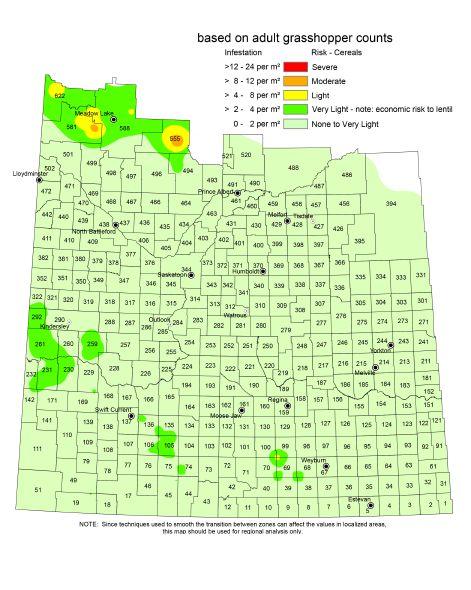
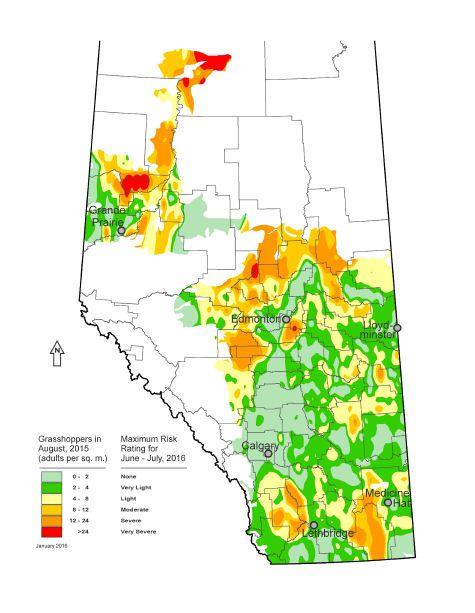
The 2016 Saskatchewan Grasshopper Forecast map indicates low risk for most regions of the province. Several areas on the map are identified as “very light” risk in southern and west central regions. The highest risk appears to be in the north, where light to moderate infestations were noted west of Meadow Lake and near Big River.
The risk of economically significant grasshopper populations in 2016 has increased in northern central Alberta and the Peace region. In some cases the populations in 2015 were very severe. Southern parts of central Alberta are highly variable with several areas that could cause problems in 2016.
The grasshopper risk had been increasing in southern Alberta for the last few years and although populations in southern Alberta are generally lower, several areas remain with significant risk, notably in Forty Mile (and parts of Cypress) and Willow Creek (and western Lethbridge) Counties but the overall population in southern Alberta could translate into grasshopper problems if conditions are favourable in the spring.
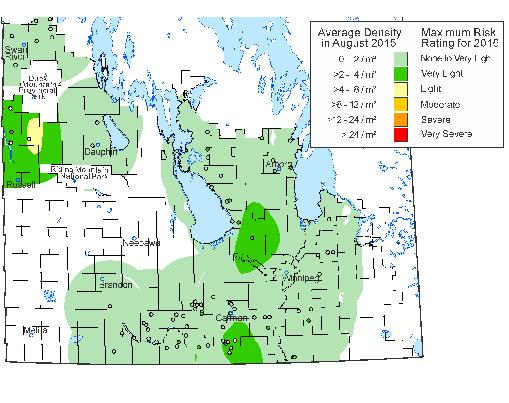
In Manitoba, grasshopper populations were generally low in
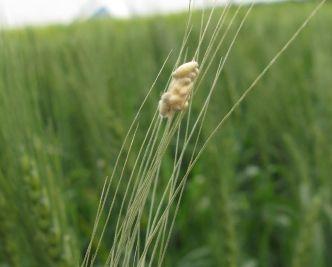
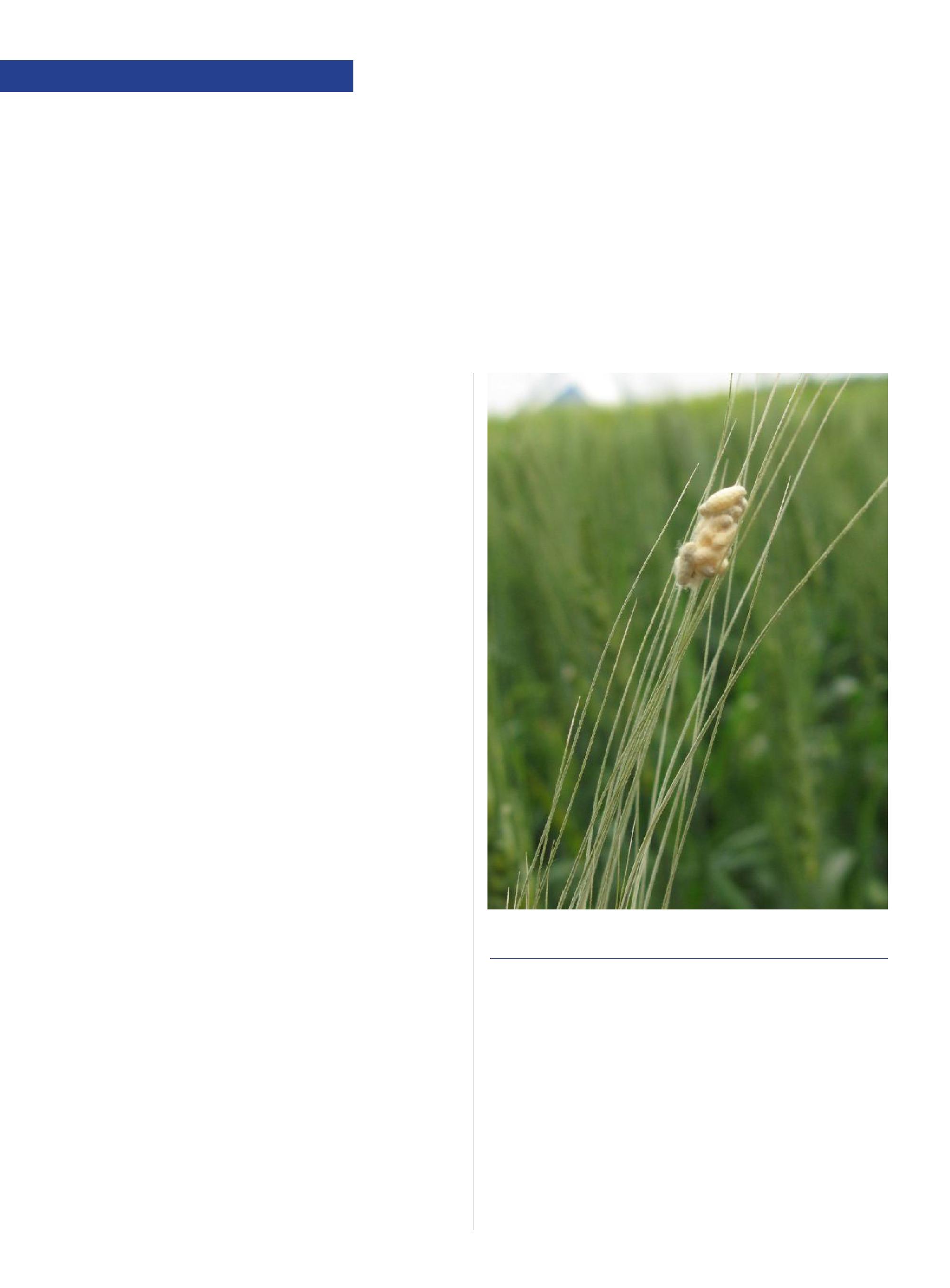
Clusters of pupal cases of Cotesia became noticeable on the head of cereal crops.
the August survey, indicating a reduced risk overall of economical levels of grasshoppers. Highest average counts were in northwest Manitoba, but even these were in the light risk range. However, farmers and agronomists are still encouraged to monitor field edges and areas where grasshopper emergence is known to be highest in June to gauge what levels are like in preferred egg laying sites.
Aphids were reported in various crops throughout Saskatchewan from mid-July and into August. Hartley says the first reports were in lentil in the southwest. Pea and lentil were the most common crops infested but canaryseed (south) and fababean (northeast) also had high populations of aphids in some areas.
Scott Meers, provincial entomologist with Alberta Agriculture and Forestry, says some aphids were observed in 2015, although not at eco-
PHOTOS COURTESY OF JOHN GAVLOSKI, MAFRD.
NITROGEN THAT RESPONDS TO YOUR PLANTS’ NEEDS
Saskatchewan 2016 Grasshopper Forecast
Manitoba 2016 Grasshopper Forecast Alberta 2016 Grasshopper Forecast
nomic levels. Aphids also did not reach economic levels in cereal crops in Manitoba. Aphid infestations are not predictable because some species, such as those that feed on cereal crops and soybeans, blow in on the wind.
Canola pests
In Saskatchewan, Hartley says the warm and especially dry spring resulted in some of the highest flea beetle pressure observed in canola and mustard crops in several years. Although temperatures were higher during the day, dry conditions and low overnight temperatures resulted in slow growth and more vulnerable seedlings. Since seed treatments have a limited period of efficacy, foliar insecticides were required in some cases.
Flea beetles in canola were also a concern in Manitoba in 2015, Gavloski says. While the use of seed treatments to manage early-
season flea beetle populations continues, feeding damage to young plants at or above threshold levels and additional use of foliar insecticides was quite common. Some canola fields were reseeded because of high levels of damage from flea beetles, or a combination of flea beetle feeding and other stresses on the plants.
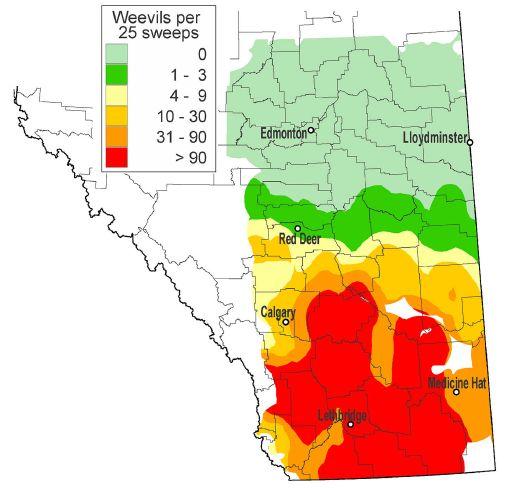
Meers says the cabbage seedpod weevil continues to expand its range. South of Highway No. 1 is the primary area, but it moved north of that in 2014 and was found in the Lacombe area in 2015, although not at threshold levels.
“If your canola field is first into flower, it will have higher risk,” Meers says. “If you farm south of Red Deer, scout as your canola comes into flower.”
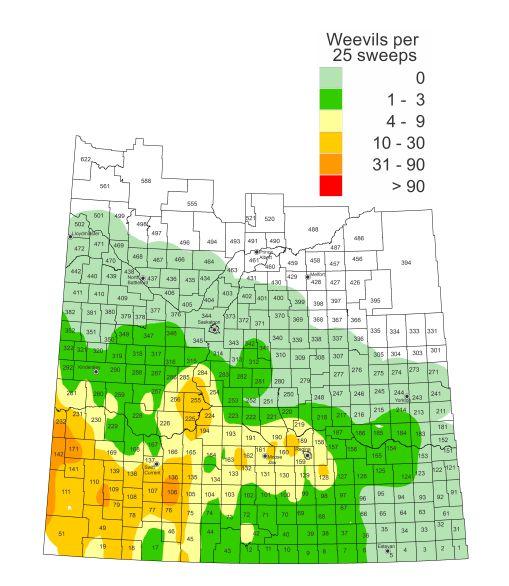
In Saskatchewan, the cabbage seedpod weevil is also expanding its range north and east of the southwest, where severe infestations are still most notable. In 2015, insecticide application for control of the cabbage seedpod weevil was reported across the south to east of Regina. Infestations north of the South Saskatchewan River are nearing economic levels but control has not been as common as in the south, Hartley says.
Diamondback moth blows in every year from the U.S. and adult moths are monitored with pheromone-baited traps. Generally, populations were low across the Prairies.
Bertha armyworm populations were low and uneconomical across the Prairies. Meers says the numbers are really down but that farmers and agronomists should continue to monitor for the insect, as the numbers start to rise the year before an outbreak.
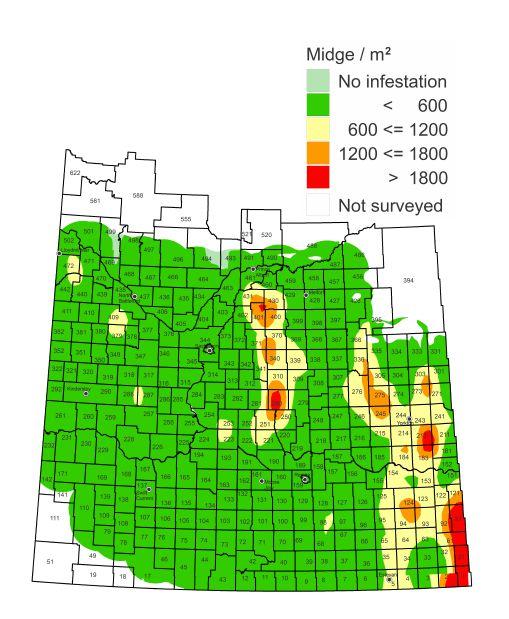
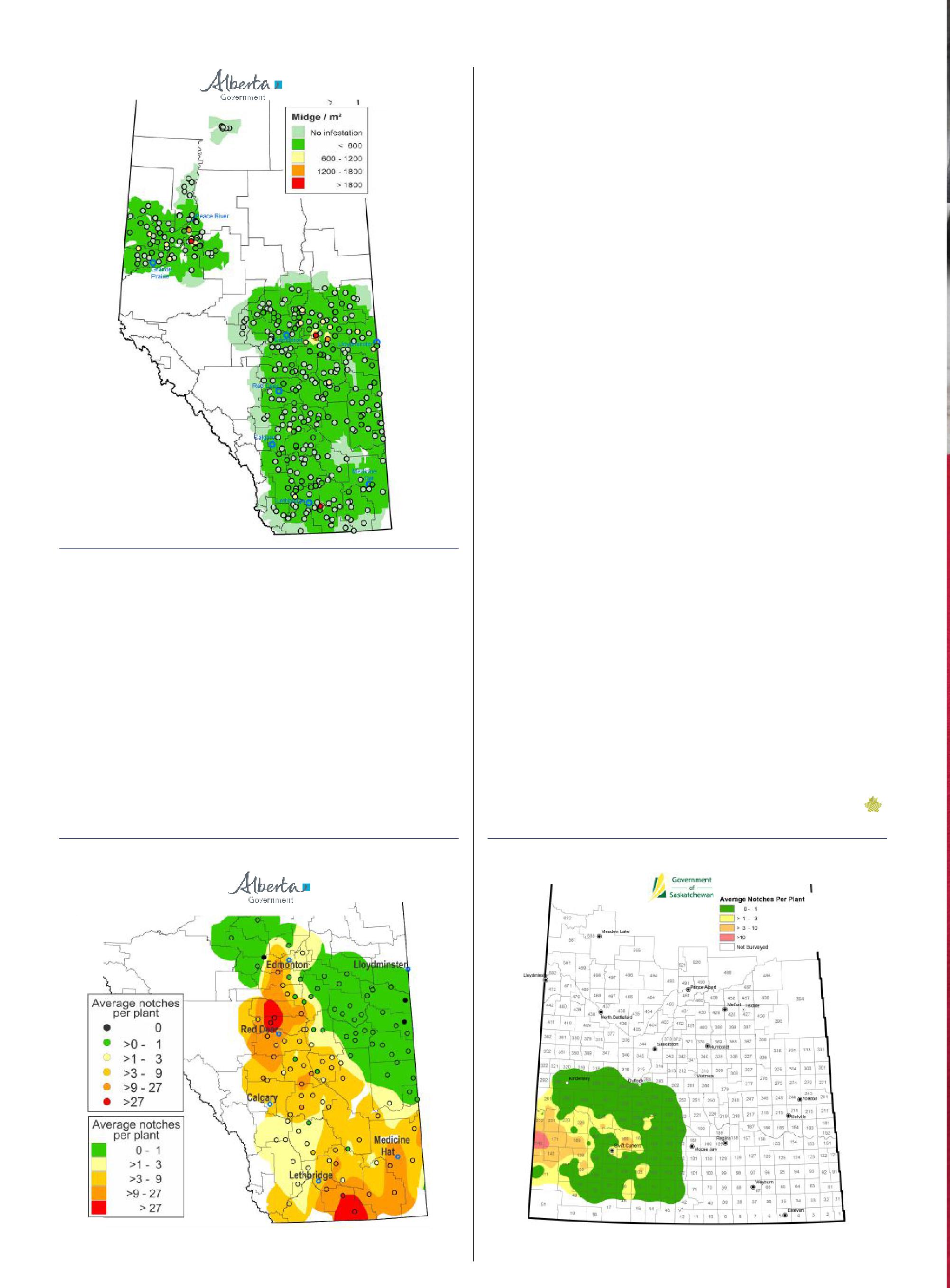
Swede midge was first identified in 2007 in northeast and east central Saskatchewan. Agriculture and Agri-Food Canada (AAFC) continues to study the insect to determine distribution, damage and potential management options for this pest in Saskatchewan. Distribution of the swede midge is surveyed through visual inspections and with pheromone traps. The insect was found in canola fields across the northern regions from Nipawin and Carrot River in
the east to areas around Lloydminster. The highest populations still appear to be in the northeast area of the province. Actual yield loss due to the swede midge in Saskatchewan has yet to be determined.
Swede midge was not detected in traps in Manitoba. Low levels of larvae were found in flower buds in less advanced canola in the northwest in mid-August. Farmers and agronomists in Alberta along the border near Lloydminster should scout their crop for swede midge.
Hartley says high populations of cabbage butterflies were reported across Saskatchewan in early August. They are not considered to be a problem on canola if plant growth is healthy and the larvae are not feeding on pods. However the extremely high numbers were a concern, especially in commercial cruciferous vegetable production.
Cereal pests
Spraying for wheat midge was reported primarily in the areas identified in the Saskatchewan 2015 wheat midge risk map, in the southeast and east central regions. In Manitoba, wheat midge was generally not a major concern in 2015. The only reports of insecticide applications for wheat midge were from western Manitoba, and only for a small amount of acres. In some regions, a lot of wheat was already flowering by the time of wheat midge emergence.
Low levels of wheat midge were observed in Alberta. Meers says irrigated wheat is a concern in 2016, especially if wheat rotations have been tight. Later seeded wheat is also of concern, especially if the weather is wet in 2016. The wheat midge forecast map for 2016 shows an overall low level of wheat midge across Alberta.
The 2016 Saskatchewan wheat midge forecast map indicates high risk for wheat midge infestations, especially in southeast Saskatchewan. The area of high risk extends north, into the east central region of the province. Pockets of moderate to high risk were also identified around Prince Albert and south around Birch Hills (RM 431) through to Nokomis (RM 280).
Wheat stem sawfly populations were low in 2015, although there was a slight increase in infestations in Alberta. The area at risk of economically significant sawfly populations in 2016 will be limited to only a few areas in Alberta. The 2015 field margin survey shows low populations in most of the area surveyed, including the traditional sawfly areas in the Special Areas and Forty Mile County. Meers says cereal leaf beetle continues to be found in Alberta, but infestations continue to remain below the threshold of one beetle per flag leaf. The parasitoid Tetrastichus julis seems to be keeping the population below threshold. Meers cautions that farm-
Saskatchewan 2015 Cabbage Seedpod Weevil Survey
Saskatchewan 2016 Wheat Midge Forecast
ers should resist the temptation to spray if populations are below threshold, as that can harm the parasitoid population.
No economic populations of cereal leaf beetle were reported in Manitoba; however, the known range of cereal leaf beetles continues to expand east through the central region of Manitoba. Establishment of Tetrastichus julis populations in Manitoba continues, and it appears this biocontrol approach is working. Cereal leaf beetle has been found in southwest Saskatchewan and in the east near Langenburg and Moosomin where parasites have been released, but no significant infestations were noted in 2015.
Gavloski says armyworms were a concern in many small grain fields. Most of the insecticide applications for armyworms occurred in July; by the end of July larvae were pupating and no longer an
issue. In some fields it was the lodged areas where armyworm populations were high. Some head clipping in winter cereals was noted. There appeared to have been very high levels of a parasitoid of armyworms, a species of wasp called Cotesia. Clusters of pupal cases of this parasite, which were often misidentified as eggs, became very noticeable on the heads in many cereal fields in mid-July.
Overall, populations of European corn borer appeared higher in 2015 than the past few years in Manitoba, and their presence was noted from several crops. Some insecticide applications to corn for corn borer management occurred in the central region.
Pests of pulses
Overall, the level of pea leaf weevil feeding damage was lower in 2015 in Alberta. This is especially true in southern Alberta but experience has shown the level of pea leaf weevil activity observed is sufficient to cause significant damage if conditions are favourable in the spring of 2016. The most severe damage in 2015 was in areas southeast of Lethbridge and in central Alberta in Red Deer and Lacombe Counties. For any producers south of Highway 9 and along Highway 2 up to Leduc, there is risk of damaging levels of pea leaf weevil in 2016.
In addition, in 2015, significant pea leaf weevil damage in Alberta was seen on fababeans in a much larger area than shown in this survey on field peas. This insect causes as much or more damage on fababeans. The true economic damage of this insect on both peas and fababeans on the higher organic matter soils of central Alberta is not well understood.
The highest levels of damage in Saskatchewan were identified north of Maple Creek near the Alberta border, with moderate damage noted to the east and in the Swift Current area. Low levels of damage were noted as far east as RM 163 (Mortlach area). Slight damage was noted up to the South Saskatchewan River but not on the north side.
In Manitoba, Gavloski says soybean aphids started to be noted in very low levels in soybean fields in mid-July. Populations got to economic levels in some soybean fields in eastern and central Manitoba in August and some insecticide applications were needed. High levels of natural enemies of soybean aphids were noted in some fields.
Alberta 2015 Pea Leaf Weevil Survey
Saskatchewan 2015 Pea Leaf Weevil Survey
Alberta 2016 Wheat Midge Forecast
DEVELOPING MICRONUTRIENT RECOMMENDATIONS
CONTINUED FROM PAGE 15
Iron
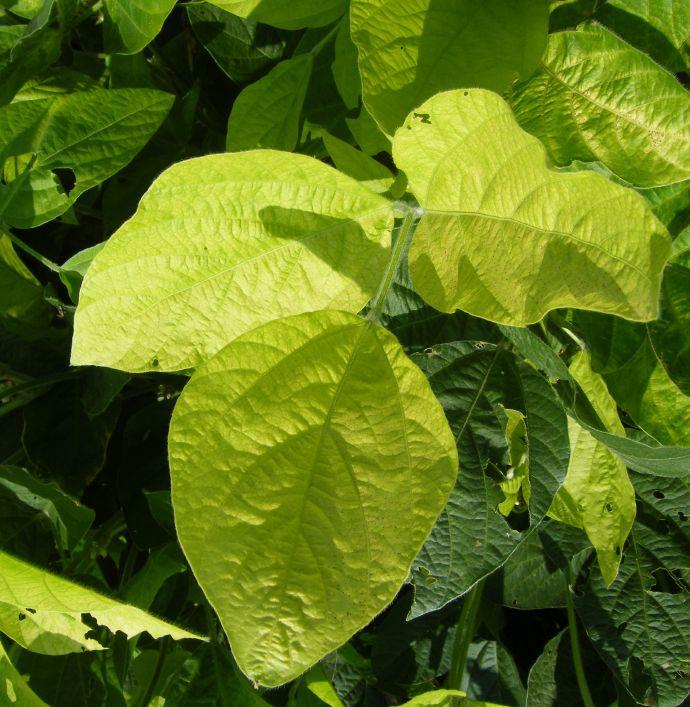
Iron deficiencies have rarely been observed in field crops in Western Canada. Soybean is a relatively new crop to the Prairies and is particularly sensitive to low soil iron levels. An iron soil test below 3.0 ppm is considered very low and at 3.0 to 5.0 ppm is considered low. These critical levels need western Canadian field research to be verified. Deficiency symptoms with soybean most commonly occur in cool, wet spring conditions. However, research in the U.S. has found the DTPA test is not well correlated to iron fertilizer response. U.S. research generally has found a foliar application of 0.15 lb/ac is recommended versus a soil application for soybean. Note that in the spring as the season warms up, soil iron tends to become more available to the crop and may grow out of the deficiency.
Manganese
Manganese deficiencies may occur on organic soils and high pH mineral soils. Deficiencies are rare but can potentially occur during cool, wet conditions in spring. Oats are more susceptible to a manganese deficiency than other cereal crops. Organic soils with a high pH are more likely to respond to manganese fertilizer. Only limited information is available on manganese fertilization. As a rule, broadcast applications are less effective. For cereals, a seed placed treatment of manganese sulphate may be more effective. Foliar application can also be used if deficiency symptoms develop during the growing season.
Zinc
Zinc deficiencies tend to occur on soils that are calcareous, have a high pH, are sandy in texture and/or have relatively high soil phosphorus levels. Deficiencies tend to occur in spring when conditions are cool and wet. In southern Alberta, irrigated field beans have responded to applications of zinc particularly on sandy soils. Zinc deficiencies have been suspected in some irrigated cornfields in southern Alberta, but research trials have not confirmed this. Response to added zinc may occur on eroded or machine leveled soils or soils that have had large amounts of
added phosphate fertilizer.
For soils that test low in zinc where a sensitive crop such as beans, corn or wheat is grown, a band application of 2 to 5 lb/ac of zinc sulphate or 0.5 to 1.0 lb/ac of a chelated zinc is suggested. When zinc deficiencies are suspected early in the growing season, a foliar application of 0.5 lb/ac of zinc sulphate can be used. On eroded soils, a 5 lb/ac broadcast incorporated application of zinc sulphate can be tried.
It is important to keep the need for micronutrient fertilizers in perspective. Many farmers have applied micronutrients in the hope of increasing crop yields even though there is little evidence to suggest a deficiency exists.
Farmers with fields testing very low or low in a micronutrient are encouraged to apply the nutrients in carefully laid out, replicated test strips. These strip treatments must be carefully marked out for
comparison to adjacent control strips. Visual comparisons and yield measurements should be made to confirm if a yield benefit actually occurred.
There is no doubt soil micronutrient levels will gradually decline as cropping continues. As soils continue to be cropped, micronutrient deficiencies may become more common as available levels of some elements are depleted. Fortunately, most Prairie soils are currently well supplied with micronutrients. Soils and crops in Western Canada that require micronutrient fertilizers are the exception, not the rule. Care must be taken to keep the need for micronutrient fertilizers in perspective and not to promote them beyond their true significance.
Soybean is particularly sensitive to low soil iron levels.
Quality meets quantity.
In addition to providing an exceptional yield increase, Prosaro® fungicide protects the high quality of your cereals and helps ensure a better grade.
With two powerful actives, Prosaro provides long-lasting preventative and curative activity, resulting in superior protection against fusarium head blight, effective DON reduction and unmatched leaf disease control.
With Prosaro you’ll never have to settle for second best again.