If your fungicide doesn’t maximize plant health at flag leaf, that’s a red flag.
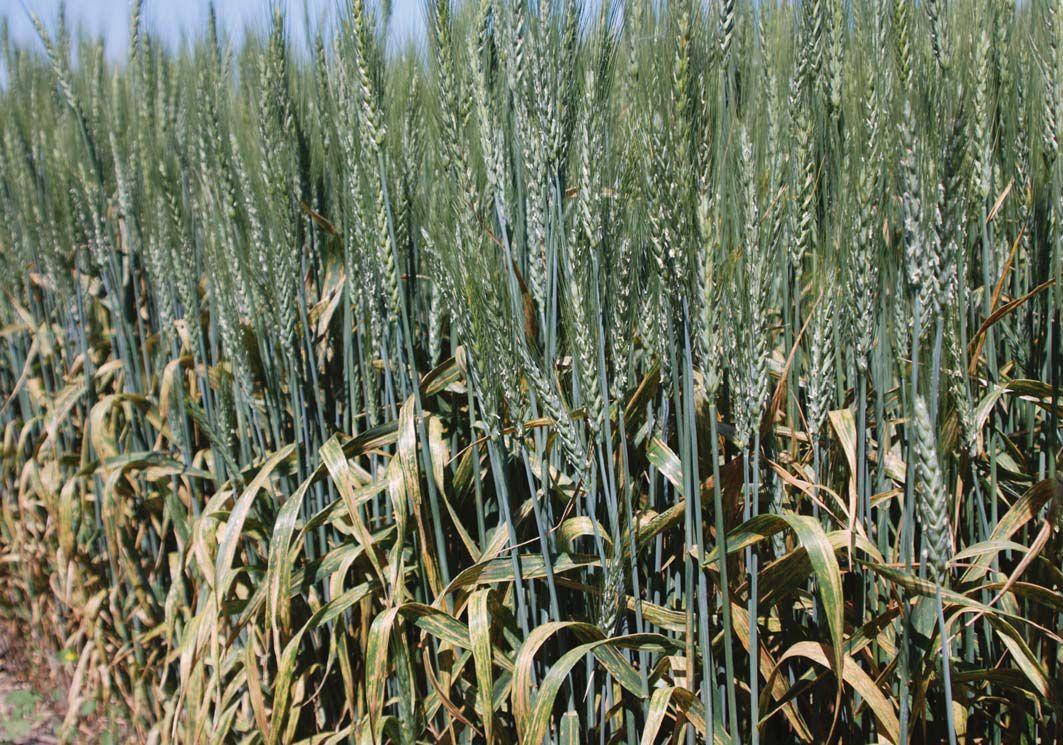
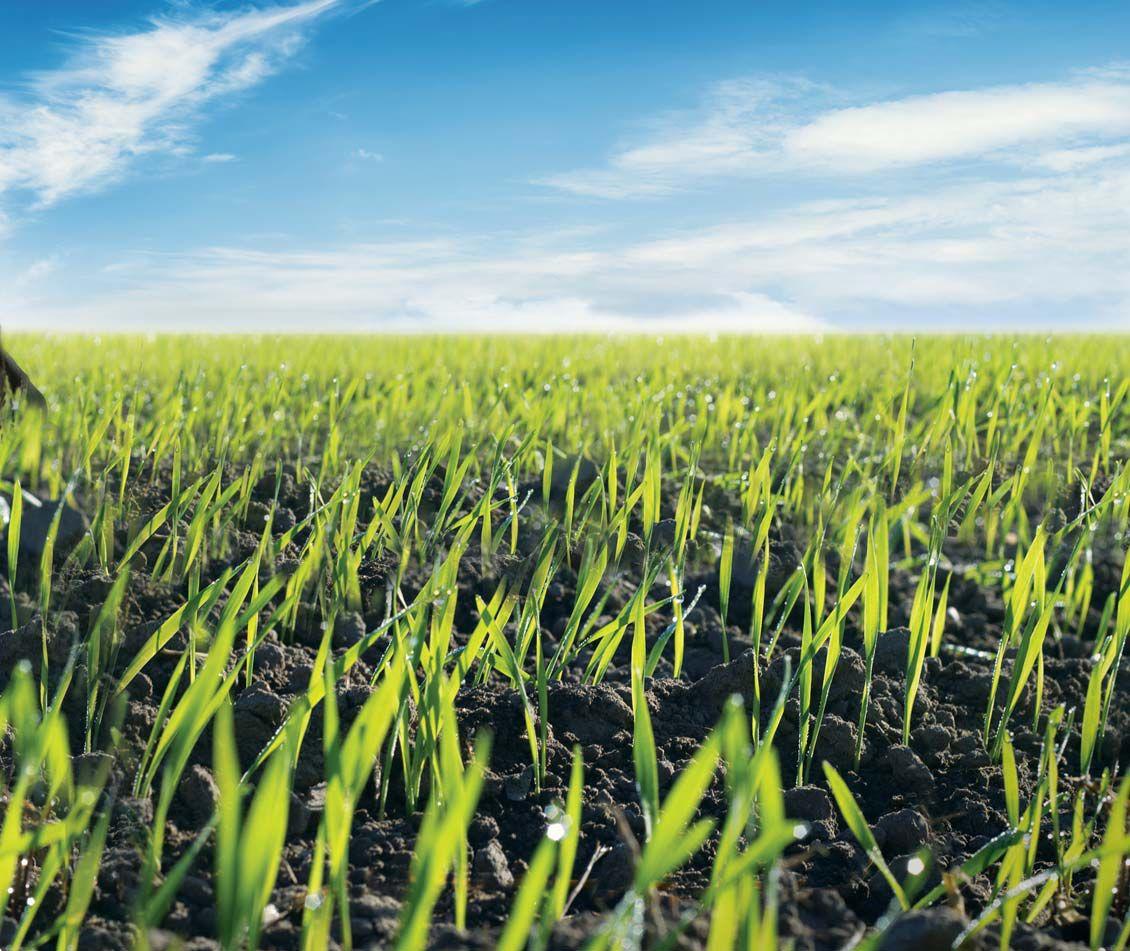
Every crop has its moment to shine. For cereals it’s at the flag-leaf stage, where up to 65% of the crop’s yield potential is determined. That’s where Twinline® fungicide comes in. It controls key diseases in wheat like septoria leaf spot, tan spot and rust at this critical stage. And Twinline goes beyond protecting plant health by actually boosting it with the unique benefits* of AgCelence®—greener leaves and stronger stems resulting in higher yield potential**. Find out how a healthier flag leaf can lead to a banner year at harvest time. Visit agsolutions.ca/twinline or call AgSolutions® Customer Care at 1-877-371-BASF (2273).
6 | Research initiative sets platform for triticale development
This minor crop has major potential. By Carolyn King
Triticale: Poised for the future
Carolyn King
Insect update and forecast 2014
Bruce Barker
Bruce Barker
Bruce Barker
Bruce Barker
26 | Survey highlights the extent of the herbicide-resistant weed issue
Resistance is widespread and expanding. By Bruce Barker
Wet weather increases soil salinity
Julienne Isaacs
22 Seeding canola with a corn planter: The way of the future?
Madeleine Baerg
Changing climate challenges crop producers
Madeleine Baerg
52 Take another look at fababeans
Madeleine Baerg
46 | Rotate clubroot resistant varieties
Stewardship of clubroot resistance in canola is crucial. By Carolyn King Readers will find
Soil and crop research in Western Canada By Ross H. McKenzie PhD, P. Ag.; Retired Agronomy Research Scientist OPINION 54 Our view By K. Neil Harker, John T. O’Donovan, Robert E. Blackshaw, Hugh J. Beckie, C. Mallory-Smith, and Bruce D. Maxwell
Resistance is futile
Janet Kanters
PHOTO
JANET KANTERS | EDITOR
I’ve been hearing a lot, and seeing so many stories about, herbicide resistance over the past few years that I just have to throw up my hands in defeat. For you, Canada’s top crop producers, I can only imagine how frustrated you are with this serious crop management challenge. Indeed, it seems that resistance to herbicide resistance is futile, just like it was futile to resist the Borg in the Star Trek series.
On the Prairies, Group 2-resistant kochia populations started to develop shortly after these herbicides became available, with the first confirmed cases in southern Saskatchewan and southern Manitoba in 1988, and in southern Alberta in 1989. By 2007, surveys throughout the Prairies indicated that about 90 per cent of the kochia populations were Group 2-resistant.
Today, kochia is not the only Prairie weed with herbicide resistance, and glyphosate is not the only herbicide that Prairie weed species have overcome. With the increasing spread of herbicide resistance, crop growers today face higher weed control costs and, if they run out of herbicide options, the possibility of yield losses, quality losses and loss of preferred crop options.
At the outset of herbicide resistance rearing its ugly head, it seemed simple enough to switch to a different herbicide to combat a problem weed. But simply switching to a herbicide that has a different active ingredient but is still in the same herbicide group is a short-term option at best. Indeed, weeds are now quickly developing resistance to other herbicides within the same group.
Dr. Hugh Beckie, research scientist at Agriculture and Agri-Food Canada (AAFC) who specializes in herbicide-resistant plants, has been studying herbicide resistance extensively, leading surveys to try and map the extent and spread of the issue on the Prairies. Based on those surveys, Beckie estimates that 29 per cent of total annually cropped land on the Prairies is infested with herbicide-resistant weeds covering a total field area of 9.9 million hectares – 37 per cent of all cropped land. The actual area infested with herbicide resistant weeds has increased eight times, while the total field area affected has doubled.
In this issue of Top Crop Manager, we feature several stories that focus on herbicide resistance and leading research done by Beckie and others over the last decade. This series of stories begins on page 26.
With spring just around the corner, managing those emerging problem weeds will be top of mind for producers. The best prevention, according to weed management specialists, is to change the selection pressure that is put on weeds every year. That includes such key practices as rotating crops and rotating herbicide groups, using herbicide mixtures with two modes of action, and using cultural control measures. And scout after you spray to look for weeds that might be resistant so you can tackle the problem before it explodes.
We may never see the end of herbicide resistance in our lifetime, but we don’t have to be assimilated by it. Good crop and weed management is within our grasp.
PRESIDENT Michael Fredericks mfredericks@annexweb.com
RETURN UNDELIVERABLE CANADIAN ADDRESSES TO CIRCULATION DEPT. subscribe@topcropmanager.com Printed in Canada
CIRCULATION e-mail: subscribe@topcropmanager.com
SUBSCRIPTION RATES
February, March, Mid-March, April, June, September, October, November, December
February, March, April, September, October, November, December
Potatoes in Canada 4 issues Spring, Summer, Fall, Winter
www.topcropmanager.com
Your crops will eat this stuff up. ESN® SMART NITROGEN® has a unique controlled-release technology that provides season long nourishment to your crops, typically with a single application. The polymer coating reduces the risk of nitrogen loss to the environment, and allows you to apply ESN at up to three times the seed-safe rate of urea. Best of all, it improves crop quality and yield. Get the facts from your retailer, or visit SmartNitrogen.com
PLANT BREEDING
by Carolyn King
After a major research and development initiative, triticale now has a solid foundation for diverse potential uses of its grain and straw. This high-yielding, low-input crop is currently taking off for livestock uses and seed production on the Prairies. And it has strong appeal for growers who enjoy the challenge of building their own market opportunities.
Advances toward new uses
Despite the crop’s many positive attributes, triticale acres on the Prairies have remained relatively low. However, the Canadian Triticale Biorefinery Initiative (CTBI) recognized that this minor crop has major potential.
This initiative, which started in 2006, is aimed at developing triticale as a dedicated industrial crop. The CTBI involved about 60 professionals, including scientists, engineers and industry developers, from 11 agencies. During its seven years, the CTBI received over $20 million in funding; most of that was from the Agricultural Bioproducts Innovation Program of Agriculture and Agri-Food Canada (AAFC) and the Alberta Agricultural Research Institute (now Alberta Innovates Technology Futures), along with some funds from agencies participating in the initiative.
The CTBI’s 29 projects focused on six themes. Many of those themes involved topics related to “biorefining” – manufacturing processes for converting agricultural and forestry feedstocks into valuable products. These themes included studies of primary, secondary and tertiary processes to turn the crop into fuel, industrial chemicals, composite materials and other uses, and an evaluation of the commercial potential of these new possibilities. Other themes focused on breeding considerations related to developing varieties with enhanced qualities for specific end uses and superior agronomic performance.
Dr. François Eudes of AAFC, a founder and co-leader of the CTBI, highlights a few examples of the initiative’s many achievements: “First of all, it built a network of scientists and raised the interest in this crop. That was especially important because triticale is not a commodity in the sense that wheat and barley are, so there is no check-off collected to reinvest in triticale research.
“The CTBI’s biggest impact was to increase our knowledge of all aspects of the plant species and its use. For example, we
generated a lot of information about triticale’s use in the feed industry and especially in ethanol and feed. A number of our publications described the benefits of triticale over other Prairie grains for ethanol production as well as DDG, dried distillers’ grain [a co-product of ethanol processing], for feed for dairy cattle, beef cattle and swine.
This minor crop has major potential.
PHOTO
Triticale is a high-yielding, low-input crop.
“And we discovered many properties of triticale for various industrial uses. For example, we learned that triticale straw is easier to pulp and bleach than other cereal straws, softwood or hardwood, and we learned more about the properties of the pulp produced. Another example is the use of the straw for manufacturing of composites. Two different groups have worked on that, coming up with recommendations and formulations on how to use triticale straw for thermosets or composites.
“We also learned much more about triticale’s biology. We supported our breeding programs, and new varieties were released, like the spring triticales Sunray and Brevis, which are the highest yielders in the Prairies as well as having the best disease packages. And we learned much more about triticale agronomy so we can give better advice to growers.”
or non-GM. To look into biosafety questions related to that, Dr. Linda Hall at the University of Alberta studied pollen flow, seed dispersal of genes and other issues. So we now have a biology document that could be handed to the Canadian Food Inspection Agency [which regulates plants with novel traits] if we were to proceed with triticale plants with novel traits,” says Eudes.
For grain grower Leo Meyer, one of the CTBI’s most important achievements was the creation of a research platform.
“The research platform is an established process and systems to breed a species. In an effective research platform, leading-edge knowledge, capacity and collaboration come together for a successful outcome, and in our case a proven successful outcome. Our platform can be used for breeding any other crop species. It’s world-class platform, including a combination of conventional
At the heart of plant health is a quality seed treatment. Trilex® EverGol™ seed treatment for pulses provides exceptional disease control and superior crop establishment.
Not only does Trilex EverGol provide exceptional protection from diseases like rhizoctonia and ascochyta, it also promotes overall plant health. The result is a higher performing root system, increased biomass and faster emergence, regardless of disease pressure.
To learn more about Trilex EverGol, visit BayerCropScience.ca/Trilex A strong pulse.
cereals, with corn’s diversity of uses but with greater environmental sustainability. Corn needs very good soils and lots of water and nutrients, whereas triticale can grow with much less water and nutrients. So triticale will be a much better fit in many parts of the world, especially on more marginal land.” He is also excited by other potential improvements to triticale – like the ability to inoculate the crop with bacteria to fix nitrogen or gather phosphorus from the soil – to make the crop even more sustainable.
Why triticale?
“Triticale, a hybrid of durum wheat and rye, takes advantage of some of rye’s productivity and ability to do well under drought conditions and fertilizer-limited conditions,” explains Dr. Jamie Larsen, a crop breeder at AAFC. “A number of projects completed through the CTBI show that triticale produces a large amount of biomass, a greater amount than wheat in some cases, and the grain yields for spring triticale are comparable to soft white spring wheat yields or higher. The ethanol yield is also quite high because there’s a fair bit of starch in the kernels.”
Larsen also notes triticale has good yield stability across a range of soil and climate conditions. Furthermore, compared to many other crops, triticale can get by with less fertilizer, it tends to need fewer herbicides because it can outcompete weeds, and it may need lower fungicide inputs because it is resistant to various diseases that are common on the Prairies.
“So the margin – the amount that you get for the grain minus the inputs – is much better for triticale,” notes Larsen.
Meyer, who farms north of Grande Prairie, Alta., is passionate about the value of triticale as an economically and environmentally sustainable crop option. He has been involved in triticale production since his childhood in Europe, and was one of the producers who founded the Alberta Oats, Rye and Triticale Association.
Meyer likes many of triticale’s production characteristics such as its high yields, disease resistance, competitiveness with weeds,
and harvestability, and its role in diversifying crop rotations. And he likes triticale from a marketing perspective. “It fits well with the marketing system we have on our farm, because it allows us to operate outside the conventional grain procurement system. Triticale is usually handled from a farm to a customer somewhere, domestically or internationally,” he explains.
“Also, triticale has many applications – biofuel, fibre, feed, food uses like special breads and as an alternative to rye in the distilling market. It’s a fantastic silage crop, and it is good for intercropping with crops like peas or oats for things like silage. And triticale, especially fall triticale, is excellent for livestock producers who want to underseed a tender type of grass.”
What’s ahead?
Although the CTBI has ended, Eudes says there is still some Canadian research on triticale, mostly on triticale biology, breeding and genetic engineering, being conducted at AAFC, AARD and some other agencies. He adds, “I still believe there is a huge potential for triticale as a dual-purpose crop. For example, the grain could be used for human food or livestock feed and the straw for an industrial end use, like pulping. Also the chemical industry is more and more interested in obtaining some of their chemicals from crops and forestry, so triticale could be well positioned there as well.”
The CTBI was originally intended as a 10-year initiative, and Meyer is very disappointed the funding has ended. However, he believes the CTBI has set the stage for a “bright future” for triticale. “Triticale could take off and become much more widely grown, depending on what markets emerge. But the economy and markets are changing all the time. For instance, the energy market is shifting. And if corn is not $7.50 anymore but $4 or $3.50, then that makes a difference to everything,” notes Meyer.
For more on plant breeding, visit www.topcropmanager.com.
PHOTOS COURTESY OF CTBI.
The Canadian Triticale Biorefinery Initiative included development of new triticale varieties.
Triticale has potential as a dual-purpose crop, with end uses for both the grain and the straw.
WHAT MATTERS MOST?
A strong farming business is always growing and as a young farm manager, so am I. I’ve participated in Syngenta workshops and I’m always impressed. Putting time, money and effort into things other than selling products proves that Syngenta sincerely wants to help farmers. And that’s refreshing.
Erica Sage, 4th generation farmer and farm manager, Sage Farms, Hussar, AB
ISSUES
Prairie agronomic research suffering.
by Ross H. McKenzie PhD, P. Ag.; Retired Agronomy Research Scientist
Soil and crop research scientists across Western Canada have focused on developing improved agronomic practices including sustainable crop rotations, development of direct seeding technology, development of fertilizer and nutrient management practices and improved management to control weeds, insects and diseases.
Researchers across Western Canada and innovative Prairie farmers are setting the standard for the world in soil conservation management practices. In the past 25 years, many Prairie farmers have gradually adopted new research technologies including direct seeding of crops, which is a very sustainable cropping practice. This has led to greatly reduced soil erosion problems and improved soil conservation. Research has shown that soil organic matter levels are increasing by utilizing direct seeding management and this in turn improves soil fertility and nutrient levels.
Soil and crop scientists continue to work with farmers to focus on ways to protect and improve the land and increase crop production potential. Long-term research by the University of Alberta at the Breton Plots has been ongoing since 1930. The Agriculture and Agri-Food Canada (AAFC) Research Centre at Lethbridge has a number of long-term
cropping trials, some that were established in 1911. Research by Alberta Agriculture and Rural Development (AARD) at the Bow Island Substation established in 1991, has clearly demonstrated that reduction of summerfallow frequency, adoption of direct seeding, use of commercial fertilizers, improved weed management, inclusion of forage crops and pulses in crop rotation are all important to making farms more profitable and to make farming practices more sustainable.
Soil and crop research has provided tremendous value to understanding the effects of different cropping systems on soil quality and increased crop production. It is absolutely critical we continue to conduct long-term cropping system research to understand the effects of agricultural practices in the various agro-ecological (soil and climatic areas) across the Prairies.
Sadly though, the level of soil and crop research in Western Canada has been slowly diminishing. The number of research scientists employed by AAFC has declined by almost half in the past 30 years.
ABOVE: Agronomic research is required to provide efficient, long-term sustainability.
In spring 2013, AAFC announced potential staff layoffs of 125 people across Western Canada. That represents 10 per cent of the Western Canada AAFC staff. AAFC’s Research Centre at Winnipeg would be closed and substations at Stavely and Onefour in Alberta would be closed. Downsizing and staff reductions at AAFC are not new. In 2012, AAFC staff was reduced by 150 people in Western Canada.
In 2002 in Alberta, almost half of the former plant industry division research staff with AARD were laid off or redeployed. They were responsible for the soil and crop research across Alberta by the provincial government. At the same time, AARD crop extension staff were reduced from 45 to eight staff and further reduced to two staff by 2010. Crop research and extension in Alberta has suffered severely in the past 12 years.
In Alberta, farmers spend over $750 million annually on fertilizer. However, limited fertilizer research is ongoing in Alberta that is proportional to fertilizer use. AAFC does not have even one research scientist in Alberta dedicated to soil fertility and fertilizer research. At one time, industry took an active role in fertilizer research in Alberta. For example, Westco had a strong research program conducting fertilizer research
in Alberta, as well as in Saskatchewan and Manitoba. However, this research program was terminated nine years ago. AARD had five researchers that conducted soil and fertilizer research across Alberta prior to the 2002 downsizing. After 2002, there has only been one person to conduct and co-ordinate fertilizer research for the entire province. The University of Alberta has several staff that conduct some fertilizer research, but it is mostly restricted to the Edmonton area and the university does not conduct province-wide fertilizer research.
Prairie farmers are being bombarded with new yield increasing products and practices. Scientific information often has not been conducted with new products to allow farmers to know if and when a new product or practice may result in an economic yield increase. With changes in Canada’s Fertilizer Act, registration is not required for new products. Great claims now seem to be made for various crop growth promoting and yield boosting products, micronutrient seed treatments, micronutrient fertilizers, various in-crop fertilizer practices and variable rate fertilization. For many products and practices, farmers end up using the “by guess and by golly” method to
ANOTHER STELLARTM PERFORMANCE.
find out if a product or practice works or not. More often than not, farmers learn costly lessons when products don’t work as promised.
There is a real need for well-coordinated soil fertility and fertilizer research across Western Canada in the various unique soil and climatic areas of the Prairies. Research must be conducted by well-trained soil and agronomy researchers with AAFC, universities and provincial departments of agriculture. Agronomy research programs need to be adequately funded, have qualified technical staff, and have up-to-date field research and laboratory equipment. Researchers should not be expected to go on bended knee to research funding agencies to do “piecemeal” research – researchers should have adequate long-term funding so they can focus on research and extend their research results to farmers and industry agronomists.
For farmers to make informed decisions on the 4R’s of their fertilizer management, they need access to up-to-date research information to know when crops will or will not respond to various types of fertilizers, the optimum rates, best placement and right application timing. Having this type of information is critical for farmers to determine what
fertilizer practices are economical.
Information needed by farmers does not end at fertilizer management. Prairie-wide focused agronomy research is needed for crops in all agro-ecological areas of the Prairies. Weed, insect and disease management are important research components that need Prairie-wide co-ordinated research. Long-term crop rotation and cropping system studies are important to understand the interactions of various practices and inputs. Even basic agronomic research examining optimum seeding times and seeding rates of crops grown in each agro-ecological area need to be constantly re-evaluated and updated.
Remember that Agronomics + Economics = Optimum Crop Production! Now more than ever, if Prairie farmers are going to continue to manage their operations sustainably and profitably, they need excellent, unbiased and reliable agronomic field research that pertains to their local region. Coordinated agronomic research conducted across the Prairies is essential to achieve this goal. Soil and crop research across the Prairies needs to receive much greater attention and support to ensure a strong agricultural sector in the future.
Top-performing annual broadleaf weed control + superior resistance management.
• The best weed control performance in wheat, barley and oats
• Controls cleavers, buckwheat, chickweed, hemp-nettle, kochia, more
• Two modes of action, three actives, overlapping control
• Get all the benefits of Stellar in your oats too
Go to cerealsolutions.ca or call 1.800.667.3852.
Download the 2014 Field Guide App from the iPhone App Store or at Google Play.
SOIL AND WATER
Following several wet years, growers may be facing increased soil salinity, but there are several options to combat the problem.
by Julienne Isaacs
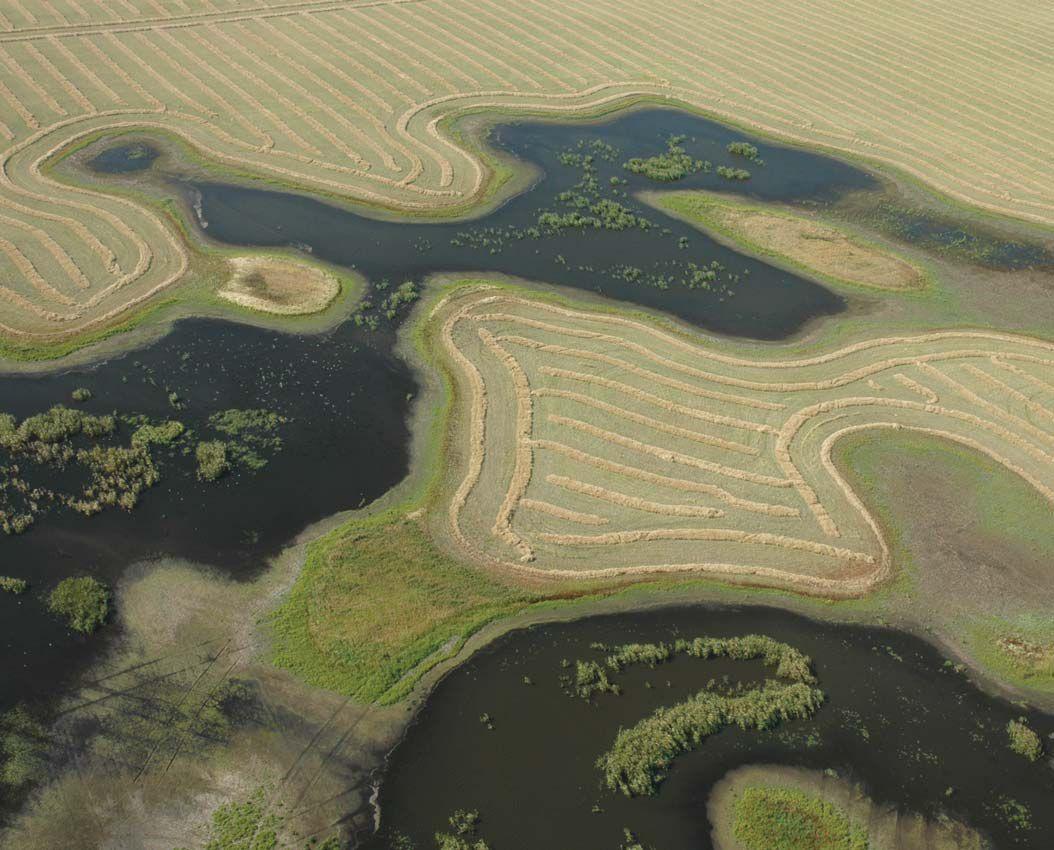
There is a direct causal relationship between rising water tables and increasing soil salinity in Western Canada. Dryland salinity results in susceptible soils when excessive rainfall elevates salt-laden groundwater, the water contained in the soil and substra. This water then moves into the topsoil through the process of capillary action, where it evaporates, accumulating salt that can negatively impact plant growth.
According to Rob Dunn, agricultural land management specialist with Alberta Agriculture and Rural Development (ARD), some prairie croplands are inherently susceptible to salinity due to their soil type, such as those soils that have developed on a shallow layer of glacial till over marine or soft bedrock.
Fields recognized by agronomists as being susceptible to salinity typically have depressions that are referred to as “saline seeps,” according to Dunn, while upland areas are usually less saline.
“During wet weather cycles there is more precipitation than the crop can use,” says Dunn. “That either runs directly into those low-lying areas, or percolates beyond the crop root zone in upland
areas, so we get that shallow groundwater buildup, and it migrates into the seep areas, carrying additional soluble salt with it.”
Depending on the field slope, the salt-affected area can extend some distance from the actual seep, but may not be visible as a “salt crust” on the soil surface. But Dunn says that this salinity can often be found 20-30 centimetres into the soil in the surrounding landscape. This so-called “hidden salinity” can negatively impact crop growth.
Crops such as beans, peas, lentils, corn and potatoes are the hardest-hit, according to Dunn, while cereal crops, canola, mustard and flax are somewhat more tolerant to salinity. Research in controlled conditions has shown progressive yield declines with increased salinity for all crop types.
While the main concern in saline soils is plants’ inability to CONTINUED ON PAGE 24
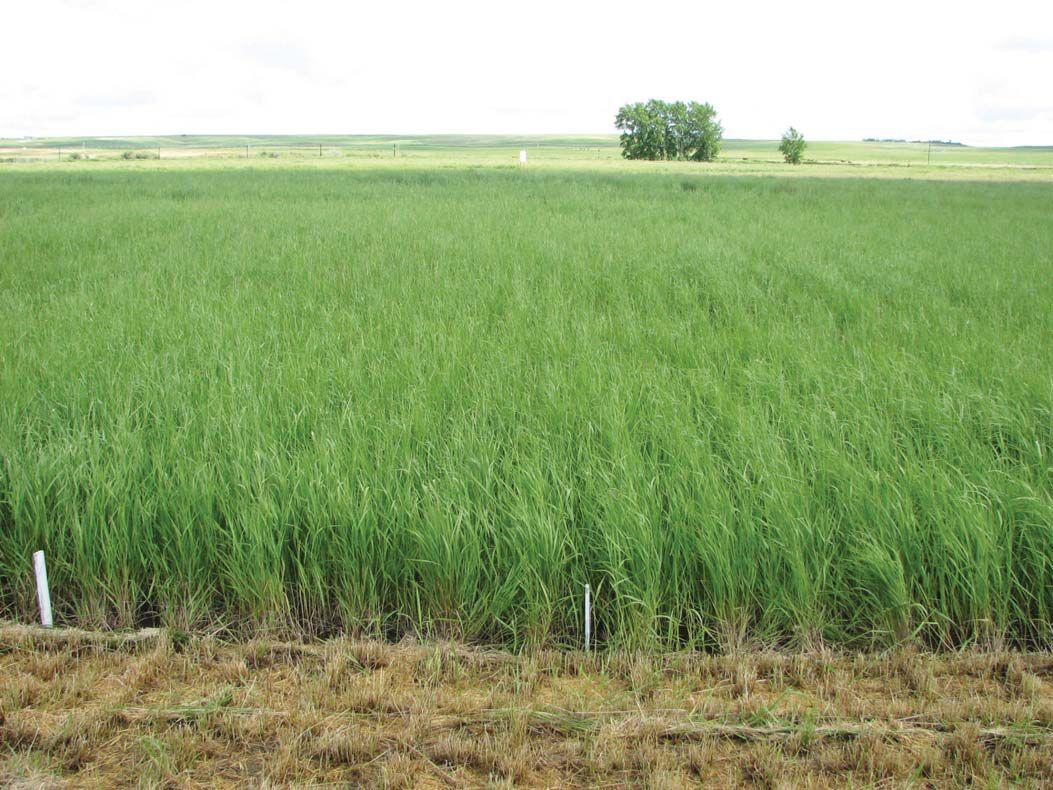
ABOVE: AC Saltlander green wheatgrass being grown in moderate to severely saline areas.
PHOTO COURTESY OF KEN WALL.
Assess the risk of growing warm season crops.
by Madeleine Baerg
Asuccessful crop is Mother Nature’s alone to give, but it is also hers to destroy – sometimes in just a few violent, hail- or flood-filled minutes; other times over weeks of drought or excess moisture. With climate scientists in agreement that Canadian Prairie winter and spring temperatures will rise between 2.5 and 4 C within the next 30 to 50 years, expect Mother Nature’s weather whims to be increasingly unpredictable. She’ll give more – there’s already been an average gain of more than 12 frost-free days per season since 1940 – but she’ll take more too: increasingly frequent extreme precipitation events like droughts, floods and hail will add a lot more uncertainty to Prairie crop production.
“How a changing climate will affect you depends on where you are,” explains Dr. Paul Bullock, head of the department of soil science at the University of Manitoba and a presenter at the
Manitoba Agronomist Conference in December 2013. “Here in Western Canada, a warming trend will help us on the one hand because we are currently limited by the length of the growing season and the number of available heat units. But, hand in hand with the warming trend will come much more variability in moisture conditions. We’ll have much longer drier periods spaced out between extreme moisture events. Variability is very difficult to manage, there’s no question about that.”
According to Andrew Nadler, an agri-meteorologist with Weather Innovations Consulting and co-presenter at the Manitoba Agronomist Conference, there are definitely some potential advantages to the warming trend. “A longer, warmer growing season will
ABOVE: Western Canada’s warming trend will come with much more variability in moisture conditions.
PHOTO BY JANET KANTERS.
certainly benefit ag production, and we may be able to grow crops that we haven’t grown before, like corn and soybeans in increasingly northern locations,” he says. “But with warmer temperatures, the air holds more moisture, which means there is more available to fall to the ground. Globally we’re seeing more extreme weather conditions and our expectation is that will only continue to increase. So, when our warmer temperatures are coupled with more droughts and more flooding, will that counter the benefits? There are definite unknowns at this point.”
These unknowns are especially big in Alberta, where drought is already a major issue for many producers. While Saskatchewan and Manitoba currently suffer only occasionally from drought, Alberta has little wiggle room for moisture, and any additional dryness could bring severe consequences.
“The levels of moisture stress in Alberta are much higher than in Manitoba. Our uncertainty about future moisture stress makes any forecast for soybean or corn, especially in Alberta, very speculative,” says Bullock. “Right now there are places in southern Alberta with heat units comparable to southern Manitoba, yet little or no grain corn is produced in Alberta. The reason is because of the drought risk.”
Since 1950, the maximum and minimum air temperatures across much of the Canadian Prairies have increased by about 2.5 C during the winter and about 1.5 C during the spring. Over these same years, snowfall has decreased across Western Canada; however, spring rainfall has increased. Projecting forward, scientists expect the rate of change to occur more rapidly.
“The reality is the climate has changed dramatically over decades, centuries, millennia. Change is normal. There’s no question change is happening in the form of a significant warming trend. Will it continue? Will it speed up or level out? Those are fair questions,” says Bullock. “There are dozens of general circulation models that take the known conditions of the past 100 years and roll them forward based on conditions and circulation patterns, and none of these models project any cooling off. Some are projecting tamer changes, some are projecting much more extreme changes. A 2.5 to 4 C increase for the Canadian Prairies is not an extreme projection.”
Keep in mind that climate trends nev-
er move in a neatly linear, step-by-step manner. Though the temperature trend is on the increase, the only really important weather is the given year’s highly variable reality, not a multiyear trend.
“The trend is positive in terms of frostfree days, and as heat units creep up over time, you’ll find people willing to risk growing some crops that aren’t traditionally grown,” says Bullock. “But, if you look at historic year-to-year variability, frostfree days can vary by 20 to 30 days. The year-to-year variability is twice what the warming trend has offered. So, the trend in no way guarantees that you’re going to have success in a particular year. You could get lucky or you could get whacked.”
The addition of new-to-us crops is an important and welcome tool in the risk management toolbox. A season that starts late due to flooding or cool temperatures, for example, might be salvageable with more traditional, shorter-season crops. However, in a season that starts early, a producer would be wise to plant multiple longer and shorter season crops with varying flower and harvest dates to spread drought and hail risk.
To further manage risk, producers
should begin thinking now about water management strategies, for both times of flooding and times of drought. Currently, few producers impound water upslope in the spring to save for later in the growing season, but doing so effectively and efficiently may prove the difference between success and crop ruin 30 years from now. Interestingly, the biggest stumbling block to this kind of necessary management strategy change may be producers’ attitudes.
“When producers are asked what the biggest limitation is on growing, they bring up genetics, growing season length, price, disease. But no one seems to be talking about the fact that the very biggest losses for individual producers, especially in places like Manitoba, are flood and drought. People are concerned about the length of the growing season, and they need to be, but what might really hurt you in the long term comes down to moisture. We can talk about climatic trends, but what farmers have to deal with, and what they need to find ways to mitigate to the best of their ability, is year-to-year variability. At the very least, they will certainly need to increase their tolerance for risk,” says Bullock.
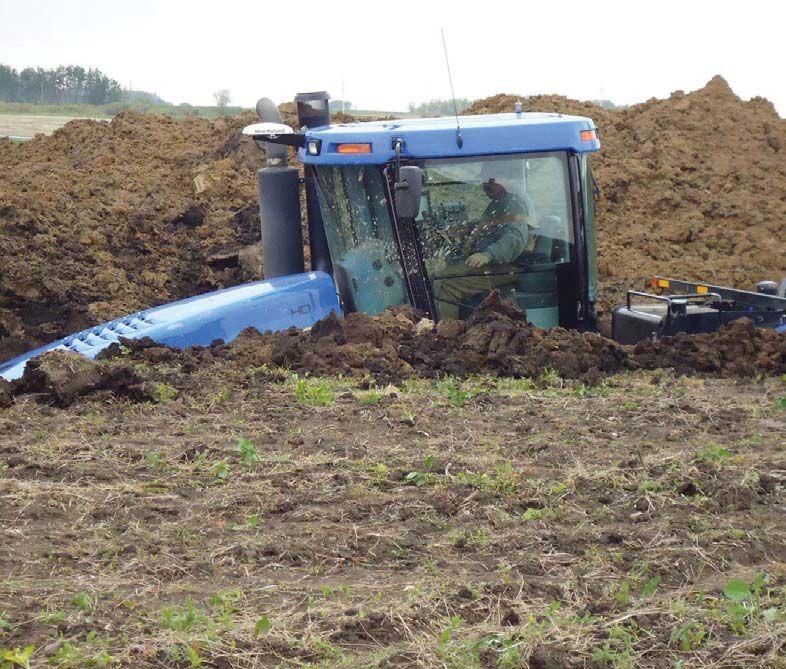
Excess moisture can wreak havoc with the business of farming.
PHOTO COURTESY OF SCOTT DAY.
control of many broadleaf weeds, including: cleavers, ixweed, lamb’s-quarters, cow cockle, volunteer canola wild buckwheat and wild mustard.
Barricade® II delivers multiple modes of action from two diff Group 2 and Group 4.
NOTHING GETS PAST BARRICADE® II.
When tough broadleaf weeds invade your cereal crops, it’s no time for half-measures. You need action now. With a new and more concentrated formulation, DuPont™ Barricade® II herbicide leverages the strength of three active ingredients from 2 different groups (Group 2 and Group 4) to keep broadleaf weeds far away from your crop. Powered by Solumax® soluble granules, Barricade® II also delivers one-hour rainfastness and easier, more consistent sprayer cleanout. It’s no wonder growers made it Western Canada’s premier broadleaf herbicide for cereals.
Barricade® II. Raise the bar on your broadleaf weed control. Questions? Ask your retailer, call 1-800-667-3925 or visit barricade.dupont.ca
Barricade® II herbicide is po Soluma
Barric
many grassy weed tank-mix partners
An eff formulation. Barricade® I is powered by DuPont™ Solumax® soluble granules, combining the c
Precision canola seed placement may offer substantial agronomic benefits, but equipment price tag remains daunting.
by Madeleine Baerg
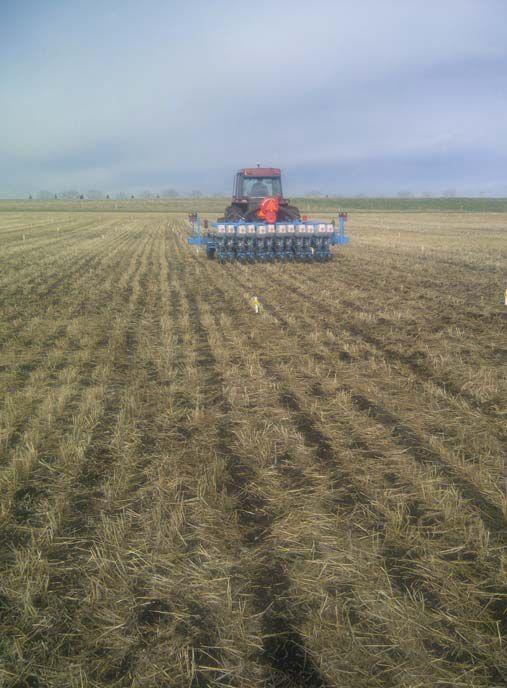
Choosing the right canola seeding rate is always a challenge. On the one hand, the high cost of seed means planting on the heavy side can cut sharply into your profitability. That said, canola seedling mortality averages more than 50 per cent, so seeding too lightly can seriously limit yield. Leading edge Alberta producers and crop experts hope they may be en route to a solution that allows significantly lower seeding rates – some say as low as 1.5 pounds per acre –while maintaining or increasing yield: the use of a precision vacuum corn planter.
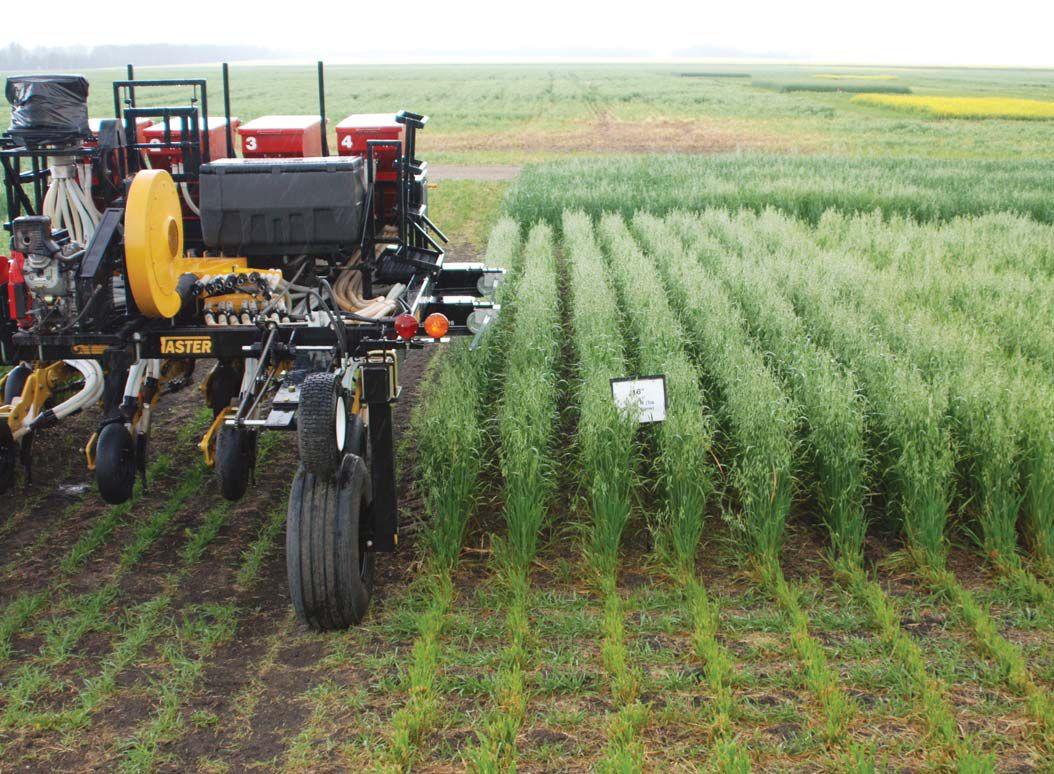
“The big driver of looking at seeding with a corn planter is seed cost. Canola seed is sitting at $10, $12 per pound for good hybrid seed. As we introduce more traits, that price isn’t going to go anywhere but up. If you seed 5 pounds per acre but you only get 2.5 pounds coming out of the ground, you’re throwing $25, $30 per acre down the tube. If we can reduce the seeding rate and increase the number of seedlings coming up by getting more consistent depth and spacing, which is possible with a corn planter, you can pay for the machine in a reasonably short amount of time,” says Craig Shaw.
A canola producer in Lacombe, Alta., Shaw helped spearhead and is currently a key participant in a three-year corn planter research trial. Along with several other Alberta producers, Shaw is planting and recording on-farm results of various seeding rates and row spacing planted by both a corn planter and conventional plot seeder. Meanwhile, Agriculture and Agri-Food Canada (AAFC) research scientist Dr. Neil Harker is adding to the same study by conducting similar trials in formal research plots.
With support from the Canola Council of Canada, Alberta Canola Producers Commission, and Alberta Agriculture and Rural Development, and funding from the Alberta Crop Industry Development Board and the now-defunct Alberta Reduced Tillage Linkages, the study intends to define the optimized seeding rate and spacing using a corn planter. Even more importantly, the study hopes to determine whether the lower input cost and/or improved yield benefit over a conventional plot seeder are significant enough to justify the purchase price of a planter.
Trial results to date have not proven as successful as hoped due to technical issues, from excessive water to heavy residue, and from hail damage to mechanical failure.
Agriculture and Agri-Food Canada (AAFC) research scientist Dr. Neil Harker is adding to the study by conducting similar trials in formal research plots.
However, both Shaw and Harker remain optimistic.
“Though our results have been compromised by technical issues the last two years, we like what we’ve seen. When you look at a canola field seeded with a planter, it’s hard not to be impressed: generally it’s very, very uniform and the crop stages are very consistent, which has value in terms of herbicide and fungicide application,” says Shaw.
“I don’t know for sure that the benefits will outweigh the
PHOTO COURTESY OF DR. NEIL HARKER, AAFC.
extra cost and trouble, but we remain open minded,” adds Harker. “I’m not a big proponent of reducing seeding rate because I think we’ve already got problems with going too low on seed. But maybe this technology will make it possible to still get a good stand even if you plant at what I’d usually consider too low a rate.”
They are not alone in their interest.
In 2013, Rocky Mountain Equipment in Balzac, Alta., conducted field trials in 13 locations using a 40-foot Case IH corn planter demonstration unit. At each location, five different trials were planted: 150,000, 225,000, 300,000, and 375,000 seeds per acre (approximately two pounds to five pounds per acre, depending on kernel weight), all fertilized with Alpine liquid fertilizer; and 300,000 seeds per acre with no fertilizer.
“In almost all scenarios, the 150,000 seed count produced the best yield,” says Brian Gabruck, a salesman with Rocky Mountain Equipment in Balzac and leader of the trials. “In a couple cases, the 225,000 seed count surpassed the 150,000 count by a little bit, but none of the results showed better yield from the higher seed counts.”
In addition to the lower seeding rates, says Gabruck, “plants were up out of the ground at least five days earlier, they flowered longer because they had more room to grow and less competition for nutrients, and the yields were better compared to conventional seeding.”
That said, Gabruck notes there remains a significant drawback with the current planter technology: because the equipment is not designed to dispense fertilizer, a second pass is required to get nitrogen in the ground. It is also possible that a planter’s lack
of soil disruption may delay canola seeds from germinating because of decreased soil blackening.
Shaw is hopeful that the fertilizer limitation may be solved in a new, made-for-canola corn planter. Alternatively, as equipment manufacturers see growing producer interest in corn planters, it is possible they may be able to create a new kind of seeder that solves the depth control, metering and excessive air at delivery issues common in conventional seeders.
“We’re seeing signs that there are newer seeding technologies coming along that combine the benefits of planter and air seeding technology to improve precision for all crops. We’re probably still at the early stages for that, but equipment manufacturers are showing interest.”
Whether or not additional research ultimately reinforces Gabruck’s belief that a corn planter’s benefits outweigh its significant purchase price, Shaw sees value in the studies done to date.
“The corn planter has been a great research tool. If you can eliminate some of the seed placement issues and spacing issues that you normally see in most seeding systems, it reduces the variables and allows you to see where the shortfalls are in the current seeding system. A lot of guys you’ll talk to have never been overly happy with seeding systems for canola, and we’re seeing that technology can overcome some of the specific challenges of conventional seeders.” For more on seeding, visit the agronomy section at www.topcropmanager.com.
CONTINUED FROM PAGE 16
efficiently take in moisture, saline soils also have very high pH, which can affect some crops, and there are potential caustic or toxic effects from high concentrations of various solutes.
Currently, Western Canada, particularly Alberta and Saskatchewan, are experiencing a wet weather cycle, and this will aggravate some field salinity issues. That often becomes more apparent the spring following a wet year as water tables rise and seeps begin to form. According to Dunn, farmers in Alberta and Saskatchewan have been dealing with soil salinity for decades and have learned some strategies for managing the problem.
Salinity management
As increasing soil salinity is directly related to rising groundwater, Dunn says, the first step to correcting soil salinity is to identify the most likely groundwater source. “Does it appear to be from the field area surrounding the seep or could it be related to a regional groundwater system?” asks Dunn. “In most cases, the source is nearby and can be managed through perennial forages, which are much deeper rooted and intensive for water use.”
In recent years some farmers have experienced success with tile drainage in waterlogged soil areas in wetter regions, and irrigated areas, but this can be an expensive option, possibly requiring licensing in some jurisdictions.
Establishing a rotation which includes perennial forages that use a lot of moisture is a much more practicable solution, according to Dunn. Alfalfa is highly recommended because of its high water use and deep rooting ability.
“We recommend alfalfa because it can be an economically viable rotation crop if you’ve got a local market, [and it provides]
an opportunity for you to dewater the subsoil in those upland field areas and eventually lower the saline seep water table,” says Dunn. “While alfalfa doesn’t tolerate high salinity, it helps to get at the groundwater issue that is aggravating those seeps. It’s a tool that has brought a lot of land back into production in some of the southern Alberta areas that are more susceptible to salinity issues.”
Ken Wall is a hydrology technician at Agriculture and AgriFood Canada’s Salt Lab, located at the Semiarid Prairie Agricultural Research Centre (SPARC) in Swift Current, Sask. The Salt Lab is one of only two salt-tolerance research facilities in North America. Wall says there are other options for rotation crops that can help absorb excess moisture, including the perennial wheatgrass forage AC Saltlander. The variety, developed by the Salt Lab’s now-retired founder, Harold Steppuhn, is one of the most salt-tolerant grasses available in Western Canada. According to Wall, it demonstrates double the salt tolerance of alfalfa and barley.
“What [AC Saltlander] has going for it compared to tall wheatgrass is that it’s more palatable for cattle, and it can likely tolerate more flooding. It gives farmers another tool in the toolbox to combat salinity,” says Wall.
Although growers have to be careful in severely saline areas, Wall says the wheatgrass has demonstrated great success under the right conditions. “Once you get it established, it covers the ground and starts using up the water and has some pretty good capabilities for regenerating some of that land,” he says.
According to Wall, in wet weather cycles, continuous cropping is helpful in combatting excess groundwater, regardless of the crops growers choose to put in rotation. “If you get a year where you fallow, no water has been used at all, and if you get 12 to 14 inches of rain, you’ll fill up the profile to three or four feet,” he says. “When you continuous crop you break that cycle and you can dewater. If an area is too wet and salty your only option is to seed forages.”
In the Salt Lab, Wall and his team conduct research for scientists developing crops with increased salt tolerance. Currently, Wall and his team are screening lines of camelina for salt tolerance, as well as some Brassica carinata lines. Once they find lines with increased salt tolerance they move these tests to the fields.
Wall and his team are also working with Yves Castonguay, an ecophysiology scientist with Agriculture and Agri-Food Canada in Quebec, to increase salt-tolerance in alfalfa. “We’re doing some selections on three alfalfa varieties, and the aim is to identify DNA markers for salinity. Down the road the use of marker-assisted selection approaches should allow for more rapid advances in terms of increasing salt tolerance in alfalfa.”
Recent statistics show that of the 53.5 million hectares of agricultural land across Western Canada, it is estimated that 2.2 million ha are classified as severely saline. Additionally, 7 million ha of arable land and 3 million ha of permanent pasture are classified as slightly to moderately saline. Most annual crops grown in rotations on these lands display significant yield reductions at these low to moderate salinity levels.
“You can see the economic impact of increasing the salinity tolerance of cereals, pulses or oilseeds even just five per cent,” says Wall. “I believe these are the areas where most economic impact can be gained by concentrating research.”
PHOTO COURTESY OF KEN WALL.
Three cultivars of alfalfa in the Salt Lab are being screened for tolerance to salinity.
Resistance widespread and expanding.
by Bruce Barker
Group 1 wild oat resistance has been confirmed in 41 per cent of fields – the numbers keep growing, and herbicide resistance has become a fact of life for many Prairie farmers. Herbicide-resistant weed surveys and monitoring from 2007 to 2011 led by weed scientist Hugh Beckie of Agriculture and Agri-Food Canada (AAFC) at Saskatoon, Sask., with support from the Saskatchewan Ministry of Agriculture, shows the extent of the problem. Ever since herbicide resistance was confirmed on the Prairies in 1988, more resistant weeds at more locations are being found. Beckie compared the most recent survey information to baseline surveys done in Alberta in 2001, Manitoba in 2002 and Saskatchewan in 2003.
“The numbers continue to grow, and that isn’t a surprise. The Prairie experience pretty much follows the Australian experience where farmers use one herbicide until it is no longer effective, and then switch to another herbicide,” says Beckie.
In the last herbicide resistance survey in Alberta in 2007, Manitoba in 2008 and Saskatchewan in 2009, 1,000 randomly selected annually cropped fields were surveyed to see how weed resistance had changed. Between 2007 and 2011, another 1,091 weed seed samples (each sample from one field) submitted by Prairie growers were screened.
Based on the surveys, Beckie estimated that 29 per cent of total annually cropped land on the Prairies are infested with herbicide-resistant weeds covering a total field area of 9.9 million hectares, 37 per cent of all cropped land. The actual area infested with herbicide resistant weeds has increased eight times, while the total field area affected has doubled (see Table 1).
Grassy weed resistance expanding
In the survey, Group 1 herbicide-resistant wild oat was confirmed in 41 per cent of fields sampled, up from 15 per cent from the 2001-03 baseline surveys. Across the Prairies, Group 1 herbicide-resistant wild oat was found in 32 per cent of fields in Saskatchewan, 39 per cent of fields in Alberta, and 55 per cent of fields in Manitoba.
Within Group 1, there are three chemical families commonly called the fops, dims and dens. The cross-resistance of wild oats to these three classes did not show a significant difference in resistance frequency.
Group 2 herbicide-resistant wild oat was found in 12 per cent of fields, up slightly from eight per cent in 2001-03. Beckie explains that the lower incidence of Group 2 versus Group 1 wild oat resistance
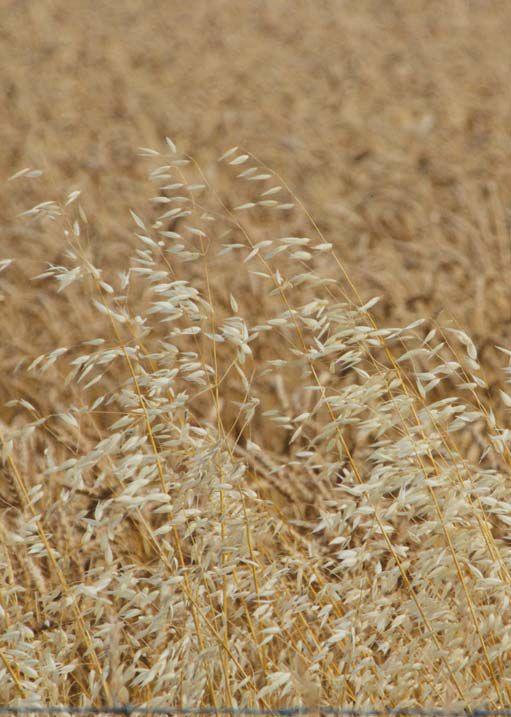
Group 1 herbicide-resistant wild oat was confirmed in 41 per cent of fields sampled.
reflects the past relative usage of the wild oat herbicides.
“The herbicide use pattern shows that Group 1 resistance is usually selected in cereals where the majority of the Group 1 herbicides are used, and Group 2 broadleaf weed resistance is often selected in pulses, where those herbicides are primarily used,” says Beckie.
Wild oat resistant to both Group 1 and Group 2 herbicides was at eight per cent, compared to three per cent in the previous survey.
Group 8 (e.g., Avadex, Avenge) herbicide-resistant wild oat was
PHOTO BY BRUCE BARKER.
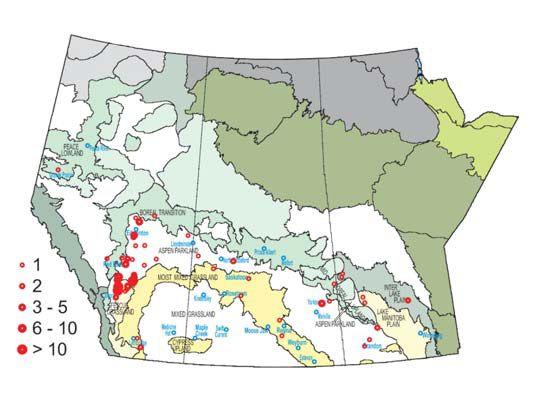
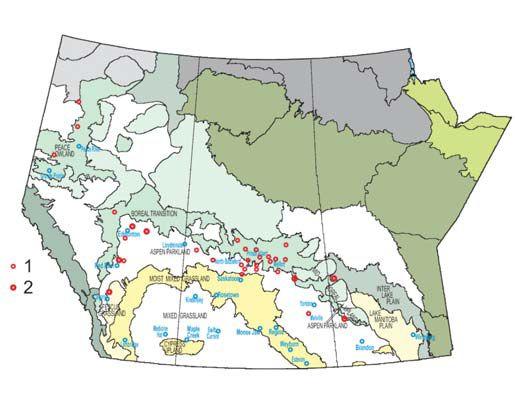
Group 1- and 2-resistant wild oat.Group 2-resistant cleavers.
Source: Beckie et al.: Weed resistance monitoring.
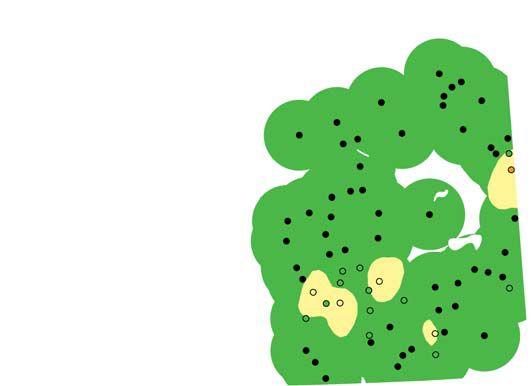
Note: Red dots represent number of confirmed cases of resistant weeds at that site.
identified in only eight per cent of fields, and was not previously screened for.
Wild oat biotypes resistant to Groups 1, 2 and 8 were also identified in the study. These biotypes have been identified in all Prairie provinces. Additionally, wild oat biotypes resistant to Groups 1, 2, 8 and 25 have been confirmed in Manitoba as early as 1997. Group 25 contains the active ingredient, flamprop-methyl, and was marketed in Canada as Mataven herbicide.
Green foxtail resistant to Group 1 was found in 27 per cent of 209 fields sampled for the weed, compared to six per cent in 2001-03. Additionally, from samples submitted by growers, six populations of Group 1 herbicide-resistant Persian darnel have been identified in southern Alberta and Saskatchewan.
Group 2 broadleaf resistance rapidly increasing
Across the Prairies, all kochia populations are now presumed to be Group 2 resistant, as found in a spring 2007 survey. Group 2 spiny sowthistle resistance was also confirmed in all Alberta fields sampled, up from 67 per cent in 2001. Group 9- (glyphosate-) resistant kochia has since been confirmed in southern Alberta and Saskatchewan, and the biotypes were also Group 2 resistant.
Group 2-resistant common chickweed was found mainly in Alberta in 40 per cent of fields, up from 17 per cent in 2001. “The incidence of Group 2 resistance in this weed has increased rapidly over six years,” says Beckie.
Group 2-resistant biotypes not previously detected in earlier surveys but now identified included false cleavers, mainly in Alberta (17 per cent of fields) and Saskatchewan (21 per cent); Powell amaranth in Manitoba (16 per cent of fields); wild mustard in Saskatchewan and Manitoba; and wild buckwheat in Alberta.
Beckie says past weed surveys have shown that cleavers are increasing in abundance at the fastest rate of all weeds, and that restricted weed control options in field peas is challenging growers, especially if the cleavers biotype is Group 2-resistant.
No sampled weed populations across the Prairies were found to be resistant to herbicides from Group 4 (synthetic auxins) or Group 10 (glufosinate). Beckie was surprised at the lack of Group 4 resistance in broadleaf weeds. The herbicide group, which includes 2,4-D has a long history of use with 56 confirmed resistant biotypes in 31 different weeds around the world.
Source: Beckie et al.: Weed resistance monitoring.
Note: Red dots represent number of confirmed cases of resistant weeds at that site
Table 1. Estimated annually cropped land area across the Prairies impacted by herbicide-resistant (HR) weeds: 2007 to 2009a. Biotype
Gp1-HRwildoat3,616,1804,970,540
Gp2-HRwildoat488,360513,540
Gp8-HRwildoat300,840550,810
Gp1+2-HRwildoat932,9901,108,850
Gp1+8-HRwildoat137,800200,670
Gp2+8-HRwildoat5,81012,590
Gp1+2+8-HRwildoat134,210134,210
Gp1-HRgreenfoxtail827,640979,710
Gp1-HRPersiandarnel6038,270
Gp2-HRbroadleafs1,275,7001,374,860
Total7,719,5909,884,050
aInfestation area = actual area occupied by HR weeds; field area = total field area with an HR weed infestation.
Source: Beckie et al. (2013). Herbicide-resistant weeds in the Canadian prairies: 2007 to 2011, Weed Technology, 27(1), pp. 171-183.
However, just because the survey didn’t pick up Group 4-resistant biotypes on the Prairies doesn’t mean they aren’t there. According to an international database maintained by Ian Heap at weedscience.org, weeds confirmed with Group 4 resistance include common hempnettle in Alberta (1998), false cleavers in Alberta in 1996 (with Group 2 + 4 resistance), and wild mustard in Manitoba in 1990.
The good news in the survey is the lack of Group 10 resistance confirmed. This Group includes glufosinate-ammonium, the active ingredient in Liberty herbicide, which is used in Liberty Link canola.
“Herbicide-tolerant canola has likely extended the useful life of Group 1 and Group 2 wild oat herbicides, as glyphosate and glufosinate have provided different modes of action that farmers could use on wild oats in canola,” says Beckie. “With shorter canola rotations, though, this is putting greater selection pressure on these two herbicides, so growers are going to have to be careful with their herbicide rotations to avoid
Kochia was the first on the Prairies. What’s next?
by Bruce Barker
Weed scientist Hugh Beckie with Agriculture and Agri-Food Canada (AAFC) at Saskatoon, Sask., shouldn’t take it personally, but Prairie farmers are hoping he will be wrong. Wrong in his prediction of which weeds may develop glyphosate resistance on the Prairies. He was correct in his prediction that kochia would develop glyphosate resistance, and his modelling lays out which weeds might be next.
“Making predictions is risky business, but ‘best guesses’ may spur discussion and debate and hopefully advance knowledge,” Beckie states in his paper predicting glyphosate resistance.
“At the Saskatchewan Soil Conservation Association conference held in Saskatoon in February 2007, I stated that ‘when glyphosate resistance occurs, it will likely be first reported in Ontario.’ Indeed, a case of glyphosate resistance was confirmed in 2010 in Ontario – giant ragweed (Ambrosia trifida L.) infesting a monoculture glyphosate-resistant soybean field. Emboldened by my success, I again venture where others have wisely dared not to go.”
Beckie explains that the main risk factors for evolution of herbicide-resistant weeds are recurrent application of efficacious herbicides with the same site of action, and annual weed species that occur at high population densities, are widely distributed, prolific seed producers and have efficient gene (seed or pollen) dissemination. Additionally, some weed genera, such as Lolium (i.e. Persian darnel), Avena (.i.e wild oat), Amaranthus, (i.e., Palmer amaranth) and Ambrosia (i.e., ragweeds), are prone to developing resistance to different modes of action.
Other factors controlling the evolution of resistance, says Beckie, include initial frequency of resistance biotypes prior to herbicide use, fitness of resistant versus susceptible biotypes, and seedbank longevity (buffering capacity).
Of these factors, Beckie explains that herbicide selection pressure has the greatest impact on the development of resistance. This includes the level of weed control a herbicide delivers, its persistence in the soil and the frequency of application. In the case of glyphosate, it scores high on level of control and frequency of application. Used in pre-seed, in-crop, pre-harvest and post-seed, often without tank-mix partners and often multiple times in the same year, this type of herbicide selection pressure is intense. And with the move to a canola/wheat rotation as the most common rotation on the Prairies in the last few years, the selection pressure may have gone up even further given that glyphosate is used in Roundup Ready canola.
And the predictions are…
Beckie applied a herbicide resistance model developed by Gressel and Segel (1982) and adapted it to glyphosate on the Prairies. He estimated the glyphosate selection pressure on the top 10 weed species in terms of relative abundance (not including Canada thistle), plus wild mustard in the Grassland and Parkland areas of the Prairies, the proportional weed emergence at various application timing and the efficacy of glyphosate on those weeds. (See Table 1.)
Kochia was the only weed in which the glyphosate selection pressure was predicted to be greater before seeding than in-crop. This prediction was validated when the glyphosateresistant kochia populations that were confirmed on the Prairies were found to have developed on chemfallow fields that had multiple glyphosate applications throughout the growing season, and year after year.
<LEFT: Glyphosate-resistant wild oat may be the next one discovered.
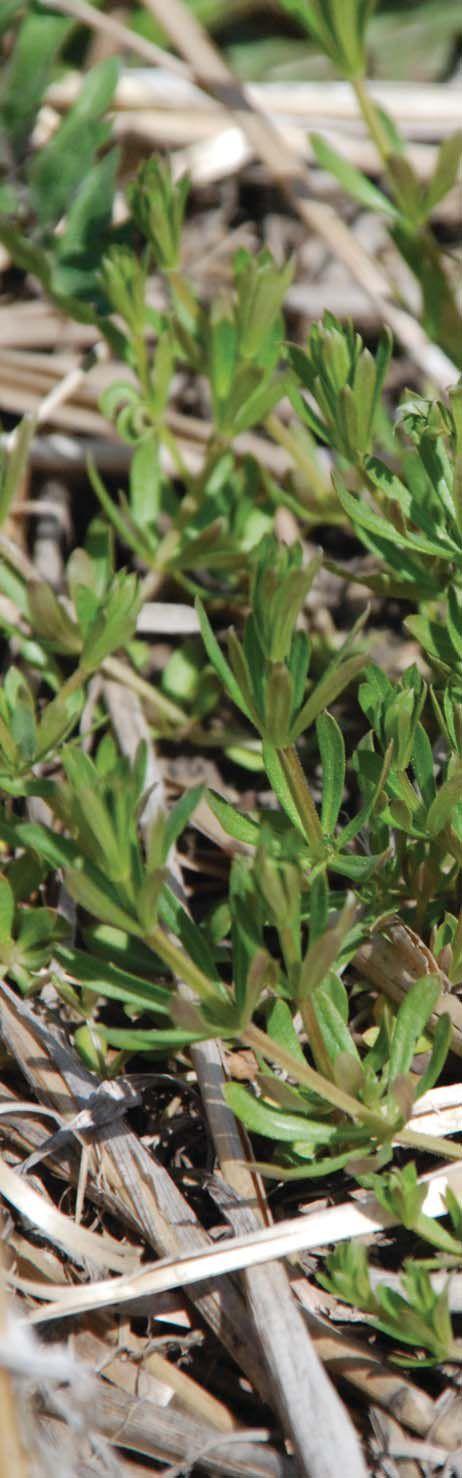
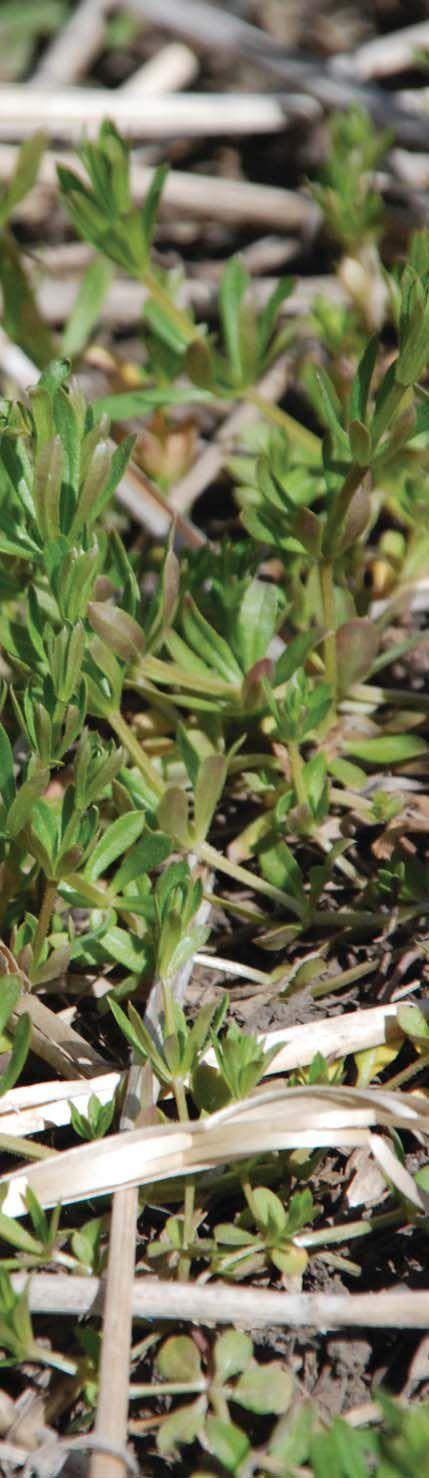
MAIN: Cleavers is rapidly spreading across the Prairies.
Chickweed0.40.40.05
Stinkweed16.715.91.06
Redrootpigweed1413.30.89
Cleavers1.51.40.69
Kochia20.918.818.8
Wildmustard2.92.80.11
Wildoat37.135.27.83
Wildbuckwheat32.124.13.01
Lamb’squarters13.812.40.89
Chickweed1615.22.03
Stinkweed9.28.70.58
Redrootpigweed7.470.47
Cleavers98.14.05
Kochia1.91.71.71
Wildmustard3.73.50.14
Source: Predicting Prairie Weeds at Risk of Glyphosate Resistance. Beckie, H.J.
“It wasn’t a surprise that confirmed cases of glyphosate resistant kochia were found on the southern Prairies. Similar cases were found on the northern Great Plains in the last few years as well,” says Beckie.
In the Grassland region, Beckie’s modelling showed kochia had the highest risk of developing glyphosate resistance, followed by wild oat and green foxtail. In the Parkland region wild oat is predicted to have the greatest potential risk of glyphosate resistance, followed by green foxtail and cleavers.
Assessing your own risk
Beckie, along with weed scientists Neil Harker from AAFC, Linda Hall from the University of Alberta, Rick Holm (retired) from the University of Saskatchewan and Robert Gulden from the University of Manitoba, developed a web-based decision support tool to help farmers assess their own relative risk of selection for glyphosate-resistant weeds on a field-by-field basis. Hosted at www. weedtool.com, the tool covers Eastern or Western Canada or the United States. It includes 10 questions to help farmers assess their risk.
The riskiest practices in western Canadian cropping systems are lack of crop-rotation diversity (growing mainly oilseeds) and a high frequency of glyphosate-resistant crops in the rotation. Beckie says the weed tool provides an overall risk rating for farmers, and recommends three best-management practices to reduce the risk of glyphosate resistance in weeds.
If growers suspect they have glyphosate-resistant weed populations on their farm, Beckie recommends they submit a weed seed sample to him for herbicide resistance testing.
PHOTO BY BRUCE BARKER.
Table 1. Weed Risk Assessment of selection for glyphosate resistance.
Reduce overall herbicide application.
by Bruce Barker
Spot spraying of wild oats never really caught on, but how about applying precision farming techniques to wild oat control? On rolling landscapes, wild oat emergence and growth are typically greater in lower slope positions, so the potential to use landscape position to target wild oats and reduce overall herbicide application is there.
Hugh Beckie, a weed scientist with Agriculture and Agri-Food Canada (AAFC) at Saskatoon, Sask., conducted a four-year study from 2006 to 2010 in a hummocky field in the semiarid Moist Mixed Grassland ecoregion of Saskatchewan to assess the potential of wild oat, and to further evaluate its emergence, growth and management according to landscape position.
“Blanket applications of wild oat herbicides hasn’t reduced the relative abundance ranking of wild oat since the 1970s, so we wanted to evaluate wild oat emergence, growth and management according to landscape position to see if we could reduce herbicide use without compromising weed control or yield,” explains Beckie.
In the study, three herbicide treatments were imposed on the same plots each year of a two-year canola-wheat rotation. The three herbicide treatments were non-treated weedy control; herbicide application to upper and lower slope positions (blanket application); and herbicide application to lower slope position only. In the Roundup Ready canola rotation, glyphosate was used for wild oat control. In the wheat years, clodinafop (i.e., Horizon) was used with an additional broadleaf weed herbicide applied across the entire site.
The four experiment sites were surveyed, and based on the resulting elevation contour map, each plot was divided into upper and lower slope positions. The simple landscape had down-slope variation in elevation (six to nine per cent), but little across-slope
variation. Sites had an east, west, or south aspect.
Crop and weed densities were measured in June before in-crop herbicide application, and three weeks after herbicide application, crop and weed density were measured. Crop yield was collected, and wild oat dockage measured.
Beckie found that slope position affected crop and weed densities before in-crop herbicide application in the two years with dry spring growing conditions. In the wheat cropping sequence, site-specific wild oat control strategies where herbicides were only applied to lower slope positions had similar wild oat control as the blanket herbicide treatment in two of three years.
Based on this and previous studies in the Northern Great Plains, Beckie explains, the probability of similar overall weed control between site-specific and full herbicide treatment is likely greatest under dry spring (i.e., April and May) growing conditions. However, crop scouting will be necessary to determine if upper slope landscapes require wild oat control, especially in wetter years. The benefit of using this approach, though, is that rather than trying to target specific patches throughout a field, landscape position can be used to delineate where to spray for wild oats. Conversely, in a wetter spring, scouting will likely show that a blanket application may be required.
“Because economic thresholds have not been widely adopted by growers in managing wild oat, site-specific treatment in years when conditions warrant may be an appropriate compromise between no application and blanket herbicide application,” says Beckie.
ABOVE: Similar to variable rate fertilizer, farmers may be able to use precision farming techniques to control wild oats based on landscape position.
PHOTO BY BRUCE BARKER.
Sierra 2.0 delivers the best Group 2 wild oat control in wheat, period. Available in a convenient liquid formulation from Syngenta, Sierra® 2.0 effectively controls a wide range of yield-robbing grassy weeds, including invasive wild oats. So knock them out with the Group 2 option from the partner you trust.
Use
herbicide rotation and multiple modes of action to reduce selection pressure.
by Bruce Barker
Experts have been consistently communicating the message for over 10 years: Use multiple modes of action and rotate herbicides to help reduce selection pressure for herbicide resistance. But where did those recommendations come from? Little research had been conducted in Western Canada, and recommendations were based on weed scientists’ collective knowledge from around the world.
“A mixture of herbicides was thought to be more effective in preventing resistance, but there were no studies worldwide looking at how rotation or mixtures could help reduce selection pressure for herbicide resistance,” says weed scientist Hugh Beckie with Agriculture and Agri-Food Canada (AAFC) at Saskatoon, Sask.
While many farmers do rotate herbicides or use mixtures to help slow herbicide resistance, the recent confirmation of glyphosateresistant kochia on the Prairies highlights the need to use multiple modes of action to reduce selection pressure – the resistant kochia developed on chemfallow land where repeated applications of glyphosate alone, without tank-mix partners, had been made. In light of this development, reviewing the studies that formed the basis of
using multiple modes of action is worthwhile in order to highlight the importance of this strategy.
One long-term, large-plot study was conducted in Western Canada from 1979 to 1998 to look at wild oat resistance to triallate (Avadex BW). In this study, Beckie found that resistance developed after 18 years in a continuous wheat rotation, but not if triallate was only applied 10 times in the wheat phase of a wheat fallow rotation over the same period.
Beckie also set up a four-year study in the 2000s to look at how herbicide rotation and mixture would affect the development of Group 2 (ALS-inhibitor) herbicide-resistant stinkweed populations. The study was conducted at two sites in Saskatchewan, near North Battleford and Watrous.
Hard red spring wheat was seeded in each of the four years, and five per cent of the beginning stinkweed population was resistant to the Group 2 herbicide ethametsulfuron (Muster). Herbicides
ABOVE: In the absence of herbicide rotation and tank-mix partners, stinkweed rapidly developed resistance to a Group 2 herbicide.
PHOTO BY BRUCE BARKER.
As a farmer, I expect…
10-section automatic overlap control that saves money by eliminating double seed and fertilizer application.
Gentle metering and distribution that lets me reduce seeding rates while maintaining target plant populations.
Hydraulic, ground-following openers that give me uniform seed and fertilizer placement, excellent emergence, strong growth and even maturity.
Stress-free, in-cab automatic calibration that’s based on actual product usage thanks to weigh cells on each tank and a user-friendly monitor.
Knowledgeable support staff who can trouble-shoot remotely via my in-cab monitor while I am in the field.
To apply granular fertilizer at rates of up to 400 lbs/acre on my 100’ drill with no plugging.
Variable rate capability for up to five products at one time.
A ruggedly reliable system that can seed thousands of acres with no breakdowns and minimal maintenance.
A light-pulling drill with a lift-kit that seeds through muddy fields without getting stuck.
“The cost savings with Auto Zone Command and reduced seeding rates was enough to make our payments on our SeedMaster air drill. Last year the Lift Kit allowed us to go through mud that we would never have dreamed of before. This machine does it all.”
SeedMaster gives me all of this in one seeding system with advanced technologies that make money for my farm –like Auto Zone Command™, Auto Calibration™, the UltraPro Canola Meter™, the Nova Smart Cart™, and SafeSeed Individual Row Metering™
SeedMaster’s cost savings and efficiencies are the new normal on my farm.
Brooks White Pierson, MB
used for stinkweed control in the trial were ethametsulfuron and/ or bromoxynil/MCPA (Buctril M), Group 4 herbicide. Treatments consisted of Muster applied in a tank-mix with Buctril M, or in rotation with Buctril M at an application frequency of zero to four applications over the four-year period. Note, the Muster/Buctril M tank-mix is not a registered use in wheat, but was used for research purposes.
Resistant populations multiply rapidly
In plots where Buctril M or the Buctril M/Muster tank-mix were applied, weed control averaged 96 per cent and 97 per cent over the four years. When Muster was applied alone, weed control declined from 92 per cent in the first year to 31 per cent after four consecutive applications.
The level of Group 2-resistant stinkweed seeds collected post-spraying multiplied exponentially to almost 60 per cent after only one Muster treatment. This rose to 92 per cent after two applications of Muster. The Buctril M treatments averaged three per
cent throughout the four years, while in the non-treated check, the percentage of resistant biotypes remained at five per cent.
“The rapid increase in resistance frequency of offspring of surviving plants after only one ALS-inhibitor application helps explain the frequent observations by farmers of good weed control in one year but failure the next, when using the same herbicide or product with the same site of action,” says Beckie.
Looking at weed seeds collected from the soil seed bank, the level of resistance in the stinkweed seed bank in plots with no Muster applications was four per cent of all stinkweed seeds collected. After one application of Muster this level of resistance rose to 29 per cent, 54 per cent after two applications, 71 per cent after three applications, and 85 per cent after four applications. Beckie also found there was little change in the resistant populations of stinkweed found in the seedbank when Buctril M was applied, indicating little change could be expected in the percentage of resistant populations if the Group 2 herbicide was discontinued. Stinkweed seeds can last 10 to 20 years, so cleaning up a resistant population may take a long time, if it is possible at all.
“The results of this study dramatically illustrate how rapidly ALS-inhibitor resistance can evolve in sensitive weed species with repeated ALS-inhibitor applications,” Beckie stated in his research paper published in Weed Technology. “The most relevant data of this study is arguably that of the seed bank resistance enrichment as impacted by herbicide rotation and mixture.”
Confirmation of glyphosate-resistant kochia highlights the need to use multiple modes of action to reduce selection pressure.
For pulse crop farmers, Group 2 resistance poses a challenge. Few non-Group 2 herbicides are available for tank-mix partners, highlighting the need to pay particular attention to herbicide
rotations in non-pulse crops.
Beckie also says that while this research was conducted on a Group 2 herbicide and stinkweed, the concept applies to other herbicides and weeds as well, and whether the herbicides are at high or low risk of developing resistance. For example, despite the fact that glyphosate, a Group 9 herbicide, is rated a low risk, there are many instances of glyphosate-resistant weeds around the world, including giant ragweed, Canada fleabane, giant ragweed and common ragweed in Ontario, and kochia on the Prairies – because of its frequent use.
“Whenever possible, growers should be using tank-mixes of different groups or different groups in sequential applications. That’s important for groups at high risk of developing herbicide resistance, like Groups 1 and 2, but also important for other groups as well,” says Beckie.
Varro™ herbicide for wheat. Freedom from Group 1 herbicide resistance. Freedom to select your preferred broadleaf partner. Freedom to re-crop back to sensitive crops like lentils.
PESTS AND DISEASES
A look back with an eye to 2014 forecasts.
by Bruce Barker
Cutworms take top billing in Alberta in 2013. While insect pressure was low in many areas of Saskatchewan due to the extended winter and cool, wet conditions in the spring, cabbage seedpod weevil and bertha armyworm were significant pests during the growing season. In Manitoba, grasshoppers, cutworms and canola pests took centre stage.
Pests of all crops
Scott Meers, insect management specialist with Alberta Agriculture and Rural Development (ARD) at Brooks, Alta., says it was an interesting year for cutworms (Noctuidae) in Alberta in 2013. “The major issue occurred very early in the spring with several very badly damaged fields that were attacked by Army cutworm (Euxoa auxillaris). Most of the affected fields were between Lethbridge and Vauxhall. Because these cutworms overwinter as partially developed larvae, they were big enough to cause severe damage very early. Several new alfalfa fields were damaged as was some winter wheat. In all cases the fields had significant growth of weeds or crops the previous fall,” says Meers. Cutworms were also an issue in northern Alberta near LaCrete in June with black army cutworms in large numbers within a few canola
fields that had volunteer alfalfa issues. Hand-collecting near LaCrete also resulted in dingy, glassy/yellow-headed cutworms, which were reared as part of the prairie-wide CARP Cutworm Project. There were reports of pale western (Agrotis orthogonia) and redbacked (Euxoa ochrogaster) cutworms in several locations from central Alberta.
John Gavloski, entomologist with Manitoba Agriculture, Food and Rural Development (MAFRD), says there were some high populations of cutworms reported on cereals in western Manitoba. Some damage was also reported to corn and sunflowers in the eastern, central and southwest regions during June, and cutworms were also a concern in some canola fields with one field reseeded in the Sanford area (central) because of cutworm damage. Cutworm control was also reported on soybeans in central Manitoba.
In Saskatchewan, Scott Hartley, provincial insect specialist with the Ministry of Agriculture, says cutworms were not a serious problem in 2013. After outbreak levels in 2010-11, cutworm populations have
TOP: Cereal leaf beetle strips the surface tissue from cereal leaves.
INSET: Evidence of pea leaf weevil damage can be found on the leaves of pea plants.
PHOTOS BY BRUCE BARKER.
Fixing Grain Transportation
By Levi Wood, President Western Canadian Wheat Growers Association
There’s no question the lack of rail transportation is the biggest problem facing the western farm economy this year. While the prairies produced a crop in 2013 that was 26% bigger than our previous record, getting it to market has proved to be a major challenge.
There’s no easy fix. With limited processing and livestock on the prairies, moving grain out by rail is the only option for the vast majority of grain.
A key problem is the lack of rail competition. The railways do not face the normal market discipline that you see in competitive markets. Faced with a huge market opportunity, most businesses would ramp up capacity to meet demand. Not so in the rail business. Grain shipments this year are actually below last year’s pace.
There’s no silver bullet, but here’s a few ideas the Wheat Growers have put forward to help bring about more rail competition, increased shipping capacity and improved logistics:
• Put more teeth into the Canada Transportation Act, so railways have to meet specific performance standards and are held accountable when they fall short.
• Expand the distance under which grain elevators can access a competing railway. Under existing legislation, a shipper can access another rail line if the interchange is within 30 km of its facility. Extending this to 120 km would give more elevators access to a competing railway. Currently 6 elevators in western Canada have access to both major railways and another 22 fall within the 30 km limit.
• Build an incentive into the revenue cap formula so the railways have a financial reason to add more capacity during the peak post-harvest shipping period.
• Grant running rights to other rail operators in those cases where there would be improved efficiency.
• Speed up the approval process for pipelines so that more rail shipping capacity is reserved for grain and other bulk commodities. So far in 2014, rail shipments of petroleum products are up 7% whereas grain shipments are down 12%. These trends need to be reversed.
There’s no quick fix here. The federal government must however act swiftly and decisively. We are already looking at a huge carryout of grain. Prairie farmers cannot afford to see another year of woefully inadequate shipping capacity.
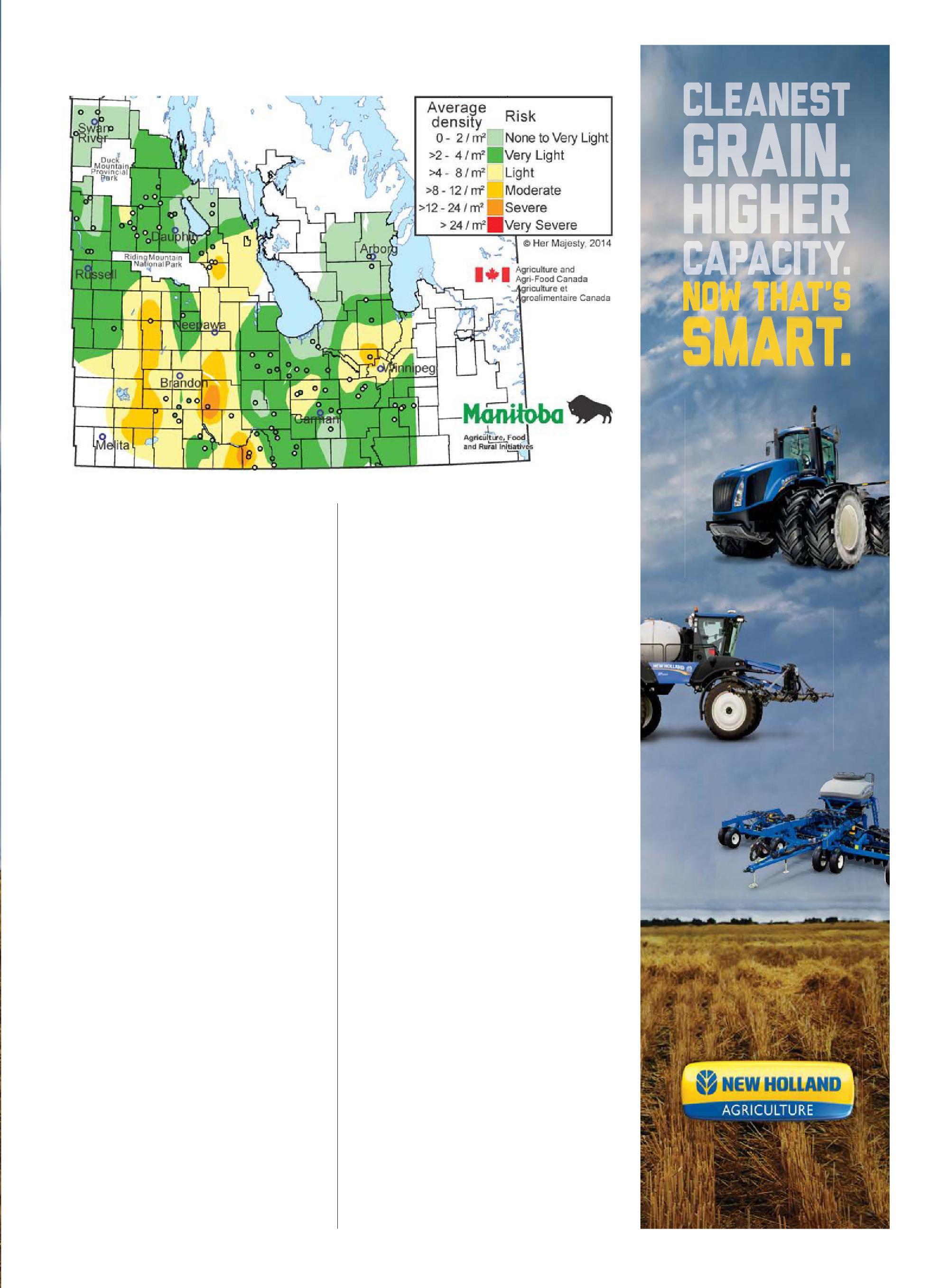
Manitoba Grasshopper Forecast - 2014 from counts of adult grasshoppers in late summer 2013
been on the decline. As part of a major cutworm research project, the Ministry of Agriculture submitted well over 100 cutworm samples in 2012 and only one in 2013.
Gavloski says there were reports of wireworm (Elateridae) damage to cereal fields from several areas of Manitoba. There was some reseeding of winter wheat in the eastern region because of wireworms. High levels of wireworm damage were also reported in some cornfields in the eastern area.
In Alberta, Meers fielded fewer wireworm reports this year from producers frustrated with poor control of wireworm using registered seed treatments. The problem still hasn’t gone away and many producers are now seed treating but not satisfied with the short-term protection they are getting with current insecticidal seed treatments.
After the high 2012 levels of aster leafhopper (Macrosteles quadrilineatus), the insect vector for aster yellows, levels were low and not a concern in 2013. Hartley says that favourable winds from the south bringing in the leafhoppers were not observed until the latter half of May. This was over a month later than in 2012 and reduced the number of generations and consequential population increase in 2013.
In Manitoba (see map above), grasshoppers were a concern in many crops this year, resulting in insecticides being applied to many fields and the edges of fields being treated to prevent them from moving into crops. In Saskatchewan, higher-than-normal grasshopper populations were reported in the northeast in late July near Whitefox and Nipawin.
Serious infestations were recorded in parts of the Peace River region. There were many comments on grasshoppers being in higher numbers throughout Alberta and Saskatchewan at harvest.
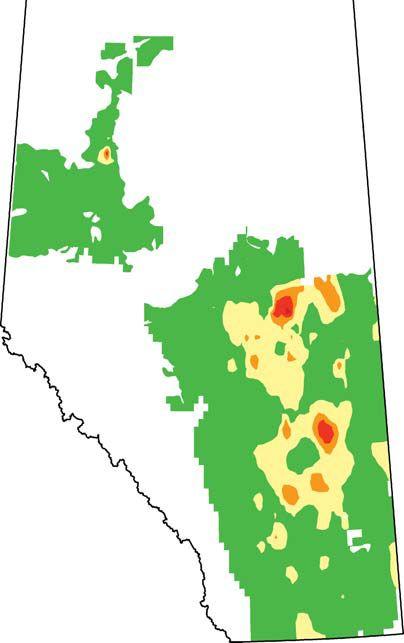
The risk of economically significant grasshopper populations in Alberta in 2014 has increased in some areas of Alberta and remains stable in most others. Areas indicated with moderate to severe risk could experience problems with grasshoppers if environmental conditions favor the hatching and development of grasshoppers in late May through June. In Manitoba, the grasshopper forecasts show light to moderate risk in the southeast and Winnipeg regions.
The risk for grasshopper infestations in 2014 appears low for most of Saskatchewan based on adult grasshoppers observed during the annual grasshopper survey. However, Agriculture and Agri-Food Canada noted that grasshopper eggs were easily found in the fall egg survey, suggesting there is the potential for increased populations in 2014.
Canola pests
Striped flea beetle once again caused damage in areas of the Peace River region. Flea beetles caused little concern in the balance of Alberta in 2013. In Manitoba, Gavloski reports that the use of seed treatments containing neonicotinoid insecticides to manage early-season flea beetle populations continues to be common. Feeding damage to young plants at or above threshold levels was still reported from all agricultural regions of Manitoba.
“There are reports of some fields being
sprayed with insecticides two, three or four times early in the season, and some fields being reseeded because of excess feeding from flea beetles,” says Gavloski.
Flea beetles were not a major pest in most areas of Saskatchewan in the spring of 2013. However, slow growing conditions in the spring caused concern for young seedling canola crops and there were reports of large numbers of flea beetles congregating in canola fields last fall across the Prairies. Since these will be the overwintering generation of beetles that cause damage to seedlings in the spring, it suggests that these insects could be a problem in 2014 in these areas.
The cabbage seedpod weevil (Ceutorhynchus obstrictus) occurred above economic threshold throughout its “traditional” range in southern Alberta, as is the case every year, says Meers. Scouting and spraying are routine management practices for canola producers south of the Trans-Canada Highway. Spraying was common south of Highway 1 in 2013. Initial data from the 2013 survey suggests that cabbage seedpod weevil expanded its range in Alberta into Paintearth and Stettler counties.
In Saskatchewan, cabbage seedpod weevil was a major insect pest in canola in 2013 (see map above). Hartley says that due to the late seeding and large numbers of weevils, many questions were asked related to timing of chemical application and tank mixing with fungicides for sclerotinia. The most severe infestations were reported in the southwest, as is the case in most years. However, spraying for populations was reported in the south-central region, from northwest of Moose Jaw and south to Assiniboia. Cabbage seedpod weevils were present in fields east of Regina in the 2013 survey (co-ordinated by AAFC) but not at economic levels.
Lygus bugs were once again a problem in canola but less so than in 2012. Southwestern Alberta and the foothills were the areas with the most severe issues. There were reports of a few Manitoba canola fields with economical levels of Lygus bugs in the Eastern region in mid-July.
Bertha armyworm (Mamestra configurata) numbers were
Cumulative Moth Counts
monitored in-season across the Prairies. There were some areas of Manitoba that had high levels of larvae of bertha armyworm and insecticides were applied to control them in early August. Most of the insecticide applications for bertha armyworm were in the southwestern regions of Manitoba. Spraying for the bertha armyworm larvae was reported to some degree in most areas of Saskatchewan where canola was grown. Infestations were also reported from the southwest, where bertha armyworm is an uncommon pest. Bertha armyworm also caused damage in pea and flax crops. In Alberta, populations were very high once again in central Alberta (see map above), but economically significant populations of larvae were scattered throughout Alberta.
“It is also interesting to note that we checked several fields in Lamont County that had high moth catches, evidence of early feeding on lower leaves but very little to no population later in the season. As the season progressed many reports were made of dead and dying bertha armyworm from what appeared to be both virus and fungal infections,” says Meers. “Bertha armyworm feeding was reported on fababeans in several locations and is certainly something to watch for in the future.”
Growers are reminded to check provincial bertha armyworm forecasts in-season, as pheromone traps are put out throughout the Prairies to help predict risk levels based on adult moth emergence.
Pheromone-baited traps were used to monitor the arrival of diamondback moth (Plutella xylostella) adults from the United States. There appeared to be no favourable winds from the southern U.S. and northern Mexico until the last two weeks of May and diamondback moths were not a major pest in 2013 in Alberta and Saskatchewan. Diamondback moth was controlled in some canola fields in the eastern region of Manitoba.
Hartley says that for the second year in a row, significant swede midge infestations were reported in canola fields in northeastern
near Nipawin and Carrot River. Typical damage was to canola flowers that were infested with swede midge larvae. There was spraying for this pest in 2013; however, there are no reliable
Lethbridge
recommendations for timing of control for the swede midge. In Ontario, this insect has been a pest of canola and brassica vegetables for several years. In vegetables, multiple insecticide applications are required.
“Due to the multiple generations in a year, the swede midge is difficult to control and multiple applications is not likely a viable economic option in canola. Research is required to determine management recommendations under Prairie conditions,” explains Hartley.
Root maggots (Delia spp.) were common throughout Alberta in 2013 and in some cases very severe damage was observed. It appears the worst damage was on plants in thin stands.
Cereals
Wheat midge (Sitodiplosis mosellana) caused serious damage in the Peace River region near Manning and near Falher. Some head samples showed up to 50 per cent kernel damage. In southern Alberta around Claresholm, some producers did spray and there was not a high level of damage.
“We now perform soil core surveying over the entire province and will process over 300 samples this year. In the last two years, surveying in the Peace River region has expanded to include more sites which will hopefully better represent wheat midge activity within our northern wheat producing region,” says Meers. “In the spring we did an intensive look for parasitoids associated with the larval cocoons and found parasitized midge from Manning and High Prairie, although densities of these beneficial insects were very low.”
The impact of wheat midge was low in Saskatchewan and Manitoba in 2013.
The Alberta 2014 wheat midge forecast indicates a general decrease for midge risk in southern Alberta and a large increase for midge risk in the eastern Peace Region. The Saskatchewan 2014 wheat midge forecast indicates high infestations in the Black and Dark Brown soil zones in eastern regions where the wheat midge is a frequent pest for wheat producers. An area of high midge density is also identified in the north-central region in the Prince Albert area.
Gavloski says armyworm (Mythimna unipuncta) were a concern
One of a kind broadleaf weed control.
As the only Group 27 and the first new mode of action in cereals for over 25 years, powerful, one of a kind Infinity® herbicide controls the toughest broadleaf weeds from across the Canadian prairies, even if they are resistant to other herbicide classes.
Infinity – truly in a class of its own.
For more information, please visit BayerCropScience.ca/Infinity
in some small grain fields in the Ste. Rose and Beausejour areas and some high levels were also reported from the North Interlake. Most of the higher populations of larvae were present in late July and early August. Samples of armyworms collected from the central region for the MAFRD Crop Diagnostic School turned out to be heavily parasitized.
Severity of wheat stem sawfly (Cephus cinctus) damage was lower again in southern Alberta. There are still some areas of concern left in southern Alberta around Foremost (see map above). “We have found a few individual fields with slightly higher sawfly cutting levels in our 2013 fall survey that are outside of the core area, maybe part of resurgence. This will be something to watch next year,” says Meers.
Cereal leaf beetle (Oulema melanopus) is established in southern Alberta. The highest densities in 2013 occurred north of Taber in the Vauxhall area. There were several fields sprayed and at least some of them were approaching threshold levels. The cereal leaf beetle also showed up in a couple new areas, one south of Lethbridge and also in the Red Deer-Olds area. The population in the Edmonton area continues to grow with various agrologists reporting cereal leaf beetle larvae. “There is continuing need to maintain relocation programs for its primary parasitoid, Tetrastichus julis,” says Meers.
In 2009, cereal leaf beetle was found in the Swan River Valley of Manitoba, but no “economic” populations of cereal leaf beetle are reported in Manitoba. However, the known range of cereal leaf beetles has expanded to the south and east. In 2013, cereal leaf beetle was found in fields near Brandon, Holland, Treherne, Killarney and Pilot Mound. A biological control program using Tetrastichus julis (Eulophidae), a parasitic wasp, is being implemented to try to control the populations.
In Saskatchewan the cereal leaf beetle has been found in the southwest, near the Alberta border and in the east near Moosomin but no significant infestations have been identified.
Field peas
In 2013, pea leaf weevil (Sitona lineatus) damage was found in the same general area in southern Alberta with no real change in the range since 2007. “Producers have been struggling with deciding to treat their seed or not. Seed treatment is the most effective but much like flea beetles there are years when it doesn’t pay. There are still acres that have foliar treatment even though there is likely not an economic return from doing so,” says Meers.
A feeding damage survey was carried out late May through early
June in southern Alberta. There were several reports of pea leaf weevil damage to alfalfa seedling stands. Also, as the acreage of fababeans increases, the pea leaf weevil damage to those fields will need to be monitored closely as fababeans are a strongly preferred host.
In Saskatchewan, Hartley says the range of this insect continues to move eastward in southern regions (see map above). The most intensive feeding is in the southwest; but in 2012, feeding notches on pea leaves were noted just north of the South Saskatchewan River. In 2013, evidence of weevil feeding was noted in rural municipalities numbers 228 and 259 (west central region). The eastern edge of the pea leaf weevil range appears to be about midway between Swift Current and Moose Jaw and the southern edge extends to near the U.S. border.
Soybeans
Soybean aphids (Aphis glycines) started to be noted in very low levels in soybean fields in late July in Manitoba. Populations remained very low and there were no reports of high or economical populations for a second year in a row, says Gavloski.
Spider mites started to be noticed in some Manitoba fields in late July and August. In most instances, populations were not economical. However, there was some field border spraying for spider mites in the central region.
Green cloverworms (Hypena scabra) were present in fields of soybeans in the eastern, Interlake and northwest regions of Manitoba. They were generally at levels below economical importance; however, there were some fields of soybeans in the eastern region that were sprayed with insecticide in July because of high levels of green cloverworm.
We’re not your typical crop protection company Company on the Move
Every season, you face a sea of choices and decisions to protect your cereal crops. Nufarm wants to make your business easier, not more complicated.
“We’re not your typical crop protection company,” says Jon Neutens, General Manager, Nufarm Canada. “In the world of crop protection, we’re relatively new in the Canadian market, and so are our ideas. We think big. And act small.” Nufarm’s proprietary and generic branded products deliver big business solutions for farmers across Canada. And the company is small enough to be quick, responsive and fueled by innovative ideas. “With Nufarm, what you see is who we are,” says Neutens. Nufarm has one of the broadest and fastest growing product lineups in the market. Beginning with proven active ingredients, they offer a long lineup of pre-seed burndown to post-emergent weed control. Products are manufactured at the company’s Calgary, Alberta facility to suit Canada’s growing conditions.
We keep it simple
Just like the leading brands, Nufarm backs every product with experienced customer service, convenient packaging and qualified field staff. But when it comes to complicated programs and rebates, they keep it simple. “We don’t believe in adding the hassle of rebates and volume programs, so we don’t have any,” says Neutens. “The price you see is the price you pay. We think it’s just a better way to do business.”
We offer resistance options
Glyphosate alone used to be all you needed to control early season weeds in a pre-seed burndown. Not anymore. The incidence of glyphosate-resistant volunteers continues to rise, and these tough weeds are more than glyphosate can handle, especially in a young cereal crop. Nufarm has products and tank mixes to meet almost any weed control challenge.
We know burndown
Nufarm is known for innovative burndown solutions – proven active ingredients that also deliver sound resistance management options.
In cereals and canola, Nufarm leads the pack in effective solutions that get crops off to the strongest start, with the least amount of weed competition. BlackHawk™ herbicide wipes out weeds with a pre-seed burndown that gives cereal crops every chance to thrive.
“Pre-seed weed control is the most important herbicide application you will make this year to ensure your cereal crop reaches its maximum yield potential,” says Neutens. “And when you consider your pre-seed herbicides options, think Nufarm. We offer the broadest portfolio backed by solid expertise for all pre-seed applications. We make it our business to make yours easier.”
Better burndown with BlackHawk
Pre-seed burndown is Nufarm’s specialty. Removing weed competition early in the game means cereal crops don’t have to fight for valuable nutrients, moisture and sunlight, benefiting an estimated 72% of cereal crops.
When Mike Jones considers burndown options for his cereal crops, he’s also looking for sound resistance management tools. He’s found a good combination with BlackHawk.
“We use a pre-seed burndown on cereals to give the crop a good start. Kochia is our biggest weed concern, so we gave BlackHawk a try on our durum and have been very happy with the results. Within four to five days there was total burndown. It worked very well on the kochia and does a good job controlling dandelions too. Glyphosate-resistant kochia is not here yet, but we need to consider it when making weed control decisions. BlackHawk provides different chemical grouping for resistant kochia. It’s nice to know we are doing something to keep the potential of resistant weeds under control.”
– Mike Jones Wrentham, AB
BlackHawk™ delivers faster, more complete weed control in a cereal pre-seed burndown than glyphosate or Group 2 herbicides. Two active ingredients and two modes of action deliver superior resistance management.
Contact your local retailer for more information. If you’re dealing with dandelions too, clean up with KoAct™. An innovative new tank-mix option, KoAct controls perennial dandelions and glyphosate-tolerant volunteers at their most vulnerable stage with spring or fall burndown.
Stewardship of clubroot resistance in canola is crucial.
by Carolyn King
As many growers know, resistant varieties are a critical tool for managing clubroot, a devastating canola disease. So Alberta researchers are assessing the pathogen’s ability to erode the effectiveness of the resistance genes and developing guidance to help growers protect this valuable tool.
Clubroot is caused by the soil-borne pathogen Plasmodiophora brassicae. It infects the roots of crops in the Brassica genus, such as canola and cole crops. Galls form on the roots, preventing water and nutrients from getting to the rest of the plant. When the galls decay, they leave millions of resting spores in the soil. Those spores can survive for up to about 20 years, waiting and ready to infect the next Brassica host that grows in the field.
Although the existing clubroot-resistant canolas are currently working very well, the researchers were concerned about the pathogen’s ability to fight back.
“We knew generally from other pathogens and their hosts that pathogens can evolve in response to the selection pressure that
is imposed by growing resistant varieties of the host crops. And specifically, we knew of instances involving clubroot, for instance with oilseed rape in Europe and cruciferous vegetables in the U.S., where the resistance had eroded or in some cases broken down after repeated cropping of a resistant variety in a particular piece of land,” explains Dr. Stephen Strelkov of the University of Alberta.
So Strelkov and his lab conducted two greenhouse experiments to investigate this issue, collaborating with Dr. Kelly Turkington of Agriculture and Agri-Food Canada (AAFC) and Dr. Sheau-Fang Hwang of Alberta Agriculture and Rural Development (ARD) on these and other ongoing experiments.
“In the first experiment, we wanted to assess the effect of multiple infection cycles on the clubroot pathogen’s ability to cause disease. So we took a population and a single-spore isolate of pathotype 3 and inoculated a soil potting mix,” says Strelkov. Clubroot
ABOVE: Resistant canola varieties are a critical tool for managing clubroot.
pathotypes, or strains, are identified based on their ability to cause disease in a standardized set of hosts. Pathotypes in Alberta include pathotypes 2, 3, 5, 6 and 8. Pathotype 3, a very virulent type, is the most common pathotype in canola crops in the province.
In the inoculated potting mix, the researchers planted a selection of resistant (R), moderately resistant (MR) and susceptible (S) hosts. These included: three Argentine canola cultivars (Brassica napus) (R, MR and S), two Polish canola cultivars (Brassica rapa) (R and R), a kale cultivar (Brassica oleracea) (MR), and a Chinese cabbage cultivar (Brassica rapa) (S).
They grew 16 seedlings of each host, with one seedling per pot, in a replicated experiment. After six weeks, they pulled the plants out of the soil and checked the roots for clubroot galls. They rated the disease level in the roots, and if there were any galls, they harvested the spores and placed them back in the same pot in the same soil. Then they grew a new set of 16 seedlings from the same host in the same pots with the same soil. They repeated this process for five cycles for each host.
In some of the cultivars, the disease level didn’t change very much from cycle to cycle. But in other cultivars, the resistance was significantly eroded (see Fig. 1).
Strelkov notes, “In some cases, we found that repeated cropping could erode the effectiveness of the resistance. For instance some varieties that had been moderately resistant became susceptible or highly susceptible. And it usually didn’t take very long – maybe one or two cycles; so they went from a disease severity of around 40 per cent to about 90 or 100 per cent after a couple of cycles. And a [Brassica napus] resistant cultivar went from a disease severity of about five or six per cent to about 40 per cent.”
The main aim of the second experiment was to see whether the commercial canola cultivars grown on the Prairies carry the same or different sources of resistance. The particular set of genes a company uses for clubroot resistance in its cultivars is not public information; it’s the company’s proprietary information. But knowing whether or not cultivars have different genes for resistance could help growers to manage clubroot by rotating cultivars with different resistance sources.
For this experiment, the researchers harvested the pathogen populations that had been cycled with the cultivars in the first experiment. They used those populations to inoculate four resistant canola cultivars from two other companies. And then they evaluated the level of disease in those four cultivars.
“If two cultivars have the same source of resistance, then the pathogen populations that are cycled in one cultivar should show increased infectivity on the other cultivar,” explains Strelkov. “But for the cultivars we tested, the pathogens weren’t cross-infective. It’s preliminary data, but maybe, hopefully, there are at least some different sources of resistance out there.”
Another positive sign from these experiments is that the resistance in the two Polish canola cultivars was not eroded over the five cycles. Strelkov says, “That could be material for breeders to try to see if they could incorporate that resistance into Brassica napus types because [the Brassica rapa types] certainly seemed to withstand infection more than the Brassica napus cultivars we tested.”
Strelkov and his colleagues are continuing their studies on clubroot resistance. One of their current projects is using another approach to explore whether the different canola cultivars may have some different resistance genes.
“We’re finding that some resistant cultivars appear to have a
Fig. 1. Graphs showing changes in disease severity after five cycles of inoculation of resistant, moderately resistant and susceptible Brassicas with a population of the clubroot pathogen.
Disease severity is rated from 0% (no clubroot) to 100% (very severe clubroot). Each symbol represents a different host genotype/variety. The letters a, b and c indicate significant differences.
Source: Stephen Strelkov, University of Alberta.
different profile of how the pathogen proliferates inside [the roots], not only how much it proliferates but also when it proliferates and so on,” he explains. “So we’re comparing [the pathogen proliferation profiles] in the different resistant types and combining that with [examination of the tissues] to look at the infection process. This could provide information as to whether the same resistance mechanisms may be at play or if different ones may be involved.”
Implications for canola production
“In our experiment, we saw that growing the same resistance source twice in a row under high disease pressure already produced some pathogen strains that were causing high levels of the disease. So I think it wouldn’t take very long for this to happen under field conditions if a farmer were continuously growing the same resistance source back to back for maybe three years in a row,” notes Strelkov.
“That’s what was seen in the U.S. with vegetables and in the U.K. [with oilseed rape]. When they grew the same resistance source for about three years in a row, they started to see increased disease levels.”
According to Strelkov, the best option for resistance stewardship is crop rotation. In particular, growers should try to avoid canola-on-canola and very short canola rotations.
As an additional tool to protect resistance, rotating resistant cultivars from the different companies may help. “If you always grow the same cultivar, then you know for sure that it carries the same resistance genes. But if you grow different cultivars, at least there is some potential that there are some different resistance genes,” he says.
Strelkov emphasizes, “Clubroot management is all built around deployment of genetically resistant cultivars. If we abuse the resistance by cropping in extremely short rotations, over and over, then the resistance could become less effective. The companies of course will try to find other sources of resistance but it will become harder.
“Resistance is such an important tool, and we don’t want to lose it. Taking care of the resistance [through crop rotation] is crucial to keep our main tool for managing clubroot.”
PLANT BREEDING
Potential uses range from food to feed to biofuels.
by Carolyn King
With the wrap up of the Canadian Triticale Biorefinery Initiative (CTBI), growers and industry are investigating innovative ways to move triticale forward. Here are a few examples of the potential for triticale.
Spring triticale for seed and swath grazing
Len Solick of Solick Seeds Ltd. near Halkirk in central Alberta sees a lot of positives with triticale. “It grows well in several different soil types. It doesn’t require many inputs. It can handle heat stress probably better than any other crop out there. It also does well in heavily manured soils – it’s less prone to lodging than a crop like barley.”
Solick offers three triticales – Bunker, Taza and AC Utlima, which are all spring varieties. He currently sells the seed mostly into British Columbia, Alberta, Saskatchewan and the U.S.
He notes, “There’s a huge market opening up in the U.S. for triticale. It may have had a big upsurge when the drought hit the U.S. because triticale can handle heat and drought. Also, triticale seed costs far less than the seed for forage corn, so cattle producers get a
tremendous bang for the buck out of triticale.”
In the last few years, about 80 per cent of the people buying Solick’s triticale seed, especially Bunker and Taza varieties, are growing the crop for swath grazing and silage. “Triticale excels for swath grazing, particularly because it maintains its quality in the swath. Also, Bunker and Taza both have reduced awn expression, which is really good for swath grazing,” notes Solick.
He thinks the increase in triticale swath grazing has been due in part to the solid results from recent swath grazing studies. Examples include research by Dr. Vern Baron at AAFC’s Lacombe Research Station, including a project done under the CTBI, and a study by the West-Central Forage Association with co-operating producers and Alberta Agriculture and Rural Development (ARD) advisors. These and other studies have provided valuable information on the production,
TOP: A study by the West-Central Forage Association shows triticale has important strengths as a swath grazing crop.
INSET: Bryan Corns grows six triticale varieties and sells the pedigreed seed into various markets.
PHOTO
PHOTO COURTESY OF CTBI.
nutrition, palatability and economics of triticale swath grazing. And the results from these studies show triticale has important strengths as a swath grazing crop.
Solick says his other triticale, AC Ultima, has a good grain yield so it’s suited to uses like feed grain. He thinks the grain triticales could also be a good option for ethanol. “However, that depends where the ethanol market is going,” he notes, given that the U.S. government is considering pulling back on the amount of ethanol required to be blended into the U.S. gasoline supply.
Ethanol potential
Along with the CTBI’s studies on triticale processing for ethanol and DDG, the initiative also helped advance triticale as an ethanol crop through development of Sunray and Brevis, varieties which have higher starch contents, making them better suited to ethanol production.
On the Prairies, ethanol plants use mainly wheat as their feedstock. One of the few plants accepting both wheat and triticale is at the Growing Power Hairy Hill (GPHH) facilities northeast of Edmonton, Alta.
“Triticale is essentially identical to wheat varieties in ethanol production – higher starch/lower protein varieties of both grains are preferred. Triticale can be used in any ethanol plant designed for wheat, but unfortunately it is not suitable for the less costly ethanol plants designed for production from corn or sorghum,” explains Trevor Nickel, general manager of Himark BioGas and a member of the GPHH management team.
According to Nickel, the higher starch/lower protein triticale varieties also benefit the growers. “These varieties definitely use less nitrogen (so less fertilizer loading is needed, lowering production costs) and may use less water. Triticale in general is thought to be more drought resistant than some wheats, and that is a good thing as land that is coming out of economic production for food use due to water issues may still be able to pay the farmers if sustainably converted to industrial use.”
Nickel thinks farmers will produce triticale if there is a consistent demand. “GPHH has posted a triticale bid for our entire operating period. To my knowledge we haven’t purchased more than a token amount to date, but if farmers see year over year demand for a crop they can produce very cost-effectively, they will produce it – it’s simply a matter of profit and risk. I think the whiplash of regulatory risk that the ethanol industry faces is probably a bit much for farmers at the moment; they don’t want to plant a crop, even one with great promise of profit, that is at risk of sitting in their bins for a year or more after harvest if the ethanol industry is on a downturn.”
He adds, “It would be an industry-wide (agriculture and energy) win-win if we could see higher levels of production of a low-cost, low-input crop for ethanol production. We already make ethanol at well below the wholesale price of gasoline, and a lower input cost to the ethanol plant that still provides farmers with good returns improves the economics across the value chain. Ethanol is a great, clean-burning fuel, providing much-needed octane in our vehicle fuels, and can help achieve our climate and pollution goals.”
Winter triticale in the Interlake
In Manitoba’s Interlake region, winter triticale is becoming popular for couple of reasons, according to Ray Bittner, a farm production advisor for Manitoba Agriculture, Food and Rural Development (MAFRD).
Source: Manitoba Agriculture, Food and Rural Development.
One reason is triticale’s impressive performance as a silage and greenfeed crop. “The real strength of winter triticale [as a forage crop] is the total yield and the reliability of it, because it usually survives better than winter wheat,” explains Bittner. In addition, as a fall-seeded cereal, winter triticale has an important advantage over spring-seeded crops because it can make use of early spring moisture.
Fig. 1 shows the 2013 hay yields of the winter triticale variety Fridge, grown at six Interlake sites. “Winter survival looked bleak in fall 2012 due to dry conditions, as many fields had only 50 per cent emergence,” says Bittner. “However, winter conditions were good, with a continuous, deep snow cover from November to late April.” In the 2013 growing season, most of the six sites had average rainfall except Lundar, where it was quite dry.
Despite the poor start in 2012, the winter triticale hay yields at all the sites were still higher than average hay yields in the Interlake. “Local area average yield of annual greenfeed is 3,384 pounds per acre, according to Manitoba Agricultural Services Corporation insurance,” explains Bittner.
He notes, “Winter triticale forage is generally recommended for dry beef cow rations if it is allowed to reach full stem height. Feed energy values vary from similar to those of barley, to as low as 57 TDN [total digestible nutrients].”
Another key reason triticale is taking off in the Interlake is the seed trade. Bittner says, “A lot of the seed gets sold into the U.S. as a fall grazing crop. It works well for that purpose.”
Connecting with U.S. markets
“Pedigreed seed triticale is one of the major components of our seed business, and we are one of the few people in Western Canada or maybe all of Canada who would make that claim,” says Bryan Corns of Corns Brothers Farm Ltd., situated between Lethbridge and Medicine Hat, Alta.
Corns Brothers’ interest in the crop started because triticale grows well in the relatively hot conditions in their region and because they use it on-farm for their cattle. With that as a starting point, they gradually increased their triticale acres, looked for markets, and built up
Lundar
Fig 1. Hay yields of Fridge, a winter triticale forage variety, at six Interlake sites in 2013.
a customer base for their seed, focusing more on livestock producers than grain producers.
They grow three spring and three winter triticale varieties, and serve markets in southern Alberta, southwestern Saskatchewan, the Interior of B.C. and about five U.S. states. “The American market is 10 or 12 times the size of the Canadian market so it’s an opportunity to have a larger marketplace,” says Corns.
According to Corns, the dry conditions in Texas, Oklahoma, southern Kansas and neighbouring states in recent years have prompted farmers in that region to look for crops that can withstand less moisture and more heat, and still provide a reasonable tonnage of forage. He sells winter triticales Metzger and Luoma to meet those needs.
“In Washington and Oregon, farmers prefer a winter triticale that is a little shorter. The heat and moisture conditions they have through irrigation produce a very high grain yield so they are growing a grain variety, Bobcat,” notes Corns.
He adds, “With our spring triticales, we have had a fair bit of
Bittner, who stands 6 foot 4, and his co-worker Derrick Chomokovski, who stands 6 foot 1, walk through a field of winter triticale forage crop.
PHOTO COURTESY OF MAFRD.
luck – luck and continual endeavour in order to move our product.”
For instance, Corns Brothers used to supply much of the triticale in Kashi’s breakfast cereal and health bars, and now that Kashi is larger, they supply seed to the people who grow triticale to sell to Kashi.
Corns is pursuing several other areas to further develop their triticale seed business. For instance he is exchanging triticale varieties with a Texas grower, and he will be testing those U.S. varieties to see how they perform under Prairie conditions. As well, Corns and Solick are part of a small group of triticale growers who are evaluating some older, deregistered Canadian triticale varieties for their production traits and also having lab tests done to determine their potential for different end uses.
What’s ahead?
In the coming year, the changing markets could favour increased triticale production. Corns explains, “As the large grain crops throughout North America have come on deck and the rail transportation system is backlogged or bottlenecked, I think some
people will plant some triticale and roll it up in bales, so they don’t have to find space for it in their bins. Also, with higher livestock prices, I think people will be growing more triticale for silage and greenfeed.”
Bittner notes, “In the last couple of years there was really no reason for cropping producers to branch off into unusual crops. The simple cereals and canola were plenty profitable. But as we return to possibly lower crop prices on a regular basis, and higher livestock prices, I think triticale is a good fit.”
Looking at the longer term, Corns says, “I see triticale acres increasing but at a moderate pace because you have to look for your markets and you have to find someone who is looking for the product. But if you find that person or group or company and you treat them well, it just seems like it has grown continually for our operation.”
ELITE WILD OAT CONTROL IS JUST THE BEGINNING.
Success starts with the #1 Graminicide brand in wheat.
• Growers who use it say it works the best
• High performing on a wide range of weeds
• Superior wild oat control + bonus broadleaf control
• You’ve got to use it to know how good it is
Go to cerealsolutions.ca or call 1.800.667.3852.
Download the 2014 Field Guide App from the iPhone App Store or at Google
New varieties of cool-weather, moisture-loving fababean offer excellent rotation benefits.
by Madeleine Baerg
Every farmer knows that rotation is key to long-term pest management and field health. But, the four-year rotation ideal often clashes with production reality. While hot, dry conditions are ideal for successfully producing legumes, farmers have little choice in legumes beyond peas in the cooler, moister parts of the Prairies. That said, high disease pressure, poor standability and challenges with harvestability can make growing peas so frustrating that many producers are opting out of legumes entirely. Until now. Re-enter the fababean, albeit a new and improved version thereof. This cool-weather, high-moisture-loving legume offers ease of production, high yields and good marketability, key traits that helped generate significantly increased producer interest in 2013.
“In 2013, faba tripled or possibly quadrupled their acreage in Alberta over the year before. We were somewhere in the range of 25,000 acres, maybe as high as 30,000 acres in 2013, up from 6,000 acres in 2012 and 4,000 acres in 2010 and 2011. It’s still not a huge acreage overall, but the interest is growing very, very quickly,” says Robyne Bowness, pulse research and extension agronomist with Alberta Agriculture and Rural Development (ARD).
“The producers who grew them were extremely pleased and from what I’ve heard, are definitely planning to grow them again. I see faba doubling again in 2014 in Alberta, there is that much interest. Right now, if you’re trying to find seed to grow them, you’re out of luck because the seed was sold out by November.”
The central and eastern Prairies have far fewer cool, moist acres than Alberta, so it is not surprising that faba acreage decreases as one moves eastward. Best estimates suggest approximately 8,000 acres of fababean were planted in 2013 in Saskatchewan, and just 2,500 acres were planted in Manitoba.
“The interest level increased (in 2013) in the Black soil zone in Saskatchewan because of the difficulty wet years have had on dry pea production. Fababean is definitely better suited for wet conditions than pea,” says Dale Risula, a provincial specialist with the crops and irrigation branch of Saskatchewan’s Ministry of Agriculture.
Interest in Manitoba is, understandably, far lower because the province offers excellent soybean growing conditions. Still, there is increasing interest for the coming year, reports Kristen Podolsky, a production specialist with the Manitoba Pulse Growers Association.
“Seed growers are reporting more seed inquiries and sales for 2014 with market interest from multiple buyers. We may exceed the five-year average of 3,400 acres,” she says. “Fababeans are still a very small crop in Manitoba, but they are a good choice for crop
Cool-weather, high-moisture-loving fababeans offer ease of production, high yields and good marketability.
diversification and soil health, and are well suited for highermoisture areas.”
Approximately 20 per cent of fababean grown on the Canadian prairies in 2013 was a new variety called Malik, a brown seed coated, larger bean containing tannins. These faba are marketed strictly for human consumption, largely to the Egyptian market that considers fababean a staple.
The other 80 per cent of fababean grown in 2013 was a variety called Snowbird, a white seed coated bean with low tannins. Though it was traditionally marketed as livestock feed, there is increasing interest in Snowbird fababean for human consumption as well.
PHOTO BY JANET KANTERS.
“There is certainly growing potential for fababean, especially faba with low tannins, in the domestic market. Pulses in general are starting to gain some ground domestically because even if you’re gluten free or vegetarian, you can eat pulses. Fractioning is growing too, whereby a product is separated into protein, fibre and starch components for food additives. Instead of using a corn starch, it is absolutely possible for a food manufacturer to use fababean starch,” says Bowness.
While the 10-year yield average is only about 40 bushels per acre, the new varieties, combined with growing interest from highly skilled, top producers, is pushing yields significantly higher. “We consider 50 bushels a pretty good crop, but producers aren’t happy with that – they know 60, 70, 80 bushels are possible. This last year, producers in the Barrhead-Westlock area were getting 50-ish bushels per acre; guys in Edmonton were getting 70; some were getting as high as 100,” says Bowness. With prices last fall averaging $7 and spring-contracted bushels bringing in $8, returns are as good as or better than peas, with far fewer production headaches.
That said, “much of the market is relatively new in development,” says Risula. “It’s believed the market gets filled pretty quickly through contracts, and anything grown outside of that is subject to extremely reduced pricing.”
From a production standpoint, fababean are extremely kind to producers. Currently, there are no major disease issues that affect Canadian fababean with the exception of chocolate spot in some areas, mostly areas under irrigation in southern Alberta. They stand tall and do not lodge, making them simple to straight cut at harvest. The hollow stem means residue management is negligible. And, best of all pulses at nitrogen fixing, fababeans leave the soil in excellent condition.
“On a cost comparative basis, fababean are cheap to grow, they are excellent competitors, and the money you get out is very good,” says Bowness.
Traditionally, fababean have been a very long-season crop, risky due to Alberta’s fairly low number of frost-free days. Today, newer cultivars like Malik have decreased the necessary season, making successful harvest more attainable. The most important key to growing fababean remains early seeding: ideally, seed should be in the ground by May 7 though no later than May 15. Somewhat surprisingly, faba can grow very successfully, even in more northern areas like Alberta’s Peace Region where the shorter number of frost-free days is offset by the slightly longer length of day.
Once faba are in the ground, they require less than ideal conditions in order to realize optimum yield. The fact that growing conditions were a bit too good actually limited yield in certain fields in 2013, says Bowness.
“They need a bit of stress, a kick in the butt, to move their nutrients and assimilates from growing vegetatively to forming pods. We saw some fields grow huge biomass that didn’t have the necessary stress trigger to set pods, so the yield was on the low side. That said, for the most part we had fantastic growing conditions in Alberta and producers were really pleased.”
While fababean production in Saskatchewan and Manitoba will likely remain relatively low in the coming years, expect another year of enthusiastic growth for faba in central and northern Alberta. In these areas, producers who did not buy seed in time this past fall are likely to look on with envy at their fababean-growing neighbours.
For more on pulse crops, visit www.topcropmanager.com.
CERTIFIED CROP ADVISERS (CCA’S)
Expertise in areas of crops, soil and water, nutrients and pest management
Strict continuing education requirements keep us current
INTERESTED IN BECOMING A CCA?
Phone 204-452-9637 for more information.
Eighty per cent of fababean grown on the Prairies in 2013 was a variety called Snowbird. PHOTO
OPINION
by K. Neil Harker, John T. O’Donovan, Robert E. Blackshaw, Hugh J. Beckie, C. Mallory-Smith, and Bruce D. Maxwell*
Perhaps the incidence and impact of glyphosate-resistant weed species are now great enough that real solutions to glyphosate resistance can be discussed without much backlash. It is clear to most weed scientists who are involved in herbicide research, and even those who are not, that the best way to reduce selection pressure for herbicide resistance is to minimize herbicide use. However, the “solutions” that have emerged in most recent meetings on herbicide resistance have usually involved more herbicide use – herbicide rotation, tank-mixtures, pre- followed by post-herbicides, “rightrates,” etc. To an unbiased observer, it would appear that many weed emperors are wearing no clothes. Are we as a weed science discipline choosing to ignore true integrated solutions to the herbicide resistance problem?
Why are so many weed scientists and extension personnel recommending more herbicides to mitigate herbicide resistance problems? One speaker at a 2011 WSSA weed resistance meeting noted that because of his funding sources, it was difficult to talk about real solutions. At the same meeting, another expert suggested that the solution to herbicide resistance “all sits on herbicide diversity.” At a 2010 meeting of Pan-American and European weed scientists, the near- consensus solution for glyphosate resistance presented by speakers was to use glufosinate in the place of glyphosate. Industry strategy to manage glyphosate-resistant weeds is to develop crops with “stacked” herbicide-resistance traits (Green and Castle 2010; Wright et al. 2010). This technology might have short-term benefits in terms of delaying resistance evolution and spread, but over the long term, the benefits of these approaches could be minimal. Multiple resistance to herbicides with different sites of action has occurred in the past (Heap 2011) and will increasingly occur in the future. Negative environmental impacts from new herbicide-resistant crops are also possible (Egan et al. 2011; Mortensen et al. 2012). These solutions are nothing more than “integrated herbicide management” typical of the “other IPM” (integrated pest management)
(Ehler 2006); they are NOT integrated weed management.
Although it is clear that modern agriculture benefits in many cases from the use of herbicides for a high level of weed control, soil conservation and sustainable yields, it is not clear that the weed science discipline should only be looking to herbicides for sustainable weed control solutions, particularly solutions for weed resistance to herbicides. Surely, weed management diversity involves more than herbicide diversity. “Respect the rotation” should mean more than the herbicide rotation.
Without a doubt, the introduction of glyphosate and other herbicide-resistant crops has been a tremendous boon to crop production in North America and other regions of the world. Indeed, glyphosate might have delayed the evolution of weed resistance to other herbicides and mitigated their resistance impact. However, one major downside has been the escalation of resistance to glyphosate in many weed species (Heap 2011). The reason is obvious. Glyphosate is being used far more than it was in the past with a resultant increase in selection intensity.
There needs to be greater crop rotational diversity, which tends to decrease the dominance of individual weed species and often leads to the use of herbicides with different sites of action. For example, the glyphosateresistant canola system was introduced to western Canada in 1995; yet to date, there is no evidence of weed resistance to glyphosate1 There are likely several reasons for this, one being the availability and use of alternative systems, e.g., glufosinate- and imidazolinoneresistant canola. However, significant crop rotational diversity in Western Canada also has decreased selection intensity. Because of disease issues, growers do not usually plant canola sequentially; they rotate canola with cereal or pulse crops. It is only a matter of time, however, before resistance is likely to appear in this system unless the number of in-crop glyphosate applications is reduced. In a canola study, there was little or no advantage to applying glyphosate more than once in-crop (O’Donovan et al. 2006), yet growers gener-
ally are not encouraged to limit application frequency in canola or other glyphosate-resistant crops; this behavior must change! Are we as a discipline so committed to maintaining profits for the agrochemical industry that we cannot offer up realistic long- term solutions to this pressing problem?
More research on herbicide alternatives is required. Research on allelochemicals and biofumigants, diverse crop rotations, higher crop seeding rates, intercropping, competitive cultivars and planting patterns, physical weed control, weed seed destruction, and reducing weed seed and vegetative propagule dormancy is crucial for a sustainable future. Combinations of a diversity of tactics in integrated crop management systems augment herbicide-based weed control (Harker et al. 2009) and lengthen the useful life of valuable herbicide tools.
Apparently, herbicides are a nonrenewable resource. No major herbicide sites of action have been introduced in the past 20 years (Duke 2011), few new herbicide sites of action are on the horizon, and weed resistance to glyphosate and other herbicides is a “tsunami” still out to sea but approaching land. The time has come to consider herbicide-frequency reduction targets in our major field crops –not just for environmental reasons but for economic reasons. Tinkering around the periphery of the glyphosate resistance problem is clearly too little, too late.
*First and second authors: Research Scientists, Agriculture and Agri-Food Canada (AAFC), Lacombe Research Centre, Alberta; third author: Research Scientist, AAFC, Lethbridge, Alberta; fourth author: Research Scientist, AAFC, Saskatoon, Saskatchewan; fifth author: Professor, Oregon State University; and sixth author: Professor, Montana State University.
(Reprinted from Weed Science 2012 60:143–144 with permission Allen Press Publishing Services.) A complete listing of references and the article can be found on the Weed Science journal website at http://wssajournals.org/ toc/wees/60/2. The article is open source, and copyright Allen Press Publishing Services.
1 EDITOR’S NOTE: Since this article was published, glyphosate-resistant kochia has been confirmed in Western Canada.
Speak up. Speak positively.
Our industry needs more agvocates
To reach its full potential, agriculture needs everyone in the industry to speak up and speak positively.
Agriculture More Than Ever is an industry-driven cause to improve perceptions and create positive dialogue about Canadian ag. Together we can share the facts and stories about this vibrant and modern industry, and tell the world why we love what we do.
It’s up to all of us to be agvocates and it’s easier than you think –visit AgMoreThanEver.ca and find out how you can get involved.