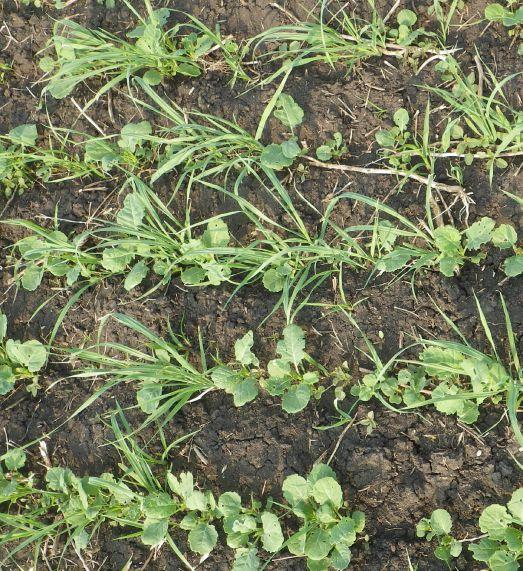
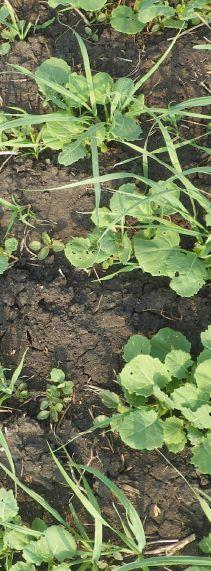
You can’t control what happens to your canola, but you can control how it responds. WAVE biostimulant from UPL, your source for INTERLINE® herbicide, improves nutrient uptake for enhanced plant vigor, growth and overall health. This easy-to-use, naturally derived abiotic stress mitigator increases pro t potential by reducing the costly effects of environmental stressors such as excessive moisture, drought and cold. Field trials have also shown a yield increase of almost 2 bu/A.*
TAKE SOME OF THE STRESS OUT OF YOUR SEASON. ASK YOUR RETAILER ABOUT WAVE BIOSTIMULANT TODAY.
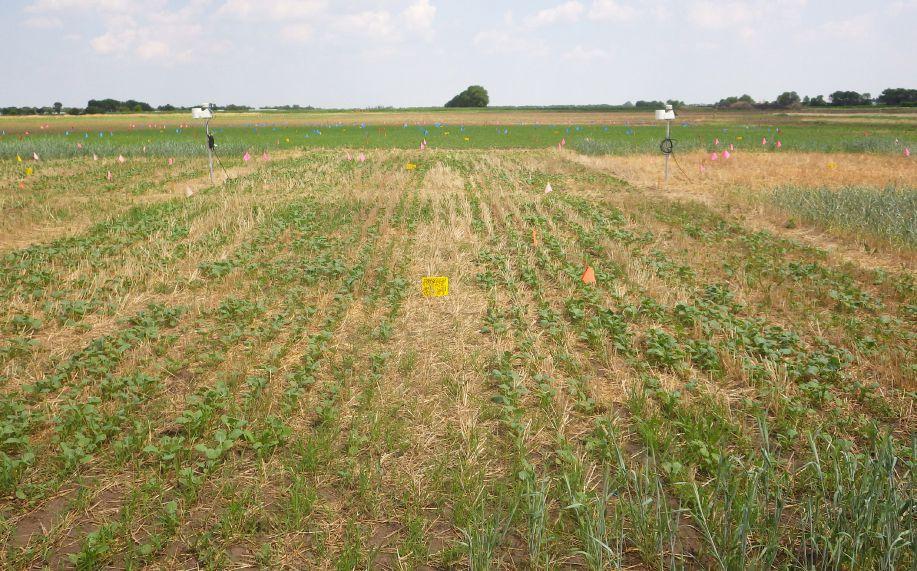
As an entry level harvest weed seed control (HWSC) program, chaff lining is an affordable, alternative tool to help manage the weed seedbank. Research in Australia, where HWSC was pioneered, found that a chaff line can create environments favourable for seed survival while still restricting weed seedling emergence, and that chaff lining is the ideal initial HWSC system for growers to begin adoption. Research in Canada looked into its potential on the Prairies.
FROM THE EDITOR
by Kaitlin Berger
TRADING STORIES
Before marijuana was legal, my dad found some plants hidden in our cornfield – picked clean. He pulled one up and told our neighbour about it. Our neighbour took the plant, went to the local coffee shop where all the farmers congregate in the morning and plopped it in a vase. That generated some buzz for awhile.
If anyone had anything newsworthy, it often came out at that coffee shop. And if you didn’t want it to come out – well – you had to be careful what you said.
Now that I no longer live on the farm, it’s harder to keep a finger on what farmers are talking about at the coffee shop, across a truck bed or over the dining room table. But this year, with the ongoing uncertainty on trade with the U.S., it’s been less of a mystery. One topic that keeps popping up, more specifically, is export diversification.
One
According to a perspective report entitled Food: The Undervalued Asset in Canada’s Indo-Pacific Strategy, prepared by Ted Bilyea on behalf of the Canadian Agri-Food Policy Institute (CAPI) in March 2025, now is the time for market diversification. The report also stated that 60 per cent of Canada’s agri-food exports went to the U.S. in 2022 while 24 per cent went to the Indo-Pacific.
This is where the report suggests Canada should build our strategy. The Indo-Pacific holds a lot of opportunity for Canada’s agri-food exports, specifically China, India and Japan. One major reason for this is the size of the population in this region. The report says the Indo-Pacific is populated with half the world’s people and is expected to grow for the next 20 years.
In addition to a growing population, greater affluence may also lead to higher food consumption. Asian cities are expected to lead gross domestic product (GDP) growth – and usually higher levels of protein are consumed in areas with higher GDP. In Japan, specifically, the population is aging, which typically leads to higher protein consumption, as well.
Canada is in a unique position with a food trade surplus to fill in the gap for food-deficit countries – or countries that are headed that direction. Of course, there are plenty of other possibilities being discussed right now – and plenty of variables. There’s no one-size-fits all solution to trade uncertainties. That said, anything that helps ensure Canada is seen as a strategic trading partner and strengthens the Canadian agri-food system as a whole – well – that might be worth a conversation at the local coffee shop.
(416) 510-5113 | Fax: (416) 510-6875 Email: apotal@annexbusinessmedia.com Mail: 111 Gordon Baker Rd., Suite 400, Toronto, ON M2H 3R1
Group Publisher MICHELLE BERTHOLET (204) 596-8710 mbertholet@annexbusinessmedia.com
Audience Development Coordinator LAYLA SAMEL (416) 510-5187 lsamel@annexbusinessmedia.com
Team Lead/Media Designer BROOKE SHAW CEO SCOTT JAMIESON
Fall-applied nitrogen fertilizer and emissions risk
Factors affecting timing and magnitude of soil-emitted N2O.
BY DONNA FLEURY
Fall-applied nitrogen (N) fertilizer can potentially increase the risk of N losses before spring seeding. Although N losses and N2 O emissions are known to occur at spring thaw on the Canadian Prairies, questions remain about potential losses throughout the non-growing season. Research, funded by the Canola Agronomic Research Program (CARP), is underway to better understand the biological processes of N loss in the non-growing season, which will help producers to minimize losses, reduce costs and optimize their nutrient stewardship potential.
“Fall-applied N fertilizer remains a common practice on the Canadian Prairies and a number of research studies have demonstrated that N2O emissions during spring thaw are greater from soils that received fall-applied nitrogen fertilizer compared to soils that did not,” says Reynald Lemke, research scientist with Agriculture and Agri-Food Canada (AAFC) in Saskatoon, Sask. “The assumption has been that on the Prairies, soils freeze fairly deeply and that there is little microbial activity until soils start to thaw. Therefore, applying N fertilizer in the fall as late as possible when soils are between 5 and 10 C should reduce the risk of emissions.”
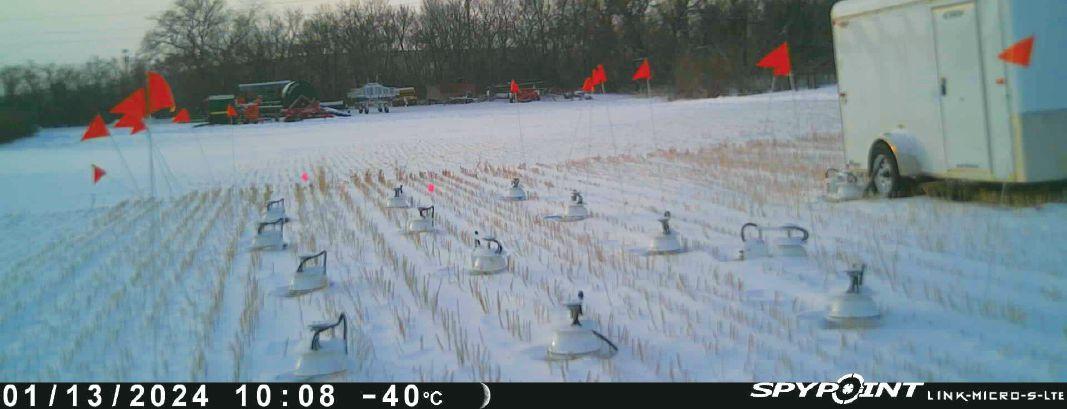
ABOVE The plots with good snow coverage on a -40 C day.
“However, research in eastern Canada showed that under deep snow cover conditions, the soils don’t freeze very hard, some microbial N transformations continue through the winter and N2 O losses can be substantial.” Another project led by Rich Farrell used a flux tower to measure winter N 2 O emissions on the Prairies, with the results showing ongoing low levels of emissions throughout the non-growing season.”
In 2022, Lemke initiated a three-year project on non-growing season N losses under semi-arid conditions, including microbial dynamics and the potential of an enhanced-efficiency fertilizer to help reduce emissions. The project compared N2O emissions from soils with and without fall-applied fertilizer N during the entire non-growing season period. The objectives were to determine the factors driving the timing and magnitude of microbial dynamics and soil-emitted N2O during this period.
They deployed a system of automated gas chambers at the AAFC Saskatoon Research Farm that allowed for quasi continuous measures of emissions throughout a 24-hour period.The three N treatments included a control with zero N, urea alone and urea with a dual inhibitor. The banding treatments were made as close to freeze-up as possible on all plots. The automated
All photos courtesy of Steven Kessler, AAFC.
systems were set up to start measuring at time of fall fertilizer application until seeding the next spring.
Additional measures included soil core sampling through the winter and regular soil temperature readings. Plant root simulators were installed to monitor N transformations which, along with the chamber system measuring CO2 emissions, provided an indication of microbial activity.
Soil samples were shared with University of Saskatchewan collaborator, Bobbi Helgason, who used molecular biology tools (qPCR) to enumerate key N cycling genes for soil N2O production and consumption. The objectives were to determine the abundance of genes from microbial populations associated with N metabolism pathways, such as N2O reductase genes and other genes associated with microbial nitrification and denitrification. The microbial populations and associated genes were compared over the time, including differences between the three N treatments.
WINTER CONDITIONS AND SNOW
Winter conditions varied considerably during the project, with the first winter experiencing a significant snowstorm almost immediately after fall fertilizer applications, setting up for snow cover on the plots throughout the winter and into the spring thaw timing. The soil temperatures hovered not lower than –5 C down to 20 cm depth throughout that time period, showing the insulating effectiveness of the snow.
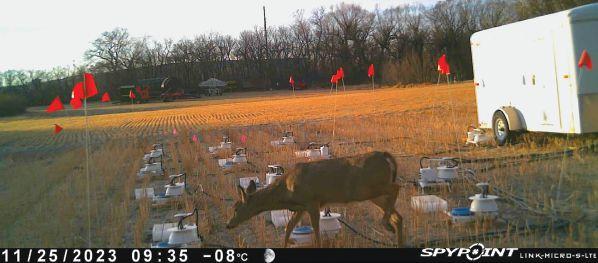
However, in the second winter the plots had little to no snow cover after the fall fertilizer applications in the fall of 2023 until mid-January, where snow cover remained low. Although air temperatures remained warm, the soil temperatures dropped to –10 C down to 20 cm depth under lower snow conditions.
“We suspect that the differences in snow cover is a partial explanation of the differences we measured in magnitude and pattern of CO2 and N 2 O emissions over the two non-growing seasons,” explains Lemke. “In the first year, the CO2 and N2O emissions were higher than the second year, but continuous emissions were measured over both years. Continuous CO2 emissions also implies continuous biological activity during that time period, however, the pattern and relative timing of emissions was different between the two years. CO2 emissions dropped during the January/February period in the second year under the colder soil temperatures.”
“In terms of timing of emissions,” adds Lemke, “in year one, about 40 to 50 per cent of CO2 and N2O emissions were measured during the winter and the other half at spring thaw. In the second year, a higher proportion of emissions were measured at spring thaw than during the winter.”
EVALUATING ADDITIONAL RESULTS
The results also showed an influence of the N fertilizer treatments, with
LEFT The plots with very little snow coverage and a visitor.
the highest emissions from urea plots, the lowest from control plots and the urea with the dual inhibitor treatments midway in between. The two N product treatments were both significantly higher than the control, but responded differently. Nitrate availability in the spring was significantly higher with urea alone as compared to urea and dual inhibitor treatment, while both were higher than the control. The urea and dual inhibitor treatment did slow down and inhibit N transformations, reducing losses during nitrification or denitrification. Although it is difficult to determine exactly when and where the emissions are occurring, the results do indicate the inhibitor is having an impact on emissions.
“Generally, the microbial data indicated that there were sizable active N cycling populations through the overwinter time period,” adds Lemke. “The experiments provided an indication of which types of N cycling microorganisms and what genes are present, but not necessarily the level of activity. The results showed that in the first year, the populations tended to increase after the fertilizer treatments including the control treatment that did not receive any N, which suggests this may be a result of the soil disturbance from the banding operation rather than the application of the fertilizer product. The soil temperatures did seem to have an impact on microbial activity. The measure of continuous CO 2 emissions also supports the presence of microbial activity.”
“Although we did not measure actual total N losses, there is a high likelihood that the N2O measured, especially during spring thaw, were from denitrification,” says Lemke. “This would indicate losses of N2, which are generally 10 to 30 times or higher compared to the N2O emissions measured. Therefore, growers who plan to include fall-applied N in their operations need to understand the risk of N losses, where they are occurring and the timing of those losses. The recommendation of timing fall-applied N to be made as close to freeze-up as possible still holds, even though it won’t eliminate the risk completely.”
Overall, the research shows there are ongoing N transformations throughout the winter period prior to spring thaw, even when N is applied very close to freeze-up in the fall. Recognizing that although there are reasons to consider fall-applied N, this practice does create a higher risk of N loss both agronomically and environmentally. Implementing best practices, including the 4Rs of fertilizer stewardship to reduce N2O emissions, also means saving costs through greater nitrogen retention for crop use.
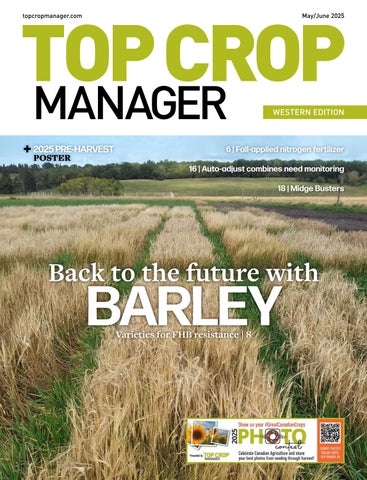
Back to the future with barley
Heritage barley varieties may be sources for Fusarium head blight resistance.
BY CAROLYN KING
Fusarium head blight (FHB) is one of the most serious diseases of barley, mainly because of the toxins – especially deoxynivalenol (DON) – that can be produced by the fungus. That is why James Tucker, a research scientist with Agriculture and Agri-Food Canada (AAFC) in Brandon, Man., assesses thousands of barley lines each year for FHB resistance. As part of this work, he led a recently completed study that offered an intriguing opportunity to look back in order to move forward on improving FHB resistance.
This study evaluated a set of European heritage barley varieties to identify promising parents for crosses to enhance resistance to FHB and minimize DON accumulation in our modern Canadian malting barley varieties.
FHB-resistant varieties are a priority for malting barley breeders, growers and processors. “DON is toxic to all animals including humans. So, it is highly monitored, and there are very strict limitations set by the malting industry both domestically and internationally,” says Tucker.
He notes that the stringent limits for Fusarium and DON in barley grain are based on food safety requirements. However, abiding by those limits is also very important for the grain to perform well during malting and brewing.
In terms of malting, which involves soaking, germinating and kilning (heating) the grain, FHB can have several implications. “For instance, if the seed is compromised with the fungus, it can lose germination vigour. And when maltsters germinate the barley, they put the grain into an environment that can also encourage growth of the fungus and toxin production,” he says.
Another issue is that Fusarium fungi can secrete proteins called hydrophobins, which can be a cause of beer gushing. He explains that gushing is the sudden, excessive foaming of beer when a beer container is first opened.
THE FHB CHALLENGE AND HERITAGE VARIETIES
“The biggest challenge with developing resistance to Fusarium head blight and DON in barley is that the resistance is not based on major genes. It is
All photos courtesy of Bryan Graham, AAFC.
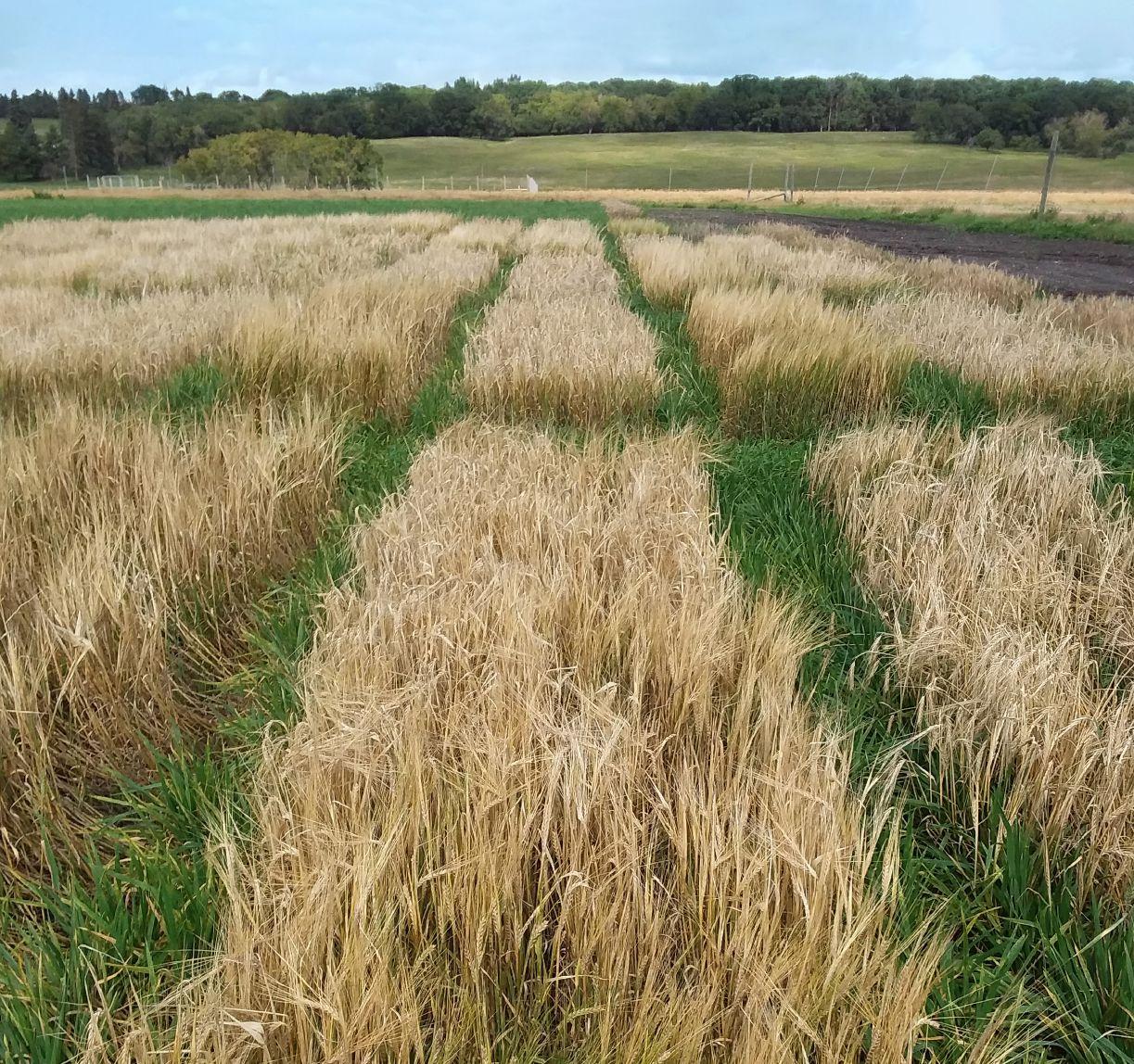
LEFT The study evaluated Hannchen barley (shown here) and more than 30 other European heritage barley varieties for FHB and DON resistance as well as agronomic and malting quality traits.
quantitative resistance [which can come from many minor genes that each contribute a little to a plant’s overall ability to fight the pathogen]. That makes breeding quite difficult versus breeding to incorporate a single major gene,” says Tucker.
Plus, evaluating the quantitative resistance levels in breeding materials is not simple. That is partly because of a complex continuum of responses to the Fusarium pathogen, with different genes involved in the resistance in different plants. He notes: “Generally, you need larger plant populations to find the resistant lines that
However, crosses with exotic lines can bring a jumble of undesirable traits along with the helpful genes. This problem is known as linkage drag. Time-consuming backcrossing and repeated selection are needed to remove the unwanted traits from the progeny. And sometimes this process can also result in removal of a few of the FHB resistance genes that came from the exotic parent.
“The European heritage varieties in our study are old, including some that pre-date 1900, some possibly up to 200 years old. They have had some genetic im-
SMARTER FIELDS, GREATER YIELDS.
BCCAI helps B.C. farmers and agri‑businesses adopt innovation, access funding, and grow stronger. Since 2022, we’ve co‑invested $17M+, launched 23 new products, and trained 1,600+ people driving a more sustainable, profitable future for agriculture. SFU.CA/AGRITECH-INNOVATION
in the study have some adaptation to our growing conditions, and some were used for crosses in early Canadian barley breeding programs.
Since then, some of the FHB resistance genes from those heritage varieties may have been lost as Canadian breeders selected for better yields and quality under our growing conditions. “Fusarium head blight wasn’t necessarily a huge economic problem on the Prairies back then,” says Tucker, “and only became a major concern during the mid 1990s after several epidemics. So, in the past, our varieties may have been selected for other traits in absence of the pathogen.”
The very strict malting quality parameters in Canada nowadays have led to further narrowing of the genetic diversity in malting barley varieties. Tucker also explains that modern malting barley breeding tends to follow an ideotype approach. An ideotype is an idealized form of the plant with certain shape, size and physiological characteristics that result in higher yielding, higher quality crops in a particular environment. “People know what makes a good malting variety for growing in our region so there is a selection pressure pushing lines towards that kind of barley,” he notes.
“Also, because of the ideotype breeding, once an elite backbone for a breeding program is established, then people will add to that. A breeder might take an elite line with Canadian malting quality and make additional crosses on that. So, there can be a very narrow path to the genetic variance in a new variety.”
ABOUT THE PROJECT
“In our study, we explored some heritage barley varieties to see if they carry some resistance alleles [gene variants] not present in the current Canadian barley breeding programs,” says Tucker.
The study team included AAFC researchers at Charlottetown, Ottawa and Brandon. In 2017, Aaron Mills, an agronomist, and Dan MacEachern, a biologist, led the initial screening of 80 two-row and six-row European spring barley heritage varieties in an irrigated FHB nursery at AAFC-Charlottetown’s Harrington Research Farm in PEI.
That initial work allowed the team to identify 38 heritage varieties with reasonable levels of FHB resistance and relatively low DON levels. Those 38 varieties were sent to AAFC-Brandon for more detailed evaluations from 2018 to 2022.
At the Brandon FHB nursery, Tucker and his research group rated the FHB resistance levels in the heritage varieties and in some modern Canadian barley varieties included as checks. He also worked with Ana Badea, the AAFC-Brandon barley breeder, to grow the heritage
barleys and modern checks in plots for agronomic evaluation and malt quality analysis. Barbara Blackwell, a mycotoxicologist at AAFC-Ottawa, led the DON testing on the grain.
TAPPING INTO OUR HISTORY
For Tucker, this study was a unique opportunity. “Much of the work that I do is in cooperation with Canadian barley breeders. They send seeds to me for disease ratings, and I may not know exactly the background on the crosses. In a year, I grow 14,400 lines at Brandon, so I’m looking at thousands of lines. A lot of our modern Canadian malting barleys tend to look very similar, even though they have different malting profiles and disease resistance characteristics and other important differences. So, there is some diversity, but not the kind of diversity we see in the heritage varieties,” he explains.
“Beyond the fact that these heritage varieties have really interesting names like ‘Long Eared Nottingham’, they look so different compared to our modern malting
“In our study, we explored some heritage barley varieties to see if they carry some resistance alleles [gene variants] not present in the current Canadian barley breeding programs.”
varieties. People say variation is the spice of life and seeing some of these lines and how odd they look is exciting. For instance, some of them are pigmented, some are extremely short or extremely tall and they have longer heads with spaces between the seeds, whereas, today we have a more compact-style head.
And then there is the connection to our history in Canada, of how we grew these European lines initially because we didn’t have any adapted barleys to grow. Maybe my great grandfather was drinking beer made out of them. And some of the genes from these lines have come down the pipelines of breeders to end up in some of our modern varieties. It is really interesting to see lines that were the foundation of our modern varieties but fast-forwarding from a hundred years ago.”
KEY FINDINGS
“We found that a lot of these older varieties from Europe do have lower FHB levels and lower DON compared with some of our modern varieties. And we identified lines with a high level of resistance that should be useful to barley breeders for making crosses,” Tucker says.
achievement to find resistance sources that are more useful to breeders.”
Tucker is hopeful that the study will have practical benefits in the fight against FHB. As producers know, disease-resistant crop varieties reduce the need for fungicide applications, which lowers input costs for growers, minimizes pollutants in the environment and improves the sustainability of agriculture. FHB resistance also has added importance for food safety and for malting and brewing processes.
“I have made suggestions about possible crosses to Ana Badea. She is initiating crosses with some of these heritage varieties, and then she will look at the progenies. Hopefully, we can identify some lines out of that that can progress through the breeding program,” he says. “That is the ultimate goal of this study – the applied value that the research brings back to the farmers.”
TOP Chevallier
Chile (shown here) was one of several heritage varieties with high levels of FHB resistance as well as reasonable heading dates and yields.
“We also identified lines that maybe weren’t the most resistant of all germplasm sources but they have better resistance than the modern varieties as well as reasonable agronomics and reasonable malting quality in contrast to exotics.” So, crosses with these lines could add FHB resistance genes with less linkage drag.
He emphasizes: “When a breeder makes a cross, it is a huge investment – the progeny of that cross are carried through the breeding program for years. But a lot of the lines from crosses with exotics never make it to the variety development stage. So, it is a pretty big
Tucker also notes that some of the heritage crosses might end up in genetic studies to further investigate FHB resistance genetics. “Given the nature of FHB resistance in barley, breeders have potentially hundreds of gene targets to chase. But we can identify quantitative trait loci [locations on the barley genome associated with FHB resistance and low DON] that could be capitalized on. We may not find a silver bullet molecular marker for FHB resistance, but the more we know about the genetics, the more we can improve our strategies for incorporating the resistance.”
Funding for this study came from research grants to Tucker, Badea and Mills through the Barley Council of Canada’s National Barley Cluster, which ran from 2018 to 2023, under the Government of Canada’s AgriScience Program of the Canadian Agricultural Partnership, a government-industry partnership.
“In a year, I grow 14,400 lines at Brandon, so I’m looking at thousands of lines. A lot of our modern Canadian malting barleys tend to look very similar, even though they have different malting profiles and disease resistance characteristics and other important differences.”
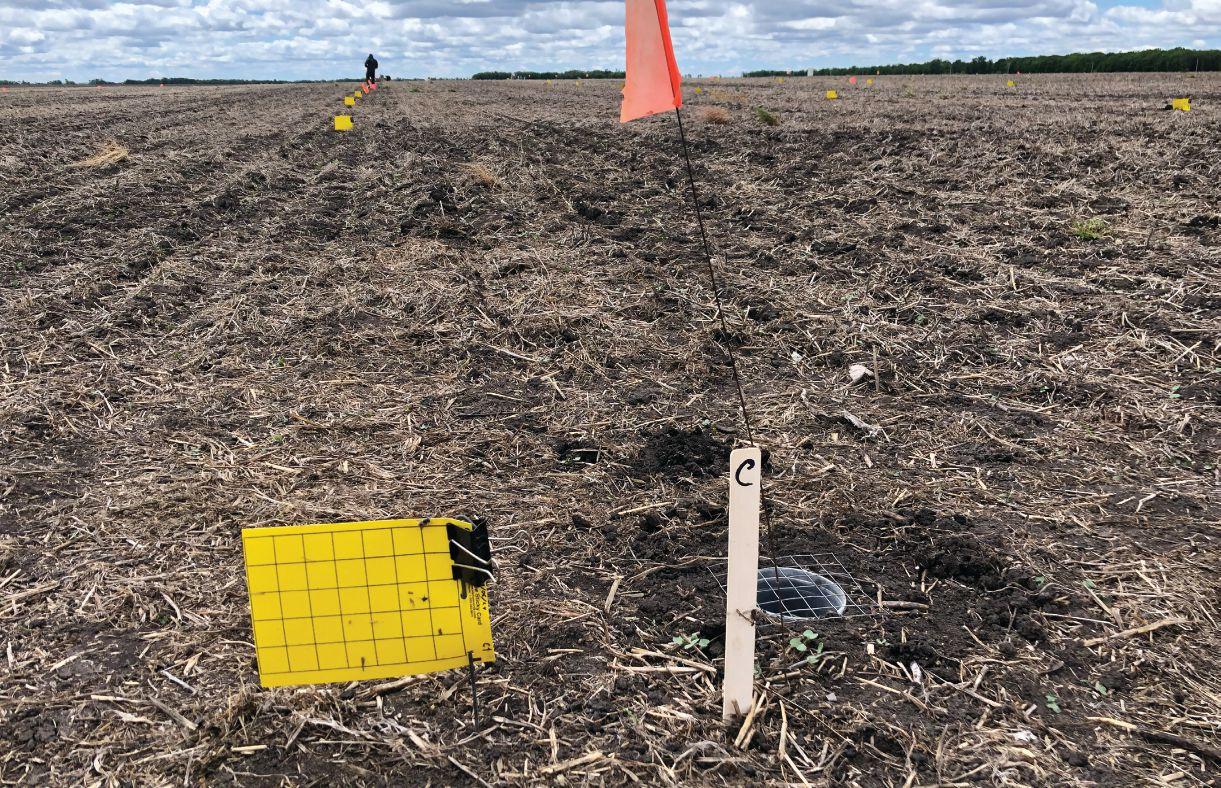
Sticky cards and pitfall traps set up in transects to monitor flea beetles and beneficial insects in on-farm experiments in May 2024.
Cover crops for flea beetle management
Evaluating
promising cover crop treatments for flea beetle control in canola.
BY DONNA FLEURY
Although flea beetles may not be a problem every year, they are the most important insect pest of canola on the Prairies. Farmers need to be prepared as populations can quickly move into fields causing significant seedling damage and potential yield losses. Farmers currently rely heavily on insecticide seed treatments, but insecticide resistance and environmental concerns make it necessary to explore alternative pest management strategies.
Researchers at the University of Manitoba are evaluating some promising alternative options based on early research and results by farmers and agronomists. During the 2021 growing season, a few farmers and agronomists in Western Canada shared on social media their observation that flea beetle damage was lower when canola was direct seeded into rye cover crops.
Building on these observations, a preliminary experiment in 2022 and a review of published literature on the contributions of intercropping and
crop residue to reduce flea beetle damage in canola, a three-year project was launched in 2023. This project is evaluating the impact of overwintering and spring-planted cover crops on flea beetle damage of canola, with the goal of maximizing flea beetle control while minimizing negative canola crop impacts.
“Although using living plant cover for crop establishment such as nurse crops in forages or cover crops or nurse crops in sugar beets to prevent early emergence wind damage is not new, using these strategies in canola raises several questions,” says Yvonne Lawley, associate professor of agronomy and cropping systems at the University of Manitoba (UofM). “With canola there is a critical weed-free period early in the growing season, so understanding the impact of competition from a living cover crop, and the balance between flea beetle control and potential impacts on yield and quality are important.”
“In the past, the early season competition would have ruled out the use of cover or nurse crops,” adds Lawley. “With the recent challenges of managing flea beetles in
Photo courtesy of Raquel Chinchin.
“In terms of termination timing, the later the termination of fall rye, the less defoliation was measured in canola.”
canola, growers are interested in evaluating alternative options such as cover crops potentially hiding the crop from flea beetles. It is also important to explore opportunities for integrated pest management options anytime we are managing a pest problem.”
“This project includes small plot trials to both verify observations found in the field and to evaluate the impact of overwintering and spring-planted cover crops on flea beetle damage of canola. The small-plot research complements on-farm testing initiated in 2024 as part of the Manitoba Canola Growers on-farm research program. The objective is to try to determine the tradeoff of early-season competition with providing the right amount of coverage for reducing the impact of flea beetles at farm-scale. One of our key collaborators is UofM professor and entomologist, Alejandro Costamagna.” The project is funded through the Canola Agronomic Research Program (CARP), the Manitoba Canola Growers and Western Grains Research Foundation (WGRF).
The first small plot experiment focused on establishing fall rye in the fall and then various termination strategies in the spring. Open-pollinated fall rye was planted at 70 pounds per acre in September followed by Roundup Ready canola the following spring. The fall rye was terminated using glyphosate at four different times: seven days before seeding canola, the day after seeding canola, at the canola cotyledon stage and at the canola two-leaf stage. Treatments with fall rye were compared to a control treatment with no fall rye cover crop. Data collection included weekly flea beetle abundance and damage until the two-leaf stage, canola plant counts, stand reductions, defoliation per plant and grain yield.
A second small plot experiment explored the use of spring nurse crops with canola as another option to manage flea beetle populations. In the study, oats were seeded at two seeding rates for comparison, a low rate of half bushel per acre (bu./ac.) and a high rate of one bu./ac. The oat nurse crop was seeded in the seed row with canola at planting or broadcast immediately before planting canola at both seeding rates.
The termination timing with glyphosate was the same
for all plots at the two-leaf stage, which is typically the end of the critical period for flea beetle control. Data collection included weekly flea beetle abundance and damage until the two-leaf stage, weekly natural enemy sampling, canola plant counts, nurse crop plant stand counts and grain yield.
“We have some preliminary observations from the small plot experiments and so far the fall rye cover crop was more effective in reducing flea beetle populations than the oat nurse crop,” says Lawley. “We also saw less defoliation with the fall rye treatments than with the oat nurse crop treatments. This was expected as the biomass from the oat nurse crop was not as abundant as the fall rye cover crop, although there may be a need to consider adjusting the seeding rate, row spacing or configuration of the oat crop.”
“In terms of termination timing,” says Lawley, “the later the termination of fall rye, the less defoliation was measured in canola [see table]. However, yield results showed an expected reduction in yield when fall rye termination was delayed until the two-leaf stage in 2023 of 30 per cent, but there was no statistical difference in yield at the cotyledon stage in 2023.”
Lawley adds there were also variations in flea beetle populations and growing conditions in the study. For example, in 2024 the spring growing conditions in
Effect of fall rye cover crop and fall rye termination timing on mean canola plant stand and defoliation per plant from flea beetles 33 days after planting as well as canola yield in Carman, Man. in 2023.
Table courtesy of Yvonne Lawley, University of Manitoba.
Photo courtesy of Kara Melvin.
ABOVE LEFT
Canola with an oat nurse crop seeded in the same seed row just prior to termination of the oat nurse crop with a herbicide at the V3 canola stage.
ABOVE RIGHT Small plot experiments comparing fall rye cover crop termination timing at the University of Manitoba Carman Research Farm in early June 2023.
Manitoba were cool and wet with slow canola emergence. It took four weeks to get from an emerging canola seeding all the way to two-leaf stage at the Carman Research Farm, which also lengthened the period of competition between them. This also extended the period between seeding and the termination timing set for the two-leaf canola crop stage. However, seed treatments also decline in effectiveness over time, so perhaps under this type of cool spring conditions, cover or nurse crops may prove to be more beneficial in providing flea beetle control.
FOUR ON-FARM EXPERIMENTS
In 2024, four on-farm experiments evaluated seeding a wheat or oat nurse crop with canola in collaboration with the Manitoba Canola Growers on-farm research networks and Antara Agronomy Services Ltd. in the southern Red River Valley area. “Pairing these on-farm experiments works nicely with the small plot trials allowing us to evaluate the logistics of this new practice with farm scale equipment and to the effectiveness of this new practice at a larger spatial scale,” adds Lawley.
“The on-farm experiments brought up other important logistical factors that need to be considered such as how to configure the planters, how to work with the fertilizer program for fertilizing canola and determining realistic low seeding rates for the nurse crops that air seeders can deliver,” Lawley adds. “When flea beetles showed up in these fields at the end of May, we also had to navigate the growers’ decision to spray foliar insecticides on the field to manage the populations. This was a good dose of reality to help realize how the small plot experiments connect with these real world scenarios.”
The results of the project so far have presented some interesting initial findings and raised additional questions. “Although my research includes a lot of work with cover crops and other less known practices, using cover
crops or nurse crops with canola still feels like a bit of a risky practice and we still have a lot to learn before we can make recommendations,” emphasizes Lawley. “We need to understand the mechanism that is driving the impact on flea beetle populations, how it interrupts insect sensing and where this practice may be more risky such as in drier or wetter areas or more northern versus southern areas. The project opens more questions to look at and we look forward to hearing [them].”
In terms of termination timing for fall rye cover crops, Lawley says that as an agronomist she would pick one day after canola planting, but the defoliation data may be a reason to look at timings as late as the two- to threeleaf stage. Another consideration for the timing of the glyphosate termination application may be the target timing for the first herbicide pass for weed control, which will be influenced by the species and relative timing of weed emergence in each field.
With nurse crops, optimizing seeding rates, trialing other cereals and considering other configurations such as cross-seeding may improve biomass stands. Understanding the economics will be important, not just the financial costs or yield impacts but also the potential mental health benefits of reducing early-season stress when trying to get a good canola crop established.
“As we gain more information and results, this project could offer farmers an integrated pest management solution that can be used in combination with seed treatments and reduce their dependence on foliar incrop insecticide applications,” adds Lawley. “The use of cover crops as an integrated pest management strategy for managing flea beetles also aligns well with soil health goals and the promising management benefits of cover crops, providing a win-win for farmers. We look forward to finding promising alternative options for flea beetle management that have been field tested by farmers.”
Auto-adjust combines need monitoring
Don’t
just set and forget.
BY BRUCE BARKER
The concept is good, and significant research dollars have gone into the development of auto-adjust combines, but set and forget can mean increased canola harvest losses. That is the finding of a research study conducted by the Prairie Agricultural Machinery Institute (PAMI) during harvest 2022.
“My thoughts on auto-adjust combines are that you have to measure the losses. They need to be calibrated with what is being displayed on the screen so that you actually know what losses you are incurring,” says Shawn Senko, a Canola Council of Canada (CCC) agronomist in Saskatoon, Sask.
Auto-adjust combines typically use sensors to monitor many parts of the grain threshing process. An operator sets the parameters for grain loss, foreign material and broken grain on the operating monitor, and then the combine automatically adjusts rotor/ cylinder speed, fan speed, and concave, chaffer and sieve clearances. The trick, though, is that those numbers displayed on the screen can’t be trusted.
During the harvest of 2022, PAMI monitored 22 combines from Case IH, Claas, John Deere and New Holland for canola harvest seed losses. Eleven were equipped with auto-adjust and the other 11 were manually adjusted by the operator. Field testing was conducted between September 9 and October 10, 2022. One combine site was visited per day by PAMI technicians, and three timing samples were conducted throughout the day.
The objectives were to quantify the change in environmental conditions during a typical harvest day and the effect on combine losses of canola, and to measure the performance potential of combines with auto-adjusting settings.
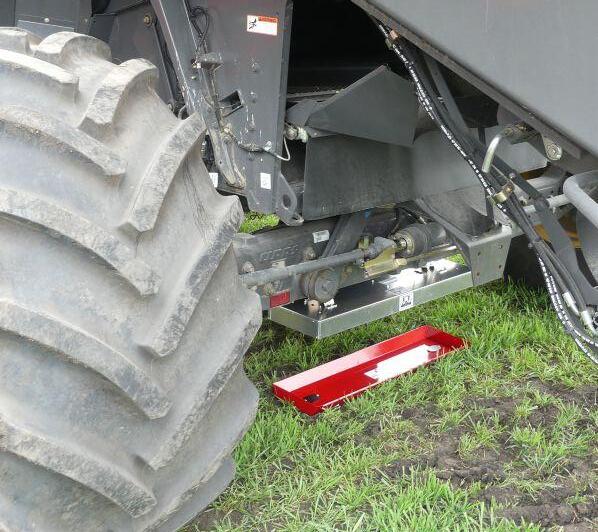
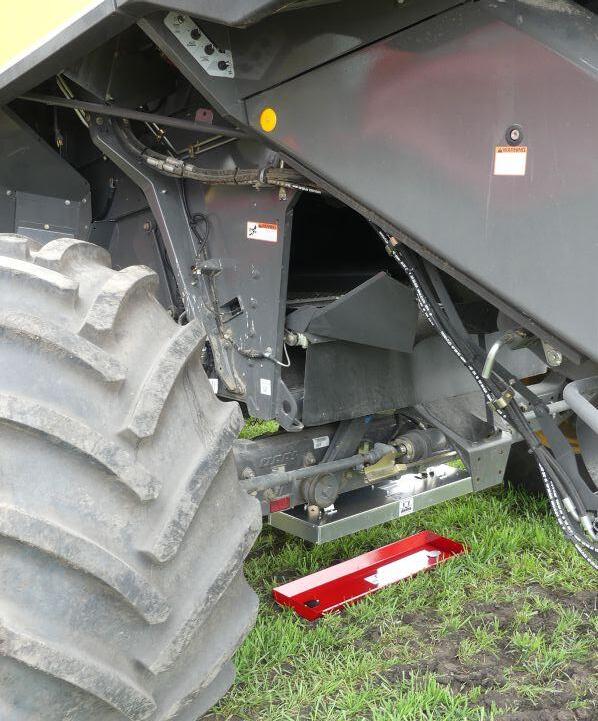
Drop pans from Bushel Plus Ltd. were used to measure harvest losses and, while there are other loss pan manufacturers like ScherGain, PAMI decided to use only one brand to ensure consistency across combines. The drop pan is attached to the bottom of the combine and remotely released. The canola samples collected by the drop pan are cleaned and weighed, and the weight is entered into a loss equation to determine losses.
ABOVE A drop pan provides an easy way to accurately measure harvest losses.
Weather conditions were taken from Environment Canada’s weather app and compared to an in-field, non-calibrated temperature and relative humidity meter.
The combine operators ran the combines as they normally would and used either auto-adjust or manually adjusted the combine. Eight of the combines were harvesting swathed canola and 14 were straight cutting canola. Yields ranged from 20 bushels per acre (1.4 MT/ ha) to 65 bu./ac. (4.4 MT/ha).
The range of losses over the 22 combines was from 0.1 bu./ac (6.7 kg/ha) up to 10.6 bu./ac. (712.9 kg/ha), representing 0.2 per cent to 29.4 per cent of total yield loss.
MORE VARIABILITY WITH AUTO-ADJUSTING COMBINES
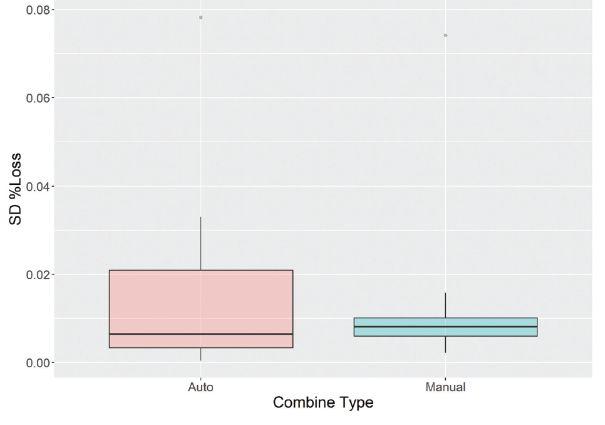
When comparing auto-adjusting and manually adjusted combines, there was no significant difference in the canola loss percentages. What did differ, though, was
Photo courtesy of Bruce Barker.
the variation in seed loss. The auto-adjusting combines had much greater variation in seed loss throughout the day than the combines that were manually adjusted. The researchers indicated that “while auto-adjusting capabilities may be able to adjust to changing conditions as well as manual adjusting types, they cannot be blindly relied upon – i.e. a ‘set it and forget it’ mindset should not be employed.”
“If you don’t measure it, whether you have an auto-adjusting combine or adjust manually, you won’t know what your actual losses really are,” says Senko.
The research also found that average daily temperatures impacted yield
loss variation. As average daily temperatures increased, yield loss variation increased significantly. However, variation of temperature and relative humidity throughout the day did not impact loss variation.
Seed loss was not affected when harvesting swathed or straight-cut canola. There was also no difference in seed loss between the ground speeds tested.
Senko says that there is no magic number for harvest losses. Typically, a two per cent loss might be acceptable, but it depends on a number of factors. For example, he says that if a grower is pushing the harvest window towards the end of October, a three per cent loss might be acceptable.
“Two per cent is a nice number, but it is a trade off with harvest efficiencies,” says Senko. “When you look at the economics, going slower to reduce losses might provide overall higher yield, but if weather conditions delay harvesting and reduces the grade, you might be better off taking the loss and getting the canola off sooner. Knowing what that loss is and being able to make an informed decision is key.”
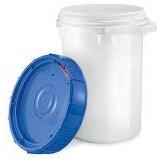
PAILS
LIDS
Midge Busters
Staying
on top of wheat midge.
BY BRUCE BARKER
When the wheat midge survey maps come out in the winter, and you’re in the red hot zone, who you gonna call? Try Midge Busters, an initiative that started several years ago to help track the presence of wheat midge in real time on the Prairies.
“Midge Busters is an initiative that SeCan approached me with to try to correlate predictive forecasts with actual emergence in the field,” says Tyler Wist, a field crop entomologist with Agriculture and Agri-Food Canada (AAFC) in Saskatoon, Sask.
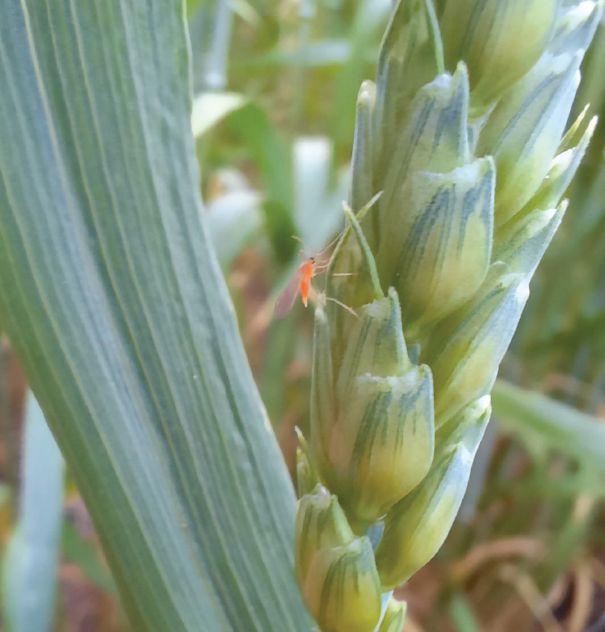
Wheat midge (Sitodiplosis mosellana) is one of the most serious wheat pests on the Prairies. The midge larvae feed on the developing wheat kernel, causing it to shrivel, crack and become deformed. Some kernels may be only slightly damaged, while others will shrivel up and be blown out the combine with chaff during harvest. The level of infestation varies from year to year.
Damaged kernels reduce the grade of the harvested wheat. Canadian Grain Commission standards limit midge damage in No. 1 Canadian Western Red Spring (CWRS) wheat to two per cent and No. 2 CWRS to eight per cent. Damage tolerances for amber durum are two per cent for No. 1 Canadian Western Amber Durum (CWAD) and eight per cent for No. 2 CWAD.
Wist says that in one particularly severe outbreak in 1995, losses reached $50 million in Manitoba and $130 million in Saskatchewan. Research by Owen Olfert, AAFC entomologist, in the 1980s, correlated the number of infested kernels to yield loss. It was almost a one-to-one ratio. For example, 30 per cent infested kernels resulted in 40 per cent yield loss. When infested kernels reached 90 per cent, yield loss reached 90 per cent.
“The spikes in infestations happen in cool wet years,” says Wist.
The adult midge is a very small, orange fly about 2 to 3 mm long. Adult midge emerge from the pupal stage in late June or early July. The adults become active in the evenings at the top of the canopy where females lay eggs on florets or glumes. A female can lay an average of 80 eggs and live for about seven days. The eggs hatch and larvae move into the kernel head to feed
on the kernel.
After feeding for two to three weeks, the larvae drop to the ground and burrow into the soil to overwinter where they can remain dormant for up to 13 years. When temperature and soil moisture are favourable, the over-wintering larvae pupate and adult flies emerge.
ABOVE Wheat
midge is one of the most damaging insect pests of wheat.
WHEAT MIDGE FORECAST MAPS
In Saskatchewan and Alberta, wheat midge survey maps are developed from soil core surveys from wheat stubble conducted in the fall. The density of overwinter wheat midge cocoons are assessed and are analyzed to determine parasitism rates. From these surveys, a forecast map is developed. The map simply shows what levels of cocoons are in the soil that have the potential
All photos courtesy of Tyler Wist.
The Keep it Clean program reiterates the important message to always read and follow label directions.
Keep it Clean
Be aware of market risks.
BY BRUCE BARKER
The buyer is always right. That’s the premise behind the Keep it Clean program that highlights the crop protection products and crop combinations that may cause market risks. The program has been updated for 2025 with several new cautions for growers.
“The Keep it Clean program was set up to address the challenges in market access that Canadian growers can face, considering the large proportion of our cereals, pulses and canola that are exported,” says Krista Zuzak, director of crop protection and production with Cereals Canada.
“Our agricultural exports must meet the standards set by importing countries, including their tolerances for pesticide residues and contaminants. For example, Canadian wheat is exported to over 80 countries so there are a lot of important markets to consider that could be impacted.”
Keep it Clean was originally started by the Canola Council of Canada (CCC) – and 2025 marks the ninth year of partnership between the CCC, Cereals Canada and Pulse Canada. Zuzak says the partnership helps to streamline and simplify messages growers receive and makes the best use of resources to maximize impact. Other participants in the program include the Prairie Oat Growers Association and the Sustainable Canadian Agricultural Partnership.
ACCEPTABLE PESTICIDES
To safeguard the marketability of Canadian crops, the program has five tips. The first is to use acceptable pesticides only. Zuzak explains that although a pesticide may be registered in Canada on a certain crop type,
there can be market access issues caused by the residues of this pesticide and maximum residue limits (MRLs) in place in export markets.
“For each commodity, we have to consider the markets that grain is sold into, if we have MRLs in those markets and how they align with Canada’s MRLs. Each of the commodity associations conduct ongoing monitoring for pesticide and residue issues that may cause trade issues in major markets, such as changing MRLs. Tolerances for residues differ from market to market and importing countries are using highly sensitive equipment to test for residues, sometimes as low as in parts per billion,” says Zuzak.
The program’s website, keepitclean.ca, has product advisories that caution growers when to not use a product even though it may be registered on a specific crop, or cautions them to consult their grain buyer before using the product. The program uses a red X symbol to signify that the product should not be used or an amber exclamation symbol to recommend consultation with grain buyers.
For example, growers are cautioned to not use glyphosate on malt barley as buyers will not accept malt barley that has been treated with pre-harvest glyphosate. Growers are also encouraged to consult their grain buyer to ensure pre-harvest glyphosate is an acceptable use on chickpeas, green lentils, peas, oats, wheat, faba beans, dry beans and barley for food or feed.
New to the advisory for pulse growers for the 2025
Photo courtesy of Anna Richard/ iStock / Getty Images Plus / Getty Images.
growing season is flonicamid, the active ingredient in the insecticide product Carbine. It has been classified as amber – be informed for green lentils only.
“This classification is due to uncertainty regarding the MRL in the European Union for green lentils. Growers are advised to consult with their grain buyers before using flonicamid on green lentils, as some buyers may not accept treated grain,” says Greg Bartley, director of crop protection and crop quality at Pulse Canada.
Bartley also says that glufosinate-ammonium has been updated in the advisory to clarify that it cannot be used on any pulse crop in Western Canada.
LAMDA-CYHALOTHRIN CLEARED FOR ANIMAL FEED
Another significant change is for lambda-cyhalothrin (i.e. Matador), an insecticide that controls many insect pests. In 2021, the Pest Management Regulatory Agency’s (PMRA) re-evaluation decision of lambda-cyhalothrin cancelled all feed uses of crops treated with lambda-cyhalothrin, including the harvested grain, seed screenings, by-products and aftermath. Since any crop entering the grain handling system could be used as livestock feed, this posed a risk of becoming an off-label use, and Keep it Clean recommended that growers do not use the product on any crop.
As of February 2025, PMRA published an information note announcing the reinstatement of grain treated with lambda-cyhalothrin as an acceptable source of livestock feed, effective immediately. The reinstatement applies to grain and meal from treated canola, cereals, field corn, soybeans and pulses.
“This resolved the grain industry’s long-standing issue with the 2021 PMRA re-evaluation decision.
We have included this update on the Keep it Clean website, indicating there are fewer restrictions for growers now,” says Zuzak.
READ THE LABEL
The second tip is to always read and follow label directions. This means not only should the product be registered on a specific crop, but that pesticide applicators need to follow the correct application rate and to apply the product only at the recommended crop stage. It’s also important to follow the product’s pre-harvest interval (PHI). PHI is the number of days between spraying and swathing or straight cutting the crop. This will ensure that the active ingredient has enough time to break down in the plant and not leave unacceptable residues behind. Keep it Clean has an interactive PHI calculator that calculates the PHI for a given crop and pesticide product.
has been treated with malathion in the current growing season. Only use approved bin treatments such as diatomaceous earth on cereals.
DELIVER ACCEPTABLE PRODUCTS
Finally, only deliver what you declare. When delivering to a licensed grain company, growers are legally required to complete a Declaration of Eligibility for Delivery of Grain to confirm that the grain they are delivering is of a variety that is eligible for the kind of grain being sold. Grain buyers may also require a commercial declaration that indicates the crop was not treated with specific crop input products to ensure it meets the requirements of our export markets. They may also set out obligations and penalties associated with the commercial declaration such as being held liable for the costs associated with contamination of a bin or shipment.
The Keep it Clean program works to safeguard the marketability of Canadian crops.
“MRLs are not on the label of pesticides so the industry relies on growers following the label to get the application timing, rate and pre-harvest interval right, so residues are predictable. Being knowledgeable about problematic product and crop combinations empowers growers to prevent unexpected issues at the grain elevator when they go to deliver,” says Zuzak.
Crop disease, such as blackleg in canola and Fusarium head blight in cereals, can also cause market access issues. The Keep it Clean program has tips on how to control these diseases to help reduce market risk.
Storage of crops also brings several market risks. Grain bins need to be free of treated seed and animal protein like blood meal and bone meal. The insecticide malathion should never be used to prepare bins for canola storage. Its residue can last for months so canola should not be stored in a bin that
The program has a list of deregistered canola varieties that should not be grown or delivered to an elevator or grain handler. The website indicates that growing registered canola varieties is an important part of assuring our export customers that the oil and meal quality, biotech traits and disease resistance in our canola supply meets their requirements.
Given the importance of western Canadian growers’ export markets, significant resources have gone into the Keep it Clean program to help reduce market risks. By following the program’s tips and guidelines, growers can help ensure the products they produce are acceptable to domestic and export markets.
“We always recommend that growers speak with their grain buyers to ensure the products they are using are acceptable to both domestic and export markets,” says Bartley.
PESTS AND DISEASES
Midge Busters
to emerge as adult flies. A lot depends on the weather. They can be found at the provincial agriculture websites and at the Prairie Pest Monitoring Network.
Modelling by AAFC researchers Bob Elliott and Owen Olfert found that the emergence of adult flies requires about 25 mm of accumulated rainfall in May, and an accumulation of 693 growing degree days.
Still, the models aren’t perfect. Wist says history has shown that weather has much to do with adult emergence and infestations. For example, the Saskatchewan forecast in 2021 showed high levels (red) of cocoons in the Melfort/Tisdale area but, with only a little rain, few wheat midge emerged. But in the Regina area that had low levels of cocoons, 65 mm of rain resulted in high wheat midge pressure.
“I think the 25 mm accumulated rain is more like it needs to be a rapid accumulation of 25 mm over a few days, not just over the month of May,” says Wist.
AAFC previously ran modelling to predict wheat midge development during the growing season, which was available on the Prairie Pest Monitoring Network. However, the scientist in charge of the modelling has retired, and the forecasting is on hold.
WHO YOU GONNA CALL?
Enter Midge Busters. Wist says agronomists and farmers can obtain pheromone traps to track the presence of wheat midge in their fields. The results are shared with Midge Buster members at #midgebusters on X, and through WhatsApp. The intent is to compare the provincial midge forecasts with actual spring and summer emergence and to help agronomists know when to scout fields for wheat midge females.
“We had 101 Midge Busters traps reporting from across Alberta, Saskatchewan and Manitoba and thanks to everyone who trapped and sent in samples,” says Wist.
There are no economic threshold levels in Canada for pheromone traps for wheat midge. “We are trying to correlate the number of midge in traps with the number of wheat midge on wheat heads to see if we can determine what might be an economic threshold level from a trap.”
Another benefit could be monitoring for beneficial parasitoids that attack wheat midge. An example was from a trap in late June, where 217 wheat midge were in the trap, but 2,877 parasitoids were also present. “There were so many parasitoids in the nursery where we had the trap that I couldn’t get that many wheat midge to attack my experimental wheat,” says Wist.
The 2021 wheat midge survey map showed very few hot spots were predicted for 2022 in Alberta and Saskatchewan. However, there were still some hot spots,
especially in Alberta where high levels of wheat midge were found in the traps.
“According to the forecast, midge emergence should have been low, so the lesson is that you shouldn’t turn your back on wheat midge. They can still come out,” says Wist. He says the 2023 trapping levels matched well with 2022 surveys.
Alberta Agriculture also runs a pheromone trapping survey to help keep track of wheat midge emergence.
Wist says growers should scout for wheat midge in late June and early July. Scout wheat fields after 8:30 p.m. when the female midge are most active when the temperature is above 15 C and wind speed is less than 10 km/h (six mph). When wind speeds are greater than 10 km/h, egg-laying may still occur on shorter, tillering heads within the shelter of the crop canopy.
Midge populations can be estimated by counting the number of adults present on four or five wheat heads. Scout in at least three to four locations. The economic threshold for insecticide application is one adult midge for every four to five wheat heads to prevent yield loss. To prevent grade loss, the economic threshold is one adult midge per eight to 10 heads.
The first line of defence is to grow a wheat midge tolerant variety carrying the Sm1 gene (Sitodiplosis mosellana1). When the larvae feed on wheat that contains the Sm1 gene, the plant produces phenolic acids that the larvae don’t like. The larvae stop feeding and eventually starve to death. The varieties come as a varietal blend, with 10 per cent of the variety not containing the gene, which acts as a built-in refuge to help prevent the development of resistance to the gene.
“We need to protect the gene. So far, in 15 years of midge-tolerant wheat, we don’t know of any population that has overcome the Sm1 gene,” says Wist.
In 2024, there were varietal blends in CWRS, Canada Prairie Spring Red (CPSR), Canada Western Special Purpose (CWSP), Canada Western Soft White Spring (CWSWS), Canada Western Hard White Spring (CWHWS), Canada Northern Hard Red (CNHR), Canada Western Extra Strong (CWES) and durum wheat classes. A total of 36 varieties were registered and available. If growing resistant wheat, a farmer would not need to spray for midge if the economic threshold was exceeded.
ABOVE Research is trying to correlate pheromone trap numbers with economic thresholds.
Cereal performance you can harvest
Prosaro® PRO fungicide is an
your yield
Biting back against blackleg
Researchers investigate carnivorous bacteria as a new way to manage blackleg.
BY JOEY SABLJIC
Blackleg remains a shifting target. Even with the latest management tools, including fungicides, seed treatments and race-specific resistance genetics, the disease still finds ways to adapt, overcome and do plenty of damage.
New research out of the University of Winnipeg is investigating a totally different way to defend against blackleg: carnivorous bacteria. Microbiologist Paul Holloway and his team have spent the past couple of years looking at a group of soil microorganisms called myxobacteria – nicknamed “wolfpack bacteria” - that are known to prey on (and eat) other bacteria species.
“Myxobacteria are totally unique because of the way they group together and attack,” explains Holloway. “That’s where the ‘wolfpack’ name comes from. Because it’s not just a single bacterium, but a coordinated swarm of them hunting bacteria.”
Holloway’s work, supported by the Canola Council of Canada (CCC), is aiming to understand whether myxobacteria could be used to control – and kill – Leptosphaeria maculans, the bacteria that causes blackleg in canola. He’s been putting myxobacteria and other fungi in a petri dish together, then watching what happens next through a microscope. “Typically, you’ll see thousands of myxos forming these whitish trails as they completely encircle the bacteria and consume it,” he says. “Then, when the myxos have used up their food source, they won’t just die off. Instead, they can go completely inert.”
Myxobacteria will pile themselves up together and form a red or orange-coloured fruiting body. These bodies contain bunches of spores that can germinate and spread out when their next meals are readily available.
WHY MYXOBACTERIA, WHY NOW?
While plant breeders are making every effort to stay one step ahead, Holloway points out that blackleg – and its many pathotypes – is always finding new ways to evade genetic resistance. “The fact is blackleg can mutate faster than you can breed resistant crops. If you’ve got a resistance gene that you’re trying to incorporate, you’re probably looking at a minimum of four or five years,” he says. “So, being a microbiologist, I
thought, ‘we need to solve this problem with other bacteria.’ And working with myxobacteria is something that almost nobody is doing, so why not try it?”
The idea of working with myxobacteria sprouted from a graduate student’s research paper. From there, Holloway decided to do some further digging and found that there was still a lot about microorganisms that wasn’t well understood, especially in an agricultural setting.
A big challenge Holloway and his team faced right off the bat was sourcing myxobacteria from local Manitoba soil samples. After a few dead ends, Holloway reached out to an expert at the University of Mississippi who provided dozens of myxobacteria strains to help get the University of Winnipeg team started. “By getting those isolates from Mississippi, we were able to understand what it takes to grow myxobacteria reliably,” says Holloway. “Really, we wanted to make sure we weren’t making any critical mistakes, like having an environment that’s too hot, cold or dry. Once we had
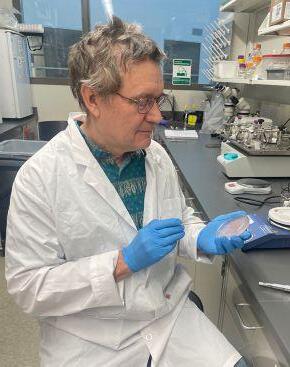
ABOVE Paul Holloway in his lab.
Photo courtesy of Paul Holloway.
a handle on that, we could more confidently go out and find our own samples.”
THE SEARCH FOR MANITOBA MYXOBACTERIA
Holloway and his team were also given guidance on where to find myxobacteria colonies in richer soils that hadn’t been disturbed. This resulted in the researchers heading to field edges, hedgerows, ditches – even undisturbed rock piles and trees in Manitoba’s national parks – to find myxobacteria-rich spots. “That’s really where we had the most luck finding our own isolates,” says Holloway. “Before, we were going into farmer’s fields and scooping up soil right from the furrows, but we’ve since learned to target areas where someone hadn’t been digging or working for a good, long time.”
So far, their local myxobacteria search has borne fruit – or, rather, fruiting bodies. Holloway’s team has come up with around a dozen isolates they think could effectively tackle blackleg and other fungal pathogens. “One of the isolates we have, for sure, does attack bacteria. There’s a couple of others that are looking promising,” says Holloway. “The next step will be to get them on a plate with blackleg to see if it attacks and kills the fungus.”
MYXOBACTERIA: A CLOSER LOOK
LIVE FROM THE PETRI DISH: MYXOBACTERIA VERSUS BLACKLEG
When they put their carefully selected myxobacteria strains up against blackleg fungus on a petri dish, they’ll watch to see if the myxobacteria successfully swarms and kills blackleg. If it doesn’t, the researchers would move to conduct larger-scale greenhouse and field-level tests.
The use of myxobacteria isn’t a completely new concept. In fact, it’s been explored in China as a potential biocontrol of fungal diseases in pepper, fruit and vegetable crops. But outside of China, says Holloway, myxobacteria research has been fairly minimal in other parts of the world. www.topcropmanager.com/podcasts
Looking ahead, Holloway says he could see myxobacteria as part of a commercial biocontrol product that could be applied to the soil or directly to leaves.
“Down the road, when we try to figure out how to apply myxobacteria to a crop, maybe the way we go is to grow them up as fruiting bodies and then spray those fruiting bodies out onto the plant or seed, where they could lie in wait for fungal pathogens,” he explains.
Though his myxobacteria work is still in its early stages, the prospect of having another tool to manage the ever-present blackleg threat – by pitting bacteria versus bacteria – could prove more than intriguing to canola growers looking to protect their yields at all costs.
Recent episodes include:
Fighting back against kochia and wild oat with Dr. Charles Geddes Making the most of nitrogen with Dr. Kate Congreves The future of AI on the farm with Darrell Petras
by Bruce Barker, P.Ag |
Early maturing crops reduce wild oat densities
The evolution of herbicide-resistant wild oats has made wild oat control increasingly difficult. The most recent survey in Manitoba found that 100 per cent of wild oat samples were resistant to at least one herbicide mode of action and, in Saskatchewan, 77 per cent were also resistant to at least one mode of action. Additionally, multiple herbicide resistance to Group 1 and 2 herbicides are becoming more common. Recent research has focused on integrated weed control to help manage weeds, and harvest weed seed control (HWSC) is seen as one of those tools.
A three-year research study was conducted by Breanne Tidemann, Agriculture and Agri-Food Canada (AAFC) research scientist, at Lacombe and Beaverlodge, Alta., Scott, Sask. and Carman, Man. from 2016 to 2018. The objective was to see if combinations of HWSC, earlier maturing crops and swathing versus straight combining would affect wild oat populations. The premise was that HWSC combined with swathing of earlier maturing, more competitive crops would lead to the lowest in-crop wild oat populations.
The field trials were set up as a three-year rotational cropping system, and the results are the cumulative effects of the cropping system after three years.
The early maturing rotation was pea followed by winter wheat. The intermediate maturing rotation (normal) was wheat followed by canola, and the late maturing rotation was faba bean followed by flax. In the third year, barley was grown across all rotations to measure the treatment impacts on wild oat populations.
Crops were either swathed or straight combined. Because HWSC utilizing a weed seed destructor is not possible with plot combines, chaff collection was utilized to mimic the number of wild oat seeds collected and destroyed by a commercial weed seed cage mill.
In the first year, a glyphosate plus bromoxynil preseed burndown was applied and, subsequently, only broadleaf herbicide treatments were applied to the treatments; no wild oat herbicides were applied. Fungicides and insecticides were applied as required. Desiccation with saflufenacil (Heat LQ) was allowed as needed in straight-cut treatments.
Wild oat plant densities were measured each year
just prior to in-crop broadleaf herbicide application. The early maturing rotation had a wild oat density that was 50 per cent less than the normal and late maturing rotations after three years. The highest wild oat density was from the late maturing, straight cut treatment.
There was also an interaction between crop rotations and harvest management. The swathing treatment had lower wild oat densities in the normal and later maturing crop rotations. However, the results were quite variable across the sites. For the early maturing crop rotation, harvest treatment did not affect wild oat density.
The amount of wild oat seed collected in the chaff was variable between crop rotations, harvest type and sites. At each site, there was large variability and little consistency to the amount of wild oat seed collected in the chaff. This may have been due to differences in chaff collection devices that were fabricated at each site, differences in combine settings and variable weather conditions. Unfortunately, this meant that the researchers couldn’t conclude that HWSC was a variable that contributed to lower wild oat densities in early maturing crop rotations.
Because wild oat herbicides were not used in the study, wild oat plant densities measured in the spring increased over time, although differently for crop rotation treatments with the early maturing rotation having significantly lower densities. This highlights the need for in-crop wild oat control along with the use of integrated weed management tools such as increasing seeding rates, crop silaging and growing early maturing crops with HWSC to manage wild oat.
Wild oat densities in the soil seed bank were calculated in 2018 shortly after the final harvest. Twelve soil cores of four inches (10 cm) diameter were collected to a depth of two inches (5 cm) per plot. Wild oat seed was separated from the soil and counted.
Soil seed bank wild oat densities mirrored the results from wild oat densities measured in the spring. Crop maturity affected seedbank densities while swathed versus straight cut harvesting did not. The earliest maturing rotation had the lowest density at 750 seeds/ft2 (7,500 seeds/ m2), which was slightly more than the 1,400/ft2 (14,000/m2) in the late maturing rotation. The normal crop rotation was intermediate with seedbank densities around 1,000/ft2 (10,000/m2).
Even though the use of chaff collection as a HWSC tool was inconclusive on its effect on wild oat management, the research does show that an early maturing crop can improve wild oat control because of its early time of emergence and increased crop competitiveness compared to spring annual crops.
Bruce Barker divides his time between CanadianAgronomist.ca and as Western Field Editor for Top CropManager. CanadianAgronomist.ca translates research into agronomic knowledge that agronomists and farmers can use to grow better crops. Read the full research insight at CanadianAgronomist.ca.
Brought to you by DOES THE FUTURE OF AGRICULTURE SEEM GREY TO YOU?
Agriculture in the Classroom is cultivating curiosity by providing hands- on, immersive learning experiences to educate and engage students. The next generation of farmers, policy-makers, and innovators is in the classroom today. Together, we can inspire young people to drive our industry forward.