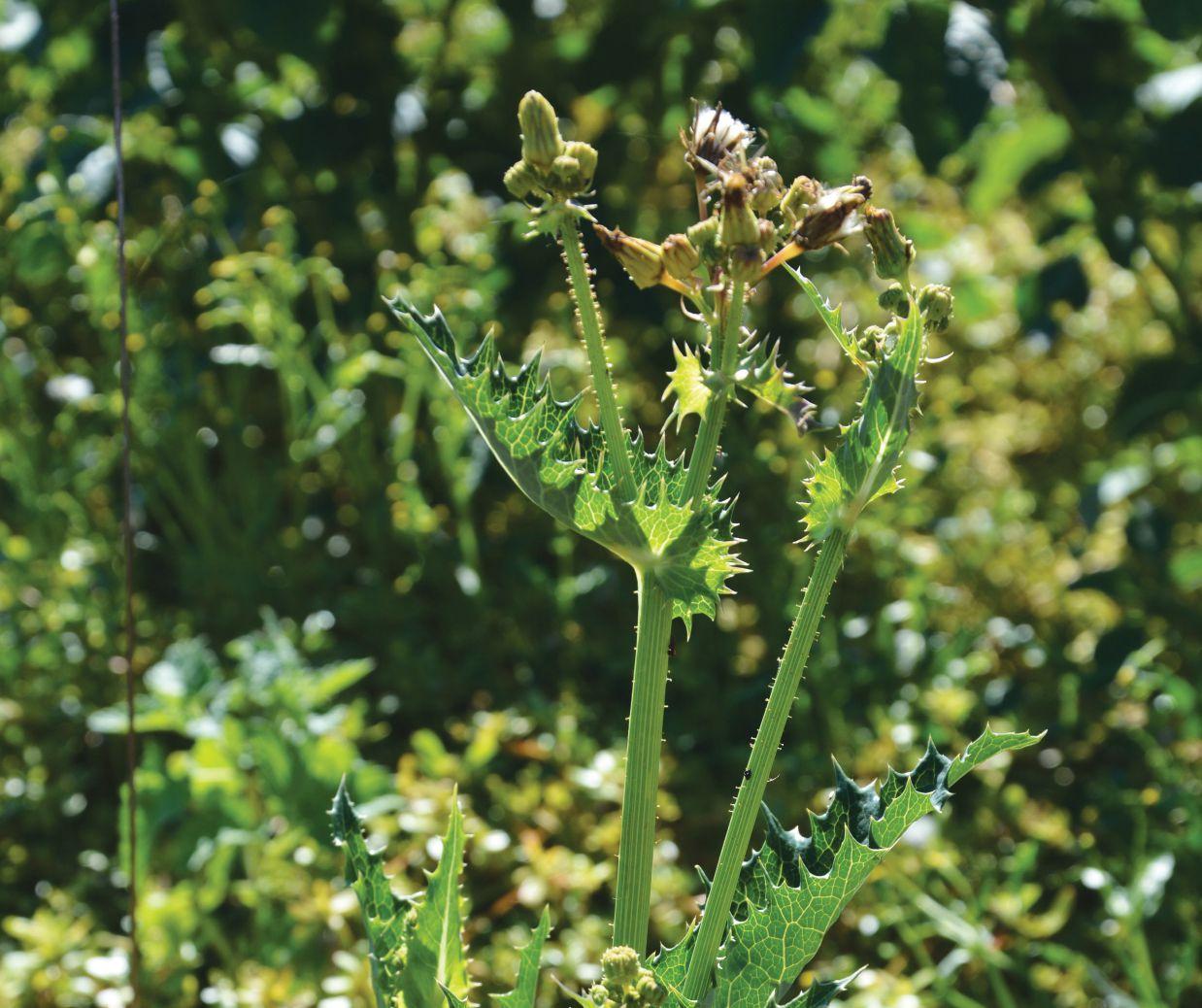
No other Group 2 herbicide offers the kind of relentless, Flush after flush ™ control you’ll get with EVEREST® 2.0. It doesn’t just get the hard-to-kill weeds you see — like wild oats, green foxtail and other resistant biotypes — it gets the weeds you know are coming. Young wheat gets an important head start. And you get higher yields. Ask your retailer about EVEREST 2.0. A herbicide you can count on.
TOP CROP
10 | Control weeds early New research shows the message is worth repeating.
By Bruce Barker
18 | Group 2 + 4-resistant kochia confirmed in Saskatchewan
Though Group 4 herbicides are generally at low risk for resistance developing, it could become commonplace in the future. By Bruce Barker
48 | Omega-3s and more Flaxseed in animal feed has exciting potential. By Carolyn King
Studying row spacing effects
row spacing and nitrogen rate in
Sequencing large acreage and special crops
AND
Intriguing alternatives
Carolyn King PLANT BREEDING 67 Wild help for a ‘hat trick’ By Carolyn King
BRANDI COWEN | EDITOR
ROLL WITH THE CHANGES
In farming, as in life, change is often the only constant. In addition to new crops, the upcoming growing season will likely bring new agronomic challenges, be they changing disease, insect and weed pressures, or unpredictable weather conditions. To succeed, producers must be able to adapt in the face of changing circumstances – a fact farmers in some parts of the country were reminded of during last fall’s harvest.
Heavy, early snows across parts of Western Canada resulted in harvesting delays, and damp conditions throughout harvest threatened to compromise the quality of many of the crops producers were able to get into storage. In Brazeau County, Alta., 160 kilometres southwest of Edmonton, damp conditions throughout harvest were so problematic they prompted the county to declare an “agricultural state of disaster” in early November.
Wet conditions continued to create problems in much of the province, dashing the hopes many producers harboured of harvesting a bumper crop earlier in the season. In early December, Alberta Agriculture and Forestry (AAF) issued a press release with advice to help producers cope with the unusually wet crops coming off their fields. Harry Brook, a crop specialist with AAF, advised producers working with grain at “unheard of moisture levels” to prepare for multiple passes of drying and cooling in order to bring moisture levels within safe parameters for storage.
Those producers who were able to adapt finished the growing season having learned important lessons that are sure to serve them well in the future. Many climate models, including those prepared by Environment and Climate Change Canada, predict shifts in precipitation patterns in the coming years that could leave the Prairies facing periods of high moisture alternating with periods of drought. Lessons learned now will serve producers well going forward, as each growing season brings new challenges – and new opportunities. Those who can adapt to whatever the season throws at them will see their operations thrive and grow well into the future.
Here at Top Crop Manager, we’ve been adapting to some exciting changes of our own. My co-editor, Stefanie Croley, began maternity leave earlier this year, ahead of the birth of two healthy babies. Those new arrivals resulted in a new arrival at the office as well. Jannen Belbeck has joined the Top Crop team as assistant editor. Jannen, an experienced magazine editor, and I will be working together very closely over the coming year to continue bringing you the leading-edge information you’ve come to expect from this publication.
I know I speak for everyone at Top Crop Manager when I say we look forward to celebrating successes, confronting challenges and weathering whatever may come with you, our loyal readers.
SUBSCRIPTION RATES
Crop Manager West – 9 issues February, March, Mid-March, April, June, September, October, November and December – 1 Year - $45.95 Cdn. plus tax
Crop Manager East – 7 issues February, March, April, September,
WE’RE AS COMMITTED TO
THE FUTURE OF GROWING PULSES AS YOU ARE.
For over 30 years, we’ve prided ourselves in providing pea and lentil growers with the most leading-edge products. In addition to our most recent innovations, the complete portfolio of pulse solutions has you covered from seed to harvest. To learn more about the entire BASF pulse lineup, visit agsolutions.ca/pulses or call AgSolutions® Customer Care at 1-877-371-BASF (2273).
Always read and follow label directions.
LEAFCUTTER BEES ESSENTIAL TO WESTERN CANADIAN CANOLA
These efficient reproducers play a vital role in pollinating crops.
by Julienne Isaacs
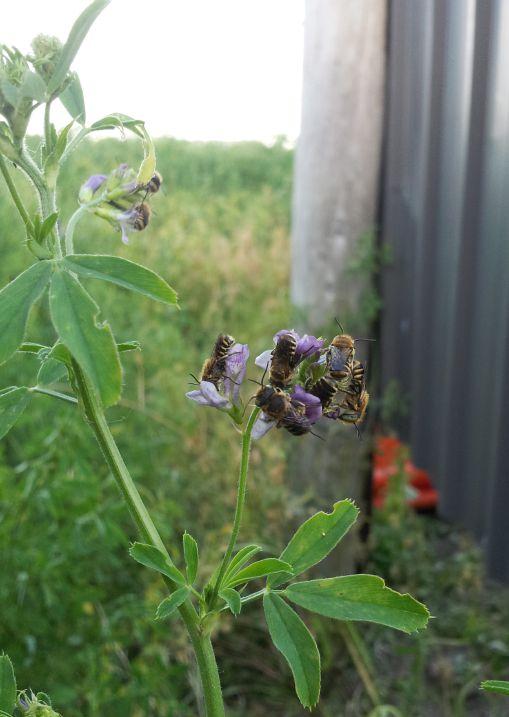
Icall them my second herd,” says Brian Slenders, an alfalfa and canola seed and livestock producer near Scandia, Alta., and president of the Alfalfa Seed Commission of Alberta. Slenders’ “second herd” is of the flying insect variety –leafcutter bees, to be precise.
Along with his brother, Wayne, Slenders runs a custom pollination business for producers, working with Dow to put leafcutters on hybrid seed canola fields in the area.
“In a standard contract, we provide everything that we need for pollination. We apply the nesting material and shelters, and we’ll hatch the bees and manage them while they’re out in the field,” he explains. “We’ll do this for a percentage of the crop in the case of alfalfa seed, where canola tends to be straight cash value per acre.”
Slenders has been working with leafcutters for 20 years. He says leafcutter bee production is “as much art as science”: the species is totally different from its better-known cousin, the honeybee. They’re called “leafcutters” because rather than producing honey, they put their energy into the construction of progeny cells made of leaf pieces arranged in a long series.
Due to their reproductive efficiency, alfalfa seed producers using leafcutters can expect to get one-and-a-half times the bee population back from the fields at the end of the summer. As a result, most alfalfa seed producers maintain a side business selling bees or running custom pollination for neighbouring hybrid canola operations.
But the value of the pollinator to the canola industry is rarely discussed and poorly understood on a national level.
According to Andony Melathopoulos, a postdoctoral fellow at the University of Calgary, leafcutters pollinate hybrid canola seed, the largest pollinator-dependent crop in Canada, and thus are responsible for one of the biggest contributions of pollinator value in the country.
But Melathopoulos, whose lab focuses on several aspects of leafcutter pollination, says the news rarely refers to leafcutters on the same scale as other pollinators, and, until very recently, they were overlooked in national statistics on the value of pollination. The new assessment reveals that because of the role of leafcutter bees in hybrid canola seed pollination, a little under half of the value of pollination to crops in Canada comes from leafcutters.
Leafcutter bees contribute the bulk of pollinator value in Canada.
“When I think about news stories, they’ve been about the collapse of honeybees, and that’s a real issue of importance to agriculture in Canada, but there hasn’t been a peep on what’s going on with leafcutters,” he says.
Leafcutters and canola Melathopoulos, along with colleagues Shelley Hoover and
Company on the Move
MAKE A SOLID PLAN TO MANAGE RESISTANT WEEDS
Canada has the dubious distinction of ranking third in the world for the number of herbicide-resistant weeds (behind Australia and the United States). Researchers with Agriculture and Agri-Food Canada have been tracking herbicide-resistant weeds across the prairies since the 1990s, and estimate that nearly 50% of all cultivated land on the prairies had resistant biotypes in the early 2000s, and that number is climbing.
Some of the most effective ways to manage resistant weeds involve crop rotation, changing weed management practices and the use of herbicides with multiple modes of action. “This season, be sure you are using effective in-crop strategies to tackle the tough weed problems in your cereal crops,” says Roger Rotariu, Western Marketing Manager with Nufarm Agriculture Inc.
Nufarm has three key in-crop cereal herbicides to control the toughest, resistant broadleaf weed species with Curtail™ M and Enforcer ®, and an exceptional tank-mix partner in Signal ® or Signal FSU as one solution to your wild oat problems.
TOP WESTERN WEEDS. TOP NUFARM SOLUTIONS.
Here are top trouble weeds† in Western Canada, and the proven solutions for effective weed control from Nufarm.
• Best in-crop, systemic action to kill Canada thistle, sow thistle and dandelion
• Broad-spectrum activity delivers unsurpassed control of Canada thistle
• Works on hard-to-control broadleaf weeds including pigweed and volunteer canola
• Effective, post-emergent control of well-established cleavers, kochia and wild buckwheat in one convenient application
• Three formulations: Enforcer D (Group 4, 6), Enforcer M (Group 4, 6) and Enforcer MSU (Group 2, 4, 6)
• Enforcer MSU controls all glyphosate-resistant weeds and most Group 2-resistant weeds
• Contains clodinafop, the most trusted graminicide to control wild oats in wheat and a proven tank-mix partner for a wide range of broadleaf control products
• Signal FSU (Group 1, 2, 4) contains four active ingredients and provides post-emergent grass and broadleaf weed control
• Signal FSU contains more fluroxypyr than the competition to fight Group 2-resistant weeds like cleavers and kochia
= Control at a registered rate C* = Top growth control S = Suppression
1. Wild oats 2. Green foxtail
3. Wild buckwheat 4. Volunteer canola
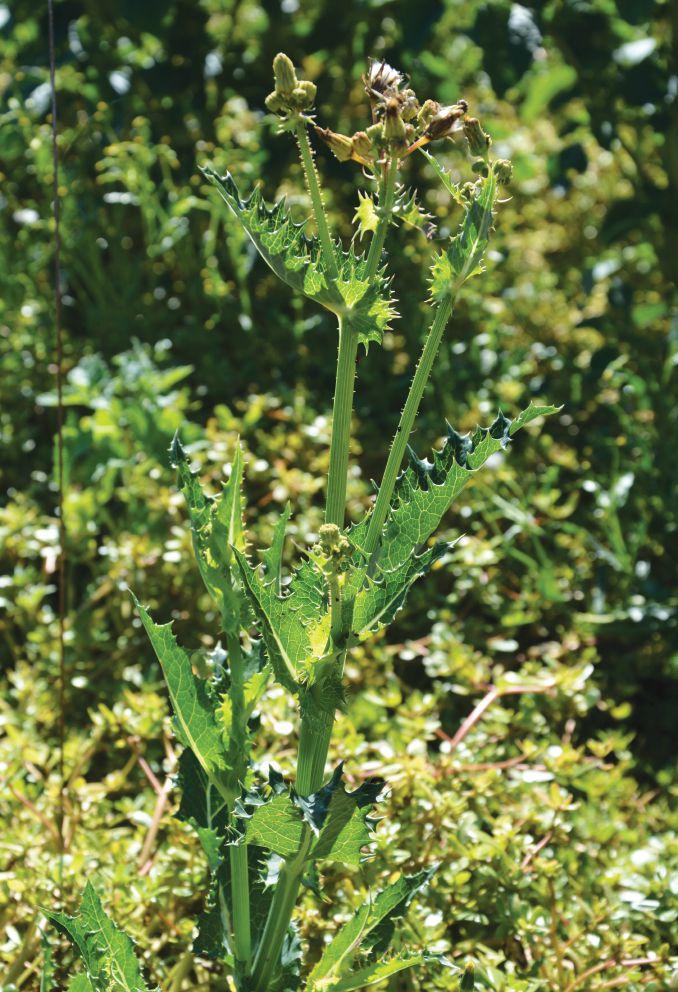
Canada thistle
Sow thistle
Cleavers 8. Lamb’s-quarters 9. Narrow-leaved hawk’s-beard S
Dandelion
**0.51 litre per acre rate required to control specific weeds.
†State of weed resistance in Western Canada by Hugh Beckie, Research Scientist, Agriculture and Agri-Food Canada, topcropmanager.com, June 6, 2016
GET IT UNDER CONTROL.
CONTROL WEEDS EARLY
New research shows the message is worth
repeating.
by Bruce Barker
In wheat, in canola or in pea, the message is the same: control weeds early for highest yields. Those messages have been repeated in the past and now new research highlights the need to repeat that same message with respect to wheat crops.
“We’ve seen a bit of a mind shift among growers that they are waiting a little longer to spray. Active ingredients have become so much better in terms of windows of application and effectiveness, so we’re seeing a delay in application because growers want to try to get all the weed flushes,” says Chris Mansiere, agronomic development cereals manager with Bayer in Saskatoon.
Bayer conducts its own agronomic research to help growers get the most out of their products. One recent trial looked at the effect of time of weed removal with either Velocity or Varro on wheat yield. At 78 sites, there was a seven per cent increase in grassy weed control when the products were applied up to early tillering (one full tiller), compared to later application when grassy weeds had two or more tillers.
Another trial at six locations compared Velocity, Varro, Everest,
Simplicity and other grassy weed herbicides. Averaged over all the herbicides, early grassy weed removal (up to one tiller) had a 10 per cent yield advantage over a late application (two tillers to node), and a 40 per cent increase over the untreated check.
“Early season grass competition can steal a lot of yield. Spray earlier than you think. It doesn’t cost any more and you get a greater dollar return and probably a cleaner field,” Mansiere says.
These results are similar to previous research conducted by John O’Donovan when he was at the Alberta Environmental Centre in Vegreville, Alta. That research looked at the effect of wild oat time of emergence on yield loss in wheat. For example, with 10 wild oat plants per square metre (one per square foot), yield loss would be 10 per cent if the wild oat was one leaf stage ahead of the crop, six per cent if it was at the same stage as the crop, and three per cent if the wild oats were one leaf stage behind the crop.
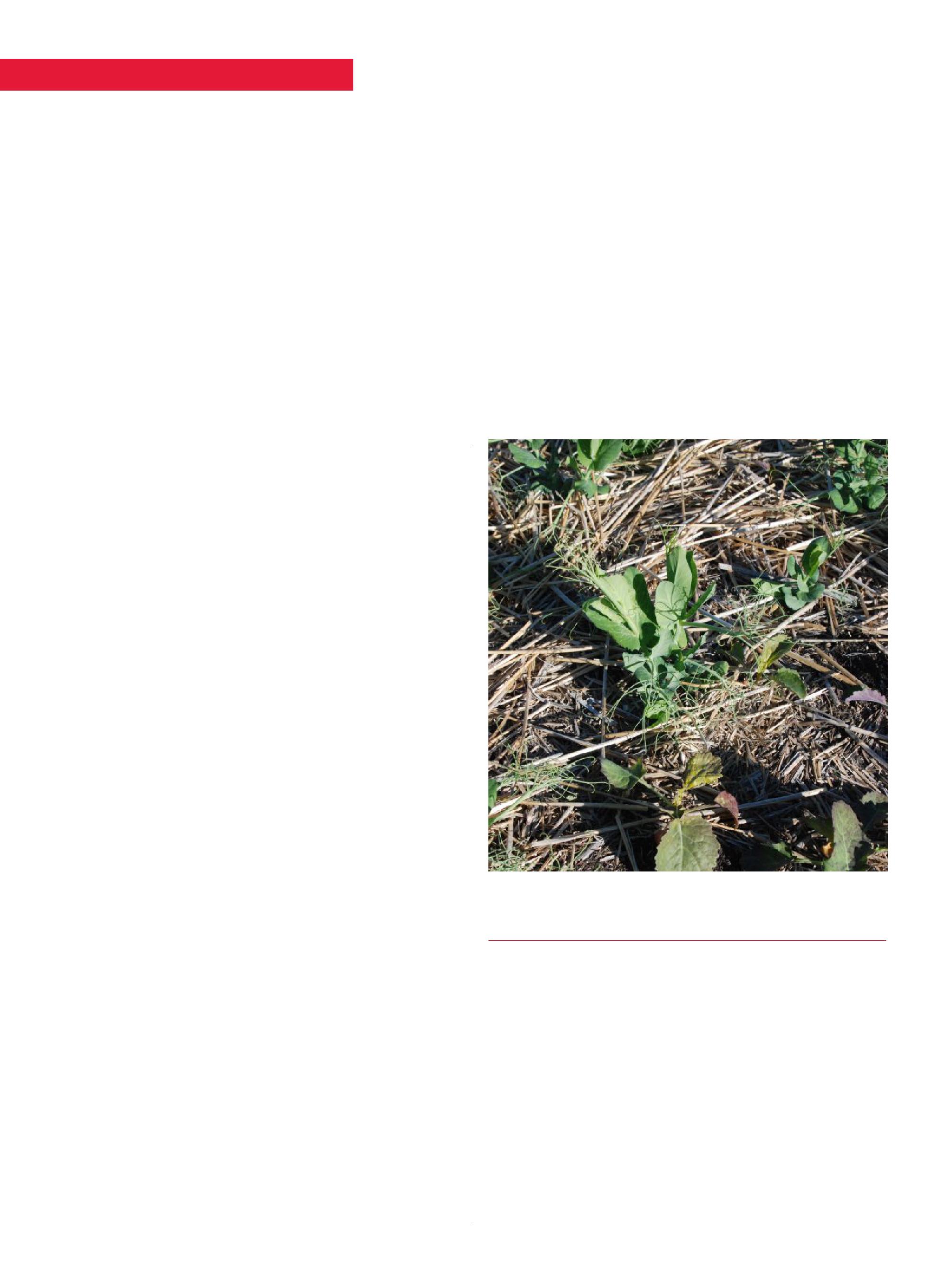
ABOVE: Research shows early weed removal produced the highest yields in canola, wheat and pea.
Rule with an iron fist.
So tell me Barley Baron, how will you protect your land from would-be thieves and invaders?
See to it that your uninvited guests receive the royal treatmwent. With three herbicide Groups and outstanding activity on both grass and broadleaf weeds, Tundra® herbicide is the complete solution for barley and wheat growers. One for all, and all-in-one.
Same story in canola…
Multiple research projects by Neil Harker, a research scientist at Agriculture and Agri-Food Canada (AAFC), and colleagues in Lacombe, Alta., stretching back over a decade also found early weed removal produced higher yield in canola. One study conducted from 1998 to 2000 looked at the effects of seeding rate, herbicide timing and hybrid canola on integrated weed management and yield. Combining the better cultivar (an InVigor canola compared to an open-pollinated variety) with the highest seeding rate (200 seeds per square metre), and the earliest time of weed removal (two-leaf stage) led to a 41 per cent yield increase compared with the combination of the weaker cultivar, the lowest seeding rate and the latest time of weed removal. The same factors provided the highest level of weed control and lowest weed biomass.
Harker led another research project in 1998 through 2000 looking at herbicide timing on weed management in the three different herbicide-resistant systems: Clearfield, InVigor and Roundup Ready. Timing of weed removal had the greatest effect on canola yield, with weed removal at the four-leaf stage giving the highest yields in most cases. He says the consistency of monocot weed control was usually greater for Roundup Ready than for Liberty or Clearfield systems. Greater dockage and weed biomass variability
after weed removal at the six-leaf stage or after low herbicide rates suggests higher weed seed production, which could constrain the adoption of integrated weed management practices in subsequent years.
Other research by Harker and his colleagues at 10 sites in Western Canada in 1999 and 2000 looked at time of weed removal in Clearfield canola. In eight of 10 cases, yield decreased linearly as herbicide application was delayed beyond the one- to two-leaf stage of canola.
…and the same story in pea
Even earlier AAFC research in Lacombe and Lethbridge from 1996 through 1998 looked at time of weed removal in field pea. Wild oat and tartary buckwheat were removed from plots by hand-weeding at weekly intervals after pea emergence and plots were then maintained weed-free for the remainder of the growing season. Harker reports the beginning of the critical weed-free period was usually at one or two weeks after pea emergence.
“In terms of ranking agronomic practices for their impact on optimal yield, I believe that early weed removal ranks second after the most important factor: soil fertility. Perhaps crop establishment might rank similarly to early weed removal,” Harker says.
LEAFCUTTER BEES ESSENTIAL TO WESTERN CANADIAN CANOLA
Continued from page 6
Agriculture and Agri-Food Canada’s Stephen Page, are currently working on better methods of quantifying leafcuttercontributed value to Canadian canola production.
Because crops grown from hybrid seed yield more than open pollinated seed, and because pollinators are essential to making hybrid seed, “these two things together make hybrid canola seed the highest source of pollinator-contributed value in Canadian agriculture by a large margin,” Melathopoulos says.
Weldon Hobbs, advisor to the Alfalfa Seed Commission of Alberta based in Lethbridge, believes southern Alberta hit in excess of 45,000 acres of canola seed production five years ago. “This year we’re idling at around greater than 20,000 acres total canola seed production in southern Alberta,” he says.
Of those, 15,000 to 17,000 acres might have leafcutters on them in combination with honeybees, and 3,000 acres might have only leafcutters.
But though leafcutters are crucial to canola production in Alberta, there are specific challenges to their use.
Where alfalfa seed producers can increase their leafcutter population over a season, canola seed pollinators will lose 40 to 50 per cent of the leafcutter population each summer due to the cool, humid microclimate produced by centre pivot irrigation.
The leafcutters used in Alberta are Megachilidae bees, which originate in the eastern Mediterranean’s semi-arid climate.
For this reason, leafcutters perform better in hot, dry conditions.
In addition, Hobbs says, leafcutters perform poorly on some new canola varieties, which results in population drops in some canola fields.
This means hybrid canola seed producers, if they don’t want to or can’t get into leafcutters themselves, are reliant on a few alfalfa seed producers to perform their custom pollination –and this represents a huge opportunity for those producers.
“There are a number of producers in the eastern irrigation district around Brooks who have made a $450 to $600 increase in value per acre on the leafcutters alone,” Hobbs says. “Plus the fact that they’re probably cleaning 600 to 800 pounds of seed per acre at two dollars a pound. They’re doing pretty well.”
Melathopoulos says Alberta leafcutter producers are, in no uncertain terms, the most technically advanced producers on the planet. Southern Alberta, he says, is a “hotbed of innovation” for homegrown leafcutter nesting and harvesting technologies.
In short, Alberta has a thriving niche industry in leafcutter production, one that is essential to hybrid canola seed production.
Which means, according to Melathopoulos, that it’s high time the value of the unassuming leafcutter bee received more attention in Western Canada.
Go ahead. Paint a target on persistent wild oats and get rid of them for good with Axial herbicide. It targets the toughest grass weeds in your fields, especially wild oats, and eliminates them before they become a problem. When you’re on a mission to help your spring wheat and barley reach its full potential, choose Axial® herbicide. Axial
WEED SEED PREDATION FOR IMPROVED MANAGEMENT
Weed seed predators are often unseen but offer big benefit to growers.
by Donna Fleury
Largely overlooked and previously not studied a lot in Canada, weed seed predation provides the secondlargest loss of weed seeds from the seed bank, second only to germination. Although research has been almost exclusively carried out in Europe and the United States, recent research at the University of Saskatchewan proves weed seed predation is occurring in western Canadian cropping systems and can be measured.
“Generally, the idea of weed seed predation is thought of by growers as a basic concept or highly theoretical, but it is not,” says Chris Willenborg, assistant professor in the department of plant science at the University of Saskatchewan. “Weed seed predation is actually happening in fields every single night of the late summer and fall. Because many of the weed seed predators are nocturnal, they tend to be out of sight, out of mind and
therefore are generally overlooked. Weed seed predation plays a tremendously important role in terms of weed seed management, adding another biological control option that is free to the weed management toolbox – particularly for problematic weeds such as volunteer canola. Weed seed predation can actually serve as a critical component of the population dynamics of some weed species over the long term.”
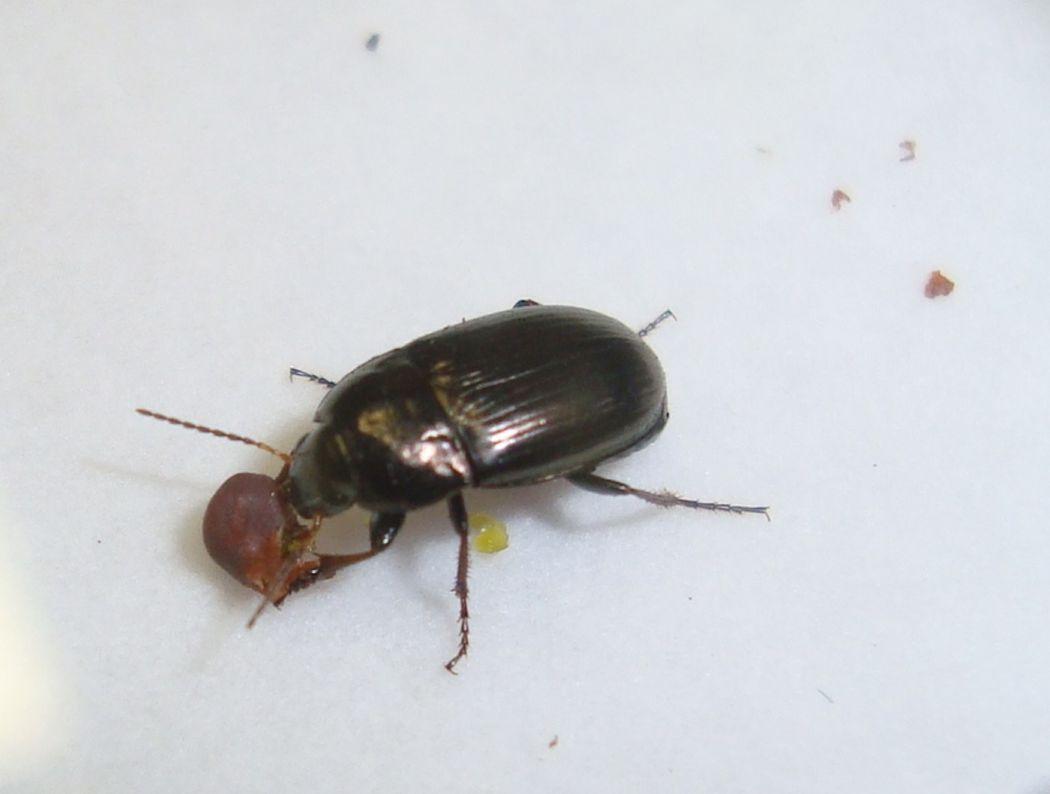
Although farmland birds and rodents consume many weed seeds, the large majority of weed seed predators in western Canadian cropping systems are granivorous insect species dominated by crickets and carabid beetles. Several of these are granivorous
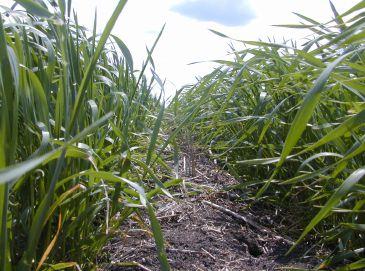
INSET: A strip between crop rows creates weed seed predator habitat in that space.
TOP: Carabid species consuming volunteer canola seed.
species that feed exclusively on seeds, however, there are some that are omnivorous and will also prey on insect larvae that can be problematic pests in some crops. There are hundreds of carabid species in Canada, with about 70 generally known to be present across the Prairies. In Europe, recent studies have documented carabids’ weed seed consumption at rates of up to 75 per cent for problematic weeds like chickweed and shepherd’s-purse. One earlier study in Eastern Canada showed carabids reduced the seed stock of weed species by 65 to 90 per cent, almost totally eliminating the weeds.
One earlier study in Eastern Canada showed carabids reduced the seed stock of weed species by 65 to 90 per cent, almost totally eliminating the weeds.
“We started our research into weed seed predation about five years ago, and as far we know, our work is the first in Western Canada in the agroecosystem,” Willenborg says. “Along with an extensive literature review, we also conducted laboratory, greenhouse and field studies and have recently expanded our research program to try to quantify contributions of carabids. In our primarily no-till system, the majority of weed seeds land on the soil surface, but some get buried through various field activities.”
One study showed the vast majority of weed seeds are consumed by carabid ground beetles from the soil surface, however some species will dig down a couple of centimetres. Although seed predation was high at the soil surface and at shallow burial depths, deeper burial of seeds reduced but did not eliminate weed seed predation. The results also show seed predation by carabids
differed markedly between surface-scattered and buried seeds, as well as among beetle species and between genders. These studies were conducted under controlled greenhouse conditions and thus, fieldwork is needed to validate the results of this experiment and to quantify seed predation under field conditions. Ideally, such studies would also include an attempt to quantify the contributions of carabid larvae, as well as adult beetles, to seed predation.
Willenborg and his team also wanted to determine what drives weed seed preferences for carabid species. In greenhouse studies, they tested the species’ preferences for various Brassicaceae weed species, including volunteer canola, wild mustard and stinkweed.
“We wanted to know if the carabids could decipher between different seeds that look quite similar, and in fact they did exhibit distinct preferences,” he says. “Most of the carabid species preferred volunteer canola seeds, while the fewest preferred stinkweed. We expect that is most likely olfactory [smell] cues that are eliciting the response rather than visual cues.” In another study just published in January 2017 in the journal PLOS ONE,
Willenborg, PhD student Sharavari Kulkarni and colleague John Spence showed olfactory cues are in fact driving these preferences, so the next question is to assess olfactory cues in weed seeds and determine the factors that affect them.
Now that researchers have confirmed and measured weed seed predation by carabids, finding ways to promote their survival in cropping systems is important. Carabid ground beetles are beneficial insects, like pollinators, and thus provide crucial ecosystem services by controlling other pests. Willenborg explains that trying to achieve a zero-tolerance weed threshold, which is considered a strategy to address herbicide resistance, is not only very difficult to achieve in cropping systems, but it could also unexpectedly eliminate or reduce the numbers of these weed seed predators.
There are a couple of key cropping strategies that can have a major impact on these beneficial insects. “The indiscriminate use of insecticides is discouraged, as applications can also kill beneficial insects, as can some herbicides,”
Willenborg says. “Trying to avoid insecticide applications where they are not necessary or critical can help protect carabid populations. Cover is also very important for seed predators, which is often lacking in the fall across Western Canada. Cover crops become extremely important not just for building soil, but also for maintaining cover for seed predators because these insects are easily consumed by birds
without adequate cover for concealment. Interseeding and relay-cropping practices help maintain that cover, as can perennial crops. In Europe and the U.S., field margins and buffer strips can be planted and maintained, which provide refuge for the carabid beetles to return to after dispersing to forage for weed seeds.”
Reducing tillage is also important, and something that has already been done
LEAVE NOTHING BEHIND.
Carbid species used in the greenhouse study for testing weed seed preferences.
well in Western Canada. Strip tillage or ridge tillage, another strategy that is becoming more common in the U.S., creates a ridge or strip between crop rows, leaving weed seed predator habitat in that space. Shallow tillage is also less disruptive than deep tillage, which mixes both predators and their larvae deep into the soil. Mowing weeds in the fall is another practice that could help improve habitat conditions for carabids. Mowing weeds or delaying tillage gives seed predators time to consume seeds before they are buried or their habitat is disturbed.
Armed with very interesting research results from the first set of projects, Willenborg and his team are moving forward on additional research to try to determine why carabids are choosing certain weed seeds and to prove what other chemical compounds or factors may be involved. Researchers are also interested in carabid foraging strategy and hope to determine how, when and where they go out to forage for weed seeds, why they choose certain field areas or weed seeds and what their ultimate preferences are.
“One of the big initiatives we started in 2017 is to look at weed seed predation in western Canadian pulse crops,” Willenborg says. “Most of the research work elsewhere has been done in soybeans, and there is virtually nothing across the world in the pulse crops we grow on the Prairies. Pulses tend to be seeded early and maintain an open canopy throughout the season. We don’t know what is driving weed seed predation in these crops, and we would like to learn more, particularly as it pertains to the consumption of volunteer canola seed, which is a serious weed problem in pulse crops. Comparing options such as deploying cover crops, interseeding annuals and perennials or ridge or strip tillage as strategies to improve levels of weed seed predation may be considered. We will be taking a basic approach to find out how these insects forage and combine the results with practical strategies and practices growers can do, especially in pulse crops.”
Weed seed predation is a welcome biological weed control option in Western Canada, as researchers and growers look
for ways to manage increasingly difficult and complex weed problems and issues such as herbicide resistance. “Understanding that next to germination, the number one method of weed seed losses through the system is due to weed seed predation, we need to be thinking about how these predators are impacting our cropping systems and how to provide habitat for them,” Willenborg says. “Any time you have a beneficial biological control organism operating for you for free while you are out doing other things pays huge dividends in the end. Uncovering what is going on in the field with these seed predators and what we can do about it will go a long way to helping growers. Next fall, late in the evening when you begin to hear crickets, remember that is the sound of weed seed predators in the fields eating your weed seeds, and that’s money in your pocket.”
For more on weed management, visit topcropmanager.com.
Choose one of these pre-seed options for the cleanest start possible in cereals, in spring, guaranteed. All with SoilActive™ weed control that lets you spray up to two weeks before seeding. For peace of mind in spring to get at it when you’re ready.
For your cleanest start possible. LeaveNothingBehind.ca
GROUP 2 + 4-RESISTANT KOCHIA CONFIRMED IN SASKATCHEWAN
Though Group 4 herbicides are generally at low risk for resistance developing, it could become commonplace in the future.
by Bruce Barker
Another weed control tool bites the dust. A field in southwest Saskatchewan was confirmed to have Group 4-resistant kochia in the fall of 2015. The durum field had been sprayed with OcTTain herbicide (2,4-D and fluroxypyr; both Group 4 active ingredients) and it had little effect on the kochia population.
“With most fields in Western Canada, Group 4 herbicides have been used off and on over the past 70 years. I’m actually surprised we haven’t seen more cases. I suspect there is a lot more out there and we’ll see more cases confirmed in the next few years,” says Hugh Beckie, a weed scientist with Agriculture and Agri-Food Canada (AAFC) in Saskatoon who has been tracking kochia herbicide resistance across the Prairies.
Kochia is predisposed to develop herbicide resistance because it produces 15,000 to 25,000 seeds per plant and spreads extensively when blown on the wind. As a result, when a kochia plant is selected for resistance, it can quickly multiply and spread the resistance to other fields. Additionally, kochia outcrosses and pollen flow from plant to plant can further spread resistance.
This particular field with Group 4-resistant kochia had a history of Group 4 herbicide applications in four out of the last six years. Though Group 4 herbicides are viewed as having a relatively low risk of resistance developing, the occurrence could become more common in the years ahead – Group 4 herbicides have been around since 1946 and most fields in Western Canada have a long history of Group 4 herbicide applications, especially in cereal crops.
The first instance of a confirmed resistant kochia case in North America was in a Kansas cornfield in 1976. The resistance was to atrazine – a Group 5 herbicide. Since then, 54 unique cases of kochia herbicide resistance have been identified, according to the International Survey of Herbicide Resistant Weeds. Those cases include Group 2 resistance in Western Canada going back as far as 1988. Today, all Prairie kochia weed populations are thought to be resistant to Group 2 herbicides. Additionally, kochia populations have developed resistance to multiple modes of action, including Group 2 + 9 (glyphosate). This was first identified in Alberta and has since been observed across the Prairies. Currently, Group 4 herbicides are fifth overall in the world rankings for the number of unique cases of herbicide resistance. At press time, 25 dicot and 8 monocot weeds with resistance to Group 4
The confimration of Group 2 + 4-resistant kochia means the loss of another herbicide tool.
herbicides had been identified.
Beckie is also testing two additional kochia populations from southern Alberta, which are suspected of being Group 4-resistant. These were found in fields in the County of Warner, where the first Group 2 + 9-resistant kochia was confirmed.
“The Group 2 + 4 population from southern Saskatchewan wasn’t glyphosate-resistant, but kochia is known for developing multiple site resistance and three-site resistance with glyphosate would be a concern,” Beckie says.
PHOTOS
Special Delivery for Your Crops.
Nu-Trax P+™ with CropStart™ Technology turns every granule of your fertilizer blend into a special delivery of early season nutrition.
Nu-Trax P+ is the ideal blend of phosphorus, zinc and other nutrients essential for vigorous crop growth. Featuring patented EvenCoat™ Technology, it coats onto dry fertilizer, ensuring blanket-like distribution near young plant roots.
See how Nu-Trax P+ can deliver the agronomic benefits of a starter to your crops. Ask your retailer to add Nu-Trax P+ to your dry fertilizer blends.
Even worse: A four-site multiple-resistant population was identified in a Kansas cornfield in 2013, with resistance to Group 2, 4, 5 and 9 herbicides. Group 4 and 9 multiple site resistance was also identified in another Kansas cornfield in 2013.
Beckie expects the Group 4-resistant kochia population from Saskatchewan would include cross-resistance to all classes of chemistry within the group. Group 4 active ingredients are known as synthetic auxins and include the phenoxies (2,4-D, MCPA, MCPB and mecoprop), benzoic acid (dicamba), pyridine carboxylic acid (clopyralid, fluroxypyr, picloram and triclopyr), quinoline carboxylic acid (quinclorac), and benazolin-ethyl. Beckie has an undergraduate student looking at cross-resistance in the Group 2 + 4-resistant population to see if it is indeed resistant to all classes of Group 4 active ingredients.
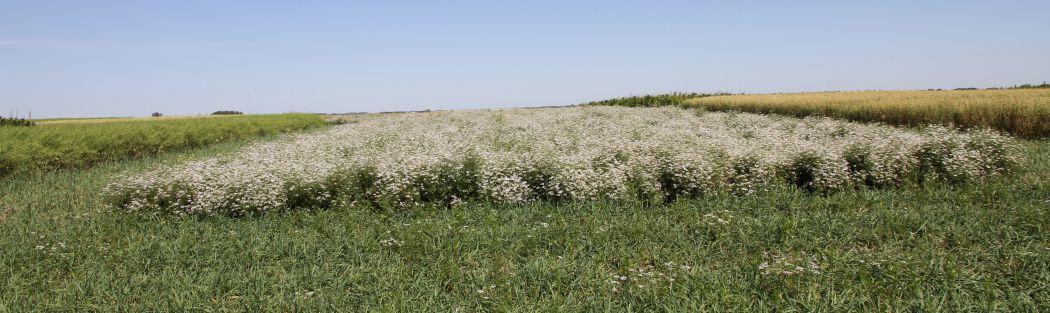
Kochia is predisposed to develop herbicide resistance because it produces 15,000 to 25,000 seeds per plant and spreads extensively when blown on the wind.
herbicide. However, tank-mix combinations that have a Group 4 in the mix might still control Group 4-resistant kochia because of the other active ingredient(s). For example, Pardner (bromoxynil) controls kochia on its own, and the amount of bromoxynil in Buctril M – a tank-mix of MCPA (Group 4) plus bromoxynil (Group 6) – might still control kochia if no antagonism occurs between MCPA and bromoxynil, since the amount of bromoxynil in Buctril M is the same as the rates recommended for Pardner.
Another caution is that a sub-optimal dose of a non-Group 4 active ingredient in a tank mix might actually speed the development of resistance to the alternative active ingredient if it is not providing a lethal dose on its own. For example, a herbicide with a Group 4 and 6 herbicide would control a Group 2-resistant kochia. However, for a Group 2 + 4-resistant biotype, the same herbicide might not control the weed because the Group 4 active is ineffective and the Group 6 has a sub-optimal rate to control the kochia. The best advice is to ask the herbicide manufacturer if their product would control Group 2 + 4-resistant kochia.
For in-crop herbicide rotations to control Group 2 + 4-resistant kochia, look for alternative groups that include the following herbicides and check labels for registered crops:
• Group 6: bromoxynil (Pardner)
• Group 7: linuron (Lorox)
• Group 9: glyphosate (Roundup) – but be aware that Group 9 kochia resistance has been confirmed on the Prairies.
• Group 10: glufosinate (Liberty)
• Group 27: pyrasulfotole or topramezone (found in Tundra, Axial iPak, Velocity m3, Infinity, Infinity FX or Armezon)
A four-site multiple-resistant population was identified in a Kansas cornfield in 2013, with resistance to Group 2, 4, 5 and 9 herbicides. Group 4 and 9 multiple site resistance was also identified in another Kansas cornfield in 2013.
What to do
For growers who do not currently have Group 4-resistant kochia, Beckie’s advice is to utilize all standard recommendations, including using cultural and chemical control methods, to slow down the development of resistance. For control with herbicides before seeding, there are at least seven different herbicide groups that can be used in longterm herbicide rotations and in tank mixes, and four different groups that can be used in chemfallow – depending on the subsequent crop to be planted. Layer a pre-seed or pre-emergent herbicide with a different in-crop herbicide to further change up the selection pressure.
The choices are more limited in-crop, with just six different herbicide groups controlling Group 2-resistant kochia and very limited choice in pulse crops.
The bigger danger is losing the effectiveness of Group 4 herbicides in-crop on fields with Group 2 + 4 resistance. Of the 45 herbicides registered for control of kochia, all but nine include a Group 4
“Once you take Group 4 away as an option for controlling kochia, that’s another nail in the coffin for herbicides,” Beckie says.
A key strategy for keeping kochia under control is to stay on top of the weed problem through scouting. Weed escapes should be treated suspiciously, and if possible, the escaped kochia should be mown or cultivated before it sets seed. Beckie says kochia can survive in the soil for about one year, so preventing seed set can help manage the weed.
Information from Manitoba Agriculture also indicates delayed seeding and pre-seeding tillage or pre-seeding herbicides will help reduce in-crop weed densities since kochia germinates early in the spring. Crop rotations that use a combination of early and late sown crops and alternating seeding dates on individual fields will help keep kochia populations in check. Weed survey results in Manitoba also indicate zero-till fields are less favourable for kochia germination and densities are much lower than on conventionally tilled fields.
Beckie says that if a farmer suspects kochia escapes are Group 4- or Group 9-resistant, AAFC will test the suspicious populations free of charge to confirm resistance.
“This is another wake-up call for growers to not take for granted the future effectiveness of their favourite herbicides and try to follow best management practices to mitigate herbicide resistance,” Beckie says.
The built-for-Canada-all-in-oneso-your-cereals-can-thrive treatment. We know you love to see your cereal crops grow to their fullest potential. And in true Canadian fashion, we’d like to give you a hand with that. Meet our Cruiser ® Vibrance® Quattro seed treatment. With four fungicides, an insecticide and the added benefits of Vigor Trigger ® and Rooting Power™, this all-in-one liquid formulation offers superior protection plus enhanced crop establishment for early-season growth. Just the helping hand you can use, eh?
STUDYING ROW SPACING EFFECTS
Research shows crop types vary in their ability to compensate for wider row spacing.
by Donna Fleury
Row spacing for various field crops on the Prairies, particularly in no-till and higher residue cropping systems, continues to be a big area of focus for researchers and growers. Understanding how wide is reasonable, what the benefits and drawbacks are and associated risks remain top priorities.
For the past several years, researchers at the Indian Head Agricultural Research Foundation (IHARF) and Agriculture and Agri-Food Canada (AAFC) in Indian Head, Sask., have been conducting row spacing research with a variety of crop types. “We recognize that one solution to improved residue management is to increase row spacing, but there are limits as to the extent to which this can be done without compromising yield,” explains Chris Holzapfel, IHARF research manager. “Most research shows that spacing of at least 12 inches is possible without reducing yield for most crops; however, results can vary depending on crop management and environmental conditions.”
Although it is commonly accepted that narrow row spacing gives the greatest potential grain yields for the majority of crops under most circumstances, there are some advantages to wider row spacing that should be considered, along with productivity and yield. Holzapfel notes some of the benefits of wider row spacing: potentially lower initial equipment costs at any given width, reduced maintenance on that equipment, and fewer moving parts and tips to wear out. Growers can also typically get away with less horsepower to pull drills when they have wider row spacing throughout the field, burning less fuel on a per acre basis and speeding up the seeding operation. Slight increases in row spacing can eliminate some of the challenges of seeding into heavy residue with no-till,
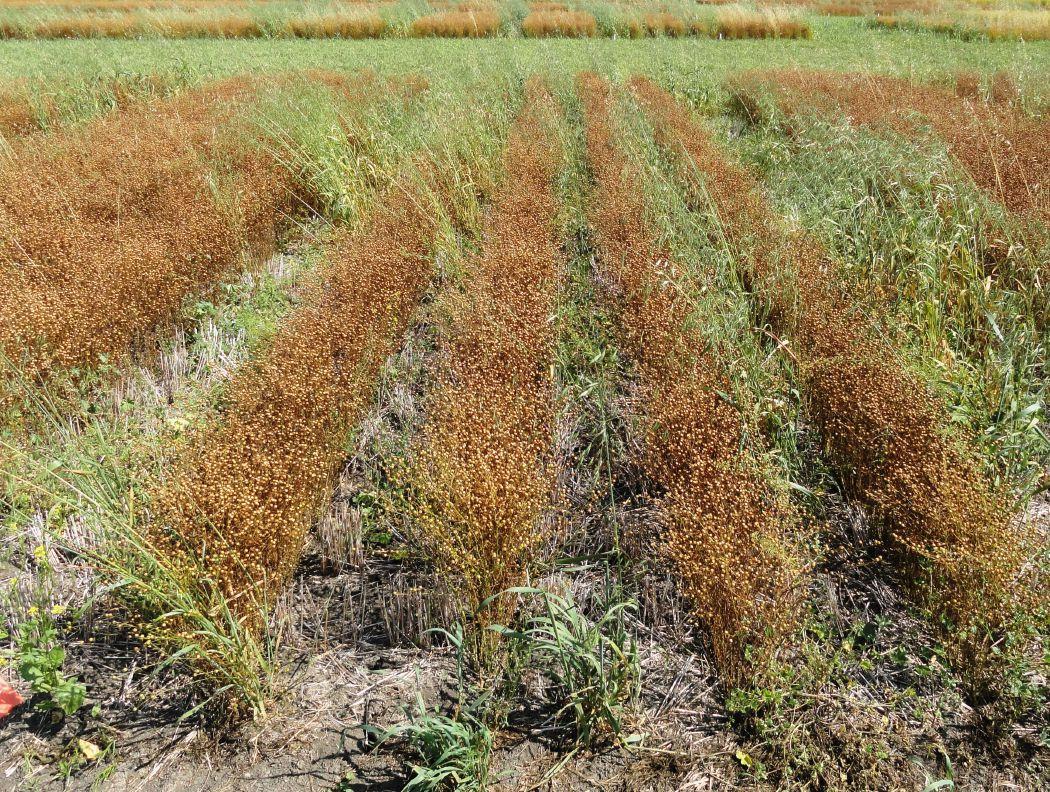
TOP: Flax, shown at maturity in Indian Head in 2016, on 24-inch row spacing, with a fair bit of weed pressure in between the rows.
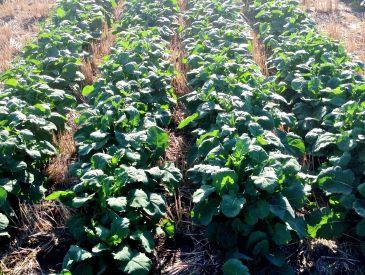
INSET: Canola plots on 24-inch spacing at Indian Head in 2016, pictured here at mid-season, show good canopy closure.
It’s hard to imagine that one small seed could hold so much promise, but it does. And when you consider the importance of having a successful season, a cereal seed treatment you can depend on makes a huge difference to the success of your family business.
With the full support of Raxil® seed treatments you’ll receive first-class disease control and a faster, stronger emergence that helps your field realize its full potential. Raxil lays the groundwork for a field that your neighbours will envy and that will ultimately help you achieve a superior performance.
Because from seeding to harvest, every seed counts.
NOW AVAILABLE IN WHEAT!
All the goodness of wheat without stubborn grassy weeds.
Get the wholesome protection of pre-emergent residual control with Focus. It’s tough on stubborn grassy weeds, but flexible and easy to apply – fall or spring – for superior weed control and higher yields.
and, although there may be a slight yield reduction every few years (depending on conditions), this may be something that some growers are willing to live with.
“Since 2011, we have been conducting research on various crops using different row spacing treatments combined with other factors, such as side-banded [nitrogen] N rate, seeding rate, weed control and fungicide applications,” Holzapfel says. “Optimal seeding and fertility rates don’t change too much with row spacing, with a few exceptions. With side-banding of N fertilizer, the N concentration in each band gets more concentrated as the row spacing gets wider.” For example, 100 pounds per acre (lbs/ac) of N is much more concentrated on 15-inch row spacing than on 10-inch rows. Inadequate separation of N from the seed for any reason could have a higher potential for seeding damage.
In terms of seeding rates, Holzapfel cautions growers to consider suboptimal rates when working on wider row spacings. Using recommended rates can address potential risks of poor germination or low plant stands due to weather conditions, frost, flea beetles, seedling diseases or other factors. A few more plants can also fill in the canopy a bit more quickly and aggressively in the growing season. That said, there is no reason to get aggressive with seeding rates in an attempt to compensate for the increased mortality often seen with wider row spacing. The maximum achievable plant populations tend to be reached at slightly lower seeding rates.
“The research is at various stages – however, crop types vary in their ability to compensate for wider row spacing,” Holzapfel says. “Our research work so far indicates that flax is the most sensitive to wider row spacing, followed by wheat, oats and soybeans, with canola being the least sensitive. Research is still required on pea, lentil, fababean and other cereals.”
Row spacing research so far
In 2009 the first row spacing project was started by Guy Lafond, a researcher with AAFC. Oats grown in row widths of 10, 12, 14 and 16 inches, using five rates of N fertilizer, were investigated for three years. The objective was to study the interaction between row spacing and N rate in oat on various factors under a no-till production system. The results showed plant density was not affected by N rate and there was no N rate by row spacing interaction. Grain yield was similar among 10-, 12- and 14-inch row spacings, but there was a 13 per cent yield decrease at 16 inches. The results support the feasibility of wide row spacing up to 14 inches, combined with placement of all fertilizer requirements in a side-banded position.
In 2012, Holzapfel initiated a four-year project at Indian Head to evaluate canola performance in wider row spacings of up to 24 inches. Three separate field trials were designed to evaluate various treatments, including: row spacings of 10, 12, 14, 16 and 24 inches; side-banded N fertilizer rates of zero, 50, 100 and 150 kilograms N per hectare; seeding rates of 30, 60, 90 and 120 seeds per square metre; and no in-crop herbicide versus in-crop herbicide applications. “Generally, canola emergence declined as row spacing was increased, but [declines] were minimal or non-significant. Although in some cases yields were higher at the 10-inch row spacing, in two of three years canola yields at 24 inches were also amongst the highest,” Holzapfel says.
Wider row spacing in canola also resulted in slight but significant delays in flowering and maturity. However, the effects were generally much smaller than those caused by either N fertilizer or seeding rate when adequate seeding rates are used. The results also suggest seeding rates should not be reduced below typically recommended rates
as row spacing is increased. However, at the same time, there was no benefit to using aggressive seeding rates (for example, greater than 90 seeds per square metre) combined with very wide row spacing (such as 24 inches). The study did not show any practical, short-term effects of row spacing on weed control that could not be managed with well-timed herbicide applications. With that in mind, row spacing effects on weed control put more pressure on herbicides and may be of much greater importance when dealing with hard to kill or herbicideresistant weeds.
Flax field trials were conducted at Indian Head from 2014 to 2016, with treatments including a combination of five row-spacings (10 to 24 inches) and two fungicide levels (treated versus untreated). “We are still waiting on the third year of data, but flax yields did decline with increasing row spacing in both years – more prominently in 2015,” Holzapfel says. “Yield losses in 2015 averaged about five per cent between 10-inch and 14-inch row spacing, and were a bit less in 2014. From a practical sense, growers with row spacing wider than 12 inches can still seed flax with minimal yield losses; however, with all other factors being equal, lower mean yields or increased yield variability may occur as row spacing is increased. We also did not detect a response to fungicide treatments in either year, although this may vary when disease pressure is higher.”
In 2014, a four-year soybean project was initiated at Indian Head to refine row spacing recommendations for short season soybean varieties at varying seeding rates. The study combined five row spacing levels (10, 12, 14, 16 and 24 inches) and three seeding rates. Holzapfel says early indications point to soybeans being well suited to wider row spacings. “Yields were similar at all spacings in 2014. However, in 2015, yields were significantly higher at 10- and 12-inch spacing and then levelled off from 14 up to 24 inches, although losses weren’t high. We’re not sure why, but are wondering if variety could be a factor, as some are more capable of branching out and filling in the canopy, while others can be very upright, non-branching varieties. It is possible that some very early maturing varieties that are well adapted to Saskatchewan may be less well adapted to wider row spacing than more traditional varieties. This is something we want to look at further,” Holzapfel says. Final results will be available at the end of 2017.
“These research projects that are completed or underway so far show that wider row spacing is possible for many of our crops, and some growers have indicated good success in their cropping systems,” Holzapfel says. “The most common row spacing continues to be nine inches to 12 inches, but a few growers are using up to 15-inch commercial drills. In some cases, sound agronomic management – including timely and thorough weed removal – is more critical with wider row spacing. Any delays in maturity caused by wider row spacing are typically minor and less than those caused by increased fertility or reduced plant populations. While yield variability increased with wider row spacing, this may be offset by reduced equipment cost, fuel consumption and horsepower requirements [per acre].”
Holzapfel says other potential benefits may include reduced seedbed preparation requirements (i.e. easier to seed through heavy residue), water conservation associated with less soil disturbance (which would be more valuable in semi-arid regions) and an improved ability to seed between the previous year’s stubble rows.
Growers will have to determine what works best in their cropping system, and whether or not the benefits of wider row spacings outweigh the potential risks of yield variability. Meanwhile, research is continuing into wider row spacing for other crops to help growers maximize yields and optimize cropping systems.
SEED EVERYTHING AND THE KITCHEN SINK.
Mix what you want, seed what you want with the freedom of Aim.
Get a more complete burn down that lets you seed almost anything. Tank mix Aim with your choice of products, so you can use what you’re used to with superior results and no fear of cropping restrictions.
WIDE ROW SPACING AND NITROGEN RATE IN WHEAT
How wide can we go in no-till systems?
by Donna Fleury
Moving to wider row spacing for no-till wheat can make it easier to direct seed in between rows and can create better seedbed conditions. Generally, narrow row spacing is expected to give the greatest potential grain yields for the majority of crops, however narrow row spacing requires more openers, more draft, more energy, more cost, more maintenance and more residue clearance.
“Many growers would like to go to wider row spacing for wheat or other cereals, but the main question remains how wide a row spacing is reasonable and what are the implications for side-banded nitrogen fertilizers,” says Bill May, crop management agronomist with Agriculture and Agri-Food Canada (AAFC) in Indian Head, Sask. “If we want to be able to go to wider row spacing in wheat, then we have to demonstrate that the fertilizer concentration in the side band isn’t going to be a problem.”
In 2013, May initiated a four-year study to compare four different row spacings and five nitrogen (N) rates in wheat at Indian Head. Goodeve hard red spring wheat was used in all of the trials,
with a target plant population of 300 plants per square metre. Row widths of 10, 12, 14 and 16 inches were compared using five nitrogen rates: 20, 40, 80, 120 and 160 kilograms per hectare (kg/ ha) of actual N plus 20-10-10 kg/ha of phosphorus (P), potassium (K) and sulphur (S) across all treatments. The sideband fertilizer configuration placed the fertilizer 1.5 inches to the side and 0.75 inches below the seed. With proper equipment maintenance, good seeding conditions and speed, this separation from the seed should remain consistent.
“The most important outcome from our research is that fertilizer had no effect on plant density,” May says. “The N rate had no effect on plant population, indicating that fertilizer placed 1.5 inches to the side and 0.75 inches below the seed is a safe configuration. Therefore, there was no negative impact of the fertilizer sideband as the row spacing widened and the concentration of the
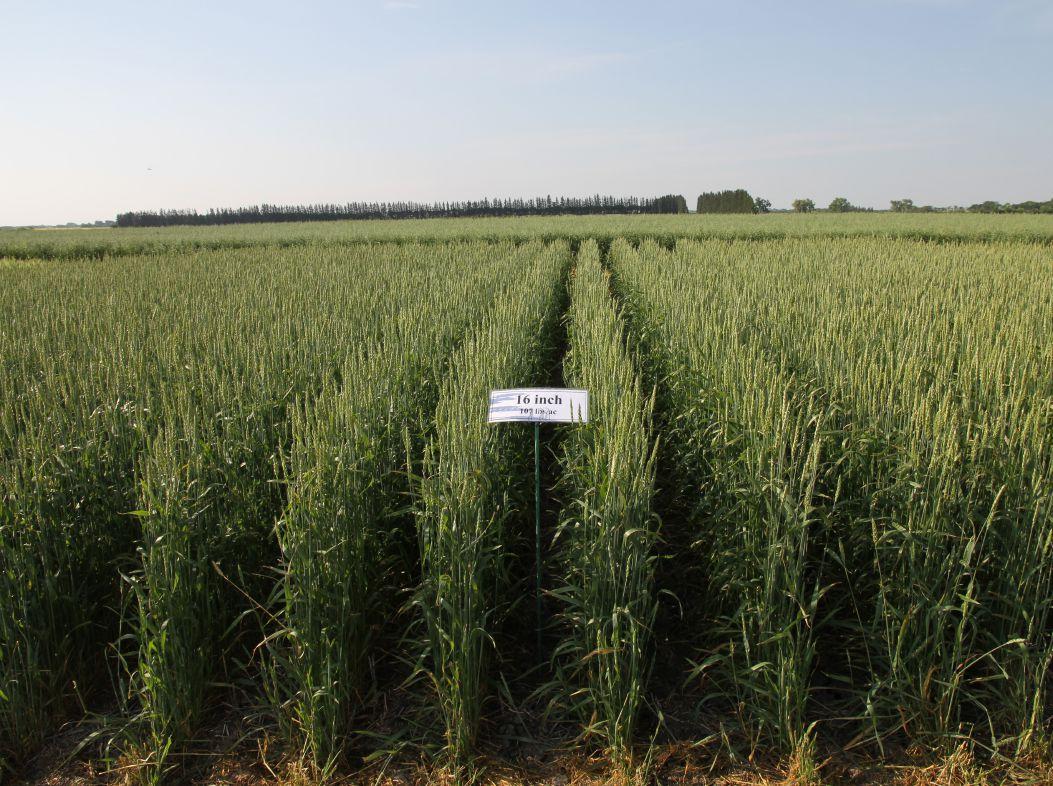
ABOVE: Wheat plot at Indian Head seeded at a 16-inch row spacing.
RANCONA® PINNACLE TAKES SEED TREATMENT TECHNOLOGY TO NEW LEVELS.
RANCONA® PINNACLE combines two powerful fungicides that provide both contact and systemic activity, with RANCONA micro-dispersion technology for superior adhesion and coverage. And when more active ingredient ends up on your seed and not your equipment, you’ll see improved seed emergence, healthier seedlings, and higher yields. To learn more, talk to your Arysta LifeScience representative or visit rancona.com.
fertilizer in the sideband increased. As expected, as the fertilizer rates increased so did the head density or the number of heads per square metre, peaking at 120 kg/ha actual N. Grain yields and biomass also increased as N rates increased.”
The impact of row spacing on grain yield was variable over the years. Generally, yields did not start to decline until after 14-inch row spacing, although in one year, the 10-inch width was statistically the highest yielding. In three of four years, row spacing had no significant effect on grain yield as row spacing moved out from 10 to 16 inches. However, in one year – the highest yielding one in the study – there was a significant yield decrease of about 11 bushels per acre after 12- to 14-inch row spacing.
“The question is why did we see this yield decrease in only one of four years of the trial, and in the highest yielding year, and not in others,” May asks. “Is this common for wheat in general, or is this a result of this particular wheat cultivar we used in this trial? We still need to finalize the agronomic data analysis to see if we can determine the reason. We also want to continue the research and compare different hard red spring cultivars and include durum wheat varieties as well.”
May adds that, for now, based on the limited data available in cereals, it looks like going to a wider row spacing up to 14 inches should not be too detrimental for wheat. Growers need to bear in mind, however, that although 14-inch row spacing looks okay with wheat, occasionally they can run into a yield decrease. How
often that will happen is still unknown. An earlier oat row spacing project led by AAFC’s Guy Lafond showed grain yield was similar among 10-, 12- and 14-inch row spacing, with a 13 per cent yield decrease at 16 inches. So, going beyond 14 inches for both oat and wheat may be problematic, and in some years, it may result in a yield decrease.
“The data shows that there is little difference between 10- and 12-inch row spacing, however, moving from 12 to 14 inches is where growers can occasionally run into a yield decrease,” May says. “We aren’t going to discourage growers who want to go to wider row spacing, but we also don’t want to mislead them. We are interested in continuing to try to determine if yield losses are generally one in four years, as our study showed, or is it one in six or 10 years?”
In the future, it would be beneficial to look at the effects of wider row widths when the nitrogen is mid-row banded, since this is currently a common practice in Western Canada. “We also need to do additional research with more hard red spring wheat cultivars and durum wheat to see if any yield differences are related to specific cultivars, or other impacts of wider row spacing. We also want to look at disease implications of wider row spacing, especially in durum and diseases like Fusarium head blight. Weed control in wider rows is also an issue that has to be kept in mind. We will continue to provide growers with additional results and impacts of wider row spacing as they become available in the future.”
As the fertilizer rates increased, so did the head density or the number of heads per square metre, peaking at 120 kg/ha actual N.
2017 WEED CONTROL GUIDE
Weed management – a top priority for producers – seems to become more complex year after year. At times, the decisions may seem overwhelming: which products should be applied when and in what combinations? To aid you in your decision-making, Top Crop Manager is pleased to bring you our annual Weed Control Guide.
The information within these pages comes primarily from the chemical companies themselves. By going directly to the source, we are able to provide as much information as possible about the products featured and can often include products a year ahead of provincial guidelines. That being said, always check provincial regulations and product labels to ensure you are making decisions based on the most current information available.
Top Crop Manager’s 2017 Weed Control Guide is laid out with products listed for each crop in alphabetical order, followed by tank-mix partners. Herbicide-tolerant systems are listed separately. This format allows producers to compare their options for grassy and broadleaf weed products. Once you’ve made your choice, you can take the next step and compare the tankmix choices to select the one that will best address the range of grassy and broadleaf weeds in your fields.
The ratings provided in the tables should be used as a guide when selecting herbicides. Please be aware that actual control can vary greatly depending on a variety of parameters, including soil type, moisture conditions, weed pressure, weed size and environmental conditions. Also, remember that some tank mixes have additive effects and products may be more
effective on specific weeds when used together. As well, sometimes products can be antagonistic and will therefore be less effective on a particular weed when used in combination compared to when used separately.
Again, we strongly advise producers to check provincial guides and product labels for full details and as a cross-reference.
Each year, new products are introduced to the market while others are withdrawn. Owing to the fact that publication leadtime conflicts with confirmation of registration for new products, we may not have been able to include all of them in this year’s guide. We recommend readers make suitable notes in their copy of the guide as new products are introduced.
WEED CONTROL GUIDE 2017 CEREALS:
2,4-D 4 G Many tank-mix partners
Accurate / Ally 2 G 2,4-D (4), MCPA (4)
Achieve L / Bison 400L / Nufarm Tralkoxydim / Marengo 1 G 2,4-D (4), 2,4-DB (4), Attain/Flurox 24 (4), Badge (4,6), Bromotril II (6), Buctril M (4,6), Curtail M (4), Dichlorprop DX/ Estaprop XT (4), Enforcer D (4,6), Enforcer M (4,6), Lontrel (4), MCPA (4), Mextrol (4,6) OcTTain XL (4), Pardner (6), Pixxaro (4), Prestige XC (4), Pyralid (4), Thrasher (4,6), Thumper (4,6), Trophy (4)
Approve / Thrasher II / Thumper 4,6 E
Many tank-mix partners
Avenge (8), Cougar 120 EC (1), Puma Advance (1),
Achieve L (1), Avenge 200 C (8), Bison 400L (1), Cordon (1), Puma 120 Super (1), Puma Advance (1)
Adds to control rating shown: Check individual products for added ratings. Check for variety/durum restrictions; multiple tank-mixes. Many conditions apply: check provincial weed guide and labels
Flurox-24 / Rush 24
Focus (pre-seed/pre-emerge)
ForceFighter M
Frontline 2,4-D
Frontline XL / Topline
Frontline 2,4-D
Glyphosates (pre-harvest)
GoldWing (pre-emerge)
Glyphosates (9)
Deploy (2), MPower R (2), Nimble (2), Refine SG (2)
Adds to control rating shown: Check individual products for added ratings. Check for variety/durum restrictions; multiple tank-mixes.
Many conditions apply: check provincial weed guide and labels
E E Broadside (2,4), Buctril M (4,6), Curtail M (4), Infinity (6,27), MCPA (4), Mextrol (4,6), Prestige (4), Pulsar (4), Retain (2,4), Trophy (4) TraxosTwo 1,4 E E
This table is presented as a guide only. It is strongly recommended that users refer to provincial crop protection guides and product labels.
Adds to control rating shown: Check individual products for added ratings. Check for variety/durum restrictions; multiple tank-mixes. Many conditions apply: check provincial weed guide and labels
Check for variety restrictions; multiple tankmixes.
conditions apply: check provincial weed guide and labels
WEED CONTROL GUIDE
WEED CONTROL GUIDE 2017
PEAS
WEED CONTROL GUIDE
OMEGA-3S AND MORE
Flaxseed in animal feed has exciting potential.
by Carolyn King
Research shows you can get those healthy omega-3 fatty acids not only from eating ground flaxseed and flaxseed oil, but also from the eggs, meat and milk of flaxseedfed poultry, swine and cattle. Perhaps, then, it’s no surprise the Canadian flax industry is working to enhance and expand omega-3 opportunities with flaxseed feed and focusing on how flaxseed feed’s many healthy attributes can benefit animals, livestock producers and feed processors while expanding the flaxseed feed market for growers.
Omega-3 milk
The positive effects of flaxseed in dairy cattle feed were recently demonstrated in feeding trials at the University of Saskatchewan. As a master’s student, Janna Moats worked on this study under the supervision of David Christensen, a professor emeritus, and Timothy Mutsvangwa, a professor, both with the school’s department of animal and poultry science. A primary objective of the study was to improve the fatty acid composition of cow’s milk for human
consumption in order to improve consumer availability of healthful fats like omega-3s.
“Flaxseed contains high levels of omega-3 fatty acids, which have been associated with health benefits by mitigating inflammation and acting as an antioxidant. Additional research has shown improved reproductive performance in animals that are fed flaxseed. This is largely attributed to the fatty acid composition of the oilseed and the presence of the plant compound lignan,” Moats explains.
“In our study, we compared the effects of different flaxseed products in a dairy cow diet on the animal’s performance, rumen fermentation and the fatty acid composition of the milk.” The four treatments included a control diet, a diet supplemented with a whole flaxseed product, and two diets where the flaxseed had gone through a processing technique called dry extrusion. One of those was a diet supplemented with extruded flaxseed and peas, and the
ABOVE: At the University of Saskatchewan, Janna Moats studied the effects of flaxseed in dairy cow diets.
PHOTO COURTESY OF DAVID STOBBE.
THE BROADLEAF PREDATOR
It’s time to get territorial. Strike early, hard and fast against your toughest broadleaf weeds.
Lethal to cleavers and other broadleafs, Infinity ® FX is changing the landscape of cereal weed control.
other was a diet supplemented with extruded flaxseed and fababeans.
“The key findings were that feeding dairy cattle flaxseed tended to result in more milk being produced by the animal compared to a control diet with no flaxseed. And feeding flaxseed in an extruded form compared to whole flaxseed had an even greater increase in milk yield. Other aspects of animal performance were maintained when we included flaxseed and rumen fermentation was not affected,” she says.
“In terms of the milk fatty acid profile, the primary change that we observed was a significant increase in total omega-3s in the milk when we fed flaxseed [to the cows]. As well, another fatty acid increased. It is known as CLA [conjugated linoleic acid], which is also considered very healthful for humans and has been suggested to be an anti-carcinogen. Lots of research still needs to be done on that fatty acid, but seeing an increase in the two was very exciting.”
Funders for this study included the National Research Council’s Industrial Research Assistance Program, SaskMilk and O&T Farms Ltd., a Regina-based feed processor. O&T was interested in this research because the company produces specialty feeds that have extruded flaxseed as an ingredient, such as LinPRO-R for cattle and LinPRO for swine and poultry.
O&T’s flaxseed feeds
After finishing her master’s degree, Moats accepted a full-time position as the research and development manager for O&T. She notes, “Feeding flaxseed isn’t a new concept. The benefits have been known for quite some time in animals for production and health purposes. I think the main challenge that producers had was how to actually use flaxseed on-farm. It is very difficult to handle; it can be dangerous when grinding on-site. What O&T Farms did was essentially to find a way to process the flaxseed in a way that can be
used by the animal and used by the producers.”
When O&T started 50 years ago, it began as an egg layer operation and then expanded into other types of agricultural business. “We started to develop our own feed in the 1990s, for our own internal use, based on the rich fields of canola and flax abundant around us in Saskatchewan,” says Rob Dreger, director of sales and marketing at O&T Farms.
O&T’s feed operations grew, and in 2006, the company sold the layer operation to focus on its specialty feed operations. “We take the flaxseed and process it right within our province, adding value to it, and then provide it to the world, whether it be the Middle East, China, Korea, Bangladesh, Thailand, Kuwait, Morocco or throughout Canada and the United States,” Dreger says. O&T Farms was one of the finalists for the Saskatchewan Trade and Export Partnership’s Exporter of the Year Award in 2016.
Dreger notes, “O&T has taken a lot of time and energy to work with third-party institutions to make sure that what we are doing and what we are seeing are backed up by third-party research.” In addition to research at the University of Saskatchewan, O&T is collaborating on feed-related studies with the University of Guelph, Agriculture and Agri-Food Canada, Pennsylvania State University (Penn State) and the University of California, Davis campus (UC Davis).
“Omega-3s have a ‘halo of goodness.’ There is a very solid understanding by the general public that these polyunsaturated omega-3 fats are good for you and putting them into our diets is an important aspect of our health and nutrition,” Dreger says. “As we move forward, the strength of the flaxseed crop only grows in importance. I would envision that the U.S. market will continue to demand more omega-3 functional food products – dairy, meats, continued egg usage. And I believe we are going to see a huge demand from Asia because the real growth in prosperity is taking place across the seas
Extruded flaxseed produced at the Canadian Feed Research Centre in North Battleford; Newkirk and his research team will be using this facility for all of their flax processing research.
PHOTO COURTESY OF SCOTT BISHOFF.
TAKE CONTROL.
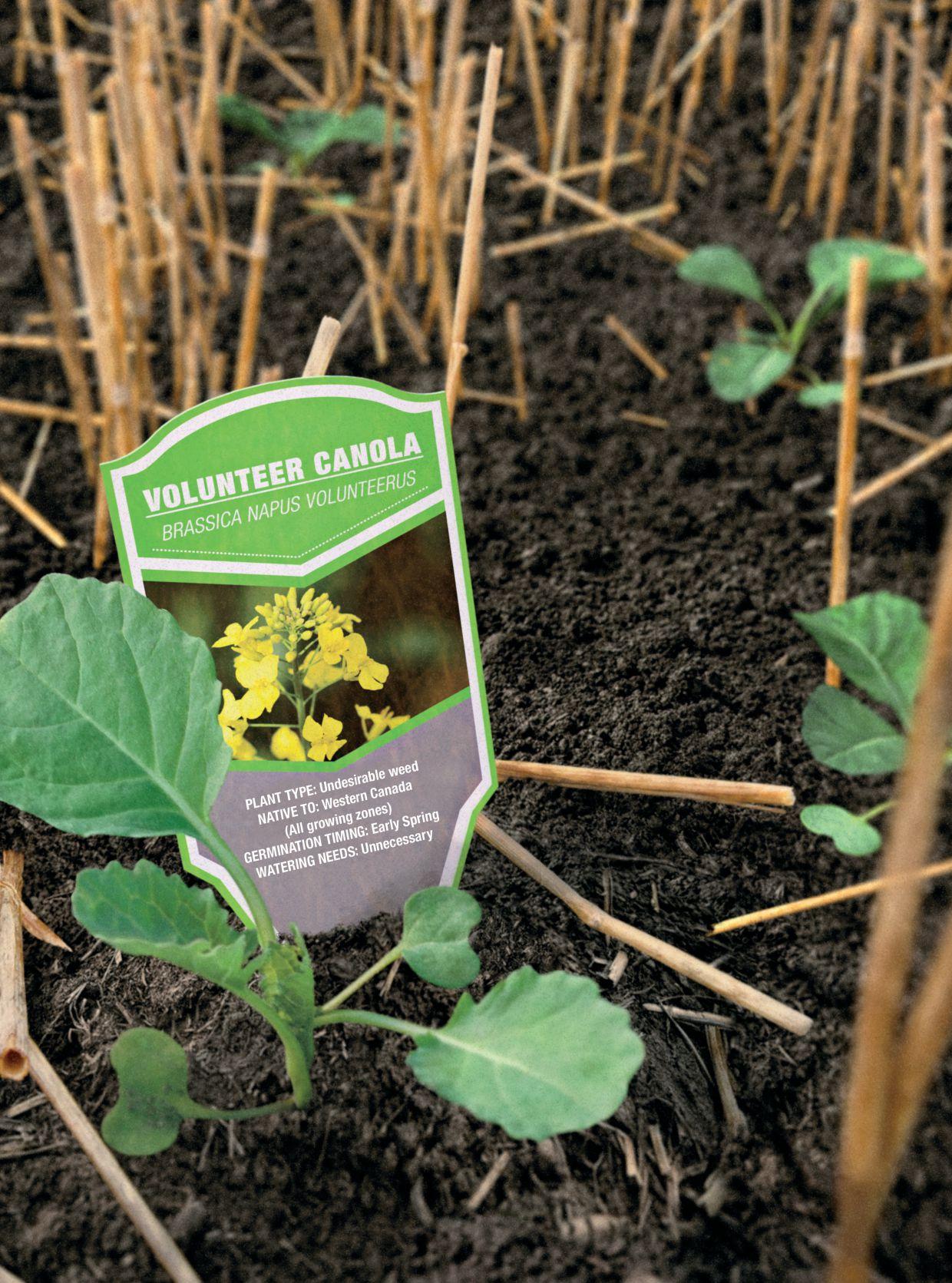
You’ve identified volunteer canola as a weed. Now it’s time to deal with it.
For control of all volunteer canola, tank mix Pardner® herbicide with your pre-season application of glyphosate. Make Pardner your first choice.
and they are looking for better health and nutrition and omega-3 enrichment. I think it’s a win-win-win for the consumer, processor and producer of flaxseed.”
More than omega-3s
Rex Newkirk, an associate professor and research chair in feed processing technology in animal and poultry science at the University of Saskatchewan, sees two components in the future growth of the use of flaxseed in animal feed.
“One is that flax is well known for its omega-3 content, so the use of flaxseed and oil in things like laying hens for omega-3 eggs has steadily grown. People are aware of the health benefits for things like reproduction health in pigs, for example, and we are getting calls from people looking to include more flaxseed to try to enhance reproduction performance. So we’re seeing fairly slow and steady growth in those areas,” says Newkirk.
“However, I think most of the future growth will likely come from an interest in antibiotic-free diets. A number of companies, particularly restaurants, are saying they won’t accept or sell meat that has had antibiotics. That puts a challenge on the producer because antibiotics are used to fight disease, to give a healthy gut, and now we recognize that we need to do things a little differently to achieve that. And one of those things is to put healthy ingredients in the diet that promote a healthy gut. Flax has a number of components that could make [it] attractive in diets that have more of a broader audience rather than just strictly an omega-3 product scenario.”
For instance, flaxseed has both soluble and insoluble fibre, as well as lignans, which are antioxidants, and various vitamins and minerals.
bring in his feed expertise, and they have had some initial discussions on what could be done to increase markets for flaxseed feed.
“One part is making sure we get the information in the hands of the users so they understand the benefits [of] flaxseed, and they have the tools and information they need,” Newkirk says. “For example, the council recently put out a fact sheet on flax in pet foods, and pet food is another area where I think there is room for growth for sure.” Newkirk is already undertaking some activities to get flaxseed feed information to users. For instance, he recently gave a seminar in China to raise awareness of the benefits of flaxseed feed, and he has been responding to calls about the nutritional and health benefits of flaxseed feed.
“Another part of it is to make sure we have the information necessary,” Newkirk adds. For instance, he would like to see research on topics like the effects of flaxseed feed on gut health as well as more activities to demonstrate the benefits of flaxseed feed in practical farm situations.
Hanley says, “What we really need to do at the Flax Council – in collaboration with SaskFlax, the Manitoba Flax Growers Association and the industry – is to figure out what activities we want to look at as it pertains to the next round of funding under the agricultural policy framework that the federal and provincial governments are working on.” Past agricultural policy frameworks have included funding for flax research through the Growing Forward and Growing Forward 2 programs. The next framework will be launched in April 2018.
“Animal feed is a file that has kind of been on the backburner for the flax industry. We have now decided that we should evaluate it again and try to capitalize on the healthiness of flax.”
According to Moats, O&T Farms’ collaborative research efforts are also moving in this direction: “Even though our primary focus has been to improve the fatty acid composition of meat, milk and eggs for human consumption, we are also starting to focus on the animal health and reproductive aspects. Especially with increased consumer demand for antibiotic-free feeding programs and alternative livestock housing systems, it has become imperative that producers find alternative sources to help in maintaining animal health and relieving stress on the animal.”
“I don’t think we have tapped the growth potential of incorporating flax in animal feed,” says Erwin Hanley, who sits on the board of directors for both the Flax Council of Canada and the producer group Saskatchewan Flax Development Commission (SaskFlax). The Flax Council, which includes representatives of flax growers, processors and other stakeholders in the flax industry, identified the feed industry as one of its priorities in its most recent strategic plan.
Hanley notes, “Animal feed is a file that has kind of been on the backburner for the flax industry. We have now decided that we should evaluate it again and try to capitalize on the healthiness of flax.”
Newkirk was recently asked to join the Flax Council’s board, to
SaskFlax and Newkirk also have some new flaxseed feed studies underway this year. “At SaskFlax, we’re working on a couple of activities on the animal feed side. For example, we will be starting a new project with David Christensen and Rex Newkirk at the [University of Saskatchewan] to look at the nutritional value of flaxseed and flax meal. We are going to provide different flax samples from across the province from different flax varieties, and they will analyze them and put that information into a feed database,” Hanley explains. Animal nutritionists will be able to go to that database for information they need to help in making recommendations for feed rations to producers and feed processors.
Newkirk will also be leading a new project on fibre in flaxseed meal and canola meal, funded by Saskatchewan’s Agriculture Development Fund, SaskFlax and the Saskatchewan Canola Development Commission. “In crops like flax, the insoluble fibre is healthy for the gut, but it also encapsulates some of the nutrients – it basically creates a barrier to digestion. So you want the fibre there but you don’t want to lose the nutrients,” he explains. “Also, some of the soluble fibres can sometimes have some negative impacts; for example, although mucilage can be healthful, it can have some anti-nutritive effects in that it can cause wet litter and things like that.” So he will be working on a steam-based process that makes the fibre more digestible by ruminants and makes the nutrients available to the animals.
Newkirk adds, “Flaxseed has a lot of what we understand to be healthful properties, including some benefits that we haven’t proven out scientifically because we haven’t put the time or resources into it. Flax oil is a very vibrant market, but I think for additional growth for our flax growers, particularly in more local markets, the feed market is a great opportunity. And with a little more information, I think we can make some good inroads there.”
seedmaster.ca We’re farmers, too.
NEW MYCORRHIZAL FUNGI COULD IMPROVE CANOLA PRODUCTION
Improves yield and stress tolerances.
by Bruce Barker
Arecently discovered mycorrhizal fungus, Pirifomospora indica, holds promise for improving canola production. Ajit Verma, a professor in Jawaharlal Nehru University’s School of Life Sciences in New Delhi, discovered the fungus on orchid plants in the Thar Desert in Rajasthan, India. Since the discovery of P. indica, scientists around the world have been working to understand the benefits of the fungus.
“The benefits of mychorrhizal associations include improved nutrient acquisition and tolerance of environmental abiotic and biotic stresses. These mycorrhizal associations can be highly effective in enhancing plant growth and yield,” says Janusz Zwiazek, a professor of plant physiology (trees) at the University of Alberta. He has been investigating the benefits of P. indica on canola.
Although canola and other plants of the cabbage family do not
normally form root associations, Zwiazek has found P. indica is able to colonize roots of Brassicaceae plants. Unlike mycorrhizal fungi, P. indica can also be easily cultured in a wide range of synthetic media and in the absence of a plant host. This has allowed scientists to research the benefits on a multitude of crops, such as increased resistance against fungal pathogens, improved barley tolerance to salt stress and root pathogens, and improved antioxidant capacity.
At the University of Alberta, Zwiazek recently conducted studies looking at the effects of P. indica on nutrient requirements, growth, yield and stress tolerance of canola. The project was conducted in an indoor controlled environment to study the growth
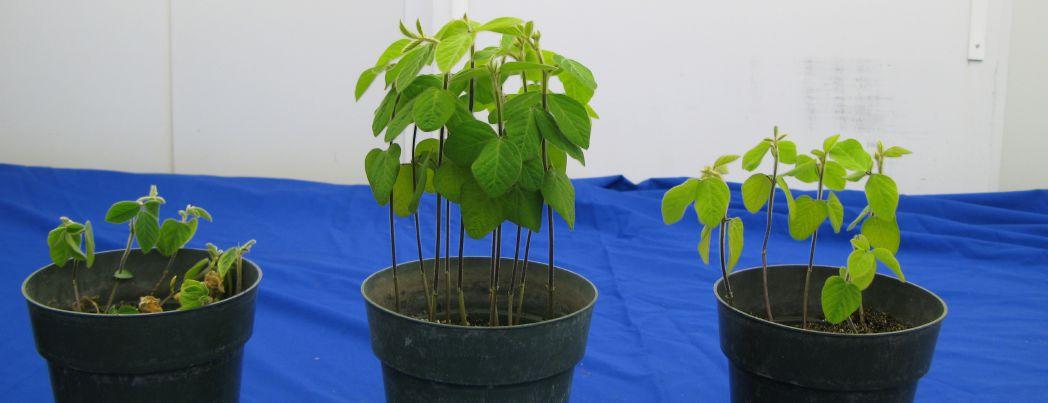
A new mycorrhizal fungi is showing promise for higher yields in canola.
PHOTO BY BRUCE BARKER.
of inoculated canola under various stresses including low nitrogen (N), low phosphorous (P), drought, flooding, low temperature and salinity.
In the nutrition experiments, root inoculation with P. indica increased shoot and root growth of canola seedlings. The effect was more pronounced under higher N levels and by the presence of organic carbon in the growth medium. Root inoculation with P. indica also enhanced shoot and root growth of canola under all levels of P nutrition (five, 25, 50 and 100 per cent P). Zwiazek says P. indica increased net photosynthesis and transpiration rates in inoculated canola seedlings. In a sand culture with no additional carbon source, P. indica had no effect on shoot and root growth.
When drought conditions were imposed at the vegetative stage of canola, P. indica increased seed yield, especially under low N fertility.
“This tells us that the fungus can get additional carbon from the soil and would have less need for carbon from the plant,” Zwiazek explains.
Improved yield
When drought conditions were imposed at the vegetative stage of canola, P. indica increased seed yield, especially under low N fertility. However, when drought was applied at flowering, there was no benefit. Yield benefits under different P and drought timings depended on the level of P fertility. Additionally, the fatty acid composition in canola seeds was not altered by inoculation with P. indica or the drought treatment.
“Interestingly, none of the measured physiological parameters could clearly explain the increases in seed yield when the
treatments were applied at the vegetative stage,” Zwiazek says.
When plants were flooded at either the vegetative or flowering stage, P. indica increased seed yield in inoculated canola plants and the increase varied depending on P and N fertilization levels. Inoculated plants subjected to full nutrition maintained higher net photosynthetic rates after flooding.
Similarly, when canola was exposed to low temperature or salinity, tolerances were improved when inoculated with P. indica
“There was an increase in shoot biomass even when subjected to moderate to high salinity,” Zwiazek says.
Part of the research also looked at how to develop an effective inoculation formulation and inoculation method for canola. Zwiazek was able to develop a novel protocol that can be easily used to inoculate canola seeds and store the seeds for a prolonged period. He says the formulation can be applied to canola for up to a year prior to seeding and still be effective. Zwiazek says there is still a lot to be learned about the benefits of P. indica on canola, but the results of these trials look promising.
Field experiments are underway to verify the greenhouse results, with potential commercialization down the road.
“It’s all of our responsibility to speak up for agriculture.”
THE ART AND SCIENCE OF SOIL TESTING
Getting the most out of soil tests.
by Bruce Barker
Send five soil test samples to five different labs and you’ll likely get five different recommendations. Understanding why will help you get the most out of your fertilizer dollars and optimize yields over the long term.
“Soil testing is a tool – yes, a tool, not an absolute science – that allows producers to make more qualified fertility management decisions based on soil nutrient inventory and interpretive criteria based on a specific philosophy,” says Rigas Karamanos, senior agronomist with Koch Fertilizer Canada in Calgary.
Karamanos has been involved in soil fertility for many years, stretching back to when he managed the Saskatchewan Soil Test Lab from 1989 through 1997, after which he joined Western Cooperative Fertilizers and then Viterra, overseeing fertility research and recommendations. He has long been an advocate for understanding how soil testing fits into fertilizer recommendations, and says that in order to properly use soil tests, growers and agronomists have to understand the value, capabilities, and limitations of the tests.
Karamanos says four important steps are part of the art and science of soil testing: sampling; extraction and chemical analysis; correlation and interpretation; and fertilizer recommendations. Get one wrong and the rest doesn’t matter.
Sampling
When it comes to sampling, Karamanos says there are wellestablished guidelines for when and how to soil sample in the spring or fall, but many people do not understand the errors that are inherent in taking samples. Research conducted by Karamanos in 2001 showed sampling error is as high as 25 per cent for 16 random samples from a field, 22.4 per cent for 20 samples and 17.8 per cent for 30 samples. On top of that, soil analysis in the lab can also add in about 11 per cent variability. In the end, a resulting recommendation would be accurate within plus or minus
ABOVE: Understanding sampling, extraction and chemical analysis, and correlation and interpretation guide the development of fertilizer recommendations.
STRAIGHT UP WILD OAT CONTROL
Wild oats hanging above the crop canopy are like a billboard for poor weed control.
Varro® herbicide provides outstanding control of wild oats and other problem grass weeds to keep your wheat eld looking great all season.
Varro – wild oat control that’s worth talking about.
Source: Karamanos, 2001.
Phosphorus soil test calibration for canola
33.5 per cent.
“The goal of sampling is to try to minimize variability, and the more samples you take, the more accurate the recommendation will be,” Karamanos says.
Extraction and chemical analysis
Different labs utilize different methods and interpretations when analyzing soil samples. Karamanos says the important criteria for evaluating a lab is the compatibility of analysis with western Canadian soils, and whether the lab’s methodology is calibrated with local field research. For example, the use of a weak acid extract on a calcareous soil would be ineffective since the acid would react with the lime in the soil and the extractant would be just water.
When testing for nitrogen (N), all extractants are made with water, as nitrate in the soil is water-soluble and nitrate is what is measured in a soil sample. There are several methodologies for extraction when looking at soil pH, electrical conductivity, and organic matter. All can influence the final soil test recommendation by making assumptions – for example, how much nitrogen may be mineralized from organic matter.
Phosphorus (P) testing methods become more complicated. In Manitoba, the “Olsen” (sodium bicarbonate) technique measures extractable P in the top six inches of soil. This is the accepted testing method used for Manitoba’s provincial recommendations, as well as for regulating the allowable P application rates; Manitoba is the only Prairie province that regulates P application based on soil test values. In Saskatchewan and Alberta, provincial recommendations are based on the modified Kelowna test, which has been proven to be reliable for a wide range of soil pH levels. Samples from Manitoba tested in a Saskatoon lab may use the Olsen method to ensure consistency with Manitoba regulations.
Other tests include the weak Bray, strong Bray and bicarbonate tests, with each extracting different levels of P from the soil sample. As a result, test results from one extraction method cannot be easily compared to those from another.
For potassium (K) testing, ammonium acetate, bicarbonate and Kelowna are commonly used extraction methods, and Karamanos says they generally provide similar results. The sulphur (S) methodology commonly used is reliable and well calibrated in Western Canada.
Source: McKenzie et al. 1995.
Tough broadleaves and flushing grassy weeds have met their match. No burndown product is more ruthless against problem weeds in spring wheat than INFERNO® DUO. Two active ingredients working together with glyphosate get hard-to-kill weeds like dandelion, hawk’s beard, foxtail barley and Roundup Ready® canola, while giving you longer lasting residual control of grassy weeds like green foxtail and up to two weeks for wild oats.
INFERNO DUO. It takes burndown to the next level.
Correlation and interpretation
Karamanos says one of the most important considerations in soil testing is that no matter what extraction method is used, it must be correlated and validated with local field data in order to be useful for making fertilizer recommendations.
“Remember: no matter what one uses, the test is done ahead of the growing season. Therefore, all methods, whether chemicals, membranes, resin or even plants grown in pots, they simulate plant roots and have no value unless they are correlated with crop yields.”
Correlation is achieved by taking the various extraction levels from a soil sample and testing fertilizer recommendations in the field to develop response curves. The process is costly and intensive, which is why much of the correlation work was done many years ago. A good example is the P correlation work conducted by Ross McKenzie at Alberta Agriculture in the early 1990s. In the calibration graph, each point represents a study conducted at a particular site-year. The scatter shown in the relationship between soil test P level and relative yield provides an indication of
the inexactness inherent in using soil tests to predict the relative degree of crop response under specific conditions.
This calibration research also establishes a critical level (sufficiency) of 20 to 25 parts per million of P (40 to 50 pounds P per acre, or lbs/ac). Karamanos says this means soils testing at this level will support most of the canola crop P needs. In this case, P application should focus on providing some starter P and replacing the P from crop removal (0.7 to 0.9 lbs. P2O5 per bushel of canola).
Philosophies for soil test recommendations
Soil test labs, agronomists and growers take different approaches to fertilization. The main philosophies behind recommendations are sufficiency and build and maintenance. The decision to go with a specific philosophy depends on many factors, including risk management, yield response, and existing soil fertility.
The sufficiency approach is most commonly used with all nutrients and is based on targeting the optimum nutrient level. The objective of the sufficiency approach is to maximize net returns
on fertilizer investments in the year of application. For fertilizer to show a profit, adding it must produce a yield response great enough to more than offset the costs involved in applying it. This approach to fertilization carries no long-term financial commitment. The objective is to turn a profit to fertilization in one crop season.
“The goal of sampling is to try to minimize variability, and the more samples you take, the more accurate the recommendation will be.”
“For this reason, it is a good approach in the case of P and K on land that is leased for very short terms or when cash flow is limited and no capital exists for longer-term financial investments,” Karamanos says.
The build and maintenance approach seeks to build and maintain soil tests to levels above the critical level in an attempt to remove the nutrient as a yield-limiting factor. This is accomplished by adding more nutrients than crops remove, and eliminates any potential of a nutrient deficiency becoming a yield-limiting factor. The strategy is most often used with P fertilizer, especially now
that oilseeds are in crop rotations more frequently. Oilseeds are heavy users of P, and P fertility on the Prairies is being drawn down, requiring higher P fertilization in non-oilseed years. To build soil P by one pound per acre requires six to 14 pounds P2O5 per acre. This is not a good strategy for mobile nutrients like N and S, which can leach from the soil.
“This long-term view is best on land that is owned or under a long-term lease and where cash flow is sufficient to sustain the initial capital investments,” Karamanos says.
He sums up by reinforcing the key factor to remember about soil testing: all steps in the process need to be assessed for relevancy on your own farm.
INTRIGUING ALTERNATIVES
Exploring the use of beneficial bacteria and other novel options for fighting soybean root rots.
by Carolyn King
Root rots are a major, yield-limiting problem for Prairie soybean growers, so western Canadian researchers are working on a range of studies, such as evaluating crop rotations and screening soybean lines for genetic resistance, to help improve root rot management. Now, a project led by Fouad Daayf, a plant pathologist at the University of Manitoba, is extending that range of research into some fascinating new areas.
“Root rots are very important diseases of soybeans. They are difficult to manage due to a number of factors. One factor is that they can be caused by individual pathogens or by combinations of two of more of those, such as Phytophthora sojae, Fusarium species, Rhizoctonia solani and sometimes Pythium,” Daayf says.
“A second factor is that root rots are caused by seedborne and soilborne pathogens. This means that they cannot be treated by foliar fungicides, and that you don’t see the problem until at least some of the damage is done.”
Fusarium and Rhizoctonia are fungi, while Pythium and Phytophthora are oomycetes (water moulds). He notes, “Phytophthora is one of the most destructive diseases of soybeans in many areas where soybeans are grown. We know that in Ontario, for example, the main root rot problem of soybeans is Phytophthora. Fusarium root rots and Rhizoctonia stem and root damage have been increasing in frequency.”
Daayf explains that the options currently available to Manitoba soybean growers for controlling root rots don’t always provide effective control. Resistant varieties are usually a key tool for managing root rots, but with soybean being such a new crop to the Prairies, there is not yet enough strong genetic resistance available in commercial Prairie varieties. Crop rotations can help, but various crop
types are hosts to root rot pathogens and if the pathogens remain viable in the soil, then the rotation may not provide good control. He adds, “Seed treatments are available and can work well for certain pathogens in the early stages of seedling development, but they are not as effective against some of the infections that occur, say, at later stages of the crop.”
Daayf notes that one control option might be chemical fumigation to kill all the pathogens in the soil, but that would also kill all the other soil microbes – including the beneficial ones.
Novel agents
His project, which runs from 2014 to 2017, is assessing the use of plant-growth-promoting rhizobacteria alone and in combination with phosphite, chitosan and an extract of Canada milk vetch (CMV). Daayf has worked with all of these disease control agents in previous research on other diseases and other crops, and all these agents have environmentally friendly aspects.
Plant-growth-promoting rhizobacteria are bacteria that colonize plant roots and form beneficial relationships with the plant. According to Daayf, rhizobacteria can fight plant pathogens in various ways, with some rhizobacteria species having more than one mode of action against pathogens.
“Rhizobacteria can have an antibiotic action against the pathogen directly. They can also induce a number of defence responses in the
ABOVE: Manitoba researchers are testing experimental treatments for controlling root rots in soybeans. This example compares: (left) plants inoculated with the pathogen Phytophthora sojae; (middle) inoculated and treated with a combined treatment and (right) inoculated and treated with a rhizobacterium.
plant so the plant becomes able to act more strongly against the pathogen. In many cases, rhizobacteria also have the capacity to deprive the pathogen of particular nutrients. For example, certain rhizobacteria can release molecules called siderophores into the environment to catch iron, which deprives the pathogen of that element and makes it weak and easier to deal with.”
Chitosan is a biodegradable biocontrol product derived from chitin, the substance that forms the tough shells of shellfish like crabs and shrimps. Chitosan has antimicrobial effects, including activity against fungi, bacteria and viruses, and it can help boost a plant’s own defences against pathogens.
Phosphite fungicides are used especially for managing diseases caused by oomycetes like Phytophthora, and have a lower environmental risk than some other such fungicides. Phosphites can stimulate a plant’s ability to fight pathogens and can also directly inhibit pathogen growth and reproduction.
Daayf was a pioneer in the use of CMV. “Years ago I was trying to find plant extracts that would work on late blight [Phytophthora infestans] and Verticillium wilt in potatoes. So I was trying plants that are native to the Prairies. Canada milk vetch was one that was screened and selected as a successful biocontrol agent against verticillium wilt,” he says. Daayf and his team have shown that CMV extracts induce plant defences against pathogens.
A step-wise approach
The project team includes Daayf’s research associate, Arbia Arfaoui, who is conducting the work, and technician Lorne Adam. They are sharing ideas and research information with plant pathologists Debra McLaren, who is with Agriculture and Agri-Food Canada (AAFC) at Brandon, and Maria Antonia Henriquez, who is at AAFC Morden. Plus, the AAFC researchers are providing fungal strains for Daayf’s project. The isolates of the pathogens that the team is working with were collected in Manitoba by McLaren and Henriquez.
The project is targeting the main root rot pathogens found in Manitoba. In field surveys, McLaren and Henriquez have found that Fusarium is a major root rot issue in Manitoba. Phytophthora and Rhizoctonia may also be part of the game. “So in our project we are targeting Fusarium first, then Phytophthora and Rhizoctonia” says Daayf.
The project team is using a step-wise
approach for evaluating the different treatment options. The first step is to test each of the disease control agents, applied at a range of concentrations, on the individual pathogens in vitro (in petri dishes) to see if the agent acts directly on the pathogen. Then, they try the rhizobacteria in combination with each of the other agents. Next they try the treatments on plant tissues, like pieces of roots or stems. After that, they test the treatments on seeds and seedlings in a growth chamber, a growth room and a greenhouse. Ultimately, they’ll test the
treatments in the field. Based on what they find out at each step, they’ll decide which treatments should move to the next step of testing.
Daayf emphasizes that it’s a long journey to identify effective control options. “When you find a treatment like a rhizobacterium that works against the pathogen on plant tissues in vitro, you have to go to those other levels to see if it actually works in the whole plant. Even if it works in a greenhouse, it may not work in the field if the environmental
Continued on page 72
NEW HERBICIDE REGISTRATIONS AND LABEL UPDATES
Expanded choices to help target weed challenges and manage herbicide resistance.
by Blair McClinton, P.Ag.
New herbicide product registrations and label updates continue to bring more choice to farmers, with multiple modes of action to manage weed infestations and herbicide resistance. The following product information has been provided to Top Crop Manager by the manufacturers.
Burndown herbicides
Command 360 ME with clomazone (Group 13) is a new herbicide for control of cleavers in all herbicide-tolerant systems. It can be applied pre-plant in canola to control early flushes of cleavers, allowing better in-crop herbicide performance.
Focus with pyroxasulfone (Group 14) and carfentrazone (Group 15) is a new pre-formulated liquid product for pre-plant/preemergence use in wheat (spring and winter), field corn and soybeans. Focus herbicide provides pre-emergent control of green and yellow foxtail, barnyard grass, downy and Japanese brome, redroot pigweed, cleavers and suppression of wild oats, kochia, lamb’s-quarters, wild buckwheat and wild mustard.
Grassy and broadleaf weed herbicides
Luxxur with thiencarbazone (Group 2) and tribenuron (Group 2).
Luxxur is an innovative new wheat herbicide that offers control of tough grass and broadleaf perennials. The formulation not only knocks out wild oats, but also takes care of problematic weeds like dandelions, Canada thistle, and narrow-leaved hawk’s beard.
Rexade with pyroxsulam (Group 2) and halauxifen (Group 4).
Rexade is a complete wheat herbicide for use in spring wheat, winter wheat and durum that delivers grass and broadleaf weed control and good performance across a wide range of conditions. Rexade controls key grass weeds such as wild oats, yellow foxtail, barnyard grass and Japanese brome, and has overlapping multi-mode broadleaf weed control of cleavers (up to 9 whorl), wild buckwheat (one to eight leaf), chickweed, hemp-nettle, lamb’s-quarters and others.
Solo Ultra with imazamox (Group 2) and sethoxydim (Group 1). Solo Ultra is a new co-pack that combines the targeted control of tough broadleaf weeds and rotational flexibility of Solo ADV with the improved grass control of Poast Ultra. Solo Ultra provides multiple mode of action control and an extended window of application for grassy weeds in one package, plus built-in adjuvant for easier handling and reduced fill-up times. Solo Ultra is registered for use in Clearfield
canola, Clearfield lentils, Clearfield sunflowers and soybeans.
Broadleaf weed herbicides
Cirpreme with clopyralid (Group 4), florasulam (Group 2) and halauxifen (Group 4). Cirpreme provides systemic broadleaf weed control of annual and perennial weeds such as dandelion, perennial sow thistle, Canada thistle and narrow-leaved hawk’s-beard. Cirpreme can be used in-crop in barley, durum, spring and winter wheat and provides the GO benefits of Arylex Active, including performance on big or small weeds, early or advanced crops and under variable weather conditions.
Engenia with dicamba – BAPMA salt (Group 4). The advanced dicamba formulation of Engenia will offer growers greater flexibility
Continued on page 69
New herbicide options continue to expand weed control choices. Shown here is Group 2 control on canola (right) in a pea crop.
PHOTO BY BRUCE
LIGHT ’EM UP
Resistant or not, powerful Infinity® herbicide takes out the toughest broadleaf weeds in your cereals including Canada fleabane. With its unique Group 27 mode of action, Infinity helps ensure the profitability of your farm today and for years to come.
Managing herbicide resistance is everyone’s fight; please spray responsibly.
SEQUENCING LARGE ACREAGE AND SPECIAL CROPS
Research will help determine how special crops best fit into crop sequences.
by Donna Fleury
Diversified crop rotations are an important component of western Canadian cropping systems. Although crops like wheat and canola are the largest acreage crops, adding special crops into the rotation helps manage weed, disease and insect pest problems and potential resistance issues, improves soil health and maximizes profitability. However, determining which crop fits best in the cropping sequence remains a big question.
“Special crops provide producers with opportunities to diversify, both in crops and in value-added enterprises – however, more agronomic information is needed for these crops,” explains Bill May, crop management agronomist with Agriculture and Agri-Food Canada in Indian Head, Sask.
In 2015, May launched a four-year crop sequencing study at four locations in Saskatchewan to try to find some answers. The project includes eight different crops grown in various sequences to determine moisture and residual nitrogen (N), plant density, volunteers (counts and biomass), disease ratings, grain yield and grain quality. The eight crops are wheat, oat, canola, pea, canaryseed, hemp, quinoa and coriander. The locations – Indian Head, Melfort, Saskatoon and Swift Current – are representative of growing conditions across Saskatchewan.
“We are really just getting underway with the project and have very preliminary data at this point,” May says. “The study is quite complex, and with four replications at each site, there will be 256 plots to evaluate and analyze each season. In year one, all eight crops are seeded in plots in one direction and replicated four times at each location. In year two, the same eight crops are seeded perpendicular to the previous year plots to try to determine the impacts on the various factors being studied of each preceding crop on the following crop. This two-year crop sequence protocol is repeated at each location over the length of the project. One of the key aspects will be monitoring volunteers for each crop to see how big an issue that is in the mix and also doing a weed count and analyzing the impacts on yield and quality.”
May says the project is in very early days and results to date are very preliminary. Like any project, there have been a few challenges to address along the way. Hemp presents one of the biggest challenges, thanks to the onerous regulations governing research, particularly on multiple sites. The regulations tend to be focused on single projects on single sites, so the approval process and paperwork for a multi-site project require a huge investment of time and effort.
Some of the special crops present both growing and management challenges. Although quinoa germinated well in the first year, in 2016 there were some germination problems that may have been seedrelated. “We try to use the recommended seeding rate and fertilizers for each crop, along with recommended disease control,” May says. “In 2016, blossom blight in coriander was a serious disease problem, but unfortunately we were unable to apply disease control on time. We have adjusted the protocols for coriander and know for next year that if we have to apply fungicide for coriander, it must be applied at the early blossom stage. We are gaining experience with all of the different agronomics for these very different crops.”
What May really wants to find out is which crop combinations do well when preceded by certain crops. For example, in 2016 canola did not seem to like coriander as a previous crop at one site. Although this is an unlikely sequence, the study is trialing all of the crops on each other to understand the issues. One of the challenges with growing a crop like canola on coriander is volunteers and their management. In Indian Head, the oat on oat combination did not perform well at all.
At the end of the project, there will be three years of sequencing data at four sites across Saskatchewan. Researchers expect to provide good information on what combinations and sequences work best at each location. Watch for interim results in 2017 and final results at the end of the project in 2018.
ABOVE: Crop sequencing plots of large acreage and special crops at Indian Head, Sask.
WILD HELP FOR A ‘HAT TRICK’
Bringing a wild lentil’s resistance to three major diseases into cultivated lentil.
by Carolyn King
Sabine Banniza’s project on multiple resistance to three lentil diseases has a fun tagline: Can we score a hat trick? To take this hockey analogy a bit further, the project aims to get some top disease resistance genes from a wild lentil team to join the cultivated lentil team.
The project involves anthracnose, ascochyta blight and stemphylium blight. These economically important fungal diseases can significantly reduce lentil yield and quality, so having varieties with resistance to all three diseases would be a big help for Prairie lentil growers.
“Resistant crop varieties are the most economic way of dealing with diseases. And, by reducing or maybe eliminating the need for fungicides, resistant varieties are more environmentally friendly than any other way of managing diseases,” explains Banniza, a plant pathologist at the University of Saskatchewan’s Crop Development Centre.
The need for new disease resistance genes is an ongoing one. “When a disease-resistant variety is grown on a large acreage and
for many years, there is always the risk that the resistance genes in the variety may eventually break down because the pathogen changes and adapts to this resistance. So breeders are always on the lookout for different sources of disease resistance and incorporating those resistance genes into new varieties,” she says.
“However, sometimes it is really difficult to find good resistance, so you have to wander a little bit further away, and that is really what this project is about.” In other words, sometimes researchers have to go to wild relatives to find effective resistance genes.
Banniza explains that wild species usually have much greater genetic diversity than crop species. That’s because crop breeders tend to look for a particular set of characteristics that make the crop better for agricultural production and for human consumption. For example, over thousands of years, people working in agriculture
ABOVE: Sabine Banniza (right, shown with her U of S colleague Kirstin Bett) is working to develop lentils with resistance to three fungal diseases.
PHOTO
have selected lentil lines with pods that don’t shatter so the crop can be harvested more easily. But by choosing that trait and a few other key traits, they have inadvertently decreased the diversity in the cultivated species. “That is why there is only a limited number of genes for any trait in these cultivated species that we use these days, and that is why sometimes we now have to go back to the wild relatives where the diversity is much, much bigger,” she says.
For her hat trick project, Banniza is using the wild lentil species Lens ervoides. This species is known to have high levels of resistance to diseases that affect lentil crops on the Prairies, including resistance that is not found in cultivated lentil lines (Lens culinaris).
Results so far, and in the long-term
The project, which runs from 2013 to 2019, is making good progress. Banniza says, “We are most advanced in terms of anthracnose resistance. We have already developed some markers and have done some preliminary testing. The markers seem to work in crosses with cultivated lentil, although they still need confirmation in some larger tests in the breeding program. So now we are focusing more on stemphylium blight and ascochyta blight.”
Their work with anthracnose has made greater progress, in part, because the research team has been working on it longer. Banniza adds, “I think part of it is also that we have done much more research on the anthracnose pathogen here, so we have a much better understanding of the host-pathogen system. With ascochyta blight and stemphylium blight, we have done some resistance screening and a little bit of genetic studies, but we know far less about those two pathogens so we have to do some catch-up.”
“To assess the quality of a resistance gene, and particularly its durability, it is quite important to have a good understanding of how the pathogen and the host plant interact.”
The objective of her project is to develop molecular markers for the resistance genes in Lens ervoides. A molecular marker is a DNA sequence that is associated with a particular trait. Breeders use these markers to rapidly screen breeding material in the lab for the desired trait, rather than having to take weeks or months to grow hundreds or thousands of the seeds from different crosses into plants to see which individual plants have the desired trait. Lentil breeders will be able to use the markers from the project to screen for resistance to the three diseases.
Bringing genes from a wild species into a cultivated species has a number of challenges. Banniza says, “One problem is that crossing a wild species with the cultivated species can be quite difficult, although we have solved that problem.” The second issue is that, if the two species are not very closely related, “it is very difficult to do genetic studies on the crosses between the two species because the genetic material of the two parents may not be able to pair up properly, so you can get a jumble of DNA. And then, because you can’t do genetic studies, you can’t develop molecular markers,” Banniza says.
To overcome this hurdle, her research team is doing the genetic studies in only Lens ervoides. They use two Lens ervoides parents – one that is disease-resistant and one that is susceptible – and they study the genetics of the resistance mechanism in the offspring.
She explains, “When you do these genetic studies, you identify a lot of potential genes that are involved in resistance. To assess the quality of a resistance gene, and particularly its durability, it is quite important to have a good understanding of how the pathogen and the host plant interact. Depending on how they interact, a resistance gene may be more durable or may have a higher risk of breaking down. Once we understand exactly what is happening, we can focus on the right genes.”
The markers resulting from this research will help the lentil breeding program at the Crop Development Centre to quickly, efficiently and reliably screen a lot of lines for the new disease resistance genes. Ultimately, the markers will contribute to getting new diseaseresistant lentil varieties to Prairie farm fields.
“Multiple resistance to disease means extra protection and reduced risks for growers,” says Sherrilyn Phelps, agronomy manager with the Saskatchewan Pulse Growers – one of the agencies funding this project. “Knowing that the varieties have some level of resistance means growers have more tools for fighting disease and that they are not relying solely on fungicide applications. Genetic resistance can provide a sense of security that the crop has a built-in first level of defense and then growers could follow up with fungicides for additional control if needed.”
In addition to the Saskatchewan Pulse Growers, other funders for this project include the Saskatchewan Ministry of Agriculture’s Agriculture Development Fund, the Western Grains Research Foundation and Natural Sciences and Engineering Research Council of Canada.
FEED THE WORLD
When storing and managing grain, fertilizer and petroleum products, look to a name you trust. Westeel supplies a full line of farm management products and accessories, all manufactured to the same industry leading standards our bins are famous for. See everything we can bring to your farm. Talk to your Westeel dealer today.
Westeel Grain Storage
NEW HERBICIDE REGISTRATIONS AND LABEL UPDATES
Continued from page 64
and ease of handling due to lower use rates, tank-mix flexibility and lower volatility properties. Engenia herbicide is registered for use in the new Roundup Ready 2 Xtend soybean system (dicamba-tolerant) and all conventional dicamba registrations.
ForceFighter M with fluroxypyr (Group 4), bromoxynil (Group 6) and MCPA Ester (Group 4). The ForceFighter M co-pack contains three active ingredients and two modes of action to help fight herbicide-resistant weeds, including Group 2- and glyphosateresistant kochia, Group 2-resistant cleavers and wild mustard, and all types of volunteer canola. ForceFighter M can be tank mixed with a number of products for one-pass control in spring wheat, winter wheat, durum and barley.
Infinity FX with pyrasulfotole (Group 27), bromoxynil (Group 6) and fluroxypyr (Group 4). Infinity FX is a new cereal herbicide that provides a wide spectrum of broadleaf weed control. It combines the power of three herbicide groups, making it a good resistance management tool. Infinity FX provides you with fast-acting control of your toughest broadleaf weeds, including cleavers, kochia, buckwheat and now volunteer flax.
Label updates
Authority 480 with sulfentrazone (Group 14). Authority 480 is now registered for pre-plant or pre-emergence application in fababean and tame mustard (low rate only for kochia control) along with field peas, chickpeas, soybean, flax and sunflower. Authority provides preemergent control of kochia, redroot pigweed, lamb’s-quarters, wild buckwheat, common groundsel, and common purslane and suppresses cleavers.
Authority Charge with sulfentrazone and carfentrazone (Group 14). Authority Charge is now registered for pre-plant or preemergence application in fababean and tame mustard (low rate only for kochia control) along with field peas, chickpeas, soybean, flax and sunflower. Authority provides pre-emergent control of kochia, redroot pigweed, lamb’s-quarters, wild buckwheat, common groundsel and common purslane and suppresses cleavers.
Express Pro with metsulfuron and tribenuron (Group 2). Express Pro is now registered for a 22-month re-cropping interval to lentils after a pre-seed application.
Heat LQ with saflufenacil (Group 14). The Heat LQ label has been expanded with several changes. Heat LQ is now registered for residual suppression of cleavers in pre-seed applications. It is also reg-
FUEL YOUR ENGINES
istered for pre-harvest applications on chickpeas and red lentil. The weeds registered for pre-harvest weed dry down now include volunteer canola, Canada fleabane, redroot pigweed and wild buckwheat.
Korrex II with florasulam (Group 2) and dicamba (Group 4). Korrex II is now available featuring a new package configuration and a spring rate treating 80 acres per case. When mixed with VP480 or other glyphosate formulations at 7.5 grams per acre, Korrex II is a strong pre-seed burndown option ahead of barley, durum, oats and spring and winter wheat offering control of early emerging and overwintering weeds, including Group 2- and 9-resistant kochia.
Odyssey NXT with imazamox and imazethapyr (Group 2). Odyssey NXT provides the same reliable weed control as Odyssey but with the updated packaging convenience of two 692-gram jugs instead of eight water-soluble bags and the addition of Merge adjuvant to the package. Each case now treats 80 acres.
Odyssey Ultra NXT with imazamox and imazethapyr (both Group 2) and sethoxydim (Group 1). Odyssey Ultra NXT updates the packaging format of Odyssey Ultra to utilize two 692-gram jugs of Odyssey NXT versus the eight water-soluble bags of Odyssey previously used. Odyssey Ultra NXT also contains Merge adjuvant and will treat 40 acres per case.
Paradigm with florasulam (Group 2) and halauxifen (Group 4). Paradigm has received a new use registration for pre-seed applications prior to planting for all wheat varieties, durum and barley. Paradigm for pre-seed offers control of tough weeds, including Group 2-resistant cleavers and hemp-nettle in the Black soil zone, as well as early emerging broadleaf weeds like wild buckwheat, dandelion and many winter annual weeds.
Simplicity and Simplicity GoDRI with pyroxsulam (Group 2) tank mixed with Stellar XL, featuring florasulam (Group 2), fluroxypyr (Group 4) and MCPA (Group 4). This tank mix is now registered for control of white cockle.
Simplicity and Simplicity GoDRI with pyroxsulam (Group 2) tank mixed with Paradigm, featuring florasulam (Group 2) and halauxifen (Group 4). This tank mix is now registered for control of white cockle.
Travallas with thifensulfuron (Group 2), metsulfuron (Group 2), fluroxypyr (Group 4). Travallas, for use in spring wheat, durum wheat and spring barley, is now registered to control volunteer flax and night-flowering catchfly (up to 10 centimetres). Lentils may be seeded 22 months after an application of Travallas herbicide.
UNDERSTANDING BEE-HAVIOUR
Bee research delves into pollination effectiveness.
by Bruce Barker
The relationship between bees and canola is strong, just ask any honey producer. But what benefits do canola growers receive from those colonies parked at the corner of a field? New research in Alberta is delving in to that sweet subject.
“One of the things we wanted to find out is how much do pollinators contribute to yield in commercial fields,” says Shelley Hoover, apiculture research scientist with Alberta Agriculture and Forestry in Lethbridge, Alta.
According to Statistics Canada’s 2014 analysis of the Canadian honey and bee industry, the number of beekeepers and colonies continues to rise. In 2014, there were 2,195 beekeepers in Alberta (930), Saskatchewan (719) and Manitoba (546), which accounts for one-quarter of the beekeepers in Canada. However, twothirds of the colonies in Canada are found in Alberta (295,000), Saskatchewan (101,000) and Manitoba (91,000), coinciding with canola production on the Prairies.
The importance of honeybees as pollinators is significant for
both commercial canola growers and those in hybrid seed production. Hybrid canola seed production requires pollinators to carry pollen from the male flower to the female flower, as the female flower is self-infertile. In commercial canola production, however, the flowers can be self- or wind-pollinated. Some research has found additional pollination by bees can promote more uniform ripening and earlier pod setting, as well as increase the number of pods per plant and seeds per pod.
Research in Quebec by Rachid Sabbahi of the Université du Québec à Montréal found a 46 per cent seed yield increase when three hives per hectare were present compared to when no bees were present. While this type of density would require about 195 hives per quarter section or about 25 million hives on the Prairies – an unlikely density given there are currently about 490,000 hives – the research serves to highlight the importance of pollinators in canola production.
ABOVE: Alberta researchers are investigating the importance of bees to canola pollination and yield.
PHOTO
Quality meets quantity.
In addition to providing an exceptional yield increase, Prosaro® fungicide protects the high quality of your cereals and helps ensure a better grade.
With two powerful actives, Prosaro provides long-lasting preventative and curative activity, resulting in superior protection against fusarium head blight, effective DON reduction and unmatched leaf disease control.
With Prosaro you’ll never have to settle for second best again.
Hoover and colleagues Ralph Cartar and Andony Melathopoulos at the University of Calgary looked at the Quebec research and wondered if there was a reasonable expectation of benefit across larger commercial fields in the Prairies, and if fewer bees could be as effective. They set up a field trial in Lethbridge comparing pollination with no wind, wind, and open pollination that could include both wind and pollinators. A hand pollination control was used as a further comparison. In the first year of the study, they found open pollination and wind pollination treatments were similar. In the cage where wind was not allowed and self-pollination was the only mechanism, hand pollination was significantly better than self-pollination.
“But Lethbridge is windy, so wind pollination may play a disproportionately large role in canola pollination in southern Alberta,” Hoover says.
Hoover and Cartar joined forces with Stephen Pernal, a scientist with Agriculture and Agri-Food Canada, to conduct another trial at Lethbridge and Grande Prairie, Alta., in 2014 and 2015 with about 30 fields each year. The research by Sam Robinson, a University of Calgary PhD student, looked at which pollinators were present and in what quantity in commercial canola fields. Additionally, the research also assessed whether pollinator abundance decreased farther away from the field edge, the impact on yield and whether this abundance was related to nectar quantity or concentration.
Honeybees were the most common pollinator found visiting canola flowers, with about 10 visits per hour at Lethbridge and five per hour at Grande Prairie. The honeybee accounted for about 40 per cent of all pollinator visits at Lethbridge and about 50 per cent at Grande Prairie. Flies and hover flies were the next most common, followed by other bees, butterflies, bumblebees and leafcutter bees.
Looking at honeybee visitations per hour over distance and stocking density, high stocking rates produced the highest
visitations near the hives, but also out with distance, although declining. This trend was also evident for nectar measurement. More nectar was found on canola flowers farther away from the hives (indicating fewer pollinator visits).
“One hundred metres into the field, visitations were still relatively high, but once you got to 400 to 500 metres into the field, it was the same as if you had not stocked the field with hives,” Hoover says. The researchers are now analyzing agronomic characteristics like faster podding, more uniform ripening and yield impacts.
Riley Waytes, a graduate student at the University of Calgary, is studying the amount of pollen deposited on stigmas by different pollinator species and the frequency of visits in hybrid canola seed production. He is looking at female leafcutter bees, bumblebees, male leafcutter bees, hover flies and honeybees in southern Alberta. Twenty-one fields were assessed in 2015 and 15 fields in 2016. His research is currently being analyzed for his master’s thesis.
“Generally, we found that the female leafcutter bee was better at pollen deposition than the honeybee. The other pollinators weren’t as effective. But there is a trade-off: The female leafcutter doesn’t fly as far into the field as the honeybee. We’re trying to figure out the overall movement of the different pollinators,” Waytes says.
Hoover says pollinator diversity may also be important. European research found as the number of bee species increased in some crops, so did the yield.
As these home-grown research projects start to prove the value of honeybees and other pollinators to canola production, the Canola Council of Canada encourages canola producers to work with honey producers to help ensure a healthy honeybee industry in Western Canada. The Canola Council encourages farmers and aerial applicators to talk to nearby honey producers about pest management plans, and to avoid spraying insecticides when canola fields are in bloom and during daylight. It is a relationship that is mutually beneficial.
INTRIGUING ALTERNATIVES
Continued from page 63
conditions make the treatment not as successful.” For instance, in field situations, there could be different soil microbial communities, unusual weather conditions that affect microbial activity, different soybean genotypes that interact differently with the rhizobacteria, and so on.
The researchers have obtained about 100 isolates of native rhizobacteria strains from Manitoba plant and soil samples. Some samples were collected by Daayf previously. Others have been collected specifically for this project; the researchers looked for healthy soybean plants growing in soils infested with root rot pathogens because the plants’ successful growth could be due to the disease-fighting effects of rhizobacteria.
So far, the project team has been testing the rhizobacteria isolates against the root rot pathogens in laboratory and greenhouse experiments. And they have advanced some of the promising isolates to further tests either alone or in combination with some of the other disease control agents.
The team is analyzing the data from the experiments so far
and is continuing the laboratory and greenhouse testing. Although developing novel disease treatments can be a lengthy process, Daayf is optimistic this project will provide useful information along the way.
“If we are successful in developing one or more good treatments, our soybean growers would directly benefit, even though the formulation and the regulatory steps may take some time if we want to take a treatment to the commercial level. But, as we run these experiments, we learn things we didn’t know before about soybeans and their pathogens,” he explains. “With that kind of knowledge creation, there may be new information that can be integrated into growers’ practices to reduce these diseases…. I’m hopeful the research will provide some clues that will be helpful to soybean growers in Manitoba and elsewhere in Canada, and maybe worldwide.”
The Manitoba Pulse and Soybean Growers and Manitoba’s Agri-Food Research and Development Initiative are funding this research.
The Herbicide Resistance Summit aims to facilitate a more unified understanding of herbicide resistance issues across Canada and around the world.
Leading
Delegates
From flag to head.
Folicur® EW fungicide provides you with the flexibility to spray any time from flag leaf through to head timing. This offers exceptional value for cereal growers who want long-lasting protection from a broad spectrum of diseases, including fusarium head blight and the most dangerous leaf diseases.