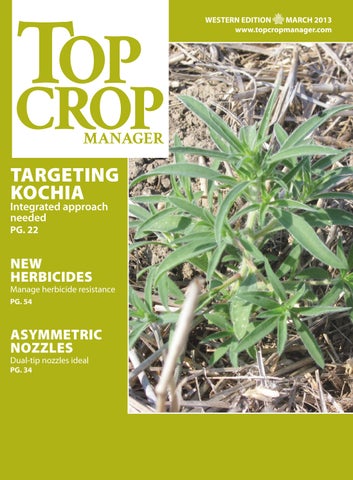
TCM West - March 2013

Page 1


TOP CROP MANAGER

IT’S THE SENSATION THAT COMES WITH GETTING AN EXTRA 3 TO 4 BUSHELS OF CANOLA AN ACRE.

Win with AgCelence

We’re giving away 4 Hawaiian vacations. Enter at agsolutions.ca/agcelence

Use code: HTCfXJ4

This’ll turn that frown upside down: Use HEADLINE® fungicide on your canola. Not only is it unrivalled in blackleg control, it gives plants inner strength through AgCelence™ greener leaves, stronger stems and as a result, higher yield potential.* And since it can be applied with your herbicide, it saves you work too. Which is enough to make even the most reserved grower jump for joy. Visit agsolutions.ca/headline for more.

*All comparisons are to untreated, unless otherwise stated. Always read and follow label directions. AgSolutions, and HEADLINE are registered trade-marks of BASF Corporation; AgCelence is a trade-mark of BASF SE; all used with permission by BASF Canada Inc. HEADLINE should be used in a preventative disease control program. © 2013 BASF Canada Inc.

TOP CROP

42 | Oat nitrogen and fungicide responses

Moderate nitrogen most economical, and hold the fungicide. By

AND

global wheat production and fertilizer use By Steve Phillips and Rob Norton 48 Manure analysis a sound investment for soil health

Sheri Monk

Bruce Barker

Readers will find numerous references to

for complete instructions.

50 | Wood fibre yield based on crossCanada research

The real deal on wood fibre volume and yield predictions. By

Targeting glyphosate-resistant kochia

Control volunteers in roundup ready corn

John Dietz

new herbicides hitting the market

pedigreed wheat seed shortage

Sheri Monk 66 Long-term study pits organic against conventional production

Andrea Geary

56 | Pasmo on flax: Advances in resistance and management

Fighting the good fight against this common disease. By Carolyn King

46 Does alfalfa fit in semi-arid crop rotations?

Donna Fleury

30 The new grain marketing era in Canada

Carolyn King

26 Three options for precision planting canola

John Dietz

Being your farm Ceo

Janet Kanters

BEiNg youR fARM CEo

The farm management environment has come a long way in the past generation, even in the past decade. Farming requires more than production and marketing management, it requires organizational management and leadership.

So says Brent VanKoughnet, who manages a family farm in the Carman, Manitoba area, and is owner and manager of agri Skills Inc., a company that specializes in agricultural innovation and human resource development services for the agriculture industry. His combination of practical farm management savvy and in-depth industry experience and understanding creates a very unique perspective and insight into the emerging customer service requirements of our industry.

Speaking at FarmTech 2013 in edmonton in late January, VanKoughnet says we are in the middle of the most significant transformation of farm management and farm leadership skill requirements in the history of our industry. Indeed, the management skills required to be the farm Ceo are more likely to compare with those of the organizations you do business with than the history of your own farm.

VanKoughnet uses the term “farm Ceo” intentionally, noting it draws attention to the introduction of a different way of thinking about your farm business – to see it as a dynamic business organization that happens to farm rather than a farm that on occasion needs to do business. Being a farm Ceo includes the responsibility of developing and articulating the vision or dream for the organization, and being clear about your objectives and courageous enough to go your own way if that’s where opportunities present themselves.

planning for your crop year by researching seed choices, making input decisions and scheduling time for myriad chores that are required to get that crop in the ground is not your sole task when managing your farm in spring, for instance. The farm Ceo must plan and prepare, creating a strategic plan of how objectives will be met based on reasonable understanding of the marketplace you are operating in and the strengths and weaknesses of your own organization. Then, upon completion of a task or project, results must be evaluated, to learn lessons, to verify what worked and what didn’t, and to drive the organization in a cycle of continuous improvement.

VanKoughnet stresses that being a farm Ceo is not about the size of your farm. It’s about your approach and about seeing the business world and where you fit into it with a broader and more strategic view. as readily noted in the pages of Top Crop Manager, we continue to see rapid and significant changes in science and biotechnology, information technology and communication. We experience the power of a consumer-driven culture in north america, europe and most recently in other parts of the world. We also see global linkages and initiatives in sustainability, food safety and other areas.

running a successful farm business includes working with process controls, i.e., data management tools, and constantly verifying and analyzing the net benefits; developing real marketing skills and better business relationships, i.e., listening, understanding and responding to customer needs, and carefully defining and articulating expectations; and demonstrating perspective and leadership, i.e., establishing a culture that inspires performance from partners, employees and associates.

Farmers have spent the last 10 years – or more – reinforcing that the farm is a business and should be run like one. at the same time, successful non-farm businesses are reinforcing the idea that the best organizations are successful because they create a mission and culture with a purpose beyond profit. organizations that operate in a way that builds a connection to the things employees and associates value outperform their competitors. people will do extraordinary things when they believe their time and effort is linked to serving their core values and cherished dreams.

• 905.713.4369 achen@annexweb.com

DESIGnER Brooke Shaw

PRoDuCTIon/GRouP PuBlISHER Diane Kleer dkleer@annexweb.com

Michael Fredericks mfredericks@annexweb.com PUBLICATION MAIL AGREEMENT #40065710 RETuRn unDElIvERABlE CAnADIAn ADDRESSES To CIRCulATIon DEPT. P.O. Box 530, Simcoe, ON N3Y 4N5 subscribe@topcropmanager.com Printed in Canada ISSN 1717-452X

CIRCulATIon e-mail: subscribe@topcropmanager.com Tel.: 866.790.6070 ext. 202 Fax: 877.624.1940 Mail: P.O. Box 530, Simcoe, ON N3Y 4N5

SuBSCRIPTIon RATES

Top Crop Manager West - 8 issuesFebruary, March, Mid-March, April, June, October, November and December1 Year - $45.00 Cdn. plus tax

Top Crop Manager East - 7 issuesFebruary, March, April, August, october, november and December - 1 Year - $45.00 Cdn. plus tax

Specialty Edition - Potatoes in Canada - February1 Year - $16.00 Cdn. plus tax

All of the above - $80.00 Cdn. plus tax

Occasionally, Top Crop

www.topcropmanager.com

The complete solution. Grassy and broadleaf weed control for wheat and barley, no tank mixing. For more information, please visit BayerCropScience.ca/Tundra

P E dig REE d WHEAT SEE d

SH o RTAg E EXPECTE d

Low yields, high prices, pathogen spread and even government policy contributed to the seed shortage.

Pedigreed wheat seed is in hot demand this year, but there’s simply not enough of it to go around. While fingers have pointed at Fusarium graminearum as the culprit behind the shortage, the answer is a little more faceted than that.

“Last year there were more canola acres so the cereal acres were displaced by canola,” explains Sarah Foster, senior analyst at 20/20 Seed Labs Inc. “and this past year, we had a lot of unusual weather conditions – a lot of humidity and warm weather at the wrong time.”

The warm weather fed intense weather, and there were several devastating hailstorms in the southern growing areas when last year’s wheat was flowering. The warmer growing season also promoted perfect conditions for pathogens such as Fusarium graminearum to flourish and spread.

Fusarium graminearum is a species of fungus that causes fusarium head blight (FHB) in wheat, barley, oats and corn. There are other pathogens in the Fusarium genus, and four species can be found in Canada, but F. graminearum is considered the most dam-

aging. It is the most abundant, affects yield and grade to a greater degree, and produces toxins dangerous to human and animal health. The 2012 growing season saw unprecedented growth of the pathogen, but Foster says the origin of its spread in alberta may have been a surprise to some.

“We’re seeing Fusarium not necessarily spreading up from southern alberta as was always thought – most of the Fusarium has been concentrated in those irrigated areas. But we’re seeing more coming across from Saskatchewan,” she says. “There’s been some odd southeasterly winds and they think that because of the higher spore load in Saskatchewan, that’s how it’s worked its away across from the border all the way to Westlock and St. albert.”

To many producers, FHB was an unexpected – and unwelcome – visitor. “They’re surprised to find their areas are affected and they’re not alone,” notes Foster, who adds that most of the infections were low-level, but alberta’s policy on Fusarium is zero tolerance, which serves to exacerbate the seed situation. “That’s driving

ABOVE: A routine wheat germination test.

the wheat shortage as well because they’re not allowed to plant it or sell it. people are looking more for CpS (Canada prairie Spring) wheat this year and they were sold out of CpS before Christmas.” Foster also says interest in CpS is exceeding that in hard red wheat this year.

In addition to the causative factors contributing to Fusarium growth, low yields in 2012 further reduced the seed supply. “Yields were low. a lot of that was because we had a very cold, wet spring, and it never really dried up the entire time, so we were actually too wet in some areas.”

and where the rules of nature end, the laws of supply and demand take over. Low yields drove wheat prices higher, and higher prices drove producer demand for seed higher. “prices are really good. Last year canola prices were good and canola prices are still strong, but this year wheat prices are good because there is a shortage,” says Foster.

although the shortage of pedigreed wheat seed is pronounced, she doesn’t believe it came as a surprise to many producers. “It’s been fairly common knowledge that people have been trying to source new stock. If they can’t get what they want, they’re obviously going to plant an alternative. I think there will be more canola –although canola is pretty well sold out too from what I hear.”

of course, F. graminearum wasn’t the only pathogenic threat last year – root rot and leaf blotch were also common, thanks to the warm and wet conditions. Warmer than average nights last summer added fuel to the fire – F. graminearum releases spores overnight, and the atypical warmth facilitated the spread.

“again, it’s driven by the environment and most of these can be treated with a good seed treatment and, weather permitting, you probably won’t see these levels again for a couple of years,” says Foster.

In addition to seed treatments, increasing seeding rates and using a fungicide for FHB are tools producers will want to consider this year. another factor contributing to pathogen growth is zero tillage, because the method leaves a lot of crop residue in the soil. “That actually hosts some of these pathogens that like these cereals as hosts,” notes Foster. “I’m not telling people to get out of zero-till – there are huge benefits to it – but that’s one of the things factoring into this and I don’t think they realize that.”

While the situation might seem grim, Foster says, it may not be quite as bad as it appears. “The other thing that’s really interesting with Fusarium graminearum last year is that it was actually a late-season infection, so the spores are actually on the seed surface instead of being systemic. That shows that it blew in much later, after flowering.”

An analyst prepares a DNA sample for Fusarium graminearum detection.
Seed is selected randomly for a standard germination test of cereal crops.

gloBAl WHEAT PRoduCTioN

AN d f ERT iliz ER u SE

Fertilizer use in all agriculture has risen to keep up with growing food demand.

Global production of the major cereal crops of wheat, corn, and rice is 647 million tonnes (M t), 814 M t, and 441 M t, respectively (FaoStat, 2012). However, a large proportion of the corn crop is used for feed and fuel, while 93 percent of rice is consumed in the country where it is produced. Wheat is one of the most important food crops in the world, providing 20 percent of humanity’s dietary energy supply and serving as the main source of protein in developing nations. There was around 135 M t traded annually from 2006 to 2010, 71 percent of which was sourced from the United States, France, Canada, australia, russia and argentina.

The demand for wheat follows rapidly growing populations and is expected to increase by 60 percent in the third world by 2050. over the past 20 years, the average growth in wheat production has been around 1.0 percent per year (Figure 1), but that is considerably less than the 3.3 percent annual increase between 1960 and 1990, the time of the green revolution. This production increase has come from a constant production area of around 215 M ha. So production increases have been largely due to higher grain yields (Figure 1). To satisfy the growing

demand for wheat, annual production increases need to be closer to the rates observed following the green revolution (Figure 1). While some of this increase in production will be achieved using improved genetics, the rest will need to come from better agronomic practices, so that the gap between potential and actual yields becomes smaller.

Historical production (1961 to 2010)

Since the period 1961-65, annual global wheat production increased 2.6-fold until 2010. From 1961 to 1980, the Soviet Union produced around 24 percent of the global wheat supply averaging just over 80 M t per year (Figure 2). The United States was the second largest wheat producer during that period, averaging 13 percent world production share (44 M t per year). In the 1980s, China gained, and has continued to hold, the greatest share of world wheat production, averaging 112 M t from 2006 to 2010 (Figure 2). other significant increases

ABOVE: Gains in global wheat production have been linked to increased fertilizer use.

Table 1. Production, area, export, yield, and fertilizer use for the top 20 wheat-producing countries in the world (FAOStat, 2012; Heffer 2009, IFADATA 2012).

* Fertilizer use in wheat for each EU27 country was estimated from mean fertilizer use by crop (Heffer, 2009) and the total fertilizer used in each country. ** No data available.

Figure 1. Global wheat production, area, yield and total fertilizer use (1961 to 2010) FAOStat, 2012, IFADATA 2012.

in production share over the last half century occurred in India and pakistan, while the dissolution of the Soviet Union still left russia as the largest wheat producer among the former Soviet Union countries. The greatest singlecountry decreases occurred in north america with the United States and Canada shares dropping 32 percent and 38 percent, respectively (Figure 2). out of 123 wheat-producing countries, approximately 70 percent of world wheat production is currently located in the top 10 countries represented in Figure 2 and 85 percent is in the top 20 countries.

Production area

The top 10 wheat-producing countries also contain nearly 70 percent of the wheat area (144 M ha) in the world. This percentage has been consistent since the end of the USSr in the early 1990s. Since 1995, wheat area has increased most in russia (2.7 M ha), australia (1.6 M ha), and India (1.2 M ha) although there can be quite large changes in area planted between years due to seasonal and financial conditions. The increase in total

Grounded in plant health.

There’s a lot that goes on behind the scenes when you use Raxil ® WW seed treatment, but all you’ll see is a beautiful, healthy cereal crop. Raxil WW with Stress Shield ® is the complete protection package, combining the serious seedand soil-borne disease protection of Raxil (including true loose smut and fusarium), with Stress Shield for increased plant health.

With Raxil WW you get stronger emergence, increased vigour and a healthier, higher yielding crop that’s better able to withstand seasonal stresses.

To learn more about what Raxil with Stress Shield can do for you, visit BayerCropScience.ca/Raxil

wheat area in russia since 1996 corresponds to an increase in the percentage of total crop area planted to wheat over the same time period, suggesting this increase is likely a result of wheat substituting for other crops. australia also shows a slight increase in the percentage of crop area in wheat. Total crop area there increased by 2.2 M ha between 1996 and 2010, mainly as land that was previously either in permanent pasture or in rotation with crops brought into wheat production, with a consequent significant decline in sheep numbers. The additional 1.2 M ha of wheat in India is also likely a result of new land being cropped, as the percentage of total crop area allocated to wheat has not changed in the past 15 years. germany added 400,000 ha of wheat over the past 15 years, which is small relative to total wheat area, but represents a 15 percent increase in wheat area in the country.

The largest decreases in wheat area during the same time period occurred in China (-5.1 M ha), United States (-3.3 M ha), Canada (-1.9 M ha) and Turkey (-1.2 M ha) (Figure 3). China, United States and Canada all had corresponding drops in wheat area percentages indicating crop shifts, while in Turkey the percentage of total crop area growing wheat did not change, Figure 2. Wheat production trends (1961 to 2010) for the

Make e very Drop Count

Thorough spray coverage is critical when trying to control herbicide resistant weeds like pigweed or waterhemp and TeeJet spray tips provide the superior coverage and drift control you need. After you’ve chosen your herbicide, consider these options:

• Turbo TeeJet® (TT) and Turbo TwinJet® (TTJ60) tips produce medium to coarse droplets for thorough coverage when spraying contact herbicides like glufosinate

• AIXR, Turbo TeeJet Induction (TTI) and Air Induction Turbo TwinJet (AITTJ60) tips produce larger droplets for improved drift control and are ideal for systemic herbicides like glyphosate, 2, 4-D and dicamba

Download the SpraySelect tip Selection Mobile app for apple and android today!

reflecting a reduction in total crop area. These changes in wheat area can explain, at least in part, the increases observed in overall production in India, russia and germany, and the decreases seen in the United States and Canada.

Grain yield

Changes in total wheat production over time, not related to changes in area, are likely a result of changes in grain yield. global wheat yield doubled from 1.2 t/ha in 1961 to 2.4 t/ ha in 1990 (Figure 1). Yield has continued to increase but at a slower rate, moving from 2.4 t/ha in 1990 to 3.0 t/ha in 2010 (Figure 1). The progress in wheat yields for the 10 topproducing countries is shown in Figure 4. The countries with the highest wheat yields among the top 10 producers have always been germany and France. However, in the last decade, yield gains in germany have slowed considerably and yield has declined slightly in France. Yields in China have increased at approximately the same rate as those in europe over the past several decades and have continued to increase over the last 10 years. These

Figure 3. Trends in harvested wheat area (1961 to 2010) for the top 10 producing countries. (FAOStat, 2012). Values graphed are the means for each 5-year period.

iMPRovi Ng SC l ERoT i N iA PRE diCT ioN

New tools are being developed to help canola growers with spray decisions.

One of the most difficult decisions canola growers face every year is whether or not to spray a fungicide for sclerotinia stem rot. although various tools have been developed to help growers assess sclerotinia risk, the disease remains hard to predict. So two projects are underway to improve sclerotinia forecasting.

one project involves a better method for detecting sclerotinia infection on canola petals as a way to predict disease risk. The other project is developing a weather-based risk assessment method. The projects are funded through a joint initiative of agriculture and agri-Food Canada (aaFC) and the Canola Council of Canada.

“With sclerotinia, the decision to spray needs to be made as the crop is coming into flowering, before you see any symptoms,” explains Dr. Kelly Turkington, a plant pathologist at aaFC’s Lacombe research Centre. “It’s too late to spray once you see infection on the plants. So you have to consider other factors that influence sclerotinia risk when deciding whether to spray.”

Several tools already exist to help growers assess those other factors. one is the Canola Disease Scouting and risk assessment Card available on the Canola Council’s website. The card has information on sclerotinia’s disease cycle and a checklist for making sclerotinia spraying decisions. Using the checklist, the grower answers questions about the crop, the environment and the pathogen to assess the risk for the disease.

“When I first started using the checklist, it really helped me understand sclerotinia and the factors that contribute to it,” says emile deMilliano, an agronomist with Viterra in alberta. He has been dealing with sclerotinia since it first became a problem in canola in the early 1980s.

“These days, several items on the checklist can usually be automatically checked off. For example, the crop rotation question is going to be rated ‘high’ because we’re in tight rotations.” as well, the crop density question will probably be rated ‘high’ because most growers are aiming for yields over 40 bushels/acre; a denser canopy tends to be more humid, which favours the disease. deMilliano also doesn’t bother with the checklist’s question about the number of apothecia, the fungus’s little mushroom-like fruiting structures. “I don’t look for apothecia any more. If there’s been reasonable crop growth and reasonable moisture, those mushrooms are very likely to be there.”

Sclerotinia symptoms in canola include bleached-looking stem lesions that cause the stems to become brittle and shatter easily.

Several agencies have provided regional sclerotinia risk maps over the years. “These types of maps provide an idea of where the risks are higher on a regional basis, but to make a decision on spraying an individual field, you need to look at that field,” says deMilliano.

another tool is petal testing using agar plates to determine the percentage of canola petals infested with the fungus. petal infection

• Share guidance lines and coverage maps from vehicle to vehicle.

• Exchange prescription maps, guidance lines, coverage maps, drainage designs, soil sampling/scouting jobs, and yield data between the office and field.

• Access real-time movement of your vehicles, engine performance data, vehicle alerts, and fleet productivity.

• Use the Connected Farm™ app on your smartphone or tablet to map field boundaries, enter scouting information, and calculate nitrogen rates using the GreenSeeker handheld crop sensor.

• NEW! Utilize Remote Assistant to diagnose a problem in the field by remotely accessing Trimble’s FmX® integrated display in real time.

is a crucial stage in the development of sclerotinia, so the number of infected petals provides an indication of the disease’s risk level.

Turkington was involved in the development of this test when he was a student at the University of Saskatchewan. The test is now commercially available as a kit. “The test is very useful for identifying fields that you don’t need to spray, and it can also be useful to determine fields where a spray should be considered,” he says. “The challenge, though, is that you need to also look at the environment and the host to improve that forecast.

“one of the criticisms of the agar plate test is that it takes too long – from three and a half to five or even six days. It also involves some work in terms of plating out the petals and requires a trained person to determine if any fungi on the plate are the sclerotinia fungus. So if you’re a consultant with 25 clients and each client has anywhere from 500 to 5000 acres of canola, it is too time consuming,” adds Turkington.

deMilliano worked with the agar plate tests about 10 years ago for several years. “The biggest challenges were that the test is very tedious

As one way to track sclerotinia in the field plots, the Manitoba researchers cultured the fungus infecting canola petals on agar plates. (Sclerotinia is in the top right corner.)

and time consuming. and timing is very crucial – you need to do the test close enough to when the grower might spray but not too late.”

Typically, fungicides for sclerotinia need to be applied between 20 and 50 percent bloom, with the optimum spray time at about 30 percent bloom. deMilliano advises growers to make their spraying decision by 30 percent bloom. With only about one week from the start of flowering to 30 percent bloom, growers need timely information on sclerotinia risk levels.

Improving petal testing

Turkington is collaborating with Dr. Stephen Strelkov at the University of alberta on the project to improve the petal test. They are co-supervising master’s student Barb Ziesman, who is working on the project, and they are working closely with deMilliano.

The project involves using molecular techniques, called quantitative pCr, to detect sclerotinia inoculum on canola petals.

The researchers already have the test up and running. “The test is really sensitive, and we’re able to quantify sclerotinia Dna on

Areas of yellowing in this canola crop indicate premature ripening of whole plants due to sclerotinia stem rot.

the petals,” says Ziesman, who notes they are currently adding an internal control to the test procedure to ensure that the test doesn’t generate any false negatives or false positives.

The test takes about five or six hours, so it’s much faster than the agar plate method. There’s also less likelihood of human error with the pCr test. “The primers we use for our test are specific to sclerotinia; we have tested it against the other types of fungi, and there is no crossdetection,” notes Ziesman. “But with the agar plate method, a lot of the fungi in canola fields are white like the sclerotinia fungus, so it takes a trained eye to identify it on the plate, and there is the chance of overestimating and underestimating the amount of sclerotinia.”

The researchers’ next step will be to see how the pCr results relate to actual disease levels in the field. over the past three summers, they visited about 75 canola fields throughout alberta, Saskatchewan and Manitoba in each year, and collected 40 flowers from five sample sites per field. also, they went back at the end of the growing season and determined the final disease incidence in each field.

In the coming months, they’ll be extracting the Dna from the collected samples, and correlating the final disease levels with the

pCr results. Then they’ll use that information to identify ranges of petal infestation that indicate low, moderate and high risk levels for the disease. one confounding factor in some fields is that they were sprayed, so the disease level may be lower than expected.

a canola grower could use that risk information along with other factors – such as whether the crop canopy is staying wet into the afternoon, whether the forecast is for showery conditions, if the canola hybrid is very susceptible to sclerotinia, and if the crop yield potential is high – to decide whether to spray.

Turkington notes, “The idea ultimately is that this quantitative pCr test could be used by private sector seed testing labs, providing another revenue stream for them. Being commercial labs, they would have the experience, staff and processes in place for handling and testing large quantities of plant material, and they could provide a fairly rapid turnaround for the test results.”

Weather-based risk assessment

The other project is working towards a weather-based method for determining the risk of sclerotinia. Dr. paul Bullock of the Uni-

E

Asi

ER

. In Tandem Tm . Tougher.

versity of Manitoba is leading this project with co-investigator, Dr. Dilantha Fernando of the University of Manitoba, and graduate student reanne pernerowski.

In this project, the researchers collected a wide range of field data in 2011 and 2012 at Winnipeg and Carman, Manitoba. They set up fairly large plots to try to create a microenvironment similar to that found in a typical canola field. They inoculated the soil with sclerotia to ensure the fungus was present in the plots. Then they compared three canopy thicknesses: low (using low seeding rates and low nitrogen rates); medium (average seeding rates and average nitrogen); and high (high seeding rates and high nitrogen).

over the course of each growing season, the researchers measured the environmental conditions under the canopy, such as humidity, temperature and soil moisture. as well, they measured the number of sclerotinia spores in the air above the plots, determined the amount of disease on the petals, and assessed disease levels in the canola stems as the crop moved toward maturity. They also collected standard weather data at the sites.

The researchers hope to be able to correlate the disease levels

with the standard weather data, and create a decision support system in which a grower could use weather data from a nearby station along with his own field’s crop density and stage information to predict its sclerotinia levels.

They are now sifting through all the data to look for the critical factors leading to severe sclerotinia levels. “Whether we’ll have enough data to build a full risk model or whether we’ll just be able to set some critical thresholds or something like that, remains to be seen,” says Bullock. “We would like to fill as many knowledge gaps about sclerotinia risk as possible with the data that we have collected during this study.

“There is tremendous interest in having a reliable weather-based means for calculating the local risk of sclerotinia in canola,” he adds. “If we can get a little better idea of the disease’s risk levels, it could really help canola growers to decide when it’s worthwhile to spray, which would be better for canola production and for the environment.”

DeMilliano says, “Hopefully as we continue to work on finding more and better tools for our toolbox, we can give farmers a better idea of the potential risk for sclerotinia.”

Control problem grass and broadleaf weeds in wheat – with the easier, more flexible, one-pass solution. TandemTM delivers convenience and Multi-Mode of Action resistance management. For exceptional control of wild oats, kochia, cleavers, chickweed, hemp-nettle and more. BULK UP and save. Elevate your performance. Talk to your Tandem retailer today. Visit www.dowagro.ca. and save Before march 20th.

TARgETiNg

glyPHoSATERESiSTANT Ko CHiA

An integrated approach is needed.

Glyphosate-resistant kochia was first confirmed on three southern alberta fields in 2011 in the Warner and Milk river districts. In anticipation of glyphosate-resistant kochia being discovered, researchers launched efforts to determine how widespread the problem is and to seek alternatives to the traditional glyphosate pre-seed burndown used to control kochia.

“resistance is a numbers game. If you have a lot of weeds and a lot of herbicide applications, the odds go up that you will select for herbicide resistance,” says Bob Blackshaw, agriculture and agri-Food Canada (aaFC) research scientist at Lethbridge, alberta.

genetic diversity of a weed population is also a factor, as is high seed production. Kochia can produce up to 15,000 seeds per plant, making it a perfect candidate for herbicide resistance.

The resistant kochia was discovered on chemfallow fields that had a long history of glyphosate-only use as a pre-seed burndown. This practice has become widespread because glyphosate applications are quite cheap, and it costs less to increase the glyphosate rate than to include a tank-mix partner for better weed control. In addition, in no-till cropping systems, glyphosate is applied three to four times during the growing season to control weeds in the chemfallow year. These repeated chemfallow treatments exert very strong selection pressure for glyphosate resistance.

over the spring and summer of 2012, eight more populations brought to aaFC Lethbridge were identified with glyphosate resistance, and 10 out of 12 populations tested by Hugh Beckie at aaFC Saskatoon were confirmed resistant.

TOP AND ABOVE: Distinct and Heat chemfallow herbicides will control Group 2- and Group 9-resistant kochia (top). Glyphosateresistant kochia alongside the remains of susceptible kochia. (above).

NITROGEN LOSS STINKS

“This tells me resistant populations are out there and reasonably widespread. It has probably been developing over the last three to five years,” says Blackshaw.

To get a better idea how widespread the glyphosate-resistant kochia is, 300 sites in alberta south of Highway 1 were sampled during the fall of 2012. They are being screened over the winter to test for glyphosate resistance.

all glyphosate-resistant kochia populations were also resistant to group 2 herbicides. This is not surprising, as previous surveys have found that virtually all kochia on the prairies is resistant to group 2 herbicides.

Kochia emerges very early in the spring, giving farmers a wide window to control it with a pre-seed burndown.

Integrated approach required at the University of alberta, weed scientist Dr. Linda Hall says several approaches will be needed to keep glyphosate-resistant kochia under control. She says prevention will be difficult for individual farmers, because kochia is a tumbleweed that can blow in from neighbouring fields, ditches, wasteland and industrial sites.

“There is a need for a co-ordinated approach,” says Hall.

Kochia’s growth habits, though, provide opportunities for control. Kochia emerges very early in the spring, giving farmers a wide window to control it with a pre-seed burndown. It also has a short seedbank lifespan. Within one year, 85 to 90 percent of the seed germinates, so focused weed control could help to drive down the seedbank.

Kochia is also late maturing. This growth trait may provide opportunities for post-harvest control as well.

Both Hall and Blackshaw have been screening herbicides for group 2/9 resistant kochia. Blackshaw has one year of data in 2012 from one site on group 2/9 resistant kochia. While he needs more years before he can make recommendations, he saw some general trends in 2012. The trials were conducted without crop competition. generally, 2,4-D, and bromoxynil did not provide adequate control, nor did Buctril M.

Carfentrazone (found in CleanStart) was borderline on the glyphosate-resistant kochia, but when carfentrazone was mixed with sulfentrazone (authority), it provided very good control. Dicamba was borderline at the low rate of 140 grams active per hectare, but very good at 210 and 300 grams active per hectare. “Dicamba will be one of the mainstays for farmers,” says Blackshaw.

other products providing better control in Blackshaw’s screening trial were products containing fluroxypyr (attain), pyrasulfotole (Infinity), saflufenacil (Heat) and sulfentrazone (authority). These actives are mostly in groups 4, 14 or 27. The group 4 herbicide, optica Trio (MCpa+mecoprop+dichlorpropp) was also very effective.

Hall’s work covered 2011 and 2012 and was on kochia that was not glyphosate-resistant. She has been working on pre-seed, and post-harvest trials. In the pre-seed trials, kochia was sprayed, and

fresh weight kochia was measured to assess weed control four weeks after spraying with crop competition. a lower fresh weight indicated better weed control.

attain, Heat, CleanStart, Buctril M and Infinity worked well. Dicamba control of kochia was variable, but Hall cautions that in other trials, dicamba has worked well.

another chemfallow herbicide in the toolbox is Distinct herbicide from BaSF. Distinct has a combination of two active ingredients, diflufenzopyr (group 19), a new active ingredient to Western Canada, and dicamba (group 4). Distinct will be used for chemfallow and post-harvest application when tank-mixed with glyphosate.

post-harvest applications targeted kochia after a wheat harvest. after spraying, seeds were collected from the surviving kochia, and seed count, seed viability and seed vigour will be assessed. The results are yet to be tabulated.

“We’re hoping that post-harvest applications will give us another way to try to keep the weed population down,” explains Hall.

In-crop opportunities

To help manage kochia populations, in-crop control will be critical. Here, glyphosate resistance isn’t the issue (except in roundup ready canola), just group 2-resistant kochia. Ken Sapsford at the University of Saskatchewan illustrated some of the best choices for controlling group 2-resistant kochia a few years ago. These were primarily group 4 herbicides Trophy, Target, prestige, Stellar, Dyvel and attain. Triton K and optica Trio also provided good control.

Several new group 4 products that provide good kochia control have been registered since Sapsford’s research, and these products usually include dicamba or fluroxypyr as active ingredients. These include pulsar, altitude FX, everest gBX, Stellar and Tandem.

authority herbicide is a good choice in chickpea, field pea, flax and sunflower. Liberty will control kochia in Liberty Link InVigor canola. roundup will control group 2-resistant kochia in roundup ready canola – but not in glyphosate-resistant biotypes of kochia.

While some of the newer chemistries still offer good control options for group 2/9-resistant kochia, Blackshaw offers a final cautionary note.

“growers and agronomists have to think about how glyphosate is used in the future. It is one of the most valuable herbicides we have,” he says. “It is used pre-seed, in-crop in roundup ready canola, post-harvest and in chemfallow. We can’t keep using it three times per year on every field or we’ll lose the technology.”

Freedom from wild oats.

New Varro™ herbicide for wheat. Freedom from Group 1 herbicide resistance. Freedom to select your preferred broadleaf partner. Freedom to re-crop back to sensitive crops like lentils.

T HREE o PT io NS fo R

PREC i S io N P l ANT i N g

C anola

Sky-high canola seed prices are creating new approaches to seeding on the Prairies.

At least three manufacturers are taking direct aim at seed-by-seed planting systems for thousands of farms where canola has become the most important crop. With the seed investment for high-value canola more than $10 a pound, a system that can shave the seeding rate can soon pay for itself.

First on the scene, and native to Canada, is the SeedMaster metering device from Saskatchewan. It has been followed by two vacuum disc systems, the precision planting disc from Illinois and the Monosem system from Kansas.

SeedMaster UltraPro

The SeedMaster Ultra pro canola meter is a new hydraulic-drive metering roller. It feeds seed into the air tubes using rolling meters.

Ultrapro delivers a matching number of seeds into each row. Quarter-inch rollers, one per row, drop seed into the air tubes at about 25 seeds per second. They achieve in-row plant spacing at about one to four inches apart.

Ultra pro is smoother than the standard seed roller, says rochelle Beaujot, sales manager. Fewer seeds are planted, the seeds are distributed more evenly and the canola crop emerges more evenly. “The Ultra pro rollers more than pay for themselves in the first year, and most of the time they pay for the SeedMaster tank as well,” she says.

SeedMaster’s precision system was new on the market in late 2011 when Killarney, Manitoba, grower Vern groening was shopping for something to replace his Case Concord. The family seeds about 3,100 acres of canola and wheat each year.

“We were attracted to the Ultrapro because it has individual openers and each opener has a separate packing wheel,” says groening. “It has better seed depth control and much more precise seeding. It spaces the seeds more accurately than traditional air seeders.”

The groening farm is in pothole country; fields are very hilly. “It didn’t seem to matter if it was hard or soft ground, sharp knolls or hollows. It seeded at pretty much the same ¾-inch depth, all the time,” he adds.

groening’s seeding rate with the previous system had been about 4.5 lb/ac for canola. He cautiously reduced the rate to four pounds or a bit less and watched. The emerging canola looked dif-

ferent, he recalls. “It wasn’t coming up in clumps and gaps. It was pretty much singulation of the plants.”

SeedMaster’s dual opener system ended up disturbing about three inches total on the 12-inch spacing. The seed rows seemed well packed. groening was pleased to see that very little seed

Frank Prince, Deloraine, Manitoba, farmer and Western Canada distributor for Precision Planting, says vacuum-assisted planting with discs will enable canola growers to achieve 1.8-inch inrow seed spacing.

With Monosem’s ‘Monoshox’ down pressure system, seeding depth is greatly improved through the use of depth control wheels that run adjacent to the discs and in line with the seed tubes.

escaped the packing wheels, especially because they were moving at six miles per hour while seeding the canola.

Using their 50-foot system, and enjoying ideal seeding conditions, groening and sons put in the crop, including wheat, in less than a month. “Crop emergence was probably more even than we’ve seen before,” he says. “That was something we took note of. as the season progressed I think the crop did stay pretty even, too.”

Precision Planting eSet

at about the same time the first Ultrapro meters were being used in Saskatchewan in 2011, three farmers in the portage la prairie slashed their canola seeding rates by using John Deere row crop planters equipped with modified vacuum meters from precision planting.

“Flooding wrecked their efforts later, but the actual metering of the canola worked great,” says Frank prince, Deloraine, Manitoba, farmer and Western Canada distributor for precision planting via his company Capricorn Bay Ltd.

each precision planting disc, called an eSet, is ringed by a set of air holes close to the edge. The front face of each hole has a canolasize indentation, ready to hold one seed. Vacuum pressure pulls seeds against the holes. as a disc turns, seeds are released one at a time for planting into the air tubes.

precision planting introduced the eSet vacuum meter for John Deere corn planters in 2005 as a replacement for standard vacuum discs. It “hit the map” for growers when it developed a design for a seeding singulator and higher vacuum.

The singulator is a spring-loaded device that floats against the eSet vacuum disk. It has lobes that gently bump and nudge seeds so that multiples are knocked off and only one seed is left on each cell in the disk.

prince believes vacuum-assisted planting with discs will enable canola growers to achieve 1.8-inch in-row seed spacing. With 15inch rows, that’s equivalent to 260,000 seeds/ac. Depending on seed weight, that rate works out to between 2.8 and 1.7 pounds per acre, he says.

He traces the idea back to 2010, when his father, Dave prince, imported precision planting discs for planting corn, soybeans and sunflowers directly from the Tremont, Illinois manufacturer. Frank visited the factory and, at age 21, accepted an offer from the manufacturer to become its prairie distributor.

Back home, on June 15, they still had 100 acres to plant and decided to try planting canola using the system. “We used the small sugar beet disc, which barely worked with the largest canola seed we could get our hands on. after that, I told precision what to do to make the discs work better, and they took my advice,” says prince.

The eSet discs revised for canola, with smaller holes, arrived in 2011. Third-generation canola discs are planned for 2013. germination on the row-crop canola has been running at 90 to 95 percent, says prince. Seed placement is precise and packed. He estimates seeding depth variation is within a one-eighth-inch range. He also says farmers are saving $20/ac on seed, getting more uniform crops and improving yield by around 3 bu/ac.

Monosem planters

Monosem, the “original precision vacuum planter,” has been used in Lethbridge-area row crops – including hybrid canola – for about 30 years. on the eastern prairies, Botterill Sales at newton, Manitoba, became the first distributor in early 2012.

Monosem vacuum discs can are available for most crops, says distributor Todd Botterill. Canola discs have 120 holes and turn at a relatively slow rate. Seeding rates are 2.5 to 3 pounds per acre. even lower rates are possible, but may not be practical. as true row-crop planters, Monosem units drop the seed about 18 inches directly into the bottom of the V-shaped trench prepared by double-disc openers. The row is closed by a pair of packing wheels.

Seeding depth is greatly improved through the use of depth control wheels that run adjacent to the discs and in line with the seed tubes. “There’s very little depth variation with Monosem’s ‘Monoshox’ down pressure system,” notes Botterill. “We have virtually zero contour depth.”

Monosem planters are customized at the Kansas factory for each order. For instance, there are several frames, row spacing options, choices for suspension and between tires and tracks.

research will be underway in 2013 to target farming needs in the prairie canola market. Twin-row technology will be tested on a four-row planter in Saskatchewan. This will enable mid-row banding with only four-inch separation between seed and fertilizer.

In another research project, Botterill will be connecting air carts to two 40-foot Monosem planters. one will double-shoot, and one will triple-shoot. “It’s very easy to make liquid fertilizer work with our systems, but this has never been done before with granular fertilizers on this scale,” he says.

The trial arrangements of planter-and-cart will enable a onepass application – precision-placed canola seed with the planter and mid-row banded fertilizer with the cart. a single fill of the 32 openers on a 40-foot planter will carry 64 bushels of seed and, at 2.5 lb/ac, has enough capacity to put in roughly 1100 acres of canola, says Botterill.

While Monosem will be the most costly of the three systems for precision-planting canola with lower seeding rates, the system price depends on the configuration, says Botterill. The counterargument, he offers, is that the Monosem is more accurate and has a lower maintenance cost.

“We won’t compete with hoe drills for cereals, but now some guys are buying precision hoe drills strictly for high-value seed like canola, corn and soybeans, and still using them for cereals rather than running two units. I think we’ll see a lot of this in a few years, where a farm has a planter, or a hoe drill and a planter.

WIN BIG!

trials in peas and lentils. Crops inoculated with Nodulator ® XL out-yielded crops inoculated with competitive products 82% of the time, out-yielding our competitor’s product by an average of 1.5 bu./ac. or 3%. And 2012 grower

Mike Verbeurgt

Ceylon, SK

Lentil: 27 bu./ac.

Ben Hofer

Foremost, AB

Pea: 55 bu./ac. Lentil: 32 bu./ac.

Eli Wurz

New Dayton, AB

Pea: 60 bu./ac. Lentil: 35 bu./ac.

Paul Hofer

Lumsden, SK Pea: 55 bu./ac. Lentil: 40 bu./ac.

Clinton Paysen

Central Butte, SK Lentil: 30 bu./ac.

Jeff Downey Perdue, SK Pea: 52 - 54 bu./ac.

Miles Gerwin

Kindersley, SK Pea: 40 bu./ac.

T HE NEW g RA i N MARKET i Ng ERA i N C ANA dA

Many pieces have fallen into place to provide a smooth transition.

The end of the Canadian Wheat Board’s monopoly in august 2012 ushered in what has been called a new era in grain marketing. perspectives on the first few months of this new era suggest the transition has gone fairly smoothly so far for many grain growers.

“What I’m finding with the farmers I talk to is that some are quite happy with the changes, some are disappointed with how the changes came about more than that the changes did come about, and then the majority are in the middle ground,” says neil Blue, a market specialist with alberta agriculture and rural Development (aarD). “They are just doing their best to learn about the pros and cons of the new system and understand the contracts that the grain companies are offering and all the different alternatives that the Canadian Wheat Board [which is now called CWB] is offering.”

He adds that most farmers are taking a wait-and-see approach, realizing that a few months is too short a time frame to make a definite determination as to whether the change has been a good thing or not.

according to Doug Chorney, president of Keystone agricultural producers in Manitoba, that province’s producers were already very experienced at marketing their own canola, oats, soybeans and pulse crops, so there has not been much difficulty to adapt to marketing their own wheat and barley. “For Manitoba farmers it has been a banner year for both winter wheat and spring wheat production; the quality was good and the yields were good,” he says. “We’ve also had record-setting commodity prices, so most people feel they’re doing a great job selling all their grain at a price they’ve never seen before. Whether they are or not may remain to be seen, but to producers it seems like everything is going fine.”

richard phillips, executive director of the grain growers of Canada, says there are almost zero complaints from the farming community about the change. “I think it has been a fortuitous

change in the way the timing worked out. We’ve had really good grain prices, so producers have the opportunity to sell both crop for this year and crop for next year at very good prices.”

The drought in the United States has been an important part of the whole picture this fall. “Because of the shortage of grain in the States, american buyers are driving up into Canadian farmers’ yards to buy grain right out of their farmyards,” notes phillips. “There has been a big sucking sound south of the border pulling Canadian wheat down. That won’t happen every year of course, but in the drought they have been very aggressive.”

He adds that the grain growers and the Canada grains Council have worked closely with US farm groups to create a website with information for Canadian and US farmers interested in selling their grain across the border (canada-usgrainandseedtrade.info).

Chorney says that market conditions in the fall worked well for farmers who wanted to move their wheat crop early. “Wheat moved very rapidly last fall; I’m told that even surprised some people in the grain trade – they didn’t expect to see such a high volume of wheat move that early,” he notes. “My guess is that might be more related to the specific production issues this year more than to the fact that we had marketing freedom.”

University of Manitoba agricultural economist Dr. Derek Brewin says it’s been a good year for wheat so far because of the good prices and good crop quality, but he hasn’t seen a major difference in the flow of prairie grain into new opportunities due to marketing freedom. “There could be opportunities for farmers close to the US border – and in the long run there might be some opportunities linked to new wheat varieties or something like that,” he notes. “But overall it doesn’t look like the market channels have

ABOVE: Wheat moved rapidly off the field and into markets, easing the transition to open market sales.

changed very much so far. We’ll see what CWB reports for their tonnes in different pools, but it looks like they are still managing quite a lot of sales.”

With the open market, growers have a lot of possible choices for their wheat and barley, from selling to CWB, grain companies, directly to end-users or through futures contracts. ICE Futures Canada’s futures contracts for milling wheat, durum and barley were launched in January 2012. “I’m surprised at how small a role the new ICE Futures Canada contracts are playing,” says Brewin. “They didn’t seem to take off, even though they are designed quite a lot like canola, which is a functioning futures market.”

Brad Vannan, president and chief operating officer of ICE Futures Canada, attributes the low volumes in those new futures contracts to several factors. One factor is the unusual set of circumstances in the North American wheat market in the fall of 2012.

“The market is seeing very high feed grain prices, which sets a high floor price for wheat,” he notes. “At the same time, the [milling]

wheat crop [in Canada and the US] is generally good quality and it’s reasonably abundant, which creates a low ceiling. With a high floor and a low ceiling, trading values are confined to a relatively narrow band.

“As well, the contracts were designed to identify the uniqueness of the Canadian market that can occur, but doesn’t always occur,” he adds. “This just happens to be one of those years when Canadian wheat is not all that different in quality from US wheat, so the US markets and the Canadian markets are all trading in pretty good correlation.”

Even in the US markets, ICE Futures Canada typically sees a certain amount of independence between the Kansas City market [hard red winter wheat] and the Minneapolis market [hard red spring wheat], but this year those markets are showing a very high correlation. Vannan notes current market conditions don’t really allow the new futures contracts to really show their true differentiated value.

At the heart of plant health is Trilex® EverGol™ seed treatment for pulses, exceptional disease control and superior crop establishment.

Not only does Trilex EverGol provide exceptional protection from diseases like rhizoctonia and ascochyta, it also promotes overall plant health. The result is a higher performing root system, increased biomass and faster emergence, even when facing minimal disease pressure.

A

changed very much so far. We’ll see what CWB reports for their tonnes in different pools, but it looks like they are still managing quite a lot of sales.”

With the open market, growers have a lot of possible choices for their wheat and barley, from selling to CWB, grain companies, directly to end-users or through futures contracts. ICe Futures Canada’s futures contracts for milling wheat, durum and barley were launched in January 2012. “I’m surprised at how small a role the new ICe Futures Canada contracts are playing,” says Brewin. “They didn’t seem to take off, even though they are designed quite a lot like canola, which is a functioning futures market.”

Brad Vannan, president and chief operating officer of ICe Futures Canada, attributes the low volumes in those new futures contracts to several factors. one factor is the unusual set of circumstances in the north american wheat market in the fall of 2012.

“The market is seeing very high feed grain prices, which sets a high floor price for wheat,” he notes. “at the same time, the [milling]

wheat crop [in Canada and the US] is generally good quality and it’s reasonably abundant, which creates a low ceiling. With a high floor and a low ceiling, trading values are confined to a relatively narrow band.

“as well, the contracts were designed to identify the uniqueness of the Canadian market that can occur, but doesn’t always occur,” he adds. “This just happens to be one of those years when Canadian wheat is not all that different in quality from US wheat, so the US markets and the Canadian markets are all trading in pretty good correlation.”

even in the US markets, ICe Futures Canada typically sees a certain amount of independence between the Kansas City market [hard red winter wheat] and the Minneapolis market [hard red spring wheat], but this year those markets are showing a very high correlation. Vannan notes current market conditions don’t really allow the new futures contracts to really show their true differentiated value.

You’ve come to trust Meridian for the best SmoothWall hopper bins in the industry… as of 2013, we’ve merged Meridian, Behlen and Sakundiak brands all under MERIDIAN. Combined, these well established and trusted industry leaders have over 180 years of experience manufacturing innovative, high quality products for customers across North America and around the world. Insist on Meridian for all your Storage and Handling needs.

“The good wheat crop and good prices didn’t really accentuate a high degree of risk in the market,” he says. “Futures markets are used to manage risk. When there’s not a strong perception of risk, you see less demand for mechanisms that help manage risk.” He thinks this also might have reduced demand for other risk management options such as pooling.

another important factor is that new futures contracts take time to get established. “We are willing to be patient with these contracts, and allow them ample opportunity to find a place in the market.”

Vannan adds the contracts have already achieved some important milestones, such as deliveries of barley and spring wheat, indicating that the mechanisms behind the contracts are functioning properly. also, ICe Futures Canada met with the users of the contracts to see if perhaps the contracts needed some changes, and they found that, overall, the users were confident in the structure of the contracts.

CWB in the transition

phillips credits CWB for playing a key part in smoothing the transition into the new

When it comes to the next generation of tough, we don’t beat around the bush. With models up to 20' wide, Land Pride’s full line of Rotary Cutters have the features and strength to tackle the toughest job.

Engineered durability. Stronger gearboxes. Built like a brute. Get cutting work done... with Land Pride’s Rotary Cutters.

Over 250 Products to Fit Your Lifestyle…

era. “I give a lot of kudos to Ian White [CWB president and Ceo] and his management team. They have done a stellar job of managing through the transition, and I have sold my wheat through the CWB this year.”

phillips and Blue have both been interested to see the different alternatives CWB has been offering to attract producers, like the recently announced Winter pool and Futures Choice Winter pool.

Brewin notes, “one of the things I thought was interesting was CWB’s pool return outlooks still have quite a spread of prices for different quality levels. You don’t see that much detail in contracts for wheat in the United States. I think CWB’s leadership on quality and showing the pool return outlooks on quality probably calmed the whole market down in terms of what they were going to do regarding quality.”

one concern during the first few months of the transition has been some reports that some grain handlers have not been willing to handle CWB grain. “CWB has the disadvantage of not having any facilities, so they are reliant on contracts with grain companies for acceptance and handling of their grains,” says Blue. “There seems to be some variation in how the grain companies are dealing with CWB. Some do not want to co-operate with it, and others are doing just fine in dealing with it. With the decrease in the number of accepting points for grain in the last 20 years, some farmers may have less flexibility in where they can do business, so they may have to haul further if the local grain company is not co-operating well with CWB.”

phillips notes, “not all the elevator companies came on board as willingly or as quickly as some of the other ones did, and sometimes it was not so much a company as an elevator manager. However, I think they are coming around because they realize that if they are getting paid to handle grain, then there’s still revenue. So I think there were some growing pains along the way.”

a few months is not enough time to evaluate the long-term effects of the new marketing era for farmers. That will require much more time – plus detailed analysis of the whole system.

“I think there are still a lot of factors in the marketing of wheat and barley that producers are learning about,” says Chorney. “I also think there will be new opportunities for identity-preserved production that producers will likely benefit from.”

PROVING GROUND.

45S54 NEW

Better seed in so many weighs.

Farming is large-scale, and at DuPont Pioneer, we think seed trials should reflect real farming. That’s why each year we test our seed products in over 1500 large-scale Proving Ground™ trials of canola, corn and soybeans across Western Canada. And why our goal is to test our Pioneer® brand products on your farm under your field conditions to find the right product for the right acre.

Ask your Pioneer Hi-Bred sales rep about Proving Ground trial results in your area.

www.pioneer.com/yield

A SyMMETR iC Nozzl ES BETTER foR fu NgiC idES

New dual-tip asymmetric nozzle is ideal for fungicide applications.

Fusarium is an old pest in Manitoba’s red river Valley but it is becoming a big new pest about 500 kilometres northwest, in the Swan river Valley. To get ahead of the disease game, seed grower Wayne alford went shopping for nozzles to provide better coverage.

“I wanted to improve my application of fungicides. I did some research, and saw an article that mentioned asymmetrical TurboDrop nozzles,” says alford. “Two seasons later, I’m a happy customer.”

TeeJet Technologies and greenleaf Technologies each have recently added a new type of dual fan nozzle that’s particularly well suited for applications of fungicides with high-clearance sprayers, says Tom Wolf, research scientist with agriculture and agri-Food Canada (aaFC) at Saskatoon.

TeeJet has 25 types of sprayer tips available for broadcast applications with boom-type sprayers. The TeeJet aI3070 produces two wide-angle, flat spray patterns. To maximize coverage, the lead nozzle is tilted 30 degrees forward to hit vertical, exposed targets such as wheat heads. The back nozzle, tilted 70 degrees to the rear, applies a heavier rate against the back of the retreating heads. Drift-resistant drops are produced with the use of a venturi design.

greenleaf Technologies manufactures 13 types of nozzles. greenleaf TurboDrop asymmetric Dual Fan (TaDF) nozzle is the latest. It has a 10-degree forward spray and a 50-degree rearward spray to overcome the same issues faced by traditional flat fan dual nozzles that have matching forward-rear spray angles.

In normal operation, the travel speed of the sprayer moves droplets along with it. They tend to deposit in the driving direction. Because of this, the coverage of the backside of the vertical wheat heads tends to be weaker.

Several manufacturers have developed bodies that will support two nozzles (or jets) that spray forward and backward from the

vertical, typically at 30-degree angles.

a limitation of a double nozzle is that as you travel faster, the spray deposit on the forward-pointing nozzle increases while the contribution of the backward-pointing nozzle decreases. as a result, low speeds were advised to take advantage of this design. according to Wolf, design engineers decided it wasn’t necessary for the angles to be identical, and that a variation was better for faster speeds. “The asymmetric design is intended to allow these faster travel speeds,” he notes. “To even out the playing field, they said let’s decrease the contribution of the front nozzle and increase the angle of the back nozzle. More help is required to keep drops moving back to hit a target that they are actually moving away from.”

In 2012, Wolf did trials with the TeeJet aI3070 to see if the deposit pattern changed with travel speed and to see if there was an impact from boom height. He predicts that results probably would be similar with the TurboDrop asymmetric nozzles.

Using a vertical plastic drinking straw target with similar dimensions to a wheat head, they measured results separately for the forward- and backward-pointing nozzles at speeds between eight and 16 kilometres/hour in increments of 2 km/h. previously, with a non-asymmetric design, they determined that increasing the travel speed increased the amount of deposit from the forwardfacing nozzle.

“While we found that the relative amount on target was usually about 30 percent greater from the forward-pointing nozzle, that did not change with increasing the travel speed,” says Wolf. “and, the amount of deposit from the backward-pointing nozzle didn’t

ABOVE: New dual-fan nozzles are particularly well suited for applications of fungicides with high-clearance sprayers.

Always read and follow label directions. INFERNO and the INFERNO DUO logo are trademarks of Arysta LifeScience North America, LLC. Arysta LifeScience and the Arysta LifeScience logo are registered trademarks of Arysta LifeScience Corporation. All other products mentioned herein are trademarks of their respective companies. ©2013 Arysta LifeScience North America, LLC. INF-002

Tough broadleaves and flushing grassy weeds have met their match. No burndown product is more ruthless against problem weeds in spring wheat than new INFERNO DUO. Two active ingredients working together with glyphosate get hard-to-kill weeds like dandelion, hawk’s beard, foxtail barley and Roundup Ready® canola, while giving you longer lasting residual control of grassy weeds like green foxtail and up to two weeks for wild oats. INFERNO DUO. It takes burndown to the next level.

Time To pour on

once again, nexera canola is really making a splash – with impressive profits and yields in 2012. It’s all thanks to our Nexera Roundup Ready® and Clearfield® hybrid series, backed by healthier profits and agronomic performance plus healthier premiums and strong demand for Omega-9 Oils. Talk to your Nexera canola crusher or retailer for details. Call 1.800.667.3852 or visit healthierprofits.ca.

Co NTR ol volu NTEERS

i N Rou N du P R EA dy C o RN

Early burnoff may be best option if you have Roundup Ready volunteers.

Prevention and control are important factors in ensuring you plant roundup ready corn into a field that’s free of roundup ready (rr) volunteer canola.

according to Bruce Murray, DeKalb agronomist for Monsanto at Carman, Manitoba, prevention is the best approach. When rr canola is getting ready to harvest, try to swath at the right time so that shatter loss is minimized. Then at harvest, set the combine to minimize how much seed hits the ground, Murray suggests.

That advice may not be practical in some situations, but “if I had a field I knew was going to corn in the near future, that might be one I’d really pay attention to,” he adds.

Myles robinson, Manitoba sales manager with nuFarm agriculture Inc., says a well-planned crop rotation can help reduce the issue of rr volunteers. “a good rotation will help you avoid backing things up too much in terms of your roundup ready crops,” he notes.

The next opportunity to reduce problems is after harvest on the rr canola field, which may need tillage for weed control. If it does need tillage, do it as late as possible and as shallow as possible.

“Most years, volunteer canola will die when exposed to heavy frost,” says Murray. “Delay your tillage until you get a flush of the canola growing. and, don’t bury the seed or you may create a seed bank that will cause years of volunteers. Leave them exposed on the surface. The surface is very hard on that seed, and you will get a lot of losses in that population.”

Pre-seeding burnoff

When you get into the rr corn year, and if you know the field will have rr volunteers, plan to control the problem as early as possible with a good pre-seeding burnoff. Burnoff does two things: It knocks out weeds that had weeks of growth ahead of planting, and it forces the second weed flush into a uniform growth stage so that it is easier to control in the early crop.

“a tank mix of glyphosate with something like Heat would be wonderful,” says Murray. “Heat is a group 14 product from BaSF. We’re seeing good control of volunteers early on, and some residual control with Heat.”

robinson notes if you are trying to remove roundup ready canola volunteers before seeding a sensitive broadleaf crop, a good

Damage to corn roots from 2,4-D application.

existing product to consider is CleanStart. “CleanStart is the only product that you can use safely before broadleaf crops to remove tough volunteer crops that are roundup tolerant.”

growers have more flexibility if trying to remove rr canola volunteers before seeding a cereal. a typical solution for that scenario is a tank mix of glyphosate with a product such as 2,4-D.

“If you are going to use glyphosate as a burnoff product on any field, throw something else in the tank regardless of whether you have resistant volunteers. Whether it’s 2,4-D or tribenuron or bro -

The Grainvac 7500 HP is up to any challenge. When it’s time to move huge volumes of grain, nothing out-hustles the GrainVac 7500 HP. Brandt’s breakthrough technology delivers high capacity and high efficiency – with lower horsepower requirements and low-cost, easy maintenance. So if you’ve got a need for speed, see the GrainVac 7500 HP at your local Brandt dealer. That’s powerful value, delivered. So, you think

moxynil, put something else in there so you’re not totally relying on glyphosate,” says robinson.

New burndown products

nufarm Canada is launching two herbicides this spring – Blackhawk and Koact – to help with burnoff of rr volunteers.

BlackHawk is a spring burndown product, to be used with glyphosate to provide enhanced broadleaf weed control through both contact and systemic activity. BlackHawk contains both group 14 and group 4 components (carfentrazone and 2,4-D ester) to help in the battle against resistance development.

Koact herbicide is a burndown product for spring, summerfallow or post-harvest use. It controls many broadleaf weeds, including canola volunteers, prior to seeding wheat and barley. It can be used either alone or with glyphosate. Koact contains both group 2 and group 4 components, using two modes of action to help in the battle against resistance development.

“Blackhawk is designed specifically for use before seeding cereal crops, like wheat and barley, and ahead of soybeans. For this purpose, corn is considered a cereal crop,” says robinson. “With two modes of action, it’s going to give you better, quicker control of volunteer canola.”

robinson says nuFarm has spent two years developing Blackhawk especially for growers in Manitoba to throw in sprayer tanks with glyphosate, to provide the strength they need to clean up the glyphosate-resistant volunteers ahead of cereal crops. “It’s going to give you better activity in cooler spring conditions when you might be having challenges with things like buckwheat and kochia along with your roundup-ready canola volunteers,” he says.

Blackhawk is the first package to contain both active ingredients. nuFarm’s packaging of the ingredients makes them easier to use in a tank mix with glyphosate and provides a competitive price point. Blackhawk will retail as an 80-acre case for about $5.50 per acre.

In-crop control

after the rr corn and any new weeds emerge, there will be two or three weeks to control the weeds. options include 2,4-D, bromoxynil products and, cautiously, MCpa

The options for volunteer control in corn will vary with the hybrid variety and are open until the seedling crop is in the six-leaf

ASyMMETRiC

CONTINUED FROM PAGE 34

change with speed either. We concluded that the performance of the asymmetric nozzles was speed-independent.”

However, boom height is a factor in coverage. In earlier studies with single nozzles that were angled forward, was there was a significant impact of boom height. The angle of the nozzle was relatively unimportant while the boom was high, and deposits on vertical targets were low. When the boom was closer to the target, the angle became quite important, increasing deposits significantly.

“With the asymmetric design, we also found that we could

stage, notes Murray. Look for the auxin sensitivity rating for your chosen hybrid (auxins are a class of plant hormones that play a role in co-ordination of many growth and behavioural processes in the plant’s life cycle and are essential for plant body development). The information – which should be available from the seed provider –may be a factor to consider when selecting the corn, notes Murray.

“We have low rate 2,4-D ester up to the four-leaf stage. after that, we look at something like Buctril M. after six leaves, it’s time to go fishing,” he says.

The risk with both products is crop injury. The active ingredients are synthetic growth hormones (auxins) that become more damaging to the crop with increasing heat and moisture. Some evidence from ontario suggests that large day-night temperature swings also may increase crop injury.

“You can go in with something as simple as 2,4-D,” says robinson. “It’s fairly critical to follow the crop staging. You need to control most of those weeds at the two- to four-leaf stage with the 2,4-D. You want to do that when your crop is four to six inches tall, and before the six-leaf stage. You can also go in with MCpa amine, at the same type of staging.”

Straight bromoxynil is another option, he says, with a little bigger application window. It’s best to aim for the four-leaf stage of the corn for a bromoxynil application, but it can go on as late as the eight-leaf stage.

Because bromoxynil is a contact herbicide, it does require more water. The water volume needs to be between 17 and 26 gallons per acre, as compared to 10-gallon rates for 2,4-D and MCpa products.

according to robinson, there are some slight differences in crop tolerance and in weed response between the MCpa amine and MCpa ester. “You don’t want to put MCpa ester on corn because it’s hotter on the corn and you have the potential for crop injury,” he says. “But it’s oK to put MCpa amine on it.”

Murray says both MCpa amine and MCpa ester can be hot on corn. “I would like to emphasize that any of these auxins will cause damage (even when applied early) if the environment promotes rapid corn growth (hot and humid). When these conditions are present, it is best to avoid spraying.”

“You really have to pay attention to your growing conditions,” notes Murray. “If you can avoid hot, humid conditions when spraying those products, that will help.”

increase deposition on the vertical target significantly by keeping the boom low,” notes Wolf. “When you have a high boom, the angle the spray leaves the nozzle at very quickly becomes irrelevant. air resistance and gravity redirect the spray just to fall vertically, or move with prevailing winds. But when you spray very close to the target, the spray is still moving forward and backward as intended.”

as a result, with asymmetric nozzles, a boom height controller is a very practical option. The operator can keep the boom low, without hitting the ground, and take advantage of the lower boom height.

Coarser spray qualities are also more important with an asymmetric nozzle pattern. a large drop has more momentum, and will travel longer in the intended direction. Therefore, larger droplets support a greater, more aggressive spray angle –especially for a vertical target.

“our key conclusions from the study are that maintaining a low boom and having the spray reasonably coarse allows the double angle and the asymmetric angle to be beneficial,” says Wolf. “It is most beneficial in the fungicide world, where you are trying to hit a vertical target.”

The new design, however, did not produce any benefits in coverage on horizontal targets such as broadleaf crops and weeds. as a result, benefits are more likely for fungicides than herbicides.

The Swan Valley Seeds owner, Wayne alford, installed TurboDrop asymmetric nozzles on his 90-foot John Deere 4710 sprayer. In July 2011 and 2012, he applied anti-fusarium fungicide to protect his wheat.

First, he checked the nozzle performance using watersensitive paper to reveal the actual spray pattern at head level in his wheat. The spray pattern was different from what he had seen with other nozzles. Drops from the forward nozzles were a little smaller; drops from the rear nozzles were a little larger. as long as it wasn’t windy, they covered both sides of the sprayed paper. alford ran his own pressure test as well, with different speeds. He found the asymmetric spray maintained its pattern across a wide range of nozzle pressures. “The asymmetric will work at anything from 10 g/ac and 12 m.p.h. up to 20 g/ac and 6 m.p.h. while the spray pattern and droplet size stay relatively consistent,” he says.

“I followed the directions for fusarium control: spray at six or 7 m.p.h. at 15 g/ac of water and recommended pressure. We had very good results. good coverage. Minimal plugging. My seed crops weren’t perfect, but the fusarium levels on my seed wheat were certainly very much lower than I had in past years. The two years of experience I have had have been very positive.”

Look what the cat dragged in.

When used to its maximum potential, full rate Puma® Advance herbicide brings exceptional control of wild oats and superior crop safety right to your doorstep.

A natural grassy weed predator, Puma Advance also provides the ability to move between barley and wheat without having to clean out your sprayer. Available in convenient 300 and 1,000 acre BigBoys®

For more information visit BayerCropScience.ca/PumaAdvance

Instantly save $1.00/ac. on full rate Puma. Ask your retailer for details.

Coarser spray qualities are also more important with an asymmetric nozzle pattern. a large drop has more momentum, and will travel longer in the intended direction. Therefore, larger droplets support a greater, more aggressive spray angle –especially for a vertical target.

“our key conclusions from the study are that maintaining a low boom and having the spray reasonably coarse allows the double angle and the asymmetric angle to be beneficial,” says Wolf. “It is most beneficial in the fungicide world, where you are trying to hit a vertical target.”

The new design, however, did not produce any benefits in coverage on horizontal targets such as broadleaf crops and weeds. as a result, benefits are more likely for fungicides than herbicides.

The Swan Valley Seeds owner, Wayne alford, installed TurboDrop asymmetric nozzles on his 90-foot John Deere 4710 sprayer. In July 2011 and 2012, he applied anti-fusarium fungicide to protect his wheat.

First, he checked the nozzle performance using watersensitive paper to reveal the actual spray pattern at head level in his wheat. The spray pattern was different from what he had seen with other nozzles. Drops from the forward nozzles were a little smaller; drops from the rear nozzles were a little larger. as long as it wasn’t windy, they covered both sides of the sprayed paper. alford ran his own pressure test as well, with different speeds. He found the asymmetric spray maintained its pattern across a wide range of nozzle pressures. “The asymmetric will work at anything from 10 g/ac and 12 m.p.h. up to 20 g/ac and 6 m.p.h. while the spray pattern and droplet size stay relatively consistent,” he says.

“I followed the directions for fusarium control: spray at six or 7 m.p.h. at 15 g/ac of water and recommended pressure. We had very good results. good coverage. Minimal plugging. My seed crops weren’t perfect, but the fusarium levels on my seed wheat were certainly very much lower than I had in past years. The two years of experience I have had have been very positive.”

BUILDING RELATIONSHIPS AROUND THE WORLD

oAT N i TRog EN AN d fu NgiC idE RESP oNSES

Moderate nitrogen most economical, and hold the fungicide.

Oat production, like other crops, requires nitrogen (n) fertilizer and other nutrients for maximizing yields. However, pushing n rates too high with oats may actually reduce profitability and quality.

research shows that higher rates of n are generally not economical. “We’ve conducted a number of studies over the past 15 years researching oat production and 90 percent of the time an application of 54 lb/ac actual n is the optimal rate at which we maximize yields and protect test weights,” says Bill May, crop management agronomist with agriculture and agri-Food Canada (aaFC) at Indian Head, Saskatchewan.

In a recent three-year study, researchers compared the nitrogen response with a fungicide on Triactor, a newer white oat variety. Trial plots were located at Indian Head, Melfort, Canora, Ituna and Saskatoon, Saskatchewan, and at Brandon, Manitoba. “The results confirmed that the n rate response was optimized at 54 lb/ac actual n,” says May. “Some years there was a response to n above 54 lb, but usually that response was not economical.”

May notes that the red river Valley may be an exception, and the n dynamics in more saturated soils may differ and require higher nitrogen rates.

The results at Indian Head showed that increasing n rates from 54 to 125 lb per acre did result in increased yields of 10 bu/ acre, with yield increasing from 125 to 135 bu per acre. There was a stronger response at Melfort, with yields increasing from 140 to 155 bu per acre when n rates increased from 54 to 125 lb per acre. “However, the rates above optimum levels are not only uneconomical, they also caused yield decreases, crop lodging and delayed maturity at Indian Head,” notes May. “It also made harvesting more difficult.”

Increasing n rates also resulted in significant declines in test weight, kernel weight and the percentage of plump kernels, all of which are important for premium quality oats. “at Indian Head,

ABOVE: Moderation in N fertility and fungicide application is the best strategy.

test weights started to decrease once n rates increased above 70 lb actual n per acre,” explains May. “overall, increasing rates of n consistently resulted in decreased test weights 13 out of 17 site years. In order for growers to access premium markets, achieving a minimum test weight of 235 g/0.5 L is required to make the minimum standards for milling quality. The horse feed market is also looking for higher test weights and larger kernels.”

The project also included a fungicide component, comparing Headline and Stratego to a check plot with no fungicide application. Triactor has reasonable leaf disease resistance, crown rust resistance and also resistance to the new race of crown rust. May notes there wasn’t a lot of disease in the trials, and they did not see a yield response to a fungicide application, which is consistent with other research.

“one exception might be aC Morgan, which is very susceptible to disease and usually responds to fungicide applications,” he says. “We haven’t really looked at the n response, but many growers state that aC Morgan may be one variety where they can push n rates. research is needed to determine if there are any oat varieties that will consistently respond to n without a reduction in test weight.”

In another project, May and Dr. guy Lafond are looking at nitrogen response in oats with long-term versus short-term no-till cropping. “oats seems to thrive in a no-till environment, with long-term no-till having inherently higher yields. In many cases, 30 lb actual n is sufficient for lots of fields to optimize yields,” says May. “The results show that oats are very efficient at capturing n out of the soil.”

May is planning another project to work with growers who indicate they are having success with higher rates. “We haven’t figured out how to increase n rates and yields economically,” says May. “We did manage to increase yields by 10 bu/ac at Indian Head and 15 to 18 bushels per acre at Melfort, but that required an additional 70 lb of n per acre, which is not economical. The higher n rates also consistently resulted in lower test weights and poorer quality. Therefore, generally, growers can back off on n and still get a high yield with better quality and more profitability than pushing n rates too high. With oats, moderation is the best strategy for optimizing yield, quality and profitability.”

Figure 1. Grain yield
Figure 2. Grain yields at Indian Head
Figure 3. Test weight at Indian Head

PROVEN IN FIELD PEAS, FLAX, CHICKPEAS AND SUNFLOWERS

Excellent solution for control of kochia and other Group 2 resistant weeds

- New Group 14 mode of action for weed resistance management

- Early weed removal benefits of pre-emergent

- Controls flushing weeds

- Higher yield due to less competition

To learn more about the entire Authority® family of herbicides, visit FMCcrop.ca or talk with your retailer today!

d oES A lfA lfA fi T i N

SEM i- AR id CRoP RoTAT ioNS ?

Shorter-duration forages

may be an alternative.

Forage crops are usually considered part of long-term rotations with limitations in annual cropping rotations because of soil moisture depletion. However, researchers and growers are increasingly interested in finding out if shorter-duration perennial forages could be successfully included in rotations with annual crops, and what the impacts would be to yield and quality factors.

research scientists Dr. Herb Cutforth and Dr. paul Jefferson at agriculture and agri-Food Canada (aaFC) in Swift Current, Saskatchewan, conducted a long-term research trial to determine yield, water use and protein content of spring wheat grown after six years of alfalfa, crested wheatgrass or spring wheat in semiarid southwestern Saskatchewan. In previous studies from the 1960s and 1970s, results showed that growing spring wheat after perennial forages could take four or five years for yield to recover to normal levels.

“In 2000, we started a six-year study growing continuous spring wheat on plots that had been in continuous alfalfa, continuous crested wheat grass or continuous spring wheat for the previous six years,” says Cutforth. “The previous crops included two alfalfa cultivars with contrasting root morphology (tap-rooted versus creeping-rooted) and two crested wheatgrass cultivars, and a sawfly-resistant continuously

cropped spring wheat. In year seven, all plots were summerfallowed, and then the next six years, continuous spring wheat was grown on all plots.”

Soil moisture depletion hurts yield in long-term alfalfa plots

overall, the research showed that spring wheat yield, water use and water use efficiency were significantly lower in the first year after both alfalfa and crested wheat grass. There were no real differences between the various cultivars.

“In the second year, the yields for wheat after crested wheat grass were similar to those for wheat after spring wheat,” notes Cutforth. “However, it took two years for yields to return to the same as spring wheat on previous alfalfa plots. Without a fallow year in between the forages and spring wheat crops, it may take one additional year to regain equivalent yields, or two years after crested wheat grass and three years after alfalfa.”

ABOVE: Third growth of alfalfa (left) and red clover (right) on Sept. 2011.

researchers found the reduction in wheat yields following the breaking of the forage stands was related to the amount of available soil water at seeding. Yield recovery was dependent upon the rate at which the amount of available soil water after forage was replenished compared to the amount generally available under continuous wheat.

“In previous water use studies, alfalfa was found to deplete soil water down to three metres, and to two metres by crested wheatgrass, which is below the rooting depth of most annual crops,” says Cutforth. “In comparison, spring wheat as an annual crop only withdraws soil water to 1.2 metres.”

one interesting finding was that the protein content of wheat was significantly higher when grown after alfalfa than after crested wheat.

“In the first year the protein content for wheat after alfalfa was five percent higher than for wheat after crested wheat or spring wheat. Thereafter, the protein content for wheat after alfalfa was about 1.5 percent higher than for wheat after crested wheat grass or spring wheat,” notes Cutforth. “This effect was attributed to the higher n-supplying power of the soil following alfalfa. Because of high n availability for wheat after alfalfa from fertilization and mineralization of legume residue, grain protein concentration was always greater for wheat after alfalfa compared with wheat after grass or wheat.”

Extending research to short-rotation forages

Based on the results of the long-term study, researchers wanted to find out what the impacts would be of including short-duration forages in annual crop rotations. Led by Jefferson, currently Vp operations at the Western Beef Development Centre (WBDC) in Humboldt, Saskatchewan, a four-year collaborative project was established in 2010 with plots located at Swift Current with the Wheatland Conservation area, at Melfort with the northeast agriculture research Foundation, at Saskatoon with Dr. Bruce Coulman, aaFC, and at Lanigan with the WBDC.

“We are taking the long-term results from the Swift Current project and are now trying some short-term legumes in rotation,” says Jefferson. “The newer technologies we are trying to exploit are not just chemical termination of forages, but also zero tillage. We know from the study at Swift Current and from previous studies that a nitrogen (n) benefit is expected, but the question remains of how much.”

The study includes four rotation treatments, two with short-term perennial forage for two years, one with an annual legume and a control with no legumes. The goal over the four-year rotation is to determine the n uptake in the control compared to the other treatments. The rotations include alfalfa-alfalfa-wheat-canola, red clover-red clover-wheat-canola, barley-pea-wheat-canola and a control barley-flax-wheat-canola. at the end of 2013, researchers will be able to determine how much n each of the treatments can provide.

researchers hope at the end of the study to demonstrate to crop and livestock producers that short-term forages can be an alternative for annual crop rotations. “We have examples of livestock producers who rent annual crop land from a neighbour, grow forages for two years, then move to another rental option,” notes Jefferson. “The landowner can return to seeding annual crops, and realize the n benefit the previous two forage crops have produced. or annual crop growers can include forages in rotation and sell the hay as a crop.

“The project is really to try to get past the old perception that land is either for forages or annual crops, not both,” adds Jefferson. “With the herbicides and seeding equipment we have today, it is easier to get in and out of forages in a crop rotation. We hope to be able to show the benefits of having alfalfa in a crop rotation and that it is a viable crop-rotation alternative.

Growing Forward 2 is an investment of $3 billion in strategic initiatives to assist farmers like you find innovative ways to expand

Learn more about these and other federal, provincial and territorial programs that can help you manage your business risks.

To find out more about federal programs and application deadlines, visit www.agr.gc.ca/growingforward2 or call 1-877-246-4682 today!

MANuRE ANAlySiS A SouNd iNvESTMENT foR Soil HEAlTH

Manure happens – learning how to use it effectively is what counts.

Blindly applying manure to a field is a lot like navigating a certain creek without a paddle – it doesn’t work. Knowing the soil isn’t enough – producers need to know what’s in their organic fertilizer, and equally important, the availability of the nutrient load.

“It’s quite variable. It depends on the animal species, the feed, and how it’s handled or processed,” explained Dr. Jeff Schoenau, a soil science professor at the University of Saskatchewan. “My advice is to at some point have the manure tested and analyzed. That will give you the total amount of nutrients, but is also useful in predicting the availability of nutrients from that manure.”

In other words, each manure not only has an ingredient list but also a timeline of when those ingredients will become active. Liquid manure is more predictable, but cattle manure varies considerably. nitrogen, for instance, can be as low as five percent in the first year of application or as much as 50 percent.

Solid cattle manure often contains a high amount of straw bedding, and the nitrogen it contains is in the organic form.

“It can actually have quite low availability of nitrogen in the first one or two years following application as it has a high carbonto-nitrogen ratio,” notes Schoenau. “When the micro-organisms decompose that manure, there isn’t a lot of nitrogen left over in the initial stages of decomposition to be released. Consequently, we’ve observed in Saskatchewan with some of the feedlot bedding manures, we may see only 10 or 20 percent availability of the nitrogen in that first year of application.”

Using manure can be an effective fertilization method, but it needs to be part of a long-term multi-year strategy to achieve optimum soil health. In the past, producers tended to think in annual timelines, but a better understanding of soil, micro-organisms and even manure has changed that.

“I would also say manures unfortunately don’t always have the

balance of available nutrients that crops need,” says Schoenau. “For example, we often find with solid manures that there’s more phosphorus relative to available nitrogen in relation to what the crop needs. That can pose issues trying to meet the nitrogen requirements of that manure and can lead to overloading of the soil with phosphorus.”

although solid cattle manure management poses challenges, liquid manure is no exception. Some liquid manures have low sulphur availability relative to nitrogen, and if producers are already working with a sulphur-deficient soil and grow a sulphur-demanding crop like canola, intervention may be required. That’s when knowledge truly becomes power for the producer.

“We have occasionally seen instances where we’ve had to use supplemental sulphur fertilizer in order to ensure that the nitrogen-to-sulphur ratio was correct for the canola crop,” says Schoenau. “For solid manures with slow release of nitrogen, we may also see a benefit from supplementing the manure with commercial nitrogen fertilizer in order to get the maximum benefit out of the other manure nutrients like the phosphorus.”

While the benefit from applying solid manure fertilizers may not manifest immediately, as the content is broken down and decomposed, nutrients are released. It’s like a multi-vitamin for soil, but in a time capsule with staged releases. “It also builds up the long-term ability of that soil to supply nutrients like nitrogen and sulphur through this process we call mineralization,” notes Schoenau.

Liquid effluents can be more immediately gratifying, but their lack of organic material means they don’t have the same strong

ABOVE: When growing a sulphur-demanding crop like canola, supplemental sulphur fertilizer may be required in addition to liquid manure.

residual effect. “anytime you’re using manure as a fertilizer, it’s important to monitor your fertility levels in the soil, your organic content, and even your salinity and sodicity is important to get the best benefit out of that manure,” explains Schoenau.

Much like pairing a red wine with a tender steak, soils and fertilizers need to complement one another. Schoenau says commercial fertilizers have become much more expensive in recent years and more and more producers are realizing the value of manure. However, not everyone treats manure with the same degree of sophisticated analysis that is already given to soil and commercial fertilizers.

“So just like when you’re working with a commercial fertilizer, you want to balance or match the amount of nutrient that a crop needs in total to achieve the target yield with what you’re putting on as a fertilizer or manure,” he notes. “The only way you’re going to know that is through a soil test and testing of the manure to find out what’s in it so you can determine the appropriate application rate of manure. obviously, with a manure or compost that is three or four percent nitrogen, you’re going to need less of it compared to a manure that’s 0.5 percent nitrogen.”

There are private and government laboratories that will perform rate calculation of manure application as indicated by manure and soil testing. The resulting treatment decisions may include liquid, solid or commercial fertilizers – or any combination thereof. However, while a soil health and fertilizer plan may span years, producers must keep a close eye on conditions. events such as flooding or even a very wet year might require new testing and adjustments to the plan.

“In wet conditions, as far as accelerated nutrient losses, nitrogen is the element of most concern,” says Schoenau. “If you do have nitrogen in the soil that has accumulated as nitrate, it’s susceptible to loss by leaching below the root zone if there’s a lot of water moving through the profile.”

nitrate loss through water movement usually happens in coarse-textured sandy soils, in which the nitrate might be moved below the depth of potential nutrient uptake by roots. “The other potential mechanism is a process called denitrification. When the soil is flooded, the micro-organisms use the nitrate as an oxygen source, and convert it to nitrogen gas and it’s lost to the air,” says Schoenau.

This method of loss is more common in regions with heaviertextured soil. The micro-organisms run out of oxygen in the saturated soil, and must use the nitrate in their respiration in order to survive. Microbial research has been rapidly advancing, and as more is learned, producers will be able to apply that knowledge to their understanding of how their soil and fertilizers work together.

“It used to be in the past that for identification of microorganisms there was a fairly elaborate plating process that went on, looking at growth on selective media. But in the last few years, it’s my understanding that the ability to identify microbial populations in the soil has been greatly increased through molecular techniques – Dna fingerprinting and identification of microbial populations using tags like fatty acid composition,” says Schoenau. “Those techniques have greatly accelerated the ability to identify microbial populations, the species of micro-organisms that are out there, their groups, and their diversity.”

choose any of the spray tips in our extensive line to replace your non-teeJet nozzles.

Only TeeJet offers:

• The broadest selection in the industry – more types, sizes and materials than any other supplier

• Spray tips designed, manufactured and tested by us in the USA

Specialization in spray tips. Our focus is on spraying – and has been for more than 75 years

Wood fiBRE yiEld BASEd oN CRoSS-CANAdA RESEARCH

Here’s the real deal on wood fibre volume and yield predictions.

Many landowners have questions about how much woody biomass they can realistically expect when growing wood fibre as a cash crop. Fortunately, the Canadian Wood Fibre Centre (CWFC) can help clear up a great deal of the mystery prior to landowners making a crop commitment. The CWFC has an extensive field sampling program that can provide yield estimates based on quality science.

Tim Keddy, CWFC wood fibre development specialist, says the Centre has completed extensive sampling of short-rotation woody crop plantations. They feature different tree varieties grown on different soil types right across Canada to provide landowners with some realistic growth and yield numbers.

growing short-rotation trees as a cash crop is no different from growing annual grain crops. The bottom line is to maximize crop yield while keeping input costs in check.

There are essentially two crop options when it comes to growing short-rotation woody crops. The first is growing high-yield, large-diameter hybrid poplar or aspen measuring more than 15 centimetres in diameter in an afforestation, orchard-type design.

The second is growing small-diameter willow or hybrid poplar in a concentrated design.

Keddy describes afforestation as orchard-style plantations with 1100 to 1600 large, high-yielding stems planted per hectare on agricultural land grown over a single rotation of 12 to 20 years and then harvested. This biomass is typically used in pulp, oriented strandboard or bio-product manufacturing. With this style of cash crop, CWFC targets a yield of 13.6 cubic metres per hectare per year. as buyers typically purchase wood fibre on a cubic-metre basis from this type of plantation, this is a critical factor to calculate profitability.

Concentrated biomass plantations have 13,000 to 18,000 stems per hectare, Keddy says, with the woody biomass harvested on a three- to four-year rotation and harvested six or seven times over their productive lifespan. This wood is typically purchased on an

ABOVE: Vegetation control is critical for improving yield on a short-rotation woody biomass crop, and can add as much as five cubic metres per hectare.

So far, so good!

We're now over six months into the era of grain marketing freedom in western Canada, and the early returns are positive. The transition to an open market has gone much smoother than many predicted.

Wheat and barley prices have been strong. Almost instantly we saw Canadian wheat prices in the open market rise to match those offered at U.S. elevators. In effect, U.S. prices came north. As a result, Canadian farmers have had little incentive to truck grain south.

Grain shipments have also been strong. The Canadian Grain Commission reports that exports of wheat and durum are 6% ahead of last year's pace. Exports of barley are also up.

One of the side benefits of the open market I've seen is that there wasn't the same pressure to sell canola at harvest time. Many farmers were able to sell more wheat off the combine to generate cashflow, rather than dumping their canola. As a result, we've seen some pretty attractive basis levels on canola.

Another positive is that we've seen several new competitors for our grain. CHS, Gavilon and Scoular are just some of the companies that have become active buyers. Several smaller, independent brokers are also competing effectively for our grain, finding niche markets in the U.S. and elsewhere.

Another exciting development is the announcement by Ceres Global Ag Corp. of plans to construct a $90 million logistics hub at the Northgate border crossing in southeast Saskatchewan. This logistics facility will be connected to the BNSF rail line, which will give Canadian shippers greater access to U.S. markets and ports. It's expected the hub will handle well over one million tonnes of grain annually. This will add much-needed competition to our rail system, and help ease congestion in the east-west rail and port network.

It all adds up to a positive outlook for prairie grain farmers. The open market for wheat and barley means we no longer have to depend as much on canola and special crops to carry the farm. Wheat especially has regained its rightful place as a profitable cash crop.

Spring season is around the corner. It's good to have wheat back as an ace in the starting rotation!

oven-dried tonne (oDT) basis and is used for biofuel, bio-remediation or bio-product manufacturing. CWFC predicts growth and yield to average seven to 11 oven-dried tonnes of biomass per hectare per year.

Yield dependent on agronomic factors

regardless of the design, short-rotation woody crop growth and yield results come down to three important factors. These are site suitability, clonal selection and plantation management. Keddy emphasizes that it is important for the landowner to pay attention to all three of these important factors.

“This isn’t baseball,” says Keddy. “With short-rotation woody crops, one strike and you are out.”

Site suitability pertains to how well the site conditions and local climate match the tree species planted.

“To determine site suitability, landowners can use a site suitability model that CWFC has developed where a number of bio-geoclimatic factors are evaluated. We can predict the growth and yield expectations for the site,” says Keddy. “growing trees is expensive, so you want to grow the best trees on the best sites. The goal for any of these short-rotation woody crops is to harvest the most volume for the cheapest price per cubic metre.”

Clonal selection is the tree varieties selected by the landowner for his particular site. The goal is to unite the correct clones with the correct sites. That’s where CWFC demonstration sites located throughout Canada can benefit landowners because they demonstrate growth and yield for a wide variety of clones in many different geoclimatic zones. Landowners can visit these sites and determine which clones are best suited for their particular sites.

plantation management refers to the level of vegetation management the landowner chooses to adopt. CWFC researchers have found that the scale of vegetation management impacts growth and yield significantly. Like other crops, shortrotation woody crops grow best when there is reduced competition from other plants surrounding the trees. Vegetation competition can have a particularly negative impact on growth shortly after planting because the woody crops are just becoming established.

When CWFC conducted its growth and yield sampling on 143 afforestation sites, it also classified each site accord-

ing to how it was being managed, and the impact each management regime had on predicted growth and yield. The three management regimes used to characterize each site were intensive management, sporadic management after year one and no management after year one. each site was sampled and the actual volumes compared to the growth and yield expectations predicted by the CWFC site suitability model. on sites that were intensively managed, growth and yield was on average five cubic

metres per hectare higher than predicted; on sites sporadically managed, it was six cubic metres per hectare lower than predicted; and on sites with no management, it was 25 cubic metres lower per hectare than predicted.

With the CWFC data, landowners have quality data to use to predict how much yield they can expect from each crop rotation. Ultimately, however, the amount of income earned depends on who’s buying and how much they are prepared to pay for it.

NEW HERBiCidES HiTTiNg THE MARKET

Know your active ingredients and groups to help manage herbicide resistance.

New herbicide product registrations and label updates continue to bring more choice to farmers managing weed infestations. product information is provided by the manufacturers.

Burndown herbicides

BlackHawk: carfentrazone (group 14) + 2,4-D ester 700 (group 4).

Manufacturer: nuFarm Canada.

BlackHawk is cereal pre-seed burndown herbicide that provides faster and more complete weed control over straight glyphosate/group 2 tank-mix products. registered for use prior to spring and durum wheat, barley, winter wheat and rye, BlackHawk can be used alone for broad-spectrum weed control, or tank-mixed with glyphosate for enhanced weed control.

Distinct: dicamba (group 4) + diflufenzopyr (group 19).

Manufacturer: BaSF.

Distinct herbicide is a tank-mix partner for glyphosate for use in chemfallow and post-harvest applications. The addition of Distinct to glyphosate will provide additional control over and above glyphosate on key weeds such as kochia (including group 2- and group 9-resistant kochia), and perennial weeds such as Canada thistle. Distinct also provides an additional mode of action to glyphosate to help delay and manage the potential for glyphosate-resistant weeds. Merge adjuvant is required when using Distinct.

Inferno Duo: tribenuron + flucarbazone (group 2).

Manufacturer: arysta LifeScience.

Inferno Duo combines the broadleaf activity of tribenuron (the same active ingredient in express Sg) with broadleaf and longer-lasting soil activity on grasses of flucarbazone. Inferno Duo, when mixed with glyphosate, will provide wide-spectrum burndown weed control.

Grassy and broadleaf weed herbicides

Tricor DF: metribuzin (group 5).

Manufacturer: United phosphorus Inc.

New pre-seed and in-crop herbicide registrations will help clean up fields for high yields.

Viper ADV: Imazamox (group 2) + Bentazon (group 6).

Manufacturer: BaSF.

Viper aDV consists of a new, more convenient liquid formulation with superior efficacy and excellent rotational freedom.

CONTINUED ON PAGE 60

Tricor DF is a pre-emergent herbicide specially formulated for control of a wide range of broadleaf weeds and grasses in soybean, potato and lentil crops. Key weeds controlled include wild mustard, barnyard grass, pigweed, common chickweed, wild buckwheat, nightshade and yellow foxtail.

Hot. Hotter. e xpress®.

Crank up the rate all you want, glyphosate alone still misses a number of hard-to-kill weeds. With hotter-than-hot systemic activity, DuPont™ Express® herbicide doesn’t just control weeds, it smokes them from the inside out, getting right to the root of your weed problems with performance that glyphosate alone can’t match. Say goodbye to hard-to-kill weeds like narrow-leaved hawk’s beard, flixweed, stinkweed, dandelion and volunteer canola.

Powered by Solumax® soluble granules, Express® dissolves completely into solution for more effective weed control and easier, more consistent sprayer cleanout. It’s no wonder Express® goes down with glyphosate more than any other brand in Western Canada.

Express® brand herbicide. This is going to be hot.

Questions? Ask your retailer, call 1-800-667-3925 or visit express.dupont.ca

PASMo oN fl AX : AdvANCES i N RESi STANCE AN d MANAg EMENT

Fighting the good fight against this common disease.

Pasmo is on the rise. These days, this fungal disease is the most prevalent disease of flax on the Canadian prairies. It affects flaxseed yield and quality, with severe infestations reducing yields by 50 percent. In response, agriculture and agri-Food Canada’s flax pathology/breeding program at Morden, Manitoba, is developing flax lines with resistance to pasmo as well as examining strategies to manage the disease.

“pasmo is very widespread and affects flax in all flax growing areas of the Canadian prairies and the north central United States,” explains Dr. Khalid rashid, who is leading the flax pathology program.

“The fungus infects flax leaves, causing defoliation under severe epidemics,” he notes. “It also infects the pedicels, which are the tiny branches that carry the flax bolls. Infected pedicels are weak, so windy and rainy conditions result in boll-drop, causing serious yield loss.”

“The disease also infects the stems, causing alternating bands of brown infected tissue and green healthy tissue,” adds rashid. “The infected stems tend to lodge. Moist conditions in the lodged crop favour the further spread of pasmo as well as the growth of other fungal diseases, like alternaria and botrytis, which can result in a mouldy stand with greatly reduced seed yield and quality.”

pasmo is caused by Septoria linicola, and the fungus overwinters on the flax stubble. “When moist conditions return in the spring, fungal structures called pycnidia swell and release conidia [spores] into the air,” says rashid. “The conidia infect the leaves of flax seedlings, including the cotyledons. The infection on the leaves produces more pycnidia and more conidia. The spores are splashed by raindrops, spreading the infection up higher on the plant and to adjacent plants.”

Infected seed can also be a source of pasmo. “In that case, the fungus spreads from the seed to the seedlings, and the infected seedlings become foci for disease spread and development.”

The disease is favoured by wet conditions, including splashing rain and high humidity. a dense, weedy or lodged canopy that traps moisture around the flax plants provides ideal conditions for the disease. The fungus can infect plants over a range of temperatures, from about 15 to 30 C.

An increasing problem

Since rashid started with agriculture and agri-Food Canada

Rashid’s foliar fungicide trials provide data for the process for registering products that control pasmo on flax.

(aaFC) in 1987, he has been conducting flax disease surveys annually in Manitoba and Saskatchewan, and in some years in alberta. The surveys record data on three aspects: disease prevalence, whether the disease is present or not in a field; disease incidence, the percentage of plants infected in each field; and disease severity, the percentage of stem area affected by pasmo. at present, pasmo is very common. “When we do surveys towards the end of august, we find pasmo in basically every field,”

The Leader in Overlap Control

Auto Zone Command prevents costly input overlap by instantly stopping product flow in up to 10 metering zones. The more zones you control, the more money you will save. FLIP is SeedMaster’s patented mapping software that activates Auto Zone Command and halts product flow the first time openers pass through an overlap area. Product is then applied on the last pass, preventing double seed and fertilizer from being applied, and avoiding any seedbed disturbance.

1

says rashid, who adds that earlier in the season, some fields may have little or no pasmo. “The incidence and severity of pasmo vary from field to field and from year to year. In general, most of the surveyed flax crops have 50 to 100 percent incidence. The severity ranges from traces in about one third of the crops, to 10 to 30 percent of the stem area affected in another third, to over 40 percent of the stem area affected in another third.”

rashid’s surveys also show pasmo is an increasing problem. “over the last 15 or 20 years, we have seen pasmo increase in incidence, severity and prevalence,” he notes. “For any disease to occur, there has to be the pathogen, a susceptible host and the right environment. There’s no shortage of inoculum of this fungus on the prairies. and all registered flax varieties in Canada are susceptible to moderately susceptible to pasmo.” So, when the weather conditions favour the disease, it’s very likely to occur. (For more information on yearly disease incidence and severity, refer to the Canadian plant Disease Survey at http:// phytopath.ca/cpds.shtml.)

Changes in management practices have probably contributed to the increasing occurrence of pasmo. For example, because burning flax stubble is no longer an option in most areas, the presence of diseased stubble is more of an issue. as well, crop rotations are becoming shorter, which can

increase the risk of pasmo inoculum in the flax field or nearby fields.

other challenges in controlling pasmo can include weed infestations that result in thick canopies, and late seeding, notes rashid. “Flax is traditionally the last crop to be seeded by growers, but we’ve seen that early seeding tends to reduce the risk of severe pasmo infections later in the season.”

Towards resistant cultivars

although rashid’s research team is small and receives little funding from outside of aaFC, his flax pathology program has made major contributions to developing disease-resistant cultivars over the years. “all flax varieties in Western Canada now have immunity to rust, resistance to fusarium wilt and some resistance to powdery mildew, and it’s all based on genetics and information generated from aaFC’s flax program at Morden,” says rashid.

pasmo is now a priority for the program. His research team is in the process of looking for resistance to pasmo in all the flax germplasm at plant gene resources of Canada in Saskatoon. This national gene bank has more than 2000 flax accessions, and the researchers test a few hundred of them every year in field trials and controlled environment trials.

“In the field we do artificially inoculated trials where we spread straw from the previous year between the rows as a

source of inoculum, and we use a misting system to create the conditions for the fungus to produce conidia to infect the crop,” he says. “Indoors, under controlled conditions, we use specific isolates of the fungus to see if we can divide the pathogen population into races, or pathotypes, and then hopefully find a single gene or a few genes that are resistant to each pathotype, and then pyramid those genes together to create resistant cultivars.”

The researchers are studying the pathotypes to understand the virulence in the fungal population on the prairies, and they are making progress on identifying sources of resistance to individual isolates.

“Hopefully in a few years we may produce some cultivars with partial resistance,” says rashid. “It’s not easy to build all those resistance genes for rust, wilt, powdery mildew and pasmo into an adapted, high yielding cultivar, but we’re trying.”

Testing management options

For about the last six years, rashid has been conducting foliar fungicide trials to evaluate the effectiveness of various products in controlling pasmo, and in reducing the disease’s impacts on seed yield and quality. In these trials, his research team uses infected straw and the misting system to inoculate the crop. When the pasmo lesions start moving from the lower leaves to the middle leaves of the flax plants, the researchers make an initial fungicide application. In some years, they have more than 40 different treatments, comparing check treatments to one, two and three fungicide applications.

The results from the trials are released to the specific fungicide companies and to the federal government’s pest Management regulatory agency, to help in the minor use pesticide registration process. For instance, control of pasmo on flax was added to Headline’s label a few years ago, and rashid is hopeful that more products will become registered for flax in the future.

He has also done some studies on the effects of other management practices on pasmo. “experiments with seeding dates have proven that, for controlling pasmo, it’s much better to seed from early to midMay, than to seed in late May or the first week of June. In most years, early seeding helps the crop develop through flowering before pasmo becomes widespread, so the crop has lower disease levels and minimum losses in yield and seed quality.”

Alternating bands of brown tissue and healthy tissue on flax stems are a sign of a severe pasmo infection.

By 2050, there will be 9,000,000,000 hungry people and less farmland than there’s ever been. On August 19–25, 2013, the world’s youth will gather at the global 4-H Youth Ag-Summit to advance solutions to this growing crisis of agricultural sustainability. If you’re 18–25, you should send us your thoughts. We might just send you to Calgary, Canada (expenses paid) to share them with 120 other bright young minds and industry leaders. Come to the table. Your perspective could change the course of history. Apply now at youthagsummit.com.

NEW HERBiCidES HiTTiNg THE MARKET

CONTINUED FROM PAGE 54

Viper aDV offers broad-spectrum control of grasses and broadleaf weeds including key resistant biotypes. The multiple modes of action provide additional activity on broadleaf weeds and a great resistant management tool.

Broadleaf weed herbicides

Barricade II: thifensulfuron methyl (group 2) + tribenuron methyl (group 2) + fluroxypyr (groups 4).

Manufacturer: Dupont.

Barricade II is a new formulation that decreases the amount of product growers need to handle. It provides consistent and powerful control of a broad range of broadleaf weeds in spring wheat, durum and barley, including narrow-leaved hawk’s beard, cleavers and kochia, and is now registered for the control of Stork’s-bill.

Enforcer M: MCpa ester (group 4) + fluroxypyr (group 4) + bromoxynil (group 6).

Manufacturer: nuFarm Canada.

enforcer M is registered in spring and durum wheat, barley and winter wheat for control of a wide range of annual broadleaf weeds. enforcer M targets wild buckwheat, cleavers, kochia, hemp nettle and chickweed. It is tank-mixable with several grassy weed herbicides.

Enforcer D: 2,4-D (group 4) + fluroxypyr (group 4) + bromoxynil (group 6).

Manufacturer: nuFarm Canada.

enforcer D is registered in spring and durum wheat, and barley, for control of a wide range of annual broadleaf weeds. enforcer M is recommended for control of wild buckwheat, cleavers, kochia, russian thistle, stinkweed, narrow-leaved hawk’s beard and redroot pigweed. It is tank-mixable with several grassy weed herbicides.

Momentum: fluroxypyr + clopyralid (group 4).

Manufacturer: Viterra.

registered on wheat and barley and available only at Viterra, Momentum provides broad-spectrum broadleaf weed control. It has excellent performance on Canada thistle, cleavers and kochia, and can be tank-mixed with virtually all grass products on the market. growers can add MCpa ester, 2,4-D ester or refine Sg to round out the weed spectrum specific to their fields.

Retain SG: tribenuron + thifensulfuron (group 2) + fluroxypyr (group 4) + 2,4-D ester (group 4).

Manufacturer: Viterra.

Updated in 2013, retain is seeing a facelift from the DF (dry flowable) formulation to the Sg (Soluble granule) and so will now be called retain Sg. providing superior tank-mixing cleaning, retain Sg is a great fit with everest 2.0 Herbicide as well as axial. retain Sg can be used on wheat and barley for a wide spectrum of weeds.

Priority: florasulam (group 2).

Manufacturer: Mana Canada.

priority broadleaf weed herbicide is the ideal glyphosate tank-mix partner for a pre-seed burndown application prior to cereals. When mixed with glyphosate, priority provides

the same active ingredients, weed control and performance as prepass.

TopLine: florasulam (group 2) + MCpa ester (group 4).

Manufacturer: Mana Canada.

TopLine is a co-pack of florasulam and MCpa ester, the same active ingredients found in Frontline. TopLine combines the power of group 2 and group 4 herbicides to control a wide spectrum of broadleaf weeds in wheat, barley and oat crops, and it is tank-mixable with several grassy weed herbicides for broad-spectrum, one-pass weed control in wheat and barley.

Label updates

Attain XC: fluroxypyr + 2,4-D (group 4).

attain XC is now registered for use in winter wheat for control of numerous broadleaf weeds, including wild buckwheat and cleavers. also registered for application by ground sprayer and aircraft.

Axial: pinoxade (group 1).

new built-in adjuvant formulation replaces the previous 100eC formulation. The new formulation brings added convenience to growers using axial on their spring (excluding durum) wheat and barley in 2013.

Infinity: pyrasulfotole (group 27) and bromoxynil (group 6). Minor use registration on crops: perennial ryegrass, red fescue and bromegrass added to the label.

OcTTain XL: fluroxypyr + 2,4-D (group 4).

In addition to all spring wheat, durum and barley, ocTTain XL is now registered for use in winter wheat from the late three-leaf to flag-leaf stages of numerous broadleaf weeds, including wild buckwheat (1-8 leaf) and cleavers (1-8 whorl). now registered for both ground sprayer and aerial application.

Prestige XC: fluroxypyr + clopyralid + MCpa (group 4).

prestige XC has extended weed claims for wild buckwheat (one to eight leaves) and cleavers (one to eight whorls) at both the 20 and 27 acre/case rates. It is registered for use in winter wheat and can be applied by ground or air.

Stellar: florasulam (group 2) + fluroxypyr (group 4) + MCpa (group 4).

Stellar is now registered for use on oats as well as all wheat and barley. It features two modes of action to assist in the prevention of group 2-resistant cleavers, chickweed and hemp nettle. Cleavers are controlled up to the eight-whorl stage.

Tandem: pyroxsulam (group 2) + fluroxypyr (group 4).

Tandem is a unique co-package that can be mixed with MCpa, 2,4-D or Curtail M. There is overlapping activity from the actives on chickweed, cleavers and hemp nettle. It is now registered for use by air and use in winter wheat.

PrecisionPac PP-31155: Thifensulfuron methyl + tribenuron methyl + metsulfuron (group 2).

precisionpac pp-31155 is now approved for the control of annual sow thistle when tank-mixed with MCpa ester in spring wheat, durum and barley. It provides control of an-

nual weeds such as wild buckwheat, narrow-leaved hawk’s beard, scentless chamomile, hemp nettle and dandelion.

PrecisionPac PP-2525: Thifensulfuron methyl + tribenuron methyl (group 2).

now approved for use on oats and winter wheat, and for the control of stork’s bill (one- to six-leaf) when tank-mixed with perimeter or perimeter II, and common chickweed (one- to six-leaf). also provides control of a wide spectrum of weeds, including wild buckwheat, hemp nettle, night-flowering catchfly, narrow-leaved hawk’s beard and volunteer canola (excluding Clearfield canola) in spring wheat, durum and barley.

PrecisionPac PP-23235: Thifensulfuron methyl + tribenuron methyl + metsulfuron (group 2). now approved for the control of round leaf mallow (oneto six-leaf) and chickweed (one- to six-leaf) in addition to a broad spectrum of annual weeds, including wild buckwheat,

narrow-leaved hawk’s beard in spring wheat, durum and barley.

Valtera: flumioxazin (group 14). now registered as a pre-emerge soil applied herbicide on soybeans for control of broadleaf weeds

Surfactants

Ammonium Sulphate: ammonium sulphate (aMS) is a utility modifier being sold for use with Infinity, Tundra, Velocity m3 and Varro herbicides.

• In Tundra and Infinity, aMS should be added to control cleavers in the four- to sixwhorl stage.

• In Velocity m3 and Varro, aMS can provide a five to 10 percent increase in wild oat control under cool conditions and/or heavy weed pressure. Bayer recommends the addition of aMS in spring wheat; do not add aMS to durum as durum is more sensitive to crop injury.

One of a kind broafleaf weed control.

As the only Group 27 and the first new mode of action in cereals for over 25 years, powerful, one of a kind Infinity® herbicide controls the toughest broadleaf weeds from across the Canadian prairies, even if they are resistant to other herbicide classes.

Infinity – truly in a class of its own.

For more information, please visit BayerCropScience.ca/Infinity

N EW CEREA l vAR i ET i ES

Public and private plant breeders continue to bring new cereal varieties to market, with improved yield, disease resistance, new marketing opportunities and better agronomic performance. This year (2013) sees 10 new varieties with a scattering through the different cereal classes.

Canadian Western Red Spring

AC Vesper VB is a second-generation midge tolerant Canadian Western red Spring, with yield potential of 120 percent of aC Barrie with large seed, high test weight and intermediate (fair) rating to fusarium head blight (FHB). It is a top yielder in both Saskatchewan and Manitoba provincial trials. available from SeCan members.

Canadian Western Hard White Spring

AC Whitehawk is an improved quality hard white wheat with very early maturity (two days earlier than aC Barrie), and mediumshort height with strong straw. available from SeCan members and richardson pioneer. Identity preserved contracts required through richardson pioneer.

Canada Prairie Spring wheat

AC Conquer VB has wheat midge resistance and a very high yield potential at 123 percent of aC Barrie. It is rated r (resistant) to stem rust, common bunt and stripe rust, and is one day later than aC Barrie. From Canterra Seeds.

SY985 is a medium maturity Canada prairie Spring red wheat variety with a yield potential of 102 percent of 5700pr. It has milling wheat grain quality potential, short straw and good lodging resistance suited for the CpSr growing area. available at richardson pioneer, Cargill and andrukow Seed.

Durum

AC Transcend is a Canada Western amber Durum variety with a yield potential of 104 percent of Strongfield. It has a Vg (very good) rating for leaf and stem rust, common bunt and leaf spot. It has improved resistance to FHB. available from Fp genetics.

Winter wheat

Pintail is an awnless, general-purpose winter wheat adapted to the non-rust areas of Western Canada. It has a high yield rated at four percent more than the general-purpose checks, and is particularly

well adapted to the parkland area with very good winter hardiness. It is resistant to stripe rust and rated Mr (moderately resistant) to leaf spots and powdery mildew. pintail has moderate height and good lodging resistance. available from Mastin Seeds.

Two-row hulless barley

CDC Carter is a smut-resistant two-row hulless barley with excellent threshability and a solid disease package. It has a great fit for food or feed markets. It is similar to CDC Mcguire in yield and agronomics, but brings the advantage of smut resistance in a hulless variety. available from SeCan members.

Oat

CDC Seabiscuit is a white milling oat that yields 109 percent of CDC Dancer. It has a later relative maturity and is rated Mr to Smut. This variety is gaining interest from millers due to its high grain yield combined with excellent milling yield and plump kernels. From Canterra Seeds.

AC Bradley is a white hulled milling oat with high yield and early maturity, and is moderately susceptible to both leaf and stem rust. It is currently under milling evaluation. It provides short, strong straw and a reasonable disease package. available from SeCan members.

Triticale

Brevis has a yield advantage of approximately 10 percent over check varieties. It has very good test weight that is close to the average weight of wheat. Brevis has a shorter straw with good lodging tolerance. It is resistant to prevalent rust races including Ug99. It is also moderately resistant to fusarium. Seed is very limited in 2013, and should be more widely available in 2014 at Wagon Wheel Seed Corp in Churchbridge, Saskatchewan.

Maximize your precision seeding results with the advanced technology of the new Bourgault X30 seeder controller by Topcon. Combine the X30 with a Bourgault air seeder (with its patented KNEX Integral Tank System) and a Bourgault drill equipped with Mid Row Banders® and you are equipped with the most advanced variable rate control system on the market today!

1 X30 SEEDER CONTROLLER 2

The New Standard in Seeder Controllers.

 Large 12.1" screen, one of the largest screens available!

 Variable Rate Wizard makes uploading easy,

 Variable rate control for up to 6 products including NH3 or liquid fertilizer.

Industry Exclusive Flexibility.

 With the ability to meter up to 5 products, Bourgault air seeders can independently vary the rate of each product allowing you to apply any rate of nutrient at any location---no compromising with blends!

 Maximize tank volume for all products to reduce tank fills.

 Twin fans allow for a wide range of product rates; varying product rates are typical in VR application.

MID ROW BANDERS®

The Right Amount, the Right Place, at the Right Time.

 Prescription maps can call for high rates of N, (140 lb is not uncommon), apply all of your fertilizer safely in the mid row, regardless of your rate.

 Guaranteed separation gives you confidence that you will maximize returns on your VR investment.

g loBA l WHEAT PRodu

CONTINUED FROM PAGE 15

Figure 4. Wheat grain yield trends (1961 to 2010) for the top 10 producing countries. (FAOStat, 2012). Values graphed are the means for each 5-year period.

Figure 5. Annual total fertilizer use trends (1961 to 2010) for the top 10 wheat-producing countries. (IFADATA, 2012). Values graphed are the means for each 5-year period.

large and consistent yield gains explain how Chinese production has continued to increase despite a significant reduction in wheat-producing area over the past 15 years.

The average grain yield in Canada has also increased rapidly in the last decade; but of the top 10 wheat producers, only germany, France and China have grain yields above the global average (Table 1). grain yields in pakistan, russia, and Turkey are rising to at or near the global average of one percent annually, but are still at least 0.5 t/ha below the global average. nonetheless, these yield gains have been enough to contribute to overall production increases in pakistan and russia, and kept production stable in Turkey despite reductions in the wheat growing area. Yields in India and the United States are near the global average of 3.0 t/ha, but growth rates are well below one percent per year. Due to a 10-year drought in australia, yields have fallen to around 2.2 percent per year since 1996 to 2000. This fall helps to explain the drop in overall production in australia despite recent increases in wheat area.

Fertilizer use in wheat

The quantity of fertilizer (total n, p2o5, K2o) used in wheat by the top 10 producing countries is approximately 18 M t (Table 1). Total annual fertilizer use for all crops has risen from 37 M t of n+p2o5+K2o in 1961-65 to 161 M t in 2005-09 (Figure 1). Since 1990 the consumption of fertilizer has risen for all crops and this is also likely to be the case for wheat, although the only data on fertilizer use by crop were released in 2009. Wheat-growing consumes around 15 percent of the total nutrients used, and 83 percent of the fertilizer used on wheat is applied in the top 10 wheat-producing countries.

In the period between 1991 and 1995, France and germany began reducing fertilizer use and currently apply 34 percent and 23 percent less, respectively, than amounts used in the early 1990s (Figure 5).

australia has also reduced fertilizer use in wheat by 18 percent since 2000. The greatest increases in fertilizer use have occurred in India, pakistan, russia and China – all of which have increased use between 40 and 46 percent in the past 15 years (Figure 5). Fertilizer use in Canada and Turkey has been fairly stable for the past several years, and use in the United States has declined by six percent since the period 1996 to 2000. Without knowing use patterns in each crop it is not possible to define which crops have had use rates lowered.

In the cases of China, pakistan and russia, the timing of the yield increases compared with the timing of increases in total fertilizer use coincide, indicating the significant role good nutrition plays in sustaining wheat yields. However, a relationship between increasing fertilizer use and subsequent increases in wheat grain yield is no indication that the current fertilizer management in these countries is at an optimum. Fertilizer rate is only one component of 4r nutrient Stewardship, which is applying the right nutrient source, at the right rate, at the right time and in the right place. The 4r’s are interdependent and if one is wrong, none of the others can be right.

Conclusion

Increased yields rather than increased area sown has been the main factor behind the increase in wheat production. a range of interventions including the increased use of fertilizers has supported this trend. Increase in fertilizer use mirrors the gains in productivity, although to maintain production it will require continual review of nutrient inputs. The challenge will be to ensure that future growth in food production is met by careful and targeted use of fertilizers.

Dr. Phillips is Director, IPNI Southeast US; Dr. Norton is Director, IPNI Australia and New Zealand. Reprinted from Better Crops with Plant Food, with permission of International Plant Nutrition Institute (IPNI).

Bred in Canada to feed the world.

Cereal seed from Syngenta helps growers harvest opportunities wherever they are. We’ve been breeding wheat in Canada for four decades, setting unprecedented standards for yield, quality and sustainability. The world depends on Canadian grain, and Canadian growers count on Syngenta.

loNg- TERM ST udy Pi TS oRg AN iC Ag A i NST

CoNvENTioNAl PRoduCTioN

Large-scale organic production holds promise.

Farmers are familiar with the ongoing debate of organic versus conventional grain and oilseed production. Most will agree that growing crops in an organic system carries environmental benefits, but also wonder about the important bottom line. Can they earn a reasonable profit or will they have to make a financial sacrifice if they switch to organic production? and can organic crops be grown efficiently on a large scale in a Canadian prairie environment?

University of Manitoba plant science professor Martin e ntz and colleagues have spent the past seven years working to answer these questions on a test site near Carman, Manitoba. Here they expanded and tested some of the small-scale work they’ve done on organic production for more than 20 years at the university’s g lenlea research Station, 20 kilometres south of Winnipeg.

“We converted about 16 acres of our farm in Carman to organic production,” says e ntz. e ach of the organic and conventionally grown crops was cultivated on a two-acre field.

“o ur main goal was to get a realistic comparison of a wellfunctioning organic and a well-functioning conventional system,” he says. “It’s kind of a head-to-head comparison.”

The research study also aimed to discover the effect of reduced tillage on an organic system, and e ntz says the results were a very positive surprise, showing that tillage could be significantly reduced. “Tillage was used in only four of six years, so we are 30 percent no-till in this organic system.”

a rotation of a green manure crop (pea/oats grazed by sheep), spring wheat, soybean, green manure (barley/hairy vetch rolled, non-grazed), flax and oats was used in the organic system. The rotation was canola, wheat, flax and oats for fields grown con-

Yield of organic green manure and organic grain crops plus net returns for an 8-year period at the Ian N. Morrison Research Farm, Carman, Manitoba. KG/HA

W – indicates that pea/oat green manure was grazed. (Six-year rotation: green manure (grazed)-wheat-soybean-green manure-flax-oat.)

ventionally. The crops were selected based on what is commonly grown in the area. Fall tillage was done after growing wheat, soybean, oats and pea/ oat green manure, with no tillage after barley-hairy vetch green manure and rarely tillage after flax.

While the study’s economic results are still being tabulated, e ntz says the organic crop yields were very encouraging. Visitors to the test farm’s field day last July commented on how lush and clean the organic fields looked.

Some of the approximately 160 people at the 2012 field day were other researchers and farmers who had come to the site in previous years and they expressed their amazement over how the organic crop rotation had such a positive effect on yields.

Based on a five-year average for conventionally grown crops and a seven-year average for organically grown crops, the average yields for wheat were close at 48 bu/ac and 45 bu/ac respectively. The average flax yields were 28 bu/ac versus 20, with the biggest

*Variable costs are based on 2011 input prices

*Variable costs are based on 2011 input prices

NOTE: Not all costs are listed, organic and conventional seed prices same, and costs are speci c to the Carmen research trials Variable costs by category for organic (grazed and

Note: Not all costs are listed, organic and conventional seed prices same, and costs are specific to the Carman research trials

Speed Tills.

The unique design of the Joker allows you to accomplish light to aggressive tillage and excellent soil finishing. With depth management from 1"-5" and working widths of 23'-37', the RT Series gives you precise tillage at high speed.

The Joker gives you what vertical tillage can’t.

Unlike vertical tillage, the Joker is a true residue management system. That means it perfectly sizes residue and incorporates it into the soil for fast decomposition. The Joker also consolidates the soil and promotes faster warming. This helps manage moisture better and gets you planting faster.

• Manage heavy residue/stubble • Fast seedbed preparation

• Pasture/hayland/CRP renovation • Manure/Fertilizer incorporation

www.horsch.com

difference in yield produced for oats: 91 bushels for the conventional system and 72 for the organic.

e ntz says the preliminary results also show consistency in yield among the organically grown crops. “What surprised us was how stable the organic yields were,” he notes.

The organic fields even fared well in the less-than-ideal 2011 growing season, when farmers in the Carman area faced late seeding because of flooding, followed by a summer drought. another unexpected result stemmed from the addition of between 12 and 22 ewes and lambs that were allowed to graze on the pea/oat green manure crops. entz says a high percentage of the crop’s biomass was consumed, thereby turning

HITTHEM. THEY’LL NEVER KNOW WHAT

oat crop grown under organic conditions.

what is traditionally a net loss into profit. While keeping sheep might not appeal to every farmer, he believes the research shows it has positive economic potential.

e ntz says weeds were the main concern in the organic crops. In-crop harrowing using a Lely weeding harrow was done in the wheat and soybean fields. This work was very important to the success of these crops as the in-crop harrowing kills small-seeded broadleaved weeds such as wild mustard, buckwheat, redroot pigweed and green foxtail. The soybeans were row cropped with inter-row cultivation. The researchers discovered that solid-seeded organic soybeans did not work as well due to weeds.

Serious growers take weed control personally. With three modes of action in a single solution, Velocity m3 herbicide provides enough raw power to take down your toughest broadleaf and grassy weeds, including Group 1-resistant wild oats and Group 2-resistant broadleafs.

For more information, visit BayerCropScience.ca/Velocitym3

Fall rye grown under organic conditions.

found to definitely have less pasmo than flax grown in the conventional system.

The preliminary results show variable costs for planting and seeding being $63/acre for organically grown crops versus $34/acre for conventional, with the spring and fall tillage costs running close to $12/acre for both. The herbicide and fungicide costs for the conventional crops averaged $33/acre compared to $3/ acre in mechanical weed control for the organic crops. Fertilization costs for the conventional fields averaged $61/acre, and harvest costs were approximately $7 for both systems. The cost of grazing in the organic green manure crops was $15/ acre for fencing and watering.

*Organic yields are based on a 7-year average and conventional yields are based on a 5-year average

Note: pea/oats and barley/hairy vetch yields not included since no income generated from these crops

Fall tillage was conducted as late in season as possible to reduce erosion risk and to kill Canada thistle. “Diseases were not a factor given the superior rotation in the organic phase,” notes e ntz. “When you only grow wheat once in six years, fusarium and leaf diseases are not a big issue.”

e ntz says based on fixed and variable costs, the net return on the conventional crops was $153/acre; for the organic system with grazing it was $144/acre; and for the non-grazed organic crops it was $111/acre.

The flax crop was no-tilled in the rolled hairy vetch/barley green manure and was

The organic rotation at Carman is continuing, but the future focus is on further reducing fossil fuel energy use in the system.

YaraVita® Coptrac, Zintrac and Mantrac when impregnated on your fertilizer, offer both agronomic and cost advantages. The impregnation process is done by your local fertilizer retailer which saves you valuable time during seeding. YaraVita® products are highly concentrated to ensure a sufficient micronutrient amount on every fertilizer granule resulting in even distribution across the field.

For more information on YaraVita® products, contact Yara Western Canada

www.yaracanada.ca

Call: 1-306-525-7624 / 1-800-667-7255

At Case IH, we design equipment with a producer’s agronomic needs in mind. Our Quadtrac® technology, soil management and planting systems are designed to foster a better growing environment that maximizes yield potential. We’ve developed equipment that gets you in and out of the field effectively to make the most of short weather windows. And our deep understanding of agriculture helps producers when they need it most. Case IH agronomic design keeps producers ahead of today’s increasing demand. Will you be ready? For more information, go to caseih.com/agronomicdesign

NEW EVEREST® 2.0. RELENTLESS ON WEEDS. SAFE ON WHEAT.

It’s rare to find a herbicide you can count on for long-lasting stopping power that’s also safe on wheat. The advanced safener technology in EVEREST® 2.0 makes it super selective for best-in-class crop safety. Safe on wheat, it’s also relentless on weeds, giving you Flush-after-flush ™ control of green foxtail, wild oats and other resistant weeds. And a wide window for application means you can apply at your earliest convenience.

Turn static files into dynamic content formats.

Create a flipbook
Issuu converts static files into: digital portfolios, online yearbooks, online catalogs, digital photo albums and more. Sign up and create your flipbook.