The new 7240, 8240 and 9240 Axial-Flow combines have larger grain tanks (up to 410 bu.) plus a new 16 L engine on the 9240. Thanks to the larger engine and exclusive Case IH SCR (Selective Catalytic Reduction)-only emissions system, you’ll get up to 47 more horsepower and up to 10% more fuel efficiency. How? SCR-only technology reduces exhaust emissions without power-robbing add-ons that throttle back performance. 35,000 engines in the field with 17 million+ operating hours in North America alone have proven it. Learn more at caseih.com/efficientpower.
TOP CROP
MANAGER
8 | Controlling Japanese and downy brome
Research looking to expand weed control options in winter wheat. By Bruce Barker
Cover crops with winter wheat
18 | Maintain the value of your pulse crops
Proper management of binned pea, lentil and chickpea crops is crucial. By Carolyn King
Look for FHB-resistant winter wheat this fall
Bruce Barker
Agronomic management of winter wheat
28 | Side-banded vs seed-placed phosphorus
Seed-placed P may not be as important as once thought. By Bruce Barker
Is Aphodius distinctus causing your crop damage?
Bruce Barker
Field crop inventories a wake-up call
Janet Kanters
Assess sulphur needs on irrigated land
Bruce Barker
Ross H. McKenzie PhD, P. Ag.
PHOTO
JANET KANTERS | EDITOR
FIELD CROP INVENTORIES
A WAKE-UP CALL
In late March, Statistics Canada surveyed 11,500 farmers across Canada to determine stocks of principal field crops, and to find out the amounts of grain, oilseeds and special crops in onfarm storage. Survey results were staggering: canola stocks at March 31 were pegged at 9.02 million tonnes, nearly double last year’s level, while all-wheat supplies reached 21.25 million tonnes, up 47 per cent from 2013 and the most since 1994. And nearly 14 per cent of all grain held on farms was in temporary storage, such as bags, the survey found.
Now that we’re into June, more grain has been moved since this survey was released. But the fact of the matter is Canada’s inability to keep up its transportation methods for moving some of our country’s most important commodities is a shame. Sure, late ice cover on the Great Lakes compounded the backlog in moving western Canadian grain, which piled up due to the frigid winter and record harvest and overwhelmed railways that transport crops to port. But it is the farmers who were stuck with most of the increase in crop supplies – reports say the backlog left as much as $20 billion of crops stuck on Prairie farms.
Some notable statistics came out of the survey:
Total wheat stock rose 46.9 per cent from the same day a year earlier (Mar. 31, 2013) to 21.3 million tonnes. Wheat stock held on-farm accounted for 81.5 per cent of the overall wheat stock total. Stock levels held on Alberta farms reached a record high of 5.2 million tonnes.
Total canola stock was at an all-time high of nine million tonnes, up 99.1 per cent from the same date a year earlier and 2.1 million tonnes higher than the previous record set in 2010. Canola stock held on farms stood at 7.8 million tonnes, up 143.1 per cent from a year earlier, with all three Prairie provinces holding record amounts on farms.
Total soybean stock decreased 13.6 per cent from a year earlier, to 1.2 million tonnes, with on-farm (-6.5 per cent) and commercial (-24.5 per cent) stock both down. This decline occurred despite a 2.2 per cent production increase in 2013.
Following an 8.7 per cent increase in corn for grain production last year, total stock was up 18 per cent from 2013, to eight million tonnes. On-farm stock increased 21.1 per cent from a year earlier to six million tonnes. Meanwhile, commercial stock was 9.7 per cent above March 2013 levels at two million tonnes.
Total stock of barley rose 42.8 per cent from the same day a year earlier and stood at 4.3 million tonnes. This gain was due to a 48.9 per cent increase in volume kept on farms, which held 92.3 per cent of total stock.
Total stock of oats increased 59.9 per cent from the same day a year earlier and stood at 2.3 million tonnes. On-farm stock accounted for 91.6 per cent of total stock and was 84.7 per cent higher than the same day in 2013.
As top crop managers, our readers are more than familiar with these numbers. They also know what they mean in terms of our ability to hold crops in storage and Canada’s ability on the export stage. It will be interesting to read the next stocks report (July), which is due out in September – although it likely won’t contain any real “news” to farmers.
While farmers, as individuals, have little control over how and when their crops are transported, they do have control over growing some of the very best crops around the world. I wish you all a safe and productive summer, and I hope to see you on a field tour soon!
PUBLICATION MAIL AGREEMENT #40065710 RETURN UNDELIVERABLE CANADIAN ADDRESSES TO CIRCULATION DEPT. P.O. Box 530, Simcoe, ON N3Y 4N5 subscribe@topcropmanager.com Printed in Canada ISSN 1717-452X CIRCULATION email: subscribe@topcropmanager.com Tel.: 866.790.6070 ext. 202 Fax: 877.624.1940 Mail: P.O. Box 530, Simcoe, ON N3Y 4N5
SUBSCRIPTION RATES Crop Manager West - 9 issuesFebruary, March, Mid-March, April, June, September, October, November and December - 1 Year - $45.00 Cdn. plus tax
Top Crop Manager East - 7 issuesFebruary, March, April, September, October, November and December1 Year - $45.00 Cdn. plus tax
Potatoes in Canada 4 issues Spring, Summer, Fall, Winter 1 Year $16.00 Cdn plus tax
All of the above -
www.topcropmanager.com
Bon Voyage, Sclerotinia!
For countless ages, sclerotinia “The Pirate of the Prairies” has ravaged the countryside, butchering canola yields and plundering grower profits. But now, thanks to Proline® fungicide, sclerotinia is in over its head. A single application of Proline can reduce sclerotinia infection rates by up to 80%. Say goodbye to sclerotinia and enter for a chance to WIN* 1 of 3 - $5,000 travel vouchers.
For more information visit BayerCropScience.ca/EndOfPirates
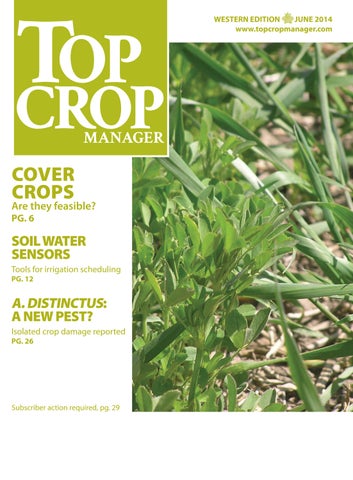
COVER CROPS WITH WINTER WHEAT
Under-seeding winter wheat with alfalfa can provide some advantages.
by Donna Fleury
Cover crops have known benefits for annual cropping systems; however, traditionally, the year of the cover crop is a year without cash flow. Although many organic growers build cover crops such as sweet clover and others into their systems for fertility and weed suppression benefits, few conventional growers are willing to include an annual crop without cash flow in a cropping system.
Researchers at Agriculture and Agri-Food Canada (AAFC) in Lethbridge, Alta., conducted a multi-year study over five years to determine if intercropping legumes as a cover crop with winter wheat could provide an option for growers on the Canadian prairies. The objective of the project was to determine if cover crops including alfalfa, red clover or Austrian winter pea could be successfully established with winter wheat in fall or spring in a semi-arid environment. Researchers also wanted to compare the winter wheat yields and resulting nitrogen (N) benefits from the intercropping with different cover crops.
“We wanted to find out if we could underseed a cover crop with winter wheat, which would provide the benefits of a cover crop but still provide growers with a crop and cash flow every year,” explains Dr. Bob Blackshaw, research scientist with AAFC in Lethbridge. “We expected there to be a tradeoff between the benefits of the cover crop, such as N fixation, and the yields of winter wheat, and wanted to evaluate the success and impacts of the different cover crops.”
The trials, conducted under a zero-till system at Lethbridge, included winter wheat under-seeded with red clover, alfalfa and Austrian winter pea in the fall in mid-September. The same cover crops were also seeded in April into established winter wheat in separate plots. The winter wheat was harvested in mid-August and the cover crops were killed in mid-October around freeze-up with an application of glyphosate (1335 g a.i./ha in 100 L/ha spray
PHOTOS COURTESY OF B. BLACKSHAW, AAFC, LETHBRIDGE, ALTA.
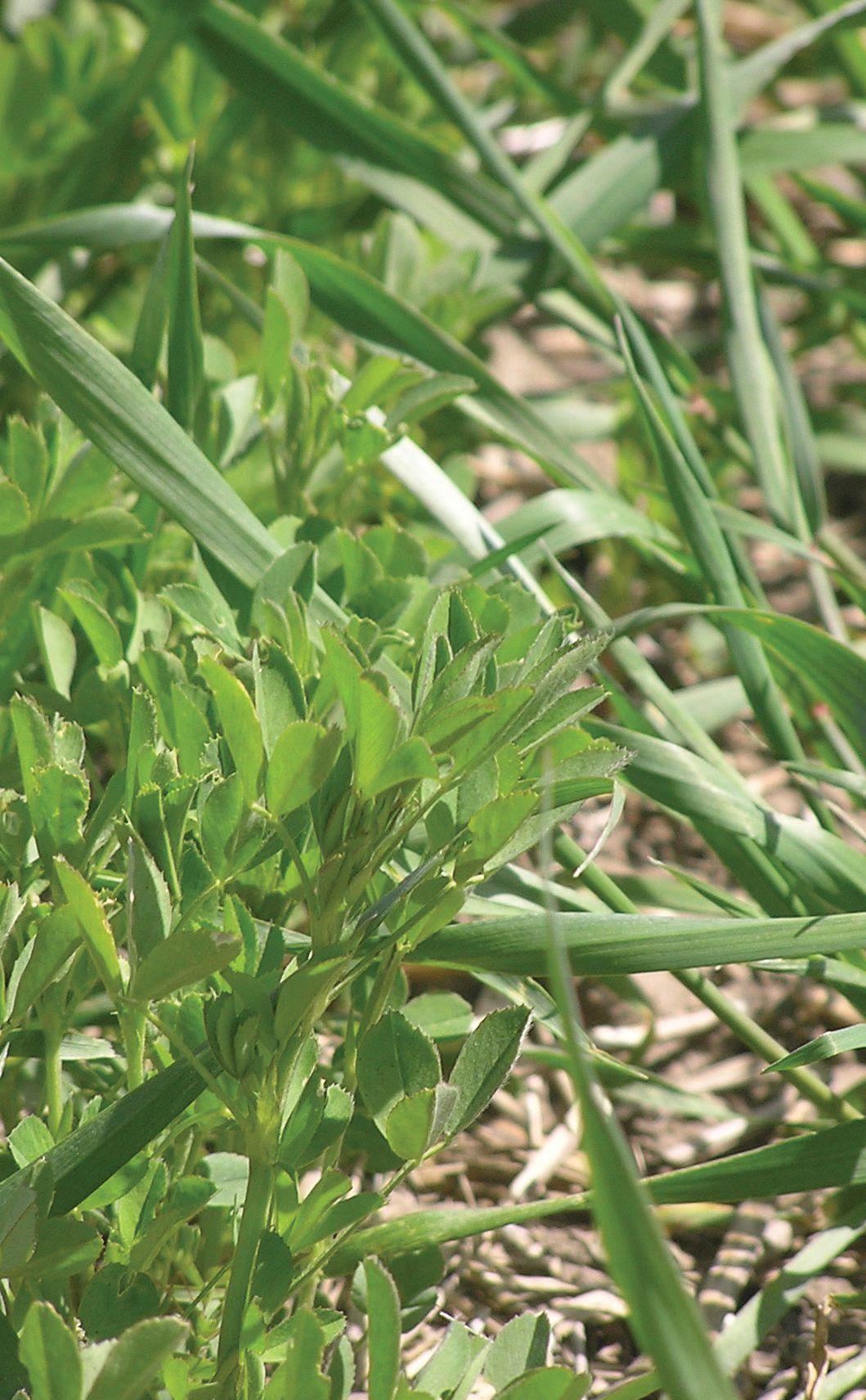
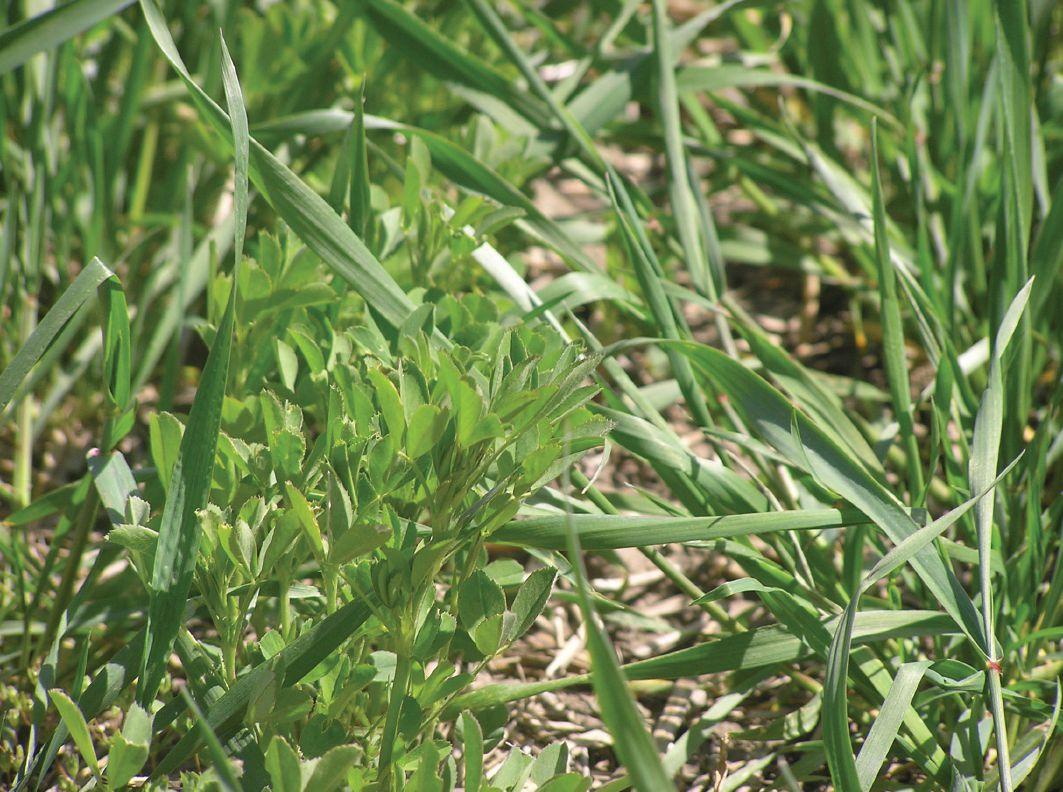
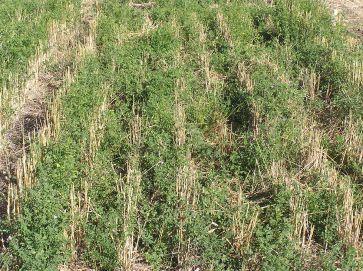
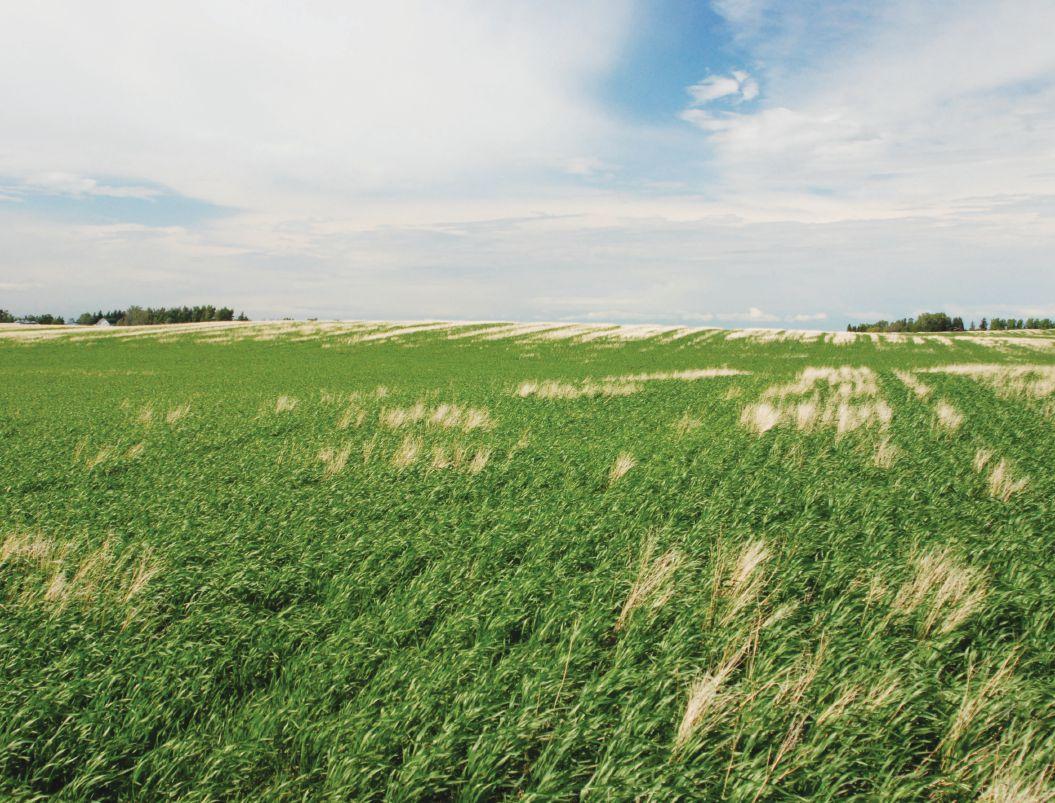
TOP: Alfalfa growing between rows of winter wheat in early spring. INSET: Alfalfa growing after winter wheat harvest.
volume). A no cover crop winter wheat treatment was included as a control. Canola was seeded the following spring as an indicator crop to assess residual effects of the previous legume cover crops compared with monoculture winter wheat.
“The results from the fall and spring-seeded cover crops showed varied success rates. The spring-planted legumes emerged well, but were unable to compete with the winter wheat that was already established,” says Blackshaw, who added the cover crop populations remained low and small over the growing season and did not contribute anything useful to the system. Although previous research at other cropping areas such as Ontario, Wisconsin and Michigan were successful with spring frost seeding cover crops into winter wheat, this concept was not successful under the shorter growing season in Western Canada.
Of the fall-planted cover crops, red clover did the poorest. It did not survive in two of three years of the trials, and in the year it survived the populations were too low and too small to be beneficial. “Austrian winter pea was actually quite exceptional; however, it grew so well it competed with the winter wheat, reducing yields by 23 to 37 per cent compared with the no cover crop control. Therefore, it did not prove to be a successful option for winter wheat grain harvest,” says Blackshaw. “Although our objective was not forage production, some farmers wondered if they might be able to use the Austrian winter pea and winter wheat as a silage or forage crop, which may work well in those cropping systems.”
Alfalfa was the one successful cover crop from the trials, resulting in equivalent winter wheat yields to the no cover crop control and residual N for the following crop. The results showed that fall-planted alfalfa exhibited good winter hardiness, provided some weed suppression without reducing winter wheat yield, caused only a slight reduction in soil water content, and contributed an extra 18 to 20 kg/ha of available soil N at the time of seeding the following spring crop.
“Alfalfa survived the winter three years in a row, producing a nice stand in the winter wheat crops,” says Blackshaw. “The alfalfa remained small enough as an understory in the winter wheat, so it didn’t cause any detrimental yield losses, and grew between the rows of winter wheat, providing some weed suppression. The alfalfa continued to grow and fix N after the winter wheat was harvest-
Fig. 1. Available soil N to a depth of 60 cm taken before seeding canola as affected by the previous legume cover crop and cover crop seeding date. Red clover biomass was near zero in experiment 2 and thus data were not collected.
Blackshaw, R. E., Molnar, L. J. and Moyer, J. R. 2010. Suitability of legume cover crop-winter wheat intercrops on the semi-arid Canadian prairies. Can. J. Plant Sci. 90: 479-488.
ed until it was sprayed out in mid-October, providing an N benefit for the following crop. We were able to effectively kill the alfalfa three years in a row, with fall being the easier time to remove alfalfa than in the spring.”
Soil N levels were measured just prior to seeding canola, measuring an extra 18 to 20 kg/ha of soil N in the spring following alfalfa compared to the monoculture winter wheat plots. “This level is about 40 to 50 per cent of the N that is expected to be released over the growing season as the alfalfa degrades and continues to release N,” explains Blackshaw. “We expect to see double that amount or more of soil N to be released over the cropping season, likely in the range of 40 kg/ha and higher. Although this amount of N is not sufficient on its own, growers will be able to use a lower rate of N in the following canola crop. When N prices are high, this option may be more attractive to some growers. The fall-planted alfalfa also increased the yield of succeeding canola in unfertilized plots in two of three experiments.”
Along with the good yields and increased soil N benefits from fall-planted alfalfa, there are several other benefits. Cover crops maintain ground cover on
the soil over the winter, provide improvements to the soil structure and reduce soil compaction. “Legume crops also improve beneficial soil microbial populations and other soil improvements,” adds Blackshaw. “Many of these improvements are hard-tomeasure, intangible benefits that improve cropping systems.”
However, there are also some tradeoffs in terms of the extra cost of alfalfa seed and the additional spraying operation in the fall to kill the alfalfa. Growers would also need to have seeding equipment that can seed the winter wheat and alfalfa at the same time.
“Our research shows that under-seeding winter wheat with alfalfa can provide some advantages, including the benefits of a cover crop without losing a year of cash flow,” says Blackshaw. “The winter wheat yields were the same with or without a cover crop, and the weed suppression provided by the cover crop meant no in-crop herbicides were required. Growers can consider intercropping alfalfa and winter wheat as a way to improve soil N levels and gain from other intangible benefits of improved soil structure and increased beneficial soil microbial populations.”
Source:
Alfalfa Red Clover Winter Pea No Cover Crop Control
Alfalfa Red Clover Winter Pea No Cover Crop Control
CONTROLLING JAPANESE AND DOWNY BROME
Research looking to expand weed control options in winter wheat.
by Bruce Barker
Japanese (Bromus japonicas) and downy (Bromus tectorum) brome are winter annual weeds that typically germinate in the fall, overwinter as small seedlings, and start growing in the spring. This growth habit, which matches that of winter wheat, makes them aggressive competitors. In an effort to expand the choices in herbicides, research scientist Eric Johnson with Agriculture and Agri-Food Canada (AAFC) at Scott, Sask., is in the midst of a three-year research trial hoping to add to pre-seed and in-crop control options.
“Simplicity herbicide is registered in winter wheat, and it is the standard for control of Japanese brome. It has suppression for downy brome. Our results from the trial would confirm those control ratings,” says Johnson.
The trials were conducted at Scott, and at Lethbridge and Coalhurst, Alta., in 2012 and 2013. CDC Falcon winter wheat was sown at 300 seeds per square metre. Johnson plans on conducting one more trial year in 2014. The first two years were funded by AAFC’s Growing Forward program, Ducks Unlimited Canada, FMC and Bayer CropSciences Canada.
PHOTOS
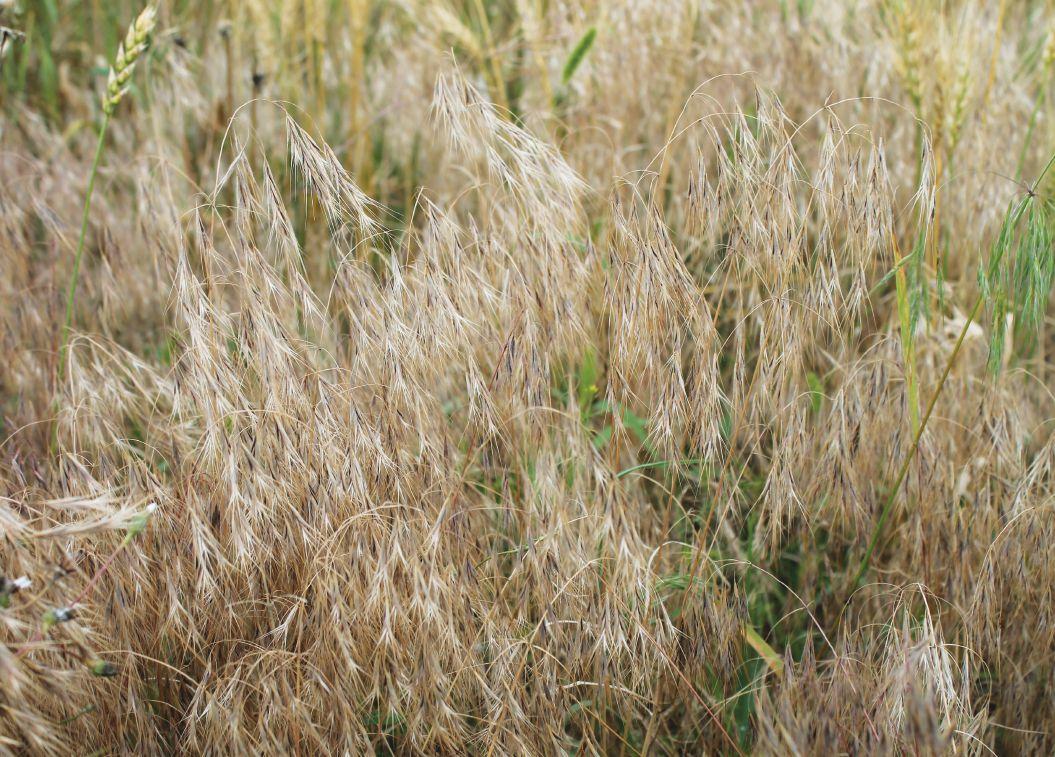
TOP: New chemistries will help to control downy brome. ABOVE: Growers will have additional options for controlling Japanese brome.
Source: 2014 Guide to Crop Protection. Government of Saskatchewan, Ministry of Agriculture.
highly variable with a range between five to 95 per cent control. The other products provided consistent control over the two years and three sites.
Johnson observed that post-emergent treatments generally resulted in higher levels of crop injury than the pre-emerge treatments, with fall applications typically resulting in higher injury than spring applications.
“Flucarbazone-sodium, especially at Scott, was hard on the crop in the fall post-emergent application. I’m not sure why because we have an acid soil here and it’s usually not that active on our soils,” he says.
Downy brome control was more variable across the chemistries. The only active ingredient that provided control of downy brome was pyroxasulfone alone or in combination with flumioxazin. Pyroxasulfone was consistent across the sites and years, providing 93 to 96 per cent control. Simplicity provided good suppression at around 75 per cent control, which is consistent with the label registration. The other active ingredients provided varying degrees of suppression of downy brome. (See Fig. 1.)
Source: Eric Johnson, AAFC, Scott, Sask. PSF = Pyroxasulfone
The chemistries assessed included two registered post-emergent herbicides in winter wheat: Simplicity (pyroxsulam) and Varro (thiencarbazone). The other herbicides that were part of the trial are not registered on winter wheat and included pre-emergent and post-emergent products. The unregistered post-emergent product was flucarbazone-sodium DC and SC (Everest; two different formulations). These post-emergent herbicides were applied in the fall or spring.
The unregistered pre-seed herbicides assessed included flumioxazin (registered as Valtera in soybeans), pyroxasulfone at two rates (an active ingredient in Focus registered on corn and soybean), and a pyroxasulfone plus flumioxazin tank-mix.
Looking at Japanese brome control, Johnson says most of the treatments provided very good control – over 90 per cent – except for flumioxazin, which was rated as suppression with control in the 70 per cent range. Flumioxazin control of Japanese brome was also
Johnson likes the additional weed spectrum that pyroxasulfone could bring to winter wheat growers. At Scott, he saw very good control of shepherd’s purse, another difficult winter annual that commonly competes with winter wheat. “Some other herbicides could be used to control annuals, but you wouldn’t want to spend that much money just to get shepherd’s purse, so that’s a bonus you could get with pyroxasulfone,” explains Johnson.
FMC has applied to have pyroxasulfone plus carfentrazone (Focus herbicide) registered on winter wheat. Mitch Long, product development manager with FMC at Saskatoon, Sask., says that in addition to control of Japanese and downy brome, Focus has good activity on green, yellow and giant foxtail, barnyard grasses and Italian rye grass, and on the suppression of wild oats. The company is also hoping to get some broadleaf weeds on the label. Pyroxasulfone has shown good activity on cleavers, and information from the company that discovered the active ingredient confirms Johnson’s observation of good activity on shepherd’s purse. Other broadleaf weeds are also being considered for registration. Further, as a Group 15 herbicide, pyroxasulfone brings additional flexibility in herbicide rotations to help manage herbicide resistance.
FMC is hoping to obtain registration of Focus on winter wheat in 2015. In the meantime, Simplicity herbicide provides a high standard of control for Japanese and downy brome. If registered, Focus will add to growers’ choice in winter wheat weed control.
Fig. 1. Downy Brome Control
With Fuse fungicide, it doesn’t stand a chance.
And let’s face it, Fusarium head blight (FHB) is nothing to take chances on. If you grow spring, winter or durum wheat you know that protection during head emergence – before the disease takes hold –is crucial. Don’t let FHB affect your yield, grade, quality or rotations. Light the Fuse® before it starts.
SOIL WATER SENSORS FOR IRRIGATION SCHEDULING
Tools to help with irrigation scheduling and decision making.
by Donna Fleury
Irrigation scheduling for water management is important for avoiding crop stress, improving crop quality and increasing crop yields. Using soil moisture measurements is one of the best and simplest ways to get feedback to help improve water management decisions. There are many tools available to help irrigation managers optimize soil water, but the practicality, ease of use and price vary considerably.
“Growers continue to look for tools and strategies to help make decisions about the timing of irrigation and the amount of water to apply,” explains Ted Harms, provincial irrigation specialist with Alberta Agriculture and Rural Development (AARD) in Brooks. “One of the main tools many irrigators continue to use to assess soil moisture is a manual soil sampler, such as a step-on Oakfield soil sampler or a crank-type Dutch auger. The manual sampler works well as a qualitative tool and is easy to use, but as operations get larger it becomes more difficult to be able to physically get out and sample every field in a timely manner.”
Harms has been working with growers for the past several years to try to find suitable soil water sensors and other tools to help make more timely decisions. The original project started about 10 years ago to evaluate six different sensors, and has expanded over the years to look at different sensors from Australia, England, Germany and other areas. Sensors that measured either soil tension or dielectric properties of the soil for soil water content were evaluated for their usefulness, practicality and the kind of information they would provide.
One challenge with all of the soil moisture sensors is interpretation of the information. Most sensors provide a volumetric water content percentage reading, however the result is meaningless without understanding the soil texture. Soils vary a lot, so growers need to know the soil texture and other factors before they can make a decision about irrigation scheduling. The soil moisture holding capacity varies by soil texture, so one reading will have different interpretations for different soil textures. For example, the same reading could be interpreted as full for a sandy soil but empty for a clay soil.
“Although most of the sensors worked well and the information is probably valuable, the feedback I got from growers was that they just didn’t have the time to invest in the installation and monitoring at what is their busiest time of year,” explains Harms. “Most of the sensors should be installed and monitored
right after seeding.”
Access tubes need to be installed if growers want to measure soil water at depth, and at an average cost of $70 or more per tube, this can get expensive across a number of fields. “Therefore all of the growers I was working with no longer use these sensors and many have gone back to using manual soil samplers and computer modeling until they can find a more practical solution,” says Harms.
AARD has developed a computer-modelling tool that helps growers determine how long it will take to use up an allocation of water (www.agric.gov.ab.ca/app19/calc/volume/waterallocation.jsp).
“This Alberta Irrigation Management Model has by far had the greatest adoption for helping irrigation managers make soil water decisions and continues to have a fit in many management systems,” says Harms. “Growing high value crops with centre pivot irrigation requires irrigation every four or five days, which is easily predicted with the model. However, we encourage growers to continue to go out and periodically do some physical sampling to ensure the model is making reasonable predictions. The benefit is the model can extend the sampling from every few days to intervals of three to four weeks.”
Variable rate irrigation systems
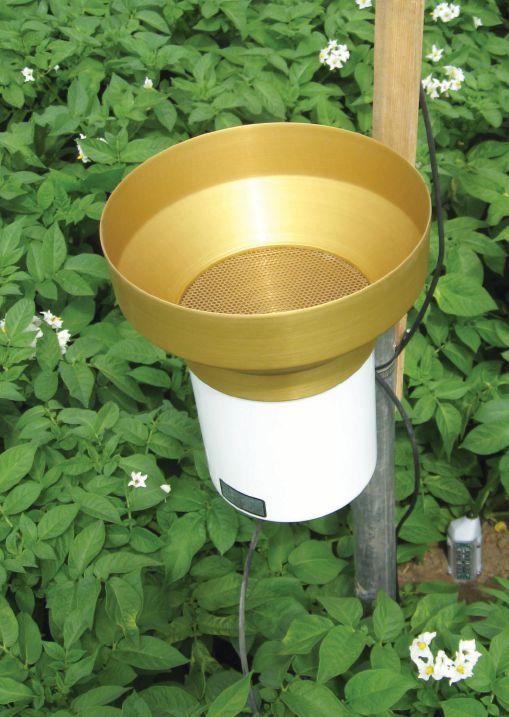
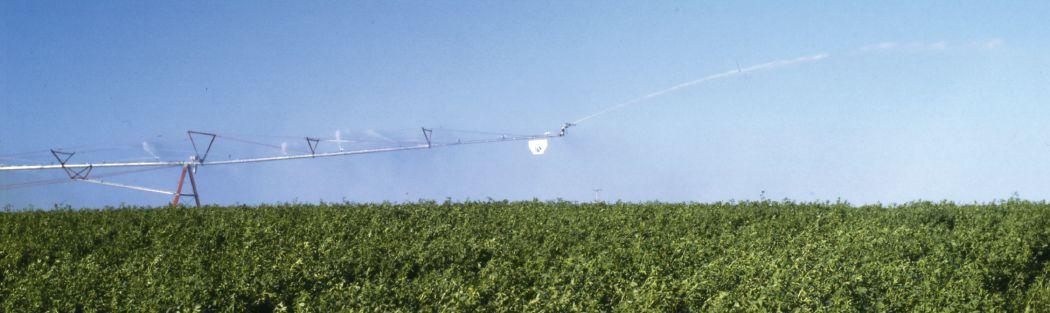
In 2012, Harms initiated a two-year project to assess the potential of variable rate irrigation for potatoes in southern Alberta. Growers were interested in finding ways to get more production out of areas they typically don’t, such as low lying areas that get too much water or higher sandy knoll areas that don’t get enough when a uniform depth of water is applied. The project was established on a trial site about 100 kilometres from Brooks and included the installation of computer-controlled, individual sprinklers along the pivot, several wireless soil water sensors that provided daily soil and water readings to a computer, plus wireless tipping bucket rain gauges. GIS prescription maps were developed by Jeff Bronsch of Sunrise Ag in Taber for the project. The Alberta Irrigation Management Model was used to profile soil water to one-metre depth.
“Although the concept of variable rate irrigation has a lot of potential, and a few growers in Alberta are starting to use these systems, the results of our project pointed to a few challenges still to be addressed,” explains Harms. “The process was much more time consuming than expected and required a lot of in-field monitoring to manage water allocation. We needed to know the soil water status prior to an irrigation event so the pivot could be programmed to apply varying rates of irrigation water to different
zones within the field. We also needed to know immediately after an irrigation event how much water had been applied to each zone. Initially, one prescription map was recommended, however the changes to the systems over the season because of rainfall, drought or other factors meant the prescription maps needed to be revised regularly. In the first year of the project, eight different prescription maps had to be developed.”
Harms believes that if an automated in-field monitoring system could be developed that would identify the soil water changes, generate the new prescription and feed that information directly into the pivot system software, then the system could be more practical and efficient. So far there are no offthe-shelf systems, so specialized information and computer programming are required. An investment of at least $12,000 in soil water monitoring system add-ons per pivot for variable rate and the time for installation, calibration, monitoring and prescription map adjustments makes the current systems more suited to research and consulting.
“Another piece of the puzzle that could really advance this technology would be applications for smart phones,” adds Harms. “Growers already use smart phones to monitor and control pivots, but there is still a gap between being able to monitor the soil water moisture and making water allocation adjustments at the same time. Making management models, soil water measures and other tools available that connect all of the information directly to the pivot software would make this technology more effective, practical and useful for irrigation managers.”
For more on irrigation management, visit www.topcropmanager.com.
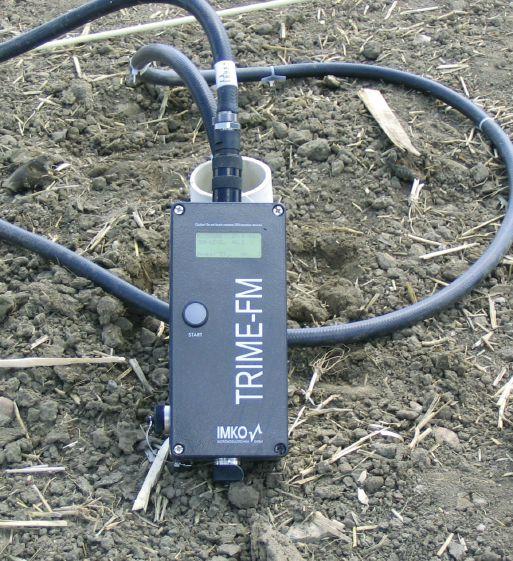
Harms evaluated several soil water sensors for use in determining soil water.
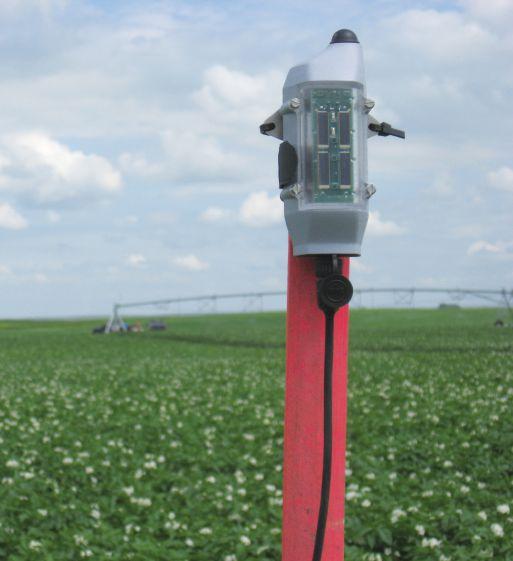
This CWS 900 wireless sensor interface connects to a tipping bucket rain gauge and communicates wirelessly to a datalogger.
Competition is Key
By Levi Wood President, Western Canadian Wheat Growers Association
There is no easy fix to the rail transportation capacity shortfall that has plagued our industry this year. The government Order to the railways to ship a minimum of 1 million tonnes of grain per week until the first week of August is a good stopgap measure, but trying to command a business sector to behave in a certain way is never a good long-term solution.
In a market economy, competition is what drives good quality and service. Competition also leads to investment that ensures there’s adequate capacity to meet market demand.
You just have to look at industries where good competition prevails to find examples where the consumer gets good quality service at competitive prices. The trucking industry is one example. The restaurant industry is another. In these industries government regulation is only necessary for safety reasons (e.g. limits on truck driver hours, food safety inspection). There is no need to regulate price or service. In a competitive market, if you aren’t happy with one retailer, then you simply take your business elsewhere.
In the prairie rail industry, we have no such luck. For the most part, we cannot take our business elsewhere. Over 70% of our grain production is shipped by rail. With only two mainline carriers, there is little competitive discipline at play. As a result, the government needs to step in to provide regulatory solutions. Regulation is however always second best to competition.
So how best to insert competition into the rail industry? Several avenues need to be explored:
•Allow shortlines or other railway operators to add capacity – in the form of locomo tives, crews, cars or trains – whenever CP and CN are unwilling or unable to do the job.
•Develop more north / south rail linkages. There are several places on the prairies where a connection to BNSF is feasible. There is also potential to ship more grain through Churchill.
•Expand our livestock industry. The more grain that never hits the rails the better. The move by Alberta Chicken Producers to withdraw from the national supply manage ment scheme and expand production is one move in the right direction here.
•Expand our processing industry. Canola is doing its part. Governments can help attract more investment by providing good infrastructure, low utility costs, low taxes and labour and environmental laws that are job friendly.
Regulating the railways will only get us so far. The real long-term solution is to bring about effective competition. It can’t come soon enough.
BEST STUBBLES FOR WINTER WHEAT
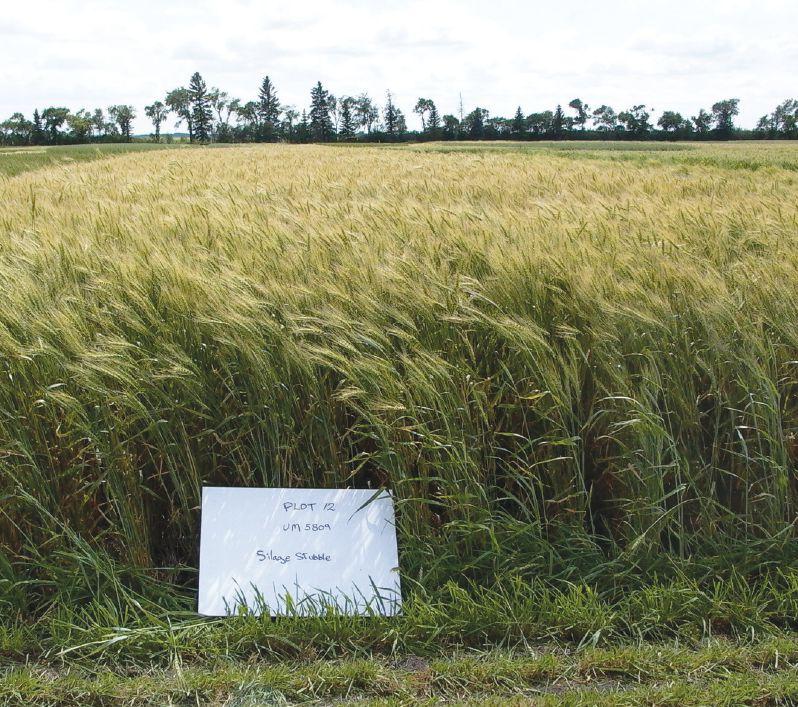
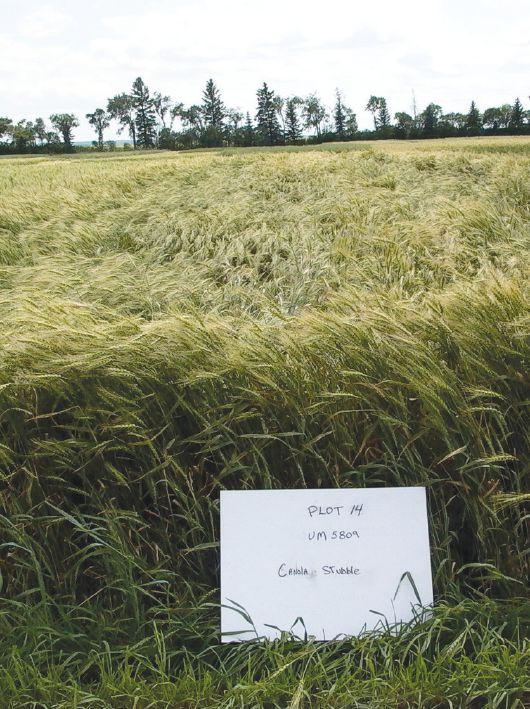
Canola, pea and barley silage stubble are suitable for high yielding winter wheat.
by Donna Fleury
Winter wheat can have a good fit in many cropping systems across the prairies; however, having suitable stubble ready for timely planting in the fall can be a challenge. Canola and barley silage stubble are typically looked to first, while pulses and others crops are thought to be less suitable. A recent research project conducted by Agriculture and AgriFood Canada (AAFC) investigated the suitability of several alternative stubble options.
“Traditionally the most ideal stubble for winter wheat has been canola stubble because of its snow trapping ability,” says Dr. Brian Beres, research scientist with AAFC in Lethbridge, Alta. “Canola and winter wheat are also highly compatible in a no-till system. However, as genetics improve and both breeders and growers push for higher yields with canola, the cost has been an increase in growing degree-day requirements, to the point where canola varieties are up to 10 days later maturing in some regions compared to a decade ago. This means canola is no longer a timely stubble option for seeding winter wheat in some regions. The good news is cropping systems have diversified to include pulses and other crops, so alternative stubble types may be feasible.”
Led by Dr. Byron Irvine, with AAFC in Brandon, Man., researchers conducted a four-year study to investigate the suitability of ideal stubble types for winter wheat and select spring cereals grown in the Black soil zone across the Canadian prairies. Spring wheat, canola, pea, bar-
ley grain or silage, and oat stubble were established at four locations in Western Canada, including Brandon, Indian Head and Melfort, Sask. and Lacombe, Alta. In the year following establishment, winter wheat, hard red spring wheat, barley and oats were grown on each stubble type at each study area. Winter wheat was planted by the optimal date (August 30 to September 15) at each location.
“The four-year study results confirmed there are very good stubble alternatives for growing winter wheat beyond canola,” explains Beres. “On average, the yield of crops grown on canola, pea and barley silage stubble most often was greatest, and yield on wheat and barley grain stubble most often was least. Winter wheat and spring cereal crops often yielded best and had greater grain protein concentration on barley silage, pea and canola stubbles relative to other stubble types. The yield and grain protein concentration of spring cereals was best when grown on pea stubble.”
Although pea stubble and other pulses were assumed to not provide enough residue to be suitable, the data from this study showed pea stubble has a good fit and provided some of the highest yields.
LEFT: Barley silage stubble provided good results and high yields with the following winter wheat crop.
RIGHT: Winter wheat and spring cereal crops often yielded best and had greater grain protein concentration on barley silage, pea and canola stubbles relative to other stubble types.
The study also showed that none of the snow depth differences among stubble types were related to any plant stand differences. Barley silage stubble provided good results and high yields, while barley grain and oat stubble provided significantly lower winter wheat grain yield. Factors such as heavy crop residues, competition from volunteers and nitrogen immobilization likely contributed to the lower yields. However, in some areas these may be the only stubble options for winter wheat plantings.
Stubble alternatives to canola exist
“The good news from the study is that growers can look to other stubble alternatives besides canola for growing high yielding winter wheat,” says Beres. “There are multiple environments and stubbles for planting winter wheat and if you are seeding on time with a high seeding rate and establishing a healthy crop stand in the fall, high yields are likely.”
With a competitive stand, inputs such as herbicides may be significantly reduced, with possibly only a fall 2,4-D application required. Winter wheat provides yield advantages, economic advantages and biological advantages for addressing weed, disease and other pest problems because of its competitiveness in cropping systems.
“The main challenge for growing winter wheat is the mindset around the operational logistics of planting in the same window as fall harvest. However, this is not as daunting as some would think,” says Beres. “In many situations, a good combining day likely doesn’t start until noon. I know some growers who have their seed drill ready to go to seed winter wheat in the morning and then harvest for the rest of the day, and with today’s size and scale of no-till air drills, you can cover a lot of ground in a morning of seeding.
“The longer-term gain is captured the following spring when there are less acres to plant, as most wheat acres are already established,” he adds. “Growers can then make oilseed and pulse crops their priority in what can often be a very short and wet window in the spring.”
Winter wheat provides other benefits to cropping systems such as capturing and utilizing snow melt and spring water that might otherwise run off or cause problems such as N leaching. Winter crops are more competitive early and make better use of early water resources than spring crops. Winter wheat also provides habitat for upland birds, such as nesting sites for ducks, and for other wildlife. There are ripple effects in a winter growth system that are more compatible with the ecosystem than just a spring cropping system.
Researchers are working to continually advance winter wheat system agronomics and have shown that factors such as higher seeding rates (450 seeds per square metre), new genetics and seed treatments are advantageous. Future directions will include nitrogen stability and growth regulators.
“Some growers, particularly those growing winter wheat under irrigation and in high production rain-fed areas, have had some problems with lodging with the taller and higher-yield winter wheat varieties,” explains Beres. “Although the yield potential is great with these varieties, the downside are the issues if the crop lodges.
“We now know that there are good alternative stubble options for winter wheat growers, and we are entering a time when winter wheat for a number of reasons, including marketing, deserves greater attention,” he adds. “Growers should be taking notice and really considering the benefits that winter wheat can provide to their operation and their business line.
Why risk reduced yield?
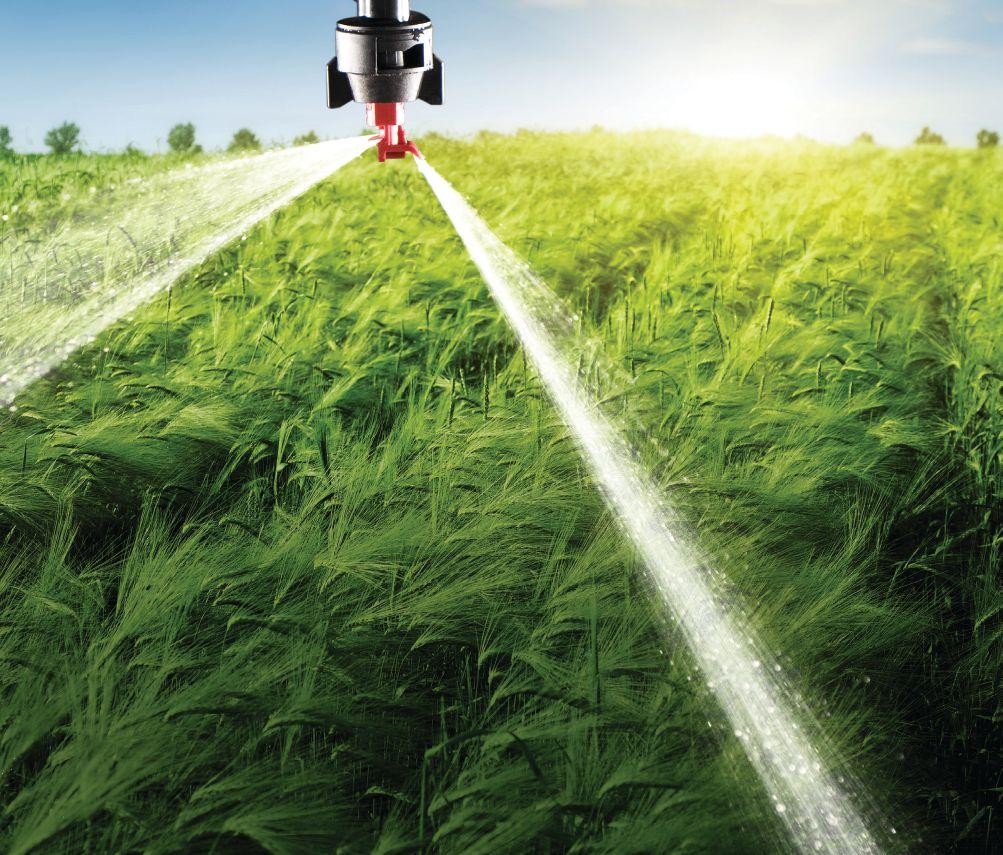
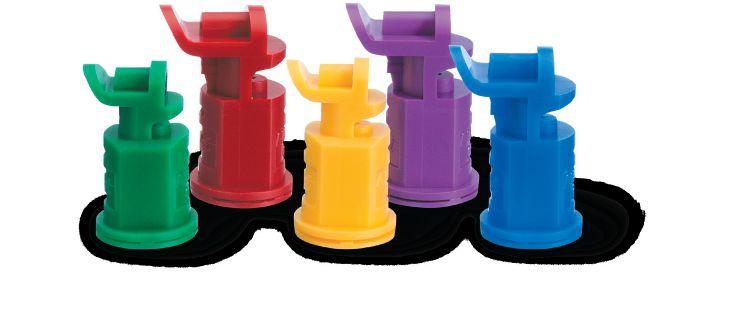
• The AI3070 utilizes a unique, patent-pending design optimized specifically for fungicide application
• The 30° forward tilted spray penetrates dense crop canopies, while 70° backward tilted spray maximizes coverage of the seed head for excellent disease control
• Air induction technology produces larger droplets to reduce drift
“ The AI3070 increased overall deposit amounts and uniformity compared to the industry standard single and twin fan nozzles.”
TOM WOLF, RESEARCH SCIENTIST AT AGRICULTURE AND AGRI-FOOD CANADA
MAINTAIN THE VALUE OF YOUR PULSE CROPS
Proper management of binned pea, lentil and chickpea crops is crucial.
by Carolyn King
Safe storage conditions are key to maintaining the value of pulse crops. That means dealing with a crop that may be too wet or too hot at harvest time, ensuring the grain remains at safe temperature and moisture conditions over the winter, and continuing to manage the grain to prevent spoilage if you have to keep it in storage into the next growing season.
“Just like other grains, pulse crops – peas, lentils and chickpeas –need to be stored at the proper moisture content and temperature,” says Dale Risula, the provincial crop specialist for pulse crops with the Saskatchewan Ministry of Agriculture.
He notes several harvest-time considerations for pulses going into storage. “If a pulse crop is harvested under hot conditions, we recommend putting it into an aeration bin to cool it for long-term storage.
“If the harvest weather is wet and cool, then the longer the crop is left out, the more likely it is that the seed will begin to sprout in the swath or even on the plant,” adds Risula. “When the seeds sprout, their value is reduced because the germination process uses up energy. So the grain is often sold as feed value instead of food value. The feed value of crops like chickpea is very low, and the farmer loses quite a bit of money. So it’s important to get the crop off the field and dry it down to the recommended moisture content for the particular pulse crop.”
Risula explains that pulse crops are also sensitive to oxidation through exposure to sunlight, high moisture and high temperatures. Oxidation causes bleaching and discoloration of the grain, which reduces its market value. So that’s another reason to get pulse crops off the field and into dark, safe storage conditions.
According to Risula, green peas and lentils are especially at risk of oxidation. “Green peas, when they have been harvested, are quite sensitive to sunlight and rainfall, causing bleaching. They will lose their green colour and have a faded, patchy look if they aren’t harvested and stored fairly quickly. Lentils also need to be stored out of the sunlight and open air, so oxidation doesn’t start. Green lentils in particular are prone to this problem; they can become oxidized and turn a brownish colour.”
He also reminds growers of the importance of cleaning the grain before storage to remove things like weed seeds and other green materials. “That material can hold a lot of moisture, so the grain should be cleaned fairly quickly prior to being put into long-term storage.” Cleaning also removes fine particles that can reduce airflow through the grain.
Drying and cooling requirements
“Safe-to-store moisture contents for pulses range from 13 to 16 per cent. But even when the moisture content is dry, if the temperature is high in
the bin, then spoilage can occur. So pulses should be cooled to 15C or lower for safe storage,” says Dr. Joy Agnew, an engineer with the Prairie Agricultural Machinery Institute (PAMI).
Whether to use aeration, natural air drying or a heated air drying system depends on the grain’s moisture content. Natural air drying involves airflow rates around one cubic foot per minute (cfm) per bushel, so it is effective for grain drying. In contrast, aeration airflow rates, which are around 0.1 to 0.2 cfm/bushel, will cool the grain, but will have only a small, short-lived effect on grain moisture content.
Agnew explains why cooling the grain will initially remove some moisture: “When cool air hits warm grain, the cool air expands its ability to take up moisture. So there will be a really short-term or rapid drying of the grain. However, as soon as that grain is cool, cool air won’t do anything other than keep it cool.”
She adds, “Once the grain is cooled, it is very difficult to remove
Monitor and manage grain temperature and moisture content for as long as your pulse crop is in the bin.
moisture using natural air. So it is recommended to dry the grain first and then cool it for safe storage.
If the crop comes off wet, at greater than two per cent above the recommended dry, then it should be dried first, either in a batch dryer or using natural air drying, before cooling it.
Monitor, monitor, monitor
“Each bin represents tens of thousands to hundreds of thousands of dollars worth of investment. So the bins need to be monitored and managed to prevent spoilage,” says Agnew. Advances in computerized monitoring systems can help farmers deal with these complexities. Agnew says companies like OPI-integris and new companies like Mifarm.ag and IntraGrain have in-grain monitoring systems that will send information to your cell phone by text or email when the system needs to be handled. “And I believe some groups are developing apps that will allow you to enter the grain conditions and the app will map out the weather forecast for your area and then tell you whether or not you should be turning your fans on.”
Risula strongly recommends frequent monitoring of the grain during the first month in storage to watch for changes in temperature and moisture conditions. “Often after a pulse crop is harvested, it goes through what is commonly called a ‘sweat’ – it exudes some moisture,” he notes. If the crop goes through a sweat after being placed in storage, moisture may accumulate within the grain mass in the bin and cause problems in a few weeks.
He adds, “Once the grain temperature and moisture content have stabilized, monitoring can be less frequent. You don’t need to do that much monitoring over the winter – once the grain has cooled to 5 C or lower, not much will likely happen to it.”
Risula also says pulses should be handled carefully if you have to transfer the grain from one bin to another. “Pulse crops tend to be prone to chipping and peeling, so care needs to be used when handling the grain. For instance you should avoid dropping it from an excessively high height into a new bin; it is better to drop it into a bin that has some seed in it already. Also movement of the grain through any augers needs to be fairly slow. If it’s moving too quickly, it is more likely to be damaged. And, if the grain is really dry or really cold, or a combination of dry and cold, then it’s more likely to chip and crack.”
Extended storage management
“Storing pulses for extended periods is not
E ect of grain temperature on air’s capacity to take up moisture
Source: Joy Agnew, PAMI
No change
*For detailed information, refer to provincial pulse grower manuals.
Source: Saskatchewan Agriculture, Alberta Agriculture and Saskatchewan Pulse Growers
something farmers want to do because they know the crop loses value either through discoloration or if it becomes too dry and loses some value because of its lower weight. And there’s a new crop coming so they need room to store it,” notes Risula.
However, if you have to store your pulse crop into the spring, then you need to manage it. “When spring arrives, the temperature outside warms up, whereas the grain in the bin could be fairly cool. So once again, you’ve got the risk of condensation in the bin. So we recommend that, as temperatures start to warm up, you turn on the aeration system and bring the temperature of the grain closer to that of the outside conditions,” says Agnew.
“The recommendations we have [for spring conditions] are based on anecdotal evidence; we haven’t done any trials or gathered any data. But the key is to warm up the grain slowly. So start the fans as soon as the outside temperature is just a few degrees warmer than the grain.” Avoid aerating with air that is quite a bit warmer than the grain; when much warmer air hits cool grain, the air loses much of its ability to hold water, releasing lots of water into the bin.
If you’re storing grain into the summer, you’ll need to continue to monitor and manage it. “In a year like this when a lot of crop is
being stored and may not be moved perhaps until next fall or later, it is critical to manage the grain over the summer, not just leave it, especially if it was cooled over the winter, as it should have been,” adds Agnew. “If you have cool grain sitting in the bin over the summer, then the sun and heat beating down on the side of the bin with cool grain will generate convection currents.”
Those convection currents will cause variations in temperature as well as moisture within the grain mass. She explains, “Any time you have a different temperature in one zone of the bin compared to another zone of the bin, you will also have moisture variation because the temperature of the air in the grain affects how much water can be held in the air in the grain. So if you have different temperatures, you’ll have different moistures, which can result in wet pockets and spoilage.”
Aerating the grain is the best way to avoid these temperature and moisture variations. But the grain has to be warmed up slowly; otherwise you’ll be dumping a lot of water into the bin.
Overall, the key is to protect your stored pulse crop from spoilage by monitoring and managing the grain temperature and moisture content for as long as it’s in the bin.
TO SPRAY
FLAGLEAF TIMING HEAD TIMING
When scouting your crop, starting at flag leaf stage, please consider the following steps to determine whether to spray or not.
The only time you shouldn’t spray is when you have a poor looking crop and you are not in an area where fusarium head blight (FHB) is present.
If your crop doesn’t look good, but there is FHB present, a fungicide application can still pay and safeguard the yield and quality of your grain. Do some calculations and if your potential disease risk and expected return exceed the cost of application – you should protect your crop with a fungicide.
No visible disease present
No visible disease present
No visible disease present
No visible disease present
Leaf disease on upper leaves and/or flag leaf SPRAY –
Leaf disease on upper leaves and/or flag leaf SPRAY –
Leaf disease only (lower to mid leaves)
Leaf disease only SPRAY
If your crop looks good, you will definitely want to protect your investment with a fungicide application. Which product will provide the most bang for your buck? It depends on crop staging, current disease pressure and potential disease risks. Here is a quick chart to help make your fungicide decision easier.
Leaf disease only (lower to mid leaves)
Leaf disease only SPRAY
NOT TO SPRAY
POTENTIAL FOR FHB?
WHAT SHOULD YOU SPRAY?
NO
YES
Even when you can’t see disease symptoms, there is no such thing as a disease-free crop. A good crop is worth protecting – consider spraying an application of Folicur® EW or Prosaro® applied at head timing to help ensure top grade, quality and yield.
GAIN IN YIELD*†
+ 4.7 bu./ac.
Folicur EW 3/4 rate, flag leaf
NO
YES
There is no such thing as a disease-free crop. Even in the absence of disease symptoms, the mere fact that you are in an FHB area means you need to protect your crop. Apply Prosaro or Folicur EW at head timing.
Leaf disease damage to upper leaves or the flag leaf can cause irreparable injury to your crop and immediate action is required. Spray Folicur EW and reassess at head timing to determine whether a Prosaro application is required.
Spray Folicur EW and re-assess at head timing to determine whether a Prosaro application is required. Consider following up with an application of Prosaro at head timing to help ensure top grade, quality and yield.
When leaf disease is limited to lower/mid leaves at flag leaf timing, Bayer CropScience would suggest re-assessing at head timing and as disease pressure warrants, protect both your flag leaf and your head by spraying either Folicur EW or Prosaro.
YES
Whenever you are in an FHB area, you should spray Prosaro or Folicur EW at head timing. However, if leaf disease is limited to the lower/mid leaves you have the ability to make your Prosaro or Folicur EW application at head timing to protect against both leaf disease and FHB.
+ 5.7 bu./ac.
Folicur EW full rate, head
+ 8.4 bu./ac. Prosaro, head
+ 2.4 bu./ac.
Folicur EW 3/4 rate, flag leaf
+ 3.0 bu./ac.
Folicur EW full rate, head
+ 4.2 bu./ac.
Prosaro, head
+ 9.5 bu./ac.
Folicur EW 3/4 rate, flag leaf
+ 4.5 bu./ac.
+ 7.0 bu./ac.
Folicur EW 3/4 rate, flag leaf
+ 7.0 bu./ac.
Folicur EW 3/4 rate, flag leaf NO
Folicur EW full rate, head
+ 10.0 bu./ac.
Prosaro full rate, head
+ 5.2 bu./ac.
Folicur EW 3/4 rate, flag leaf
+ 5.5 bu./ac.
Folicur EW full rate, head
+ 8.2 bu./ac. Prosaro, head OR OR OR OR OR OR OR OR
*Gain in yield based on multi-year wheat Demonstration Strip Trial (DST) results in Western Canada, 107 replicated trials, 2008-2013. Results compared to yield of untreated check.
FHB means yield data is derived from DST trials where both %FDK and DON ppm levels were greater than zero, indicating FHB was present within the trial.
†Yes
†No FHB means yield data is derived from DST trials where both %FDK and DON ppm were zero, indicating that no FHB was present within the trial.
LOOK FOR FHB-RESISTANT WINTER WHEAT THIS FALL
Emerson CWRW is the first resistant variety of any wheat class.
by Bruce Barker
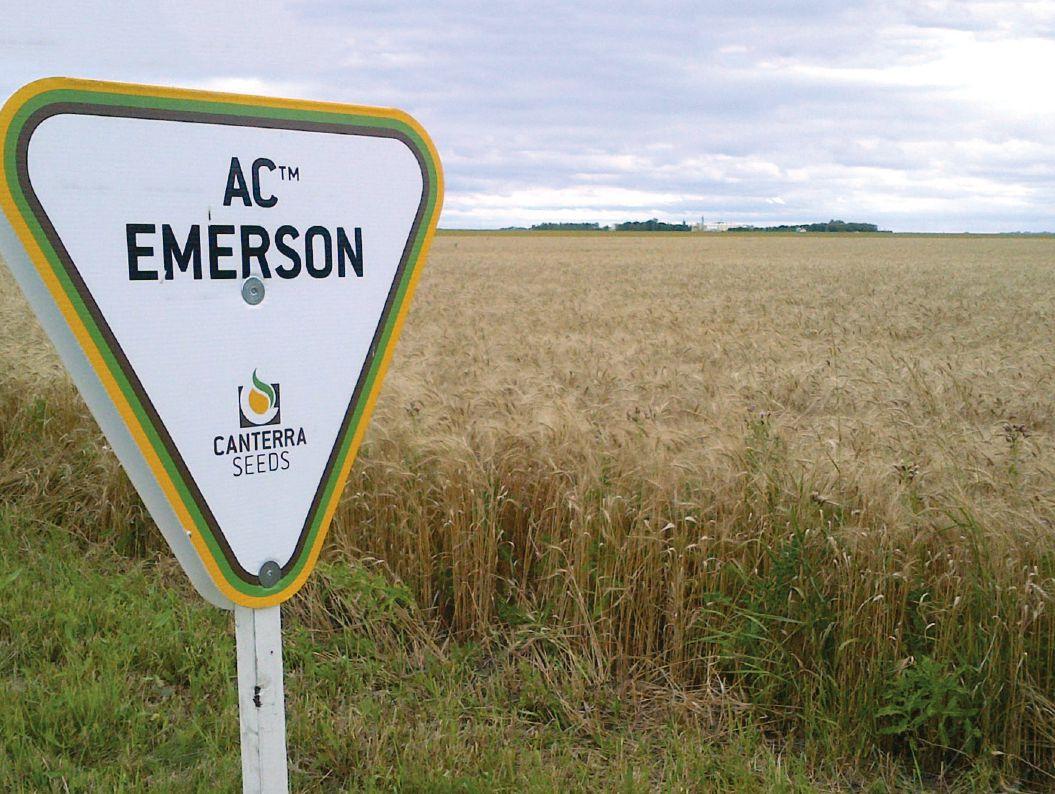
The wait is almost over. The first-ever Fusarium head blight (FHB) resistant winter wheat variety, Emerson, will be available to farmers for planting fall of 2014.
Mother Nature will decide on the quantity, as much is dependent on the pedigreed seed crop in the ground and the July/ August harvest. But if all goes well, enough certified Emerson seed could be available to plant 200,000 acres.
“We will better know the quantities available for sale once we see how production fields have survived the winter, in May or June,” says Brent Derkatch, director of operations and business development with Canterra Seeds at Winnipeg, Man., which holds the distribution rights to Emerson.
Agriculture and Agri-Food Canada (AAFC) plant breeder Rob Graf at Lethbridge, Alta., developed Emerson using doubled haploid technology, and it was supported for registration in 2011, based on evaluations across Western Canada from 2008 to 2010.
The variety is the first of any wheat class to have a resistant (R)
rating to Fusarium
“There is a lot of excitement about it. Farmers have struggled with Fusarium head blight so Emerson is certainly expected to be in high demand,” says Graf.
Graf cautions, though, that farmers need to have the proper expectations of what an R rating means. He says that resistant doesn’t mean immunity, and that with Fusarium, there likely will never be complete immunity bred into a wheat variety. Rather, resistance means that the variety has a high level of tolerance to the disease, but is not completely resistant. However, Graf says Emerson has performed very well in trials, and even in the Fusarium nurseries in Manitoba where it was exposed to high levels of Fusarium under irrigation.
“Emerson has looked very good in the trials. That’s not to say that under high disease pressure it won’t have some infection, but
TOP: Emerson is the first wheat variety to have a resistant rating to Fusarium head blight.
Table 1. CWRW Variety Descriptions
1Maturity ratings: E = Early, M = Medium and L = Late. CDC Falcon is considered an Early (E) maturing variety. Varieties plus 2 to 4 days compared to CDC Falcon would be Medium (M) maturing. Varieties greater than 4 days compared to CDC Falcon would be rated as Late (L) maturing.
2Winter wheat varieties generally have poor genetic resistance to Fusarium head blight. Earlier flowering of winter wheat relative to spring wheat may allow winter wheat to escape infection. The ratings provided are based on data from the Co-operative Registration Trials and/or performance in commercial fields.
3All registered varieties have similar (good) winter hardiness if seeded at the optimum date into standing stubble where good snow cover can be assured. For the newer varieties, there is limited information currently available. As these varieties are grown on more acres, a better understanding of relative winter hardiness will follow.
Source: 2014 Manitoba Seed Guide.
it performs a whole lot better than those varieties without resistance,” explains Graf. “From that standpoint, Emerson may not be as good as we can get [for Fusarium resistance] and we might be able to develop even better resistance in future varieties.”
Derkatch says that feedback from pedigreed seed growers who grew the crop in 2013 has been very positive. Yields in the 2013 harvest were in the 80 to 90 bushels per acre range.
Eastern Prairie farmers looking for Emerson
Emerson is in high demand in Manitoba and eastern Saskatchewan where Fusarium head blight has caused yield and grade loss in wheat production. On the eastern Prairies, Graf says Emerson yields very similar to CDC Falcon winter wheat. CDC Falcon is widely grown on the eastern Prairies and is the most popular CWRW variety grown in Manitoba. In 2013, Manitoba farmers insured 570,732 CWRW acres, of which 475,330 acres were CDC Falcon. However, CDC Falcon is being reclassified to the General Purpose wheat class on August 1, 2014, leaving a void in the high-performing CWRW class for the eastern Prairies.
Emerson is expected to be one of the varieties to fill that CWRW void, especially given its Fusarium resistance. “Farmers are looking for a CDC Falcon replacement, and so far, it looks like Emerson will be the one,” says Derkatch.
In the Western Winter Wheat Co-op Trails in 2009 and 2010 in Area 4 (Saskatoon, Indian Head, Brandon, Carman), Emerson and CDC Falcon averaged 98-per cent yield of the check varieties, while CDC Buteo averaged 102 per cent of the checks. Information from the 2014 Manitoba Seed Guide shows Emerson and CDC Falcon have very similar yield. Emerson also has the highest grain protein of all CWRW varieties, at 12.6 per cent, compared to the others ranging from 11.3 to 11.9 per cent.
Graf says that in western Saskatchewan and Alberta, Emerson doesn’t perform quite as well as other winter wheat varieties. “There is a bit of a yield penalty as you grow the variety further west. Based on provincial data from Alberta and Saskatchewan, Emerson is about three to five per cent lower yielding than CDC Falcon in the west,” says Graf. “It will have the best fit in the east-
Table 2. Yield Comparisons; bushels per acre
Source: 2014 Manitoba Seed Guide.
ern Prairies.”
Emerson also brings a very good agronomic package to the field. It has winter hardiness equal to CDC Falcon and is rated very good for lodging resistance. In addition to its R rating for Fusarium, it is also rated resistant to stem rust, moderately resistant to stripe rust and intermediate in resistance to leaf rust.
The source of Emerson’s Fusarium resistance is not completely understood. Emerson’s parent lines are CDC Osprey and McClintock, and they do not have good resistance to the disease, so some combination of genes must have come together to provide the resistance in Emerson – Graf was wise enough to be able to identify that resistance among the segregating lines.
Graf is continuing to look for sources of Fusarium resistance and part of a project that is genetically mapping Emerson’s resistance. If successful, this knowledge may allow plant breeders to transfer those genes and others into future varieties. The ability to develop varieties with immunity to this disease would be the “Holy Grail” for plant breeders and farmers.
ASSESS SULPHUR NEEDS ON IRRIGATED LAND
Sulphur deficiencies have appeared in some Saskatchewan irrigated fields.
by Bruce Barker
The long-held belief is that sulphur (S) is not required under irrigation in Saskatchewan or Alberta because irrigation water carries adequate amounts of naturally occurring S for crop development. However, over the last few years, Gary Kruger, provincial irrigation agrologist with Saskatchewan Agriculture at Outlook, Sask., has noticed a few instances when crops were lacking in S.
“We haven’t seen sulphur deficiencies at the Canada-Saskatchewan Irrigation Diversification Center (CSIDC) at Outlook, but when we look at producer fields, we have seen some fields where sulphur deficiencies were showing up,” says Kruger.
The CSIDC is structured as a partnership between Agriculture and Agri-Food Canada, the Saskatchewan Ministry of Agriculture, the Irrigation Crop Diversification Corporation, the Saskatchewan Irrigation Projects Association, and the University of Saskatchewan to support irrigation-based economic development and environmental sustainability.
Kruger says the first reports of S deficiency he received occurred in 2010. That year was set up with high rainfall and a very low requirement for irrigation. About 25 per cent of the usual irrigation water was applied to meet water demand, with irrigation occurring during three weeks in late-July and early-August. Kruger explains that because most S uptake occurs prior to heading in cereals and bolting in canola, supplemental S that is normally applied through irrigation water was not applied during the critical nutrient uptake stages. Compounding the lack of supplemental S applied through irrigation water was that heavy rainfall during the prior fall and the 2010 growing season likely leached the sulphur lower in the rooting profile.
Another example of S deficiency came from soil testing and plant tissue analysis of a hay sample from an Irrigation Crop Diversification Corp. project in the Chesterfield Irrigation District in 2011. The fifth year alfalfa crop was found to have inadequate S nutrition. Alfalfa and canola are both heavy users of S.
Kruger says producers should be assessing S needs on a year-to-year basis, supported with soil testing. His experience is that upward water movement via capillary action will carry sulphate-sulphur upwards into the rooting zone to replenish the S supplies during dry autumn weather. In these cases, there may be adequate S in the soil to act as a hedge for years when irrigation water is not applied early in the season.
However, Kruger adds that a good practice is to include a small quantity of sulphate-sulphur in fertilizer blends at seeding. He recommends a blend of 5 lb S/ac for cereals and 10 lb S/ac for canola and alfalfa.
“Canola and alfalfa are most likely to benefit from this practice, but cereals would also respond in years when frequent rainfall leaches sulphate from the upper horizons of the soil profile such as in 2010,” says Kruger.
To gain a further understanding of the S needs of crops, a research project was initiated in 2013 looking at the phosphorus (P), potassium (K) and S fertilizer needs of a new alfalfa stand. The project is being led by Sarah Sommerfeld, regional forage specialist with Saskatchewan Agriculture at Outlook. The alfalfa stand was established in the spring of 2013 and will be managed for three production years. In 2013, eight fertilizer treatments were implemented including P, K and S; a ninth treatment including zinc (Zn) was added in the fall of 2013 when plant tissue analysis indicated a Zn deficiency.
Fertilizer treatments were applied on October 10 as a banded application using a small plot disc drill on eight-inch row spacing. Plant stand assessments took place this spring to determine the level of winter injury and the impact of fertilizer on stand survival. Yield and forage quality analysis will be collected later this season and into the fall. Top Crop Manager will report on the project’s results in future issues of the magazine.
ABOVE: In years of high rainfall and low irrigation, sulphur fertilization may be necessary.
PHOTO BY BRUCE BARKER.
PROVIDING CROP INSURANCE FROM THE INSIDE OUT
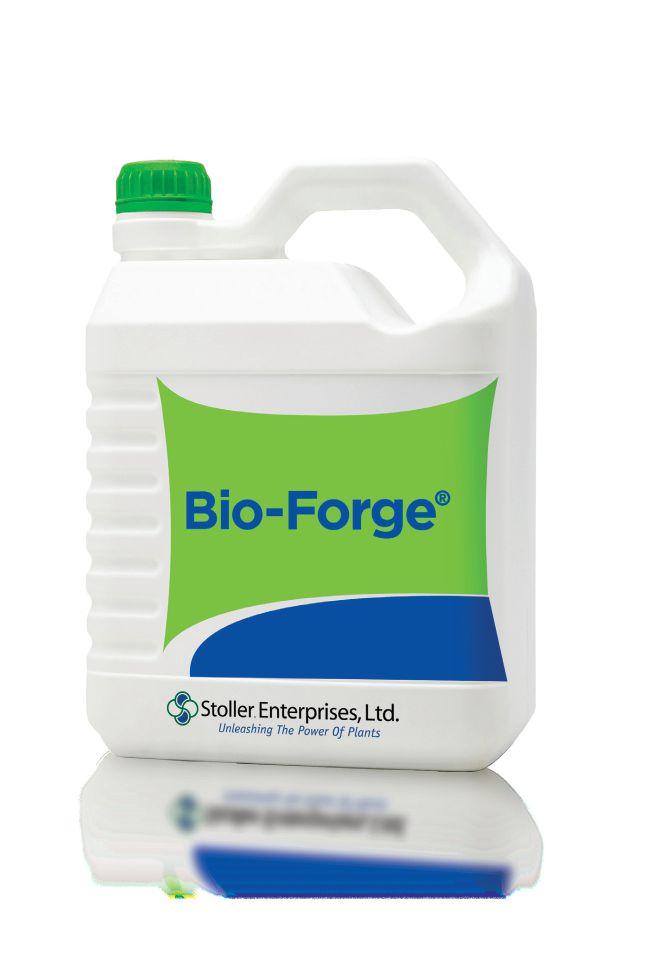
BIOFORGE ® PROTECTS
MILLIONS OF ACRES OF WEATHER THREATENED CROPS. IT CAN PROTECT YOURS TOO.
Crop stressors, like extreme temperatures, drought, and excessive moisture, can negatively impact your crop production, yield and bottom line. Stoller’s new advances in the plant health technology arena allow producers to insure against loss in times of extreme growing conditions. Bio-Forge offers an effective protection policy by delivering vital nutrients that regulate specific genes that enable your crop to adapt quickly to any growing condition. It’s like an insurance policy for your crop, from the inside out.
IS A. DISTINCTUS CAUSING YOUR CROP DAMAGE?
Join the pest patrol and report beetle grub damage.
by Bruce Barker
No need for alarm, but there is something funny going on with Aphodius distinctus, and Kevin Floate, research scientist and entomologist with Agriculture and AgriFood Canada (AAFC) at Lethbridge, Alta. is hoping to find out what. One of several species of dung beetles, A. distinctus has been potentially linked with crop damage in a steady stream of reports.
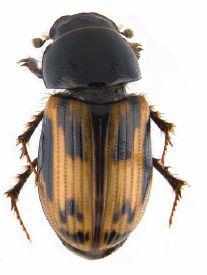
“I’ve been studying insects for 20 years, and every year in June I get a flurry of phone calls about beetle grubs in fields. In most cases, the calls are associated with isolated areas of crop damage across a wide range of crops including pea, corn, wheat and barley,” says Floate. Aphodius distinctus is a European species of beetle that is common throughout Canada. The adult beetle is gold and black, about five to six mm in length. It has a preference for open pastures and is generally attracted to cattle and horse dung from mid-August through mid-October. The adults overwinter, emerging in spring and laying eggs in the soil in April and May. The eggs develop into the larval stage and look like white grubs. The larvae are approxi-
mately three to four mm long and have a very distinctive C-shape.
The grubs are reported to feed on rotting organic matter, but Floate wonders if they may also be feeding below ground on plant roots as he keeps getting reports of crop damage associated with beetle grubs.
“When farmers report crop damage associated with these grubs, populations are at least 90 to 100 larvae per square metre, mostly in patches in the field, but I’ve seen densities of 200 to 300 per square metre,” says Floate.
The larvae feed through June and into July, then pupate, with adults emerging in September to complete the life cycle. The adult beetle is easily attracted to dung, and Floate has been able to collect 3,000 to 4,000 A. distinctus adult beetles in one dung-baited pitfall trap over a one-week period.
TOP: A. distinctus has caused isolated areas of crop damage during the spring.
INSET: The adult A. distinctus beetle is identified by its striking gold and black appearance.
Floate speculates that the adult dung beetles may also be attracted to field crops in spring or fall when manure or compost is spread on the land.
“It could be the adults are attracted to composted land. You can often see clouds of beetles hovering behind a manure wagon,” says Floate.
Join the pest patrol
Since so little is known about A. distinctus and its impact on crop production, Floate is asking farmers and agronomists to send him reports of beetle grub damage in crops.
“I want to build upon the anecdotal stories we are hearing and start to build a better understanding of the insect. Maybe some crops are more susceptible. What are the grub densities that are causing crop damage? These are some of the questions we are hoping to start to answer,” says Floate.
He would like to know the field history, location, crop rotations, fertilizer or compost application, crop residue in the spring, whether the field is irrigated, the density and distribution of the white grubs, and the extent of the crop damage.
“Maybe the crop damage we are seeing is on fields with high organic matter, or maybe the field was composted or manured in the fall,” says Floate. “Having more people looking for the grub and providing information will help to explain why we seem to be getting these reports of grub damage.”
Ideally, he would also like to obtain live samples of the grubs so that he can rear them to adulthood to confirm the species. The different species are virtually impossible to distinguish in the larval stage but A. distinctus is easily recognized at the adult stage because of its unique gold and black colouring. The white grubs can be collected by sifting through the top few inches of soil. Floate rears the grubs in small jars of soil, which takes about three to four weeks at room temperature.
Floate says farmers and agronomists can email him at kevin.floate@agr.gc.ca to obtain specifics on the type of information he is looking for and how to collect and send in live white grub samples. For more on pest management, visit www.topcropmanager.com.
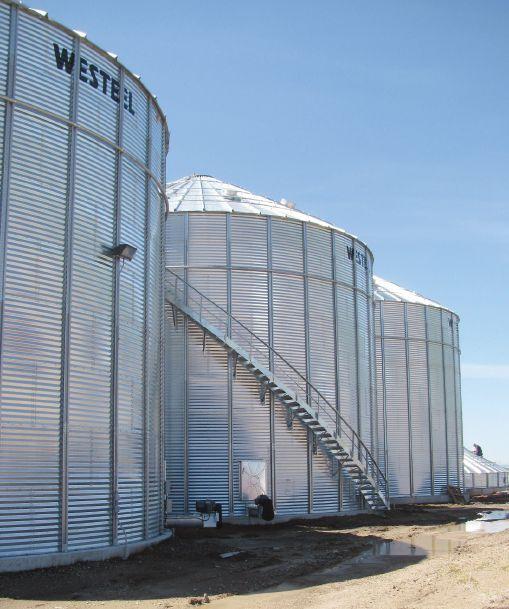
supplies a full line of farm management products, all manufactured to the same industry leading standards our bins are famous for. See everything we can bring to your farm. Talk to your Westeel dealer today.
SIDE-BANDED VS SEED-PLACED PHOSPHORUS
Seed-placed P may not be as important as once thought.
by Bruce Barker
Place phosphorus (P) nutrition with the seed. That’s been the mantra for decades, and while that may still hold for some crops, a review of research shows that side-banded phosphate fertilizer is usually just as good as seed-placed, if not better in some cases.
“There is some research that is being generated, where the placement of P may not be as crucial as we originally thought,” says Rigas Karamanos of Koch Fertilizer Canada at Calgary, Alta. He presented his research at the 2014 Soils and Crops Conference hosted by the University of Saskatchewan (U of S) at Saskatoon.
Karamanos dug through published research and found several studies related to P placement and the impact on yield. In addition, he delved into the Westco database and analyzed the sites that had P placement trials. His intent was to see if side-banded P and seed-placed P performed the same, and if side-banded P could actually deliver better results.
A research trial published in the Canadian Journal of Plant Science in 2008 looked at a 12-year barley rotation at the University of Alberta’s Ellerslie research farm. In the trial, 80 kg
N/ha was banded either at 7.5 to 10 cm or 15 to 17.5 cm depth alone or in combination with 40 kg P 2O 5 per ha (72 lb N/ac at 3 to 4 or 6 to 7 inches alone or in combination with 36 lb P 2O 5 per acre). The P was either seedrow placed or banded with the N (dual banding), or split half in the seedrow and half in the band.
“In only two years, seedrow [placed] was better than when we split it half and half in the band. In these two years in that 12-year rotation, we had a cool spring and seedrow placement gave the best yield. In the remaining years, though, we had a lost opportunity in that the seed-placed P did not give the maximum yield. It was the P that was banded, or split half in the seed row and half in the band that gave the best yield,” explains Karamanos. “That was music to the ears of my late colleague John Harapiak, who for years had been trying get that message out that side-banded P could produce high yields.” (See Fig. 1.)
Karamanos also dug up a study by U of S soil scientist and professor emeritus Les Henry that looked at P placement in
ABOVE: In many cases, side-banded P can produce as good or better results than seed-placed.
PHOTO BY BRUCE BARKER.
Source: Karamanos et al. 2013. Can. J. Plant Sci. 87:285-290.
pea. Karamanos says the common perception is that pea is not responsive to P fertilizer because pea are relatively sensitive to P fertilizer in the seedrow. Saskatchewan Ministry of Agriculture guidelines caution that maximum safe rates of seed-placed is 15 pounds per acre actual P 2O 5 fertilizer, based on knife openers with a one-inch spread on nine-inch row spacing with good to excellent soil moisture.
Lentils, mustard and chickpea are also relatively sensitive, with maximum safe rate guidelines at 20 pounds per acre actual P 2O 5 fertilizer, and canola at 25 pounds. Cereals’ safe rates are set at 50 pounds.
Henry and coworkers’ research was published in the Canadian Journal of Plant Science in 1995, and it illustrates that seed-placed P doesn’t always provide the best yield response. Experiments with seed placement and side banding of P fertilizer were conducted at three Saskatchewan locations during a three-year period, using pea, lentil and fababean. Monoammonium phosphate (12-51-0) was applied at six rates of up to 44 kg P/ha (90 P 2O 5 lb/ac).
COULDA SHOULDA WOULDA DID
Stand counts for pea decreased as the seed-placed P fertilizer rate increased, with stand counts reduced by 50 per cent at the 44 kg/ha rate of P. Lentil stand count was reduced by seedplaced P at two of three locations, while fababeans stand was not reduced with seed-placed P. Side-banded P produced the highest pea yield at all sites, while lentil yields were higher at two of three sites with side-banded P. For example, at Saskatoon, yield was about five bushels per acre higher with side-banded P while there was no yield response with seed-placed P. Seed yield of fababeans was unaffected by P placement. (See Table 1.)
“You can see that with seed-placed P in the pea crop, you don’t get any benefit from seed placement, but guess what? When you side band, you get this yield increase,” explains Karamanos. “So sometimes when we think about P and how we apply, it is very much tied to the mentality that P has to be placed with the seed but that’s not always the case.”
CONTINUED ON PAGE 34
Table 1. Seed yield of pea, lentil and fababeans averaged over six rates of side-banded and seed-placed P fertilizer (kg/ha)
a, b Means within a crop at each location followed by the same letter are not significantly different at the P = 0.05 level of probability.
Source: Henry, J. L., Slinkard, A. E. and Hogg, T. J. 1995. The effect of phosphorus fertilizer on establishment, yield and quality of pea, lentil and fababean. Can. J. Plant Sci. 75:395-398.
For unparalleled yield and quality in your wheat and barley crops, choose Prosaro® fungicide. It delivers premium disease protection against fusarium head blight (FHB), reduces DON levels and controls leaf diseases.
Two leading actives – tebuconazole for fast activity and prothioconazole for future defence – bring curative and preventative properties to your crop. Prosaro is truly the complete package for protecting both cereal crops and your peace of mind.
For more information, visit BayerCropScience.ca/Prosaro
PROSARO
Pea Lentil
MANAGING IRRIGATION TO OPTIMIZE CROP PRODUCTION
Surprisingly,
the most limiting nutrient in irrigated crop production is water.
by Ross H. McKenzie PhD, P. Ag.
Many irrigation farmers tend to under-irrigate their crops, which limits yield potential. To do a good job of managing irrigation, farmers need to know the amount of water their irrigation systems are capable of applying, the water holding capacity of their soils, the amount of water each crop uses throughout the growing season and how to check soil moisture levels in their fields.
The majority of irrigated fields in Western Canada are irrigated with pivot systems. Table 1 shows the GROSS water application of a low pressure quarter section pivot, irrigating 133 acres, with various water outputs in US gallons/minute (US gpm) at different application times. The GROSS water application rates are in millimetres (mm).
Table 2 shows the NET water application, assuming an 80 per cent efficiency rate. NET water application is the amount of water that actually enters the soil. Typically, low pressure pivot systems with drop tubes and pressure regulated spray nozzles have an 80 to 85 per cent efficiency of water application, depending on environmental factors including air temperature and wind speed. High-pressure pivot systems with impact nozzles typically have water application efficiency in the range of 75 per cent. Side rollwheel move systems have water application efficiency in the range of 70 per cent.
As an example of water application, a low pressure pivot with a 900 US gpm output that makes a full circle in 48 hours (two days) has a GROSS water application rate of 14.6 mm (from Table 1) but the NET application rate at 80 per cent efficiency is only 11.6 mm (from Table 2). A common mistake made by irrigators is not estimating NET water application. If a pivot can only apply 6 mm of water per day, and crops use 8 mm of water per day, the irrigation system will not be able to keep up with water use during peak periods.
Know your soil’s water holding capacity
Soil should be viewed similar to the varying sizes of fuel tanks on vehicles. Sandy soils have lower water holding capacity or a small fuel tank, while a clay loam soil has relatively larger water holding capacity or large fuel tank.
Two terms to know and understand are “field capacity” and
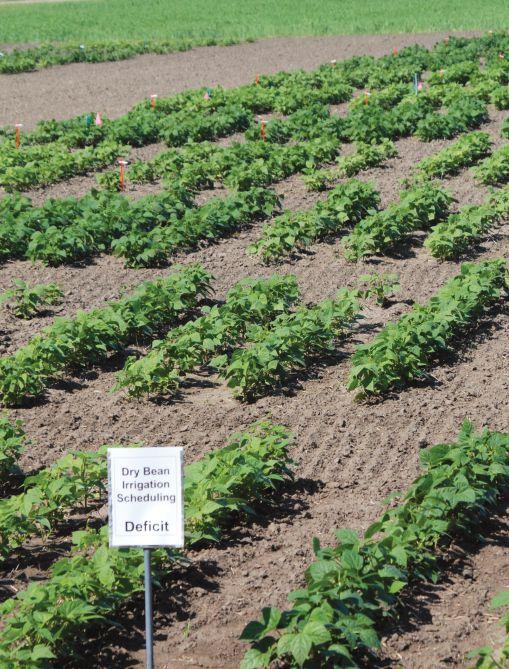
This demonstration at the Outlook Irrigation Crop Diversification Corp. showed the impact of deficient irrigation on dry beans.
“safe depletion point.” Field capacity is the total amount of water a soil will hold, which is also called “total available” soil water. Table 3 provides the approximate amounts of total available soil water for five major soil texture classes and the amount of “readily available” soil water in the 0 to 50 cm and 0 to 100 cm depths. As crops are taking up water, the amount of available water is drawn down. As this occurs, remaining soil water is held more strongly within soil pores and plants must gradually work harder to take up the remaining soil water. Readily available water is the
PHOTO
amount of water crops can easily take up, but after this water is used, crops begin to suffer, wilting during the day, and yield losses will occur.
Safe depletion point is the amount of water that can be safely used by crops without crop yield loss, but when this point is reached it is time to irrigate soil back to field capacity. Ideally for most irrigated crops, you should only use about 40 to 50 per cent of the total available water (safe depletion point), and then it is time to irrigate soil back to field capacity.
Annual crops such as wheat and canola typically will root down to about 100 cm (40 inches) and can effectively take up moisture to 100 cm by the time of heading for cereals and flowering for canola. Under ideal conditions at heading or flowering, most annual crops will take up 70 per cent of water requirements in the 0 to 50 cm depth and the remaining 30 per cent of water requirements in the 50 to 100 cm depth.
Irrigators must be very aware of the amount of crop water use of annual and perennial crops throughout the growing season. Moisture use starts off at relatively low rates in early May, but as vegetative growth rapidly increases, so does daily water use. Depending on the crop, peak water use can range from six and nine mm/day of water, depending on evapotranspiration conditions including maximum air temperature and wind speed. Southern Alberta farmers have access to the Irrigation Management Climatic Information Network (IMCIN) weather stations which provide daily crop water use information at sites across southern Alberta at: http://agriculture.alberta.ca/ acis/alberta-weather-data-viewer.jsp?stations=imcin. This is very useful for
knowing how much water crops are using and to help to predict irrigation requirements.
As crops are growing, irrigators must regularly monitor and determine soil moisture in fields to ensure moisture levels don’t decline below the safe depletion point. There are various ways to monitor soil moisture – a simple and easy way is to use the “feel method.” A hand auger is used to auger down to 100 cm, all the while assessing the soil moisture level at incremental depths. Alberta Agriculture and Rural Development’s Irrigation Manual has a very good table that provides information on the feel of soil at different moisture levels for different textured soils. A good place
to start is to check soil moisture in fields the day after irrigating so you know how your soils feel at field capacity. Then get to know how soils feel at 75 and 50 per cent of field capacity. This takes a bit of time and practice but can actually be quite effective to easily check soil moisture on a weekly basis.
Alberta Agriculture’s Irrigation Management Field Book can be used to record and plot soil moisture for each field. It is excellent for recording soil moisture and predicting when to irrigate. Further, Alberta Agriculture has a free computer program model called Alberta Irrigation Management Model (AIMM) which is fairly advanced but a very useful decision-making tool.
full circle.
Source: R. McKenzie
Table 2. NET irrigation water application on a 133 acre pivot with varying output in US gpm and different times to complete a full circle assuming 80% efficiency of application.
Source: R. McKenzie
Source: Adapted from Alberta Agriculture Agdex 112/561-2.
Table 1. GROSS irrigation water application on a 133 acre pivot with varying output in US gpm and different times to complete a
Table 3. Total plant available water for five different soil textures assuming effective rooting depths of 0 to 50 and
to
cm; and the amount of water needed to raise soil to field capacity when 40% of water is used.
Westco research illustrates placement possibilities
A few years ago, Karamanos had a conversation with Agriculture and Agri-Food Canada research scientist, Dr. Guy Lafond (deceased) at Indian Head, Sask. Lafond was interested in conducting research on seed-placed versus side-banded P. Karamanos took the first step by looking into the Westco database and pulling out seedplaced versus side-banded P trials. He found five barley, 13 canola, four wheat and five winter wheat sites from the 1991 to 2000 time frame, with four MAP fertilizer rates, a check with no P fertilizer, and seed-placed and side-banded treatments. The sites were primarily in Alberta, with one site at Yorkton, Sask., in 1996. There was a range of P soil test values, from a low of 1 kg P/ha to a high of 28 kg P/ha (Olsen bicarbonate-extractable P).
All sites were direct seeded into stubble with an air seeder on nine-inch row spacings or a hoe drill with eight-inch row
spacings. The trials were managed according to typical agronomic practices, and N and K fertilizer was applied according to soil test results. In the side-banded treatments, P was applied alone in the band, without N fertilizer.
For canola, stand density sharply decreased with increasing P rates when applied in the seedrow but not when side-banded. However, canola yield was not affected by P fertilizer placement. Karamanos says side-banded P did not produce higher yields because canola compensated for the thinner stand with more branching. This result was consistent with other research by AAFC research scientist Sangamesh Angadi at Swift Current. Angadi found that thinner canola stands did not yield less and that greater branching and increased pod retention at each node compensated so that canola yield was unaffected by stand density – especially when the reduced plant population was uniformly distributed. Growers, though, are cautioned to observe safe rate guidelines
published by provincial agriculture departments, as there is a tipping point when canola cannot compensate for thinner stands.
Barley and spring wheat were not affected by P placement, confirming their relative high tolerance of seed-placed P fertilizer, up to a point. At 50 pounds P2O5 per acre, wheat yield started to drop off, while side-banded P yields continued to rise in a linear fashion. This is consistent with other research and recommendations on wheat, where the maximum safe rate of seed-placed P is 50 pounds P2O5 per acre.
“This represented the only instance that side-banded P will allow crops to respond positively to greater rates of P fertilizer,” says Karamanos. “In cereals, we may be missing out on yield by not applying higher rates of P, which could be applied in a side band.”
With wheat, maturity was significantly affected, and sidebanding increased the days to maturity by about four days at a P rate of 30 pounds. However, as the P rate increased, that difference for days to maturity was eliminated.
In these Westco trials, the P was side-banded alone, without additional N in the band. Karamanos says that other Westco research looked at the effects of a “hot” band of N restricting P uptake. He says the research found that only if soils were severely P deficient would there be an issue with P uptake. On a sandy soil, anything over 85 lbs N in a sideband with P could create a problem with P uptake. On clay soils, the cutoff was 95 to 100 lbs N per acre on a severely deficient soil.
“If you are in a situation where your soil is not severely deficient, the rate of N in the side band doesn’t really matter,” says Karamanos.
Another long-term (24 years) Westco rotational study also showed that on a severely deficient soil, less than 8 ppm (16 lb P/ac), seed-placed fertilizer did provide a yield benefit, but only in the first three to four years. After that period, side-banded fertilizer performed just as well.
“The moral of the story is that we have to look at crops and the sensitivity of crops. It is not necessarily that the P has to be placed with the seed. Side banding is just as, or in many instances, more effective than seed-placed,” says Karamanos.
As a farmer, I expect…
10-section automatic overlap control that saves money by eliminating double seed and fertilizer application.
Gentle metering and distribution that lets me reduce seeding rates while maintaining target plant populations.
Hydraulic, ground-following openers that give me uniform seed and fertilizer placement, excellent emergence, strong growth and even maturity.
Stress-free, in-cab automatic calibration that’s based on actual product usage thanks to weigh cells on each tank and a user-friendly monitor.
Knowledgeable support staff who can trouble-shoot remotely via my in-cab monitor while I am in the field.
To apply granular fertilizer at rates of up to 400 lbs/acre on my 100’ drill with no plugging.
Variable rate capability for up to five products at one time.
A ruggedly reliable system that can seed thousands of acres with no breakdowns and minimal maintenance.
A light-pulling drill with a lift-kit that seeds through muddy fields without getting stuck.
SeedMaster gives me all of this in one seeding system with advanced technologies that make money for my farm – like Auto Zone Command™, Auto Calibration™, the UltraPro Canola Meter™, the Nova Smart Cart™, and SafeSeed Individual Row Metering™
“Zone Command saves me about $57,000 per year or 5% of my input costs on dry years and probably twice that in wet years. I wouldn’t farm without it.”
Franck Groeneweg Edgeley, SK
AGRONOMIC MANAGEMENT OF WINTER WHEAT
Reap the benefits by utilizing optimum management practices.
by Ross H. McKenzie PhD, P. Ag.
Winter wheat yield potential can be 15 to 40 per cent higher than spring wheat, which makes it a very economical crop to include in a crop rotation. Growing winter wheat is fairly straightforward. However, a number of specific management practices must be followed to successfully grow winter wheat.
Planning ahead is essential – the first consideration is having fields available for seeding winter wheat at the correct time in late-summer. This is often a limiting factor for farmers wanting to grow winter wheat and requires long-range planning of crop rotations.
Variety selection is important. Selection should be based on a range of agronomic factors including grain quality, winter hardiness, yield potential, disease resistance and lodging. Farmers outside of southern Alberta should select a variety with very good winter hardiness. Farmers in higher moisture regions and under irrigation should select varieties with good lodging resistance. Check your provincial seed guide to carefully review the advantages and limitations of each variety to determine which varieties have the best agronomic characteristics for your local area.
Ideally, winter wheat should be direct seeded into standing stubble. Seeding into canola or mustard stubble offers crop rotation advantages
such as reduced weed problems, easy-to-control volunteers, and reduced insect and disease problems. Standing stubble is very important to trap snow, which acts as an insulator. Four inches of snow will normally provide sufficient insulation to ensure overwinter survival.
Establish a good stand early in the fall
Farmers in the Brown and Dark Brown soil zones should seed winter wheat in the first two weeks of September. Farmers in the Black and Gray soil zones should seed winter wheat in the first week of September or even in the last week of August. Seeding at the ideal time is very important to allow winter wheat to germinate, emerge, put up three leaves and then establish a crown root system. It is important that crown roots are established before winter to ensure overwinter survival. Later seeding may result in poorly established plants, which results in lower winter survival. Late seeding will result in delayed heading, later maturity, increased weed problems and lower yield potential. Alberta Agriculture research in southern Alberta has shown that up to a 30-per cent-yield decrease occurs when seeding is delayed to early October.
ABOVE: Nitrogen management is important in winter wheat production.
PHOTO BY ROSS MCKENZIE.
Practically impenetrable yield protection. With two modes of action, Astound® stops Sclerotinia spores from germinating and fungal threads from growing. That frees your canola to do what it should: yield more.
Generally, winter wheat should be seeded at a rate to achieve a plant stand of 25 plants per square foot. Higher seeding rates should be used in the Black soil zone and under irrigation. Thousand kernel weight (TKW) should be determined and used to calculate seeding rates so target plant populations are achieved. Winter wheat has considerable ability to tiller; however, best yields are obtained with higher seeding rates. Ideally, narrower row spacing of nine inches is best.
Winter wheat has a very short coleoptile. The coleoptile is the extension of the seed embryo that pushes its way through the soil to the surface, from which the first leaf develops. To allow for the coleoptile to emerge, winter wheat should be sown 0.5 to one inch deep. Winter wheat seeded deeper than one inch will often have reduced emergence. Deeper seeding will delay emergence and cause weaker, spindly plants that are more susceptible to winter kill.
Frequently, soil moisture is low in stubble fields in early-September. Farmers are faced with the decision as to whether to seed into dry soil or wait for rain. Saskatchewan research has shown that winter wheat will germinate at very low soil moisture levels. Ideally, it is best to seed winter wheat at the recommended time for your area rather than wait for rain, provided that the seeding operation leaves the seed firmly covered with no more than one inch of soil.
Soil temperature can dramatically affect the time it takes winter wheat to germinate. For example, with good soil moisture winter wheat will take about six days to emerge at a soil temperature of 20 C, while it takes about 12 and 30 days to emerge at soil temperatures of 10 C and 5 C, respectively. Therefore, late seeding of winter wheat into cooler soils can jeopardize good establishment of the crop.
Winter wheat should only be seeded into “clean fields” without any actively growing volunteer cereals. Volunteer grain can harbour an insect called the wheat curl mite, which can transmit a virus called wheat streak mosaic. Any actively growing green vegetation such as volunteer grain or grasses can serve as a host for the mites. If winter wheat is seeded into stubble with green volunteers or by adjacent green fields, the mites will move from the host plants into the winter wheat after emergence and spread the virus. The damage from this disease can range from moderate to complete crop failure. The mites wrap themselves within the wheat leaves; therefore, insecticides are completely ineffective. Cultural controls are the only way to control this disease. The only winter wheat variety with resistance to the wheat curl mite is Radiant.
Look after soil fertility
Alberta research has shown that phosphorus (P) fertilizer placed with
or near the seed at the time of seeding improves plant growth in the fall and results in increased winter hardiness. Approximately 20 to 30 lbs/ ac of phosphate is usually adequate and is most effective when placed with the seed.
Most stubble fields are low in soil nitrogen (N). After a high production year, soil N levels are often very low. Soil testing to determine N and P are strongly encouraged to accurately determine fertilizer requirements. In the Black and Gray soil zones, potassium (K) and sulphur (S) are more commonly deficient and should also be checked. Soil sampling and testing is important to determine optimum fertilizer requirements. If soil moisture conditions are very dry at planting, it may be best to apply approximately 50 to 70 per cent of estimated N requirements at the time of seeding and apply additional N in early spring, depending on soil moisture conditions.
Previous recommendations for winter wheat suggested that N fertilizer should only be spring-applied, because fall-applied N may reduce winter hardiness. Research by Alberta Agriculture has clearly shown that fall-applied N fertilizer does not reduce overwinter hardiness when applied in balance with phosphate fertilizer. Research did show that N fertilizer banded before seeding tended to dry out the seedbed and resulted in a rougher and lumpier seedbed, which negatively affected uniform germination and emergence. Research also showed that seedplaced N fertilizer applied at rates greater than 30 lbs N/ac using urea at a seedbed utilization of 10 per cent (spreading the seed and fertilizer over 0.9 inches with a row spacing of 9 inches) with low to medium soil moisture had a detrimental effect on winter wheat germination and emergence. Therefore, side- or mid-row banded N at the time of planting is usually best when N rates are higher than 30 lbs N/ac.
In the past, ammonium nitrate (34-0-0) fertilizer was recommended for spring broadcast application, but it is no longer manufactured in Canada. One supplier near Lethbridge, Alta., imports 34-0-0 for resale to southern Alberta farmers. For most growers, very early spring-broadcast urea (46-0-0) can work reasonably well. Another option is to dribble band or use spray jet nozzles to apply 28-0-0 liquid fertilizer. For both 46-0-0 and 28-0-0, there is always concern of volatilization of urea (conversion of urea to ammonia gas). Therefore, urea or 28-0-0 should be applied as early as possible in the spring when soil and air temperatures are cool. A urease inhibitor such as Agrotain to reduce potential volatilization should be considered. For further information on fertilizing winter wheat refer to Alberta Agriculture Agdex 112/542-1 Fertilizing winter wheat in southern Alberta.
Weeds can be easily cleaned up
Due to the competitive nature of vigorously growing winter wheat, weed pressure tends to be lower than with other crops. Winter annuals are the greatest problem. However, these can easily be controlled with inexpensive products such as 2,4-D or MCPA – preferably in late-fall, but early spring application is also quite effective. Winter wheat is very competitive in spring and the need for wild oat herbicides are not always necessary.
In summary, winter wheat can be an excellent crop to include in a crop rotation. By following simple, straightforward management practices, winter wheat can be an easy and very profitable crop to grow. For more detailed information on winter wheat production, refer to provincial agricultural websites and the website http://www.growwinterwheat.ca/.
For more on winter wheat production, visit www.topcropmanager.com.
Winter wheat can be a profitable crop and matures much earlier than spring wheat.
PHOTO BY BRUCE BARKER.
farmers to transform agribusiness
In the last five years, we have introduced twelve new crop protection products exclusively to Members of Farmers of North America. And we plan on doing the same in the next five.
The launch of these off-patent pesticides has had a dramatic impact on Canadian chemical pricing.
The tipping point is near. We are creating a critical mass needed to maximize farm profitability by lowering input costs on valued crop protection products.