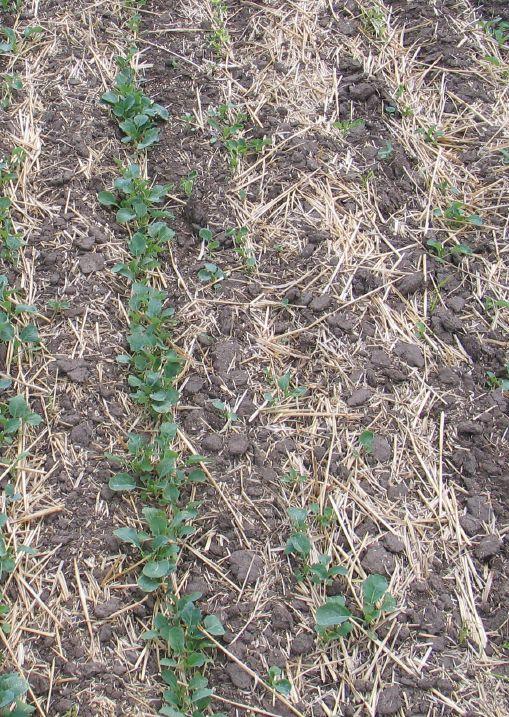
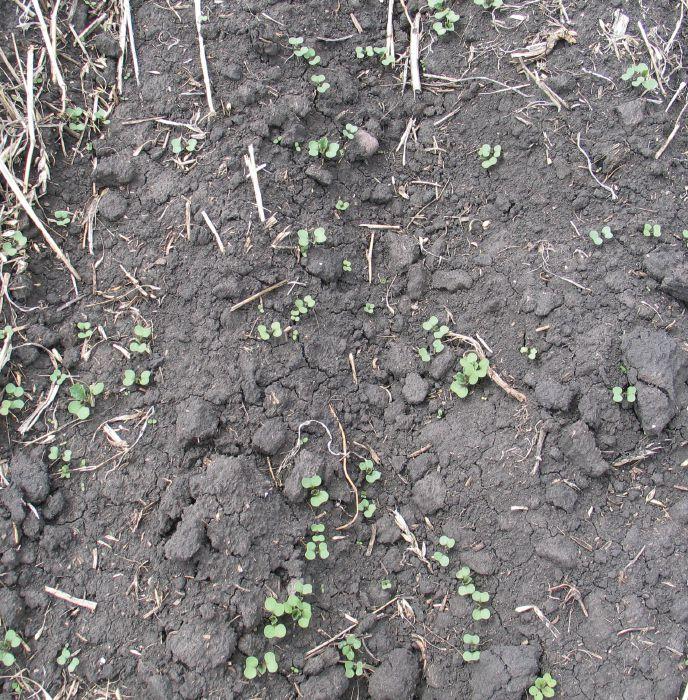
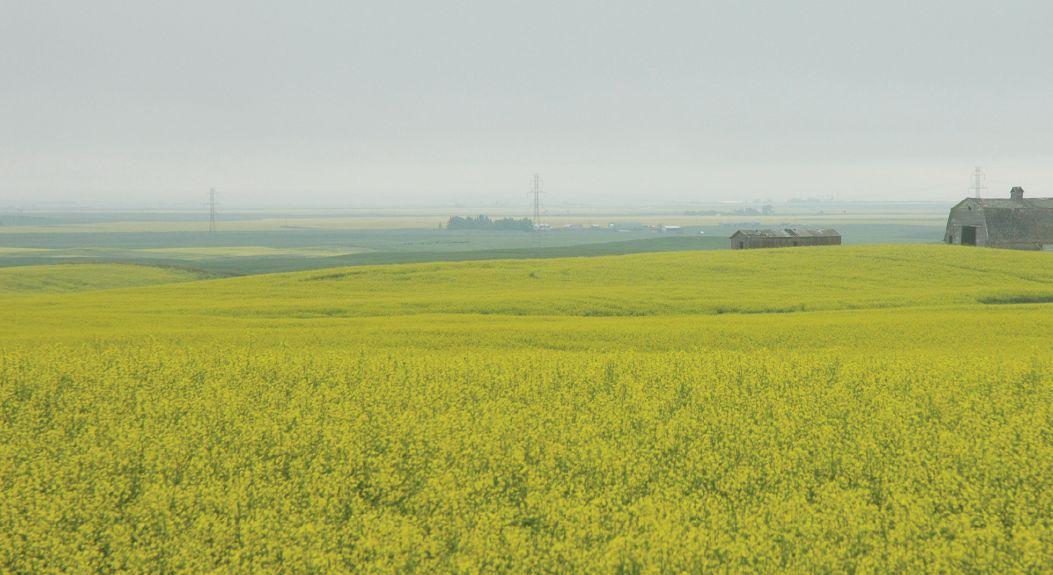
Outstanding yield* is one thing, but for InVigor® it’s about more than great numbers.
Growers love InVigor for many different reasons. Early season vigor, high stress tolerance, low green seed counts, crop uniformity, consistent performance and ease of harvest to name a few.
Book yours today.
*Source:
Darryl Perkin, Elgin, MB.
TOP CROP
MANAGER
DISEASES
8 | Vigilance required in management of sclerotinia
Moisture conditions are a key driver in sclerotinia stem rot.
By Carolyn King
24 | Early diamondback moth infestations a puzzle
What to know if it happens again.
By Bruce Barker
WESTERN FIELD EDITOR Bruce Barker • 403.949.0070 bruce@haywirecreative.ca
WESTERN SALES MANAGER Kevin Yaworsky • 250.317.1992 kyaworsky@annexweb.com
EASTERN SALES MANAGER Steve McCabe • 519.400.0332 smccabe@annexweb.com
SALES ASSISTANT Alice Chen • 905.713.4369 achen@annexweb.com
PRESIDENT Michael Fredericks mfredericks@annexweb.com
Readers will find numerous references to pesticide and fertility applications, methods, timing and rates in the pages of Top Crop Manager. We encourage growers to check product registration status and consult with provincial recommendations and product labels for complete instructions. EDITOR Janet Kanters • 403.499.9754 jkanters@annexweb.com
PuBliCAtion MAil AGreeMent #40065710 return undeliVerABle CAnAdiAn AddreSSeS to CirCulAtion dePt P.o. Box 530, Simcoe, on n3Y 4n5 subscribe@topcropmanager.com
Printed in Canada iSSn 1717-452X
CirCulAtion e-mail: subscribe@topcropmanager.com tel.: 866.790.6070 ext. 202 Fax: 877.624.1940 Mail: P.o. Box 530, Simcoe, on n3Y 4n5 SuBSCriPtion rAteS top Crop Manager West - 8 issuesFebruary, March, Mid-March, April, June, october, november and december1 Year - $44.25 Cdn. plus tax top Crop Manager east - 7 issuesFebruary, March, April, August, october, november and december - 1 Year - $44.25 Cdn. plus tax Specialty edition - Potatoes in Canada - February1 Year - $8.57 Cdn.
nEw T rai TS in T h E wor KS
Sclerotinia tolerance and pod shatter reduction available in 2014.
by Janet Kanters
In less than four decades, the booming canola industry has emerged from experimental fields in the prairies to gain significant ground in the world oilseed market. In the last 10 years alone, production has doubled, from seven million tonnes in 2002 to 14 million tonnes in 2011.
and canola shows no sign of slowing down its meteoric rise as a high-value crop for western Canadian farmers.
Since it was first developed, subsequent improvements – such as the introduction of hybrids – have produced canola varieties more resistant to disease, with improved crop yield, higher quality and shorter maturity. Bayer CropScience is one company that is working diligently to develop new and improved canola hybrids for its customers. one new product will be a sclerotinia-tolerant InVigor hybrid.
“Sclerotinia stem rot has become an important pest in Western Canada,” says Blaine Woycheshin, Bayer CropScience manager of oilseed crops. “In 2012 in particular, the disease has not only expanded geographically across the prairies, but more significantly, has increased in severity levels in all growing areas. This is of particular concern to us, and with the release of our new sclerotiniatolerant InVigor hybrid, we will offer growers an added defence to combat this disease.”
While Bayer plans to have the sclerotinia-tolerant hybrid available for sale in 2014 (registration pending), they intend to showcase the hybrid in various demonstration strip trials across the prairies in the summer of 2013.
Bayer CropScience isn’t the first company to offer this particular trait to growers. Dupont pioneer has marketed products with moderate resistance to sclerotinia.
“What we’re offering growers will be overall performance consistent with the InVigor yields that growers have come to expect; this will be the greatest benefit with this new hybrid,” says Woycheshin. “plus the sclerotinia tolerance in this hybrid will offer a first line of defence against sclerotinia; it’s another tool in the grower’s toolbox.”
another new trait coming in development from Bayer will be hybrids that better resist pod shatter. The company tested the hybrid across Western Canada in 2012, and plans to have hybrids available for sale in the 2014 growing season (pending registration).
“This new patented technology will offer growers the yield protection to delay swathing, or to possibly straight cut their canola,” notes Woycheshin. “These hybrids could have a fit on every farm. Some growers might want to leave their canola in the field longer to achieve high yields or increase quality. Flexibility in harvest
management is the key benefit for our growers.”
Innovation in InVigor is not limited to the launch of new traits. Bayer continues to strive to bring higher-yielding products to the marketplace to satisfy their growers’ needs, says Woycheshin.
“With that in mind, we will be bringing two new mid-maturing InVigor hybrids into the marketplace for 2014 (registration pending),” he notes. “These hybrids offer growers between six and nine percent higher yields than current offerings in the marketplace.”
also in 2014 or 2015, Bayer intends to launch a dual herbicide resistant InVigor hybrid that is resistant to both Liberty and roundup herbicides. The aim is to offer growers greater flexibility in their weed control choices to combat weed resistance. The company is awaiting regulatory approval.
Woycheshin says Bayer’s focus is on its customers. “over the last five years, I’ve bumped into many growers across the prairies who’ve said that canola has kept them on the farm. The profitability they’re achieving from canola has been a significant contributor to the overall success of their farming operation.
“Technology has come a long way in the past five years,” adds Woycheshin. “But the development of these new and improved hybrids gives farmers the ability to keep on farming, to remain competitive in a global market and to continue to feed the world.”
Photo courtesy of Bayer c ro Ps cience.
Blaine Woycheshin, Bayer CropScience manager of oilseed crops.
SpEcialT y canola con T inu ES To Evolv E
Better stability, higher returns.
by Janet Kanters
Each year, the demand for high oleic canola oils continues to increase – well beyond the increase in population. With growing scrutiny on public health, particularly obesity in children, the market for healthier vegetable oils remains strong.
In the specialty canola oil sector, three companies lead the way – Cargill, Bayer CropScience and Dow agroSciences. each of these companies has varieties in the market today that have the high oleic oil profile.
according to Blaine Woycheshin, Bayer CropScience manager of oilseed crops, the company entered the specialty canola oil business for a very simple reason – demand.
“Consumers today are increasingly interested in their health, and they’re more cognizant of where their food comes from,” he says. “With the demand for heart health cooking oils, we saw a great opportunity to offer our growers higher returns through access to these premium markets with InVigor Health.”
Bayer is aligned with Cargill in their specialty canola business. rick
Wiebe, marketing manager for Cargill, says constant research and innovation is key to ensure growers – and end users – are getting the best possible product.
“The main focus in developing hybrids for our growers is increasing yields and disease resistance, making sure they have varieties that are agronomically stable, and are at par or better than the best commodity varieties,” he says. “as for the end product, we’ve recently launched a higher oleic content canola, Clear Valley 80 oil, with the highest stability of a canola oil on the market today. This increases the shelf life of the oil, and really makes that taste come through.”
Bayer has two specialty canola hybrids available in the Cargill Specialty Canola program: InVigor Health L156H and InVigor Health 1145 both contain LibertyLink technology, allowing growers to benefit from
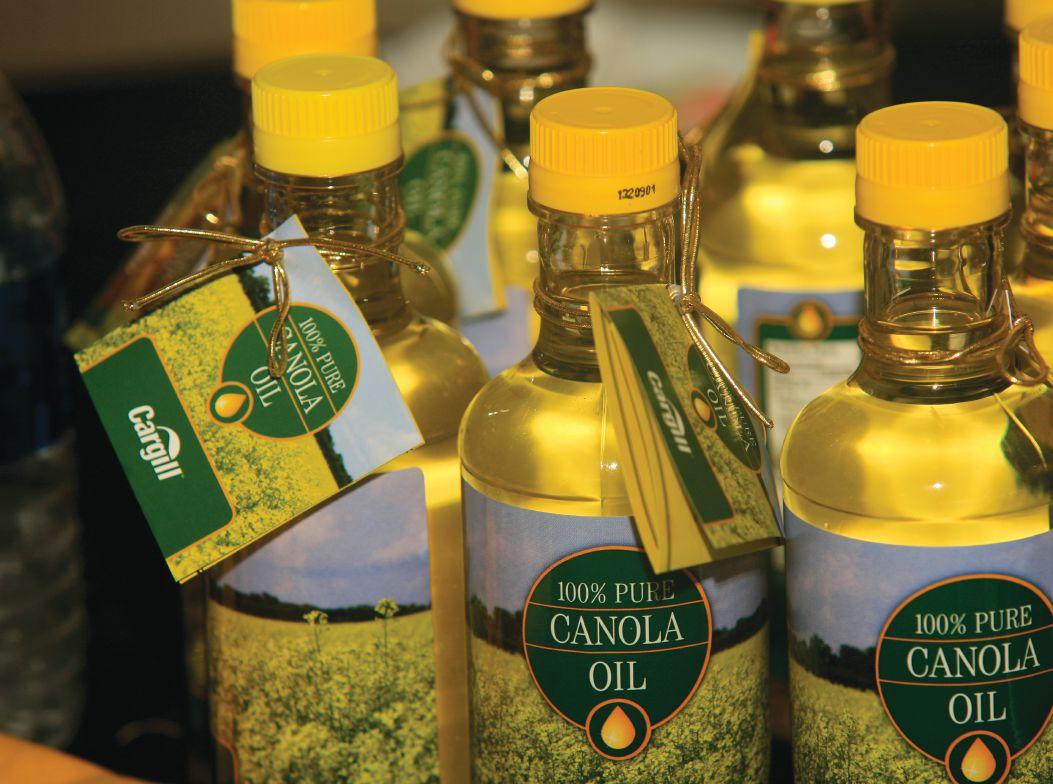
TOP: Continued demand for canola oil offers great opportunities for canola growers in Western Canada.
INSET: The greatest incentive for growers is higher returns from producing specialty canola.
Photo courtesy of
Photo courtesy of
By working directly with specialty canola growers, Cargill ensures its oil customers receive the ingredients they need at the right specifications.
the yield potential of a hybrid combined with the high-stability oil profile required for contract premiums. “With both products, growers get reliable maturity, and premier lodging and weed resistance, to generate more bushels from every acre,” says Woycheshin.
according to Wiebe, the greatest incentive for growers is higher returns from producing specialty canola. “growers can earn higher returns by growing specialty canola with our higher-yielding InVigor Health and VICTorY hybrids in a simple program that offers a premium over classic canola,” he notes, adding that a good grower support system from Bayer and Cargill is also an incentive.
“Making sure we have satisfied grower customers is really important because for the end-use customer, we have to have an assured supply of oil,” he says. “We need to make sure our growers come back every year so we’re sure we produce enough oil to meet demand from our oil customers.”
along with Bayer’s territory managers and market development reps, Cargill dedicates seven specialty canola territory managers, six in Western Canada and one in north Dakota. In addition, Cargill agHorizons offers the elevator systems and retail distribution system in Western Canada.
Agronomics, special handling and contracting
For the most part, growing specialty canola doesn’t require different management from an agronomic standpoint. Like classic canola types, specialty canola hybrids come with their own set of various traits, depending on the company and the hybrid in question. But there are a few simple steps that need to be done as the crop comes off the field.
“Management of specialty canola is really easy; farmers can manage it like any canola crop,” says Wiebe. “But they do need to keep it segregated from any classic canola they might be growing. also, at sampling and harvesting, farmers need to make sure they take that step and do both properly.”
For instance, growers need to ensure they don’t have any mixes in the field at planting, i.e., specialty canola mixed with classic canola. also, growers need to harvest the specialty crop separately, bin it separately and submit samples after harvest.
Cargill contracts a limited amount of specialty canola each year, ensuring they meet supply and demand with end-use customers. “Cargill is the only company that manages the entire high oleic canola supply chain,” says Wiebe. “Being the only company that is both a seed and an oil supplier allows us to work directly with growers to manage supply and quality. This helps ensure our oil customers receive the ingredients they need at the right specifications.”
The demand for both classic and specialty canola oil continues to increase in the marketplace. as a result, Cargill is building a new crush plant at Camrose, alberta. The plant will have capacity to process 850,000 metric tons of canola per year, and is expected to be ready for the 2014/15 crop marketing year. Cargill already operates the country’s largest canola-crushing plant at Clavet, Saskatchewan.
“With the continued demand in growth in north america and offshore for canola oil and meal, this offers great opportunities for canola growers in Western Canada,” says Wiebe. “as well, strong demand pull in north america from biofuels and specialty oils puts Canadian canola in an enviable supply position.”
Photo courtesy of c argill.
DISEASES
viG ilanc E r EQuir E d in M anaGEME n T
S cl E roT inia
Moisture conditions are a key driver in sclerotinia
by Carolyn King
The development of sclerotinia stem rot in a canola crop is like a complicated dance between the fungus’s life cycle and the crop’s growth stages, with environmental conditions, especially moisture levels, driving the dance and affecting whether the disease will be mild or severe.
In many areas of the prairie provinces in 2012, conditions favoured sclerotinia stem rot. But who knows what the situation will be next year? The variability in sclerotinia levels from year to year and from region to region is a key challenge in managing this disease.
Sclerotinia stem rot is a major disease of canola in Western Canada. When disease levels are high, it can cause greater than 50 percent yield losses. Sclerotinia sclerotiorum, the fungus that causes the disease, occurs around the world and has a very wide host range. examples of its other prairie hosts include mustard, sunflower, pulses, potatoes and flax, as well as such broadleaf weeds as stinkweed, Canada thistle, sow thistle and dandelion.
2012 disease levels in context
annual surveys track the prevalence and incidence of sclerotinia and other diseases in the major canola-growing regions of the prairies. “prevalence is the percentage of fields where the disease is present,” says Clint Jurke, agronomy specialist with the Canola Council of Canada. “In 2012, in Manitoba sclerotinia was observed in 65 percent of the fields surveyed, in Saskatchewan it was 91 percent, and in alberta 87 percent.”
Disease incidence, meanwhile, is the percentage of plants with the disease. In 2012 in Manitoba, nine percent of the plants had sclerotinia, in Saskatchewan 19 percent, and in alberta 18 percent. “The rule of thumb is to divide the incidence number in half to determine the approximate yield loss,” notes Jurke. “So in Saskatchewan and alberta the yield loss across the province due to sclerotinia was roughly nine to 10 percent, and in Manitoba it was about four to five percent.”
Looking at the survey data for the last 15 years, the 2012 disease levels were higher than average in alberta and Saskatchewan, and lower than average in Manitoba. according to Jurke, a key reason for that was the weather. Unlike a lot of the other canola diseases, which are strongly impacted by rotation, sclerotinia is influenced almost entirely by environmental conditions.
“Saskatchewan and alberta had higher than normal rainfall in 2012, and they had higher than average sclerotinia levels,” says Jurke. “We used to think that much of southern Saskatchewan and southern alberta didn’t have sclerotinia as a problem, but with the moisture in the last few years, we’ve seen the opposite of that.”
Manitoba typically has moister conditions, so, Jurke says, it usually has more sclerotinia than the other two provinces. “In some years the incidence of sclerotinia has been over 30 percent in Manitoba. But in the last two years, the disease levels in Manitoba have been relatively low due to dry conditions.”
Sean Miller, plant disease specialist with Saskatchewan a griculture and Food, says that when you look at Saskatchewan’s canola disease survey results over the last number of years, it’s clear that sclerotinia is and will generally continue to be an issue in moist years. “The disease doesn’t always create a significant impact in drier years,” he notes. “For example, during growing seasons such as 1999, 2000, 2004, 2010 and 2012, there was prolonged moisture at the bloom stage, and we found sclerotinia in the majority of the fields surveyed and a higher disease incidence. The results also show that the level of the disease can vary greatly from year to year and from region to region, depending on the weather.”
Moisture favours pathogen’s development
Moisture is important to sclerotinia levels on the prairies because moist conditions are key to most stages of Sclerotinia sclerotiorum ’s life cycle. The fungus overwinters in the soil as resting bodies called sclerotia, which can survive for several years. In the spring, if soil moisture is near field capacity for several days and temperatures are mild, the sclerotia will produce apothecia, little mushroom-like bodies that are shaped like golf tees.
The apothecia release millions of tiny spores, called ascospores, into the air. Spore dispersal is enhanced by windy weather without too much rain; continued heavy rain inhibits spore release and washes spores out of the air.
The spores usually land within a few hundred metres, but they can be carried into neighbouring fields by the wind. Spores that land on canola petals use the petals as a food source, so they can get enough energy to continue developing. When the infected petals drop off and fall into the crop canopy, they tend to get caught in places like the leaf axils where moisture also collects. From there, the fungus is able to infect the
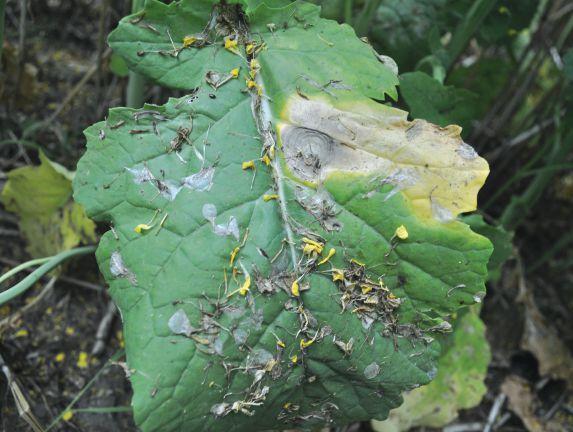
<LEFT: Infected petals transfer sclerotinia to the leaves and stems of the canola plants.
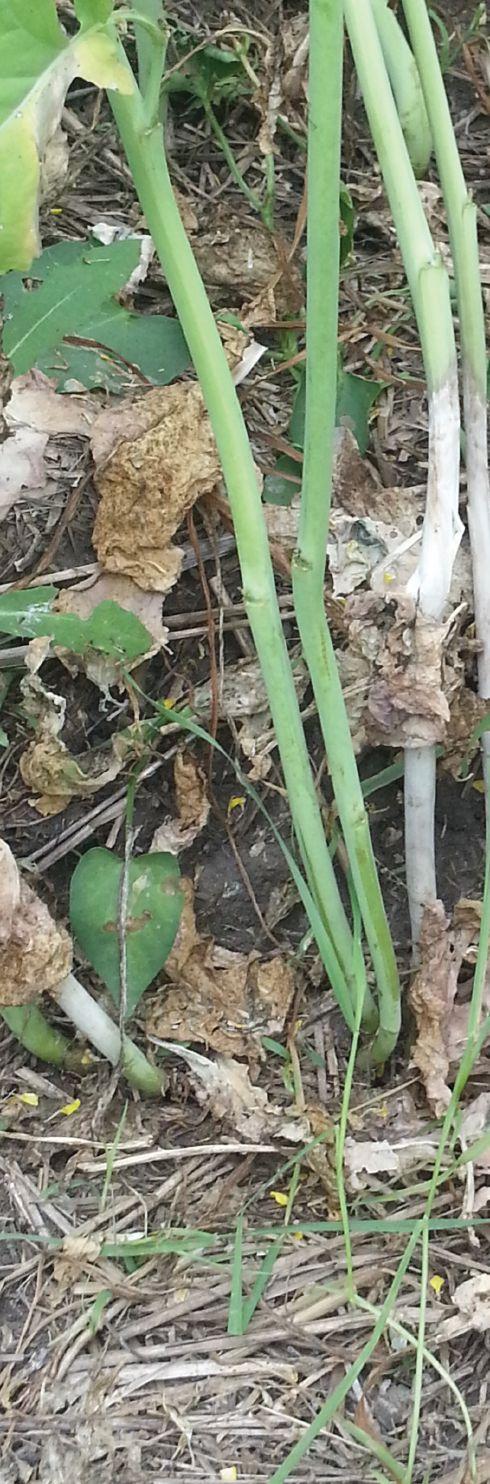
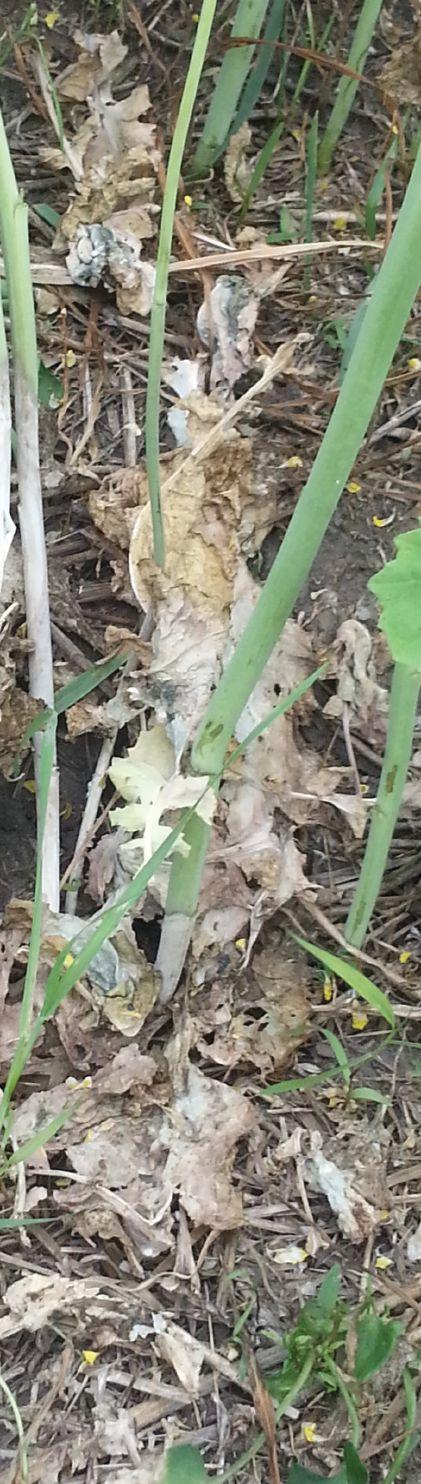
<LEFT: Sclerotinia symptoms in canola stems.
Photos courtesy of c lint Jurke, c anola c ouncil of c anada.
plant’s leaves and stems. Moderate temperatures and moist conditions favour the pathogen’s development at this stage too. For instance, the petals stick better to leaves and stems when the canopy is damp from showers, high humidity or heavy dew. In contrast, heavy rains can wash the petals off the canopy, while hot, dry conditions discourage growth of the fungus.
Initially the fungus causes white to grey lesions (damaged areas) on the leaves and stems. eventually the lesions become bleached-looking and shatter easily. affected plants ripen prematurely and lodge. The sclerotia form in the plant’s infected parts, and then fall to the ground or are harvested with the seed.
“The timing for a fungicide application is very critical...”
o verall, conditions that favour sclerotinia stem rot in a canola field include significant sclerotinia incidence in the field or nearby fields in the previous few years, moist conditions leading up to early bloom, frequent showers and moderate temperatures during and after flowering, and a dense crop canopy that holds in the moisture.
Deciding whether or not to spray according to Jurke, foliar fungicides are the best way to control the disease at present. Because of the variability in sclerotinia levels, he recommends growers make decisions about whether or not to spray a fungicide on a field-by-field basis each year.
g rowers have to make their spraying decisions before they see symptoms of the disease in their crop because by the time the symptoms appear, it’s too late to control the disease.
“The timing for a fungicide application is very critical,” says Miller. “g rowers should scout for conditions conducive to sclerotinia before early flowering. Then they need to make sure their application timing follows the product’s label and that they apply the fungicide between the 20 and 50 percent bloom stage. The optimum timing is 30 percent bloom.”
Some fungicides are registered for a split application in canola, which provides longer protection during periods of extended bloom or under cool, wet conditions.
The Canola Council of Canada provides a Sclerotinia Stem rot Checklist on its website to help growers make decisions on spraying. g rowers complete the checklist for each of their canola fields shortly after first flower. If a field’s risk points add up to a high risk level, then the crop will likely benefit from a fungicide application; however, growers need to use current canola prices, fungicide costs and their own field’s potential yield to determine whether spraying makes economic sense.
o f all the factors in the checklist, Jurke thinks the moisturerelated conditions are the most important. “The best way to determine whether to apply a fungicide is to look at how much moisture you’ve had throughout the period prior to flowering, and to look at the forecast for the upcoming two weeks – the greater the likelihood of variable weather, of showers, the greater the risk of the disease.”
e xpected crop yield is also a big factor. “This disease likes the same thing that a farmer likes: high-yield canola. If growers
are chasing yields better than 40 bushels per acre, we recommend they pencil in the use of a fungicide as a matter of course and book that fungicide,” says Jurke. “a 40-bushel crop has a fairly dense canopy, which can hold a lot of moisture and humidity, so it provides prime conditions for development of the disease. If they don’t end up needing the fungicide, for instance if the weather turns dry prior to the flowering period, then they can cancel their order.”
The checklist also includes a couple of factors that Jurke feels are less important, such as the frequency of canola in the field’s rotation. “a farmer’s rotation has a bit of influence, but his neighbour’s rotations have just as much influence because the spores are mobile. also, pretty much all broadleaf crops and weeds are hosts of this disease, so there is always an abundance of the spores in the environment.”
If growers are not going to take the time to go through the whole checklist, Jurke suggests simply going into the crop and evaluating it prior to flowering. “Look at its estimated yield potential and do the ‘wet pants test’ – if their pants are routinely getting wet from walking through the crop around midday, then there is a pretty significant risk that sclerotinia is going to develop.”
Other management options
In addition to fungicide applications, there are some cultural control options that can help manage sclerotinia stem rot. “o ne measure is to ensure a good, uniform plant stand, with a crop that is flowering at the same time and maturing in a uniform fashion. The longer that a crop flowers, the more exposure it has to the disease,” says Jurke. “another measure is to choose the right variety. For instance, varieties that don’t lodge usually have less sclerotinia. The more lodging there is, the denser and wetter the canopy is, so the disease goes rampant.”
Hybrids with some resistance or tolerance to sclerotinia are also an option. Du pont p ioneer has offered these types of hybrids for several years, and Bayer CropScience is planning to have one on the market by 2014. But Jurke cautions that even with these varieties, “you still need to spray when there is a high risk of the disease.”
He’s looking forward to further improvements in sclerotinia resistance in canola in the future. “Long term, I’m a true believer that developing good resistance in our canola varieties is the best way to go. private and public researchers are working on that. For example, results from research led by Dr. Lone Buchwaldt at a griculture and a gri-Food Canada in Saskatoon are really encouraging. They’ve got some very strong types of resistance. If that can get into commercial varieties, then we’ll finally get ahead of the disease.”
Beware Sclerotinia, ‘The Pirate of the Prairies.’
If you thought you had seen the last of sclerotinia, you’re dead wrong. Your old foe will be back again this season to plunder your profits and turn your canola crop into a battlefield.
Give no quarter. Factoring an application of Proline® fungicide into your cropping plans will effectively reduce infection rates by up to 80% and keep sclerotinia from stealing your golden treasure.
For more information please visit: BayerCropScience.ca/Proline
dE alinG wi T h
G lypho S aTE r ESi STanc E
Growers need to be vigilant in crop management strategies.
by rebecca Dika
It’s enough to strike fear into the heart of a weed scientist. When Bob Blackshaw, weed scientist with a griculture and a gri-Food Canada ( aa FC), took a call from a farmer near Milk river, alberta, in the summer of 2011, what he heard sounded suspiciously like Western Canada’s first case of glyphosate resistance.
now known by its generic name, glyphosate, roundup was introduced by Monsanto in the mid-1970s. a broad-spectrum systemic herbicide, roundup offered a relatively low toxicity, was highly effective and quickly adopted by farmers. When it came off patent, other companies began marketing glyphosate. now less costly, it became even more heavily used.
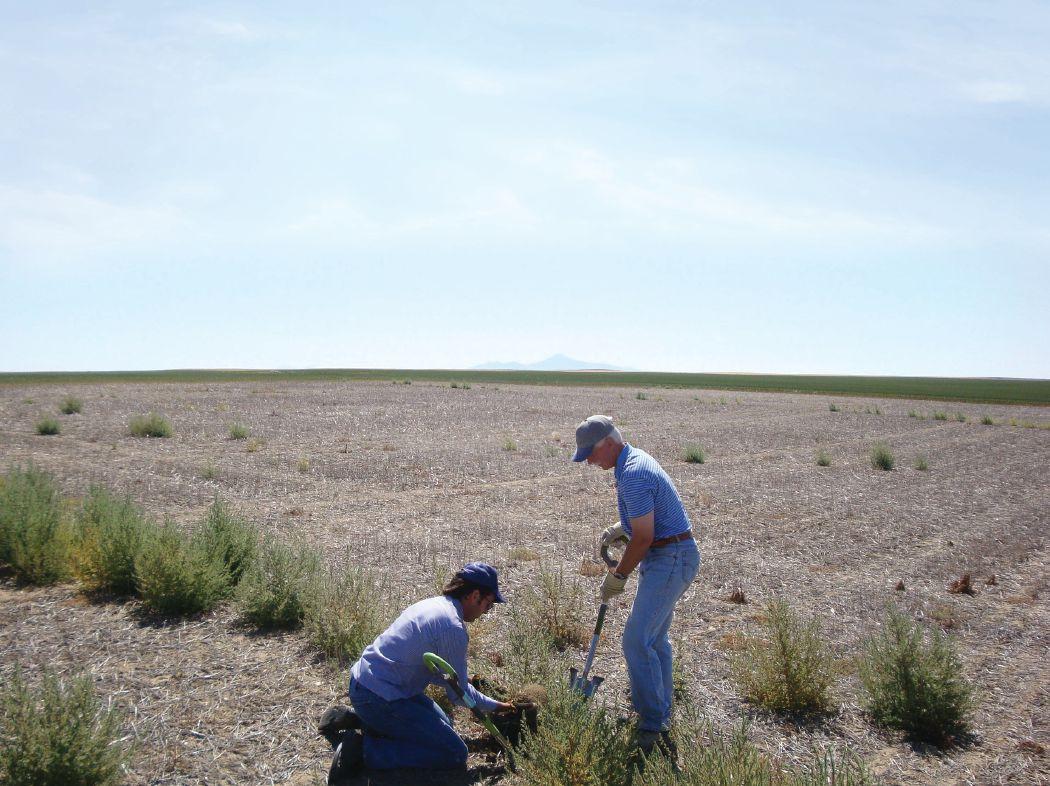
Blackshaw was aware of kochia resistance to glyphosate previously confirmed in the United States, and, based on what the farmer said on the phone, he “thought this could be real.” He contacted colleague Hugh Beckie, aa FC research scientist based in Saskatoon, and the pair went out to investigate three farms in the Milk river area. all were chemfallow fields, and all weeds were under control save one: kochia.
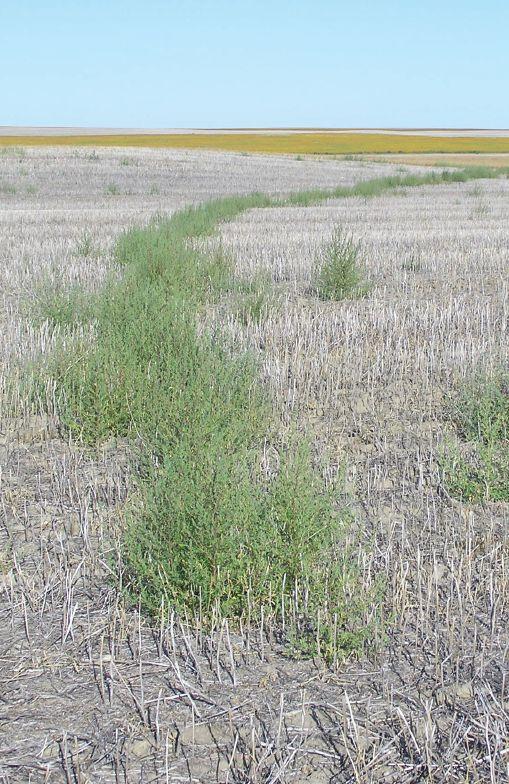
“Kochia is a tumbleweed species where the stem breaks off at ground level and rolls with the wind across the field spreading seed,” says Blackshaw, adding that often, you will see a trail of kochia in the direction of the prevailing wind. Similar circumstances had been documented in some fields in Kansas.
Blackshaw collected live kochia plants, brought them back to the greenhouse and potted them to produce mature seed. Those seeds were planted, grown and sprayed with nine different rates of glyphosate. Kochia from all three fields was found to be resistant to glyphosate. additionally, in the fall of 2011, kochia plants were collected from 46 sites within a 20-kilometre radius of original populations. Seven of the 46 sites were glyphosate resistant.
In april 2012, glyphosate-resistant kochia was confirmed in the Turin, alberta, area. Blackshaw says that by the summer of 2012, eight suspected kochia populations, including some from
ABOVE: Hugh Beckie, left, and Bob Blackshaw dig up suspected resistant kochia plants to use for resistance testing.
Photo courtesy of Bo B Blackshaw, aafc
A trail of glyphosate-resistant kochia in a chemfallow field near Milk River, Alberta. Scientists are continuing work to identify cost-effective herbicides to control kochia in the pre-seeding, in-crop, chemfallow and postharvest stages. Studies are needed to determine the timing of viable kochia seed production, kochia seed dormancy and seed persistence in soil.
the Brooks/Medicine Hat area, were delivered to aa FC’s Lethbridge research Centre for testing.
g lobally, glyphosate resistance is a relatively recent problem; Blackshaw says most of the resistance has emerged within the last 10 years. “While not a new phenomenon, it’s new to us, and it’s a wake-up call for producers,” he notes. “ now that it’s here, one of our first goals is to create grower awareness.”
Four suspected populations have also been collected from chemfallow fields in southern Saskatchewan. Blackshaw says it’s “highly likely” there are glyphosate-resistant weeds there, though it hasn’t been confirmed yet. Tests will be completed early this year.
researchers are also exploring the possibility of other weed species developing resistance to glyphosate. previous risk ratings indicated that kochia was among the top three weed species for development of glyphosate resistance in Western Canada. Wild oats, green foxtail and cleavers are now the top three riskiest species for glyphosate resistance.
g rowers want to know what can be done, but for now, there aren’t too many answers. “We don’t really have definitive solutions at this time,” says Blackshaw. “We are able to make some preliminary suggestions on alternative herbicides that farmers may want to consider. Beyond that, it is more a case of knowing what integrated control practices work for weeds in general.”
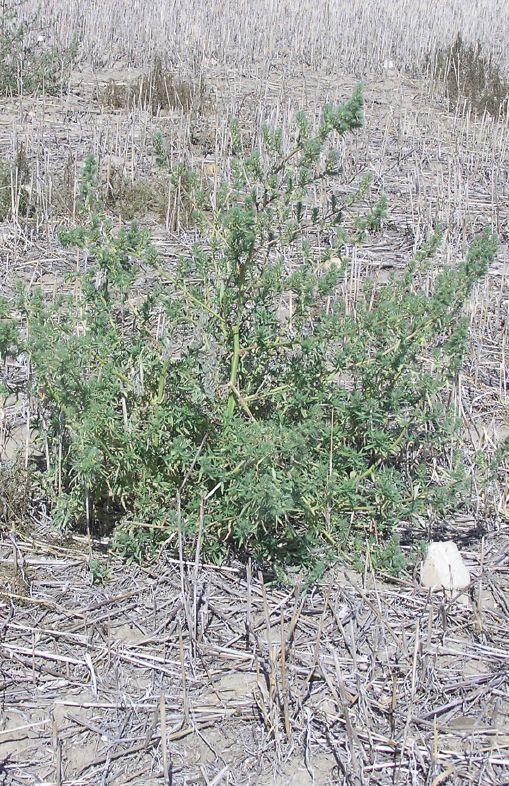
A glyphosate-resistant kochia plant is surrounded by dead kochia plants in a chemfallow field near Milk River, Alberta. Previous risk ratings indicated that kochia was among the top three weed species for development of glyphosate resistance in Western Canada. Wild oats, green foxtail and cleavers are now the top three riskiest species for glyphosate resistance.
For instance, rotating herbicides will be critical in meeting the challenges of glyphosate resistance. In addition, scientists are continuing work to identify cost-effective herbicides to control kochia in the pre-seeding, in-crop, chemfallow and post-harvest stages. Studies are needed to determine the timing of viable kochia seed production, kochia seed dormancy and seed persistence in soil, as well as explore the mechanism and genetics of glyphosate resistance. This work will help equip producers with some tools to assess their risk of glyphosate resistance on a field-by-field basis.
“But we are not there yet,” notes Blackshaw, who adds there is a critical need for proactive resistance management in Western Canada. “We are currently writing research proposals to funding agencies to conduct this research, and those funding levels will determine what we are able to proceed with.”
These are early days for glyphosate resistance challenges in Western Canada and Blackshaw stresses scientists will be going hard at it for the next three to four years. “There are 24 glyphosate-resistant weed species in the world, and now that resistance is spreading, it just makes you nervous,” he says. “We might have some guesses about what weed species may be next. But in the end, resistance is always identified at the farm level. You can’t do a whole lot proactively to identify the next resistant weed.”
For more information on assessing the risk of developing glyphosate resistance on your farm, go to www.weedtool.com.
Photo courtesy of Bo B Blackshaw, aafc
Photo courtesy of Bo B Blackshaw, aafc
Unsung hero.
As the only Group 10, Liberty® herbicide is an exceptional resistance management tool for your farm. Whether it’s glyphosate or the overuse of another herbicide group, Liberty addresses all your resistance concerns.
Additionally, you get flexible rate options, the ability to perform a second pass when required and affordable access to the weed control system that has backed every yield-leading InVigor® canola hybrid for 16 straight years.
For more information and to watch a video on resistance management, visit: BayerCropScience.ca/LibertyFightsResistance
u ndE r STand canola vari ET y daTa
Canola Performance Trial program and online tools available to producers.
by Donna Fleury
The Canola performance Trial (C p T) program provides western Canadian canola growers with comparative data on leading and newly introduced varieties. The performance data is relevant, unbiased and timely, and reflects actual production practices. a combination of small-plot and large field-scale company trials are conducted across Western Canada and across the various growing season zones.
The Canola Council of Canada (CCC) delivers the C p T program on behalf of the three prairie canola grower groups who fund the program, the alberta Canola producers Commission, Saskatchewan Canola Development Commission (SaskCanola) and the Manitoba Canola g rowers a ssociation.
“The C p T program builds on past programs, such as the prairie Canola Variety Trials, with some improvements,” says Derwyn Hammond, crop production resource manager with the CCC in Brandon, Manitoba. “To make the program more relevant to field conditions on growers’ farms, we have added protocols for herbicide-tolerant systems and harvesting.”
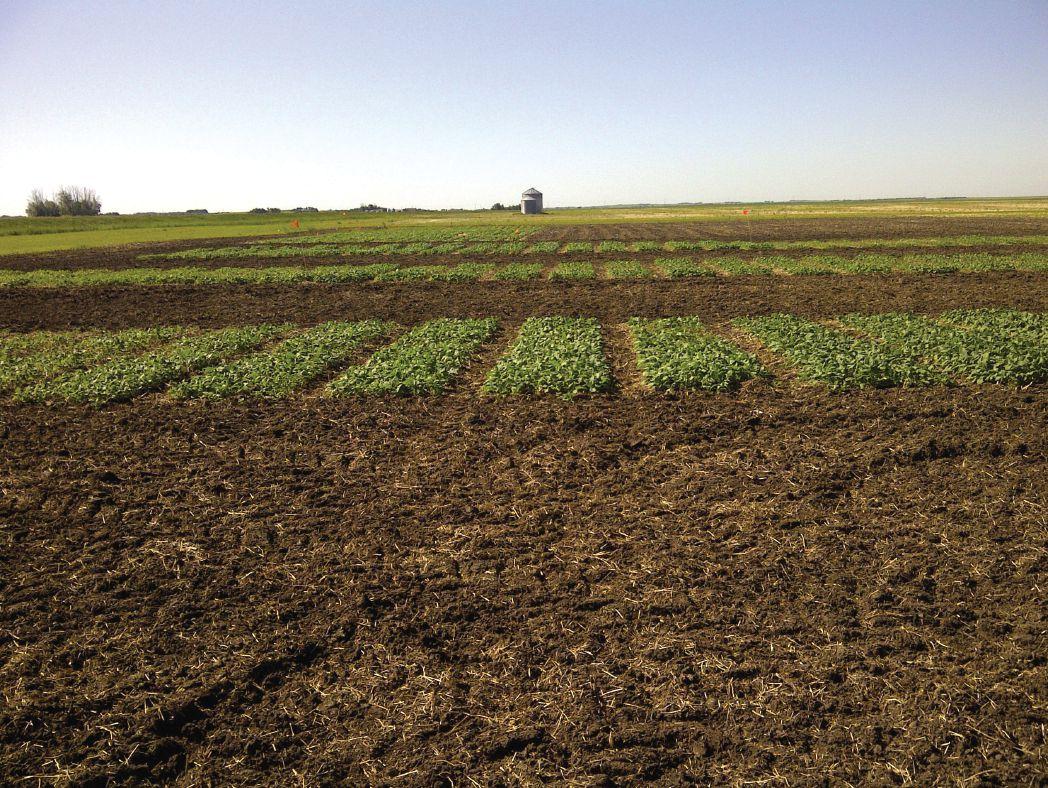
The small plot program trials are contracted and managed by independent co-operators. These replicated trials are treated with the appropriate chemistry and managed appropriately. Varieties are in blocks based on maturity to ensure harvest occurs at the appropriate time to minimize harvest losses due to maturity differences. The benefit of the small plot trials is the greater number of varieties that can be compared, and the replications that can provide a bit more confidence of the outcomes of an individual trial.
The large plot field-scale trials are non-replicated strip trials that may better reflect actual production practices, but their weakness is a lack of replication and the limited number of varieties that can be included in each trial. The goal of including the combination of small plot and large field trials is to try to help growers better predict what variety performance will be like on their farm.
ABOVE: Small-plot replicated trials in the Canola Performance Trial (CPT) program.
private companies can enter varieties into the trials. They are required to pay a fee for the varieties they enter and must follow the CpT protocol, which includes an audit by CCC agronomists.
“These independent third-party trials give producers a broad overview of how a variety performs in a large area and under different environmental conditions,” says Shawn Senko, agronomy specialist with the CCC in east-central Saskatchewan. “I conducted many of the CpT audits in Saskatchewan and the peace river region in 2012 to assess the condition of trial plots and ensure protocols are followed properly. We go plot by plot to make sure everything is consistent and that it meets the standards to keep it in the CpT program.”
Hammond adds that grower groups are putting a significant investment into these trials as well, and are certainly supportive of having that third-party data. “one of the roles this plays is to have that third-party data to make comparisons to other available data,” he notes. “obviously both styles of plots have some strengths and weaknesses that growers should be aware of when looking at the data.”
Comparing performance data
The CpT program includes an online tool that provides comparative data on varieties included in the trials. The tool includes interactive maps, an economic calculator and the ability to refine searches by season zone, herbicidetolerance (HT) type, yield, days to maturity, lodging and height. The 2012 CpT results include 23 small-plot trials and 81 field-scale trials across the prairies including Manitoba, Saskatchewan, alberta and British Columbia. Comparisons can be made to 2011 data as well.
“When comparing performance data, my recommendation for growers is to find as much data as they can from various sources,” says Hammond. “part of the value of having unbiased third-party trials done by independent co-operators is really to have another set of data to compare the results you are seeing from company data, variety registration data, crop insurance data or your own field trials. What I look for is consistency among the different sources of data sets that you have access to. If a variety is consistently coming out in the top five to 10 among all of the different sources of data, obviously the confidence that it will perform well will go up.”
dataset, which indicates whether differences between varieties are statistically meaningful. Varieties should only be considered different in yield performance if the numerical difference between them is greater than the LSD value. With the large-scale non-replicated plots, pooling a larger number of results together can increase the confidence that the trends you are seeing are similar to what you would see if those varieties were deployed over a lot of acres.” other factors that may be as important as yield data are maturity, lodging or disease ratings. “Looking at the height rating of varieties and the lodging rating is important, particularly for growers thinking of shifting to straight cutting,” says Senko. “The dates of maturity are also important for the area you are in and as a workload and risk management strategy. Including a mix of maturities can help break up the harvesting workload and timing, and may open options for fall-seeded crops like winter wheat. growers concerned about frost could include a few shorter season varieties that will beat potential early fall frosts.”
The C p T online tool includes an economic calculator for growers to use their own numbers to compare with the gross
However, if you are seeing substantial differences among those different data sets, it doesn’t necessarily mean that is a variety to shy away from, but it should be a signal to do more research. “In this case, dig deeper into the background of those trials to determine if protocols used, weather conditions or other growing season stresses may have caused the poorer performance at some locations,” notes Hammond. “growers should then compare the management of the different trials and other factors to the practices and conditions on their farm to determine if they resemble the sites where the variety did well or performed poorly, and hence whether it is still a good candidate or not. also look at the growing season zone data that best matches your farm.”
Looking at other factors besides yield is important to get a complete picture. In many cases, the varieties included in the trials are top performing varieties from various programs, so the yield differences may be small. “Determine what type of plots the results are from,” says Hammond. “The small-plot trials will include a statistical analysis and provide a least significant difference (LSD) for each
revenue and economic results provided in the CpT report. The calculator provides a way to input individual costs of production and system preferences to compare the costs and returns. Look at factors such as seed costs and others to help get the best picture. growers are also encouraged to try a new variety every year to benefit from new genetics, and to be ready when varieties are replaced over the years. The CpT online tools can be helpful with selection and profitability comparisons.
“There are a good variety of options in all of the systems, and the CpT program and online tools are a great place to start,” says Hammond. “However, spending a lot of money on good genetics will not compensate for poor agronomic management. Starting with good genetics is a key cornerstone to having a successful crop, but it can’t make up for poor management down the road. It is still important to get adequate plant populations established early, fertilizer for an appropriate target yield based on experience and performance in trials, and then protect that yield potential from pests and harvest losses.”
The Canola Council of Canada’s 2012 Canola Performance Trial (CPT) program results are now available from the Council.
James Main, Three Hills, AB.
Bushels
Since their introduction in 1996, InVigor® hybrids have consistently provided Canadian canola growers with outstanding yields* and an exceptional return on their investment. To see how InVigor hybrids have performed in your area, visit: InVigorResults.ca
low E r SEE dinG raTES –ri SKS v E r Su S b E n EF i TS
Achieving recommended plant stand is necessary to optimize yield.
by Donna Fleury
As growers pencil out the costs of production, lowering canola seeding rates may look tempting as a measure to reduce costs, but the benefits will rarely outweigh the risks. Factoring in the costs of the added risks, the practice may actually result in increasing costs and lowering yield, rather than improving the economics.
“Selecting the seeding rate ultimately depends on achieving the recommended plant stand at harvest, which is between seven and 10 plants per square foot,” says Shawn Senko, agronomy specialist with the Canola Council of Canada (CCC) in east-central Saskatchewan. “Whatever seeding rate you select, the key is to end up with the proper plant stand, reduce plant mortality and maximize yield at harvest.”
e nsuring the establishment of a proper plant stand using best agronomic practices sets the crop up for the season. “achieving seven to 10 plants per square foot gives you a nice buffer against potential losses to frost, insects or seedling diseases, and gets into the range of achieving maximum yield potential,” says g regory Sekulic, CCC agronomy specialist for the peace r egion. “a s you get below five plants per square foot, the probability of achieving top yields starts to decline dramatically. at only four plants per square foot, yield potential drops to 80 percent or lower.”
a nother consideration is seed size: many varieties are much larger than they used to be. Canola thousand seed weight (TSW) can range in size from less than three grams per 1000 seeds to six grams or more. This seed size variation can have a dramatic effect on seeding rate, and growers need to adjust their seeding rate accordingly to seed the same number of seeds per acre.
“We have gone from varieties with 3 to 3.5 grams per 1000 seeds to many hybrids today which are six to seven grams per 1000 seeds,” says Sekulic. “at the same time seeding rate recommendations, which were eight or nine pounds per acre in the 1980s, are about five pounds per acre today. So we have essentially halved our seeding rate recommendations but doubled the weight of the seeds. Using an average of six grams per 1000 seeds and an average emergence of 40 percent, which is fairly standard on the prairies, we are setting ourselves up for four plants/square foot, which is at the extremely lower end of what we need. To get
Selecting the seeding rate depends on achieving the recommended plant stand at harvest, which is between seven and 10 plants per square foot.
the maximum yield potential out of your seed investment, you want to make sure you have calculated the right seeding rate.”
Using good agronomic practices, such as seeding shallow and seeding at slow enough speeds to ensure a uniform depth of one-half inch, can help ensure good stand establishment and seedling survival. Sekulic explains that every increase in depth by one-half inch results in a loss of about one-quarter of the
Photo
plant stand. Seeding at slower speeds and at a depth that is shallow enough to be conducive to higher rates of emergence is key to optimizing yield and lowering costs. Canola is also very sensitive to seedplaced fertilizer, and slow seeding speeds also help to maintain good seed and fertilizer separation.
o ther risks associated with cutting seeding rates include crop variability and extended flowering periods. Thinner plants stands increase the risk of weed competition, insects and diseases such as sclerotinia, which can increase input costs for management and control. “Fewer plants usually result in increased branching, uneven maturity and extended harvest,” says Sekulic. “It can be difficult to stage the crop because the main stem will usually be ripe and ready to cut, while the side branches are still green and a few days from being ready.” This harvest variability increases the risk of frost, higher green seed count and yield losses.
“It is also important to think about varieties and know the maturity dates,” adds Senko. “If you are seeding both shorter season varieties and longer season varieties, one option would be to seed the shorter season varieties first and the longer season varieties later. Sometimes growers seed the longer season varieties first thinking it is an advantage; but at swathing, all of the canola fields tend to be ready at the same time. Seeding the shorter season varieties earlier helps with risk management, and spreads out the harvest load. However, you also have to make sure this leaves you enough time to seed the longer season variety early enough to mature before frost occurs in your area.”
There are many factors to consider and higher risks for cutting back on seeding rates. “There is a tradeoff to cutting back on seeding rates, as you still have to achieve the target plant stand by making sure seedling mortality is lower so more of the seed is surviving,” says Senko. “That may mean improving seeding precision, seeding to the right soil temperature and getting all of the other agronomic practices right.”
g rowers should check emergence and resulting plant stands every year to know whether or not they are achieving recommended plant stands. an unexpected frost, poor weather conditions, seeding issues or pest problems can
Research studies on the Canadian Prairies have shown that established plant densities ranging from 40 to 200 plants/m2 (4 to 19/ft2) often result in similar yields for both canola species. In a small number of cases, even lower or higher densities have resulted in highest yield. However, very low or high densities also have a risk of significantly lower yield.
quickly translate into seedling mortality and lower than targeted plant stands.
“Until we know that precision planting techniques are mastered and translated into lower seedling mortality rates and
really good seedling survival, cutting back on seeding rates is still a risky venture,” says Senko. “If you don’t get a good start with the proper plant stand, then it makes the whole growing season tougher.”
To get the maximum yield potential out of seed investment, make sure you have calculated the right seeding rate.
Photo
General Response of Canola Yield to Plant Population
a r E cord 21 M illion acr ES oF canola
What do canola growers need to know in this new dynamic?
by Carolyn King
In 2012, for the sixth year in a row, the prairies had a record number of acres seeded to canola – 21 million acres, according to Statistics Canada. recent analyses of prairie crop insurance data indicates the extra canola acreage has come from tightening of canola rotations in traditional canola growing areas. In many regions, a one-in-two-year canola rotation is now the most common choice, and canola-on-canola is becoming more prevalent too.
Canola is also being grown in non-traditional areas, especially in the Brown and Dark Brown soil zones. “over the last few years, those regions have been receiving pretty reasonable growing season precipitation and in some cases they have produced some of the better yields,” says Derwyn Hammond, crop production resource manager with the Canola Council of Canada. “For instance, in Saskatchewan for the past two years, some of the more traditional canola areas have had challenges with excess moisture, while the southwest was a bright spot in terms of yield. We’ve also seen added acres from some longer-term forage or marginal land going out of a livestock-focus and into growing grain, especially in years with softer livestock prices and stronger grain prices.”
Issues in tighter rotations
Shorter rotations call for growers to increase their focus on several factors that can have important yield impacts. Hammond notes that analyses of data from prairie crop insurance and rotational studies indicate a yield penalty of about 10 to 20 percent with canola-on-canola.
If a
TOP: Statistics Canada reported a record 21 million acres seeded to canola in 2012.
ABOVE:
large proportion of the canola plants in a field show root maggot damage, then it may be time to re-evaluate the frequency of canola in the rotation.
Short rotations also increase the risk of various diseases, weeds and insects. one key canola disease where a tighter rotation is most apt to have an impact is blackleg. “Blackleg is present in most fields, and growing the resistant genetics for managing the disease more frequently means greater selection pressure for races that are more virulent against that resistance,” says Hammond. “also, if your resistance does start to erode leading to higher blackleg levels, you need to allow enough time for the diseased residue to break down prior to the next canola crop. In tighter rotations often there isn’t enough time for that to happen.”
another disease to watch for is clubroot, which is prevalent in alberta. “once clubroot is introduced into a field, a higher frequency of the host crop in the rotation allows the levels of resting spores to build up in the soil over a shorter number of years and to reach the high levels that cause devastating outbreaks at a field level,” notes Hammond.
There are some insects to look out for as well. Hammond says research shows that, particularly with back-to-back canola, you can see a significant increase in root maggot damage. also, with the host crop deployed over a larger portion of the landscape, they’re seeing increases in certain insect pests like cutworms as more species adapt to canola as a host crop. When Hammond first started with the Canola Council, just two cutworm species were on the radar; now the list includes five or six species damaging canola crops in some years.
a key issue for herbicide-tolerant canola systems is the risk of herbicide-resistant weeds. Hammond offers some scouting tips: “Watch for any shifts in the weed spectrum in your field. a shift is not always caused by resistance; sometimes it’s just a shift to weeds better able to withstand that chemistry. also, watch for any escapes and any patterns of those escapes that might suggest resistance is developing.”
Herbicide residues are another consideration. “If growers are anticipating changing the frequency of any crop in their rotation, they need to be aware of any potential herbicide residue problems and plan for them.”
as to fertility management, canola has relatively high needs for sulphur and nitrogen. Keeping a special eye on those nutrients in tight rotations will help ensure the crop’s nutrient needs are met.
Issues in non-traditional canola growing areas
In the non-traditional areas, growers may have some slightly different considerations. For instance, certain diseases might be less of an issue. “In the Brown and Dark Brown soil zones, with the drier conditions and the lower relative humidities, some disease issues can be less prevalent,” says Hammond. “However, we have seen in the last couple of years when moisture conditions are above normal in those areas, sclerotinia issues can pop up.”
as for weeds, in drier areas that are not quite as favourable for canola growth, you may not get as lush a crop canopy to compete with weeds. “So you may be relying a little more heavily on the effectiveness of herbicide chemistries,” he says. “also, don’t scrimp too much on seeding rates because you need an adequate plant population to give the best canopy cover possible.”
In the Brown and Dark Brown soil zones, kochia comes to mind as a bit of a challenge for growers, with the finding of glyphosateresistant kochia and the prevalence of group 2 resistance in that weed.
Yields down in 2012
Despite the record seeded acres in 2012, the total prairie canola pro-
duction was down by 8.9 percent from 2011, according to Statistics Canada’s latest estimates.
“In 2012, in a lot of areas the crop got established fairly well and looked promising,” says Hammond. “Unfortunately, in many areas canola underperformed compared to the early expectations, for different reasons in different areas.” although some areas had very good yields in 2012, the average canola yield for the prairies was 27.6 bu/ac in 2012, compared to 34.3 bu/ac in 2011.
Hammond points out that some of the key factors contributing to low yields in 2012 aren’t things that can be managed by crop rotation changes. Weather problems, like hot, dry conditions at flowering in some locations and excessive rain or wind in other places, had a big impact on yields. and, although blackleg and clubroot were problems in some areas, other diseases, such as aster yellows, were also important concerns.
Is 21 million acres of canola sustainable?
The significant increase in canola acres in recent years raises the question of whether or not such large canola acreages are sustainable.
“at the Canola Council, we’ve talked a lot about issues related to potential demand for canola, whether we can we meet it, and how much production is sustainable,” says Hammond. “Back in 2006, we set a canola production target to meet potential demand of 15 million tonnes by 2015. We were assuming roughly 17 or 18 million acres seeded to canola with yields in the 40 bu/ac range. The genetics we have these days certainly offer the potential to reach those yield levels, but we still have some distance to go to get there.”
In his view, sustainable canola production is not really about the total number of acres in canola. It’s more about understanding the key limitations to yield in each different part of Canada and how rotations play into that as a management tool, and figuring out the effects on yield potential of a higher frequency of canola.
“The answer to that isn’t going to be the same everywhere,” notes Hammond. “It really varies depending on the spectrum of pest issues, and on considerations like rooting depth and the efficiency of utilizing nutrients and available moisture over the whole cropping sequence. We’re lacking good data on some of those bigger systemsapproach questions in crop rotations, but fundamental things like moisture-use efficiency could be a huge deal for sustainability in the Brown and Dark Brown soil zones, whereas maximizing moisture uptake might be more important in wetter areas.”
Looking toward 2013
What’s ahead for canola acres on the prairies in 2013? “our expectation is that we will almost certainly see some pullback in the acres seeded to canola in 2013, although perhaps not as steep a pullback as some people are suggesting,” says Jonathon Driedger, senior market analyst with FarmLink Marketing Solutions in Manitoba. “We’ve seen the canola rotations get pushed very hard in the last few years. Then in 2012, canola was the one crop that consistently across Western Canada was a disappointment, but for all kinds of different reasons – from too wet, to too dry, to disease, to pests, to wind and so on.
“Maybe even more important than that is the fact that [as of mid December 2012] we’re seeing pretty good potential returns looking ahead for other crops, like spring wheat and soybeans. So there’s an opportunity for growers to bring their rotations back into line a little bit, while still planting crops that are showing some reasonable returns.”
Early dia Mondbac K MoT h in FESTaT ion S a puzzl E
What to know if it happens again.
by Bruce Barker
During the spring of 2012, an early appearance of diamondback moth had crop scouts and extensionists providing advice on a seldom-seen event. normally, diamondback moth is of more concern at the bud to podding stage of canola. This past year, though, diamondback moth was close to or reached spraying thresholds during the early leaf stages in some areas. That left growers asking, “Where did they come from and what should we do?”
“Typically, diamondback moth blows in from the southern United States. This year, there were early wind trajectories from the US, so that is the most likely source,” says g reg Sekulic, an agronomist with the Canola Council of Canada. “There is also some evidence that some may have overwintered.”
Diamondback moth is not known to overwinter in Western Canada in large numbers. a research study in the early 1990s by Lloyd Dosdall with the University of alberta found that some diamondback moth were able to overwinter in central alberta, although subsequent research at Saskatoon and Vegreville could not demonstrate successful overwintering of
diamondback moth.
e ntomologist John g avloski with Manitoba a griculture, Food and rural Initiatives (M a F r I) says anecdotal evidence shows some diamondback moth may have overwintered in Manitoba in 2012. Some of the early diamondback moth found in pheromone-baited traps were in very good shape in comparison to the battered moth that usually arrive on the wind from the south.
“It is hard to know if they overwintered. There is no proof [in 2012], but some were in quite good shape early in the season,” says g avloski.
regardless of where or how the diamondback moth infestation developed, it caused real concern for some farmers. Several fields were sprayed in southwest Manitoba and one field was reseeded due to diamondback moth damage. across the rest of the prairies, crop scouts and farmers were on high alert.
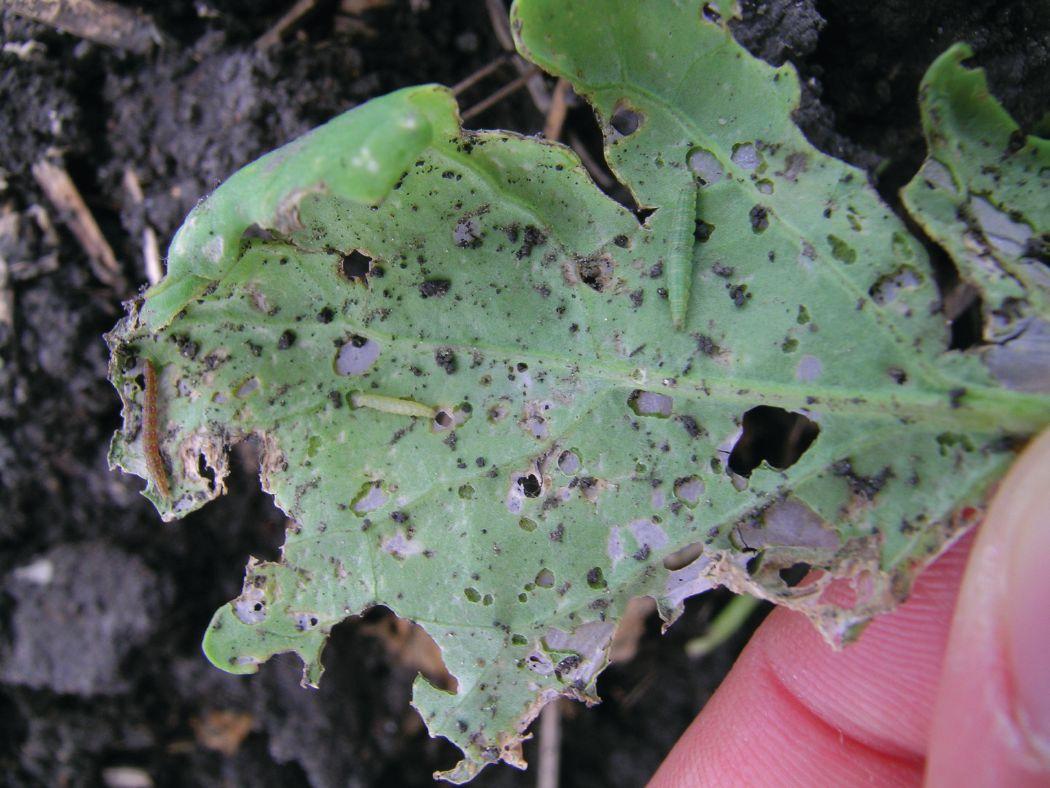
ABOVE: The type of feeding damage high populations of diamondback moth can potentially do to young canola plants.
Photos courtesy of John g avloski, mafri
What to do?
While high populations of diamondback moth were a concern early in the spring on canola seedlings, both g avloski and Sekulic caution growers to keep an eye on their seedling canola by scouting frequently. Damage to canola is caused by larval feeding on seedling leaves, but the greatest damage is usually on buds, flowers and pods. Diamondback moth can have three to four generations in Western Canada, each generation going through four larval stages. The length of time for a diamondback moth to go from egg to adult is about 32 days, although that varies from 21 to 51 days depending on weather and food conditions.
Feeding damage at the seedling stage is evident on the leaves either at the outside margins or in the middle. The first instar larvae will mine inside the leaves, leaving white tunnels. Late instars may also feed underneath the leaf, leaving a waxy, opaque layer similar to a window. The use of economic thresholds to determine if the pest warrants spraying is critical.
“ pay attention to economic thresholds. Spraying will hurt beneficials, so only spray if you absolutely need to,” says Sekulic.
The economic threshold at the seedling stage is a nominal threshold, based on field observations rather than scientific research. This nominal threshold – control is recommended when 25 to 33 percent of the cotyledons or true leaves are defoliated – is the best estimate of when spraying is necessary, but farmers should take other factors into consideration.
Large areas of the field should have reached the nominal threshold, rather than just patches of the field. Diamondback moth does not move across the field when it is in larval stages, so damage does not spread as quickly as with a flea beetle infestation.
Diamondback moth larvae should also still be actively feeding. If the larvae are starting to cocoon (pupate), they have stopped eating and are not a threat at this stage. also check to see if the newest leaves are being eaten. a rapidly growing canola crop may be able to outgrow feeding damage.
another consideration is whether flea beetles are also causing damage. If this is the case, use cumulative damage from both insects and apply the same threshold of 25 to 33 percent defoliation. If spraying is necessary to control both insects,
only Lambda-cyhalothrin (Matador/Silencer) and Decis are registered for both insects.
Where did they go?
With such large, early infestations of diamondback moth, there was a risk the pest would severely impact canola later in the growing season. Fortunately, the population of diamondback moth crashed over the late spring and summer.
“It is hard to know exactly what happened to them. By late June they weren’t an issue. We didn’t survey for predators and parasites, but in similar situations in the past, parasites have been known to very substantially reduce populations of diamondback moth,” says g avloski.
as evidence, two years ago MaFrI assessed parasitism on diamondback moth, and found that in many sites, over 80 percent of the diamondback moth larvae were parasitized later in the growing season. In Western Canada, three species of parasitic wasps attack the diamondback moth: Diadegma insulare (Cresson) and Microplitis plutellae (Muesebeck) attack the larval stages, whereas the third species, Diadromus subtilicornis (gravenhorst), attacks the prepupal and pupal stages. Flies, wasps, lacewings, plant bugs, pirate bugs, beetles, spiders and birds also prey on the diamondback moth larvae. an entomophthorales fungus is a disease that can also help control diamondback moth.
The ability of predators and parasites to control diamondback moth outbreaks highlights the need to crop-scout frequently, and to use the nominal threshold to guide insecticide application decisions. In addition to actual field scouting, growers can use online resources, such as the Canola Council of Canada’s “Canola Watch” or the Western Forum on pest Management’s “Insect pests Monitoring network.” Both provide weekly updates during the growing season, and can be found online.
“My message is pay attention to economic thresholds. We need to give beneficial predators and parasitoids a chance to help out with outbreaks,” says Sekulic. “ remember that the threshold only covers the cost of an insecticide application – it is not a moneymaking point. Sub-threshold spraying is not only a direct loss of money, but does catastrophic harm to beneficial species.”
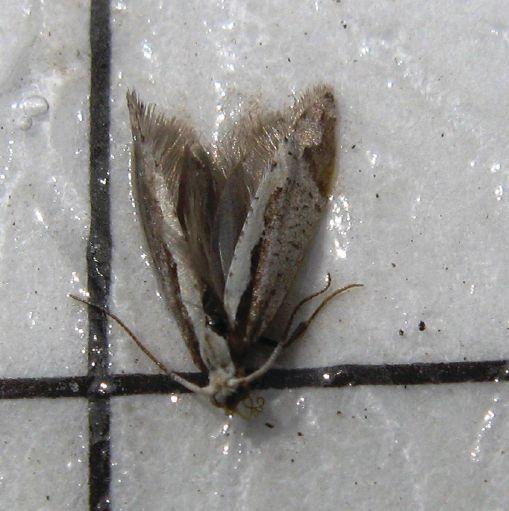
An adult diamondback moth larvae caught in a pheromonebaited trap near Carman, Manitoba, in late March 2012.
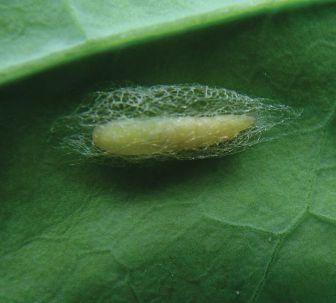
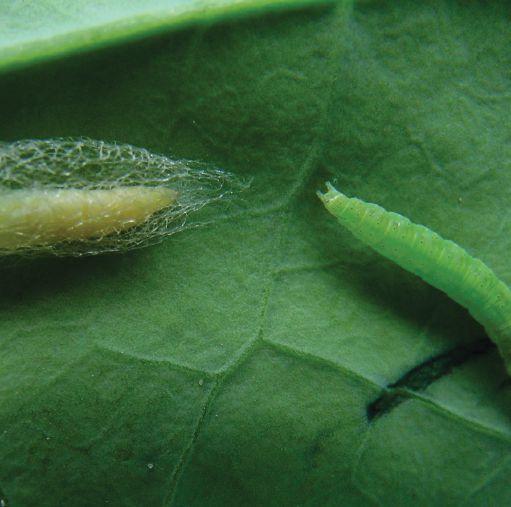
A pupa and larva of diamondback moth on a canola leaf.
Many happy returns.
The exceptional return on your InVigor® investment just got better. Book your InVigor hybrids by January 31st, 2013 to qualify for valuable savings on all participating BayerValue products.
Now there’s even more to smile about with InVigor.
For more information please visit: BayerCropScience.ca/BayerValue
Jeff Prosko, Rose Valley, SK.
Sink sclerotinia.
When you use Proline® fungicide you not only safeguard the yield and quality of your canola, you also reduce sclerotinia infection rates by up to 80%.
But beware, even if the battle is over, the war wages on. You can expect the ‘Pirate of the Prairies’ to return next season with enough reinforcements to fortify their existing strongholds and target new territories.
Give sclerotinia no quarter.
For more information please visit: BayerCropScience.ca/Proline