Richardson Pioneer is committed to working with you at every stage of growth.
At Richardson Pioneer, our CropWatchTM agronomy team has professional agronomists in the field across the Prairies. Our local and regional agronomists work one-on-one with our farm customers to provide product knowledge, crop planning and recommendations tailor-made to each farm.
We’re here to help you make the most of your crop throughout the growing season.
To learn more, visit your local Richardson Pioneer Ag Business Centre or richardson.ca/cropwatch.
TOP CROP
Bruce Barker
and nutrient use
Julienne Issacs
| Developing new PGRs
height + decreased lodging = high yields by Donna Fleury
Hard white wheat hopes rise again
John Dietz
Holding off glyphosate-resistance
Bruce Barker
Supporting native bees
John Dietz
PHOTO COURTESY
LINDA HALL.
JANNEN BELBECK | ASSOCIATE EDITOR
DISCUSSING “NEW CANADA”
While attending Farm Tech in Edmonton this year, Darrell Bricker, CEO for IPSOS Public Affairs, spoke as the keynote to hundreds of farmers, crop scientists and industry professionals about the future of consumers – “the new Canada” – and what this means for agriculture.
Although his presentation was filled with a multitude of statistics, graphs and charts, the information was far from boring. Bricker had the audience engaged, laughing, and his content served as an eye-opener of where Canada as a whole is headed, what the consumers of the future will look like ¬ and what exactly the implications are for farmers. These trends are imperative for Canadian agriculture as a whole to understand.
Bricker discussed three main areas that are affecting Canada as a country, and therefore affecting Canadian agriculture: fertility and aging, urbanization, and multiculturalism.
Not only is the population growing older, we’re having less kids. For the first time in census history, there are more people over the age of 65 than there are kids younger than 15. Canadians are moving farther away from rural areas, and we are increasingly becoming more multicultural with varied diets and food preferences.
“We’re moving from being a white, Central-Atlantic oriented country to becoming a brown, Western-oriented country with eyes on the Pacific. It’s just a matter of numbers,” Brickers says. “So when you start thinking about who your customer is going to be, for agricultural products going forward, think about these folks. Many have rice-based versus wheat-based diets. What are we going to be making for them?”
How can we frame the conversation about Canadian products and showcase that they are easily adaptable ingredients for all cuisines and flavour profiles? How can we highlight the health factors? I have to applaud the Canola Council of Canada for their work showcasing people from around the world who now use and prefer cooking with canola.
So, what does the “new Canada” look like?
“We’re moving to a new Canadian mindset, a new population, and this is going to be the future of source of demand in our country,” Bricker says.
With a newfound outlook on the future of Canada – the future of our population and identity – I can’t wait to start looking into how these factors will slowly shape the research and consumerism of Canadian agriculture. “We’re changing,” Bricker says. “It’s not a good thing, or a bad thing – but an important thing.”
Amendments
November 2017 Western edition: There was a misprint in the article titled “Managing volunteer canola in soybeans” (pg. 20). Any mention of “Refine Extra” should have been listed as “Pinnacle SG.” It was also mentioned that Express SG plus FirstRate treatment is only registered in Eastern Canada, but Express SG is NOT registered in Eastern Canada. We apologize for the trade name mix-up.
December 2017 Western/Eastern edition: There was a misprint in the article titled “Agronomy tips for new corn growers” (pg. 44). Number five, “Nitrogen fertility” says corn takes up 1.18 pounds of N for every pound of corn produced, and should have instead said “bushel” – not pound. We apologize for the oversight.
FEBRUARY 2018, VOL. 44, NO. 1
ASSOCIATE EDITOR
Jannen Belbeck • 888.599.2228 ext 211 C - 226.931.5608 jbelbeck@annexweb.com
ASSOCIATE EDITOR Jennifer Paige • 1 888 599 2228 ext 277 C - 416-305-4840 jpaige@annexweb.com
WESTERN FIELD EDITOR Bruce Barker • 403.949.0070 bruce@haywirecreative.ca
NATIONAL ACCOUNT MANAGER Danielle Labrie • 888.599.2228 ext 245 C – 226.931.0375 dlabrie@annexweb.com
NATIONAL ACCOUNT MANAGER Michelle Allison • 1.204.596.8710 mallison@annexweb.com
ACCOUNT COORDINATOR Alice Chen • 416.510.5217 achen@annexweb.com
PRESIDENT & CEO Mike Fredericks Printed in Canada ISSN 1717-452X
PUBLICATION MAIL AGREEMENT #40065710
CIRCULATION
email: rthava@annexbusinessmedia.com Tel: 416.442.5600 ext. 3555 Fax: 416.510.6875 or 416.442.2191 Mail: 111 Gordon Baker Rd., Suite 400, Toronto, ON M2H 3R1
SUBSCRIPTION RATES
Top Crop Manager West – 9 issues Feb, Mar, Mid-Mar, Apr, June, Sept, Oct, Nov and Dec – 1 Year - $47.50 Cdn. plus tax
Top Crop Manager East – 7 issues Feb, Mar, Apr, Sept, Oct, Nov and Dec – 1 Year - $47.50 Cdn. plus tax
Potatoes in Canada
FOCUS ON YOUR FIELDS
Never lose focus on cleaner fields with a pre-emergent that works for you!
Focus® is an easy to use, liquid pre-emergent herbicide that provides extended weed control over tough-to-kill grass weeds in your lentils and wheat. Save time tomorrow by targeting resilient weeds today and achieve cleaner fields and higher yields!
PULSE ROTATIONS SHOW IMPROVEMENTS
Seventy per cent of rotational benefit still unaccounted for.
by Bruce Barker
The rotational benefits of pulse crops in a cereal and pulse rotation are well known. Including pulses in rotation is shown to increase soil available nitrogen (N), improve soil moisture reserves in deeper soil depths, enhance soil microbiology and soil health, and increase yield of a subsequent cereal crop. However, research had not measured to what extent residual soil N and soil moisture contribute to those higher yields.
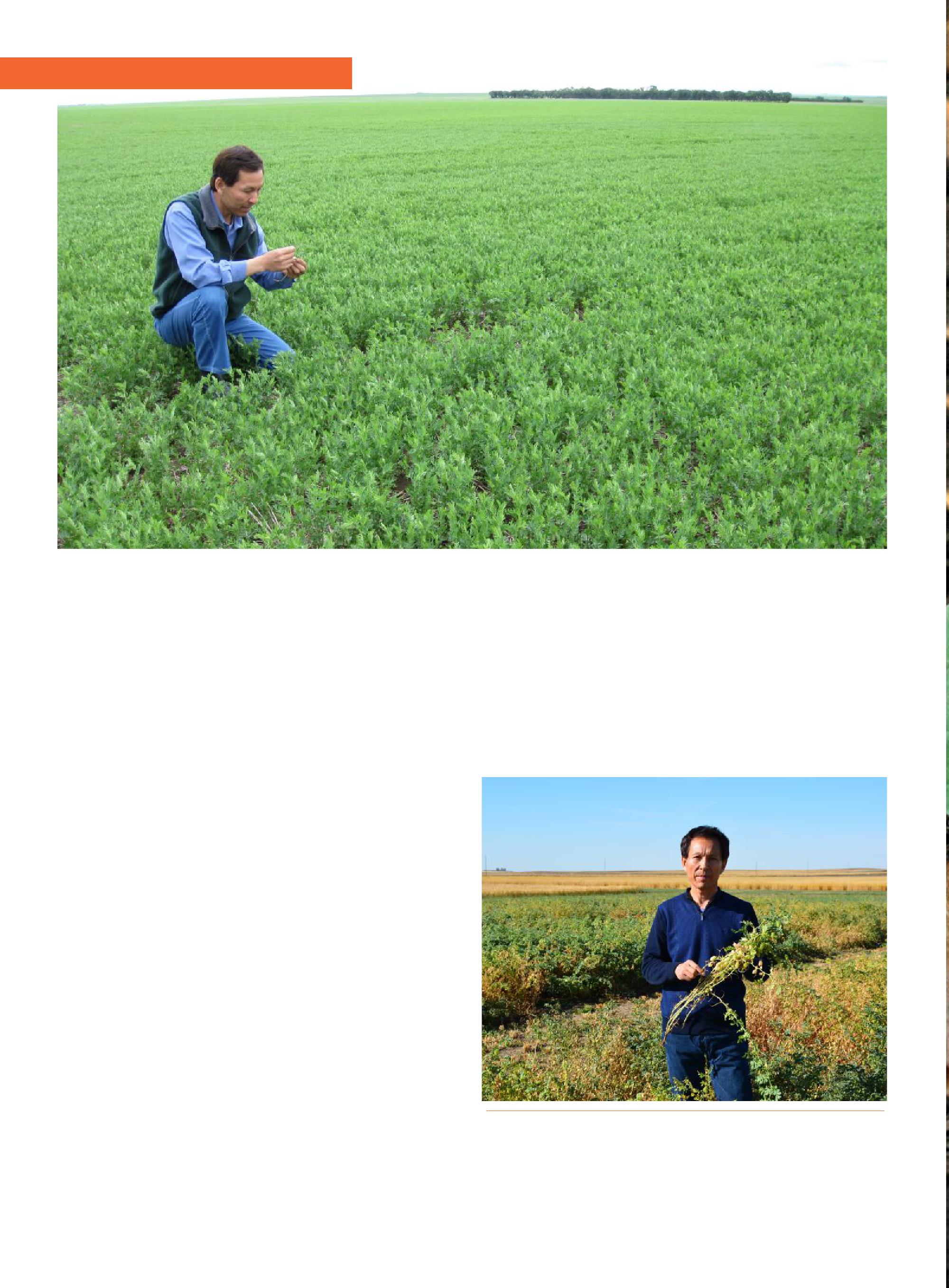
Research scientist, Yantai Gan with Agriculture and AgriFood Canada (AAFC) at Swift Current, Sask., set out to answer that question. His research began in 2010 with a four-year crop rotation study with three rotation cycles. The first starting in 2010 and ending in 2013, and the second starting in 2011 and ending in 2014 – both at the Swift Current location. The third cycle was at Brooks, Alta., starting in 2011 and ending in 2014.
“We thought that a higher frequency of pulses in rotation might increase residual soil water and nutrients, which provides greater benefits to the succeeding wheat crop compared with a wheat monoculture system,” Gan says.
Nine crop rotations were compared including pea, lentil and chickpea in different rotation intensities with wheat. The rotations were selected to see how shallow or deep rooting pulse crops would impact soil moisture and nutrients for the
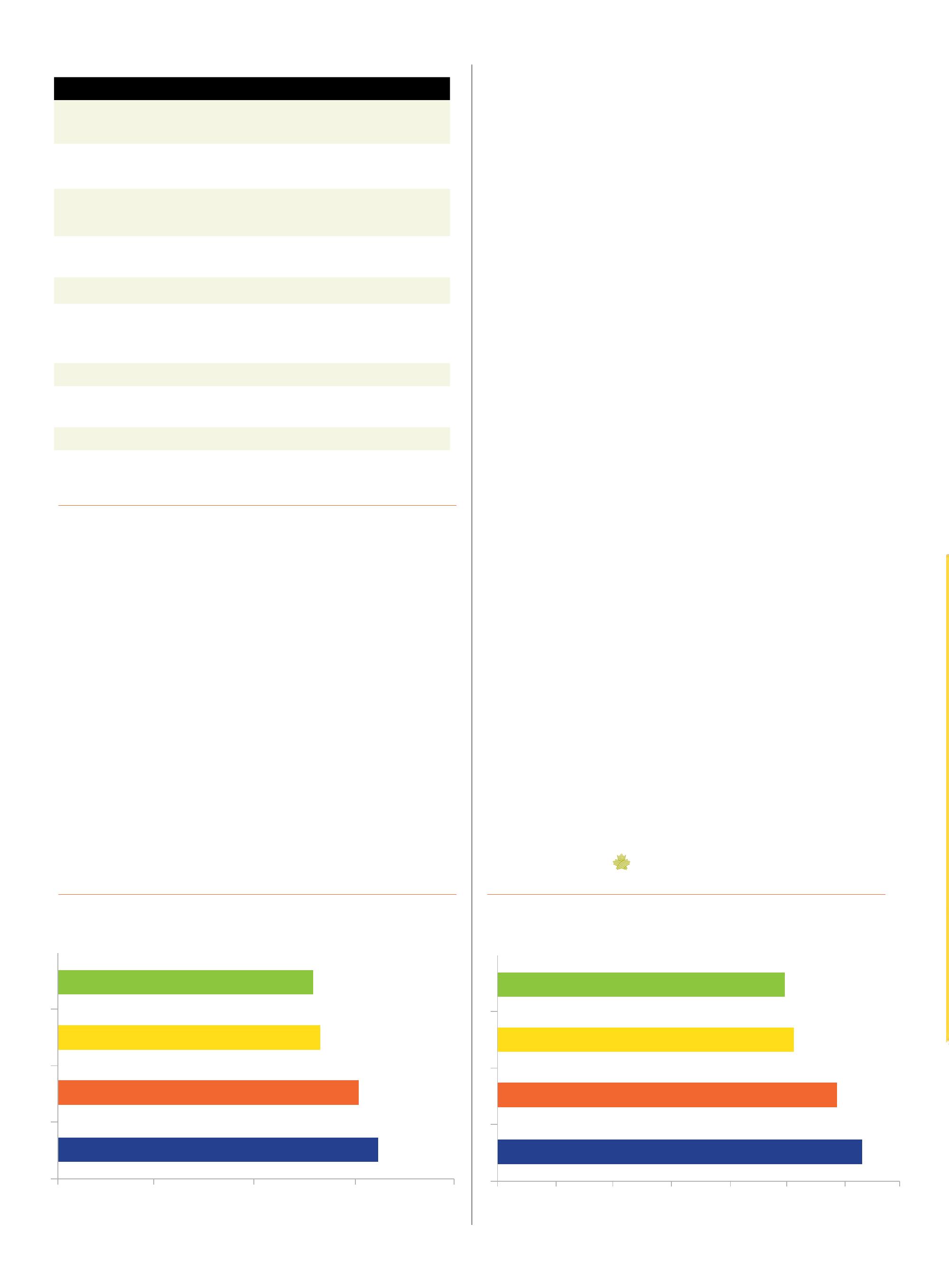
Wheat yield after lentil was 18 per cent higher compared to continuous wheat.
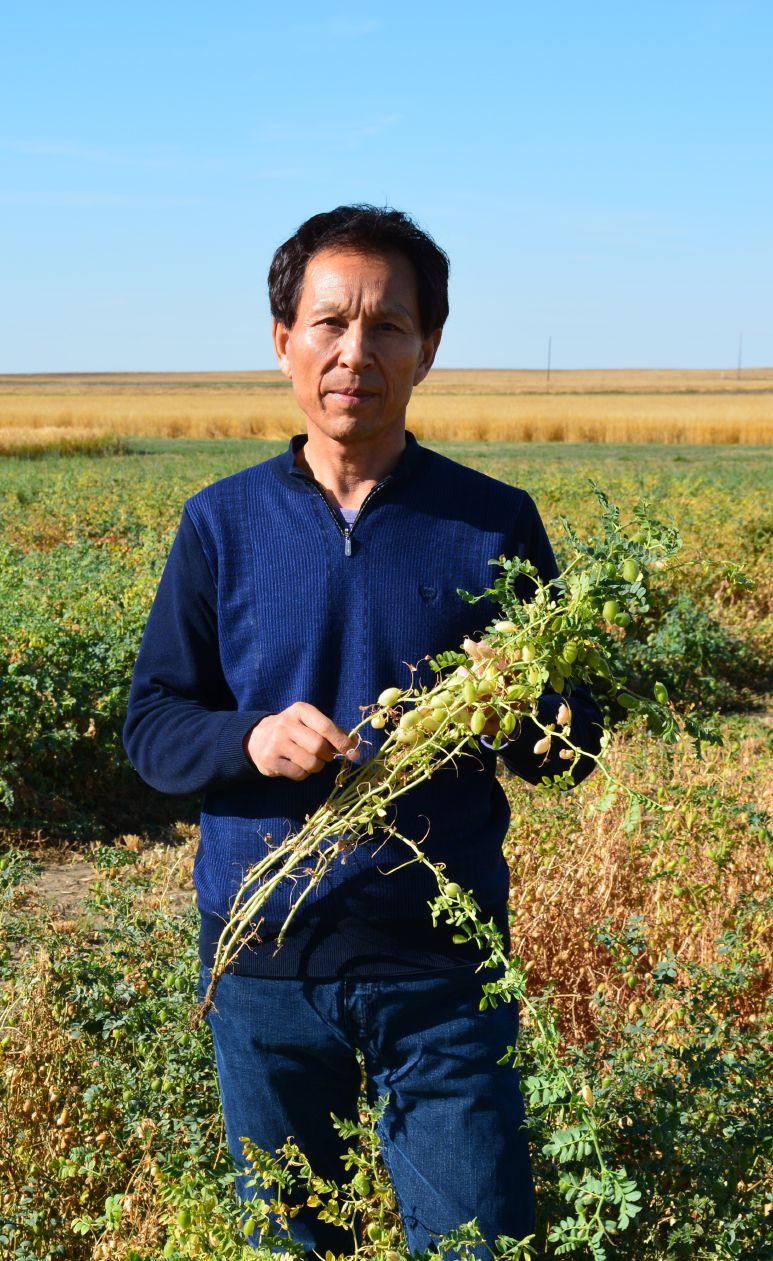
BOTTOM: Researcher Yantai Gan found that soil residual water and nutrients explain about 30 per cent of rotational benefits in a pulse/cereal rotation.
TOP:
You’ve identified volunteer canola as a weed. Now it’s time to deal with it.
For control of all volunteer canola, tank mix Pardner® herbicide with your pre-season application of glyphosate. Make Pardner your first choice.
Rotation Rationale
W-W-W-W
P-W-W-W
C-W-W-W
C-W-C-W
C-C-C-W
L-W-L-W
L-L-L-W
P-W-P-W
P-P-P-W
Continuous wheat crop as a conventional cereal monoculture system
One shallow-rooting pulse every four years with pea as the main pulse crop
One deep-rooting pulse every four years, comparing with the previous shallow-rooting pea effect
Two pulses every four years, only deep-rooting chickpea alternated with a wheat break
Chickpea-intensified rotation
Two pulses every four years, with shallow-rooting lentil alternated with a wheat break
Lentil-intensified rotation
Two shallow-rooting pulses every four years, alternated with a wheat break
Pea-intensified rotation
SOURCE: Gan, AAFC.
W: wheat P: pea C: chickpea L: lentil
subsequent wheat crop. The fourth-year crop was always wheat –this was when nutrient, moisture and yield were measured.
In the research, chickpea rotations produced unexpected results. As a deeper-rooted and longer season crop, typically less soil moisture is found in the soil profile after chickpea. That wasn’t the case in this study, but Gan explains chickpea did not yield very well in the trials because of the wet growing conditions and high disease pressure.
“Normally, you would expect chickpea to use more water as a longer season crop, and would expect lower wheat yields the following year. Because chickpea didn’t grow very well, it left more moisture in the soil for the subsequent wheat crop to use,” Gan explains.
Higher wheat yield after pulses
Similar to other research studies, wheat yield after pea or lentil was higher than after wheat. Wheat yield after pea was 26 per cent higher and 18 per cent higher after lentil compared to
Effect of previous crop on rainwater use efficiency in the fourth year (kg/ha/mm)
continuous wheat. Part of the reason for higher yield after pea or lentil was additional soil moisture. Pea and lentil are shallowrooted crops with approximately 77 to 85 per cent of their roots located in the 0 to 16 inch (0 – 40) centimetre (cm) soil depth. This resulted in higher water content at soil depths of 24 to 36 inch (60 – 90 cm) depths.
Rainwater use efficiency (RUE) was also higher when wheat followed pea or lentil compared to wheat following wheat. This was calculated by dividing wheat yield with growing season precipitation. Averaged across the sites, RUE for wheat in the fourth year was 22 per cent higher when wheat followed pea or lentil compared to following a wheat crop. Gan says that higher RUEs of wheat in the pea and lentil rotations could be because pulse crops leave “biospores” in the soil that allow better root and moisture movement in the soil.
As expected, the pulse stubble was also higher in soil residual N measured at time of seeding wheat in the fourth year of the cycle. Compared to wheat stubble, soil N in the pulse fields was 52 per cent higher at Swift Current in 2013, 68 per cent higher at Swift Current in 2014, and 110 per cent higher at Brooks in 2014. While these measurements were higher than other research results, higher soil residual N on pulse stubble is a widely cited benefit of including pulses in rotation.
In the research, Gan also calculated what benefit the additional soil residual N and soil moisture following pulses in rotation contributed to the higher wheat yield. His analysis found that residual soil water and soil N together was responsible for 27.5 per cent at Brooks in 2014, 24 per cent at Swift Current in 2014, and 10.6 per cent at Swift Current in 2013 of the wheat yield increase – an average of 30 per cent. The other 70 per cent of yield response in wheat is unknown. Regardless of where the rotation pulse benefits come from, pulse growers are benefiting from having pulses in rotation.
“Conventional wisdom is that part of the rest of the yield response is related to the reduced disease pressure of wheat in the more diversified rotation systems. An important area of pulse rotational benefits is that the previous pulses promoted the activity of beneficial microbial community in the soil. Growing pulses in rotation improved many attributes of the soil, and we’ve been working over the past five years to understanding these benefits,” Gan says.
Effect of previous crop on wheat yield in the fourth year [kilograms per hectare (kg/ha)]
SOURCE: Gan, AAFC.
SOURCE: Gan, AAFC.
CO-ORDINATED N AND S FERTILIZER
Long-term crop rotation and fertility management can increase crop yields and productivity, improve N cycling and balance, while lowering N2O emission intensity.
by Donna Fleury
Over the long-term, crop rotation, fertilizer strategies and management practices impact field productivity, nitrogen cycling and balance, and soil properties. These long-term practices also have an impact on greenhouse gas emissions such as nitrous oxide (N2O) and provide opportunities to reduce environmental Nitrogen (N) losses.
“We took the opportunity to build on the long-term research studies at the University of Alberta Breton plots near Edmonton, and study the effects of long-term management on N cycling, soil properties and productivity of rotation,” explains Miles Dyck, associate professor with the faculty of agricultural, life & environmental sciences at the University of Alberta. “The main objective was to assess the effects of long-term rotation and fertilization on growing season [N2O emissions, N2O emission
intensities, soil carbon (C) and N] stocks and their relationship to crop N uptake and productivity.”
The field study, initiated in 2013, was conducted over five growing seasons comparing two contrasting crop rotations: a twoyear wheat-fallow, and a five-year wheat-oat-barley and two years of perennial alfalfa-brome hay. Dyck notes that these rotations, which were established in the 1930s, represent both ends of a rotation spectrum in terms of crop diversity and input intensity, and that the rotations most growers currently follow will likely be somewhere along this spectrum. Long-term fertility treatments included check, manure, NP (phosphorus) K (potassium) S (sulphur), NPK, and PKS fertilizers.
“We compared the wheat crop phase in both rotations,
ABOVE: Field study comparing crop rotations at the Breton plots.
measuring N2O emissions during the growing season, wheat yields and crop N uptake,” Dyck says. “We also included some long-term data from the Breton Plots, providing about 10 years of recent data for comparison. Overall, the results showed that rotation was probably the most significant factor affecting cumulative growing season N2O emissions in the wheat crop. The five-year cereal forage rotation generally had higher growing season emissions, however the emissions are offset by increased productivity and reduced fertilizer input. Overall, the cumulative N2O emission intensities were comparable between the two rotations.”
In the five-year rotation, the alfalfa in the forage phase fixes N and also contributes organic N and C to the soil. Therefore, the N requirement for the wheat crop in the five-year rotation was 50 kilograms per acre (kg/acre) fertilizer N, compared to 90 kg/acre of fertilizer N for the two-year rotation. Wheat yields were slightly higher in the five-year rotation. The study also emphasized the impact of crop rotation on other nutrients such as P, K and in particular S. The results of the five-year rotation showed that the wheat crop responded to S fertilizer application at the same level or greater than the response to P. Forages in rotation require higher amounts of S, and combined with the slightly S deficient soils at the Breton site, the wheat plots that included S in the treatments had greater yields and greater N uptake.
Dyck adds, that for a long time, the emphasis has been on ensuring adequate P fertilizer so crops could use N more efficiently, but this study emphasizes the importance of ensuring other nutrients such as S be available in adequate amounts to help maximize N uptake and yields. Growers already ensure canola crops have adequate S, but this project shows that other crops like wheat have moderate S requirements, and the S demand of other phases of the rotation should be considered as part of a sound nutrient management strategy. Although the fertility treatments were not statistically different, the NPKS soil fertility treatment in the five-year crop rotation had the lowest N2O emission intensities. This suggests that long-term balanced fertilization addressing all
nutrient deficiencies will likely reduce N2O emissions intensities through increased crop yields.
“Growers who are interested in taking a long-term approach to nutrient management in their cropping systems will benefit from long-term monitoring of the nutrient [NPKS] budgets in their fields,” says Dyck. “Keeping field records of annual fertilizer applications and crop yields, along with regular soil sampling can help estimate the amount of nutrients removed from every field. Combining this information with the
current 4R best practices (right source, right rate, right time, right place) will help to match fertilizer applications to nutrient demand from crops over the long term and reduce environmental losses. More diverse crop rotations, especially when pulses are included, seems to influence the N balance and ability for the soil to supply N to cropping systems. Our results suggest that long-term crop rotation and balanced soil fertility treatments that increase yield, crop N uptake and reduce N2O emission intensity should be considered best management practices.”
The easy way to manage your farm.
Analyze your data. Plan your strategy. Then track your performance. AgExpert Field gives you the details you need to know to make the best business decisions.
It’s all new. And seriously easy to use. Get it now and see.
fcc.ca/AgExpertField
PROFIT EMERGES.
From the moment it pops out of the ground, you’re looking at more. You’ve invested in our new high-yielding canola genetics. Let Nexera™ give you the returns that no other hybrid can.
See your retail or contractor. NexeraCanola.ca
MORE MARKET OPPORTUNITIES
Study reveals best market opportunities for Canadian fababeans.
by Trudy Kelly Forsythe
The fababean crop has been growing in popularity in Western Canada. In Saskatchewan in particular, it is promoted as the pulse to grow in the northern and eastern areas of the province that are not ideal for lentils or chickpeas. However, while export markets are currently limited for Western Canada’s fababeans, a recent study looking at potential markets the crop reveals opportunities closer to home that producers can tap into.
The study was conducted by Joe Feyertag, Julian McGill and Willa Finlay from LMC International, an independent economic and business consulting company for the agribusiness sector, and was commissioned by the Saskatchewan Pulse Growers in 2016. Its overall goal was to understand the production and end-use of Canadian fababeans and identify which sectors present the best opportunities for future growth.
Limited export opportunities
Export opportunities are limited because there is only one major buyer of fababean in the world – Egypt, which accounts for 71 per
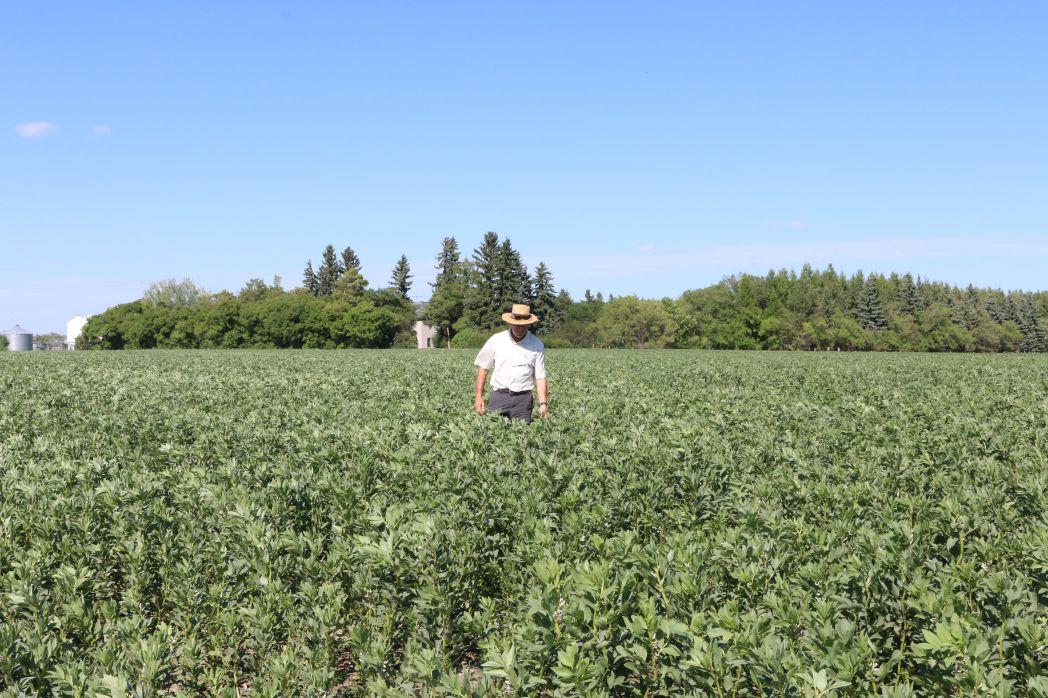
TOP: John Heard, a soil fertility specialist with Manitoba Agriculture, Food and Rural Development, examines a fababean field.
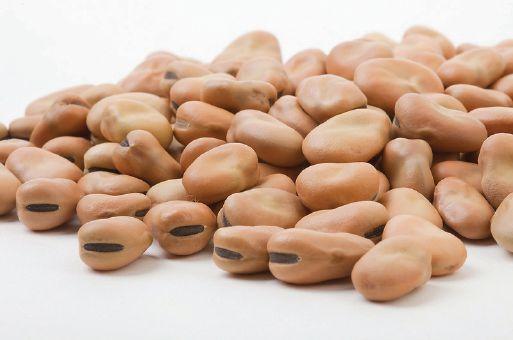
BOTTOM: A large seeded tannin variety of fababean.
Weeds don’t hesitate getting into your field. Neither should you.
Stay ahead of weeds with critical early-season control. Ensuring your crops begin weed-free contributes a lot to your yield and overall profit potential. Protect them right from the start with new Zidua™ SC herbicide. Registered for use in corn and soybeans, it provides residual activity to help manage susceptible germinating weed seedlings before or soon after they emerge from the soil. And thanks to its Group 15 chemistry, Zidua SC also helps manage the rising problem of tough, resistant weeds, including pigweed and waterhemp. Visit agsolutions.ca/ZiduaSC, and waste weeds, not time.
Always read and follow label directions. AgSolutions is a registered trade-mark of BASF Corporation; ZIDUA is a trade-mark of BASF SE; all used with permission by BASF Canada
cent of global imports. The other countries produce sufficient crops to meet their own demands.
While Canadian producers can produce the varieties of fababeans the Egyptian market prefers – namely medium- to largesize seeds that are high in tannin – insect damage can impact the aesthetics of the fababeans, making them less attractive to buyers. Canada also has a short export window due to storing difficulties and European producers’ need to recoup their costs.
There is also strong competition from Australia since they produce large, hightannin varieties that have no problems with insect damage. Plus, Australia and other European countries have a freight advantage.
“The higher value food grade market in Egypt is a difficult market for Canadian fababeans to compete for the higher value, as we tend to have lower quality and are new to this competitive market,” says Sherrilyn Phelps, Saskatchewan Pulse Grower’s agronomy manager. “Australia
and France are the main players currently and unless they have production issues limiting supply or quality, Canadian fabas just can’t compete for large part of the market.”
“The risks associated with one country as a focus market and that country being a bit unstable from an economic point of view adds other risks.”
Best potential
The study identified the domestic livestock feed market as the largest market for Canadian-grown fabas at this time. Phelps says the low-tannin varieties are the ones producers prefer to grow because of their smaller seed size – making seeding easier.
“We have seen an increase in the use of fabas into this market since the study was done which supports their conclusion,” Phelps says. “Other markets that fabas can target for the future include pet food, fish food and for protein fractionation. These are longer term in scope but there has been further interest in these areas.”
Feyertag agrees protein fractionation is a big opportunity. Unfortunately, there are some issues to overcome. One is its bad reputation because of favism, a genetic disorder that gets its name because it is triggered in certain susceptible individuals through consumption of fababeans. Another challenge is the lack of an end use for the fababean starch once the bean is fractionated.
Effective nitrogen? That’s a given. Responsive nitrogen? That’s amazing.
Crops really grow for ESN® SMART NITROGEN®, and so does your bottom line. That’s because its unique technology responds to the same factors that spur plant growth. How does it do it? ESN is a urea granule encapsulated in a polymer coating that protects the nitrogen from loss through leaching, volatilization and denitrification. ESN technology controls its release to match plant demand based on soil temperature. Your crops get the nitrogen they need, when they need it. That’s what we mean by responsive.
Minimize N loss. Maximize Yield.
“The starch from peas has an end use in noodle products, especially in China,” Feyertag says, explaining fababeans have a high percentage of protein, lysine and starch. “Feed them to the animal directly, it has value because animals need that energy. When you fractionate, you can isolate the protein, but what do you do with the starch?”
This is why the livestock feed option is a good one right now.
“Livestock producers are interested in using local ingredients rather than importing cheap GM soybean,” Feyertag says. “But for that to happen with livestock feed, they need volume. Right now, production is too small to replace the vast quantities required in animal feed.”
Advice for producers
Phelps says the results provide producers with a better understanding of the marketing options for the different types of fababeans.
“The food-grade, large-seeded fabas can offer a premium but are riskier as the markets are smaller and very competitive, so we recommend growing them only under contract,” she says. “The largest market for livestock feed prefers the lowtannin types. The livestock industry, such as the hog barns, are starting to utilize fabas as they do have higher protein content than peas and are cheaper than soybean meal.”
The challenge for producers is producing a consistent supply of
fababeans if they want to see the feed industry change feed rations and see the value in using the fababean crop.
“Growers can grow the fabas as we have a lot of the agronomy figured out; however, they want a decent price to make it economical to grow,” Phelps says. “The livestock feed industry wants it and is starting to recognize the value but wants it as cheap as possible and with consistent supply.”
Producers are seeing some decent pricing being offered for the low-tannin
fababeans, but prices are still lower than for peas. This means producers need higher yields to make it worthwhile to grow the crop.
“When compared on protein basis, fababean is the cheapest source of feed at the moment,” Feyertag says. “Livestock producers should use them but they are priced lower because they are not as popular.”
He adds that fababean producers can’t hold onto the product because they aren’t getting a high enough price. “It will take a couple of years to grow the market,” he says. “We see it going in that direction as year after year farmers increase their acreage.”
Variety choice is key to producers looking at capitalizing on the fababean market right now. Large-seeded, tannin varieties such as FB9-4 are well suited for the food grade markets but are not preferred by feed industry due to high tannins in the seed coat and the need for processing prior to feeding. On the other hand, the smallseeded, low-tannin types such as Snowbird and Snowdrop are well adapted for the livestock industry.
PHEROMONE TRAPPING OFFERS INSIGHTS INTO PEA LEAF WEEVIL
Control options are limited for the pest in pea and fababean.
by Julienne Isaacs
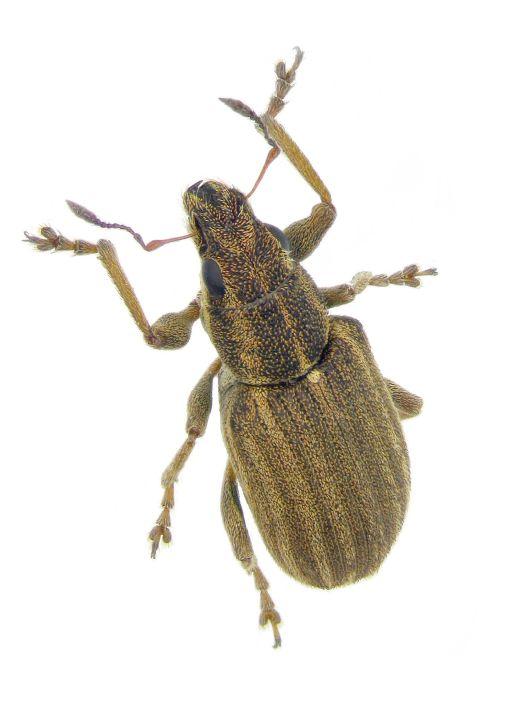
Pea leaf weevil is an invasive pest species that first hit Alberta in 1997 and has since continued to spread across Canada.
“They’ve jumped Highway One, and last year or the summer before, they were found in Saskatoon, so it looks like they’re on the move,” says Maya Evenden, a professor in the department of biological sciences at the University of Alberta.
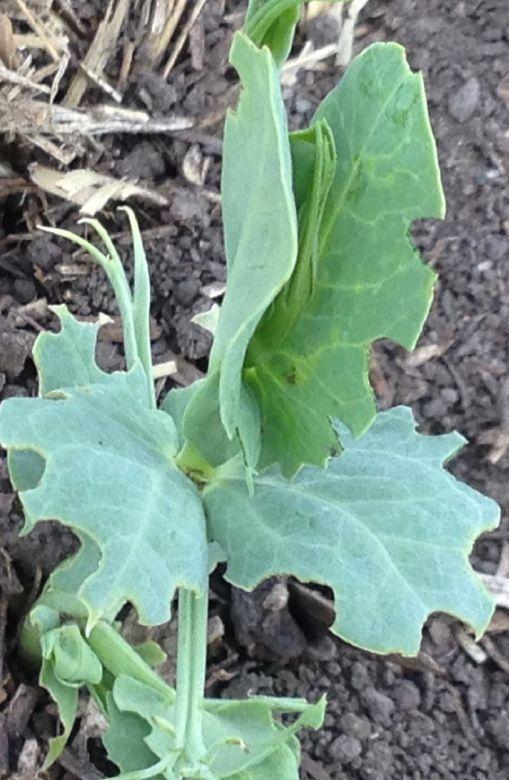
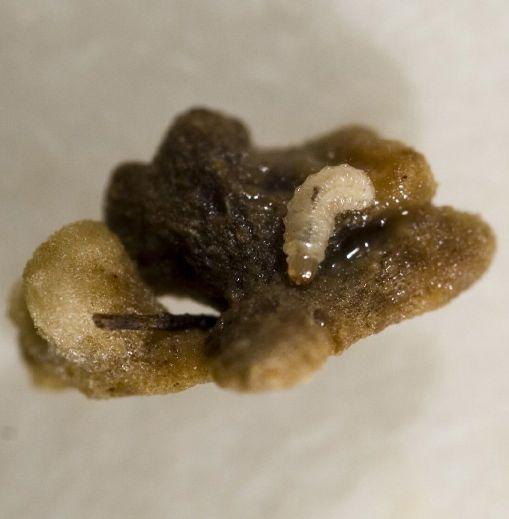
The pest’s spread is bad news for pulse producers. Both pea leaf weevil larvae and the adult beetle can cause significant damage to its two reproductive host crops: field pea and fababean. Adult beetles feed on the leaves in the spring, causing characteristic “notching” damage. But the larvae cause more critical problems, Evenden says. Adults are “very fecund,” with the ability to lay thousands of eggs in the soil; the larvae that emerge feed on the root nodules that contain nitrogen-fixing bacteria.
“It’s the destruction of the nodules and consumption of the nitrogen-fixing bacteria that causes the peas the most problems,” Evenden says.
Evenden recently completed a study comparing the effectiveness of pheromone-based traps as monitoring tools over five years, between 2011 and 2015, with the hope of developing a reliable and easy-to-use monitoring tool for pea leaf weevil. Pheromone traps contain synthetic lures that exploit insects’ instinct to aggregate. The study compared weevil capture in pheromone traps with and without the addition of fababean volatiles.
Evenden’s team checked the traps at regular intervals in the spring and in the fall.
What they found was that pea leaf weevil, against Evenden’s predictions, responded to the pheromone traps in both seasons, despite the fact that they do not mate in the fall.
“From a pest management point of view, it is useful to have an estimate of what’s happening in the fall, which is important for growers who might want to plant insecticide treated seed the following spring,” Evenden says.
The team also found that the bean volatiles increased the insects’ receptiveness to the pheromone; they trapped more insects in the combined pheromone-volatile traps, particularly in the fall. “What we believe is happening is the pea crop is senescing, so the smell of the bean in our trap is more apparent to the insects because the natural host volatiles have been removed,” she explains.
Evenden has applied for another grant with the Agriculture Consortium to compare activity of the pest in pea and fababean, as well as to assess the suitability of fababean as a host crop. Researchers will also use the traps to measure the spread of the pest.
In collaboration with researchers at the Saskatoon Research
PHOTO COURTESY OF DEVIN PENDREE.
ABOVE: Foliar damage in field pea resulting from adult pea leaf weevil feeding.
and Development Centre, Evenden is using trapping to control insect populations. She adds that producers could also use these traps to do their own monitoring, though the company from which they purchase pheromone and bean volatiles has not yet put them on the market.
“Quite a few researchers are requesting these lures in Western Canada and Montana. I’m hoping they’ll make them commercially available,” she says.
Management options
Héctor Cárcamo, a research scientist with Agriculture and AgriFood Canada (AAFC) in Lethbridge, Alta., who works on integrated pest management techniques for pea leaf weevil, collaborated with Evenden on the pheromone trapping study.
He says options are limited in terms of chemical controls, and the pulse industry is looking for alternatives to neonicotinoid insecticides after the Pest Management Regulatory Agency’s 2017 decision to phase out imidacloprid.
Cárcamo’s team concluded that insecticide seed coating is promising as a management tool for pea leaf weevil in fababean, but damage still occurs and may affect yield.
Cárcamo’s recommendations to producers hoping to control pea leaf weevil start with monitoring. Alberta and Saskatchewan’s provincial entomologists both publish maps based on spring damage. Producers should check the maps to find out whether they are located in high-risk regions.
“If producers are located in regions with a history of high damage, they might consider using a seed treatment,” he says. “The maps won’t tell them exactly what their precise risk is, but it gives them an idea.”
From a pest management point of view, it is useful to have an estimate of what’s happening in the fall, which is important for growers who might want to plant insecticide treated seed the following spring.
Cárcamo has also just completed the second year of a three-year field test experiment in Lacombe, Alta., looking at the effectiveness of seed treatment and foliar insecticides (used alone and in combination) in controlling the pest in fababean.
“Farmers have the option to use seed treatments or foliar insecticides. If they use the latter, when should they apply it?” he asks. His experiment looks at foliar applications timed for the second and fourth node stages, as well as a combination of seed treatments and foliar application at the second node stage.
The second year of data showed that the use of a seed treatment (thiametoxam, a neonicotinoid insecticide registered for field pea) was most effective against the pest. Use of a foliar insecticide (Matador, a lambda-cyhalothrin Group 3 insecticide) showed very little benefit, says Cárcamo.
Use of trap crops is also an option. Cárcamo says he’s tested the effectiveness of planting the same cultivar about 10 days earlier around the perimeter of a field and spraying to control pea leaf weevil. This method can be effective but requires careful timing and doesn’t tend to be attractive to most producers, due to the extra labour in the spring.
Rotations are also key in managing the insect. If producers plant peas every other year they are increasing the overall amount of food available in a region for the insect.
Cárcamo is working with Evenden on experiments forecasting populations in the fall. They are also looking at winter survivorship, to assess whether harsh winters impact populations in the spring.
The studies are a promising start: Only once pea leaf weevil is better understood, can it be effectively controlled.
PHOTO COURTESY OF H. GOULET.
PHOTO COURTESY OF C. HERLE.
Pea leaf weevil larvae on root nodule.
Pea leaf weevil adult.
OPTIMAL SEEDING RATES FOR FABABEAN SEED SIZE
Research results show optimal seeding rates for fababean for different growing conditions.
by Donna Fleury
As the interest in fababean production continues to grow, so does the need for more up-to-date agronomic information. Researchers and the industry in general have several efforts underway – however, much of the current agronomic information available to Saskatchewan producers is either unavailable, outdated, or sourced from other growing regions. Various research projects are focused on developing Saskatchewan-based agronomic information and updating work initially done back in the 1970s.
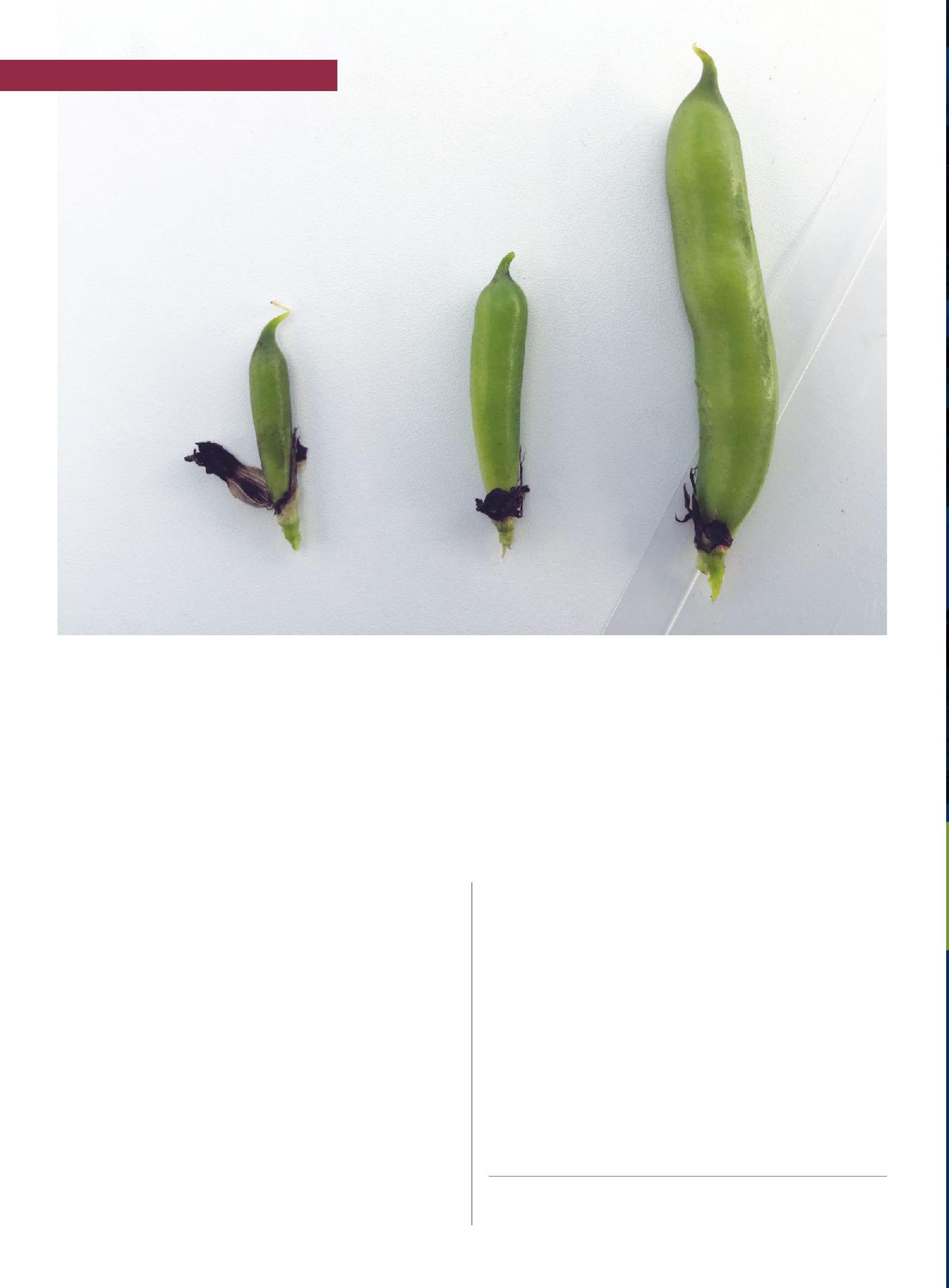
“One of the areas of interest is around seeding rates for fababeans, which come in a wide range of sizes,” explains Jessica Pratchler, research manager for Northeast Agriculture Research Foundation (NARF) and graduate student in Steve Shirtliffe’s program at the University of Saskatchewan. “There are two main market classes of fababean: tannin varieties that are generally large seeded, have a coloured flower and targeted to the human consumption market; and zero tannin varieties, which are generally smaller seeded, have white flowers and targeted to the
livestock feed market. However, even within these two classes, there is a range of seed sizes. Due to this variation in seed size, we wondered if the different seed size classes of fababean require different seeding rates.”
Pratchler started her three-year project in 2015 with an objective to identify the optimal seeding rate for various fababean varieties in order to maximize yield and quality while reducing logistical issues. The current seeding rate recommendation is 44 plants per square metre (/m2) for all varieties. The challenge is primarily with the larger seeded varieties, as the current seeding rates can represent considerable logistical issues. In 2015 and 2016, trials at Saskatoon and Melfort compared three varieties CDC SSNS-1 (smallest seeded), CDC Snowdrop and FB9-4 (largest seeded) at 20, 40, 60, 80 and 100 viable seeds/m2. Other trials at Indian Head, Outlook, Scott and Swift Current, Sask.,
ABOVE: Three different fababean varieties compared in the trials, from left to right: CDC SSNS-1 (smallest seeded), CDC Snowdrop and FB9-4 (largest seeded).
One for all, and all-in-one
So tell me Barley Baron, how will you protect your land from would-be thieves and invaders?
See to it that your uninvited guests receive the royal treatment. With three herbicide Groups and outstanding activity on both grass and broadleaf weeds, Tundra® herbicide is the complete solution for barley and wheat growers. Rule with an iron fist.
grew a single variety, CDC Snowdrop at the different seeding rates. All other agronomic treatments were the same.
“The growing conditions in 2015 and 2016 were fairly wet, so early results weren’t showing much difference in response among the different seeding rates,” Pratchler explains. “The wetter conditions meant all of the varieties produced a lot of biomass, so even at the lower seeding rates, the plants had more room for branching and growth. Therefore, in 2017, we changed the seeding rate treatments to see if we could get a better response. We compared the three varieties, CDC SSNS-1, CDC Snowdrop and FB9-4 at all five sites at five, 10, 20, 40, and 60 seeds/m2. The conditions in 2017 were more variable and drier during the growing season, and we did actually see a more typical yield response when we compared the data at the different seeding rates.”
Although Pratchler is still finalizing the results from across the 18 site years of data collected over three years, there are some interesting preliminary results to share. “Based on the preliminary
data, the best seeding rate under wet or average Saskatchewan growing conditions is 40 seeds/m2. Under irrigation, there is some promise that rates could be bumped up to 55 seeds/m2. Under really dry conditions, such as at Swift Current or Indian Head, there may be some promise to increase the seeding rates a bit to help address the dry conditions. With the larger seeded varieties, it appears that the rates could be reduced to rates closer to 20 seeds/m2, but we are still finalizing the data to determine what that rate should be for optimal yield and economics. Weed control is important, and with smaller varieties such as CDC SSNS-1 the plants are also a bit smaller, so under weedier conditions seeding rates of 44 plants/m2 is recommended. However, higher seeding rates may not be an economical method of weed control.”
In 2016, an undergraduate student in Shirtliffe’s program conducted a one-year trial with a large seeded fababean variety comparing two planting options, a Monosem Singulation Planter and a Fabro Disk Seeder. The objective of the trial was
to determine if the Monosem Singulation Planter, a vacuum-type planter used for corn production, may help solve logistical issues and allow for decreased seeding rates. The treatments included seeding rates of 10, 20, 40, 80 viable seeds/m2 using the two different types of planters.
“Although these results are from one year only, the early indications are that the vacuum type planter resulted in more equally spaced plants and significantly better yields at lower seeding rates,” Pratchler adds. “There is interest in expanding and continuing this research to determine the optimal seeding rates and yields. The one-year results showed that maximum agronomic yield can be achieved at seeding rates of 20 seeds/ m2 using the vacuum planter. As well, yields with the vacuum planter were about 1.5 times the yields of the disk air seeder. Further research is needed to determine the accuracy of this
response across environmental conditions.”
Fababean research will continue to be a priority. Pratchler adds that growers particularly in the northeastern part of Saskatchewan prefer to grow the larger seeded varieties because of the market options. In a good year, they can go into the higher value food market, or they can go into the feed market if necessary. Pratchler expects to have the final analysis and results available from her graduate research in 2018 and will share the final results, which will include final seeding rate recommendations for the various class sizes.
MORE EFFICIENT N APPLICATIONS POSSIBLE
A better understanding of the nitrogen cycle to improve application productivity.
by John Dietz
Nitrogen loss is real. University of Minnesota researcher Fabian Fernandez says growers could seriously shave the fertilizer budget by taking a different approach to nitrogen (N) applications.
Fernandez is an associate professor of nutrient management and water quality. Along with colleagues, Fernandez has been conducting research to better understand the nitrogen cycle in several Midwest and northern Great Plains states.
Like most, Fernandez believes in feeding the crop enough for its needs, but that’s it.
“There are so many variables that impact the potential for nitrogen loss that it is difficult to say a blanket statement about how much is being lost. The main two ways are through volatilization and leaching,” Fernandez says.
Application timing has been a special focus for Fernandez. He has also focused on how the source of N will affect productivity and loss.
Application timing
The nitrogen package can be applied all at once in the fall or in the spring ahead of planting. However, split application is a third and popular option, usually promoted for targeting the growing crop according to its need.
“We have been doing quite a bit of work to see whether it really works –and what I have seen is that it actually doesn’t [work] as much as you would expect,” Fernandez says. “It’s very rare to see a benefit, or a substantial benefit, in splitting nitrogen versus applying it before planting. The only situation where we see consistent positive results from a split application is in sandy soils. In those soils, the potential for leaching loss is really high. In those conditions, we do see a consistent benefit to split applications. In all of the other situations, in finer textured soils, we don’t really see that.”
Most nitrogen loss occurs in spring, between early April and about mid-June. The loss occurs as the soil is warming up – leached out first by melting snow, then by spring rains.
During these ideal conditions for nitrogen loss, the new crop may not be growing yet, or underground, the root system is small and the crop doesn’t require a lot of nitrogen.
“If the crop doesn’t need much N early in its growth and if that’s when we
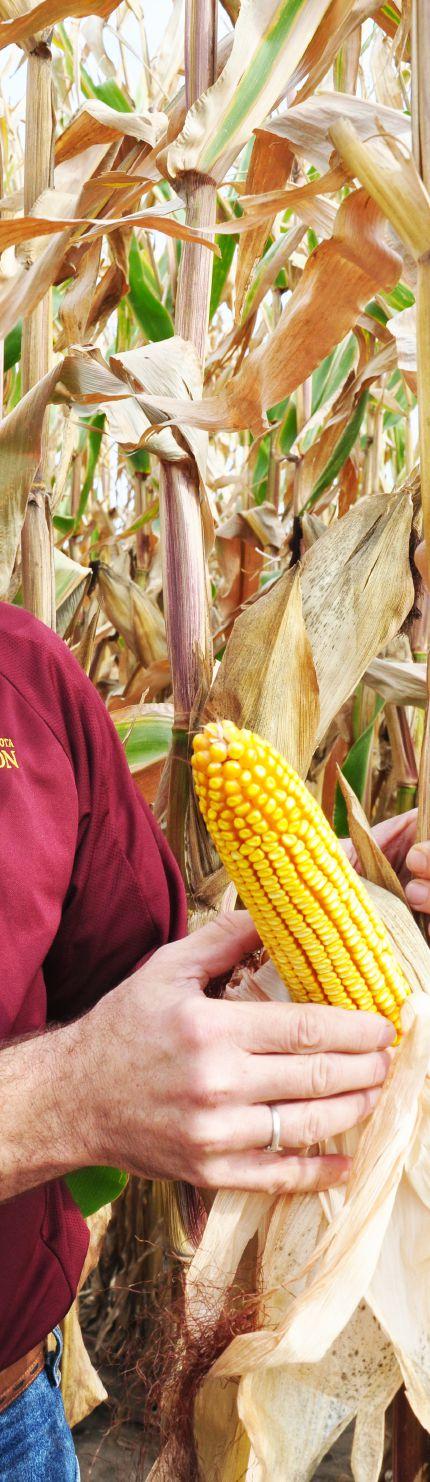
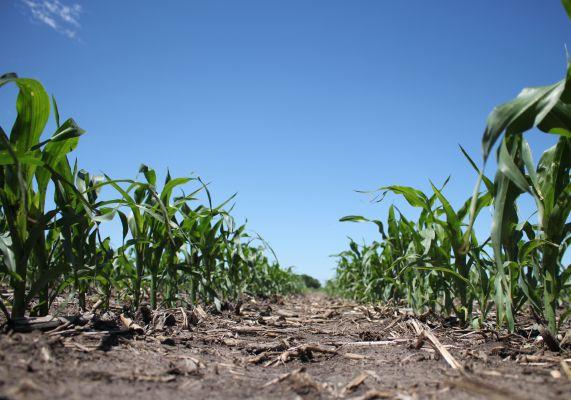
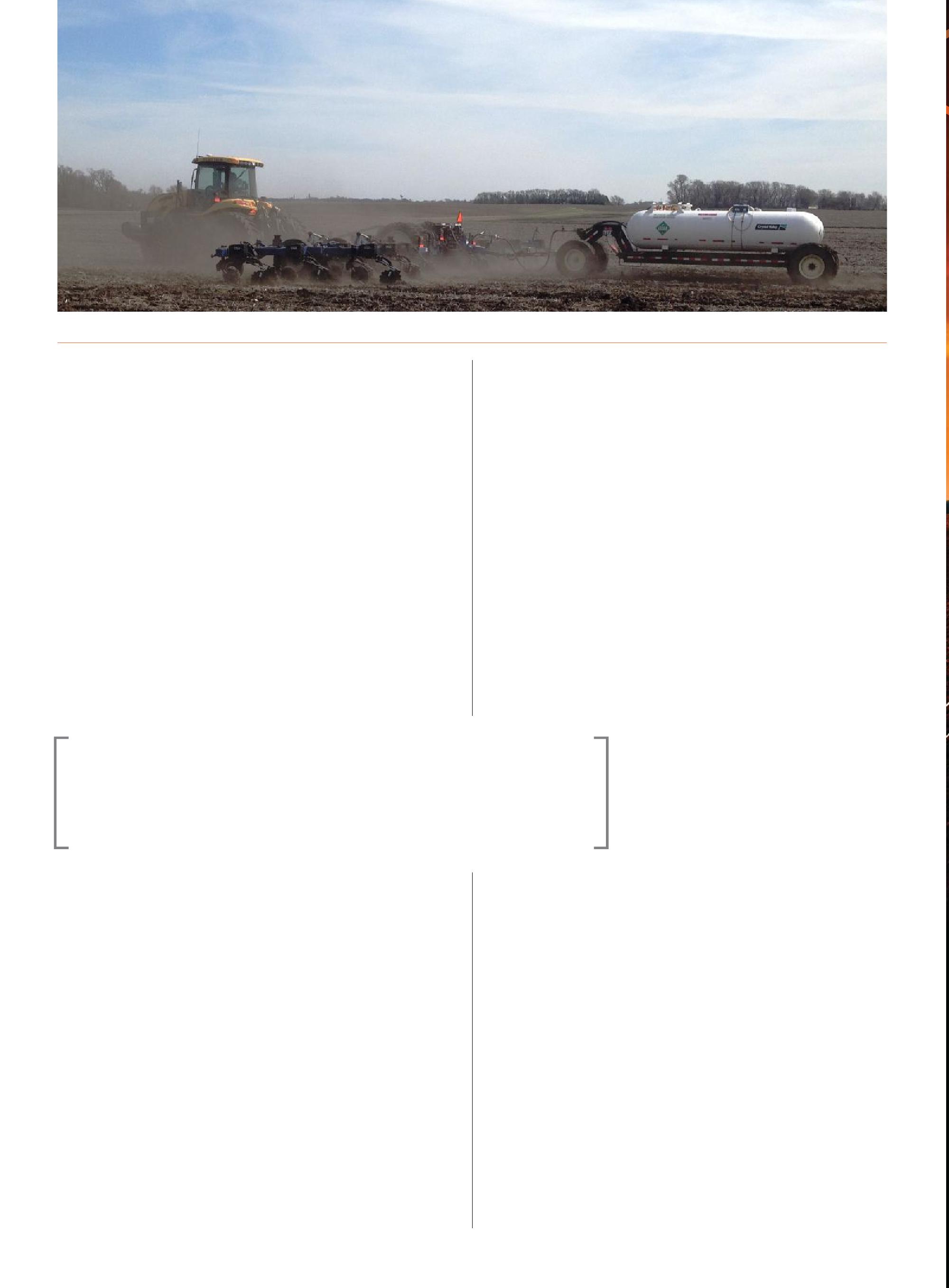
<LEFT: This corn is at about the right stage for the last nitrogen feeding in a sidedress or split-application system. Later timing probably would be too late to be effective.
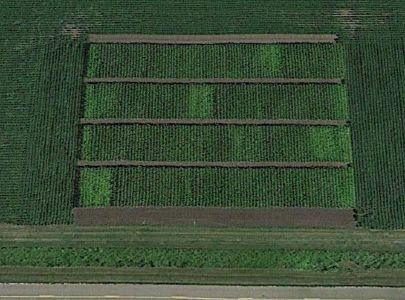
BOTTOM: Aerial view of corn nitrogen trials.
have the most loss, it seems very reasonable to apply most of the N later in the season, after the highest loss potential and before the plants really start to take up a lot of N. That’s the concept,” Fernandez says.
Proof of concept testing for this was carried out recently in eight Midwest states: Missouri, Iowa, Minnesota, North Dakota, Nebraska, Wisconsin, Illinois and Indiana, at approximately 16 field sites, for three years for a total of 49 site-years. All the sites were in corn production and conventional tillage. Five were continuous corn; 44 were corn after soybeans. At each of the 49 sites, one set of plots had the full N package applied before planting. In the remaining plots, the N application was split. Some had 40 and others 80 pounds of starter N followed by the rest of the package at V8/V9.
In addition to those studies, in Minnesota, other research collected 15 site-years of data, looking at best timing for split applications with a full N package at pre-plant and others with 40 pounds of starter with the rest of the package at one of the following corn stages of development: V2, V4, V6, V8 or V12.
Based on these two large studies, “On the fine textured soil, for the most part there was no difference,” he says. “In a few locations we saw a yield reduction when you waited too long to apply the nitrogen. At V8 or V12, in drier conditions, we saw yield reductions with late-stage split applications. Inevitably, that N never really made it into the root zone in time for the plant to take advantage of it.”
In some plots, the last application of nitrogen was applied even later, at R1 or silking time. It was too late; the yield potential already was reduced.
“The plants looked very nice and green, but the stalk diameter was smaller and the plants were shorter. Those plants were not able to catch up with plants that had early, adequate nitrogen. This is a really important point about split applications. We split applications to reduce the risk of losing N. The other potential risk is that, in delaying too much, the plants may not be able to use it,” he says.
As a general rule, according to Fernandez, it makes no difference to yield whether the nitrogen is all applied pre-planting or side-dressed in split applications before V8.
The exception to the rule, however, was on sandy soils and in a few situations where fine-textured soil had excessive (record breaking) precipitation after pre-plant applications and before plants were taking up a lot of N.
At the end of each season, Fernandez collected soil samples to see how much nitrogen was left in plots after the different timings for application.
“Fairly consistently, we saw that the split applications have greater residual N than
<LEFT: Fabian Fernandez, an associate professor of nutrient management and water quality at the University of Minnesota. Primary emphasis is nitrogen in corn cropping systems.
PHOTO COURTESY OF FABIAN FERNANDEZ.
PHOTO COURTESY OF STACY NORDSTROM.
PHOTO COURTESY OF FABIAN FERNANDEZ.
application.
the pre-plant applications, [which] means the plant did not use the nitrogen. Then, going back in spring at some sites, we did a follow up. That residual N was lost, although in dry conditions you had a better chance of that N sticking around for the next growing season,” he says.
With that information, Fernandez has one issue that’s confusing the results. While the end-of-season testing shows less nitrogen remaining in the full-treatment pre-plant application, the reason can be debated.
“We don’t really know if some of that N is lower because it was lost earlier in the season. That’s a conundrum,” Fernandez says. “Maybe we lost some of that N early. Or, on the plant uptake, maybe the split applications help the plant get a little more N without it being used to produce more yield. The plant may pick up more N and cycle it back into the soil.”
His conclusion now for application timing on fine textured soils is that either way, pre-plant or side-dressed, will be fine in terms of yields and in minimized nitrogen loss.
If a farmer really wants to do a pre-plant application, Fernandez says to apply a polmer-coated urea but not at the full rate.
“An early small amount, say 40 pounds of N, will help the crop get some of the N it will need later.”
Timing and types of N
Fall fertilizer applications are considered to be generally less efficient than spring applications but there are good reasons for the practice, even though more N can be lost.
On the science side, some things are fairly consistent. Fall applications should not be done at all on sandy soils, and preference should go to spring applications.
“Generally, for fall applications the probability of having a yield reduction and nitrogen loss is greater than for a pre-plant spring application,” he says.
For Western Canada, the nitrogen source is very important in the fall. In spring, the source of nitrogen doesn’t matter as much when it’s applied just before planting.
In a sandy soil, you want to go with split applications. Anything else you do pre-plant is never as efficient as split application.
Sandy soil difference
On the other hand, Fernandez has a very different conclusion on application timing options for coarse-textured sandy soils.
“No question, use a split application. On sandy soil, that will be a consistently better management practice than a pre-plant application,” he says.
“Typically, even if it rains, you can still get into the field quickly if it has sandy, well-drained soil. What I have been doing – and it seems to work very well – is to apply a small first dose of N around V2 so the plants have some N to get going. Then I wait to apply at V6 and once more, even later, to keep the corn at maximum yield potential.”
At V6 and later, he said, corn is strongly pulling nitrogen and water out of the soil. It is typical to see significant rains in late June and into July, but leaching isn’t a problem at this stage.
“In June or later, the plants are soaking it all up and nothing really gets leached,” he says. “So, that split application at V2 and later really would be the best for sandy soils.”
His choice for a fall nitrogen application is anhydrous ammonia, because it transforms quickly to ammonium. After that, the potential for loss is very low. On the other hand, the heaviest losses from a fall nitrogen application are associated with UAN products.
“If you use UAN, 25 per cent of that is already nitrate so the potential for loss is greater the moment you apply it in the field,” he says. “In Minnesota, we suggest using only ammonia as the N source for the fall. Toward the West and North, where it gets dry in winter and early spring, urea is also an acceptable N source.”
If anyone on the Prairies uses dry fertilizer, at any time, volatilization losses will be high unless it is quickly incorporated.
Blended treatments
Introduction of the coated urea prill has changed the equations somewhat as to timing and nitrogen loss for farming operations. Coated urea fertilizers delay the release of nitrogen from prills with soluble chemicals such as sulfur, polymers and combinations.
Fernandez is more comfortable with spring treatments using coated urea fertilizer.
“I’ve seen it work well with pre-plant applications, because
Anhydrous ammonia is the best source for fall
Tough broadleaves and flushing grassy weeds have met their match. No burndown product is more ruthless against problem weeds in spring wheat than INFERNO® DUO. Two active ingredients working together with glyphosate get hard-to-kill weeds like dandelion, hawk’s beard, foxtail barley and Roundup Ready® canola, while giving you longer lasting residual control of grassy weeds like green foxtail and up to two weeks for wild oats.
INFERNO DUO. It takes burndown to the next level. infernoduo.ca
NEW INSIGHTS INTO NATURAL AIR GRAIN DRYING
When conditions are right, natural air grain drying is a good option for drying grain and maintaining quality. Research at the Indian Head Agricultural Research Foundation (IHARF) over the past several years is providing new insights into maximizing the benefits of these systems.
BY Donna Fleury
One of the first research questions was to determine what we expected aeration to do and what the main objectives were,” says Ron Palmer, IHARF research engineer. “The first reason was to remove some of the moisture from the grain, especially if it is tough. Secondly, and more importantly, was to minimize spoilage, which is driven by the moisture content of the grain and its heat. Spoilage begins as soon as the grain is harvested. We also wanted to determine if there was a better way to dry the grain by controlling the fans to only run if there were drying conditions, instead of the more popular strategy of letting the fans run continuously.”
The data collection was from bin sensors measuring temperature and relative humidity of the air going into the bin and leaving the bin. The amount of water in the air can be calculated accurately if the temperature and relative humidity (RH) are known. This calculation is known as the absolute humidity and is measured in grams per cubic metre (gr/m3). The difference in absolute humidity of the air entering and leaving the bin is the net amount of water leaving the bin, and therefore the amount of drying can be calculated. For example, if the air entering the bin has an absolute humidity of 20 gr/m3 and exits the bin with an absolute humidity of 25 gr/m3, then for every cubic metre of air that passes through the bin, five grams of water are being removed and drying is occurring.
After compiling many years of experimental data, it was discovered that there is a “diurnal” drying cycle, which is when drying takes place at night and quite commonly wetting occurs during the day. This occurs regardless of size of bin or type of grain in the bin. “What we learned is that we can take advantage of this drying cycle and turn the fans on when drying is occurring, and turn them off when conditions are causing condensation or wetting,” Palmer says. “The data shows that the most drying appears to be occurring at night during the colder outside temperatures around 2 a.m., whereas the most wetting occurs during hottest part of the day at about 2 p.m. Temperature and relative humidity are key factors in whether or not drying conditions are in place, or if condensation is occurring.”
Understanding the drying process is based on well-established science, equilibrium moisture content (EMC) equations and math calculations, but Palmer has developed a simple online calculator to help make drying decisions
“
Photos courtesy of Ron Palmer.
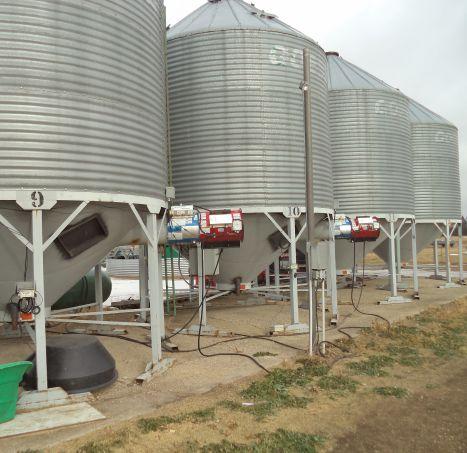
Grain bins with an automatic controller system installed for natural air drying.
• Best-in-class
(113%) • Midge tolerant • Leading standability • FHB resistance
easier. The only inputs needed are the air temperature, and the temperature and moisture content of the grain; the calculator will determine the extent of the drying conditions. (http://planetcalc.com/4959/)
“There are a few takeaways from this project, most notably that this system of natural air drying can only take a couple of points of moisture out of the grain,” Palmer explains. “A good rule of thumb is that for every 15 C that the grain is cooled down through aeration, one point of water or one per cent moisture is removed. The most critical step is to start aeration immediately on the day the grain is put into the bin, even if it isn’t full. Don’t put it off until later – start the process right away and take advantage of the immediate drying opportunity. We found that the first 24 hours is where we took out the most moisture, typically taking out one point of moisture in 24 hours, cooling the grain down from 30 C to 15 C. In all cases, the fan should be turned on when filling and left running until 9 a.m. the next day to cool the grain, even if it is dry. In this system, we are using the inherent latent heat in the grain for drying, rather than heated air.”
Air temperature is the main reason more
2017 Grain bin trials studying the effect of adding supplemental heat to the grain drying system, including an automated controller system (white box on red) and a propane burner to add supplemental heat (blue).
drying occurs at night, because cold air can’t hold water. When the cold night air enters the bin and passes through the warmer grain, the warmer air exiting the bin holds more water and drying occurs. However, with the hotter outside temperatures during the day, the warm air entering the bin hits the cold grain, and the colder air exiting the bin can’t hold water, condenses and wets
down the grain. Therefore, running the fans during the cold nights will dry the grain and remove moisture, while running during the hottest part of the day increases the risk of actually adding moisture back into the grain and increasing the risk of spoilage. This also explains the crusting that can occur at the top of the bin. The crust forms from the warmer air condensing on the inside of a cold roof
Bigger Picture
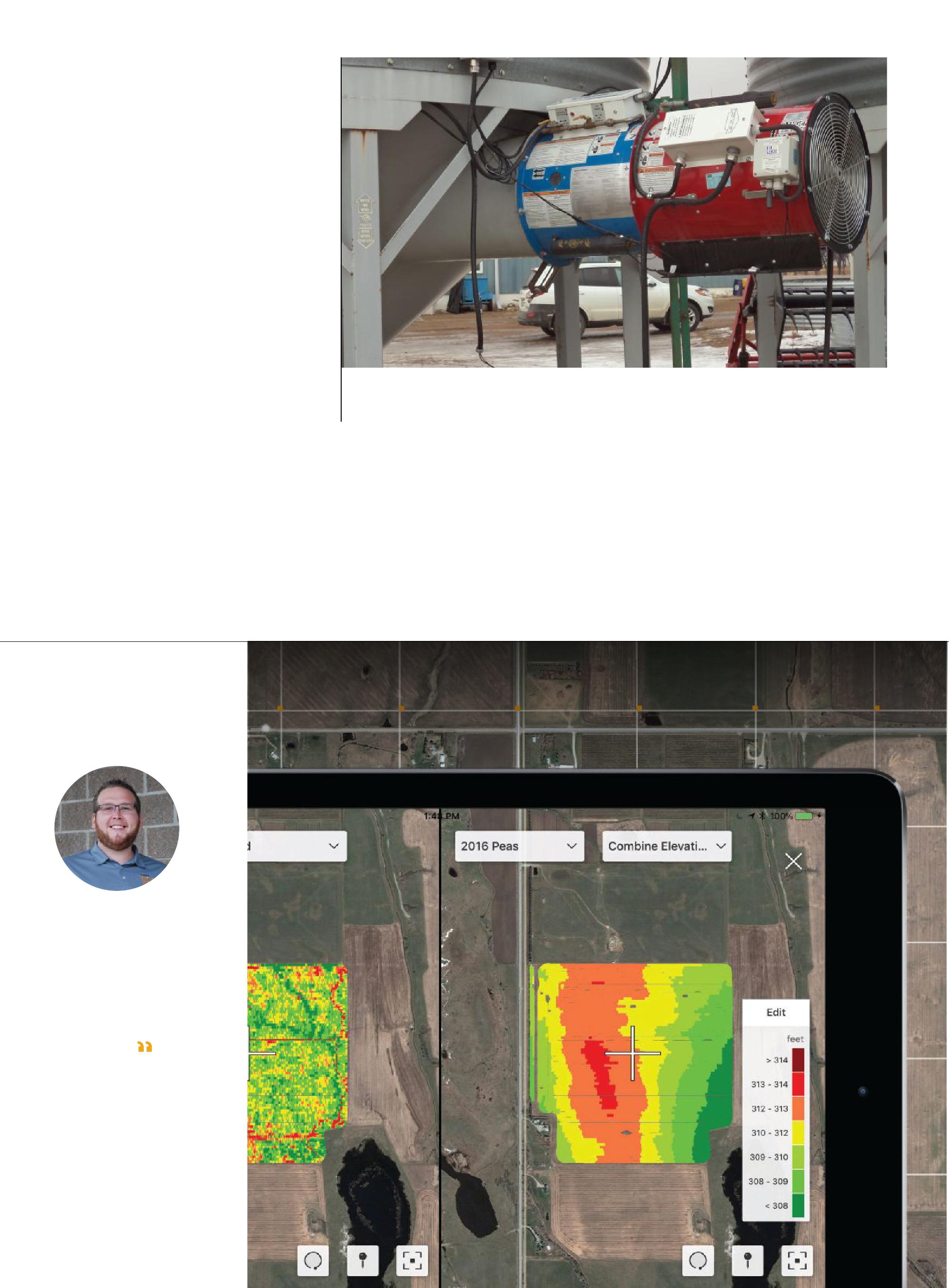
With Climate FieldView™, you can see both harvest and planting on one screen. Your data is stored all in one place, which makes sharing it with your agronomist much easier.
- Gary Csöff Product Marketing Manager. The Climate Corporation
and raining back down on the grain. The calculator can also be used to determine when such conditions exist.
“We’ve taken the research and calculator to the next step and developed a system that automatically controls the drying process; only turning the fans on when drying is occurring and turning them off when it is not,” Palmer adds. “In collaboration with IntraGrain Technologies Inc. in Regina, Sask., we have implemented an automatic controller using the absolute humidity of the air entering and leaving the bin. In one experiment, we tested the automatic controller in a 20,000-bushel bin of peas and a 10 horsepower fan. We had drying conditions throughout most of this experiment, with the fans running between 63 and 75 per cent of the time. We also learned that smaller fans are better,
not only saving energy, but they also reduce air pressure and heat at the bottom of the bin, which results in more even drying. The optimum fan size for aerating grain is about 0.4 cubic feet of air per minute (cfm)/bushel.”
Palmer agrees with critics that say aeration or natural air drying can only dry grain down by a couple of points. In situations where grain needs to be dried down three or four points or more, then supplemental heat will be needed or a commercial dryer. “We did some research this summer using the same principles of only running the heaters and fans when needed, rather than continuously. Burners only need to be sized at 50,000 or 100,000 BTUs and run during the heat of the day to put the energy and heat back into the grain. Then turn the aeration fans on during the coldest part of the night to cool it down and
After compiling many years of experimental data, it was discovered that there is a “diurnal” drying cycle, which is when drying takes place at night and quite commonly wetting occurs during the day. This occurs regardless of size of bin or type of grain in the bin.
dry the grain. For example, in a 3,500-bushel bin, a 50,000 BTU burner can heat up the grain by 10 or 15 C during the day, and the fans can lower the temperature by 15 C overnight, reducing the grain moisture by one point. Repeat this process until the grain is dry. Depending on the situation, you can pick and choose the best days to do this, and it may be worthwhile to remove a load from the bin improve drying from the bottom.”
The research results show that using aeration and natural air grain drying properly can help growers achieve their goals of dry, high quality grain and minimal risk of spoilage in storage. Using the heat in the grain itself can help evaporate water from the grain without requiring supplemental heat if only a couple of points of drying are required. Running the fans only when drying is occurring reduces electrical costs and maintenance, and improves drying and storage outcomes.
The research was funded by IHARF, Western Grains Research Foundation, Agriculture and Agri-Food Canada, Advancing Canada’s Agriculture and AgriFood Saskatchewan and Great West Controls, Saskatoon.
Bigger Picture
GET YOUR DATA IN ONE PLACE
Make field data management simple with Climate FieldView™. Collect, store, and view your field data in one easy-to-use digital platform that you can access from the field, office, or home.
Instantly visualize and analyze crop performance with imagery and field data maps so you can make the best input decisions for your fields.
Let Your Data Drive You
See field conditions across your entire operation— from anywhere. Climate FieldView provides you with field-level weather data, notifications, and scouting tools so you can make timely operational decisions no matter where you are.
No two farms are the same. Your farm is as unique as you. Climate FieldView™ is an integrated digital platform that allows you to easily aggregate your field data in one easy to use software application. Simplify field data management. Climate FieldView is your data partner to support the decisions you make every day.
Get started today at ClimateFieldView.ca
NEW TOOLS FOR GRAIN BIN MONITORING
Wireless sensors, 3D mapping technology – with products like these, there’s little need for producers to reach for the rebar when it comes to monitoring stored grain for spoilage.
BY Julienne Issacs
About a decade ago, Kyle Folk was at his parents’ grain farm helping his dad load up a semi of canola to meet a contract when the two made an unpleasant discovery.
“We went to put the auger in the bin and realized the grain was spoiled,” Folk says. At the time, Folk, who was running an electrical contracting business, says he didn’t know that spoilage could happen on such a scale. “People didn’t talk about it.”
“When the dust settled I asked my dad, ‘Why don’t you monitor this?’ He explained what was available on the market, and told me that he’d always felt that he could check it manually. He’d go up to the top and smell, or he’d shove a piece of rebar in and feel if it was hot.”
“His mindset was similar to that of a lot of producers [in the area]. That blew me away, because you assume all that risk with uncontrollable factors like the weather. You roll the dice.”
Following this experience, Folk founded IntraGrain Technologies, a grain storage monitoring company that offers the Bin-Sense Live wireless temperature and moisture monitoring system.
Bin-Sense Live is battery and solar-powered, and sends hourly temperature and moisture readings to the producer via cell networks. When the product went up for sale at the Farm Progress Show in 2012, all 40 systems sold. At Canada’s Farm Progress Show in Regina in 2014, the product won a gold Innovation Award.
“I came from the farm and I designed this product so that it gives the needed information but in a simplified manner – you have all this data, but it’s usable,” Folk says.
These days, the company manufactures the product but doesn’t sell it directly; retailers sell the hardware while IntraGrain maintains the software and charges data fees.
“We have quite a few clients throughout Western Canada and even northern B.C.,” Folk says. “We’ve also started selling outside of Canada: in the U.S., Mexico, Australia and Southeast Asia.”
Although the company and its partners collects data on stored grain from farmers, their agreement with customers stipulates that they will not sell that data to any third party, which Folk says protects farmers. “As the clock turns and more and more people monitor grain, it could be a very delicate and dangerous situation for producers,” he says.
CABLE-FREE MONITORING
Integrated systems like Bin-Sense can offer peace of mind to farmers with a great deal of stored grain or grain in multiple locations. However, cable-free monitoring is also an option for producers managing smaller volumes of grain, or for use as a back-up monitoring tool.
Winnipeg-based Dimo’s/Labtronics recently introduced a handheld, ten-foot infrared Wi-Fi grain bin probe designed to be inserted into filled bins.
The probe, which requires no installation, contains an infrared sensor near the tip that provides instant temperature readings that farmers access on their smartphone. The connection between the probe and the farmer’s phone is closed-looped and doesn’t require cellular reception or an Internet connection.
“This is something for farmers maybe renting bin space or using grain bags,” says Jason Diehl, vice-president at Dimo’s. “It gives them flexibility to probe anywhere they want in the bin.”
But hand-held probes are only the beginning in terms of cable-free grain bin monitoring, and a Chicago-based startup is about to take another step forward.
Amber Agriculture, which began as a student-run initiative out of the University of Illinois, is currently testing the
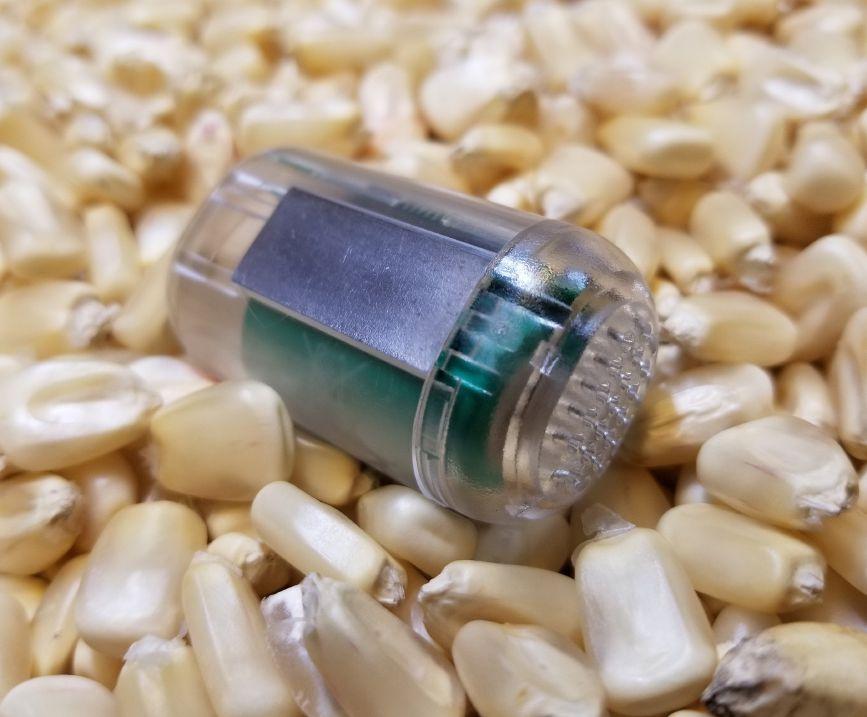
prototype of a pellet-sized wireless sensor that can capture temperature, humidity, carbon dioxide and organic compound volatile readings from stored grain.
“The sensors can be tossed in at the truck, auger hopper, or anywhere, to flow and distribute with the grain as the bin is being filled,” says Lucas Frye, co-founder of Amber Agriculture. “They are built to take a beating. On the outflow, they can be recaptured with an auger attachment mechanism.”
Installation of the system is relatively simple, Frye says, and takes only 15 minutes. To install, producers drill a hole at the top of the bin for a wireless receiver hub that sits on the roof, collecting information from the individual sensors in the bin.
Frye says the product is designed to meet the needs of farmers frustrated with cable-based systems with “big sticker prices” and extensive installation and maintenance requirements.
Amber Agriculture spent several months prototyping and sourcing components for the product in Shenzhen, China, but the company is now based in Chicago, Illinois. Frye says farmers across Canada and the U.S. Midwest are testing out the technology during the 2017-2018 storage season and the company plans to roll out the product in batches starting in 2018.
NEW! 3D MAPPING MOISTURE CONTENT
A newly developed grain bin monitoring system is utilizing medical imaging techniques to build a real-time 3D map of the moisture content in your grain. GrainViz allows producers to accurately see the moisture content of every individual bushel and its location in the bin, allowing you to understand airflow patterns and proactively manage trouble spots before any damage to grain occurs.
Using a series of sensors on the inside wall of the bin, GrainViz gives you real time insight, data and the ability to monitor 100 per cent of your bins contents. The stateof-the-art secure portal provides customers with the opportunity to set conditioning parameters, create alerts and control fan operation from anywhere in the world. Producers are able to manage moisture content across crops, ensuring the highest grain quality while reducing your overall energy costs.
“Having visibility of the inside of your bins at all times allows you to safely store more grain and reduce the need and cost of many smaller sized bins. Less time spent drying in the field reduces its risk exposure to the elements and quality degradation resulting in a higher quality commodity and maximized returns,” says Boyd Koldingnes, vice-president of sales and marketing with GrainViz. “In addition, this system also provides detailed inventory management and reporting, grain weight, insect detection in real time before they become a problem and integration into your existing precision agriculture platform. The results are profound; enhanced commodity quality, higher profits and your peace of mind.” For more info, contact bkoldingnes@grainviz.com.
SAFETY FIRST
Take time to review safety measures with workers and all family members. It is better to be safe than sorry around grain and hazardous machinery.
• Don’t enter a bin of flowing grain
• Don’t enter a bin to break a crust or remove a blockage when unloading equipment is running, whether or not grain is flowing. Restarted flow can trap you
• Be alert while working with grain that has gone out of condition - there may be moulds
• Always wear a respirator capable of filtering fine dusts when working in obviously dusty-mouldy grain
• When entering a questionable bin or storage, have two outside and one inside workers. Attach a safety rope to the man in the bin with two men outside capable of lifting him out without entering the bin. One man outside cannot do this and cannot go for help while giving first aid
• Before entering a bin or cleaning or repairing conveyors:
• Lock out the control circuit on automatic unloading equipment
• Flag the switch on manual equipment, so someone else doesn’t start it
• Maintain proper and effective shields and guards on hazardous equipment
A prototype of Amber Agriculture’s pellet-sized wireless bin sensor.
Photo courtesy of Lucas Frye.
HARD WHITE WHEAT HOPES RISE AGAIN
With the registration of HW388 in early 2017, there’s fresh hope for the return of hard white wheat fields to Canada’s bread basket.
by John Dietz
The outlook for hard white wheat production in Western Canada nudged upward this past winter for the first time in approximately six years.
For the Prairies, it has been the “little wheat that could” but couldn’t quite get over the mountains and into the major leagues of world class wheat exports.
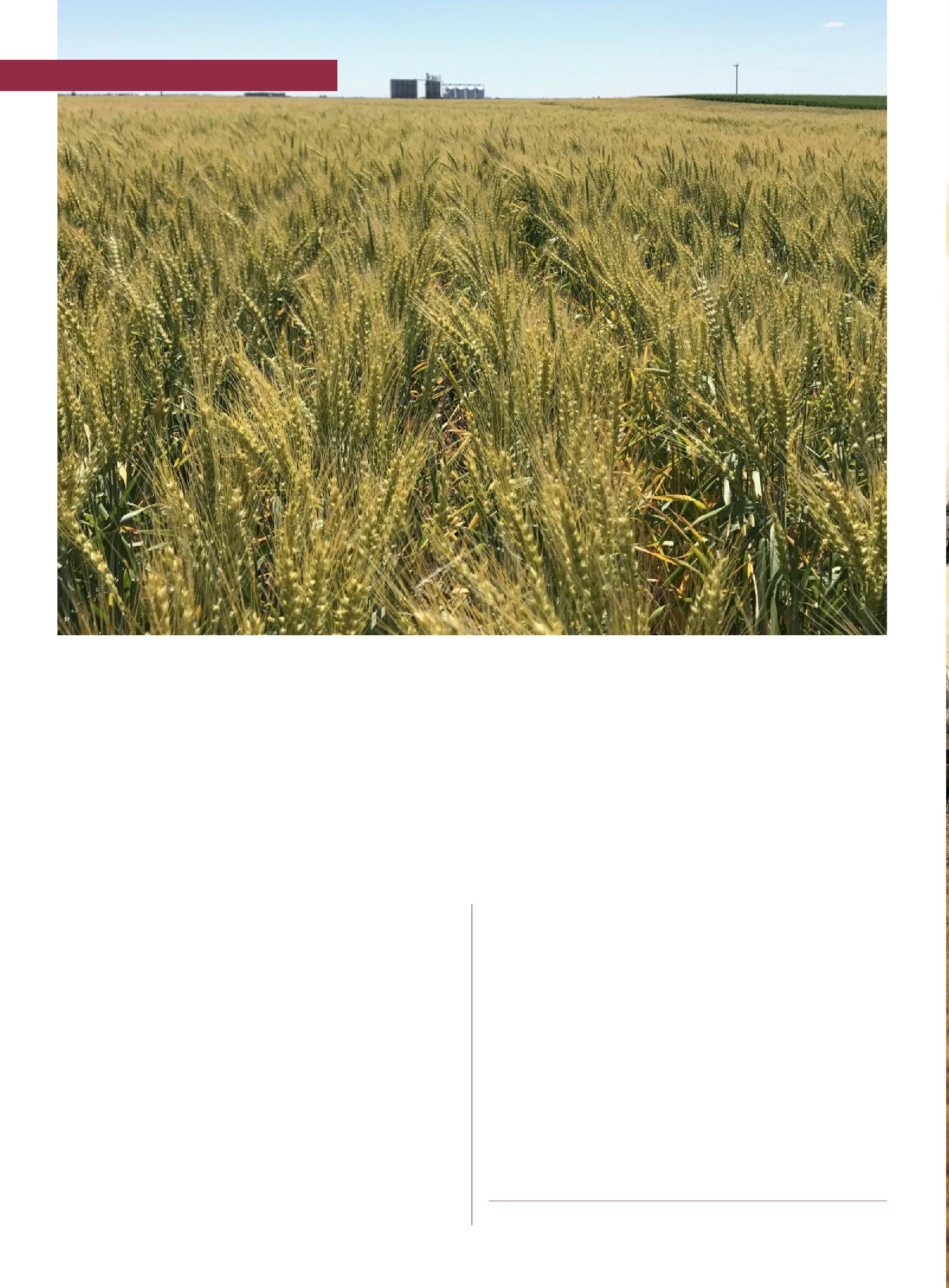
But a promising new spring hard white variety, HW388, now is being developed alongside a new winter hard white wheat, AAC Iceberg. Both are in the seed production programs of FP Genetics in Regina, and scheduled for commercial release in 2020.
Encouraging news for fans of hard white and diversification.
The Canada Western Hard White Spring (CWHWS) class has a short history. It came into its own with breeding that began in the 1970s in Manitoba. It soared to a half-million acres of production around 2010 to 2012, then dropped out of sight when buyers balked at prices for extra segregation.
In 2017, the Canadian Grain Commission still has seven
varieties listed in the CWHWS class: Kanata (year of registry –2000), Snowbird (2004), Snowstar (2006), Whitehawk (2012), AAC Iceberg (2012), CDC Whitewood (2012) and AAC Whitefox (2013).
Kanata, Snowbird and Snowstar date from the days of the Canadian Wheat Board’s hard white wheat export incentive program.
SeCan continues to have growers for Snowstar, Whitehawk and AAC Whitefox. Alliance Seed is managing AAC Iceberg. Jim Downey, research and development manager for SeCan Western Canada, says the three lines are solid varieties. “They have improvements over the early ones, and guys who grow them have had good yields. We’ve placed them with three seed growers so that a supply remains available if needed,” Downey says.
ABOVE: AAC Icefield at Quattro Ventures near Bow Island, Alta.
I will be a trailblazer by recognizing opportunity and embracing the future. I will face change head-on, using flexible solutions in order to adapt and overcome. I will continually challenge the status quo and place my trust where it is deserved.
He adds, “There is some renewed interest (in hard white) from some end users as a specialty wheat, but not a huge scale from what I see.”
Hurdles ahead
Hard white wheat is major commodity for Australia, and a major import item for Asian markets, but it remains stymied in Western Canada.
Breeders have a huge hurdle, working with recessive genetics. Millers and grain companies face cost hurdles for segregating the white-coated wheat each step from field to market. And, growers have hurdles in segregating it, for identity preservation, on their own farms.
“You can’t blend it, and most end users aren’t willing to pay the premium to keep it segregated. If the end user doesn’t want to pay a premium, why would you grow something and have to segregate it,” Downey asks.
“Grain companies and millers are going to need an extra 25 to 50 cents a bushel just to keep it separate in the system, after
they pay growers a production premium for their efforts,” he says.
At Swift Current, Sask., Agriculture and Agri-Food Canada (AAFC) spring wheat breeder Richard Cuthbert recommended Canada’s newest hard white spring wheat, HW388, for registration in February 2017.
“It’s two-to-three times as hard to make a good white wheat as it is to make a good CWRS [Canada Western Red Spring] wheat because of the genes in the seed coat color,” Cuthbert says. “We’re continually getting new traits from the red germplasm because it’s the most established. It’s where we get straw strength, Fusarium head blight [FHB] resistance and most disease resistance genes. There are one-to-three genes involved in the seed coat color, and white is a recessive trait, so whenever we make a cross with the red, we’re always trying to get back to the white seed coat. It’s like pushing a boulder up a hill,” he says.
For hard white wheat to gain a serious share in the CWRS market, he says, it needs to be more competitive in agronomics, disease resistance and in yield.
It’s got some unique attributes for risk management, for rotation, workload management and even environmental management as a fall cover crop that’s ready to harvest in July. It’s a different crop cycle opportunity.
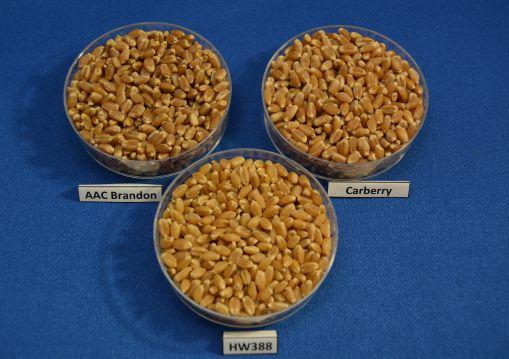
“HW388 is a big improvement in agronomics compared to white wheats that are available currently, and its disease resistance it quite a bit better,” he says. “It’s becoming comparable to Carberry, the standard in CWRS, in yield and agronomic type and even disease resistance. My preliminary look is saying that it’s around five per cent more grain yield than Carberry this year. It may perform pretty much as well as the
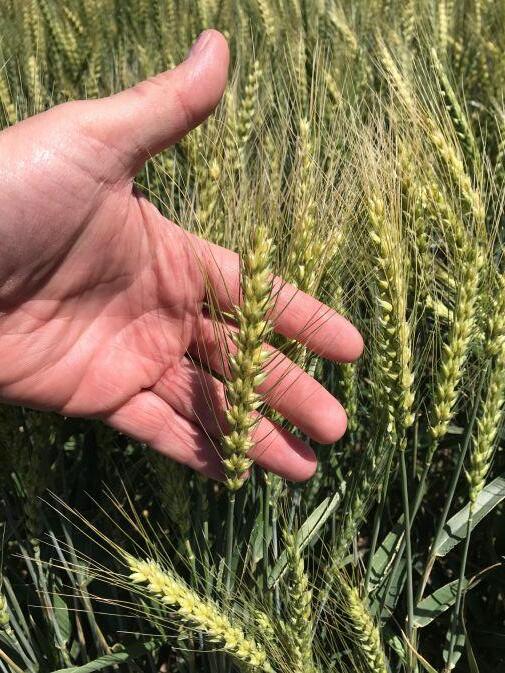
A close up of FP Genetics AAC Icefield hard white wheat in later production timing.
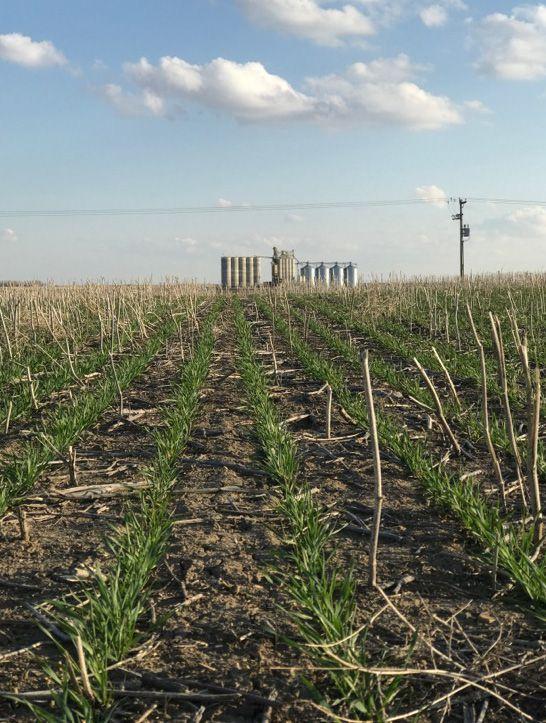
AAC Icefield emerging at Quattro Ventures near Bow Island, Alta.
new CWRS, AAC Brandon. ”
Other characteristics of HW388 are showing straw that is shorter and stronger than Carberry, improved FHB resistance over other hard white varieties, plus resistance to wheat leaf rust, stem rust, stripe rust and loose smut. It also is suited to grow nearly anywhere in Western Canada.
Nutritional benefit
If Canada has breeding hurdles for hard white wheat, it also has the nutritional strengths of hard red wheat. In time, as consumers become more selective on health issues, the hard white wheat breeder can be optimistic.
“There are nutritional benefits to our hard white wheat, compared to what’s being traded globally,” Cuthbert says.
“It’s not that the seed coat is white. It’s that the seed coat is thinner,” Cuthbert continues. “That allows our white wheat to be milled as a whole grain. We can produce whole wheat bread that
looks more like a loaf of white bread, but with improved nutrition of the bran and germ. It won’t have the off-color or the off-taste that’s typical of brown whole wheat bread.”
Winter white
At the center of the effort to reinvigorate Canada’s hard white wheat products is Herman Wehrle, FP Genetics director of market development. His task is to develop markets for the new hard white wheat products – HW388 for spring planting – and AAC Icefield, the first hard white winter wheat from a Canadian breeding program.
FP Genetics first picked up AAC Icefield from Dr. Robert Graf, AAFC winter wheat breeder at Lethbridge, Alta. It was released in July 2015 as an experimental wheat. For now, AAC Icefield is in the Canada Western General Purpose Class.
The yield of AAC Icefield is rated as 104 per cent of Radiant hard red winter wheat. It has slightly lower protein than Radiant
TURN UP THE BURN
Ask your local retailer for more information.
If you’re still using glyphosate alone for burndown, or choosing a Group 2 as a tank-mix partner, you may not be getting the control you need. Nufarm’s burndown products have multiple modes of action that deliver the power you need to stay ahead of tough weed pressures – giving your canola, cereal, pulse and soybean crops a clean head start. Turn up the burn on pre-seed weed control with BlackHawk®, CONQUER® and GoldWing ® . Don’t forget your reward savings at realfarmrewards.ca
and is rated fair for winter survival. It is shorter than Radiant, has very good lodging resistance and is resistant to stripe rust. Because it is moderately susceptible to Fusarium, the market is expected to be in the western provinces.
FP Genetics was able to harvest its first Select field of AAC Icefield in 2017. It was under pivot irrigation in southern Alberta, and was an eye-opener.
According to a preliminary report from Quattro Ventures in Bow Island, Alta., the new hard white winter wheat yielded between 90 and 100 bushels to the acre.
“Having yields in a similar zone as hard red wheat is important to sustaining a long term white wheat market,” Wehrle says. “The exciting thing is that AAC Icefield provides all the benefits of a
winter cereal – higher yield and a different crop cycle.”
He adds, “It’s planted in the fall and comes up quick in the spring and is harvested earlier in the summer. It’s got some unique attributes for risk management, for rotation, workload management and even environmental management as a fall cover crop that’s ready to harvest in July. It’s a different crop cycle opportunity.”
AAC Icefield is also looking really good in the initial testing for baking quality, Wehrle says.
“It’s been similar or slightly better in milling and baking characteristics to the hard red winter wheats. It has a whiter loaf and better water absorption,” he says.
Opportunity ahead
Clearly, with two new hard white wheat products, the chief promoter for FP Genetics is excited about the potential for growers. Now he needs to convince the growers and the market.
“We understand that, with hard white wheat it’s going to take more time and market development. By no means will this be an easy market,” Wehrle says. “We’re going to need to be a little more discerning in finding markets where these products will fit and provide good value to the end user.
“We believe the wheats we are bringing into the market probably won’t get to the artificial half-million-acre size that we had with Snowbird, but they certainly will be an alternative to Australian hard white, and we will have an opportunity to compete for North American whole grain bread products.”
People like white bread, Wehrle says. They also like healthy bread. That healthier, whole wheat market is where Wehrle hopes his new high quality hard wheat varieties will find a longterm home.
MORE EFFICIENT N APPLICATIONS POSSIBLE
continued from page 26
it is protected from loss during those wet periods early in spring,” Fernandez says. “It has worked well for us.”
However, he would not recommend using it for a split application.
“Using polymer-coated urea in split application at sidedress timing, we have seen some yield reductions,” he says. “You want to apply something the plant can use right away, rather than in three or four weeks. It will release eventually, but starving the plant for a while is setting it up for lower yield potential. And, if the conditions turn dry, the release would be even slower.”
On the other hand, mixing a coated urea and conventional urea does have potential. Fernandez has studied this method, using different ratios on fine textured soil.
“I’ve seen a ratio work well for fine textured soil. If you do an early application, you could do a third urea and twothirds ESN, or half and half. I suggest those ratios because of cost, mostly. The coated urea is more expensive, but it can save a need for a second field trip,” he says.
The scientist also worked with ratios for sandy soils using pre-plant applications. He has studies with urea-only, ESNonly, and ratios between. The lowest yield was achieved with urea-only, and the highest with ESN-only.
“We saw a steady increase in yield for using ESN. The more ESN you have in the mix for pre-plant, the better,” he says.
Then, he added, “Even 100 per cent polymer-coated urea pre-plant was not as effective as a split application in sandy soils. I feel really strongly that, in a sandy soil, you want to go with split applications. Anything else you do preplant is never as efficient as split application. There, too, we consistently found that the more poly-coated urea you had for pre-plant the better it was for yield but it was never as efficient as split application.”
“There are so many variables that it’s really difficult to generalize on how much you could save or lose” Fernandez says. “Whether it’s leached or lost to the atmosphere, a pound of N that is lost to the crop is a pound of N that you paid for.”
HW388 seed next to Canada Western Red Spring.
PHOTO COURTESY OF RICHARD CUTHBERT.
Discussing diversified crop rotations
Bill May, AAFC
March 13, 2018 @ 3:00 p.m. Eastern
Soybean cyst nematode
Albert Tenuta, OMAFRA
April 10, 2018 @ 3:00 p.m. Eastern
ComingThis Fall
APPROVED FOR 0.5 CCA-CEU Nutrient Management
APPROVED FOR 0.5 CCA-CEU Crop Management
APPROVED FOR 1 CCA-CEU Pest Management
Keep a lookout for our second webinar series, beginning October 2018!
RESEARCHERS EVALUATE
NEW PGRs AND DEVELOPING PREDICTIVE TOOLS
PGRs reduce height, decrease lodging and can result in yield increases when used under optimal yield conditions.
by Donna Fleury
In high yielding cereal crops, lodging is a common cause of yield loss. Under the right conditions, plant growth regulators (PGRs) can reduce plant height and reduce lodging. Plant growth regulators are synthetic compounds that can beneficially modify plant growth and development. Research continues to help address the many questions around PGRs, including responsive cultivars, appropriate timing, optimal conditions and other factors.
“We have been working on PGRs in overlapping projects for the past four years in all of the cereals,” says Linda Hall, professor and research scientist with the department of agricultural, food & nutritional science at the University of Alberta. “We have consolidated what we’ve learned in these different projects and are using this baseline data in a three-year project to get a better understanding of the potential scope of PGRs, cultivar specificity and appropriate timing. We are building on the combination of some exciting recent results from a large project led by Sheri Strydhorst, Alberta Agriculture and Forestry, Laurel Perrott’s graduate research project and other PGR trials I have completed.”
Researchers now know that different types of cereals respond differently to the various PGRs. As well, cultivars of the same cereal species do not respond equally to PGRs. However, in those cereals where a response was noted, small yield gains were measured in barley and wheat. “We have also determined how to accurately stage the crops when using PGRs,” Hall says. “For PGRs that inhibit gibberellin biosynthesis [chlormequat chloride (Manipulator) and trinexacpac-ethyl], the appropriate stage is when cereals go into the elongation phase. At this stage, gibberellins are active and basically signal the crop to begin expanding the small nodes at the base of the crop, allowing the stem to elongate. This is the appropriate stage for application of PGRs. We can also assume, based on research literature from Europe, that applying gibberellin-inhibiting PGRs at this stage redirects plant resources from stem elongation into other parts of the plant. Therefore, crop height is reduced, while stems and roots may get thicker, lodging may be reduced and yields may increase.”
In this new study initiated in 2017, two PGRs are being compared individually and in combination at various rates on barley, wheat and oat. Hall notes that as researchers they are trying to explore the potential scope and outer limits of using PGRs, so
some of the research trials and rates are practices that are not recommended and that growers would never do. Trials are being conducted at three central Alberta locations including St. Albert, Barrhead and Vermillion. The PGRs being evaluated include chlormequat chloride (Manipulator), currently registered for use in wheat in Canada, and a new product, trinexapac-ethyl, which is
PHOTOS COURTESY OF LINDA HALL.
ABOVE: Research technician Bryanna Jeske measuring untreated CDC Copeland barley plots at the University of Alberta’s St. Albert research farm in 2017.
COMPETITION + GLYPHOSATE
DAY 21: re-growth occurs
EXPRESS® + GLYPHOSATE
DAY 21: complete burn
Express® burns to the roots with no re-growth. Add Express® brand herbicides to your pre-seed glyphosate burn-off and you’ll eliminate your toughest weeds from the shoots to roots with its complete systemic activity. For cleaner fields and higher yields, get a head start this spring with Express® herbicides. Visit FMCcrop.ca or call 1-833-362-7722 to learn more.
Save up to 20% with new FMC Grower CashBack – ask your retailer for details.
not yet registered for use in Canada. The PGRs are being applied individually and in combination at varying rates from 0, 25, 50, 75 and 100 per cent of recommended rates, resulting in 25 different rate combinations. Various factors including crop height, lodging, maturity and crop yield are being measured.
“The various treatments were designed to show trends in the crops at the different locations,” Hall says. “We have most of the data analyzed for barley (CDC Copeland) and have some very interesting results so far based on this first year. The trials showed that chlormequat chloride on its own only provided a small height reduction in barley, something we expected from other research. On the other hand, trinexapac-ethyl alone did provide a decent response in height reduction, ranging from two to 11 per cent across the three locations. Surprisingly, when we applied a reduced rate of each PGR together in mixture, we consistently got a very short compact crop, with height reductions ranging from 10 to 14 per cent across the three sites. Although the higher rate combinations are more product than we would ever advise growers to use, what we found to be the most interesting is there is a place in the middle where a combination of the two PGRs at less than full rates was
providing a very nice consistent response. So we believe there is a ‘sweet spot’ with reduced rates of each active, if the combination is allowed and is registered for use in Canada in the future, could provide a nice height reduction. This is a fairly standard practice in Europe where PGRs been used for years and in combination for various cereals.”
The first year results also showed a slight increase in maturity as the rates of both products were increased. The plants stayed a bit greener and dried down a little slower. Although overall this doesn’t present a significant disadvantage, it may help explain the yield gains. Overall, lodging only occurred at two locations, St. Albert and Barrhead. The combination treatments showed a lodging reduction by 36 and 30 per cent at St. Albert and Barrhead, respectively. At the 50-50 combined PGR rate, lodging was almost eliminated.
“In the trials where there was lodging, there was a definite negative effect on yield,” Hall says. “Comparing no PGR and a combined rate of 100-100, yields at St Albert were 121 per cent of the control and Barrhead was 130 per cent. This is not surprising as we know that lodging has a negative effect on yield, but what
Three research agronomists conducting various PGR trials in Alberta. Left to right: Sheri Strydhorst, Alberta Agriculture and Forestry, with Laurel Perrott and Linda Hall, University of Alberta.
Research technician Bryanna Jeske measuring CDC Copeland barley plots, comparing the highest rates of the dual PGR combination at the University of Alberta’s St. Albert research farm in 2017.
was surprising, was that even in the absence of lodging at the Vermillion site, we still saw a yield increase of 108 per cent with the use of PGRs. More importantly, we saw that increase not only at the extremes of twice as much product as a grower would use, but also at that 50-50 range. So while we are not proposing use twice as much product, we feel there may be some encouragement to actually look at half rates of each product in combination. Although we haven’t completed all of the data analysis, we are seeing those trends in all three cereals, wheat, oat and barley, which is giving us more confidence that these results can be replicated.”
“Another research goal is to see if we can be predictive about when would be a good year for using these products,” Hall says. “We want to emphasize that we are not supporting the use of PGRs every year in every field. We are trying to develop predictive modelling tools to help growers determine when the use of PGRs could be expected to provide a response. For these products to be successful, there are three conditions that must be met: responsive cultivar, abundant N and soil moisture. When the appropriate cultivar is grown under high productivity conditions including abundant soil moisture like we had in our trials in 2017, then we see these results. We also know that we do not see these results when don’t have a cultivar that is responsive, especially under drier conditions or where there is not enough N to support abundant growth.”
Researchers are actively working in other trials to determine which cultivars in barley, wheat and oat are the most responsive. The response to PGRs is cultivar specific and some cultivars are
not responding as well as others. That information will be shared as it becomes available. For soil moisture, growers will have that information going into the season, which also allows them to make decisions on the N rate, and throughout the growing season. “With a predictive tool, growers would be able to determine how much soil moisture is available in early June around the time of PGR application, and combined with the N rates and selected cultivar, determine if a PGR is likely to provide a successful response,” Hall says. “Engage Agro has already developed an app in a beta version to provide some of that information. This type of app, enhanced with the modelling data we are developing and collecting, could become a predictive tool to help growers develop confidence they will see a good effect from a PGR application.” The project is funded by Engage Agro, Syngenta and ACIDF.
For now, growers are reminded that Manipulator is currently registered for use only in wheat in Canada. Currently, there are no established maximum residue limits (MRLs) in the U.S., so most Canadian grain buyers will not purchase wheat treated with Manipulator until this issue is resolved, potentially over the next few months. Syngenta submitted trinexapac-ethyl for registration in Canada in 2017 and is awaiting approval. Trinexapac-ethyl is registered for use on cereal crops in the U.S., and MRLs have already been established in the U.S. for export sales. As market constraints are addressed and more registered PGR options become available, growers will be able consider using PGRs to reduce height, decrease lodging and increase yield when used under optimal yield conditions.
“ It’s important for us to connect with those who aren’t involved in ag and explain what agriculture today really looks like.”
Pamela
Ganske, Agvocate Ag Retailer
NEW MANAGEMENT TOOLS FOR APHANOMYCES
Aphanomyces disease confirmed to be wide-spread in pea and lentil fields across Western Canada.
by Donna Fleury
Aphanomyces disease in peas and lentils is a widespread and serious problem across Western Canada. In 2017, even with dry conditions in many areas, the disease remained a significant problem in peas, with crop and yield losses in infected fields remaining high. In lentils, the incidence and severity was reduced under the drier conditions, however the inoculum is still likely present. Currently the only control option in fields with Aphanomyces is extended rotations away from peas and lentils for at least six to eight years.
“We have a collaborative group of researchers working together across Western Canada to better understand the pathogen, its distribution and impacts, and to work on developing new tools,” explains Bruce Gossen with Agriculture and Agri-Food Canada (AAFC) in Saskatoon. “Aphanomyces is a difficult disease to identify visually and typically occurs as part of a disease complex with other root diseases such as Fusarium and Pythium. Longtime traditional culturing approaches used to identify pathogens didn’t work well for Aphanomyces, making it difficult to detect. With the
more recent development of a good molecular test developed by researchers in France, we can now properly confirm the identity of the pathogen.”
A large collection of pea and lentil crop samples were recently collected across Western Canada and analyzed at AAFC Lethbridge, Alta., confirming that the disease is very widespread across the region, and likely has been around for a longtime, but not recognized in the disease complex. “Aphanomyces is a soilborne disease and is known to be a pathogen in alfalfa,” Gossen says. “Therefore, it may have been here for a longtime but undetected, and possibly may even be a pathogen in native vetch populations, although never studied.”
Aphanomyces root rot is caused by a soilborne water-mould pathogen Aphanomyces euteiches, not a fungus. Therefore, most fungicide seed treatments that are still very good at controlling
ABOVE: Shoot symptoms of Aphanomyces on pea in mid-June showing yellowing, stunting and lack of canopy closure.
PHOTOS
That’s the way growers, like you, live. You keep pushing, day after day, without ever punching in or out. All with one thing on your mind. Getting more out of every seed, row and field. So, if you’re in the business of higher yields, get there with Bayer fungicides. Especially when your best harvest is yet to come. Find out more about Bayer fungicides at ItsGrowTime.ca Because you work in acres, not hours.
other root rots like Fusarium are not providing good control of Aphanomyces. Gossen compares Aphanomyces to other root rot pathogens to explain why it is a much bigger problem. He explains that Pythium pathogens for example are picky eaters, take tiny bites and are mostly a problem early in the season. Fusarium gets established in a plant, often causing a major lesion on the primary taproot, but doesn’t spread too quickly. Aphanomyces is a glutton, taking big bites and lots of them. Once it gets established, it spreads through the root system and throughout the season, often causing major crop losses at flowering. Aphanomyces develops large resting spores that are very long-lived, compounding the problem.
New management tools
Aphanomyces root rot is caused by a soilborne watermould pathogen Aphanomyces euteiches, not a fungus. Therefore, most fungicide seed treatments that are still very good at controlling other root rots like Fusarium are not providing good control of Aphanomyces.
and remains in the soil to attack the crop later in the season. When it attacks the crop at flowering, the crop can go down very quickly.
Lots of research is also being done in various jurisdictions on the potential of biological seed treatments for control, but so far no commercial products have been developed or released.”
Although various tools and strategies are under development, most are likely three years or more away from being available. And so far, there are no silver bullets. Aphanomyces continues to be a difficult disease to identify solutions and management options.
“We have considered many different options and approaches, but so far it has been very difficult,” Gossen says. “We don’t have really effective seed treatments to control the disease. Although there are some fungicide seed treatment products that do a good job of protecting the seedlings, Aphanomyces is quite aggressive
Researchers and plant breeders have made some progress in the identification of partially-resistant field pea lines, although so far there aren’t many genes showing a strong source of resistance.
“Some of our research team, including Bob Conner with AAFC in Brandon, Man., and Sheau-Fang Hwang with Alberta Agriculture and Forestry have been collaborating on developing markers for some of the quantitative genes (QTLs) associated with partial resistance,” Gossen says. “They have developed a couple of lines from crosses with fairly good adapted commercial cultivar material. These lines look good in the field under moderate disease pressure, but won’t be effective in fields with high levels of disease.
EFFECT OF SOIL MOISTURE ON PEA GROWN IN APHANOMYCES-INFESTED SOIL
One of the unexpected outcomes of a five-year organic agronomic project initiated in 2010 comparing diversified crop rotations and tillage at the Swift Current Research and Development Centre was the discovery of Aphanomyces disease in peas in 2014. During the project, the area received much higher levels of precipitation than usual.
“We took the opportunity to initiate a project to look at the effect of soil moisture on pea grown in Aphanomycesinfested soil,” explains Myriam Fernandez, a research scientist with AAFC in Swift Current, Sask. “For organic growers, crops like peas and other pulses are very important for N-fixation and adding organic matter to the cropping system, so the appearance of Aphanomyces infection was very concerning. This was at the time when Aphanomyces was emerging as a concern.”
The objectives of the project, conducted by post-doc Olanike Aladenola, were to determine the influence of different watering regimes on pea plants growing in Aphanomyces infested soil compared to Aphanomyces disease-free soil under controlled greenhouse conditions. Both
soils showed a presence of Fusarium species. There were three water treatments, including pots watered daily, pots watered every other day and pots watered weekly. Each time, the soils were watered to field capacity in all pots.
“We still have some analysis to complete, but some of the results show differences in various growth parameters between the different soils and the three watering regimes,” Fernandez says. “Regardless of the water frequency, the peas grown on Aphanomyces infested soil had higher levels of root rot, matured quicker, were shorter and had lower grain yields and above-ground biomass. On the other hand, regardless of the soil infested or not, factors such as grain yield, above-ground biomass and plant height were significantly better for pots watered daily as compared to the other watering regimes. However, there was no difference in seedling emergence in any of the treatments, the differences appeared later on.”
Although more analysis needs to be completed on root rot data, preliminary analysis suggests that root rot was less severe in the pots watered daily than in
those watered once a week. This is likely a result of stress, and the reduction in performance for plants under stress. “The results also suggest that once Aphanomyces infestation is present, there will likely be infection of crops even when the soil is dry for some periods of time” she adds.
“We look forward to improved soil testing and other tools when they become available to help address this disease problem.”
Fernandez and her team are taking a proactive strategy and are trialing a variety of intercrops and cover crops along with various crop rotations to see if they can reduce the risk of Aphanomyces infection moving into the areas that so far are not infested. Many of these crop combinations tend to reduce disease levels and some crops have biofumigant and bioherbicide properties, which may prove to play a role in disease management in the future. A wide variety of species, including legumes and other Nfixing plants that aren’t as susceptible to Aphanomyces disease are being trialed to see what strategies can be used to help both organic and conventional growers increase N and organic matter in their cropping systems.
SMALL GRANULE, ENORMOUS POTENTIAL.
Scientifically proven to guard against all three forms of nitrogen loss while allowing growers to cover more acres in a day, SUPERU® premium fertilizer packs unmatched efficiency and productivity into every granule. Fewer passes across the field, broader and more even spread patterns, one ready-to-use formula; SUPERU will change the way you grow.
Talk to your retailer or representative to learn more about SUPERU ® premium fertilizer.
This work continues, along with effort from others plant breeders at the University of Saskatchewan and elsewhere, and we expect to have partially resistant commercial field pea varieties available in the next few years.”
“Decision support system” tested
Another promising tool under development is a “decision support system” to help growers assess the level of risk of Aphanomyces and to develop suitable management strategies. Syama Chatterton, a research scientist at AAFC Lethbridge is leading the research and development of this tool, which is expected to be ready to pilot in two or three years.
“The idea is to help growers make a decision on the level of risk and rotation strategies,” Chatteron says. “There is a soil test currently available for Aphanomyces, but it only confirms if the disease is present or absent from the sample. Therefore, if a soil test detects Aphanomyces in a field under current testing, it is likely a high-risk field. The future direction of the research is focused on developing a soil test that would be able to more accurately quantify the level of disease in the field and help growers determine if their field is considered low, medium or high risk of infection. This information, as part of a decision support system, will help with management decisions and rotation strategies.”
The decision support system of the future will assist growers
to evaluate options and their suitability for various risk levels. For example, for low risk fields, such as those with one or two areas with yellowing patches, seed treatments may help delay the infection.
“When other options, such as partially resistant pea varieties become available, the decision support system will help identify which fields will be suitable,” Chatterton adds. “For example, partially resistant varieties will be recommended for use in low risk fields, but should not be planted in high risk fields because of the risk of overcoming the resistance. The decision support tool will be an important part of selecting and implementing new control options as they become available.” Similar systems are under development in France and other jurisdictions.
For now, growers with infected fields need to implement extended rotations away from both peas and lentils for at least six to eight years. Peas and lentils are considered the same crop and risk in a rotation, so growers will need to find alternatives in those fields. Growers who have been growing peas and lentils for many years can generally expect to see some disease, but for new growers with fields without a history of peas and lentils, it may take several years of rotations before Aphanomyces appears. Soil tests are available to help growers confirm whether or not they have Aphanomyces in a field. Selecting samples from a low spot where water tends to sit is recommended. Seed treatments are still very important and are recommended for control of other root
Advanced stages of infection on the roots includes pinching of epicotyl and blackening caused by dual infection with Fusarium and Aphanomyces.
Early infection of roots by Aphanomyces showing honeybrown discolouration of lateral roots.
rot pathogens such as Fusarium and Pythium. Researchers hope to have new tools available for growers over the next few years to tackle this widespread and serious disease in peas and lentils.
Other research for control options
Chatterton discussed other research with delegates at the Field Crop Disease Summit in February 2017. Along with Sabine Banniza at the University of Saskatchewan (U of S), Chatterton tested a number of different legume crops to see which ones were hosts or non-hosts. Peas, lentils, and the vetches like cicer milkvetch are very susceptible to Aphanomyces. Dry bean and alfalfa show variable responses depending on the cultivar. Some of the more resistant pulse crop choices that show very little infection are chickpeas, fababeans, and soybeans.
Two seed treatments that Chatterton has been evaluating are Intego Solo (ethaboxam) and Phostrol. Intego Solo is registered for early-season suppression of Aphanomyces root rot in peas and lentils. It has to be used in combination with other seed treatments that have a seed treatment colourant. And, because they’re
targeting a root rot complex, it makes sense to have that whole seed treatment package that’s targeting Pythium, Fusarium and Aphanomyces.
“The other product we’ve been evaluating is Phostrol. This is a mixture of different phosphite salts. It’s currently not registered on pulse crops, so we’re looking at whether there is any reason to expand that label to pulse crops. It is registered on potatoes against late blight,” Chatterton says.
However, these two products won’t provide full-season protection. If you get wet conditions coming on later into June or July, these products really won’t be active anymore.
Another control option currently being researched is the effect of Brassica cover crops as a green manure to reduce oospore levels. As Brassica green manure products break down, they have shown a biofumigant effect in the soil and can disrupt oospores from surviving. The benefit of these options is that they can provide long-term solutions because they can potentially reduce oospore levels in the soil rather than just targeting the early-season infection stage.
QUALITY TOP TO BOTTOM
ADVANCED CONTINUOUS ROOF ANGLE
15" ROUND GALVANIZED ROOF VENTS
24" - 36" WIDE FILL CAP WITH REMOTE OPENER
4" WIDE CORRUGATION WITH G115 GALVANIZED STEEL
VARIABLE SECTION STIFFENERS (VSS)
CONTINUOUS BOTTOM RING ANGLE
LOCK-N-LOAD FLOOR SYSTEM
SOYBEAN SUCCESS IN MANITOBA
Holding off glyphosate resistance – what can we learn?
by Bruce Barker
From humble beginnings, soybean acreage hit 2.3 million seeded acres in Manitoba in 2017. Can those acres be sustained? The answer lies with managing glyphosate resistance.
“We really need to learn from farmers in the United States who are already dealing with glyphosate resistance. Their narrow crop rotations of Roundup Ready corn and Roundup Ready soybean have selected for glyphosate-resistant weeds. Those two crops are not a crop rotation,” says Ingrid Kristjanson, farm production extension crops specialist with Manitoba Agriculture.
In North Dakota and Minnesota, weed scientist Jeff Stachler tracked the development and expansion of glyphosate resistant weeds. In 2006, glyphosate resistant giant ragweed was identified in one county in Minnesota. In 2007, common ragweed in North Dakota and waterhemp in Minnesota were added to the list. By 2013, glyphosate resistant horseweed/marestail and kochia were also confirmed. Throughout the Red River Valley, glyphosate resistance is widespread. Kirk Howatt with North Dakota State University says in 2017, waterhemp is more prevalent within the area designated in 2013, but has expanded very little. Other glyphosate resistant weeds are similar to the areas Stachler identified.
The situation isn’t as challenging in Manitoba. Glyphosate resistant kochia was identified in 2013, and by 2016 was found in five rural municipalities in Manitoba. A case of glyphosate resistant waterhemp was also detected in the Eastman area of Manitoba in 2016.
A 2016 weed survey identified the most common weeds found in Manitoba soybean fields. These weeds included some of the ones most likely to develop glyphosate resistance, which have been identified by weed scientists as wild oat, green foxtail, wild buckwheat and cleavers.
While Manitoba seeded acreage and crop rotations aren’t the same as the corn-soybean rotation in the U.S., about 40 per cent of Manitoba seeded acreage may be seeded to Roundup Ready crops – putting large selection pressure for glyphosate resistance. In addition to the 2.3 million acres of soybeans, another 410,000 acres of corn and 3.1 million acres of canola bring seeded acreage of those three crops to 5.8 million acres. Given that canola acreage also includes Liberty Link canola, and some conventional corn and soybean is still grown, the seeded acreage of Roundup Ready crops might be around four million acres of the 10 million acres of Manitoba land in annual crop production.
“If you grow more glyphosate-resistant crops, you are increasing the selection pressure for glyphosate-resistance,” Kristjanson says. “Glyphosate is a tremendous tool, but we need to manage it properly.”
Know the risk
In order to slow the development of glyphosate resistant weeds, Kristjanson says that farmers should understand their own risk. While some of the glyphosate resistant weeds may move north up the Red River Valley during flood years, or be transported by feed or waterfowl, the biggest management impact can be made on individual fields.
ABOVE: Waterhemp seed heads vary in colour from dark to light red.
Source:
“Yes, the risk is there for resistant weeds to move in from other areas, but we can’t be blind and blame someone else. Anything you can do to expand the use herbicide groups and mode of actions, along with longer crop rotations will result in less selection pressure,” she says.
Kristjanson says an important starting point is to scout fields both before and after herbicide applications and to maintain records of herbicide use in order to better rotate modes of action. For kochia, if a resistant population is suspected, Manitoba Agriculture’s Pest Surveillance Initiative offers an in-season qPCR (quantitative polymerase chain reaction) analysis to confirm glyphosate resistance for $125.
Weed patch management can help hold back resistant populations once they are established. Kristjanson walked the field where glyphosate resistant waterhemp had been reported in 2017 and couldn’t find any additional waterhemp plants. “The farmer had done a tremendous job of roguing the field.”
The prolific nature of waterhemp highlights the need to scout and eliminate patches. An example from Minnesota shows the risk of not keeping on top of weed patches. In 2011, a single water hemp plant produced 142,000 seeds (kochia produces about 15,000 seeds per plant.) Taking a conservative 100,000 seeds from one plant on one acre, if 25 per cent of seeds emerge the following year, 10 per cent of plants are resistant to glyphosate and glyphosate is used
again, in 2012 there would be 2,500 plants per acre. In 2013, using the same scenario, 6.25 million resistant plants per acre would be present. Considering that the ideal soybean plant density is 180,000 to 210,000, it is easy to see how soybeans can be quickly overwhelmed if weed patches aren’t managed.
Kristjanson says knowing the weed life cycle can also help manage resistant populations. Kochia seed has low survivability of around one year. By preventing the kochia from going to seed, resistant patches can be managed if plants aren’t allowed to go to seed. A farmer with glyphosate resistant kochia that she visited dealt with the problem by roguing kochia escapes.
“He had done a tremendous job of cleaning up kochia. I went back to his field this year at harvest, several years after the initial discovery, and could only find one kochia plant,” Kristjanson says.
Rotating herbicide groups and using tank-mixes of different herbicide mechanisms of action is a well-worn message, but these strategies are more difficult in short rotations using glyphosateresistant crops. Kristjanson says Minnesota used to grow a lot of wheat in rotation, but that has dropped off and the result is more glyphosate resistant weeds. Soybean crop diversity can also include Xtend (dicamba and glyphosate tolerant), conventional and nonGM varieties that allow herbicide diversification.
“In Manitoba, we tend to grow a wide range of crops because of our climate. If you start to reduce those cropping options you increase your risk,” she says. “We talk about a mixture of cool/short season crops and warm/long season crops as helping to keep weeds off-balance. Introducing winter wheat and fall rye adds another dimension to delaying resistance.”
Soybeans are slow to establish and grow, resulting in greater weed pressure and more emphasis on herbicide applications. Ensuring a good plant stand with high seeding rates and narrow row spacing can help with weed competition and improve herbicide performance.
Putting all the pieces together requires a weed management strategy and crop rotation plan. Certainly, market reality plays a role, but short-term gain from short rotations comes with a cost of reduced herbicide options in the future.
“It is really important to keep your options open by using practices that reduce selection pressure. Farming is hard enough without herbicide resistance.”
Take measures to manage glyphosate resistant waterhemp patches if they show up in a field.
the FARMER
“My family started working this land in 1891. Today, I’m proud to continue our farming tradition with my dad, brother and sister. Our farm is part of a great industry, and I want the world to know it. My name is Katelyn Duncan and I grow lentils, canola and durum.”
From all of us at FCC, thanks for making Canadian agriculture so amazing. Here’s to
# HeresToCdnAg
13
NICHE MARKET PEA NEEDS PROPER MARKETING
Nebraska experience provides background for Western Canada growers.
by Carolyn King
Marrowfat pea is a very large-seeded, green-coloured pea with a blocky shape and a unique taste that makes it the pea of choice for certain specialty markets. Depending on the marketplace, this pea can command a premium price, but it has some challenges.
“In Britain, marrowfat peas are really popular as a side dish called mushy peas, and in North America they are favoured as a snack food. That’s because they have slightly higher fat and sugar contents than other types of dry peas, so they are a pleasant tasting pea,” says Gary Kruger, an irrigation agrologist with Saskatchewan Agriculture. Marrowfat peas are also used for other products like snack foods in Asian markets and as ingredients in soups and other foods.
Joerg Klempnauer, who owns Alberta-based Columbia Seed Co. Ltd. (CSL) with his wife Petra, is very familiar with the marrowfat pea market. CSL, a contractor, processor and marketer of specialty seed products, has been handling marrowfat pea for over 40 years. “We are still supplying the customers in Asia that we have from those days and more, expanding our market every year,” he says.
Klempnauer explains that the global marrowfat pea market is quite small. “We estimate a total world trade of maybe 30,000 tonnes. There are no true numbers available, but that is what we have gathered over the years from other exporting companies and processors.” It doesn’t take much extra production to oversupply such a small market and cause prices to drop.
“We are paying our farmers about $13 or $14 a bushel for marrowfat peas at present – we were up to $15 and $16 about five years ago, but the market has come back down; competition is stronger and we have to sharpen our pencils more. However, if you look at that price against a normal green pea price of maybe $8 or $9, it is enticing to grow marrowfat peas. But they are only worth that money if you have someone who can market them,” Klempnauer says. If growers can’t sell their marrowfat peas into the high-value
food market, then the only option is the feed market.
“So, my suggestion is that growers look for a reliable, serious marketer and processor. If you don’t have a contract in hand that specifies what happens with the product if it doesn’t meet certain criteria I would not sign the contract and I would not produce marrowfat peas. I definitely don’t encourage anybody to produce marrowfat peas on spec; they are bound to go to the feed mill!” He adds, “All you need is around 2,000, 3,000, or 4,000 tonnes of product not contracted with a purpose to undermine the whole thing.”
Kruger notes that production contracts also help ensure the product will meet the customers’ specific requirements. “The visual assessment of marrowfat peas is quite important. The peas need to be large, and they need to be green; a premium product doesn’t have bleaching,” he says. “Also, some of the markets don’t like to have a desiccant applied; they want the peas to be swathed. That helps with the green colour and it also helps with preventing residue that might be a problem for certain specific food markets.”
Marrowfat pea production is similar to production of other dry peas. “Although breeders have improved yields, marrowfat peas still tend to yield a little less than regular peas,” Kruger notes. “That has become more of an issue recently because of the problem we’re having with root rots in pulse production, especially in peas. Aphanomyces root rot is rearing its ugly head and it is pretty widely distributed. A lot of that has to do with crop rotation issues and heavy rainfall. Field peas just don’t handle heavy rainfall really well; they can’t tolerate wet feet.” Aphanomyces root rot thrives in soggy conditions, and peas are one of the pathogen’s favourite hosts.
Kruger offers a few tips for fertility management of marrowfat pea and other dry peas. “Potassium isn’t something that shows up
ABOVE: Kruger is assessing whether mustard intercropped with marrowfat pea can help to hold the pea plants upright and improve standability.
There’s nothing quite like knowing the worst weeds in your wheat fields have met with a fitting end. Following an application of Luxxur ™ herbicide, you can have peace of mind that your wild oats and toughest broadleaf perennials have gotten exactly what they deserve.
SPRAY WITH CONFIDENCE.
in research trials as being responsive, but in my opinion, it’s important from a general plant health viewpoint. As for micronutrients, I don’t think peas are very responsive to them. Peas are strongly mycorrhizal [forming a strong partnership with soilborne mycorrhizal fungi that help improve plant nutrient uptake], so for the most part peas will find the nutrients they need.”
He recommends applying some phosphorus during the pea year of a rotation. “You can get by without applying phosphate; it won’t affect your pea yield. But peas are kind of a scavenger crop, so your soil will be depleted in phosphorus after peas, and you’ll have to make up for it the next year. My personal opinion is you are better able to meet the needs of each crop in your rotation if you have more uniform phosphorus application rates from year to year.”
He adds, “There is some concern that phosphorus hurts the mycorrhizal nature of peas and that peas, being a fairly large-seeded crop, are maybe a little more sensitive to fertilizer injury when you put it with the seed. So I suggest applying no more than about 15 pounds of phosphate [per acre] with the seed. Another alternative would be side banding or mid row placement which would also allow a higher rate on par with crop removal.”
One of the issues with marrowfat pea varieties is that they tend to have poor standability. So Kruger is conducting field trials to see whether intercropping with mustard might help. He explains, “The goal of the mustard is to hold the marrowfat pea upright so it does not prematurely lodge but is able to reach its yield potential.” The mustard seeding rate he tried in 2017 was too high, so he plans to experiment with some lower rates in 2018.
Marrowfat pea usually performs well as an irrigated crop. However, for Saskatchewan growers, Kruger advises, “Because of the risks associated with Aphanomyces root rot and how widespread this disease is, I think irrigation of field pea is fairly risky at the current time. If we return to a drier weather pattern, its potential under irrigation will be greater.”
All of CSL’s marrowfat growers use irrigation to ensure the peas have the large size that the markets want.
Klempnauer’s other marrowfat production tip, “Make sure to harvest them early, and hopefully with higher than 16 per cent moisture [to reduce the risk of seed damage], and dry them in the bin to retain a good colour.”
Breeding better marrowfat pea
One of the Prairie pulse breeders working to improve marrowfat pea varieties is Deng-Jin Bing with Agriculture and Agri-Food Canada (AAFC) in Lacombe, Alta. Along with marrowfat pea, his breeding work includes yellow pea, green pea and maple pea, and he has also worked on various other pulses even some unusual ones like mung bean and lupin.
“Canadian marrowfat pea is primarily grown under contract production for export markets. There are specific demands for seed size and seed colour. Thus, improvement in seed yield, disease resistance, standability, large seed size and green seed colour are the priorities in AAFC’s marrowfat pea breeding,” Bing explains.
He has been breeding for improved marrowfat pea varieties for over 10 years. Initially, the main focus was to improve disease resistance, especially resistance to powdery mildew, and improve standability, because there were no marrowfat varieties with powdery mildew resistance and no varieties with good standability available on the Canadian market. “The combination of these two weaknesses had negative impacts on marrowfat pea production, including the increased susceptibility to other diseases, lower yield, reduced seed quality, difficulties in harvest and increased cost of production,” he says.
Through his breeding program, Bing and his team have been able to develop marrowfat lines that not only have the large seed size and green seed colour required by the markets but also higher yields, good standability and powdery mildew resistance.
Bing expects one or more of his program’s marrowfat pea varieties could be ready for release in early 2018, depending on the results of the 2017 field trials. He adds, “More varieties will be available in the future if the breeding program can get support for the coming years.”
“Continuous improvements in marrowfat pea characteristics are challenging since the marrowfat germplasm pool is much smaller than that of other field pea market types, and requirements for marrowfat pea are more stringent,” Bing notes. “Similar to other market classes of field peas, marrowfat pea also faces threats from root rot and Ascochyta diseases. Improvements in these areas are needed, but are very challenging. Pea weevil may also be a problem. Teamwork of the plant breeder, plant pathologist, molecular geneticist, entomologist and agronomist are required to solve or mitigate these problems.”
Weighing the challenges and opportunities with marrowfat pea, Kruger thinks pulse growers should keep it in mind as a possible crop. He says, “Given the desirability for some of the specialty food products made with marrowfat pea, I think it has potential – but that has to work in concert with the marketplace.”
P0717-05 is Bing’s most promising marrowfat pea line based on its standability and disease resistance.
PHOTO COURTESY OF DENG-JIN BING
NATIVE BEES NEED HABITAT SUPPORT, TOO
Depleting shelterbelts and woodland acres mean habitat losses for pollinators.
by John Dietz
Reducing natural habitats in order to create more acres of farmland may become a regretful practice with negative consequences – including reducing the yield potential of canola and other oilseeds, says Melanie Dubois, research scientist with Agriculture and Agri-Food Canada (AAFC) from the Brandon, Man., Research and Development Centre. Dubois recently finished her second field season of a three-year project.
“We’re trying to connect land uses and land cover to bee abundance because the abundance and diversity of bees can be tied to the availability of resources to support those bees,” Dubois says.
As a group, pollinators include bees, wasps, moths, butterflies, flies and even birds, she says, though her focus is strictly on bees.
“For their entire life, all [bees] eat is pollen and nectar, and they keep going back to the same plant species. The other pollinators eat other things, or only focus on pollen for part of their life, and don’t really care what plant they get their nectar from.”
“[The producers] allow us to go onto their land, track their bees and do habitat assessments,” she says.
Six sites are along the field margin; six are in the fields, with insect collecting cups at points from the margin to the centre at the time of bloom. Dubois also does two types of inventories: In the summer, she does habitat assessment for one kilometre around each sampling site.
In winter, she inventories farm practices that influence bees.
“We want to come up with a bee inventory and baseline for southwest Manitoba. Right now, we can only make inferences based on studies in other areas,” she says.
Hybrid canola seed can only be produced with insect pollination, and the canola crops itself is very pollinator-dependent.
“Studies show that yields increase substantially when you have at least 30 per cent of an area in a natural habitat supporting pollinators,” Dubois says. “On a quarter-section of canola, if 30 per cent of the area surrounding that canola field is in natural habitat, yields increase from 15 to 46 per cent.”
On a quarter-section of canola, if 30 per cent of the area surrounding that canola field is in natural habitat, yields increase from 15 to 46 per cent.
Although bees eat similar things, there are two nesting patterns: ground-nesting and above-ground nesting. Ground-nesting bees are sensitive to tillage, while others, mostly nesting on stems, are sensitive to loss of brush.
About 12 years ago, Dubois joined the Prairie Farm Rehabilitation Administration (PFRA) as a senior riparian and biodiversity specialist, working with community pastures on species-at-risk and riparian programs.
During that time, a question came up that led to the present study. When looking at natural habitat, fields and pastures, science didn’t have a way to analyze and answer whether the needs of the pollinators for food and nesting were being met. The PFRA could see differences in habitat and field ability to service pollinators, but they needed to define it. Then they could measure the supply in a meaningful way, and start to make recommendations for habitat improvements.
“That gap in our understanding connects the needs of wildlife and agricultural systems. It was in my area of expertise and became a logical fit for me,” Dubois says.
Her project began in April 2016, with funding to look at what pollinators need in the Brandon region, what the agricultural systems provide, and what the remaining natural systems can provide. Each year, Dubois is working with a dozen farms within approximately 60 kilometres of Brandon.
Her own study measures pollinator presence at four points into the canola field – at 10, 100, 200 and 400 metres.
“Regardless of what habitat you have on the margin, most small bees are not going to go more than 30 metres into the field,” she says. “As you go [farther] into a field you get fewer and fewer bees, and the bees get bigger. The farther the bees fly, the less food they can provide to the nest.”
Producers who co-operate with her research right now tend to have 15 to 20 per cent of the land in native habitat adjacent to production fields. However, Dubois has observed as little as five per cent native habitat.
Project outcomes will likely include a management plan, supplying perhaps 30 per cent natural habitat with a specific spectrum of flowering plants from April through September, in order for pollinators to supply maximum yield potential.
“A pollination service deficit is when an area cannot sustain enough pollinators to provide full pollination of your crops. It’s like a moisture deficit,” she says.
Creating improved pollinator habitats can impact more than just pollinator species. As habitat is returned, or bumped up, it will be the less productive acres that come out of production. Some crop inputs may be reduced. It will provide opportunity for improved wildlife habitat, for carbon sequestration benefits to producers and for erosion reduction in fields and watersheds.
“Habitat improvement, in the long run, meets a broad number of goals. We plan to give people practical recommendations for establishing habitat that...are economically viable and successful.”
THE FAST AND THE FLEXIBLE.
Get rapid, superior burndown and residual where you need it most.
With the rising threat of resistant weeds, it’s more important than ever to get your pulses and cereals off to the best start possible. That’s why you’ll appreciate everything Heat® LQ herbicide has to offer. Applied at the low rate, it delivers fast, effective burndown of Group 2and glyphosate-resistant broadleaf weeds. And if residual is what you’re looking for, use the higher rate1 to suppress weeds emerging after application. Visit agsolutions.ca/heatlq to learn more.
canary seed, chickpeas, corn (field, sweet), field peas, tame oats, wheat (spring, winter, durum) and chemfallow. Burndown rate only for lentils and soybeans.
TAKE A BITE OUT OF CLEAVERS AND KOCHIA
It’s time to get territorial. Strike early, hard and fast against your toughest broadleaf weeds.
Lethal to cleavers up to 9 whorls and kochia up to 15 centimeters, Infinity ® FX is changing the landscape of cereal weed control.