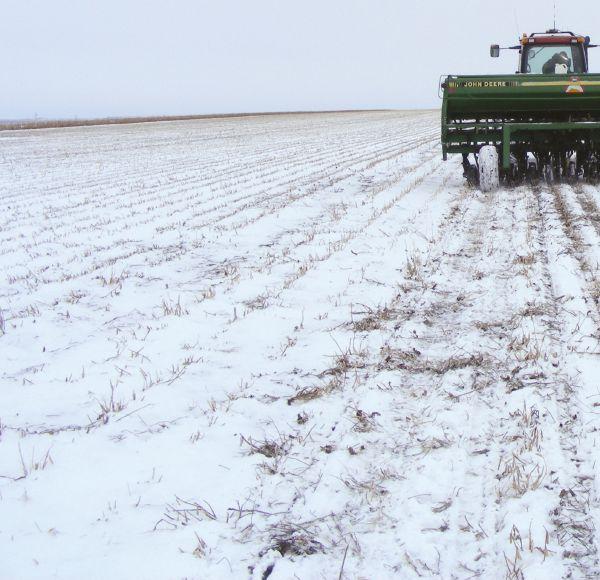
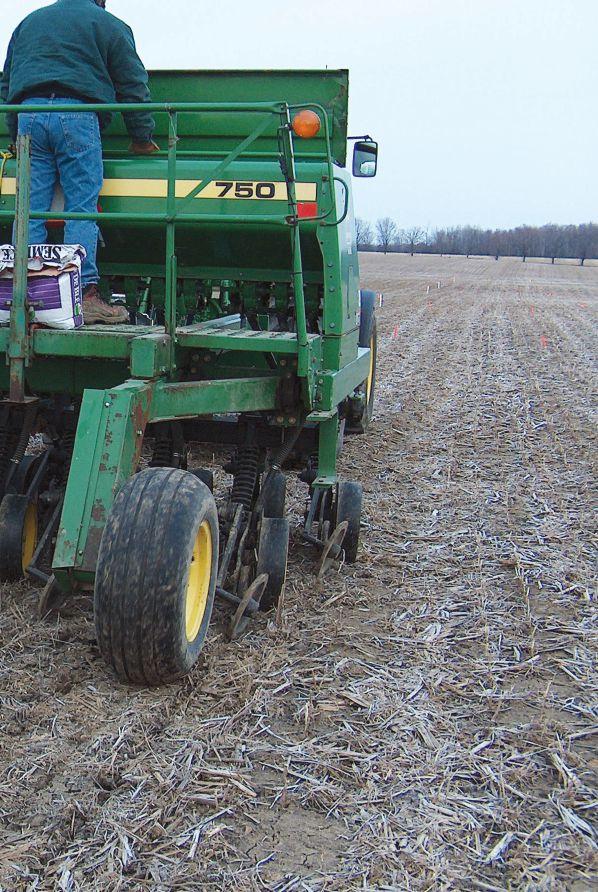
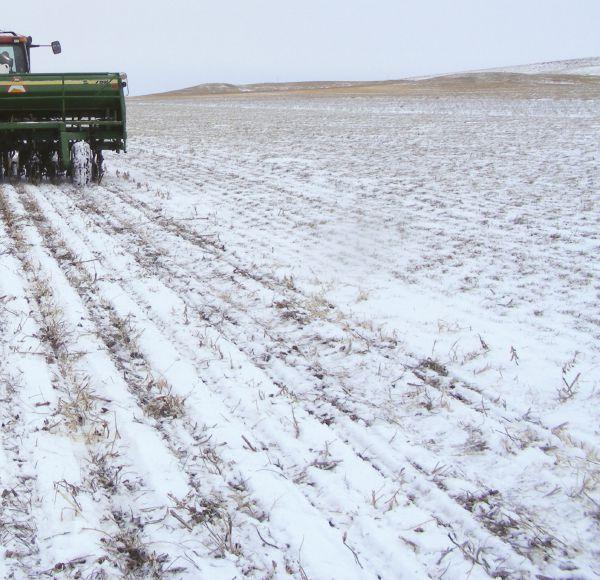
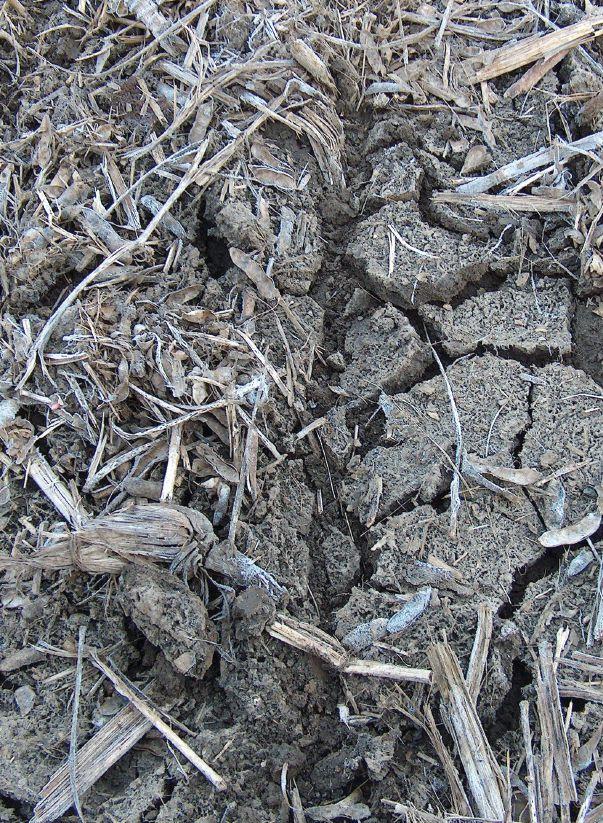
Under 40? Love agriculture? Take the next step with up to $500,000 to purchase farm-related assets With variable rates at prime plus 0 5% and no processing fees, you can make your move. fcc.ca/YoungFarmerLoan
TOP CROP
MANAGER
6 | Stripe rust management in wheat crops
Use resistant varieties and apply fungicide only when necessary. By Bruce Barker and Carolyn King
26 root rot challenges Manitoba pea producers By Dr. Debra McLaren and Dr. Bob Conner
44 goss’s wilt moving in By John Dietz 72 Fungicide applications under Saskatchewan irrigation By Donna Fleury 86 next generation of an early warning system for disease By Carolyn King
AND NUTRIENTS 12 Variable rate fertilizer application –a common sense approach By Ross H. McKenzie 74 Improving fertilizer use
in wheat By Donna Fleury
30 | Cereal seeding rates under Saskatchewan irrigation
Increase seeding rates may provide increased yields for some classes of wheat. By Donna Fleury
56 | Room for pulse growth in Alberta Market research delves into reasons why pulse production lags. By Bruce Barker
By Julienne Isaacs WEED MANAGEMENT
76 Volunteer winter wheat management By Rebeca Kuropatwa
CROP MANAGEMENT
22 Benefits of alfalfa in rotations By Julienne Isaacs
52 How early can you plant new corn hybrids? By John Dietz
68 Deciding where to grow soybeans By Donna Fleury
90 Dormant seeding of spring wheat By Carolyn King MACHINERY
48 2014 Canadian Truck King Challenge By Howard J Elmer
60 Fighting a yield robber By Carolyn King
62 Winter pea and lentil left out in the cold By Bruce Barker
82 Shallow rooted pulses perfect for crop rotations By Bruce Barker
PLANT BREEDING
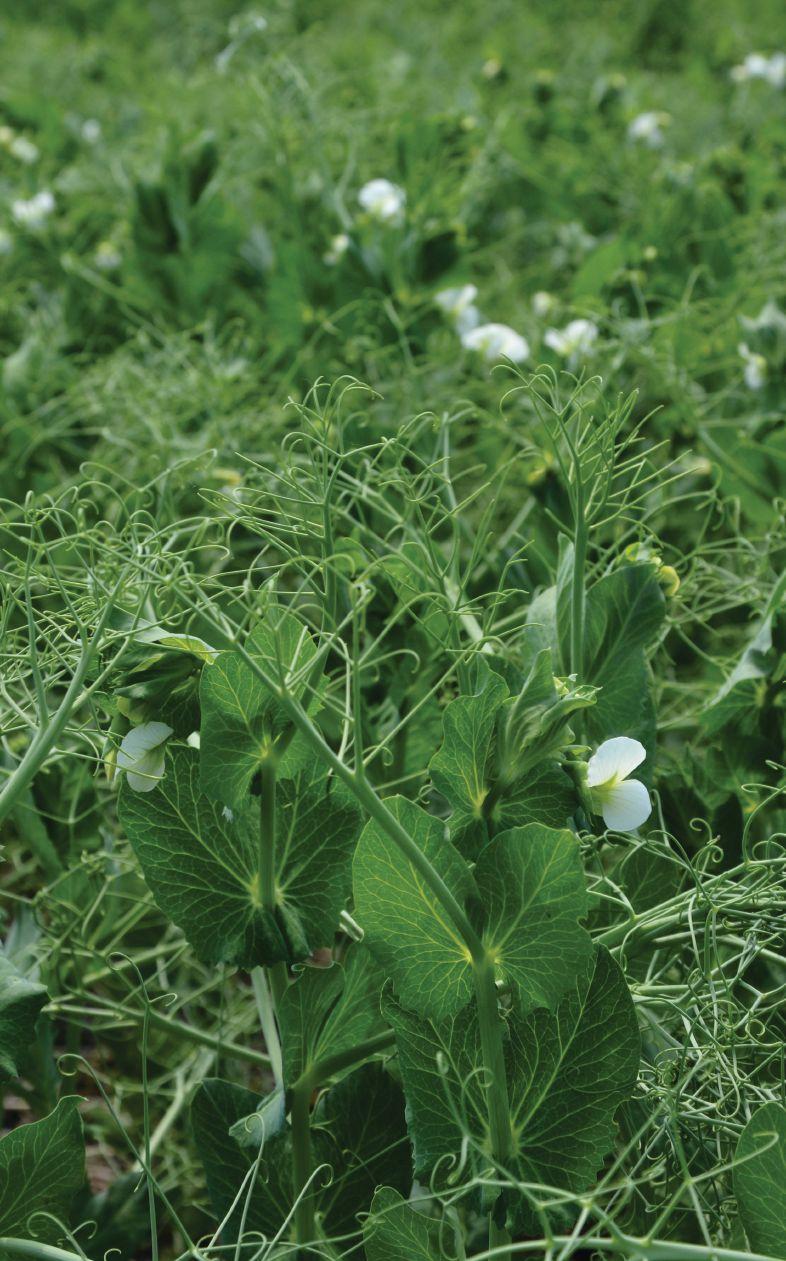
18 What is new in pea, lentil and chickpea varieties? By Bruce Barker
78 Dicamba-tolerant soybean moving forward By Bruce Barker CANOLA 36 Canola harvest management By Donna Fleury FROM THE EDITOR 4 Taking the pulse of the pulse industry By Janet Kanters
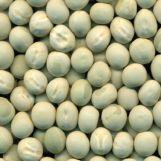
Photo by b ruce
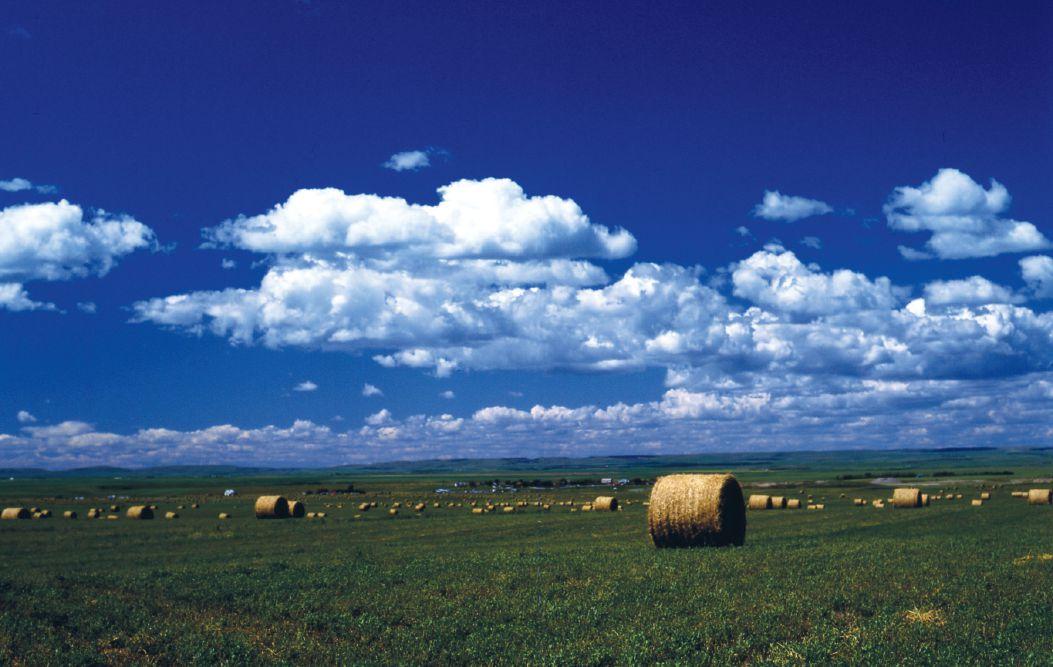
Photo by
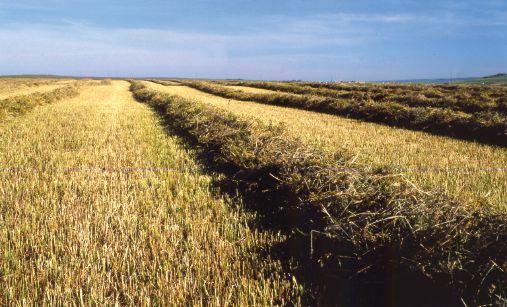
Photo by
Janet Kanters | eDItOr
TA ki Ng T h E p U l SE oF T h E
p U l SE i N dUSTRY
Canada is the world’s largest producer and supplier of dry peas and lentils to the global market, and an important producer and supplier of beans and chickpeas. So it’s no wonder that pulse Canada and other pulse enthusiasts across the country are lauding the Un general assembly’s decision to declare 2016 as the International Year of pulses.
With Canada’s pulse industry meeting the needs of over 150 markets around the globe, Canadian pulse producers are a busy bunch. Quebec and ontario produce bean crops (a wide array of coloured beans as well as the white navy bean); Manitoba produces white and coloured beans, as well as peas and lentils; Saskatchewan is the largest producer of peas, lentils and chickpeas with a small bean industry; and alberta produces beans under irrigation as well as peas, lentils and chickpeas.
pulses have a very long history, with archaeologists tracing pulse production back to 3300 BC with evidence of production around ravi river (punjab), the seat of the Indus Valley civilization. evidence of lentil cultivation has also been found in egyptian pyramids, and dry pea seeds believed to date back to the Stone age have been discovered in a Swiss village. also, archaeological evidence suggests these peas may have been grown in the eastern Mediterranean and Mesopotamia regions at least 5,000 years ago, and in Britain as early as the 11th century.
Today, Canadian seeded area and production of pulse crops continues to trend upwards because of improved varieties resulting in higher yields, increased seeded area because of producers’ willingness to continue diversifying out of grains in the prairie provinces, and increasing demand in Canadian and world markets.
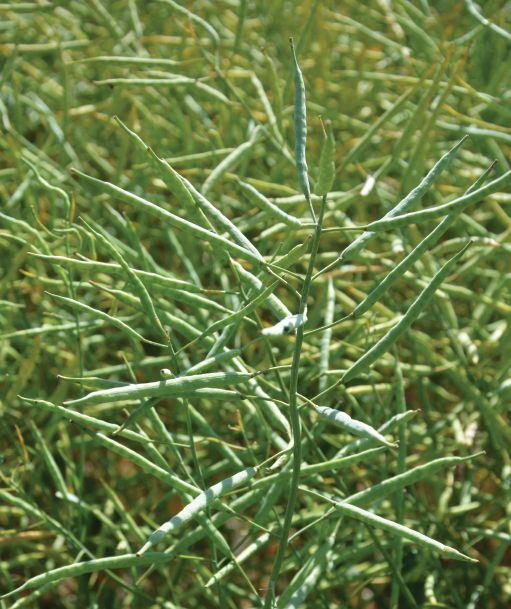
agriculture and agri-Food Canada’s outlook for 2013-14 states production of dry peas increased by 15 per cent to a record 3.8 Mt, and lentil production increased by 22 per cent to 1.9 Mt due to record high yields. Meanwhile, chickpea production is estimated to rise by 13 per cent to 182 kt, due to above average yield estimates for the second consecutive year.
peter Watts, director of market innovation with pulse Canada, says pulses are a $3-billion industry in Canada, so they constitute an important part of our agricultural economy. “The International Year of pulses will provide an opportunity to showcase Canada’s pulse sector as a global leader in the areas of genomics, pulse crop production and innovation in pulse processing and new product applications.”
It is expected that the International Year of pulses will give pulses additional research program attention. We hope that includes additional research dollars for Canadian pulse studies. Canada has some of the best agricultural researchers on the planet, and providing them support is key to successful crop production for our producers.
additional research and other pulse programs will also encourage producers to read and learn more about pulse crops (beginning with Top Crop Manager, of course!), and for those not yet in pulse production, to branch out and try pulses with confidence.
Having said that, this issue of Top Crop Manager contains several stories about pulse production and research, including new pulse varieties for 2014, root rot challenges, pulse rooting profiles, improving heat tolerance in field pea, and the viability of winter pea and lentil.
Leading up to the International Year of pulses, I, for one, will strive to increase my intake of pulses. Check out the Saskatchewan pulse growers website for a selection of great recipes you can try, too: http://www.saskpulse.com/recipes-nutrition/recipes/.
SaleS aSSISTanT Alice Chen • 905.713.4369 achen@annexweb.com
MeDIa DeSIGner brooke Shaw
PreSIDenT Michael Fredericks mfredericks@annexweb.com
PUBLICATION MAIL AGREEMENT #40065710 reTurn unDelIverable canaDIan aDDreSSeS To cIrculaTIon DePT. P.O. Box 530, Simcoe, ON N3Y 4N5 subscribe@topcropmanager.com
Top Crop Manager West - 8 issuesFebruary, March, Mid-March, April, June, October, November and December1 Year - $45.00 Cdn. plus tax
Top Crop Manager East - 7 issuesFebruary, March, april, august, october, november and December - 1 Year - $45.00 Cdn. plus tax
Specialty Edition - Potatoes in Canada - February1 Year -
www.topcropmanager.com
At Case IH, we understand that better yields start with better growing environments. That’s why all of our equipment, like our new Ecolo-Tiger ® 875 Disk Ripper, is agronomically designed to help you get the most out of every seed and every acre it grows on. The Ecolo-Tiger 875 is engineered to size tough harvest residues, fracture root-limiting compaction and leave fields level. With better rooting and seedbed environments, plant stands can utilize more nutrients, water and sunlight, helping to create better yields. The world of farming is changing. Will you be ready? Learn more at caseih.com.
ECOLO-TIGER 875 Tiger Point
STR ipE RUST m ANAg E m ENT i N W h EAT c Rop S
Use resistant varieties and apply fungicide only when necessary.
by Bruce Barker and Carolyn King
Application timing is key to fungicide effectiveness with stripe rust. But changes in pathogen resistance and differences in variety resistance to stripe rust pathogens can raise questions regarding fungicide application. While stripe rust is not an annual problem, it has been showing up more often over the last five years.
generally, stripe rust doesn’t overwinter on the prairies; the spores are blown in from the U.S. during the growing season. a couple of reasons have been suggested for the increasing stripe rust problems on the prairies over the last few years. randy Kutcher, an associate professor at the University of Saskatchewan, explains, “In recent years the pathogen worldwide seems have adapted to tolerate somewhat warmer temperatures.”
The pathogen might also be using a green bridge to overwinter here. The disease may spread to winter wheat seedlings if they emerge before the spring crops ripen. an early snowfall may provide insulation for the pathogen before the cold weather hits, allowing it to survive and spread in the spring.
“about 12 to 15 years ago, stripe rust seemed to be mainly contained in the irrigated areas of southern alberta. now each summer there are reports of stripe rust [on the prairies],” notes Kutcher. “In 2013, we surveyed 90 winter wheat fields in July. about one-third had at least a low level of stripe rust. [although a few fields had serious infections], it was probable that many had been sprayed with fungicide, but for those that weren’t, most would not have been worth spraying for the disease. However, it was easy to find stripe rust, and 10 or 15 years ago that probably wouldn’t have been the case.”
Choose a resistant variety when possible
For hard red spring wheat growers, the best defence against stripe rust is to grow a resistant variety. Some varieties have better resistance than others. Denis gaudet, a research scientist at agriculture and agri-Food Canada (aaFC) at Lethbridge, alta., says that plant breeders have worked to improve disease resistance across all wheat classes, and that in hard red spring wheat, there are good varieties that don’t compromise on other agronomic factors.
“I encourage growers to look at the recommended varieties list from the provincial departments of agriculture and choose a variety with good to very good resistance,” says gaudet. “There are some good high yielding spring wheat varieties with resistance, and all the durum varieties are quite resistant.”
Canada Western Hard White Spring (CWHWS) wheat varieties are generally poor to very poor. The Canada Western Soft White Spring
(CWSWS) wheat variety Sadash has very good resistance to stripe rust.
The Canada prairie Spring red (CpSr) wheat variety Conquer VB has very good resistance, and the Canada Western general purpose variety nrg010 also has very good resistance.
The biggest issue is with winter wheat. gaudet says that radiant winter wheat variety used to be considered resistant to stripe rust, but that resistance has been overcome by the stripe rust pathogen. “a new race took out the resistance and it is no longer effective,” says gaudet.
While no winter wheat varieties are rated with very good resistance, aaC gateway, aC readymade, emerson, McClintock and Moats are rated with good resistance.
Photos by b ruce
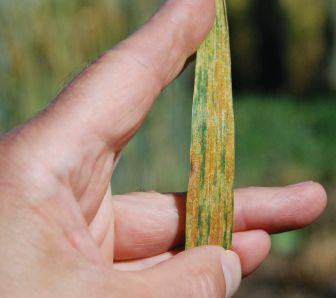
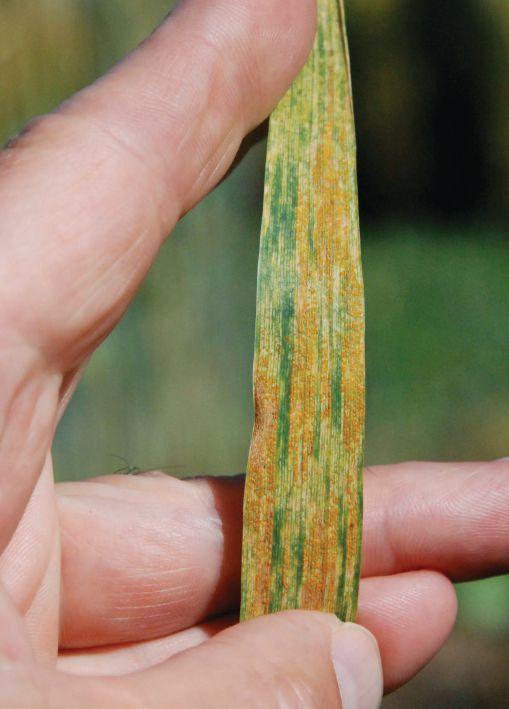
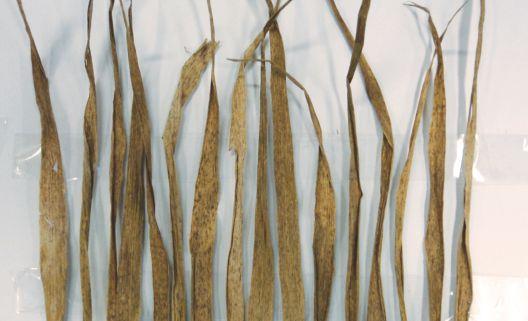
Susceptible wheat varieties can suffer severe stripe rust damage.
Ag Growth International (AGI) has developed a strong and broad catalogue of brands within grain handling, storage and conditioning. Our advantage exists in the focus and specialization of our brands on individual components of the AGI catalogue. Moving forward, our goal is to cultivate this expertise and demonstrate to our customers through a common visual identity, that we have a family of brands that work together; building some of the best grain handling solutions in the world.
For more information about AGI’s family of brands visit www.aggrowth.com
Download the complete AGI product catalogue at http://appstore.com/agicatalog
To spray or not to spray Kutcher is working on a large project to evaluate a combination of varietal resistance and fungicide timing options for controlling stripe rust in wheat. This project started in 2012, in response to the increasing occurrence of this disease on the prairies.
If wheat varieties have stripe rust resistance, they have either “seedling resistance” or “adult-plant resistance.” Kutcher says, “Seedling genes are very effective as long as the fungus doesn’t mutate and break down the resistance genes. adult-plant resistance genes aren’t effective in the early stages of plant development, but by mid to late June when the crop is heading, they begin to express themselves.”
Stripe rust symptoms are usually first observed in the prairies around mid to late June, so the researchers are evaluating fungicide application at early flowering time.
“Based on the results so far, early flowering is a pretty effective fungicide timing for wheat varieties [with no stripe rust resistance]. For varieties with adult-plant resistance genes, you may not need to spray at all because their resistance will be expressed as the plant begins to head. For those varieties, you may only need to spray were stripe rust to arrive much earlier than normal, although that will depend somewhat on seeding date,” says Kutcher.
protecting the flag leaf and penultimate leaf (the upper two leaves), and the upper part of the stem, is important because those essentially provide nearly all of the green area needed to fill the head.
gaudet says that by avoiding a fungicide application on varieties rated good to very good, the likelihood of fungicide insensitivity will be reduced. However, if a variety is rated at fair, poor or very poor and stripe rust is developing, then spraying will likely be necessary. “Keep an eye on any variety that is rated fair or less.”
aaFC and alberta agriculture and rural Development (aarD) also partner on providing early warning signals to farmers. Field surveys are conducted every spring, and when stripe rust is observed and as the growing season progresses, updates are sent out to crop consultants and the media to alert farmers.
Information from Saskatchewan agriculture provides guidelines on disease thresholds for spraying susceptible varieties. Faye Dokken-Bouchard, provincial plant disease specialist, recommends the following strategy: “at the jointing to boot stages, spray if rust is found on at least five per cent of plants (incidence) with at least three per cent of flag leaf tissue affected (severity). at the heading to flowering stages, spray if there is at least 10 per cent rust incidence and five per cent severity. at the milk stage, and only if the fungicide’s pre-harvest interval (pHI) allows, spray if there is at least 20 per cent rust incidence and 10 per cent severity. If no pustules are observed, spraying is not necessary. If rust is too severe to control (80 per cent incidence and 70 per cent severity), spraying is not recommended.”
Fall fungicides for winter wheat
a recent fungicide project assessed the effects of various seed treatments, with or without a fall foliar fungicide application, on stand establishment and yield in winter wheat. The project was part of a major winter wheat study being led by Dr. Brian Beres, an agronomist with aaFC at Lethbridge, in collaboration with Kelly Turkington, plant pathologist with aaFC at Lacombe, alta., Kutcher and other researchers. The study involves a suite of projects to determine the effects of diverse factors on stand establishment. The overall aim is to get a better handle on what is hindering adoption of winter wheat on the prairies.
The fungicide project started in the fall of 2010 and took place at eight sites across the prairies. The seed treatments were as follows: a
check (no seed treatment); raxil 250 (tebuconazole); allegiance (metalaxyl); Stress Shield (imidacloprid); and raxil WW (tebuconazole + metalaxyl + imidacloprid). The fall foliar treatments were as follows: a check (no foliar application); and proline (prothioconazole) applied in mid-october.
The researchers wanted to determine if seed treatments would help or hinder stand establishment and potentially winter survival because they had anecdotal reports on both sides of the argument. They included the fall foliar application in case pathogen pressure in the fall might be affecting stand establishment and crop vigour. They also wondered if a fall foliar application might prevent the need for a spring fungicide application.
The strongest crop response was from the raxil WW seed treatment, with or without a fall foliar fungicide. This dual fungicide/insecticide product resulted in high, stable yields over the 20 site-years.
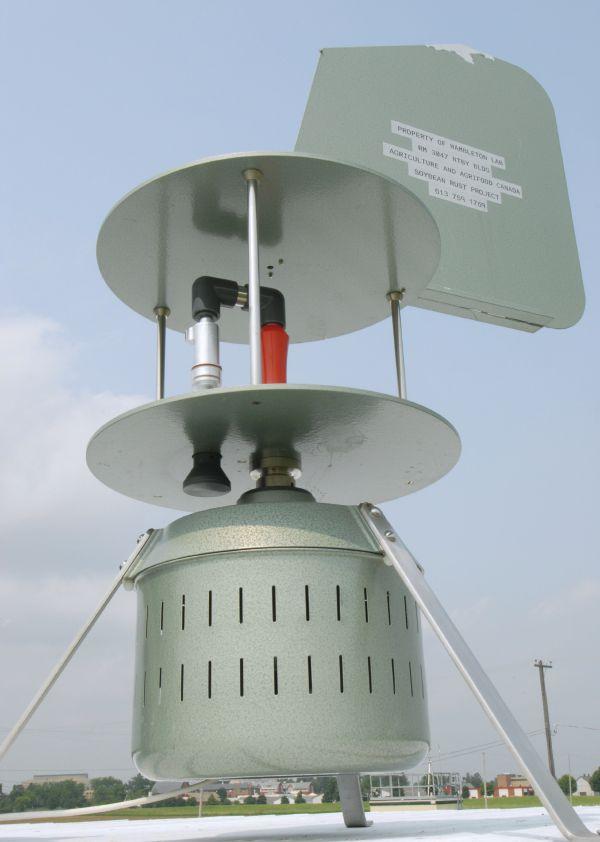
The other seed treatments needed the addition of the proline foliar application to improve and stabilize yields. In fall 2010, the Lethbridge, Scott and Melfort, Sask., sites were affected by stripe rust, and for those three sites, the addition of a fall foliar application resulted in higher yields. However, even at sites with no fall foliar disease symptoms, the foliar fungicide had a positive effect.
“after 20 site years, the response to the fall foliar is still strong, and it is still affecting grain yield. So there is more at play than just stripe rust control since 15 or more of those site-years were absent of stripe rust infection, and the systemic effect on the plant appears more prolonged than we anticipated,” notes Beres. “For example, in the spring, diseases like powdery mildew were not nearly as present in the treatments with the fall foliar as compared to the treatments with no fall foliar. overall crop vigour in the spring was improved in the treatments that had the fall foliar.”
Beres says he was surprised to see a statistically significant effect from the fall foliar fungicides. “It could be that winter wheat yield is set relatively early and so it is perhaps more sensitive to an earlier application of a fungicide. It could be that by the time growers can get out in their fields to apply a fungicide in spring, particularly if the timing is delayed, winter wheat’s yield potential has been set.” another possibility might be that the positive effect is related to the specific combination of active ingredients used in some of the treatments.
The researchers will be conducting additional trials to further investigate various fall fungicide options for winter wheat. a new study will combine planting dates with a seed treatment containing the fungicides prothioconazole and tebuconazole, which has been observed to improve frost tolerance in europe.
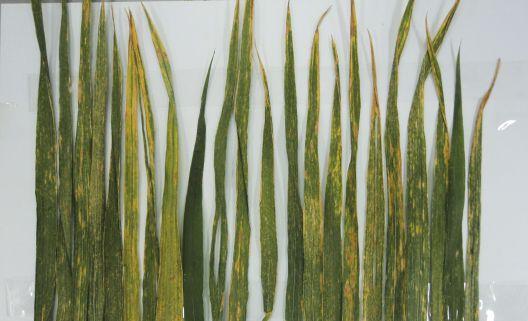
Look for good to very good resistance to stripe rust when selecting wheat varieties.
WHAT MATTERS MOST?
Our team farmed 14,000 acres of crops and surpassed one million bushels last year. Teamwork is the key to everything. And Syngenta is part of our team.
Ed Waldner, farm boss, Wild Rose Hutterite Colony near Vulcan, AB
VAR iAB l E RATE FERT iliz ER A pplic AT ioN – A commoN SENSE A ppRoAch
Sorting through the approaches to variable rate fertilizer prescriptions.
by ross H. McKenzie phD, p. ag.; retired agronomy research Scientist
Variable rate Fertilizer (VrF) application involves the application of different rates and/or types of fertilizers on uniquely different soil areas within a field according to a pre-set field map that is developed based on various types of information. The objective is to optimize fertilizer inputs and crop yield; but VrF comes with challenges.
The first challenge for farmers is to decide if there is enough soil variation within their fields to warrant the investment of developing prescription fertilizer maps. private agronomists typically charge from $5 to $15 per acre or more for VrF services. Costs vary depending on the technologies used, level of soil sampling and analysis and level of VrF information provided.
a significant portion of annual cropland across the prairies of Western Canada has enough variability in surface soil physical and chemical characteristics within fields to warrant using some level of variable rate fertilization. as a general rule, fields with rolling topography have good potential for using VrF technology, while land with relatively uniform topography often does not have enough soil variation to warrant using VrF application.
on lands with variable soils and topography, there can be considerable variation in plant available soil nitrate-nitrogen (no3-n), phosphorus (p), potassium (K) and sulphate sulphur (So4-S) levels, and therefore could benefit by varying fertilizer types and rates across fields.
once the decision is made to consider using VrF technology, the daunting challenge for farmers and crop advisors is to develop “effective” variable rate fertilizer prescription maps. To do this, uniquely different soil management zones must first be identified. The questions farmers must ask include the following:
1. What are the most important soil factors that need to be delineated to identify site-specific management zones that have lower, medium and higher crop production potential on their land? These variable factors could include soil organic matter levels, depth of top soil, depth to subsoil, variation in soil texture, soil salinity, available levels of n, p, K or S, etc.
2. What are the best approaches to identify site-specific soil/topography management zones within fields? Information utilized could include aerial photos, field topography map, soil texture map, soil organic matter map, crop yield maps and satellite
imagery. Most important is field-specific farmer knowledge and experience, which doesn’t cost the $10 per acre charged by VrF companies.
3. How variable are soil test n, p, K and S levels within a field and among the identified soil management zones? How does crop response to each of these fertilizers vary from year to year?
4. How will you or your crop advisor determine the optimum fertilizer types and rates for each management zone to optimize economic returns for variable fields? For example, will you apply more fertilizer or less fertilizer on eroded knolls or less productive versus higher production areas?
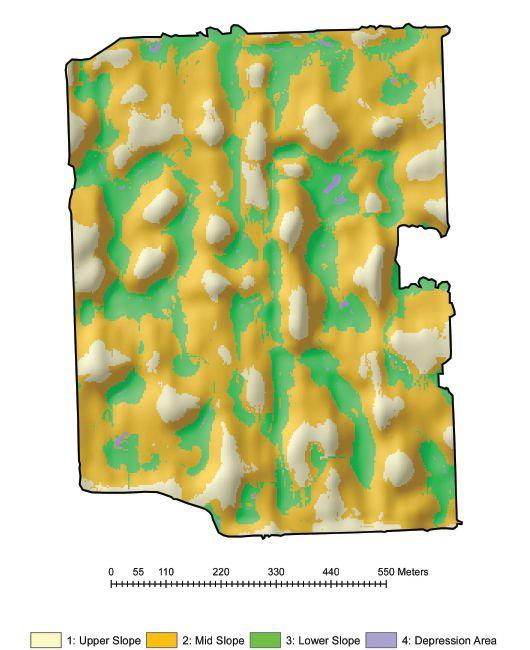
Figure 1. Elevation data collected at harvest from an irrigated field near Lethbridge, Alta., using LandMapR software.
Tools for generating management zones
From an engineering standpoint, equipment manufacturers have done a good job of developing seeding equipment with the ability to vary fertilizer rates utilizing global positioning. Unfortunately, from an agronomic standpoint the development of prescription fertilizer maps is a very technical and complex process. There isn’t a simple, easy process to generate prescription fertilizer maps for all soils and crops. There are many soil factors that affect crop yield potential, and these factors vary within a field and from region to region across the prairies. a study by Dr. raj Kohsla at Colorado State University showed that bare soil imagery plus topography plus farmer experience was the best method to determine soil management zones in terms of cost and accuracy.
Initially, to better understand soil variability on their farms, producers can use aerial photos of their fields, crop yield maps, provincial soil survey maps and their collective knowledge of crop production in their fields. This can be a good start, but often more detailed information may be needed. Industry agronomists have varying
opinions on the best ways to develop fertilizer prescription maps. They utilize a range of methods to generate various types of field maps and each has advantages and limitations:
CRop yield mApS – These can be generated when yield and geographic position data are recorded at harvest with your combine. Yield maps are very useful to show the higher, medium and lower yielding areas within a field. The challenge then is to understand what major factors contribute to higher or lower yield potential. Unfortunately, different yielding areas are not necessarily well correlated with differences in soil types and soil fertility levels. To complicate the process, yield maps often vary considerably from year to year, making it difficult to accurately delineate different field management areas.
Soil SAlinity mApS – If slight to moderate levels of salts are a potential problem on your farm, developing a salinity map using eM 38 or Veris technology can be utilized. Then, fertilize rates can be
One of a kind broadleaf weed control.
As the only Group 27 and the first new mode of action in cereals for over 25 years, powerful, one of a kind Infinity® herbicide controls the toughest broadleaf weeds from across the Canadian prairies, even if they are resistant to other herbicide classes.
Infinity – truly in a class of its own.
For more information, please visit BayerCropScience.ca/Infinity
reduced – depending on the levels of soil salinity – to match lower crop yield potential. a good salinity map is a valuable tool if soil salinity is a problem in your fields.
Soil textuRe mApS – It is generally assumed that field areas with higher clay content have a higher water holding capacity and therefore have higher crop yield potential. Soil texture maps are generated from information collected using an eM 38 or Veris. each technology attempts to measure the apparent electrical conductivity of soil through the use of sensors as they are transported across a field. The premise is that clay textured soils are better conductors than sandy textured soils, so clay soils give a higher sensor reading versus sandy soils. However, readings are also higher on wetter versus drier soils, and when soil salts are higher versus lower. There is no way for these instruments to distinguish the causes of higher versus lower readings. These technologies should not be used when soils are frozen because frozen soil moisture (i.e., ice) will not cause the instruments to respond in the same way as liquid soil moisture (i.e., water). Therefore, the ability to
develop accurate soil texture maps is questioned by some researchers and agronomists in terms of their accuracy and validity.
Soil oRgAniC mAtteR And pH mApS – Besides soil texture, some machines utilize on-the-go mapping of other soil properties such as pH and organic matter. near Infrared (nIr) spectral measurements are claimed to correlate with soil organic matter, soil carbon, soil pH buffer capacity and soil moisture. Considerable research needs to be conducted in Western Canada to determine the potential for using these new sensors, and this will take some time.
SAtellite imAgeRy mApS – The maps can help identify the higher versus lower productive areas of a field. For example, near Infrared satellite imagery is being used to assess plant growth. Higher relative biomass production areas in a field are assumed to be associated with higher crop yield potential. Several companies use imagery to delineate crop management zones within a field. Imagery information can change considerably during a growing season and is often variable
Another
from year to year. This makes interpretation of imagery information a challenge. Therefore, imagery from a number of good crop production years must be collectively utilized to identify areas within a field with consistently higher or lower productivity. Satellite imagery has similar limitations to utilizing crop yield maps. The major factors that contribute to the differences in crop biomass potential within a field must be determined. It is important to determine if the differences in biomass are related to differences in soil types and soil fertility, or other crop production factors.
topogRApHy mApS – These can be very useful for developing fertilizer prescription maps. Topography is a major soil-forming factor affecting how variable soils have developed on variable landscapes (see “Understanding Soil Variability”, Top Crop Manager, December 2013, Vol. 39, no. 17, pages 18-20). When a combine with a yield monitor collects global position information, elevation data can also be collected, and elevation maps can be developed. one of the best programs to generate a very good topography map was developed by Dr. Bob Mac-
Millan (retired), and is called LandMapr. Dr. Mike Duncan (nSerC Chair precision agriculture and environmental Technologies, niagara College) recently updated the program. This free program is an excellent, simple and effective way to develop a field topography map. Figure 1 shows a map developed from elevation data collected at harvest from an irrigated field near Lethbridge, alta. The topography map very nicely delineates upper, mid and lower slope positions, which can be closely related to uniquely different soil areas.
Developing your own management zones
each different mapping process has advantages and limitations. gathering multiple layers of information can be very useful. But more layers of information can also become a daunting process to sort through, especially if information is conflicting.
If the major issue causing soil variability is rolling, variable topography, an effective and simple way to get started to achieve the goal of developing a good fertilizer prescription map is to have a good topography map. Then compare this to your yield map. This will often
Top-performing annual broadleaf weed control + superior resistance management.
• The best weed control performance in wheat, barley and oats
• Controls cleavers, buckwheat, chickweed, hemp-nettle, kochia, more
• Two modes of action, three actives, overlapping control
• Get all the benefits of Stellar in your oats too Go to cerealsolutions.ca or call 1.800.667.3852.
and save before march 20th.
reflect the uniquely different soil areas in a field, which is critical.
The next step is to soil sample each soil management area to assess soil fertility and other soil characteristics. often, treating upper, mid and lower slope positions separately as different management zones is a good starting point. Tables 1 and 2 show soil sample analysis results of an irrigated and a dryland field respectively near Lethbridge. each field was sampled based on topography versus sampling based on satellite imagery. The analysis shows very clear soil fertility differences among upper, mid and lower slope positions.
Soil sampling based on topography can often provide a relatively easy and cost-effective way to delineate different soil areas within a field. Using satellite imagery based zones can also be very useful but has limitations.
The final step in the VrF process is to decide the productivity level of each soil management zone to plan an economical fertilizer plan for each zone. This will be discussed in the next issue of Top Crop Manager.
Table 1. Soil analysis results of an irrigated field in the Dark Brown soil zone sampled based on topographic slope versus satellite imagery (field is shown in Figure 1, pg 12).
Source: ARD
Table 2. Soil analysis results of a dryland field in the Dark Brown soil zone sampled based on topographic slope versus satellite imagery.
WhAT iS NEW iN pEA, lENTil ANd chickpEA VARiETiES?
Improvements in agronomics, yield and weed control systems highlight the new pea, lentil and chickpea offerings.
by Bruce Barker
new varieties are under development and some are being introduced for 2014 and beyond. The following information on Crop Development Centre (CDC) varieties at the University of Saskatchewan comes from Dr. Bunyamin Tar’an, Dr. Bert Vandenberg and Dr. Tom Warkentin, pulse crop plant breeders, courtesy of the Saskatchewan pulse growers.
Large green lentil
Seed of CDC greenstar has entered the rapid multiplication stage. a large quantity of breeder seed was released in 2013 to select growers. CDC greenstar consistently outyields all other large green lentil varieties and many of the red varieties, similar to CDC Maxim. It has very good ascochyta resistance and better anthracnose resistance ratings than all other large greens. The seed of CDC greenstar is larger than most of the other green varieties, slightly smaller than CDC Improve (CL).
Other greens and specialty lentils
CDC asterix is an up and coming extra small green variety with seeds that are about 20 per cent smaller compared to CDC Viceroy. It is a conventional type with some possibility for specialized marketing in specific regions.
In 2014 the CDC plans to release Breeder seed of the conventional French green variety CDC Marble (yield is 119 per cent of Maxim) and possibly 3592-13, a conventional small green (110 per cent of Maxim). CDC Marble outyields all other lentil lines regardless of market class. The CDC is using it to establish a new a higher yielding genetic base for all market classes. all varieties are on track for conversion to imidazolinone (IMI) tolerance.
ABOVE: Improvements in agronomics, yield and weed control systems highlight the new pea, lentil and chickpea offerings.
Photo
CDC Greenstar
CDC Asterix
The Leader in Overlap Control
Auto Zone Command prevents costly input overlap by instantly stopping product flow in up to 10 metering zones. The more zones you control, the more money you will save.
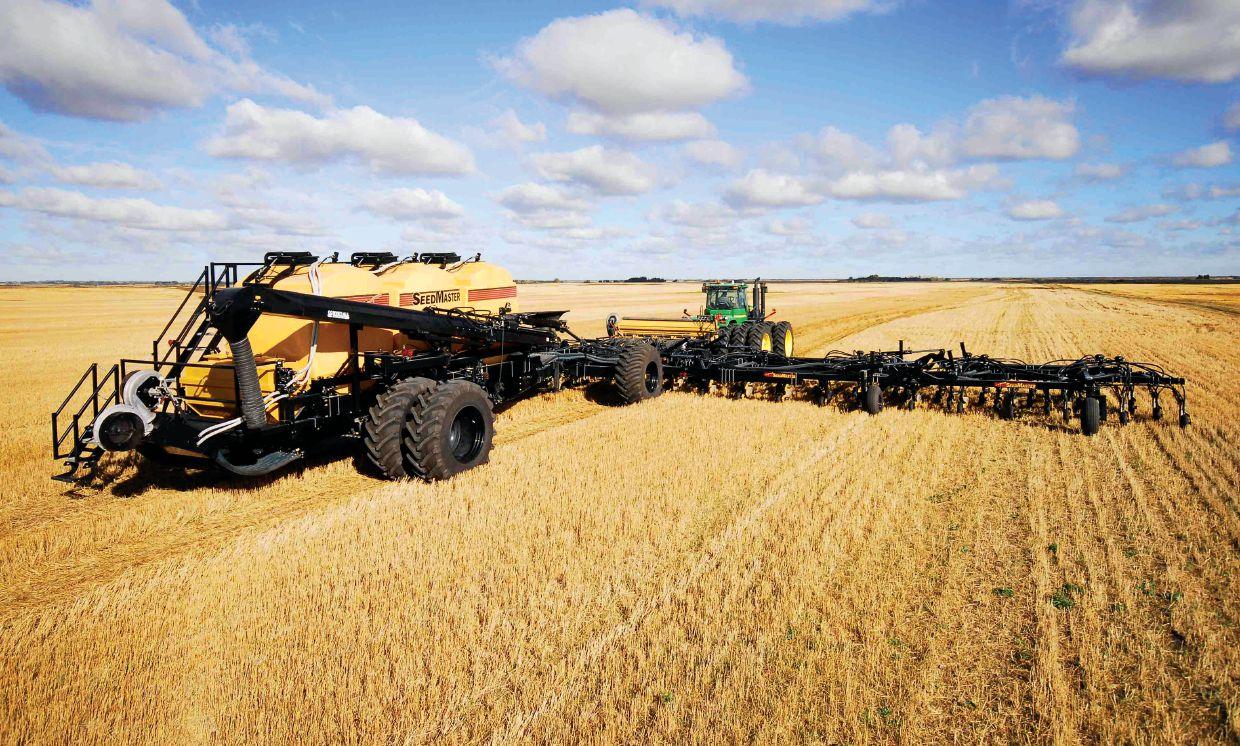
FLIP is SeedMaster’s patented mapping software that activates Auto Zone Command and halts product flow the first time openers pass through an overlap area. Product is then applied on the last pass, preventing double seed and fertilizer from being applied, and avoiding any seedbed disturbance.
Big Payback – Savings using a 10 zone, 80 ft. drill
1
Red lentils
The CDC estimates that 65 per cent of the 830,000 red lentil acres reported on a variety basis to crop insurance were CDC Maxim (CL). The extra small red varieties – CDC rosetown, CDC Imperial (CL) and CDC Impala (CL) – are now less than two per cent, in total, of the area. CDC Dazil (CL) and CDC Imaz (CL) appear to be gaining acres.
Conventional varieties like CDC redcoat, CDC redcliff, CDC redbow and CDC rosebud are grown on a very limited scale right now because they were released after CDC Maxim (CL). as growers try them out, local performance will determine which of these become more widely grown. Several promising new varieties of red lentil are in the multiplication stage.
Yellow peas
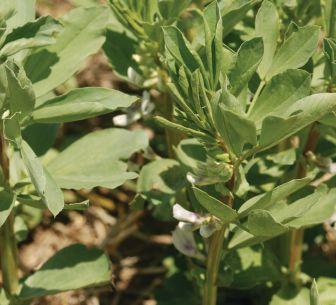
CDC Meadow has also been one of the top varieties in Saskatchewan, alberta, Manitoba and the northern United States.
Certified seed of CDC Saffron should become available in 2014; it has good yield (107 per cent of CDC golden in the south and 113 per cent of CDC golden in the northern region) and medium-large smooth, round seeds.
Certified seed of CDC Hornet became available in 2013; it has good yield (100 per cent of CDC golden in the south and 105 per cent in the north) with good lodging resistance and medium maturity.
Certified seed of CDC Treasure was available for the first time in 2013; it has good yield (97 per cent of CDC golden in the south and 109 per cent in the north) with good lodging resistance and early maturity.
Certified seed of CDC Centennial (large seed size) and CDC prosper (small seed size) is also available in 2014.
Breeder seed of CDC amarillo (246230) was released for the first time in 2012. CDC amarillo has had strong yield performance in Saskatchewan regional trials over the past three years with a mean yield of 111 per cent of CDC golden in the south and 125 per cent of CDC golden in the north. CDC amarillo is relatively tall with one of the best lodging resistance ratings among pea varieties in Western Canada.
Green peas
Certified seed of CDC raezer should become available in 2014 or 2015; it has good yield in the northern regions, with powdery mildew resistance and nice seed type similar to CDC Striker.
Breeder seed of CDC Limerick was released for the first time in 2012. CDC Limerick has had strong yield performance in Saskatchewan regional trials over the past three years with a mean yield of 105 per cent for CDC golden in the south and 110 per cent in the north. CDC Limerick has nice seed traits, but with a greater protein concentration than other
green or yellow pea varieties. This may provide an advantage in fractionation markets.
Breeder seed of CDC 2472-4 (CDC greenwater) will be released for the first time in 2014. CDC greenwater is likely the highest yielding green pea variety in Western Canada at present. It is relatively tall with good lodging resistance and somewhat late maturity, similar to Cooper and CDC Limerick. Seed size is slightly smaller than CDC Striker.
Dun, maple and forage pea
CDC Mosaic is a maple pea variety, which has similar seed type to CDC acer but with improved lodging resistance. Certified seed of CDC Mosaic should come available in 2014.
Breeder seed of the dun pea variety CDC Dakota was first released in 2010. It was one of the top yielders in the Saskatchewan regional trial in 2010-2013. The dun type would typically be dehulled and sold in human consumption markets in India. Certified seed of CDC Dakota should become available in 2014.
CDC 3012-1LT is a new maple pea variety which has similar seed type to CDC rocket but with improved yield. Breeder seed is expected to be released for the first time in 2015.
Two new red cotyledon pea varieties were released in 2013, so keep an eye out for this new market class in the years ahead.
Kabuli chickpea
In the past several years CDC Frontier and amit continued to be the dominating kabuli varieties for the seeded acres. In 2014, it is anticipated ample supply of kabuli varieties CDC Leader and CDC orion. Both varieties are medium to large seeded (>9 mm diameter) with good yield and slightly earlier maturing than CDC Frontier.
In 2014, breeder seed of a new kabuli variety, 1041-3, will be available to select seed growers. 1041-3 has high yield potential on both Brown and Dark Brown soil zones, comparable to CDC Leader and CDC Frontier. It has fair resistance to ascochyta blight with a long-term score of 4.7 on a 0-9 scale (0 being immune/no symptom and 9 being plants completely blighted). The average seed weight of 1041-3 is 425g/1000 seeds (9-10 mm diameter). on average, 1041-3 matured a few days earlier than the check variety amit.
Desi chickpea
a limited amount of seed for desi cultivar CDC Consul (formerly known as 603-3) was released to select growers in 2013. CDC Consul has a light tan seed coat colour, which is one of the desirable visual seed characteristics of desi type. The long-term (6year) yield average of CDC Consul is 110 per cent of the check cultivar (amit) on both Brown and Dark Brown soil zones. Seed size of CDC Consul on average is 300 g/1000 seeds with a longterm ascochyta score of 4.0. CDC Consul has a medium-late maturity range similar to CDC Vanguard.
CDC Saffron
CDC Amarillo
CDC Greenwater
CDC 1041-3
CDC Maxim
that’s why Axial is the #1 graminicide in Western Canada.
BENEF i TS oF A l FA l FA i
N RoTAT
ioNS
Benefits include increases in soil organic matter, improved drainage and disease resistance.
by Julienne Isaacs
ongoing studies in the prairies reveal that perennial legumes such as alfalfa, a flowering perennial in the pea family Fabaceae, offer significant benefits in rotation.
Martin entz, a plant sciences specialist at the University of Manitoba, says he and his team have been researching short- and long-term benefits of alfalfa in rotation for decades, and their studies consistently show improvements in soil health, soil drainage and disease resistance.
according to entz, benefits from the inclusion of alfalfa in rotation have been detected up to 17 years after its removal from the soil. “Having perennial forages in the system even three years out of 10 is a significant benefit,” says entz. “With perennials you’re putting more carbon in the soil. You can make a difference within 10 years, but the fastest way to do it is to put a legume grass mixture into the soil and supply it with adequate nutrients.”
alfalfa in particular has positive effects on soil drainage, in part due to its deep taproots, which change soil structure, allowing for better drainage through the creation of macro-pores, entz explains.
In Manitoba’s red river Valley area, farmers with alfalfa in their rotations have noticed significant improvements in soil drainage, according to entz. This is in part due to the fact that perennials use more water, but it’s also due to the impact of alfalfa on soil structure.
adding alfalfa to the rotation also helps break pest cycles. While the literature examining the specific effects of alfalfa on disease
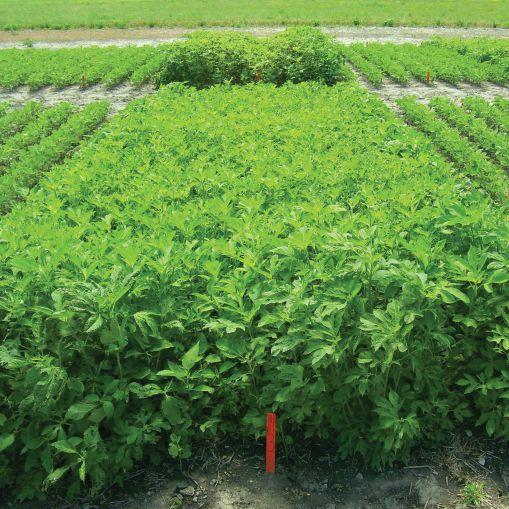
TOP AND ABOVE: Ongoing studies in the Prairies reveal that perennial legumes such as alfalfa offer significant benefits in rotation (top).
A study found that rotations that included alfalfa made as much money as the straight grain systems, but with added beneficial effects on the land (above).
resistance is not extensive, improved disease resistance flows naturally from long crop rotations, says entz. “Spreading out the years between crops has a huge impact on diseases. Farmers have a choice: they can deal with diseases through good crop rotation, or through fungicides,” he says.
Continuous cropping causes spikes in disease pressure regardless of the crop in question, and monoculture alfalfa will be vulner-
Photos
It’s easy to track equipment, performance and efficiency with the AGCOMMAND® telemetry system.
As a professional applicator, you know that having the right tool for the job saves time, reduces crop damage and increases profit. That’s why we offer a complete line of application equipment in various configurations. There are four models in the RoGator® sprayer series and four models of the high-floatation TerraGator® . Build your application fleet, and you’ll be able to build a bigger and wider customer base. Plus, you can take control of your fleet with the AGCOMMAND® telemetry system. No one offers more options to defend the fields throughout the seasons.
RoGator® and TerraGator® are registered trademarks of AGCO Corporation.
able to diseases as would any other crop, says entz. But long-term rotations that include alfalfa are a good bet for reducing disease pressure.
entz’ studies also show yield benefits when alfalfa is included in rotation. “putting perennials in the rotation always gives a yield boost because you can get on the land faster,” he says. “If you’re in a drought situation you may have a little less water in the soil profile after alfalfa than in an annual rotation, and you may have a yield hit. But typically we see a yield increase from alfalfa.
“In our glenlea (U of M research station) long-term rotation study where we’ve compared yields with and without alfalfa for 20 years, our average yield increase is 5.8 bu/ac, and at 50 per cent as much nitrogen as the non-forage crop,” says entz. “We’re getting a yield increase at a lower rate of nitrogen fertilizer.”
Alfalfa in integrated crop-livestock systems
Much of entz’s work has focused on integrated crop-livestock systems and the benefits of including perennial legumes in these rotations. In a paper entitled “reconsidering Integrated Crop-Livestock Systems in north america,” entz and his co-authors argue that alfalfa is a valuable addition to integrated crop-livestock systems.
“alfalfa in crop rotations … has utilized excess soil n and reduced nitrate leaching compared to annual crops,” argue the authors. “perennial legumes, like alfalfa, also add large amounts of available n to the farm in feed and soil organic matter.”
entz refers to an eight-year study completed at the Manitoba
Zero Tillage research Farm comparing grain-based rotations with and without alfalfa, harvested with haying or grazing. economically speaking, the rotations that included alfalfa made as much money as the straight grain systems, but they also had beneficial effects on the land, he says.
additionally, in pasture-based systems that include perennial legumes such as alfalfa, less fertilizer is necessary. “The problem with haying is that every round bale of hay removes 15 pounds of phosphorus from the land. Unless you bring that manure back to the land, you have to fertilize those hay systems quite significantly. If you harvest that forage with pasturing you don’t have to do nearly as much,” entz claims.
alfalfa has always carried a sense of marketing risk, but entz says adding alfalfa to the rotation – regardless of whether growers move toward integrated crop-livestock systems – offers environmental stability that is beneficial long-term. “The only way that forages make economic sense is if you take a long-term view,” says entz. “What will the growing market for forage-based ruminant food products look like? If that market expands, we might see the livestock sector change quickly.
“Circumstances may change that will make forages more attractive to farmers. people should be on notice that there are frailties in our system that can be easily fixed with forages in rotation.”
For more on agronomy, visit www.topcropmanager.com.
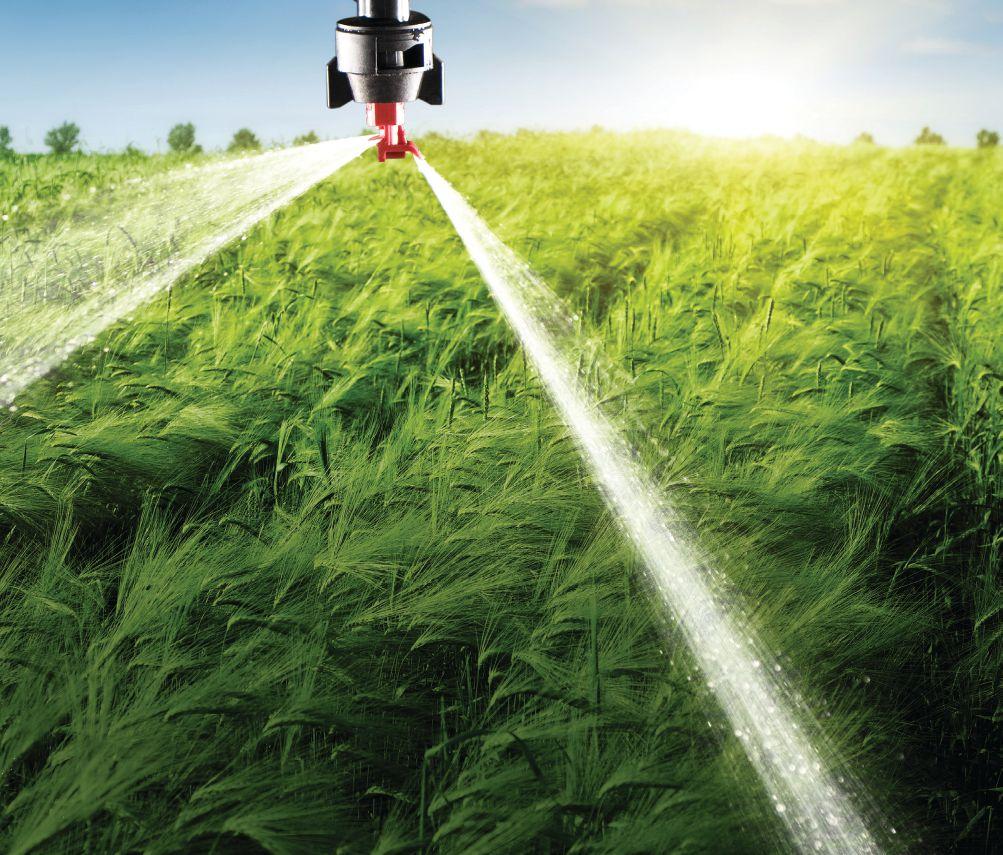
Why risk reduced yield?
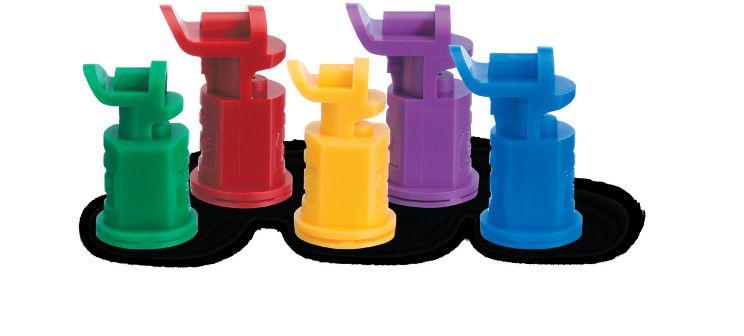
• The AI3070 utilizes a unique, patent-pending design optimized specifically for fungicide application
• The 30° forward tilted spray penetrates dense crop canopies, while 70° backward tilted spray maximizes coverage of the seed head for excellent disease control
• Air induction technology produces larger droplets to reduce drift
“ The AI3070 increased overall deposit amounts and uniformity compared to the industry standard single and twin fan nozzles.”
TOM WOLF, RESEARCH SCIENTIST AT AGRICULTURE AND AGRI-FOOD CANADA
RooT RoT chAllENgES mANiToBA pEA pRodUcERS
Most fields have root rot infestations.
by Dr. Debra McLaren and Dr. Bob Conner
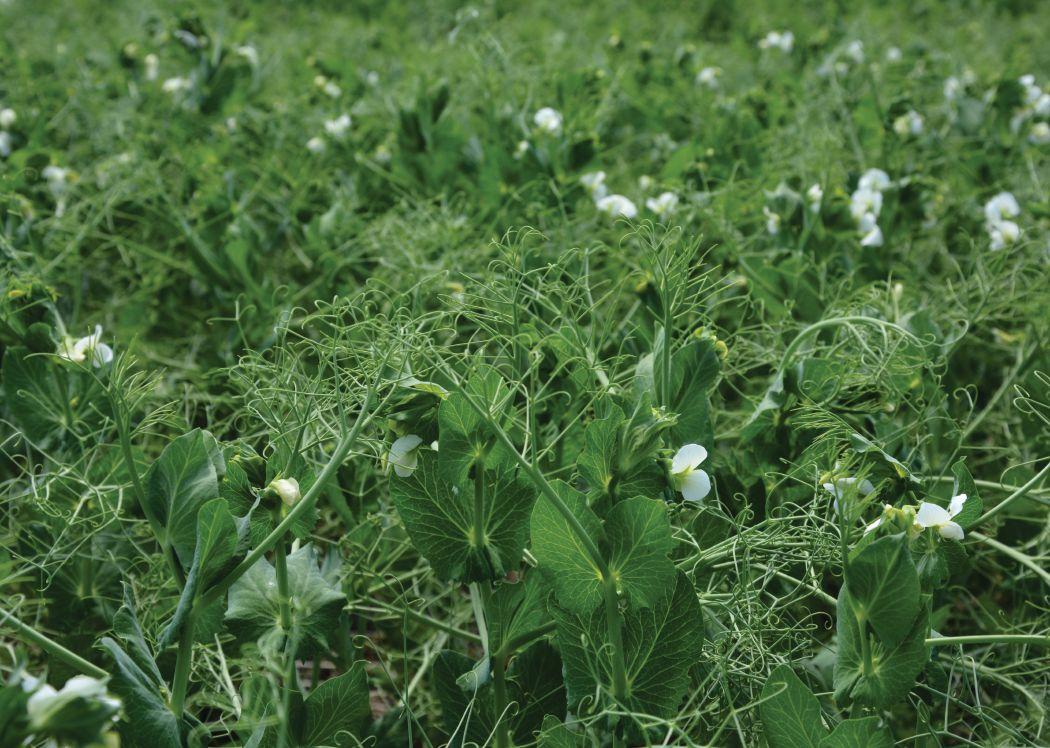
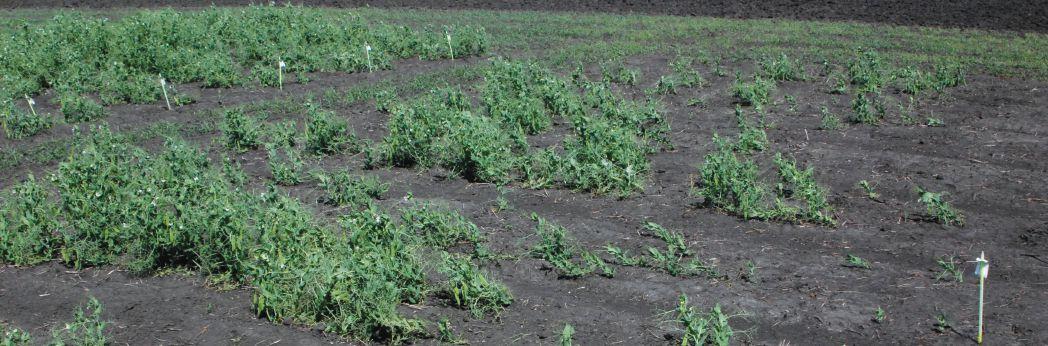
Root rot diseases are a major constraint on field pea production in Canada and in other regions of the world. a number of pathogens comprise the field pea root rot complex in Western Canada. Fusarium root rot is the most prevalent soil-borne disease of field peas in Manitoba. rhizoctonia root rot is also widespread. These diseases can severely reduce seedling emergence, quickly destroy the plant’s root system and limit the ability of crops to compete with weeds and to fix nitrogen.
an average yield loss of 57 per cent in severely affected pea plants has been reported. In Manitoba, 100 per cent of pea fields surveyed since 2008 have had root rot. During this time, mean disease severity of root rot was higher in recent years from 2010 to 2013. It has been demonstrated that Rhizoctonia solani isolates from field peas could infect soybeans and dry beans, so inclusion of these crops in long-term rotation could lead to more serious problems with root diseases. The root rot pathogens build up quickly in the soil where they can persist for long periods of time, so this disease cannot be completely controlled through crop rotation.
The development of root rot resistant cultivars is generally recommended as the best method for the control of these root diseases. However, the screening of candidate cultivars of field peas for root rot resistance is not a requirement for cultivar registration in Canada. For this reason, the reactions of commercial field pea cultivars to the most common root rot pathogens are unknown. In the past, patchy disease distribution within fields has hampered selection for resistance to root rot pathogens. However, improvements in inoculation procedures have enabled the establishment of uniform tests for rhizoctonia and Fusarium root rot. Complete resistance to the root rot pathogens has not been identified.
Much of the research on Fusarium root rot has concentrated on screening cultivars and germplasm lines for resistance to F. solani, but
recent research and surveys have shown that F. avenaceum has become the most common root pathogen of field peas on the Canadian prairies, so further research is needed to screen field pea cultivars and accessions for their reactions to this pathogen. Field studies at agriculture and agri-Food Canada (aaFC) at Morden, Man., between 2002 and 2012 showed that the field pea germplasm line Carman carries partial resistance to root rot caused by F. avenaceum, F. solani and R. solani.
Field trials, partially funded by the Manitoba pulse growers association, will be conducted at aaFC-Morden and aaFC-Brandon to evaluate the root rot resistance of approximately 60 Manitoba field pea cultivars each year (2013-2017). Dr. robert Conner is the lead aaFC scientist with collaboration from Dr. Debra McLaren and Dr. Maria antonia Henriquez. Inoculated field experiments will be carried out to separately assess the root rot reactions of the field pea cultivars to R. solani, F. avenaceum and F. solani. Field experiments will include Manitoba field pea cultivars as well as the partially resistant germplasm line Carman and two susceptible check cultivars. results from the 2013 field trials will be available in the near future.
This research on root rot resistance and tolerance has been identified as a priority area for the Manitoba pulse growers association in order to prevent yield losses caused by root disease. Meeting the challenge for long-term production of field pea requires the use of pest management strategies that are effective, economical and sustainable. This study will identify commercial field pea cultivars with partial resistance to one or more of the prevalent root rot pathogens. Improved disease control will ultimately result in increased competitiveness and profits by increasing yields, reducing risk and enhancing opportunities for field pea.
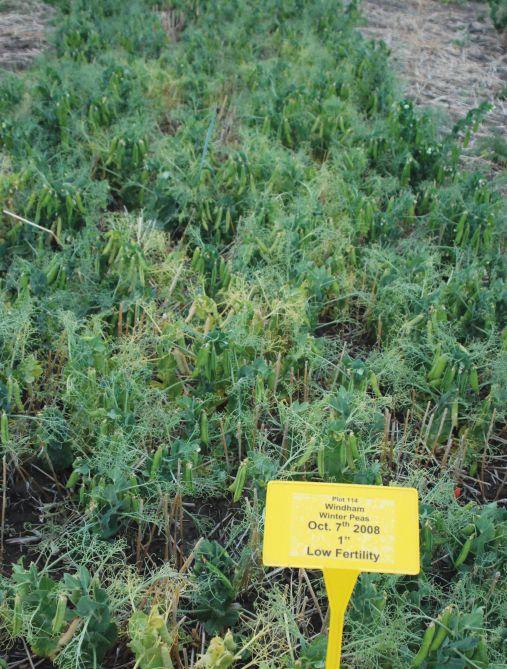
ABOVE: Root rot is becoming an increasingly damaging issue for Manitoba pea growers.
Photo
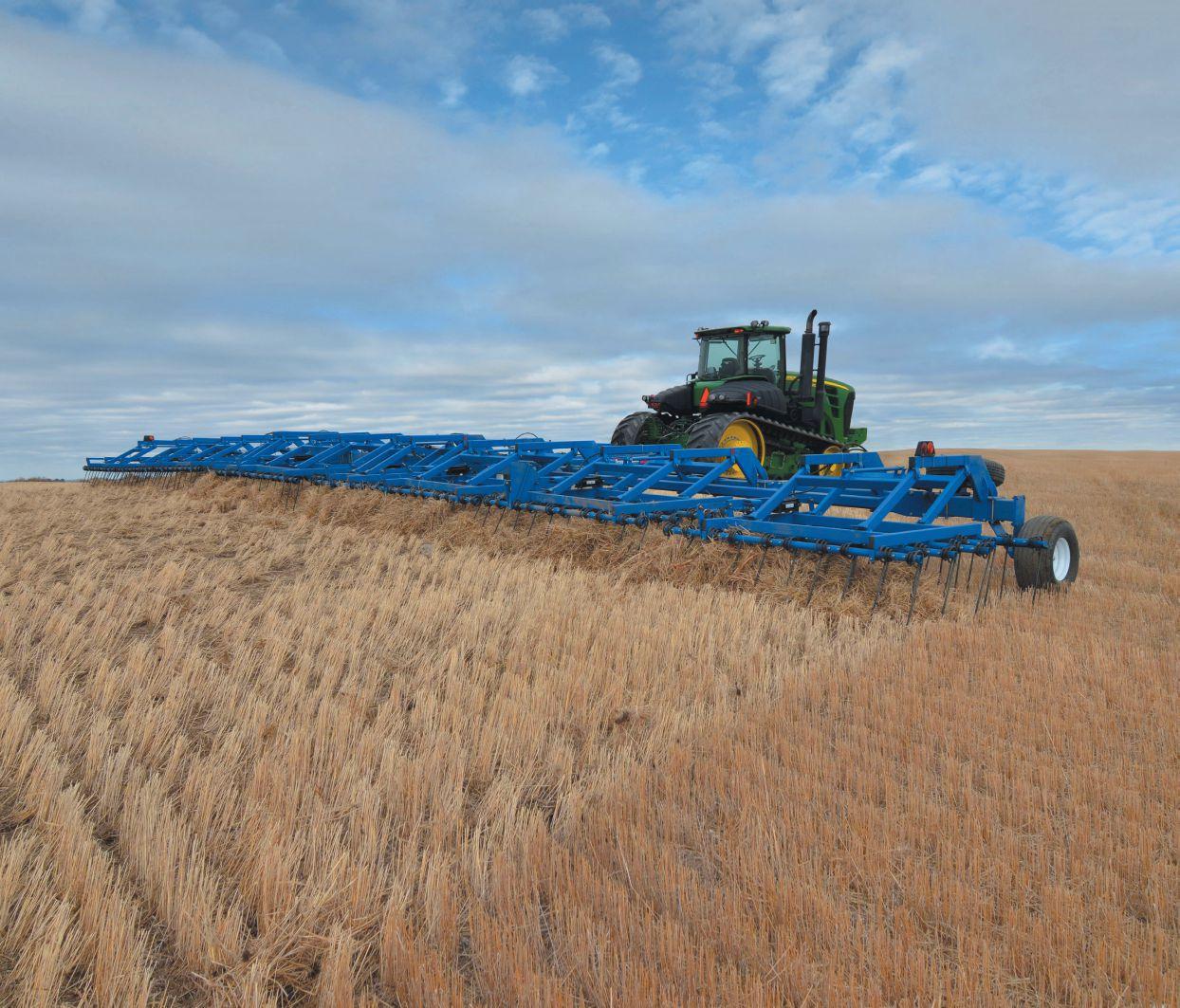
Nothing gets you ready to seed like the Brandt Contour Commander. Designed to be durable and easy-to-use, this heavy harrow is one of the most reliable tools on the farm, used in no-till, min-till and conventional tillage farms. Whether breaking up and evenly distributing crop residue, warming up the soil in spring, or leveling and sealing, the Brandt Contour Commander has superior land following capabilities to ensure an ideal seed bed resulting in smooth, trouble free seeding. Take command of all field terrains with this versatile machine That’s powerful value, delivered.
WHAT MATTERS MOST?
Farming is not just putting seed in the ground. Everything before and after, from new technology to timing, is crucial to a successful crop. And my Syngenta Reps give me the advice I need every step of the way. Clayton Gellner, 3rd generation farmer and Syngenta seed grower near Southey, SK Reps give me the advice I need every
cEREA l SEE di Ng RATES UN dER S ASkATch EWAN i RR ig AT ioN
Increased seeding rates may provide increased yields for some classes of wheat.
by Donna Fleury
Seeding rates for cereal crops under irrigation in Saskatchewan are currently recommended at 250 plants per square metre. However, recent research trials under irrigation led by Dr. ross McKenzie in alberta found higher seeding rates for several classes of wheat could be a benefit to growers. Based on the alberta results, the Irrigation Crop Diversification Corporation (ICDC) initiated a project to determine whether the recommended irrigated seeding rates for wheat and durum in Saskatchewan were still appropriate.
“In 2010, we initiated a project to look at all classes of spring and durum wheat including a number of varieties,” explains garry Hnatowich, ICDC research scientist, at outlook, Sask. “We compared seeding rates of 100, 200, 300, 400 and 500 seeds per square metre. all other agronomic practices remained the same. The results from 2010 showed that only two classes, soft white spring (SWS) and durum wheat showed any significant yield increases, so in 2011 we decided to concentrate the research on these two classes of wheat.” although the yields of other wheat classes did increase with increasing seeding rates in 2010, the results were not as significant, so hard red spring wheat, Canada prairie Spring and general-purpose wheat classes were dropped from the project.
The seeding rate study with SWS and durum wheat continued for three years, from 2011 to 2013. researchers are still finalizing the data, but based on preliminary analysis, there are some interesting results.
Existing durum seeding rates appear good
“With durum, we did see continued yield increases up to almost 50 per cent higher target plant populations than the current recommendation of 250 plants per square metre,” says Hnatowich. “Yields increased up to about 400 plants per square metre and then tended to level off. However, for every seeding rate increase for durum wheat, there was a corresponding linear increase in lodging. as yields leveled off at 400 seeds per square metre, the crops had lodged so much they were very close to the ground and likely the reason for nominal yield increases. Therefore based on these results, my recommendation is that the current seeding rate of 250 plants per square metre is probably adequate for durum wheat. any yield increases are offset by lodging problems and harvestability issues.”
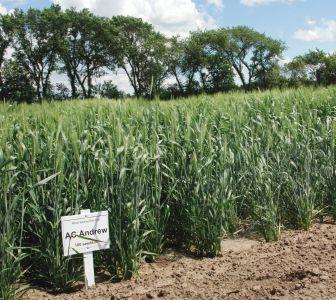
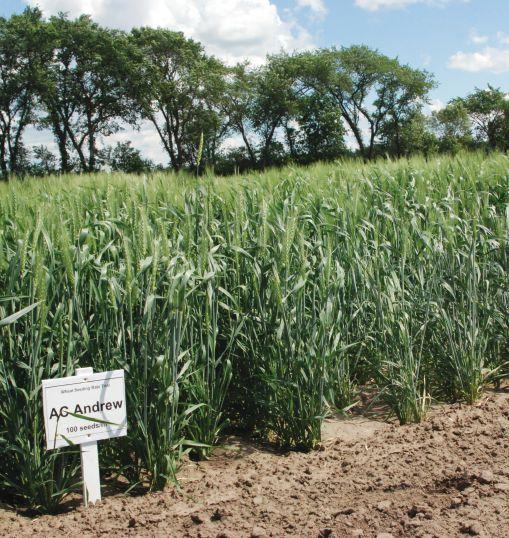
Higher seeding rates for soft white spring wheat varieties, such as AC Andrew, could increase yield.
SWS yields may benefit from higher seeding rates
preliminary results for SWS are quite different from durum wheat. The results show yield responses up to double the current seeding rate recommendation. although 2013 was an outstanding year and may have had a bit more influence, the average over the three years of the study showed that yields increased up to about 400 to 500 seeds per square metre. The yields continued to increase past 500 seeds per square metre but were not as significant.
“We still need to complete our analysis and economics on the results, but the preliminary results for SWS wheat show there is an advantage to moving up to a higher seeding rate,” says Hnatowich. “With SWS, there was no real lodging response until seeding rates moved above 400 seeds per square metre. above that level, the lodging rate did rise and in fact
Photo by b ruce
doubled, moving from a 2 to a 3 rating, which is still within a manageable lodging tolerance for harvestability. Therefore, increasing seeding rates for SWS may be a benefit for increasing yields.”
other results of increased seeding rates for both durum and SWS wheat were decreased protein, reduced days to maturity and increased plant growth.
Hnatowich adds that they did also compare varieties of both durum and SWS wheat for lodging. across all varieties in all years, every variety responded in a similar manner. “We looked at a number of varieties; however, at no time in any of the three years was there a statistically significant variety effect on lodging. We did expect some differences in varieties, but in this project they all behaved identical and we did not see any significant differences.
“once we have completed the economic analysis, we can provide better seeding rate recommendations for growers,” adds Hnatowich.
Table 1. Seeding Rates of SWS Wheat and Durum
Source: ICDC, 2010.
“growers will also have to decide whether higher seeding rates are a benefit to their system. along with the added seed cost, there are timing decisions to consider. an increase in seeding rates from 250 to 300 or more seeds per square metre is a significant increase in the amount of seed in the cart and may create some seeding time delays. Therefore, growers have to assess if the potential yield gain benefits from increased seeding rates will fit in with their current production practices.”
as a follow-up study to seeding rates, Hnatowich would like to look at strategies such as growth regulators as a way to manage the lodging issue for classes of wheat such as durum. “We would like to determine if the use of a growth regulator coupled with high nitrogen rates could improve crop standability and provide an accelerated yield response across several classes of wheat. We can then provide better recommendations for growers for cereal crops under irrigation.”
StandsSTRONG YieldsBIG
Cereals under irrigation. As seeding rates for durum increased, so did lodging.
NUTRiENT loSS SigNiFicANT
i N SNoW m E lT RUNoFF
Changing freeze-thaw cycles have Canadian researchers studying the structure of frozen soils and comparing nutrient loss in rainfall and snowmelt runoff.
by Julienne Isaacs
preliminary findings from the Saskatchewan-based pipestone Creek project, which analyzes beneficial management practices (BMps) to minimize nutrient loss from agriculture, suggest that nutrient loss in snowmelt may be more significant than from rainfall runoff.
according to lead researcher Barbara Cade-Menun, a nutrient-cycling scientist with agriculture and agri-Food Canada (aaFC), most BMps designed to slow nutrient runoff are geared toward summer storms, but are less effective against nutrient loss in snowmelt runoff.
“a lot of the BMps that are developed to manage soil erosion, like conversion to zero-till and buffer zones, are designed to stop [soil] particulates from moving, and to control for erosion,” she says.
But in the spring snowmelt, when the soil is still frozen, the runoff, carrying fine nitrogen- and phosphorus-rich organic matter, goes right through barriers such as buffer zones.
The pipestone Creek project was established as part of aaFC’s Watershed evaluation of Beneficial Management practices (WeBs)
program. This program, which ran from 2004 to 2013, was designed to assess the environmental and economic performance of regionally appropriate BMps with nine separate projects across Canada.
Photos
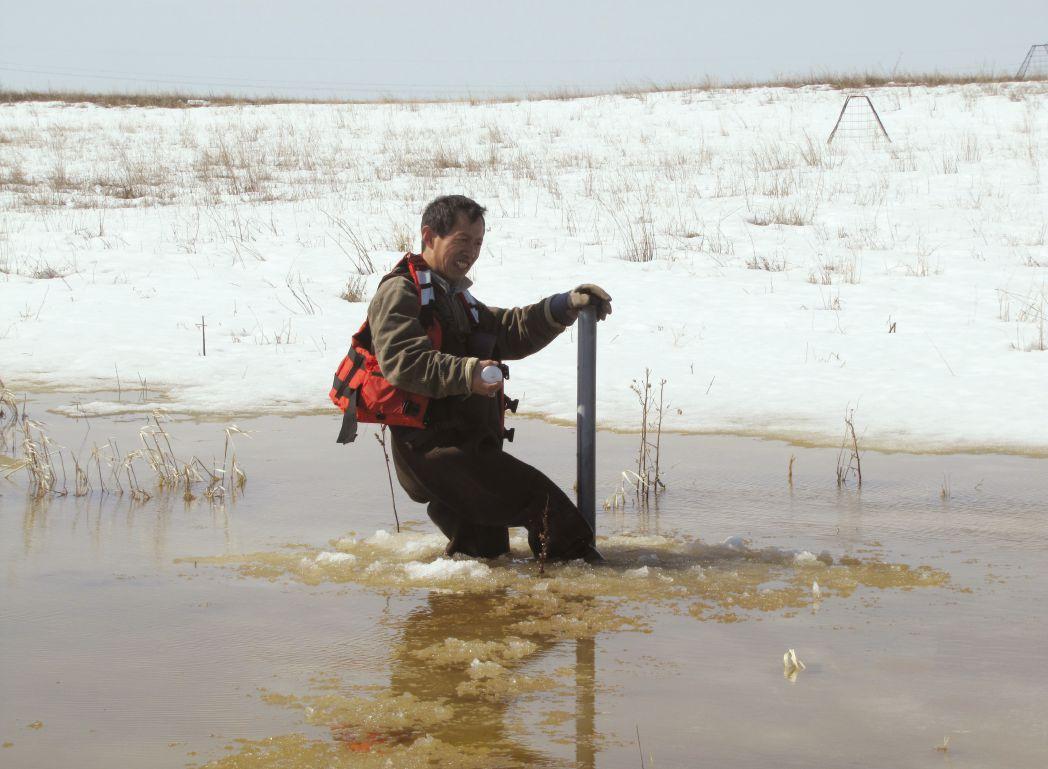
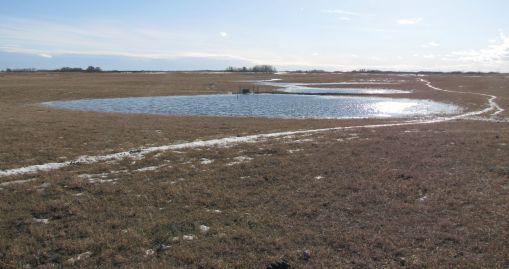
TOP AND ABOVE: Dr. Kangsheng Wu (Saskatchewan Water Security Agency) installing equipment to monitor the depth of the restored wetland (top). Restored seasonal wetland at site M during spring snow melt, 2012 (above).
The pipestone Creek project is a multidisciplinary research project established in 2009 to study the effects of four BMps on three separate farms on the pipestone Creek Watershed in southeastern Saskatchewan. although the WeBs program ended in March 2013, the pipestone Creek project has continued with funding from aaFC’s Growing Forward 2 initiative.
The BMps include conversion of annual cropland to perennial forage, nutrient management on annual cropland, wetland restoration and in-field winter bale grazing. runoff monitoring and water sampling is done at multiple points within the project study area.
Cade-Menun and her team have not yet concluded the sevenyear study or gathered enough data to make definite recommendations for BMps producers should adopt to reduce nutrient loss through runoff. However, preliminary findings suggest that cer-
tain practices may influence the soil’s ability to hold its nutrients. Key among these is timing. Many producers, says Cade-Menun, see the first snowfall as the beginning of a dormant season, and if they don’t have cattle they stay off the land until everything dries up in the spring.
producers “might be working hard to put the right BMps in in the spring, but maybe it’s what they do in the fall that matters more,” says Cade-Menun. “That’s what our results are suggesting, even though we can’t make specific recommendations as yet. We need to develop BMps that focus on the fall as much as they focus on the spring and summer.”
one example of a potential problem area for increasing nutrient runoff in snowmelt is fall-spread manure. “Spreading manure in the fall might not be a good idea – we get more nutrients coming off fall-spread
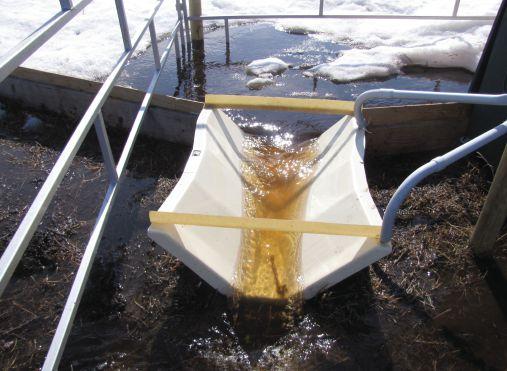
Runoff from in-field winter bale grazing site (yellow) and from pasture control (green).
manure, likely because it hasn’t had a chance to incorporate and react with the soil,” says Cade-Menun. Further testing is needed to determine the optimal time for manure spreading, to keep the manure nutrients in the soil where they can provide the most benefit to producers.
The monitoring efforts at pipestone Creek include snow surveys, conducted close to snowmelt during the spring. These surveys measure snow density and depth, and analyze nutrient content as well as predicting runoff versus infiltration into the soil.
“We divide nutrient loss into ‘dissolved’ or ‘particulate’, based on filtering. particulates stay on the filter, while dissolved nutrients go through the filter,” says Cade-Menun. In the summer, particulates can be lost from the soil when rainfall results in soil erosion, but this is mediated by buffer zones and zero-till. During spring snowmelt, the soil is frozen, so larger particulates from soil don’t move, but most nutrient loss occurs in dissolved form. “We’re still trying to determine the best BMps to control dissolved nutrient loss in snowmelt runoff.”
Differences in the form of nutrient loss from perennial pastureland and zero-till cropland also suggest that the form cropping systems take
has an impact on the kind of nutrient loss those fields will experience. For example, dissolved phosphorus (p) concentrations were higher in runoff from croplands, while particulate p concentrations were higher in runoff from pastures. Dissolved nitrogen (n) was lost from cropland in nitrate form, while it was lost in nitrate and ammonium form from pastureland.
“We’re not sure the concentrations [of n and p] downstream are high enough to trigger algal bloom, but they represent a loss to producers,” says Cade-Menun. “We need to find the best methods to keep these nutrients in the fields where they belong and to minimize any environmental risks.”
additionally, the type of soil also changes infiltration rates. For example, in Cade-Menun’s study, sandy soils demonstrated generally higher infiltration rates, while loamy or clay soils showed lower infiltration rates.
Freeze-thaw cycles
In a paper entitled “Biological, Chemical and physical processes
Breakthrough in plant health.
in Seasonally Frozen Soils,” Cade-Menun and her co-authors argue that understanding the effects of freeze-thaw cycles (FTCs) on agricultural soils can lead to the development of BMps that are more effective at controlling nutrient loss in the non-growing season.
“Soil physical characteristics are highly sensitive to fluctuations in winter conditions,” the paper states. “Freeze-thaw cycles can reduce aggregate stability and alter soil structure, potentially increasing erosion.”
Climate change has impacts on FTCs, and the risk of increasing fluctuations in FTCs in the future lays extra imperative on the need for a better understanding of the activity in winter soils and the avenues of nutrient loss in the spring.
In another paper analyzing the effects of FTCs on infiltration rates, Cade-Menun and her co-authors argue that increased frequency of FTCs demonstrably reduced infiltration rates into all soils. “With current predictions for increased frequency of FTCs at higher latitudes and elevations, Saskatchewan soils will likely incur further soil porosity and structural changes,” the authors write. “Understanding and monitoring such changes can improve our knowledge of the hydrology
and the environmental impact of agricultural and other practices.”
even though the study has not yet concluded nor BMps definitely identified, Cade-Menun’s message is clear: snowmelt represents significant nutrient loss on agricultural land, and producers need to pay attention to potential causes.
“Does it matter if you hay in the late summer or in the fall? How much standing biomass do you want on your fields during freezing and snowmelt? a lot of people go to tall standing stubble because it traps more snow. Does that release more nutrients?” asks Cade-Menun. “I don’t know the answers to these questions, but again it’s clear that the state that you leave your site in in the fall will make a difference in the spring.
“We need to think about what we’re doing and develop BMps specifically for the prairies, especially for snowmelt runoff.”
For more on soils, visit the agronomy section at www.topcropmanager.com.
The Stress Shield® component of Raxil® PRO Shield provides superior emergence, increased vigour and a healthier plant that’s better able to withstand unforeseen seasonal stresses.
This NEW formulation combines three different fungicide actives, including NEW prothioconazole, for complete systemic and contact protection from the most serious seed- and soil-borne diseases.
To learn more about Raxil PRO Shield, visit BayerCropScience.ca/Raxil
cANol A hARVEST m ANAg E m ENT
Planning ahead, good agronomics and timing are critical to harvest success.
by Donna Fleury
Canola harvest management starts with planning ahead and getting it right in the spring. everything else will follow, pending weather and growing conditions.
“planning ahead for harvest, especially if growers are thinking of straight cutting their canola, is important,” says Chris Holzapfel, research manager with the Indian Head agricultural research Foundation (IHarF) in Saskatchewan. “Backing all of the way up to spring prior to seeding is the best place to start planning for harvest.”
growers have options to either swath and combine or straight-combine canola crops, depending on crop conditions, harvesting equipment and risk management. Swathing can hasten and even out maturity, and desiccate green weeds. Swathing can also reduce the potential for shattering under most conditions, and provides more flexibility of harvest timing relative to straight combining.
Straight combining, on the other hand, eliminates the swathing cost and reduces labour requirements. Under some conditions, such as thin stands, short or badly lodged crops, straight combin-
ing can reduce risk and improve seed quality. “Straight cutting will typically delay harvest a bit relative to swathing, and although it varies from year to year, a delay of a week is fairly typical before starting to combine,” explains Holzapfel. “Therefore it is advisable to try and get some of the canola fields seeded relatively early, so they will mature early and get the whole harvest operation started a bit sooner.”
Using recommended seeding rates, attaining higher fertility and ensuring adequate plant stands are established are priorities. “although growers may be interested in cutting back on seeding rates, if you want to consider straight combining then this is not the best time to be cutting back,” says Holzapfel. “Low plant populations will delay maturity and result in a lot more branching and variability in the plant in terms of pod staging and maturity. a higher plant stand will result in smaller plants with more pods along the main stem, encouraging quicker and more even maturity. Higher plant stands will also reduce the impact of potential establishment
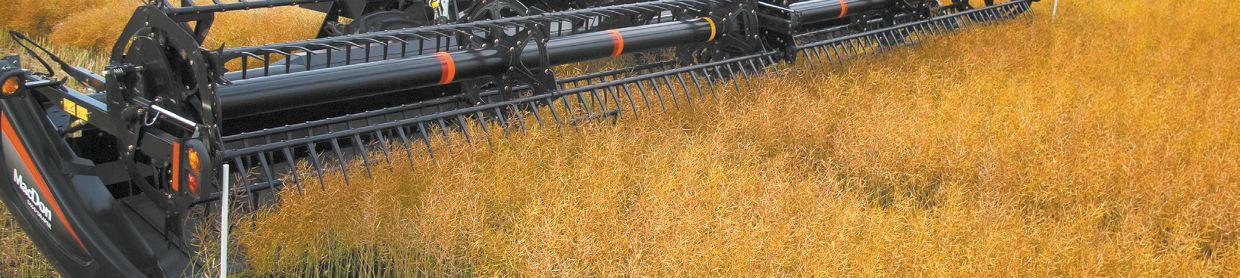
ABOVE: There are risks and rewards with straight-cut canola.
Photo by b ruce b
problems because of drought, poor seedbed conditions or drowning out.” anything growers can do to get a high yield potential is important. a dense canopy can possibly reduce shattering potential and increase the odds of success. During the season, crop scouting and assessing weeds, diseases and insect pests is a key management strategy. If there are potential problems, then a decision of pre-harvest glyphosate or desiccation may be a consideration, and then it’s all about timing. attaining adequate fertility, using
SPRAY IT
a good seeding rate and seeding early are probably the three most critical factors for initial planning.
Research compares swathing and straight combining
Holzapfel has several research projects comparing swathing and straight combining canola. Factors such as the use of pre-harvest glyphosate and pod sealants, fungicides and varieties have also been compared. “Timing of harvest is usually critical with straight combining canola,” he says. “as soon as the canola is ready to put through the combine, has a low enough green seed content and is fit to store, then growers need to be getting out there as quickly as possible. The longer the crop stands, especially as it starts to get overripe or dry, then the risk of shattering is a lot higher.”
When swathing, timing is also critical as swathing too early can cost yield and increase the potential of green seed. Waiting too long can result in higher shattering losses during swathing. “Trying to time operations when canola has reached the appropriate stage is important with either harvest method,” says Holzapfel. “But it is about logistics, and growers have to manage their own farms as best they can.” With large acreages, variable weather conditions and labour considerations, timing can be a challenge. Some large growers use both swathing and straight combining, swathing as much as possible and then moving to straight combining if the canola is ready and the potential for swathing shattering losses is higher.
We aren’t surprised to hear words like impressive and dependable when people talk about NORAC’s award winning Hybrid Mode™ .
Hybrid Mode™ reduces the need for the operator to take manual control of the boom while spraying lodged, thin or uneven crops.
What you may be surprised to hear is that our Hybrid Mode™ advanced crop spraying feature is exclusive to NORAC Spray Height Control Systems.
In 2011-12 straight-combining trials, the average environmental seed losses ranged from less than one per cent to 21 per cent at “optimal” harvest time, and less than one per cent to 57 per cent when harvest was delayed three to four weeks. Total losses averaged across all straight-combined sites and cultivars were 5.5 per cent at “optimal” time and 17.4 per cent with delayed harvest. In previous research comparing swathed and straight-combined canola, the average environmental seed losses from straight combining at the optimal time were five per cent or less, but typically did not reduce canola yield as the losses were often offset by increased seed size of six per cent (see Fig. 2, pg 40).
The results of a two-year, three-location pod sealant research study showed the product may be beneficial under certain
What fertilizer are you using?
While every farmer dreams of amazing yields, not all realize the fertilizer they use is responsible for up to 60 percent of yield. So it makes sense to use the most advanced fertilizer available. Choose MicroEssentials®, with FusionTM technology.
circumstances, but didn’t show a consistent return on investment in the trials. “pod sealants can be a risk management tool; however, it is very difficult to predict the likelihood of being successful, and the cost of application is another factor to consider,” explains Holzapfel. “growers considering using a pod sealant should leave a check strip for comparison and understand that they are not guaranteed to see an economic benefit.”
pre-harvest glyphosate is not a necessity but can also have advantages in some cases. The research trials did not show a consistent impact on seed yield by using glyphosate. “I have had a lot of success without pre-harvest glyphosate, but it can be a way to even out maturity and if there are weed problems, can provide the benefit of weed control,” says Holzapfel. “one of the things I like about glyphosate with straight combining is it works slowly and
won’t dry out the pods or add much risk of shattering. other options such as reglone are very effective, but the cost is higher – you don’t get weed control and it works very quickly so you have to be ready to go.”
In a new four-year study initiated in 2011, Holzapfel expanded research on cultivar considerations for straight combining. The trials are evaluating potential for pod shattering and pod drop amongst 12 commercial cultivars across all herbicide systems, including some of the new shatter tolerant varieties. preliminary study results show significant varietal differences are frequently detected, but not always consistent from site to site. Substantial losses in all cultivars occurred when severe conditions were encountered and the opposite was generally true under more favourable conditions.
“In years where losses were low, all of the cultivars evaluated performed pretty well,” says Holzapfel. “However, in years where conditions were challenging, such as the severe wind events in 2012 and higher than usual sclerotinia incidence, all of the cultivars were impacted and we had severe losses in all treatments. The wind events also caused severe damage to a lot of swathed canola across the prairies and encouraged some growers to take a closer look at straight combining in 2013.” Several cultivars with improved shattering resistance are scheduled for release within next few years see Fig. 1, above).
although any header can be used for straight combining, there are some special headers that have shown some benefits. an earlier study from 2005 to 2007, conducted at Swift Current by Wheatland Conservation area Inc., evaluated header losses and seed yields from canola straight combined using various header types. The BISo extension performed the best, showing lowest losses and highest yields, followed by the draper with a slight improvement over the rigid header. The stripper header was used only one year and was not successful with canola harvesting (see Header effects graph, pg 38).
“We would like to see more research on special headers such as
Fig. 1: Cultivar Rankings
Source: C. Holzapfel, IHARF, 2013.
1=least and 12=most shattering for a given site Error bars are standard deviation of cultivar ranking across
Liberty Link Roundup Ready Clear eld
Source: C. Holzapfel, IHARF, 2013.
Fig. 2: Swathing vs Straight Combining
The 24/7, all season
ESN® SMART NITROGEN® is always there for your crops. One application will usually give your crops the N they need throughout the growing season. The polymer coating reduces the risk of nitrogen loss to the environment, and you can apply ESN at up to three times the seed-safe rate of urea. It improves crop quality and yield. Get the facts from your retailer, or visit SmartNitrogen.com
those available from BISo and Zurn for rapeseed/canola,” says Holzapfel. “a next-generation model from BISo is expected to be more flexible, with the ability to harvest canola, cereals and soybeans. everyone has different preferences and the key is to optimize the equipment you are working with. It will come down to preferences, actual conditions being encountered and individual farm management.
“For example, with dry canola, many growers find pea augers to be highly effective for moving the canola into the feed housing and keep the combine moving quite smoothly. However, under tough conditions or with particularly green stems, canola can wrap on the pea auger and really slow down progress,” he adds. “It is not uncommon to hear conflicting testimonials about equipment options from producers who have experience with straight-combining canola.”
Holzapfel encourages growers to consider trying straight combining canola, but understand the risks. “Don’t be afraid to try straight combining canola, but understand factors such as harvest timing, which is critical compared to swathed canola. Limit straight-cut acres to what is manageable. Start planning ahead before spring for strategies that will increase the success of straight combining canola. everyone has different comfort levels and aversion to risk and has to decide what works best for their farm and their management system.”
CORRECTION NOTICE
The Versatile RT490 listing in the December Machinery Manager featured the wrong chart. The correct chart is displayed below.. We apologize for any inconvenience this may have caused.
VERSATILE
RT490 COMBINE
The RT490 is a new 490 hp Class VIII combine from Versatile. True to the heritage of Versatile, the RT490 was designed to be rugged, reliable and simple to maintain and service.
A Cummins 11.9L powers the RT490. The 490 hp unit provides ample power to harvest in any crop conditions. The QSX 11.9L engine incorporates the Cummins-patented Variable Geometry Turbocharger (VGT) to improve fuel economy and help control emissions.
At the core of the Versatile RT490 is the revolutionary Rotating Concave Rotary System. A 360 degree concave wraps around a large rotor and counter-rotates. The counter rotation of the concave in relation to the rotor creates an unsurpassed threshing and separating area. Three separate “pinch points” are created during each rotor revolution allowing the grain to be threshed three times in each rotation.
The moving concave eliminates the traditional “dead zone” found in typical rotary systems. The rotor system allows the RT490 to be more productive in high-yield fields and in difficult crop conditions than competitive units with a stationary concave.
The Versatile RT490 cab was designed for long operating days. A large glass area and panoramic windows create an excellent view of the header during harvesting. A standard training seat, cooler, air-conditioner and sun visor further the operator’s comfort on long working days.
The simplicity and accessibility of the combine allows operators to quickly perform daily maintenance tasks and adjustments. Large access areas to the RT490’s critical components and daily maintenance areas help reduce downtime. Belts and other wear components are changed in less time than it takes to service competitive units.
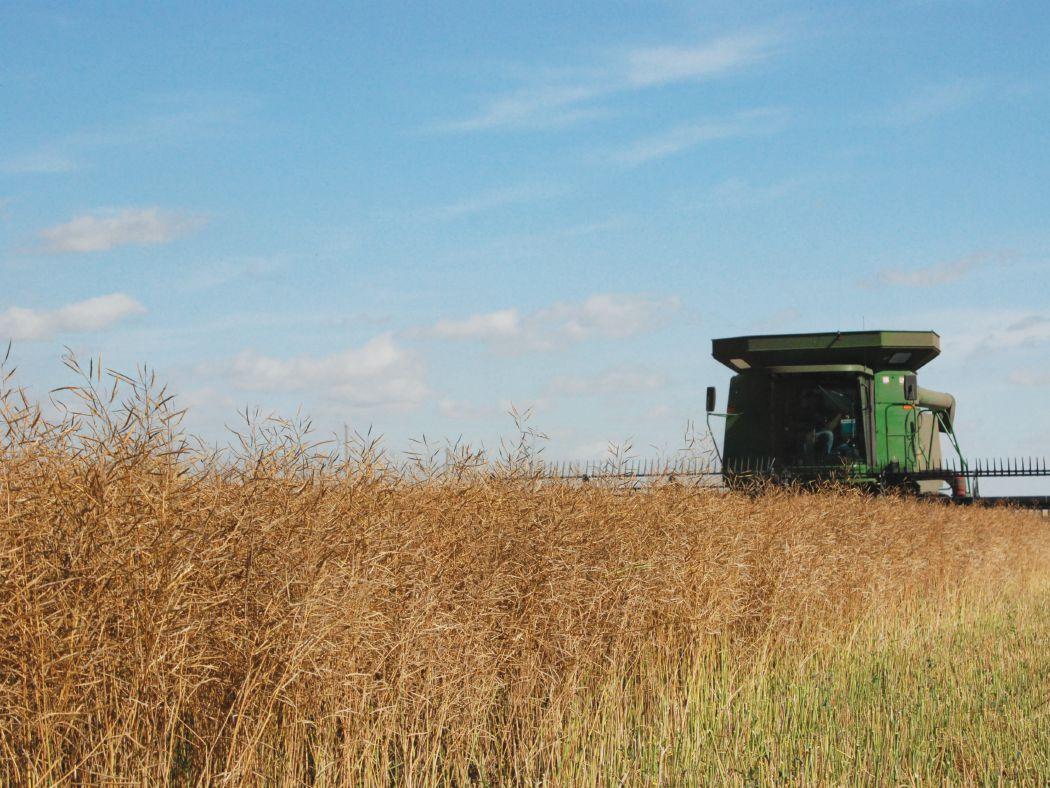
Chris Holzapfel encourages growers to consider straight combining canola, but emphasizes they need to understand the risks.
Photo by Janet Kanters..
g o SS’ S W ilT moV i Ng i N
Good news – resistant hybrids are arriving. Bad news – major losses are possible for corn growers.
by John Dietz
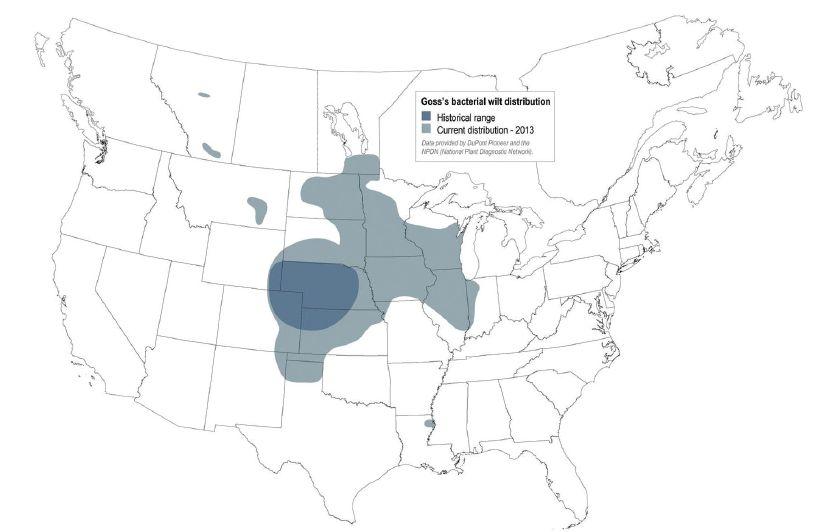
goss’s wilt bacteria are likely to become permanent residents on every cornfield in Western Canada in the next decade or two. Major damage can be prevented, but the bacteria are here to stay.
When severe, the bacterial disease can slice 40 bu/ac off yield, according to Manitoba agriculture, Food and rural Development (MaFrD) plant pathologist Vikram Bisht.
growers will find they have a few important tools for coping with the new disease. These include cultivating and burying corn residue, rotating fields into other crops, and selecting corn hybrids with good ratings for tolerance to goss’s wilt.
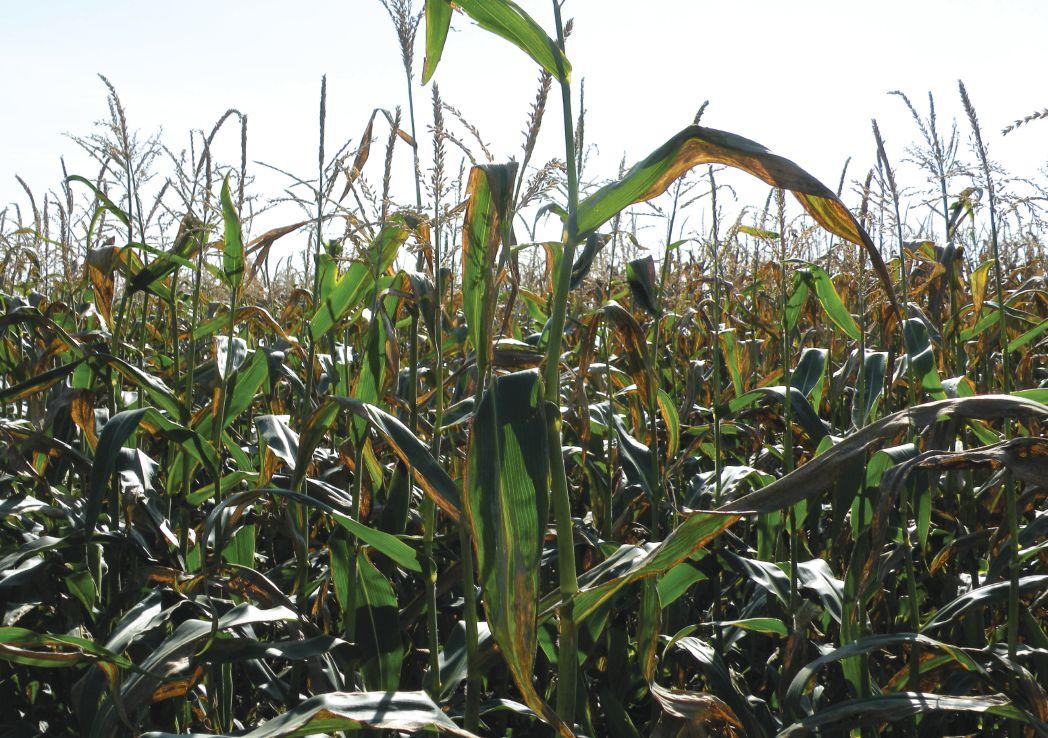
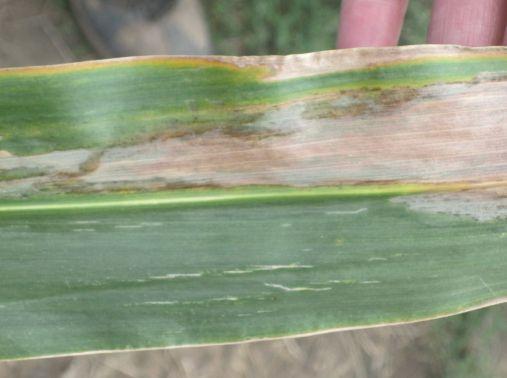
Blight symptoms
a good starting point, Bisht says, is to get the name right.
“goss’s wilt is really goss’s bacterial wilt and leaf blight,” he says. “The leaf blight phase is the only phase we have seen at this point. We may have missed finding the wilting phase.”
The bacterial cause is known as Clavibacter michiganensis subsp. Nebraskensis (CMn). It is one of about a dozen bacterial diseases known to occur in corn. Worldwide, maize crops also are subject to many fungal diseases, plus many viral diseases and various parasitic nematodes.
according to the University of nebraska, it was first identified in three fields in central nebraska in 1969. It was observed in other
TOP AND ABOVE:Goss’s wilt has spread throughout Manitoba’s corn production zone as far west as Holland and north to Portage la Prairie. In 2013 it was also confirmed in five Alberta cornfields (near Lethbridge and Taber) (top). Early leaf symptoms are elongated lesions of water-soaked, greyish-green tissue that progress to long dead streaks with wavy, irregular margins. These streaks extend along the leaf veins, which suggests a bacterial infection. One of the most characteristic symptoms of Goss’s wilt is leaf “freckles” that develop within the streaks. As lesions enlarge, they form large areas of necrotic tissue on the leaves, and eventually, leaves wilt and dry up (above).
Photos
U.S. states, but was not a serious problem until recent years. It re-emerged in 2006, particularly in the tri-state region of western nebraska, northeast Colorado and southeast Wyoming.
plant wounding due to severe weather and a local history of the disease are likely to blame for early development. Yield impact worsens the earlier that it develops and in proportion to the amount of leaf area affected by the bacterial lesions, according to nebraska pathologists. It can lead to stand loss, plant death and major yield loss. It can develop even in resistant hybrids that have been wounded substantially.
nobody beyond the tri-state region was looking for goss’s wilt after the 2006 reemergence, but routine corn surveillance led to suspicions.
officially, it was confirmed in 2009 in two fields near roland, Man. Today it is broadly spread throughout Manitoba’s corn production zone as far west as Holland and north to portage la prairie. In 2013 it was also confirmed in five alberta cornfields (near Lethbridge and Taber).
“We don’t know how we got it. Maybe it came with seed. Maybe it came up on thunderstorms or with machinery,” says Bisht. If you enter a field where you suspect goss’s wilt may be present, be sure to remove any soil or plant matter from boots, wheels or implements before leaving that field, as the disease can be transferred by rain, wind and soil, and by residue moving from field to field.
Dupont pioneer began doing field surveys soon after the disease was confirmed in Manitoba. Bisht says the disease was confirmed in 80 per cent of the inspected fields, or more, in 2011, 2012 and 2013.
“Its presence does not mean a yield reduction. It just means that at least one plant had the disease in that field,” he notes. “In coming years I think yield losses will be showing up in many places. The disease becomes an issue when we have thunderstorms with strong winds. In severe cases the loss of yield can be over 60 per cent.”
Symptoms are classic, when you know what to look for. Initially, look on the leaves for small, dark brown, slightly elongated freckles. Some of these lesions may be oozing where there was a leaf injury. other diseases may produce similar freckles but oozing is associated only with the leaf blight phase of goss’s wilt. Symptoms are most likely to emerge a few days after a strong thunderstorm.
“On
this farm, we’re the experts.”
Sean Gorrill –FCC Customer
Together, we’ll create the financing plan that works for you. We get to know you, your farm and how you want to grow. If you’re ready to get down to business, talk to one of our farm business experts.
a bit later, a small patch or two in a field may appear to be singed or drying up while the rest of the field looks healthy. Leaves may have a slight brown discoloration on top. It can spread quickly after that.
“The initial few spots can join with other spots if the disease becomes very serious. The leaves will dry up in a patch very, very quickly while the stalks appear to be good. It can happen in the course of two weeks, especially if there has been a fair amount of moisture and dew,” says Bisht.
The bacteria migrate into stalks, in time, where they can plug the plumbing system. Discoloration will appear in a cross-section of a stalk.
once established, the bacteria causing goss’s wilt survive and reproduce on the corn residue. If that is buried and decaying, the bacteria also can survive on at least two host grasses – green foxtail and barnyard grass.
The bacteria will move to adjacent plants on splashing rain; they will move to an adjacent field on wind gusts, or simply blow along onto adjacent land after harvest. an infected field should be kept out of corn production as long as possible or planted to resistant corn hybrids. Fields adjacent to an infected field probably will have the goss’s wilt bacteria in the following year.
Lab analysis
ontario Ministry of agriculture and Food (oMaF) pathologist albert Tenuta has been working with agriculture and agri-Food Canada to monitor for goss’s wilt and other corn diseases in ontario. It has not been found yet in ontario or farther east in Canada but it is close – it’s been found in southern Michigan and in Indiana.
“Being a bacterial disease, the pathogen is very difficult to identify in the field so it is best to submit a sample for lab analysis. This is especially important in areas where the disease has not been detected before” says Tenuta.
growers should be cautious about using immuno-strip test kits that are offered for field testing, he warns. These kits are not specific to CMn but instead identify a closely related bacteria that is common to tomatoes.
“The test will often give false positives. It’s not specific enough
Current distribution of Goss’s
across North America.
for the goss’s bacteria in corn. We find false positives in ontario quite a bit. every time we do a followup in the lab, it turns out to be a negative,” he says. While fungicides are ineffective against the bacterial disease, the new disease can be mistaken for other diseases where fungicides are effective. It points to the need for lab analysis and importance of proper identification. “If a grower thinks he has northern leaf blight, and applies a foliar fungicide, it won’t control your goss’s wilt, which means a potential waste of money,” says Tenuta.
New hybrids
Seed companies are moving quickly to improve genetic resistance to the bacterial attack in new corn hybrids. Quite a few hybrids with good resistance are available already from Dupont pioneer and Monsanto. More are coming.
“The level of resistance may be differing,” warns Bisht. “Sometimes the pathogen is different, so what is resistant in one place may not be resistant in another place (to a different race of the bacteria). It is important to discuss that with the seed suppliers, too, and we need to figure that one out for infections in Manitoba and alberta.”
according to Wilt Billing, area agronomist for Dupont pioneer in eastern Manitoba, five years ago “if you took every corn hybrid sold in Manitoba, only a few products would carry moderate levels of resistance [to goss’s wilt]. averaging the products available, the overall resistance rating would be 3 (or poor) on a scale of 1 to 9.” Today, Billing says, the average hybrid resistance rating to goss’s wilt in Dupont pioneer seed products has increased up toward a 5 on that scale. “our strongest products would be rated 6’s and 7’s. a 7 would be considered resistant.”
Billing says new products were developed and identified in Manitoba using nursery screening, molecular markers and field verification trials. “Where fields are known to have goss’s wilt, we’re incorporating our most resistant lines very successfully. Those growers are not seeing any yield impact when planting hybrids with improved resistance to goss’s wilt.”
goss’s wilt surveys, led by Billing from 2010 through 2013, found the disease throughout the traditional corn growing area of Manitoba. In 2013 it was found northeast of Winnipeg, near portage la prairie and as far west as Holland, Man.
Bruce Murray, eastern Manitoba agronomist for DeKalb, says the company has tested for goss’s wilt in nebraska. “We’re a large company, just starting to get our heads around goss’s wilt in Manitoba,” he notes. “a big chunk of our lineup is coming back as tolerant, and we did see that in the field this year, [even though] we were seeing more goss’s wilt in our plots.” The DeKalb 30 Series corn hybrids are an 80-day corn that has very strong tolerance to the disease, says Murray. Three other DeKalb hybrid lines – 26, 27 and 31 – are nearly as tolerant to the bacterial attack. responding to intense grower interest, Murray says Monsanto initiated a full-time testing and development program in Manitoba in early 2013, as an extension of its effort at the former DeKalb research farm at glynden, Man. He predicts that, “It’s going to come to the point, in a few years, you’re going to have to have that tolerance for resistance or you’re not in the game.”
wilt
RELENTLESS ON WEEDS. SAFE ON WHEAT.
FLUSHAFTERFLUSH™ CONTROL.
It’s rare to find a herbicide you can count on for long-lasting stopping power that’s also safe on wheat. The advanced safener technology in EVEREST® 2.0 makes it super selective for best-in-class crop safety. Safe on wheat, it’s also relentless on weeds, giving you Flush-after-flush ™ control of green foxtail, wild oats and other resistant weeds. And a wide window for application means you can apply at your earliest convenience. It’s time you upgraded your weed control program to the next generation: EVEREST 2.0. To learn more, visit everest2-0.ca.
2014 cANA diAN T RU ck k i Ng c hA ll ENg E
The seventh year of the Challenge names the 2014 Ram 1500 as the winner.
by Howard J elmer
this is the seventh year that the Canadian Truck King Challenge has pitted the most popular pickups in the country against one another.
We use a public 19-kilometre test loop that consists of a hilly gravel road, broken twisting asphalt and a smooth highway section. We take trucks out in groups of five and drive them round and round – switching drivers on each circuit until all five judges have driven all five vehicles. The trucks are always used in the same condition; as in all empty, all towing or all with payload.
It took us about 2.5 hours to do a complete back-to-back test; then we’d head to the yard for the next five. We do this over and over, 10 hours a day for two days, making notes and scoring along the way. and while 19 kilometres doesn’t sound like much, by the time we were finished, collectively, we had driven over 4,000 kilometres.
The overall points winner of the Canadian Truck King Challenge is the 2014 ram 1500 powered by the 3.0L ecoDiesel with eight-speed transmission. This is a revolutionary setup – one that we feel is going to be copied very quickly – but it deserves credit right now. It takes guts to be the first and this small diesel from ram works very, very well. price-wise, the diesel will be a $4,500 option; however, it will be available on every trim level except the absolute base.
at a lower price point (in our under-45K category), ram did it again with the 2014 ram 1500 powered by the 3.6L pentastar V6 with the eight-speed transmission. This powertrain speaks to the other holy grail of truck ownership – power, capability with decent fuel economy. There was a time when this was simply impossible, remember? not anymore. In large part this is due to the eight-speed gearbox – again a revolutionary step forward. For that matter, all the rams – the 3L
diesel, the 3.6L V6 and the 5.7L Hemi – came to IronWood with eightspeed transmissions. This gearbox worked well in all configurations during every test.
We also tested three Detroit-sourced HD trucks. The manufacturers outfitted each truck with a fifth-wheel hitch, and we partnered with Can-aM rV centre towing 14,000-pound fifth-wheel rV trailers over a 300-kilometre route. The next day, we stripped the fifth wheels out, loaded up 3,000 pounds of IKo shingles and set off on a 200-kilometre route. once again, the judges switched up back to back during the driving.
In this HD category, it was the 2500-series ram, equipped with the 6.7L Cummins diesel that won out – though just. Last year saw the Silverado HD in first place; however for 2014, it still suffers from the dated interior, poor video screens and older software of last year. Mind you, we have already seen the 2015 Chevrolet and that’s all been fixed – but for now, we can only grade what we get. ram was in a similar boat last year, but for 2014 ram’s chassis was upgraded and strengthened, The engine was also tuned up and converted to use the DeF fluid for cleaner combustion and better mileage (though still not the best).
Three categories, three wins
one high-tech addition this year was the installation of data readers in each truck. We contracted a third-party company (recommended by natural resources Canada) called MyCarma to have a technician on site both days to record and interpret the fuel economy data from readers they installed in each truck. We made a point of recording each truck in each condition: empty, loaded, and towing. The resulting figures are as real-world as they get. During each stage of testing, trucks were hot-swapped by the judges (never shut off) as they traded
Truck King 2014
Source: Howard J Elmer.
vehicles. They idled between loops and recorded the fuel used by the judges as they tested acceleration, braking and handling. no Dyno testing here – these numbers are real and dirty, just like those that everyday owners might achieve.
Testing notes and overall summary
payload this year was 1,000 pounds of patio stones on pallets. Trailers were twin-axle dumps and car carriers. Most trailers weighed in at 6,000 pounds, with one at 6,100 pounds and one at 6,900 pounds. The weights varied because the trucks sent to us all had different limits, so we tried to give heavier trailers to trucks that claimed higher towing limits. also, the smallest truck, the Toyota Tacoma, hauled 3,500 pounds. all the judges agreed that generally all trucks hauled well, but the torque of the ram 3.0L diesel with eight-speed automatic stood out. Its air suspension also held the load level, felt firm on the road and made its attitude with a trailer on always level. The Tundras, while powerful and new this year, still suffered from a lack of chassis rigidity, though special mention is deserved for the new 1794 trim package. This has to be one of the most upscale, sumptuous interiors in a pickup.
The Fords generally felt good during all the testing (and at the moment they are the oldest models we tested), but the surprise for most judges was how well the base 3.7L V6 handled the weight in the bed and while towing. Its overall cost and fuel economy was impressive. However, strangely, three of the four Fords we were given for testing had electrical gremlins in their trailer lighting hookups.
The new 2014 gMs are strong and the transmissions are smooth, but the ride is slightly twitchy under load and several judges had steering complaints. The new interiors were nice with excellent materials and layout. They also had several new innovative features in the truck beds, like integrated steps in the bumper and lighting under the box lips. on the fuel side, note how close the results are between the gM 5.3L V8 and the newer 6.2L V8 – way more power and very little extra fuel consumption.
The off-road is the shortest test. It’s done on a half-mile long course I built myself. It consists of muddy hills, rock-strewn fields, a water-filled trench and an off-camber test, which gets the wheels in the air. Three things showed up out in the field this year.
First, with builders looking for more aerodynamic advantages, they keep adding length to the front air dams; because of this, we had several trucks scraping repeatedly through the course. Second, the mechanical rear differential locker on the gMs works well and is still unique – otherwise the trucks all handled the course, except in the off-camber where the gM trucks’ rear differentials nicely locked up when power went to the lifted wheel. Third – and this is a gripe that’s several years old – the Fords still have the electrical hookups below the bumper where they collect mud, dirt and grime.
as with many tests, much of what you are reading is opinion. However, it is educated opinion offered up by five Canadian automotive journalists with well over 150 years of combined trucking experience. as in any competition, there must be a winner and a loser, and we feel confident in our choices.
We’re not your typical crop protection company Company on the Move
every season, you face a sea of choices and decisions to protect your valuable canola crop. Nufarm wants to make your business easier, not more complicated.
“ we’re not your typical crop protection company,” says Jon Neutens, General Manager, Nufarm Canada. “In the world of crop protection, we’re relatively new in the Canadian market, and so are our ideas. we think big. And act small.” Nufarm’s proprietary and generic branded products deliver big business solutions for farmers across Canada. And the company is small enough to be quick, responsive and fueled by innovative ideas. “ with Nufarm, what you see is who we are,” says Neutens. Nufarm has one of the broadest and fastest growing product lineups in the market. Beginning with proven active ingredients, they offer a long lineup of pre-seed burndown to post-emergent weed control. Products are manufactured at the company’s Calgary, Alberta facility to suit Canada’s growing conditions.
We keep it simple
Just like the leading brands, Nufarm backs every product with experienced customer service, convenient packaging and qualified field staff. But when it comes to complicated programs and rebates, they keep it simple. “ we don’t believe in adding the hassle of rebates and volume programs, so we don’t have any,” says Neutens. “The price you see is the price you pay. we think it’s just a better way to do business.”
We offer resistance options
Glyphosate alone used to be all you needed to control early season weeds in a pre-seed burndown. Not anymore. The incidence of glyphosate-resistant weeds and volunteer canola continues to rise. Add in naturally-resistant weeds like narrow-leaved hawk’s-beard and dandelion, and these tough weeds are more than glyphosate can handle, especially when seeding a canola crop. Nufarm has products and tank mixes to meet almost any weed control challenge.
We know burndown
Nufarm is known for innovative burndown solutions – proven active ingredients that also deliver sound resistance management options. In canola and cereals, Nufarm leads the pack in effective solutions that get crops off to the strongest start, with the least amount of weed competition. In canola, CleanStart® and Amitrol 240 take down the weeds that glyphosate alone leaves behind. “Pre-seed weed control is the most important herbicide application you will make this year to ensure your canola crop reaches its maximum yield potential,” says Neutens. “And when you consider your pre-seed herbicides options, think Nufarm. we offer the broadest portfolio backed by solid expertise for all pre-seed applications. we make it our business to make yours easier.”
Clean canola starts with CleanStart
Pre-seed burndown is Nufarm’s specialty. And when it comes to high value canola crops, removing weed competition early in the game is the way to go. When canola emerges into existing weed pressure, overall canola yields can drop by 8%*.
Curtis Pickles sees firsthand the value CleanStart delivers for early season weed control in his canola fields.
“We use CleanStart as a burndown before canola, giving the crop a head start before the weeds. We have been very happy with the control on buckwheat, roundleaved mallow, narrow-leaved hawk’s-beard and sow thistle. CleanStart is a good resistance management tool. Every year we like to change our chemical group, and it is good for our program. We will definitely use the product again.”
– Curtis Pickles d rumheller, AB
*Harker et al. 2008. weed Technology 2008 22: 747-749
Cleaner canola.
CleanStart®
• Takes down the tough weeds that glyphosate alone leaves behind
• Proven pre-seed burndown that combines Group 14 and Group 9 chemistry
• Two modes of action for effective resistance management
A proven Group 11 pre-seed burndown product that reduces early weed competition.
hoW EARlY cAN YoU plANT NEW coRN hYBRidS?
Manitoba agronomists encourage growers to plant corn as early as they can.
by John Dietz
in early april 2012, a few Manitoba growers planted corn on what probably was the earliest seeding date ever recorded in Western Canada. a year and a few weeks later, they pulled out all the stops to get corn in the ground before it was too late to plant.
Therein lies the question: how early can you plant the new corn hybrids?
Top Crop Manager asked an agro-meteorologist and three agronomists for their thoughts about that early window and planting the 2014 corn hybrids.
Pam de Rocquigny, provincial cereal crop specialist, Manitoba Agriculture, Food and Rural Development early april “is not indicative of normal” when it comes to a planting date for grain corn in Manitoba, says pam de rocquigny. “If you look at the five-year average through 2012, about 17 per cent of the grain corn acres are seeded in april,” says de rocquigny. “Forty-four per cent was seeded in april 2010 and 40 per cent was seeded in april 2012. However in 2008, 2009 and 2011, hardly any acres were planted in april.”
In 2012 and 2013, seeding experiences were polar opposites, but yield for 2013 may exceed the 2012 crop. Very early, very good planting conditions in 2012 were capped off at harvest by a new high for average yield. one of the latest starting dates for planting occurred in 2013, and yet the final results were nearly the same for the crop that went into storage.
“It’s nice to get the seed in the ground early and it’s typical for earlier seeding dates to translate into higher yield potential, but a lot of things happen over the growing season that determine what the final yield will be,” notes de rocquigny. “There’s no reason to panic if you don’t seed until the 8th of May.”
as much as it has changed, corn remains a long-season crop in a short-season growing window on the prairies. It still needs soil at about 10 degrees before it will germinate. “You want to get the corn in the ground as soon as possible, keeping in mind that conditions need to be good for planting. I don’t think that differs, whether you’re planting a long- or short-season variety,” says de rocquigny.
“If seedbed conditions are good and everything is ready to go but soil temps are still 6 or 7 degrees, you’d be hard pressed to find a corn grower who wouldn’t be planting.” one reason is that, when it comes to a late frost, corn is less sensitive than canola or soybeans. normally, a late spring frost won’t touch the below-ground growing point of early corn. Up to the five-leaf stage, it is mostly immune to frost.
More heat units in the growing season, a little more warming in the spring and an earlier end to frosts are reducing the early planting risks for hybrid corn.
Too much moisture is a bigger concern at planting time. It’s a rare spring that finds Manitoba fields too dry to plant; on the other hand, too-wet-to-plant is pretty common in spring. “If it’s too wet, they probably shouldn’t be planting grain corn because it may lead to stand establishment issues,” cautions de rocquigny.
once seed is in the ground, it may need to stay dormant a few days until the soil has enough heat for germination. at that point, seed resilience can be a concern. “The longer it sits without germinating, the more exposed it is to insect risk and disease risk. Corn seed sold here is treated, so that gives it a measure of protection against disease and insect pressure.”
Finally, de rocquigny says, don’t make a planting decision on this, but the anecdotal talk is that today’s hybrid corn is bred for
Photo s by John dI etz.
IF THERE’S A MORE ADVANCED PULSE FUNGICIDE OUT THERE, ONLY THE GOVERNMENT KNOWS ABOUT IT.
It’s the pulse fungicide “they” don’t want you to know about. New Priaxor® DS fungicide is incredibly advanced chemistry that packs an impressive range of bene ts. It provides more consistent, broad-spectrum disease control through its multiple modes of action, and it delivers the unique bene ts* of AgCelence®. In short, that means greener leaves and stronger stems for higher yield potential**. Visit agsolutions.ca/priaxords to nd out everything insiders already know.
*AgCelence bene ts refer to products that contain the active ingredient pyraclostrobin. **All comparisons are to untreated, unless otherwise stated. Always read and follow label directions. AgSolutions is
planting into less than ideal conditions so that it is not hit too badly by the cooler, wetter seedbed conditions.
She concludes, “You never know what can happen in the spring. If the conditions are right, guys should be planting their corn.”
Adam McKnight, operations manager, Bud McKnight Seeds Ltd. McKnight is co-owner and operations manager for Bud McKnight Seeds Ltd. at Carman, Man., one of southern Manitoba’s largest suppliers of hybrid corn seed. “My grandfather grew corn in the 1960s. He was out there in april if he could be,” says McKnight. “Today, it’s the same thing. You see what you’ve got [for conditions] the day you want to plant. You look forward a week, and see what the weather models are telling you. Maybe you wait, and maybe you go.
Today’s generation can plant 320 to 500 acres of corn in a single day while equipping it with seed protection and popup fertilizer. They are able to read the seedbed temperature and have much better forecasts for the week or 10 days ahead – not perfect, but pretty reliable. and they have crop insurance.
When today’s growers push the corn into suboptimal conditions for germination, McKnight says, the insurance claims are more than likely to be about excess moisture rather than temperature or dry conditions.
Despite all the planting capacity and technology, that planting window can become very compressed as april slides into late May. “Sometimes you have to plant into suboptimal conditions,” he says. “read all the theory and try to practise it as much as you possibly can, but you can’t always go by the book to get it done.”
Jason Voogt, consulting agronomist, Grass Roots Agronomics Manitoba hybrid corn is being planted up to a week earlier on average than it was at the outset of the expansion into grain corn production, according to this independent consulting agronomist located in the heartland of the industry.
For 13 years, Jason Voogt was a Cargill agronomist working with growers in the roland-Carman-elm Creek area. In october 2013, he became agronomist of a Bud McKnight Seed subsidiary, grass roots agronomics. His focus has shifted from DeKalb genetics to Dupont pioneer genetics.
“It’s not a major trend, but there is a move to hybrids with better cold tolerance and better early season vigour,” says Voogt. “growers I’ve worked with have been on a trend to plant earlier over the last 10 years; call it a week earlier, at the most.”
Basic planting condition requirements haven’t changed in that period, but growers have more experience, more knowledge about the conditions, better equipment and perhaps a set of hybrids that are better adapted for adverse conditions. Voogt says growers lay the groundwork for early planting as they harvest, spreading crop trash and chopping straw at the back of the combine; they prep the land with tillage systems that bury residue, helping the soil to warm quickly; they use vertical tillage to size trash and incorporate it better as well as help move excess water underground; they make field drains to remove the spring melt water; and, they prep the seedbed with fertilizer and starter fertilizer to boost early root development.
Voogt says seed companies are supporting the desire to plant corn as early as possible. “every company is trying to find varieties with better cold tolerance in spring.” Voogt saw the evidence of those improvements in May 2012 when, after very early planting, a late frost one morning hit corn in the three-leaf stage. “They had a pretty good late frost that did kick a bunch of our corn. It burnt off a lot of leaves, but those plants grew right back. They sent out new leaves and – likely because of the warm summer in 2012 – those plants reached maturity and still produced exceptional yields.”
Andrew Nadler, agro-meteorologist, Weather Innovations april weather conditions in Manitoba may be a little more favourable to early planting, as opposed to a few decades ago, according to the Weather Innovations operations manager for Western Canada and agro-meteorologist, andrew nadler.
The company has recently expanded from ontario to Western Canada, and is operating a high-profile online service with upwards of 1,000 weather station sites.
over the past half century, nadler says the last spring frosts have been getting earlier, and the prairies have a slightly longer frost-free period. “We’ve found that average temperature increases have been more pronounced in the winter and spring, so we are seeing warming springs,” he notes. “That, along with a longer frostfree period, is pretty ideal for putting longer season crops into the field.”
The changes are “pretty gradual” and “not uniform,” says nadler, but gradually emerge from the clutter of data points as the perspective gets wider and longer. at the 10-year local level, analysis won’t show a reliable trend; at the century and prairie-wide level, it does.
There was near panic in april 2013 at the level of snowpack remaining, but it quickly disappeared in early May. That was an anomaly, says nadler. “We’ve seen snowfalls generally decrease across Western Canada since the 1950s. We’re seeing a little less snowfall and a little more rainfall. That can lead to fields being black sooner than they were a few decades ago.”
Weather-wise, three things are helping today’s farmers to succeed at planting corn a bit earlier. “The trend in climate data shows we are getting more heat units in the growing season, a little more warming in the spring and an earlier end to frosts,” says nadler. “I think those three factors are significant. They may not be huge in terms of numbers, but together they are reducing the early planting risks for hybrid corn.”
Corn remains a long-season crop in a short-season growing window on the Prairies.
NITROGEN LOSS STINKS
With untreated UAN, you can lose valuable nitrogen as ammonia gas. That’s why you need AGROTAIN® PLUS EZ FLO nitrogen stabilizer. It’s scientifically proven to protect ureabased nitrogen above and below ground from the risks of volatilization, denitrification and leaching.
Room FoR pUlSE gRoWTh
iN AlBERTA
Market research delves into reasons why pulse production lags.
by Bruce Barker
With approximately five per cent of alberta’s seeded acreage going into pulse crops, there is plenty of room for growth. Compared to Saskatchewan’s 15 per cent of cropped acres, alberta pulse acres lag far behind.
“Ideally, we would be in a one-in-four rotation with pulses but at least getting to where Saskatchewan is at with pulse acres would be a good goal. Making that leap from 15 per cent to 25 per cent, though, is a pretty big jump,” says Mark olson, unit head-pulse crops with alberta agriculture and rural Development’s (arD) crop research and extension division in Stony plain.
In recent years, pea acres in alberta have been slowly growing and hit one million acres in 2012 and 2013. Lentil acres have been on the decline from 105,000 acres in 2010 to 83,000 acres in 2013. Fababeans have been slowly growing in popularity with 8,000 to 12,000 acres grown in 2012 and 15,000 to 30,000 acres in 2013. exact numbers are difficult to establish for fababeans as hog farmers may be growing low tannin fababeans that are fed on the farm and do not go through any market outlets. Limited amounts of chickpea are also being grown in alberta.
arD conducted several farmer surveys over the last two years to better understand the barriers to pulse crop production in alberta. With a good agronomic fit in crop rotations, and the potential to increase production to satisfy growing world demand, the research was done to help guide arD on how to overcome some of these barriers.
one study done for arD by Blacksheep Strategy looked at the reasons growers in alberta grew pulse crops, but also why they didn’t. The main reason why growers grew pulses, cited by growers who grew them, was for crop rotation benefits at 79 per cent. good prices/returns was mentioned 49 per cent of the time, fixes nitrogen/saves on fertilizer at 40 per cent, and herbicide/chemical rotations at 13 per cent.
on the flip side, the barriers to growing pulses varied with no particular reason holding back increased seeded acreage. “When you look at some of the factors that challenge growers, the hassle factor is commonly mentioned. Some of those hassles can be addressed through extension and others will have to be addressed through research and new variety development,” says Charlie pearson, arD provincial crops market analyst at edmonton, alta.
The market research looked at three segments of growers: those who grow pulses, those who did but have stopped, and those who have never grown pulses.
Source: Pulse Crops: Drivers and Barriers: Blacksheep Strategy; Prepared for ARD.
olson was involved in another study in 2012. Farmer focus groups and telephone interviews delved into the reasons why alberta farmers were not growing pulses. The hassle factor was present in that study as well.
“Farmers are well aware of the nitrogen fixation and rotational benefits that pulses bring, but standability is still a big issue in field pea,” says olson. “The big concern is that we need better standing varieties so that harvestability is better.”
related to standability is a disease issue that is starting to develop in alberta. Fusarium root rot seems to be striking pea stands later in the growing season, causing stand collapse and loss of yield.
Barriers to Pulses in Alberta
Remote, but still in control.
You might know that you can manage your machines from almost anywhere. But you might not know that I might be able to get you up and running before I ever leave the shop.
If your tractor is generating a trouble code, we can use our systems to fgure it out before we come out. If you need parts, we know which ones to bring.
With John Deere FarmSight,™ real-time information is as close as your tablet or smartphone, putting you in control, from almost any location.
With telematically enhanced equipment, and customized services, working together for your operation, no one else can turn data into information like John Deere.
This is just one of the many services our dealership can offer you. To learn more, stop in and ask us how we can help you.
I can fx your combine from 100 miles away.
olson says some seasoned growers have noticed that stands that should have been running 60 or 70 bushels per acre are coming in at 30 to 40 bushels.
“We have questioned why root rots are suddenly becoming a concern, and arD is working with agriculture and agriFood Canada to understand the disease better,” explains olson.
pearson also says that crop rotation plays a big part in pulse acres, with canola outcompeting pulses because of the high net return on canola. “There is competition for land for all crops. We need to demonstrate how pulse crops can fit into rotations, and that it can be very competitive on a profit per acre compared with other crops,” he says. “Farmers need to not only look at the benefits of pulses in the year they are grown but also agronomic and yield benefits to crops grown in subsequent years.”
Photo
Fababean
Expanding the pulse choices
Historically, field pea has led the way in acreage, followed by lentil. Chickpea was grown on 20,000 acres in alberta in 2012, although Statistics Canada doesn’t show any acres in 2013. olson says fababeans are showing strong interest from growers, as the crop is a big nitrogen fixer and the crop is relatively easy to grow and harvest. Yields have typically ranged in the 50 to 60 bushels per acre for fababeans, with some growers hitting 70 to 80 bushels on dryland and 125 bushels per acre under irrigation.
“The biggest concern for fababeans is marketing. You want to make sure you have a signed contract so that you aren’t left sitting with the crop,” says olson.
Fababeans are sold into the human consumption and animal feed markets. SaskCan pulse Traders and parkland alberta Commodities both market fababeans. Farmers typically sign unpriced production contracts with movement of the product in early fall and spring. prices for human consumption fababeans were around $9/bu in 2012 and $8/bu in 2013, which compares favourably with canola net returns.
Low tannin and tannin types are marketed into eygpt and other Middle east countries.
Feed quality fababeans trade at a price roughly equal to feed pea price for low tannin types. Tannin types can be more difficult to market into this market if a poor grade is incurred because it can only be fed to ruminants.
Soybeans are another crop that growers have shown interest in. While the acres are still limited in alberta, the market is developing. previously, soybeans were shipped to Manitoba, but now some soybeans are going to China in shipping containers, opening up a new market for alberta growers. While the agronomics of growing the crop still needs sorting out, soybeans are definitely on the radar in alberta.
“on the demand side, there are great opportunities for pulse crops in alberta. There is a growing demand in world markets, and Canada has a solid reputation for producing quality pulse crops,” says pearson. “If we can get some of the barriers to producing them figured out, I think the acreage will rise, especially given the benefits of growing them in rotation.”
Elit E W il D OAt CON t RO l
i S ju S t the beG innin G.
Success starts with the #1 Graminicide brand in wheat.
• Growers who use it say it works the best
• High performing on a wide range of weeds
• Superior wild oat control + bonus broadleaf control
• You’ve got to use it to know how good it is Go to cerealsolutions.ca or call 1.800.667.3852. and Save before march 20th.
Figh T i
N
g A Y i E ld RoBBER
Saskatchewan research points the way to improved heat tolerance in field pea.
by Carolyn King
Heat tolerance is a complex trait that is vital for successful field pea production on the prairies. Saskatchewan researchers are delving into this complexity and identifying some key characteristics to enable pea cultivars to reach their full yield potential despite hot spells.
“every year we’re losing at least 25 per cent and sometimes 30, 40 or even 60 per cent of field pea yields due to combinations of drought and heat, depending on the year,” explains Dr. rosalind Bueckert, a plant physiologist at the University of Saskatchewan.
“Most pea plants are very sensitive to air temperatures above 29 C; typically they drop their flowers and fail to form pods. [In Saskatchewan] in the time where pea plants are flowering and setting up their pods, we’re seeing at least two spells of warm weather above 29 C, where damage occurs.”
Bueckert and her research team are three years into a five-year project to identify heat tolerance characteristics in field pea so breeders can further improve prairie varieties. Her research is funded by the Saskatchewan pulse growers (Spg), Western grains research Foundation, Saskatchewan’s agriculture Development Fund, and natural Sciences and engineering research Council of Canada.
Spg’s director of research and development Dr. Jeff parker says, “any improvements in abiotic stresses – which are environmental stresses like heat, moisture and cold – always benefit the farmer by creating greater yield stability. That is a key part of all of the breeding programs that we fund through the University of Saskatchewan’s Crop Development Centre (CDC). In the short term, we look at how to manage these stresses through agronomic practices, but in the long term we want to increase robustness in the plant by understanding how these different traits, like the heat tolerance traits that rosalind’s study is looking at, can be modified to produce better, more resilient varieties.”
although certain agronomic practices may help somewhat, parker believes genetic improvement is essential to dealing with heat stress in field pea. “If your area tends to have a very hot period at a certain time each summer – and we all know that varies a fair bit from year to year – you may be able to shift the planting date a little later or a little earlier so the crop isn’t flowering during that hot period. and you may be able to play with seeding and canopy density to allow more air movement. But there is not a lot that you can do with management practices to deal with heat stress in my opinion,” he says.
one of the challenges in breeding heat-tolerant pea cultivars is that a wide range of traits could play at least some role in how the plants respond to hot weather. parker gives some examples: “The amount of vining and amount of leaf in the pea canopy – from fully leafed to completely leafless – affect air movement through the canopy and temperatures in the canopy. The leaf’s shape, the amount of wax on it and how quickly it closes its stomata for oxygen and carbon dioxide exchange, all influence heat tolerance. Those characteristics are all part of different genetics and different types of pea plants. as well, there are differences between cultivars in the ability to withstand flower and pollen abortion during high temperatures.
“Because there is this complexity of traits, we need to determine which specific traits the breeders should tackle first, which ones would give us the best results,” adds parker. and that’s where Bueckert’s project comes in.
ABOVE: Heat stress causes field pea plants to drop their flowers and renders them unable to form pods.
WiNTER pEA ANd lENTil lEFT oUT iN ThE cold
Research provides best management practices, but better varieties needed.
by Bruce Barker
over the last five years, researchers at alberta agriculture and rural Development (arD) conducted field trials to assess the viability of winter pea and lentil in alberta. Three years of trials started in 2008 and provided insight into where winter pulses were viable and also allowed researchers to develop agronomic recommendations. plots were seeded in Lethbridge, Brooks, Bow Island, High river, Lacombe and edmonton in 2008 through 2011, and a fourth year of trials were seeded at Brooks, Bow Island, Lethbridge and High river.
“There is potential for winter pea and lentil in southern alberta, but a couple things are holding back the adoption,” says Mark olson, unit head-pulse crops with arD’s crop research and extension division in Stony plain. “pea crops have to be higher paying to get into the rotation under irrigation and we need better varieties that are more adapted to alberta conditions.”
In the trials, winter pea and lentil yielded equal to or better than spring varieties only at Lethbridge and Bow Island. near edmonton, the winter varieties had no winter survivability. and at Brooks and Lacombe, although winter survivability was acceptable, yields were less than 50 per cent of spring varieties.
Winter fababeans are not a good option as they did not overwinter or perform very well in any of the locations. Better varieties are needed for alberta conditions.
Varieties and seeding rates
The winter pea and winter lentil varieties used in the trials are from USDa germplasm and work done by Dr. Kevin Mcphee, a researcher formerly at pullman, Wash., and now at north Dakota State University. The winter pea varieties that survived in southern alberta were Specter and Windham. Specter is a small seeded, yellow pea and is semi-leafless and tall (100 cm vine length). Windham is a semi-leafless yellow pea, but shorter than Spectrum and with a small seed.
For winter pea, the research found a seeding rate of 75 plants per square metre provided optimum yields – the same rate as spring pea. Seeding is generally recommended for the first two weeks of September.
“Seeding winter pea is a little more difficult than winter wheat. pea seed is larger and it definitely has to be sown into moist ground,” says olson.
another concern is the pea leaf weevil. Winter pea is the first crop to emerge, and is very susceptible to pea leaf weevil. other than
fababeans, winter pea is a preferred host. Seed treatment with Cruiser Max was effective in controlling pea leaf weevil in the following spring.
The winter lentil variety chosen as the best for southern alberta winters was Morton, developed at Washington State University by Drs. Fred Muehlbauer and Kevin Mcphee. Morton grows about 31 cm tall, and is a small seeded variety with a beige seed coat and a red cotyledon. When seeded in the second and third weeks of September, seeding rate is 110 plants per square metre – the same rate as spring lentil.
Survivability
While winter survivability is important, the ability of winter pea to compensate for lower survivability by tillering means yield is
Photos by b ruce
Improved varieties are required before winter pea will catch on.
not well correlated to overwinter survivability. Spring growing conditions had a greater impact on yield. olson says yields of more than 30 bushels per acre were achieved even though survivability ranged from 25 to 83 per cent. The research suggests that acceptable winter pea yields can be achieved if at least 30 plants per square metre (40 per cent survivability) survive the winter. If fields have less than 30 plants per square metre, the field should be reseeded to a different crop.
Winter lentil showed similar trends as winter pea. Based on the research, fields with less than 60 plants per square metre (55 per cent survivability) should be re-seeded to another crop.
Winter pea had very little disease in the trials; however, the varieties do not have resistance to powdery mildew. Very little disease was observed on the winter lentils during the trials.
Fall and spring weed control can be achieved with fall-applied edge herbicide. With good stand establishment, further spring weed control may not be required.
Yield and maturity
The winter pea varieties flowered 16 days earlier than spring varieties, but maturity was similar to spring pea about 50 per cent of the time, and one week earlier the other 50 per cent. at Lethbridge, winter pea yielded 39 per cent higher than spring pea, but the same at Bow Island.
Winter lentil flowering was 11 days earlier than spring varieties, and harvest was eight days earlier in two of three years. at Lethbridge and Bow Island, winter lentil yields were 15 to 39 per cent higher than spring varieties.
VR 9562 GC
Where to now?
at Lethbridge, the Farming Smarter applied research farm also conducted research on winter pulses. Farming Smarter managed their own set of trials looking at slightly different agronomic practices only at the Lethbridge location. They conducted a variety trial, herbicide trial, and a seeding date and depth trial along with a pea leaf weevil trial. Subsequently in 2012, 10 acres of Windham winter pea was grown on a dryland piece of the applied research farm. Ken Coles, general manager, says they achieved reasonable yield but harvestability was a bit of a problem, and they should have swathed the winter pea instead of straight cutting it.
“generally, to have winter pea acres take off, we would need to see slightly better winter hardiness in the varieties. We don’t have any Canadian breeders working on it, but now that Dr. Mcphee is working at north Dakota, maybe we will see some better winter hardiness,” says Coles.
at nDSU, Kevin Mcphee continues to work on improved winter pea with a lesser effort on winter lentil. He has encountered some disease limitations that are unrelated to the winter trait.
“We have had survival in most years at varying levels. I have learned a lot about the environment here and still have hope that we can make progress improving winter hardiness in peas, especially,” says Mcphee.
While research funding is no longer available in alberta, Coles is continuing with small plots to increase seed supply. “We don’t want to give it up. a lot of people are still interested in the idea of winter pulses. We just need better varieties.”
YIELDSTop
FighTiNg A YiEld RoBBER
CONTINUED FROM PAGE 60
Yield reduction in late-seeded pea compared to normal seeding dates, at three Saskatchewan sites, in 2011.
Source: Rosalind Bueckert and Mohammad Tahir.
Her interest in heat tolerance in field pea was sparked when certain varieties, like CDC Sage, didn’t perform as well as expected in farmers’ fields. Dr. Tom Warkentin, CDC’s pea breeder, wondered if heat stress might be an issue in some of these varieties.
“We started the research by looking at exactly what the commonly grown varieties do in a normal year and when they might be seeded a little late. We seeded a whole set late because that tends to guarantee flowering in a much warmer stretch of weather,” says Bueckert.
This initial field work involved evaluating heat tolerance in 12 current pea cultivars at three sites in Saskatchewan. Those trials confirmed that heat stress is indeed a concern for some pea varieties. not surprisingly, yield losses were greater in the late-seeded plots.
The next stage in Bueckert’s project was to identify plant characteristics affecting heat tolerance in field pea. To do that, Bueckert and her research team made use of Warkentin’s collection of 94 pea varieties. This collection is composed of pea varieties from around the world that can produce a crop under Saskatchewan conditions. The researchers grew the 94 varieties in field plots in Saskatchewan and in arizona.
“When we put those 94 varieties out in arizona under very high temperatures up to 40 C, we found that some of them can quite happily still set flowers and set pods at those temperatures,” notes Bueckert. The ability of some varieties to tolerate such high temperatures seems to be influenced by several characteristics.
Most importantly, many of the heat-tolerant varieties have two characteristics: early flowering and flowering for a long period. That combination is really valuable for withstanding hot spells. For example, Bueckert explains that the heat-sensitive CDC Sage tends to flower a little later, so it’s at greater risk of encountering a warm spell during flowering and pod formation. as well, CDC Sage flowers for
only about two to two and a half weeks, so if there is a warm spell during that period, the plants don’t have much opportunity to recover and make more flowers. In contrast, some of the more heat-tolerant varieties flower for about four or five weeks, so if they encounter a few days of heat stress, they have much more time to recover.
another factor that helps some varieties to tolerate hot conditions relates to the plants’ ability to cool themselves. Bueckert notes that the arizona pea plots were flood irrigated, so the plants were subjected to high temperatures but not drought stress. “When plants use water, they transpire and they actually cool themselves. and so there is a whole facet associated with the cooling of the pea canopy, so it can keep itself cooler than the air temperature.” Her field trial results suggest that characteristics like canopy density and leaf size, shape, colour, waxiness and cuticle thickness could be important.
Key finding, next steps
according to Bueckert, the first priority for improving heat tolerance in field pea varieties is to address the flowering patterns. “around the world, anyone who has improved heat tolerance in a crop has changed the flowering pattern to either outlive the heat stress or to flower before the main stretch of heat comes. So that is probably the most practical thing we could do,” she says.
Furthermore, prairie breeding material with the desired flowering characteristics is already available. “For example, CDC golden, CDC Centennial and CDC Meadow tend to flower early and for a long period of time. Compared to CDC Sage, they flower five days earlier and they flower for several weeks longer,” says Bueckert. “Fixing the flowering date and the length of flowering is very doable, and will go a long way to making our pea varieties more yield stable.”
Bueckert’s research team is now working on some further studies related to flowering and pod formation. “Currently we’re trying to see if we can improve the number of flowers that actually produce pea pods at a moderate heat stress, when you have just a few days above 30 C.” For example, the researchers have done some preliminary growth chamber work with six pea varieties to better understand how heat stress decreases pollen viability. a phD student will be investigating this aspect in greater detail.
In addition, CDC chickpea breeder Dr. Bunyamin Tar’an has recently joined the research team for this project. His expertise will enable the project’s results on heat tolerance traits to be added to CDC’s work on pea genomics. genomics is the study of an organism’s entire Dna genomics information can help to advance breeding programs, for example, through development of Dnabased tools to quickly screen breeding material for specific traits. “We’re layering our research on what’s already being done [at CDC] to give growers the best value for their research dollars,” explains Bueckert.
as well, if able to obtain additional funding, Bueckert would like to explore plant characteristics affecting water use and drought tolerance to get a better understanding of their relationship to heat tolerance.
Bueckert is enthusiastic about her project: “It’s a very interesting and very complicated topic. We’re progressing much faster than I expected, and we hope to be able to offer at least a trait for heat tolerance in pollen within the next two years.”
SOME SEED REPS STAND BY THEIR PRODUCTS. WE PREFER TO GET WAIST-DEEP IN THEM.
45H31
• Outstanding yield potential
• Superior standability and harvestability
• Rated R for blackleg
If you’re looking for your local Pioneer Hi-Bred sales representative, try the nearest farm. You see, we’re always out walking the fi elds, talking to our neighbours and checking the crops. In fact, we make it our mission to know everything there is to know about our local growing conditions. That way, we can help our partners get the best yield possible. It’s this kind of passion that’s helped Pioneer Hi-Bred sales reps become leaders in the seed business and in their communities. Talk to your local Pioneer Hi-Bred sales representative or visit pioneer.com for more information.
Cereal seed from Syngenta helps you harvest opportunities wherever they are. We’ve been breeding wheat in Canada for four decades, setting unprecedented standards for yield, quality and sustainability. The world depends on Canadian grain, and Canadian growers count on Syngenta.
dEcidiNg WhERE To gRoW SoYBEANS
Predicting soybean maturity is based on a complex combination of factors.
by Donna Fleury
Soybeans generally require a warmer, longer growing season to reach maturity. Temperature tends to be a major limiting factor, with more suitable areas in Manitoba considered mainly to be to the south-central area of province. However, variety trials and new research are showing some success in non-traditional soybean growing areas in Manitoba.
Soybean variety trials have been conducted across Manitoba for the past 10 years. These trials, managed by Manitoba agriculture, Food and rural Initiatives (MaFrI), are located at sites with contrasting climates across the range of growing areas in Manitoba.
“By 2009 and 2010, they started seeing some of the different cultivars, particularly the early maturing ones, doing quite well in places they weren’t expecting,” explains Dr. aaron glenn, research scientist with agriculture and agri-Food Canada (aaFC) at the Brandon research Centre. “However, the results were variable and inconsistent. This led to several questions about what was going on, whether it was microclimate or soils or day length or other factors.”
a three-year study led by glenn and funded by the Manitoba pulse growers association was initiated in 2011 to try to answer some of these questions and to determine what factors were affecting maturity and yield. Currently, varieties are rated on corn (or crop) heat units (CHU) for suitability to growing areas. CHU
is calculated from the daily maximum and minimum air tempera tures and takes into account that the crop responds differently to daytime and nighttime temperatures.
“Unfortunately, as a scientist studying these factors, CHUs are not really the best thing for predicting soybean or even corn
TOP AND ABOVE: Soybean trials at the Brandon site at maturity after the first killing frost in 2011(top). Soybean trials at the Brandon site with the microclimate sensors (after the first killing frost in 2011) (above).
maturity on the prairies,” says glenn. “The CHUs were developed in southern ontario and Iowa in the 1960s, and their use has been expanded to be used everywhere. although the CHUs are correlated with time and heat units, the climate on the prairies is quite different than southern ontario. on the prairies, the climate is often drier, there are bigger differences between nighttime and daytime conditions, and differences in day length from south to north are a factor. The answer is much more complex than just CHUs, which is what we are trying to determine in this study.”
glenn’s objectives for the study were to look at relating different methods of thermal time, such as growing degree days and CHU, to the yield and quality of soybeans across the different areas of Manitoba. “We also looked at relating thermal time or heat units to growth stage observations at each location,” says glenn. “at each
parameters. We are also including a photo thermal model, which looks at the combined effect of factors such as day length or photoperiod with temperature, to determine which one is most important in Manitoba.”
In the study, three recommended varieties of soybeans, one short-season and two longer-season, were grown at eight locations across Manitoba for three years. although newer varieties became available over the course of the study, the same three varieties were used throughout the study. all locations were generally planted around May 15, plus or minus five days.
“one novel aspect of the study was the addition of microclimate measurements and weather stations located at each location beside or in the plots,” explains glenn. “These stations were expected to provide a better measurement of the heat units right at the loca-
A strong pulse.
At the heart of plant health is a quality seed treatment. Trilex® EverGol™ seed treatment for pulses provides exceptional disease control and superior crop establishment.
Not only does Trilex EverGol provide exceptional protection from diseases like rhizoctonia and ascochyta, it also promotes overall plant health. The result is a higher performing root system, increased biomass and faster emergence, regardless of disease pressure.
To learn more about Trilex EverGol, visit BayerCropScience.ca/Trilex
fairly well and it isn’t expected to be a big issue, but we don’t know for sure yet.”
To emphasize the effect of factors beyond CHU, glenn notes that previous soybean transplant studies confirmed that conditions beyond CHU have an impact on growth and maturity. glenn explains that in these studies, northern, or shorter-season, varieties were planted in Mississippi, and southern, or longer-season, varieties were planted in north Dakota. as expected, the southern varieties planted in the north did not flower and pod in time for harvest, while the northern varieties planted in the south started flowering much too early because the days are shorter earlier.
Preliminary research results
preliminary results for the first two years of the study showed that all three varieties selected matured to differing degrees at all of the sites. “In 2012, Morden was the only site that had sufficient heat units required for all three varieties,” explains glenn. “all three varieties did fairly well and the average yield across all three varieties at all eight sites was the highest at Morden. However, at roblin, which has the lowest heat units of any site, the results were quite unexpected. The roblin site had the highest yields for the short-season variety of all the sites, and the second highest average yields across all of the varieties at all of the sites.”
So although roblin isn’t considered to have enough heat units, all of the varieties performed fairly well. glenn is wondering if it may be because roblin has more precipitation, or it may be related to the total day length and factors such as how fast the days shorten during the growing season. one factor may be that conditions at the roblin location may trigger reproductive growth quicker than other places because shortening day length starts the flowering process.
The final project results are expected early in 2014, so glenn emphasizes the results to date are very preliminary and the outcomes could change depending on year three results. at press time, the 2013 crop and the final crop of the study was still standing in some of the locations, but was expected to be harvested by early november.
“We expect the 2013 year to provide interesting data as planting was late, particularly in the western parts of Manitoba,” says glenn. “The weather was very cool early in the season and although the crop looked good by the end of July, it was behind and the possibility of a frost at the end of august or early September could have impacted maturity. However, late-season heat combined with a delay in frost until the first week of october meant the crop did mature and we look forward to the final harvest results.”
Frost affects soybean quality; however, after a certain stage –usually r7 – the frost won’t hurt the crop as much even with a few green leaves still on the plant.
In 2011 when the study was initiated, the red river Valley and Morden areas were the only areas where soybeans were expected to grow and mature in Manitoba and the only areas covered under crop insurance. In 2013 on a trial basis, crop insurance was expanded across Manitoba for soybeans (coverage in new areas at 80 per cent of the lowest coverage in the existing insurable area for that crop). The findings of the variety trials, this project and other projects are providing information to assist with these types of decisions.
“The message from crop advisors and extension specialists continues to caution growers thinking of growing soybeans to really do their own research on varieties, ask where the trials were done and find out if they actually matured and produced in their local area,” explains glenn. “There are several new varieties coming out suited to different areas, but selection is more complex than just looking at a CHU rating and a recommended area. our preliminary results are showing that factors such as day length, moisture, timing of frost and other factors can impact soybean maturity and yield. We expect more results when the final report is complete.”
Soybean trials at Roblin Man., mid-season in August 2013.
Tough broadleaves and flushing grassy weeds have met their match. No burndown product is more ruthless against problem weeds in spring wheat than new INFERNO™ DUO. Two active ingredients working together with glyphosate get hard-to-kill weeds like dandelion, hawk’s beard, foxtail barley and Roundup Ready® canola, while giving you longer lasting residual control of grassy weeds like green foxtail and up to two weeks for wild oats. INFERNO DUO. It takes burndown to the next level.
BRING THIS AD TO LIFE!
HOLD YOUR TABLET / MOBILE DEVICE OVER THIS AD AND WATCH INFERNO DUO DESTROY WEEDS LIVE! DOWNLOAD THE APP AT infernoduoalive.ca
F UNgicidE A pplic AT ioNS UN dER S ASkATch EWAN i
RR ig AT ioN
Research shows increased yields and returns for fungicides on cereals under irrigation.
by Donna Fleury
under high irrigation management for cereals in Saskatchewan, diseases that impact yields have been increasing steadily over the past few years. Some of the major fungal diseases, such as Fusarium head blight (FHB), Septoria glume blotch, tan spot and spot blotch thrive in this moist environment.
growers and researchers wanted to determine if fungicide applications to control cereal diseases could improve yields and increase profitability. In collaboration with industry co-operators, the Irrigation Crop Diversification Corporation (ICDC) implemented several demonstration projects from 2009 to 2012 to compare the efficacy of fungicide application to prevent FHB and control other diseases in high yielding wheat.
“We established the demonstrations for preventing diseases in three wheat types with local grower co-operators under field scale conditions on their farms,” explains rory Cranston, regional crops specialist with the Saskatchewan Ministry of agriculture in outlook, Sask. “We have implemented nine projects since 2009, using 40-acre treatment plots and a 10-acre untreated check plot at each demonstration site. Hard red spring, soft white spring and durum irrigated wheat were used in this demonstration, with fungicide treatments of Folicur, proline, prosaro, Caramba and Quilt.”
The demonstrations focused mainly on preventing FHB with fungicides, but also compared fungicide applications at the flag leaf stage to control leaf diseases combined with an application at flowering to control FHB. Because the timing of a fungicide application to control FHB is later than the timing to control leaf disease, there is no protection for late-season leaf disease infection in the area treated earlier to control early leaf disease infection. Bayer CropScience, BaSF and Syngenta
donated some of the fungicide products, and the rest was purchased with funding provided by the agricultural Demonstration of practices and Technologies (aDopT) program.
“For each demonstration site, the crop progress was monitored throughout the growing season,” says Cranston. Soil moisture was monitored throughout the year with the use of Watermark sensors installed at 12- and 22-inch depths. rainfall and irrigation were recorded with the use of rain gauges and WeatherBug stations in the area.
“Leaf samples were collected in early august from each treatment plot and compared to the untreated check. Yield, grade, and FHB infection were determined for each of the treatments and compared to an untreated area,” says Cranston. “at harvest at each demonstration site, five-acre samples were collected and measured in a weigh wagon, which gave us a very accurate representation of yields. Three grain samples were collected from each treated and untreated plot at each site and were also analyzed for comparison.”
overall, the results from the demonstration projects conducted from 2009 to 2012 showed that the yield benefits from using fungicide on durum and soft white wheat were significant. Yield data from 2012 was not included as the plots were hailed out in late august, preventing collection of harvest and yield data. However, from the first three years, the yield benefits in durum and soft white wheat ranged from a 21 bushel per acre advantage from a prosaro application to a 9 bu/ac advantage from applying Folicur. There was a small yield benefit demonstrated in the hard wheat sites. The yield benefit in hard wheat ranged from 17
ABOVE: Untreated crop canopy (left); Crop canopy of the area treated with fungicide application at flowering (right).
bushels per acre to 3 bushels per acre.
“Based on these results, we encourage growers who are growing cereals under irrigation and in areas with FHB or other diseases, to pencil in a fungicide application for disease prevention,” notes Cranston. “The high yielding irrigation management provides a nice moisture environment conducive to disease, and with the right temperature conditions, a severe infection can result. The timing of application is different for FHB and other leaf diseases. However, in the demonstrations, the highest return on investment occurred when a single fungicide application was made at the timing to control FHB.”
an increased return on investment also resulted from the combination of an early application of a fungicide to control leaf disease and a second application to control FHB. This combination treatment has the potential to provide a high return on investment in those years when disease pressure is high in late June. However, in most years, the greatest agronomic and economic benefit will occur when there is a single application of fungicide at flowering to control FHB.
Cranston recommends growers also pay attention to water manage-
ment at the timing of fungicide application. “a good strategy is to fill up the soil profile to field capacity prior to making a fungicide application for FHB. after application, reduce water levels just to keep up with crop demand, as too much water creates a more conducive environment to infection. although irrigation will still be required for growth, reducing the amount is important.” He also encourages growers to follow proper fungicide application practices and pay particular attention to nozzles, water volumes and other critical factors affecting application.
“The results of the demonstrations have shown that a fungicide application can significantly increase yields in durum and soft white wheat under irrigation, and growers should consider applying fungicides when growing these two types of wheat,” says Cranston. “although fungicides have also shown some yield benefits in hard wheat, growers should take a careful look at the economics and the environment. If the weather looks like it will create an environment favourable for disease infection, then a fungicide application can provide an economic benefit. preventing FHB and controlling leaf diseases in cereals will help growers increase yields and profitability under high irrigation management conditions.”
i mpRoV i Ng FERT iliz ER USE
EFF ici ENc Y i N W h EAT
Research shows soil micro-organisms can improve N and P uptake in wheat.
by Donna Fleury
improving nutrient use efficiency in all types of production systems is a priority as the price of fertilizer increases and environmental impacts related to inefficient use of nutrients in agriculture are recognized. a better understanding of how soil organisms can benefit nutrient uptake and improve efficiency can help farm managers optimize fertilizers and nutrient applications. This in turn can help reduce environmental impacts and greenhouse gas emissions while improving carbon sequestration and profitability.
“arbuscular mycorrhizal (aM) fungi are microscopic soil organisms that are naturally present in most cultivated soils of Canada, although only a dozen species are dominant in agricultural fields from the rockies to the atlantic,” explains Dr. Chantal Hamel, research scientist with agriculture and agri-Food Canada (aaFC) in Swift Current, Sask. “aM fungi generally promote the growth of most plant species, including wheat, by mobilizing soil minerals, in particular soil p and other nutrients like copper and zinc that are not very mobile in the soil.”
one way to look at aM fungi is to think of them as probiotics for plants because they help improve plant health in many ways. The aM fungi form a dense network connected inside and outside of plant roots that can rapidly transport soil nutrients into the plants.
aM fungi also are known to protect plants against abiotic stress (heat, drought, cold, salinity) and soil-borne pathogens such as Fusarium and Pythium species.
“Despite the importance of the aM fungi for plant nutrition, no technology existed to identify the fields in which aM fungi are doing a good job with feeding p to crops and the fields where agronomic interventions are required,” explains Hamel. “The lack of a simple and inexpensive method to assess the ‘health’ of aM fungal community in cultivated soils has been a main barrier to the management of aM fungal resources in agroecosystems. These fungi do not grow in pure culture; they are microscopic in size and hidden in the soil matrix, so we needed to find a way to assess aM fungi in the field.”
To overcome this hurdle, researchers initiated a project in 2007 to determine what factors were driving wheat productivity and n and p uptake efficiency in organic and conventional systems. one of the objectives was to investigate the possibility of using simple indicators to assess the abundance and structure of the aM fungal community
ABOVE: A root of alfalfa as it occurs in the soil with the AM fungi network.
Sierra 2.0 delivers the best Group 2 wild oat control in wheat, period. Available in a convenient liquid formulation from Syngenta, Sierra® 2.0 effectively controls a wide range of yield-robbing grassy weeds, including invasive wild oats. So knock them out with the Group 2 option from the partner you trust.
VolUNTEER WiNTER WhEAT mANAgEmENT
Crop rotation plays a large part in management.
by rebeca Kuropatwa
Volunteer winter wheat is a troublesome problem in many areas of Western Canada. But volunteer winter wheat challenges can be overcome with proper management and specialized tools.
according to Bill Chapman, crop business development specialist with alberta agriculture and rural Development (aarD), it is important to keep in mind volunteer winter wheat is more advanced than any other spring emergence volunteer.
Chapman works on business-based projects through growing Forward II program as well as primary crop agronomics focused mainly on cereals (wheat, oats and barley).
“Volunteer winter wheat is a little harder to kill, because it could be further established/advanced, but you just need to manage your rotation to control it,” says Chapman. “In some cases, control is more important, as it could have a significant popula-
tion effect if there are major volunteer problems in the chaff or straw rows from the previous winter wheat crop.”
With 75 to 80 per cent acres in Western Canada today being direct-seeded, controlling volunteer winter wheat with tillage isn’t much of an option for most, notes Chapman. “Your best bet is a good rotation.
Mother nature, too, plays a role. Some volunteer winter wheat will sprout, grow and stay green in the fall, prior to that spring-seeded crop. Spring-seeded volunteers will do the same, but will freeze off in fall conditions.
“If you previously grew winter wheat and seeded (your field) the next year to broadleaf crops (i.e., canola, peas or other pulse
ABOVE:Volunteer winter wheat is a troublesome problem in many areas of Western Canada.
Photo by
crops), you’re better off doing a spring preseed burn-off, rather than drying out the seed bed with tillage,” he adds. “On the other hand, if you’re still using tillage – to help dry the soil – normal tillage will help control volunteers.”
How well a preseed burn-off will control volunteer winter wheat, however, depends on the rate of glyphosate used.
“Going with the full recommended rate of herbicide and water volumes, you’ll probably control a high percentage of it,” says Chapman. “It depends, too, on how much volunteer winter wheat is actively emerged with high enough leaf surface for the product to do its job.”
Depending on what your seeded crop is, it is important not to use a broadleaf product tank-mixed with glyphosate that creates emergence problems for your main crop. It is also helpful to stick with your personalized plan and avoid some residual broadleaf products in the tank mix with the glyphosate (as a preseed burnoff) when seeding canola as well.
“A number of growers now, depending on when they get their spring crop seeded, do a post-seed burn-off after seeding,” says Chapman. “When doing so, they’ll lose a percentage of effective control, because some of those seeding-damaged plants will recover and return as a volunteer problem in their next crop.”
With pulse crops, there are many different grass herbicides that can be used in-crop to control volunteer winter wheat. If your canola crop is Roundup Ready, Liberty Link, or Clearfield, many of these herbicides will control grass seedlings like volunteer winter wheat.
According to Chapman, the economic threshold of volunteer winter wheat is determined according to the plant population per square foot; and the stages of the plants should also factor into the equation. “You need to revisit some of the long-term data and look at some of the new formulas,” he says, noting no “perfect formula” exists, as populations vary from dry weather and heavier soil conditions. “It provides a recipe to follow, based on your land’s conditions.”
Some farmers will spray every year, while others change it up according to the latest data. It depends on the individual.
If you don’t control your winter wheat at all, the predicted yield reduction comes down to your plant population and per-
centage of the total crop. “Say you seeded canola and you have 12 to 14 plants in that square foot,” explains Chapman. “In the end, you’ll lose a few to a number of diseases or for other reasons.
“It all comes down to percentages and a judgment call. If a third of your plants are volunteer winter wheat, it’s going to reduce your (crop) yield and be competitive with it.”
In Manitoba, there are higher percentages of soybeans, pulse crops and flax that
are not as competitive as other crops, like canola. As such, control is more critical.
“If it’s just barley for feed, a little volunteer winter wheat just adds to the bushel weight,” says Chapman. “With grassy crops, if you have volunteer winter wheat, you have to rely on your preseed burn.”
Someone who fights for higher yields, giving crops the nutrients they need when they’re needed most. Someone who trusts field-proven technologies to more effectively feed crops, save time and boost the bottom line. Be a superhero. Ask your retailer for Wolf Trax Innovative Nutrients. Better nutrition. Better crops. Better farming.
dicAmBA-TolERANT SoYBEAN moViNg FoRWARd
Stacked glyphosate and dicamba tolerant trait may be ready in 2015.
by Bruce Barker
Soybean growers will have to wait another year or two before they have the option of using a soybean cultivar that is resistant to both glyphosate and dicamba. While Monsanto Canada has received full regulatory approval in Canada for genuity roundup ready 2 Xtend soybean, the industry’s first biotech product with herbicide tolerance to both glyphosate and dicamba, more registration work and export approvals are required before the new cultivars can be commercialized.
Mark Lawton, technology development lead with Monsanto Canada at guelph, ont., explains that the regulators must still approve dicamba use on soybean. In addition, importer approvals are required before the biotech product can be shipped to countries such as China and the U.S.
“We have a basket of export approvals that we are working on. China isn’t finished, and about one year ago the U.S. decided to do an environmental Impact Study on Monsanto’s Xtend and Dow’s enlist systems,” says Lawton. “These are still under review in the U.S.”
Lawton says Monsanto has historically sought all necessary export approvals prior to commercializing a product. He says this approach isn’t any different for any technology, chemistry or biotech innovation, and that the last thing the company would want to do is cause marketing issues for Canadian farmers. The company is hoping that all approvals will be ready for the 2015 growing season.
The stacked technology will offer soybean growers additional weed control options and the potential to better manage glyphosate resistant weeds. Dicamba is a group 4 herbicide, and this group has not been previously available to soybean growers as an in-crop application.
Dicamba controls over 95 annual and biennial broadleaf weed species and provides suppression of over 100 perennial broadleaf and woody species worldwide. Combining both dicamba and glyphosate tolerance in soybean would give farmers the option of applying roundup WeatherMaX herbicide and low-volatility formulations of dicamba, separately or as a tank mix.
of special interest for ontario soybean growers is the ability to control glyphosate resistant giant ragweed, common ragweed and Canada fleabane. peter Sikkema, a professor and weed scientist at the University of guelph, conducted several years of trials on the Xtend system and found it very effective for the control of glyphosate-resistant giant ragweed and Canada fleabane. glyphosate
The dicamba/soybean tank mix provided very good control of glyphosate-resistant giant ragweed and Canada fleabane in Roundup Ready 2 Xtend soybean.
applied alone as a post-emergent treatment in the Xtend system provided less than 50 per cent control of the giant ragweed populations, indicating a significant proportion of glyphosate-resistant biotypes were present in the plots. With the addition of dicamba to glyphosate, giant ragweed control increased to 87 to 94 per cent.
“In our trials, glyphosate plus dicamba provided very good control of glyphosate-resistant giant ragweed and Canada fleabane in roundup ready 2 Xtend soybean,” says Sikkema. “I would say the system is a strong performer but I really think it has to be used in an integrated program to maintain the benefits of the technology.”
The Xtend system could also provide soybean growers with the option of applying dicamba in a pre-seed burndown with glyphosate, prior to an in-crop application of glyphosate. This approach would provide residual control to help keep a field cleaner early in the season.
Stewardship will be important as with any new technology, prudent use will help preserve the long-term sustainability of the system. rotating herbicide groups and applying multiple modes of action are two components of resistance management.
In Western Canada, this new dicamba option in soybeans will also help growers manage herbicide resistance. glyphosate-resistant kochia, which is also resistant to group 2 herbicides, has been
StaywithAFLOATBourgault’s HF option.
With large main frame front tires (800/65R32) and (540/65R24 singles) on the inner and outer wing caster wheels, the Hi-Flotation design feature keeps you afloat in wet seeding conditions. The wheel’s large diameter prevents the drill from “diving” into soft soils, while the wagon-style steering allows you to effectively manage turns. HF is an available option on 2014 3320-60, 3320-66 and 3320-76 and standard on 3320-86.
identified in southern alberta and Saskatchewan. While glyphosate-resistant kochia hasn’t been confirmed in the main soybean growing areas of Manitoba and Saskatchewan, the option of applying multiple modes-of-action can help manage glyphosate resistance.
In an ideal world, Sikkema would like a weed control system in soybean where a soil-applied, pre-plant herbicide other than a group 4 was applied to control grass and broadleaf weeds. a post-emergent application of glyphosate and dicamba in the Xtend system would control later emerging weeds.
“There would be excellent weed control early in the season and the number of weeds exposed to the dicamba/glyphosate tank mix would be greatly reduced, which would reduce the selection intensity for glyphosate resistant biotypes,” says Sikkema. “With our crop rotations, this approach would have three or four different modes of action on every acre in every year.”
Sikkema cautions that soil residual herbicides would have to be properly planned in the rotation so that residues wouldn’t hurt subsequent sensitive crops. He says there isn’t a one size fits all, but that the Xtend system could help manage herbicide resistance if planned properly.
Monsanto is also working on stewardship initiatives to help ensure off-target dicamba drift is minimized during application. The company is developing next-generation glyphosate and lowervolatility dicamba formulations to complement the new crop system. They will provide specific recommendations on nozzle types and application guidelines. Tank cleanout to prevent cross contamination when moving from crop to crop will also be an important message coming from Monsanto.
“What the Xtend system can bring farmers is pretty exciting with better weed control and expanded weed resistance management strategies, but we also understand that we need to communicate how to use the technology in a sustainable manner,” says Lawton.
www.bourgault.com
Glyphosate alone did not control resistant biotypes of giant ragweed and Canada fleabane.
impRoViNg FERTilizER USE EFFiciENcY iN WhEAT
CONTINUED FROM PAGE 74
living in cultivated soils. Soil samples were taken from a total of 248 commercial fields in 2007, 2009, 2010 and 2011 in all prairie soil zones under both conventional and organic management in Saskatchewan, Manitoba and alberta. each field was sampled three times in the spring, at mid-season and in the fall. researchers also examined the relationship between plant p uptake and soil p supply capacity in a subset of 113 prairie soils growing wheat from the 2009-2010 dataset to document the extent of p fertilization needs in prairie soils.
“To analyze and describe the aM fungal communities living in these soils, we used a combination of cutting-edge metagenomic Dna analysis techniques, a prS-probe provided by Western ag Innovations to measure soil nutrient supply rates and gathered soil physical property data from the national Soil Database and weather data from environment Canada,” explains Hamel. “We were then able to group the aM fungal Dna sequences found in soils based on similarity. We also developed computer modelling tools to model the distribution of these groups, called ‘operational taxonomic units’ (oTUs), in the landscape.”
The results provided new information about the aM fungal communities of soils, which were simpler than expected. researchers found about 122 different fungi, but only about five were dominant, co-existing with numerous rare specialized aM fungal species. oTUs belonging to the genera Claroideoglomus, Funnelliformis and Rhizophagus were the most abundant; a few oTUs belonging to Diversispora and Entrophosphora also were found. researchers learned that the main drivers of aM fungal diversity varied with the species of aM fungi. Soil organic matter level and soil texture were most often significantly correlated with the relative abundance of the different aM fungi. However, the relative abundance of the five aM fungal oTUs was not related to any of the environmental variables measured.
“We discovered some very interesting information about the aM fungi that will help with nutrient management in the field,” says Hamel. “The Claroideoglomus group was associated with efficient n uptake in conventional systems, while in organic systems this group was associated with efficient p uptake. The Rhizophagus group was positively related with p uptake efficiency in both conventional and organic. We also discovered a little known group, Glomus iranicum-indicum, that is negatively associated with wheat growth and both n and p uptake in organic systems. This group, which is relatively abundant in cultivated fields and native prairie, seems to have a parasitic effect and reduces wheat productivity primarily in organic fields.”
The field survey results also showed a trend for higher p use efficiency and higher levels of aM root colonization in organic as compared to conventional wheat crops. phosphorus limitation is an important problem in organic wheat production in the prairies, since 57 per cent of the organic wheat fields surveyed had a soil p supply rate under the threshold where wheat p uptake is restricted by soil p fertility. although organic fields tended to have lower yields, the plants had higher concentrations of nutrients than under conventional systems. another important driver of productivity is soil moisture, which is impacted by tillage. Therefore, aM fungi populations may also differ under different tillage systems.
“now that we can determine which aM fungi are in fields and which soil conditions promote the growth of different strains and whether they are helpful or detrimental to production, we can begin
to develop management strategies to improve nutrient uptake and efficiency,” says Hamel. “If the field does not have very good soil biology, then either putting on more fertilizer or using a mycorrhizae inoculant will improve nutrient uptake. We have done some research with Myke pro mycorrhizae inoculant with wheat and have had some good results. However, if a field has enough good aM fungi and few bad ones, little response is expected and it would probably be a waste of money to add inoculants. We also need to do more research on cropping practices to determine what has a positive or negative impact on aM fungi.
“We have developed fancy soil tests to analyze aM fungal communities in soil samples and our research shows that national databases on soils and climate, and soil analyses using prS-probe can be used to develop cost-effective tools for the management of nutrient-efficient wheat production systems,” adds Hamel. “We have shown that we can use simple indicators to assess the abundance and structure of the aM fungal community living in cultivated soils. We will continue to work towards tools that industry can use to benefit from aM fungi and their role in improving nutrient uptake and efficiency in wheat and other crops.”
Dr. eric Bremer, head of research and development with Western ag Innovations, adds that they are very interested in the results from the research and are evaluating how to take the next step. “We are considering how to incorporate the findings into a decision support tool like we do with our other services. although it is probably a ways down the road, our understanding and the technology continues to improve and we will continue to work in this area. We can build on tools such as the prS-probe that already provides a good system for assessing fertility and crop nutrient requirements and combine that with information on aM fungi to improve crop nutrient management under both organic and conventional systems.”
For more on fertility, visit the agronomy section at www.topcropmanager.com.
Mycorrhizal association created in vitro between a carrot root and the Glomus intraradices, which is sold as Myke Pro.
ShAlloW RooTEd pUlSES pERFEcT FoR cRop RoTATioNS
Use differences in rooting depth to harvest water and nutrients.
by Bruce Barker
not all roots are created the same, and the differences can be put to good use. That’s what researchers have found at agriculture and agri-Food Canada’s (aaFC) Semiarid prairie agricultural research Centre (SparC) at Swift Current, Sask. numerous studies since 2006 have shown that most pulses have the majority of their roots between 0 and 60 cm depth, but wheat, canola and mustard can reach deeper.
“We have presented our findings to farmers at quite a few meetings over the years, and many farmers are now using the knowledge of rooting profiles and water use efficiency to plan their rotations,” says research scientist Yantai gan, who has led many of the studies at SparC.
an early study in 2006 and 2007 looked at the vertical distribution of root growth in the upper 100 cm of the soil profile for chickpea, lentil, dry pea, napus canola, juncea mustard, flax, and spring wheat. The crops were grown in lysimeters 150 mm in diameter and 1 m long under low- (rainfall only) and high- (rainfall and irrigation) water regimes. root volume was sampled at five growth stages from the seedling stage through maturity.
Pulses have shallow roots
In the research, root volume had reached the maximum value for most crops by late flowering, and significant differences were observed between crops in the vertical distribution of roots. Dry pea had similar root volume to spring wheat throughout the growing season. Under high water conditions, wheat had greater root volume than canola and mustard, but similar or lower root volume under drier conditions. after flowering, lentil and chickpea had significantly larger root volume than wheat. Flax consistently had the lowest root volume under low and high water conditions.
root volume, though, only tells part of the story. Knowledge of the distribution of roots downward in the soil profile helps farmers plan crop rotations based on soil water use. Dry pea was shallow-rooted, with 76 per cent of roots in the top 40 cm layer of soil in the trials. Canola was deep-rooted with 44 per cent of its roots found below the 40 cm depth. on average, canola had 18 per cent of root volume below 60 cm, while mustard had 13 per cent, wheat 12 per cent, and pulses approximately five per cent of root volume below 60 cm depth.
Moisture availability also played a role in how deep the crops rooted into the soil profile. Under high moisture, wheat had significantly higher root volume in the 0 to 30 cm depth than the tap-rooted canola and mustard plants. Under drier conditions, wheat, canola and mustard
had similar root distribution patterns with greater root volume deeper into the soil profile. pea had significantly larger root volume in the top 10 cm compared to wheat under dry conditions, but was similar below the 10 cm depth.
pulse crops had significantly higher root volume than canola, mustard and wheat in the 0 to 60 cm layer under low and high moisture conditions. Under low water conditions, gan found that lentil had significantly larger root volume in the 0 to 40 cm depth than chickpea, and larger than dry pea at the 20 to 60 cm depth. With high moisture, chickpea had the largest root volume in the 40 to 60 cm depth compared to pea and lentil, indicating that chickpea responds to higher moisture conditions with improved root growth compared to lentil and pea. pea and lentil had similar root volumes in the 20 and 30 cm depths under high moisture conditions.
Mustard was also a shallow rooted crop with 56 per cent of the mustard roots found above the 20 cm depth in dry conditions, and 43 per
Photos
Placing the lysimeter in the soil prior to seeding.
Table 1: Percent root volume at each of the five soil depths for six broadleaf crops and spring wheat grown under low- (rainfall only) and high- (rainfall + irrigation) water conditions, near Swift Current, Saskatchewan, Canada
Source: Y. Gan et al. Crop & Pasture Science, 2011, 62, 457–466 AData were averages of 2006 and 2007 since similar trends were shown between the 2 years.
cent under good moisture conditions. gan explains that mustard roots were shown to grow more horizontally under drought. Flax also had the smallest root volumes under all conditions. (See Table 1)
Water use profiles also studied
In another study conducted from 2008 to 2010 at SparC, six dry pea, six chickpea, 11 lentil varieties, fababean, dry bean and lupin were grown over the three years. Water use in the soil profile was measured to look for differences in water use efficiencies amongst the crops and varieties. The research showed pulse plants primarily use water in the top 60
cm of soil during low rainfall years. In the high-rainfall year, little water was extracted by the pulses from below the 30 cm soil depth. When pea was grown, more than 85 mm of water was left in the soil in the 30 to 120 cm depth in wet years, although kabuli chickpea and fababeans stored only 20 mm, showing that they are heavier water users than pea. Comparing pulse types, Clearfield red lentil had the most residual soil moisture after harvest in the 0 to 120 cm profile in both 2008 (moderate moisture) and 2009 (low moisture), and chickpea the lowest. In the high-rainfall year of 2010, pea and dry bean had the highest residual moisture, and kabuli chickpea, fababean and small green lentil had the
Our Professional Agronomy Network delivers PRS CropCast™ using the biologically meaningful Plant Root Simulator (PRS™) Technology. A complete crop selection, nutrition and yield forecasting service, PRS CropCast has been applied to millions of acres and has empowered farmers with the knowledge to Grow More Profit.
Table 2: Post harvest residual soil water (PHRSW) and crop available water (CAW) in different soil depths for various pulse types at Swift Current, Saskatchewan, 2008–2010.
Source: X. Wang et al. / Field Crops Research 134 (2012) 130–137
a CAW, crop available water in the 0–120 cm depth calculated using the method of Cutforth et al. (2002), no statistics were available as these values were calculated from total water use.
b Lupin was planted in 2008 and exchanged to dry bean in both 2009 and 2010.
Freedom from wild oats.
lowest. gan says that in all years, a fairly large amount of residual soil moisture was left in the soil profile by all pulse crops, even in the low-rainfall year of 2009.
Most of the soil water was extracted from the top 30 cm depth, and little was taken from below 60 cm. “The stored water should be available to crops the subsequent year and provides farmers with a good opportunity to plant deep rooted crops to recover the stored soil moisture,” says gan. (See Table 2, pg 84.)
Putting rooting profiles to good use
Understanding how crop roots grow, and the rooting profiles of various crops can help plan crop rotations to improve WUe over a crop rotation, as well as improve nutrient use efficiency. rotating deep-rooted crops with shallow rooted ones will help take advantage of moisture and nutrients deeper in the soil profile.
“In drier years, shallow rooted pulses will not have been able to penetrate the deeper soil layers and have not fully used the moisture and some of the macronutrients. The next year, the deeper rooted crops can take advantage of the moisture and nutrients at the lower soil depths,” explains gan.
Conversely, if a shallow rooted crop was grown in a wet year, moisture may not be the issue, but macronutrients may still be available lower in the soil profile, and deeper rooted crops could be grown to capture those nutrients.
gan also views the use of short season, shallow rooted pulse crops like pea and lentil as a replacement of conventional summerfallow. He calls this “green” fallow, because it uses a growing crop to replace fallow.
“pea and lentil have a fairly high water use efficiency and because they are shallow rooted, can leave moisture deeper in the soil profile for subsequent crops. In the case of pea, it is usually harvested at the end of July or early august and provides the opportunity for fall recharge of moisture. Compared to summerfallow, which loses quite a bit of moisture as evaporation, especially in conventional tillage, green fallow can be quite effective in replacing summerfallow,” says gan.
The research also found that pea has fairly thick roots. gan believes pea root channels help with water infiltration after harvest, when the roots start to decompose. “I call it micro-tillage, because when we think of tillage, we are disturbing the soil, and that is what these larger roots are doing.”
Varro™ herbicide for wheat. Freedom from Group 1 herbicide resistance. Freedom to select your preferred broadleaf partner. Freedom to re-crop back to sensitive crops
N
E x T g ENERAT ioN oF AN
EAR lY WARN i Ng SYSTE m
F oR di
SEASE
Advances in DNA tools are enabling monitoring of the full range of airborne crop pathogens.
by Carolyn King
From improving Fusarium head blight forecasting, to providing early warning of the arrival of a virulent stem rust pathogen, to identifying emerging disease issues to be added to crop breeding programs – those are just a few of the possible future uses of a Canada-wide system for monitoring airborne pathogens.
The system is called aerobiota Monitoring and Forecasting network, or aeronet. a pilot project completed in 2013 showed that aeronet is capable of broad-spectrum monitoring of airborne bacteria and fungal spores. now aeronet researchers are working on enhancing the system’s capabilities. and they’re starting on the next step in aeronet’s development – to build practical applications so that timely, relevant pathogen data could be used by crop growers, extension agents, researchers and others.
A start in soybean rust monitoring aeronet grew out of an innovative system for early detection of asian soybean rust, a destructive disease spreading into north america. about a decade ago, a large group of U.S. government agencies, along with the ontario Ministry of agriculture and Food (oMaF), came together with soybean industry groups and researchers to launch the north american Soybean rust Monitoring network. The network’s public website provides real-time monitoring and timely information
AND
Over the course of the pilot project, the AeroNet team processed 350 air and rain samples from across the country and generated 55 million DNA bar code sequences (top). The active rainfall collectors in the AeroNet network provide a snapshot of the organisms in the column of air above the collector during a rain event (above).
on soybean rust outbreaks to help growers in making fungicide application decisions.
Dr. Sarah Hambleton with agriculture and agri-Food Canada (aaFC) and albert Tenuta with oMaF were instrumental in getting
Photos
TOP
ABOVE:
Precision doesn’t have to be a tough puzzle. Whether you need guidance, autosteering, planter control, application control, crop sensing, landforming, data management … Topcon drives farm profitability through technology made easy. Learn about Topcon solutions and find your Topcon dealer at: www.topconpa.com.
the ontario network going in 2005. By 2008 alberta, Saskatchewan, Manitoba and Quebec also had monitoring sites.
The network uses automated rain and air sampling equipment to collect samples. The airborne organisms found in these samples are analyzed with Dna-based techniques to quickly identify the presence of soybean rust spores.
The network also involves field scouting, sampling and lab analysis to validate the automated sampling system and to watch for other soybean pests. This additional work has led to the identification of other pest issues, like the soybean vein necrosis virus. “In 2011, we noted that some locations in Kent County and elgin County had unusual browning-purpling-yellowing of the leaves associated with the veins in particular. We identified the problem as soybean vein necrosis virus. That was the first time it had been confirmed in ontario,” says Tenuta, a crop pathologist and coordinator of the ontario network.
The information gained from this additional work was one of the things that sparked the aeronet pilot project. The idea was that perhaps the rain and air sampling equipment and Dna testing could be used to look for much more than just asian soybean rust spores – perhaps the system could monitor the full range of airborne fungal spores and bacteria.
AeroNet pilot project
“Without the asian soybean rust monitoring program as a foundation, we would not have started this work. They had already made a signifi-
cant investment in infrastructure, like setting up the sample collectors, and they had a few years of collecting samples and extracting the Dna to look for asian soybean rust,” notes Dr. andré Lévesque, the aaFC mycologist who is leading aeronet.
“at the same time, the cost of Dna sequencing had started to plummet. When the first human genome sequence was completed about 10 years ago, the cost of that was $3 billion. Today the cost to sequence a full human genome is getting close to $1,000. That change has been transformative; it’s revolutionary,” he says.
“So we thought here’s an opportunity to exploit new sequencing technology while making use of existing Dna samples already available through the asian soybean rust system.”
Lévesque’s research team for the pilot project included oMaF’s Tenuta, Hambleton and others from aaFC, as well as people from the national research Council of Canada and the Canadian Food Inspection agency. The project received funding and support from a wide variety of sources such as aaFC’s growing Forward 1, the Canadian Safety and Security program, the federal genomics r&D Initiative, and the Canadian Bar Code of Life network. The ontario component of the project received support from oMaF and grain Farmers of ontario.
The project involved a total of nine sampling sites from prince edward Island to British Columbia. It used the same three types of sampling equipment as the rust system: a passive rainfall collector, which is a big funnel that captures rainfall, dust and dirt; an active rain collector, which is a bucket with a lid and an automated system that opens the lid only when rain is falling, to catch clean rain water; and an air sampler, which sucks in air. Most sites have at least two types of sample collectors.
“In each sample, you’ll have hundreds or thousands of different kinds of organisms, so you have many, many genomes in the same sample. So instead of sequencing full genomes, we target one region of the genome – one ‘marker’ – and we sequence that marker across all the different organisms,” explains Lévesque. “Some call this marker a ‘Dna bar code.’ It’s a region of the genome that allows you to separate species. It’s only about 0.001 per cent of the genome, but it’s the same 0.001 per cent of all the organisms in the samples.”
There are about 25,000 to 100,000 Dna bar code sequences per sample. Those Dna bar codes are compared to a Dna bar code reference database to determine the identities of the different species. The reference database already has the Dna bar codes for thousands of fungal and bacterial species, and it’s getting larger and larger as scientists expand our knowledge of microbial Dna.
over the course of the pilot project, the aeronet team processed 350 air and rain samples from across the country and generated 55 million Dna bar code sequences.
“It is unprecedented to be able to do this kind of thing,” says Lévesque.
Key results
The pilot project showed that this approach works. aeronet is a rapid, accurate system for detecting, identifying and counting a wide range of airborne organisms sampled directly from the environment.
The project also emphasized that ‘bioinformatics,’ the analysis of biological data, is a big challenge because of the enormous amounts of data generated by sequencing the Dna bar codes for thousands of organisms in every sample. Lévesque notes, “You’re always running out of disk space, running out of computers to run the analysis, and running out of skilled people who can do the programming.”
as a result, the researchers have temporarily paused their data
AeroNet’s passive rain collectors continually collect dirt, dust and other particles in the air, along with any rain, so they capture many different organisms.
collection efforts and are focusing on developing faster tools for analyzing the data.
The project also highlighted some key gaps in the reference sequences, so the researchers now know where to target their resources for expanding the reference database.
as well, the project showed that the type of sampling equipment can affect the types of organisms captured in the equipment. “even though the collectors were side by side and the samples were collected on the same date at the same time, [for some groups of organisms] we would find a lot of one species in one type of collector and none of that species in another type of collector. For other groups, the type of collector didn’t matter; the same species would be in all three collectors,” says Lévesque.
according to Lévesque, those differences likely have to do with the ecology of how the various species disseminate. “When the rain falls, it flushes the air of all the spores and dirt and everything. So in the active rain collector, you are getting a snapshot of the spores in the column of air roughly above the collector, depending on the wind. Some spores fly higher up and will need the rain to bring them down. Some are probably flying lower all the time, so the air samplers, which are just a metre above the ground, can pick them up 24/7. and the passive rain collector continually collects dirt, dust and other particles in the air, along with any rain. In those passive collectors, we picked up things that I would have never thought were in the air – we even picked up nematodes [tiny worm-like organisms].”
Huge potential
“In the future, we want to deliver real-time information to producers – information for forecasting or disease modelling, but also looking at pathogen loads and what species are out there. We’re trying to put all the pieces together that could lead to development of a broad-spectrum airborne pathogen early warning system,” says Tenuta.
“Ideally the system could be established throughout Canada or north america as local networks or regional monitoring systems. This system allows you to not only detect what you have but to watch for new issues, so you can prepare for up-and-coming diseases of concern. You could use it to watch for threats like Ug99, the stem rust pathogen that is of great concern to the wheat industry and is starting to move into different parts of the world. really, you could use this for any airborne disease problem because it’s based on Dna – as long as you can identify the Dna, you can develop a system.”
right now, the aeronet team is starting on the system’s next phase: development of some specific practical applications for use by crop growers.
Tenuta sees many exciting possibilities. “The wonderful thing about being able to assess the risk of airborne diseases early is that it provides ample opportunities for management to be initiated. For instance, it could be used to give growers a heads-up to scout their fields. or if foliar fungicide applications were necessary, you could do them in a timely fashion, while the disease levels were still low or the disease was still in its early stages, so you could get the most from your fungicide and reduce the potential yield impact.”
The team is currently exploring how to use aeronet data to improve Fusarium head blight forecasting. “Farmers are already using forecasting systems for diseases like Fusarium head blight and potato late blight. But these systems are strictly based on weather conditions; they just assume the inoculum is present but that is not always true. If farmers had additional data about whether the inoculum is present, then they could plug that information into
these forecasting systems to improve the accuracy of the forecasts,” notes Lévesque.
He sees huge potential for aeronet’s early warning service because it could be used for any crop. He hopes grower associations and other crop industry stakeholders might be interested in partnering with his team to target some priority pathogens, work out how to use the aeronet data to help growers in managing those pathogens, and develop ways to deliver real-time information to growers.
“We would like to take this system to the next step, including exploring ways to enhance its diagnostic capacity so you could have samples processed within a few days and working out the logistics of rapidly delivering the information to growers,” notes Tenuta. as well, Tenuta and Lévesque see many other ways aeronet information might be used. For instance, it could help crop pathologists monitor changing disease patterns, or inform crop breeders about emerging disease issues to address in their breeding programs, or be used as part of public security system to watch for nasty organisms. In addition, researchers from other disciplines are already contacting Lévesque to find out if aeronet has detected various species of interest and to ask for advice on how to do this kind of monitoring work for their own area of specialization.
So aeronet has already made substantial progress. and, although there is more work to be done, it looks like the system has the potential to offer some real benefits to crop growers and many others in the years ahead.
AeroNet’s air samplers continually suck in air samples to capture airborne organisms that float about a metre above the ground.
doRmANT SEEdiNg oF SpRiNg WhEAT
Could this practice be successful on the Prairies?
by Carolyn King
early planting is recommended for spring wheat production, but what about very early planting – so early that soil conditions don’t allow the seed to germinate immediately?
This practice is called dormant, or frost, seeding. r esearch and experience in o ntario and South Dakota show dormant seeding of spring wheat offers significant advantages in both those areas. Could it make sense on the Canadian prairies too?
Dormant seeding in South Dakota
“Dormant seeding is the normal practice for spring wheat production at Dakota Lakes,”’ says Dr. Dwayne Beck, manager at the Dakota Lakes research Farm at pierre, S.D. as one of South Dakota State University’s research centres, the research Farm’s primary goal is to identify, research and demonstrate methods of strengthening and stabilizing the agriculture economy. It is a no-till farm with both irrigated and dryland acres.
“We’ve been dormant seeding spring wheat since the 1980s,” explains Beck. “For us, it’s really important to have wheat in early because our weather goes from cold or cool to hot very quickly. So if
we get a bit late on seeding the cereals, they get killed by hot weather in July in most instances.” Beck’s data show that yields for dormantseeded spring wheat are better than for spring-seeded spring wheat. Dormant seeding is also important for spreading out the workload at the research Farm. The farm’s diverse rotations include many other cool-season crops, like peas, lentils and spring canola, that all have to be seeded in early spring. plus, if seeding of the farm’s cool-season crops gets delayed, that could delay seeding of its warm-season crops as well.
Successful dormant seeding is dependent on the right environmental conditions. The field needs to be free of deep, wet snow. Uniformly distributed dry snow is oK. The soil needs to be cold enough so the seed won’t germinate, but not so frozen that you can’t properly plant the seed. at the research Farm, dormant seeding is typically done in late november or early December.
ABOVE: Dormant seeding of spring wheat in South Dakota spreads out the spring workload and ensures the crop gets growing in time to avoid the really hot weather in July.
TOUGH WEEDS, MEET EXPRESS®.
Crank up the rate all you want, glyphosate alone still misses a number of hard-to-kill weeds like narrow-leaved hawk’s-beard, ixweed, stinkweed, dandelion and volunteer canola. With hotter-than-hot systemic activity, DuPont™ Express® herbicides don’t just control weeds, they smoke them from the inside out, getting right to the root of your toughest weed challenges with performance that glyphosate alone can’t match. It’s no wonder Express® goes down with glyphosate more than any other brand in Western Canada!
Visit expressvideo.dupont.ca to see Express® in action – torching tough weeds like dandelion and volunteer canola right down to the roots, so they can’t grow back.
Express® brand herbicides. is is going to be hot.
Questions? Ask your retailer, call 1-800-667-3925 or visit express.dupont.ca
“When we dormant seed, the soil is sometimes frozen, and if it isn’t, it’s ready to freeze. If it’s frozen and dry, it seeds really well. If the soil was wet when it froze, it doesn’t seed very well,” explains Beck. In frozen-wet soil, planting equipment can have difficulty achieving the recommended seeding depth of 1 to 1.5 inches, and Beck’s experience shows shallow seeding will fail. Fall is normally dry in South Dakota so frozen-wet soil is not usually an issue.
Beck’s other dormant-seeding recommendations include treating the seed with a fungicide, using a normal or slightly higher than normal seeding rate, applying a dry fertilizer (50 to 70 lb./ac of 11-52-0), and controlling weeds in the fall.
“We pretty much approach dormant seeding of spring wheat as if we were seeding it in early spring. We use the same varieties, about the same seeding rates, and so on. The seed doesn’t see a lot of difference between dormant seeding and early spring seeding – it just lays there a little longer,” he notes.
Beck has found that dormant seeding is best suited to no-till rather than conventional till systems. In South Dakota, dormant seeding requires enough crop residue to prevent soil erosion and to minimize soil temperature swings so the crop doesn’t germinate during a temporary warm spell in the winter.
Both spring wheat and winter wheat are grown at the farm. Beck’s data show dormant seeding of winter wheat doesn’t work well; it’s better to seed winter wheat in the fall in the usual way. When conditions aren’t right for fall seeding of winter wheat, then spring wheat will be dormant seeded.
Beck explains: “We normally grow winter wheat after a crop that has been harvested sufficiently early in the summer to allow some recharging of moisture and provide some time [for practices to control weeds, diseases and insect pests] before seeding winter wheat. For instance, it is almost impossible for us to harvest soybeans and then plant winter wheat – by the time you harvest the soybeans, it’s too late for planting winter wheat. That’s where spring wheat fits. Because soybeans are relatively low in residue, we often plant them after several years of high-residue crops so there is carryover residue from the other crops.”
Beck has tried dormant seeding of the other cool-season crops grown at the farm, with quite a bit less success than with spring wheat. one reason spring wheat does well is that its growing point stays belowground until the plant has four leaves and has tillered. So its growing point is still protected even if the crop starts to grow during a warm spell in the winter and then a frost hits.
Dormant seeding is a lot riskier for crops like canola that put their growing points at or above the soil surface as the plants emerge. “Canola’s growing point sometimes comes up too early in the spring, and then gets whacked by frost,” says Beck. “In high-residue situations, it will put its growing point above the residue even, and then it’s really vulnerable to frost damage.”
other factors also affect a crop’s suitability for dormant seeding. Beck gives an example: “Field peas keep their growing point down and they truly stay dormant, but the seeds sometimes swell. If they swell and then the soil freezes, the seeds will split. We’ve had really bad luck with peas.”
Frost seeding for higher yields
Called frost seeding in ontario, the practice works in that province too, even though conditions are moister than in South Dakota and the soil may be frozen wet.
recent interest in frost seeding in ontario was sparked by the
A study in Ontario showed frost seeding of spring cereals results in substantial yield benefits, especially for spring wheat seeded into no-till fields (top). Dormant seeding of spring wheat in South Dakota (bottom).
yield benefits found in a study led by Dr. Bill Deen and Dr. Duane Falk at the University of guelph. Their small-plot research involved four spring wheat varieties (milling and feed), two barley varieties and two oat varieties, which were grown at three sites per year, in 2003 and 2004.
“We compared frost seeding with a normal seeding date. The frost seeding date was april 1, plus or minus one week. The normal seeding date was the last week in april. I call that “normal,” but it’s a target seeding date for ontario. Wet conditions may cause farmers to seed later than that. For ontario, the rule of thumb is that every day of delay in seeding of a spring cereal leads to a bushel per acre of yield reduction,” explains Deen.
During the study, frost seeding took place when snow cover was gone, and a frost event occurred resulting in a 1- to 1.5-inch layer of frost on the soil surface. Deen explains that the soil has to be frozen enough to support the seeding equipment, but it can’t be frozen so hard that the no-till drill is unable to penetrate the frost layer to place the seed in unfrozen soil.
other than the seeding date, all the practices for the frost-seeded and normal plots were the practices normally used for spring wheat production in the region. at some locations, they used no-till, with a fall herbicide application. at the other locations, they used a stale seedbed approach, where they tilled in the fall and then just planted into that seedbed in the spring.
In ontario, most cereal production involves winter cereals, which are typically planted after soybean. The researchers thought one scenario where a frost-seeded cereal might fit into a rotation would be if a farmer harvests soybeans and then is unable to seed his winter wheat. So all of the cereals in the study were planted after soybean.
For all three cereals, the frost-seeded plots had significantly better yields. “The frost-seeded cereal was approximately two leaves ahead of the cereal seeded at the normal date. That relatively small difference had a very consistent and large impact on yield potential,” notes Deen.
“The results for wheat were the most pronounced. across the two years, three sites and four wheat varieties, a 29 per cent yield increase was associated with frost seeding. again, that is compared to a good normal seeding date. If farmers plant later, the yield advantage would be even more dramatic.”
He adds, “I’ve done many trials over the years and this is one of the few where yield response to management was consistently positive. It’s quite remarkable.”
Dormant seeding worked better on the no-till plots than on the stale seedbed plots. “You’re relying on a frost layer to provide load-bearing capacity for the equipment. Load-bearing capacity inherently is better on a no-till field,” notes Deen.
along with improved yields, Deen says frost seeding results in earlier maturity and an earlier harvest of the cereal, and it allows more time in the spring for seeding of other crops.
Since this study by Deen and Falk, ontario’s provincial cereal specialist, peter Johnson, has done field studies at various ontario sites to fine-tune frost seeding recommendations for seeding rate, seeding date, weed control, fertilizer management, seed treatments and so on. The recommendations for ontario growers are available on the ontario Ministry of agriculture and Food’s website.
Limited adoption in South Dakota and Ontario even though dormant seeding works in South Dakota and ontario conditions, it hasn’t been widely adopted in either area so far.
“a lot of things we’ve done [at the research Farm] have become very well accepted by farmers, but dormant seeding isn’t one of them,” says Beck. “about 95 per cent or more of the guys in this area do practices like no-till and good crop rotations; that part of what we do has become standard. although I know a few guys who dormant seed exactly as we do, there’s not a large number of them.”
He thinks several factors are hampering adoption of dormant seeding. one constraint is that crop insurance in the United States does not recognize dormant seeding as a normal practice. another factor could be that most South Dakota growers don’t grow as many cool-season crops as the research Farm does. He says, “They might grow peas or they might grow lentils, but they’re not growing peas and lentils and flax and canola. So it’s probably less of a problem for them to seed a few thousand acres of wheat in the spring and then start their other crops.”
Beck also admits that seeding at the end of november isn’t an appealing idea for most farmers. “It’s late fall or early winter, and you’ve just finished harvesting your full season crops, like sorghum and corn. and the days are short, and you’re tired. Then some idiot wants you to drag out the seeder that you’ve got all cleaned up during the nice weather when you could use the power washer. He wants you to drag it out, fill it with fertilizer and seed, and go out to seed, when most of your seeding will be in the dark. It is really
difficult to make yourself do that when you just want to kick back and have a cup of coffee.”
In ontario, there aren’t a lot of acres of spring cereals in the first place. as well, there are some grower concerns with frost seeding. “The perception is that you have fairly limited windows of opportunity to use frost seeding. If the frost layer is too deep, then it’s hard on the equipment. If the frost layer is too thin, then equipment may get stuck if the operator fails to leave the field once the soil begins to thaw. If the frost layer is one to two inches thick, a no-till planter easily slices through,” says Deen.
“our experience on this project was that the window of opportunity for frost seeding is not that limited. our experience in ontario – and I suspect it’s not that different out in Western Canada – is that you can have nights where at 6 p.m. the temperature goes below 0 degrees C, the surface freezes over, and you can plant all night. We’ve also had growers who were able to dormant seed through the day or over several days when frost layer conditions were good.”
Would it make sense on the Prairies?
With the potential for better yields, earlier harvests and spreading out the spring workload, is dormant seeding of spring wheat worth investigating on the prairies?
“I’ve never had any researchers even talk to me about dormant seeding of spring wheat on the Canadian prairies. I haven’t had farmers talk to me about it either, and usually it’s farmers who lead some of this stuff,” notes Beck.
He speculates that interest might be less on the prairies because the potential yield penalty from delayed spring seeding isn’t as high because July isn’t usually as hot on the prairies as it is in South Dakota.
However, Beck thinks the practice could offer benefits for some prairie growers, especially if wet weather tends to delay their spring seeding operations. “really the main reason we do it is to shift some of that spring workload. We do a lot of thinking about trying to shift the workload because machinery is expensive and labour is even more expensive because you can’t find enough labour.”
Deen thinks dormant seeding is worth examining under prairie conditions. “Unless someone gives me a good reason why it absolutely wouldn’t work, I think the potential yield advantage is substantial enough that it’s worth investigating. I don’t see any reason why in Western Canada you wouldn’t see a similar response to frost seeding.”
In fact, Deen thinks it might even work better on the prairies than in ontario.
“In ontario, our whole farming system is based on eliminating soil water in the spring. We are in a precipitation excess region –precipitation exceeds evapotranspiration over the winter and our soils tend to be saturated in the spring. When we spring seed, we have to wait for those soils to dry. Frost seeding enables us to get around that.
“In certain regions of Western Canada, the system is all about moisture retention,” adds Deen. “It seems to me that under those conditions, frost seeding would be even more advantageous and windows of opportunity may be greater since the frost layer on soils that are not saturated with water may be easier to penetrate with a drill. Furthermore, risk of getting stuck when the soil thaws is reduced.
“Honestly, I think it’s worth evaluating frost seeding under a number of the conditions typical of Western Canada.”
A 1- to 1.5-inch layer of frost provides support for the tractor during frost seeding in Ontario.
Photo courtesy o F b ll deen
Vibrant roots fuel better performance.
Crops thrive with Cruiser Maxx® Vibrance®. When the Vigor Trigger ® effect meets Rooting Power ™, you get enhanced crop establishment from stronger, faster-growing plants, above and below the ground. It also protects your wheat and barley crops against a broad range of insects and diseases and delivers best-in-class Rhizoctonia control.