Control is possible but not necessarily economical every year
PG. 5
SOYBEAN NUTRIENT MANAGEMENT
Promoting good plant health and high yields
PG. 20
WINTER CANOLA
It’s a promising but unlikely option for the Prairies
PG. 32
I will do things right the first time. I will work tirelessly to achieve my goals. I will make my farm a true reflection of me. For
TOP CROP
MANAGER
5 | Controlling white mould in soybeans It’s possible, but not necessarily economical every year.
By Bruce Barker
A bright future for soybeans
Enjoying the little things in life
10 | Dating decisions
How critical is soil temperature for soybean planting date decisions? By
Carolyn King
Carolyn King SOYBEANS
Nutrient management of soybeans By Ross H. McKenzie, PhD, P.Ag.
26 | New soybean hybrids for 2017 Expanding the choices in soybean hybrids. By Blair McClinton, P.Ag.
Ideal temperatures By Donna Fleury PLANT BREEDING
Higher yielding, more resilient crops By Carolyn King
Winter canola not likely for the Prairies By Bruce Barker
ON THE WEB
FIELD CROP DISEASE SUMMIT
Everyone in agriculture must keep up with the latest technologies and advances in disease research. Delegates at the Field Crop Disease Summit, to be held Feb. 21 and 22, 2017 in Saskatoon, will walk away with new ways to protect crops and crop yields from various diseases. www.topcropsummit.com
Readers will find numerous references to pesticide and fertility applications, methods, timing and rates in the pages of
Crop Manager. We encourage growers to check product registration
and consult with provincial recommendations and product labels for complete instructions.
PHOTO
STEFANIE CROLEY | EDITOR
A BRIGHT FUTURE FOR SOYBEANS
Anew breakthrough in soybean breeding could be a game-changer for the industry, and it comes at a time when soybeans are on Canadian producers’ minds more than ever before.
Researchers at Kansas State University in the United States have developed and patented a soybean variety that resists nematode parasitic infestation. Nematode parasites are the biggest threat to the crop in the U.S., and this variety has been designed to fight back against parasites by stopping their reproduction cycles, according to a press release from the university.
The researchers say their approach – identifying the genes that are necessary to the survival of the nematode and developing a variety that silences those genes – is environmentally friendly, as it doesn’t cause any other damage. A patent has been issued to the Kansas State University Research Foundation, and going forward the team will refine the variety and identify a commercial partner to make it available to farmers.
This research highlights the importance of the crop – and comes after a particularly good year for soybeans in Canada.
With nearly all of Ontario’s 2.8-million acres of soybeans harvested by the end of October, Farm Credit Canada reported a provincial yield record of 50 bushels per acre was a possibility. That’s an increase of more than three bushels per acre over the previous record.
But the real story is in Western Canada, where production of what was once an underdog crop continues to grow year after year. In Manitoba, for example, soybean production doubled from 2012 to 2015, according to data from Statistics Canada and Soy Canada. New hybrids designed with certain growing areas and conditions in mind are hitting the market (look for our roundup of what’s to come for the 2017 growing season on page 26). And more than ever, research is underway to determine more best management practices to ensure the plant’s continued success in Western Canada.
Traditionally, the December issue of Top Crop Manager’s Eastern edition focuses on soybeans, but as the popularity of Western Canada’s little crop that could grows, so too does the research. This issue contains myriad new information about soybeans, from ideal planting dates and the effect of soil temperatures to nutrient management best practices. Whether you’re a veteran or a rookie soybean grower, there’s always something new to learn.
This mantra doesn’t just apply to soybean growers. That’s why Top Crop Manager is hosting the inaugural Field Crop Disease Summit on Feb. 21 and 22, 2017, at TCU Place in Saskatoon. Researchers will present on many of the key issues farmers, agronomists and plant pathologists face when dealing with challenging and ever-changing field crop diseases, and share advancements to help combat current and emerging disease threats. Participants will walk away with a clear understanding of specific actions they can take to lessen the effects of various diseases and protect crops and crop yields. Full details are available online at www.topcropsummit.com. We hope to see you in Saskatoon.
Mid-March, April, June, September,
November and December – 1 Year - $45.95 Cdn. plus tax Top Crop Manager East – 7 issues February, March, April, September, October, November and December – 1 Year - $45.95 Cdn. plus tax Potatoes in Canada – 1 issue Spring – 1 Year $16.50 Cdn.
PESTS AND DISEASES
CONTROLLING WHITE MOULD IN SOYBEANS
It’s possible, but not necessarily economical every year.
by Bruce Barker
In a year like 2016, when sclerotinia stem rot was widespread in canola, the expectation might be that the disease (called white mould in soybean) could have been problematic in soybean as well. Not so, says Dennis Lange, industry development specialist for pulses with Manitoba Agriculture in Altona, Man.
“In soybeans, we first heard about white mould problems in 2013 when some cases showed up in the northwest corner and the Red River Valley. But for the most part, disease levels were low at around five to six per cent in the worst cases,” Lange says. “I haven’t heard of any widespread problems in 2016 on soybeans.”
As Lange explains, the difference in infestation between soybeans and canola is that soybeans are generally more tolerant of white mould, partially because of different growth habits. Soybean flowers are smaller and lower in the canopy, so they aren’t as susceptible to the sclerotinia spores that circulate on the wind.
“If you look at 2013, which likely had the highest white mould levels in soybeans, our average provincial soybean yield was a record 39 bushels per acre, so there wasn’t much of an impact from the disease that year,” Lange says.
Rather than being a widespread problem in Manitoba, Lange says soybean growers should consider the disease on a case-by-case basis. For example, if a soybean field is planted on narrow rows in the Red River Valley on a field surrounded by trees that limit air circulation, the potential for yield loss is possible if there is frequent rain during flowering.
“In North Dakota, levels of 10 per cent incidence can cause yield reductions, but we don’t usually see that type of incidence here,” Lange says. “If you consider that a field with 140,000 plants per acre has 10 per cent infection, that 14,000 plants per acre would really stand out.”
Michael Wunsch, a plant pathologist with the North Dakota State University (NDSU) Carrington Research Extension Centre, says research studies in North Dakota have confirmed white mould yield loss in soybeans. The observed relationships between soybean yield and end-of-season sclerotinia incidence levels in 46 different fungicide trials conducted from 2012 to 2015 across three different
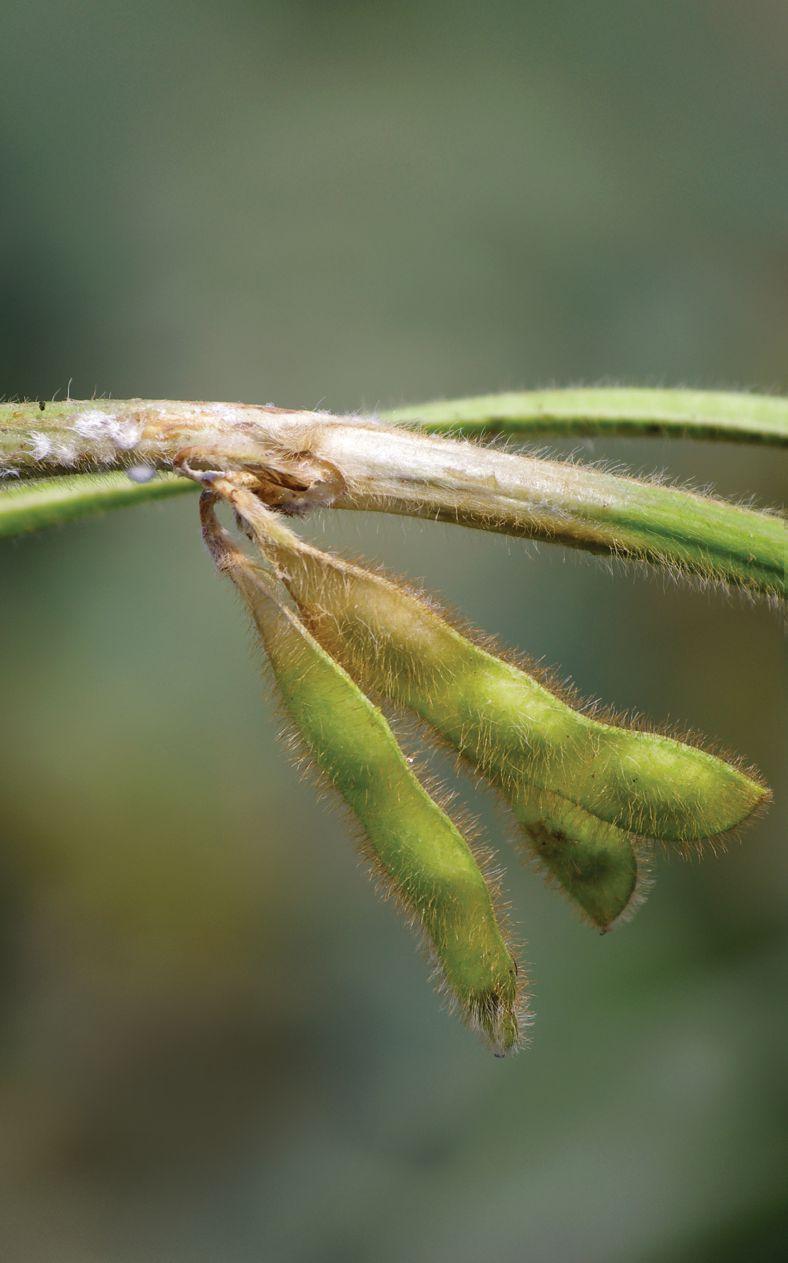
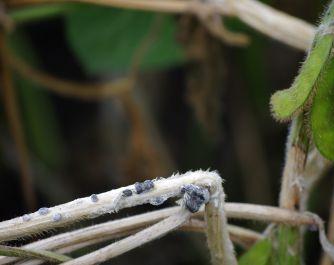
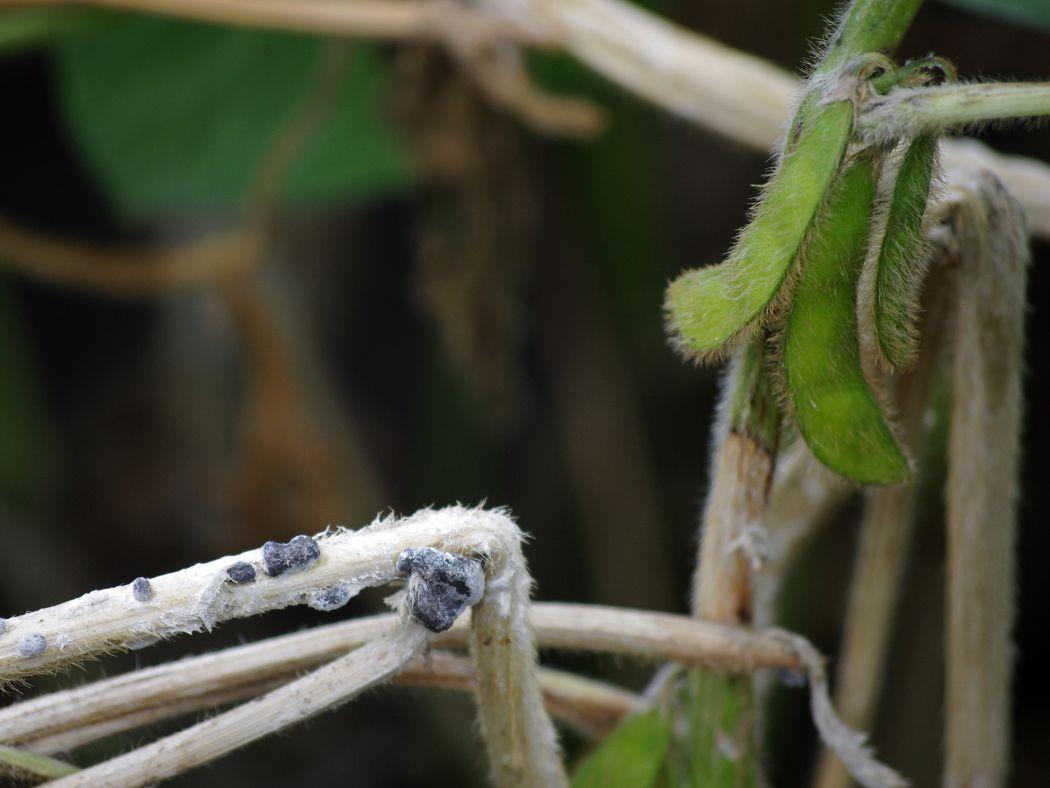
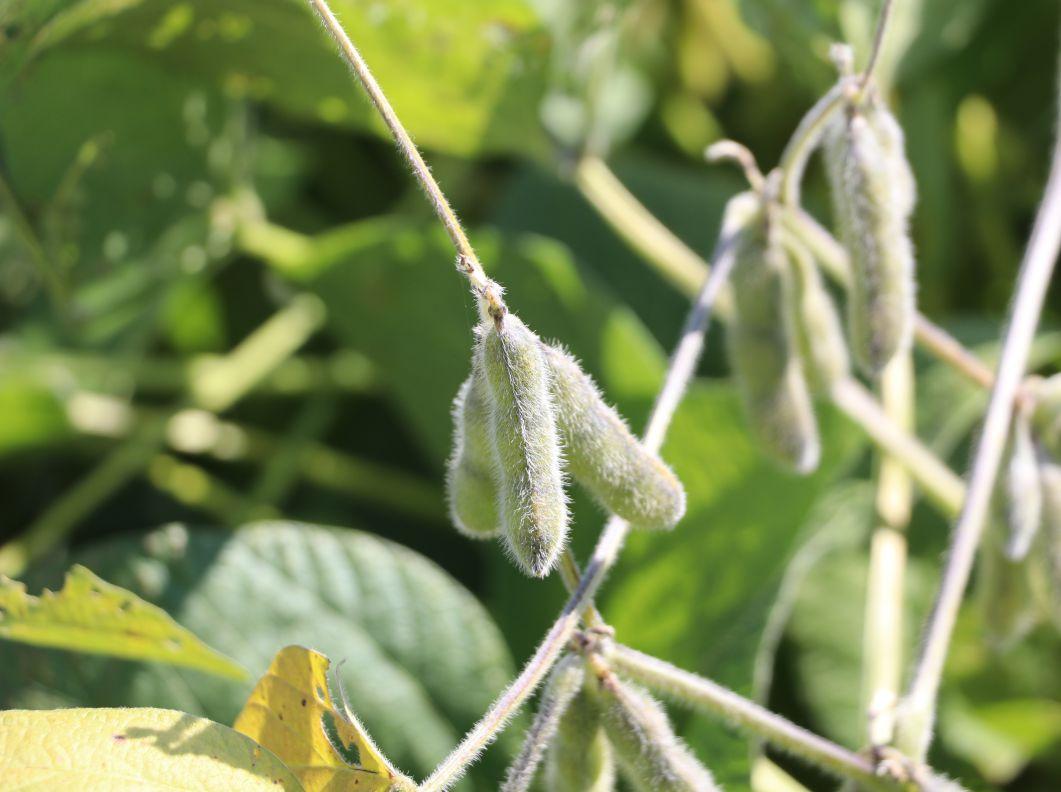
ABOVE: Stem sclerotia on soybean.
locations in North Dakota found a yield loss of 1.3 to 5.5 bushels per acre yield loss for every 10 per cent increase in sclerotinia incidence. Row spacing varied from seven inches to 30 inches.
Another NDSU study evaluated 14 soybean varieties of maturity 0.2 to 0.9 seeded on rows 14 inches apart. Differential irrigation was utilized to simulate different rainfall patterns during bloom (frequent light rainfall versus infrequent heavy rainfall, with the total amount of irrigation applied held constant). This trial found a 1.7 to 3.9 bushel per acre yield loss for every 10 per cent increase in sclerotinia incidence.
“Those results are broadly consistent with other research trials. It is a pretty wide range of yield loss, because it depends on when cool and wet conditions arrived during the blooming stage of soybean,” Wunsch says.
Economics of foliar fungicide applications
Wunsch has looked at foliar fungicide control of white mould in soybean. He cautions that fungicides registered for white mould in soybean are more limited than for sclerotinia control on canola.
Wunsch reviewed research on Acapela, Priaxor, Allegro and Delaro and compared the results to Lance (boscalid) fungicide. Lance is the standard for white mould control in North Dakota, although it isn’t registered for white mould control on soybean in Canada.
Overall, Wunsch found Acapela, Priaxor, Allegro and Delaro reduced, on average, sclerotinia incidence by 44 per cent when applied at the R1 growth stage of early flowering. Lance provided similar reduction when applied at the early to full R2 growth stage.
“Efficacy of a fungicide is more than how well the active ingredient controls the target fungus. It is also how well we can get the fungicide where it needs to go – how well it translocates in the target crop,” Wunsch says. “If you compare Lance and Proline [prothioconazole] in canola and sunflower, for example, when you get good coverage they perform the same. But if you have poor coverage, Proline doesn’t perform as well.”
Wunsch says that while R1 is the preferred application timing for Acapela, Priaxor, Allegro and Delaro, that has more to do with getting good coverage than the growth stage at which soybeans exhibit maximum susceptibility to white mould. In North Dakota, the conditions for optimal disease development – a closed canopy with moist conditions during flower – don’t usually occur until R2.
Table 1: Fungicides registered for white mould control/ suppression in soybean in Western Canada
Trade name Active ingredient Fungicide group
Acapela picoxystrobin Group 11
Allegro 500F fluazinam Group 29
Delaro prothioconazole + trifloxystrobin
Priaxor fluxapyroxad + pyraclostrobin
BioControl products
Groups 3 + 11
Groups 7 + 11
Contans Coniothyrium minitans Not classified
Serenade Bacillus subtilis Group 44
Source: Manitoba Agriculture Guide to Field Crop Protection 2016.
Table 2: Break-even point of sclerotinia incidence where fungicide application becomes profitable
Soybean commodity price
Sclerotinia incidence level in non-treated check strip at the end of the season
$8 per bushel 19 to 44%
$10 per bushel 15 to 35%
$12 per bushel 13 to 29%
Source: Wunsch, NDSU.
ranged from 15 to 35 per cent.
“We generally observe fairly low white mould incidence in dryland production in North Dakota,” Wunsch says. “Incidence is also related to maturity. The yield impact is less with earlier maturity varieties, so our yield losses are generally lower than in regions that grow longer-maturity varieties. That’s not to say earlier maturing varieties won’t have yield losses, but the impact does drop.”
Similarly, in Manitoba, with even earlier maturity than North Dakota, yield impacts could be lower and economic thresholds higher. Research by the Manitoba Pulse and Soybean Growers (MPSG) on 21 on-farm fungicide trials in eastern Manitoba in 2014 and 2015 found the yield difference between treated and untreated ranged from -0.4 to 3.2 bushels per acre with an average yield increase of 1.2 bushels per acre with fungicide application, but the yield increase was only significant at four of 21 sites.
Efficacy of a fungicide is more than how well the active ingredient controls the target fungus. It is also how well we can get the fungicide where it needs to go – how well it translocates in the target crop.”
“My sense is that with the chemistries other than Lance, if we could get good coverage at R2, they would provide the same control as Lance does when applied at R2. But since they don’t translocate as well, they need to go on at R1 for best activity,” Wunsch says.
Running the numbers, Wunsch deterimined the break-even point when fungicides became profitable. He used a $27 application cost for the fungicide (fuel and labour included), a white mould control level of 45 per cent, and a yield loss range of 1.6 to 4.6 bushels per acre for 10 per cent disease incidence. For example, if the soybean price was $10, a fungicide application would have broken even if the sclerotinia incidence level at the end of the season in the check strip
The MPSG research found that at $25 per acre for product and application, and a market price of $11 per bushel, significant economic return from using fungicide was achieved only three out of 21 times. Low levels of mould were present in 2015 trials and none were found in 2014, explaining the low response to fungicides. These on-farm trials are continuing in 2016, and final trial results will be available during the winter.
“We really need to look at white mould impact and control on a field-by-field basis. Look at the disease triangle of susceptible variety, weather conditions and the presence of the pathogen,” Lange says. “So far we haven’t had a year where white mould was the talk of the town because of disease loss. There is always talk about it, but we haven’t found it to be a widespread problem in Manitoba soybeans.”
You might think that when nitrogen fertilizer is in the ground, it’s safe. Research suggests you need to think again. When shallow banding unprotected urea less than two inches deep, researchers found that nitrogen loss due to ammonia volatilization can be even greater than unprotected broadcast urea. Protect your nitrogen while maintaining the operational efficiencies of side banding or mid-row banding at seeding by using AGROTAIN® DRI-MAXX nitrogen stabilizer. Whether you choose to band or broadcast, you’ll be confident that you’re protecting your nitrogen investment, your yield potential and your return on investment.
Ask your retailer to protect your urea today with AGROTAIN® DRI-MAXX nitrogen stabilizer.
agrotain.com/getthedirt
Company on the Move
ASSESSING SEED TREATMENTS FOR 2017
After harvest wraps up, it’s time to start thinking about decisions for next year’s crop. As you assess the performance of your 2016 crops, and the pest pressures your pulse and cereal crops faced, take a closer look at your seed treatment options. Seed treatments provide valuable protection for seed and seedlings from pest pressures, and help ensure your valuable crop can reach its full performance potential. Nufarm Agriculture Inc. has two effective solutions to the problems plaguing pulse and cereal crops in Western Canada – INTEGO™ Solo and NipsIt™ SUITE.
APHANOMYCES IS EVERYWHERE
“If you’ve grown pulses in the last five years, your soil is probably harbouring aphanomyces,” says Roger Rotariu, Western Canadian Marketing Manager, Nufarm Agriculture Inc. There is general agreement among researchers in Western Canada that aphanomyces spores are naturalized across the prairies. And the level of moisture during the 2016 growing season has further increased spore populations in fields where pulses were seeded.
So, what do you do for 2017? For starters, it’s best not to reseed pulses into the same fields. But to limit the potential spread of the disease, you’ll need the protection of INTEGO Solo seed treatment. INTEGO Solo is the only seed treatment registered to protect your pulses from aphanomyces.
“If you are planting pulses in fields where you aren’t sure about the level of aphanomyces, we still recommend INTEGO Solo to limit the increase of oospores, and keep the overall inoculum levels down for future growing seasons,” says Rotariu. “But more importantly, using INTEGO Solo in conjunction with other leading broad-spectrum seed treatments will give your pulse crops the best chance for maximum yield potential and continued defense against disease.”
INTEGO Solo is a Group 22 fungicide that’s also registered for pythium control and suppression of seed rot in pulse crops and soybeans. INTEGO Solo uses a different chemical group than other seed treatments to strengthen the fight
against pythium resistance. And tank mixing INTEGO Solo with another seed treatment will extend the protection to control key diseases like seed- and soil-borne fusarium.
FREE WIREWORM PROTECTION
Western cereal growers know that wireworm, like aphanomyces, is prevalent across Western Canada. The insect pest has a long life cycle and can be just about anywhere.
Growers may look at their seed treatment options for cereals and just focus on fusarium and pythium protection. Adding wireworm protection is a simple, stronger choice that will add to your bottom line but won’t cost you more with NipsIt SUITE.
“You can pay for wireworm protection with other seed treatments, or just get it with NipsIt SUITE,” says Rotariu. “Based on the suggested retail prices of other leading cereal seed treatments, NipsIt SUITE provides the all-in-one protection of a fungicide and insecticide, at a similar price to other fungicide-only products.”
NipsIt SUITE contains three active ingredients – Group 4 insecticide (clothianadin), Group 3 fungicide (metconazole) and Group 4 fungicide (metalaxyl) for an unbeatable combination of broad-spectrum protection against the most common early insect and disease pests.
Growers can expect great seed and seedling fusarium control, industry leading wireworm protection and the same growth enhancement effect as any other insecticide used as a seed treatment in cereals.
“With NipsIt SUITE you get control and peace of mind for key cereal diseases, plus the added bonus of “free” wireworm protection,” says Rotariu.
For more information on INTEGO Solo and NipsIt SUITE, visit nufarm.ca
DATING DECISIONS
How critical is soil temperature for soybean planting date decisions?
by Carolyn King
AUniversity of Manitoba study is generating some surprising results about soil temperatures and soybean planting dates.
Yvonne Lawley, a professor of agronomy and cropping systems at the University of Manitoba, initiated this two-year study to help develop soybean planting date recommendations suited to Manitoba conditions.
“Manitoba is in the middle of a large expansion of soybean acres. In 2013, we had just reached one million acres of soybeans in Manitoba, and now in 2016 we are over 1.5 million acres,” she explains. So more and more growers are asking soybean agronomy questions, including planting date questions.
“Some growers are trying soybeans for the first time, but many growers are expanding their acreage of soybeans so they can’t necessarily plant all of their soybean acres in just one or two days. The question of when to plant is very important because of our short growing season in Manitoba.”
Soybean growers want to find that sweet spot between planting
too early and planting too late. They need a long enough growing window for the soybeans to mature, so they want to plant as early as possible. But they don’t want to plant so early that spring frost damage destroys or sets back the crop. Plus, planting into cold soils is associated with reduced emergence and an increased risk of certain soil-borne diseases.
On the other hand, late-planted soybeans have a greater risk of fall frost damage. As well, if soybeans are planted late, the plants tend to be shorter and have fewer pods and lower yields. That’s because soybeans are sensitive to daylength. As the days shorten after June 21, the plants move into their reproductive growth stages, so late-planted soybeans tend to start their reproductive growth when the plants are smaller.
Lawley and her graduate student, Cassandra Tkachuk, conducted the field study to evaluate one of the indicators used for
ABOVE: A killing spring frost in Morden in 2015 affected the plots where plants had emerged by the time of the frost. Affected plots were those with the earliest planting dates.
planting date decisions. “Our objective was to identify if the current recommendation of planting soybeans when the soil temperature is at least 10 C would result in the highest yields or the best emergence of soybeans in Manitoba,” Lawley says.
That 10 C recommendation is based on some studies showing cold soil temperatures at planting time can cause chilling injury to soybean seeds. For example, an Ontario study found soybeans planted in soil kept at 7 C for the first 20 hours after planting had very poor emergence. Also, if soybean seeds imbibe very cold water during the first 24 hours after seeding, the result can be reduced emergence and poor seedling vigour.
soil temperature, soil moisture, plant characteristics like plant height, pod height, branching, and days to maturity, and seed characteristics like yield, protein and oil content.
Lawley says, “When we plotted the days-to-emergence data from the three 2015 site years, we had two distinct groups in the datasets. We called them our cool group and our warm group.” The cool group plots were seeded between actual soil temperatures of 6 C and 12 C and took roughly three to four weeks to emerge. The warm group plots were seeded between 14 C and 22 C and emerged within a week.
Due to troubles at several sites, the only reliable yield data were for Carman in 2014 and 2015. For 2014, the highest yielding plots were seeded at 6 C (on May 5) and 8 C (on May 9). For 2015, the highest yielding plots were seeded at 6 C (on April 27) to 10 C (on May 2).
“This study is showing us that there is some reason to plant early, but farmers have to decide how willing they are to live with the risk of frost. I think that is going to be one of the biggest trade-offs.”
The Manitoba trials took place at Carman and Melita in 2014, and at Carman, Melita and Morden in 2015. At each site, they compared an early maturing and a mid-season soybean variety. The planting date treatments involved six different dates based on the target soil temperatures of 6, 8, 10, 12, 14 and 16 C. Tkachuk explains, “Soil temperature fluctuates every day throughout the day and night, so we created a definition of the soil temperature at 10 a.m. for two consecutive days that would match the target. For instance, for the target temperature of 6 C, when the soil temperature at five centimetres deep [seed depth] reached 6 C at 10 a.m. for two consecutive days, then we would seed on the second day.”
In the first part of the growing season, they intensively monitored soybean emergence every Monday, Wednesday and Friday to accurately determine the days to emergence. They also monitored
So despite the cold soil temperatures and very slow emergence, the highest yields were for the earliest planting dates.
“That completely surprised us,” Lawley says. “If I were a betting person, I would have put money on an optimum mid-May planting date having higher soybean yields than planting at the end of April.”
With only two site-years of yield data, Lawley and Tkachuk can’t draw any final conclusions from these limited results. But they emphasize the importance of confirming these planting date trends at Carman and determining if similar trends occur across the rest of Manitoba’s soybean-growing region.
When the yields at Carman are plotted against soil temperature at planting, you get a scattering of data points with no strong trend up or down for most of the treatments. Only with the highest soil temperatures – when the planting dates had moved into June – did the yield trend downward.
“A take-home message from this study is that growers may have
These plots in Carman, Man., were part of a study examining the effects of soil temperature at planting on soybean emergence and yield.
a wider range of optimal seeding dates than we had thought at the start of the study. Where we didn’t see a yield response to soil temperature at planting, we also didn’t see a sharp yield response to calendar date. We saw equivalent soybean yields throughout the entire month of May. It was only when the planting dates got into June did yields dramatically decline,” Lawley says.
Tkachuk adds, “One of the important findings of this study is that calendar date probably had a greater effect on yields than soil temperature at planting.”
Another surprising result was that there were no significant differences between the early and mid-season soybean varieties in terms of days to emergence and yield.
The results also point to the need to determine the key indicators for soybean planting date decisions in Manitoba. “Another take-home from our study is that soil temperature alone probably is not going to give us the best decision-making guide for soybean planting dates. We need to continue to evaluate what other factors should be guiding growers’ decisions,” Lawley says. “One of the factors we were thinking about at the start of this study was chilling injury of soybeans. But is chilling injury the most important limitation for soybeans in a very short growing-season environment, or is it just the short growing season itself?”
With a very short growing season, there are serious risks of crop damage due to late spring frosts and early fall frosts. In this study, although very early planting resulted in higher yields, it also increased the risk of spring frost damage. Two sites in the study had a spring frost event: Carman and Morden, both in
2015. The only affected plots were the ones that had emerged by the time of the frost, which were the plots with the four earliest planting dates at Morden and the plots with the three earliest planting dates at Carman.
Carman had a much milder frost than Morden. “Although plants were damaged at Carman, the plants continued to grow through the frost damage,” Tkachuk says. “There was ultimately no effect [from] frost at Carman on the plant stands established.”
However at Morden, the frost caused plant deaths and resulted in reduced stands. Tkachuk says, “Initially, looking at the data, you might conclude that the low soil temperatures from the first four planting dates at Morden had affected the established plant stand, but really it was the frost.”
So perhaps the probability of a killing spring frost is a more critical planting date indicator than soil temperature. “This study is showing us that there is some reason to plant early, but farmers have to decide how willing they are to live with the risk of frost. I think that is going to be one of the biggest trade-offs,” Lawley says. “We were surprised by the study’s results. We’re excited that we’ve learned something new, but we have more to learn before we can make clear production recommendations.”
The Western Grains Research Foundation and Growing Forward 2, through Agriculture and Agri-Food Canada (AAFC), funded the study. Research was conducted in collaboration with Scott Chalmers at the Westman Agricultural Diversification Organization in Melita, Man., and with Anfu Hou at AAFC’s Morden Research and Development Centre.
THE FUTURE OF AGRICULTURE DEPENDS ON IT
The experts at Mix It Up are committed to help build a strong resistance management strategy for your farm.
ENJOYING THE LITTLE THINGS IN LIFE
Tapping into the amazing capacity of soil microbial communities.
by Carolyn King
Soil microbes provide billions and billions of teeny helping hands to your crops. Those helping hands are key to sustainable, profitable crop production. Crop growers can choose practices that promote healthy soil microbial communities, and researchers like Bobbi Helgason are developing ways to further enhance agriculture’s ability to tap into the remarkable capacity contained in soil microbial life.
“Healthy microbial communities perform a wide range of critical ecosystem functions, such as regulation of nutrient availability and pathogen suppression. They decompose organic matter such as crop residues and release the nutrients. And they do many other things, like maintaining soil structure and good hydrology, as well as plant growth control,” says Helgason, a soil microbial ecologist with Agriculture and Agri-Food Canada (AAFC) in Saskatoon.
“All of those processes may go underappreciated sometimes in our farm fields, but having a healthy microbial community is essential to making sure those ecosystem services keep working properly.”
Nurturing a healthy microbial community
“A ‘healthy’ soil microbial community is one that can provide ecosystem services in a way that is balanced and sustainable,” Helgason says. “So to assess the health of a microbial community you need to measure a suite of processes. Those processes might differ depending on what the soil is being used for, for example an annual crop production system versus pasture land. So you might have two very different microbial communities in two different soils, but they are both healthy because they can perform all the key functions that are required.”
A microbial community’s abundance and diversity are indicators of its health.
“Microbial biomass is like the engine that drives biological processes in the soil. The bigger the engine, the more capacity you have to deliver those processes,” Helgason says. If you grow a greater amount of microbial biomass, you increase your soil’s capacity to deliver those key functions.
“Microbial diversity is like taking out insurance. The more diverse a community is, the more likely it is that the community can perform services across a wide range of conditions.” For example, in a diverse community, if one group of organisms gets knocked out when conditions are too wet for it, then a different group of organisms that is suited to wet conditions is poised to step in and keep those processes going.
Sometimes an imbalance in soil conditions, such as too much
moisture or low nutrient availability, creates an opportunity for harmful microbes, like plant pathogens, to get a foothold in the soil. However, a healthy microbial community is more likely to be able to outcompete those harmful microbes.
Agricultural practices influence the health of microbial communities. Helgason notes, “Good soil stewardship leads to healthy soils and healthy microbial communities.” She gives some examples of practices that promote healthy microbial communities: balanced nutrient additions; reduced physical disturbance or no tillage; continuous cropping (rather than summerfallowing), so continual plant resource inputs are available as food for the microbes; diverse crop rotations, so a variety of plant inputs are available to the microbes, increasing their activity and diversity; and the use of microbial inoculants, such as rhizobium, when appropriate.
Practices such as no-till and reduced tillage help promote soil microbial communities that can perform such vital functions as suppressing plant pathogens, releasing nutrients and maintaining soil structure.
BUILT FOR SOIL PRODUCTIVITY
NO INTEREST, FOR UP TO 6 MONTHS NO PAYMENT FOR UP TO 1 YEAR* *
SALFORD’S BBI SPREADERS
FIT YOUR FARM - Wide range of pull type and truck mount models from 64 to 480 cu ft struck capacity.
FERTILIZER OR LIME - MagnaSpread and Liberty apply fertilizer 80 ft. or more and lime up to 60 ft.
SPREAD UP TO 120 FT. - Optional Javelin spinner system spreads Urea up to 120 ft.
MULTI-HOPPER CONVENIENCE - MagnaSpread 2 & 3 models apply multiple products in one pass.
VARIABLE RATE & SECTION CONTROL TECHNOLOGY - ISO compatible models follow your variable rate prescription or straight rate models are available for simplicity.
AVAILABLE WITH SECTION CONTROL BBI JAVELIN 120 FT SWATH
TRUCK MOUNT MODELS AVAILABLE SALFORD GROUP TILLAGE SEEDING APPLICATION
Recovering from carbon starvation
One of Helgason’s recent studies underlined the importance of plant residues as a critical source of energy to drive soil microbial processes and crop yields.
She and her colleagues examined four of the systems in the Alternative Cropping Study, a long-term experiment at AAFC’s Scott Research Farm that compares organic and conventional management systems. One of those four systems was an organic system with a diverse annual crop rotation: lentil green manure-wheat-pea-barleysweet clover green manure-mustard. This system involved tillage, no chemical pesticides, and no added nutrients from external sources (such as livestock manure, compost or chemical fertilizers).
This organic system had consistently lower yields than the other three systems (two conventional and one organic) over the 18 years the Alternative Cropping Study had been running. To find the cause of those poorer yields, Helgason sampled the soils in the four systems and examined their microbial abundance and microbial functions, including cycling of carbon, nitrogen and phosphorus.
“This particular organic system – despite the use of green manures and legumes in the rotation to add biologically fixed nutrients – developed an imbalance of nitrogen and phosphorus early on, which reduced crop growth,” she says. “The new finding from our work is that the microbial communities in this organic system were not only nitrogenand phosphorus-limited, but because crop growth was reduced then the crop residue returns were also reduced, so those microbial communities were also carbon starved.”
She explains, “Carbon from crop residues is the fuel or the food for most of the microbial activity in soil. In organic systems, we rely heavily on that microbial activity to release bound nutrients, like nitrogen and phosphorus, and make them plant-available.”
Although plants can fix energy through photosynthesis and give it to the microbial community, their ability to do so in this particular system was impeded by nitrogen and phosphorus limitations. And since no nutrients were added only from biological nitrogen fixation without any additions from livestock manure, compost or fertilizers, there was a net export of nutrients out of the system with each crop harvest.
The result was a negative feedback
loop. “There may have been pools of nitrogen and phosphorus that could be released biologically, but the microbial community was too exhausted through carbon limitation to be able to perform those processes in a way that could support crop growth,” Helgason says.
Out of the four systems, the best functioning one was a conventional production system with an annual crop rotation of canola-fall rye-pea-barley-flax-wheat. Helgason says, “This system was being
managed very judiciously under best management practices: it was no-tillage; it had a diverse crop rotation; and fertilizers and pesticides were applied based on soil tests and crop scouting.” Its soil had the largest microbial biomass and the greatest ability to perform nutrient cycling and other key functions.
Now Helgason and her colleagues have a new study underway to look at how to restore the productivity to that low-yielding organic system. They are
In the lab, Helgason’s research team isolates root microbes from the soil and roots.
Helgason and her colleagues recently studied how climate affects microbial breakdown of crop residues, to help in developing recommendations for sustaining long-term soil fertility and productivity.
evaluating various soil amendments, such as extra wheat crop residues, livestock manure and compost. These amendments add nutrients, such as nitrogen and phosphorus, and also add organic matter to fuel microbial functions, like nutrient cycling.
Sustaining healthy crops under changing conditions
A related line of Helgason’s research is looking at long-term soil fertility under changing conditions, such as higher yield goals and changing weather trends. “This work is really important for understanding how to maintain long-term fertility under what we anticipate will be increased production goals. If we are producing larger crop yields from the same land base, then how do we ensure soil carbon returns and sustained fertility despite the fact that we are exporting more nutrients out as crop products,” she says.
As part of this research effort, Helgason and her colleagues compared microbial soil carbon transformations in humid conditions in Ontario and semi-arid conditions on the Prairies. They wanted to see how different temperature and moisture conditions affect the way
microbial communities transform crop residues into soil organic matter and the amount of carbon remaining in the soil. The increased understanding gained from this research will help in developing soil management recommendations for sustaining healthy microbial communities and crop productivity under changing climate cycles.
Breeding for better crop-microbe interactions
Another area of Helgason’s research involves investigating how the root microbiome – the bacteria, fungi and other microbes that associate with plant roots – interacts with crop roots and how that interaction impacts crop growth and yield potential.
“We’ve got a new study underway to understand the mechanisms a plant can use to select root microbiome partners,” she says. “The end goal is to develop tools that breeders can use in their breeding programs to develop crop varieties that better exploit the inherent capacity of the root microbiome to improve crop growth through improved nutrient uptake or increased stress tolerance or increased pathogen resistance and so forth.”
If we are producing
crop yields from the same land base, then how do we ensure soil carbon returns and sustained fertility despite the fact that we are exporting more nutrients out as crop products?
One mechanism a plant uses to select microbial partners is to release specific biochemical signalling compounds from its roots, called root exudates. These compounds trigger a helpful response in certain microbes. A large, collaborative study co-led by Helgason and Steven Siciliano at the University of Saskatchewan is looking at signalling compounds released by canola, wheat and lentil. Their aim is to determine how those compounds differ between varieties of each crop and how those differences affect the crop’s interactions with the soil microbial community.
For example, imagine several wheat varieties are growing in very dry conditions. Perhaps some of those varieties release a
signalling compound that recruits a particular microbial partner, and that partner helps the plants tolerate dry conditions. Maybe the partner is a fungus that responds to the signalling compound by sending out fungal hyphae to locate and bring water to the plant. Or perhaps the microbe causes the plant to improve its water use efficiency, or increase its root growth to access water from deeper within the soil. Other wheat varieties that don’t produce that signalling compound would suffer more from the dry conditions.
Helgason and her colleagues hope to identify key molecules that trigger relationships between crops and service-providing microbial partners.
Soil microbe-crop partnerships are vital to crop production. Research advances will help growers to sustain and enhance their ability to draw on the incredible wealth of help available from soil microbial communities.
NUTRIENT MANAGEMENT OF SOYBEAN
Recommendations to promote good plant health and high yields.
by Ross H. McKenzie, PhD, P. Ag.
Soybean production has rapidly expanded in Manitoba in the past few years and there is increasing interest in Saskatchewan and Alberta. If you can successfully grow soybean, it is a great crop to include in your rotation and farm management program.
First, it is important for new growers to realize soybean requires a considerable amount of heat for optimum production. The region you farm should consistently receive a minimum of 2,200 to 2,300 crop heat units (CHU) each year. Remember that Crop Heat Units are calculated differently than growing degree days. Crop heat units are calculated on a daily basis and have separate calculations for maximum and minimum temperatures. Most companies have a CHU rating for each soybean variety. For the area you farm, don’t review CHU maps that were produced before 2000, because most areas of the Prairies are slightly warmer with longer growing seasons now versus 30 to 50 years ago. Look at the CHU calculated using weather data from metrological stations for the region you farm, each year, for the
past 10 years. If for nine of the past 10 years the CHU for your area has been greater than 2,200, then the probability of successfully growing soybeans is reasonably good.
Importance of soil sampling and testing
Soil sampling and testing can give an excellent inventory of plant available nutrients and other soil chemical factors important for soybean production. This inventory can provide a very good basis for recommending additional nutrients on individual fields.
Soil nutrient levels vary from year to year and can be quite variable within fields, even on fields that seem to be relatively uniform. Producers need to follow certain recommended steps for soil sampling and testing to develop a sound ongoing soil fertility management
TOP: Phosphate fertilizer does not have a strong effect on soybean growth or yield.
INSET: Soybean has a high requirement for potassium (K) versus other commonly grown crops.
PHOTO BY BRANDI COWEN.
PHOTO COURTESY OF ROSS H. MCKENZIE.
Table 1. Phosphorus fertilizer recommendations for soybean based on yield goal and soil test P using Olsen method or the modified Kelowna method.
Recommendations of 15 lb P2O5/ac are a suggested maintenance application that can be side-banded at the time of planting.
Source: Ross H. McKenzie.
program. Poor soil sampling technique is a major problem that can cause variation in fertilizer recommendations. Make sure you work with qualified people to soil sample your fields. Begin by evaluating each field to determine representative areas. Major areas within fields that have distinctly different soil properties, such as texture, should be sampled and fertilized as separate units due to variation in soil nutrient availability. Samples should be taken at zero to six, six to 12 and 12 to 24 inch depths from at least 20 locations within each field or soil management area of each field and bulked into composite samples.
Nitrogen recommendations for soybean
Nitrogen (N) fertilizer is rarely recommended for soybean, even if the soil test N level is low and it is the first time soybean will be grown on virgin land. Elevated soil nitrate levels may increase the likelihood for excess vegetative growth, reduced nitrogen fixation, increased disease pressure or delayed maturity.
Inoculants and nitrogen fixation
Rhizobia bacteria infect soybean roots to form nodules. The bacteria within the nodules use energy from the soybean plant and, in return, provide usable N to the plant. As a result, much of the N required by soybean is provided from bacterial N fixation and any additional N comes from the soil. This eliminates the need to add N fertilizer. Inoculation with Bradyrhizobium japonicum bacteria is essential to ensure fixation. Make certain the inoculant is fresh and has been stored as recommended by the manufacturer. There are three main types of inoculants:
• Powdered – fine peat containing the rhizobium, applied directly to the seed.
• Liquid – contains the rhizobium in a buffered liquid, applied directly to the seed and is held in place using a sticker.
• Granular – small peat-based granules contain the rhizobium, applied in the seedrow.
On virgin land that has never produced soybean, growers should consider double inoculation. For example, consider using liquid inoculant on the seed and granular inoculant in the seedrow.
Remember: it takes three to five weeks after seeding for the bacteria to infect plant roots and form viable nodules. The effectiveness of the inoculation process can be assessed by simply digging up plants and observing the number, size, colour and distribution of the nodules. Nodules on roots close to the original location of the seed that are reddish or pink inside indicate the bacteria are functioning and fixing N. Nodules are likely not fixing N when they appear white, grey or greenish when cut in half.
Nodules widely distributed throughout the root system indicate soil bacteria have also infected the roots. These bacteria often do not function effectively in fixing N to meet plant requirements.
Recommendations for phosphorus fertilizer
Recent research by the University of Manitoba has shown that phosphate (P2O5) fertilizer does not have a strong effect on soybean growth or yield. This is similar to research in the northern Great Plains in the United States. Soybean roots are very good scavengers of soil phosphorus (P) at medium or high soil test P levels.
Research in the American Midwest has found soybean plants seem to prefer their entire rooting zone with adequate P rather than having nutrients concentrated in a band in the root zone. Research suggests broadcast application of P is better than banded P when soil test P levels are low to very low; then a separate application of broadcast P may be justified. But, if soil test levels are medium to high, the level of response of soybean to P fertilizer is
Trait Stewardship Responsibilities Notice to Farmers
Monsanto Company is a member of Excellence Through Stewardship® (ETS). Monsanto products are commercialized in accordance with ETS Product Launch Stewardship Guidance, and in compliance with Monsanto’s Policy for Commercialization of Biotechnology-Derived Plant Products in Commodity Crops. These products have been approved for import into key export markets with functioning regulatory systems. Any crop or material produced from these products can only be exported to, or used, processed or sold in countries where all necessary regulatory approvals have been granted. It is a violation of national and international law to move material containing biotech traits across boundaries into nations where import is not permitted. Growers should talk to their grain handler or product purchaser to confirm their buying position for these products. Excellence Through Stewardship ® is a registered trademark of Excellence Through Stewardship.
Table 2. Potassium fertilizer recommendations for soybean based on yield goal and soil test K.
Recommendations of 15 lb K2O/ac are a suggested maintenance application that can be side-banded at the time of planting.
usually small or negligible, and a separate P application probably would not be realistic. At medium or high soil test levels, many American growers will “front-load” the crop prior to soybean by applying more P. The most common fertilizer application in the soybean belt of the central United States is applying extra P to the previous corn crop and allowing soybean plants to scavenge remaining soil P. Further P research is needed in Western Canada to develop sound P fertilizer management recommendations.
Table 1 provides suggested P fertilizer recommendations. There has been considerable work done in the United States to develop P recommendations based on the Olsen method. The recommendations in Table 1 are based on soil test P and yield goal. There has not been any correlation work with soybean and the Kelowna method, but this method was included in the table based on the known relationship between the Kelowna and Olsen methods.
Potassium requirements
Soybean has a high requirement for potassium (K) versus other commonly grown crops. Most prairie soils are medium to high in exchangeable soil K, often ranging from 400 to 1,000 pounds of K per acre (lb K/ac) in the zero- to six-inch depth of soil. Generally, when soils test greater than 300 lb K/ac, K fertilizer is not required. Soils that are coarse-textured and intensively cropped are the most prone to K deficiency. Table 2 provides general recommendations
for K fertilizer requirements when soil tests less than 300 lb K/ac. When K is required, potassium chloride fertilizer (0-0-60) should be side-banded to correct K deficiency.
Sulphur recommendations
Coarser-textured soils and low-organic matter soils are at higher risk of sulphur (S) deficiency. Sulphate-sulphur deficiencies may occur after heavy precipitation events that can leach the sulphate from the surface soil into the subsoil. The risk of S deficiency is increased after wet falls, above normal snowmelt or early spring rains. This can result in the surface soil being deficient in sulphate, yet there may be adequate sulphate in the subsoil. If this situation occurs, then sulphate deficiency could potentially occur in the spring before roots grow into the subsoil. Look at sulphate levels in only the zero- to six-inch depth as well as the combined zero- to 24-inch depth to decide if S fertilizer is needed. If soil S levels are less than 20 lb/ac in the top six inches, Table 3 can be used as a guide to assist in interpreting a soil test, deciding if sulphur
When storing and managing grain, fertilizer and petroleum products, look to a name you trust. Westeel supplies a full line of farm management products and accessories, all manufactured to the same industry leading standards our bins are famous for. See everything we can bring to your farm. Talk to your Westeel dealer today.
FEED THE WORLD
Westeel Grain Storage
Source: Ross H. McKenzie.
Soybean requires a considerable amount of heat for optimum production. A producer’s region should consistently receive a minimum of 2,200 to 2,300 crop heat units (CHU) annually.
fertilizer is required, and determining what rate to use. If sulphur is required, apply a sulphate-containing fertilizer such as ammonium sulphate (21-0-0-24) to correct the deficiency. If potassium fertilizer is also needed, consider using potassium sulphate (0-050-18; K2SO4, commonly referred to as sulphate of potash, or SOP) to apply both K and S fertilizers. This would also avoid applying unnecessary N fertilizer.
Elemental S fertilizer products are available, but elemental S will rarely convert to a plant-available form rapidly enough to meet crop requirements in the year of application. Therefore a fall broadcast application of elemental S, followed by spring incorporation, is best used in a longer-term program to build soil S levels.
Micronutrient fertilizer requirements
Soybean requires all the essential micronutrients but is only
3. Sulfur fertilizer recommendations for
based on yield goal and soil test S at both the zero to six and zero to 24 inch depths using the CaCl2 method.
sensitive to low soil iron (Fe) availability. Deficiencies of other micronutrients in Western Canada, so far, are rare. Iron deficiency has become a concern with soybean in the Red River Valley in Manitoba on soils with higher clay content and where spring soil conditions are very wet.
Iron-deficiency chlorosis (IDC) is a yellowing between veins on younger soybean leaves and is relatively easy to see. The yellowing is called “chlorosis.” When soils with a high pH and high carbonates are very wet in spring, this condition will increase solubility of bicarbonate and will reduce the availability of Fe in soil. Soluble salts in soil and some herbicides may increase the severity of IDC. This problem occurs with soybean in North Dakota and northwestern Minnesota. Cold temperatures can aggravate the problem in spring. Foliar application of iron-EDDHA chelate can be helpful to correct chlorosis but is very costly. Ideally, an IDC-tolerant variety should be grown, if this is a problem. An iron-EDDHA seed-applied fertilizer could also be used, but this too is costly.
Often, after soils warm up and dry out in the spring, soybean will outgrow a slight to moderate Fe deficiency. Further research is needed to develop good, economical Fe fertilizer management recommendations and to develop Fe-tolerant soybean varieties.
Growers should consult with a provincial soil or crop specialist before using micronutrient fertilizers with soybeans.
Table
soybean
Calcium Chloride Extractable Sulphate (SO4)
Source: Ross H. McKenzie.
PHOTO COURTESY OF ROSS
H. MCKENZIE.
IDEAL TEMPERATURES
Exploring the effect of soil temperature at different planting dates and residue management on soybeans.
by Donna Fleury
In 2016, soybean production in Manitoba reached a high of 1.6 million acres. This significant increase is partly due to the introduction of early-maturing soybean varieties that have expanded production to “non-traditional” growing areas. However, frost and near-freezing temperatures in spring and fall still remain a risk for soybean growers in Manitoba.
Researchers in the province initiated a four-year project in the spring of 2014 to find out if there were management practices that could be used to help reduce the risk associated with frost and/ or near-freezing conditions. “We were interested in looking at management practices that might affect soil temperature conditions and plant growth early in the growing season,” says Ramona Mohr, a research scientist with Agriculture and Agri-Food Canada’s Brandon Research and Development Centre. The project was conducted with partners at four sites in Manitoba, including Brandon, Roblin, Portage and Carberry.
The study includes a comparison of the effect of three soil temperature treatments at two different planting dates on soybean growth, yield and quality over three growing seasons beginning in 2014. Researchers also compared the effects of a range of residue management practices on soil temperature and other factors, including plant stand, soybean yield and soybean quality. These plots were established in the fall of 2014 at each location to set up the trials for comparison of preceding crop and residue practices. The residue management trials included comparisons of a tilled control plot treatment and three different standing stubble treatments of wheat, oat or canola. For wheat and oat, standing stubble was retained on the plot and straw was either chopped and returned, or removed. For canola, standing stubble was retained on the plot and
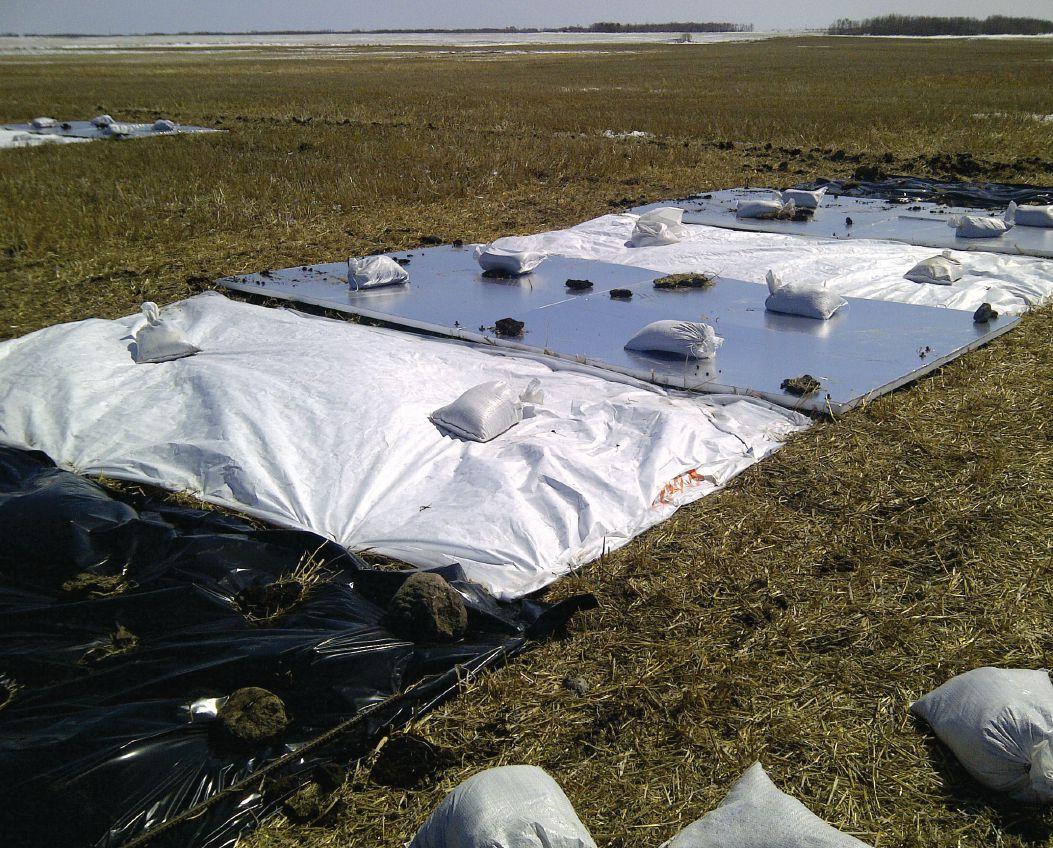
Research plots with the various soil coverings used to create different soil temperatures in the spring.
PHOTO COURTESY OF GORD FINLAY.
the straw was chopped and returned.
“We have some early preliminary results from 2015, however data from the 2016 soybean crop is not yet available as harvest was not completed as of early October,” Mohr says. “Based on preliminary data from 2015, delaying seeding from later May to early June often reduced the number of days between planting and crop emergence and reduced yield at two of four sites, but had limited effects on seed quality.”
The residue management trials in 2015 also showed some interesting early results, with soil temperatures at seeding 1 C to 3 C higher on plots where straw had been removed from the standing stubble. The tilled control treatment also tended to increase the soil temperatures compared to the untilled treatments. “However, although we saw these soil temperature differences at the time of seeding, by the end of growing season, effects on plant stand, soybean yield and soybean quality were limited,” Mohr says. “So even though residue management influenced soil temperature at seeding, it didn’t carry through to yield in 2015. It is important to note, however, that in 2015 at the time of seeding all of the sites had soil temperatures higher than the minimum critical temperature of 10 C, which may also have affected the outcomes.” Researchers are also trying to address the question of oat residue and its effects, and collect data to support anecdotal information suggesting oat residue might reflect more light, creating cooler soil conditions due to its lighter colour.
The project will continue for one more growing season in 2017, after which researchers expect to have a better understanding of the results of the various treatments. “We will be able to compare three years of data and determine how consistent the differences were across the different sites and years,” Mohr says. “Once we have the final project results we hope to be able to provide growers with information as to whether preceding crop and residue management matters or not for maximizing early growth, quality and yield for soybean. We expect the final project results to show if there are consistent differences among the types of residue and residue management practices and what the impact will be on the following soybean crop.” Final project results are expected to be available in early 2018.
Thank you for being an integral part of the 20-year anniversary of InVigor®. Your support is vital, and to return the gesture, InVigor is drawing the names of one grower per prairie province (total of three winners) to donate $20,000 each to the charity of their choice.
Enter next growing season with some very good karma.
To enter, visit
cropscience.bayer.ca/PayItForward
If it’s important to you, it’s important to us.
NEW SOYBEAN HYBRID UPDATE FOR 2017
Expanding the choices in soybean hybrids.
by Blair McClinton, P.Ag.
Soybean breeders continue to focus on early maturing soybean hybrids and bring myriad stacked traits to Western Canadian growers. Seed companies have supplied Top Crop Manager with the following information on the new soybean hybrids for 2017. Growers are advised to check local performance trials to help with their variety selections. Listing is by crop heat unit (CHU)/maturity rating.
NSC Leroy RR2Y is a Roundup Ready 2 Yield line that is super ultra-early maturing (2,225 CHU or 000.6 relative maturity) and will likely be a variety of choice for new soybean growers in Saskatchewan in the black soil zone. This variety has a plant growth structure that’s fairly tall and upright. It is available from Northstar Genetics seed dealers.
Barron R2X is a 2,250 CHU Roundup Ready 2 Xtend variety with tolerance to Roundup and dicamba for broader weed control. Barron R2X is a tall, branchy, aggressive plant type with great yield potential for its maturity range. It is available from SeCan members and retailers.
NSC EXP 114 RR2X is an early maturing soybean variety with the new Xtend trait, allowing growers to use glyphosate and dicamba for extended in-season weed control. It is rated at 2,250 to 2,275 CHUs or 000.8 relative maturity. NSC EXP 114 RR2X offers a tall growth habit with good yield potential and is an option for growers who need to manage their use of glyphosate to prevent resistance. This variety does well in reduced tillage and is available from Northstar Genetics Seed dealers.
22-61RY is a new Roundup Ready 2 Yield variety with maturity at 2,275 CHU. It is a medium to tall plant with very good emergence, and is well suited to all soil types and row widths. This variety also has very good Phytophthora root rot tolerance and aggressive growth that will make it a fit for tougher growing conditions. It is available from DeKalb seed dealers.
PS 00095 R2 is a new introduction for the late 000 maturity group with the Roundup Ready 2 Yield trait. This variety offers an opportunity for growers in areas with very short growing seasons, and performs best in narrow row widths. It has an above average iron deficiency chlorosis (IDC) rating and is ideally suited for 2,275 CHU. It also has excellent white mould resistance and good field tolerance to Phytophthora root rot. PS 00095 R2 is available from Pride Seeds dealers. *Pending registration.
NSC Austin RR2Y boasts very strong yields with superior white mould resistance and a strong disease package. It is rated at 2,375 CHUs or 00.3 relative maturity. This variety is well suited to highly productive soils. It is available from Northstar Genetics
seed dealers.
P005T13R is a new high-yielding, glyphosate-tolerant soybean variety rated at 2,400 heat units with very good standability and lodging scores for ease of harvest in Western Canada. It also has very good early emergence to cover the ground early. In 2015 and 2016, it provided an average yield increase of 1.1 bushels per acre (bu/ac) over Pioneer variety P006T78R with 59 per cent wins in 22 large-scale field comparisons across Western Canada. It is available from Pioneer Hi-bred sales representatives across Western Canada.
Barker R2X is a 2,425 CHU Roundup Ready 2 Xtend variety
Soybean maturity and yield continue to be pushed with new soybean hybrids, including those with the Xtend herbicide tolerance system.
PHOTO BY BRANDI COWEN.
with tolerance to Roundup and dicamba for broader weed control. It offers average maturity suitable for all eastern Prairie growing areas and great upside yield potential. Barker R2X has a semi-tolerant IDC rating and also offer the rps1K resistance gene for Phytophthora, as well as the resistance gene for cyst nematode. It is available from SeCan members and retailers.
DKB005-52 is a new Roundup Ready 2 Xtend variety with maturity at 2,425 CHU. It offers medium height and very good standability. This variety features an excellent agronomic package, including very good white mould tolerance, soybean cyst nematode resistance, and excellent tolerance to Phytophthora root rot. It is well suited to all soil types and row widths, and is available from DeKalb seed dealers.
Marduk R2X offers the latest in soybean genetics from Elite. Marduk R2X combines Roundup Ready 2 Xtend traits for glyphosate and dicamba tolerance in a great agronomic package suited to the key soybean production areas of southern Manitoba. It is a medium to tall semibushy plant that has provided consistent yields across all zones in trials. It is semitolerant to IDC and has good resistance to Phytophthora (thanks to the Rps1c gene). Marduk R2X is also resistant to soybean cyst nematode and performs well against white mould. It is rated at 2,425 CHU, and is available from BrettYoung seed dealers.
NSC Starbuck RR2X is a Roundup Ready 2 Xtend variety offering high yields and is suited to all soil types. It is rated at 2,425 CHUs or 00.5 relative maturity. It has good IDC resistance, an excellent disease package, and tolerance to white mould. This variety also stands well at a medium height with great appearance. It is available from Northstar Genetics seed dealers.
P006T46R is a new glyphosate-tolerant soybean variety rated at 2,425 heat units. It is a very consistent, high yielding soybean for Western Canada. It offers a very good lodging score for ease of harvest and handles heavier soils very well. In 2015 and 2016, it provided an average yield increase of 2.2 bu/ac over Pioneer variety P006T78R with 70 per cent wins in 23 large-scale field comparisons across Western Canada. P006T46R is available from local Pioneer Hi-bred sales representatives across Western Canada.
PS 0055 R2 is a new introductory
Roundup Ready 2 Yield trait variety ideally suited for 2,425 CHU. It offers above average IDC tolerance, excellent Phytophthora Rps 1k tolerance, good standability and disease resistance. It is adapted to all soils, handles stress extremely well and can be planted in no-till and minimum-till fields.
PS 0055 R2 also has excellent white mould resistance. Best yields will be experienced in seven- to 15-inch row widths. This variety is available from Pride Seeds dealers.
PV 10s005 RR2 is a Roundup Ready 2 Yield mid-maturity soybean with an
ultra-high yield of 114 per cent of mean. It has a relative maturity of 00.5 (2,425 CHUs), top-class white mould resistance, leading emergence, excellent standability and is well suited to highly productive soil in both wide and narrow row production. PV 10s005 RR2 is available at Crop Production Services retailers.
0066 XR is an introductory high yielding Pride Seeds Roundup Ready 2 Xtend variety suited for 2,450 CHU. It provides tolerance to dicamba and glyphosate herbicides and
Continued on page 34
Productivity at planting matters and Topcon solutions work to help drive higher yields. From high accuracy RTK autosteering and auto section planter control, to seed tender and seed tracker weighing solutions, and cloud based data management… you are in control right in the tractor cab. Find out how to maximize planting productivity with precision technology that is easy to use. Visit us at topconpositioning.com/planting
Diseases of Field Crops in Canada: Past, Present and Future
Dr. Bruce Gossen, Agriculture and Agri-Food Canada
Advances in Breeding and Management of Fusarium Head Blight
Dr. Anita Brûlé-Babel, University of Manitoba
Founding Member
The Dynamics of the Pathogen Population and Cultivar Resistance for Blackleg Management
Dr. Gary Peng, Agriculture and Agri-Food Canada
Getting the Most out of your Cereal Fungicide: A Western Canadian Perspective
Dr. Kelly Turkington, Agriculture and Agri-Food Canada
FEBRUARY 21
Aphanomyces and Fusarium Root Rots of Pulse Crops
Dr. Syama Chatterton, Agriculture and Agri-Food Canada
Disease Management: Lessons from Australasia and Europe
Dr. Nick Poole, FAR Australia
War of the Titans: The Battle for Supremacy in Wheat-Fusarium Interactions, and Lessons from the Canola-Blackleg Playbook
Healthy Seed, Healthy Start: The Importance of Seed Testing in Preventing Diseases of Pulse Crops
FEBRUARY 22 The 2017 Field Crop Disease Summit has been approved for 12 CEUs (CCA) and 9 CEUs (CCSC).
Dr. Dilantha Fernando, University of Manitoba
Dr. Mary Burrows, Montana State University
HIGHER YIELDING, MORE RESILIENT CROPS
...With the help of beneficial fungi that live inside of plants.
by Carolyn King
Arecently discovered group of endophytes – organisms that live within plants – is on the path to commercialization. Laboratory and field tests are showing the remarkable potential of these endophytes to provide diverse benefits, such as increased germination, greater tolerance of drought and higher yields, in many crops on the Prairies and around the world.
Vladimir Vujanovic discovered these endophytes a few years ago through his research on plant-associated microbiomes (microbial communities) while he was working at various research institutions in Canada. His research involved all-taxa diversity studies. “That means that I studied everything – all the microbes related to some particular crop and particular tissue of the plant,” he explains. “For instance, if I was interested in maple leaves, I looked at all the microbes present in the leaves of maples in different ecosystems.”
The group of endophytes Vujanovic discovered are fungi that are specific to an evolutionary group of plants that includes crops like canola, pea, wheat and durum. When he moved from Montreal to
the University of Saskatchewan in 2005, Vujanovic began investigating these endophytes and their effects on Prairie crops. Initially he worked with wheat because of its importance to the Prairie economy, and then he expanded his research to include canola and peas.
He says, “Canola triggered my interest because it normally is not a symbiotic plant, unlike pea for example. Pea lives in symbiosis with the bacterium Rhizobium to get nitrogen through the nitrogen fixation process.” Similarly, pea and wheat are hosts to mycorrhizal fungi, which colonize plant roots and bring nutrients like phosphorus from the soil to the roots. “However, there are no rhizobial or mycorrhizal beneficial groups of fungi that are associated with canola. So I wanted to see whether canola could be associated with our group of endophytes, and we discovered the group did associate with canola as well.”
According to Vujanovic, most scientists who have studied plantmicrobe associations have focused on root-associated microbes in
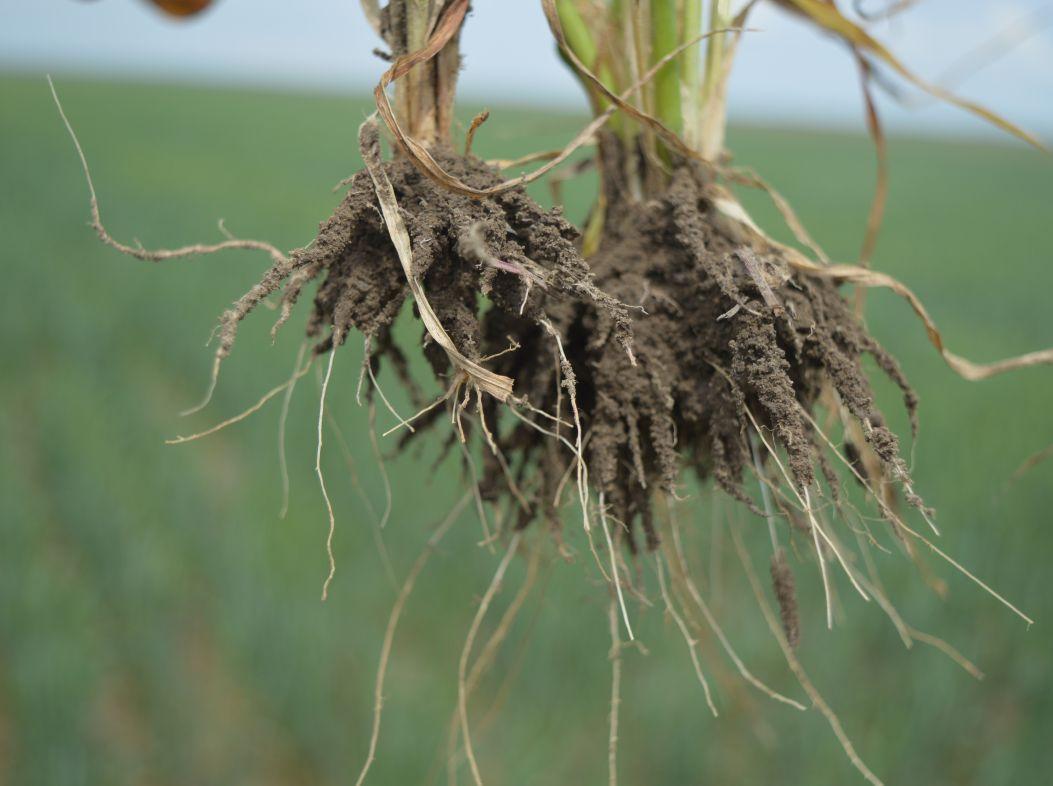
ABOVE: The endophyte-treated wheat plant (right) has much longer roots and many more of them, when compared to the untreated plant.
For the project, researchers are collecting cultivar-specific data for the responses of elite Canadian wheat cultivars
the rhizosphere (the soil surrounding the root system). But his research also includes the spermosphere – the soil surrounding the seeds. “That’s because we are interested in looking at the early association of microbes with seeds and also the continuum of the growth and association of microbes with plants from seed germination and plant establishment to the mature plant,” he says.
“Each step of a plant’s life cycle has different needs for nutrients, for disease resistance, for resistance to abiotic stresses such as drought, and so on. The idea in our research is to get endophytes that could help plants throughout their life cycles [with these different needs].”
Currently, Vujanovic is the lead investigator in a three-year project (2014 to 2017) to develop the endophytes as commercial inoculants. He and Jim Germida, his colleague at the University of Saskatchewan, are working on this project in partnership with Genome Canada (a not-for-profit agency that acts as a catalyst in genomics research and development to create benefits for Canadians), Genome Prairie (a non-profit organization that supports stakeholders across Manitoba and Saskatchewan in maximizing the benefits of genomics and related biosciences) and Indigo Ag, Inc. (a U.S.-based company specializing in plant-associated microbial products).
The project team is testing diverse combinations of the endophytes, ecosystems, crops and crop varieties to find ones with commercial potential. The testing includes such crops as wheat, corn, soybean, canola, barley and pulses.
“Indigo is testing these inoculants in different ecosystems throughout the world, and we are doing the same thing in Saskatchewan,” Vujanovic says. “We have passed through laboratory, phytotron [controlled environment conditions] and greenhouse tests. We have moved on to field tests in research field trials, and we have passed some demonstration tests.”
The results to date look quite promising. However, Vujanovic won’t speculate about when the endophyte inoculants will be commercially available for growers. He notes that, so far, each step along the way – from the first discovery of these endophytes, to laboratory proof of their effects, to testing of the endophytes in combination with specific crops – has taken a long time.
He also emphasizes the importance of the funding support this research has received since 2005. That support includes funds from the Saskatchewan Ministry of Agriculture’s Agriculture Development Fund and the Natural Sciences and Engineering Research
Council of Canada, as well as Genome Canada. In addition, his current research has received funding from the producer-led Saskatchewan Wheat Development Commission (Sask Wheat) for additional endophyte field trials with wheat.
Vujanovic sees several ways the results from this research could help crop growers.
“For example, with the effects of climate change, we have situations where farmers need to put more agricultural inputs in the field – more fertilizers, more irrigation, more pesticides – because we have increasing numbers of disease outbreaks. And for each of these problems, you have to have particular management practices; you have to have the right fertilizer, the right pesticide and so on. It seems like we are fighting with the complexities,” he says. “But the endophytes are able to help plants in each of these aspects. Endophytes can increase the plant’s resistance against abiotic stresses like drought, [increase water economy and nutrient supplies to the plant], and enhance the plant’s resistance against biotic stresses such as disease.”
Why is such a broad range of plant benefits possible with endophytes? According to Vujanovic, unlike crop breeding programs that concentrate on particular genes to improve the plant, endophytes are able to work with a plant’s microbiome in general and with the plant’s whole genome. “This is where the promise is with endophytes,” he says.
The project is also developing important information specifically for Prairie and Canadian crop growers. The researchers are proving elite Canadian cultivars are compatible with these endophytes, and they are compiling cultivar-specific data on responses to the endophytes, including improvements in traits like crop growth and yield.
In addition, Vujanovic sees tremendous potential benefit from the transfer of the new knowledge acquired from the project to crop growers. He believes the resulting knowledge could enable conventional and organic growers to manage their crop production systems in ways that would promote beneficial endophytes in their fields.
As well, he says this research is giving University of Saskatchewan students an unprecedented opportunity to learn first-hand about microbial genomics and about genomic tools and technologies.
Vujanovic says, “For Canada and the Prairies, this research is providing good momentum, that we have the knowledge, the products, and the partners, including international partners, to help move forward with these products and make them accessible to farmers.”
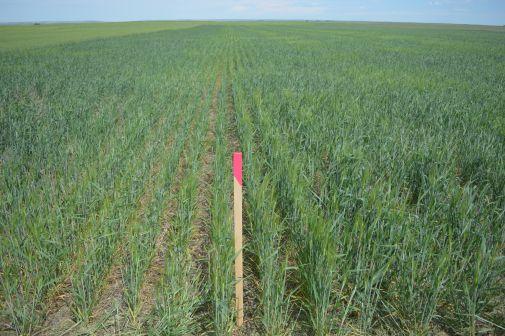
When compared to the untreated wheat plants (left), the endophyte-treated wheat plants (right) are greener and taller with more tillers.
to the endophytes.
WINTER CANOLA NOT LIKELY FOR THE PRAIRIES
Some promise but no breeding efforts.
by Bruce Barker
The promise of winter canola remains just that: a promise. Despite some limited yet successful trials on winter Brassica rapa (Polish-type) canola in southern Alberta, the winter hardiness just isn’t there to make a case for canola breeders to start working on canolaquality winter hybrids.
“We found that winter B. rapa overwinters often in the southern part of Alberta,” says Habibur Rahman, a plant breeder at the University of Alberta. “However winter survival was not successful in other areas of the province.”
Rahman collected B. rapa lines from Europe (nine lines) and China (10 lines) and evaluated them in Alberta in collaboration with Murray Hartman and Ross McKenzie (retired) with Alberta Agriculture, and Kevin Falk with Agriculture and Agri-Food Canada (AAFC) Saskatoon. These winter types of canola were first evaluated in 2007/08 and 2008/09 in field trials in Beaverlodge, Edmonton, Lacombe and Lethbridge, Alta., and then evaluated for another two years in 2009/10 and 2010/11 at Lethbridge only. Rahman
also created F1 hybrids to evaluate by crossing European and Chinese types.
The trials were seeded in August of each year, and winter survival was evaluated the following spring. Spring-type B. rapa and B. napus varieties were also included in the trials. Only the Lethbridge site showed promise with winter B. rapa surviving three out of the four years tested. The mild winter there makes successful overwintering more likely, and in the 2008/09 trials, even a few spring-type B. napus plants survived the winter. After two years of complete winterkill at Beaverlodge, Edmonton and Lacombe, trials were discontinued at those locations.
In the 2010/11 trials at Lethbridge, Rahman says winter survival was significantly higher under stubble condition compared to tilled land, and the European winter type showed better survival than the Chinese type, especially under tillage. Under stubble condition, the European winter B. rapa showed about 99 per cent survival and
PHOTOS COURTESY OF HABIBUR RAHMAN.
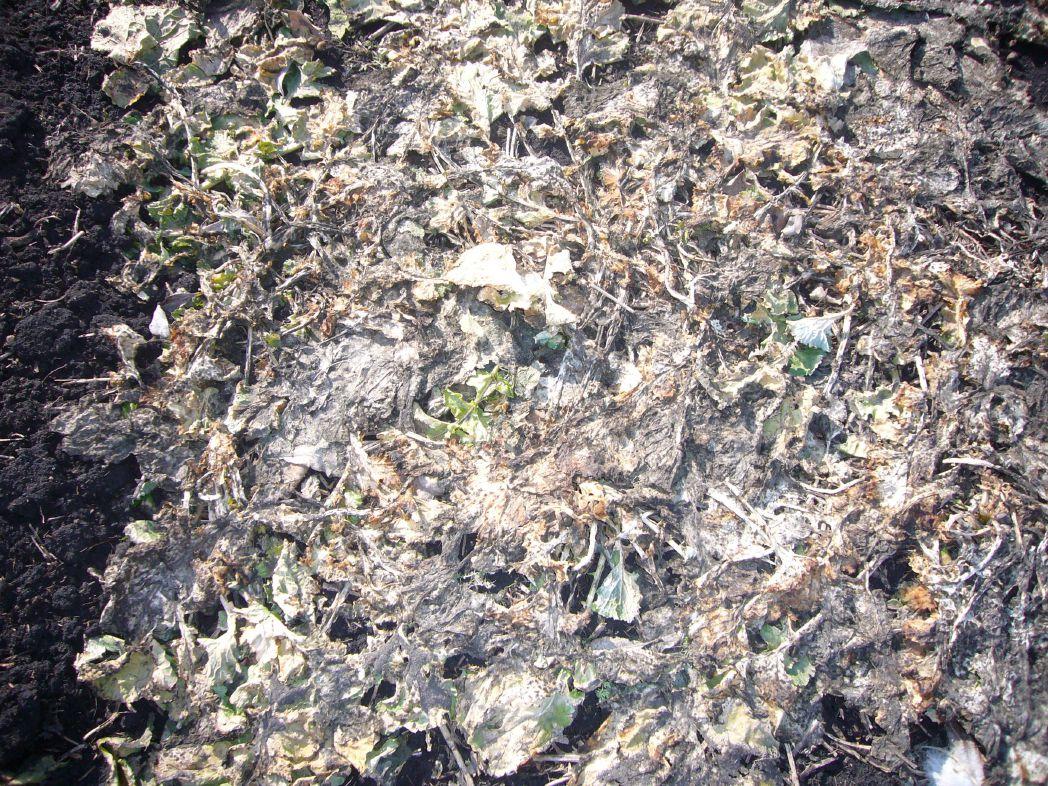
ABOVE: Winter B. rapa killed by winter in Edmonton. (Photo taken on March 25, 2008.)
the F1 hybrids achieved almost 100 per cent survival.
Another experiment was also conducted at Edmonton by growing the winter B. rapa plants in pots, and placing the plants outdoors. For this, the European and Chinese winter B. rapa and their F1 hybrids were used, and seeding was done in August. All plants were winterkilled by January when air temperature fell to -15 C or below.
While the results at Lethbridge are promising, Rahman says the University of Alberta is not carrying on with further research. “In the next phase of research, we would need to focus on the improvement of winter hardiness of B. rapa for the southern part of Alberta. This would require conducting field trials and breeding in southern Alberta, and we don’t have a canola breeder in southern Alberta to do this job.”
Rahman adds not much genetic variability is present in the tested winter B. rapa populations for winter hardiness, and selection for this trait would not be very effective for the harsh winter in central and northern Alberta.
Canadian plant breeders not pursuing winter canola
A survey of the main canola breeding companies in Western
Canada found none are actively pursuing winter canola breeding on the Prairies; all explained winter hardiness is not good enough for Western Canada.
“People talk about winter canola in Europe and the high yields they can achieve, but their winters are a lot milder than ours. They don’t get the cold we do. A few regions in the southern U.S. are starting to grow winter canola, but that’s a long way from our winter weather,” says Blaine Woycheshin, crop manager for canola with Bayer in Calgary. “Our spring napus breeding platform is very strong in Canada and we have focused there to meet grower needs versus developing a winter B. rapa hybrid.”
DuPont, BrettYoung, Dow and Proven Seeds also indicated they are not working on winter canola because of the winter hardiness issue. Proven Seeds uses winter canola germplasm to introduce desirable traits into spring type canola, but not in a breeding program for winter canola production.
While Rahman’s research shows the potential for winter B. rapa canola, the effort to improve agronomic traits and winter hardiness, and the small potential acreage in southern Alberta means there won’t be any winter canola planted in Western Canada any time soon.
NEW SOYBEAN HYBRID UPDATE FOR 2017
Continued from page 27
offers exceptional standability for ease of harvest. It also has good field tolerance to Phytophthora root rot, excellent white mould resistance and good plant height in marginal and heavier soils. 0066 XR is available from Pride Seeds dealers.
DS0067Z1 is a Roundup Ready 2 Yield variety rated for 2,450 CHUs and providing excellent yields. DS0067Z1 offers strong emergence combined with good Phytophthora root rot tolerance and good stand establishment. It is available from Dow Seeds dealers.
Lono R2 is a new medium maturity (2,450 CHU or 00.5 relative maturity) soybean from Elite, offering excellent pod height and a semi-bushy to bushy medium-tall plant. Lono R2 is suitable for planting in all row spacings and is semi-tolerant
to IDC. It has excellent tolerance to white mould and Phytophthora root rot (Rps 1K gene). It has been a consistent performer in the Manitoba Crop Variety Evaluation Team trials over the past two years. Lono R2 is available from BrettYoung seed dealers.
Podaga R2 is a new Roundup Ready 2 Yield soybean from Elite suited to the long-season soybean areas of Manitoba. It is rated at 2,525 CHU and 00.8 relative maturity. Podaga R2 has a tall plant that is suited to all row spacings and has performed consistently in trials in the past two years. It has good tolerance to white mould and Phytophthora root rot (Rps 1K gene) and is tolerant to IDC. Podaga R2 is a full-season performer. It is available from BrettYoung seed dealers.
Establishment of winter B. rapa prior to winter in Edmonton in 2007/08. (Photo taken on Sept. 28, 2007.)
This B. rapa survived the winter in Lethbridge. (Photo taken on May 7, 2009.)
With the new Tiger-Mate ® 255 field cultivator and 2000 series Early Riser ® planter, you can maximize every single square inch you farm. It’s creating the most level seedbed in the industry, while others are just scratching the surface. It’s the ability to gauge ground pressure 200 times per second. It’s targeting a nickel-sized area to plant a seed — and never missing. Then, inch by inch, the result is productivity like you never thought was possible. Start rethinking the productivity of your seedbed by visiting a local Case IH dealer or caseih.com/Seedbed THERE ARE 6,272,640 SQUARE INCHES IN EVERY ACRE.