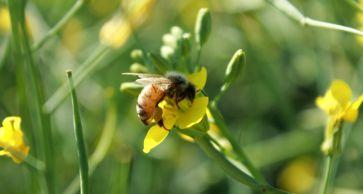
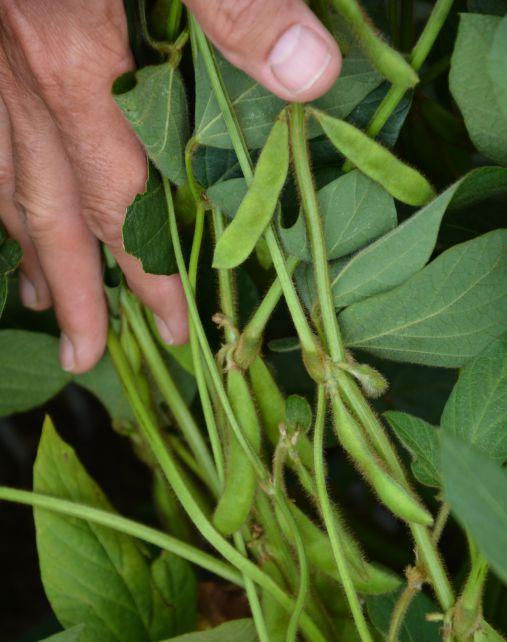
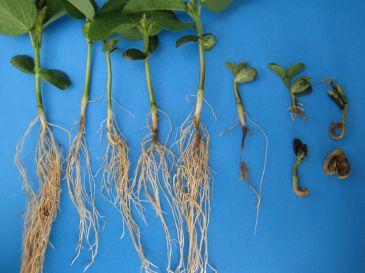
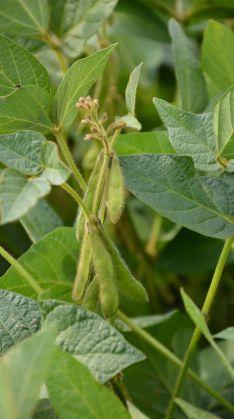
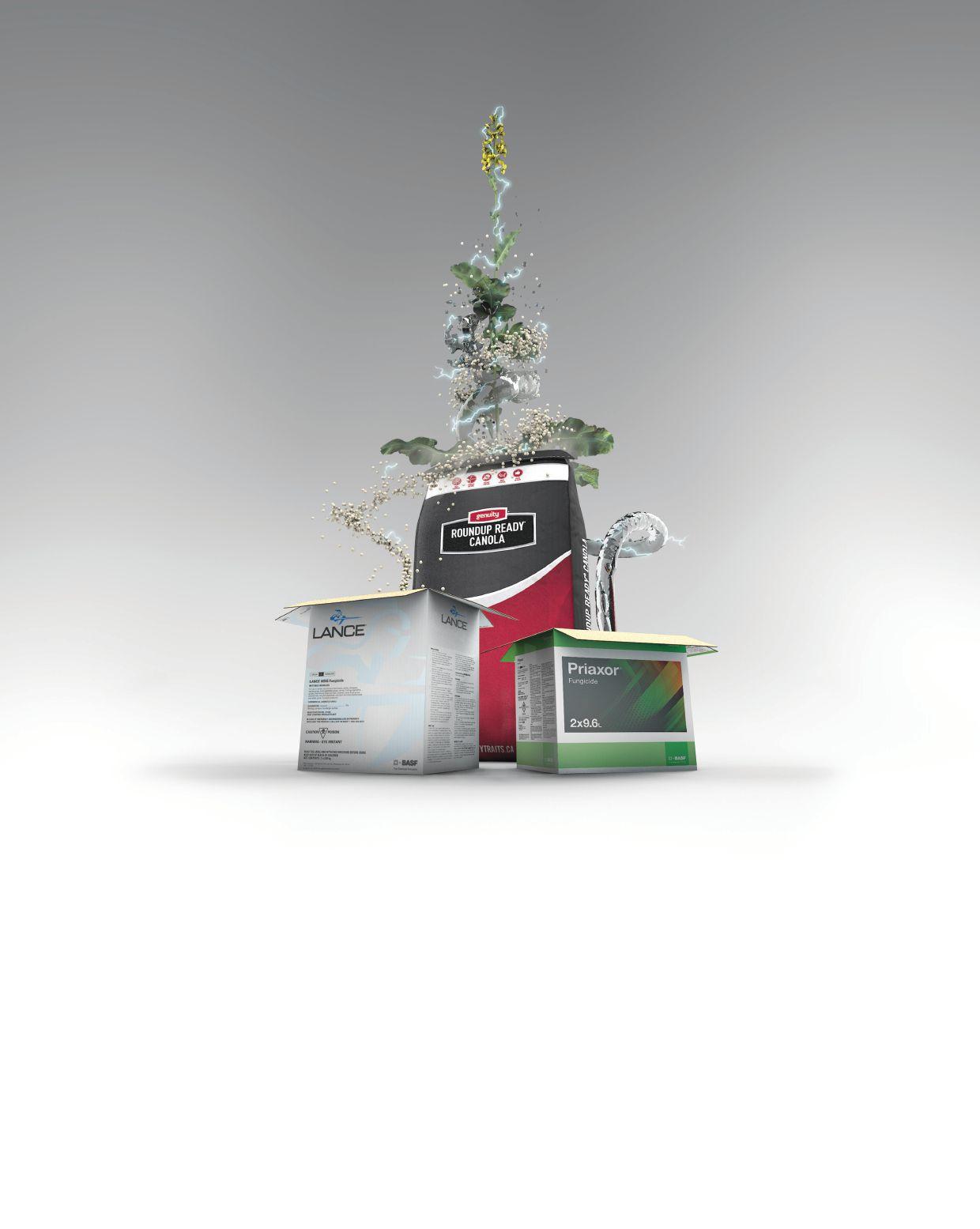
Trust Pioneer ® brand canola hybrids with Pioneer Protector ® traits to give you the peace of mind you need when growing canola. There are two new hybrids this year:
Pioneer Protector ® Plus – the first and only canola seed with built-in resistance to both sclerotinia and clubroot. Pioneer Protector ® HarvestMax – reduces the risk of harvest losses in canola.
To find out more, talk to your local Pioneer Hi-Bred sales representative or visit pioneer.com.
SOIL PRODUCTIVITY BUILT FOR
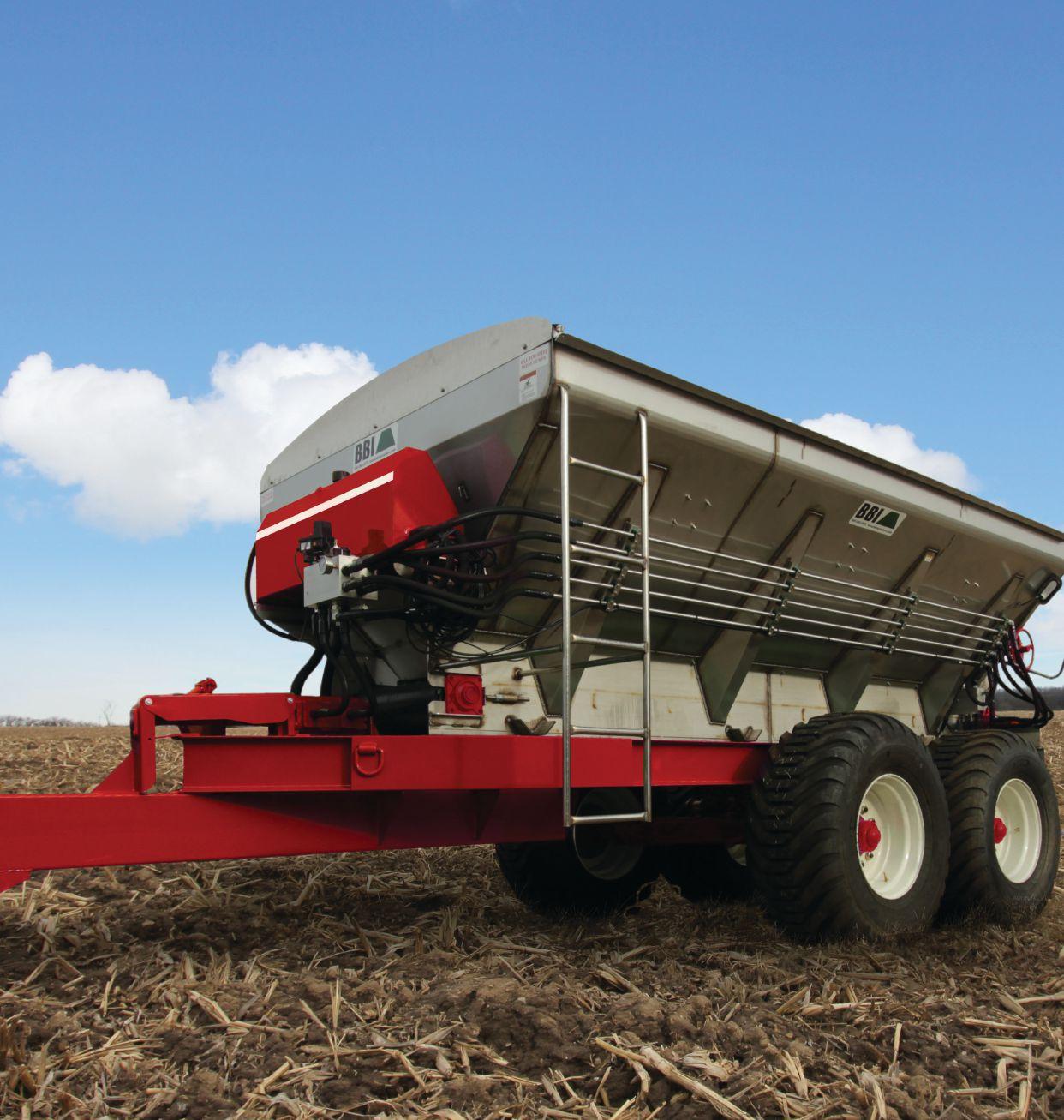
PRECISION APPLICATORS - Variable Rate capabilities and ISO compatibility are standard on our wide range of models.
LOWEST COST-IN-USE - Maximize productivity with wide flat spread patterns that minimize overlap and reduce fuel use.
OPTION RICH - Models available for fertilizer/lime, litter/lime, multiple bins for up to 3 product applications, wide range of model sizes and pull type or truck mount options available.
TOP CROP
6 | Soil moisture, nitrogen fertility after pulses Pulses are a viable replacement for chemfallow.
By Bruce Barker
30 | Separating the wheat from the chaff Cooling and drying grain with forced air ventilation. By
Bruce Barker
38 | Defining precision agriculture
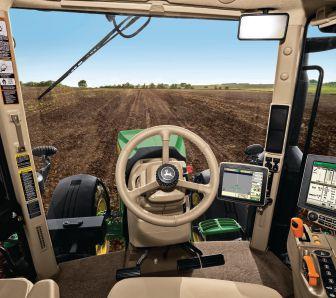
Even with current challenges, most farmers agree they will adopt precision agriculture in the future.
By Dale Steele, P.Ag.
ON THE WEB
new project will develop genomics and proteomics tools that will provide markers to selectively breed 12 economically valuable traits for honeybee queens. This will enable beekeepers to quickly and cost-effectively breed healthy, disease-resistant, productive honeybee colonies that are better able to survive Canadian winters.
PHOTO
JANET KANTERS | EDITOR
HERBICIDE RESISTANCE SUMMIT TO CREATE AWARENESS
This problem will strike everybody in one way or another sooner or later, and it is developing faster than people are responding to it.” That’s how Ian Morrison, who was then a plant scientist at the University of Manitoba, described herbicide resistance in a 1993 Top Crop Manager article.
As Morrison predicted over 20 years ago, herbicide resistance has continued to grow. Every year, in Canada and around the world, there are more and more resistant weed species on more and more acres.
According to the International Survey of Herbicide Resistant Weeds website (weedscience.org), the first Canadian case of herbicide resistance was 2,4-D-resistant wild carrot, found in Ontario in 1957. Then, in the mid-1970s, the number of cases in Eastern Canada started to climb with the discovery of atrazine-resistant weeds.
Trifluralin-resistant green foxtail was the first confirmed case of herbicide resistance on the Prairies, found in 1988 in Manitoba. By 1993, the list grew with resistant wild oat, green foxtail and wild mustard, and multiple-resistant green foxtail in Manitoba.
These days, the big concerns are glyphosate-resistant weeds and multiple-resistant weeds. And of course, some glyphosate-resistant weeds have multiple resistance such as kochia in Western Canada, and common ragweed, giant ragweed, Canada fleabane and, most recently, tall waterhemp in Eastern Canada.
Top Crop Manager magazine presents the first Canadian Herbicide Resistance Summit on March 2, 2016 in Saskatoon. With this Summit, we hope to facilitate a more unified understanding of herbicide resistance issues across Canada and around the world, and to increase awareness that everyone engaged with agriculture has a role in managing herbicide resistance.
Leading-edge presenters include Hugh Beckie and Neil Harker with Agriculture and Agri-Food Canada, Linda Hall with the University of Alberta, Peter Sikkema with the University of Guelph, Ian Heap, director of the International Survey of Herbicide Resistant Weeds, Jason Norsworthy with the University of Arkansas, Michael Walsh with the Australian Herbicide Resistance Initiative, and Breanne Tidemann, studying for her Ph.D. at the University of Alberta.
Presenters will address many of the key issues faced by farmers and crop protection researchers in meeting the challenge of the growing threat of herbicide resistance. The daylong Summit will present a global overview of herbicide resistance, and will touch on the state of weed resistance in Western Canada and Ontario, the role of pre-emergent herbicides, tank-mixes and integrated weed management, the impact of glyphosate-resistant Palmer amaranth and other glyphosate-resistant weeds in the southern and midwestern U.S., harvest weed seed control in Australian cropping systems and implementing harvest weed seed control methods in Canada.
Huge strides have been made in the last 20 years in the understanding and knowledge of herbicide resistance, and also in recommendations for best management practices to slow resistance. And today, crop growers are much more knowledgeable about herbicide resistance than they were 25 years ago.
But challenges remain. We hope to have some answers for our Herbicide Resistance Summit participants come March 2. For more information or to register for the conference, visit weedsummit.ca.
Top Crop Manager West - 9 issuesFebruary, March, Mid-March, April, June, September, October, November and December - 1 Year - $45.00 Cdn. plus tax
Top Crop Manager East - 7 issuesFebruary, March, April, September, October, November and December1 Year - $45.00 Cdn. plus tax
Potatoes in Canada 2 issues Spring and Summer 1 Year $16.00 Cdn plus tax All of the above - $80.00 Cdn. plus tax Occasionally, Top Crop Manager will mail information on behalf of
topcropmanager.com
The built-for-Canada-all-in-oneso-your-cereals-can-thrive treatment. We know you love to see your cereal crops grow to their fullest potential. And in true Canadian fashion, we’d like to give you a hand with that. Meet our new Cruiser ® Vibrance® Quattro seed treatment. With four fungicides, an insecticide and the added benefits of Vigor Trigger ® and Rooting Power™, this all-in-one liquid formulation offers superior protection plus enhanced crop establishment for early-season growth. Just the helping hand you can use, eh?
SOIL MOISTURE, NITROGEN FERTILITY AFTER PULSES
Pulses are a viable replacement for chemfallow.
by Bruce Barker
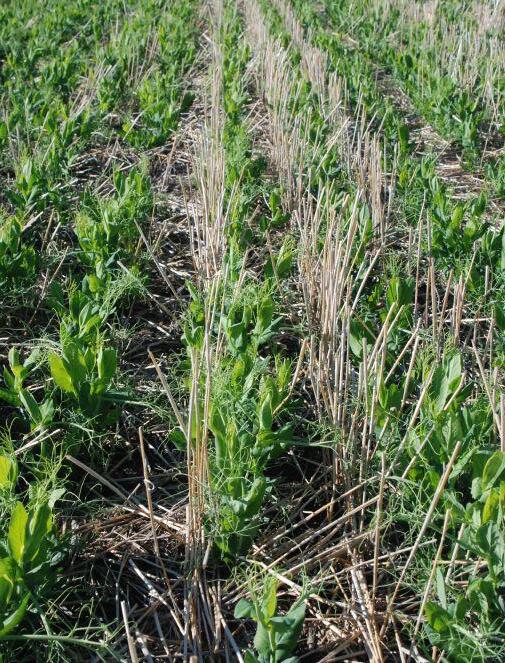
On the semiarid Prairies of southern Saskatchewan, where wheat/fallow rotations were common, chemfallow was the first step to improving sustainability. Now, producers are growing pulse crops instead of chemfallowing in a further effort to enhance soil productivity.
“One of the features with pulses is to replace conventional fallow, providing a ‘greening’ opportunity with more positive environmental impacts. However, little is known about how much soil water and nitrogen are left post-harvest in pulse crops in comparison with chemfallow,” says Yantai Gan, research scientist with Agriculture and Agri-Food Canada (AAFC) at Swift Current, Sask. “Also, a quantitative assessment of soil water and nitrogen recharged from post-harvest to the next spring would help land managers to make sound decisions on crop choice and fertilization.”
Gan, along with colleagues Chantal Hamel, John O’Donovan, Con Campbell and Lee Poppy, conducted a three-year crop sequence study to quantify the amounts of soil water and nitrogen (N) available in the preceding pulse crops in comparison with preceding barley and chemfallow, in southwestern Saskatchewan.
The study was conducted from 2007 to 2011 at AAFC’s Semiarid Prairie Agricultural Research Centre (SPARC) in Swift Current. Gan summarized and presented his findings in a poster presentation at the University of Saskatchewan’s Soils and Crops Workshop in 2015.
In the first year, spring wheat was grown under no-till management. At harvest, wheat stubble was cut to 15 centimetres and left standing in the field. In the second year, 10 types of pulse crops were grown between the rows of standing wheat stubble. The pulses, along with barley and the chemfallow check, were arranged in a randomized, complete block with four replicates. In the third year, durum wheat was uniformly grown on the different residue types.
The three-year cropping sequences were repeated for three cycles between 2007 and 2011. In each year, soil samples at five different depths (0-120 cm) were taken post-harvest and again at planting the following spring. Detailed measurements were taken to quantify soil water and available N (NO3-N and NH4-N).
Rainfall storage inefficiencies
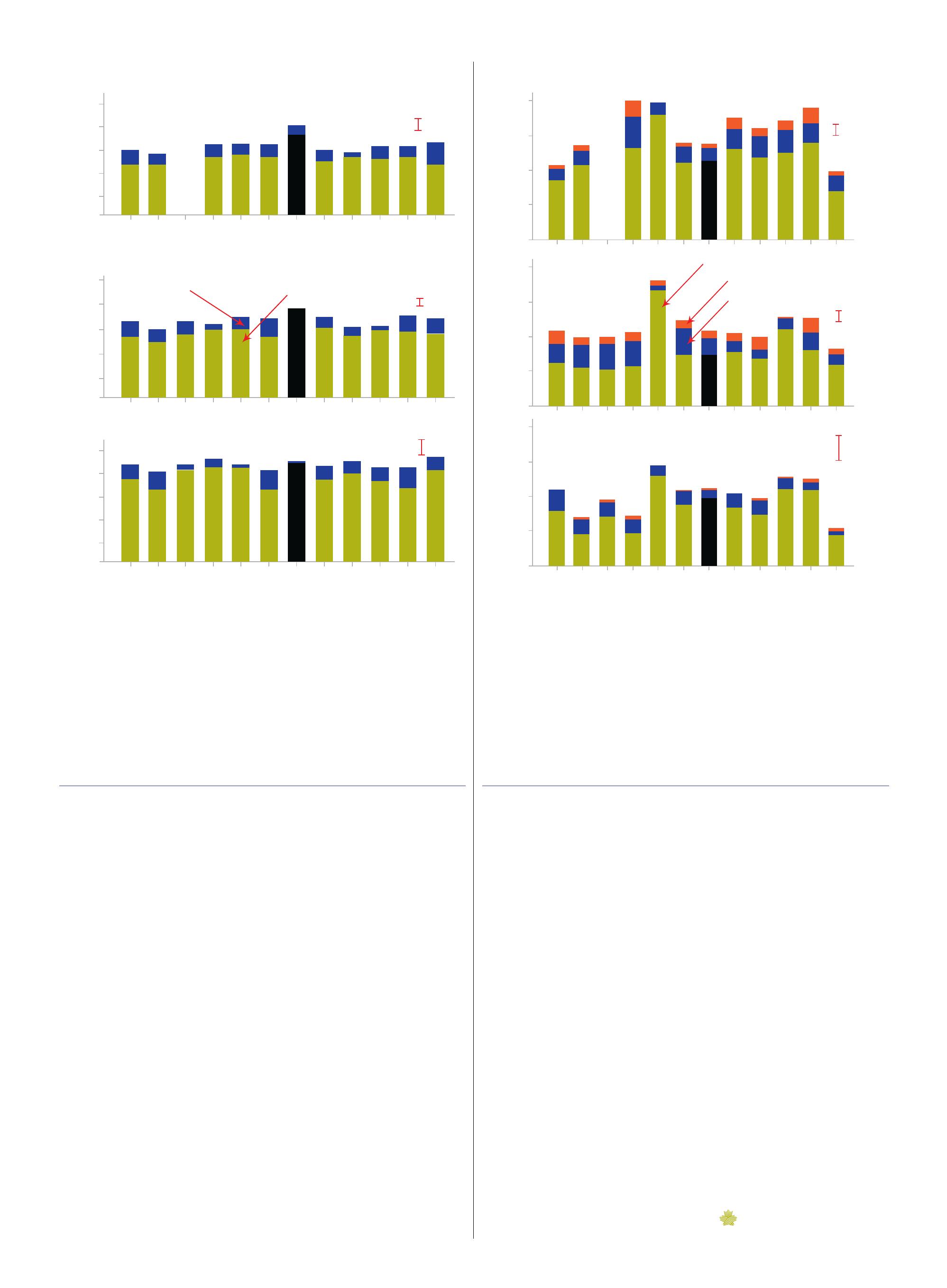
The precipitation during the growing season totalled 176 millimetres in 2009, 354 mm in 2010, and 287 mm in 2011. On average for all crops, water left in the 0-120 cm soil profile at harvest was 180 mm in 2009, 191 mm in 2010, and 240 mm in 2011.
During that period, chemfallow fields had more stored water at harvest than the cropped land: 52.3 mm more water in the 0-120 cm
Field pea is a viable cropping alternative to chemfallow.
soil profile in 2009, 52.2 mm in 2010, and 29.7 mm in 2011. However, chemfallow did not efficiently store in-season rainfall.
“About 70 per cent of the total precipitation in 2009 was lost through evaporation from chemfallow fields during the period from crop seeding to harvest,” Gan says. “In 2010 it was about 85 per cent and almost 90 per cent of precipitation was lost in 2011.”
In 2009, the fields with dry pea and lentil had 17.6 mm (9.7 per cent) more water left unused in the 0-120 cm soil profile than the fields with barley crops. In 2010, no differences were found between crop types post-harvest. In 2011, however, dry pea had 42.3 mm (19 per cent) and 30.2 mm (12.9 per cent) more water left unused in the 0-120 cm soil profile than chickpea and lentil, respectively.
Soil water was also recharged from post-harvest to the next spring. In the 2008-2009 fall and winter, the soil was recharged
PHOTO BY BRUCE BARKER.
Soil water (mm) in the 0-120 cm depth in (A) 2009, (B) 2010 and (C) 2011, with the green portion of the bars representing soil water left in the field at crop harvest and the blue portion representing soil water that was increased from postharvest to planting time the next spring.
Source: Gan et al., AAFC.
with 25.8 mm of water in the cropped field and 22.3 mm in chemfallow. In the 2009-2010 and the 2010-2011 fall and winters, soil water in the cropped fields was increased by 24.2 mm and 27.2 mm, respectively, whereas soil water content did not change in the chemfallow field. Over-winter recharge helped to narrow the gap in the 2010 and 2011 years, resulting in a deficit of about 28 mm in 2010 and 2.5 mm in 2011 (see Fig 1).
Pulse crops improve soil N
Gan says the quantity of soil N (NO3-N, NH4-N) in the 0-120 cm depth post-harvest varied between years and among crops. In 2009, postharvest soil N averaged 51.2 kg N/ha in pulse fields, similar to that in chemfallow fields (46.3 kg N ha-1); they were significantly greater (by 78 per cent) than that in barley fields. In 2010 and 2011, pulse fields had the same amounts of N as chemfallow; they were 30 per cent and 88 per cent greater compared to barley, in the two years.
“Among the 10 different pulse crops evaluated, yellow pea was outstanding. The total N in the fields with yellow pea was 74.4 kg N/ ha, 65.9 kg N/ha and 52.0 kg N/ha at crop harvest in 2009, 2010 and 2011,” Gan says.
These values were 61 per cent, 124 per cent and 33 per cent greater than that in the chemfallow, and 160 per cent, 181 per cent and 194
Soil mineral N (NO3 and NH4) in the 0-120 cm depth in the fields with pulse crops, barley or chemfallow in (A) 2009, (B) 2010 and (C) 2011; with the green portion of the bars representing soil N left at harvest, and the blue and orange bars representing soil N increased in the 0-30 cm and 30-60 cm depths from harvest to the following spring. Red line bars are LSD (0.05) values among means.
Source: Gan et al., AAFC.
per cent greater than that in the barley-grown fields, in the three respective years.
On average, pulse fields increased soil N in the 0-60 cm depth by 15.3 kg N/ha, 15.4 kg N/ha and 8.4 kg N/ha from post-harvest to the following spring in 2009, 2010 and 2011, respectively. These values were 39, 67 and 149 per cent greater compared to barley fields; and 57, 11 and 69 per cent greater compared to chemfallow, in the three respective years (See Fig 2).
The results of the trial show that pulse may be a viable alternative to chemfallow. Greening of chemfallow with pulses may provide environmental benefits, but more research is required to quantify these effects, Gan says.
“The use of annual pulses to replace chemfallow can utilize the precipitation effectively and increase total grain production over a number of years,” he notes. “Growing pulses significantly increased soil N through symbiotic N-fixation from the atmosphere, as well as through the decomposition of N-rich root and straw of pulses from post-harvest to the next spring as well as during the next year’s growing season, providing a nutrient-richening effect. By contrast, chemfallowing can also enrich soil N but it does so through the mineralization of soil organic carbon, which is a ‘mining’ soil process, depleting soil carbon over time, and is unsustainable.”
Fig. 1: Soil water content (mm) in the 0-120 cm depth
Fig. 2: Soil Mineral N (kg N ha-1)
NEW SOYBEAN, FLAX AND SUNFLOWER VARIETY UPDATE
An ever-expanding choice for western Canadian farmers.
by Ken Sapsford
Seed companies continue to expand the potential for soybean production in Western Canada with earlier maturing and higher yielding varieties suited for short season areas. As soybean acreage moves past the one million acre mark, breeders have shown greater interest in developing varieties specific to the Prairies.
There is one new flax variety for 2016, and Nuseed Americas has introduced a new sunflower variety that is the first Express tolerant confection sunflower hybrid.
The seed companies supply information on the varieties, and growers are advised to check local performance trials to help in variety selection. Listing is by CHU for soybean.
Soybeans
PS 0088 R2 is a new Genuity Roundup Ready 2 Yield variety ideally suited for 2100-2500 CHU. Visually attractive plant with excellent standability and disease tolerance. This variety has very good plant height, branching characteristics and rapid canopy. Adapted for the mid and long season growing areas. Features Rps 1c phytopthora tolerance. Available from Pride Seeds dealers.
NSC Watson RR2Y is exceptionally early with a CHU of 2225 or relative maturity of 0007. It has shown to have exceptional early season vigour and very good bottom pod height which makes for much easier and quicker harvesting. It has a relatively tall stature and forms abundant cluster pods. Many pods have four and even five seeds. This line will be significant as it sets a new standard for maturity. Available from NorthStar Genetics seed dealers.
S0009-M2 is the first triple zero (000) maturity group soybean variety from Syngenta. S0009-M2 is a high-yielding, Genuity Roundup Ready 2 Yield variety that is well suited for soybean production in the Prairie provinces. With a 2275 CHU rating, S0009-M2 offers a very good disease package that includes the Rps6 gene for phytophthora root rot field tolerance, as well as very good white mould and iron deficiency chlorosis tolerance. S0009-M2 will be available in limited quantities for 2016 seeding and can be purchased through Syngenta seed dealers.
Notus R2 is a new soybean variety from Elite that is a great choice for producers needing early maturity with excellent yield potential. Notus R2 is rated at 2300 CHU or 00.1 relative maturity. It is a medium height, semi-bushy plant. Notus R2 has excellent standability and very good podding height. It is tolerant to iron deficiency chlorosis (IDC) and white mould, and has very good field resistance to phytophthora root rot (Rps1c gene). Yields in Elite trials were
similar to Pekko R2 and maturity was two days earlier. Available from BrettYoung/Elite seed dealers.
Mahony R2 is a Genuity Roundup Ready 2 Yield soybean with an exceptionally high yield uniquely combined with early maturity. It is a 2350 CHU soybean with a yield index of 109 per cent, providing it the unusual position of not only an early soybean that provides a good fit into most soybean growing areas of Western Canada, but also one of the top yielding soybeans available across the Prairies. Mahony R2 has a bushy plant type, very good lodging resistance and a susceptible rating to IDC. Mahony R2 is available from SeCan growers/retailers. NSC Gladstone RR2Y was introduced last year, but was limited due to seed availability. It will be available on a wide scale this year. It has a CHU requirement of 2375 or relative maturity of 004. This line has an extremely aggressive growth habit forming a very branchy
PHOTO BY JANET KANTERS.
Soybean breeders continue to develop varieties suited to the Prairies.
plant. Therefore it is well suited for wider row spacing (20 inches and greater) commonly found on modern planters. If it is solid seeded with an air seeder (12 inch row spacing or less) a lower seed rate is recommended (180,000 to 190,000 seeds per acre) in order to allow it to fill out properly. In demonstration plots, it has shown to be a top yielder under a wide range of environmental conditions. Available from your NorthStar Genetics seed dealers.
14-12-RY is a new Genuity Roundup Ready 2 Yield soybean variety rated at 2425 CHU. This variety had strong iron chlorosis tolerance, good field tolerance to phytophthora root rot, and is well suited to all row widths and soil types. Available from Dekalb dealers.
LS Maidan is a Genuity Roundup Ready 2 Yield mid season soybean at 2450 CHU. It is a tall, semi-bush plant good for all row widths with great IDC tolerance, very good white mould resistance and a high yield potential. Available from Legend Seeds dealers.
PRO2525R2 is a mid-season, 2450 CHU Genuity Roundup Ready 2 Yield soybean. It is a tall, semi-bush plant with exceptional white mould resistance and root rot tolerance. This was the highest yielding mid-season variety in the 2014 MCVETT trials at 114 per cent of check. Available from Legend Seeds dealers.
LS Eclipse is a mid-season, 2475 CHU Genuity Roundup Ready 2 Yield soybean. It is a tall, semi-bush plant with excellent white mould resistance and resistance to race 3 cyst nematode. It is suitable for all row spacings and has a high yield potential. Available from Legend Seeds dealers.
P006T70R is a new high yielding glyphosate-tolerant soybean variety with 2475 CHU and very good standability for ease of harvest in Western Canada. It also has very good early emergence, very good white mould tolerance and high yield potential. In 2014 and 2015, it provided an average yield increase of 1.8 bu/ac over Pioneer variety 900Y61 with 69 per cent wins in 52 large-scale field comparisons across Western Canada. Available from Pioneer Hi-bred sales representatives across Western Canada.
25-11 RY is a new Genuity Roundup Ready 2 Yield soybean variety rated at 2500 CHU. This variety has above average white mould and iron chlorosis tolerance. It is best suited for heavier soils and fits well in no-till systems. Available from Dekalb dealers.
PRO 2535 is a full-season, 2525 CHU Genuity Roundup Ready 2 Yield soybean. It is a medium height, semi bush plant with exceptional vigour out of the ground. This variety has very high yield potential, yielding 117 per cent of check in the 2014 MCVETT trials. Available from Legend Seeds dealers.
Flax
CDC Neela is a new high yielding flax variety with excellent yield and quality potential, at 105 per cent of Bethune and with a significantly higher iodine number than Flanders. It is one day later in maturity with similar lodging resistance to Bethune. CDC Neela will be available in limited quantities for 2015-16 at select Canterra Seed authorized retailers.
Sunflower
9180 DMR from Nuseed Americas is the first to market an Expresstolerant, confection sunflower hybrid with resistance to the most prevalent races of downy mildew. The Express-tolerant advantage will provide producers excellent broadleaf weed control, leading to improved yield and quality. 9180 DMR’s early maturity is suited to the Western Canada growing region, and it produces a long dark kernel with high test weight that is preferred by processors. Available from Nuseed retailers.
NEW CORN HYBRID UPDATE
More choices for farmers.
by Ken Sapsford
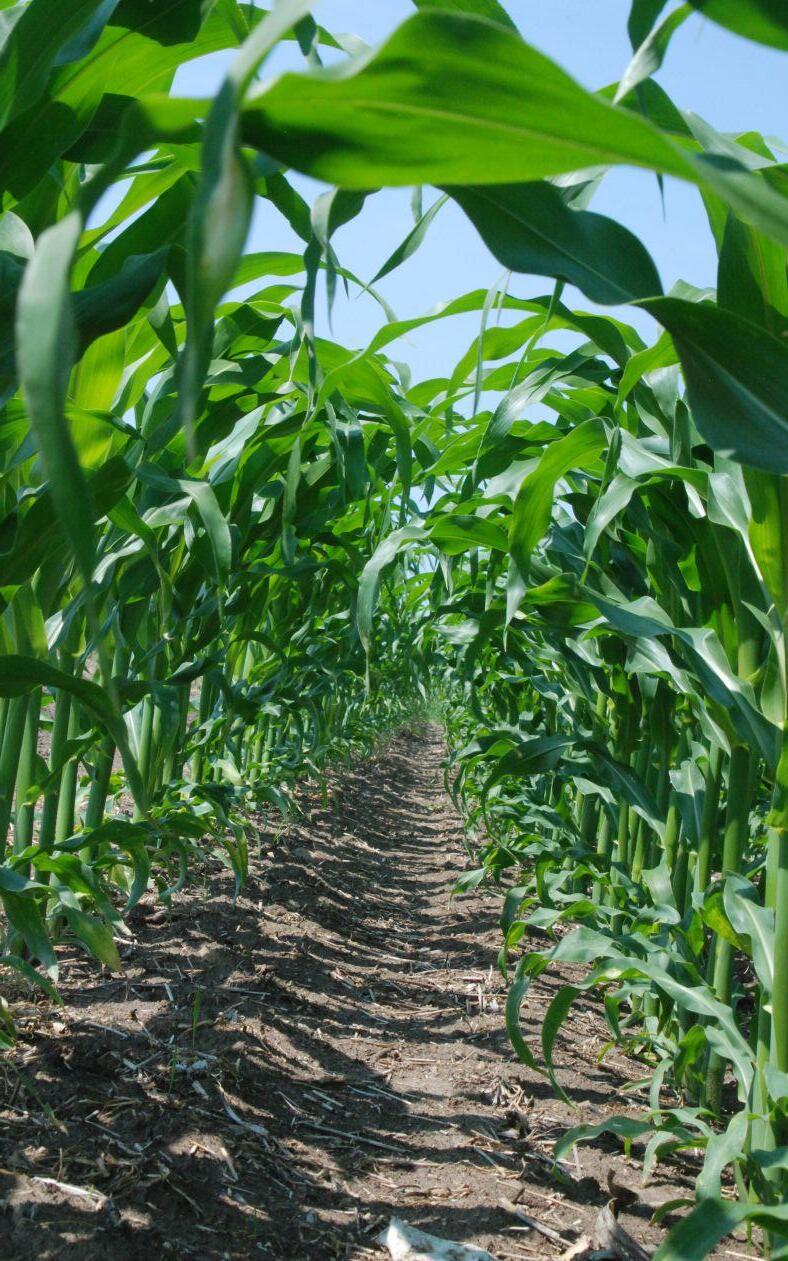
Corn breeders continue to focus on early maturing corn hybrids, bringing myriad stacked traits to western Canadian corn growers. Seed companies have supplied information on the new corn hybrids for 2016, and growers are advised to check local performance trials to help in variety selection. Listing is by CHU.
P7005AM is an Optimum AcreMax corn seed product with 2000 CHUs and Roundup Ready Corn 2/LibertyLink, Herculex 1 and YieldGard Corn Borer technology for above ground insect control. It provides excellent yield potential with a 5.3 bu/ac yield increase over Pioneer hybrid P7213R across 27 Proving Ground large-scale grower sites across Western Canada in 2014 and 2015. P7005AM has excellent yield potential, corn borer protection, good test weight scores and husk cover. Available from Pioneer Hi-Bred sales representatives across Western Canada.
TH 7673 VT2P RIB is a grain corn with 2050 CHU. This hybrid is the lowest heat unit option from Thunder Seed Canada. Medium height, quick out of the ground with a quick flowering and kernel set. Incredibly good dry down rate and has corn borer protection. Can travel north in Saskatchewan very well. Available from Thunder Seed Canada.
P7202AM is an Optimum AcreMax corn seed product with 2050 CHUs and Roundup Ready Corn 2/LibertyLink, Herculex 1 and YieldGard Corn Borer technology for above ground insect control. It provides excellent yield potential with a 5.9 bu/ac yield increase over all competitor corn hybrids in 26 Proving Ground large-scale grower sites across Western Canada in 2014 and 2015. P7202AM has corn borer protection, produces large kernels and has good test weight scores. Available from Pioneer Hi-Bred sales representatives across Western Canada.
P7211HR is a Roundup Ready Corn 2/LibertyLink corn hybrid with 2050 CHUs and Herculex 1 technology for above ground insect control. It is a very early corn hybrid with high yield potential and corn borer protection for Western Canada. It provides excellent yield potential with 2.1 bu/ac yield increase over competitor corn hybrids across 34 Proving Ground large-scale grower sites in Western Canada in 2014 and 2015. Available from Pioneer Hi-Bred sales representatives across Western Canada.
DKC23-17RIB has 2075 CHU. An early flowering and early
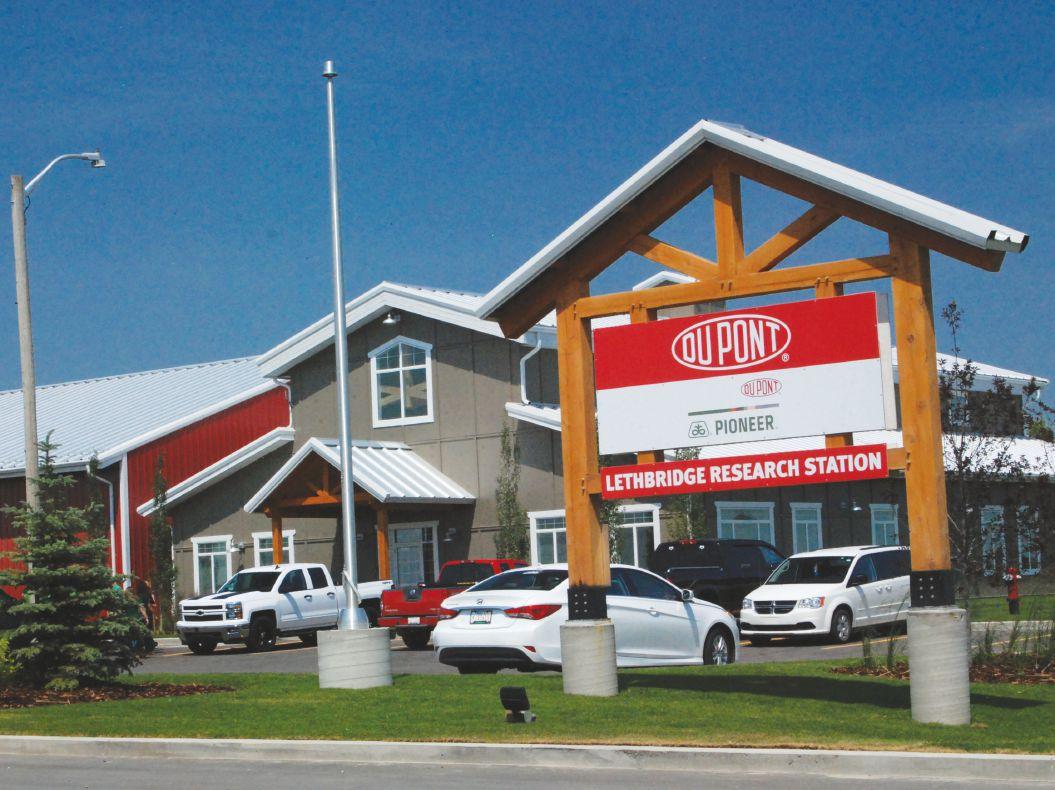
ABOVE: DuPont Pioneer has opened up a new research facility to focus on early season corn.
SUPERSEED. GUARANTEED.
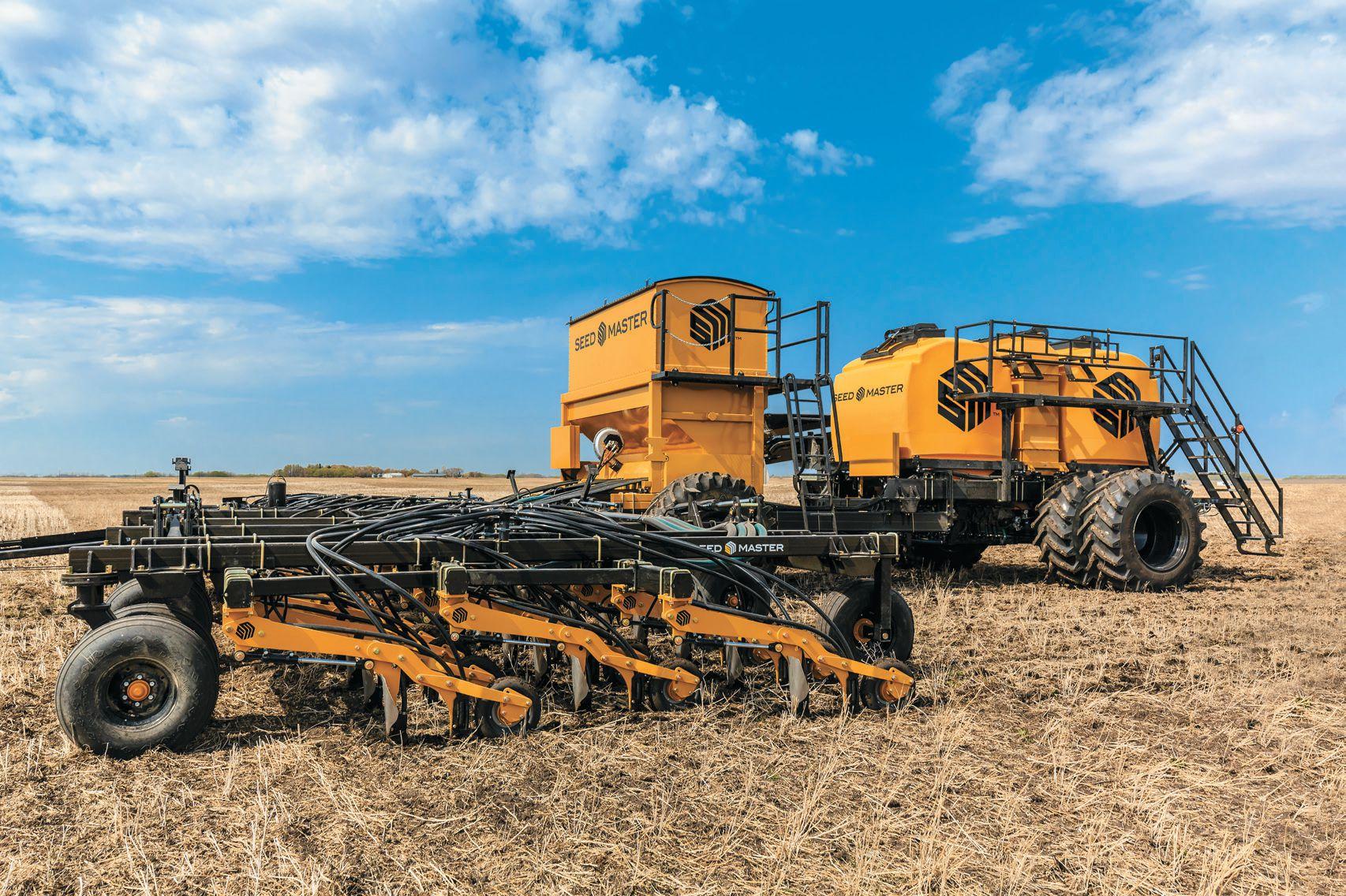
Earn more money with SeedMaster—guaranteed*. SeedMaster’s UltraProTM seeding system provides near singulated canola seed delivered directly to our innovative active-hydraulic, ground-following, individual row opener for precise seed and fertilizer placement. Cut seeding rates without sacrificing yield. Save on inputs with Overlap Control. And with the biggest toolbar in North America, you’ll seed more crop in the critical 10 – 15 day seeding window. Higher yields and greater profits. That’s SuperSeed. Guaranteed.
maturing hybrid with excellent harvest appearance and agronomics. It has a fast dry down and brings improved yield potential to its maturity zone. Available from Dekalb dealers.
DKC23-21 has 2075 CHU. A hybrid with excellent early cold emergence and vigour. It has above average plant health and disease tolerance, in addition to a very good test weight. Available from Dekalb dealers.
MZ 1610R is a 2100 CHU (silage) Roundup Ready-tolerant hybrid with early flowering that results in rapid grain setup. This hybrid has industry leading early silage maturity and outstanding spring vigour. Available from Maizex seed dealers.
E46J77 R is a new early maturing hybrid from Elite featuring the Agrisure GT trait for resistance to glyphosate. E46J77 R has strong yields with early maturity making it a fit for growers needing an early maturing grain or silage hybrid. It is rated at 2150 CHU for grain, has medium height with excellent dry down and a very strong stalk. It is tolerant to smut and Fusarium ear rot and has good tolerance to Goss’s wilt. Available from BrettYoung/Elite seed dealers.
A4199G2 RIB is a Genuity VT Double PRO RIB hybrid delivering above ground
insect control. A very early season grain corn hybrid maturing with 2175 CHU. This hybrid has strong agronomics with very rapid emergence, strong spring vigour and early flowering. Refuge in the bag that provides enhanced trait protection with the benefit of automatic refuge compliance. Available at Pride Seeds dealers.
PS 2210VT2P RIB with 2175 CHU is a Genuity VT Double PRO hybrid with outstanding yield for its maturity. It is widely adapted from east to west. It has very good seedling vigour and stalk strength combined with tall plant height. Available from Pickseed dealers.
MZ 1625R is a 2200 CHU (silage) Roundup Ready-tolerant hybrid. With leading agronomics, this tall robust plant type has impressive yield potential. Available from Maizex seed dealers.
P7632AM is an Optimum AcreMax corn hybrid with 2225 CHUs and Roundup Ready Corn 2/LibertyLink, Herculex 1 and YieldGard Corn Borer technology for above ground insect control. It provides excellent yield potential with 4.1 bu/ac yield increase over Pioneer hybrid 39V05 across 37 Proving Ground large-scale grower sites across Western Canada in 2014 and 2015. P7632AM also
has good stalk strength and excellent root strength for improved standability. Available from Pioneer Hi-bred sales representatives across Western Canada.
TMF86H77RA is a SmartStax, Refuge Advanced silage hybrid with excellent yield potential. This hybrid provides good digestibility along with high tonnage and excellent starch scores. Its semi-flex ear provides flexibility across variable plant densities and it is widely adapted for variable soil types. TMF86H77RA is a 2250 CHU hybrid. Available from Dow Seeds dealers.
TH 4126RR is a silage corn, with 2250 CHU. This corn can be silaged or grazed very effectively. Tall, pineapple leaf with a large mid-placement cob, with flint/dent kernels. The plant is quick out of the ground with great spring vigour and a very good finish in the field. TH 4126RR is an excellent yielder. Available from Thunder Seed Canada.
4085 is a Herculex Xtra RR2 hybrid grain corn with excellent yield potential, strong early season vigour and emergence for cold wet soils. This 2275 CHU hybrid flowers early for hard texture grain for northern adaptation. Available from Dow Seeds dealers.
39V09AM is an Optimum AcreMax corn hybrid with 2275 CHUs and Roundup Ready Corn 2/LibertyLink, Herculex 1 and YieldGard Corn Borer technology for above ground insect control. It provides excellent yield potential with 3.2 bu/ac yield increase over Pioneer hybrid 39D97 across seven Proving Ground large-scale grower sites across Western Canada in 2014 and 2015. 39V09AM also has strong Goss’s wilt resistance, good root strength, and good grain dry down. Available from Pioneer Hi-Bred sales representatives across Western Canada.
DS80A27 is a SmartStax hybrid grain corn with excellent yield potential. With a 2300 CHU, this hybrid has excellent top-end grain yield, strong emergence and early season vigour. This hybrid is ideal for cool conditions. Available from Dow Seeds dealers.
LF 730CBR is a 2300 CHU (silage) Genuity VT Triple PRO Roundup-tolerant and European corn borer resistant hybrid with consistent industry leading yield potential. This hybrid has unmatched early vigour combined with early flowering, and rapid grain set up for impressive starch values. Available from Maizex seed dealers.
A5433G3 RIB is a high yielding silage choice Genuity VT Triple PRO RIB Complete G3 hybrid delivering above and below ground insect control. Provides high biomass and outstanding starch levels. Excellent
New corn offerings include a 2000 CHU variety.
PHOTO BY BRUCE BARKER.
MALT BARLEY RESPONSE TO N FERTILIZER
New malt barley varieties respond differently to nitrogen fertilizer.
by Bruce Barker
For farmers, the Holy Grail of malt production is to have a variety that can be fertilized for high yield, but still retain low protein content and qualify for malt grades. Since the 1990s, when AC Metcalf was registered and became the most widely grown malting variety on the Prairies, several new varieties have been registered. Researchers at Agriculture and Agri-Food Canada (AAFC), Alberta Agriculture and Rural Development, and the Canadian Grain Commission wanted to find out if these varieties responded differently to nitrogen (N) fertilizer than AC Metcalf.
“It is possible that one or more of these cultivars may prove superior to AC Metcalfe and succeed it as the most widely grown malting barley cultivar in Western Canada,” says AAFC research scientist John O’Donovan, who lead the research project looking at barley response to N. The results were published in the Canadian Journal of Plant Science in September 2015.
The research was conducted in 2010, 2011 and 2012 at seven locations in Western Canada: Fort Vermilion, Beaverlodge, Lacombe and Lethbridge, Alta., Scott and Indian Head in Sask., and at Brandon, Man. The Fort Vermilion site covered 2010 and 2011, and the Scott site did not collect data in 2012 because of flooding.
Barley was seeded into canola stubble at all locations using a no-till drill with knife openers. Row spacing varied from 7.8 to 12.2 inches and had a 10 per cent seedbed utilization. Seeding rate was approximately 30 seeds per square foot.
Five barley varieties were grown; AC Metcalfe, Major, Bentley, CDC Meredith and Merit 57. Urea nitrogen was applied at 0, 30, 60, 90 and 120 kg/ha rates in a sideband three inches below and to the side of the seed. Phosphate (11-52-0) was seedplaced at 13.1 kg/ha. A preseed burndown was conducted and in-season weeds were controlled as required.
CDC Meredith, Merit 57 most consistent
The researchers assessed yield and quality parameters in response to variety and N application. O’Donovan reports that Merit 57, CDC Meredith and Bentley had the potential for higher yield at five to 11 per cent more than AC Metcalfe. As expected, yield and protein content increased with increasing N rates.
An important result noted was that Merit 57, CDC Meredith and Bentley produced significantly lower protein concentration in response to N than AC Metcalfe and Major. Bentley, though, had more variable protein content across the different environments than the other low protein varieties. O’Donovan says the newer varieties had better N use efficiency, and theorized that it could be due to partitioning proportionally more N into leaf chlorophyll development.
“The higher leaf chlorophyll content may have enabled increased photosynthesis and a more efficient utilization of N for grain formation,” O’Donovan says.
CDC Meredith lodged most, followed by Merit 57, while Major and Bentley lodged least, especially at the higher N rates. CDC Meredith and Merit 57 took a few days longer to mature, but they still yielded equal to or better than other varieties in the northern Alberta locations.
O’Donovan concluded: “In spite of taking longer to mature and having higher lodging potential, CDC Meredith and Merit 57 were overall the most consistent cultivars across all environments in terms of relatively high yields and low protein concentrations. It is possible, however, that these cultivars may be negatively affected by early fall frosts, especially in the more northerly regions with shorter growing seasons.”
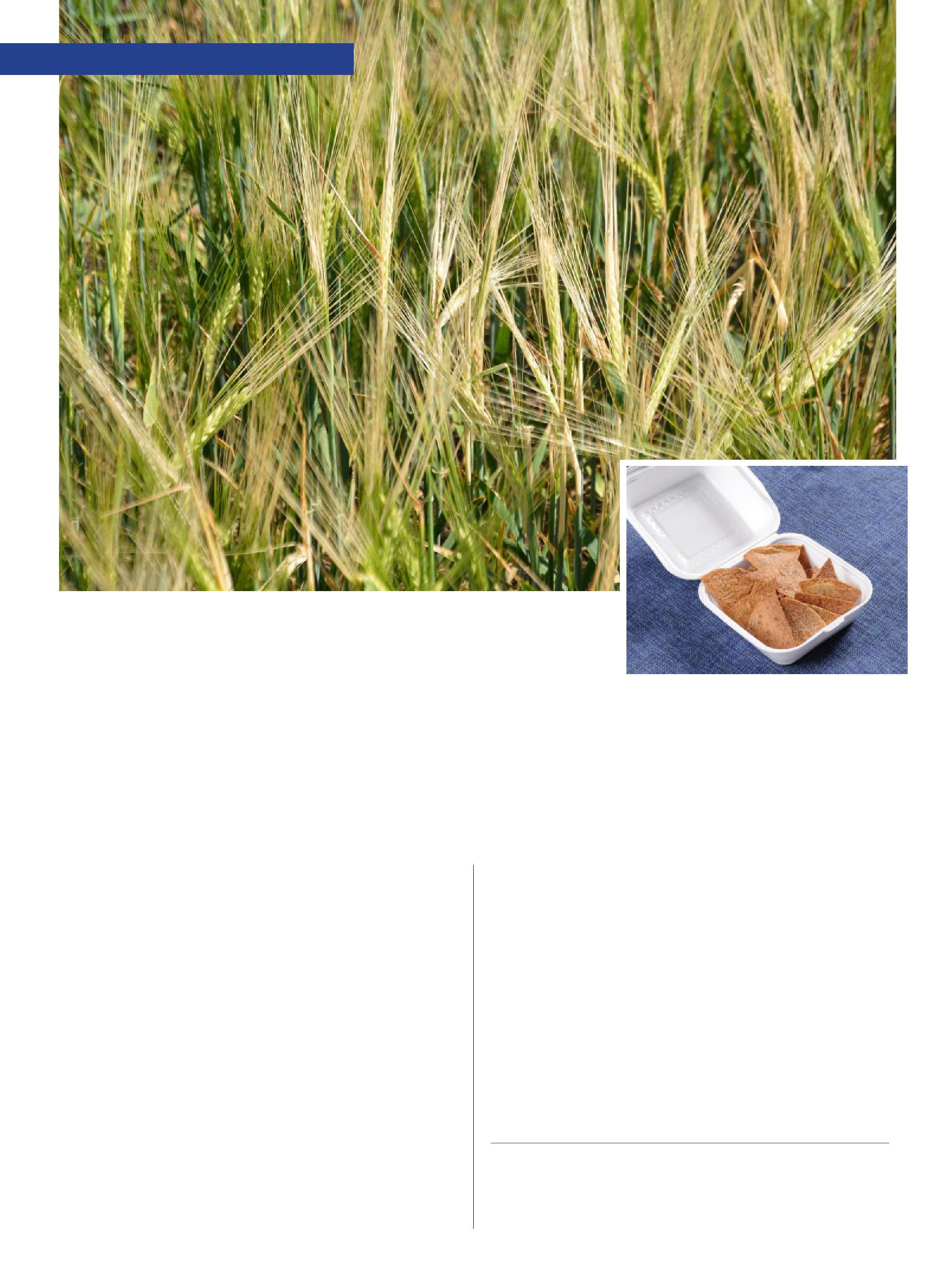
ABOVE: CDC Meredith and Merit 57 were the most consistent varieties in producing high yield with lower protein content.
PHOTO BY BRUCE BARKER.
(on pre-treated seed only)*
JumpStart ® delivers enhanced phosphate availability for increased root growth and a larger leaf area. For a canola crop you can be proud of, order your seed pre-treated with JumpStart inoculant. In 163 farmer-conducted trials, canola treated with JumpStart showed an average 6% increased yield over untreated canola**.
Quicker start, stronger finish. Don’t wait, order your seed pre-treated with JumpStart today. Nature. It’s powerful technology.
JumpStar t®
NEW DISEASE THREAT IN SOYBEAN
Researchers find a new-to-Canada Fusarium species in soybean in Alberta.
by Donna Fleury
Soybeans are a relatively new crop to Western Canada, but acreages are expanding as shorter season varieties become available. In 2015, Manitoba farmers planted 1.3 million acres of soybeans while another 300,000 acres were planted in Saskatchewan, according to Statistics Canada. In Alberta, the acreage is still quite small, with estimates of about 12,000 acres planted in 2014. As acreages increase and soybeans are included in rotation more often, diseases such as root rot and seedling blight could become more prevalent.
A complex of Fusarium species can cause root rot in soybeans, with F. avenaceum and F. oxysporum usually identified as the key pathogens. However, in Alberta, researchers recently identified a new Fusarium species that had never before been found in Canada in soybeans.
“In 2011, we collected infected soybean root samples from four soybean fields in Alberta and one in Manitoba to take a closer look at the pathogens causing the root rot disease symptoms,” explains SheauFang Hwang, research scientist with Alberta Agriculture and Forestry (AAF) in Edmonton. “We analyzed the samples and identified four Fusarium species based on their cultural and morphological
characteristics. They included F. avenaceum, F. oxysporum, F. culmorum and F. proliferatum. We had never seen F. proliferatum before and after a thorough literature search realized it had never before been identified in Canada in soybean.”
F. proliferatum was only identified in the Alberta samples, it was not found in the Manitoba field samples.
Hwang adds that as research scientists, this discovery was exciting, but for growers more research will be needed to find out more about F. proliferatum, as it proved to be particularly aggressive on soybean. Early results showed that seedling emergence, shoot dry weight and seed yield decreased, and root rot severity rose, with the increasing inoculum density of F. proliferatum.
The Alberta samples were collected late in the summer of 2011 in an irrigated field in southern Alberta. “We found a large area of
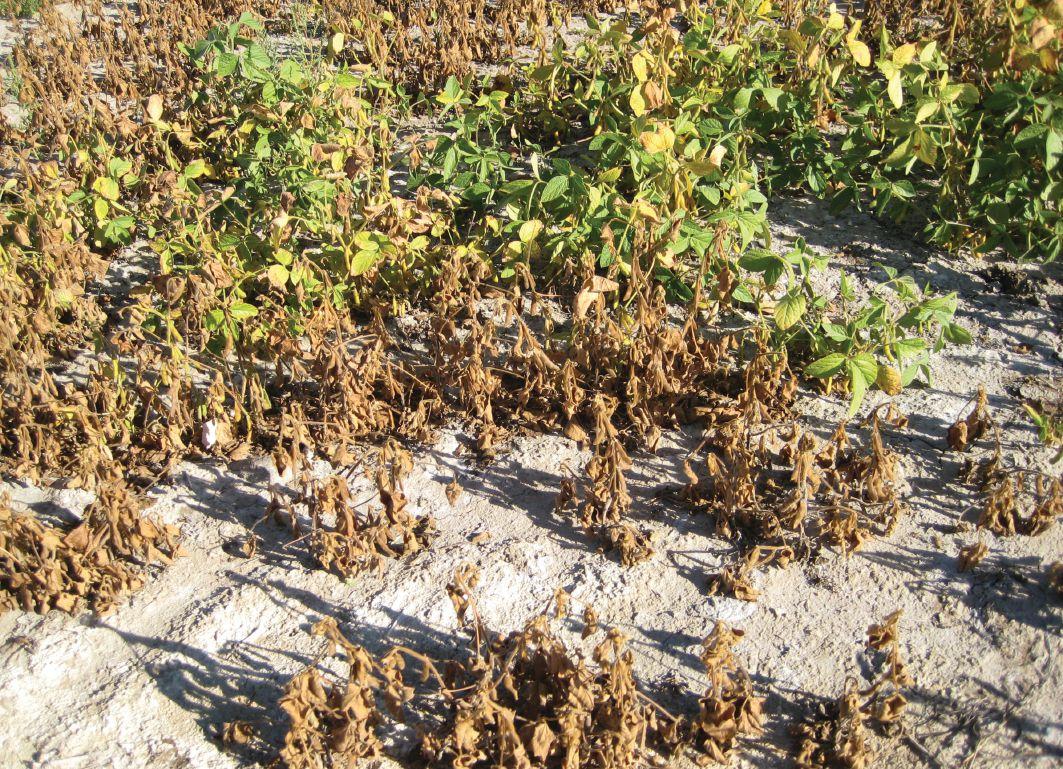
TOP: Root rot symptoms in Alberta soybean field where project samples were collected and analyzed.
INSET: Root rot disease symptoms on a 0 to 4 rating scale, with 0 - showing no symptoms (left) and 4 - stem is rotten and plant is dead (right).
disease in a soybean field in the Brooks area,” says Kan-Fa Chang, research scientist with AAF in Edmonton. “The area was in a low lying part of an irrigated field where conditions were quite wet and disease symptoms were very conspicuous. We collected 300 root rot samples from that field for analysis and isolation of the pathogens. Once we completed the analysis, we were surprised to identify F. proliferatum in the samples, which has quite unique characteristics.” F. proliferatum produces a longer slender chain-like branched structure as compared to the non-chain more bananalike structure of the other Fusarium species.
In Manitoba, the predominant Fusarium species associated with soybean are F. oxysporum and F. avenaceum. “There is a complex of Fusarium species associated with root rot that includes other species, however these two are the most aggressive on soybeans in Manitoba,” explains Debra McLaren, crop production pathologist with Agriculture and Agri-Food Canada (AAFC) in Brandon, Man. “Sometimes we see quite a bit more of other Fusarium species, but they don’t seem to be as pathogenic, although they likely contribute to the complex that causes root rot disease. So far, we have not identified F. proliferatum in Manitoba, although it will be important to watch to see if it is part of the disease complex.”
In Alberta, researchers will continue to collect samples and analyze isolates to find out if F. proliferatum is more widespread than their first finding. “We have a graduate student who will be working on using this species as the inoculum in their research to help us better understand this pathogen,” Hwang says. “We don’t know for sure if F. proliferatum only affects soybean or if it has other hosts such as peas, lentils and other legumes. We need to determine the spread and distribution and watch the root rot disease complex in rotation to understand the impacts on crop production and learn how to control the disease.”
In other crops, F. proliferatum can cause black point of wheat, and stalk and ear rot of corn, so crop rotation may not always be important for minimizing root rot disease in soybean crops.
Hwang adds that as soybean acres increase, disease pressure could rise along with it and so more research needs to be in place to stay ahead of the problem. Generally, Fusarium species can cause root rot in pea, lentil and even canola, so it will be important to find out if this more aggressive species is isolated to the one area or not, and to find crop management practices to reduce the risk of infection.
In Manitoba, Ramona Mohr, research scientist at AFFC at Brandon, has initiated long-term studies to compare soybeans in different crop rotations, both short and long rotations, to look at their impacts on disease and other factors. McLaren is involved in this research, too. “One of the components I’m involved with is the risk of root rot development based on different crop rotations,” McLaren notes. “We are in the second year of the study and it will be a few years before we have results that will help us understand the rotation effects on the development of root rot. In a previous project on disease in a potato rotation study, it took approximately six years to see the impacts of soil-borne disease. So although we haven’t seen any early differences in root rot severity between rotations in the soybean studies, over time we fully expect to see the impacts.”
Western Canadian soybean acreage is expected to continue to increase, as we have many advantages here compared to parts of the U.S. and South America where soybean rust is a significant problem and there is a cost to control. Demand from countries like Japan and China also continues to increase, and Canada is well positioned both from a quality standpoint and a geographic location to meet some of this demand.
SOYBEAN PRODUCTION, DISEASE MANAGEMENT STUDIES
Researchers in Western Canada are collaborating on other related research projects to learn more about soybean diseases and their management. Through annual disease surveys, researchers continue to watch for new and emerging issues.
“One of the most important things for any crop disease is the development of root rot resistant cultivars through crop breeding, and therefore we need to identify the pathogens causing the disease,” says Debra McLaren, crop production pathologist with Agriculture and Agri-Food Canada (AAFC) in Brandon, Man. “In a project led by Robert Conner, research scientist at AAFC in Morden, Man., we are screening newer soybean varieties developed for Western Canada against Fusarium pathogens. We are looking for material that shows a degree of resistance or tolerance to the Fusarium species.”
Phytophthora, another disease that is a devastating root and stem rot problem in soybean crops in Ontario and Quebec, is also becoming more of a problem in Manitoba. “In our survey of 44 crops in Manitoba in 2014, Phytophthora was found in 25 per cent of the crops, so it is something growers are concerned about and it will be an issue for us to watch,” McLaren says. “We will be surveying for Phytophthora again in 2015 to assess its prevalence, incidence and pathogenicity of the isolates. We know there are a number of races that differ geographically, so we need to make sure we have the correct identification of the
races in Manitoba for any future resistance work.”
McLaren is collaborating on another agronomy/ pathology research project with Ramona Mohr (AAFC Brandon) on soybeans with one component evaluating the impact of soil moisture levels on Fusarium and root rot disease. Researchers are comparing three different treatments: soils with excess moisture, soils with deficient moisture and rain fed or “normal” soil conditions.
“We are comparing different soybean cultivars with a range of root rot tolerance to determine the soil moisture conditions that may be impacting the risk of root rot disease,” McLaren notes. “We are in the second year, and early results are suggesting that areas of both excess moisture and moisture deficient or dry soils have higher levels of Fusarium than the rain fed treatment. We are continuing the study, along with other components looking at various agronomic factors, and expect to have results to share in a few years for soybean growers.”
NUFARM ANNOUNCES TWO SEED TREATMENT SOLUTIONS FOR 2016
Growing a productive, profitable crop begins every year with the best seed. From the moment new seed hits the ground, it expends most of its energy on germination. There can be little left to fight off a host of insect and disease pests.
Seed treatments protect seed and seedlings from pest pressure, by reducing the resource robbing impacts when your crop is at its most vulnerable. Nufarm Agriculture Inc. has strengthened its crop production solutions with seed treatment options that provide added insurance for growers to protect their investments. These are just the start of a series of new innovative seed treatment solutions you can expect from Nufarm.
MANAGING APHANOMYCES
Aphanomyces is a devastating root rot that affects pulse crops and has been found in a growing number of acres across Western Canada. Provincial disease surveys have shown that an estimated 60% of pulse fields surveyed in Alberta and 65% in Saskatchewan were harbouring the disease. Once fields are infected, resting spores stay in the soil for several years, increasing every time a host crop is seeded. The only option growers have had was to eliminate pulses from their crop rotation.
INTEGO™ Solo is the only seed treatment registered to protect pulse crops from the impacts of aphanomyces. Since April 2015, INTEGO Solo has been available to pulse growers as the only effective defense against devastating crop losses. For many, INTEGO Solo means peas* and other pulses have found their way back into a profitable crop rotation.
“Aphanomyces resting spores can persist in the soil for 10 to 20 years, making seed treatment a vital part of a management program for growers,” says Graham Collier, Technical Services Manager for Western Canada for Nufarm Agriculture Inc. “We want growers to use INTEGO as part of a system to manage aphanomyces. INTEGO Solo should be used to manage root rot, but also to reduce the development and return of resting spores to the soil, where they’ll infect future crops. Growers need to know if they have aphanomyces in their fields, and should avoid seeding susceptible crops into fields that have a very high level of disease, while using INTEGO to manage or prevent the spread of the disease through their other fields.”
INTEGO Solo is a Group 22 fungicide registered as a seed treatment for suppression of Aphanomyces euteiches in field peas*, chickpeas and lentils in Alberta, Saskatchewan and Manitoba. INTEGO Solo is also registered across Canada for pythium control and suppression of seed root rot caused by Phythophthora sojae.
Aphanomyces requires moisture to trigger an infection. And although 2015 was quite dry across the prairies, a normal moisture year in 2016 will lead to increased infection.
“Aphanomyces root rot is difficult to tell apart from fusarium root rot visually. Growers should work with their preferred agronomist or seed lab to confirm the presence of aphanomyces with soil or tissue tests,” says Collier.
“INTEGO Solo is the best way to manage the spread of aphanomyces and reduce the effects of root rot, while keeping pulses in your rotation.”
ALL-IN-ONE PROTECTION FOR WHEAT
Western wheat growers are also battling infestations that threaten plant stands and yield. Fusarium, pythium and wireworms are common pests found across Western Canada, competing with wheat seeds and seedlings for vital nutrients and moisture.
NipsIt™ SUITE provides complete protection for cereal seed and seedlings against the most important disease and insect pests in Canada. Its all-in-one fungicide and insecticide formulation delivers powerful active ingredients to tackle tough disease and insect pressures in the soil.
“With NipsIt SUITE growers can expect great seed and seedling fusarium control, excellent wireworm protection and the same growth enhancement effect as any other seed treatment insecticide,” says Roger Rotariu, Western Canadian Marketing Manager with Nufarm Agriculture Inc.
Registered for use in 2015 in Canada, NipsIt SUITE works with a unique, patented Lock Tight™ Technology that makes it easier to apply, improves seed flow consistency and minimizes dust off. No product performs better on the seed, in the treating process, or through the seeder.
Three actives ingredients – Group 4 insecticide (clothianidin), Group 3 fungicide (metconazole) and Group 4 fungicide (metalaxyl) – deliver an unbeatable combination for broadspectrum protection from the most common early insect and disease pests.
“Growers depend on long lasting, strong protection for their valuable seed investment, and that’s exactly what they can bank on with NipsIt SUITE,” says Rotariu.
For more information on Nufarm’s seed treatment solutions, visit nufarm.ca
NipsIt SUITE
INTRODUCING COMPLETE SEED AND SEEDLING PROTECTION FOR CEREALS
Both a fungicide and insecticide, NipsIt™ SUITE is an all-in-one seed treatment. It provides effective protection against the most common pests and diseases. It’s a superior, easy-to-apply formulation that stays on the seed to give it the best possible start.
NEW INTEGO™ Solo is your best defense against Aphanomyces – a root rot that’s devastating peas in Western Canada. Also registered for pythium control and suppression of seed rot in lentils, chickpeas, dry beans and soybeans – it ensures a bright future for your pulse crops.
Ask your local retailer for more information.
DETERMINING NITROGEN FERTILIZER REQUIREMENTS
Careful calculations are needed to ensure best economics.
by Ross H. McKenzie PhD, P.Ag.
Prairie farmers spend more money on nitrogen (N) fertilizer than all other nutrients combined, and agronomists and soil testing labs use various ways to develop N fertilizer recommendations. Careful thought is needed to decide what rates of N fertilizer application will result in optimum yield and quality.
There are four main sources of N for crops:
1. Nitrate-N (NO3-N) in soil at the start of the growing season: This is the amount of plant available soil nitrate in the soil at the start of the growing season. It can be determined by soil testing the 0 to 6, 6 to 12 and 12 to 24 inch depths and add up the amounts in pounds per acre for each depth (see Soil sampling and testing – doing it right in the September 2015 issue of Top Crop Manager).
2. Nitrogen released from soil organic matter during the growing season: Known as mineralized N, this is the amount of N released from soil organic matter during the growing season. The amount released will depend on soil type, soil organic matter level, soil moisture conditions and soil temperature during the growing season. Table 1 (pg 24) shows approximate N mineralized from various soils based on soil organic matter level. These numbers can vary significantly, depending on soil environmental conditions from year to year, so it is a challenge to accurately predict. Soil testing to determine the organic matter level of your fields is helpful to make this estimate.
3. Nitrogen released from pulse crop residue or livestock manure application: The amount of N released can be quite variable. Table 2 (pg 25) gives conservative N release estimates from previous legume crops.
4. Fertilizer N: Used to supply additional N needed to achieve optimum crop yield.
The starting point to determine N fertilizer requirements is to soil test each field or at least representative fields in late fall for nitrate-N to 24 inches. Also, have the soil testing lab determine soil organic matter level in per cent for surface soil (0 to 6 inch) samples to estimate soil N release during the growing season.
One way to determine N fertilizer requirements is to use a calculation method. Let’s use an example of a farm in the Dark Brown soil zone. For example, soil test a field in late fall that will be seeded to spring wheat next year. The soil test shows 30 lb of N/ac in the top 24 inches and a soil organic matter level of 3.5 per cent. To start the process of estimating N fertilizer required, select a realistic target yield for spring wheat. There is no point in fertilizing for a 100 bu/ac wheat crop if typically there is only enough moisture to grow 40 to 60 bu/ac of wheat.
Spring wheat typically needs four to five inches of water for vegetative growth, and each additional inch of water will contribute 5 to 9 or more bu/ac. In a drier than normal year, yield increase will be about 5 bu/ac per inch of water. In a good average year, it should be about 6 to 7 bu/ac per inch of water and in a wetter than normal year, it can be up to 8 to 9 bu/ac per inch of water or higher. Under optimum pivot irrigation, yield increase can be in the range of 9 to 10 bu/ac per inch of water.
For the purpose of our example, on a dryland farm in a normal year, plan on needing about four inches of water for vegetative growth, with each additional inch of water increasing yield by 6 to 7 bu/ac. Let’s say there are four inches of stored soil moisture
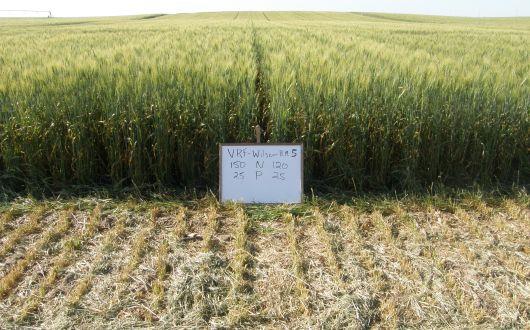
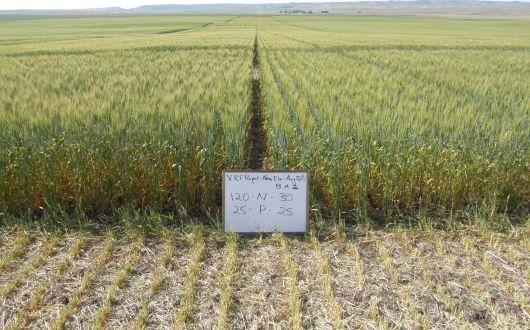
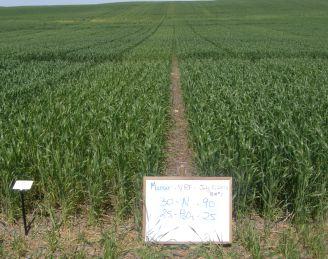
ABOVE LEFT: N fertilizer rates of 120 vs. 150 kg/ha at an irrigated variable rate fertilizer research study.
ABOVE RIGHT: N fertilizer rates of 120 vs. 30 kg/ha at a dryland variable rate fertilizer research study.
PHOTOS BY ROSS MCKENZIE.
Note:Mineralized amounts will vary considerably depending on soil moisture and temperature conditions during the growing season.
Source: Ross McKenzie.
going into spring and the average growing season precipitation is about eight inches; then the stored soil moisture will look after vegetative growth and the eight inches of precipitation will go to yield. I would use the assumption spring wheat would produce about 6 to 7 bu/ac per inch of water, so 8 inches of water x 6.5 bu/ac/inch = 52
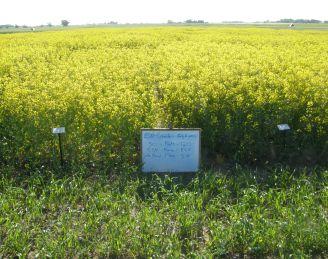
ABOVE LEFT: N fertilizer rates of 90 vs. 30 kg/ha at a dryland variable rate research study. ABOVE RIGHT: N form, rate and placement study – 30 kg/ha of ESN sidebanded vs. 120 kg/ha of ESN seed-placed with canola at a dryland site near Lethbridge.
bu/ac for a target yield. Therefore, I would use a target yield in the range of 50 to 55 bu/ac.
The next step is to multiply the target yield by the amount of N needed to produce a bushel of spring wheat. This value can vary considerably ranging from about 1.7 to 2.4 lb N/bu. Typically when yield is lower, protein level is higher and more N is used per bushel. Conversely, when moisture conditions are very good and yield is higher, protein tends to be a bit lower and less N is used per bushel. For a target yield in the range of 50 to 55 bu/ac, I would multiply 55 bu/ac x 2 lb N/bu = 110 lb of N/ac. However, we need to consider the soil test N at 30 lb/ac and soil N mineralization from the organic matter, which would be
about 28 lb/ac (see Table 1). So from the total N required, subtract the soil test N and estimated N mineralization: 110 lb of N/ac - 30 lb/ac of soil N - 28 lb/ac of mineralized N = 52 lb N/ac.
The estimated N required is about 52 lb/ac. But, soil and fertilizer N are not taken up with 100 per cent efficiency. Hopefully, fertilizer N is taken up at about 60 to 70 per cent efficiency if N is side- or mid-row banded at seeding. There will be some N tie up by soil microbes, and some potential N losses. Therefore, I suggest using an efficiency factor of 70 per cent or slightly lower for the applied fertilizer: 52 lb of N/ ac required ÷ 0.7 = 74 lb N/ac.
Using this relatively simple method, about 70 to 75 lb/ac of N fertilizer is
Table 3.
Table 2. N release estimates from previous legume crops
Source: Ross McKenzie.
required (I use rounded numbers as this is an estimated calculation). This is a calculated estimate and it does not take into account the value of spring wheat or the cost of the N fertilizer.
Another way to estimate N fertilizer is to use regional N fertilizer response curves, if they are available for your region. Crop yield response curves conducted on typical soils and crops in your region are really the best way to estimate how much N fertilizer is needed. And, you can do some economic analysis. There has been N fertilizer research across Alberta in the past, to develop and maintain N response curves in the various soil and climatic regions of the province. Table 3 shows irrigated spring
wheat yield increase, with increasing rates of N fertilizer. (This work was done by Alberta Agriculture from 2006 to 2011.)
In addition, Table 4 uses information from Table 3 to calculate the economic return using two scenarios when soil test N is 40 lb/ac in the 0 to 24 inch depth. Rather than look at a predicted yield, this method looks at “predicted yield increase” with increasing N fertilizer rates. In Scenario 1, about 140 to 150 lb/ac of N would be economical, and in Scenario 2, about 100 to 110 lb/ac of N would be economical. In both scenarios, the soil test N level is the same and the same crop is grown; the difference in N fertilizer required is based on N fertilizer price and value of the crop. We
don’t worry about soil N mineralization here, as this is built into the N fertilizer response curve information.
For Alberta farmers, a program called Alberta Farm Fertilizer Information Recommendation Manager (AFFIRM) was developed with all available N fertilizer response curves for the various agro-ecological areas of the province. The program allows the user to input soil test results, crop value and fertilizer costs to easily calculate economic N rates using different scenarios.
Using up-to-date regional nitrogen yield increase information to economically determine the optimum N fertilizer required is really the best approach. However, many areas of the Prairies do not have current, up-to-date response information. Unfortunately, this type of research just isn’t being done anymore across the Prairies. So many farmers must determine N fertilizer requirements using a more simplistic calculation method.
The big unknown every year is the environmental conditions that will occur during the growing season, after most or all of the N fertilizer is applied. We don’t know ahead of time if we will have a wetter, drier or near normal year. Therefore, I suggest being cautiously optimistic and fertilize for a reasonably good target yield each year.
first row is increasing rate of N fertilizer in
The second row is the estimated spring wheat yield in bu/ac from Table 3, at
of
The third row shows yield increase in bu/ac at increments of 10 lb/ac of N fertilizer. For scenario #1, it is assumed that fertilizer cost is 65¢/lb or $6.50 for each 10 lb/ac increment of fertilizer and wheat value is $8/bu. For the 2:1 ratio of crop value to fertilizer cost, is between 140 and 150 lb/ac of N (red numbers). For scenario #2, it is assumed fertilizer cost is 80¢/lb or $8 for each 10 lb/ac increment of fertilizer and wheat value is $5/bu. The 2:1 ratio of crop value to fertilizer cost is between 100 and 110 lb/ac of N (red numbers).
Source: Ross McKenzie.
Table 4. Calculating economic returns
WHY ATTEND THE 2016 weed summit?
To gain a better understanding of herbicide resistance issues across Canada and around the world.
Our goal is to ensure participants walk away with a clear understanding on specific actions they can take to help minimize the devastating impact of herbicide resistance on agricultural productivity in Canada.
Some topics that will be discusSed are:
• A global overview of herbicide resistance
• State of weed resistance in Western Canada and future outlook
• Managing herbicide resistant wild oat on the Prairies
• Distribution and control of glyphosate-resistant weeds in Ontario
• The role of pre-emergent herbicides, and tank-mixes and integrated weed management
• Implementing harvest weed seed control (HWSC) methods in Canada
TOP
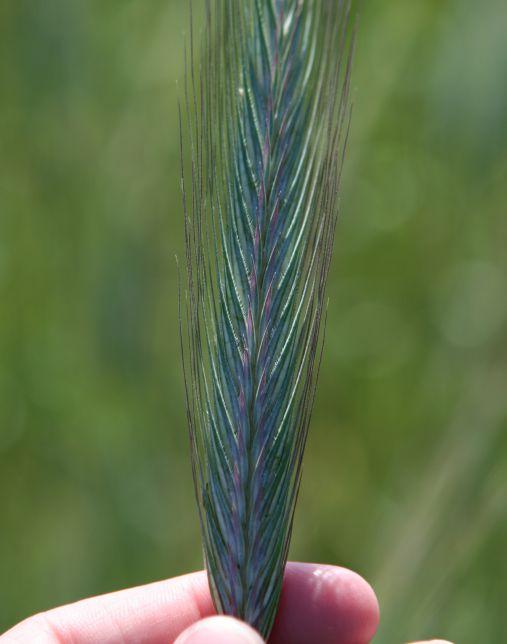
YIELD ADVANTAGE WITH HYBRID FALL RYE
This changes everything.
by Bruce Barker
Very high yielding with uniform maturity and better quality than open pollinated fall rye, hybrid fall rye is poised to open up a new era in production and marketing. Forget the notion that fall rye is a low-input crop for poor producing land. Hybrid fall rye has the yield and quality to open up new food markets, and compete on equal footing with winter wheat.
“There is a dramatic yield advantage to hybrid rye. In the low range, it is about 15 per cent higher in poorer producing areas but 30 per cent or more in higher productivity areas,” says Paul Thoroughgood, regional agronomist Prairies, with Ducks Unlimited Canada (DUC) at Regina, Sask.
DUC conducted 15 trials over the last two years for the German seed company KWS to look at the potential for hybrid fall rye on the Prairies. KWS is the leading rye breeder in the world, and has registered two hybrid fall rye varieties in Western Canada. Brasetto is marketed by FP Genetics at Regina, Sask. and is commercially available in 2015. Guttino is the other variety, and is being handled by SeedNet, a group of 14 seed growers in southern Alberta.
Provincial variety guides give Brasetto a huge yield advantage over the check variety Prima and the popular variety Hazlet – with the caveat that the number of trials is relatively low in Saskatchewan. In Alberta, Brasetto yielded 154 per cent of Prima compared to Hazlet’s 123 per cent advantage over Prima (15 site years). In Saskatchewan, Brasetto was 170 per cent of Prima in Areas 1 and 2, and 117 per cent in Areas 3 and 4 (three site years). By comparison, Hazlet was 120 per cent and 106 per cent of Prima. Manitoba has not run provincial fall rye trials since 2009.
“We are consistently seeing that hybrid rye is displaying good heterosis. The yields are easily 25 to 30 per cent higher,” says Rod Merryweather, CEO of FP Genetics. FP Genetics has another KWS variety in the registration pipeline called Bono, and Merryweather says its yield is 9.5 per cent higher than Brasetto.
Hybrid rye is a breakthrough in cereal production. Merryweather says attempts to breed hybrid winter wheat have been successful, but the hybrid vigour didn’t produce exceptional yields – only in the five to 10 per cent range over conventional winter wheat. As a result, hybrid winter wheat has not yet become economical. Hybrid rye, though, has been successfully commercialized because of a lower cost of production and high seed yield – although getting hybrid rye to market lagged behind corn and canola.
“Rye is a small crop globally – only a few million hectares – but it is open-pollinated, so easier to work with in a hybrid process,” Merryweather says. “A huge share of the rye market globally has converted to hybrids.”
Enhanced market opportunities
Rye acreage in Western Canada has dwindled over the last 20 years, dropping to 210,000 acres in 2015 from around 700,000 acres. The reason is simple economics. Rye has been displaced by winter and spring wheat in the feed market, and it never had a fit in the ethanol market because of lower yields. About 60,000 to 70,000 tonnes is exported to the U.S. and a similar amount is consumed in Canada in the distiller, milling and feed markets.
Merryweather expects to see 25,000 acres of Brasetto sown in Western Canada in 2015, with about two-thirds of it in Manitoba, and all destined for the milling and distillery markets. He hopes market development efforts can increase the acreage of hybrid rye to 100,000 acres.
“Rye has suffered in the milling market because there has been difficulty in getting consistent quality. Hybrid rye has a higher
Brasetto hybrid fall rye is up to 30 per cent higher yielding than Hazlet rye.
falling number than conventional rye, making it better for milling. If we can show consistent supply and quality with hybrid rye, there is a larger market that we can access,” Merryweather says. “The U.S. imports 150,000 tonnes of rye from the EU each year, so there is definitely a market.”
FP Genetics is partnering with several grain companies to develop markets and handle contracts, grain buying and handling. Patterson Grain, Scoular Canada and NAFI, all headquartered in Winnipeg, are handling 2015 contracts. Merryweather says these smaller, specialty companies are better suited to handling niche products like hybrid fall rye.
When Bono hits the market with even higher yield, Merryweather says it could have the ability to compete in the feed and ethanol markets as well.
Treat it like a high-yield winter wheat crop
Thoroughgood says the last two years of trials on hybrid fall rye have helped to develop an understanding of the agronomic management required to grow a high yielding quality crop. The drought was hard on the crop in 2015, but he says yields were in the 80 to 90 bushel range in 2014. In Manitoba and Alberta, yield was over 100 bushels at one site in each province.
“Consistently, we have seen hybrid rye yield in the 60 to 70 to 80 bushel per acre range depending on soil zone and precipitation. If you are targeting that yield, you need to manage the fertility package properly,” Thoroughgood says.
FP Genetics is working on trials this fall to help establish yield response curves to nitrogen (N) using the new variety Bono. In the mean-
Trait Stewardship Responsibilities Notice to Farmers
Monsanto Company is a member of Excellence Through Stewardship® (ETS). Monsanto products are commercialized in accordance with ETS Product Launch Stewardship Guidance, and in compliance with Monsanto’s Policy for Commercialization of Biotechnology-Derived Plant Products in Commodity Crops. Commercialized products have been approved for import into key export markets with functioning regulatory systems. Any crop or material produced from this product can only be exported to, or used, processed or sold in countries where all necessary regulatory approvals have been granted. It is a violation of national and international law to move material containing biotech traits across boundaries into nations where import is not permitted. Growers should talk to their grain handler or product purchaser to confirm their buying position for this product. Excellence Through Stewardship® is a registered trademark of Excellence Through Stewardship.
ALWAYS READ AND FOLLOW PESTICIDE LABEL DIRECTIONS. Roundup Ready® crops contain genes that confer tolerance to glyphosate, the active ingredient in Roundup® brand agricultural herbicides. Roundup® brand agricultural herbicides will kill crops that are not tolerant to glyphosate. Acceleron® seed treatment technology for canola contains the active ingredients difenoconazole, metalaxyl (M and S isomers), fludioxonil and thiamethoxam. Acceleron® seed treatment technology for canola plus Vibrance® is a combination of two separate individually-registered products, which together contain the active ingredients difenoconazole, metalaxyl (M and S isomers), fludioxonil, thiamethoxam, and sedaxane. Acceleron® seed treatment technology for corn (fungicides and insecticide) is a combination of four separate individually-registered products, which together contain the active ingredients metalaxyl, trifloxystrobin, ipconazole, and clothianidin. Acceleron® seed treatment technology for corn (fungicides only) is a combination of three separate individually-registered products, which together contain the active ingredients metalaxyl, trifloxystrobin and ipconazole. Acceleron® seed treatment technology for corn with Poncho®/VoTivo™ (fungicides, insecticide and nematicide) is a combination of five separate individually-registered products, which together contain the active ingredients metalaxyl, trifloxystrobin, ipconazole, clothianidin and Bacillus firmus strain I-1582. Acceleron® seed treatment technology for soybeans (fungicides and insecticide) is a combination of four separate individually registered products, which together contain the active ingredients fluxapyroxad, pyraclostrobin, metalaxyl and imidacloprid. Acceleron® seed treatment technology for soybeans (fungicides only) is a combination of three separate individually registered products, which together contain the active ingredients fluxapyroxad, pyraclostrobin and metalaxyl. Acceleron and Design®, Acceleron®, DEKALB and Design®, DEKALB®, Genuity and Design®, Genuity®, JumpStart®, RIB Complete and Design®, RIB Complete®, Roundup Ready 2 Technology and Design®, Roundup Ready 2 Yield®, Roundup Ready®, Roundup Transorb® Roundup WeatherMAX®, Roundup®, SmartStax and Design®, SmartStax®, Transorb®, VT Double PRO®, and VT Triple PRO® are registered trademarks of Monsanto Technology LLC, Used under license. Vibrance® and Fortenza® are registered trademarks of a Syngenta group company. LibertyLink® and the Water Droplet Design are trademarks of Bayer. Used under license. Herculex® is a registered trademark of Dow AgroSciences LLC. Used under license. Poncho® and Votivo™ are trademarks of Bayer. Used under license. All other trademarks are the property of their respective owners.
time, Merryweather says if the yield target for winter wheat has been 85 bushels, a similar N fertility program would be appropriate for hybrid rye. Generally for winter cereals, aim for one pound of N for each bushel of target yield minus soil test residual N.
“There is some evidence that hybrid rye might have a 10 to 15 per cent higher N-use efficiency than winter wheat, but at this point, in highly productive areas we recommend that you do what you do with winter wheat for fall rye,” Merryweather explains.
Merryweather says field experience confirms that hybrid rye is responsive to N fertilizer. One test in Manitoba bumped the N fertilizer rate from 130 pounds per acre to 170 lbs. The yield response was an additional seven bushels per acre, providing almost a 2:1 return on the fertilizer.
Thoroughgood says time of N application comes down to farm preference. Ideally, a split application with some fall applied and the balance spring broadcast can make the most efficient use of N because the N is applied most closely to when the crop uses the nutrient. However, this isn’t always practical, so he recommends farmers do what has been successful on their farm with winter wheat, including using stabilized N products if that makes sense.
Time of seeding in the fall also parallels winter wheat. Going into the winter, the rye should be at the four-leaf stage with at least one and preferably two tillers. Seeding in late August up to September 15 is recommended. Where rye growers in the past may have pushed seeding into October because it was viewed as a low value crop, Thoroughgood says growers should seed early and do everything they can to get a healthy stand of hybrid rye established early in the fall.
Late seeding not only decreases winter survival, it can also significantly delay harvest from last July/early August into September. Delayed maturity also pushes winter crops into the Fusarium head blight window.
As for winter wheat, hybrid fall rye should also go into the ground with a good seed treatment for protection against seedling diseases. Seed treatment helps stand establishment and over winter survival. Seed shallow at one to 1.5 inches and target 18 plants per square foot. Seeding into standing stubble, preferably canola stubble is highly recommended.
Fall rye is susceptible to ergot, and Merryweather says hybrid rye is no different. Management practices focus on managing the ergot spore load. Don’t plant on cereal or corn stubble. Try to avoid areas where pasture and grasses are close to the field. Try not to let grass around field edges go to seed.
“Rye will have higher ergot infection than wheat, but it can be managed. Just do things to help minimize the spore load,” Merryweather says.
Hybrid rye appears to be less susceptible to Fusarium head blight than wheat, but that doesn’t mean it will necessarily escape infection. Merryweather says growers should monitor the disease and spray if necessary.
Some leaf and stem diseases affect hybrid rye. Interestingly, information from KWS in Europe shows the importance of protecting against stem disease. With wheat, yield contributions come 31 per cent from the stem, 57 per cent from the leaf area and 12 per cent from the head. Hybrid rye yield is derived 57 per cent from the stem, 20 per cent from the leaves and 23 per cent from the head.
Putting all the pieces together – agronomics and market development – could herald in a new opportunity for Prairie farmers. Whether you have Brasetto or Guttino already in the ground for a 2016 harvest, or are just peering over the fence waiting to see how hybrid rye turns out, it is definitely a crop to keep an eye on.
We sh a re the sa me ta ble
“ The natural environment is critical to farmers – we depend on soil and water for the production of food. But we also live on our farms, so it’s essential that we act as responsible stewards.”
- Doug Chorney, Manitoba
“ We take pride in knowing we would feel safe consuming any of the crops we sell. If we would not use it ourselves it does not go to market.”
- Katelyn Duncan, Saskatchewan
“ The welfare of my animals is one of my highest priorities. If I don’t give my cows a high quality of life they won’t grow up to be great cows.”
- Andrew Campbell, Ontario
Safe food; animal welfare; sustainability; people care deeply about these things when they make food choices. And the agriculture industry cares deeply about them too – not just to ensure a bright future for our industry, but to feed our own families for generations to come.
The journey from farm to table is a conversation everyone should be a part of. So let’s talk about it, together.
Ag More Than Ever is an industry-driven cause to improve and create realistic perceptions of Canadian agriculture. Visit AgMoreThanEver.ca to learn more.
SEPARATING THE WHEAT FROM THE CHAFF
Cooling and drying grain with forced air ventilation.
by Bruce Barker
Aeration. Chilled aeration. Natural air drying. Near-ambient air drying. Low temperature air drying. High temperature air drying. Dryeration. When did using forced air through a grain bin become so complicated?
Dr. Digvir Jayas, vice-president (research and international) and distinguished professor at the University of Manitoba, outlined how forced air ventilation can be used during a presentation made to the Brazilian Postharvest Conference in Maringa, Brazil in 2014. The results (Singh, C.B., D.S. Jayas and R. Larson. 2015. Assessment of fan control strategies for in-bin natural air drying of wheat in Western Canada. Canadian Biosystems Engineering, 56:3.25-3.36) are summarized here.
“Considerable research related to cooling and/or drying of grains by forcing air through bulk grains has been reported and continues to be reported in published literature. Although the process is simple and works well when properly designed and implemented, this simplicity also leads to a lot of misunderstandings about the process,” Jayas says. “Therefore, many systems get designed to force less than optimum amounts of air to complete the task.”
The definitions
Aeration is the forcing of small amounts of air (1 to 3 L/s per m3 of grain) to typically cool grains after harvest using ambient air at temperatures below grain temperature during cooler hours of the day. The aeration can also be used to eliminate temperature gradients within bulk grains and thus to reduce moisture migration, remove spoilage odours from grains, remove fumigants from grains and remove small amounts of moisture from warm grains such as during dryeration (defined below). In colder climates such as in Canada, aeration could also be used to reduce grain temperature to below 10 C to reduce insect activity and population growth. Under Canadian conditions, aeration during winters (when temperatures are below -20 C) can be used to kill all life stages of insects in stored grain.
Chilled aeration is the forcing of chilled air (1 to 5 L/s per m3 of grain), conditioned using a chilling device (air conditioning unit), through bulk grains. The purpose of chilled aeration is to reduce the temperature of the grain below 10 C for slowing insect activity and
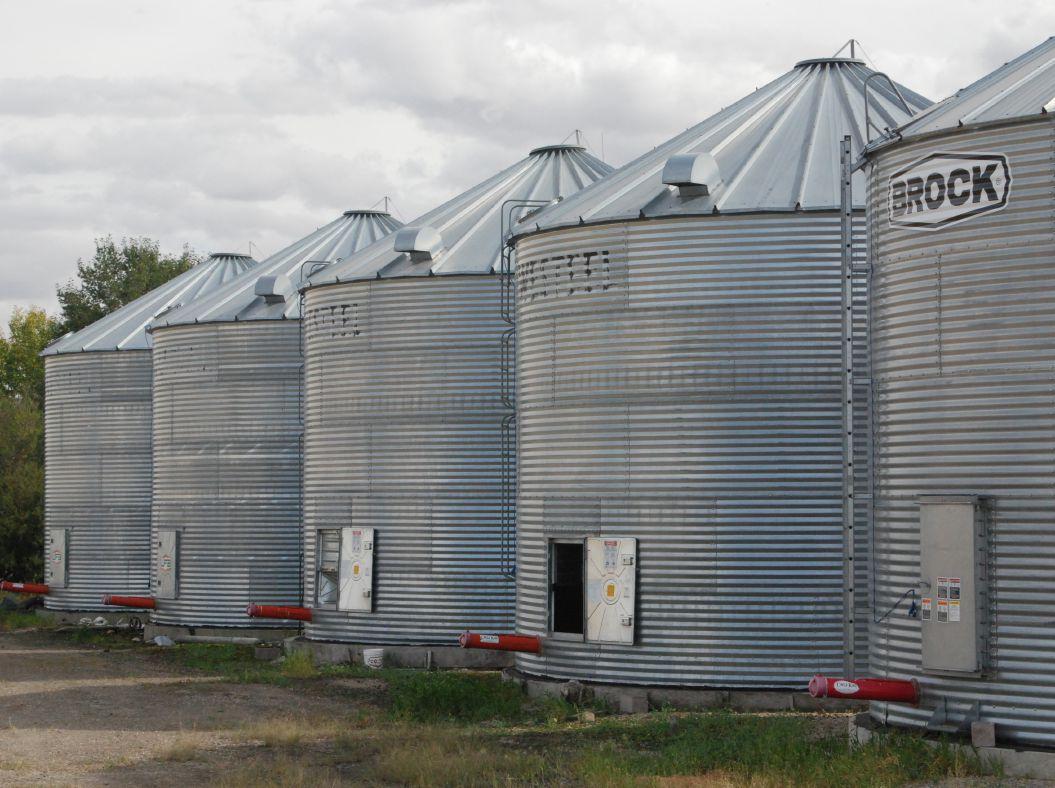
ABOVE: Conditioning grain in bins brings many complexities.
PHOTO BY BRUCE
population growth. Chilled aeration can also be used to store wet grain without deterioration for two to three weeks during which it can be dried to safe moisture contents for storage.
Natural air drying is the forcing of ambient air (10 to 25 L/s per m3 of grain) to decrease the moisture of grain to safe storage levels. The amount of air required increases if the initial moisture content or ambient relative humidity are high, or if ambient air temperature is low. The latter two are dependent on weather conditions following grain harvest.
Near-ambient air drying is similar to natural air drying but air temperature is a few degrees (up to 5 C) above ambient conditions which can be caused by frictional losses from the fan motor assembly when air is pulled over these.
Low-temperature air drying is similar to natural air drying but air temperature is 5 C to 10 C above ambient conditions which can be caused by adding supplemental heat from any source such as electricity, propane, natural gas, wood or solar panels.
High-temperature air drying is the forcing of air (15 to 30 L/s per m3 of grain) at 50 C to 250 C to remove moisture content from grain to safe storage levels. The air temperature and amount of airflow depend on mechanisms of dryers (e.g., concurrent, countercurrent, cross and mixed flow) as well as the initial moisture content of grain and grain type.
Dryeration, also known as combination drying, is the cooling of hot grain after high-temperature air drying by aeration and the removal of one to two percentage points of moisture. Thus, grain is dried to about two percentage points above desired safe moisture content using high-temperature drying, tempered for eight to 10 hours for redistribution of moisture within grain kernels and then cooled by aeration using ambient air. The main advantages of dryeration over hightemperature drying include increased drying capacity, use of higher air temperatures, energy savings, elimination of the cooling section in high-temperature dryers and reduced stress cracks in grains.
The equipment
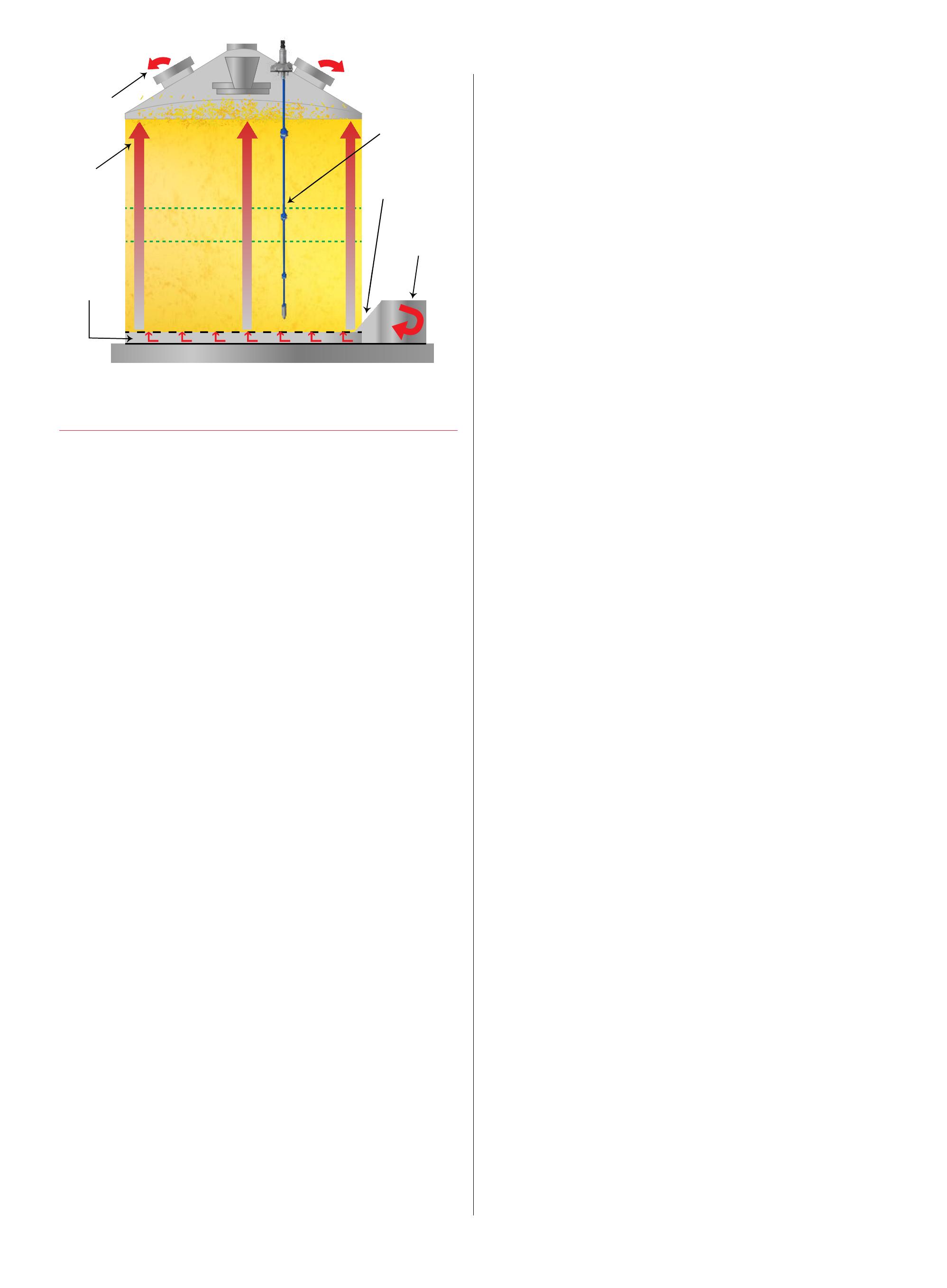
The main components of the forced air systems are: a flat-bottom storage bin containing a deep layer (more than one metre deep) of grain, a plenum to introduce air into the grain bulk, a fan and duct arrangement to force air through the bulk grain, and vents to exhaust the air once it has passed through the grain. A plenum with a fully perforated
floor over concrete (or solid) foundation and levelled grain surface provides most uniform airflow distribution in the grain mass. Thus, fully perforated floors are commonly used but several partially perforated floors are also used in flat-bottom bins. (See Fig. 1.) Many farms also have hopper-bottom bins, which are equipped with different configurations of perforated plenums to introduce air into the grain.
The area of partially perforated flooring through which air can be introduced into the bulk grain should be sufficient to avoid formation of stagnant zones in the bulk grain. The size of perforations in the floors should be small enough to support the smallest-seeded grains to be stored in the bin and the number of perforations should be enough (equivalent to >10 per cent of the perforated floor area) to cause minimum pressure drop across the floor.
The fan should be sized properly to ensure sufficient airflow through grain at its maximum depth and for a grain which offers maximum static pressure at that airflow rate while taking into consideration a thorough understanding of type of fan and its characteristics, i.e., relationship between the airflow rate (L/s) supplied by the fan against different static pressures.
The amount of airflow from the fan decreases as the static pressure increases. Thus, a fan sized for shorter depth may not dry grain in the expected time if grain depth is increased. Similarly, a fan sized to provide a certain airflow rate, say for wheat, will not provide the same airflow rate for canola because pressure drop per unit length of canola is 2 to 2.5 times more than for wheat, and fan output would be lowered considerably at the increased pressure offered by grain for all fan types.
The vents should be enough in number and size to avoid stagnation of air in the bin and thus cause minimal back-pressure to be overcome by the fan.
The appropriate amount of airflow through grain ensures proper drying in the specified period. The excess amount of airflow will dry grain sooner but may also result in more non-uniformity in grain moisture content with continuous airflow. Grain mixed with fines (particles smaller in size than grains) offers more pressure drop per unit length than clean grain, and the moisture content of grain also affects pressure drop (Moses et al., 2013). Therefore, a good estimate of static pressure in order to properly size the fan should consider all of the factors that affect pressure drop across grain.
Also, measured fan characteristics, if available, should be used in sizing the fans because at times the values reported by the manufacturers give higher air flow rates than the measured on-site values for the same static pressure. If the difference between measured and reported values is large, then a fan sized using manufacturer’s data will be undersized for actual drying conditions.
Drying zones
In a system with air moving vertically upwards, the bottom layer dries first while the top layer stays close to initial moisture content. As drying progresses, more layers from bottom to top dry, but sometimes rewet if air relative humidity of incoming air is greater than the equilibrium relative humidity of grain moisture in the layer.
Drying could be stopped based on many criteria, such as: top layer is at the target moisture content, but this may cause severe over-drying in the bottom layers; average grain moisture content is at the target moisture content but this may require grain mixing after drying is stopped; or, moisture in all layers is within certain percentage point of the target – producing the most uniform drying. These criteria could
CONTINUED ON PAGE 40
Fig. 1. Components of the flat-bottom bin based system used to force air though bulk grain for cooling and/or drying grain. Source: Singh at al. 2014.
Want a positive reaction from your peas and lentils? it’s all in the delivery.
Nothing gets peas and lentils off to a better start than Nodulator® XL solid core granule inoculant. Thanks to an advanced, more uniformly sized clay granule that’s exclusive to BASF, it delivers higher application accuracy for precision placement in furrow. The result is better nodulation. And with a more active strain of nitrogen-fixing rhizobium, you can look forward to a great finish too – up to 8% more yield*. For details, visit agsolutions.ca/nodulatorxl or contact agsolutions® Customer Care at 1-877-371-BASF (2273).
*Source: Independently generated field data from 87 station years (peas) and 84 station years (lentils). (n sites x n years). always read and follow label directions. agsolutions is a registered trade-mark of BASF Corporation; NODULATOR
BARLEY’S HEALTH BENEFITS
A project expands our understanding of barley’s cholesterol-lowering effects – and more.
by Carolyn King
Research has already proven that barley beta-glucan lowers cholesterol. Now a major clinical trial has answered some previously unanswered questions about this effect. Plus it has identified improvements in gut microbes from eating beta-glucan and a possible link between a person’s genetic makeup and beta-glucan’s effectiveness. Results from the project could help advance the food barley value chain.
Beta-glucan is a type of viscous dietary fibre. “Both barley and oats are rich sources of beta-glucan. In contrast, wheat contains almost no beta-glucan, and corn and rice have none at all,” explains Nancy Ames, a food scientist with Agriculture and Agri-Food Canada (AAFC) in Winnipeg, who was the project’s principal investigator.
The health effects of consuming beta-glucan have been examined in many studies. The two best documented health benefits are cholesterol lowering, which helps reduce the risk of heart disease, and reduction of glycemic response after a meal, which helps control/prevent diabetes.
Several countries, including Canada and the United States, have approved health claims on the cholesterol-lowering effect of barley
beta-glucan. According to Health Canada, consumption of at least three grams of barley beta-glucan per day helps reduce cholesterol.
Ames and her AAFC team were the ones who prepared the submission for this health claim, conducting a comprehensive analysis of all the scientifically valid studies on the topic. The claim was submitted by the Alberta Barley Commission to Health Canada in 2009 and was approved in 2012.
While preparing the submission, Ames and her team found certain gaps in the scientific information. So she and Susan Tosh of AAFC’s Guelph Food Research Centre developed a multi-year project to delve deeper into barley beta-glucan’s cholesterol-lowering effect.
“Our first interest was whether processing made a difference to the cholesterol-lowering effect. We knew that processing can
TOP: The beta-glucan project results may help barley breeders and processors who want to work toward further enhancing the healthfulness of barley food products.
INSET: Barley breakfast foods were used in a clinical trial on barley beta-glucan.
PHOTO BY JANET KANTERS.
PHOTO COURTESY OF AAFC.
These barley breakfast foods were used in a clinical trial on barley betaglucan, a dietary fibre with important health benefits.
sometimes affect beta-glucan’s viscosity, and we wondered: Is it possible that low versus high viscosity makes a difference in cholesterol lowering?” Ames says. “We also wanted to look at the optimal dose of beta-glucan required for health effects because there wasn’t a proper dose-effect study. So we decided to look at those together.”
The project also explored the physiological mechanism responsible for beta-glucan’s cholesterol-lowering effect; the influence of beta-glucan on gut microbes; and a possible genetic component in people’s response to beta-glucan. The project involved both barley and oats; the researchers used oats in much of the work to develop measurement methods, and they used barley for the clinical trial.
To carry out the project, Ames brought together a large, multidisciplinary team that included Tosh and several scientists from the University of Manitoba and its Richardson Centre for Functional Foods and Nutraceuticals, as well as technicians and graduate students.
A continuum of advances
The project involved a number of phases, with the progress made in each phase providing the foundation for subsequent work.
In the initial phase, the researchers used a range of processing treatments on barley to see if they could increase or decrease betaglucan’s viscosity. They found that when normal barley is processed and prepared in normal ways, the beta-glucan has a higher viscosity than the untreated grain. Ames notes, “You always hear people say that processing is bad. But in this case, processing was good.”
The researchers also found certain techniques that reduced beta-glucan’s viscosity; those techniques are not commonly used in barley processing.
As part of doing this work, the researchers developed a faster way to measure beta-glucan’s viscosity. This method could also be used by processors to measure the beta-glucan characteristics of prototype food products, and by crop breeders to screen breeding materials.
Based on this initial work on processing and viscosity, the researchers were able to create barley foods with low and high viscosity beta-glucan for use in the clinical trial.
The trial compared the effects of four different breakfasts: a barley-based diet with three grams of high viscosity beta-glucan; a barley-based diet with three grams of low viscosity beta-glucan; a barley-based diet with five grams of low viscosity beta-glucan; and a heart-healthy wheat- and rice-based diet, as a control.
During the course of the trial, the researchers measured a number of health characteristics in the participants such as body weight, body fat distribution and blood pressure. They also collected blood and fecal samples, and analyzed the samples for various factors related to the cholesterol-lowering mechanism, gene-bydiet interactions, and gut microbes.
The clinical trial showed that viscosity definitely matters. Ames says, “Out of all the treatments, the high viscosity treatment had the greatest effect on lowering cholesterol.” Now in all their betaglucan studies, the researchers measure not only the amount but also the viscosity of beta-glucan.
These results support the barley health claim. “Since normally processed barley foods have high viscosity beta-glucan, then health claims for the cholesterol-lowering effect of beta-glucan will be valid for the barley foods most commonly encountered by consumers,” Ames explains.
She adds, “It is easy to eat barley every day and get the amount of beta-glucan you need.”
The project also shed light on the mechanism of beta-glucan’s cholesterol-lowering effect. Through measurements of blood cholesterol and other factors, the researchers were able to identify which of several proposed mechanisms was likely to be the one responsible.
As well, they identified a possible gene-diet interaction. Although many studies have found that some individuals respond differently than others to dietary changes, this study is the first one to report a gene-related difference in response to beta-glucan. The results indicated that trial participants with a certain variant of a key gene had less of a response to beta-glucan’s cholesterol-lowering effect than participants with other variants of the gene.
That finding needs to be confirmed by further studies. If it is proven, then it would have implications for personalized nutrition. For example, potentially a doctor could simply do a blood test to see how well a patient would respond to beta-glucan as a possible treatment to lower his or her cholesterol.
The researchers were interested in the effects of beta-gluten on gut microbial populations because gut microbes are known to play a significant part in human digestion and health. The project’s results showed that consumption of the high viscosity beta-glucan meals significantly shifted gut microbe populations to a healthy pattern. This is the first clinical study to report gut microbial changes in humans due to eating beta-glucan.
The analysis showed that this microbial population shift was associated with reduction of risk factors for cardiovascular disease, such as body mass index, waist circumference and blood pressure. Ames says, “Together, our results suggest that altering gut microbiota may be playing a major role in mediating the health benefits of beta-glucan.”
“I am really excited about our findings,” notes Yanan Wang, a PhD student involved in this project. She explains that better understanding of beta-glucan’s cholesterol-lowering mechanism could provide practical benefits. “By knowing the mechanism, we can use the physiological effects of functional foods in a more effective way.”
Overall, the project has achieved important advances in understanding how beta-glucan works in the human body and how to measure key characteristics of beta-glucan. These findings are helping Ames and her colleagues in their current beta-glucan research, including several clinical trials on viscosity and one on glycemic response.
The project’s results can also help barley breeders and processors who want to work toward further enhancing the healthfulness of barley food products. As well, the findings could help raise interest among health-conscious consumers in food barley products.
DEFINING PRECISION AGRICULTURE
Even with the current challenges, most farmers agree they will adopt precision agriculture in the future.
by Dale Steele P.Ag., Precision Agronomist
Modern farm equipment, GPS and computers have enabled precision agriculture to easily prescribe seamless rate changes for almost any crop input. Satellite remote sensing can detect vegetation differences and compare the in-season vegetation to the past seasons’ vegetation. UAVs/drones are available to see your fields with a bird’s-eye view. During harvest, combines measure yield results every one to three seconds to enable accurate analysis and mapping. Grain charts can record the bushels and you can count the truckloads to verify final yields. Advanced bin monitoring ensures grain is stored securely to manage moisture and quality. Farmers can assess the results of any on-farm comparisons/check-strips to review all management decisions given the particular weather conditions for the growing season. The convergence of technologies is happening very quickly in agriculture. Farmers are always trying new things and relying on their experiences to anticipate the weather and conditions to succeed. With or without accurate measurement, farmers will always judge if something worked or not. Historically, government agriculture research and industry professionals relied on solid efficacy data to promote
their products and the retail channel had strong relationships with farmers. This combination of elements is what made the Canadian farmers so good.
All farmers practice precision agriculture to some degree. For instance, when you disc excess moisture spots in the field – that is site-specific crop management. During a supper dialogue, you realize that one spot was missed but you don’t want to go back for it. This becomes your check-strip comparison. But you don’t really plan to measure yields next year between the disced vs. non-disced areas. You don’t have an easy mechanism to track and measure this comparison. You already know that removing the ruts is worth it, based on your experience.
There are a lot of skeptics when it comes to variable rate technology (VRT). VRT started over a decade ago before the tools were available to easily measure results. VRT has proven it works well (when done correctly) in fields with variability. All fields have some degree
ABOVE: Modern farm equipment, GPS and computers have enabled precision agriculture to easily prescribe seamless rate changes for almost any crop input.
Pulse Raising.
With improved phosphate availability and increased nitrogen fixation, TagTeam® inoculant improves yield potential.* Give your pulse crops the boost they need. TagTeam® dual action performance –it’s pulse raising. See your local retailer today, or visit useTagTeam.ca. Nature. It’s powerful technology.
TagTeam
of variability which shows on the combine yield monitors and in the vegetation differences visible from the sky.
Consider that most farmers and agronomists can’t answer relatively simple questions like: What was the best canola variety? How many more bushels per acre did the fungicide application provide? What was the correct rate of nitrogen that produced the highest economic return in the canola or wheat? What was the correct seeding rate? Part of the reason these questions are difficult to answer is that the correct answer varies by region for the soil characteristics and climatic conditions of that season. There are many complex factors and interactions that influence final crop yields. Anyone can have an educated guess, but all scientific research starts with a hypothesis framed as “If I do this, then this will happen.”
Observation and measurement is required to prove your hypothesis. If someone claims to be an expert, ask that person to accurately predict your crop yield prior to harvest. How well did anyone predict your yields over the past five years?
Virtually all product research conducted by companies consists of small-plot trials to minimize field variability and enable statistical analysis. Later in the process, larger strip trials use real farm equipment to assess real world conditions. Multiple sites are required across a wide area, and it is rare for any treatment to win every time. Was it the product treatment, or does that area on the left side always out-yield the right side of the field? Most farmers acknowledge the limitations to small-plots and strip-trial formats, but those are the standards for the industry. Prior to 2012, the Pest Management Regulatory Agency (PMRA) required efficacy data for product registrations, but now the Canadian marketplace is buyer beware, as the U.S. has always been. The reality is that little on-farm research is conducted and few farmers leave check-strips
or comparisons within a field. Most farmers don’t have the time or tools to accurately measure yield and review results.
For those of you with perfectly uniform fields on your farm, precision agriculture can enable you to compare differences in product performance, and you can get paid to generate the data and yield results to go beyond hollow testimonials.
The main challenge to precision agriculture is the lack of knowledgeable people in this technology segment. There is a general shortage of young folk now that farmers comprise one per cent of the population, and no Canadian schools have degrees or diplomas in precision agriculture. Many experienced/mature farmers have no idea what the technology is capable of nor how to use it on the farm.
Even with current challenges, most farmers agree they will adopt precision agriculture in the future, but they have difficulty articulating what exactly it will look like. The beauty of technology is that it can transform what was once difficult or impossible into something that happens every day.
Dale Steele is a precision agronomist in southern Alberta. “Precision agronomist” is a fairly new term that includes geospatial technologies like GIS, GPS and remote sensing/imagery in traditional agriculture management activities. Dale always tries to see things from a farmer’s perspective, to ensure new technology is relevant to the farm.
IN COMING ISSUES, DALE WILL PROVIDE INFORMATION ON:
• Yield Data – how to collect, manage, process and study it, and tools and experts in the field.
• What does data mean to agriculture? It all starts with digital field borders.
• Remote sensing and imagery guide to satellites, UAVs/drones.
• Convergence of technology and platforms.
• Paradigms in agriculture.
SEPARATING THE WHEAT FROM THE CHAFF
CONTINUED FROM PAGE 32
be applied using measured data or using mathematical models.
Control strategies
There are many control strategies which can be used for turning the fan on or off during drying, but the best strategy should be the one that requires the least energy for both the operation of fan and the supplemental energy if used; results in most uniform drying; minimizes over-drying and spoilage of grain; and, completes drying within the specified period.
The examples of different fan control strategies are:
• Fan running during certain number of hours (e.g., six hours on and six hours off cycle, fan running during daytime only or fan running during night time only, fan running continuously)
• Fan on when temperature of ambient air is above certain set point (thermostat)
• Fan on when humidity is below certain set point (humdistat)
• Fan on when there is a set temperature difference between grain temperature and ambient temperature
• Fan on when there is a set relative humidity difference between grain equilibrium relative humidity and ambient relative humidity
• Fan on when there is a set difference between grain moisture content and equilibrium moisture content based on air conditions
• Fan on when plenum EMC (equilibrium moisture content) and temperature are within a set target range (natural air dryingNAD)
• Fan and/or heater on using self-adapting variable heat (SAVH) with NAD control
The best strategy can be selected by running simulations using historical weather data for multiple years (> 25 years) for several locations based on different climatic zones of a region, with different initial harvest moisture contents, different harvest dates, different amounts of airflow rates through different grains, and for different control strategies.
*Concepts are synthesized from many documents and authors of those documents (too numerous to mention by name) are gratefully acknowledged. This paper also summarizes the work of many graduate students who were supervised by Dr. Jayas and were supported by research grants held by him from many funding agencies including the Natural Sciences and Engineering Research Council of Canada. Many students received funding as part of the University of Manitoba Graduate Fellowship.
Power up your canola.
Save money and unleash yield potential.
Monsanto and BASF have joined forces to offer a powerful combination of products. When you purchase Genuity® Roundup Ready® canola for the 2016 growing season, add PRIAXOR®, LANCE® and/or LANCE® AG fungicides and you could earn up to $4.00/acre in rebates. With PRIAXOR’s continuous blackleg control and the sclerotinia protection of LANCE and LANCE AG, you can increase the yield potential and quality of your canola by keeping disease pressures at bay. For complete details on this offer, see your retailer or visit powerfulcombination.ca
Monsanto Company is a member of Excellence Through Stewardship® (ETS). Monsanto products are commercialized in accordance with ETS Product Launch Stewardship Guidance, and in compliance with Monsanto’s Policy for Commercialization of Biotechnology-Derived Plant Products in Commodity Crops. Commercialized products have been approved for import into key export markets with functioning regulatory systems. Any crop or material produced from this product can only be exported to, or used, processed or sold in countries where all necessary regulatory approvals have been granted. It is a violation of national and international law to move material containing biotech traits across boundaries into nations where import is not permitted. Growers should talk to their grain handler or product purchaser to confirm their buying position for this product. Excellence Through Stewardship® is a registered trademark of Excellence Through Stewardship.