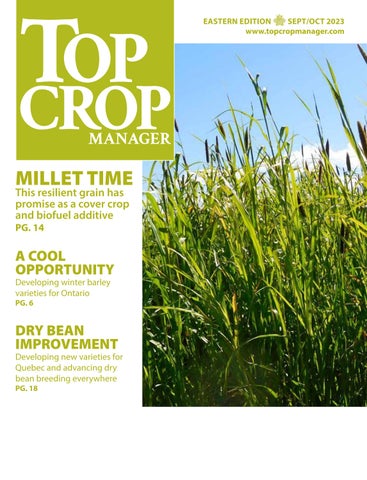
This resilient grain has promise as a cover crop and biofuel additive
PG. 14
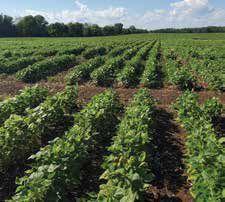
A COOL OPPORTUNITY
Developing winter barley varieties for Ontario PG. 6
DRY BEAN IMPROVEMENT
Developing new varieties for Quebec and advancing dry bean breeding everywhere PG. 18
Some shirts have great stories to tell. Whether it’s about an amazing yield, a once-in-a-hundred-years storm or that time the dog found the monster mud puddle. That’s what makes them your favourite. But it’s also about the name on the front. DEKALB ® seed will never stop delivering high-performing corn hybrids and soybean varieties with the advanced genetics and traits you depend on, all backed by Bayer.
#MakingHistory
6 | Capturing a cool opportunity
Developing winter barley varieties for Ontario.
By Carolyn King
FROM THE EDITOR
4 Rolling with the punches by Alex Barnard
ON THE WEB
14 | It’s millet time
Packed with nutrients and resistant to climate stress, the resilient grain has promise as a biofuel additive and yieldboosting cover crop.
By J.P. Antonacci
TECHNOLOGY
8 Aligning agtech adoption with reality by Donna Fleury
PALMER AMARANTH FOUND IN ONTARIO FIELD
18 | Ramping up dry bean improvement
Developing new varieties for Quebec and working to advance dry bean breeding everywhere.
By Carolyn King
PESTS AND DISEASES
10 Return of the European corn borer by Alex Barnard
It was only a matter of time before Palmer amaranth was found on a farm in Ontario. Although technically it was found back in 2007 along a rail line outside of Niagara Falls, surveillance of that area in the following years have not detected any plants since the initial finding. In late summer 2023, an individual plant was found on a farm in Wellington County. The most valuable thing that can be done at this point is to know the process to identify any plants you suspect may be Palmer amaranth and destroy any plants before they produce seed.
Readers will find numerous references to pesticide and fertility applications, methods, timing and rates in the pages of Manager. We encourage growers to check product registration status and consult with provincial recommendations and product labels for complete instructions.
ALEX BARNARD EDITOR
ROLLING WITH THE PUNCHES
Let’s talk resilience. With the climate crisis breathing down our collective necks, as evidenced by the recent wildfires and droughts, every action must be weighed in the global balance of keeping the planet livable. Agriculture is at the forefront of a lot of these efforts. Many of the funding opportunities made available in the past couple years have had this delicate balance as a focus for the activities they will support. And many buzzwords are used to describe these activities or practices –regenerative, sustainable, climate-smart.
Whatever the label is, the goal – at least, in most cases – seems to be increasing the resilience of agriculture as a practice and a sector. Whether it’s breeding efforts and plant genetics, water management strategies, agtech innovations – most things are intended to improve how agriculture rolls with the proverbial punches.
Resilience is a common concept in agriculture – I’d hazard you don’t last long without it when there are so many guaranteed ups and downs and uncertainties. It’s a type of toughness, but an elastic one – the ability to bounce back from a setback or disappointment. Think of the fable about the oak and the willow – however strong something is, it’s more likely to break if it remains rigid in all circumstances. While sticking to your guns is admirable in many cases and stubbornness helps in the face of the challenges agriculture brings, it can also lead to inflexibility. Ever heard of the sunk-cost fallacy? Being able to recognize when something doesn’t work – or no longer works well – and altering your approach is also a sign of strength. While it never feels good to fail, the ability to learn from what happened and use that knowledge to improve in the future is an important skill to develop. No one’s right all the time.
Is being prescriptive about the practices that are considered beneficial and thus deserving of funding the best way to improve agriculture’s resilience or carbon footprint? That’s debatable, though I do see the wisdom in starting with set parameters. Introducing too much choice or variety too early in the game can be an easy way to overwhelm people. But, at a certain point, there has to be support for those incorporating resilience and innovation in other ways, too.
As Donna Fleury’s article on page 8 indicates, innovation isn’t a one-size-fits-all idea, and farmers are working to balance a plethora of factors with every decision they make. For cost-share and incentive programs to be most useful to farmers, broadening and redesigning them to reflect all forms of innovation would provide greater benefits.
It can be difficult to know where to start. Each farm (and each farmer) is coming to the notion of resilience from a different starting point. Some may not have considered improving their operation’s sustainability beyond keeping the farm economically viable from growing season to season, while others have been incorporating cover crops, or improving soil health, or practicing integrated pest management strategies for years.
The thing about farming is that there’s always something to improve upon. As soon as you think you’ve got everything figured out – or at least a system that works for you – something new will come along, for better or worse.
Wherever you’re starting from, there’s something new to try. It can be big, or it can be something fairly simple – reducing the amount of paper you use in record-keeping, or asking someone you trust about the practices they use and considering where and how to incorporate them on your farm. A little time and effort now – especially over the winter months, when things are hopefully more relaxed –could lead to major dividends down the line.
And after all – what’s the downside of being more resilient?
Email:
111 Gordon Baker Rd., Suite 400, Toronto, ON M2H 3R1
EDITOR
Alex Barnard • 519.429.5179 abarnard@annexbusinessmedia.com
NATIONAL ACCOUNT MANAGER Quinton Moorehead • 204.720.1639 qmoorehead@annexbusinessmedia.com
/ US $112.00 plus tax Top Crop Manager East – 4 issues Feb/Mar, Apr/May, Sep/Oct, Nov/Dec – 1 Year - $48.50 Cdn. / US $110.00 plus tax Potatoes in Canada – 1 issue Spring – 1 Year $17.50 Cdn. plus tax
in Canada – 2 issues Spring and Fall – 1 Year $17.50 Cdn. plus tax
Occasionally, Top Crop Manager will mail information on behalf of industry related groups whose products and services we believe may be of interest to you. If you prefer not to receive this information, please contact our circulation department in any of the four ways listed above.
Annex Privacy Office
Occasionally, Top Crop Manager will mail information on behalf of industry related groups whose products and services we believe may be of interest to you. If you prefer not to receive this information, please contact our circulation department in any of the four ways listed above.
JOIN TENS OF THOUSANDS OF FARMERS WHO HAVE THOUGHT THE SAME THING AND GOTTEN BETTER BY ADDING JUST 3 PRODUCTS.
You could buy a new planter or new-to-you planter, but the biggest yields yearover-year have come from focusing on the row unit and starting with automated downforce, electric drives, and high speed, all available through Precision Planting. It’s a shift in thinking, but the 70% savings versus a new(er) planter and the yield bumps have made it an easy decision. So if you want more out of your planter, add vDrive®, DeltaForce®, and SpeedTube® to your row units.
WE BELIEVE IN BETTER PLANTERS WITH BETTER ROW UNITS.
CAPTURING A COOL OPPORTUNITY
Developing winter barley varieties for Ontario.
by Carolyn King
As interest in winter barley production increases in Ontario, a few seed companies have tested and obtained registration for some promising varieties from other countries.
Now, Gavin Humphreys with Agriculture and Agri-Food Canada (AAFC) is leading a project to further support this growing opportunity by evaluating diverse winter barleys to find additional lines suitable for Ontario.
Humphreys has a wealth of cereal breeding experience, first as a spring wheat breeder in Western Canada for about 18 years, and then as a winter wheat breeder in Ontario for the past nine years. However, he’s pretty new to winter barley.
In fact, his first formal experience with winter barley was in 2019/20. That’s when his research group grew their first winter barley variety registration test at the AAFC Harrow Research and Development Centre, his southwestern Ontario testing site, to help the seed companies obtain data needed for registration.
Then last year, Humphreys decided to look more deeply into winter barley for several compelling reasons.
“The first reason is that I had heard from members of the Ontario Cereal Crops Committee who grow barley that the barley acreage over the past five to 10 years has been decreasing. They were quite concerned that there would not be adequate supplies to satisfy local barley demand if that trend continued. And they felt that perhaps winter barley would provide a mechanism to slow the decline, or ideally to stop it, and raise the winter barley acreage and production in Ontario,” he explains.
According to Statistics Canada data, barley acres in Ontario have been declining fairly steadily since 1986, when 603,000 acres were seeded to barley. By 2015, that had dropped to 115,000 acres, and in
2023 it was down to 52,500 acres.
“The second reason is that winter barley offers to winter cereal producers the option of having a different crop to market and not compete directly with all of the winter wheat that is produced.
“Third, it provides those same producers with all of the good things that go along with a winter cereal.” Those advantages include fall weed control, soil erosion control over the winter and early spring, spreading out of the farm’s workload, higher yield potential than its spring-seeded counterpart, and rotational benefits. “There is some data – more with winter wheat than with winter barley – that having a [winter] cereal in the rotation improves soybean and corn yields,” he notes.
“And then the last reason is double-cropping. Winter barley matures so early in Chatham-Kent and Essex counties that some producers there have already begun to double-crop. They sow winter barley in the fall, and it matures around mid to late June. They harvest it, and the next week they can plant an early maturing bean or soybean crop. This double-cropping renders the land more productive as well as potentially more profitable, and it keeps that winter cereal in the rotation while allowing the producers to grow other crops as well.”
Sourcing superior germplasm
With funding from Grain Farmers of Ontario, SeCan, Cribit Seeds and AAFC, Humphreys launched a three-year project in 2022 to develop new winter barley varieties for Ontario.
His first step was to source winter barley germplasm. “We didn’t have any germplasm because winter barley hasn’t been worked on in
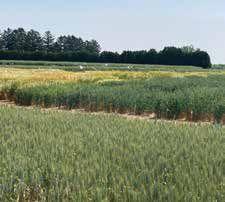
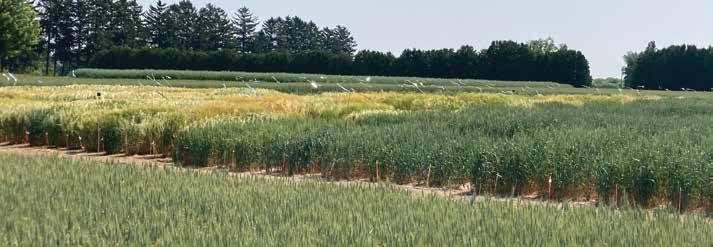
ABOVE: Humphreys’ winter barley nursery at Harrow on June 9, 2023; the ripening crop is winter barley, and the green crop beside it is winter wheat.
PHOTO
Ontario for years. Back in about the 1980s, barley breeder Ernie Reinbergs, who was at the University of Guelph, said that winter barley just doesn’t work for Ontario,” notes Humphreys.
“But with the improved genetics that are now available, I thought, if we can get material from elsewhere, perhaps we can find some lines that would be well adapted to Ontario, and we could support this initiative that the seed companies have begun.”
Plant Gene Resources of Canada (PGRC) in Saskatoon was a key germplasm source for Humphreys. This genebank has a large winter barley germplasm collection that includes varieties, breeding lines and even wild barleys. Because his current focus is on identifying winter barley lines that the seed companies could use, he sourced cultivars from PGRC.
He also obtained about 200 lines from Flavio Capettini, a barley breeder with the Field Crop Development Centre at Olds College in Alberta. “These lines are a subset of the international collection of winter barley lines generated at the University of Minnesota by the barley breeder there, and then tested [by Capettini’s group] for adaptation in Alberta and were found to have reasonable survival there. So I thought that material would probably survive okay in Ontario.”
Humphreys’ winter barley collection is very diverse. “Some of the material is fairly old; some of the Canadian winter varieties that were tested years ago are in it. There is a lot of U.S. material, particularly in the international collection. But we also have material from Sweden, France, South Korea, Russia and other Eastern European countries.”
Although Humphreys’ collection has some two-rows, most are sixrows. He explains, “If the germplasm has a bit lower winter survival, it can recover from that a little better by more profuse tillering. And profuse tillering seems to be a trait more often seen with the six-rows.” Most of the barleys in the collection are hulled types, but there are some hulless.
His collection includes both feed and malting barleys. He notes, “If you look at a longer-term vision of this in support of the craft brewing industry, if we could grow winter barleys that meet malting grade and the specs for these craft brewers, it might create a way to supply the local barley demand with some specialty products and potentially get better returns for the producers as well as satisfying the need of these craft brewers.”
Trial locations
Humphreys and his group are collaborating on this project with Helen Booker and her team at the University of Guelph. Humphreys’ group is growing the winter barley lines at AAFC-Harrow, while Booker’s group is growing the same lines at the University’s research station at Elora.
“We’re working largely in southwestern Ontario because of winter survival. I’m not sure that the genetics for winter barley yet have the winter survival required for eastern Ontario, but they seem to do relatively well in southwestern Ontario,” says Humphreys.
“They grow winter barley south of the Great Lakes; Ohio State University has a winter barley breeding program. So it makes sense that this crop should also work in southwestern Ontario – close to the Great Lakes where the winters are a bit milder.”
Key traits
The researchers are assessing the lines for a wide range of traits in their field trials. “Obviously, the number one trait we’re looking for is winter survival, because if it doesn’t survive the winter then no one is going to
grow it,” Humphreys says.
They are also evaluating the lines for resistance to common barley diseases. “We find net blotch infestations quite commonly on the breeding material that we are testing, as well as some of the varieties that are being brought in from Europe,” he notes.
“Powdery mildew resistance is quite important. Like winter wheat, winter barley can be quite susceptible to powdery mildew, so we want to get rid of those susceptible lines.”
Another key trait is maturity. “I noticed that the material from out West seemed to be later maturing than some of the lines we got from Plant Gene Resources. We want to make sure that the maturity fits the potential double crop system,” he says.
“And of course, the most important trait of all is grain yield. Once we get enough seeds [through seed increase], we will start doing yield trials.”
Registered varieties
Variety registration trials to evaluate several winter barleys for SeCan, Semican and Sollio Agriculture have been conducted since 2019 at four southwestern Ontario sites, including Tupperville, Ridgetown, Winterbourne and Harrow.
So far, five winter barley varieties in these trials have been registered. SeCan has SU Ruzena and LCS Calypso, which are two-row varieties. Semican has Pixel and Visuel, which are six-row. Sollio Ag has KWS Orbit, a six-row. LCS Calypso, Pixel and Visuel are malting types, and SU Ruzena and KWS Orbit are feed barleys.
Although these varieties are best-suited to southwestern Ontario, Humphreys’ group conducted a small winter barley trial at the Ottawa Research and Development Centre, where he is based. They planted five lines last fall and evaluated them this summer. He says, “Some winter barley varieties appeared to survive the winter here quite well, but some of the other lines were somewhat hit-and-miss for eastern Ontario. We plan to resow the winter barley test at Ottawa this fall to confirm our 2023 results.”
Looking at the longer term
Asked about the future possibility of a full winter barley breeding program that includes making crosses, selections and so on, Humphreys says, “I’m not sure if the acreage is adequate at this time to merit a fully-fledged breeding program. Companies bringing in germplasm from elsewhere that they find fits the Ontario production areas is probably the best way to go for now. However, if winter barley production does become much bigger and has potential, then I suspect there would be interest in breeding.”
For Humphreys, the double-cropping potential of winter barley is especially exciting. “As our winters become milder, farmers in southwestern Ontario – especially in Chatham-Kent, Essex County, Ridgetown – can look at double-cropping as a potential opportunity to increase their production as well as, hopefully, their profitability,” he says.
“And my sense is that winter barley, because it matures so early, potentially could be a better avenue to meet malting grades in a malting quality barley. So it might be an easier way for Ontario to produce malting barleys going forward.”
He adds, “I do like this long-term vision of potentially giving the opportunity to farmers to not only double crop but to double crop something as valuable as malt barley.”
ALIGNING AGTECH ADOPTION WITH REALITY
Building relationships and trust among all of the stakeholders of the innovation value-chain and commercializing technology that really aligns with the reality of farming are key.
by Donna Fleury
Accelerating agriculture technology transfer and adoption, removing barriers and exploiting opportunities are priorities for the agtech innovation sector. Researchers at Brock University’s Niagara Community Observatory (NCO) recently completed a multi-phase project to understand both the barriers that constrain and the drivers that promote agtech adoption and the pursuit of globally competitive production systems.
“We recently released the final project policy report, Recommendations for Accelerating the Adoption of Automation and Robotics Technology in Ontario’s Agriculture Sector, which includes key findings and several recommendations,” explains Amy Lemay, NCO research fellow and adjunct professor in the Environmental Sustainability Research Centre at Brock University in St. Catharines, Ont.
“With funding through the Ontario Ministry of Agriculture, Food and Rural Affairs and Canadian Agricultural Partnership, the goal of the two-year study was to determine how to inform future policy around technology adoption and the barriers and drivers to accelerating technology transfer and adoption for automation and robotics. The study had several phases, including surveys, case studies, interviews, focus groups and a literature review with multistakeholders, such as farmers, researchers, technology developers, manufacturers, intermediaries and government officials from Ontario and across Canada.”
Three key themes emerged from the overall analysis of all phases of the project. Most of these take-away messages work across the board and aren’t restricted to Ontario. The first theme is the role of government in adapting and developing new policies and programs for supporting technology adoption. Although the focus of the project was on accelerating the adoption of automation and robotics technology, the findings clearly showed that there needs to be a broader concept of innovation, which shouldn’t be just about insisting farmers adopt the latest in emerging technology. There are many strategies farmers look to for innovation, and they need the choice to adopt what makes the most sense for their operation in terms of competitiveness, economics and sustainability.
“Farmers make very strategic business decisions for their operations, including around innovation,” says Lemay. “The study clearly shows farmers are willing to try new things, but the decision is based on multiple factors. New innovations could include strategic decisions beyond just adopting a new digital or automation technology,
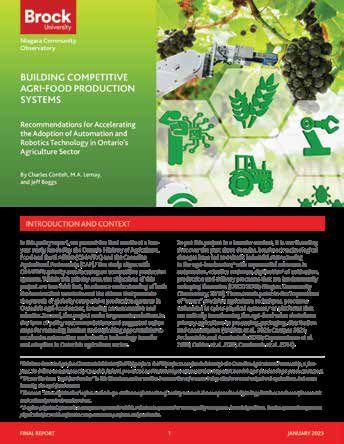
The final project report, Recommendations for Accelerating the Adoption of Automation and Robotics Technology in Ontario’s Agriculture Sector, includes key findings and several policy recommendations.
such as new markets or marketing strategies, introduction of new crops or harvesting techniques and other innovations that improve overall competitiveness and financial stability. Therefore, broadening and redesigning cost-share and other incentive programs to fully reflect all forms of innovation is recommended. Understanding the realities of how long some of these technologies take to develop, commercialize and adopt must also be reflected in agriculture industry programs and policies as they are designed and delivered.”
The second theme reflected the need for an improved agriculture innovation system. This includes building better connections among all stakeholders across the innovation value-chain and making interactions more effective and productive. “We heard from farmers that tech solutions providers are often ‘solutions looking for a problem’,” notes Lemay. “The tech providers are not really engaging with the farm community or sector at a level that allows them to develop technology that really aligns with the reality of farming. Although there seems to be a romantic notion of what agriculture and farming is, the reality is farming can be messy, dirty, smelly, weather-driven and hard work. On the other side, many of the tech developers we talked to tended to blame farmers for not adopting technology, even though it had not yet been validated or proven. They are expecting farmers to take the risk for validating and proving technology. Farmers are not risk-averse – they are experienced business owners who make very strategic business decisions that have to work and provide a return on investment (ROI) for their operation.”
“Farmers make very strategic business decisions for their operations including around innovation. The study clearly shows farmers are willing to try new things, but the decision is based on multiple factors.
“From the interviews, we heard that ROI for farmers is very complex and goes beyond a spreadsheet or accounting approach,” adds Lemay. “Farmers factor in a multitude of factors, including other social, environmental and quality of life factors into the equation. We are expecting a lot from the agriculture industry beyond providing a steady supply of nutritious food, including protecting the environment and being an engine of the economy, at the same time as generating their own livelihoods.
“Increasingly, farmers are trying to address challenges that blur the lines between the private sector and the public good. The agriculture sector may be a solution to many of the societal challenges, but it will take a broader approach and support to help address these challenges and mitigate risk in agriculture.”
Therefore, building relationships and trust among all of the stakeholders throughout the innovation value-chain, starting right from the beginning of the development process, is critical to support tech adoption by farmers. Trust and collaboration are key to adopting an industry development model that includes building relationships with farmers. Researchers recommend embracing an enduser development or co-creation model of technology adoption to strengthen connections between researchers, technology developers/solution providers and the sector across the agriculture innovation value chain. The need for co-ordinating policies and programs across all levels of government and establishing regional agriculture innovation systems was also recognized.
“A third theme acknowledges that the agriculture sector must do a better job of knowledge translation and transfer to accelerate adoption,” Lemay explains. “Our study showed that farmers, technology developers and researchers wish to see closer links between
provincial and national networks of agriculture intermediaries, who share and disseminate information, to fully leverage the full resources and expertise available across Canada. This points to the role of purpose-driven intermediaries in building relationships and trust, bringing researchers and tech developers together with farmers early on and improving farmers’ awareness of research and technology development resources available. And recognizing that over the past several decades, as public advisory service capacity has been significantly scaled back, industry associations, applied research organizations and private companies are often relied on to be intermediaries. However, intermediaries need adequate personnel, technical competence and better financial resources to undertake more outreach activities to connect the technology community and farmers.”
There also needs to be an emphasis on making resources available that provide farmers with one-on-one technical support they need to navigate the complexities of tech adoption. Lemay adds that farmers making a decision about adopting new technology do not make a decision based on a single research project, they need to have access to cumulative results and findings to help validate recommendations. Intermediaries could pull together results of multiple studies and share those findings with farmers, so they have a basis to make a decision. Mobilizing industry associations to support this valueadded knowledge transfer, along with expanding the mandate and capacity of experimental research stations and demonstration farms to help develop, validate and commercialize new technology and innovations, could support and encourage tech adoption by farmers.
“The results of this two-year research project and final report have generated a set of policy recommendations and action steps to accelerate tech adoption in automation and robotics in agriculture that will help to build competitive production systems in Ontario and elsewhere,” Lemay says. “The report also identified various constraints and barriers to tech innovation adoption, including broader issues such as data management, security and integration. Through an improved agriculture innovation system, stakeholders across the value-chain can work together to address the challenges and encourage and support adoption of new, validated, farm-ready technologies that solve real problems for the agriculture sector.”
PESTS AND DISEASES
RETURN OF THE EUROPEAN CORN BORER
European corn borer is popping up again as a pest to monitor.
by Alex Barnard
Don’t call it a comeback – European corn borer has been here for years. And yet, due to the efficacy of pest management measures developed in the mid-1990s, the once-extremely damaging insect has been essentially a non-issue in the past couple decades. Unfortunately, that appears poised to change.
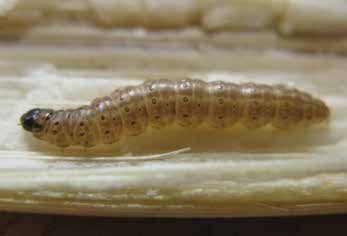
European corn borer (ECB) is an invasive pest from Europe that arrived in North America in the early 1900s. Since then, it has “spread throughout any region of North America where we grow corn,” says Jocelyn Smith, a research scientist at the University of Guelph, Ridgetown Campus, in an interview with Top Crop Manager. The adult ECB is a small beige moth that can fly between fields to lay eggs; but it is the immature stage, the larva or caterpillar, that causes a great deal of damage to corn yield and standability, as well as any of the 200 other plants that will host the pest.
“When they hatch, the little larvae bore their way into the midrib of the leaves and eventually into the stalks, and they tunnel their way through [the plant] during their development and feed on the stalk tissue – the interior – and create holes,” says Smith.
“So, you have disruption of the physiology of the plant, which can result in yield loss, but [the larval feeding] can also result in stalk rots and ear rots, because it [allows] other fungal pathogens to get into the plant.”
Smith notes that, before the invention of Bt corn, which expresses insecticidal proteins from the bacterium Bacillus thuringiensis, managing ECB cost North American corn growers about $1 billion per year.
At this year’s Southwest Crop Diagnostic Days, held annually at the University of Guelph’s Ridgetown Campus, Smith, along with Tracey Baute, field crop entomologist with the Ontario Ministry of Agriculture, Food and Rural Affairs (OMAFRA), and Yasmine Farhan, University of Guelph research associate, held a session for attendees on the pest and why it’s set to make a comeback in Ontario agriculture, as well as what to watch for.
Baute noted that European corn borer hasn’t been much of an issue since Bt corn was developed to counter it more than 25 years ago. The effectiveness of Bt corn may have been a mixed blessing, as the thorough control it provided led to the development of some bad habits – and resistance in the pest. Continuous corn cropping and repeated use of the same Bt traits – particularly Cry1 – are likely culprits. Now, three of the four Bt proteins available have been compromised.
In 2018, a Bt corn hybrid with the Cry1F protein was found with ECB damage in a few fields near Truro, N.S. Smith and Art Schaafsma, a professor at the University of Guelph, Ridgetown Campus, checked for Cry1F resistance in the local ECB populations. Upon testing, they found that all of the populations they sampled from the Truro area were highly resistant to Cry1F.
ECB populations resistant to at least one Cry1 trait were found in Quebec (2019) and Manitoba (2020), as well.
The four Bt proteins considered high-dose toxins against ECB are Cry1F, Cry1Ab, Cry1A.105, and Cry2Ab2. It’s recommended to
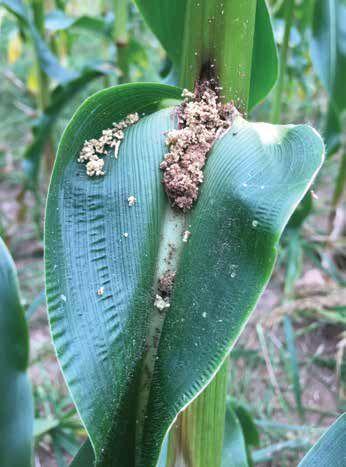
European corn borer feeding in Cry1F corn near Truro in 2018, the first documented case in North America of Bt resistance in this insect.
PHOTOS COURTESY OF JOCELYN SMITH.
The European corn borer’s larva attacks corn stalks and kernels, affecting both yield and quality.
use Bt corn with Cry1 or Cry2 traits either in rotation with other traits, or to use a hybrid with multiple traits pyramided together. Using multiple modes of action means less risk of the pest developing resistance to a single trait; rotating traits has a similar effect across seasons.
However, the regions where resistance breakdown has been found have shorter seasons and smaller markets than the U.S. corn belt or Ontario, so the Bt hybrids being sold and grown in those areas sometimes included only single-toxin varieties. Hybrids that rely on one Bt toxin increase selection pressure and make the de -
velopment of resistance more likely and shorten the timeline of that resistance development.
Managing resistant populations
“When we think about resistance management, the bottom line is you always have to keep the insects guessing,” Smith says. “If you put the same management to them all the time, chances are they’re going to figure out and develop resistance. It’s just the way it works with insects because there’s so numerous, they reproduce like crazy, they’re overturning genes way faster than you think.”
Smith and Baute both recommend reducing the use of Bt corn hybrids in areas where ECB populations are low, or rotating between Bt hybrids and non-Bt corn when possible.
If there are other options available in your region, do not grow the single-toxin Bt hybrids. Follow refuge recommendations, or plan for a refuge in your fields.
If you find ECB damage or suspect you have a resistant population in your field, Smith recommends calling your seed corn provider, an extension entomologist in your area, or an agronomist.
“You want to get someone in the field to have a look and verify what’s really happening. Also, do gene checks to make sure the plants are expressing the proteins that we hope they are.”
Another option is to chop down the remaining corn stalks at the end of the season.
23_005626_Eastern_Top_Crop_SEP_OCT_CN Mod: August 2, 2023 10:53 AM Print: 08/18/23 page 1 v2.5
“[ECB] burrow their way down to the very bottom of the corn stalk – within the bottom 30 centimeters or so – to overwinter as a late instar,” Smith says. “So, if you destroy those, you’re probably going to kill a lot of the population off.”
NOVEMBER 7, 2023
HAMILTON, ON I 1:00PM ET
INSPIRE | LEARN | LEAD | CONNECT
Join us to hear from today’s most influential female leaders in Canadian agriculture.
This year, six IWCA honourees were chosen by our team. On November 7, 2023 at 1:00pm ET, they come together with other prominent trailblazers in agriculture to share their experiences, life lessons and more for the live 2023 IWCA Summit.
Join us for an afternoon of interactive discussions as they share their experience, offer guidance and discuss their journey in agriculture.
Ana Badea
Darby McGrath
Della Karen Campbell
Kelly Daynard
Heather Wilson
Judith Nyiraneza
SPECIAL CROPS
IT’S MILLET TIME
Packed with nutrients and resistant to climate stress, the resilient grain has promise as a biofuel additive and yield-boosting cover crop.
by J.P. Antonacci
Tiny millet packs a big nutritional punch, and could be used to wallop world hunger.
Relatively rare in North America when compared to more popular cereal grains like wheat and maize, millet is a dietary staple in Asia and Africa, where the tiny superfood thrives in hot, harsh conditions that would stymie other crops.
The Food and Agriculture Organization (FAO) of the United Nations declared 2023 the International Year of Millets, highlighting the vitamin-rich grain’s potential to help reduce so-called “hidden hunger,” which sees a quarter of the world’s population eat food that is lacking in nutrients.
As a crop with a short growing season that can succeed in poor soil with little fertilizer and water, millet is ideal for a warming world. Agriculture and Agri-Food Canada (AAFC) considers millet a “nutritionist’s dream” because the grain is naturally gluten-free and a dense source of protein, fibre, antioxidants and essential minerals like iron and zinc.
With an estimated 12,000 acres of millet grown in Canada, according to AAFC research scientist Raju Soolanayakanahally, this country’s millet production pales in comparison to global powerhouses like India, which harvests more than 12 million tons each year – over 40 per cent of the global millet market.
With the global population continuing to increase and arable land
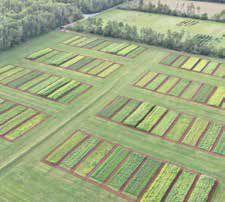
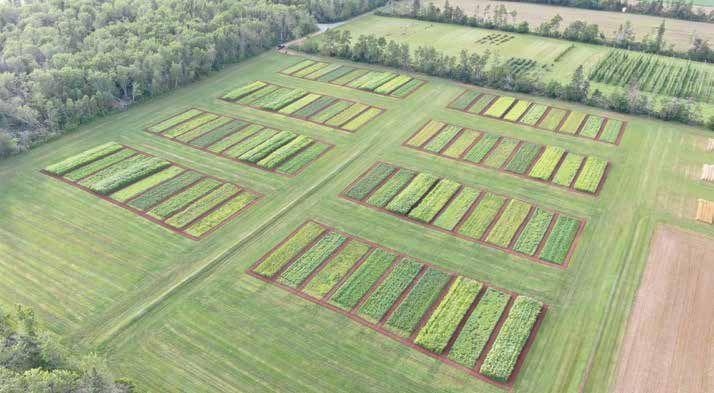
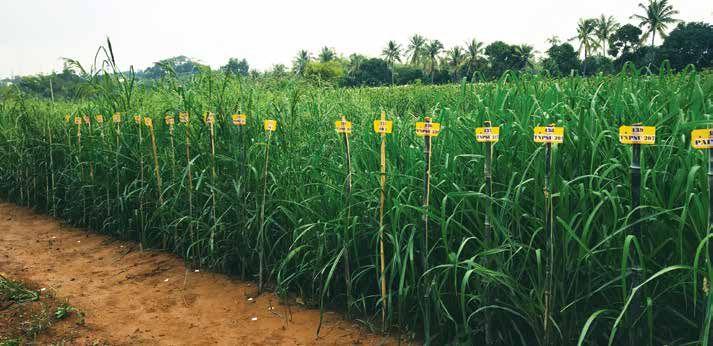
TOP: Aerial view of the cover crop trial plots at AAFC-Charlottetown.
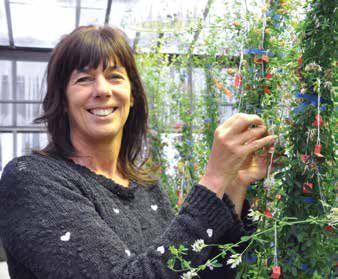
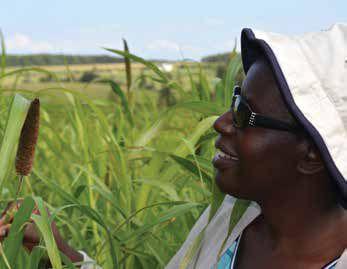
MIDDLE: AAFC’s Annick Bertrand has been looking into how sweet pearl millet can be turned into a source of silage and biofuel additive.
NOVEMBER 7, 2023 LIVE EVENT I 1:00PM ET
INSPIRE | LEARN | LEAD | CONNECT
Register today for this unique live event coming to Hamilton.
Join us to hear from today’s most influential female leaders in Canadian agriculture.
This year, six IWCA honourees were chosen by our team. On November 7, 2023 at 1:00pm ET, they come together with other prominent trailblazers in agriculture to share their experiences, life lessons and more for the live 2023 IWCA Summit.
Join us for an afternoon of interactive discussions as they share their experience, offer guidance and discuss their journey in agriculture.
Gold Sponsors
Bronze Sponsors
Platinum Sponsor
under threat due to the changing climate, the United Nations sees “resilient” cereals like millet as part of the solution to food security, and one way to mitigate swings in maize and wheat harvests that affect the food supply.
As the FAO puts it, millet varieties “grow in harsh and dry conditions, providing food when other harvests fail.” Millet also reduces soil degradation and enhances soil health, helped by the plant’s ability to resist drought, thrive in the heat, and tolerate crop disease and pests.
The FAO says an increase in millet production in countries like Canada would help millet “resurface in our markets and on our tables (and) contribute to healthy diets and a healthy environment.”
In Canada, millet is mainly grown as animal feed and birdseed, with smaller production for use in flour, multigrain bread, cereal and other foodstuffs. But several AAFC research projects are finding innovative ways to use millet to increase crop yields, make soil healthier and even generate biofuel.
Millet supports spuds
Millet has become a common sight on Prince Edward Island, where more and more potato growers are turning to pearl millet as a cover crop that boosts yields by suppressing pests and enriching the soil.
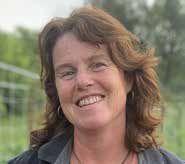
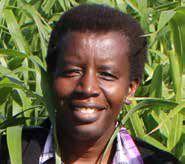
“In the last six years, we have seen increasing numbers of growers growing pearl millet,” says Judith Nyiraneza, an AAFC research scientist based in Charlottetown.
Nyiraneza’s experiment, through AAFC’s Living Lab Atlantic initiative, compared eight cover crops grown with and without manure – plus a negative control with bare soil – on 72 large potato plots. The study was conducted over one growing season, which in P.E.I. is about 120 frost-free days.
After replicating the experiment four times, Nyiraneza concluded that pearl millet returns more carbon to the soil than legumes such as red clover – previously the Island’s most popular potato cover crop – and alfalfa.
Millet even outperforms another warm-season grass crop, sorghum-sudangrass, in terms of reducing nitrate leaching into the
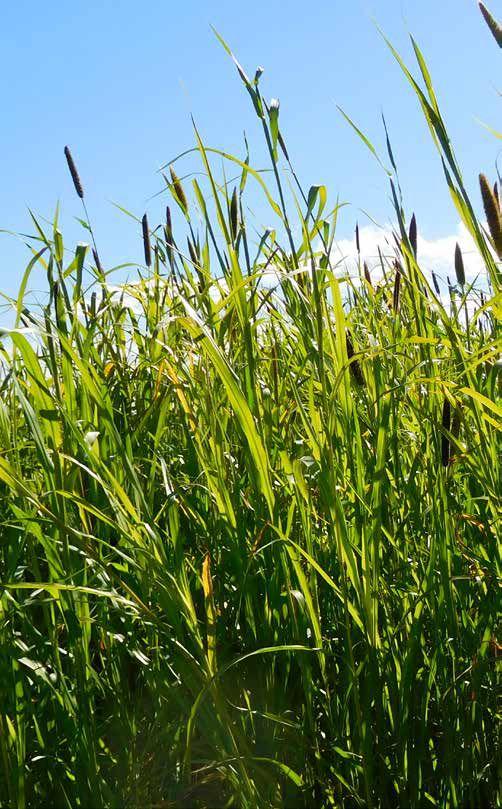
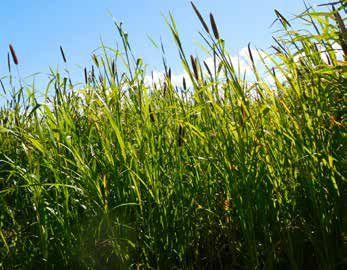
Many millet varieties thrive in hot, harsh conditions that would stymie other crops.
AAFC’s Judith Nyiraneza has been studying millet and other cover crops through the Living Labs Atlantic initiative.
Millet as a cover crop has become a common sight on Prince Edward Island due to its benefits to the soil and pest management.
PHOTO COURTESY OF AGRICULTURE AND AGRI-FOOD CANADA.
Island’s sandy soil – and then into the groundwater sources that supply P.E.I.’s drinking water – and in suppressing populations of root-lesion nematodes, which are microscopic, worm-like organisms that cut into potato yields by infecting the plant’s root system and hampering its ability to absorb nutrients.
“It’s very rare to see a cover crop that is combining these benefits. So we were very happy to see those results,” Nyiraneza says.
“It was a really nice story because the number of root-lesion nematodes was lower, the amount of carbon returned to the soil was higher, the nitrate-leaching risk was lower, and it was boosting yield.”
Potato growers had already embraced pearl millet as a viable cover crop. Thanks to Nyiraneza’s research, they now have data to quantify how effective the cover crop is at squeezing out nematodes and returning carbon to the soil through crop residue.
For example, Dahu Chen, an AAFC-Fredericton phytopathologist collaborating with Nyiraneza recorded 1,400 root-lesion nematodes in a kilogram of soil that has grown pearl millet, versus 3,000 pests per kilogram in soil in which red clover had been grown. Pearl millet can also lower greenhouse gas emissions through carbon sequestration, though its exact effectiveness is still being quantified as the evaluation takes some years.
As a bonus for growers, pearl millet is comparable in price to, or in some cases even cheaper than, typical cover crop options like red clover and alfalfa.
“I think our growers just need some scientific numbers to show the changes in soil quality or in yield,” Nyiraneza says. “But they already know that pearl millet is a good cover crop.”
Millet as biofuel
In Quebec, AAFC research scientists Annick Bertrand and Gaëtan F. Tremblay are looking into how sweet pearl millet can be turned into a source of high-quality silage and a sugar-rich biofuel additive.
This dual purpose is achieved by pressing the plant’s stalk twice, with the juice collected for bioethanol production and the leftover plant material, called the bagasse, used as silage.
The process is based on the same principle as processing sugar cane. The trick, Bertrand says, is not pressing all the “sugary juice” out of the stalks.
“Because in the lab, when we do the pressing to the last drop, there’s no more sugar in the bagasse,” says Bertrand, a forage crop physiologist and biochemist. But even after double-pressing in the field, there is still some residual sugar left in the stalk, which leaves the bagasse with sufficient carbohydrate and nutrient composition to be useful as high-quality silage
The AAFC researchers and their team spent years testing many types of presses in the lab, measuring the sugar concentration and the quantity of juice obtained from each method of pressing.
“We finally concluded that the hydraulic press was the one that was the most practical and can be used in the field,” Bertrand says.
The hydraulic press does not get blocked with leaves and other biomass, and can be deployed in the field with minimal modification. The millet stems are pressed immediately upon harvesting, with two pressings of 90 seconds each. Speedy extraction is essential because the sugars inside the stalk degrade over time, meaning in-field pressing gets the highest return, Bertrand explains.
A tropical cereal, millet can grow up to 14-feet tall. But the plant is cut before maturity when used for biofuel production “because we
The double-pressing method recommended by Bertrand harvests the millet before it reaches maturity, meaning there’s very little grain in the leftover plant material, or bagasse.
want the sugar to be in the stalk” and not the grains, Bertrand says. There is “practically no grain” in the bagasse, she adds, because the plant is cut before it fully flowers.
Sweet pearl millet is a forage millet, as contrasted to grain millets, which are grown for their seeds, have a longer maturing process and are not as well adapted to Canadian weather. Forage millets have been bred to have a higher sugar content, making them suitable for biofuel and animal feed.
“It’s higher than any other forage crop, but it’s lower than sugarcane or maize,” Bertrand says of sweet millet’s sugar content.
Sweet sorghum slightly outperforms sweet millet in terms of sugar yield, she adds, but both are “very promising” options for Canada to increase bioethanol production because they are better adapted to extreme temperatures “and can grow under conditions that are not optimal for maize or other energy crops.”
“These species have advantages compared to maize because they are more drought-resistant and they don’t need that much water or fertilizer,” Bertrand says.
Her lab has come up with an idea for industry: hydrate the dried maize grain used to make bioethanol with millet juice instead of water, adding even more sugar to the mix and therefore producing more biofuel. “It’s a direct equation – the more sugar concentration you add, the more efficient the transformation to ethanol,” Bertrand says.
With it being “relatively simple” for growers to set up and use the hydraulic press in their own fields, and with millet able to be grown on poor-quality soil unsuitable for corn, Bertrand could see millet production scaling up in Canada as its benefits for biofuel become more widely known. She says, “In the context of climate change and the production of bioethanol, I think these plants are promising.”
PLANT BREEDING
RAMPING UP DRY BEAN IMPROVEMENT
Developing new varieties for Quebec, and working to advance dry bean breeding everywhere.
by Carolyn King
Although only a few years old, the McGill Pulse Breeding and Genetics Lab is already on its way to developing dry bean varieties suited to Quebec needs. It is also working on innovative ways to improve efficiencies in dry bean breeding. One of its current projects involves using new tools to gain fresh insights into the bean genome and to enhance breeding resources, which could enable major breeding advances.
Heading up this lab is Valerio Hoyos-Villegas, an assistant professor in plant science at McGill University in Montreal. When he arrived at McGill in 2019, he was given the freedom to decide the focus of his research program. To figure out where to target his efforts, he started by testing a lot of pulses while examining the needs of Quebec pulse growers and processors.
“Beans were a crop that was largely underserviced in Quebec, and bean production is large enough in the province that I could make a case for working on beans. So, it was a nice fit for me to work on beans – I was very happy to get to continue working on a crop that I knew and loved,” he says.
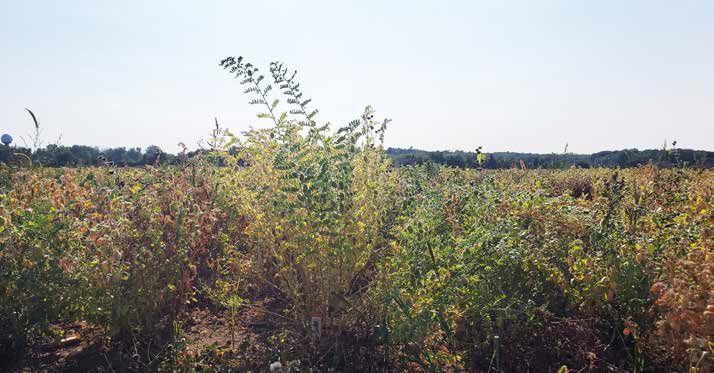
“I also found out that there is some potential for developing chickpeas adapted to Eastern Canada. So, most of our effort is now deployed on beans, with a small but growing program in chickpeas.”
Laying the groundwork
With pulse breeding being so new to Quebec, one of Hoyos-Villegas’s first challenges was that the Quebec standards for pulse variety release had not yet been established when he started his breeding program.
So, he worked with the Comité de recommandation oléoprotéagineux du Québec (CROQ) and the Réseaux des grandes cultures du Québec (RGCQ) to develop those standards. He notes, “CROQ is a provincial committee for field crop variety recommendations, and it has oversight from the Canadian Food Inspection Agency.”
Just like the provincial standards that already exist for releasing
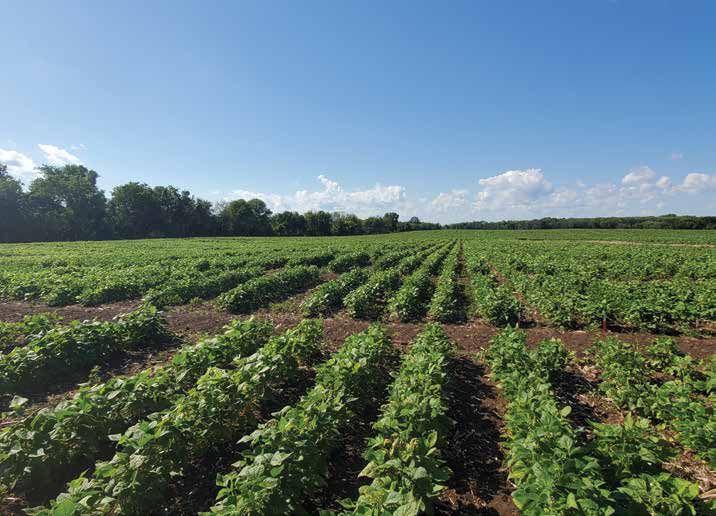
TOP: Hoyos-Villegas is breeding dry bean varieties suited to the needs of Quebec pulse growers and processors.
varieties of other field crops, Quebec’s new pulse standards set out the criteria for assessing candidate varieties, such as the amount and quality of testing data needed, the required agronomic and seed quality characteristics, the specific check varieties that need to be surpassed, and so on.
Dry bean breeding program
“For Quebec crop growers, the most obvious benefit from my breeding program will be cultivars that are adapted, stable, diseaseresistant and targeted at the local problems,” says Hoyos-Villegas.
“Beans were a crop that was largely underserviced in Quebec, and bean production is large enough in the province that I could make a case for working on beans.”
“For instance, in Eastern Canada and in Quebec in particular, conditions are very wet [which increases disease risks]. Also, our growing season is shorter than, say, southern Ontario’s. So, varieties that come from other places don’t necessarily perform that well here; they often struggle to mature and finish, for example. Our program is directly addressing those needs and listening to growers and incorporating their priorities.”
He adds, “We are also listening to processors and incorporating their priorities. And hopefully that will ultimately benefit the consumer.”
His breeding program already has dry bean lines that are surpassing the checks for their market class. “We will be ready to put forward candidates for variety registration next year because by then hopefully we’ll have enough data and enough good candidates. So, for the first breeding cycle I think we are in good shape.”
Market classes
“The primary market class that we are working on is cranberry beans, because Quebec is known for marketing cranberry beans in North America and particularly in Europe,” he notes. The other market classes in his program are, in order of priority, black and navy, red and white, small red and pink, and pinto.
For all these market classes, his program focuses on improving yield, agronomic characteristics, disease resistance and grain quality.
One of the cranberry-specific traits his research group is working on is seed coat post-harvest darkening, known as after-darkening. He explains that the seed coats of beans like cranberry and pinto beans that have coloured mottling on a cream or white background tend to darken over time. That can make the beans less appealing to buyers and consumers.
Darkening is caused by exposure to light and high humidity, which causes oxidation of seed coat polyphenols; this has a degree of genetic control. According to Hoyos-Villegas, genes that prevent or even eliminate darkening have been identified and moved into pinto beans by other breeding programs. “Since cranberry beans are so important in Quebec, we want to bring that trait into the cranberry bean varieties that we develop.”
Variety-specific management
Hoyos-Villegas’s program also includes agronomic trials. “We want to look at the genotype by environment interactions for agronomic conditions and characteristics like yield and grain quality, including canning quality.” His group is doing this work in collaboration with Nortera Foods, which helps with things like the canning quality testing.
In this ongoing agronomic evaluation, his group grows different dry bean varieties and advanced lines, and compares the effects of different row spacings and plant densities, in both conventional and organic management systems. Then, canning evaluations add an extra layer of information about the stability of canning quality of candidate varieties in respect to the agronomic configuration and management system.
“[These trials] will provide more robust information for growers to make their decisions on variety selection. They’ll know which variety tends to do better under the management system, row spacing and plant density practices they use on their own farm,” he says.
Higher efficiencies, faster advances
“In breeding, we measure progress in terms of genetic gain per breeding cycle. That fluctuates depending on how many resources you have and how efficient you are,” notes Hoyos-Villegas.
As a result, his group has a keen interest in developing tools and protocols for improving efficiencies in the lab’s breeding program and in dry bean breeding programs in general.
For example, they are working with McGill’s recently acquired automated systems for rapidly measuring plant characteristics in field and greenhouse trials – measurements which would otherwise be time-consuming and labour-intensive.
Another example is research led by Hoyos-Villegas to develop protocols for automating the preparatory steps used for screening elite breeding materials using a special type of DNA marker assay called KASP. Automating and reducing the cost of these time-consuming steps could be really helpful when breeders need to screen very large numbers of samples. His group has tested this automated approach when screening dry beans for resistance to anthracnose, a common fungal disease.
Yet another example is research conducted by his group involving computer simulations to evaluate different breeding scenarios for common bean. The idea was to identify which practices would maximize genetic gain.
The simulations encompassed the type of trait, the size of the parental population, the selection strategy, the breeding framework and other factors. The results showed that all of these factors influenced the amount of genetic gain, with the optimal choices depending on the type of trait. Interestingly, the new breeding frameworks included in this study – speed-breeding and genomic selection –were not better than conventional breeding in every scenario.
Unlocking the bean genome
Hoyos-Villegas also has more fundamental interests in genomics.
In a project funded by the Alberta Pulse Growers (APG) and Results Driven Agriculture Research (RDAR), he is aiming to build on knowledge about the behaviour of mutations in genomes. This project is exploring how eliminating such mutations or changing their functionality would affect genetic diversity in dry bean. Wide genetic diversity in a crop’s germplasm pool is vitally important to enable the crop to adapt to emerging threats.
“One of the greatest concerns of breeders is to prevent genetic bottlenecks, because that is effectively the end of a breeding program,” he says. “So, we want to come up with ways to maintain the elite pool of individuals while also maintaining or generating variability, which is a hard thing to do generally.”
In this project, Hoyos-Villegas and his group are using a tool called a multi-parent advanced generation inter-cross (MAGIC) population. Creating a MAGIC population requires multiple combinations of crosses, with the different crosses configured in very specific ways. With all that recombination, the resulting population has an increased level of genotypic diversity and can have some unusual combinations of gene variants, which serve as a model to study mutation.
Such a population can also be used for examining the genetic architecture of a plant species’ traits and for mapping the genomic location of those traits. As well, the different lines in the population with their diverse combinations of different gene variants make very useful breeding populations to use in developing varieties.
Hoyos-Villegas and his group used a set of black bean cultivars as parents for their MAGIC population, and they recently finished building this “black MAGIC” population. They are now multiplying the seed of their advanced inter-crossed lines for use in their research and as breeding resources.
“The first year of the advanced lines are in the field this year,” he says. “And next year we’ll have enough seed to start doing some
replicated tests and collect more data here and in Alberta in collaboration with Dr. Parthiba Balasubramanian from Agriculture and Agri-Food Canada (AAFC).”
Hoyos-Villegas explains that the bean genome includes some portions that are highly conserved, meaning that they have remained basically unchanged going far back in time. The multiple recombinations in the black MAGIC population may include some new recombinations, which could allow breeders to better understand and tap into the genetic resources in those highly conserved areas.
“At the very least, we will have generated new variability in black bean germplasm pool. So that is one deliverable from this project,” he says.
“But if we are successful, the greater deliverable will be the insight into the areas of recombination of the bean genome that are traditionally hard to characterize and hard to induce recombinant genetic variation.”
If the MAGIC population generates enough information, HoyosVillegas’s group could develop models to track whether different mutations are gained or lost and what their effect is over time. Having that type of information could enable breeders to purge out harmful mutations and select for beneficial mutations, while still sustaining the genetic variability needed for long-term breeding success.
Supporters of Hoyos-Villegas’s program include local industry such as Nortera Foods and Haribec, as well as McGill’s Faculty of Agricultural and Environmental Sciences, Ministè re de l’Agriculture, des Pêcheries et de l’Alimentation du Québec (MAPAQ), AAFC, Natural Sciences and Engineering Research Council (NSERC), Fonds de recherche du Québec - Nature et technologies (FRQNT), APG, RDAR, Producteurs de grains du Québec (PGQ), and Mitacs. If you wish to know more about Hoyos-Villegas’s program, visit his lab’s website at pulsebreeding.ca.
Hoyos-Villegas also leads a small but growing chickpea breeding program.
HAVE YOU EVER THOUGHT...
“DANG. FERTILIZER IS EXPENSIVE.”
We want to make sure you’re not wasting any of that precious fertilizer, so we created a lineup of fertility control products for strip-till bars, planters, and sidedress applicators. Besides the input cost, we want to be sure those nutrients are readily available for your crops. Precision Planting can help you optimize your fertilizer application with full visibility, accurate placement, and total control from the tractor cab.