The discovery of new and effective herbicide modes of action (MOA) is rare and it can take up to 14 years to develop a new herbicide Group. Therefore, it’s important to use the tools we do have to get the best weed control, but in a way that minimizes the risk of resistance development.
The industry is moving towards products that are copacks or co-formulations containing multiple modes of action to make this easier. By providing products “prepackaged” with two to three different herbicide groups that target the same weeds, there’s the benefit of not only managing the most troublesome weeds, but also reducing the risk of further resistance development.
In addition to providing innovative herbicide solutions, Bayer is dedicated to providing education, tools and resources to help manage this growing concern.
MixItUp.ca is a one-stop, online resource for information, tools and field management strategies. It’s part of our commitment to tackle herbicide resistance in a responsible manner that’s founded in sound agronomics.
If you need more information, visit MixItUp.ca and if you suspect you have a resistance problem, don’t hesitate to call your Bayer representative or your retail. All the best for a successful 2020 season.
Sincerely,
Jon Weinmaster Marketing Manager – Cereals Bayer
WEED CONTROL GUIDE
2020
Weed management is a part of crop production that never leaves a grower’s mind. Weeds are constantly evolving and changing; weeds that pop up this year may not have even been a blip on the radar in previous seasons. Adding to this, new forms of resistance are constantly emerging, and decisions can become overwhelming.
Continued on page 3
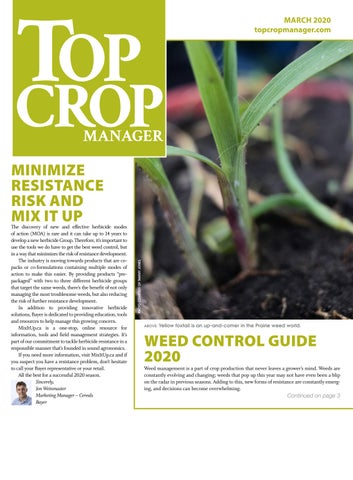
ABOVE: Yellow foxtail is an up-and-comer in the Prairie weed world.
PHOTO COURTESY OF TAMMY JONES.
WEED CONTROL GUIDE
Continued from page 1 Published as part of Top Crop Manager, March 2020, by: Annex Publishing & Printing Inc.
PO Box 530, 105 Donly Drive South, Simcoe, ON N3Y 4N5 Canada Tel: (519) 429-3966 Fax: (519) 429-3094
EDITORIAL DIRECTOR, AGRICULTURE Stefanie Croley
ASSOCIATE EDITOR Alex Barnard
WESTERN FIELD EDITOR Bruce Barker
ASSOCIATE PUBLISHER Michelle Allison
VP PRODUCTION/GROUP PUBLISHER Diane Kleer
Charts compiled by Mike Strang and Jennifer Strang
To simplify the decision-making process, we’re pleased to bring you another edition of our annual Weed Control Guide, in which we’ve listed products available to you (as of publication time) in alphabetical order. The information herein primarily comes directly from chemical companies themselves. However, growers should always double-check provincial guidelines and product labels to avoid errors. Furthermore, the ratings provided in the tables should be used as a guide when selecting herbicides. Herbicide-tolerant varieties are listed in red type, and the overall format allows you to compare options for grassy and broadleaf weed products. Once you’ve selected your choices, be sure to compare tank-mixes to best address the range of weeds in your fields.
The ratings provided in the tables should be used as a guide when selecting herbicides. It is important to remember that actual control can vary greatly depending on a number of factors, including soil type, moisture conditions, weed pressure and size, and environment. Products can sometimes become antagonistic and will therefore be less effective on a particular weed when used in combination, compared to when each is used separately. Each year, new products are introduced to the market while others are withdrawn. We have done our best to include all registered products in this guide, but as new products are introduced, we recommend readers make notes in their copy.
Top Crop Manager would like to thank Bayer for sponsoring this year’s Weed Control Guide. Through their support we are able to publish this information guide to assist our readers.
We are grateful to the numerous weed management specialists for their assistance and helpful suggestions compiled in Top Crop Manager’s Weed Control Guide.
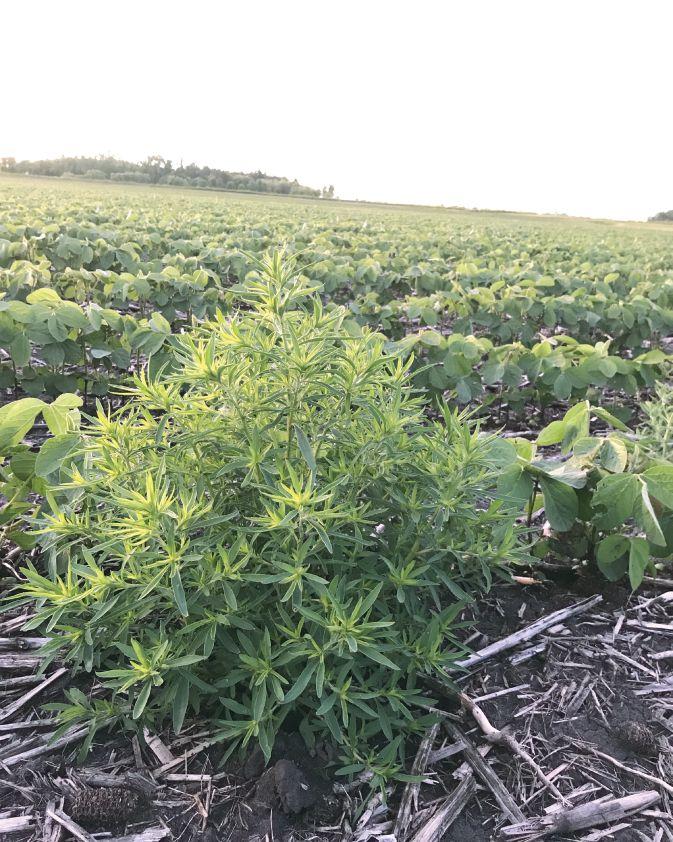
Triple-resistant kochia leaves limited control options.
PHOTO COURTESY OF TAMMY JONES.
WEED CONTROL GUIDE 2020
CEREALS: SPRING WHEAT, DURUM
Adds to control rating shown. Check for variety/durum restrictions. Many conditions apply: check provincial
Growing in abundance and surprisingly resilient, yellow foxtail merits specific management.
by Julienne Isaacs
Yellow foxtail is the underdog of Manitoba weeds. In the province’s 2002 provincial weed survey, yellow foxtail ranked 30th in relative abundance. By the last survey in 2016, it had jumped to sixth place, after green foxtail, wild buckwheat, barnyard grass, wild oat and canola.
More troublingly, the weed is developing herbicide resistance, according to Agriculture and Agri-Food Canada weed monitoring biologist Julia Leeson, who led the survey.
“Yellow foxtail populations were found that were resistant to Group 1, Group 2 and Group 1 and 2 herbicides – 42 per cent of fields sampled with yellow foxtail had a herbicide-resistant population,” she says.
Tammy Jones, a weed specialist for Manitoba Agriculture and Resource Development, says it isn’t clear why yellow foxtail has jumped to sixth place so quickly, although part of the reason might be the fact that it’s a heat-loving plant, and an increase in row crops such as corn and soy give yellow foxtail more of an edge.
Yellow foxtail also appears to like moisture more than green fox-
tail, says Rob Gulden, a weed scientist at the University of Manitoba, although scientists still don’t know much else about what distinguishes it from its cousin.
Like green foxtail, yellow foxtail is an annual weed that reproduces by seed, with smooth leaf blades and sheaths and a branching habit.
“It has larger seeds than green foxtail, and the seeds have a high level of dormancy at seed shed. We don’t know its exact longevity in the seed bank, but the foxtails can stick around for a fair bit – up to 10 years, or for an average of about five to six years, where most grasses last about three to six years in the seed bank,” Gulden says.
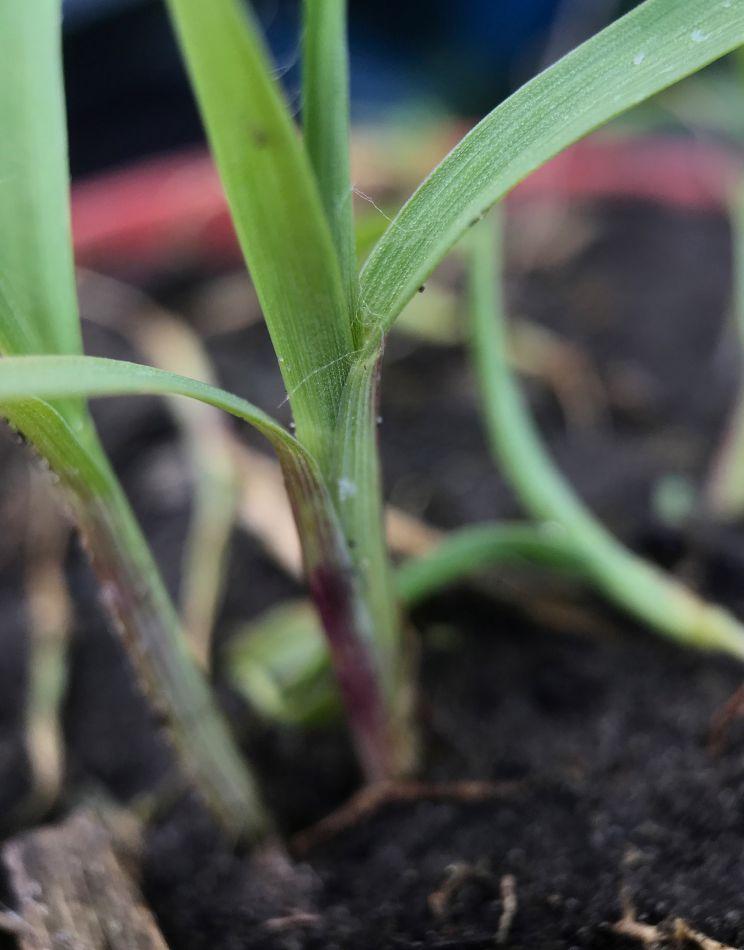
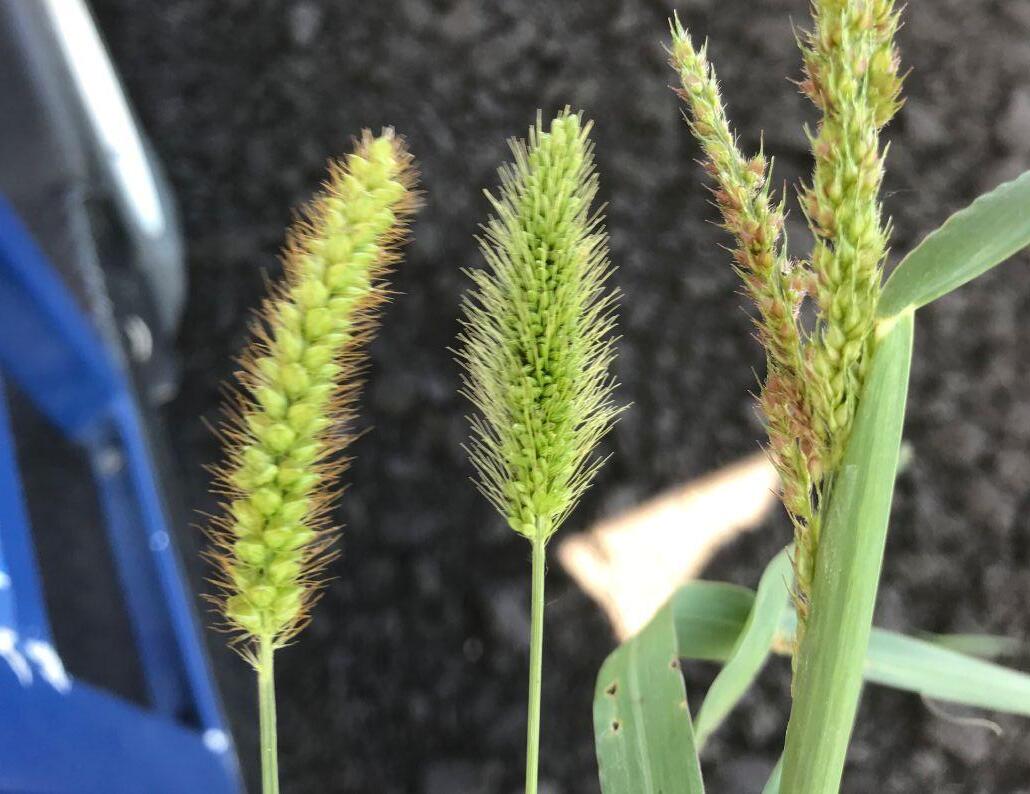
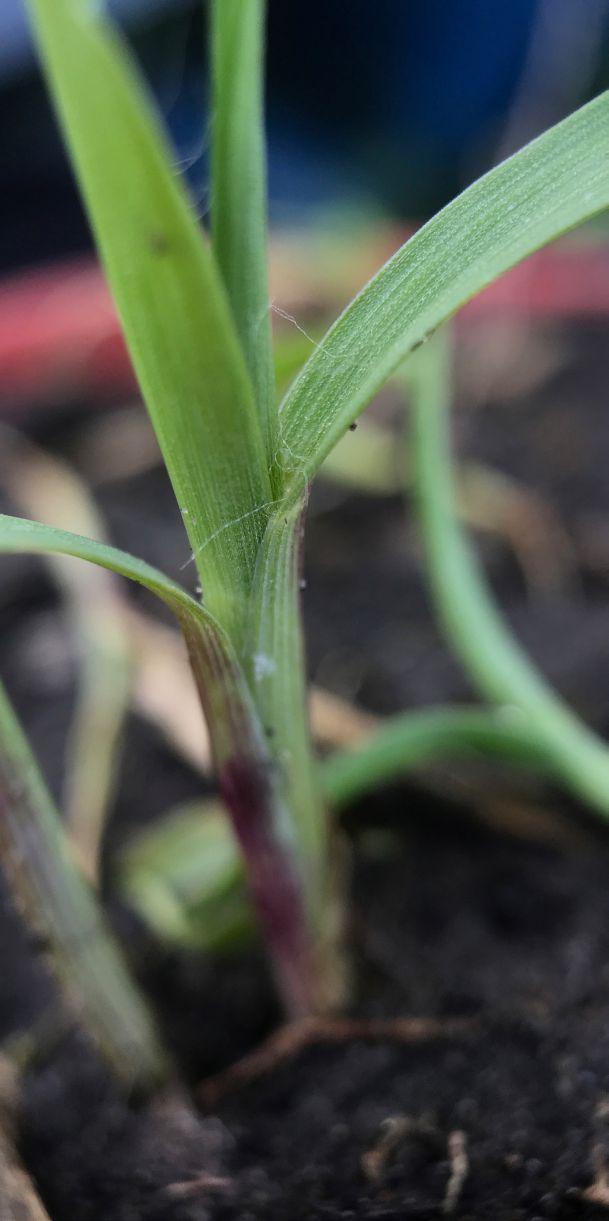
Early on, yellow foxtail is very difficult to distinguish from green foxtail or barnyard grass. The best way to distinguish the weeds is by looking at the ligule where the leaf attaches to the stem: after the three to four-leaf stage, both yellow and green foxtail develop a
Continued on page 26
ABOVE: Left to right: yellow foxtail, green foxtail and barnyard grass. Photo courtesy of Tammy Jones.
PHOTO COURTESY OF TAMMY JONES.
CLEAN FIELDS GET NOTICED
Wild oats can make your fields stand out for the wrong reason. Varro®, a Group 2 herbicide, provides control of wild oats and other tough grass weeds while helping manage resistance on your farm.
Varro – for wheat fields worth looking at.
WEED CONTROL GUIDE 2020
DRY BEANS
WEED CONTROL GUIDE 2020
WEED CONTROL GUIDE 2020
CEREALS: BARLEY
2,4-D
Adds to control rating shown. Check for variety restrictions. Many conditions apply; check provincial weed guide and labels.
Bayer’s top performing cereal solutions are targeted at addressing some of your toughest farm challenges –from seed to harvest. From the most trusted seed treatment brand, to comprehensive options for weed control to the leading cereal fungicide, our goal is to enable you and your farming operation to maximize your return on investment.
PREPARE
Seed Treatment
GROUPS 3, 4
Prothioconazole,Tebuconazole, Metalaxyl
GROUP 2
Propoxycarbazone-sodium
Barley, Oats, Rye, Triticale, Wheat Wheat
Protect against seed- and soil-borne diseases with Canada’s #1 selling cereal seed treatment brand1 Easy to use with a micro dispersion formulation designed for optimal coverage and distribution, Raxil® PRO promotes quick, strong emergence of your cereal crops.
An answer to the problem of flushing foxtail barley, Olympus® herbicide is most effective in a systematic approach followed by an in-crop application of Varro® or Velocity m3 herbicide. This will provide control of flushing foxtail barley and also boost control of tough weeds like wild oats, downy brome, Japanese brome and volunteer canola.
GROUPS 6, 27
Bromoxynil, Pyrasulfotole
PROTECT
GROUPS 4, 6, 27
Fluroxypyr, Bromoxynil, Pyrasulfotole
GROUP 2
Thiencarbazone-methyl, Tribenuron-methyl
Barley, Wheat Wheat
Benefiting from a unique Group 27 mode of action, you can count on Infinity® herbicide for fast acting broadleaf weed control in your wheat and barley. Two powerful active ingredients make it a preferred tank mix partner with Varro® herbicide and other graminicides.
Barley, Wheat
Provides fast acting control of the toughest broadleaf weeds including cleavers, kochia, wild buckwheat and volunteer canola. Infinity FX combines three herbicide groups into one co-formulation, making it an outstanding resistance management tool.
Luxxur® herbicide is a unique innovation that controls your most difficult perennial broadleaf weeds including dandelions, Canada thistle, and narrow-leaved hawk's beard. In addition, it's your solution to wild oats and other problem grass weeds. You get the best of both, all in the same case.
PRODUCE
Herbicide
GROUPS 1, 6, 27
Fenoxaprop-p-ethyl, Bromoxynil, Pyrasulfotole
Barley, Wheat
For barley and wheat growers, Tundra® herbicide provides excellent control of wild oats, green foxtail, barnyard grass and tough broadleaf weeds including currently identified herbicide resistant biotypes of kochia, cleavers and chickweed.
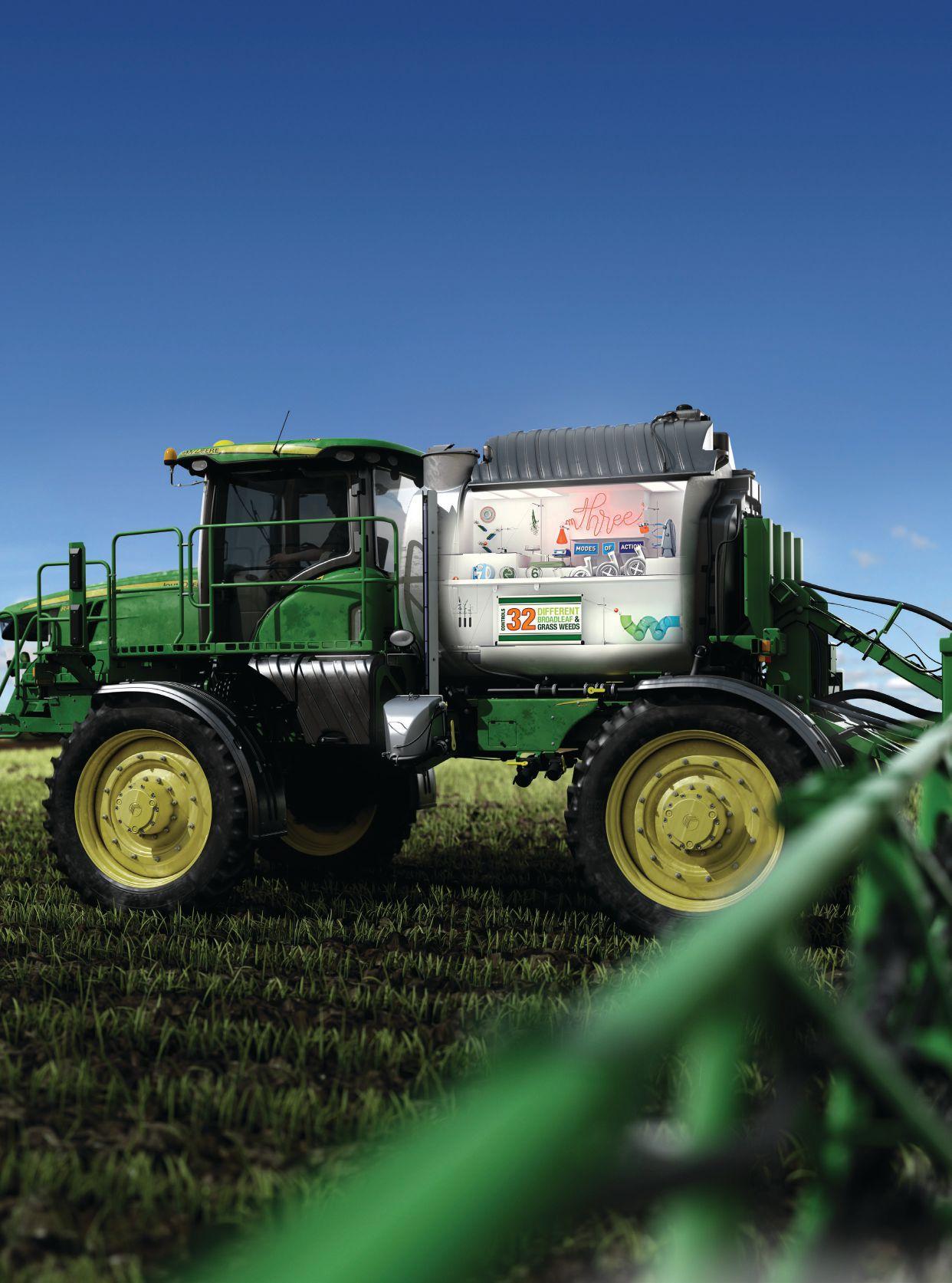
Varro herbicide provides powerful control of wild oats, including Group 1 resistant biotypes, and other tough grass weeds such as barnyard grass, green foxtail, Japanese brome and Persian darnel. An all-in-one herbicide solution for powerful control of 32 different broadleaf and grass weeds. Three active ingredients make Velocity m3 herbicide an excellent resistance management tool while providing control of Group 1 resistant wild oats, Group 2 resistant broadleaf weeds like kochia, cleavers and chickweed and Group 9 resistant weeds.
Now registered for leaf disease control in cereal crops, Delaro® fungicide applied at flag leaf provides long-lasting, broad-spectrum foliar disease protection against diseases like septoria leaf blotch, tan spot and rust. If you’re a barley, oats or wheat grower and need a T2 flag leaf fungicide, this is the answer.
The power of two fungicide active ingredients, Prosaro® XTR fungicide also includes mefenpyr-diethyl, a unique ingredient that helps your crop manage stress. What’s the benefit? Greater yield and more money in your pocket, even under adverse conditions. Prosaro XTR is the market leader in cereal fungicides2 and proven to perform not only in trials, but on your farm year after year.
WEED CONTROL GUIDE 2020
CEREALS: BARLEY
Adds to control rating shown. Check for variety restrictions. Many conditions apply; check
Adds to control rating shown. Check for variety restrictions. Many conditions apply; check provincial weed guide and labels.
fringe of hairs. However, yellow foxtail also develops several additional long irregular hairs on the leaf near to the ligule.
Jones says green and yellow foxtail are controlled with the same herbicides, but there’s less overlap between barnyard grass and yellow foxtail, so distinguishing between these two weeds is more important.
Barnyard grass has flatter stems and redness near the root – but the differences are so subtle that even Jones has confused the two more than once.
Scouting and spraying
Gulden says it’s key to scout before spraying, and to avoid repeating applications of the same mode of action within a season at minimum, and ideally over multiple seasons.
“We don’t want to hit the same weed with the same mode of action twice. Whatever susceptibles weren’t killed the first time, by the second application only the resistant plants reproduce,” he says, adding that scouting after application to confirm efficacy and look for possibly herbicide-resistant survivors is a good strategy.
“If there are herbicide failures, talk to Tammy or myself, because we need to know what’s going on,” Gulden says. “Sometimes there are failures because it’s too dry and weeds shut down and put on a thick cuticle. That might not be related to resistance, but people need to keep an eye on it.”
Jones says that, because there hasn’t been a new herbicide mode of action in 30 years, the industry needs to safeguard the efficacy of herbicides already on the market by adopting integrated herbicide resistance management strategies.
This includes harvest weed seed management, tillage when necessary and crop rotation, mixing “C3 plants” (like wheat, canola and soybean) and “C4 plants” (like corn, but also weeds like kochia, green foxtail and barnyard grass) to discourage the development of resistance.
This type of multilayered approach is intricate and complex, Jones says, but many producers are motivated to make it work.
In theory, she adds, yellow foxtail should be fairly manageable, but it’s shown a surprising resilience.
“If you look at green foxtail, it is our number one weed, but we tend to ignore it. I think yellow foxtail is just a bit more competitive,” she says. “If producers are having a problem with it and can’t seem to get it under control, they should call us and we can try to come up with a solution.”
Gulden can be reached at Rob.Gulden@umanitoba.ca and Jones can be reached at tammy.jones2@ gov.mb.ca or by phone at 204-750-1235.
Yellow foxtail can be distinguished from green foxtail at the three to fourleaf stage by long hairs at the ligule.
PHOTO COURTESY OF TAMMY JONES.
THE END IS HERE FOR FOXTAIL BARLEY
Introducing the Olympus System, the first step in controlling foxtail barley and wild oats. Simply apply Olympus® with your pre-seed application of Roundup® and follow in-season with Varro® or Velocity m3 for season-long control of foxtail barley and other tough grass weeds.
WHEN YOU PURCHASE MATCHING ACRES OF VARRO OR VELOCITY M3
Ask your retail for details
THERE’S STRENGTH IN NUMBERS
Three different powerful herbicide Groups have been combined to make one simple solution for cereal growers.
Infinity® FX swiftly takes down over 27 different broadleaf weeds, including kochia (up to 15 cm) and cleavers (up to 9 whorls). And if you’re worried about resistance, consider this: you’re not messing with one wolf, you’re messing with the whole pack.