Best practices for employers as Canada’s economy reopens
B.C.
Return to work means putting on your ‘mask’ 10 Legal View
Paid sick leave not as simple as it sounds
22 Mental Health
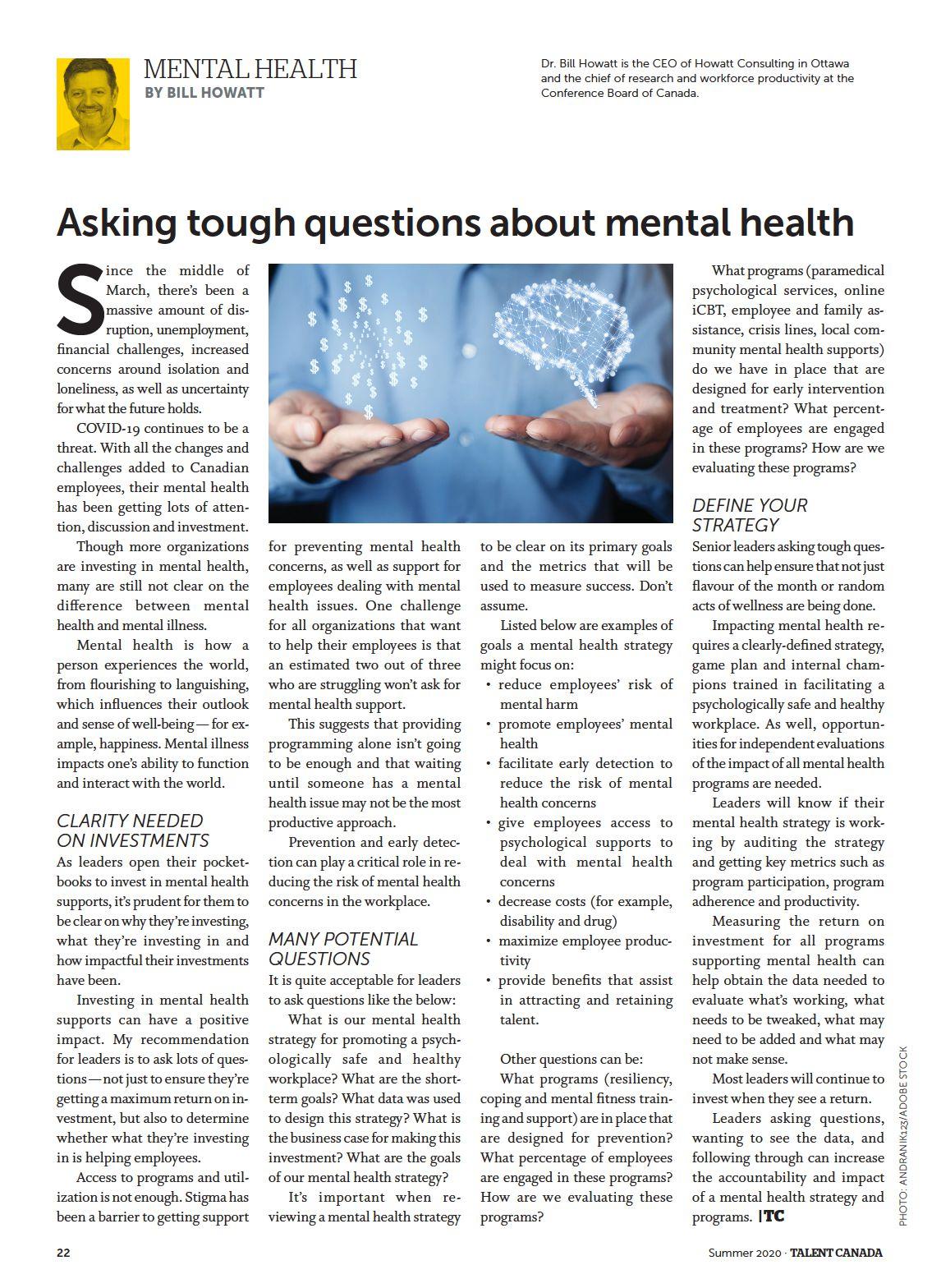
Asking tough questions about mental health
ONLINE
Back to Work
Virtual Summit
In late May, Talent Canada explored practical tactics and best practices for leaders to redesign workspaces and welcome staff back post-pandemic. The virtual summit featured a mix of live and on-demand sessions, all of which are available for free on our website at talentcanada.ca/back-towork-summit.
ON THE COVER
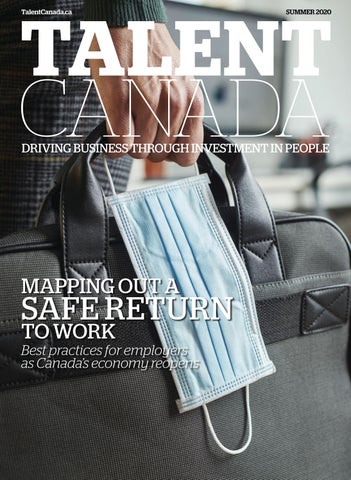
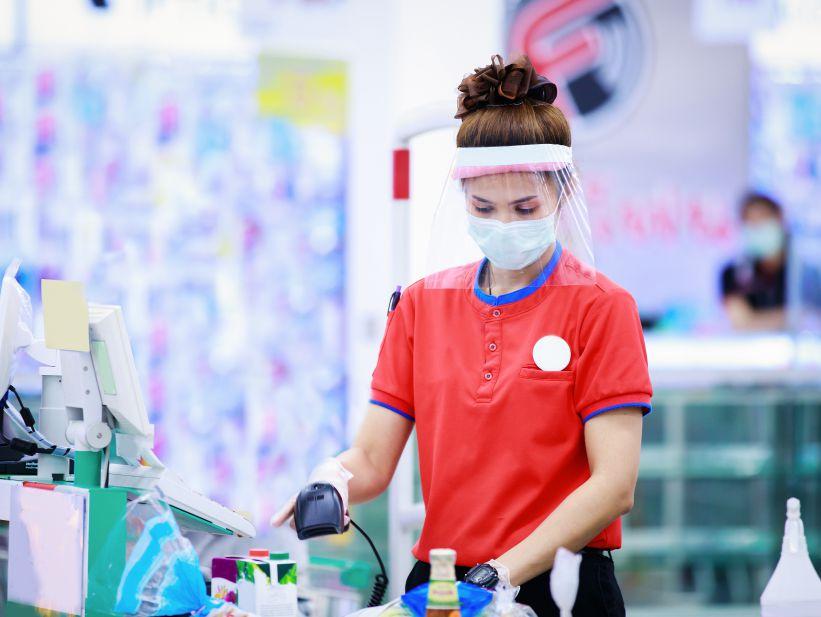
As of June, Canadians were slowly but surely returning to the office following COVID-19 closures. See page 12.
Mapping out a safe return to work
Our virtual summit revealed best practices for physical workspaces and employee policy as Canada reopens following COVID-19 closures.
By Marcel Vander Wier
recruitment
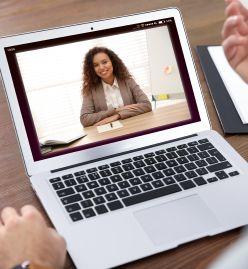
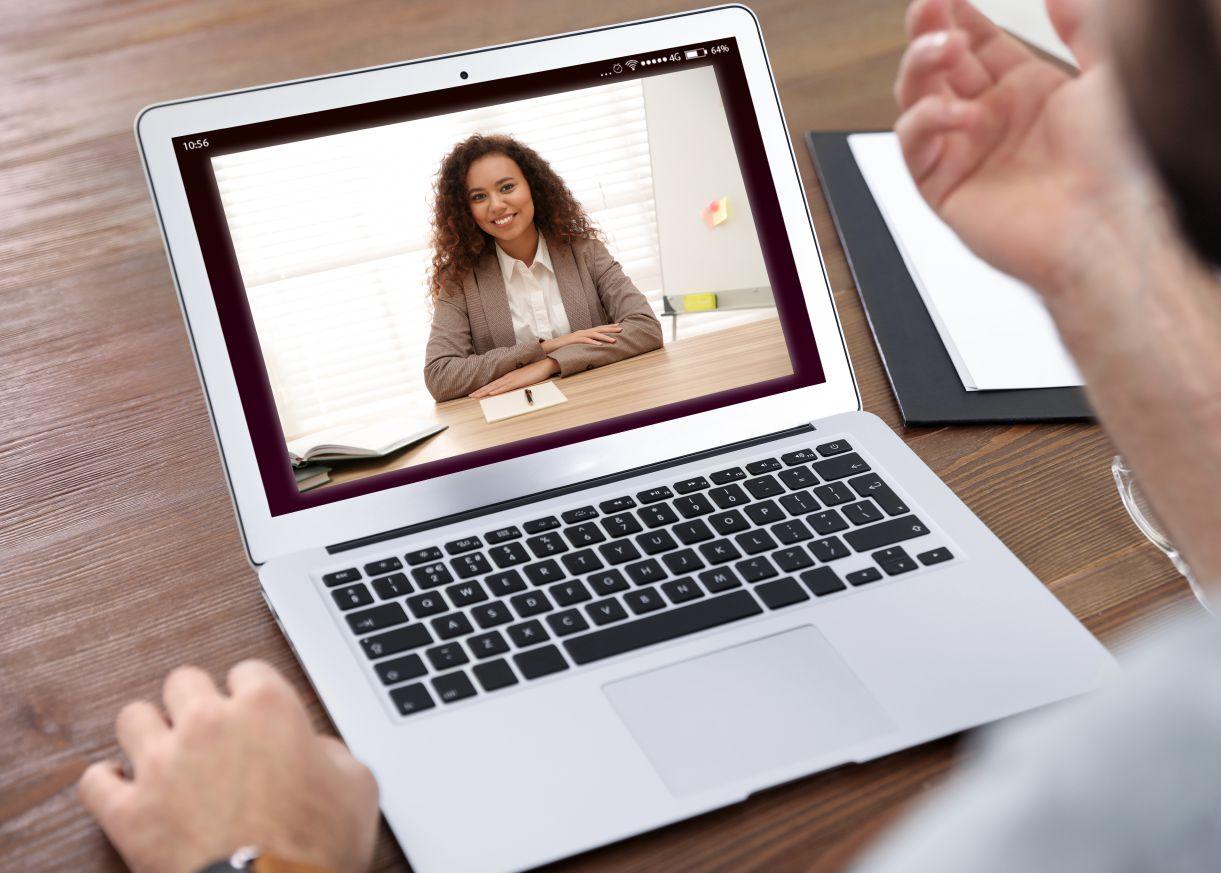
Everything from interviews to onboarding and training will have a virtual element following the COVID-19 lockdown.
By Meagan Gillmore
remote monitoring options
The pandemic has seen more remote work than ever before. For workforces experiencing productivity problems, tech solutions can help.
By Jack Burton
A sneak peek into the future of work FROM THE EDITOR
IBY MARCEL VANDER WIER
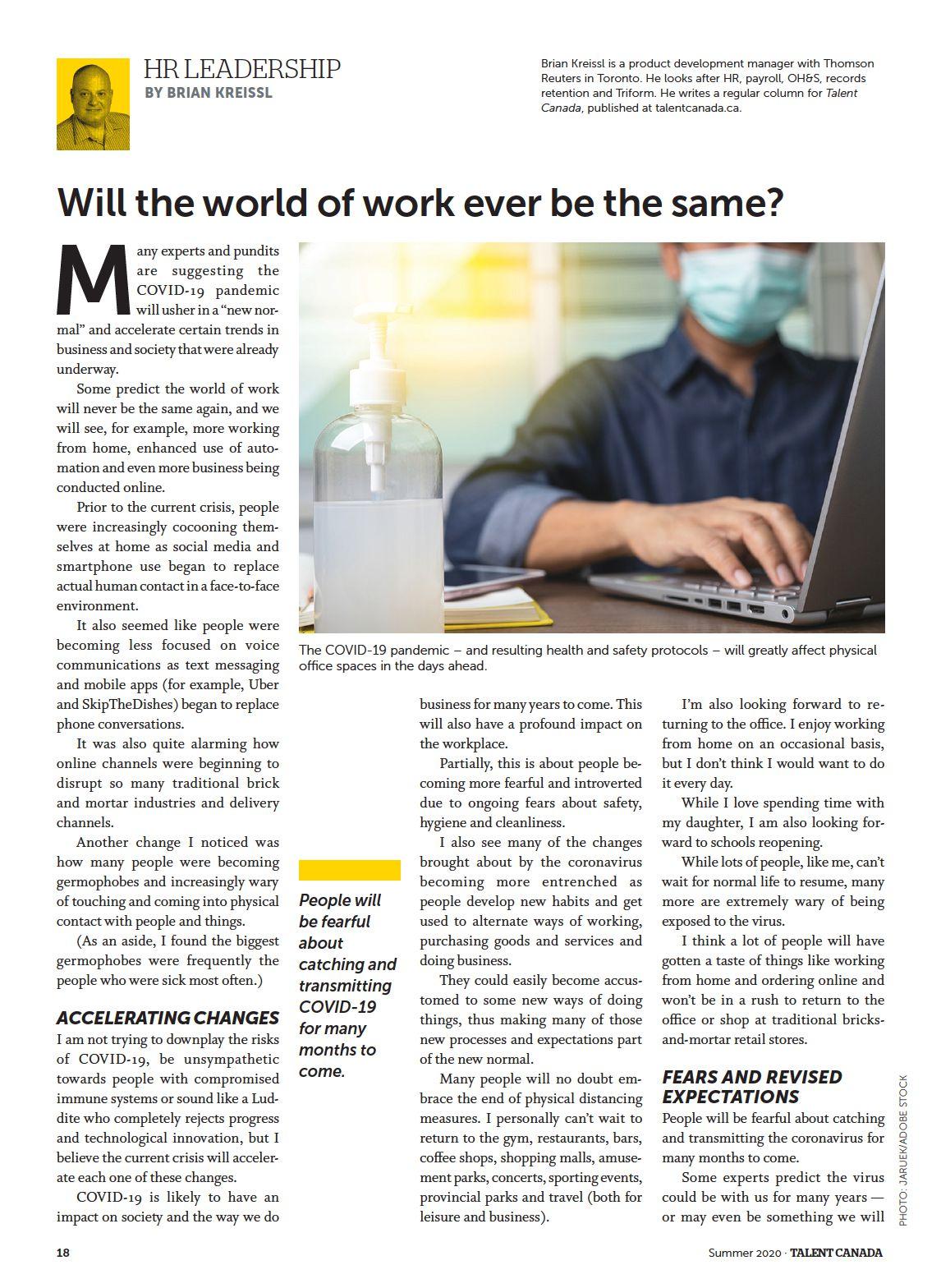
f there is any ray of hope to be found within this mind-numbing COVID-19 pandemic, it may very well centre on the future of the Canadian workplace.
There’s no question the current global pandemic has dealt a crushing blow to society as we know it. Thousands have lost their lives. Millions have lost their jobs. And all of us — at least for a time — endured a loss of the social constructs and frameworks we previously had taken for granted.
Personally, I have been most fascinated by the response of employers — and how quickly the world of work was able to adjust to futuristic employment policies such as extended work from home, virtual events and casual video check-ins between employees and managers.
Frankly, I’ve been impressed by the response, including from my own employer — Annex Business Media (publisher of Talent Canada and 65 other brands). Since mid-March, the vast majority of our staff have been working from home.
And while it hasn’t been all roses, we’ve managed to make the remote office work, including pivoting away from our live events lined up through the rest of 2020 towards a virtual model kicked off by this very publication.
Nearly 500 senior workplace leaders attended our Back to Work virtual summit on May 27, tackling the current challenge of safely returning to the office setting. If you missed it, you’re in luck — our cover story shares the best practices learned from experts across the country.
From a senior leadership perspective, it was inspiring to see the appetite for our content on a safe and healthy approach to physical workspaces, as well as appropriate policy regarding employee relationships and payroll.
And regardless of the fact that remote offices were the only available option from March through May, it must be noted that senior leaders across Canada pivoted to a more flexible, new-look vision on the world of work.
As the Canadian economy continues its slow and steady pace towards recovery, it will be very
interesting to see which companies continue to live by the new-world order of an employee-first, remote-work concept.
Spotify was one of the first to commit to a work-from-home policy for the rest of 2020. Tech giants like Facebook, Google and Microsoft soon followed. It remains unknown how many workplaces will continue the trend.
It’s always surprised me when senior leaders ignore best practice in the workplace. I totally understand it in some respects — I spent many years working for family run businesses and understand that every measure undertaken costs money.
But in more corporate settings, many employers have been so slow to adapt to ‘futuristic’ options such as work from anywhere or flexible work hours.
Prior to taking on my current role with Talent Canada, I spent three years writing about the workplace. Yet despite our hard work deciphering where the future workplace was headed, too often corporate leadership would continue with tried-and-true policy that had worked in the past.
The COVID-19 pandemic has changed all of that, accelerating the momentum towards the future. From my vantage point, it’s well overdue.
The technology is in place to support workfrom-anywhere and flexible hours, and the trend towards tech is only going to intensify in future generations. (As an aside, watching my five-year-old son navigate his kindergarten classes conducted via Zoom through the COVID lockdown was truly remarkable.)
Furthermore, our environment can use the reprieve from the thousands of cars needlessly commuting to a physical office day in and day out. I’m sure you will agree with me — the commute time saved through this pandemic was a small blessing amidst a world in turmoil.
COVID-19 has given us a sneak peek of the future of work. It’s up to the senior leaders of today’s workplace to decide if the future is here to stay. | TC
111 Gordon Baker Road, Suite 400, Toronto, ON M2H 3R1
Publication Mail Agreement #40065710
Printed in Canada
ISSN 2563-0164 (Print) ISSN 2563-0172 (Online)
Published four times per year (Winter/ Spring/Summer/Fall) by Annex Business Media
CIRCULATION
bolechnowicz@annexbusinessmedia.com Tel: 416-510-5182 • Fax: 416-510-6875 or 416-442-2191
Mail: 111 Gordon Baker Rd., Suite 400, Toronto ON M2H 3R1
SUBSCRIPTION RATES
Canada – 1 Year $ 26.50 (+ applicable tax) Best pricing (Can/USA/foreign) available online at talentcanada.ca
Occasionally, Talent Canada magazine will mail information on behalf of industry-related groups whose products and services we believe may be of interest to you. If you prefer not to receive this information, please contact our circulation department in any of the four ways listed above.
As we move into a new phase of the COVID-19 pandemic, where many of us are going back to our workplace or gradually going back out into public, remember that our anxieties are heightened and most of us have barely left home for months. As a result, it’s little wonder some of us are going to be in a “heightened emotional state,” better known as grumpy.
When confronted by an ill-tempered friend, loved one, co-worker or boss, particularly when we’re not in the best of moods ourselves, there’s a greater risk of reacting impulsively and in an equally ill-tempered manner.
But it’s vital to manage our responses, now more than ever.
Before sharing some tips on managing the angry or anxious people in our lives, it’s important to keep in mind: we can only control ourselves. We can’t control our partner, child, colleague or mother-in-law. Trying to control anyone else is fruitless, frustrating and also harms relationships.
The way you choose to react to a situation is entirely within your power, including what you think, say and do. Learning this life skill, even later in life, is not only possible – it’s essential. We must also teach our children these skills, both directly and by modelling the behaviour.
I realize that it’s not easy to keep your cool during a global pandemic. If you’re feeling increasingly anxious, angry or depressed, consider connecting with a healthcare professional – which you can do virtually with an app like Akira by TELUS Health, which provides on-demand mental health support 24/7, from the comfort of home.
Below are a few tips for managing difficult situations involving emotionally charged people — at work, at home or out in the world.
1. MANAGE YOUR OWN BRAIN BEFORE YOU ENGAGE
When responding to an angry or anxious person, recognize and accept that you are not responsible for their emotional reaction. Not owning someone else’s emotions will help you to stay calm and respond with your rational brain rather than your emotional brain.
There’s no “one-size-fits-all” response that will settle a distressed or angry person; you can’t rescue someone from emotional distress with magic words or specific actions. The most effective tools we have are to listen attentively and demonstrate empathy and patience.
It’s also helpful to remember that while someone may be really fired up in the moment, they won’t stay in that emotional state forever. They will eventually decompress, at least to some degree. Thinking this way will help to reduce the tendency to take on another person’s emotional distress, which will reduce your own stress level.
2. REMAIN CALM, WHICH WILL HELP YOU TO CALM THE PERSON YOU’RE SUPPORTING
By staying calm and relaxed (which is not the same as being indifferent), you will nonverbally increase the likelihood of calming and relaxing the person you’re supporting. Try to enter the conversation calmly, by employing passive relaxation. You can also use these tools during the conversation, while the other person is speaking:
• Take deep slow breaths
• Let your shoulders drop and lengthen your neck
• Let your hands, arms and fingers relax
• Feel your feet on the floor and relax your toes
• Relax your face and jaw
Once the conversation is over, take care of yourself by using the same techniques. At the same time, try to visualize a time when you felt very confident and relaxed. The combination of these physical and emotional activities can be a powerful remedy. You can take yourself into this peaceful zone any time – it takes just 90 seconds!
Like all good things, it takes a little practice to make this a “go-to” skill you can employ during high-pressure situations. Trying it out several times a day, during lower stress times, can help to make it a natural step in keeping yourself calm during stressful interactions.
3. SPEAK A LITTLE MORE SLOWLY
If you have a tendency to speak quickly, try to slow down your rate of speech just a little, use shorter sentences and avoid using complicated language. You can show empathy and understanding by paraphrasing what they’ve said and connecting their words to what you think they’re feeling emotionally.
4. REMEMBER THAT PAST EXPERIENCES CAN PREDICT OUR EMOTIONAL REACTIONS DURING DIFFICULT TIMES
As a psychiatrist, I frequently meet people who are highly distressed. This can be expressed many ways, including overt anger, tearfulness or withdrawal. Remember that an individual’s personal history may influence how they feel and react during these stressful times.
For those whose lives have been impacted by significant past trauma or hardship, this crisis may reignite their historical fears or exacerbate their feelings of powerlessness. While there is no excuse for rudeness, understanding possible explanations for poor behaviour has helped me to cope and not personalize other’s objectionable or rude comments.
A special thank you to Dr. Randy Mackoff for his contributions to this article.
Support your employees and their family with Akira by TELUS Health, which will give them direct access to clinicians for medical consults and mental health support by text and video, anytime and anywhere.
DIANE MCINTOSH, Chief Neuroscience Officer, TELUS
BRIEFS
B.C.
extends layoff provisions to Aug. 30
VICTORIA — The B.C. government is extending temporary layoff provisions until the end of August, giving employers and workers more flexibility to support economic recovery during the COVID-19 pandemic. Labour Minister Harry Bains says the extension to a maximum of 24 weeks allows employers and employees to work out agreements during the pandemic while still protecting a worker’s right to receive severance pay, according to the Canadian Press.
Atlantic ‘bubble’ begins July 3
HALIFAX — The four Atlantic provinces announced plans to ease interprovincial travel restrictions, creating a so-called “bubble” as the region has reported relatively few new COVID-19 infections, according to the Canadian Press. As of July 3, residents of Atlantic Canada are again allowed to travel within the region without having to self-isolate for two weeks when arriving in another province. Visitors from provinces and
territories outside the region will still be required to self-isolate for 14 days and adhere to the local entry requirements in each of the four jurisdictions.
4-day workweek pilot underway
GUYSBOROUGH, N.S. — In a move that emerged from a reorganization to deal with the COVID-19 pandemic, a rural municipality in Nova Scotia is testing a four-day workweek for its employees. The nine-month pilot project began June 15 in Guysborough, according to the Canadian Press. The initial change saw about 60 employees work two days in the office and two days at home each week. Under the new plan, municipal employees would work four nine-hour days in two shifts.
CERB gets 8-week extension
OTTAWA — The parliamentary budget officer estimates that it will cost the federal government $17.9 billion to provide eight extra weeks of payments through the Canada Emergency Response Benefit, according to the Canadian Press. A June 23 report says that would bring the total
cost of the benefit program for people who’ve lost all or nearly all their work to the COVID-19 pandemic to $71.3 billion. The CERB — now budgeted at $60 billion — has paid out $43.51 billion to 8.41 million people as of June 4.
Forecast predicts economic growth
OTTAWA — The Conference Board of Canada says the economy may have already begun to recover from the deepest recession on record, if the country can avoid another national COVID-related shutdown. The private-sector group’s quarterly forecast estimates Canada’s economy will shrink by 8.2 per cent this year, after about three million jobs were lost in March and April due to COVID shutdowns, according to the Canadian Press. It also projects Canada’s national unemployment rate will peak at 13.7 per cent in the second quarter, which ends June 30.
Subsidy offered as Manitoba reopens
WINNIPEG — The Manitoba government is offering a subsidy for people who return to fulltime work during the COVID-19 pandemic. Premier Brian Pallister says the money will be available to people who return to work and stop collecting the federal government’s COVID-19 income programs. He says there
will be up to four payments of $500 each over six weeks, as long as recipients work a minimum of 30 hours per week, according to the Canadian Press.
Trump visa ban could affect many Canadians
WASHINGTON — Thousands of Canadians working for technology companies or multinational corporations in the United States could be affected by a new ban that freezes the issuance of temporary work visas until the end of the year. On June 22, the Trump administration extended a ban on green cards issued outside the U.S. and added many temporary work visas to the freeze, according to the Associated Press. The ban on new visas applies to four categories including H-1B, H-2B, J-1 and L-1. In 2019, more than 4,600 Canadians were approved as beneficiaries under the H-1B.
CBC vows to step up diversity efforts
TORONTO — The CBC has announced details of its efforts to meet diverse hiring, retention and promotion goals after its “Yukon Morning” radio show host lambasted the broadcaster for its failings live on-air and then quit. The plan, which the CBC says was approved in May, is to ensure that by March 31, 2022, half of all new hires for executive and senior management positions are Indigenous people, visible minorities, or
people with disabilities. It also plans to double retention and promotion rates for people from those three groups, and implement unconscious bias training for supervisors, according to the Canadian Press.
Grocery stores end ‘hero pay’
In mid-June, two of Canada’s largest grocers ended wage premiums they had been paying employees due to the pandemic. Loblaw and Metro had been paying front-line employees an additional $2 per hour since midMarch when the restrictions due to COVID-19 were first put in place. In a letter to customers, Loblaw executive chairman Galen Weston said that things have now stabilized at the company’s supermarkets and drug stores. Both companies noted they would pay out a one-time bonus to staff.
Shopify goes remote for rest of 2020
OTTAWA — The head of Shopify has declared that “office centricity is over,” as the company moves to a more permanent remote-work model for most employees, with no intention of reopening offices this year. “As of today, Shopify is a digital by default company,” tweeted Tobi Lutke, chief executive of the Ottawa-based e-commerce giant May 21. Shopify offices will remain closed until 2021, and then reopen with a significant shift in purpose as the company looks to normalize remote work, according to the Canadian Press.
JOB STOPS AND STARTS
109 – SaltWire Network says it is letting go 109 employees who have been permanently laid off because of the hit to advertising caused by the COVID-19 pandemic. The newspaper chain based in Atlantic Canada says 61 of the employees are based in Nova Scotia, 25 in Newfoundland and Labrador and 23 in Prince Edward Island.
3,333 – WestJet Airlines says it will lay off 3,333 employees as part of a major restructuring amid the COVID-19 pandemic that has devastated the travel industry. The company plans to consolidate call centre activity in Alberta, restructure its office and management staff and contract out operations at all but four of the 38 Canadian airports where it operates.
Unknown – Starbucks is planning to close up to 200 coffee shops across Canada as it responds to changes of consumer habits in the COVID-19 pandemic. The Seattle-based chain is restructuring its company-operated business in Canada under a two-year plan.
289,600 – Statistics Canada reported a record-high unemployment rate as the economy added 289,600 jobs in May, with businesses reopening amid easing public health restrictions. The unemployment rate rose to 13.7 per cent, topping the previous high of 13.1 per cent set in December 1982 in more than four decades of comparable data.
650 – BRP (Bombardier Recreational Products) says it will cut 650 jobs or about five per cent of its global workforce as the recreational product maker stops producing outboard motors that have been “hard hit” by the COVID-19 pandemic. BRP manufactures Ski-Doo, Sea-Doo and Can-Ams products.
200 – Manitoba’s Crown-owned energy utility says it will be issuing temporary four-month layoff notices to 200 workers as part of cost-control measures during the COVID-19 pandemic. Manitoba Hydro said June 5 it was unable to find alternatives to the layoffs with two unions — Unifor and the International Brotherhood of Electrical Workers.
Unknown – Aurora Cannabis is making its second round of significant cuts this year as it continues with a restructuring plan meant to address profitability struggles. The Edmonton-based cannabis company announced June 23 that it will reduce its selling, general and administrative workforce by 25 per cent immediately and another 30 per cent of production staff will be laid off from the company over the next two quarters.
2,500 – Bombardier Aviation will lay off 2,500 workers, mostly in Canada, because of the pandemic’s impact on projected deliveries of its business jets, the company announced on June 5. The company said the majority of the cuts will impact its manufacturing operations in Canada and will take place throughout the coming year.
12,000 – Boeing is cutting more than 12,000 jobs through layoffs and buyouts as the coronavirus pandemic seizes the travel industry — and more cuts are coming. One of America’s biggest manufacturers will lay off 6,770 U.S. employees this week, and another 5,520 workers are taking buyout offers to leave voluntarily. Air travel within the U.S. tumbled 96 per cent by mid-April, to fewer than 100,000 people on some days, according to reports.
45 – Cascades says it will close its Brown containerboard plant in Burlington, Ont., by the end of July — a decision that will affect 45 employees. The Kingsey Falls, Que., company specializes in recycled paper products. It says the closure was part of its ongoing initiatives to “optimize” its activities in the boxboard packaging sector, according to the Canadian Press..
WORK BEHAVIOUR
BY MINA MOVASSELI
Mina Movasseli is a behaviour analyst and founder of
Returning to work means putting on your ‘mask’
What kind of behaviour changes can we expect by going back to work following COVID-19 closures?
For one, many will continue to be working remotely, navigating their office from their homes. This can create issues for a company’s corporate culture.
How? Organizations work hard to create an environment that allows people to do the work they want them to, which often makes people wear a different type of “mask” — one that hides their authentic selves.
This can make workers feel almost robot-like where they need to work a full eight-hour shift — with the flexibility of going on Instagram — and having to abide by the rules given by those who are higher up on the ladder, creating a place with people that will have similar habits.
With remote work, people are working from the comfort of their homes, a place where habits have already been formed and “masks” most likely are taken off.
This makes it harder for companies to mold employees for their ideal culture — creating a divide within the culture as people embrace themselves working with less “masks” on, but increasing the level of happiness for the individual.
This can definitely be a time where companies who believe in remote work thrive as they understand the advantages of their employees working from home. Unfortunately, that is not yet the majority, but with major changes, it can go in that direction.
PHYSICAL MASKS HAVE AN EFFECT, TOO
For those that will be going back to the office, the simplicity of wearing a physical mask can dramatically affect the culture as well, as it is unnatural to
the human mind to not see someone’s full face — especially their mouth.
Since viewing facial expression is one way our mind makes assumptions on whether or not the person is kind, safe, angry or other, this lack of facial recognition can subconsciously put people in a state of fear.
Another way corporate culture is being affected is through political conversations — especially when colleagues don’t even realize they are being political. This happens when people engage in conversations about whether or not wearing a mask is helpful, or even a discussion to which vitamins are best.
Poor work culture can result in employees wearing a different type of
mask.
These conversations can turn into debates, which create a political divide, since it brings forward opposing views and people are debating them almost endlessly. Of course, it is good to share information and exchange knowledge, but workplaces were not created to handle this.
And even if the conversations are not being had, colleagues are sharing information on their social media accounts, making it clear where they stand, creating a divide between teammates who don’t share their views.
There are sure to be arguments on the topic at some point, so it is important to handle it like a political
conversation where people understand that opposing views are going to come up and to choose to engage with an open mind or move on to another topic.
PROTECTING YOUR CULTURE
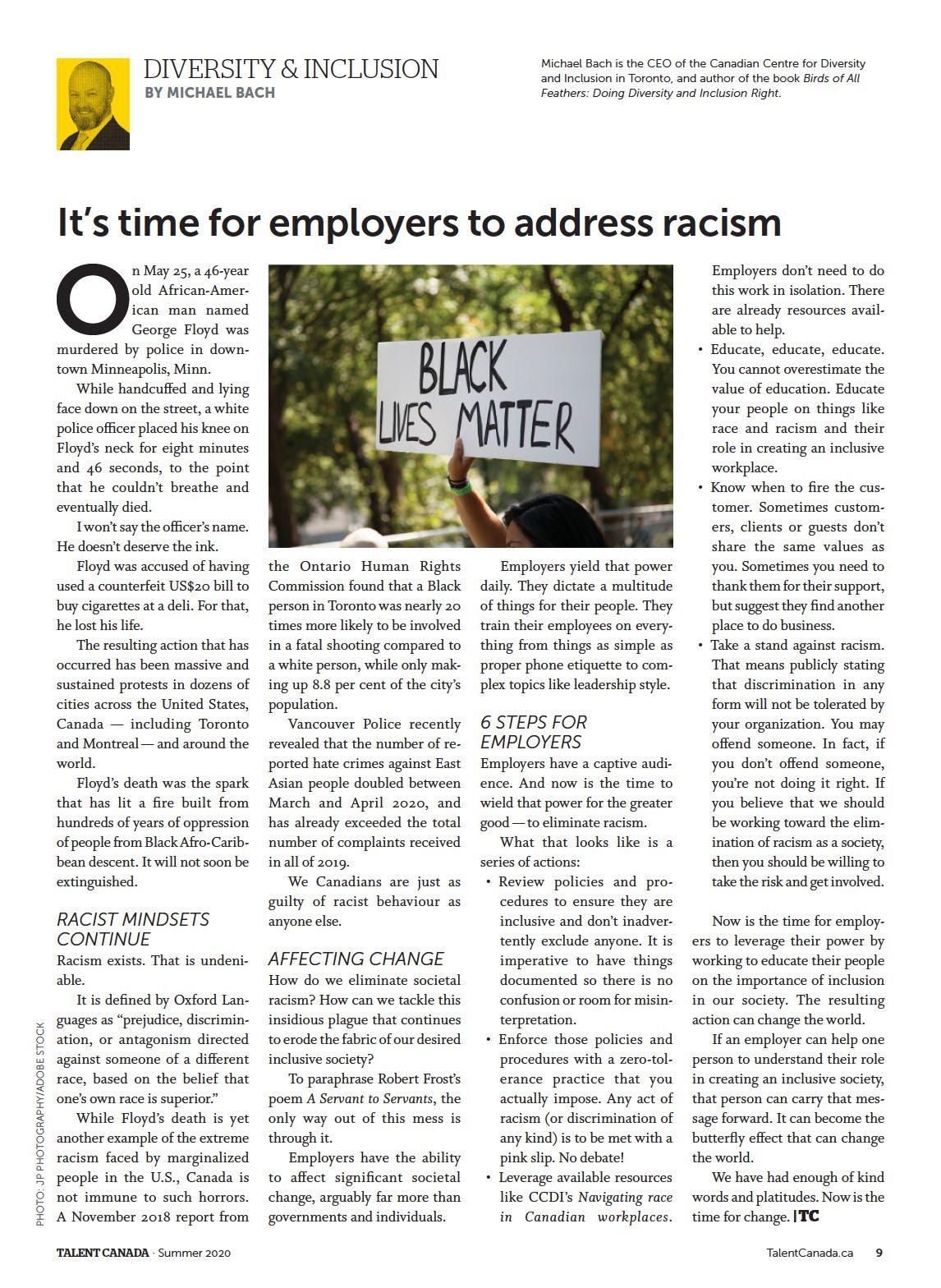
COVID-19 isn’t the only conversation going on at present. Black Lives Matter protests are happening around the world and many businesses are trying to step up and show their support.
Oftentimes, the support can be seen as a marketing ploy from the inside, which can indirectly affect the culture. This happens when employees know their company is preaching something that is not embedded in the organization.
So, once a statement is put out by the company who pretends they have never had these issues, they will lose their employee’s trust. You can be sure that will be the elephant in the virtual chatrooms.
Why? This leads to a lack of belief in the mission and vision of the company, which means you just have employees collecting paycheques.
Preventing this could be as simple as creating a line of communication where the leaders start to have conversations about how they will be improving corporate culture, instead of acting like it is already perfect.
Hopefully, this ensures an environment based on equity. Equity in terms of fairness for all; the understanding that many might have different opportunities or biological differences — so being equal might not actually be fair for each party.
By taking this level of ownership, leaders are able to be vulnerable and build a stronger foundation of trust.
Company culture will be affected by COVID-19, but it doesn’t have to be negative — it just depends on how it is handled. | TC
LEGAL VIEW
BY STEPHANIE LEWIS
Paid sick leave not as simple as it sounds
Prime Minister Justin Trudeau recently revealed that the federal government has entered discussions with the provinces in the hopes of implementing 10 paid sick days for workers across Canada.
While the idea of supporting workers during the COVID-19 pandemic is worthwhile, the implementation and execution of 10 paid sick days for all Canadian employees is not simple.
It requires changing at least 14 different pieces of legislation across the country, co-ordinating with 10 provinces and three territories, and implementing complex workforce management practices.
A closer look at the intricacies of enacting such paid sick leave presents challenges that should be considered.
CONSENSUS REQUIRED
Firstly, while the Government of Canada can enact federal legislation, the number of employers impacted by this legislation is limited.
The federal act governing medical leaves is the Canada Labour Code. The Code applies to businesses that are federal undertakings — such as banks, telecommunications companies, transportation companies that cross provincial borders and broadcasting companies.
However, the majority of employers are subject to provincial employment standards legislation. As such, implementing 10 days of paid sick leave does not mean simply changing one statute. It means changing the Code, as well as statutes or regulations in each of the 10 provinces and three territories.
While the prime minister and his federal team have entered into discussions with the provinces, consensus will be required among the provinces and territories in order to implement a national program.
Whether such proposed amendments are consistent across the provinces, and whether they are permanent or temporary, remains to be seen.
COMPLICATIONS OF UNPAID LEAVE
With the exception of Quebec — which allows for two paid days per year of sick leave or family responsibility leave — the majority of the provinces do not currently have legislated paid sick leave.
decide to enact 10 days of paid sick leave, there is a series of considerations governments and employers alike will need to address in order to manage these leaves.
When employees want to avail of paid sick leave, will employers be allowed to require a sick note? The unpaid leaves of absence in Ontario and British Columbia do not allow for such notes.
If medical notes are permitted, will obtaining them be practical? One of the reasons that employees do not currently have to present medical notes for the various unpaid emergency leaves is that requiring such notes would be unduly burdensome on the health-care system.
Too many people need too many leaves for doctors to keep up and still meet the ongoing health-care needs of Canadians.
Will employers need to amend their attendance management policies to keep from running afoul of new legislation?
The majority of provinces do not have legislated paid sick leave.
This is further complicated by the fact that some provinces, such as Ontario and British Columbia, have already instituted unpaid, job-protected leaves as remedial measure during this uncertain time.
These leaves allow for employees to remain off work and retain their right to be reinstated to their jobs (or comparable positions if their jobs are not available upon return to work) upon conclusion of their leaves.
In the event that provincial and territorial lawmakers agree to 10 days of paid sick leave, the costs of such leaves will likely be borne by employers.
PRACTICAL CONSIDERATIONS FOR EMPLOYERS
In the event that federal, provincial and territorial lawmakers collectively
Wording related to any absence from work will need to be carefully assessed to ensure that it does not discourage employees from using their paid sick leave when their health requires it.
While instituting paid sick leave across the country may prove difficult, there are other steps employers can take to manage their workforces in the interim.
They can allow and encourage employees to work remotely. For employees who cannot work remotely, employers can enact thorough returnto-work practices and guidelines to reduce the risk to employees who need to attend the workplace.
These policies ought to reflect occupational health and safety obligations as well as practical considerations in light of individual workplaces. |
Stephanie Lewis is counsel in Dentons’ Litigation and Dispute Resolution group in Ottawa, with a focus on employment and labour.
MAPPING OUT A SAFE RETURN TO WORK
Virtual summit reveals best practices for physical workspaces and HR policy as Canada reopens following COVID-19 closures
BY MARCEL VANDER WIER
With the initial challenges of COVID-19 closures mostly behind Canadian employers, the focus has now turned to reopening.
Following three months of intense efforts to mitigate the effects of the pandemic, Canada is slowly and surely returning to work.
On May 27, together with sister publication OHS Canada , Talent Canada hosted the Back to Work virtual summit in an effort to share best practices and policies for employers looking to reopen. Close to 500 business leaders attended.
Federal Labour Minister Filomena Tassi opened the event, encouraging employers to keep the faith while anticipating a “new normal.”
“The success of this project is knowing that we all share a common goal,” she said. “That is to reopen in a way that is safe for all Canadians, industry, labour and the general public.”
The event included two live panels featuring a variety of panellists and moderated by Talent Canada publisher Todd Humber.
Landlords can assist by ensuring proper signage and protocol is in place in common building areas.
PREPARING PHYSICAL WORKSPACES
In mid-March, COVID-19 shut down large parts of the Canadian economy and forced employers and employees to adjust how they work.
Essential and frontline services remained open with protections such as physical distancing and proper personal protective equipment (PPE) in place, said Richard Moreau, an emergency management, security and defence expert with Calian, a professional services organization in Ottawa.
Challenges did arise due to varying interprovincial standards, however, he said.
“Despite the fact that the federal government provided some guidelines, at the end of the day, it’s up to each jurisdiction to decide how they are going to proceed,” said Moreau.
“We quickly came to the conclusion that we couldn’t rely on each of the provincial plans — we needed to have our own to anchor our decisions on.”
Once completed, the plan was adjusted on a site-by-site basis, he said.
“In the end, our approach has been to bring back to work those who need to be back at work first, followed
eventually by those who want and can return to work, and finally add some flexibility with adjusting to the new reality for those who can continue to work efficiently virtually and don’t need to re-enter the office space,” said Moreau.
“Our approach has been to go as fast as possible, but also as slow as required.”
COMMON AREAS, TEMPERATURE SCREENING
When office facilities are greenlighted to open, working alongside the building management on protections is advised, according to Kris Tierney, vice-president of HR and learning at the Human Resources Professionals
Association (HRPA) in Toronto.
Landlords can assist by ensuring proper signage and protocol is in place in common building areas, she said.
“It’s easy for us to control our own worksite… (but) every movement of the tenants, of your workforce, of your employees needs to be considered in those common places.”
To properly protect workers, policy must be in place that takes into context the advice of the chief medical officer, said Dr. Ken Jenkins, national medical director of Horizon supported by Telus Health, based in Newfoundland.
“We have to get away from employees coming back to work when they’re sick,” he said. “Let’s face it — in the
past, people would have a cold, even a flu, and would show up at work. Those days are over. We’re not going to be able to afford to have people presenting the risk of transmitting a virus to other workers.”
In terms of temperature screening, Jenkins advised policy that has employees screen themselves before they leave home, noting online assessment tools are available.
“If anybody screens negative and (doesn’t) have any particular high risk for this illness, they should wash their hands with a sanitizer and then proceed on to the office setting,” he said.
Temperature checks are an extra layer of protection, but Jenkins said the science doesn’t necessarily stand
behind this type of testing.
For staff members who have tested positive for COVID-19, if they are asymptomatic after 14 days, they can safely return to work, he said. “There are no requirements for test clearance for returning to work.”
LESSONS FROM ESSENTIAL BUSINESSES
Grocery stores and other essential businesses across Canada were the first to adopt proper health and safety protocols in the age of COVID-19, and employers in other markets would be wise to learn from them, said Tierney.
Plexiglas usage, directional signage and mandatory hand sanitizer upon entry are all helpful on-site
protections that can be adapted in other work settings, she said.
In deployment of these tactics, communication is critical, though businesses must be able to back up their guidelines, said Tierney.
“You need to engage your supervisors, your managers to help with that,” she said. “You need everyone to really agree to and accept those new guidelines.”
Changing employee behaviours won’t necessarily be easy, said Jenkins.
“Leaders have to show up at this time,” he said. “Crisis periods are times when leaders come forward… The baton is being passed now. It’s going from leadership in politics and leadership in public health, and it’s being passed to business leaders as we get the economy restarted.”
Senior leaders need to “seize the moment” and reinforce important public health messaging, said Jenkins.
“Take time to clarify roles and responsibilities,” he said. “Try to rebuild your stamina, flexibility and strength in your workforce, because there’s deconditioning that has gone on over this time.”
“A lack of ramp up is potentially problematic, because it can result in dysfunctional behaviour… and worst case, it can lead to mishaps and injuries.”
HR AND POLICY CHANGES
Ensuring a revamped business plan adjusted to the “new normal” is in place is a solid starting point for Canadian employers, according to Sharon Ramalho, a Toronto-based consultant and former chief people officer at McDonald’s.
But when it comes to people-related policy, health and safety is priority No. 1, she said.
“Business leaders, HR leaders, we’ve got to get that right, because that impacts people’s mental health. It impacts the productivity that will then take place. And it impacts customers and clients that employees will be interacting with moving forward.”
While government policy will need to be abided by, talking to employees to understand their unique concerns is best practice, said Ramalho.
Adjusting benefits plans to potentially include more personal days, mental health supports and paid sick leave are further considerations, she said.
“People want to know that they’re going to be safe.”
An extra wrinkle in the COVID-19 shutdown was the rapid emergence of emergency government wage subsidies, said Irene Paul, a compliance advisor at Ultimate Software in Montreal.
“In general, when a measure is announced… there is months that go between the announcement and when it actually becomes effective,” she said.
“This hasn’t been the case with all the measures that are related to COVID-19.”
As of late May, there had been at least 115 changes impacting HR and payroll as a result of government wage subsidies, according to
As of late May, there had been at least 115 changes impacting HR and payroll as a result of government wage subsidies, according to Paul.
“These things needed to happen because funds had to go out to struggling businesses so that they could keep paying their employees,” she said. “We didn’t have the opportunity to iron all of the details out and make sure that everything was clear.”
In terms of the Canadian Emergency Response Benefit (CERB), it’s important to note that payments to employees don’t concern the employer — it is a direct transaction between individuals and the Canada Revenue Agency (CRA), said Paul.
Remuneration boosts for essential workers and those on the front lines deserve applause, said Ramalho.
“That signals to employees that we value you; we value your contributions; we appreciate the work you are doing,” she said. “What more can you do for employees to really retain the talent that you invested so much time in nurturing and developing?”
SEIZING NEW OPPORTUNITIES
COVID-19 shutdowns were disruptive to all Canadians, said Sue Ivay, chief human resources officer at Calian.
“Once we can process that fact, I think it’s such a wonderful opportunity for leaders to really get to know their people,” she said.
“It’s such a beautiful opportunity for individual managers to really get their team members to engage, to get to know them better than you ever could have in an office setting… to really engage with your teams on a much deeper level.”
It is possible to consider the pandemic as an “exciting time” for workplace change, said Ivay.
“The opportunity for what this is going to look like next month, six months, 18 months, 24 months from now, it creates a whole other level of opportunity for all of us,” she said. “This is the Internet coming in and disrupting video stores.” | TC
Government response to the pandemic was rapid and quick to change.
Irene Paul of Ultimate Software.
ANSWERS, NOT QUESTIONS.
Talent Canada is proud to present the Workplace Mental Health Summit, an innovative virtual event designed to provide employers with practical, real-life solutions.
CONFERENCE CO-CHAIRS
Dr. Bill Howatt is the CEO of Howatt Consulting and the chief of research and workforce productivity at the Conference Board of Canada, leading its applied research programs in workplace wellness, mental health and workforce productivity.
Dr. Rumeet Billan is an award-winning, internationally recognized entrepreneur, learning architect and humanitarian. She is the chief learning officer at Viewpoint Leadership and has designed the stateof-the-art 3x3 Executive Leadership Program.
Full agenda to be announced shortly!
Presented by
POST-COVID RECRUITMENT WILL LOOK VERY DIFFERENT
Virtual onboarding, training all part of new normal
BY MEAGAN GILLMORE
Workplaces have fundamentally shifted during the COVID-19 pandemic. As jurisdictions across Canada reopen their economies, employers need to consider how they will attract and retain top talent in this new work environment.
Virtual interactions have not just altered the process of recruitment, they’ve become the only available method for everything from initial recruitment of perspective employees to onboarding and training of new hires.
“People are being hired without the in-person meeting happening,” says Rowan O’Grady, president of Hays Canada. “And then, there’s the completely unheard of concept that they’ve never been to the office even
COVID-19 has simultaneously restricted the amount of time employers and employees spend together and expanded the pool of eligible candidates.
after they start working. It’s just completely different.”
In the future, many workers may consider in-person recruitment and onboarding methods just as baffling.
Reports indicate that a majority of workers are content to work from home, and may prefer to continue doing so even after the pandemic restrictions are lifted.
OFFICES GOING VIRTUAL
In May, a Conference Board of Canada survey indicated that just four per cent of businesses will require employees who have been working remotely during the pandemic to return to the office full-time while the pandemic is active.
Also in May, RBC released a report that said 75 per cent of employees interviewed would prefer to
continue working from home — for at least some of the time — after the pandemic ends.
Some companies are already opting to move in the direction of virtual-first, or virtual-only workplaces. While those predictions became public, Shopify announced it would permanently move to a work-from-home model.
Techniques that may have seemed only beneficial in the pandemic may become mandatory skills for business progress and recruiting.
“I don’t think recruitment is going to be entirely virtual, like in some cases it is now,” says Evangeline Berube, a branch manager at Robert Half in Edmonton. “I do see organizations hiring more remote workers moving forward, and some of those workers may not be in the same province or even country, so I think the skills that we learn right now around doing some of this is just going to help us be a little more nimble and flexible moving forward.”
GETTING VIDEO INTERVIEWS RIGHT
The recruitment process has become completely virtual through COVID-19, with many companies opting for video interviews with candidates.
But these platforms, while helpful, can’t replicate the information gleaned through interpreting body language during an in-person conversation, says Berube.
“It probably takes a little more time to really feel comfortable when you meet someone for the first time online — to get a sense of their cultural fit,” she says.
Interviewers need to be even more prepared for virtual interviews, Berube adds. Conversations may not flow as naturally in this setting, so it’s best to have a more structured approach ready to use.
All participants need to know how to use the technology required for the interview, and how to contact each other if there are technical difficulties. It also means having a clear plan for what questions will be asked in the interview, and what structure it will take if more than one person is asking the questions.
Candidates should be informed beforehand if more than one person will be interviewing them, says Berube. This will prevent any confusion or panic when they log onto the call and see several faces looking at them.
“It’s good to have them feel as comfortable as possible and have as little unknowns as possible going into the meeting.”
Candidates also need to know they have their interviewers’ undivided attention.
“There’s a potential to be flippant, or a potential to be not prepared, or not give the interview the respect that it probably needs,” says O’Grady.
An in-person interview is a “formal event,” where the employer has to physically remove themselves from their other duties and focus on the potential hire, he says.
With a virtual interview, it’s possible to review an unfinished report or pending email with just a click of a button while the candidate delivers a thorough answer to the question.
The “cardinal sin” would be to answer an email during the call, says O’Grady.
ADDRESSING FUTURE WORKPLACE CONCERNS
Employers need to be able to address concerns about COVID-19 in the interview. This includes knowing what the company plans to do to keep workers safe if they do have to work from the office eventually, or travel for their work.
“People are highly aware right now of the social distancing and what’s being required (to take precautions with COVID-19),” says Berube. “That’s going to be a bigger part of the hiring process now in terms of their questions and comfort level about joining your company.”
At the same time, employers will need to assess if potential hires will be able to stay motivated and productive while working remotely. They want to determine whether individuals can remain focused and produce quality work when there is little direct supervision.
“References are very key when you’re recruiting to helping you understand people’s past performance as it relates to some of those characteristics,” says Berube.
RELAXING HIRING RESTRICTIONS
COVID-19 has simultaneously restricted the amount of time employers and employees spend together and expanded the pool of eligible candidates. As workplaces become increasingly virtual, limiting recruitment efforts to individuals who are able to physically work from a central location is unnecessary, says Shahid Wazed, founder of the Top Talent Summit and an Edmonton-based talent coach and consultant.
Companies need to “go with a virtual-first mindset. That opens up a whole lot of a talent pool,” he says. “Those artificial limitations were there until COVID-19 hit us.”
A virtual-first mindset does more than just open up qualified candidates who live further away from a company’s building, says Wazed.
It also could make it easier to attract top talent who are more experienced or established in their careers.
“It’s always been a challenge to make someone move in their mid-career. It doesn’t matter what you offer,” he says, noting that by the time someone reaches the middle of
their career, they often have greater family responsibilities.
Employers should consider allowing more flexibility in work schedules, according to Wazed.
Employees should not be required to work a standard 40-hour workweek if they’re performing well and generating revenue for the organization.
The key is to “not be rigid,” he says. More flexible schedules can make it easier for candidates who may need more time to care for children or aging parents.
The pandemic has forced workplaces to recognize the need for employees to respond to unexpected and urgent situations, says Wazed.
SOCIAL ONBOARDING IN A VIRTUAL WORLD
The most challenging part of recruiting during a pandemic is successfully onboarding new hires, according to these experts.
“It’s an unsettling experience to join a team when you have physically never met them, you have probably never been in the office of the company,” says Berube.
Introductory materials are often delivered virtually.
“That’s completely normal,” says O’Grady. “The bit that gets lost (when doing onboarding from home) is the feeling that you’re actually working for a company that other people are working in, that there’s people and personalities and relationships.”
“The people that you work with are a huge influence on whether you’re happy at work or not,” he says.
Employers should intentionally schedule social videoconferences so new staff get to see the rest of their team and begin to develop relationships with them. When staff do return to the office, virtual meetings can be a way to keep all employees connected.
“I think that (employers) will have to figure out how to make people feel included and not feel left out when people go back to work,” says O’Grady.
“Now, potentially, this is actually one of the challenges of inclusivity — how to include people who just aren’t there.” | TC
Meagan Gillmore is a freelance journalist in Toronto.
PRODUCTIVITY PROBLEMS? REMOTE MONITORING OPTIONS MAY HELP
Tech solutions can keep employees engaged while working from home
BY JACK BURTON
While all leadership roles require a sense of capability and comfort when dealing with uncertainties, the impacts of the COVID-19 crisis on the workplace run deep enough to affect even the most assured decision-makers.
The journey of exploring the best ways to adjust to the new, indefinite reality of the remote workforce is not only a challenging process, but also a constantly changing one.
An emerging field of technology solutions may lend a hand to this chaotic transition.
These solutions can be described in a variety of ways — employee monitoring software, productivity tools, task management technology — but they all offer the same promise: a tool to help employers build a more efficient and engaged workforce.
BENEFITS OF MONITORING TOOLS
HubStaff CEO Dave Nevogt clarifies that his company’s software isn’t just
about keeping tabs on employees in the hopes that they’ll stay on task, but is rather focused toward allowing employers to observe and cultivate data on the way teams work, so they can be better equipped to make decisions on what needs to be paid attention to.
“Owners and managers can see data and get insights into how productive individual team members are, without being in an office,” says Nevogt in Indianapolis, noting the benefits of this information goes both ways.
“Team members can understand how they are spending their time — this one aspect alone usually has a huge impact on how time is spent, because many organizations do not track time at all.”
These solutions existed before remote workforces suddenly became the norm for the time being, but their features make them uniquely equipped to address the difficulties that come with entire teams having to learn on their own how to best relate to one another, operate and prosper in this new working reality, he says.
It’s the company’s responsibility to provide employees with considerable information and input before introducing monitoring software to the workplace.
“A healthy and productive remote workforce requires that managers and peers check in.”
Nevogt believes that technology such as HubStaff allows workplaces to overcome this issue by streamlining the process of communicating goals and progress.
“With this technology, managers and owners can confirm that the right priorities are being worked on,” he says. “(This is) something that is very hard to manage in a remote environment.”
COMMUNICATING THROUGH COVID-19
Of all these difficulties, one aspect most disrupted by this shift in work environments is communication, according to Cissy Pau, a human resources consultant with Clear HR in Vancouver.
This is doubly so for when it comes to communicating expectations, since the unpredictability of the current situation means that they are changing frequently, she says.
Unfortunately, as communication continues to become more difficult, due to the current state of flux when it comes to goals and expectations, it has also become more necessary than ever.
“(As your employer), I don’t see you every day in person,” says Pau. “There absolutely needs to be really clear expectations and really good, diverse types of communication.”
Pre-pandemic, the flow of communication “came out naturally, just from proximity,” she says.
“In an office, you can hear each other’s communication, you know who’s having a good or bad day, you
hear all those things whether it’s purposeful communication or not.”
Now, the challenge with remote workplaces is that “the communication is not as natural, or based off of casual contact,” says Pau.
“You now need to make a point to reach out when you want something.”
The intentional, non-casual style of communication necessitated by the limitations of remote-work environments adds a whole new dimension to managing the operations and workflow of one’s team, she says.
Yet the very nature of a technology that operates by keeping an eye on one’s team comes with considerable baggage. For employees, it’s possible for them to perceive the introduction of productivity monitoring software to their work environment as implying a lack of trust when it comes to their capabilities and integrity as a team member, says Pau.
MINDFUL IMPLEMENTATION URGED
The potential of this software to leave employees feeling alienated means that it’s the company’s responsibility to provide them with both considerable information and input before introducing it to the workplace, according to Chris MacDonald, an associate professor and chair of Ryerson University’s department of Law and Business in Toronto.
“If you can convince employees that you’re actually solving a problem, they may be more open to it,” he says.
“More generally, engage them in the conversation. They may well have their own suggestions as to how to monitor and maintain productivity.”
MacDonald also urges that any conversations with employees about introducing this software occur on the basis of respect for the consent and autonomy of one’s team: “Employee consent doesn’t eliminate the privacy concerns … for consent to be ethically legitimate, the employee has to have a real choice.”
Tech options can streamline the communication of goals and progress, even during remote work.
“If the options are to submit or to find a new job, few employees are going to experience that as a real choice,” he says.
This technology certainly seems to impact the workplace, but the question is whether or not the potential impact can be wholly beneficial.
The answer, according to Detry Carragher, the owner of Prince Edward Island HR firm Carvo Group, points to yes — but she is sure to clarify that the implementation of this software into the workplace must still be done mindfully.
A number of Carragher’s clients have noted that “implementing such software has actually boosted productivity” in their remote workplaces.
She believes this success comes from the impact it can have on smoothing out communication in a work-from-home environment.
“Making the transition from an active workplace to one of isolation can be difficult for some staff, so collaborative workplace tools can be helpful in bridging this transition,” she says.
TRANSPARENCY MATTERS
Even having witnessed firsthand this software’s positive impact on productivity, Carragher reminds those interested that “accountability and transparency matter in remote employer-employee relations.”
She echoes MacDonald by reminding employers “to be clear about their reasons for using such software and what data they intend to collect.”
Failure to do so, she warns, “could lead employees to develop distrust and resentment toward their manager.”
If discussions with one’s team lead to the conclusion this technology isn’t the proper fit for specific workplace solutions, employers should know that a productive remote-work environment is still attainable, she says.
Any path to productivity is the correct one, says Carragher, so long as it’s one that allows for communication to flow and employees to remain engaged.
She doesn’t see this technology as a necessary feature of the ideal remote workplace, but rather one of many options employers have for getting there.
“A healthy and productive remote workforce requires that managers and peers check in with each other, whether it’s through scheduled online meetings or other means,” says Carragher.
“Engagement is key to remote working arrangements. It’s also key to the long-term retention of these same employees.” | TC
Toronto.
Jack Burton is a freelance journalist in
Join host Marcel Vander Wier, editor of Talent Canada , as he discusses some of the most critical issues facing employers across the country.
EPISODES NOW AVAILABLE INCLUDE:
• How to address a toxic workplace culture, featuring Todd Humber, publisher of Talent Canada and Mina Movasseli, a behavioural scientist with Mind the BluePrint
• Common questions about returning to work post-pandemic, featuring Dr. Ken Jenkins
• What employers need to know about the federal summer jobs program, featuring MP Irek Kusmierczyk, the parliamentary secretary to the Minister of Employment, Workforce Development and Disability Inclusion.
Visit www.TalentCanada.ca/podcasts to listen today.
FUTURE WORKPLACE
5 SKILLS SHAPING THE FUTURE OF WORK
Forecast methodology unveils abilities, framework for employees in 2030
BY JOSHUA ZACHARIAH
As COVID-19 has reminded us, changes to how we live and work can be sudden and difficult to react to.
While there is no way to see into the future, there are signals of what might come that can be useful indications of how to plan ahead.
This is why the Brookfield Institute for Innovation and Entrepreneurship (BII+E) developed an occupations and skills forecast fundamentally based on those signals — and how those paying attention to labour market information (LMI) react to them.
FORECASTING THE FUTURE
The Forecast of Canadian Occupational Growth (FCOG) and its accompanying report Ahead by a Decade was constructed in three stages.
The first stage utilized horizon scanning to identify broad trends that might affect the Canadian labour economy in the next 10 to 15 years. This process involved surveying over 600 signals from academic journals, popular media and fringe sources, then aggregating them.
These in turn fall into seven mega trends: technological change, globalization, demographic change, environmental sustainability,
urbanization, increasing inequality and political uncertainty.
Then in organized workshops across the country, a variety of LMI experts discussed the impact of these trends on the future of work.
For 45 carefully selected occupations, participants were asked to use what they had learned to predict whether an occupation would grow in employment share, stay the same or shrink.
Finally, a machine-learning model was employed to predict what portion of experts would have said grow or decline for the remaining 440 occupations in our forecast, based on each occupation’s skills composition.
GROWTH IN SPECIALIZED OCCUPATIONS
The model projects that 19 per cent of Canadian workers are currently employed in occupations expected to grow in employment share, while 15 per cent are employed in occupations projected to shrink.
That means roughly one in three Canadians are employed in an occupation that will change in some way.
In broad strokes, occupations projected to grow require specific technical skills, creativity and — for many — a capacity to help others. Occupations that are declining
are often the ones with the highest employment in industries such as manufacturing, agriculture and mining — farm workers, vehicle assemblers, inspectors and testers. They tend to not be very specialized and are less likely to require post-secondary education.
More specialized occupations in those industries often receive growth projections, however.
RESULTS REGARDING SKILLS
At its core, the model is based on the skill, ability and knowledge requirements of an occupation.
In order to determine what the skill requirements of the future will be, examinations can me made of how the model “reacts” when it sees a skill requirement for an occupation.
For example, when the model understands that knowledge of medicine is required for an occupation, it may increase or decrease its prediction based on what it has seen before.
A few traits always increase the model’s prediction, but most skills are only useful when combined with other skills.
For example, if knowledge of sales and marketing is important for an occupation, it “helps” for 60 per cent of the time, but if the occupation also requires creativity, then it helps 98 per cent of the time.
The foundational skills are: fluency of ideas, memorization, persuasion, instruction and service orientation.
FOUNDATIONAL SKILLS
Five unique skills and abilities are always helpful, according to the research. These foundational skills are: fluency of ideas, memorization, persuasion, instruction and service orientation.
They are deemed foundational because, while they do not guarantee a growth projection, it is unlikely that an occupation would have a growth projection if it didn’t require them.
The first thing to notice is that three of these are social skills. Instruction is one’s skill in teaching or
coaching others; persuasion refers to one’s skill in changing others minds or behaviour; and service orientation represents how skilled one is in actively looking for ways to help.
It is hard to imagine a senior position in any field that does not require those three skills.
The remaining two are cognitive abilities: memorization — representing general information recall, and fluency of ideas — representing the ability to brainstorm.
Together, these abilities highlight a long-standing debate in education: Should we focus on teaching our children creativity and thinking outside the box, or knowledge retention?
The model suggests that these are not mutually exclusive, but rather both abilities are needed.
A common narrative is that with the prevalence of the Internet and personal computers, individuals do not have to know as many things off the top of their heads. However, for many technical disciplines it would take far too long to look something up every time. For example, no one could be a nurse (one of our growing occupations) without significant information recall abilities.
Even a programmer requires a certain level of information recall. It takes a long time to write code if you are constantly looking up syntax and you have to know enough to write a useful query.
This is not to say that the ability to brainstorm is not important.
In any discipline where there are constantly new and unique problems to solve — such as the two mentioned here — or even other less technical disciplines, there is always a need for new, creative ideas to address the variety of problems that arise.
DEMOGRAPHIC DIFFERENCES
A major focus of this research was to look at who was employed in occupations projected to grow or decline.
Findings reveal that risks and opportunities are distributed unequally across demographic groups, which means that programs and investments must recognize these differences in order to be effective and promote equality.
Some of these findings include:
• Women are much less likely to be in occupations that will decline, and in most industries, much less
likely to be in occupations projected to grow. However, women tend to earn much less money across the board.
• Many BIPOC are more likely to be in a declining occupation and less likely to be in growing ones. One in four men who are Black, Filipino, Latin American or South East Asian are in an occupation projected to decline.
• Similarly, Indigenous peoples are more likely to be in a declining occupation and less likely to be in growing ones.
• First-generation immigrants are more likely to work in jobs projected to grow, but they are also more likely to be unemployed.
This forecast was built to help policy and decision makers think about how skills and occupations will change in the future.
For those interested in preparing the next generation for the future of work and whatever it may bring: Let’s teach our kids how to help each other, learn effectively and be creative. | TC
Joshua Zachariah is an economist with the Brookfield Institute for Innovation + Entrepreneurship in Toronto.
HOW COVID-19 CHANGED COMPENSATION
Pandemic has pushed businesses towards an employee-first mentality
BY BRIAN HUGHES
Compensation planning and analysis ranked fifth out of 25 of the biggest challenges facing human resources in 2019, according to Ontario’s Human Resources Professionals Association’s 2019 HR Trends Survey report.
However, towards the end of the year, most conversations within HR circles were about talent retention, technology advancement and leveraging data to unearth vital business insights.
With a focus on retention and culture, many companies were willing to pay above-average market rate for top talent and ended the year paying out full bonuses to employees, thus lowering turnover rates.
When the COVID-19 pandemic swept across Canada in March, compensation planning became every HR leaders’ priority, as countries and companies switched gears to remote working overnight.
South of the border, the Society for Human Resource Management started their second quarter by polling 2,200 of its members, revealing that more than 30 per cent had laid off workers, while close to 20 per cent had decreased employee work hours.
The survey showed 19 per cent had reduced pay rates, while 21 per cent had considered it.
What’s more, 15 per cent of those polled had “permanently cut headcount with no intent to rehire.”
HERO PAY, AND MORE
COVID-19 has taken compensation planning and turned it on its head. It has also elevated the importance of retaining existing employees — more than ever before.
To boost positive morale amongst employees, some organizations demonstrated profound gestures by paying their quarantined staff for the full
two-week period of their isolation, no questions asked.
Some also gave employees engaged in COVID-related activities for customers a 50 per cent markup on their earnings.
Since then, HR managers have pivoted from a business focus to an employee-first mentality.
They have expanded their mindsets to listen to the call of the day, what was needed and how their employees felt.
This is a significant shift in how human resources leaders spend for the business, especially around compensation.
Many grocery store workers received a temporary boost in pay due to the pandemic.
BEST PRACTICE
POST-COVID
Organizations that emerge from the pandemic should implement the following compensation best practices:
Take full advantage of the federal Work-Sharing (WS) program. WS was non-existent before COVID-19. It is an effective way for companies to retain top talent that had to endure reduced hours and pay. By being flexible and using this government program, it shows employees that their company is invested in their financial security.
A work-share model of business allows well-trained employees to avoid being laid off during a crisis, with the promise that they can return to their jobs.
It is a better alternative than being only on employment insurance.
Create an internally managed reduced work hours or workweek for middle to senior managers. Implementing this offers managers the option to stay employed on a reduced schedule to offset a decrease in salary or a termination.
It also paves the way for more transparency in communication and employee engagement, leading to longer-term commitment.
Offer voluntary temporary layoffs. Allowing employees the choice to take time off for a few months so they can spend time with their families or take a vacation helps deliver on worklife balance.
When employees are given the option to take temporary leave, it can
help lessen a manager’s stress from having to make a drastic permanent decision, while also aligning with employees’ needs.
Honour salary increases that were recommended before a crisis.
This conveys that an organization will stand by their employees even in tough times.
It makes a strong statement of commitment and support that goes a long way in aiding talent retention.
Remain flexible, transparent and open to uniqueness amongst employees.
As many working arrangements may never be the same or fully return to the “way it was,” organizations need to strive for equity — not necessarily total equality.
Compensation may come in the form of allowances to cover additional costs for working from home, instead of larger salary increases. This may even save companies costs with lower brick-and-mortar requirements.
Some employees may want to continue a shorter workweek at reduced compensation.
Trust must be built first. Expectations should be co-created and clearly defined to find the best mutually agreeable arrangements in this new world of work.
Do not underestimate other noncash compensation opportunities.
As the next generation enters the workforce, curiosity is at an all-time high. Employees want to be informed, involved and acknowledged — almost instantly.
COVID-19 has brought high visibility to how HR managers should show up for their employees.
Keeping employees informed about company plans is a start. Identify projects or other opportunities where organizations can leverage new employees’ current knowledge and strengths.
This does not only engage employees but expands the organizational capacity and capabilities for higher performance.
Recognizing employees’ abilities and providing stretch situations are truly valued by most high performing individuals — this should not go unnoticed. Many employees would forgo additional compensation (presuming they are making a living wage and are not distracted by compensation levels) for development opportunities.
Conferences and training events are other great replacements for cash compensation — building capability at the same time.
GOING BEYOND SALARY
COVID-19 has brought high visibility to how HR managers should show up for their employees.
For leaders, it is critical now to exhibit more flexibility in how teams are resourced quickly, how transparency is managed around sticky compensation issues and how holistic their commitment and understanding is of employees’ safety culture.
Compensation best practices go beyond salary considerations.
In a market that continues to be driven by candidates, the top performers are going to gravitate towards employers that have a proven record of fair and open compensation practices, rewarding performance and providing equal growth and learning opportunities. | TC
Brian Hughes is a strategic advisor and board member at the Strategic Capability Network, a membership-based organization founded in 1979 for business leaders by business leaders. He is vice-president of human resources at FirstOnSite Restoration in Mississauga, Ont.
COVID-19 has taken compensation planning and turned it on its head.
DIRECTOR AND OFFICER LIABILITY FROM COVID-19 EXPOSURE
Risk may be limited, but still important to address
BY NORM KEITH
On March 11, COVID-19 was declared a pandemic by the World Health Organization.
The COVID-19 pandemic has been highly disruptive of socio-economic activity in Canada and around the world.
This has given rise to governance and leadership challenges, and decisions regarding the state of the workplace, as well as exposure to workers, clients, customers and patients in many businesses across Canada.
A central concern for many boards and CEOs has been the risk of potential legal liability for their organizations, individuals and themselves.
The following commentary drills down into the legal exposure of directors and officers (D&Os) to personal legal liability arising from an employee or worker, customer, client or patient (third parties) from becoming infected by COVID-19 arising out of — or in the course of — employment and in connection with the business or the workplace.
CIVIL LIABILITY
A civil claim for negligence must establish a duty, breach of duty and
Through the COVID-19 pandemic, a central concern for many boards and CEOs has been the risk of potential legal liability for their organizations, individuals and themselves.
damages. There is a general legal duty of care on organizations and their D&Os to provide a safe workplace for workers and third parties.
To succeed in a civil action there must be clear, convincing and compelling evidence — on a balance of probabilities — to support the claim for damages against D&Os for a worker or a third party to allege that they have been infected and suffered harm and loss from a COVID-19 exposure arising out of or at the business location for which the D&Os have a duty of care.
In Ontario, the Workplace Safety and Insurance Act provides for a no-fault system of compensation for workers and their dependents for an accident, injury or illness arising out of and in the course of employment.
This applies to an exposure to COVID-19 that gives rise to an occupational illness or death. Where workers’ compensation legislation applies, there is no right to sue an employer or D&Os arising out of a worker contracting COVID-19 in the workplace.
The other legal risk for D&O exposure to COVID-19 civil liability lies with workers and workplaces not covered
by workers’ compensation legislation and non-worker third parties.
When a customer, client or patient is infected by the COVID-19 virus as a result of exposure to the business or workplace, it may be argued that D&Os breached their duty of care towards such workers and third parties by failing to follow public or occupational health and safety (OH&S) legislation, regulations or standards related to COVID-19 risk management.
REGULATORY LIABILITY
OH&S statutes in Canada generally do not identify D&Os as having specific personal legal responsibilities under those statutes.
The one exception is Ontario, where Section 32 of the Occupational Health and Safety Act (OHSA) states: Every director and every officer of a corporation shall take all reasonable care to ensure that the corporation complies with: (a) this act and the regulations (b) orders and requirements of inspectors and directors, and (c) orders of the Minister.
This legal duty on D&Os under Ontario OH&S law may also be incorporated by reference in other provincial workplace laws since D&Os often are included in the definition of a representative of the employer.
On balance, we recommend that organizations and all D&Os consider themselves bound by similar duties to those expressed in the Ontario statute above, for the purpose of managing this category of regulatory legal risk.
Insurance is generally available only for D&Os legal defence costs in a quasi-criminal, strict liability regulatory offence, such as that under the OHSA.
However, if there was a conviction of a D&O charged with such an offence — either by way of a guilty plea or after a trial, then the above-mentioned penalties are the associated risk with that type of proceeding.
There is a positive defence of due
diligence — which will be referred to later — for all D&Os charged with OH&S law offences.
CRIMINAL LIABILITY
The Criminal Code was amended under the Westray Bill as a result of the Westray Mine disaster that occurred in Stellarton in Pictou County, N.S. on May 9, 1992.
The heart of the Westray Bill — for the purpose of this article — is the establishment of a positive duty under Section 217.1 of the Criminal Code, which reads as follows:
“Everyone who undertakes, or has the authority, to direct how another person does work or performs a task is under a legal duty to take reasonable steps to prevent bodily harm to that person, or any other person, arising from that work or task.”
This positive duty placed on “everyone” includes D&Os of all organizations.
The Westray Bill has not been used to enforce this criminal OH&S negligence standard for any health-related issues. However, at time of writing, there are several long-term care homes in Quebec that are under police investigation.
An OH&S criminal negligence charge has a criminal intent element that requires proof of demonstrating wanton and reckless disregard by a D&O for the lives and safety of workers or third parties in order to prove the criminal offence.
If a D&O is charged and convicted of the crime of OH&S criminal negligence established under the Westray Bill, the penalties include up to life imprisonment and a fine up to $100,000 per count.
Jurisprudence with respect to the Westray Bill prosecutions has been sporadic, with individuals rather than corporations being the primary target of such criminal investigations and prosecution.
RECOMMENDATIONS
D&O legal exposure arising from COVID-19 may be limited, but is still an important issue for organizations to address.
D&Os may be exposed to civil, regulatory and criminal liability, depending on the specific facts of an exposure by a worker or a third party to a provable COVID infection in the workplace or at the place of business.
However, some guidance at a
general level is warranted and should be the beginning of such risk management consideration.
The following recommendations mitigate against the legal risk for D&Os arising from a potential COVID-19 exposure associated with the business or workplace:
1. Exercising leadership of the exposure risk for workers and third parties of COVID-19 in a proactive, positive and public manner.
2. Following objective, public and OH&S guidance on managing COVID-19 as a workplace hazard.
3. Completing all recommended steps of reopening the workplace after a COVID-19 shutdown.
4. Revise and verify the D&O insurance coverage and related employment contract indemnity for D&Os and enhancing where appropriate.
5. Ensuring a continuous improvement approach to emergency management, business continuity, and pandemic planning now and into the future. | TC
Norm Keith is a partner at Fasken in Toronto. He was assisted by David Marchione and Carla Oliver with this commentary.
Directors and officers may be exposed to civil, regulatory and criminal liability depending on the facts of an exposure by a worker or a third party to a provable COVID infection in the workplace.
OFFICE ODDITIES
Social media blowback costs CEO his job
WINNIPEG — The president and CEO of the Canadian Museum for Human Rights has resigned following social media complaints that accused the facility of systemic racism, discrimination and sexual harassment. According to a June 26 Canadian Press report, John Young agreed that it is in the best interest of the museum that he step away. A week earlier, the museum had announced it would conduct an external review following social media posts alleging a racist and discriminatory work environment. All of this came in response to an original corporate message supporting #BlackLivesMatter.
Ontario jail guard attacked by colleagues
MILTON, Ont. — A Black correctional officer at an Ontario jail said he was assaulted at work by two colleagues following their comments about the death of George Floyd in Minneapolis. According to a Canadian Press report, the incident is alleged to have happened on June 3 at the Maplehurst Correctional Complex. Steven Smith said the incident occurred after he heard a fellow guard “make fun of the death of George Floyd” to another employee. The duo went on to assault him, he said. Investigations are underway.
Lie about COVID-19 results in charges
GEORGIA — A Georgia man faces charges of fraud after he lied to his employer that he had tested positive for COVID-19 in May, according to the Associated Press. Santwon Antonio Davis worked for an unnamed Fortune 500 company with a plant in the Atlanta area, prosecutors said. His actions forced his employer to shut down its plant and put several other employees on paid leave while they quarantined, resulting in corporate losses of more than US$100,000.
Saskatchewan employee facing discipline
REGINA — The Saskatchewan government says disciplinary measures will be taken against an employee who made an inappropriate social media post. According to the Canadian Press, a screenshot of a text exchange was posted to the Instagram account of Alyssa Leippi and began circulating on social media in June. The conversation was about eating dogs and China. Leippi is listed in the government directory as an adviser and consultant for communications services with Premier Scott Moe’s office and the executive council.
Taco store workers hit the road
COLUMBUS — Forced to choose between their beliefs and their jobs, four restaurant workers say they walked out after they were threatened with being fired for refusing to help fill an order for officers policing nearby race protests. The Associated Press said the employees at a Columbus location of Condado Tacos — a regional Mexican chain — walked out in June over a catering order for 250 Ohio Highway Patrol officers who were working the protests of the Minnesota death of George Floyd. Store managers were supportive, staff members said, but the situation escalated when a visiting district manager got involved.
Tory summer student gets the boot
OTTAWA — It was a shorter stint than initially thought for a summer student working in Calgary MP Greg McLean’s office. The Conservative MP fired a student following allegations that someone stole campaign data from party leadership contender Erin O’Toole, according to the Canadian Press. McLean made the announcement in a terse statement on June 23. His office confirmed the firing was in connection with allegations by the O’Toole campaign that rival Peter MacKay’s campaign broke the law by hacking into confidential campaign records. The MacKay campaign has denied the allegations and, in an ironic twist of fate, the summer student’s involvement has raised new questions about whether O’Toole’s campaign is improperly using House of Commons resources on his leadership bid.
Changes made after Black client denied restroom
KENTUCKY — Two workers were fired and their employer has issued an apology after a Black woman was denied access to a restroom. Liquor Barn said in a statement June 10 that it terminated the employee who turned the woman away, as well as the general manager of the Louisville store, according to the Associated Press. The statement came following a video post to social media by a white construction worker, who said he and his Black colleague were with their construction crew at the store when two members of the crew were given access to the bathroom — and she was not. The company said it was “embarrassed” and “deeply regrets” the incident.
COVID-19 leads to more ‘ghost kitchens’ VANCOUVER
— When the COVID-19 outbreak forced many restaurants to shutter dining rooms across Canada, Vancouver-based Joey Restaurants responded by opening two “ghost kitchens” — a new model being adopted for delivery- and pick-up-only spaces. Large restaurant chains are accelerating their adoption of the design, in which centralized kitchens pump out orders without the need for a dining room, according to the Canadian Press. Ghost kitchens started cropping up several years ago with restaurants operating a delivery-only business that differed from what they sold in their dining rooms. The trend may finally be here to stay.