

























































ONVIF’s bi-annual Plugfest — a meeting point for security developers and vendors — is coming to Canada later this year.
Plugfest was established shortly after ONVIF itself. Founded in 2008 by Axis Communications, Bosch Security Systems, and Sony, ONVIF is non-profit dedicated to the development of standard interfaces for IP-based physical security equipment.
Its membership now comprises about 500 companies and organizations across a muli-tiered structure spanning full membership to observer membership.
The first Plugfest was hosted in 2009 as an opportunity to put some of that IP interoperability to the test. Twice a year, groups of members meet in a specified location in the Americas, Europe or Asia to swap ideas, technical information and most of all, to make sure their cameras, appliances and software will work with each other.
The first Plugfest of 2017 will be hosted in Quebec City on May 12. Plugfests are an invaluable resource says Steven Dillingham, Chairman – Plugfest Taskforce chairman, and director of the Integrations Group for Oncam, another

ONVIF member.
Member companies bring either a client implementation or device implementation, typically a prototype, “and we get together for two and a half to three days for a lot of testing,” explains Dillingham.
“As a client manufacturer, I can sometimes only get access to two or three devices from manufacturers to test my implementation with,” he adds. “A lot of times, there are certain parts of the specification that leave a little bit of room for interpretation as far as which is the best way to do it. It expands the ability to improve interoper-
ability between your implementation and a wider range of other manufacturers.”
As the name suggests, Plugfests are highly technical in nature. They have no immediate sales or marketing function — their purpose is to help ensure interoperability. Meetings start with an anti-trust disclaimer, since many in the room may be direct competitors, but the goal is one of mutual benefit.
“Our function in these roles is strictly technical integration type of work,” he says. “Yes, we’re all competitors, but we’re the tech guys, not the sales guys. It’s a lot easier for us to get together and talk about solving technology problems or getting this technology to work.”
The two events last year were held in Taiwan and London, U.K. The Quebec City meeting will be the first Plugfest to be held in Canada, and Dillingham is hoping for a good turnout. “We’re trying to come up with ways to increase participation — to get word out there and encourage people to show up for these Plugfests.”
The second Plugfest of 2017, scheduled for November, will be held in Seoul, Korea, with local firm Hanwha Techwin helping out with hosting duties.
— Neil Sutton
In a joint statement late last year, Sony and Bosch said that they would collaborate technically on video solutions — a combination that one analyst says could up the game for both companies.
“It’s really a combination of capabilities. They talk about Sony’s video quality and Bosch’s video analytics. If you put those two together, it’s going to be a pretty formidable combination,” says David Stang, president of Stang Capital Advisory.

David Stang, Stang Capital Advisory
Effective as of Jan. 1 this year, the partnership was described in the joint statement as “technological expertise to set new standards in high-resolution and low light video imaging.”
“This partnership will revolutionize the video security industry since it combines the unique technological expertise and strengths of two leading companies in the field of video security applications. Customers can prosper from Sony’s superior image quality, like its 4K solutions, combined with Bosch’s bitrate
management and video analytics,” said Toru Katsumoto, deputy president of imaging products and solutions, sector president of professional products group, Sony Corp., in the prepared statement.
As part of the ongoing agreement, Bosch will support the sales and marketing of Sony’s video surveillance products globally outside of the company’s home turf, Japan. Sony will continue to manufacture and brand those products.
Stang says the partnership is likely to echo throughout the industry as more of these types of deals are struck. “Product companies would all love to have the different capabilities embedded into their products, whether it’s
domestic or international. I think you’re definitely going to see more combinations, partnerships, acquisitions,” he says.
It used to be enough to produce a quality camera product and release it into the market, he adds, but increased competition and a desire for more intelligence and analytics capabilities on the part of the customer have definitely changed the equation.
“A lot of people have cameras, but it’s the analytics — the information and analysis that you can get from it that really is the value-add. You really want to put those two things together,” says Stang.
— Neil Sutton
Genetec has embraced a philosophy that puts security in a broader context, seeing it less as a restrictive process and more as an enabler.
“We don’t just develop things with one goal in mind.”
— Andrew Elvish, Genetec
The Montreal-based company, known best for its VMS capabilities, hosted a two-day press summit last month, detailing new and upcoming products, many of which are designed to achieve security goals but in many cases also deliver operational efficiency and intelligent data.
“Security is more than safety,” read the first slide of a presentation to media. “From picking up your morning coffee to catching a flight on time, the moments that make up the average day are part of a much larger, interconnected ecosystem — and even a minor disruption can have a big impact. Genetec is built on the fundamental belief that the healthy flow of people, products, information and ideas is paramount to the successful function of organizations, institutions and urban environments. Because for us, security
goes far deeper than safety.”
“We don’t just develop things with one goal in mind,” said Andrew Elvish, Genetec’s vice-president of marketing and product management.
Now entering its 20th year in business, Genetec has grown to 10 offices globally (a refurbished office in Paris was recently opened) and a larger campus at its Montreal headquarters that now covers three buildings. Genetec currently employs approximately 850 people and is planning to cross the 1,000 mark by the end of this year.

Security continues to be the company’s core, but new tools, like Retail Intelligence are designed with different objectives. “Although the video space is very important for us, we’ve moved the discussion away from pixels to the bigger picture,” said Pierre Racz, Genetec’s CEO.
The retail tool includes an activity visualizer (hot-spotting and traffic flow through retail environments), queue detection in order to respond more quickly to long line-ups and address cus-
Pierre Racz, founder and CEO of Genetec, made it clear during a February media event at its Montreal headquarters, that cyber-security is of paramount importance to his company.
“At every release, we’re cranking up the security more and more,” he said. Genetec says it builds cyber security measures into its networked products and offers cyber training to installers.
Racz also recommends that end users insist their integrators carry “cyber incompetence insurance” to guard themselves against the possibility of a breach related to unprotected physical security equipment.
Guest speaker, cyber security expert and certified ethical hacker Hart Brown, outlined how vulnerable most end users
are without even knowing. Brown, who is senior-vice president, practice leader, organizational resilience, at insurance firm HUB International, showed video clips of a hacker skimming information from a coffee shop full of laptop users in a matter of seconds using a readily available proximity hacking device. He also provided a live demonstration, under controlled conditions, of what a ransomware attack looks like and how a victim would be instructed to pay a BitCoin “ransom” in order to regain access to their data which has been encrypted as a result of the attack.
As part of its media event, Genetec also reconstructed a cyber-security breach using a CCTV camera, in order to demonstrate how simple it can be to hack into an unprotected network device.
tomer wait times before they become unreasonable, and people counting. Francis Lachance, director, video and appliances product group, for Genetec acknowledged that analytics gleaned from video data is not a new concept, but is now beginning to realize its potential. “We feel at this point, analytics deserves to be unified… into our platform,” he said, “making it as easy to deploy as possible and as easy to maintain.”
Genetec is also able to deliver demographic data to a retail client, based on images from a cross-section of its customers. (As analytics improve, this data will be represented as gender and approximate age rather than a collage of images.)
The company also provided some insight on Clearance — a tool also designed with information-sharing in mind but more in line with security goals. The product, aimed at police departments, is a collaborative case management system that houses video generated by body-worn cameras but will also accept any camera feed (including smart phone video from witnesses) storing clips as MPEG4 files. The software allows relevant video from law enforcement, investigators or security departments to be uploaded as evidence for a criminal case. The company offers tiered pricing that will be billed on a per-case basis rather than ballooning file volume to avoid what it calls “billing surprises.”
Genetec’s Clearance, Retail Intelligence and newest version of Security Center will be showcased during the upcoming ISC West conference in Las Vegas, April 5-7.
— Neil Sutton

Digital Watchdog is aiming to make a bigger impact in Canada this year by hiring new staff and representation.
Late last year, the California-based company hired John Voyatzis as Canadian national sales manager and is now working with Winnipeg-based Genesis Agency for representation across Canada. “I can’t stress how important the Canadian market has always been for us,” says Wade Thomas, COO, Digital Watchdog. “Adding John to the mix is very important to us.”
The company recently launched a new series of 4MP and 5MP camera lines and has enhanced its NVR and DVR offerings. Digital Watchdog also produces a series of panoramic surveillance tools (offering 32MP at 30fps).
A continuing area of development for the company is analogue HD, says Mark Espenschied, the company’s marketing manager, where end users are continuing to leverage their existing coaxial infrastructure. “For the mature market in Canada, this is an important story for us to tell: you can get totally new ROI regardless of whether you’re a school a government installation… If you want to talk about IP, we have a great story to tell but if you want to talk about adding new ROI to coax infrastructure, we have a great story to tell you there too.”
Digital Watchdog is also marking a milestone in 2017, celebrating 30 years in business.
— Neil Sutton
A;ustin, Tex.-based Eagle Eye Networks announced it has acquired Panasonic Cloud Management Service Europe BV, giving the company an immediate presence in Europe, according to CEO Dean Drako. Terms of the sale were not disclosed.
The company already had a limited presence in Europe thanks to an initial foray into the U.K. However, the acquisition is expected to significantly boost Eagle Eye’s growth in the region. “It allows Eagle Eye to accelerate our efforts in Europe by 100x what we wouldhave been able to do on our own,” explains Drako.
Originally known as Cameramanager. com, the company was founded by Rishi Lodhia and Tijmen Vos in the Netherlands in 2005. (It was acquired by Panasonic in 2013.) Both principals will remain with the company, which will be rebranded as Eagle Eye Networks EMEA (Europe, Middle East, Africa) division. “[They] are a good part of the reason I wanted to do the acquisition,” says Drako. “They’ve been working in the Cloud video surveillance space for a long time and have been leading the charge.”
Lodhia is now managing director for Eagle Eye EMEA and Vos will lead the division’s
Sometimes a relationship with a vendor can begin in unexpected ways.
GardaWorld, for example, discovered they were already working with South Korean technology provider IDIS without even knowing it.
Montreal-based GardaWorld acquired G4S’s Cash Solutions (Canada) Ltd. business for approximately $110 million in 2013. The deal increased GardaWorld’s number of locations from nine to 47 across Canada.
As part of the deal, they also inherited equipment, including DVRs that were branded with the G4S logo. When they investigated further and opened the cases, they discovered the DVRs were manufactured by IDIS.
At the time, IDIS was not a well
recognized brand in North America, since it primarily OEMed equipment for other companies. Since then, IDIS has established a branded presence here.
“Three years ago, they were only in South Korea,” says Guy Côté, vice-president and chief security officer for GardaWorld.
“We discovered their product. For us, they were really good, really reliable. When they moved into North America two years ago, we were able to connect with them and [form] a partnership.”
Utilizing distributor Simcona as a partner, GardaWorld has moved forward with IDIS DVRs and cameras as standard equipment for its cash handling business. A variety of integrators are managing the installs across GardaWorld’s various loca-
R&D efforts. In addition to management talent, Eagle Eye has also added the company’s customer base, distribution channel, facilities and surveillance products — CameraManager and NuboCam. CameraManager is a Cloudbased VMS product suitable for a low camera-count site and NuboCam is a 4G/wireless camera with two-way audio, suitable for residential or small business use. The products fit well within Eagle Eye’s current portfolio, according to Drako, and will create more of an evolutionary upgrade path for customers who wish to add more cameras as they grow. Eagle Eye’s products include a VMS offered in Cloud-based and on-premise (or a mixture of the two) configurations and suggested for multi-site operations. All of the products will be available through Eagle Eye’s global dealer network.
The acquisition also includes two data centres in the Netherlands, bringing Eagle Eye’s total to eight: three in North America (including one in Montreal), three in Europe and two in Asia. “Now we have a global presence in the three major markets,” says Drako. Drako founded Eagle Eye Networks in 2012 as a Cloud-based video solutions company. Drako is also the founder and former CEO of Barracuda Networks.
— Neil Sutton

tions including some recognizable national names.
GardaWorld also comprises about 250 locations in the U.S. — a mix of armoured transportation and cash vault services.
The privately held company
has completed numerous other recent acquisitions (in excess of 30, says Côté), resulting in a large mix of different security equipment. While its agreement with IDIS is non-exclusive, the company plans to install IDIS equipment on an ongoing basis, replacing old or failing technology it has acquired or that has reached end-of-life.
“As we go along, we will change that to IDIS as our standard for cameras and DVRs,” he explains.
The company is using a mix of analogue and IP equipment from IDIS, as well as its VMS software. There are currently more than 800 IDIS recorders and cameras installed at GardaWorld locations with additional installs coming this year.
— Neil Sutton
By Neil Sutton

haring video surveillance outside an organization is not something to be considered lightly. Whether it’s provided to police as part of an investigation, communicated to a partner organization, or even shared internally between remote offices, there are I’s dotted and T’s crossed. Video can tax both bandwidth and storage; while file size isn’t quite the impediment it used to be, it is still a technical hurdle in many cases. Obviously, higher resolution video and clearer images are a major boon to any investigation, but the bigger the file, the bigger the challenge. There are also the chain of custody considerations, should the video be required for a police matter and ultimately a court case. Then there are the privacy concerns and video retention issues, which may be further complicated by increasing the pool of people who are actually able to access footage.
Our feature story, “Learning to Share,” aims to be a play book for sharing video — or at least a solid reference guide to the play books of oth-
ers who have found a way to make it all work. It also touches on another subject that continues to be a sensitive one for security professionals — the role of Cloud-based infrastructure. There are some who will continue to argue that the only safe place to store video (or any sensitive information) is on premises and locked down in both a physical and virtual sense. In a way, it is difficult to refute this. After all, a building with two doors theoretically requires twice as much security. The relationship between number of access points and security measures may not be a strictly arithmetic one, but they tend to move in the same direction. When information is shared over a network (or between networks), the issue becomes even more complex. But a counter to the “on prem” argument is simply this: agility. If you cannot share information on a timely basis, you may have inadvertently decreased its value. The role of security may be to protect, but it is also to enable. I perfectly understand the hesitation to embrace an information culture that
is continually discovering new ways in which it can be compromised, but to not participate is to miss out on the potentially huge upside that Cloud-based infrastructure offers. Another major feature story illustrates this concept with a close examination of how the banking industry relies on the Cloud to support financial transactions. I don’t want to boil this down to “if it’s good enough for them, it’s good enough for us,” but it’s getting to the point where if you’re not embracing the Cloud, you’re falling behind.
There has been a great deal said in recent months and years about the commoditization of video systems, and while the head end may, in some cases, be getting cheaper, the infrastructure that supports it is becoming valuable. Taking any of that granted, or simply ignoring aspects of it, would, in my view, be a mistake.






VBy Colin Bodbyl
Popular depictions of the way cameras might be used has often distorted the facts
ideo surveillance is inherently controversial.
Most people are recorded on surveillance cameras dozens of times each day without ever giving consent. While there is little to worry about if you are not doing anything wrong, people tend to feel uncomfortable being recorded. Combine these feelings of discomfort with the lack of public education around how these systems work, and it does not take long before myths emerge.
“The reality is that facial recognition software requires very specific criteria to work properly.”
The biggest myth that ever impacted the surveillance industry was started by a popular TV show called CSI. Unfortunately, the show was hitting its peak right at the time HD surveillance cameras were gaining in popularity. CSI routinely portrayed detectives enhancing video surveillance footage to capture impossibly fine details. In one scene from the show, detectives used recorded footage of a crime to digitally zoom in and capture a reflection in the victim’s eye. Of course, this is impossible, and end users understand this better now, but at the time the show was airing, many integrators were faced with end users who believed this to be reality, especially with the newly introduced HD cameras.
Today, new myths circulate about video surveillance. These myths are primarily driven by other global trends like cyber security. With the recent NSA hacks, many end users have become concerned that government agencies (both foreign and domestic) could be spying on them through the millions of cameras already in existence. While backdoors to any network device are clearly a possibility, it’s infinitely less likely that anyone has secretly hacked into those cameras and is watching them live from the other side of the Earth.
Intercepting data already in transmission can be done without being detected, but hacking in and watching someone’s cameras without them knowing could only be done for very short periods of time. This is because video steaming

is the No. 1 most bandwidth-intensive service on the Internet. Even the most novice IT department would notice the sudden burst in data usage required to live stream a small surveillance system. For residential systems, the bandwidth restrictions are even tighter where the ISP could block or shut down your service for live streaming video 24 hours a day. While remote video streaming is a reality and widely in use, it would be near impossible for any agency to secretly stream that video off your network without anyone noticing.
Another interesting myth we face today is one regarding facial recognition. Like remote video streaming, facial recognition is very much a reality and the technology has been successfully deployed for years. The myth however, revolves around just how this technology is being used. End users often expect that facial recognition can run on any surveillance footage and that police use this technology on the millions of public cameras to track and identify wanted individuals.
The reality is that facial recognition software requires very specific criteria to work properly. This includes a high-resolution image of the subject’s face, at the correct angle, with
the correct lighting. We saw these limitations very clearly after the Boston Marathon bombings. Police had surveillance footage of the suspects that was good enough for friends and relatives to recognize them. However, despite both suspects having registered driver’s licences and the older brother being in the FBI’s database, facial recognition could not be used to match the surveillance images to those that existed in the database. Facial recognition is a powerful technology, but it cannot simply be applied to any camera.
Today’s myths come from modern fears made reality after the NSA hacks were revealed to be true and after facial recognition became more widely publicized. Unfortunately, like all myths, these are great exaggerations of the truth and the average person has a lot less to worry about than they might realize. We have come a long way since the years of CSI and have slowly seen end user understanding of surveillance footage improve, but as a controversial industry we can always be sure that where one myth ends, another begins.
Colin Bodbyl is the chief technology officer for UCIT Online (www.ucitonline.com).
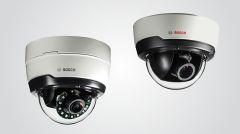
Bosch Security Systems
FLEXIDOME IP 4000i and IP 5000i cameras offer resolutions up to 5 MP and built-in Essential Video Analytics as standard for quick retrieval of data from hours of stored video as well as alerts to improve security. On-board analytics also offers the ability repurpose captured video data for uses other than security alone. Intelligent Dynamic Noise Reduction, intelligent streaming and H.265 compression reduce bitrate up to 80%, lowering storage requirements without compromising quality.
www.boschsecurity.us
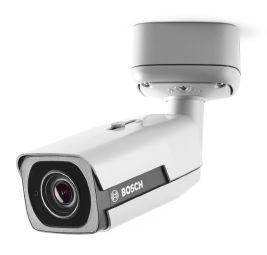
Bosch Security Systems
DINION IP bullet 4000i, IP 5000i and IP 6000i cameras offer resolutions up to 5 MP and feature built-in Essential Video Analytics as standard for quick retrieval of data from hours of stored video as well as alerts to improve security. The DINION IP starlight 6000i IR provides detailed color images in low light, and an IR illuminator enables object detection in complete darkness.
www.boschsecurity.us
Bosch Security Systems
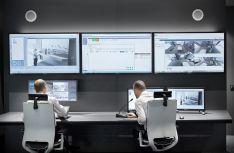
BVMS 8.0 offers the Bosch Video Stitcher to combine video from several cameras into a single view. Graphics Processor Unit decoding and 64bit function allows displaying multiple ultra-high resolution videos in parallel without consuming CPU power. These features allow monitoring of more cameras concurrently.
Bosch Security Systems
www.boschsecurity.us
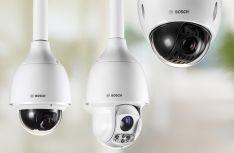
These 1080p cameras offer improved levels of security by delivering control, precision and detail whenever needed. They feature Essential Video Analytics as standard to alert users to potential threats and deliver data for use beyond security. The indoor AUTODOME IP 4000i offers 12x zoom. The AUTODOME IP 5000i HD is for indoors or out and delivers 30x zoom. The AUTODOME IP 5000i IR adds object identification at night with an intelligent IR beam.
www.boschsecurity.us
Bosch Security Systems
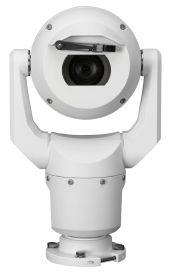
MIC IP cameras are built to perform in practically any environment. The IP68-rated MIC IP starlight 7000i moving cameras withstand severe weather, including high winds, rain, 100% humidity, temperatures from -40°C to +65°C, extreme vibrations, and high impacts (IK10). Starlight technology ensures detailed color images in extreme low light and built-in video analytics alerts to potential threats and delivers data for uses beyond security.
www.boschsecurity.us
Bosch Security Systems
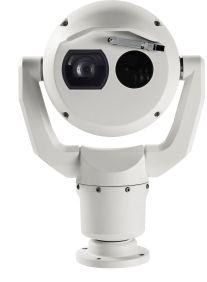
MIC IP fusion 9000i cameras offer a unique video analytics feature: metadata fusion. It fuses the metadata of the camera’s built-in optical and thermal imagers to help users focus on invisible things that need attention. If an event is detected, but not visible in the stream being watched, an alarm is still triggered. The user can simply click the alarm overlay box to see the video data related to that event, providing full situational awareness.
www.boschsecurity.us
Bosch Security Systems
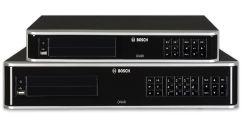
The DIVAR network and hybrid recorders offer the ability to create video surveillance solutions with professional security features that are easy to install and simple to use. The DIVAR network 2000, 3000 and 5000 are cost-effective ways to invest in a future-proof IP video surveillance system that can scale as a business grows. The DIVAR hybrid 3000 and 5000 are for businesses with an existing analog video solution and plans to upgrade to IP one step at a time. www.boschsecurity.us
Bosch Security Systems
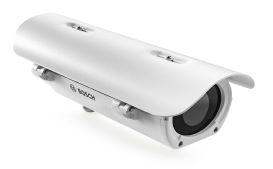
This fixed camera offers excellent thermal performance, built-in Intelligent Video Analytics, outstanding corrosion resistance, and a choice of QVGA or VGA resolutions. With its combination of thermal imaging and video analytics, it ensures early detection over distances up to 610 meters even in environments with limited vision due to poor lighting conditions, smoke or complete darkness. It is ideal for missioncritical applications such critical infrastructure sites, government buildings and bridges.
www.boschsecurity.us

ONVIF, as a security industry forum, has helped shape the way technology is created and deployed today. Founded almost 10 years ago by Bosch, Axis Communications and Sony, it has since grown into an organization of almost 500 members at various levels of participation. SP&T News recently spoke with Stuart Rawling, director of global business development and a member of ONVIF’s steering committee to get an update on the organization’s mandate, position in the industry and role in issues of growing importance like cybersecurity.
SP&T: How do ONVIF members work together as a group?
SR: Almost every major manufacturer is a player. We just had a meeting in Verona, Italy.
It’s so interesting how most of the attendees are engineers and technologists. The benefit is they have an interest in solving technical issues. They have been working extremely well together in advancing interoperability. That’s what their goal is.
That has a knock-on effect with the rest of the companies’ mentality. I know 10 years ago in this industry, going around a tradeshow you’d take off your [company] badge and hide a little bit… Now it’s completely different, because we all kind of work together now. It’s a very positive influence, I think, on the industry as a whole.
We have four committee meetings a year. Additionally we have two “Plugfests,” which is basically where people can bring devices and try them out.
We learn from every Plugfest whether we’ve got any issues. It’s a good chance for the vendors to test things out and figure out what they’ve got right and what they’ve got wrong. More importantly, they get to walk away having some de-
By Neil Sutton

gree of confidence about what’s been happening and learning what they need to do to take the standard further. Things have changed since we released Profile S and we need to do another iteration on that. We’re working on a new Profile that’s going to address new technologies like H.265, smart compression, 4K, 8K… whatever we’re talking about in a few years.
“You’ve got to remember, cybersecurity is about two things: it’s about the technology and it’s about the policy.”
SP&T: Given the current pace of development, do you have to devote more resources to the process? How do you stay on top of it?
SR: There’s a desire not to return to the state where we started, which was a lot of protocols and interoperability challenges. To a degree, an organization like ONVIF is always going to lag the bleeding edge, but ONVIF has been trying to follow it as closely as possible and embed in the industry that

we’re pushing for, like on the access control side, but that’s a different type of industry, so it’s adjusting a little bit differently, but from the video side, it’s very well accepted. I think end users see the benefit too, because they don’t necessarily have to pay a VMS vendor to develop a custom driver for their really cool one-off camera that they’ve bought.
SP&T: What is ONVIF’s role in helping physical security devices like cameras become more cyber-secure?
this is the standard — that’s why I’ve been working with ISO-type organizations, like IEC (International Electrotechnical Commission), ISO (International Organization for Standardization), to get those governing bodies to accept our standard as an internationally recognized standard. When we release something it’s really a “small” standard. Everybody uses it, but it’s not indoctrinated in the global technology ecospace until we get the big “S” Standard. That’s one of the things that we’ve been doing as well.
SP&T: Do you ever get pushback on standards from the vendors?
SR: Vendors? No. From the vendors’ perspective, if you’re a new company coming in and you walk around a trade show floor and there wasn’t a standard... you’d be panicking if you’re a VMS vendor, because you’ve got how many camera vendors to work with? For the pre-existing companies like us, like Pelco, it’s helpful.
If we’ve written an ONVIF driver and a new camera company pops up, we can work with that camera if they’re compliant with ONVIF too. Sometimes you have to have a conversation if there’s an issue, but, for the most part, the vendors have completely bought in. There are some aspects that
SR: As part of the work we’ve done with Profile Q, we made some recommendations about technologies to adopt within the standard… ONVIF can provide interfaces and interoperability, but ultimately it’s up to the manufacturers to provide the CVE (common vulnerabilities and exposures) response process. You can implement good security badly. You can have a password system that checks whether the password is the world’s most [secure password] … but if you store the password in the database in plain text, it doesn’t matter how complex the password is. That type of thing is really up to the manufacturers. That’s something that we’re looking at. Do we need to make sure that we have industry standards or recommendations for doing this type of thing? ONVIF does have a role in providing the interfaces and the technology recommendations along those lines, but you’ve got to remember, cybersecurity is about two things: it’s about the technology and it’s about the policy.
I think the cybersecurity piece is critical for the industry as a whole. ONVIF has a role to play in that [but] ONVIF isn’t the solution. I think there’s a huge awareness that the industry is going through.
I think we’ll be going through a lot of awakening over the next two years in this market.
VBy Colin Bodbyl
Improvements in analytics have drastically changed the value of surveillance but there is still room for improvement
ideo surveillance has gone through an enormous transformation over the last decade.
New technology has allowed manufacturers to rapidly improve their products through both hardware and software changes. Hardware innovation has allowed cameras to become smaller, lighter, and easier to install. These same hardware advancements have enabled cameras to be powered solely via PoE and operate in extreme environmental conditions. While hardware innovation continues to drive change in the way we install and operate surveillance systems, some manufacturers have begun shifting their focus to software in order to differentiate themselves from the competition.
“Searching recorded video footage as easily as searching Google is not possible yet, but it’s an exciting concept.”
Historically, one of the most painstaking tasks of using a video surveillance system was searching for recorded footage. Originally, the only way you could search through video surveillance footage was by fast-forwarding through the video until you saw what you were looking for. Once digital video surveillance was introduced, pixel search became the most popular method of speeding up searches by sectioning off part of the scene and only searching for activity in a select area. More recently, new technology has been introduced that allows users to search video in a more efficient manner. Colour, size, direction, and other characteristics are becoming the next trend in search technology. In addition, some platforms allow users to select an object and simply search for other occurrences of that same object. While the technology still has room to grow, it holds a lot of potential. Being able to search recorded video footage as easily as searching Google is not possible yet, but it’s an exciting concept which may someday be reality.
Another area where video surveillance has been desperate for innovation is storage and bandwidth. Hardware is costly, but as camera resolutions have increased, integrators have had no choice but to add additional hardware

to cope with the increased storage requirements. H.264 compression was a tipping point for IP surveillance, which finally made it an affordable alternative to analogue. Unfortunately, little innovation has taken place since then, despite camera resolutions only getting higher. Within the last year, however, several manufacturers have taken steps to combat this challenge. One such technology is best described as dynamic image processing. This technology filters unnecessary information out of the scene and adjusts frame rates in real time to produce high frame rate surveillance footage using a fraction of the bandwidth. Of course, low bandwidth is not only good for remote viewing but also drastically reduces storage costs, which can make a significant difference especially on large projects.
Improved searching capabilities and better compression do require some type of upgrade to existing systems. While some features rest in the camera, many of these features require the right combination of camera and video management system (or VMS). This presents a real ad-
vantage for manufacturers who are attempting to compete with low-cost hardware. To win entire projects that include both the cameras and recorders, manufacturers need to ensure both products have desirable features. More importantly, manufacturers need to ensure the benefits are compounded when using their cameras in combination with their VMS.
Hardware continues to improve and advance at a steady pace, but for manufacturers to stay ahead of the pack, they need to focus on software which can be developed at a much quicker pace and create a far more “sticky” relationship with the customer. Whether searching through hours of recorded footage, or attempting to transmit and store large volumes of data, integrators and end-users still have pain points that could be addressed through software. By targeting these pain points, manufacturers can differentiate themselves and truly separate their products from the competition.
Colin Bodbyl is the chief technology officer for UCIT Online (www.ucitonline.com).
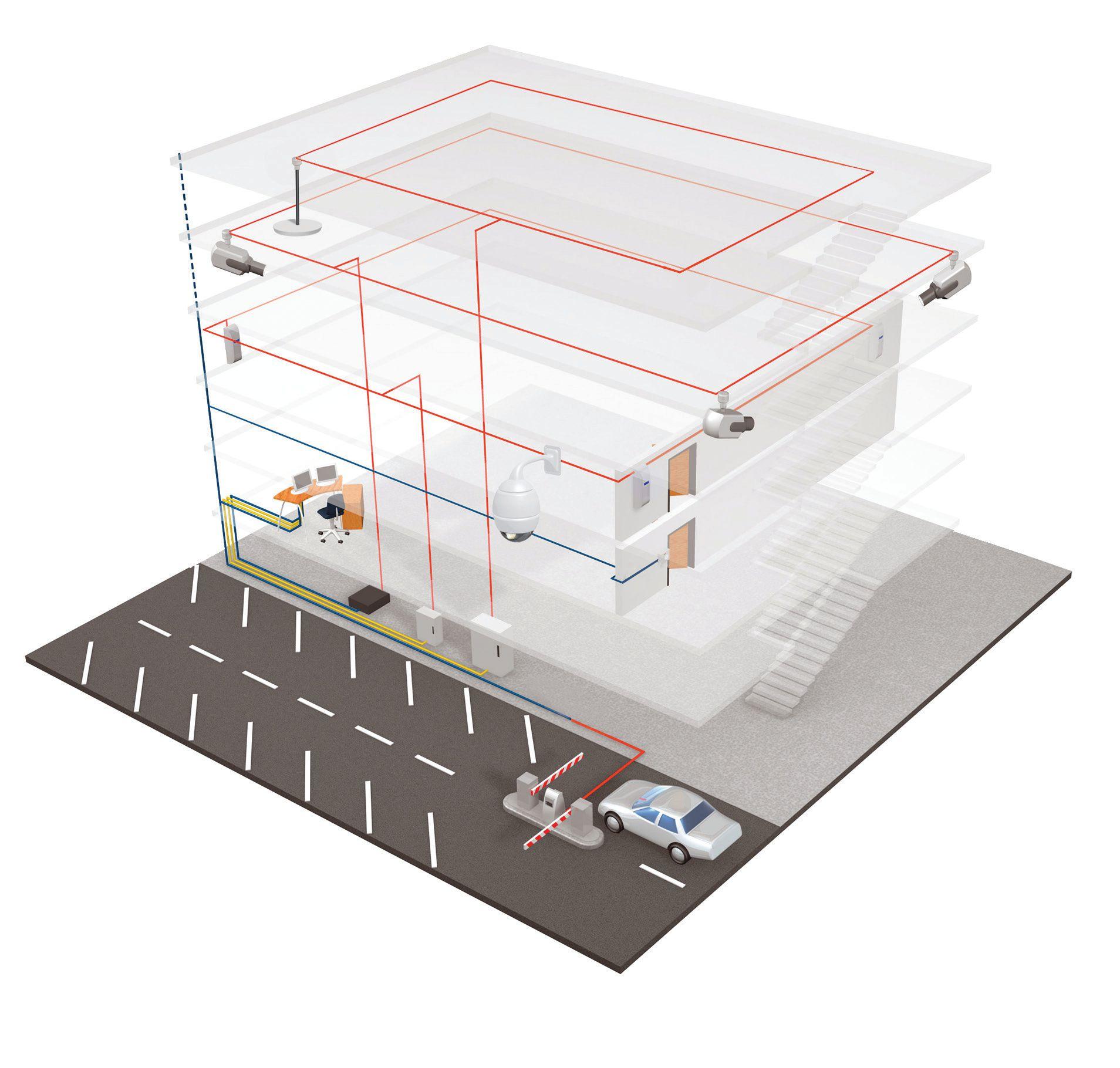
Increase security and automate functions for easy operation. Trigger and execute audio announcements based on security events. Manage data with enterprise-wide control of video and security devices. Bosch products integrate seamlessly to help you create complete security solutions.
Watch our video to learn more: http://bit.ly/integratesecurity

Technical advancements and private sector buy-in are helping video surveillance registry programs to gain traction, but privacy implications remain a concern
By Renée Francoeur
Surrey, B.C. has set its sights on shaking up CCTV.
The municipality, as part of its new public safety strategy, launched Project IRIS (Integrated Resources for Investigations and Safety), a camera registry, this past October. The project records the locations of cameras owned by businesses and residents in the community who wish to volunteer that information.
One of the pillars of the initiative is crime prevention and reduction, says Terry Waterhouse, Surrey’s director of public safety strategies.
“When we started looking at what are the logical initiatives, we looked at the utilization of both existing video resources and the feasibility of leveraging video either citizens or businesses have as well,” he says.
Surrey was already monitoring more than 400 cameras for traffic management at its traffic management centre in City Hall but, as part of the new safety strategy, also established a remote traffic management centre in its Operating Command Centre (OCC), a police dispatch centre manned by civilians.
“With this remote centre, staff in the OCC can now let members know if a camera was at a crime scene and if it has any footage that might aid in an investigation. If they believe it does, then [police] make a request for it,” Waterhouse says.
It has significantly reduced the time it takes for that information to be used by police, he adds, noting that before the remote centre, there was always a delay in responding to requests.
Project IRIS was the next step for even greater efficiency.
“We looked at a number of video camera registries in Canadian and American cities and then we reviewed privacy legislation for B.C. to determine if what those other jurisdictions did would be feasible here,” Waterhouse explains. Turns out, it was.
One example the team analyzed was the SafeCam program in Philadelphia, which Waterhouse describes as similar to Project IRIS, with the exception that it is run directly by the police department and provides financial incentives to businesses every year for being a part of the registry.
Waterhouse says with the municipality running the registry, it keeps the police at “arm’s length.”
“With our strict and appropriate privacy legislation in B.C., keeping that arm’s length is important and it doesn’t create any challenges for us,” he adds. “It also frees up the police from doing the bureaucratic and technical work in setting up a registry so they can focus on the investigative work.”
After the consultations, the next step for Surrey was building a database, followed by a

formal privacy impact assessment, which was forwarded to the provincial Privacy Commissioner’s Office for review.
“The database is on a protected server and is only accessed by a limited number of staff. I don’t even have access. The team that built it doesn’t even have access,” Waterhouse says. “You can sign up through an app or the website and that information goes into the secure database.”
A very select group of OCC staff can let police know, via a request, if a registered camera is situated near a specific location and who owns it. The police take it from there and can contact the camera owners.
“It’s essentially an electronic version of going door-to-door after an incident occurs for CCTV,” Waterhouse says.
The municipality is now in the process of reaching out to businesses directly through the Chamber of Commerce and similar pathways to spread the word about Project IRIS and the wider benefits for the community.
Surrey says it has also been conversing with security businesses, installers and integrators during the rollout of Project IRIS.
“We haven’t partnered with any of them at this point but that’s not to say we won’t once we do the review of the initial rollout of the project,” Waterhouse says. “We might seek partners to leverage more businesses to take part.”
As with anything about video surveillance, privacy issues have been voiced about Project IRIS and the municipality has done its best to address them from the get-go.
“People do ask about the privacy issues and we let them know that signing up is voluntary and then allowing use of any footage an individual might collect is voluntary as well. They can be in the registry and not share anything,” Waterhouse notes. “Sometimes people think we’re linking their video resources directly into our
monitoring and surveillance network and we let them know that’s not our intention or interest. We cannot monitor their footage at all.”
Overall, the registry has triggered some valuable conversation about privacy and collaborative surveillance, he adds.
“It’s a real behaviour change to put your camera in a registry because, whether it’s businesses or residences, if you have CCTV assets, you’ve done the ‘go it alone’ thing and many haven’t thought about the broader implications,” Waterhouse says.
“One of the things we’ve learned is that this registry has also really got people to review their own policies about their own cameras and how long they’re monitored, how long footage and data is stored and things like that. So we’re seeing a behaviour change.”
In the future, Waterhouse says the city will look at how to make it easier for small businesses to utilize CCTV resources and will continue to monitor the traffic cameras for road safety and assisting the flow of traffic.
“Having those camera assets rigorously linked into our technology is something we’ll continue to review and expand as traffic gets heavier,” he notes.
A cardboard box won’t cut it
IP security solutions provider Genetec says it had noticed a trend in cases where clients were managing multiple types of video, such as that from dash cams.
“There’s been a huge increase in the amount of digital evidence police have and the way the police departments are managing this right now is with old, out-dated software,” says Pota Kanavaros, product marketing manager at Genetec. They don’t have the proper tools, plus there are complications with storing all this data and added costs there — it’s all slowing down the rate of which cases are being cleared.

“You can’t just put everything in a cardboard box anymore,” adds Kevin Clark, global communications manager for Genetec.
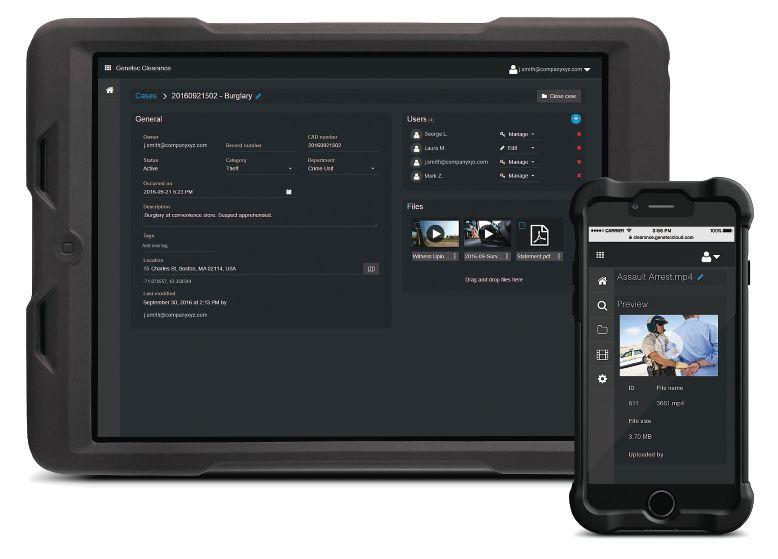
Genetec launched its new Clearance solution this fall — a case management system that “allows police officers, investigators and security managers to gather digital evidence from a variety of sources (such as Genetec Security Center and other video management systems, body-worn devices, in-car systems and cellphone footage from bystanders and witnesses), and store, manage, review and share it from within a single application.”
With Cloud-based Clearance, all data is stored online and encrypted, and can be shared between investigators or requested by third parties without needing to physically ship or deliver the recordings. As the application is not licensed per seat, access can be shared with as many users as needed, without incurring any additional fees, Kanavaros explains.
Video surveillance is always a sensitive topic, says Don von Hollen, team lead, business innovation and support for the City of Calgary’s corporate security department.
Calgary has a little over 1,100 cameras, according to von Hollen, and the city has its own procedures in place for how they share with law enforcement.
“They’re required to provide us with their file number and only at that time will we release the video,” von Hollen says. There is little advanced technology used, as the footage is then burned to a disk and manually picked up by police.
“But when it comes to the sharing of information and the public safety network, there is a unique piece and that is the ability for Calgary Police to see live video from the public safety network if they need to at their real-time operation centre.”
This also applies to Calgary Emergency Management Agency (CEMA) as well as the Calgary fire departments.
“So in the 2013 flood, the emergency operations centre had access to all of our public safety network cameras as well as our mobile trailer units,” von Hollen notes.
The corporate security department boasts four of these standalone units, which do not need a connection to the power grid as they are solar or propane powered and connected to LTE networks to send video remotely back to the video management system.
“These units are deployed upon request from first responders in a number of different situations, such as The Calgary Stampede parade where there can be anywhere from 80,000 to 100,000 people watching,” von Hollen says. “They assist police and emergency staff by showing what’s happening in real-time.”
The city is also currently working on creating information sharing agreements for private entities.
“For example, Alberta Health Services is a lessee in some of our facilities and we’ve been asked in the past to share video with them because of their own internal investigations and, because we did not yet have information sharing agreements in place, we could not share the information.”
A registry has been talked about a number of times, von Hollen says, but is not currently on the table for the municipality to steward.
Similarly, Toronto Community Housing (TCH) — which expects to have over 8,200 cameras installed in its communities by the end
of 2018, as it upgrades all its current analogue cameras to high-resolution digital ones — still shares its video footage via a manual process.
“Our Community Safety Unit extracts footage locally and delivers this to the law enforcement agency. The police complete a request form for disclosure for law enforcement purposes pursuant to the Municipal Freedom of Information and Protection of Privacy Act (MFIPPA),” explains Brayden Akers, TCH senior communications advisor.
“Requests for footage from other agencies and levels of government are addressed through the MFIPPA process, with disclosure being request specific in accordance to what is permissible under the legislation.”
Ann Cavoukian, the Information and Privacy Commissioner for Ontario from 1997 to 2014, says she’s seeing more sharing of video surveillance footage and that companies and municipalities need to be aware of the unintended consequences.
“A lot of video surveillance, if you don’t have the context for something, it may be misconstrued,” she says. “I have no problem with police accessing information when they have a warrant but personally, I don’t think video surveillance footage should be routinely transferred to the police.”
Cavoukian, now the executive director of the Privacy and Big Data Institute at Ryerson University in Toronto, has some advice for private businesses using CCTV and faced with the issue of sharing:
“Have very strong privacy policies, do a privacy impact assessment and agree on what you’re going to share and when and with whom. Treat [footage] like private property that has to be protected in terms of protecting the privacy of your customers.”


Design simplicity, alternatives to IP and Cloud-based options are helping manufacturers and installers meet the needs of end users with a cash crunch
By Renée Francoeur
What’s the best way to stay within a tight budget when it comes to installing new security products and systems? Just keep it simple, according to Peter Dyk with Tyco Integrated Fire & Security Canada.
“It’s when you come in with a long laundry list, that can get you out into some areas that are quite expensive,” says Dyk, the director of engineering and product management. “We’ve got to find products that require less labour to install. I think that’s your biggest savings. There’s a lot of market pressure and competition within the CCTV space, so if you’re going to make it with a customer, it will have to be by putting in a simpler product that takes less labour, but is still high-quality.”
Seeking alternatives to IP infrastructure is one way of keeping it simple for those with tighter purse strings.
“When you start putting products into the IP infrastructure, you have all these extra requirements. But if you keep it completely separate and standalone, then you don’t have those pressures,” Dyk says. “It’s not that you can’t use IP; just don’t connect it into the network.”
Mark Espenschied, the director of marketing at Digital Watchdog (DW), elaborates, noting that “everyone needs to do more with less” in these competitive times.
“If you have an existing analogue system, like coax infrastructure, don’t think you have to abandon it to get higher resolution with an IP system,” he stresses.
He recommends snatching new ROI from the existing infrastructure by swapping in an HD recorder and HD cameras.
“A lot of people think the fastest growing
segment is in IP,” Espenschied says. “It’s actually HD analogue. The reason for that is there is so much existing coax cable all over the world.”
He cites the City of London in the U.K. as an example, with its high number of surveillance cameras (the British Security Industry Authority estimated there is about one for every 11 people in the country in 2013), which are all connected by coax.
“The City of London is in no hurry to pull out millions of dollars of coaxial cable and replace it with IP cable. And so they have become the prime type of customer for HD analogue where you just replace the recorders and cameras, and then you have high-resolution over your coax,” Espenschied says. A major theatre chain in Canada, which he could not name, is also following a similar suit to gain new ROI from a previous commitment to coaxial cable.
He adds that it’s been “exciting” to see three different HD analogue standards transpire over such a short time.
“You have a lot of integrators who are comfortable working with coax and their selling
“You don’t need to buy extremely expensive cameras with all of their extra features because the Cloud system will do that for you.”
— Ken Francis, Eagle Eye Networks

point has always been the same, and that is: there’s nothing safer than one cable from one camera to one recorder. No one’s going to break into that closed circuit. They can continue to tell that story but with better resolution.”
If IP is still highly desired by a customer, Espenschied says that can be met in a more economic way, too, with “full-featured, all-in-one” NVR and IP cameras — without going to a higher-end server appliance and separate VMS (which typically means licence fees, he notes).
Additionally, if you’re installing a completely new system, customers can still run a network cable and have it working with something like Tyco’s Holis product, explains Dyk, which ties right into the Holis unit.
“So in fact, it’s not much different than coax,” he notes.
The Holis line for IP video uses Illustra cameras and is the “least expensive” type of solution at the company, according to Dyk, “easily meeting the budgets for small to medium sized businesses.”
When people think of IP, they often think of big installations “where you have a big dedicated server with a lot of hard drives in it, so you’ve got to get Milestone or some big VMS to run it,” says Espenschied. “What people like about their analogue system is you basically have a box that looks like a video recorder and there’s one interface and it’s easy to understand. Well, there are those type of appliances for IP and if you want to make the transition from analogue to IP, you don’t have to go into a big enterprise system.”
Whether it’s video surveillance or access control, when the time comes for transitioning and upgrading, end users want to save the coin, contends Iain Morton, executive vice-president of Eastern Canada with Paladin Security.
“Many people transition video systems in five to seven years. Access control is 10-12 and intrusion alarm is 15-20 years, in terms of system conversion,” he explains. “Clients are looking to do this without a full rip-and-replace model. That’s often cited, so it’s an area where we’re paying a lot of attention.”
In the past, a typical situation involved “very expensive head-end software and expensive servers,” Morton says. “We’re approaching that by saying almost every system we sell, we can put into a virtual machine, VMware, on a client server farm and just let it sit there — something else under their IT command control, without separate servers.”
Selling systems with thin clients, which are browser-based, and detaching from a reliance on thick clients, which have their own workstations, is also a way to help clients save.
“Designing systems where we can emulate the same form factor in the communications room that the old system had” is going a long way when it comes to tightening up expenditures, Morton adds, as well as “taking out the board and putting the new one into the same old panel to make it more efficient.”
When asked about the best way to optimize security solution spending, Ken Francis, president of Eagle Eye Networks, offers: “The simple answer is, Cloud is better.”
“When using the Cloud system, a customer can afford to select a quality and economically priced camera because the camera resides on an isolated surveillance network and price-driving features are unnecessary,” Francis says. “You don’t need to buy extremely expensive cameras with all of their extra features because the Cloud system will do that for you. So you really just want to focus on quality of image and durability in an economical camera selection.”
Expanding on that, he says using the Cloud means “substantial savings in post-installation
support,” especially when it comes to storage and power requirements for commercial and enterprise customers. While these total savings may be less for a small business application, there are still “incremental features and benefits” (such as easy scalability and high security, according to Francis) from the Cloud system’s “continuous delivery,” he assures.
Cloud-based solutions are changing the security game, echoes Thomas Lynch and Dominic Williams with IHS Markit, as “in one sense, it is expanding the market, as end users that would previously not have considered a security surveillance solution are now adopting — this is the case in the residential market for VSaaS.”
The RMR (recurring monthly revenue) business model that goes along with Cloud surveillance solutions means a reduction in upfront Capex (capital expenditure) costs, and in some cases, an overall reduction in cost of ownership, according to Lynch and Williams — “although this will depend on the use case/end-user,” they note. For example, a commercial VSaaS deployment is going to “cost a fair bit more than a set of cameras purchased from Costco. However, it does provide value elsewhere.”
The cost of hardware is typically included in the ongoing monthly cost, or at least heavily subsidised, Lynch adds. There is no need to purchase a storage device and therefore you see a reduction in maintenance cost. “So price sensitive end users, particularly in SMB and residential markets, will find this attractive.”
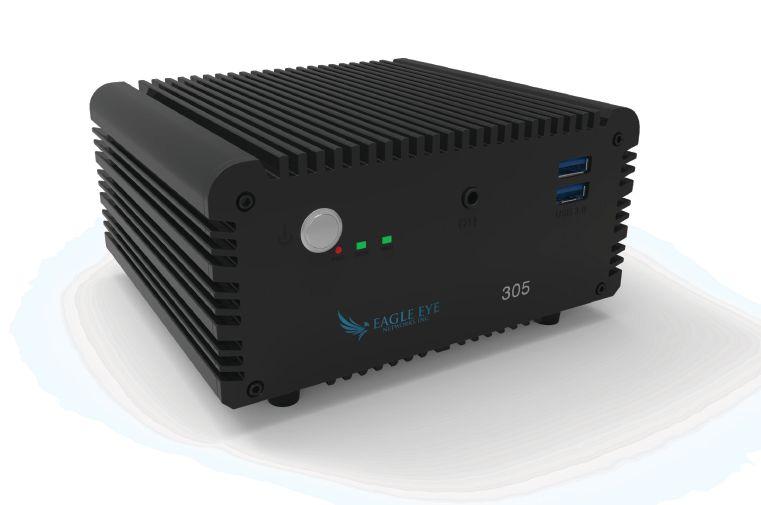
Eagle Eye notes its Cloud VMS customers can expand their systems as fixed per camera costs, “alleviating concern over large capital investments as systems grow.”
Customers with high location counts typically “suffer considerable deployment costs of servers, operating systems and servers,” Francis continues. He says deployment is much less complicated with the Cloud and therefore also usually more affordable.
“It is worth noting that the RMR billing model that comes along with a Cloud solution is attractive to vendors, so this shift is not just end-user driven,” Lynch and Williams point out. “There is a conscious effort on the part of vendors to move to this model.”
Tyco mentions EntraPass — its “cost-conscious” access control system from Kantech — is available as a Cloud offering, which has been “growing by leaps and bounds,” according to Dyk.
“Customers don’t have to buy a server, they just have to buy the controllers,” he notes.
The bottom line, according to Lynch, is “Cloud has the potential to save you money, but much like a cell phone contract, primarily by spreading the cost of the solution out over a period of time.”
Meanwhile, Morton says that cost-savings or not, Cloud feasibility varies from client to client and many of Paladin’s are not entirely comfortable with streaming data to the Cloud just yet.
Cloud is gaining traction, IHS maintains, and many of the historical technological barriers to adoption have become less influential in recent years.
“Bandwidth is still a serious consideration that means Cloud will not be the right solution for a lot of people,” Lynch says. “For example, many retailers’ network infrastructure was installed in order to facilitate credit card validation, and not to support the upload of video to the Cloud.”
That said, Francis sees a rosy future in store for Cloud technology.
“I humbly believe we’re going to see an explosive growth in Cloud system adoption in the security industry,” he says, looking ahead to the next five to 10 years, and pointing out the pervasiveness of Gmail accounts and Google Docs — all in the Cloud.
Free software beware
Leveraging “free software with cameras” is another way many are securing the best bang for their buck but both vendors and integrators
urge customers to execute their due diligence with these types of attractive offers.
Tyco, for example, says it offers free software but only after you first buy the hardware — such as with Total Tyco Security bundle.
“Let’s put it this way,” Dyk cautions, “if you download a free app on your iPhone, how much support will you get on that app? You get what you pay for.”
He says the de-monetization trend on the Internet is driving the company to offer more products “that don’t have a cost associated with a particular aspect,” but they still have to have a good business model that allows the company to provide support.
VMS software and cameras alike are becoming increasingly feature-rich, IHS notes, “integrating suites of analytics algorithms as standard for example, that could save and end user money in licence fees for the additional software and through increasing the effectiveness of the cameras themselves.”
Anecdotal data suggests that these extra features are finding use, Lynch says, but one of the problems is the analytics that are being included generally lack the sophistication of other paid-for analytics. “They are also a bit harder to operate as the end user has to put in more effort actually interpreting the data that gets produced by the algorithms, than they would with a more sophisticated paid-for platform.”
deal
It’s not just about the price of an individual product, Dyk reminds us. “It’s the whole package.” This means you can’t work in isolation to just reduce the product price or just the labour — it’s a combined effort.
It’s all too easy to fall into a trap of comparing costs camera to camera, Espenschied adds.
“We ask integrators and customers to consider the cost of the system, not just the cost of the camera, recorder or software,” he says. “When you design a system to take advantage of higher resolution, a product that may seem less expensive may not deliver the expected savings when the whole system cost is compared.”
Likewise, Paladin says it is in the middle of rebranding as Paladin Technologies on its systems side, which will look more deeply at opportunities to bundle technologies together and sit them on the same backbone, to avoid situations where “five or six different contractors are coming in for five or six specialities.” This means structuring cable backbone that can run audio/visual systems as well as telephone, IT network, building controls, etc.
“This is about minimizing the infrastructure in the building to save costs,” Morton says, noting this is especially valuable for the healthcare security sphere. “It’s still emerging and has a long ways to go.”
While cutting costs is crucial for many working with increasingly shrinking security budgets, everyone mentioned in this article expressed caution when it comes to weighing costs against quality.
“It’s really important the product remains reliable,” Morton says. “A cost-conscious client should really understand licensing and software maintenance agreements and stay away from those systems with recurring annual licences, going with systems, that if they do have a licence structure, it’s an upfront licence so the customer owns it outright, and then they can choose a software maintenance agreement or not.”
Paladin also encourages clients to “do plenty of due diligence” into what products can be reusable down the road, as with the trend of open boards in access control.
DW says it believes it always pays to use professionals to design and install a system. “They will get you the best pricing and design the most efficient system for your need,” Espenschied says.
“A very low price is very attractive but business owners are smart people and we find most are going to do their homework,” he says. “They often find out, something for a couple dollars more is going to give them the confidence they’re looking for...
“It pays to plan and an end user can plan the best system by engaging the professional who does this all the time, who knows the alternatives and can present them at the right moment.”

How financial institutions have led the way in Cloud-based infrastructure and what that means for the rest of us
By Stephen Joseph
All financial institutions, no matter their size, have one thing in common: they all use services that reside in the Cloud.
The Cloud makes it possible for banks to use complex financial networks to operate locally, nationally and even globally for their customers. It is one of the reasons why you can walk up to any ATM in the world and complete a transaction, even though it isn’t your home institution.
As a matter of fact, financial institutions have been relying on vast worldwide networks for decades to safely and efficiently process millions of transactions a day. The economic and operational advantages of going digital — from centralizing storage to authorizing real-time access from anywhere to improving institution-wide data diagnostics and analysis — make a strong case for adding Cloud-based physical security services to the mix.
Despite their familiarity with the safety of Cloud-based services used by their financial institutions, corporate security managers seem very hesitant when it comes to considering the Cloud model for their physical security solutions. A majority of that reluctance stems from not understanding how physical security solutions would work in the Cloud and how that would benefit their operation.
To make a business case for Cloud-based physical security solutions, one first needs to clarify what kind of Cloud is being referenced. The three most prevalent Clouds in use today are public, private, and hybrid.
Public Cloud computing is what enables such common activities such as email and web surfing. Organizations such as Microsoft, Amazon, Rackspace, Google, Yahoo and many others have filled co-location centres around the world with hardware and equipment that anyone can use just by logging onto the Internet. There is also a form of public Clouds known as “software as a service” or SaaS. These public Cloud providers like Salesforce.com offer access to single or limited application sets that are available to users over the Internet.
Private Cloud computing delivers similar advantages to public Cloud, including scalability
and self-service, but through a proprietary server environment. Unlike public Clouds, which deliver services to multiple organizations, a private Cloud is dedicated to a single organization.
Hybrid Cloud computing is basically a combination of both public and private Cloud. It uses a mix of on-premises (private Cloud) and third-party (public Cloud) services and orchestrates communication between the two platforms.
The institution’s current infrastructure and its electronic data security policies will ultimately dictate the most appropriate Cloud computing model for the organization.
While the fiscal advantages of migrating the institution’s physical security solution to the Cloud are certainly compelling, they only represent a fraction of the benefits that corporate security managers can achieve by changing their operating model to include Cloud-based services. Here are several more reasons to consider the transition:
1. Optimize the security processes you already support. Moving to the Cloud lets you lower your existing investment in physical security hardware, software, and facilities, while still complying with laws and regulatory pressures.

2. Become more agile. With the physical security solution residing in the Cloud, IT can react much faster and more effectively to changes in the business.
3. Optimize future data centre investments. Moving video surveillance storage to a Cloud solution frees up storage in existing data centre servers. In addition, using advanced technologies like Zipstream will improve the offloading of video from local DVR/NVR storage to the Cloud, which can have a significant ROI by reducing bandwidth consumption.
4. Acquire new skills. Cloud-based computing skills are essential in today’s business operations so it is important that your employees acquire the knowledge to keep pace with current technology tools.
5. Streamline upgrades. While there are costs associated with migrating to the Cloud, the long-term advantages are that it is easier to streamline upgrades and improved features across the organization simultaneously.
Beyond the growing list of benefits, corporate security managers are going to want to know things like:
Subscription costs: Do these change as their security operation grows?
Elasticity: Can the application shrink and grow as their security needs change? Going forward, will a Cloud-based physical security solution reduce on site security costs for new facilities?
Capital investment: What capital costs will they be able to avoid? A Cloud-based physical security solution can virtually eliminate costly traditional servers and DVRs.
Compliance risks: The risks and costs associated with compliance and non-compliance are of mission-critical concern in a highly regulated industry like finance.
The real value in any physical security solution is the data it generates and the insights the organization can glean from it. With the savings in capital investment from a Cloud-based solution, corporate security managers can afford to integrate more sophisticated video analytics into their systems to gain additional business intelligence. For instance, they can:
• Combine video, audio and location data with acoustic signature analysis to detect and identify sounds like gunshots, breaking glass and
vehicle impact in order to provide security staff with better situational awareness.
• Use camera-embedded and server-based retail activity mapping and path analysis to measure foot traffic patterns and improve customer service.
• Integrate camera-embedded and full-featured edge processing of vehicle licence plate data for more immediate forensic evidence.
• Apply camera-embedded and Cloud-based analytics with predictive and prescriptive intelligence for visually verifying events to reduce costly false alarms.
• Add camera-embedded facial recognition at personnel entry turnstiles and biometric access locations to visually confirm identities.
To some corporate security managers, crunching “big data” from security systems into meaningful, actionable information might seem like a pipe dream. The sheer volume of devices collecting information and the massive amounts of unstructured data being captured appear too overwhelming to mine. But changing that mindset is imperative if they want to extract the full potential value of that data. Once managers acknowledge that all security data has potential value, the conversation can move from settling for legacy processes to adopting more progressive data-driven methods.
The first step might be to simply “store first, ask questions later.” After collecting the raw data, security managers can then use security data science (a process drawn from the fields of statistics, machine learning, data mining and predictive analysis) to ask the right questions that will elicit valuable intelligence from the assembled material.
But once all this security data has been ingested and processed, the next obvious questions are bound to be: Where will it go? And who will use it? This brings the discussion to the “Internet of Security Things,” a subset of the Internet of Things. The Internet of Security Things is composed of producers, analysis, storage and consumers of all things related or leveraged by security data (see Figure 1).
While all the data produced by “Security Things” like network cameras, access control devices and perimeter sensors might not be yet be actionable, it will be once the data undergoes forensic-predictive-prescriptive analysis. Forensic analysis provides security evidence. Predictive analysis projects future outcomes based on the success of previous actions. And prescriptive analysis determines the best course of action, given the security intelligence currently available.
Video data analysis is certainly useful from a security perspective, but it’s important to note that there is far more potential value outside the strict realm of security. As the variety of software and tools to treat data continue to expand, the data will eventually become the building blocks for creating a smarter environment, based on a complete security data ecosystem. In this scenario, financial institutions would be able to leverage the data to:
• Save energy. By analyzing video and audio sensor data the organization could determine occupancy and pedestrian flow and allocate network resource accordingly on the fly.
• Reduce investigation time. Video search analytics could be used to locate objects more quickly, or at least identify when and where they were last seen.
• Synthesize multi-location surveillance coverage. By comparing video events across locations, persons and objects of interest could be detected and tracked system wide.
• Reduce data storage costs. Eliminate multiple DVRs by streaming video sources like IP cameras directly to centralized storage.
• Protect important assets. Use multiple video sources to perform system-wide tracking of the institution’s most important assets.
• Improve traffic flow. Use video analytics to optimize parking usage, alleviate congestion and improve safety by detecting speeders and wrong-way drivers.
The bottom line is that whether you realize it or not, Cloud-based solutions are being used every day in the financial space. The real question is this: If you trust the Cloud to handle your daily banking transactions, why not consider Cloudbased solutions for physical security as well?
Cloud-based solutions and services have been proven over time to be very secure and provide a growing number of advantages that can be shared across departments. Improved ROI and enhanced business insight through sophisticated data analysis are just a few of the potential benefits.
It just makes good business sense for corporate security officers to adopt a Cloud model for their physical security solutions so that their entire organization can reap the benefits of this new operating model.
Stephen Joseph is the Axis Communications business development manager for the banking and finance sector in North America (www.axis.com).
Avigilon
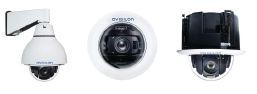
Avigilon announced the expansion of its H4 camera platform with the addition of the H4 PTZ (Pan-Tilt-Zoom) camera line. The new H4 PTZ combines high performance with self-learning video analytics providing users the functionality and intelligence to proactively respond to events as they occur. The new H4 PTZ camera line is available in 1 and 2 megapixel (MP) camera resolutions both featuring continuous 360-degree rotation, allowing operators to track activity in any direction and collect detailed video evidence.
www.avigilon.com
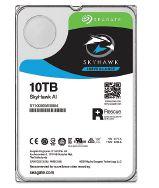
The SkyHawk AI hard disk drive (HDD) was created specifically for artificial intelligence (AI) enabled video surveillance solutions. SkyHawk AI provides bandwidth and processing power to manage always-on, data-intensive workloads, while simultaneously analyzing and recording footage from multiple HD cameras. SkyHawk AI is suitable for intensive computational workloads that typically accompany AI work streams, as its high throughput and enhanced caching deliver low latency and random read performance to quickly locate and deliver video images and footage analysis.
www.seagate.com/internal-hard-drives

Building on its line of Wisenet multi-sensor cameras, new additions include multi-directional cameras that allow individual adjustment of each image sensor to capture high quality images of specific areas of interest. The new Wisenet multi-directional cameras are available in IP and Ana-log HD (AHD) configurations. Key features include: motorized varifocal lenses for easy and remote adjustment; built in licence-free video analytics; high frame rates of 60fps (8MP) and 30fps (20MP); and 120dB Wide Dy-namic Range (WDR) for highly contrasted lighting environments.
www.hanwhatechwin.com
Designed for operation in any space, the On-Q IP Dome Camera is triggered by motion sensors to take pictures, capture 1080p HD video and send e-mail alerts to homeowners. Once alerted, or at any other time, users can log into the camera via the On-Q IP Camera App to observe what’s occurring on their property via live video feeds. The camera features professional-grade night vision that enables users to see up to 50 feet in total darkness without loss of resolution. Its varifocal lens allows for motorized remote camera zooming for close-ups. www.legrand.com
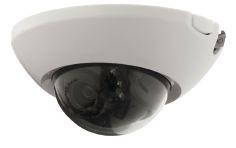
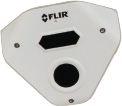
The FLIR Ariel 3MP corner camera features a 3-megapixel visible camera that provides ceiling-to-floor and wall-to-wall viewing. The corner cam-era also includes a built-in mi-crophone for audio monitoring and discrete night vision illumi-nation for monitoring low light to totally dark locations. FLIR Ariel 3MP also features an im-pact-resistant, vandal-proof, flush-mount housing, making it suitable for locations such as medical facilities and prisons where the safety of at-risk occu-pants is essential.
www.flir.com

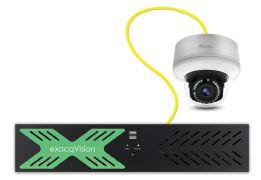
The exacqVision M-Series expands the All-in-One Recorder category with the LC-Series PoE+ recorder. Similar to the higher-capacity, higher PoE power LC-Series, the M-Series includes integrated PoE camera ports and exacqVision START video management software, which can be upgraded to the Professional or Enterprise software. Users can connect up to eight IP cameras per recorder and can view and administer live and recorded video directly from the recorder using the included exacqVision client or remotely using a web browser or exacqVision client. www.exacq.com
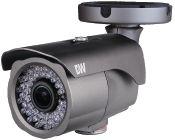
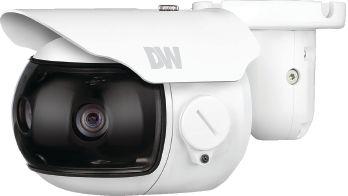
The new 4 Megapixel License Plate Recognition (LPR) MEGApix camera offers a solution for applications looking to capture licence plates in moving vehicles up to 50 mps. The camera is integrated with DW Spectrum IPVMS. These MEGApix IP cameras deliver clear images at 4MP resolution and real-time 30fps performance. The new 4MP IP LPR camera delivers plate capture both day and night with a 6-50mm P-Iris lens and Smart IR up to 100 feet, capturing images from a range of 13 to 100 feet. www.digital-watchdog.com
The MR832 outdoor bullet camera features a 4mm fixed lens with an IP66 environment rating, an operating range of -40° to 122°F, along with 30M IR LED illumination and Day/ Night imaging. LILIN MR832 IP cameras feature 2D wide dynamic range, which provides accurate video capture in high-contrast lighting, and use 3D Noise Reduction for maxi-mum clarity in low light conditions. Energy-efficient IR LEDs automati-cally illuminate scenes in complete darkness for discovering subjects at a range of up to 30 meters (98 ft.). www.LILIN.us
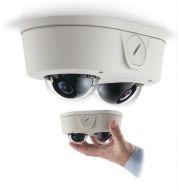
A single compact MicroDome Duo camera can be mounted on a wall or ceiling to cover two different views simultaneously. MicroDome Duo offers fast frame rates and a choice of 4, 6, or 10-megapixel resolution models. Each camera is available with lens options ranging from 2.1mm to 16mm. SNAPstream (Smart Noise Adaptation and Processing) technology also reduces camera bandwidth consumption in all MicroDome Duo models without impacting image quality.
www.arecontvision.com

The victor Video Management System and VideoEdge network video recorders (NVR) include intuitive features designed to put greater system functionality and key information in the hands of security system operators and administrators. License management for VideoEdge NVRs has been streamlined within victor 4.9 with a new centralized licensing option. VideoEdge now automatically configures and optimizes second stream video transmission to reduce bandwidth usage within victor for streams displayed on mobile devices or other constrained environments. www.americandynamics.net
The VISIX V-Series 2MP indoor Multi-Sensor camera includes the ability to host VIGIL Server, allowing the camera to record video to the onboard SD card, with full search capabilities in VIGIL Client and in the View Lite II and infinias mobile apps. Built-in Passive Infrared (PIR) sensors, two-way audio with VIGIL Server, and digital I/O allow the Multi-Sensor to be an alarm annunciator, audio system, and video recorder in one small unit.
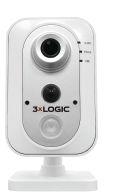
Vicon Industries introduces a new line of 6MP and 12MP panoramic cam-eras with fisheye lens. The cameras’ extremely wide angle and highly de-tailed image allow it to provide coverage of an area that would typically require as many as four traditional HD security cameras, while eliminating blind spots. Server-side image dewarping, as well as edge-based dewarping at lower resolutions, enable the camera’s video to be displayed in a variety of for-mats. The cameras feature Wide Dynamic Range (WDR), true day/night functional-ity and smart IR illuminator LEDs.
www.vicon-security.com
With Full HD and 3 megapixel video quality, the Vigilance Full HD PoE Dome Network Camera (DCS-4603) provides surveillance in a variety of lighting conditions. Suitable for installations in hotels, retail locations, restaurants, offices, and schools, the D-Link DCS-4603 can be mounted indoor on walls or ceilings, with a 3-axis gimbal to precisely position the lens. The D-Link DCS-4603 offers precise positioning of the lens and supports non-motorized 340-degree pan and rotation, along with 60 degree tilt, for comprehensive surveillance. The camera includes a built-in 802.3af compliant PoE module. www.dlink.com
www.3xlogic.com
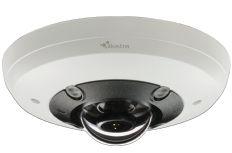
The new Illustra Pro 12MP Fisheye provides high quality 360° or 180° panoramic video. The camera’s ePTZ movements create even transitions between pan, tilt, and zoom movements, while onboard dewarping technology provides distortion-corrected video streaming. The camera’s integrated IR illuminator provides high-quality video up to 15 meters. The Fisheye camera can be mounted on a wall or ceiling and uses Power over Ethernet, which eliminates the need for cables and reduces installation time and cost.
www.illustracameras.com
The J-WB51A five-megapixel IP bullet camera is built rugged for outdoor deploy ment and is specifically designed for 24/7 video surveillance with a nighttime feature-set high lighted by adaptive IR LEDs, day/night IR cut filter, and True Wide Dynamic Range that ensures forensic-quality video, even in complete darkness or adverse weather. The adaptive IR LEDs have a range of up to 30 meters (or approximately 100 feet) and will automatically adjust the LED intensity to avoid over-exposure of close objects. The J-WB51A’s 5MP CMOS sensor achieves image quality whether monitoring large outdoor areas or zoomed-in for small of details. High frame rates of 30 fps at full resolution of 2560 x 1920 permits reliable capture of fast-moving objects.
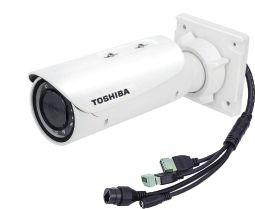
www.toshibasecurity.com
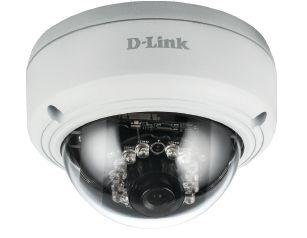
Available in a turret or bullet model, the Starlight colour camera series captures high resolution colour video surveillance day or night. The 1080P cameras provide detail and clarity, making them suitable for home security and business surveillance. Both the Starlight bullet and turret cameras are available as either a 4-in-1 that use existing coaxial cables and work with HDTVI, HDCVI, AHD, and CVBS technologies or IP version.These cameras capture images up to nearly 1,000 ft. www.westinghousesecurity.com
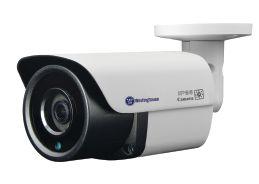
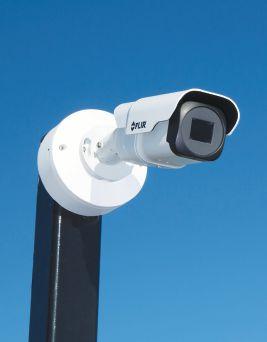
The FLIR FB-Series O fixed bullet thermal security camera is designed for short to mid-range perimeter protection. The FB-Series O offers plug-and-play integration with FLIR United VMS and is certified by other major third-party video management solutions. The thermal security camera features a 320x240 resolution thermal imaging sensor that detects potential intruders in total darkness, and through sun glare, smoke, dust and light fog. Three separate lens options — 93, 49 and 24-degree field of views — provide narrow-to-wide coverage of fence lines, building perimeters and open areas. The FB-Series O integrates with FLIR analytic encoders such as ioi TRK-101.
www.flir.com
Version 3.0 of DW Spectrum IPVMS has been built on a new platform that includes a completely revamped user interface (UI), with a cleaner and simpler user experience, dynamic playback functions including an adjustable video buffer and an embedded browser that makes it possible to use other security management tools within the DW Spectrum UI. v3.0 introduces a beta version of the new DW Cloud service. www.digital-watchdog.com
The Illustra Flex 3MP Compact Mini-Dome is an outdoor quality day/night camera that can produce HD-quality images in low light conditions, and is small enough to fit into discrete settings, whether it’s a retail store, bank, or health-care facility. The 3MP Compact Mini-Dome goes beyond H.264 and H.265 for bandwidth management via its Illustra IntelliZip compression technology that monitors and then adjusts system streaming parameters to match the level of activity in the camera’s field of view. IntelliZip also optimizes the bitrate when activity ceases to reduce network bandwidth and video storage needs.
www.illustracameras.com
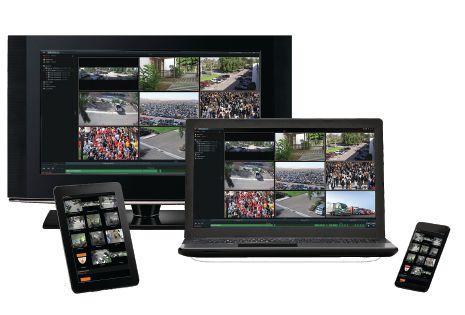
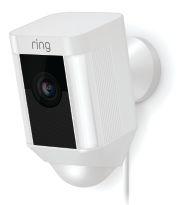
The Ring Spotlight Cam line includes battery powered, wired, and solar powered options, all of which feature LED light panels that turn on when motion is detected, as well as a 1080p HD camera with two-way audio. Also recently released is the second generation Ring Video Doorbell and motion activated floodlight camera, Ring Floodlight Cam. All Ring products integrate seamlessly with one another and are controlled through the Ring app. The wired Spotlight Cam is available now. The battery powered and solar powered Cams are available for pre-order and will begin shipping this fall.
www.ring.com

H.265+ HD-TVI DVR Professional Level Series. LTS offers both HDTVI 3.0 Technology (LTD83xxK-ET) and HD-TVI 4.0 Technology (LTD85xxK-ST) with H.265+ to support the flexibility of security installations and open more business opportunities for security professionals. Both DVR series retain compatibility with existing analogue infrastructures with a fivein-one solution, making installation possible with IP, HD-TVI, Analog, HD-CVI and AHD input. The LTD83xxK-ET series and LTD85xxK-ST series are available in 4, 8, and 16 channels. www.ltsecurityinc.com
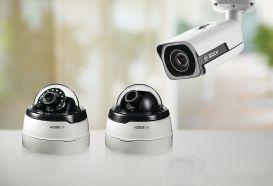
The fixed dome (FLEXIDOME) and bullet (DINION) IP 4000i, IP 5000i and IP 6000i cameras now have Essential Video Analytics built in as a standard feature. According to Bosch, this enables these cameras to understand what they’re seeing, generating metadata to add sense and structure to the footage. The cameras enable advanced intrusion detection, allowing users to set one or more alarm rules in parallel. Video data is enriched with statistics like colour details, and the type, speed and direction of moving objects in a scene. www.boschsecurity.us

New mobile IP cameras for bus, light rail and passenger rail fleet requirements are purpose-built to withstand demanding mobile environments and capture clear video in near darkness, bright daylight and the abrupt lighting transitions that occur when vehicles enter and exit tunnels and underpasses. The mobile IP cameras are fully integrated with March Networks RideSafe Series Network Video Recorders and can be managed with March Networks Command for Transit software.
www.marchnetworks.com

EZVIZ
Mini Trooper’s wire-free design provides the flexibility to be installed at any location, including hard to reach locations that a traditional wired camera can’t access. Neither a video nor power cable is required, eliminating the challenge of running a wire. The Mini Trooper is weatherproof for year-round operation. The Mini Trooper base station allows you to control up to six Mini Trooper cameras, comes with a built-in microSD card slot that stores up to 128GB and connects to the Internet via WiFi or Ethernet cable. www.ezvizlife.com
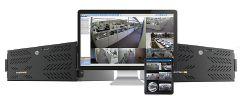
exacqVision video management system (v8.6) offers improved video searching and video bookmarking, as well as other enhancements. When exacqVision v8.6 is used as part of a complete security solution from the Tyco Security Products portfolio, the system can leverage event information from intrusion and access control systems to improve search results. The latest version of exacqVision allows users to create a case directly from “Live” view, which includes all cameras that are being actively monitored. When the user exports the case, it will contain a chronological collection of clips from different cameras showing the suspect. www.exacq.com
IndigoVision
With 12MP, each of the new 4K cameras provides ultra-high definition video imagery. They are available in three form factors: Bullet, Fixed and Minidome. These three cameras join the existing BX range, which offers features including HD to 4K resolutions; a variety of form factors and mounts; an extensive temperature range (-40˚C to +60˚C); advanced analytics, including Motion Detection, Hooded, Tripwire and Intrusion; and connectivity with Control Center, IndigoVision’s Security Management Solution, or any other third-party system, using ONVIF’s Profile S standard. www.indigovision.com


Larson Electronics
The VideoEdge 1U NVR includes 16 embedded software configurable Power over Ethernet ports, making it suitable for small to medium-sized businesses. The NVR supports as many as 32 IP cameras and stores up to 24 TB of recorded video in a small 1U form factor. Embedded intelligence allows users to receive multiple video streams for live and recorded video, alarm, and meta-data collection. Multicast video streams further reduce the bandwidth required for streaming high-quality video. www.americandynamics.net

Genetec has added new additions to its Streamvault line of turnkey security infrastructure solutions, including turnkey high-performance rackmount appliances that scale up to over 2,000 cameras, as well as workstations designed to provide playback of high-resolution video streams. Each product is delivered pre-hardened to safeguard security systems against cyber threats. www.genetec.com

Pelco by Schneider Electric
Pelco Optera Panoramic Multi-Sensor Cameras are integrated with the following VMS solutions and more: Exacq exacqVision VMS; Genetec Security Center; Milestone XProtect Enterprise, Expert, and Corporate VMS; OnSSI Ocularis; Qognify VisionHub; Verint Enterprise VMS; Vista qulu. The cameras are preloaded with advanced analytics including: abandoned object, intrusion detection, camera sabotage, wrong direction, loitering detection, object counting, object removal, and stopped vehicle. Additional features include a frame rate of up to 12.5 frames per second (fps) at full resolution or 30 fps at a reduced resolution and Pelco Smart Compression Technology. www.pelco.com/optera
This pan/tilt/zoom IDCMR-IPPOE-PTZ-20X security camera produces 1080p full-HD high resolution images day and night, for both indoor and outdoor applications. It features a 4.7-94mm varifocal lens, allowing variable focal length as focus changes. This automatic adjustment provides operators with 20x optical zoom levels. Additionally, longrange IR LEDs with a wavelength of 850 nm are integrated to enable this security camera to see up to 492’ at night. Videos are uploaded into a MP4 format and H.264 and MJPEG video compression are also included.
www.larsonelectronics.com
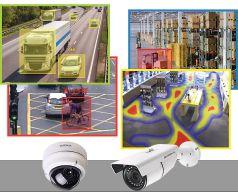
Geutebrück
Camera-based Video Content Analysis detects people, cars, trucks, animals, colours or behaviour patterns in moving images, day or night. Items such as containers, pallets or packages can be identified.The video motion detection in the camera is activated by the customer. The main features are: Abandoned Object (loitering items), Removed Object (missing items), Counting (item counting), Intrusion Detection (perimeter security) and a Dwell Filter (loitering/ evaluation of dwell time).
www.geutebrueck.com