The fuel of the future is breaking ground across the industry.
14 Mission critical
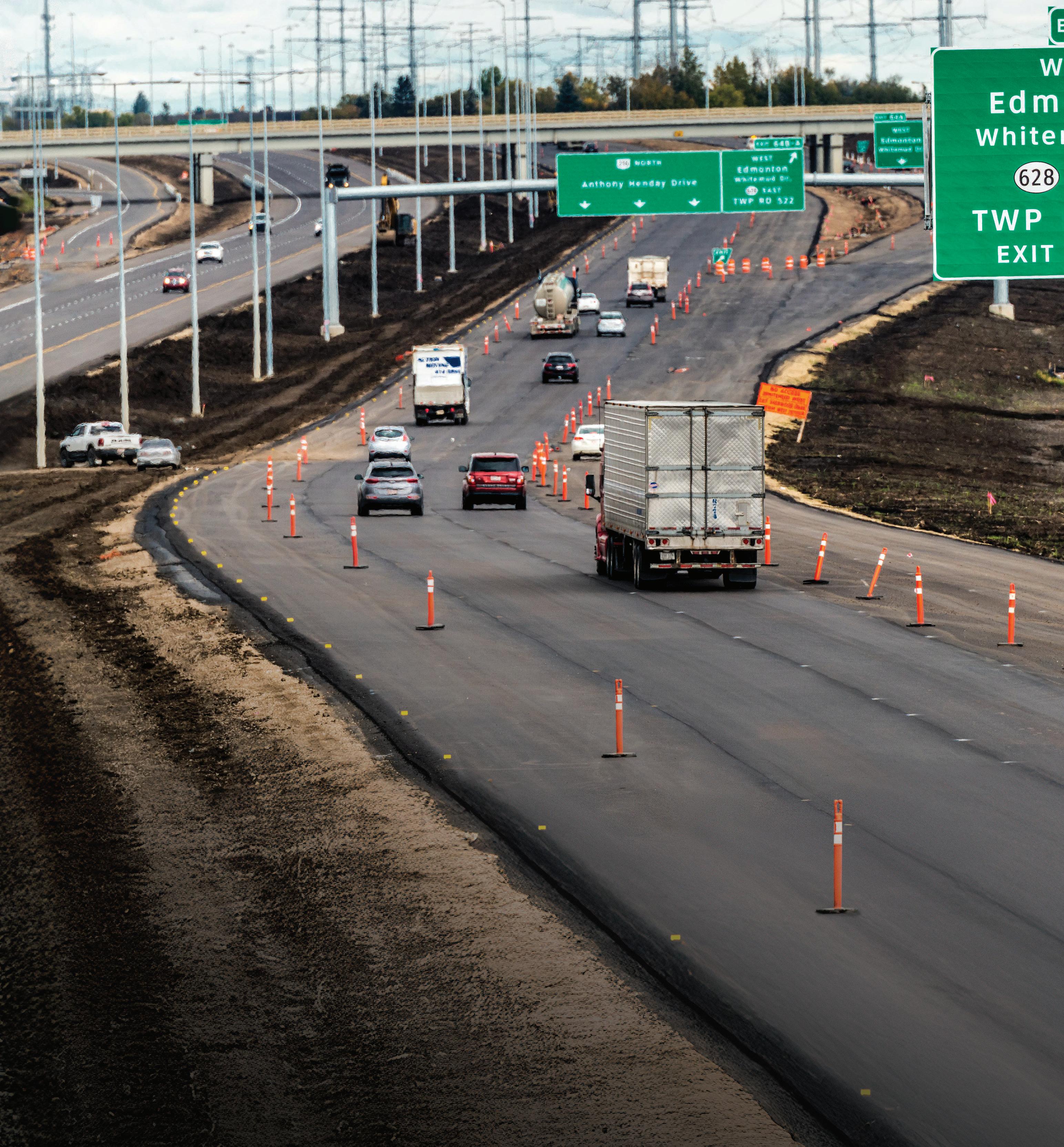
Ontario's Ring of Fire is rich in critical minerals but sits more than 300 kilometres north of the province's existing highway network. To open this area up will require new roads and meaningful consultation with First Nations.
20 Good vibrations
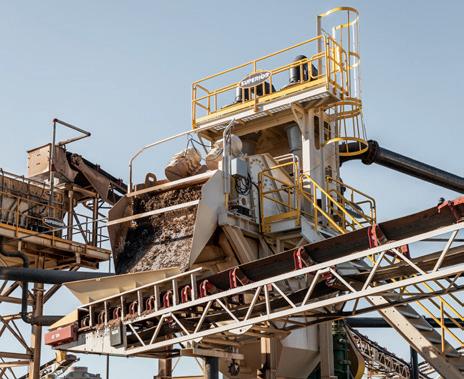
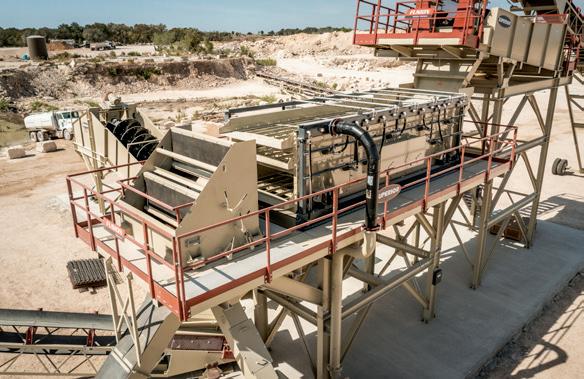
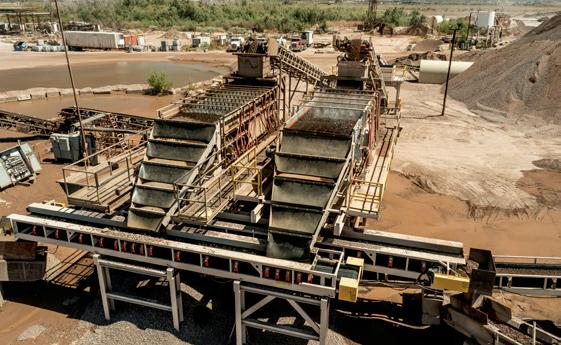
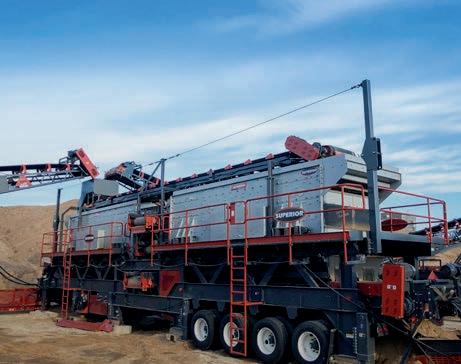
When screening performance starts to slip, understanding why it's happening is key to restoring efficiency and protecting wear life – not just for the machine but for the screen media it supports.
24 The right fit
Lack of suitable women’s workwear has created an opportunity companies are jumping on.
We need to talk
To become an an energy superpower, Canada needs to ensure there is proper consultation
On the surface, it sounds great. Why shouldn’t we be an energy superpower? Afterall, Canada is blessed with ample natural resources – oil and gas, critical minerals, rivers to fuel hydroelectric power, a thriving nuclear sector, plenty of land for wind turbines and solar panels.
Of course, there will always be a few partisans on the right and left who will reflexively be against anything Prime Minister Mark Carney proposes, but most would be onboard with the overall idea.
Yet it’s when you dig into the details that real rifts emerge. Some will balk at Canada attempting to export more oil and gas. Just the notion of building pipelines is divisive.
Some are against nuclear power. Some oppose more resources going into wind and solar power.
Others will point to a burdensome regulatory system that must be dismantled first. Opposing them are those who say such regulations are necessary to protect people and the environment and, in fact, we need even more regulations in place before moving forward.
To make Prime Minister Carney’s vision a reality will require a deft political touch.
The first stumbling blocks are already emerging.
As we highlight in this edition, Northern Ontario’s Ring of Fire is teeming with critical minerals but the area sits more than 300 kilometres away from the provincial highway network.
Three roads are proposed to be built that would link the Ring of Fire with the existing highway network and recently the Ontario government announced a $61.8 million investment in a critical road infrastructure project that will serve as the gateway to the Ring of Fire.
However, there are concerns this is progressing far too quickly.
And this is where the difficulties come in.
Opposition to Ontario’s plan is coming from First Nations communities, who are worried they are not being properly con-
sulted. First Nations leaders are also throwing cold water on the federal government’s policy of shepherding major projects through the regulatory process more quickly.
On many occasions, the prime minister has stated Canada will move at a speed once unthought unimaginable.
That sounds good, unless you belong to a community that has historically been exploited or sidelined by a federal government in the name of advancement.
So, as the federal and provincial governments embark on a series of nation-building projects, it’s imperative that they do not sidestep consultation with First Nations communities.
These consultations won’t be easy. Not everyone will be happy with where they lead. But they must happen. They must be meaningful. And legitimate concerns must be addressed.
Our inability to build consensus on key issues is too often our undoing. If the prime minister wants to make good on his promise of turning Canada into an energy superpower, it will require this country complete major infrastructure projects in a more timely manner. The first step in doing so is we build a consensus from sea to sea to sea.
Otherwise, we will face a familiar path as the past. Protests. Court challenges. Political in-fighting. Projects bogged down. Investors fleeing. Little getting built.
Canada is facing one of the most consequential moments of its history. It’s up to all of us to find ways to work together to move this country forward.
The world is moving quickly. Whether you support the American president or not, you must admit he is effective at one thing –upending the existing order.
The question now is, where does Canada fit in this new world?
Mike Lacey is editor of Rock To Road Magazine. He can be reached at mlacey@annexbusinessmedia.com
RocktoRoad
MIKE lacey
NEW IntelliPac ™ Moisture System
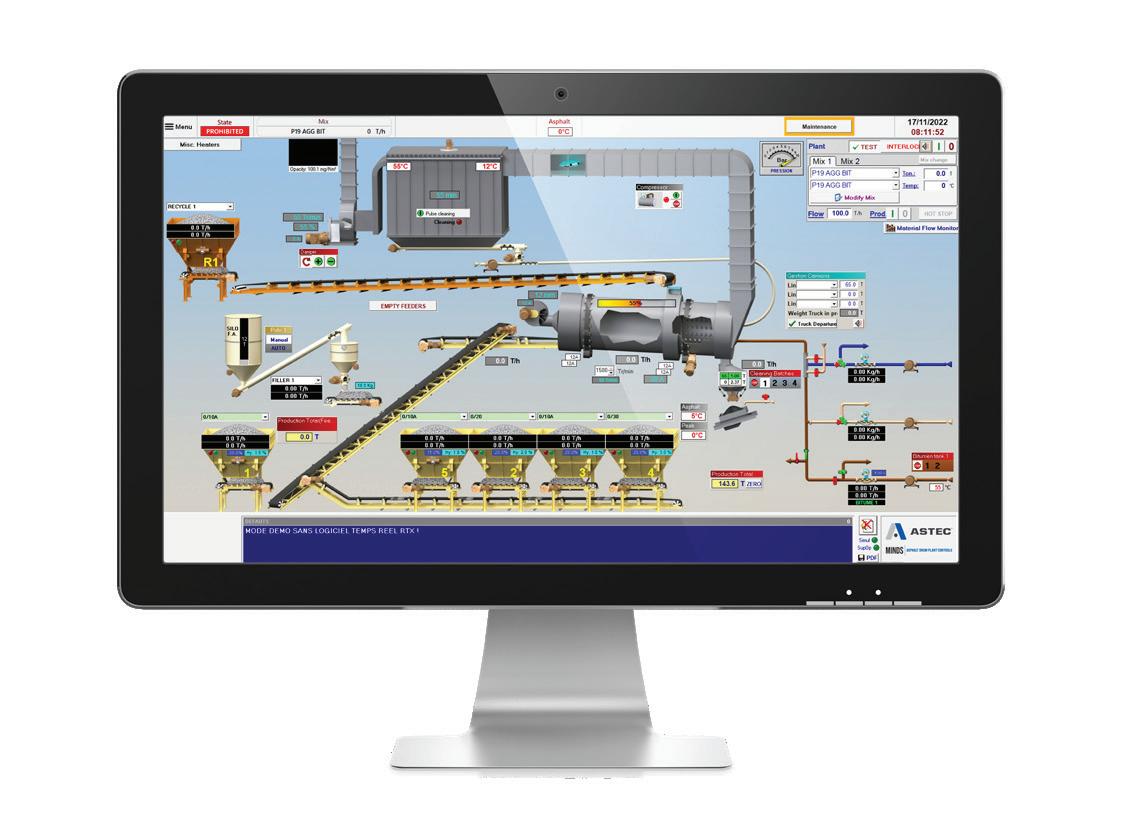
Astec paves the way for sustainable, innovative asphalt plants. The new IntelliPac Moisture System is a revolutionary solution that integrates seamlessly with Astec control systems. This provides unparalleled, real-time visibility into virgin aggregate moisture content. IntelliPac empowers operators to optimize mix design, minimize energy consumption, and reduce environmental impact. With Astec, you get superior asphalt production – better for the environment, better for your business.
BUILT TO CONNECT
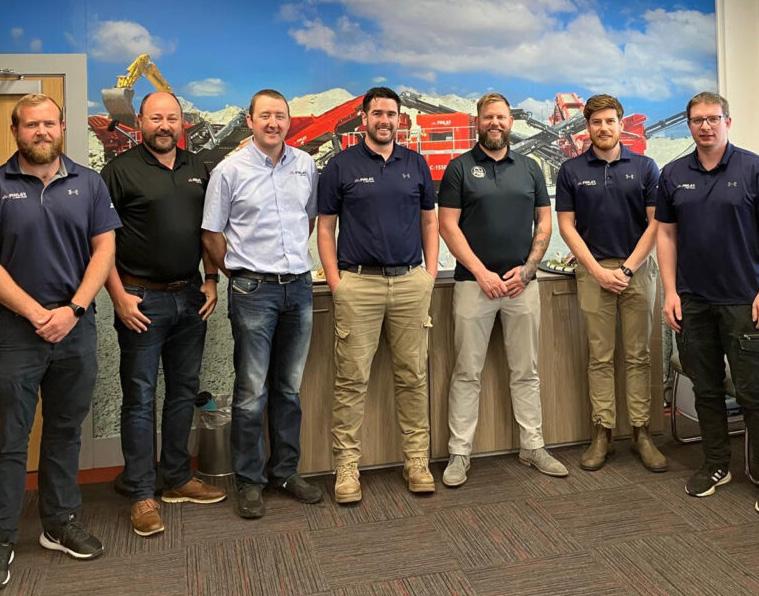
Finlay appoints ProTrack as new dealer in British Columbia
Finlay has appointed ProTrack as its new authorized dealer for British Columbia. This new partnership marks a step in expanding Finlay’s presence in Western Canada, leveraging ProTrack’s 25 years of experience in providing reliable equipment and exceptional customer service. ProTrack has built its reputation on a foundation of providing the fastest and most efficient service possible, a principle that aligns with Finlay’s commitment to customer support. With the addition of the full Finlay range to its product portfolio, ProTrack is poised to offer unparalleled product support to customers in British Columbia.
"We look forward to working alongside Mike Maher and the ProTrack team,” said Jeremiah Yoak, regional sales manager at Finlay. “We’re confident that this collaboration will not only strengthen our service capabilities but also deliver enhanced value to our clients through localized expertise, responsive support, and a shared dedication to innovation.” The new dealer-
Thompson Construction Group hires new vice president
Thompson Construction Group (TCG) welcomes Brad Quartel as the new vice president for builders and infrastructure. Quartel will oversee both the builders and infrastructure divisions and provide strategic oversight across vertical construction and largescale civil projects. Quartel was previously the general manager of Thompson Builders. With over 15 years of industry experience, he is known for his people-focused leadership and commitment to client value in project delivery. According to TCG, Quartel’s promotion reflects the company’s commitment to growth, alignment, and operational excellence as the company expands its presence across key markets in Canada.
ship will provide local sales, service, parts, and support for the full line of Finlay crushing, screening, and conveying equipment, ensuring that customers in British Columbia have access to machinery.
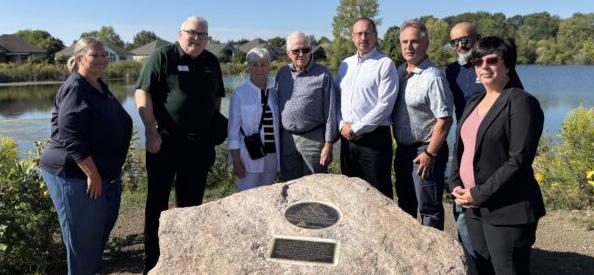
Ontario’s Lake Margaret wins OSSGA’s prestigious Bronze Plaque Award
The Ontario Stone, Sand & Gravel Association (OSSGA) has announced Lake Margaret in St. Thomas, Ontario, as the recipient of the 2025 Bronze Plaque Award, which is OSSGA’s highest honour for environmental rehabilitation. Presented at Jim Waite Park in St. Thomas, the award recognizes Lake Margaret as a model of excellence in transforming a former aggregate site into a vibrant, community-centred natural space. Once a gravel pit, the rehabilitation of Lake Margaret resulted in a new outdoor space used by the entire community, which includes the development of new homes by Doug Tarry Homes. The Bronze Plaque Award celebrates outstanding efforts in aggregate site rehabilitation, with a focus on environmental stewardship, community engagement and long-term sustainability. Lake Margaret now serves as a beloved destination for residents and visitors alike, demonstrating how responsible aggregate practices can leave lasting, positive legacies, according to OSSGA.
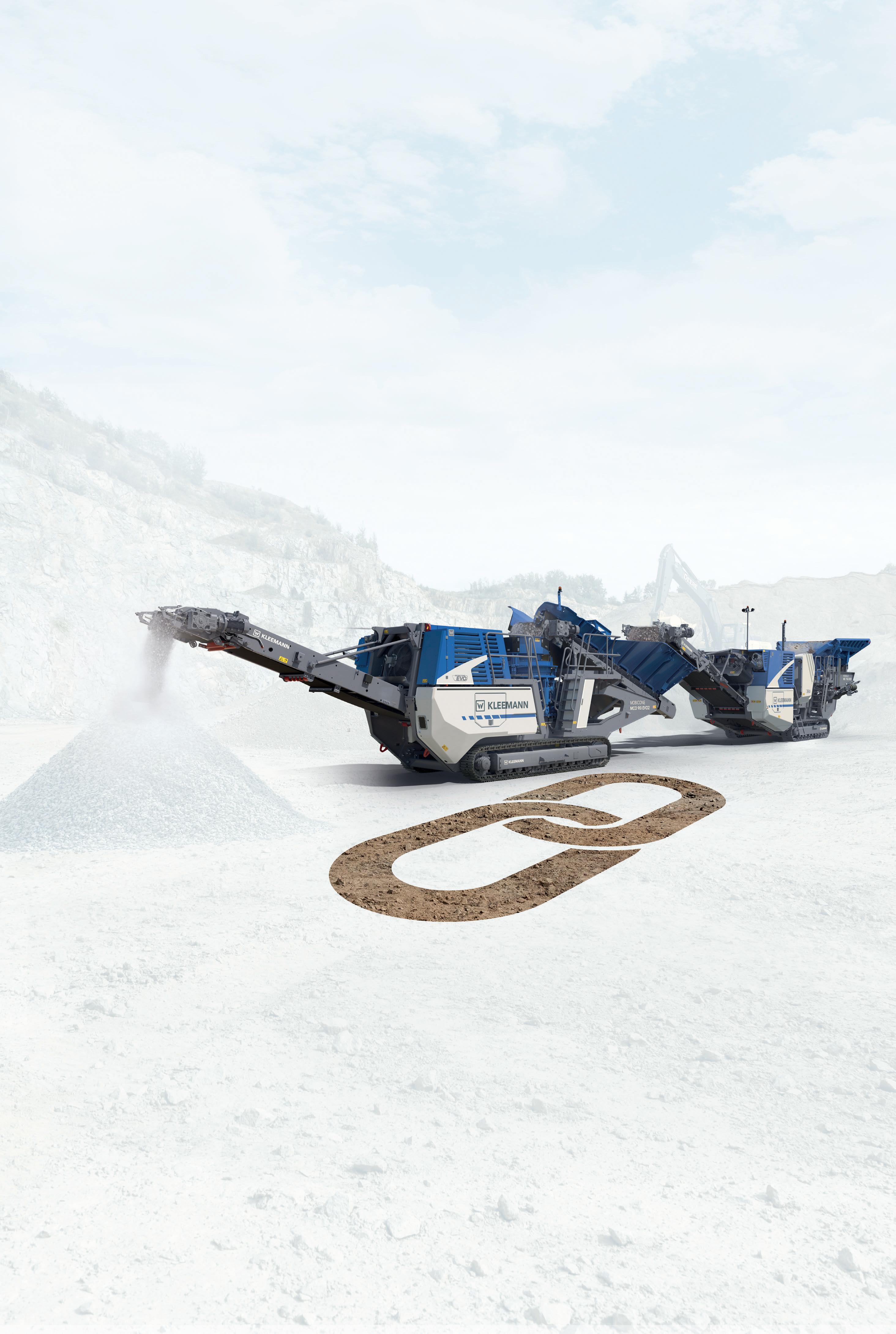
THE MOBICAT MC 110 EVO2 AND MOBICONE MCO 90 EVO2
TEAM PLAYERS THAT WORK TOGETHER INTELLIGENTLY AND STRENGTHEN EACH OTHER. In linked plant combinations, the MOBICAT MC 110 EVO2 jaw crusher and the MOBICONE MCO 90 EVO2 cone crusher really flex their muscles. SPECTIVE makes both plants easy and intuitive to operate. Also, an advanced drive concept ensures greater efficiency with lower consumption. Maximum throughput is achieved thanks to the material flow concept coordinated via line coupling across both crushing stages. Go for the perfect team!
www.wirtgen-group.com/evo2-line-kleemann
MC 110 EVO2
MCO 90 EVO2
industry news
Amrize launches Great Lakes cement carrier
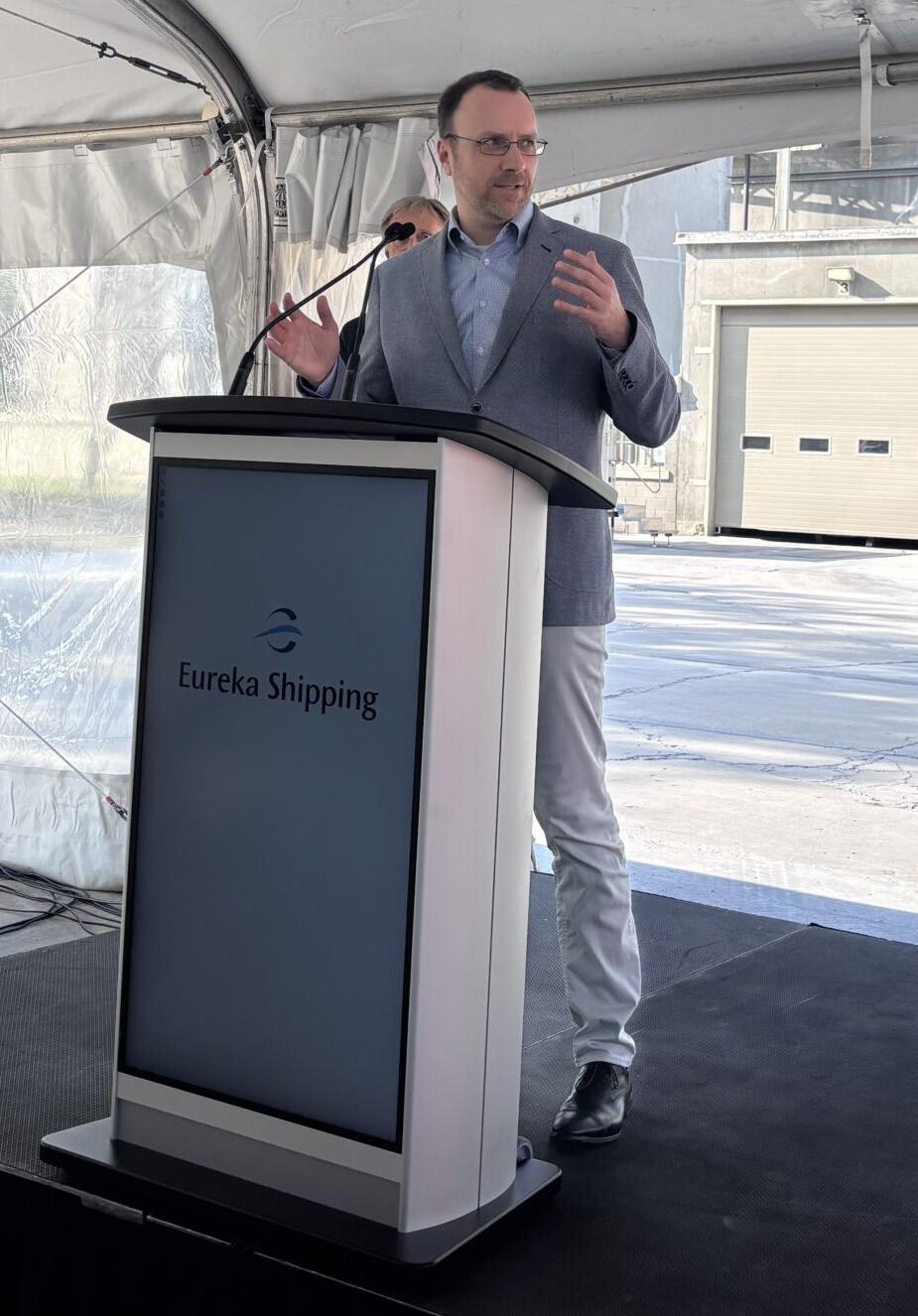
Amrize, in collaboration with Eureka Shipping Ltd, debuted the MV Tamarack, the first new cement carrier on the Great Lakes in two decades.
The ceremony was held at the Amrize Toronto Cement Terminal, based in Toronto, Ontario. The event marks the official launch of MV Tamarack’s operations for Amrize in the Great Lakes and underscores a new era of advanced, low-emission shipping in the region, explained Andrew Stewart, senior VP, Cement Industrial, Canada and Geocycle North America at Amrize.
“Today is a really important milestone for us at Amrize,” he said. “I have been waiting seven years for this day. For fifteen years and longer, this will be supplying the Great Lakes with the best possible cement.”
The Tamarack was designed and built with sustainability in mind, stated Kai Grotterud, CEO of Eureka Shipping. Tamarack represents a significant step forward for Amrize in low-emission and sustainable transportation.
“It marks the beginning of a new era, one defined by innovation, investment, and a
deep commitment to responsible economic growth across the region,” said Grotterud. “And sustainable marine transportation on the Great Lakes.”
According to Amrize, the Tamarack is a 10,000-plus cubic metre carrier and stands at 122.90 metres in length. In addition to features like diesel-electric propulsion and advanced manoeuvrability systems. The vessel can also run on HVO biofuel and includes shore-power compatibility, noise insulation, and energy-saving cargo systems, all designed to reduce emissions and improve operational efficiency.
“The arrival of the Tamarack is a major milestone for Amrize as we support significant construction growth, including Ontario’s plans to invest more than $200 billion over the next 10 years to deliver new infrastructure, transit, roads, hospitals, schools, homes and high-rises,” said Jaime Hill, president, Amrize Building Materials, via press release.
Rock to Road magazine is circulated free of charge to qualified individuals holding management and supervisory positions with companies engaged in the aggregate, roadbuilding, ready-mix concrete and asphalt production industry in Canada. The Publisher reserves the right to determine qualification.
Paid subscriptions are available. Canada: $36.75 per annum including G.S.T. (six issues*); U.S. and Overseas: $60 US. *Includes annual Buyers’ Guide issue. Please send change of address with label from your last issue. All subscription correspondence must include your title/ position, company name and address, postal code and telephone number.
BY GRANT cameron
MISSION CRITICAL
Ontario’s Ring of Fire is rich in critical minerals, but sits more than 300 kilometres north of the province’s existing highway network
> It was early June when Ontario Premier Doug Ford announced he’d designate the mineral-rich Ring of Fire region northeast of Thunder Bay as a special economic zone as quickly as possible.
The Protect Ontario by Unleashing Our Economy Act, known as Bill 5, had been passed – only three weeks after it was introduced –giving the premier sweeping new powers to suspend provincial and municipal rules, and brush aside any potential delays to fast-track development.“We need to start moving on that,” Ford declared, despite the fact local First Nations communities had threatened to set up blockades and take the government to court if he proceeded. Importantly, a few weeks later, the federal government passed Bill C-5, to expedite the approval process for projects considered to be in the “national interest,” potentially bypassing certain regulations, including environmental assessments and Indigenous consultation.
Both pieces of legislation were spurred by the economic warfare
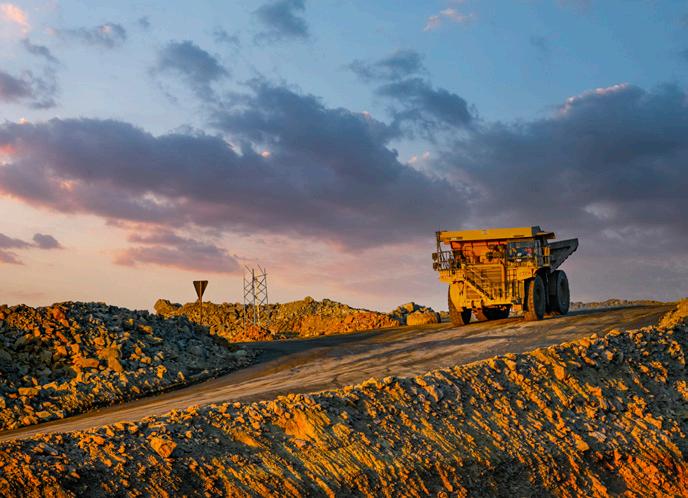
Development of critical-mineral rich Ring of Fire will require linking the region to the province’s existing highway network. PHOTO: iStock
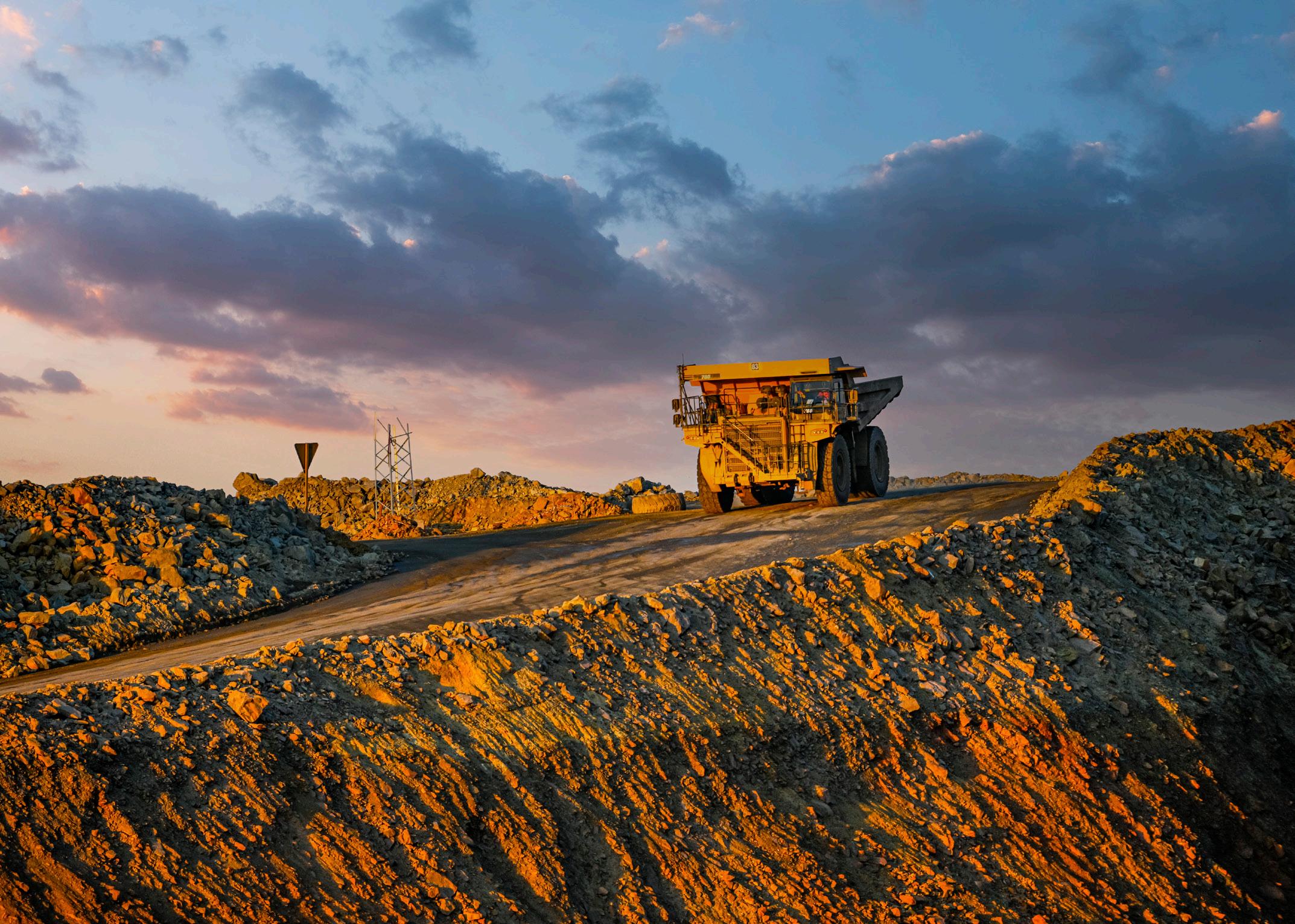
threats of U.S. President Donald Trump and aimed at opening the doors to one of the most promising mineral development opportunities in the province, a 5,000-square-kilometre swath of land with vast supplies of chromite, cobalt, nickel, copper and platinum that will play a key role in the future economy.
With the province and feds on the same page, it looked like all systems were go for developing the region. But no so fast. Houston, we may have a problem. Court challenges are mounting.
Marten Falls First Nation has filed a statement of claim, seeking a court injunction to prevent the Ring of Fire being developed without an agreement with the community, maintaining that without its consent a mining development on its traditional territory would be a breach of its rights.
Chief Bruce Achneepineskum has said that the community is not anti-development but any attempt to develop the land without consent of the First Nation is a violation of its treaty with the crown.
During a press conference at Queen’s Park on Aug. 7, he told reporters that Marten Falls, a remote fly-in community, is willing to talk and build, “but we are not
willing to be stepped on or stepped over.”
The community is seeking an injunction to stop all work until a new nation-tonation dialogue is established.
Marten Falls is deemed a key player in the push to open up the region to mining as it is one of the proponents leading environmental and technical studies for a proposed road network that will connect the Ring of Fire to the provincial highway system. The community’s approval is critical.
FIRST NATIONS ARE OPPOSED
Nine other First Nations have also expressed their opposition to the laws. They maintain the governments do not have the right to impose their will on their communities at any time for a project.
On July 14, they filed a legal challenge in the Ontario Superior Court of Justice, alleging that both the provincial and federal laws meant to fast-track infrastructure projects are unconstitutional. They maintain the laws represent a clear and present danger to their way of life.
The nine nations behind the lawsuit are the Alderville, Aroland, Attawapiskat, Fort Albany, Ginoogaming, and Wabauskang First Nations, the Apitipi Anicinapek Na-
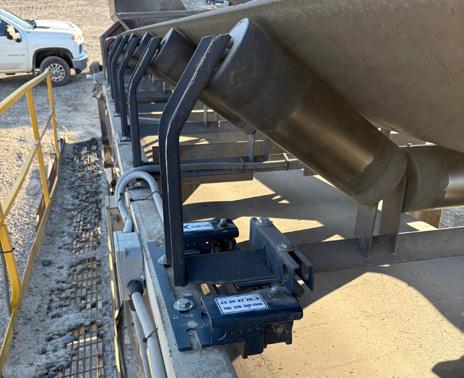
QUALITY BELT SCALES
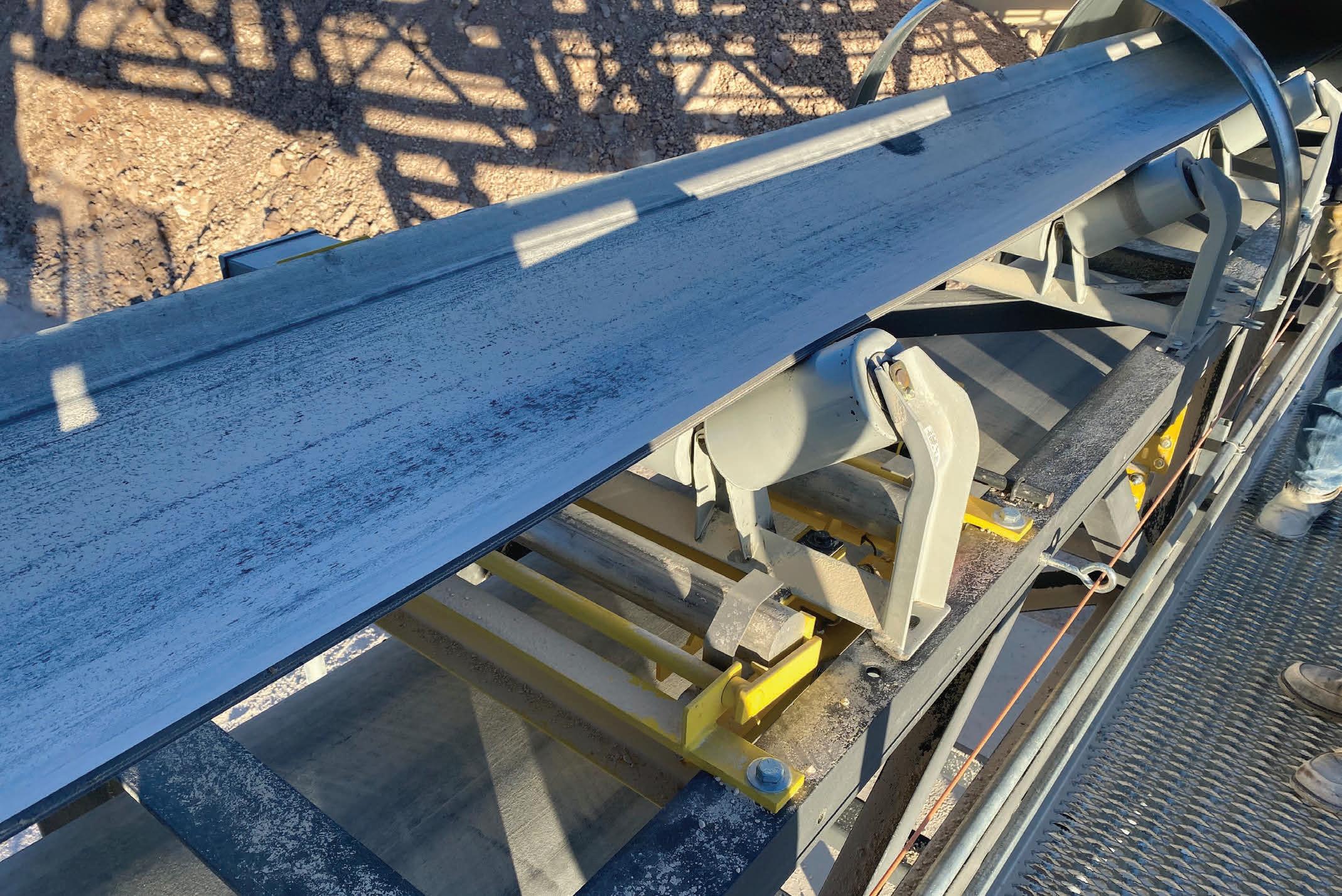
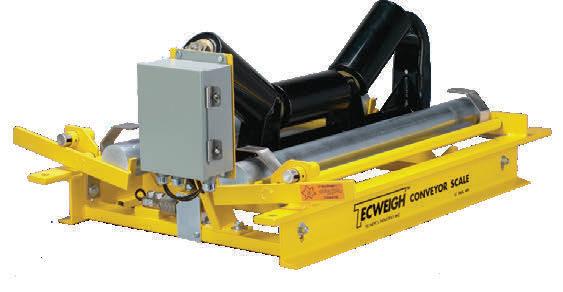
•Tecweigh
•Available
•Suitable for non-standard belt widths and mobile applications.
•Tecweigh provides the longest warranty in the industry.
tion, Kitchenuhmaykoosib Inninuwug, and Oneida Nation of the Thames.
NEW ROADS ARE NECESSARY
The minerals in question are more than 300 kilometres north of the province’s existing highway network. To access them, the government will need to construct a network of three thoroughfares: the Webequie Supply Road, the Northern Road Link and the Marten Falls Community Access Road.
Recently, the Ontario government announced it is investing $61.8 million in a critical road infrastructure project in Greenstone that will be the gateway to the Ring of Fire.
The project will connect Highway 11 at the south end to Highway 584 at the north, ultimately connecting the TransCanada, and will be the first segment on the road network to the Ring of Fire.
Greg Rickford, Minister of Indigenous Affairs and First Nations Economic Reconciliation and Minister Responsible for Ring of Fire Economic and Community Partnerships, says it is a signal that Geraldton is a gateway to one of Ontario’s greatest assets in the face of economic threats from the
WY Belt Scale Series
WY HDS Belt Scale Series
U.S. and that the government is serious about supporting the communities that anchor the North.
The First Nations say they want to
be part of the development, including mines, but are intent on it being done right. They are requesting that all necessary data be collected and that
HAZEMAG
their rights and protections are respected before proceeding.
In the court challenge, the communities state that although the laws leave open or commit that there will be some First Nation consultation at the very first stage, “involvement in that decision alone is a smoke and mirrors trick, deflecting attention from all the other ways the laws necessarily diminish the ability of First Nations to engage on the regimes’ broader consequences.
“Bill C-5 allows cabinet to quickly grant federal approvals for big projects deemed to be in the national interest such as mines, ports and pipelines by sidestepping existing laws,” they say, “while Ontario’s bill allows its cabinet to suspend provincial and municipal laws through the creation of so-called special economic zones.”
Specifically, the communities want an injunction that prohibits the feds from naming national interest projects and Ontario from implementing special economic zones.
LAWS MUST BE REPEALED
Earlier, another organization, the Mushkegowuk Council of Chiefs, met in Ottawa and passed a resolution designating the Ring of Fire as protected homeland on which development, and any projects or activities in support of devel-
To access the critical minerals, the Ontario government will need to construct a network of three thoroughfares: the Webequie Supply Road, the Northern Road Link and the Marten Falls Community Access Road. PHOTO: iStock
opment, cannot be undertaken without the consent of any impacted Mushkegowuk First Nations.
The council, which represents the collective interests of the Kashechewan, Fort Albany, Chapleau Cree, Missanabie Cree, Moose Cree, Taykwa Tagamou and Attawapiskat First Nations in northeastern Ontario, demands that both Bill 5 and Bill C-5 be “withdrawn and repealed and that inherent, Aboriginal and treaty rights of the Omushkegowuk be fully protected.”
Their motion was drafted and passed following a passionate presentation to the chiefs by Jeronimo Kataquapit, a 21-yearold Attawapiskat resident who recently formed a grassroots movement called Here We Stand. His parents and supporters had set up a camp on the banks of the Attawapiskat River to reassert Omushkegowuk presence in traditional homelands.
“Everything that we’re doing isn’t just about the minerals in the ground,” Kataquapit explained in his presentation to the chiefs. “That’s not the only thing that’s at stake here, but it’s the very essence of who we are as Indigenous people, as Mushkegowuk people, as people of the land.
“If we don’t do anything in response to Bill 5 and Bill C-5 and let whoever come into our home and do whatever they want, then everything our ancestors have fought for … would have been for nothing. They endured years and years of hardship and suffering, just for us to be here, just to give us the opportunity to utilize the lands, to utilize the waters – to protect it.”
Kataquapit noted that protecting the land is a responsibility that’s been passed down from generation to generation
MINERALS ARE CRITICAL
The Ring of Fire is important because the minerals in the region will power the economy of the future.
They are used in everything from batteries for electric vehicles, to missiles, military equipment, solar panels and wind turbines, and data centres that will support artificial intelligence.
Successive premiers have raved about the potential of the region for years, but in 2018 Premier Ford promised to build roads to the region.
“If I have to hop on a bulldozer myself, we’re going to start building roads to the Ring of Fire,” he once tweeted.
This past spring, the Ford government took a more aggressive approach to try
to push the pace of mega-projects in Ontario, like the Ring of Fire, by cutting regulations to expedite the permitting and approvals process for projects deemed strategic by government.
The plan was to accomplish that by creating special economic zones selected by the government as well as making changes to the Ontario Heritage Act to exempt certain project areas from archaeology requirements.
The agenda angered many First Nation political and chief organizations, yet Ford
repeatedly insisted that many individual community leaders are on his side.
First Nations communities maintain the laws are unconstitutional because they violate charter rights to life, liberty and security of the person, and equality rights. They contend that making changes now in an effort to streamline projects, can’t be the cost of First Nations, their rights, or the Constitution and reconciliation.
Grant Cameron is a freelancer writer based in Ontario.
A LONG WAY TOGETHER
wherever you are, bkt is with you
No matter how complex your tasks, BKT offers an extensive range of tires designed for every use in the industrial sector from warehouse and port to excavation operations. Strong, safe, reliable, and resistant to cuts, tears and punctures - these tires stand out for durability, superior performance, and comfort, even under extreme conditions.
BKT: always by your side, in any operation.
Eastern Zone Manager
Directeur Régional, Est du Canada
Joe Dias
BY MACENZIE
HYDROGEN POWER
The fuel of the future is breaking ground in the aggregate industry
> Hydrogen power could end the construction industry’s reliance on fossil fuels, making it an innovative source of energy for heavy equipment and asphalt production.
But, like with any new sustainable and green alternative, there is slow adoption of hydrogen power in Canadian infrastructure projects. Hydrogen is a natural chemical energy carrier that can be made from a variety of feedstocks, including water and electricity, according to the Energy Council of Canada. It is a clean-burning fuel that does not produce carbon emissions.
In 2020, the federal government, alongside the Energy Council of Canada, launched the Hydrogen Strategy for Canada, with the goal of making Canada a global leader in hydrogen. According to the Canadian government, the objective is to adopt hydrogen technol-
rebelo
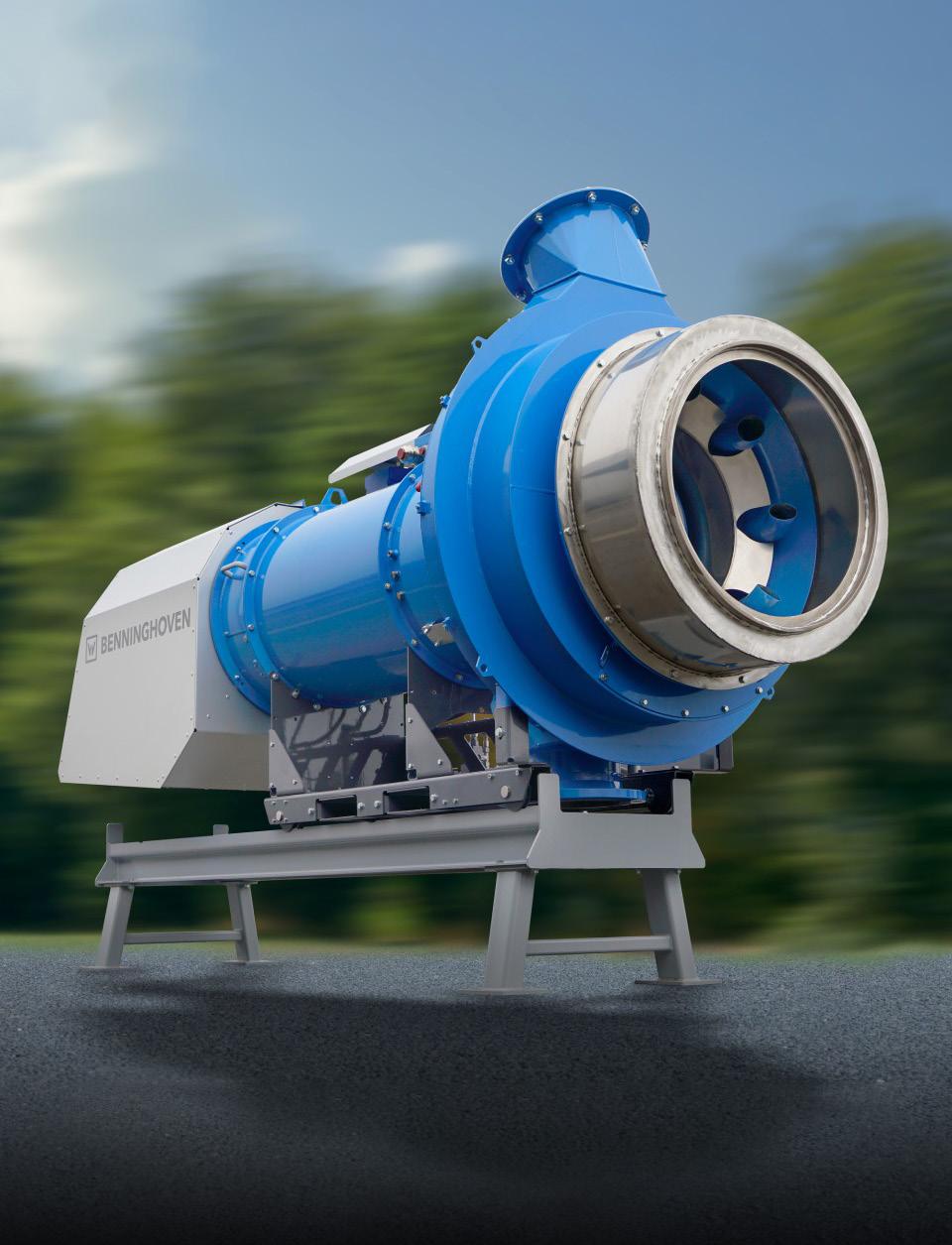
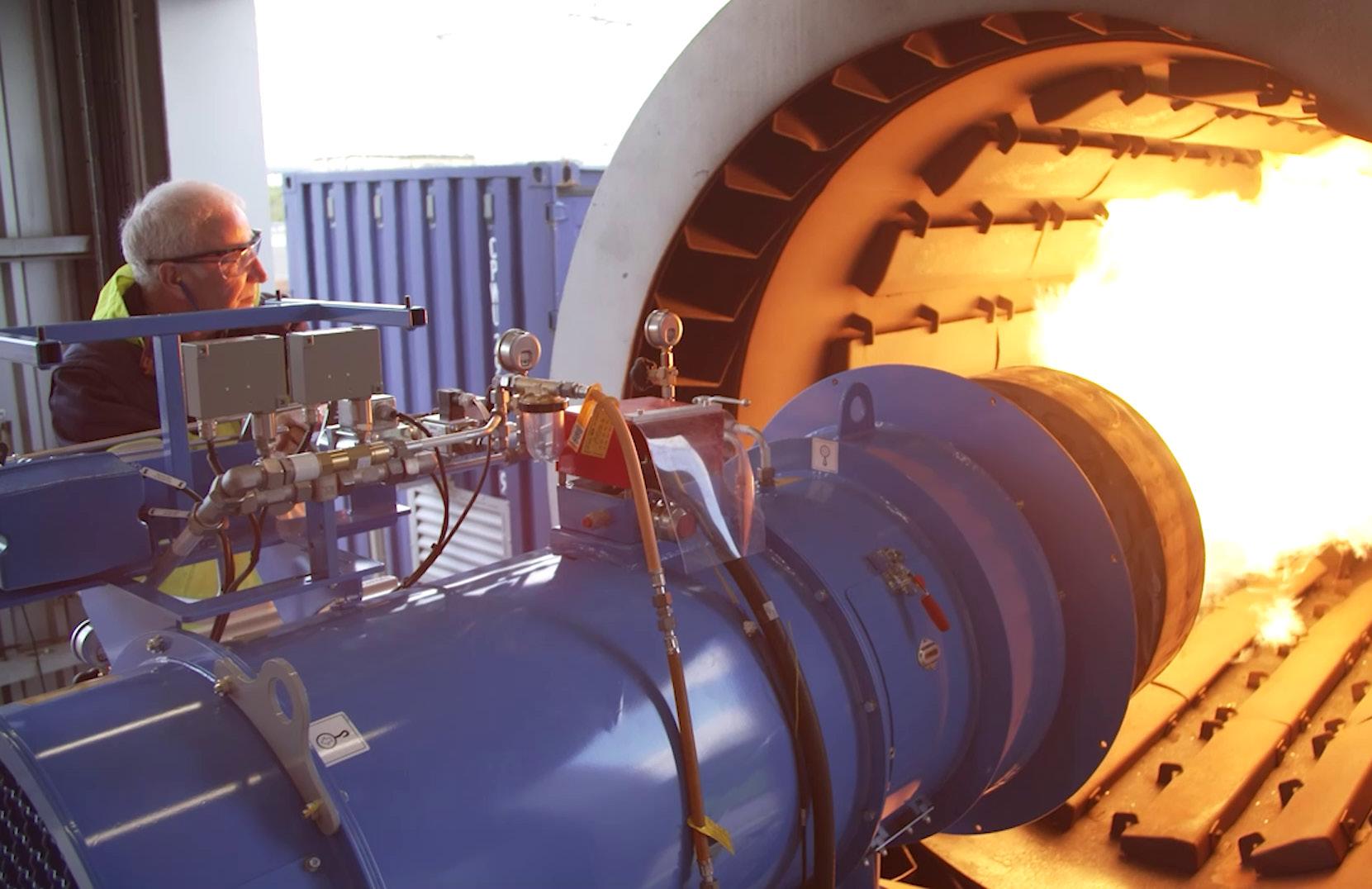
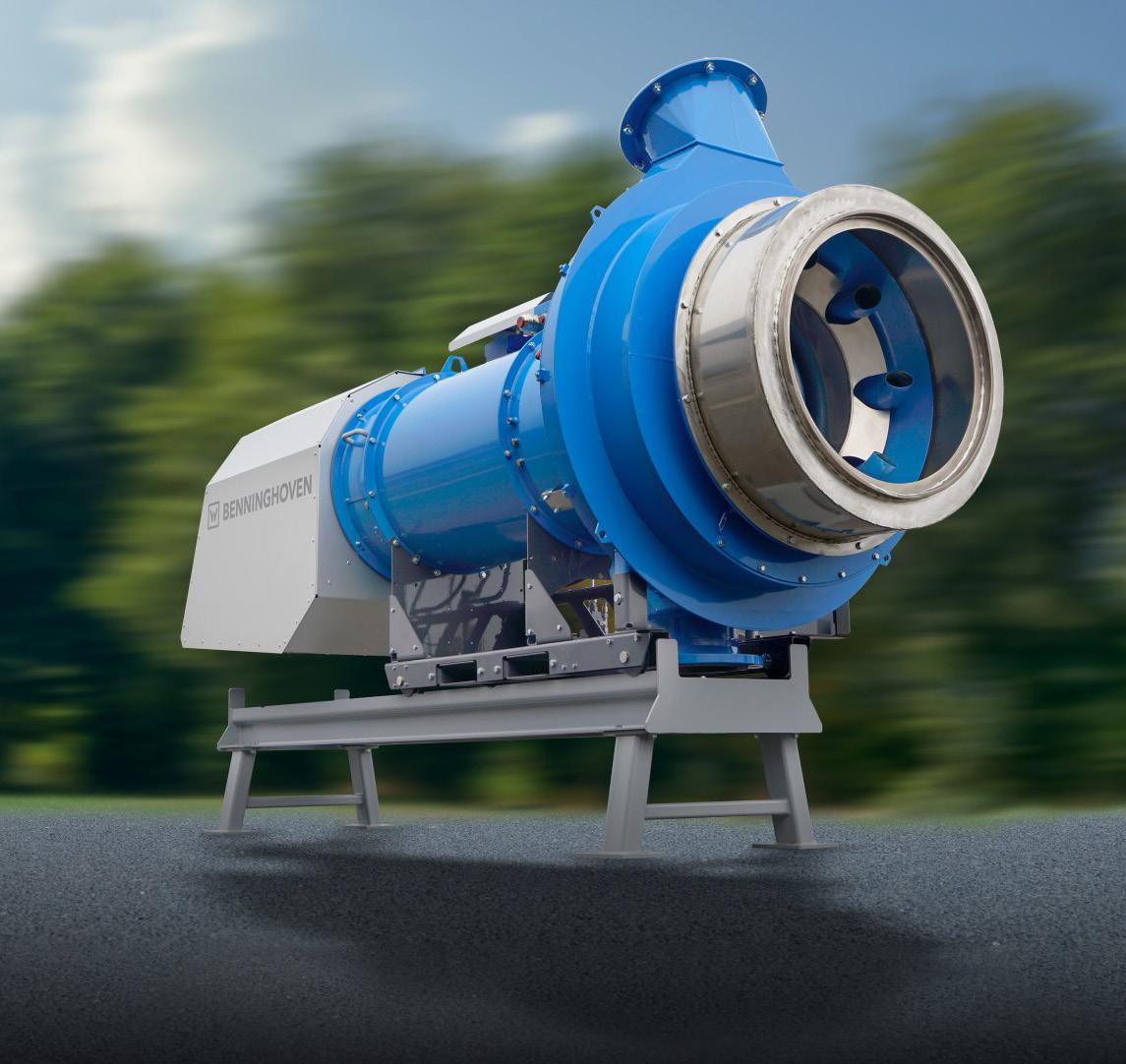
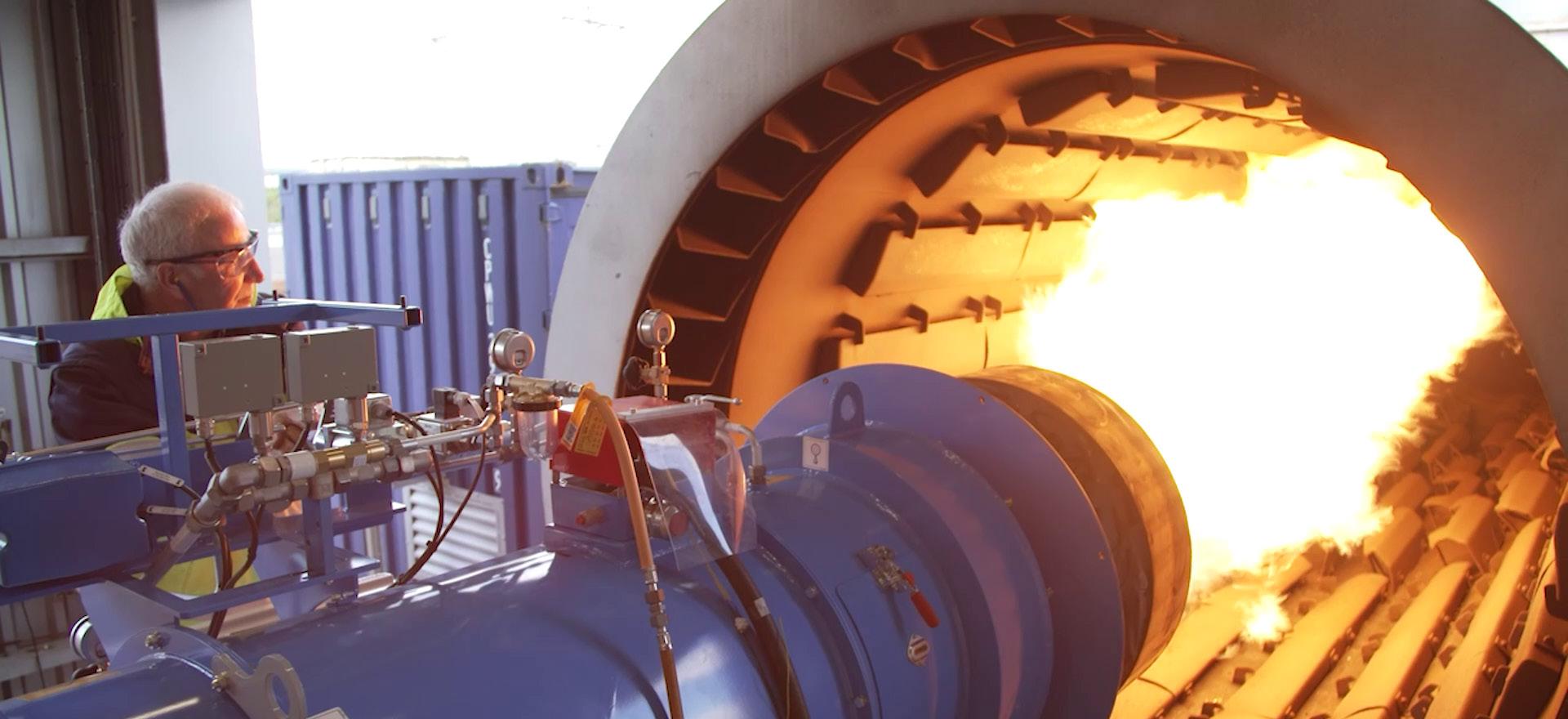
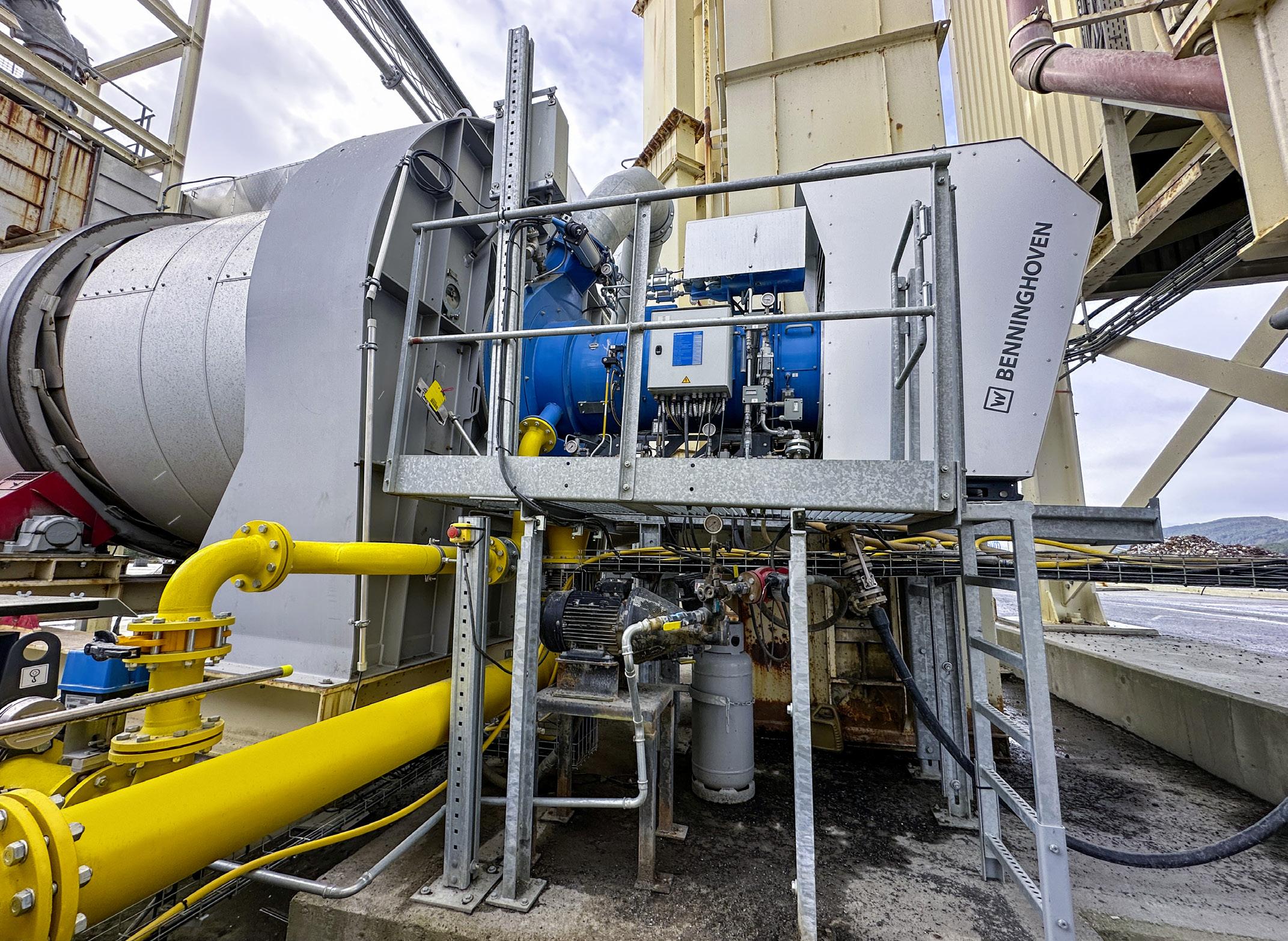
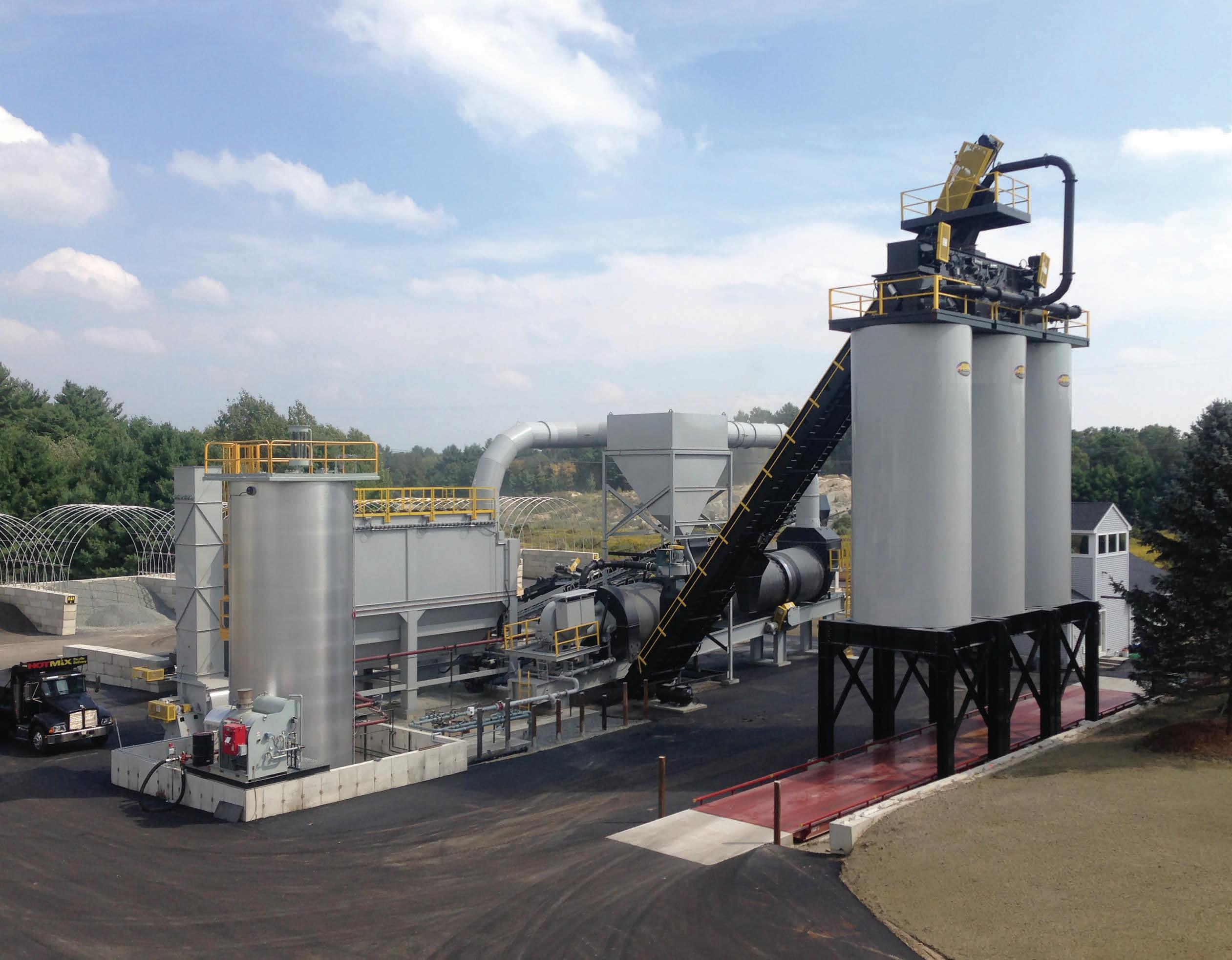
Benninghoven invested in hydrogen power as an alternative source of fuel due to its efficient drying process in asphalt production.
PHOTO: Benninghoven
ogy
FUEL OF THE FUTURE
Manufacturing companies such as Volvo Group are integrating hydrogen power into their fuel and engine technology.
“Hydrogen fuel cells and engines used in commercial vehicles and machines will be an essential element for the future of transportation and infrastructure,” states the Volvo Group on their website.
Greg Harris, chief commercial officer at Intelligent Energy, a leading independent fuel cell manufacturer, explains that there are two kinds of routes for hydrogen power in mobile applications like mining equipment.
According to Harris, hydrogen can burn like diesel gas in an engine; however, that requires modifications, as a standard engine cannot burn hydrogen.
“That method can be good for some applications, as it is more straightforward with existing vehicles,” says Harris. “It does reduce emissions, but the downside is it’s not the most efficient or completely emission-free.”
The other option is similar to an electric battery vehicle, he says. Today, there is an increase in electric-powered motors for vehicles, “but then you’re limited to batteries
and the amount of energy you can store, the weight and reducing the payload.”
In these cases, a hydrogen fuel cell can be incorporated.
“You can have an on-board top system, and have hydrogen stored on board with a fuel cell. This is how we produce and convert the hydrogen into electricity,” says Harris. “Which can be fed directly into electric motors or via a battery.”
To Harris, the simplest approach is to replace an electric battery with a fuel cell and store the energy in a hydrogen tank.
Benninghoven, a Wirtgen Group company, specializes in the production of asphalt mixing plants and their components. Benninghoven’s factory, located in Wittlich, Germany, had introduced hydrogen into its production operation through a Multi Jet Burner.
According to Wirtgen Group, Benninghoven has developed a hydrogen drying system that consists of a multi-fuel burner, a burner control, a feed system with a patented pressure control section that throttles back the hydrogen for the burner from 350 bar to the required 1.3 barA, and other plant components specifically adapted to operate with hydrogen.
Steven Mac Nelly, head of R&D, develop-
ment and engineering at Benninghoven, explains that the particular advantage is that in the combustion process, no CO2 emissions are generated.
At Benninghoven, hydrogen is used as an alternative fuel in the newly developed multi-fuel burners.
These burners are specially designed to burn hydrogen alone or in combination with other fuels,” says Mac Nelly. “The hydrogen is produced by electrolysis. If the electric power required is generated by wind farms, hydroelectric power stations, and solar power systems, we call it green energy and subsequently [ML1] green hydrogen.”
Mac Nelly suggests that in the future, the industry may see hydrogen distribution through gas networks.
BENNINGHOVEN’S MULTI JET BURNER
The development of a hydrogen burner began at Benninghoven in 2020. After extensive simulations, field tests were conducted in Norway with their partner Veidekke. Within two years, they had developed a fully functional burner that could be used with the existing plant.
At Benninghoven, hydrogen is one of the most important components of an innova-
tive drying and heating concept for asphalt mixing plants, explains Mac Nelly. The Multi Jet burner is a new generation of burners for Benninghoven, and hydrogen is used exclusively as the primary fuel.
“The concept of these burners foresees the option of using up to 100 per cent hydrogen as a fuel. At the same time, they also allow the combination of hydrogen with other fuels such as biogas, oil, or HVO, a renewable diesel,” says Mac Nelly.
Benninghoven uses hydrogen combustion that takes place at a technically high level through a specially adapted nozzle arrangement and precise burner control. In addition to this, Benninghoven developed and patented its own feed system with pressure regulation that allows safe reduction of the hydrogen pressure from 350 bar to the pressure level required at the burner (1.3 barA), according to Mac Nelly.
“This pressure control station is the decisive component that first enables the use of hydrogen for the asphalt mixing plant,” says Mac Nelly.
The burner generation can burn four different fuels at the same time, regardless of their physical state. In addition to new
plants, the burners can also be used as part of a retrofit, regardless of the manufacturer of the existing plant, states Mac Nelly.
Benninghoven’s Multi Jet burners use mixed fuels, which allows the simultaneous use of hydrogen, LPG, HVO, biogas, and natural gas through separate nozzles. Fuels can be switched easily without the need to temporarily or completely shut down the plant. For Bennington, this reduces operating costs, including future CO2 pricing.
Benninghoven invested in hydrogen power as an alternative source of fuel due to its efficient drying process in asphalt production. According to Benninghoven, considering the entire conventional road construction process chain, 45 per cent of all CO2 emissions are generated during the production process at the asphalt mixing plant. Of this figure, around 41 per cent can be attributed to the thermal combustion process.
“This makes the burner the most important lever for a significant reduction of the overall carbon footprint,” says Mac Nelly. “It is a much more important factor than power consumption or the use of construction machinery. In the future, fuels such
as hydrogen, in particular, will become indispensable.”
THE PROS AND CONS
The use of hydrogen, at the moment, is still limited, specifically with the operation of heavy equipment and machinery. In Canada, hydrogen fuel is still being introduced into the manufacturing industries, and is mostly being implemented for transportation, according to the Hydrogen Strategy for Canada: Progress Report. As of October 2023, the government had selected about 10 hydrogen production projects that will receive support totalling more than $300 million and a $550-million incentive for medium and heavy-duty zero-emission vehicles.
“There isn’t a limitation on the types of equipment that can be used. But it’s gradually taking time to trial these different applications and see how they can move forward,” says Harris.
According to Harris, the real benefit of hydrogen fuel cells is the extension of the period one can operate vehicles for. He explains that batteries are big and heavy, especially
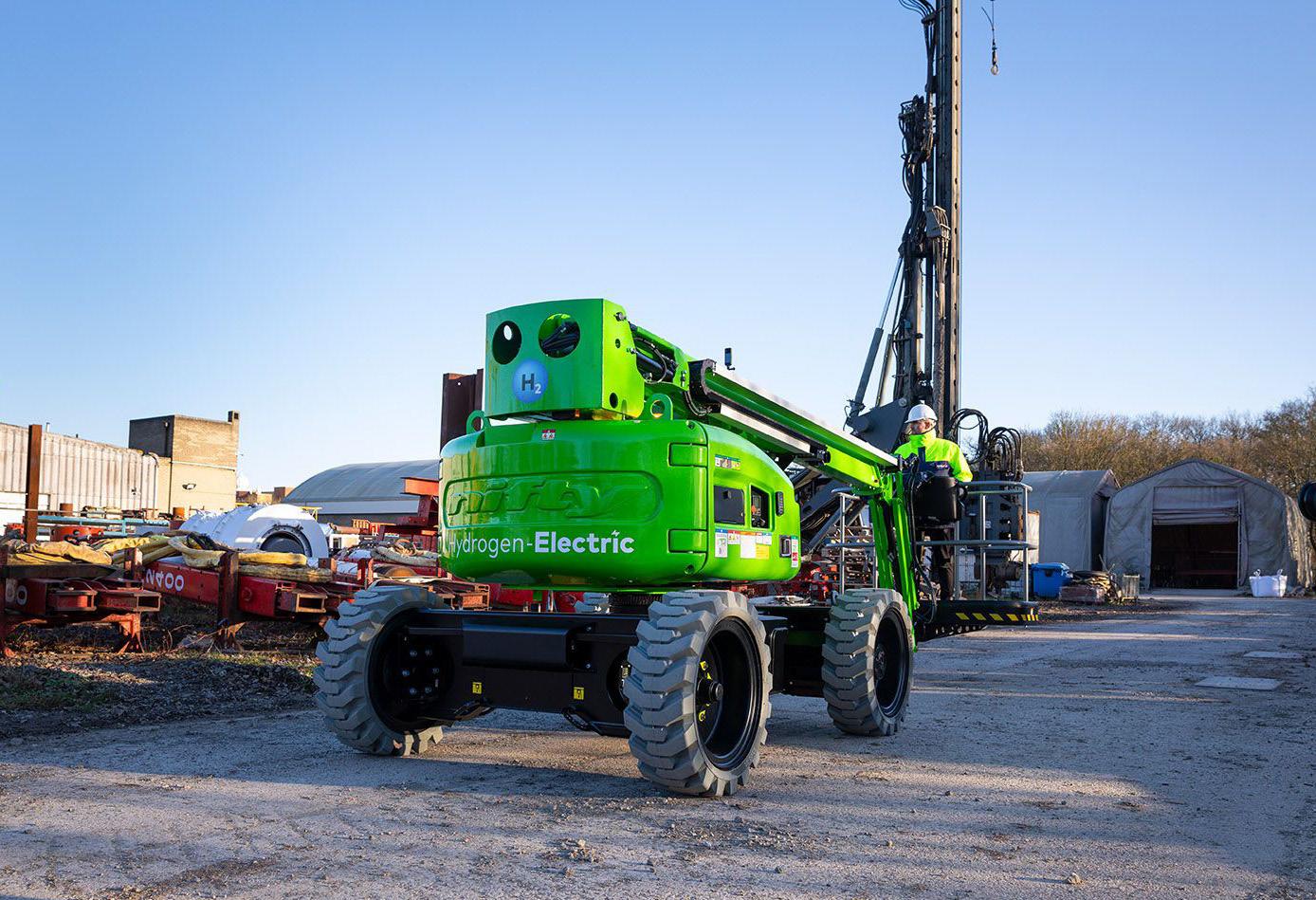
The SP45 H2E by Niftylift, powered by Intelligent Energy hydrogen. PHOTO: Intelligent Energy
has developed a hydrogen drying system that consists of a multi-fuel burner, a burner control, and a feed system with a patented
for large mining vehicles, and hydrogen fuel cells have a similar range to diesel.
“It’s not so much about the power, it’s more about the range ability that hydrogen fuel has,” he says.
Additionally, there is an operational ad-
vantage to hydrogen power. When a battery runs out of energy, it has to be plugged in to charge for a long period of time, explains Harris. However, a hydrogen vehicle can be refuelled in the same way as a diesel vehicle.
“It does take a little bit longer, but it’s still
Introducing ScaleLink
a matter of a few minutes,” says Harris.
Despite the numerous advantages of hydrogen power, several challenges remain. “Because hydrogen takes up more space, even when it’s compressed to high pressures, you need to find space for additional tanks,”
Your Ultimate Conveyor Belt Management Solution!
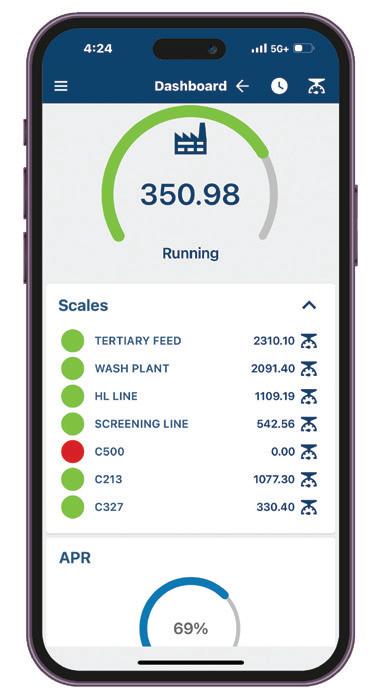
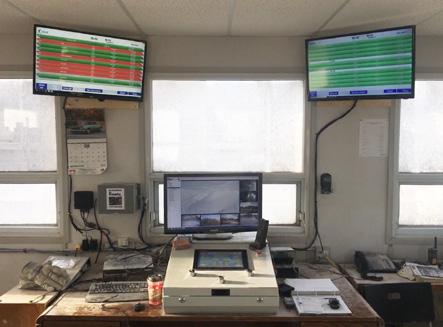
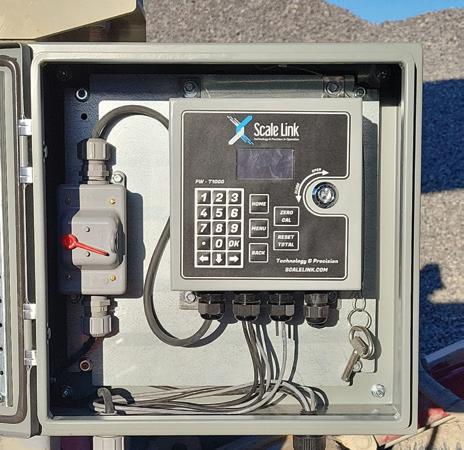
Elevate your production efficiency with ScaleLink’s advanced conveyor belt management solutions. Designed and manufactured in Canada, our enterprise-grade software seamlessly integrates with a wide range of belt scales, providing real-time data to streamline your operations.
Key Features:
• Production Efficiency: Evaluate, monitor, and manage production efficiency with unlimited access to graphs and reports.
• Live Monitoring: Access data from anywhere using your phone, tablet, or computer.
• Inventory Control: Keep track of production with detailed reports.
• Downtime Reports: Minimize disruptions and maximize productivity.
• Visual Alerts: Quick overview of the state of the plant.
• Easy Installation: Seamless integration with almost all types of belt scales.
• Custom Software Solutions: Tailored to your specific needs, collecting data such as weight, tons per hour, speed, and load percent.
Benninghoven
pressure control section. PHOTO: Benninghoven
states Harris. “You can’t replace the space where a diesel tank was – if you just put the same amount of hydrogen storage in, you won’t get the same range.”
To combat this issue, additional storage tanks are accounted for. Weight-wise, the extra tanks are not heavy, as they are compressed gas, he explains.
“It’s really a decision of how much storage versus how often you want to refuel.”
Like many other alternative green power sources, such as electric batteries, hydrogen fuel is costly. According to the International Energy Agency (IEA), the cost of producing hydrogen with low-carbon energy ranges from CAD $4.4 to $10.59 per kilogram. Additionally, room-temperature hydrogen must be stored in high-pressure tanks, which is not always feasible or cost-effective.
NEXT STEP
According to the Government of Canada, opportunities for hydrogen exist in every region of the country, including renewable electricity potential, natural gas reserves,
natural geological formations that can be used for carbon capture and storage, critical minerals, biomass and clean fuels. Utilizing hydrogen power fuel is the government’s next step in reaching net-zero emissions by 2050, states the Progress Report.
Mac Nelly explains that it is very likely hydrogen will play a notable role in the future power supply, particularly in the industrial sector, and especially in energyintensive processes such as asphalt production.
“There will be not only ecological benefits but also economic advantages. Because, as CO2 pricing increases, we will see a shift in the cost structure of the energy market,” says Mac Nelly. “Particularly, countries like Canada.”
Mac Nelly explains that there is enormous potential for power generation from renewables, such as wind, hydroelectric and solar power, which offer ideal conditions for the production of green hydrogen in Canada.
“With appropriate infrastructure, such
as trailer transport or the prospect of future hydrogen pipelines, Canada will be able to play a pioneering role in the area of hydrogen-based industrial processes,” says Mac Nelly.
Harris agrees that hydrogen will become a crucial fuel of the future; as the industry moves to electric, hydrogen fuel cells will be the natural next step.
“Adapting to a fuel cell is much more straightforward,” says Harris. “We hope to see innovation from batteries to hydrogen fuel cells, and there is especially an opportunity in mining.”
For Benninghoven, it is particularly important that new technology options can be utilized efficiently and as a viable, practical solution today – not at some time in the distant future.
Today, plant operators can already make their plants hydrogen-ready and fit for the future without having to invest in an entirely new plant, says Mac Nelly,
“This flexibility is a real game-changer for many asphalt producers.”
Benninghoven’s Multi Jet burner based in Wittlich, Germany. PHOTO: Benninghoven
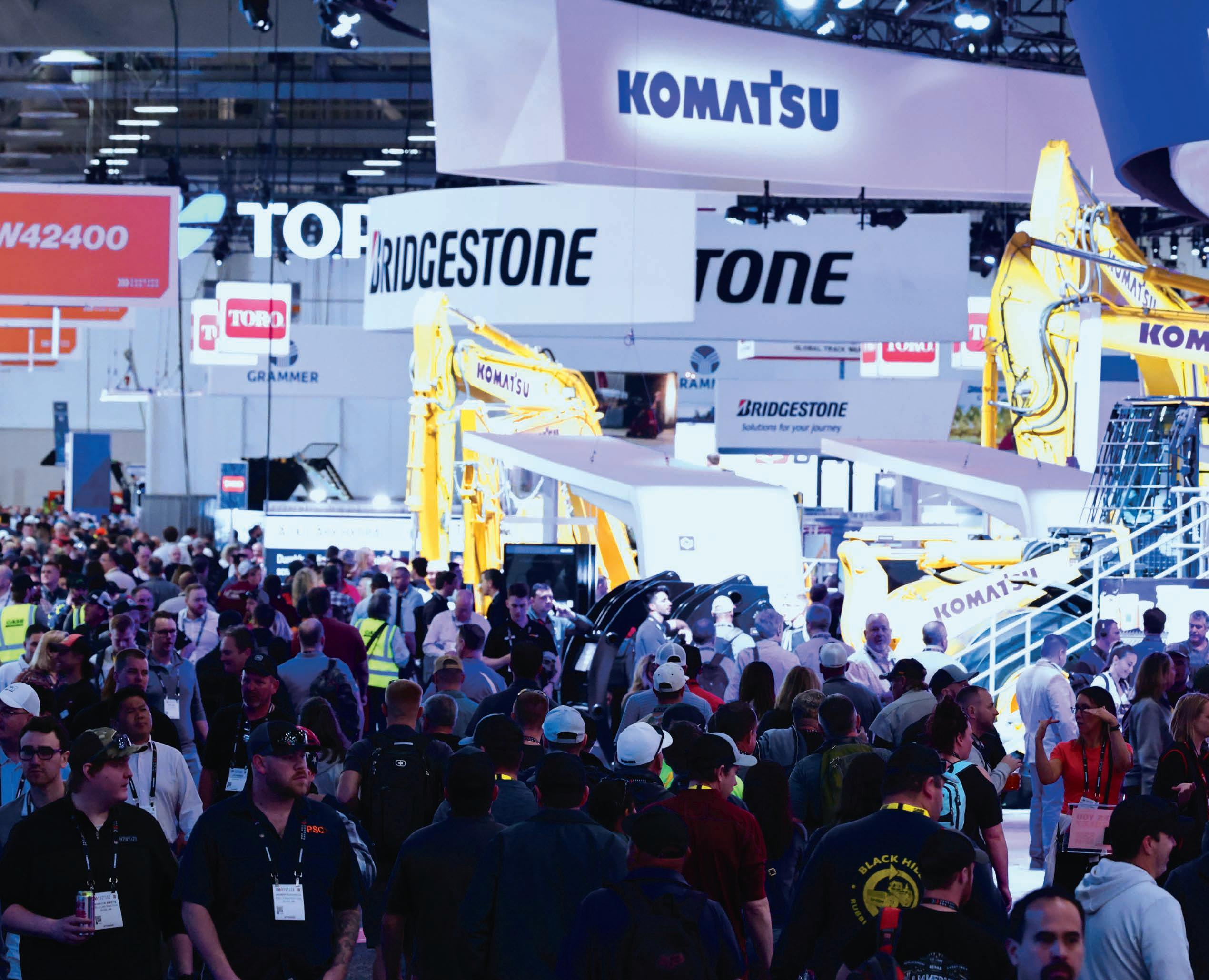
No matter what sector of construction you’re in, you’ll leave CONEXPO-CON/AGG with
This isn’t just North America’s largest construction trade show, it’s taking construction to the next
BY ALEX caruana, P.eng
GOOD VIBRATIONS
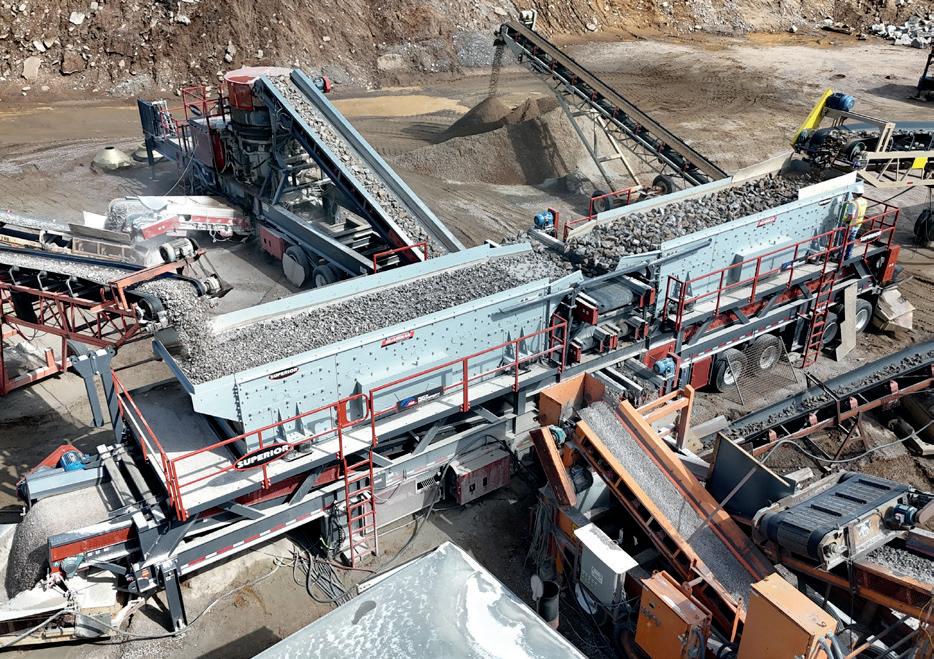
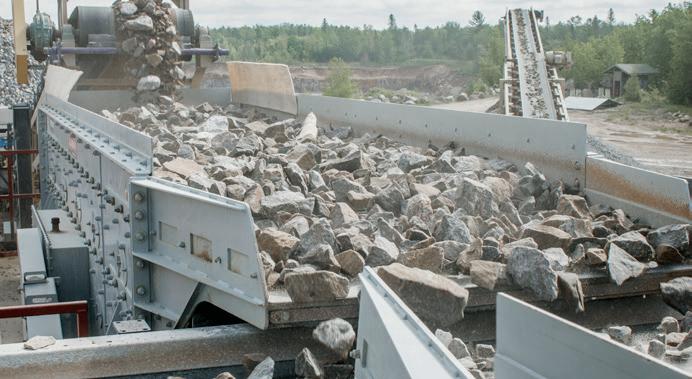
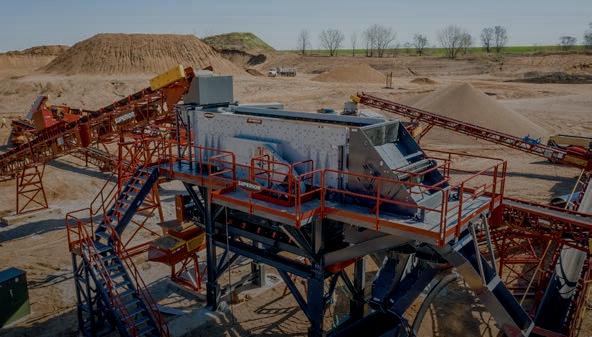
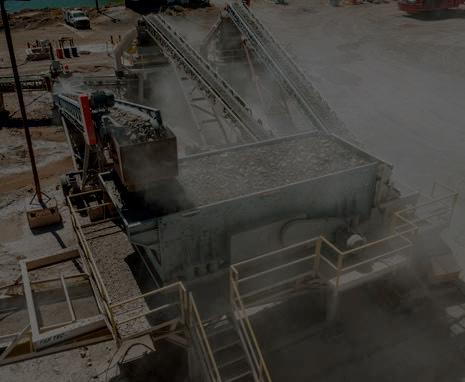
> Vibratory screening equipment is the workhorse of an aggregate operation, reliably separating stone feed into various size fractions for sale or for further processing.
Diagnosing and solving screening performance issues
But when screening performance starts to slip, understanding why it’s happening is key to restoring efficiency and protecting wear life — not just for the machine, but for the screen media it supports.
The best results come from looking at every contributing factor that may be affecting performance. In our experience, there’s rarely just one cause and instead several issues often interact to create the overall problem. That’s why the right starting point is always thorough, unbiased diagnostics before deciding on a course of action.
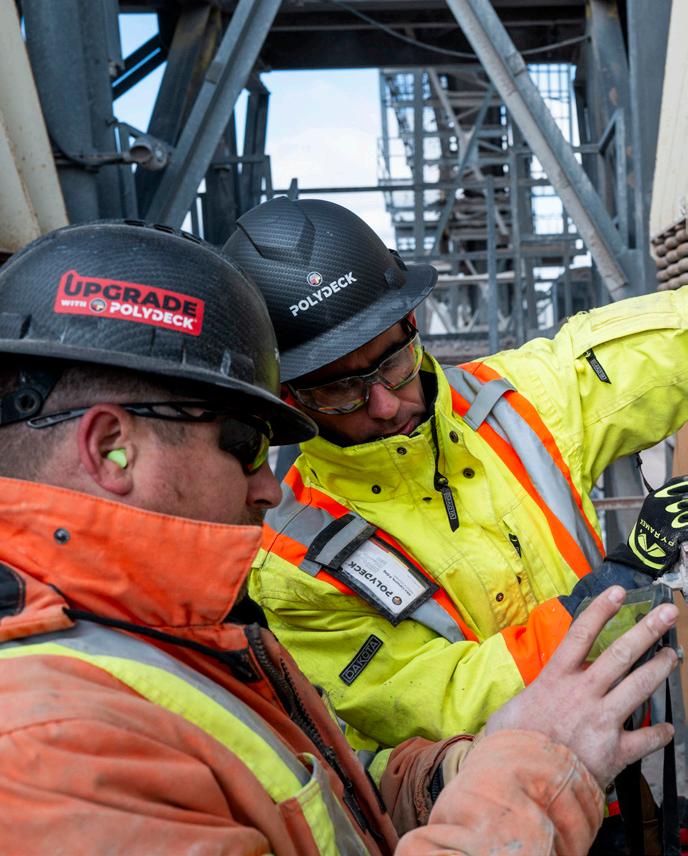
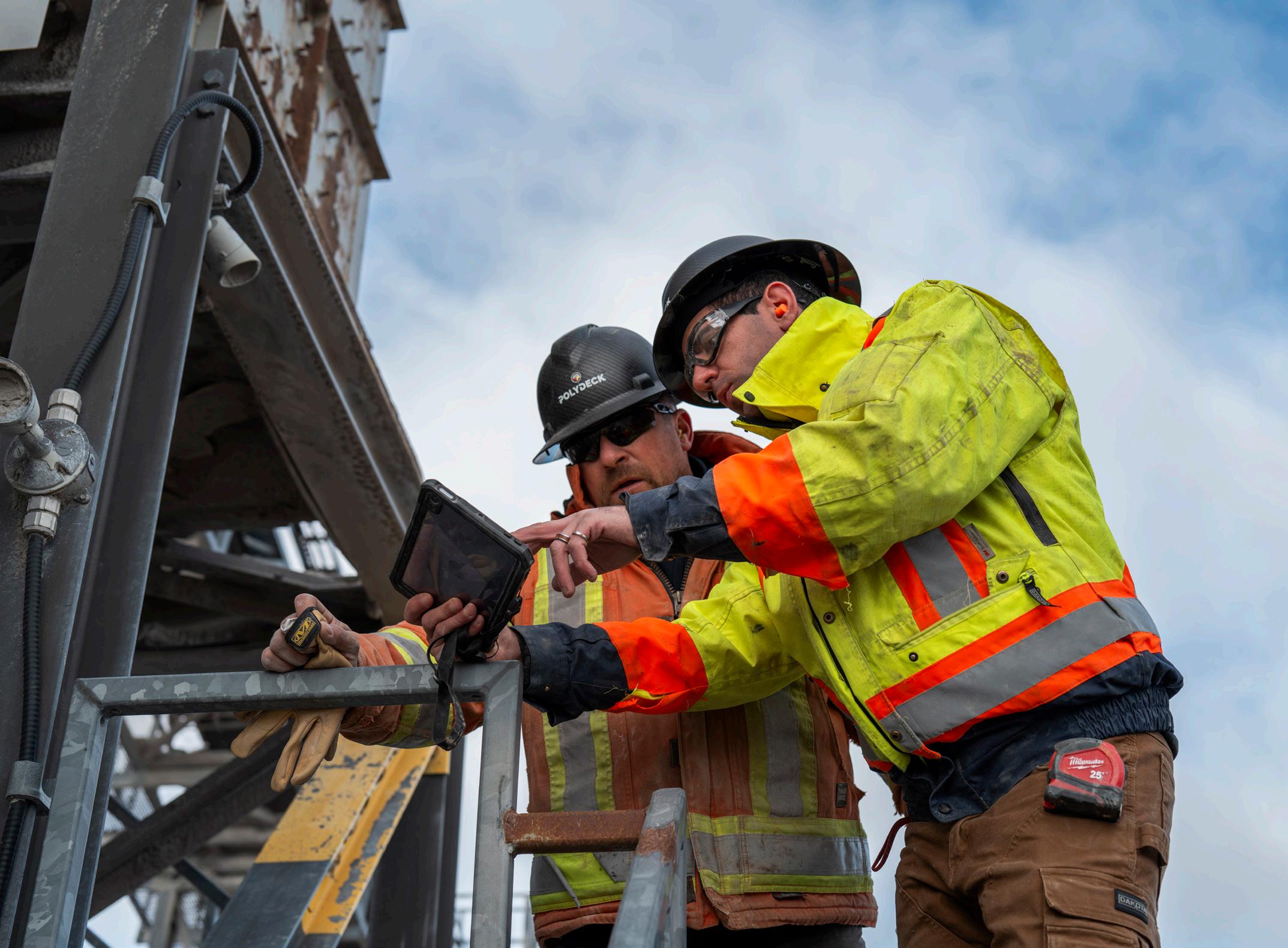
Operations, maintenance and diagnostic teams should use consistent terminology when diagnosing screening issues. PHOTO: Polydeck
SEEING THE WHOLE PICTURE
A proper diagnostic means understanding how the machine is moving in three dimensions, when the issues began, and what conditions may be affecting performance — even if they aren’t immediately measurable.
For example, if a vibrating screen is breaking internal components, the motion you see may simply be the result of those breaks, not the cause. Temporary repairs might be necessary just to get an accurate read on the machine’s motion and operating frequencies. This helps determine whether the erratic motion is causing the breakages, or the breakages are causing the erratic motion — a classic chickenand-egg situation.
For Polydeck, this kind of assessment isn’t about replacing parts ourselves. It’s about giving operations and OEM service teams the clear data they need to make the right adjustments and get back to optimal screening performance.
SPEAKING THE SAME LANGUAGE
Diagnosing complex screening issues is most effective when operations, maintenance and diagnostic teams use consistent terminology. For example, “critical” or “resonant” frequency refers to a frequency range that should be avoided during operation, as the machine will vibrate erratically and risk damage. That’s different from the situation where multiple screens running at the same frequency cause excessive vibration in the supporting structure.
By aligning terms across the team, miscommunication is reduced, and corrective actions — whether taken in-house or by the OEM — are implemented faster and more effectively.
CASE STUDY 1: WASH SCREEN WITH REPEATED FAILURES
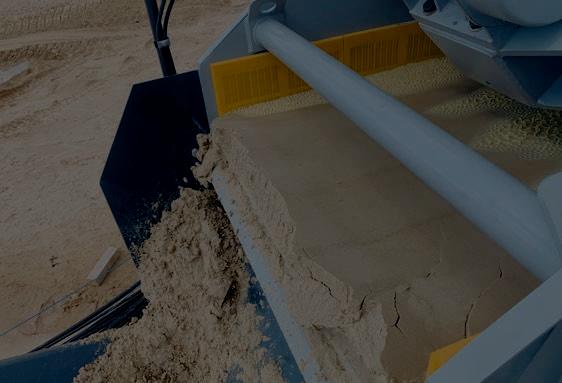
A six-foot by 20-foot double deck inclined wash screen was experiencing repeated component breakages, media ejections and spring failures. Our diagnos-
tic testing revealed:
• Excessive speed (1017 rpm) with minimal stroke (3/8-inch), leading to low screening efficiency.
• Significant left/right imbalance (racking) and multiple broken or mismatched springs.
• Operating speed dangerously close to the machine’s critical frequency (995 rpm).
Recommended actions:
• Reduce motor speed via sheave change.
• Replace broken or mismatched springs.
• Ensure all fasteners are secure and structural members are sound.
Once the site’s team and OEM implemented these changes, the machine operated smoothly, with no overlap between operating and critical frequency.
Takeaway: Addressing only part of the problem, such as replacing springs but not adjusting speed, would not have resolved the performance issues.
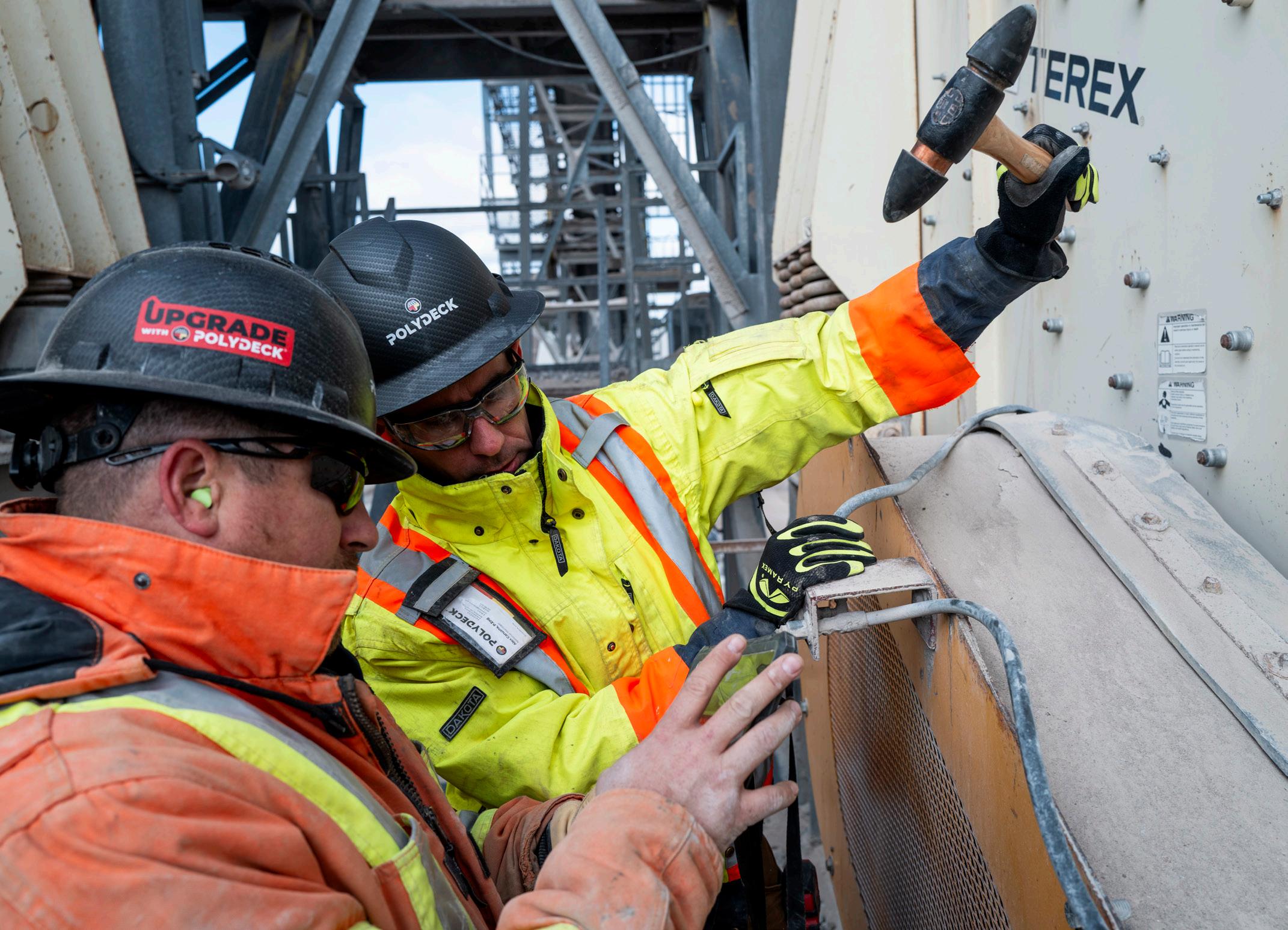
Screen performance problems directly impact efficiency, throughput and wear life. PHOTO: Polydeck
CASE STUDY 2: WHEN THE REAL PROBLEM WAS THE MOTOR
A customer’s six-foot by 20-foot triple deck horizontal wash screen, running in an abrasive application, was upgraded with a new Polydeck deck frame and modular synthetic middle deck to reduce frequent wire cloth changeouts. On commissioning, the screen bogged down even under light feed. Initial assumptions were the excess weight from the new frame and media was slowing the machine down.
Our diagnostic process revealed:
• Weight comparison confirmed the increase was within acceptable limits.
• Machine balance was fine, but motor speed measured only 990 rpm
(plated speed: 1185 rpm).
• The reduced motor speed was traced to a failing motor nearing full breakdown.
Recommended action:
• Replace the failing motor.
Once the site’s team replaced the motor, the screen operated at full performance under load.
Takeaway: Skipping proper measurement and relying on assumptions could have led to unnecessary modifications without fixing the real problem.
TOP TIPS FOR BETTER SCREEN DIAGNOSTICS
1. Choose impartial expertise: Work with someone who can measure all relevant factors and inter-
pret the data without bias toward a specific equipment brand.
2. Sequence your diagnostics: In “chicken and egg” scenarios, repair major damage first so that followup measurements reflect the machine’s true operating condition.
3. Look for clear communication: Technical data should be distilled into plain, actionable language that your team or OEM can implement effectively.
Screen performance problems are rarely just mechanical issues, they’re operational challenges that directly impact efficiency, throughput and wear life.
Alex Caruana is National Manager, Canadian Aggregates, at Polydeck.
There is rarely one cause when screening performance slips, writes Polydeck’s Alex Caruana. PHOTO: Polydeck
BY MIKE lacey
THE RIGHT FIT
Lack of suitable women’s workwear has created an opportunity companies are jumping on
> Finding properly fitting workwear is an ongoing issue for women in the construction industry.
Too often, such clothing for women is just downsized versions of men’s clothing with stereotypical colours.
It’s not just about comfort. Ill-fitting clothing is a safety hazard. For example, oversized pants that need the bottoms of the legs rolled up is a tripping hazard. Clothing that doesn’t fit the contours of a women’s body can limit a one’s range of motion, and cause issues when crouching, climbing or lifting. Another concern is when pockets and tool storage don’t sit properly on the body.
But this lack of women’s workwear has also created an opportunity. And companies are now capitalizing on it.
BUILT FOR HER
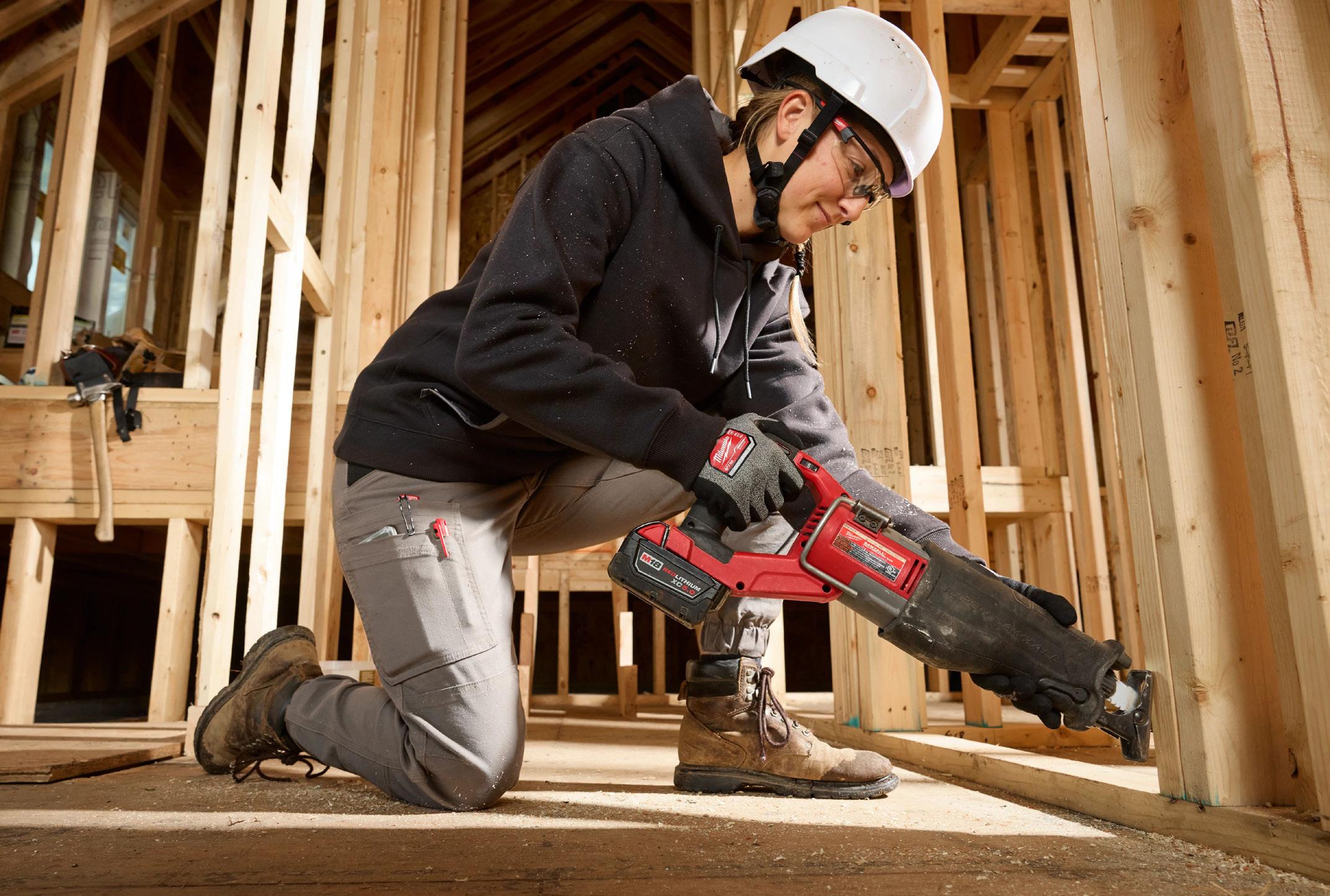
Milwaukee Tool’s new line of workwear designed specifically for tradeswomen in the construction industry is a move,
PHOTO: Getty/FatCamera
the company states, driven by this noticeable gap in the market.
“The construction industry is increasingly focused on attracting more female workers, and we saw this as an opportunity for both Milwaukee and women in trades,” says Sarah Bletcher, product manager of jobsite apparel and system enhancement at Milwaukee Tool.
According to Bletcher, the differences between men’s and women’s workwear go far beyond size. Body shape, ergonomics, pocket placement and tool storage all play a role.
“Men’s workwear is generally designed with straight cuts, longer inseams and more room in the shoulder and waist. It’s also designed with larger, standardized pockets, tool loops and reinforced knees,” Bletcher says. “Women’s workwear is tailored with contoured waists, wider hips and an adjusted rise in pants to prevent gapping or bunching. Pocket and tool storage in women’s workwear has the same functionality as men’s, but they’re positioned differently to align with women’s proportions – so tools sit correctly at hand level.”
Safety gear also sees adjustments. Gloves, for example, are scaled for smaller hands without sacrificing dexterity or protection. Bletcher notes that often apparel classified as women’s workwear is just scaled down versions of men’s clothing with stereotypical colours.
“Another common issue is a limited range of motion,” she adds. “Poorly fitted seams, awkward rises in pants, or narrow shoulders in jackets that restrict movement when climbing ladders, crouching, or lifting heavy materials. Women often say that the workwear available today just isn’t made with them in mind.”
BUILT FROM THE GROUND UP
Milwaukee Tool took a different approach.
“It’s built from the ground up using feedback from tradeswomen to address fit issues like bunching or sagging. Pants feature a high-rise straight fit, built-in stretch, and an elastic-integrated waistband — offering support that stays put throughout the workday,” she
says. “They are crafted from tear-and abrasion-resistant fabrics, with triplestitched seams, reinforced kick plates, and durable blends to withstand tough jobsite conditions.”
Milwaukee Tool worked with tradeswomen through jobsite research, product seeding and on-the-job testing to improve the design.
“We made a series of purposeful design enhancements, such as high-rise pants and elastic waistbands, as well as roomier hoodies for long hair and ponytails, which men’s designs don’t support,” she adds.
Workwear and apparel offered by Milwaukee Tool include t-shirts, pullover hoodies, and pants, designed with stretch fabrics, ergonomic fits and breathable materials. Depending on the design, pants come in brown, grey and khaki.
Milwaukee Tool’s states its GRIDIRON collection is built for rugged durability and long-lasting wear, offering pocket and logo t-shirts, work pants, and double-knee jogger pants with “brokenin” comfort.
Milwaukee Tool has launched a line of women’s workwear. PHOTO: Milwaukee Tool
Its FREEFLEX collection is flexible, stretch-engineered apparel for mobility and layering. Along with a hybrid work t-shirt and work pants, it also features a pullover hoodie with a three-panel hood and reinforced pockets.
Looking ahead, the upcoming WORKSKIN collection will introduce technical base layers designed for moisture control and temperature regulation.
DOING IT HERSELF
Sometimes, new opportunities come when not even looking for it
For Diane Finnigan, it was when her daughter Chantel was attending masonry school.
Her daughter needed workwear for the jobsite but they couldn’t find any that fit a women’s frame.
“We couldn’t find it and, if we did
find it, it was basically men’s workwear that was scaled down, but it still didn’t fit properly,” Finnigan explains. “They call it unisex workwear, but it’s not. It’s still men’s workwear. Even now when I talk to the manufacturers, that’s the first thing that they talk to me about: ‘Oh, well, we’ll just use a man’s pattern and then just scale it down.’ Well, no, you can’t do that.”
So Finnigan decided to make it herself. Today her Ontario company, The Dirty Seahorse, designs, manufactures and sells workwear for women in the agriculture, construction, horticulture and landscaping sectors.
PROPER-FITTING WORKWEAR IS SAFETY ISSUE
Finnigan notes this is not about comfort, it’s about safety.
“Forty per cent of all worksite injuries
happen because of workwear not fitting properly,” she explains.
As an example, Finnigan points to photos one woman sent her of workwear she received from her employer that was far too large. As a result, she had to roll the legs up of her overly baggy pants. This is a common problem women face on site.
“They use Saran wrap, elastic bands, duct tape. They use staples. They use everything,” she says. “They have tripping hazards because it’s too long. Then they have also the risk of getting caught in machinery.”
This problem is also not relegated to one gender.
“Because men come in all different shapes and sizes,” she says.
The solution is a more personalized fitting, for both men and women.
The Dirty Seahorse’s overalls went through multiple prototypes before the final version. PHOTO: Diane Finnigan
Durability That Outlasts
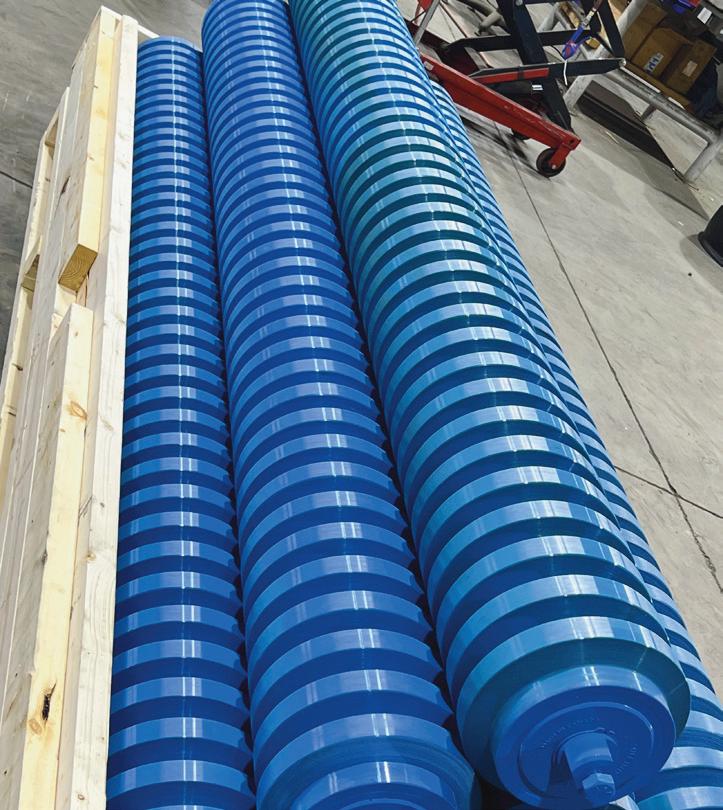
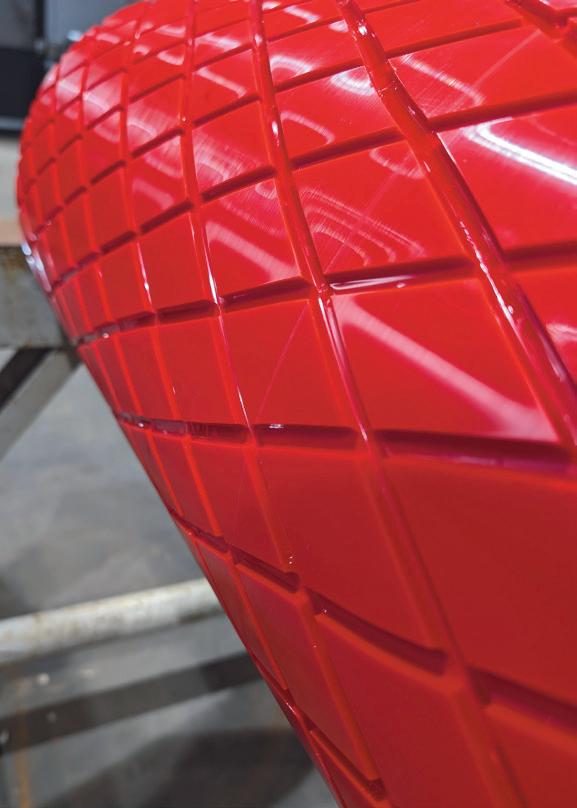
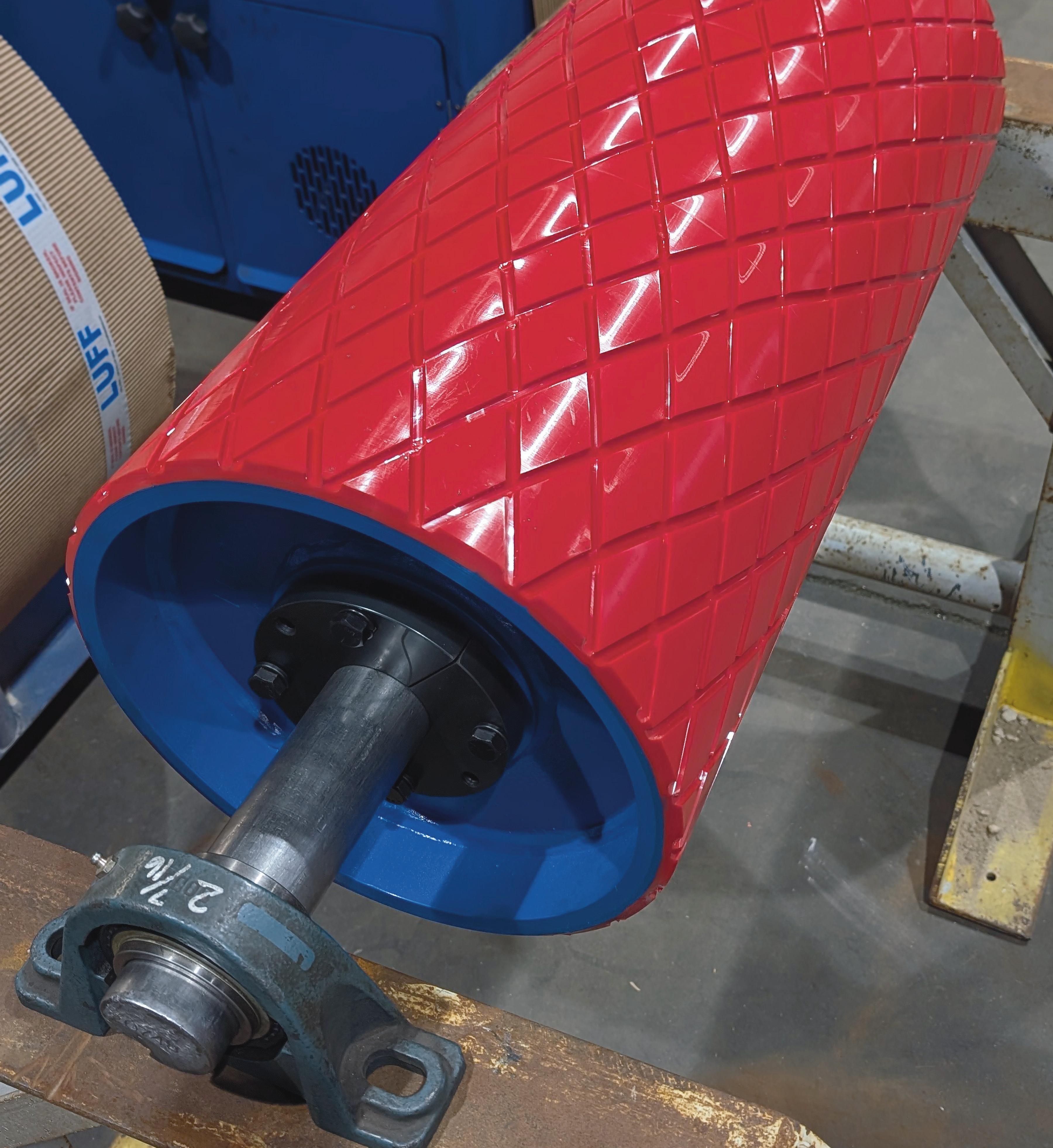
Built with high abrasion resistant urethane, Luff Urethane Covered Rollers and Pulleys keep your system running longer, while reducing costly downtime and replacements.
Protection & Performance
Repels moisture and resists material build-up, safeguarding your products, your equipment, and your team while delivering consistent performance in any environment.
"Forty per cent of all worksite injuries happen because of workwear not fitting properly.” Diane Finnigan
LAUNCHING THE DIRTY SEAHORSE DIDN’T HAPPEN OVERNIGHT
Launching The Dirty Seahorse was a long, three-year process. At the time Finnigan was working as a retail sales manager, although she notes she had previously studied interior design, so that did help.
However, before she could begin in earnest, she had to go back to school.
“I upgraded my sewing skills. And then I did block making, pattern making, garment construction. Then I had to learn fabric sourcing, manufacturer sourcing; I had to learn all that. So that that took a year right there,” she recalls.
When it came to designing the clothing, the first step was to measure her daughter to design a prototype for a pair of overalls.
“We had to measure her from head to toe and get all her measurements to create the profile first,” she says, adding it took more than a year to develop that first pair of overalls. “They failed four times when we were prototyping them because every time she bent down to do a squat, she was either being strangled in her crotch or her shoulder.”
Finnigan also spent nine months interviewing women working in the trades, who provided direct information on what they needed and wanted in workwear.
“From there we took it back to a team of female designers who understand the female body and then they built all the features into it,” she explains.
During that design process, Finnigan’s daughter would try on competitor’s clothing and then dissect all the problems she had with it, which helped improve the design.
Finnigan also connected with three different colleges who sent out the clothing to apprentices, who in turn field-tested the apparel.
“We got their feedback and improved it before we went to production,” she says.
The whole process took around three years. But the response was excellent, she explains.
“When we first introduced it, it was hilarious because we reached out to people, ‘OK, try it.’ And they told us straight up there was not a workwear brand out there that’ll fit,” she recalls. “And then when they got it, they tried it on. They’re like, ‘Oh my God, I can’t believe it actually fits.’ The reaction was hilarious.”
Today, The Dirty Seahorse’s line of clothing includes a crewneck, hoodie, overalls and pants.
“But the hoodie and the crewneck are not like normal runof-the-mill hoodies or crewnecks because what we do is we build in a pocket on the inside {because people} don’t like how you would normally bend down and stuff falls out of your kangaroo pocket. We put the secret pocket in the inside because then you can put your cellphone in or your keys or whatever {in the pocket and} they’re secure, they don’t fall out.”
Diane Finnigan and daughter Chantel. Chantel was the impetus behind Finnigan starting up The Dirty Seahorse. PHOTO: Diane Finnigan
> DEC. 3-4
Saskatchewan Heavy Construction Association’s
Infrastructure Summit and Trade Show
Regina, SK www.saskheavy.ca
> DEC. 4-6
59th annual AGM & Holiday Celebrations of BC Road Builders & Heavy Construction Association
Victoria, BC https://www.roadbuilders.bc.ca
> JAN. 19-22, 2026 World of Concrete Las Vegas, Nevada www.worldofconcrete.com/en/home.html
> FEB. 2-4, 2026
Ontario Road Builders’ Association (ORBA)
Toronto orba.org/events
> FEB. 11-12, 2026
Canadian Concrete Expo Mississauga, Ont. www.canadianconcreteexpo.com
> FEB. 17-19, 2026
Ontario Sand, Stone and Gravel Association Conference
Toronto, ON www.ossga.com/events/event/ossga_ conference/
> MARCH 3-7, 2026 CONEXPO
Las Vegas, Nevada www.conexpoconagg.com
> MARCH 26-27, 2026
Atlantic Heavy Equipment Show
Moncton, New Brunswick www.ahes.ca
> APRIL 23-24, 2026
National Heavy Equipment Show
Mississauga, Ont. www.nhes.ca
OUR FORMULA FOR SUCCESS
cenovusasphalt.com
one more load
Sharing is caring
JIM mckinley, Ph.D
From playground lessons to industry best practice
We all learn the phrase “sharing is caring” as kids, and it has never been truer than when considering geologic and hydrogeologic data.
Geologic and hydrogeologic data can be expensive and time-consuming to collect but are essential to create robust conceptual, analytical and numerical models in support of regulatory approvals and operational compliance. Given the challenges inherent in data collection, it is not uncommon for datasets to end at project boundaries, making it impossible to accurately answer the questions that regulators and stakeholders often ask related to environmental liability. When those liability questions are asked, some operators realize that although they have spent significant resources collecting the data, the dataset itself does not provide maximum value in lowering liability and risk. Sharing data with your neighbors will lead to a more integrated understanding of the environment and a greater ability to answer questions related to ecologic impact.
Environmental liability is difficult to quantify when restrictions are placed on the environmental dataset (e.g., lease boundaries). There is a hidden three-dimensional system functioning below the ground surface. Mine water can travel through the surface and subsurface in every imaginable combination of ways, which is why using every piece of data available is essential. We can never collect enough data to 100 per cent recreate the actual subsurface environment, so we make assumptions to approximate reality in a model. The more data, the fewer the assumptions, and the lower the uncertainty of the modeled results. Additionally, cumulative effects assessments are becoming common in mining applications. When models are simulated with only a single operation in mind to simplify the assessment, a type of willing ignorance is being adopted which makes the assessment itself subject to uncertainty.
So how do we buck the trend? We have observed success with oil-sands clients that have been able to enter data-sharing agreements with their neighbors and break the cycle of siloed assessments. Oil sands operators face similar challenges to the aggregate industry, where they are asked to make environ -
mental assessments on the backs of datasets that are limited by imaginary boundaries. For example, oils sand leases usually end where the oil sand ends. Oil sands deposits can be bordered by “flushed” zones, such as glacial outwash channels that become buried as permeable aquifers. These channels are often located between two adjacent oil sand deposits whose shapes were formed by the channel itself.
When oil sands operators mine near these channels, they face significant operational challenges from pit inflow. To manage these inflows and reduce risk, operators need robust predictive models. However, they cannot predict the behavior of the channel without understanding it entirely in its current state, not just the half that is on their side of the playground. To address this “data risk”, oil sands operators commonly enter into data-sharing agreements, which maintain a high level of database quality and supports the “social license” of the operator by informing the public that they care about the sustainability of their development and all developments. Regional geologic and hydrogeologic models have been built upon these shared datasets, which allowed the modelers to feel more confident about their reports and predictions. Most importantly, through the very act of sharing experience, experts from different companies can start discussions to advance the collective thinking of their industry. Very few risks are contained entirely within one discipline or operator, so we should all strive to lower risk for the industry by getting disciplines and companies to talk to and respect one another. Everyone wins with data sharing because not only will your operation benefit, but so will all the surrounding operations. The best way to show you care for your neighbors and the environment is to share your data. Just like we were all taught growing up, sharing is caring.
Jim McKinley, Ph.D, is an environmental scientist, hydrogeologist and engineer with nearly 20 years of work in hydrogeology and environmental engineering. Anna Williams is a hydrogeologist in training with experience in mineral exploration, mining and hydrogeology.