Assinck Limited shows off its floating boom grab dredge at recent event.
Making sense of LCAs
Understanding the role Life Cycle Assessments and Environmental Product Declarations in the construction aggregates industry.
Hands on learning
Simulators are an invaluable tool for training as it allows workers to experience running equipment in a safe fashion.
CBM Aggregates and Glenn Harrington’s commitment to site rehabilitation has left a legacy.
Top of the class
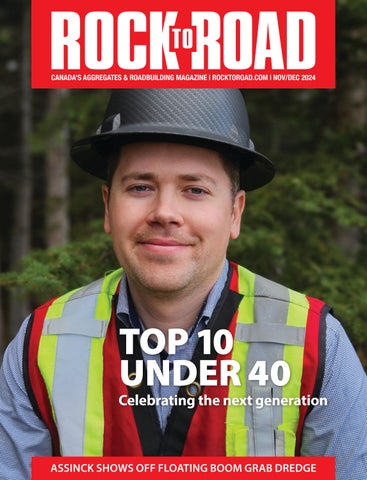
One of the more important features this magazine publishes is our annual Top 10 Under 40 List.
The annual article highlights the wonderful work 10 people under the age of 40 are doing in this industry.
This year’s winners represent a broad cross-section of both the industry and the country. Personally, it was quite rewarding to write about the diverse and fascinating paths that led each to this industry.
I quickly realized this annual list is not only a celebration of the 10 winners, but also a celebration and acknowledgement of the wonderful mentoring that is taking place in workplaces across this industry.
What stood out to me about this year’s crop of winners was the role family played in fostering a love for this industry. Quite a few winners spoke of how, as a child, they followed their father around jobsites and, along with learning from him, they also learned from others.
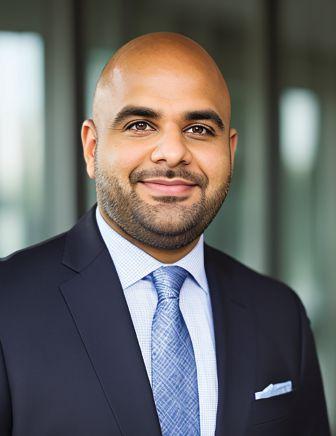
“I would often interact with the civil and geotechnical engineers as well as the city inspectors, reviewing plans and drawings,” Ravinder Sandu said.
“My family lived in our first house right beside our gravel pit,” Connor Fulton told me.
Tyler Callaghan entered the business in part because of his cousin.
“I had a cousin that worked for Lafarge Cement in Brookfield Nova Scotia. He took me on a four-hour tour and I loved it,” he recalled. “After that I looked for opportunities to work in the concrete and cement industry.”
It’s a good reminder that what we all do each day can have an impact for decades from now. If you find yourself at work and young person is asking questions, make a point to be a teacher, even if for just a moment. That time you spend matters. It really does.
That advice was probably best summed up by Peejoohan Tavassoti, assistant professor at the University of Waterloo.
“No matter what stage you’re in, seek out mentorship, be open to improvement and, when the opportunity arises, strive to be a good mentor yourself.”
Here are the winners (in no particular order):
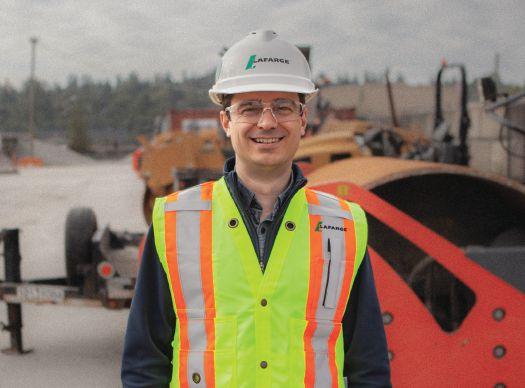
• Ravinder Sandhu
General Manager Ready Mix Concrete
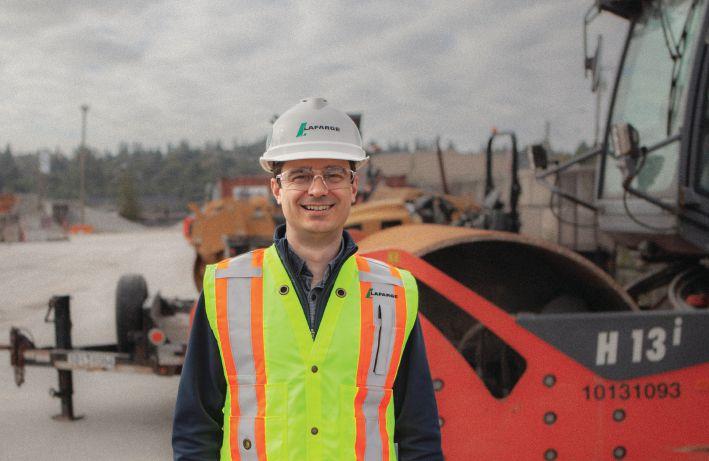
Lafarge
Vancouver, B.C.
• Connor Fulton
Estimator/foreman/radiation safety officer
BR Fulton Construction
Renfrew, Ontario
• Peejoohan Tavassoti
Assistant professor and Jr. Norman W. McLeod Chair in Sustainable Pavement Engineering at Department of Civil and Environmental Engineering at the University of Waterloo Waterloo, Ontario
• Maraya DeGrandis
Managing Director for DeGrandis Concrete Pumping and Vice President Strategic Initiative of Joseph Group Brantford, Ontario
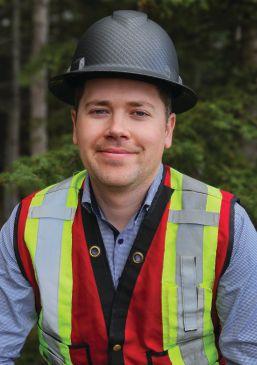
• Tyler Callaghan
Operations manager for Greater Calgary Area and Central Alberta Lafarge Calgary, Alberta
• Dale Furber
Area General Manager Heidelberg Materials
Vancouver Island, B.C.
• Mike McRoberts
Estimator and Project Manager Seeley and Arnill Construction Durham, Ontario
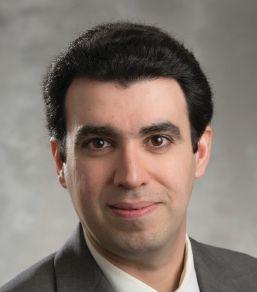
• Bader Diab
Site manager
Dufferin Aggregates, a CRH Company Cambridge, Ontario
• Warren Andersen Civil Manager
Lafarge
Vancouver, B.C.
• Dylan Treadwell
President
Cold Sky Consulting Inc. Canmore, Alberta
To learn more about each winner, turn to page 18.
Reader Service
Print and digital subscription inquiries or changes, please contact Angelita Potal, Customer Service
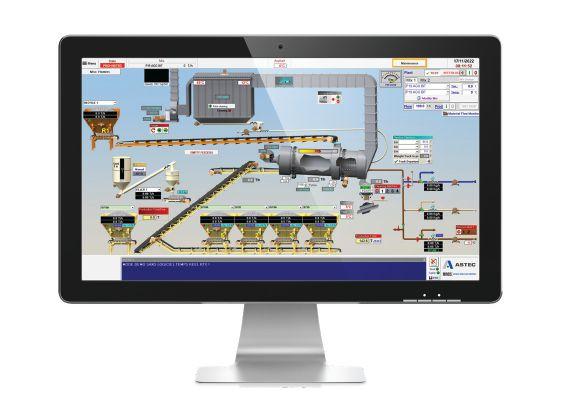
NEW IntelliPac ™ Moisture System
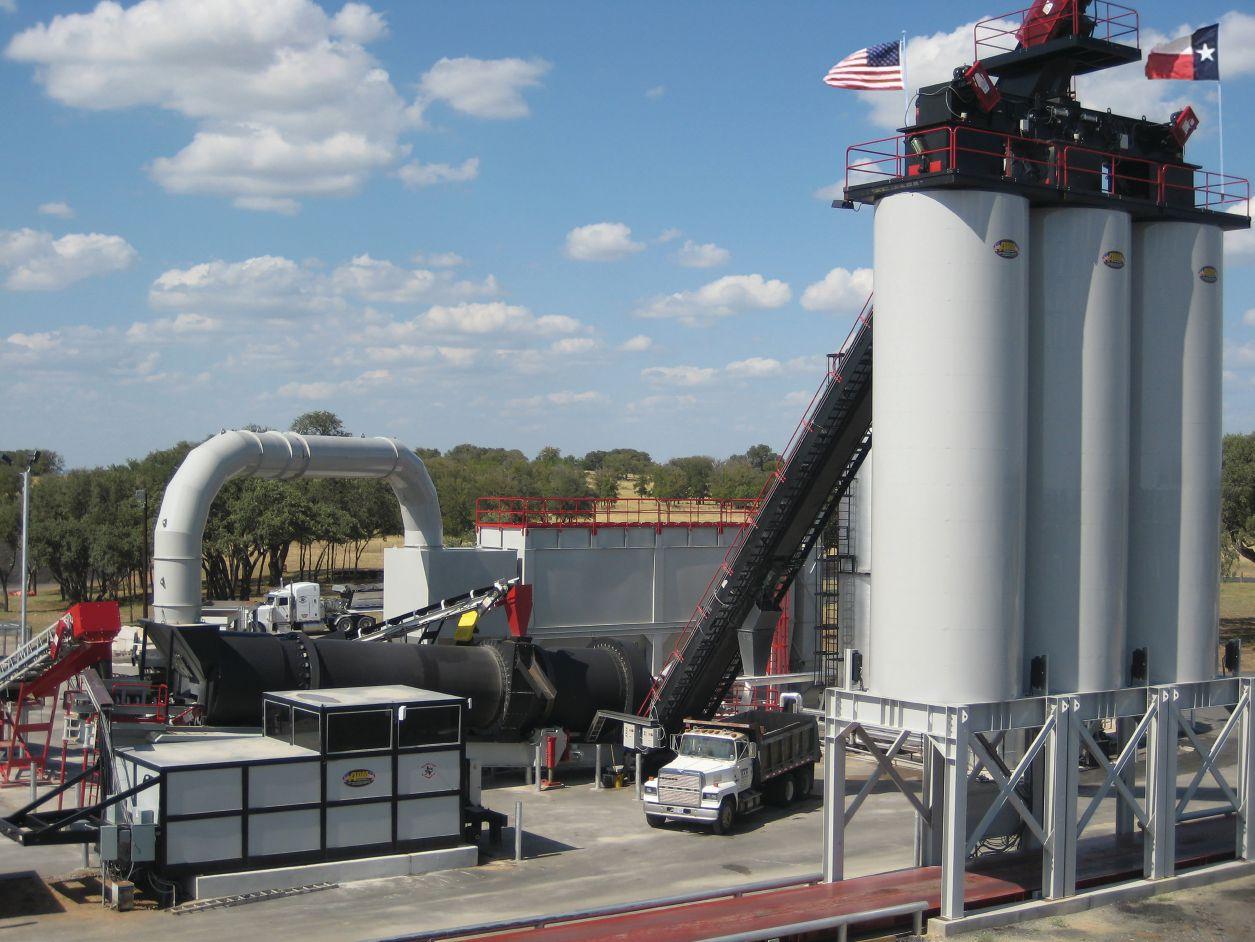
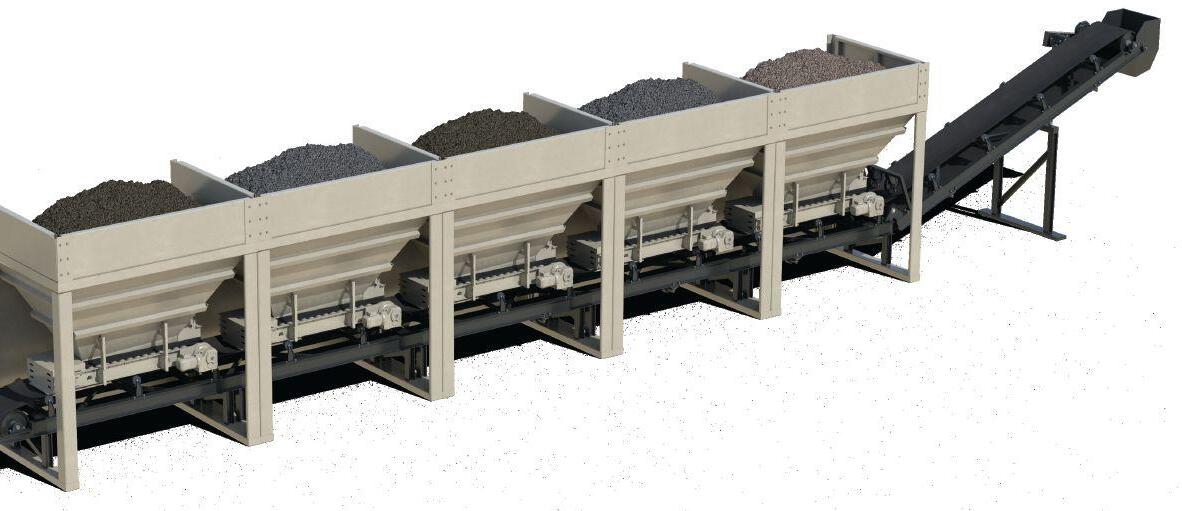
Astec paves the way for sustainable, innovative asphalt plants. The new IntelliPac Moisture System is a revolutionary solution that integrates seamlessly with Astec control systems. This provides unparalleled, real-time visibility into virgin aggregate moisture content. IntelliPac empowers operators to optimize mix design, minimize energy consumption, and reduce environmental impact. With Astec, you get superior asphalt production – better for the environment, better for your business.
BUILT TO CONNECT
industry news
Western Canada dealer Groundworx Co wins Dealership of the Year award
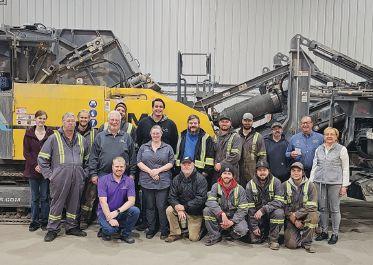
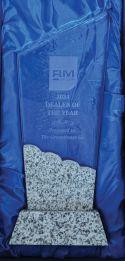
The Groundworx Co has received Rubble Master Dealer’s 2024 Dealership of the Year award.
Groundworx co-owner Grant Kergen attended the Oct. 15 and 16 Rubble Master Dealer meeting in Dallas, Texas. The awarded was provided to Kergen when Rubble Master held a grand opening of its new parts, training and service facility in Alma, Texas.
Groundworx provides gravel screening and crushing equipment throughout Western Canada.
“Rubble Master has a great product, and the company is exceptional to work with, with great support for parts and service in North America,” said Kergen and fellow co-owner Craig Deck in a statement. “This would not have been possible without our exceptional team at Groundworx working together. From service
Strongco, Great West Equipment unite under Nors brand
The two leading names in construction equipment in Canada, Strongco and Great West Equipment, will become one through the Nors brand transformation process.
Nors is uniting its vast portfolio of brands, to which the former Strongco and Great West Equipment belong, and which will now become one single brand: Nors.
Nors now covers more than 80 per cent of the Canadian market, where it has a total of 37 branches and more than 750 employees. The news comes after both companies were recognized in September by Volvo CE. Great West Equipment was named Volvo CE’s OEM Dealer of the Year. The award celebrates the dealership that exemplifies the Volvo brand and values and demonstrates consistently high performance in all areas. Strongco was named Uptime Dealer of the Year. The award recognizes the dealership that exhibits a commitment to being the number one provider in the construction industry by demonstrating its service commitment pledge to provide customers unrivaled service and support.
to parts, to the office staff and the sales team, they all made it possible to win such a prestigious award.”
Lafarge
Canada and Geocycle Canada partner on Low-Carbon Fuel Facility in Calgary
Lafarge Canada Inc. has commissioned its state-of-the-art Low-Carbon Fuel (LCF) facility at its Exshaw cement plant in collaboration with Geocycle Canada.
The $38 million facility will reduce the plant's reliance on traditional fuels by replacing up to 50 per cent of natural gas used for one of its kilns.
This alternative thermal energy is derived from construction demolition waste, primarily discarded wood that would otherwise end up in landfills and emit methane.
Geocycle Canada is responsible for co-processing the CDW into low-carbon fuels. This method ensures no residue is left behind, offering a complete solution. The materials are carefully selected and processed to maintain high safety and quality standards.
The Exshaw plant, a key supplier of cement across Canada and the Pacific Northwest of the United States, supports major infrastructure projects while advancing Lafarge’s coast-to-coast sustainability efforts. The LCF facility is projected to divert up to 120,000 tonnes of construction demolition waste from landfills each year, reducing CO2 emissions by as much as 30,000 tonnes annually.
BUILD MORE WITH A TEAM THAT HAS YOUR BACK.
At SMS Equipment, we’re more than machines from trusted brands like Komatsu. No matter your project, we’re the people beside you—today and every day—bringing industry-leading technology and expertise to your job site.
Because the right partnership makes everything possible.
S:9.625"
Assinck Limited shows off its floating boom grab dredge at recent event SHOW BOAT
BY MIKE LACEY
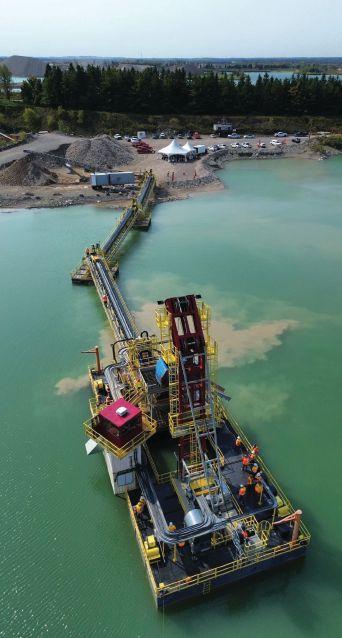
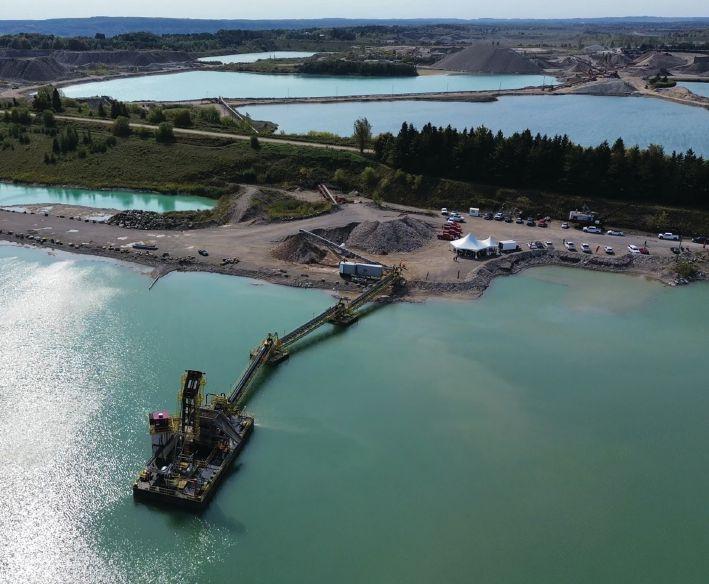
> Assinck Limited introduced major Canadian aggregate companies to its floating boom grab dredge at an Oct. 3 event.
The showcase took place at Caledon Sand and Gravel in Caledon, Ont. Assinck is the first Canadian company to design and build a floating grab dredge. Only two other companies in the world have done so – one based in Germany and the other in the United States.
Several factors were involved in the development of the machine, explains president Dean Glenn.
“Our client approached us to design fabricate our own floating grab dredge due to the long lead time from the two global
suppliers as well as a challenge to attempt to be more cost competitive to have the machine designed and built right here in Canada,” he explains, adding they were successful on both fronts. “Our client, like many aggregate site owners in Canada, are operating older aggregate licenses with depleting reserves. The thought of going below the water table and maximizing the reserve is very appealing, not only is it forward thinking from an environmental and economical standpoint, it makes you a great neighbor.”
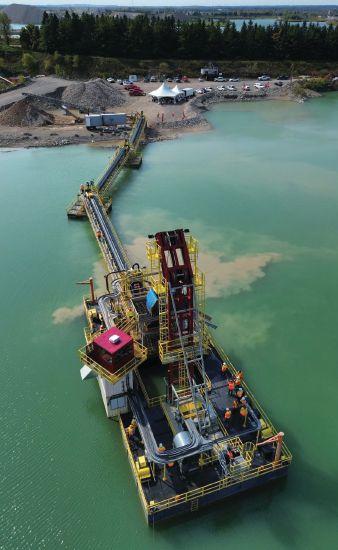
The Assinck Tilting Boom Grab Dredge has a 7-yard hydraulic clam shell bucket and a processing capacity of 400 tons per hour of seven-inch minus material.
Other key features include:
• Hydraulic tipping self-cleaning grizzly
• Heavy-duty scalping screen
• Fines recovery system utilizing hydro clone technology
• Advanced PLC (Programmable Logic Controller) system with HMI (HumanMachine Interface)
• PLC-controlled positioning system with joystick controller
• Four electric positioning winches with self-spool fairleads
• Integrated material processing plant with floating conveyor system
• Robust slew bearing system for intricate operating angles
Assinck Limited showed off its its floating boom grab dredge at an early October event at Caledon Sand and Gravel in Caledon, Ontario. Photo: Assinck Limited
Tilting Boom Grab Dredge has a 7-yard hydraulic clam shell bucket and a processing capacity of 400 tons per hour of seven-inch minus material. Photo: Assinck Limited
road to net zero
Making sense of LCAs
Understanding the role of Life Cycle Assessments and Environmental Product Declarations in the construction aggregates industry.
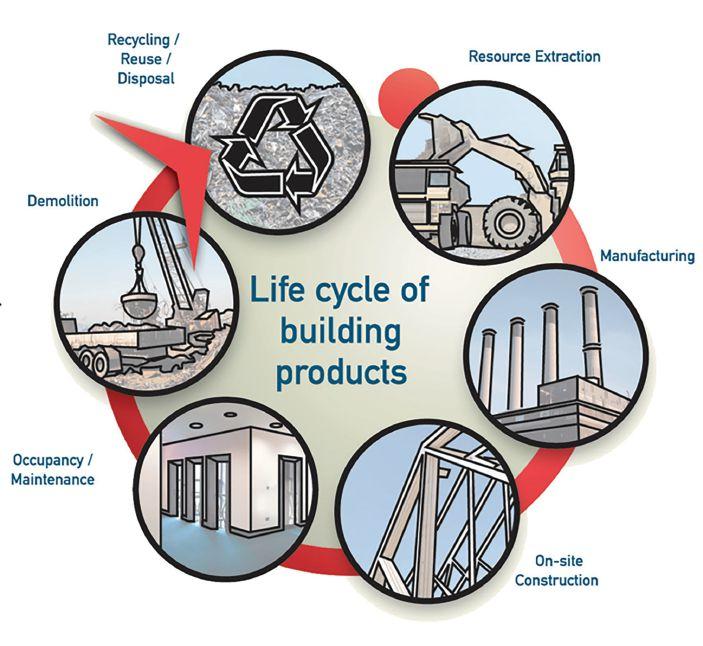
In its simplest form, life cycle assessment (LCA) is a method of quantifying the environmental impact associated with a given product or service over the course of its useful life.
To do this, LCA studies collect, evaluate, and analyze the material and energy flows into and out of the product system. This collection of material and energy flows, also known as primary data, is the backbone to all LCA studies.
For the production of aggregates, the primary data collection covers all major operations at the facility, from crusher electricity use and wear parts, to fuel use for on site equipment, water use for washed aggregate and dust control, and explosives used for blasting, to name a few.
This primary data, unique to each facility, is what’s used to calculate the environmental impact of a given product, along with background or secondary data for processes and inputs outside of the system boundary.
The primary data required for LCA studies is typically highly sensitive and/or confidential, and companies generally do not want this information publicly accessible. This is one of the reasons environmental product declarations (EPDs) are developed as an optional addition to an LCA study. EPDs are the publicly available results of a LCA study, without the specific details and data related to the company’s manufacturing process.
A COMPLETE PICTURE OF A PRODUCT’S ENVIRONMENTAL IMPACT
There are different scopes of LCA studies, depending on the product being studied. Cradle-to-grave LCA studies look at the entire life cycle of a material, from raw material extraction, manufacturing, installation, maintenance, through to end-of-life disposal or recycling.
These types of studies offer a complete picture of a product’s environmental impact over the course of its life, although this scope can be difficult to apply to intermediate products which are used for a wide array of uses, such as construction aggregates.
In the case of these products, a cradle-to-gate approach is often used, which narrows the scope of the LCA study to the production phase, which includes raw material extraction, transportation of raw materials, and manufacturing, up until the product is ready to be
shipped from the manufacturing facility’s gate.
STANDARDIZATION OF THE LCA AND EPD PROCESS
The results of an LCA study are not presented as one overall score covering the facility’s environmental impact. Instead, LCA studies present results across a wide array of environmental impact categories, such as global warming potential, ozone depletion potential, non-renewable and renewable primary energy consumption, waste generation, and water consumption. The results of an LCA study are also normalized per unit of production – in the case of construction aggregates, the results are presented per ton of aggregate produced.
The LCA and EPD process is highly standardized to ensure consistency across different LCA studies and to facilitate comparability of EPDs for similar products.
The ISO 14040 series of standards govern the LCA process across all products and services.
For LCAs covering construction products and services, ISO 21930 provides a more detailed and specific series of requirements and rules. Using the requirements from ISO 21930, Product Category Rules (PCR) provide further requirements and details for performing LCA studies and EPDs for specific product types. For example, the North American PCR for Construction Aggregates provides a set of detailed instructions for performing a LCA study specifically covering the production of construction aggregates.
THE PROCESS BEHIND LCA STUDIES AND EPDS
All EPDs are produced under an accredited EPD program operator. The role of the program operator is to provide third party review and verification of the LCA study and EPD to ensure conformance with relevant standards. This step ensures that LCA studies and EPDs portray the environmental impact fairly and consistently and provides a level of confidence in the study’s results.
Typically, companies engage third-party consultants to aid with the completion of their LCA study, although companies can take on the study themselves with the correct knowledge and resources. Third-party consultants work with manufacturers through each
Kevin Garrahan
USING LCA TO IDENTIFY MAJOR CONTRIBUTIONS TO A PRODUCT’S ENVIRONMENTAL IMPACT
One of the primary benefits to performing a LCA study is to identify the specific processes that contribute most to a product’s environmental impact. LCA studies help manufacturers gain a deeper understanding of the primary contributors to their overall environmental impact, and with this understanding, manufacturers can use this knowledge to strategically plan on how to reduce their environmental impact most effectively.
EPDS AND ENVIRONMENTAL LABELS
step of the LCA and EPD process.
The first step in the LCA process is to define the goal and scope of the study.
Will the study be a company average covering multiple facilities, or will it be facility specific?
What products will be included in the study?
Once the goal and scope are well defined, the data collection phase begins. This is typically done through the use of data collection surveys distributed by the third-party consultant, which outline all the required data.
After the data has been collected and reviewed for accuracy, the LCA modelling is performed to calculate the environmental impact associated with the product. The results are then critically reviewed for accuracy, and from here, the processes with the highest environmental impact can be identified.
The LCA methodology and procedure are then documented in a LCA report, and, if an EPD is desired, the results are summarized in an EPD prior to being sent to a program operator for third-party review and verification. Once the verification is complete, the EPD will be publicly posted
by the program operator.
The LCA report is typically kept confidential and is not part of the public release.
COLLECTION OF PRIMARY DATA
The data collection phase of the LCA study is the most time and labour intensive. It can be difficult to gather information for all these different data points, as information is compiled from various sources. Electricity usage will likely be taken from utility records, whereas fuel use could be based on purchase receipts, and the total annual aggregate production could be based on weigh scale receipts or sales records.
This process can easily become quite complex, and it can be important to concentrate efforts on gathering the most accurate data for the processes contributing most to the environmental impact.
Generally, the primary contributors to the environmental impact of quarry operations are fuel used for on-site transportation, blasting used in explosives, and electricity used for crushing. It is these primary contributors to the environmental impact where it’s most important to ensure the data is as accurate as possible.
Similarly to EPDs, companies can produce their own environmental labels through the usage of software to model the environmental impact of aggregate production. The development of environmental labels does not require third party review of primary data and LCA methodology and can typically be undertaken by a company internally. Environmental labels are less reliable than EPDs due to the lack of third-party review but do offer a cost-efficient solution for companies looking to better quantify their environmental impact.
THE IMPORTANCE OF LCAS AND EPDS IN TODAY’S BUSINESS ENVIRONMENT
Customers are demanding information on the environmental impacts of products, and the LCA process and EPDs are a method of providing this information in a reliable and credible manner.
Historically, the push for EPD development has been driven by green building certifications such as LEED. However, in the construction industry, EPDs are beginning to become a procurement requirement for various materials on projects.
The use of LCA and EPDs to quantify and report verified environmental information is critical in today’s changing world. Given the sheer volume of aggregate produced to meet the needs of the construction and roadbuilding industry, credible and reliable information on the production of construction aggregate is vital to building a more sustainable future.
Kevin Garrahan is a research associate with the Athena Sustainable Materials Institute.
Life Cycle Assessment studies collect, evaluate and analyze the material and energy flows into and out of the product system. Photo: Athena Sustainable Materials
Simulators provide workers the opportunity to experience operating heavy machinery in a safe fashion
> Good training is essential for workers in all construction sectors, but in-class learning can only go so far and letting trainees run large and expensive equipment can be problematic (or expensive, should the worst happen).
Simulators are an invaluable tool for training workers by allowing them to experience running the equipment in a safe fashion.
CM Labs are one of the most prominent developers of simulators for the construction sector. Alan Limoges, CM Labs Manager, Product Growth and Partnerships for Construction and Utilities, says that they provide simulators for four main areas –construction, utilities, ports and forestry.
“Obviously, for us, road building falls under construction, and we do some side projects for the industrial market as well,
BY MATT jones
HANDS ON LEARNING
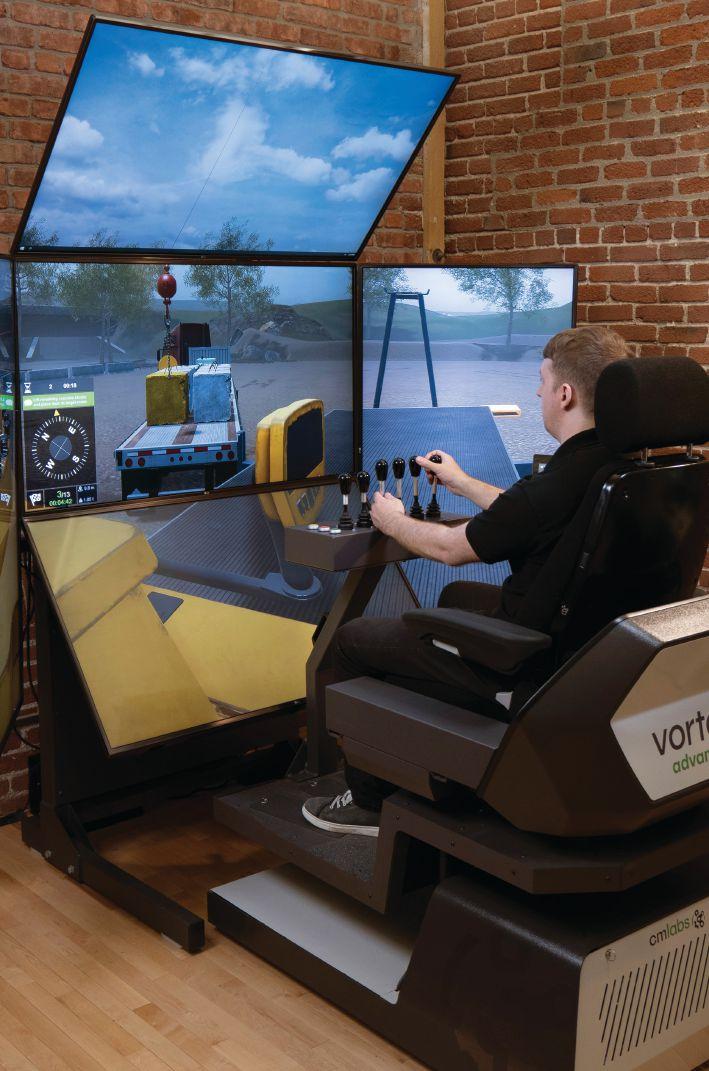
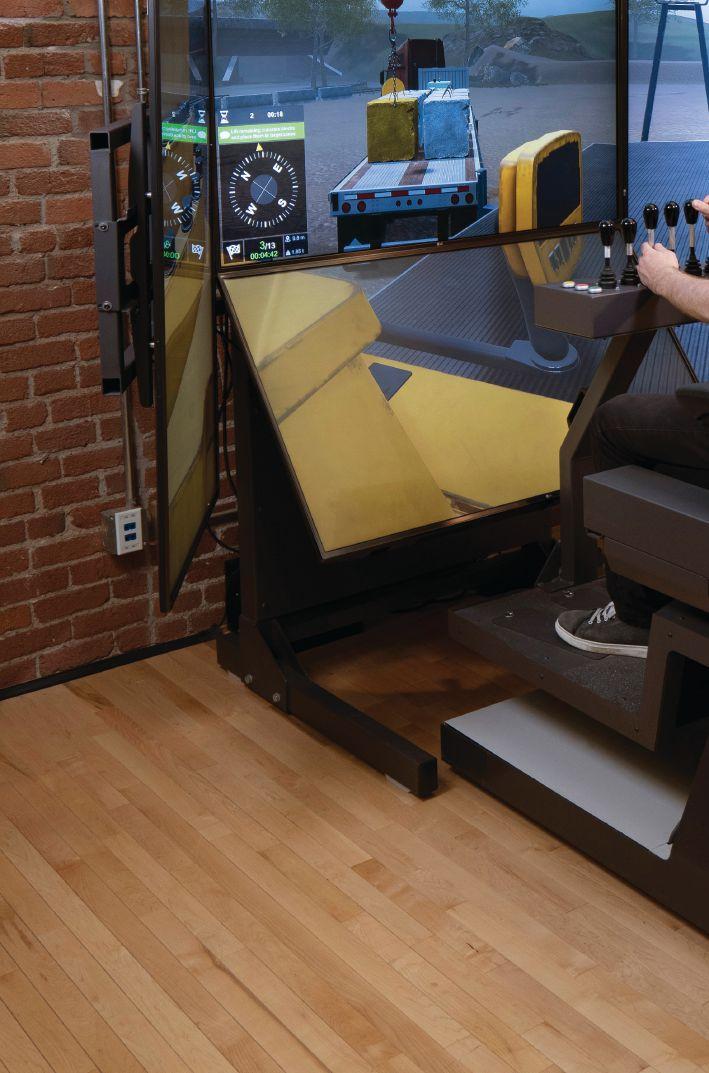
CM Labs’ Advantage units use five screens to provide an immersive experience, though the MasterCab units use 10-screens for a fully immersive experience. Photo: CM Labs
with things like an overhead crane,” says Limoges. “But primarily, earth moving is our bread and butter. Road building falls under that with equipment like the excavator, motor grader, dozer, articulated dump truck and a ton more. So, 95 per cent of the time, when someone comes to us from road building or civil construction, what we have under our construction portfolio meets what they are looking for.”
VARIETY OF CONFIGURATIONS
CM Labs’ Vortex simulators come in a variety of configurations. The hardware is available in everything from small models that can be installed on a desk or table to units such as the massive Vortex MasterCab, which has 10 high-definition displays around the user for a fully immersive experience.
“The way the simulator has worked is you can have any software you want on it,” says Limoges. “So, if you take our Advantage simulator [a five-screen unit], for example, you can have an excavator on it, and you could also have a port crane and a piece of forestry equipment on it. You don’t need different hardware for different machines, you can swap out the joysticks but the simulator is the same. You can have like 20-plus pieces of equipment on the same simulator that way and you don’t need to buy a new simulator if you want to train on different pieces of equipment. You can switch between pieces of equipment in under a minute.”
EXPANDING INTO ROADBUILDING SECTOR
Limoges notes that road building equipment simulators are an area where CM Labs is interested in expanding in the future. He also states that people in the road building sector would appreciate the benefits of their integration of technology from developer Trimble.
“We integrate Trimble Earthworks on the excavator, motor grader and dozer,” says Limoges. “Obviously, in the road building world, you need very specific grading and you need to be really accurate. So, it’s the real Trimble tablet and real Trimble software. And since we simulate all the sensors and everything already, we’re almost able to trick the Trimble tablet into thinking there’s a real excavator on the other side of it. You’re able to practice on the real software and learn how it works in a safe environment. So by the time you get into the real piece
of equipment, and let’s say your motor grader is decked out with that Trimble, you hit the ground running.”
When a company purchases a simulator CM Labs will send one of their employees with it to help set it up and to provide some training – not necessarily because they are hard to use, cautions Limoges, but because they like to have the units in a standard configuration. Then, if there’s ever a need to call CM Labs for customer support, they know the configuration of the simulator is standard.
“Also, we have a service called Sim
Guide, which is an additional little cost, but we help different companies integrate the simulator into their existing workflows and curriculum,” says Limoges. “Sometimes, the simulator itself, you have to use it thoughtfully. If you’re a training school and you buy a simulator, it doesn’t necessarily change overnight how you do things unless you’re thinking critically about ‘now that I have a simulator, we’re going to do specific tests and incorporate it thoughtfully into how we do training.’ So, Sim Guide helps lower that barrier to entry and makes sure it sticks in their workflow.”
A LONG WAY TOGETHER
WHEREVER YOU ARE, BKT IS WITH YOU
No matter how challenging your needs, BKT is with you offering a wide range of OTR tires specifically designed for the toughest operating conditions: from mining to construction sites. Sturdy and resistant, reliable and safe, able to combine comfort and high performance.
BKT is with you, even when work gets tough.
RETHINK HOW EMPLOYEES ARE TRAINED
Limoges says that since the US passed a major infrastructure bill, many infrastructure contractors are flush with cash currently, which is now making its way to the subcontractors. However, while cash is relatively easy to come by currently, quality employees are not – a significant number of industries are facing labour shortages.
“We’re finding that people are getting, not desperate, necessarily, but they need to rethink how to get people into the industry and to train them as fast as possible,” says Limoges. “They can’t afford to have someone training for a year because they have work to do.”
In the last decade or so, the technology has taken significant steps forward. Limoges points to the advancement of cell phone technology in that time frame – simulator technology has similarly evolved. In addition to integrating tech like Trimble, CM Labs have also been able to start connecting multiple simulators
together, so that companies that train workers for multiple machines that work together can actually simulate them together as well.
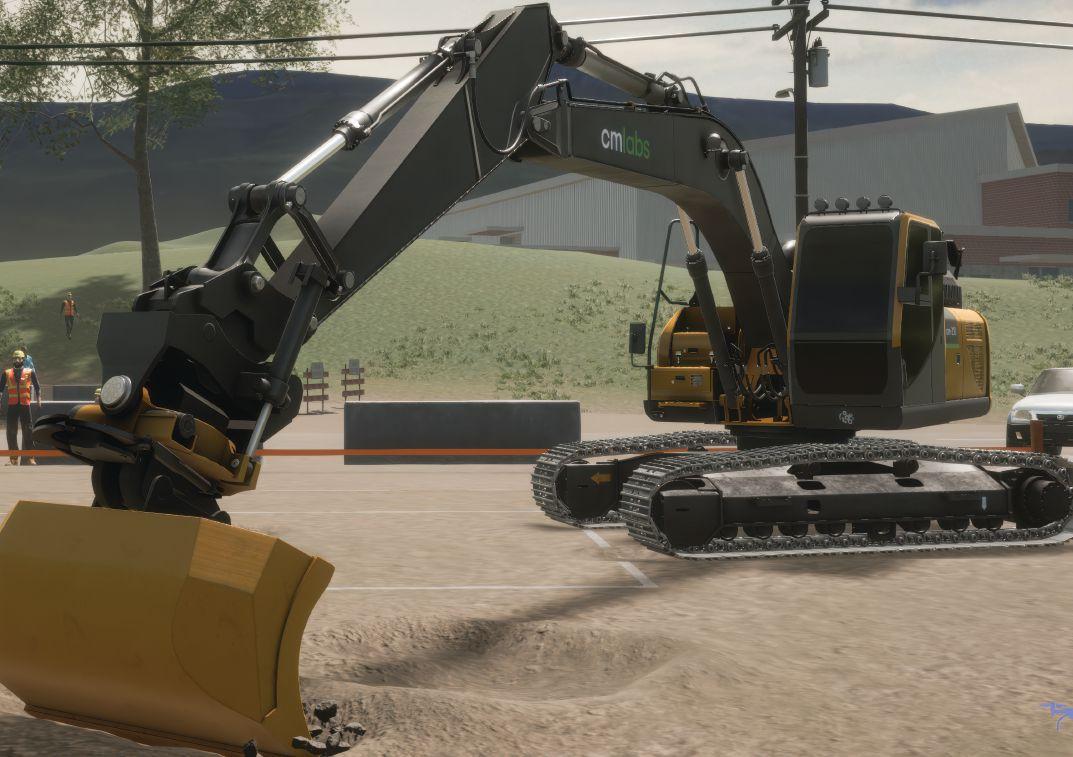
“We’ve also gone down the path of adding attachments,” says Limoges. “In the last ten years, inflation has been tough and we’re seeing an increase in rental companies being used and people trying to buy one piece of equipment and adding attachments to save money instead of buying new equipment for every single task. So, we’ve responded to that by adding excavator attachments like the tilt rotator.”
FUTURE IS CONNECTIVITY AND PERSONALIZATION
Looking to the future of construction simulators, Limoges says that they see connectivity and personalization as two key pillars in the future. Connectivity generally refers to the applications of connecting multiple simulators together, but in terms of personalization, Limoges notes that the education experience could be
suited to individual trainees.
“We all learn in different ways, right?” asks Limoges hypothetically. “Right now, we’re heading in that direction to really take that into account. Everyone learns at different paces and everyone has certain things they’re good at and not so good at. We think the future is simulators that will reflect that. Imagine, you complete a truck loading exercise and you’re filling up trucks with the excavator. We might notice that ‘your cycle time is really fast but you kept knocking the side of the truck.’ So, it would be really cool if the simulator could recommend some different exercises and things to improve on that which are tailored just for you. So, everyone will have slightly different recommendations that are tailored to their strengths and their weaknesses with the end goal of everyone getting to the same position or the same sort of skill level but not resisting how people learn at different rates. Embracing that and really making that part of the software.”
Simulator software offers a virtual version of common construction work, such as using tilt rotator attachments such as this. Photo: CM Labs
LEADING ASPHALT TRADE SHOW AND CONFERENCE
• Choose from 120 Education Sessions Available at People, Plants, and Paving Conference
• Grow in Your Career
• Learn from Industry Experts
March 25-27, 2025 | St. Louis, MO Use SAVE20 to Receive 20% Off your Admission to World of
“I’ve been to World of Asphalt twice and learned something different on both occasions. It’s been the best event by far that I’ve attended.” — Oscar Garcia, City of Harlingen Use SAVE20 to Receive 20% Off your Admission to World of Asphalt
LEADING ASPHALT TRADE SHOW AND CONFERENCE
• See the Latest Equipment
• Learn Best Practices and Techniques
• Improve your Jobsite and Business March 25-27, 2025 | St. Louis, MO
Celebrating the future leaders of the aggregate and roadbuilding industries. IN GOOD HANDS
BY MIKE LACEY
> Every year, Rock To Road celebrates 10 of the aggregate and roadbuilding industries’ young professionals rising up the ranks.
This year, our 10 winners represent a broad cross-section of the industry. We were able to speak with each of them about why they got into this industry and what advice they have for young people entering the workforce.
Congratulations to all the winners.
RAVINDER SANDHU General Manager Ready Mix Concrete Lafarge
Vancouver, B.C.
Ravinder Sandhu’s love of construction was born when, as a 10-year-old boy, he would travel with his father to jobsites.
“My dad was a single-family-home builder and I spent a lot of time working with him on job sites doing any work that I could help with,” he says. “Getting my hands dirty and seeing something tangible take shape after a day's work was what initially attracted me to construction.”
As he learned how to do rebar installs, insulation, waterproofing and landscaping, the area of civil engineering caught his attention.
“I would often interact with the civil and geotechnical engineers as well as the city inspectors, reviewing plans and drawings,” he explains. “Seeing a two-dimensional plan take shape in real life got my attention.”
Sandhu completed a Civil Engineering diploma in 2007 and, with the advice of his older brother, that same year found work with Lafarge as an order taker in the ready-
mix concrete dispatch office.
“I applied to be a technician in Lafarge's Quality Control department,” he explains. “During my interview the operations manager and quality managers asked whether I really wanted to test concrete or if I would consider working in the dispatch office, taking orders and ensuring they met technical and performance specifications for project needs.”
His plan was to work at Lafarge for two years and then go back to school to pursue a degree in civil engineering.
“One year into my work with Lafarge, my father passed away. I became financially responsible for everything at home and returning to school was no longer an option. I chose to fully commit to Lafarge and take on any challenge put in front of me,” he says.
Sandhu quickly moved up the company’s ranks. He served as logistics supervisor for Metro Vancouver, playing a vital role in supplying concrete for major projects like the Canada Line and Olympic Village during the Olympic construction boom. He also served as project co-ordinator for the Port Mann and Highway 1 (PMH1) Project, managing the supply of concrete for the bridge, highway interchanges, and precast yard.
Following that, he was promoted to plant manager of Lafarge’s largest concrete plant in Western Canada, where he oversaw production, delivery and fleet maintenance.
After three years, he was promoted again to operations manager, responsible for six Lafarge ready-mix plants in Metro Vancouver, managing 125 personnel and a fleet of 90 trucks.
Since 2023 he has served as general manager Ready Mix Concrete in Vancouver. He is responsible for all concrete operations, sales, quality and logistics for the Metro Vancouver area. He oversees a business of nearly 200 union and non-union personnel, six production facilities and a fleet of 120 mixer trucks.
Sandhu says what he enjoys most about his job is his involvement in projects that shape the city.
“While I may not be the one on a jobsite swinging the hammer, I have a lot of pride in knowing that through Lafarge, we are contributing to new buildings, hospitals, malls and bridges,” he says. “I find that in this industry and in Lafarge, I am surrounded by like-minded people that love challenges and will find a way to get the job done, no matter what.”
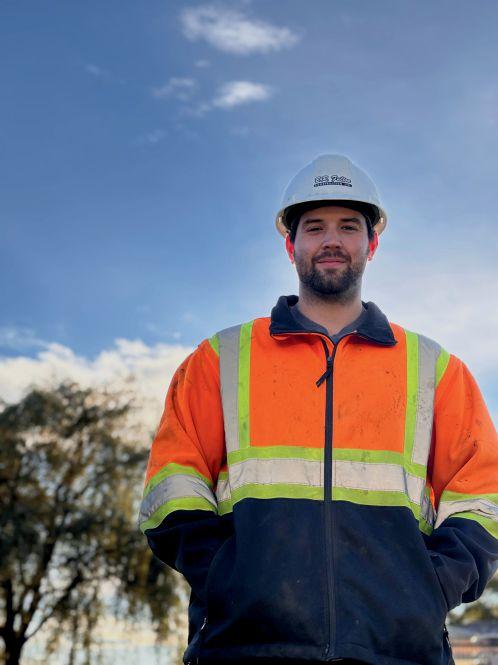
Connor Fulton has been involved in the road construction industry his entire life.
“I love construction,” he says. “I grew up in that work environment ever since I was very young when my family lived in our first house right beside our gravel pit.”
At his family-owned road construction business in Renfrew, Ontario, he wears many hats and is always quick to offer a helping hand where needed.
“Ever since I was able to start working and contribute to the company I got working and wanted to help the family business continue to succeed,” he says. “I enjoy the family aspect of my job, having my whole family together in this business makes all our jobs enjoyable but also pushes us to want to better the business. I also enjoy the variety of areas of work that I need to do under this job, it makes every day different and also brings on new challenges.”
In his last year of high school, he received the Janet Wilson Citizenship Award, which earned him a full college scholarship. Fulton made good use of it and graduated from Algonquin College with a diploma in Construction Engineering in 2021. In 2023 he became a Radiation Safety Officer and then, in 2024, he was Flatwork Certified, AZ licensed and completed Surface Miner.
Today he serves as an estimator, foreman and radiation safety officer with the company.
“All the titles of my job are equally important to me and I'm proud of them all because they all hold an extremely important value in this company in their own way,” he says.
“Being a radiation safety officer allows our company to handle, store and use radiation tools and devices, and allows me to train workers in our company if they want to handle anything with radiation. It also allows us to conduct and use a compaction testing device on road jobs when testing road compaction and culverts. Having my AZ licence gives me an option to jump in a truck if we need an extra driver in certain situations. Being Flatwork Certified allows our company to be able to pour concrete for townships and also shows that someone that's doing the pour has proper training/ understanding.”
When away from work, Fulton also finds time to coach the U14 Upper Ottawa Valley Aces hockey team and run the D-Stride Hockey School.
For those entering the industry, he recommends remembering you don’t need to learn everything at once.
“It's a process that has steps to it and it takes time. Everyone learns at different speeds. What matters is do you want to learn more and take the challenges that face you ahead because it will make you better and wiser in the future.”
PEEJOOHAN TAVASSOTI
Assistant professor and Jr. Norman W. McLeod
Chair in Sustainable Pavement Engineering at Department of Civil and Environmental Engineering at the University of Waterloo Waterloo, Ont.
As a child, Peejoohan Tavassoti was amazed by the transformation happening in the city he grew up in.
Everywhere he looked, there was rapid change.
“You’d walk past nearly every type of project imaginable — from renewing water mains and sewage systems to building new roads, bridges, and expanding residential and industrial areas,” he remembers. “As a child, I was fascinated by the complexity of the work, the equipment, and the sheer activity. But more than that, I noticed how these projects directly impacted, or sometimes failed to impact, the daily quality of life around me.”
It was this experience as well as conversations with his brother, an architect, that led him into the field of civil engineering.
“I was genuinely convinced that this field offered a way to make a positive impact on people’s lives and contribute to improving
CONGRATULATIONS CONNOR ON BEING SELECTED AS ONE OF THE TOP 10 UNDER 40! WE ARE VERY FORTUNATE AND PROUD TO HAVE YOU AS PART OF THE B.R FULTON CONSTRUCTION LTD. TEAM.
CONNOR FULTON
SAND GRAVEL CONCRETE
communities,” he explains.
However, that impact didn’t come into full view until the end of his undergraduate studies. At the time, he was working on the design of a road with known safety issues.
“Late one night, as I was working on the geometric design of that section, I received devastating news. A very close friend of mine had been involved in a fatal car accident on that very road. Tragically, everyone in the vehicle, except for a young baby, lost their lives,” Tavassoti says. “The shock of that moment still lingers. I couldn't help but think, ‘if only someone had acted on this sooner.’ From that point on, I made it my mission to dedicate a significant part of my life to learning as much as I could about transportation engineering, with the hope that my work could one day help save even a single life.”
After obtaining his PhD in Civil Engineering from Pennsylvania State University and working at the Thomas D. Larson Transportation Institute as an assistant research professor, he joined the University of Waterloo. His research revolves around promoting sustainability and resilience of the transportation infrastructure, focusing on an enhanced pavement engineering, design, and materials characterization framework for both flexible and rigid pavements.
He explains civil engineering is about creating solutions that impact society, whether its designing infrastructure or finding ways to have a more sustainable built environment.
He has authored or co-authored more than 50 peer-reviewed articles, as well as several technical reports and guidelines for the public and private sectors.
He is the vice chair of the Ontario Asphalt Expert Task Group (OAETG), where he is working with other experts to address some of the pressing issues affecting the quality of the pavement network in Ontario. Since 2018 he has worked with the Centre for Pavement and Transportation Technology (CPATT), where he currently serves as associate director. He is also a member of the International Union of Laboratories and Experts in Construction Materials, Systems and Structures.
However, teaching and supervising undergraduate and graduate students is what drives him.
“Watching students grasp complex concepts and apply them to real-world problems is incredibly rewarding. Being involved in research that pushes the boundaries of what's possible in engineering also keeps me constantly learning and engaged,” he says. “Ultimately, it’s the combination of teaching, mentoring, and advancing knowledge that I find most fulfilling.”
He advises people to find their true passion and align it with what they do. Don’t settle, he says, and never stop trying to have a positive impact on the world and those in it.
“During my undergraduate years, I was fortunate to have three mentors among my professors. Their guidance and mentorship, along with their technical expertise, played a significant role in shaping both my personal and professional life,” he says. “No matter what stage you’re in, seek out mentorship, be open to improvement and, when the opportunity arises, strive to be a good mentor yourself.”
MARAYA DEGRANDIS
Managing Director for DeGrandis Concrete Pumping and Vice President Strategic Initiative of Joseph Group Brantford, Ont.
Construction and concrete are in Maraya DeGrandis’ DNA.
“My father used to sell cement for The Miller Group and later opened up his own ready mix plant -- Brantford Ready Mix -- and in five years grew the business with his partner to five plants, multiple gravel pits and 94 ready mix trucks,” DeGrandis explains.
In 2007, Brantford Ready Mix was sold but her father kept two pumps. That would grow into DeGrandis Concrete Pumping.
DeGrandis joined the company in 2020 after earning her Master of Business Administration from Ivey Business School (she had already earned a Bachelor of Arts degree in Honours Business Administration in 2014 at Ivey Business School).
“I knew the industry was changing rapidly,” she explains. “There were increased regulations and embracing technology was becoming essential to success and growth. My dad asked if I could assist and I gladly took on the challenge.”
She also helped her father package up the business so it could be acquired by The Joseph Group, which allowed him to slow down and eventually retire.
Today she is managing director of DeGrandis Concrete Pumping, which is one of the largest pumping companies in Ontario, servicing each sector of the construction industry for more than 20 years. She is also vice president strategic initiative with The Joseph Group, which was awarded 50 Best Managed Companies in Canada in 2024.
The business has not lost that family feel that it has always had, she explains.
“I also like helping people work through problems in a sustainable way. I like to find efficiencies in systems and processes and implement them,” she says.
She enjoys the dynamic nature of her work and the fact it brings new challenges on a regular basis.
“My most impactful work has been around embracing new technology in every area of our business. These implementations were segmented in such a way that really considered the audience at hand and took change management very seriously,” she says. “We have successfully implemented our dispatching system, our maintenance program, our finance ERP and we have additional phases in the wings to continue bringing efficiencies to our business practices so we can spend more time focusing on our people and our customers.”
Some of that work included helping create the Joseph U program, an internal company management training program to help build and develop leaders within the business. She was also involved with EOS
implementation in acquired sister companies and led the People and Culture division through several executive changes.
For anyone entering the industry, her advice is simple.
“Take the time to really learn the industry from the vets around you. Ask questions, get curious and don't be afraid to get your hands dirty.”
TYLER CALLAGHAN
Operations manager for Greater Calgary Area and Central Alberta Lafarge Calgary, Alta.
Tyler Callaghan can thank a family member for having him enter the industry.
“I had a cousin that worked for Lafarge Cement in Brookfield Nova Scotia. He took me on a four-hour tour and I loved it,” he recalls. “After that I looked for opportunities to work in the concrete and cement industry.”
Today, Callaghan serves as operations manager for Lafarge in Alberta. He is responsible for production logistics, quality and engineering for the Greater Calgary Area and Central Alberta markets. He is also a member of the Concrete Alberta Board of Directors and was elected president of Concrete Alberta in 2023.
“I have a passion for engineering and material design. I truly enjoy being given a challenge by a customer and finding a material solution,” he says.
He first joined Lafarge as a summer student in 2008 as a quality control/assurance
technician in the field working with materials and customers. In 2010 he graduated from the University of New Brunswick with a civil engineering degree specializing in concrete and cement chemistry. He relocated to the Calgary market in 2011 when he took on the role of quality manager for Lafarge. During this time, he worked with the University of Calgary on the emerging low carbon cement that was being launched into the North American markets as Portland Limestone Cement.
“Ready Mix Concrete is a very versatile material. It can be used from roadways to high rises and it is great to be involved in such a wide range of projects,” he says.
At this same period, Callaghan added the Edmonton and Vancouver market areas to his quality manager portfolio. In 2017, he took on the role of commercial manager for Lafarge in the Greater Calgary Area, looking after all sales and customer portfolios until his promotion in 2021.
He recommends people consider a career in construction as the industry provides tangible rewards for those in it.
“Construction and construction materials have the unique position to improve and build upon our communities around us,” he says.
DALE FURBER Area General Manager Heidelberg Materials
Vancouver Island, B.C. Dale Furber’s identity was football.
“As a kid, all you think about is sports.
You spend a lot of time building your identity around it,” he says.
Furber found football when his family moved to Canada from Singapore in 2000. The sport led him to play on the offensive line at the University of Saskatchewan and then Simon Fraser University. In 2012, he signed with the Calgary Stampeders in the CFL. However, his path in life was not meant to.
“I got to the next level, and my career didn’t turn out how I wanted it or dreamed it would be,” he explains.“By the time you are 24 or 25, you are ‘retired.’ There is so much life to live still. It's just odd coming to terms with what is next.”
He thought his next phase was sports management and considered striving to be general manager of a team.
“However, I wasn’t willing to grind out in that industry anymore,” he says.
As he wrestled with the next phase in is life, his career took a different turn. At the time, he was working in finance for Sun Life when a new path opened up.
“I got into the industry after a friend referred me to an opportunity to truck. What started as a means to make cash to support and grow my book of business in finance became my full-time job,” he explains.
He joined in Heidelberg Materials in 2019 and admits, at times, he is still surprised at what he’s doing.
“This wasn’t the industry I ever thought I would find myself in 10 or 15 years ago. Not too many kids or college students think, ‘I want to be crushing aggregates!’ This is the industry I want to stay in moving forward, for sure,” he says.
In his current role, Furber is on the front line of sustainability. Heidelberg Materials Depot repurposes 150,000 tons of concrete, asphalt and other construction waste each year. The material is screened, processed and repurposed for construction use. This has reduced the need for virgin materials and decreased greenhouse gas emissions.
“Our business model supports the circular economy. We create spec material from construction waste. As virgin material is increasingly far from city centers, these urban
quarries where we repurpose the material are crucial in building our future,” he says. “Our industry is currently facing a great challenge in reducing its carbon intensity. Solving that problem and changing how we build in the future is crucial. I want to be a leader in that space and an agent of change.”
and -operated business,” he says.
Blake Arnill, operations manager with Seeley and Arnill, says McRoberts has managed around $100 million worth of various projects.
“Mike thinks and acts like an owner in all aspects of the opera
ROCK TO ROAD - TOP 10 UNDER 40
From streamlining complex operational requirements to championing numerous safety initiatives, Bader has had a profound influence on his team and our operations.
At Dufferin, we prioritize providing opportunities that support the success of our people and their careers. We are incredibly proud to see all that Bader has accomplished and look forward to his continued success.
Congratulations, Bader on this remarkable achievement!
WARREN ANDERSEN
Civil Manager
Lafarge Vancouver, B.C.
Warren Andersen has always been interested by how things are built.
“I entered the industry out of a fascination with how things are constructed. For me, the civil engineering and construction industry is exciting as it allows me to witness the transformation of ideas into tangible roadways and structures,” he says.
Andersen currently serves at Lafarge as civil manager in Vancouver.
His career with Lafarge began 15 years ago as a co-op student in Civil Engineering from UBC. Since then, he has held a variety of roles in the company, including quality control for asphalt, aggregates and concrete, engineering technician, and multiple levels of estimating for civil construction projects and roadworks. He has worked in communities across Western Canada, but the past decade has been based in Vancouver.
Five years ago, he was named estimating manager and lead a team bidding on projects ranging from $50,000 to more than $10 million.
“These projects included smaller commercial ventures as well as municipal and provincial roadworks, where we operate as the general contractor,” he explains.
Last year, Andersen was promoted to civil manager. This resulted in his responsibilities broadening so that he was overseeing both estimating and operations, along with managing the financial performance of the Civil Construction Division.
“It is rewarding for me to be a part of a project from inception, at the tendering period, and seeing it through to completion,” Andersen says. “Seeing a project progress through each stage offers personal fulfillment as I get to witness firsthand what each project team can overcome and drive the project success.”
Andersen says he is always looking for opportunities to expand his knowledge and skills. As a result, he has earned his professional engineering designation and is currently working toward his Project
Management Professional Designation.
“Being part of an industry that provides extensive learning opportunities and fosters collaboration focused on improving the areas we live in is immensely rewarding to me,” he says.
He tells those entering the industry to jump at any chance to learn.
“There is a wealth of knowledge to absorb and the more you can learn early in your career the stronger your foundation will be for future success,” he says.
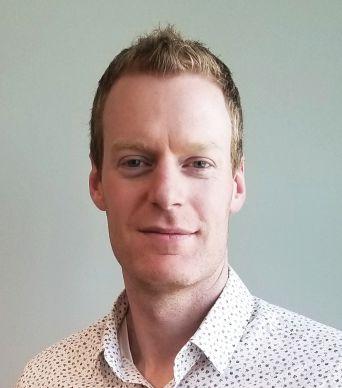
BADER DIAB
Site manager
Dufferin Aggregates, a CRH Company
Cambridge, Ont.
Bader Diab has simple advice for those entering the aggregate industry: stay curious.
“And always ask questions,” adds the Dufferin Aggregates site manager. “Learn as much as you can about all aspects of the operation. Embrace safety and prioritize teamwork, as collaboration is key in this industry. Lastly, be open to adapting to new technologies and methodologies, as the industry is evolving rapidly.”
Diab says he pursued a Bachelor in Mineral Resources Engineering because he was drawn to the balance between natural resource extraction and sustainability.
“I was intrigued by the industry's role in building roads, bridges, and other essential structures which made it clear to me that I could contribute to significant projects and shape the way our world is built,” he explains.
Alex Caruana, with Polydeck, says Diab is always looking to make the sites he looks after better places for staff, customers and his employer.
“Having worked with Bader through a variety of difficult applications, I can personally say that his analytical approach, combined with his relentlessly positive attitude, is a great example of what it takes to succeed in aggregate production,” he states.
Diab says he enjoys the dynamic nature of his job.
“Every day presents new challenges, whether it's optimizing production processes, ensuring safety standards, or collaborating with a diverse team,” he says. “I also take pleasure in seeing the direct results of our efforts — knowing that the materials we produce are essential for large scale projects that improve everyday lives.”
One area Diab is focused on his mentorship and development. He likes to watch people grow in their roles and take on new challenges.
“Seeing their confidence and skills evolve not only strengthens our operation but also fosters a positive workplace culture. It’s fulfilling to know that I can play a part in shaping the next generation of leaders in the industry,” he says.
DYLAN TREADWELL President
Cold Sky Consulting Inc. Canmore, Alta.
Dylan Treadwell has worked every aspect of the quarry business.
“Including production, maintenance, drill and blast, environmental and sustainability, QA/QC, product development, health and safety, permitting, reserves and resource estimation, mine planning, exploration, pretty much the whole gamut,” he says. “I get a feeling that I really own the projects that I work on from start to finish and that gives great satisfaction.”
His career began with Boral Construction Materials in Australia after he graduated as a mining engineer.
“I was lucky enough to come on at the time when they were commissioning their new Peppertree Quarry. Since production was not quite in full swing, I was given a lot of freedom to get deep into everything from pit design and optimization, from crawling through crushers, screens and conveyors to helping lay out and load shots and running production shift crews,” he recalls. “I had long term plans to eventually switch to a more traditional mining job but I couldn't, and still can't now. It was certainly a matter of falling into the industry, but it has been good to me and I have no plans to leave it.”
Today, he is the founder and director of Cold Sky Consulting Inc., where he offers specialized advice to quarries and small mines producing aggregates, sand and gravel, cement and industrial minerals. He is also the North American mining and operations manager for Fertoz International Organics Inc., focused on the development of small mines in British Columbia for organic fertilizer.
He's interested in the industry’s current transition to reduce carbon emissions. He notes carbon reduction was once seen as an afterthought but is now on the forefront of decision-making.
“I have seen a massive shift in this since the start of my career,” he says. “I have worked closely with manufacturers that are making great strides in their technologies and challenging the current paradigm. This is also a large part of the reason that I work with Fertoz, where we are producing a more sustainable phosphatebased fertilizer.”
When asked if there is a specific project in his career that stands out, he thinks back to his time as a quarry manager at a small, regional quarry in Australia.
“The fixed crushing system was barely functional, the quarry was running out of available rock to blast and it was not making enough money to survive on contract crushing, despite having solid product
orders,” he remembers. “I worked with the team on site and looked at various options.”
Eventually, he says they realized they either had to ‘go hard or go home.’ They went hard.
“We blasted a year’s worth of rock in an area that was traditionally challenging. We fixed the screening portion of the fixed plant and supplemented it with high capacity rented mobile crushers. We put up stock as quickly and efficiently as we could, finishing a year’s worth of crushing in months while lowering the unit cost. Within a few months and with the product orders being fulfilled, the quarry was back to being profitable and had a plan for future years.”
Whether you are new to the industry or serving in senior management, Treadwell’s advice is the same: get dirty and don’t be afraid to ask.
“The best way to learn or to understand a situation is to be there, in the field, hands on and talking to people,” he says. “Go unblock a crusher, clean off a blinded screen, clip a torn belt, drive on a rutted haul road - and you will find yourself asking why this happening and start looking for solutions. Have a healthy curiosity of why things are done the way they are, but also don't be afraid to challenge that - that is how sites and industries grow and progress.”
CONGRATULATIONS
ALL OF US AT SEELEY AND ARNILL EXTEND OUR HEARTFELT
BY KARI moosmann
LEAVING A LEGACY
> Rehabilitation is not usually the first word that comes to mind when considering mining or material extraction. However, rehabilitation is a significant part of the requirements for aggregate extraction in Ontario.
Under the legislative and regulatory environment in Ontario, when aggregate companies identify areas for material extraction, they are required to include a detailed plan for site rehabilitation after aggregate extraction has taken place. Rehabilitation means the restoration of the site to its former use, if possible, or changing the site to another use or condition that is compatible with the surrounding land.
Though minimum standards for rehabilitation exist as part of the provincial requirements and are identified on all licensed pit
and quarry site plans in Ontario, CBM Aggregates strives to achieve higher-quality rehabilitation. Whether by encouraging biodiversity or restoring productive farmland, these efforts are geared toward promoting uses that blend with the surrounding landscape.
EASING COMMUNITY ANXIETY
Aggregate companies often face community challenges when a new extraction site is identified. Residents typically are unaware of the interim nature of an aggregate operation and the benefits that will be realized when rehabilitation fully occurs. In many cases, residents don’t even understand restoration efforts are required at all. Local communities can be anxious and generally unhappy with the prospect of an extraction site in their neighborhood.
Enter Glenn Harrington, who was a founding partner and principal landscape architect at Harrington McAvan Ltd. For more than 40 years, the firm has specialized in landscape architecture, earth sciences and biology, with a focus on stream and wetland restoration and rehabilitation projects. Over his career, Harrington was widely known for his innovative approach to environmental landscape design and his skills as a facilitator in the public participation process.
“Over the years, Glenn and I crossed paths on several stream erosion control projects that various municipalities were supporting,” says Warren H. Yerex, retired supervisor of aquatic resources for the Grand River Conservation Authority. “His expertise was in innovative bank stabilization and channel stability, essentially redesigning stream channels to reduce bank
erosion and improve aquatic habitat.”
Harrington had a knack for respectfully educating objectors about the benefits of site restoration to help companies gain approval for aggregate licences. He treated all people — from municipal and agency staff to the public — with kindness as he represented his clients’ positions, spreading the value of soil bioengineering and landscape and rehabilitation design. By giving respect and providing science-based education, he also gained respect from these audiences, which typically are hard to win over.
“In most dealings with proposed gravel extraction, typically there is anxiety, mistrust, and general acrimony. The public does not like large land use change, especially in their quiet rural landscape,” Yerex says. “As a reviewer, I watched, admired, and worked with Glenn Harrington for
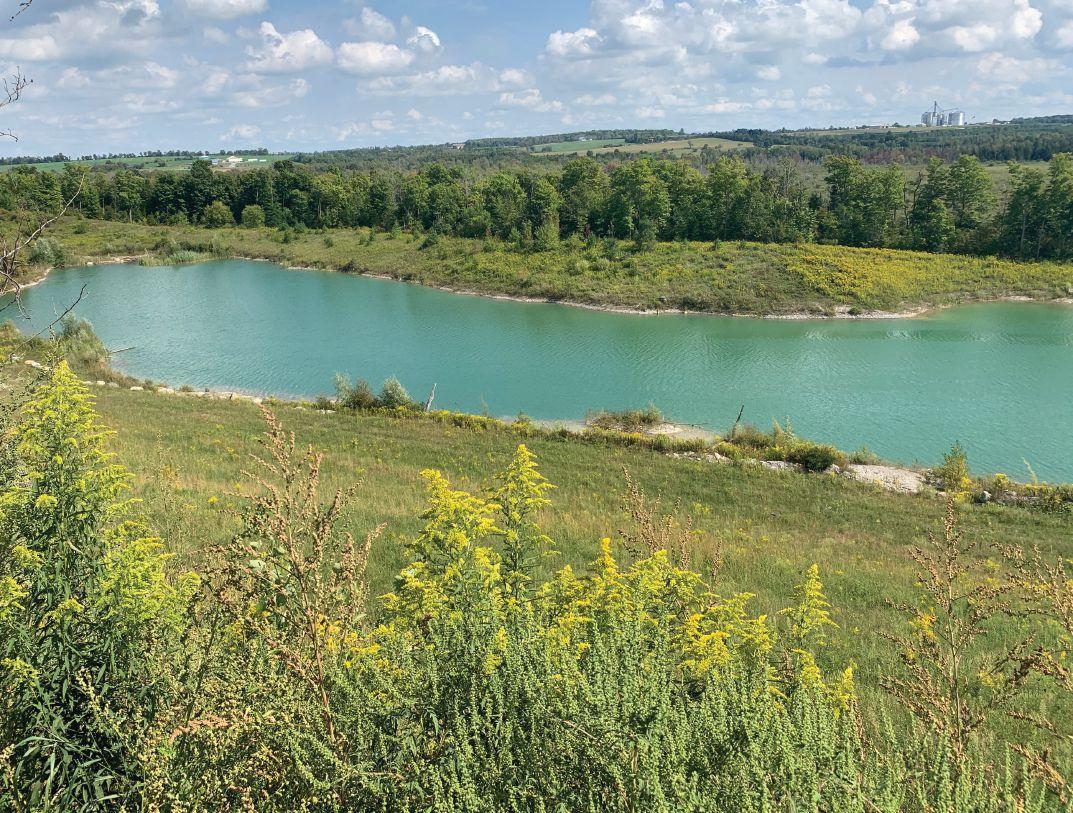
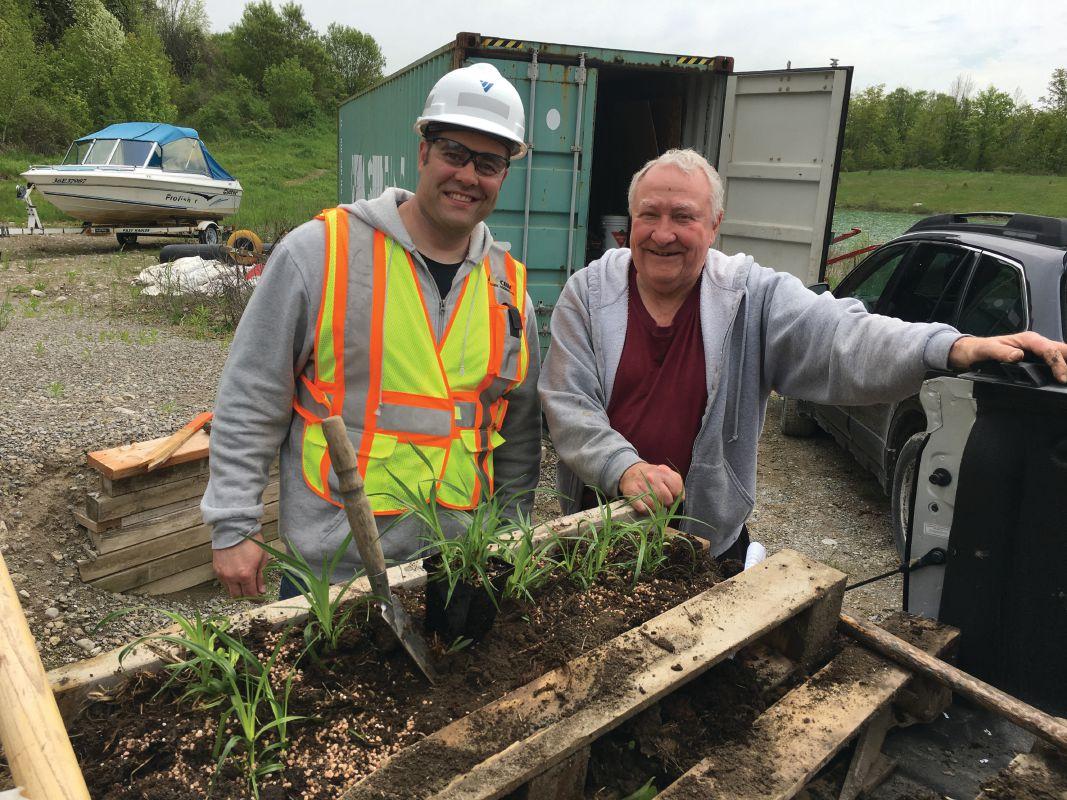
Mike Le Breton (left) and Glenn Harrington at the rehabilitation site. Sand and gravel extraction began at the Cannington Pit in the late 1990s and the pit operated intermittently until 2020, when the last truckload of gravel left the pit. CBM worked with Glenn to rehabilitate the site. Under his guidance, progressive rehabilitation occurred at the pit and uniquely included a number of specific rehabilitated end uses on the property, including agriculture, open natural habitat, reforestation, and pond/ wetland creation. Photo: CBM Aggregates
many years as he persevered for his clients in gaining approval for gravel licences."
TAKING REHABILITATION TO THE NEXT LEVEL
As an expert in innovative bank stabilization and improvement to aquatic habitat, Harrington worked with CBM on many projects as both parties aligned on their desire to see rehabilitation taken to the next level. One project they worked together on was the Cannington Pit, located in Brock Township, Ont.
The Cannington Pit was close to Harrington's heart. In fact, Harrington loved the site so much that he purchased it in 2015, dubbing the area “Harrington Glen.” He planned to spend his retirement there, working the fields, canoeing, fishing, rambling and sharing the bounty of his land.
Unfortunately, Harrington passed away before restoration was complete, but his commitment to rehabilitation — specifically at the Cannington Pit — will always be remembered.
REHABILITATION TIMELINE
2013: CBM teamed up with Harrington to establish a wetland plant seed bank along the pond’s northern shoreline. A variety of native littoral zone species were successfully planted. Over time, the planted species became established and naturally populated other parts of the pond.
2015: The pond was stocked with locally sourced minnows in the spring.
2016: Harrington oversaw an agricultural progressive rehabilitation project on the former plant site, which consisted of contouring the land to direct and control the flow of runoff water, installing six inches of topsoil, and three years of additional soil management. Surveys determined a healthy population of minnows was established. Rainbow and brown trout were stocked in the pond in the fall.
2017: Harrington constructed a shallow spawning area along the west pond shoreline in the summer. Later that year, he planted oak acorns to create oak savanna habitat. Tallgrass prairie herbaceous species were seeded in pockets along the northern shoreline.
2019: CBM staff worked with Glenn to build wetland plant boxes and plant flowers along the shoreline in the spring. Around the same time, Ethics Tree Creations planted 12,000 seedlings that thrive in wet areas and are effective at soil stabilization and erosion control. Additional species were planted to encourage diversity and create an early succession forest.
2020: The southwest pond slope was cut to a 3:1 grade, capped with topsoil, and seeded in the spring. Boulders and tree stumps were strategically placed in mounds for wildlife habitat. Ethics Tree Creations planted 8,410 trees along the east slope.
2021: CBM staff completed a fisheries assessment of the minnow population in late summer. Results found a healthy variety of minnows, along with crayfish and bullfrog tadpoles.
2022: Ethics Tree Creations planted an additional 5,000 trees. The final rehabilitation project began in the fall and involved cutting and backfilling the northwest slope to a 3:1 grade and naturalizing the adjacent pit floor. A bonded fiber matrix, hydroseed, and fertilizer mix was applied to the slope and floor. Hydroseeding was used due to its excellent results in stabilizing slopes, minimizing erosion, and accelerating vegetation growth. Another fisheries assessment was completed, finding a healthy rainbow and brown trout population
2023 : CBM Aggregates was granted a licence surrender in the fall by the Ministry of Natural Resources and Forestry, meaning it had met or exceeded the criteria outlined in the approved site plans.
Throughout this time CBM was recognized by the Ontario, Stone, Sand and Gravel Association (OSSGA) on multiple occasions, receiving awards for Progressive Rehabilitation at the Cannington Pit.
Kari Moosmann, ENV SP, is director of sustainability communications and senior account manager with Advancing Organizational Excellence.
In 2020, Glenn Harrington received the Associate Member of the Year Award from the Ontario Stone, Sand and Gravel Association. He was also a recipient of the Ontario Association of Landscape Architects (OALA) Carl Borgstrom Award for Service to the Environment and the OALA Pinnacle Award for Landscape Architectural Excellence.
> DECEMBER 5-7 BC Road Builders and Heavy Construction Association 2024 AGM and Holiday Celebrations
VICTORIA, BC roadbuilders.bc.ca/ events/2024-agm-holidaycelebrations-december-5-7-2024/
2025
> JANUARY 15-16 Alberta Sand and Gravel Association AGM and Convention RIVER CREE RESORT AND CASINO, EDMONTON, AB asga.ab.ca
> JANUARY 20-23 World of Concrete AS VEGAS, NEVADA worldofconcrete.com
> MARCH 25-27 World of Asphalt
ST. LOUIS, MISSOURI worldofasphalt.com
one more load Rock Solid
Planning for climate resilience in the aggregate industry.
Canadian cities and towns are facing an unprecedented surge in extreme climate events like flooding, heatwaves and high winds.
These increasingly frequent and intense storm events are leaving municipalities, provincial governments and private industries with little time to recover and adapt before the next disaster hits. The aggregate industry is no exception.
In the world of aggregates, business and individual operations are always concerned with producing a quality product, meeting their customer needs and conducting their work in a safe manner. New challenges may not be considered as part of normal business practices, until it becomes a major problem, with major disruptions to aggregate operations and deliveries. Ironically, aggregates are necessary to support the recovery from disasters, but themselves are vulnerable to these impacts given the location of many aggregate mines within active or relict floodplains.
Readers can likely point to specific events over the last decade where their businesses or personnel lives have been disrupted: vehicles or buildings damaged by hail, operations interrupted or shut down due to flooding in a pit, equipment lost or damaged from being submerged, transportation routes cut off, or operations being completely halted due to wildfires. Additionally, inundation by extreme rainfall can result in a whole host of sediment and erosion control issues. In worst case scenarios, off-site releases may result in compliance issues with regulators. In these instances, companies are left to argue with insurance adjusters over the compensation and deductibles. As a result, companies may face delays in servicing their customers or suffer such significant financial losses that it costs them their business.
It may seem like an act of God with nothing that can be done, but there are steps that can be taken to plan, adapt and mitigate the risks of operational disruptions or complete property losses. These measures can be as simple as completing a desktop site screening for flood risks, or more detailed assessments of value at risk for specific climate related events and asset valuations. Often these assessments include the evaluation of site topography, reviewing historical weather
records, and reliable future climate change projections under multiple greenhouse gas emission scenarios. Although many municipalities and provinces have completed their own evaluations, gaps in information, or an absence of regionally specific information may warrant a consult with a climate change specialist.
Greater attention to the timing (i.e. seasonality) and placement of equipment and structures on a site can help limit potential problems. From a civil engineering perspective, the design of onsite drainage, flow direction, the sizing of culverts or bridges need to account for extreme weather events. Sediment control measures and the sizing of settling ponds must also accommodate these conditions. One of the best measures to mitigate off-site impacts, whether sedimentation or analytical exceedance, is to minimize the on-site disturbance footprint. This could mean undertaking progressive reclamation and establishing vegetation. Maintaining vegetative buffers between operations and sensitive receptors is always a good practice. Additionally, consider where fuel tanks are placed on site: Is there a risk of them being cut off, submerged, spilled, or shifted around the site? These impacts, triggered by climate events, can result in significant environmental cleanup costs, and regulatory compliance requirements.
If you want to reduce the risks posed by extreme weather, developing contingency plans is essential. Consider the company’s emergency response plan: What are the potential issues that could occur at a particular site? How can the company continue to fulfill customer requirements if operations are disrupted? Are there particular times of the year when specific events are more likely and how can resources, equipment, and personnel be made available when needed? Through basic planning and assessment, aggregate miners can limit their exposure to climate events and reduce unnecessary costs and operational impacts.
Sean Lynch is a Principal Climate Resilience and Sustainability Consultant at SLR. His work focuses on assessing the impacts of climate and environmental change on human populations. He has a breadth of consulting experience across the mining, water resources, transportation, and energy sectors.
SEAN Lynch
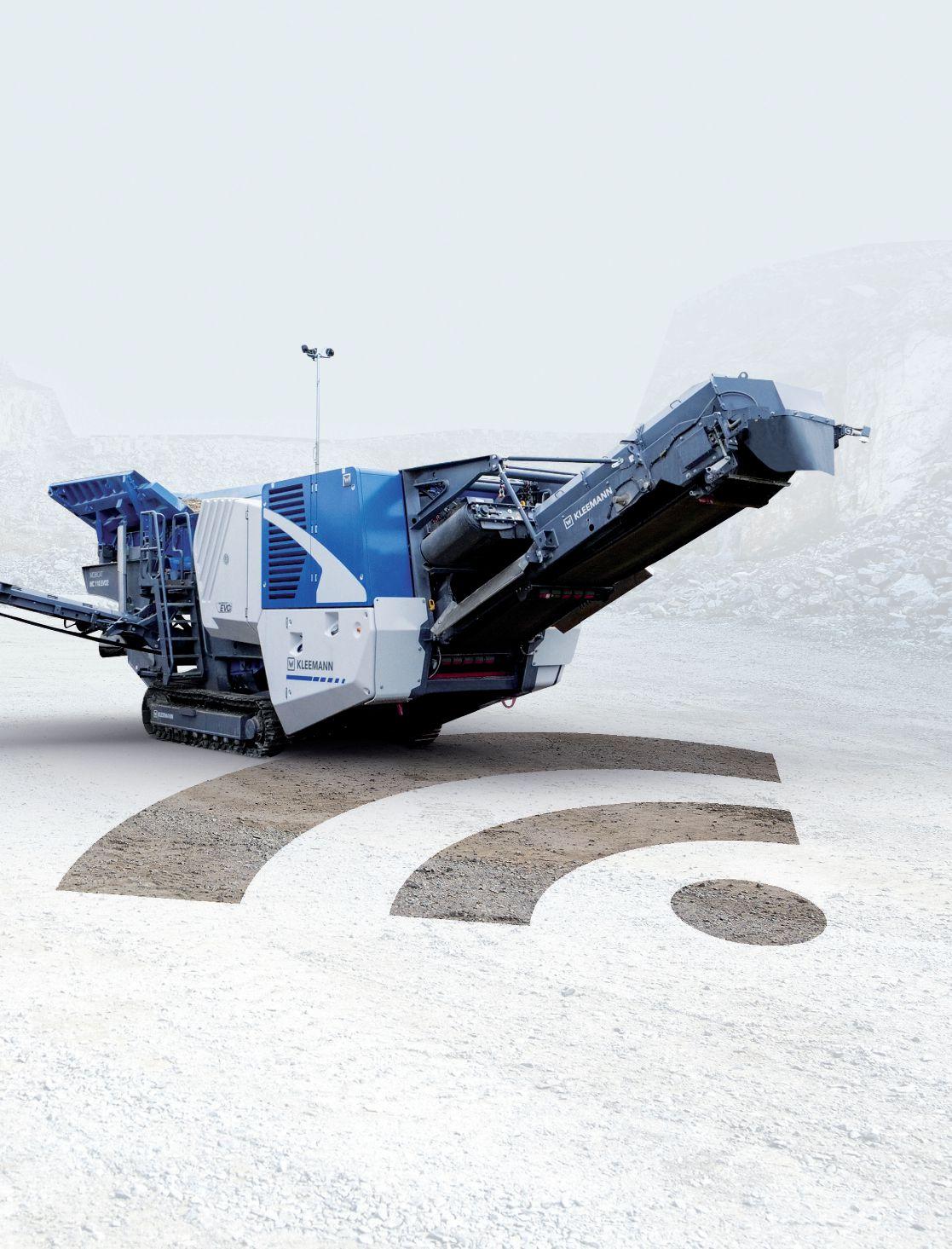
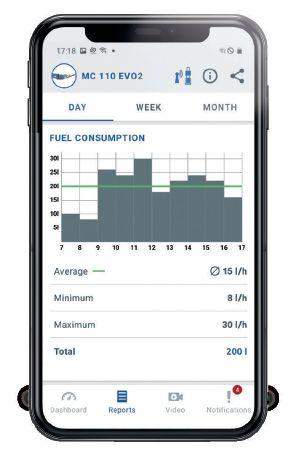
MOBICAT MC 110i EVO2 WITH SPECTIVE CONNECT
INTELLIGENT, EFFICIENT AND VERSATILE. With SPECTIVE for the most user-f riendly operation, all the information you need on your smartphone with SPECTIVE CONNECT, and intelligent control and overload systems – for successful performance in natural stone or recycling. The MOBICAT mobile jaw crusher excels with exceptionally cost-effective solutions. The efficient MC 110i EVO2 po we rhouse.