



Across industries, companies are busy painting a picture of tomorrow’s world. To realize this idealized future, they need a vital element: chemistry.
At Kemira, we have been working for over a hundred years to create the right kind of chemistry. We’re keen to work together with future-minded partners across the value chain and help you accomplish your vision.
Now, let’s get together – and Perfect the Picture!
Introducing
An
Benchmarking
Investigating
FPInnovations



Canada’s pulp and paper industry has long been a cornerstone of the nation’s economy. However, unprecedented challenges such as shifting consumer preferences, global competition, supply chain constraints, changing market dynamics, skilled labour shortage, and more, have placed pulp and paper businesses in significant strain. A culture of innovation that embraces efficiency, technological advancement and sustainability, can be the key to staying resilient.
Fostering a culture of innovation requires a long-term commitment. It cannot be achieved overnight. It requires persistence, resilience and a willingness to embrace failure as part of the learning process. Businesses must be willing to take risks and experiment with new ideas, knowing that not every innovation will succeed but understanding that each failure brings valuable lessons that can inform future endeavours.

Sukanya Ray Ghosh Editor
Technological advancements have permeated into every facet of the workplace today. Although many pulp and paper mills still house legacy equipment, none have been left untouched by modern tools and techniques in this digital era. Modernization of mills is a major part of the conversation today. So, does this mean that every mill should embrace the latest trending innovation available in the market to maximize their profits? The answer is not so simple. Not every solution is fit for every operation.
Mill personnel are best equipped to identify and evaluate what processes to optimize and where to innovate. They have an understanding of the finer details of what is working well, what is working just fine and what needs to be changed or updated. Top-level decision makers and executives are wellpositioned to support such initiatives while also ensuring that every change is well-aligned with business objectives. Without a doubt, creating a culture of innovation rests in the hands of the people who work in this industry. It begins with visionary leaders who constantly question the status quo and seek solutions for continuous improvement. They inspire the people around them to be similarly enthusiastic about ushering in positive change and growth.
In this issue’s cover story, we highlight three visionaries whose contributions to the industry have had significant impact on the entire pulp and paper landscape of the country. Our annual Hall of Fame inductees this year are Bernard Lemaire, co-founder and former president of Cascades; Kristin Dangelmaier, environment and technical manager at Kruger Kamloops; and Albino Metauro, founder, former president and CEO of Metro Waste Paper/ Cascades Recovery+. They have not only changed how the industry functions today but also created lasting legacies for the current and future generations.
If you have ideas and suggestions on how to create and nurture a culture of innovation, share them with us at srayghosh@ annexbusinessmedia.com. PPC
READER SERVICE
Print and digital subscription inquires or changes, please contact
Angelita Potal, Customer Service Administrator
Tel: (416) 510-5113 Fax: (416) 510-6875
Email: apotal@annexbusinessmedia.com
Mail: 111 Gordon Baker Rd., Suite 400, Toronto, ON M2H 3R1
Editor
SUKANYA RAY GHOSH 647-203-7031 srayghosh@annexbusinessmedia.com
Brand Sales Manager
SONYA HESSON 416-510-5224 shesson@annexbusinessmedia.com
EDITORIAL/SALES OFFICES
President/COO
SCOTT JAMIESON 519-429-5180 sjamieson@annexbusinessmedia.com
Group Publisher
ANNE BESWICK 416-510-5248 abeswick@annexbusinessmedia.com
111 Gordon Baker Rd., Suite 400, Toronto, ON M2H 3R1 Phone: 416-442-5600
Audience Development Manager Serina Dingeldein 416-510-5124 sdingeldein@annexbusinessmedia.com
Media Designer Graham Jeffrey
Print in Canada
ISSN 0316-4004 (Print) ISSN 1923-3515 (Digital)
Account Coordinator SHANNON DRUMM sdrumm@annexbusinessmedia.com
PUBLICATION MAIL AGREEMENT #40065710
SUBSCRIPTION RATES
Canada $58.65- 1 year; $94.35 - 2 year
USA $141.78 CDN per year Overseas - $153.00 CDN per year
Occasionally, Pulp and Paper Canada will mail information on behalf of industry related groups whose products and services we believe may be of interest to you. If you prefer not to receive this information, please contact our circulation department in any of the four ways listed above.
Annex Privacy Office privacy@annexbusinessmedia.com Tel: 800-668-2374
The editors have made every reasonable effort to provide accurate and authoritative information but they assume no liability for the accuracy or completeness of the text or its fitness for any particular purpose. All rights reserved. The contents of this publication may not be reproduced in part or in full without the publisher’s written permission © Annex Publishing & Printing Inc.
Sustaining member, Pulp and Paper Technical Association of Canada; Member, Alliance for Audited Media.


Al's groundbreaking work has reshaped the Canadian recycling industr y. His visionar y leadership and long-term par tnership with Cascades have shown his joint commitment to giving paper and packaging a circular life.
Congratulations on your induction into the Pulp and Paper Hall of Fame!


Mondi acquires Hinton Pulp mill from West Fraser
West Fraser has completed the sale of its Hinton Pulp mill to Mondi, a global group specializing in the production of sustainable packaging and paper, for a total consideration of USD 5 million.
The mill has the capacity to produce around 250,000 tonnes of unbleached kraft pulp per annum and will provide the Mondi group with access to local, highquality fibre from a well-established wood basket as part of a long-term partnership with West Fraser.
Mondi intends to invest in the mill to improve productivity and sustainability performance and, subject to pre-engineering and permitting, invest in expanding the facility primarily with a new kraft paper machine which will integrate its paper bag operations in the Americas to support future growth.
Commenting on the acquisition, Andrew King, Mondi Group CEO, said, “We are delighted to welcome our new colleagues from Hinton Pulp mill to Mondi and look forward to working together to secure the mill’s future and support Mondi’s growth in North America with our portfolio of sustainable packaging.”
First Quality Enterprises successfully closed its acquisition of Domtar Corporations’ pulp mill in Dryden, Ontario, Canada. The Dryden mill produces highquality Northern Bleached Softwood Kraft pulp for customers in North America.
The mill now operates as a stand-alone business within the First Quality Group of companies under the name Dryden Fibre Canada. First Quality has no changes planned to the employees, operations or business of the mill.
Robert Chisholm, the division manager of Dryden Fibre Canada, said, “We are very excited about closing on the acquisition of the Dryden mill. The impressive team at the mill, led by Marie Cyr, is one of the many reasons that we pursued this opportunity and we look forward to our future and the continued success and growth of the Dryden Mill for generations to come. We also look forward to
Catalyst Crofton mill’s paper operations indefinitely curtailed Paper Excellence Canada is indefinitely curtailing the paper operations at its Catalyst Crofton facility on Vancouver Island, B.C. The company shares that substantial increases in operating costs due to market dynamics, inflationary pressures on raw materials, energy cost opportunities and a lack of local domestic fibre supply resulted in this decision. These pressures have materially impacted the current and future financial viability of the paper operation. This decision affects approximately 75 employees.
“We recognize the difficulty this decision has placed on both our employees and the Cowichan Valley community,” said Blair Dickerson, vice-president of public affairs. “We will work to minimize negative impacts wherever possible.”
The mill’s pulp operations, which support approximately 400 employees, will continue production during the indefinite paper curtailment. Going forward, the Crofton team will focus on making the remaining pulp operations cost-competitive and aligned with the company’s overall business strategies and direction.
In a press statement, Paper Excellence thanked both federal and provincial governments for their efforts to support Catalyst Crofton’s paper operations. The company noted that it will respect the terms and conditions of all contribution agreements affected by this indefinite curtailment and will work with the appropriate government agencies on the next steps.
expanding on our local engagement and to strengthening our relationships with the host community, local Indigenous communities and all the Dryden Mill’s valued partners, customers and suppliers and community stakeholders.”
The Paper Excellence Group has appointed Richard Tremblay as the president of its pulp and tissue business unit, effective immediately. The pulp and tissue business unit of the group consists of all legacy Resolute pulp, paper and tissue operations as well as the non-integrated Paper Excellence Canada pulp mills.
Throughout 2023, Tremblay served as senior vice-president of pulp, paper and tissue operations within the Paper Excellence Group’s pulp and tissue business unit. Prior to the acquisition of Resolute Forest Products by the Paper Excellence Group, through its subsidiary Domtar Corporation, Tremblay held critical leadership positions at Resolute. He served in numerous positions, including senior vicepresident of pulp and paper operations. In his new role, Tremblay will report to the Paper Excellence Group management board, chaired by non-executive chairman John Williams.
West Fraser and Atlas Holdings signed a definitive agreement for the sale of West Fraser’s Quesnel River Pulp mill in Quesnel, British Columbia and Slave Lake Pulp mill in Slave Lake, Alberta to Atlas. The agreement includes related woodlands operations and timber holdings in Alberta and a long-term fibre supply agreement for the Quesnel River Pulp facility. When the transaction is complete, Millar Western Forest Products will operate both pulp mills.
“Atlas Holdings and Millar Western bring deep experience in the pulp sector, and we look forward to continuing to work together as a key fibre supplier to Quesnel River Pulp,” said Ray Ferris, West Fraser’s president and CEO.
Millar Western, headquartered in Edmonton, has pulp mill operations in Alberta. It is reportedly positioned to establish a strong future for the Quesnel River and Slave Lake pulp mills.
“This transaction will provide the dedicated and skilled teams at Quesnel River and Slave Lake with a solid future. Our team intends to continue investing in these high-quality mills and we look forward to collectively strengthening our product offerings and value proposition to the global BCTMP marketplace,” said David Anderson, CEO of Millar Western.
and communities to par ticipate in your life's project: Cascades. This induction into the Pulp and Paper Hall of Fame is fully deser ved for the great builder that you were!

An innovative new method of protecting paper products has the potential to open up a whole new world of possibilities for the industry.
By Jack Kazmierski
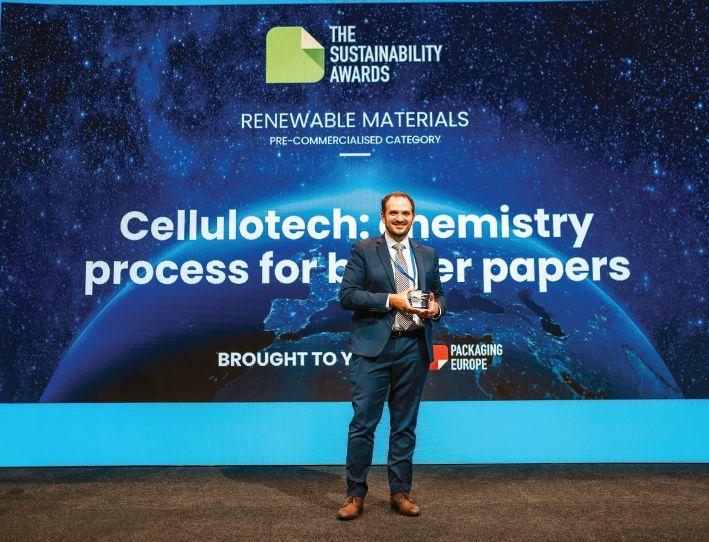
Canadian startup, Cellulotech, recently received an award from Packaging Europe in the PreCommercialized Renewable Material Sustainability category. This award recognized the company’s technology, which addresses the need of the industry to move towards repulpable barriers, without any plastic or other unsustainable materials. Instead, Cellulotech employs a process, discovered by its scientific director, Daniel Samain, that grafts one-nanometer-long molecules and offers a wide range of barrier properties.
Cellulotech shares that not only is this solution effective, but it also reduces costs, since it uses hundreds of times less material per square metre than traditional coatings. It also maintains the recyclability of
the paper products, while lowering CO2 emission levels associated with traditional coating processes.
Understanding Cellulotech’s solution requires a bit of out-of-the-box thinking. “This is not a coating,” stresses Romain Metivet, founder and CEO of Cellulotech. “We’re not adding a layer of material to the paper in order to protect it. Rather, we’re using molecular grafting to attach tiny molecules one nanometer long around the fibre.”
Metivet says that this patented process does not change the way the paper feels or how much it weighs. “There’s no layer of material on top of the paper,” he adds. “This is a chemical barrier that changes the surface properties of the paper, without you seeing it.”
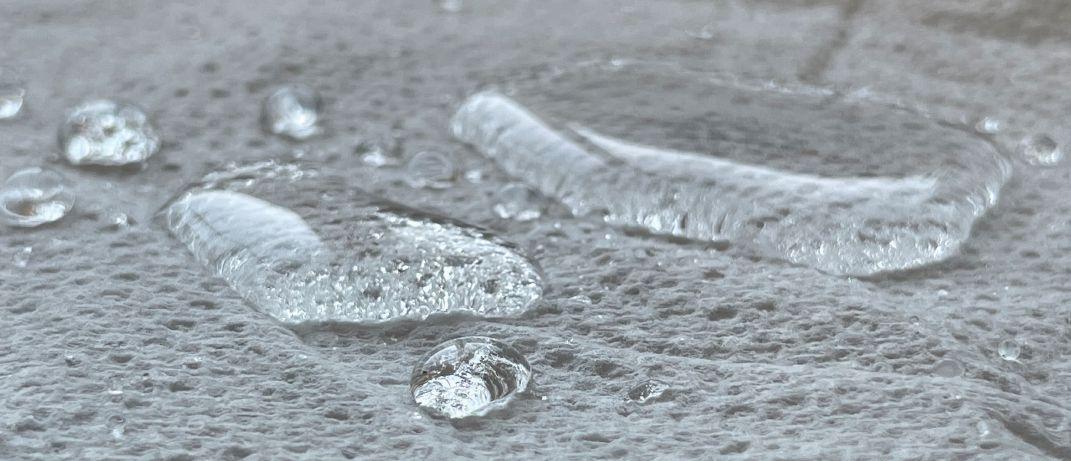
To better explain the concept, Metivet offers the example of water and oil poured together into a glass. Naturally, they won’t mix. Instead, they’ll remain separate. “This is the exact same phenomenon,” he says. “We attach tiny fatty molecules around the fibres, and water basically just flows off the paper, instead of being absorbed by it. The best way to think of it is that we turn paper into Gore-tex. The paper becomes superhydrophobic, but it still breathes, because we don’t close the pores of the paper like a coating would. Moreover, this treatment can last decades.”
It is quite interesting that this innovative process doesn’t simply treat the surface of the paper. “It’s applied to the specific surface,” Metivet explains, “which means that we treat the full thickness of the paper. In addition, you have no more capillary uptake, and you can fold or cut the paper
without damaging the barrier properties. The paper is always protected.”
Moreover, this advanced process doesn’t interfere with a paper product’s recyclability, Metivet explains. “You can recycle it as you would normal paper,” he adds.
One of the key advantages of Cellulotech’s solution is that the reagent used in this process is bio-sourced, readily available on the market and very affordable. More importantly, only a small amount of this reagent is needed to get the job done.
“We use a very tiny amount of reagent because this is a chemical reaction, and we don’t need to add a big layer of material to the paper,” Metivet says.
“Depending on the paper,” Metivet adds, “we need between 20 and 100 mg of reagent per square metre, and at $4 per kilogram, you will not find a cheaper solution. When you add up all the savings, this process is dozens of times cheaper than traditional coating technologies. It can also reduce creep and grammage and become a new sizing standard, reducing production costs significantly.”
Metivet estimates the cost of this technology to be between 0.1 and 0.5 cents per square metre, depending on the substrate.
The reagent is applied to the final paper product through a hot and dry process, which can be adapted to work with threedimensional moulded pulp objects like cups or trays. It can also enhance papers coated with hydrophilic coatings, such as MFC or PVOH, thereby enhancing their barrier properties to water and vapour, while offering recyclable plastic or siliconlike barrier properties.
Currently, however, the equipment needed for this molecular grafting process to work on a large scale isn’t available on the market. It still has to be developed, built and tested before Cellulotech can start offering this technology to paper mills for largescale applications. “Right now,” Metivet adds, “we’re looking for the partners and the financing we’re going to need to scale up the process.”
One of the challenges Metivet and his team are dealing with is the fact that isn’t possible to simply retrofit existing coating machines to work with this new nanotech-
nology. “The reaction time is 0.1 seconds,” he adds, “so it’s very, very fast. The reaction itself takes place in what we call a liquid-gas equilibrium phase. This means we apply the reagent as a very thin layer of liquid, but it spreads across the surface as a gas. That’s why we need dedicated equipment.”
Cellulotech is now in talks with several companies to scale up, and they’re planning to launch industrial pilots in North America and Europe. “Once the pilot project is ready,” Metivet adds, “any equipment manufacturer would be able to make the equipment. We would have the blueprints, and they could easily make it. It’s not that complicated.”
Metivet estimates that the entire turnkey process, complete with the necessary equipment, will be ready for paper mills in about four or five years. “We will have it ready within a couple of years for converters running at lower speeds,” he adds, “but for mills that are running at 1,000 metres per minute or more with a four- or five-metre wide machine, it would be overly optimistic for me to say that we would be ready within a couple of years.”
Once this technology is ready to go to market, Metivet says it will open up new possibilities for paper products. For example, this process can be used to make paper face masks that will be able
to repel droplets containing viruses and microbes, while also allowing the wearer to breathe freely.
Another application suggested by Metivet is paper that will be able to remove oil spills in the ocean or in industrial applications. “We can treat a paper towel,” he explains, “and make it hydrophobic. So, it won’t absorb water, but it will absorb spilled oil. This means we will be able to remove oil spills with a paper-based solution that is cheaper to manufacture but offers tremendous value.”
This technology also opens new highadded-value markets for paper used in construction, or even for water desalination.
Metivet is certain that he can move through the pilot project phase and bring this new technology to market without any major hiccups. “We want to get there quickly, and we have a clear roadmap for what’s ahead,” he says. “This is an innovation that’s going to take a few years to get to scale, but once it does, it’s going to change everything. We are convinced our technology will reshape the vast paper and packaging industries and change the way we think about biomaterials. Paper is the material of the future, and we’re very excited about it.” PPC
Jack Kazmierski is a Toronto-based freelance journalist and photographer.
By Sukanya Ray Ghosh
The visionary leaders steering the Canadian pulp and paper industry have not only established impressive benchmarks for success but have also nurtured the next generation of workers with their unwavering dedication and enthusiasm. Their commitment and passion have led to ground-breaking innovations while also fostering a culture of excellence within the sector.
Pulp & Paper Canada’s Hall of Fame contest celebrates and honours these exemplary individuals. Each year, the contest recognizes three legends whose contributions have significantly impacted the industry’s trajectory. From implementing sustainable practices to spearheading technological advancements, these changemakers have played a pivotal role in shaping a brighter future for the industry.
Co-founder and former president of Cascades
In 1964, Bernard Lemaire, with the support of his brothers Laurent and Alain, offered a second lease of life to the disused Dominion Paper mill in Kingsey Falls, Quebec. With this one step, he permanently etched his place in the Canadian pulp and paper industry. Papier Cascades was born.
Bernard mobilized the entire village community around this project to restart the mill and manufacture paper from recycled fibres. It was quite a challenge at a time when recycling and sustainability were not commonplace. He thus became a pioneer in recycling and the circular economy.
A visionary from the get-go, Bernard and his brothers developed a paper manufacturing complex in the village of Kingsey Falls in the 1970s, which at the time included mills producing molded pulp, plastic, corrugated board, containerboard and tissue.
Always ready to lead the charge, Bernard decided to build a new plant in Cabano, Quebec, a small village in the Lower St. Lawrence region, in 1976. Once again, he stimulated the economy of a small municipality that had lost its main employer when a sawmill burned down.
During his presidency, he implemented his management philosophy, based on respect for employees, transparency, sharing of profits and successes and autonomy. In the 1980s, he also initiated Cascades’ expansion strategy across North America and in Europe, notably in France, Sweden and Belgium.

His closeness to employees at all levels of the company made him a humble, generous and approachable man.
“He brought to the industry a different way to manage and work with employees. He wanted Cascades to succeed but he also wanted the employees to benefit from its success, so he implemented a profit-sharing plan for all employees. He also wanted employees to be aware of how the company was doing so sharing information with employees on every level was a good way to engage the employees in the success of the company. He called this the open-door policy,” shares Mario Plourde, president and chief executive officer of Cascades.
This policy is still alive and well in the company’s culture today.
Bernard succeeded in listing two companies on the stock market, Cascades and Boralex, both headquartered in Kingsey Falls, Quebec, a rural region 150 km from major urban centres.
He made a major contribution to the development of the Cana-
dian pulp and paper industry through the purchase and creation of several tissue and packaging plants, as well as mills in North America.
His business model was based, among other things, on buying up mills in a weaker financial position and turning them around. This approach also benefited the communities in which the mills were located, which in turn benefited from local economic development.
Bernard was a great natural motivator. He had a gift for convincing anyone to follow him in his projects. He was a mentor to many employees and leaders at Cascades and in the business world.
“Bernard was a hard-working dynamic person. For him, everything was possible. As much as he worked hard, he also invested a lot of time in visiting plants, meeting people and celebrating our success. He often said “we work hard, and we play hard”. He was very close to his employees and often visited the plants during the weekend and at night to see how the plant was producing and if they had any problems, he could help. He did not act like an
owner or a boss; he was part of the team,” says Plourde.
He played a major role in transforming the pulp and paper market from a predominantly virgin-fibre paper and board manufacturing industry. With Bernard Lemaire and his brothers leading the way, Cascades began manufacturing paper from recycled fibres in the 1960s. Their business model was based on a system they called “the closed loop,” which consists of recovering old paper and giving it a second life by making new recyclable paper. They were implementing a circular economy decades before the concept was established and popularized.
“Bernard was a born leader, a determined entrepreneur, a builder and a visionary. He began building Cascades in the early 60s using 100 percent recycled materials to produce paper. In this regard, Bernard was ahead of his time. He was a charismatic person, determined to succeed. For him, nothing was impossible, and every problem had a solution,” recalls Plourde.
In 1985, he participated in the creation of the Cascades Research and Development
Centre, one of the largest private research centres for the pulp and paper sector in Canada. At the cutting edge of technology, it offers services on an international scale with a team of 75 multidisciplinary specialists. Its unique approach fosters innovation within the company and develops innovative products and operational solutions to meet the needs of Cascades mills in North America, and those of their customers.
Development and innovation were at the heart of Bernard’s vision. He saw opportunities where others saw only risks.
Beyond research, technology and engineering, there is a core principle at Cascades that derives from the Lemaire family’s values: the right to make mistakes. Innovating means trying out new methods and ideas despite the risk of error. This management philosophy gives employees at Cascades a free hand and a strong stake in the company’s success. Teamwork and accountability, which are highly valued in the company, are the basis for the evolution of business strategies and, by the same token, for the innovation process.
“Bernard’s vision and his boundless
energy were inspirational to many. His desire to achieve success was obvious to all who worked with him and the success he achieved in both the paper industry and in the development of sustainable energy is a testimony to his genius. His energy level was contagious, and everyone wanted to be a part of his dream,” notes Plourde.
Bernard has been recognized for his contribution to the business world on several occasions. In 1985, the newspaper Finances awarded him the title of Businessman of the Year. In 1991, the Association des professionnels en ressources humaines du Québec awarded him the Iris d’honneur for his outstanding contribution to the advancement of human resources management. He was awarded the insignia of Officer of the Order of Canada, Officer of the National Order of Québec, and Knight of the National Order of the Legion of Honor, granted by the President of the French Republic. He also received honorary doctorates from the Université de Sherbrooke, the École des Hautes Études Commerciales, the Université du Québec à Trois-Rivières and the Université du Québec à Montréal.
“His contribution to the industry is in demonstrating that you can achieve success with a different approach, using recycled fibres and encouraging his team to manage with an open mind, and sharing success with the employees. Not only did Bernard use recycled secondary fibres as raw material, but he also recycled used equipment sourced from paper plants that had closed or were in difficulty and that no one wanted. In doing so, Bernard and Cascades helped maintain businesses in small communities across Canada, the U.S. and even in Europe,” adds Plourde.
Bernard passed away in 2023, leaving behind an incredible legacy that lives on.
Environment and technical manager at Kruger Kamloops
A part of the pulp and paper industry since 1989, Kristin Dangelmaier has dedicated her entire professional career focusing primarily on environmental management and control. She is seen by industry colleagues as a thought leader, strategic thinker, and effective communicator – all of which have driven impactful change.
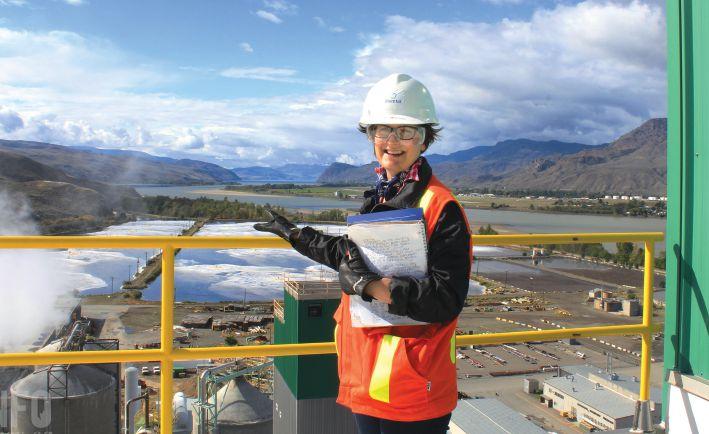
As a member of Kruger Kamloops mill’s senior leadership team, Kristin has been involved in defining the mill’s long-term aspirational roadmap, addressing top safety concerns and positioning it for success during COVID-19. In 2023, as the province of British Columbia dealt with curtailments, realignments and mill closures, the Kamloops mill stood strong during these challenging times financially and with an eye to recruitment. Kristin’s role at the mill through this period has been critical in setting up the mill for success through its close work with governments and First Nations groups.
Kristin’s colleagues share that “impact” is the best word to describe what she has meant to her company, community and greater industry. As a result of her leadership, environmental expectations at Kruger Kamloops (and prior to that Domtar Kamloops) have been positively re-shaped. Moreover, they are solidified by shared values, effective management and stakeholder buy-in. She understands that the mill’s environmental success lies in the engagement and effort of all parties at all levels. Her environmental stewardship has enabled the Kamloops mill to perform beyond its regulatory requirements – even during a period of growth and increased production rates. Examples include improved effluent management strategies, transformational changes to boiler air handling systems and the implementation of capital projects centred on reducing greenhouse gas emissions
and environmental performance.
“I have always felt that the Canadian pulp and paper sector has a long history of responsibly manufacturing renewable, sustainable products that contribute to an improved quality of life. And in a time when the world is facing significant and life-alternating effects from climate change, it is both inspiring and motivating to know that the pulp and paper industry has a great opportunity to be part of the solution by leveraging existing technical knowledge and infrastructure to create new bio-products that reduce reliance on fossil fuels,” shares Kristin.
Kristin is actively involved in professional industry groups and her local community, including the National Council for Air and Stream Improvement (NCASI) Canadian Steering Committee former chair, FPAC Environment committee, Kamloops Air Quality Roundtable, Domtar Kamloops EarthChoice Ambassadors, Pit Stop, Adopta-Road, and various government initiatives focused on environmental performance.
Through her work on FPAC’s Environment committee, she actively engages in key environment consultations to support the development of meaningful and effective regulatory development. Through her involvement with the FPAC-led Pulp and Paper Effluent Regulation Coalition and Environmental Effects Monitoring Subgroup. With her decades-long industry knowledge, Kristin has demonstrated the forethought and creativity to propose

regulatory off-ramps for the sector in cases where pulp and paper mills are showing consistent cases of regulatory compliance. Such proposals could help over 60 pulp and paper facilities across the country uphold high environmental standards, reduce regulatory burden, save costs on testing and studies and support effective regulatory modernization.
Kristin has supported the development of the Forest Products Association of Canada’s mill environment carbon strategy for the sector. By creating awareness of specific challenges facing the sector – including the at-times negative perception of biomass, high risks to trial new processes/technologies, lack of federal and provincial harmonization and inadequate understanding of the pulp and paper sector by decision-makers, she has been instrumental in identifying opportunities including identification of key technologies such as green hydrogen production from forest biomass, renewable natural gas production from wastewater and lime kiln decarbonization to inform FPAC’s advocacy.
These key opportunities that are applicable sector-wide would not only create environmental benefits but would also enable partnerships between mill owners and First Nations groups, in some cases create limited additional capital costs, and successfully leverage existing federal and provincial funding programs. Using this knowledge, FPAC has been able to engage in key consultations such as the development of Canada’s Clean Hydrogen Tax Credit which was written into legislation in April 2023 and includes an incentive for companies who wish to develop green hydrogen via electrolysis – a process that can be easily done at pulp and paper mills with minimal investment.
Kristin tackles policy issues by applying a lens of “what is driving this change.” By looking for this change statement, she explores ideas, weighs options and creates buy-in from other companies who can ally together to support this change. This has been her approach in various regulatory initiatives including federal annual air reporting requirements, environmental emergencies and chemicals management to name a few. For updates to the Environmental Emergencies Regulations which began in 2018, she has played a key role by sharing
her experience in applying the regulation at the mill and helping develop guidance for new regulatory proposals which were ultimately adopted by Environment and Climate Change Canada to facilitate regulatory reporting across industries.
Kristin makes time to coach other aspiring industry leaders, provide history on specific topics to build context, offering constructive feedback and words of encouragement to empower individuals with the confidence needed to tackle new projects and problems.
Over the course of different company ownerships, Kristin has been a leader in the development of many young engineers at the mill by elevating their understanding of the process engineering role and their ability to drive positive change – giving these engineers confidence in projects they believe in.
She has been integral in supporting the work and the development of two Environment team members at FPAC since becoming a member in 2019. Kristin takes pride in advocating for improved diversity in the STEM field to help build future leaders for the entire industry.
Asked to comment on her greatest success in her career, she says, “Looking back on a career that spans nearly 35 years, it is difficult to choose just one accomplishment about which I feel most proud. Certainly, as a female in a male-dominated sector, I feel that I have positively challenged the status quo and helped to increase diversity and acceptance in the workplace. This includes the recruitment, mentoring and development of the next generation of engineers. However, I feel that my greatest achievement has been the advancement in pulp and paper manufacturing environmental performance which was only possible by maintaining high expectations, unwavering dedication, and influencing business operations from the inside. As I look towards retirement, I hope to continue my efforts in these areas in some small way.”
She explains, “To achieve innovative solutions, the younger generation will need to pursue new collaborative opportunities with industry peers, government policymakers, research institutes, first nations, local communities and non-traditional business partners.”
Founder, former president and CEO of Metro Waste Paper / Cascades Recovery+ (retired)
With a career spanning more than 45 years, Albino (known as Al) Metauro has been a pioneering force in Canada’s recycling industry, demonstrating remarkable entrepreneurship and visionary leadership. His early focus on recovering fibre from landfills set him apart, laying the foundation for transformative initiatives and the birth of Metro Waste Paper Recovery.
The strategic partnership with Cascades in 1995 marked a milestone, showcasing Al’s business acumen and contributing to substantial industry growth and a circular economy. Long-term relationships with major municipalities and retailers underscore his commitment to advancing recycling practices nationwide. Al’s influence extended with initiatives like convincing the City of North York to implement a separate box for residential fibres, thus revolutionizing boxboard production. The construction of a leading municipal recovery facility and securing major contracts, including with the City of Toronto, highlighted Al’s commitment to excellence and economic viability in resource management.
The strategic acquisition of Sonoco Recycling expanded Metro Waste’s reach, establishing a national collection presence. Winning contracts, like the City of Calgary’s curbside recovery processing, demonstrated not only his ability to secure high-profile deals but also implement cutting-edge technology for efficient recycling. Al’s visionary leadership was further evident in the creation of “Green By Nature,” facilitating Extended Producer Responsibility (EPR) in British Columbia. As the architect, Al ensured EPR’s success, emphasizing post-collection activities and holding brand owners accountable to legislative requirements.
Al has served as a mentor, coach and visionary in the industry. Even in retirement, he remains a crucial supporter of the industry’s development and embraces new trends. Al’s influence extends beyond individual mentorship. He actively shaped recycling practices in Canada by sitting on multiple industry boards. Under his

leadership, his business grew to over 1200 employees across Canada and the Northeastern U.S.A., fostering a culture of giving back and treating employees like family.
Al was a hands-on leader, involved in various aspects from sorting materials in the plant to participating in charitable events. His commitment to a familial atmosphere created a positive work environment. An active member of industry associations, including the RCO, RCA, and PPEC, Al consistently focused on advancing the recycling sector in Canada. His involvement in SWEEP in the early to mid-90s showcased his dedication to creating platforms for private sector input and collaboration.
“During the early days of my career ‘recycling’ was not the motivation behind paper/paperboard recovery, it was simply driven by the value or dollars being paid for it. On the other hand, the marketplace for paper/paperboard recovery was not well developed and we soon came to realize there was plenty of paper/paperboard available to recover,” shares Al.
“Knowing very little about the pulp and paper industry, it became apparent that there was a growing trend for paper
mills to use secondary fibre. At the same time, it did not take long to realize as much as paper mills needed suppliers, we needed paper mills. This forged relationships with many Canadian paper mills and ultimately a rewarding partnership with the pulp and paper industry,” he adds. “As the environmental movement focused on waste management, recycling became a means to reduce waste. Recognizing the potential volatility of market conditions, the challenges associated with material recovery, and the labour-intensive processes involved in preparing recovered fibre for shipment to paper mills, we were well positioned for growth. And that we did, increasing our supply to the pulp and paper industry to over a million tonnes a year.”
Al’s career is characterized by a relentless pursuit of innovation within the recycling industry. As a leader, he consistently sought new ideas and technologies to propel the industry forward. His early advocacy for the circular economy, championing the responsibility of brand owners for package recycling, showcases his foresight and commitment to transformative practices.
As the operator of 18 material recovery facilities in Canada and the Northeastern
USA, Al embraced technology and innovative programming, ensuring operational efficiency and sustainability. He founded the Sustainable Material Management Group within Metro Waste/Cascades Recovery+, emphasizing solutions that actively contributed to the circular economy and increased diversion rates.
In the 90s and early 2000s, Al spearheaded groundbreaking initiatives like the Total Recovery Program (later named Recovery+), maximizing recyclable material recovery across major retailers in Canada.
When asked about what he considers his greatest achievement in his career, he says, “Of course, there are many great achievements to be proud of. From the introduction of the Paperbox in the 80s, winning major municipal contracts, partnering with Cascades, expanding operations across Canada and into the U.S. to winning a contract to manage an entire province’s post collection program. However, the greatest achievement would have to be working with my brothers and all those who joined us over the years and who helped transform a one-pickup truck operation into one of Canada’s leading paper and paperboard recovery organizations.”
The emergence of EPR in support of the circular economy presents a significant avenue for the pulp and paper industry to leverage its resources. Inherently, paper/ paperboard stands out as one of the most circular materials. The increasing emphasis on circularity increases opportunities for the utilization of paper/paperboard in packaging.
“My advice to the younger workforce is to focus on these evolving opportunities. In doing so, you must keep in mind the importance of designing for circularity. For the pulp and paper industry, this means taking on a commitment that whatever is produced by the industry will be later consumed by the industry. This commitment leads to addressing many challenges as the packaging industry transforms paper/paperboard to suit their products. Your collaboration with the consumers of your paper/paperboard will contribute to ensuring recyclability and to sustaining a robust demand for paper/paperboard in the years ahead while helping to support the development of a truly circular economy,” says Al. PPC
Benchmarking kraft mills’ secondary condensates and strategies for optimizing their management to improve mill efficiency and environmental performance.
By Luciana Savulescu
and Adam
Rogerson
from from Natural Resources Canada, CanmetENERGY, Industrial System Optimization Group and Tatiana Rafione and Kurt Woytiuk from FPInnovations, Pulp and Paper Centre of Excellence
Abstract
Effective condensate management is crucial for enhancing mill efficiency and ensuring compliance with environmental regulations. The benefits and challenges of different methods of treating condensates, such as steam stripping and high-rate anaerobic internal circulation reactors are discussed. Further, the opportunity for by-product revenue through the production of green methanol, turpentine, and organic solvents from condensate processing is presented. Design, operation and debottlenecking strategies of stripping systems are also proposed. The reduction of condensate generation, selective treatment of foul condensates, integration of stripping systems and condensate reuse and heat recovery are offered as avenues for optimizing condensate management while reducing environmental impacts.
Introduction
Optimization of condensate management, particularly the secondary condensate system (contaminated condensates derived from black liquor and pulp suspensions), continues to be critical in achieving high mill efficiency from an energy, water, chemical and economic perspective. The discharge of mill water streams and condensate, termed effluent, is regulated under
section 7 of the Pulp and Paper Effluent Regulations (PPER – SOR/92-269) pursuant to the Fisheries Act[1]. Mills are required to submit monthly effluent reports to Environment and Climate Change Canada (ECCC), which include effluent Biochemical Oxygen Demand (BOD), quantity of suspended solids (SS), volume, and results of rainbow trout acute lethality and Daphnia magna (common water flea) monitoring tests[2]. Mills will need to continue improving their management of process condensates and effluent treatment while simultaneously exploring in-process treatment capacity and integrating innovative process improvements to maintain compliance and reduce their environmental impact.
Secondary condensates that originate from the digester, turpentine decanter underflow, evaporators and non-condens-
Condensate
Clean
~100ppm Methanol
Combined ~500ppm Methanol
Contaminated ~1000ppm Methanol
Foul >5000ppm Methanol
able gas (NCG) systems contain reduced sulfur gases collectively referred to as total reduced sulfur (TRS) gases, as well as organic compounds, such as methanol, turpentine, ethanol, and acetone, in addition to ammonia. These compounds are either introduced by compounds in wood chips or formed during the pulping process[3]. The TRS gases are responsible for the strong odour of condensates and contribute up to 95 percent of condensate toxicity. Conversely, organic compounds are the primary source of BOD and Chemical Oxygen Demand (COD) in condensates, as well as volatile organic compounds (VOC) in air pollution. Due to these undesirable properties, the obligations under the PPER, and the toxicity of turpentine and TRS to anaerobic biomass, it is necessary to treat foul condensates before reusing them
Evaporator middle effects, treated condensate, first stage condensate of a two-stage digester condensing system.
Merged stream of clean and/or contaminated condensates.
Evaporator effects receiving weak black liquor, primary surface condenser.
Secondary surface condenser, evaporator vacuum system inter/after condensers, second stage condensate of a two-stage turpentine condensing system, NCG/SOG system line drains, turpentine storage tank padding water.
Reused as process water (pulp, lime mud, and dregs washing, heating, cooling, level makeup) and/or sent to effluent treatment.
Treated with steam stripping then reused as process water (pulp, lime mud, and dregs washing, heating, cooling, level makeup) and/or sent to effluent treatment.
Table 1: Sources and management of secondary condensates
throughout the mill or sending them to effluent treatment.
Evaporators account for up to 80 percent of the secondary condensate generation, with the balance generated in the digesters (approximately 15 percent), turpentine decanters (approximately four percent), and NCG systems (approximately one percent). The classification of condensates is determined based on pollutant concentrations. Condensates are categorized as clean (~100ppm), contaminated (~1000ppm), or foul (>5000ppm) in terms of methanol content. Typical flow rates for clean, contaminated, and foul condensates for a 1000 ADMT/d mill are approximately 8000 LPM, 4000 LPM, and 1500 LPM, respectively [3]. Additionally, depending on the evaporator plant design, several streams of clean and/or contaminated condensate can be merged into a stream referred to as combined condensate at ~500ppm methanol. Table 1 provides an overview of the sources and conventional management strategies of each secondary condensate type.
Steam stripping is commonly employed to treat condensates to remove the more volatile pollutants from the liquid phase. The resulting overhead gaseous stream, known as stripper off gases (SOG), contains roughly 50 wt% methanol as its main pollutant. It can be combusted in a boiler or kiln, generating approximately 0.50 GJ/ADMT of net heat. However, it is important to note that SOG often contain high levels of sulphur, which can lead to high TRS levels at the boiler stack and sticky deposits[4]. Alternatively, SOG can undergo processing with various separation equipment such as strippers, distillation columns, condensers, decanters, and reverse osmosis membranes. This process can yield valuable by-products such as 99 wt.% methanol, 98 wt.% turpentine, and other organic solvents. For instance, a 1000 ADMT/d mill could potentially produce approximately 7 MT methanol/d, which would result in an annual revenue increase
of $1.7MCAD (at a value of $700CAD/MT methanol) [5].
Another less common method for treating condensate, particularly effective for smaller mills (less than 1000 ADMT/d), is the use of high-rate anaerobic internal circulation reactors. These reactors have demonstrated high removal efficiencies, with 99 percent conversion of methanol to 90 wt.% methane at a rate of 0.35m3 methane/kg COD [6,7]. Utilizing such reactors offers a cost-effective treatment option when steam is unavailable for implementing a stripping system.
Evaluating the current sources and the quality of each stream within the secondary condensate system and comparing them with the best practices of an efficient system is a pivotal step in assessing the potential for improved condensate stream management. This assessment supports
informed decision-making for the screening and segregation of condensates, with the objective of minimizing the required treatment, saving resources (energy, water, and chemicals), and enhancing overall system performance.
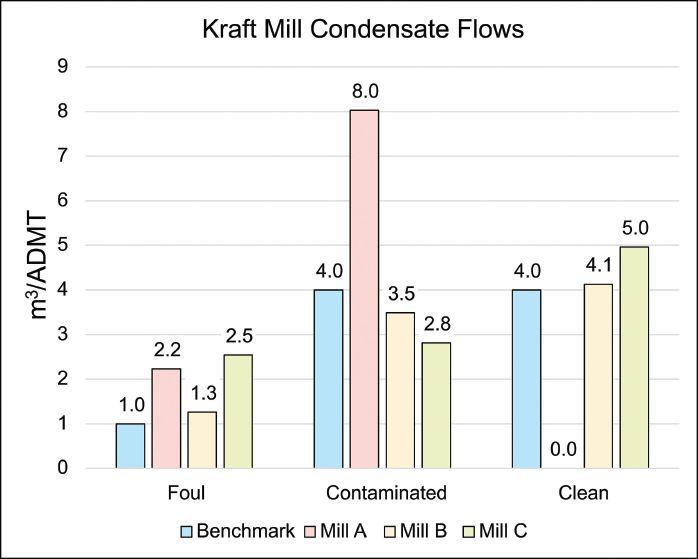
Typically, a kraft mill produces approximately 9m3/ADMT of secondary condensate. However, out of this volume, only clean and stripped condensate, accounting for approximately 3-6m3/ADMT, can be safely reused for pulp washing without the risk of contamination[8]. For reference, Table 2 and Figure 1 provide benchmark information on pollutant levels and typical flows of various kraft condensates. Prior to treatment, foul condensate typically exhibits pollutant levels of 7-10kg BOD/ ADMT, 5-10kg methanol/ADMT, 1-2 kg turpentine/ADMT, and 1-2 kg TRS/ADMT [8]. By adopting an internal condensate segregation approach, where clean and contaminated condensates are kept separate across the evaporator effects, it is possible to selectively treat foul and contaminated condensates. This segregation enhances the potential for the reuse of secondary condensates in the pulp washing process.
The volume and contamination level of
foul condensate are interconnected with the design and performance of evaporators, as well as the percent dry solids (%DS) of weak black liquor, which is directly influenced by the water content introduced during pulp washing. Therefore, optimizing the dilution factor and washing efficiency in brown stock, oxygen delignification, and bleached stock washing processes will result in a higher %DS weak black liquor sent to the evaporators. Concentrating weak black liquor can be achieved through further optimization of causticizing and recovery boiler reduction performance, as well as chip pre-drying, which reduces the amount of water introduced from white liquor and chips [11]. An increase of one %DS in weak black liquor will result in a reduction of approximately seven percent in condensate volume.
Steam stripping is widely recognized as
Evaporator Foaming Liquor carryover within foul condensate.
Incineration Temperature Spikes Slugs of turpentine delivered to stripper.
one of the most effective treatment methods for foul condensates. By maintaining a steam-to-condensate ratio of 15-20 percent, steam stripping technology can deliver impressive removal rates, including 98 percent BOD, 97 percent methanol, 100 percent turpentine and 98 percent TRS. Steam strippers are often equipped with reflux condensers, which enhance the overall stripping efficiency, and enable the recovery of a portion of the heat supplied to the stripper. This recovered heat can be utilized for various purposes such as steam generation, heating boiler feed water, or heating black liquor [12].
Stripping systems are commonly equipped with valve tray systems, which offer self-cleaning capabilities and the ability to maintain high stripping efficiency across a wide operating range. Additionally, these systems provide a consistent pressure drop even with varying vapour loading rates. Typically, stripping systems are partially integrated within the
A high conductivity measured on incoming foul condensate indicates the presence of liquor. Dump highconductivity condensate gradually to weak black liquor tank.
Turpentine has a tendency of separating to the top of condensate storage tanks, which when pulled to the stripper in a single slug will create a temperature spike at the incineration point. Upgrade internal agitation of condensate tanks or direct treatment of the turpentine decanter underflow can ensure a more consistent temperature profile by firing pollutant mixtures rather than concentrated turpentine.
evaporation train, where vapour and fresh steam are supplied to the stripper, and the resulting SOG are condensed within a dedicated section of a subsequent effect. This arrangement allows for the recovery of energy to facilitate black liquor evaporation. However, partial integration introduces increased control complexity due to the interdependence of the stripping system on evaporator operation.
Operational challenges (described in Table 3) can arise during the operation of stripping systems, leading to a decline in stripping efficiency, process upsets, potential equipment damage, and even system shutdowns. To mitigate these issues, the start-up and shutdown procedures for stripping systems should be performed gradually and with care.
Lack of capacity or bottleneck in stripping systems remains a prevalent challenge faced by mills that are operating at or beyond their pulping design capability. Several options are available for debottlenecking stripping systems, including:
• Regular cleaning of mist eliminators, reflux surface condenser, and condensate heat exchanger;
• Increasing the heat exchanger area and number of column tray levels, where feasible;
• Replacing and adjusting column trays and packing;
• Adjusting the operating pressure and temperature of the stripper;
Plugging Entrapped fibre in foul condensates.
Scaling Nucleation of hard to remove salts.
Unstable
Operation Rapid changes in digester and evaporator operation.
Foul condensates often carry pulp fibers into the feed heat exchanger and through the stripping column. Installation and maintenance of an effective fibre filter before the heat exchanger can prevent fibre plugging.
Scale formation has been noted to occur from stripped condensate travelling out of the feed heat exchanger. The formation mechanism and composition of the stripped condensate scale is still not well understood. Ensuring the stripped condensate travels through the tube side of the heat exchanger will help facilitate mechanical cleaning and preventative chemical cleaning can help remove scale buildup.
The flow of black liquor through the evaporator plant, which is proportional to condensate production, needs to change as slowly as possible. Enhance stripper control with a feedback loop to account for upstream process variations.
• Installing nozzles in the column to facilitate steam injection;
• Implicit control of foul condensate and stripper off gas (SOG) composition through recovery cycle control.
Implementing these measures can help alleviate capacity limitations and enhance the overall performance of the stripping systems.
Developing an effective strategy for condensate management and treatment often requires following a series of sequential steps. These sequential steps are designed
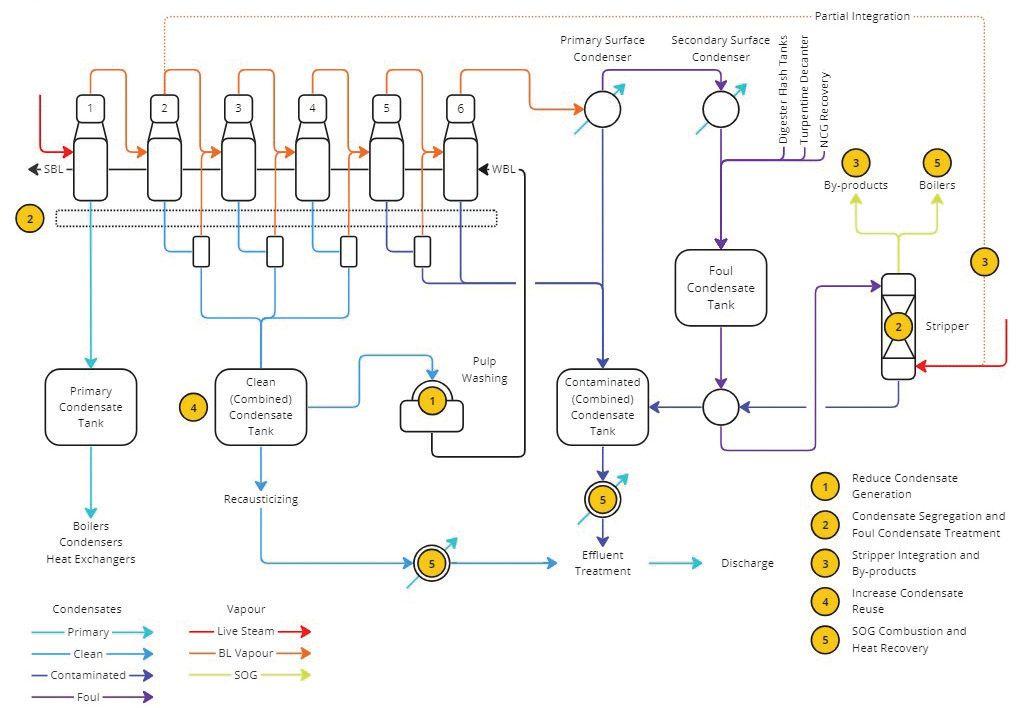
to minimize cross-effects, given the high level of system interaction between the chemical recovery loop, the pulping process, and the utility system. The focus is on ensuring that immediate changes to the secondary condensate system are sustainable in the long term and aligned with the mill’s overall efficiency objectives. These steps are derived from case studies and described in detail below and illustrated in Figure 2.
The generation of condensate can be minimized through various control and optimization strategies. One approach is to optimize dilution factors in pulp washing stages, including the digester, diffusers, brownstock, oxygen delignification, and bleaching. By fine-tuning these factors, it is possible to reduce the amount of water introduced into the process, thereby minimizing condensate generation. Additionally, installing mechanical seals in black liquor pumps can help prevent seal water infiltration into the black liquor, leading to reduced condensate production. The reduction of condensate should be the first step towards better condensate management and lower effluent treatment loads, sub-
ject to maximum black liquor DS concentration at the inlet of the evaporator.
It is highly advisable to segregate condensate based on pollutant levels right at the evaporator and establish dedicated storage tanks equipped with control instrumentation to facilitate the collection and management of different condensates. Condensate segregation allows for the selective treatment of the foulest condensates through steam stripping, which can yield significant reductions in steam requirements. Utilizing flash tanks after each condensate extraction from an effect is one way of facilitating condensate segregation without comprising steam economy by using the flash steam to drive black liquor evaporation.
Stripping systems can be incorporated into evaporator plants in various ways: partially integrated, fully integrated, or as standalone systems.
In the case of partial integration, vapour generated from black liquor evaporation, primarily from the higher effects (first or
second), is combined with fresh steam to facilitate condensate stripping. This approach maximizes the efficiency of vapour utilization during evaporation by stripping the condensate.
On the other hand, full integration involves positioning the stripping system between the first and second effects of the evaporator plant toward achieving higher global energy efficiency. In this setup, all vapour produced in the first effect flows through the stripper before condensing within the second effect. However, it is worth noting that full integration results in a 10 to 15 percent reduction in stripper capacity compared to partial integration, mainly due to pressure loss considerations. Thus, a techno-economic analysis comparing the degrees of stripper integration may be applied to assess trade-offs (energy/stripper performance) and support the decision towards selecting an optimal integration design.
Alternatively, stand-alone systems operate only with fresh steam and are not interlinked with the vapour streams of the evaporator plant. This independence allows them to function separately from the evaporator plant and yields cleaner stripped condensates through the exclusive use of fresh steam. This reduces however the net
energy efficiency.
As previously discussed, methanol, which constitutes a large portion of SOG and is the primary contributor to the BOD in condensates, can be processed into a valuable by-product through a purification system. This purification system typically consists of a turpentine decanter followed by two distillation columns with reflux condensers and concludes with a reverse osmosis membrane for final polishing of the purified methanol. The purification process results in the production of highly purified biologically sourced methanol (99wt.%), which holds significant value in the market, especially towards decarbonization efforts. The purified methanol can be commercialized or utilized as a chemical input in the chlorine dioxide generation process for pulp bleaching.
Increasing the reuse of condensates in various washing processes such as lime mud, brown stock, oxygen delignification, and bleaching, and as a makeup water in recausticizing, can effectively reduce the load on effluent treatment and the overall mill water demand.
Brown Stock Washing, for example, typically requires 10 to 13 m3/ADMT water, part of which (6 to 9 m3/ADMT) can be replaced by treated condensates. The objective is to maximize the reuse of condensates at the lowest purity possible without compromising performance.
Combusting SOG and incorporating stripping reflux condensers is a highly effective heat recovery strategy that allows for the recuperation of the heat necessary to operate stripping systems. This approach also aids in improving steam utilization and replacing some fossil fuel firing in boilers. By implementing this strategy in tandem with increased condensate reuse, mills could reconfigure and optimize the heat exchanger network. This involves the transfer of heat from condensates before they are directed to effluent treatment.
Flash tanks, as mentioned earlier, also allow for another degree of freedom when operating an evaporator plant. By reducing the operating pressure of the flash tank, more flash vapour will
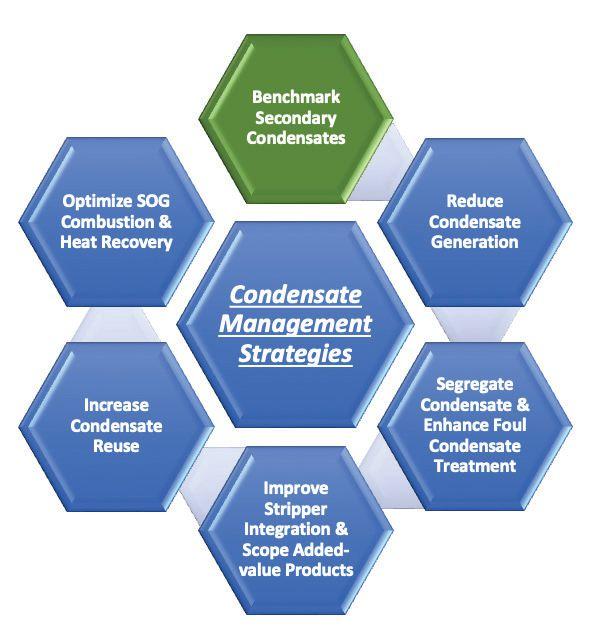
be generated, which recovers heat and improves the steam economy. However, the produced condensate from the tank will be at a lower temperature, which may require additional heating depending on its end use. Furthermore, by transferring heat from condensates before they undergo effluent treatment, the temperature of the effluent stream can be lowered, which may enhance the efficiency of subsequent treatment processes. This approach allows for more efficient utilization of thermal energy, reduces the environmental impact associated with effluent treatment, and promotes sustainable operation in the pulp and paper industry. Heat recovery from condensates can also help alleviate seasonal warm water deficits.
The chemical recovery cycle and secondary condensate system are at the core of the chemical and energy performance of kraft mills. Optimizing these systems could improve a mill’s overall process efficiency and economics. Several insightful steps are proposed and prioritized as strategies to enhance condensate management prior to effluent treatment and discharge, to improve the overall site efficiency: reducing condensate generation, condensate segregation and foul condensate treatment, optimizing stripping integration, and increasing condensate reuse and heat recovery can all contribute to lowering the environmental impacts of pulp and paper mill effluents. In most cases, this can be achieved in a cost-effective manner by improving energy recovery and the production of valuable chemicals and fuels.
Kraft foul condensates, which are characterized by high levels of BOD, toxicity, and odour, must undergo treatment most often through steam stripping to comply with the Pulp and Paper Effluent Regulations (PPER). In some mills, proposed changes to the PPER may necessitate greater removal of pollutants, and control of pH and temperature in kraft mill condensates prior to the effluent treatment plant.
Avoiding the dilution of contaminated and foul condensates with clean condensates is a best practice to prevent lowering performance and bottlenecking strippers. Moreover, enhancing inprocess condensate stripper treatment, it
not only alleviates the load on the effluent treatment but also consolidates the foundation for added value pathways: bioenergy/methanol.
References
[1.] Pulp and Paper Effluent Regulations SOR/92269. Minister of Justice, 2023. Available at: https://laws-lois.justice.gc.ca/eng/regulations/ SOR-92-269/FullText.html
[2] Pulp and Paper Effluent Regulations Annual Report. ECCC, 2021. Available at: https://publications.gc.ca/site/eng/9.898066/publication.html
[3] The Basics of Foul Condensate Stripping. A. H. Lundberg Systems Ltd., 2017. Available at: https://www.ahlundberg.com/technical-paper/
[4] Effects of SO2 on superheater fouling in kraft recovery boilers. H. Tran, C. A. Brown and A. K. Jones, Recovery Boilers, 2008. Available at: https://tspace.library.utoronto.ca/bitstream/1807/98524/1/J085%20-%202008%20 Effect%20of%20SO2%20on%20Superheater%20 Fouling%20in%20Recovery%20Boilers.pdf
[5] Valmet Methanol Purification - Unleashing the green value of methanol. Valmet, 2020. Available at: https://www.valmet.com/insights/articles/ pulp/unleashing-the-green-value-of-methanol/
[6] Full-scale Anaerobic Treatment experiences with Pulp Mill Evaporator Condensates. TAPPI, 2002. Available at: https://imisrise.tappi.org/ TAPPI/Products/env/ENV02183.aspx
[7] Anaerobic Treatment of Condensates: Trial at a Kraft Pulp and Paper Mill. Domtar Papers, 2001. Available at: https://www.jstor.org/ stable/25045467?seq=7
[8] Best Available Techniques (BAT) Reference Document for the Production of Pulp, Paper and Board. Joint Research Centre, Institute for Prospective Technological Studies, European Commission, Publications Office, 2015. Available at: https://op.europa.eu/en/publicationdetail/-/publication/fcaab1a5-d287-40af-b21c115e529685fc/language-en
[9] Potential Impact of Condensate Handling on Kraft Mill Odour, Pulp and Paper Research Report No. 1439, Paprican, 1999
[10] Benchmarking of condensate stripper efficiency, quality, and reuse at kraft mills: Impact on treatment system loading. B. O’Connor, S. Ellis, FPInnovations Pulp and Paper Research Report No. 1976, February 2016
[11] The effect of dead load chemicals in the kraft pulping and recovery system. TAPPI JOURNAL, 2009. Available at: https://www.researchgate.net/ publication/289853467_The_effect_of_dead_ load_chemicals_in_the_kraft_pulping_and_recovery_system
[12] Condensate Stripping System. A. H. Lundberg Systems Ltd., 2023. Available at: https://www.pulpandpaper-technology.com/ products/ah-lundberg-systems-limited/condensate-stripping-system PPC
Long-life filter media. Efficient recovery. Continuous operation.
Investigating the pivotal role of moisture content in debarking, chipping, and kraft pulping operations, shedding light on strategies for improved process efficiency.
By Augusto Quinde, PhD
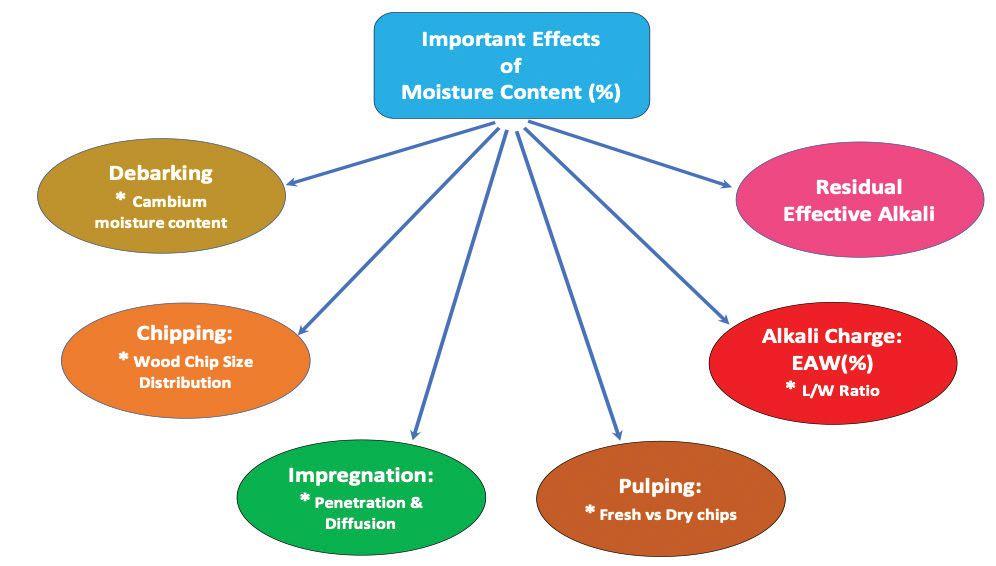
The harvesting and buying of pulp logs are based on a per green tonne. Their moisture content critically impacts the pulp log price due to its influence on the wood mass. Furthermore, for kraft pulping operations the moisture content of the pulp logs affects not only the commercial aspects but also other operations like debarking, chipping (i.e., chip size distribution) and kraft pulping operations (i.e., impregnation, fresh vs dried chips, effective alkali charge, residual effective alkali), among other things. See Figure 1.
Kraft pulping operations depend not only on using the best
technologies or the latest digester developments but also on the quality of the most important raw material – wood. When dealing with wood quality, the moisture content and the wood chip size distribution seem to be the ones demanding special attention. However, the wood chip size distribution is perhaps the most important variable with regard to wood chip quality. In this paper, we will review the most critical effects of moisture content that could affect wood processability and pulping operations – debarking, chipping, impregnation, pulping, alkali charges and residual effective alkali. Additionally, we will review the water flow in a living tree and cooking chemicals transportation inside the wood chips during kraft pulping.
Debarking depends on the debarking equipment, the log form and the adhesion strength at the bark-wood interface. The properties (i.e., pectin content) of the cambial zone are also relevant during debarking. The bark-wood adhesion strength depends on several factors – moisture content, harvesting season, wood species, temperature and direction of applied external forces. It might be that the wood-bark adhesion strength depends on the different behaviour of the plant cell components (i.e., pectins) with water (Chahal 2019).
The removal of the bark from pulp logs is essential to obtain a high-quality pulp and it depends on how strong the bark is attached to the wood. It has been shown that the moisture content at the cambium layer affects the wood-bark adhesion strength. Studies at the FPInnovations research centre have found that this bark adhesion strength increases as logs dry at moisture contents of around 20 percent to 40 percent (FPInnovations 2022).
Debarking operations are more difficult for frozen and dry logs while fresh, unfrozen logs usually debark easier and demand less energy. These conditions can generate over-debarked or under-debarked wood (Pulkki 1991).
Highly branched trees would result in poor debarking and higher bark content of the wood chips going into a digester. The optimal bark content of wood chips is below two percent as higher levels require additional cooking chemicals and might affect the dirt counts of final products.
In some countries, the wood chip size distribution is the basis for payment of sawmill chips. This size distribution is very important during kraft pulping not only because of the effects on pulp production and digester disturbances but also for the consequences on the post-digester handling of the pulp (Quinde 2020).
Van der Merwe et al. (2016) studied the effect of two drying periods (i.e., one and two weeks) and the effect of log sizes. They found that the drying periods and log sizes had a substantial impact on the wood chip size distributions (i.e., accepts, oversized chips, over-thick chips, pins and fines) generated during chipping. One-week dried logs produced wood chips with one percent less over-thick fraction than two-week dried logs. Furthermore, the over-thick fraction increased when decreasing log size. In general, when decreasing the log size, the amount of undesired chip fractions increases during chipping. Finally, they mentioned that the effect of pulp log moisture content on chip production is not well known.
Most of the water absorbed by the roots passes through the stem and branches into the leaves and then directly into the atmosphere in a process called transpiration. Only less than five percent is retained for plant growth. Plants depend on photosynthesis to make sugars by absorbing carbon dioxide (CO2) from the atmosphere at a rate of one CO2 molecule gain for 400 molecules of water lost to the atmosphere. Then, there must be a balance between transpiration and photosynthesis to secure the survival of plants by producing sugars but risking dehydration in this process (McElrone 2013).


Whether you work in board and paper, tissue, pulp or energy industry, Valmet’s comprehensive service offering helps to lower your environmental footprint significantly – at the same time improving your operational results. Are you ready to succeed with us? Explore how onn www.valmet.com/waytoserve

Water moves from the soil to the top of the trees (i.e., in sequoias about 90 to 100 metres) by a cohesion-tension mechanism where cohesion among water molecules is due to hydrogen bonding and the tension is generated by the evaporation of water during plants’ transpiration. When water evaporates, it pulls the next water molecules to replace those lost during evaporation (McElrone 2013). Cohesive forces by hydrogen bonding are outlined in Figure 2.
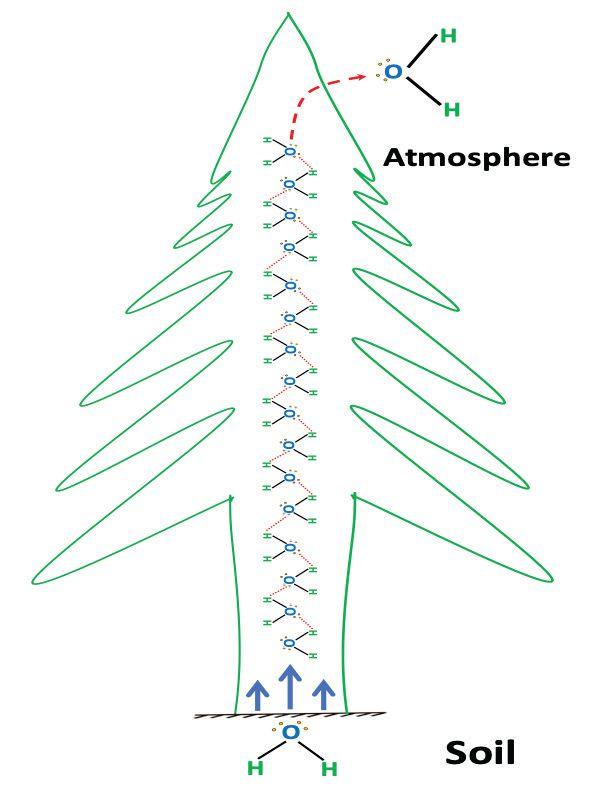
Fibre morphology is very important to understand how water, preservatives and cooking chemicals penetrate and diffuse through wood (Josza 1983).
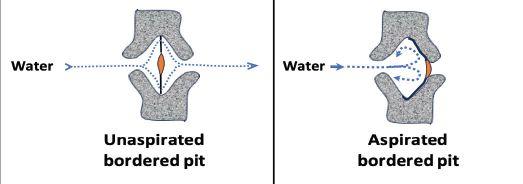
The flow of water from the roots to the upper parts of the tree (i.e., leaves) is carried out through vessels (hardwoods) or tracheids (softwoods). Tracheids connect to their adjacent ones through small cavities called pits (i.e., bordered pit) that act as a safety valve allowing the passage of water but restricting the spread of air bubbles or any other extraneous material (McElrone 2013). Bordered pits include a finely porous pit membrane (i.e., torus and margo) that is located at the centre of each pit (Choat et al. 2008, Jansen and McAdam 2019). Because of a pressure difference, the pit membrane can be deflected (i.e., aspirated) to the point where the torus seals the aperture (Choat et al. 2008). As per Xia et al. (2023), the aspiration in bordered pits depends on the structural and material characteristics of the torus and the margo. (See Figure 3).

Bordered pits are present in both hardwoods and softwoods (Choat et al. 2008; McElrone et al. 2013). As per Brännvall (2017), the bordered pits are distributed in pairs, such that one pit in one tracheid is connected to a pit opening in an adjacent tracheid.
Water flows easily through all the conduits (i.e., vessels, tracheids) when they are clean. However, water transport can be disrupted by different factors, such as pathogenic organisms and/ or their by-products, gums, tyloses, a gas bubble and aspirated bordered pits, among other things (McElrone et al. 2013). The same factors can obstruct the passage of the cooking chemicals to all parts of the wood chips with special emphasis to their centres. Special attention should be given to the effect of aspirated bordered pits. See Figure 4.
Impregnation is a term that describes a combination of penetration and diffusion of cooking chemicals into the wood chips. While the penetration is a function of a gradient pressure inside the digester, the diffusion is a function of a gradient concentration of the active chemicals. High chip moisture can be detrimental to im¬pregnation. If there is a large relative amount of liquid in the chips, there is no room for the penetration of the cooking liquor and all impregnation must be done by diffusion (Corriveau 1982, Brännvall 2017).
Wood chips must be significantly impregnated with cooking liquors when the delignification reactions start at high temperatures to avoid inhomogeneous delignification of wood chip cores. Inadequate delignified chip cores are called shives
or rejects (Brännvall 2017).
As per Brännvall and Kulander (2019), impregnating wood chips with high EA concentration decreases the risk of alkali depletion during the impregnation stage.
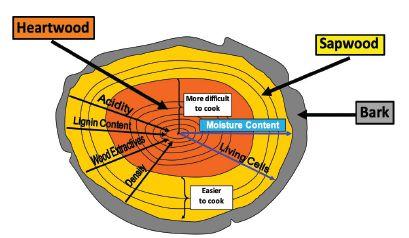
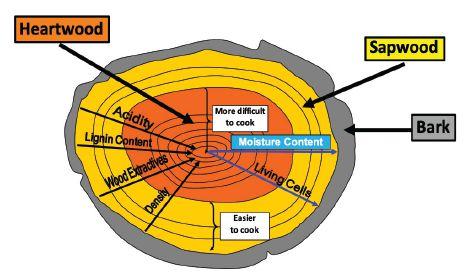
The sawmill residue wood chips come from the outside of the logs – known as the sapwood which is characterized by having fibres with higher moisture content, more living cells, less lignin, lower density, less wood extractives and are less acidic than the heartwood. Heartwood is darker in colour than sapwood because of the deposition of organic material. The fibres coming from the sapwood are easier to cook than the heartwood.
There is a lower penetration of the heartwood compared with the sapwood due to more aspirated pits in the heartwood (Siau, J.F. 1971).
When using whole logs, the wood chips are originated from both the sapwood and the heartwood. Some characteristics of the fibres from the heartwood are the opposite as those in the sapwood. A cross-section of a tree stem from the periphery towards the centre of the stem (i.e., pith), reveals that physical and chemical changes are gradual, and that the outer and inner annual rings are the extremes. Therefore, when pulping a whole log, one must consider its wide range of wood densities, pH, lignin contents, moisture contents and so on (Quinde 2020). See Figure 5.
Chemical pulping processes (i.e., kraft) of wood depends on the capability of the cooking liquor to flow through the wood. Besides the difficult penetration of cooking chemicals due to density, lignin contents, moisture content, etc, there is an important anatomical (i.e., bordered pits) factor to consider during kraft pulping operations.
Aspiration of bordered pits usually occurs when sapwood is transformed into heartwood or when wood dries. Aspirated bordered pits stop not only the entry of air and xylem sap into adjacent tracheids but also inhibit the flow of cooking chemicals during kraft pulping (Petty 1972, Josza 1983, Jansen and McAdam 2019).
Cooking chemicals flow is usually greater in green (i.e., fresh) wood conditions than in its dried conditions. Green wood chips are easy to cook.
Some mills receive their green/fresh wood chips during the weekdays, pile them and use them in a short time period. However, their older (i.e., dried) wood chips are cooked during the weekend. The digester operator for the weekends will add 1.0-1.5 percent units of the normal EAW percentage used in the weekdays as he knows that the drier wood chips are difficult to cook.
Most mills receive their wood chips from different suppliers with a wide range of wood chip moisture contents. When the mills use these wood chips without measuring (i.e., online) their moisture content, it is impossible to obtain the correct effective alkali charge (EAW percentage) per oven-dried wood or the corresponding appropriate residual effective alkalis. These incorrect alkali charges on a continuous digester result in a wide daily Kappa number range (i.e., 20-25 Kappa units). The final result would be a very high Kappa number variability due to inaccurate EAW percentage assuming all other variables are under control (i.e., wood chip size distribution, sulfidity, H-Factor, etc).
Online control of the residual effective alkali at a few points to get a digester alkali profile at different locations in the digester (i.e., bottom circulation, blowline, etc) would help to remedy inaccurate EAW percentage calculations, to give smoother digester operations and to reduce the Kappa number variability, therefore reducing over-cooking or under-cooking (Quinde 2019).
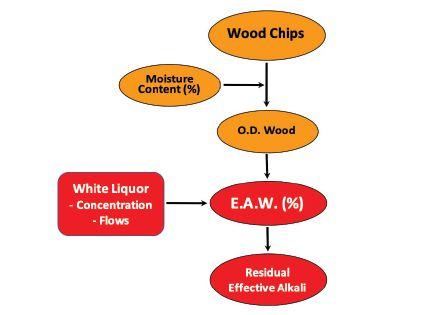
The proper monitoring of the white liquor charges (i.e., concentration and flows), together with the moisture content, secure the appropriate effective alkali charge (EAW percentage) per ovendried wood and consistent residual effective alkalis (See Figure 6).
As per Chircoski et al. (2013), variations in wood chip moisture and dry bulk density can be attenuated by using a chip management system (CMS) that includes a chip moisture analyzer (CMA), chip weighing system (CWS), chip volumetric measurement (CVM) and chip sizing system (CSS).
The ideal control and monitoring of a continuous digester would include the above CMS; online monitoring of the quality and concentration of the white liquor; and online monitoring of the residual effective alkali at different locations in the digester. PPC
By Emily Freeze and Max Futterer from NORAM Engineering and Michael Paleologou from FPInnovations
Recovery boilers are pillars of the kraft pulp industry, yet they are still vulnerable to certain operating challenges such as fouling from sticky deposit formation or corrosion in the superheaters, which can lead to costly shutdowns.
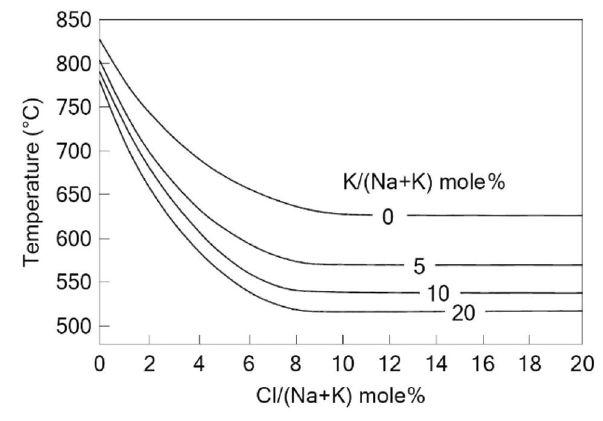
The temperature at which sticky deposits form is a function of the chloride and potassium content of these deposits or of the ash captured by the recovery boiler electrostatic precipitator (ESP), as shown in Figure 1.
Removing chloride in particular results in a significant increase in the sticky temperature of the ash, which helps move the sticky deposits to the main generating bank where they can be more easily purged, instead of forming on the cooler superheater tubes which are spaced more closely together, and fouling is accelerated.
The traditional approach to remove chloride and potassium from the recovery cycle involves purging precipitator ash, however, this purge stream also carries away valuable pulping chemicals which must be made up with purchased caustic and/or sulphur-containing chemicals to maintain the Na/S balance.
Enter the Precipitator Dust Purification (PDP) system, a process previously developed by FPInnovations and Eco-Tec Inc. which can selectively separate chlo-
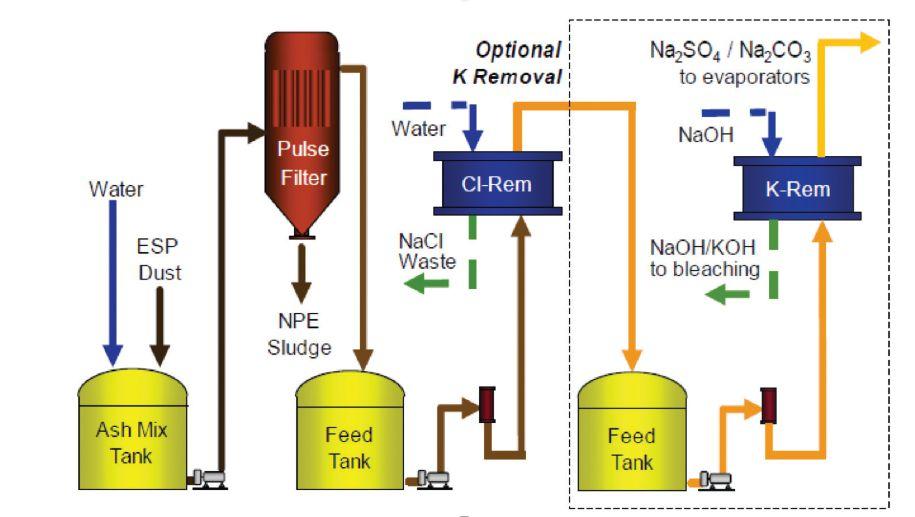
ride and/or potassium from a slip stream of dissolved ash and stands as a benchmark technology for tackling fouling while recovering waste streams.
The PDP process begins with the dissolution of precipitator ash in water in the Ash Mix Tank, see Figure 2.
This ash solution is then pumped through a pulse filter where insoluble solids such as unburned carbon and nonprocess metal oxides are removed. A short back-pulse sequence is performed on the filter approximately once per hour to discharge solids and clean the pulse filter membranes.
In the chloride removal stage, the resin bed, seen in Figure 3 below, functions on the principle of ion retardation chromatography and operates as a batch sequence. The feed ash solution is first pumped in an upstroke through the resin bed where sodium chloride is retained, while sodium sulphate and sodium carbonate pass through and are returned to the liquor cycle. Then soft water is pumped in a downstroke to regenerate the resin while a dilute stream of sodium chloride is discharged from the system.
In applications where the superheated steam temperature exceeds 480˚C, it becomes imperative to control potassium to ensure the first melting temperature of deposits remains well above the surface temperature of the superheaters, thereby preventing corrosion. In such cases a secondary stage can be added for potassium removal, see Figure 2.

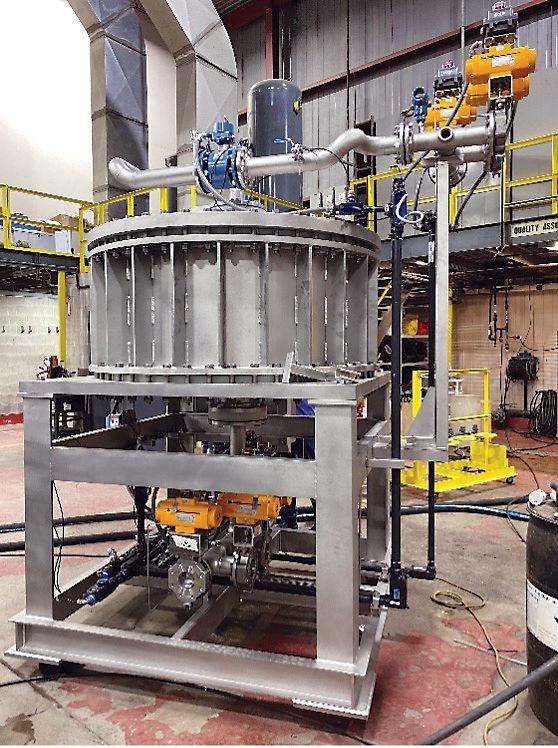
My name is Mike Farrell.

I am the TAPPI community. I want to prepare the next generation for success.
The new generation learns differently. We have to change the way work gets done to suit them. They won’t stay with us if we don’t change.
– Mike Farrell, Graphic Packaging 32-year member

The PDP system can selectively separate chloride and/or potassium from a slip stream of dissolved ash and stands as a benchmark technology for tackling fouling while recovering waste streams.
While ion retardation chromatography is used for the removal of sodium chloride, potassium ion removal relies on conventional cation exchange. During this stage, sodium is exchanged for potassium in the resin bed, then the bed is restored to its sodium form by regenerating the loaded resin with a caustic solution used for pulp bleaching. This strategic approach ensures that the initially purged potassium ion serves as an effective source of alkalinity in the bleaching process before being discharged in bleach effluents.
The high efficiency of short column design results in low losses from the potassium removal stage. In applications where chloride inputs are low, the chloride removal stage may be excluded and only potassium removed.
The PDP system reduces environmental
impact by allowing an otherwise purged ash stream to be reused in the recovery cycle. The new purge stream of a chloride removal system consists mostly of water and chloride, while the regeneration of a potassium removal system requires only borrowed caustic destined for bleaching, and swaps in a portion of potassium ions to maintain effective alkalinity for the bleach plant.
Recovery of sodium carbonate and sulphate is high through this short column resin bed, typically 90 to 96 percent, enabling proportionately reduced chemical make-up costs, and because make-up chemicals are a known source of chloride inputs, the overall chloride removal efficiency is compounded. Additionally, because of the high chloride removal efficiency coupled with unmatched recovery of pulping chemicals, the system requires less precipitator ash to be processed when compared to competing systems.
Greenhouse gas emissions are also reduced for mills with a PDP system. For example, a mill that purges 30 tonnes per day of ESP ash for chloride control can expect a reduction in caustic makeup requirements of about five tonnes per day (assuming that the ESP dust is composed of 20wt% sodium carbonate). Since the carbon footprint for sodium hydroxide is about 1.34 kg of CO2 equivalent/kg of NaOH, this means that the generation of as much as 2,100 tonnes of CO2 equivalent/year can be avoided through the installation of a PDP system of this capacity.
In the case of most bleached kraft pulp mills, no sodium sulphate needs to be purchased since this can usually be replaced with the sodium sesquisulphate by-product of the chlorine dioxide generator. However, in the case of unbleached kraft mills or mills that need to sewer higher amounts of ESP dust for chloride control, the impact on GHG emissions will be greater since, in addition to sodium hydroxide, the carbon footprint of increased sodium sulphate make-up requirements will need to be considered as well. Sodium sulphate is reported to have a carbon footprint of 0.530 kg of CO2 equivalent/kg of Na2SO4 [6].
As seen in Table 1, there are PDP installations at 11 pulp mill sites across three continents, which include 11 chloride removal resin beds and one potassium ion removal resin bed (one site has both chloride and potassium removal stages). There is a renewed interest in the PDP system as three such systems were implemented in 2023.
The demand for PDP and other chloride/potassium removal systems is expected to increase in the future as mills install more modern high-pressure recovery boilers and as they tighten their recovery cycle with respect to chemical losses for economic and environmental reasons. PPC
NORAM provides innovative process technology, engineering services and custom designed equipment to kraft and sulfite pulp mills.
Kadant adds Upcycling reject handling solution to its fibre processing offerings
Kadant has launched its Upcycling reject handling line as an integral part of its fibre processing offerings. The company shares in a press statement that Upcycling was established to provide innovative, costeffective solutions for reject handling challenges commonly found in the manufac-
turing of pulp and paper.
Kadant’s Upcycling reject handling technologies provide advanced solutions for coarse reject handling, fine reject handling and wastewater management. Innovation will be a focus of the Upcycling initiative, including the development of a thermoplastic system that will recover and process plastic waste as part of the comprehensive waste management solution.
To identify waste challenges and improve financial performance at pulp and paper mills, a specialized Upcycling team reportedly conducts an audit that includes assessing waste disposal costs and environmental impacts. Upcycling experts then analyze the audit findings to provide a customized solution for transforming waste into valuable products such as metals, wires and plastic pellets. kadant.com
Valmet introduces monitoring application for bearing lubrication in fibre processing equipment
Valmet has launched a new application, Valmet Oil Monitoring, to remotely monitor oil lubrication in fibre processing equipment.
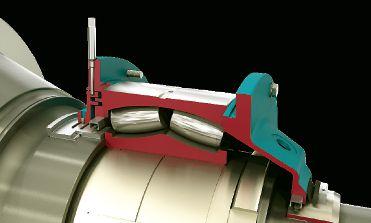
As various rotating machinery throughout the fibre line perform under extremely harsh and demanding environments, it is often difficult to manually retrieve oil samples. Maintaining adequate surveillance of lubrication properties against harmful effects can prove very challenging, notes Valmet in a press statement.
With Valmet Oil Monitoring, upcoming failures can reportedly be foreseen through changes in lubrication oil quality. The solution enables corrective actions before the actual failure arises.
The Valmet Oil Monitoring application was first installed to follow roll bearings’ oil lubrication in a TwinRoll wash press in a European pulp mill. The application detected contamination in the bearing oil circulation unit. This observation was flagged, and the machine operators were able to react quickly with corresponding maintenance actions, says Valmet.
Valmet Oil Monitoring, together with the specific applications for chip feeders in continuous cooking and TwinRoll presses in pulp washing, form the offering of Valmet’s modular reliability monitoring platform. The platform is intended for fibre processing equipment and was introduced in 2022.
Valmet’s reliability monitoring applications are part of the Valmet Industrial Internet offering. valmet.com

Voith adds wireless sensors to its OnCare.Health predictive monitoring solution
Voith has added wireless sensors to its OnCare.Health solution for optimized maintenance efficiency. Based on signals from the new sensors, the predictive monitoring solution reportedly detects even minor anomalies automatically and provides early indications of potential defects.
According to the company, OnCare. Health Wireless Solution can be used along the complete papermaking line for all paper grades – from stock preparation to approach flow and along the paper machine on all kinds of rotating equipment. In addition, Voith offers access to remote expert service for system care and professional diagnostics support, helping to increase customers’ overall equipment effectiveness (OEE).
The wireless sensors reportedly use radio technology instead of Bluetooth or WLAN. This allows a transmission range of up to 300 meters within paper mills. Views and visualizations can be flexibly adjusted to suit different expert levels.
The new wireless sensors are selfcharging due to an integrated thermal energy recovery unit. Voith shares in a press statement that unlike battery-powered sensors, they do not require regular sensor or battery replacements and have a better environmental footprint. voith.com
The Canadian forest products sector is passionate and devoted – not just to the industry itself, but also to its local communities. Here we share the initiatives of pulp and paper companies working to make positive social, environmental and economic impacts across the country.

As part of Domtar’s 175th anniversary celebration in 2023, the company committed $225,000 to support the construction of a new community library in Windsor, Quebec. The project will relocate the Patrick Dignan Library to a new building that will offer more space and improved accessibility.

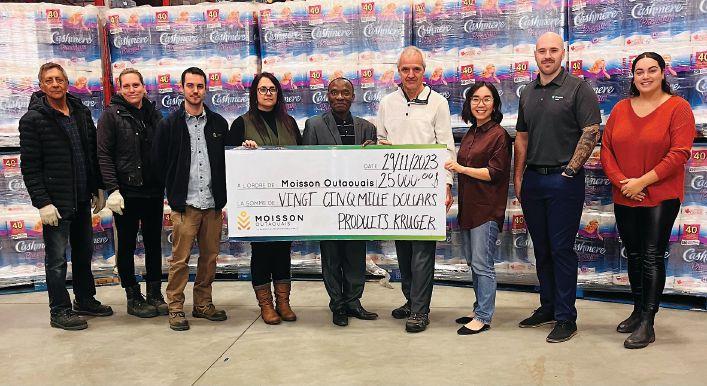
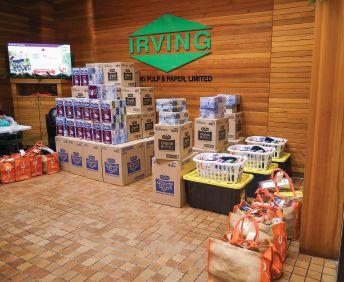
Celebrating 12 days of giving in the holiday season, employees from across JDI came together on the ninth day to fill PALS holiday hampers with basic necessities, groceries, turkeys and small games and toys for local families in need. They supported 140 families.
Let us help you share your successes. Tag @PulpPaperCanada or use #PPCGivingBack on Facebook or Twitter, or send an email to the editor at srayghosh@annexbusinessmedia.com. We’d love to hear from you!