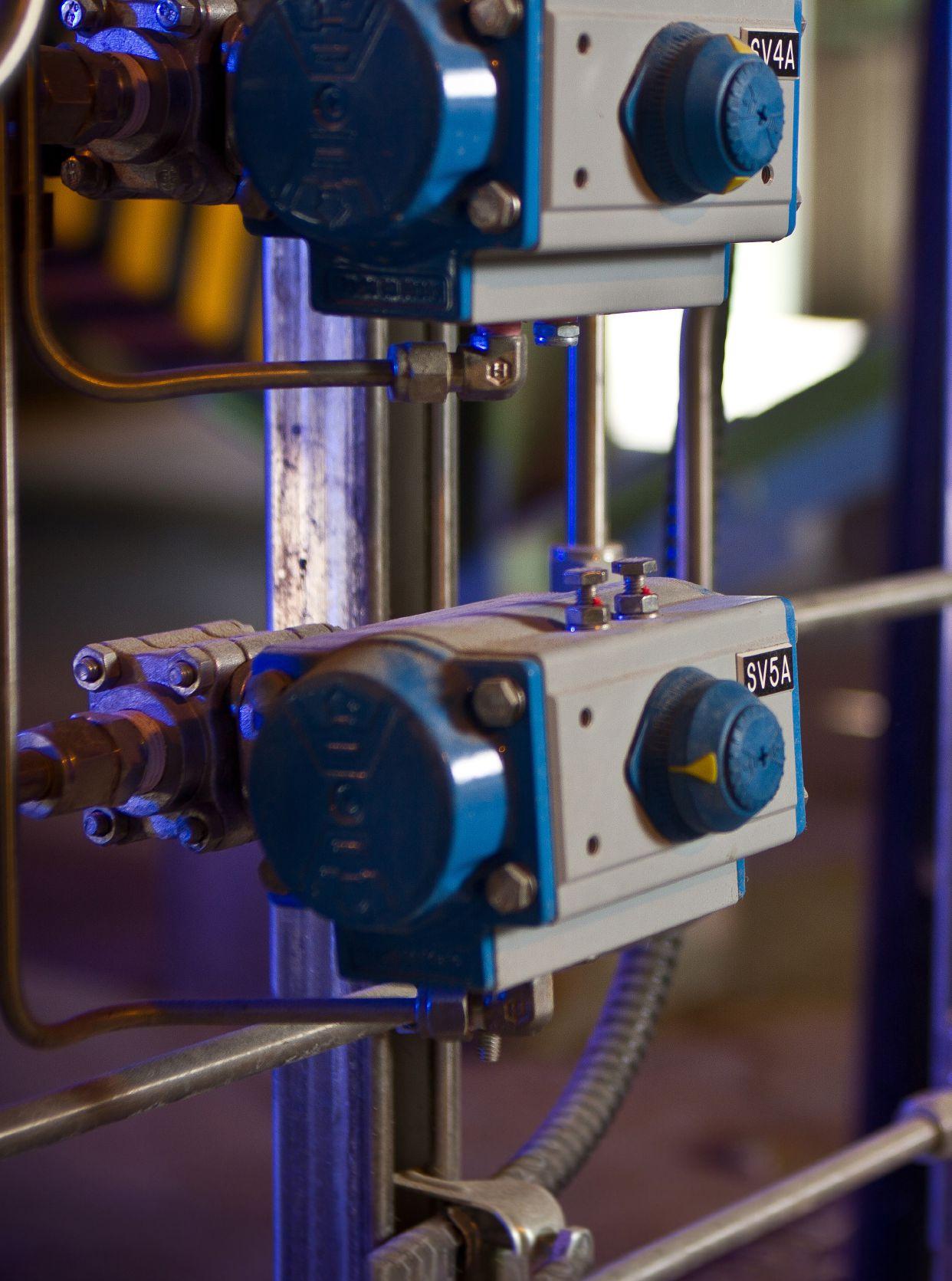


The phenomena that impact paper and board runnability, end-product quality, and overall efficiency are often invisible. Kemira Predictive Wet End, a new digital service utilizing machine learning and advanced analytics, helps you discover and predict previously unseen process disturbances at your machine. With the reliable predictions, you can prevent problems before they occur.
Discover a new, data-driven way to optimize wet end chemistry. READ MORE AT:

Last November, the federal government tabled a bill to establish the Canadian Net-Zero Emissions Accountability Act, which would appoint an advisory body to set rolling five-year emissions-reductions targets so Canada can meet its “net-zero” goal by 2050. The legislation mentions “sectoral strategies,” so, should the bill pass, we can assume that there will be specific instruction forthcoming for pulp and paper.
What we know is that greenhouse gas (GHG)–producing heavy industries such as pulp and paper would have to completely offset their GHG emissions by capturing carbon before it reaches the air in order to achieve “net-zero.”
This industry has made major improvements to capture carbon over the last 30 years, reducing its GHG emissions by 70 per cent since 1990 through processes such as electrification and cogeneration.

Kristina Urquhart Editor
Plants are already making and using their own electricity as a way to reduce emissions. Some have established cogeneration facilities, which use steam turbines or reciprocating engines to turn waste from one process into energy for another.
But fossil fuels are still a significant component of many processes. With pulp and paper, iron and steel, mining, refining/smelting and cement accounting for over 75 per cent of Canada’s total industrial energy use, large industrial emitters will be a major focus of the government’s net-zero plan.
Much of this industrial energy is required for heating, drying and steam generation – and because pulp and paper processes use so much heat, it’s difficult to further reduce the amount of energy used. A report submitted to the United Nations by Environment and Climate Change Canada after the 2016 signing of the Paris Agreement offers suggestions for decarbonization in heavy industry, but also recognizes the challenges that lie therein, including international trade competition, global market prices that affect cost of production, and the level of government investment required to make more environmentally responsible processes financially viable.
The report says that process optimization will play a key role in emissions reductions, from operations and control improvements, to regular maintenance, to upgrades for heating, cooling and power production and recovery. The sector will need to explore new processes, such as fuel switching and carbon capture and storage systems, and reimagine old ones to reduce energy – for example, by drying paper with chemical additives to reduce heat consumption, or by recycling recovered paper. With those solutions, though, new issues arise – like the proper reuse or disposal of chemicals, or the fact that paper can only be re-pulped so many times before the fibres are too short for reuse.
Regardless, the feds’ plan means low-carbon fuels, increased recycling and changes to existing processes are on the horizon. So we’re pleased to present a number of ways to improve processes in this issue, starting with the first technical paper in a three-part series on industrial cogeneration from Natural Resources Canada’s clean-tech research firm CanmetENERGY. The researchers explore optimization at the supervisory level for steam plants (p. 18). We’ll publish the next two papers in upcoming issues.
Further downstream, we’re exploring the new ways that process analyzers use near-infrared spectroscopy to improve process control (p. 10 and p. 16).
Continuous improvement is something pulp and paper producers do on a daily basis. No matter what comes next with the net-zero plan, this is an industry that has adapted before – and it’ll do so again.
READER SERVICE
Print and digital subscription inquires or changes, please contact Barb Adelt, Audience Development Manager Tel: (416) 510-5184 Fax: (416) 510-6875 Email: badelt@annexbusinessmedia.com
Mail: 111 Gordon Baker Rd., Suite 400, Toronto, ON M2H 3R1
Editor KRISTINA URQUHART 416-510-5143 kurquhart@annexbusinessmedia.com
National Accounts Manager LAURA GOODWIN 289-928-8543 lgoodwin@annexbusinessmedia.com
Group Publisher TODD HUMBER 416-510-5248 thumber@annexbusinessmedia.com
COO
SCOTT JAMIESON 519-429-5180 sjamieson@annexbusinessmedia.com
EDITORIAL/SALES OFFICES
111 Gordon Baker Rd., Suite 400, Toronto, ON M2H 3R1 Phone: 416-442-5600
PRODUCTION
Media Designer EMILY SUN
Account Coordinator BROOKLYN VAN DYK bvandyk@annexbusinessmedia.com
Printed in Canada ISSN 0316-4004 (Print) ISSN 1923-3515 (Digital)
PUBLICATION MAIL AGREEMENT #40065710
SUBSCRIPTION RATES
Canada $57.50 - 1 year; $92.50 - 2 year
USA $139.00 CDN per year Overseas - $150.00 CDN per year
Occasionally, Pulp & Paper Canada will mail information on behalf of industry related groups whose products and services we believe may be of interest to you. If you prefer not to receive this information, please contact our circulation department in any of the four ways listed above.
Annex Privacy Office privacy@annexbusinessmedia.com Tel: 800-668-2374
The editors have made every reasonable effort to provide accurate and authoritative information but they assume no liability for the accuracy or completeness of the text or its fitness for any particular purpose.
All rights reserved. The contents of this publication may not be reproduced in part or in full without the publisher’s written permission © Annex Publishing & Printing Inc.
Sustaining member, Pulp and Paper Technical Association of Canada; Member, Alliance for Audited Media.















Cascades to shutter Laval, Que. napkin plant
Cascades is closing its napkin manufacturing plant in Laval, Quebec on Jun. 30, affecting 54 jobs.
The Laval plant specializes in production for the away-from-home market and has an annual converting capacity of 1.4 million cases.
This volume will be moved to other Cascades plants and filled by additional capacity, the company says in a statement.
“COVID-19 has severely impacted the number of visitors to restaurants, hotels and public buildings – markets served by the Laval plant,” says Jean-David Tardif, president and chief operating officer of Cascades Tissue Group.
“This situation, combined with high logistics costs, prompted us to move production to other sites in order to optimize our operations, reduce our costs and create synergies.”
Until the plant is closed, Cascades is offering to relocate as many employees as possible to its many other business units in Quebec. Employees who are not able, or do not wish to relocate to other plants will be offered support in their search for other employment.
“We would like to thank the Cascaders at the Laval plant for their loyalty over the years,” says Tardif.
David H. Paterson, a former member of the Canadian Pulp and Paper Association (now PAPTAC), died at the age of 86 in Nepean, Ont. on Nov. 28.

Paterson was born in 1935 in Liverpool, N.S. and graduated from Nova Scotia Technical College in 1958. He worked as a chemical engineer and served as executive manager of the Canadian Pulp and Paper Association’s Technical Section for 30 years.
PAPTAC released a statement offering its condolences to Paterson’s family, and said he “was a key voice on the importance of technological advancement within the industry and a tremendous mentor to many who worked for him.”
Excellence to
$13M in mill
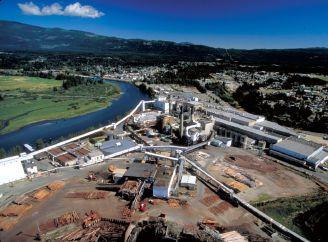
Paper Excellence will invest over $13 million to improve operations at its Port Alberni paper mill in British Columbia.
The Port Alberni mill, which employs over 300 people, is diversifying its portfolio with food-grade papers used by restaurants and food preparation enterprises.
The investment will be used to eliminate key production bottlenecks in the mill, and upgrade both of Port Alberni’s paper machines to produce food-grade papers.
The mill, which also produces mechanical pulp, is home to the West Coast’s largest coated paper machine and uncoated groundwood paper machine, producing 336,000 tonnes per year of
Kruger Inc.’s chairman and CEO Joseph Kruger II has been inducted as an officer into the Ordre de Montreal (Order of Montreal) in recognition of his contributions to the city.
The virtual announcement was made by Valérie Plante, mayor of Montreal, on Nov. 25.
The Ordre de Montreal, created in 2016 in honour of the city’s 375th anniversary, is the city’s highest distinction.
According to the company, Kruger, who has been chairman and CEO since 1988, diversified his organization’s operations at a time when pulp and paper companies were challenged by a changing global economy.
After three decades under his leadership, Kruger the company is represented in 10 industry sectors, including paper products, containerboard, packaging, renewable energy, recycling and biomaterials.
“Having focused on modernizing our operations while ensuring the responsible management of resources, Joseph Kruger II has truly embraced the principles of sustainable development,” says the company in a statement.
“His role as a benefactor has not gone unnoticed, especially his support of education, scientific research, healthcare, environmental protection, community organization and entrepreneurship.”
directory and coated papers.
Detailed engineering for the upgrade project will start shortly, followed by procurement of needed equipment.
The company expects the upgrade will be completed by the fourth quarter of this year.
The government of B.C. has created a $9.3 million fund for small- and medium-sized forestry businesses to cover the extra costs related to operating safely during COVID-19.
The province says it expects about 175 companies to apply for part of the fund to cover the cost of the COVID-19 health and safety measures they implemented between Apr. 1 and Dec. 31, 2020. Costs that will be covered include personal protective equipment, hand washing stations, extra vehicles and equipment.
To be eligible, companies must have fewer than 500 employees across all offices in Canada, and their primary business activities must be in forestry and logging, pulp and paper manufacturing, support activities for forestry or wood products manufacturing.
“Since being designated as an essential service, our members have faced increasing costs associated with ensuring that their employees and families remained safe during these unprecedented times,” says Todd Chamberlain, general manager of the Interior Logging Association, in a statement.
“We welcome this funding to assist our membership and appreciate that both the federal and provincial governments have come to the table to help the forest industry.”—reported by Ellen Cools, Canadian Forest Industries


Remi G. Lalonde Yves Laflamme
Leadership changes at Resolute Resolute Forest Products has announced that after 39 years with the company, president and CEO Yves Laflamme will retire Mar. 1.
The board of directors has appointed Remi G. Lalonde as the company’s next president and CEO, also effective Mar. 1.
Lalonde currently serves as senior vice-president and chief financial officer. Upon becoming president and CEO, he will be appointed to Resolute’s board of directors.
Lalonde has been with Resolute for 11 years, rising through a series of successive roles in corporate, manufacturing and senior leadership. He has been in his current post since November 2018, after serving briefly as vice-president for strategy, M&A, business development and procurement.
Before then, he was general manager for two and a half years at Resolute’s Thunder Bay, Ont., pulp, paper and power complex.
He initially joined the company as senior counsel, securities in 2009, and took on the additional role of vice-president, investor relations in 2011.
“Remi has very good relationships with our stakeholders, sharp analytical skills, impressive credentials and a strong business drive,” says Bradley P. Martin, chairman of the board of directors, in a statement.
“We are confident he will guide the company through its ongoing strategic transformation, delivering improved shareholder value. Remi is the right person at the right time for Resolute.”
During his tenure as president and CEO, Yves Laflamme advanced Resolute’s strategic transformation, divesting noncore assets and using the proceeds for debt repayment, organic growth in the company’s pulp business.
Laflamme also led the acquisition of
three sawmills in the southern United States, and boosted the tissue business. He invested in the development of sustainable biomaterials, and remained committed to expansion of the company’s Toundra Greenhouse joint venture, doubling its future production capacity.
Laflamme is expected to continue to support both the company and Lalonde in an advisory capacity after Mar. 1, working on special projects.
“The board of directors express their appreciation to Yves Laflamme for a job well done. Yves reinforced Resolute’s vision and values, focusing on safety, sustainability, profitability, accountability and teamwork,” says Martin.
“His commitment to continuous improvement, particularly in the area of costs, serves as a model to the entire organization, including the company’s leadership team and board.”
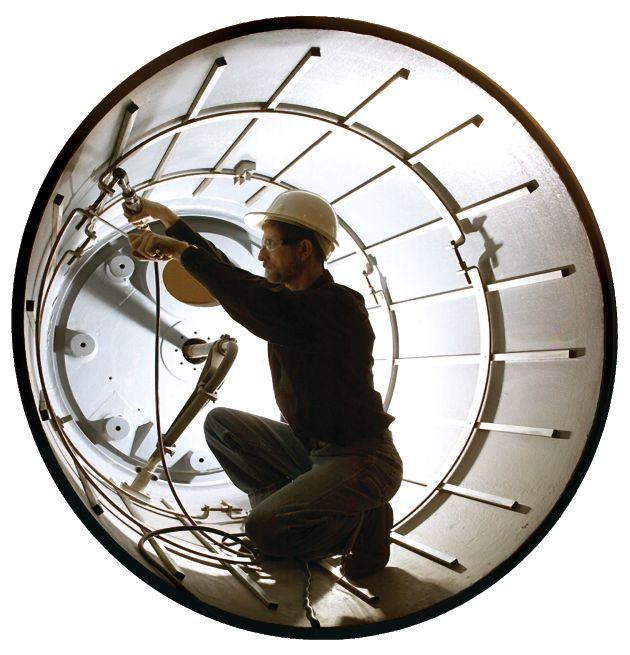
Proper installation and repair of your dryer equipment will maximize drying capacity by keeping all the dryers in service. Kadant has the specialized knowledge and experience for safe, reliable, and expert installation of your rotary steam joints, syphons, dryer bars, and related equipment.


Northern Pulp gets creditor protection through Apr. 30
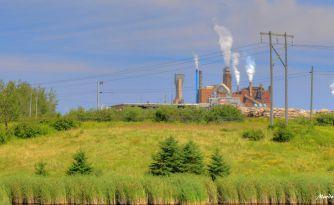
British Columbia’s top court has extended Northern Pulp’s creditor protection until Apr. 30.
On Dec. 11, B.C. Supreme Court justice Shelley Fitzpatrick approved the Nova Scotia–based mill’s application to extend the creditor protection originally issued in August 2020.
Northern Pulp representatives have also said the mill will submit a new plan for a redesigned effluent treatment plant to the province of Nova Scotia in early 2021. The mill’s environmental committee met with management in December to recommend next steps for the new plant.
The mill expects its loans from B.C.–based parent company Paper Excellence will last until June.
The kraft pulp mill closed on Jan. 31, 2020, at the end of a five-year deadline set by the province for the mill to stop depositing effluent into the waters of Boat Harbour, which is adjacent to Pictou Landing First Nation.
Northern Pulp’s most recent plan for a replacement facility would have seen a 15-kilometre pipeline carrying effluent into deep waters in Northumberland Strait, but the proposal was rejected by the province in December 2019.
Paper Excellence Canada will restart the Number 3 paper machine at its Catalyst Paper mill in Crofton, B.C. early this month.
The move will bring 58 jobs back to the mill, bringing total employee count to approximately 560.
The company says the restart reflects the strong performance being delivered by Catalyst’s paper sales force, and by operations that have introduced food and packaging papers alongside the existing printing and writing grades.
The machine was curtailed in spring
2020 after the impacts of an external malware attack, a forest fibre shortage and the COVID-19 pandemic simultaneously impacted both paper production and global paper demand.
Paper Excellence’s Catalyst Crofton mill manufactures both pulp and paper products, adding nearly $3 million into B.C.’s economy every day. The mill uses 87 per cent renewable energy and has reduced its carbon emissions by 71 per cent since 1990.
The federal government says it is exploring the option to challenge the latest set of softwood lumber export duties imposed on Canada by the U.S. with the World Trade Organization.
“These duties have caused unjustified harm for Canadian workers and businesses, and are hampering economic recovery on both sides of the border — especially when our people are being affected by the health and economic impacts of COVID19,” said Mary Ng, Canada’s minister of small business, export promotion and international trade, said in a Dec. 11 statement.
On Nov. 24, the U.S. Department of Commerce released an administrative review of softwood lumber duties on Canadian exports to the U.S.
The new combined countervailing (CVD) and antidumping (AD) rate is 8.99 per cent. This is down from the current rate of 20.23 per cent.
The governments of B.C., Alberta, Saskatchewan and Ontario each released a statement in response to this change, along with the federal government.
The general consensus among the provincial governments is that the lowered rate is a step in the right direction, but the ongoing imposition of duties by the U.S. on Canadian softwood lumber is “unjustified,” as B.C. Premier John Horgan said in a statement.
U.S. representatives say that Canada’s stumpage system, which sees provincially regulated fees paid to the government, helps to subsidize the Canadian forestry industry.
U.S. lumber producers are privately operated.—Reported with files from Ellen Cools, Canadian Forest Industries
Moody’s: Positive outlook for global sector in 2021
Moody’s Investors Service is optimistic about the outlook for the global paper and forest products in 2021.
The credit rating agency expects EBITDA across the global sector to increase by more than four per cent.
Regionally, the outlook for the paper and forest products industry is stable in North America.
The outlook for the market pulp subsector is positive, as prices and demand will be higher than 2020 trough levels. EBITDA is expected to increase by more than 15 per cent.
Hardwood pulp prices will rebound as producers work through excess inventory, and softwood pulp prices will trend upward due to increased demand. New capacity isn’t expected to come online until late 2021.
China will also be looking for market pulp should the country proceed with its ban on imports of recovered paper in 2021.
The outlook for the paper packaging and tissue subsector is stable, driven by the flow-through of recently announced price increases in containerboard, coated and uncoated boxboard, and coated unbleached boxboard. EBITDA is expected to increase by about three per cent.
Higher e-commerce box demand will offset the decline in demand from other segments. Moody’s also expects that new tissue capacity coming online will limit price increases.
The outlook for the commodity and specialty paper subsector is stable, reflecting a rebound in paper consumption following the partial reopening of schools and businesses.
Moody’s expects that there will be increased demand for paper-based hygiene products, such as wipes, and paper-based alternatives to replace single-use plastics.
See Moody’s predictions for wood products at pulpandpapercanada.com/features.
Atlantic Packaging to add paper machine to Ont. plant
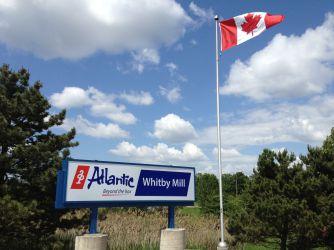
Atlantic Packaging Products will construct a new 100 per cent recycled paper machine in Whitby, Ont.
The new paper machine will be Atlantic’s second recycled paper machine in Whitby, and is being built adjacent to the company’s current machine, which has been operational since the 1990s.
The new machine will produce 400,000 tons per year of lightweight medium and liner.
Production is scheduled for the first quarter of 2022.
Demolition has begun on Resolute’s former pulp mill in Fort Frances, Ont.
The company sold the site to Riversedge Developments in July 2019.
Contractors for Riversedge will spend the next two years dismantling the facility, which closed in 2014.
to close Alta. facility, eliminating 39 jobs
Supremex will close its envelope facility in Edmonton this year, affecting 39 jobs.
This reduces the envelope manufacturer’s total workforce by five per cent. The company estimates the closure will save approximately $2.4 million.
“We deeply regret the effect that these measures will have on employees and their families, and wherever possible, we have worked with them on early retirement possibilities,” says Stewart Emerson, president and CEO of Supremex, in a statement.
“These cost-saving initiatives will allow us to limit the impact of the pandemic and ongoing secular decline on our legacy envelope business.”
The company acquired Royal Envelope in February 2020. Supremex oper-
Paper Excellence signs letter of intent with First Nations
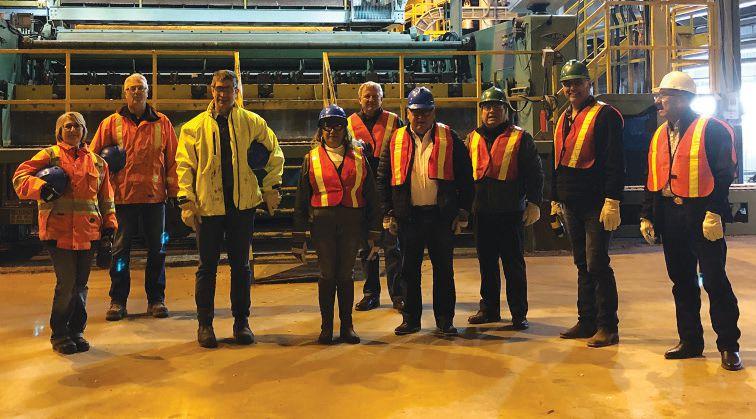
Paper Excellence Canada has signed a letter of intent alongside Pelican Lake First Nation and Witchekan Lake First Nation in Saskatchewan to build a collaborative relationship.
“We now have agreements with all the industries around us,” says Chief Peter Bill of the Pelican Lake First Nation in a statement about the Oct. 21 signing.
Chief Anne Thomas of the Witchekan Lake First Nation adds, “First and foremost in establishing a partnership is standing on common ground with a vision based on positive values. Touring the mill gave me an insight to possible opportunities.”
Paper Excellence Canada already operates one mill in Saskatchewan at Meadow Lake and is working to restart its other operation at Prince Albert.
As well as taking a step towards reopening the Prince Albert mill, the letter also supports one of the 20 actions for 2020 in Saskatchewan’s growth plan: Growing Indigenous participation in the economy through the growth of Saskatchewan’s natural resource industries and labour market development.
“We recognize this is a first step in a long path of relationship building with the Pelican Lake First Nation and Witchekan Lake First Nation,” says Graham Kissack, vice-president of EHS and communications at Paper Excellence Canada.
“We’re excited to have begun the work with our valued neighbours and look forward to future successes with Indigenous partners especially in areas regarding fibre supply for our mills.”
ates 13 locations in six provinces and another three in the United States.
Jamie Lim, president and CEO of the Ontario Forest Industries Association (OFIA), has retired.
On Jan. 1, Ian Dunn, executive director of policy and operations, stepped in as interim president and CEO.
“OFIA is a far more effective and collaborative association today following Jamie’s 17-year tenure as president and CEO,” says Erik Holmstrom, chair of the board of directors, in a statement.
The board recognized Lim’s dedication and commitment to OFIA’s members, Ontario’s renewable forest sector and the people of northern and rural Ontario.
“Jamie’s enthusiastic leadership allowed our association to navigate in complex environments, engage diverse stakeholders and rights holders and most importantly, lead to the development of Ontario’s recently announced Sustainable Growth: Ontario Forest Sector Strategy,” says Holmstrom.
“Ian has worked closely with Jamie and the members for many years and has demonstrated his experience and commitment to the OFIA. We are pleased to have Ian take on this role in the new year.”
OFIA’s member companies produce renewable forest products ranging from pulp and paper and packaging, to dimensional lumber, to engineered wood products, to R&D in innovative technologies, such as engineered soils and organic mulch.
By FPInnovations
Black liquor used to produce bioenergy and lignin has much room for improvement, however proper analysis of black liquor has always had its challenges. FPInnovations is developing a method to use near-infrared (NIR) spectroscopy in analyzing black liquor properties to identify new optimization opportunities. Wei Ren, senior researcher, discusses the ongoing efforts.
What is black liquor used for?
Black liquor byproduct is separated from the pulp and sent to the evaporation plant where it is concentrated. In increasing black liquor concentration, other compounds can be extracted and offered as commercially viable products such as lignin.
Once concentrated, black liquor is then combusted in a recovery boiler. The higher the concentration of black liquor, the more efficient the recovery boiler. The energy produced from burning the organic portion of the black liquor generates power and steam for the mill, while cooking chemicals are regenerated from the spent inorganic matter.
So, where’s the problem?
The properties of black liquor (such as inorganic content level, heating value and lignin concentration) affect its evaporation and combustion. These properties play a part during the lignin extraction process.
With respect to evaporation, previous research clearly shows that the composition of black liquor impacts the tendency of fouling in the evaporators. The ratio of the different inorganic and organic compounds (e.g. cations, carbonate, sulphate, lignin, etc.) can predict the location and quantity of scale that will precipitate during the evaporation process.
When it comes to combustion, the thickness and viscosity of black liquor can lead to unsafe conditions in the recovery boiler due to reasons such as high material build-up on the heat transfer surfaces or at the bottom of the boiler.
Black liquor composition also plays a major role in the lignin extraction opera-
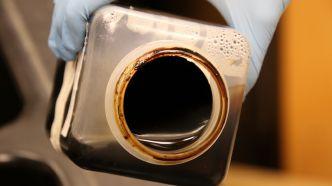
tion. The degree of black liquor oxidation is dependent on the amount of sulphide in the black liquor.
Why is black liquor not properly analyzed?
Even though the impacts of variability in black liquor properties on the various processes are well known, only the solids concentration of the black liquor is being routinely measured at kraft pulp mills. Measurements of other black liquor properties are performed only when issues occur in the process.
Most kraft pulp mills also lack the laboratory equipment, and measurements are often contracted to an outside lab such as FPInnovations.
These practices hinder the engineers’ and operators’ ability to optimize the evaporation and combustion of black liquor, resulting in high operating costs and unscheduled shutdowns that lead to production losses. The quality and quantity of the lignin extracted from black liquor are also affected.
Can NIR spectroscopy be used to analyze black liquor?
NIR spectroscopy has the potential for online measurement of black liquor properties. The NIR region of the electromagnetic spectrum contains information on water, organic bonds and particle size.
NIR spectroscopy is commercially available for the analysis of green and white liquor streams in the causticizing plant, as well as for low-concentration black liquor streams in and around the digester. In fact, these NIR spectroscopy applications were developed at FPInnovations and are now installed at many pulp mills across the globe (see p. 16).
As solids concentration of the black liquor increases during evaporation, the liquor becomes very dark, limiting the amount of light passing through.
FPInnovations’ Control group is working towards using NIR spectroscopy to determine the properties of high concentration black liquor. Based on the results, the group will also be developing new operating strategies to improve recovery of energy and chemicals from black liquor as well as the extraction of lignin.
How will this be done?
The project will be carried out in three phases. The first is a laboratory study to determine the feasibility of high concentration black liquor measurement using NIR spectroscopy. Preliminary prediction models will be built using black liquor samples from kraft pulp mills.
The second phase is the implementation of a trial NIR system at an operating mill, both to improve the accuracy of the prediction models, and to resolve potential issues surrounding the continuous operation of a NIR system under a typical mill environment.
The third phase involves developing and implementing new operating strategies using these new black liquor measurements such as improving evaporator control.
Through this project, FPInnovations intends to maximize black liquor throughput during the recovery process and minimize unscheduled downtime — improvements that would increase the mill’s pulp production, therefore improving its competitiveness.
For more information, contact Wei Ren, senior researcher, at wei.ren@ fpinnovations.ca, or Stéphan Larivière, industry sector leader, at stephan.lariviere@ fpinnovations.ca. PPC
FPInnovations is a not-for-profit organization that supports the Canadian forest sector’s global competitiveness. fpinnovations.ca
The regional sales manager for AMETEK Surface Vision in Canada discusses what’s new in web inspection
By Kristina Urquhart
Pulp & Paper Canada: What are some of the current challenges with web inspection systems?
Éric Charette-Béchamp: Some of these systems have been around since the 1990s, and have been upgraded in the beginning of the 2000s. And now they’re probably in need of some upgrading because technology is evolving so fast. We’re able to see smaller and smaller defects and have a better classification. That enables the end user to troubleshoot that much more efficiently.
P&PC: How does AMETEK Surface Vision facilitate web inspection and monitoring?
ÉCB: We cover all the paper grades: tissue, printing and writing, packaging, pulp as well as nonwovens. Most of our business is in pulp and paper worldwide, and more so in Canada. We have two products mainly that are customized to the customer’s application and requirements. The first one is SmartView, which is the web inspection system for defect identification and classification. We also do sheet formation analysis. Then we have SmartAdvisor, which is the web monitoring system for break process interruptions. This could also be used to optimize converting lines for tissue, bath and towel grades.
P&PC: How do these systems work together?
ÉCB: We use the capabilities of both systems to identify where the defects are coming from with what we call Smart Sync. You can scroll back and if you get a defect, the system will create an event. Then the operator can click on that event to go back and see upstream from where the defect was identified.
That enables not only the operators to be able to see the defect and get a picture, but to also see where it’s coming from so they can perform the appropriate corrective actions. Our system will also identify repetitive defects caused by rolls,
or paper machine clothing. If you have a hole in the forming fabric that creates a hole in the paper, it’ll always occur at the same distance. And then you can go back and see where exactly which piece of paper machine clothing or roll is causing that defect.

You can also scroll back for near misses. If there was an accident on the paper machine and you happen to have a camera around there looking in that direction, you can look back to see what caused this accident or near-miss. You can also use the cameras for paper machine clothing failures. Let’s say you’re losing a press felt on prem and you want to see what happened, you can scroll back up to 72 hours to see where that failure could have originated from.
P&PC: How does the camera technology work?
ÉCB: SmartView has a line-scan camera, like a dollar-bill reader that you would put in a vending machine. It takes very high-frequency pictures of the moving web, and it will stitch them together to create an image of what is being scanned.
For SmartAdvisor, what we use are high-speed cameras that we will layer down the machine. And the challenge there is always to layer them in the right location. These tend to get dirty because you’re right on the paper machine, and you want to provide meaningful monitoring in these harsh environments. Because you have these high-quality pictures of defects coming in, and the system is detecting them and classifying them, you can look back at those high-speed cameras to see what they saw at the moments where that piece of paper was passing through that section. You can go up to 240 frames per second.
P&PC: What technology enables the defect detection?
ÉCB: For the defects, what we use is machine learning. It’s a very primitive form of artificial intelligence. We use that to enable our systems to learn essentially what the defects are. You can have the best algorithm in the world, but if the data going into the algorithm is not reliable, then your defect detection or classification is going to be poor. So we’re trying to get the most reliable data possible to enter these algorithms, and then have the classification be perfect. If you’re going to identify a slime hole, you want it to be identified as a slime hole, not just a hole or just a dark spot. And you want to be able to share this data with other systems. We’re using this to pump the information into data historians like Pi.
Then we use machine learning to identify where the defects are coming from based on their characteristics, be it size, length, width, where it is on the paper, where it is on the paper machine, or how frequently it’s coming. Using the historical data, the process engineer can identify any process shifts that might be causing these defects.
P&PC: What tends to hold mills back from upgrading their web inspection systems? ÉCB: One [is] the validation of the investment. We’ll assist the customers in providing return on investment calculations. Another thing we’re seeing is spare parts for these older systems are really hard to come by right now. I’ve had customers come to me and say well, we’re looking on eBay for spare parts, which is really not where you want to be looking for spare parts.
What’s the cost of non-quality products and low paper machine efficiency in today’s market? You [don’t] want to go there, because the market is so soft. If the system does break down or you’re lacking a part to make your current system run properly, then you’re not inspecting. What’s the cost of that?
PPC
The pandemic effect, China’s fibre needs and next-gen opportunities
By Silvia Cademartori
No one could have predicted a global pandemic, and, if someone had, no one would have believed them. The effects of the coronavirus have permeated every market from gold to agriculture, and the pulp and paper market is no exception.
When COVID-19 hit North America in early spring 2020, the pulp and paper market was already uncertain, says David Fortin, vice-president, fibre economic analysis at Fastmarkets RISI. “We had an increase in nationalism spreading throughout the world leading into 2020. We had the trade war between the U.S. and China, and that was impacting markets and affecting exchange rates –and that matters because pulp prices are traded in U.S. dollars.”
Despite the challenges, Hakan Ekstrom, president of Wood Resources International, says the NBSK pulp market has managed to stay at “a normal historical average price.”
The crosscurrents in play in early 2020 have settled lower heading into 2021, says Fortin. Tissue demand remains strong and the worst of the decline in graphic papers seems to be behind us.
“China is very strong, the U.S. appears to be turning a corner and Europe is less weak than it was in Q2 and Q3,” he says. “We will have to see what happens with the rapid rise in COVID-19 cases in late 2020. That’s the X factor. But it does seem we are on a path for recovery.”
With the spread of COVID-19, many economists thought the pulp market was headed for a deep and severe recession.
However, that didn’t quite happen, says Fortin: “The tissue market was red hot. It’s by far the largest end-use mar-

ket for pulp – more than 40 per cent of total demand for market pulp. Early on, there was panic buying and hoarding, and more at-home tissue usage. All of this supported virgin-pulp consumption.”
Glen O’Kelly is a senior forest-products and packaging expert with McKinsey & Company. He says the pandemic is impacting pulp mills in two ways: production adjustments due to health concerns and changing demand related to consumer habits.
“Production impacts have been relatively limited because producers have adapted their procedures and modern pulp mills are highly automated,” he says. “But demand changes can be profound and long-lasting. Two trends we see continue are the sharp decline in demand for graphic papers and higher demand for tissue and hygiene products.”
search
In an effort to focus on managing its own waste, China is banning the import of materials it considers solid waste in 2021, including unsorted mixed papers. While the U.S. had been shipping much of its excess cardboard to China, Fortin and O’Kelly suggest that Canada may not be greatly affected by the change.
“China’s restrictions on the import of recovered paper will likely have a modest positive impact on the needs for pulp imports,” O’Kelly says.
One reason, Fortin says, is that China has a recycling program within its borders that is already efficient in high-yield and there’s not much further it can go into the recovered paper stream. It means China must find fibre elsewhere. He says several U.S. pulp mills are taking OCC and mixed paper, pulping it, drying it on-site
and then shipping the cleaned, recycled pulp to China.
“I think China is still the engine of growth for pulp demand in the medium to longer-term,” says Fortin.
housing-market boom
In early 2020, Fortin says the focus of many industry conversations was the peril that British Columbia mills were in. Over 50 per cent of the total fibre used to produce pulp comes from residual chips in that region.
Yet, mills had difficulty sourcing fibre at economically feasible prices. Rolling downturns were occurring. But by mid-year, that had changed as the pandemic spurred home renovations and new home builds south of the border.
“Lumber production sky-rocketed in B.C. The housing market lit on fire in the U.S.,” says Fortin. “Lumber production in B.C. increased enough that there’s more residual chip supply available and those mills now have greater availability of lower-cost fibre.
“A country like Canada should try to get away from commodity products as much as possible because the fibre is just too good to waste on paper boxes,” says Ekstrom.
“I’m not sure that this a longer-term trend for B.C. mills. Unfortunately, I think it’s going to come back and rear its ugly head because of the annual allowable cut continuing to be lowered medium term.” The provincial government has been adjusting the AAC to reflect the impact of beetle infestations and fires on B.C.’s timber supply areas.
Some notable lumber companies, such as Canfor, have invested heavily in southern U.S. lumber-production assets, says Fortin. He says that over time, “they’re going to utilize those lower-cost assets and not so much the mills in B.C. I think it’s a short-term phenomenon where we have this influx of available fibre in B.C.”
Wood Resources International’s Hakan Ekstrom says the lumber market is booming “from the perspective that they can sell lumber at high prices to the U.S. market, but it’s not booming if we’re only talking about the volume they can produce.”
O’Kelly says pulp mills offer opportunities to produce biochemicals and biomaterials. There is some movement towards biorefineries – but for now, they’re just “add-ons” to existing assets.
“They are capable of producing not just pulp for paper, but a range of products from all wood components – cellulose, lignin, hemicellulose/sugars and extractives,” he says. “This is driven by technological development and increasing demand for renewable, climate-friendly materials.”
Ekstrom sees biorefineries as the future for mills. “A country like Canada should try to get away from commodity products as much as possible because the fibre is just too good to waste on paper boxes,” he says.
The long-term survival of an industry is often determined by
its ability to adapt to changing market demands. The demand for pulp is increasingly more than just cellulose for paper.
“Fluff pulp for hygiene products, such as diapers and feminine hygiene products, is one of the fastest-growing applications, as more consumers globally start using such products,” says O’ Kelly.
“Dissolving pulp for viscose has also seen strong growth in the last decade as an attractive alternative to cotton and synthetic fibres. And beyond cellulose products, the opportunities to make biochemicals at pulp mills are almost endless – almost anything one can make with oil can be made with wood.”
With more countries banning the use of many single-use plastics – including Canada, which has committed to banning several single-use plastic items such as grocery bags, straws and cutlery by the end of 2021 – Fortin says the forest industry as a whole is in a position to be part of the story of sustainability.
He notes the pulp and paper industry is finding inroads in paper and board packaging. “Whether that’s recycled or it’s virgin, that’s a separate story, but I think that there’s potential there for further use in virgin fibre as well.”
Fortin is cautiously optimistic for 2021 and, overall, O’Kelly expects 2021 to be a dynamic year for the pulp market. “The landscape will be changing in many important ways,” says O’Kelly, “including shifts in consumer demand, [the] continued impact the pandemic has on production and supply chains, and evolving trade flows.”
PPC

By Kristina Urquhart
Anew online information portal on diversity and inclusion (D&I) in forestry will be the legacy of a three-year, cross-country strategy on gender equity that concludes this June.
While this marks the final year of the government-mandated Canada’s Gender Equity in Forestry National Action Plan, it’s just the beginning for D&I practices in the industry, says Kelly Cooper, leader of the project’s steering committee.
Since 2018, Cooper’s D&I consulting firm, the Centre for Social Intelligence (CSI), has been working alongside The Canadian Institute of Forestry-Institut du forestier (CIF-IFC) on the action plan, which aims to create awareness of gender parity. The organizations are guided by
twice-yearly meetings of a committee of industry representatives from Indigenous communities and the public, private, academic and non-profit spheres.
At the outset, CSI and CIF-IFC developed a nationwide vision for the sector: that a diverse and inclusive workforce leads to economic competitiveness and stronger communities where forestry companies operate.
They also created a framework for action: to gather current D&I data in one place for the first time, and identify data gaps to be filled; to develop tools that can be applied by forest sector companies to foster an inclusive workforce; and to attract more women to the sector.
“The forest sector has been a traditionally male-dominated sector,” says Luc Rainville, the CIF-IFC representative on
the steering committee. The data supports this – forestry’s total workforce is comprised of just 17 per cent women, and seven per cent Indigenous people.
“We knew this was the case, but what we are doing now is establishing a clear baseline on where the sector stands on workforce composition, so we are able to see where we started,” Rainville says.
Here’s a look at some of what’s been done so far, and what’s still on the agenda.
The team’s first priority was to corral available D&I data in one place, and then establish where they needed more robust information.
Representatives from Statistics Canada and the Forest Products Association of Canada (FPAC) helped to contextualize
existing census data on the proportions of women and men in various occupations within the sector, and on salary and benefits gaps.
The research showed the pulp and paper sub-sector is comprised of 20 per cent women, while the wood products and forestry/logging sub-sectors are lower, at 16 and 13 per cent respectively. Women make up 21 per cent of forestry support (administrative) jobs. In addition, women in the forestry sector earn, on average, less than men for the same job – and, in eight of the top 20 forest industry occupations, that salary spread is greater than 25 per cent.
To get more context on why these gaps exist and persist, CIFIFC and CSI are working on a series of qualitative interviews with women who are currently employed in the sector, and with women who have left it, to determine whether or not women and men have equal opportunities for advancement, how childrearing affects the employment of each gender, and how Indigenous women have uniquely experienced the industry.
These interviews “will eventually start shaping the story of what’s going on in the sector,” Cooper says. “It’s important to understand that injecting a pay equity measure into an organization is not going to solve the gender inequalities. There are many actions that can be undertaken to improve the culture of the organization that, when guided by engaged leadership, will make a difference.”
The organizations say the need for an overall strategy was born out of a lack of advancement opportunities for women in the forestry sector, low retention rates, wage gaps and culture problems within work environments.
The actions taken so far are not only beneficial for women in the workplace from a societal standpoint – they’re good for business as well, Cooper says. Ultimately, there are economic benefits to women working in the sector. She cites research from Deloitte, which shows that diverse and inclusive teams are eight times more likely to achieve better business outcomes.
In order to foster an inclusive culture, Cooper says women need to feel like they are welcome in the sector, and men need to understand their roles in encouraging, retaining and advancing women in their careers.
The organizations found that highlighting Indigenous women’s leadership in the forest sector and their connection to the land is also key to changing perceptions – and crucial to recruiting young Indigenous women to join the industry.
“Our workforce is changing quickly, and with labour market demand increasing due to baby boomers retiring, the sector needs to pivot to be more welcoming to women and to men of diverse and inclusive backgrounds,” says Cooper.
She stresses that a more inclusive workplace environment is not just a boon for women – throughout the research process, she’s found that men in the forest products industry experience harassment on job sites, too.
In response, CSI has created a “plan to eliminate resistance” for companies, which delves into why change management can be challenging and what strategies are required to combat resistance across leadership, communications and human resources.
The final point in the action plan is to reposition the forest sector and enable it to change, which has been ongoing over the past three years, says Cooper.
Instrumental to that is the project’s steering committee –these people are now “champions” within the sector who can continue to spread inclusive thinking in their own regions.
They’ll also help to push out that aforementioned D&I website, which is called Free to Grow in Forestry. The name is a play on “free to grow” – which is what the industry calls a forest in natural recovery that requires no further interventions.
The site will be managed long term by CIF-IFC and contains gender equality principles, surveys to build out qualitative data, and shareable assets for organizations. It will also be the home of future tools, including an inclusive leadership report, which Cooper says will be a collection of best practices from companies in other industries that have been certified in gender equality.
Also on the way is an “allies’ toolkit” to guide men in the sector as they build more inclusive workplaces and advance females to senior leadership and technical positions.
Talk is now underway to create a second, more localized phase of the project. “A regional focus will allow us to get into the supply chain aspects of the sector, ensuring all groups are engaged and taking action,” she says. “Phase one was ‘vision to action. I talk about phase two in the terms of ‘action to traction.’ That means getting on the ground, getting in the regions and doing training.”

FITNIR’s analyzers are based on Fourier-transform near-infrared (FT-NIR) spectroscopy.
How
process analyzers using near-infrared spectroscopy are changing the face of measurement
By Martin Fairbank, Ph.D.
An idea that started in a Canadian research lab almost 30 years ago has developed into a thriving global business, and new applications are still being developed.
Near-infrared spectroscopy, which monitors the absorption of light slightly longer in wavelength than visible light, is a technology commercialized only in the early 1990s. The technique was facilitated by the development of computer power to perform Fourier transformation, a mathematical technique that converts a raw light signal (an interferogram) into an absorption spectrum.
Research scientists working at the FPInnovations lab in the 1990s used Fourier-transform near-infrared (FT-NIR) spectroscopy to measure the concentration of chemicals used in kraft pulping
in order to exert better process control. This led to the filing of several patents (now a total of 15 in various countries), and the installation of the first commercial FT-NIR analyzer in the Thunder Bay kraft pulp mill now owned by Resolute Forest Products.
In 2005, the company was spun off from FPInnovations as FITNIR (for its core FT-NIR technology) and was given a worldwide exclusive license to market the technology. Thanh Trung, the inventor of the technology, left FPInnovations to join FITNIR in 2011, which today is a Vancouver-based global provider of benchtop and fully automated online analyzers based on spectroscopy that measure and control key process variables.
The chemical recovery cycle plays a critical role in the economic viability of a
pulp mill. Online FT-NIR analyzers can be used to simultaneously monitor the concentrations of caustic, sodium sulfide and sodium carbonate in green and white liquors and residual effective alkali, total solids, organic solids and dissolved lignin in weak black liquors, derived from unique peaks in the NIR range. A typical value for the total recovery of chemicals in a kraft process recovery cycle is 93 per cent, but the use of process control strategies linked to FT-NIR analyzers can help raise this number as high as 98 per cent.
One example of using FITNIR analyzers to reduce variability in the recovery cycle is to stabilize the total titratable alkalinity (TTA) at the dissolving tank. Implementation in the Södra Cell Mönsterås mill in Sweden resulted in an 80 per cent reduction in sodium carbonate variability.
More stable and higher TTA leads to higher EA (effective alkali) in the white
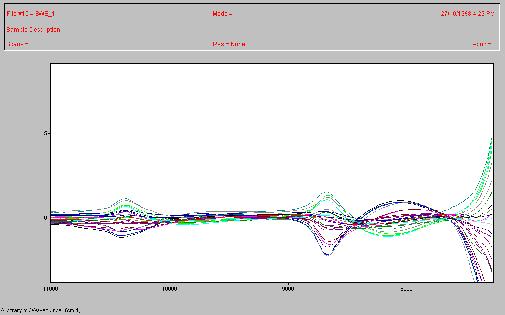
Absorbance by caustic (NaOH), sodium sulfide (Na2S) and sodium carbonate (Na2CO3) in the near infrared zone.
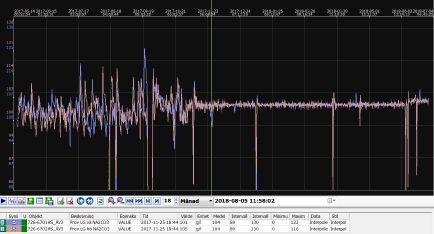
Reduced variability in total titratable alkalinity in dissolving tank using FT-NIR control.
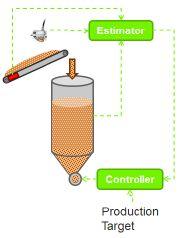
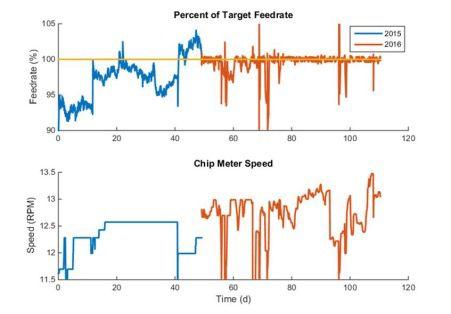
Dry fibre feed rate and belt speed before (blue) and after (orange) control using FITNIR chip moisture sensor.
liquor, which leads to less deadload (as carbonate) in the weak black liquor and ultimately less energy for evaporation of water. The steam savings can be of significant value, particularly when it is used to generate electricity. Other potential benefits in the recovery cycle include increased causticizing efficiency, less purchased lime, more stable operations, fewer maintenance issues and improved safety.
Another application of FT-NIR analyzers is for chlorine dioxide generation in the bleach plant, monitoring sodium chlorate and sulphuric acid concentrations. Using the data can result in typical reductions in acid and chlorate strength variations of 45–50 per cent, as well as improved ClO2 generator control and efficiency, improved safety, less lab testing requirements and chemical savings, with a typical payback of several months.
All the above measurements use NIR light in transmission mode, which is shone through a sapphire cell window and the transmitted light is analyzed at the other side. Liquid samples are collected automatically and sent via ½-inch tubing, at high velocity, to a remote field sample station (FSS), situated in the process area.
The NIR light is sent from the spectrometer rack system (SRS), located in a climate-controlled room, to the FSS up to several hundred metres away. Each FSS is able to automatically process samples from several streams in a process area and up to eight FSSs can be deployed at different locations using the same spectrometer. The lines and sample cell are flushed after each reading with hot demineralized water to eliminate any potential scaling problems.
In recent years, however, several applications have been developed for measuring NIR absorption by solids, analyzing diffusely reflected light from solid surfaces to determine the absorbance at specific wavelengths. An application launched in 2018 is the measurement of moisture content in wood chips using NIR in diffuse reflectance mode.
FITNIR and FPInnovations developed a sensor for the chip conveyor feeding a digester. Without moisture measurement, wood chips are normally fed at a constant conveyor speed, but due to variability in moisture content, the actual flow of fibre into the digester varies. Using the chip moisture signal to control the chip feed rate can compensate for changes in moisture content to obtain a relatively constant dry fibre feed rate. This enabled one mill to increase production by up to four per cent as well as improve fibreline stability.
Another use of NIR in reflectance mode is for Kappa number measurement (based on NIR absorption by lignin). FITNIR established a linear relationship between NIR absorption values and Kappa levels from five to 120. Most of these analyzers are being used at high Kappa values in linerboard mills, where traditional techniques using UV light are not very reliable due to interference by lignin fluorescence.
Interestingly, the most recent ideas for using FT-NIR have come from FITNIR’s existing customers wanting to use the spectroscopy platform for new applications. For example, one bleached kraft pulp mill has a benchtop Kappa instrument from FITNIR, but asked for brightness readings from the same instrument. FITNIR was able to provide this for them in the fall of 2020 and it is working very well. Another mill asked for a measurement of chloride in their pulping liquor, as there was possible contamination in their wood chips. The Domtar Kamloops mill was looking for the ability to rapidly measure Kappa number on a dry pulp sheet for ISO 9001 quality control, and can now measure this in 13 seconds prior to baling the pulp.
FITNIR is shedding new light on process chemistry. The company is even hearing from other industries looking for FTNIR process measurements, such as an aluminum producer that wants to monitor the chemical process of converting bauxite to alumina. PPC
Martin Fairbank has worked in the pulp and paper industry for over 35 years and is currently a consultant and technical writer.
By Abdelaziz Hammache (corresponding author), Étienne Bernier, Étienne Ayotte-Sauvé and Serge Bédard, Natural Resources Canada, CanmetENERGY, Industrial System Optimization Group
Abstract
Industrial cogeneration facilities mainly use steam and gas turbines. In a pulp mill, it is often difficult to understand which operating conditions in the steam plant maximize profitability, given the complexity of steam equipment operating envelopes, variability in energy markets and details of electricity purchase agreements.
In recent years, CanmetENERGY (NRCan) has developed the COGEN software for the optimization of industrial cogeneration systems. It has also worked on the optimization of cogeneration systems in several Canadian kraft and TMP mills, in partnership with FPInnovations. This article summarizes some key lessons learned from this experience.
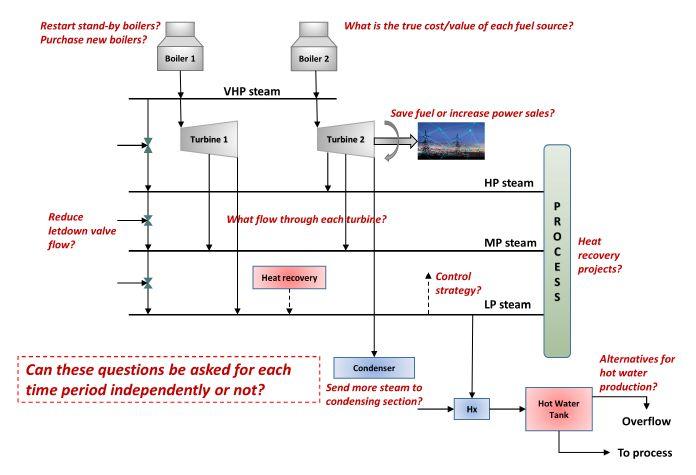
Optimization at the supervisory level requires a precise understanding of the fuel and steam paths involved in a particular action in the control room. Understanding profitability of path combinations requires a careful distinction of fixed and variable costs related to equipment performance curves, maintenance, ash handling, demineralized water make-up, fuel transport, electricity transmission, etc. Multi-periodicity, often induced by contractual limits to cumulative fuel and electricity flows, adds complexity.
In general, pulp mills can increase their profitability by $1-2 million per year by improving decision-making in the control
room of the steam plant. In some multiperiod cases, numerical optimization can add $300,000-$400,000 per year.
Canada’s pulp and paper mills are facing the challenge of competing in shrinking global markets and maintaining wellpaying jobs. Reducing operating costs, including energy costs, is imperative. In addition to many energy-saving projects, improved energy management systems and other initiatives to diversify revenue streams, several mills have installed or
upgraded green power generation equipment under the Pulp and Paper Green Transformation Program implemented by Natural Resources Canada’s Canadian Forest Service, or by using programs available in some provinces. At the same time, contracts between mills and utilities have become increasingly complex, making it difficult to ensure equipment operates to function optimally with respect to all contractual flexibilities and artefacts.
Industrial cogeneration facilities generate about 11 per cent of Canada’s electricity (Nyboer, J. & al., 2016), with a
significant contribution from the backpressure and condensing steam turbines of Canadian pulp mills. These systems often have operational flexibility, and finding a better trade-off between electricity sales and fuel costs can increase profitability without any investment, although sometimes difficult to achieve given the combined complexity of steam equipment operating envelopes, variable hog fuel quality and availability, variable energy market conditions, and the details of Electricity Purchase Agreement (EPA). In some cases, due to contractual or physical constraints, burning fuel at one time affects the ability to burn fuel at another time. This “multi-period” problem has some similarities with the “Unit Commitment Problem” for scheduling the economic dispatch of thermal-generating units (Sheble, GB. & Fahd, GN., 1994), for which optimization tools are well developed in the utility industry, but not in the pulp and paper industry.
Over the past few years, CanmetENERGY (NRCan) has developed the COGEN software for industrial cogeneration systems optimization (COGEN Software, 2018). Also, it has worked on the optimization of cogeneration systems in several Canadian kraft and TMP mills, in partnership with FPInnovations (Mateos-Espejel, E., & al, 2017). This article summarizes the main lessons learned from this experience, including some EPA-specific insights. Part II of this series focuses on increasing cogeneration through major investments, and Part III focuses on major investments in kraft mills in particular. [Ed. note: Parts II and III are appearing in forthcoming editions.]
Cogeneration is a means of efficiently using a single energy source to produce electricity and useful heat, compared to their standalone production.
2. Steam-based cogeneration optimization basics
Cogeneration is a means of efficiently using a single energy source to produce electricity and useful heat, compared to their standalone production. Figure 1 illustrates part of a typical steam-based cogeneration system in a pulp and paper mill, including some of the operational decision variables at the supervisory level that allow flexible adaptation to changing circumstances through optimization.
2.1 Steam paths, fuel paths and energy efficiency
Optimization at the supervisory level requires a precise understanding of the fuel and steam paths involved in a particular action in the control room. This largely determines the profitability of each path combination at each point in time, as energy market conditions change. Table 1 provides estimates for incremental power generation, expressed as a percentage of the incremental fuel higher heating value (HHV), for typical pulp mill conditions in terms of equipment performance and hog fuel characteristics (e.g. 50 per cent moisture content). These figures can be refined using mill-specific performance data. Table 1 shows that many path combinations have low efficiency.
The fuel path categories in Table 1,
for a hog fuel–fired, natural gas co-firing boiler, are defined as follows:
• Hog fuel, good air control: hog fuel and air are added in proper proportion to maintain efficient combustion;
• Hog fuel, poor air control: hog fuel is added, but there is already enough combustion air. Paradoxically, this inefficient practice increases efficiency of incremental power generation, but at the expense of increased fixed operating costs (i.e. fuel for the “dead” load of heating unnecessary combustion air to stack temperature). This creates an incentive, all else being equal, to operate poorly controlled boilers at full-load and well-controlled boilers at part-load;
• Natural gas, independent co-firing: natural gas and air are added in sufficient proportions to maintain efficient combustion, without affecting hog fuel combustion;
• Natural gas, ID fan-limited co-firing: natural gas is added, and removes hog fuel combustion air due to a limitation in induced draft fan capacity, or similarly, a forced draft fan limitation, a limitation in fuel entrainment, a limitation in heat transfer or a poor combustion air control strategy. Paradoxically, the path efficiency is extremely low despite the
increase in equipment efficiency from 65 per cent to 85 per cent with natural gas replacing biomass.
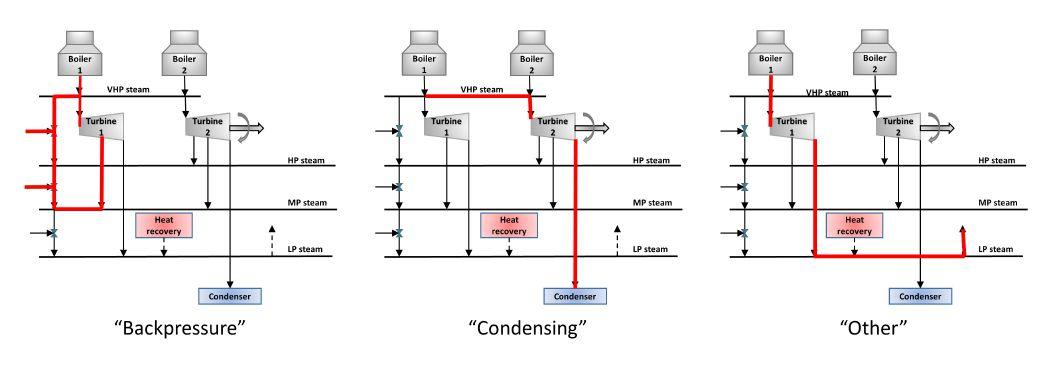
The steam path categories in Table 1 are illustrated in Figure 2, and defined as follows:
• Backpressure: incremental boiler steam replaces steam that would otherwise be produced by desuperheating. Closing a PRV to increase the turbine load, or increasing pressure ratios, are classic examples to increase power generation, among many others. All backpressure paths have a similarly high efficiency because, with the exception of minor incremental losses in turbine and generator cooling, they fully convert the incremental enthalpy of steam into electricity. Increasing regeneration, such as adding stage and air heaters, usually falls into this category. Only backpressure paths constitute true cogeneration, and all other paths have low efficiency;
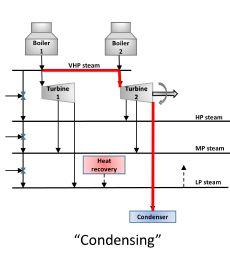
• Condensing: incremental boiler steam goes 80 per cent into a vacuum condenser and 20 per cent into a deaerator to heat the condensate, as would be the case in a standalone power plant. Multiple turbines may be involved through the interplay of their extrac-
tion flows. Path efficiency, as shown in Table 1, depends primarily on the boiler pressure, and secondarily on the condenser vacuum and the turbine efficiency;
• Others: incremental boiler steam is sent to an atmospheric vent, to a pressurized “balance” or “dump” condenser, or through a PRV to debottleneck a condensing path. The path efficiency, relative to condensing, is roughly proportional to the fraction of turbine stages still travelled.
When the incremental electricity produced by each turbine is valued equally, generation is more profitable from efficient path combinations. Optimization often boils down to maximizing or minimizing a path of questionable intermediate efficiency and profitability. Once this has been determined, equipment load setpoints can be increased or decreased up to the nearest limit, based on operating envelopes, beyond which generation would shift to
a different path. When the nearest limit is in a boiler, control of high-pressure steam by a turbine can increase pressure stability, and vice versa (which may warrant upgrading combustion air controls for faster response on hog fuel alone).
In order to properly assess profitability, the distinction between fixed and variable costs (such as “dead” loads mentioned above) is of paramount importance when interpreting equipment performance curves, as well as for maintenance, ash handling, demineralized water make-up, fuel transport, electricity transmission, greenhouse gas taxes and permits, etc. Cost estimates should be the best estimates, not the most conservative, because a dollar lost on un-generated electricity is still a dollar lost.
Table 1 provides the basis for building a simple, robust and practical supervisory optimization tool in combination with Eq. 1 (below), which provides the cut-off efficiency between path combinations to be maximized and minimized, depending on the relevant economic parameters.
For example, if hog fuel costs $2/GJ HHV, including ash handling, natural gas costs $5/GJ HHV, including carbon tax and delivery, and electricity revenue is $20/GJ ($72/MWh), net of transmission service, then the efficiency cut-off is 10 per cent for hog fuel and 25 per cent for natural gas. According to Table 1, all path combinations are profitable except those in the last row and “natural gas/other.” It is therefore optimal to maximize hog firing at all times, and add natural gas until one of the following is fully loaded: ID fan, condensing turbine throttle, cooling tower, generator, etc. Venting a portion of the steam to produce additional power would be acceptable (from a profitability standpoint!) if, at that time, natural gas is at minimum.
Setting the price of hog fuel in Eq.1 can be tricky because the co-delivery of wood chips sets arbitrary book values for hog fuel. In fact, only two pricing methods are valid for Eq.1. In the first case, there is a single discretionary source to top-up hog fuel inventory when depleted due to power generation. Eq.1 must use its price exclusively, and can be tailored
to its composition (moisture, ash, rocks and debris) as it affects boiler efficiency, ash handling and maintenance costs. In the other case, there is a significant price differential between discretionary supplies already contracted or not. In this multi-period case, Eq.1 should use the shadow cost, i.e. the marginal value of having an extra ton in inventory.
For example, if there is just enough fuel for 2,000 hours of maximum-condensing generation and 6,760 hours of minimum-condensing generation, and electricity is $45/MWh for the 2,000th most expensive hour, marginal value is $45/MWh regardless of fuel costs. Solving Eq. 1 using Table 1, $12.50/GJ ($45/ MWh) at 24 per cent efficiency yields $3/ GJ for hog fuel and related variable costs. This becomes a threshold for supply contracts renewal. A multi-period case is the BCHydro EPA, which includes time-varying prices and cumulative limits. Both firm and non-firm electricity have shadow costs that only a multi-period approach can correctly estimate, and without which natural gas co-firing during peaks cannot be decided properly. For more details
on multi-period problem solving, please refer to Bernier & al., 2019.
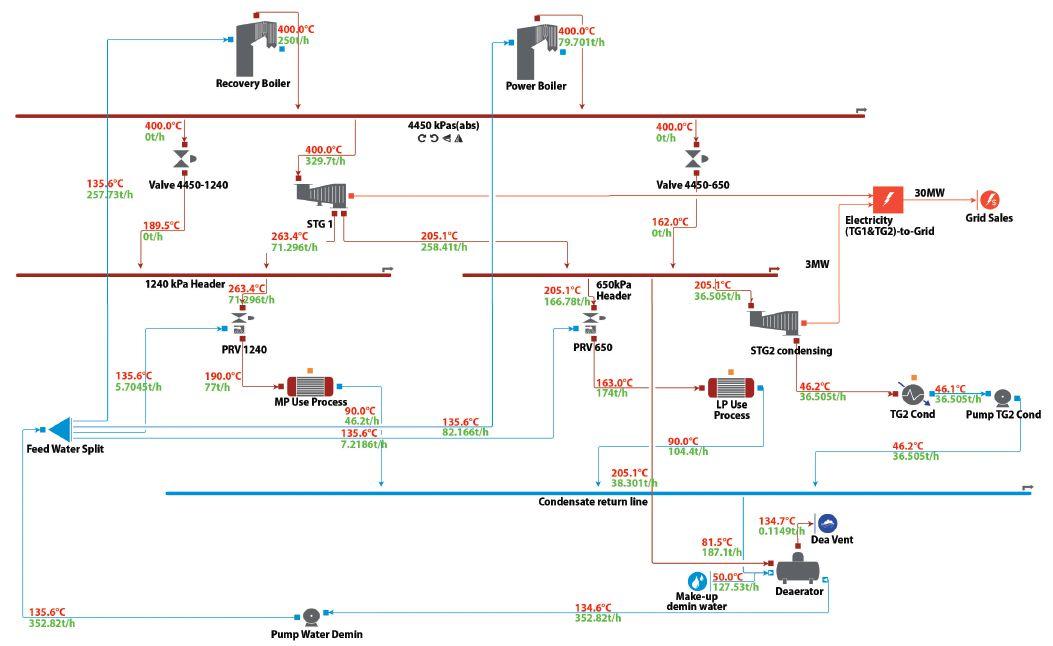
CanmetENERGY has developed COGEN, an advanced flowsheeting modeling software to help Canadian industries optimize their cogeneration systems. COGEN combines powerful diagnostic and optimization capabilities, while taking into account operational and design constraints. A graphical user interface is used to define a flowsheet (screenshot as in Figure 3) and model any industrial cogeneration system based on steam turbines, gas turbines and/or reciprocating engines, including detailed modeling of condensate and heat recovery in steam systems (COGEN Software, 2018). Under the hood, optimization is carried out using state-of-the-art non-linear programming solvers in the GAMS language (Brooke, A. & al., 2010), which ensures that the solution presented on the screen is almost always a global optimum in terms of the choice between all available fuel and steam paths, down to small details such as whether or not to use a feedwater stage heater.

Table 2: Summary guideline for optimal operation of a pulp mill cogeneration system.
Note “Eq.1”: Refer to Eq.1 on p. 20 to make a more detailed determination
Table 2 provides a summary guideline for optimally operating a steam cogeneration system in a pulp mill, keeping in mind that values can be attached to various variable costs (such as ash handling, see Eq.1) and can refer to a shadow cost in a multi-period case.
In many instances, including multiperiod cases, variable energy prices cause operations to shift between the columns in Table 2, sometimes on a daily basis. A good online optimization and/or EMS will recognize the timing of these changes, and react as swiftly as a papermaker would if paper prices at the door doubled for a few hours!
Shifting the demand of steam from one period to another can further increase profits. For energy prices that fluctuate on a daily basis, reductions in recovery boiler load, demin plant throughput and/ or some intermittent steam users can be scheduled. For seasonal prices, it is possible to schedule shutdowns of hog boilers and condensing turbines.
In the most complex multi-period cases, numerical optimization may be required to find accurate solutions, but optimal operation strategies typically remain relatively simple to illustrate in a spreadsheet, and to program into the distributed control system (DCS).
Improving the operation of the cogeneration system improves mill profitability, with potential savings of $1-2 million per year, including minor heat recovery projects in the steam plant, based on pulp and paper mills where a detailed analysis was conducted (Hammache, A., & al., 2016).
Where applicable, the introduction of load swings in a recovery boiler could bring additional benefits in the order of $1 million per year, and insights from multi-period numerical optimization, another $300,000-$400,000 a year.
Pulp and paper cogeneration systems are mainly based on steam turbines. It is often difficult for steam plant operators to understand which operation maximizes profitability given the combined complexity of steam equipment operating envelopes, variable energy market conditions and the specific terms of each EPA. It is critical to understand which fuel and steam paths are affected by a given operational decision, and how the profitability of these paths changes over time. The difference between sub-optimal and optimal operation can be as much as CA$1-2 million per year.
COGEN software can be used to build a plant-specific flowsheet model and reveal optimization opportunities that may be counter-intuitive and/or difficult to deduce analytically, but easy to transform into practical value-added advice in the steam plant.
Physical or contractual limits to cumulative fuel or electricity flows often create multi-period problems, adding another layer of complexity. Numerical optimization can be particularly useful in revealing shadow costs and discovering opportunities to shift energy between periods.
In the pulp and paper industry, only backpressure power generation is fuel efficient. Condensing and other paths
are less than 30 per cent efficient. From the perspective of promoting grid-wide energy efficiency and low GHG emissions, they are beneficial only during periods of high electricity demand, particularly in provinces where the electricity grid is already decarbonized.
The authors are grateful for the financial support received from the Program on Energy Research and Development (PERD-3A02-001) and the Forest Innovation Program of the Canadian Forest Service, at Natural Resources Canada.
Bernier, E., Ayotte Sauvé, E., Hammache, A., Mateos-Espejel, E., and Bédard, S., (2019), Optimal Power Production in Pulp Mill Cogeneration Systems by Province: A Multi-Fuel & Multi-Period Perspective, PaperWeek Canada.
Brooke, A., Kendrick, D., & Meeraus, A. (2010). GAMS: A user’s guide, release 23.3. South San Francisco: The Scientific Press.
COGEN Software, (2018), Optimizing Cogeneration Systems in Industrial Processes, Natural Resources Canada, Cat. No.: M154-129/2018E-PDF.
Hammache, A., Ayotte-Sauvé, E., Bernier, E., and Bédard, S., (2016), Optimizing Cogeneration Systems in the Pulp and Paper Industry, PaperWeek Canada. Feb. 1 – 5.
Mateos-Espejel, E., Bernier, E., Rafione, T., and Hammache, A., (2017), Maximization of Power Export Profits by Means of Identifying and Understanding the Interactions Between the Utility System and the Process in P&P Mills, PaperWeek Canada.
Nyboer, J., Griffin, B.and Bennett, M., (2016), Cogeneration Facilities in Canada 2014, CIEEDAC, Simon Fraser University, Burnaby, BC, March, 2016. Prepared for: Industry and Transportation Division of the Office of Energy Efficiency, Natural Resources Canada.
Sheble GB, Fahd GN., (1994), Unit commitment literature synopsis. IEEE Trans Power System, 81), 128–135.

By Kristina Urquhart
Amistake that nearly cost a quarter million dollars is what led Wesley Sessenwein to develop technology that uncovers billing discrepancies in maintenance contracts for pulp and paper mills.
“I’ve seen double-billing errors my entire career in heavy industry,” explains Sessenwein, a project manager who has worked throughout Alberta in process industries such as pulp and paper and oil and gas. “On the contractor side, I used to spend hours every day scouring the billing, making sure that we didn’t under-bill an owner or producer, and also that we didn’t overbill them. I took great pride in that.”
But, as humans are prone to do, Sessenwein eventually made an error, accidentally approving a bill for $250,000 to be sent twice to a customer. That compromised the company’s standing with the client and, he says, “nearly wrecked the relationship.”
The error was caught before the bill was paid, and all was smoothed over. But it got Sessenwein thinking.
“It really is a human-driven industry and I think we lack the tools we need to move large volumes of money around in a contract-compliant manner,” he says. “I knew that if I was missing this stuff with the level of interest that I have in it, others would be for sure.”
Sessenwein co-founded Project: Recapture in 2017 alongside business partner Jennifer Hunter, with their sights set on driving efficiencies in the industry.
“We meet operations teams who really care about protecting their mill’s bottom line, and who want to make sure that the contractors are getting paid for the work they’ve done. They spend a lot of time trying to validate the billing,” says Sessenwein.
“The challenge is that there’s so many documents they need to review in order to validate and make sure that they’re getting it right the first time.”
Project: Recapture automates the process of cross-checking billing from vendors and contractors against documents such as labour agreements, contract rate sheets, access control time logs and prior bills.
This is an advantage for an organization as large as a pulp and paper mill, which employs multiple supervisors in different departments who approve billing for general maintenance contracts or shutdown periods.
The system will flag discrepancies such as double billing, overbilling or time spent – for example, if multiple supervisors unknowingly approve the same contractor’s bill, leading to double charges for a single day’s work. Or, if a timesheet includes a line item for 15 hours of labour but the access control log shows the worker was only onsite for eight hours.
Correcting billing issues as they arise is helpful when it comes to maintaining productive relationships with contractors, Sessenwein says. “Mill operations teams can have those incremental, difficult conversations along the way, as opposed to a single catastrophic conversation a year after the work is done.”
Once installed, Project: Recapture can access data in several ways – through integration with a contractor’s billing system, by using exported reports from the contractor’s billing system, or by keying in information manually using a web form.
The online software runs through the data and presents audited billing in a dashboard. Bills that pass are shown onscreen in green and don’t require further attention from a supervisor. Any bill that requires additional oversight is clearly marked in red. Within each entry, the user can review associated information such as wage rates, premium time, labour equipment material (LEM) reports.
Sessenwein estimates this system significantly reduces the amount of time a supervisor needs to spend sorting
through billing by about 80 per cent –and is what enables a supervisor to drive cost changes within their organization.
“Mills have a great finger on the pulse of what’s going on – they just might not have the time or resources to dig in and find out,” he says. “By collecting this data, we’re able to show [operators] what they’ve spent in relation to their budget. This gives them a real edge on managing the contract and knowing what they’ve spent to date.”
A North American pulp mill that implemented the Project: Recapture software to automate the validation of daily costs in a multimillion-dollar turnaround event realized a five per cent reduction in spend.
The software ran through contractorsubmitted daily LEMs in real-time, and mill users managed billing anomalies that had been identified by the software, which were then adjusted by the contractor.
“We’ve seen a material decrease of hundreds of thousands of dollars in spend in our first few engagements,” notes Sessenwein. Early results show mill users are saving, on average, over $5,000 an hour using the software.
“Most maintenance contracts see leakage from overbilling between four and 11 per cent, which is significant,” he says. “When you look at the scale of the pulp and paper operations we’ve got across North America, you can see how that could easily be a problem in the neighbourhood of a million or more dollars a year per facility.”
The automation of administrative processes to eliminate human error can be a good way to free up workers for more valuable tasks, and to put organizations in a stronger position for 2021.
“The market has a lot of downward pressure and people will be looking at costs,” says Sessenwein. “[There are] people who really care deeply about this specific problem and believe there’s money being left on the table.”
Canfor to sell forest tenure to wood pellet producer
Canfor will sell its forest tenure in the Fort Nelson region of British Columbia to the wood pellet company that purchased Canfor’s Fort Nelson mill assets in the third quarter of 2020.
On Nov. 17, Canfor announced it has reached multi-year $30-million agreements for the sale of the forest tenure to Peak Renewables.
The transactions are subject to customary closing conditions, including approval from the BC Minister of Forests. Closing is expected to occur in the first quarter of 2021.
“I am pleased to have reached an agreement to sell our Fort Nelson tenure to Peak Renewables, a company that is committed to developing a long-term plan to rejuvenate the forest industry in the region,” says Don Kayne, president and CEO of Canfor in a statement.
Peak Renewables is a bioenergy company that manufactures sustainably sourced pellets. The company is currently establishing a 600,000 tonne-per-year wood pellet plant in Fort Nelson.
FPInnovations, Performance BioFilaments and Resolute Forest Products have won an award for their commercial facility project specializing in the production of cellulose filaments.
On Nov. 19, the companies won a Technology Partnership Award at the 30th Innovation Awards Gala of the Association pour le développement de la recherche et de l’innovation du Québec (ADRIQ) for their work on the forthcoming biomaterials plant at Resolute’s specialty papers mill in Kénogami, Quebec.
Extracted from wood-pulp fibre, cellulose filaments have special properties that make them an ideal reinforcing agent for use in a range of application.
Cellulose filaments can be used as a reinforcing agent in paper products, in materials used in industrial sectors such as transportation, or as a rheological agent to modify the texture and behaviour of paint.
FPInnovations partnered with Resolute Forest Products to transfer knowledge of the technology, which was developed with contributions from industrial members, provincial governments and the Canadian government through the Canadian Forest Service’s Transformative Technologies Program.
This is the second time that FPInnovations’ cellulose filament production technology has been commercialized – the other being by Kruger Biomaterials in a partnership established in 2013.
The federal government is investing $1.2 million to scale up production of a new lightweight wood fibre–based composite material to create automotive parts.
GreenNano Technologies, a Toronto-based company, has developed a method to combine wood pulp with polymers to create a special strong and lightweight thermoplastic.
The material, if successfully applied in the automotive sector, could have a number of consumer and commercial applications, including in aerospace parts, pharmaceuticals, solar panels and cosmetics.
“Using forest products in the automotive sector is a great example of the high-tech future of forestry,” says Seamus O’Regan, minister of natural resources, in a statement.
GreenNano is also collaborating with Ford Canada’s Power Engineering Research and Development Centre, located in Windsor, Ont., to test the new material in the production of lightweight car parts.
Funding for this project is provided through the Investments in Forest Industry Transformation program, which encourages the Canadian forest sector to adopt technologies to diversify into new product streams and into emerging markets.
“FPInnovations is proud to have received such recognition from ADRIQ along with Resolute Forest Products and Performance BioFilaments,” says Jean Hamel, vice-president, industry and member relations at FPInnovations, in a statement.
“We share a common desire to promote the forest sector’s potential by working closely with the industry to deploy innovations that have a direct impact on its competitiveness and diversification.”
Commercial production is expected to begin in 2021 with up to 21 tons of cellulose filaments per day.
Chemical supplier Kemira has partnered with Danimer Scientific, a manufacturer of biodegradable materials, to develop biodegradable aqueous barrier coatings for more sustainable paper and board products.
The companies aim to manufacture coatings for limited commercial applications in 2021 before exploring broader production options.
Coating in a paper or board product such as a coffee cup forms a barrier to keep moisture and grease from leaking through the cup material.
As demand for sustainable paper and board products increases, this coating and surface treatment will ensure paper and board items are fully biodegradable in soil and water.
Danimer Scientific’s biopolymer, Nodax (made from polyhydroxyalkanoate, or PHA), is renewably sourced from the seeds of plants, such as canola and soy, and is 100 per cent bio-based.
The majority of paper and board products, from cups to food packaging, are currently coated with fossil fuelbased polyethylene, which hinders the recyclability of the products and creates plastic waste.
“PHA is a proven biodegradable alternative to fossil fuel-based materials,” says John Moore, senior vice-president of business development at Danimer Scientific.
“Partnering with Kemira will enable us to expand to paper applications, delivering a repulpable and biodegradable material without sacrificing the product quality that brands and consumers expect.”

ABB has upgraded its L&W Felt Moisture and Felt Permeability Meters with new software to optimize press section performance.
In addition to their handheld use, both felt meters have functionality for online scanner usage.
ABB has also added the PressView 3D software application to enable more detailed review and analysis on a PC. With a dedicated function for online scanner usage, operators also gain access to unique zone-related 3D mapping and Graphical Fast Fourier Transformation (FFT) analysis. These features help to visualize problems that appear at certain frequencies – linking them to machine problem areas – and provide the exact coordinates on the felt.
Existing L&W felt and moisture permeability customers can do a software upgrade to receive the enhanced feature set, while new customers receive the more advanced features at no extra cost. new. abb.com
Voith is now offering paper manufacturers the opportunity to identify and exploit improvement potential for their production through an in-depth analysis of process data.
The optimization is based on process and machine data that are transferred via a VPN or cloud connection to the company’s OnPerformance.Lab, where they are analyzed with the help of data mining methods and artificial intelligence.
The continuous monitoring at the process level registers deviations imme-
Orders and claim management tool merQbiz has released a new orders and claims management solution for recovered paper (RCP) buyers and sellers. The product is powered by the company’s BaleVision quality assessment and analytics platform and can also be used as a standalone service.
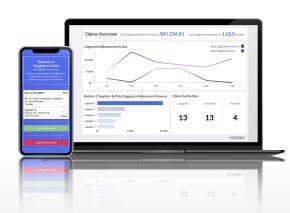
merQbiz’s orders management technology extends ERP functionality with bale quality analysis and supplier performance by integrating various data inputs from purchasing, suppliers, transportation and quality to deliver insights and help drive decision making.
It also triggers integrated process management with supplier performance, quality operations and as a materials handling solution.
The RCP intake team can upload order and delivery information with release and order numbers, release date, mill location, paper grade, price per ton, delivered tons, shipping details and supplier information, as well as bale photos.
The claims management tool unites purchasing, quality analysis and supplier master data. If RCP quality data is entered, the merQbiz application will automatically flag shipments that are outside of industry standards and make downgrade recommendations. From there, the receiving team can suggest a claim by sending a message to upper management for the final decision. merqbiz.com

diately and allows corrections to be made. In addition, the industry-specific expertise of Voith’s specialists facilitates the evaluation of the data and the development of individual, specific and implementable recommendations to stabilize and increase machine efficiency.
The OnPerformance.Lab services are available for the entire production line from stock preparation to winder and can be scaled as necessary. In their service agreement, users can specify a range of important KPIs such as fibre consumption, basis weight, paper moisture and grade change times, and can add others at any time. voith.com
Kespry has launched its Kespry Perception Analytics solution, designed for industrial use cases requiring comprehensive analysis of complex visual data, including asset condition tracking in pulp and paper.
Kespry Perception Analytics vertically integrates as an ISV solution for the Microsoft Dynamics 365 and Power Platform.
Facilities can capture petabytes of video and photo inspection data daily from hand-held and fixed cameras, drones and other robotics, and thermal guns. This data provides critical insight into asset conditions and efficiency.
Kespry Perception Analytics streamlines the asset inspection process by creating a geotagged, historical repository for visual data.
This enables teams to analyze multiple sources of data across assets, track trends over time and be proactive when issues start to arise. kespry.com
Sonoco to raise prices on containers and closures
Sonoco will increase prices for all rigid paper containers and closures sold in North America by five per cent, effective with shipments as of Jan. 15.
Ernest Haynes, division vice-president and general manager, rigid paper and closures, North America, says the price increase is necessary to recover costs for raw materials used to produce rigid paper containers.
“Due to the rising cost of both steel and recovered paper, we are experiencing input cost pressures that simply cannot be absorbed,” Haynes says.
“Our operational cost increases have been compounded by the ongoing COVID-19 pandemic as it impacts labour, the build-up of inventory and associated carrying costs, which is all connected to ensuring the continuity of supply for our customers.” sonoco.com
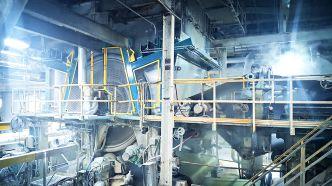
ANDRITZ recently completed a replacement and start-up of the PM5 Yankee hood at Cascades Tissue Group’s tissue mill in Eau Claire, Wisconsin.
The project was executed by the ANDRITZ tissue team located in Montreal, which provides support services for tissue machines and for air and energy systems in the Americas market.
The ANDRITZ PrimeDry Hood is designed for low energy consumption and durability. With this upgrade, production output of PM5 – a medium-speed tissue machine for dry-crepe tissue with a 12-foot Yankee – has increased significantly while reducing specific gas consumption by the hood.
“On a tissue machine, the Yankee hood is a key component due to its consumption of energy and its impact on the quality of the final product,” says George Nowakowski, ANDRITZ vice-president tissue drying North America, says.
Valmet adds linerboard strength testing services to Paper Lab
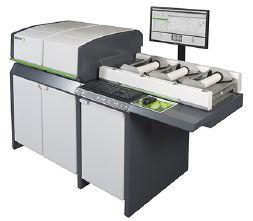
Valmet has improved its solutions for linerboard applications through the Valmet Paper Lab, an automated paper testing laboratory.
With a new S-Test module, Valmet Paper Lab now offers a complete laboratory package for linerboard producers.
Compared to the standard manual laboratory procedure known as Concora Medium Test (CMT), the S-Test offers a new method for estimating the strength classification of containerboard medium fluting – there is no need to corrugate or tape the test pieces.
The S-Test has been standardized by German Institute for Standardization and confirmed by The Cepi Container Board, a European industry association of producers of corrugated case materials.
Among the other modules available at the Valmet Paper Lab are burst, tear, tensile strength, smoothness tests, caliper, basis weight, moisture, formation and more. valmet.com
“Therefore, it is essential to operate the Yankee hood by the most efficient and economic means possible. The critical parameters are air impingement speed, wet- and dry-hood temperatures, exhaust humidity and steam pressure in cylinder.” andritz.com
FPInnovations receives $2M to research sustainable solutions
FPInnovations is receiving $2 million from the Quebec government over a two-year period to develop innovative solutions for the forest products sector.
The move to support innovation for forestry businesses was included in the province’s recent $1.8-billion economic update.
Stéphane Renou, president and chief executive officer of FPInnovations, says in a statement that the organization applauds the investment, which was announced by Quebec Finance Minister Eric Girard.
The funding will allow FPInnovations to focus on developing research projects in three sectors: the digital transformation of the forest industry, the valourization of residual or low-value wood, and the substitution of products that have a high carbon footprint.
These projects will contribute to improving the competitiveness of Quebec’s forest sector while promoting regional development and fostering a green economy.
“At a time when we are experienc-
ing a major economic and health crisis, the financial support announced by the Quebec government will enable us to continue developing innovative solutions that will have a short-term impact on the productivity and competitiveness of the forest sector,” says Renou.
“More than ever, FPInnovations is determined to accelerate the transformation of the forest sector, thereby participating in the economic recovery.”
FPInnovations operates R&D laboratories in Quebec City, Montreal and Vancouver, and technology transfer offices across Canada. fpinnovations.ca
AstenJohnson invests $2.5M in Ontario dryer plant
AstenJohnson is investing US$2.5 million in its dryer plant located in Kanata, Ontario outside of Ottawa.
The company says the investment will address the increased demand for locally supplied dryer fabrics in the Canadian and U.S. markets.
AstenJohnson manufactures products from within the region where they are sold, which the company says reduces the products’ carbon footprint.
The company’s board of directors approved the plan to install a new highspeed loom, which they expect to be operational during the first quarter of 2021.
They are also hiring new associates to match the increase in production. astenjohnson.com
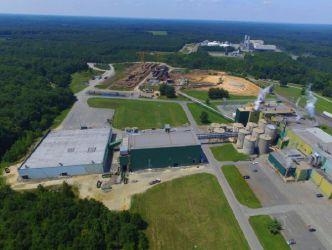
Cascades’ Bear Island mill signs vendors
Cascades has announced the closing of its previously announced bought deal public equity offering, which will finance a portion of the Bear Island mill conversion project.
The offering of 7,441,000 common shares of the corporation closed at price of $16.80 per common share for aggregate gross proceeds of $125,008,800.
The company plans for the currently idled newsprint machine at the Ashland, Virginia mill to be converted to a firstquartile containerboard machine capable of producing lightweight, 100 per cent recycled linerboard and medium for the North American market.
Startup is scheduled for fourth-quarter 2022. The converted PM1 paper machine, which will be rebuilt by Valmet, will operate at about 80 per cent of capacity by the end of 2023, reaching 100 per cent by the end of 2025.
PM 1, at approximately 8,500-mm wide (wire), will produce recycled linerboard and medium grades with a basis weight range of 88-176 g/m2 and design speed of 1,370 m/min. The annual capacity will be 465,000 short tons.
Kadant Black Clawson, a subsidiary of Kadant, Inc. will supply the complete stock preparation solution for the new production line.
The Kadant Foundations fibre processing product line will be used to maintain the desired high quality and strength of the finished product. cascades.com
FPInnovations hosts online learning course on tissue manufacturing
In light of COVID-19, FPInnovations moved its first tissue course online – and the company’s new approach to tissue learning was a success.
This first interactive tissue course was organized by FPInnovations in collabo-
Sonoco develops recyclable packaging for heavyweight products
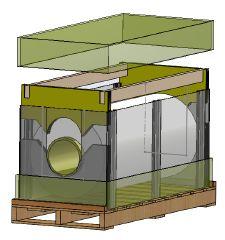
Sonoco Protective Solutions has added two paper-based packaging options for heavy and high-value products to its EnviroSense line of sustainable packaging.
The EnviroSense FiberMax Bulk Box packaging is designed to help companies with products weighing thousands of pounds to protect their items, reduce storage space, increase stacking strength and ultimately recycle the packaging.
Similarly, EnviroSense FiberMax Master Roll packaging protects materials in roll form such as films, foils and laminates.
Both EnviroSense FiberMax packaging solutions are 100 per cent recyclable. sonoco.com
ration with its partners (Cristini, FabioPerini, Kadant, Solenis and Toscotec) and with contribution from UBC and Technidyne.
The course was held Oct. 26-29 and attracted close to 150 people from over 30 organizations from all over the world. The event helped address the training needs of the industry and connected participants with experts in tissue properties and tissue manufacturing.
The new digital and interactive format of the course included lectures, a tissue sample package sent to participants’ addresses, video demonstrations, Q&A sessions and quizzes. The course reflected strong involvement and received excellent feedback from attendees, who came from diverse roles and disciplines.
“My colleagues and I enjoyed the presentations and learning. Great job on everyone’s part and congratulation to FPInnovations’ team for the success in organizing this event,” says Shaune Hanley, product development manager, Resolute Forest Products.
Robert Marineau, general manager, Technidyne Inc., says, “For me personally, better understanding the process will help me in helping customers understand with the results obtained from the different lab and online testing equipment we supply.”
FPInnovations is planning on offering this type of online training course again. More details will be announced next year.
For those people who are interested in the recordings of the course or customized training, please contact Xuejun Zou, course coordinator and manager for chemical process group at FPInnovations at xuejun.zou@fpinnovations.ca or 514816-4478.—Submitted by FPInnovations

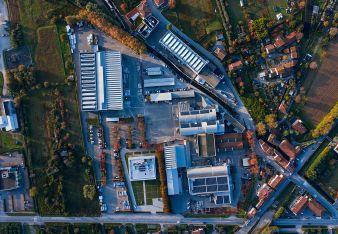
Toscotec to supply three tissue rebuild projects
Toscotec will deliver three tissue machine rebuilds located at different mills to a confidential global producer.
Toscotec will rebuild the drying sections of two tissue machines, as well as the wet end and winding sections of another machine.
The drying section rebuilds include the supply of two Toscotec’s third-generation-design TT SYD steel Yankee dryers, steam and condensate systems and highefficiency TT hoods, including one newly optimized combustion system.
The energy efficiency given by the integration of the steel Yankee and the hoods will result in a significant reduction of the tissue machines’ thermal consumption.
The other project requires the modification of the approach flow and fibre recovery systems and the complete rebuild of the machine’s wire and pope reel sections.
The provision of expert services, including engineering, dismantling of old equipment, erection, commissioning, start-up and training, ensures a complete package for the rebuilds.
These two new TT SYDs will replace the mills’ existing Yankee dryers. toscotec.com

February 8-12, 2021

4 days of Technical & Business sessions, including panels, keynotes, roundtables and more!
2020
A Virtual
where companies will be able to showcase products, equipment, material and facilities that you have never been able to see in an onsite event!
PaperWeek 2021 will redefine the global conference experience. Delegates will discover a brand new way to refine their skills with expert presentations from around the world, take part in a unique Tradeshow vision, and experience a customized networking design that will bring peers together. A customized virtual environment to help connect with your peers, clients and friends, using Microsoft Teams, with the ability to browse and search for specific participants to start private or in group live audio-video networking!
February 8-12
February 3-6
Montréal, QC. Canada
BIOFOR International Conference 2021


The Canadian forest products sector is passionate and devoted – not just to the industry itself, but also to its local communities. Here we share the initiatives of pulp and paper companies working to make positive social, environmental and economic impacts across the country.
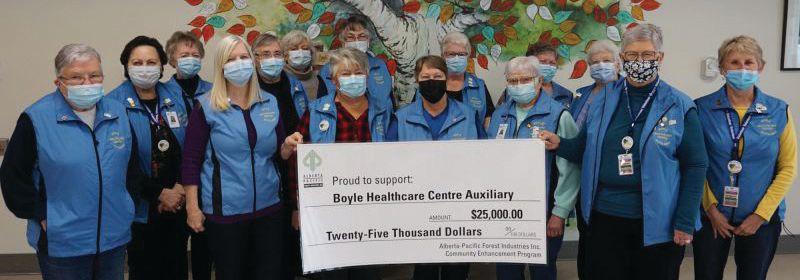
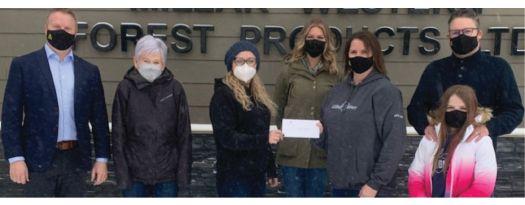

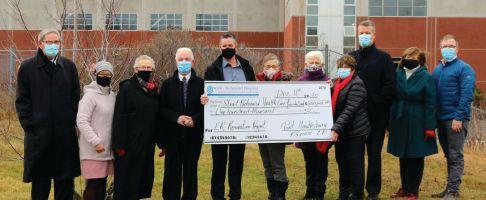

Let us help you share your successes. Tag @PulpPaperCanada or use #PPCGivingBack on Facebook or Twitter, or send an email to the editor at kurquhart@annexbusinessmedia.com. We’d love to hear from you!
Difficult applications require tough instrumentation. That’s why radiometric sensors are used in mines, paper mills, refineries, and oil & gas operations around the world. Radiometric measurements are accurate and highly reliable in any environment.

Non-contact measurement for a maintenance-free operation
Non-contact measurement for a maintenance-free operation
Easy installation without an expensive process shutdown
Measurement is independent of product properties
Enclosed electronics ensure sensor longevity
Mounting is simple with multiple bracket options

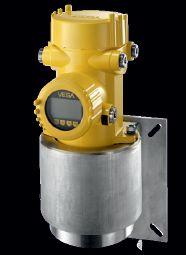
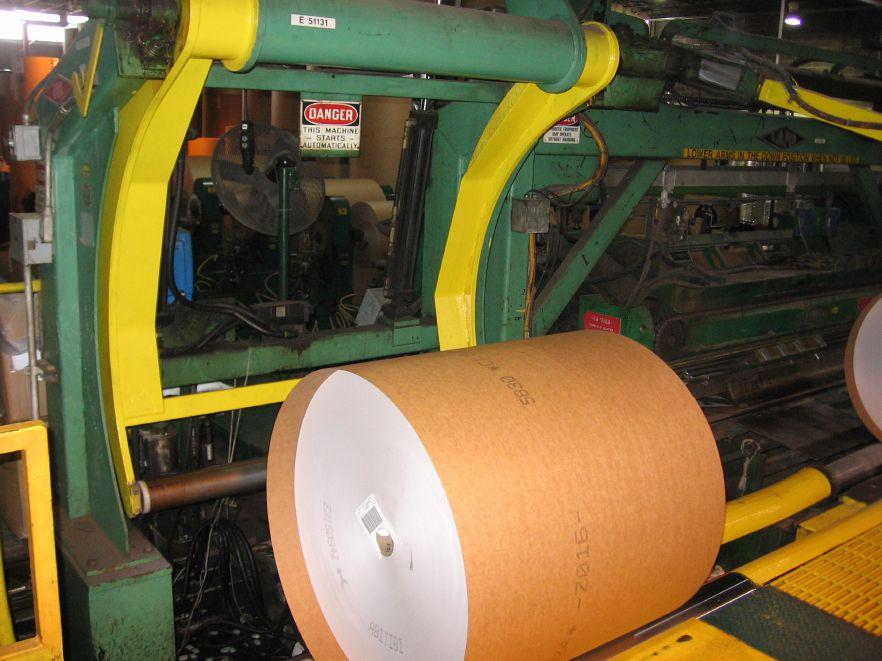
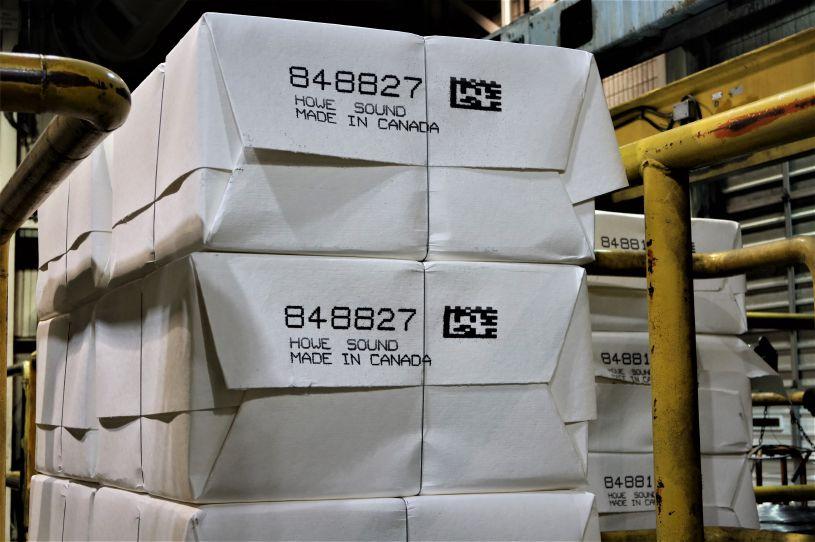
• HIGH QUALITY GRAPHICS & BAR CODES
• PRINTED WITH LOW COST WATER BASED INKS THAT USE FOOD GRADE ADDITIVES
Complete systems with:
• Mechanical
• Electrical
• Controls – Windows based with diagnostics
• Available ControlLogix remote modules
• Robust Printers
• Bar Code Scanners
No need to use delicate high resolution printers and expensive specialty inks.