


Last fall, I attended the Pulp, Paper and Bioproducts Course, presented annually by FPInnovations (see more on p. 20). Nearly all of the attendees were process engineers and researchers were there to sharpen their skills. I was there to acquire a whole new set!
Aside from learning the processes of mechanical pulping, kraft pulping and papermaking (that may sound like a refresher to some of you, but 33 lectures later I’m certain everyone learned a lot), one of the highlights of the week was Innovation Day. It reminded me that the pulp and paper industry is a global leader when it comes to innovation. It’s had to be. Social and environmental concerns have led to an overhaul of effluent and air quality regulations, and market pressures, like the declining demand for newsprint, have forced the industry to come up with new ways to market Canadian pulp.

Kristina Urquhart Editor
On Innovation Day, we learned about biomaterials that are being extracted from wood fibre with end uses that are not necessarily sheets of paper. Cellulose filaments, made of tiny, flexible bits of wood fibre called microfibrils and nanofibrils, have high bonding potential and reinforcement properties, which make them ideal strength additives for composite and other non-traditional products. And a little goes a long way – in testing, FPInnovations has created mineral paper containing 80 per cent filler to only 20 per cent cellulose filaments. It’s especially of interest because at this ratio, the mineral paper has a tensile strength that’s 75 per cent of regular commercial copy paper, but it uses three times more filler, thus stretching its value.
FPInnovations has been working with cellulose filaments for over 10 years, developing a patented mechanical production process to extract them. It’s currently working on fullscale commercial trials with Kruger in a $43-million partnership that saw the construction of the world’s first cellulose filament demonstration plant in 2014. They’re now producing five tons of the filaments per day.
That’s just one example of the innovations happening in this industry. Bosk Bioproducts is another one of the trailblazers. I talked to the Quebec-based company on p. 24 to find out how it is working with residuals from pulp and paper mills to create compostable bioplastics. Bosk has spent the past two years perfecting the formula and anticipates the technology can be used to manufacture everything from containers to plastic-like films. Next up are mill trials.
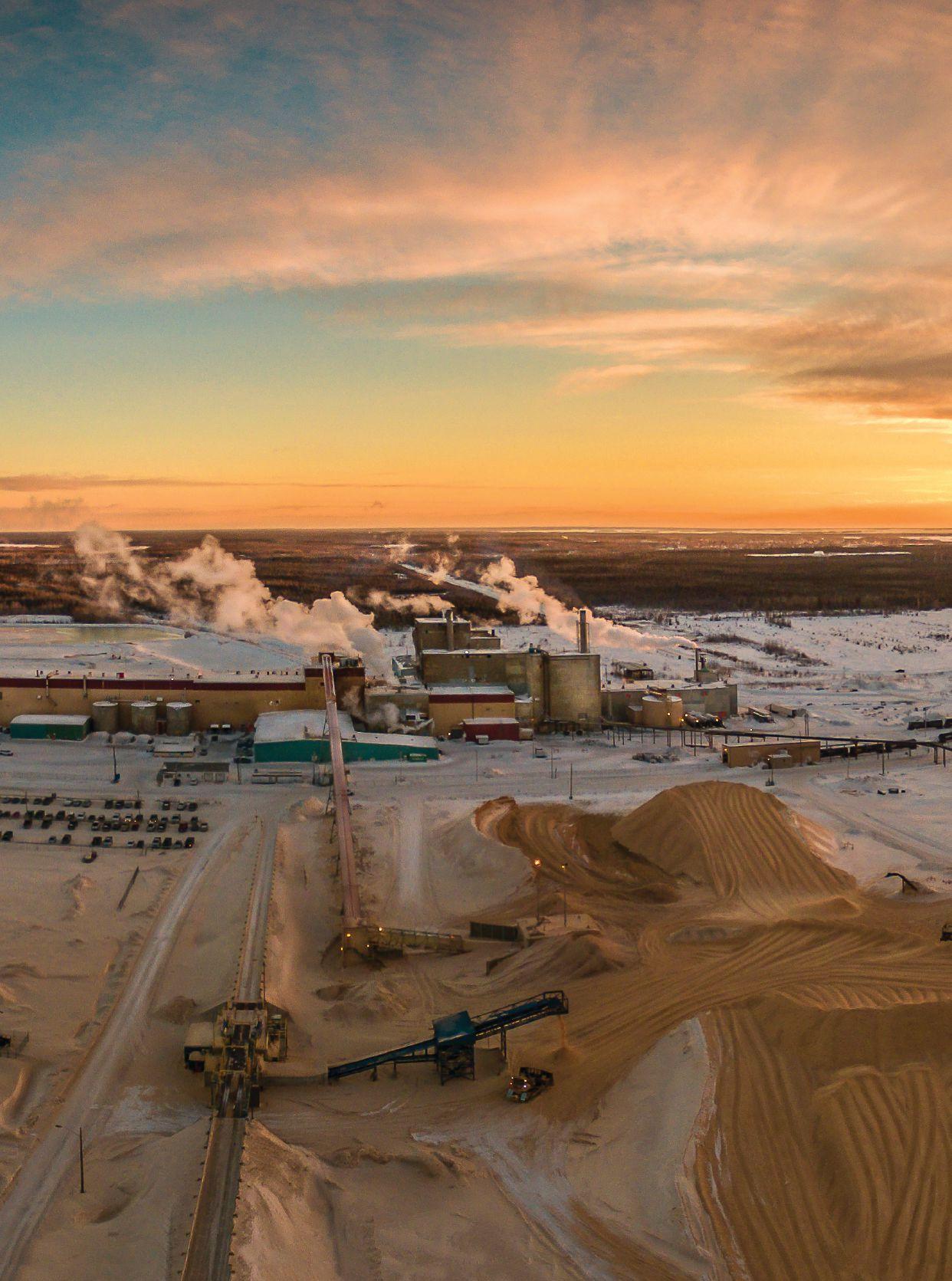
And, speaking of innovation, our cover story (p. 16) is one about a mill that has had to reinvent itself. Canadian Kraft Paper, formerly owned by Tolko, just celebrated its two-year anniversary after nearly closing in 2016. CKP’s parent company, the American Industrial Acquisition Corporation, has been busy making investments in the mill’s future with some multi-million-dollar equipment upgrades that will streamline production – because if we know anything about innovation, it’s that with nothing ventured, there is nothing gained. PPC
Editor
KRISTINA URQUHART
416-510-5143 kurquhart@annexbusinessmedia.com
National Accounts Manager
LAURA GOODWIN 289-928-8543 lgoodwin@annexbusinessmedia.com
Group Publisher/Director of Content and Engagement
SCOTT JAMIESON 519-429-5180 sjamieson@annexbusinessmedia.com
President & CEO MIKE FREDERICKS
EDITORIAL/SALES OFFICES
111 Gordon Baker Rd., Suite 400, Toronto, ON M2H 3R1 Phone: 416-442-5600
Media Designer EMILY SUN
Circulation Manager
BEATA OLECHNOWICZ bolechnowicz@annexbusinessmedia.com
Print in Canada
ISSN 0316-4004 (Print)
ISSN 1923-3515 (Digital)
Account Coordinator
STEPHANIE DEFIELDS sdefields@annexbusinessmedia.com
PUBLICATION MAIL AGREEMENT #40065710
CIRCULATION
email: mchana@annexbusinessmedia.com
Tel: 416-510-5109
Fax: 416-510-6875 (main) 416-442-2191
Mail: 111 Gordon Baker Rd., Suite 400, Toronto, ON M2H 3R1
SUBSCRIPTION RATES
Canada $57.50 - 1 year; $92.50 - 2 year
USA $107.00 USD per year
Overseas - $115.50 USD per year
Occasionally, Pulp and Paper Canada will mail information on behalf of industry related groups whose products and services we believe may be of interest to you. If you prefer not to receive this information, please contact our circulation department in any of the four ways listed above.
Annex Privacy Office
privacy@annexbusinessmedia.com
Tel: 800-668-2374
The editors have made every reasonable effort to provide accurate and authoritative information but they assume no liability for the accuracy or completeness of the text or its fitness for any particular purpose. All rights reserved. The contents of this publication may not be reproduced in part or in full without the publisher’s written permission © Annex Publishing & Printing Inc.
Sustaining member, Pulp and Paper Technical Association of Canada; Member, Alliance for Audited Media.


Columbia Pulp straw pulp mill to be running by spring
Columbia Pulp estimates its straw pulp mill, touted by the company as the first of its kind in North America, will be operational by the end of the first quarter of 2019.
Local news outlets in Columbia Country, Washington, where the mill is located, report that the mill made the statement at an economic development meeting in December.
The Lyons Ferry tree-free pulp mill will produce 140,000 tonnes a year of commodity and specialty straw pulp, sourced from within a 75-mile radius, as a sustainable alternative to wood-based pulp. Columbia Pulp says the quality specifications of its wheat and alfalfa seed straw pulp are equal to, if not more than, virgin or recycled wood pulp.
Along with producing pulp for use in papermaking, the mill will produce environmentally friendly biopolymers, which can be used on roads and in animal feed.
The 182-hectare (449-acre) Lyons Ferry mill was originally projected to open in October 2018, but was met with construction delays. A pilot plant in Pomeroy, Washington, is currently operational, producing 10 tons of wet lap pulp daily. It is also acting as a training facility for workers – the full-scale Lyons Ferry mill will employ between 60 and 100 people.
Resolute Forest Products is in talks with Repap Resources Group, a private investment firm, to negotiate the sale of Resolute’s Fort Frances, Ontario pulp and paper mill, which closed in 2014.
According to a release issued by the Town of Fort Frances on its Facebook page, Repap aims to restart the mill in 2019 to produce packaging grades (sack kraft papers).
“We look forward to assisting Repap Resources Group in their bid to purchase the Fort Frances paper mill,” says June Caul, mayor of Fort Frances. “Returning 263 new jobs in the Rainy River District is remarkable. It will not only reunite families, [it] will also provide long term opportunities for our youth. We thank Repap Resources Group for their interest in investing in the future of Fort Frances.”
Repap Resources Group is partnering with 4Front Capital Partners Inc., an investment bank in Toronto. Repap’s
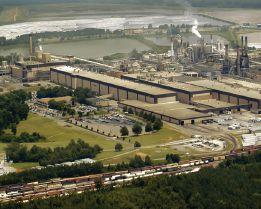
Resolute Forest Products has completed the sale of its Catawba, South Carolina, paper and pulp mill to New-Indy Containerboard for US$300 million as of December 31, 2018.
The sale, announced on October 2, 2018, included $260 million in cash and the assumption of approximately $40 million of balance sheet liabilities, largely net pension benefit obligations.
“We are pleased to have completed the sale of the Catawba mill to New-Indy and wish the new team every success with its investment in the diversification of the mill’s operations,” says Yves Laflamme, president and chief executive officer of Resolute. “We want to thank our employees for their hard work and dedication toward this successful outcome, and are pleased that the community will continue to benefit from the mill’s economic and social impact.”
As previously disclosed, Resolute has agreed to use the majority of the proceeds from the asset sale to repurchase $225 million of its 5.875 per cent senior notes due in 2023, which the company says will improve financial flexibility.
management team consists of professionals with more than 180 years of combined senior executive experience in the pulp and paper industries.
Resolute Forest Products has been heating the mill since its closure at the request of the Ontario government, and has been actively seeking buyers.
To reopen the manufacturing facility, Repap will also have to successfully negotiate access to the fibre currently assigned to the Fort Frances mill from the local Crossroute Forest.
In 2016, Resolute identified enough fibre was available to operate the Fort Frances mill during negotiations with another potential buyer.
Fort Frances is located in Northwestern Ontario, approximately 350 km east of Thunder Bay.
A new report on the global paper, packaging and forest products industry compiled by Moody’s Investor Service says the outlook for next year has been changed to stable from positive, based on lowerthan-expected earnings.
Moody’s notes that the consolidated operating income of the 44 rated paper and forest product companies will be lower than originally expected in the coming 12 to 18 months, while global GDP growth will also slow.
“The stable outlook for the global
paper, packaging and forest products industry reflects operating income in the two to four per cent range over the next one to two years and is driven by lower prices and weaker demand, as well as higher input costs across most subsectors in most regions,” says Ed Sustar, a Moody’s senior vice-president.
The outlooks for the North American and European paper, packaging and forest products industries likewise have been revised to stable from positive. Annual pulp prices are expected to remain fairly stable. Recycled fibre costs are expected to increase slightly, but will likely continue to remain below long-term average prices. Moody’s cites the restrictions on recycled fibre imports into China as the reason for increased North American and European supply.
Operating income for rated North American firms is expected to grow one to three per cent over the next 12-18 months, and these firms represent about 55 per cent of the global rated industry’s operating earnings. Moody’s says that modest earnings from rated paper packaging, market pulp and timberland companies will offset declining operating earnings from tissue, commodity paper and wood product producers.
Paper packaging producers in North America will benefit from announced price increases and slightly increase e-commerce packaging demand, but will face slightly higher freight, labour, energy and recycled fibre costs.

Mercer International Inc. has completed the acquisition of Daishowa-Marubeni International Ltd. (DMI) in a deal worth $465 million.
The shareholders of DMI, Nippon Paper Industries Co., Ltd. and Marubeni Corporation sold all DMI shares to Mercer, including assets for the Peace River pulp mill in Peace River, Alberta, a 50 per cent ownership of the Cariboo pulp and paper mill in Quesnel, British Columbia, and a 50 per cent interest in the Peace River Logging Corporation and associated Limited Partnership, a joint venture with the Woodland Cree First Nation.
“We are pleased to announce the completion of our strategic acquisition of DMI, which increases our current Canadian operations and presence in Asia and expands our product offering to include northern bleach hardwood kraft pulp,” says David M. Gandossi, chief executive officer of Mercer.
“We welcome DMI’s employees to the Mercer team and look forward to working with our new government, community and First Nations partners in alignment with our core values of health and safety, sustainability, integrity, innovation and performance excellence.”
Mercer, one of the world’s largest producers of NBSK pulp, says the deal will allow for a 41 per cent increase in pulp production. The total annual production capacity of the acquired assets is approximately 648,500 ADMT premium-grade NBSK and NBHK market pulp.
Woodfibre LNG, a new liquefied natural gas (LNG) project on the site of a former pulp mill seven kilometres south of Squamish, British Columbia, has had economic benefit agreements worth up to $1.8 billion approved by the Squamish First Nation.
The Canadian Press reports that the approval was “a difficult decision” at eight votes to six, according to Squamish councillor Khelsilem, but that the Squamish First Nation could receive cash and contract benefits of nearly $1.1 billion.
The new project is on the site of a former NBSK pulp mill once owned by Western Forest Products, which sold it to Woodfibre LNG, a privately held company, in 2013.
Woodfibre LNG is licensed to export around 2.1 million tonnes of LNG annually over the next 40 years.
The Squamish First Nation conducted its own environmental assessment before the approval, which included annual and milestone payments of about $226 million, cash for job opportunities, nine parcels of land for housing, and a cultural fund.
Khelsilem says the First Nation still needs to work with Woodfibre LNG on several business management plans to ensure environmental protection before the project can go ahead. He also notes that the First Nation will be “holding the proponents accountable” throughout the lifecycle of the project, from building to its eventual decommissioning.
Supremex, a North American manufacturer and marketer of envelopes and provider of paper-based packaging solutions, has announced it is cutting 41 jobs at its Canadian envelope operations.
The cuts amount to eight per cent of the company’s envelope workforce and will save $2.7 million. Supremex operates 12 facilities in seven provinces in Canada and three facilities in the United States, employing about 830 people in total.
“We regret the effect that these measures will have on employees and their families, and wherever possible, we have transitioned employees to our packaging business and worked with them on early retirement possibilities,” says Stewart Emerson, president and CEO of Supremex. “These cost-cutting measures were necessary to improve operational efficiency and improve both competitiveness and profitability in our envelope business as we continue to prudently deploy resources into our packaging activities.”
Northern Pulp standoff ends; effluent plan forthcoming Northern Pulp intends to submit its plan for the replacement of its Boat Harbour effluent treatment facility by the end of January 2019 to Nova Scotia’s Department of Environment, which will kickstart the province’s own environmental assessment.
The plan will be submitted using existing survey data instead of the new data the mill intended to use before its survey work was blocked for two months by local fishermen using boat barricades. A temporary injunction to stop the barricade was granted by the Nova Scotia provincial court on December 19, 2018, allowing Northern Pulp to resume its survey.
The Abercrombie, Nova Scotia–based Northern Pulp has been ordered by the provincial government to stop diverting its effluent through the nearby Pictou Landing First Nations reserve by 2020. It has been attempting to conduct surveys of the water in Northumberland Strait as a potential site for the terminus of a new pipeline.
The fishermen say Northern Pulp’s plan to deposit 70 million litres of treated effluent into the strait per day would be a threat to the environment and their livelihood.
Kathy Cloutier, director of communications for Northern Pulp’s parent company Paper Excellence, told The Chronicle Herald, a local Halifax paper, that the mill is still working to complete its survey, but in the event that it doesn’t finish, the existing data should be sufficient.
With the protest delays on the strait, Paper Excellence has announced that it is unlikely to meet the 2020 deadline to move from Boat Harbour – and that if it can’t get its proposed pipeline in place, it will need to shutter Northern Pulp, affecting 330 employees. Iain Rankin, Nova Scotia’s lands and forestry minister, says the government won’t amend the deadline, which gave the mill five years to relocate.
Paper Excellence maintains that its new plan, which will involve fully treating the effluent before it leaves the mill, is better than its existing traditional system (used by 80 per cent of kraft mills), which sends untreated effluent to aerating and settling lagoons.
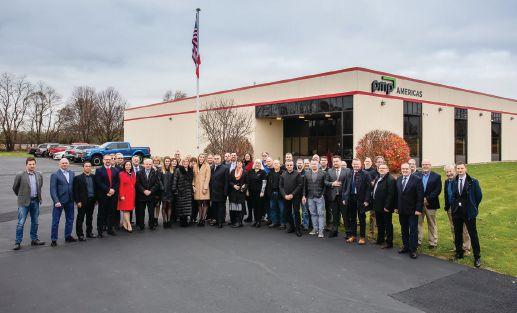
PMP Americas opens new location
PMP, a Polish-based supplier of tissue, paper and board technology, has opened a new location in North America.
The company held a ribbon-cutting ceremony on November 8, 2018 at the new PMP Americas, in South Beloit, Illinois. The facility was dedicated to PMP Americas’ late cofounder and chairman of the board Aaron Braaten.
PMP Americas was originally established in 2001 in Machesney Park, Illinois as a part of the PMP Group, not far away from the former headquarters of the well-known Beloit Corporation.
Recent years have brought very active growth and brand recognition in North America through successful execution of a number of capital projects for leading papermaking companies in the USA. A year ago, PMP invested over US$1 million to double the size of its facility in Illinois, increase employment, widen its product portfolio and expand services.
The facility will accommodate both pulp and paper and the Build-to-Print business units.
Cascades has acquired two manufacturing plants in the United States for US$37.4 million, which will allow the company to double its production capacity of ecological packaging manufactured in moulded pulp.
The manufacturing plants are Urban Forest Products and Clarion Packaging, respectively located in Brook, Indiana and Clarion, Iowa, which are two of the top three egg-producing states in the U.S.
The plants produce moulded pulp protective packaging that primarily serves the egg and quick-service restaurant industries, and have a combined workforce of just over 150 employees.
Cascades also acquired a majority interest in Falcon Packaging, an egg packaging distributor with 31 employees in Ohio, Iowa and Georgia. Combined, these three companies have consolidated sales that exceed US$110 million annually.
“These acquisitions give us the opportunity to improve Cascades’ position in the strategic fresh protein and food services packaging markets,” says Mario Plourde, Cascades president and CEO. “They are also in line with our objective to expand our moulded pulp activities, which produce a recycled, recyclable, compostable and biodegradable packaging product that offers highly interesting opportunities against a backdrop of expanding interest in the circular economy.”
The Canadian government is investing $467,000 in the Canadian Institute of Forestry to fund a three-year project aimed at increasing women’s economic security in the forestry industry.
The project, called “Gender Equality in Forestry National Action Plan,” will work to remove the barriers that prevent or discourage women from pursuing middle-class jobs and careers in the forestry industry. These obstacles include pay equity issues and child care, unequal access to training and trades, lack of management opportunities and misconceptions about the sector in general.
Women are underrepresented at all levels within the forestry sector, the federal government says. In 2016, only 17 per cent of workers in the forestry sector were female. The project will bring women already working in different areas in the forestry sector – including Isabel Pouliot, vice-president of compensation, corporate services and strategic human resources initiatives at Resolute Forest Products – together with industry stakeholders, NGOs, Indigenous groups, professional associations and women who are interested in working in the sector, and will develop and implement a strategic national plan to promote more opportunities for women in forestry.
“We are very pleased to receive the support of the federal government to help us remove barriers for women who want to work in the forestry industry,” says Dana Collins, executive director of the Canadian Institute of Forestry. “Developing a plan […] will help create a workplace that encourages more women to pursue employment in forestry and our bio-economy, where STEM expertise is in heavy demand.”

Resolute Forest Products has appointed Remi Lalonde as senior vice-president and chief financial officer.
Lalonde succeeds Jo-Ann Longworth, who is retiring after a distinguished career, including the past seven years as senior vice-president and chief financial officer at Resolute. Lalonde had been serving as vice-president, strategy and corporate development since May 2018. Previously, he was general manager of Resolute’s pulp and paper mill in Thunder Bay, Ontario. Before taking a leadership role in operations, Lalonde was treasurer and vicepresident, investor relations. He initially joined the company as senior counsel, securities, following six years at Sullivan & Cromwell LLP in New York. Lalonde holds bachelor’s degrees in both law and civil engineering from the University of Ottawa.
“Remi has distinguished himself as a leader and built a strong record of achievement since joining Resolute almost a decade ago. He has broad-based knowledge of the company and depth of financial acumen,” says Yves Laflamme, president and chief executive officer. “As part of our executive team, Remi’s diversity of experience, rigorous approach and commitment to excellence will support the company’s ongoing transformation.”
“On behalf of the board of directors and employees of Resolute, I would like to thank Jo-Ann for her years of service and valued counsel. She has played an important role in building a stronger, more profitable and sustainable Resolute,” adds Laflamme.
Paper Excellence to acquire Catalyst Paper Paper Excellence Canada has entered into an agreement to acquire the British Columbia–based Catalyst Paper Corporation, including its three facilities located in Crofton, Port Alberni and Powell River, its Surrey distribution centre and headquarters in Richmond.
Catalyst Paper manufactures 1.3 million tonnes of pulp and paper products. These products include industrial packaging, food service, coated groundwood, newsprint and directory papers.
“This announcement is a continued step towards Paper Excellence’s long-term growth plan within Canada and the province,” says Brian Baarda, chief executive officer of Paper Excellence.
The transaction is expected to close by early first quarter 2019.
Paper Excellence employs 2,600 employees in Canada and has close to 2 million tonnes of pulp production capacity and 550,000 tonnes of paper production capacity through six mills in Canada and two mills in France. The company manufactures NBSK pulp for the paper industry and BCTMP for printing, board and packaging.
Irving Pulp & Paper Limited will pay a $3.5 million penalty after being sentenced in connection with three offences under the federal Fisheries Act.
In November, the New Brunswick Provincial Court in Saint John rendered the decision, which was the maximum allowable penalty.
The fine is one of the largest penalties to be levied in Canada as a result of an environmental violation. Of the total fine, $2.34 million will be directed to the Canadian government’s Environmental Damages Fund, which was created in 1995 to provide a mechanism for directing funds received as a result of fines, court orders, and voluntary payments to projects that will benefit the environment.
The remaining $1.16 million will be directed to the University of New Brunswick, with the funds to be used by the University’s Canadian Rivers Institute to conduct scientific research and support projects related to the conservation, protection and restoration of Atlantic salmon
Alberta-Pacific Forest Industries Inc. has won a 2018 Forest Stewardship Council (FSC) Leadership Award for its work managing more than 5.9 million hectares of FSCcertified forest, the largest contiguous area certified in the world.
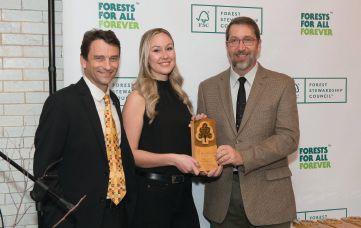
“Our team works hard each and every day to operate in the most environmentally responsible and socially beneficial manner possible,” says Paige Lawson, public affairs lead for Al-Pac.
The FSC Leadership Award recognizes excellence in the use of FSC-certified products and commitment to responsible forest management. The annual awards recognize individuals and organizations dedicated to protecting forests through FSC.
Al-Pac is a manufacturer of kraft pulp, with an annual production of about 640,000 tonnes. The company achieved FCS certification in 2005.
“Alberta-Pacific has proven to be a leader in responsible forest management and product development not only in Canada but around the world,” says Corey Brinkema, president of the Forest Stewardship Council US. “Alberta-Pacific, and indeed all of this year’s award winners, demonstrate that we can manage and conserve forests in a responsible way while using forest products our society depends on in our daily lives.”
in New Brunswick.
In addition to the penalty, Irving Pulp & Paper is required to provide a plan that clearly identifies the interim measures to be taken and that describes how the company will work toward the commissioning of a new effluent treatment system. The company has committed to a major investment in constructing the new effluent treatment facility within the next five years.
Irving Pulp & Paper Limited has provided a five-year plan to Environment and Climate Change Canada, describing timelines and information pertaining to various conventional treatment systems, and is required to provide progress reports twice per year.
The charges stem from several incidents that occurred between June 2014 and August 2016, when improperly treated and deleterious effluent was released from one of three outfall structures, all of which deposit into the Saint John River. The discharges were reported to Environment and Climate Change Canada by the company, as is required under the Pulp and Paper Effluent Regulations.
As a result of this conviction, Irving Pulp & Paper Limited will be added to
the Environmental Offenders Registry, which contains information on convictions of corporations under certain federal environmental laws.

Dryden, Ontario’s Domtar pulp mill and woodlands operations have reached a new four-year collective agreement with their union.
Top pay at Woodlands will increase to $40.60/hour with top pulp mill pay reaching almost $46/hour by the final year of the two deals.
The contracts are valid from September 1, 2018 through August 31, 2022. They include a two per cent annual wage increase in the first two years and 2.5 per cent increases in the second two years, plus an extra $0.40 per hour additional wage increase for operations and production employees, an extra $1.25 per hour in additional pay for skilled trades, and up to $2.70 per hour in additional pay adjustments for some pulp mill operators. There will also be increased commuting pay for woodlands employees, with an additional $1,000 per year for drivers.
The paper industry professional and former journalist chats about his myth-busting new book, Deforestation in Canada and Other Fake News
By Kristina Urquhart
As the executive director of the Paper & Paperboard Packaging Environmental Council for the past 28 years, John Mullinder has heard his share of (mis)information about forestry and paper practices in Canada – namely, that the clear cutting used in the industry is the cause of widespread deforestation. “But Canada has one of the lowest deforestation rates in the world,” he notes. So what gives?
With his new book Deforestation in Canada and Other Fake News, Mullinder, a former journalist, uses facts to unpack public misconceptions.
Here, Mullinder shares some of his insights with Pulp & Paper Canada
PPC: The subtitle of “fake news” is certainly politically relevant. What had you been hearing about the industry that made you want to set the record straight?
JM: There is definitely confusion about deforestation. It’s been years of frustration, running into people who know little about forestry and paper production, but plenty about killing and saving trees and deforestation. You meet somebody socially, and you tell them you work for the paper industry, and suddenly you’re talking about killing and saving trees. That was the main driver, because there’s so much misinformation out there. I wanted to get the facts out onto the table so that everybody could see them.
PPC: You’ve been in the industry hearing these things since 1990. Was there anything that still surprised you as you researched the book?
JM: The images on the internet? The sheer overwhelming bulk of them when you Google images of “deforestation in Canada,” are pictures of clear cuts everywhere [in the world].
The second surprise was the environmental groups, when I surveyed their websites and Facebook pages. None
of them, not a single one, mentioned that Canada has one of the lowest deforestation rates in the world. I thought at least somebody would have referenced it, but there was absolutely nothing there. It may be there now – I haven’t checked recently.

Another surprise is the seeming acceptance of the “ancient forest” argument. When you look at tree-age terms, only one per cent of the Boreal is over 200 years old. So what has all this talk about “ancient” actually been? It isn’t real.
The fourth surprise would be how blatant some retailers are about their environmental claims. And how they don’t provide any backup. There’s something on page 72 about that.
PPC: You talk in the book about some anti-paper messages that spread in the 1990s – “save a tree,” etc. But as you point out, the electronic equivalents are wasteful in their own way. What has allowed our thinking to be so pervasive?
JM: Back in the early to mid-1980s, some environmental groups had legitimate concerns about some forestry and paper industry practices in Canada. That was the time of the War in the Woods and all that stuff. It was part of a worldwide concern about natural resources being depleted. You had emotional images of clear cuts being used; you had blockades; you had people being arrested. It was constantly in the news cycle. Industry was painted in a bad light, and it was very much on the defensive. Once the linkage has been made and reinforced on an emotional level – trees are being cut so you should save trees and use less paper – it’s hard to turn that around. A good example today would be plastic and fish. I think the Canadian forest and paper industry has done a great job of turning that ship around. But there’s a long way
to go. One of the problems is that our customers in the paper industry are not helping in some cases. Instead of fighting the misconceptions, some of them have jumped on the bandwagon and they’re touting how many trees they are saving by recycling. This just reinforces the stereotype that cutting trees is bad.
PPC: One of the stats that struck me was the fact that agriculture accounts for 36 per cent of Canada’s total deforestation rate while forestry sits at four per cent. What makes people zero in on logging as the face of deforestation?
JM: I’m not a psychologist or a brain specialist, but I think it’s got a lot to do with how our brains interpret visual images. If you look at the front cover of the book, it’s a beautiful scene – gorgeous yellow canola flowers. You compare that to an ugly clear cut, and one is clearly good and the other is bad. And that’s the emotional connection that we get – when in actual fact, the canola field was deforested and the clear cut was reforested.
PPC: What are some other ways that the industry can help spread the word that Canada’s harvesting is sustainable?
JM: Use the charts in the book, as well as blogs, articles and the media. Have a consistent message. Push sustainable forestry, not saving trees. Canada’s deforestation rate is one of the lowest in the world. We lead the world in certification of sustainably managed forests.
I hope the book shows factual accuracy is important. Seek facts out in context and check everything you’re told. PPC
This interview has been condensed.
By Ian Lifshitz

For years, Styrofoam and plastic have been the industry default for food packaging. That is quickly changing. As consumers see the obvious harm plastics and Styrofoam are doing to the environment, there is an increasing demand towards alternatives, particularly paper products and the sustainable benefits they can deliver.
That message was forcibly delivered by more than 1,000 Canadians who took part in Asia Pulp and Paper’s annual sustainability study. It found more than two-thirds (71 per cent) of people are placing higher importance on sustainable food packaging than they did five years ago. And most significantly, Canadians now prefer paper disposable products four times as much as plastic and a staggering 10 times as much as Styrofoam. Given this endorsement, the challenge for the paper industry is building on this demand and developing products that exceed the expectations of consumers.
While one must take costs into consideration, there are two factors offsetting this issue. Millennials in particular
are starting to show they take concerns over the environment seriously, and this is likely to be an issue when they vote. It is better for the paper industry to be a forefront of change rather than have standards imposed on us. Secondly, the majority of those surveyed say they are willing to pay more for sustainable materials in fast food products. More than half of consumers (56 per cent) say they would be willing to pay an increased price for a better-packaged product, and a third (37 per cent) of those people say they are willing to pay up to 10 per cent more. The paper industry does not need a better incentive for innovation.
With many more people finding it difficult to balance work and home, we are seeing the growth in food delivery services. This is no longer on special occasions – individuals, couples and families are seeking the convenience of deliveries. Younger respondents are most likely to increase the frequency of having food delivered, which is the same group that is most engaged in environmental issues. With food deliveries set to continue
to increase, there is an increased need to offer packaging that is sustainable. Nearly half (48 per cent) of Canadians surveyed consider a company’s sustainability values as important when it comes to selecting a fast food restaurant. The materials used in fast food packaging are now just as important to consumers as the size of the packaging being used. (Too much packaging is seen as wasteful and has been a perennial complaint by Canadians.)
The brands that will have the most success in the marketplace will be those that take the time to understand the core values of consumers and seek the most innovative solutions.
As more Canadians start to make their fast food choices not only on what is in the packaging but also the packaging itself, there is a tremendous opportunity for the paper industry. There has never been a more fortuitous time to deliver what consumers want. PPC
Ian Lifshitz is vice-president of sustainability and stakeholder relations at Asia Pulp & Paper Canada. appcanada.com
By L. Ettaleb, M. Frith and R. Amiri, FPInnovations
The pulp and paper industry is faced nowadays with three challenges: market decline for printing and writing paper, high energy cost and scarcity of quality wood supply. The electric energy consumption and raw materials are the main two variables that are driving the total manufacturing cost of the final product.
International focus on cost reduction through energy for mechanical pulping processes has provided the pulp and paper industry with meaningful value. Efforts have extended from gate to gate at our mills to evaluate species, chip pre-conditioning, refining and fractionation. Unit operations, including high consistency (HC) and low consistency (LC) refining, have been applied with zeal. Fractionation, using both perforated and slotted screen baskets, has been applied in various configurations and over a broad range in mass reject rates, to achieve target property profiles for end products including market mechanical pulps, thermomechanical pulp (TMP) for printing and writing grades, and, more recently, to move traditional production into new products.
Mills are required to achieve high-energy efficiency by targeting production of optimal pulp quality that will result in attaining customer paper specifications. The pulp quality depends mainly on the amount of energy used – i.e., the specific energy, and on how that energy gets delivered to the pulp – i.e., the refining intensity.
Therefore, one of the main challenges of TMP is to optimize energy use and produce high-quality pulp. This can be accomplished by reducing the variability of the pulp quality. In order to achieve this objective, mills must:
• Understand the type, and the sources, of pulp quality variability.
• Improve TMP operations, using better manual control or automatic control. This can only be achieved by better sensing and better testing of pulp quality.
• Benchmark TMP performance in order to adopt better operation standards.
• Permanently supervise and follow-up the TMP operation. In general, variability has two components: unpredictable and predictable. Unpredictable variability is due to random variation of raw material or noise. This type of variability will stay in the process and cannot be eliminated by any means. It will be shipped to the customer. Predictable variability is the
“Once the TMP operations are well understood, installing an automatic control system of specific energy would bring more benefit.”
variability introduced by poor TMP operations, poor control, mistuned control loops, or the malfunctioning of equipment. This type of variability can easily be tracked and eliminated. Some energy savings will result from this operation.
To illustrate variability due to poor TMP operations, consider the following mill case. It represents manual control of a main line where the operator loses the motor load of the primary refiner due to a feeding problem. This kind of disturbance is very common in most TMP main lines. Before the occurrence of the disturbance, the specific energy, freeness and fibre length were all stable with minimal variations. After the disturbance, the variability of the three variables increased significantly over almost three hours. After regaining control, the specific energy is higher than before the occurrence of the disturbance by at least 100 kWh/t. This represents an eight per cent increase in specific energy. The freeness went down to 200 ml, instead of the 230 ml recorded before the occurrence of the disturbance.
The increase in energy consumption is due solely to poor operation, as neither production nor wood furnish has changed. This is a typical case of loss of quality over a long period of time, and an unnecessary increase in energy consumption,
which can easily be avoided by proper TMP supervision and proper training of the operators to understand the correlations that exist between control variables such as specific energy and consistency, as well as quality variables such as freeness and fibre length.
On a manually controlled TMP operation, a similar situation of pulp quality degradation and/or increase in energy consumption would occur due to changes in production rate or due or incoming disturbances to the system such as species variation or furnish change.
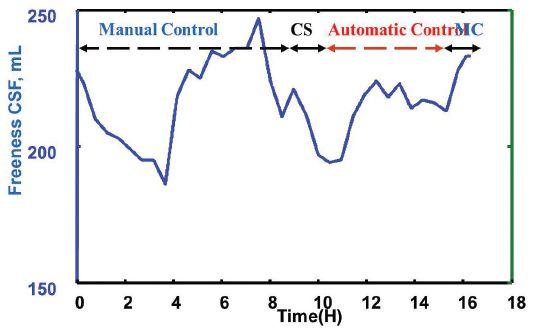
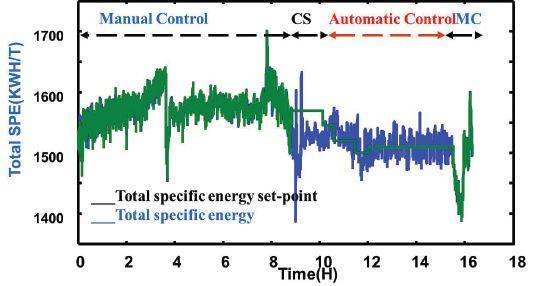
Once the TMP operations are well understood and the equipment is maintained correctly, installing an automatic control system of specific energy would bring more benefit and more energy savings. Figures 1 and 2 show two scenarios with and without automatic control. Figure 1 shows that without automatic control, there are large fluctuations in freeness and fibre length, whereas the fluctuations are reduced when under automatic control. Figure 2 shows the average specific energy is less than that of manual control by almost 100kWh/t, which represents almost six per cent savings in specific energy.
The positive results of automatic control can be explained by the fact that the freeness is controlled based on a prediction model that is adjusted by the data received from the pulp quality monitoring system at an interval of up to two hours. This compensates for any predicted disturbance as soon as it occurs, whereas a manual control method relies on two or three measurements, and it may take up to several hours before a decision is made. In addition, operators are often given a freeness margin target instead of a setpoint target – i.e., the freeness is good if it is between 210 ml and 250 ml. In this case, a freeness of 210 ml is acceptable even though it requires more energy than a freeness of 250 ml. Unlike manual control, automatic control is based on controlling the freeness to a set-point target. Therefore, the specific energy is a control variable manipulated to maintain the freeness at the target set point.
All these considerations make automatic control very desirable and would
certainly result in better variability reduction and more energy savings if all the loops are tuned correctly.
There are four steps to better pulp quality and energy savings:
1. Improve manual operation through operator training and TMP supervision.
2. Track TMP variability, eliminate the predictable variability and benchmark the performance of TMP. The benchmarks given above can be used reliably.
3. Repair all malfunctioning equipment.
4. Install automatic control to achieve added benefits.
It has been observed that steps one through three require minimal capital investment and often lead to an energy savings of up to 15 per cent, while the addition of step four would add another two to five per cent energy savings. PPC
FPInnovations is a not-for-profit organization that supports the Canadian forest sector’s global competitiveness. fpinnovations.ca

Creating an asset framework helps mills to understand and contextualize data, leading to cost savings
By Kristina Urquhart
Mariana Sandin, a process engineer working for a data software developer, spends her days helping clients figure out how they can improve their operational efficiencies to best navigate the changing pulp and paper landscape.
“There are a lot of misconceptions about this industry,” she says. “It’s an industry that is in transformation. But it’s also an industry that is not dying.”
Sandin says that understanding and contextualizing data is the driving force behind a mill’s ability to survive, and, in many cases, thrive – whether on a smaller scale, such as developing a new grade of paper, or on a larger one, such as undergoing a conversion from production of newsprint to packaging.
“Now that all data sources can be put into one single place, it’s easier to comply with specifications and regulations, and to be transparent across the supply chain when it comes to information,” she says. “That helps with all of the sustainability efforts that you see in the market.”
Sandin is the industry principal for forestry and paper products at OSIsoft, a maker of enterprise infrastructure software called the PI system, which gathers data from sensors, SCADA, PLCs and distributor control centres on the plant floor, then parses it so that operators can improve equipment performance, environmental sustainability, quality assurance, and water and energy management.
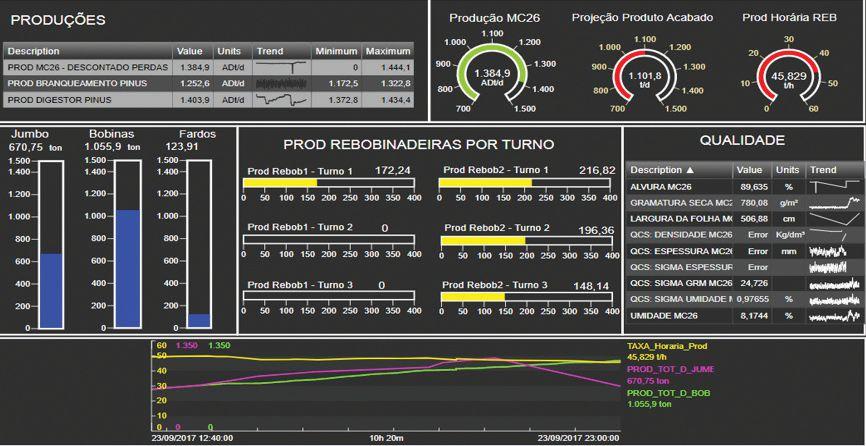
Mills using the PI system can view their critical areas of production, such as recovery boilers, digesters or paper machines, as an “asset framework” of small models
(or a digital twin) with readings on measures such as kappa numbers, age factors and energy consumption that can then be used to create KPIs. The software informs mill operators when an asset is underperforming or malfunctioning. Drag-and-drop features allow the user to customize which trends and gauges are shown, and what their specification limits are.
The scalability of the solution appeals to a wide range of pulp and paper clients across North America, including Quebecbased Fortress Specialty Cellulose, as well as International Paper, Georgia-Pacific, Kimberly Clark and West Rock.
Conversion and control
Sandin says that when Fortress purchased a defunct NBHK mill in Thurso, Quebec in 2010 for its dissolving pulp operation, it was able to shorten its time of conversion by using data delivered by OSIsoft. Fortress continues to use the PI system for control within the operation, says Sandin. “They are actually using the system to not only follow the flow of the process, but the flow of information throughout the different departments, which reduces their communication lags from hours to minutes,” she says. “So that results in a huge savings of people’s time.” With the extra time, Fortress fixed efficiency issues with its water hammers and boilers.
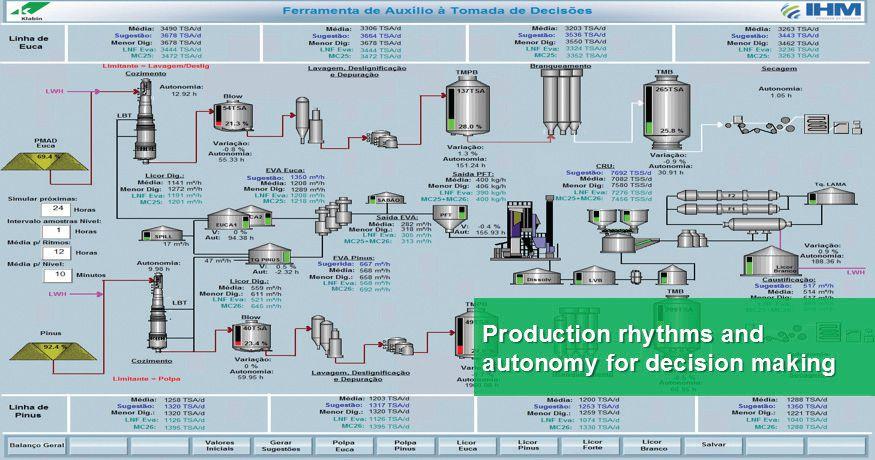
Klabin, Brazil’s largest paper producer, used the PI system to hone in on the performance of its recovery boilers at the Puma plant in Paraná, Brazil. By studying the values of their KPIs, operators determined they were getting a faulty reading in one of their temperatures, which could cause the boiler to shut down.
“That actually prompted several things,” says Sandin. “One, they were aware that they still needed to work on monitoring the control more closely. Then they made some adjustments so that when that particular incident happens again, the boiler won’t shut down.” The workers used the PI system to create notifications that inform the supervisor of faulty readings.
“They made some adjustments so that when that particular incident happens again, the boiler won’t shut down.”
Since implementation of the warnings, the plant has avoided two boiler shutdowns that would have cost $9.6 million total and eight hours in production time each. Klabin also increased its overall production by 3,400 air dry tons per year.
Evergreen Packaging, based in the U.S., runs two pulp and paper mills, five converting plants, and an equipment and parts facility. In the final steps of its coated paperboard making, the company had noticed an intermittent issue with the winding machine. By making process set points visually represented on the PI system to gain a holistic view, Evergreen was able to monitor and pinpoint the source of the problem: machine set points and recipes that didn’t always align.
“They were able to save $180,000 per year by reducing their quality deficiencies by 60 per cent – and that’s just in one machine,” Sandin says. “I know it can be counterintuitive, but sometimes knowing how you are running and the quality that you are getting based on those parameters can actually prompt the customers
to slow down the production to control the quality, and reduce the waste they have at the end.”
Sandin says that the industry is only at the forefront of what it will be able to do with this real-time data, because it is also being historized. “[Mills] can start looking into advanced analytics and machine learning to find the correlations that they don’t know yet,” she says. “They’re looking for things like, ‘based on my current
kappa number, how is that going to affect the quality of my paper?’ Those are things that the industry doesn’t really know, and we are hoping to get those answers”
Predictive maintenance helps to plan for the future across the entire enterprise. “One of the questions we get clients asking is, ‘how can I produce this specification of pulp at the lowest chemical cost with my aging equipment?’” she says. “But there are some plants that are too old and need to be remodelled. And machine learning is going to help [determine] that.” PPC

Manitoba’s former Tolko mill celebrates the two-year anniversary of its acquisition with equipment upgrades and a strong forestry management partnership
By Kristina Urquhart
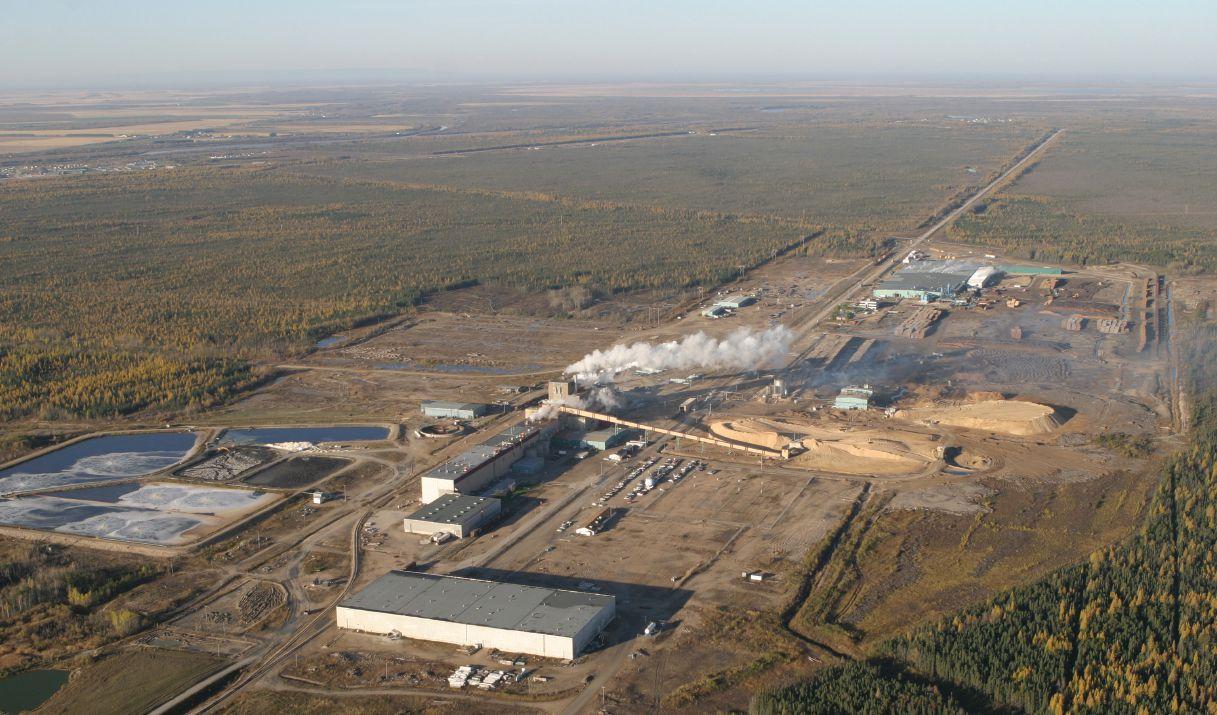
In just over two years, a pulp and paper mill in The Pas, Manitoba has become the comeback kid of the industry, rebounding from the brink of closure with improvements in equipment and processes, and new measures in safety and sustainability.
In a deal that closed Nov. 10, 2016, Canadian Kraft Paper (CKP), a new sub-
sidiary of the American Industrial Acquisition Corporation (AIAC), purchased Tolko’s Manitoba Kraft paper mill and its idle sawmill, which were both set to shutter by Dec. 2 of that year, eliminating 332 jobs. At the time, paper orders had dwindled to zero, and a decommissioning plan to shut down the operation, close company roads and consume all stockpiles of wood, chips and hog fuel was already underway.
To help the new owners with the transition, the Town of The Pas gave CKP a three-year relief on property taxes, and the province of Manitoba allowed a threeyear break on solvency payments for the existing Tolko pension plans.
Since then, CKP has made quick work of putting the mill into a position where it may succeed. It was re-certified to the CSA Sustainable Forest Management Standard and the Programme for
the Endorsement of Forest Certification (PEFC), and re-approved for its forest management licence on 8.7 million hectares (22 million acres) of woodlands. It also entered into a 50-50 partnership to share forest management responsibilities with seven area First Nations. All of the Tolko workers kept their jobs after taking a 10 per cent pay cut for two years as part of the acquisition, and in July of 2018, Unifor Local 1403 and the mill signed a new three-year collective agreement that increased wages, training premiums, leave, benefits and safety equipment allowances. CKP reported five lost-time accidents in 2016 and seven in 2017. As of December 2018, there’d been two losttime accidents for the year, with a 35 per cent drop in the recordable injury rate to 1.76.
CKP has also been named the 2018 Mid-sized Company Turnaround of the Year by the Turnaround Management Association, a global professional organization dedicated to corporate restructuring and distressed investing.
Andre Murphy, mill manager at CKP, says that AIAC brought in experts to initiate the overhaul. Tony Zandos, senior vice-president of AIAC, oversaw the business side, and Jari Vainio, AIAC’s former SVP forest products and packaging, arrived in The Pas in early 2017 to become Canadian Kraft Paper’s SVP and operational and forestry expert. “[Jari] has been a conduit to our owner [AIAC chairman Leonard M. Levie], and has helped him to understand this business,” Murphy says.
The mill improvements began immediately, starting with the steam and chemical recovery areas. “A lot of the things that we are doing, we’d talked about with our previous owner, but we never could really get enough attention to the investment required to move on [them],” Murphy says. “Jari was able to show that
these are the types of things that we really do need.”
While the recovery boiler wasn’t one of the mill’s primary bottlenecks, the improvements started there in 2017 with a $9-million investment in a new superheater supplied by GE. Another $12 million in small projects followed throughout the year, such as installing a high-speed vision camera system and redistributing oxygen analyzers on the recovery boiler.
In 2018, CKP took on even bigger projects in the power boiler and pulp production areas.
A vibrating conveying grate supplied by Detroit Stocker was installed on CKP’s power boiler in September 2018, which allows the mill to burn more waste wood instead of hog fuel. Process Baron upgraded the ash system, and Jansen Combus-
tion upgraded the air system. In the past, operators had to clean the grate themselves and, during the manual cleaning process, used fossil fuels to produce the required steam from the power boiler.
The new automatic grate pulsates intermittently, generating more energy for steam. This addition is expected to help the mill reduce its fossil fuel consumption by 11 million litres annually, and, in turn, cut down on the subsequent CO2 emissions that come from burning hog fuels.
Tamsin Patience, technical manager at CKP, works with process technologists and engineers on energy management. She says that while the mill still uses some waste oil, it is recycled from within Manitoba, Saskatchewan and Alberta, which reduces the amount of heavy Bunker C fuel needed. CKP can also generate electricity using an on-site steam turbine, offsetting the power it requires from Manitoba Hydro.
The mill has also completed about 75 per cent of the installation of a chip thickness-screening machine, which Murphy says will reduce chemical usage and cut wood costs by providing larger yields out of the digester from higher-quality chips.
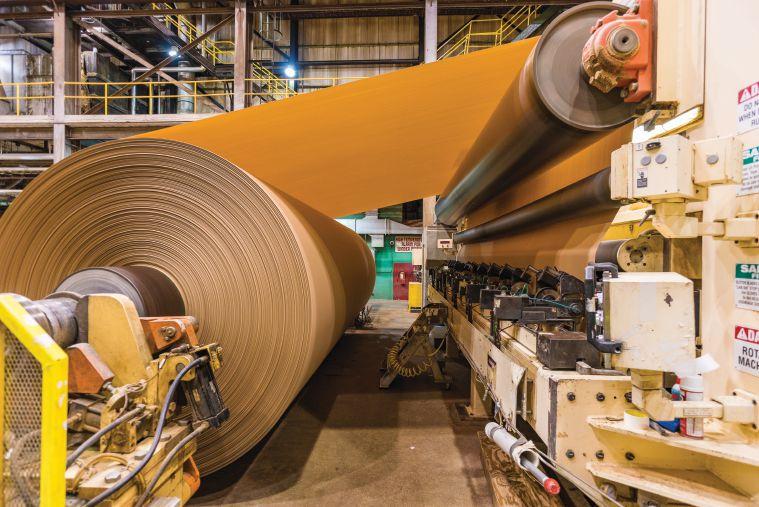
The machine, supplied by Raumaster Oy, will provide optimum chip quality and size to the digesters. Oversized chips (thickness greater than eight millimetres) and contaminants will be removed by the disc thickness screen and either further processed in the chip improver or removed from the chip supply using a separation system. Accept chips will proceed through the roll fines screen to remove further rejects – undersized chips (thickness less than two millimetres), pins and fines – which will be transported to be mixed with waste wood and combusted as fuel in the power boiler. Two new belt conveyor systems will be added to
bring chips to and from the thicknessscreening machine.
“Right now, we have no real screening system, so we just cook and that dissolves some of the fibre we have,” Murphy says. “It’s going to help us reduce the chemical load that’s required to produce pulp, which then also helps offload the recovery cycle because we won’t be overusing chemicals unnecessarily.”
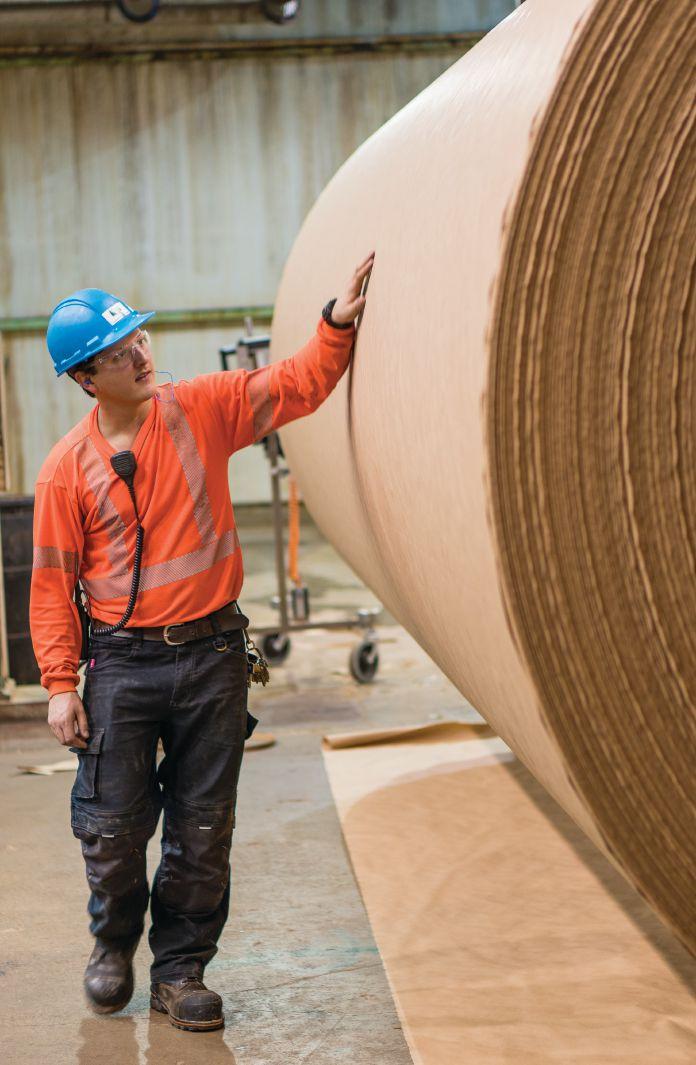
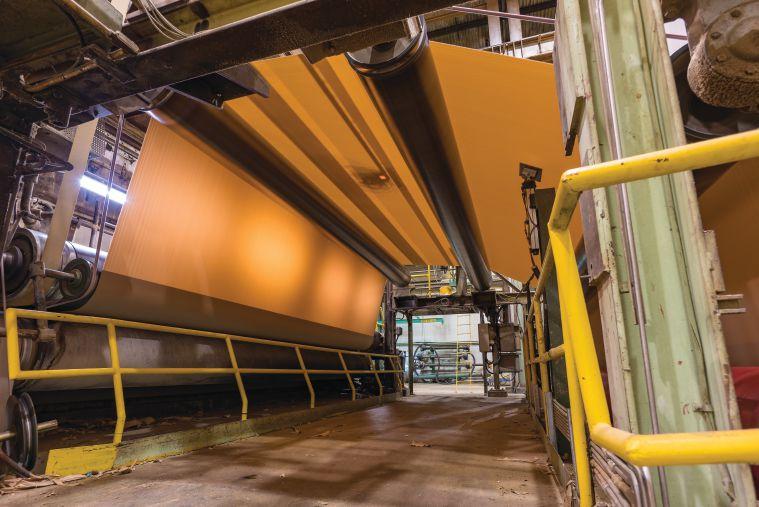
The reduction of chemicals CKP uses in pulping will also ultimately maintain the strength of the fibre. The mill uses 100 per cent virgin fibre from the slowgrowing softwood native to northern Manitoba and Saskatchewan, chipping about 30 to 35 per cent of its own roundwood onsite, and bringing in the rest from mobile chippers on its woodlands or from other sawmills. This translates to about 2,500 cubic metres of chips per day travelling through its single production line to manufacture high-performance
In July 2018, Canadian Kraft Paper signed an agreement to form a 50-50 partnership with the Nekoté Limited Partnership, a corporation representing seven First Nations, to co-manage the 8.7 million hectares of forest under CKP’s forest management licence.
unbleached extensible sack kraft paper, which is then sold to international converters for heavy-duty bags and foodgrade applications.
Production has already increased as a result of the improvements – by about seven per cent over the past two years. CKP’s five-year capital plan will see the mill increase its production by at least another 25 per cent.
In July 2018, CKP signed an agreement to form a 50-50 partnership with the Nekoté Limited Partnership (a corporation representing seven First Nations) to co-manage the 8.7 million hectares of forest under CKP’s forest management license (FML) – the largest forest area co-managed by a mill and First Nations communities in Canada. The partnership, named the Nisokapawino Forestry Management Corporation (NFMC), oversees all forest management planning and permitting, silviculture and renewal activities, and third-party certifications.
Andrew Forward, general manager of NFMC, says that at the time of AIAC’s acquisition of the Tolko mill, several First Nations chiefs who eventually formed Nekoté were already at the table with the province of Manitoba seeking a strengthened, meaningful involvement in forest management decision making. Over a period of 18 months, Nekoté and CKP
“Our
developed a partnership concept that would benefit both parties – beyond participation in forest management decisions, Nekoté would also see more oppor tunities for employment and environment protection, while CKP would benefit from Indigenous knowledge in forest manage ment and have more freedom to access the low-cost fibre in the region.
ly with Nekoté about jobs in the mill, woodlands division or with contractors so the information can be circulated to the First Nations communities. And CKP is changing its method of engaging Indig enous stakeholders, forgoing mill-driven feedback sessions that weren’t always well received in the community. “That was pointed out as a major weakness,” says Forward. So in December 2018, Nekoté hired a Cree-speaking, Indig enous employee to act as a liaison and encourage participation between NFMC and the Nekoté communities.
ship with legitimate costs, and a need for legitimate outcomes and outputs that are tangible and that will allow the pulp mill to continue,” says Forward. “I think we’ll get good feedback [with the liaison], not just from the communities but in under standing if we think this is the best way to do this.”
spreading pilot project in partnership
with Manitoba Sustainable Development to study what the environmental impacts would be if sludge from its effluent system were spread across the mill’s
site instead of transporting to landfill. Tamsin Patience, technical manager, is conducting soil and sludge analysis for the project. She is also sending samples to a consortium at the University of Toronto that is identifying beneficial uses for sludge and boiler waste. “We’re hoping we can do our part here,” she says.
As The Pas’s largest employer, CKP also donates to community, school and sports groups, and in July 2018 committed $25,000 to open a new spray park for locals.
“The things we are accomplishing now – as much as we have the investment, it would be very tough to do without the commitment of all of our employees on site here,” says Murphy. “The other exciting part about being owned by AIAC is the investments and earnings we are making on our site are actually staying in our operations. We’re reinvesting in our business.”

By P&PC Staff
In October 2018, Pulp & Paper Canada was in Pointe-Claire, Quebec for the annual FPInnovations Pulp, Paper & Bioproducts Course, where more than 25 speakers gave lectures over five days on the building blocks of the pulp and paper industry, including wood chemistry, chemical recovery, papermaking processes and sustainability.
Interactive demonstrations throughout the week on kraft and mechanical pulping, tissue-making and routine testing allowed participants to experience their learning firsthand. At one station, pulp in varying stages of chemical saturation was available for participants to examine, alongside examples of white liquor and black liquor. At another, participants made their own paper hand sheets, using a small test press to drain and press a pulp suspension. Once the sheets were dry, the group conducted paper monitoring tests on their own sheets, capturing data on caliper, burst, tear, tensile strength, optical properties and Sheffield roughness.
The demos also covered many of the areas of analytical services that FPInnovations offers to its clients. For example, if a mill has discovered an improperly wound roll of paper, it can be sent to the FPInnovations plant for paper runnability tests, which can help identify and solve problems on the line.
On the final day of the course, called Innovation Day, researchers shared prototypes of new solutions they have created using biomaterials that potentially may extend the value of Canada’s fibre supply. FPInnovations is developing uses for cellulose nanocrystals, which are tiny bits of wood fibre with thickness of about five nanometres that can be used as an additive to create optical iridescent effects. They’re also working with lignin that’s been extracted from black liquor to make everything from composites to “plastic”
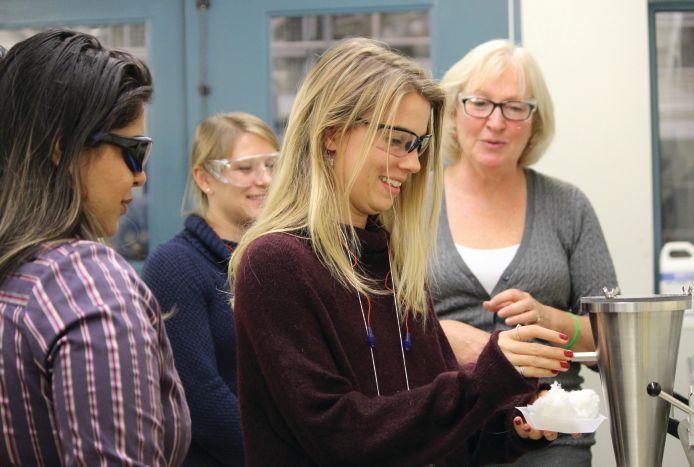
Hands-on workshops on pulp and paper making and testing included a demo of the hammer mill, which separates compressed fluff pulp into individual fibres.
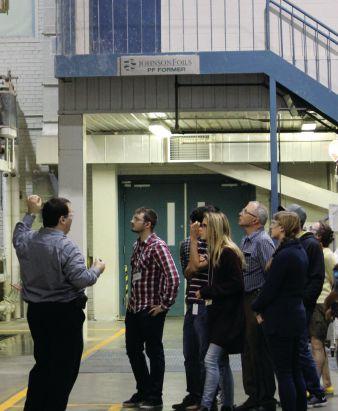
The pilot paper machine has a three-ply headbox and runs at 600 to 1,400 metres per minute. It’s used to conduct tests that simulate plant conditions.
bags to 3D printing filaments.
The Pulp, Paper & Bioproducts course is ideal for new engineers, interns, sales representatives and researchers, as well as established industry professionals looking to deepen their knowledge on pulp and

Daniel Ricard, manager of innovative pilot tools at FPInnovations, gives participants an overview of the facility’s pilot paper machine.
paper processes. The 2018 event included attendees from Resolute Forest Products, Alberta Newsprint, Fortress Global Enterprises, Kruger and more. To register for the 2019 edition, contact Janet Labuc at janet.labuc@fpinnovations.ca. PPC


June 11, 2019
Prince George Confference & Ciivvic Centrre
Prince Georgee, BC



Presented d by
The Wood Produucts Saafety Summit is s an industrry manufacturing seectors including lumb


By P&PC Staff
Irving Forest Services, a division of J.D. Irving Ltd., has seen success with virtual training through the Northern Lakes College (NLC) and Plant Engineering & Maintenance Association of Canada (PEMAC) Maintenance Management Professional (MMP) program, which was designed for maintenance personnel and supervisors to learn effective management of physical assets.
Mike Crowell, director of maintenance at Irving Forest Services in New Brunswick, credits the program with creating a platform for attaining leading practice and performance at the organization, achieving consistency and standardization across divisions.
Crowell recently provided the keynote address at MainTrain 2018, the annual PEMAC national conference, held September 24 -27, 2018 in Ottawa. Crowell’s presentation, “Accelerating Management Talent in Partnership with PEMAC,” acknowledged program provider NLC as part of J.D. Irving’s positive experience with the MMP program.
“In 2013, we knew we had to change how we do things. Ten people from the division enrolled in module one of the PEMAC MMP program through Northern Lakes College,” says Crowell. Five years later, 90 employees, including some from HR and operations, have participated in 337 modules, which was a $300,000 investment by the company involving 23,000 hours of classroom and self-study.
“This has really engaged our employees and we have 22 who are now MMPcertified,” Crowell says.
He says that J.D. Irving places a higher value on training and development pro-

grams that provide professional certification, such as MMP through NLC. He notes the owners of the company say that the $300,000 has had a great return on investment, reflected in the long-term performance trends driven by maintenance activity.
While participation in the program isn’t mandatory for employees in maintenance or asset management at Irving Forest Services, “by day three or four, new employees know what MMP is and what PEMAC is about,” says Crowell.
By the time an employee is a maintenance superintendent at the company, they are normally working on the final module required to obtain MMP certification. Newly employed graduates with engineering degrees are also encouraged to participate in some of the modules of the MMP program.
Crowell, who completed his MMP program at NLC and is a member of the board of directors at PEMAC, credits module three of the program, “Human Resource Management for the Maintenance Manager,” with a change in practice he has adopted. He now includes representatives from the HR department when talking with his employees about training and preparing for growth and future roles
at Irving Forest Services, and it is now routine for the HR module to be completed by supervisors at the organization.
NLC offers the NLC LIVE Online option, which allows companies not located in Alberta to participate via virtual participation. The three-hour time difference between New Brunswick and Alberta was bridged by scheduling NLC’s classes earlier in the afternoon, allowing a start time of 6:30 p.m. AST for those participating at Irving.
Crowell credits the MMP program (and PEMAC’s corresponding Asset Management Program) with allowing Irving Forest Services to achieve standardization and consistency, because employees who participate in the MMP program and move up within the organization share the same mindset or strategy around maintenance and asset management.
“We can transfer people between divisions easily,” he says. “The other benefit is that we are speaking the same language.” Crowell indicates safety performance at Irving Forest Services has also increased, which he partly attributes to the emphasis placed on safety in the MMP program.
“We are seeing the benefits. Our employees are more engaged and motivated. They understand the roles they occupy.” PPC
Fortress Advanced Bioproducts (FortressAB), a subsidiary of Fortress Global Enterprises, is receiving an exclusive license from Mondelez International – one of the world’s largest snacking companies – to use its sugar-based bioproduct manufacturing technology on byproducts from Fortress’s dissolving pulp mill.
Mondolez developed the technology with S2G Biochemicals, which was acquired by Fortress Global in 2018. The company then established FortressAB laboratory and pilot plant facilities in Vancouver to commercialize the technology. Fortress Global runs its dissolving pulp business out of the Fortress Specialty Cellulose mill in Thurso, Quebec.
The licensed technology provides an environmentally sustainable process to produce cost-optimized, sugar-based bioproducts, including xylitol, a premium low-calorie sweetener used in gum, candy and food products.
Fortress Global produces an ideal feedstock for the process at the Fortress Specialty Cellulose mill by rinsing hemicellulose sugars from sustainably harvested, non-GMO, hardwood trees. Mondelez will collaborate with FortressAB to demonstrate the technology through funding and technical support for the construction of a xylitol and complementary bioproducts demonstration plant at the Fortress Specialty Cellulose mill, scheduled to start up in 2020.
If successfully demonstrated, the licensed technology could be scaled up to commercially produce approximately 20,000 tonnes per year of xylitol and complementary bioproducts from the hemicellulose sugars available from the Thurso mill.
Attis Industries is planning to build its first commercial-scale biorefinery in Barnesville, Ga.
The diversified innovation and technology holding company intends to purchase a 32-acre property in Barnesville that is expected to generate about US$35 million in annual revenue. The facility will be designed to process and convert 200 dry tons per day of biomass into a portfolio of bio-based products, including pulp for paper products, sugar for renewable fuel production, melt-flowable lignin for use in plastics applications and bio-based chemicals for use in everyday products.
The Barnesville facility will bring major advances to the traditional pulping industry in the southeastern U.S. It will have the capacity to produce more than 30,000 U.S. tons per year of pulp for sale into conventional pulp and paper markets, and as a feedstock for renewable fuel production. In addition, the company will manufacture 20,000 U.S. tons per year of a unique, melt-flowable form of lignin that makes an ideal candidate for use in various plastics applications such as injection moulded parts, composite decking, siding, sheet and films.
The company’s lignin can be used as a direct replacement for fossil fuel-derived raw materials in adhesive applications. The new plant will also include finished product manufacturing for selected products.
A lignin-based product launched by renewable materials company Stora Enso earlier this year has received the Innovative Product Award 2018 by the Institution of Chemical Engineers (IChemE), a global professional qualifying body for engineers.
LineoTM was shortlisted alongside products from a range of companies including Dow and Johnson Matthey and won “for creating a new bio-based, sustainable material to replace fossil fuels used in coatings and adhesives,” according to the judges.
LineoTM has applications in a range of areas where fossilbased materials are currently used. A renewable replacement for oil-based phenolic materials, it can be used in resins for adhesives, e.g. in plywood, oriented strand board, laminated veneer lumber, paper lamination and insulation material. Stora Enso is also researching new uses for LineoTM, including formaldehyde-free binders, carbon fibre and energy storage applications.
Stora Enso has been producing lignin industrially at its Sunila Mill in Finland since 2015 and the mill has a yearly capacity of 50,000 tonnes. The company is the largest kraft lignin producer in the world.
When it comes to making pulp, paper and wood products, bark is an unwanted byproduct. But Finnish research firm VTT has developed a way to extract pure tannins from bark for use as a raw material for resins used in wood products.
In the Finnish forest industry, three million tonnes of softwood bark are produced annually, mainly used for energy production. Using the new tannin extraction method, the residual fibre fraction can be used to produce sugar as a raw material for fermentation products. It is also suitable for material applications.
Traditionally, tannins are extracted from the bark by hot water extraction. In addition to tree species, the extraction yield is influenced by the origin and processing history of the raw material. From Scandinavian spruce and pine, the yield remains at most 10 per cent of bark weight. The use of bark residues as a source of sugar has been studied through enzymatic hydrolysis. Even in this process, the yields have not been very high, and consequently much of the bark tannin and carbohydrates have remained unused.
The new process uses much higher alkaline conditions and a higher temperature, more closely resembling the wood cooking process. About one third of the bark weight can be dissolved and isolated as a tannin fraction with significantly less impurities – carbohydrates and ashes – than in a fraction obtained by hot water extraction. This tannin extract is a much more reactive resin raw material than normal kraft lignin. The same technology used for lignin recovery is suitable for the recovery of the tannin. In addition to tannin, there is some lignin in the fraction. The fibre fraction can be hydrolyzed considerably more easily than after hot water extraction. The hydrolyzate is well suited for fermentation.
In order to bring the method into production, a consortium is being created, which is expected to include an interested supplier of raw material, equipment supplier and application testers to use the tannin and fibre fractions.

National Research Council (NRC)

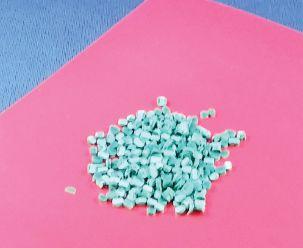
Small, injection-moulded containers were among the other PHA prototypes the NRC created for Bosk to shop to potential vendors.

Ultimately, the PHA will be delivered to manufacturers in an industryacceptable pellet form developed by the NRC.
By Kristina Urquhart
Bosk Bioproducts has revolutionized the way that residuals from the pulp and paper industry can be used.
The Quebec City–based company is using industrial waste to create a unique form of PHAs (polyhydroxy alkanoates), which are polymers naturally formed through bacterial fermentation and used in bioplastics.
Paul Boudreault, CEO of Bosk Bioproducts, says that over the last 10 years, his company, alongside a Quebec lab called the INRS Eau Terre Environnement Research Centre (INRS-ETE), has been developing a way to ferment secondary
sludge, as well as organic industry sources such as wood fibres, to make compostable plastic compounds.
The concept of using wastewater from the pulp and paper industry to create PHAs isn’t new – in fact, it’s been happening for decades. “What is new is we are using existing technology to create something else,” says Boudreault.
The key difference in Bosk’s process is that the PHAs produced are 100 per cent compostable, non-GMO and nontoxic. Other processes used to produce PHAs employ sugar or lipids or other food-grade material, whereas Bosk uses byproducts of industry with no solvents.
Employing minimal additional equipment, Bosk can send the carbon sources
into a fermenter installed at the endof-line pulping process to develop the bacteria, which become engorged with PHA. The concentrated bacteria are then exploded so that the PHA can be extracted, and that PHA gets sent into a spray dryer to become a powder.
Boudreault says that all of a mill’s byproduct is used in the fermentation and extraction process, resulting in a yield of more than 90 per cent pure PHA, with the rest being micro wood fibres, cell membrane debris and nutrients that can be recycled again in the pulp mill’s wastewater treatment system.
“A typical pulp and paper plant would produce 3,000 tonnes of secondary sludge on an annual basis,” he notes. “We
can use that sludge and produce 4,000 tonnes of PHA.”
Bosk worked on perfecting this process for several years before approaching the National Research Council (NRC) two years ago to assist with research and development – chiefly, on how the powdered PHA could be turned into more consumerfriendly, compostable plastic compounds.
Nathalie Chapleau, research officer at the NRC and head of the polymer bioproducts team, says the first step was developing the powder into a pellet –while retaining all of the non-GMO, nontoxic, compostable properties of the powder. The NRC polymers and bioproducts team, based in Boucherville, Quebec, has been working for more than 15 years on formulating, shaping and characterizing environment-friendly plastics, including bio-sourced and compostable plastics.
“Usually, in the plastics industry, we use pellets, which are round – a few millimetres in diameter. So when you arrive with a white powder, people might be a little reluctant to use that,” Chapleau says. “The purpose was to take this plastic and
be able to present it [to vendors after] traditional polymer processing, without changing the equipment – or by making very few modifications to the standard polymer processing.”
To make the pellets, the NRC employed five or six additives that met Bosk’s stringent compostable, non-toxic requirements – “I won’t give my recipe!” Chapleau says – to ensure the PHA behaves like a typical plastic.
“These biomaterials are moisturesensitive,” says Chapleau. “They’re not perfect – they have the tendency sometimes to degrade while we process them. So we have to really evaluate and select the adequate additives at the end to make a pellet that contains the PHA and all of the other ingredients – and that is ready to be processed without modification.”
For the second part of the research phase, Chapleau and her team worked on prototypes for the plastic, so that Bosk can demonstrate the end uses of the compounds to potential manufacturing partners. The NRC used injection moulding to make containers, casting to
create sheets and film, and extrusion to make filaments for 3D printing.
Boudreault says Bosk Bioproducts plans to make its pellets commercially available at the beginning of next year and is currently in talks with manufacturers. Up until now, Bosk had been creating the PHA at a pre-demo fermentation plant built by INRS-ETE in Quebec City, and is now in talks to develop a full-scale demo plant with an industry partner (Boudreault could not confirm potential collaborations, but Resolute Forest Products is listed as an industry partner on Bosk’s website).
Unlike recycled plastics, which still make their way to landfills, Boudreault says compostable bioplastics offer a new solution for the environment.
“Our object is to really develop the market for this product,” he says. “There is a high demand for the product because of the current situation for the plastic industry. Consumers are very sensitive about plastic pollution, and there are not a lot of solutions for that—but compostable plastic is one.” PPC

Torrey Pines Scientific’s new line of multiposition analog stirring hot plates and stirrers feature five or nine stirring positions.

The large 12-in (305 mm) square ceramic heater tops have a temperature range to 450°C.
The five-position stirring units can stir five 800 ml beakers, and the nine-position units can stir nine 500 ml beakers of aqueous solutions from 100 to 1500 rpm. Each stirring position is individually controlled so different vessels can be stirred at different speeds at the same time on one plate surface.
The ST15 Stirrer and the HS15 Stirring Hot Plate can stir five vessels, and the ST19 Stirrer and HS19 Stirring Hot Plate can stir nine vessels. The units measure 19 in (432 mm) deep by 12.5 in (318 mm) wide by 5.25 in (134 mm) tall. They can support more than 50 lbs (22.6 kg) on the plate surface. All controls are mounted well forward of the heater surface to protect against accidental burns, and the units are designed to keep spills out of the chassis.
The units are available in 115 VAC/60Hz, 220 VAC/60Hz, and 230 VAC/50Hz. They have a main AC on/off switch and are fused for safety. They are supplied with user’s manual and detach-
able line cord for the country of use. All units are UL, CSA and CE or equivalent rated. torreypinesscientific.com
Kemira forms joint venture for paper-sizing chemicals
Kemira, the global chemicals company, has formed a joint venture with Shandong Tiancheng Wanfeng Chemical Technology, an alkyl ketene dimer (AKD) producer in China.
The venture is called Kemira TC Wanfeng Chemicals Yanzhou, or NewCo, and Kemira owns 80 per cent at a valued investment of EUR 55 million.
NewCo will mainly produce AKD wax and its key raw material fatty acid chloride (FACL). AKD wax, where the main component is based on renewable raw material, is a sizing chemical used in board and paper manufacturing to create resistance against liquid absorption.
NewCo will provide a high-quality AKD wax and will be globally the largest AKD wax manufacturing unit, significantly improving Kemira’s AKD wax capacity. NewCo’s site is located in the same chemical park with Kemira’s first AKD wax plant in Yanzhou, China.
In addition, NewCo will produce polyaluminum chloride (PAC), which is a coagulant for water treatment. NewCo will start the production of chemicals in the second half of 2019 after necessary investments and the ramp-up phase are completed. kemira.com
Dynatrol has added the CL-10GH liquid level detector to its line of high, intermediate and low-point level detectors for liquids or slurries. It has no moving parts, floats, diaphragms or packing glands to deteriorate. Applications may include starch coatings, starch adhesives, pulping chemicals, slurries, etc.

Pairing the new level switch with the Dynatrol EC-501A(G) control unit increases stability by eliminating the variances of direct input power. The versatile CL-10GH does not require field adjustments and can be mounted in any position in a vessel or piping. The Dynatrol CL-10GH liquid level switch is ruggedly constructed for an extended operating-life and available in corrosion-resistant coatings.
The detector is explosion-proof, and CSA NRTL/C approved for Class 1, Group D, Division 1 Class 2, Groups E, F and G. Among other features, it has a pressure rating of 3000 PSIG at 100°F and a temperature rating of 300°F, with high temperature construction available. dynatrolusa.com
Archroma, a colour and specialty chemicals company, has a new Cartastrength product for stronger packaging and tissue papers.

The Cartastrength DST.03 liquid additive combines enhanced dry strength and improved stickies management. The product is suitable for all paper and board grades, especially beneficial where recycled fibre is the main raw material. It is ideally suited for fine paper grades, including decor, tissue with fully bleached fibre, or wastepaper and brown packaging manufactured from old corrugated containers (OCC). archroma.com
Intertek, a global quality assurance provider, has opened a paper testing facility at its existing chemical analysis lab in Chicago.
Intertek’s new lab employs Technical Association of the Pulp and Paper Industry (TAPPI) standards – which measure, evaluate and describe pulp, paper, and related products, including raw materials – to evaluate the quality, performance and safety of products like wrapping paper, kitchen rolls, party plates, single-use food containers, copier paper, cardboard containers and more. Additionally, the TAPPI facility can partner with Intertek’s chemical analysis lab to evaluate products for harmful chemicals like lead, heavy metals, phthalates and other toxic elements.
Intertek is a global supplier of paper products analysis and testing, and uses state-of-the-art-equipment and expertise to help optimize product development and resolve issues. With a network of laboratories located around the world, including in Canada, Intertek’s scientists are equipped with a range of analytical techniques for testing. intertek.com

Procemex, a web inspection and monitoring company, has developed the Dirt Count Analyzer, which it says can improve pulp production and reduce customer claims arising from shives and dirt in pulp.
The online measurement system detects and classifies dirt and shives according to ISO and TAPPI standards, providing dirt count per square metre and dirt area per square metre (ppm). It stores every defect in the system database using real-time values and colour coding. Operators can monitor real-time dirt count trends, indicating process changes and enable corrective reaction.
Dirt that does not qualify as dirt according to the standard is rejected from the calculation. Beyond standards, some objects like metal wires, oil and special particles relating to different raw materials are detected and classified based on their shape.
The Procemex Dirt Count Analyzer measures in transmission with strobe LED lights with the camera resolution of 0.1 x 0.1 mm to meet TAPPI/ISO standards. The user can choose between full CD/MD coverage, one camera per bale or a few measurement points. procemex.com
Cascades starts up PM1 after dryer rebuild
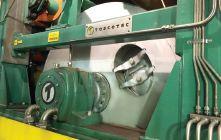
Cascades Packaging recently started up PM1 at its Kingsey Falls mill in Quebec following a major rebuild of the dryer section supplied by Italian tissue, paper and board systems manufacturer Toscotec.
The machine was started up on schedule on September 23, 2018, with the support of Toscotec’s service engineers, who also provided the commissioning and the erection supervision onsite.
Toscotec implemented TT SteelDryers in a rebuild aimed to achieve the highest production increase with the lowest possible impact on the existing machine. Toscotec customized its engineering design in order to efficiently integrate its new dryer section into the existing equipment. The project was completed in record time and maintained the overall length of the dryer section and the width of the dryers’ frame.
First results after start-up indicate the project will meet its goal of an eight per cent production increase. cascades.com
FPInnovations researchers have found that the tissue linting associated with soft tissue products can be reduced by replac-
Kimberly-Clark Professional has released the first eyewear created for its KleenGuard Brand, developed as more fashion-forward form of personal protective equipment (PPE).
The safety glasses, sold as Maverick Eye Protection, were an award winner in the Best in Show New Product Showcase at the 2018 National Safety Council (NSC) Congress & Expo held in Houston, Texas.
ing part of eucalyptus pulp with aspen kraft, according to the results of new trials conducted by the organization.
Daniel Ricard, manager of the FPInnovations pilot tools, presented the results at the TAPPI RISI Tissue 2018 Conference and Expo in October 2018.
“Eucalyptus pulp is widely used in tissue-making because of its good bulk and softness,” explains Ricard. “But tissue dusting and linting is a growing issue for consumers because tissue makers are pursuing higher bulk and softness. Our research shows that aspen kraft can be an effective means of reducing tissue linting.”
FPInnovations researchers Ricard, lead scientist Ho Fan Jang and principal technologist Tony Manfred co-authored the research, which progressively replaced eucalyptus pulp with aspen kraft while maintaining the softwood constant.
The objective of the study was to explore the causes of tissue dusting and linting and develop strategies to minimize the issue. fpinnovations.ca
SIM/Cognibox, a Quebec-based training services company, has released 19 new e-learning training modules in English for a range of industries, including pulp and paper, as part of its health and safety programming.
Courses are available on a range of topics, from forklift safety to personal protective equipment to slips, trips and falls. Each training module contains 3D animations to help workers visualize risk situations, and includes an exam on which participants are required to score at least 85 per cent.
The interactive training ensures compliance with Canadian and Quebec standards, as well as legal requirements. The courses are being offered at an introductory rate of $19.95. cognibox.com
Vancouver process measurement supplier FITNIR Analyzers will provide its online liquor analyzer and MC chip moisture analyzer to the Fibria Celulose S/A Aracruz pulp mill in Espírito Santo state, Brazil.
Fibria is a eucalyptus pulp producer with annual production capacity of 7.25 million tons.
“FITNIR’s capability of measuring key properties including moisture, solids, lignin, and organic and inorganic solids, as well as the ability to expand to new measurements in the future, was an immense draw for us,” says Estevão Frigini Mai, R&D scientist at Fibria.
Implementation and start-up is expected in the first quarter of 2019. fitnir.com

The company says that Maverick Eye Protection is designed with human-centric engineering that enables rather than inhibits – allowing for maximum productivity and safety.
Features of the glasses include anti-fog and antiscratch coatings, an anti-glare coating to reduce eye strain and fatigue, and comfort touch points to prevent slippage and reduce pressure. kcprofessional.com
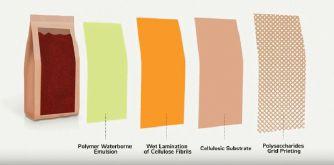
Biodegradable, flexible paper packaging
Ahlstrom-Munksjö, the global fibre-based materials provider, has partnered with five companies to develop a new flexible paper-based packaging solution.
The objective is to develop a renewable, biodegradable and recyclable flexible paper-based packaging material, by replacing current materials with more sustainable, bio-based ones, leading to a reduced amount of plastic films.
The project, dubbed “Sherpack,” kicked off in 2017 and involves industrial partners Ahlstrom-Munksjö, Cargill and Borregaard, as well as the research centres CTP, ITENE and ISOF-CNR.
The consortium says there is significant market potential, as the size of the flexible plastic packaging market for dry food applications is evaluated at around EUR 3.7 billion a year in Europe alone.
Usually, flexible packaging contains a plastic film and/or an aluminum foil, creating a barrier to water vapour, oxygen and contaminants. The downside in using plastic and aluminum relates to the end of the lifecycle when the packaging becomes waste. In normal waste management, that waste ends up being either burned or dumped into a landfill.
The new technology uses a wet lamination of cellulosic fibrils on the cellulosic substrate, a biodegradable polymer waterborne emulsion and a grid of polysaccharides to create a flexible packaging that is also a good barrier for water vapour, oxygen and contaminants. The material will be available for use in 2021. ahlstrom-munksjo.com
Abrasion-resistant lump breaker Munson Machinery has released a new model of its rotary lump breaker to break chunks of agglomerated abrasive or friable materials that have compacted during storage or shipment, conditioning them for downstream processing or conveying.
The RDC-2424-MS De-Clumper rotary lump breaker reduces the size of material entering the 610 mm square
inlet using dual rotors with three-point, single-piece, AR-235 abrasion-resistant steel breaking heads rotating with minimum clearance above a curved, perforated bedscreen.
On-size material exits through 25 mmdiameter apertures in the bedscreen. Other bedscreens are available with apertures ranging from 25 to 64 mm in diameter.

The unit is recommended for breaking lumps in product flows of bulk materials such as cement powders, sodium or calcium carbonates, fertilizers, and bulk chemicals of all types.
Powered by a 5.6 kW motor with gear reducer and a rugged chain and sprocket drive, the synchronized shafts rotate at approximately 120 RPM, offering high throughput rates with minimal heat generation. A side-mounted bedscreen can be rapidly removed for cleaning, replacement or maintenance.
Suitable for industrial and chemical applications, it is also offered in 304/316 stainless steel. munsonmachinery.com
filter with
surface area
Voith has launched the disc filter sector FloWing to mark the 20th anniversary of its BaglessPlus family of filters.
To create the product, Voith engineers investigated the effects of different disc surfaces and topographies on the capacity.
The newest flow switches from Balluff’s line of process-oriented sensor products alert users to potential failures due to a reduction in necessary fluid flow.
The BFF series of flow sensors, which are available in both thread-in and inline versions, provide a switching output that is activated when the flow falls below a user-defined rate. This makes it possible to notify users of system problems such as the failure of a pumping system, a clogged filter or leaks before

This resulted in a geometry that allows the formation of a thick fibre mat that also ensures ideal fibre separation.
Thanks to their wing design, the FloWing filter sectors have a 56 per cent larger surface than conventional systems, and when compared to Voith’s BaglessPlus discs, the surface has increased by around 30 per cent. Depending on raw material quality, the increase in throughput is from 20 to 30 per cent. FloWing disc filter sectors are stronger at critical positions and allow for longer service lives than the previous BaglessPlus sectors.
According to Voith, the filter bags commonly used in conventional disc filters are responsible for regular shutdowns in the stock preparation unit. They often tear during operation, which results in corresponding fibre losses. The filtrate, which is usually used at various spray nozzles on the paper machine, is also contaminated by fibres and fines, which clog up the nozzles. This clogging requires a system shutdown for cleaning. The BaglessPlus filter discs do not use bags, which the company says leads to improved cost efficiencies because of less downtime and reduction in fresh water requirements.
FloWing filter discs can be used in existing disc filters, including those from other manufacturers. voith.com

they cause critical issues or system shutdowns.
The completely solidstate calorimetric sensing technology measures temperature differential on each side of the sensing probe and has no moving parts. So, unlike mechanical flow switches, they are resistant to failures caused by dirt or foreign object build-up. The BFF series offer continual flow monitoring with a visual display of flow with integrated LEDs. balluff.com
Cascades has announced an investment of US$58 million in its Wagram plant in North Carolina, which the company says will modernize the plant and add new tissue converting equipment.
The project will involve the installation of five new state-of-the-art converting lines and the modernization of four existing lines. Sixty-six full-time employees will be hired to operate the new equipment, and an additional 50 temporary jobs will be created to prepare the building and install the equipment.
The commissioning of the new converting lines is expected to begin in April 2019 and will be finalized in the first quarter of 2020.
The Wagram plant produces hand towels, paper towels, bathroom tissue and napkins marketed under the Cascades PRO brand, which serves the away-fromhome markets. Upon completion of the project, the Wagram plant converting capacity will increase from 5.3 million cases per year to close to 15 million cases per year, resulting in a global capacity addition of three million cases for the group. cascades.com
VTT Technical Research Centre of Finland, the Finnish Forest Centre and MHG Systems Oy have developed a mobile application to efficiently use forest data.
The development is part of a larger partnership among many organizations to accelerate European bioeconomy with the help of big data technologies based on aerial and satellite images and on open forest data provided by Finnish Forest Centre.
“Population growth and urbanization are increasing the demand for natural resources, which is putting a strain on the earth’s carrying capacity,” says Caj Södergård, a research professor at VTT and the project’s technology manager.
“The European DataBio (Data-driven Bioeconomy) project aims to develop new sustainable ways to use forest, farm and fishery resources and to communicate real-time information to decision-makers and producers – land- and forest owners, farmers and fishermen.”
The mobile application, called Wuudis, allows landowners and forestry operators to collect and upload data on their forests to the Finnish Forest Centre’s
forest resource database.
“This facilitates the payment of sustainable forestry subsidies and makes it easier to collect information and keep forest inventories up to date, as the application accurately calculates the volume and quality of the trees left in a stand after care works and harvesting,” says Seppo Huurinainen from MHG Systems, who coordinates the DataBio project’s forestry pilots.
The Wuudis service and the associated mobile application, as well as standardized forest resource data concept provided by the Finnish Forest Centre, can be easily scaled to other countries. vttresearch.com
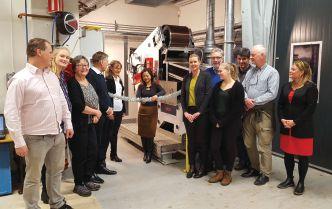
A new steel belt that can create strong packaging material using high-yield pulp has been manufactured by MoRe Research, a research and development firm in Sweden that specializes in pulp and paper products.
The project, conducted alongside process solutions company IPCO (formerly Sandvik Process Systems) and Mid Sweden University, was established to find ways for newsprint and supercalendered paper mills to convert into production of packaging material.
The steel belt press prototype, designed by IPCO and installed at MoRe Research, increases strength characteristics in lignin-containing paper. Pressure, temperature and speed can be varied in this press in order to evaluate and optimize process conditions. The steel belt press simulates industry conditions and will be an important step in the commercialization of this technology.
“With our test results we hope that the steel belt technology will be accepted by the forest industry as an effective means of producing new materials based on wood,” says Cherryleen Garcia-Lindgren, global innovation manager at IPCO. “We believe that there is a potential to develop more applications. The cooperation with
MoRe Research and Mid Sweden University is an excellent way of finding a new and exciting usage for our technology.”
Tove Joelsson, a PhD student at FORIC, the Mid Sweden University industrial research school, works at MoRe Research and has been optimizing the process as part of his postgraduate project, which is centred around creating strong packaging materials with high wet strength based on high-yield pulp. “Wet strength has a huge potential to replace plastic in many of the current types of packaging,” Joelsson says. “Another important aim is to create prerequisites for production of TMP or CTMP at paper mills and modify paper machines for production of new packaging material.” more.se
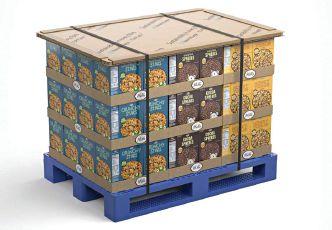
Smurfit Kappa has invented a sustainable new alternative for the heavy wooden, chipboard, and plastic boards that are used to protect palletized products during transport and storage.
A team of Smurfit Kappa designers in its Hexacomb operations collaborated to identify a food-safe and innovative solution that would be suitable for a range of sectors, including those which have stringent hygiene regulations.
Made from 100 per cent paper-based material, TOPPSafe is crafted from what the company calls Hexacomb material, which is lightweight and strong due to its honeycomb structure.
A number of Smurfit Kappa’s customers had been struggling with the weight and inflexibility of the more traditional wooden, chipboard and plastic pallet tops that are currently used in supply chains and often dropped, causing risk of injury. The company says TOPPSafe is significantly lighter so it is easier to handle.
The TOPPSafe pallet top is supplied flat to reduce storage space and the material is fully recyclable. smurfitkappa.com
The Canadian forest products sector is passionate and devoted – not just to the industry itself, but also to its local communities. In this department, we’re sharing the initiatives of pulp and paper companies working to make positive social, environmental and economic impacts across the country.



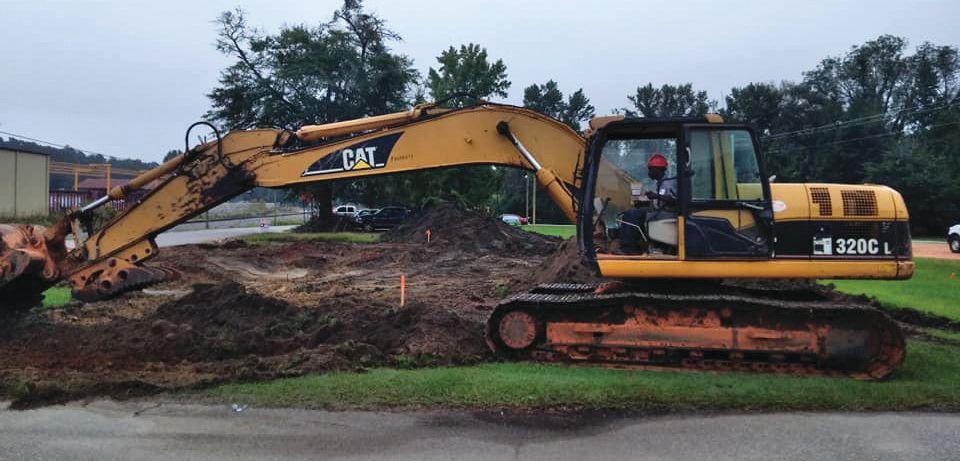
donated $50,000 to Fulton, Alberta’s fire department for a new fire station after it flooded in spring 2018.
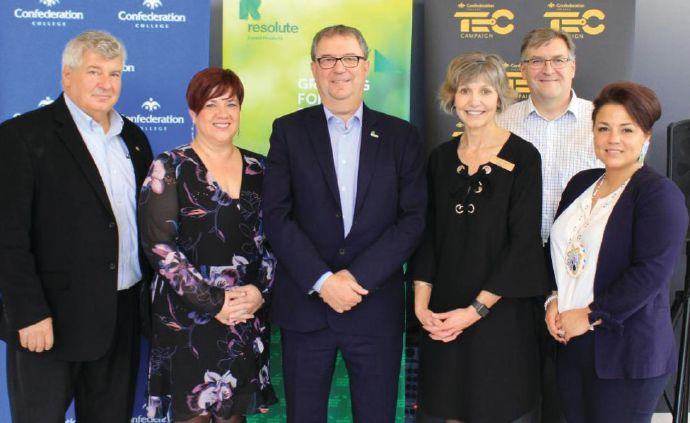
Forest Products committed $150,000 to purchase state-of-the-art equipment for the technology, education and collaboration program at Confederation College in
Let us help you share your successes. Tag @PulpPaperCanada or use #PPCGivingBack on Facebook or Twitter, or send an email to the editor at kurquhart@annexbusinessmedia.com. We’d love to hear from you!

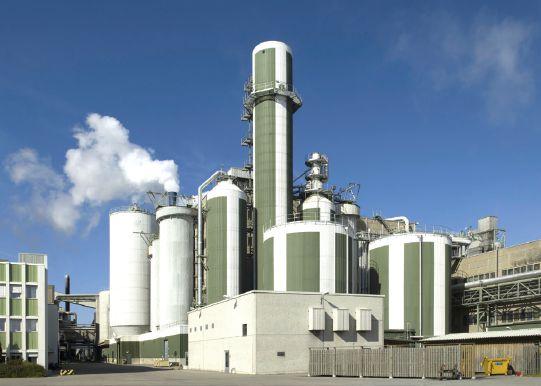


At Kemira, we use our chemistry to improve your everyday. It means making your packaging lighter and stronger, your paper towels softer, and your print colors brighter. By adding our expertise, your everyday business runs smoother and more efficiently. Our job is to add value while adding peace of mind. We call it adding to your everyday.